Posted on 2 Comments

Apple Cider Vinegar & Lemon Juice for Weight Loss

Woman stirring a glass of diluted apple cider vinegar and lemon water in a sunlit kitchen; overlaid text shows the safe recipe and enamel-care tips.

People love simple rituals. A tall glass of water. A splash of vinegar. A squeeze of lemon. The routine feels clean and doable, which is part of its charm. Still, it helps to be honest. Apple cider vinegar and lemon juice for weight loss can support better choices for some people, mostly because it makes water more appealing and may help a few folks feel fuller. Even so, it’s not a switch you flip to change your body overnight. Progress still leans on ordinary decisions repeated often: meals anchored by protein and plants, everyday movement, and decent sleep.

Rather than pitching another miracle, let’s slow down and explore the drink in a realistic way—what research actually says, how lemon genuinely helps, what safety looks like in real life, and the gentlest way to try the ritual if you’re curious. Along the way, you’ll find straightforward resources from trusted health publishers and several MasalaMonk reads to make the journey tastier and easier to keep.

Also Read: Lentil Pasta for Weight Loss: Nutrition, Best Brands & 5 Healthy Recipes.


What apple cider vinegar and lemon juice for weight loss can and can’t do

To begin with, expectations matter. The Mayo Clinic puts it plainly: vinegar alone is unlikely to drive significant weight loss, and the evidence just isn’t strong enough to promise big results. Their concise guidance on apple cider vinegar is a useful reset if you’re sorting through bold claims you’ve seen online (Mayo Clinic’s guidance on ACV for weight loss).

That said, there are reasons the habit keeps getting attention. Some small studies and reviews report that vinegar can blunt post-meal blood-sugar rises and slow gastric emptying. In plain language, digestion may take a touch longer, and energy swings may feel steadier. For some, that translates into modest appetite control. However—and this is important—the effect tends to be small, short-term, and heavily dependent on your overall pattern. For a measured, readable overview that balances interest with caution, Harvard Health’s discussion of the “ACV diet” is worth a skim (Harvard Health’s overview). Likewise, Health.com has a recent explainer that lands in the same place: there might be a small nudge when ACV is used alongside a calorie deficit, but robust proof is limited (Health.com’s explainer).

Stepping back, the pattern is consistent: apple cider vinegar and lemon juice for weight loss might be a possible nudge, not a cure-all. If you enjoy the taste and you use the drink to replace a sweetened beverage, it may tilt the day in your favor. If you dislike it or it bothers your stomach, you can safely skip it—plenty of people reach their goals without ever sipping vinegar.

Also Read: Chia Seed Water: Benefits, Recipes & Best Time to Drink for Weight Loss


Where lemon genuinely helps—and where it doesn’t

Lemon earns its place here for reasons that are refreshingly down-to-earth. It brightens water, adds a familiar aroma, and turns hydration into a habit you might actually look forward to. That alone can change a day. A squeeze of juice offers a little vitamin C and makes the ritual feel fresh. However, honest evidence that lemon juice directly drives fat loss in humans is thin. Consider it flavor and hydration support, not a fat-burning trigger.

If citrus rituals appeal to you, two simple MasalaMonk companions can help you fine-tune the vibe you enjoy: the cozy routine of warm lemon water in the morning and the crisp refreshment of cold lemon water. Pick the version you’ll actually repeat.


Safety first: protect teeth, throat, and stomach

Because vinegar is acidic, the biggest long-term concerns with sloppy use aren’t your waistline—they’re your teeth and comfort. Enamel erosion creeps up slowly; throat irritation can turn a once-pleasant ritual into something you avoid. In addition, vinegar slows stomach emptying. Some people like the lingering fullness; others, especially those with reflux or delayed gastric emptying, find it uncomfortable. For a clear consumer-level rundown of common pitfalls—enamel wear, low potassium with heavy long-term intakes, and potential interactions with medications—see Verywell Health’s side-effects summary (Verywell Health on ACV side effects). Harvard also underscores two evergreen rules: dilute thoroughly and prefer food-first uses over “shots” (Harvard Health’s overview).

Practical steps you can trust:

  • Always dilute ACV in plenty of water.
  • Sip through a straw, then rinse your mouth with plain water.
  • Give enamel ~30 minutes before brushing.
  • Pair the drink with food if you’re prone to heartburn or queasiness.
  • Check with your clinician first if you live with diabetes and gastroparesis, significant reflux/ulcer symptoms, kidney disease, or if you take insulin, digoxin, or certain diuretics.

These guardrails keep a small habit from becoming a big problem.

Also Read: Apple Cider Vinegar for Arthritis & Joint Pain: Myths vs Facts


How to make apple cider vinegar and lemon juice for weight loss (gentle method)

Let’s keep the method simple, the taste pleasant, and the dose sensible.

One-glass method (1 serving):

  • Apple cider vinegar: start with 1–2 teaspoons; only increase if you feel fine. Most people don’t need more than 1 tablespoon per serving.
  • Water: 250–300 ml (room temperature or warm).
  • Lemon juice: 1–2 teaspoons (optional).
  • Optional flavor: a slice of fresh ginger, or ½ teaspoon honey (remember honey adds calories).

How to:
Stir the vinegar into the water, add lemon, sip through a straw, then rinse with plain water.

When to drink:
With a meal or just before your most carbohydrate-heavy meal. There’s no proven “best time,” so choose a moment you’ll remember. The Mayo guidance emphasizes dilution and moderation above timing or brand (Mayo Clinic on ACV basics).

Daily ceiling:
Without medical advice, keep total intake around 15–30 ml (1–2 tablespoons) per day, always well diluted.

Brand note:
Choose a pasteurized vinegar you like and can find easily. There’s nothing magical about a label; dilution and habits matter more than logos.

Also Read: Best Nuts and Seeds for Weight Loss (Chia, Flax, Almonds & More)


Prefer not to sip? Put vinegar in food and smile

You do not have to drink acid to get the flavor benefits. In fact, using vinegar in meals may be the smarter path for your teeth and your tastebuds. A simple vinaigrette over crisp greens gives you the same acetic-acid experience while bundling it with fiber, protein, and healthy fats. If you’d like enamel-friendlier ideas that still feel indulgent, browse MasalaMonk’s safe apple cider vinegar salad dressing and a set of ACV dressing recipes. Use those approaches broadly—not only during pregnancy.

As you experiment, lean into texture and contrast: peppery greens, toasted seeds, juicy tomatoes, and a vinaigrette that makes you crave the next bite. When a salad becomes the part of lunch you anticipate, you’ve shifted the whole day in your favor without feeling deprived.


Morning or empty stomach: is it necessary?

Plenty of people adore a morning ritual; it feels like a reset. Nevertheless, there isn’t convincing evidence that sunrise timing or an empty stomach makes vinegar more effective for fat loss. If an empty stomach leaves you queasy, place the drink with breakfast. If you prefer an even gentler start, consider warm lemon water on its own and then use ACV later in the day inside food. For tuning your routine to your taste, the MasalaMonk guide to warm lemon water in the morning is a friendly read.


Variations of apple cider vinegar and lemon juice for weight loss

Because taste keeps habits alive, it’s worth exploring small tweaks.

  • Honey: A drizzle rounds off sharp edges and makes the ritual feel softer. Just remember that sweetness brings energy; a half teaspoon adds roughly 20–25 calories. That’s easy to fit into your day when you plan for it.
  • Ginger: Grated ginger adds warmth without much energy cost and can make the drink feel cozier. For more zesty, hydrating ideas, MasalaMonk’s cucumber, lemon, and ginger water has crisp combinations you can borrow.
  • Spices: A pinch of black pepper brings a gentle kick. If you enjoy playful seasonings that don’t sneak in calories, lemon and black pepper offers easy variations.

Finally, some readers ask whether one famous ACV brand matters. It doesn’t, assuming you choose a pasteurized product and keep the dose modest. The basics—dilution, consistency, and an overall balanced plate—do the heavy lifting.


Tiny habit upgrades that compound over time

Instead of asking, “Will this drink make me lose weight?”, consider, “How can this ritual help me show up for myself the rest of the day?” A single glass won’t change your life. A small cascade of better choices might.

  • Pair it with protein. Aiming for ~25–35 g of protein at meals steadies appetite and protects lean mass as you lose fat.
  • Swap, don’t stack. Let the drink replace a sweetened beverage rather than adding on top of your usual routine.
  • Front-load plants. Start lunch or dinner with a generous salad dressed in a light ACV vinaigrette.
  • Walk after meals. Even a short stroll can steady post-meal blood sugar and clear your head.
  • Guard your bedtime. Hunger and cravings improve when sleep is consistent.

If you like myth-free fundamentals, the Mayo Clinic’s weight-loss basics is calm and useful (weight-loss basics). And for perspective from dietitians who see the ACV trend often, EatingWell recently summarized their take: interesting, but far from magical (dietitians’ view at EatingWell).

Also Read: How Does a High Protein, High Fiber Diet Support Weight Loss?


A seven-day starter plan using apple cider vinegar and lemon juice for weight loss

Trying something new is easier with a script. Use this as a soft landing and adjust freely.

Days 1–2
Stir 1 teaspoon ACV into 300 ml water. Add a little lemon. Drink with lunch. Rinse your mouth after.

Days 3–4
Increase to 2 teaspoons if you feel fine. Keep the same dilution. Stay with meals so your stomach has company.

Days 5–7
Try 1 tablespoon once per day, or split across two smaller servings. Keep your daily total within 1–2 tablespoons. If you notice throat irritation, reflux, or tooth sensitivity, switch to food-first uses and reassess later.

Alongside the drink, build a plate you enjoy: a protein you actually like, plenty of vegetables, and a starch that suits the day. If you need citrus refreshers between meals, cold lemon water is a bright companion to keep you sipping without added sugar (cold lemon water ideas).


What results feel like with apple cider vinegar and lemon juice for weight loss

Outcomes vary—and that’s completely normal. One person feels fewer afternoon cravings. Another feels no change. Someone else decides the drink isn’t for them and keeps vinegar strictly in dressings. None of these experiences are wrong; they simply reflect biology and preference.

If you enjoy the ritual and it helps you replace a sugary beverage, you may notice slow, steady benefits. If you dislike it, you won’t miss anything by skipping. A bright salad often delivers the same nudge with fewer dental worries. For a realistic, dietitian-led take, EatingWell sums it up neatly: evidence is limited; any help is likely small; food-first habits do the heavy lifting (dietitians’ view). Meanwhile, Health.com’s recent explainer lands in the same place, with a simple reminder to dilute and keep expectations modest (Health.com explainer).

Also Read: Guide to Body Fat Percentage


A kind closing thought on apple cider vinegar and lemon juice for weight loss

Choose the version of this habit that fits your life. If you enjoy the taste, keep it well diluted and pair it with meals. If you prefer food-first, whisk a quick vinaigrette and enjoy a generous salad. Both paths can support a calmer appetite and better choices—the quiet way real change happens. If questions about safety linger, the Verywell Health side-effects overview is clear and practical, and the Harvard Health pieces add helpful context without sensationalism (Verywell Health side-effects; Harvard Health overview).

Finally, a quick note to keep you safe: because vinegar can interact with certain conditions and medications, and because tolerance varies, it’s wise to speak with your clinician if you have diabetes (especially with gastroparesis), kidney disease, or chronic reflux, or if you take insulin, digoxin, or particular diuretics. A short conversation now is worth more than a long detour later.

FAQs

1. Can I mix lemon juice with apple cider vinegar?

First, yes—you can mix them. Apple cider vinegar and lemon juice for weight loss is mostly about taste and a simple ritual; the combo can make water more appealing while you aim for balanced meals and steady movement.

2. Does apple cider vinegar and lemon juice in the morning work better?

Next, timing isn’t magic. Morning feels motivating for many, yet the gentle benefits are similar whether you drink it with breakfast, lunch, or another meal you’ll remember.

3. Should I drink it on an empty stomach?

Also, not everyone tolerates acid well on an empty stomach. Pairing the drink with food often feels easier on the throat and may reduce reflux or queasiness.

4. How much should I drink daily?

Meanwhile, start small—1–2 teaspoons of apple cider vinegar in 250–300 ml water—with a squeeze of lemon if you like; if it sits well, you can work up to 1 tablespoon per serving and keep your daily total near 1–2 tablespoons.

5. Is apple cider vinegar and lemon juice good for weight loss?

Still, consider expectations. Apple cider vinegar and lemon juice for weight loss may help you feel a little fuller and swap out sugary drinks, yet the real progress comes from your overall eating pattern, steps, and sleep.

6. What are the benefits and risks?

That said, potential upsides include a more satisfying beverage habit and, for some, steadier appetite; possible downsides include enamel wear, throat irritation, delayed stomach emptying, and interactions if you have certain conditions or take specific medications.

7. Is there a simple recipe I can follow?

However, keep it basic: 1–2 teaspoons ACV + 250–300 ml water + 1–2 teaspoons lemon juice; sip through a straw and rinse your mouth with plain water afterward; adjust tartness to taste.

8. Can I add honey or ginger?

Moreover, tiny tweaks help adherence—½ teaspoon honey softens sharpness (remember the calories), while a slice of fresh ginger adds warmth without much energy.

9. Is warm water better than cold?

Additionally, temperature is personal. Warm water can feel soothing, cold water can feel refreshing; choose whichever helps you repeat the habit comfortably.

10. Is apple cider vinegar better than lemon juice alone?

On balance, vinegar has the stronger tradition of modest effects; lemon mainly brightens flavor and supports hydration, which can indirectly help you stick to your plan.

11. How long before I notice changes?

Practically speaking, give any routine a few weeks while you also stack fundamentals—protein-forward meals, vegetables, walking—so any small nudge from the drink has room to matter.

12. Who should avoid this drink?

Generally, skip or speak with your clinician first if you have diabetes with gastroparesis, chronic reflux or ulcers, kidney issues, low potassium history, or if you take insulin, digoxin, or certain diuretics.

13. Can I use apple cider vinegar and lemon juice for weight loss at night?

Typically, evenings are fine if you tolerate acid well; if nighttime triggers reflux, place the drink earlier in the day or use vinegar in a salad dressing instead.

14. Does it target belly fat?

Ultimately, no single drink targets fat from one area. Apple cider vinegar and lemon juice for weight loss may support better choices, but body fat reduces overall when your daily pattern creates a gentle calorie deficit.

Posted on 2 Comments

6 Wellness Shot Recipes to Boost Your Immune System

Flat lay cover image showing six colorful wellness shots arranged in a hexagon with fresh ingredients including turmeric, ginger, lemon, garlic, elderberries, carrot, and apple cider vinegar, with text overlay “6 Immunity Wellness Shot Recipes."

When cold and flu season rolls around, many of us look for natural ways to give our immune system an extra edge. One option that’s grown in popularity is the immunity wellness shot — a small, concentrated drink that packs in fresh ingredients known for their immune-supportive benefits.

But do these shots really work? While no single drink can prevent illness, research suggests that certain foods — like turmeric, ginger, garlic, citrus, and elderberry — may help reduce inflammation, improve antioxidant defenses, and even shorten the duration of colds and flu. Spices have long been part of traditional immunity remedies—discover the power of Indian spices for immunity in our in-depth guide.

In this article, you’ll discover 6 immunity wellness shot recipes, each explained in detail with the science behind why these ingredients are recommended.


What Are Immunity Wellness Shots?

Immunity wellness shots are small (1–3 ounce) juice blends taken in a single sip. They’re made with concentrated fresh ingredients like roots, herbs, and citrus, and are designed to provide a quick hit of vitamins, antioxidants, and bioactive compounds.

Typical ingredients include:

  • Turmeric — contains curcumin, a compound known for anti-inflammatory and antioxidant effects. According to Harvard Health, curcumin has been studied for its ability to modulate immune responses.
  • Ginger — rich in gingerols and shogaols, which have antioxidant and antimicrobial activity. A review summarized by Healthline notes that ginger has long been used to help with colds and inflammation.
  • Citrus fruits — oranges, lemons, and limes provide vitamin C, which the NIH reports can slightly shorten the length of colds in regular users.
  • Garlic — contains allicin, which was linked to fewer colds in a randomized human trial published in the Advances in Therapy journal (PubMed study).
  • Elderberry — meta-analyses show elderberry extract reduces flu symptom duration and severity (NCBI meta-analysis).
  • Apple cider vinegar (ACV) — though not studied as much as other ingredients, ACV is a fermented food, and fermented foods are strongly tied to gut and immune health (Harvard Health on fermented foods).

Benefits of Immunity Wellness Shots

So why combine these ingredients into small shots? Research highlights several potential benefits:

  • Inflammation control — Chronic inflammation weakens immunity. Compounds in turmeric (curcumin) and ginger (gingerols) help reduce inflammatory markers such as IL-6 and TNF-α (NCBI research on curcumin).
  • Antioxidant protection — Vitamin C, curcumin, and gingerols protect immune cells from oxidative stress caused by free radicals.
  • Antimicrobial action — Garlic and ginger show antimicrobial activity in lab studies, and elderberry may directly inhibit flu viruses.
  • Gut health support — Fermented foods like apple cider vinegar encourage a healthy microbiome, which plays a central role in immune function.

6 Best Immunity Wellness Shot Recipes

When it comes to building resilience, variety matters. That’s why we’ve gathered six different immunity wellness shots, each with its own flavor profile, nutrient strengths, and cultural background. From fiery ginger to soothing honey, from vibrant turmeric to tangy elderberry, these recipes are simple, quick, and can be made with ingredients you likely already have in your kitchen.

Before we dive into the step-by-step recipes, remember: these shots aren’t meant to replace a balanced diet or medical treatment. Instead, think of them as daily allies—little boosts you can integrate into your wellness routine to keep your immune system strong and supported.


🟠 1. Turmeric Ginger Immunity Shot

There’s a reason turmeric and ginger are the poster children of natural remedies. Bright, golden, and fiery, this little shot has been used for centuries in Ayurvedic traditions to fight off seasonal sniffles and morning sluggishness. If you’re looking for an easy way to start your day with a burst of warmth and antioxidants, this is it.

Ingredients

  • 1-inch fresh turmeric root (or ½ tsp turmeric powder)
  • 1-inch fresh ginger root
  • Juice of ½ lemon
  • Pinch of black pepper
  • ½ cup water
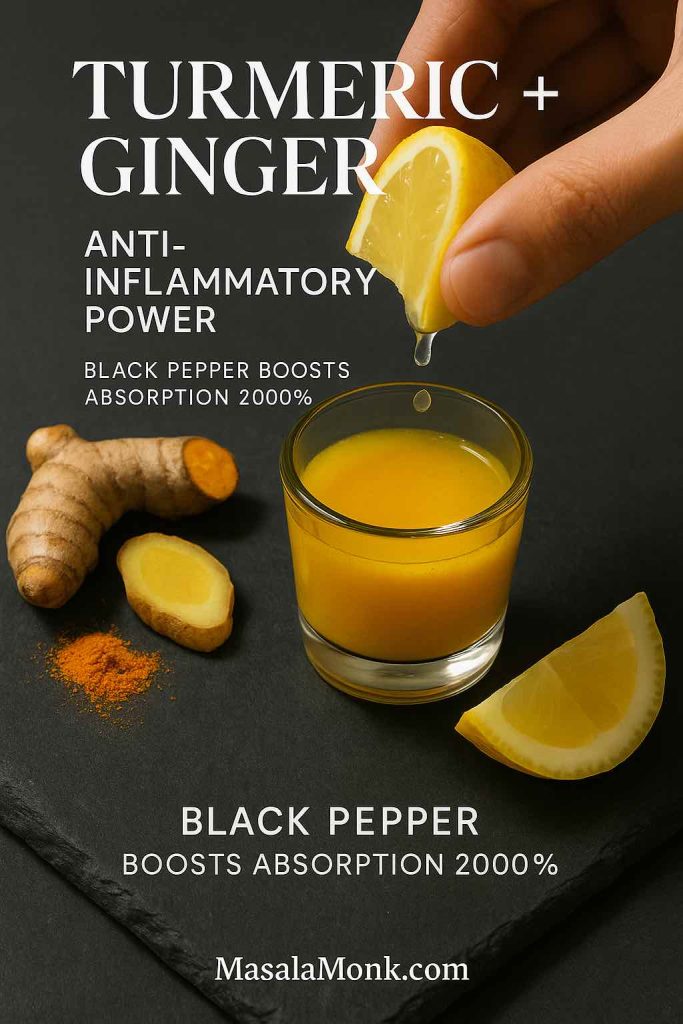
Close-up of a turmeric ginger immunity shot with fresh turmeric, ginger, and lemon, highlighting its anti-inflammatory benefits.
Turmeric and ginger combined with lemon and black pepper deliver a powerful anti-inflammatory boost in one small shot.

Instructions (step-by-step)

  1. First, peel and chop the turmeric and ginger into small pieces.
  2. Next, add them to a blender along with lemon juice and water.
  3. Then, blend until smooth.
  4. After blending, strain the liquid through a fine sieve if you prefer a smoother shot.
  5. Finally, sprinkle a pinch of black pepper on top and enjoy right away.

👉 Why it works: Turmeric’s curcumin has powerful anti-inflammatory benefits, and black pepper makes it more bioavailable. Ginger adds antioxidants, while lemon brings in vitamin C.

To see how this synergy works in another recipe, try Turmeric, Ginger & Black Pepper Tea for Well-Being.

Why we recommend it:
Turmeric’s active compound curcumin has been widely studied for its anti-inflammatory and immune-modulating effects. On its own, it’s poorly absorbed, but a study in Planta Medica found that combining it with black pepper (piperine) increases absorption by nearly 2,000% (PubMed study on piperine). Ginger provides additional antioxidants, and lemon adds vitamin C.

💡 Pro Tip: If the flavor feels too strong, add a splash of fresh orange juice for sweetness and an extra vitamin C kick.


🟠 2. Lemon Cayenne Immune Shot

Sharp, spicy, and invigorating — this shot is like sunshine in liquid form. Perfect for sluggish mornings or when you feel a cold creeping in, it gives you a quick kick of vitamin C and natural heat that wakes up your circulation.

Ingredients

  • Juice of 1 lemon
  • ¼ tsp cayenne pepper
  • 1 tsp honey (optional)
  • ½ cup warm water
Bright yellow lemon cayenne immunity shot with lemon halves and cayenne pepper, designed to support circulation and energy.
A fiery blend of lemon and cayenne pepper, rich in vitamin C and circulation-boosting compounds, perfect for mornings.

Instructions

  1. Begin by squeezing the juice of one lemon into a glass.
  2. Next, pour in the warm (not hot) water.
  3. Then, stir in cayenne pepper and honey until well combined.
  4. Lastly, sip slowly if you’re sensitive to spice—or take it as a quick shot for a fiery boost.

👉 Why it works: Lemons provide vitamin C, cayenne boosts circulation, and honey soothes the throat while adding antibacterial support.

Also Read: Cayenne Pepper for Weight Loss: Spicing Up Your Diet Plan! 🌶️

Why we recommend it:
Lemons provide vitamin C, which according to a Cochrane review summarized by the NIH, may shorten the duration of colds in regular users. Cayenne contains capsaicin, which shows anti-inflammatory potential in animal and human studies (NCBI on capsaicin). Honey has antimicrobial properties and is recommended as a cough soother by the Mayo Clinic.

💡 Pro Tip: To balance the heat, mix in a few drops of fresh ginger juice or dilute with extra water for beginners.


🟠 3. Garlic Honey Wellness Shot

This is the strong one — and yes, it works. For generations, raw garlic and honey have been combined as a natural immunity booster. The taste is bold, but the payoff is worth it: garlic’s allicin has been studied for cold prevention, while honey brings natural antibacterial sweetness.

Ingredients

  • 1 small raw garlic clove (crushed)
  • 1 tsp raw honey
  • Juice of ½ lemon
  • ¼ cup water
Creamy garlic honey wellness shot with garlic cloves and honeycomb, highlighting its traditional cold-fighting properties.
Raw garlic and honey — an ancient cold remedy backed by modern studies, shown to reduce cold frequency.

Instructions

  1. First, crush the garlic with the side of a knife to release allicin.
  2. Let it rest for 5 minutes to maximize its potency.
  3. Next, combine garlic with lemon juice, water, and honey in a blender or cup.
  4. Finally, drink immediately for the strongest effect.

👉 Why it works: Garlic is backed by human studies showing fewer colds, while honey and lemon add both flavor and immune-friendly nutrients.

This combo has been around for centuries—explore our honey infused garlic ancient remedy for a traditional take.

Why we recommend it:
Garlic is one of the few foods tested in human trials for cold prevention. In a 12-week randomized trial, participants who took garlic supplements had significantly fewer colds than those taking placebo (PubMed study). Honey provides antibacterial and antioxidant effects, while lemon juice adds vitamin C.

💡 Pro Tip: If the taste is too intense, chase it with a slice of apple or cucumber for a quick palate cleanse.


🟠 4. Elderberry Ginger Immunity Shot

Sweet and tangy with a spicy twist, this shot tastes almost like a health tonic you’d want to sip slowly. Elderberries have been shown to reduce flu symptoms, and pairing them with ginger and lemon makes this immunity wellness shot recipe a flu-season favorite.

Ingredients

  • 2 tbsp elderberry syrup (homemade or store-bought)
  • 1-inch fresh ginger root
  • Juice of ½ lemon
Deep purple elderberry ginger immunity shot with fresh elderberries, ginger, and lemon, promoting flu-season support.
Elderberry paired with ginger and lemon — clinically shown to help shorten flu duration and ease symptoms.

Instructions

  1. Grate or finely slice the ginger.
  2. Next, blend the ginger with elderberry syrup and lemon juice.
  3. Then, strain if desired for a smoother consistency.
  4. Serve chilled for a refreshing immune boost.

👉 Why it works: Elderberry shortens flu duration, ginger brings warming anti-inflammatory support, and lemon adds vitamin C.

For more on natural immune boosters, see how the ginger, garlic & lemon immunity trio can help.

Why we recommend it:
A 2019 meta-analysis of randomized controlled trials concluded that elderberry supplementation reduced upper respiratory symptoms and shortened flu duration (PubMed meta-analysis). Ginger and lemon provide additional anti-inflammatory and antioxidant benefits.

💡 Pro Tip: Store-bought elderberry syrup often contains sweeteners—opt for unsweetened if you prefer a lower-sugar option.


🟠 5. Carrot Turmeric Citrus Shot

Bright orange, slightly sweet, and refreshing — this shot feels more like a mini juice than medicine. It’s packed with beta-carotene from carrots and vitamin C from oranges, making it a great daily wellness choice.

Ingredients

  • 1 medium carrot (juiced)
  • 1-inch turmeric root
  • Juice of 1 orange
  • Pinch black pepper
Bright orange carrot turmeric citrus shot with carrot slices, turmeric root, and orange wedges, supporting skin and immunity.
A vibrant carrot, turmeric, and orange shot delivering beta-carotene and vitamin C for skin and immune resilience.

Instructions

  1. Juice the carrot and turmeric root. (If you don’t have a juicer, blend with water and strain.)
  2. Next, stir in the fresh orange juice.
  3. Add a pinch of black pepper.
  4. Finally, drink immediately while it’s fresh and bright.

👉 Why it works: Carrots support mucous membrane defenses, oranges bring immune-boosting vitamin C, and turmeric + pepper fight inflammation.

Why we recommend it:
Carrots provide beta-carotene, which the NIH highlights as essential for maintaining the integrity of mucous membranes, the body’s first line of defense against pathogens. Oranges add vitamin C, while turmeric and pepper enhance anti-inflammatory activity.

💡 Pro Tip: Add a squeeze of lime for extra tang and to balance the earthy turmeric flavor.


🟠 6. Apple Cider Vinegar Immune Wellness Shot

This one is tangy, zesty, and surprisingly refreshing when balanced with honey. ACV has long been used in folk medicine for digestion and gut health, and when combined with ginger and lemon, it makes a powerhouse immune tonic.

Ingredients

  • 1 tbsp apple cider vinegar (with the “mother”)
  • ½ inch fresh ginger root
  • Juice of ½ lemon
  • ½ tsp honey
Pale amber apple cider vinegar wellness shot with lemon wedges, ginger slices, and ACV bottle, highlighting gut health benefits.
Apple cider vinegar with ginger and lemon — a tangy tonic that supports gut health and immune function.

Instructions

  1. Grate or mince the ginger.
  2. Add it to a glass with ACV, lemon juice, and honey.
  3. Stir thoroughly until the honey dissolves.
  4. Drink as a quick shot, or dilute with extra water if it feels too strong.

👉 Why it works: ACV supports gut health (linked to immunity), ginger reduces inflammation, and honey balances both flavor and function.

Learn more about the role of apple cider vinegar for wellness in boosting health and metabolism.

Why we recommend it:
Apple cider vinegar hasn’t been studied directly for immunity, but as a fermented food it may support a healthy microbiome, which plays a critical role in immune system regulation (Harvard Health on fermented foods). Ginger and lemon bring additional immune-friendly antioxidants, and honey balances the sharp flavor.

💡 Pro Tip: Always use a straw to protect your teeth from the acidity, and rinse your mouth with water afterward.


How Often Should You Drink Immunity Shots?

For most people, one immunity wellness shot per day is enough. Morning is a popular choice, since many ingredients are energizing on an empty stomach.

That said, moderation is important:

  • Turmeric and ginger may cause digestive upset in large amounts.
  • Garlic can irritate digestion or interact with blood-thinning medications.
  • Apple cider vinegar should always be diluted to protect your teeth and stomach lining.

Rotating between different recipes helps you get a wider range of nutrients while avoiding excess.


Final Thoughts

These 6 immunity wellness shot recipes combine some of the most research-supported natural ingredients for immune health. From turmeric and ginger’s anti-inflammatory power, to garlic’s cold-fighting allicin, to elderberry’s flu symptom relief, each shot delivers a potent burst of support in just a few ounces.

They aren’t miracle cures, but as part of a balanced lifestyle with good sleep, exercise, and nutrition, they can be a refreshing, health-promoting ritual.

Why not try one of these recipes tomorrow morning and give your immune system a natural boost?

If you enjoyed these shots, you might also love our anti-inflammatory drinks for wellness collection.

❓ Frequently Asked Questions

1. Can I really make immunity wellness shots at home?

Absolutely! The beauty of these recipes is that they’re simple, quick, and use everyday ingredients. Instead of buying expensive bottled shots, you can blend turmeric, ginger, lemon, or garlic in just a few minutes and enjoy them fresh.


2. How often should I drink immunity wellness shots?

Most people do well with just one shot a day, usually in the morning. However, it’s best to rotate between different recipes throughout the week. This way, you get a variety of nutrients while keeping things balanced.


3. Do immunity shots actually work?

While no shot can guarantee you won’t get sick, research shows that ingredients like garlic, elderberry, and vitamin C can help reduce the severity and duration of colds and flu. Think of them as a natural support system, not a miracle cure.


4. Can I store these shots in advance?

Yes, but freshness is key. Most recipes can be stored in the fridge for up to 2–3 days in an airtight container. However, shots with garlic or lemon taste best when consumed immediately, as their active compounds fade quickly.


5. What’s the best time of day to take a wellness shot?

Morning is ideal, since the ingredients can be energizing and are absorbed well on an empty stomach. That said, if your stomach is sensitive, you might prefer to take them after a light meal.


6. Can kids drink immunity shots too?

Yes, but with some adjustments. Skip the cayenne pepper for children, and use smaller portions of ginger or garlic. Always dilute the shot a little more, and consult your pediatrician if your child has health conditions.


7. Are there any side effects of taking immunity wellness shots?

Since these are concentrated drinks, too much can cause issues. For example, turmeric and ginger may irritate sensitive stomachs, garlic can interact with blood-thinners, and apple cider vinegar should always be diluted to protect teeth and digestion. Moderation is key.


8. Do I need a juicer to make these immunity wellness shot recipes?

Not at all! A blender works just fine. Simply blend the ingredients with water, then strain with a fine sieve or cheesecloth if you prefer a smoother consistency. A juicer can make the process easier, but it’s not required.


9. Can I add other ingredients to the recipes?

Definitely! These shots are flexible. You can add a pinch of cinnamon for warmth, fresh mint for freshness, or even a splash of orange juice for sweetness. Just remember: the more colorful your ingredients, the more antioxidants you’ll likely get.


10. Which immunity wellness shot is the most powerful?

That really depends on your body and taste. Many people swear by the turmeric ginger shot for daily wellness, while others love the elderberry shot during flu season. The best approach is to try them all and notice how your body responds.

Posted on 2 Comments

5 Energizing Matcha Smoothie Recipes with Spinach for Healthy Mornings

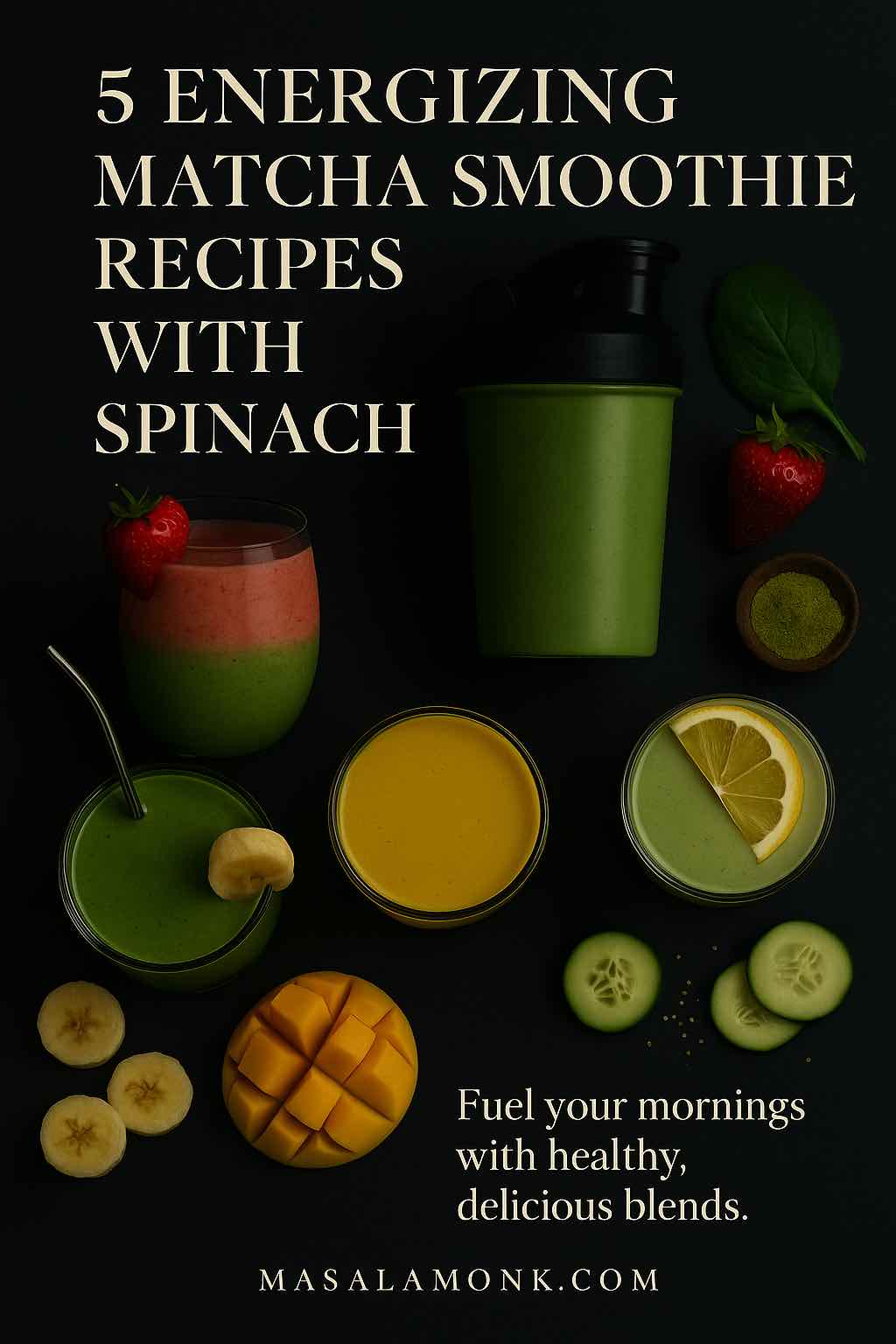
A collection of five different matcha spinach smoothies arranged in unique glasses with fruits, protein, and matcha props, styled on dark marble.

If you’ve ever struggled to find the perfect morning drink that’s both energizing and nourishing, you’re not alone. Coffee might wake you up fast, but it can also leave you with jitters or a mid-morning crash. That’s why more and more people are turning to matcha smoothie recipes with spinach. They don’t just taste amazing — they deliver steady, focused energy and a serious boost of nutrients in every sip.

The beauty of these smoothies is how flexible they are. Creamy bananas, sweet strawberries, tropical mango, or even a scoop of protein powder can all blend seamlessly with spinach and matcha. The result is a drink that feels indulgent, but is secretly loaded with health benefits. And as science shows, both matcha and spinach bring some powerful advantages to your body and mind.


The Science Behind Matcha + Spinach Smoothies

Before we get into recipes, let’s unpack why this duo is worth adding to your routine. Because while smoothies should taste good, it’s even better when they work hard for your health too.

Matcha: Calm Energy Meets Antioxidant Power

Unlike regular green tea, where the leaves are steeped and removed, matcha is made by whisking whole powdered leaves into water or milk. This means you’re consuming all the nutrients the leaf has to offer. According to Harvard Health, matcha delivers a higher concentration of catechins — powerful plant compounds that act as antioxidants and may help lower blood pressure, protect heart health, and support insulin sensitivity (Harvard Health).

One antioxidant in particular, EGCG (epigallocatechin gallate), has been studied for its role in metabolism and fat oxidation. Research suggests green tea catechins like EGCG may help with weight management, though results are still mixed in humans (PMC study).

What makes matcha especially unique is its combination of caffeine and L-theanine. Together, they deliver steady alertness without the nervous edge of coffee. A review in the Cleveland Clinic notes that this balance can improve focus, memory, and attention while promoting a sense of calm (Cleveland Clinic). It’s why so many people describe matcha energy as “calm focus” rather than a quick buzz.

Spinach: A Green You’ll Actually Enjoy

Spinach may be humble, but it’s a nutritional powerhouse that deserves more credit. Just a handful provides vitamin K for bone strength, iron for healthy blood, folate for cell growth, and magnesium for muscles and nerves. It’s also a good source of vitamin C and plant-based antioxidants, which support immunity and skin health.

What makes spinach so easy to add to smoothies is its taste — or rather, its lack of one. Unlike bitter greens like kale, spinach blends smoothly with fruits and nut milks without overpowering them. The Times of India even calls spinach-based smoothies some of the easiest “green drinks” for people who don’t usually like leafy flavors (Times of India).

Together: Why This Combo Works

When you bring these two ingredients together, you get the best of both worlds: the antioxidants and calm energy of matcha plus the vitamins, minerals, and fiber of spinach. One nutrition site even points out that matcha contains up to 125 times more antioxidants than spinach alone, which makes pairing them a no-brainer (Veganced).

The result? A smoothie that helps your body fight oxidative stress, supports steady energy, aids digestion, and fills nutritional gaps — all while tasting creamy and refreshing. No wonder matcha + spinach smoothies are becoming a go-to choice for people looking to balance wellness with convenience.


5 Healthy Matcha Smoothie Recipes

Now that you know the science behind why matcha and spinach make such a powerful pair, it’s time to put that knowledge into practice. These five recipes are simple, versatile, and can be made in just a few minutes. Each one has its own personality — whether you’re in the mood for creamy banana, refreshing berries, tropical mango, a protein-packed boost, or a lighter breakfast blend for weight management.

Think of these as base recipes you can play with. Swap milks, add seeds, toss in extra fruit — the options are endless. The best part? Every sip delivers the calm energy of matcha and the nutritional lift of spinach.


Banana Spinach Matcha Smoothie Recipe

There’s something undeniably comforting about bananas in a smoothie — creamy, naturally sweet, and always satisfying. When you pair banana with vibrant green matcha and a handful of spinach, you get a drink that feels indulgent while being sneakily healthy. The banana masks the “green” taste of spinach, making this a great option if you’re just starting out with green smoothies.

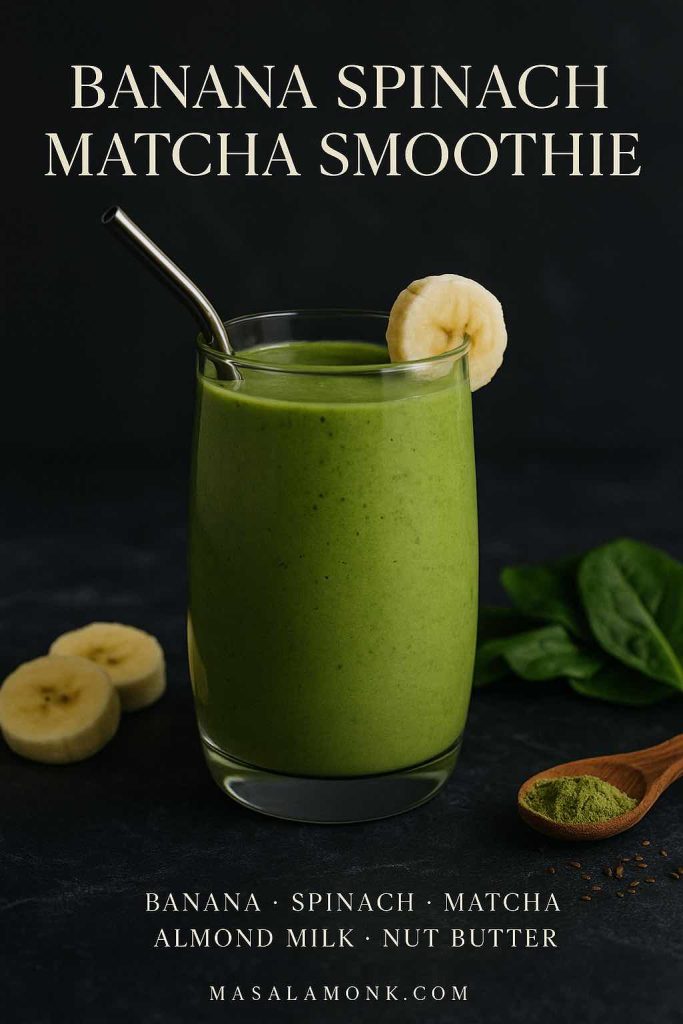
A tall glass of banana spinach matcha smoothie with banana slices and spinach leaves, styled in a classy magazine look.
Start your mornings with this creamy Banana Spinach Matcha Smoothie — packed with antioxidants, fiber, and natural energy.

This smoothie is perfect for breakfast on busy mornings because it gives you sustained energy without a sugar crash. Bananas provide quick-release carbs for an instant boost, while matcha’s caffeine and L-theanine combination offers focus and calm energy throughout the morning. Add in spinach for fiber, iron, and vitamins, and you’ve got a simple but powerful smoothie that ticks all the boxes.

Want to play around with flavors? Add a spoonful of cocoa powder for a chocolate banana matcha smoothie, sprinkle in cinnamon for warmth, or swap dairy milk for almond or oat milk if you prefer a vegan version. For an extra protein boost, toss in a spoon of Greek yogurt or nut butter — it turns this into a filling, meal-worthy shake.

Ingredients:

  • 1 ripe banana (frozen for extra creaminess)
  • 1 teaspoon matcha powder (culinary grade works best in smoothies)
  • 1 cup fresh spinach leaves, washed and packed
  • 1 cup almond or oat milk (or dairy milk if you prefer)
  • 1 tablespoon nut butter (optional, for protein and healthy fats)
  • Ice cubes (optional, for texture)

Method:

  1. Place all ingredients in a blender.
  2. Blend on high until smooth and creamy.
  3. Adjust thickness with more milk if needed.
  4. Serve immediately — garnish with a sprinkle of matcha powder or chia seeds.

Pro Tip: Freeze banana slices ahead of time for a creamier texture and a naturally chilled smoothie without watering it down.


Strawberry Spinach Matcha Smoothie (Berry Boost)

Strawberries and matcha may sound like an unusual pairing, but once you try it, you’ll see why it works so well. The sweetness and slight tang of strawberries balance matcha’s earthy notes, while spinach blends in seamlessly, adding nutrients without altering the taste. The result is a refreshing, vibrant pink-green smoothie that feels like a treat but delivers serious nutrition.

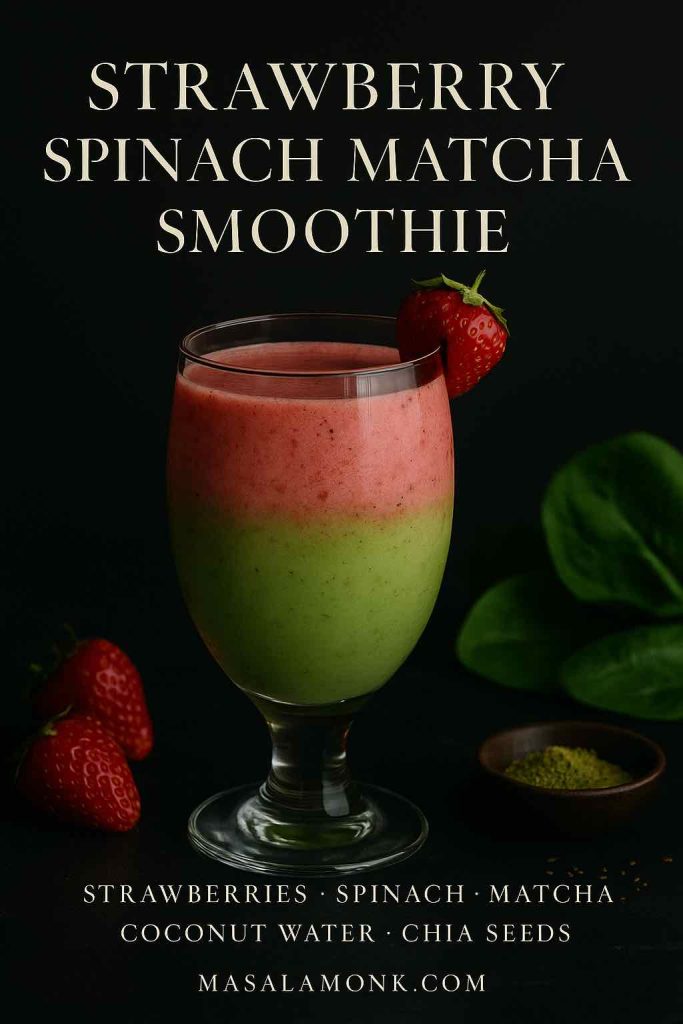
A layered strawberry spinach matcha smoothie in a stemmed glass with fresh strawberries and spinach on a dark background.
A refreshing Strawberry Spinach Matcha Smoothie, blending leafy greens with fruity sweetness for a vibrant, energizing drink.

This smoothie is ideal as a mid-morning pick-me-up or an afternoon refresher. Berries are loaded with vitamin C and antioxidants, which not only support your immune system but also help your body absorb the iron from spinach more effectively — a win-win. Together with matcha’s catechins, this drink is a powerhouse of anti-inflammatory compounds.

For variety, try swapping strawberries for blueberries or raspberries to create different versions of a berry matcha smoothie. Adding a spoonful of chia seeds makes it more filling, while coconut water instead of milk gives it a lighter, tropical edge. You can even blend in a few frozen banana slices for extra creaminess.

Ingredients:

  • 1 cup strawberries (fresh or frozen)
  • 1 teaspoon matcha powder
  • 1 cup fresh spinach leaves
  • 1 cup coconut water or almond milk
  • 1 tablespoon chia seeds (optional, for fiber)
  • ½ frozen banana (optional, for creaminess)

Method:

  1. Blend spinach, liquid base, and matcha first to avoid clumps.
  2. Add strawberries, chia seeds, and banana if using.
  3. Blend until smooth, adjusting liquid for consistency.
  4. Pour into a chilled glass and enjoy immediately.

Pro Tip: Use frozen berries instead of ice cubes — they’ll thicken your smoothie while keeping the flavor concentrated and sweet.


Mango Spinach Matcha Smoothie (Tropical Energy)

If you’ve ever wished your breakfast could taste like vacation, this smoothie is for you. Juicy, golden mango pairs beautifully with the grassy notes of matcha, while spinach provides a subtle green boost. The result is a creamy, tropical matcha green smoothie that feels indulgent but is light on calories.

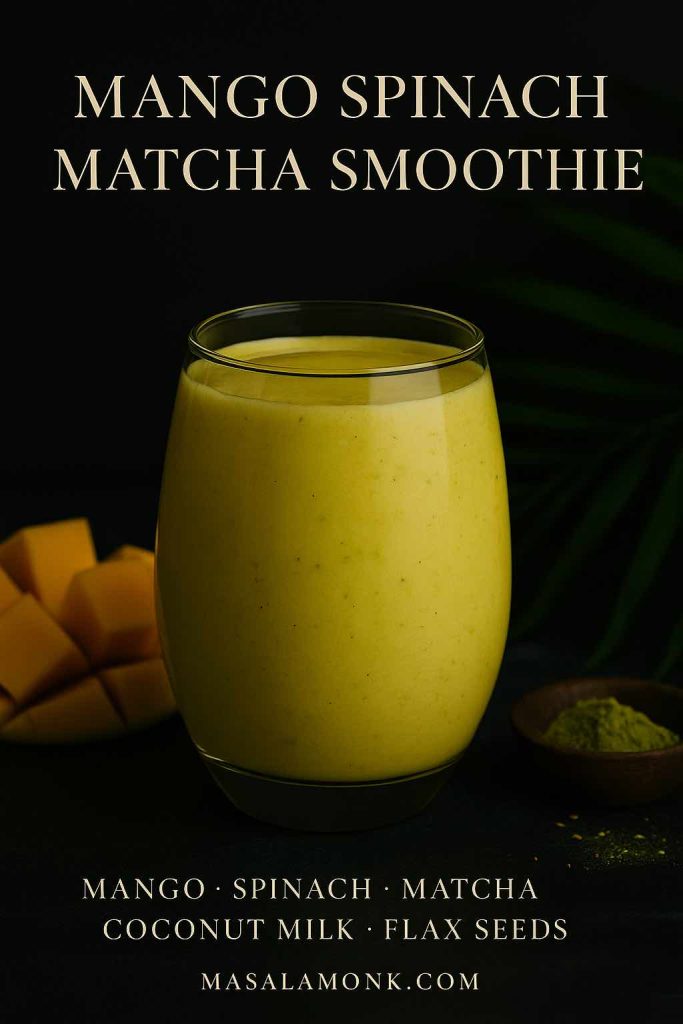
A golden mango spinach matcha smoothie in a tumbler glass, with mango cubes and matcha powder styled elegantly.
Bright and tropical, this Mango Spinach Matcha Smoothie delivers creamy texture, immune-boosting vitamins, and a morning energy kick.

Mango is rich in vitamin A and vitamin C, making this smoothie especially good for skin health and immunity. Paired with matcha’s antioxidants and spinach’s minerals, it becomes a nutrient-dense drink that can replace sugary tropical juices with a much healthier option. It’s also naturally sweet, so you don’t need added sugar.

For an extra twist, add coconut milk or pineapple chunks to create a tropical matcha smoothie. If you’re looking for a more filling version, blend in a scoop of protein powder or flax seeds to turn it into a post-workout recovery drink.

Ingredients:

  • 1 cup mango chunks (fresh or frozen)
  • 1 teaspoon matcha powder
  • 1 cup spinach leaves
  • 1 cup coconut milk (or coconut water for lighter option)
  • 1 tablespoon flax seeds or hemp seeds (optional, for omega-3s)
  • Ice cubes (optional)

Method:

  1. Blend spinach, liquid, and matcha first.
  2. Add mango and seeds, then blend until silky smooth.
  3. Serve chilled, with a sprinkle of shredded coconut on top if desired.

Pro Tip: If your mango isn’t super ripe, add half a banana to balance the flavor and enhance creaminess.


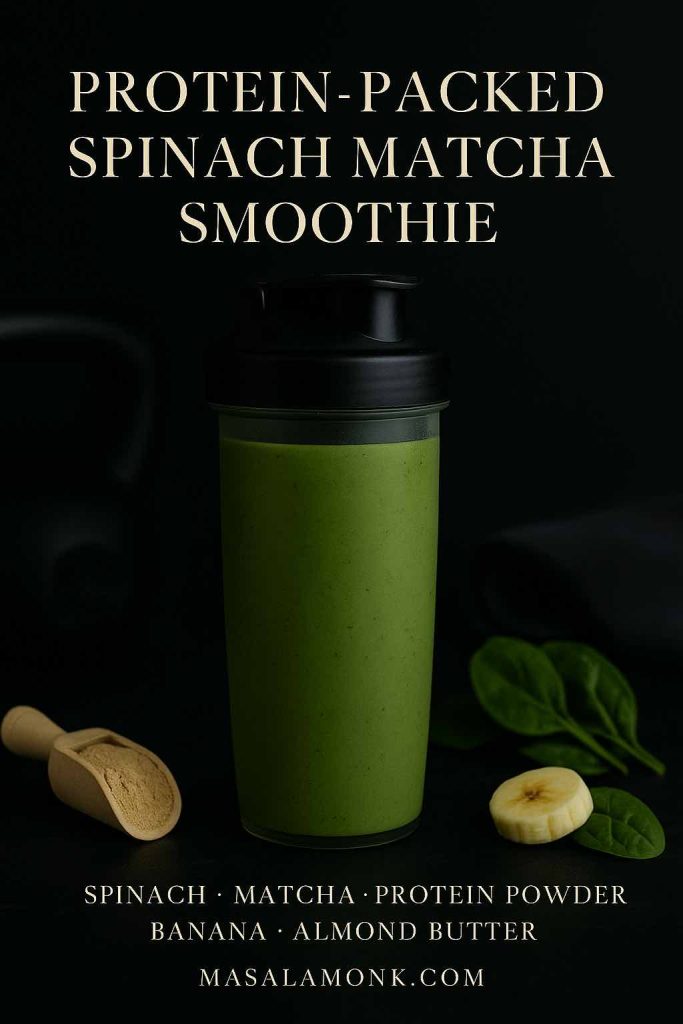
Protein-Packed Spinach Matcha Smoothie

Sometimes you need a smoothie that does more than just refresh you — it needs to fill you up. This protein-packed version is exactly that. With a scoop of protein powder or Greek yogurt, it transforms into a balanced meal that keeps you satisfied for hours. Matcha fuels your mind with clean energy, spinach delivers micronutrients, and the protein helps repair muscles and maintain satiety.

A protein-packed spinach matcha smoothie served in a sleek shaker bottle with protein scoop and spinach leaves.
Boost your workout recovery with this Protein-Packed Spinach Matcha Smoothie — rich in plant-based protein and antioxidants.

This smoothie works beautifully as a post-workout drink. The combination of carbs from fruit and protein from powders or yogurt is ideal for recovery, while matcha helps sharpen your focus for the rest of the day. Spinach adds magnesium and potassium, which also support muscle function.

The best part? You can adapt it endlessly. Go with vanilla whey for creaminess, collagen for skin and joint support, or plant-based protein for a vegan twist. Blend in banana or avocado for texture, add nut butter for richness, or stir in cacao for a chocolate matcha protein shake.

Ingredients:

  • 1 scoop protein powder (whey, plant-based, or collagen)
  • 1 teaspoon matcha powder
  • 1 cup fresh spinach
  • 1 banana or ½ avocado
  • 1 tablespoon almond butter (optional)
  • 1 cup milk of choice (dairy, oat, or almond)

Method:

  1. Blend spinach, matcha, and milk first.
  2. Add protein powder, banana/avocado, and almond butter.
  3. Blend until smooth and creamy.
  4. Serve immediately as a satisfying meal replacement.

Pro Tip: For best results, blend the spinach and matcha with liquid first, then add the protein powder — this prevents clumping and ensures a silky finish.


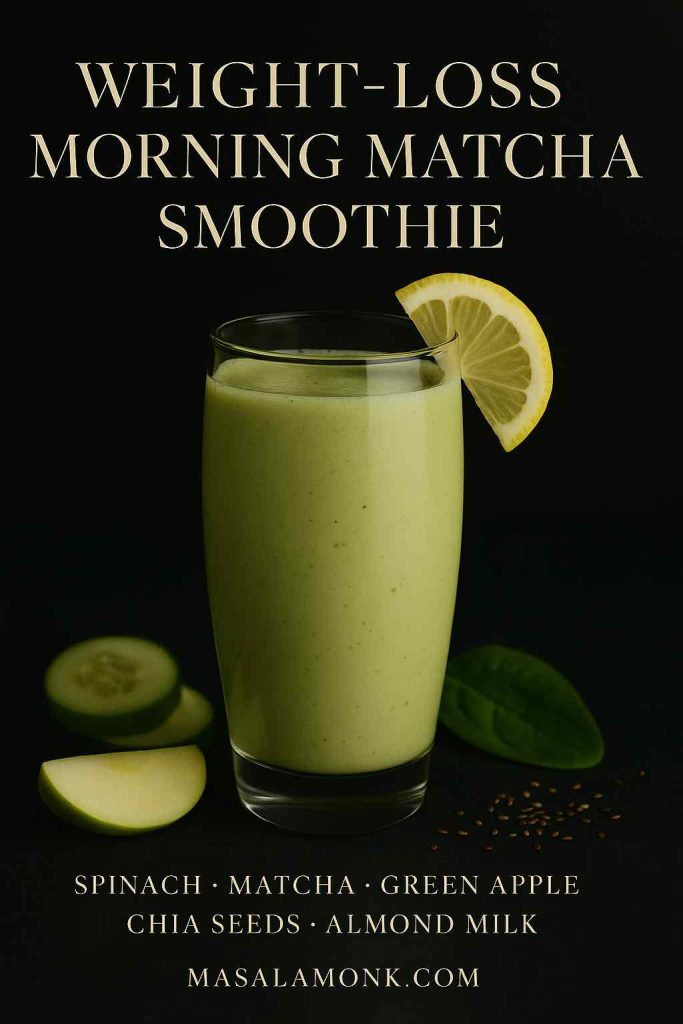
Weight-Loss Morning Matcha Spinach Smoothie

Light, hydrating, and metabolism-friendly, this is one of those Matcha Smoothie Recipes, that is designed for those mornings when you want something refreshing yet filling enough to keep cravings at bay. Matcha has been studied for its potential role in fat oxidation, while spinach provides fiber to support digestion and satiety. Add chia seeds, which expand in liquid, and you’ve got a smoothie that helps you feel full longer without piling on extra calories.

A tall slim glass of weight-loss morning matcha smoothie with lemon wedge garnish, cucumber slices, and chia seeds.
Light and refreshing, this Weight-Loss Morning Matcha Smoothie combines green apple, cucumber, and matcha for a low-calorie wellness drink.

This blend is especially good first thing in the morning, as it hydrates and energizes without being heavy. The crisp flavors of apple or cucumber keep it light and refreshing, while lemon juice adds brightness and helps balance the grassy notes of matcha. It’s also a great option if you’re trying intermittent fasting and need a nutrient-rich but light first meal.

For more staying power, you can add a quarter avocado, a scoop of protein powder, or even some Greek yogurt. These tweaks turn it from a simple snack into a smart, weight-conscious breakfast smoothie that supports your goals.

Ingredients:

  • 1 teaspoon matcha powder
  • 1 cup fresh spinach
  • ½ green apple or cucumber
  • 1 tablespoon chia seeds (or flax seeds)
  • 1 cup unsweetened almond milk
  • Juice of ½ lemon (optional, for brightness)
  • Ice cubes

Method:

  1. Blend spinach, almond milk, and matcha first until smooth.
  2. Add apple/cucumber, chia seeds, and lemon juice.
  3. Blend again until creamy and light.
  4. Pour into a tall glass and enjoy immediately.

Pro Tip: Soak the chia seeds in almond milk for 10–15 minutes before blending — it makes the smoothie creamier and more filling.


Tips for Making the Best Matcha Smoothies at Home

By now, you’ve seen just how versatile and delicious these matcha smoothie recipes can be. But before you start blending on autopilot, it’s worth taking a moment to think about how to get the most out of your matcha smoothie routine. A few simple choices can make your drinks not only tastier, but also healthier and more satisfying.

A flat-lay still life of smoothie ingredients including matcha powder, spinach leaves, banana slices, strawberries, mango cubes, chia seeds, and a lemon wedge.
Ready to blend wellness into your day? Fresh matcha, spinach, fruits, and seeds — the perfect base for healthy smoothie recipes.

First, let’s talk about the matcha itself. Not all matcha powders are created equal. If you’re new to making smoothies, look for a culinary-grade matcha. It’s affordable, blends well, and is made for mixing into recipes. Ceremonial grade is a bit more delicate and often reserved for traditional tea ceremonies, but if that’s what you have, it will still work beautifully. Just remember to sift your matcha before blending to avoid clumps.

Next, consider your base liquid. While regular milk is always an option, plant-based milks like almond, oat, or coconut add unique flavors and textures that can transform a smoothie. Coconut milk, for example, makes your drink richer and tropical, while oat milk adds a natural sweetness and creamy consistency. If you’re keeping calories low, unsweetened almond milk or coconut water are excellent choices.

Add-in and Add-ons for Matcha Smoothie Recipes

Another thing to think about is add-ins. The recipes above are strong on their own, but you can make them even more powerful by including extras like:

  • Chia seeds or flax seeds → for fiber and omega-3s.
  • Nut butters → for creaminess and healthy fats.
  • Protein powders → for satiety and muscle recovery.
  • Cacao or cinnamon → for extra flavor and antioxidants.

And finally, don’t forget texture. If you like your smoothies thick and spoonable, use frozen fruit and less liquid. If you prefer them light and drinkable, add more liquid and use fresh fruit. Over time, you’ll figure out the balance that works best for your taste and routine.

When you keep these tips in mind, you’ll find that your matcha smoothie recipes become less of a one-off treat and more of a daily ritual you look forward to.


📚 Further Reading on Health & Wellness

Looking for more ways to nourish your mornings and support your health? Here are a few handpicked posts from MasalaMonk you might enjoy:


Conclusion – Blending Flavor, Health, and Energy

As you can see, a simple smoothie can be so much more than just a quick drink. By combining spinach with matcha, you’re layering nutrients, antioxidants, and natural energy into something that also tastes genuinely delicious. Whether you reach for the banana version on a busy morning, the berry boost for an afternoon refresh, or the protein-packed blend after a workout, each one of these matcha smoothie recipes has a role to play in your day.

What makes them even better is how customizable they are. With just a few tweaks — switching up your fruit, adding seeds, or trying different plant-based milks — you can create endless variations without ever getting bored. It’s this flexibility, along with the proven health benefits of both matcha and spinach, that makes these smoothies such a smart addition to your lifestyle.

So the next time you’re debating between reaching for a cup of coffee or skipping breakfast altogether, consider giving one of these vibrant green blends a try instead. You’ll get the calm, sustained energy of matcha, the nutritional boost of spinach, and the satisfaction of knowing you’re nourishing your body with every sip. In other words, you’re not just drinking a smoothie — you’re fueling your day the smart, delicious way.


FAQs About Matcha Smoothie Recipes

1. Can you put matcha powder in smoothies?

Absolutely! Adding matcha powder to smoothies is one of the easiest ways to enjoy its benefits. Because matcha is powdered green tea leaves, you’re consuming the whole leaf — which means more antioxidants and nutrients compared to regular steeped tea. Just a teaspoon blended with fruit, spinach, and your favorite milk turns into a vibrant matcha smoothie recipe that’s both energizing and nourishing.


2. What fruit goes best with matcha in smoothies?

Bananas, strawberries, blueberries, and mango are some of the best fruits to pair with matcha in smoothies. Bananas add creaminess and natural sweetness, berries bring antioxidants and tang, and mango creates a tropical twist. These pairings not only balance matcha’s earthy flavor but also make your matcha smoothie recipes taste like a treat.


3. What is the best matcha for smoothies?

For smoothies, culinary-grade matcha is the best choice. It’s more affordable than ceremonial grade and designed to be mixed into foods and drinks. Look for high-quality organic matcha that’s bright green in color, as that usually indicates freshness and good nutrient content. This will make your matcha green tea smoothies both flavorful and effective.


4. Are matcha smoothies good for weight loss?

They can be. Matcha contains catechins like EGCG that may support metabolism and fat oxidation, while spinach and seeds add fiber to keep you full. When combined with low-calorie fruits like cucumber, apple, or berries, these weight-loss matcha smoothie recipes can help control cravings and keep your energy steady throughout the day.


5. Can matcha smoothies replace coffee in the morning?

Yes, many people use matcha smoothies as a coffee alternative. Matcha contains caffeine, but it’s balanced by L-theanine, which promotes calm focus instead of jitters. When blended into a smoothie with spinach, fruit, and protein, it makes a balanced breakfast that powers your morning without the crash that coffee often brings.


6. How often should you drink matcha smoothies?

Most people can enjoy one of the matcha smoothie recipes per day without issues, depending on their caffeine sensitivity. A typical serving (1 teaspoon of matcha powder) contains about 60–70 mg of caffeine, which is less than coffee but enough to boost energy. If you’re sensitive to caffeine, try having your smoothie earlier in the day.

Posted on Leave a comment

The Bell Pepper – Nutrition, Benefits, and 5 Practical Ways for Weight Loss

Bell Pepper - Nutrition, Benefits

When it comes to weight loss, we often search for exotic superfoods or expensive supplements. But what if a humble, colorful, and delicious vegetable in your local produce aisle could help you trim fat, reduce inflammation, and supercharge your metabolism? Enter the bell pepper.

What Are Bell Peppers?

Bell peppers (Capsicum annuum), also known as sweet peppers, are non-spicy, thick-walled fruits that come in vibrant shades of red, green, yellow, and orange. Unlike their fiery relatives in the Capsicum family, bell peppers are mild, sweet, and exceptionally nutrient-dense.

Nutritional Powerhouse

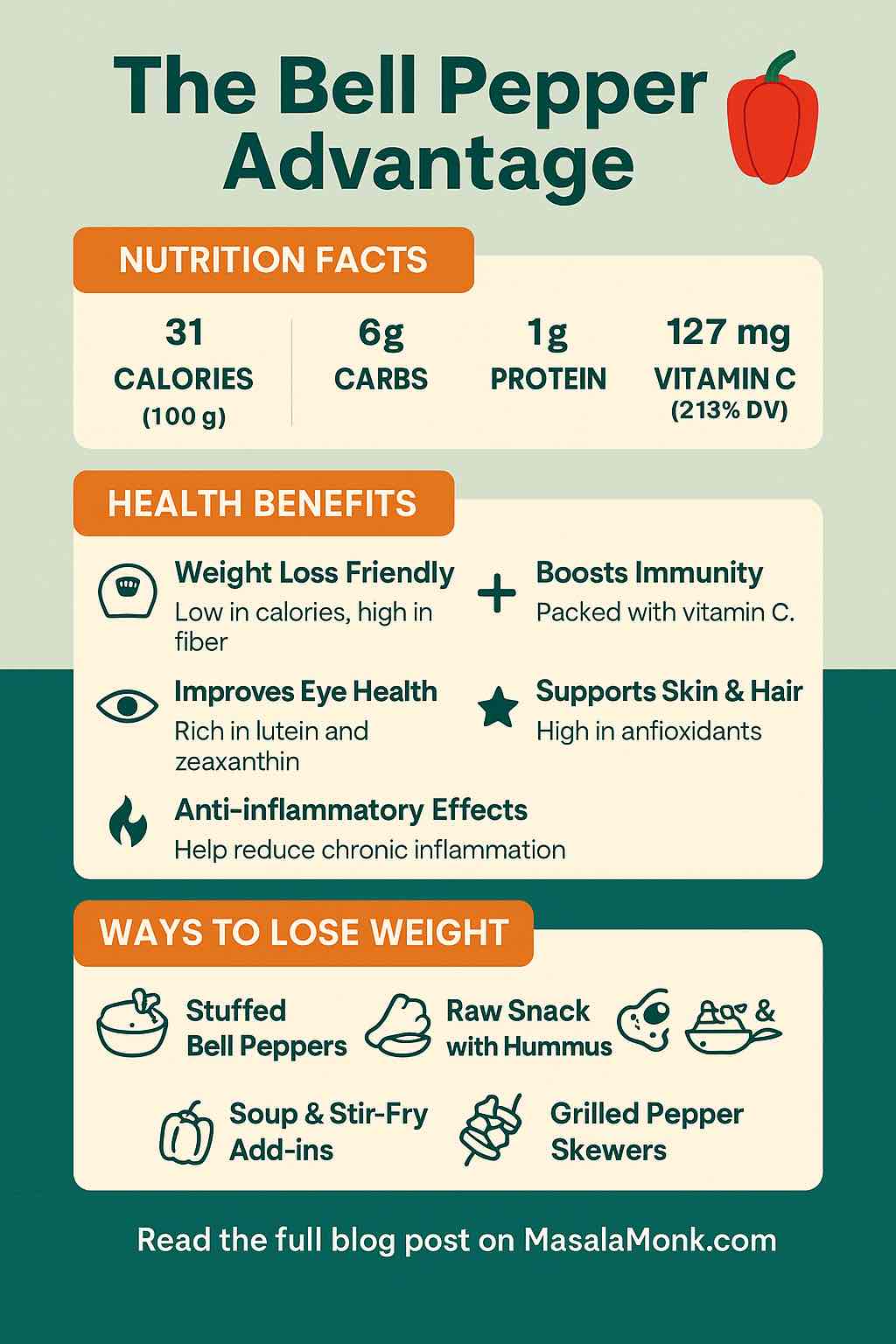
Here’s what you get in just one cup (about 100g) of raw red bell pepper:

  • Calories: 31
  • Water: ~92%
  • Carbohydrates: 6g (of which 4g are natural sugars)
  • Fiber: 2.1g
  • Protein: 1g
  • Fat: 0.3g
  • Vitamin C: 127mg (213% DV)
  • Vitamin A: 157mcg (19% DV)
  • Potassium: 211mg
  • Folate, Vitamin B6, Lutein, Zeaxanthin, Capsanthin, and Beta-carotene

Red bell peppers, which are fully ripened, have the highest levels of nutrients and antioxidants.

Science-Backed Health Benefits

1. Boosts Immunity and Skin Health

Vitamin C is essential for collagen production, wound healing, and immune function. Bell peppers contain more vitamin C than oranges, making them a powerful ally against seasonal illness and aging skin.

2. Enhances Metabolism and Fat Burning

Bell peppers contain capsiate, a non-spicy cousin of capsaicin, found in chili peppers. Capsiate has been shown in human and animal studies to modestly increase energy expenditure and fat oxidation without the burning sensation of capsaicin.

3. Fights Inflammation and Oxidative Stress

Antioxidants like beta-carotene, lutein, and zeaxanthin help neutralize free radicals. Capsanthin, unique to red bell peppers, has powerful anti-inflammatory and anti-obesity effects.

4. Improves Eye Health

Lutein and zeaxanthin accumulate in the retina and protect against macular degeneration and cataracts. Orange and yellow bell peppers are particularly rich in these carotenoids.

5. Promotes Fullness with Fewer Calories

High water content, dietary fiber, and low calorie density make bell peppers ideal for adding bulk to meals without increasing caloric load.

5 Practical Ways to Use Bell Peppers for Weight Loss

1. Stuffed Bell Peppers

Slice off the tops, remove seeds, and stuff with lean protein like turkey or lentils, brown rice, and herbs. Bake until soft. It’s a complete meal that’s filling, low-calorie, and fiber-rich.

2. Pepper & Hummus Snack Packs

Chop raw bell peppers into sticks and pair with 2 tablespoons of hummus. This crunchy, protein-rich snack keeps you full and curbs junk food cravings.

3. Egg & Pepper Breakfast Scramble

Saute diced bell peppers with onions and spinach. Add whisked eggs or tofu and scramble for a colorful, protein-packed breakfast that keeps you satisfied for hours.

4. Low-Cal Stir Fry Base

Bell peppers add volume, texture, and nutrition to stir fries. Use them with lean meats, tofu, or legumes in a light soy or garlic sauce over cauliflower rice for a low-carb dinner.

5. Grilled or Roasted as a Side Dish

Roast or grill peppers with a drizzle of olive oil and your favorite spices. Serve as a fiber-rich, antioxidant-loaded side dish that enhances any meal.

Cooking Tips to Maximize Benefits

  • Eat some raw to preserve vitamin C.
  • Cook lightly to boost carotenoid absorption.
  • Pair with healthy fats like olive oil or avocado to enhance nutrient uptake.
  • Mix colors to get a spectrum of nutrients and flavors.

Final Thoughts

Bell peppers aren’t just a colorful garnish. They’re a scientifically supported, budget-friendly powerhouse for weight loss and overall health. With their unique mix of fiber, water, antioxidants, and metabolism-boosting compounds, incorporating bell peppers into your daily meals is a simple yet effective way to support a leaner, healthier you.

So next time you shop, grab a rainbow of bell peppers and start reaping their delicious and transformative benefits.


📌 FAQs

1. Are bell peppers good for weight loss?
Yes. Bell peppers are low in calories, high in fiber and water, and contain metabolism-boosting compounds like capsiate, which can help support fat loss.

2. Which bell pepper is healthiest?
Red bell peppers are the most nutrient-dense. They’re fully ripened and contain the highest levels of vitamin C, beta-carotene, and capsanthin.

3. Can I eat bell peppers every day?
Absolutely. Eating bell peppers daily can support digestion, immunity, eye health, and weight management. Just vary the colors to maximize nutrient intake.

4. Do bell peppers burn belly fat?
While no food targets belly fat specifically, bell peppers contain compounds like capsiate and fiber that may help reduce overall fat and support metabolism.

5. How do I store bell peppers for freshness?
Keep unwashed bell peppers in the fridge’s crisper drawer. Use within 5–7 days for optimal freshness, or freeze sliced peppers for longer use.

6. Should I eat bell peppers raw or cooked?
Both are beneficial. Raw peppers preserve vitamin C, while cooking helps absorb carotenoids. A mix of both is ideal.

7. Can I eat bell peppers at night?
Yes. They are easy to digest and low in calories, making them a great late-night snack when paired with protein like hummus or cottage cheese.

8. Are green bell peppers less nutritious?
Green peppers are less sweet and contain fewer antioxidants than red or orange ones but still provide fiber, vitamin C, and B6.

9. Can bell peppers cause bloating or gas?
Some people with sensitive stomachs may experience mild bloating. Start with smaller amounts and cook them to reduce potential discomfort.

10. Are bell peppers keto-friendly?
Yes. Bell peppers are relatively low in carbs (~6g per 100g), making them suitable for most low-carb and ketogenic diets in moderation.

Posted on Leave a comment

7 Incredible Foods to Calm Autoimmune Disease

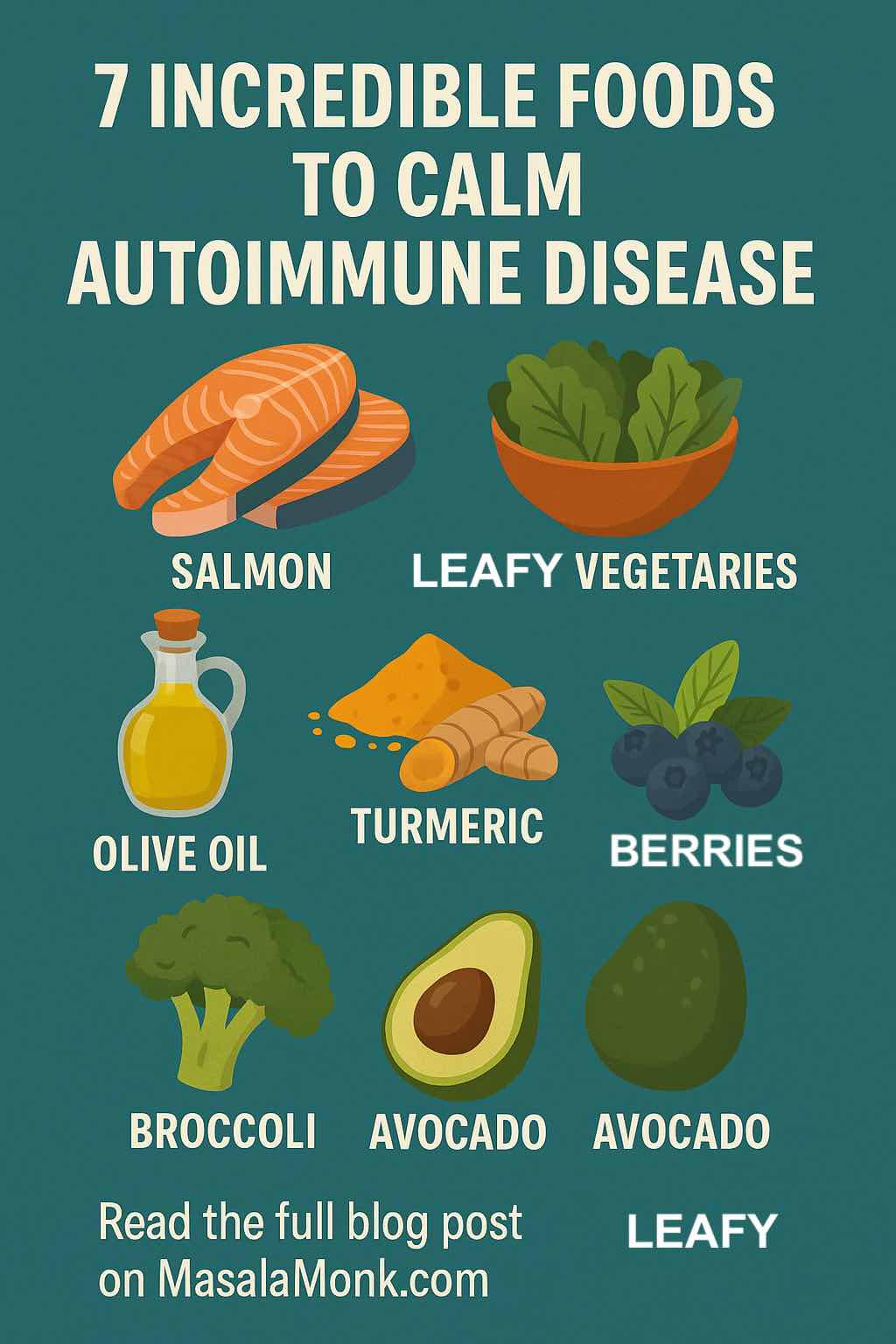
FOODS TO CALM AUTOIMMUNE DISEASE

Autoimmune diseases are complex, unpredictable, and often exhausting. While there’s no magic food that can “cure” conditions like rheumatoid arthritis, lupus, Hashimoto’s, or multiple sclerosis, mounting research shows that what you put on your plate can make a huge difference in how you feel day to day. If you’re seeking more energy, fewer flares, and a chance to regain control, start by adding these science-backed, anti-inflammatory foods to your daily routine.

Let’s break down the most powerful foods for taming inflammation—with real-life tips for making them a delicious, effortless part of your lifestyle.


1. Fatty Fish (Salmon, Mackerel, Sardines)

Why they work: Fatty fish are rich in omega-3 fatty acids (EPA and DHA), which act like fire extinguishers for chronic inflammation. These fats not only lower inflammatory cytokines, but they also directly benefit joint pain and stiffness—especially in rheumatoid arthritis.

How to use them:

  • Grill salmon fillets with lemon and herbs for a 20-minute dinner.
  • Add tinned sardines or mackerel to salads or avocado toast for a protein boost.

Tip: If fish isn’t your thing, high-quality fish oil supplements are a proven alternative.


2. Extra Virgin Olive Oil

Why it works: The backbone of the Mediterranean diet, extra virgin olive oil contains polyphenols and oleocanthal, which have anti-inflammatory effects similar to ibuprofen, but without the side effects.

How to use it:

  • Drizzle over roasted veggies or use as a salad base.
  • Dip crusty whole-grain bread into olive oil, seasoned with fresh herbs and cracked pepper.

Tip: Use “cold-pressed” extra virgin olive oil for maximum benefits.


3. Leafy Greens (Spinach, Kale, Swiss Chard)

Why they work: These are nutritional powerhouses—rich in magnesium, vitamin C, and fiber. They help reduce oxidative stress, support detoxification, and provide essential nutrients that many autoimmune patients lack.

How to use them:

  • Add spinach to morning smoothies (you won’t even taste it!).
  • Sauté kale with garlic as a side dish for any meal.
  • Try a big mixed green salad every day at lunch.

4. Berries (Blueberries, Strawberries, Raspberries, Blackberries)

Why they work: Berries are packed with anthocyanins and flavonoids—compounds shown to lower markers like CRP and help regulate immune responses.

How to use them:

  • Sprinkle fresh or frozen berries on oatmeal, yogurt, or chia pudding.
  • Blend into smoothies for a quick, nutrient-rich snack.

5. Fermented Foods (Yogurt, Kefir, Sauerkraut, Kimchi)

Why they work: Your gut is the command center for your immune system. Fermented foods provide probiotics that help restore gut balance and can “retrain” the immune system—especially helpful for conditions like IBD and Hashimoto’s.

How to use them:

  • Add a spoonful of sauerkraut or kimchi to grain bowls or salads.
  • Choose plain, unsweetened yogurt as a base for fruit parfaits or savory dips.

6. Turmeric (with Black Pepper!)

Why it works: Curcumin, the active compound in turmeric, powerfully reduces inflammation and is shown in trials to lower symptoms in RA, psoriasis, and even MS.

How to use it:

  • Whisk turmeric and black pepper into soups, curries, or scrambled eggs.
  • Try a “golden milk” latte (turmeric, ginger, black pepper, milk of choice) before bed.

Tip: Always pair turmeric with black pepper to boost absorption by up to 2000%.


7. Nuts & Seeds (Walnuts, Almonds, Flax, Chia)

Why they work: Packed with healthy fats, fiber, magnesium, and zinc—nutrients that lower inflammation and support immune balance.

How to use them:

  • Snack on a handful of mixed nuts every afternoon.
  • Sprinkle chia or flax seeds into smoothies or over oatmeal.
  • Make your own trail mix with nuts, seeds, and a few dried berries.

8. Cruciferous Vegetables (Broccoli, Brussels Sprouts, Cauliflower)

Why they work: These veggies are rich in sulforaphane and indoles—natural compounds that help regulate detoxification and balance immune responses.

How to use them:

  • Roast broccoli or Brussels sprouts with olive oil and garlic for a crispy side.
  • Add finely chopped cauliflower to stir-fries or grain bowls.

9. Ginger

Why it works: Like turmeric, ginger blocks inflammatory pathways and soothes gut inflammation. Research supports its use in reducing pain and joint stiffness.

How to use it:

  • Steep fresh ginger slices in hot water for a calming tea.
  • Add grated ginger to smoothies, stir-fries, or salad dressings.

10. Avocado

Why it works: Loaded with monounsaturated fats and antioxidants, avocado helps lower inflammation and supports healthy cholesterol levels.

How to use it:

  • Smash on toast, top with seeds and a squeeze of lemon.
  • Dice into salads or blend into creamy smoothies.

11. Whole Grains (Quinoa, Oats, Buckwheat, Brown Rice)

Why they work: Whole grains deliver fiber, magnesium, and phytonutrients that help feed good gut bacteria and modulate immune function.

How to use them:

  • Cook a batch of steel-cut oats or quinoa for breakfast.
  • Use buckwheat or brown rice as a base for grain bowls.

Practical Tips for Success

  1. Aim for Color & Variety: The more diverse your diet, the wider the range of anti-inflammatory nutrients you’ll get.
  2. Watch for Triggers: Not every “healthy” food works for every person with autoimmune disease—track your meals and symptoms to spot personal sensitivities (e.g., gluten, nightshades, dairy).
  3. Prioritize Whole Foods: Limit processed foods, added sugars, and excessive salt. They can all drive inflammation and flare-ups.
  4. Stay Consistent: Benefits are cumulative—focus on building sustainable habits, not quick fixes.

Sample Day: Anti-Inflammatory Eating

Breakfast: Overnight oats with chia seeds, blueberries, walnuts, and a drizzle of honey
Lunch: Kale salad with roasted salmon, avocado, quinoa, and sauerkraut
Snack: Greek yogurt with raspberries and pumpkin seeds
Dinner: Stir-fried broccoli and ginger over brown rice, topped with tofu or chicken
Drink: Turmeric-ginger “golden milk” latte


Frequently Asked Questions

What about supplements?

Food comes first! But omega-3, vitamin D, high-quality probiotics, and curcumin can help—ask your doctor about appropriate dosing.

How long until I notice a difference?

Many people feel improvement in energy, pain, or gut symptoms within weeks of consistent changes, but individual results vary.

Is there a “best” diet for autoimmune disease?

Most research supports Mediterranean-style or autoimmune protocol (AIP) diets, focusing on unprocessed, anti-inflammatory foods and eliminating common triggers.


Final Thoughts

If you’re battling an autoimmune disease, know that you have real tools at your disposal. Every anti-inflammatory meal you eat is a message to your body: “Let’s work together to heal.” Focus on progress, not perfection. And remember, small changes add up—start with a new berry smoothie, an extra spoonful of sauerkraut, or a golden milk latte, and see how you feel.

Your journey is unique. Listen to your body, stay curious, and never underestimate the power of food as medicine.

10 FAQs & Answers

1. What are the most common autoimmune diseases that benefit from an anti-inflammatory diet?
Most autoimmune diseases—including rheumatoid arthritis, lupus, Hashimoto’s thyroiditis, multiple sclerosis, inflammatory bowel disease (IBD), psoriasis, and type 1 diabetes—may benefit from anti-inflammatory dietary patterns. Scientific studies consistently show improvement in symptoms and lower inflammation markers across these conditions.


2. Can diet alone cure autoimmune disease?
No, diet cannot cure autoimmune disease. However, the right foods can reduce flare frequency, lessen symptom severity, and improve overall well-being. Diet is best used alongside medications and medical guidance.


3. How quickly will I notice improvements after changing my diet?
Some people notice increased energy, reduced pain, and better digestion within 2–4 weeks. For others, improvements may take longer. Consistency is key—results often build gradually.


4. Are there foods I should avoid with autoimmune disease?
Yes, common triggers include ultra-processed foods, added sugars, excessive alcohol, and trans fats. For some people, gluten, dairy, soy, or nightshades (tomato, eggplant, peppers) can worsen symptoms. It’s best to track your own triggers with a food diary.


5. Can I follow a vegetarian or vegan diet if I have an autoimmune disease?
Absolutely. Focus on plant-based sources of anti-inflammatory nutrients—legumes, nuts, seeds, leafy greens, berries, whole grains, and healthy oils. Consider supplementing with vitamin B12, vitamin D, and possibly omega-3s (from algae oil) to avoid deficiencies.


6. Should I take supplements like fish oil or curcumin?
Supplements can help if you’re not getting enough from food. Fish oil (for omega-3s), curcumin (turmeric extract), vitamin D, and probiotics have research support. Always consult your healthcare provider before starting new supplements, especially if you take medications.


7. How important is gut health for autoimmune conditions?
Extremely important! Over 70% of your immune system resides in the gut. Eating plenty of fiber, fermented foods, and a diverse range of fruits and vegetables supports healthy gut bacteria and immune balance.


8. Are all fermented foods helpful?
Most are, but look for “raw” or “live culture” products (e.g., unpasteurized sauerkraut, kimchi, kefir, yogurt with live cultures). Processed or pasteurized versions may not provide probiotic benefits.


9. How do I manage food sensitivities or allergies alongside autoimmune disease?
Elimination diets (like AIP or low FODMAP) can help identify food triggers. Work with a registered dietitian or healthcare provider to avoid nutritional gaps when restricting foods.


10. What’s a simple way to start eating anti-inflammatory?
Begin by adding one or two anti-inflammatory foods (like berries or leafy greens) to your daily routine. Replace processed snacks with nuts or seeds. Cook more meals at home using olive oil and a variety of colorful vegetables.