
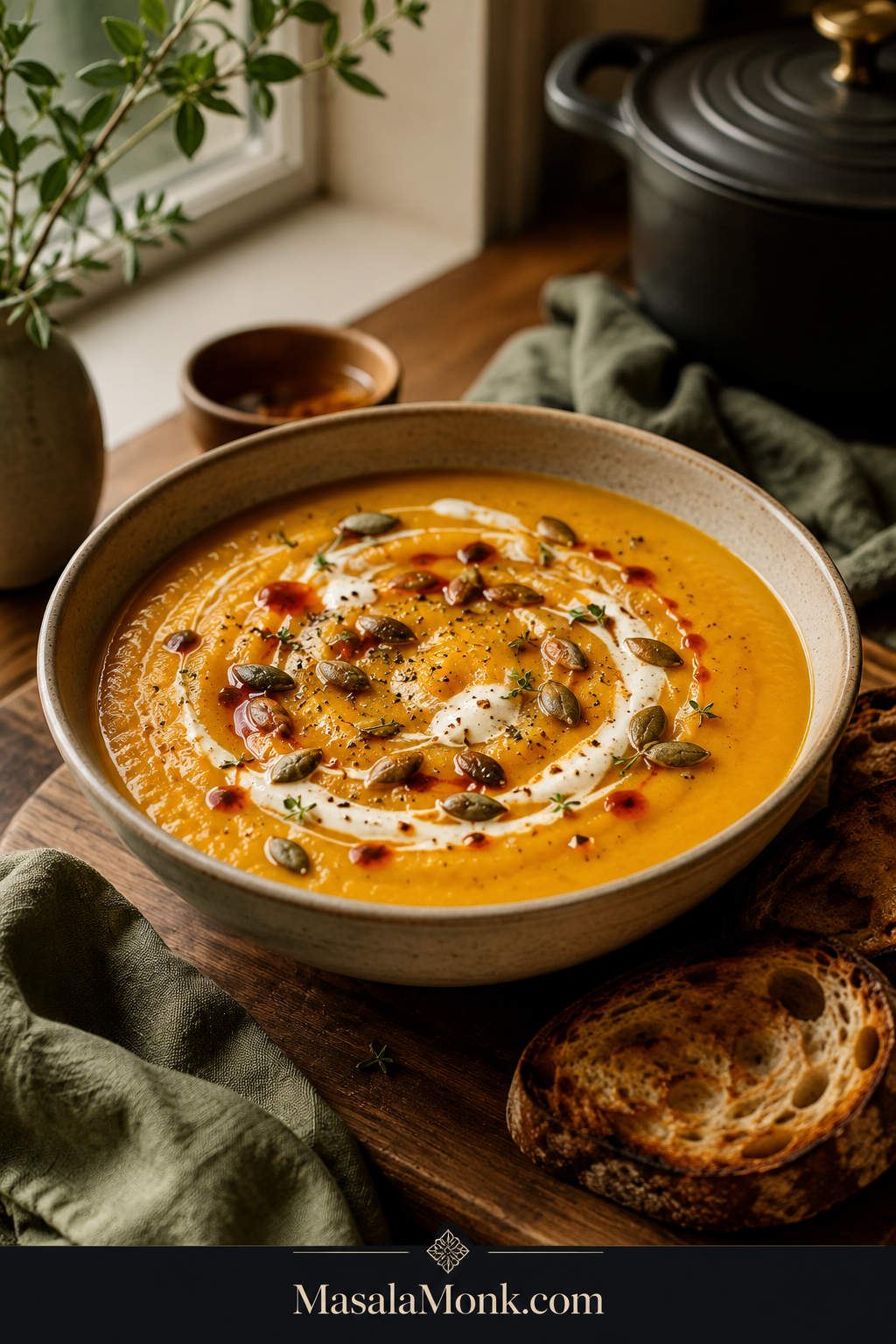
This is the butternut squash soup for the nights when you want something creamy and comforting, but still balanced rather than heavy — sweet from the squash, savory from onion and garlic, and bright enough at the end that the bowl never tastes flat.
Butternut squash soup can easily go watery, bland, baby-food sweet, or too heavy if the liquid, salt, and finish are not handled carefully. This version avoids that with one simple idea: cook the squash until tender, blend first, thin later, then brighten the pot at the end.
You can roast the squash for deeper caramelized flavor, or make the whole soup on the stovetop when you want something faster. It also works with fresh squash, pre-cut cubes, frozen squash, canned puree, or leftover roasted squash — and you can finish it with cream, coconut milk, olive oil, butter, or no cream at all.
Here is the goal: a smooth, cozy bowl that does not turn watery, bland, or too sweet. At the finish, the soup should coat a spoon, taste savory before it tastes sweet, and end with just enough brightness to make you want the next bite. It is the kind of bowl that makes a piece of toast feel like dinner, especially when the top has something crunchy, creamy, or a little spicy.
Jump to Recipe · Quick Answer · Make It Now · Less-Broth-First Method · Roasted vs Stovetop · Cream, Coconut Milk, or No Cream · Fix Bland or Thin Soup
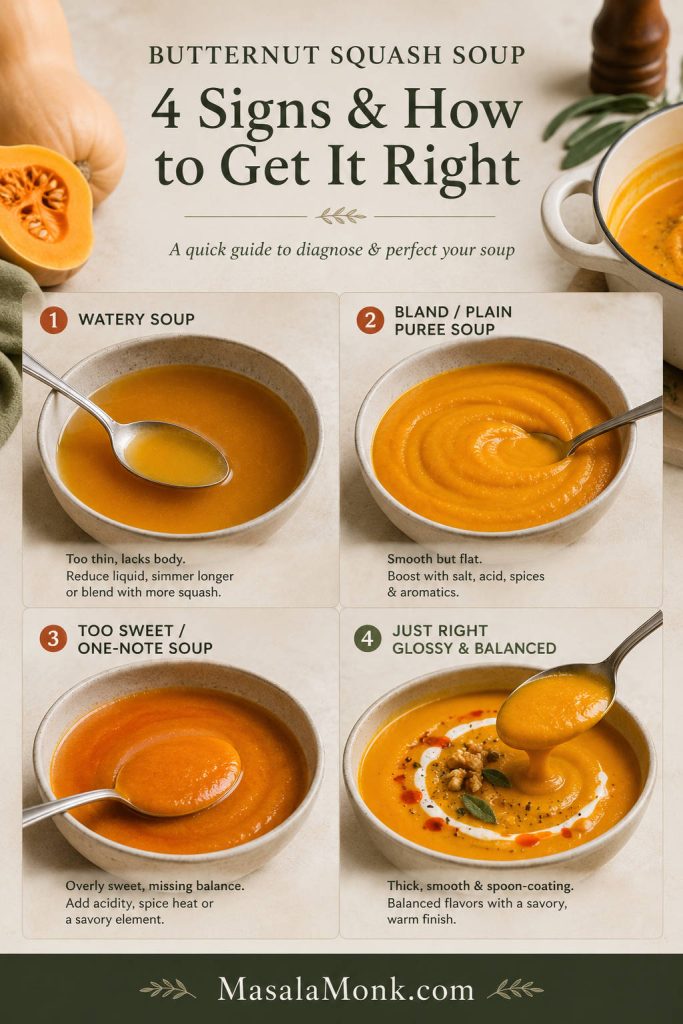
Use this quick visual check before you adjust the pot: watery, bland, and overly sweet butternut squash soup each need a different fix.
Quick Answer: How to Make Butternut Squash Soup
To make butternut squash soup, cook butternut squash until very tender, then blend it with sautéed onion, garlic, carrot, broth, herbs, and seasoning until smooth. Roast the squash at 425°F / 220°C when you want the deepest flavor. When speed matters, simmer peeled squash cubes directly in the pot with broth until soft.
If peeling raw squash feels annoying, roast the halves first and scoop the soft flesh out later. That gives you deeper flavor and skips the hardest part of squash prep.
The most important technique is to use less liquid at first. Start with 3 cups / 720 ml broth, blend the soup, then loosen it only once the texture is clear. That keeps the bowl creamy instead of watery, whether you finish it with cream, coconut milk, olive oil, butter, or no cream at all.
Before serving, taste once and wake the pot with lemon juice, lime juice, or apple cider vinegar. A small acidic finish keeps the squash from tasting dessert-sweet.
Need exact amounts? Go straight to the recipe card. Still choosing a method? Compare roasted vs stovetop, or check the fresh, frozen, pre-cut, and canned squash guide.
Make It Now: The Best Default Version
Do not overthink the versions yet. When in doubt, make the MasalaMonk default: roasted squash, a simple onion-carrot-garlic base, herbs, 3 cups / 720 ml broth, and the creamy finish that fits your bowl — cream, coconut milk, butter, or olive oil.
For the safest, most flavorful bowl tonight, roast one large butternut squash, sauté the onion, carrot, garlic, and herbs in a soup pot, add the roasted squash and broth, then blend until silky. Finish with either ½ cup / 120 ml cream, 1 cup / 240 ml coconut milk, or 1–2 tablespoons butter or olive oil.
Before serving, taste the soup and add a small splash of lemon juice, lime juice, or apple cider vinegar. That simple order keeps the soup thick, smooth, and balanced instead of watery, grainy, or too sweet.
| Need | Best Choice |
|---|---|
| Best flavor | Roast the squash first |
| Fastest method | Use the stovetop method with peeled cubes |
| No raw peeling | Roast squash halves, then scoop the flesh |
| Dairy-free creamy soup | Use full-fat coconut milk |
| No-cream soup | Blend well and finish with olive oil, butter, lemon, or lime |
| Thicker soup | Start with less broth and adjust the body at the end |
Butternut Squash Soup Recipe Card
Creamy Butternut Squash Soup
This creamy butternut squash soup is smooth, comforting, and easy to adjust. Roast the squash for deeper flavor, or make it fully on the stovetop for a faster weeknight soup. Finish it with cream, coconut milk, butter, olive oil, or a simple splash of lemon or lime for a lighter version.
| Prep Time | 15 minutes |
| Cook Time | 45 minutes roasted / 30 minutes stovetop |
| Total Time | About 1 hour roasted / 45 minutes stovetop |
| Servings | 6 |
| Yield | About 8 cups / 1.9 L soup |
| Main Method | Roasted or stovetop |
| Diet Notes | Vegetarian; gluten-free if using gluten-free stock; vegan and dairy-free options included |
Timing note: the roasted total assumes you prep and sauté the aromatics while the squash finishes roasting.
Ingredients
- 1 large butternut squash, about 3 lb / 1.3–1.4 kg whole, or about 8 cups / 1.1–1.2 kg peeled cubes
- 2 tablespoons / 30 ml olive oil, plus a little more if roasting cubes
- 1 large yellow onion, about 200 g, chopped
- Carrot: 1 large, about 150 g, chopped
- 3–4 garlic cloves, minced
- 1 teaspoon grated fresh ginger, optional
- 3 cups / 720 ml vegetable broth to start, plus up to 1 cup / 240 ml more as needed
- 1 teaspoon fine salt, plus more to taste
- ½ teaspoon black pepper
- ½ teaspoon smoked paprika or ⅛ teaspoon ground nutmeg
- 1 teaspoon dried thyme, sage, or rosemary, or 1 tablespoon chopped fresh herbs
- Finish with 1–2 teaspoons lemon juice, lime juice, or apple cider vinegar
Choose One Creamy Finish
- Classic creamy soup: ½ cup / 120 ml heavy cream
- Dairy-free creamy soup: 1 cup / 240 ml full-fat coconut milk
- Creamy soup without cream: 1–2 tablespoons butter or olive oil
- Lighter soup: skip the creamy finish and use lemon, lime, herbs, and black pepper to brighten the bowl
Equipment
- Large baking sheet, if roasting
- Parchment paper, optional
- Sharp chef’s knife
- Vegetable peeler, if making the stovetop cube version
- Large spoon for removing seeds
- Dutch oven or heavy-bottomed soup pot
- Immersion blender or countertop blender
- Ladle
- Measuring cups and spoons
- Kitchen scale, optional but helpful
Roasted Method
- Heat the oven to 425°F / 220°C.
- Cut the butternut squash in half lengthwise and scoop out the seeds. For faster roasting, peel and cube the squash instead.
- Rub the squash with 1 tablespoon olive oil and a pinch of salt. If roasting cubes, use enough oil to lightly coat them.
- Roast cut-side down on a baking sheet for 40–50 minutes, or until the flesh is very tender and the edges smell sweet and nutty. If using cubes, roast for 35–40 minutes, tossing once, until lightly caramelized.
- Heat the remaining 1 tablespoon olive oil in a Dutch oven or soup pot over medium heat.
- Add the onion and carrot. Cook for 6–8 minutes, stirring occasionally, until softened.
- Add garlic, ginger if using, herbs, smoked paprika or nutmeg, black pepper, and salt. Cook for 30–60 seconds, just until fragrant.
- Scoop the roasted squash flesh into the pot. Add 3 cups / 720 ml broth.
- Simmer for 5–10 minutes so the flavors come together.
- Blend until completely smooth using an immersion blender or countertop blender.
- Thin the soup in small splashes until it reaches your preferred texture.
- Stir in your chosen creamy finish, if using.
- Finish with lemon juice, lime juice, or apple cider vinegar. Taste and adjust salt, pepper, and acidity before serving.
Stovetop Method
- Peel, seed, and cube the butternut squash.
- Heat 2 tablespoons olive oil in a Dutch oven or soup pot over medium heat.
- Add onion and carrot. Cook for 6–8 minutes, until softened.
- Add garlic, ginger if using, herbs, smoked paprika or nutmeg, salt, and pepper. Cook for 30–60 seconds.
- Add the squash cubes and 3 cups / 720 ml broth.
- Bring to a boil, then reduce to a simmer.
- Cover and cook for 20–30 minutes, or until the squash is very soft.
- Blend until smooth.
- Loosen the soup only if it needs more liquid.
- Stir in your chosen creamy finish, if using.
- Finish with lemon juice, lime juice, or apple cider vinegar, then adjust seasoning.
Important texture note: start with 3 cups / 720 ml broth, not the full amount. Squash size and water content can vary. It is much easier to thin the soup after blending than to fix a watery pot later.
Vegan note: use vegetable broth, olive oil, and coconut milk or cashew cream instead of butter or heavy cream.
Now tune the bowl: texture method · creamy finish · toppings · troubleshooting.
What’s Inside
The recipe above gives you the main bowl. From there, the guide below helps you tune it to your kitchen — the squash you have, the method you prefer, the finish you want, and the fixes that save the pot if something tastes off.
Start Here
- The Less-Broth-First Method
- Why This Recipe Works
- Ingredients
- Fresh, Frozen, Pre-Cut, or Canned Squash
Choose Your Version
- Roasted vs Stovetop
- Instant Pot, Slow Cooker, and Blender Notes
- Cream, Coconut Milk, or No Cream
- Flavor Variations
Serve, Store, Fix
- Best Toppings
- What to Serve With It
- Storage, Freezing, and Reheating
- Avoid These Common Mistakes
- Troubleshooting
- Is It Healthy?
- FAQ
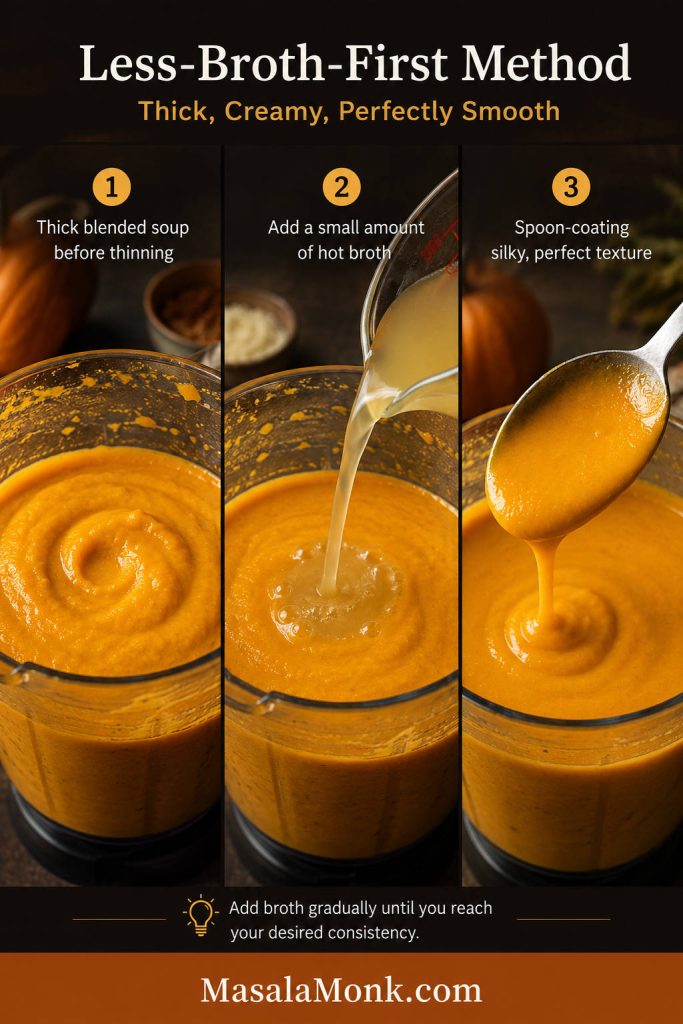
The Less-Broth-First Method
This recipe uses the Less-Broth-First Method: start with 3 cups / 720 ml broth, blend the cooked squash until smooth, then thin only after you know the soup’s real texture.
That one method is what makes the recipe flexible. If your squash is huge, watery, frozen, canned, or already roasted, the soup still works because the final thickness is adjusted after blending, not guessed before cooking.
The finished soup should feel velvety on the spoon, not loose like broth and not stiff like puree. Once the texture is right, salt, richness, herbs, and a little acid make the flavor complete.
Why This Butternut Squash Soup Works
This soup tastes complete when the squash’s sweetness has something savory, rich, and bright around it. Onion, garlic, carrot, herbs, spice, salt, fat, and acidity all help the bowl taste full instead of flat.
Roasting brings out deeper, caramelized flavor. The stovetop method is faster and still gives you a smooth, comforting result, especially when the onion, garlic, carrot, and spices are cooked properly before the broth goes in.
When the cut side comes out deeply golden and the kitchen smells sweet and nutty, you know the soup already has a head start. Those roasted edges are where the bowl gets its deeper, almost nutty sweetness.
Seasoning the aromatics before the broth goes in keeps the soup from tasting diluted later. Carrot helps the soup taste rounder and look brighter, while ginger, herbs, black pepper, smoked paprika, or nutmeg add warmth. Lemon juice, lime juice, or apple cider vinegar keeps the final spoonful lively.
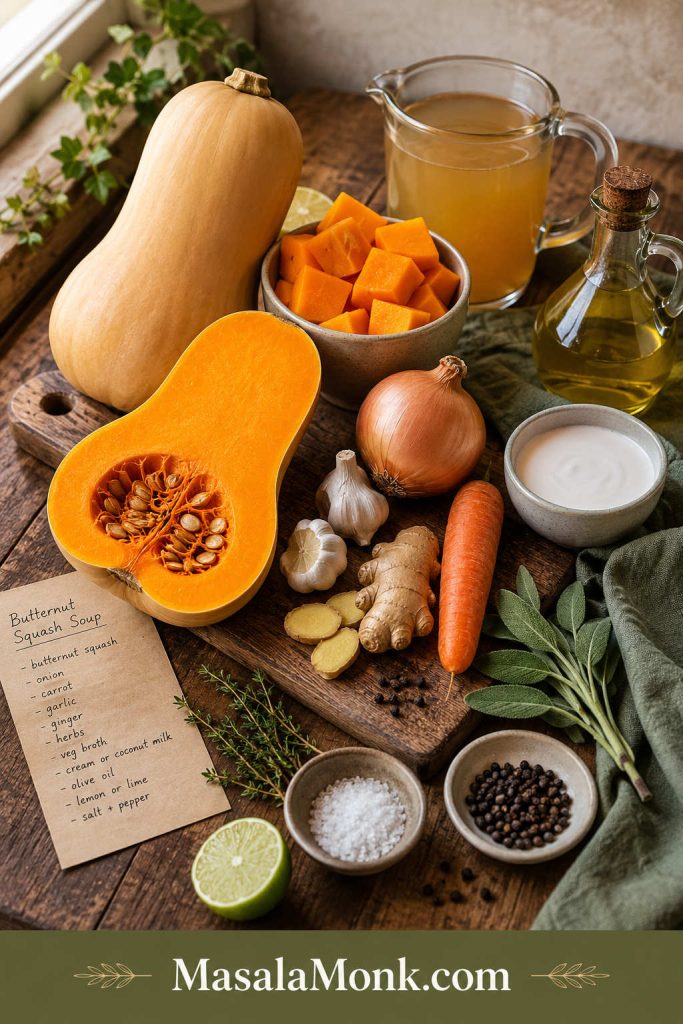
Ingredient Notes: What Each One Does
None of the ingredients are here just for show. Squash brings body and sweetness. Onion, garlic, and carrot make the soup savory. Herbs, ginger, and spices add warmth. Broth controls thickness. Your creamy finish decides how rich the final bowl feels.
Butternut Squash
Butternut squash is naturally sweet, creamy when blended, and perfect for soup. One large squash, about 3 lb / 1.3–1.4 kg, is usually enough for 6 servings.
Whole fresh squash, peeled cubes, frozen squash, canned puree, and leftover roasted squash can all work. The method changes slightly depending on what you have, but the same rule stays true: cook it until very tender before blending.
Onion, Garlic, and Carrot
Onion and garlic give the soup its savory base. Carrot is part of the default version because it rounds out the flavor and deepens the color. You can skip it if you do not have one, but the bowl may taste slightly less full.
Ginger, Herbs, and Spices
Fresh ginger adds warmth and keeps the soup from tasting heavy. Sage, thyme, rosemary, nutmeg, smoked paprika, curry powder, garam masala, and black pepper all work well here.
Classic version: use sage, thyme, rosemary, or nutmeg. For a warmer spiced bowl, add ginger with a little curry powder or garam masala and finish with lime.
Broth
Vegetable broth keeps the recipe vegetarian and works well with the natural sweetness of the squash. Chicken broth can also be used if you are not keeping the soup vegetarian.
Think of broth as an adjustment, not the whole base. The soup should coat a spoon, not pour like thin broth. Add more only after blending if the texture needs it.
Cream, Coconut Milk, Butter, or Olive Oil
You do not need heavy cream to make this soup creamy. Creaminess comes from fully cooked squash, controlled broth, and thorough blending first. The blender should turn the squash glossy before any cream goes in.
Cream, coconut milk, butter, or olive oil can add richness, but they should not be doing all the work. Coconut milk is the easiest dairy-free finish. For more ways to use it in cooking, see this guide to coconut milk benefits and uses.
Lemon, Lime, or Apple Cider Vinegar
This is the small step that makes the soup taste finished. Use lemon juice for a clean finish, lime juice for a spiced or coconut version, and apple cider vinegar for a warmer fall-style bowl.
Fresh, Frozen, Pre-Cut, or Canned Squash
Fresh, frozen, pre-cut, canned, and leftover roasted squash can all make a good soup. The handling changes, but the method stays forgiving: cook the squash until fully soft, blend, then adjust the texture and flavor.
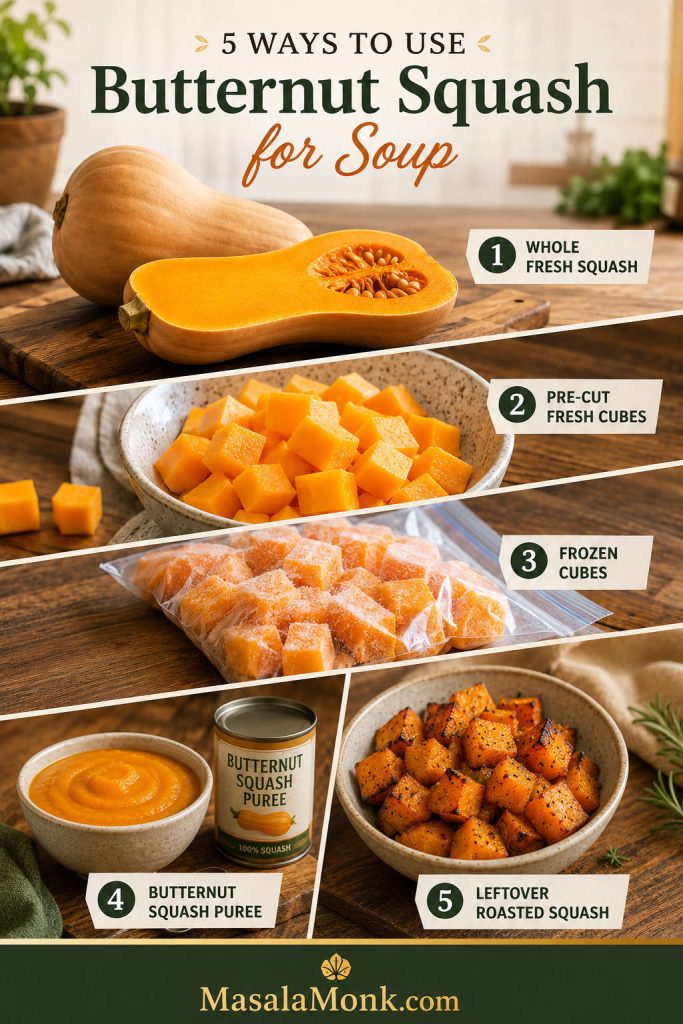
Choose the Squash You Have
| What You Have | Amount for This Recipe | What to Adjust |
|---|---|---|
| Whole fresh butternut squash | 1 large squash, about 3 lb / 1.3–1.4 kg | Best flavor. Roast halves or cubes, or peel and simmer on the stovetop. |
| Pre-cut fresh squash | About 8 cups / 1.1–1.2 kg cubes | Great shortcut. Roast for flavor or simmer for speed. Check that the cubes are firm and fresh. |
| Frozen butternut squash cubes | About 8 cups / 1.1–1.2 kg cubes | Add directly to the pot. Frozen cubes may release extra water, so start with less broth. |
| Canned or packaged squash puree | About 4 cups / 900–950 g puree | Sauté onion, garlic, and spices first. Then whisk in the puree and broth slowly. |
| Frozen squash puree | About 4 cups / 900–950 g puree | Warm gently, then blend with cooked aromatics and hot broth. |
| Leftover roasted squash | About 4 cups mashed or scooped flesh | Fastest option. Blend with sautéed onion, garlic, and hot broth. |
Frozen squash may look watery at first. Let it simmer until very soft, blend well, then adjust the body after blending.
Canned or packaged puree can taste flatter than roasted squash, so give the onion, garlic, and spices time to bloom before adding it. A small splash of lemon juice or apple cider vinegar at the end helps wake up the flavor.
Leftover roasted squash makes this almost instant. Since the squash is already cooked, focus on building a good onion-garlic base, then blend with hot broth and finish with salt, fat, and acidity.
Once you know your squash type, compare roasted vs stovetop or move into how to make the soup.
Roasted vs Stovetop Butternut Squash Soup
Both methods work. Pick based on the night you are having: the oven when you want deeper flavor, the stovetop when you want dinner faster.

| Method | Best For | Flavor | Time |
|---|---|---|---|
| Roasted squash | Best overall flavor | Sweet, caramelized, deep | Longer |
| Stovetop | Fast weeknight soup | Smooth, clean, lighter | Faster |
| Pre-cut or frozen squash | Convenience | Good if seasoned well | Fastest |
| Leftover roasted squash | Quickest rich soup | Deep and already cooked | Very fast |
Use the roasted method when you want the best flavor. Roasting concentrates the squash and adds caramelized edges, which makes the final soup taste richer.
The stovetop method is better when you want a faster, simpler dinner. It will still be smooth and cozy, but it may need a little more seasoning, spice, or acidity at the end.
Pre-cut or frozen squash is for the nights when convenience matters. The bowl can still be very good, especially if you build flavor with onion, garlic, ginger, herbs, and enough salt.
Chosen your route? Go to how to make butternut squash soup, or return to the recipe card.
How to Make Butternut Squash Soup
Use this quick method guide as the visual map for the full process: cook the squash, build the savory base, blend until smooth, then thin only if needed.
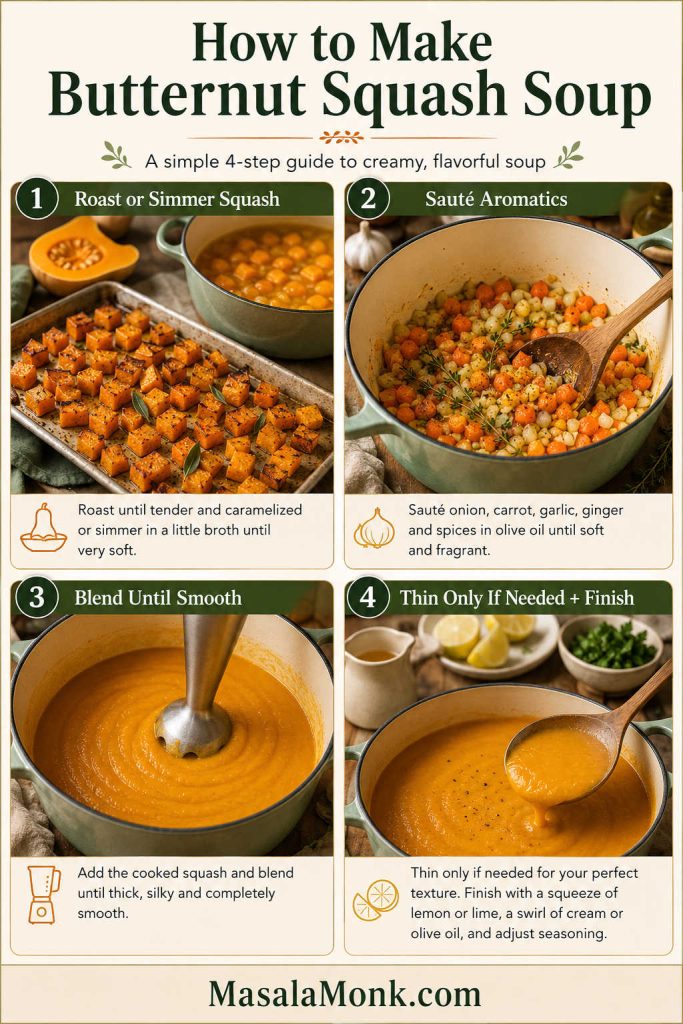
1. Prepare the Squash
For roasted soup, cut the squash in half lengthwise and scoop out the seeds. Roast it cut-side down, then scoop out the soft flesh later. This route avoids peeling raw squash.
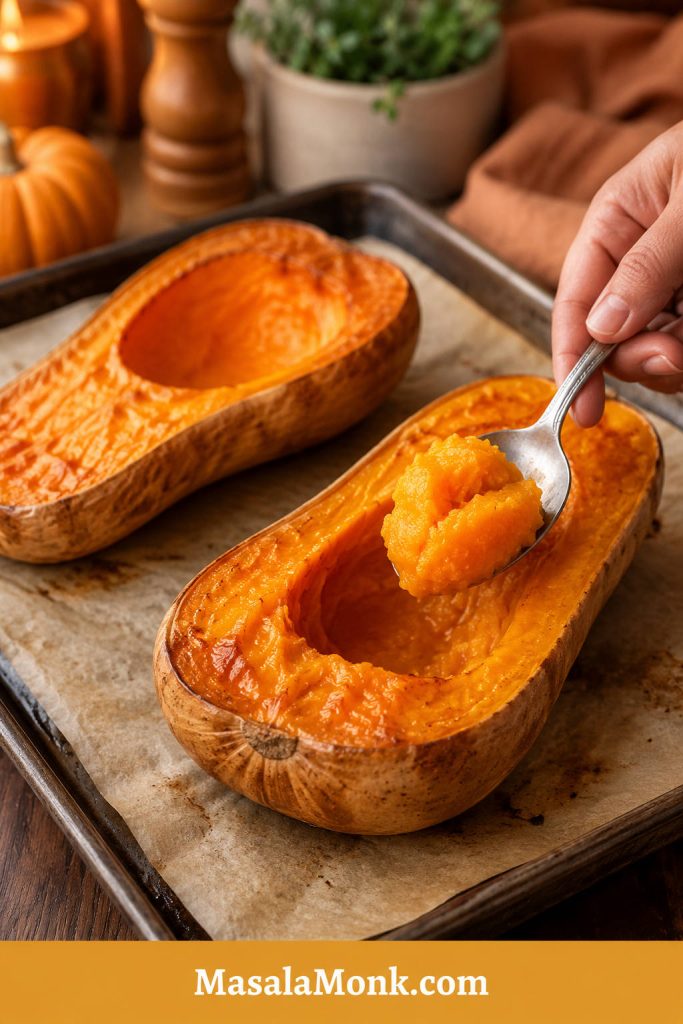
With the stovetop method, peel the squash, remove the seeds, and cut it into cubes. Smaller pieces cook faster. Pre-cut or frozen cubes can go straight into the pot with only small broth adjustments.
2. Roast or Simmer Until Very Tender
In the roasted method, cook the squash at 425°F / 220°C until the flesh is soft and the edges have some color. This usually takes 40–50 minutes for halves or 35–40 minutes for cubes.
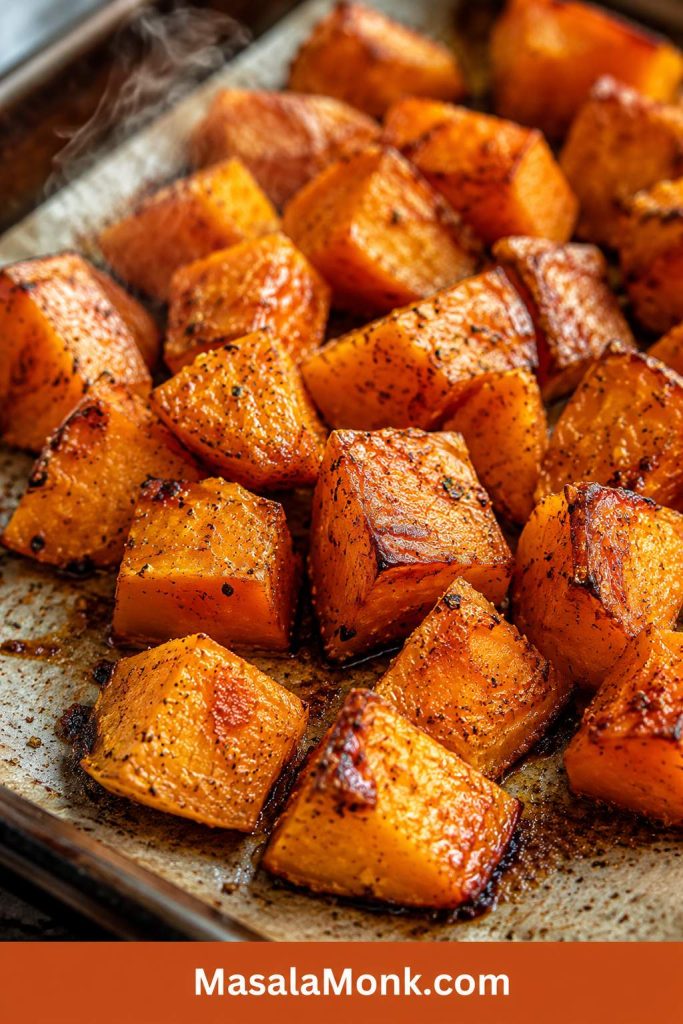
On the stovetop, simmer the cubes with broth for 20–30 minutes, until they are soft enough to mash with a spoon. Do not rush this step. Undercooked squash can make the soup taste grainy instead of silky.
3. Build the Flavor Base
Cook onion and carrot in olive oil until softened. Add garlic, ginger, herbs, and spices only after the onion has softened. Garlic and ground spices can burn if they cook too long over dry heat.
This base is what keeps the soup from tasting like plain squash puree.
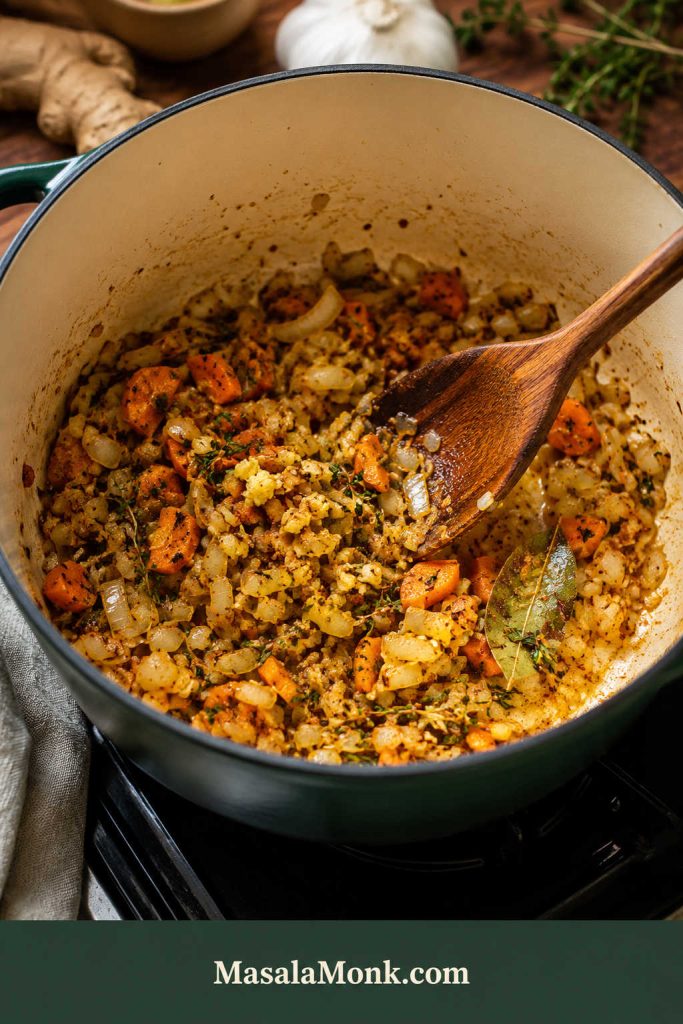
4. Add Broth Carefully
Add 3 cups / 720 ml broth first. After blending, add more only if the soup is too thick. If too much liquid goes in early, simmer uncovered or blend in more cooked squash, sweet potato, carrots, lentils, or beans.
5. Blend Until Smooth
An immersion blender lets you blend directly in the pot. A countertop blender usually gives the silkiest finish, especially after roasting.
If using a countertop blender, blend in batches and do not fill the jar too high. Hot soup expands when blended. Start on low speed and protect your hand with a towel if steam can escape from the lid.
Blend longer than you think you need to. That extra time helps the squash turn glossy and silky instead of pulpy.
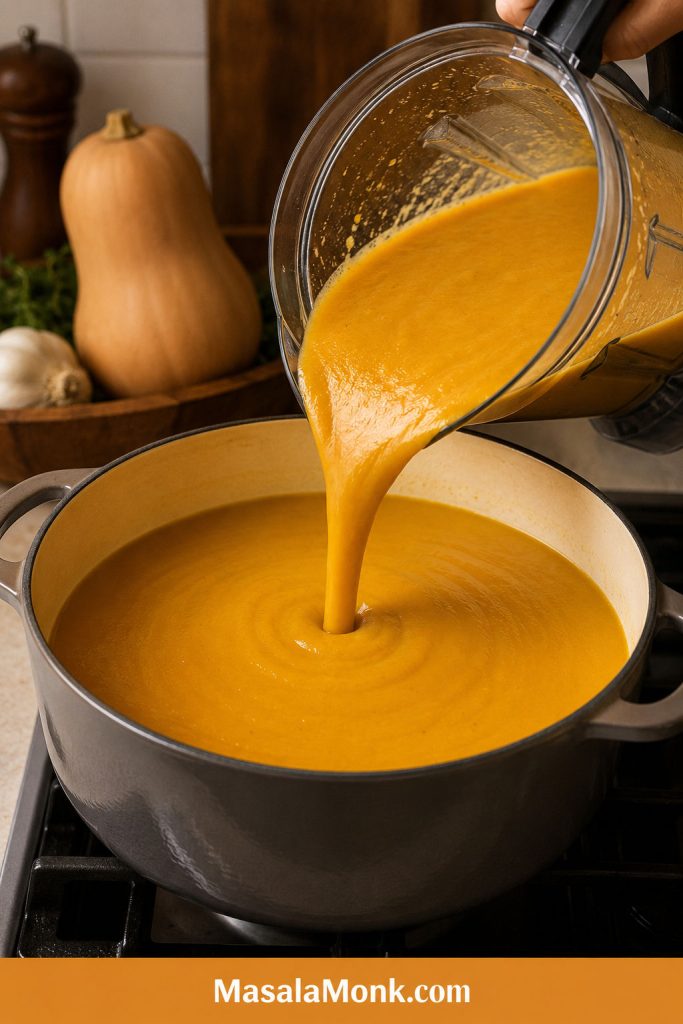
6. Finish and Balance
After blending, choose your finish: heavy cream for classic richness, coconut milk for dairy-free creaminess, butter or olive oil for no-cream richness, or lemon/lime for brightness.
A good batch tastes mellow first, then bright at the end. If it feels sleepy, add salt before adding more spice, then finish with a small splash of lemon, lime, or vinegar.
Instant Pot, Slow Cooker, and Blender Notes
For after-work soup, use the stovetop or Instant Pot method. When you have a little more time, roast the squash and let the oven do the flavor work.
| Method | How to Do It | Best Tip |
|---|---|---|
| Instant Pot | Sauté onion, carrot, garlic, ginger, and spices. Add peeled squash cubes and 3 cups / 720 ml broth. Pressure cook on high for 10 minutes, let it naturally release for 5 minutes, then quick release, blend, and finish. | Add cream or coconut milk after pressure cooking. |
| Slow cooker | For best flavor, sauté the onion, carrot, garlic, and spices first. Add them to the slow cooker with peeled squash cubes, broth, herbs, salt, and pepper. Cook on high for 3–4 hours or low for 6–8 hours, until very soft. Blend and finish. | Use less broth at first; slow-cooked vegetables release liquid. |
| High-speed blender | Roast or simmer the squash first, then blend with hot broth and cooked aromatics. Use a heated soup cycle only if your blender is designed for it. | Hot soup expands, so blend carefully and never overfill. |
| Immersion blender | Blend directly in the pot after the squash is fully cooked. | Easy and safe, but may not be as silky as a countertop blender. |
A countertop blender gives the smoothest result. An immersion blender is less fussy and easier to clean, so use whichever one makes the soup more likely to happen tonight.
If the slow cooker is your favorite route for cozy soups, this slow cooker broccoli cheese soup follows the same gentle-finish idea for keeping creamy soups smooth.
How to Make Butternut Squash Soup Creamy
Creaminess does not have to mean heavy cream. It comes from fully tender squash, careful broth, and enough blending. Once the base is smooth, you can make the bowl rich, dairy-free, light, or extra silky with one finishing choice.
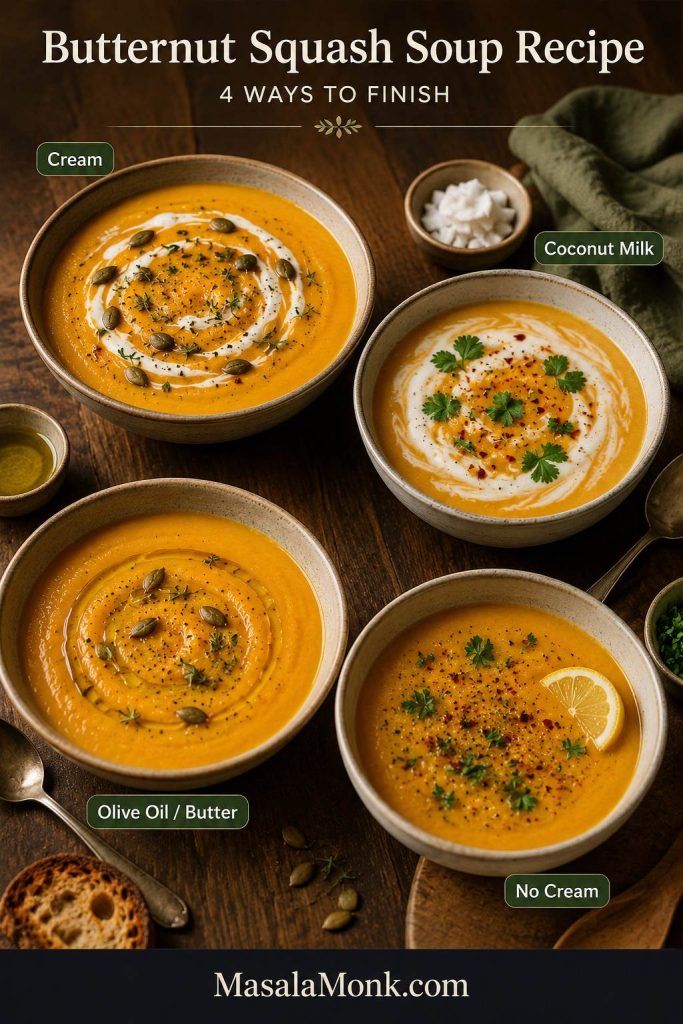
| Creamy Option | Best For | How to Use It |
|---|---|---|
| Heavy cream | Classic creamy soup | Stir in ½ cup / 120 ml after blending. Do not boil hard. |
| Coconut milk | Dairy-free or vegan soup | Add 1 cup / 240 ml after blending. Great with ginger, curry, chili, and lime. |
| Butter | Creamy without cream | Blend in 1–2 tablespoons at the end. |
| Olive oil | Lighter no-cream version | Drizzle in after blending or blend in 1 tablespoon. |
| Cashew cream | Vegan richness | Blend soaked cashews with water, then stir in. |
| Sweet potato or potato | Thicker body | Replace part of the squash or add a small amount while simmering. |
| No cream | Lightest version | Blend very well and finish with lemon/lime and a little olive oil. |
A coconut milk version works best with full-fat coconut milk. Light coconut milk is fine, but the soup will be thinner and less silky.
For a vegan bowl, use vegetable broth, olive oil, coconut milk or cashew cream, and plant-based toppings like pumpkin seeds, roasted chickpeas, herbs, or chili oil.
Add cream, coconut milk, or cashew cream near the end, after blending. This keeps the texture smoother and prevents dairy from boiling too hard.
After choosing your finish, try a flavor variation or use troubleshooting if the soup tastes flat, thin, or too sweet.
Butternut Squash Soup Variations
Think of the variations as small turns, not separate recipes. The soup stays familiar; only the mood changes.
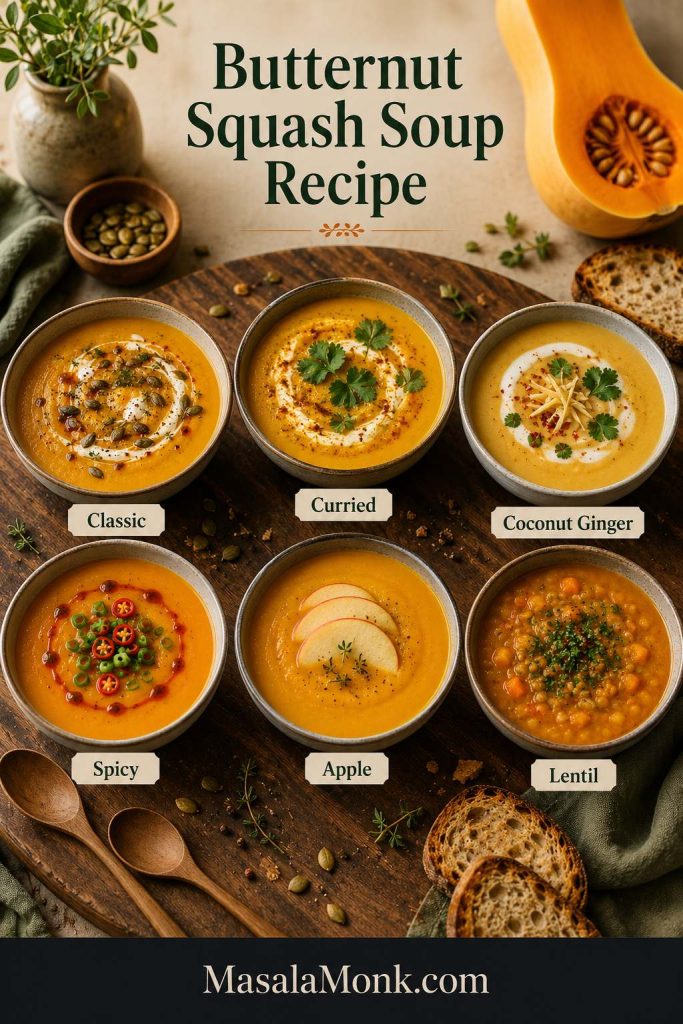
| Version | What to Add |
|---|---|
| Classic butternut squash soup | Sage, thyme, rosemary, black pepper, and a little nutmeg |
| Curried butternut squash soup | Curry powder or garam masala, ginger, coconut milk, and lime |
| Spicy butternut squash soup | Chili flakes, chili oil, chipotle, or black pepper |
| Coconut ginger soup | Coconut milk, fresh ginger, lime, and cilantro |
| Apple autumn soup | 1 peeled apple, cinnamon, nutmeg, and a small drizzle of maple syrup |
| Sweet potato butternut soup | Replace 2 cups of squash with sweet potato cubes |
| Carrot butternut soup | Add 2–3 carrots and ½ cup extra broth if the soup gets too thick |
| Lentil butternut soup | Add ½ cup red lentils and 1–1½ cups extra broth for a thicker, meal-style soup |
| Roasted garlic soup | Roast garlic with the squash and blend it in |
| No-cream light soup | Skip cream and finish with lemon, herbs, and olive oil |
For a warm spiced version, add ginger, a little curry powder or garam masala, coconut milk, black pepper, and lime juice. It gives the soup depth without making it heavy.
Lentils are the easiest way to turn this into a heartier vegetarian meal. This guide to vegan lentil soup recipes has more ideas for using lentils in cozy, filling bowls.
For the apple-autumn version, a small pinch of homemade pumpkin pie spice can bring cinnamon, ginger, nutmeg, allspice, and clove notes without needing several jars on the counter.
When the flavor lane is set, finish the bowl with toppings or turn it into dinner with serving ideas.
Best Toppings for Butternut Squash Soup
Once the soup is blended and balanced, toppings are where the bowl stops feeling like plain puree and starts feeling like dinner. A silky soup needs something that crunches, swirls, snaps, or wakes it up — seeds, herbs, chili oil, cream, yogurt, roasted chickpeas, or crisp toast.

| What the Soup Needs | Good Toppings |
|---|---|
| Crunch | Toasted pumpkin seeds, croutons, roasted chickpeas, toasted almonds, walnuts, or pecans |
| Creamy contrast | Cream swirl, coconut milk, yogurt, sour cream, or cashew cream |
| Heat | Chili oil, chili crisp, red pepper flakes, black pepper, sambal, or hot sauce |
| Freshness | Cilantro, parsley, chives, scallions, basil, or dill |
| Sweet-salty contrast | Diced apple, crispy bacon, blue cheese, feta, or dried cranberries |
| Meal upgrade | Roasted chickpeas, cooked lentils, beans, grilled cheese cubes, or toasted bread |
Think of toppings as balance. Sweeter batches need heat, salt, herbs, or acidity. For a fuller meal, add chickpeas, lentils, beans, seeds, or toast.
Easy Topping Combos
| Style | Use This Combo |
|---|---|
| Classic | Cream swirl + black pepper + toasted pumpkin seeds |
| Vegan | Coconut milk + chili oil + cilantro + roasted chickpeas |
| Fall dinner | Toasted pecans + diced apple + thyme |
| Spiced | Lime + chili oil + toasted seeds + cilantro |
| Protein boost | Lentils or roasted chickpeas + yogurt or coconut milk |
| Simple lunch | Croutons + olive oil + black pepper + parsley |
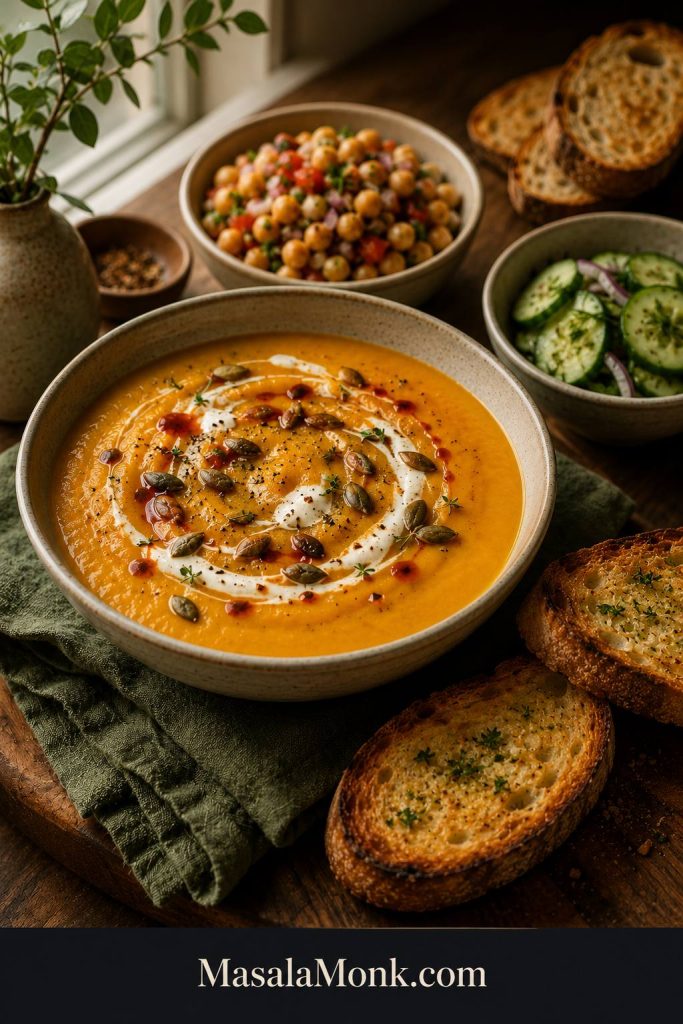
A swirl of cream softens the edges, pumpkin seeds snap against the silky soup, and chili oil or lime keeps the sweetness awake.
To make the bowl feel more like lunch, serve it with a scoop of chickpea salad on the side. Chickpeas add protein and texture without making the meal feel heavy.
What to Serve With Butternut Squash Soup
This soup can be a starter, lunch, or light dinner. To make it more filling, serve it with something crisp, toasted, or protein-rich.
- Crusty bread
- Garlic bread
- Grilled cheese
- Cheese toast
- Simple green salad
- Roasted chickpeas
- Lentil salad
- Quinoa bowl
- Baked potato
- Sandwiches
- Roasted vegetables
Bread turns this into the kind of meal people linger over. A warm slice of homemade garlic bread loaf works especially well because it adds crunch, butteriness, and something sturdy to dip.
Cucumber salad keeps the meal from feeling too soft or sweet. The vinegar, dill, and onion cut through the squash’s natural sweetness.
If you love cozy soup dinners, try this French onion soup next. For tonight, keep this butternut squash soup as the main bowl with toast, salad, and crunchy toppings.
Storage, Freezing, and Reheating
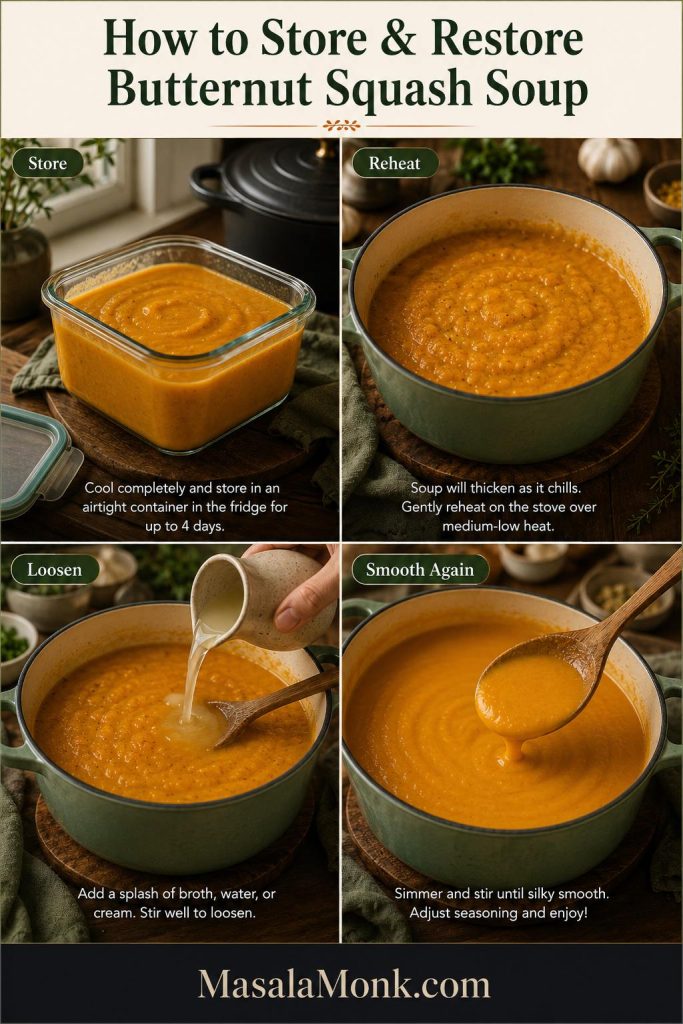
This soup is excellent for meal prep because it stores and reheats well. It may look thicker the next day, but that is normal; a splash of broth, water, cream, or coconut milk brings it back.
| Storage Method | Guidance |
|---|---|
| Fridge | Store in an airtight container for up to 4 days. |
| Freezer | Freeze for up to 3 months for best texture and flavor. |
| Reheating on stove | Warm gently over medium-low heat, stirring often. |
| Reheating in microwave | Heat in short intervals, stirring between each one. |
| If too thick after chilling | Add broth, water, cream, or coconut milk a little at a time. |
| If separated after freezing | Whisk well or blend briefly after reheating. |
For general food safety, the USDA leftover safety guidance recommends using refrigerated leftovers within 3–4 days.
Cream-based soup can sometimes separate slightly after freezing. It is still fine to eat, but the texture may need whisking or blending.
Coconut milk versions usually freeze well, though they may also need stirring after reheating.
For the smoothest freezer results, freeze the soup before adding cream, then add cream or coconut milk after reheating.
Need to rescue leftovers or a tricky batch? Jump to fixes for thick, thin, bland, grainy, or separated soup.
Avoid These Common Mistakes
Most problems are easy to avoid if you control the liquid, cook the squash fully, and balance the flavor at the end.
- Do not add all the broth at once. Start with 3 cups / 720 ml and thin after blending.
- Do not blend undercooked squash. The squash should be soft enough to mash easily with a spoon.
- Do not skip salt and acid. Butternut squash is sweet, so it needs seasoning and brightness.
- Do not boil hard after adding cream. Add cream or coconut milk near the end and heat gently.
- Do not rely only on sweetness. Use onion, garlic, herbs, ginger, spice, or acidity for balance.
- Do not judge the texture before blending. The soup often looks chunky or loose before it turns smooth.
Troubleshooting Butternut Squash Soup
If the pot is already made and something feels off, do not start over. A bland or thin soup is not a failure — it usually just needs salt, acid, time, or a little more body.
Why is my butternut squash soup bland?
Most bland soup needs salt first, then acid. Add salt gradually, then wake it up with lemon juice, lime juice, or apple cider vinegar. Still flat? Add black pepper, smoked paprika, curry powder, ginger, or a small amount of butter or olive oil.
Why does my soup taste like plain puree?
If the soup tastes like plain puree or too sweet and one-note, it usually needs contrast. Add salt first, then try lemon, lime, vinegar, black pepper, chili oil, toasted seeds, herbs, roasted chickpeas, or crisp toast on top.
Why is my soup too sweet?
Butternut squash is naturally sweet. Balance it with lemon juice, lime juice, vinegar, black pepper, chili flakes, curry powder, or a little extra broth. Savory toppings like roasted chickpeas, pumpkin seeds, yogurt, or herbs also help.
How do I fix soup that is too thick?
Add hot broth ¼ cup / 60 ml at a time, blending or stirring after each addition, until the soup reaches the texture you want.
How do I fix soup that is too thin?
Simmer it uncovered until some liquid evaporates. You can also blend in more roasted squash, cooked sweet potato, cooked carrots, red lentils, or beans.
Why is my soup grainy?
The squash may not have cooked long enough, or the soup may need more blending. Simmer until the squash is very soft, then blend thoroughly. A countertop blender usually gives the smoothest texture.
Why did my soup separate after freezing?
Cream and coconut milk can separate slightly after freezing and reheating. Warm the soup gently and whisk well. If needed, blend it briefly to bring the texture back together.
How do I make the soup richer without cream?
Blend in 1–2 tablespoons butter, a drizzle of olive oil, coconut milk, cashew cream, or a small amount of cooked sweet potato. Roasting the squash first also gives the soup deeper flavor without needing extra cream.
Is Butternut Squash Soup Healthy?
It can be a nourishing, vegetable-heavy soup, but the final nutrition depends on broth, cream, toppings, and serving size. The base is naturally smooth, so you do not need a lot of cream to make it satisfying.
A lighter version still feels satisfying because the squash does the creamy work before any cream goes in. For the lightest bowl, use broth, olive oil, lemon, herbs, and crunchy seeds.
A more filling vegetarian version can use lentils, beans, chickpeas, Greek yogurt, or pumpkin seeds. Richer cream-or-butter versions work best in smaller bowls.
If you are not keeping it vegetarian, grilled chicken or turkey also works. For lower sodium, use low-sodium broth and adjust salt at the end.
To check ingredient-level nutrition details, search for raw or cooked butternut squash in USDA FoodData Central.
For a low-carb or keto-style approach, butternut squash needs more care because it is naturally starchy. This guide to butternut squash on keto explains that angle in more detail.
Frequently Asked Questions
Do you need to peel butternut squash for soup?
If you are roasting the squash in halves, you do not need to peel it first. Roast it until soft, then scoop the flesh out of the skin. If you are making the stovetop version with cubes, peel it before cooking.
Is roasted butternut squash soup better than stovetop?
Roasting usually gives deeper flavor because the squash caramelizes in the oven. The stovetop version is faster and easier, but it may need a little extra seasoning, spice, or acidity to taste as rich.
What makes butternut squash soup creamy?
Butternut squash itself becomes creamy when cooked until soft and blended well. Cream, coconut milk, butter, olive oil, cashew cream, sweet potato, or potato can make it richer, but good blending and broth control matter most.
How do you make butternut squash soup without cream?
Skip the cream and blend the soup very well. Use less broth at first, then thin only as needed. Finish with olive oil, butter if not vegan, coconut milk, cashew cream, or a splash of lemon or lime juice for balance.
Does coconut milk work in butternut squash soup?
Yes — especially with ginger, curry powder, chili, lime, and cilantro. Full-fat coconut milk gives the creamiest texture.
When should you add cream or coconut milk?
Add cream or coconut milk after the squash is cooked and the soup is blended. Warm it gently after adding. Avoid boiling hard once cream has been added because the texture can become less smooth.
Why does my butternut squash soup taste bland?
Most bland soup needs salt first, then acid. Add salt gradually, then brighten it with lemon juice, lime juice, or apple cider vinegar. For more flavor, add ginger, black pepper, smoked paprika, curry powder, sage, thyme, or chili oil.
How do you thicken butternut squash soup?
Simmer it uncovered, or blend in more cooked squash, sweet potato, carrots, lentils, beans, or potato. For best results, avoid adding too much broth before blending.
What spices go well with butternut squash soup?
Sage, thyme, rosemary, nutmeg, black pepper, smoked paprika, ginger, curry powder, cinnamon, chili flakes, and garam masala all work well here.
Can frozen butternut squash be used for soup?
Yes — use about 8 cups / 1.1–1.2 kg frozen cubes for this recipe. Add them directly to the pot and simmer until very soft. Start with less broth because frozen squash can release extra water.
How much butternut squash puree equals one squash for soup?
For this recipe, use about 4 cups / 900–950 g puree in place of one large 3 lb / 1.3–1.4 kg squash. Sauté the onion, garlic, carrot, and spices first, then whisk in the puree and broth slowly.
Can you make butternut squash soup in an Instant Pot or slow cooker?
Yes. For Instant Pot soup, sauté the aromatics, add squash and broth, pressure cook on high for 10 minutes, naturally release for 5 minutes, then blend and finish. Slow cooker soup takes 3–4 hours on high or 6–8 hours on low, until the squash is very soft. Add cream or coconut milk after cooking.
How long does butternut squash soup last?
It lasts up to 4 days in the fridge when stored in an airtight container. You can also freeze it for up to 3 months. For the best texture, freeze the soup before adding cream, then add cream or coconut milk after reheating.
Back to Recipe Card · Back to Top
Final Tips for the Best Butternut Squash Soup
Use roasted squash when you have time and the stovetop method when dinner needs to happen faster. Start with less broth, blend until the soup turns glossy, then loosen it only if needed.
Before serving, taste once. If the bowl feels flat, add salt first, then a small splash of lemon, lime, or vinegar. Too thick? Loosen it gently. Too sweet? Give it herbs, heat, crunch, or acidity.
That is the bowl you want: creamy without being dull, sweet without being sugary, warm without being heavy, and easy enough to make again next week — especially with toast, seeds, or a little chili oil on top.








