
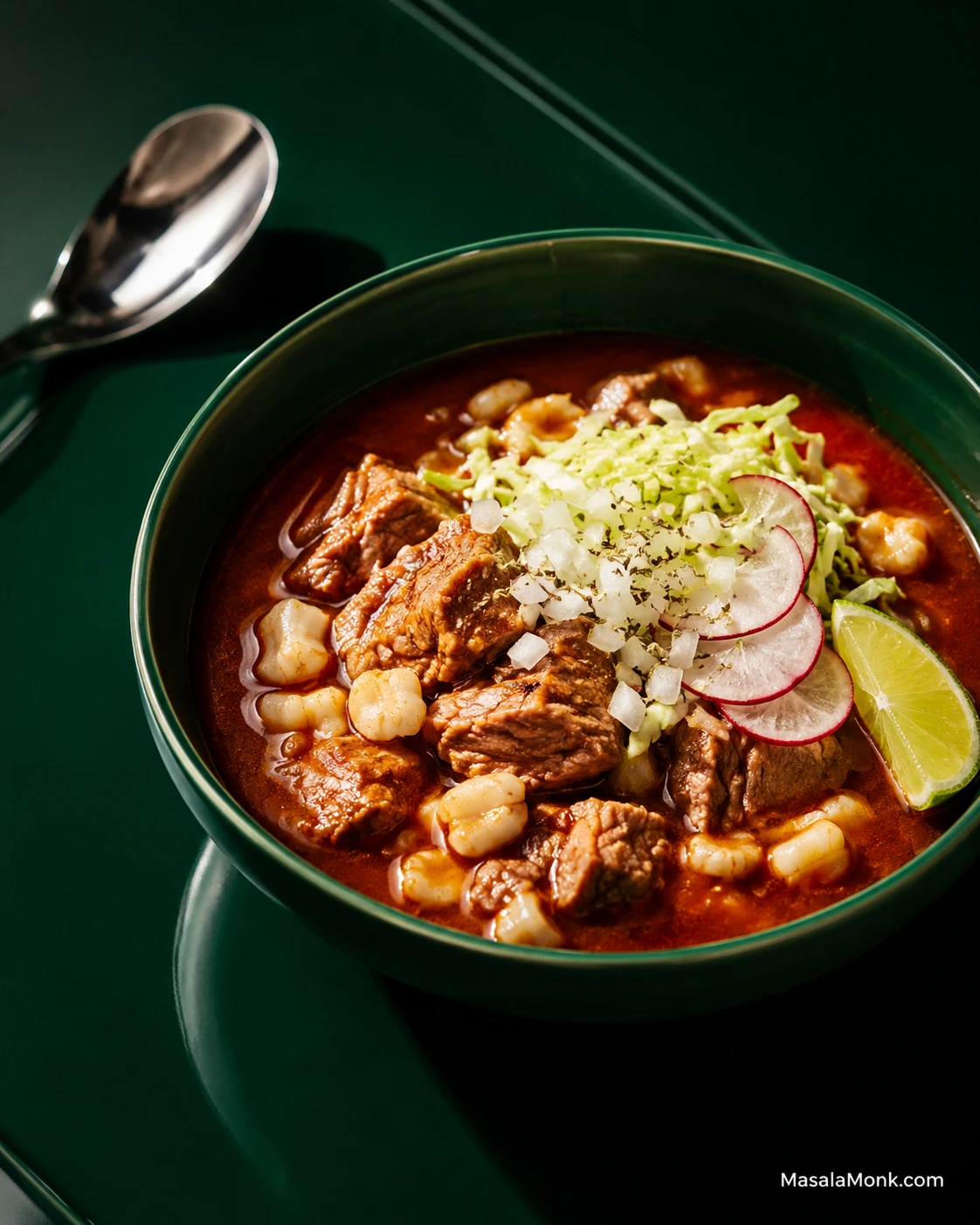
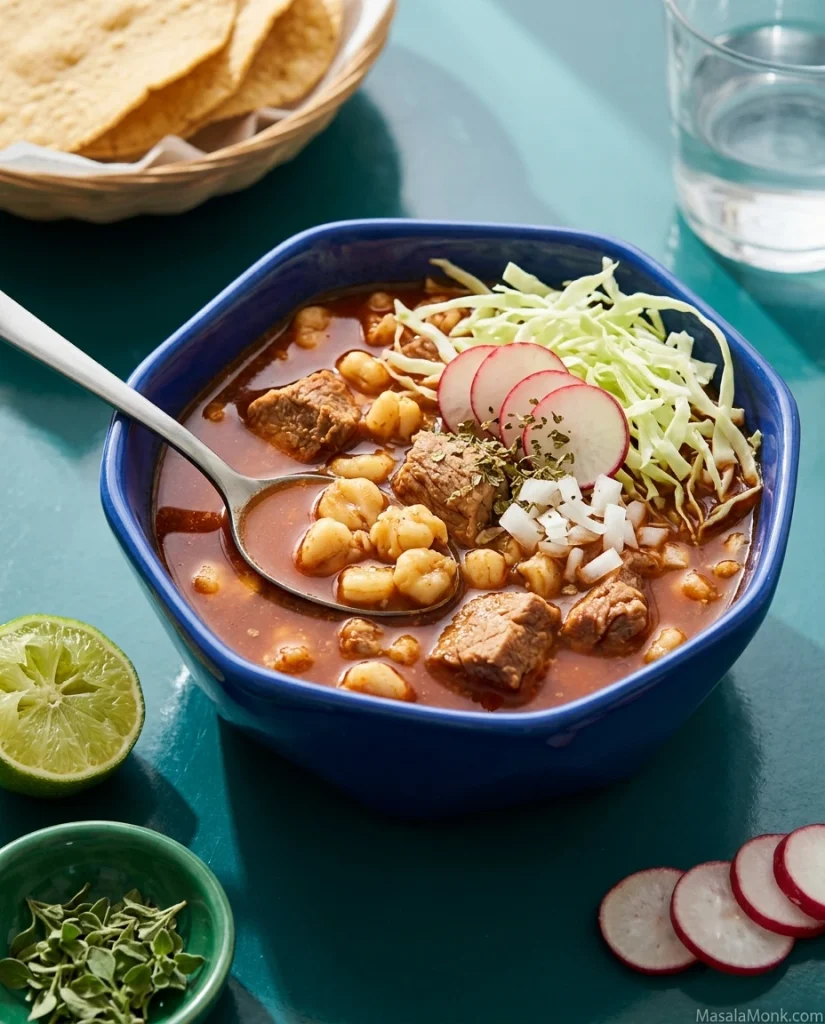
A bowl of pozole rojo lands on the table hot and deeply savory: tender pork, plump hominy and a brick-red chile broth. Then you start changing it. Cold cabbage, sliced radish, onion, crushed oregano and lime make the next spoonful sharper, fresher and crunchier than the first. Part of the pleasure is that the pot is shared, but each bowl is yours to finish.
Pozole rojo is a Mexican hominy-and-meat soup or stew flavored and colored with dried red chiles. The details vary by region and household. Here, pork shoulder builds the broth while guajillo and ancho make the rojo, with chile de árbol available when you want more heat.
None of the individual steps is especially difficult. What matters is knowing when to stop toasting a chile, when the shoulder is ready for the next stage and what kind of hominy you actually bought. Those small decisions matter far more than throwing extra spices into the pot at the end.
Use the times below as checkpoints, not finish lines. We’re aiming for a loose, brick-red broth with tender pork that still holds as pieces. The hominy should taste seasoned by the pot around it, and the garnishes should brighten an already good bowl rather than rescue it.
Quick Answer: How to Make Pozole Rojo
- Simmer the pork. Cook pork shoulder gently with onion, garlic and bay until nearly tender.
- Make the rojo. Briefly toast guajillo and ancho chiles, soften them, blend with aromatics, strain, then cook the puree in a little fat until glossy and no longer raw-smelling.
- Bring the pot together. Add the rojo and rinsed hominy while the shoulder still has a little resistance. Simmer another 30–45 minutes.
- Finish the bowls. Add cabbage or lettuce, radishes, white onion, Mexican oregano and lime. Serve tostadas and extra chile alongside.
On This Page
Before You Start: Make These 3 Choices
| Choose | Use This | Why |
|---|---|---|
| Pork | 3 lb / 1.36 kg boneless shoulder | Forgiving, flavorful and rich enough to build the broth |
| Chiles | Guajillo + ancho; árbol optional | Guajillo carries the red-chile flavor, ancho adds depth and árbol brings heat |
| Hominy | 4 × 15-oz / 425-g cans | Our default: hominy in nearly every spoonful without taking over the bowl |
Using bone-in shoulder? Buy roughly 3½–4 lb / 1.6–1.8 kg and, if possible, have the butcher cut it into several large pieces. A whole bone-in roast will cook differently from 2-inch chunks.
Using dried hominy? Read the dried-hominy instructions first. You need corn that has already been nixtamalized but still requires soaking and cooking; untreated dried corn is a different project.
Once those choices are settled, the cooking is mostly a matter of timing the pork and rojo so they reach the finished pot at the right moment.
Pozole Rojo Recipe
This pork pozole rojo uses whole dried guajillo and ancho chiles rather than canned enchilada or red sauce. The main pot stays mild to moderate, leaving plenty of room for extra chile at the table.
- Serves: 8 as a main course; about 10–12 smaller portions
- Prep: about 30 minutes
- Hands-on cooking after prep: about 15–30 minutes
- Cook/simmer: about 2½–3 hours
- Total with canned hominy: about 3–3½ hours
- Heat: mild to moderate, adjustable
- Recommended pot: about 8 qt / 7.5 L
Starting with dried hominy adds considerably more time: commonly an overnight soak plus several hours of separate cooking, depending on the product.
Equipment
- 8-quart / approximately 7.5-L stockpot or Dutch oven
- Blender suitable for hot foods
- Fine-mesh sieve
- Medium saucepan or high-sided skillet
- Heatproof bowl
- Tongs or slotted spoon
- Knife and cutting board
For the Pork Broth
- 3 lb / 1.36 kg boneless pork shoulder, cut into roughly 2-inch / 5-cm pieces
- Optional for a richer broth: 1 lb / 450 g pork neck bones, meaty ribs, shank or pig’s feet
- 10 cups / 2.4 L water to start, or enough to mostly cover the pork
- 1–2 cups / 240–475 ml additional hot water, available if needed
- ½ large white onion
- 4 garlic cloves, peeled
- 2 bay leaves
- 18 g fine sea salt, divided, plus more to taste
If the shoulder has a very thick, hard exterior fat cap, trim away the excess. Leave the softer fat and marbling that help keep the meat juicy.
Salt varies enormously by brand and crystal size, so weight is the most reliable measure. Start with about 12 g in the broth and reserve roughly 6 g for final seasoning.
No scale? With fine sea salt, about 2 teaspoons is a conservative starting point for the broth; season the finished pot gradually. Kosher salts vary substantially by crystal size and shouldn’t be substituted spoon-for-spoon.
Water is the default because the pork is building its own broth. With boneless shoulder and no extra bones, some low-sodium stock can replace part of the water for a slightly fuller starting point. Reduce the added salt accordingly.
For the Red Chile Sauce
- 6 medium dried guajillo chiles, 30–35 g
- 3 medium dried ancho chiles, 30–40 g
- 0–2 dried chiles de árbol, optional for heat
- ½ large white onion
- 4 garlic cloves
- 2 teaspoons Mexican oregano
- ½ teaspoon freshly ground black pepper
- 2 tablespoons / 30 ml lard or neutral cooking oil
- 1–2 cups / 240–475 ml pork broth from the pot, as needed for blending
Chile sizes vary enormously, so let the gram weight win when your particular chiles look unusually large or small.
Mediterranean oregano will work if Mexican oregano isn’t available, though the aroma is different.
For the Hominy
- 4 cans hominy, 15 oz / 425 g each, about 60 oz / 1.7 kg packaged weight total, drained and thoroughly rinsed
White or golden/yellow canned hominy both work.
For Serving
- 3–4 cups finely shredded cabbage or lettuce
- 6–8 radishes, thinly sliced
- ½–1 medium white onion, finely chopped
- 4–6 limes, cut into wedges
- About 2 tablespoons Mexican oregano
- 8–12 tostadas
- Optional avocado, cilantro and hot chile salsa
1. Start the Pork Broth
Put the pork shoulder, optional bone-rich pork, ½ onion, 4 garlic cloves, bay leaves, about 12 g salt and 10 cups / 2.4 L water in the pot. Most of the pork should sit beneath the liquid; add a little more water if your pot or bone-in pieces require it.
Bring the pot just to a boil over medium-high heat. Skim away the heavier gray foam that gathers on the surface.
Lower the heat as soon as the broth boils. Partially cover and maintain a gentle simmer with lazy bubbles appearing here and there.
This is the quiet part of the recipe. Keep an eye on the liquid level, add hot water if the pork becomes too exposed, and let the shoulder simmer for about 1½ hours while you turn to the chiles.
2. Prepare and Toast the Chiles Briefly
Stem the guajillo and ancho chiles and shake or scrape out most of the seeds. Stem the árbol chiles too, if using.
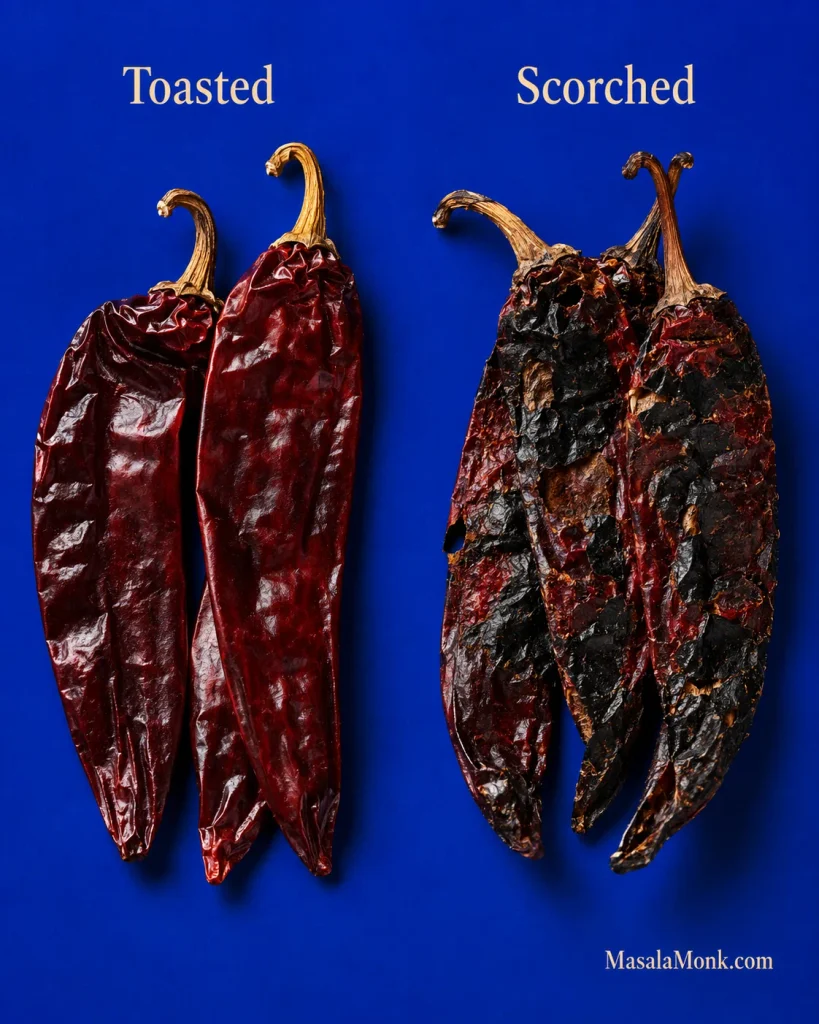
Heat a dry skillet over medium to medium-low heat. Press a guajillo or ancho against the hot surface for about 5–10 seconds, flip and warm the other side briefly.
The chile should smell fragrant and become slightly more pliable. Still cold and stiff? Give it another brief contact with the pan.
Árbol chiles are thin and scorch quickly. Warm them for only a few seconds or put them straight into the soaking bowl. Blackened patches, smoke or an acrid smell mean a chile has burned; replace a badly scorched one.
3. Soften the Chiles
Put the chiles in a heatproof bowl and cover with very hot water. Soak for about 15–20 minutes, until they bend and fold easily without cracking.
Taste a little of the soaking water. If it tastes pleasantly chile-like, use some for blending. If it tastes bitter, burnt or unpleasantly harsh, discard it and use pork broth instead.
4. Blend and Strain the Rojo
Put the softened chiles in a blender with the remaining ½ onion, 4 garlic cloves, Mexican oregano, black pepper and about 1 cup / 240 ml pork broth.
Let steaming-hot broth stand for a few minutes before blending. Don’t overfill the jar, and follow your blender manufacturer’s instructions for venting hot liquids safely.
Blend until smooth, adding only enough extra broth to keep everything moving. The puree should pour easily. Push it through a fine-mesh sieve to catch tougher pieces of chile skin that could make the finished broth gritty.
5. Cook the Red Chile Sauce
Heat the lard or oil in a high-sided skillet or saucepan over medium heat. Carefully pour in the strained puree; it can splatter when it meets the hot fat.
Cook for about 8–12 minutes, stirring regularly. The puree will darken slightly and turn glossy as the sharp soaked-chile smell cooks away. Once it smells cooked rather than raw, move on.
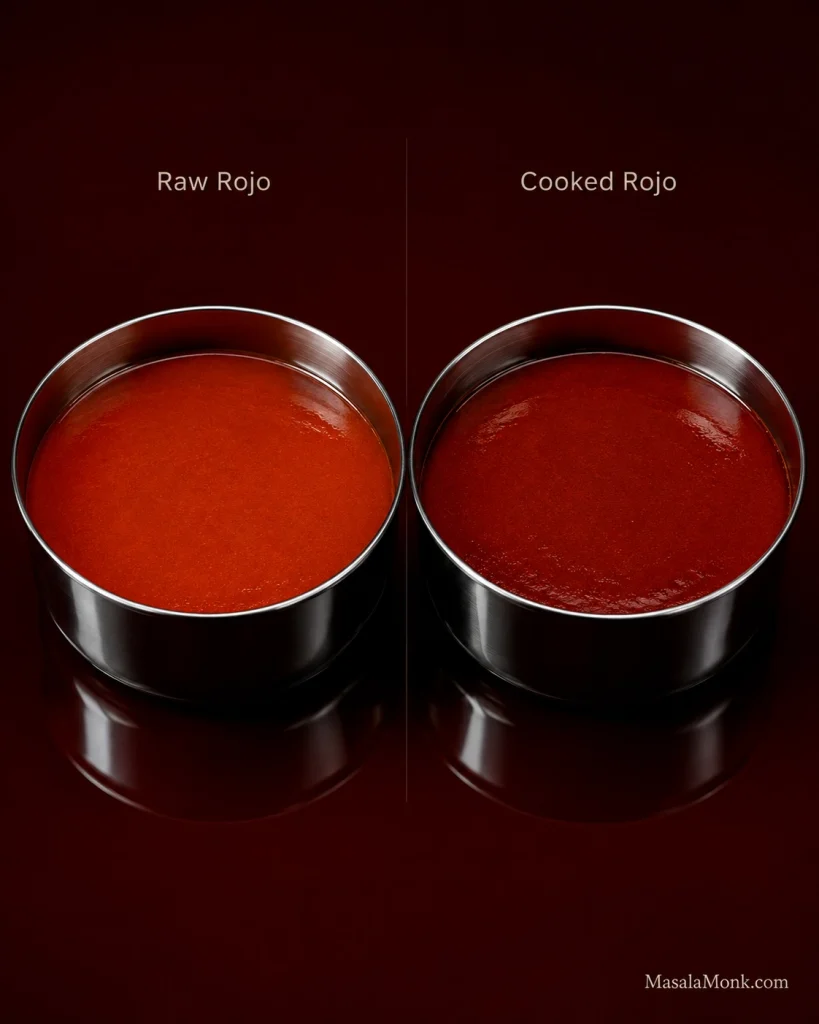
Cooking the rojo separately isn’t mandatory, but it is deliberate here: the short fry concentrates the puree before it joins the pork broth.
6. Check the Pork
At around 1¾–2 hours total simmering time, test a piece of shoulder. A fork should enter much more easily than it did at the beginning. A little resistance is fine because the meat still has another 30–45 minutes in the finished pot.
Meat that remains tight and rubbery needs another 20–30 minutes at the same gentle simmer.
Remove the bay leaves and any large pieces of broth onion. If you used neck bones, ribs or shank, remove the bones, pull off any tender meat and return it to the pot. With pig’s feet, keep whatever tender edible pieces you enjoy and discard the hard bones.
Pork becomes safe to eat before shoulder becomes tender enough for pozole. Keep cooking for the texture, not the thermometer alone.
7. Add the Rojo and Hominy
Stir the cooked rojo into the pork broth. The pale broth turns brick-red almost immediately, and the smell of the pot shifts from mostly pork and garlic to something unmistakably chile-rich.
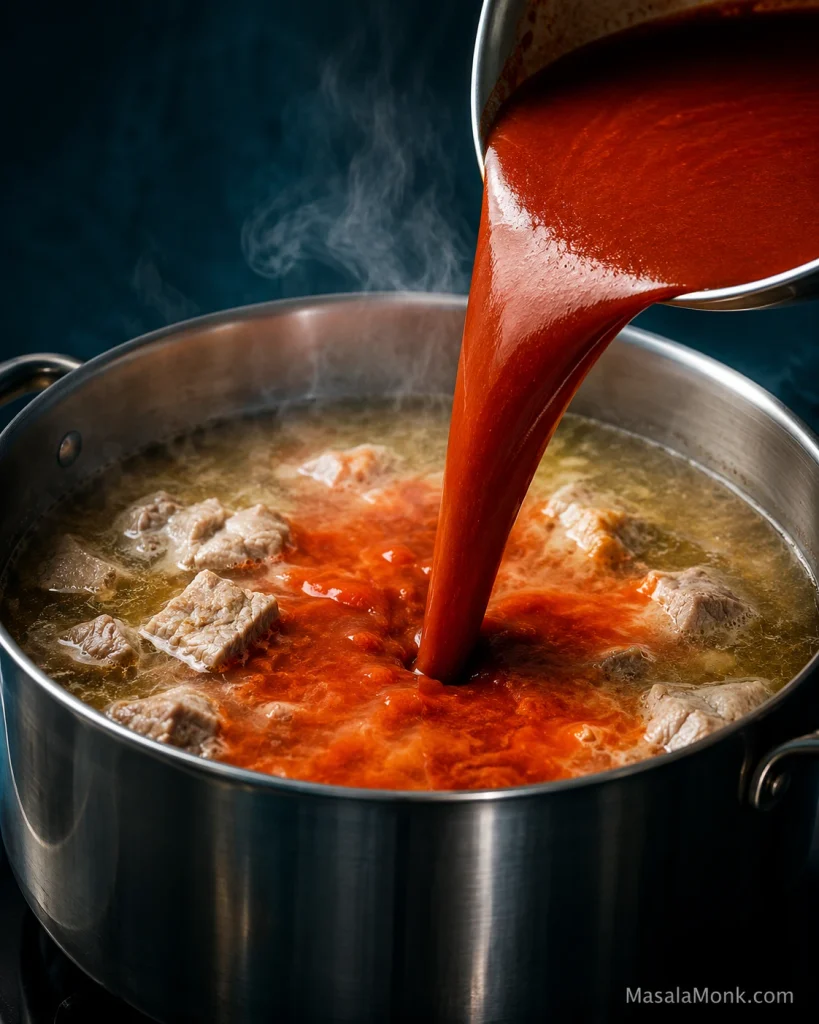
Add the drained and thoroughly rinsed hominy. Return the pot to a gentle simmer and cook for another 30–45 minutes, uncovered or partially covered.
For this version, stop before the shoulder falls completely into shreds. It should yield easily while still leaving you substantial pieces of pork.
The hominy should no longer taste like plain kernels dropped into soup; it should taste of the pork-and-chile broth around it.
8. Season and Serve
Now taste. Add the remaining reserved salt gradually, stirring and tasting between additions.
A watery broth needs reduction before much more salt. An over-concentrated one needs hot water or unsalted stock first. Skim off large pools of fat while leaving a light sheen on the surface.
Ladle pork, hominy and plenty of rojo into bowls and bring the garnishes to the table.
What Should Good Pozole Rojo Taste and Feel Like?
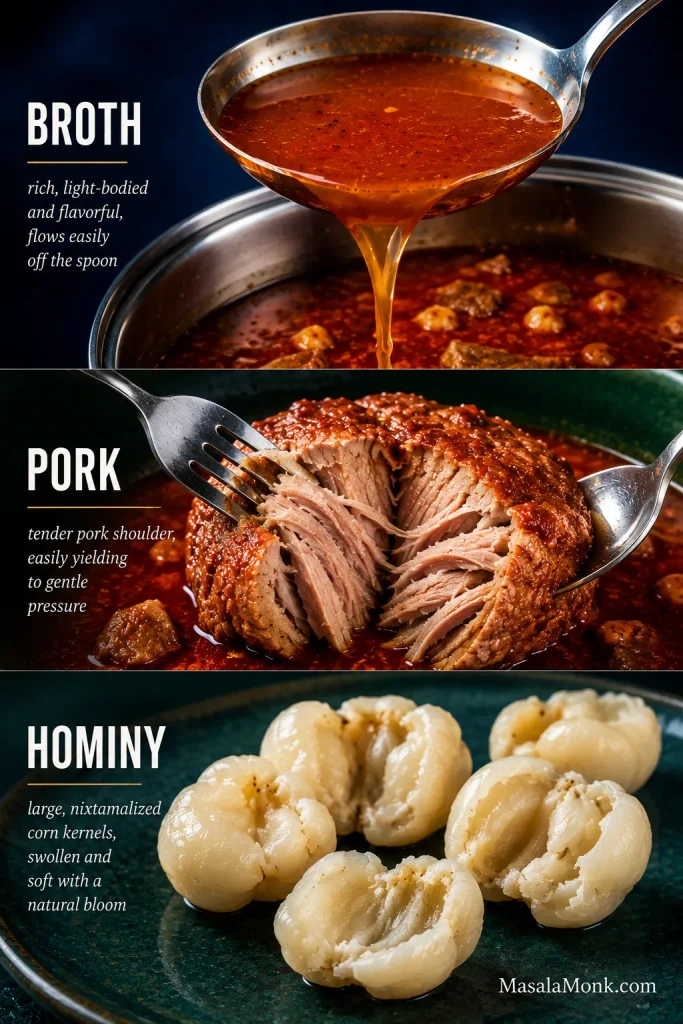
Taste the broth first. Pork and dried chile should feel like they belong to the same liquid; it shouldn’t taste like plain stock with red sauce stirred in at the end. Drag a spoon through it. The broth should move easily, with enough body from pork, corn and chile to linger lightly on the spoon without turning into chile gravy.
The color may look fiercer than the heat. A deeply red bowl can still be quite mild, especially when the rojo relies mostly on guajillo and ancho.
Break a piece of shoulder with the edge of your spoon. It should separate with gentle pressure while still giving you an actual piece of pork to lift and eat.
Bite a hominy kernel in half. Tender with a little chew is good; a hard or chalky center needs more cooking.
Now add lime to one spoonful or one side of the bowl and taste again. Lime shouldn’t rescue a bland broth. It should make an already savory one feel brighter, fresher and less heavy.
Something still off? Jump to Pozole Rojo Troubleshooting →
How to Serve Pozole Rojo
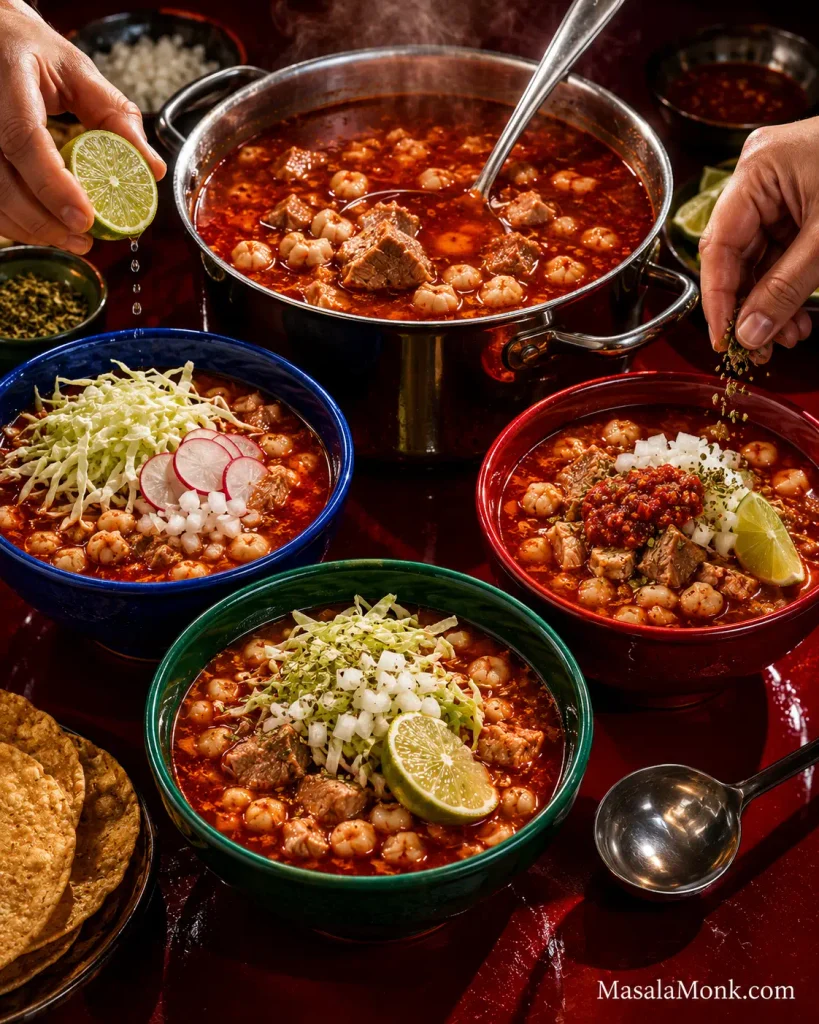
The garnishes finish the bowl. Cabbage or lettuce cools the hot broth, radish adds a peppery snap, onion brings fresh sharpness, Mexican oregano adds aroma and lime cuts through the richness of the pork. Tostadas bring the crunch.
Put the garnishes down the middle of the table and leave the bowls unfinished. Someone will pile on cabbage, somebody else will mostly want lime and oregano, and the person chasing heat can reach for the salsa. By the time everyone starts eating, no two bowls need to look quite the same.
Avocado, cilantro and extra chile salsa are also common additions in different households. Crema and cheese also appear in some versions, but they aren’t part of the core garnish set used here.
To build a bowl, ladle in pork, hominy and plenty of broth. Add cabbage, radish and chopped onion. Rub a little oregano between your fingers over the steam, squeeze in lime and then decide how much extra chile you want.
Pozole is built for a table full of people. One pot can stay hot while everyone finishes a bowl differently. Someone goes back for seconds, someone adds another squeeze of lime, and the cook can stay at the table instead of assembling every serving.
That flexibility at the table reflects a broader truth about pozole: there isn’t one national pot that everyone makes exactly the same way.
About This Style of Pozole Rojo
Mexican pozole rojo varies by region and household in its chile blend, pork cuts, aromatics and garnishes. Mexico’s Secretaría de Agricultura describes red pozole as particularly associated with Jalisco, with ancho and guajillo among the chiles used and pork among the common meats.
This pot follows that familiar line: nixtamalized corn, pork, guajillo and ancho. Other versions may change the chile blend, include tomato or use aromatics such as cumin, clove, mint or cilantro. Those differences are part of the dish’s regional and household life.
Pozole, Posole and the Three Main Styles
Pozole is the standard spelling in Mexican Spanish. Posole is an established spelling in the United States, particularly in New Mexican and Southwestern cooking, where the word may refer to the prepared corn as well as the finished dish. New Mexican red posole often centers on New Mexico red chile rather than the guajillo-and-ancho blend used here.
- Rojo: Pozole rojo gets its defining character from dried red chiles.
- Verde: Pozole verde takes its green character from ingredients such as green chiles, tomatillos and herbs, depending on the region and recipe.
- Blanco: Pozole blanco leaves out a defining red or green chile sauce so the pale meat-and-hominy broth takes center stage.
Within that range, changing the chile blend is one of the easiest ways to change the character of the pot.
What Each Chile Does in Pozole Rojo
Guajillo, ancho and árbol may all look like dried red peppers in the bag, but they do very different jobs once they reach the pot.
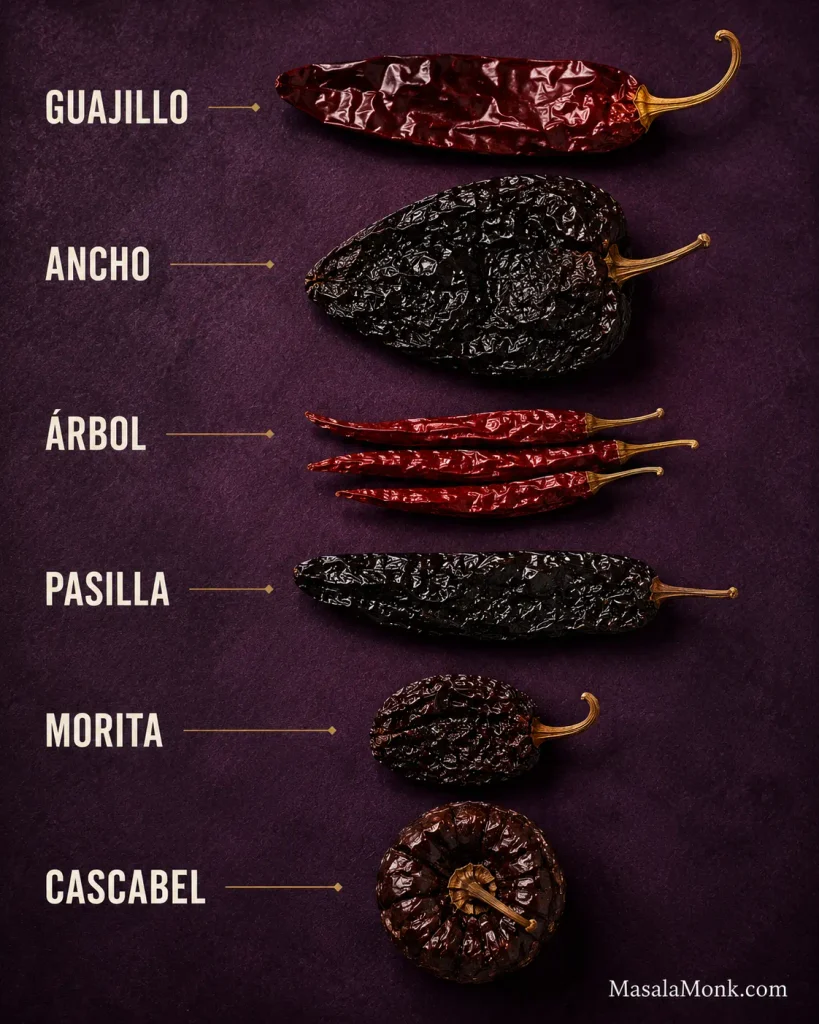
| Chile | Flavor / Role | Heat | Best When You Want… |
|---|---|---|---|
| Guajillo | Fruity red-chile backbone | Mild | A vivid red broth without much extra heat |
| Ancho | Dark fruit, sweetness and depth | Mild | A rounder, deeper rojo |
| Árbol | Clean, direct heat | Hot | More heat without adding much bulk |
| Pasilla | Earthy complexity | Mild | A darker, earthier blend |
| Morita | Smoky chile character | Medium | A noticeable smoky edge |
| Cascabel | Rounded, nutty chile flavor | Mild | A softer, nuttier direction |
The first three make the formula above. Think of pasilla, morita and cascabel as directions you can take the blend rather than automatic one-for-one replacements.
Look for guajillos and anchos that still bend somewhat instead of shattering immediately. Their skins should retain some color and sheen, and the bag should smell fruity or earthy. A good bag announces itself before you ever turn on the stove; faded, dusty and brittle chiles tend to taste flatter.
Why Guajillo Leads the Blend
Tear open a good guajillo and its role makes sense: fruity, warm and distinctly red-chile without much aggressive heat. It carries most of the rojo’s chile character here. Ancho sits behind it with darker fruitiness and depth.
Controlling the Heat
More guajillo or ancho usually gives you more chile flavor without dramatically increasing the heat. Chile de árbol is the heat lever.
- Mild: omit árbol
- Moderate: start with 1 árbol
- Hotter: try 2 árbol and offer extra salsa at the table
Árbol chiles vary in strength, so those amounts are only a rough guide. Build depth in the pot; let serious heat happen at the table.
Guajillo-heavy blends also tend to look brighter. More ancho, pasilla or morita pulls the broth toward brick-red or brown-red. Both can be completely normal; darker color becomes a warning sign only when the broth also tastes burnt or acrid.
For a deeper look at how dried peppers soften, blend and change once cooked, see our guide to cooking with dried pepper sauces.
Cooking now? Return to Step 2: Toast the Chiles → or go back to the full Pozole Rojo Recipe.
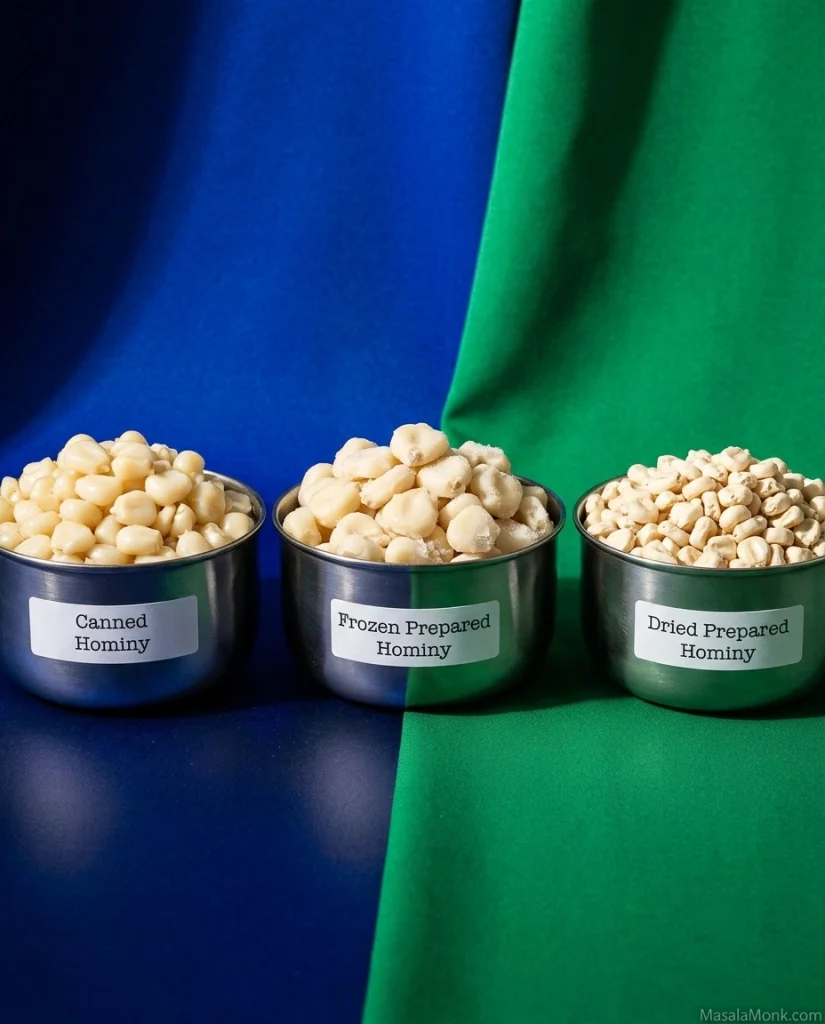
Hominy for Pozole: Canned, Frozen or Dried
Hominy begins as corn, but nixtamalization gives it the plump kernels and distinctive flavor expected in pozole. It tastes corn-forward, mildly earthy and nutty rather than sweet like canned sweetcorn, with a tender but substantial chew.
Our homemade corn tortilla guide explains the same transformation from the masa side: masa harina is also made from nixtamalized corn, which is why it behaves so differently from ordinary cornmeal. Regular canned sweetcorn won’t give you the same flavor or texture.
How Much Canned Hominy?
Our default is four 15-ounce cans. That puts hominy in nearly every spoonful while leaving plenty of room for pork and broth.
| For About 3 lb / 1.36 kg Pork | How the Pot Changes |
|---|---|
| 3 × 15-oz cans | Brothier and more pork-forward |
| 4 × 15-oz cans | Our default |
| 5 × 15-oz cans | Very hearty and hominy-forward |
Canned hominy is already tender. The 30–45 minutes it spends in this pot are about integration: the kernels absorb the red broth while the broth picks up more corn character. Add them a little later if you prefer a firmer, more distinct kernel.
Rinse First; Blanch or Roast Only if You Want To
Rinsing is the default. Drain canned hominy and rinse it thoroughly under cool running water.
A noticeable canned flavor is a reason to blanch: put the rinsed kernels into fresh boiling water, let the water return to a boil, then drain and rinse again.
Roasting is optional. For firmer texture and a slightly more concentrated corn flavor, dry the rinsed hominy and roast at 450°F / 230°C for 15–20 minutes, tossing once, until fragrant and beginning to brown.
Prepared frozen hominy is a useful middle ground when you can find it. Cook it according to the package directions until tender, then add it with the rojo in Step 7.
Using canned hominy, as in the main recipe? Return to Step 7: Add the Rojo and Hominy → The next section is only for cooks starting with dried hominy.
Using Dried Hominy Instead
Dried hominy can give pozole an especially full corn flavor. The first job is making sure you bought the right corn.
You want dried corn that has already been nixtamalized but still needs soaking and cooking. Packaging may call it prepared dried hominy, dried posole or prepared pozole corn.
Be careful with names alone. Maíz pozolero or cacahuazintle does not necessarily mean the corn in a particular bag has already been nixtamalized. Look for prepared/nixtamalized wording or follow the producer’s preparation instructions. Untreated dried corn requires another process entirely.
Prepared hominy varies by producer, so let the package directions win here. Rancho Gordo is a useful reference if you’re unsure whether the dried corn you bought is already prepared or still needs nixtamalization.
Once you know which corn you bought, the rest is mostly patience.
How to Cook Dried Hominy for Pozole
For this batch, start with 14–16 oz / 400–450 g dried prepared hominy. A pound / 454 g typically yields about 6–7 cups cooked, though variety and final tenderness affect the yield.
- Sort and rinse the kernels.
- Soak according to the package directions; an 8-hour or overnight soak is common for prepared dried hominy.
- Drain and cover with fresh water by about 2 inches / 5 cm.
- Bring the corn to a boil as directed by the producer.
- Reduce to a steady simmer and cook until tender, commonly 2–4 hours or longer.
Taste a kernel. Still hard or chalky in the middle? Keep cooking. Fully cooked hominy should be tender and pleasantly chewy, and many kernels will split or bloom at one end.
Reserve some cooking liquid, then drain. Use roughly 6–7 cups cooked hominy in place of the canned hominy and add it with the rojo in Step 7. Save the cooking liquid for loosening the finished broth if needed.
Ready to use the hominy? Return to Step 7: Add the Rojo and Hominy →
Choosing Pork for Pozole
For this pot, buy pork shoulder unless you have a reason not to. Its marbling and connective tissue keep the meat juicy through a long simmer and contribute body to the broth.
Neck bones, meaty ribs or shank can simmer alongside it when you want more pork flavor and gelatin. Pig’s feet bring still more collagen and body, but none of these additions is required. Pork leg makes a leaner pot and needs closer attention; pork loin is a poor fit for this long simmer.
Shoulder can seem stubborn for a while and then soften quickly once its connective tissue starts giving way. That is why the fork matters more than a rigid minute mark.
Do You Need to Brown the Pork?
No. Starting the shoulder in water keeps this broth cleaner; the cooked rojo provides the darker depth later.
Pozole Rojo Troubleshooting
If something feels wrong, identify the symptom before changing the pot. Bitterness, blandness, tough pork and thin broth all need different fixes.
Flavor Problems
Bitter or burnt? Check the chiles first. A chile may have blackened during toasting, the puree may have caught while frying, or bitter soaking water may have gone into the blender.
Caught a badly scorched rojo before it reaches the soup? Remake it. Once a strong burnt flavor has been stirred through the whole pot, it is difficult to remove completely. Mild bitterness may sometimes be softened with unsalted broth and careful seasoning, but severe scorching does not have a magic fix.
Bland? Work out what is actually missing before adding more of everything.
- Watery overall: simmer uncovered and reduce.
- The flavors are there but muted: add salt gradually.
- The chile tastes raw or separate: give the combined pot more gentle simmering time.
- Rich but dull: finish one bowl with lime before changing the whole pot.
- Porky but genuinely weak on chile: Make half a batch of the rojo, cook it as in Step 5, then stir it in gradually and taste as you go. Salt and reduction can intensify the chile already present, but they can’t replace what’s missing.
Texture and Consistency Problems
Pork still tough? Keep the gentle simmer and give it another 20–30 minutes. Don’t turn up the heat. Tough shoulder usually needs more time for its connective tissue to soften.
Dried hominy still hard? First make sure the corn really is prepared/nixtamalized hominy. Once that is established, hardness usually means more cooking time. Keep it submerged and continue simmering; some products take substantially longer than others.
Broth too thin? Simmer uncovered to reduce it. When the flavor is already concentrated enough and you only want a little more body, blend ½–1 cup cooked hominy with some broth and stir it back in.
Quick Fixes for Other Problems
| Problem | Likely Cause | Fix |
|---|---|---|
| Harsh or mouth-drying | Old chiles, tough skins, over-concentration or too little simmering after the rojo was added | Give it more gentle simmering time; check concentration and salt |
| Not spicy enough | Guajillo and ancho added flavor rather than much heat | Add a hot árbol or puya salsa, preferably at the table |
| Too spicy | Too much hot chile for the batch | Add unsalted broth and, if practical, more pork or hominy; recheck salt afterward |
| Brown-red instead of bright red | A darker chile blend | Do nothing unless the broth also tastes burnt or acrid |
| Broth too thick | Too much reduction or absorption | Add hot water, unsalted broth or reserved hominy cooking liquid gradually |
| Greasy surface | More rendered pork fat than you want | Skim obvious pools; chilling makes excess fat easy to remove later |
| Pork dry or stringy | Lean cut, small pieces, aggressive boiling or overcooking | Use shoulder in larger pieces and keep the simmer gentle next time |
| Canned hominy tastes separate | Not enough integration time | Simmer another 15–20 minutes |
| Canned hominy tastes “canned” | Brand or rinsing issue | Rinse more thoroughly; blanch or roast before adding next time |
| Dried hominy went mushy | Cooked beyond your preferred endpoint | Start tasting sooner next time; kernels can bloom without falling apart |
← Back to the Pozole Rojo Recipe
Make Pozole Ahead: Recalentado, Storage and Reheating
There are two useful ways to get ahead. You can make the entire pot in advance and reheat it, or prepare the rojo 1–2 days ahead, refrigerate it separately and cook the pork and hominy on serving day.
Pozole is particularly good at becoming tomorrow’s lunch. Big pots are often made with leftovers in mind, and the reheated meal after a gathering is commonly called the recalentado.
Overnight, the hominy keeps absorbing broth while the pork and chile flavors settle together. The next bowl can taste even more integrated than the first. It will usually need a splash of water or broth because the corn has been drinking while you weren’t looking.
For Christmas, parties or a large family meal, handle the garnishes closer to serving. Shred the cabbage, slice the radishes, chop the onion and cut the limes while the pozole reheats.
Cool a Large Pot Safely
Don’t leave a full stockpot sitting at room temperature for hours while the center cools. USDA leftovers guidance recommends dividing large amounts of food into shallow containers so they cool quickly and refrigerating leftovers within 2 hours.
- Refrigerator: Store cooled pozole in covered containers for up to 3–4 days. Keep fresh garnishes separately.
- Freezer: Freeze for 3–4 months for best quality, leaving a little room for expansion.
- Reheating: Heat gently, stirring occasionally, until leftovers reach 165°F / 74°C.
Add water or broth until the reheated pozole has the consistency you want, then taste for salt again.
Set out the fresh garnishes again and the reheated bowl feels like another meal, not simply yesterday’s leftovers.
Corn, chiles, pork and pots don’t all behave exactly alike, which is why the cues matter as much as the clock. If you make the pozole, tell us which chiles and hominy you found, whether you added any bone-rich pork and how your pot behaved.
If the hominy took longer, the shoulder softened sooner or your chile blend came out darker than expected, those details are useful too. They may help the next person cooking from the same kind of corn or bundle of dried chiles.








