Posted on Leave a comment

The Truth About Sweet Potatoes on the Keto Diet: Can You Indulge and Stay in Ketosis?

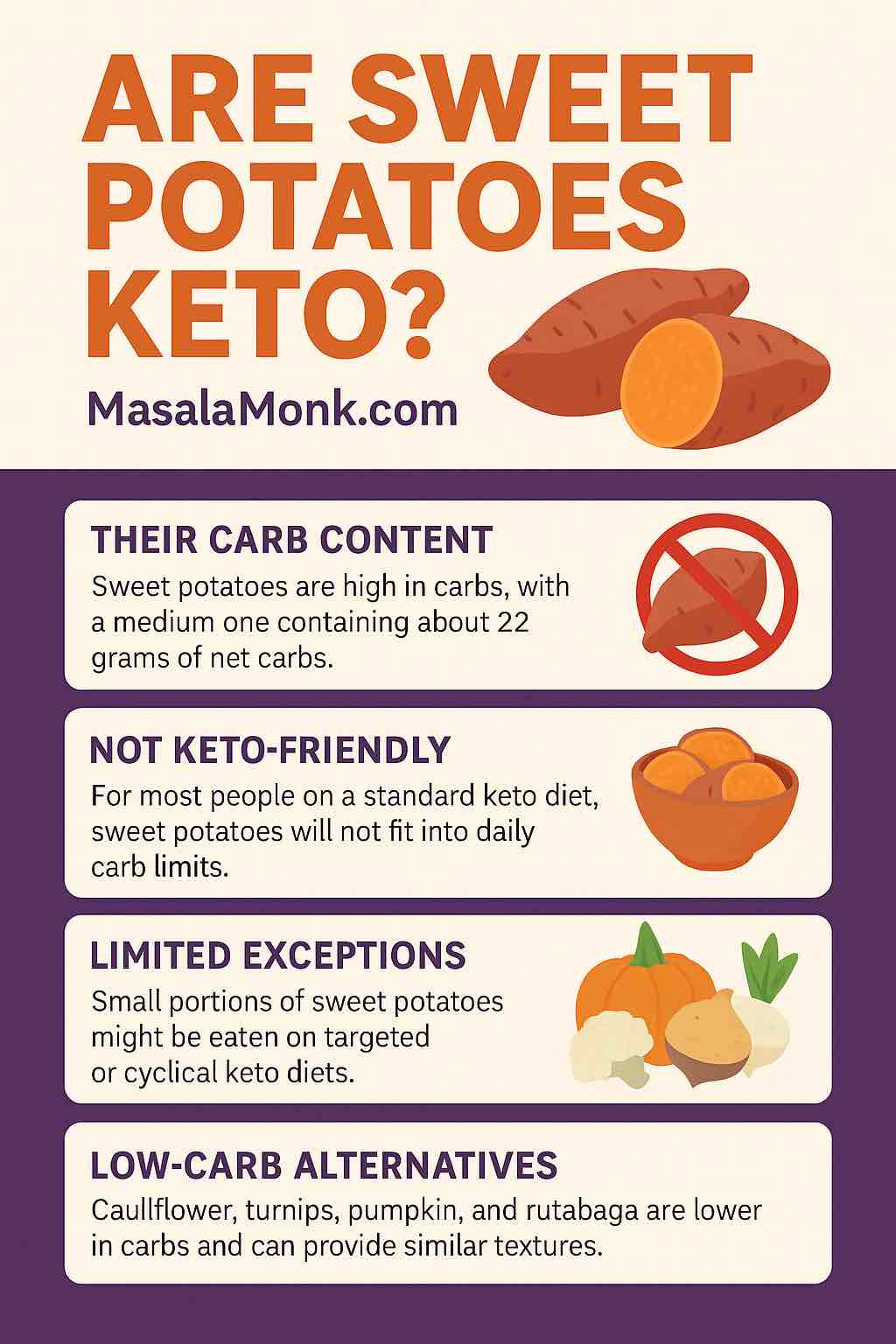
ARE SWEET POTATOES КЕТО?

Sweet potatoes are often hailed as a “superfood” — nutrient-rich, delicious, and versatile. But if you’re on a keto diet, you might be wondering: Are sweet potatoes keto-friendly? Can you eat sweet potatoes on keto? The short answer is no — but there’s nuance worth exploring.

In this post, we’ll unpack the sweet potato’s carb profile, discuss its compatibility with various types of keto diets, suggest low-carb alternatives, and offer practical tips for managing cravings without compromising ketosis.


🧠 What Is the Keto Diet, and Why Does It Limit Carbs?

The ketogenic diet is a high-fat, very low-carb, moderate-protein eating plan that aims to shift your body’s metabolism from relying on glucose (carbs) to burning fat for fuel, a metabolic state known as ketosis.

To reach and maintain ketosis, most people aim for 20–50 grams of net carbs per day. That’s where the conflict begins with sweet potatoes.


🥔 How Many Carbs Are in a Sweet Potato?

Sweet potatoes may seem healthy—and they are, in many diets—but they pack a lot of carbohydrates, which is problematic for keto.

Here’s the breakdown for 1 medium sweet potato (~150g):

  • Total Carbohydrates: ~26g
  • Fiber: ~4g
  • Net Carbs: ~22g

That’s nearly an entire day’s worth of carbs in one serving — and that’s assuming you’re on the higher end of the keto carb limit.


❌ Are Sweet Potatoes Keto-Friendly?

For most keto dieters, sweet potatoes are not keto-friendly. The high net carb count means that even a small portion could kick you out of ketosis.

That said, there are scenarios where sweet potatoes might be integrated into a broader keto strategy — but only for experienced dieters using specific keto variations.


🔁 When Can You Eat Sweet Potatoes on Keto?

Sweet potatoes don’t fit well into standard ketogenic diets, but they may work in the context of:

1. Targeted Ketogenic Diet (TKD)

This approach is used by athletes or active individuals who consume extra carbs around their workouts. In this case, a small portion of sweet potato pre- or post-workout can provide energy without long-term disruption to ketosis.

2. Cyclical Ketogenic Diet (CKD)

This strategy includes higher-carb “refeed” days, often once or twice a week. Sweet potatoes are an excellent option during these phases, offering complex carbs and nutrients to replenish glycogen stores.

3. Carb Cycling or Relaxed Keto

If you’re doing a lazy or low-carb diet that’s not strictly keto, sweet potatoes may be workable in small, carefully measured portions.

However, if you’re following a traditional or therapeutic keto plan (e.g., for epilepsy or insulin resistance), sweet potatoes are likely off-limits.


🥦 Low-Carb Substitutes for Sweet Potatoes on Keto

Craving the hearty, sweet, starchy flavor of a sweet potato without the carb overload? Here are some keto-approved alternatives that scratch the same itch:

1. Cauliflower

Low in carbs (2g net carbs per 100g), cauliflower is a keto MVP. You can mash it, roast it, rice it — and when seasoned right, it’s a fantastic base for savory dishes.

2. Turnips

With ~4.6g net carbs per 100g, turnips have a mildly sweet flavor and potato-like texture when roasted or mashed.

3. Rutabaga

A slightly sweet and dense root vegetable, rutabaga has about 7g net carbs per 100g and works great roasted or spiralized.

4. Pumpkin

With ~5g net carbs per 100g, pumpkin can be used in both sweet and savory recipes. It’s especially useful for soups, mash, or pies.

5. Jicama

Crunchy, slightly sweet, and only ~4.5g net carbs per 100g, jicama is great raw, sautéed, or air-fried.

These alternatives give you the mouthfeel and flavors you may miss without sabotaging your ketosis.


🥦 Best Low-Carb Substitutes for Sweet Potatoes

Craving that sweet, starchy texture? Try these keto-friendly swaps:

SubstituteNet Carbs (per 100g)Why It Works
Cauliflower2gVersatile, great mashed or riced
Turnips4.6gSlightly sweet and roastable
Pumpkin5gSubtle sweetness, great in soups
Rutabaga7gExcellent roasted or mashed
Jicama4.5gCrunchy, low-carb fry option

🔥 The Nutritional Case for Sweet Potatoes (When Not on Keto)

Although they’re not keto-friendly, sweet potatoes are far from unhealthy. They’re a rich source of:

  • Beta-carotene (a precursor to Vitamin A)
  • Potassium
  • Manganese
  • Vitamin C and B6
  • Dietary fiber

They support gut health, stabilize blood sugar in moderate diets, and provide slow-digesting carbs ideal for non-keto lifestyles or post-workout meals. If you ever transition off keto, sweet potatoes are one of the best complex carbs to reintroduce.


🍽️ Tips for Handling Sweet Potato Cravings on Keto

If you’ve been keto for a while, you may still miss the taste and texture of sweet potatoes. Here are a few tricks to keep your cravings in check:

  • Recreate the flavor profile using spices like cinnamon, nutmeg, and smoked paprika with low-carb veggies like pumpkin or rutabaga.
  • Make a mock sweet potato mash using cauliflower or pumpkin with butter, cream cheese, and seasonings.
  • Use keto-friendly sweeteners like erythritol or allulose in casseroles or sides to get that sweet-savory balance.

Remember, the psychological side of keto is just as important as the metabolic one. Finding satisfying swaps can make a big difference in long-term success.


🧾 Final Word: Sweet Potato and Keto Diet—Are They Compatible?

While sweet potatoes are a whole, nutrient-rich food, they don’t align with the macronutrient structure of a ketogenic diet. They’re simply too high in carbs for regular consumption on strict keto. However, context matters.

  • On TKD or CKD, you may fit in small servings occasionally.
  • If you’re on low-carb but not ketogenic, you have more flexibility.
  • For strict keto dieters, opt for the many delicious and creative substitutes available.

Sweet potatoes are off the keto menu — but the flavors and textures you love don’t have to be.

10 Highly Relevant FAQs for the Blog Post

These FAQs are crafted to capture featured snippets and directly answer high-intent keyword questions from your list.


1. Are sweet potatoes keto-friendly?
No, sweet potatoes are not keto-friendly due to their high carbohydrate content. A medium sweet potato contains about 22 grams of net carbs, which can exceed the daily limit on a standard ketogenic diet.


2. Can you eat sweet potatoes on a keto diet?
Only in very limited circumstances. Sweet potatoes may be consumed in small portions on targeted or cyclical ketogenic diets, but they are not suitable for strict keto.


3. Is sweet potato keto approved?
Sweet potatoes are not typically approved on keto diets. Their carb content is too high to maintain ketosis unless you’re on a modified version of keto.


4. Are sweet potatoes considered low carb?
No. While healthier than white potatoes, sweet potatoes are not considered low-carb. A single serving can easily exceed daily carb limits for low-carb or keto diets.


5. How many carbs are in a sweet potato?
A medium sweet potato (~150g) contains approximately 26g of total carbs, 4g of fiber, and about 22g of net carbs.


6. What happens if you eat sweet potatoes on keto?
Eating sweet potatoes on a strict keto diet may raise blood sugar and insulin levels, kicking you out of ketosis and halting fat-burning.


7. Can sweet potatoes be eaten in a targeted keto diet?
Yes, small amounts of sweet potato can be used around workouts in a targeted ketogenic diet (TKD) to provide short-term energy without fully disrupting ketosis.


8. What are keto-friendly alternatives to sweet potatoes?
Great low-carb substitutes include cauliflower, turnips, rutabaga, pumpkin, and jicama—all offering fewer net carbs and similar textures.


9. Are there keto recipes that mimic sweet potato dishes?
Yes. You can recreate sweet potato casseroles or mashed sweet potatoes using ingredients like pumpkin, cauliflower, or rutabaga, combined with spices and low-carb sweeteners.


10. Why do people think sweet potatoes are healthy if they’re not keto?
Sweet potatoes are healthy in general—they’re rich in fiber, vitamins, and antioxidants—but their high carb content makes them unsuitable for ketogenic diets.
Posted on 5 Comments

What mixes well with Baileys? Mixology by Masala Monk

What Mixes Well with Baileys?

Baileys Irish Cream — that velvety, indulgent blend of cream, whiskey, and cocoa — is more than just a liqueur. It’s a mood. A memory. A master key to thousands of cozy evenings and celebration toasts. And when it comes to mixology, Baileys is not just a solo act — it’s a charismatic team player.

So if you’ve ever asked, “What can I mix with Baileys to elevate it beyond the rocks?” — welcome to the Mixology by Masala Monk guide to Baileys. Let’s shake, stir, and sip our way through some of the most delightful combinations Baileys has to offer.


🍸 Why Baileys Works So Well in Cocktails

Baileys is a rare triple-threat in the mixology world:

  1. Texture: That luscious creaminess makes it an ideal base or accent for both hot and cold drinks.
  2. Flavor: Subtle notes of cocoa and vanilla, balanced with Irish whiskey, give Baileys a rich, dessert-like profile.
  3. Versatility: It plays beautifully with coffee, chocolate, nuts, fruit, and even some surprising savory elements.

The result? Endless opportunities for innovation — and indulgence.


☕ Baileys Meets Coffee: A Match Made in Heaven

Let’s face it — Baileys and coffee are soulmates. Together, they’re the grown-up version of cookies and milk.

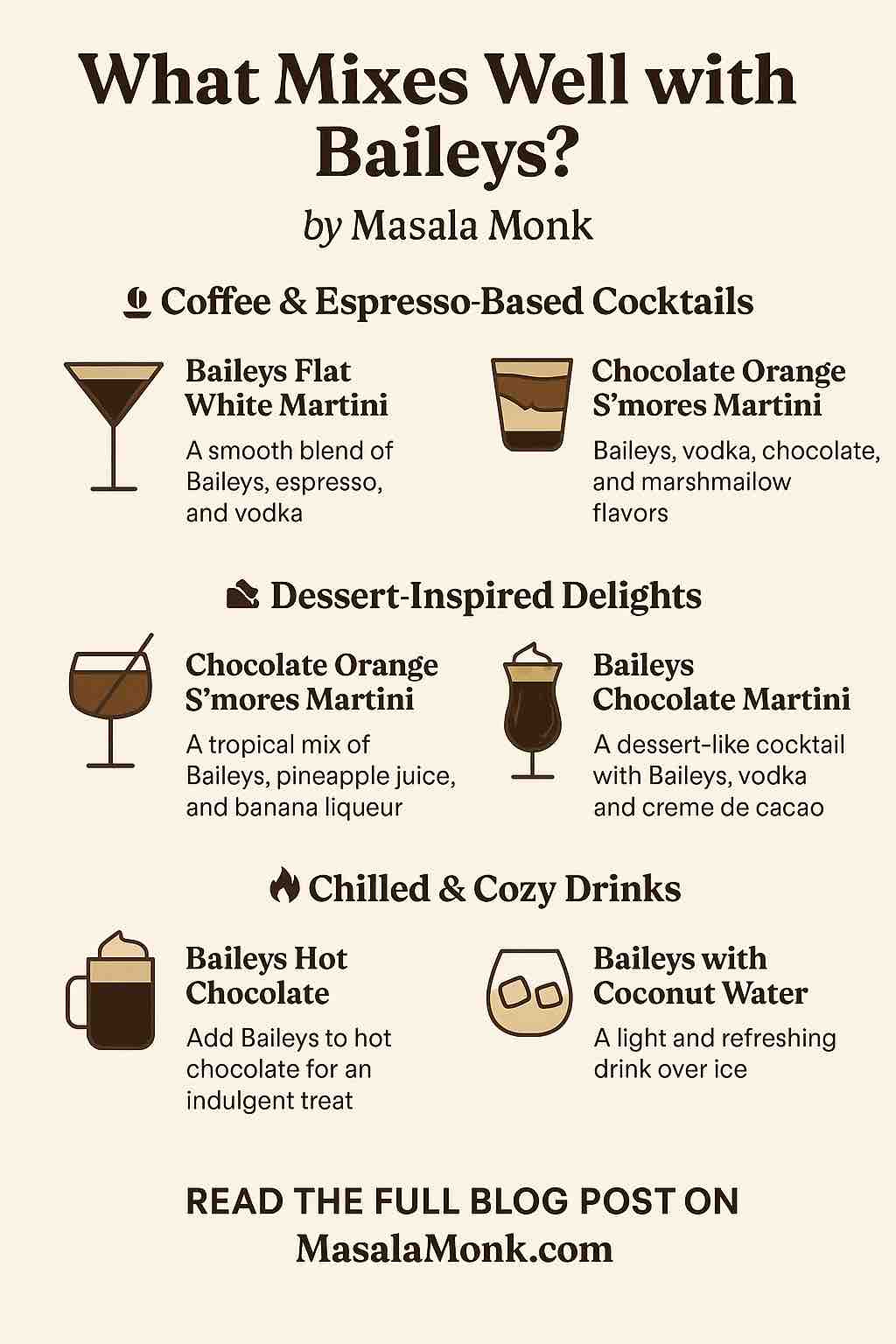
1. Baileys Flat White Martini

Espresso meets elegance.

  • Ingredients: Baileys, espresso, vodka
  • Flavor profile: Bold, creamy, slightly bitter with sweet undertones
  • Why it works: The vodka sharpens the edges, the espresso brings depth, and the Baileys rounds everything out into one smooth finish.

2. Baileys Irish Coffee (with a twist)

Forget the usual cream — swap it out for Baileys.

  • Pro tip: Use freshly brewed dark roast and a cinnamon stick for a spicy lift.
  • Perfect for: Cold evenings, festive mornings, or mid-week indulgence.

🍫 Dessert Cocktails: When Baileys is the Treat

Baileys practically is dessert. So why not go all in?

3. Chocolate Orange S’mores Martini

Your favorite campfire treat, all grown up.

  • Baileys, vodka, orange liqueur, crème de cacao
  • Rim the glass with crushed graham crackers and torch a marshmallow on top.
  • Perfect for: Date nights, cozy fireside evenings, or just a Tuesday pick-me-up.

4. Baileys Tiramisu Cocktail

Why eat tiramisu when you can drink it?

  • Baileys, coffee liqueur, mascarpone cream, espresso
  • Layered in a glass with a dusting of cocoa powder
  • Ideal for: Dinner parties, Italian-themed nights, or an impressive treat for guests

❄️ Refreshing Summer Cocktails with Baileys

Yes, Baileys can be refreshing too — it’s not all about warmth and winter.

5. Baileys Banana Colada

A tropical daydream with a creamy twist.

  • Baileys, banana liqueur, pineapple juice, coconut rum
  • Serve it over crushed ice with a pineapple wedge
  • Why it works: The tropical fruit acidity cuts through the creaminess — creating a perfectly balanced, unexpected cocktail.

6. Baileys & Coconut Water

  • Simple, clean, light.
  • Add a few mint leaves and crushed ice for extra freshness.
  • Surprisingly hydrating and low effort, yet delicious.

🔥 Warm and Cozy: Winter Cocktails with Baileys

When the chill hits, Baileys becomes your best friend.

7. Baileys Hot Chocolate

  • Add a shot of Baileys to your hot cocoa
  • Top with whipped cream, chocolate shavings, or even chili powder for a spicy edge
  • Optional: Add a splash of hazelnut syrup for Nutella-like flavor

8. Baileys Spiced Chai Latte

An Indian twist — courtesy of Masala Monk flair.

  • Brew a strong masala chai
  • Add Baileys (classic or almond)
  • Garnish with a star anise and a pinch of nutmeg

🥃 Reinventing Classic Cocktails with Baileys

9. Baileys White Russian

Move over Kahlúa. There’s a new sheriff in town.

  • Vodka, Baileys, and a splash of milk
  • Optional: Add coffee liqueur for extra depth
  • Serve over ice in a rocks glass — swirl slowly and enjoy the marbled magic.

10. B-52 Shot

  • Kahlúa (bottom), Baileys (middle), Grand Marnier (top)
  • Layered with a spoon for a stunning visual effect
  • Sweet, creamy, and citrusy all at once — a party favorite.

🧪 Masala Monk’s Mixology Tips for Working with Baileys

  1. Don’t over-shake: Cream-based liqueurs can curdle if over-shaken or mixed with high-acid juices like lemon or lime.
  2. Glass matters: Serve Baileys cocktails in elegant coupe glasses, rocks glasses, or layered shot glasses for visual appeal.
  3. Use flavored Baileys: Salted caramel, espresso crème, and almond variants can add new dimensions.
  4. Garnish wisely: Nutmeg, cinnamon, cocoa, mint, or even edible flowers can elevate the experience.

💡 Pro-Level Pairings & Unexpected Twists

  • Baileys + Matcha: Earthy meets creamy. Add matcha powder to hot milk, then blend with Baileys.
  • Baileys + Peanut Butter Whiskey: Dessert bomb in a glass.
  • Baileys + Amaretto: Almond and cream for an Italian-style after-dinner drink.

📝 Final Sip: Baileys is Your Blank Canvas

Whether you’re a casual sipper or an experimental mixologist, Baileys offers a base that can adapt to your mood, season, or occasion. It’s indulgent, yes — but also incredibly flexible. You don’t need to be a trained bartender to make something beautiful with it. Just a few ingredients and a little inspiration from the Masala Monk mindset — where global flavors meet homegrown charm.


📸 Share Your Creations!

Tried one of these recipes or invented your own Baileys-based cocktail? Tag @MasalaMonk and use #BaileysByMasalaMonk — we’d love to see your mixology magic!

📌 FAQs: Baileys Mixology by Masala Monk

1. Can Baileys be mixed with citrus or acidic juices?

Not recommended. Baileys contains dairy, which can curdle when mixed with acidic ingredients like lemon or orange juice. Stick to low-acid mixers like coffee, chocolate, or cream-based liqueurs.


2. Can I mix Baileys with soda or tonic water?

It’s not ideal. Carbonated mixers, especially tonic or citrus sodas, may cause curdling. If you want something bubbly, use cream soda or root beer — but mix gently and serve immediately.


3. Is Baileys gluten-free or dairy-free?

Classic Baileys contains dairy and is not dairy-free. However, they do offer a Baileys Almande variant made with almond milk, which is suitable for vegans and dairy-sensitive drinkers.


4. How should I store Baileys after opening?

Store Baileys in a cool, dark place, preferably in the fridge. It does not require refrigeration but keeping it chilled helps maintain flavor and texture. Consume within 6 months after opening.


5. Can I use Baileys in baking or desserts?

Absolutely! Baileys is fantastic in desserts — think Baileys cheesecake, truffles, tiramisu, or even drizzled over ice cream. It adds a creamy, slightly boozy twist to sweet dishes.


6. Can I drink Baileys straight or should I always mix it?

Baileys is delicious on its own, served over ice. It’s also a great base for cocktails. Whether you sip it neat or mix it into drinks or desserts, it’s all about preference.


7. What’s the alcohol content of Baileys?

Classic Baileys has an ABV (alcohol by volume) of 17%, making it relatively low in alcohol compared to spirits like vodka or whiskey — but stronger than wine or beer.


8. What flavors of Baileys are available?

Besides the original, Baileys offers exciting variants like:

  • Salted Caramel
  • Espresso Crème
  • Strawberries & Cream
  • Almande (dairy-free)
  • Red Velvet
  • Apple Pie (limited edition)

Each brings unique cocktail possibilities.


9. Can I mix Baileys with whiskey or vodka?

Yes! Baileys works well with spirits like vodka, whiskey, and coffee liqueurs. Use it in drinks like the Flat White Martini or Baileys White Russian for richer depth and body.


10. Is Baileys suitable for vegans or lactose-intolerant people?

The original Baileys contains dairy and is not vegan. However, the Baileys Almande variant is plant-based and dairy-free, made from almond milk — suitable for vegans and many lactose-intolerant individuals.

Posted on Leave a comment

Chia Pudding For Lunch: 5 Ways to Add More Mango to It

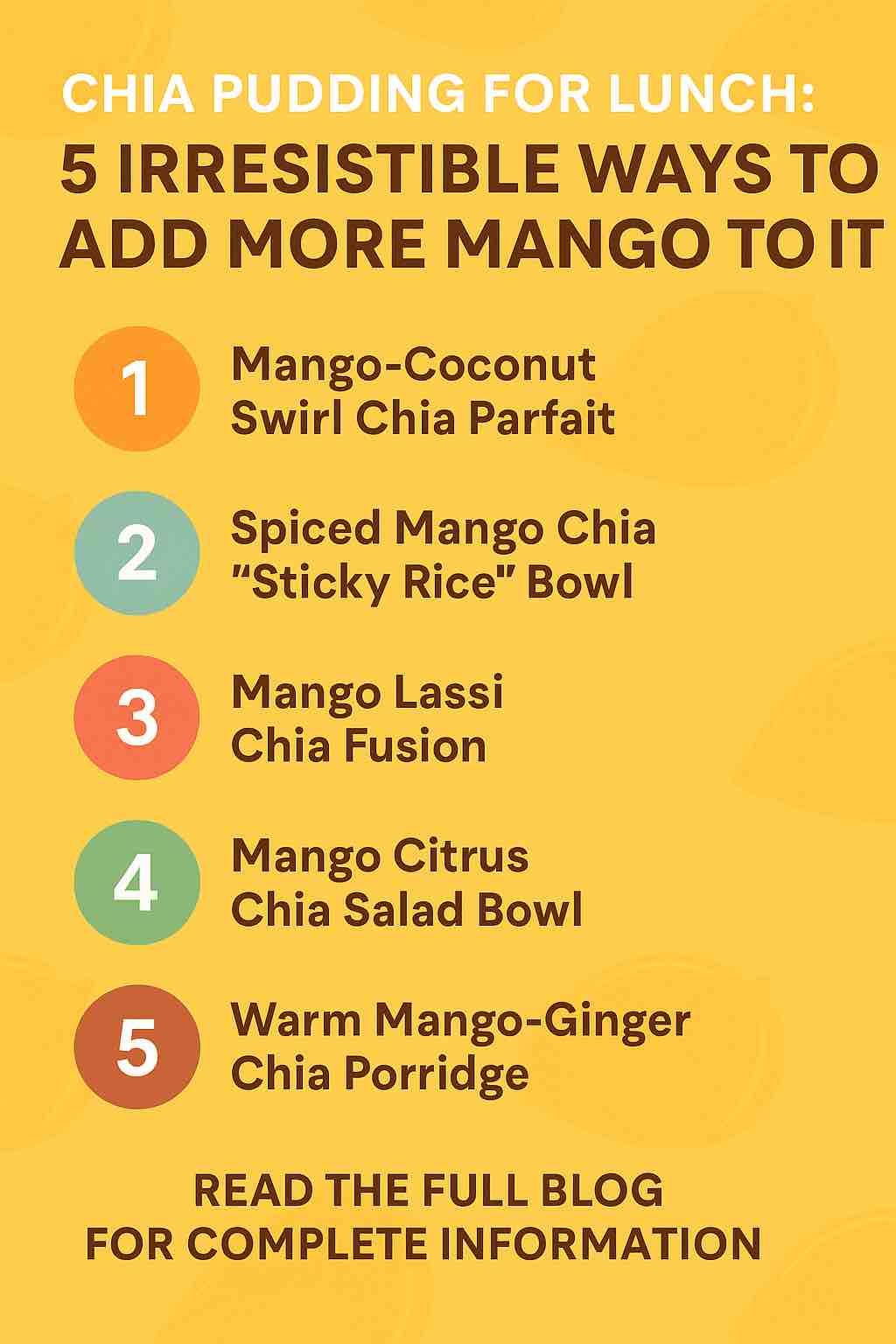
CHIA PUDDING FOR LUNCH: 5 IRRESISTIBLE WAYS TO ADD MORE MANGO TO IT

Who says chia pudding is only for breakfast or dessert?

With its creamy texture, rich fiber content, and ability to play well with virtually any flavor, chia pudding makes a smart, satisfying, and surprisingly sophisticated lunch option—especially when paired with the king of tropical fruits: mango.

Mango brings not just natural sweetness and a sunny golden hue to the table, but also adds a depth of flavor that can range from floral and honeyed to citrusy and tangy, depending on how it’s used. So if you’re ready to elevate your chia pudding game and make lunch more vibrant, here are five creative, indulgent-yet-healthy ways to pack in more mango.

Let’s dive spoon-first into the mango madness.


🍨 1. Mango-Coconut Swirl Chia Parfait (Layered & Lush)

Imagine scooping into layers of cool chia pudding, silky mango purée, and creamy coconut yogurt. Each bite is a perfect contrast: the soft pudding gives way to mango’s juicy brightness, balanced by a rich coconut swirl.

How to Make It:

  • Start by soaking your chia seeds overnight in coconut milk with a dash of vanilla and a touch of maple syrup.
  • In the morning, blend ripe mangoes into a smooth purée. (For tang, squeeze in a bit of lime juice.)
  • Alternate layers in a glass jar: chia pudding → mango purée → coconut yogurt → diced mango chunks.
  • Finish with toasted coconut flakes, lime zest, and maybe a sprig of mint.

Why it works: This is essentially a tropical parfait that satisfies your eyes, your tastebuds, and your hunger. Each spoonful is a little different—a layered flavor journey.


🥭 2. Spiced Mango Chia “Sticky Rice” Bowl (Inspired by Southeast Asia)

This one takes inspiration from Thai mango sticky rice, but reimagines it with chia seeds for a high-fiber, low-glycemic twist.

Key Flavors: Coconut, ripe mango, a hint of salt, and a dash of toasted sesame.

Build It Like This:

  • Prepare chia pudding with full-fat coconut milk, a pinch of salt, and a spoonful of honey.
  • Add a dash of ground cardamom or cinnamon for depth.
  • Serve in a bowl, topped with:
    • Sliced mango
    • A drizzle of coconut cream (use the thick top layer of a can)
    • Toasted sesame seeds or mung beans for crunch

Optional: Sprinkle with puffed quinoa or chopped roasted cashews for extra texture.

Why it works: It’s a lunchtime treat that tastes like dessert—but it’s packed with healthy fats, fiber, and fruit. Comforting and energizing.


🍹 3. Mango Lassi Chia Fusion (Yogurt-Infused Power Bowl)

Channel the creamy deliciousness of a mango lassi in this refreshing chia pudding twist that’s ideal for warmer days or post-workout lunches.

Blend These Elements:

  • Chia seeds soaked in a blend of almond milk and plain Greek yogurt (or a plant-based alternative).
  • Mango blended with a pinch of turmeric, cardamom, and a drizzle of honey.
  • Stir some mango purée directly into the chia base; leave some for topping.

Top It Off:

  • Chopped pistachios
  • A swirl of yogurt and a drizzle of purée
  • A few strands of saffron for luxury (optional)

Why it works: The yogurt makes it tangy and protein-rich, while the mango + spice combo feels both exotic and familiar. Balanced and satisfying.


🍊 4. Mango Citrus Chia Salad Bowl (Zesty & Fresh)

Looking for something bright and palate-cleansing? This chia bowl brings together sweet mango with tart citrus for a refreshing twist.

Assembly Guide:

  • Soak chia seeds in orange juice + a splash of lime for a citrusy base.
  • Toss together:
    • Diced mango
    • Orange or grapefruit segments (pomelo if you can find it!)
    • Chopped mint
  • Add a spoonful of citrus-chia pudding at the base of your bowl.
  • Top with the fruit mix and a small handful of granola or crushed macadamia nuts.

Pro Tip: Add a tiny bit of chili powder or Tajín on the mango for a surprising kick.

Why it works: Sweet, sour, and spicy all in one bite. A flavor explosion that’s as energizing as it is light.


🍯 5. Warm Mango-Ginger Chia Porridge (Cozy & Unique)

Not all chia puddings need to be eaten cold! For a comforting lunch on a rainy day, try this cozy, gently warmed version infused with mango and ginger.

Here’s How:

  • Gently warm pre-soaked chia pudding on the stove with a bit more plant milk.
  • Stir in mango purée, grated fresh ginger, and a touch of cinnamon.
  • Let it thicken slightly over low heat, then remove and let cool for a minute.

Top with:

  • Caramelized mango slices (sauté in coconut oil with a bit of brown sugar)
  • Crushed walnuts or almonds
  • A drizzle of maple syrup

Why it works: This is like a rice pudding-meets-fruit compote moment, but with all the nutritional benefits of chia. Deep, spicy-sweet, and comforting.


🥄 Final Tips for Chia Pudding Perfection with Mango

  • Ripe mangoes are key. Ataulfo or Alphonso varieties are especially sweet and smooth.
  • Consistency is everything. Aim for 3 tablespoons of chia seeds per 1 cup of liquid for a pudding that’s neither too runny nor too thick.
  • Soak it overnight for best texture, but 2–3 hours minimum is enough.
  • Add a crunch element: toasted coconut, granola, roasted nuts, or even cacao nibs elevate the experience.

📝 Wrapping It Up

Lunch doesn’t have to be boring or rushed. With these five creative ways to add more mango to your chia pudding, you can enjoy a midday meal that’s nutritious, indulgent, colorful, and endlessly customizable.

Whether you’re layering it like a parfait, infusing it with spices, or warming it up for a cozy twist, mango-chia pudding is a canvas—and your lunch break is the perfect time to create.

10 FAQs About Mango Chia Pudding for Lunch

1. Can I use frozen mango instead of fresh mango in chia pudding?

Absolutely! Frozen mango works well—just thaw it first. For purée, you can blend it while still slightly frozen for a chilled texture. Frozen mango is often more affordable and just as nutritious as fresh.


2. How long does mango chia pudding last in the fridge?

It lasts about 4–5 days when stored in an airtight container. Add fresh toppings (like diced mango or nuts) just before serving to maintain texture and freshness.


3. What’s the best type of mango to use for chia pudding?

Varieties like Ataulfo (Honey mango), Alphonso, or Kent mangoes are ideal. They’re smooth, sweet, and low in fiber strings—perfect for blending or slicing.


4. Can I make chia pudding without any added sweeteners?

Yes. Ripe mango is naturally sweet and often enough on its own. But if your mango isn’t sweet enough, try a touch of maple syrup, agave, or dates.


5. How do I fix runny or too-thick chia pudding?

If it’s too runny, stir in more chia seeds and let it sit longer. If it’s too thick, add a splash of plant milk or mango purée to loosen it up.


6. Is mango chia pudding good for meal prep?

Definitely! You can prepare several jars in advance. Just leave space for toppings and stir well before eating. It’s ideal for grab-and-go lunches.


7. What plant-based milk works best with mango chia pudding?

Coconut milk is great for a tropical flavor. Almond, oat, or cashew milk also work well. Use unsweetened varieties so the mango can shine through.


8. Can I warm up chia pudding for lunch?

Yes. Gently heat it on the stove or microwave, especially for recipes like the Warm Mango-Ginger Chia Porridge. Just stir often to avoid clumping.


9. Can I blend chia pudding instead of leaving the seeds whole?

Yes, for a smooth pudding, blend the soaked chia mixture. It creates a texture similar to mousse—especially nice when combined with mango purée.


10. Is chia pudding with mango filling enough for lunch?

It can be! Mango provides carbs and vitamins, chia offers protein and fiber, and if you add nuts, seeds, or yogurt, it becomes a balanced, filling meal.

Posted on 2 Comments

How to make Mango Shake? Classic, Vegan & Sugar Free Options Inside

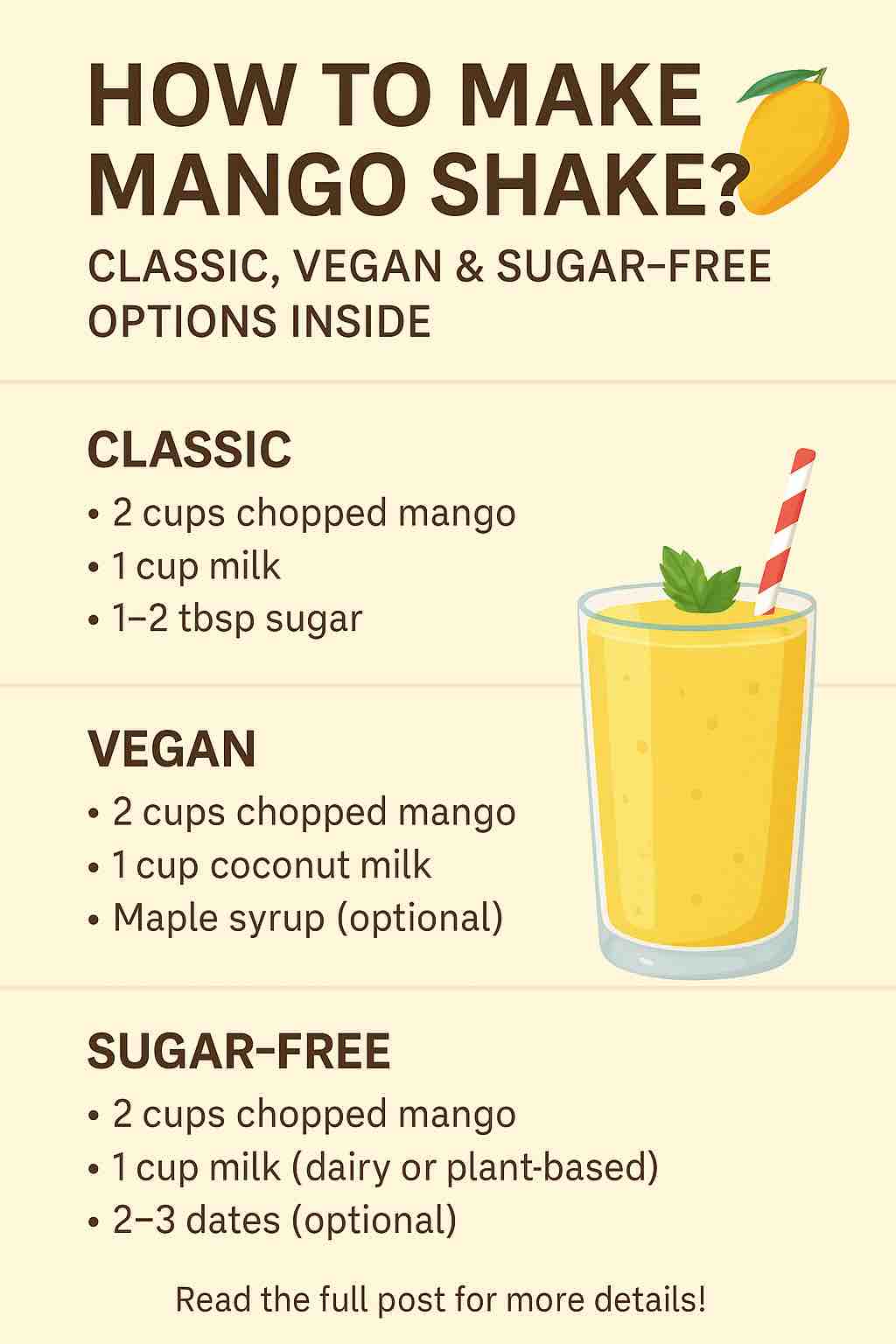
HOW TO MAKE MANGO SHAKE? CLASSIC, VEGAN & SUGAR-FREE OPTIONS INSIDE

Welcome to the season of sunshine and sweet indulgence!
As summer unfolds its golden warmth, there’s one fruit that becomes the star of every kitchen—the mighty mango. Whether you enjoy it sliced, pickled, juiced, or churned into desserts, mangoes are a tropical treasure that bring pure joy to our taste buds.

And what better way to enjoy them than with a glass of chilled Mango Shake—a drink so refreshing, it tastes like summer in a cup.

In this post, we’ll walk you through not just the classic mango shake, but also healthy alternatives, including vegan and sugar-free versions, so everyone can savor this golden delight. Let’s get blending!


🍹 Why Mango Shake?

Mango shakes aren’t just delicious—they’re also:

  • Nutrient-rich: High in Vitamin C, Vitamin A, and antioxidants.
  • Energizing: Perfect for post-workout recovery or as a breakfast smoothie.
  • Versatile: Easily customizable with milk substitutes, sweeteners, or even protein powder.
  • Kid-approved: Naturally sweet and creamy, it’s a favorite among children.

1️⃣ The Classic Mango Shake Recipe

Let’s start with the timeless version that many of us grew up sipping on during sweltering afternoons.

🛒 Ingredients:

  • 2 ripe mangoes (Alphonso or Kesar are best)
  • 1 cup chilled full-fat milk
  • 1–2 tbsp sugar (adjust to taste)
  • A few ice cubes
  • Optional garnish: chopped pistachios, almonds, or a scoop of vanilla ice cream

🧑‍🍳 Instructions:

  1. Prep the mangoes: Peel and cube them, removing the pit.
  2. Blend: Add mango chunks, milk, sugar, and ice cubes into a blender.
  3. Whizz until creamy and smooth.
  4. Pour & garnish: Serve immediately with nuts or ice cream for extra indulgence.

✅ Tips:

  • If your mangoes are very sweet, skip or reduce the sugar.
  • For a thicker shake, reduce the milk or use frozen mango chunks.

Fun Fact: Alphonso mangoes are often called the “King of Mangoes” in India for their rich flavor and buttery texture.


2️⃣ Vegan Mango Shake (Dairy-Free)

Whether you’re lactose-intolerant, plant-based, or simply want to try something different, this version is just as dreamy.

🛒 Ingredients:

  • 1 cup ripe mango cubes
  • 1 cup plant-based milk (coconut, almond, oat, or soy milk)
  • 1–2 tsp maple syrup or soaked dates (optional)
  • Ice cubes
  • A pinch of cardamom or vanilla extract (for extra flavor)

🧑‍🍳 Instructions:

  1. Add mango cubes and plant-based milk to a blender.
  2. Toss in your sweetener and ice.
  3. Blend until smooth and creamy.
  4. Serve chilled. Top with coconut flakes or chia seeds if desired.

✅ Pro Tips:

  • Coconut milk adds richness and a tropical twist.
  • Want it thicker? Add a frozen banana or avocado.

Health Note: Plant-based milks are often fortified with calcium and Vitamin D, making this a nutritious drink too.


3️⃣ Sugar-Free Mango Shake (Diabetic Friendly)

Trying to cut down on refined sugar? This version relies on the natural sweetness of mangoes, with optional natural sweeteners.

🛒 Ingredients:

  • 1 cup ripe mangoes
  • 1 cup milk (dairy or plant-based)
  • A few ice cubes
  • Optional: 2–3 soaked dates or a few drops of stevia

🧑‍🍳 Instructions:

  1. Blend mangoes with milk and ice.
  2. Add natural sweetener if needed and blend again.
  3. Serve cold, optionally topped with chopped mint for a fresh touch.

✅ Low-Carb Ideas:

  • Use unsweetened almond milk and avoid bananas or additional fruit.
  • Try adding cinnamon or ginger powder for flavor without sugar.

Pro Tip: Overripe mangoes are naturally sweeter—perfect for sugar-free recipes.


🌀 Bonus Variations to Try

Take your mango shake to the next level with these creative spins:

💪 Mango Protein Shake

  • Add 1 scoop of vanilla or unflavored protein powder.
  • Great post-workout drink.

🍨 Mango Lassi Twist

  • Add ½ cup yogurt, a pinch of salt, and a dash of cardamom for a classic Indian-style treat.

🍧 Mango Smoothie Bowl

  • Blend with less milk to keep it thick.
  • Top with berries, granola, and coconut shreds.

🌿 Mango-Turmeric Detox Shake

  • Add a pinch of turmeric and black pepper for anti-inflammatory benefits.

📦 Storage & Meal Prep

Can you store mango shake?

  • Yes, for up to 24 hours in an airtight jar in the fridge. Shake before serving.
  • For meal prep: Freeze mango chunks ahead of time and blend fresh when needed.

🥭 Final Thoughts: Blend, Sip, Smile

Mango shakes are more than just a summer beverage—they’re a nostalgic, mood-lifting treat that can be enjoyed by anyone, in any form. Whether you’re reaching for a classic dairy-based shake, going plant-based, or ditching sugar for a healthier choice, there’s a mango shake recipe here for you.

Don’t forget to experiment and share your unique twists in the comments. And remember—mango season doesn’t last forever. Make the most of it while you can!


📸 Share Your Mango Moment!

Tried one of these? Post your shake on Instagram and tag #MangoShakeMagic or drop a comment below with your favorite version.

🧐 FAQs – Mango Shake Edition

1. Can I use frozen mangoes for mango shake?

Absolutely! Frozen mango chunks are great for thicker, creamier shakes and help eliminate the need for ice. Just reduce the amount of liquid slightly to keep the consistency right.


2. What is the best type of mango for shakes?

Alphonso, Kesar, or Ataulfo mangoes are ideal due to their sweetness, smooth texture, and rich flavor. Avoid fibrous varieties like Haden unless you’re straining the shake.


3. Can I make mango shake ahead of time?

Yes, you can refrigerate mango shake for up to 24 hours in an airtight container. However, it may slightly separate, so shake or stir before serving. For best flavor and texture, consume fresh.


4. How do I make my mango shake thicker?

Use less milk, more mango, or frozen mango chunks. You can also add ingredients like banana, yogurt (for non-vegan versions), or soaked chia seeds for extra thickness.


5. Is mango shake healthy?

Yes, when made without added sugars or heavy ice creams. It’s rich in vitamins A and C, antioxidants, and fiber. Use plant-based milk and natural sweeteners for a healthier version.


6. Can diabetics drink mango shake?

In moderation. Use naturally sweet ripe mangoes and opt for a sugar-free version with almond or oat milk. Dates, stevia, or erythritol can be used sparingly as sweeteners.


7. Which plant-based milk is best for a vegan mango shake?

Coconut milk gives a rich, creamy tropical flavor. Almond, oat, and soy milks are also excellent, depending on your preference and dietary needs.


8. Can I add other fruits to mango shake?

Yes! Great additions include banana (for creaminess), pineapple (for a tropical twist), or berries (for a tangy contrast). Just ensure the flavor of mango remains dominant.


9. How can I turn mango shake into a smoothie bowl?

Use less liquid to keep the shake thick. Pour into a bowl and top with granola, fresh fruits, nuts, or seeds. This makes for a nutritious and Insta-worthy breakfast.


10. Can I add protein powder to mango shake?

Definitely! Vanilla or unflavored protein powders blend well with mango. Great for post-workout recovery or a high-protein breakfast. Adjust sweetness if your protein is sweetened.


Posted on 1 Comment

Granola: Friend or Foe? Unlocking the Secrets of Weight Loss-Friendly Granola

Is granola really weight loss-friendly?

Granola has earned a reputation as a health food staple — crunchy, wholesome, and packed with oats, nuts, and dried fruit. But when it comes to weight loss, the question arises: is granola truly a friend to your goals, or could it secretly be working against you?

In this post, we’ll dig deep into what makes granola both beneficial and potentially problematic for weight management, explore the latest scientific findings, and reveal how you can enjoy granola without sabotaging your progress.


The Granola Dilemma: Why Opinions Are Split

At first glance, granola seems like a no-brainer for healthy eating. It’s often marketed as natural, fiber-rich, and energy-boosting. Plus, with oats as a base and nuts sprinkled throughout, it ticks many nutrition boxes.

However, the reality is more complicated. Granola’s calorie density and sugar content often catch people off guard. Many store-bought varieties are loaded with added sugars, oils, and sometimes chocolate or sweetened coconut, quickly ramping up the calorie count.

The typical serving size—usually around ½ cup—contains roughly 200 to 300 calories. But many of us pour far more than that into our bowls, unknowingly doubling or tripling the intake. In the world of weight loss, calories matter, and this sneaky overconsumption can stall progress.


What’s Inside Your Granola Bowl?

Understanding granola’s composition is key to making smart choices.

The Good Stuff

  • Whole Grains (Oats): Oats provide a rich source of soluble fiber, particularly beta-glucan, which helps promote feelings of fullness, stabilize blood sugar, and support heart health.
  • Nuts and Seeds: Almonds, walnuts, pumpkin seeds, and others provide heart-healthy fats, protein, and essential minerals like magnesium.
  • Dried Fruits: Raisins, cranberries, and apricots add natural sweetness along with vitamins and antioxidants.

The Hidden Pitfalls

  • Added Sugars: Many commercial granolas add sugar in various forms—cane sugar, honey, maple syrup, or even agave nectar. Some brands contain over 12 grams of sugar per serving.
  • Oils and Fats: While nuts are great, some granolas include extra oils for crunch, increasing fat and calorie content.
  • Calorie Density: Because granola is dry and crunchy, it’s easy to eat large amounts without feeling full immediately.

What Does Science Say? The Latest Research Insights

Recent studies shed fresh light on how granola impacts not just weight but overall health:

1. Prebiotic-Enhanced Granola and Mental Health

A 2025 study in Frontiers in Nutrition showed that adults consuming granola fortified with multiple prebiotics for 8 weeks reported improved sleep quality and reduced stress and mood disturbances. This was linked to positive changes in gut bacteria, especially increased Bifidobacterium levels, highlighting granola’s potential as a functional food for gut-brain health.

2. Boosting Nutrient Intake and Digestive Health

Another clinical trial found that adding fruit granola to breakfast significantly increased the intake of important nutrients like iron, vitamin B1, vitamin D, and fiber. Participants also experienced an increase in bowel movements, pointing to better digestive regularity.

3. Cardiovascular Benefits in Special Populations

Research on patients undergoing hemodialysis revealed that fruit granola consumption over two months helped reduce blood pressure and improved gut microbiota diversity. This suggests potential heart health benefits in clinical contexts, though more research is needed for the general population.


Is Granola a Weight Loss Friend or Foe?

The answer: It depends on how you choose and consume it.

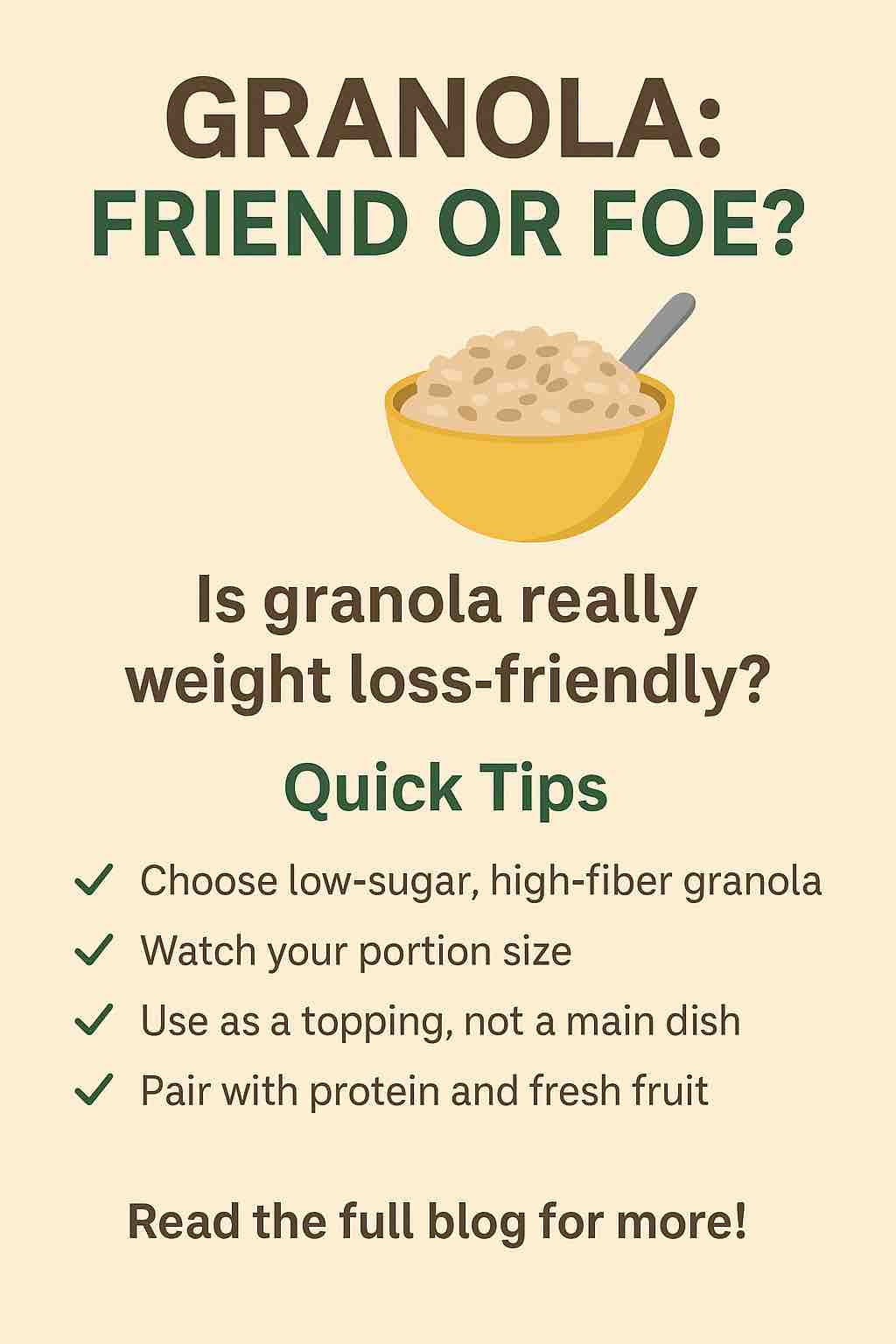
Granola is a friend when:

  • You opt for low-sugar, high-fiber varieties.
  • You control your portion size carefully.
  • You use it as a crunchy topping, not a full meal replacement.
  • You balance it with protein-rich foods like Greek yogurt or fresh fruit.

Granola becomes a foe when:

  • You consume large portions mindlessly.
  • You eat highly processed, sugar-laden brands.
  • You combine it with other high-calorie foods without accounting for the extra calories.

How to Make Granola Work for Weight Loss

1. Scrutinize the Label

Choose granolas with less than 6 grams of added sugar per serving. Avoid those with syrups or sweeteners listed among the first few ingredients.

2. Prioritize Fiber and Protein

Look for at least 3 grams of fiber and 5 grams of protein per serving to keep you full longer and reduce cravings.

3. Measure Your Portions

Start by measuring out ¼ to ½ cup servings until you develop an intuitive sense of the right amount. Use granola as a flavor and texture enhancer, not the main event.

4. Make Your Own

DIY granola lets you control ingredients and sweetness. Try roasting oats with a bit of cinnamon, a splash of pure maple syrup, nuts, and seeds. This way, you get all the benefits without the excess sugar or oils.

5. Pair Smartly

Add granola as a topping on plain Greek yogurt or fresh fruit rather than eating it straight from the bag. This adds volume and nutrients without extra calories.


Final Thoughts: The Sweet Spot for Granola and Weight Loss

Granola isn’t inherently good or bad — it’s all about context. When thoughtfully chosen and portioned, it can enrich your diet with fiber, protein, and micronutrients while offering satisfying crunch and flavor. But it’s crucial to stay mindful of the sugar and calorie content.

In the landscape of weight loss, granola can be a strategic ally — just don’t let it fool you with its health halo. Keep serving sizes small, opt for quality over quantity, and pair it with nutrient-dense foods for a delicious and balanced approach to your goals.

FAQs: Granola and Weight Loss

1. Is granola good for weight loss?
Granola can support weight loss if chosen carefully and eaten in controlled portions. Opt for low-sugar, high-fiber versions and avoid overeating due to its calorie density.

2. How many calories are in a typical serving of granola?
A standard ½ cup serving of granola contains roughly 200–300 calories, but many people unknowingly eat larger portions, increasing calorie intake significantly.

3. What should I look for on the granola label?
Look for granolas with less than 6 grams of added sugar per serving, at least 3 grams of fiber, and 5 grams or more of protein. Avoid those with syrups or sweeteners as main ingredients.

4. Can I eat granola every day while trying to lose weight?
Yes, but in moderation. Keep portion sizes small (¼ to ½ cup) and pair granola with nutrient-dense foods like Greek yogurt or fruit to balance your meals.

5. Is homemade granola better than store-bought?
Homemade granola lets you control sugar and oil content, making it easier to keep calories low and nutrition high. It’s often a healthier choice than many commercial brands.

6. How does granola affect blood sugar levels?
Granola with added sugars can cause blood sugar spikes. Choosing low-sugar, high-fiber granola helps stabilize blood sugar and supports better energy levels.

7. What are the benefits of granola beyond weight loss?
Granola can improve digestive health due to its fiber content and may positively influence gut bacteria when enriched with prebiotics. Some studies also link it to better sleep and cardiovascular health in specific groups.

8. Can granola be a meal replacement?
Granola alone is usually calorie-dense but low in protein and water content, so it’s best as a snack or topping rather than a full meal replacement.

9. How can I use granola to avoid overeating?
Measure your servings with a cup or spoon, use granola as a topping rather than a main dish, and combine it with protein and fresh fruits to increase satiety.

10. Are there any populations who should avoid granola?
People with nut allergies or those sensitive to high-fiber foods may need to avoid certain granola types. Also, those watching sugar intake closely, such as diabetics, should choose granola carefully.