Posted on 4 Comments

Apple Cider Vinegar and Belly Fat: Does It Really Work?

Benefits-of-APPLE-CIDER-VINEGAR-FOR-BELLY-FAT

Apple cider vinegar (ACV) is one of those remedies that just won’t quit. For years it’s been hailed as a metabolism booster, detoxifier, and — most of all — a belly-fat burner. On social media, you’ll see it mixed into detox drinks, touted in “before and after” weight-loss videos, or taken as daily shots. No wonder search engines are filled with questions like:

  • Does apple cider vinegar really burn belly fat?
  • How do you use ACV to lose stomach fat?
  • Can this drink shrink my waistline?

The short answer is: ACV is not a magic potion. You can’t spot-reduce fat from your stomach with any single food or drink. That said, there is credible research showing that vinegar — and ACV in particular — may help with modest weight loss, waist reduction, and even decreases in visceral fat (the deeper abdominal fat linked to metabolic disease).

For example:

  • In a landmark Japanese trial, adults who took vinegar daily for 12 weeks lost weight, reduced their waistlines, and lowered visceral fat compared to a placebo group (Kondo et al., 2009).
  • A 2024 Lebanese study found that overweight adolescents and young adults who drank ACV for 12 weeks saw significant drops in BMI, waist, and hip measurements (Abou-Khalil et al., 2024).
  • A 2023 Iranian study in people with type 2 diabetes showed ACV lowered waist circumference and improved blood sugar and cholesterol levels (Jafarirad et al., 2023).

So while it’s no miracle, science does suggest ACV can play a supportive role in trimming belly fat — especially when combined with healthy eating and exercise.


What Is Apple Cider Vinegar and How Does It Affect Belly Fat?

From apple juice to acetic acid

Apple cider vinegar starts its life as crushed apples. First, yeast converts the fruit sugars into alcohol (making hard cider). Then bacteria convert that alcohol into acetic acid, the sour-tasting compound that defines vinegar.

Most commercial ACV contains about 4–6% acetic acid — the same range studied in clinical trials. Acetic acid is thought to be the main driver of vinegar’s metabolic effects, from appetite control to fat storage. A 2006 review in MedGenMed noted that vinegar reliably lowers post-meal glucose and insulin spikes, which may indirectly influence weight and fat gain (Johnston & Gaas, 2006).

The “mother”

If you’ve ever seen cloudy strands floating in ACV labeled “with the mother,” that’s a mix of proteins, enzymes, and beneficial bacteria from the fermentation process. Many people prefer raw, unfiltered versions with the mother because of its traditional and probiotic appeal. However, current research shows the real fat-loss effects come from acetic acid, not the mother itself.

More than acetic acid

Although acetic acid is the star, ACV also contains:

  • Malic acid (from apples),
  • Trace minerals such as potassium,
  • Polyphenols, plant-based antioxidants.

These compounds may contribute to ACV’s overall health profile, but they’re present in small amounts. When it comes to weight or waist reduction, the focus remains firmly on acetic acid.

ACV versus other vinegars

It’s worth pointing out that many vinegar studies — including the Japanese visceral fat trial — didn’t always use apple cider vinegar specifically. Because acetic acid is common to all vinegars, their metabolic effects are likely similar. ACV simply dominates the wellness world because of its natural image, long history in folk medicine, and wide availability.


Can You Really Burn Belly Fat with Apple Cider Vinegar?

It’s tempting to believe that apple cider vinegar is some kind of shortcut to a flat stomach. The internet is full of “ACV before and after” photos that make it seem like magic. But let’s set expectations straight: no food or drink can target belly fat in isolation.

What ACV can do, according to research, is help with overall fat loss, waist reduction, and even visceral fat (the type of fat around organs that raises your risk for diabetes and heart disease). And because belly fat is where much of that excess fat gets stored, losing overall fat often shows up as a slimmer waistline.

The Japanese Trial on Apple Cider Vinegar and Visceral Belly Fat

One of the most important studies on vinegar and belly fat comes from Japan. In 2009, researchers ran a 12-week randomized, double-blind trial with 175 obese adults. Participants were divided into three groups: one took a daily drink with 15 mL vinegar, another 30 mL vinegar, and the third took a placebo.

Woman measuring waist with tape while a glass of apple cider vinegar sits on kitchen counter with text overlay about belly fat reduction results.
Clinical studies show apple cider vinegar can reduce waist circumference and visceral fat in 8–12 weeks.

The results were eye-opening:

  • Both vinegar groups lost significantly more body weight than placebo.
  • Their waist circumference decreased, while the placebo group’s waistline slightly increased.
  • CT scans showed reductions in visceral fat area — the deep belly fat strongly linked to metabolic disease.
  • Blood triglyceride levels also dropped.

This study, published in Bioscience, Biotechnology, and Biochemistry, was the first to show that vinegar could reduce visceral belly fat in humans (Kondo et al., 2009).

2024 Study: Apple Cider Vinegar and Belly Fat Reduction in Young Adults

Fast forward to 2024, and researchers in Lebanon tested apple cider vinegar itself. They enrolled 120 overweight and obese adolescents and young adults in a randomized, placebo-controlled trial. Participants took 5, 10, or 15 mL of ACV daily, or a placebo, for 12 weeks.

The findings mirrored the Japanese study:

  • All ACV groups lost more weight and BMI than placebo.
  • They also saw measurable reductions in waist and hip circumference.
  • The highest ACV dose (15 mL/day) showed the strongest effects.

This study, published in BMJ Nutrition, Prevention & Health, confirms that ACV can support modest belly-slimming effects in younger, diverse populations (Abou-Khalil et al., 2024).

Belly fat and diabetes: extra benefits

What about people already struggling with metabolic issues? In 2023, an Iranian trial looked at ACV in patients with type 2 diabetes. All participants followed a healthy diet, but one group also consumed 30 mL ACV daily.

After 8 weeks, the ACV group showed:

  • Lower body weight and BMI,
  • Reduced waist and hip circumference,
  • Improved blood sugar control (HbA1c) and cholesterol levels.

This study, published in Frontiers in Clinical Diabetes and Healthcare, suggests ACV can play a double role: helping reduce abdominal fat and improving metabolic health in high-risk individuals (Jafarirad et al., 2023).

Supporting evidence from smaller trials

Another trial, published in 2018, tested 30 mL/day of ACV in overweight and obese adults, alongside a calorie-restricted diet. After 12 weeks, participants lost more weight, lowered their BMI, and improved body composition compared to diet alone. While this study didn’t measure visceral fat directly, it still supports ACV as a helpful add-on to lifestyle changes (Khezri et al., 2018).

What the evidence tells us

Across these studies, some clear patterns emerge:

  • Dosage matters: Benefits are seen around 15–30 mL/day (1–2 tablespoons).
  • Consistency is key: Studies lasted 8–12 weeks; results don’t happen overnight.
  • Lifestyle still rules: In every trial, ACV worked with healthy diet or habits — not instead of them.
  • The belly link is real: Waist and visceral fat reductions show ACV’s effects go beyond just weight on the scale.

So, does ACV “burn” belly fat?

Not in the instant, fat-melting way the internet sometimes suggests. But science does show that daily, diluted apple cider vinegar can help reduce waist circumference and visceral fat over time, especially when paired with balanced nutrition and exercise.

Think of it as a supporting actor in your weight-loss journey — helpful, but not the star of the show.


How to Use Apple Cider Vinegar for Belly Fat

By now, the evidence is clear: apple cider vinegar (ACV) can play a modest but real role in helping reduce weight and waist size — as long as you use it consistently and safely. But that leads to the practical question: how exactly should you take it? Let’s break it down.

The right dosage

Most of the human trials that showed results used between 15–30 milliliters (1–2 tablespoons) per day.

  • In Japan’s landmark 2009 study, participants drank either 15 mL or 30 mL vinegar daily and saw reductions in weight and visceral belly fat (Kondo et al., 2009).
  • The Lebanese 2024 trial used 5, 10, and 15 mL/day, with the 15 mL group showing the strongest waist-slimming effects (Abou-Khalil et al., 2024).
  • In diabetic adults, 30 mL/day improved waist circumference, blood sugar, and cholesterol (Jafarirad et al., 2023).

So if you’re looking to follow the science, 1–2 tablespoons per day, split into 1–2 doses, is the sweet spot.

Hand pouring apple cider vinegar into a glass of water with text overlay about safe daily dose for belly fat.
Apple cider vinegar and belly fat: safe daily dosage is 1–2 tablespoons, always diluted in water.

Always dilute it

This part cannot be stressed enough: never drink ACV straight. Its high acidity can erode tooth enamel, irritate the throat, and upset your stomach. All the clinical studies diluted ACV in water or mixed it with food.

A safe and practical way is:

  • 1–2 teaspoons in a large glass of water (250–300 ml).
  • Work up slowly to 1 tablespoon per glass if tolerated.
  • Spread across 1–2 drinks per day, ideally with meals.

Best timing

There’s no single “magic time,” but research suggests drinking vinegar before or with meals helps reduce blood sugar spikes and may increase satiety (Johnston & Gaas, 2006). Many people prefer a diluted drink in the morning and another before dinner.

If you’re sensitive to acidity on an empty stomach, start with meals only.

ACV drink ideas

Plain water + ACV works fine, but variety helps with consistency. Here are three simple, research-friendly options:

  1. Classic ACV water
    • 1 teaspoon ACV
    • 250 ml warm or room-temperature water
    • Optional: add a slice of fresh ginger
  2. ACV + lemon refresher
    • 1 teaspoon ACV
    • Juice of ½ lemon
    • 300 ml water
    • Adds vitamin C and flavor without calories
  3. Green tea + ACV combo
    • Brew a cup of green tea, let it cool slightly
    • Stir in 1 teaspoon ACV
    • This combines two evidence-backed fat-loss helpers: tea catechins + vinegar

Tip: Always use a straw to reduce enamel exposure, and rinse your mouth with plain water afterward.

You can also combine apple cider vinegar and lemon juice for weight loss, a refreshing drink with added vitamin C and flavor.
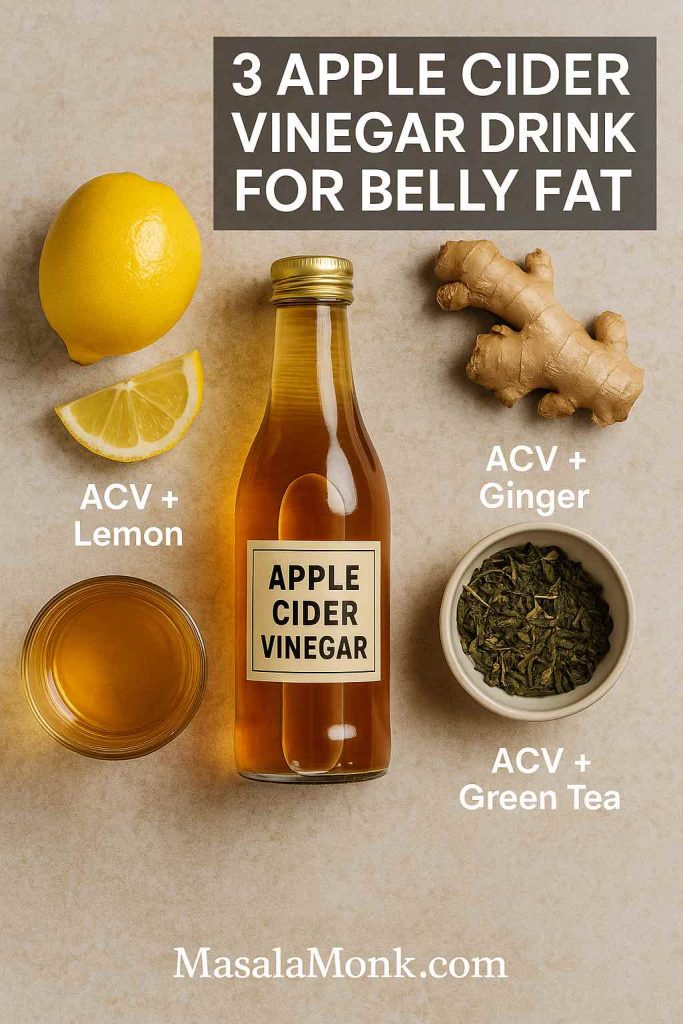
Flat lay of apple cider vinegar, lemon, ginger, and green tea leaves with text overlay about ACV drinks for belly fat.
Three apple cider vinegar drink ideas for belly fat: with lemon, ginger, or green tea.

Incorporating ACV into food

If drinks aren’t your style, you can still reap the benefits:

  • Use ACV as a salad dressing base (mixed with olive oil, mustard, and herbs).
  • Add a splash to marinades for chicken or tofu.
  • Mix into soups or stews just before serving for a tangy kick.

This approach is easier on your teeth and stomach, while still giving you daily acetic acid.

Safety reminders

Most people tolerate ACV well, but there are some cautions:

  • Don’t exceed 30 mL/day. More is not better and can cause side effects.
  • Never take it undiluted.
  • If you take insulin, diuretics, or heart medications, talk to your doctor first — ACV can interact with these.
  • If you have reflux, ulcers, or sensitive teeth, use sparingly or skip it.

A few case reports have documented throat burns or enamel erosion from misuse, so moderation and dilution are key.

What results to expect

In the studies, participants lost weight and inches over 8–12 weeks of daily use. For example, in Kondo’s Japanese trial, the vinegar groups lost about 1–2 kg (2–4 lbs) more than placebo, along with meaningful reductions in waist size (Kondo et al., 2009).

That may not sound dramatic, but remember: these were results just from adding vinegar, without other big lifestyle overhauls. When paired with a balanced diet and movement, ACV can be a small but steady ally in trimming belly fat.


What Results to Expect from Apple Cider Vinegar for Belly Fat Reduction?

If you’ve ever scrolled through social media, you’ve probably seen dramatic “before and after” photos of people claiming they lost 10, 20, or even 30 pounds just by drinking apple cider vinegar. The truth is less glamorous — but more realistic.

ACV helps, but modestly

In most human trials, participants lost 1–2 kilograms (2–4 pounds) over 8–12 weeks when adding vinegar to their daily routine — without making other major changes.

  • In the Japanese 2009 trial, the vinegar groups lost around 1.2–1.9 kg (2.6–4.2 lbs) over 12 weeks, while the placebo group gained a little weight (Kondo et al., 2009).
  • Waist circumference dropped by about 1–2 cm, and CT scans confirmed a reduction in visceral belly fat.
  • In the 2024 Lebanese study, adolescents and young adults also lost measurable waist and hip circumference along with body weight (Abou-Khalil et al., 2024).
  • In diabetic adults, ACV added on top of a healthy diet led to smaller waists and better blood sugar levels in just 8 weeks (Jafarirad et al., 2023).

That’s not a miracle transformation, but it’s a steady, meaningful improvement — especially considering nothing else in the diet was drastically changed.

Split-panel image with a woman showing apple cider vinegar myth vs fact about belly fat loss results.
Myth: apple cider vinegar melts belly fat overnight. Fact: studies show small but real waist reductions in 8–12 weeks.

Why results vary

Several factors influence how much ACV might help you:

  • Your starting point: The bigger the calorie surplus and the more belly fat you carry, the more room there is for improvement.
  • Your diet quality: Vinegar won’t offset a consistently high-calorie diet. But when paired with balanced meals, it may help you feel fuller and snack less.
  • Consistency: Benefits show up after daily use for 8–12 weeks. Skipping days or using it irregularly won’t cut it.
  • Other habits: Exercise, sleep, and stress management all play a huge role in belly fat. ACV alone isn’t enough.

Think of ACV as a helper, not a hero

A good way to think about ACV is like this: it’s not the engine of fat loss — that comes from diet and activity — but it can be a booster. By helping regulate blood sugar, controlling appetite, and slightly improving fat metabolism, it nudges your body in the right direction.

When added consistently over time, those nudges add up to small but noticeable changes: a belt that fits looser, a waistline that feels less bloated, and blood markers that shift in a healthier direction.

Pairing ACV with foods that reduce belly fat naturally can maximize your waist-slimming results.

The bottom line

  • Expect 1–2 kg weight loss over a few months with ACV alone.
  • Expect a small waist reduction — a couple of centimeters, not several inches.
  • Expect better results when you combine ACV with a calorie-conscious diet and light activity.

So if you’re hoping for overnight six-pack abs, ACV won’t deliver. But if you’re looking for a safe, inexpensive way to support your belly fat loss journey, it’s a worthy addition.

If you want to see changes beyond the scale, learn how to measure belly fat and track progress using simple methods.


Apple Cider Vinegar for Belly Fat: Safety and Side Effects

Apple cider vinegar may be natural, but that doesn’t mean it’s risk-free. Most of the positive studies used moderate doses (15–30 mL/day) and always in diluted form. When people go beyond that — taking shots of undiluted ACV, chugging large amounts, or combining it with risky “detox” diets — side effects are much more likely.

Here’s what you need to know before making ACV part of your routine.

1. Protect your teeth and throat

The biggest everyday risk is tooth enamel erosion. Vinegar’s acetic acid is very acidic, and repeated exposure can gradually wear down enamel, leading to sensitivity and cavities. Sipping ACV straight can also irritate your throat and esophagus.

How to prevent it:

  • Always dilute ACV in plenty of water.
  • Use a straw when drinking ACV beverages.
  • Rinse your mouth with plain water afterward.
  • Don’t brush your teeth immediately (enamel is softened right after acid exposure).

2. Stomach and digestion issues

Some people experience nausea, heartburn, or digestive discomfort with ACV, especially if taken on an empty stomach or in large amounts.

In one case report, a woman developed delayed stomach emptying (gastroparesis) from chronic, excessive vinegar use. While this is rare, it’s a reminder that more is not better.

Tip: Start with 1 teaspoon in a glass of water and increase slowly. Stop if you notice ongoing discomfort.

3. Medication interactions

ACV can interact with several types of medication:

  • Diabetes medications (like insulin): ACV can lower blood sugar, which might increase the risk of hypoglycemia when combined.
  • Diuretics (water pills): ACV may worsen potassium loss.
  • Digoxin (heart medication): Combining with ACV could potentially lower potassium too much, leading to dangerous side effects.

If you’re on any of these, talk to your doctor before adding daily ACV.

4. Potassium and bone health

Very high vinegar intakes over long periods have been linked to low blood potassium and even reduced bone density in rare case reports. Again, this was with extreme overuse, not the moderate amounts used in clinical trials.

5. Pregnancy and children

There’s limited research on ACV in pregnancy and children. While small amounts in food are generally considered safe, it’s best to avoid concentrated ACV drinks in these groups unless cleared by a healthcare provider.

6. Safe daily limits

Based on clinical research, the safe and effective range is:

  • 15–30 mL per day (1–2 tablespoons)
  • Always diluted in at least 250–300 mL of water
  • Taken in 1–2 doses, ideally with meals

This range has been shown to lower waist circumference, weight, and visceral fat without significant side effects in studies (Kondo et al., 2009; Abou-Khalil et al., 2024; Jafarirad et al., 2023).

Some people also enjoy combining ACV with cinnamon and lemon for belly fat for a metabolism-friendly drink.


Bottom line on safety

Apple cider vinegar is safe for most healthy adults when used in moderate, diluted amounts. The risks come from overuse or misuse — such as drinking it straight, exceeding 30 mL/day, or combining it with sensitive medications.

If used wisely, ACV can be a simple, affordable addition to your health routine. Just remember: consistency and moderation are your best friends here.


Apple Cider Vinegar vs Other Belly Fat Remedies

Apple cider vinegar isn’t the only natural remedy marketed for trimming the waistline. Green tea, lemon water, probiotics, and even fat-burning supplements all make similar claims. So how does ACV really stack up?

ACV vs green tea

Green tea is one of the most researched natural aids for fat loss. Its catechins (EGCG) and caffeine may help increase calorie burning and fat oxidation. Some studies show modest reductions in body weight and belly fat with regular green tea consumption.

ACV works differently. Its strength lies in acetic acid, which seems to improve blood sugar control, slow stomach emptying, and help with appetite regulation. While green tea gives you a metabolic boost, ACV may help you eat less overall. Both can be part of a healthy belly-fat strategy — and some people even combine them in one drink.

Green tea has its own fat-burning compounds, and combining it with ACV may work even better. You can explore some green tea and spice infusions for weight loss as creative add-ons.

ACV vs lemon water

Lemon water is refreshing, hydrating, and rich in vitamin C, but there’s little scientific evidence that it directly burns fat. Its main benefit comes from encouraging hydration and sometimes replacing sugary drinks. Compared to lemon water, ACV has far more clinical research backing its effects on waist circumference and visceral fat.

That said, adding lemon juice to an ACV drink can make it more palatable and give you both hydration and acetic acid benefits.

ACV vs probiotic foods

Gut health is closely linked to weight regulation, and probiotic foods like yogurt, kefir, or kimchi have been studied for their potential role in belly fat reduction. Raw, unfiltered ACV does contain the “mother,” which has probiotic-like qualities, but the clinical trials on fat loss point to acetic acid, not probiotics, as the driver. For true gut diversity, fermented foods beyond ACV are still important.

ACV vs supplements

From “fat-burning pills” to ACV capsules, the supplement industry is full of products promising quick belly-fat loss. Most have limited scientific backing, and in some cases, questionable safety. In contrast, liquid ACV is inexpensive, widely available, and backed by multiple human trials.


The takeaway

Compared to other belly-fat aids, ACV stands out for being simple, affordable, and supported by human studies. It’s not the strongest tool — that crown probably goes to consistent calorie control and movement — but it is one of the most accessible helpers you can add to your routine.


Should You Try Apple Cider Vinegar for Belly Fat?

At this point, the verdict is clear: apple cider vinegar is not a miracle belly-fat burner, but it does have credible science behind it. Multiple human studies show that when taken daily — in moderate, diluted amounts — ACV can help reduce body weight, shrink waist circumference, and even lower visceral fat.

The best part? It’s inexpensive, widely available, and easy to incorporate into meals or drinks. Unlike many trendy supplements, ACV has stood the test of time — both in traditional use and in modern clinical research.

But it’s important to keep your expectations realistic. If you’re hoping for dramatic, overnight changes, ACV will disappoint you. The typical results seen in trials are 1–2 kilograms of weight loss and a couple of centimeters off the waist over 8–12 weeks. Those are steady, sustainable improvements — especially if you also make small adjustments to your diet, movement, and lifestyle.

Young person in workout clothes  with text overlay about ACV being part of healthy lifestyle for weight loss.
Apple cider vinegar is a sidekick, not the hero — consistency is what reduces belly fat over time.

Who may benefit most

  • People with excess belly fat who want an extra nudge alongside healthy habits.
  • Individuals with blood sugar issues or type 2 diabetes, since ACV may improve glucose control and lipid levels.
  • Anyone looking for a low-cost, natural way to support long-term weight management.

Final word

Think of ACV as a helpful sidekick, not the hero of your weight-loss journey. Pair it with balanced meals, regular movement, and good sleep, and it can give you that extra push toward a slimmer, healthier waistline.

If you’re ready to try it, start small: 1 teaspoon in a big glass of water before meals, and gradually build up to 1–2 tablespoons a day. Consistency, not excess, is where the real magic happens.

Frequently Asked Questions about Apple Cider Vinegar and Belly Fat

1. Does apple cider vinegar burn belly fat?

Apple cider vinegar doesn’t “burn” belly fat directly, but research shows it can help reduce waist circumference and visceral fat when taken consistently for 8–12 weeks (Kondo et al., 2009). Think of it as a gentle helper rather than a fat-melting potion.

2. Can apple cider vinegar reduce stomach fat overnight?

No — there’s no overnight fix for stomach fat. Clinical studies show that apple cider vinegar and belly fat reduction happens gradually over weeks, not days. Patience and consistency matter most.

3. How should I drink apple cider vinegar for belly fat?

Dilute 1–2 teaspoons of ACV in a large glass of water, and drink before or with meals. You can slowly build up to 1–2 tablespoons daily, which is the range tested in human trials.

4. What is the best time to take apple cider vinegar for belly fat?

Most people find it helpful before meals, since ACV may reduce blood sugar spikes and help control appetite. If it upsets your stomach, try it only with food.

5. How much apple cider vinegar should I take daily to lose belly fat?

The safe and effective range is 15–30 mL per day (1–2 tablespoons), always diluted in water. Going beyond this doesn’t speed up belly fat loss — and may cause side effects.

6. Can apple cider vinegar flatten your stomach?

It won’t give you visible abs on its own, but studies do show ACV helps reduce waist size and visceral belly fat. Combined with diet and exercise, it may support a flatter midsection.

7. Is apple cider vinegar good for visceral fat?

Yes — the Japanese trial measured visceral fat with CT scans and found that vinegar drinkers had significant reductions in deep belly fat compared to placebo (Kondo et al., 2009).

8. Does apple cider vinegar work for belly fat without diet changes?

Even without big diet changes, participants in ACV studies lost 1–2 kg and inches off their waist. But pairing ACV with balanced eating makes the results stronger.

9. How long does it take to see belly fat results with apple cider vinegar?

Most trials lasted 8–12 weeks, and that’s when results — smaller waistlines and modest weight loss — became noticeable.

10. Is it better to drink apple cider vinegar in the morning or at night for belly fat?

Either works, but morning can give you a fresh start, while evening may help control late-night cravings. What matters is daily consistency.

11. Does apple cider vinegar help with belly fat in diabetics?

Yes — in people with type 2 diabetes, ACV reduced waist circumference and improved blood sugar and cholesterol (Jafarirad et al., 2023).

12. Can apple cider vinegar pills help with belly fat?

ACV capsules are popular, but most research uses liquid vinegar. Pills may work if they contain enough acetic acid, but quality varies — liquid ACV is more reliable.

13. What’s the difference between apple cider vinegar and white vinegar for belly fat?

Both contain acetic acid, which drives the fat-loss effects. Apple cider vinegar and belly fat reduction are studied more often, but white vinegar may offer similar benefits.

14. Can I mix apple cider vinegar with lemon or green tea for belly fat?

Yes — lemon adds vitamin C and flavor, while green tea brings its own fat-burning compounds. Together, they may make your ACV routine tastier and more effective.

15. Will apple cider vinegar alone get rid of my belly fat?

No single food or drink can do that. But as studies show, ACV can give you a modest but meaningful nudge toward smaller waistlines — especially when paired with healthy diet, activity, and good sleep.

Posted on 2 Comments

6 Wellness Shot Recipes to Boost Your Immune System

Flat lay cover image showing six colorful wellness shots arranged in a hexagon with fresh ingredients including turmeric, ginger, lemon, garlic, elderberries, carrot, and apple cider vinegar, with text overlay “6 Immunity Wellness Shot Recipes."

When cold and flu season rolls around, many of us look for natural ways to give our immune system an extra edge. One option that’s grown in popularity is the immunity wellness shot — a small, concentrated drink that packs in fresh ingredients known for their immune-supportive benefits.

But do these shots really work? While no single drink can prevent illness, research suggests that certain foods — like turmeric, ginger, garlic, citrus, and elderberry — may help reduce inflammation, improve antioxidant defenses, and even shorten the duration of colds and flu. Spices have long been part of traditional immunity remedies—discover the power of Indian spices for immunity in our in-depth guide.

In this article, you’ll discover 6 immunity wellness shot recipes, each explained in detail with the science behind why these ingredients are recommended.


What Are Immunity Wellness Shots?

Immunity wellness shots are small (1–3 ounce) juice blends taken in a single sip. They’re made with concentrated fresh ingredients like roots, herbs, and citrus, and are designed to provide a quick hit of vitamins, antioxidants, and bioactive compounds.


Typical ingredients include:

  • Turmeric — contains curcumin, a compound known for anti-inflammatory and antioxidant effects. According to Harvard Health, curcumin has been studied for its ability to modulate immune responses.
  • Ginger — rich in gingerols and shogaols, which have antioxidant and antimicrobial activity. A review summarized by Healthline notes that ginger has long been used to help with colds and inflammation.
  • Citrus fruits — oranges, lemons, and limes provide vitamin C, which the NIH reports can slightly shorten the length of colds in regular users.
  • Garlic — contains allicin, which was linked to fewer colds in a randomized human trial published in the Advances in Therapy journal (PubMed study).
  • Elderberry — meta-analyses show elderberry extract reduces flu symptom duration and severity (NCBI meta-analysis).
  • Apple cider vinegar (ACV) — though not studied as much as other ingredients, ACV is a fermented food, and fermented foods are strongly tied to gut and immune health (Harvard Health on fermented foods).

Benefits of Immunity Wellness Shots

So why combine these ingredients into small shots? Research highlights several potential benefits:

  • Inflammation control — Chronic inflammation weakens immunity. Compounds in turmeric (curcumin) and ginger (gingerols) help reduce inflammatory markers such as IL-6 and TNF-α (NCBI research on curcumin).
  • Antioxidant protection — Vitamin C, curcumin, and gingerols protect immune cells from oxidative stress caused by free radicals.
  • Antimicrobial action — Garlic and ginger show antimicrobial activity in lab studies, and elderberry may directly inhibit flu viruses.
  • Gut health support — Fermented foods like apple cider vinegar encourage a healthy microbiome, which plays a central role in immune function.

6 Best Immunity Wellness Shot Recipes

When it comes to building resilience, variety matters. That’s why we’ve gathered six different immunity wellness shots, each with its own flavor profile, nutrient strengths, and cultural background. From fiery ginger to soothing honey, from vibrant turmeric to tangy elderberry, these recipes are simple, quick, and can be made with ingredients you likely already have in your kitchen.

Before we dive into the step-by-step recipes, remember: these shots aren’t meant to replace a balanced diet or medical treatment. Instead, think of them as daily allies—little boosts you can integrate into your wellness routine to keep your immune system strong and supported.


🟠 1. Turmeric Ginger Immunity Shot

There’s a reason turmeric and ginger are the poster children of natural remedies. Bright, golden, and fiery, this little shot has been used for centuries in Ayurvedic traditions to fight off seasonal sniffles and morning sluggishness. If you’re looking for an easy way to start your day with a burst of warmth and antioxidants, this is it.

Ingredients

  • 1-inch fresh turmeric root (or ½ tsp turmeric powder)
  • 1-inch fresh ginger root
  • Juice of ½ lemon
  • Pinch of black pepper
  • ½ cup water
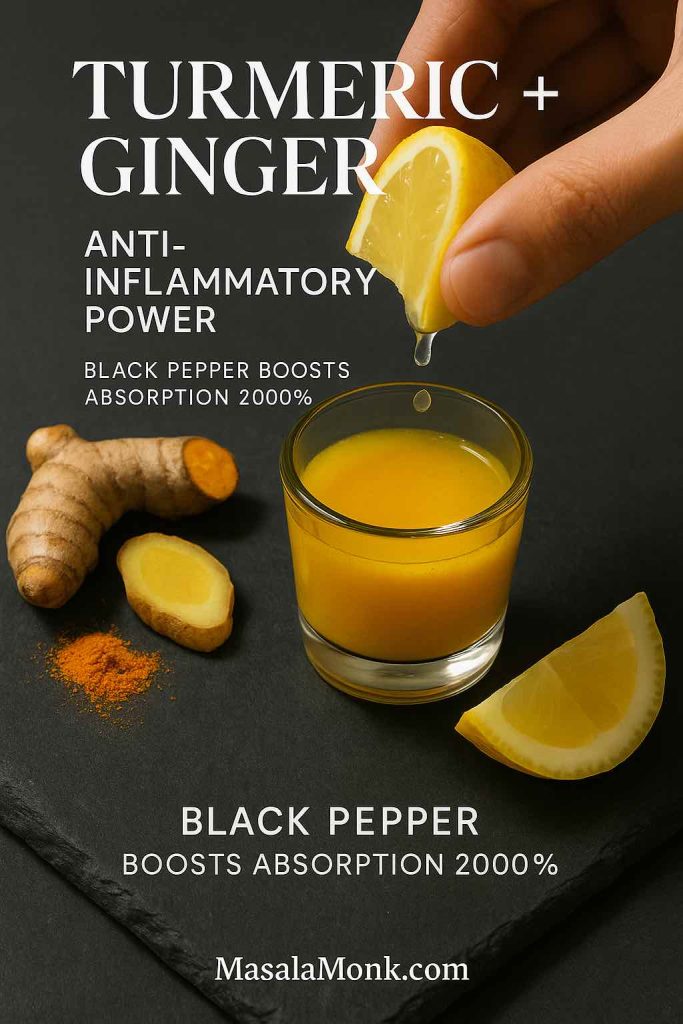
Close-up of a turmeric ginger immunity shot with fresh turmeric, ginger, and lemon, highlighting its anti-inflammatory benefits.
Turmeric and ginger combined with lemon and black pepper deliver a powerful anti-inflammatory boost in one small shot.

Instructions (step-by-step)

  1. First, peel and chop the turmeric and ginger into small pieces.
  2. Next, add them to a blender along with lemon juice and water.
  3. Then, blend until smooth.
  4. After blending, strain the liquid through a fine sieve if you prefer a smoother shot.
  5. Finally, sprinkle a pinch of black pepper on top and enjoy right away.

👉 Why it works: Turmeric’s curcumin has powerful anti-inflammatory benefits, and black pepper makes it more bioavailable. Ginger adds antioxidants, while lemon brings in vitamin C.

To see how this synergy works in another recipe, try Turmeric, Ginger & Black Pepper Tea for Well-Being.

Why we recommend it:
Turmeric’s active compound curcumin has been widely studied for its anti-inflammatory and immune-modulating effects. On its own, it’s poorly absorbed, but a study in Planta Medica found that combining it with black pepper (piperine) increases absorption by nearly 2,000% (PubMed study on piperine). Ginger provides additional antioxidants, and lemon adds vitamin C.

💡 Pro Tip: If the flavor feels too strong, add a splash of fresh orange juice for sweetness and an extra vitamin C kick.


🟠 2. Lemon Cayenne Immune Shot

Sharp, spicy, and invigorating — this shot is like sunshine in liquid form. Perfect for sluggish mornings or when you feel a cold creeping in, it gives you a quick kick of vitamin C and natural heat that wakes up your circulation.

Ingredients

  • Juice of 1 lemon
  • ¼ tsp cayenne pepper
  • 1 tsp honey (optional)
  • ½ cup warm water
Bright yellow lemon cayenne immunity shot with lemon halves and cayenne pepper, designed to support circulation and energy.
A fiery blend of lemon and cayenne pepper, rich in vitamin C and circulation-boosting compounds, perfect for mornings.

Instructions

  1. Begin by squeezing the juice of one lemon into a glass.
  2. Next, pour in the warm (not hot) water.
  3. Then, stir in cayenne pepper and honey until well combined.
  4. Lastly, sip slowly if you’re sensitive to spice—or take it as a quick shot for a fiery boost.

👉 Why it works: Lemons provide vitamin C, cayenne boosts circulation, and honey soothes the throat while adding antibacterial support.

Also Read: Cayenne Pepper for Weight Loss: Spicing Up Your Diet Plan! 🌶️

Why we recommend it:
Lemons provide vitamin C, which according to a Cochrane review summarized by the NIH, may shorten the duration of colds in regular users. Cayenne contains capsaicin, which shows anti-inflammatory potential in animal and human studies (NCBI on capsaicin). Honey has antimicrobial properties and is recommended as a cough soother by the Mayo Clinic.

💡 Pro Tip: To balance the heat, mix in a few drops of fresh ginger juice or dilute with extra water for beginners.


🟠 3. Garlic Honey Wellness Shot

This is the strong one — and yes, it works. For generations, raw garlic and honey have been combined as a natural immunity booster. The taste is bold, but the payoff is worth it: garlic’s allicin has been studied for cold prevention, while honey brings natural antibacterial sweetness.

Ingredients

  • 1 small raw garlic clove (crushed)
  • 1 tsp raw honey
  • Juice of ½ lemon
  • ¼ cup water
Creamy garlic honey wellness shot with garlic cloves and honeycomb, highlighting its traditional cold-fighting properties.
Raw garlic and honey — an ancient cold remedy backed by modern studies, shown to reduce cold frequency.

Instructions

  1. First, crush the garlic with the side of a knife to release allicin.
  2. Let it rest for 5 minutes to maximize its potency.
  3. Next, combine garlic with lemon juice, water, and honey in a blender or cup.
  4. Finally, drink immediately for the strongest effect.

👉 Why it works: Garlic is backed by human studies showing fewer colds, while honey and lemon add both flavor and immune-friendly nutrients.

This combo has been around for centuries—explore our honey infused garlic ancient remedy for a traditional take.

Why we recommend it:
Garlic is one of the few foods tested in human trials for cold prevention. In a 12-week randomized trial, participants who took garlic supplements had significantly fewer colds than those taking placebo (PubMed study). Honey provides antibacterial and antioxidant effects, while lemon juice adds vitamin C.

💡 Pro Tip: If the taste is too intense, chase it with a slice of apple or cucumber for a quick palate cleanse.


🟠 4. Elderberry Ginger Immunity Shot

Sweet and tangy with a spicy twist, this shot tastes almost like a health tonic you’d want to sip slowly. Elderberries have been shown to reduce flu symptoms, and pairing them with ginger and lemon makes this immunity wellness shot recipe a flu-season favorite.

Ingredients

  • 2 tbsp elderberry syrup (homemade or store-bought)
  • 1-inch fresh ginger root
  • Juice of ½ lemon
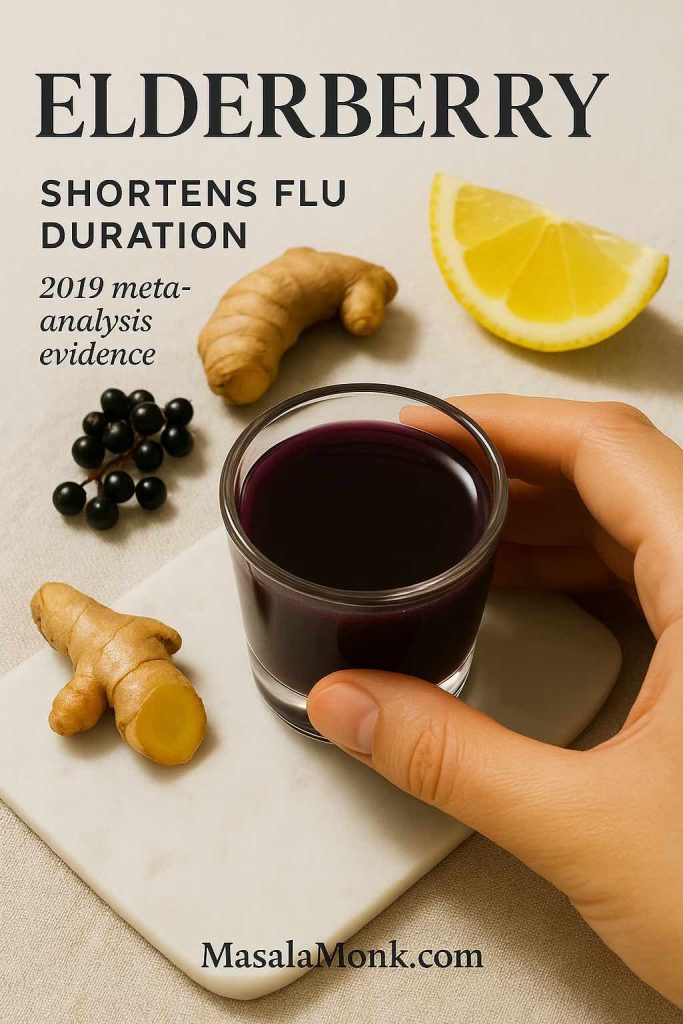
Deep purple elderberry ginger immunity shot with fresh elderberries, ginger, and lemon, promoting flu-season support.
Elderberry paired with ginger and lemon — clinically shown to help shorten flu duration and ease symptoms.

Instructions

  1. Grate or finely slice the ginger.
  2. Next, blend the ginger with elderberry syrup and lemon juice.
  3. Then, strain if desired for a smoother consistency.
  4. Serve chilled for a refreshing immune boost.

👉 Why it works: Elderberry shortens flu duration, ginger brings warming anti-inflammatory support, and lemon adds vitamin C.

For more on natural immune boosters, see how the ginger, garlic & lemon immunity trio can help.

Why we recommend it:
A 2019 meta-analysis of randomized controlled trials concluded that elderberry supplementation reduced upper respiratory symptoms and shortened flu duration (PubMed meta-analysis). Ginger and lemon provide additional anti-inflammatory and antioxidant benefits.

💡 Pro Tip: Store-bought elderberry syrup often contains sweeteners—opt for unsweetened if you prefer a lower-sugar option.


🟠 5. Carrot Turmeric Citrus Shot

Bright orange, slightly sweet, and refreshing — this shot feels more like a mini juice than medicine. It’s packed with beta-carotene from carrots and vitamin C from oranges, making it a great daily wellness choice.

Ingredients

  • 1 medium carrot (juiced)
  • 1-inch turmeric root
  • Juice of 1 orange
  • Pinch black pepper
Bright orange carrot turmeric citrus shot with carrot slices, turmeric root, and orange wedges, supporting skin and immunity.
A vibrant carrot, turmeric, and orange shot delivering beta-carotene and vitamin C for skin and immune resilience.

Instructions

  1. Juice the carrot and turmeric root. (If you don’t have a juicer, blend with water and strain.)
  2. Next, stir in the fresh orange juice.
  3. Add a pinch of black pepper.
  4. Finally, drink immediately while it’s fresh and bright.

👉 Why it works: Carrots support mucous membrane defenses, oranges bring immune-boosting vitamin C, and turmeric + pepper fight inflammation.

Why we recommend it:
Carrots provide beta-carotene, which the NIH highlights as essential for maintaining the integrity of mucous membranes, the body’s first line of defense against pathogens. Oranges add vitamin C, while turmeric and pepper enhance anti-inflammatory activity.

💡 Pro Tip: Add a squeeze of lime for extra tang and to balance the earthy turmeric flavor.


🟠 6. Apple Cider Vinegar Immune Wellness Shot

This one is tangy, zesty, and surprisingly refreshing when balanced with honey. ACV has long been used in folk medicine for digestion and gut health, and when combined with ginger and lemon, it makes a powerhouse immune tonic.

Ingredients

  • 1 tbsp apple cider vinegar (with the “mother”)
  • ½ inch fresh ginger root
  • Juice of ½ lemon
  • ½ tsp honey
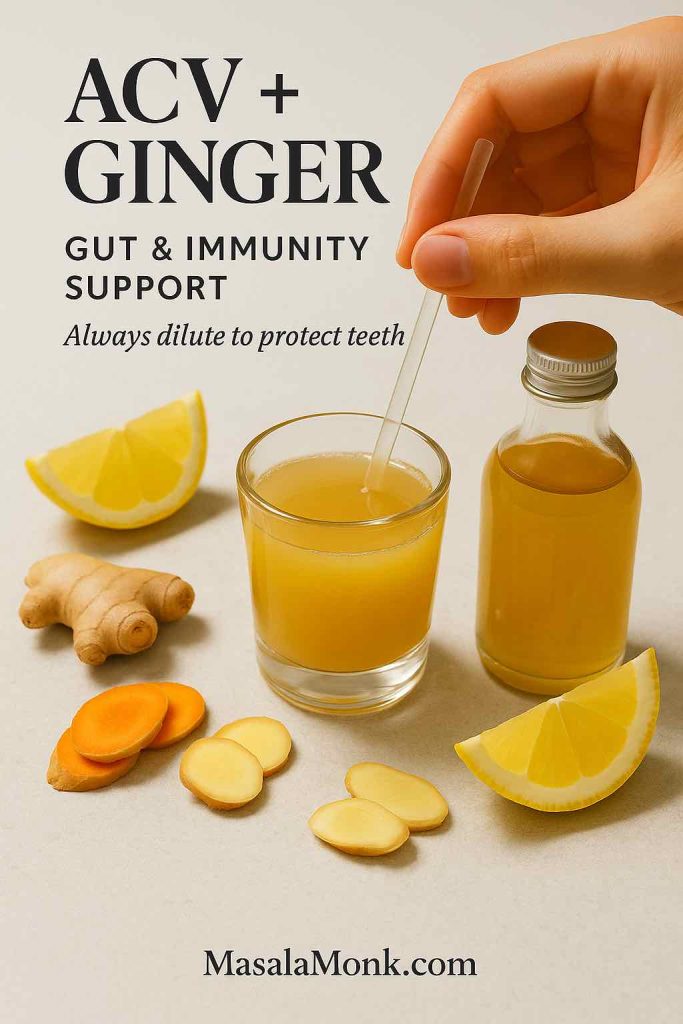
Pale amber apple cider vinegar wellness shot with lemon wedges, ginger slices, and ACV bottle, highlighting gut health benefits.
Apple cider vinegar with ginger and lemon — a tangy tonic that supports gut health and immune function.

Instructions

  1. Grate or mince the ginger.
  2. Add it to a glass with ACV, lemon juice, and honey.
  3. Stir thoroughly until the honey dissolves.
  4. Drink as a quick shot, or dilute with extra water if it feels too strong.

👉 Why it works: ACV supports gut health (linked to immunity), ginger reduces inflammation, and honey balances both flavor and function.

Learn more about the role of apple cider vinegar for wellness in boosting health and metabolism.

Why we recommend it:
Apple cider vinegar hasn’t been studied directly for immunity, but as a fermented food it may support a healthy microbiome, which plays a critical role in immune system regulation (Harvard Health on fermented foods). Ginger and lemon bring additional immune-friendly antioxidants, and honey balances the sharp flavor.

💡 Pro Tip: Always use a straw to protect your teeth from the acidity, and rinse your mouth with water afterward.


How Often Should You Drink Immunity Shots?

For most people, one immunity wellness shot per day is enough. Morning is a popular choice, since many ingredients are energizing on an empty stomach.

That said, moderation is important:

  • Turmeric and ginger may cause digestive upset in large amounts.
  • Garlic can irritate digestion or interact with blood-thinning medications.
  • Apple cider vinegar should always be diluted to protect your teeth and stomach lining.

Rotating between different recipes helps you get a wider range of nutrients while avoiding excess.


Final Thoughts

These 6 immunity wellness shot recipes combine some of the most research-supported natural ingredients for immune health. From turmeric and ginger’s anti-inflammatory power, to garlic’s cold-fighting allicin, to elderberry’s flu symptom relief, each shot delivers a potent burst of support in just a few ounces.

They aren’t miracle cures, but as part of a balanced lifestyle with good sleep, exercise, and nutrition, they can be a refreshing, health-promoting ritual.

Why not try one of these recipes tomorrow morning and give your immune system a natural boost?

If you enjoyed these shots, you might also love our anti-inflammatory drinks for wellness collection.

❓ Frequently Asked Questions

1. Can I really make immunity wellness shots at home?

Absolutely! The beauty of these recipes is that they’re simple, quick, and use everyday ingredients. Instead of buying expensive bottled shots, you can blend turmeric, ginger, lemon, or garlic in just a few minutes and enjoy them fresh.


2. How often should I drink immunity wellness shots?

Most people do well with just one shot a day, usually in the morning. However, it’s best to rotate between different recipes throughout the week. This way, you get a variety of nutrients while keeping things balanced.


3. Do immunity shots actually work?

While no shot can guarantee you won’t get sick, research shows that ingredients like garlic, elderberry, and vitamin C can help reduce the severity and duration of colds and flu. Think of them as a natural support system, not a miracle cure.


4. Can I store these shots in advance?

Yes, but freshness is key. Most recipes can be stored in the fridge for up to 2–3 days in an airtight container. However, shots with garlic or lemon taste best when consumed immediately, as their active compounds fade quickly.


5. What’s the best time of day to take a wellness shot?

Morning is ideal, since the ingredients can be energizing and are absorbed well on an empty stomach. That said, if your stomach is sensitive, you might prefer to take them after a light meal.


6. Can kids drink immunity shots too?

Yes, but with some adjustments. Skip the cayenne pepper for children, and use smaller portions of ginger or garlic. Always dilute the shot a little more, and consult your pediatrician if your child has health conditions.


7. Are there any side effects of taking immunity wellness shots?

Since these are concentrated drinks, too much can cause issues. For example, turmeric and ginger may irritate sensitive stomachs, garlic can interact with blood-thinners, and apple cider vinegar should always be diluted to protect teeth and digestion. Moderation is key.


8. Do I need a juicer to make these immunity wellness shot recipes?

Not at all! A blender works just fine. Simply blend the ingredients with water, then strain with a fine sieve or cheesecloth if you prefer a smoother consistency. A juicer can make the process easier, but it’s not required.


9. Can I add other ingredients to the recipes?

Definitely! These shots are flexible. You can add a pinch of cinnamon for warmth, fresh mint for freshness, or even a splash of orange juice for sweetness. Just remember: the more colorful your ingredients, the more antioxidants you’ll likely get.


10. Which immunity wellness shot is the most powerful?

That really depends on your body and taste. Many people swear by the turmeric ginger shot for daily wellness, while others love the elderberry shot during flu season. The best approach is to try them all and notice how your body responds.

Posted on 2 Comments

5 Energizing Matcha Smoothie Recipes with Spinach for Healthy Mornings

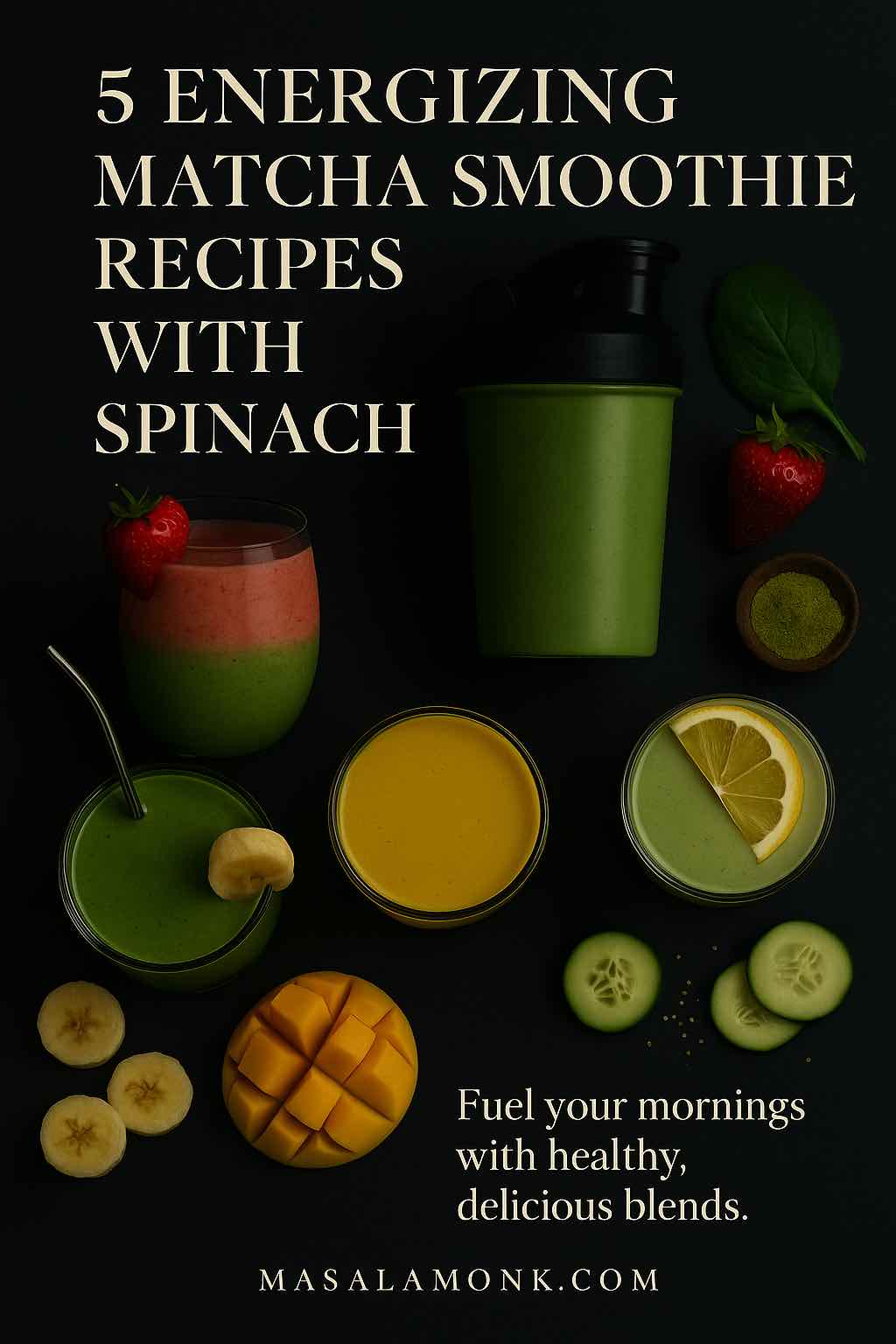
A collection of five different matcha spinach smoothies arranged in unique glasses with fruits, protein, and matcha props, styled on dark marble.

If you’ve ever struggled to find the perfect morning drink that’s both energizing and nourishing, you’re not alone. Coffee might wake you up fast, but it can also leave you with jitters or a mid-morning crash. That’s why more and more people are turning to matcha smoothie recipes with spinach. They don’t just taste amazing — they deliver steady, focused energy and a serious boost of nutrients in every sip.

The beauty of these smoothies is how flexible they are. Creamy bananas, sweet strawberries, tropical mango, or even a scoop of protein powder can all blend seamlessly with spinach and matcha. The result is a drink that feels indulgent, but is secretly loaded with health benefits. And as science shows, both matcha and spinach bring some powerful advantages to your body and mind.


The Science Behind Matcha + Spinach Smoothies

Before we get into recipes, let’s unpack why this duo is worth adding to your routine. Because while smoothies should taste good, it’s even better when they work hard for your health too.

Matcha: Calm Energy Meets Antioxidant Power

Unlike regular green tea, where the leaves are steeped and removed, matcha is made by whisking whole powdered leaves into water or milk. This means you’re consuming all the nutrients the leaf has to offer. According to Harvard Health, matcha delivers a higher concentration of catechins — powerful plant compounds that act as antioxidants and may help lower blood pressure, protect heart health, and support insulin sensitivity (Harvard Health).

One antioxidant in particular, EGCG (epigallocatechin gallate), has been studied for its role in metabolism and fat oxidation. Research suggests green tea catechins like EGCG may help with weight management, though results are still mixed in humans (PMC study).

What makes matcha especially unique is its combination of caffeine and L-theanine. Together, they deliver steady alertness without the nervous edge of coffee. A review in the Cleveland Clinic notes that this balance can improve focus, memory, and attention while promoting a sense of calm (Cleveland Clinic). It’s why so many people describe matcha energy as “calm focus” rather than a quick buzz.

Spinach: A Green You’ll Actually Enjoy

Spinach may be humble, but it’s a nutritional powerhouse that deserves more credit. Just a handful provides vitamin K for bone strength, iron for healthy blood, folate for cell growth, and magnesium for muscles and nerves. It’s also a good source of vitamin C and plant-based antioxidants, which support immunity and skin health.

What makes spinach so easy to add to smoothies is its taste — or rather, its lack of one. Unlike bitter greens like kale, spinach blends smoothly with fruits and nut milks without overpowering them. The Times of India even calls spinach-based smoothies some of the easiest “green drinks” for people who don’t usually like leafy flavors (Times of India).

Together: Why This Combo Works

When you bring these two ingredients together, you get the best of both worlds: the antioxidants and calm energy of matcha plus the vitamins, minerals, and fiber of spinach. One nutrition site even points out that matcha contains up to 125 times more antioxidants than spinach alone, which makes pairing them a no-brainer (Veganced).

The result? A smoothie that helps your body fight oxidative stress, supports steady energy, aids digestion, and fills nutritional gaps — all while tasting creamy and refreshing. No wonder matcha + spinach smoothies are becoming a go-to choice for people looking to balance wellness with convenience.


5 Healthy Matcha Smoothie Recipes

Now that you know the science behind why matcha and spinach make such a powerful pair, it’s time to put that knowledge into practice. These five recipes are simple, versatile, and can be made in just a few minutes. Each one has its own personality — whether you’re in the mood for creamy banana, refreshing berries, tropical mango, a protein-packed boost, or a lighter breakfast blend for weight management.

Think of these as base recipes you can play with. Swap milks, add seeds, toss in extra fruit — the options are endless. The best part? Every sip delivers the calm energy of matcha and the nutritional lift of spinach.


Banana Spinach Matcha Smoothie Recipe

There’s something undeniably comforting about bananas in a smoothie — creamy, naturally sweet, and always satisfying. When you pair banana with vibrant green matcha and a handful of spinach, you get a drink that feels indulgent while being sneakily healthy. The banana masks the “green” taste of spinach, making this a great option if you’re just starting out with green smoothies.

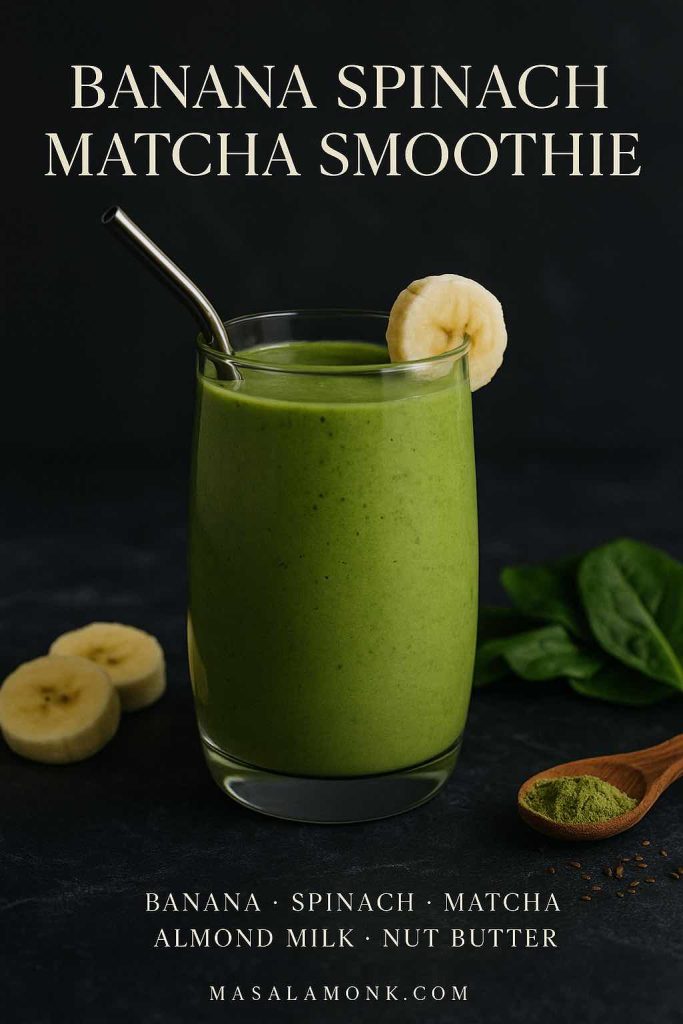
A tall glass of banana spinach matcha smoothie with banana slices and spinach leaves, styled in a classy magazine look.
Start your mornings with this creamy Banana Spinach Matcha Smoothie — packed with antioxidants, fiber, and natural energy.

This smoothie is perfect for breakfast on busy mornings because it gives you sustained energy without a sugar crash. Bananas provide quick-release carbs for an instant boost, while matcha’s caffeine and L-theanine combination offers focus and calm energy throughout the morning. Add in spinach for fiber, iron, and vitamins, and you’ve got a simple but powerful smoothie that ticks all the boxes.

Want to play around with flavors? Add a spoonful of cocoa powder for a chocolate banana matcha smoothie, sprinkle in cinnamon for warmth, or swap dairy milk for almond or oat milk if you prefer a vegan version. For an extra protein boost, toss in a spoon of Greek yogurt or nut butter — it turns this into a filling, meal-worthy shake.

Ingredients:

  • 1 ripe banana (frozen for extra creaminess)
  • 1 teaspoon matcha powder (culinary grade works best in smoothies)
  • 1 cup fresh spinach leaves, washed and packed
  • 1 cup almond or oat milk (or dairy milk if you prefer)
  • 1 tablespoon nut butter (optional, for protein and healthy fats)
  • Ice cubes (optional, for texture)

Method:

  1. Place all ingredients in a blender.
  2. Blend on high until smooth and creamy.
  3. Adjust thickness with more milk if needed.
  4. Serve immediately — garnish with a sprinkle of matcha powder or chia seeds.

Pro Tip: Freeze banana slices ahead of time for a creamier texture and a naturally chilled smoothie without watering it down.


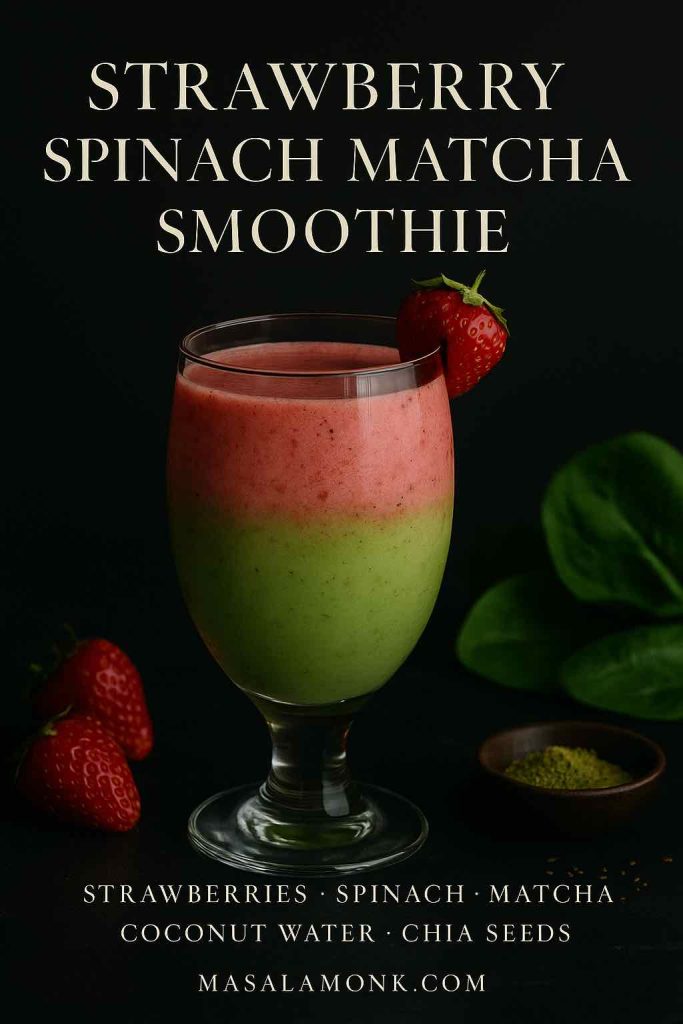
Strawberry Spinach Matcha Smoothie (Berry Boost)

Strawberries and matcha may sound like an unusual pairing, but once you try it, you’ll see why it works so well. The sweetness and slight tang of strawberries balance matcha’s earthy notes, while spinach blends in seamlessly, adding nutrients without altering the taste. The result is a refreshing, vibrant pink-green smoothie that feels like a treat but delivers serious nutrition.

A layered strawberry spinach matcha smoothie in a stemmed glass with fresh strawberries and spinach on a dark background.
A refreshing Strawberry Spinach Matcha Smoothie, blending leafy greens with fruity sweetness for a vibrant, energizing drink.

This smoothie is ideal as a mid-morning pick-me-up or an afternoon refresher. Berries are loaded with vitamin C and antioxidants, which not only support your immune system but also help your body absorb the iron from spinach more effectively — a win-win. Together with matcha’s catechins, this drink is a powerhouse of anti-inflammatory compounds.

For variety, try swapping strawberries for blueberries or raspberries to create different versions of a berry matcha smoothie. Adding a spoonful of chia seeds makes it more filling, while coconut water instead of milk gives it a lighter, tropical edge. You can even blend in a few frozen banana slices for extra creaminess.

Ingredients:

  • 1 cup strawberries (fresh or frozen)
  • 1 teaspoon matcha powder
  • 1 cup fresh spinach leaves
  • 1 cup coconut water or almond milk
  • 1 tablespoon chia seeds (optional, for fiber)
  • ½ frozen banana (optional, for creaminess)

Method:

  1. Blend spinach, liquid base, and matcha first to avoid clumps.
  2. Add strawberries, chia seeds, and banana if using.
  3. Blend until smooth, adjusting liquid for consistency.
  4. Pour into a chilled glass and enjoy immediately.

Pro Tip: Use frozen berries instead of ice cubes — they’ll thicken your smoothie while keeping the flavor concentrated and sweet.


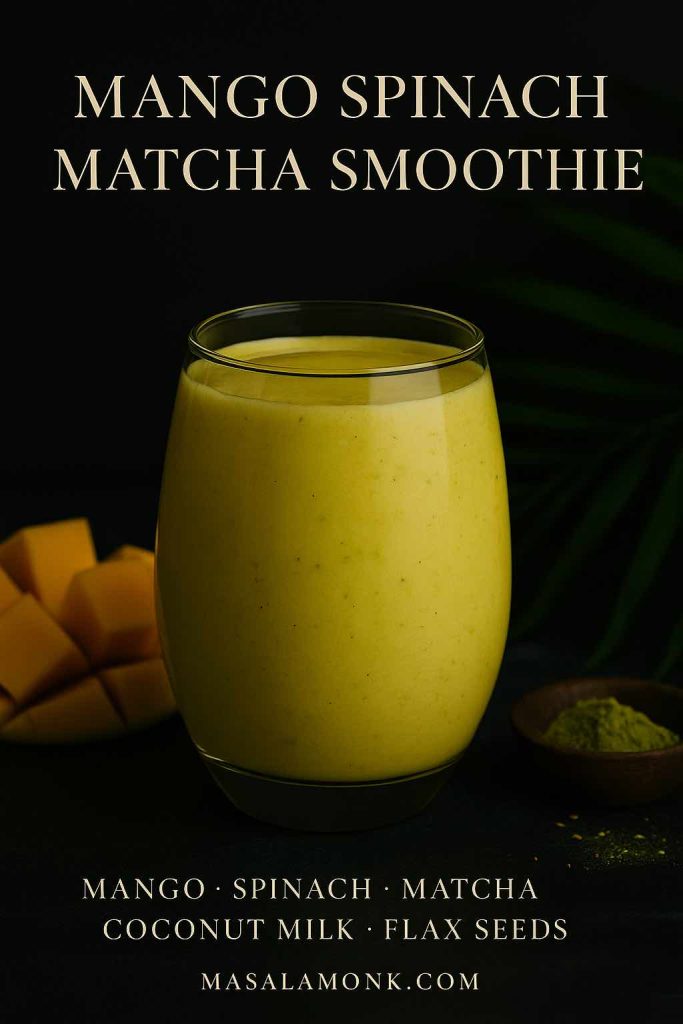
Mango Spinach Matcha Smoothie (Tropical Energy)

If you’ve ever wished your breakfast could taste like vacation, this smoothie is for you. Juicy, golden mango pairs beautifully with the grassy notes of matcha, while spinach provides a subtle green boost. The result is a creamy, tropical matcha green smoothie that feels indulgent but is light on calories.

A golden mango spinach matcha smoothie in a tumbler glass, with mango cubes and matcha powder styled elegantly.
Bright and tropical, this Mango Spinach Matcha Smoothie delivers creamy texture, immune-boosting vitamins, and a morning energy kick.

Mango is rich in vitamin A and vitamin C, making this smoothie especially good for skin health and immunity. Paired with matcha’s antioxidants and spinach’s minerals, it becomes a nutrient-dense drink that can replace sugary tropical juices with a much healthier option. It’s also naturally sweet, so you don’t need added sugar.

For an extra twist, add coconut milk or pineapple chunks to create a tropical matcha smoothie. If you’re looking for a more filling version, blend in a scoop of protein powder or flax seeds to turn it into a post-workout recovery drink.

Ingredients:

  • 1 cup mango chunks (fresh or frozen)
  • 1 teaspoon matcha powder
  • 1 cup spinach leaves
  • 1 cup coconut milk (or coconut water for lighter option)
  • 1 tablespoon flax seeds or hemp seeds (optional, for omega-3s)
  • Ice cubes (optional)

Method:

  1. Blend spinach, liquid, and matcha first.
  2. Add mango and seeds, then blend until silky smooth.
  3. Serve chilled, with a sprinkle of shredded coconut on top if desired.

Pro Tip: If your mango isn’t super ripe, add half a banana to balance the flavor and enhance creaminess.


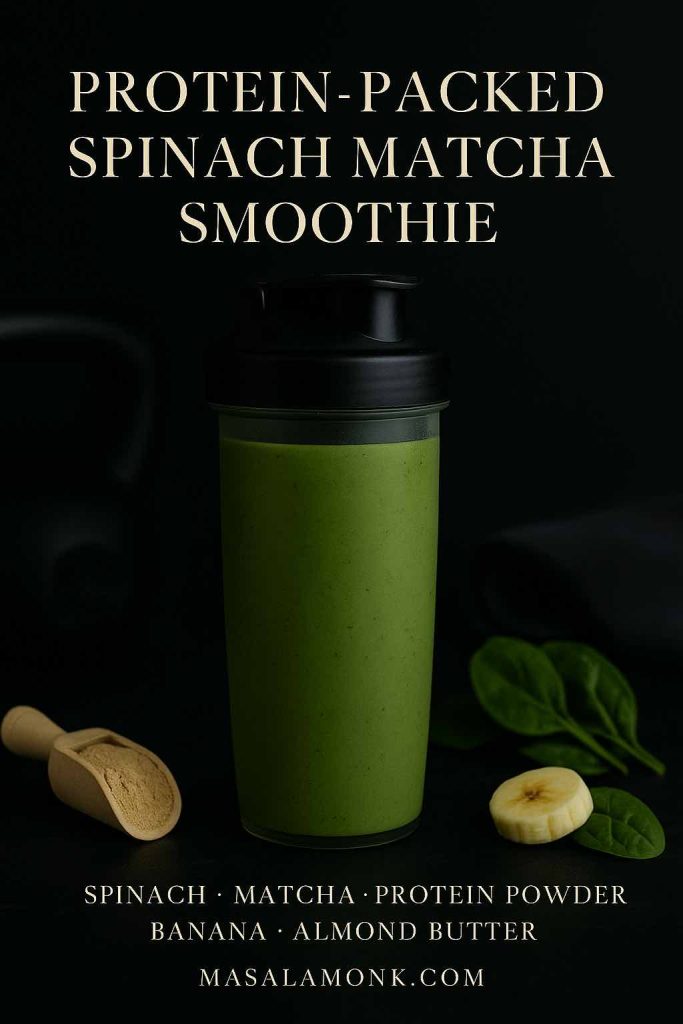
Protein-Packed Spinach Matcha Smoothie

Sometimes you need a smoothie that does more than just refresh you — it needs to fill you up. This protein-packed version is exactly that. With a scoop of protein powder or Greek yogurt, it transforms into a balanced meal that keeps you satisfied for hours. Matcha fuels your mind with clean energy, spinach delivers micronutrients, and the protein helps repair muscles and maintain satiety.

A protein-packed spinach matcha smoothie served in a sleek shaker bottle with protein scoop and spinach leaves.
Boost your workout recovery with this Protein-Packed Spinach Matcha Smoothie — rich in plant-based protein and antioxidants.

This smoothie works beautifully as a post-workout drink. The combination of carbs from fruit and protein from powders or yogurt is ideal for recovery, while matcha helps sharpen your focus for the rest of the day. Spinach adds magnesium and potassium, which also support muscle function.

The best part? You can adapt it endlessly. Go with vanilla whey for creaminess, collagen for skin and joint support, or plant-based protein for a vegan twist. Blend in banana or avocado for texture, add nut butter for richness, or stir in cacao for a chocolate matcha protein shake.

Ingredients:

  • 1 scoop protein powder (whey, plant-based, or collagen)
  • 1 teaspoon matcha powder
  • 1 cup fresh spinach
  • 1 banana or ½ avocado
  • 1 tablespoon almond butter (optional)
  • 1 cup milk of choice (dairy, oat, or almond)

Method:

  1. Blend spinach, matcha, and milk first.
  2. Add protein powder, banana/avocado, and almond butter.
  3. Blend until smooth and creamy.
  4. Serve immediately as a satisfying meal replacement.

Pro Tip: For best results, blend the spinach and matcha with liquid first, then add the protein powder — this prevents clumping and ensures a silky finish.


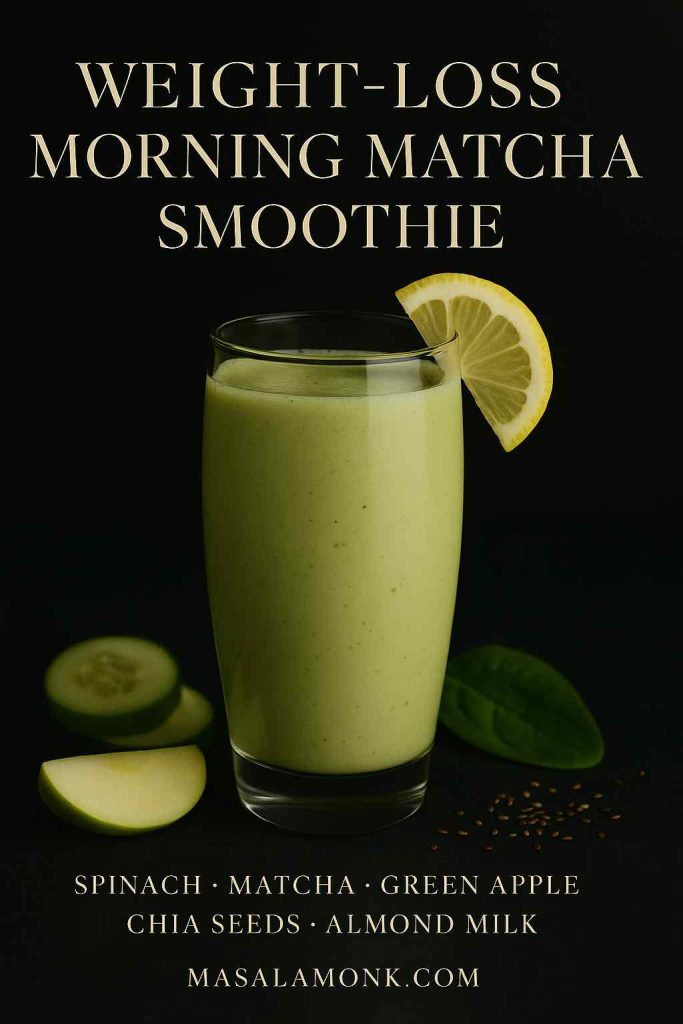
Weight-Loss Morning Matcha Spinach Smoothie

Light, hydrating, and metabolism-friendly, this is one of those Matcha Smoothie Recipes, that is designed for those mornings when you want something refreshing yet filling enough to keep cravings at bay. Matcha has been studied for its potential role in fat oxidation, while spinach provides fiber to support digestion and satiety. Add chia seeds, which expand in liquid, and you’ve got a smoothie that helps you feel full longer without piling on extra calories.

A tall slim glass of weight-loss morning matcha smoothie with lemon wedge garnish, cucumber slices, and chia seeds.
Light and refreshing, this Weight-Loss Morning Matcha Smoothie combines green apple, cucumber, and matcha for a low-calorie wellness drink.

This blend is especially good first thing in the morning, as it hydrates and energizes without being heavy. The crisp flavors of apple or cucumber keep it light and refreshing, while lemon juice adds brightness and helps balance the grassy notes of matcha. It’s also a great option if you’re trying intermittent fasting and need a nutrient-rich but light first meal.

For more staying power, you can add a quarter avocado, a scoop of protein powder, or even some Greek yogurt. These tweaks turn it from a simple snack into a smart, weight-conscious breakfast smoothie that supports your goals.

Ingredients:

  • 1 teaspoon matcha powder
  • 1 cup fresh spinach
  • ½ green apple or cucumber
  • 1 tablespoon chia seeds (or flax seeds)
  • 1 cup unsweetened almond milk
  • Juice of ½ lemon (optional, for brightness)
  • Ice cubes

Method:

  1. Blend spinach, almond milk, and matcha first until smooth.
  2. Add apple/cucumber, chia seeds, and lemon juice.
  3. Blend again until creamy and light.
  4. Pour into a tall glass and enjoy immediately.

Pro Tip: Soak the chia seeds in almond milk for 10–15 minutes before blending — it makes the smoothie creamier and more filling.


Tips for Making the Best Matcha Smoothies at Home

By now, you’ve seen just how versatile and delicious these matcha smoothie recipes can be. But before you start blending on autopilot, it’s worth taking a moment to think about how to get the most out of your matcha smoothie routine. A few simple choices can make your drinks not only tastier, but also healthier and more satisfying.

A flat-lay still life of smoothie ingredients including matcha powder, spinach leaves, banana slices, strawberries, mango cubes, chia seeds, and a lemon wedge.
Ready to blend wellness into your day? Fresh matcha, spinach, fruits, and seeds — the perfect base for healthy smoothie recipes.

First, let’s talk about the matcha itself. Not all matcha powders are created equal. If you’re new to making smoothies, look for a culinary-grade matcha. It’s affordable, blends well, and is made for mixing into recipes. Ceremonial grade is a bit more delicate and often reserved for traditional tea ceremonies, but if that’s what you have, it will still work beautifully. Just remember to sift your matcha before blending to avoid clumps.

Next, consider your base liquid. While regular milk is always an option, plant-based milks like almond, oat, or coconut add unique flavors and textures that can transform a smoothie. Coconut milk, for example, makes your drink richer and tropical, while oat milk adds a natural sweetness and creamy consistency. If you’re keeping calories low, unsweetened almond milk or coconut water are excellent choices.

Add-in and Add-ons for Matcha Smoothie Recipes

Another thing to think about is add-ins. The recipes above are strong on their own, but you can make them even more powerful by including extras like:

  • Chia seeds or flax seeds → for fiber and omega-3s.
  • Nut butters → for creaminess and healthy fats.
  • Protein powders → for satiety and muscle recovery.
  • Cacao or cinnamon → for extra flavor and antioxidants.

And finally, don’t forget texture. If you like your smoothies thick and spoonable, use frozen fruit and less liquid. If you prefer them light and drinkable, add more liquid and use fresh fruit. Over time, you’ll figure out the balance that works best for your taste and routine.

When you keep these tips in mind, you’ll find that your matcha smoothie recipes become less of a one-off treat and more of a daily ritual you look forward to.


📚 Further Reading on Health & Wellness

Looking for more ways to nourish your mornings and support your health? Here are a few handpicked posts from MasalaMonk you might enjoy:


Conclusion – Blending Flavor, Health, and Energy

As you can see, a simple smoothie can be so much more than just a quick drink. By combining spinach with matcha, you’re layering nutrients, antioxidants, and natural energy into something that also tastes genuinely delicious. Whether you reach for the banana version on a busy morning, the berry boost for an afternoon refresh, or the protein-packed blend after a workout, each one of these matcha smoothie recipes has a role to play in your day.

What makes them even better is how customizable they are. With just a few tweaks — switching up your fruit, adding seeds, or trying different plant-based milks — you can create endless variations without ever getting bored. It’s this flexibility, along with the proven health benefits of both matcha and spinach, that makes these smoothies such a smart addition to your lifestyle.

So the next time you’re debating between reaching for a cup of coffee or skipping breakfast altogether, consider giving one of these vibrant green blends a try instead. You’ll get the calm, sustained energy of matcha, the nutritional boost of spinach, and the satisfaction of knowing you’re nourishing your body with every sip. In other words, you’re not just drinking a smoothie — you’re fueling your day the smart, delicious way.


FAQs About Matcha Smoothie Recipes

1. Can you put matcha powder in smoothies?

Absolutely! Adding matcha powder to smoothies is one of the easiest ways to enjoy its benefits. Because matcha is powdered green tea leaves, you’re consuming the whole leaf — which means more antioxidants and nutrients compared to regular steeped tea. Just a teaspoon blended with fruit, spinach, and your favorite milk turns into a vibrant matcha smoothie recipe that’s both energizing and nourishing.


2. What fruit goes best with matcha in smoothies?

Bananas, strawberries, blueberries, and mango are some of the best fruits to pair with matcha in smoothies. Bananas add creaminess and natural sweetness, berries bring antioxidants and tang, and mango creates a tropical twist. These pairings not only balance matcha’s earthy flavor but also make your matcha smoothie recipes taste like a treat.


3. What is the best matcha for smoothies?

For smoothies, culinary-grade matcha is the best choice. It’s more affordable than ceremonial grade and designed to be mixed into foods and drinks. Look for high-quality organic matcha that’s bright green in color, as that usually indicates freshness and good nutrient content. This will make your matcha green tea smoothies both flavorful and effective.


4. Are matcha smoothies good for weight loss?

They can be. Matcha contains catechins like EGCG that may support metabolism and fat oxidation, while spinach and seeds add fiber to keep you full. When combined with low-calorie fruits like cucumber, apple, or berries, these weight-loss matcha smoothie recipes can help control cravings and keep your energy steady throughout the day.


5. Can matcha smoothies replace coffee in the morning?

Yes, many people use matcha smoothies as a coffee alternative. Matcha contains caffeine, but it’s balanced by L-theanine, which promotes calm focus instead of jitters. When blended into a smoothie with spinach, fruit, and protein, it makes a balanced breakfast that powers your morning without the crash that coffee often brings.


6. How often should you drink matcha smoothies?

Most people can enjoy one of the matcha smoothie recipes per day without issues, depending on their caffeine sensitivity. A typical serving (1 teaspoon of matcha powder) contains about 60–70 mg of caffeine, which is less than coffee but enough to boost energy. If you’re sensitive to caffeine, try having your smoothie earlier in the day.

Posted on 4 Comments

Pumpkin Seed Smoothie for Weight Loss | 5 Healthy Recipes & Benefits

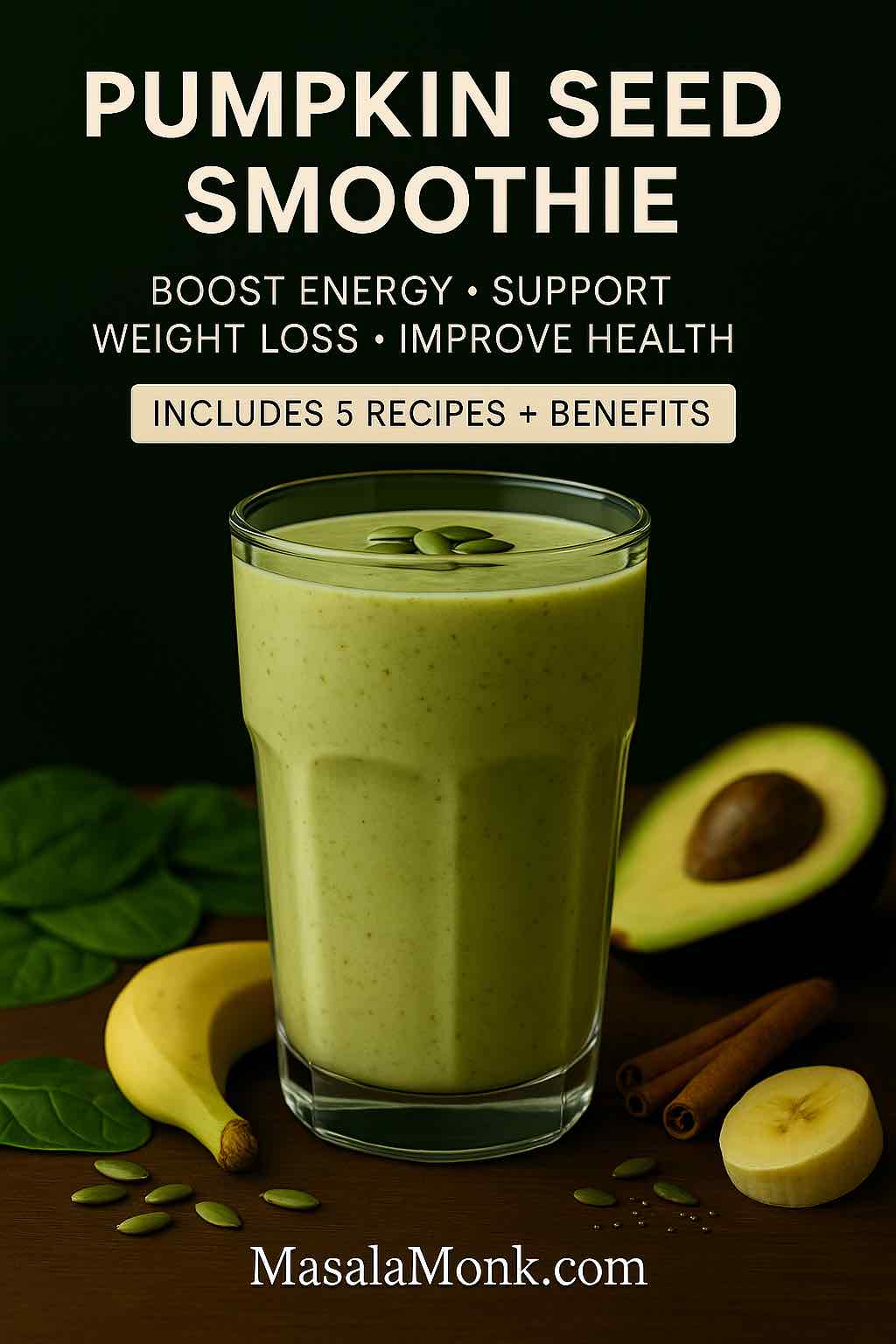
Tall glass of pumpkin seed smoothie surrounded by avocado, banana, spinach, and cinnamon on a rustic table.

There’s something comforting about starting your day with a smoothie. It’s quick, nourishing, and gives you that little “reset” button we often crave in the morning. Now, imagine making that smoothie even more powerful by adding a simple ingredient you probably already have in your kitchen — pumpkin seeds. A pumpkin seed smoothie isn’t just creamy and delicious, it’s also a smart way to sneak in nutrients that support energy, satiety, and even weight loss. Think of it as a small daily ritual that helps keep your cravings in check, your digestion on track, and your body fueled with lasting energy.

Read More: The Benefits of Pumpkin Seeds for Weight Loss and Blood Sugar Control

But don’t just take our word for it — science has a lot to say about these tiny green seeds.


🔬 The Science Behind Pumpkin Seed Smoothies

Pumpkin seeds may be small, but research shows they’re packed with benefits that make them the perfect smoothie booster:

  • Keeps you fuller for longer. Pumpkin seeds are rich in protein, fiber, and healthy fats — the trifecta for curbing cravings and avoiding those mid-morning snack crashes. Studies consistently show that diets high in fiber support long-term weight management by keeping you satisfied without excess calories (Healthline).
  • Balances blood sugar and supports heart health. Thanks to their high magnesium content, pumpkin seeds may help regulate blood sugar and lower blood pressure. In fact, a clinical trial found that adding pumpkin seeds to meals reduced post-meal blood sugar spikes, making them especially useful when blended into a breakfast smoothie (Journal of Nutrition & Food Science, PDF).
  • Packed with micronutrients that support mood and metabolism. Pumpkin seeds deliver magnesium, zinc, antioxidants, and even tryptophan — an amino acid linked to better sleep and mood. That’s why experts often call them a super-seed for whole-body health (Cleveland Clinic, NY Post).
  • Simple but mighty. Even eating just a spoonful of pumpkin seeds daily can improve digestion, immunity, and skin health — according to recent insights on everyday consumption habits (Times of India).

Also Read: Benefits of Nuts and Seeds – Protein-Packed Superfoods


✨ Why This Matters for Your Smoothie

When you blend pumpkin seeds into your smoothie, you’re not just creating a tasty drink — you’re giving your body a nutrient-dense upgrade. The protein and fiber help with weight control, the magnesium supports energy and calm, and the antioxidants keep your health in balance.

So, whether you’re reaching for a smoothie to kickstart your morning, refuel after a workout, or simply curb cravings in a healthy way, the humble pumpkin seed smoothie is a practical, research-backed choice that’s easy to stick with.

5 Easy Pumpkin Seed Smoothie Recipes

Whether you’re new to smoothies or already blending them daily, it’s easy to feel lost in the sea of recipes online. That’s why instead of giving you five random ideas, we’ve carefully selected these recipes to match both what’s trending and what actually helps you in your health journey.

Each smoothie below is designed with a unique purpose — whether it’s detoxing, fueling your workouts, managing sugar, or simply keeping things quick and simple. Here’s why these five recipes made the cut:

  • Green Pumpkin Seed Detox Smoothie → Perfect for mornings when you want something light, fresh, and digestion-friendly. A trending category thanks to “detox” and “green smoothies” being perennial favorites.
  • Pumpkin Spice Protein Smoothie → Because pumpkin spice never goes out of style. This one combines comfort with protein power, making healthy eating feel indulgent.
  • Low-Carb Pumpkin Seed Shake → Tailored for keto and low-carb seekers who often skip smoothies due to high fruit sugar. Creamy, filling, and blood-sugar-friendly.
  • Post-Workout Recovery Smoothie → Designed for fitness lovers. High in protein, potassium, and magnesium to refuel muscles and aid recovery.
  • Minimalist 3-Ingredient Pumpkin Seed Smoothie → Sometimes less is more. This one proves you can make a nourishing smoothie in under 2 minutes with just three simple ingredients.

Together, these recipes cover different lifestyles and goals: weight loss, fitness, energy, comfort, and convenience. Think of this as your “smoothie toolkit” — pick the one that fits your mood or goal each day.

Green Pumpkin Seed Detox Smoothie

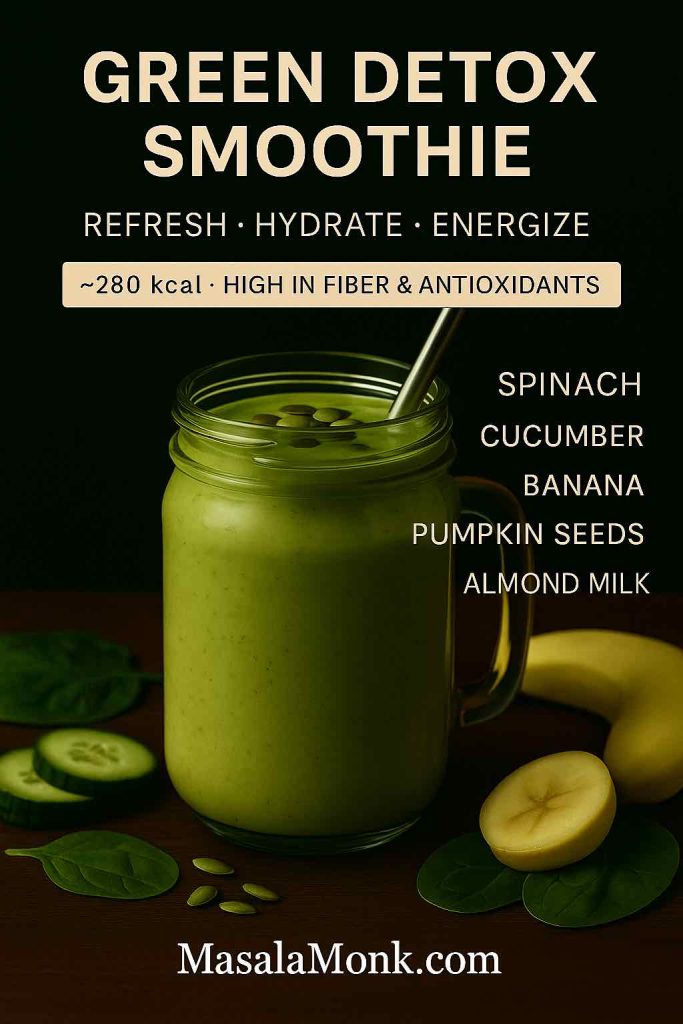
If your mornings feel heavy or sluggish, this smoothie is like a reset button in a glass. Fresh cucumber, spinach, and banana meet protein-rich pumpkin seeds for a blend that supports digestion, boosts hydration, and keeps your energy steady without weighing you down.

Ingredients:

  • 2 tbsp pumpkin seeds (soaked overnight for smoother texture & better digestion)
  • 1 cup spinach or kale (fresh or frozen)
  • ½ cucumber, chopped
  • 1 small frozen banana (adds creaminess + sweetness)
  • 1 cup unsweetened almond milk (or other plant milk)
  • 1 tsp honey or maple syrup (optional)
  • Ice cubes as needed
Glass jar of green detox smoothie with spinach, cucumber slices, banana, and pumpkin seeds on a rustic table.
A refreshing green detox smoothie made with spinach, cucumber, banana, pumpkin seeds, and almond milk — packed with fiber and antioxidants to refresh, hydrate, and energize.

Instructions:

  1. Blend soaked pumpkin seeds with almond milk until silky.
  2. Add spinach, cucumber, and banana. Blend until bright green and smooth.
  3. Taste and add honey or maple syrup if you prefer it sweeter.
  4. Adjust thickness with ice cubes or a splash of extra milk.
  5. Pour into a tall glass, top with extra pumpkin seeds, and enjoy fresh.

Nutrition (approx.):
220 kcal | 8g protein | 6g fiber | Rich in magnesium & antioxidants

Pro Tips:

  • Swap spinach for kale if you want a stronger, earthier flavor.
  • Add 1 tbsp fresh lemon juice for extra detox and brightness.
  • Replace banana with frozen mango if you want less sugar and a tangier taste.

👉 For more refreshing blends that cleanse and energize, check out these Turmeric and Moringa Detox Smoothies.


Pumpkin Spice Protein Smoothie

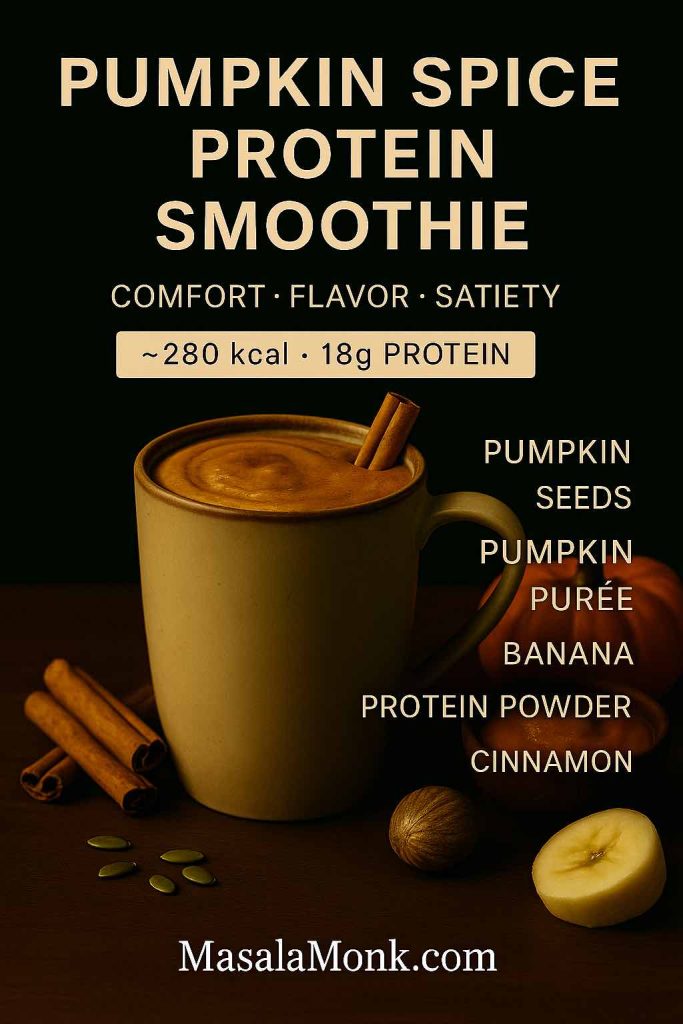
Who says pumpkin spice is only for fall? This smoothie delivers cozy café vibes year-round — with cinnamon, nutmeg, and pumpkin purée — but unlike a latte, it actually keeps you full. With protein powder or Greek yogurt, it’s perfect for weight management while still tasting indulgent.

Ingredients:

  • 2 tbsp pumpkin seeds
  • ½ cup pumpkin purée (unsweetened)
  • 1 frozen banana
  • 1 scoop vanilla protein powder (or ½ cup Greek yogurt)
  • 1 cup oat milk (or milk of choice)
  • ½ tsp cinnamon
  • Pinch of nutmeg & ginger
Creamy pumpkin spice protein smoothie in a mug with cinnamon sticks, banana, and pumpkin seeds beside it.
A comforting pumpkin spice protein smoothie featuring pumpkin purée, banana, cinnamon, protein powder, and pumpkin seeds — 18g protein for flavor and satiety.

Instructions:

  1. Add all ingredients to your blender.
  2. Blend until thick, creamy, and well combined.
  3. Pour into a mug, sprinkle cinnamon on top, and enjoy your “healthy pumpkin spice latte in a glass.”

Nutrition (approx.):
280 kcal | 18g protein | 7g fiber | Antioxidant-rich

Pro Tips:

  • No pumpkin purée? Use steamed sweet potato for a similar taste.
  • Want more protein? Double the seeds or use Greek yogurt and powder.
  • For a dessert-like touch, add ½ tsp vanilla extract.

👉 If cozy, protein-rich flavors are your thing, you’ll also love these Almond & Chia Protein Smoothies, which strike the same balance of indulgence and nourishment.


Low-Carb Pumpkin Seed Shake

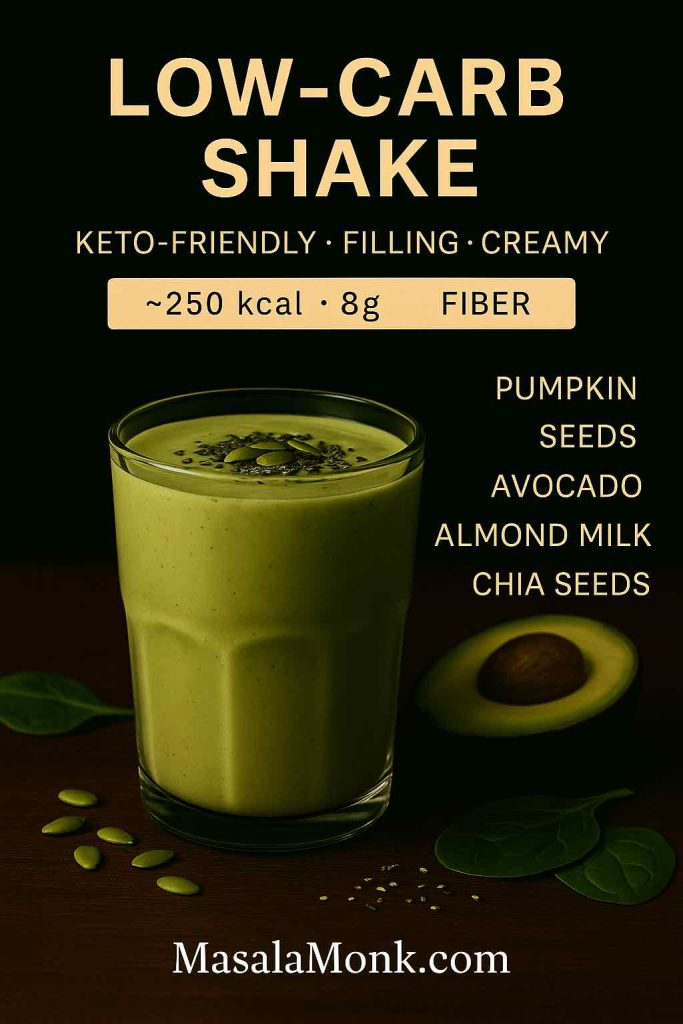
If you love smoothies but hate the sugar spike, this shake is your best friend. It’s creamy, filling, and designed with low-carb eaters in mind. Avocado brings healthy fats, chia seeds add fiber, and pumpkin seeds tie it all together with protein.

Ingredients:

  • 3 tbsp pumpkin seeds
  • ½ ripe avocado
  • 1 cup unsweetened almond milk
  • 1 handful spinach (optional, extra greens)
  • 1 tbsp chia seeds
  • Stevia or monk fruit (optional, to taste)
Tall glass of low-carb avocado and chia seed shake topped with pumpkin seeds, with avocado and spinach on the side.
A keto-friendly low-carb shake made with avocado, almond milk, pumpkin seeds, and chia seeds — creamy, filling, and high in fiber.

Instructions:

  1. Blend pumpkin seeds with almond milk until smooth.
  2. Add avocado, spinach, chia, and sweetener.
  3. Blend until thick and creamy.
  4. Adjust sweetness or texture as needed.

Nutrition (approx.):
250 kcal | 10g protein | 8g fiber | Low carb, high healthy fats

Pro Tips:

  • Want it thicker? Add 2–3 ice cubes or use frozen avocado chunks.
  • For a boost, add unsweetened cocoa powder — think “keto chocolate shake.”
  • If you’re not strict keto, a few frozen berries add antioxidants without much sugar.

👉 Looking for more low-carb inspiration? These Macadamia & Flax Keto Smoothies deliver fiber, protein, and creaminess without the sugar crash.


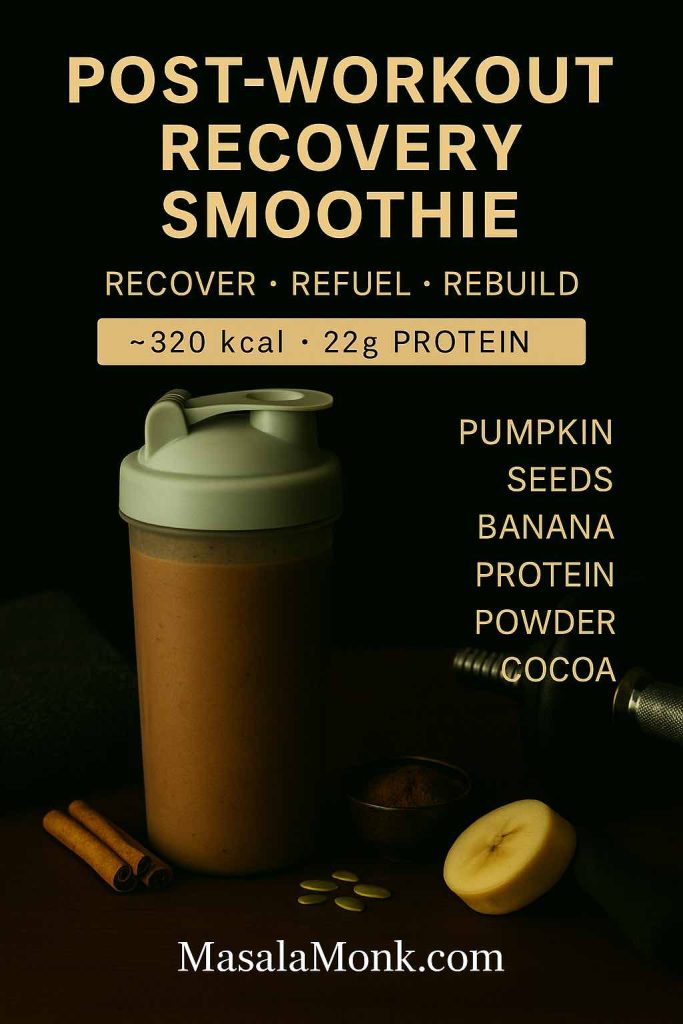
Post-Workout Recovery Smoothie with Pumpkin Seeds

After exercise, your muscles need a mix of protein, carbs, and minerals to recover. This smoothie checks every box: banana restores glycogen, pumpkin seeds deliver protein and magnesium, and cocoa adds antioxidants. It tastes like a chocolate milkshake but works like a recovery drink.

Ingredients:

  • 2 tbsp pumpkin seeds
  • 1 frozen banana
  • 1 scoop whey or plant-based protein powder
  • 1 cup soy milk (or high-protein milk alternative)
  • 1 tsp unsweetened cocoa powder
  • Ice cubes as needed
Shaker glass filled with chocolate protein smoothie on a rustic table with banana, cocoa, and pumpkin seeds.
A post-workout recovery smoothie blended with protein powder, cocoa, banana, and pumpkin seeds — 22g protein to help muscles recover and rebuild.

Instructions:

  1. Combine all ingredients in a blender.
  2. Blend until creamy and lump-free.
  3. Pour into a tall glass, sprinkle cocoa on top, and refuel.

Nutrition (approx.):
320 kcal | 22g protein | 8g fiber | Excellent for muscle repair

Pro Tips:

  • Swap banana for frozen pineapple if you prefer a tropical post-workout vibe.
  • Use chocolate protein powder instead of vanilla for double cocoa goodness.
  • Add a pinch of sea salt to replenish electrolytes naturally.

👉 For more recovery-friendly snack options with a protein edge, explore these Healthy Oat Protein Bars – 5 Easy No Sugar Recipes for Snacks.


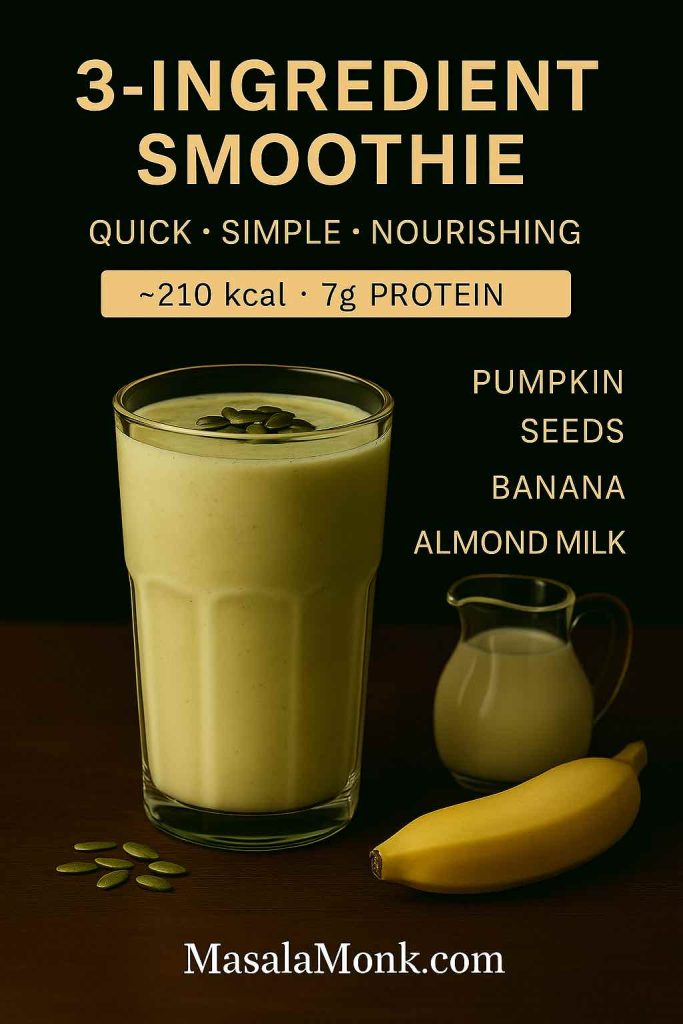
Minimalist 3-Ingredient Smoothie with Pumpkin Seeds

Sometimes, less is more. This smoothie is proof that you don’t need a long ingredient list for something tasty and nourishing. With just three ingredients, it’s quick enough for busy mornings or a mid-day snack that doesn’t derail your goals.

Ingredients:

  • 3 tbsp pumpkin seeds
  • 1 cup almond milk
  • 1 frozen banana
Minimalist banana and almond milk smoothie in a tall glass with a banana and almond milk jug beside it.
A simple 3-ingredient smoothie with banana, almond milk, and pumpkin seeds — quick, nourishing, and easy to prepare at home.

Instructions:

  1. Toss all ingredients into your blender.
  2. Blend until smooth and creamy.
  3. Pour, sip, and enjoy — ready in under 2 minutes.

Nutrition (approx.):
210 kcal | 7g protein | 4g fiber | Simple, quick, satisfying

Pro Tips:

  • Out of banana? Use ½ cup frozen mango for a tangier flavor.
  • Add 1 tsp honey or dates if you like it sweeter.
  • For extra creaminess, toss in 1 tbsp peanut or almond butter.

👉 When you want simple but nourishing, these 10 Creative Chia Pudding Recipes for Every Taste prove that less can indeed be more.

FAQs About Pumpkin Seed Smoothies

Here are the most common questions people ask about pumpkin seeds in smoothies. Each one is answered with practical tips, so you know exactly how to make the most of this nutrient-dense ingredient.


1. Can you put pumpkin seeds in a smoothie?

Yes, absolutely! Pumpkin seeds blend well and add creaminess, protein, and healthy fats. For a smoother texture, soak them overnight before blending.


2. Should I soak pumpkin seeds before making a smoothie?

Soaking is optional but recommended. It softens the seeds, makes blending easier, and can improve digestibility by reducing natural compounds called phytates.


3. How many pumpkin seeds should I add to a smoothie?

A good serving is 2–3 tablespoons. This provides about 7–9 grams of protein, healthy fats, and key minerals like magnesium and zinc — without making the smoothie too calorie-heavy.


4. Are pumpkin seed smoothies good for weight loss?

Yes! The protein and fiber in pumpkin seeds help you feel full longer, which curbs cravings. They also contain healthy fats that support metabolism and balanced blood sugar — both important for weight management.


5. What can I mix with pumpkin seeds in a smoothie?

Pumpkin seeds pair well with bananas, spinach, cucumber, pumpkin purée, avocado, oats, protein powder, and even cocoa. For flavor, try cinnamon, nutmeg, or vanilla.


6. Can I use pumpkin seed butter instead of whole seeds?

Definitely. Pumpkin seed butter gives a creamier texture and blends instantly. Just keep in mind it’s more calorie-dense, so use about 1–2 tablespoons per smoothie.


7. Are pumpkin seed smoothies keto-friendly?

They can be. Skip high-sugar fruits like bananas and use avocado, spinach, almond milk, and a low-carb sweetener instead. Our Low-Carb Pumpkin Seed Shake is a perfect example.


8. Do pumpkin seeds make smoothies taste bitter?

Not if balanced well. Raw seeds can have a slightly earthy flavor, but blending them with fruit, spices, or cocoa masks bitterness. Toasted seeds add a nuttier, richer taste.


9. When is the best time to drink a pumpkin seed smoothie?

  • Morning: for steady energy and satiety.
  • Post-workout: for muscle recovery (add protein powder).
  • Evening snack: to curb cravings with healthy fats and tryptophan (which supports better sleep).

10. Can I drink a pumpkin seed smoothie every day?

Yes! A daily smoothie with 2–3 tablespoons of pumpkin seeds is safe and healthy for most people. Just be mindful of overall calories, especially if your goal is weight loss.


11. Do pumpkin seeds help with digestion?

Yes. They’re high in dietary fiber, which supports gut health and regularity. Pairing them with leafy greens or cucumber in smoothies boosts this effect.


12. Can I use store-bought roasted pumpkin seeds?

Yes, but choose unsalted and unflavored ones. Salted or spiced seeds may alter the taste and nutrition. For the best texture, use raw or soaked seeds.

Final Thoughts

Pumpkin seeds may be small, but when you blend them into a smoothie, they deliver big benefits. From protein and fiber to healthy fats and essential minerals, each sip works to keep you full, energized, and balanced.

What makes them even better is their versatility. With recipes that cover detox mornings, cozy pumpkin spice cravings, low-carb lifestyles, post-workout recovery, and even quick grab-and-go blends, there’s a smoothie for every mood and goal.

At the end of the day, a pumpkin seed smoothie isn’t just about nutrition — it’s about building a simple ritual of self-care. One glass can set the tone for your day, help you stay on track with your goals, and remind you that healthy choices can be both delicious and satisfying.

So grab your blender, try one of these recipes, and see how a handful of pumpkin seeds can transform your smoothie — and maybe even your routine. Cheers to better health, one sip at a time 🥤✨

Posted on Leave a comment

Best Nuts for Weight Loss: Harnessing Nature’s Bounty to Shed Pounds Effectively

BEST NUTS FOR WEIGHT LOSS

When most people think of nuts, the first thing that comes to mind is calories. It’s true: nuts are calorie-dense. A small handful can pack in 150–200 calories, which may seem counterintuitive if you’re trying to lose weight. But here’s the surprise — research consistently shows that people who include nuts in their diets often have lower body weight, smaller waistlines, and better metabolic health compared to those who avoid them.

So, what makes nuts special? Their unique balance of protein, healthy fats, and fiber works together to curb hunger, stabilize blood sugar, and keep cravings at bay. Instead of reaching for processed snacks that leave you hungrier, nuts can help you feel satisfied for longer.

👉 Quick answer if you’re in a hurry:
The best nuts for weight loss are almonds, walnuts, pistachios, and peanuts. These are high in protein and fiber, support fat metabolism, and fit easily into a balanced diet.

Also Read: Best Nuts and Seeds for Weight Loss (Chia, Flax, Almonds & More)

But the real magic lies in the details — and that’s what we’ll explore next.


Why Nuts Can Help With Weight Loss

Nuts aren’t a “miracle food,” but they offer a combination of qualities that make them perfect for anyone looking to shed extra pounds:

Top-down bowl of mixed nuts on beige linen with text “Do nuts help with weight loss?” and MasalaMonk.com footer.
Nuts are calorie-dense, but their protein + fiber + healthy fats increase satiety and can support smaller waists when portions are measured.
  • Protein power: Protein boosts satiety and helps preserve lean muscle while you’re losing fat.
  • Fiber for fullness: The fiber in nuts slows digestion, which means you stay fuller for longer and snack less.
  • Healthy fats: Monounsaturated and polyunsaturated fats keep blood sugar levels stable, preventing the crash-and-crave cycle.
  • Thermogenic effect: Studies suggest that nuts slightly increase calorie burn during digestion, meaning your body uses more energy to process them.
  • Portion control friendly: Unlike chips or cookies, a small handful of nuts is often enough to satisfy hunger — provided you stick to a modest portion.

Now that we know why nuts can help, let’s dive into the specifics. Each nut has its own unique set of nutrients and benefits, and some are more powerful for weight loss than others.

Do Read: How to Eat 100 Grams of Protein a Day

Best Nuts for Weight Loss (Ranked and Explained)

If you’ve ever wondered why so many weight-loss experts recommend nuts, the answer is simple: they’re a snack that fights back. While chips, cookies, or candy bars give you a quick hit of sugar or salt followed by a crash, nuts provide steady energy, hunger control, and real nutrition.

Still, not every nut is equal when it comes to losing weight. Some are better at curbing appetite, others support fat metabolism, and a few are best eaten in moderation. The goal isn’t to eat them by the bucket, but to use the right nut, in the right portion, at the right time.

Let’s go nut by nut—starting with almonds and walnuts, two heavyweights in the weight-loss world—so you’ll know exactly why to include them in your diet and how to do it without sabotaging progress.


Almonds for Weight Loss

Almonds are the superstar of weight-loss nuts, and for good reason. They’re rich in protein, fiber, and healthy fats—all nutrients that slow digestion and keep you feeling satisfied. Ever notice how a handful of almonds leaves you full far longer than a handful of crackers? That’s the almond advantage.

Clear glass bowl filled with whole almonds on white marble; overlay “Almonds: Satiety Superstar; Snack: 23 almonds - best nuts for weight loss.
A 23-almond (~1 oz) portion delivers crunch, protein, and fiber—ideal as a swap for chips or crackers.

But it’s not just a feeling—research backs it up. A meta-analysis of 62 clinical trials found that people who included almonds in their diet lost more weight, had lower BMI, and trimmed their waistlines compared to those who didn’t. The waist reduction was especially significant—around 2.4 cm on average (NIH study). Another study from Oregon State University showed that swapping a daily muffin or cracker snack for almonds led to smaller waists, better cholesterol levels, and even healthier gut bacteria (Oregon State News).

💡 How to add almonds to your weight-loss diet:

  • As a snack: Carry a small handful (about 23 almonds). The crunch satisfies the need to chew, and the portion is just enough to tide you over without excess calories.
  • At breakfast: Sprinkle slivered almonds on oatmeal, chia pudding, or Greek yogurt.
  • In meals: Toss roasted almonds into salads for crunch instead of croutons, or blend them into smoothies.
  • With fruit: Pair almond butter (unsweetened) with apple or banana slices for a filling, fiber-rich snack.

⚠️ Watch out for: Honey-roasted or salted almonds. They may taste good but often add extra sugars and sodium, undoing the weight-loss benefits.

Also Read: Almonds Nutrition Facts 100g & Glycemic Index Impact


Walnuts for Weight Loss

Walnuts are a little different. They may not lead to dramatic weight loss on their own, but they play an essential supporting role. Packed with omega-3 fatty acids, they’re fantastic for heart health and may help regulate appetite.

Ceramic bowl of walnut halves (and a few almonds) on marble; overlay bullets “Omega-3 rich • Appetite control • Heart healthy - best nuts for weight loss.
Walnuts bring plant omega-3s and may help regulate appetite—sprinkle into oats or salads.

A randomized controlled trial published in Nutrition Journal showed that people following a reduced-calorie diet including walnuts lost just as much weight as those on a standard low-calorie plan—but with added bonuses. The walnut group had better improvements in blood pressure and cholesterol, which means walnuts can help you slim down while protecting long-term health (Nutrition Journal).

What’s even more fascinating is how walnuts may influence the brain. Researchers at Beth Israel Deaconess Medical Center used brain imaging to show that eating walnuts activated regions linked to appetite control, helping participants feel fuller and resist unhealthy food cravings (Beth Israel Study).

💡 How to add walnuts to your weight-loss diet:

  • In breakfast bowls: Stir chopped walnuts into overnight oats, porridge, or smoothie bowls.
  • As a salad topper: Use walnuts instead of fried croutons or cheese.
  • In cooking: Add crushed walnuts to roasted veggies or grain bowls for texture and healthy fats.
  • Snack idea: Mix a few walnuts with a couple of dark chocolate chips for a satisfying treat that curbs sweet cravings without going overboard.

⚠️ Watch out for: Glazed walnuts or candied walnut mixes. They’re loaded with sugar and calories that cancel out the benefits.

Do Read: Walnuts and Weight Loss: Nurturing Health with Nature’s Powerhouse


Pistachios for Weight Loss

Pistachios are often dubbed the “mindful nut” — simply because eating them in-shell makes you slow down and tune into your hunger. That small pause can curb overeating and help you manage portions more naturally.

In fact, pistachios clock in at around 160 calories per ounce (roughly 49 nuts), making them one of the lower-calorie options with good bulk for satisfaction.

In-shell pistachios in a small bowl on marble with text “49 nuts ≈ 160 kcal; in-shell slows you down - best nuts for weight loss.
In-shell pistachios build in a pause so you naturally eat slower—and less.

Research backs up their role in weight management: one four-month randomized trial showed that folks adding pistachios daily to their weight-loss efforts lost a similar amount of weight and trimmed their waistlines, plus saw meaningful drops in blood pressure and better nutrient intake (PubMed RCT). A meta-analysis of randomised trials also confirmed that pistachio-rich diets led to small but significant reductions in BMI when compared to controls (PubMed Meta-analysis).

How to add pistachios to your weight-loss diet:

  • As a snack: Keep a pre-portioned ounce of in-shell pistachios handy to replace chips.
  • Meal topping: Toss shelled pistachios into salads, roasted veggies, or grain bowls for extra bite.
  • Sauce boost: Swap pine nuts in homemade pesto with pistachios for a lighter, nutrient-dense twist.

Watch out for: Salted or flavored pistachios—they can sneak in sodium or sugar that counteracts the benefits. Best to stick with unsalted, in-shell versions.

Suggested Read: Pistachios and Weight Loss: The Green Powerhouse for a Healthy You


Peanuts for Weight Loss

Though technically legumes, peanuts earn their spot on this list. Affordable, protein-rich, and satisfying, they’re a snack-friendly option with real weight-loss benefits.

Swirl of natural peanut butter beside unshelled peanuts; overlay “Budget Protein; 35 g before meals curbs hunger; natural PB only.
A measured spoon of natural PB (or 35 g peanuts) before meals can temper hunger and improve adherence.

One 6-month randomized controlled trial found that eating 35 g of peanuts before two main meals daily resulted in weight loss comparable to a traditional low-fat diet—but with better reductions in systolic blood pressure (Nutrients RCT). Another study highlighted similar findings, showing minor drops in weight and waist size and improved intake of healthy nutrients when peanuts were part of a structured diet (PubMed ADA-Plan Study).

How to add peanuts to your weight-loss diet:

  • Pre-meal snack: Eat a 35 g handful of unsalted, dry-roasted peanuts before a meal to curb hunger.
  • Add crunch: Sprinkle crushed peanuts over salads, stir-fries, or noodles for texture and protein.
  • Peanut butter hack: Spread natural peanut butter (just peanuts, no added sugar) on fruit or whole-grain toast—but keep it measured.

Watch out for: Honey-roasted or salted peanuts—they load on sodium and sugar. Peanuts are easy to overconsume, so watch your portion.

Do Read: Peanuts and Weight Loss: Separating Fact from Fiction


Cashews for Weight Loss

Cashews, with their creamy texture, are easy to overlook — yet they can fit into a smart weight-loss strategy when eaten in moderation. A one-ounce serving (about 18 cashews) delivers roughly 155 calories, healthy monounsaturated fats, and essential micronutrients like magnesium and zinc, which support energy and satiety.

Research shows cashews don’t contribute to weight gain when included in a balanced diet. A clinical trial demonstrated that adding 15 g of Brazil nuts and 30 g of cashews to an energy-restricted diet improved body composition — specifically, reducing body fat percentage and improving lean mass — without negatively affecting weight loss progress (Br J Nutr RCT).

Another recent 8-week randomized controlled trial found that individuals consuming cashews experienced similar weight loss compared to controls, but also gained heart and liver health benefits — including reductions in markers like ApoB and improved liver enzymes — when included in a calorie-controlled diet (Front Nutr RCT).

💡 How to add cashews to your weight-loss diet:

  • Snack wisely: Stick to around 18 raw or dry-roasted cashews per serving.
  • Cooking: Use cashews in curries or stir-fries as a creamy substitute for heavy dairy.
  • Nut butter: Opt for natural cashew butter without added sugars or oils.

⚠️ Watch out for: Salted or candied cashews — these can undo the benefits with excess sugar and sodium.

Also Read: Cashews and Weight Loss: Unveiling the Nutritional Gems


Brazil Nuts for Weight Loss

Brazil nuts are standout for their selenium content — just one or two nuts a day generally meet your recommended intake. Selenium is vital for thyroid function, which in turn regulates metabolism and energy levels.

A recent trial in overweight women found that daily consumption of 8 g (~2 Brazil nuts) as part of an energy-restricted diet significantly reduced inflammation markers (like CRP and IL-8) and improved intestinal permeability, compared to a nut-free diet, even though both groups lost similar amounts of weight (J Nutr Controlled Trial). Another study showed that Brazil nut + cashew intake in a restricted diet improved overall body composition (reducing body fat percentage) and selenium status in women at cardiometabolic risk (Br J Nutr RCT).

💡 How to add Brazil nuts to your weight-loss diet:

  • Daily dose: Keep it to just 1–2 Brazil nuts per day for selenium support.
  • Snack mix: Add one to homemade trail mix for variety and immunity perks.
  • Smoothie addition: Blend a single nut in for creaminess and operational nutrition.

⚠️ Watch out for: Overconsumption — Brazil nuts are so rich in selenium that eating more than 4–5 per day regularly can lead to toxicity. Stick to the safe 1–2 nut guideline.

Do Read: Brazil Nuts for Selenium Boost: 5 Morning Smoothies for Balanced Health


Hazelnuts for Weight Loss

Hazelnuts are quietly powerful: fiber + healthy fats + vitamin E make them naturally satisfying, so a small handful can keep you full without feeling heavy. One ounce (about 21 nuts) has ~178 calories and ~4g protein—great for a mid-afternoon tide-you-over snack.

What does the research say? A systematic review and Bayesian meta-analysis found that hazelnut-enriched diets lowered LDL and total cholesterol while BMI remained unchanged—exactly what you want when weight control is the goal (Nutrients meta-analysis) (Perna et al., 2016). A 12-week randomized trial adding 30–60 g/day of hazelnuts improved diet quality and did not adversely affect body composition in overweight adults (PubMed RCT) (Tey et al., 2013).

How to add hazelnuts to your weight-loss diet:

  • Snack swap: ~20 raw hazelnuts with coffee/tea instead of biscuits.
  • Breakfast crunch: Chop over oatmeal, Greek yogurt, or chia pudding.
  • Savory boost: Toast lightly and toss onto roasted veggies or salads.

Watch out for: Chocolate-coated hazelnuts and sweet spreads (e.g., Nutella) — sugar flips the script.

Do Read: Hazelnuts in Your Diet: 5 Keto Smoothie Ideas for Efficient Weight Loss


Macadamia Nuts for Weight Loss

Buttery macadamias feel “indulgent,” yet in controlled portions they’re weight-neutral and very satiating. One ounce (10–12 nuts) is ~200 calories, mostly heart-healthy monounsaturated fat (think olive-oil vibes), with minimal carbs.

In an 8-week randomized crossover trial in adults with abdominal obesity, adding macadamias (~15% of calories) did not change weight, BMI, body fat, or waist; lipids trended modestly down (J Nutr Sci RCT) (Jones et al., 2023). A companion 8-week study reported no significant changes in weight, BMI, waist, or % body fat when macadamias were included daily (Current Developments in Nutrition) (Jones et al., 2020).

How to add macadamias to your weight-loss diet:

  • Portion plan: Cap at ~10 nuts; chew slowly.
  • Meal upgrade: Chop into salads or grain bowls for creamy crunch.
  • Yogurt topper: 1–2 tbsp chopped with berries for a satisfying finish.

Watch out for: Easy to over-eat (calorie-dense). Pre-portion; avoid honey-roasted mixes.

Do Read: Vegan Keto Smoothie Kick-Start: 5 Macadamia Nut Recipes for Nutrient-Packed Mornings


Pecans for Weight Loss

Pecans are naturally sweet and buttery, with fiber + polyphenols that play nice with cardiometabolic health. A small handful (19 halves) is ~196 calories—so the trick is portion plus substitution.

A 12-week randomized controlled trial (138 adults at cardiometabolic risk) showed that replacing usual snacks with ~57 g/day pecans significantly reduced LDL, non-HDL, total cholesterol and triglycerides, and improved overall diet quality; weight change was small and non-significant (+0.7 kg vs control), underscoring the need for portion control (AJCN RCT) (Hart et al., 2025). Earlier RCT work also found 8-week pecan diets lowered LDL, TG and ApoB vs control (J Nutrition RCT) (Guarneiri et al., 2021).

How to add pecans to your weight-loss diet:

  • Snack swap: 10–12 halves instead of cookies/chips.
  • Breakfast: Stir into oatmeal/yogurt; pair with cinnamon + apple.
  • Savory: Toast lightly and toss over roasted squash or salads.

Watch out for: Candied or praline pecans = sugar bombs. Keep portions tight to avoid creeping calories.

Do Read: Nuts for Heart Health: Harnessing the Nutritional Powerhouse for a Healthy Cardiovascular System


Pine Nuts for Weight Loss

Tiny but mighty, pine nuts bring buttery flavor and help you slow down and savor food. The interesting angle here is satiety signaling: a unique fatty acid (pinolenic acid) may boost fullness hormones.

In a placebo-controlled human trial, Korean pine nut oil increased satiety hormones (CCK, GLP-1) and reduced prospective food intake shortly after consumption (Lipids in Health & Disease RCT) (Pasman et al., 2008). More recently, delayed-release pine-nut-oil free fatty acids delivered to the small intestine reduced appetite via GLP-1 in an acute study (Clinical Nutrition) (Sørensen et al., 2021). These are short-term appetite studies, not long-term weight-loss trials—use pine nuts as a tool for fullness, not a magic bullet.

How to add pine nuts to your weight-loss diet:

  • Salad finisher: 1–2 tbsp toasted goes a long way.
  • Pesto play: Blend with basil + lemon; use thinly to flavor big bowls.
  • Grain bowls: Sprinkle over quinoa/veg to boost satisfaction.

Watch out for: Calorie density (measure, don’t pour) and rare “pine mouth” aftertaste. Buy fresh; store chilled.

Suggested Read: Pine Nuts and Weight Loss: A Natural Aid for Shedding Extra Pounds?


🥜 Best Nut Butters for Weight Loss

Nut butters are a creamy comfort food — and yes, they can actually help with weight loss when used wisely. The secret lies in sticking to natural, unsweetened versions (just nuts, maybe salt) and keeping your portions under control. A spoonful here and there can boost satiety, help you avoid junk snacks, and deliver healthy fats and protein that keep you energized.

Three glass jars—peanut, almond and cashew butter—on marble with a 1-tbsp measuring spoon and portion headline - showing best Nut Butters for weight loss.
Measure 1 tbsp and pair with fruit or whole-grain toast. Peanut = budget protein, almond = vitamin E & magnesium, cashew = creamy swap. Scan labels: ingredients should read “peanuts/almonds/cashews, salt”—nothing else.

Let’s break it down by type.


🥜 Peanut Butter for Weight Loss

Peanut butter is the classic choice. It’s affordable, protein-packed, and one of the most studied when it comes to appetite control. Two tablespoons give you ~190 calories, 7g protein, 2g fiber, and a dose of heart-healthy fats.

Research backs it up: a 6-month randomized controlled trial found that people who ate 35 g of peanuts before two main meals daily lost as much weight as those on a traditional low-fat diet — but also had greater improvements in blood pressure (Petersen et al., 2022). Another crossover study showed that peanut or peanut butter snacks increased satiety and reduced blood sugar spikes compared to a grain-bar snack (Johnston et al., 2013).

💡 How to add peanut butter to your diet:

  • Use 1 tbsp on apple or banana slices to tide you over.
  • Stir into oatmeal or smoothies for protein and creaminess.
  • Try it as a pre-meal snack (1–2 tbsp) to help prevent overeating.

⚠️ Watch out for: Skippy, Jif, or other supermarket brands often add sugar, palm oil, or hydrogenated fats. Look for jars labeled “just peanuts.”


🌰 Almond Butter for Weight Loss

Almond butter feels a little more gourmet — and it comes with extra benefits. Two tablespoons provide ~190 calories, 7g protein, 3g fiber, and lots of vitamin E and magnesium.

While research on almond butter itself is limited, studies on whole almonds show why this spread can be a smart choice. A controlled satiety trial found that people who ate almonds as a snack compensated naturally at later meals, so total daily calorie intake didn’t increase despite the snack’s calories (Hull et al., 2015). Long-term studies also show that people who regularly eat nuts or peanut butter don’t gain more weight — in fact, they often have smaller waistlines over time (Bes-Rastrollo et al., 2009).

💡 How to add almond butter to your diet:

  • Spread thinly on whole-grain toast or crispbread.
  • Use as a dip for celery, carrots, or apple slices.
  • Mix into Greek yogurt or chia pudding for extra richness.

⚠️ Watch out for: Even natural almond butter is calorie-dense. Stick to 1–2 tbsp at a time.


🌰 Cashew Butter for Weight Loss

Cashew butter is smooth, slightly sweet, and often used as a dairy substitute in sauces. Two tablespoons provide ~180 calories, 6g protein, and valuable minerals like magnesium and zinc.

Clinical studies on cashews show real promise: a calorie-restricted RCT found that diets including cashews (and Brazil nuts) improved body composition — reducing fat percentage and preserving lean mass — without slowing weight loss (Cardoso et al., 2022). Another 8-week trial reported improved cholesterol and liver enzyme levels in people eating cashews, even though both groups lost the same amount of weight (Xiao et al., 2023).

💡 How to add cashew butter to your diet:

  • Spread on whole-grain crackers instead of cheese.
  • Stir into stir-fries or curries for a creamy base.
  • Blend into smoothies for natural sweetness.

⚠️ Watch out for: Many store-bought cashew butters contain added sugar or oils. Always check the label.


Bottom line: Peanut, almond, and cashew butter can all fit into a weight-loss plan when natural, unsweetened, and portioned. Peanut butter shines for satiety and pre-meal appetite control, almond butter offers extra nutrients and satiety balance, and cashew butter brings creaminess with metabolic perks.


🥜 Trail Mix & Mixed Nuts for Weight Loss

Trail mix can be a double-edged sword. Done right, it’s portable, filling, and nutrient-dense. Done wrong (with sugar, candy, or salty coatings), it’s basically dessert in disguise.

The beauty of homemade trail mix is that you’re in control. You pick the nuts, the extras, and the portions — turning it into a snack that supports your weight-loss goals rather than sabotaging them.

Small bowls—almonds/walnuts, dried cranberries, pumpkin seeds—arranged with overlay instructions and Pre-portion ¼ cup.
DIY trail mix: 60–70% almonds/walnuts/pistachios + 10–15% seeds + 5–10% unsweetened fruit; store in ¼-cup packs.

🌰 Why Homemade Trail Mix Helps

  • Balanced nutrition: A mix of nuts, seeds, and a touch of fruit delivers protein, fiber, and healthy fats.
  • Craving control: The variety of textures — crunch, chew, sweetness — satisfies snack cravings without overeating.
  • Portable fuel: Easy to keep in a bag, desk drawer, or glove compartment for hunger emergencies.

💡 How to Build It

  1. Base nuts (60–70%)
    • Almonds, walnuts, pistachios, or peanuts. These are the most filling and protein-rich.
  2. Secondary nuts (15–20%)
    • Cashews, pecans, hazelnuts, or Brazil nuts. Adds flavor variety and micronutrients.
  3. Seeds (10–15%)
    • Pumpkin or sunflower seeds for extra protein, minerals, and crunch.
  4. Fruit (5–10%)
    • Unsweetened raisins, cranberries, cherries, or apricots. Adds natural sweetness without candy.
  5. Optional extras (tiny sprinkle)
    • Dark chocolate chips (70%+) or shredded coconut if you want a touch of indulgence.

✅ Smart Portion Tips

  • Pre-portion into ¼ cup servings (about a small handful). That’s ~150–200 calories.
  • Store in small jars or zip bags so you don’t overdo it.
  • Use it as a snack between meals — not a free-for-all snack bowl.

⚠️ What to Skip

  • Sugary add-ins: Yogurt-covered raisins, M&Ms, or candy pieces.
  • Over-salted nuts: Sodium-heavy mixes can undo the health benefits.
  • Store-bought “deluxe” blends: Usually loaded with sugar, oils, or fried fruit.

👉 Bottom line: Homemade trail mix is a customizable, portion-controlled snack that works with weight loss, not against it. Stick to raw or dry-roasted nuts, unsweetened fruit, and just a pinch of extras to keep it satisfying and guilt-free.


🚫 Worst Nuts for Weight Loss

Not all nuts are created equal. While all provide healthy fats, protein, and nutrients, some varieties are harder to fit into a calorie-conscious plan. The problem isn’t the nut itself — it’s usually the calorie density or the way it’s processed (salted, candied, or honey-roasted).

Bowls of candied nuts, macadamias and pecans with overlay warnings about added sugar, salt and overeating risk. Part of post on best nuts for weight loss.
Choose raw or dry-roasted. If you love macadamias/pecans, keep it tiny (5–6 pieces)—candied or heavily salted nuts derail progress.

Here are the main ones to watch out for if your goal is losing weight:


Macadamia Nuts

Even though they are featured in featured in Weight Loss freindly list as well, however they are super easy to go overboard.

  • Calories per ounce: ~200 (just 10–12 nuts).
  • Buttery and delicious, macadamias are mostly fat with little protein or fiber to keep you full. That makes them easy to overeat without much satiety payoff.
  • They’re fine in small amounts, but not the best choice if you’re trying to manage hunger.

Pecans

Again Pecans are so delicious that is super easy to go overboard with these and mess up your goals.

  • Calories per ounce: ~196 (about 19 halves).
  • Naturally sweet and tasty, pecans pack more calories than many other nuts, with lower protein content.
  • A small handful can easily turn into two, pushing you over your calorie limit fast.

Candied, Honey-Roasted, or Flavored Nuts

  • The biggest trap isn’t a specific nut but how it’s prepared.
  • Honey-roasted almonds, maple pecans, or BBQ cashews often come coated in sugar, oils, or flavorings — turning a healthy snack into a dessert-level calorie bomb.
  • These versions can also spike cravings instead of controlling them.

Salted & Processed Nut Mixes

  • Heavily salted peanuts or bar nuts can sneak in massive amounts of sodium, leading to bloating and making you thirstier (which sometimes gets mistaken for hunger).
  • Pre-made mixes often include fried corn bits, pretzels, or candy — all of which derail the weight-loss benefits of the nuts themselves.

⚖️ Bottom Line

If you love macadamias or pecans, you don’t have to give them up completely — just keep the portions tiny (think 5–6 nuts, not a handful). But if weight loss is your goal, you’ll get more satiety for fewer calories by focusing on almonds, walnuts, pistachios, and peanuts instead.


🥜 Practical Tips for Eating Nuts for Weight Loss

Nuts can absolutely support your weight-loss journey — but like any calorie-dense food, how you eat them makes all the difference. Here are some tips to keep them working in your favor:

Four labeled bowls—23 almonds, 49 in-shell pistachios, 14 walnut halves, 28 peanuts—under headline “The Handful Rule” for best nuts for weight loss.
Portion first, then snack. ~1 oz keeps calories in check while delivering protein and fiber for lasting fullness.
  • Stick to the “handful rule”: About 1 ounce (a small handful, ~23 almonds or 49 pistachios). Pre-portion them into small containers or bags so you don’t go overboard.
  • Use nuts as a swap, not an add-on: Replace chips, cookies, or muffins with nuts. Don’t just add nuts on top of your regular snacks.
  • Snack smarter with timing: Nuts before meals can help reduce hunger and lead to smaller portions at mealtime.
  • Go for raw or dry-roasted: Skip oils, coatings, and added flavors. Natural versions have the same crunch without unnecessary calories.
  • Pair with protein or produce: Nuts plus fruit, Greek yogurt, or veggies make a more balanced, filling snack.
  • Watch flavored varieties: Honey-roasted, candied, or BBQ-coated nuts can undo the benefits.
  • Nut butters count too: Just stick to natural jars (only nuts, maybe salt) and measure 1–2 tbsp at a time.
  • Mix it up: Rotate between almonds, walnuts, pistachios, and peanuts to cover a wider nutrient spectrum.

🌟 Conclusion: Nuts That Work With Your Goals

Nuts aren’t the enemy of weight loss — in fact, they can be one of your greatest allies. Their protein, fiber, and healthy fats help you feel full, satisfied, and less likely to reach for junk food.

The key is moderation and mindfulness:

  • A handful of almonds, walnuts, pistachios, or peanuts a day can keep hunger in check.
  • Nut butters and trail mix can work beautifully — if you keep them natural and portioned.
  • Avoid candied, honey-roasted, or overly salted varieties.

👉 Action step for tomorrow: Instead of grabbing chips or cookies, try a small handful of almonds with fruit, or a spoon of peanut butter with apple slices. Tiny swaps like this can add up to big results for your waistline and health.

❓ Frequently Asked Questions About Nuts and Weight Loss

1. Which nut is best for weight loss?

While all nuts can be part of a healthy diet, almonds, walnuts, pistachios, and peanuts stand out for weight loss. This is because they combine protein, fiber, and healthy fats that promote satiety and help prevent overeating. For example, almonds are especially filling, walnuts support appetite regulation through omega-3s, pistachios offer bulk for fewer calories, and peanuts are affordable yet protein-rich. Therefore, if you’re trying to slim down, focusing on these four nuts gives you the most “fullness per calorie.”


2. How many nuts should I eat per day to lose weight?

The sweet spot is usually 1 ounce per day — roughly a small handful. To give you perspective, that’s about 23 almonds, 14 walnut halves, 49 pistachios, or 28 peanuts. This amount delivers enough protein and fiber to keep you full without tipping your calorie balance in the wrong direction. Eating significantly more can add up quickly since nuts are calorie-dense, but sticking to a measured portion makes them a smart, sustainable daily habit.


3. Are roasted nuts good for weight loss?

Yes, roasted nuts can absolutely be part of a weight-loss diet, but there’s a key detail to watch: how they’re roasted. Dry-roasted nuts, which are heated without extra oil or sugar, keep their nutrient profile intact. However, many packaged roasted nuts are fried in added oils, heavily salted, or coated in flavors like honey or barbecue. Those versions add unnecessary calories and sodium, which can work against your weight goals. So, roasted is fine — just make sure the label says “dry-roasted” and nothing more.


4. Can nuts help with belly fat specifically?

Nuts don’t directly burn belly fat — no food can target fat loss in one body area. However, nuts can help reduce overall calorie intake and improve metabolic health, which indirectly supports belly fat reduction. For instance, their healthy fats and fiber stabilize blood sugar and prevent the crash-and-crave cycle that often leads to overeating. Over time, consistent nut consumption as part of a calorie-controlled diet may lead to a smaller waistline, even if the fat loss isn’t “spot targeted.”


5. What is the lowest-calorie nut for weight loss?

Pistachios are often considered the lowest-calorie option. An ounce of pistachios (about 49 nuts) provides ~160 calories, making them lighter than walnuts, pecans, or macadamias. Cashews also rank fairly low at about 155 calories per ounce. Because pistachios come in shells, they also slow down your eating, giving your body more time to register fullness. This makes them both calorie-efficient and portion-control-friendly — a rare win-win.


6. Are peanuts good for weight loss even though they’re legumes?

Yes — in fact, peanuts and peanut butter have some of the strongest evidence for weight management. Despite technically being legumes, peanuts provide a nutrient profile similar to tree nuts: protein, fiber, and healthy fats. Several clinical studies show that peanuts can increase satiety and help people maintain or lose weight when included in a structured diet. So don’t let their “legume status” fool you; peanuts are just as effective as traditional nuts for weight loss.


7. Is peanut butter fattening, or can it help with weight loss?

Peanut butter has a bad reputation because it’s calorie-dense — about 190 calories per 2 tablespoons. However, when eaten in moderation, it can actually support weight loss. The protein and fat in peanut butter keep you full, and research shows that peanut preloads (eating peanuts or peanut butter before a meal) reduce hunger and total calorie intake later. The key is choosing natural peanut butter (just peanuts and maybe salt) and measuring your serving size carefully — usually 1 to 2 tablespoons.


8. Can I eat nuts at night if I’m trying to lose weight?

Yes, you can eat nuts in the evening, and in some cases, it may even help. Late-night cravings often lead people toward chips, cookies, or other processed snacks. Swapping those for a small handful of nuts provides lasting satiety and prevents you from waking up hungrier the next morning. The key is portion size: stick to a small handful, and avoid sugar-coated or salted varieties. In other words, nuts at night are fine as long as they replace less healthy options, not add extra calories.


9. Should I eat nuts raw, soaked, or roasted?

Raw and dry-roasted nuts are equally good choices for weight loss. Some people soak nuts to improve digestibility, which is fine if it helps you, but it doesn’t make them more effective for weight loss. The real difference comes down to additives: raw or dry-roasted nuts keep things simple, while oil-roasted, salted, or flavored nuts can sneak in calories, sodium, or sugar. So the best choice depends on your taste preference, but for weight management, plain raw or dry-roasted is ideal.


10. What are the worst nuts for weight loss?

Macadamia nuts and pecans aren’t “bad” for you, but they’re very calorie-dense and lower in protein than other nuts, so they don’t provide the same satiety bang for your calorie buck. The real danger, though, comes from flavored nuts — think candied pecans, honey-roasted peanuts, or chocolate-covered almonds. These can easily double or triple the calories and sugar, turning a healthy snack into a dessert. For weight loss, stick with natural, unflavored nuts, and keep the indulgent versions for rare occasions.


11. Can mixed nuts help me lose weight?

Yes, but the way you put the mix together matters. A homemade mix of almonds, walnuts, pistachios, and a sprinkle of seeds can be an excellent weight-loss snack. However, most store-bought “deluxe nut mixes” are loaded with salted nuts, fried corn, pretzels, and sugary fruit or chocolate. These add-ins increase calories without much nutrition. So mixed nuts can absolutely help with weight management — but the safest way is to make your own blend at home.


12. How should I store nuts to keep them fresh?

Nuts are high in natural oils, which means they can go rancid if stored improperly. To keep them fresh and tasty, store nuts in airtight containers in a cool, dark place. For long-term storage, refrigerate or even freeze them — this can extend freshness for months without affecting texture. Fresh-tasting nuts are not only healthier but also more satisfying, helping you stick to your weight-loss goals without reaching for processed snacks.