Posted on Leave a comment

Mother Dairy’s Pro Milk vs Double Toned Milk: Which One’s Really Worth Your Money?

Pro Milk vs Double Toned Milk

(P.S. This isn’t just about Mother Dairy vs Amul — even Mother Dairy’s own Double Toned Milk could be a better pick over its “Pro” variant.)


The Hype vs The Math

Pro Milk is often branded and promoted as a “healthier, high-protein” milk — and at first glance, that sounds appealing. But when you dig into the actual macros and compare it with Double Toned Milk (be it from Amul, Mother Dairy, or any other brand), the numbers tell a different story.

While Pro Milk does have more protein per 100 ml, it also brings along significantly more fat and calories — and when cost enters the picture, things get even more interesting.

Nutrient Comparison (per 500 ml pack)

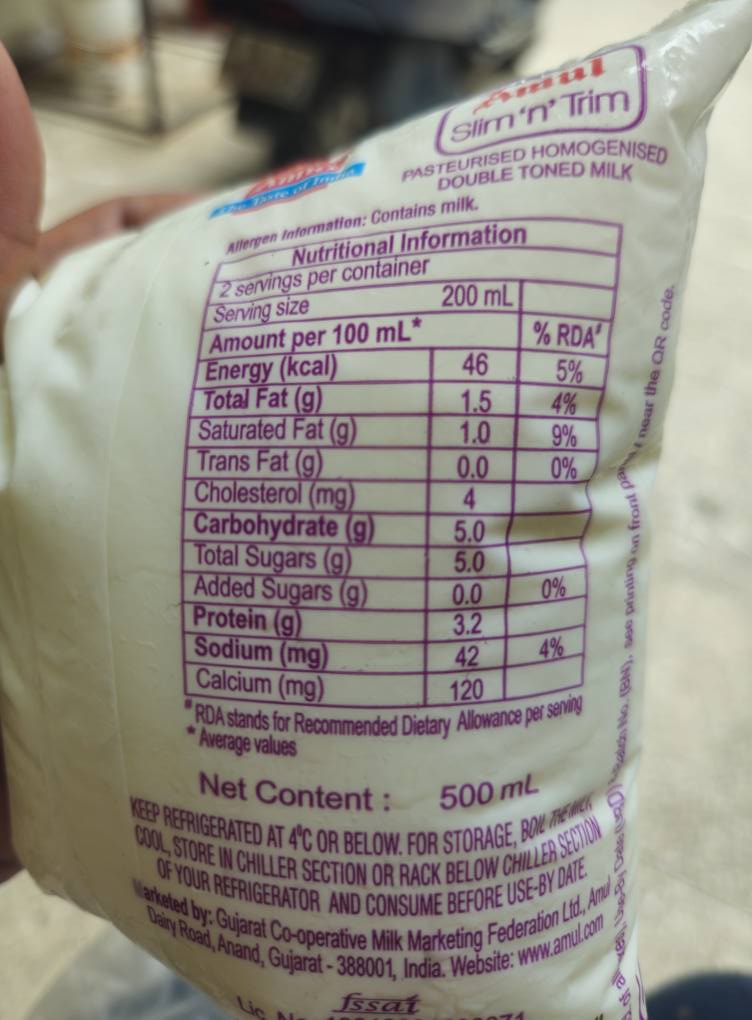
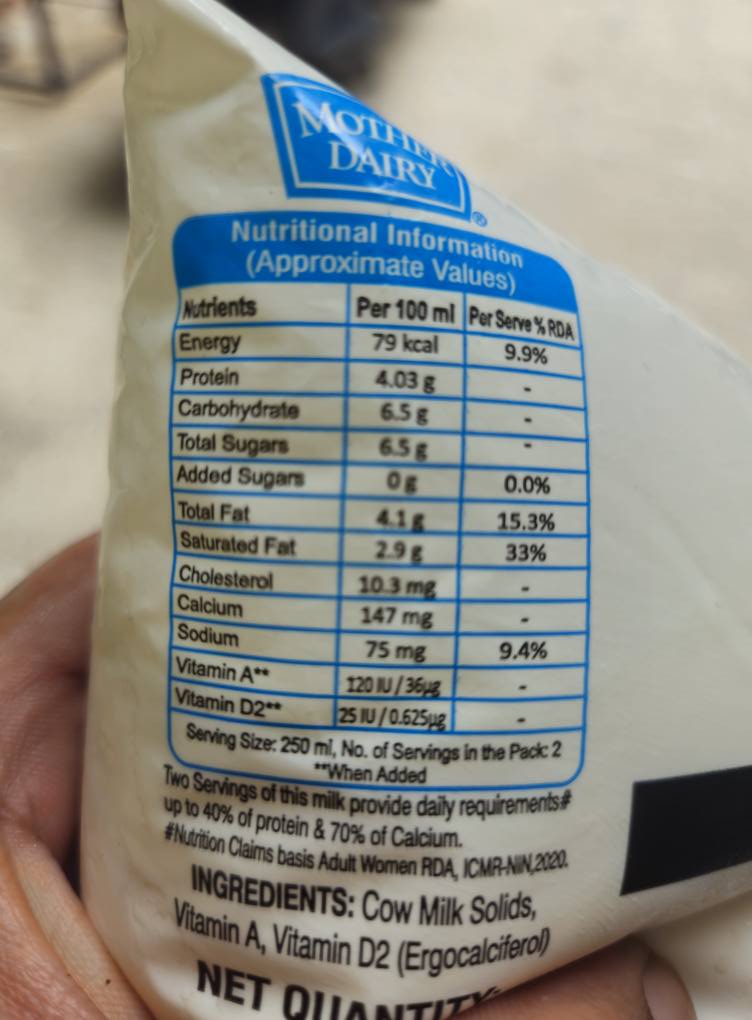
NutrientMother Dairy Pro Milk (500 ml, ₹35)Amul Slim ‘n’ Trim (500 ml, ₹26)
Energy395 kcal (79 × 5)230 kcal (46 × 5)
Protein20.15 g (4.03 × 5)16.0 g (3.2 × 5)
Carbs32.5 g (6.5 × 5)25.0 g (5.0 × 5)
Sugars32.5 g25.0 g
Fat20.5 g (4.1 × 5)7.5 g (1.5 × 5)
Saturated Fat14.5 g (2.9 × 5)5.0 g (1.0 × 5)
Cholesterol51.5 mg (10.3 × 5)Not listed
Calcium735 mg (147 × 5)600 mg (120 × 5)
Sodium375 mg (75 × 5)210 mg (42 × 5)
Vitamin A600 IUNot listed
Vitamin D2125 IUNot listed

🔍 Case Study: You Need 30g of Protein from Milk

Let’s say your goal is to get 30 grams of protein from milk. Here’s how the two compare — scaled as a percentage of the higher value, so you can truly assess bang for buck.

✅ To hit 30g of protein…

  • Milk Needed
    • 744 ml of Pro Milk
    • 938 ml of Double Toned Milk
    (Pro Milk wins — less volume ✅ but at what cost?)
  • Cost
    • ₹52.11 (Pro)
    • ₹48.75 (Double Toned)
    (Double Toned is cheaper ✅)
  • Calories
    • 588 kcal (Pro)
    • 431 kcal (Double Toned)
    (Double Toned is leaner ✅ | Pro is for bulking ⚠️)
  • Fat
    • 30.5 g (Pro)
    • 14.1 g (Double Toned)
    (Much leaner in Double Toned ✅)
  • Carbs
    • 48.4 g (Pro)
    • 46.9 g (Double Toned)
    (Almost identical ↔️)
  • Calcium
    • 1089 mg (Pro)
    • 1126 mg (Double Toned)
    (Slight edge to Double Toned ✅)
  • Cost per gram of protein
    • ₹1.74 (Pro)
    • ₹1.63 (Double Toned) ✅

📊 To get 30g of protein:

✅ Metric🥛 MD Pro Milk🥛 Amul Slim ‘n’ Trim
Milk Needed744 ml (79%)938 ml (100%)
Cost₹52.11 (107%)₹48.75 (100%) ✅
Calories588 kcal (136%)431 kcal (100%) ⚠️
Fat30.5 g (216%)14.1 g (100%) ✅
Carbs48.4 g (103%)46.9 g (100%) ↔️
Calcium1089 mg (100%)1126 mg (103%) ✅
Cost per g Protein₹1.74₹1.63 ✅
Pro milk vs Double Toned

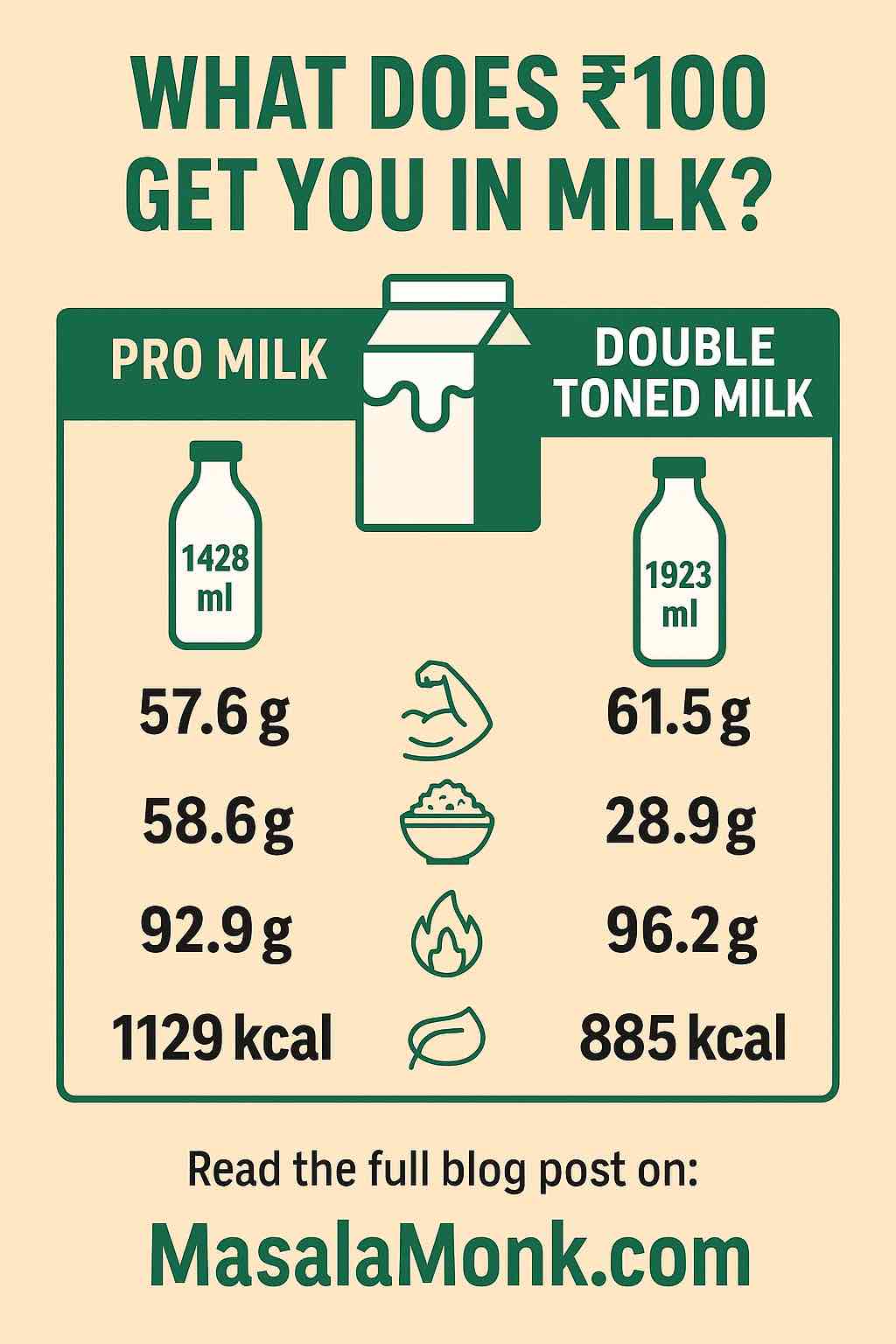
💯 What Does ₹100 Get You?

If you’re optimizing nutrients per rupee, here’s what ₹100 buys you:


Pro Milk (Full Cream, High Calorie)

  • 🥛 1428 ml of milk
  • 💪 57.6 g of protein
  • 🧈 58.6 g of fat
  • 🍚 92.9 g of carbs
  • 🔥 1129 kcal

Double Toned Milk (Lean, Cost-Efficient)

  • 🥛 1923 ml of milk
  • 💪 61.5 g of protein
  • 🧈 28.9 g of fat
  • 🍚 96.2 g of carbs
  • 🔥 885 kcal

🧠 What This Really Means

  • Double Toned Milk gives you more protein, more volume, and fewer calories/fat — ideal for those with lean muscle goals, cutting, or general calorie control. ✅
  • Pro Milk, on the other hand, gives you more energy, more fat — great if you’re bulking, have higher caloric needs, or prefer creamier milk. ✅

🎯 Final Word

Yes — Pro Milk delivers 30g more fat for the same money, which can be a tremendous value if your goal is to extract cream, make ghee, or prefer full-fat milk for blood sugar control or taste.

But if your main focus is protein — and you believed the marketing that said Pro Milk gives “30% more protein” — it’s worth double-checking your math.

Because Double Toned Milk still wins in terms of protein per ₹, per calorie, and overall macro efficiency.


💡 Same ₹100. Different macros. Let your goal pick your pack.

FAQs

1. Is Pro Milk actually higher in protein than Double Toned Milk?
Yes, Pro Milk has slightly more protein per 100 ml, but when cost and total consumption are factored in, Double Toned Milk provides more protein for the same money.


2. Why does Pro Milk have so much more fat?
Pro Milk is essentially full-cream milk — not skimmed or reduced in fat — which makes it denser in calories and fat. It’s designed for people who need higher energy intake.


3. Is Double Toned Milk suitable for muscle gain?
Yes, if your overall protein intake is adequate. It’s leaner, more cost-efficient, and can be used in a high-protein diet, especially when combined with other protein sources.


4. Which milk is better for weight loss?
Double Toned Milk is better suited for weight loss due to its lower fat and calorie content, while still offering a good amount of protein.


5. Can I make ghee from Double Toned Milk?
Technically yes, but the yield will be low due to the reduced fat content. Pro Milk is more suitable for cream or ghee extraction.


6. Is Pro Milk worth the extra price?
Only if you need more fat or calories in your diet. For pure protein efficiency, Double Toned Milk offers better value per rupee.


7. What is the difference between toned and double toned milk?
Toned milk has around 3% fat, while double toned milk typically has 1.5% fat. Both are reduced-fat versions of full cream milk.


8. Is the “30% more protein” claim on Pro Milk misleading?
It’s technically true per 100 ml — but misleading when viewed in terms of cost-efficiency. Double Toned still gives you more protein per ₹100 spent.


9. Which one is better for kids or elderly people?
This depends on dietary needs. For those needing more energy and fat (e.g., kids with low appetite), Pro Milk may be better. For others, Double Toned Milk is a safer, lighter option.


10. Can I use Double Toned Milk for curd or paneer?
Yes, though the fat content is lower, you can still make curd and paneer — but yield and creaminess will be reduced compared to Pro Milk.
Posted on Leave a comment

Boost Your Morning Routine with Energizing Chia Breakfast Bowls: 5 Nourishing Recipes

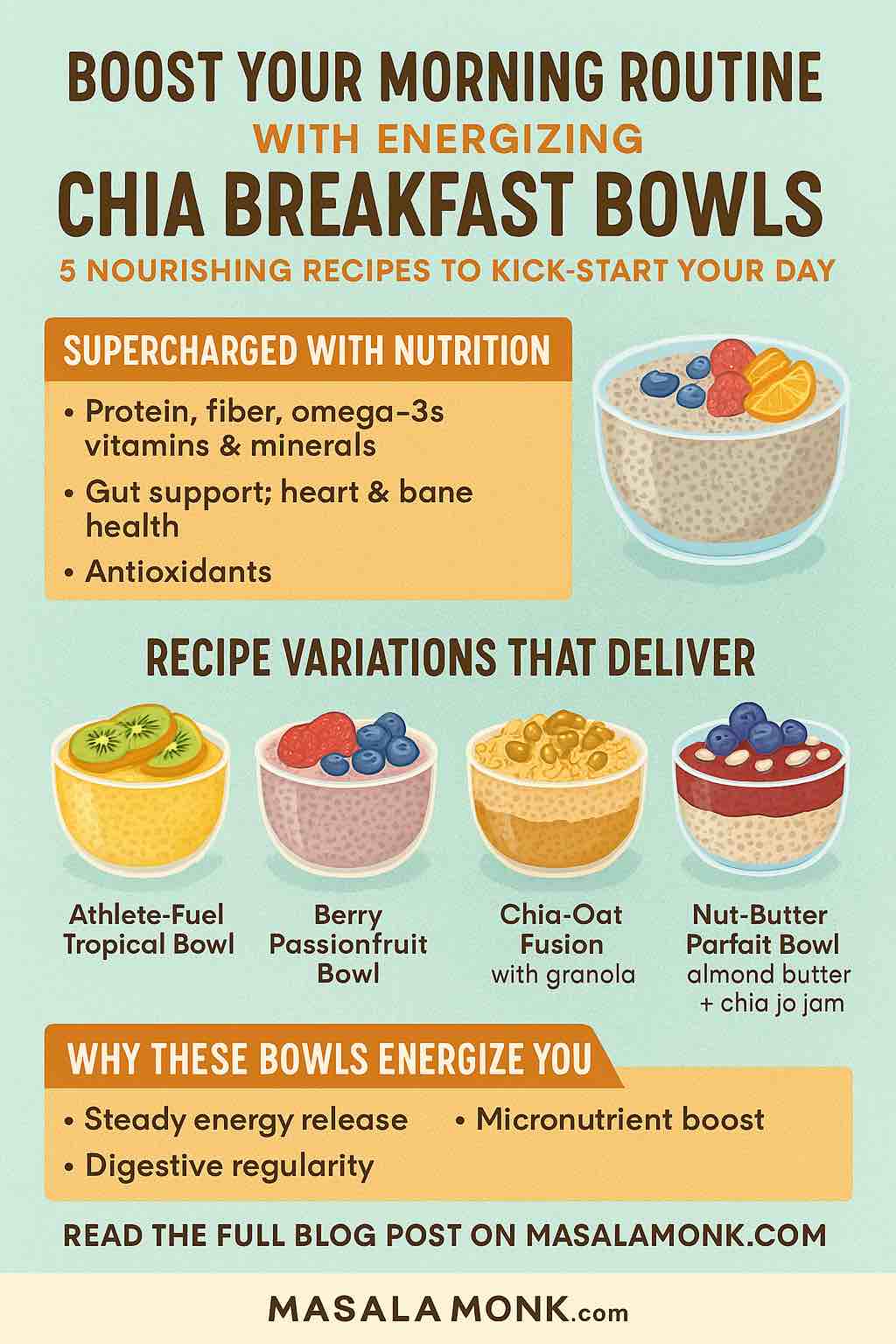
Chia Breakfast Bowls

Looking for a morning routine upgrade that fuels your body, sharpens your mind, and delights your taste buds? Say hello to chia breakfast bowls—a powerful combination of convenience, nutrition, and endless flavor options. This blog post dives into the benefits of chia seeds, practical preparation tips, and five energizing recipes that will transform your mornings.


Why Chia Seeds Deserve a Spot in Your Breakfast

Chia seeds may be tiny, but they pack a punch when it comes to health benefits:

  • Nutrient Dense: Just 2 tablespoons of chia seeds provide ~10g of fiber, 4.7g of protein, omega-3 fatty acids, and essential minerals like calcium, magnesium, and iron.
  • Sustained Energy: The blend of protein, healthy fats, and complex carbohydrates helps maintain energy levels and avoid mid-morning crashes.
  • Gut-Friendly: High fiber content supports digestive health and regularity.
  • No-Cook Convenience: Mix, soak, top, and go. No stove required.

Whether you’re a busy professional, a fitness enthusiast, or someone exploring plant-based nutrition, chia breakfast bowls offer a customizable and satisfying start to your day.


How to Prepare the Perfect Chia Bowl

Step 1: Soak Your Chia

Mix 3 tablespoons of chia seeds with 1 cup of your favorite milk (plant-based or dairy). Let it soak for at least 2 hours, or preferably overnight in the refrigerator.

Step 2: Choose a Base

  • Creamy: Add Greek yogurt or plant-based yogurt for extra protein and creaminess.
  • Oaty: Mix in overnight oats for a more substantial bowl.
  • Fruity: Blend in mashed banana, mango puree, or applesauce.

Step 3: Add Your Toppings

Aim for a mix of textures and nutrients:

  • Fruits: Berries, sliced banana, kiwi, or citrus segments
  • Crunch: Toasted nuts, granola, pumpkin seeds
  • Superfoods: Coconut flakes, cacao nibs, hemp hearts, bee pollen
  • Sweeteners (optional): Honey, maple syrup, or dates

5 Nourishing Chia Bowl Recipes to Jumpstart Your Day

1. Berry & Passionfruit Sunrise Bowl

Base: Chia soaked in almond milk Toppings: Muddled berries, passionfruit pulp, toasted coconut, pepitas Why You’ll Love It: Antioxidant-rich and visually stunning, this bowl is a tropical wake-up call.

2. High-Protein Tropical Delight

Base: Chia + almond milk + Greek yogurt Toppings: Diced mango, kiwi, shredded coconut Nutrition Boost: ~18g of protein and 12g of fiber per serving. Ideal for post-workout recovery or long workdays.

3. Chia-Oatmeal Energy Bowl

Base: Rolled oats and chia seeds soaked in soy or oat milk overnight Toppings: Granola, blood orange slices, blackberries Power-Up: Combines slow-releasing carbs with high fiber for all-morning energy.

4. Yogurt-Chia Crunch Bowl

Base: Chia mixed with vanilla-flavored Greek yogurt Toppings: Fresh berries, kiwi slices, crunchy granola Best For: A fast and filling breakfast that feels like dessert but fuels like a power meal.

5. Apple-Cinnamon Comfort Bowl

Base: Chia in cinnamon-spiced oat milk Toppings: Sliced apples, a pinch of nutmeg, raisins, and almond slivers Why It Works: Cozy and warming, this bowl is perfect for autumn mornings or comfort cravings.


Smart Prep Tips for Busy Mornings

  • Batch It: Prepare 3-4 jars of chia pudding at once and store them in the fridge.
  • Pre-Cut Toppings: Keep containers of chopped fruit and toasted nuts ready for easy assembly.
  • On-the-Go Friendly: Use mason jars or meal prep containers to make your breakfast grab-and-go.

Customize Your Bowl

Want to make it your own? Try these fun variations:

  • Green Power: Add matcha or spirulina
  • Chocolate Fix: Mix in cacao powder or top with dark chocolate chips
  • Indian Inspired: Infuse with cardamom, rosewater, or turmeric
  • Savory Twist: Top with avocado, tomatoes, and a drizzle of olive oil

Final Thoughts

Energizing, delicious, and endlessly adaptable, chia breakfast bowls are a game changer. Whether you prep them the night before or whip them up in the morning, they deliver on taste, texture, and nutrition. Start small, experiment often, and you’ll soon have a chia bowl that’s as unique as your morning routine.

Ready to make the switch? Try one of these recipes this week and see how your mornings transform.

🔍 FAQs

1. How long should chia seeds soak before eating?
Chia seeds should soak for at least 2 hours, but overnight soaking is ideal for full hydration and a creamy texture.

2. Can I use water instead of milk for soaking chia seeds?
Yes, but using milk or plant-based alternatives improves taste, texture, and nutrition. Water works in a pinch but is less flavorful.

3. Are chia bowls good for weight loss?
Absolutely. Chia bowls are high in fiber and protein, helping you feel full longer and reduce unnecessary snacking.

4. Can I prep chia bowls in advance?
Yes. You can prep 3–4 servings at once and refrigerate them for up to 5 days, making them perfect for meal prepping.

5. Are chia bowls safe for kids?
Yes, but for young children, ensure seeds are fully hydrated to avoid choking hazards. Adjust toppings for age-appropriate textures.

6. What’s the best liquid-to-chia seed ratio?
A good rule of thumb is 1 tablespoon chia seeds to 1/4 cup liquid. For a thicker pudding, reduce the liquid slightly.

7. Can I eat chia seeds without soaking them?
While safe in small amounts, dry chia seeds absorb liquid and can swell in your throat or stomach. Always soak them when making bowls.

8. How can I make chia bowls more protein-rich?
Add Greek yogurt, nut butters, protein powder, or cottage cheese to increase protein content.

9. Are chia bowls suitable for diabetics?
Yes, when made without added sugars. Chia’s fiber helps regulate blood sugar, especially when paired with protein and healthy fats.

10. Can I freeze chia pudding bowls?
Yes, though texture changes slightly. Freeze in small portions and thaw in the fridge overnight before eating.

Posted on 2 Comments

Beat the Heat with These 7 Low-Sugar Summer Mocktails to Keep You Refreshed All Day

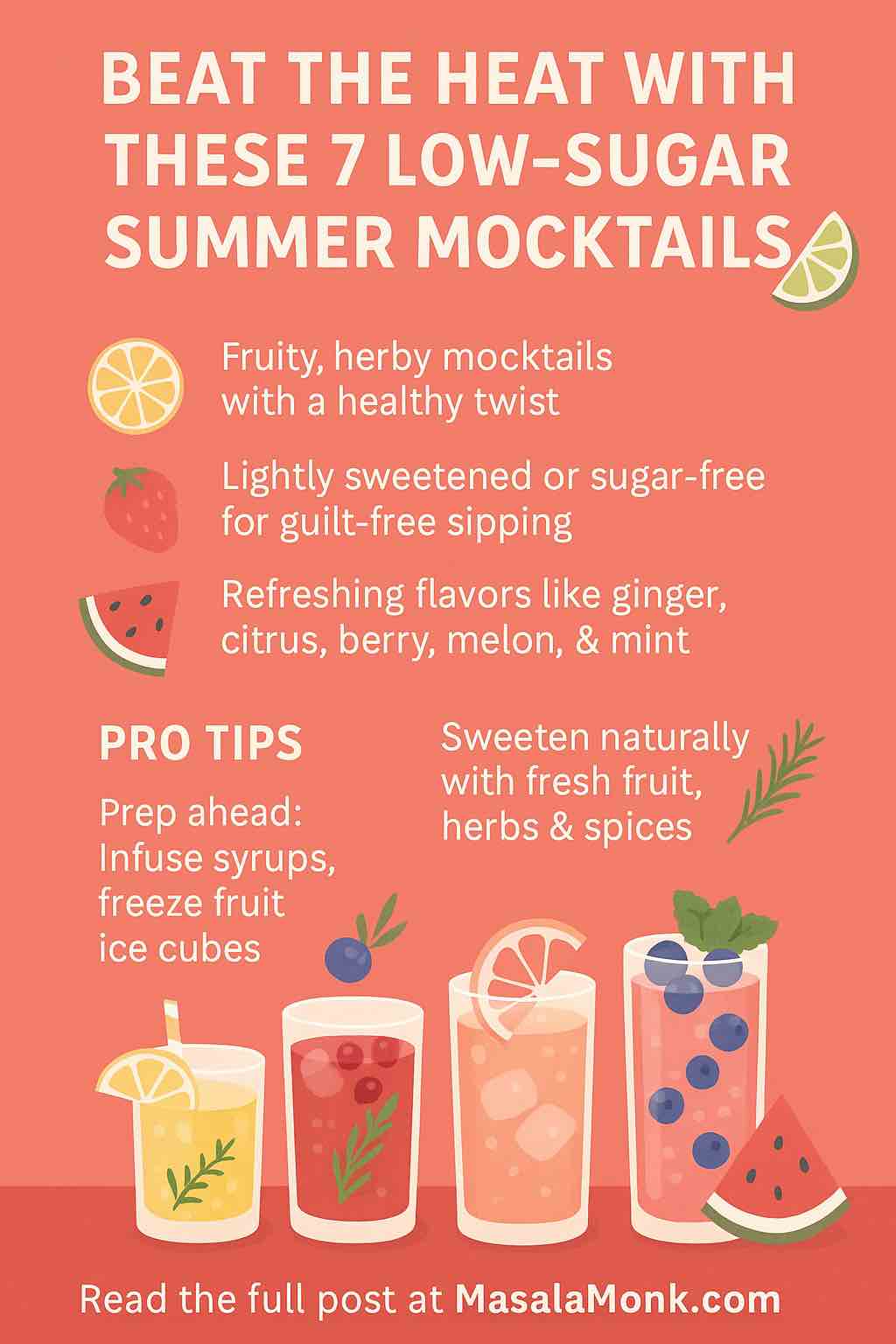
LOW-SUGAR SUMMER MOCKTAILS

As summer heats up, staying hydrated becomes a priority—but plain water can get boring fast. Instead of reaching for sugar-laden sodas or juices, why not explore the vibrant world of low-sugar mocktails? These refreshing drinks are packed with natural flavors, are easy to make, and are perfect for all-day sipping without the crash.

In this blog post, we dive deep into seven practical and delicious low-sugar summer mocktails that are guaranteed to cool you down and delight your taste buds. Plus, we’ll share tips on prepping in batches, customizing flavors, and adding that special twist for guests.


1. Ginger-Thyme Sparkling Lemonade

Flavor Profile: Herbaceous, citrusy, lightly sweet

Ingredients:

  • 2 cups water
  • 2/3 cup honey or stevia syrup (adjust to taste)
  • 12 sprigs fresh thyme
  • 3 tbsp chopped fresh ginger
  • 2 tbsp lemon zest
  • 3/4 cup fresh lemon juice
  • 2 liters sparkling water

Method:

  1. In a saucepan, combine water, honey, thyme, ginger, and lemon zest.
  2. Bring to a simmer for 5-7 minutes to infuse flavors. Cool and strain.
  3. Mix in the lemon juice.
  4. Pour over ice and top with sparkling water. Garnish with thyme.

Pro Tip: Prepare the ginger-thyme base in advance and refrigerate. Add fizz just before serving.


2. Sparkling Cranberry Kombucha Mocktail

Flavor Profile: Tart, effervescent, probiotic

Ingredients:

  • 3/4 cup cranberry kombucha
  • 1/2 cup 100% cranberry juice (no sugar added)
  • 1/4 cup ginger beer (low sugar)
  • Fresh rosemary and cranberries (optional)

Method:

  1. In a tall glass, mix kombucha and cranberry juice.
  2. Add ginger beer and ice.
  3. Garnish with a rosemary sprig and a few frozen cranberries.

Health Note: Kombucha adds gut-friendly probiotics, while cranberry offers antioxidants.


3. Sparkling Apple-Cider Citrus Cooler

Flavor Profile: Crisp, tangy, slightly sweet

Ingredients:

  • 1 cup chilled sparkling apple cider (unsweetened)
  • Orange, lime, and grapefruit slices
  • Fresh rosemary sprigs
  • Sparkling water

Method:

  1. Fill a pitcher with sliced citrus and rosemary.
  2. Add apple cider and top with sparkling water.
  3. Serve chilled in glasses with fruit slices.

Pro Tip: Freeze sliced citrus in ice cubes for a show-stopping presentation.


4. Sugar-Free Grapefruit & Ginger Refresher

Flavor Profile: Tart, peppery, clean

Ingredients:

  • 1 cup fresh grapefruit juice
  • 2 tbsp organic ginger juice or freshly grated ginger
  • 1 cup natural ginger ale or club soda
  • Lime wedge and mint leaves (optional)

Method:

  1. Combine grapefruit juice and ginger juice in a shaker with ice.
  2. Shake and pour into a glass.
  3. Top with ginger ale. Garnish with lime and mint.

Variations: Add a splash of cucumber juice for a cooling effect.


5. Watermelon-Mint Cooler

Flavor Profile: Sweet, refreshing, cooling

Ingredients:

  • 3 cups fresh watermelon chunks
  • 1/4 cup fresh lime juice
  • 1/2 cup fresh mint leaves
  • 1 tbsp agave or stevia (optional)
  • 2 cups club soda

Method:

  1. Blend watermelon, mint, lime juice, and sweetener until smooth.
  2. Strain if desired.
  3. Pour into glasses over ice, top with club soda.

Batch Tip: Store watermelon base in the fridge and mix with soda just before serving.


6. Mojito-Style Lime Mint Fizz

Flavor Profile: Zesty, bubbly, classic

Ingredients:

  • 1 lime (cut into wedges)
  • Fresh mint leaves (about 1/4 cup)
  • Stevia or monk fruit sweetener (to taste)
  • Sparkling water
  • Crushed ice

Method:

  1. Muddle lime and mint with sweetener in a glass.
  2. Add ice and top with sparkling water.
  3. Stir and garnish with mint sprig.

Serving Tip: Serve in tall glasses for the full mojito feel.


7. Blueberry Lemonade Sparkler

Flavor Profile: Fruity, tangy, elegant

Ingredients:

  • 1 cup fresh blueberries (mashed or blended)
  • 1/2 cup fresh lemon juice
  • 1/3 cup maple syrup or stevia
  • 4 cups sparkling water
  • Mint leaves for garnish

Method:

  1. Blend blueberries and strain to remove skins.
  2. Mix with lemon juice and sweetener.
  3. Pour into glasses with ice and top with sparkling water.
  4. Garnish with mint and whole blueberries.

Tips for Customizing Your Summer Mocktails

  • Sweeteners: Swap out honey or maple syrup for monk fruit, stevia, or erythritol to lower sugar.
  • Herbs: Mix and match herbs like basil, thyme, or lavender.
  • Ice Cubes: Freeze fruit pieces or herbs into ice cubes for added flavor.
  • Infusions: Steep herbs or fruits in hot water, then chill for enhanced flavor.

Batch Prep & Storage Ideas

  • Prepare syrup bases and juices ahead of time and store in airtight containers.
  • Keep garnishes prepped in the fridge: sliced fruits, washed herbs.
  • Only mix with sparkling water or soda right before serving to maintain fizz.

Final Thoughts

Low-sugar mocktails are more than just a healthier choice; they’re an invitation to get creative with flavors, textures, and presentation. Whether you’re lounging by the pool, hosting a barbecue, or just need something fun to sip on during a hot afternoon, these mocktails bring hydration, elegance, and joy to your glass—without the sugar spike.

Cheers to staying cool, refreshed, and sugar-smart this summer!

1. Can I make these mocktails completely sugar-free?
Yes, all the mocktails in the post can be made sugar-free by using natural sugar substitutes like stevia, monk fruit, or erythritol instead of honey or maple syrup.


2. Are these mocktails suitable for people with diabetes?
Most of these mocktails can be adapted for diabetic diets by using low-GI sweeteners and avoiding fruit juices high in sugar. Always consult with a healthcare provider if you’re unsure.


3. How long can I store the mocktail bases?
You can refrigerate the fruit or herb-infused syrups and purees for up to 3–5 days in airtight containers. Always add sparkling components just before serving to maintain fizz.


4. What’s the best way to batch prep for a party?
Prepare all the fruit purees, infused syrups, and garnishes ahead of time. Store them separately and mix with sparkling water or club soda just before serving.


5. Can I turn these mocktails into cocktails?
Absolutely! You can add a splash of vodka, gin, or rum to most of these mocktails to create light summer cocktails for adult gatherings.


6. Are these drinks kid-friendly?
Yes, all the mocktails are alcohol-free and use whole ingredients, making them perfect for kids. Just adjust tartness and sweetness to suit their taste.


7. Can I use frozen fruit instead of fresh?
Yes. Frozen fruit works well, especially for blending or as ice cubes in the drink. It can also add extra chill and minimize dilution.


8. What sparkling water should I use?
Any unflavored or naturally flavored sparkling water, club soda, or seltzer is ideal. Just watch for added sugars or artificial ingredients in flavored versions.


9. Do I need special tools to make these?
Basic kitchen tools like a blender, shaker, muddler, strainer, and a citrus juicer will cover everything. No bar kit required!


10. Can I substitute herbs like mint or thyme with others?
Yes. You can experiment with basil, rosemary, lavender, or even sage depending on the mocktail. Each adds a unique twist.

Posted on 2 Comments

Nuts for Heart Health: Harnessing the Nutritional Powerhouse for a Healthy Cardiovascular System

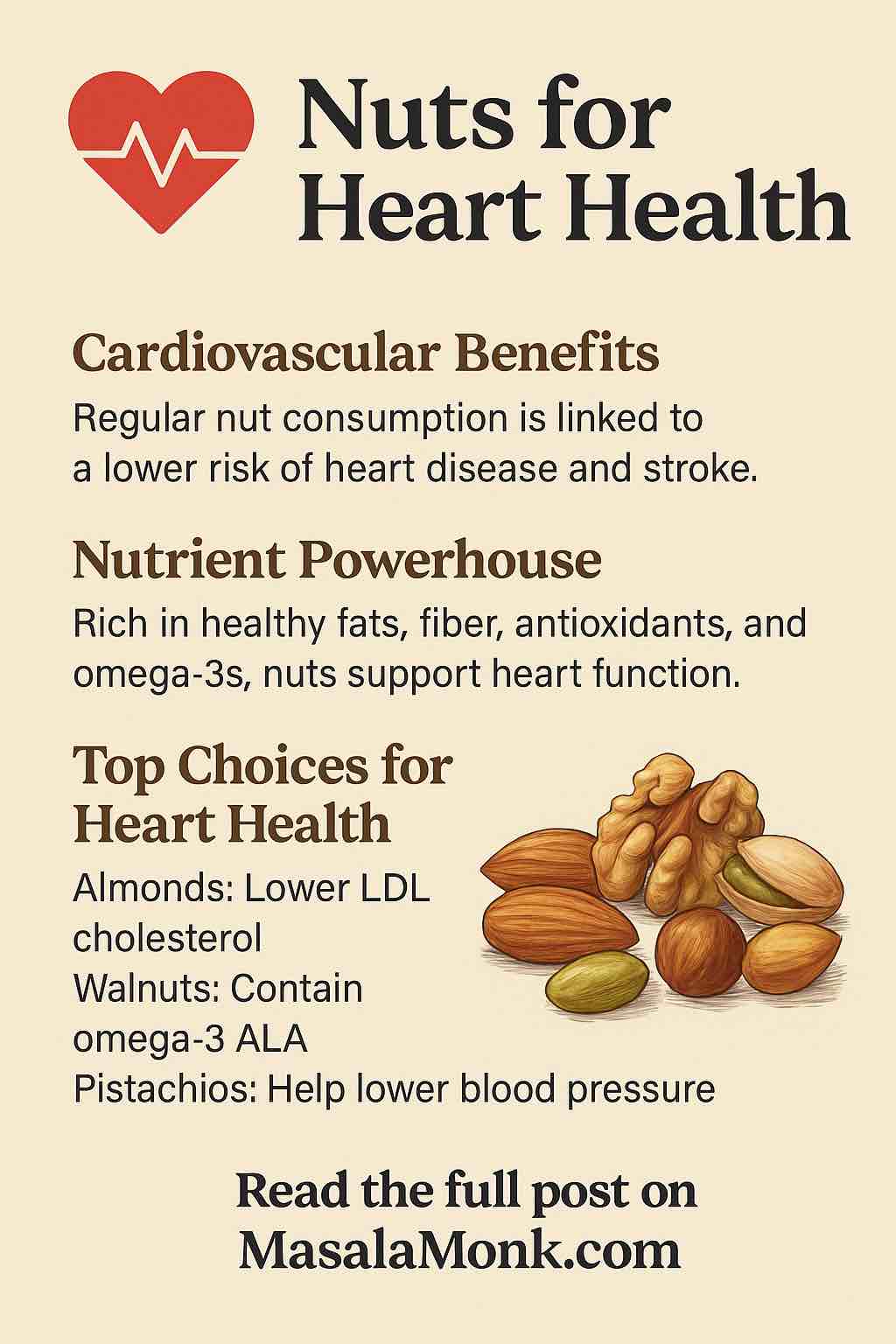
Nuts for Heart Health

In today’s fast-paced world where heart disease remains a leading cause of death globally, finding simple, sustainable ways to protect cardiovascular health is more important than ever. Enter nuts—tiny but mighty nutritional powerhouses that can significantly improve heart health when consumed regularly and wisely. This blog dives deep into the science behind nuts, their cardiovascular benefits, the mechanisms at play, and how to incorporate them practically into your daily diet.


Why Nuts Matter: Evidence from Large-Scale Studies

Numerous studies have confirmed the cardioprotective effects of nuts. A meta-analysis of over half a million individuals across various populations showed that eating a handful of nuts daily (about 28 grams or 1 ounce) is associated with:

  • A 21% lower risk of cardiovascular disease (CVD)
  • A 24% reduced risk of coronary heart disease
  • An 18% reduced risk of stroke
  • A 19% lower all-cause mortality rate

These are not trivial numbers. They represent real, actionable insights that can be implemented easily by most people.


What Makes Nuts a Nutritional Powerhouse?

Nuts are rich in an array of heart-friendly nutrients:

  • Healthy fats: Primarily unsaturated fats, which help lower LDL cholesterol and maintain HDL cholesterol.
  • Fiber: Helps regulate blood lipids and promotes satiety.
  • Plant sterols: Natural substances that help block cholesterol absorption.
  • L-arginine: An amino acid that enhances the flexibility of blood vessels.
  • Magnesium, potassium, and calcium: Minerals that help control blood pressure.
  • Antioxidants: Vitamin E and polyphenols that combat oxidative stress and inflammation.

How Nuts Support Heart Health: The Biological Mechanisms

  1. Improving Lipid Profiles: Regular nut consumption is known to reduce total cholesterol, LDL cholesterol, and triglycerides while maintaining or even increasing HDL cholesterol.
  2. Enhancing Endothelial Function: Nuts like walnuts improve flow-mediated dilation (FMD), indicating better blood vessel function.
  3. Reducing Blood Pressure: Pistachios and almonds, in particular, have shown blood-pressure-lowering effects thanks to their potassium and unsaturated fat content.
  4. Anti-inflammatory Effects: Antioxidants in nuts help reduce chronic inflammation—a major contributor to atherosclerosis.
  5. Platelet Function and Clot Prevention: Omega-3 fatty acids, particularly ALA in walnuts, can reduce clot formation and promote a healthy heart rhythm.

Spotlight on Specific Nuts

  • Walnuts: High in omega-3 ALA, great for improving endothelial function and reducing inflammation.
  • Almonds: Rich in vitamin E and magnesium; effective in lowering LDL cholesterol.
  • Pistachios: Excellent for blood pressure management; contain potassium and phytosterols.
  • Pecans: Loaded with monounsaturated fats and ellagic acid, beneficial for lipid profiles.
  • Hazelnuts: High in oleic acid and vitamin E; helpful in reducing oxidative stress.

How Much Is Enough?

The ideal daily intake ranges from 15 to 30 grams, or a small handful. This amount provides the benefits without contributing to unwanted weight gain. Multiple cohort studies suggest consuming nuts at least 5 times a week to achieve cardiovascular protection.


Practical Tips to Add More Nuts to Your Diet

  1. Snack Smart: Keep a small container of mixed, unsalted nuts at your desk or in your bag.
  2. Breakfast Boost: Sprinkle chopped nuts on oatmeal, yogurt, or smoothie bowls.
  3. Salad Upgrade: Add sliced almonds or walnuts to salads for crunch and nutrition.
  4. Nut Butters: Use natural almond or peanut butter (no added sugars or oils) on toast or fruit.
  5. Cooking: Incorporate nuts into stir-fries, grain bowls, or even pasta dishes.

Storage Tip: Store nuts in the fridge or freezer to prevent them from going rancid.


Myths and Misconceptions

  • “Nuts will make me gain weight.” Not true. Despite being calorie-dense, nuts increase satiety and are associated with better weight management.
  • “All nuts are the same.” Each type offers unique benefits; diversity matters.
  • “Nut allergies make nuts off-limits for everyone.” While serious, nut allergies usually apply to specific types. Work with a healthcare provider for safe alternatives like seeds (sunflower, flax, chia).

Conclusion: A Heartfelt Recommendation

Incorporating nuts into your daily diet is one of the simplest, most enjoyable, and evidence-backed ways to support cardiovascular health. Whether you prefer walnuts, almonds, or pistachios, each handful is a step toward a healthier heart. So go ahead—crunch your way to better health.


Call to Action

Try adding one serving of nuts to your routine this week. Notice how it makes you feel. And if you’re inspired, share your favorite nut-based recipe or snack idea in the comments below. Your heart will thank you!

FAQs

1. What are the best nuts for heart health?
Answer: Walnuts (rich in omega‑3 ALA), almonds (high in vitamin E and fiber), pistachios (great for blood pressure), and pecans (support lipid profiles) are top choices. Each nut has unique strengths, so variety is ideal.


2. How many nuts should I eat per day for heart benefits?
Answer: Aim for 15–30 grams (about a small handful) per day. Research shows that 5 servings per week or more can significantly reduce cardiovascular risk.


3. Will eating nuts every day cause weight gain?
Answer: No, not if eaten in moderation. Nuts promote satiety, reduce cravings, and are linked to better weight control in long-term studies, despite being calorie-dense.


4. Can I eat nuts if I have high cholesterol?
Answer: Yes. Nuts help lower LDL (“bad”) cholesterol and total cholesterol levels while maintaining or slightly increasing HDL (“good”) cholesterol.


5. Are roasted or salted nuts still healthy?
Answer: Unsalted, dry-roasted or raw nuts are best. Salted or oil-roasted varieties may contain excess sodium or unhealthy fats that offset the cardiovascular benefits.


6. What’s the difference between tree nuts and peanuts?
Answer: Peanuts are technically legumes, but they offer similar heart benefits as tree nuts—high in healthy fats and protein. Both are beneficial when unsalted and consumed in moderation.


7. Are nut butters (like almond or peanut butter) good for the heart?
Answer: Yes, as long as they are natural with no added sugar or hydrogenated oils. Look for ingredients lists with just nuts (and maybe a little salt).


8. Can children or elderly adults benefit from eating nuts too?
Answer: Absolutely. Nuts provide essential nutrients for all ages, but be cautious with whole nuts for young children due to choking risks—opt for nut butters instead.


9. How should I store nuts to keep them fresh?
Answer: Keep them in an airtight container in the refrigerator or freezer. Nuts can go rancid due to their high fat content if stored improperly at room temperature.


10. What if I have a nut allergy—are there alternatives?
Answer: Yes, consider heart-healthy seeds like sunflower, flax, chia, hemp, or pumpkin seeds. They offer similar nutrients like healthy fats, fiber, and minerals.

Posted on 1 Comment

Innovate Your Vegan Keto Breakfast: 5 Pistachio and Sunflower Seed Smoothie Recipes for Meal Replacement

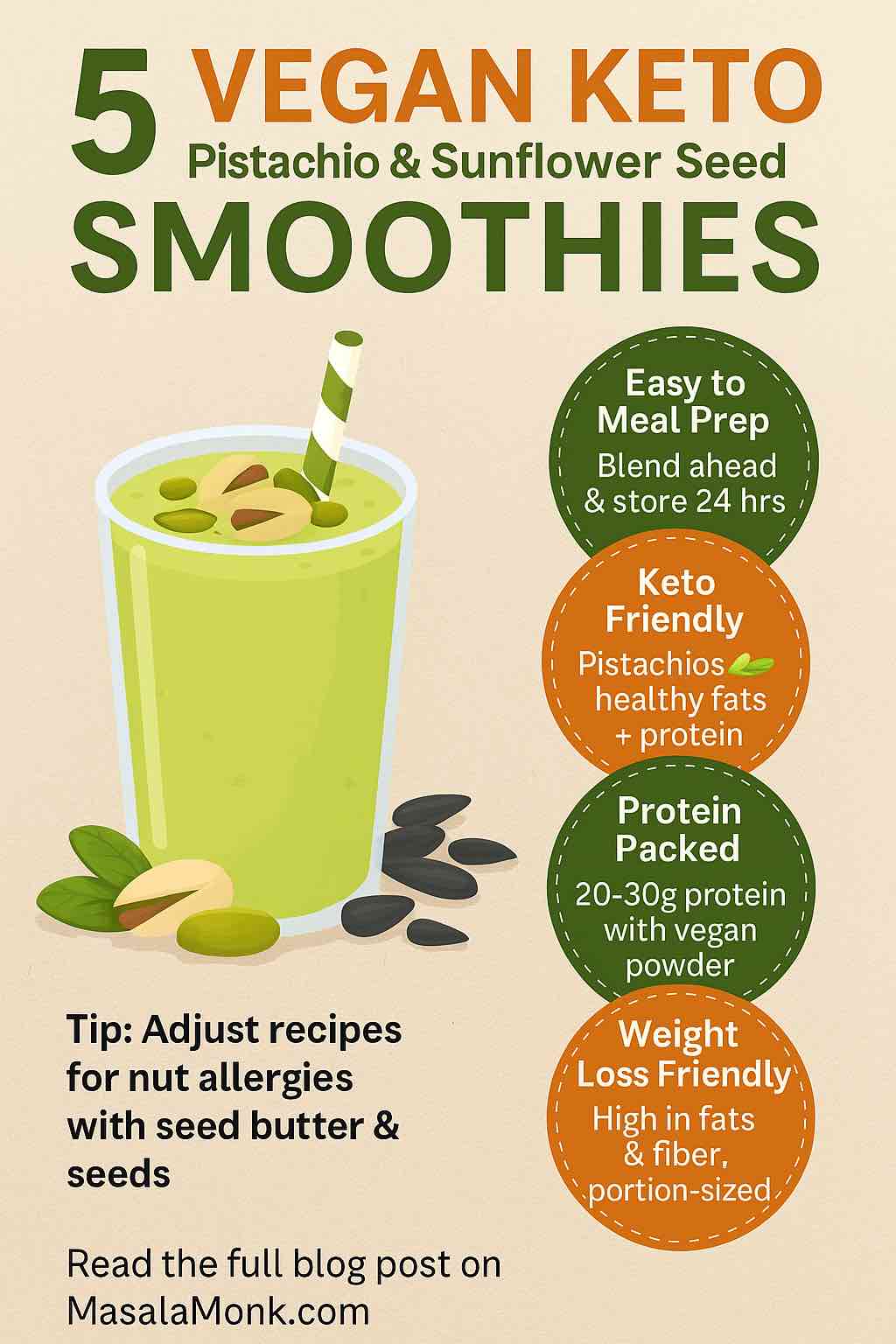
VEGAN KETO Pistachio & Sunflower Seed SMOOTHIES

When you’re navigating a vegan keto lifestyle, breakfast can feel like a tricky puzzle: you want something quick, nutrient-dense, low in carbs, but still satisfying. Enter the ultimate solution: pistachio and sunflower seed smoothies. These nutrient-packed ingredients deliver a powerhouse of healthy fats, protein, and fiber without tipping the carb scale. Let’s explore five creative and practical smoothie recipes designed specifically for meal replacement on a vegan keto diet.


Why Pistachios and Sunflower Seeds?

Both ingredients are often underestimated in the smoothie world but shine on a vegan keto plan:

  • Pistachios are rich in monounsaturated fats, magnesium, vitamin B6, and even provide a complete source of protein.
  • Sunflower seeds offer vitamin E, selenium, and a solid profile of healthy fats and fiber.

Together, they form the perfect base for creamy, satiating, and nutrient-balanced smoothies.


Smoothie 1: Green Pistachio Crunch

Ingredients:

  • 1/4 cup raw pistachios (soaked for 10 minutes)
  • 2 tbsp raw sunflower seeds
  • 1 cup unsweetened almond or coconut milk
  • 1 handful spinach
  • 1 tbsp chia seeds
  • Ice cubes

Directions: Blend all ingredients until smooth. For a little texture, pulse in a few extra sunflower seeds at the end.

Why it Works: This recipe delivers a perfect trio of fats, fiber, and protein, and the spinach adds micronutrients without altering the taste.


Smoothie 2: Pistachio-Matcha Mint Refresh

Ingredients:

  • 1/4 cup pistachio butter
  • 1 tsp ceremonial matcha
  • A few fresh mint leaves
  • 1 scoop vegan vanilla protein powder
  • 1 tbsp hemp seeds
  • 1 cup unsweetened oat or almond milk
  • Ice cubes

Directions: Blend until creamy and bright. Garnish with a mint sprig for a refreshing morning kick.

Why it Works: Matcha boosts metabolism and focus, while mint aids digestion. Hemp seeds add extra protein and omega-3s.


Smoothie 3: Chocolate Sunflower Power

Ingredients:

  • 2 tbsp sunflower seed butter
  • 1 tbsp unsweetened cocoa powder
  • 1 cup coconut milk + 1/2 cup water
  • 1 scoop vegan chocolate protein powder (optional)
  • 1/2 tsp vanilla extract
  • Ice cubes

Directions: Blend until rich and smooth. For a mocha version, add a shot of espresso.

Why it Works: This dessert-like smoothie satisfies chocolate cravings while keeping carbs in check.


Smoothie 4: Banana-Free Pistachio Protein Shake

Ingredients:

  • 1 cup unsweetened almond or pistachio milk
  • 1 tbsp pistachio butter
  • 1 scoop vegan protein powder
  • 1/2 avocado (for texture)
  • Ice cubes

Directions: Blend until smooth and creamy. Top with crushed pistachios for a crunchy finish.

Why it Works: No banana means minimal carbs. Avocado enhances the texture and adds healthy fats.


Smoothie 5: Pistachio Meal Replacement Shake

Ingredients:

  • 40g soaked pistachios
  • 2 tbsp raw sunflower seeds
  • 1 tbsp ground flaxseed
  • 1 scoop hemp or soy protein
  • 250ml unsweetened almond or oat milk
  • 1/2 tsp cinnamon
  • 1 tsp vanilla extract
  • Ice cubes

Directions: Blend thoroughly until creamy. Optionally add a pinch of salt for balance.

Why it Works: This one is tailored for full meal replacement: high in fats, protein, and fiber to keep you full for hours.


Pro Tips for Smoothie Success

  1. Keep it Cold: Use frozen avocado or cauliflower for added creaminess without diluting flavor.
  2. Batch It: Prep 2-3 servings in advance and store in sealed jars for grab-and-go nutrition.
  3. Customize the Boosters: Add MCT oil for brain fuel, or swap in different greens for variety.
  4. Watch the Carbs: Skip high-sugar fruits and keep total net carbs under 10g per shake.

Final Thoughts

Innovating your vegan keto breakfast doesn’t require exotic ingredients or hours in the kitchen. With pistachios and sunflower seeds as your foundation, you can craft creamy, satisfying smoothies that not only meet your macros but genuinely excite your taste buds. Try rotating these recipes throughout your week to stay energized and in ketosis, without ever getting bored.

FAQs

  1. Are pistachios and sunflower seeds keto-friendly?
    Yes, in moderation. Pistachios and sunflower seeds are high in healthy fats and protein with moderate carbs. Keeping portions controlled (e.g., ¼ cup pistachios) makes them keto-compliant.
  2. Can I prepare these smoothies in advance?
    Absolutely. You can prep and store smoothies in airtight containers in the fridge for up to 24–36 hours. Shake well before consuming.
  3. How much protein is in each smoothie?
    With the inclusion of vegan protein powder, most recipes deliver 20–30g of protein per serving. Without powder, expect 8–15g, depending on the seed/nut base.
  4. What milk alternatives work best for these recipes?
    Unsweetened almond, coconut, and pea milk are best for keto. They’re low in carbs, rich in flavor, and blend smoothly.
  5. Can I skip protein powder and still get enough protein?
    Yes, but you’ll need to rely more on hemp seeds, chia, pistachios, and sunflower seed butter. Protein will be lower but still decent for a meal.
  6. Are these smoothies suitable for weight loss?
    Yes—when portioned appropriately. They’re high in satiety-promoting fats, fiber, and protein, helping manage hunger and blood sugar.
  7. What can I use instead of avocado in the banana-free shake?
    Frozen cauliflower, coconut cream, or extra nut butter can replicate the creamy texture without adding sugar.
  8. Do these smoothies break a fast?
    Yes. Because they contain calories, fats, and protein, they break a fast—but they make a great first meal post-fasting.
  9. Can I freeze these smoothies?
    Technically yes, but texture may degrade slightly after thawing. For best results, freeze ingredients in portions and blend fresh.
  10. How can I adjust the recipes for nut allergies?
    Use seed-based alternatives like sunflower or pumpkin seed butter, and opt for oat or coconut milk instead of nut milks.