Posted on Leave a comment

9 Keto Hamburger Recipes for Burgers, Bowls, Skillets, and Casseroles

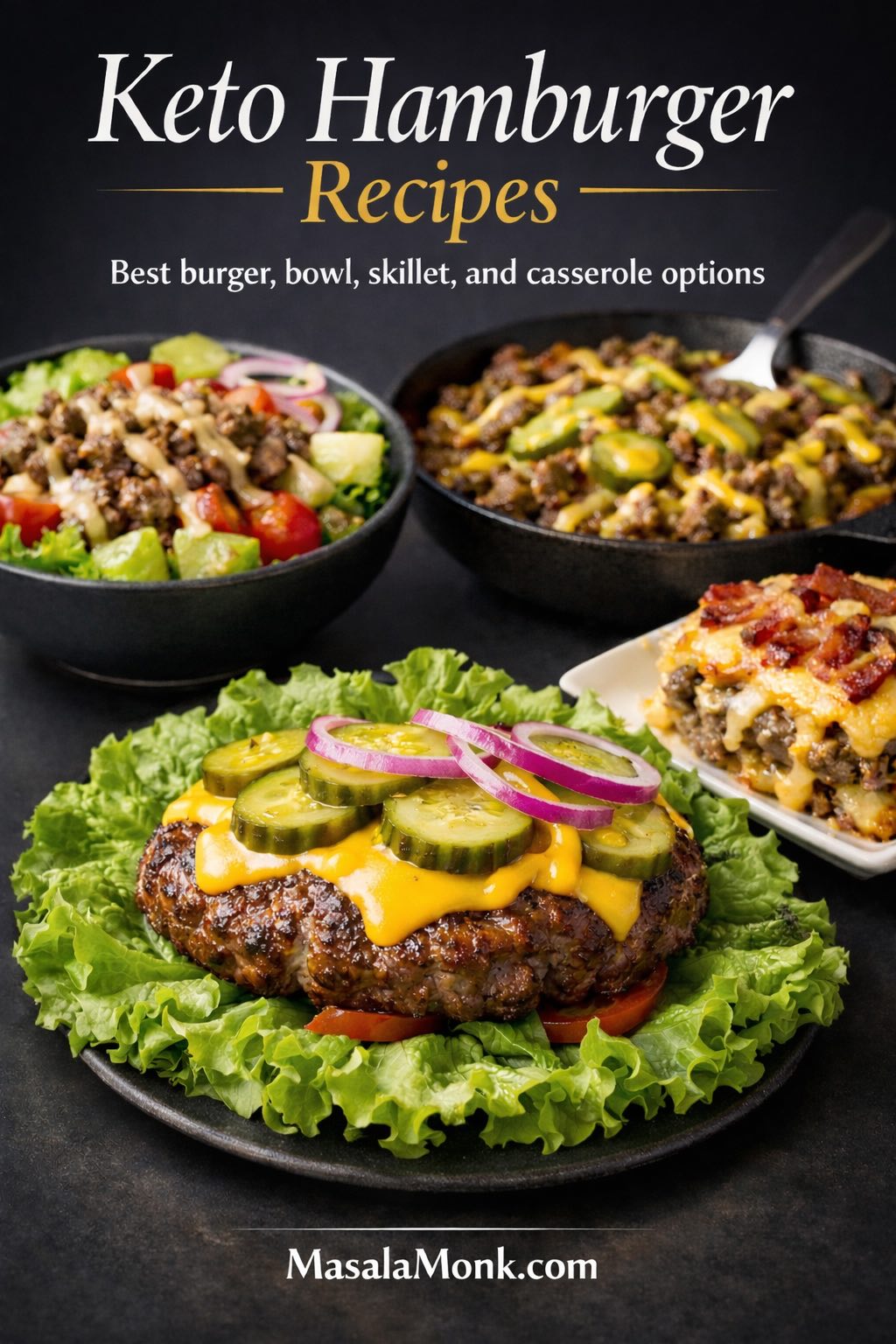
Keto hamburger recipes hero image showing a bunless cheeseburger, burger bowl, cheeseburger skillet, and bacon cheeseburger casserole

Keto hamburger recipes work best when they match the kind of dinner you actually want tonight. Sometimes that means a classic bunless cheeseburger. Other nights, a fast burger bowl, a warm cheeseburger skillet, or a bacon cheeseburger casserole makes more sense while still delivering the same savory, low-carb comfort.

Start with the best first recipe if you want the closest thing to a classic burger night, then use the comparison below to choose between a bowl, skillet, casserole, or one of the shorter variations depending on how much time you have and how well you need it to reheat. If you want extra context on why beef fits so naturally into low carb eating, MasalaMonk’s beef on keto guide is a useful companion read.

Across these formats, the same pattern shows up again and again: classic burgers need enough fat and enough sharp condiments to still feel complete without the bun, bowls need more sauce than most people expect, skillets need real browning or they slip into generic creamy beef, and casseroles need something bright on the plate so the richness does not flatten out.

For most readers, the best first recipe is the Classic Bunless Keto Cheeseburgers. It feels most like a real burger dinner, teaches the decisions that matter most, and makes it easier to decide whether you want to stay with burgers or move toward bowls, skillets, casseroles, and other burger-style formats later.

Quick Answer: Which Keto Hamburger Recipe Should You Make First?

Start with the Classic Bunless Keto Cheeseburgers if you want the closest thing to a classic burger night. Meanwhile, the Keto Burger Bowl with Homemade Burger Sauce is the fastest choice when you want a no-bun meal that still feels unmistakably like burger night. On nights when a warm hamburger-meat dinner sounds better, the One-Pan Keto Cheeseburger Skillet is the strongest pick. Finally, if you want the most filling make-ahead option, go with the Bacon Cheeseburger Casserole.

The craving may be the same, but the best answer changes with the night. Sometimes a real burger shape still matters. Sometimes speed matters more. On other nights, the smarter move is choosing the version that reheats well tomorrow instead of forcing everything into a bunless burger plate tonight.

Best First Keto Hamburger Recipe: Classic Bunless Keto Cheeseburgers

For most readers, the best first recipe is still the Classic Bunless Keto Cheeseburgers. It comes closest to a real burger dinner, teaches the decisions that matter most, and makes it easier to judge whether your next move should be a faster bowl, a warmer skillet, or a more make-ahead-friendly casserole.

  • Why start here: it stays closest to the classic burger experience while still fitting keto comfortably
  • What it teaches: beef choice, patty shaping, seasoning, cheese timing, sauce balance, and bun alternatives that actually work
  • Who it suits best: readers who want a true burger shape before branching into bowls, skillets, or casseroles
  • What to do next: stay with this if you want a burger plate, move to the burger bowl if you want speed, or shift to the skillet or casserole if you want better leftovers

Keto Hamburger Recipes Comparison Matrix

Use this matrix to choose by speed, leftovers, and how closely each option still feels like a classic burger dinner. In other words, if you already know whether you want a real burger, a fast bowl, a warm skillet, or a make-ahead casserole, this is the quickest way to land on the right recipe.

RecipeBest forTimeLeftoversHow burger-like it feels
Classic Bunless Keto CheeseburgersClosest to a real burger night20 minFairVery high
Keto Burger Bowl with Homemade Burger SauceFast lunch or easy dinner20 minVery goodHigh
One-Pan Keto Cheeseburger SkilletWarm weeknight dinner25 minExcellentMedium-high
Bacon Cheeseburger CasseroleComfort food and meal prep40 minExcellentMedium-high
Smash-Style Lettuce Wrap BurgersCrisp edges and fast cooking15 minFairVery high
Big Mac Salad BowlLighter burger-style meal20 minGoodMedium
Keto Hamburger Steak with Onions and MushroomsPlated comfort-food dinner30 minGoodMedium
Loose Meat Keto BurgersQuick scoopable beef dinner20 minVery goodMedium
Keto Cheeseburger Stuffed PeppersPortioned make-ahead meals40 minExcellentMedium
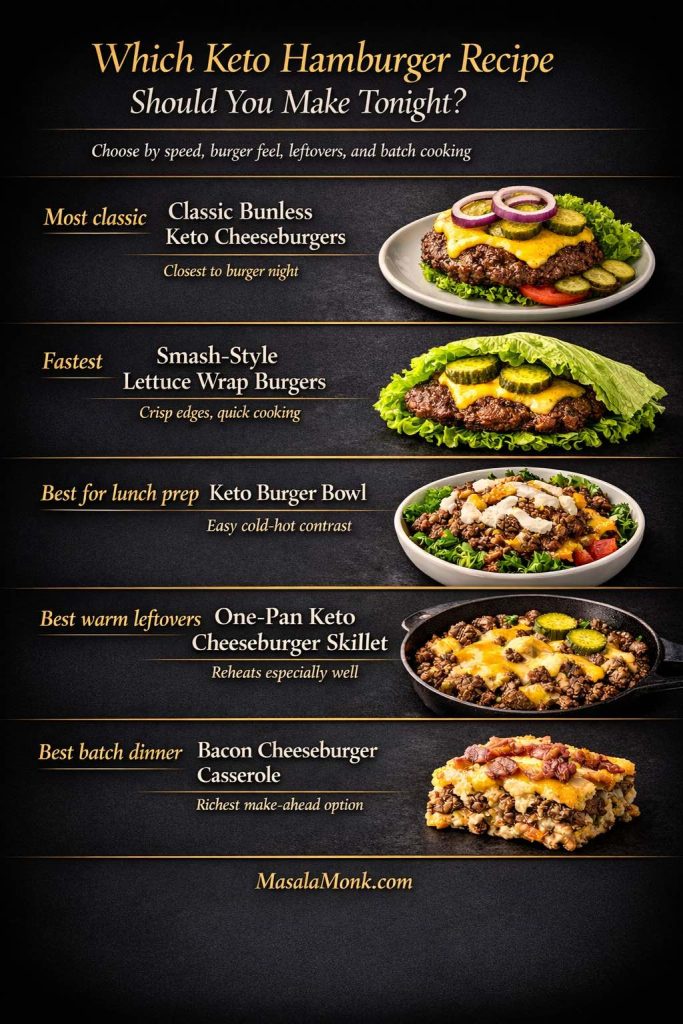
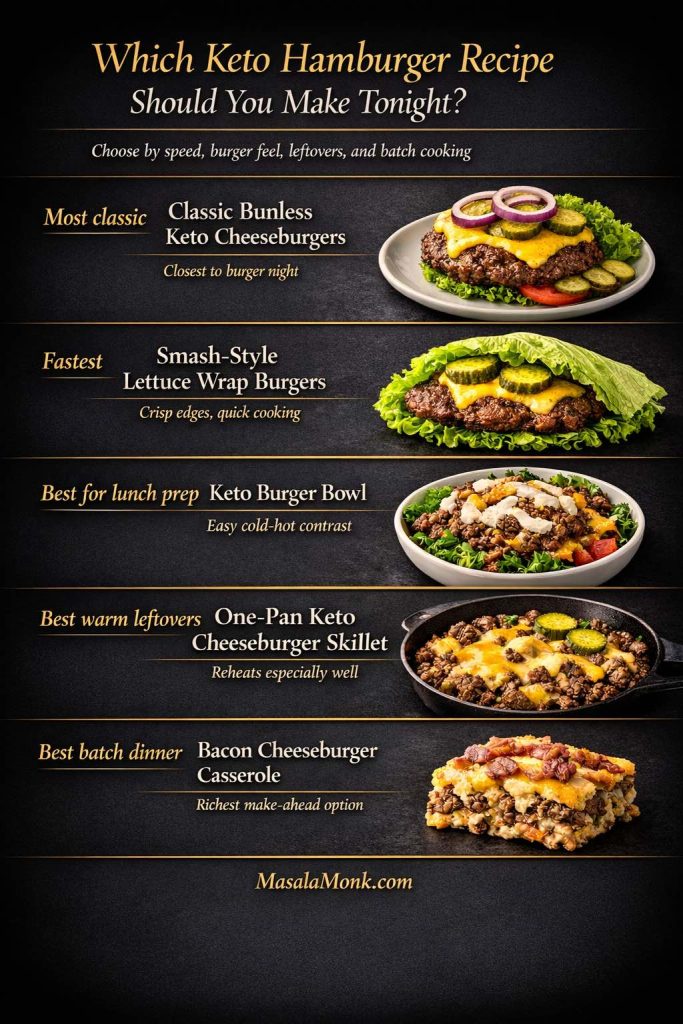
Decision guide for keto hamburger recipes showing the best option for a classic burger, fastest meal, lunch prep, warm leftovers, or batch dinner.
Use this quick chooser to decide whether tonight calls for the most classic bunless burger, the fastest lettuce-wrap option, an easy burger bowl, a reheatable skillet, or a batch-friendly casserole.

Choose Tonight’s Winner

  • Most classic: Classic Bunless Keto Cheeseburgers
  • Fastest: Smash-Style Lettuce Wrap Burgers
  • Best for lunch prep: Keto Burger Bowl with Homemade Burger Sauce
  • Best warm leftovers: One-Pan Keto Cheeseburger Skillet
  • Best batch dinner: Bacon Cheeseburger Casserole

4 Full Keto Hamburger Recipes

These four recipes cover the formats most people actually want: a classic bunless burger, a fast burger bowl, a warm cheeseburger skillet, and a richer casserole for leftovers or meal prep. So if you only cook from four sections here, start with these.

1. Classic Bunless Keto Cheeseburgers

Choose this when: you want the clearest keto burger answer and still want dinner to feel like burger night rather than a workaround.

A good bunless cheeseburger should not feel like the bun was simply removed and nothing else was adjusted. It should still eat like a full burger dinner: juicy in the center, properly seasoned, sharp from mustard and pickles, and rich enough that the missing bun stops feeling like the main story after the first bite.
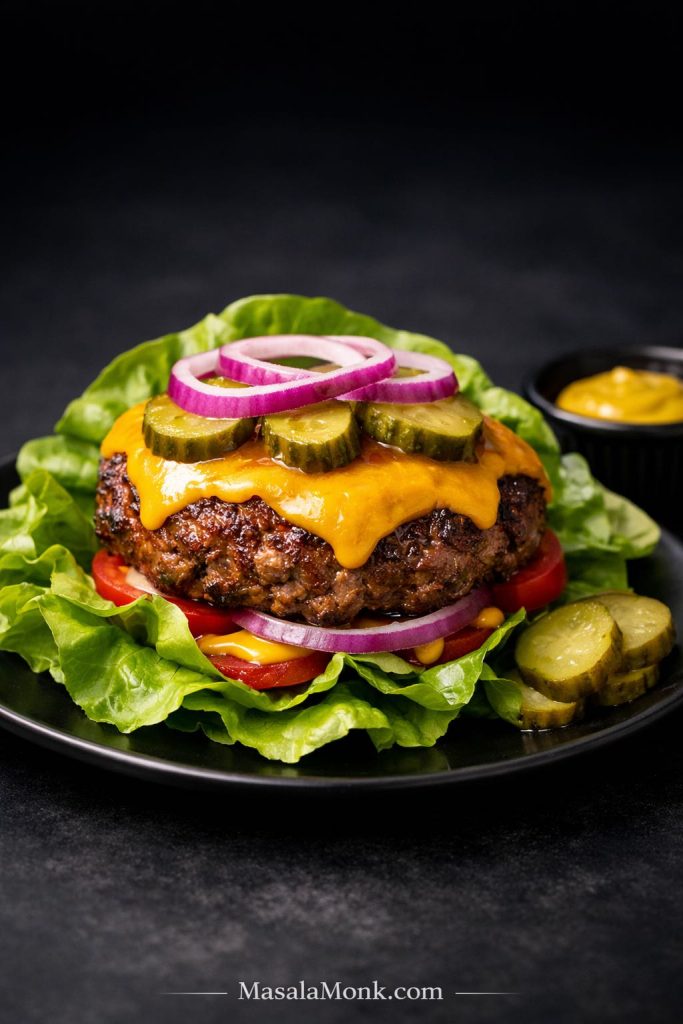
Classic bunless keto cheeseburger with melted cheddar, pickles, red onion, mustard, tomato, and lettuce leaves on a black plate.
Pickles, mustard, and onion do more of the real flavor-lifting work here than any bun substitute, which is why this bunless keto cheeseburger still feels like a full burger dinner.
  • Serves: 4
  • Prep time: 10 minutes
  • Cook time: 10 minutes
  • Estimated net carbs: about 3 to 5 grams per serving, depending on toppings and sauce
  • Best for: readers who want the clearest keto burger answer

Ingredients

  • 1 1/2 pounds ground beef, ideally 80/20 or 85/15
  • 1 1/2 teaspoons kosher salt
  • 3/4 teaspoon black pepper
  • 1 teaspoon garlic powder
  • 1 teaspoon onion powder
  • 4 slices cheddar or American cheese
  • 8 large lettuce leaves for wrapping or serving
  • 1/2 small red onion, thinly sliced
  • 8 to 12 pickle slices
  • 1 small tomato, sliced, optional
  • 2 tablespoons mustard
  • 1/4 cup burger sauce, or a mix of mayo, mustard, and finely chopped pickles

Substitutions

  • Beef: use 80/20 for a juicier burger and stronger crust, or use 85/15 if you want a slightly cleaner finish with less dripping.
  • Cheese: American melts more smoothly, while cheddar gives a sharper, more classic cheeseburger flavor.
  • Sauce: go with burger sauce for the fullest diner-style result, or keep it simpler with mustard and mayo.
  • Serving style: use lettuce wraps if you still want a hand-held burger, or plate the patties with toppings on the side if you want a less messy meal.
  • Toppings: tomato is optional, while pickles and onion do more of the real flavor-lifting work.

Method

  1. Divide the beef into 4 equal portions and shape them gently into broad patties about 1/2 to 3/4 inch thick. In a skillet, slightly flatter patties usually cook more evenly and develop better crust than very thick ones. Press a shallow dimple into the center of each one.
  2. Season both sides with salt, pepper, garlic powder, and onion powder just before cooking.
  3. Heat a cast-iron skillet or grill over medium-high heat until the surface is properly hot. Then add the patties and leave them alone long enough to develop color rather than nudging them early.
  4. Cook the patties for about 4 minutes on the first side, then flip and cook 3 to 4 minutes more depending on thickness.
  5. Add the cheese during the last minute so it melts cleanly without pushing the burgers too far.
  6. For food safety, cook the burgers to 160°F, which matches the USDA guidance for hamburgers and ground beef.
  7. Rest briefly, then serve with lettuce, onion, pickles, tomato if using, mustard, and burger sauce.

Why those small details matter: a slight center dimple helps thicker patties stay flatter, while seasoning just before cooking keeps the texture looser and juicier. If you want the deeper technique breakdown, Serious Eats has useful reads on patty shaping and salting ground beef.
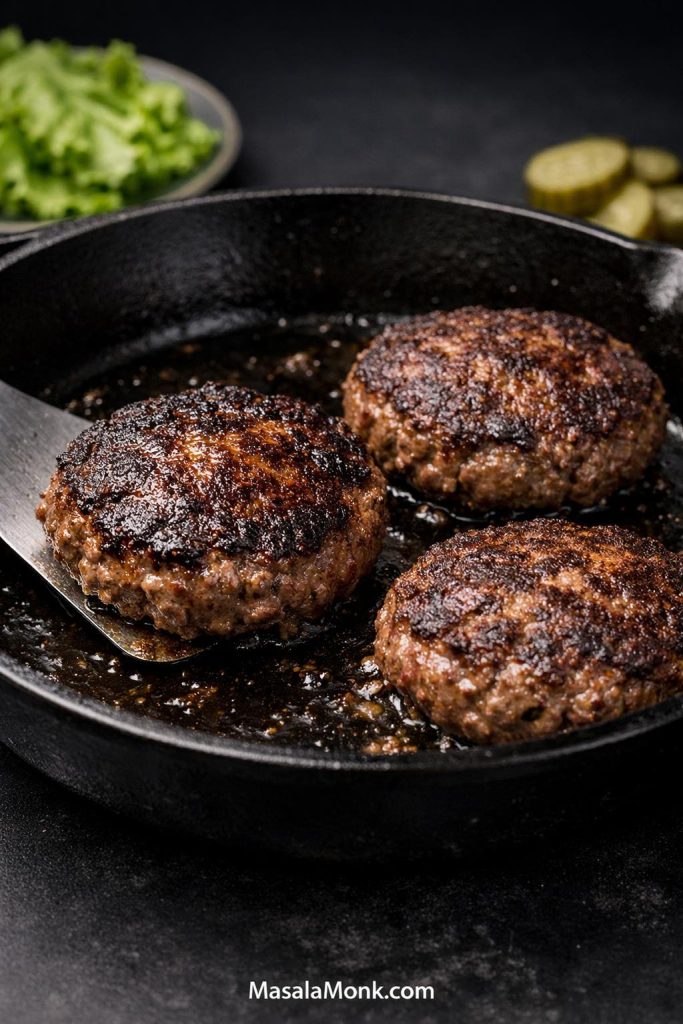
Burger patties searing in a cast-iron skillet for classic bunless keto cheeseburgers, with one patty lifted to show a deep browned crust.
The stage you want before adding cheese: a dark, even crust that keeps a classic bunless keto cheeseburger tasting like a real burger dinner instead of steamed ground beef.

Tips for Best Results

Handle the meat as lightly as possible and keep the patties cold until they hit the pan. That preserves a looser, juicier texture. Keep the topping stack restrained too. In this format, pickles usually do more flavor work than tomato, and American cheese gives a cleaner melt while cheddar gives a sharper finish.

Common Mistakes

  • Overworking the meat: that makes the patties denser and less juicy.
  • Salting too early: the texture can become tighter than you want.
  • Pressing the burgers in the pan: that pushes out the juices instead of improving browning.

Why This Format Works

What makes this one so reliable is that it keeps the classic burger logic intact instead of compensating with too many toppings. The beef stays central, the cheese rounds it out, and the pickles and mustard keep the whole thing from tasting heavy. Once that balance is right here, the bowl, skillet, and casserole versions become much easier to judge.

Best Way to Serve It

For the most classic feel, serve these as lettuce wraps or as a plated burger meal with pickles and a simple low-carb vegetable side such as sautéed cabbage or roasted broccoli.

Best with: mustard, pickles, sautéed cabbage, or roasted broccoli. Leftovers: best fresh, but patties reheat well in a covered skillet and work especially well turned into burger bowls the next day.

2. Keto Burger Bowl with Homemade Burger Sauce

Choose this when: you want the burger flavor fast, want something easier to prep ahead, or do not care about keeping a hand-held burger shape.

A burger bowl should still read clearly as a burger dinner, not just salad plus beef. That means proper browning, enough pickles and cheese, and a sauce with enough punch to keep every bite lively instead of soft and one-note.
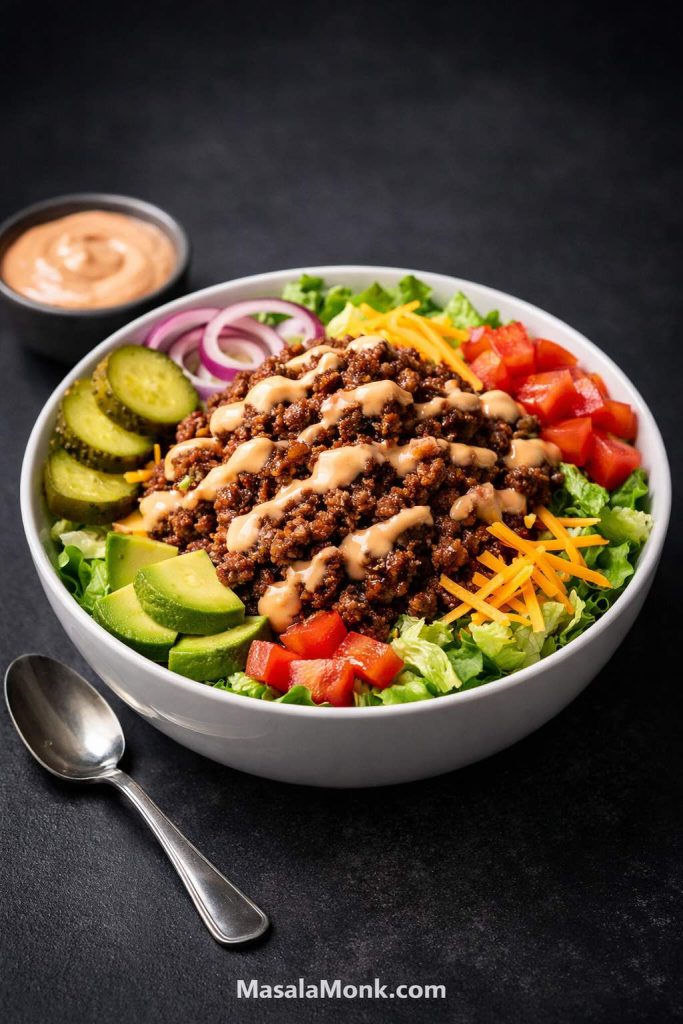
Keto burger bowl with browned ground beef, burger sauce, lettuce, pickles, red onion, cheddar, avocado, and tomato in a white bowl.
A good keto burger bowl still tastes unmistakably like burger night, which is why the browned beef, pickles, cheese, and burger sauce need to stay more prominent than the salad base.
  • Serves: 4
  • Prep time: 12 minutes
  • Cook time: 8 minutes
  • Estimated net carbs: about 5 to 7 grams per serving, depending on sauce and vegetables
  • Best for: fast dinners, lunch prep, and easy no-bun meals

Ingredients

  • 1 pound ground beef
  • 1 teaspoon kosher salt
  • 1/2 teaspoon black pepper
  • 1 teaspoon garlic powder
  • 1/2 teaspoon onion powder
  • 6 cups chopped romaine or iceberg lettuce
  • 1 cup cherry tomatoes, halved
  • 1/2 red onion, thinly sliced
  • 1/2 cup sliced pickles
  • 1 cup shredded cheddar cheese
  • 1 avocado, sliced
  • 1/2 cup burger sauce, ideally mayo-based with mustard and chopped pickles
  • Optional: 1/4 cup Greek tzatziki for a cooler variation

Substitutions

  • Greens: romaine gives more structure, while iceberg gives the cold, crunchy burger-joint feel.
  • Cheese: cheddar is the easiest default, though shredded Monterey Jack also works if you want a milder bowl.
  • Sauce: use classic burger sauce for the most familiar burger result, or switch to tzatziki if you want a cooler, tangier bowl.
  • Fat level: 85/15 often works especially well here because the beef still stays flavorful without making the bowl greasy.
  • Add-ons: avocado is optional, but pickles are harder to skip if you want the bowl to taste distinctly burger-like.

Method

  1. Brown the beef in a skillet over medium-high heat, breaking it up as it cooks.
  2. Season with salt, pepper, garlic powder, and onion powder, then cook until well browned rather than merely gray.
  3. Meanwhile, divide the lettuce among 4 bowls and top with tomatoes, onion, pickles, cheese, and avocado.
  4. Spoon the warm beef over the bowls so the cheese softens slightly and the bowl feels more like a meal than a cold salad.
  5. Finish with burger sauce. For a cooler, tangier take, add tzatziki instead of or alongside the classic burger sauce.
  6. Serve right away, or for meal prep let the beef cool slightly and store the beef, toppings, and sauce separately so the greens stay crisp.
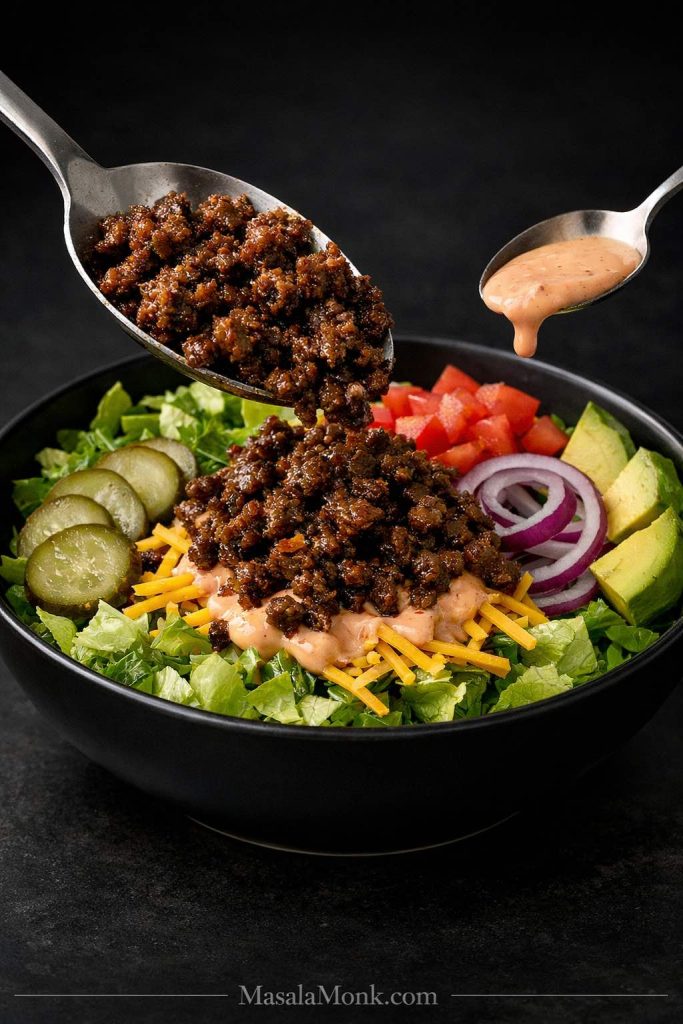
Hot browned beef and burger sauce being added to a keto burger bowl with lettuce, cheddar, pickles, red onion, tomato, and avocado.
Adding the hot browned beef and burger sauce at the end keeps this keto burger bowl tasting like burger night instead of a cold salad with beef on top.

Tips for Best Results

Keep the lettuce cold, the beef deeply browned, and the sauce slightly sharper than you think it needs to be. Burger bowls often go wrong because the components are individually fine but too quiet together. Iceberg gives the coldest burger-joint crunch, while romaine holds up better for meal prep, and a sharper sauce usually does more than extra cheese.

Common Mistakes

  • Underseasoning the beef: the bowl tastes flat even if the toppings are good.
  • Using a weak sauce: that makes the whole bowl drift toward generic salad territory.
  • Assembling too early: the lettuce softens and the bowl loses the texture contrast that makes it work.

Why This Format Works

What makes this one especially useful is that it keeps the burger profile intact while removing the part that tends to make burger meals messier to build, store, and reheat. As a result, it is one of the most practical keto hamburger recipes when you want speed and leftovers at the same time. It is also flexible enough to handle sharper sauces, more pickles, or a cooler yogurt-based topping without losing what makes the bowl satisfying.

Best Way to Serve It

Use crisp lettuce as the base, keep the sauce separate for storage, and add avocado right before serving if you want the best texture. This is one of the easiest make-ahead options because the beef, toppings, and sauce can all be stored separately and assembled in minutes.

Best with: extra pickles, avocado, or a slightly sharper burger sauce than you would use on a bunless burger. Leftovers: very good, as long as the beef, greens, and sauce stay separate until serving.

3. One-Pan Keto Cheeseburger Skillet

Choose this when: you want a warmer hamburger-meat dinner that still tastes clearly like cheeseburger dinner and holds up better than lettuce wraps in the fridge.

This is the right move on nights when a burger shape matters less than warmth, ease, and leftovers. The key is keeping the cheeseburger flavor clear. Once the beef is properly browned and the mustard, cheese, and pickles stay noticeable, the dish feels like a real burger dinner translated into spoonable form rather than a random creamy beef skillet.
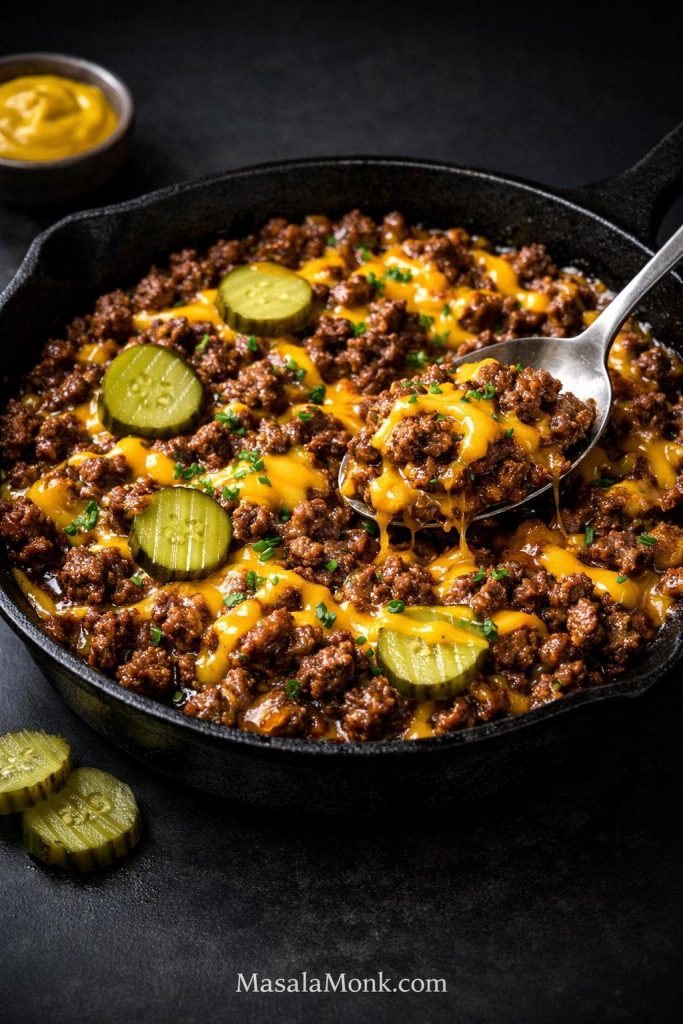
One-pan keto cheeseburger skillet with browned ground beef, melted cheddar, pickle slices, and a spoonful lifted from a cast-iron pan.
This one-pan keto cheeseburger skillet really lands when the beef is deeply browned and the cheese, pickles, and mustard cues still read clearly enough to keep the cheeseburger profile intact.
  • Serves: 4
  • Prep time: 10 minutes
  • Cook time: 15 minutes
  • Estimated net carbs: about 4 to 6 grams per serving
  • Best for: weeknight dinners and strong leftovers

Ingredients

  • 1 pound ground beef
  • 1/2 onion, diced
  • 2 cloves garlic, minced
  • 1 teaspoon kosher salt
  • 1/2 teaspoon black pepper
  • 1 teaspoon garlic powder
  • 1 tablespoon mustard
  • 2 ounces cream cheese
  • 1/2 cup heavy cream
  • 1 1/2 cups shredded cheddar cheese
  • 1/4 cup chopped pickles, optional
  • 2 tablespoons chopped parsley or chives

Substitutions

  • Beef: 85/15 is a good middle ground here, although 80/20 still works if you drain excess fat first.
  • Cheese: cheddar gives the clearest cheeseburger flavor, while pepper jack can work if you want a slightly spicier finish.
  • Cream base: use cream cheese and heavy cream for the richest version, or use a little less cream if you want the skillet tighter and meatier.
  • Flavor lift: chopped pickles are optional, but they help the skillet stay recognizably burger-like.
  • Serving shift: serve it as-is in bowls, or spoon it over sautéed cabbage if you want the meal to feel fuller.

Method

  1. Brown the beef with the onion in a large skillet over medium heat until the onion softens and the beef develops good color.
  2. If the pan looks overly greasy, drain just enough fat to keep the skillet balanced. Leave some behind, though, because that richness helps the finished dish still taste like cheeseburger instead of lean beef in sauce.
  3. Add the garlic, salt, pepper, and garlic powder, then stir briefly until fragrant.
  4. Lower the heat and stir in the mustard, cream cheese, and heavy cream until the mixture turns creamy and evenly combined.
  5. Add the cheddar and stir until melted. Fold in chopped pickles if using.
  6. Taste and adjust the salt before serving, because cheese can mute the seasoning slightly once everything comes together.
  7. Finish with parsley or chives and serve hot.
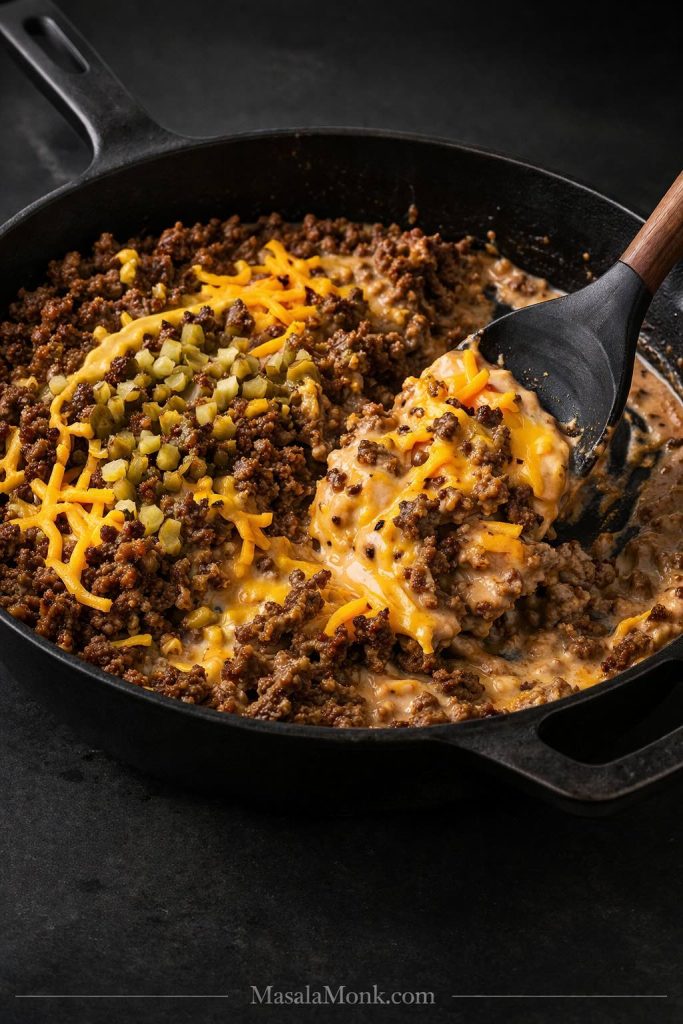
Black spatula lifting a one-pan keto cheeseburger skillet with browned ground beef, melted cheddar, chopped pickles, and creamy cheeseburger-style sauce in a cast-iron pan.
This skillet is in the right zone when the beef stays deeply browned, the cheddar melts into the pan without turning it soupy, and the pickles still cut through the richness.

Tips for Best Results

The beef needs more browning than most creamy skillet recipes ask for. That is what gives the dish backbone. Then keep the cream under control. Too much richness softens the cheeseburger profile, while a smaller amount lets the beef, mustard, cheese, and pickles stay distinct. Fold in a small amount of pickles at the end or scatter them on top, because cooked too hard into the base they lose the sharp edge that keeps the skillet tasting clearly like cheeseburger.

Common Mistakes

  • Not browning the beef enough: the skillet loses depth and starts tasting one-note.
  • Adding too much cream: the cheeseburger profile gets blurred.
  • Under-salting after the cheese goes in: the finished skillet can taste dull even though it looks rich.

Why This Format Works

What keeps this skillet satisfying is that it still reads as a cheeseburger dinner instead of drifting into generic creamy beef. The mustard, cheese, beef, and optional pickles keep the flavor profile clear, while the one-pan format makes it one of the easiest warm keto hamburger dinners to revisit during the week.

Best Way to Serve It

Serve it in bowls, over sautéed cabbage, or with a simple sharp green side. This is worth making even when you are really cooking for tomorrow as much as tonight.

Best with: sautéed cabbage, roasted mushrooms, or a simple green salad. Leftovers: excellent; reheat gently on the stove so the cheese stays smooth and the skillet does not tighten too much.

4. Bacon Cheeseburger Casserole

Choose this when: you want the richest comfort-food version, need stronger leftovers, or want a burger-style dinner that feels made for batch cooking.

This is the richest option here, so balance matters more than volume. The casserole should feel satisfying and cheesy, yet still have enough mustard, bacon, or pickle sharpness to stop the last few bites from tasting heavier than the first few. That contrast is what makes it worth baking instead of just turning dinner into another skillet.
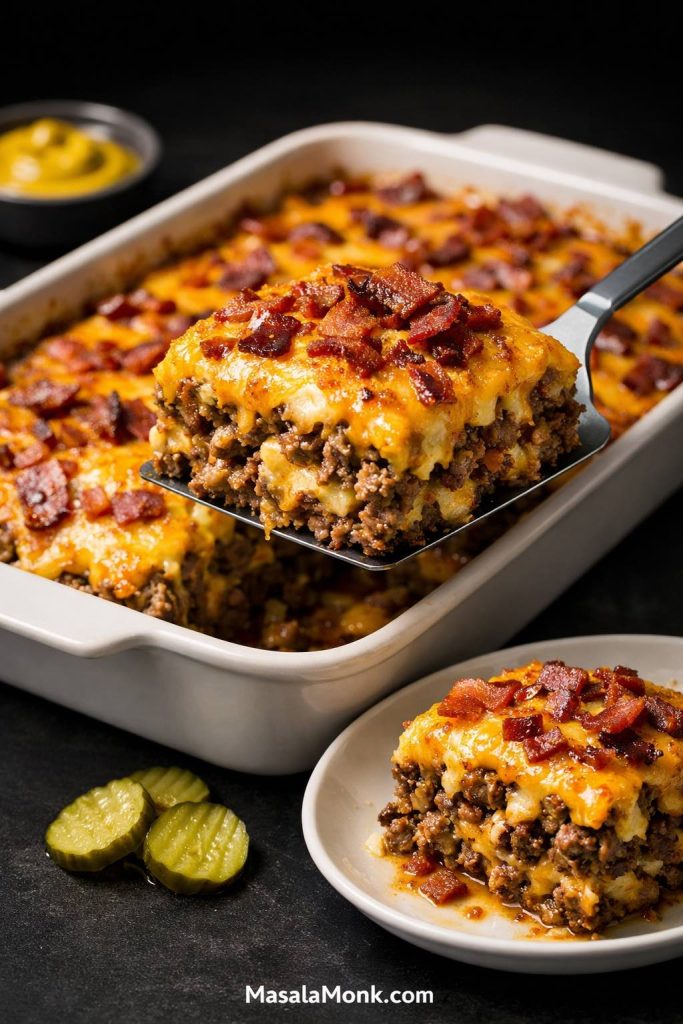
Bacon cheeseburger casserole with melted cheddar and crisp bacon, shown with a lifted square from a baking dish.
A bacon cheeseburger casserole makes the most sense when you want a richer make-ahead dinner, and the clean lifted slice shows why resting it before serving helps the texture hold together better.
  • Serves: 6
  • Prep time: 15 minutes
  • Cook time: 25 minutes
  • Estimated net carbs: about 4 to 6 grams per serving
  • Best for: meal prep, family dinners, and generous leftovers

Ingredients

  • 1 1/2 pounds ground beef
  • 6 strips bacon, cooked and crumbled
  • 1/2 onion, diced
  • 1 teaspoon kosher salt
  • 1/2 teaspoon black pepper
  • 1 teaspoon garlic powder
  • 1 tablespoon mustard
  • 4 ounces cream cheese
  • 2 large eggs
  • 1/2 cup heavy cream
  • 2 cups shredded cheddar cheese, divided
  • 2 tablespoons chopped pickles or no-sugar pickle relish, optional

Substitutions

  • Beef: 85/15 works well if you want the casserole rich but not overly heavy, while 80/20 gives the fullest comfort-food version.
  • Bacon: you can leave it out, but the casserole loses some of the smoky edge that helps it stand apart from the skillet.
  • Cheese: cheddar is the best default, though a cheddar-mozzarella mix can soften the sharpness if you want a milder finish.
  • Pickle element: chopped pickles or no-sugar relish both work, though pickles usually taste cleaner.
  • Structure: bake it in one casserole dish for family-style serving, or divide it into smaller dishes if you want easier portions for meal prep.

Method

  1. Preheat the oven to 375°F.
  2. Brown the beef with the onion, then stir in the salt, pepper, garlic powder, mustard, and cream cheese.
  3. Whisk the eggs and heavy cream in a bowl, then stir in 1 1/2 cups of the cheddar.
  4. Combine the beef mixture with the egg-cheese mixture and fold in the bacon and pickles if using.
  5. Transfer to a greased baking dish, spread it evenly, top with the remaining cheese, and bake for 20 to 25 minutes until hot and set.
  6. Pull the casserole when the center is just set rather than baking until it looks very firm. It will tighten further as it rests.
  7. Rest for 5 to 10 minutes before serving so the casserole slices more cleanly.
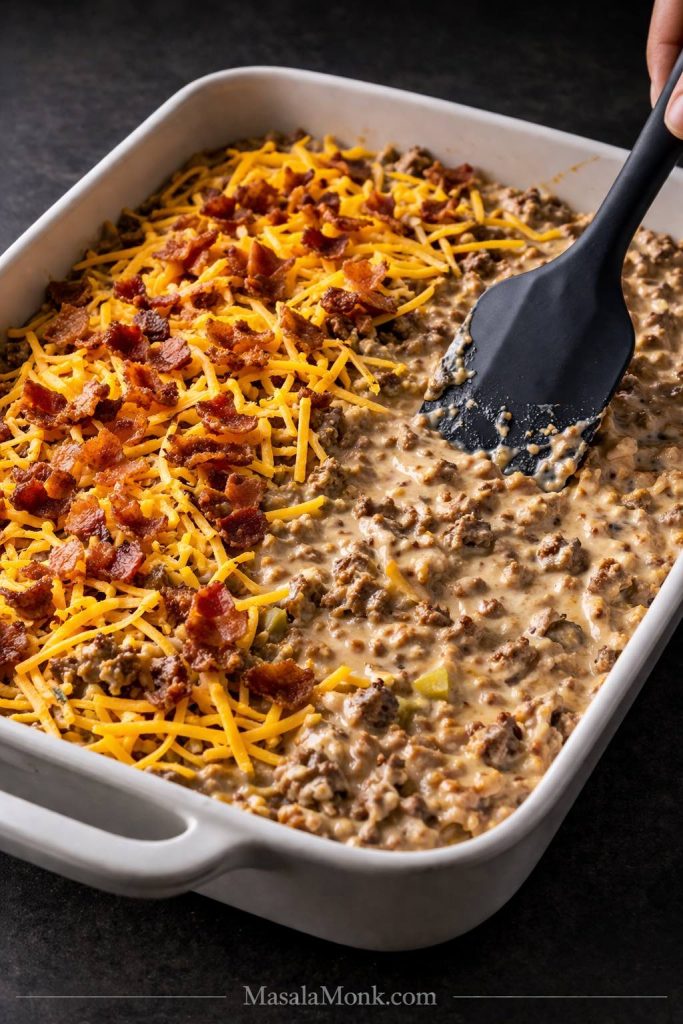
Black spatula smoothing unbaked bacon cheeseburger casserole in a baking dish, with shredded cheddar and bacon on top before baking.
Before baking, spread the casserole base evenly, then top it with cheddar and bacon so the bacon cheeseburger casserole bakes more evenly and finishes with better texture.

Tips for Best Results

Letting the casserole rest matters more than it looks on paper. A short rest firms the texture, improves the slices, and keeps the inside from feeling looser than it really is. Keep something bright nearby too. This version usually improves more from mustard, pickles, bacon, or a sharper side on the plate than from extra cheese or cream in the dish itself.

Common Mistakes

  • Overbaking: the casserole becomes tighter and less juicy than it should be.
  • Skipping the rest time: it slices messily and feels wetter than necessary.
  • Underseasoning the filling: cheese alone does not carry the whole dish.

Why This Format Works

This casserole makes the most sense when burger flavor matters more than burger shape. It portions more neatly than the skillet, survives the next day better than lettuce wraps, and feels more worth making when you already know leftovers matter. For basic fridge and freezer timing, the FoodSafety.gov cold storage chart is still the cleanest external reference to keep in mind.

Best Way to Serve It

Serve this with something sharp on the side so the richness does not flatten out.

Best with: pickles, a crisp salad, or a mustard-forward side element. Leftovers: excellent; cool fully before portioning for cleaner slices and better reheating.

5 More Keto Hamburger Recipes to Try

These shorter variations give you a few more useful ways to solve the same burger craving, especially when you want crisp edges, easier lunch prep, a plated dinner, or better portioning. So while they are shorter than the four main recipes, they should still feel like real options rather than decorative extras.

5. Smash-Style Lettuce Wrap Burgers

Choose this on nights when speed matters more than leftovers and you want the crispest crust in the group.

Use small beef balls, a very hot skillet or griddle, cheese, pickles, mustard, and sturdy lettuce leaves instead of buns. MasalaMonk’s classic smash burger method is a natural internal reference here, while Serious Eats’ smash burger technique explains why the crust develops so well.
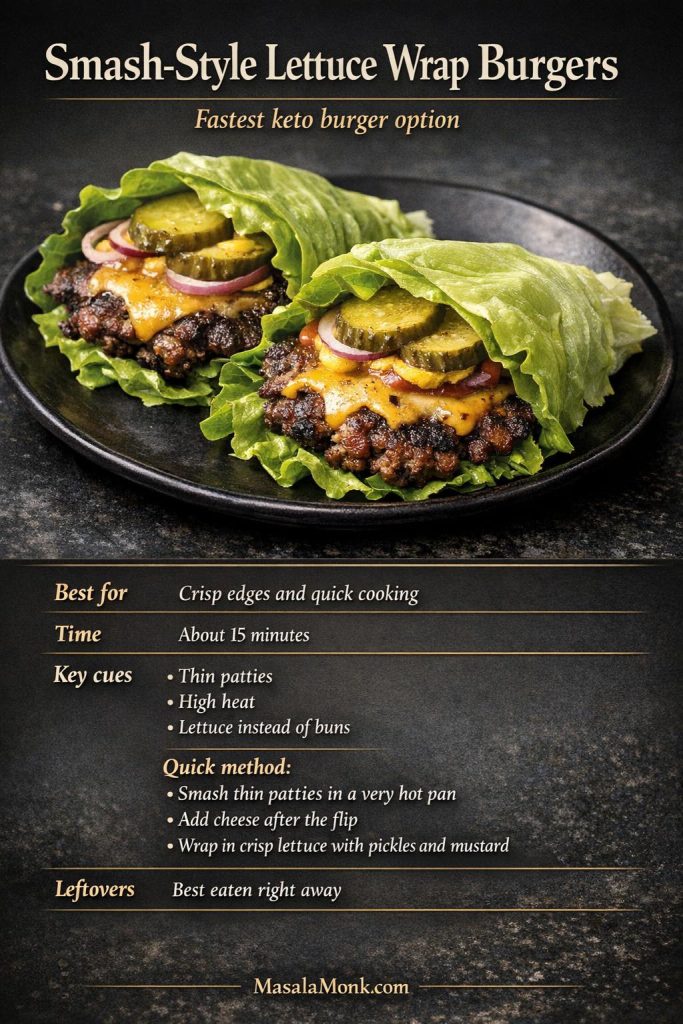
Smash-style lettuce wrap burgers with crisp-edged beef patties, melted cheese, pickles, red onion, and a mini recipe card for quick keto burger prep.
These smash-style lettuce wrap burgers are one of the fastest keto burger options when you want crisp edges, strong burger flavor, and almost no cleanup.

Smash once right away, season, then leave the patties alone until the edges turn deeply browned and crisp before flipping. Add cheese, stack into lettuce, and serve immediately. This is one of the few burger styles here that really loses its point once it sits.

Best with: mustard, pickles, and the simplest possible toppings. Leftovers: poor; this version loses its edge once it sits.

6. Big Mac Salad Bowl

This is the lighter route, but it still needs enough sauce and pickle flavor to read as a real burger-style meal rather than merely lean.

Build it with chopped lettuce, warm seasoned beef, shredded cheese, onions, pickles, and a creamy dressing that clearly tastes like burger sauce. Chop everything fairly small so each bite lands as a real mix instead of forkfuls that swing between salad and plain beef.
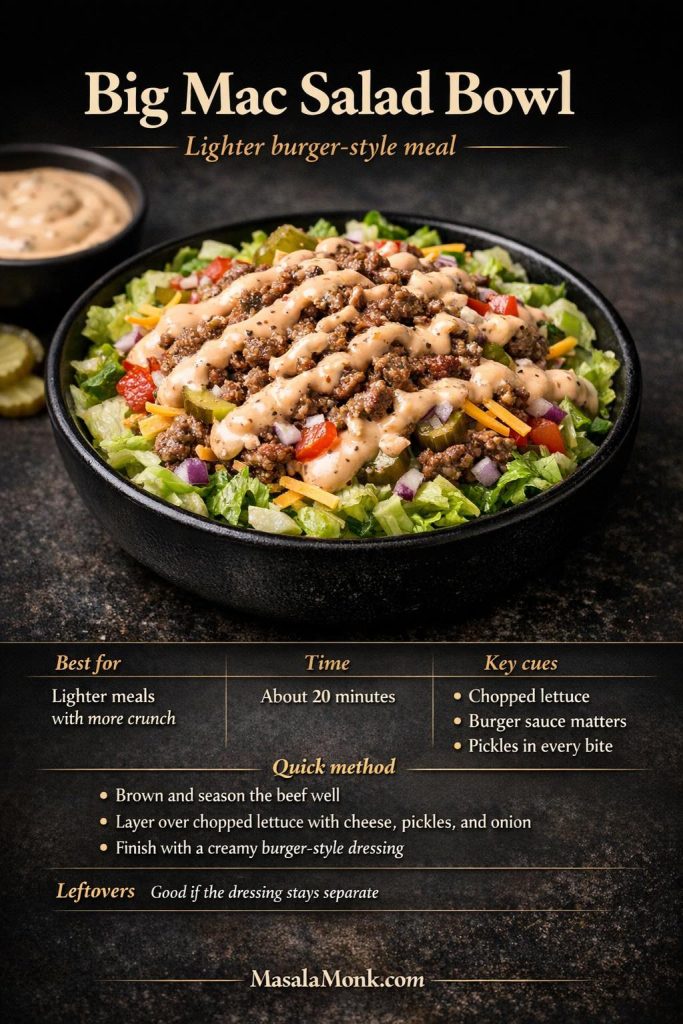
Big Mac salad bowl with chopped lettuce, browned ground beef, pickles, red onion, shredded cheddar, burger-style dressing, and a mini recipe card for a lighter keto burger meal.
Big Mac salad bowl holds up best when the lettuce is chopped, the beef is well browned, and the burger-style dressing is bold enough to keep the whole bowl tasting clearly burger-inspired instead of salad-like.

One thing that matters more than it seems: this is the easiest version to over-chill into blandness, so the dressing has to do more flavor work than in a classic burger bowl.

Fast build: keep the lettuce, beef, toppings, and dressing separate until the last minute so the bowl stays crisp and the beef does not chill the whole dish too much.

Best with: extra pickles, finely chopped onions, or avocado. Leftovers: good, but only if the dressing stays separate.

7. Keto Hamburger Steak with Onions and Mushrooms

This is the better fit when dinner should feel plated, savory, and a little more old-school than burger-like in shape.

Sear seasoned patties, then cook onions and mushrooms in the same pan until they pick up color and absorb the beef flavor left behind. A spoonful of chimichurri over the top helps a lot here, because the plate can get heavy without some freshness.
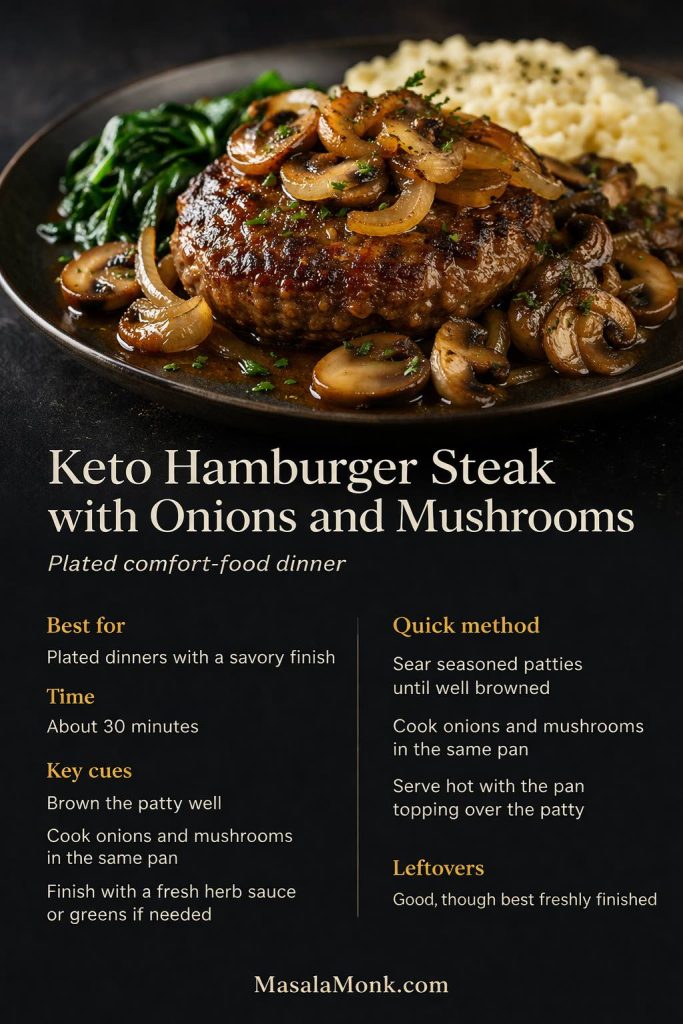
Keto hamburger steak with onions and mushrooms served as a plated comfort-food dinner, with a mini recipe card showing timing and key cues.
A keto hamburger steak does best when the onions and mushrooms are cooked in the same pan as the patty, because that is what turns it from a plain bunless burger into a more savory plated dinner.

Serve it with wilted greens, sautéed cabbage, or cauliflower mash. This one reheats reasonably well, though the onion-and-mushroom finish is best when freshly made.

Best with: cauliflower mash, wilted greens, or sautéed cabbage. Leftovers: decent, though the onion-and-mushroom finish is best fresh.

8. Loose Meat Keto Burgers

This is one of the easiest versions for flexible leftovers, because the filling stores better than assembled burgers and can move between lettuce cups, bowls, and salads without much trouble.

Brown the beef well, season it assertively, and keep it moist enough to scoop rather than dry and crumbly. A little pepper sauce stirred into mayo makes a strong spicy finish here, especially when the rest of the build is fairly simple.
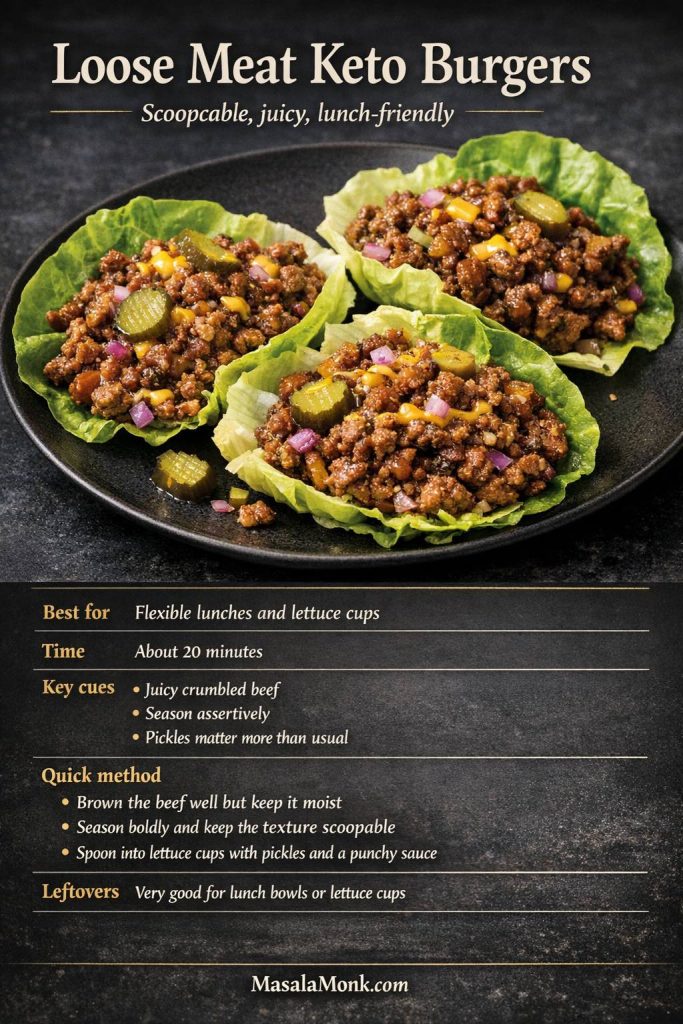
Loose meat keto burgers served in lettuce cups with juicy seasoned ground beef, pickles, red onion, and a mini recipe card for flexible low-carb lunches.
Loose meat keto burgers are at their best when the beef stays juicy and boldly seasoned, because this format depends more on scoopable texture, pickles, and sauce than on patty structure.

What makes or breaks it: the beef has to stay juicy enough to scoop and bold enough to stand on its own, because this format depends more on seasoning, pickles, and sauce than on patty structure.

Pickles matter more than usual in this format. Since there is no patty structure and no bun, that sharper edge is often what keeps the loose meat from tasting like ordinary seasoned ground beef.

Best with: pickles, crisp lettuce, and a punchy sauce. Leftovers: very good for lunch bowls or lettuce cups.

9. Keto Cheeseburger Stuffed Peppers

Choose this one when portioning and reheating matter more than speed.

Fill halved peppers with seasoned cheeseburger beef, mustard, and cheese, then bake until the peppers turn tender and the tops bubble. Because the peppers add sweetness and bulk, the filling needs more confidence than usual with salt, mustard, or pickle on the side.
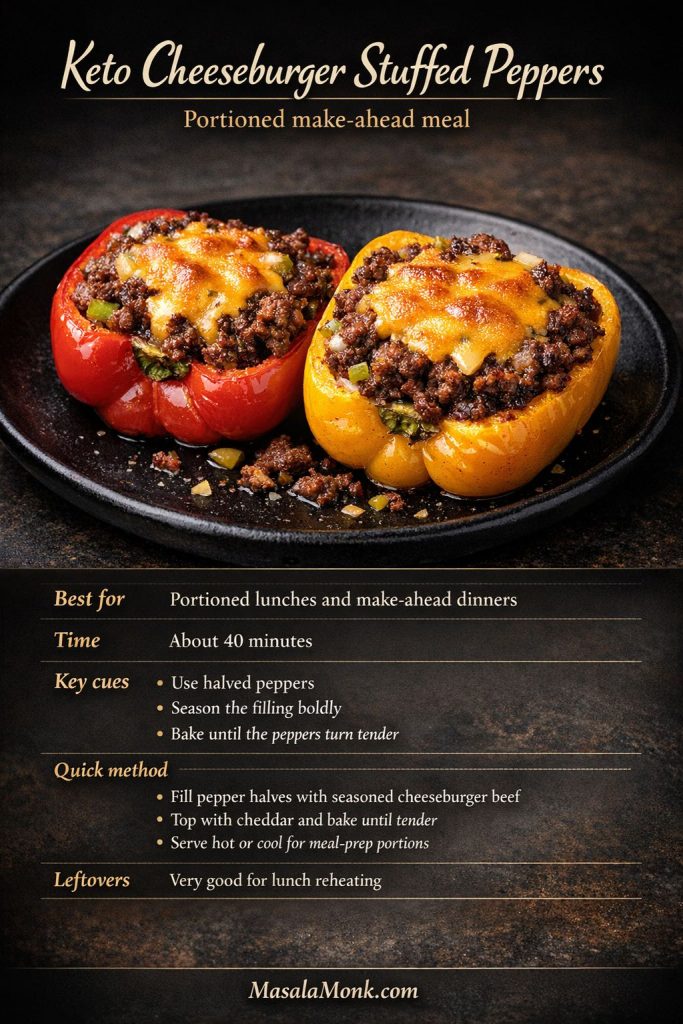
Keto cheeseburger stuffed peppers with seasoned beef and melted cheddar, shown as a mini recipe card for portioned make-ahead meals.
These keto cheeseburger stuffed peppers come out best when the filling is seasoned boldly and the peppers bake until tender, because that is what makes them feel like a real make-ahead meal instead of just peppers with beef added in.

These are especially useful for make-ahead lunches. They do not hit the same fast-burger craving as the classic or smash-style versions, but they store much better and feel more complete the next day.

Make-ahead note: bake fully, cool, then refrigerate in portions so they reheat as complete lunches without any extra assembly.

Best with: pickles on the side or a sharper green salad. Leftovers: very good; one of the best short variations for lunch reheating.

How to Keep Hamburger Recipes Keto

The beef is usually the easy part. The meal drifts off course when buns, sweet sauces, breadcrumb binders, or standard diner sides start piling onto the plate. So the real skill is not making hamburger meals feel restricted. It is making them feel complete without leaning on the parts that add most of the unnecessary carbs.
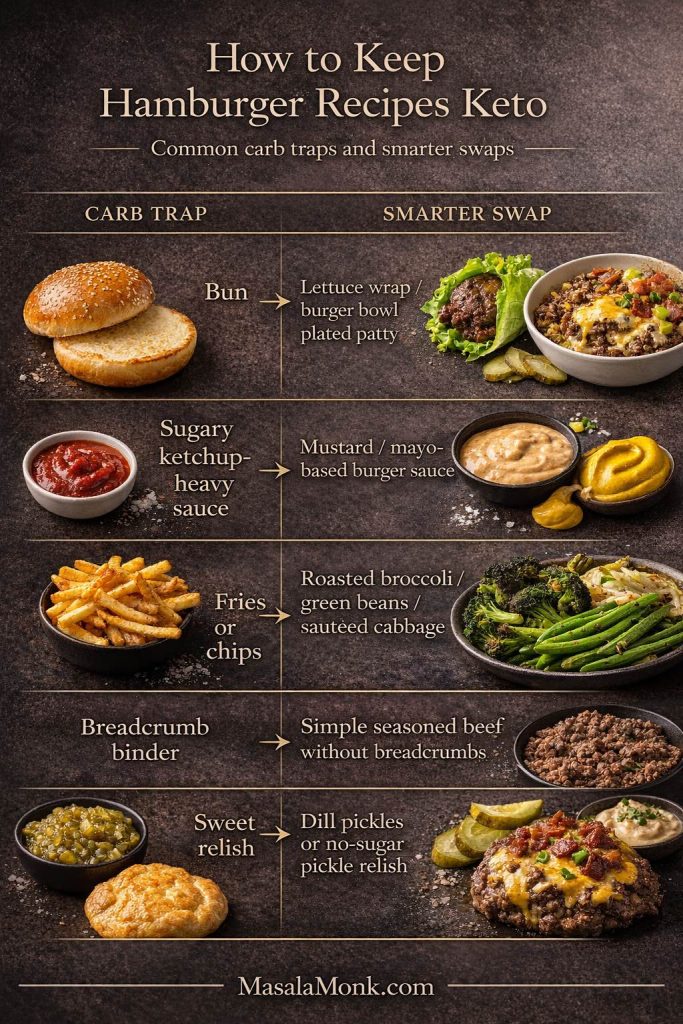
Comparison guide showing how to keep hamburger recipes keto by swapping buns, sugary ketchup-heavy sauce, fries or chips, breadcrumb binder, and sweet relish for lower-carb burger options.
The easiest way to keep hamburger recipes keto is to watch the extras: skip the bun, sugary sauces, fries, breadcrumbs, and sweet relish, then use lettuce wraps, burger bowls, mustard or burger sauce, lower-carb vegetables, and dill pickles instead.

Switch the Format Instead of Forcing a Bun

Lettuce wraps work when you still want a hand-held burger feel. Meanwhile, bowls and salads work better for speed and meal prep. Skillets and casseroles make more sense when you want a warmer, more filling hamburger-meat dinner with stronger leftovers. Once you stop forcing every meal into burger form, the rest of keto burger cooking gets easier.

Common Carb Traps

  • Breadcrumb binders: these can quietly push patties away from the simple low-carb version you actually want.
  • Sugary ketchup-heavy sauces: the sauce is often where the hidden carbs arrive first.
  • Sweet relish: even small amounts can shift the meal more than expected.
  • Too much onion: onions are useful, but in skillet and casserole versions they can add up fast.
  • Heavy bun substitutes: some “keto buns” still make the meal heavier and less clean than bowls, lettuce wraps, or plated burgers.
  • Standard diner sides: fries, chips, and similar add-ons can undo the rest of the plate quickly.

Use Smarter Condiments

Mustard, mayo-based burger sauce, pickle-forward dressings, herb sauces, and spicy mayo all work well here because they add richness and sharpness without pushing the meal toward sweetness. A good keto-friendly mustard and a simple homemade mayo base cover most of what you need for burgers, bowls, and burger sauce. When you want a cooler finish, Greek tzatziki also works especially well with burger bowls and plated patties.

Quick rule: when in doubt, keep the beef simple, skip the sweet sauces, and let acid, cheese, and a sharper sauce do the heavy lifting.

Best Ground Beef for Keto Hamburger Recipes

The best beef blend depends on the format. For burgers and smash burgers, fattier beef usually works better because it browns harder and stays juicier. By contrast, skillets, casseroles, and stuffed peppers can handle slightly leaner beef when enough cheese, cream, bacon, or sauce is already doing part of the richness work.
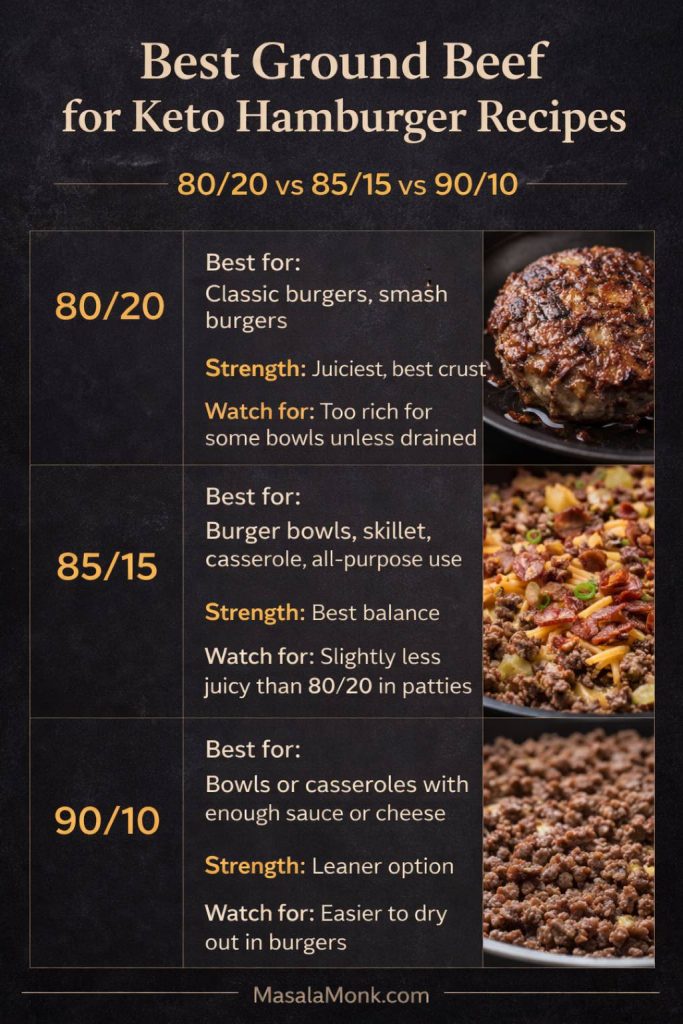
Comparison guide showing the best ground beef for keto hamburger recipes, including 80/20 for classic and smash burgers, 85/15 for bowls, skillet, and casserole, and 90/10 for leaner bowl or casserole options.
For keto hamburger recipes, 80/20 usually gives the juiciest burgers and best crust, 85/15 is the easiest all-purpose choice, and 90/10 works best when bowls or casseroles have enough sauce, cheese, or bacon to support leaner beef.
  • 80/20: best for classic burgers and smash burgers where browning and juiciness matter most.
  • 85/15: the easiest all-purpose middle ground for bowls, burgers, skillets, and casseroles.
  • 90/10: workable for bowls or casseroles only if enough sauce, cheese, bacon, or another richness source supports it.

As a rule, 80/20 gives better crust and a juicier bite in intact patties, while 85/15 often gives a cleaner balance in bowls and skillet dinners. Leaner than that can still work, yet it usually needs extra help from sauce, cheese, bacon, or careful cooking time so the meat does not dry out.

If the beef stays in patty form, fat matters more. If it gets crumbled into bowls, skillets, or casseroles, sauce and cheese can carry more of the richness without the meal feeling dry.

For general burger technique, Serious Eats’ burger fundamentals are still useful because they reinforce the big things that matter most: keep the meat cold, handle it lightly, and resist overworking it. Meanwhile, USDA FoodData Central is a handy neutral reference if you want to compare common blends like 80/20 and 90/10.

Best Sauces for Keto Hamburger Recipes
Comparison guide showing the best keto burger sauces for bunless burgers, burger bowls, cheeseburger skillet, and casserole.
The best keto burger sauce depends on the format: classic burgers want a thicker mayo-mustard-pickle finish, bowls need a looser sharper sauce, skillets benefit from a more mustard-forward edge, and casseroles usually work better with sauce served on the side.
  • For classic burgers: a simple mix of mayo, mustard, and chopped pickles gives the cleanest burger finish.
  • For burger bowls: go slightly sharper and slightly looser so the sauce spreads easily and does more flavor work in every bite.
  • For skillet: keep it mustard-forward or finish with pickles rather than pushing in more cream.
  • For casserole: sauce usually works better on the side than baked into the dish, where it can blur the texture.
  • Best cool option: tzatziki works especially well with burger bowls and plated patties.
  • Best fresh-herb option: chimichurri fits plated patties and hamburger steak better than bowls or casseroles.

What to Serve Instead of Burger Buns

The smartest move is not always replacing the bun with another bread-like stand-in. Quite often, the cleaner answer is changing the structure of the meal and letting the burger profile carry through in a form that suits the night better. That is what makes the best versions feel satisfying rather than like a workaround.
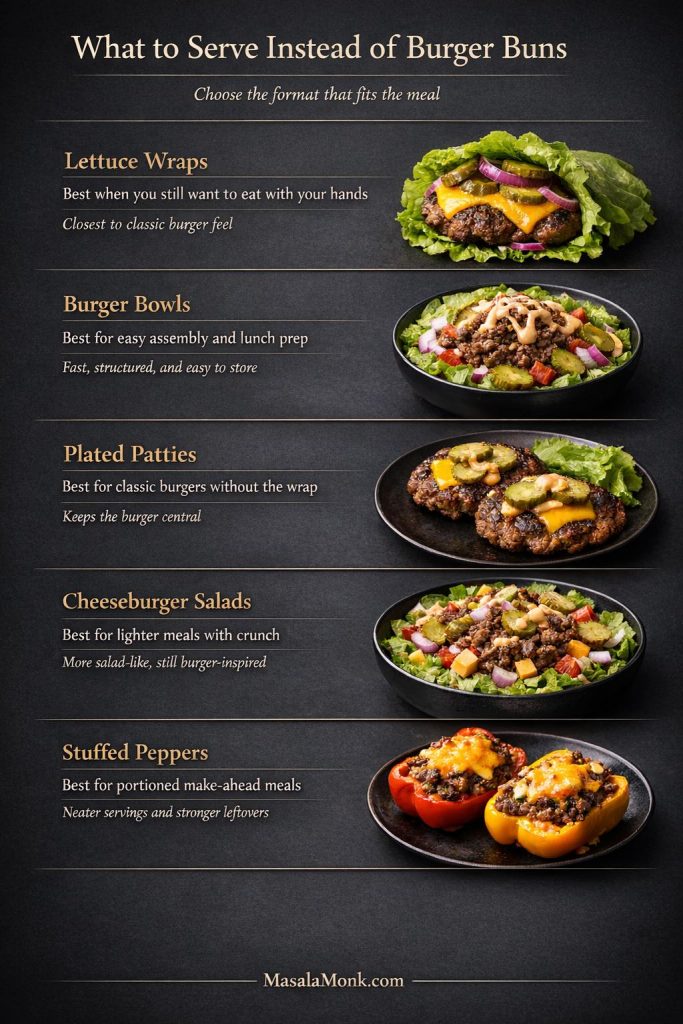
Guide showing lettuce wraps, burger bowls, plated patties, cheeseburger salads, and stuffed peppers as keto-friendly alternatives to burger buns.
Skipping burger buns works best when you change the format, not just remove the bread: lettuce wraps stay closest to the hand-held feel, bowls and salads help with assembly, plated patties keep the burger central, and stuffed peppers are the strongest make-ahead option.
  • Lettuce wraps: best when you still want to eat with your hands
  • Burger bowls: best for easy assembly and lunch prep
  • Cheeseburger salads: best for lighter meals with crunch
  • Plated patties with vegetables: best for hamburger steak or classic burgers without the wrap
  • Cauliflower mash, green beans, roasted broccoli, and sautéed cabbage: best for turning a burger plate into a full dinner

Best Sides by Format

  • With classic burgers: roasted broccoli, green beans, or sautéed cabbage
  • With burger bowls: avocado, extra pickles, and crunchy salad vegetables
  • With skillet: sautéed cabbage, roasted mushrooms, or simple greens
  • With casserole: pickles, slaw-style salad, or sharper greens
  • With hamburger steak: mushrooms, cauliflower mash, or wilted greens

This is also where sauce choice matters. For example, chimichurri works especially well on plated patties, while tzatziki fits bowls and salads better. Meanwhile, a mayo-and-mustard burger sauce remains the most classic bridge between all of these serving styles.

The best bun replacement is often not bread-like at all. More often, it is the format that suits the meal better.

Meal Prep, Storage, and Reheating

Not every hamburger-style meal behaves the same way in the fridge. Burger bowls, skillets, casseroles, stuffed peppers, and loose meat burgers all store better than fully assembled lettuce wraps. So if tomorrow’s lunch matters almost as much as tonight’s dinner, the format should influence your choice from the start.

For timing, the FoodSafety.gov cold storage chart is a good general reference. Likewise, FoodSafety.gov’s leftovers guidance is worth keeping in mind when readers are batching several meals ahead.
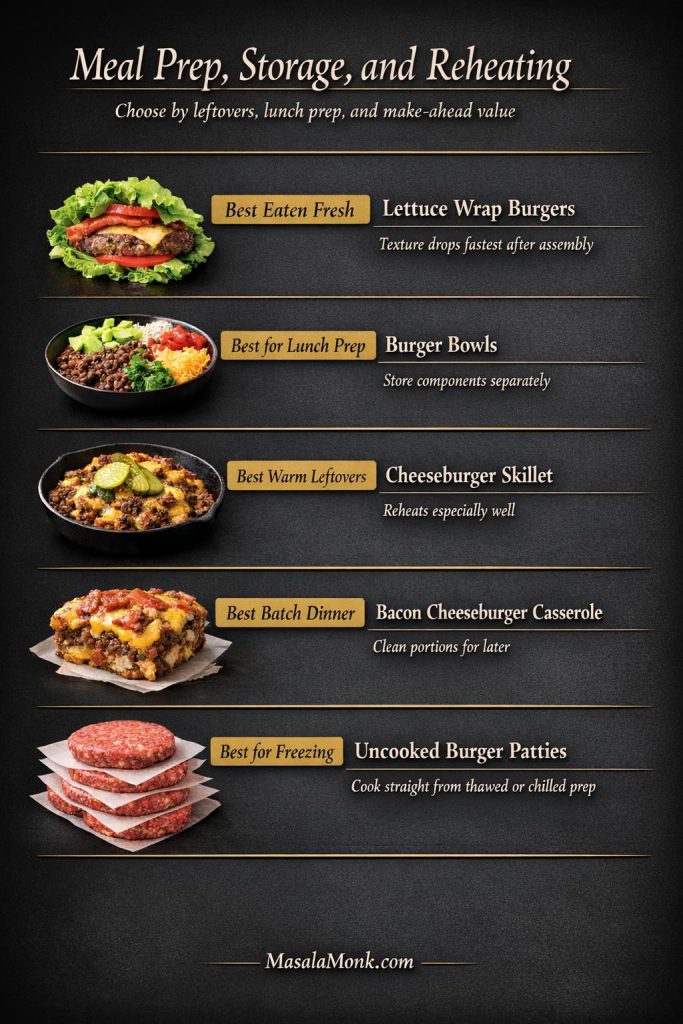
Meal prep, storage, and reheating guide for keto hamburger recipes showing the best options for fresh eating, lunch prep, warm leftovers, batch dinners, and freezing.
Not every keto hamburger format stores the same way: lettuce wraps are best eaten fresh, burger bowls work best with separate components, skillets reheat especially well, casseroles portion neatly for later, and uncooked patties are the strongest freezer option.
  • Best for leftovers: cheeseburger skillet, casserole, stuffed peppers, loose meat burgers
  • Best frozen: uncooked patties, casserole portions, stuffed peppers
  • Best eaten fresh: lettuce wraps and fully dressed cheeseburger salads
  • Best reheated gently: burger patties in a covered skillet or low oven, skillets on the stove, casseroles covered first

Store components separately whenever texture matters. Keep burger bowl beef, greens, and sauce apart until serving; reheat patties gently; and dress lettuce-based meals at the last minute. A few extra minutes of separate storage work usually pays off with much better leftovers.

Keto Hamburger Recipes FAQ

Can you eat hamburgers on keto?

Yes. In most cases, the burger itself fits easily. The bun, sugary sauces, and higher-carb sides are usually what push the meal away from keto. That is why bowls, lettuce wraps, and plated burger meals work so well here.

What is the best first keto hamburger recipe to make?

For most readers, the best first recipe is the classic bunless keto cheeseburger because it is the clearest and most direct burger answer. From there, burger bowls and cheeseburger skillets are the easiest ways to branch out without leaving the flavor profile behind.

What temperature should a hamburger reach?

Because burgers use ground beef, the safest practical target is the USDA recommendation of 160°F. That guidance comes directly from the USDA ground beef food safety page.

Which keto hamburger recipes are best for meal prep?

Burger bowls, cheeseburger skillets, bacon cheeseburger casserole, loose meat burgers, and stuffed peppers all work well for meal prep. Lettuce wraps, however, are best eaten fresh because their texture drops off quickly once assembled.
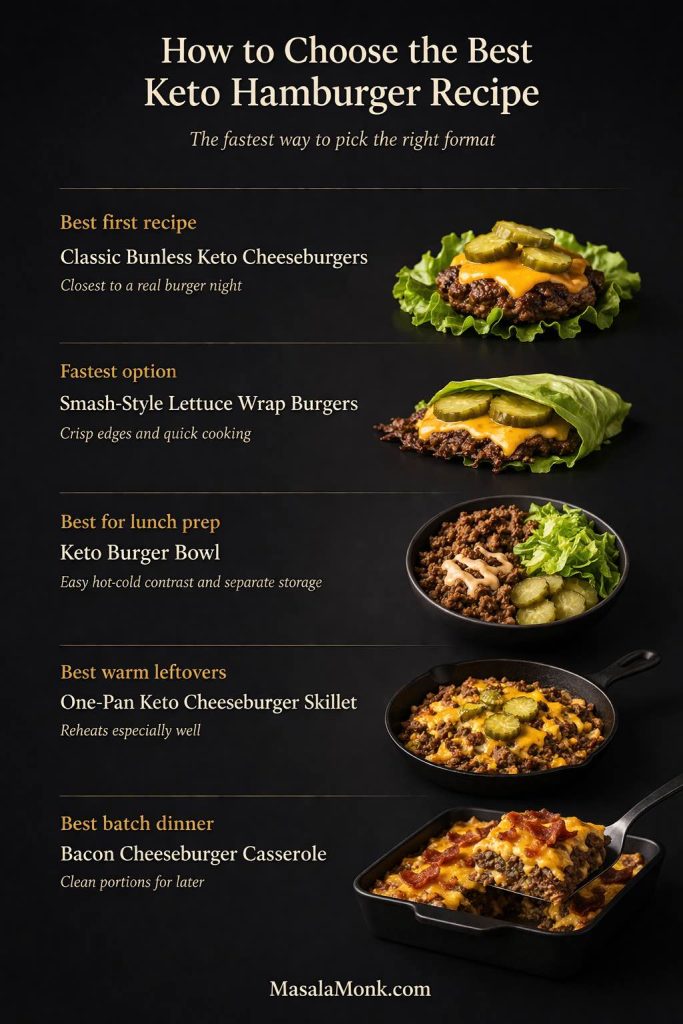
Closing recap card showing the best keto hamburger recipe choices for first recipe, fastest option, lunch prep, warm leftovers, and batch dinner.
If you only remember five things from this guide, start with the classic bunless cheeseburger for the most burger-like result, go to smash-style lettuce wraps for speed, choose the burger bowl for lunch prep, rely on the skillet for warm leftovers, and make the casserole when batch cooking matters most.

Final Thoughts on Keto Hamburger Recipes

The strongest keto hamburger recipes page is not the one that tries to force every dinner into a single burger shape. It is the one that helps readers solve the same craving in the form that actually fits the night. Sometimes that is a classic cheeseburger with enough sharpness and richness to stand on its own. Sometimes it is a fast bowl, a skillet that reheats well, or a casserole that earns its place through leftovers. Taken together, those options give readers one clear place to start, enough depth to cook from, and enough range to stay useful after the first visit.
↑ Back to top

Posted on Leave a comment

Innovate Your Keto Breakfast: 5 Pine Nut, Pomegranate Seed, and Pea Protein Shake Recipes for Meal Replacement

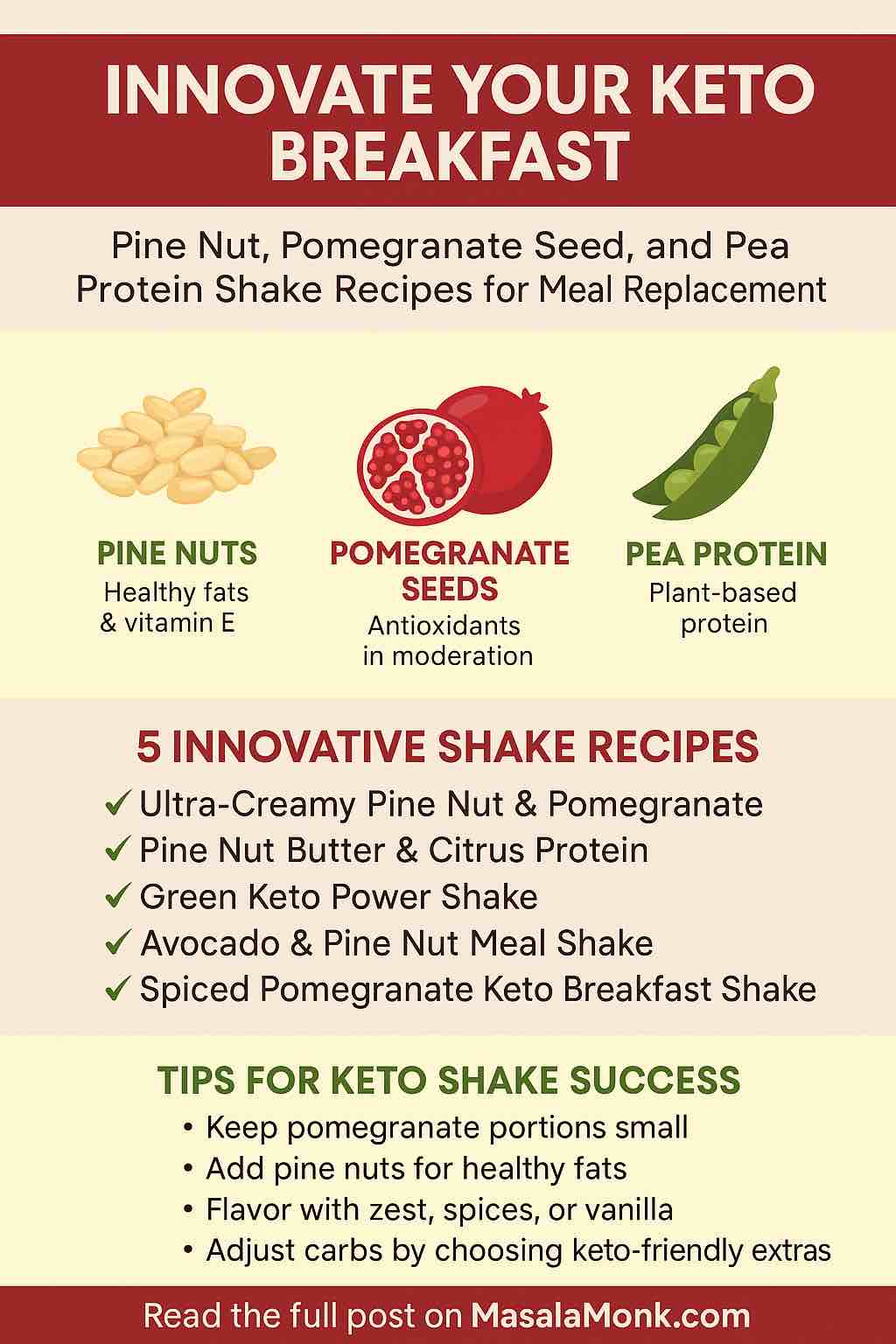
INNOVATE YOUR KETO BREAKFAST Pine Nut, Pomegranate Seed, and Pea Protein Shake Recipes for Meal Replacement

Are you tired of the same bacon and eggs every morning on keto? Looking for something plant-forward, fresh, and truly energizing—but still low in carbs and high in satiety? Let’s break the mold with keto meal-replacement shakes that bring together three powerhouse ingredients: pine nuts, pomegranate seeds, and pea protein.

These shakes aren’t just novel—they’re delicious, nutrient-dense, portable, and can be precisely customized to fit your macros. This post will walk you through why these ingredients are perfect for keto, how to combine them, and then give you five inventive, tested recipes (with pro tips and macro guides!) to make your mornings as satisfying as they are healthy.


Why These Ingredients?

Pine Nuts

Small but mighty, pine nuts are rich in healthy monounsaturated fats, vitamin E, magnesium, and plant sterols. Their creamy texture and subtly buttery taste add luxury to your morning, while their fat content supports ketosis and long-lasting fullness.

Pomegranate Seeds

While pomegranate isn’t typically “keto,” a tablespoon or two of the seeds offers a pop of color, antioxidants, and tart-sweet flavor with only a minor carb contribution. When used judiciously, they brighten your shake without breaking ketosis.

Pea Protein

Unlike dairy-based proteins, pea protein is plant-based, low in carbs, and suitable for most allergies. It has a neutral flavor, blends smoothly, and provides complete protein to keep you energized all morning.


The Art of Building a Keto Shake

  • Base: Start with 1–1.5 cups unsweetened nut or seed milk (almond, coconut, macadamia, or even hemp milk).
  • Protein: Add 1 scoop pea protein isolate (usually 18–22g protein, <2g net carbs per scoop).
  • Fats: Include 1–2 tablespoons of pine nuts (or pine nut butter for extra creaminess).
  • Flavor and Antioxidants: 1–2 tablespoons of pomegranate seeds—just enough for tang, color, and health benefits.
  • Extras: Add spices, nut butter, avocado, or coconut cream for variety. Sweeten only if needed with monk fruit, stevia, or allulose.

Pro Tip: For a meal replacement, aim for ~20g protein, 20g fat, and <8g net carbs per serving.


5 Innovative Shake Recipes

Each recipe below is formulated for one generous serving, perfect as a stand-alone breakfast.


1. Ultra-Creamy Pine Nut & Pomegranate Morning Shake

Ingredients:

  • 1.25 cups unsweetened almond milk
  • 1 scoop vanilla pea protein
  • 1 Tbsp pine nuts, finely ground
  • 1 Tbsp pomegranate seeds
  • 1 Tbsp chia seeds (optional, for fiber and texture)
  • Ice cubes (to desired thickness)
  • 1–2 tsp allulose or monk fruit sweetener (optional)

Directions:

  1. Add all ingredients except pomegranate to a blender.
  2. Blend until creamy and smooth.
  3. Stir in or sprinkle the pomegranate seeds on top before serving.

Macros: ~6g net carbs, 21g protein, 17g fat

Why you’ll love it: Silky and slightly tangy with bursts of juicy pomegranate—perfect for a refreshing start!


2. Pine Nut Butter & Citrus Protein Shake

Ingredients:

  • 1 cup unsweetened vanilla almond milk
  • 1 scoop unflavored or vanilla pea protein
  • 1 Tbsp pine nut butter
  • Zest of ½ lemon or lime
  • 1 Tbsp pomegranate seeds (garnish)
  • Sweetener to taste
  • Ice

Directions:

  1. Blend all ingredients except pomegranate seeds.
  2. Pour into a glass and top with pomegranate seeds for color.

Macros: ~5g net carbs, 20g protein, 16g fat

Pro Tip: Pine nut butter adds a unique richness that’s both creamy and luxurious—try swapping the citrus zest for orange if you like a softer note.


3. Green Keto Power Shake with Pine Nuts & Pomegranate

Ingredients:

  • 1.25 cups unsweetened nut milk
  • 1 scoop pea protein
  • ½ cup baby spinach or kale
  • 1 Tbsp pine nuts, ground
  • 1 Tbsp pomegranate seeds
  • 1 tsp vanilla extract
  • 1–2 tsp sweetener (optional)
  • Ice

Directions:

  1. Blend all except pomegranate until smooth.
  2. Stir or layer in the seeds for a beautiful visual effect.

Macros: ~7g net carbs, 20g protein, 15g fat

Why you’ll love it: The greens add nutrients and color, but the pine nut and pomegranate balance the flavor beautifully.


4. Avocado & Pine Nut Keto Meal Replacement Shake

Ingredients:

  • 1 cup unsweetened almond milk
  • ¼ cup coconut cream or 2 Tbsp heavy cream
  • ½ avocado
  • 1 scoop pea protein
  • 1 Tbsp ground pine nuts
  • 1 Tbsp pomegranate seeds
  • Sweetener to taste
  • Ice

Directions:

  1. Combine everything but pomegranate in the blender and blend until creamy.
  2. Top with pomegranate seeds.

Macros: ~8g net carbs, 22g protein, 23g fat

Pro Tip: This is the most satiating shake on the list—great for days when you need to stay full for hours.


5. Spiced Pomegranate Keto Breakfast Shake

Ingredients:

  • 1.25 cups nut milk (almond or coconut)
  • 1 scoop pea protein
  • 1 Tbsp pine nut butter or chopped pine nuts
  • 1 Tbsp coconut cream
  • Pinch of cinnamon and ginger
  • 1 Tbsp pomegranate seeds (stirred in after blending)
  • Ice
  • Sweetener to taste

Directions:

  1. Blend everything except pomegranate.
  2. Stir seeds in or sprinkle on top.

Macros: ~6g net carbs, 20g protein, 18g fat

Why you’ll love it: Warm spices make this shake feel cozy and comforting—perfect for cool mornings.


Practical Tips for Shake Success

  • Prep ahead: Pre-portion your dry ingredients in jars. Add milk and blend in the morning.
  • Go portable: Use a shaker bottle if you don’t have time to blend—just shake extra hard and use pine nut butter instead of whole nuts.
  • Customize: Adjust fat and protein to your needs by changing the amounts of pine nuts/cream and pea protein.
  • Carb count: Pomegranate is the main carb contributor. Stick to 1–2 Tbsp seeds per shake for best results.

Conclusion: The Future of Keto Breakfast Is Here

Don’t settle for boring mornings! With these five shakes, you can start each day with something creamy, colorful, and deeply nourishing—while still supporting your keto goals. The combination of pine nuts, pomegranate, and pea protein is not only innovative but also easy to fit into any meal-prep plan.

Try one tomorrow—then make it your own!
Got a tweak, a favorite spice, or a new add-in? Share your version in the comments and let’s innovate together!


Ready to shake up your keto breakfast? Let’s make mornings exciting again—one pine nut, pomegranate, and pea protein shake at a time!

10 FAQs and Answers

1. Can I have these shakes every day on keto?
Yes. As long as you manage the carb content (mainly from pomegranate seeds and milk), these shakes can be enjoyed daily. They provide balanced macros for a meal replacement and keep you in ketosis if you stick to the portion sizes.


2. How can I further lower the carbs in these shakes?
Reduce or omit the pomegranate seeds, use unsweetened nut milks, and double-check your protein powder for hidden carbs. Adding more fat (like coconut cream or avocado) also improves satiety without raising carbs.


3. What are the benefits of using pea protein instead of whey or collagen?
Pea protein is plant-based, hypoallergenic, and low in carbs. It’s a great choice for vegans, those with dairy allergies, or anyone looking to avoid animal-based ingredients while still getting a complete amino acid profile.


4. Do pine nuts have any health concerns I should be aware of?
Pine nuts are generally healthy, but they are calorie-dense and contain moderate oxalates, so people with nut allergies or oxalate sensitivities should limit their intake or substitute with macadamia nuts or sunflower seeds.


5. Is it okay to prepare these shakes in advance?
Absolutely. Prepare and refrigerate them up to 24 hours ahead for best texture. For longer storage, keep the dry ingredients separate and blend with fresh liquid in the morning.


6. Can I swap out the pomegranate seeds for another keto-friendly fruit?
Yes. Use berries like raspberries or blackberries, which are lower in carbs. You can also try freeze-dried berry powder for flavor without extra carbs.


7. How do I make these shakes creamier?
Add avocado, coconut cream, or use nut butters. Blending longer and using ice also creates a thick, creamy texture. For extra smoothness, grind pine nuts before blending.


8. What sweeteners work best for these shakes?
Monk fruit, allulose, and stevia are all keto-friendly and won’t impact blood sugar. Taste and adjust, since some protein powders are already sweetened.


9. Are these shakes good for intermittent fasting?
Yes, if used as your “break-fast” meal. They provide balanced nutrition and are easy on the stomach, making them ideal for breaking a fast while staying low-carb.


10. Can I use these shakes for weight loss?
Definitely. These shakes are high in protein and healthy fats, which help control hunger and support muscle maintenance while reducing calories. Track your portions to align with your weight loss goals.

Posted on 1 Comment

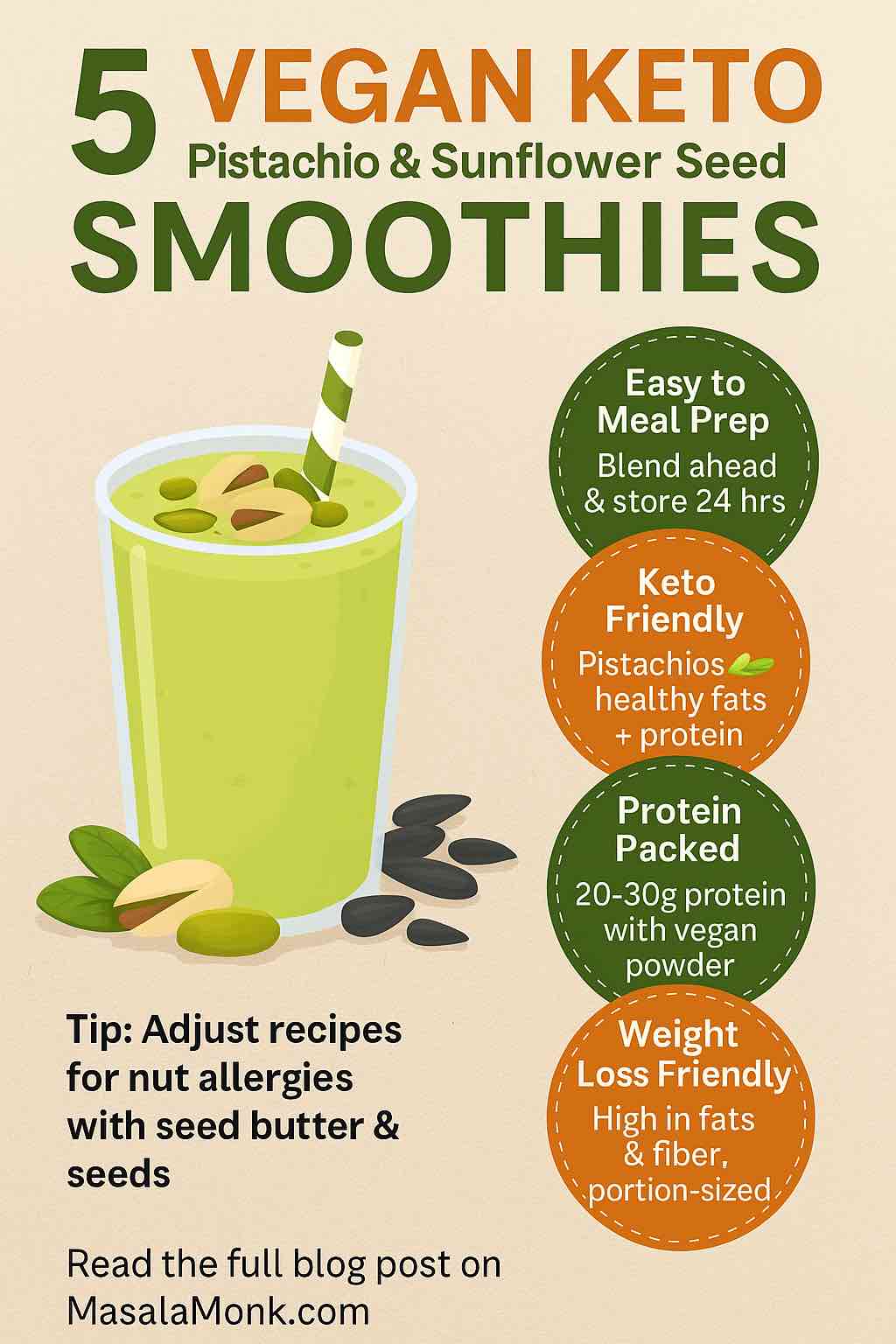
Innovate Your Vegan Keto Breakfast: 5 Pistachio and Sunflower Seed Smoothie Recipes for Meal Replacement

VEGAN KETO Pistachio & Sunflower Seed SMOOTHIES

When you’re navigating a vegan keto lifestyle, breakfast can feel like a tricky puzzle: you want something quick, nutrient-dense, low in carbs, but still satisfying. Enter the ultimate solution: pistachio and sunflower seed smoothies. These nutrient-packed ingredients deliver a powerhouse of healthy fats, protein, and fiber without tipping the carb scale. Let’s explore five creative and practical smoothie recipes designed specifically for meal replacement on a vegan keto diet.


Why Pistachios and Sunflower Seeds?

Both ingredients are often underestimated in the smoothie world but shine on a vegan keto plan:

  • Pistachios are rich in monounsaturated fats, magnesium, vitamin B6, and even provide a complete source of protein.
  • Sunflower seeds offer vitamin E, selenium, and a solid profile of healthy fats and fiber.

Together, they form the perfect base for creamy, satiating, and nutrient-balanced smoothies.


Smoothie 1: Green Pistachio Crunch

Ingredients:

  • 1/4 cup raw pistachios (soaked for 10 minutes)
  • 2 tbsp raw sunflower seeds
  • 1 cup unsweetened almond or coconut milk
  • 1 handful spinach
  • 1 tbsp chia seeds
  • Ice cubes

Directions: Blend all ingredients until smooth. For a little texture, pulse in a few extra sunflower seeds at the end.

Why it Works: This recipe delivers a perfect trio of fats, fiber, and protein, and the spinach adds micronutrients without altering the taste.


Smoothie 2: Pistachio-Matcha Mint Refresh

Ingredients:

  • 1/4 cup pistachio butter
  • 1 tsp ceremonial matcha
  • A few fresh mint leaves
  • 1 scoop vegan vanilla protein powder
  • 1 tbsp hemp seeds
  • 1 cup unsweetened oat or almond milk
  • Ice cubes

Directions: Blend until creamy and bright. Garnish with a mint sprig for a refreshing morning kick.

Why it Works: Matcha boosts metabolism and focus, while mint aids digestion. Hemp seeds add extra protein and omega-3s.


Smoothie 3: Chocolate Sunflower Power

Ingredients:

  • 2 tbsp sunflower seed butter
  • 1 tbsp unsweetened cocoa powder
  • 1 cup coconut milk + 1/2 cup water
  • 1 scoop vegan chocolate protein powder (optional)
  • 1/2 tsp vanilla extract
  • Ice cubes

Directions: Blend until rich and smooth. For a mocha version, add a shot of espresso.

Why it Works: This dessert-like smoothie satisfies chocolate cravings while keeping carbs in check.


Smoothie 4: Banana-Free Pistachio Protein Shake

Ingredients:

  • 1 cup unsweetened almond or pistachio milk
  • 1 tbsp pistachio butter
  • 1 scoop vegan protein powder
  • 1/2 avocado (for texture)
  • Ice cubes

Directions: Blend until smooth and creamy. Top with crushed pistachios for a crunchy finish.

Why it Works: No banana means minimal carbs. Avocado enhances the texture and adds healthy fats.


Smoothie 5: Pistachio Meal Replacement Shake

Ingredients:

  • 40g soaked pistachios
  • 2 tbsp raw sunflower seeds
  • 1 tbsp ground flaxseed
  • 1 scoop hemp or soy protein
  • 250ml unsweetened almond or oat milk
  • 1/2 tsp cinnamon
  • 1 tsp vanilla extract
  • Ice cubes

Directions: Blend thoroughly until creamy. Optionally add a pinch of salt for balance.

Why it Works: This one is tailored for full meal replacement: high in fats, protein, and fiber to keep you full for hours.


Pro Tips for Smoothie Success

  1. Keep it Cold: Use frozen avocado or cauliflower for added creaminess without diluting flavor.
  2. Batch It: Prep 2-3 servings in advance and store in sealed jars for grab-and-go nutrition.
  3. Customize the Boosters: Add MCT oil for brain fuel, or swap in different greens for variety.
  4. Watch the Carbs: Skip high-sugar fruits and keep total net carbs under 10g per shake.

Final Thoughts

Innovating your vegan keto breakfast doesn’t require exotic ingredients or hours in the kitchen. With pistachios and sunflower seeds as your foundation, you can craft creamy, satisfying smoothies that not only meet your macros but genuinely excite your taste buds. Try rotating these recipes throughout your week to stay energized and in ketosis, without ever getting bored.

FAQs

  1. Are pistachios and sunflower seeds keto-friendly?
    Yes, in moderation. Pistachios and sunflower seeds are high in healthy fats and protein with moderate carbs. Keeping portions controlled (e.g., ¼ cup pistachios) makes them keto-compliant.
  2. Can I prepare these smoothies in advance?
    Absolutely. You can prep and store smoothies in airtight containers in the fridge for up to 24–36 hours. Shake well before consuming.
  3. How much protein is in each smoothie?
    With the inclusion of vegan protein powder, most recipes deliver 20–30g of protein per serving. Without powder, expect 8–15g, depending on the seed/nut base.
  4. What milk alternatives work best for these recipes?
    Unsweetened almond, coconut, and pea milk are best for keto. They’re low in carbs, rich in flavor, and blend smoothly.
  5. Can I skip protein powder and still get enough protein?
    Yes, but you’ll need to rely more on hemp seeds, chia, pistachios, and sunflower seed butter. Protein will be lower but still decent for a meal.
  6. Are these smoothies suitable for weight loss?
    Yes—when portioned appropriately. They’re high in satiety-promoting fats, fiber, and protein, helping manage hunger and blood sugar.
  7. What can I use instead of avocado in the banana-free shake?
    Frozen cauliflower, coconut cream, or extra nut butter can replicate the creamy texture without adding sugar.
  8. Do these smoothies break a fast?
    Yes. Because they contain calories, fats, and protein, they break a fast—but they make a great first meal post-fasting.
  9. Can I freeze these smoothies?
    Technically yes, but texture may degrade slightly after thawing. For best results, freeze ingredients in portions and blend fresh.
  10. How can I adjust the recipes for nut allergies?
    Use seed-based alternatives like sunflower or pumpkin seed butter, and opt for oat or coconut milk instead of nut milks.
Posted on Leave a comment

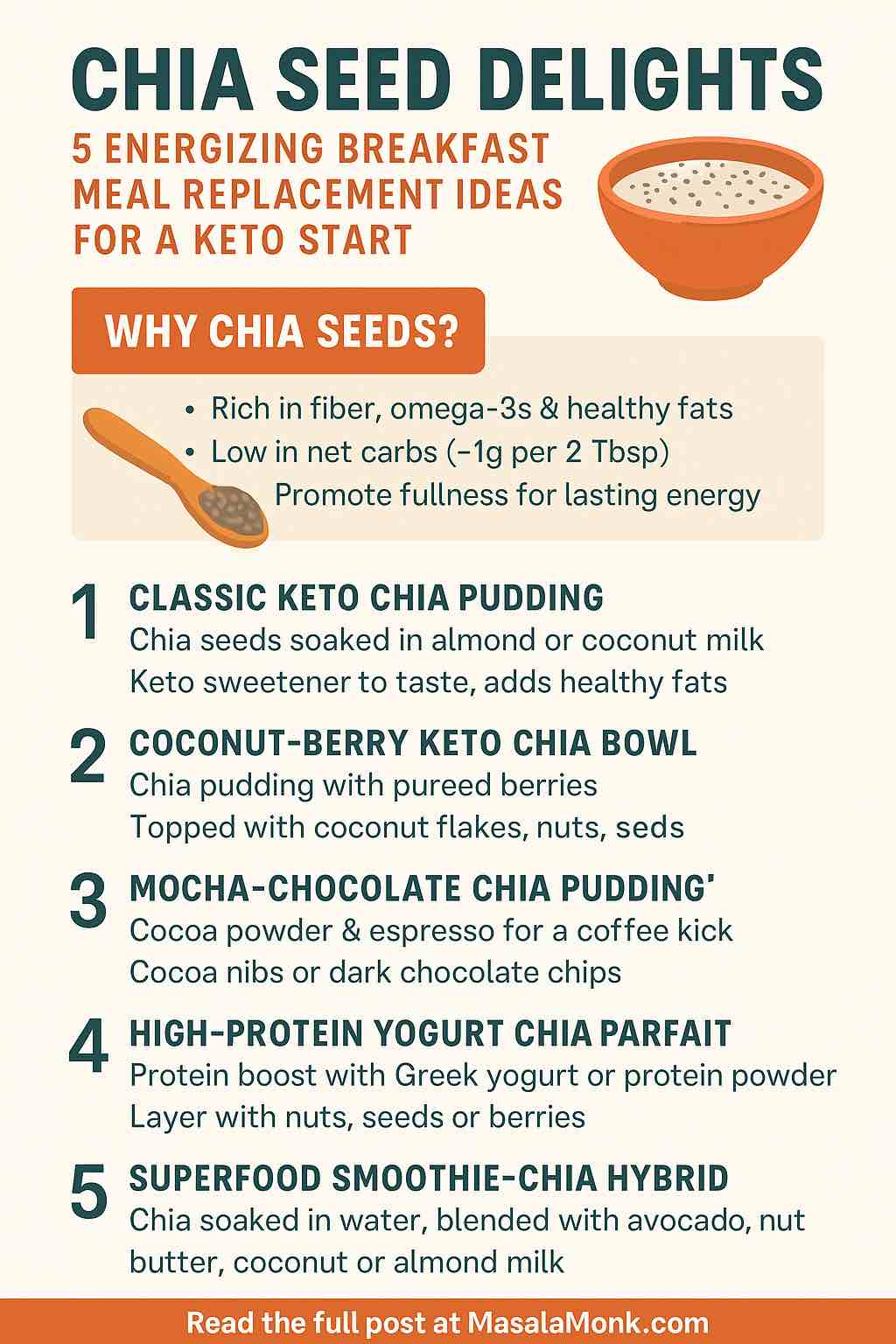
Chia Seed Delights: 5 Energizing Breakfast Meal Replacement Ideas for a Keto Start

CHIA SEED Keto Breakfasts

The ketogenic diet, celebrated for its focus on high-fat, low-carb foods, demands creativity when it comes to breakfast—especially if you’re seeking a quick, energizing start to your day. Enter chia seeds: tiny, nutrient-dense superstars that make the perfect base for a range of satisfying and keto-friendly meal replacements. Packed with fiber, healthy fats, and plant-based protein, chia seeds help maintain energy levels, support digestion, and keep you full for hours.

In this blog post, we explore five deeply satisfying chia-based breakfast ideas, optimized for a ketogenic lifestyle. Whether you’re a meal prepper, smoothie lover, or someone needing variety in texture and flavor, these recipes offer both nutritional balance and practical prep.


1. Classic Keto Chia Pudding

Why it works: It’s simple, customizable, and requires minimal prep time. This base recipe is the foundation for many other variations.

Ingredients:

  • 2 tbsp chia seeds
  • 1/2 cup unsweetened almond milk or coconut milk
  • 1 tbsp MCT oil or coconut oil
  • Low-carb sweetener to taste (erythritol, stevia, monk fruit)
  • Pinch of cinnamon or vanilla extract (optional)

Instructions:

  1. Mix all ingredients in a jar or bowl.
  2. Let sit for 5 minutes, stir again to prevent clumping.
  3. Cover and refrigerate for at least 1 hour or overnight.

Macros (approx):

  • Net Carbs: ~1g
  • Fat: ~21g
  • Protein: ~6g

Tip: Make a batch of 4-5 servings and store them in individual jars for an entire workweek of grab-and-go breakfasts.


2. Coconut-Berry Keto Chia Bowl

Why it works: This variation incorporates antioxidant-rich berries and the creamy richness of full-fat coconut milk, providing a more indulgent experience while staying within keto macro limits.

Ingredients:

  • 2 tbsp chia seeds
  • 1/2 cup full-fat coconut milk
  • 1/4 cup mashed raspberries or blackberries (lower in carbs)
  • 1 tbsp unsweetened shredded coconut
  • Optional: a few sliced almonds for crunch

Instructions:

  1. Mix chia seeds and coconut milk.
  2. Stir in mashed berries and refrigerate for 1 hour.
  3. Top with shredded coconut and almonds before serving.

Macros (approx):

  • Net Carbs: 3-5g (depending on berries)
  • Fat: High (~24g+)
  • Protein: Moderate (~6g)

Tip: If berries are frozen, thaw and mash them before mixing for better texture.


3. Mocha-Chocolate Chia Pudding

Why it works: For coffee lovers, this energizing blend of caffeine and healthy fats delivers a delicious and functional start to your day.

Ingredients:

  • 2 tbsp chia seeds
  • 1/2 cup unsweetened almond milk
  • 1 shot espresso or 1/4 cup strong brewed coffee (cooled)
  • 1 tsp cocoa powder (unsweetened)
  • Low-carb sweetener to taste
  • Optional toppings: cacao nibs or a few shavings of dark chocolate (90%+ cacao)

Instructions:

  1. Combine all ingredients in a jar.
  2. Stir, let sit for 5 minutes, then stir again.
  3. Refrigerate overnight.

Macros (approx):

  • Net Carbs: ~1.5g
  • Fat: ~18g
  • Protein: ~5g

Tip: Add a dash of pink salt to enhance the mocha flavor and help with electrolyte balance.


4. High-Protein Yogurt Chia Parfait

Why it works: For those needing a more substantial protein hit in the morning, combining chia with Greek yogurt or a quality protein powder enhances satiety and supports muscle maintenance.

Ingredients:

  • 2 tbsp chia seeds
  • 1/2 cup unsweetened almond milk
  • 1/2 cup full-fat Greek yogurt or 1 scoop keto-friendly protein powder
  • Optional: 1 tbsp chopped nuts or seeds for topping

Instructions:

  1. Mix chia seeds and almond milk, let sit for 10 minutes.
  2. Layer or stir in the yogurt/protein blend.
  3. Top with chopped nuts or hemp seeds.

Macros (approx):

  • Net Carbs: 2-4g
  • Protein: 20-30g (depending on yogurt/powder)
  • Fat: Moderate (~15-20g)

Tip: Use unflavored or vanilla whey isolate or a plant-based blend with no added sugars.


5. Superfood Smoothie-Chia Hybrid

Why it works: This hybrid gives you the portability and nutrient diversity of a smoothie, paired with the staying power of chia.

Ingredients:

  • 1 tbsp chia seeds (pre-soaked in 2 tbsp water for 10 mins)
  • 1/2 avocado
  • 1 tbsp almond or peanut butter
  • 3/4 cup unsweetened almond or coconut milk
  • 1 scoop protein powder (optional)
  • Dash of cinnamon or turmeric
  • Ice cubes to blend

Instructions:

  1. Blend all ingredients (except chia) until smooth.
  2. Stir in pre-soaked chia seeds.
  3. Let sit 5 minutes, then drink or refrigerate.

Macros (approx):

  • Net Carbs: 2-4g
  • Fat: High (~25g+)
  • Protein: 10-25g (with protein powder)

Tip: You can pour this into a jar the night before and let it thicken in the fridge for a pudding-like texture.


Final Thoughts

Chia seeds are a keto breakfast game-changer—versatile, shelf-stable, and endlessly adaptable. From sweet to savory, creamy to crunchy, these five meal replacement ideas ensure you’re never bored and always fueled. Use these recipes as a base and modify with seasonal ingredients, new spices, or different textures to keep things fresh.

Looking for savory chia breakfast options, batch prep strategies, or a printable recipe card? Drop a comment below or get in touch—I’d love to help you personalize your keto journey.

FAQs


1. Are chia seeds really keto-friendly?
Yes. Chia seeds are low in net carbs (~1–2g per 2 tbsp), rich in fiber (~10g), and contain healthy fats and protein—making them ideal for the ketogenic diet.


2. How long should I soak chia seeds before eating?
At least 15–20 minutes, though overnight soaking is best for optimal texture and nutrient absorption. Stir once after 5 minutes to prevent clumping.


3. Can I eat chia seeds raw or do they have to be soaked?
You can eat them raw, but it’s best to soak them to avoid digestive discomfort and to get the full hydration and gel-forming benefits that improve satiety.


4. How long does chia pudding last in the fridge?
Chia pudding keeps for up to 5–7 days in an airtight container in the refrigerator. Pre-portioning it into jars makes for easy meal prep.


5. What type of milk is best for keto chia pudding?
Use unsweetened almond milk, coconut milk (carton or canned), or even macadamia milk. Avoid sweetened versions—they add unwanted carbs.


6. Can I add fruits to my chia breakfast on keto?
Yes—opt for low-glycemic berries like raspberries, blackberries, or strawberries in small amounts. Limit to 1–2 tbsp to stay under 5g net carbs.


7. How do I make the pudding thicker or thinner?
For a thicker pudding, use less liquid or add more chia. For a thinner texture, add extra liquid and stir well. The typical ratio is 1:4 (chia:liquid).


8. Can I use protein powder in chia pudding?
Absolutely. Adding keto-friendly protein powder (whey isolate or plant-based) boosts the protein content and makes the pudding more filling.


9. Are there savory chia seed options for breakfast?
Yes! Try mixing chia with spices (turmeric, cumin), herbs, and pairing it with avocado, eggs, or cheese for a savory meal replacement.


10. What’s the best way to avoid gritty or slimy textures?
Mix chia seeds thoroughly at the start, stir after 5–10 minutes, and use cold or room-temp liquid. Refrigerating helps the texture improve overnight.

Posted on 1 Comment

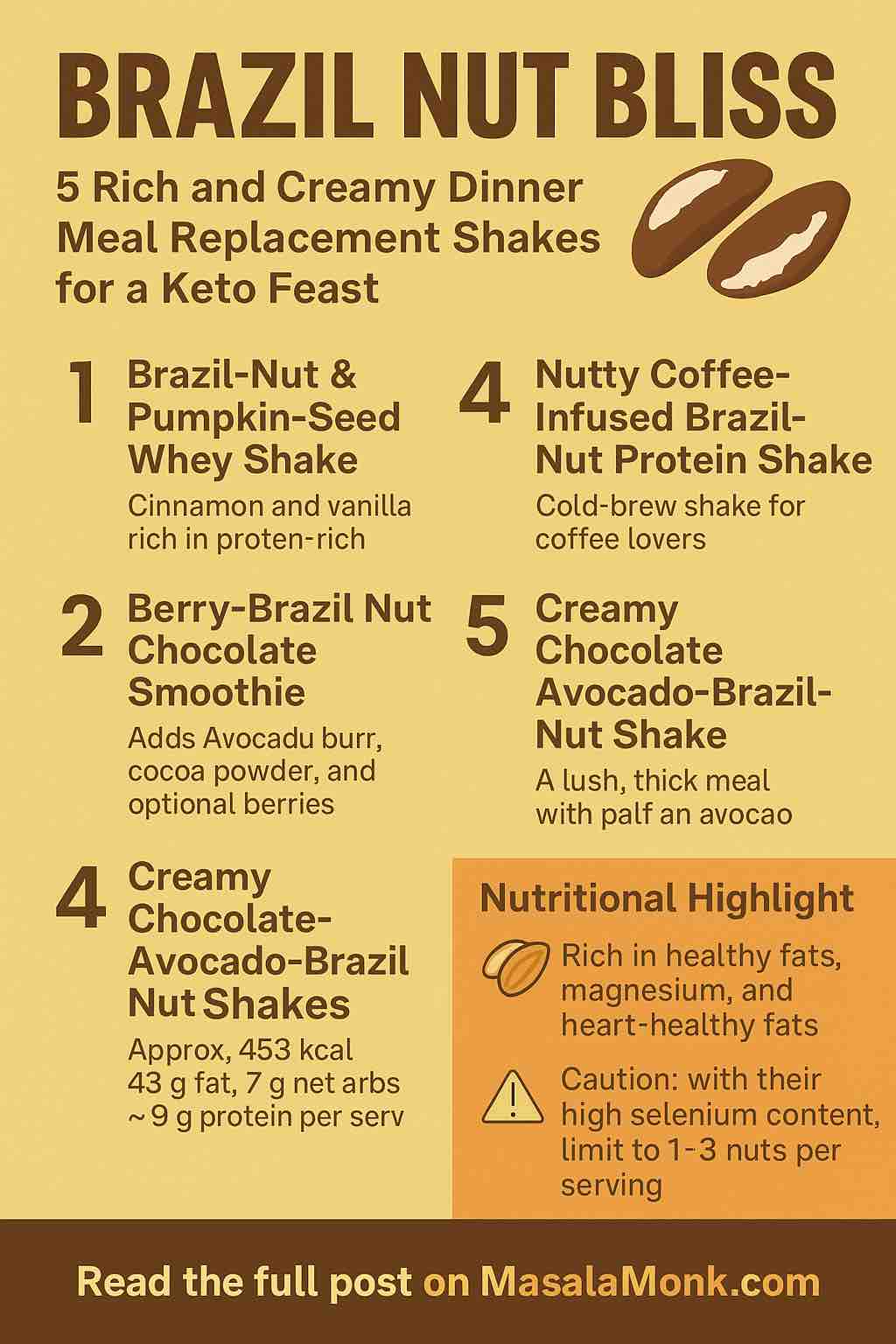
Brazil Nut Bliss: 5 Rich and Creamy Dinner Meal Replacement Shakes for a Keto Feast

BRAZIL NUT Shakes

When you’re deep in ketosis and craving something creamy, filling, and quick for dinner, a shake can be your best friend. But not just any shake. We’re talking about luscious, satiating, nutrient-packed meal replacements powered by one of nature’s most underrated superfoods: the Brazil nut.

Rich in selenium, healthy fats, and buttery texture, Brazil nuts are perfect for keto. In this detailed guide, we’ll explore five indulgent yet nutritious dinner shakes that transform this humble nut into a keto-friendly feast. Plus, you’ll learn the nutritional science, practical tips, and health cautions that make Brazil nuts worth integrating mindfully into your routine.


Why Brazil Nuts Belong in Your Keto Shake

Brazil nuts are keto gold. Just 1–2 nuts a day provide your full recommended daily intake of selenium—a mineral crucial for thyroid function, immune health, and antioxidant defense. They’re high in monounsaturated fats, fiber, magnesium, vitamin E, and plant compounds like ellagic acid.

Key Nutritional Benefits:

  • Selenium: 175% RDI per nut. Supports metabolism and reduces inflammation.
  • Fats: Over 65% fat content, mostly heart-healthy mono- and polyunsaturated fats.
  • Low Carbs: Only ~1g net carbs per 6 nuts.

Caution: Limit intake to 1–3 nuts or 1–2 tablespoons of Brazil nut butter per shake to avoid selenium overdose, which can cause nausea, fatigue, and other symptoms over time.


The Shake Strategy: What Makes a Keto Shake “Dinner-Worthy”?

For your shake to be a viable dinner replacement, it needs more than just calories—it must hit the right macro profile (high fat, moderate protein, low carb), have enough volume to satisfy, and ideally include micronutrients.

Components of a Balanced Keto Dinner Shake:

  • Base: Unsweetened almond, coconut, or avocado milk; heavy cream for richness.
  • Fats: Brazil nut butter, avocado, MCT oil, or seed butters.
  • Protein: Whey isolate, collagen peptides, egg white, or vegan blends.
  • Micros: Leafy greens, berries, spices, cocoa, or low-carb veggies.
  • Flavor enhancers: Stevia, erythritol, cinnamon, vanilla, ginger, or cocoa.

🥤 Brazil Nut Bliss: 5 Meal Replacement Shakes

1. Chocolate Avocado Brazil Nut Shake

Thick, lush, and deeply satisfying.

  • 1 cup unsweetened almond milk
  • 1/2 cup heavy cream
  • 1/2 avocado
  • 6 Brazil nuts (or 2 tbsp Brazil nut butter)
  • 2 tbsp cocoa powder
  • 1 tbsp almond butter
  • 1/2 tsp cinnamon, dash vanilla
  • Stevia or monk fruit to taste
  • Ice

Macros (approx.): 450 kcal | 43g fat | 9g protein | 6g net carbs


2. Nutty Mocha Meal Shake

Coffee meets creamy fat bomb.

  • 1 cup cold brew coffee
  • 1/2 cup coconut milk
  • 1 scoop chocolate whey protein
  • 1 tbsp Brazil nut butter
  • 1/2 tsp cocoa powder
  • Dash cinnamon
  • Ice

Why it Works: Energizing, creamy, and rich in healthy fats and protein.


3. Green Brazil Nut Smoothie

Nutty, nutrient-dense, and slightly sweet.

  • 1 cup almond milk
  • Handful spinach
  • 3 Brazil nuts
  • 1/4 cup frozen berries (strawberries or blueberries)
  • 1 tbsp chia seeds
  • 1 scoop collagen peptides
  • Stevia to taste
  • Ice

Tip: The greens and berries provide antioxidants, while the nuts and chia add healthy fats and texture.


4. Pumpkin Spice Brazil Nut Shake

Creamy autumnal comfort in a cup.

  • 1 cup unsweetened almond milk
  • 2 tbsp pumpkin puree
  • 1 tbsp Brazil nut butter
  • 1/2 scoop vanilla protein powder
  • 1/2 tsp pumpkin pie spice
  • Pinch of sea salt
  • Ice

Bonus: Rich in fiber, beta-carotene, and cozy fall flavors.


5. Coconut Berry Brazil Cream Shake

Bright, tropical, and luxurious.

  • 1/2 cup full-fat coconut milk
  • 1/2 cup almond milk
  • 2 tbsp Brazil nut butter
  • 1/4 cup mixed berries
  • 1 scoop vanilla protein
  • 1 tbsp ground flaxseed
  • Sweetener and ice

Great for: A lighter but filling dinner alternative with tropical notes.


Practical Tips

  • Portion Smart: Stick to ~1–2 tbsp Brazil nut butter or 2–3 nuts per shake.
  • Balance Your Day: If selenium from other sources (eggs, meat) is high, limit Brazil nut intake.
  • Storage: Shakes stay fresh in the fridge up to 48 hours. Shake or blend again before consuming.
  • Prep Ahead: Portion ingredients into freezer bags for grab-and-blend convenience.

Final Word

Keto doesn’t mean compromise—it’s about crafting delicious, intentional meals that nourish. These Brazil-nut-infused dinner shakes hit every mark: high in healthy fats, full of flavor, and nutritionally smart. Just one creamy glass can feel like a feast, making your keto dinner as blissful as it is effortless.

Ready to blend? Your keto dinner revolution starts with a nut.

Frequently Asked Questions (FAQs)

1. How many Brazil nuts are safe to eat per day on keto?
Answer: Limit to 1–3 whole Brazil nuts daily, or about 1–2 tablespoons of Brazil nut butter. This avoids excess selenium, which can be harmful in high doses.


2. Can I replace Brazil nuts with another nut or seed?
Answer: Yes. Macadamia nuts, pecans, or sunflower seed butter are good low-carb alternatives, though they won’t provide the same selenium content.


3. Are these shakes suitable for weight loss on keto?
Answer: Yes, if you manage portion sizes and total daily calories. These shakes are designed to be filling and nutrient-dense, supporting satiety and fat adaptation.


4. Can I make these shakes dairy-free?
Answer: Absolutely. Use coconut or almond milk, omit heavy cream, and choose a plant-based protein powder to keep it dairy-free.


5. Are Brazil nuts safe to eat every day?
Answer: Yes, in moderation. Daily intake should stay below 400 µg of selenium—equivalent to about 1–2 nuts. Regular overconsumption can lead to selenium toxicity.


6. How long can I store these shakes?
Answer: Most shakes will stay fresh in the fridge for up to 48 hours. Shake or re-blend before serving. Avoid freezing if using dairy, as texture may change.


7. Can I add greens or veggies to these shakes?
Answer: Yes! Spinach, kale, or cauliflower rice add fiber and nutrients without many carbs. They pair well with Brazil nut butter for a creamier texture.


8. What protein powders work best for these recipes?
Answer: Whey isolate, collagen peptides, or unsweetened vegan protein powders (pea, hemp, or rice) are all keto-compatible. Avoid powders with added sugar or maltodextrin.


9. Will these shakes break a fast?
Answer: Yes. They are intended as full meal replacements, rich in fat and calories. If you’re looking for a fasting-friendly option, skip added fats and protein.


10. How can I make the shakes thicker and creamier?
Answer: Add avocado, ice cubes, frozen cauliflower, chia seeds, or use coconut cream/heavy cream. These add body without raising carb counts significantly.