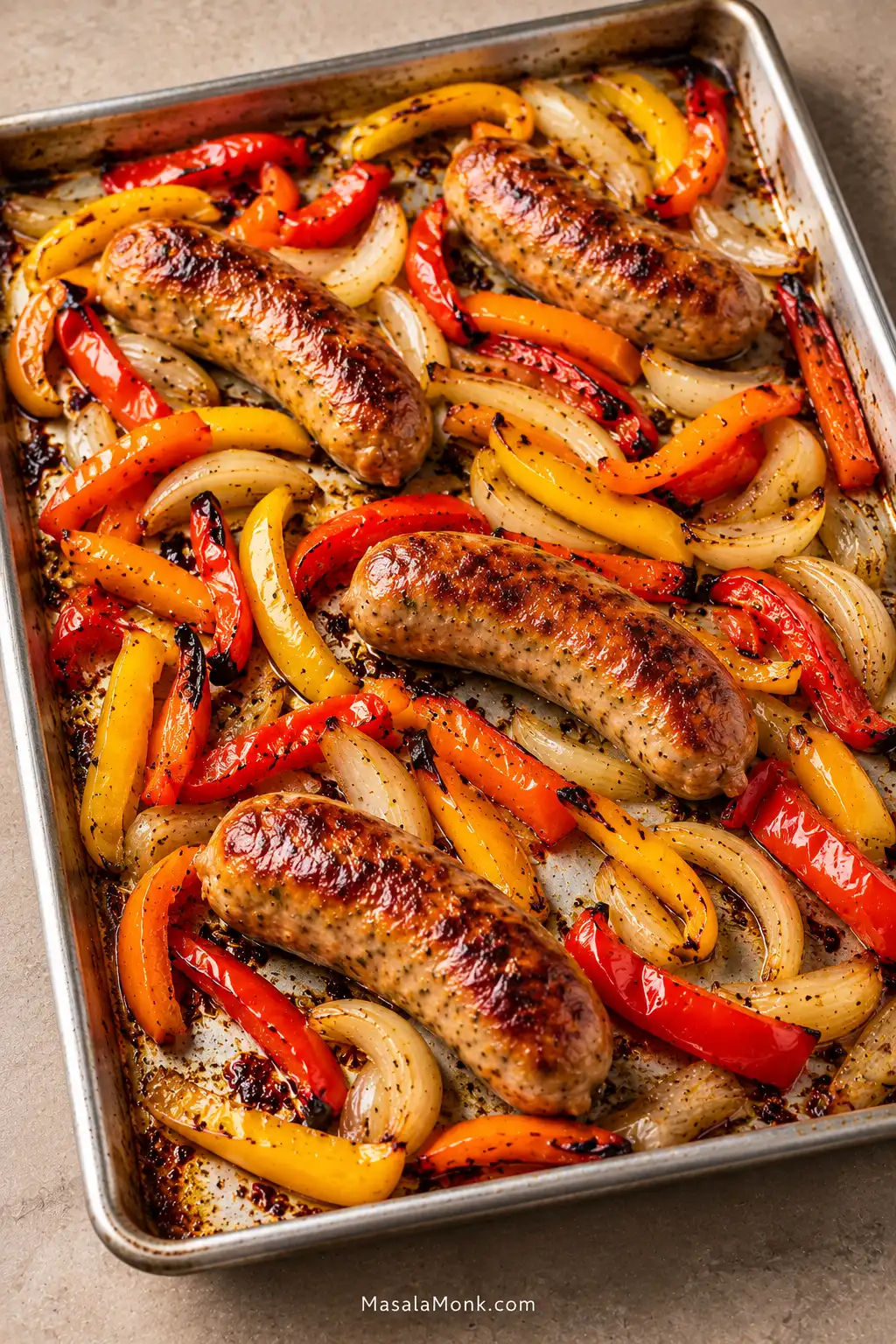
A good tray of sausage and peppers gives you browned sausage, sweet onion, blistered pepper edges and enough savory juices to make a piece of bread worthwhile. It is also the kind of dinner that asks very little of you once the pan goes into the oven—especially on a night when you want a proper dinner without turning cooking into another project.
The trick is getting the sausage and vegetables done together without steaming the peppers along the way. Keep the vegetables substantial, give everything room on the pan, and let the oven handle the rest.
This sheet pan sausage and peppers recipe uses fresh Italian sausage, three bell peppers and a large onion for an easy oven dinner with very little hands-on work. Eat it straight from the pan, spoon it over something that will catch the juices, or pile everything into toasted hoagie rolls.
Sheet Pan Sausage and Peppers at a Glance
Roast fresh Italian sausage, peppers and onion at 425°F / 220°C on an 18 × 13-inch / 46 × 33-cm rimmed sheet pan. Turn the links and stir the vegetables after 15 minutes, then start checking the sausage around 25 minutes. Fresh pork or beef sausage should reach 160°F / 71°C in the center; fresh chicken or turkey sausage should reach 165°F / 74°C. The thermometer, not the clock, makes the final call.
Sheet Pan Sausage and Peppers Recipe
Fresh Italian sausage, bell peppers and onion roast together at 425°F / 220°C until the sausage is browned in patches, the peppers are tender and the onion is sweet at the edges. This method is written for fresh/raw Italian sausage links.
Equipment
- 18 × 13 in / 46 × 33 cm rimmed half-sheet pan
- Cutting board and sharp knife
- Tongs or sturdy spatula
- Instant-read food thermometer
Ingredients
- 1¼ lb / 20 oz / about 570 g fresh Italian sausage links, usually 5–6 depending on size, sweet/mild or hot
- 3 large bell peppers, about 1 lb / 450–500 g, preferably a mix of colors
- 1 very large yellow or sweet onion, about 9–10 oz / 250–285 g
- 2 tbsp / 30 mL olive oil
- 1 tsp dried oregano or Italian seasoning
- 1 tsp garlic powder
- ½ tsp freshly ground black pepper
- ¼ tsp red pepper flakes, optional
- ¼ tsp fine salt to start, plus more after roasting as needed
- 1–2 tsp / 5–10 mL red wine vinegar or fresh lemon juice, optional
- 2 tbsp / about 8 g chopped flat-leaf parsley, optional
Instructions
- Heat the oven. Set a rack in the middle of the oven and heat to 425°F / 220°C. Have a rimmed half-sheet pan ready. Use bare metal for the strongest contact browning; parchment is the easier-cleanup alternative.
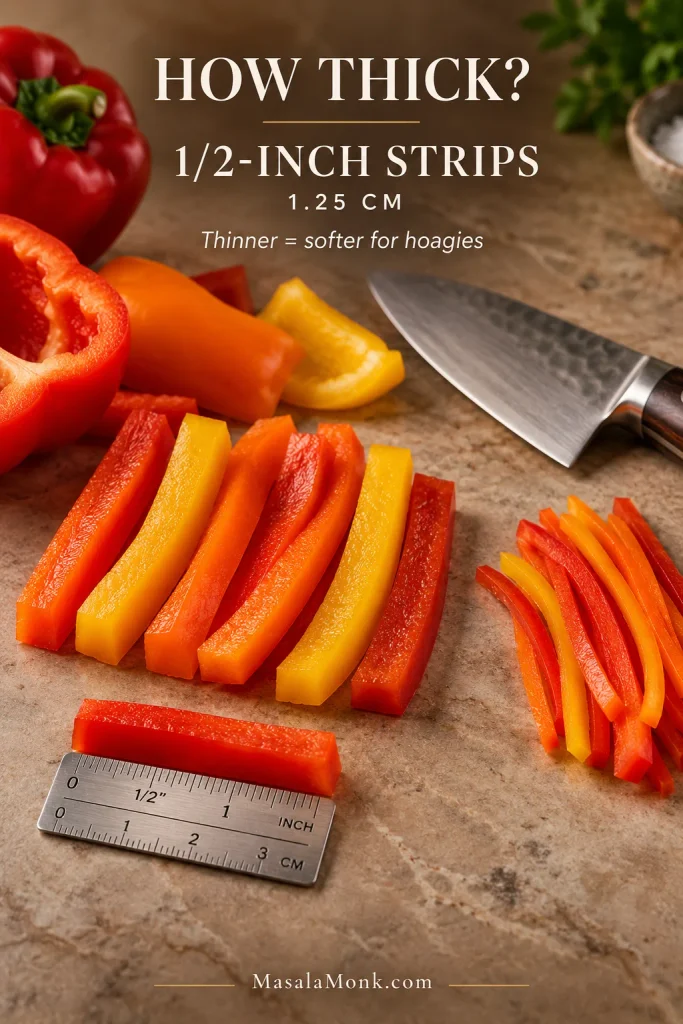
- Cut the vegetables. Slice the bell peppers into strips about ½ inch / 1.25 cm wide. Cut the onion into thick half-moons or wedges of roughly similar size.
- Season. Toss the peppers and onion with the olive oil, oregano or Italian seasoning, garlic powder, black pepper, optional red pepper flakes and ¼ tsp salt. Italian sausage varies considerably in saltiness, so start here and adjust after roasting.
- Arrange the pan. Spread the vegetables into one loose layer and nestle the whole raw sausage links among them. Keep the links whole while they roast; slice them after resting.
Roast, Turn and Finish
- Roast for 15 minutes. The vegetables will shrink noticeably as they roast.
- Turn and stir. Flip the sausage links and stir the vegetables. The peppers and onions should now look smaller and softer, with darkening edges here and there and more bare pan visible between them. Spread them back out and roast for another 10–15 minutes.
- Check the sausage. Begin checking around 25 minutes. Fresh pork or beef sausage should reach 160°F / 71°C in the center; fresh chicken or turkey sausage should reach 165°F / 74°C.
- Add more color. If the sausage has reached its safe temperature but still looks pale, broil for 1–3 minutes. Watch continuously and remove ordinary parchment before broiling.
- Rest and finish. Give the sausages 3–5 minutes to rest. Taste the vegetables and adjust the salt. For a brighter finish, start with 1 tsp / 5 mL red wine vinegar or lemon juice, toss, taste, and add more if needed. Scatter over the parsley, if using.
The recipe above is enough to get dinner on the table. Below, the details cover the choices and problems that can change the result—from the sausage you start with and how you cut the vegetables to a watery pan, dark onion edges or links that need a little more color.
A Few Details That Help
Before and During Roasting
Serve, Scale and Save It
Check the Sausage Before You Start
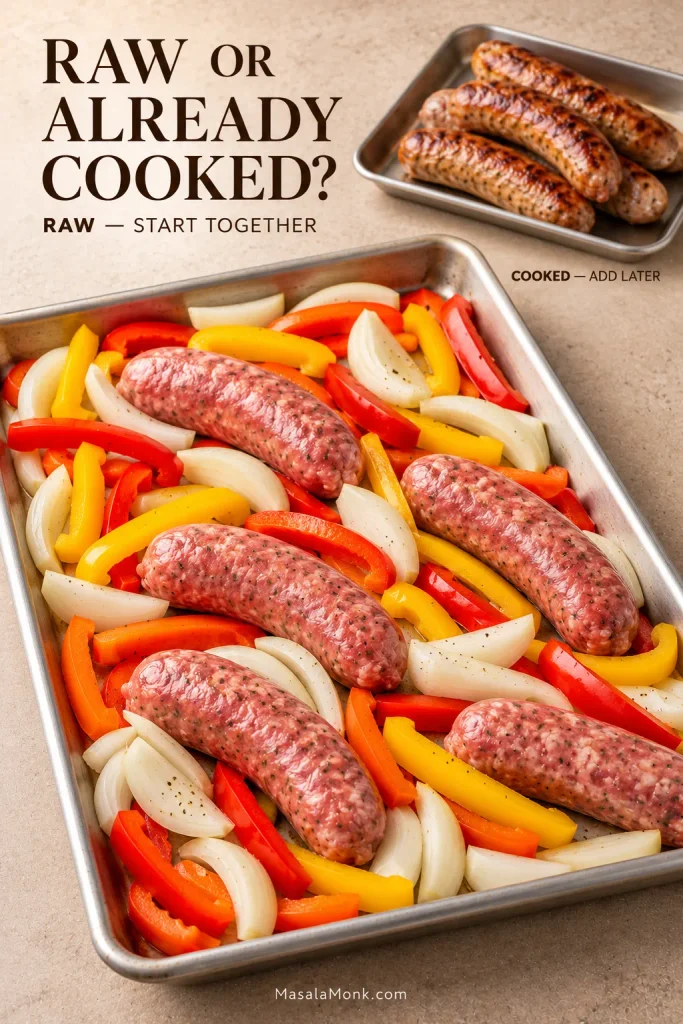
Check the package before anything goes onto the pan. Fresh sausage and fully cooked sausage can look similar in the refrigerator, but their oven timing is very different.
| What You Have | How to Handle It |
|---|---|
| Fresh pork or beef Italian links | Use the main method and cook to 160°F / 71°C. |
| Fresh chicken or turkey links | Use the main method and cook to 165°F / 74°C. |
| Fully cooked sausage | Roast the vegetables for 15 minutes first, then add the sausage for roughly the final 10–15 minutes. |
| Very thick fresh links | Allow extra time and check the center with a thermometer. |
| Thin fresh links | Begin checking before the full cooking window is up. |
Sweet or mild Italian sausage lets the peppers and onion come through clearly. Hot Italian sausage follows the same method, and mixing sweet and hot links works too. Fennel flavor varies by sausage, so check the label if you’re not a fan.
Using kielbasa instead? It is already cooked, so the timing changes. Our kielbasa and potatoes recipe handles that combination separately.
Cut the Peppers and Onion to Match the Sausage
For this version, cut the peppers about ½ inch / 1.25 cm wide. They will soften considerably in the oven but should still have enough body to pick up easily with a fork when the sausage is done.
For softer hoagie-style vegetables, go a little thinner—about ¼–⅜ inch / 6–10 mm—and watch them at the halfway turn. Small onion tips often darken first. Pull off anything actually scorched and leave the browned pieces alone.
Red, orange and yellow peppers bring more sweetness; green keeps a slightly more savory edge. Use whatever mix sounds good.
Leave the sausage links whole; they’re easier to turn and temperature-check, then you can slice them after resting.
Get the Pan Right
Peppers and onions release water as they cook, while sausage adds fat and juices. Give that moisture room to sizzle away around the food instead of collecting underneath it. A standard half-sheet pan is a good fit for this batch.
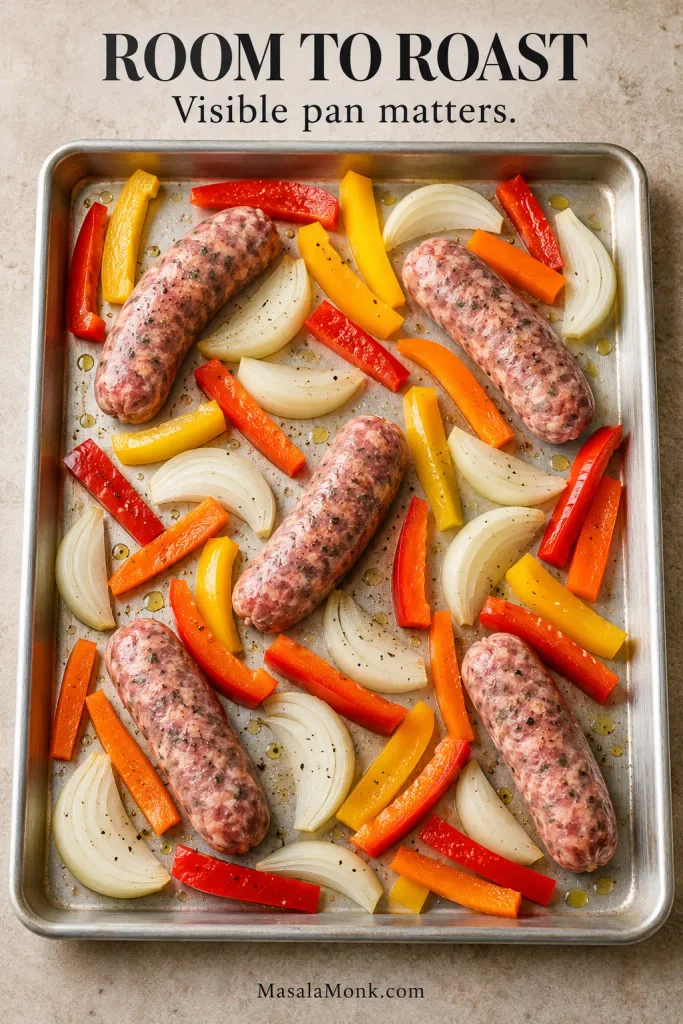
- Dry visibly wet peppers after washing.
- Spread everything into one layer.
- Keep broth, water and marinara off the roasting pan.
- For a larger batch, use another pan.
If the vegetables are turning tender but the pan still looks pale and wet, check the spacing before changing the seasoning or oven temperature. Crowding is often the reason roasting has started to behave more like steaming.
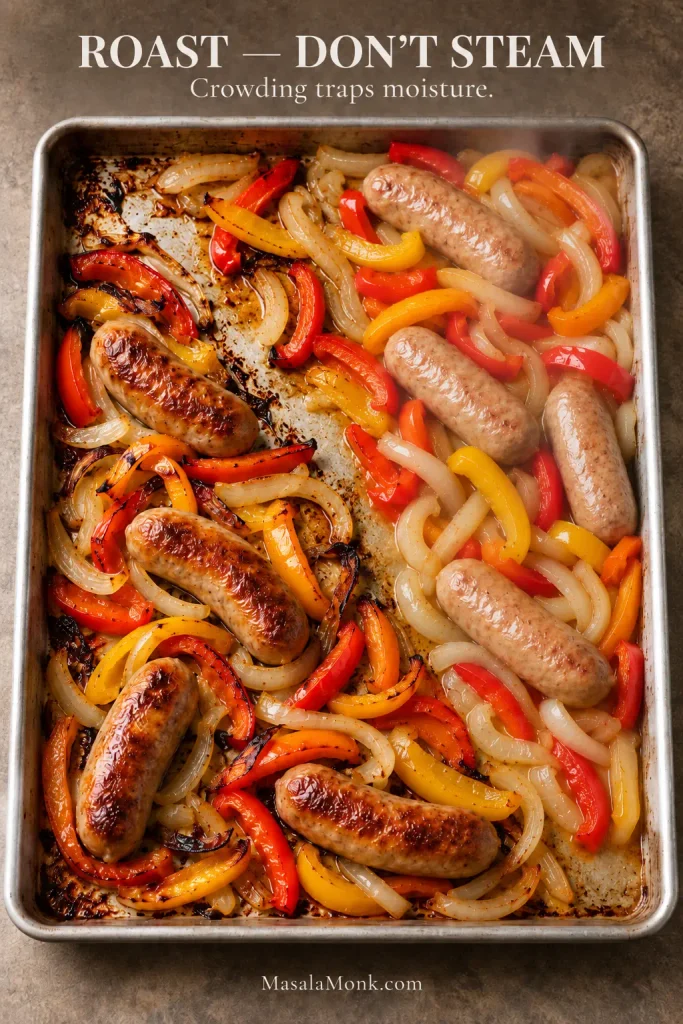
Use bare metal for the best browning. Parchment makes cleanup easier, but you give up some direct pan contact. Ordinary parchment also needs to come off before the pan goes under the broiler.
What the Pan Should Look Like After 15 Minutes
At the halfway turn, judge the pan by its progress rather than by final color: the vegetables should be smaller and softer, with more metal beginning to show between them.
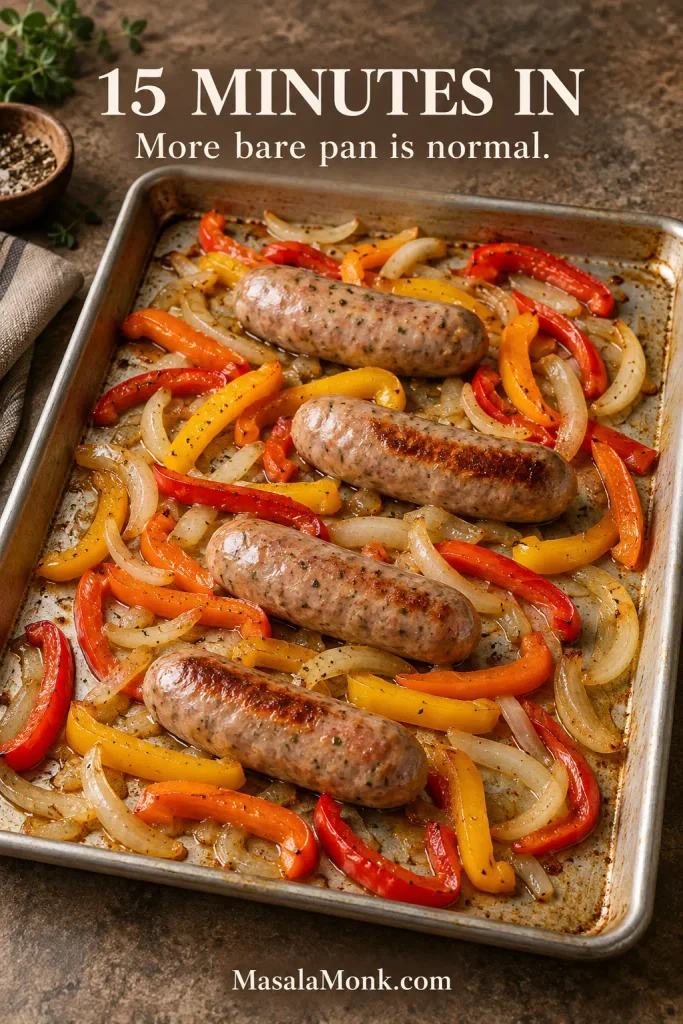
The sausages do not need to color evenly on every side. Contact points against the hot metal will usually go darkest. Turn them once halfway through and leave the rest to the oven.
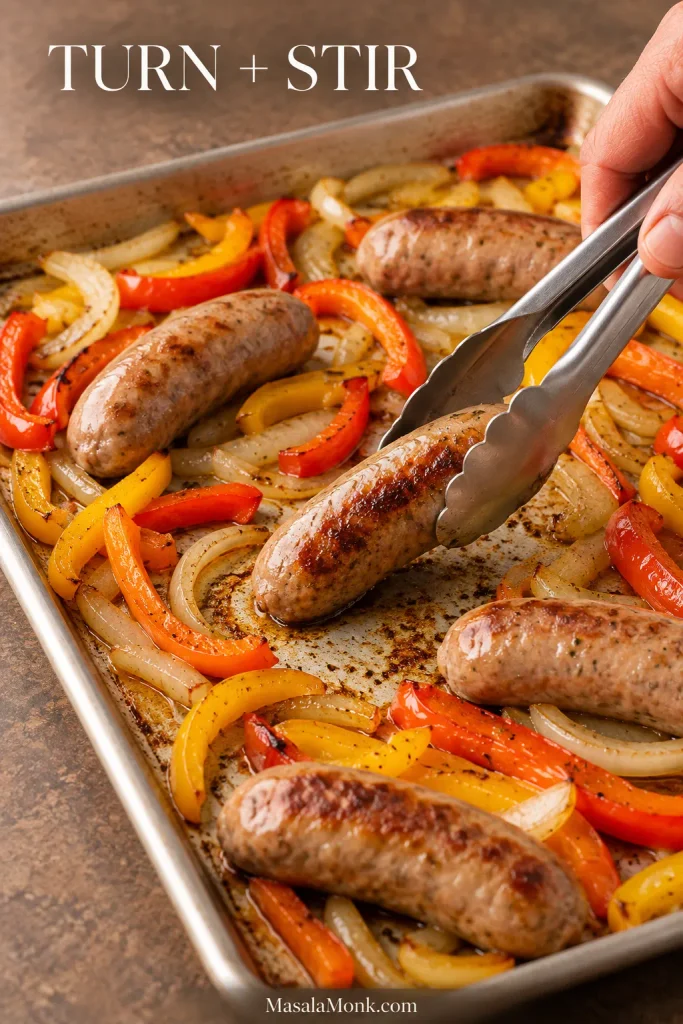
Know When It Is Done
Start looking closely around the 25-minute mark. Some links will be ready; unusually thick ones may need longer.
- Sausage: browned in patches and safely cooked through. It does not need to be dark all over.
- Peppers: soft and flexible with blistered edges, but not collapsed into the pan juices.
- Onion: tender and sweet, with darker corners here and there.
- Pan: rendered fat and concentrated juices, not a puddle of thin vegetable liquid.
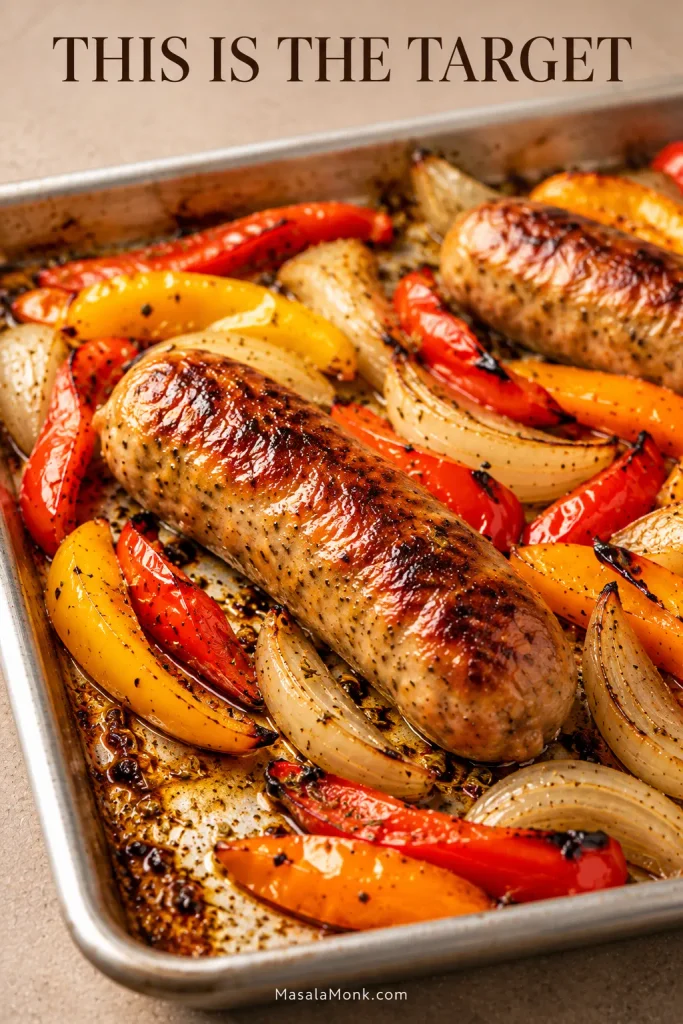
Brown tells you what the pan looks like; temperature tells you whether the sausage is done. Fresh pork or beef sausage should reach 160°F / 71°C; fresh chicken or turkey sausage should reach 165°F / 74°C. Those are the separate safe-temperature targets given by the USDA Food Safety and Inspection Service.
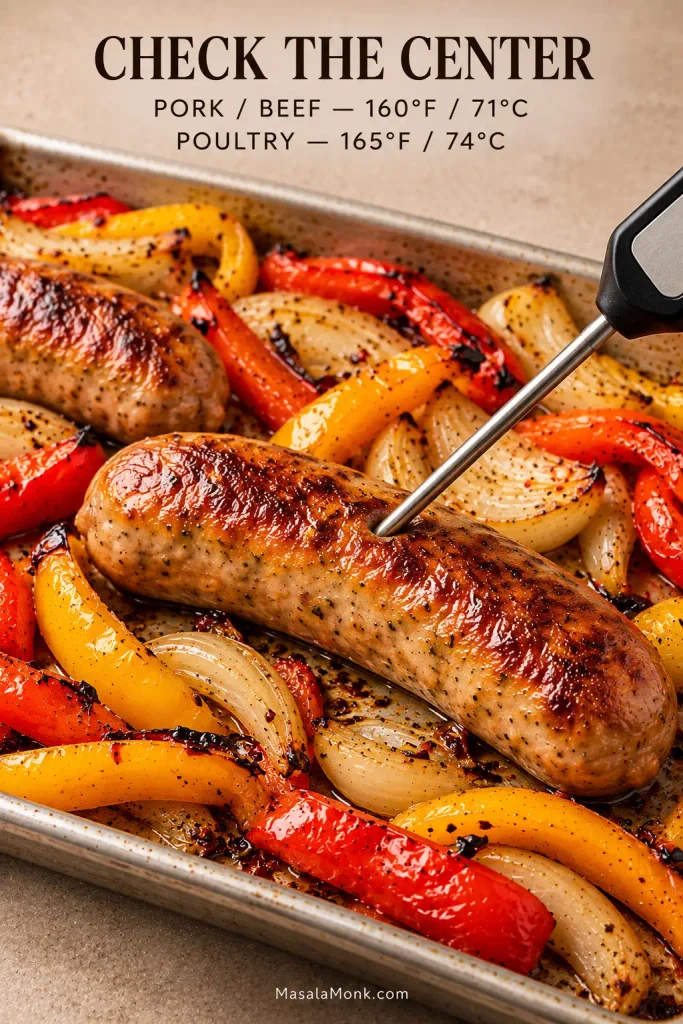
Vegetables ready first? Take them off. Sausage safely cooked but still pale? Give it a minute or two under the broiler.
Taste and Finish the Pan
Italian sausage already brings plenty of salt, spice and fat to the pan, so taste the vegetables before adding more salt. Oregano, garlic and black pepper support those flavors without burying the sweetness of the peppers and onion.
A squeeze of lemon or a splash of red wine vinegar wakes up the rich sausage and sweet roasted vegetables, especially after a few bites. Parsley brings a fresh edge and a little color.
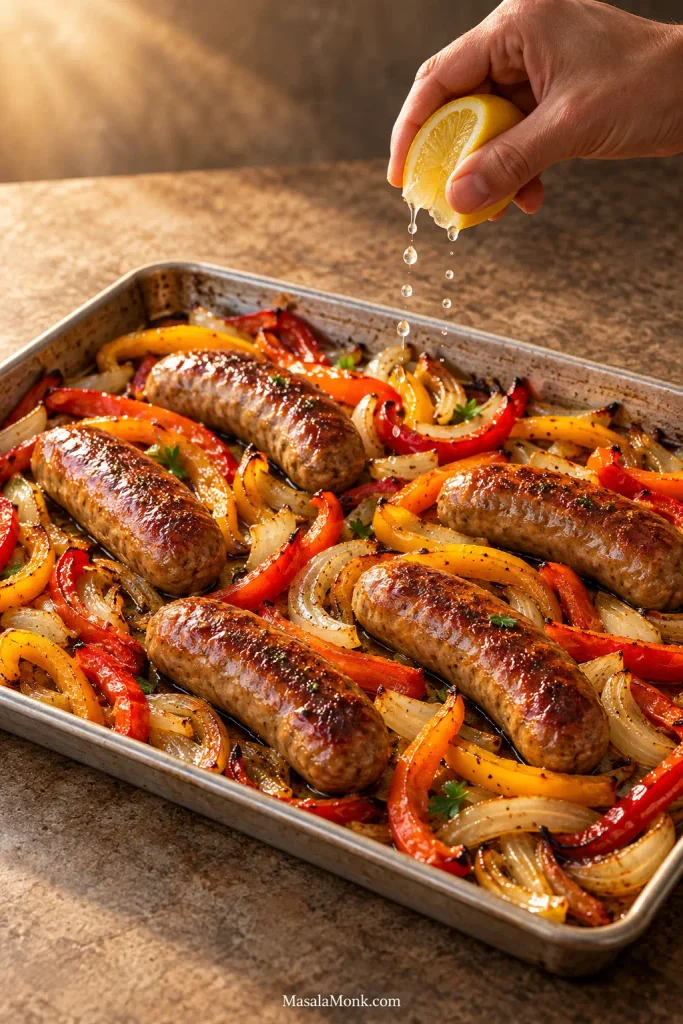
Or keep everything rich and savory and put the contrast alongside it. A cold cucumber salad with vinegar, dill and onion gives you something crisp between bites.
Ways to Serve It
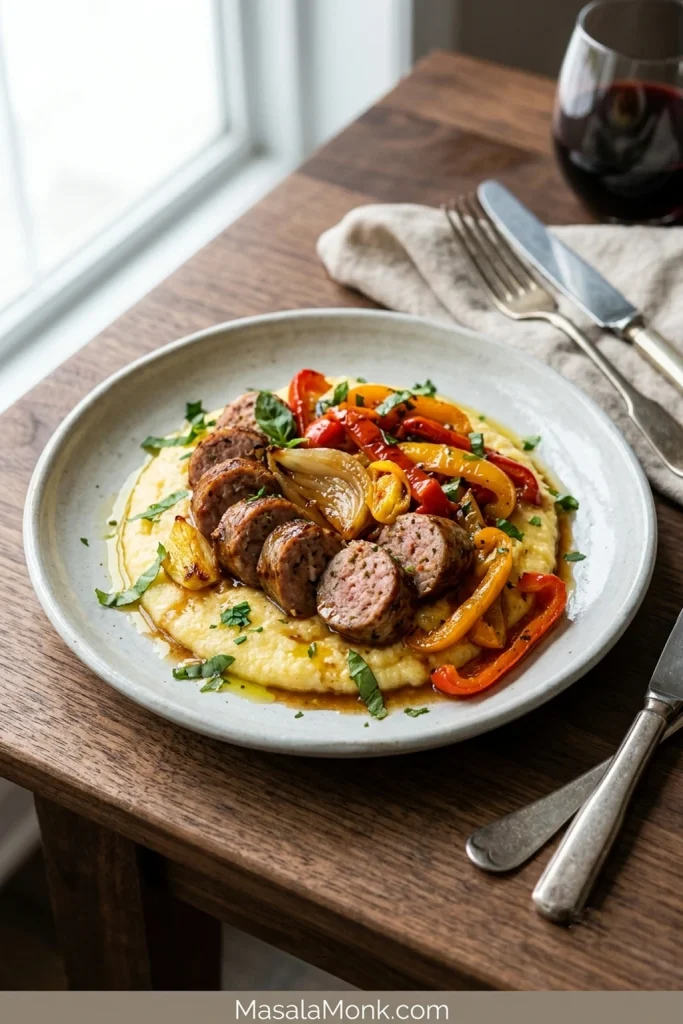
After the sausages have rested, leave them whole or slice them thickly and spoon the peppers and onion over the top. Rice and soft polenta soak up the pan juices beautifully. For a richer plate, put everything over creamy mashed potatoes.
For sausage-and-pepper hoagies
Toast the cut side of the roll well. The peppers are juicy, and a soft untoasted roll can turn soggy quickly. Slice the rested sausage into bite-size pieces, pile on the peppers and onion, and tuck in the provolone while everything is hot enough to soften it around the sausage and peppers.

Marinara is optional; the sausage juices are already doing plenty of work. For homemade rolls, our sourdough bread guide includes homemade hoagie and sub rolls sturdy enough for a generous filling.
When you want tomato sauce
Don’t put the marinara on the roasting pan. Roast first, then spoon the sauce over or underneath the finished sausage and peppers. Our marinara sauce recipe works well here.
Adding potatoes
Potatoes need a head start unless they are cut very small. The simpler option is a second pan: these ranch roasted potatoes cook at the same 425°F / 220°C.
Cooking for a Crowd
For a main course, figure on roughly 4–5 oz / 115–140 g sausage per person—often about one substantial link—with extra for big appetites or loaded hoagies.
| Servings | Fresh Sausage | Bell Peppers | Large Onion | Half-Sheet Pans |
|---|---|---|---|---|
| 4 | 1¼ lb / 20 oz / about 570 g | 3 | 1 | 1 |
| 8 | 2½ lb / 40 oz / about 1.13 kg | 6 | 2 | 2 |
| 12 | 3¾ lb / 60 oz / about 1.7 kg | 9 | 3 | 3, usually in batches |
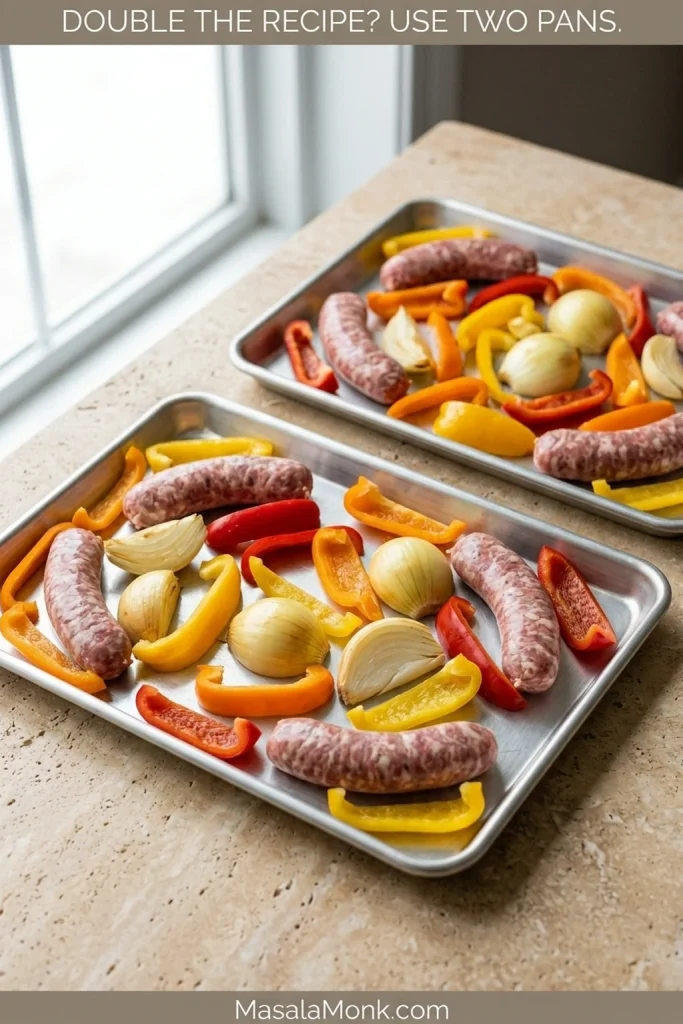
Two pans can cook together if your oven gives them enough room for air to move. Swap their positions halfway when one rack browns faster. For a larger crowd, batches are usually easier than filling every rack at once.
Make Ahead, Store and Reheat
Slice the peppers and onion up to a day ahead and refrigerate them covered, with the raw sausage stored separately. That leaves little more than seasoning and arranging the pan when dinner comes around.
Fresh uncooked sausage generally keeps for 1–2 days in the refrigerator. Once cooked, refrigerate the sausage-and-pepper leftovers for 3–4 days.
Refrigerate cooked leftovers within 2 hours, or within 1 hour when the surrounding temperature is above 90°F / 32°C. Reheat leftovers to 165°F / 74°C. The USDA sausage and food-safety guidance covers safe storage and handling in more detail.
For freezing, cool the sausage and vegetables, pack them airtight, and use them within about 1–2 months for best quality, following USDA freezer guidance for sausage. Thaw overnight in the refrigerator when you can. The peppers will be softer after freezing, which matters much less once the leftovers are headed into a sandwich, skillet or bowl.
Choose the Reheating Method by the Texture You Want
- Best texture: use a hot skillet and let the sausage and vegetable edges pick up some color again.
- Hands-off: spread the leftovers in a single layer on a pan and reheat at 375°F / 190°C until hot through, roughly 8–12 minutes for a modest single-layer portion. Check that the food reaches 165°F / 74°C.
- Fastest: microwave until thoroughly hot; the vegetables will be softer.
The next day, the peppers are softer and the sausage, onion and seasoning have settled together. Tuck them into a toasted roll, spoon them over rice, or go in a saucier direction with our sausage pasta recipe.
Breakfast may be even better. Crisp the chopped leftovers in a skillet, let the bottom pick up some color, then add eggs, potatoes or cheese. Our breakfast burrito recipe gives you a useful framework if everything is headed into a tortilla.

Something Went Wrong? Here’s What to Do
Most problems are visible right on the pan. Save dinner first; adjust the setup next time.
If the Sheet Pan Turns Watery
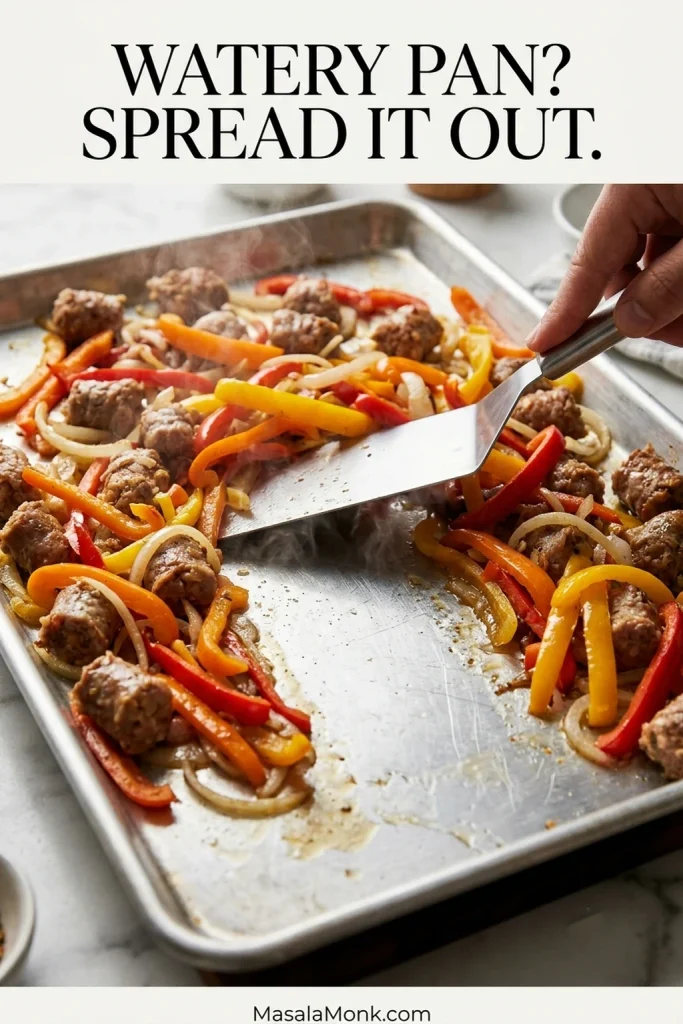
If the peppers and onions have already released enough liquid to make the pan watery, create more exposed metal first. That gives the moisture somewhere to evaporate before you decide whether the finished pan still needs a brief broil.
Match the Fix to What You See
| What You See | Do This Now | Next Time |
|---|---|---|
| Watery peppers and onions | Spread them out. Once the sausage is safely cooked, spoon off excess thin liquid and broil briefly for more color. | Dry wet vegetables and use the full-size pan. |
| Vegetables are tender but pale | Broil briefly once the sausage is safely cooked. | Use bare metal and leave more exposed pan between the vegetables. |
| Sausage is cooked but pale | Broil for 1–3 minutes on a broiler-safe setup. | Let the links make good contact with the pan and turn them halfway. |
| Vegetables are ready before the sausage | Move them to a plate and let the sausage finish to the correct temperature. | Cut the vegetables thicker when using very large links. |
| Onion edges are burning | Remove the scorched pieces while the rest finishes. | Cut the onion into thicker wedges or half-moons. |
| Precooked sausage is dry | Serve it with the juicy peppers and onions or warm marinara. | Add fully cooked sausage only for the final 10–15 minutes. |
| The pan is very greasy | Spoon off excess rendered fat. | Use a little less olive oil with especially fatty sausage. |
| The dish tastes too salty | Serve it with an unsalted starch or extra unsalted vegetables to spread the seasoning across more food. A little lemon or vinegar can balance the richness, but it will not remove the salt. | Start with less added salt on the vegetables. |
| A double batch is soggy | Divide it across another pan and finish in a thinner layer. | Use two pans from the beginning. |
Don’t Leave the Pan Juices Behind
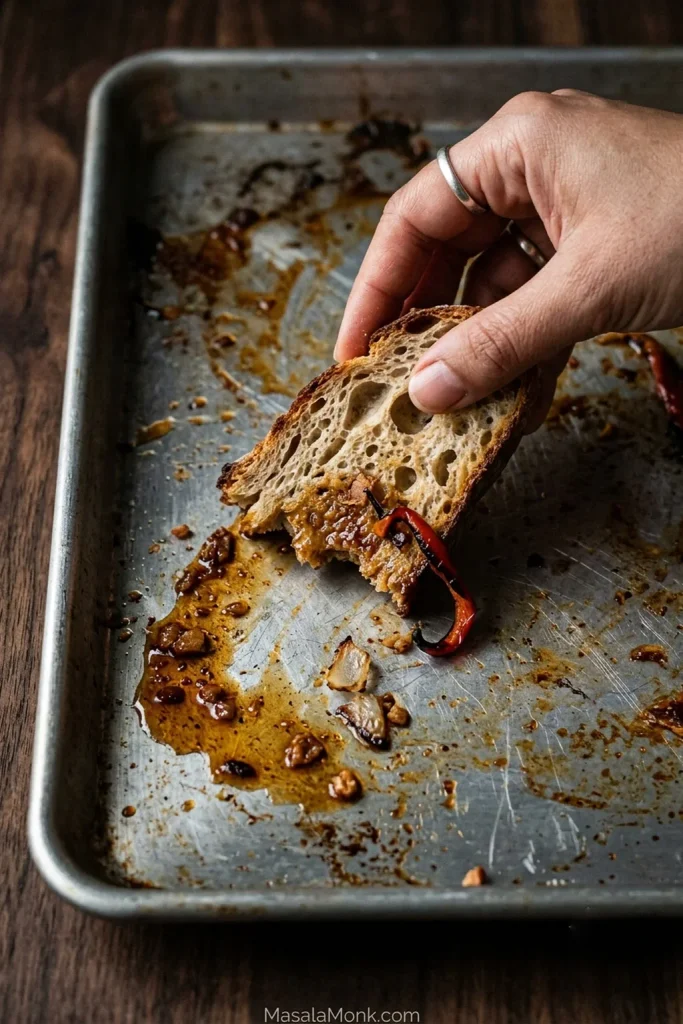
Give the links 3–5 minutes to rest, then slice them if you like. Spoon the hot peppers and onions over the top, scatter on parsley if you have it, add a squeeze of lemon if it tastes right, and bring everything to the table. The browned bits and savory juices left behind are worth a piece of bread.