
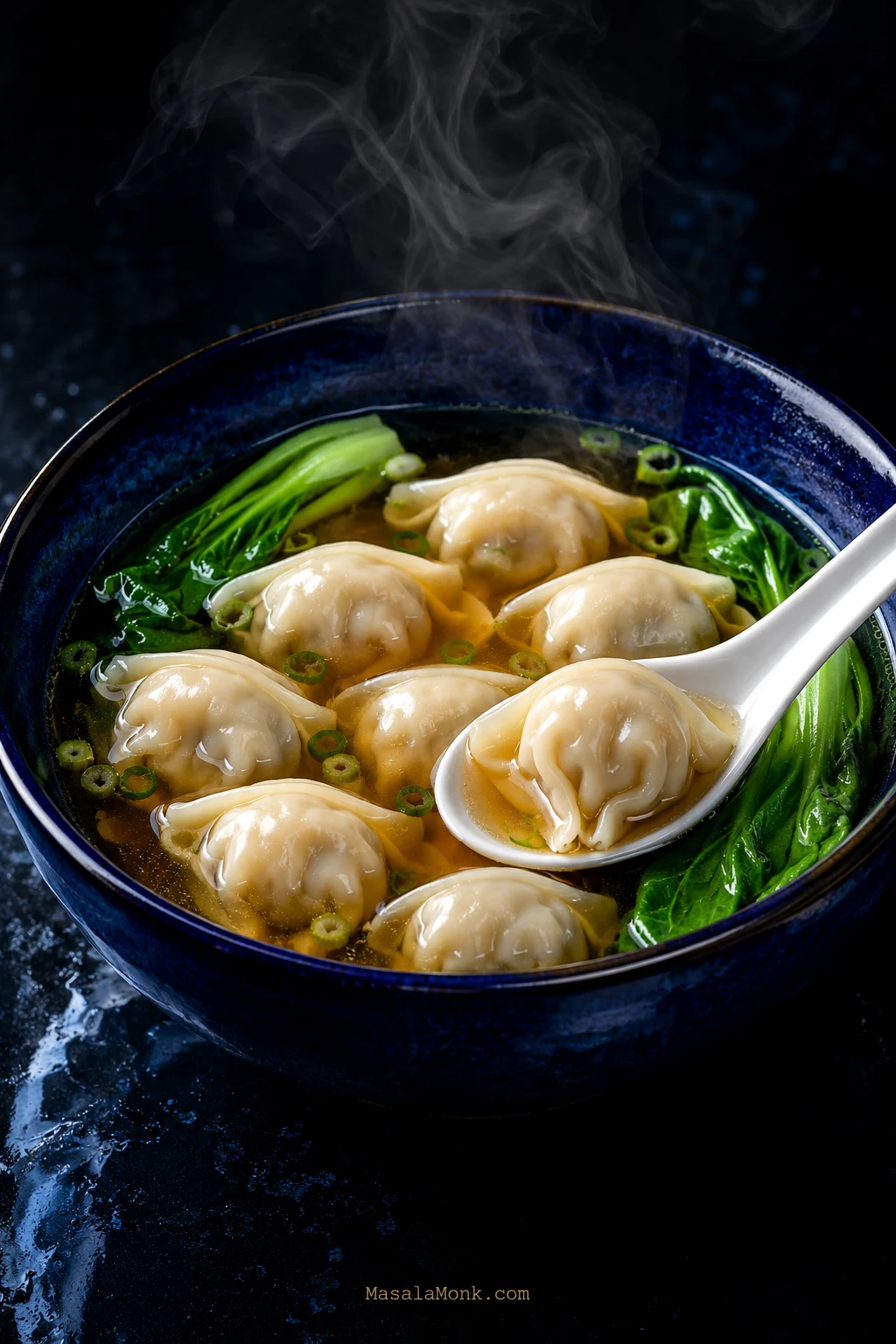
Wonton soup leaves very little to hide. The broth is clear, the wrapper is thin, and the filling is small enough that you notice quickly when any one of them is off.
At its simplest, wonton soup is a Chinese soup of small filled dumplings made with thin wheat wrappers and served in broth. The details change considerably from one region, restaurant and household to another: thin skins or chewy ones, pork or shrimp or both, a spare broth or something much more assertive.
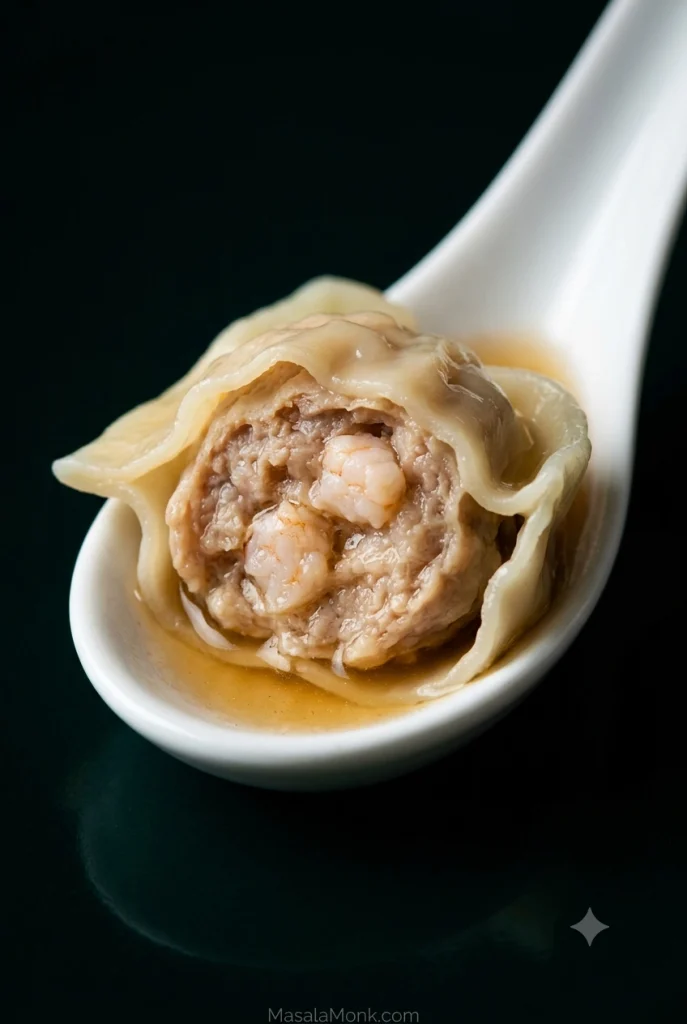
The bowl we are aiming for here sits on the lighter side: thin-to-medium wrappers, a juicy pork-and-shrimp center, and a clear ginger-scallion broth with enough savory depth to taste complete without becoming heavy or soy-dominated. Bite through a good wonton and you get tender wrapper first, then juicy pork and firmer little pieces of shrimp, all against that light broth.
The thick, chewy wontons from an American-Chinese takeout shop are simply a different target, and wrapper choice makes an enormous difference. Homemade broth can miss in another direction: a rich packaged stock sometimes leaves you with chicken soup that happens to contain wontons. Both problems are fixable.
Folding takes some time on a first batch, but the technique gets easier quickly. Cook one wonton before folding the rest, taste what you actually made, and adjust while the bowl of filling is still sitting in front of you. Then cook enough for dinner and freeze the rest raw.
The second bowl is much less work than the first.
Mix until sticky. Seal lightly. Boil separately.
Quick Answer: How to Make Wonton Soup
Mix equal weights of ground pork and chopped shrimp with scallions, ginger, Chinese light soy sauce, Shaoxing wine, sesame oil, white pepper and cornstarch until the filling turns sticky and cohesive. Use a modest amount of filling and only enough water to make the wrapper seam tacky.
Simmer a light chicken broth with ginger and scallions, season it gently, and cook the wontons in separate water so loose wrapper starch stays out of the serving broth. Wontons of this size take about 4–5 minutes fresh or 6–8 minutes from frozen.
For a main bowl, plan on roughly 8–10 wontons with 1¼–1½ cups / 300–350 ml broth. Assemble only when you are ready to eat. The wrappers keep absorbing broth once they are in the bowl.
Wonton Soup Recipe
| Prep & folding | 50–60 minutes |
|---|---|
| Cook time | 15–20 minutes |
| Total time | 1 hour 5 minutes–1 hour 20 minutes; allow longer for a first batch |
| Yield | About 50 wontons; expect roughly 45–60 depending on wrapper size |
| Broth | About 6 cups / 1.42 litres |
| Serving | 4 generous bowls, with extra wontons to freeze |
| Fresh wontons | 4–5 minutes |
| Frozen homemade wontons | 6–8 minutes |
Your first tray may take longer. Folding gets much faster once your hands learn the movement. You need a large pot for the wontons, a medium saucepan, a mixing bowl, a tray or several plates, and a slotted spoon or spider. A kitchen scale and instant-read thermometer are useful extras.
Treat the quantities below as the starting point and the first cooked wonton as the final say. Wrapper thickness, pork, soy sauce and salt vary enough that a small adjustment to your particular batch is completely normal.
Ingredients
For the Pork and Shrimp Wontons
- 225 g / 8 oz ground pork, preferably regular rather than extra-lean
- 225 g / 8 oz raw peeled and deveined shrimp
- Enough square wonton wrappers for about 50–60 wontons, preferably 3½–4 inches / 9–10 cm
- 2 scallions (green onions), very finely sliced
- 2 teaspoons finely grated fresh ginger
- 1 tablespoon / 15 ml Chinese light soy sauce
- 1½ tablespoons / 22 ml Shaoxing wine
- 1½ teaspoons / 7.5 ml toasted sesame oil
- 2 teaspoons / about 6 g cornstarch (cornflour in India and the UK)
- ¼ teaspoon ground white pepper
- ½ teaspoon fine sea salt
- 1 tablespoon / 15 ml cold water or unsalted chicken stock, only if needed
Chinese light soy sauce does not mean reduced-sodium soy sauce. It is the thinner, lighter-colored everyday soy used in Chinese cooking. Dark soy will change both the color and flavor of the broth. Regular all-purpose soy sauce is fine too; taste before adding extra salt.
No Shaoxing wine? Dry sherry is the closest easy substitute. For an alcohol-free version, use unsalted stock or water. You lose some of the fermented-wine aroma, but the wontons still work.
A 1 lb / 454 g package of ground pork leaves you with roughly half a pack after this recipe. Conveniently, the remaining 225 g / 8 oz is also the amount used in Dan Dan Noodles.
For the Clear Broth
- 6 cups / 1.42 litres mild chicken stock total; for a particularly dark or roasted stock, use 5 cups stock + 1 cup / 240 ml water
- A little extra hot water or stock for topping up after simmering, if needed
- 20 g / about ¾ oz fresh ginger, sliced
- 3 scallions, white and light-green parts lightly bruised; reserve green tops
- 1 tablespoon / 15 ml Chinese light soy sauce
- ½ teaspoon sugar
- ¼ teaspoon ground white pepper
- 1 teaspoon / 5 ml toasted sesame oil
- Fine sea salt, only if needed
- Optional for adjusting the finished broth: ½ teaspoon Chinese chicken powder, bouillon according to package strength, or a small pinch / about ⅛ teaspoon MSG
Choose a mild, fairly neutral stock. A particularly dark or roasted one is better diluted before you start.
MSG, chicken powder and bouillon are optional adjustments rather than automatic additions. Taste the finished broth first.
For Serving
- 4 small heads baby bok choy, halved or quartered
- Sliced scallion greens
- Chili oil, optional
- Extra white pepper, optional
- Cilantro, optional
- A few drops toasted sesame oil, optional
Method
1. Chop the Shrimp
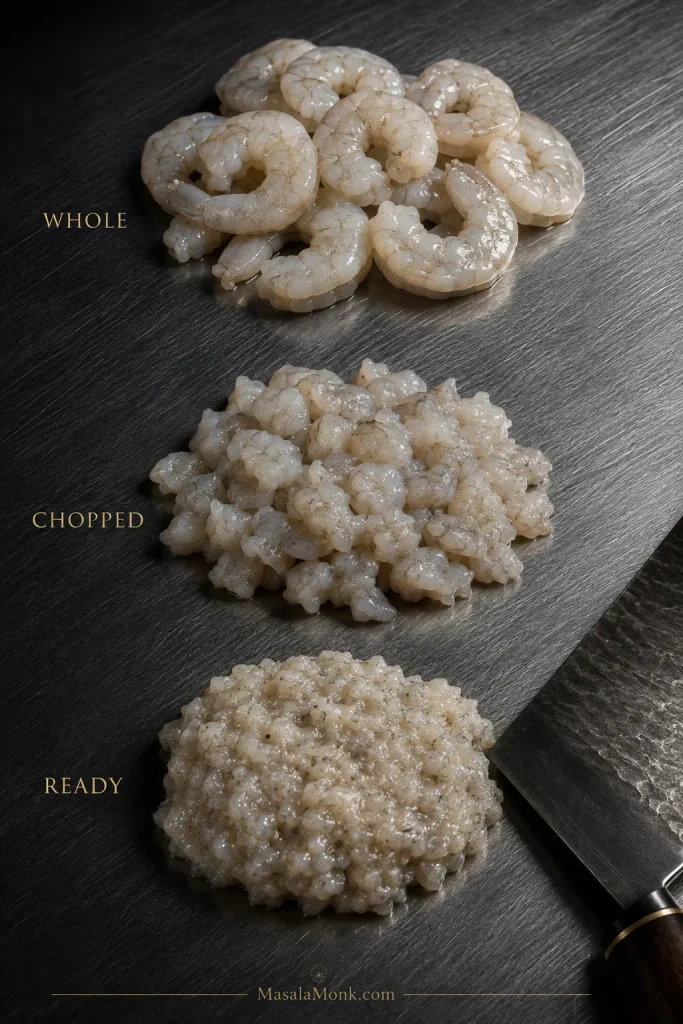
Pat the shrimp dry and chop them into small pieces. Keep going until part of the shrimp becomes sticky and paste-like while plenty of little pieces remain. Those pieces give the cooked filling its small springy bites.
2. Mix Until the Filling Turns Sticky
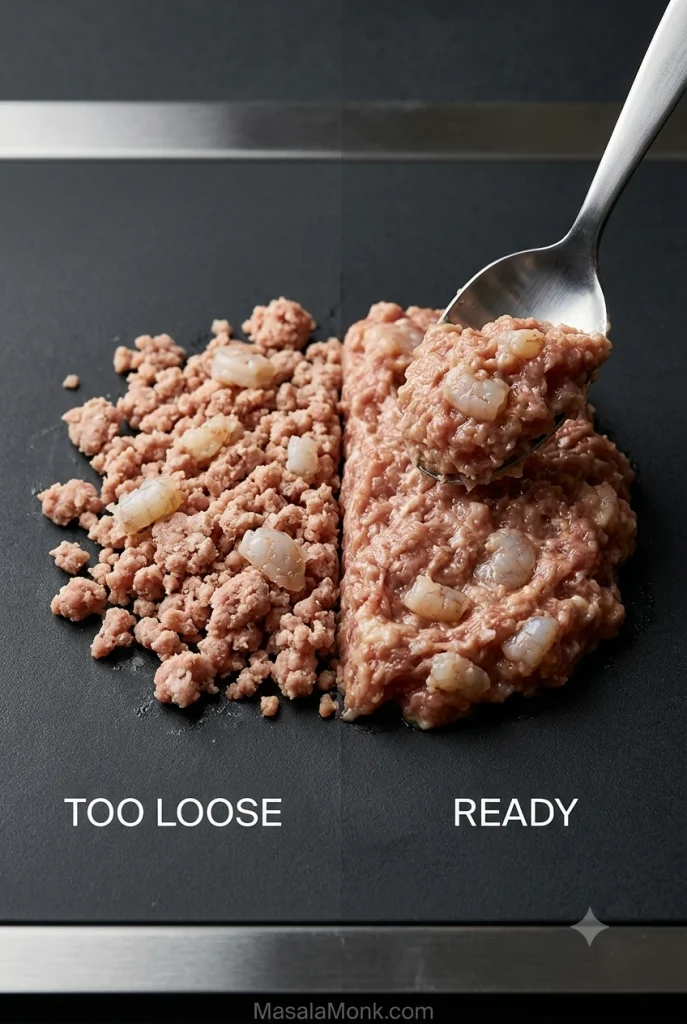
Put the pork, shrimp, scallions, ginger, soy sauce, Shaoxing wine, sesame oil, cornstarch, white pepper and salt in a large bowl. Stir vigorously with chopsticks, a fork or a sturdy spoon until the mixture becomes tacky and cohesive.
It starts loose and granular. Keep mixing until it clings to the spoon and pulls together when lifted. An unusually stiff mixture can take the tablespoon of cold water or stock; work it in until no loose liquid remains.
Stop once the texture has clearly changed. The cooked center should hold together and stay juicy.
3. Cook One Before You Fold the Rest
Bring a small saucepan of water to a boil. It is a much easier way to check the filling than heating a huge pot and leaving it there while you fold fifty wontons.
For a 3½-inch / 9 cm wrapper, begin with about 1 rounded teaspoon / 9–10 g filling. A roomier 4-inch / 10 cm wrapper can take roughly 1 generously rounded teaspoon / 11–12 g.
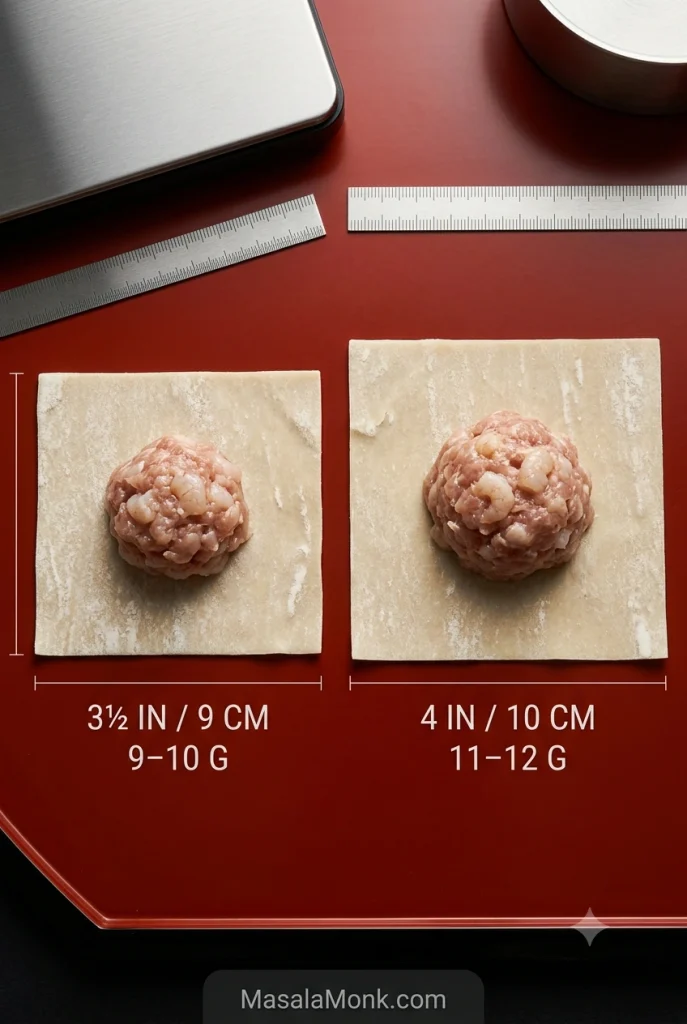
Moisten the sealing edge lightly, fold the wonton and boil it for 4–5 minutes for the sizes used here, until the wrapper is translucent and the filling is cooked through.
Then eat it.
This is where the recipe stops being theoretical. Check the salt and ginger, but also pay attention to the proportions. Too much meat for the wrapper makes the wonton feel heavy; too many folded layers can already be chewy at the corners.
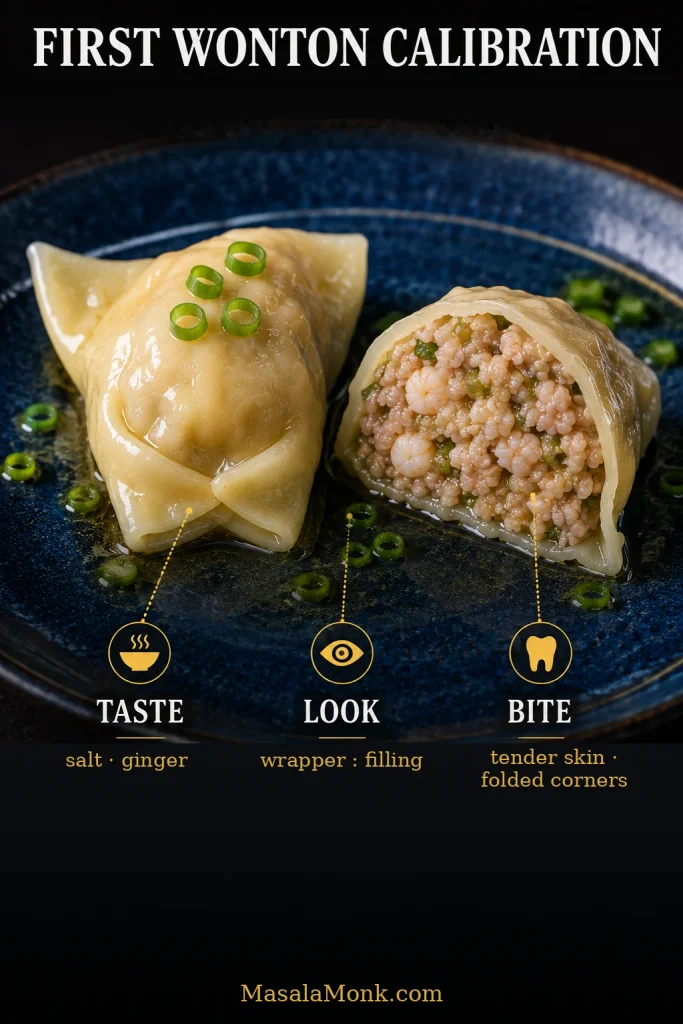
Make those corrections now. Once it tastes right, drain and wash the saucepan; you will use it for the broth.
4. Fold the Wontons
Set out the filling, wrappers, a small bowl of water and a parchment-lined tray or a few plates. Keep the unused wrappers covered while you work.
- Lay one square wrapper on a clean, dry surface with one straight edge facing you.
- Add the appropriate amount of filling just below the center.
- Moisten the far edge and the upper part of the two side edges with a thin film of water. The wrapper should become tacky, not wet and slippery.
- Fold the wrapper in half over the filling to make a rectangle. Press from around the filling outward toward the edges, pushing out trapped air as you seal.
- Check that the sealed edge is clean and that no filling has been trapped in it.
- Lightly dampen one of the two bottom corners on the filling side. Curve the two bottom corners toward each other, overlap them slightly, and press to seal.
- Put the finished wonton on the tray and keep it loosely covered while you continue.
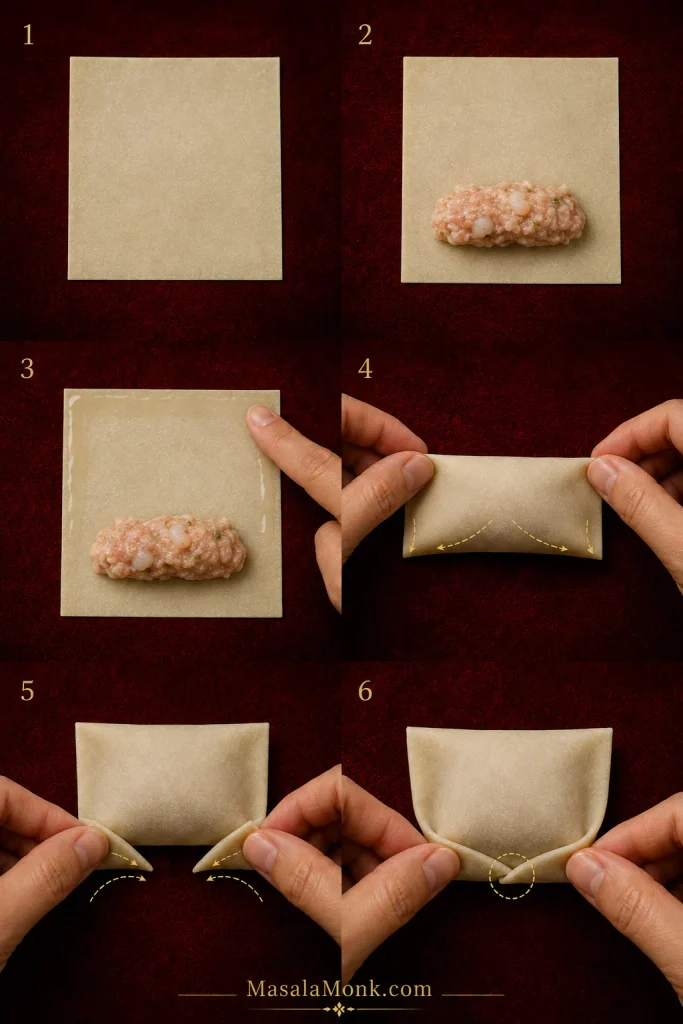
The first few will probably be less tidy than the last few. Leave them alone when the seam holds; crooked wontons taste the same.
On a warm day or during a long folding session, keep the filling chilled and move finished wontons to the refrigerator in batches rather than leaving raw pork and shrimp on the counter.
5. Start the Broth and Wonton Water Together
Near the end of folding, put the washed saucepan and the large wonton pot on the stove together.
Combine the stock, water if using, sliced ginger and bruised scallion pieces in the saucepan and bring it to a gentle simmer for 8–10 minutes. Meanwhile, bring the large pot of plain water to a boil. Reached boiling too soon? Turn it down and bring it back up when the bok choy and wontons are ready to go in.
Remove the ginger and scallions from the broth. Top it back up with hot water or stock to about 6 cups / 1.42 litres if simmering has reduced it noticeably. Add the soy sauce, sugar and white pepper, then taste before adding salt.
The finished broth should smell first of ginger, scallion and white pepper, then taste clean and savory enough that you want another spoonful between wontons. Salt already right but the broth still hollow? Add a small pinch of MSG. A generally weak broth needs chicken powder or bouillon instead—start modestly and taste again.
Stir in the sesame oil at the end. You should notice it as the bowl reaches you, not taste sesame as the main event.
6. Blanch the Bok Choy, Then Cook the Wontons
Blanch the bok choy in the boiling water for 60–90 seconds, until bright green and tender-crisp, then lift it out with a spider or slotted spoon. Use the same water for the wontons.
Add only enough wontons to move comfortably and stir gently as they go in so the wrappers do not settle onto the bottom. Four dinner bowls will often be easier to cook in two loose batches in an average home pot.
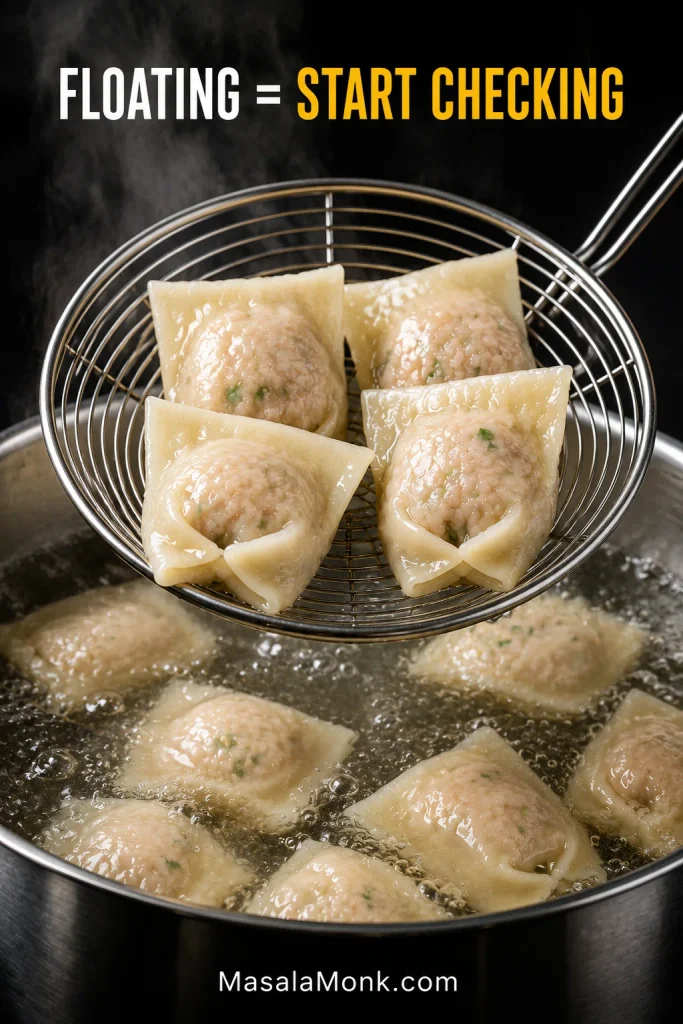
Fresh wontons of this size take about 4–5 minutes. They rise and become more translucent as they cook. Once that happens, start checking rather than adding several precautionary minutes.
Cut open one of the larger wontons when you are unsure about the center, or use an instant-read thermometer. The USDA safe-temperature chart gives 160°F / 71°C for ground pork.
A cooked wonton should have a tender, translucent wrapper that still holds its shape, juicy cohesive pork, and little shrimp pieces with some bounce left in them. The seam should bite through cleanly rather than hanging around as a hard knot of dough.
7. Assemble the Bowls
Put 8–10 wontons and some bok choy in each large bowl. Ladle over about 1¼–1½ cups / 300–350 ml hot broth, then scatter over the sliced scallion greens.
The finished bowl should look almost simpler than the counter that produced it: clear broth, green bok choy and intact wontons sitting just below the surface.
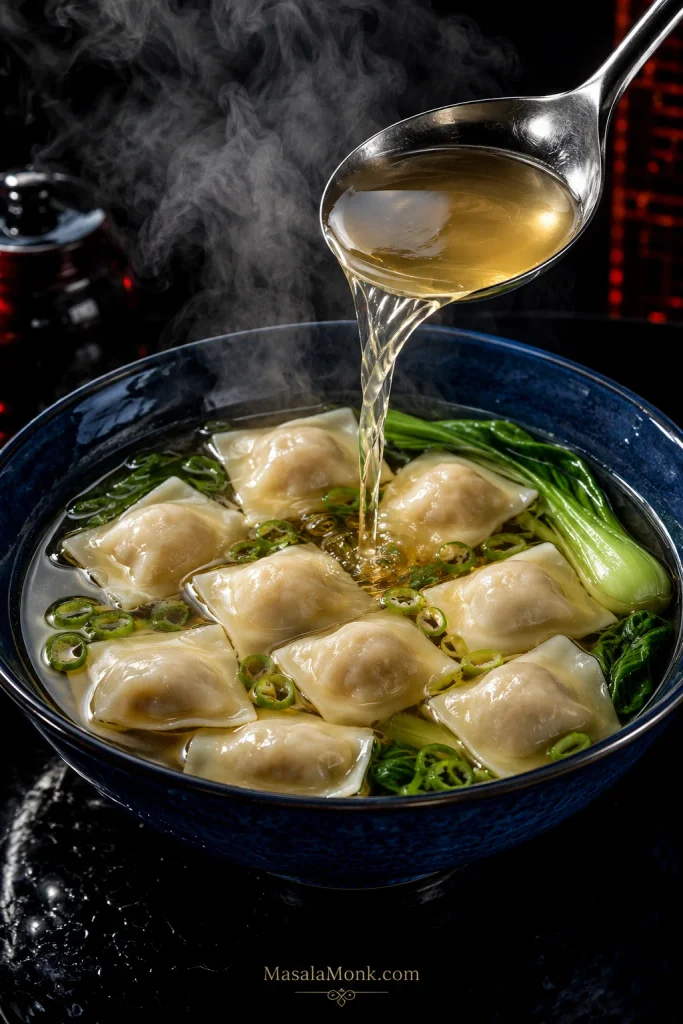
Chili oil, cilantro, extra white pepper or a few drops of sesame oil can all go on at the table. Serve straight away. Any wontons waiting for a second bowl are better off outside the broth.
Recipe Notes
- Wrapper size changes the yield; expect roughly 45–60 wontons from this batch.
- Buy a few extra wrappers because package counts vary and occasional skins tear or arrive dry.
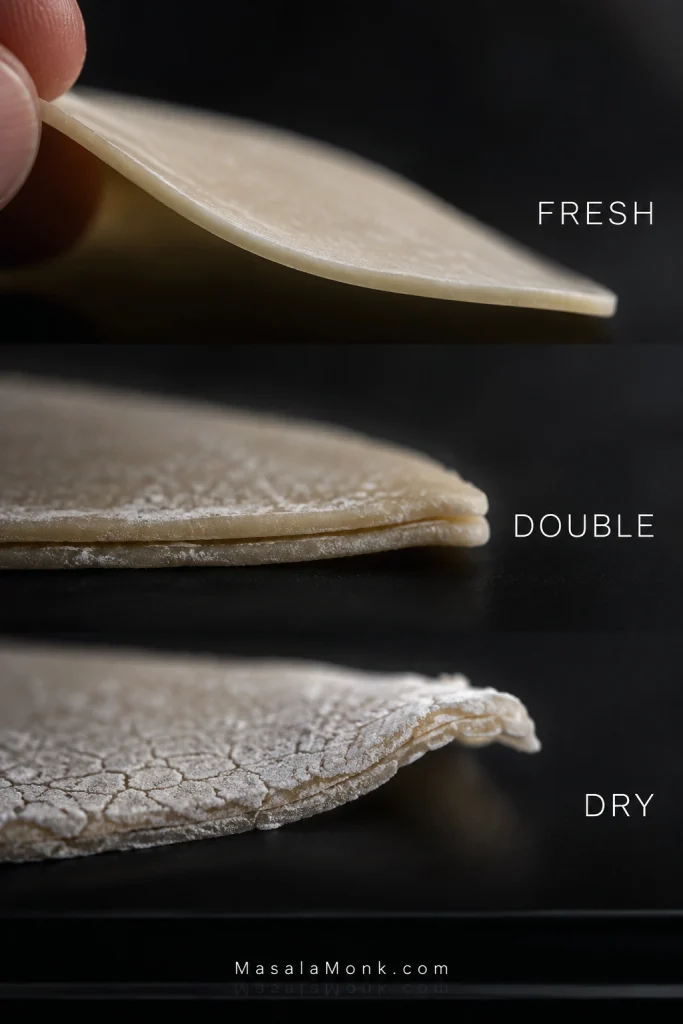
- Check that you have picked up one wrapper rather than two stuck together.
- Cook homemade frozen wontons directly from frozen rather than thawing them.
- Store cooked wontons separately from the broth.
- Standard wonton wrappers usually contain wheat; the filling also contains shellfish, soy and sesame unless suitable substitutes are used.
What to Serve With Wonton Soup
A smaller bowl with 4–6 wontons makes a light starter before something fuller such as Chicken Fried Rice. At 8–10 wontons, the soup is substantial enough to be dinner by itself; something cold and crisp such as a simple cucumber salad is plenty alongside it.
Cut one open and the filling should look cohesive rather than densely packed: moist pork holding everything together, with small pieces of shrimp still visible throughout. That is the texture all the chopping and vigorous mixing were meant to produce.
At this point, you have everything you need to make the soup. The sections below are there when you need to choose a wrapper, fix the broth, cook frozen wontons or work out what went wrong.
Jump to wrappers · filling & folding · broth · frozen wontons · troubleshooting · make-ahead & storage
Which Wonton Wrappers Should You Buy?
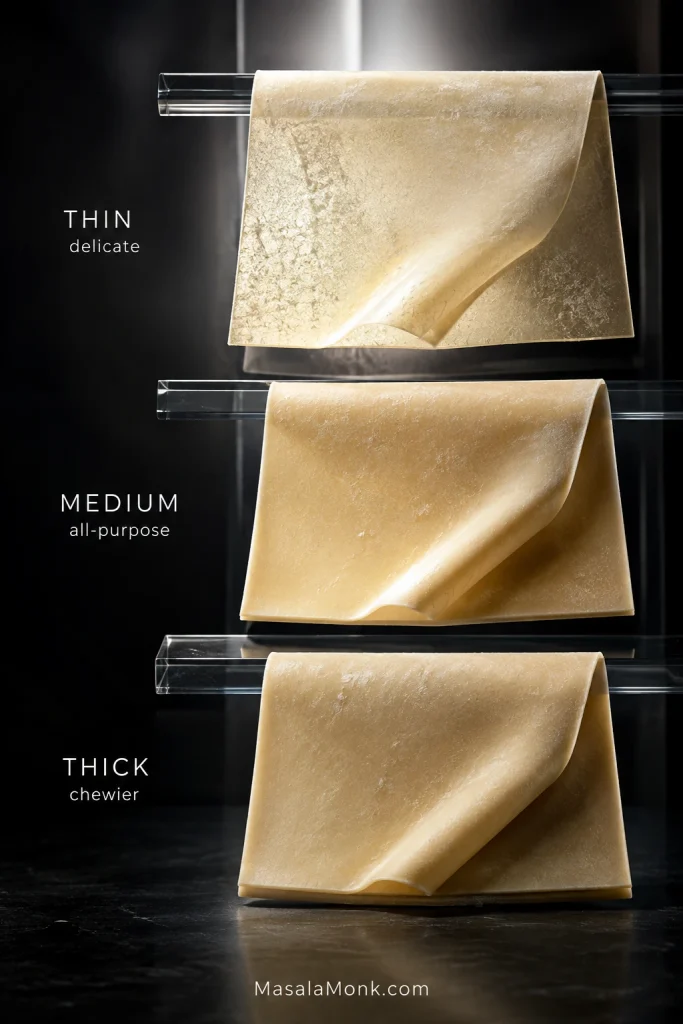
Wonton wrappers vary more than the name suggests. For this bowl, look for thin-to-medium square wrappers around 3½–4 inches / 9–10 cm. They cook tender without being quite as fragile as the thinnest specialty skins.
In Asian groceries, you may see yellow Hong Kong-style skins and white Shanghai-style skins. Yellow wrappers are often thinner; white wrappers can be somewhat sturdier. Brand differences matter more than color, though. Pick up the package and look for skins that appear flexible and fresh rather than dry around the edges.
Thin wrappers give a more delicate, silky wonton. Medium skins are easier to handle.
Then there are the intentionally thick, chewy wontons served by some American-Chinese restaurants—the version people sometimes spend years trying to recreate after moving away from a favorite takeout shop. That texture is a style, not evidence that somebody overcooked the wrapper.
Dry white edges, curled corners and visible cracks are more worrying than the wrapper’s color. Frozen wrappers are fine too; thaw the unopened package slowly in the refrigerator until the skins are completely pliable, then keep the opened stack covered while you work.
Extra wrappers can become another batch of wontons, or take a completely different route in Crab Rangoon, where the same little square skins turn crisp instead of tender.
Wrappers cracking or turning chewy? Jump to Troubleshooting.
Getting the Filling and Fold Right
Once the filling tastes right, most remaining problems are mechanical: how much goes into each wrapper, what gets trapped in the seam, and how many layers collect at the corners.
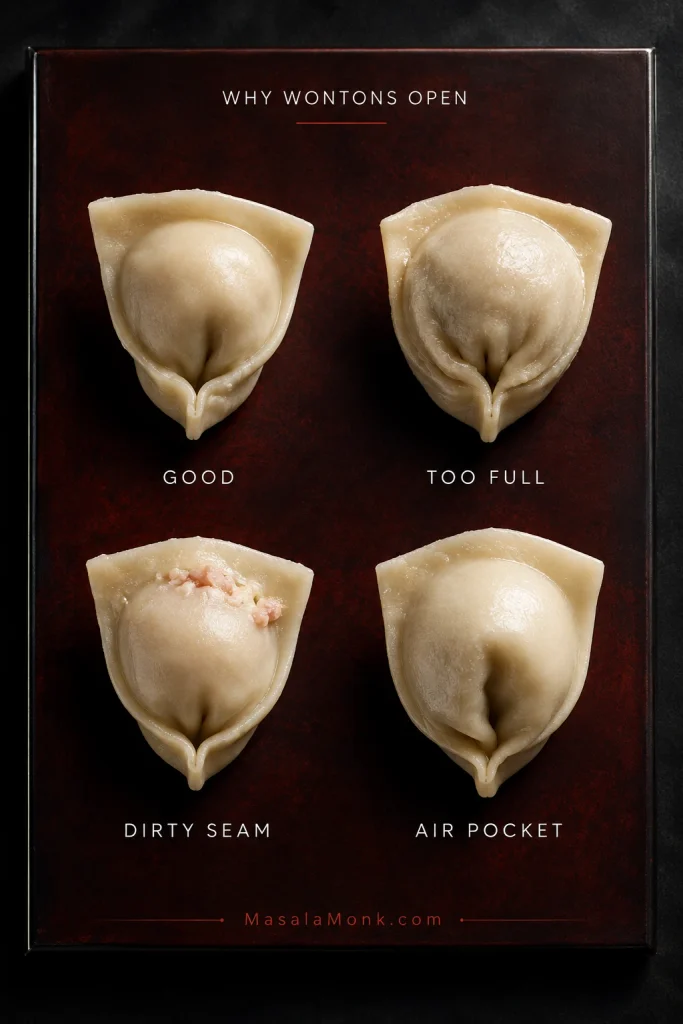
Most leaks begin before the wonton reaches the water: filling caught in the seam, dry wrapper edges, trapped air or simply too much filling. A wrapper that already looks under pressure on the tray is unlikely to become happier in boiling water.
Decorative folds create a different problem. Several layers bunched together at one point need longer to soften, leaving a chewy knot after the rest of the wrapper is tender.
Soup wontons do not need much architecture.
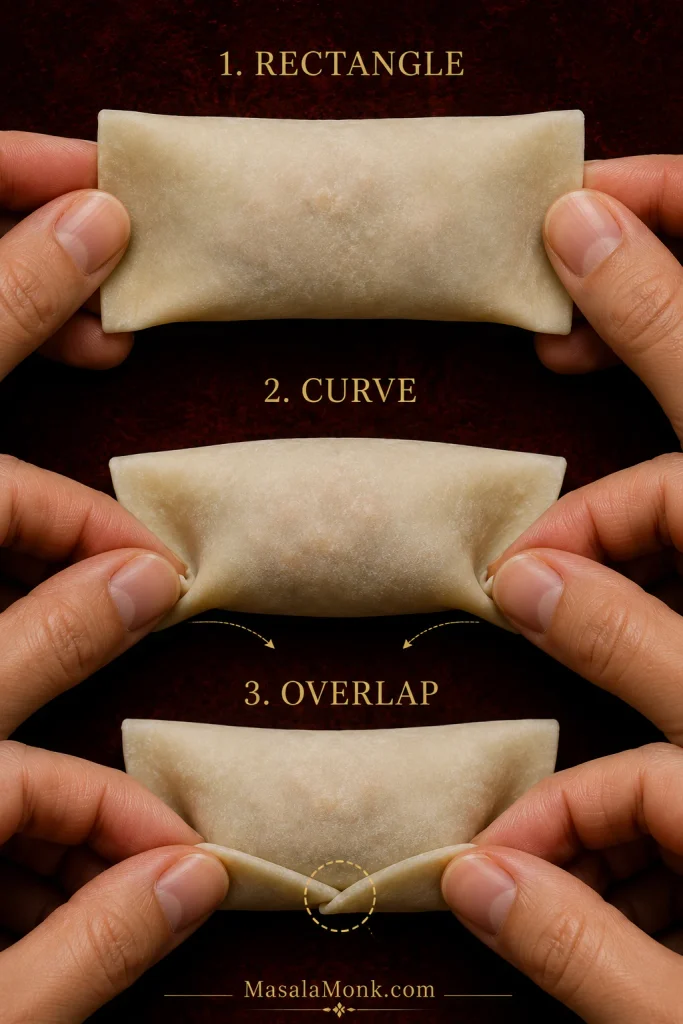
By the middle of the tray, your hands will usually have settled on their own amount of filling and their own version of the fold.
How to Make Wonton Broth Taste Clear but Not Bland
Wonton soup broth can be as simple as mild chicken stock seasoned with ginger, scallion, white pepper, Chinese light soy sauce and a little sesame oil. It does not need to be rich or elaborate. It just needs enough savory depth that the spoonful between wontons tastes complete.
More soy is not the automatic answer to weak broth. It can make the soup darker and saltier without giving it the depth you were looking for. At the other extreme, a rich roasted stock can turn the bowl into chicken soup with wontons in it.
Cooking the wontons in separate water keeps most loose wrapper starch out of the broth. Egg Drop Soup uses another light chicken-broth base, but turns it silky with egg ribbons instead of wrappers and filling.
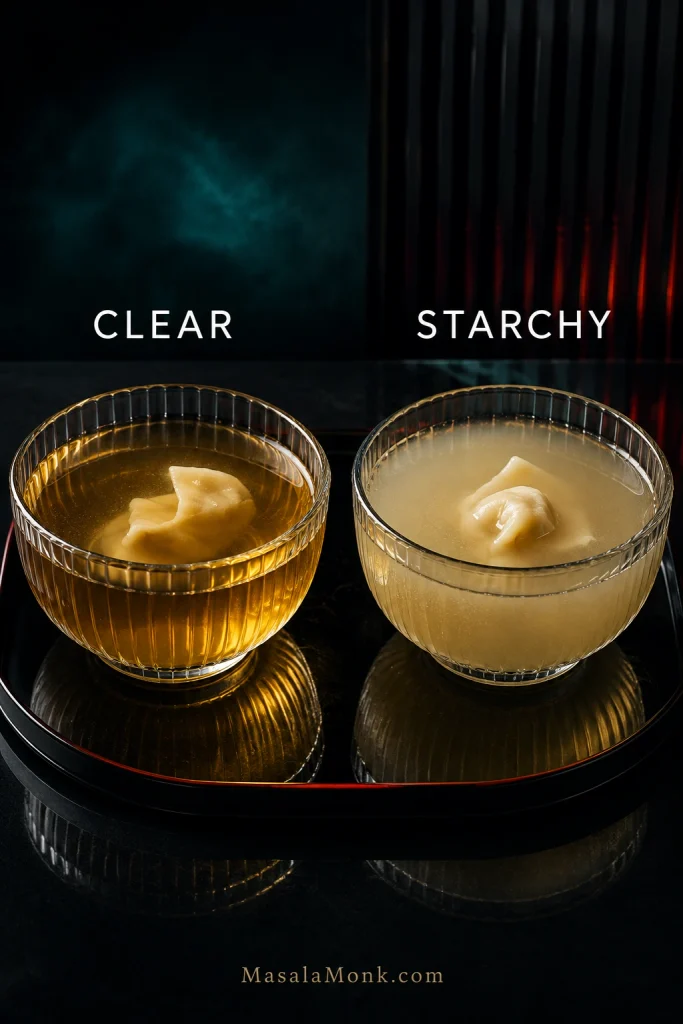
Restaurant broth can head in several directions. Cantonese and Hong Kong versions may build depth with poultry, pork or dried seafood; some American-Chinese takeout bowls lean harder on chicken powder, bouillon or MSG.
How to Fix Wonton Broth
For this recipe, the broth should support the wontons, not bury them.
| Your broth tastes… | What to change |
|---|---|
| Under-salted | Add salt a little at a time. |
| Salty enough but hollow | Try a small pinch of MSG instead of more soy. |
| Weak and missing chicken depth | Add a little chicken powder or bouillon and taste again. |
| Too chicken-forward | Dilute with water, then rebalance the seasoning. |
| Too soy-heavy | Dilute with unsalted stock or water. |
| Good but aromatically flat | Add scallion, white pepper or a few drops of sesame oil at the finish. |
| Cloudy or starchy | Boil the wontons separately next time. |
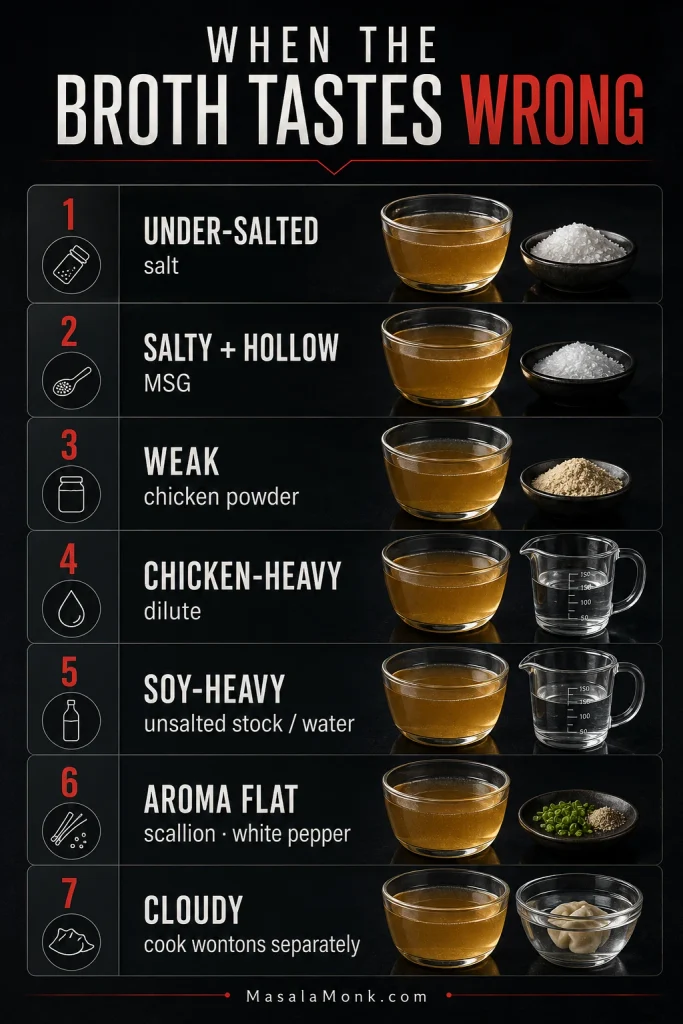
Using Frozen Wontons
Frozen wontons turn the same broth into a much faster dinner. Homemade wontons can go straight from freezer to boiling water. Thawing them first only gives the filling more time to wet the wrapper.
- Make the broth and bring a separate pot of water to a boil.
- Add the frozen wontons in slightly smaller batches than you would use for fresh ones.
- Stir gently soon after they go in; frozen wontons spend longer near the bottom before floating.
- Start checking around 6 minutes. Homemade wontons of this size take roughly 6–8 minutes, but wrapper thickness and filling size matter more than the clock.
- Move them into bowls as soon as the wrappers are tender and the centers are hot throughout.
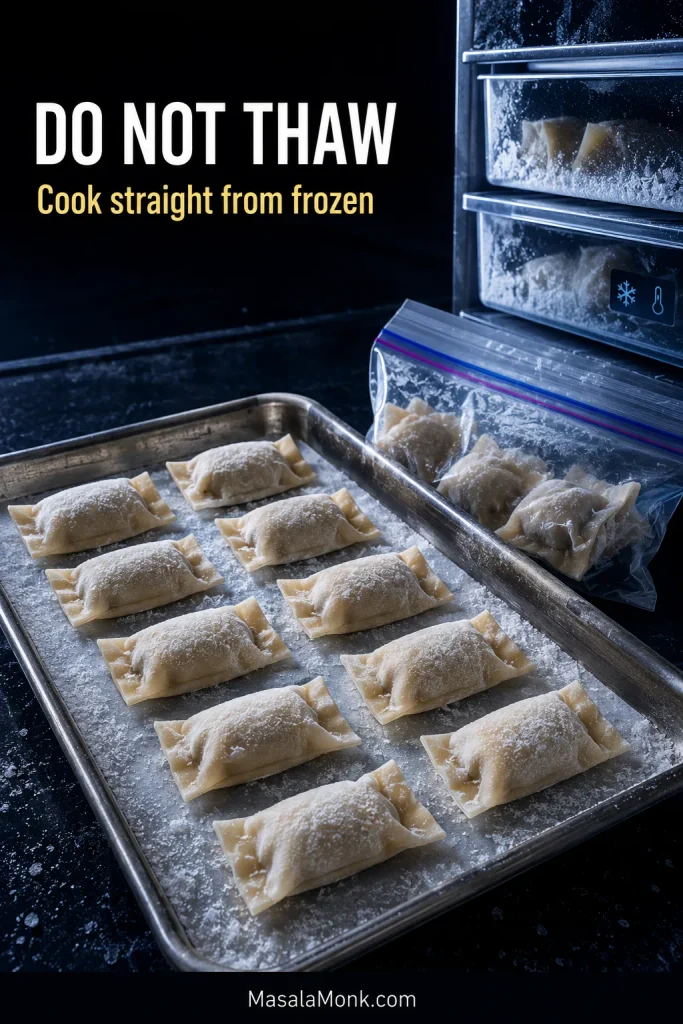
Store-bought frozen wontons are their own case. Start with the package directions. A large, thick-skinned commercial wonton may behave very differently from the homemade ones here.
A batch that repeatedly comes out chewy usually needs gentler cooking before it needs more time. Smaller batches help too, especially with very thin skins surrounding a still-frozen center.
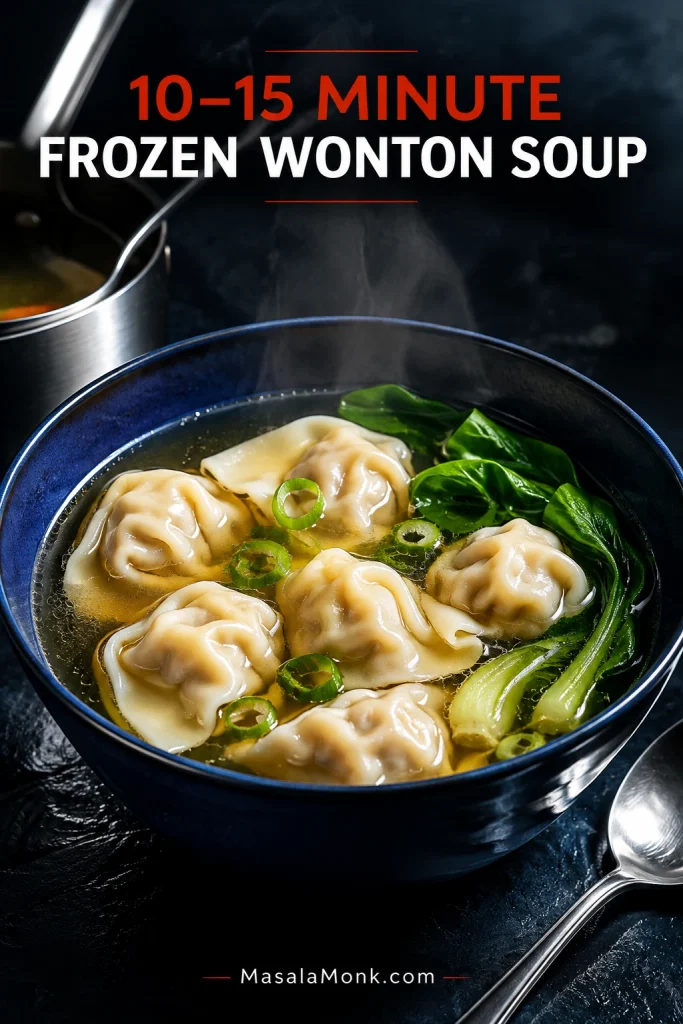
A 10–15 Minute Shortcut With Store-Bought Frozen Wontons
Sometimes the bag of frozen wontons is dinner, not a make-ahead project. This shortcut makes 2 generous bowls and keeps the same general broth-to-bowl proportions as the main recipe.
- 3 cups / about 710 ml mild chicken broth
- About 10 g fresh ginger, cut into 5–6 thin slices
- 2 scallions, whites lightly bruised and greens sliced
- 1½ teaspoons / 7.5 ml Chinese light soy sauce
- ¼ teaspoon sugar
- ⅛ teaspoon ground white pepper
- 12–16 store-bought frozen wontons, depending on size
- 2 small heads baby bok choy, or a handful of spinach
- ½ teaspoon / 2.5 ml toasted sesame oil
Bring the broth, ginger and bruised scallion whites to a simmer and let them infuse for about 8 minutes. Add the soy sauce, sugar and white pepper, then taste. Remove the ginger and scallion pieces and stir in the sesame oil at the end.
While the broth simmers, cook the frozen wontons in a separate pot according to the package directions and blanch the bok choy in the same water for the final 60–90 seconds. Spinach can simply wilt in the hot broth.
Divide the wontons and greens between two bowls, ladle over about 1½ cups / 350 ml broth per bowl, and finish with the sliced scallion greens. Six to eight commercial wontons can be plenty when they are larger than the homemade ones here; use the package size and your appetite rather than forcing the main-recipe count onto them.
Freezing your own batch? Jump to Make Ahead & Storage.
Troubleshooting
| Problem | Likely cause → what to change |
|---|---|
| Wontons open in the water | Overfilled, filling in the seam, trapped air or rough boiling → use slightly less filling, keep the edge clean, press out air and maintain a steady rather than violent boil. |
| Wrappers crack while folding | Dry or old wrappers → keep the stack covered and replace badly dried skins. |
| Wrappers are unusually thick or chewy | Two skins stuck together, a thick wrapper style or too many folded layers → check for double skins and use a simpler fold. |
| Wontons are mushy | Overcooking or sitting in broth → stop cooking once tender and assemble only at serving time. |
| Filling is crumbly | The mixture never became cohesive → mix until tacky before folding the next batch. |
| Filling is dry or tough | Very lean pork or excess cooking → use pork with some fat and stop cooking once the center is done. |
| Broth is cloudy | Wrapper starch → boil the wontons separately. |
| Broth is salty but flat | Salt is already high but savory depth is missing → try a small pinch of MSG rather than more soy. |
| Broth tastes strongly of soy | Too much soy or a salty stock → dilute with unsalted stock or water. |
| Broth tastes like chicken noodle soup | Stock is too rich or chicken-forward → dilute it and rebalance the seasoning. |
| Frozen wontons turn chewy | Thin wrapper plus prolonged aggressive boiling → use smaller batches and gentler cooking before adding more time. |
For broth problems, the broth table above gives the fuller seasoning diagnosis. The useful question is not simply “what can I add?” but “what is the broth actually missing?”
Back to Recipe · Broth Fixes · Back to Top
Make Ahead, Freeze and Store
Freezing Raw Wontons
Arrange raw wontons in one layer on a parchment-lined tray, plate or shallow pan without letting them touch. Freeze until completely firm, then transfer them to a freezer bag or airtight container.
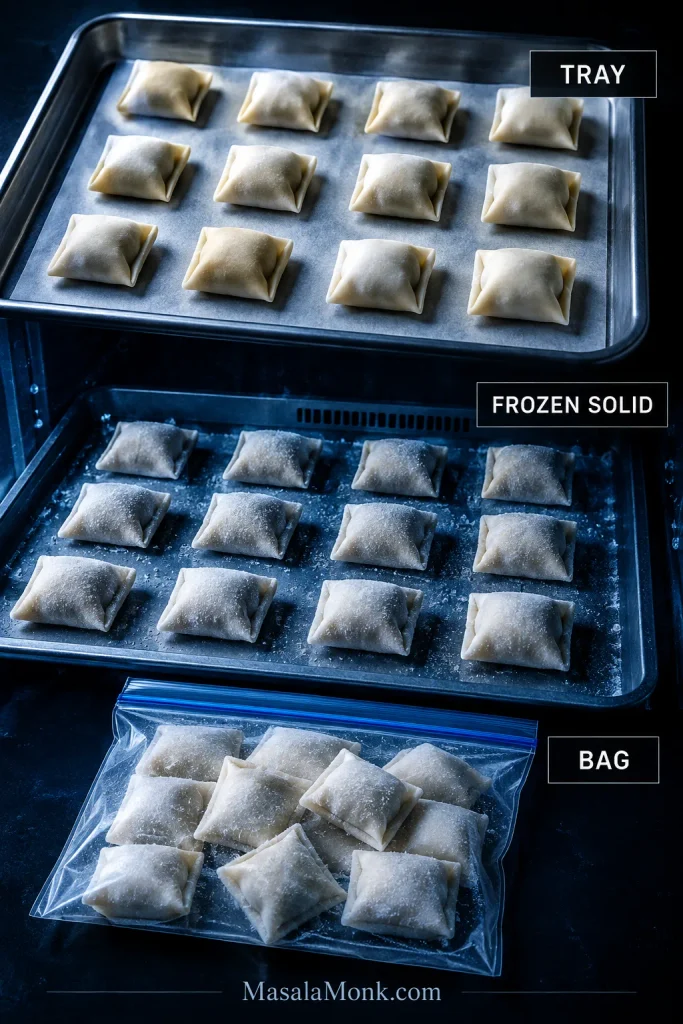
A full sheet pan is not necessary. Two or three dinner plates work perfectly well in a small freezer, and once the wontons are solid they take up surprisingly little room. Protect the wrappers from being crushed and use them within about 2–3 months for the best quality.
A week later, those frozen wontons turn the longest part of this recipe into something you have already done.
For same-day prep, folding the wontons a few hours ahead is workable. Keep them covered in a single layer in the refrigerator at 40°F / 4°C or below. For the best wrapper texture, freeze them rather than refrigerating overnight; filling moisture gradually softens the skins.
Using frozen shrimp? Thaw it in the refrigerator and keep it cold while preparing the filling. Freeze assembled wontons promptly when they are not being cooked. Repeated warming, chilling and refreezing is poor for both safety and texture. The FDA seafood-safety guidance covers thawing and handling in more detail.
Leftovers and Reheating
Store the broth and cooked wontons separately.
Cooked wrappers keep taking up liquid after dinner. Left overnight in broth, they can swell, soften too far or start falling apart. Refrigerate drained wontons in one covered container and the broth in another; for the best texture, use the cooked wontons within about 2–3 days.
Bring the broth back to a boil when reheating, lower the heat, then add the cooked wontons only long enough to heat them through to 165°F / 74°C. They need reheating, not another full cooking session.
Give them a little room in the container too. Warm cooked wontons packed tightly together like to stick.
Cooking from frozen? Return to Frozen Wontons · Back to Recipe.
Variations
The filling can move in several directions without changing the basic method. Pork-only wontons benefit from meat with some fat and may take a little extra water or stock. Increasing the shrimp gives you a sweeter, springier center. Ground chicken works too, though lean chicken dries more easily and deserves to be treated as its own filling rather than a perfect one-for-one pork substitute. Ground-chicken wontons should reach 165°F / 74°C in the center.
The bowl itself is easier to improvise. Bok choy, spinach, napa cabbage and mushrooms all make sense; tender greens belong near the end. Chili oil is easiest to add at the table. Noodles change the identity of the dish more substantially: once they become a major part of the bowl, you are moving into wonton noodle soup, and they are best cooked separately so their starch stays out of the clear broth.
Deconstructed wonton soup skips the individual folding and cooks the filling and wrapper separately. It is a shortcut format rather than simply another regional name for the same bowl.
Which Kind of Wonton Soup Is This?
Order wonton soup in Hong Kong or Shanghai, at an Australian-Chinese restaurant or from an American-Chinese takeout shop, and you may get noticeably different bowls. The wrapper can be very thin or deliberately chewy, the filling can shift, and the broth may be spare and clean or much more strongly seasoned.
This recipe uses techniques found across several Chinese wonton traditions without pretending that one version can represent all of them.
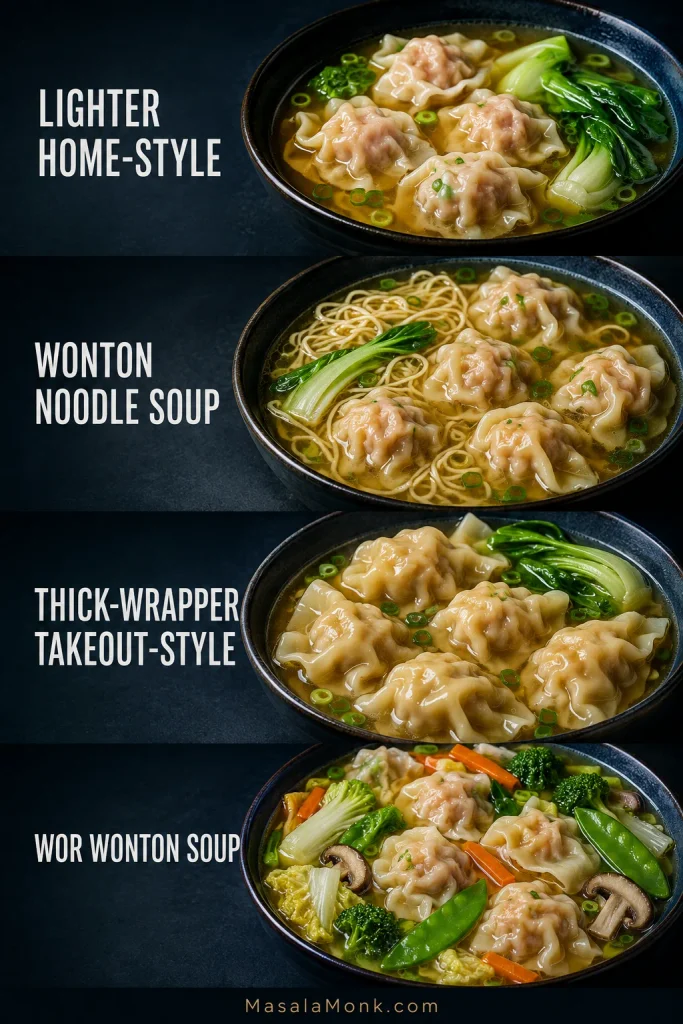
Names change with geography too. In Australian-Chinese restaurant terminology, short soup generally means wonton soup, while “long and short” combines wontons with noodles. Wonton noodle soup makes noodles a central part of the bowl and often has its own Cantonese cooking traditions.
Wor wonton soup, sometimes called subgum wonton soup, is usually a more loaded Chinese-American bowl with vegetables and often extra meat or seafood.
A Few Common Questions
Can I use dumpling wrappers instead of wonton wrappers?
Sometimes. Round dumpling wrappers are often thicker, so the finished dumpling will be chewier. Square wonton wrappers are the closer match for the relatively delicate wontons here.
Can I make the broth without chicken stock?
Yes. Building it from water means using chicken powder or bouillon according to the package strength first, then adding the ginger, scallion, soy sauce and white pepper from this recipe and adjusting from there.
Can I make wonton soup gluten-free?
Standard wonton wrappers contain wheat, and ordinary soy sauce may contain wheat as well. You need suitable gluten-free wrappers plus gluten-free versions of the sauces and seasonings. Rice-paper sheets are not a direct substitute for boiled wonton wrappers; they behave very differently in hot water.
Can I cook the wontons directly in the broth?
Yes. It saves a pot and works perfectly well when convenience matters most. The broth will be cloudier and slightly starchier, and the wontons absorb some liquid as they cook. Start with a little extra broth or water when using this method.
The First Wonton Is the Slowest One
A stack of wrappers beside a bowl of raw filling can make dinner look like a bigger job than it is. Then one comes out of the pot, you taste it, and suddenly the rest of the tray makes more sense.
That first tray teaches you things measurements cannot quite capture: how much filling your particular wrappers want, how damp the seam needs to be, and when the cooked skin has gone from merely done to properly tender.
By the last few wontons, your hands have already started making some of those decisions before you consciously think about them. The next time you make wontons, you will probably look at this recipe less.
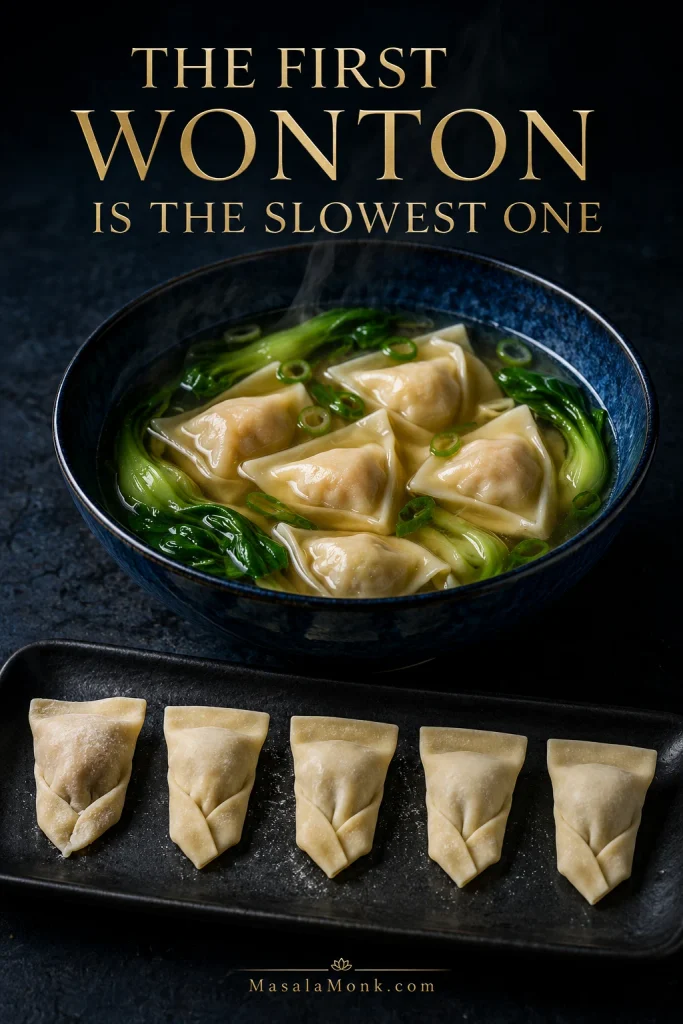
After a counter full of wrappers, filling and little bowls of water, the finished soup is almost surprisingly spare: tender wontons, something green, and clear hot broth poured over just before you eat.








