
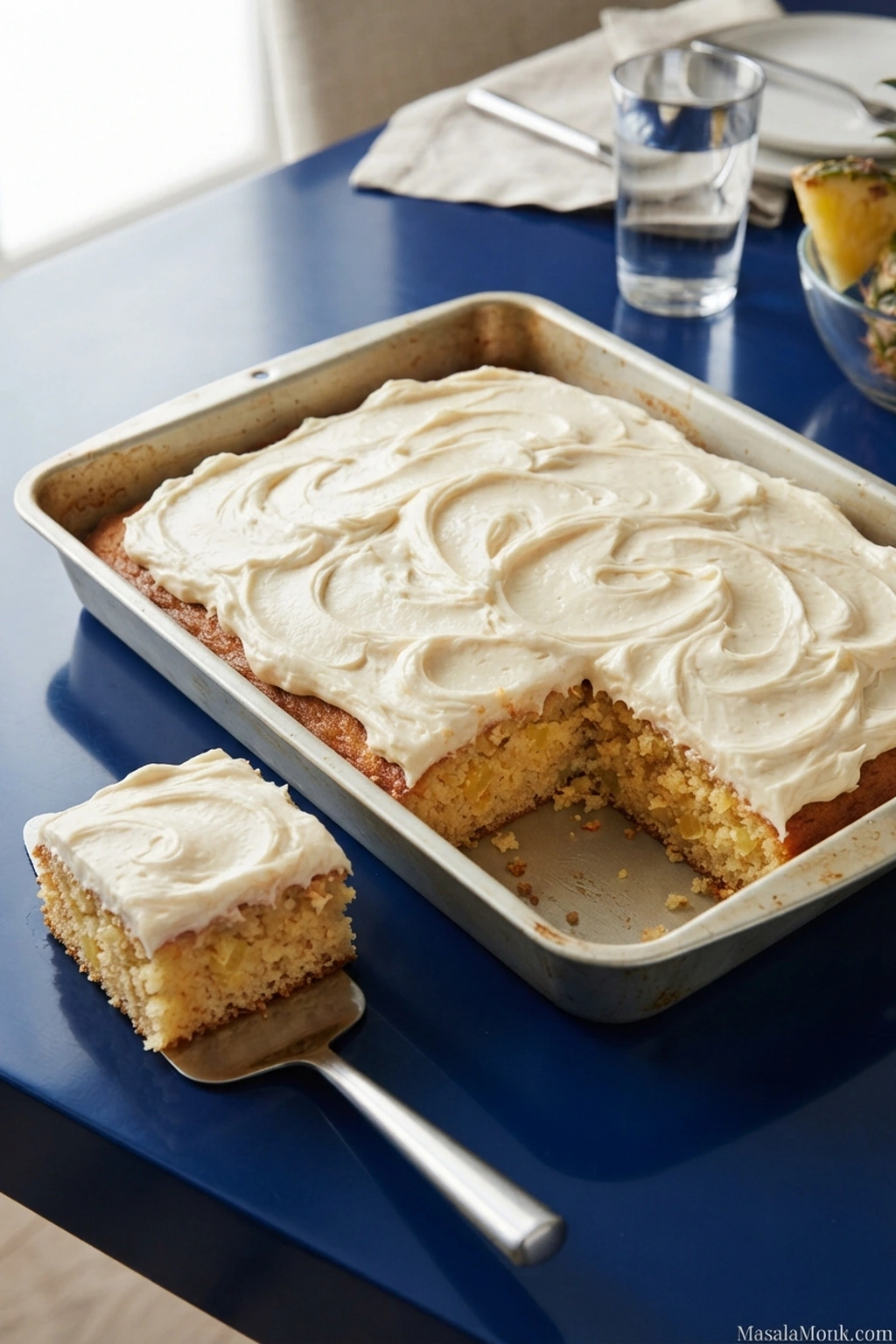
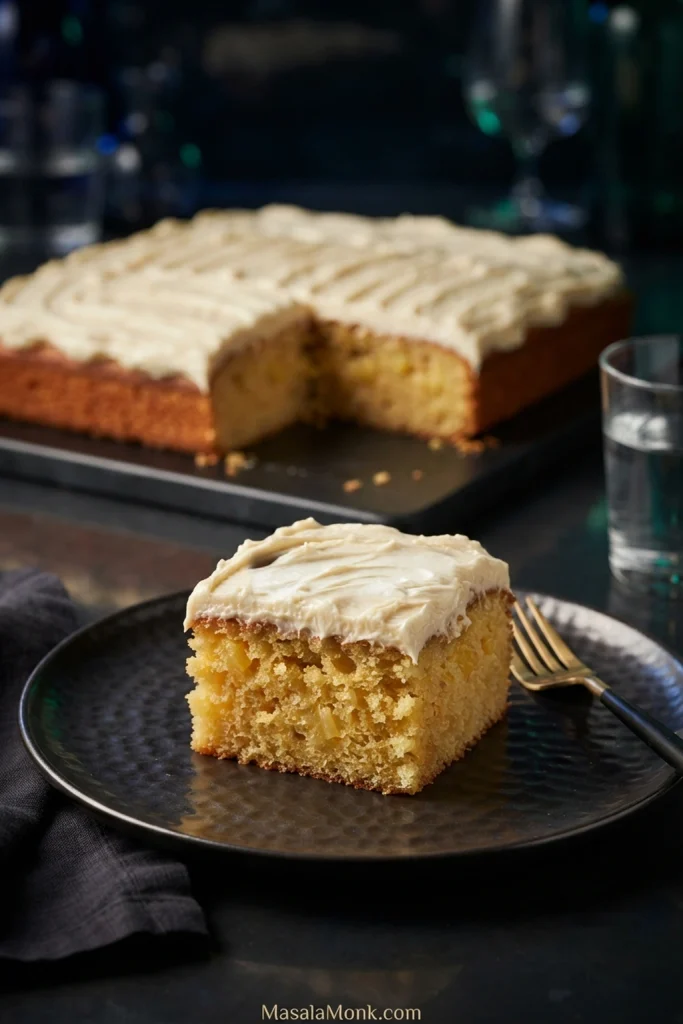
This pineapple cake recipe is a 9 × 13-inch pineapple sheet cake with plenty of crushed pineapple running through the crumb. Measuring the fruit and juice separately helps the middle stay tender and sliceable, while a cool layer of tangy cream cheese frosting finishes the cake.
There is no butter-creaming stage or layer assembly, and the batter does not need a mixer. Once the pineapple is measured, most of the work is simply mixing, baking and giving the centre enough time to set.
This is the crushed-pineapple style of cake. A pineapple upside down cake is a different bake, with fruit caramelized against butter and brown sugar before the cake is flipped. And if the pineapple cake in your head is pale sponge, pineapple syrup and whipped cream from an Indian bakery, we will get to that version later too.
Ready to bake? Jump to the recipe, moist vs gummy or raw cake, or which pineapple to use.
Pineapple Cake Recipe
Makes: 12 generous or 16 smaller pieces · Hands-on time: about 30 minutes · Bake: approximately 36–42 minutes
Cooling: until completely cool, usually 1½–2 hours · Pan: 9 × 13 × 2 inches / about 23 × 33 × 5 cm · Oven: 350°F / 175°C conventional or about 160°C fan
For this recipe, drain the pineapple but save the juice. Drain it over a bowl, not into the sink. Measuring the fruit and juice separately tells you exactly how much of each is going into the batter.
You’ll need: a 9 × 13 × 2-inch / approximately 23 × 33 × 5 cm light-coloured metal pan, a sieve, two mixing bowls or one bowl and a large jug, a whisk, a flexible spatula, and a hand mixer for the frosting. A kitchen scale is especially useful for the pineapple and flour.
For the Pineapple Cake
- 2¾ cups (345 g) all-purpose flour
- 1⅓ cups (265 g) granulated sugar
- 2 teaspoons (8 g) baking powder
- ½ teaspoon (about 2 g) baking soda
- ¾ teaspoon fine salt
- 3 large eggs, preferably at room temperature
- ½ cup (120 ml) neutral oil, such as sunflower or canola
- ¼ cup (60 g) thick full-fat plain yogurt, Greek yogurt, strained curd or sour cream
- 1 teaspoon (5 ml) vanilla extract
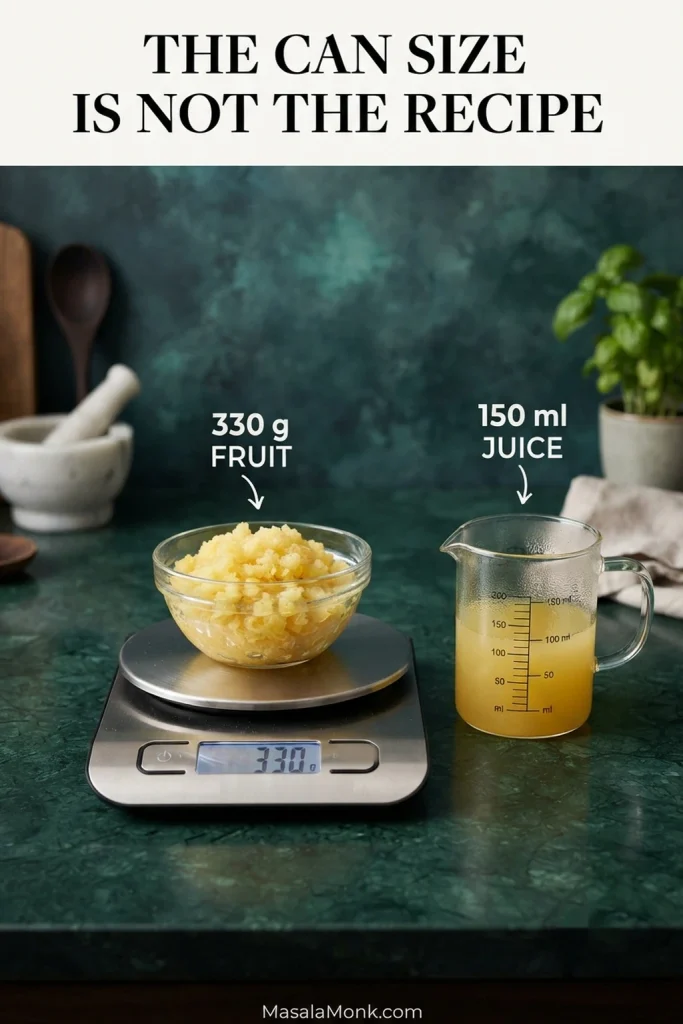
- 330 g / about 11½ oz crushed pineapple, drained as described below
- 150 ml / scant ⅔ cup pineapple juice
Using cups for the flour? Spoon it lightly into the measuring cup and level the top. Scooping straight from the bag can pack in more flour than the cake needs.
A 20 oz / 567 g can of crushed pineapple packed in juice is a convenient starting point, but the can size is not the recipe. What matters is ending up with 330 g drained pineapple and 150 ml pineapple juice. Brands vary, and smaller cans are perfectly fine—use however much you need to reach those measured amounts.
If the drained pineapple gives you less than 150 ml juice, top it up with a little unsweetened pineapple juice.
Making the optional topping too? You’ll need another 200 g drained crushed pineapple plus 80 ml pineapple juice.
For the Cream Cheese Frosting
- ½ cup (115 g) unsalted butter, softened
- 8 oz (225 g) full-fat firm cream cheese, block-style if available, cool but pliable
- 1½ cups (180 g) icing sugar / powdered sugar, sifted if lumpy
- 1 teaspoon (5 ml) vanilla extract
- A pinch of fine salt
Firm block cream cheese and soft spreadable cream cheese do not behave the same way in frosting. Tub-style products can give you a noticeably looser bowl. This makes enough frosting for a generous swirled layer over the 9 × 13-inch cake; it is not meant for tall piping.
Prepare the Pan and Pineapple
Heat the oven to 350°F / 175°C conventional or about 160°C fan. Put a rack near the centre.
Lightly grease the baking pan. The simplest option is to cool, frost and serve the cake directly from it.
To transfer the whole cake to a serving board, run a strip of parchment across the bottom and up the two long sides, leaving enough overhang to lift with. Once the cake is cool, loosen the two unlined edges with a thin knife and lift the cake out before frosting.
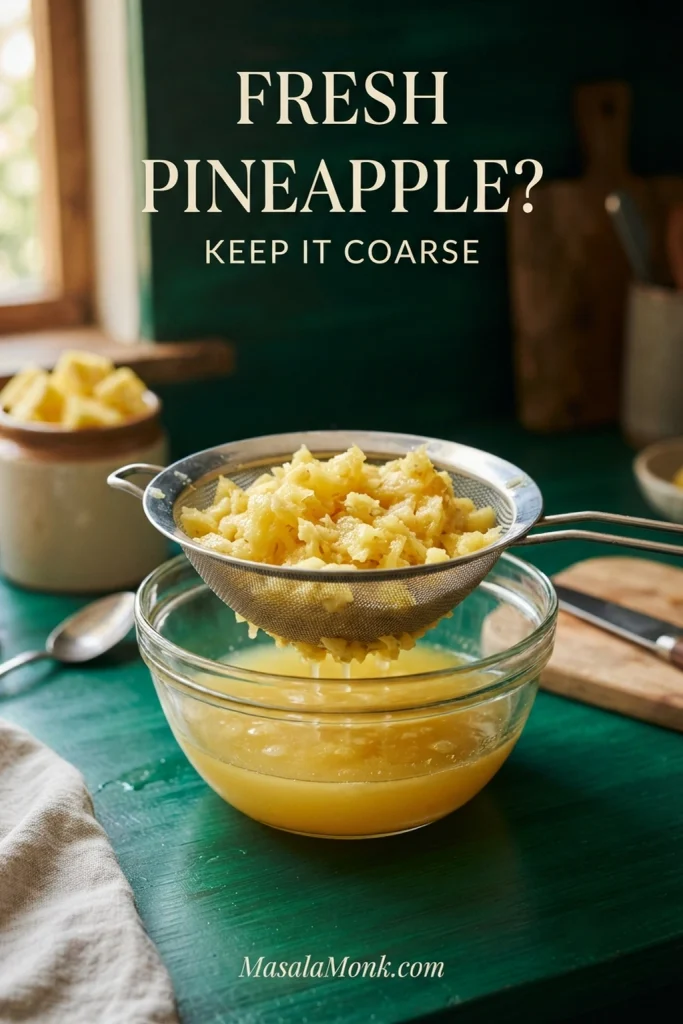
Set the crushed pineapple in a sieve over a bowl and leave it for about 5 minutes, stirring once. Let gravity remove the loose juice; don’t press or squeeze the fruit.
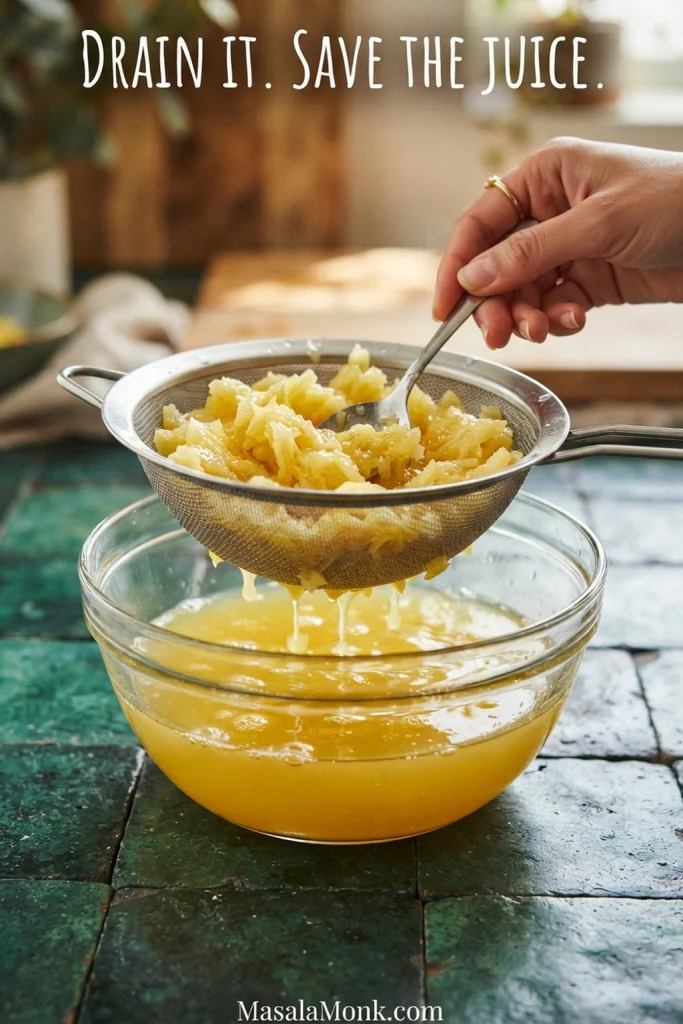
Weigh 330 g pineapple, then measure 150 ml juice.
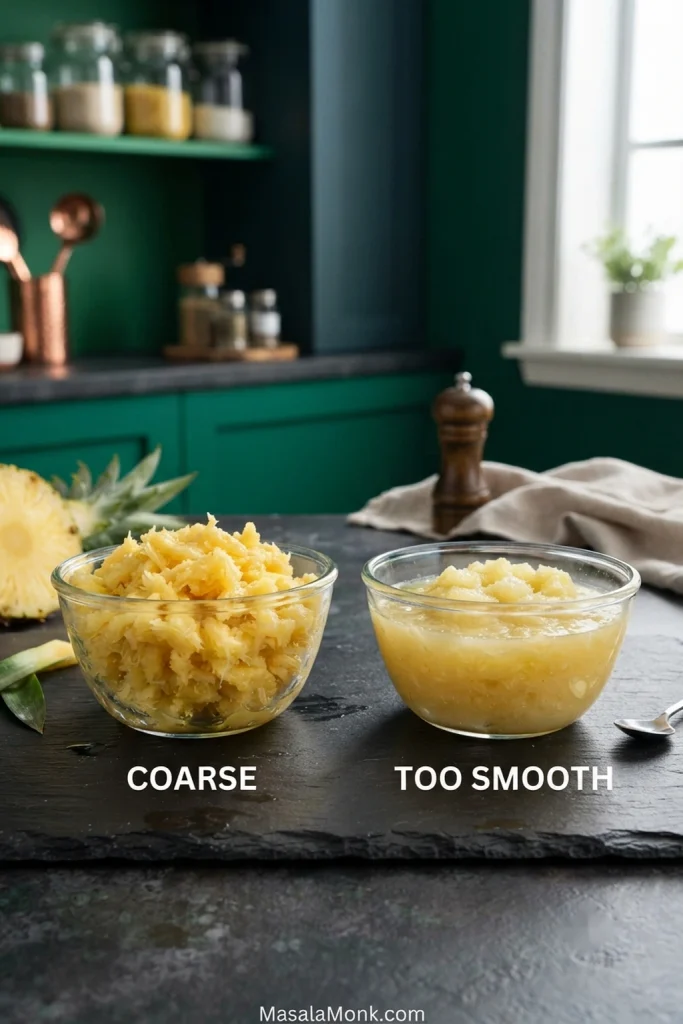
The pineapple should still look like fruit. Chunks or tidbits can be chopped or pulsed briefly until coarsely crushed. Stop while plenty of texture remains.
Mix the Batter
Whisk the flour, sugar, baking powder, baking soda and salt together in a large bowl.
In a second bowl or large jug, whisk the eggs until combined. Add the oil, your chosen yogurt, curd or sour cream, vanilla and measured pineapple juice. Stir in the crushed pineapple.
Pour the wet mixture into the dry ingredients and fold gently with the spatula until the dry flour disappears.
Read the batter before you keep mixing. It needs enough body to hold the pineapple evenly while still spreading easily across the pan. Look for small pieces of fruit distributed throughout.
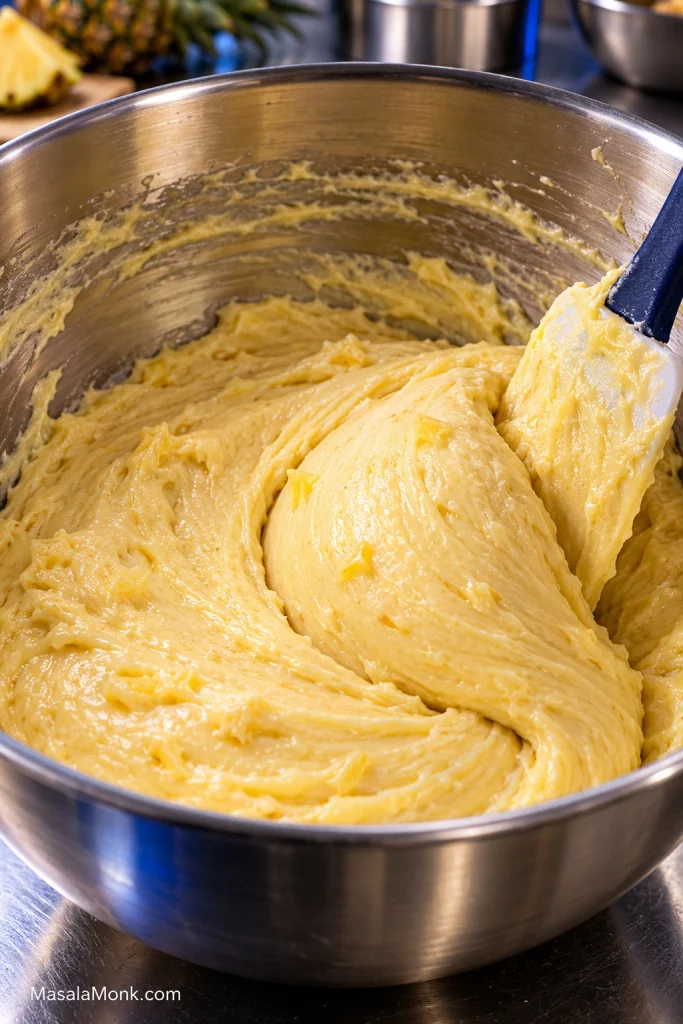
A few tiny lumps are fine. Leave them alone.
Bake Until the Centre Is Set, Not Merely Brown
Spread the batter evenly in the prepared pan and smooth the top. Bake on the centre rack for approximately 36–42 minutes, starting your checks at around 34 minutes.
Pineapple cake can look done at the edges while the centre still needs time. As it gets close, the kitchen will smell of pineapple and vanilla. Then check the middle itself:
- Look for a set, matte surface. Glossiness in the centre means it needs more time.
- The centre springs back under a gentle press.
- The middle sits still underneath the baked surface, with no wet wobble.
- A skewer inserted into the centre has no raw batter on it. Moist crumbs are fine.
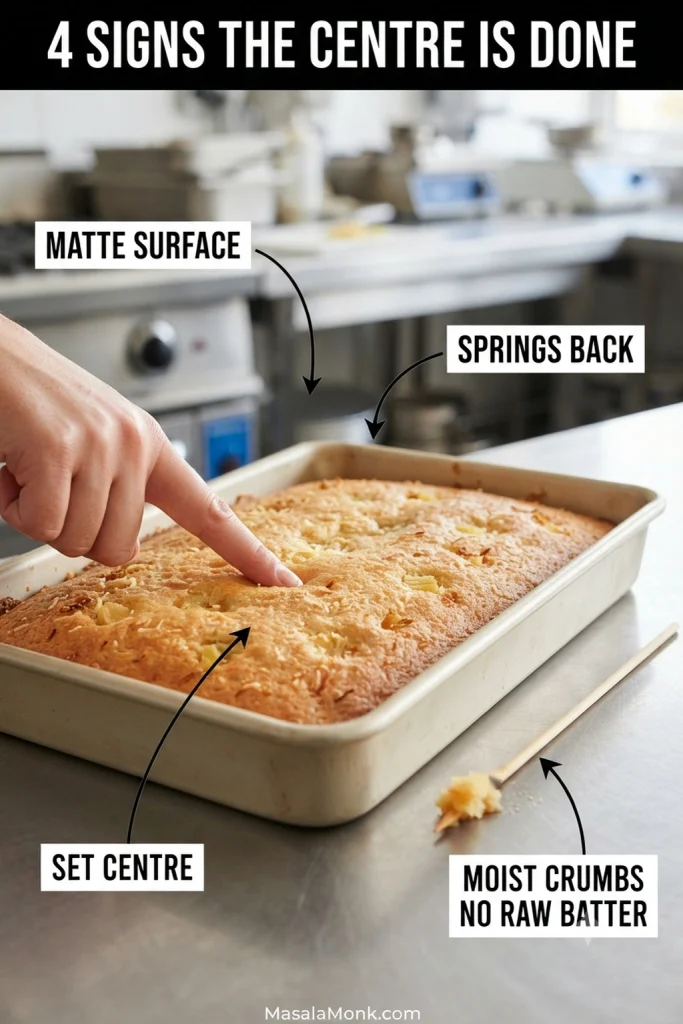
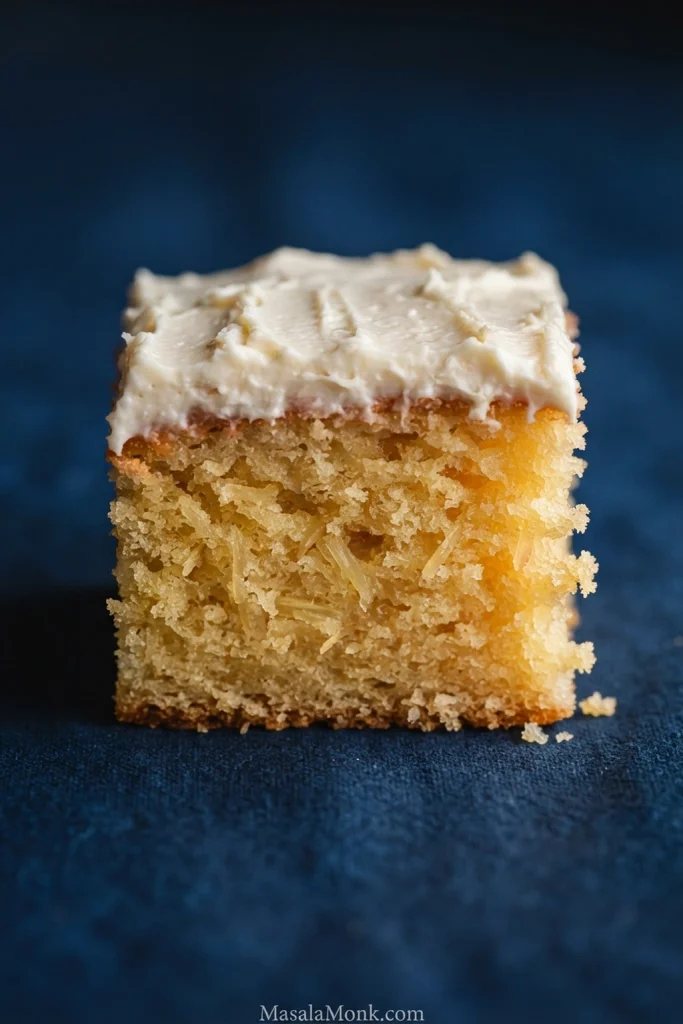
When it is ready, the crumb is soft and pineapple-speckled but still sturdy enough to hold together under the knife.
Let the Cake Cool
Set the pan on a wire rack and leave the cake alone until it is cool all the way through. In an average kitchen that may take 1½–2 hours; in a warm room, trust the temperature of the cake more than the clock.
The top may feel lightly tacky as it cools. That’s fine. A glossy-wet surface or the feel of unset batter underneath points to an underbaked centre. The cake does need to be completely cool before the cream cheese frosting goes on.
Make the Cream Cheese Frosting
Beat the softened butter until creamy. Add the icing sugar and beat until smooth and slightly fluffy.
Beat in the cool-but-pliable cream cheese, vanilla and salt only until everything comes together smoothly.
The frosting should keep the marks left by a spatula instead of slowly flattening into a puddle. A soft bowl often needs a short chill, not another avalanche of sugar.
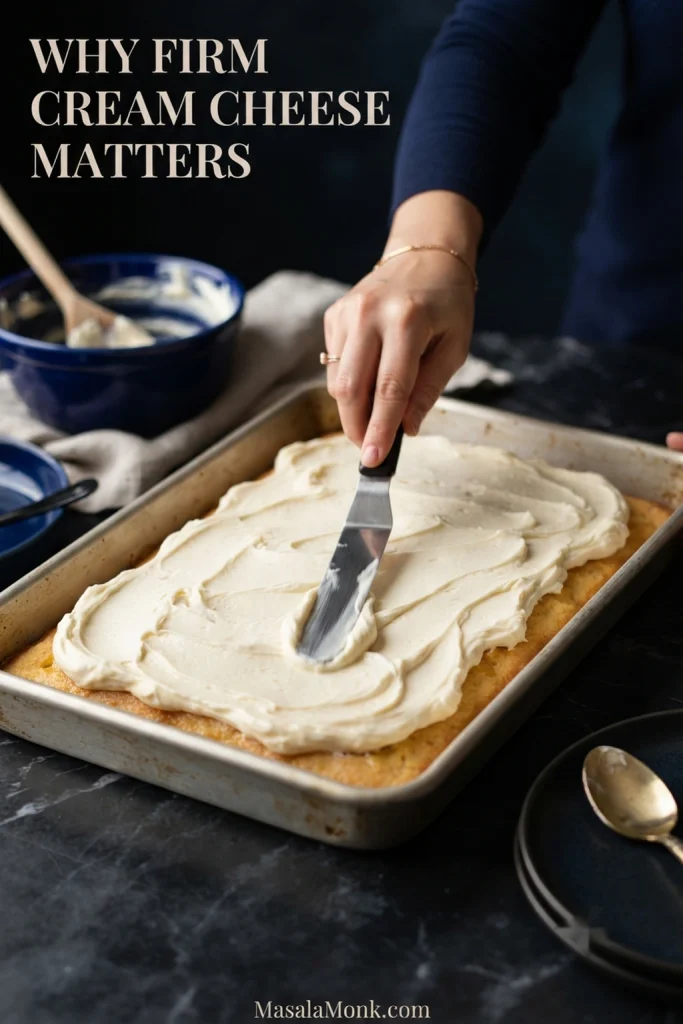
Soft spreadable cream cheese may still give you a looser frosting than a firm block. Our cream cheese frosting recipe goes deeper into choosing cream cheese, controlling sweetness and fixing a soft bowl.
Spread the frosting over the cooled cake.
Slice and Serve
A short chill gives you especially neat squares. Use a long sharp knife and wipe it clean between cuts.
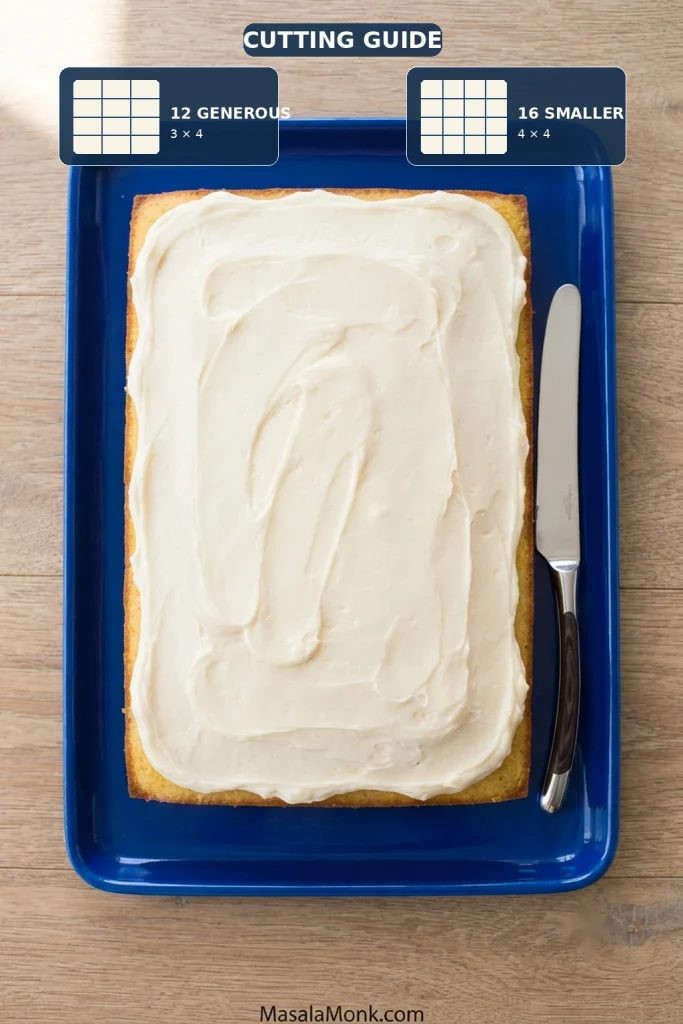
Straight from the refrigerator, both pineapple and vanilla taste muted. Give each slice 15–20 minutes to lose some of its chill before serving. The crumb relaxes, the frosting softens slightly and the pineapple becomes easier to smell and taste.
Need Help With This Cake?
Baking now? You can stop here. If something went wrong, you are changing the pineapple or you are planning a variation, jump straight to what you need below.
- Is the centre moist, gummy or still raw?
- What caused a wet, dense or sunken cake?
- Which pineapple can I use?
- How do I make the pineapple flavour stronger?
- Can I use whipped cream?
- Can I use round cake pans?
- What about Indian bakery-style pineapple cake?
- What about eggless or cake-mix versions?
- How should I store the cake?
Read the Centre: Moist, Tacky, Gummy or Raw?
Pineapple cake is supposed to be moist, which is exactly why the middle can be confusing. The important question is whether you have a tender crumb with plenty of moisture or a centre that never properly set.
| What You See | What It Means |
|---|---|
| Soft crumb that holds a clean slice | This is a properly moist pineapple cake. |
| Slightly tacky surface or very moist crumbs | Usually normal, especially before the cake has fully cooled. |
| Dense, compressed or paste-like streak through the centre | The texture is gummy. It feels heavier and more compressed than an ordinary moist crumb. |
| Shiny batter, wet pockets or structural collapse | The centre is still underbaked. |
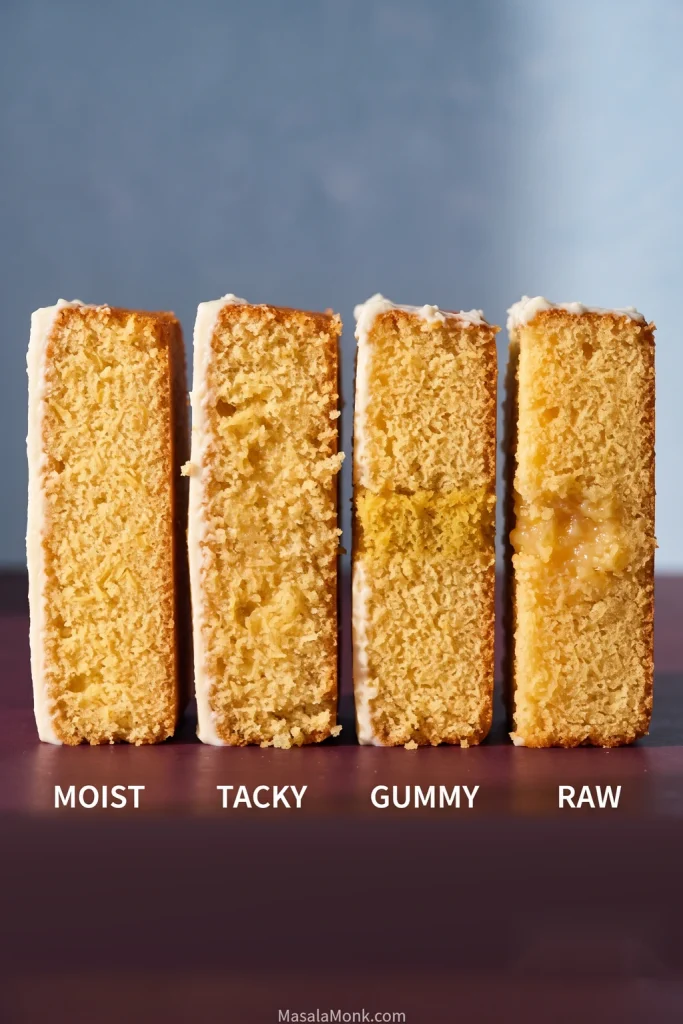
Need the cause? Continue to Pineapple Cake Troubleshooting, or ↑ return to the recipe.
Pineapple Cake Troubleshooting
A gummy pineapple cake usually points to too much liquid, pineapple processed too finely or a centre that needed more time in the oven.
Crumb and Centre Problems
| Problem | Likely Cause and What to Do |
|---|---|
| The centre is wet or raw | Check the juice measurement, pan depth and bake time. If the centre is genuinely raw after the cake has cooled, there is no reliable way to turn it back into the crumb you intended. The fully baked outer portions may still be worth serving. |
| The cake is gummy | Too much liquid, very finely processed pineapple or insufficient baking are the usual suspects. A fully baked but slightly dense cake is often better served in smaller pieces with cream than soaked with more liquid. |
| The cake is dry | Check how the flour was measured and whether the cake stayed in the oven too long. Pineapple topping can rescue a slightly dry slice beautifully. |
| The middle sank | Look first at an underbaked centre, excess liquid, batter sitting too deep in the pan or too much leavener. A shallow dip in a fully baked cake is easy to cover with frosting. |
Browning, Flavour, Frosting and Slicing
| Problem | Likely Cause and What to Do |
|---|---|
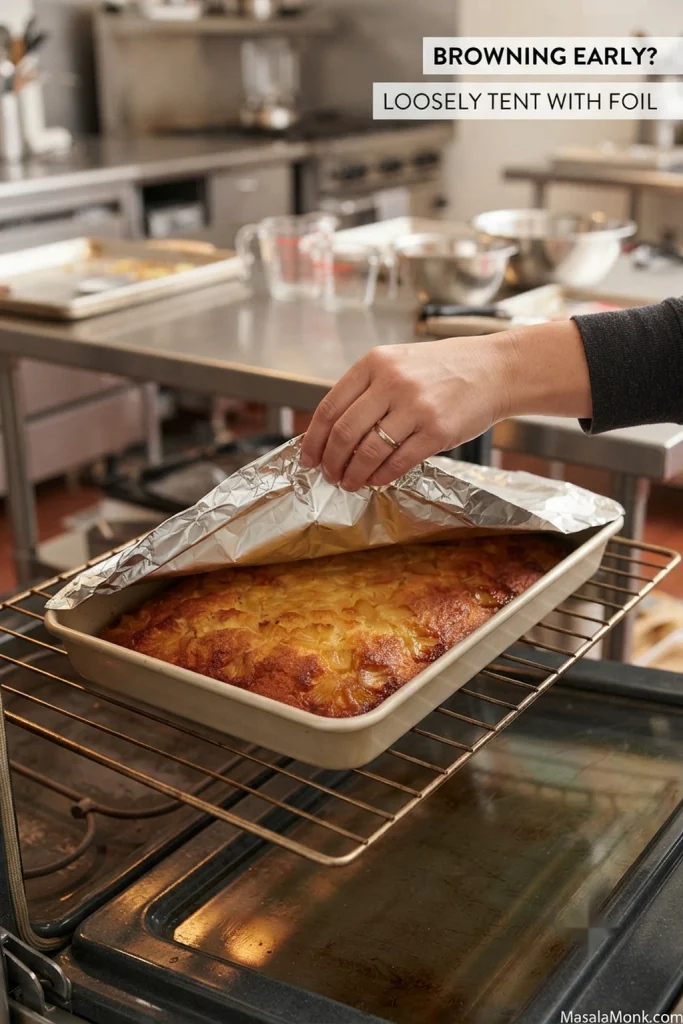
| The top browned before the centre was ready | Loosely tent the top with foil and keep baking until the centre is set. Next time, also check the pan size, depth and material if the edges coloured unusually quickly. |
| The pineapple tastes too mild | Use the concentrated pineapple topping. Adding more juice to the batter risks changing the crumb. |
| The frosting is loose | Chill it first. If it stays loose, check whether the cake was still warm, the cream cheese was very soft or spreadable, the ingredients became too warm, or the frosting was beaten longer than necessary. |
| The cake crumbles when sliced | If it is still warm, let it cool first. Once fully cooled, if the cake remains dry and crumbly, check the flour measurement and bake time. Smaller pieces with pineapple topping or cream can still make a good dessert. |
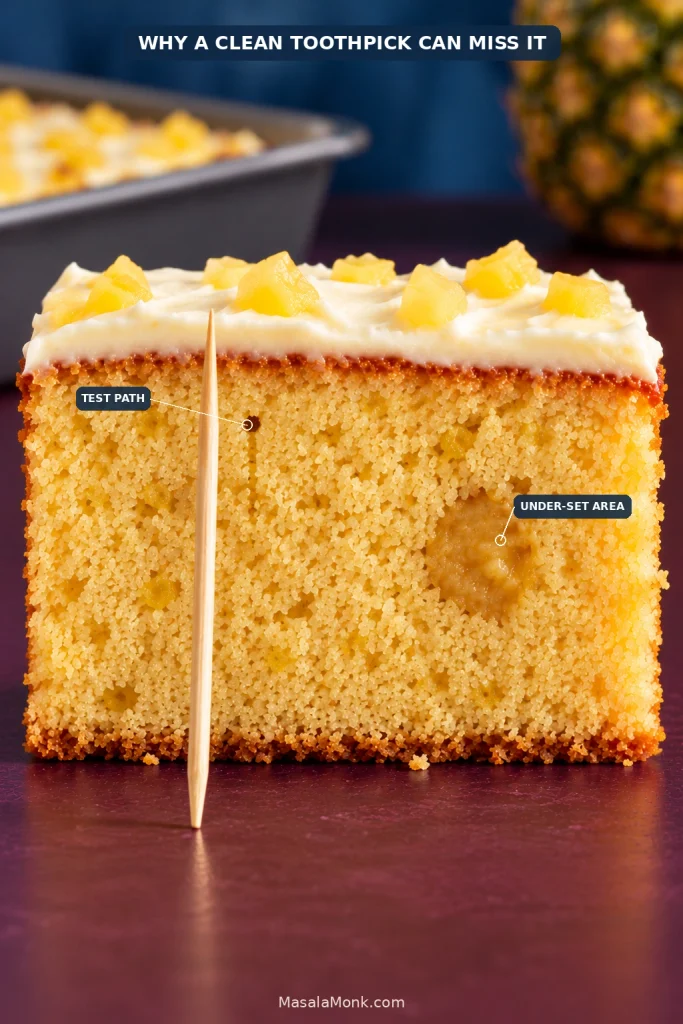
Why Did the Toothpick Come Out Clean?
A toothpick samples one narrow path through a cake full of fruit. It can easily miss a wetter patch.
Look at the centre as a whole. A matte surface, gentle spring-back and no wobble tell you far more than one clean skewer.
Changing the fruit instead? Jump to Which Pineapple Works Best?, or ↑ return to the recipe.
Which Pineapple Works Best?
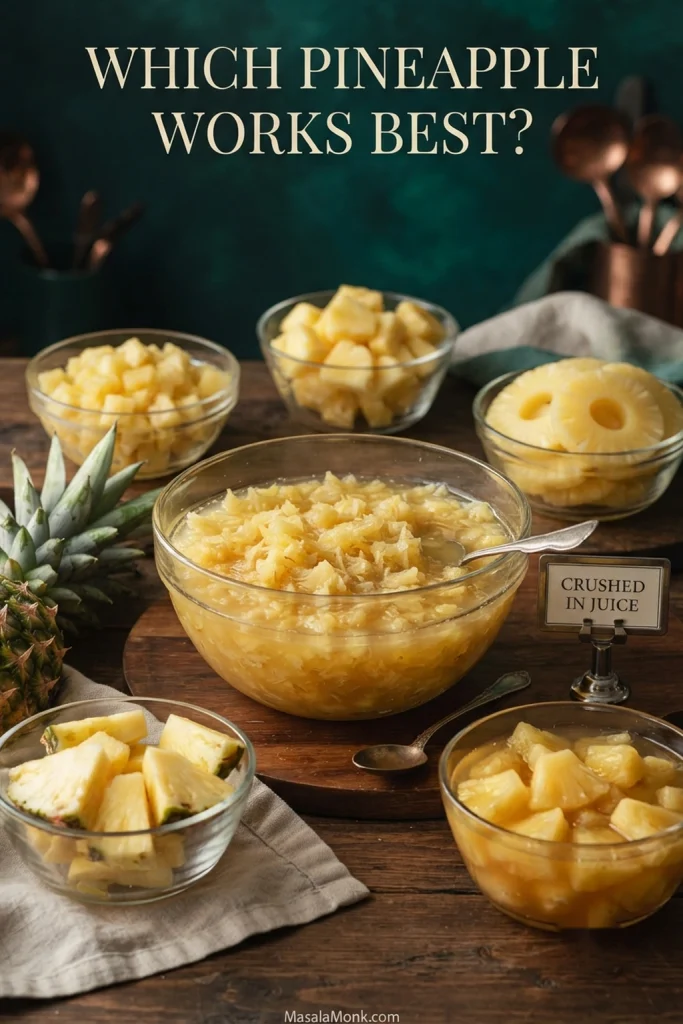
Canned crushed pineapple packed in pineapple juice is the easiest and most predictable choice. Other forms work too when you bring them close to the same coarse texture before measuring.
| Pineapple | What to Do |
|---|---|
| Crushed pineapple in juice | Drain for about 5 minutes, then weigh the fruit and measure the juice. |
| Tidbits | Chop or pulse briefly until coarsely crushed. |
| Chunks | Cut or pulse into smaller pieces. Keep some texture. |
| Fresh pineapple | Crush coarsely, collect the released juice and measure fruit and liquid separately. |
| Heavy-syrup pineapple | Not the first choice because the syrup adds sweetness and changes the liquid going into the cake. |
| Rings | Drain, chop into small pieces and measure them just like crushed pineapple. |
| Juice without fruit | Not a direct substitute. The little pieces of pineapple are part of the finished crumb. |
Can I Use Fresh Pineapple?
Yes. Keep it coarsely crushed and separate the freely released juice before measuring. A smooth purée releases much more liquid and gives you a very different batter.
Fresh pineapple often tastes brighter and sharper, especially when the fruit is ripe and fragrant.
After that loose juice has been separated, measure about 330 g of the crushed fruit. Measure the collected juice next, then top it up with unsweetened pineapple juice if needed to reach 150 ml liquid for the batter.
Fresh pineapple varies from fruit to fruit, so measuring the fruit and juice matters more than relying on volume alone.
More Pineapple Flavour, Not More Water
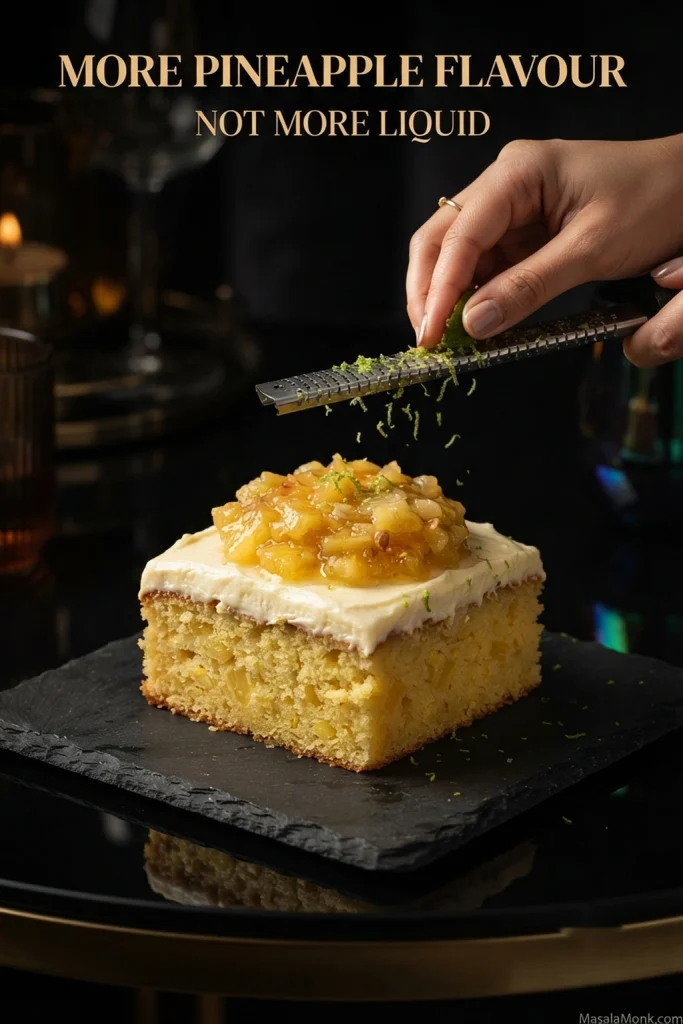
A mild pineapple cake doesn’t necessarily need another cup of crushed fruit. Extra fruit also brings extra weight and water, and the crumb can get heavier before the pineapple flavour gets much stronger.
Instead of adding more wet pineapple or juice to the batter, build the flavour in ways that do not disturb its liquid balance:
- spoon a thick pineapple topping over individual slices;
- use a thin layer of cooled pineapple filling between cake layers;
- add finely grated lime or lemon zest to brighten the fruit;
- finish the plate with a few well-drained pineapple pieces.
Quick Pineapple Topping
- 200 g drained crushed pineapple
- ⅓ cup (80 ml) pineapple juice
- 1 tablespoon (15 g) sugar, or less if the pineapple is very sweet
- 1 tablespoon (8 g) cornstarch
- 1 teaspoon (5 ml) lemon or lime juice
Mix everything in a small saucepan while still cold. Set it over medium heat and cook, stirring regularly, until the pineapple bubbles and becomes thick enough that a spoon dragged through the pan leaves a brief trail.
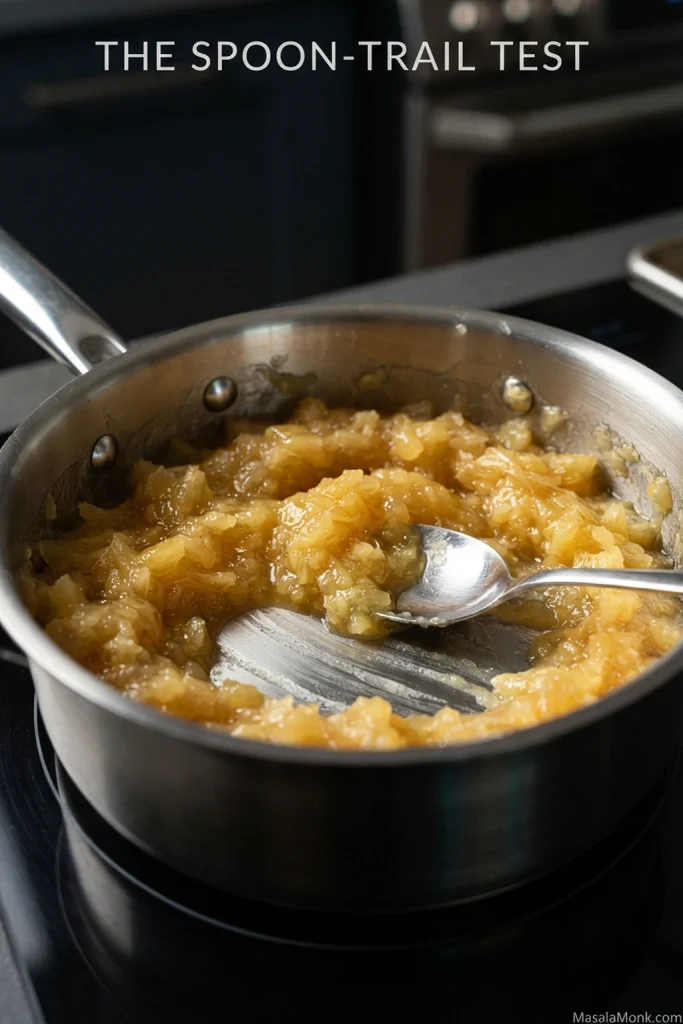
Cool the topping completely. It should be glossy and spoonable, with no loose syrup pooling around it. Spoon it over individual slices at serving time rather than covering the whole frosted cake.
For a layer cake, keep the filling thin and pipe a frosting border around the edge before adding it. Plan on making additional frosting for the filling dam and the outside of the cake.
Changing the Pan Changes the Cake
Batter depth matters more than the name of the pan. The 9 × 13 × 2-inch pan keeps this moist batter shallow enough for the centre to bake through before the edges spend too long in the oven.
For layers, two 9-inch round pans give the full batch more room than two 8-inch pans. Divide the batter evenly and start checking earlier because the layers will be shallower. Use pans deep enough to hold the batter comfortably, and remember that a finished layer cake needs more frosting than the amount listed for the sheet cake.
Don’t divide the full batch between two 8-inch pans as written. The batter will sit too deep. A Bundt also needs a recipe developed for that shape because both depth and heat flow change substantially.
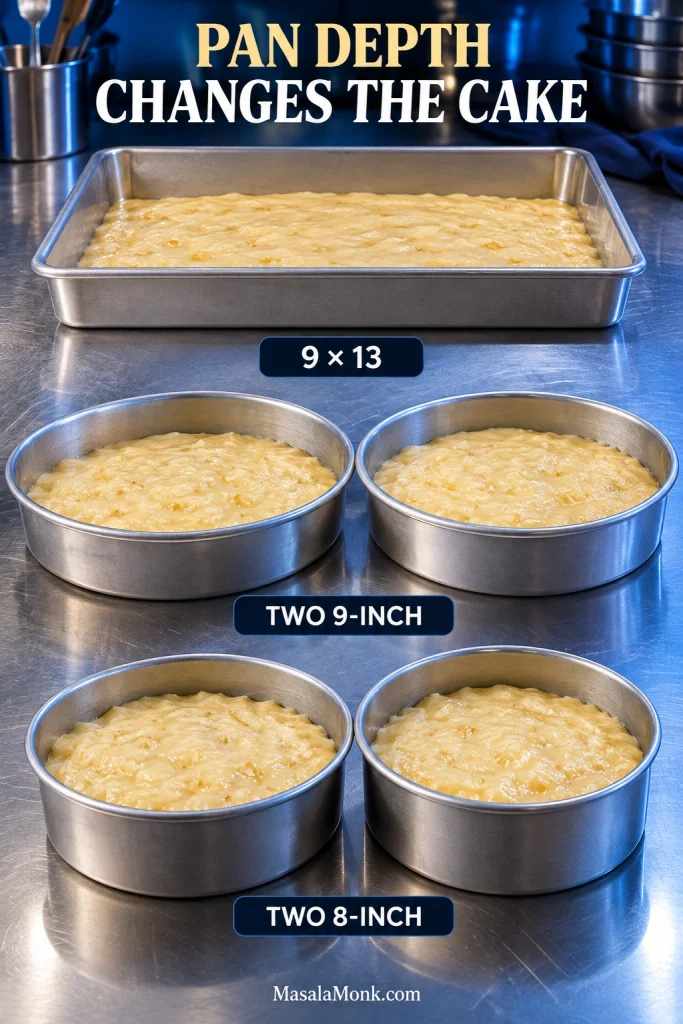
King Arthur Baking’s cake-pan conversion guide has a useful explanation of pan area and batter depth.
Cream Cheese or Whipped Cream?
Cream cheese gives the cake a tangy finish with enough structure for an easy sheet-cake frosting. Its slight sharpness works particularly well with sweet pineapple.
Whipped cream makes the cake feel lighter and moves it closer to the pineapple pastries familiar from Indian bakeries. Our homemade whipped cream recipe shows the difference between soft, medium and stiff peaks if you are going in that direction.
It is less forgiving in a hot kitchen, so keep the cake chilled until close to serving—especially in warm weather.
Pineapple going into cream needs to be much drier than pineapple going into cake batter. Drain it especially well before folding fruit into whipped cream or frosting.
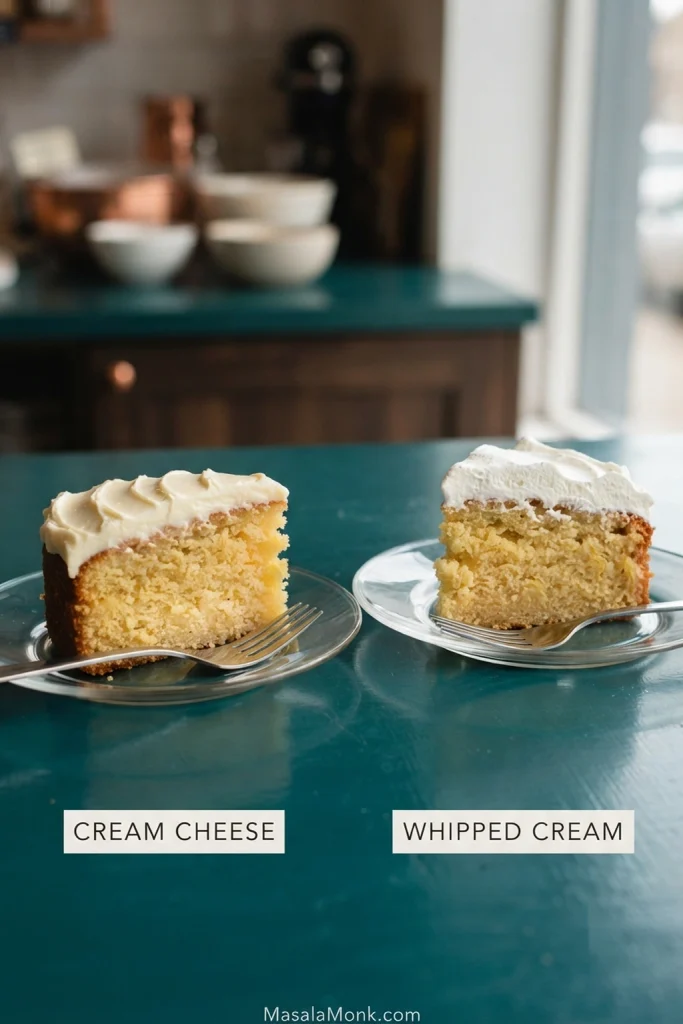
For a firmer, sweeter finish that takes piping more easily, buttercream frosting is another option.
What About Indian Bakery-Style Pineapple Cake?
If the pineapple cake or pineapple pastry you remember is pale, airy, covered in white cream and dotted with tiny pieces of pineapple, this isn’t quite that cake. In India, that pale sponge-and-cream version is what many people picture first when somebody says pineapple cake.
That bakery-style pineapple sponge cake usually starts with a light vanilla or eggless sponge. Pineapple juice is brushed onto the layers, fruit or filling goes between them, and the whole cake is finished with lightly sweetened whipped cream.

Real pineapple and cold cream do most of the work. If pineapple essence is used, keep it subtle enough that the fruit still tastes like pineapple.
You can make this cake feel lighter by using whipped cream and the cooked pineapple topping, but a true bakery-style pineapple sponge works better as its own recipe.
Eggless, Cake Mix and Other Variations
Can I Make It Eggless?
Not as a straight three-egg substitution. Pineapple already makes this a fairly wet batter, so use an eggless pineapple cake developed without eggs from the beginning.
Can I Make Pineapple Cake With Cake Mix?
This exact crushed-pineapple sheet cake has not been converted into a cake-mix formula here. Box sizes vary, and pineapple changes how much liquid a mix can handle.
If you are happy to switch to the caramelized upside-down style, our pineapple upside down cake with cake mix is built specifically around that shortcut.
Coconut, pecans and walnuts all pair naturally with pineapple, but this formula has not been developed around a fixed amount of any of them. Add banana and pecans and the cake starts moving toward Hummingbird Cake. Finely grated lime or lemon zest is the easiest addition here because it brightens the pineapple without adding extra liquid.
Make Ahead, Storage and Freezing
Keep cream-cheese-frosted pineapple cake refrigerated and use it within about 3–4 days. For freezing, the unfrosted cake keeps its best quality for about 2 months.
The unfrosted cake can be baked a day ahead. Once it is fully cool, cover it tightly. In a cool kitchen it can stay covered at room temperature overnight; in a very warm kitchen, refrigerate it and let some of the chill come off before frosting.
A cream-cheese-frosted cake should not sit at room temperature for more than about 2 hours. In very hot conditions above roughly 90°F / 32°C, keep that closer to 1 hour. These are the same basic limits given in USDA food-safety guidance for perishable foods.
For freezing, cool the unfrosted cake completely, wrap it well and freeze. Let it thaw while still wrapped, then frost once fully defrosted.
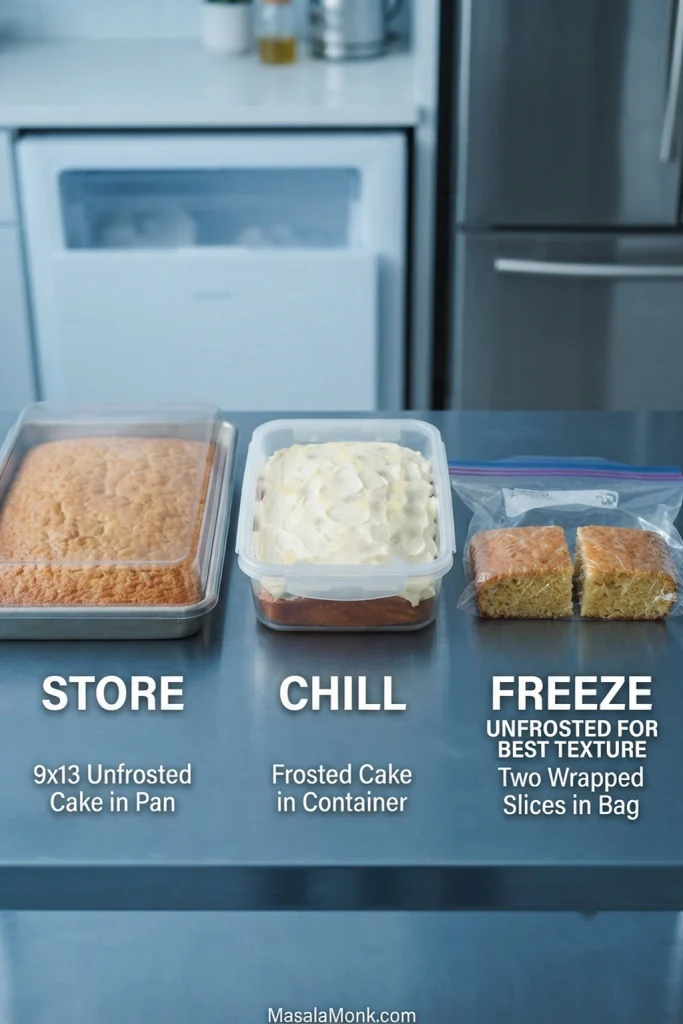
Individual frosted slices can be frozen too. Freeze the slices until firm first, then wrap them well so the frosting is protected. Thaw them in the refrigerator; the finish may be a little less smooth afterward, but the cake itself should still eat well.
↑ Back to recipe · ↑ Back to top
The Slice We Are Looking For
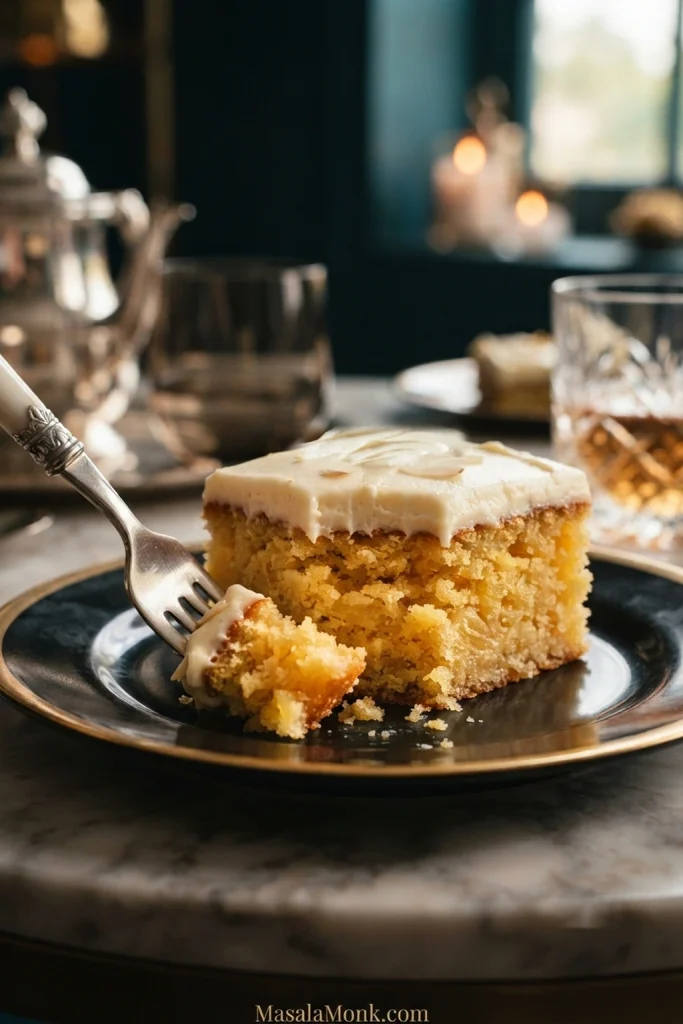
Cut into the cake and you should see small pieces of pineapple scattered through an even, tender crumb, capped with a cool layer of cream cheese frosting. The slice should hold together on the plate and give easily when the fork goes in.
Tender, not gummy. Moist, not wet.
If you make it, tell us what kind of pineapple you used and what you changed. Tag @Masala.Monk or use #MasalaMonk so we can see your version.








