
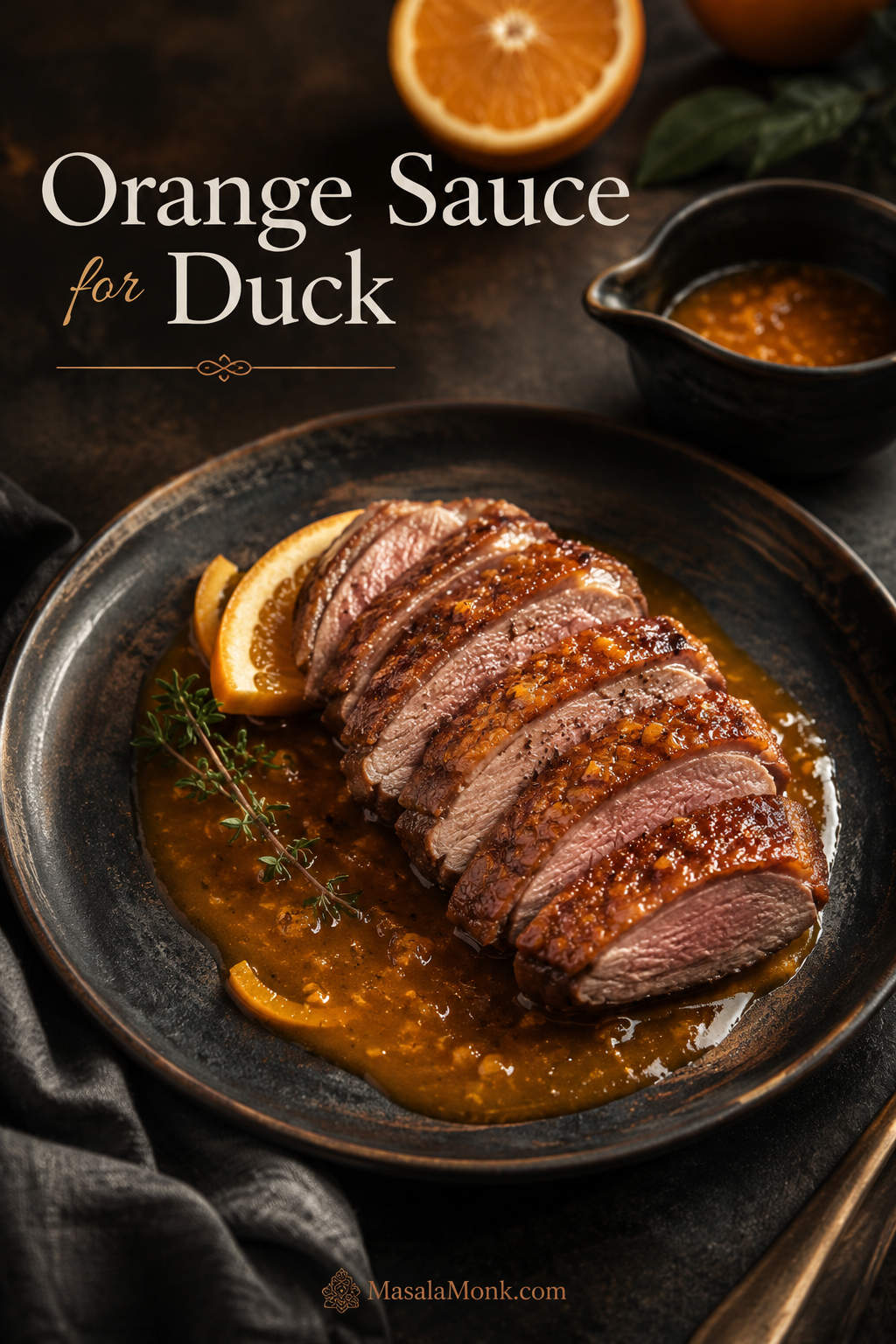
Duck already feels like the kind of dinner you do not want to waste: crisp skin, rich meat, maybe guests at the table. This orange sauce for duck gives you the classic sweet-sharp citrus lift without turning the plate sticky, syrupy, or restaurant-complicated.
Use it with pan-seared duck breast, roast duck, duck legs, leftover duck, or a simple duck à l’orange-style dinner. It comes together on the stovetop in about 25 minutes and should taste bright, savory, lightly sweet, and clean enough to wake up the duck rather than cover it.
You may also see this called orange gravy for duck, although the texture here is closer to a polished pan sauce than a flour-thickened gravy. It should be glossy and pourable, not gloppy, with enough body to sit beside the meat without soaking the crisp skin.
In This Guide
Quick Answer
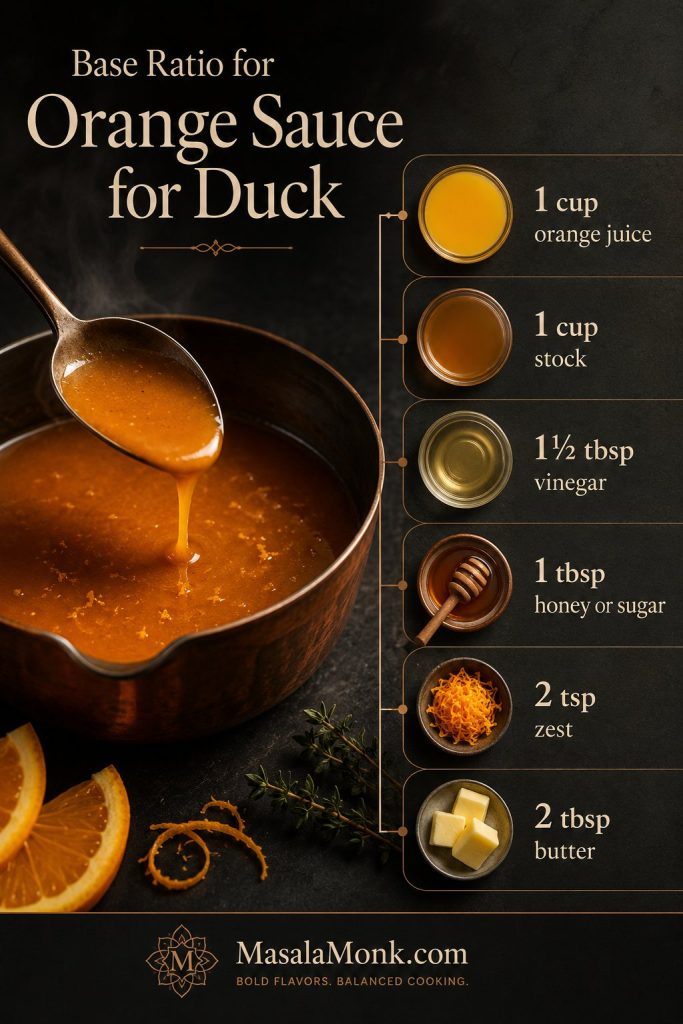
For about 1 cup / 240 ml sauce, simmer 1 cup / 240 ml orange juice, 1 cup / 240 ml duck or chicken stock, 1 1/2 tablespoons vinegar, 1 tablespoon honey or sugar, and 2 teaspoons orange zest until lightly reduced. Finish with 2 tablespoons / 28 g cold butter for a smooth citrus sauce that coats the spoon without turning sticky.
Before serving, taste and adjust. Too sweet? Add a splash of vinegar. Too sharp? Add a little honey or butter. Too thin? Simmer it a few minutes longer before using cornstarch.
The point is not to make the sweetest orange sauce. The point is to make a sauce that feels right with duck: clean citrus edge, savory depth, gentle sweetness, and a finish that makes the plate feel special.
You can also make the base ahead, then warm it gently and whisk in the butter before serving. That takes pressure off the final minutes, especially when the duck itself already needs your attention.
Need the full measurements in one place? Jump to the recipe card. If your sauce is already too sweet, too sharp, or too thin, go straight to the fix guide.
What Is Orange Sauce for Duck?
Orange sauce for duck is a warm citrus sauce served with rich duck meat. It usually combines orange juice or zest with stock, vinegar, a little sweetness, and butter. Some versions are simple and quick, while classic French versions use a sweet-sour base with rich duck or veal stock.
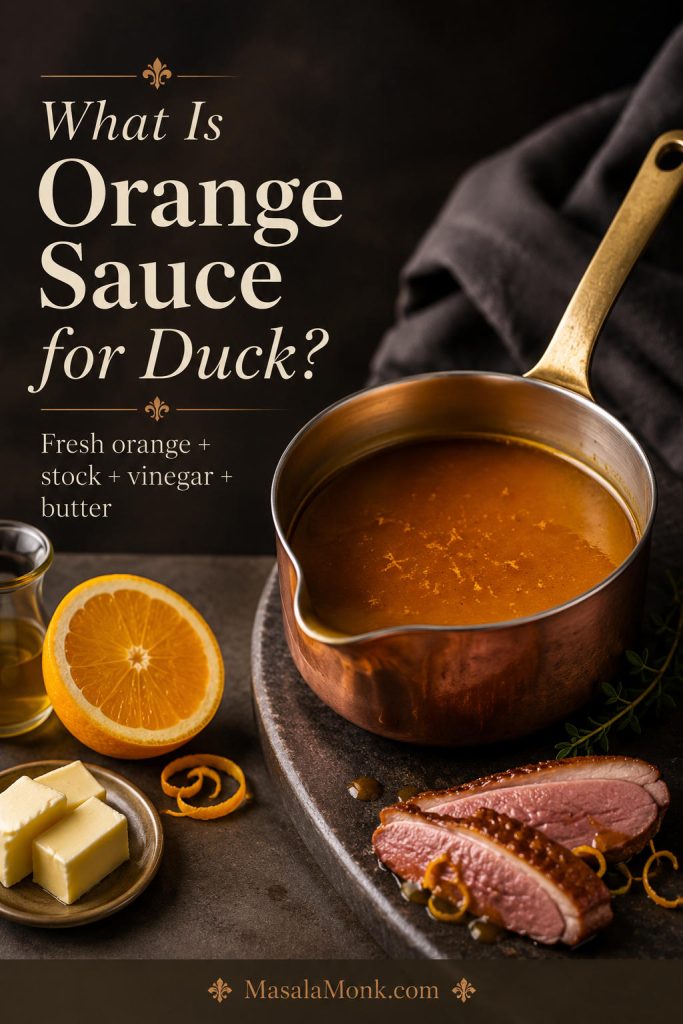
For home cooking, the goal is simpler: make a sauce that brightens the duck without turning the plate sweet. Orange brings freshness, vinegar keeps the richness in check, and stock gives the sauce enough body to feel like part of the dish rather than a sweet topping.
This recipe is designed as an all-purpose duck sauce. It works with duck breast, roast duck, duck legs, leftover duck, and a simplified duck à l’orange plate. If you like bright sauces for rich holiday mains, MasalaMonk’s cranberry sauce with orange juice follows a similar sweet-tart logic, but this one is warmer and more savory.
Comparing it with the French classic? See the duck à l’orange section before choosing a variation.
Why This Sauce Works with Duck
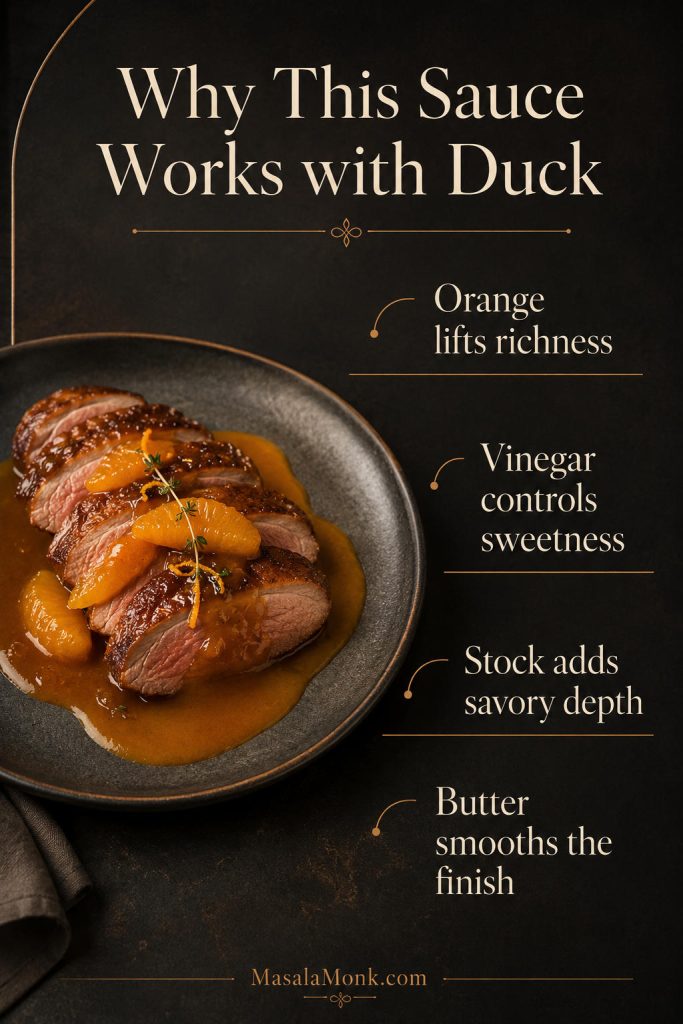
A good duck sauce has to do two things at once: cut through the richness and still taste like dinner. Orange brings the lift, vinegar keeps it from turning candied, stock gives it a savory backbone, and cold butter makes it feel polished on the plate.
- Orange brightens rich meat: citrus gives the duck a clean edge instead of letting each bite feel heavy.
- Vinegar controls the sweetness: it keeps the sauce sweet-sharp, not jammy.
- Stock gives it backbone: it turns orange juice into a real pan sauce instead of a topping.
- Cold butter finishes the texture: it softens the acidity and gives the sauce that silky, spoon-coating finish.
The good news is that this is not a one-shot sauce. Before the butter goes in, you can still pull it brighter, softer, saltier, thinner, or thicker.
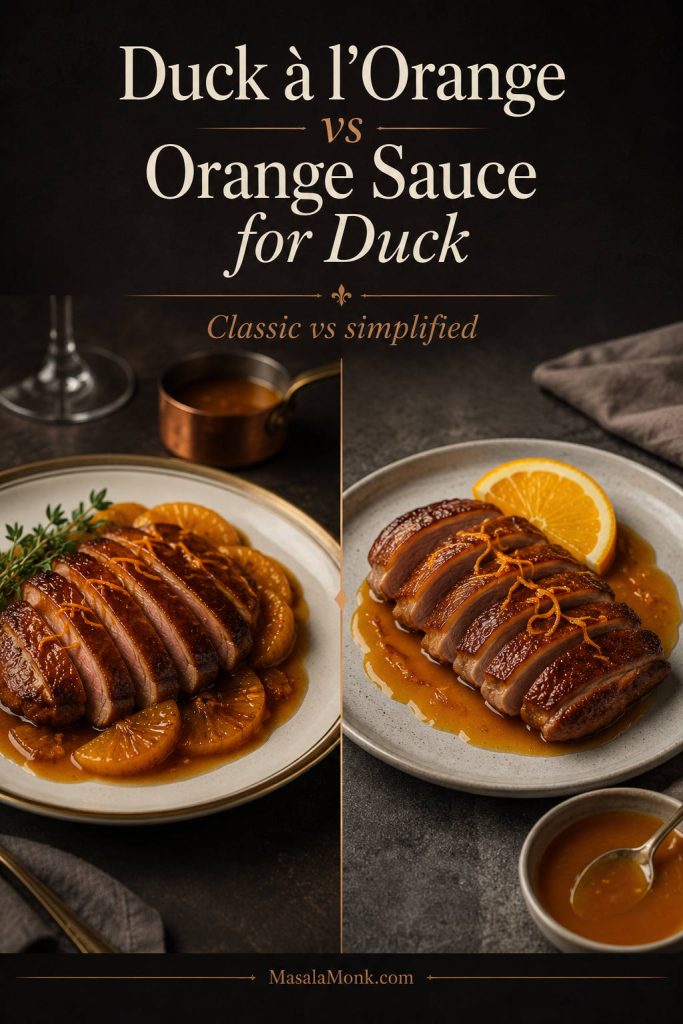
Is This the Same as Duck à l’Orange Sauce?
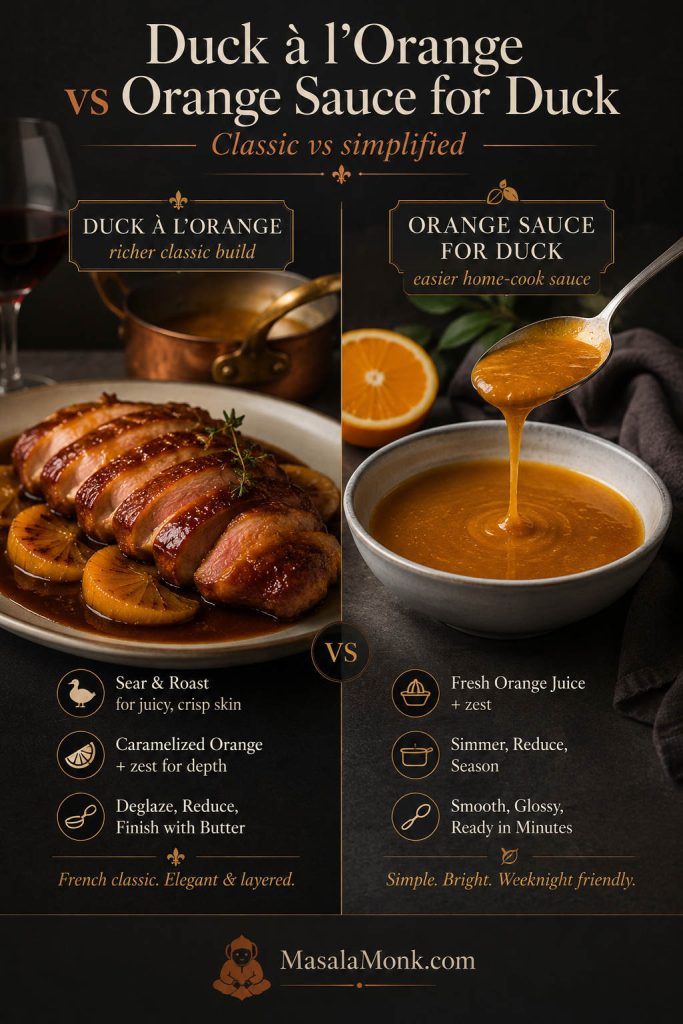
This is a simplified duck à l’orange-style sauce. Classic duck à l’orange often starts with a more formal sweet-sour base, sometimes called a gastrique, then builds flavor with orange, stock, and sometimes orange liqueur. It is beautiful, but it can feel like one more moving part when the duck itself already needs care.
This recipe keeps the part home cooks usually want most: citrus lift, controlled sweetness, savory depth, and a smooth finish. It skips the restaurant-style steps unless you want to dress it up with Grand Marnier, port, marmalade, or blood orange. For a more traditional, fully developed version, Serious Eats has a detailed guide to duck à l’orange.
Think of this as the calmer sauce-first version: familiar enough for duck à l’orange cravings, but simple enough to make while dinner is still moving.
Ingredients You Need
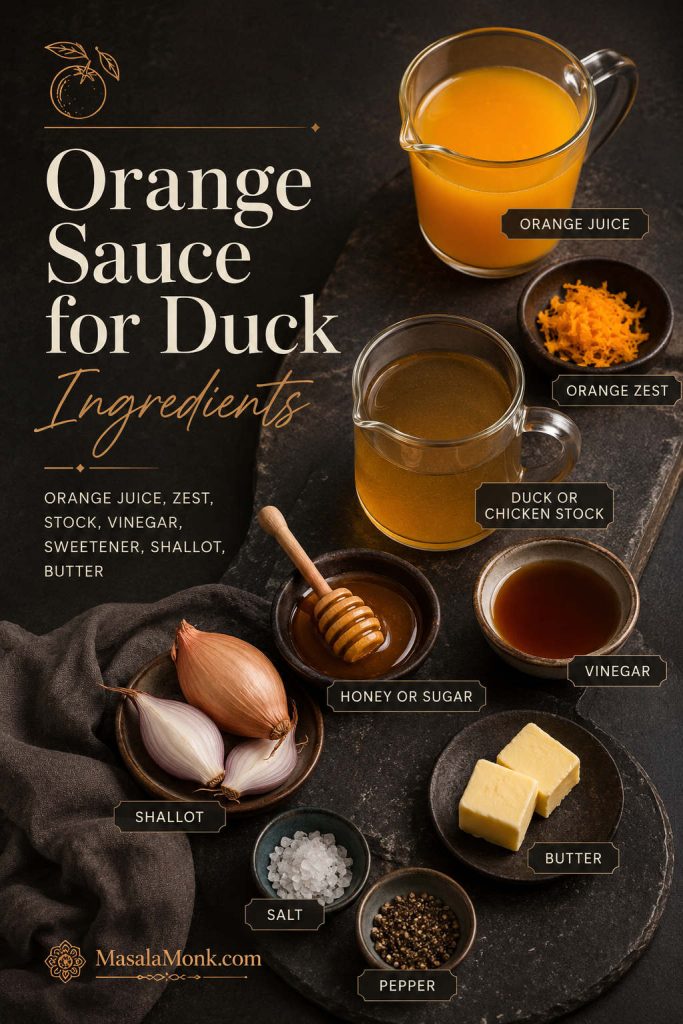
Orange Juice and Zest
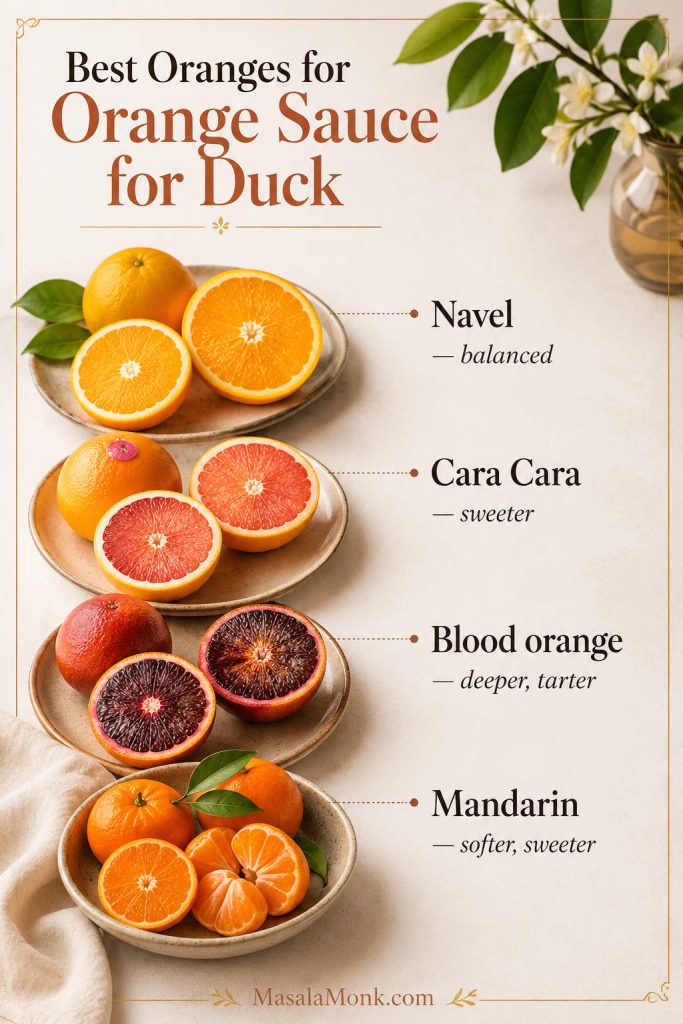
Fresh orange juice gives the sauce its main flavor. Orange zest is just as important because it adds concentrated citrus aroma without making the sauce watery. You will usually need 2 to 3 medium oranges for 1 cup / 240 ml juice, depending on size and juiciness, plus zest. Zest one orange before juicing it, and avoid the bitter white pith underneath the peel.
Bottled orange juice can work in a pinch, but fresh juice gives a cleaner, brighter sauce. If your oranges are very sweet, start with less honey or sugar and adjust after the sauce reduces.
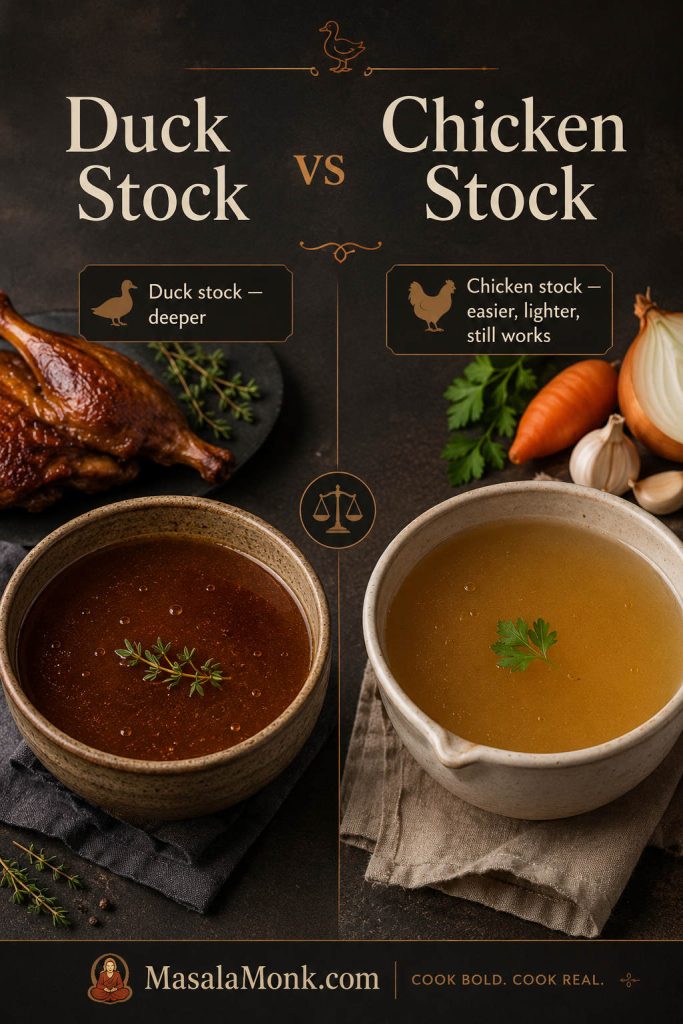
Duck Stock or Chicken Stock
Stock is the quiet ingredient that makes the sauce taste like dinner, not dessert. Duck stock is ideal if you have it, but low-sodium chicken stock is easier to find and works well. Low-sodium stock is especially helpful because the sauce reduces as it cooks.
If you are cooking duck breast in a pan, you can also add a spoonful of the rendered duck juices or pan drippings. Skim or pour off excess fat first so the sauce tastes rich, not greasy.
Vinegar for Balance
Duck needs acidity. Sherry vinegar and red wine vinegar are both excellent because they bring a rounded sharpness. White wine vinegar also works. Lemon juice can help in a pinch, although vinegar gives a more classic sweet-sour profile.
Use 1 1/2 tablespoons for a balanced base. Use closer to 2 tablespoons if your oranges are very sweet, if you are serving fatty roast duck, or if the finished sauce tastes too round and heavy.

Honey, Sugar, or Marmalade
You only need a little sweetness. Honey gives a rounded flavor, while sugar keeps the sauce cleaner. Start with 1 tablespoon, then add more only after the sauce has reduced and you have tasted it.
Orange marmalade can be used for a shortcut variation, but it should support the duck sauce rather than take over. Too much can push the flavor toward sticky glaze, so keep the base savory with stock and vinegar.

Butter for a Smooth Finish
Cold butter goes in at the end. It softens the acidity, gives the sauce a polished finish, and helps it feel complete. Add it off the heat or over very low heat and whisk until smooth.
Once the butter is added, avoid hard boiling. Butter should make the sauce silky, not oily. If the pan starts bubbling hard after the butter goes in, lower the heat immediately.
Equipment You Need
You only need a small saucepan, whisk, citrus zester, and juicer for the basic sauce. A fine-mesh sieve helps if you want a restaurant-smooth finish. A skillet only matters if you are making the orange pan sauce from duck drippings.
- Small saucepan or saucier
- Whisk
- Fine grater or Microplane
- Citrus juicer
- Fine-mesh sieve, optional
- Small bowl for cornstarch slurry, if using
Once the ingredients and basic tools are ready, start the step-by-step method.
How to Make Orange Sauce for Duck
The sauce is most flexible before the butter goes in. Taste there, adjust there, and the finish becomes much easier.
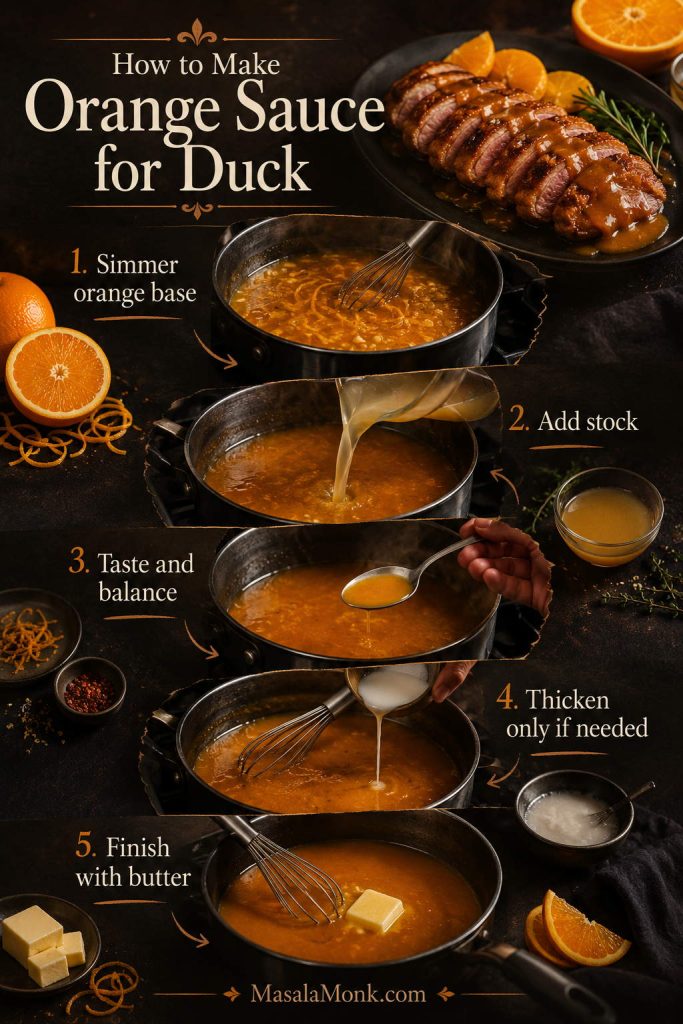
1. Reduce the Orange Base
Add the orange juice, orange zest, vinegar, and honey or sugar to a small saucepan. If you are using shallot, add it here too. Bring to a simmer over medium heat, then cook for 5 to 7 minutes, until the mixture smells bright and citrusy and has reduced slightly.
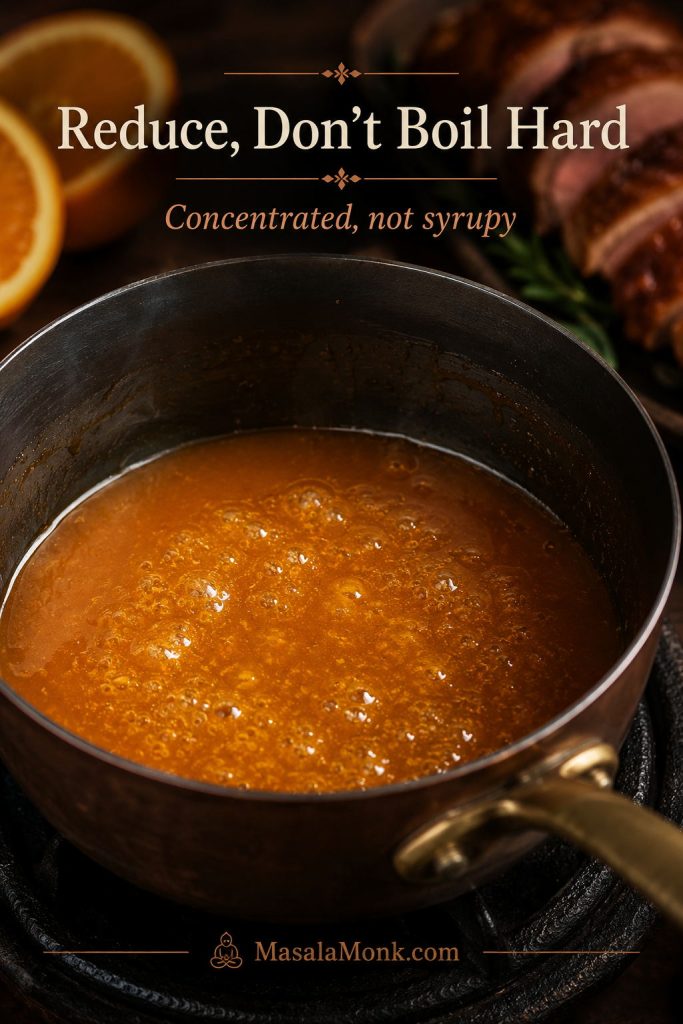
You are not trying to make caramel or a thick syrup at this stage. You just want to concentrate the orange flavor and soften the sharp edge of the vinegar.
2. Add Stock and Simmer
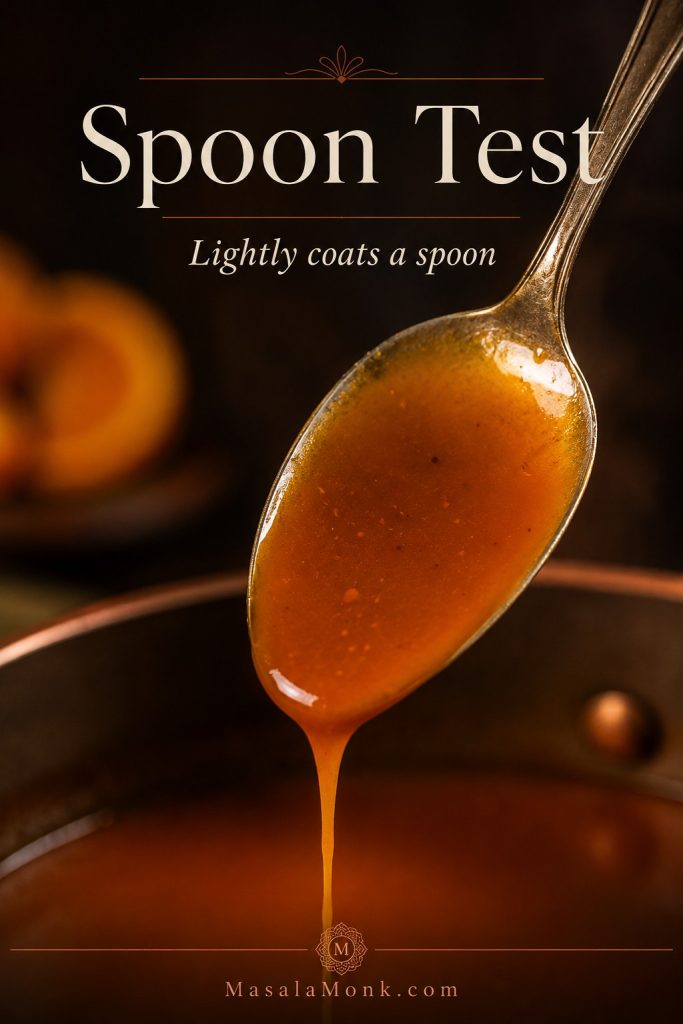
Add the duck stock or chicken stock. Simmer for 8 to 12 minutes, stirring occasionally, until the sauce tastes savory and leaves a thin coating on the spoon.
If the sauce still feels thin, keep simmering. Reduction gives better flavor than thickening too early.
3. Balance Sweetness, Acidity, and Salt
Taste before adding butter. This is the moment where the sauce becomes yours: a little sharper for fatty roast duck, a little softer for leaner duck breast, or a touch sweeter if the oranges are tart.
- Too sweet? Add a small splash of vinegar or lemon juice.
- Too sharp? Add a little more honey or sugar.
- Flat? Add a pinch of salt and a little more orange zest.
- Thin? Simmer longer before using slurry.
4. Thicken Only If Needed
If the sauce is still too thin after reducing, mix 1 teaspoon cornstarch or cornflour with 1 tablespoon cold water. Whisk a small amount of this slurry into the simmering sauce and cook for 30 to 60 seconds.
Do not add dry cornstarch directly to the pan. It can clump and make the texture uneven. Use only enough slurry to help the sauce coat the spoon lightly.
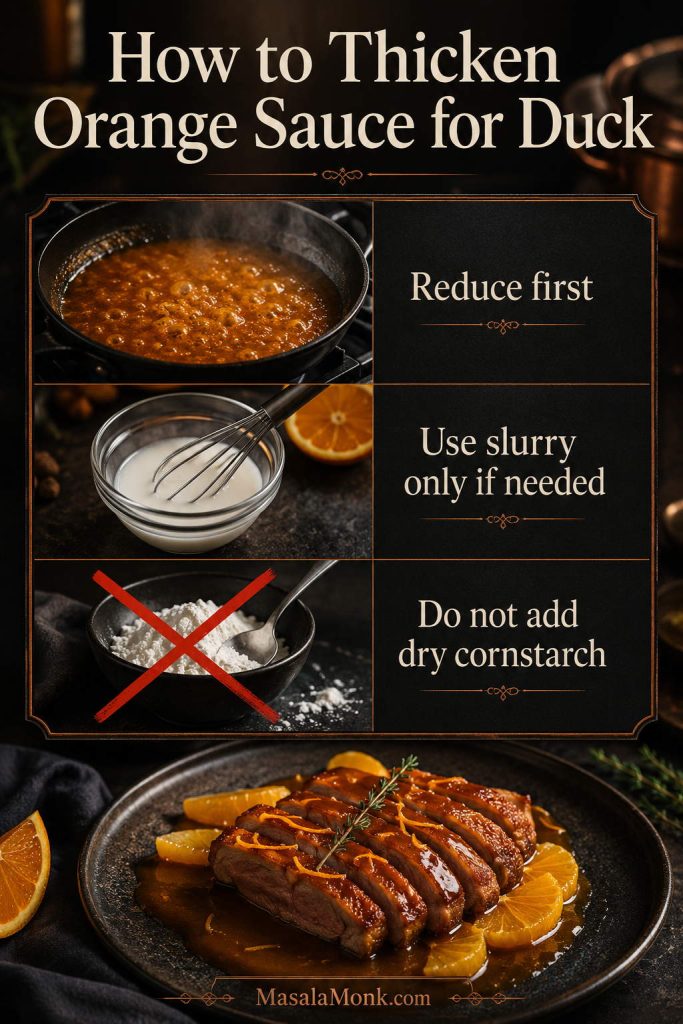
If the sauce has already gone too thin, too thick, bitter, greasy, or broken, use the troubleshooting guide before adding more ingredients.
5. Finish with Butter
Lower the heat or remove the pan from the heat. Whisk in the cold butter, one small piece at a time, until the sauce is smooth. Taste again and adjust salt, pepper, vinegar, or sweetness as needed.
For a very smooth finish, strain it through a fine-mesh sieve before serving. For a more rustic sauce, leave the shallot and zest in.
Orange Sauce for Duck Recipe
Orange Sauce for Duck Recipe
This citrus sauce gives duck the classic sweet-sharp orange lift without turning the plate syrupy. It is smooth enough for duck breast, savory enough for roast duck, and simple enough for a duck à l’orange-style dinner at home.
Servings: 4, with about 1/4 cup sauce each
Category: Sauce
Method: Stovetop reduction
Cuisine: French-inspired
Ingredients
- 1 cup / 240 ml fresh orange juice, from about 2–3 medium oranges, depending on size and juiciness
- 2 teaspoons finely grated orange zest
- 1 cup / 240 ml duck stock or low-sodium chicken stock
- 1 1/2 tablespoons sherry vinegar or red wine vinegar, plus more to taste
- 1 tablespoon honey or 12 g sugar, plus more only after tasting
- 1 small shallot, finely chopped, optional, about 2 tablespoons
- 2 tablespoons / 28 g cold unsalted butter, cut into small pieces
- 1/4 teaspoon fine salt, plus more to taste
- Freshly ground black pepper or white pepper, to taste
Optional Thickener
- 1 teaspoon cornstarch / cornflour
- 1 tablespoon cold water
Optional Upgrades
- 1–2 tablespoons / 15–30 ml Grand Marnier, Cointreau, or another orange liqueur
- 2–4 tablespoons / 30–60 ml port for a richer sauce
- 1 tablespoon / about 20 g orange marmalade for a sweeter shortcut version
Instructions
- Start the orange base. Add orange juice, orange zest, vinegar, honey or sugar, and the optional shallot to a small saucepan. Bring to a simmer over medium heat.
- Reduce slightly. Simmer for 5 to 7 minutes, until the orange mixture smells bright and has reduced a little. Do not reduce it to a thick syrup yet.
- Add stock. Pour in the duck stock or chicken stock. Simmer for 8 to 12 minutes, stirring occasionally, until the sauce tastes savory and leaves a thin coating on the spoon.
- Balance the sauce. Taste before adding butter. Add a little more vinegar if it tastes too sweet, more honey or sugar if it tastes too sharp, or a pinch of salt if it tastes flat.
- Thicken only if needed. If the sauce is still too thin after reducing, stir cornstarch with cold water in a small bowl. Whisk a little slurry into the simmering sauce and cook for 30 to 60 seconds. Do not add dry cornstarch directly to the sauce.
- Finish with butter. Lower the heat or remove the pan from the heat. Whisk in the cold butter until the sauce is smooth. Do not hard-boil after adding butter.
- Strain and serve. Strain through a fine-mesh sieve for a smooth sauce, or leave the shallot and zest in for a more rustic sauce. Serve warm with duck.
Notes
- Yield: About 1/4 cup sauce per person for 4 servings. Double it if you like extra sauce at the table or are serving roast duck.
- Texture: Aim for glossy and pourable, with enough body to coat a spoon lightly.
- Best adjustment point: Taste before adding butter, while the sauce is still easy to correct.
- Optional upgrades: Choose one at a time. Add marmalade or port with the stock, or orange liqueur after the sauce has reduced.
- Serving: For crisp duck breast, sauce the plate or spoon around the slices. For roast duck, serve the sauce warm on the side.
Making sauce for cooked duck? Use the quick 10-minute version. Cooking duck breast in the pan? Use the duck drippings version.
Quick 10-Minute Version
Use this when the duck is already cooked and you need a fast, warm citrus finish, not a full restaurant-style reduction. It is brighter and lighter than the main recipe, but it still gives the meat the orange lift it needs.
If you are cooking duck breast from scratch, the pan-sauce version below gives better flavor because it uses the browned bits and juices left in the skillet.
Orange Pan Sauce from Duck Drippings
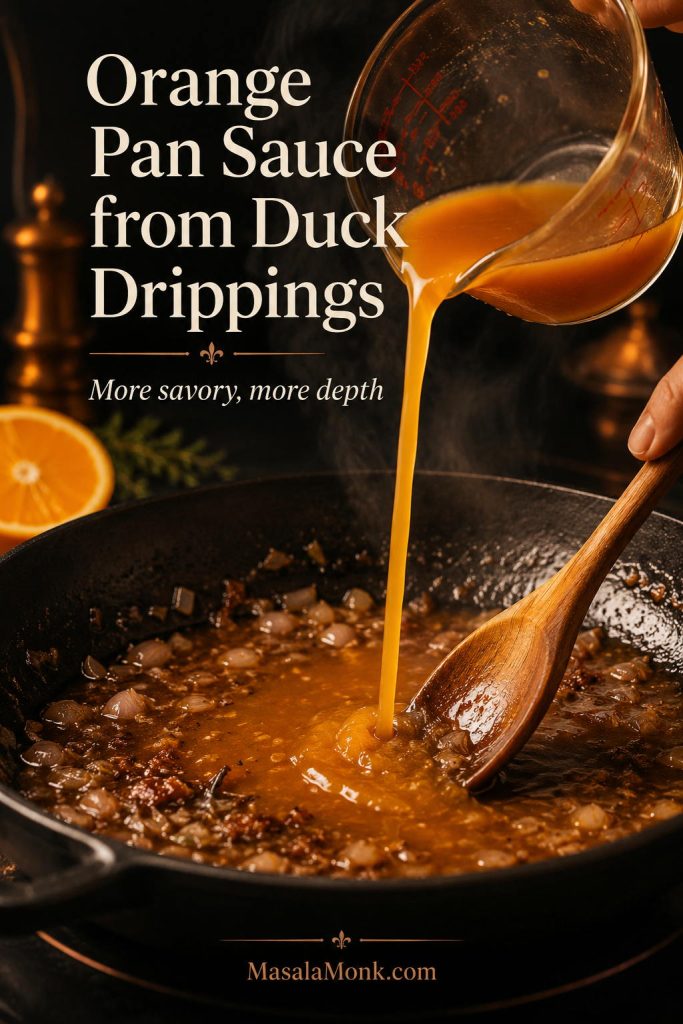
If you are cooking duck breast, this is where the skillet gives you flavor you cannot get from orange juice alone. After cooking the duck, transfer the breast to a board to rest. Pour off most of the rendered duck fat, leaving the browned bits and about 1 teaspoon of fat in the pan.
Add the shallot, if using, and cook for 30 to 60 seconds over medium-low heat, just until softened. Pour in the orange juice, then scrape up the browned bits from the bottom of the pan. Add the zest, vinegar, honey or sugar, and stock, then simmer until the sauce tastes savory and lightly coats a spoon. Lower the heat, whisk in the cold butter, and strain if you want a smoother finish.
This route is especially good for duck breast because it captures the savory flavor left in the skillet. Just avoid leaving too much duck fat in the pan, or the sauce can taste greasy.
Once the sauce is ready, see how to serve it with duck breast without soaking the crisp skin.
How to Serve the Sauce with Duck Breast
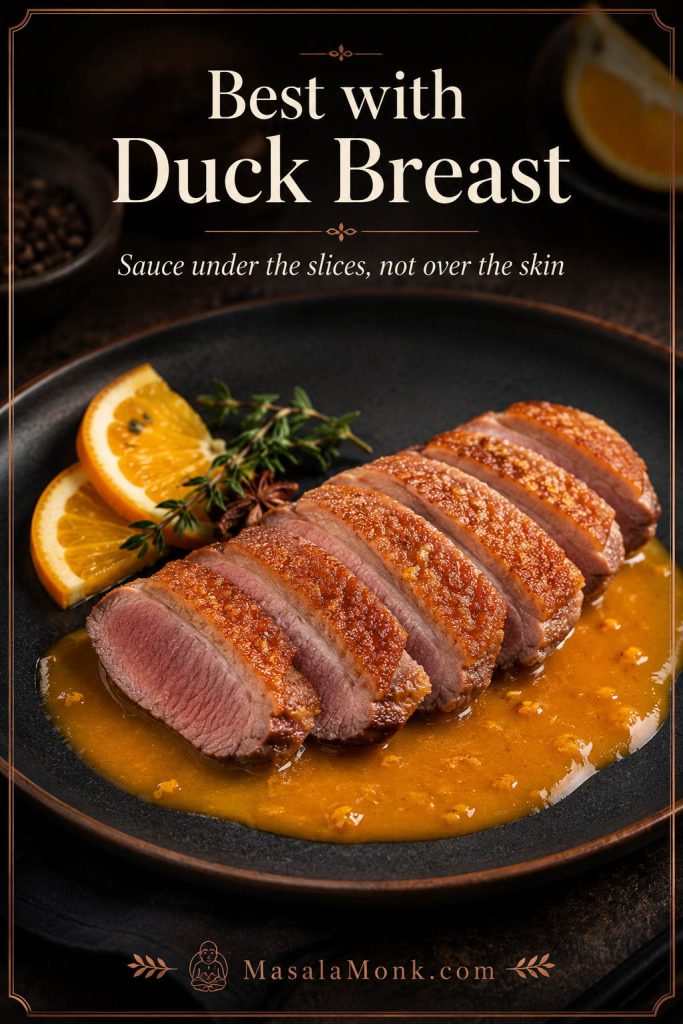
Duck breast is one of the best uses for this sauce because the contrast is so good: crisp skin, tender meat, and citrus sauce underneath. The skin is the prize. Once it is soaked, the plate loses its best texture.
Spoon the sauce onto the plate first, then lay the sliced duck breast over it. You can also spoon a little sauce around the slices and serve extra on the side. That way the first bite still has that crisp edge.
If you are cooking duck breast from scratch, score the skin in a shallow crosshatch pattern without cutting into the meat. Start the breast skin-side down in a cold pan, then render the fat slowly over low to medium-low heat. This gives the fat time to melt and the skin time to crisp before the meat overcooks.
For the full meat-cooking method, use this duck breast recipe with crispy skin and orange sauce as the companion guide. This page focuses on the sauce, while that guide walks through the duck itself in more detail.
If you are only making the sauce for already-cooked duck, you can skip the temperature notes. If you are cooking duck breast at the same time, this section helps you time the meat before saucing the plate.
Duck Breast Temperature Guide
In restaurants and many home kitchens, duck breast is often served pink, but official U.S. poultry guidance is 165°F / 74°C. These lower temperatures are common doneness preferences, not official safety recommendations. If you choose a lower doneness target, use your own judgment and consider who you are serving, especially if cooking for children, pregnant guests, older adults, or anyone immunocompromised. You can also refer to the USDA’s safe minimum internal temperature chart for official guidance.

| Duck Breast Doneness | Common Restaurant/Home Target | Texture |
|---|---|---|
| Medium-rare | 130–135°F / 54–57°C | Pink, tender, steak-like |
| Medium | 140°F / 60°C | Lightly pink, firmer |
| Well done | 155°F+ / 68°C+ | Much firmer, less pink |
| Official U.S. poultry safety temperature | 165°F / 74°C | Fully cooked by official guidance |
How to Keep the Duck Skin Crisp
- Render the skin slowly instead of blasting it with high heat.
- Rest the duck breast before slicing so juices settle.
- Spoon sauce under or around the duck, not heavily over the skin.
- Serve extra citrus sauce on the side so each person can add more.
- If reheating leftovers, re-crisp the duck skin separately from the sauce.

How to Use It with Roast Duck or Duck Legs
Roast duck can take a little more sauce than duck breast, especially once it is carved at the table. Still, crisp skin deserves respect. Keep the sauce warm and serve it beside the meat so people can add enough citrus lift without softening every piece.
If you have pan juices from roasting duck, add a spoonful to the sauce for deeper flavor. Skim off excess fat first; a little duck fat tastes luxurious, but too much can turn the sauce greasy.
Duck legs are more forgiving. Because the meat is darker and richer, you can spoon the sauce a little more generously, especially with roasted, braised, or confit-style legs.

For a bigger holiday table, keep the duck rich and the sides familiar: one citrus sauce, one potato dish, and one green side usually feel complete. If you want a classic make-ahead green side, MasalaMonk’s green bean casserole recipe ideas work better than adding another fussy main-style dish.
Orange Sauce Variations: Marmalade, Grand Marnier, Port, and Blood Orange
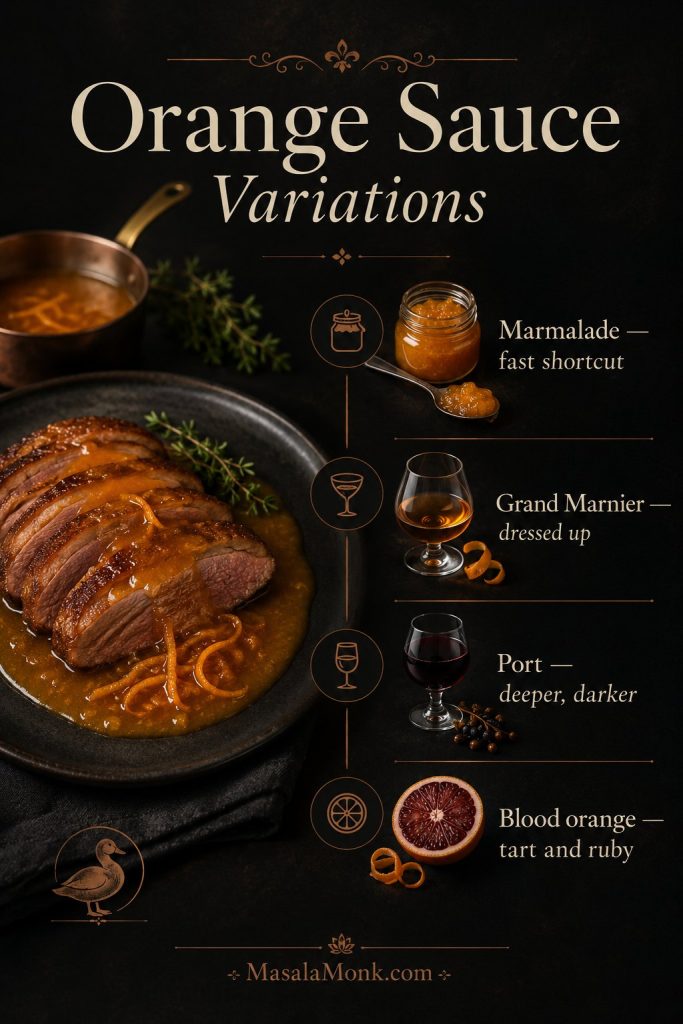
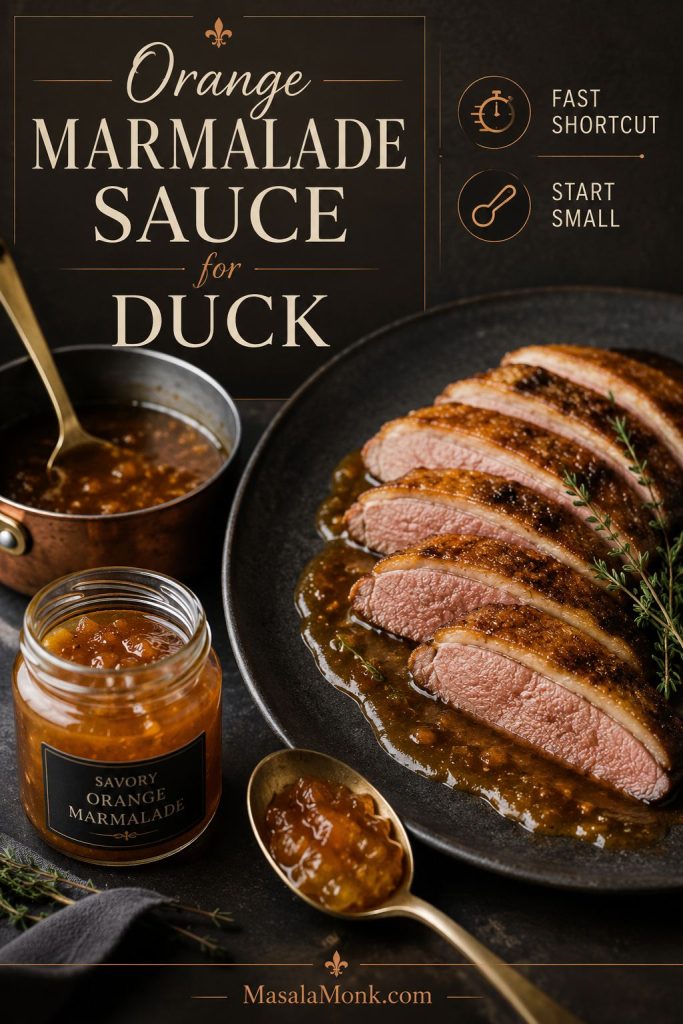
Marmalade Shortcut
Marmalade is the fast shortcut, not the whole personality of the sauce. Add 1 tablespoon with the stock for body, sweetness, and a slight orange-peel bitterness.
Too much marmalade pushes the sauce toward sticky glaze. Start small, keep the vinegar close, and remember: if it tastes good on toast, it is probably too sweet for duck.
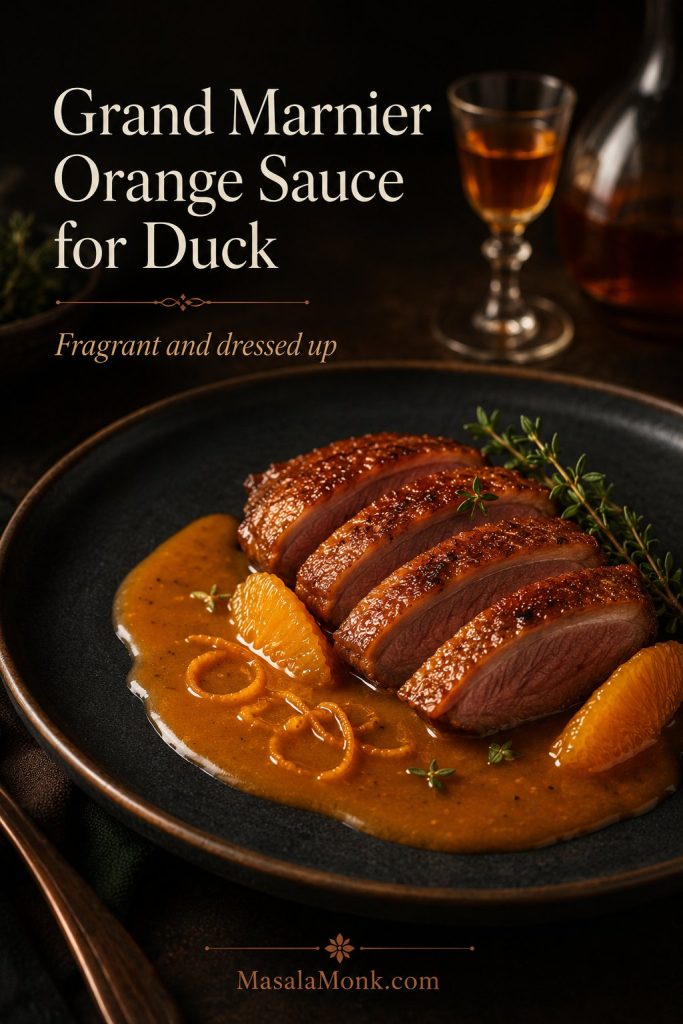
Grand Marnier or Cointreau
This is the dinner-party version: still bright and pourable, but with a warmer orange aroma that feels more dressed up. Add 1 to 2 tablespoons of Grand Marnier, Cointreau, or another orange liqueur after the sauce has reduced.
Simmer briefly to mellow the alcohol, then finish with butter. The result should feel fragrant, not perfumey, and richer without becoming heavy.
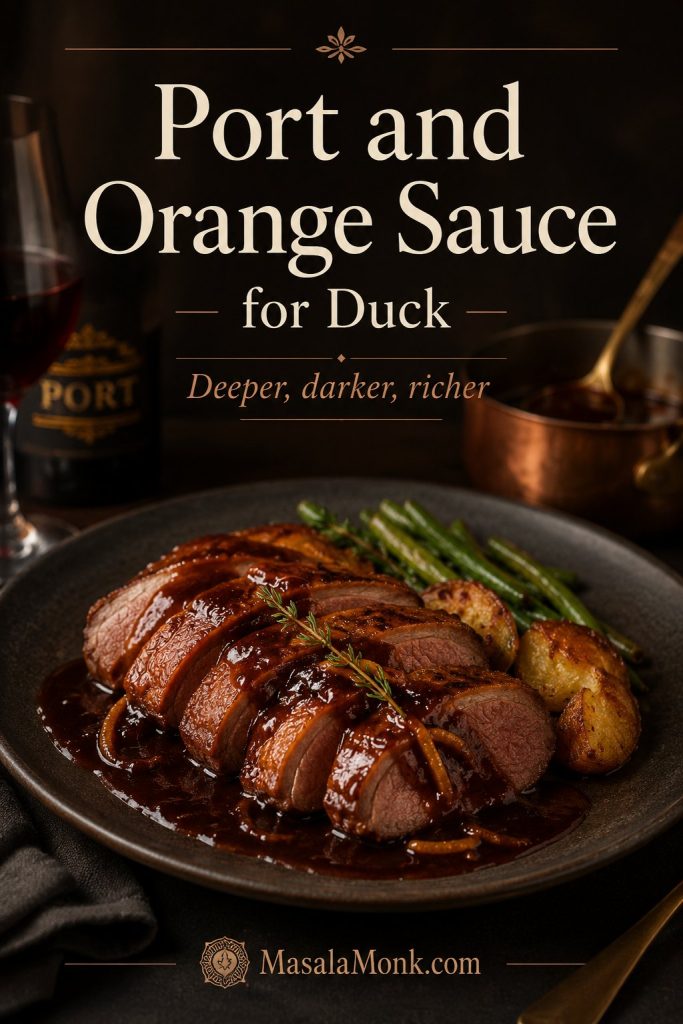
Port and Orange
Port moves the sauce into a deeper, darker lane. Add 2 to 4 tablespoons with the stock, then taste before serving because port can make the orange feel rounder and sweeter.
This version suits roast duck especially well. If the sauce starts leaning too soft or sweet, a few extra drops of vinegar will wake it back up.
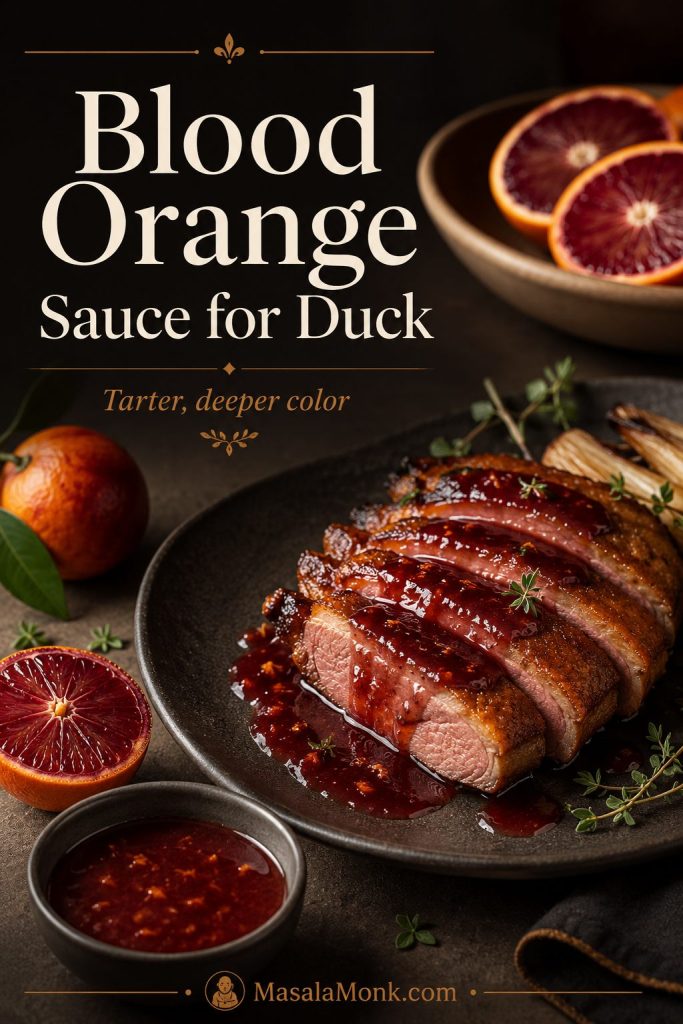
Blood Orange
Blood orange gives the sauce a ruby-orange color and a slightly berry-like citrus note. Use it exactly as you would regular orange juice, then taste carefully because some blood oranges are less sweet and more tart.
If the finish tastes too sharp, soften it with a little honey or an extra piece of cold butter.
Use the table below as a quick chooser, then follow the same core method: reduce first, taste before butter, and keep the finish pourable rather than sticky.
| Version | Best For | Flavor | What to Adjust |
|---|---|---|---|
| Classic base | Duck breast, roast duck, duck legs | Bright, savory, balanced | Taste vinegar and sweetness before butter |
| Marmalade | Fast shortcut | Sweeter, peel-like, slightly bitter | Add extra vinegar if it tastes jammy |
| Grand Marnier or Cointreau | Dinner-party plates | Fragrant, festive, orange-forward | Simmer briefly before butter |
| Port | Roast duck or richer plates | Darker, rounder, deeper | Add acid if it becomes too sweet |
| Blood orange | Seasonal dinners | Tart, ruby-colored, berry-citrus | Add honey if too sharp |
If a variation tastes too sweet, too sharp, or too heavy after reducing, check the sauce fixes before serving.
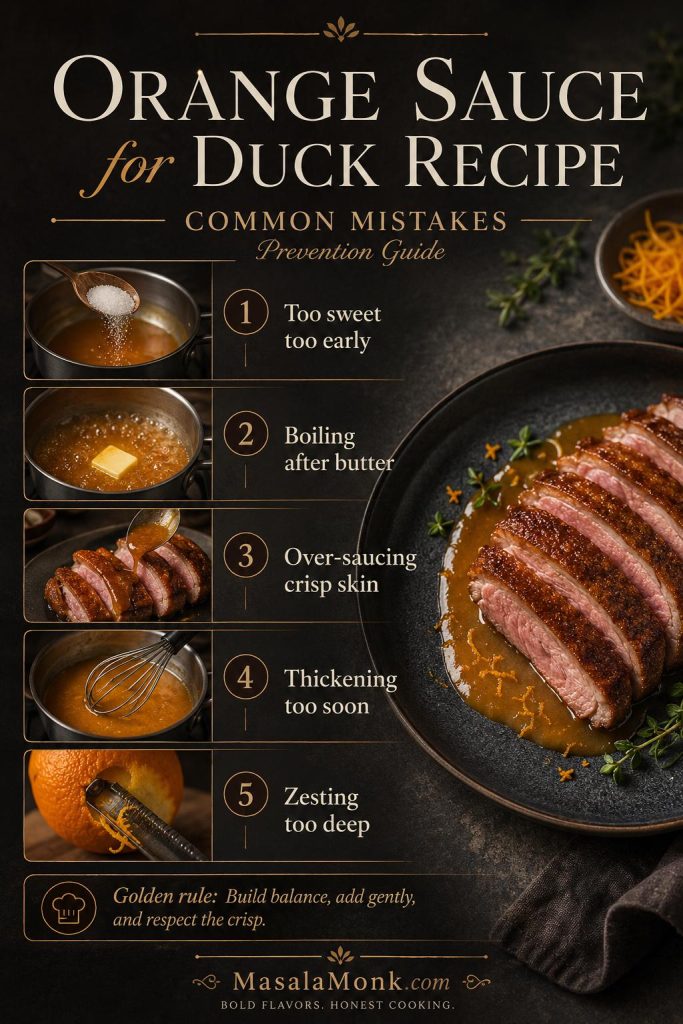
Common Mistakes to Avoid
These are the small moves that usually separate a polished orange duck sauce from one that tastes too sweet, too heavy, or slightly clumsy on the plate.
- Adding too much sweetness early: reduce the sauce first, then decide if it needs more honey, sugar, or marmalade.
- Boiling after butter: once the butter goes in, use gentle heat so the sauce stays smooth.
- Covering crisp duck skin: spoon the sauce under or around duck breast instead of soaking the skin.
- Thickening too soon: simmer first, then use cornstarch only if reduction is not enough.
- Zesting too deeply: use only the colored orange peel, not the bitter white pith.
How to Fix Orange Sauce for Duck
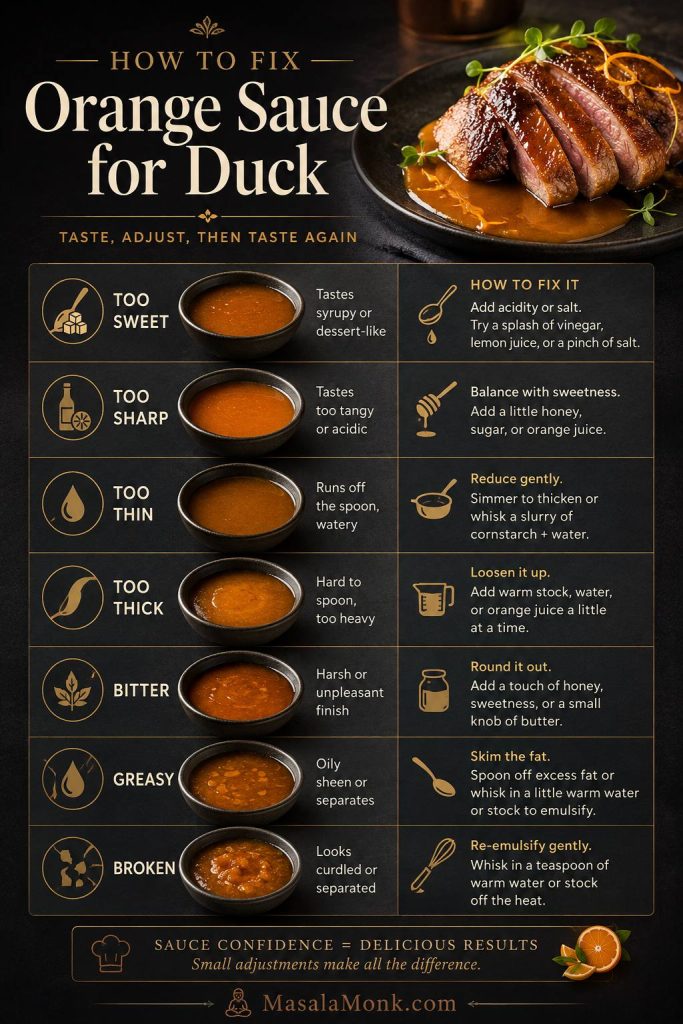
Most problems with this sauce are balance problems, not failures. A splash of acid, a little sweetness, more reduction, or gentler heat can usually bring it back.
Use the table as a quick rescue guide rather than a second recipe. Find the problem, make the smallest adjustment, then taste again before adding more.
| Problem | Why It Happened | How to Fix It |
|---|---|---|
| Too sweet | Too much honey, sugar, marmalade, or very sweet orange juice | Add a splash of vinegar or lemon juice, then loosen with a little stock if needed. |
| Too sharp | Too much vinegar or very tart oranges | Add a little honey or sugar, then finish with butter to round the edges. |
| Too thin | Not reduced enough, or stock was very light | Simmer longer. If still thin, whisk in a small amount of cornstarch slurry. |
| Too thick or sticky | Over-reduced or too much marmalade/sugar | Whisk in warm stock, water, or orange juice a tablespoon at a time. |
| Bitter | Too much white pith from the orange peel, or over-reduced citrus | Strain the sauce, add a little honey, and finish with butter. |
| Flat | Not enough salt, zest, or acid | Add a pinch of salt, more orange zest, and a few drops of vinegar. |
| Greasy | Too much duck fat in the pan sauce | Skim excess fat or whisk in a splash of warm stock to loosen the sauce. |
| Broken after butter | The sauce boiled hard after the butter was added | Take the pan off the heat and whisk in warm stock 1 teaspoon at a time until the sauce looks smoother. |
Make-Ahead, Storage, and Reheating
You can make the citrus base ahead of time. Cook the sauce through the reduction stage, then cool and refrigerate it. For the best texture, add the butter when reheating, not before storing.
- Fridge: Store in an airtight container for 3 to 4 days.
- Freezer: Freeze before adding butter, and preferably before adding cornstarch slurry, for up to 2 months.
- Reheating: Warm gently in a small saucepan. Add a splash of stock or water if it has thickened too much.
- Butter finish: Whisk in cold butter after reheating for the smoothest sauce.
When the sauce is ready, build the plate with sides that catch, freshen, or round out the duck.
If the sauce looks slightly separated after chilling, warm it gently and whisk well. A small splash of stock can help bring it back together.
Avoid boiling the sauce hard when reheating, especially after the butter has been added. Gentle heat keeps the finish smoother.
What to Serve with Duck and Orange Sauce
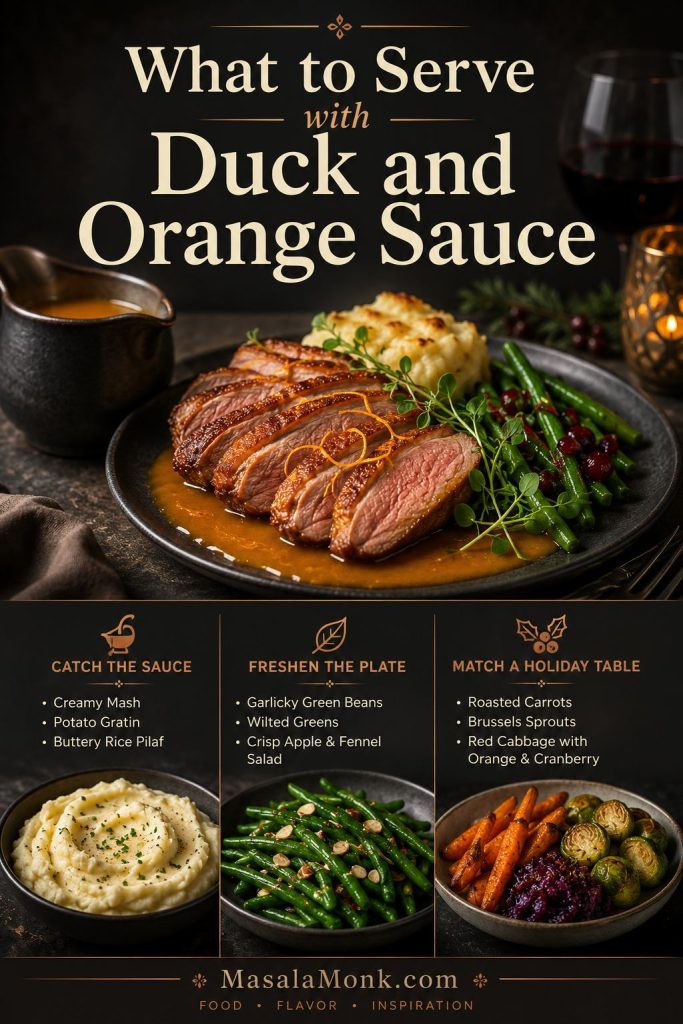
For duck breast, the best plate is usually simple: crisp skin, sliced meat, a spoonful of orange sauce, something potato-based, and one green side. That lets the sauce feel polished without making the plate busy.
Because duck and citrus sauce already bring richness, sweetness, and acidity, choose sides by the job they do on the plate.
| Side Job | Best Choices | Why It Works |
|---|---|---|
| Catch the sauce | Mashed potatoes, potato gratin, wild rice, rice pilaf | Soft or starchy sides hold the orange pan sauce without competing with it. |
| Freshen the plate | Green beans, bitter salad leaves, orange-fennel salad, wilted greens | Green or bitter sides keep the duck from feeling too heavy. |
| Match a holiday table | Roasted carrots, Brussels sprouts, hashbrown casserole, green bean casserole | These make the meal feel generous without adding another complicated main. |
MasalaMonk’s garlic mashed potatoes are especially useful when you want a soft, buttery side that can hold sauce without feeling dry. For a holiday table where you want one rich, make-ahead side, this hashbrown casserole recipe can sit beside roast duck without stealing attention.
Duck can feel like a high-stakes dinner, but the sauce does not have to be fragile. Reduce it, taste it before the butter, adjust the sweet-sharp balance, and keep it warm. Once the skin is crisp and the sauce is glossy, let the orange lift the duck instead of covering it.
FAQs
What is orange sauce for duck made of?
It is usually made with orange juice, orange zest, stock, vinegar, a small amount of sweetness, and butter. Some versions also include shallot, port, marmalade, wine, or orange liqueur.
Why does orange work so well with duck?
Orange cuts through duck’s richness. The sauce still needs stock and vinegar, though, so it tastes like a savory dinner sauce instead of a sweet glaze.
Should the sauce be sweet?
Lightly sweet, yes. Syrupy, no. The best version is bright, rounded, and savory, with enough acidity to keep the orange from tasting like candy.
What can I use instead of duck stock?
Low-sodium chicken stock is the easiest substitute. It gives the sauce savory depth without overpowering the orange.
Does bottled orange juice work?
It works in a pinch, but fresh juice and fresh zest give a cleaner flavor. If using bottled juice, add fresh zest if possible and taste before adding extra sugar.
How do I thicken orange sauce for duck?
Reduce it first. If it is still too thin, mix 1 teaspoon cornstarch with 1 tablespoon cold water, then whisk in a little slurry and simmer briefly.
Why does my orange duck sauce taste bitter?
Bitterness usually comes from white pith or over-reduced citrus. Use only the colored zest, strain if needed, then soften the sauce with a little honey and butter.
Do I need alcohol?
No. Grand Marnier, Cointreau, and port are optional upgrades. The base sauce gets its balance from orange, stock, vinegar, sweetness, and butter.
How do I scale it for more people?
Double all the ingredients and use a wider saucepan if possible. The sauce may take a few extra minutes to reduce to the same spoon-coating texture.
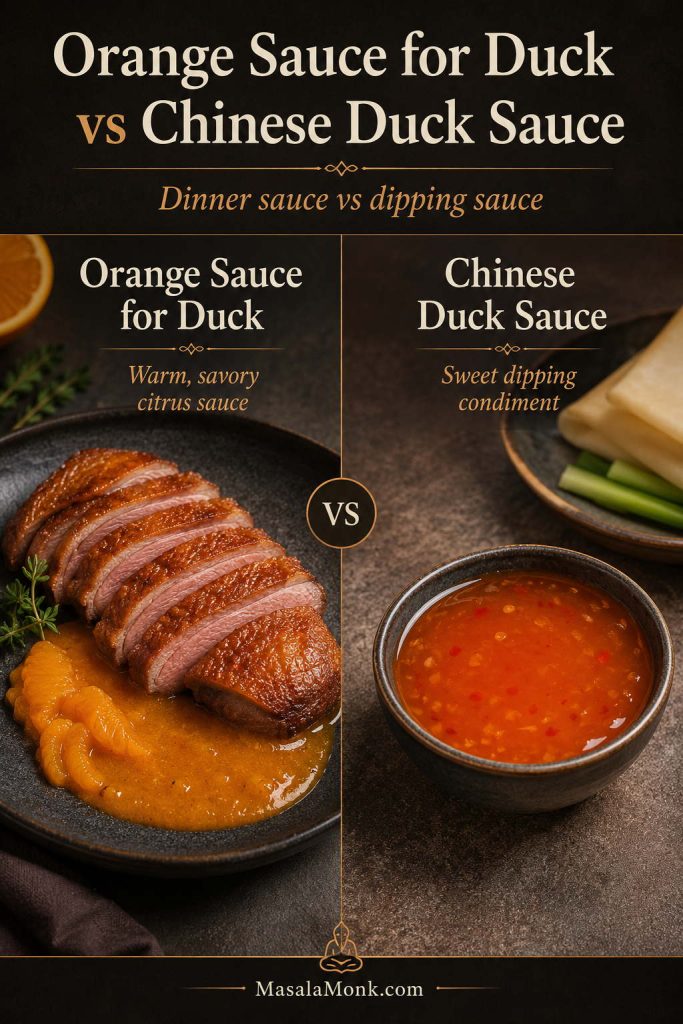
Is this the same as Chinese duck sauce?
No. This is a warm savory citrus sauce for cooked duck breast, roast duck, or duck à l’orange-style dishes. Chinese-American duck sauce is usually a sweet condiment or dipping sauce.
How far ahead can I make it?
Make it 3 to 4 days ahead and refrigerate it. For the smoothest finish, reheat gently and whisk in the cold butter just before serving.
What duck dishes work with this citrus sauce?
Use it with pan-seared duck breast, roast duck, duck legs, duck à l’orange, leftover duck, or sliced duck served with potatoes and greens.
Should I pour it over crispy duck skin?
Use a light hand. Spoon the sauce under or around sliced duck breast so the skin stays crisp, then serve extra sauce on the side.








