Posted on Leave a comment

Cadillac Margarita Recipe: Grand Marnier Float, Top-Shelf Ratio & Pitcher Tips

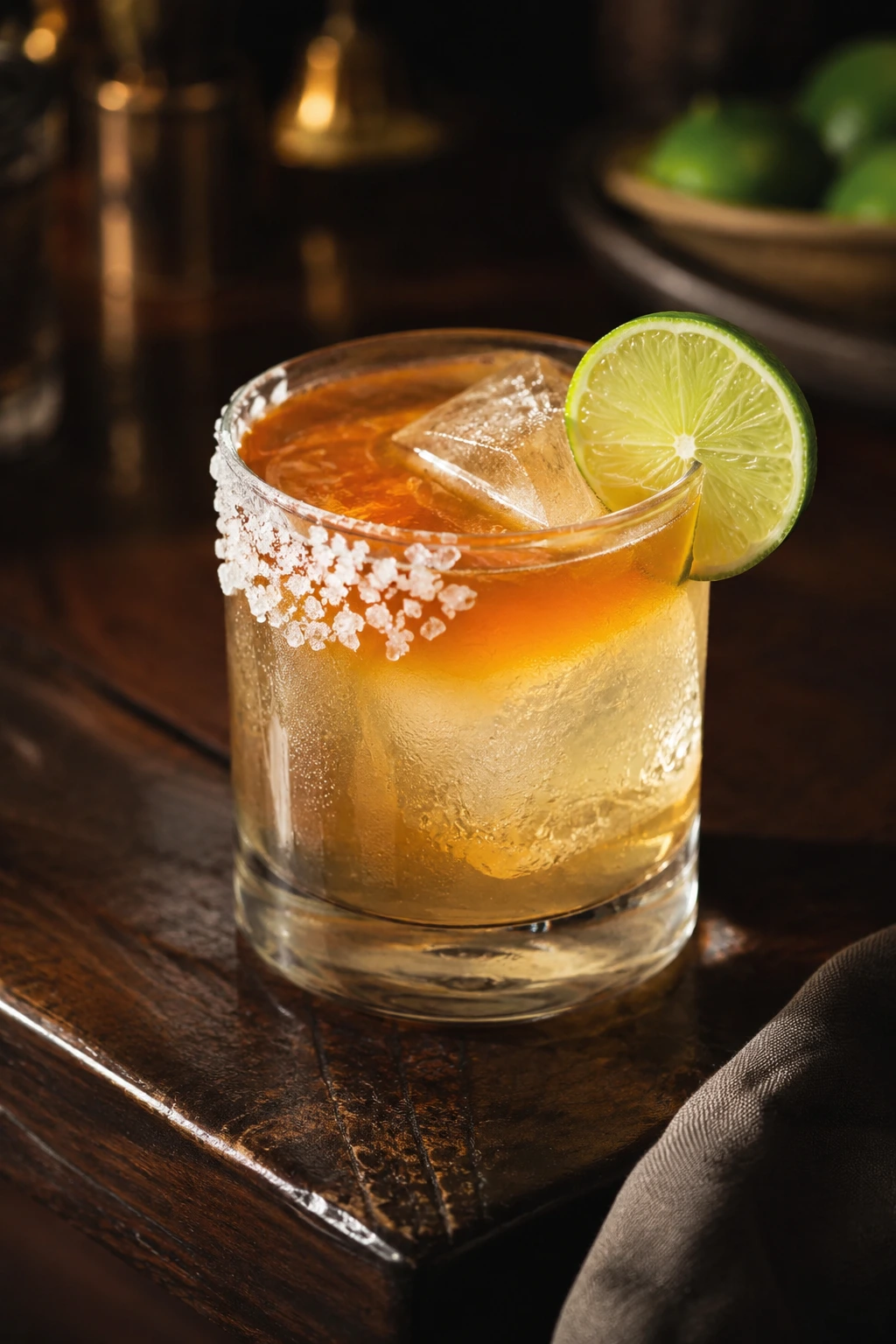
Cadillac Margarita in a rocks glass with clear ice, a half salt rim, lime garnish, and an amber Grand Marnier float on top.

A Cadillac Margarita should taste like a real upgrade: cold, lime-bright, smooth, lightly sweet, and finished with the rich orange lift of Grand Marnier. It should not taste like bottled sour mix, a glass of syrup, or a regular margarita with a fancy name.

Best starting ratio: 2 oz tequila, 1 oz fresh lime juice, ¾ oz Grand Marnier, and ¼–½ oz agave or simple syrup. For the most balanced Cadillac finish, shake ½ oz Grand Marnier into the drink and float ¼ oz on top.

Make it once this way, and you will know exactly how a top-shelf margarita should land: cold, citrusy, orange-scented, and easy to sip.

Below, you’ll get the exact oz/ml measurements, the float method to start with, pitcher amounts, and simple fixes for the usual problems: too sour, too sweet, too strong, watery, or not orange enough.

Quick jumps

Start with the quick ratio if you want to make the drink now, then use the ingredients, float, pitcher, and troubleshooting sections to find the exact fix fast.

Quick Answer: Cadillac Margarita Ratio

The most reliable Cadillac Margarita ratio is:

2 oz tequila : 1 oz fresh lime juice : ¾ oz Grand Marnier : ¼–½ oz agave or simple syrup

In metric, that is:

60 ml tequila : 30 ml fresh lime juice : 22.5 ml Grand Marnier : 7.5–15 ml agave or simple syrup

IngredientAmountWhy it matters
Tequila2 oz / 60 mlGives the drink structure
Fresh lime juice1 oz / 30 mlKeeps it bright and citrusy
Grand Marnier¾ oz / 22.5 mlAdds the rich orange Cadillac finish
Agave or simple syrup¼–½ oz / 7.5–15 mlBalances the lime without making it syrupy
Four measured Cadillac Margarita ingredients: tequila, lime juice, Grand Marnier, and agave syrup arranged beside fresh limes.
Start with this Cadillac Margarita ratio because each part has a job: tequila gives structure, lime adds sharpness, Grand Marnier brings orange depth, and agave rounds the finish.

Ready to mix it? Jump to the recipe card. Still deciding how the top layer should taste? See the Grand Marnier float options.

For your first glass, use the classic finish: shake ½ oz Grand Marnier into the drink and float ¼ oz on top.

Want the softer restaurant-style sip? Move closer to ½ oz sweetener. Prefer a brighter, sharper glass? Stay at ¼ oz and let the lime lead.

A good one should taste bright before it tastes sweet. Fresh lime gives the cleanest Cadillac-style flavor, and the top layer should finish the drink rather than cover it.

Cadillac Margarita at a Glance

  • Prep time: 5 minutes
  • Servings: 1 cocktail
  • Glass: 10–12 oz rocks glass or old-fashioned glass
  • Tequila: Reposado, or good blanco
  • Orange liqueur: Grand Marnier
  • Shake time: 15–20 seconds
  • Rim: Half rim with coarse salt
  • Best starting finish: Shake ½ oz Grand Marnier in, float ¼ oz on top

Cadillac Margarita Recipe

Description

This Cadillac Margarita is cold, citrusy, and orange-scented, with fresh lime, smooth tequila, and a small Grand Marnier float that makes the first sip feel restaurant-style without making the drink heavy.

Time and yield

  • Prep time: 5 minutes
  • Cook time: 0 minutes
  • Total time: 5 minutes
  • Yield: 1 cocktail

Equipment

  • Cocktail shaker, or a clean jar with a tight lid
  • Jigger or small measuring cup
  • Citrus juicer or lime squeezer
  • Small plate for salt
  • 10–12 oz rocks glass or old-fashioned glass
  • Bar spoon, optional for floating Grand Marnier

Ingredients

IngredientUS measureMetric
Reposado or good blanco tequila2 oz60 ml
Fresh lime juice1 oz30 ml
Grand Marnier¾ oz22.5 ml
Agave nectar or simple syrup¼–½ oz7.5–15 ml
Coarse kosher salt, sea salt, or margarita saltas neededas needed
Iceas neededas needed
Lime wedge or wheel11

Instructions

  1. Prepare the rim. Rub a lime wedge around half the rim of a rocks glass. Dip only the outside edge into coarse salt. Fill the glass with fresh ice.
  2. Measure the cocktail. Add tequila, fresh lime juice, agave or simple syrup, and ½ oz / 15 ml Grand Marnier to a cocktail shaker. Reserve the remaining ¼ oz / 7.5 ml Grand Marnier for the float.
  3. Shake. Add ice to the shaker. Shake hard for 15–20 seconds, until the outside of the shaker feels very cold.
  4. Strain. Strain the drink into the prepared glass over fresh ice. Avoid pouring directly through the salted rim.
  5. Float. Pour the reserved Grand Marnier gently over the finished drink.
  6. Garnish. Add a lime wedge or wheel and serve immediately.

Recipe notes

  • For a smoother drink, shake all ¾ oz / 22.5 ml Grand Marnier into the cocktail instead of floating part of it.
  • For a stronger orange aroma, shake only ¼ oz / 7.5 ml Grand Marnier into the drink and float ½ oz / 15 ml on top.
  • Like it tart? Stay at ¼ oz / 7.5 ml sweetener. Want a softer sip? Use ½ oz / 15 ml.
  • Fresh lime keeps the cocktail lively; bottled citrus can taste flat or bitter.
  • Enjoy responsibly and serve only to adults of legal drinking age.

Need to adjust the glass? Use the ratio guide, or jump to troubleshooting for sour, sweet, watery, salty, or flat drinks.

What Is a Cadillac Margarita?

A Cadillac Margarita is an upgraded margarita made with good tequila, fresh lime juice, and Grand Marnier or another high-quality orange liqueur. Many versions are served on the rocks with a coarse salt rim and a small floated pour on top.

The word “Cadillac” signals a better version of the classic tequila-lime drink. The upgrade is not just a heavier pour; it is fresh citrus, smoother tequila, deeper orange flavor, and a finish that feels more deliberate.

That is the real Cadillac feeling: not a stronger margarita, not a sweeter margarita, but a cleaner, smoother, more polished one.

Why This Recipe Works

The trick is keeping the drink bright without letting the lime take over, and rich without letting the orange liqueur turn it sweet.

Tequila gives the cocktail structure. Fresh lime juice keeps it sharp and refreshing. Grand Marnier adds orange depth without making the drink heavy. Sweetener lets you choose between a tart finish and a softer sip.

On the first sip, the drink should feel like a small upgrade: cold lime at the front, clean tequila through the middle, and orange warmth at the finish.

Taste test: the glass should smell lightly of orange, taste bright with lime, and finish smooth from the tequila. If sweetness arrives first, reduce the syrup or float. If the drink feels sharp, shake longer or add a small touch more agave.

A half rim keeps the salt under control, clean ice prevents a watery finish, and the optional float gives the drink a rich opening sip without overpowering the whole glass.

Cadillac Margarita Mistakes to Avoid

A few small mistakes can make this drink taste flat, syrupy, salty, or watered down.
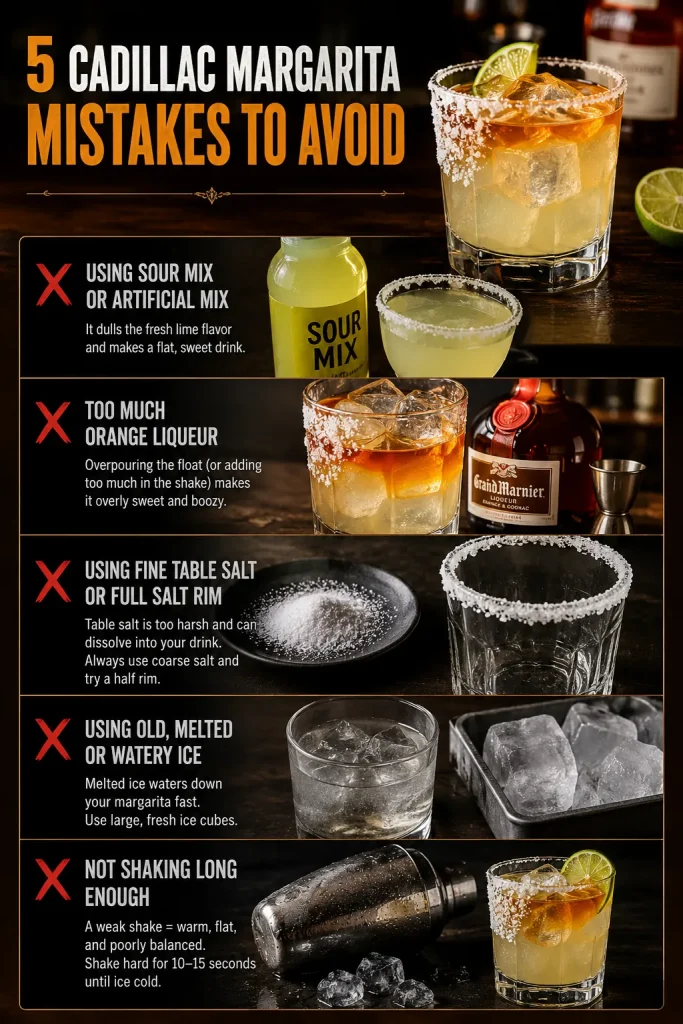
Cadillac Margarita mistakes guide showing sour mix, too much orange liqueur, fine salt, watery ice, and weak shaking as errors to avoid.
Most Cadillac Margarita mistakes come from shortcuts or excess. Sour mix, melted ice, harsh salt, weak shaking, and an oversized float can all flatten the drink.
  • Using sour mix: it makes the drink taste candy-like instead of fresh.
  • Skipping the shake: the cocktail needs chill and dilution, not just stirring.
  • Floating too much liqueur: the first sip can turn sweet and heavy.
  • Salting the inside rim: salt falls into the glass and makes the drink briny.
  • Adding ice too early to a pitcher: the batch waters down before anyone gets a good drink.

When those details are right, the drink tastes clean, cold, and top-shelf in the best way — not bigger, just better.

Making drinks for guests? Read the pitcher tips before adding ice.

Choose Your Cadillac Margarita Style

Once the base tastes right, the rest is just choosing how you want the first sip to feel.

You wantMake it this way
Smooth and simpleShake all ¾ oz Grand Marnier into the drink
Classic floatShake ½ oz in, float ¼ oz on top
Stronger orange aromaShake ¼ oz in, float ½ oz on top
Brighter citrusUse Cointreau in the shaker and Grand Marnier as the float
Less sweetUse ¼ oz sweetener and fresh lime
Party pitcherMix cold, serve over fresh ice, float individually

For guests, the classic float is the best choice because it gives the drink that little moment at the glass without making it too sweet. If you care more about smooth sipping than presentation, shake all the orange liqueur into the drink.

Once you have made the classic float once, adjust only one thing at a time: sweetness, tequila style, or float size.

Cadillac Margarita Ingredients

There are not many ingredients here, so each one has to earn its place. Weak lime juice, rough tequila, or too much sweetener will show quickly.

Cadillac Margarita ingredients on a counter, including tequila, Grand Marnier, fresh limes, agave, coarse salt, ice, a shaker, and a rocks glass.
With a simple cocktail like this, ingredient quality is easy to taste. Fresh lime, good tequila, clean ice, coarse salt, and measured orange liqueur all matter in the final glass.

Tequila

Choose 100% agave tequila. Reposado is the easiest place to start because its light oak and warmth work well with Grand Marnier, while blanco gives a cleaner, sharper lime-forward drink.

If you want another tequila drink that feels lighter and more sparkling, try a Paloma next; grapefruit changes the mood while keeping the citrus-agave base.

Añejo can work for a richer version, but use it only if you enjoy deeper oak, vanilla, and warmer notes in cocktails. If the tequila tastes rough on its own, the orange liqueur will not magically turn it into a top-shelf drink.

Grand Marnier

This is where the drink gets its deeper orange finish — not just sweetness, but warmth and roundness. Grand Marnier brings richness, a smoother finish, and a deeper color than basic triple sec.

You can shake the liqueur into the drink for balance, or float part of it over the top for a stronger orange aroma. Both versions work. The top layer simply gives the cocktail a more dramatic finish.

Grand Marnier is the classic choice for this style, but the drink can still be balanced with Cointreau or another good orange liqueur. Grand Marnier’s own Grand Margarita keeps the same idea simple too: tequila, Grand Marnier, fresh lime, and agave.

Choosing the bottle? Compare Grand Marnier, Cointreau, and triple sec before you pour.

Fresh lime juice

Fresh lime juice is essential. Bottled lime juice usually tastes flat, bitter, or artificially sharp, and it does not fit the style of this drink.

One medium lime usually gives about ¾–1 oz juice. Roll the lime on the counter before cutting it to help release more juice.
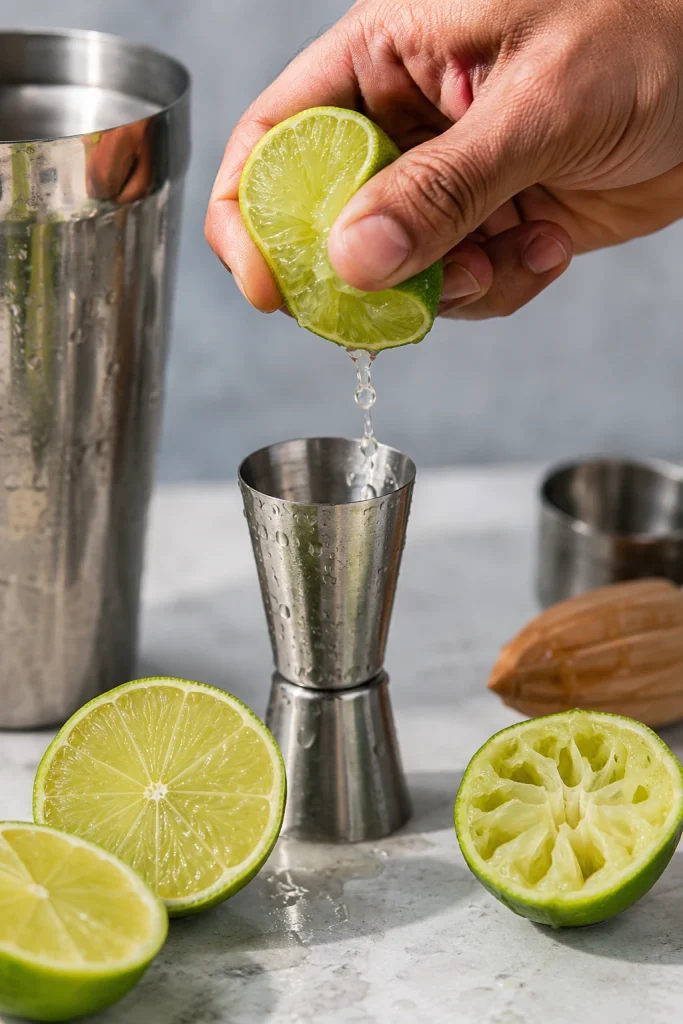
A hand squeezing fresh lime juice into a metal jigger beside lime halves, a cocktail shaker, and bar tools.
Fresh lime juice gives a Cadillac Margarita its clean snap, while bottled lime or sour mix can make the drink taste dull even when the tequila is good.

The same fresh-lime discipline matters in a classic Daiquiri, where a simple drink only works when the citrus, spirit, and sweetener are balanced.

Agave nectar or simple syrup

Agave nectar works naturally with tequila and gives a soft sweetness. Simple syrup is also fine and mixes easily.

The orange liqueur already adds body and richness, so the sweetener should balance the lime, not turn the drink syrupy. It should soften the citrus, not hide it.

Salt

Coarse kosher salt, flaky sea salt, or margarita salt all work. Fine table salt is the one to avoid; it can taste sharp and take over the lime.

The goal is contrast, not a salty drink: the rim should brighten the lime without seasoning every sip.

Ice

The ice is not just for coldness; it softens the edges of the tequila and lime. Without enough shaking and dilution, the cocktail can taste too sharp or too strong.

Shake with one set of ice, then serve over fresh ice. Do not reuse tired shaker ice in the glass.

How to Adjust the Ratio

Once the base ratio is set, adjust one thing at a time. Keep the tequila and lime steady, then change the sweetener or floated liqueur depending on how you want the drink to land.
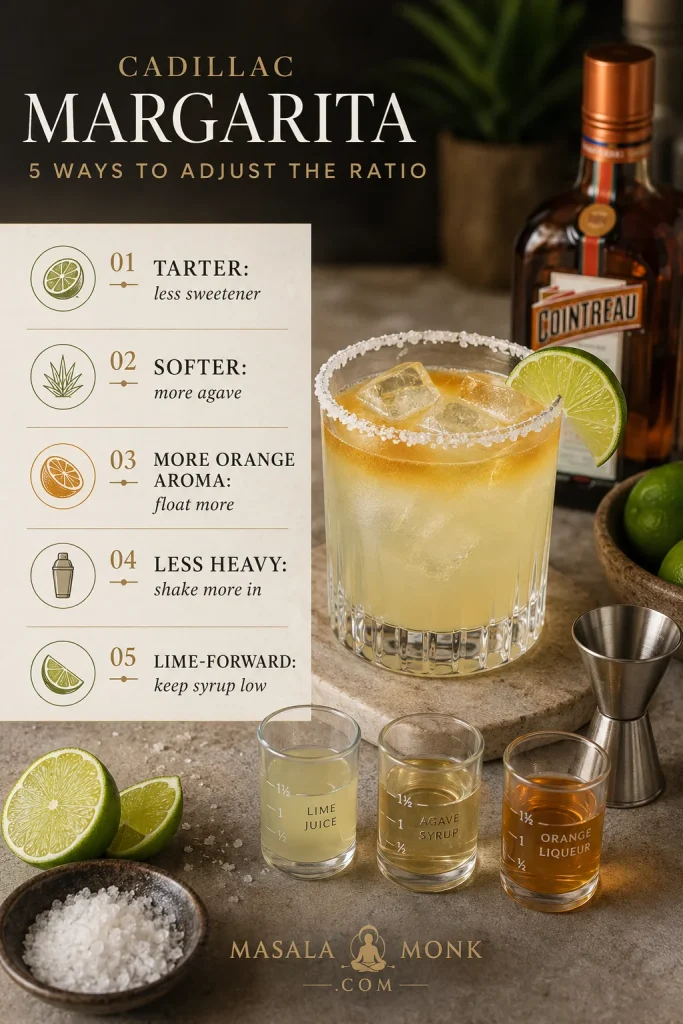
Cadillac Margarita ratio adjustment guide beside a salt-rimmed cocktail, limes, jigger, agave syrup, lime juice, and orange liqueur.
Once the base ratio tastes right, change only one thing at a time. Use sweetener for softness, lime for sharpness, or a slightly larger float for more orange aroma.
If you wantAdjust this
TarterUse ¼ oz / 7.5 ml sweetener
SofterUse ½ oz / 15 ml sweetener
More orange aromaFloat a little more Grand Marnier
Less heavyShake more orange liqueur in and float less on top
More lime-forwardKeep sweetener low and shake hard

The finished cocktail should feel bright first, rounded second, and lightly sweet at the end. If it tastes sweet before it tastes fresh, pull back the syrup next time.

Grand Marnier Float vs Shaken In

For home mixing, the easiest place to start is to shake ½ oz / 15 ml Grand Marnier into the drink, then float the remaining ¼ oz / 7.5 ml on top.

The float is the part that makes the drink feel restaurant-style: orange aroma first, cold lime underneath, and a richer finish without turning the whole glass sweet.

Cadillac Margarita recipes vary because bars finish them differently. Some shake all the orange liqueur into the drink, some float Grand Marnier on top, and some use Cointreau in the base with Grand Marnier as the final pour. This version starts with the easiest home balance: most of the orange liqueur shaken in, a small float on top.
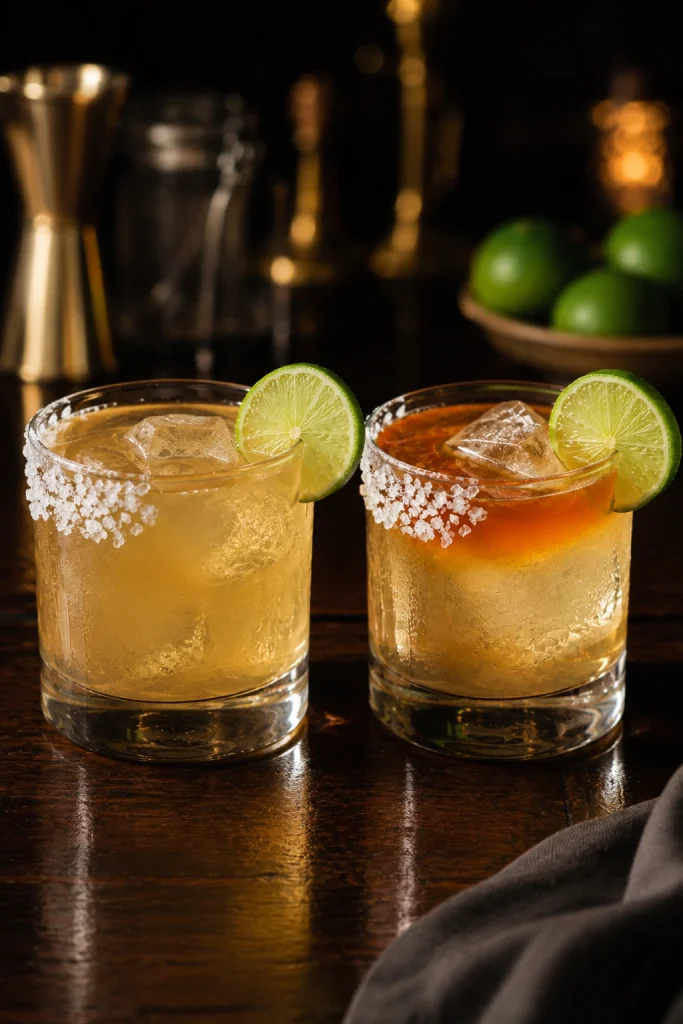
Two Cadillac Margaritas side by side, one evenly mixed and one with a visible amber Grand Marnier layer on top.
Shake all the orange liqueur into the drink for a smoother sip, or float part of it on top when you want more aroma and a restaurant-style finish.

None of these methods is wrong. This is less about right or wrong and more about how you want the first sip to land. Liquor.com’s Cadillac Margarita also treats the Grand Marnier float as one accepted version.

Choose the finish you want

MethodBest forResult
Shake all Grand Marnier inEasiest home versionSmooth, balanced orange flavor throughout
Float part on topClassic Cadillac presentationStronger orange aroma and golden top layer
Serve Grand Marnier on the sideTableside-style serviceGuests control the final pour
Use Cointreau in the base and Grand Marnier as a floatLayered cocktail-bar styleCrisp base with rich orange finish
Stir after floatingBalanced sippingLess dramatic, more even flavor

Pour the float gently

For a bolder first sip, reverse it: shake ¼ oz / 7.5 ml into the drink and float ½ oz / 15 ml on top.

A good float gives you aroma before sweetness. You should notice orange at the top of the glass, then lime and tequila underneath. The floated liqueur should feel like a finish, not a separate shot sitting on top.

Pour slowly so the liqueur catches the top of the ice and leaves a golden orange layer before it settles into the drink. A bar spoon helps soften the pour, but you can also pour gently near the side of the glass.

Grand Marnier vs Cointreau vs Triple Sec

This style is usually associated with Grand Marnier, but Cointreau, triple sec, and dry curaçao can all appear in margarita recipes. The bottle you choose changes the mood of the drink more than people expect.

Orange liqueur comparison for Cadillac Margaritas showing Grand Marnier, Cointreau, and triple sec with small tasting glasses.
Grand Marnier gives the richest Cadillac-style finish, Cointreau makes the drink cleaner and brighter, and triple sec keeps it simpler and closer to a regular margarita.
Orange liqueurWhen to use itFlavor result
Grand MarnierFor the classic Cadillac feelRich, smooth, golden, cognac-orange depth
CointreauFor a cleaner citrus versionCrisp, bright, strong orange flavor
Triple secFor a simple fallbackSweeter, simpler, closer to a regular margarita
Dry curaçaoFor a drier cocktail-style versionDeeper orange flavor with less sweetness

Grand Marnier gives the richest orange finish. Cointreau makes the drink cleaner and brighter. Triple sec works in a pinch, but it moves the cocktail closer to a standard margarita.

If Cointreau is all you have, use it. The drink will be less rich, but still very good. For a layered version, shake Cointreau into the base and float a little Grand Marnier on top.

Best Tequila for a Cadillac Margarita

Reposado is the best default for most home drinks, but the right bottle depends on the mood you want.

Three tequila tasting glasses labeled blanco, reposado, and añejo, showing clear, pale gold, and deeper amber tequila.
Blanco tequila keeps the drink crisp, reposado gives a rounder bar-style sip, and añejo adds depth but can pull attention away from the lime.
TequilaBest if you wantWatch out for
BlancoA brighter, sharper lime-forward drinkCan taste lean with a rich orange liqueur
ReposadoA smooth, balanced, bar-style home versionVery oaky bottles can feel heavy
AñejoA richer, deeper golden variationCan overpower the lime

Whatever style you choose, use 100% agave tequila. A Cadillac Margarita should taste polished, not rough.

How to Make a Cadillac Margarita

The recipe card gives the exact steps. These small technique choices are what make the drink taste colder, cleaner, and more restaurant-style.

Chill the glass if you have time

This is optional, but it helps the cocktail stay cold. Put the glass in the freezer while you juice the lime and measure the ingredients.

Salt only half the rim

Rub a lime wedge around half the rim of the glass. Dip the outside edge into coarse salt. That way, the salt becomes a choice instead of something you taste in every sip.
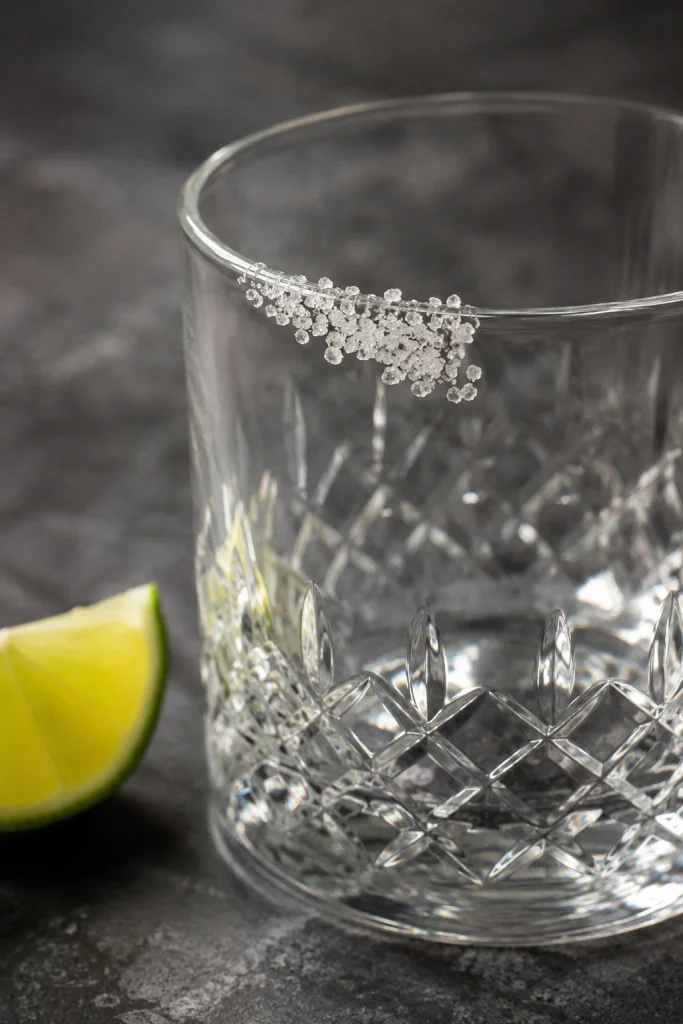
Close-up of a rocks glass with coarse salt on only half the rim and a lime wedge beside the glass.
Coarse salt belongs on the outside edge of the rim, so it lifts the lime without falling into the glass and making the drink briny.

Measure instead of guessing

Use a jigger or small measuring cup because this drink depends on small differences. Guessing usually shows up as too much lime, too much sweetness, or a heavy orange finish.
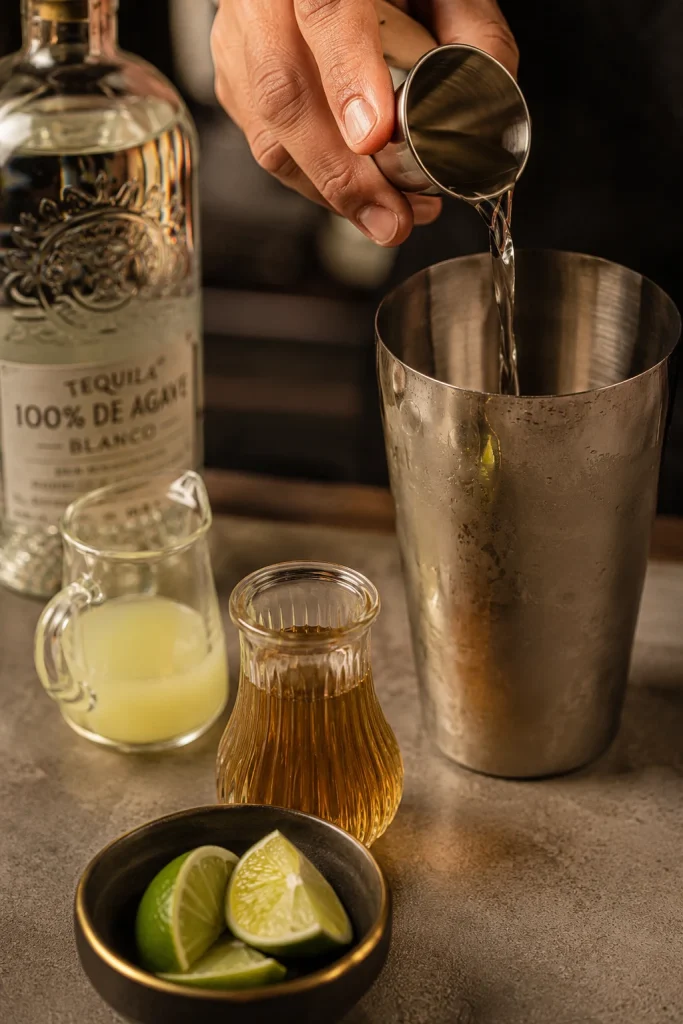
Tequila being poured from a metal jigger into a cocktail shaker with lime juice, amber orange liqueur, agave, and lime wedges nearby.
Measuring keeps the Cadillac Margarita ratio honest, especially when Grand Marnier and agave can both add sweetness quickly.

Shake until the shaker feels cold

Add tequila, fresh lime juice, Grand Marnier, and sweetener to a cocktail shaker. Add ice and shake hard for 15–20 seconds.

The shaker should feel very cold on the outside. That chill tells you the drink has been cooled and lightly diluted.
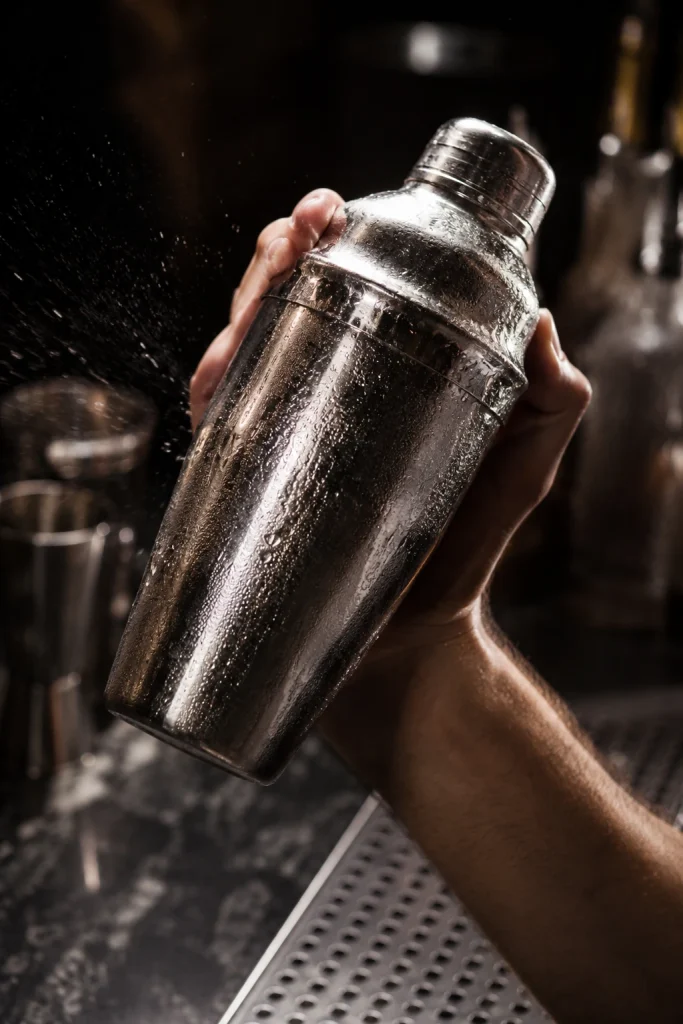
A hand shaking a chilled metal cocktail shaker covered in condensation in a dark bar setting.
When the shaker turns very cold and slightly frosty, the drink has enough chill and dilution for a smoother lime-tequila sip.

Strain over fresh ice

Fill the prepared glass with clean ice, then strain the drink carefully down the open side of the glass so the salted edge stays neat.
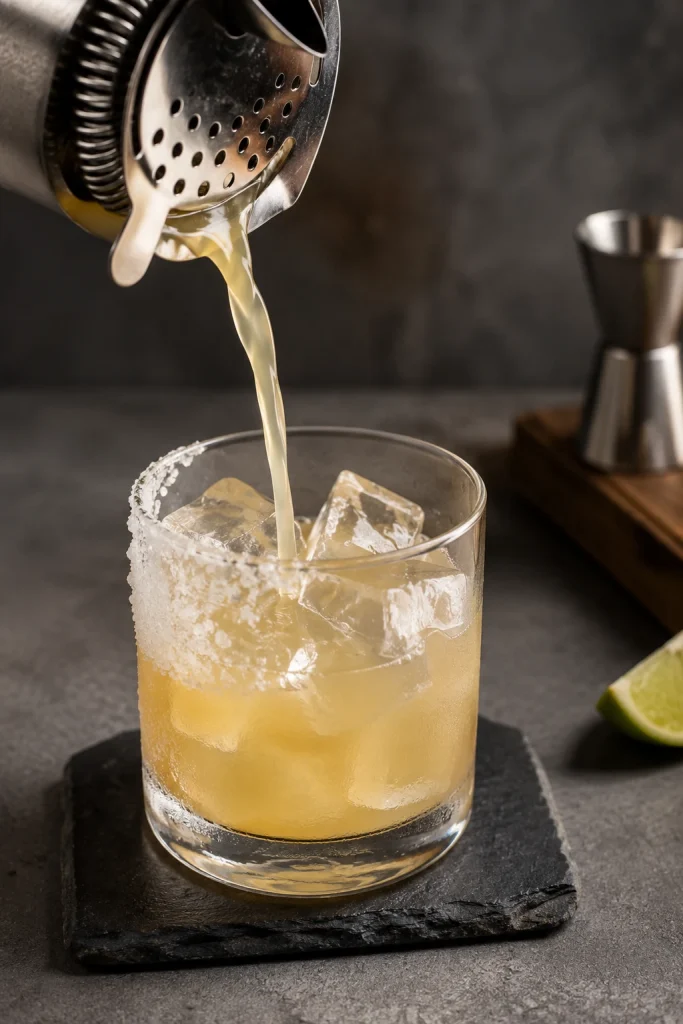
Cadillac Margarita being strained from a cocktail shaker into a half salt-rimmed rocks glass filled with fresh clear ice.
Fresh ice gives the finished Cadillac Margarita a cleaner look and slows dilution once the drink is in the glass.

Add the Grand Marnier float and garnish

Pour the reserved Grand Marnier slowly over the finished drink, aiming near the ice or side of the glass. Garnish with lime and serve immediately.
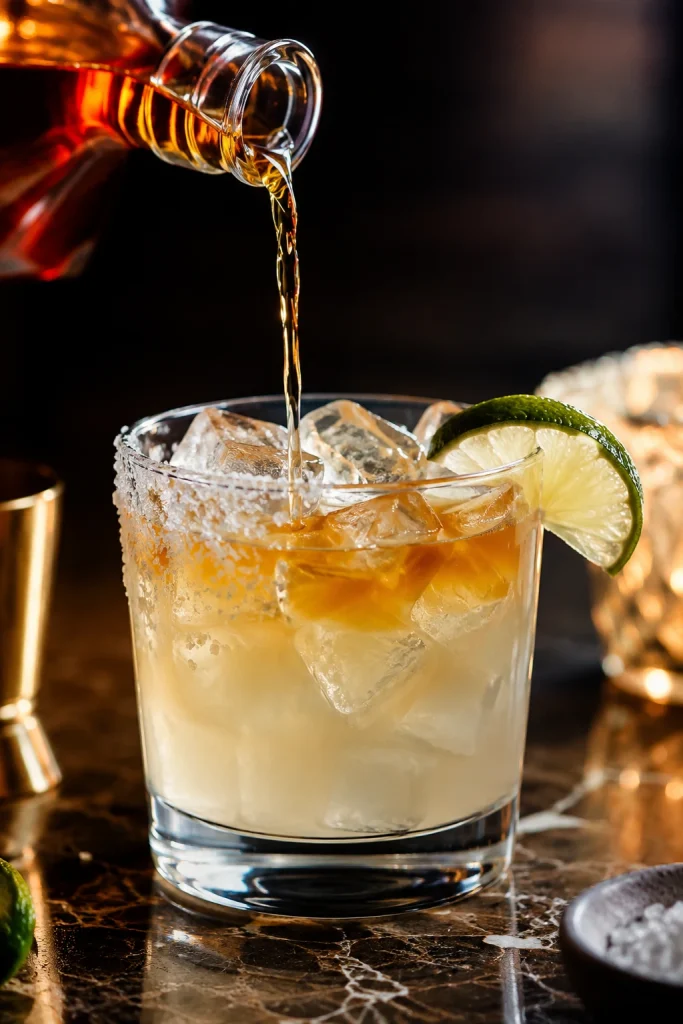
Amber Grand Marnier being poured over a Cadillac Margarita in a rocks glass with clear ice, lime garnish, and a salt rim.
Pour the Grand Marnier slowly so it catches the ice first. That small float gives orange aroma at the top while the lime and tequila stay balanced underneath.

Salt Rim Tips

A salt rim should wake up the lime, not season the whole glass. Coarse kosher salt, flaky sea salt, or margarita salt all work better than fine table salt.

Salt only the outside edge of the rim so the crystals stay on the glass instead of falling into the drink. That keeps the sip bright, not briny.

For a spicy version, try Tajín or chili-lime salt. If you want jalapeño heat too, the Spicy Margarita is the better next stop.

Cadillac Margarita Pitcher Tips

Pitcher margaritas fail when the ice goes in too early. Keep the batch cold, but let dilution happen in the glass.

Pitcher rule: mix cold, serve over fresh ice, float individually.
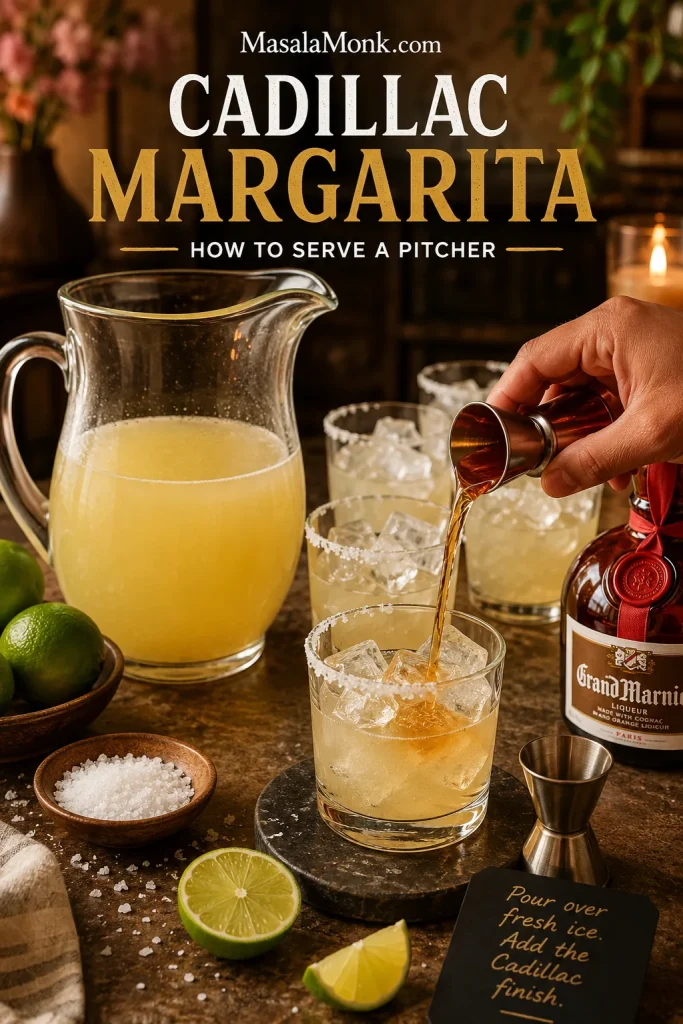
Cadillac Margarita pitcher without ice beside salt-rimmed glasses filled with fresh ice while amber liqueur is poured into one serving.
The pitcher stays ice-free so the batch does not dilute early, while each glass still gets fresh ice and its own Grand Marnier float.

Mix the tequila, fresh lime juice, Grand Marnier, and sweetener in a pitcher. Chill the mixture without ice, then pour it over fresh ice in individual glasses. Do not add ice until serving.

ServingsTequilaFresh lime juiceGrand MarnierAgave/simple syrup
4 drinks8 oz / 240 ml4 oz / 120 ml3 oz / 90 ml1–2 oz / 30–60 ml
8 drinks16 oz / 480 ml8 oz / 240 ml6 oz / 180 ml2–4 oz / 60–120 ml
12 drinks24 oz / 720 ml12 oz / 360 ml9 oz / 270 ml3–6 oz / 90–180 ml

The table shows total Grand Marnier. If you want floats, reserve part of that amount and add it to each glass instead of mixing all of it into the pitcher.

Plan on about 1 medium lime per drink, plus a few extra limes for rimming and garnish. Some limes are dry, so buy a few extra. For an 8-drink pitcher, buy at least 10 limes. For 12 drinks, 14–15 limes is safer.

Pitcher notes

  • Chill the pitcher mixture for at least 1 hour before serving.
  • Add ice to glasses, not the pitcher.
  • If you want a Grand Marnier float in each glass, hold back ¼ oz / 7.5 ml Grand Marnier per drink for the default float, or ½ oz / 15 ml per drink for a bolder orange finish.
  • Salt the glasses close to serving time so the rims do not become wet or dissolve.
  • Stir the pitcher before pouring because citrus and sweetener can settle slightly.

Serving these with food? See taco-night pairings, or check quick fixes before guests arrive.

Cadillac Margarita Variations

Start with the classic ratio first. Once the drink tastes balanced, these variations are easy to adjust.

VariationHow to make it
Golden Cadillac MargaritaUse reposado or añejo tequila with Grand Marnier for a deeper golden color
Pink Cadillac MargaritaAdd 1–2 oz cranberry or pomegranate juice and reduce sweetener slightly
Frozen Cadillac MargaritaBlend one drink with about 1 cup ice, then float Grand Marnier after blending
Lighter Cadillac MargaritaUse less sweetener, keep the Grand Marnier modest, and let fresh lime carry the drink
Spicy Cadillac MargaritaShake with a thin jalapeño slice or use chili-lime salt
Blue Cadillac MargaritaUse blue curaçao instead of some or all of the orange liqueur; it adds color, but moves the drink away from the classic Grand Marnier profile

The frozen version is best treated as a variation, not the main drink. This cocktail usually shines on the rocks because the tequila, fresh lime, and Grand Marnier are easier to taste.

For a fruitier direction, a Mango Margarita gives the drink a thicker tropical feel, while a Watermelon Margarita keeps it colder, juicier, and more summery.

Troubleshooting

If the glass tastes off, do not start over. Most Cadillac Margarita problems come from one small thing: lime, sweetness, salt, ice, or float size.
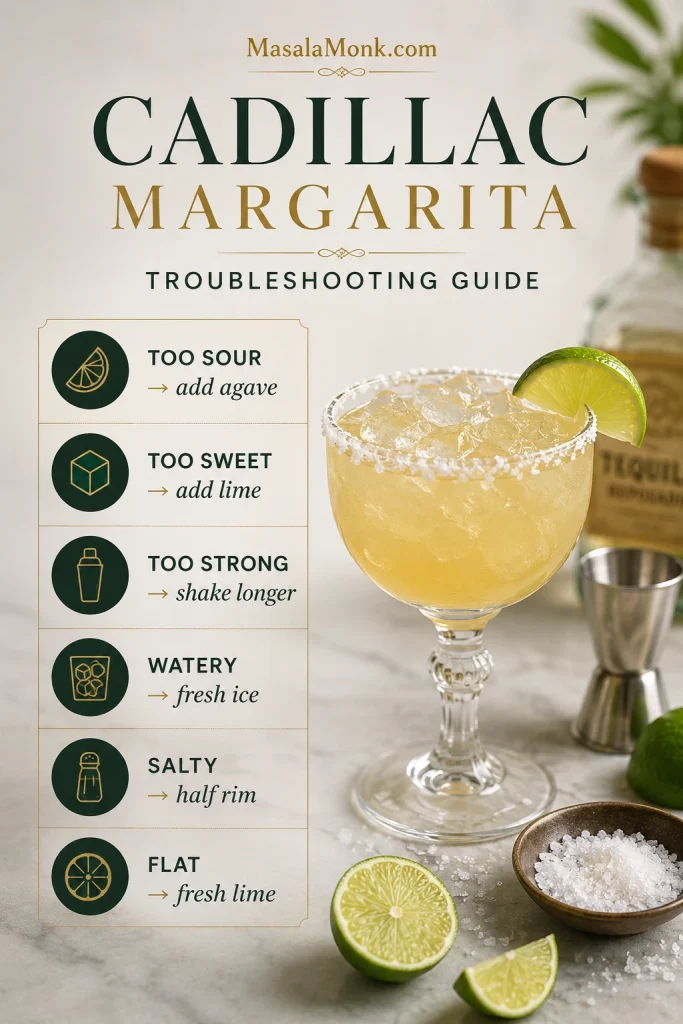
Cadillac Margarita troubleshooting guide beside a rocks glass cocktail, with fixes for too sour, too sweet, too strong, watery, salty, and flat drinks.
Troubleshooting works best in small moves: fix lime, sweetness, ice, salt, or float size before changing the whole Cadillac Margarita ratio.
ProblemWhy it happensFix
Too sourToo much lime or not enough sweetenerAdd ¼ oz agave or a small splash of Grand Marnier
Too sweetToo much syrup or sweet orange liqueurAdd ¼ oz fresh lime juice and shake again briefly
Too strongNot enough dilutionShake a little longer or serve over more fresh ice
Too wateryIce melted too earlyUse fresh ice and serve immediately
Too saltyFine salt or salt falling into the glassUse coarse salt, half rim, and pour away from the salted edge
Not orange enoughGrand Marnier is hiddenFloat ¼ oz Grand Marnier on top
Tastes flatBottled lime, sour mix, or weak shakingUse fresh lime and shake hard with enough ice
Too bitterOld lime juice or over-squeezed citrusUse fresh lime and avoid pressing bitter pith into the juice

If it tastes like lime candy, it is too sweet. If it tastes like straight tequila and lime, it likely needs more shaking, more ice contact, or a small touch of sweetener.

Do not fix everything at once. When the drink is close but not quite right, adjust the smallest thing first, shake briefly, then taste again.

Back to making the drink: return to the recipe card or go back to quick jumps.

What to Serve With a Cadillac Margarita

This is a natural taco-night drink, but it also works anytime you want one cocktail that feels a little more special than the usual lime-and-tequila pour. Think salty chips, limey seafood, grilled peppers, spicy chicken, or something creamy nearby.
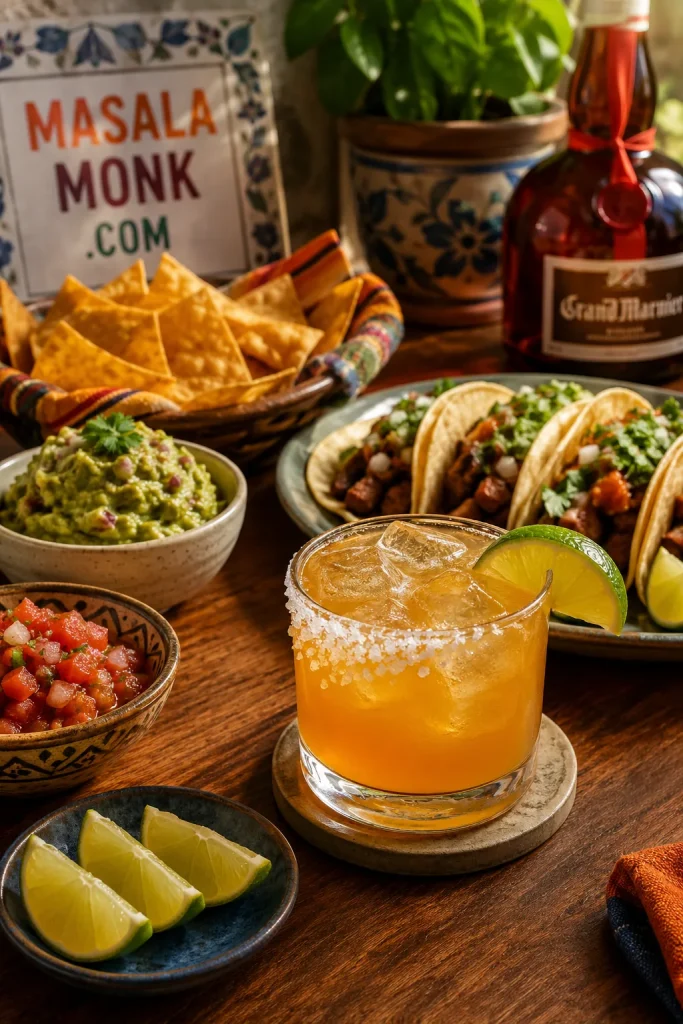
Cadillac Margarita in a salt-rimmed rocks glass served with tacos, tortilla chips, guacamole, salsa, lime wedges, and a Grand Marnier bottle.
Cadillac Margaritas fit taco night because lime, salt, tequila, and orange liqueur cut through spicy, creamy, and crunchy food without feeling heavy.

For a full spread, start with Fish Tacos or Shrimp Tacos, then keep the table bright with chips, lime wedges, and something fresh on the side.

  • Tacos
  • Nachos
  • Chips and salsa
  • Grilled shrimp
  • Spicy chicken
  • Quesadillas
  • Citrus salads
  • Black bean dips
  • Grilled corn
  • Jalapeño poppers
  • Mexican-style rice bowls

For easy sides, add Mango Salsa when you want something fruity and bright, or Guacamole when you want something creamy and classic.

Keep the food bold but not overly sweet. The cocktail already has orange liqueur and a little sweetener, so salty, spicy, and lime-friendly foods work best.

Storage and Make-Ahead

A single drink is best served right after shaking. It tastes brightest when the lime is fresh, the ice is clean, and the Grand Marnier float is added just before serving.

For a pitcher, mix the tequila, lime juice, Grand Marnier, and sweetener without ice. Cover and refrigerate until ready to serve. For best flavor, use the pitcher mix within 24 hours.

Stir before serving. Pour over fresh ice in salted glasses. If you want a float, add the reserved liqueur to each glass at the end instead of mixing all of it into the pitcher.

Do not freeze a standard pitcher unless you are intentionally making a frozen slush recipe. Frozen margaritas need a different dilution plan.

Final Tips

The best Cadillac Margarita tastes cold, bright, orange-scented, and controlled — the kind of drink that feels top-shelf without turning heavy.

Start with the ratio above, shake it properly, and use the float as a finish instead of a cover-up. Once that glass tastes right, every variation becomes easier.

When it is right, the drink should feel special but not fussy — a restaurant-style margarita you can actually make well at home.

FAQs

What makes a margarita a Cadillac Margarita?

A Cadillac Margarita is an upgraded version of a margarita. It usually uses better tequila, fresh lime juice, and Grand Marnier or another high-quality orange liqueur. Many versions are served on the rocks with a salt rim and a Grand Marnier float.

Why is it called a Cadillac Margarita?

“Cadillac” means upgraded or top-shelf. In this drink, the upgrade usually comes from better tequila, fresh lime juice, and Grand Marnier instead of basic triple sec or bottled mix.

What goes in a Cadillac Margarita?

The main ingredients are tequila, fresh lime juice, Grand Marnier, agave nectar or simple syrup, ice, coarse salt, and a lime garnish. Some versions also use Cointreau in the shaker and Grand Marnier as a float.

Do you need Grand Marnier for a Cadillac Margarita?

Grand Marnier is the usual choice because it gives the drink that rich orange finish people expect from a Cadillac version. Cointreau gives a cleaner orange flavor, but it does not have the same smooth, rounded feel.

Should Grand Marnier be floated or shaken in?

Both methods work. Shake Grand Marnier into the drink for a smoother, more balanced margarita. Float part of it on top for a richer orange aroma, golden finish, and more dramatic presentation.

Cointreau or Grand Marnier: which is better?

Grand Marnier is better for the classic Cadillac feel because it tastes richer and smoother. Cointreau is better if you want a cleaner, brighter orange flavor. You can also use Cointreau in the shaker and Grand Marnier as a float.

Can you make a Cadillac Margarita with triple sec?

Yes, but the drink will taste simpler and closer to a regular margarita. For a more polished Cadillac-style finish, Grand Marnier or Cointreau is a better choice.

Blanco or reposado tequila: which is better?

Reposado tequila is the safest place to start because it is smooth, lightly oaky, and rounded. Blanco tequila works if you want a brighter drink. Añejo can work for a richer variation, but it may overpower the lime.

Is it stronger than a regular margarita?

It may taste stronger because it often uses good tequila and Grand Marnier, but the strength depends on the exact recipe. Proper shaking and fresh ice help the drink taste balanced instead of harsh.

What is the best Grand Marnier amount?

For one drink, ¾ oz / 22.5 ml Grand Marnier is a strong starting point. Shake ½ oz into the drink for balance, then float ¼ oz on top for aroma and a richer opening sip.

How do you make a Cadillac Margarita pitcher?

Multiply the single-drink ratio by the number of servings. For 8 drinks, use 16 oz tequila, 8 oz fresh lime juice, 6 oz Grand Marnier, and 2–4 oz agave or simple syrup. Mix without ice, chill, then pour over fresh ice in glasses.

What is a Golden Cadillac Margarita?

A Golden Cadillac Margarita usually refers to a Cadillac Margarita with a deeper golden color from reposado or añejo tequila and Grand Marnier. It is more of a premium presentation style than a completely different drink.

What is a Pink Cadillac Margarita?

A Pink Cadillac Margarita is a fruity variation usually made with cranberry juice, pomegranate juice, or another pink-red juice. Add 1–2 oz juice to the classic recipe and reduce the sweetener slightly.

Can you use margarita mix for a Cadillac Margarita?

It is okay in a pinch, but use a tart mix and reduce or skip extra sweetener. Fresh lime tastes cleaner. If you use a mix, finish with Grand Marnier to keep some of the Cadillac feel.
Posted on Leave a comment

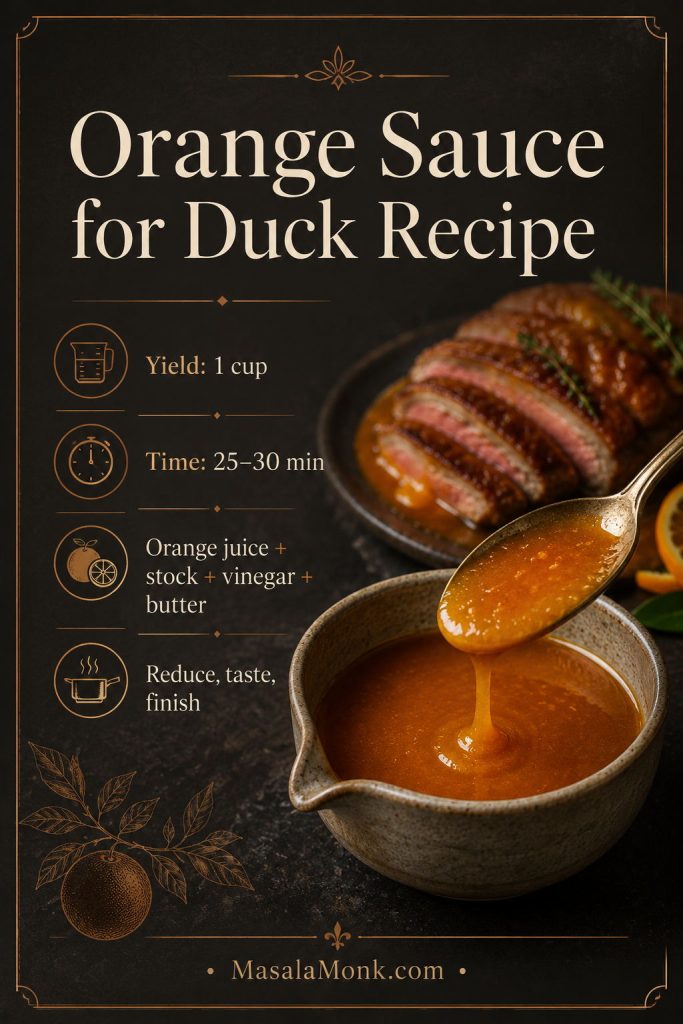
Orange Sauce for Duck Recipe

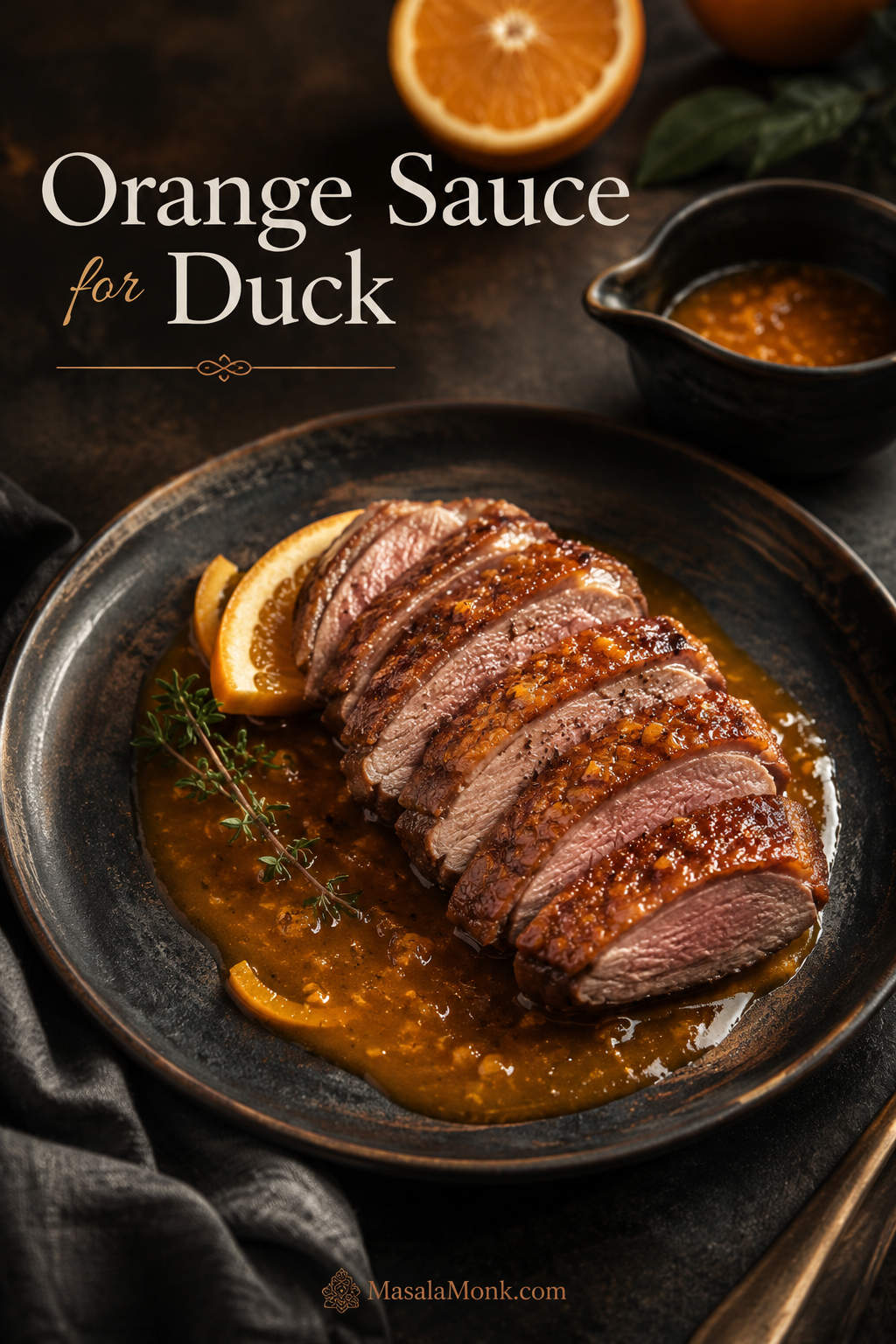
Sliced duck breast with crisp skin served over glossy orange sauce on a dark plate.

Duck already feels like the kind of dinner you do not want to waste: crisp skin, rich meat, maybe guests at the table. This orange sauce for duck gives you the classic sweet-sharp citrus lift without turning the plate sticky, syrupy, or restaurant-complicated.

Use it with pan-seared duck breast, roast duck, duck legs, leftover duck, or a simple duck à l’orange-style dinner. It comes together on the stovetop in about 25 minutes and should taste bright, savory, lightly sweet, and clean enough to wake up the duck rather than cover it.

You may also see this called orange gravy for duck, although the texture here is closer to a polished pan sauce than a flour-thickened gravy. It should be glossy and pourable, not gloppy, with enough body to sit beside the meat without soaking the crisp skin.

Quick Answer

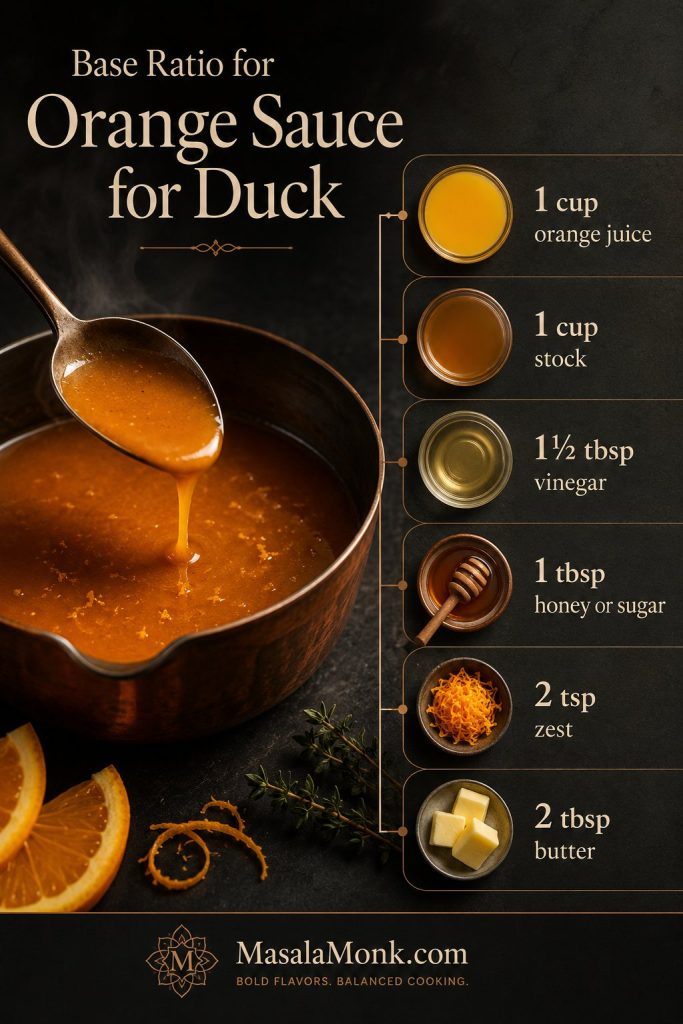
For about 1 cup / 240 ml sauce, simmer 1 cup / 240 ml orange juice, 1 cup / 240 ml duck or chicken stock, 1 1/2 tablespoons vinegar, 1 tablespoon honey or sugar, and 2 teaspoons orange zest until lightly reduced. Finish with 2 tablespoons / 28 g cold butter for a smooth citrus sauce that coats the spoon without turning sticky.

Base ratio for orange sauce for duck showing orange juice, stock, vinegar, zest, sweetener, and butter
Use this base ratio for orange sauce for duck as your starting point. Once it reduces, small adjustments with vinegar, stock, or butter can shift the flavor quickly.

Before serving, taste and adjust. Too sweet? Add a splash of vinegar. Too sharp? Add a little honey or butter. Too thin? Simmer it a few minutes longer before using cornstarch.

The target: glossy, pourable, orange-forward, and sharp enough to taste like dinner, not marmalade.

The point is not to make the sweetest orange sauce. The point is to make a sauce that feels right with duck: clean citrus edge, savory depth, gentle sweetness, and a finish that makes the plate feel special.

You can also make the base ahead, then warm it gently and whisk in the butter before serving. That takes pressure off the final minutes, especially when the duck itself already needs your attention.

Need the full measurements in one place? Jump to the recipe card. If your sauce is already too sweet, too sharp, or too thin, go straight to the fix guide.

Three rules for better duck sauce: reduce before thickening, taste before butter, and sauce the plate instead of the crisp skin.

What Is Orange Sauce for Duck?

Orange sauce for duck is a warm citrus sauce served with rich duck meat. It usually combines orange juice or zest with stock, vinegar, a little sweetness, and butter. Some versions are simple and quick, while classic French versions use a sweet-sour base with rich duck or veal stock.

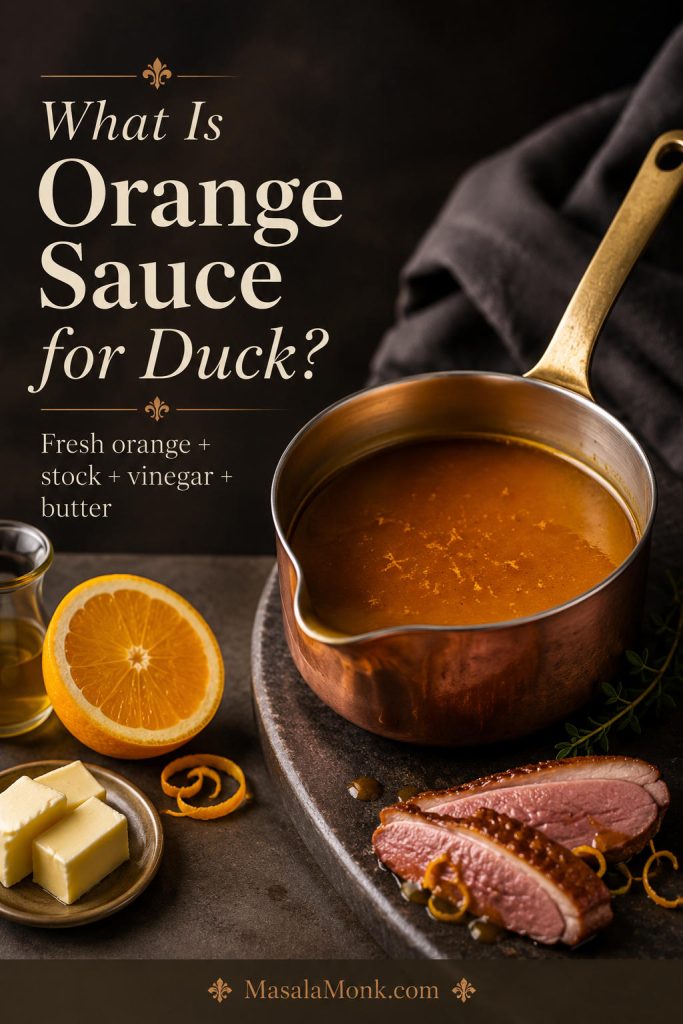
Sauce boat with orange sauce, oranges, stock, vinegar, butter, and duck on a dark surface
Orange sauce for duck is a warm savory citrus sauce, not a sweet dipping sauce. Stock and vinegar are what make the orange taste dinner-ready instead of syrupy.

For home cooking, the goal is simpler: make a sauce that brightens the duck without turning the plate sweet. Orange brings freshness, vinegar keeps the richness in check, and stock gives the sauce enough body to feel like part of the dish rather than a sweet topping.

This recipe is designed as an all-purpose duck sauce. It works with duck breast, roast duck, duck legs, leftover duck, and a simplified duck à l’orange plate. If you like bright sauces for rich holiday mains, MasalaMonk’s cranberry sauce with orange juice follows a similar sweet-tart logic, but this one is warmer and more savory.

Comparing it with the French classic? See the duck à l’orange section before choosing a variation.

Why This Sauce Works with Duck

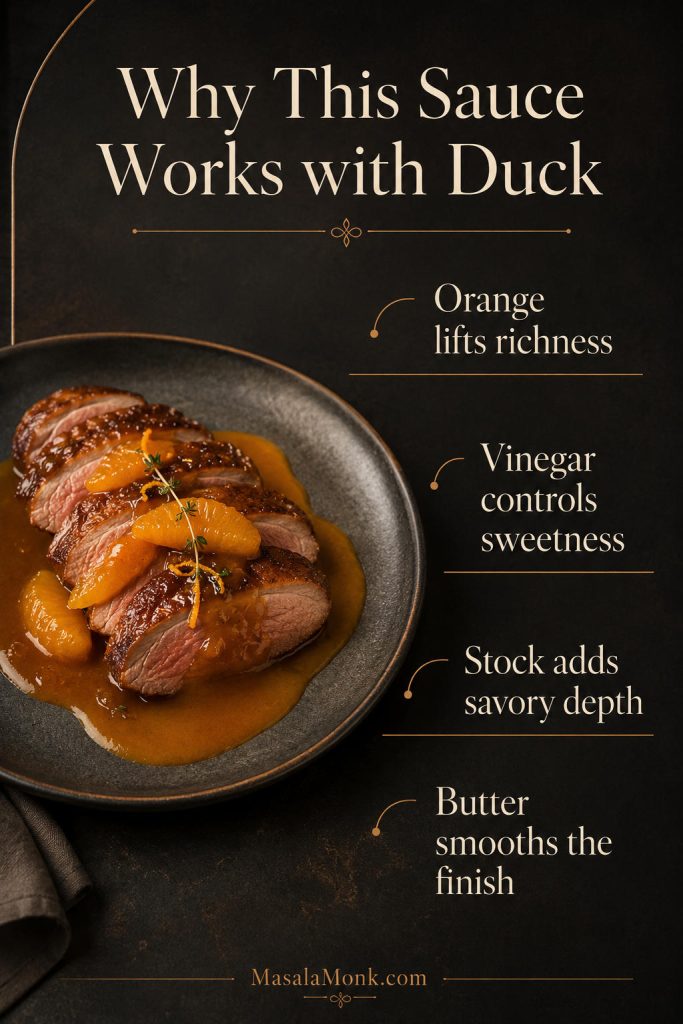
A good duck sauce has to do two things at once: cut through the richness and still taste like dinner. Orange brings the lift, vinegar keeps it from turning candied, stock gives it a savory backbone, and cold butter makes it feel polished on the plate.

  • Orange brightens rich meat: citrus gives the duck a clean edge instead of letting each bite feel heavy.
  • Vinegar controls the sweetness: it keeps the sauce sweet-sharp, not jammy.
  • Stock gives it backbone: it turns orange juice into a real pan sauce instead of a topping.
  • Cold butter finishes the texture: it softens the acidity and gives the sauce that silky, spoon-coating finish.
Board showing orange, vinegar, stock, and butter as the key parts of sauce for duck
The sauce works because it does more than add orange flavor. It cuts the richness, adds savory depth, and finishes smooth enough to belong on a dinner plate.

The good news is that this is not a one-shot sauce. Before the butter goes in, you can still pull it brighter, softer, saltier, thinner, or thicker.

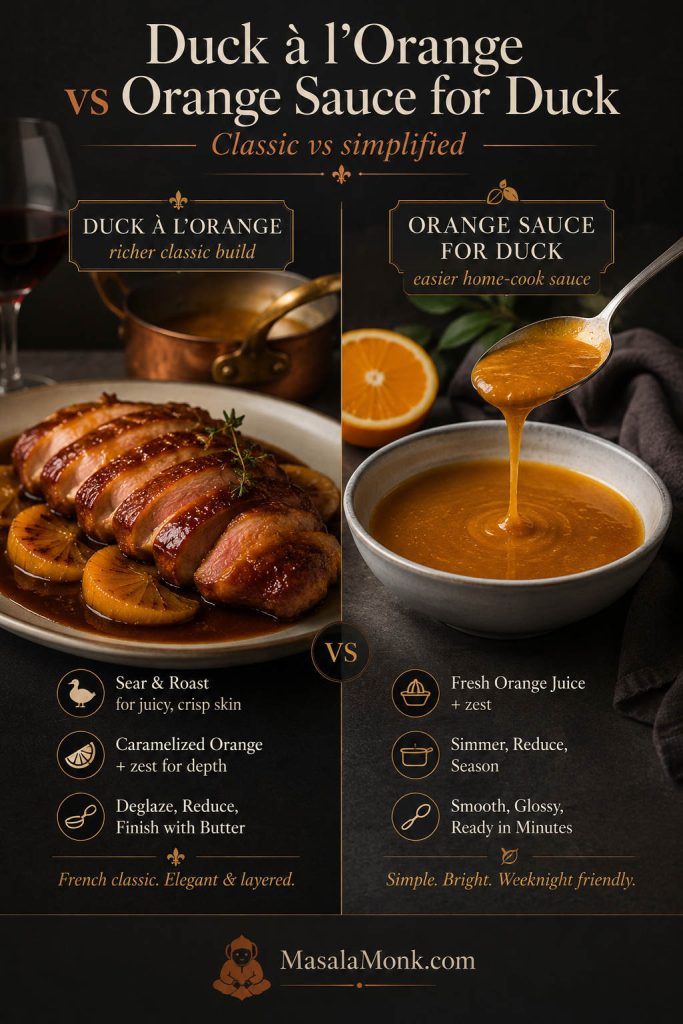
Is This the Same as Duck à l’Orange Sauce?

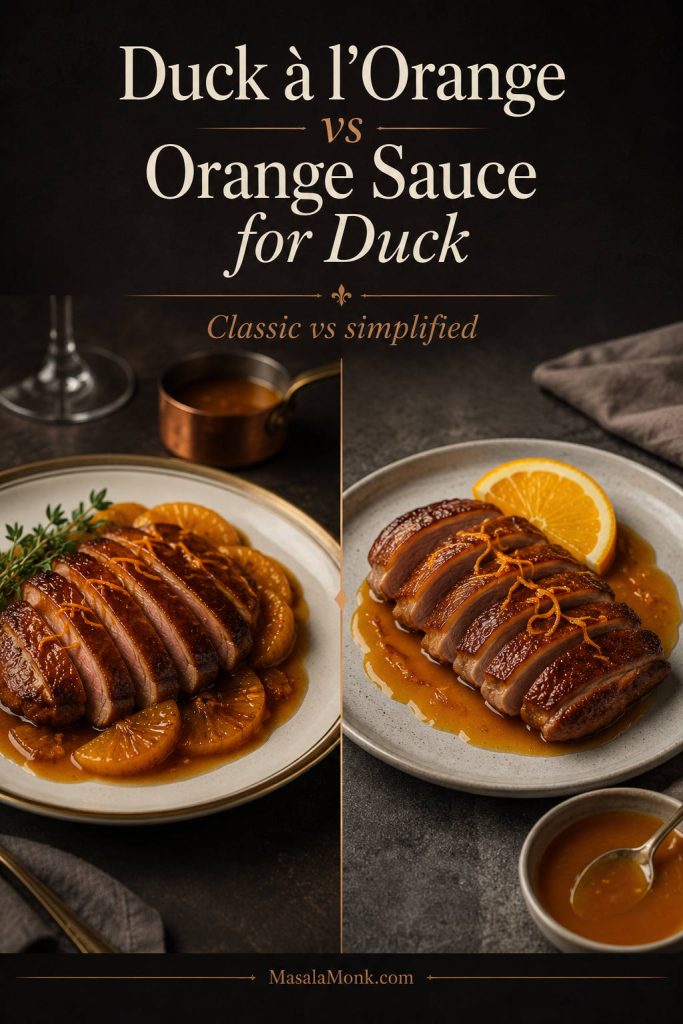
This is a simplified duck à l’orange-style sauce. Classic duck à l’orange often starts with a more formal sweet-sour base, sometimes called a gastrique, then builds flavor with orange, stock, and sometimes orange liqueur. It is beautiful, but it can feel like one more moving part when the duck itself already needs care.

This recipe keeps the part home cooks usually want most: citrus lift, controlled sweetness, savory depth, and a smooth finish. It skips the restaurant-style steps unless you want to dress it up with Grand Marnier, port, marmalade, or blood orange. For a more traditional, fully developed version, Serious Eats has a detailed guide to duck à l’orange.

Think of this as the calmer sauce-first version: familiar enough for duck à l’orange cravings, but simple enough to make while dinner is still moving.

Comparison board showing classic duck à l’orange and a simpler orange sauce for duck
Duck à l’orange is the more classical route, while this sauce-first version keeps the same sweet-sharp idea simpler. Both work best when citrus is balanced with a savory base.

Ingredients You Need

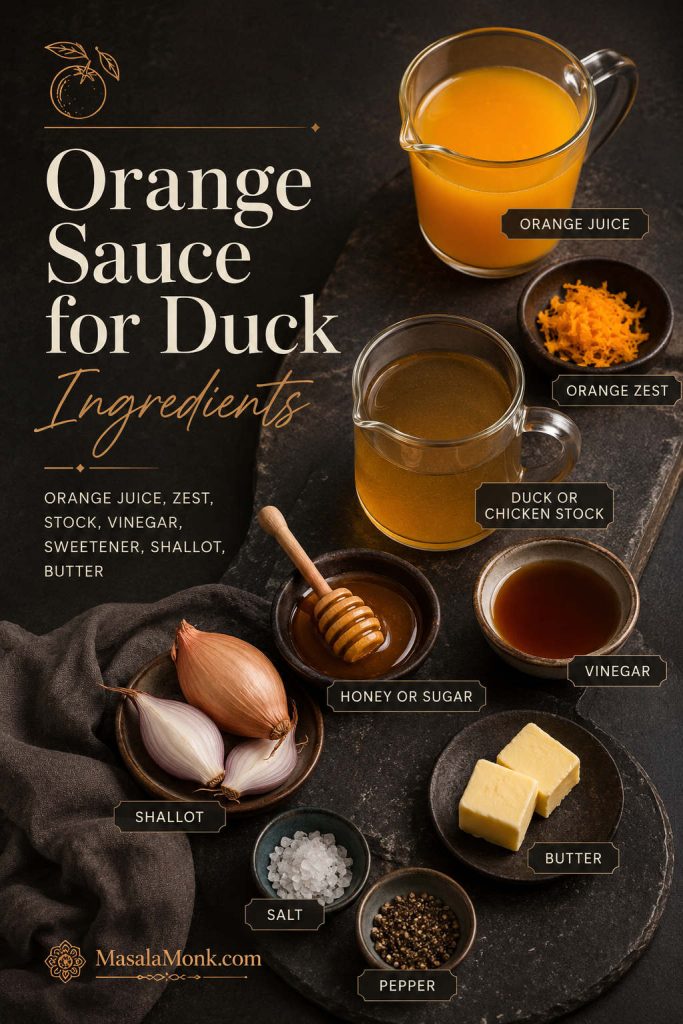
Ingredients for orange sauce for duck including orange juice, zest, stock, vinegar, honey, butter, shallot, salt, and pepper
This sauce is short on ingredients, but each one matters. Orange brings aroma, stock makes it savory, vinegar keeps it bright, and cold butter smooths the finish.

Orange Juice and Zest

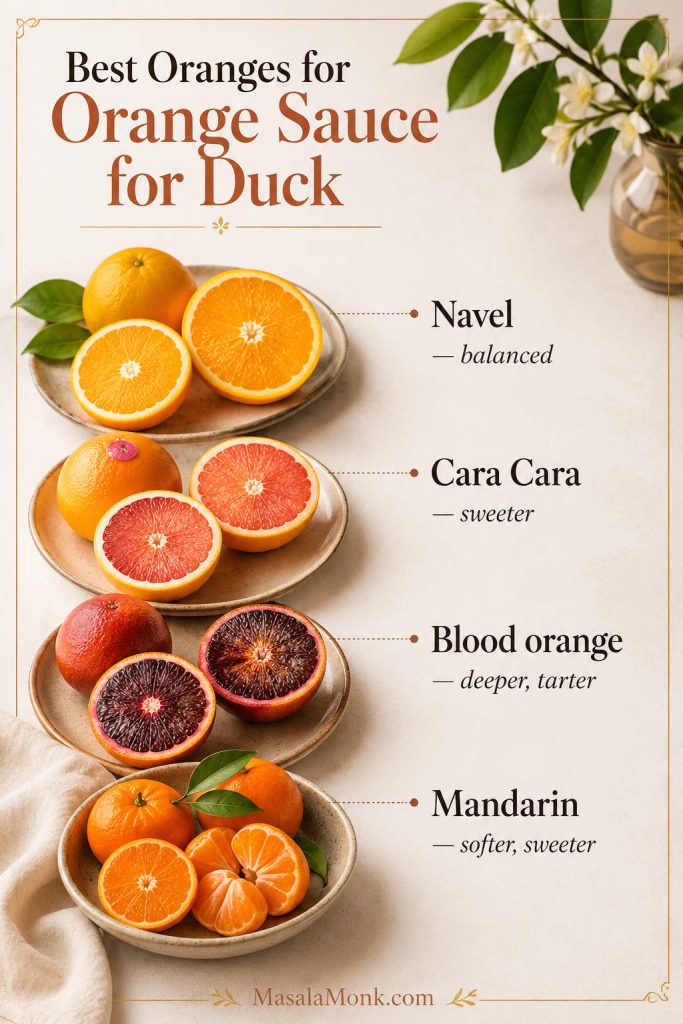
Fresh orange juice gives the sauce its main flavor. Orange zest is just as important because it adds concentrated citrus aroma without making the sauce watery. You will usually need 2 to 3 medium oranges for 1 cup / 240 ml juice, depending on size and juiciness, plus zest. Zest one orange before juicing it, and avoid the bitter white pith underneath the peel.

Bottled orange juice can work in a pinch, but fresh juice gives a cleaner, brighter sauce. If your oranges are very sweet, start with less honey or sugar and adjust after the sauce reduces.

Navel, Cara Cara, blood orange, and mandarin oranges for making orange sauce for duck
The orange you choose changes the finished sauce. Navel is balanced, Cara Cara is sweeter, blood orange is deeper and tarter, and mandarin gives a softer citrus note.

Duck Stock or Chicken Stock

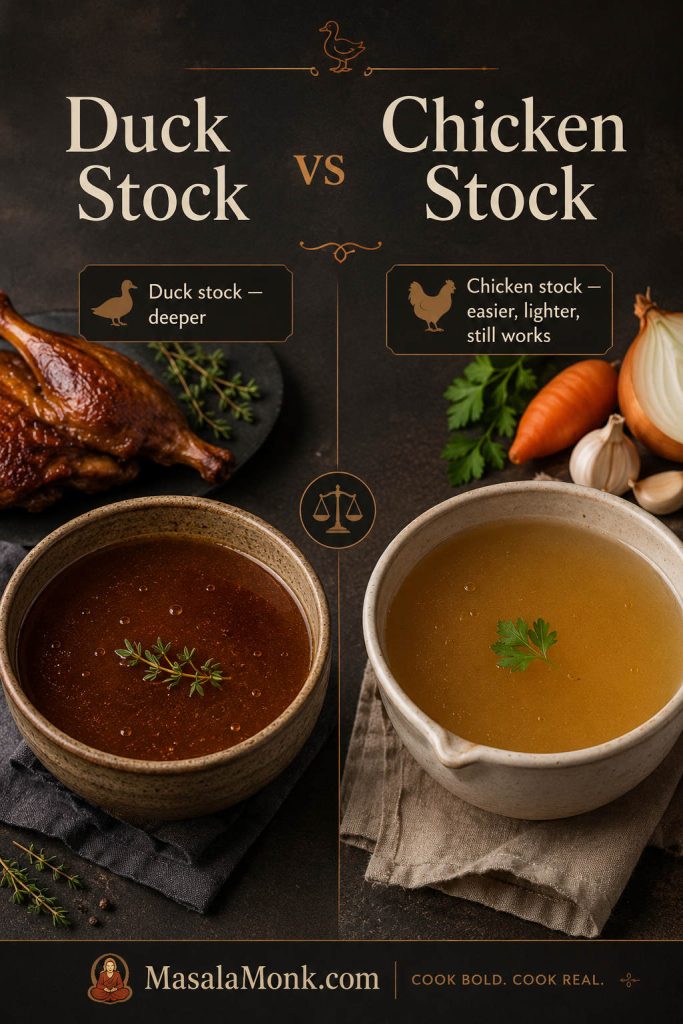
Stock is the quiet ingredient that makes the sauce taste like dinner, not dessert. Duck stock is ideal if you have it, but low-sodium chicken stock is easier to find and works well. Low-sodium stock is especially helpful because the sauce reduces as it cooks.


If you are cooking duck breast in a pan, you can also add a spoonful of the rendered duck juices or pan drippings. Skim or pour off excess fat first so the sauce tastes rich, not greasy.

Duck stock and chicken stock comparison for orange sauce
Duck stock gives the deepest flavor, but low-sodium chicken stock is easier to find and still works well. Since the sauce reduces, starting with low-sodium stock gives you more control.

Vinegar for Balance

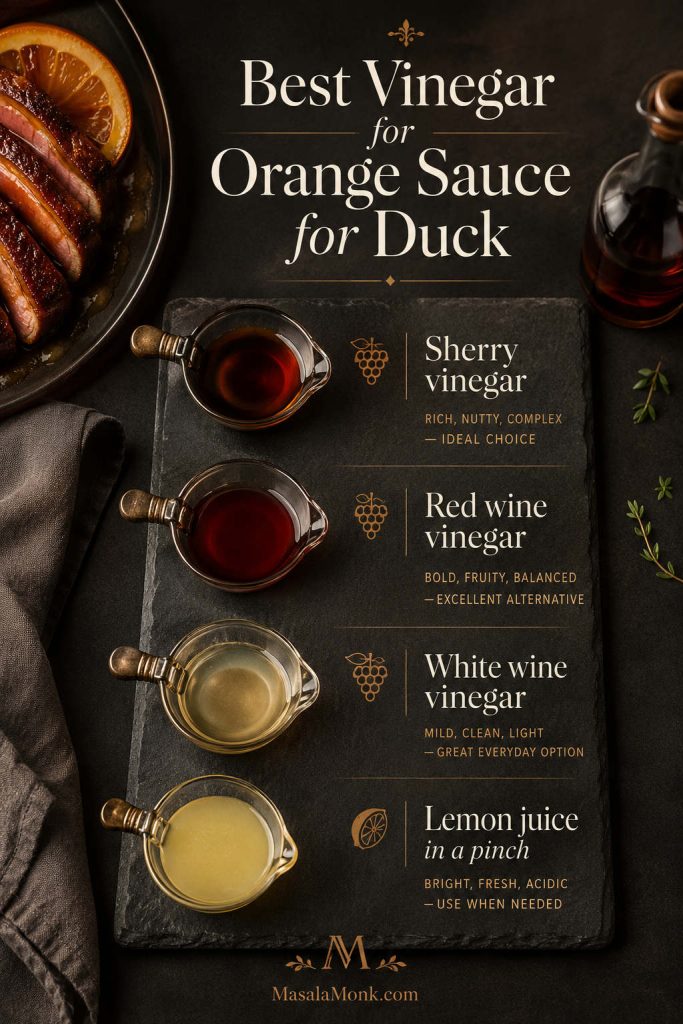
Duck needs acidity. Sherry vinegar and red wine vinegar are both excellent because they bring a rounded sharpness. White wine vinegar also works. Lemon juice can help in a pinch, although vinegar gives a more classic sweet-sour profile.

Use 1 1/2 tablespoons for a balanced base. Use closer to 2 tablespoons if your oranges are very sweet, if you are serving fatty roast duck, or if the finished sauce tastes too round and heavy.

Vinegar choices for orange sauce for duck including sherry vinegar, red wine vinegar, white wine vinegar, and lemon juice
Vinegar is the quiet fix that keeps orange duck sauce from tasting like marmalade. Sherry vinegar and red wine vinegar give rounded acidity, while lemon juice works when that is what you have.

Honey, Sugar, or Marmalade

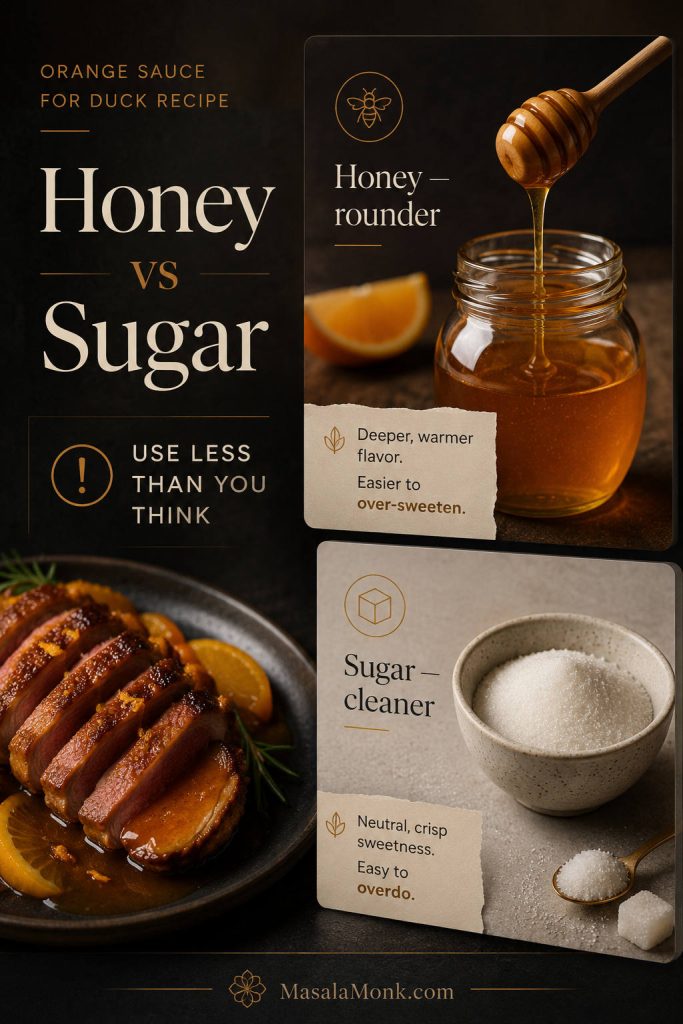
You only need a little sweetness. Honey gives a rounded flavor, while sugar keeps the sauce cleaner. Start with 1 tablespoon, then add more only after the sauce has reduced and you have tasted it.

Orange marmalade can be used for a shortcut variation, but it should support the duck sauce rather than take over. Too much can push the flavor toward sticky glaze, so keep the base savory with stock and vinegar.

Honey and sugar comparison for sweetening orange sauce for duck
Sweetness should support the orange, not lead the plate. Honey tastes rounder, sugar tastes cleaner, and both should be added lightly until the sauce is reduced and tasted.

Butter for a Smooth Finish

Cold butter goes in at the end. It softens the acidity, gives the sauce a polished finish, and helps it feel complete. Add it off the heat or over very low heat and whisk until smooth.

Once the butter is added, avoid hard boiling. Butter should make the sauce silky, not oily. If the pan starts bubbling hard after the butter goes in, lower the heat immediately.

Equipment You Need

You only need a small saucepan, whisk, citrus zester, and juicer for the basic sauce. A fine-mesh sieve helps if you want a restaurant-smooth finish. A skillet only matters if you are making the orange pan sauce from duck drippings.

  • Small saucepan or saucier
  • Whisk
  • Fine grater or Microplane
  • Citrus juicer
  • Fine-mesh sieve, optional
  • Small bowl for cornstarch slurry, if using

Once the ingredients and basic tools are ready, start the step-by-step method.

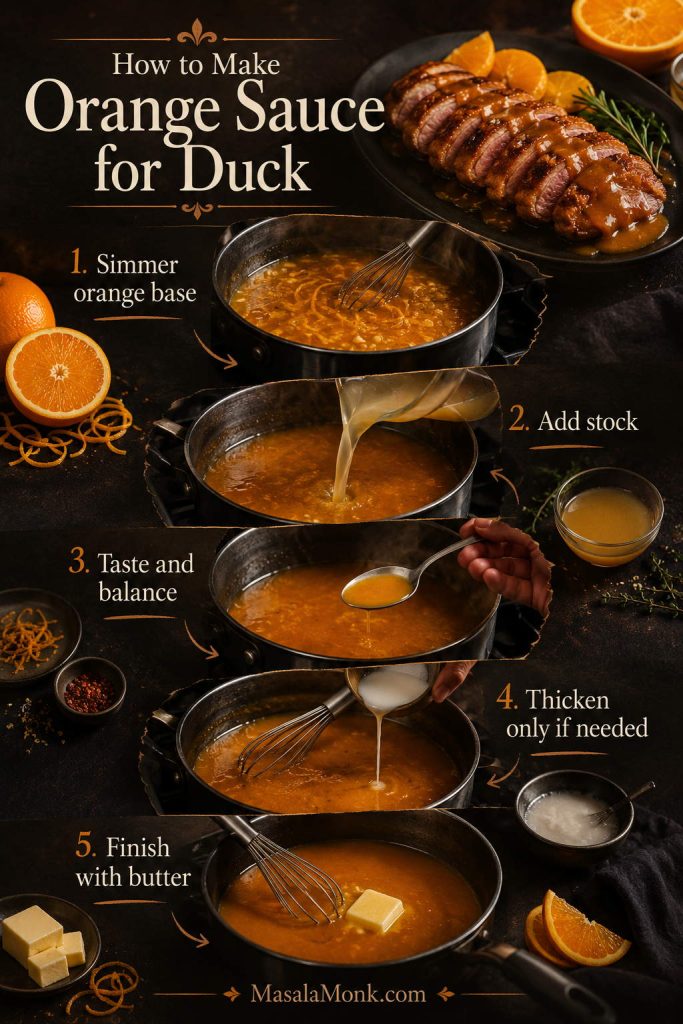
How to Make Orange Sauce for Duck

The sauce is most flexible before the butter goes in. Taste there, adjust there, and the finish becomes much easier.

Step-by-step board showing orange sauce simmering, stock being added, sauce being tasted, thickened, and finished with butter
Think of the method as a sequence of control points. Build the citrus base, add savory body, correct the flavor, and only then decide whether the sauce needs help thickening.

1. Reduce the Orange Base

Add the orange juice, orange zest, vinegar, and honey or sugar to a small saucepan. If you are using shallot, add it here too. Bring to a simmer over medium heat, then cook for 5 to 7 minutes, until the mixture smells bright and citrusy and has reduced slightly.

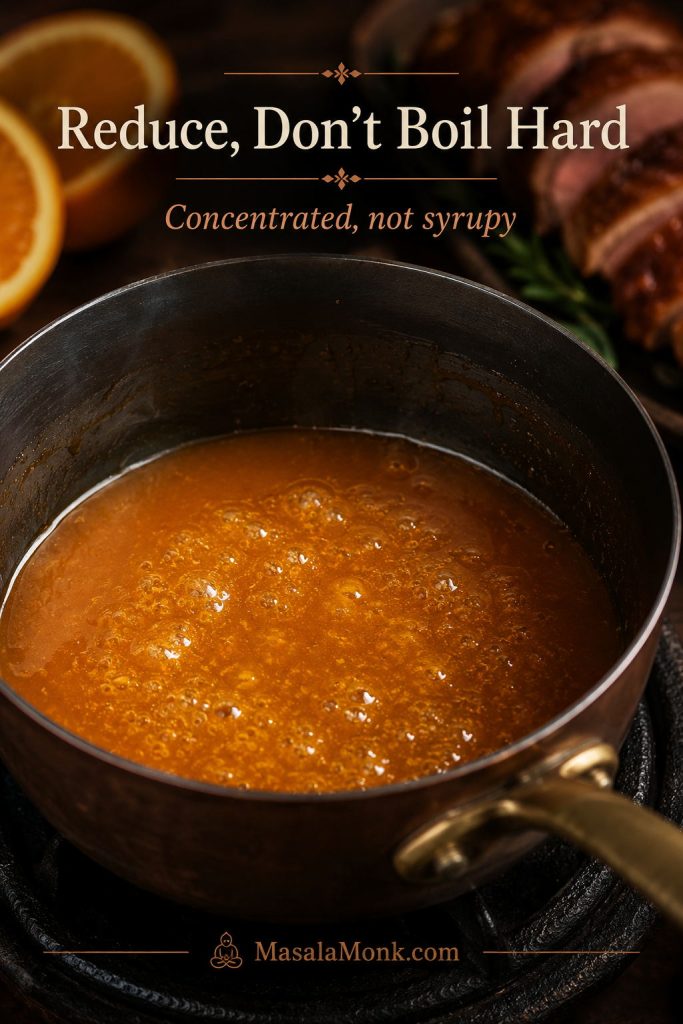
You are not trying to make caramel or a thick syrup at this stage. You just want to concentrate the orange flavor and soften the sharp edge of the vinegar.

Orange sauce gently reducing in a saucepan
The sauce should simmer gently until the orange flavor concentrates. If it boils hard, it can turn sticky before the stock and butter have a chance to round it out.

2. Add Stock and Simmer

Add the duck stock or chicken stock. Simmer for 8 to 12 minutes, stirring occasionally, until the sauce tastes savory and leaves a thin coating on the spoon.

If the sauce still feels thin, keep simmering. Reduction gives better flavor than thickening too early.

3. Balance Sweetness, Acidity, and Salt

Taste before adding butter. This is the moment where the sauce becomes yours: a little sharper for fatty roast duck, a little softer for leaner duck breast, or a touch sweeter if the oranges are tart.

  • Too sweet? Add a small splash of vinegar or lemon juice.
  • Too sharp? Add a little more honey or sugar.
  • Flat? Add a pinch of salt and a little more orange zest.
  • Thin? Simmer longer before using slurry.

4. Thicken Only If Needed

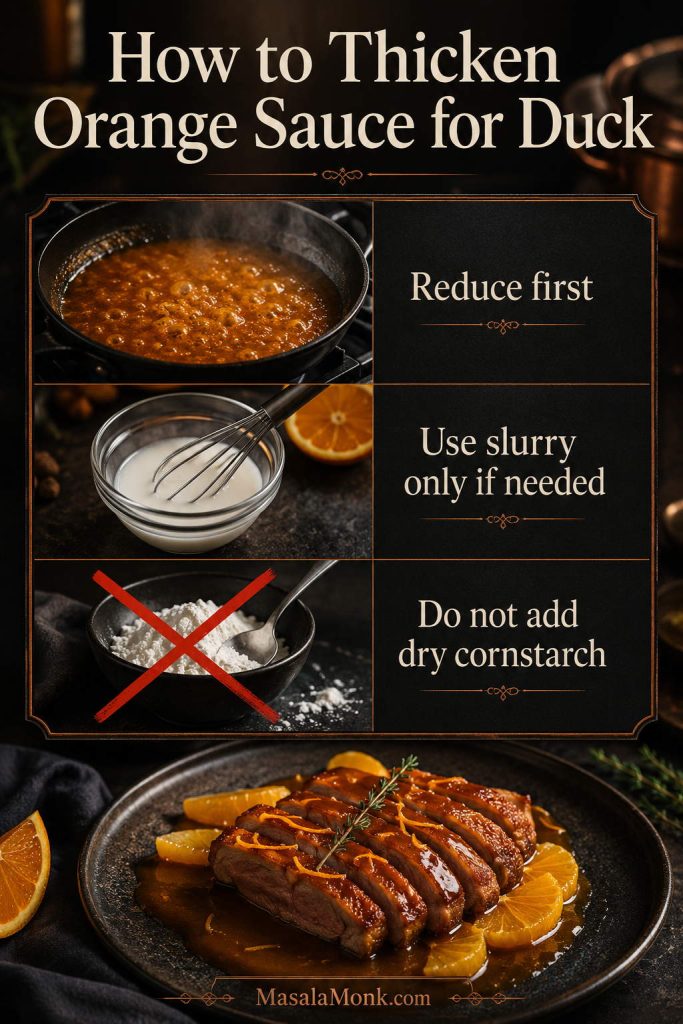
If the sauce is still too thin after reducing, mix 1 teaspoon cornstarch or cornflour with 1 tablespoon cold water. Whisk a small amount of this slurry into the simmering sauce and cook for 30 to 60 seconds.

Do not add dry cornstarch directly to the pan. It can clump and make the texture uneven. Use only enough slurry to help the sauce coat the spoon lightly.

Thickening guide showing reduced sauce, cornstarch slurry, and a warning not to add dry cornstarch
Reduction gives better flavor than rushing to thicken. However, if the sauce still feels thin, mix cornstarch with cold water first so it blends smoothly instead of clumping.

If the sauce has already gone too thin, too thick, bitter, greasy, or broken, use the troubleshooting guide before adding more ingredients.

5. Finish with Butter

Lower the heat or remove the pan from the heat. Whisk in the cold butter, one small piece at a time, until the sauce is smooth. Taste again and adjust salt, pepper, vinegar, or sweetness as needed.

For a very smooth finish, strain it through a fine-mesh sieve before serving. For a more rustic sauce, leave the shallot and zest in.

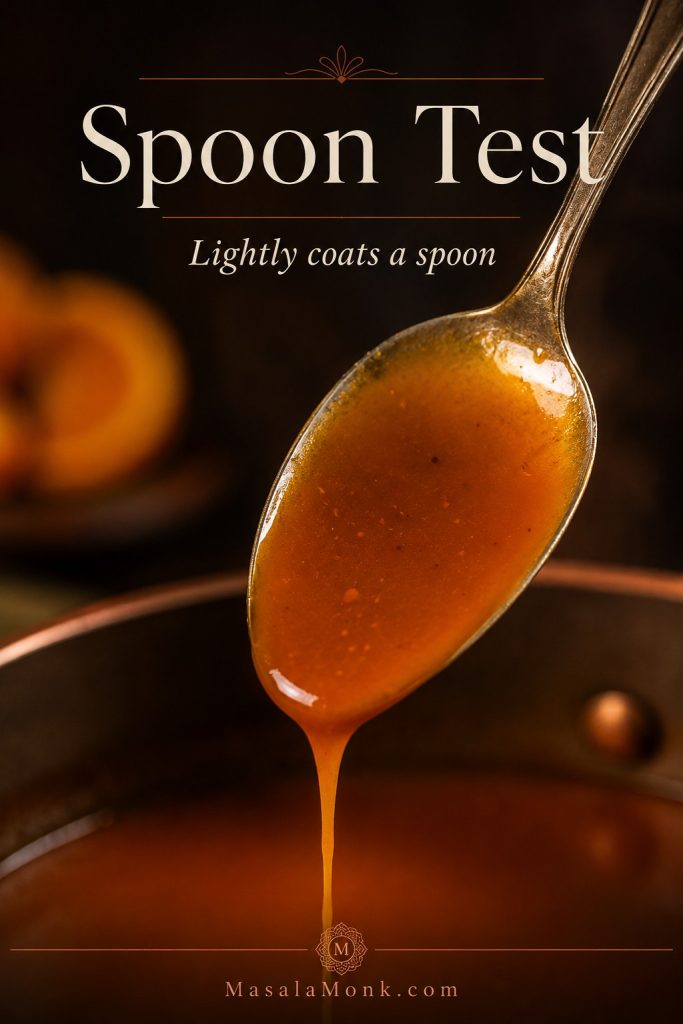
Glossy orange sauce lightly coating the back of a spoon
The right texture is glossy and pourable, not thick like glaze. When the sauce lightly coats a spoon, it is ready to finish or serve.
Do not worry if the sauce is not perfect on the first taste. As long as you taste before adding the butter, you can pull it back from too sweet, too sharp, too thin, or too flat without starting over.

Orange Sauce for Duck Recipe

Orange Sauce for Duck Recipe

This citrus sauce gives duck the classic sweet-sharp orange lift without turning the plate syrupy. It is smooth enough for duck breast, savory enough for roast duck, and simple enough for a duck à l’orange-style dinner at home.

Prep Time
10 minutes
Cook Time
15–20 minutes
Total Time
25–30 minutes
Yield
About 1 cup / 240 ml

Servings: 4, with about 1/4 cup sauce each

Category: Sauce

Method: Stovetop reduction

Cuisine: French-inspired

Ingredients

  • 1 cup / 240 ml fresh orange juice, from about 2–3 medium oranges, depending on size and juiciness
  • 2 teaspoons finely grated orange zest
  • 1 cup / 240 ml duck stock or low-sodium chicken stock
  • 1 1/2 tablespoons sherry vinegar or red wine vinegar, plus more to taste
  • 1 tablespoon honey or 12 g sugar, plus more only after tasting
  • 1 small shallot, finely chopped, optional, about 2 tablespoons
  • 2 tablespoons / 28 g cold unsalted butter, cut into small pieces
  • 1/4 teaspoon fine salt, plus more to taste
  • Freshly ground black pepper or white pepper, to taste

Optional Thickener

  • 1 teaspoon cornstarch / cornflour
  • 1 tablespoon cold water

Optional Upgrades

  • 1–2 tablespoons / 15–30 ml Grand Marnier, Cointreau, or another orange liqueur
  • 2–4 tablespoons / 30–60 ml port for a richer sauce
  • 1 tablespoon / about 20 g orange marmalade for a sweeter shortcut version

Instructions

  1. Start the orange base. Add orange juice, orange zest, vinegar, honey or sugar, and the optional shallot to a small saucepan. Bring to a simmer over medium heat.
  2. Reduce slightly. Simmer for 5 to 7 minutes, until the orange mixture smells bright and has reduced a little. Do not reduce it to a thick syrup yet.
  3. Add stock. Pour in the duck stock or chicken stock. Simmer for 8 to 12 minutes, stirring occasionally, until the sauce tastes savory and leaves a thin coating on the spoon.
  4. Balance the sauce. Taste before adding butter. Add a little more vinegar if it tastes too sweet, more honey or sugar if it tastes too sharp, or a pinch of salt if it tastes flat.
  5. Thicken only if needed. If the sauce is still too thin after reducing, stir cornstarch with cold water in a small bowl. Whisk a little slurry into the simmering sauce and cook for 30 to 60 seconds. Do not add dry cornstarch directly to the sauce.
  6. Finish with butter. Lower the heat or remove the pan from the heat. Whisk in the cold butter until the sauce is smooth. Do not hard-boil after adding butter.
  7. Strain and serve. Strain through a fine-mesh sieve for a smooth sauce, or leave the shallot and zest in for a more rustic sauce. Serve warm with duck.

Notes

  • Yield: About 1/4 cup sauce per person for 4 servings. Double it if you like extra sauce at the table or are serving roast duck.
  • Texture: Aim for glossy and pourable, with enough body to coat a spoon lightly.
  • Best adjustment point: Taste before adding butter, while the sauce is still easy to correct.
  • Optional upgrades: Choose one at a time. Add marmalade or port with the stock, or orange liqueur after the sauce has reduced.
  • Serving: For crisp duck breast, sauce the plate or spoon around the slices. For roast duck, serve the sauce warm on the side.
Saveable orange sauce for duck recipe card with yield, time, ingredients, and method cues
This saveable card keeps the sauce method simple at the stove. The important moment is tasting before the butter, while the sauce is still easy to adjust.

Making sauce for cooked duck? Use the quick 10-minute version. Cooking duck breast in the pan? Use the duck drippings version.

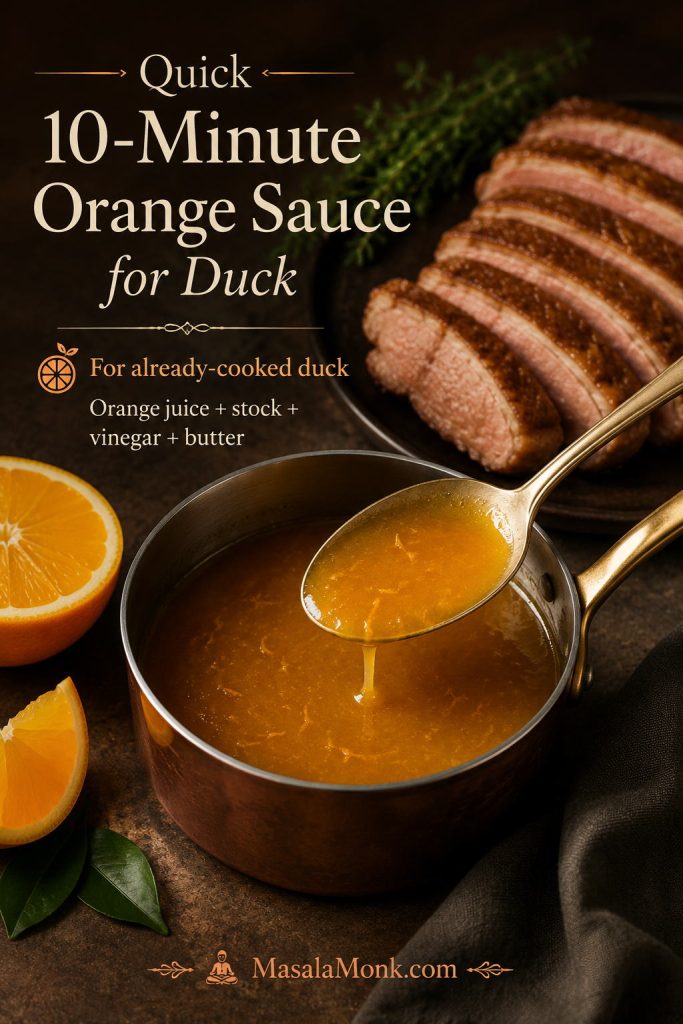
Quick 10-Minute Version

Use this when the duck is already cooked and you need a fast, warm citrus finish, not a full restaurant-style reduction. It is brighter and lighter than the main recipe, but it still gives the meat the orange lift it needs.

Quick version: Simmer 3/4 cup / 180 ml orange juice, 1/2 cup / 120 ml stock, 1 tablespoon vinegar, 1 tablespoon marmalade or 1 to 2 teaspoons honey, and 1 teaspoon orange zest for 8 to 10 minutes. Finish with 1 tablespoon cold butter and adjust with salt, vinegar, or honey.
Quick orange sauce for duck in a saucepan with sliced cooked duck nearby
The quick version is best when the duck is already cooked and you need a warm citrus finish. Keep the sauce in the pan or spoon, then add it lightly to the plate.

If you are cooking duck breast from scratch, the pan-sauce version below gives better flavor because it uses the browned bits and juices left in the skillet.

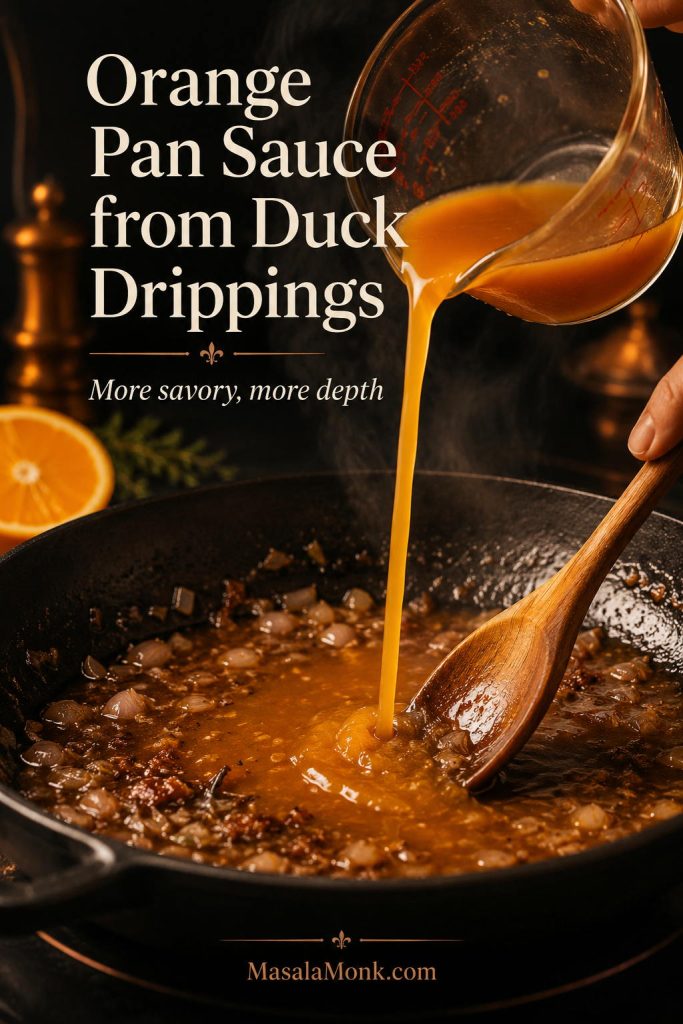
Orange Pan Sauce from Duck Drippings

If you are cooking duck breast, this is where the skillet gives you flavor you cannot get from orange juice alone. After cooking the duck, transfer the breast to a board to rest. Pour off most of the rendered duck fat, leaving the browned bits and about 1 teaspoon of fat in the pan.

Add the shallot, if using, and cook for 30 to 60 seconds over medium-low heat, just until softened. Pour in the orange juice, then scrape up the browned bits from the bottom of the pan. Add the zest, vinegar, honey or sugar, and stock, then simmer until the sauce tastes savory and lightly coats a spoon. Lower the heat, whisk in the cold butter, and strain if you want a smoother finish.

This route is especially good for duck breast because it captures the savory flavor left in the skillet. Just avoid leaving too much duck fat in the pan, or the sauce can taste greasy.

Orange pan sauce being made in a skillet with duck drippings, shallots, and browned bits
Duck drippings add savory depth that orange juice alone cannot give. Pour off excess fat first, then use the browned bits to build a richer orange pan sauce.

Once the sauce is ready, see how to serve it with duck breast without soaking the crisp skin.

How to Serve the Sauce with Duck Breast

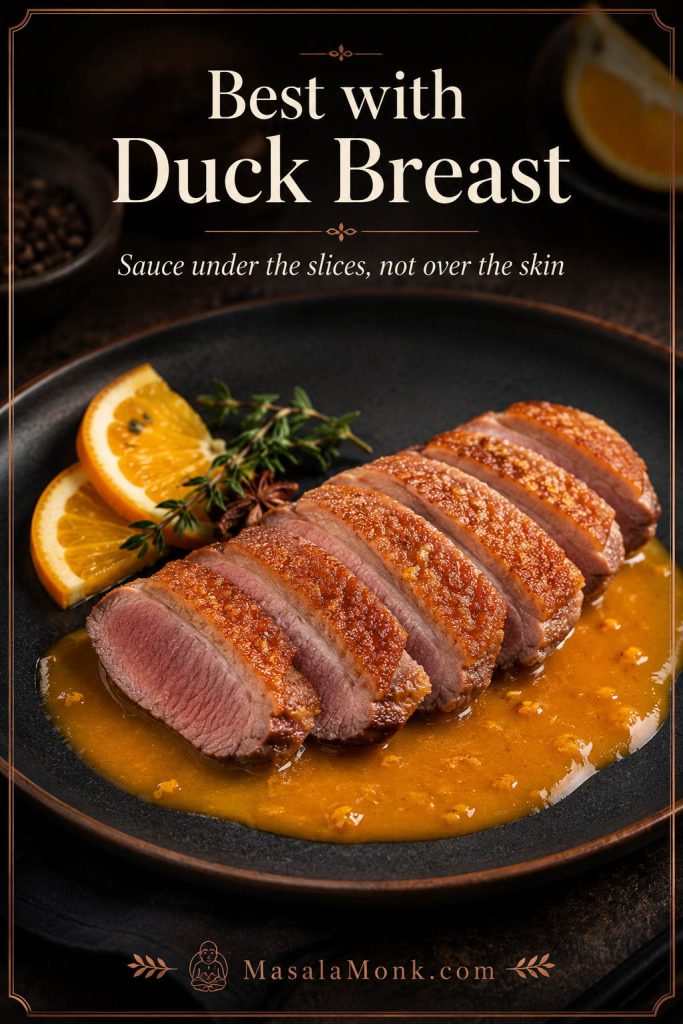
Duck breast is one of the best uses for this sauce because the contrast is so good: crisp skin, tender meat, and citrus sauce underneath. The skin is the prize. Once it is soaked, the plate loses its best texture.

Spoon the sauce onto the plate first, then lay the sliced duck breast over it. You can also spoon a little sauce around the slices and serve extra on the side. That way the first bite still has that crisp edge.

Sliced duck breast served over orange sauce with crisp skin kept dry
Duck breast needs contrast: crisp skin, tender meat, and citrus sauce below. Serving the sauce underneath gives flavor without softening the best texture.

If you are cooking duck breast from scratch, score the skin in a shallow crosshatch pattern without cutting into the meat. Start the breast skin-side down in a cold pan, then render the fat slowly over low to medium-low heat. This gives the fat time to melt and the skin time to crisp before the meat overcooks.

For the full meat-cooking method, use this duck breast recipe with crispy skin and orange sauce as the companion guide. This page focuses on the sauce, while that guide walks through the duck itself in more detail.

If you are only making the sauce for already-cooked duck, you can skip the temperature notes. If you are cooking duck breast at the same time, this section helps you time the meat before saucing the plate.

Duck Breast Temperature Guide

In restaurants and many home kitchens, duck breast is often served pink, but official U.S. poultry guidance is 165°F / 74°C. These lower temperatures are common doneness preferences, not official safety recommendations. If you choose a lower doneness target, use your own judgment and consider who you are serving, especially if cooking for children, pregnant guests, older adults, or anyone immunocompromised. You can also refer to the USDA’s safe minimum internal temperature chart for official guidance.

Duck breast temperature guide showing medium-rare, medium, and official United States poultry safety guidance
Duck breast is often served pink, but official U.S. poultry safety guidance is 165°F / 74°C. Use an instant-read thermometer and choose the doneness that suits your table.
Duck Breast Doneness Common Restaurant/Home Target Texture
Medium-rare 130–135°F / 54–57°C Pink, tender, steak-like
Medium 140°F / 60°C Lightly pink, firmer
Well done 155°F+ / 68°C+ Much firmer, less pink
Official U.S. poultry safety temperature 165°F / 74°C Fully cooked by official guidance

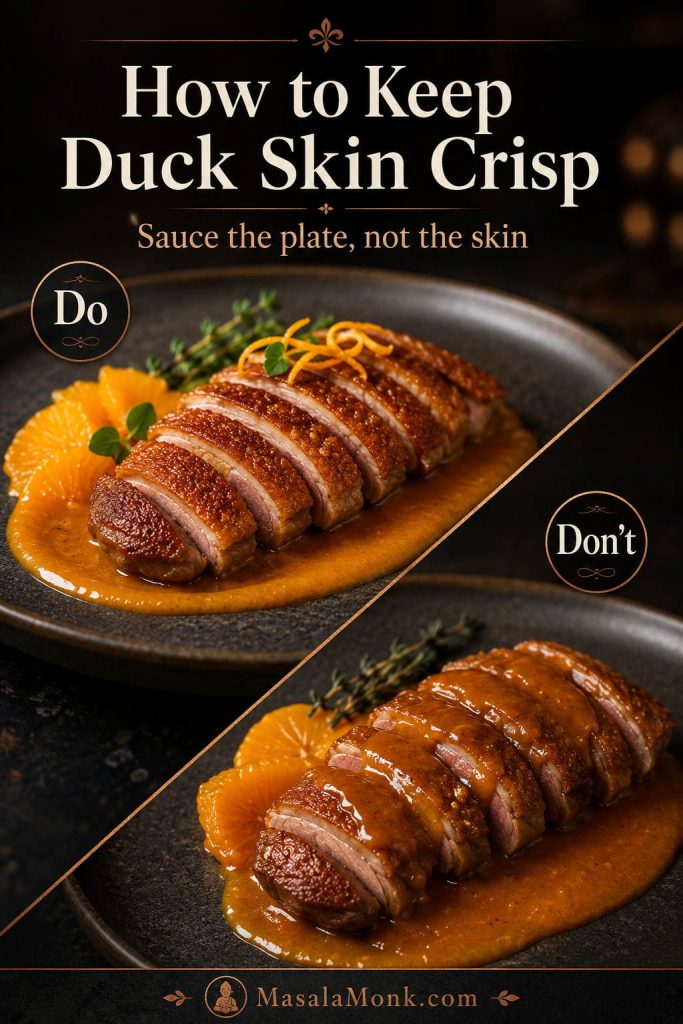
How to Keep the Duck Skin Crisp

  • Render the skin slowly instead of blasting it with high heat.
  • Rest the duck breast before slicing so juices settle.
  • Spoon sauce under or around the duck, not heavily over the skin.
  • Serve extra citrus sauce on the side so each person can add more.
  • If reheating leftovers, re-crisp the duck skin separately from the sauce.
Do and don’t comparison showing orange sauce under duck versus sauce poured over duck skin
The skin is the prize. Sauce the plate first, then set the duck on top so the meat gets the citrus lift and the skin keeps its crackle.

How to Use It with Roast Duck or Duck Legs

Roast duck can take a little more sauce than duck breast, especially once it is carved at the table. Still, crisp skin deserves respect. Keep the sauce warm and serve it beside the meat so people can add enough citrus lift without softening every piece.

If you have pan juices from roasting duck, add a spoonful to the sauce for deeper flavor. Skim off excess fat first; a little duck fat tastes luxurious, but too much can turn the sauce greasy.

Duck legs are more forgiving. Because the meat is darker and richer, you can spoon the sauce a little more generously, especially with roasted, braised, or confit-style legs.

Orange sauce served with sliced roast duck and duck legs on dark plates
This citrus sauce works beyond duck breast. With roast duck or duck legs, serve it warm on the side so guests can add more without softening all the skin.

For a bigger holiday table, keep the duck rich and the sides familiar: one citrus sauce, one potato dish, and one green side usually feel complete. If you want a classic make-ahead green side, MasalaMonk’s green bean casserole recipe ideas work better than adding another fussy main-style dish.

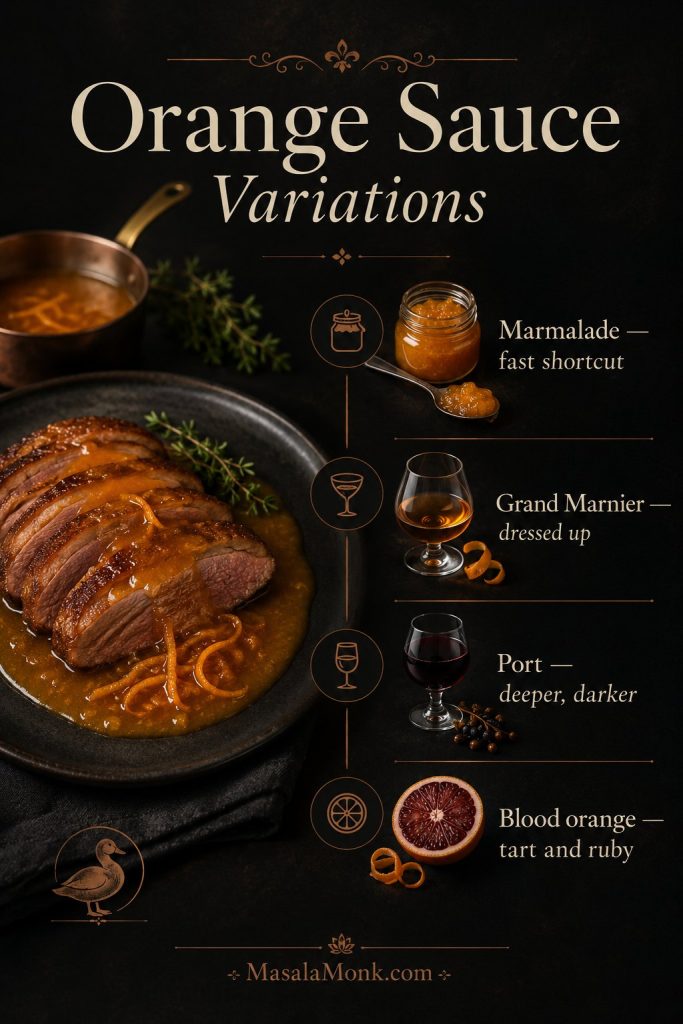
Orange Sauce Variations: Marmalade, Grand Marnier, Port, and Blood Orange

Orange sauce variation guide with marmalade, Grand Marnier, port, and blood orange options
Choose the variation by the dinner you want: marmalade for speed, Grand Marnier for elegance, port for depth, and blood orange for a sharper seasonal finish.

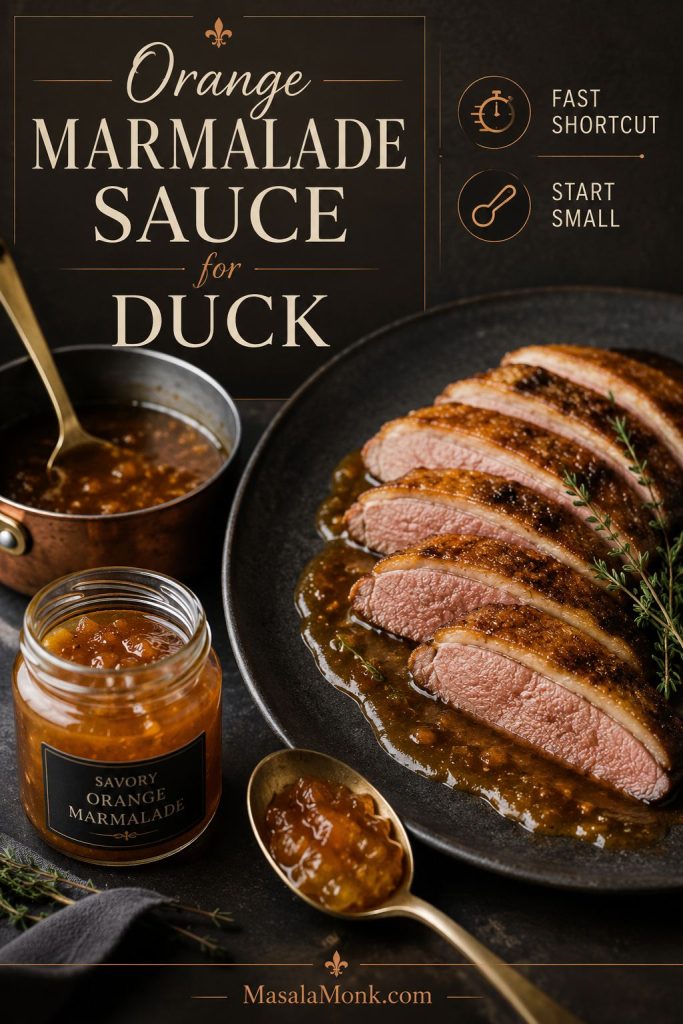
Marmalade Shortcut

Marmalade is the fast shortcut, not the whole personality of the sauce. Add 1 tablespoon with the stock for body, sweetness, and a slight orange-peel bitterness.

Too much marmalade pushes the sauce toward sticky glaze. Start small, keep the vinegar close, and remember: if it tastes good on toast, it is probably too sweet for duck.

Orange marmalade sauce for duck with marmalade, a saucepan, and sliced duck
Marmalade can make a fast orange sauce, but it is powerful. Start small, then use vinegar or stock if the flavor begins leaning more like jam than dinner.

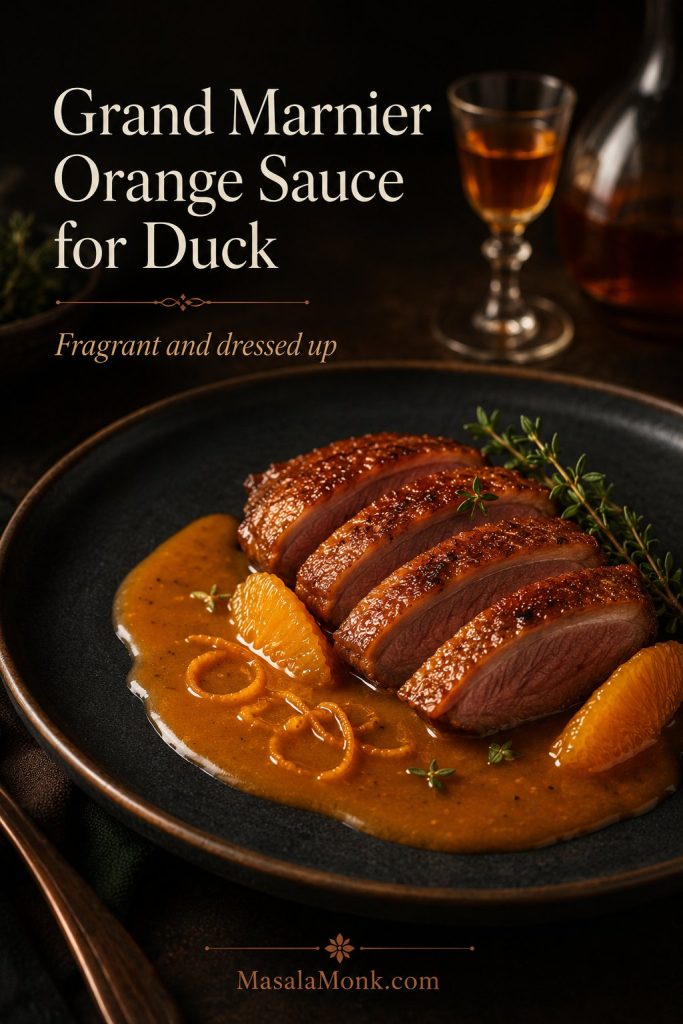
Grand Marnier or Cointreau

This is the dinner-party version: still bright and pourable, but with a warmer orange aroma that feels more dressed up. Add 1 to 2 tablespoons of Grand Marnier, Cointreau, or another orange liqueur after the sauce has reduced.

Simmer briefly to mellow the alcohol, then finish with butter. The result should feel fragrant, not perfumey, and richer without becoming heavy.

Grand Marnier orange sauce for duck with plated duck, glossy sauce, and a subtle liqueur glass
Grand Marnier or Cointreau gives the sauce a warmer orange aroma. Simmer briefly before finishing with butter so it tastes elegant rather than sharp.

Port and Orange

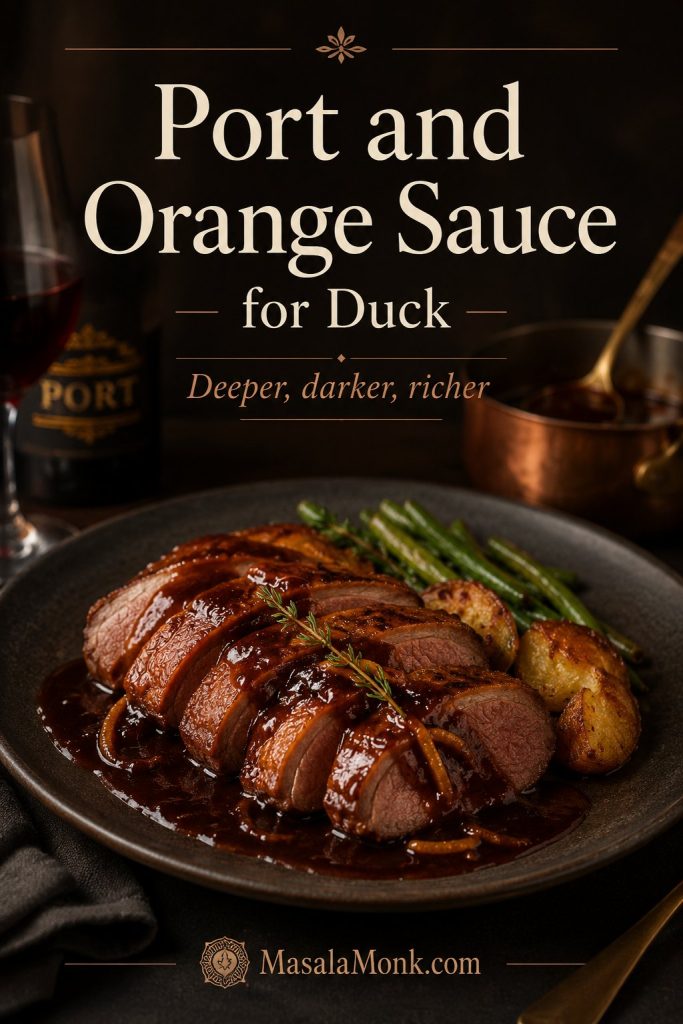
Port moves the sauce into a deeper, darker lane. Add 2 to 4 tablespoons with the stock, then taste before serving because port can make the orange feel rounder and sweeter.

This version suits roast duck especially well. If the sauce starts leaning too soft or sweet, a few extra drops of vinegar will wake it back up.

Port and orange sauce served with sliced duck and a darker glossy sauce
Port moves the sauce into a deeper dinner-party lane. Because it can add sweetness, taste before serving and sharpen with a few drops of vinegar if needed.

Blood Orange

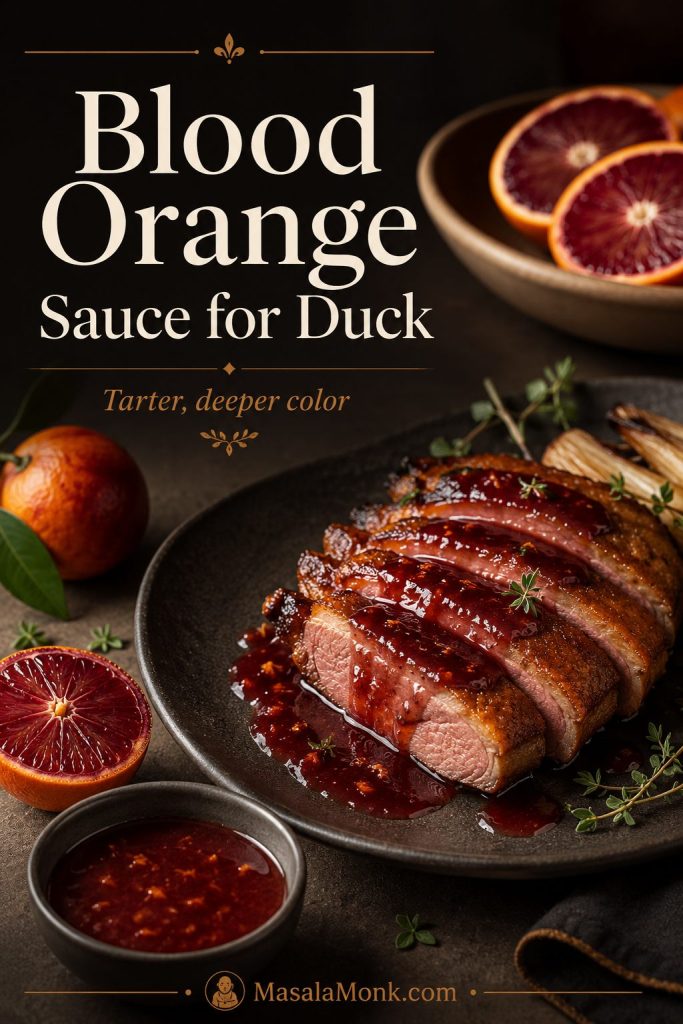
Blood orange gives the sauce a ruby-orange color and a slightly berry-like citrus note. Use it exactly as you would regular orange juice, then taste carefully because some blood oranges are less sweet and more tart.

If the finish tastes too sharp, soften it with a little honey or an extra piece of cold butter.

Blood orange sauce for duck with ruby-orange sauce, sliced duck, and cut blood oranges
Blood orange gives duck sauce a deeper color and a tarter citrus edge. If the finish tastes too sharp, soften it with honey or an extra piece of cold butter.

Use the table below as a quick chooser, then follow the same core method: reduce first, taste before butter, and keep the finish pourable rather than sticky.

Version Best For Flavor What to Adjust
Classic base Duck breast, roast duck, duck legs Bright, savory, balanced Taste vinegar and sweetness before butter
Marmalade Fast shortcut Sweeter, peel-like, slightly bitter Add extra vinegar if it tastes jammy
Grand Marnier or Cointreau Dinner-party plates Fragrant, festive, orange-forward Simmer briefly before butter
Port Roast duck or richer plates Darker, rounder, deeper Add acid if it becomes too sweet
Blood orange Seasonal dinners Tart, ruby-colored, berry-citrus Add honey if too sharp

If a variation tastes too sweet, too sharp, or too heavy after reducing, check the sauce fixes before serving.

Common Mistakes to Avoid

These are the small moves that usually separate a polished orange duck sauce from one that tastes too sweet, too heavy, or slightly clumsy on the plate.

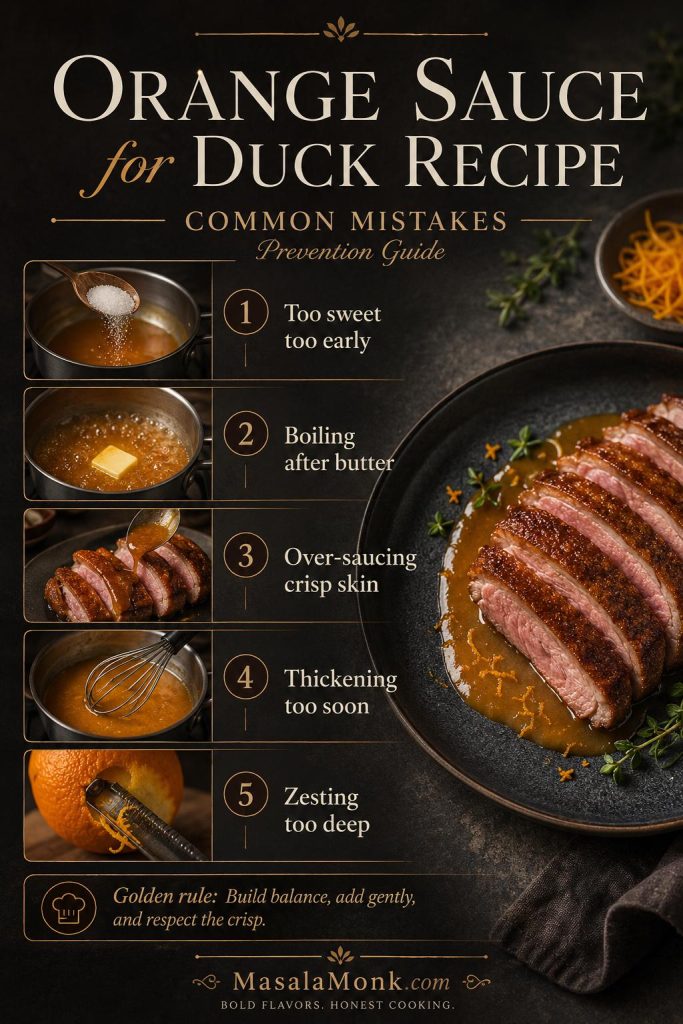
  • Adding too much sweetness early: reduce the sauce first, then decide if it needs more honey, sugar, or marmalade.
  • Boiling after butter: once the butter goes in, use gentle heat so the sauce stays smooth.
  • Covering crisp duck skin: spoon the sauce under or around duck breast instead of soaking the skin.
  • Thickening too soon: simmer first, then use cornstarch only if reduction is not enough.
  • Zesting too deeply: use only the colored orange peel, not the bitter white pith.
Common mistakes board for orange sauce for duck showing over-sweetening, boiling butter, over-saucing skin, thickening early, and zesting too deeply
Most orange sauce mistakes start small: too much sweetener, too much heat, or sauce poured over crisp skin. Add gently, taste often, and keep the crisp parts dry.

How to Fix Orange Sauce for Duck

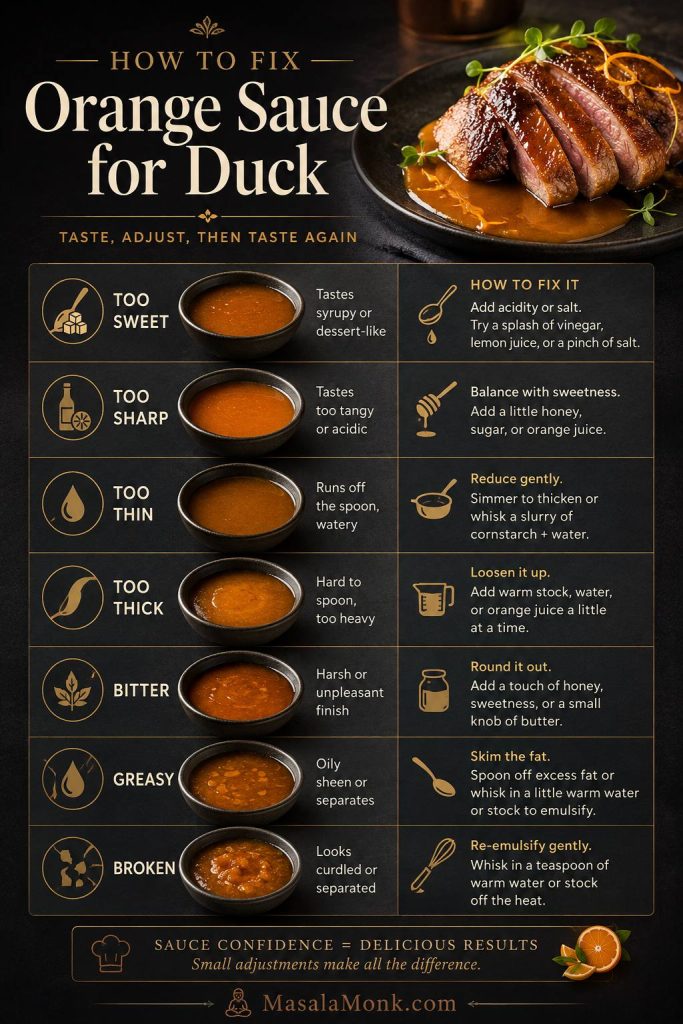
Most problems with this sauce are balance problems, not failures. A splash of acid, a little sweetness, more reduction, or gentler heat can usually bring it back.

Use the table as a quick rescue guide rather than a second recipe. Find the problem, make the smallest adjustment, then taste again before adding more.

Troubleshooting board for orange sauce for duck with sweet, sharp, thin, thick, bitter, greasy, and broken sauce problems
Troubleshooting works best one fix at a time. Adjust sweetness, acidity, thickness, or fat gently, then taste again before changing anything else.
Problem Why It Happened How to Fix It
Too sweet Too much honey, sugar, marmalade, or very sweet orange juice Add a splash of vinegar or lemon juice, then loosen with a little stock if needed.
Too sharp Too much vinegar or very tart oranges Add a little honey or sugar, then finish with butter to round the edges.
Too thin Not reduced enough, or stock was very light Simmer longer. If still thin, whisk in a small amount of cornstarch slurry.
Too thick or sticky Over-reduced or too much marmalade/sugar Whisk in warm stock, water, or orange juice a tablespoon at a time.
Bitter Too much white pith from the orange peel, or over-reduced citrus Strain the sauce, add a little honey, and finish with butter.
Flat Not enough salt, zest, or acid Add a pinch of salt, more orange zest, and a few drops of vinegar.
Greasy Too much duck fat in the pan sauce Skim excess fat or whisk in a splash of warm stock to loosen the sauce.
Broken after butter The sauce boiled hard after the butter was added Take the pan off the heat and whisk in warm stock 1 teaspoon at a time until the sauce looks smoother.

Make-Ahead, Storage, and Reheating

You can make the citrus base ahead of time. Cook the sauce through the reduction stage, then cool and refrigerate it. For the best texture, add the butter when reheating, not before storing.

  • Fridge: Store in an airtight container for 3 to 4 days.
  • Freezer: Freeze before adding butter, and preferably before adding cornstarch slurry, for up to 2 months.
  • Reheating: Warm gently in a small saucepan. Add a splash of stock or water if it has thickened too much.
  • Butter finish: Whisk in cold butter after reheating for the smoothest sauce.
Make-ahead and storage board for orange sauce with container, saucepan, butter, and storage times
For a calmer dinner, make the sauce base ahead and finish it with butter after reheating. Gentle heat protects the texture better than boiling it hard.

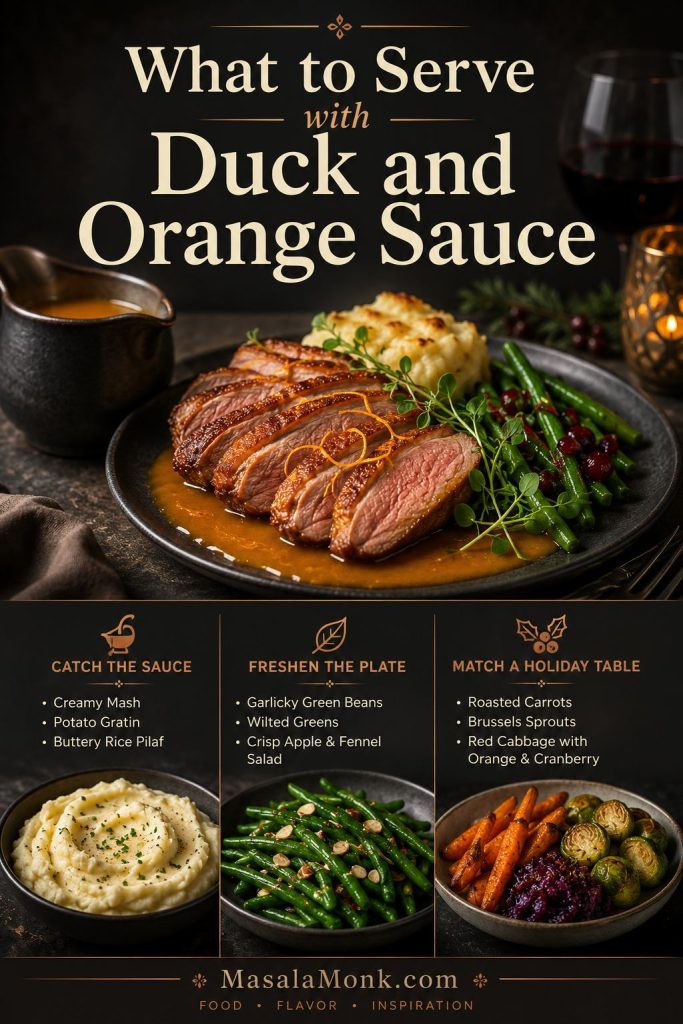
When the sauce is ready, build the plate with sides that catch, freshen, or round out the duck.

If the sauce looks slightly separated after chilling, warm it gently and whisk well. A small splash of stock can help bring it back together.

Avoid boiling the sauce hard when reheating, especially after the butter has been added. Gentle heat keeps the finish smoother.

What to Serve with Duck and Orange Sauce

For duck breast, the best plate is usually simple: crisp skin, sliced meat, a spoonful of orange sauce, something potato-based, and one green side. That lets the sauce feel polished without making the plate busy.

Because duck and citrus sauce already bring richness, sweetness, and acidity, choose sides by the job they do on the plate.

Side Job Best Choices Why It Works
Catch the sauce Mashed potatoes, potato gratin, wild rice, rice pilaf Soft or starchy sides hold the orange pan sauce without competing with it.
Freshen the plate Green beans, bitter salad leaves, orange-fennel salad, wilted greens Green or bitter sides keep the duck from feeling too heavy.
Match a holiday table Roasted carrots, Brussels sprouts, hashbrown casserole, green bean casserole These make the meal feel generous without adding another complicated main.

MasalaMonk’s garlic mashed potatoes are especially useful when you want a soft, buttery side that can hold sauce without feeling dry. For a holiday table where you want one rich, make-ahead side, this hashbrown casserole recipe can sit beside roast duck without stealing attention.

Duck with orange sauce served with potatoes, green beans, roasted vegetables, and holiday side dishes
Build the plate by function: something starchy to catch the sauce, something green to freshen the richness, and a warm side if the meal is more festive.

Duck can feel like a high-stakes dinner, but the sauce does not have to be fragile. Reduce it, taste it before the butter, adjust the sweet-sharp balance, and keep it warm. Once the skin is crisp and the sauce is glossy, let the orange lift the duck instead of covering it.

FAQs

What is orange sauce for duck made of?

It is usually made with orange juice, orange zest, stock, vinegar, a small amount of sweetness, and butter. Some versions also include shallot, port, marmalade, wine, or orange liqueur.

Why does orange work so well with duck?

Orange cuts through duck’s richness. The sauce still needs stock and vinegar, though, so it tastes like a savory dinner sauce instead of a sweet glaze.

Should the sauce be sweet?

Lightly sweet, yes. Syrupy, no. The best version is bright, rounded, and savory, with enough acidity to keep the orange from tasting like candy.

What can I use instead of duck stock?

Low-sodium chicken stock is the easiest substitute. It gives the sauce savory depth without overpowering the orange.

Does bottled orange juice work?

It works in a pinch, but fresh juice and fresh zest give a cleaner flavor. If using bottled juice, add fresh zest if possible and taste before adding extra sugar.

How do I thicken orange sauce for duck?

Reduce it first. If it is still too thin, mix 1 teaspoon cornstarch with 1 tablespoon cold water, then whisk in a little slurry and simmer briefly.

Why does my orange duck sauce taste bitter?

Bitterness usually comes from white pith or over-reduced citrus. Use only the colored zest, strain if needed, then soften the sauce with a little honey and butter.

Do I need alcohol?

No. Grand Marnier, Cointreau, and port are optional upgrades. The base sauce gets its balance from orange, stock, vinegar, sweetness, and butter.

How do I scale it for more people?

Double all the ingredients and use a wider saucepan if possible. The sauce may take a few extra minutes to reduce to the same spoon-coating texture.

Is this the same as Chinese duck sauce?

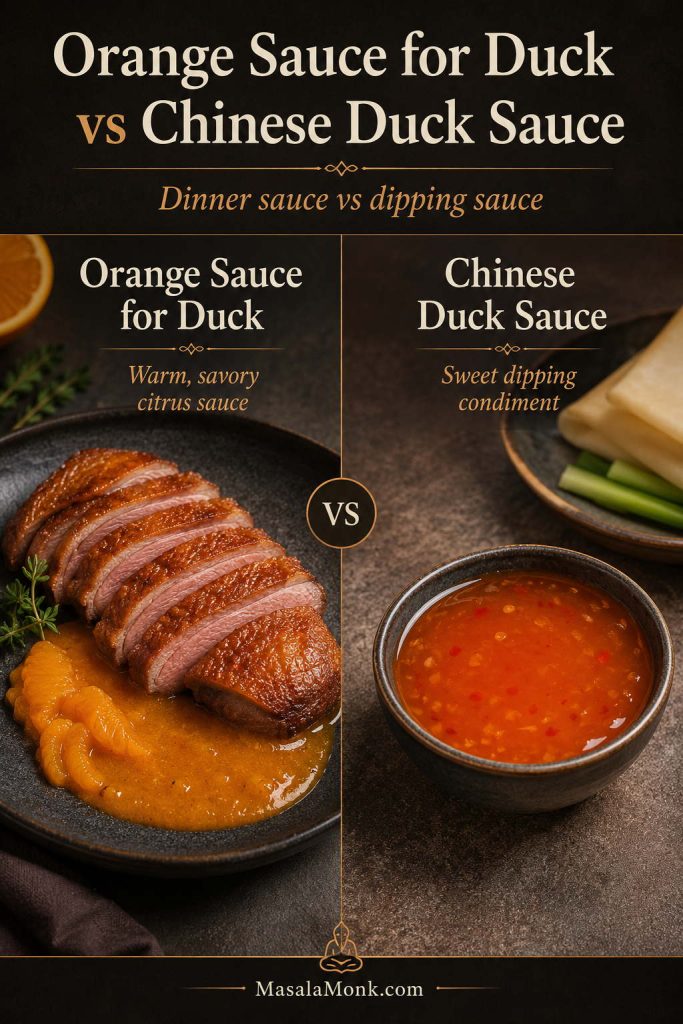
No. This is a warm savory citrus sauce for cooked duck breast, roast duck, or duck à l’orange-style dishes. Chinese-American duck sauce is usually a sweet condiment or dipping sauce.

Comparison of savory orange sauce for duck and Chinese duck sauce as a sweet dipping condiment
Orange sauce for duck is a warm savory citrus sauce for cooked duck. Chinese duck sauce is usually a sweet dipping condiment, so the two are not interchangeable.

How far ahead can I make it?

Make it 3 to 4 days ahead and refrigerate it. For the smoothest finish, reheat gently and whisk in the cold butter just before serving.

What duck dishes work with this citrus sauce?

Use it with pan-seared duck breast, roast duck, duck legs, duck à l’orange, leftover duck, or sliced duck served with potatoes and greens.

Should I pour it over crispy duck skin?

Use a light hand. Spoon the sauce under or around sliced duck breast so the skin stays crisp, then serve extra sauce on the side.

Back to Quick Answer