
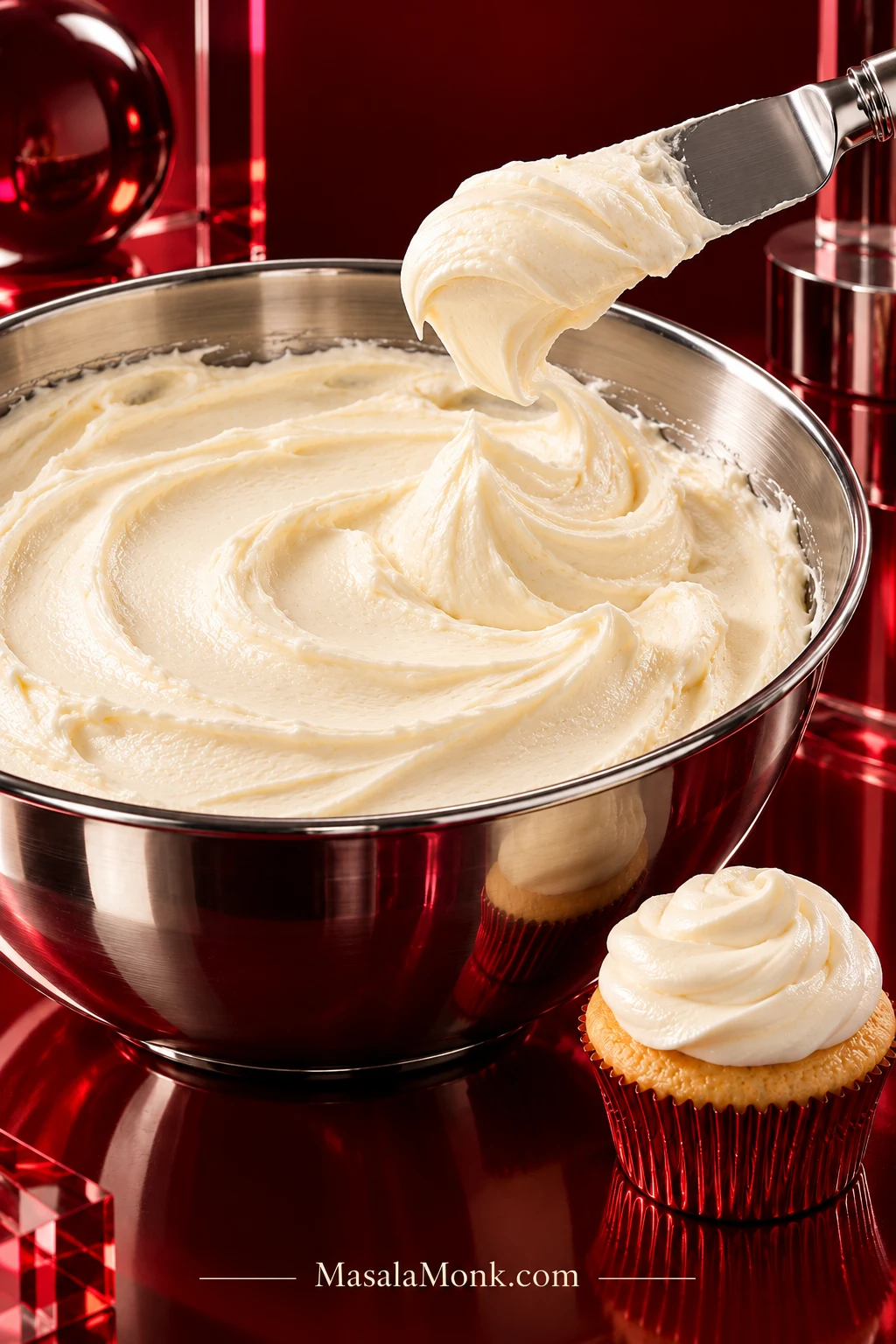
Cream cheese frosting has an annoying trade-off. Add enough powdered sugar to force it stiff and the cream-cheese tang starts disappearing. Use too little, or let the bowl get too warm, and the frosting can soften just when you need it to hold a cupcake swirl.
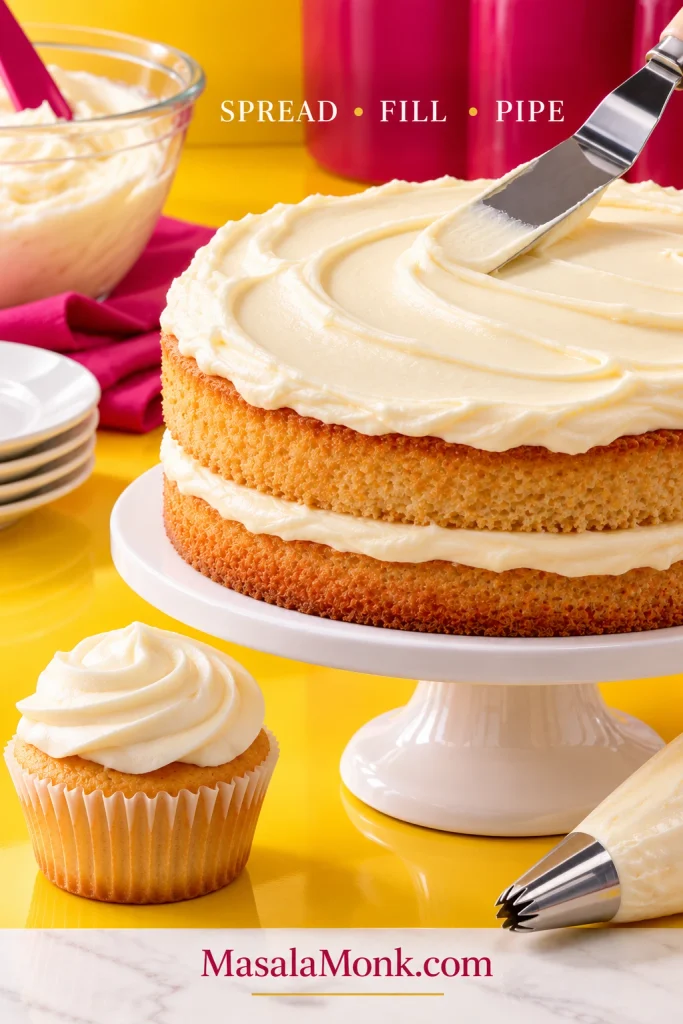
This cream cheese frosting recipe stays noticeably tangy without needing a huge amount of powdered sugar. It spreads easily across a cake, yet when kept cool it will also hold cupcake swirls, stars, soft borders and simple rosettes.
Done well, it should feel silky and creamy on the tongue, with the tang of cream cheese arriving before the sweetness and vanilla sitting quietly in the background.
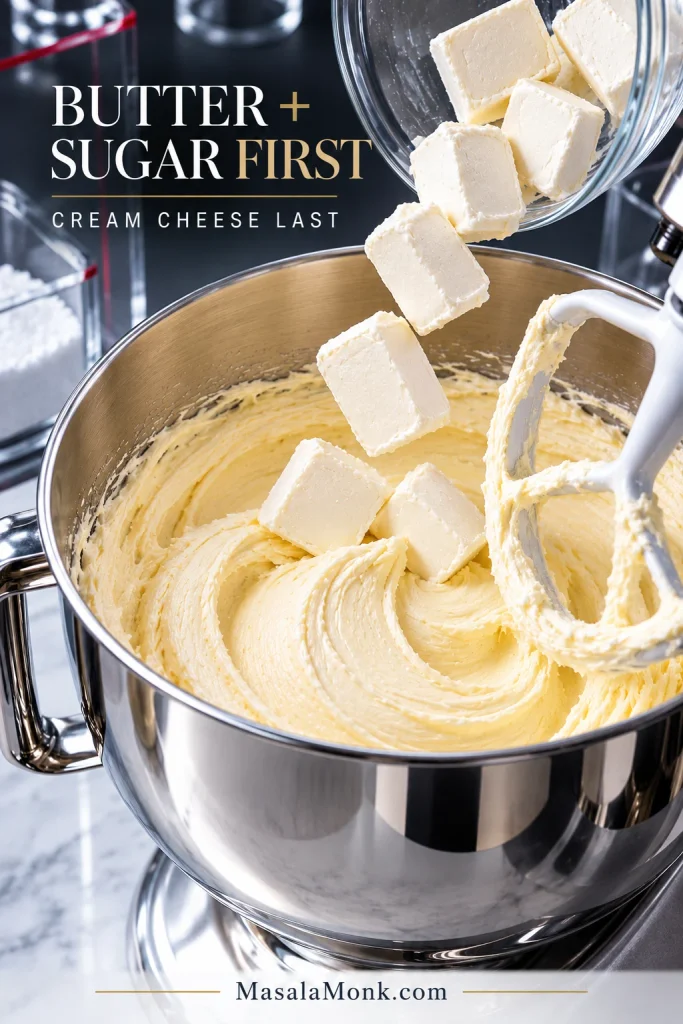
The recipe itself is simple. Most problems come from cream cheese that is too soft, ingredients getting too warm, or mixing too long. This method does most of the work before the cheese enters the bowl: butter and powdered sugar first; cream cheese last.
You may also see cream cheese frosting called cream cheese icing. Here, we are making the thicker style used for cakes, cupcakes and basic decorating.
Cream Cheese Frosting Recipe
Smooth, tangy cream cheese frosting with moderate sweetness and enough body for spreading, filling and simple piping.
Equipment
- Stand mixer with paddle attachment or electric hand mixer
- Mixing bowl, if using a hand mixer
- Flexible spatula
- Digital kitchen scale, recommended
- Fine-mesh sieve if the sugar is lumpy
Ingredients
- 4 oz / 113 g unsalted butter, cool-soft
- 2 cups / about 240 g powdered sugar (confectioners’ sugar / icing sugar), sifted if clumpy
- ⅛ teaspoon fine salt
- 1 teaspoon / 5 mL vanilla extract
- 8 oz / 226 g full-fat block-style cream cheese, firm but workable
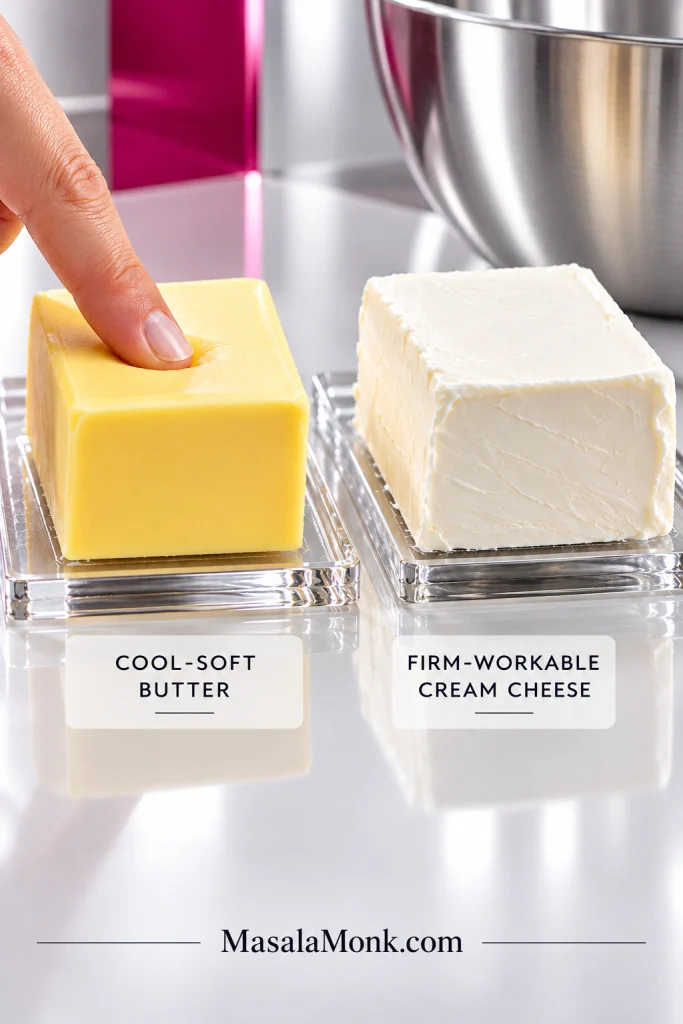
Check the ingredients before mixing: the butter should indent easily under a fingertip without looking oily. The cream cheese should give slightly when pressed but still keep its shape. If either looks shiny, greasy or floppy, refrigerate it first.
Instructions
- Smooth the butter. Beat the butter on medium speed until creamy with no firm pieces remaining, usually about 60–90 seconds. Scrape the sides and bottom of the bowl.
- Mix in the sugar and salt. Add the powdered sugar in two or three additions, mixing on low after each so it stays in the bowl. Sprinkle in the salt. Once incorporated, beat just until the mixture looks smooth and creamy, usually another 1–2 minutes. Scrape the bowl again.
- Add the vanilla. Mix just until evenly distributed. The butter-sugar base should now look thick and smooth.
- Add the cream cheese last. Cut the cream cheese into small chunks. Add it in two or three additions with the mixer on low to medium-low, letting each addition mostly disappear before adding the next. Once the final streaks are gone and the frosting is smooth, stop. Depending on your mixer, this stage may take only 30–60 seconds.
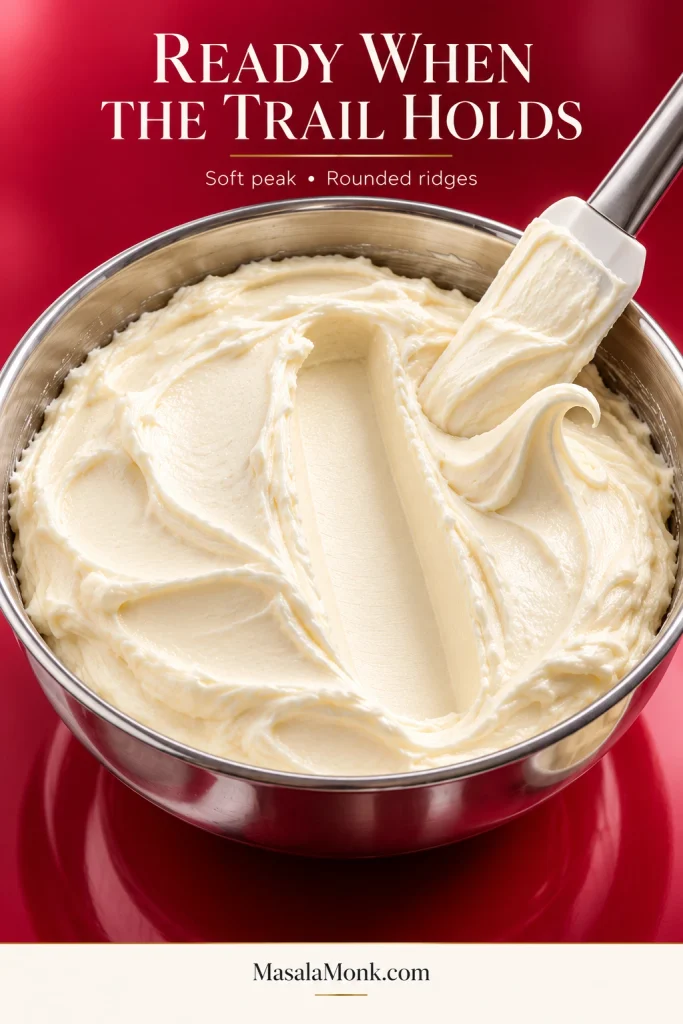
How to know it is ready: drag a spatula through the bowl. The trail should stay visible, and a lifted spoonful should make a soft peak that bends without flowing away. It should feel silky rather than powdery. If it is smooth but softer than you want, refrigerate it for 15–30 minutes and check again.
Recipe Notes
- Use full-fat block-style cream cheese when possible. Whipped, spreadable and reduced-fat cream cheese give a softer result.
- Skip milk and cream at first. Cream cheese already adds plenty of moisture.
- Once the cream cheese is smooth, you are done. Extra whipping can loosen the frosting and make the texture less predictable.
- Make sure cakes and cupcakes are completely cool. Even well-made frosting will soften against a warm cake.
- Using salted butter? Leave out the added salt at first. Taste the finished frosting before deciding whether it needs another small pinch.
- For coloring, concentrated gel or powdered food color is easier to control than liquid food coloring.
Research note: This recipe draws on established published cream cheese frosting methods and troubleshooting guidance, including the butter-and-sugar-first approach used here. MasalaMonk has not independently kitchen-tested this exact batch.
Read the Bowl: Spread, Pipe, Chill or Fix?
Cream cheese frosting is ready to pipe when a spatula trail stays visible and piped ridges hold their shape instead of slowly rounding off. Recipe times can only take you so far; the bowl gives you the answer.
| What the frosting does | What to do |
|---|---|
| Mounds softly and keeps a spatula trail | Spread it on cakes, cupcakes or loaf cakes. |
| Holds rounded ridges from a piping bag | Use it for swirls, stars, borders and simple rosettes. |
| Looks smooth but slowly levels itself | Refrigerate for 15–30 minutes and look again. |
| Flows or pours even after chilling | Check the cream cheese, any added liquid and how long it was mixed. |
| Feels very firm and drags across the cake | Let it soften slightly. If it still drags once workable, add milk or cream only ¼–½ teaspoon at a time. |
A little softness is not automatically a problem. For spreading over a sheet cake, you may already be exactly where you need to be. On warm Cinnamon Rolls, a softer cream cheese icing that melts into the spirals is desirable. Tall cupcake swirls need more structure.
More Help With Cream Cheese Frosting
If you already know what your bowl needs, jump straight to the part that will help.
Why the Cream Cheese Goes In Last
Adding the cream cheese last gives this frosting two advantages. The powdered sugar is already dispersed through the butter before it meets the wetter cream cheese, and the cream cheese needs very little mixer time once it goes into the bowl.
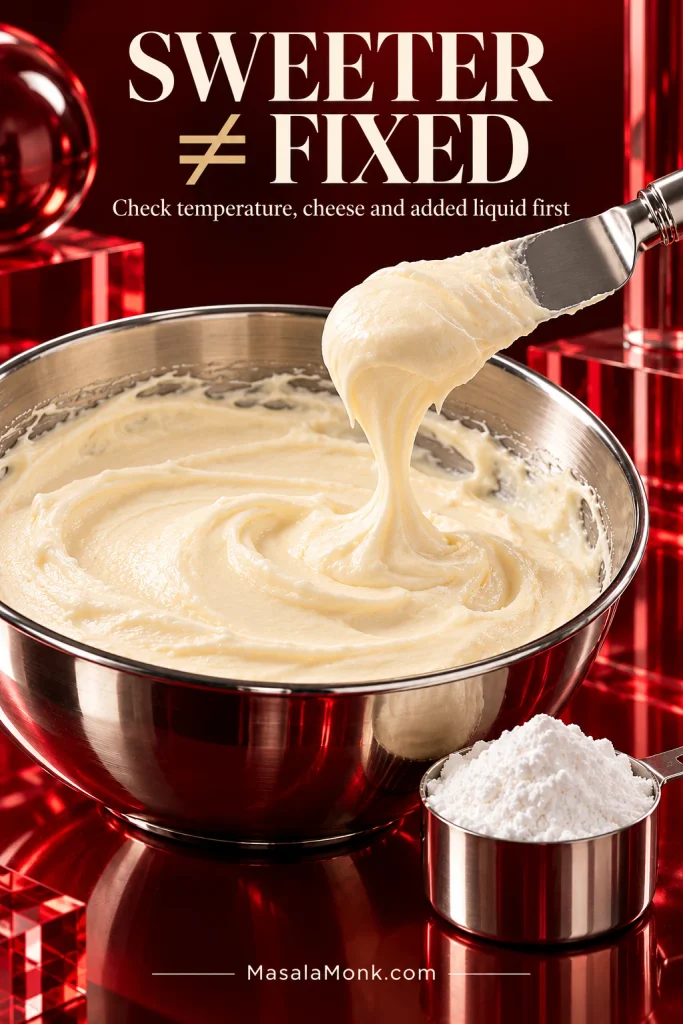
Powdered sugar helps give this frosting body, but adding more is not a dependable rescue once the bowl has already turned wet. It can leave you with a frosting that is much sweeter without solving the underlying problem.
The Bake School uses the same butter-and-sugar-first method to keep cream cheese frosting thicker without relying on a large amount of extra icing sugar.
Cream cheese also softens as the bowl warms and mixing continues. Add it in small batches, watch the texture, and stop once the final streaks disappear. The frosting should still mound softly rather than settling flat.
Which Cream Cheese Works Best?
Full-fat block-style cream cheese gives the most dependable result. In the U.S., that usually means the firm 8-ounce / 226-gram block rather than whipped or spreadable cream cheese from a tub. It does not have to be Philadelphia; a reliable full-fat block is what matters.
Whipped and spreadable cream cheeses are designed to stay softer, and reduced-fat versions are softer too. Fine on a bagel, less predictable once sugar and butter enter the picture.
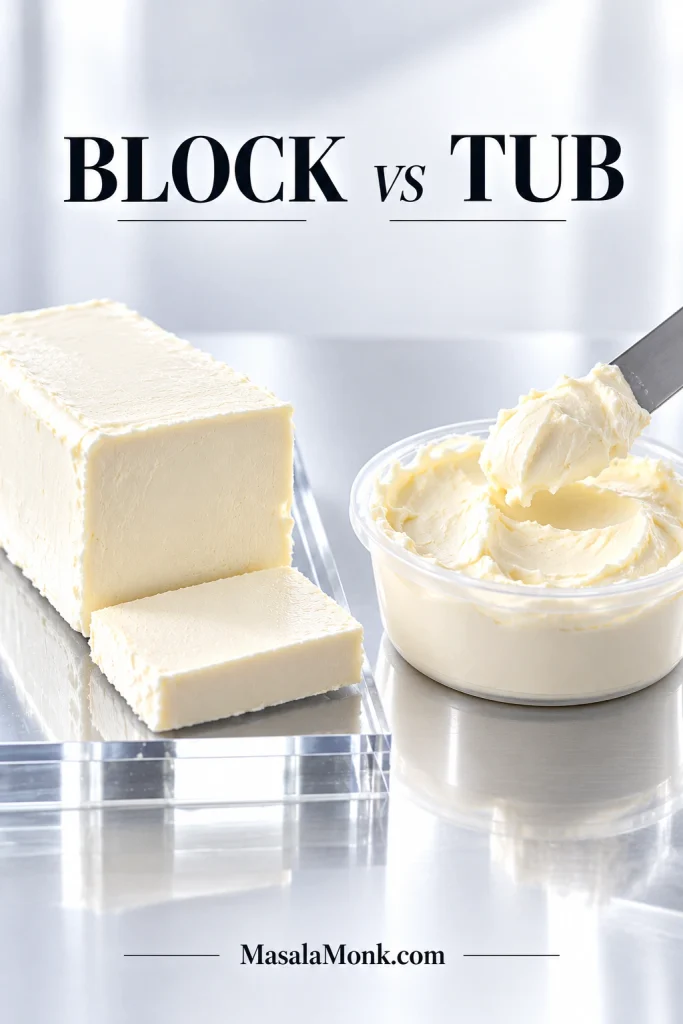
What if cream cheese blocks are not sold where you live?
If you are in the UK, Europe or another market where every American recipe seems to say “use a block,” you are not overlooking something obvious. Many full-fat cream cheeses sold in tubs are softer than the firm U.S.-style blocks these recipes were originally written around.
Use the firmest full-fat cream cheese you can find and keep it on the cool side. If liquid has visibly separated in the container, drain off that free liquid while the cheese is cold before mixing. It will still behave differently from a firm block, so give the finished frosting a chance to cool before assuming it needs more sugar.
How soft should the butter and cream cheese be?
“Room temperature” is not very helpful on its own. A kitchen at 65°F / 18°C and one at 82°F / 28°C produce very different butter.
If you are measuring, butter around 65–67°F / 18–19°C is a useful reference. The easier test is simply to press it: the butter should dent without looking shiny or slumped.
Keep the cream cheese cool and firm but workable. It should cut cleanly into chunks and give slightly when pressed. Refrigerator-hard cream cheese is more likely to leave little lumps, especially with a hand mixer.
Ready to make it? Jump back to the recipe card. Already dealing with a loose batch? Go to Fix the Frosting by What You See.
Keep the Cream Cheese Tang
The tang is part of the reason to make cream cheese frosting in the first place. Too much powdered sugar can quickly push that flavor into the background.
This recipe uses about 240 g / 2 cups powdered sugar for 226 g / 8 oz cream cheese. At that ratio, the cream-cheese flavor stays clear while the frosting still has enough body for spreading and basic piping.
A little salt makes the cream-cheese tang clearer too. That balance works especially well on rich cakes. In Hummingbird Cake, the tang keeps the banana-and-pineapple crumb from feeling overly sweet.
With this formula, reducing the sugar further gives you a softer frosting. If very low sweetness is the goal, use a version designed to get its body another way.
How Much Frosting Do You Need?
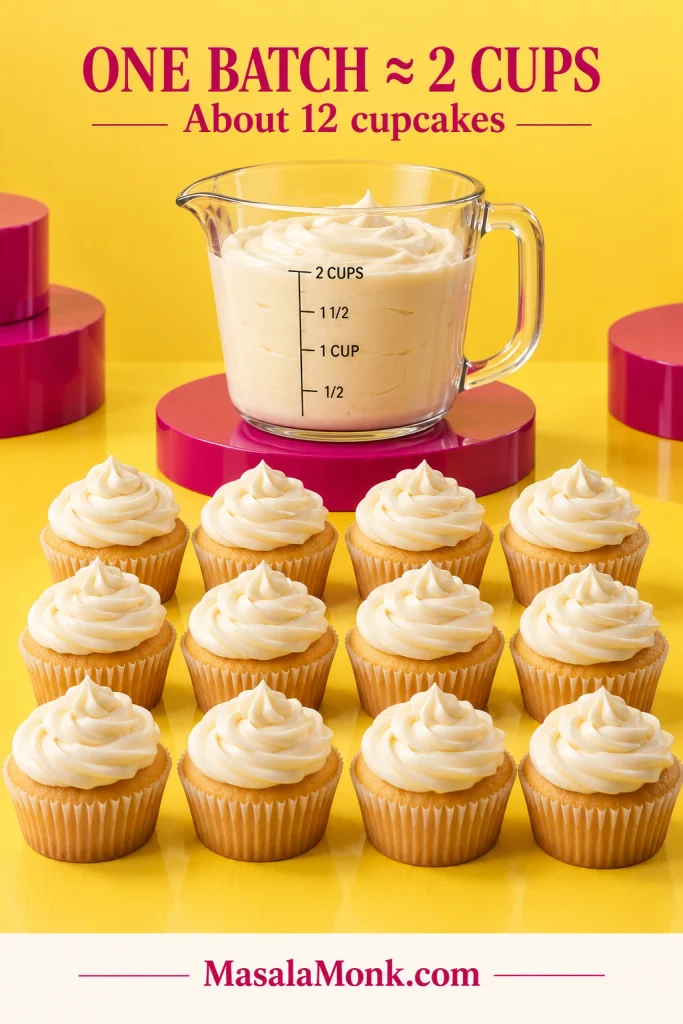
This recipe makes about 2 cups, with some variation depending on how much air is incorporated. Coverage changes with piping style and frosting thickness, so use the table as a planning guide rather than an exact promise.
| What you are frosting | Amount to plan for |
|---|---|
| 12 cupcakes | About 1½–2 cups for moderate to generous swirls. One batch should be enough. |
| 18–24 cupcakes | About 2½–3 cups for moderate frosting; roughly 1½ batches. |
| 9 × 13-inch cake | About 2½–3 cups for a comfortable top layer; roughly 1½ batches. |
| Two 8- or 9-inch layers | About 3½–4 cups for filling and exterior frosting; roughly 2 batches. |
| Three-layer cake | About 5–5½ cups depending on filling and decoration; roughly 2½–3 batches. |
A two-layer Carrot Cake can easily use close to two batches once you account for the filling, sides and top, plus enough frosting to finish the cake without scraping the last spoonful across bare spots.
Using Cream Cheese Frosting Between Cake Layers
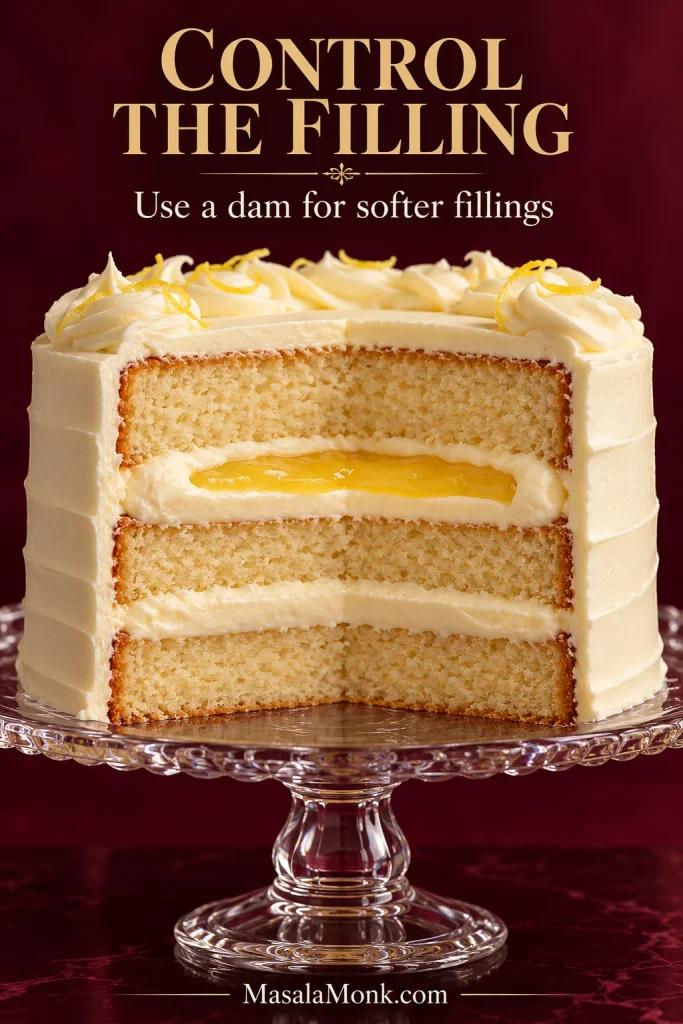
If you’re adding something softer, such as Lemon Curd, pipe a frosting border around the edge to hold it in place. Slightly chilled layers are easier to fill, stack and coat cleanly too.
Have the quantity sorted? Return to the recipe card to make the batch.
Fix the Frosting by What You See
Start with the symptom instead of reaching for more sugar. The texture tells you whether the frosting needs cooling, a little softening, a moisture check or no formula change at all.
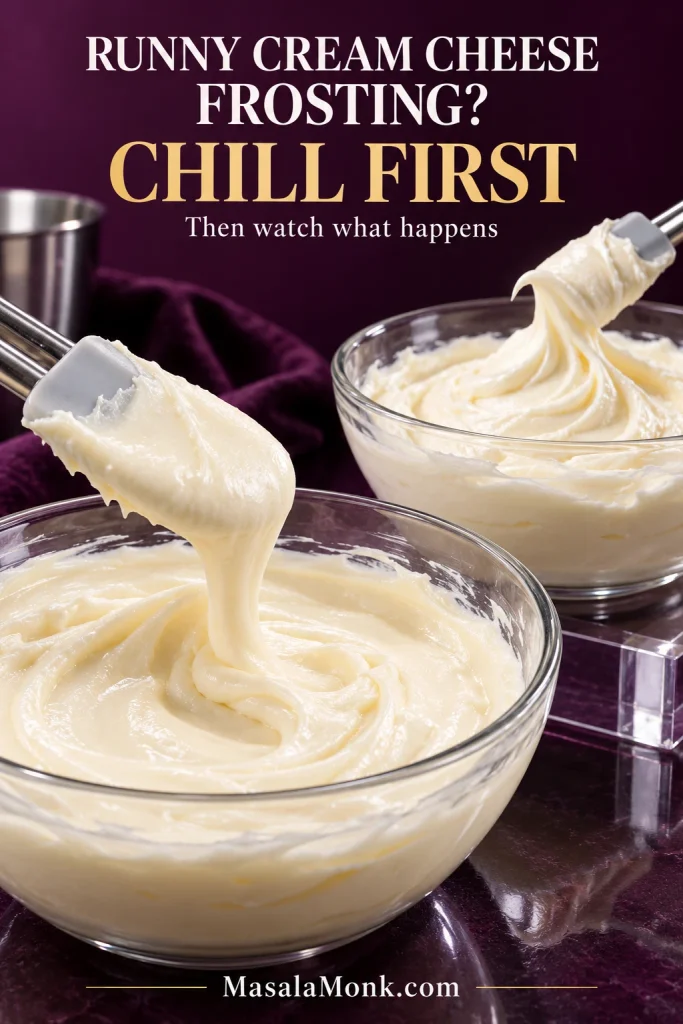
Runny Cream Cheese Frosting: Chill First
Runny cream cheese frosting usually comes from very soft or spreadable cream cheese, too much warmth, added liquid or mixing for too long. Stop mixing and chill the bowl first; then see what problem is actually left.
| What you see | What to try first |
|---|---|
| Runny almost immediately | Check for spreadable cream cheese, warm ingredients or extra liquid. Refrigerate before changing anything else. |
| Gets thinner while you mix | Stop mixing and cool the bowl. |
| Too sweet but still loose | Stop adding sugar. Check the cheese, temperature and any added liquid. |
| Firm in the fridge, soft again within minutes | Cold may be masking excess moisture or a very warm room. |
| Hard pale lumps | Let the cold dairy soften slightly, then mix gently. |
| Curdled or cottage-cheese look | Temperature mismatch or prolonged mixing are common causes. Feel the bowl before deciding whether to warm or chill it. |
| Powdery or gritty | Check the amount and condition of the powdered sugar. |
| Very stiff after softening slightly | Add milk or cream only ¼–½ teaspoon at a time. |
| Slides out between cake layers | Use less filling and let the frosting firm up before stacking. |
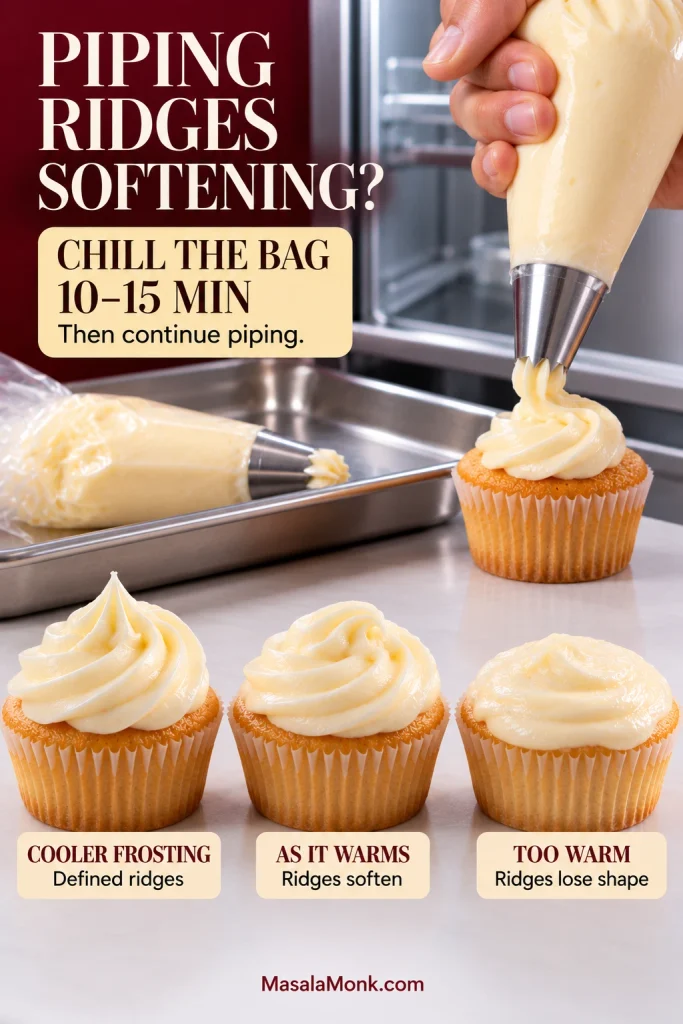
| Piped ridges soften in the bag | Refrigerate the filled bag for 10–15 minutes before continuing. |
Is It Warm or Actually Too Wet?
The two problems people most often confuse are a temperature-softened frosting and a genuinely wet one. Frosting softened mainly by warmth regains useful structure after chilling. By contrast, a wetter batch may firm while cold, then slump quickly again as it warms.
Too sweet but still runny
If you have already added more sugar and the frosting is somehow sweeter but no more useful, leave the bag of sugar alone.
Did milk, cream, lemon juice or liquid food coloring go into the bowl? Was the cheese unusually soft? Did the frosting look good at first and loosen the longer you mixed it? Those clues tell you more than another scoop of powdered sugar.
Lumpy, curdled or gritty?
Hard pale flecks and a glossy, loosening bowl are opposite problems, so feel the bowl before correcting it. Firm dairy flecks point to ingredients that were too cold; give them time to soften, then mix briefly on low. A curdled or cottage-cheese texture often points to a temperature problem, though prolonged mixing can also contribute to separation. Warm a cold bowl slightly, but chill one that feels soft or greasy.
Tiny dry specks are more likely clumped powdered sugar. An overall powdery mouthfeel points back to the sugar too—either too much, or sugar that has not incorporated cleanly.
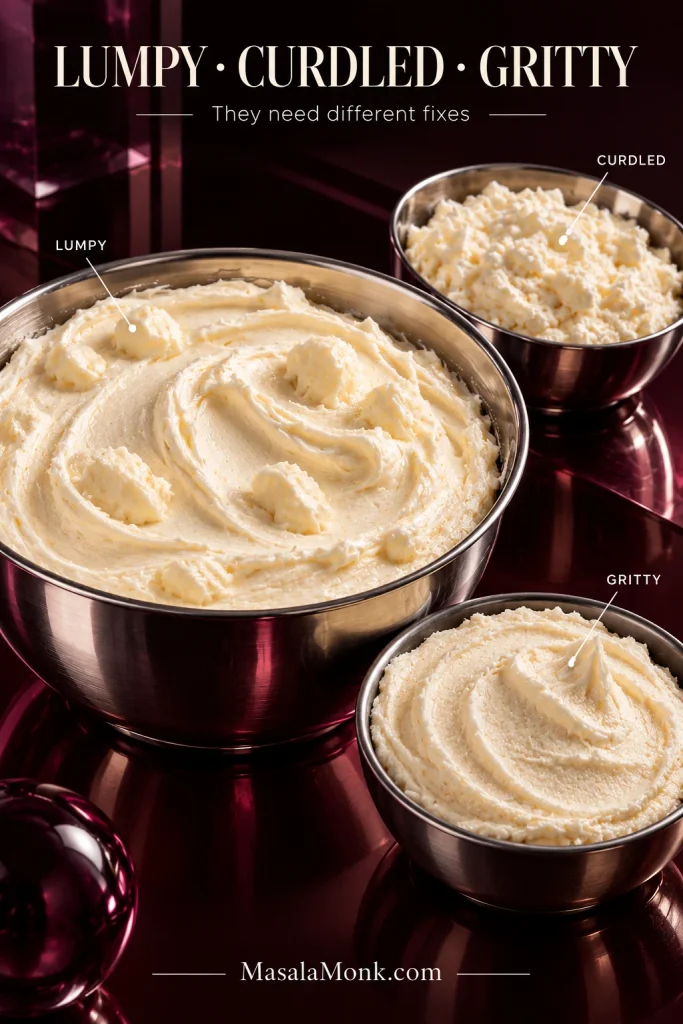
Quick way to remember it: a soupy bowl usually needs cooling first; hard dairy lumps usually need a little time to soften.
Frosting squeezes out between cake layers
Use less filling than you think you need, particularly on a heavy or tall cake. Red Velvet Cake is easier to finish cleanly when the cream cheese frosting between the layers stays controlled rather than bulging toward the edge.
Texture fixed? Continue to flavor variations, skip ahead to storage and serving, or go back to the top.
Flavor It Without Making It Runny
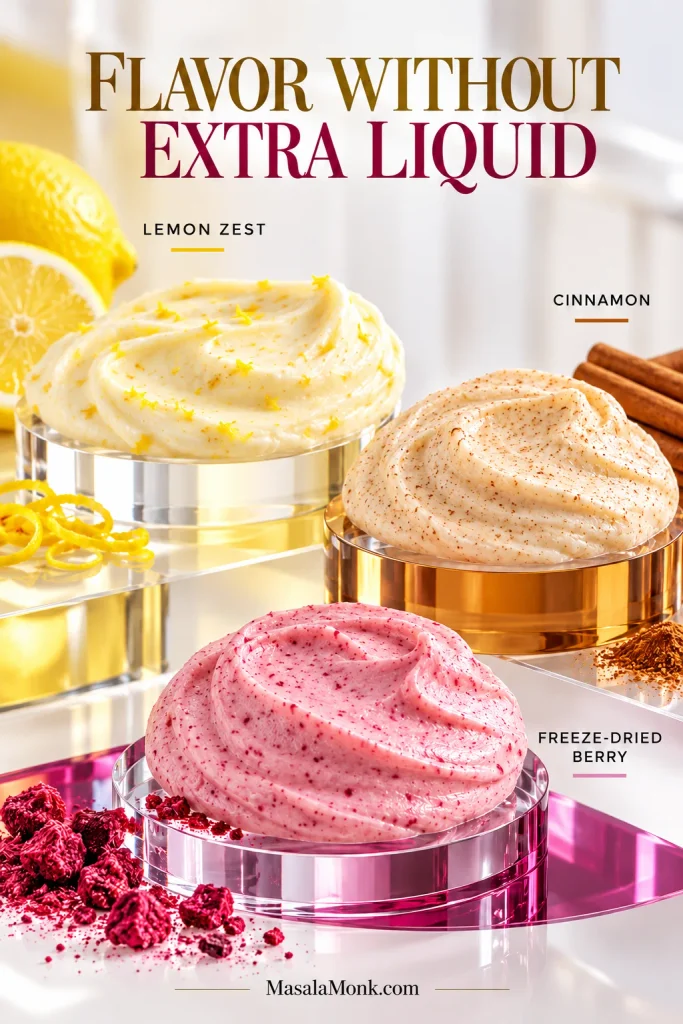
Chocolate, citrus, spices and fruit can all work, but the easiest additions are the ones that bring plenty of flavor without much extra liquid. The amounts below are sensible starting points rather than rigid limits, so taste before adding more.
Chocolate: use our Chocolate Cream Cheese Frosting Recipe if chocolate is the goal. Cocoa changes the balance enough that it makes sense to use a recipe built for it.
Lemon: start with about 1 teaspoon finely grated lemon zest, then taste. Zest gives plenty of aroma without thinning the frosting; a generous pour of lemon juice changes both the acidity and consistency.
Cinnamon and warm spices: start with about ½ teaspoon ground cinnamon, taste, and add more if you want a stronger spice note. Dry spices are easy to work with, and that warm-spice-and-tang combination is exactly why cream cheese frosting works so well on Spice Cake.
Fruit: start with about 2 tablespoons finely ground freeze-dried fruit powder, then build the flavor from there. It is much easier to control than a generous pour of puree, while fresh fruit and juice can soften the frosting quickly.
Can You Leave Out Butter or Powdered Sugar?
Butter and powdered sugar both help build the texture of this frosting, so neither is a simple one-for-one swap. Versions made without butter or powdered sugar need their own ratios and methods.
Storage, Serving and Transport
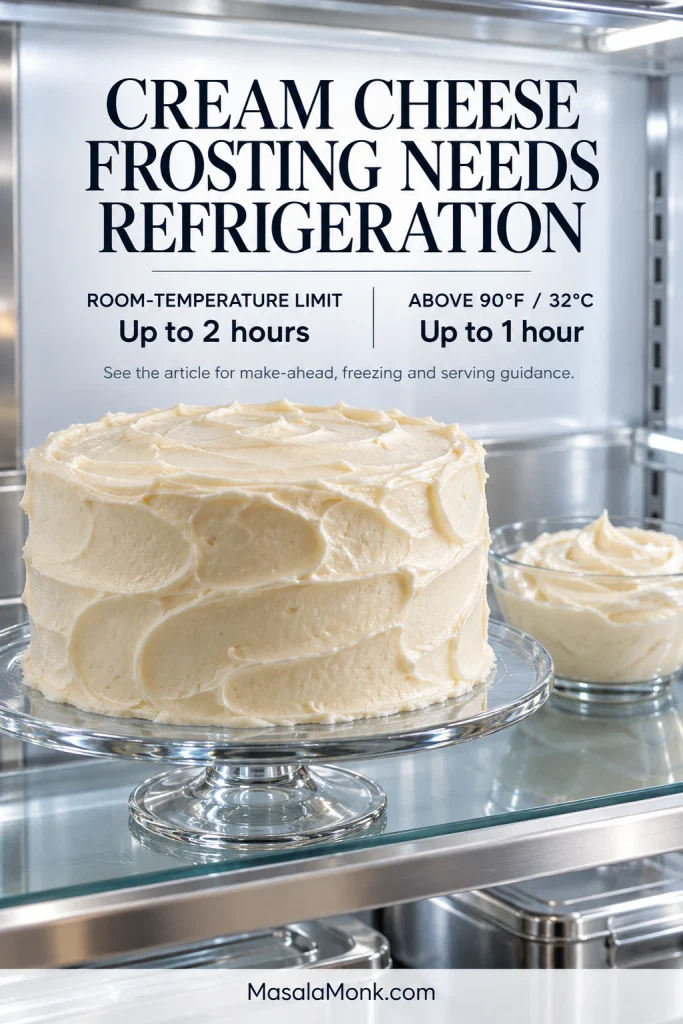
Yes, cream cheese frosting needs to be refrigerated. It contains fresh dairy, so keep the frosting and finished desserts cold when they are not being served.
Make it ahead
For best quality, use homemade cream cheese frosting within about 2–3 days and keep it covered in the refrigerator. It becomes much firmer as it gets cold, but it does not set hard; it softens again as it warms.
Before decorating, let it soften only until workable, then stir or mix on low. You only need to bring back the creamy, spreadable texture.
Serving safely
Follow the USDA two-hour rule for perishable foods: do not leave cream-cheese-frosted desserts unrefrigerated for more than 2 hours, or more than 1 hour when the temperature is above 90°F / 32°C. Refrigerate leftovers promptly.
Freezing
Cream cheese frosting can be frozen in an airtight container for about 1 month. Thaw it overnight in the refrigerator, then let it soften just enough to stir or mix gently. It may be a little less silky after freezing, so refrigeration is the better option when appearance matters most.
Warm kitchens and transport
In a warm room, work in shorter sessions. Frosting can look perfect in the bowl and start losing definition halfway through a piping bag because your hands are warming it. If the ridges begin to soften, refrigerate the filled bag for 10–15 minutes before continuing.
For transport, chill the finished cake or cupcakes thoroughly first. Keep the vehicle cool, set the box on a level non-slip surface, and avoid leaving cream-cheese-frosted desserts in a parked car or direct sun.
Cream cheese frosting is still a soft dairy frosting. If a dessert has to sit outdoors in serious heat, choose something better suited to those conditions.
When You Need a Firmer Frosting
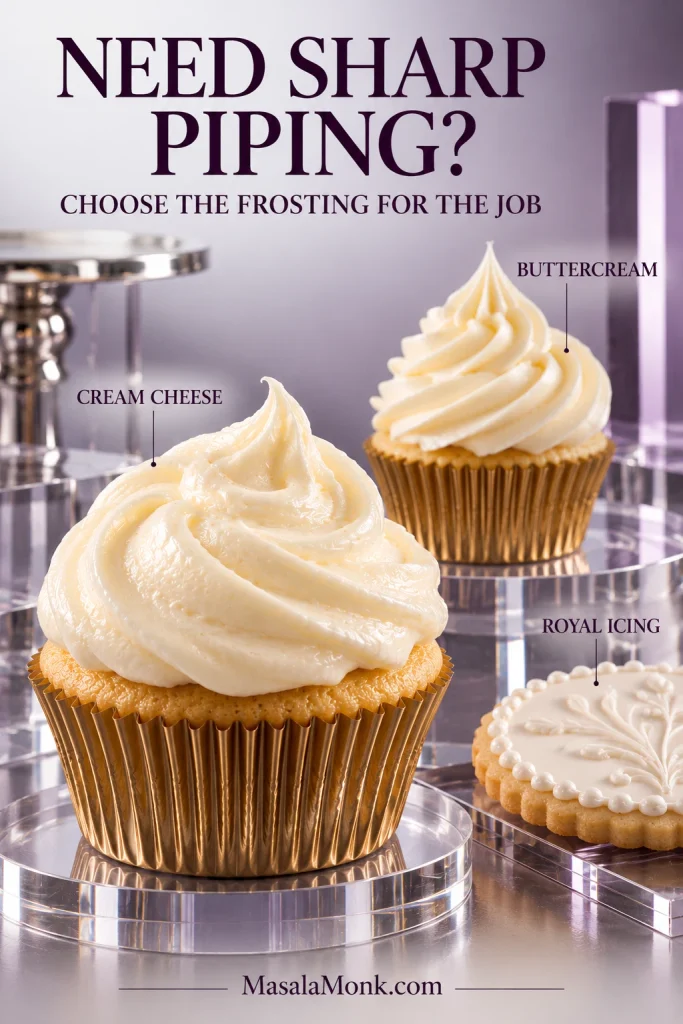
For very sharp piping, you usually need a frosting formulated for that job. Some cream-cheese versions use more butter or another stabilizer, but those formulas behave differently from this simple one.
If sharp cake edges, taller swirls or something that will hold up longer in a warm room matter more than cream-cheese tang, our Buttercream Frosting Recipe is a more forgiving choice.
For fine cookie detail, switch to a frosting built for it. Royal Icing pipes clean outlines, floods smooth surfaces and dries firm.
If U.S.-style cream cheese blocks are not sold where you live, tell us what brand or style you used and how it behaved. That detail can help the next reader staring at a too-soft bowl.








