
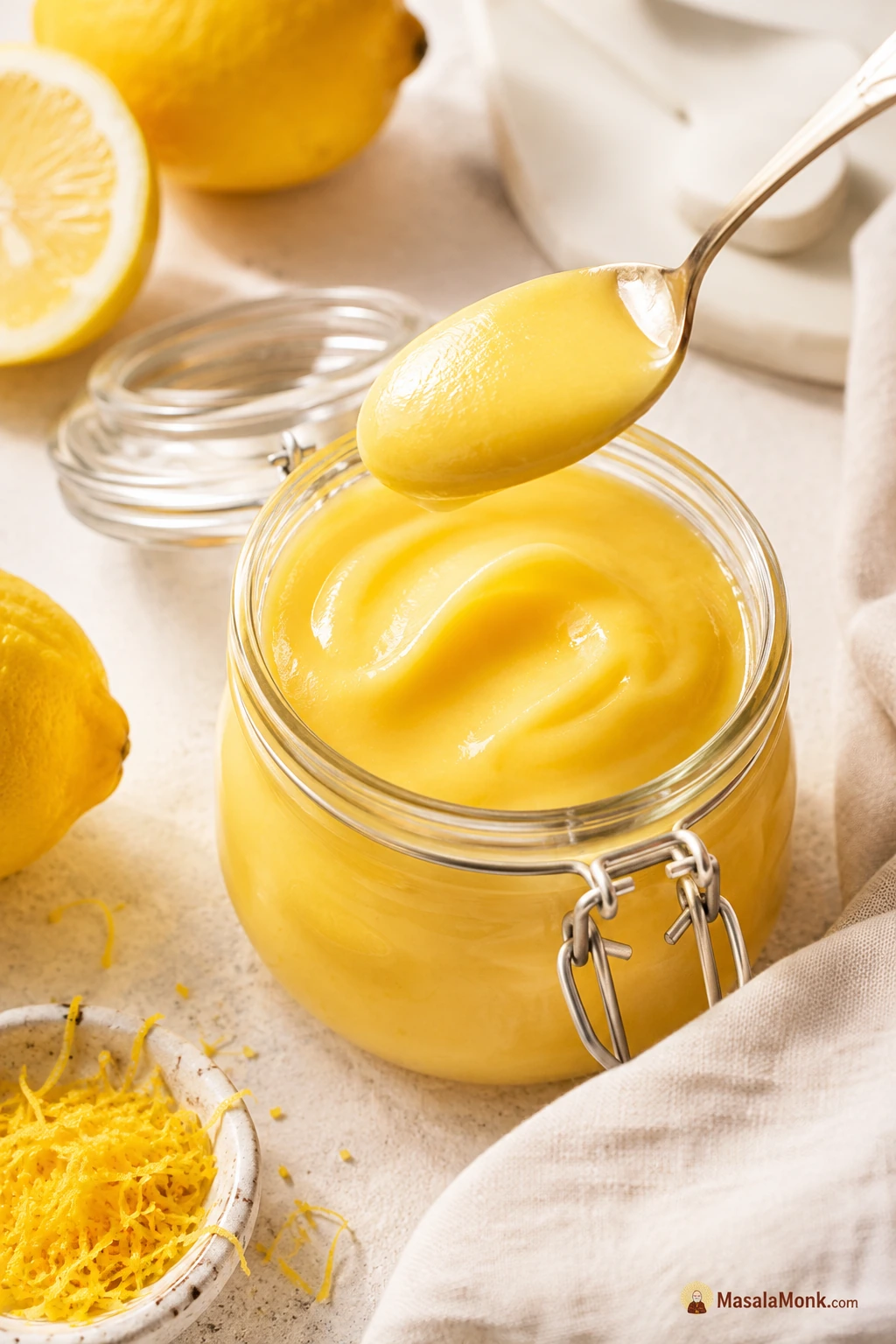
Lemon curd looks fancy, but the whole trick is gentle heat and knowing when to stop. When it works, it is glossy, buttery, tart-sweet, and bright enough to make cakes, tarts, toast, cheesecake, cookies, yogurt, pancakes, scones, and quick desserts feel finished.
It can feel risky because the same few ingredients can turn silky or stressful depending on heat and timing. This recipe is built around the real questions that come up at the stove: why is it runny, will the eggs scramble, is it thick enough, and can it actually work as a cake filling or tart filling?
The goal is not just to make lemon curd. It is to know whether your jar is soft enough for scones, thick enough for tarts, and stable enough for the cake, cookie, or dessert you actually want to make.
Quick Answer: How to Make Lemon Curd
Lemon curd is a smooth lemon custard-style spread made with lemon juice, lemon zest, sugar, eggs, and butter. Whisk everything together before heating, cook gently over low to medium-low heat until it coats the back of a spoon or reaches about 170°F / 77°C, then strain and chill until thick and glossy.
For tarts, mini tarts, cookies, or simple cake filling, cook a little closer to 175°F / 79–80°C without letting the mixture boil. It always looks softer while warm, so judge the final texture after it has cooled properly.
The flavor lands bright and lemony, but not harsh: tart enough to cut through cream and cake, smooth enough to spoon over scones or pancakes.
Recipe at a Glance
| Detail | Best answer |
|---|---|
| Yield | About 1 1/4 cups / 20 tablespoons |
| Main method | Stovetop, low heat, constant whisking |
| Best temperature | About 170°F / 77°C |
| Thicker target | 175°F / 79–80°C, without boiling |
| Active time | About 20 minutes |
| Chill time | 2 hours minimum |
| Make-ahead timing | Make 1 day ahead for cakes, tarts, cookies, and neat dessert layers |
| Lemons needed | Usually 2 to 3 medium lemons for 1/2 cup / 120 ml juice |
| Egg ratio | 1 large whole egg + 3 large egg yolks |
| Finished texture | Glossy, spoon-coating, thick after chilling |
Recipe Card
Recipe type: Dessert spread, filling, and sauce
Yield: About 1 1/4 cups / 20 tablespoons lemon curd
Prep time: 10 minutes
Cook time: 8 to 10 minutes
Chill time: 2 hours minimum
Total time: About 2 hours 20 minutes, including chilling
Best for: toast, scones, tarts, mini tarts, cake filling, cupcakes, cookies, cheesecake, yogurt, pancakes, crepes, pavlova, ice cream, and quick desserts
Ingredients
| Ingredient | Amount |
|---|---|
| Fresh lemon juice | 1/2 cup / 120 ml / 4 fl oz |
| Finely grated lemon zest | 1 tablespoon, from about 2 lemons |
| Granulated sugar | 1/2 cup / 100 g for tart curd, or 2/3 cup / 135 g for sweeter curd |
| Large whole egg | 1 |
| Large egg yolks | 3 |
| Unsalted butter, cold and cubed | 6 tablespoons / 85 g / 3 oz |
| Fine salt | 1/8 teaspoon |
Lemon note: You will usually need 2 to 3 medium lemons for 1/2 cup / 120 ml juice. Zest the lemons before juicing them.
Sugar note: Choose the lower amount if the curd will be paired with frosting, cream, meringue, or sweet cake. Go higher if you want a softer, sweeter spread for toast, scones, or pancakes.
Method
- Zest the lemons first, then juice them. Measure out 1/2 cup / 120 ml lemon juice.
- Add the zest and sugar to a small heavy-bottom saucepan. Rub them together with your fingertips for about 30 seconds, until the sugar smells fragrant and lemony.
- Whisk in the whole egg, egg yolks, lemon juice, and salt before turning on the heat.
- Place the pan over low to medium-low heat. Cook while whisking constantly, scraping the base and corners of the pan.
- Continue for 8 to 10 minutes, until the mixture coats the back of a spoon. Aim for about 170°F / 77°C, or closer to 175°F / 79–80°C for a thicker curd. Do not boil.
- Remove from the heat. Whisk in the cold cubed butter, a few pieces at a time, until glossy and smooth.
- Strain through a fine mesh sieve into a heatproof bowl or jar.
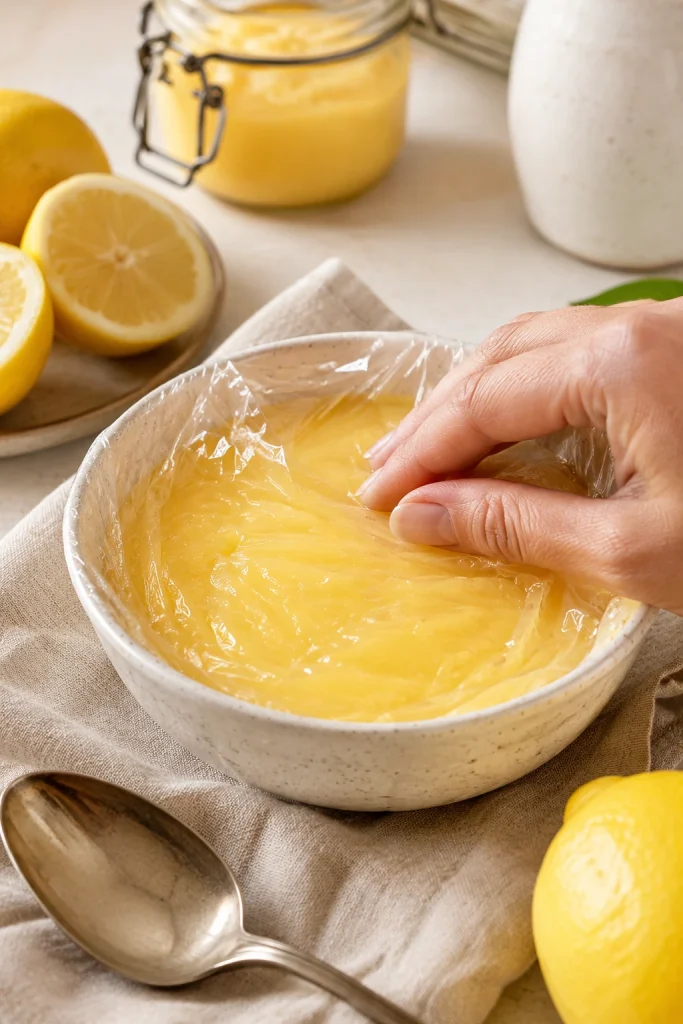
- Press parchment or plastic wrap directly onto the surface. Cool slightly, then refrigerate for at least 2 hours, or until thick.
Recipe note: The pan gets the curd most of the way there, but the refrigerator finishes the texture. Judge the final thickness after chilling.
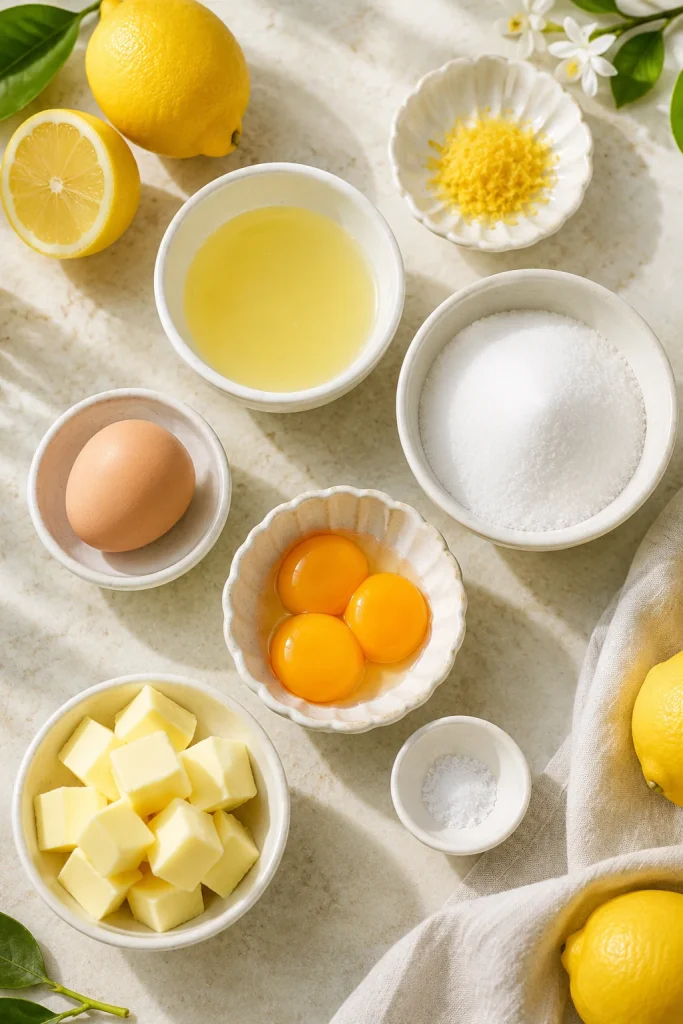
Visual cue: A balanced batch starts with fresh lemon juice, fragrant zest, rich yolks, butter, sugar, and salt.
Cooking now? Check doneness cues · choose the right texture · fix common problems
After chilling, the finished curd mounds softly on a spoon, shines on top, and tastes bright first, then buttery and smooth at the end.
Most Useful Sections
Make It Right
Why This Works
This recipe uses one whole egg plus three yolks. The whole egg gives structure, while the extra yolks make the texture rich, smooth, and thick enough for more than just spreading on toast.
Fresh lemon juice gives sharp brightness, but zest gives the deeper citrus aroma that makes the flavor pop. Rubbing zest into sugar releases lemon oils before the mixture reaches the stove.
The 170°F / 77°C target gives the eggs enough heat to thicken the curd without pushing the mixture into boiling or scrambling. Cold butter added off the heat makes it glossy, and straining catches zest, tiny egg bits, or any uneven texture so the finished batch tastes silky.
Ingredients and Why They Matter
Fresh Lemon Juice
This is one of those recipes where fresh lemons really earn their place. Bottled lemon juice can taste flat, bitter, or harsh because there is nowhere for that flavor to hide.
Measure the juice after squeezing. Lemons vary in size and sharpness, and too much juice can make the batch loose or overly sour.
Lemon Zest
The zest is where the curd gets its real lemon perfume. Grate only the yellow outer skin and avoid the white pith underneath, which can taste bitter.
Always zest before juicing. Then rub the zest into the sugar so the fragrant oils spread through the whole batch.
Sugar
Sugar balances the acidity of the lemons and helps the eggs cook into a smooth custard-like texture. Choose the lower amount for a sharper curd and the higher amount for a sweeter dessert-style spread.
Whole Egg and Egg Yolks
Eggs thicken the mixture. The whole egg gives structure, while the yolks give richness, color, and a smoother set. Large eggs work best here; smaller eggs can make the finished batch set a little softer.
Butter
Butter turns the sharp lemon custard into something glossy, rounded, and spoonable. Add it cold and cubed after the pan comes off the heat so it melts in smoothly.
Salt
You should not notice the salt; it simply makes the lemon taste cleaner and more complete.
Whole Eggs vs Yolks in Lemon Curd
Different recipes use different egg ratios. The right choice depends on whether you want a soft spread, a rich tart filling, or an all-purpose curd that can do both.
| Egg choice | Texture | Best for |
|---|---|---|
| Whole eggs only | Lighter, softer, slightly looser | Toast, scones, yogurt, pancakes |
| Egg yolks only | Richer, thicker, more custardy | Tarts, fillings, layered desserts |
| Whole egg + yolks | Balanced, silky, stable | Best all-purpose lemon curd |
The whole egg plus yolk combination gives this recipe its useful texture: rich enough for desserts, but still soft enough to spread after chilling.
Helpful equipment: A fine zester, citrus juicer, heavy-bottom saucepan, whisk, silicone spatula, fine mesh sieve, and heatproof bowl or jar make the process easier. An instant-read thermometer is optional, but helpful for precise doneness.
Choose a nonreactive pan, such as stainless steel or enamel-coated cookware. Avoid uncoated aluminum or copper, which can react with acidic lemon juice and affect the flavor.
Stovetop vs Double Boiler
A double boiler is the gentlest method because the bowl is heated by steam instead of direct contact with the burner. It is helpful if you are nervous about scrambling the eggs, but it is slower.
A heavy-bottom saucepan is faster and works well when the heat stays low and the whisk keeps moving. This recipe uses the saucepan method because it is practical, quick, and reliable once you know the doneness cues.
| Method | Best for | Watch out for |
|---|---|---|
| Heavy-bottom saucepan | Fast, everyday lemon curd | Needs low heat and constant whisking |
| Double boiler | Beginners, nervous cooks, gentle cooking | Takes longer to thicken |
| Microwave | Small quick batches | Uneven heat; higher risk of curdling if rushed |
How to Make Lemon Curd
1. Zest and Juice the Lemons
Zest the lemons before cutting them. Once lemons are juiced, they become harder to hold and zest cleanly. Use a fine grater and stop as soon as you reach the white pith.
After juicing, measure out 1/2 cup / 120 ml juice. Measuring matters because extra juice can make the curd too loose or too sharp.
2. Rub the Zest Into the Sugar
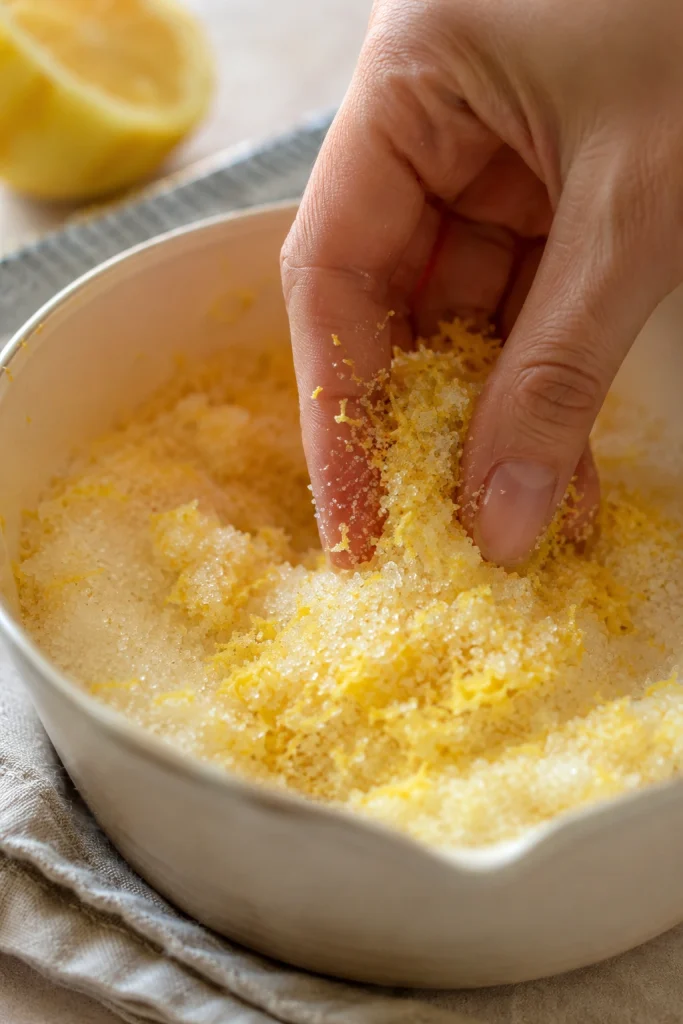
Add the zest and sugar to the saucepan. Use your fingertips to rub them together until the sugar smells strongly of lemon. This takes less than a minute and makes the final flavor brighter.
Visual cue: Rub the zest into the sugar before heating so the citrus oils flavor the whole batch.
3. Whisk Before Heating
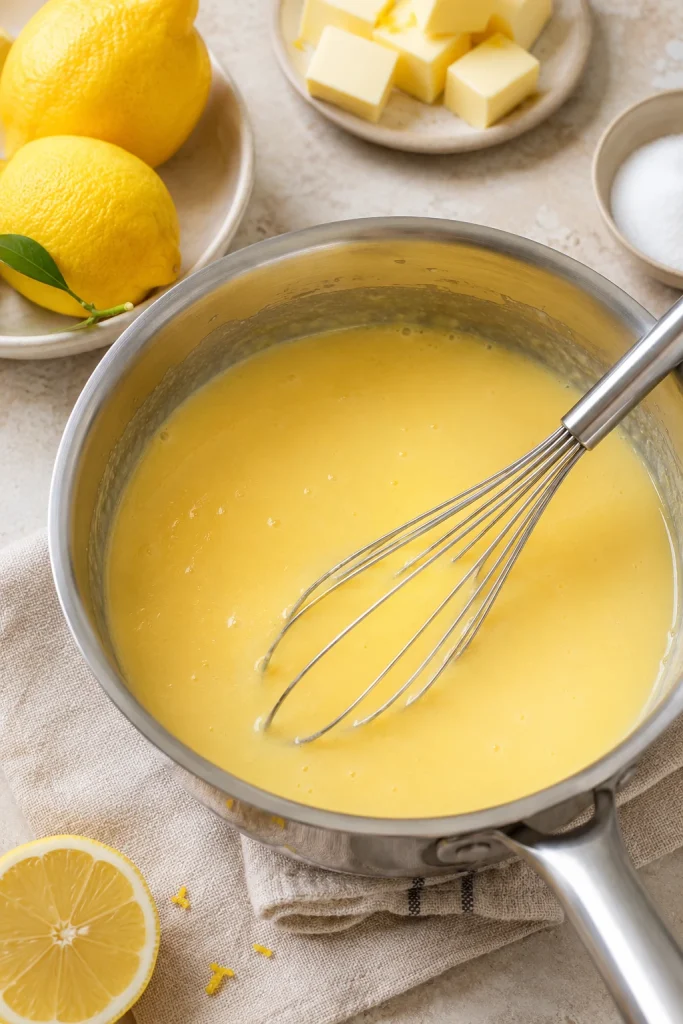
Add the whole egg, egg yolks, lemon juice, and salt. Mix until smooth before the pan goes on the stove. Starting with an even mixture helps the eggs cook evenly.
Visual cue: Whisk the mixture smooth before it goes on the stove.
4. Cook Low and Slow
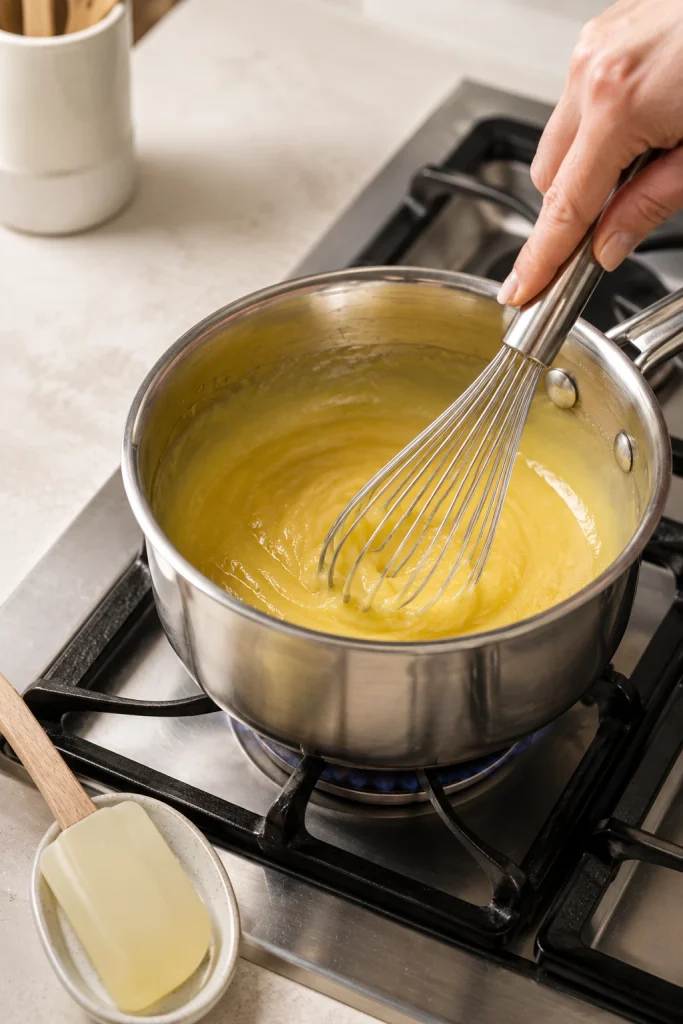
Place the pan over low to medium-low heat. Whisk constantly, making sure to reach the edges and bottom of the pan. At first, the mixture will look thin and loose.
Visual cue: The pan should look calm, not boiling; steady whisking is what thickens the curd safely.
Do not worry if it feels like nothing is happening for the first few minutes. That is normal. The change usually comes near the end, when the mixture turns glossier, feels heavier on the whisk, and starts leaving soft trails.
Visual cue: Watch the curd turn from loose and thin to glossy with soft whisk trails.
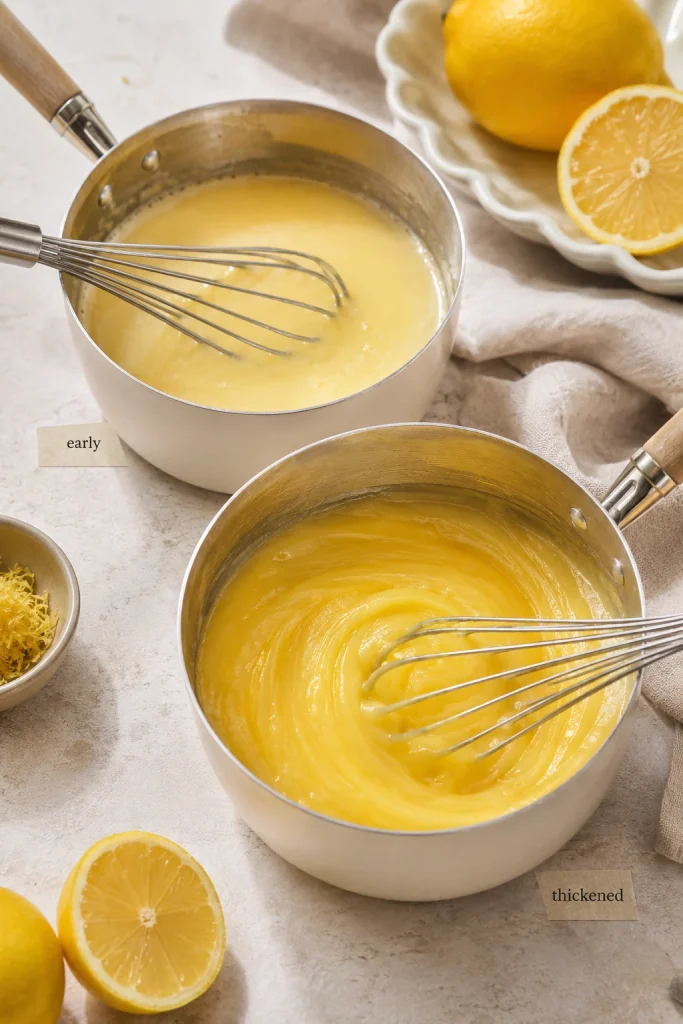
This is the moment to slow down, not turn up the heat. If the curd looks almost right but not quite there, give it another minute over gentle heat.
5. Stop at the Right Texture
The curd is ready when it coats the back of a spoon and holds a clean line when you run a finger through it. If you are using a thermometer, aim for about 170°F / 77°C.
What the spoon test should show
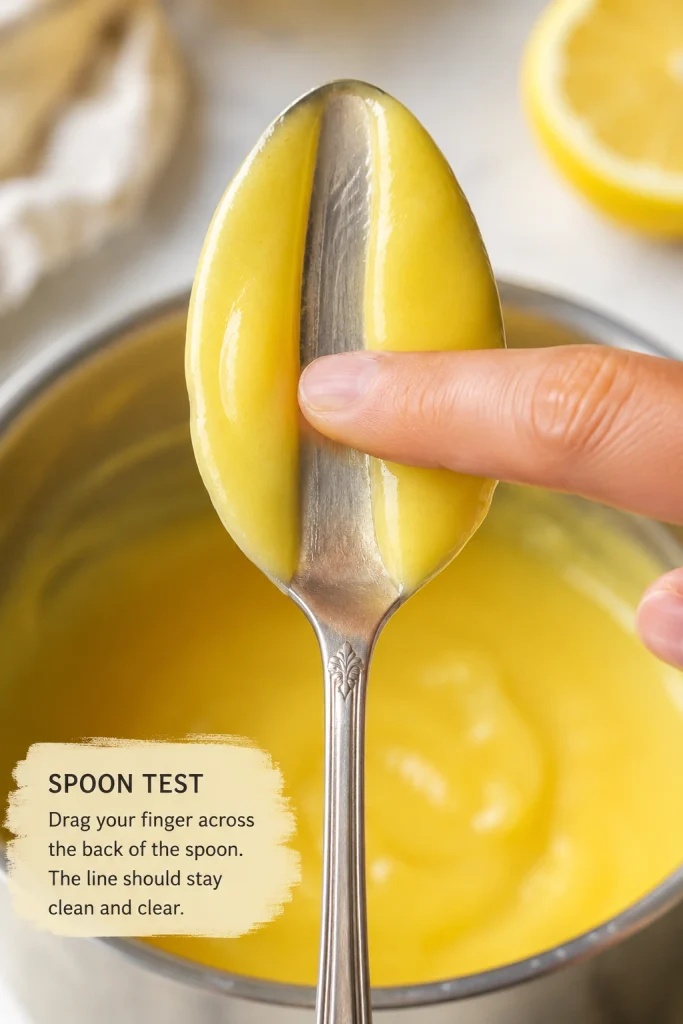
For tart shells, mini tarts, cookies, or simple cake filling, you can cook it a little closer to 175°F / 79–80°C. Keep the heat gentle and do not let it boil.
The thermometer is a guide, not the only test. If the mixture has reached temperature but still looks watery, keep it over gentle heat a little longer until it coats the spoon.
6. Add Butter Off the Heat
Remove the pan from the heat. Whisk in the cold butter cubes a few pieces at a time. The curd turns glossy, smooth, and slightly richer as the butter melts in.
7. Strain the Lemon Curd
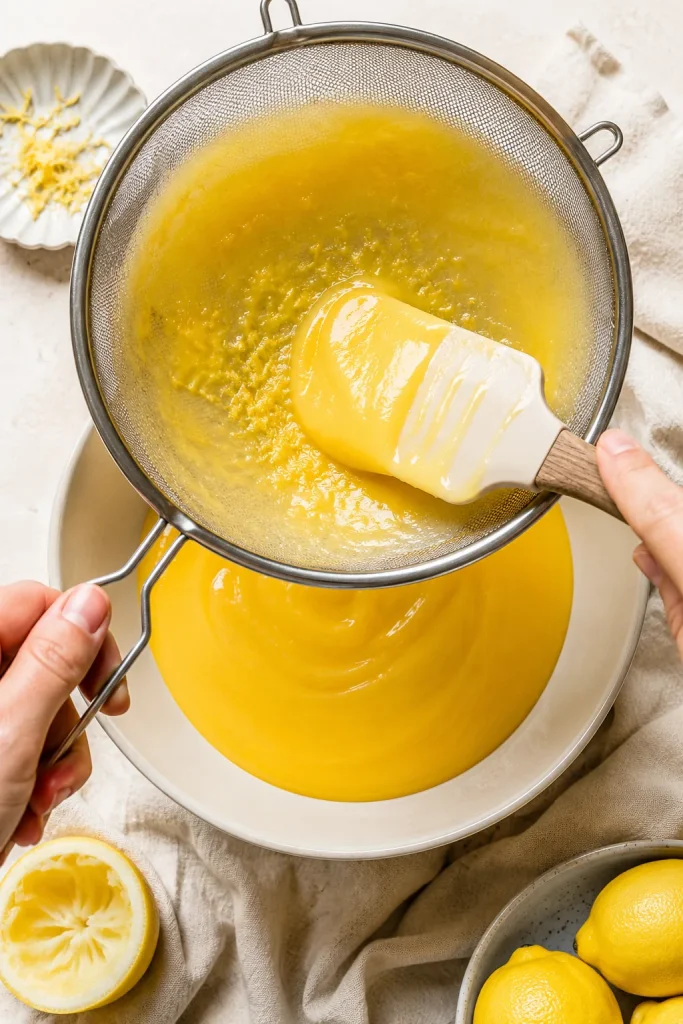
Pour the warm curd through a fine mesh sieve into a clean heatproof bowl or jar. The sieve is your safety net: it catches zest, tiny egg bits, and any uneven texture so the finished batch still tastes silky.
Texture cue: Straining while warm catches zest and tiny cooked bits before the curd goes into jars.
8. Cover and Chill
Press parchment or plastic wrap directly against the surface so a skin does not form. Chill for at least 2 hours before judging the final thickness.
Visual cue: The cover should touch the surface so a skin does not form as the curd cools.
How to Know It Is Done
Doneness is the part that makes lemon curd feel risky. Look for texture first: it should coat a spoon, fall in a thick ribbon, and move like warm loose pudding when you tilt the pan.
| Doneness cue | What to look for |
|---|---|
| Spoon test | It coats the back of a spoon and holds a clean line when you run a finger through it. |
| Whisk trail | The whisk briefly leaves trails before the mixture settles back in. |
| Texture | Glossy, slightly heavier on the whisk, and no longer watery. |
| Temperature | About 170°F / 77°C for smooth curd; up to 175°F / 79–80°C for thicker curd. |
| After chilling | It mounds softly before slowly relaxing. |
How to use temperature with texture
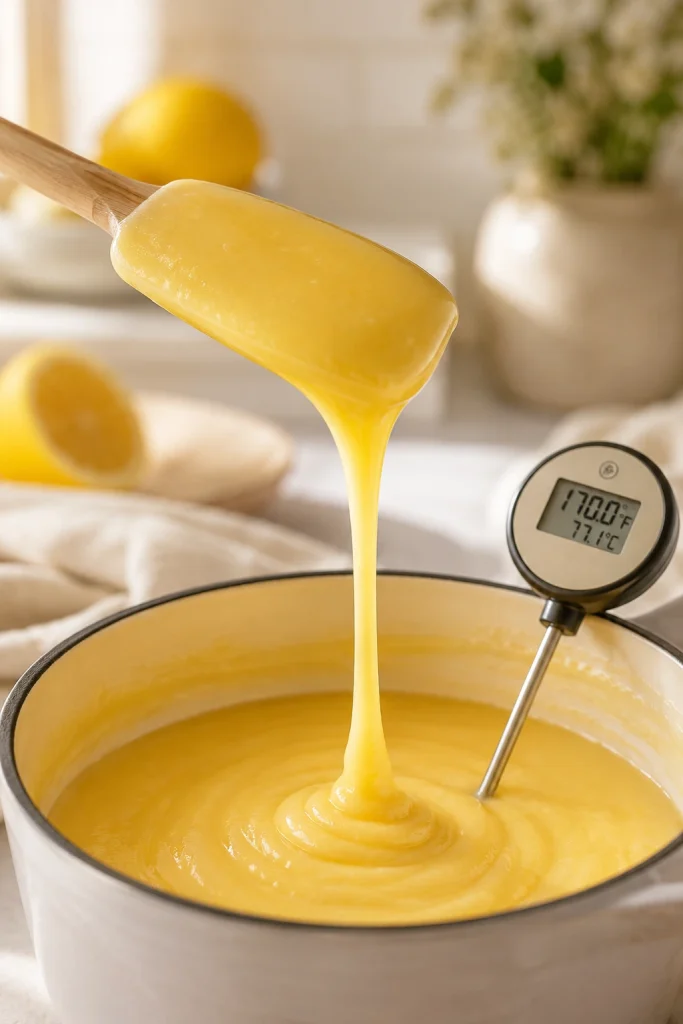
Underdone curd looks shiny but thin and slips off the spoon quickly. Overheated curd may bubble hard, smell eggy, or show tiny cooked-egg specks.
How to tell runny curd from thick curd
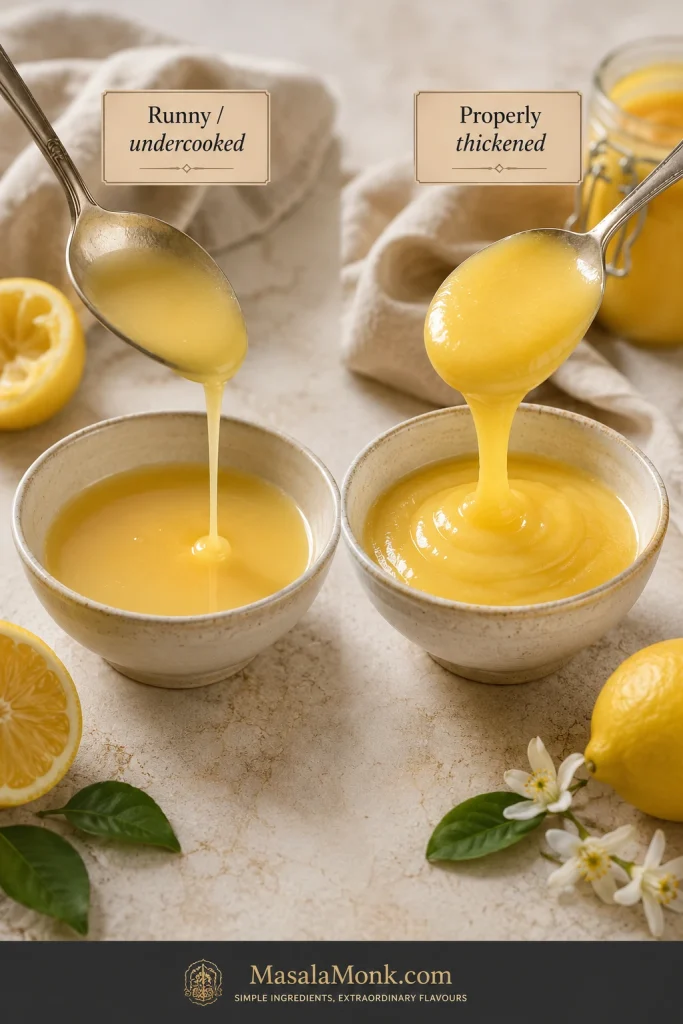
This is the point where many people stop too early. Give it the extra minute it needs, but keep the heat gentle.
7 Rules That Prevent Lemon Curd Failure
- Keep the heat gentle; high heat can scramble the eggs before the mixture thickens.
- Do not let it boil. Hard bubbling is a sign to lower the heat.
- Measure the lemon juice so the balance stays right.
- Trust texture as much as temperature.
- Let the refrigerator finish the set before judging thickness.
- Use a thin layer inside a frosting dam for cakes.
- Treat homemade curd as a refrigerator recipe, not a shelf-stable preserve.
Not sure where the curd is going? Match thickness to use · use it in cake · fix runny or lumpy curd
Once the curd is cooked and chilled, the next question is where it is going. Cakes, tarts, cookies, and spoonable desserts all need slightly different handling.
How Thick Should Lemon Curd Be?
Warm lemon curd is ready when it coats a spoon and looks glossy; after chilling, it thickens into a soft mound. Before you judge the batch, decide where it is going: a soft curd is perfect for toast, scones, and yogurt, while cakes, tart shells, cookies, and clean slices need a curd that sets thicker after chilling.
Which lemon curd texture works for which use
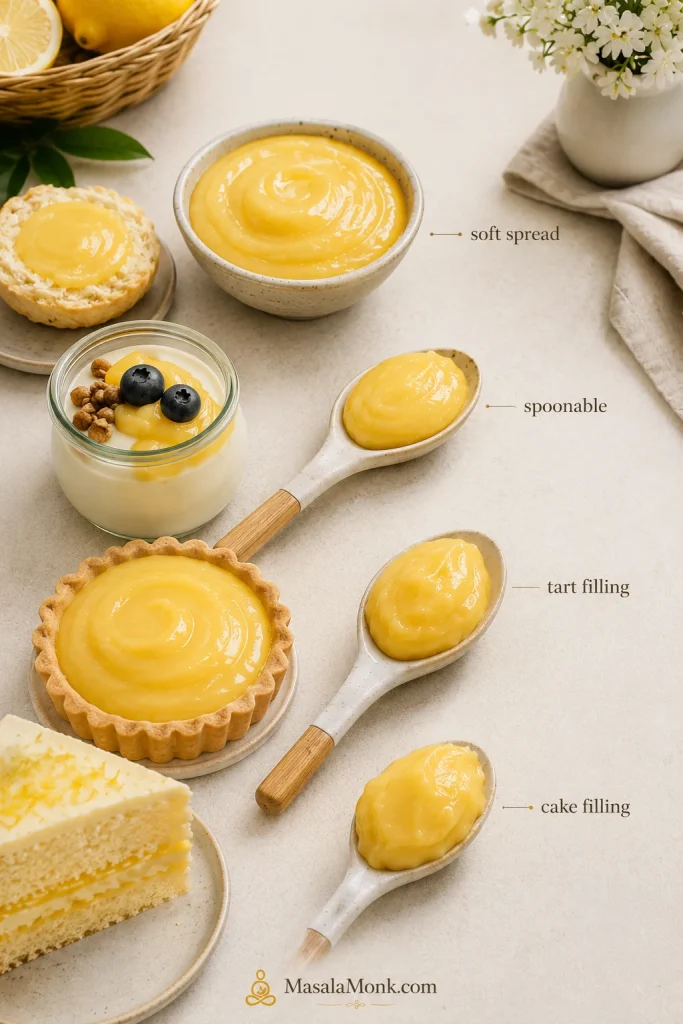
| Use | Best texture | What to do |
|---|---|---|
| Toast, scones, pancakes | Soft and spreadable | The standard recipe works well once chilled. |
| Yogurt or ice cream | Glossy and spoonable | Stir before spooning over. |
| Tart shells | Smooth and sliceable | Cook slightly thicker and strain well. |
| Mini tarts | Thick and neat | Fill once the curd has set. |
| Cake filling | Thick, cold, stable | Make ahead, then use inside a frosting dam. |
| Cupcakes | Spoonable but not runny | Fill only after cupcakes are completely cool. |
| Cookies | Thick and jammy | A set, spoonable batch works best for thumbprints or sandwich cookies. |
| Cheesecake topping | Smooth and spreadable | Stir gently before spreading. |
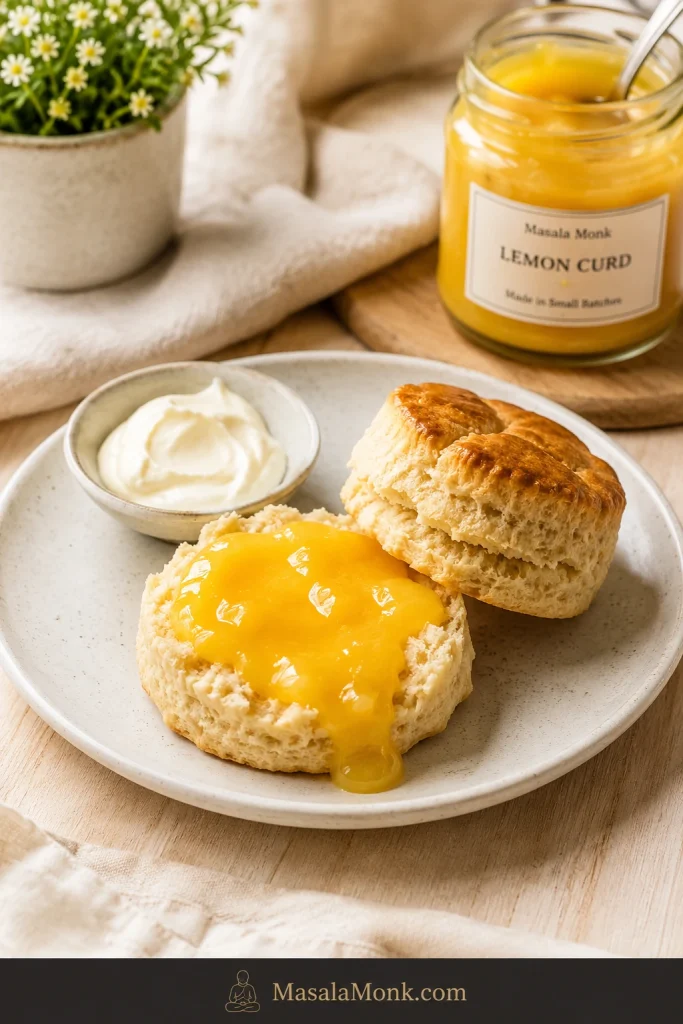
For a classic tea-table pairing, a soft spoonful belongs beside easy English scones, where the tender crumb gives the tart filling somewhere to settle without turning heavy.
Visual cue: A softer lemon curd is ideal for scones, toast, pancakes, and yogurt.
Choose your dessert path: cake filling · tarts and mini tarts · cheesecake, cookies, and quick desserts
Lemon Curd Cake Filling
Cake is where lemon curd needs the most boundaries. Spread thinly, it is beautiful. Treated like frosting, it can slide.
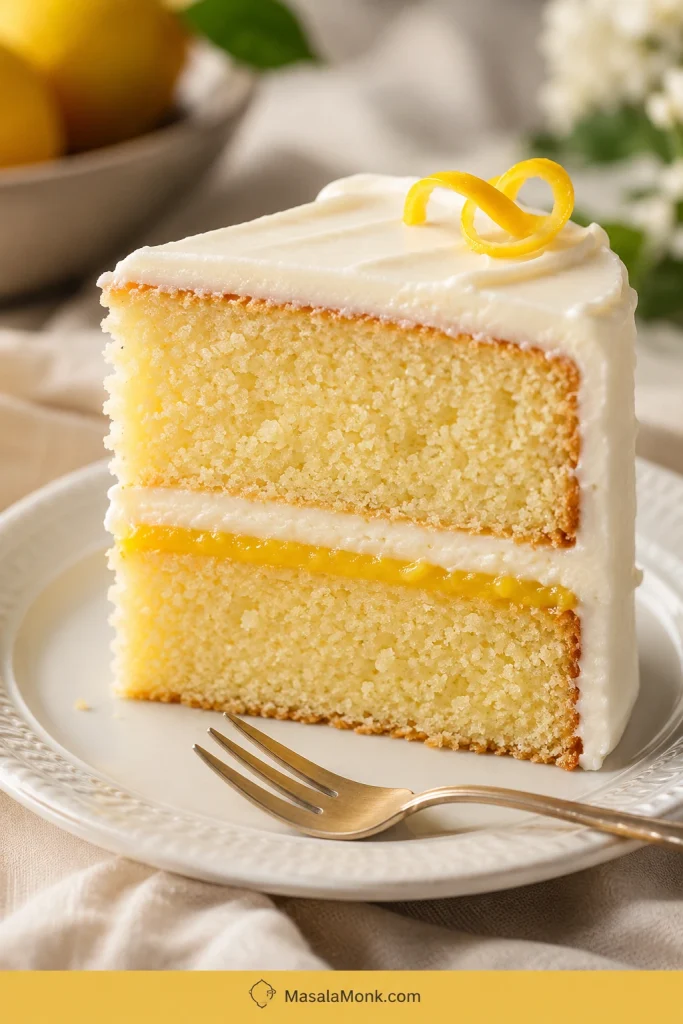
Yes, lemon curd works as cake filling when it is fully chilled, spread thinly, and held inside a frosting dam.
This curd works well with vanilla cake, lemon cake, coconut cake, almond cake, sponge cake, white chocolate frosting, cream cheese frosting, or buttercream frosting. The rule is simple: keep it cold, keep the layer thin, and keep it inside the frosting border.
Pipe a ring of buttercream, cream cheese frosting, or whipped ganache around the edge of the cake layer. Spread the curd inside that border. This keeps the filling from squeezing out when the cake is stacked.
How to hold lemon curd inside cake layers
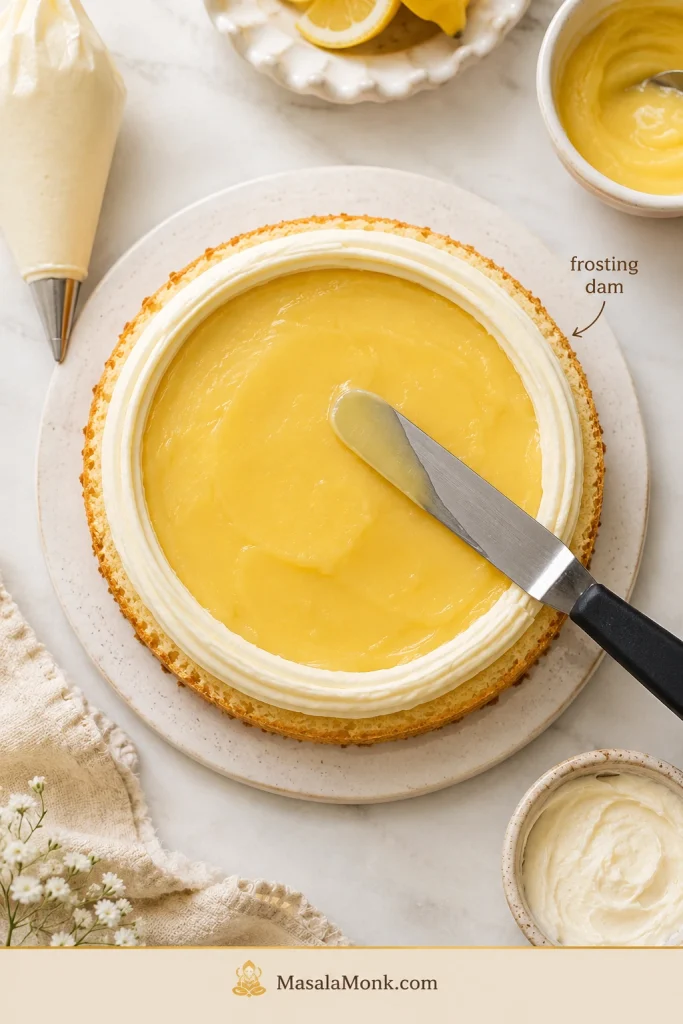
If the cake has more than two layers, soft frosting, warm weather, or a long travel time, treat lemon curd as a flavor layer, not the structural filling. When lemon needs to be the main support in a tall cake, use a dedicated lemon filling instead.
How Much to Use in Cake
| Cake size | Approximate amount per filling layer | Note |
|---|---|---|
| 6-inch cake | 1/4 to 1/3 cup | Use a thin layer inside a frosting dam. |
| 8-inch cake | 1/3 to 1/2 cup | Keep the layer even and away from the edge. |
| 9-inch cake | About 1/2 cup | Best with a sturdy frosting border. |
| Cupcakes | 1 to 2 teaspoons each | Fill only after the cupcakes are fully cool. |
These amounts are guides, not strict rules. Softer cakes and softer frostings need a thinner layer.
Visual cue: In cake, a thin chilled layer gives flavor without making slices slide.
Lemon Curd vs Lemon Filling
Lemon curd is a buttery egg-thickened lemon custard; lemon filling is usually thicker, more stable, and often starch-thickened. The difference matters most when you need structure.
If you need a pipeable filling, a tall cake filling, or a dessert that must sit out longer, choose a starch-stabilized lemon filling instead of classic curd.
| Need | Better choice | Why |
|---|---|---|
| Toast, scones, yogurt, pancakes | Lemon curd | Soft, glossy, and spreadable |
| Tart shells | Thicker lemon curd | Bright flavor with a smooth, sliceable texture |
| Cupcakes | Chilled curd or lemon filling | Both can work if the texture is thick enough |
| Layer cake | Thick curd inside a frosting dam | Works when used cold and not overfilled |
| Tall celebration cake | Stable lemon filling | Better structure for height and clean slices |
| Warm-weather cake | Stable lemon filling | Less likely to soften or slide |
| Pipeable bakery-style filling | Lemon filling | Usually thicker and more controlled |
When to use curd and when to use filling
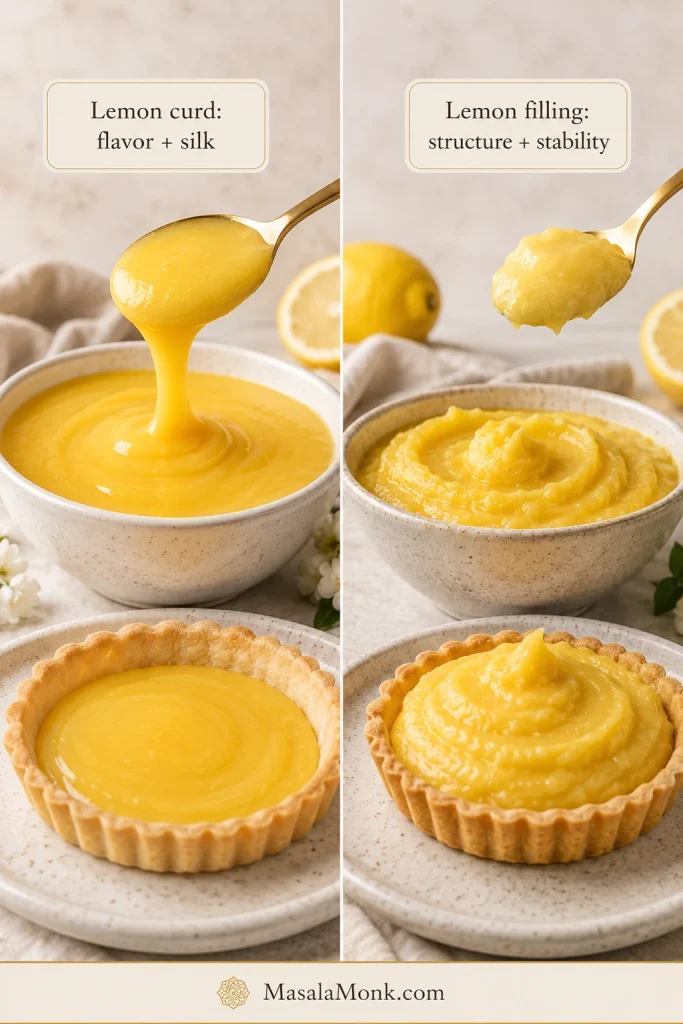
Think of curd as flavor and silk; think of filling as structure. In a simple home cake, chilled curd can work beautifully inside a frosting dam. For a tall cake, wedding-style cake, or dessert that needs very sharp slices, use a dedicated lemon filling instead.
Using It in Tarts and Mini Tarts
Lemon curd is excellent in tart shells because it gives you a bright, creamy filling without making a separate pastry cream. Strain it well for the glossiest finish.
Start with fully baked and fully cooled tart shells. Fill them while the curd is cooled but still spreadable, or spoon in chilled curd and smooth the top with an offset spatula.
Mini tarts work best once the filling has set because it spoons or pipes more neatly. For a tart that slices cleanly, cook the curd slightly thicker and chill the filled tart before serving.
Visual cue: A slightly thicker, fully chilled curd gives cleaner tart tops and slices.
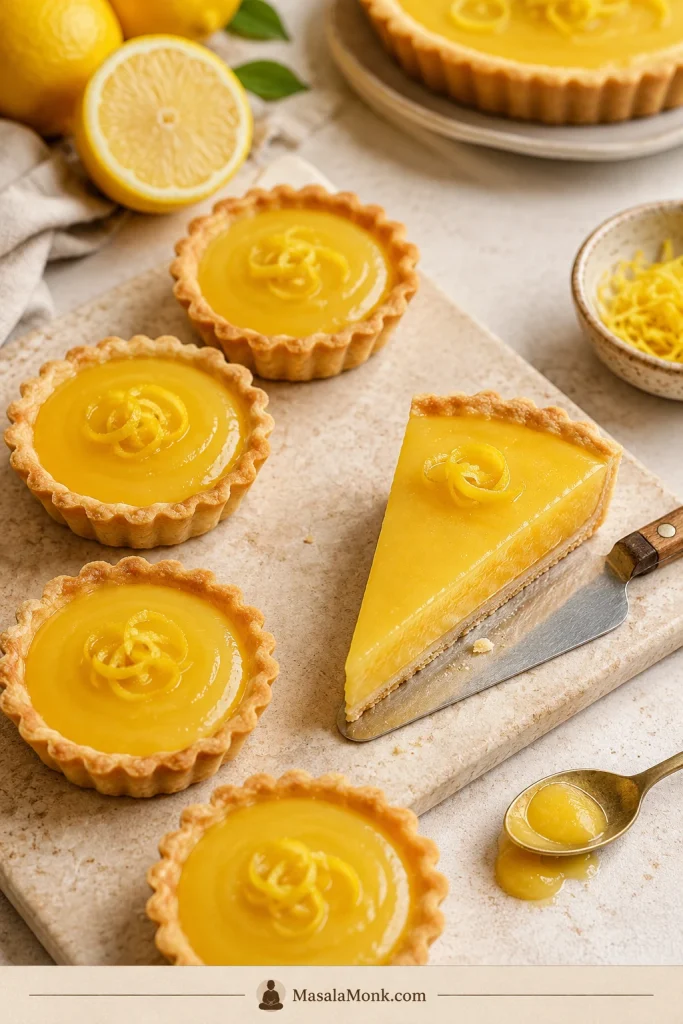
If you are comfortable with simple tart assembly, the same crisp-base thinking appears in this apple tart recipe: keep the pastry base crisp, the filling controlled, and the final texture clean.
Pie, Cheesecake, Cookies and Desserts
Once the texture is right, lemon curd can become a layer, topping, swirl, filling, or quick dessert shortcut.
Pie
Use lemon curd as a tart-sweet layer in cream pies, no-bake pies, or layered desserts. It works beautifully as a flavor layer, but a classic lemon meringue pie usually needs a dedicated pie filling because it has to slice cleanly and hold under meringue.
Cheesecake
Spread it over cheesecake as a topping, swirl it lightly into the filling, or use it as a thin layer between cheesecake and whipped cream. It works especially well with a no bake cheesecake, where the bright curd cuts through the creamy filling and keeps each bite from feeling too heavy.
Cookies
For thumbprint cookies, sandwich cookies, or shortbread cookies, use a thicker batch. Filled cookies look cleanest when the curd is added after baking unless the cookie recipe is designed to bake with a filling. For a gluten-free cookie base, almond flour cookies are a natural direction because their tender, nutty texture pairs well with sharp lemon.
Quick Desserts
Spoon it into yogurt parfaits, fold a little into homemade whipped cream, layer it with crushed cookies, drizzle it over pound cake, or serve it with pavlova and berries. A small amount adds brightness, creaminess, and that sharp lemon finish.
What to Make With Lemon Curd
Once the jar is chilled, it becomes a shortcut to brightness: breakfast, cake, cream, cookies, and simple desserts all get a sharper finish.
| Category | Ideas |
|---|---|
| Breakfast | Toast, scones, pancakes, waffles, yogurt, crepes |
| Cakes | Layer cake, lemon cake, vanilla cake, cupcakes, loaf cake, sponge cake |
| Tarts and pies | Mini tarts, tart shells, lemon tart, cream pie layers |
| Cookies | Thumbprint cookies, sandwich cookies, shortbread bars |
| No-bake desserts | Parfaits, cheesecake topping, whipped cream layers, ice cream topping |
| Plated desserts | Pavlova, pound cake, angel food cake, crepes, meringues |
Visual cue: One chilled jar can brighten cheesecakes, cookies, parfaits, pancakes, yogurt, and whipped cream.
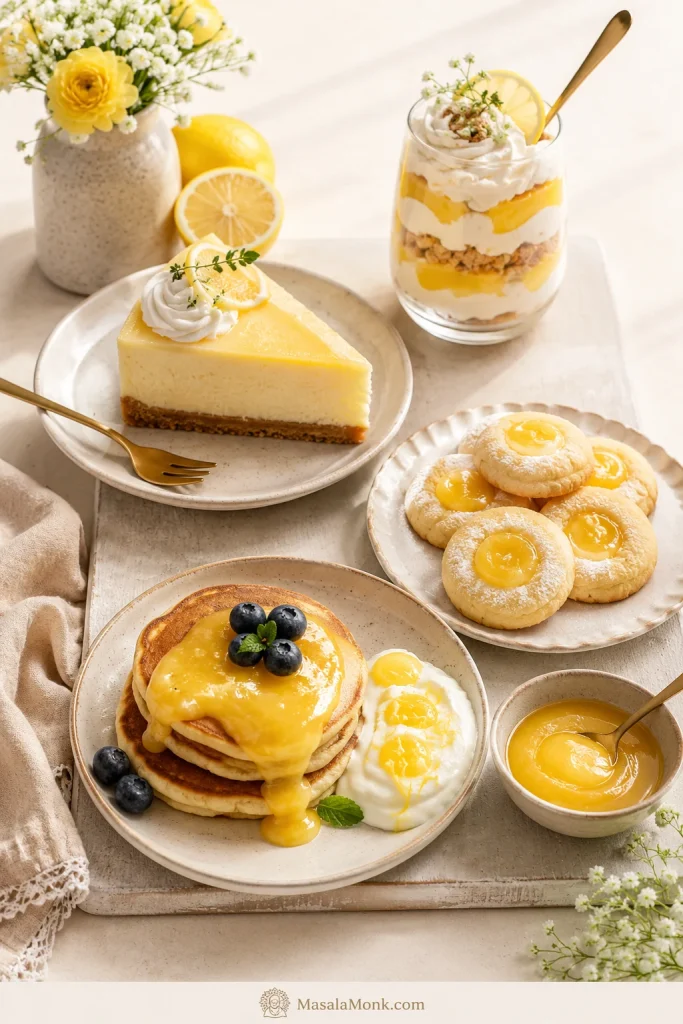
For a fruit-and-cream dessert, borrow the same assemble-at-serving idea used in classic strawberry shortcake: keep the base, fruit, cream, and curd separate until the last minute so nothing turns soggy.
With breakfast, a spoonful of chilled curd is excellent over almond flour pancakes, especially when you want something brighter than syrup.
Microwave Lemon Curd Shortcut
The stovetop method gives the best control, especially the first time you make lemon curd. The microwave can work for a quick small batch, but it asks for patience in short bursts.
Microwave timing varies by wattage, so texture matters more than exact minutes. Use the spoon test instead of trusting the clock alone.
- Start with a large microwave-safe glass bowl because the mixture can rise as it heats.
- Whisk the lemon juice, zest, sugar, eggs, and salt together until smooth.
- Microwave in 30-second bursts, whisking well after each burst.
- Once the mixture begins to thicken, switch to 10 to 15-second bursts.
- Stop when it coats a spoon. Do not let it boil over or scramble.
- Whisk in the butter, strain through a fine mesh sieve, then chill.
The microwave method is fast, but less forgiving because the heat is uneven. For the smoothest, most controlled result, use the stovetop method.
Vegan, Eggless, Dairy-Free and Gluten-Free Notes
Classic lemon curd is made with eggs and butter, so vegan and eggless versions need a different method. They are not just a simple egg swap.
- Dairy-free: plant-based butter can work, but flavor and texture may change depending on the brand.
- Eggless: usually needs cornstarch or another thickener to replace the eggs.
- Vegan: usually uses lemon juice, zest, sugar, plant milk, starch, and plant butter or coconut-based fat.
- Gluten-free: classic curd is usually naturally gluten-free, but check all ingredients and avoid cross-contact if needed.
- Sugar-free or keto: needs separate testing because sweeteners behave differently from sugar.
If you need a vegan or egg-free version, choose a recipe designed for that method. The texture, thickening system, and cooking behavior are different from classic curd.
Troubleshooting Lemon Curd
Most lemon curd problems look worse than they are. The fix depends on whether the batch is undercooked, overheated, or simply not chilled yet.
How to diagnose lemon curd problems
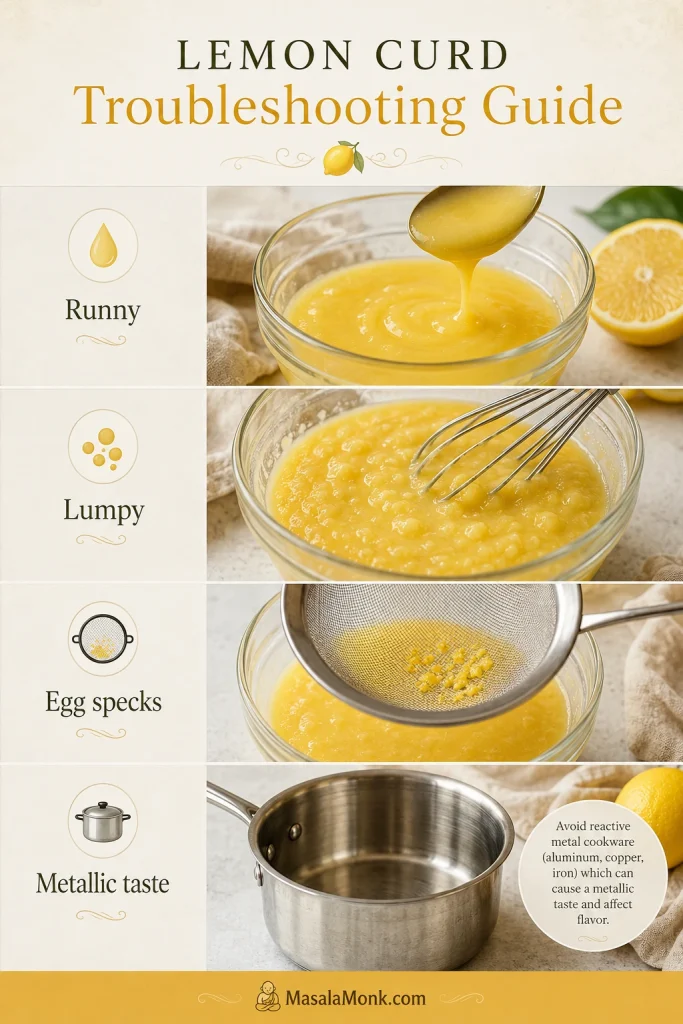
Fix Texture Problems First
| Problem | Why it happened | What to do |
|---|---|---|
| Runny curd | It was undercooked or has not chilled long enough. | Reheat gently and cook until it coats a spoon or reaches about 170°F / 77°C. Chill fully. |
| Runny after chilling | It was undercooked, even if it looked slightly thick while warm. | Reheat gently, cook to spoon-coating texture, then chill again. |
| Lumpy texture | The eggs cooked too quickly or the heat was too high. | Strain immediately through a fine mesh sieve. Use lower heat next time. |
| Eggy taste | The eggs overheated or cooked too aggressively. | Strain well. Next time, cook lower and whisk constantly. |
| Grainy texture | The sugar did not dissolve evenly or the heat was uneven. | Rub zest into sugar, whisk well before heating, cook gently, and strain after cooking. |
| Split curd | The heat was too high or the butter did not emulsify smoothly. | Whisk vigorously off heat, then strain. Next time, add butter gradually off heat. |
Fix Flavor, Skin, and Cookware Issues
| Problem | Why it happened | What to do |
|---|---|---|
| Too tart | The lemons were very sharp or the lower sugar amount was used. | Use the sweeter sugar amount next time. Serve this batch with cream, yogurt, cake, or meringue. |
| Too sweet | The lemons were mild or the higher sugar amount was used. | Add more zest next time for stronger lemon flavor instead of adding too much extra juice. |
| Skin on top | It cooled uncovered. | Press parchment or plastic wrap directly onto the surface while cooling. |
| Metallic taste | A reactive pan or bowl may have affected the flavor. | Use stainless steel, enamel-coated cookware, or heatproof glass. |
Even if the batch is not perfect, do not throw it away too quickly. A slightly thin curd can often be cooked a little longer, and a slightly lumpy one can often be rescued with a sieve.
Batch rescued? Recheck doneness cues · store the finished curd · return to the recipe card
Storage and Freezing
Homemade lemon curd is a refrigerator recipe, not a shelf-stable preserve. Store it in a clean airtight jar or container and keep it chilled.
Think of it like a chilled custard-style spread: clean jar, cold fridge, clean spoon.
How to store lemon curd safely
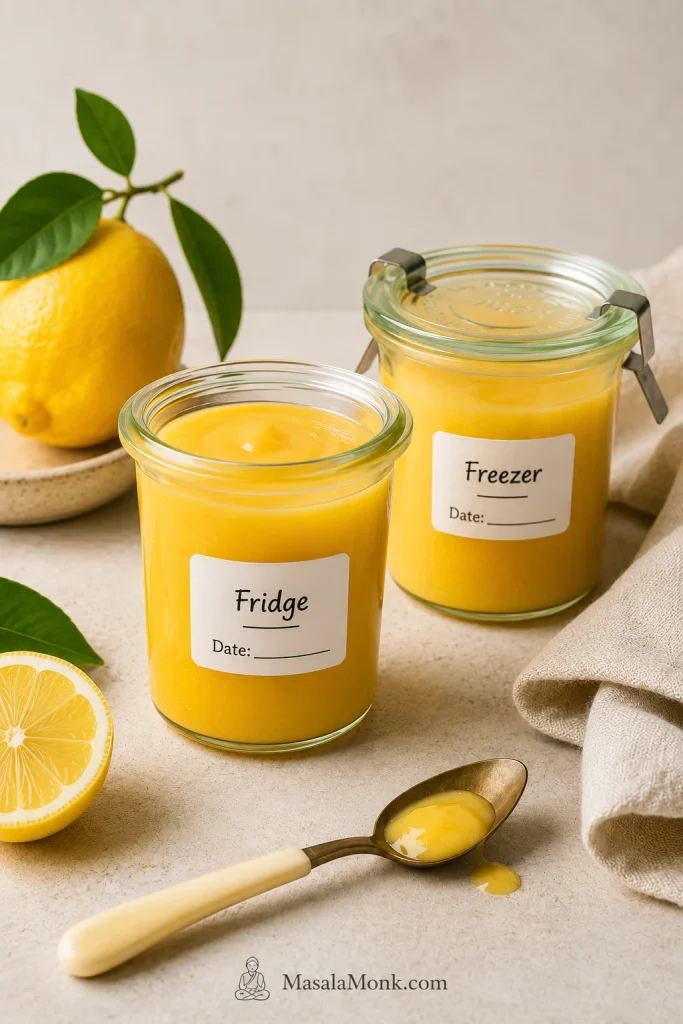
If you want tested preservation guidance, the National Center for Home Food Preservation has specific lemon curd freezing and canning guidance.
- Refrigerator: keep for about 1 to 2 weeks, depending on freshness and handling.
- Freezer: freeze in an airtight freezer-safe container for longer storage.
- Thawing: thaw overnight in the refrigerator.
- After thawing: stir gently before using.
- Serving: always use a clean spoon so the curd stays fresh longer.
Let the curd cool slightly before sealing the jar fully, so condensation does not collect inside. For food-safety storage temperatures, use a refrigerator at 40°F / 4°C or below; FoodSafety.gov’s cold food storage chart uses that same refrigerator temperature benchmark.
Keep it chilled until serving, especially because it contains eggs and butter.
FAQ
Why did my lemon curd turn runny?
It was probably undercooked or not chilled long enough. Reheat gently until it coats a spoon, then chill again.
How do you thicken lemon curd?
Cook it gently until it coats the back of a spoon. For a thicker texture, cook closer to 175°F / 79–80°C without boiling, then chill until fully set.
What temperature should lemon curd reach?
A good target is about 170°F / 77°C. For tarts or cake filling, cook closer to 175°F / 79–80°C without letting it boil.
How many lemons do you need?
Usually 2 to 3 medium lemons for 1/2 cup / 120 ml juice. Zest them before juicing so they are easier to handle.
Do you need a double boiler?
No. A double boiler gives extra protection, but a heavy-bottom saucepan works well with low heat and constant whisking.
Whole eggs or egg yolks: which is better?
Use whole eggs for a lighter curd and yolks for a richer, thicker one. This recipe uses both for a balanced all-purpose texture.
Should lemon curd be strained?
Yes. Straining while warm is the easiest way to remove zest, tiny egg bits, and uneven texture.
How long does homemade lemon curd last?
It usually keeps for about 1 to 2 weeks in the refrigerator in a clean airtight container.
Can you freeze lemon curd?
Yes. Freeze it in an airtight freezer-safe container, thaw overnight in the refrigerator, then stir gently before using.
Is lemon curd the same as lemon filling?
Not always. Lemon curd is buttery and custard-like, while lemon filling is often thicker, more stable, or starch-thickened.
Does lemon curd work as cake filling?
Yes, if it is cold, thick, and used thinly inside a frosting dam. For tall cakes or very clean slices, use a more stable lemon filling.
Why does lemon curd taste metallic?
A metallic taste can come from reactive cookware. Use stainless steel, enamel-coated cookware, or heatproof glass.
Final Tips for Smooth Lemon Curd
- Zest before juicing.
- Measure the lemon juice.
- Rub zest into sugar for stronger lemon flavor.
- Cook gently and whisk constantly.
- Stop when it coats a spoon and looks glossy.
- Use temperature as a guide, not the only test.
- Strain warm, then chill before using as filling.
Good lemon curd should taste bright, smooth, and alive with lemon. Keep the heat gentle, trust the spoon test, and let the refrigerator finish the texture. Once you know what properly thickened curd looks and feels like, it stops being fussy and becomes one of the easiest ways to make toast, cakes, pancakes, cookies, whipped cream, and simple desserts taste finished.
Make it now: jump back to the recipe card · back to top








