Posted on 6 Comments

Whole Chicken in Crock Pot Recipe (Slow Cooker “Roast” Chicken with Veggies)

Hands lifting the lid off a black slow cooker revealing a golden whole chicken in a crock pot with potatoes and carrots, styled like a premium magazine cover with the title Whole Chicken in a Crock Pot and MasalaMonk.com at the bottom.

There’s something quietly luxurious about dropping a whole chicken in a crock pot, flicking a switch, and knowing dinner is basically taking care of itself. No wrestling with hot roasting pans, no constant basting, no stressing over oven timings. Just a pot humming away in the background while your house slowly fills with the smell of slow cooker roast chicken.

This method gives you everything people love about a Sunday roast—tender meat, rich juices, soft potatoes and vegetables—without demanding your full attention. It also turns one affordable bird into several meals, from roast-style dinners and chicken pot roast to leftovers for sandwiches, pasta and soups.

What follows is a complete guide to cooking a whole chicken in the slow cooker, turning it into a one-pot meal, adapting the technique for thighs and drumsticks, playing with BBQ and rotisserie-style variations, and making the most of every last scrap.


Why Cook a Whole Chicken in a Slow Cooker (Crock Pot)?

Before getting into the nuts and bolts, it’s worth pausing on why a whole chicken in crock pot is so useful to have in your regular rotation.
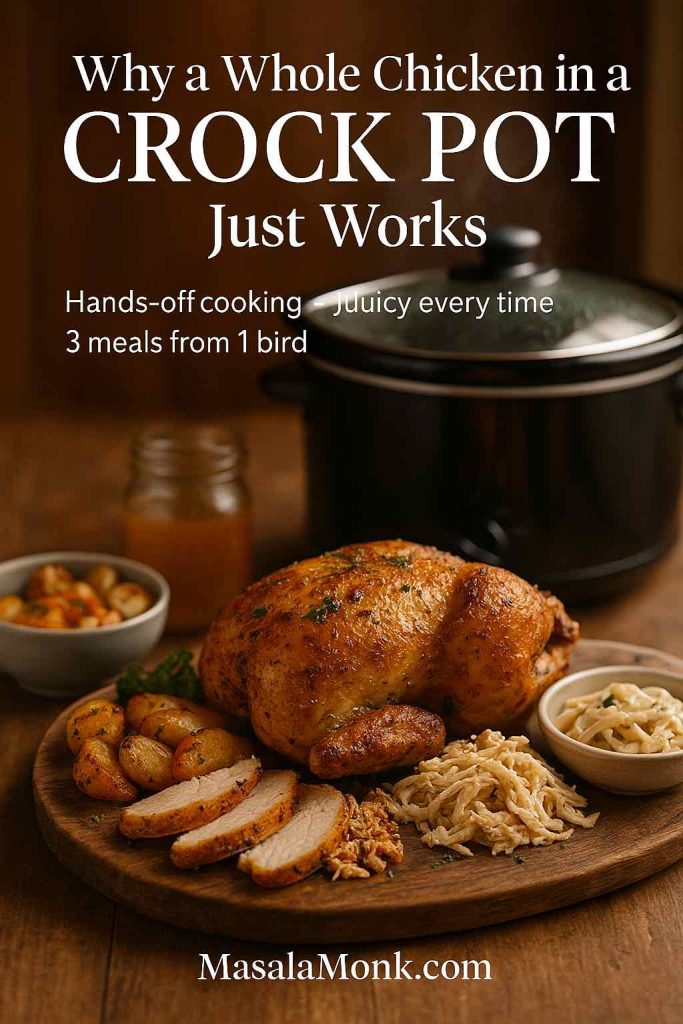
Whole roast chicken served with potatoes, shredded meat and sides in front of a crock pot, showing how a whole chicken in a crock pot makes three easy meals.
One seasoned bird, a slow cooker and a few vegetables – this whole chicken in a crock pot quietly turns into juicy roast-style dinners plus leftovers for days.

Almost zero babysitting

Traditional roast chicken is wonderful, but it wants attention: preheating, timing, checking, basting, turning, and making sure nothing dries out. With a whole chicken in a slow cooker, you do a little work up front and then the machine does the rest.

You:

  • Season the bird
  • Sit it on a bed of onions or vegetables
  • Add a splash of liquid
  • Put the lid on and walk away

Hours later, you lift the lid on a complete chicken crock pot roast. You don’t have to be home to keep an eye on it; the slow cooker hums along steadily while you’re at work, wrangling kids, or just enjoying your day.
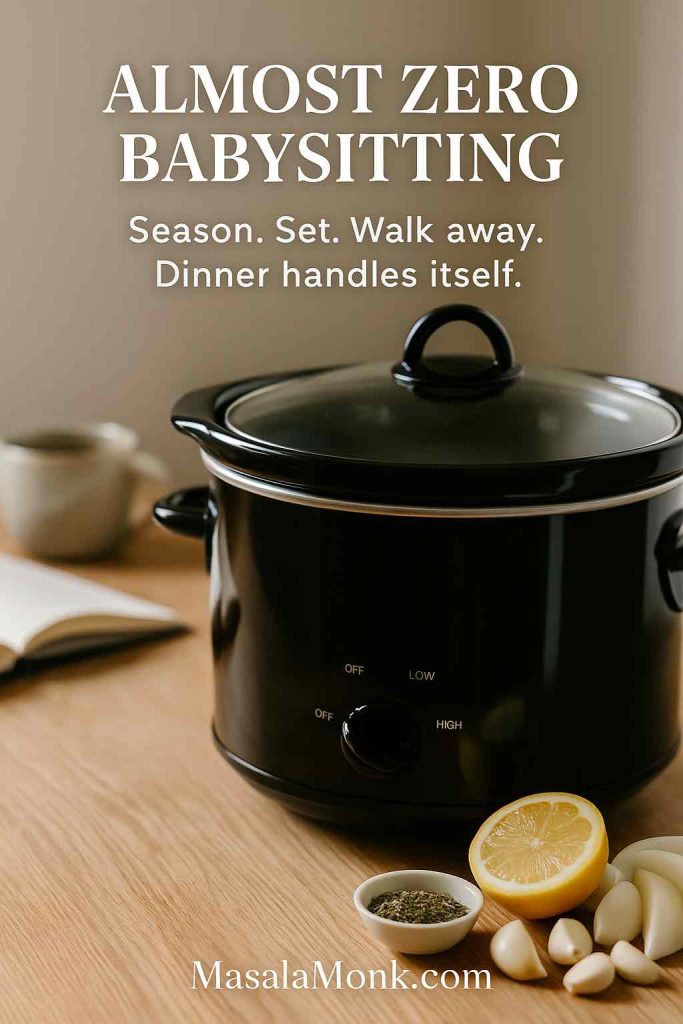
Black crock pot set to low on a wooden counter with lemon, garlic and herbs, illustrating the hands-off prep for a whole chicken in a slow cooker.
Season the chicken, set the crock pot to LOW and get on with your day—this slow cooker whole chicken recipe barely needs five minutes of attention.

Incredibly forgiving texture

Because slow cookers use gentle, moist heat, the meat stays juicy far more easily than in a hot, dry oven. When you slow cook a whole chicken, the connective tissues in the thighs and wings slowly melt, turning everything silky and tender.

You can carve it neatly if you cook for less time, or leave it longer for that “fall-apart shredded chicken” effect. Recipes like this lemon garlic slow cooker roast chicken show the same idea: shorter cooking gives a firmer, carve-able bird; longer cooking gives something you barely need a knife for.

One bird, several meals

A single chicken, cooked well, goes surprisingly far:

  • Night one: whole chicken in crock pot with potatoes and vegetables
  • Night two: leftovers in chicken Alfredo pasta or stuffed into sandwiches
  • Night three: stock and soup made from the bones

When you combine that with the hands-off nature of slow cooking, it’s easy to see why whole chicken recipes slow cooker crock pot approaches are favourite “Sunday prep” moves for busy weeks.
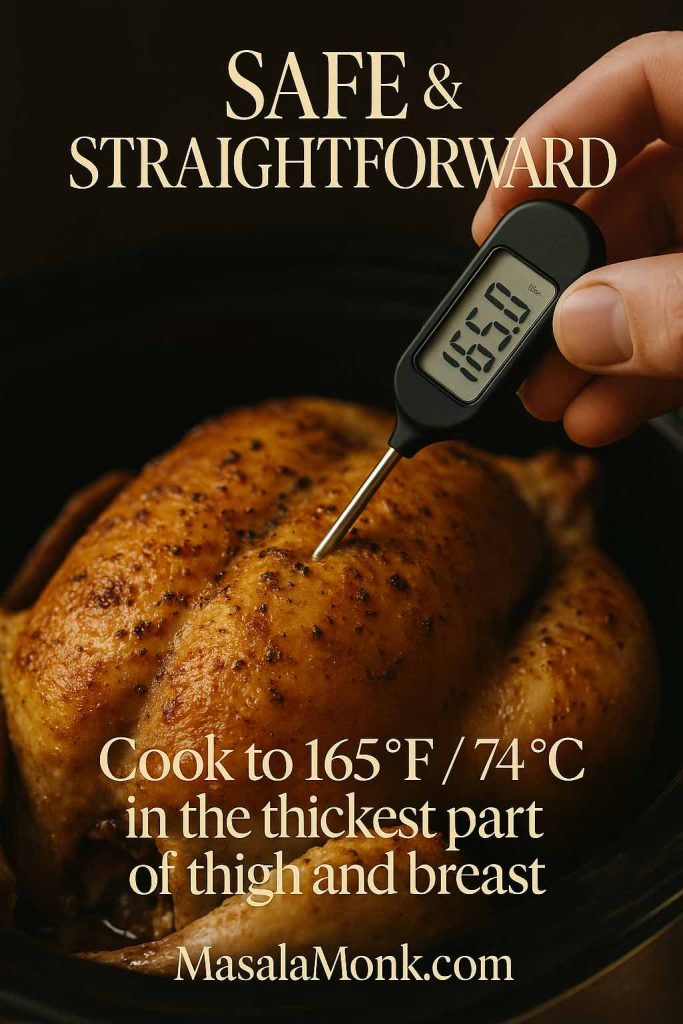
Hand checking a whole roasted chicken with a digital thermometer reading 165°F, demonstrating the safe internal temperature for slow cooker roast chicken.
For perfectly cooked, safe slow cooker roast chicken, aim for 165°F / 74°C in the thickest part of the thigh and breast before you lift it out of the crock pot.

Safe and straightforward

Poultry always raises food-safety questions, and rightly so. Fortunately, the rules are simple:

  • Start with a thawed chicken, not a frozen one
  • Keep the lid on so the crock pot can heat efficiently
  • Cook until the thickest parts of the meat reach 165°F / 74°C

That 165°F number isn’t random. It’s the same temperature recommended on the FoodSafety.gov safe minimum cooking temperature chart for all poultry, including whole chicken. It applies whether you use an oven, grill, Instant Pot, or slow cooker.

A basic digital thermometer is enough to keep your slow cooker roast chicken both tender and safe.


Choosing the Chicken and the Crock Pot

A little thought up front about bird size and slow-cooker capacity makes everything smoother.

What size chicken works best?

Most whole chicken in crock pot recipes shine when you use birds that:

  • Weigh between 1.2–2.2 kg (around 3–5 lb)
  • Fit comfortably in the crock with the lid closing fully
  • Leave a little space around the sides for heat to circulate
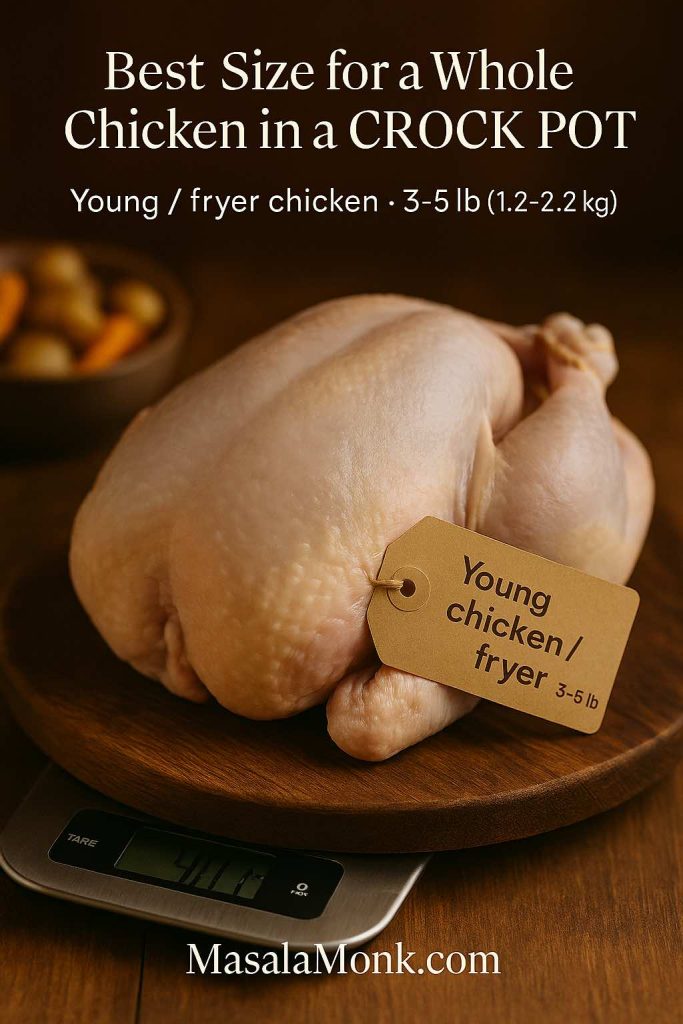
Overhead shot of a young whole chicken on a board next to a kitchen scale reading about 4 pounds, showing the best 3–5 lb size range for a whole chicken in a crock pot.
For most slow cooker whole chicken recipes, a young “fryer” bird in the 3–5 lb (1.2–2.2 kg) range cooks evenly, stays tender and leaves enough space in the pot for heat to circulate.

A small whole chicken in slow cooker (3–3½ lb) is perfect for two or three people, especially if you add potatoes and other vegetables underneath. For families or planned leftovers, aim nearer 4½–5 lb.

You’ll sometimes see “young chicken” or “fryer chicken” on the label. These tend to be more tender, which is ideal for slow cook whole chicken recipes. If you’re always feeding a crowd, you can also combine one small whole bird with extra thighs or drumsticks, which we’ll get to later.

Matching it to your slow cooker

A quick test before you start:

  1. Put the wrapped chicken into your cold slow cooker.
  2. Close the lid.

If you have to press hard or the lid doesn’t sit flat, the chicken is too big for that cooker. For reliable results with whole chicken recipes slow cooker crock pot, it helps to follow the usual slow-cooker guideline of filling the pot roughly halfway to two-thirds full. That leaves room for circulation and keeps the heating even.
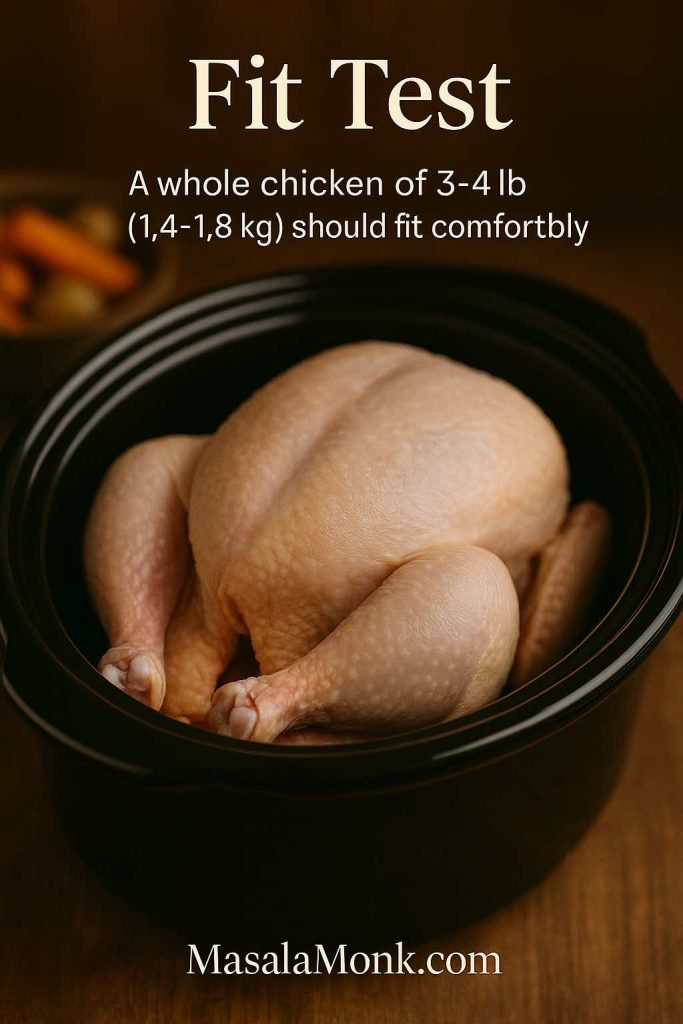
Wrapped whole chicken placed inside a slow cooker with the lid resting flat, illustrating how to check that a whole chicken fits properly and only fills about half to two-thirds of the crock.
Drop the wrapped chicken into the cold slow cooker before you start—if the lid doesn’t sit flat or the pot feels crammed, the bird is too big. Aim to fill the crock about halfway to two-thirds full for even, safe cooking.

For most people:

  • A 5–6 quart crock pot is perfect for a medium or large whole chicken plus vegetables.
  • A 3.5–4 quart slow cooker works well for a smaller bird without many extras.

The USDA’s advice on slow cooker safety also mentions not overfilling and keeping the lid on as much as possible, which lines up neatly with what you’re doing here.


The Core Recipe: Whole Chicken in Crock Pot, Step by Step

This is the backbone of everything that follows. Once you nail this simple whole chicken in a crock pot method, variations are easy.

Ingredients for a Whole Chicken in Crock Pot (Slow Cooker Roast)

  • 1 whole chicken (about 3–5 lb / 1.2–2.2 kg), fully thawed
  • 2–3 teaspoons fine salt
  • 1–1½ teaspoons black pepper
  • 2–3 teaspoons dried herbs
    • thyme, oregano, rosemary, Italian seasoning, or a mix
  • 4–6 cloves garlic, crushed or finely minced
  • 2–3 tablespoons softened butter or olive oil
  • 1 lemon, halved (optional)
  • 1 large onion, peeled and thickly sliced or cut into wedges
  • ¼–½ cup (60–120 ml) chicken stock or water

These simple ingredients create a very flavourful slow cooker roast chicken with barely any fuss.
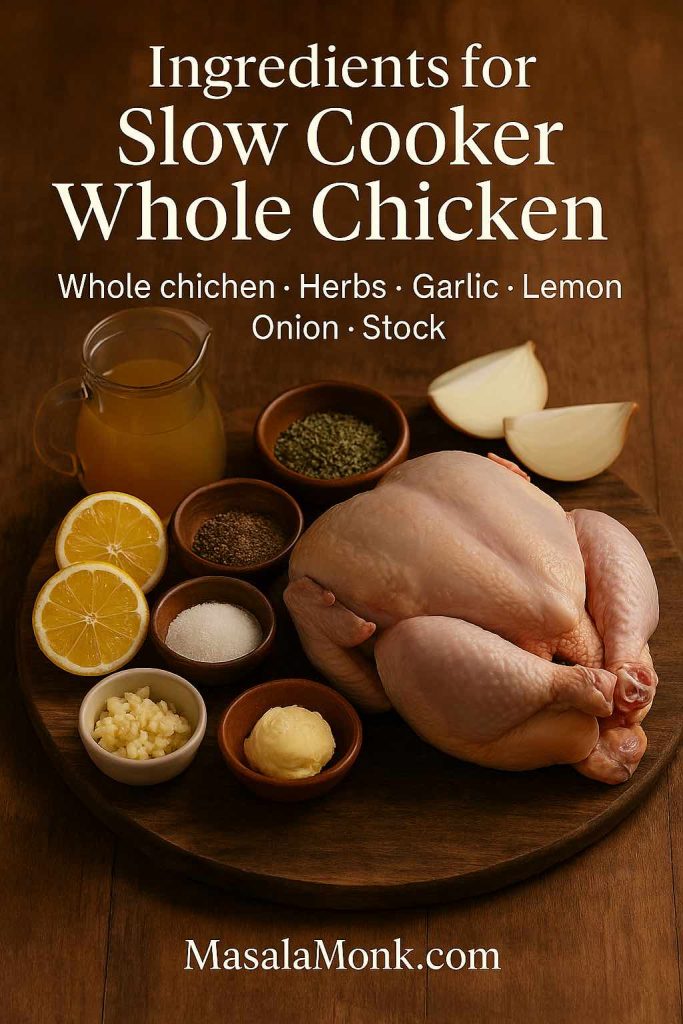
Ingredients for slow cooker whole chicken laid out on a wooden board: raw whole chicken, lemon slices, garlic, salt, pepper, dried herbs, butter and a jug of chicken stock.
These simple pantry ingredients—whole chicken, herbs, garlic, lemon, onion and a splash of stock—are all you need for a rich, roast-style whole chicken in the crock pot.

Step 1: Prepare and dry the chicken

Remove the chicken from its packaging. Check inside the cavity for giblets and remove them if present. You can reserve these for stock if you like.

Pat the whole bird dry with paper towels. This step matters more than it seems: drying the skin encourages roasting rather than steaming, and is one reason this feels like a baked chicken crock pot recipe rather than boiled chicken.

Sprinkle a small pinch of salt and pepper inside the cavity. If you’re using lemon, tuck the halves inside along with a clove or two of garlic. It smells like a proper chicken pot roast before you even start cooking.
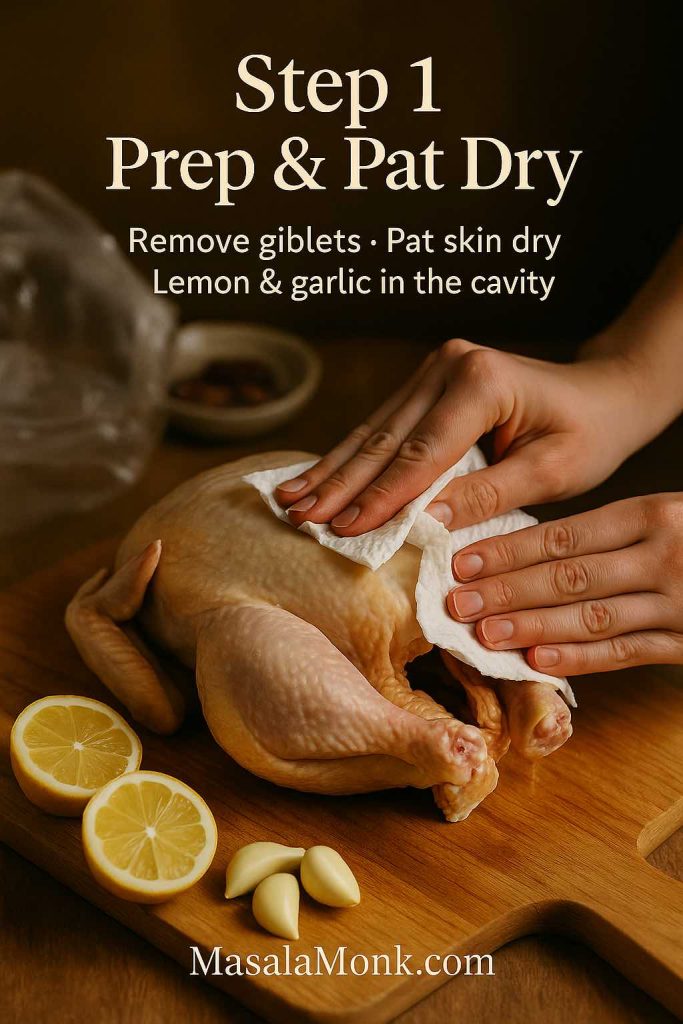
Hands patting a raw whole chicken dry with paper towels on a wooden board, with lemon halves and garlic cloves nearby, showing step 1 of preparing a slow cooker whole chicken.
Drying the skin thoroughly and tucking lemon and garlic into the cavity is what gives this slow cooker whole chicken a roast-style flavour and keeps it from turning out soggy.

Step 2: Mix the herb and garlic rub

In a small bowl, stir together:

  • The remaining salt
  • The remaining black pepper
  • Your chosen dried herbs
  • Crushed garlic
  • Butter or olive oil

You want a soft paste that’s easy to spread. Rub this all over the chicken, including:

  • Over the breast, thighs, wings, and legs
  • Under the skin on the breast if you can loosen it gently with your fingers

The more of the surface you cover, the more flavour your whole chicken in crock pot will have.

If you like, you can customise the rub:

  • Add smoked paprika and a pinch of chili for something closer to BBQ or paprika chicken.
  • Use extra rosemary, lemon zest, and garlic if you’re aiming for a very classic roast chicken recipe rosemary vibe.
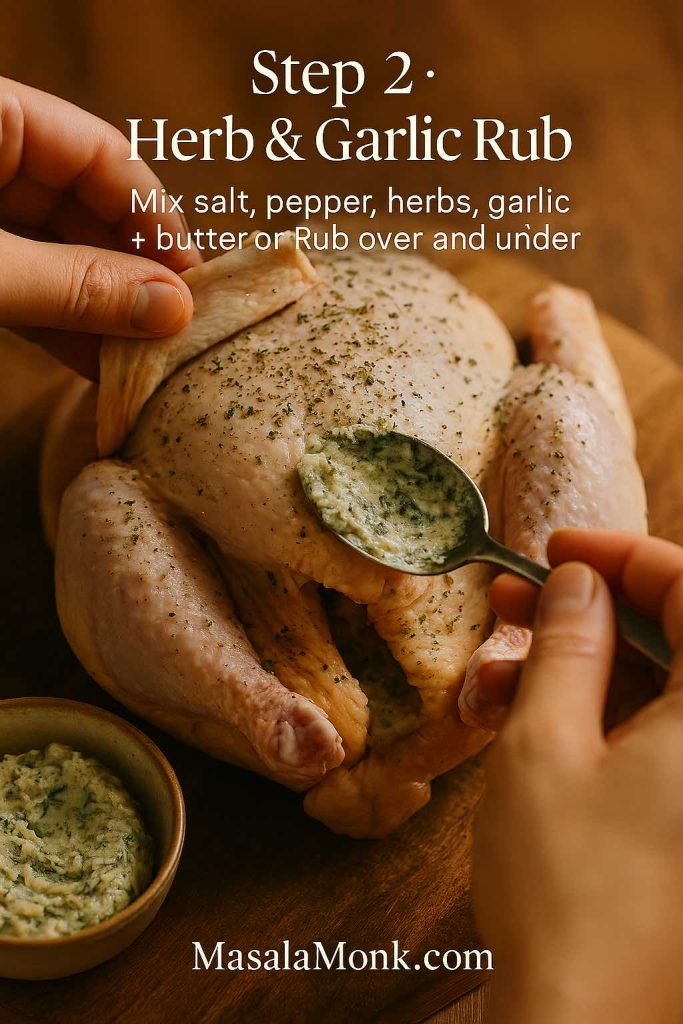
Hands lifting the skin of a raw whole chicken and spreading a creamy herb and garlic butter underneath, showing step 2 of seasoning a slow cooker whole chicken.
Rubbing a herb and garlic butter under the skin as well as on top seasons the meat all the way through and gives this crock pot whole chicken that rich, roast-style flavour.

Step 3: Build an onion “rack”

Scatter the onion slices or wedges evenly across the bottom of your slow cooker. They’ll act as a makeshift rack, lifting the chicken slightly so it doesn’t sit in the liquid the whole time.

Place the seasoned chicken breast-side up on top of the onions.

Pour the stock or water around the bird, not over it. Slow cookers generate plenty of moisture on their own—this small amount of liquid just helps everything get started and leaves you with good pan juices in the end.
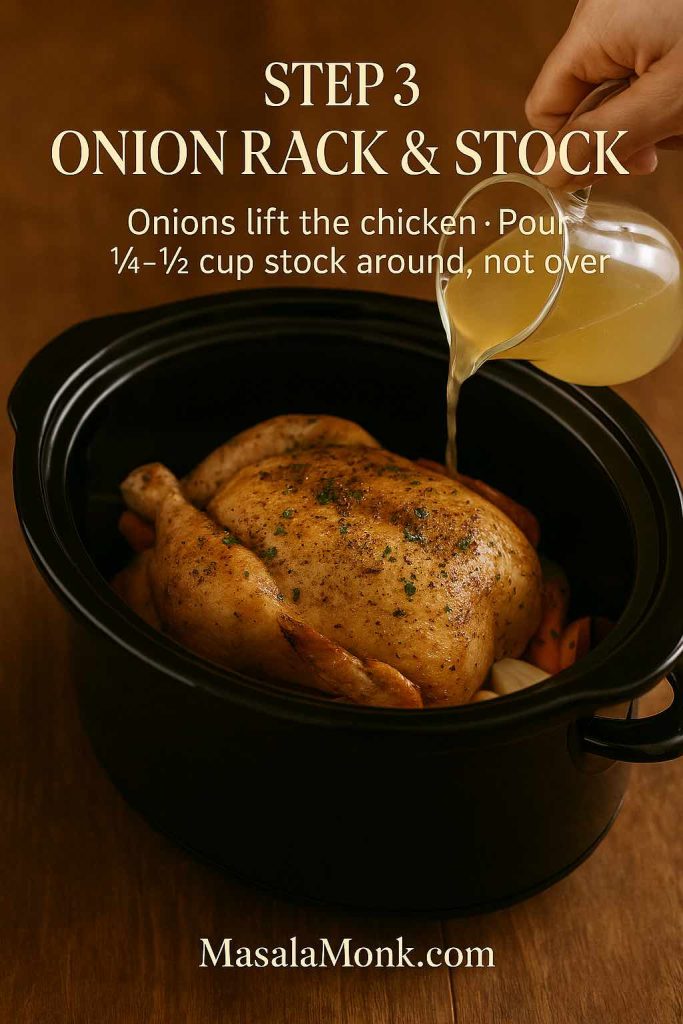
Seasoned whole chicken sitting on a bed of onions and vegetables in a slow cooker while chicken stock is poured around it, illustrating step 3 of the crock pot whole chicken recipe.
Resting the chicken on a bed of onions and pouring just ¼–½ cup of stock around it keeps the meat lifted out of the liquid, so you get roast-style flavour and rich pan juices instead of a watery boil.

Step 4: Cook on LOW until tender and safe

Put the lid on, set the crock pot to LOW, and leave it to work. As a general guide for this whole chicken recipes slow cooker crock pot method:

  • A smaller chicken (around 3–3½ lb) usually needs about 6 hours on LOW
  • A larger bird (around 4½–5 lb) often takes 7–8 hours on LOW

Every slow cooker heats slightly differently, though, so these are starting points, not commandments. The real test is internal temperature and feel.

About an hour before you expect it to be done, start checking. Insert a digital thermometer into:

  • The thickest part of the thigh, avoiding the bone
  • The thickest part of the breast

Both should read at least 165°F / 74°C. That’s the same number you’ll see in the FoodSafety.gov temperature chart and USDA guidelines, and it’s what turns raw chicken into safe, succulent slow cooker roast chicken.

If the reading is a little low, put the lid back on and cook longer, checking every 20–30 minutes. When the chicken is ready:

  • The legs will move easily in the sockets
  • Juices will run clear, not pink
  • The meat will feel soft and ready to fall from the bone
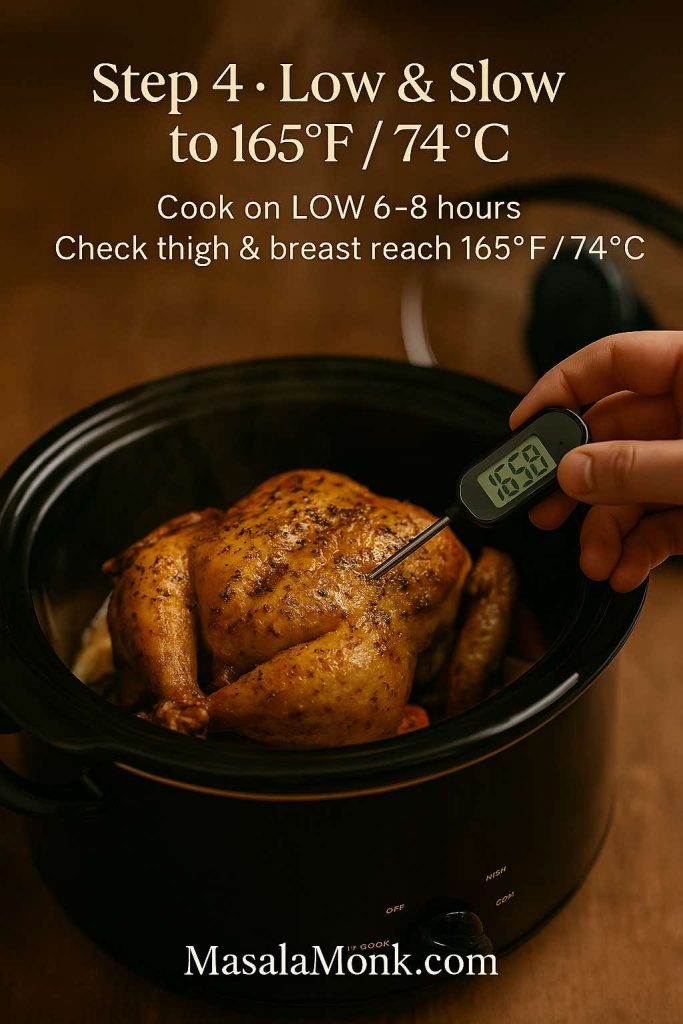
Cooked whole chicken in a slow cooker with a hand checking the thickest part of the thigh using a digital thermometer reading 165°F, showing step 4 of the crock pot whole chicken recipe.
After 6–8 hours on LOW, confirm your slow cooker whole chicken is ready by checking the thigh and breast reach 165°F / 74°C—the sweet spot for juicy meat and safe cooking.

Step 5: Rest and optionally crisp the skin

Turn the slow cooker off and let the chicken rest in the hot juices for about 10–15 minutes. This gives the meat time to relax and reabsorb some of the juices, so it slices or shreds more cleanly.

For many people, that’s enough. The meat is tender, the onions and juices are delicious, and you can go straight to carving and serving.

If you’d like something that looks more like a traditional baked chicken crock pot hybrid, though, you can quickly crisp the skin:

  1. Heat your oven’s grill or broiler to high.
  2. Carefully lift the chicken out of the slow cooker and onto a roasting pan. It will be delicate, so use two spatulas or a big spoon under the cavity plus tongs for support.
  3. Spoon or brush a little of the fat from the crock pot over the skin.
  4. Grill or broil for about 5–8 minutes, until the skin is golden and crisp in spots.

This trick is very similar to what you see in recipes like this slow cooker whole chicken: cook low and slow in the crock, then finish under heat for colour. It’s a lovely way to get the best of both worlds.
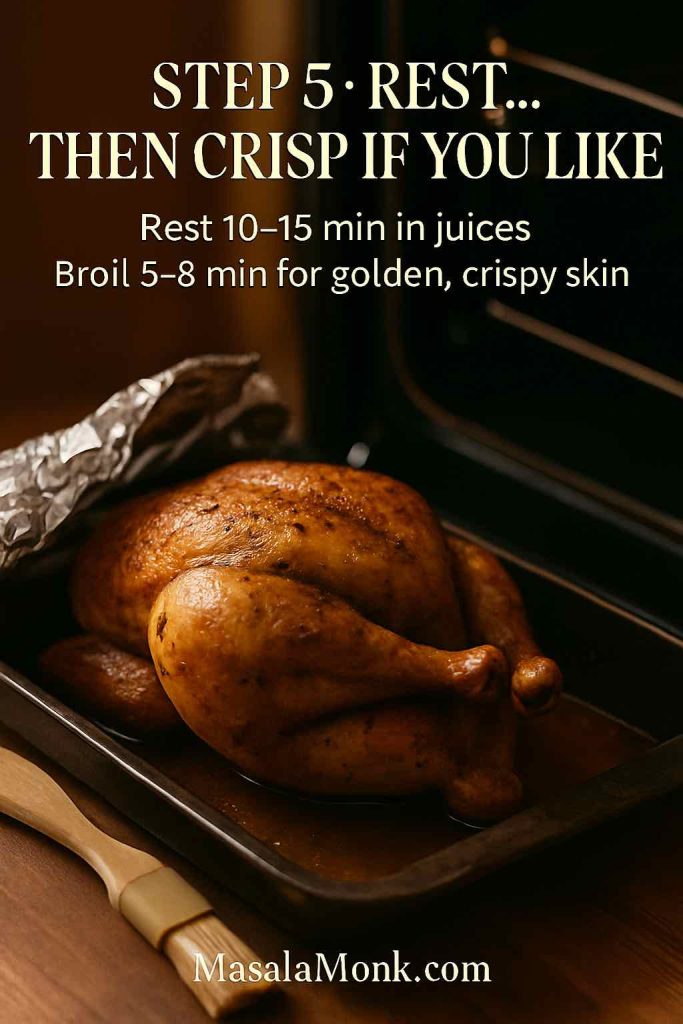
Roasted whole chicken resting in a pan with foil pulled back, next to an open oven, showing step 5 of letting a slow cooker whole chicken rest and then crisping the skin under the broiler.
Let the chicken rest for 10–15 minutes in its juices, then slide the pan under a hot grill for 5–8 minutes—this quick step turns slow cooker tenderness into full-on crispy roast chicken vibes.

Whole Chicken in Crock Pot with Potatoes and Vegetables (One-Pot Roast Dinner)

The base recipe already gives you a delicious slow cooker whole chicken with plenty of juices. However, you can easily turn it into a complete chicken pot roast recipe by adding potatoes and vegetables under the bird.

Choosing vegetables that can handle long cooking

Because a whole chicken in crock pot spends many hours simmering, you want vegetables that won’t completely disintegrate. Good choices include:

  • Baby potatoes or chunks of regular potatoes
  • Carrots, cut into thick pieces
  • Onion wedges or thick slices
  • Parsnips, chopped
  • Celery sticks, cut into 3–4 cm sections

These vegetables soak up the flavour from the chicken and aromatics, turning into soft, savoury little flavour bombs.
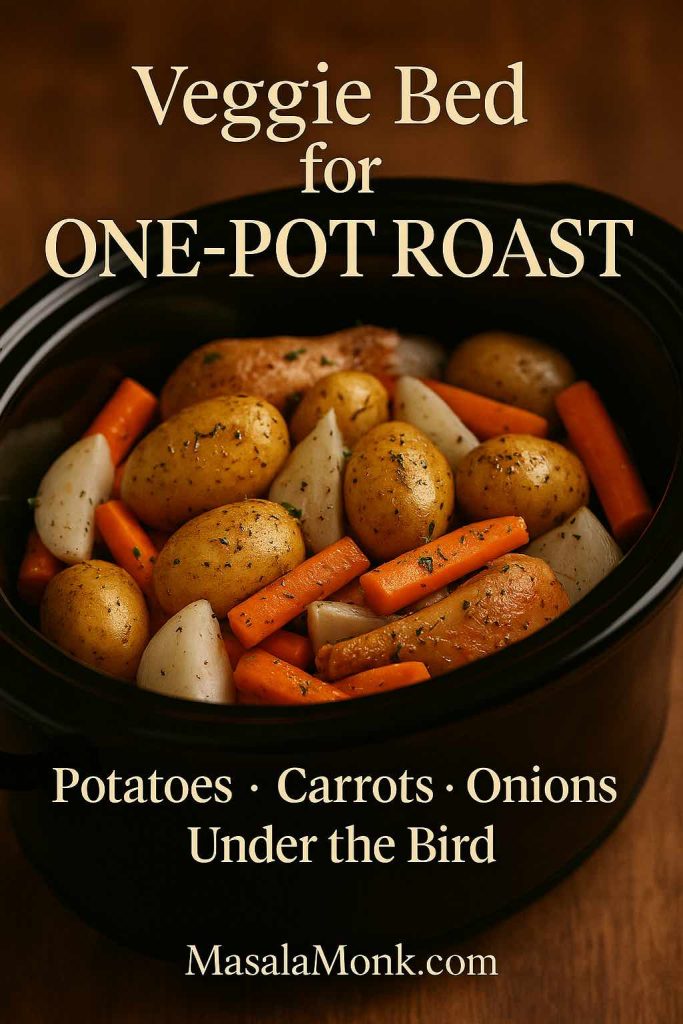
Slow cooker filled with seasoned baby potatoes, carrot sticks and onion wedges, showing the vegetable bed that goes under the whole chicken for a one-pot roast dinner.
Build a sturdy veggie bed of potatoes, carrots and onions under the bird—these soak up the chicken juices as it cooks, so you get buttery, flavour-packed vegetables ready at the same time as your slow cooker roast chicken.

Building the One-Pot Layer for a Whole Chicken in Crock Pot

To make a full roast chicken one pot meal:

  1. Toss the potatoes and carrots in a bowl with a little oil, salt, pepper and herbs.
  2. Spread them in an even layer on the bottom of the slow cooker.
  3. Add onion wedges and any parsnips or celery on top.
  4. Place your seasoned whole chicken on this vegetable bed.

Everything else stays the same: a splash of liquid around the sides, lid on, cook on LOW until your whole chicken in a crock pot is done.

By the end, you get:

  • Soft potatoes infused with chicken juices
  • Sweet carrots and onions
  • A pool of savoury liquid at the bottom acting as a light gravy

This is exactly the “veggie nest” approach you’ll see in recipes like this slow cooker whole chicken with vegetables, and it’s ideal when you want dinner to be more or less ready straight from one pot.
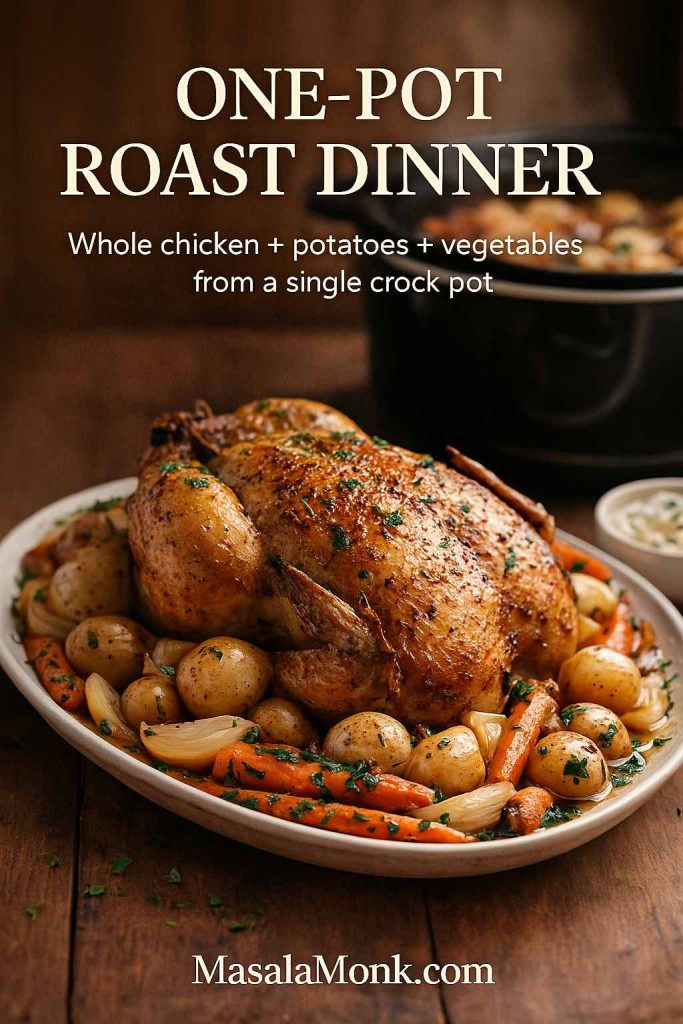
Whole roasted chicken served on a platter surrounded by potatoes, carrots and onions, with a slow cooker in the background, showing a complete one-pot roast dinner made in a crock pot.
Layer potatoes, carrots and onions under the chicken in your slow cooker and you’ll lift out a full one-pot roast dinner—tender meat on top, buttery vegetables and savoury juices all from the same crock pot.

How to Serve Your Whole Chicken in Crock Pot with Vegetables

When the chicken is cooked:

  1. Transfer it gently to a carving board and let it rest.
  2. Use a slotted spoon to lift out potatoes and vegetables onto a warm platter.
  3. Arrange the chicken on top or beside them.
  4. Spoon some of the juices over everything.

A sprinkle of chopped parsley or chives brightens it up visually and adds a fresh note. For extra contrast, adding a small bowl of Greek tzatziki sauce on the table gives you something cool, creamy, and garlicky to swipe chicken and potatoes through.


“Baked” Whole Chicken in Crock Pot: Roast Feel Without the Oven

Many people ask specifically for baked chicken crock pot or baked chicken crock pot slow cooker ideas because they want the taste and look of roast chicken without managing oven time. The good news is your base method is almost there already.

To push the “baked” vibe further:

  • Use butter rather than oil in the herb rub
  • Keep the chicken lifted up well on onions or potatoes
  • Only add a small amount of liquid
  • Always finish under the grill or broiler for crisp skin
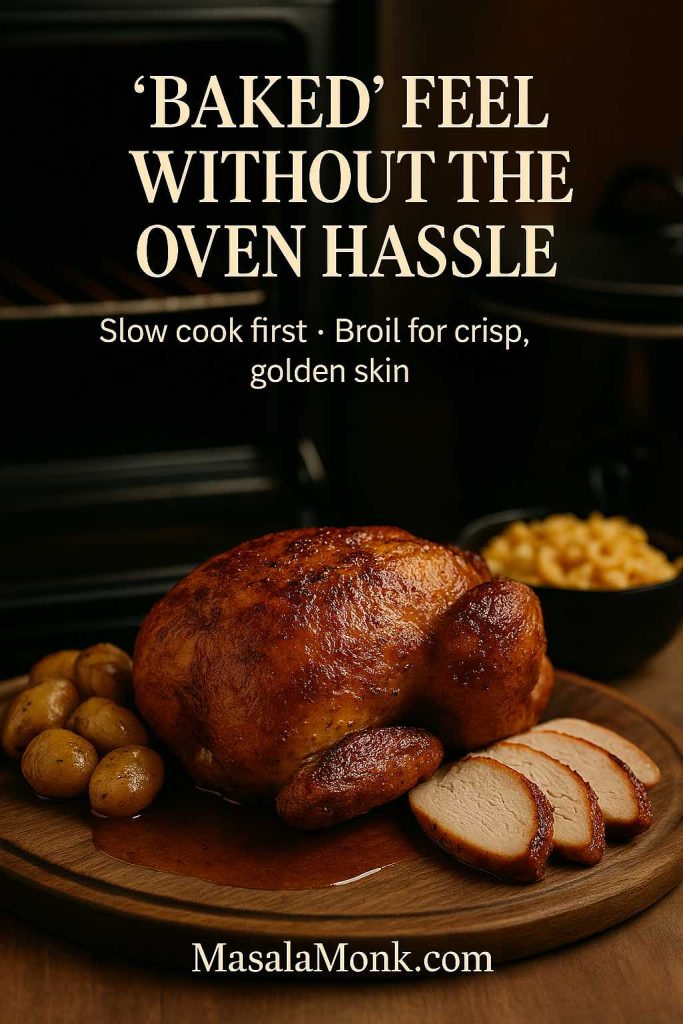
Whole roasted chicken with crisp golden skin on a wooden board, served with potatoes and macaroni and cheese in front of an oven, illustrating the baked-style finish for crock pot whole chicken.
For that baked-chicken feel, slow cook the bird until tender, then slide it under a hot grill for 5–8 minutes—crispy, golden skin on the outside, slow-cooker juiciness on the inside.

In practice, that means you follow the same steps as the core whole chicken recipes slow cooker crock pot method, then:

  • Lift the cooked chicken out
  • Pop it under a hot grill for a few minutes
  • Carve it on a board so slices still have crispy bits on top

Serve this “baked” style crock pot chicken with soft potatoes from the pot and a simple salad. For full comfort-food mode, it’s hard to beat a slab of macaroni and cheese on the same plate, or even a side of crispy homemade French fries if you want that roast-chicken-and-chips feeling.


Beyond a Whole Chicken in Crock Pot: Thighs, Quarters and Drumsticks in the Slow Cooker

So far, everything has centred on a full whole chicken in crock pot. However, the same approach works beautifully with chicken pieces, which is handy if:

  • You prefer dark meat
  • Only thighs or drumsticks were on sale
  • You want quicker cook times
Slow cooker filled with golden, herb-seasoned chicken thighs and leg quarters sitting on potatoes and carrots, showing the easy dark-meat version of the crock pot whole chicken recipe.
If you love dark meat or just found thighs and quarters on sale, use the same crock pot method—season well, cook 4–6 hours on LOW, and let the rich leg juices soak into the potatoes and carrots underneath.

Basic method for thighs and quarters

For chicken quarters in crock pot or bone-in thighs:

  1. Pat the pieces dry with paper towels.
  2. Season them generously with salt, pepper, herbs, garlic and a little oil or butter.
  3. Arrange them in a single layer in the crock pot, skin-side up.
  4. Pour in a small splash of stock or water—around ¼ cup is still enough.
  5. Cook on LOW until tender:
    • Thighs and drumsticks: about 4–5 hours
    • Leg quarters: about 5–6 hours

You can tuck potatoes and carrots underneath to create a dark-meat version of chicken pot roast in slow cooker. The juices from thighs and legs are particularly rich, so the vegetables turn out very flavourful.
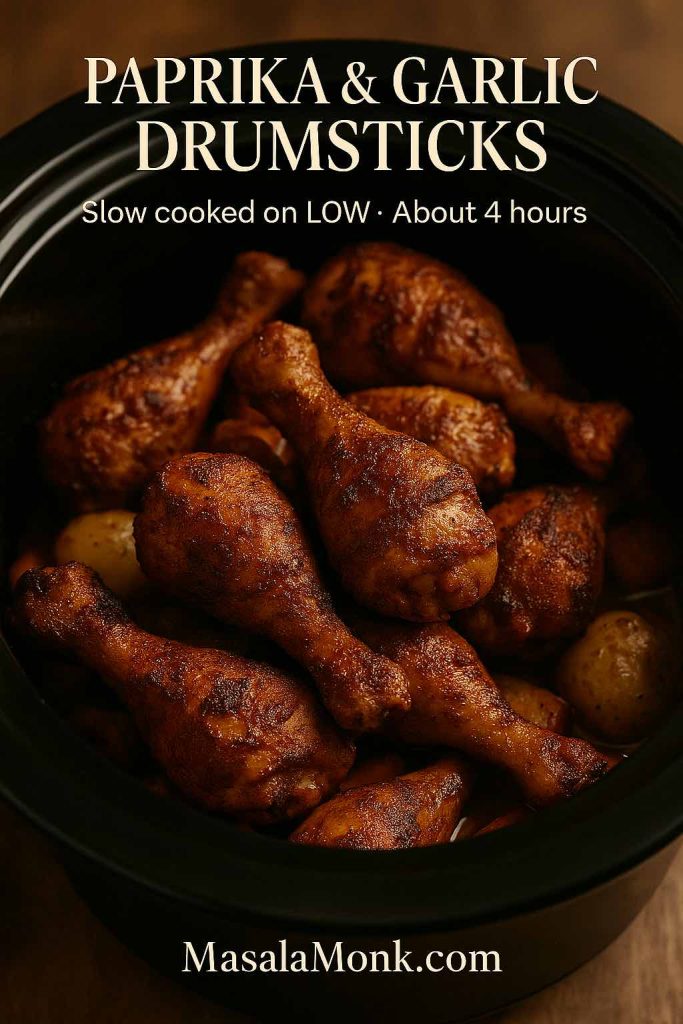
Black slow cooker filled with paprika and garlic rubbed chicken drumsticks and potatoes, showing the slow cooked drumstick variation of the crock pot chicken recipe.
A smoky paprika and garlic rub turns simple drumsticks into slow cooker gold—cook them on LOW for about 4 hours, until the meat pulls back from the bone and the potatoes underneath are coated in rich, spicy juices.

Slow cooked drumsticks

For slow cooked chicken drumstick recipes, you can lean into paprika and garlic:

  • Season drumsticks heavily with salt, pepper, smoked paprika, garlic, and a bit of oil.
  • Cook on LOW with a splash of liquid until the meat pulls back from the bone and feels tender, usually around 4 hours.

This creates something like slow roasted chicken legs without the oven, ideal for a casual, hands-on dinner.
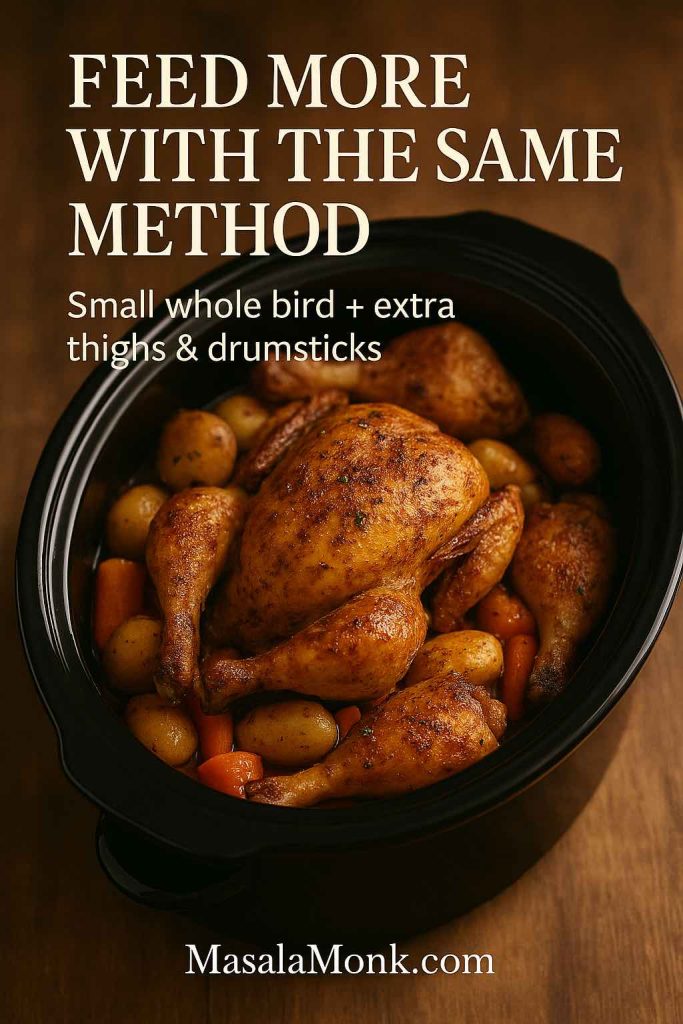
Black slow cooker filled with a small whole roasted chicken surrounded by extra thighs and drumsticks over potatoes and carrots, showing how to stretch a crock pot whole chicken with additional pieces.
When you’re feeding a crowd, nestle a small whole bird on top of your veggie bed and pack thighs and drumsticks all around it—the same slow cooker method gives you a mix of white and dark meat without any extra fuss.

Stretching a Whole Chicken in Crock Pot with Extra Pieces

If you want the presentation of a whole chicken in crock pot but need more portions, you can combine both approaches:

  • Place a small whole bird on your vegetable bed.
  • Nestle seasoned thighs or drumsticks around the sides.

Everything cooks together in the same slow cooker roast chicken environment, and you end up with a mixture of white and dark meat to serve.


Frozen Whole Chicken in Crock Pot? Why Thawing Matters

It’s tempting, especially on busy days, to think, “I’ll just put a frozen whole chicken in the crock pot and let it go all day.” It sounds convenient, but it’s not a great idea.

Slow cookers heat food gently over a long period. If you start with a solid frozen block, the centre of the chicken can sit for too long at temperatures where bacteria thrive before it finally reaches 165°F. That’s why official advice from sources like FoodSafety.gov is clear: thaw meat and poultry safely in the refrigerator before putting them into a slow cooker.
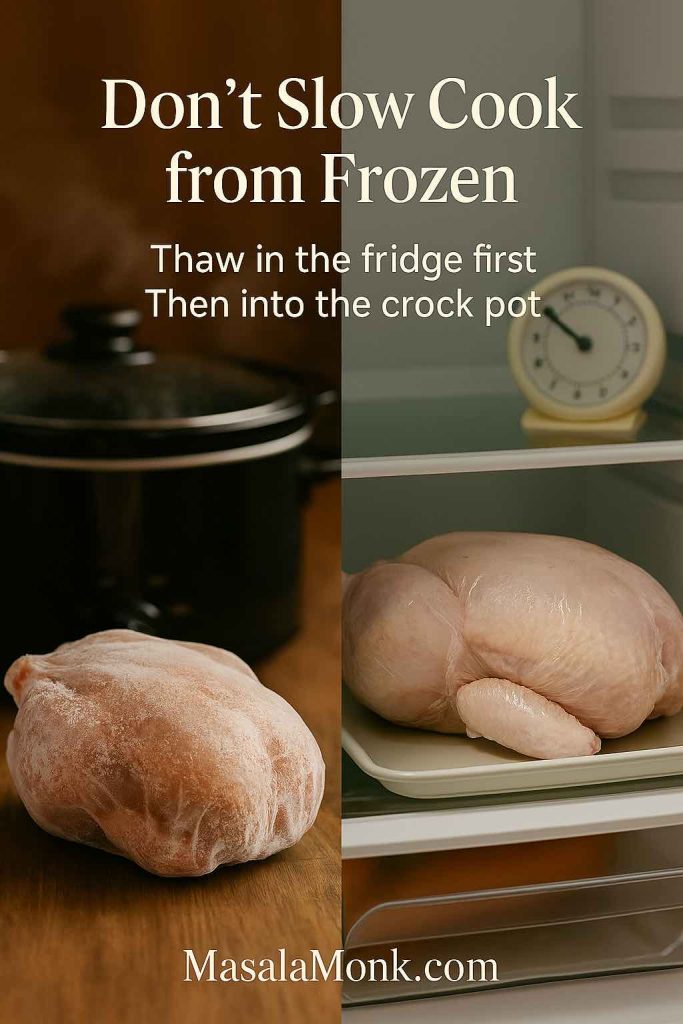
Split image showing a frozen whole chicken on the counter next to a slow cooker on one side and the same chicken thawing on a tray in the fridge with a timer on the other side, explaining that you should thaw chicken before cooking it in a crock pot.
Skip the temptation to drop a frozen bird straight into the crock pot—thaw it in the fridge first, then slow cook, so the chicken moves quickly through the “danger zone” and reaches a safe 165°F / 74°C all the way through.

So instead of chasing crockpot frozen whole chicken shortcuts, it’s much safer to:

  1. Thaw the chicken fully in the fridge.
  2. Pat it dry and follow the whole chicken in crock pot method.
  3. Check the internal temperature to confirm it’s reached the safe zone.

If you often forget to thaw and find yourself in a rush, it’s better to lean on a pressure cooker or Instant Pot recipe designed for frozen poultry. Something like this Instant Pot rotisserie-style chicken shows how quickly a pressure cooker can handle a whole bird, including from frozen, without the drawn-out lukewarm phase a slow cooker would go through.


BBQ, Stuffed and Rotisserie-Style Slow Cooker Chicken

Once you’re confident with the basic whole chicken recipes slow cooker crock pot format, you can start changing the flavours and finishing touches.
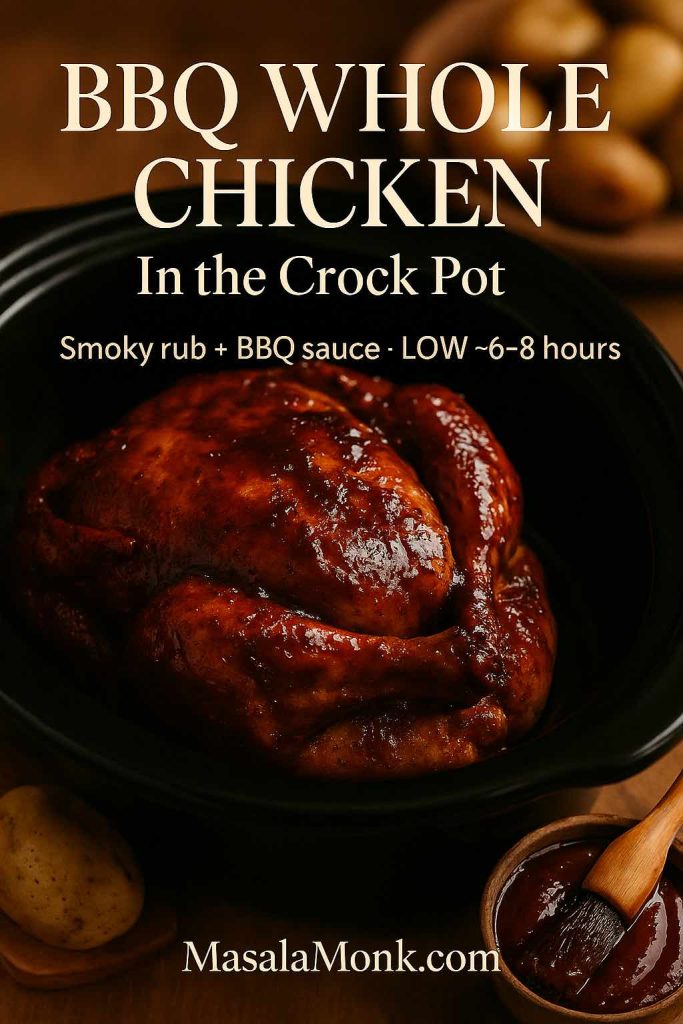
Whole chicken coated in glossy BBQ sauce sitting in a black crock pot with a bowl of extra sauce and a brush beside it, showing a BBQ-style slow cooker whole chicken.
Rub the bird with a smoky spice mix, nestle it into the crock pot and finish with a glossy BBQ sauce—this version is perfect shredded into buns or carved like a sticky, crowd-pleasing roast.

BBQ whole chicken

For a crock pot whole chicken BBQ feel:

  • Stir together salt, pepper, smoked paprika, garlic powder, onion powder, and a little brown sugar.
  • Rub this spice mix all over the chicken.
  • Sit the bird on onions in the crock pot.
  • Pour a small amount of stock and a few tablespoons of BBQ sauce around the base.

Cook on LOW until done. At the end, you can:

  • Brush the top with extra BBQ sauce and crisp it under the grill, or
  • Shred the meat in the crock and add more sauce for a pulled-chicken style dish

Pile it onto buns, add slaw, and dinner becomes a casual BBQ sandwich night. If you want fresh ideas for sandwich fillings, the collection of chicken sandwich recipes offers everything from classic combos to spicy twists.
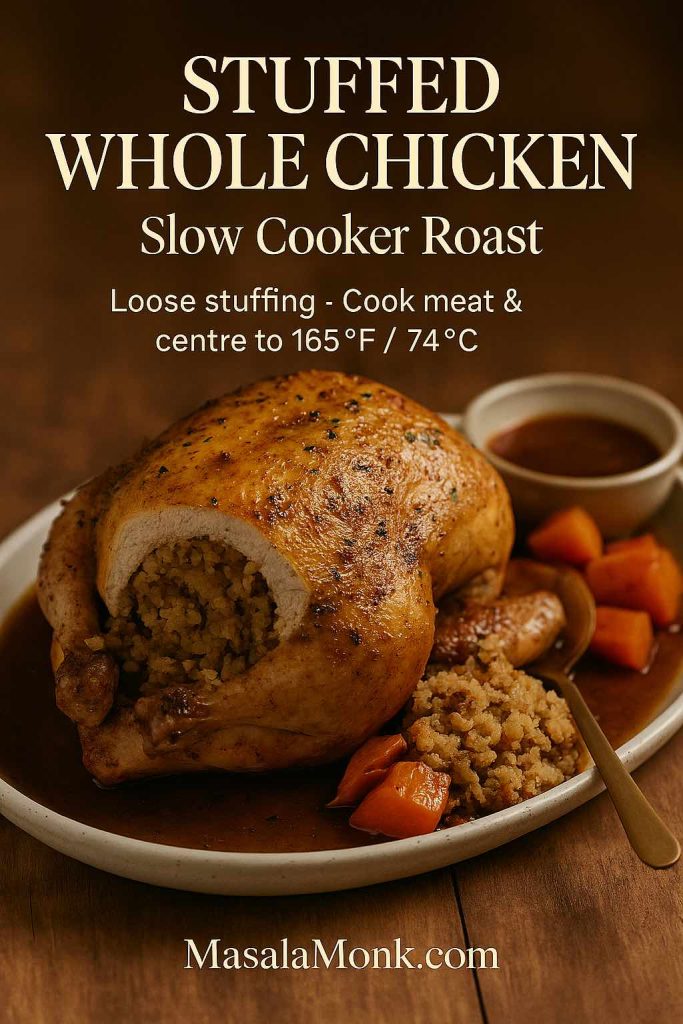
Slow cooker stuffed whole chicken on a platter, sliced open to show loose bread and rice stuffing with carrots and rich juices, illustrating a stuffed crock pot roast chicken.
Keep the stuffing loose and always check that both the meat and the very centre hit 165°F / 74°C—this way your slow cooker stuffed chicken turns out moist, flavourful and safely cooked all the way through.

Stuffed whole chicken in the crock pot

A stuffed whole chicken crock pot feels very special, but the method is familiar:

  • Assemble a loose bread-based or rice stuffing.
  • Spoon it gently into the chicken’s cavity—it should be comfortably filled, not tightly packed.
  • Season the outside as usual and cook on LOW.

Because stuffing is dense, you need to make sure:

  • The thickest parts of the meat reach 165°F
  • The centre of the stuffing also reaches 165°F

It’s the same principle you’d follow for stuffed roast chicken in the oven; using a thermometer for both meat and stuffing keeps this cosy version of chicken pot roast safely on track.
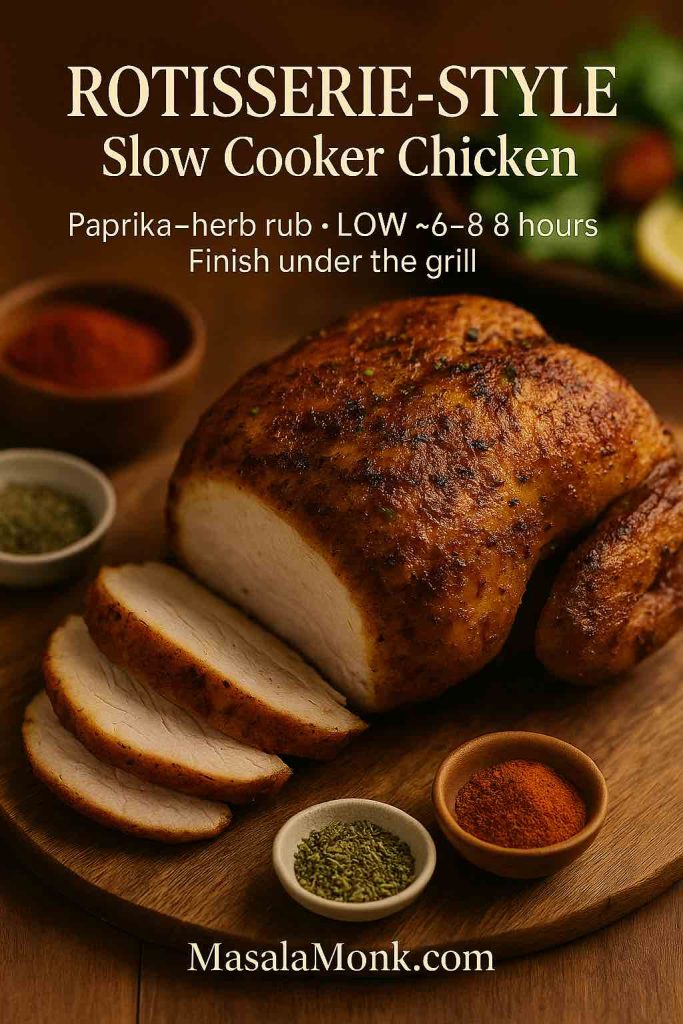
Rotisserie-style slow cooker chicken with golden paprika and herb crust sliced on a wooden board, surrounded by small bowls of paprika and dried herbs.
A simple paprika–herb rub plus a quick blast under the grill turns slow cooker chicken into a rotisserie-style roast—slice it up for salads, wraps, grain bowls or easy weeknight plates.

Rotisserie-style slow cooker chicken

When people talk about a crockpot rotisserie chicken recipe, they usually mean slow-cooked chicken with that familiar rotisserie-spice flavour and slightly crisp skin.

To approximate that:

  • Make a rub with salt, pepper, paprika, garlic powder, onion powder and dried thyme.
  • Rub it thoroughly over the chicken, including under the skin where possible.
  • Use enough onion or potato underneath to keep the chicken lifted above the liquid.
  • Cook on LOW until fully done.
  • Finish under a grill for rotisserie-like colour and texture.

From there, you can slice the meat neatly like a store-bought rotisserie chicken, or shred it to use in things like chicken Alfredo pasta, quesadillas, tacos, or a bubbling buffalo chicken dip for parties.


What to Serve with Whole Chicken in Crock Pot Dinners

Once your whole chicken in crock pot is done, the fun part begins: putting everything on the table.

Bright and fresh sides

Slow-cooked chicken and potatoes are rich and comforting, so something fresh and tangy on the side keeps the plate lively:

  • A crisp green salad with lemony dressing
  • Sliced cucumbers and tomatoes tossed with olive oil and vinegar
  • A bowl of Greek tzatziki sauce for dipping chicken and vegetables

These light sides work particularly well if you’ve made a chicken pot roast recipe with lots of potatoes and carrots underneath the bird.

Plate of sliced crock pot chicken with roast potatoes surrounded by green salad, cucumber and tomato salad, tzatziki, mashed potatoes, macaroni and cheese and fries, showing fresh and comfort side dishes to serve with slow cooker chicken.
Pair your crock pot chicken with bright salads and tzatziki when you want something light, or lean into full comfort mode with mashed potatoes, mac and cheese and fries—the same slow cooker roast works with both kinds of plates.

Classic comfort sides

On cold evenings or when you just want maximum comfort:

  • Spoon the chicken pot roast in slow cooker over buttery mashed potatoes or rice. If rice sometimes trips you up, the detailed guide on how to cook rice walks through several foolproof methods.
  • Add a baking dish of macaroni and cheese for a rich, indulgent side.
  • Fry up a batch of homemade French fries if your household loves the roast-chicken-and-fries combination.

If you’re feeding a crowd, you can also serve the shredded chicken as part of a “build your own plate” spread: rolls or flatbreads, pickles, raw vegetables, dips like spinach dips and buffalo dip, plus bowls of roasted vegetables from the crock. Everyone assembles their own perfect plate.


Making the Most of Leftover Whole Chicken from the Crock Pot

One of the best things about a whole chicken in crock pot is how generous the leftovers are.

Storing safely

As soon as dinner is over and the chicken has cooled slightly:

  1. Pull off any remaining meat from the bones.
  2. Chop or shred it into bite-size pieces.
  3. Store the meat in an airtight container in the fridge for up to 3–4 days.

Strain the cooking juices into a jar. Once chilled, you’ll see a layer of fat on top and rich jelly-like stock underneath. Both are useful:

  • Use the fat for frying onions or potatoes.
  • Use the stock as a base for soups, sauces, or to cook rice and grains.
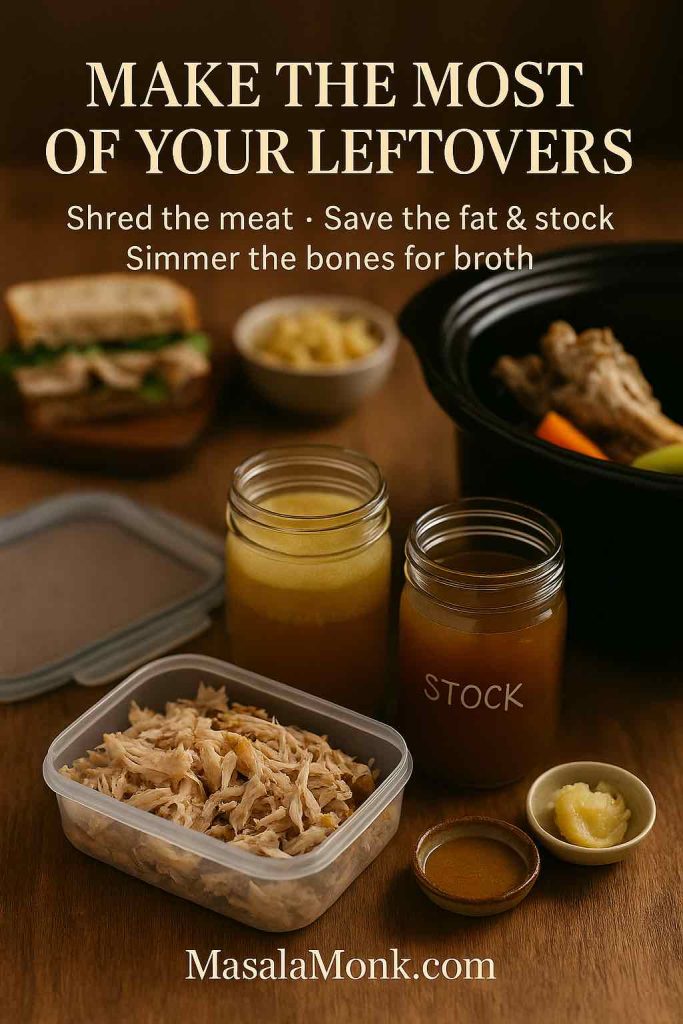
Container of shredded leftover chicken, jars of chilled chicken stock with a fat layer on top, and a slow cooker insert filled with bones and vegetables, showing how to save and use every part of a crock pot whole chicken.
Shred the meat for easy meals, pour the fat into a small dish for frying, and turn the bones plus cooking juices into homemade stock—one slow cooker chicken quietly sets you up for several more dinners.

Leftover meal ideas

There are endless ways to use leftover slow cooker roast chicken. A few easy ones:

  • Stir shredded chicken into chicken Alfredo pasta for a quick, creamy dinner.
  • Stuff it into sandwiches or wraps with ideas borrowed from the chicken sandwich recipes collection—BBQ, cheesy melts, buffalo style and more.
  • Toss it into salads with crisp lettuce, cucumber, cherry tomatoes and a sharp dressing.
  • Fold it into soups or stews, using the crock pot juices as part of the broth.
  • Combine it with cooked vegetables and gravy, then top with pastry or mashed potatoes to make comforting chicken pies.

Meanwhile, the bones can go right back into the slow cooker with fresh water, an onion, a carrot and a stick of celery. Let them simmer overnight on LOW and you’ll wake up to a simple homemade stock, ready to be strained, cooled and frozen in portions.


Pulling It All Together

When you step back, a whole chicken in crock pot is one of those quiet kitchen skills that makes life easier without a lot of fanfare. With one method, you can:

  • Make a complete slow cooker roast chicken with very little hands-on time
  • Turn it into a one-pot dinner with potatoes and vegetables
  • Adapt it for thighs, quarters and drumsticks
  • Explore BBQ, stuffed and rotisserie-style variations
  • Stretch leftover meat and bones into several more meals
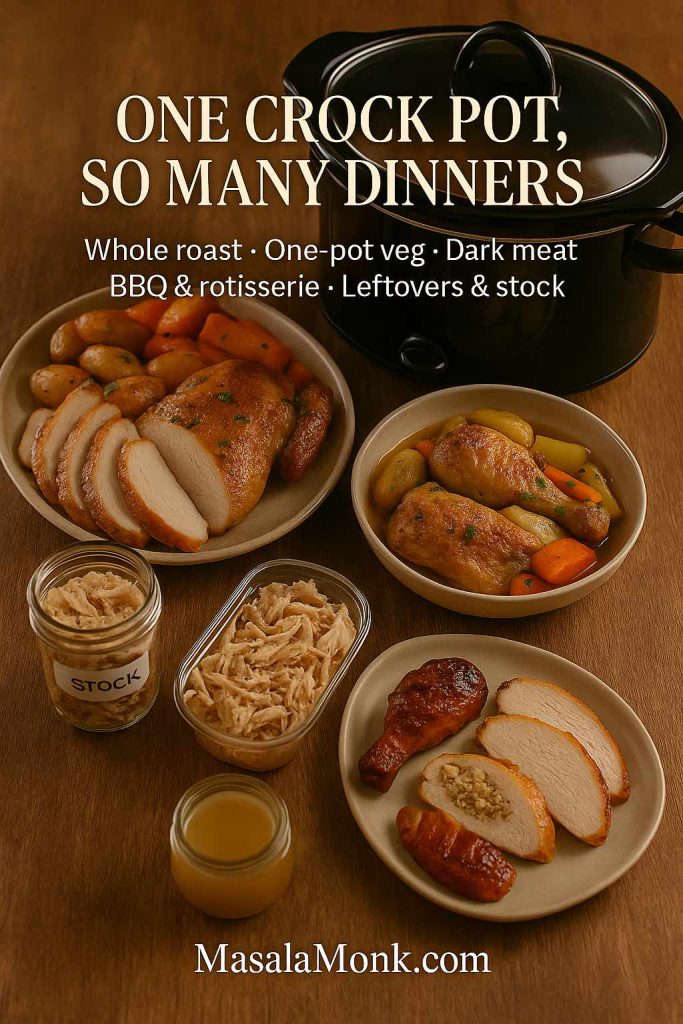
Black crock pot surrounded by plates of sliced roast chicken with vegetables, dark meat pieces, BBQ and stuffed chicken, plus jars of shredded meat and stock, showing how one slow cooker whole chicken can make many different meals.
One slow cooker method gives you it all—classic roast chicken, one-pot veg, juicy dark meat, BBQ and rotisserie-style twists, plus leftover meat and homemade stock for easy meals later in the week.

It’s also a technique that fits easily inside good food-safety practice: thaw the chicken first, keep the lid on, cook on LOW until a thermometer reads 165°F in the thickest parts, just as guides like FoodSafety.gov’s slow cooker safety article recommend.

Once you’ve cooked a couple of whole chicken recipes slow cooker crock pot style, you’ll probably start tweaking them instinctively—extra garlic one week, more lemon the next, maybe a smoky paprika-heavy rub after that. The beauty is that the core never really changes: a seasoned bird, a gentle heat, a few hours of patience, and you’re rewarded with a pot full of tender meat, vegetables, and aroma that makes your kitchen feel like home long before anyone sits down to eat.
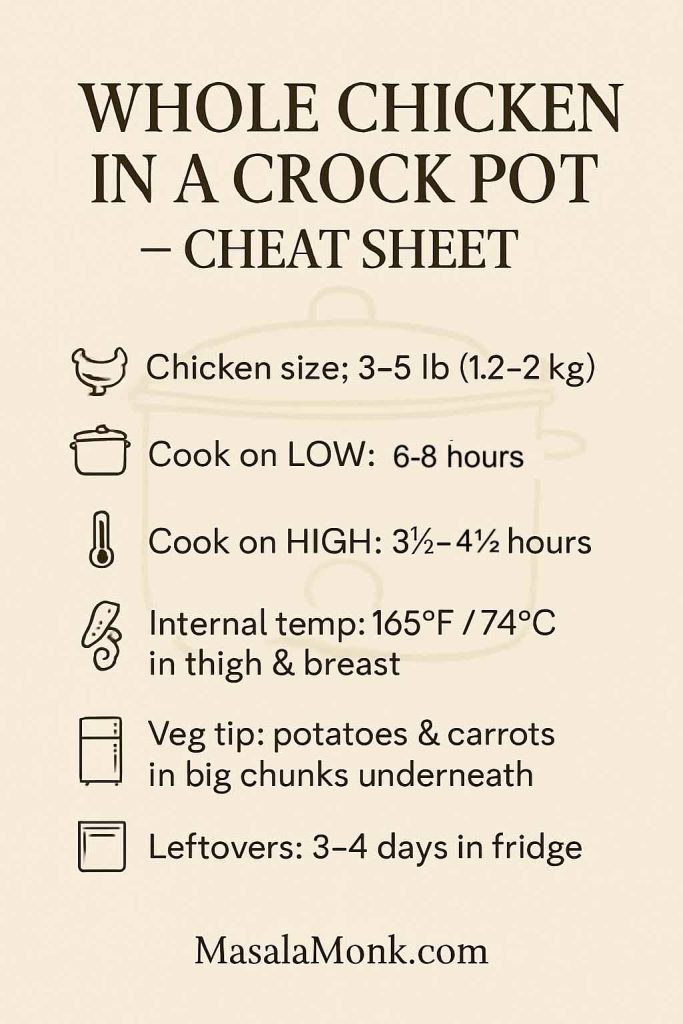
Infographic cheat sheet for cooking a whole chicken in a crock pot, showing recommended chicken size, LOW and HIGH cooking times, safe internal temperature of 165°F / 74°C, vegetable tip and how long leftovers keep in the fridge.
Save or pin this whole chicken in a crock pot cheat sheet so you don’t have to rethink the basics—size, timing, temperature and leftovers—every time you set up your slow cooker.

FAQs

1. How long does it take to cook a whole chicken in crock pot on LOW?

For a 3–5 lb bird, a whole chicken in crock pot usually takes about 6–8 hours on LOW. Smaller chickens finish closer to six hours, while larger ones need nearer eight. Always check that the thickest part of the breast and thigh reaches 165°F / 74°C before serving.


2. Can I cook a whole chicken in crock pot on HIGH instead of LOW?

Yes, you can cook a whole chicken in crock pot on HIGH if you’re short on time. In that case, expect roughly 3½–4½ hours of cooking. However, LOW gives a more tender, juicy result, so use HIGH only when you really need to speed things up.


3. What size bird is best for whole chicken in crock pot recipes?

Most whole chicken in crock pot recipes work best with birds between 3 and 5 lb (1.2–2.2 kg). That size usually fits comfortably in a standard slow cooker and cooks evenly. If the chicken barely fits or pushes the lid up, it’s better to choose a smaller one.


4. Do I need to add liquid for a slow cooker whole chicken?

You only need a small amount of liquid for a slow cooker whole chicken recipe. About ¼–½ cup of stock or water is enough to get things going and prevent scorching. The chicken releases plenty of juices as it cooks, so too much liquid can make the flavour watery.


5. Can I cook potatoes and vegetables with my whole chicken in crock pot?

Absolutely. A whole chicken in crock pot with potatoes and vegetables is one of the easiest one-pot dinners. Place sturdy vegetables like potatoes, carrots and onions under the chicken so they soak up the juices while everything cooks together.


6. Will the vegetables get mushy in a chicken pot roast in slow cooker?

If you cut them too small, they can. For a chicken pot roast in slow cooker, keep potatoes and carrots in larger chunks. That way they become soft and flavourful, but still hold their shape by the time your slow cooker whole chicken is done.


7. Is it safe to cook a frozen whole chicken in a slow cooker?

No, it’s not recommended to put a frozen whole chicken in slow cooker. The centre takes too long to heat up, which can keep it in the “danger zone” for bacteria. Always thaw the chicken in the fridge first, then follow your favourite whole chicken slow cooker recipe.


8. How can I get crispy skin on a whole chicken slow cooker recipe?

A slow cooker makes meat tender but doesn’t crisp the skin. To mimic a baked chicken crock pot result, transfer the cooked chicken to a roasting pan and put it under a hot grill or broiler for a few minutes. The skin will brown and crisp while the inside stays juicy.


9. How do I know when my whole chicken in crock pot is done?

The best way is to use a thermometer. For a safe whole chicken in crock pot, the thickest part of the breast and thigh should read 165°F / 74°C. The legs should also move easily and the juices should run clear, not pink.


10. Can I stuff a whole chicken for a crock pot chicken roast?

Yes, but you have to be careful. For a stuffed crock pot chicken roast, keep the stuffing loose rather than packed, and check the temperature in the centre of the stuffing as well as in the meat. Both should reach 165°F / 74°C before you serve.


11. Do I have to brown the chicken before putting it in the slow cooker?

No, you don’t have to brown the chicken first for a whole chicken in slow cooker. The recipe works perfectly well without that extra step. If you want a deeper flavour, you can brown it in a pan first, but it’s optional rather than essential.


12. Can I cook just chicken thighs or drumsticks instead of a whole chicken in crock pot?

Definitely. The same method works for slow cook whole chicken recipes and for pieces. Bone-in thighs, drumsticks and leg quarters cook faster—usually in 4–6 hours on LOW—so they’re a good option when you don’t need a full bird.


13. How should I store leftover slow cooker whole chicken?

Once your slow cooker whole chicken has cooled slightly, remove the meat from the bones and store it in an airtight container in the fridge. It keeps well for about 3–4 days. You can also freeze leftover chicken for easy future meals.


14. What can I make with leftover whole chicken from the crock pot?

There are lots of options. Shredded meat from a whole chicken in crock pot is perfect for sandwiches, wraps, quesadillas, pasta, fried rice, and soups. You can also use the carcass to make homemade stock for the next batch of chicken pot roast or soup.


15. Is a whole chicken in crock pot healthier than fried chicken or takeout?

Generally, yes. A whole chicken in crock pot uses simple ingredients and doesn’t require deep frying. You control the amount of salt, fat and seasoning, and you can pair it with plenty of vegetables, which usually makes it lighter than most takeout options.


16. Can I use boneless chicken for this slow cooker whole chicken style recipe?

You can adapt the flavours, but it won’t really be a whole chicken in crock pot recipe anymore. Boneless chicken cooks faster and can dry out more easily. If you want the same juicy, roast-style result, bone-in and skin-on pieces are a better substitute.


17. Why does my whole chicken in crock pot fall apart when I lift it out?

That’s usually a good sign. A very tender whole chicken in crock pot can be hard to move because the meat is so soft. Use two large spatulas or a slotted spoon plus tongs, or simply carve and serve it directly from the slow cooker instead of lifting it whole.


18. Can I prepare the chicken the night before and start the crock pot in the morning?

Yes, as long as you handle it safely. You can season your whole chicken in crock pot the night before, cover it and keep it in the fridge. In the morning, place it into the slow cooker insert, add vegetables and liquid, then start cooking immediately.
Posted on 10 Comments

How to Cook Perfect Rice Every Time (Recipe)

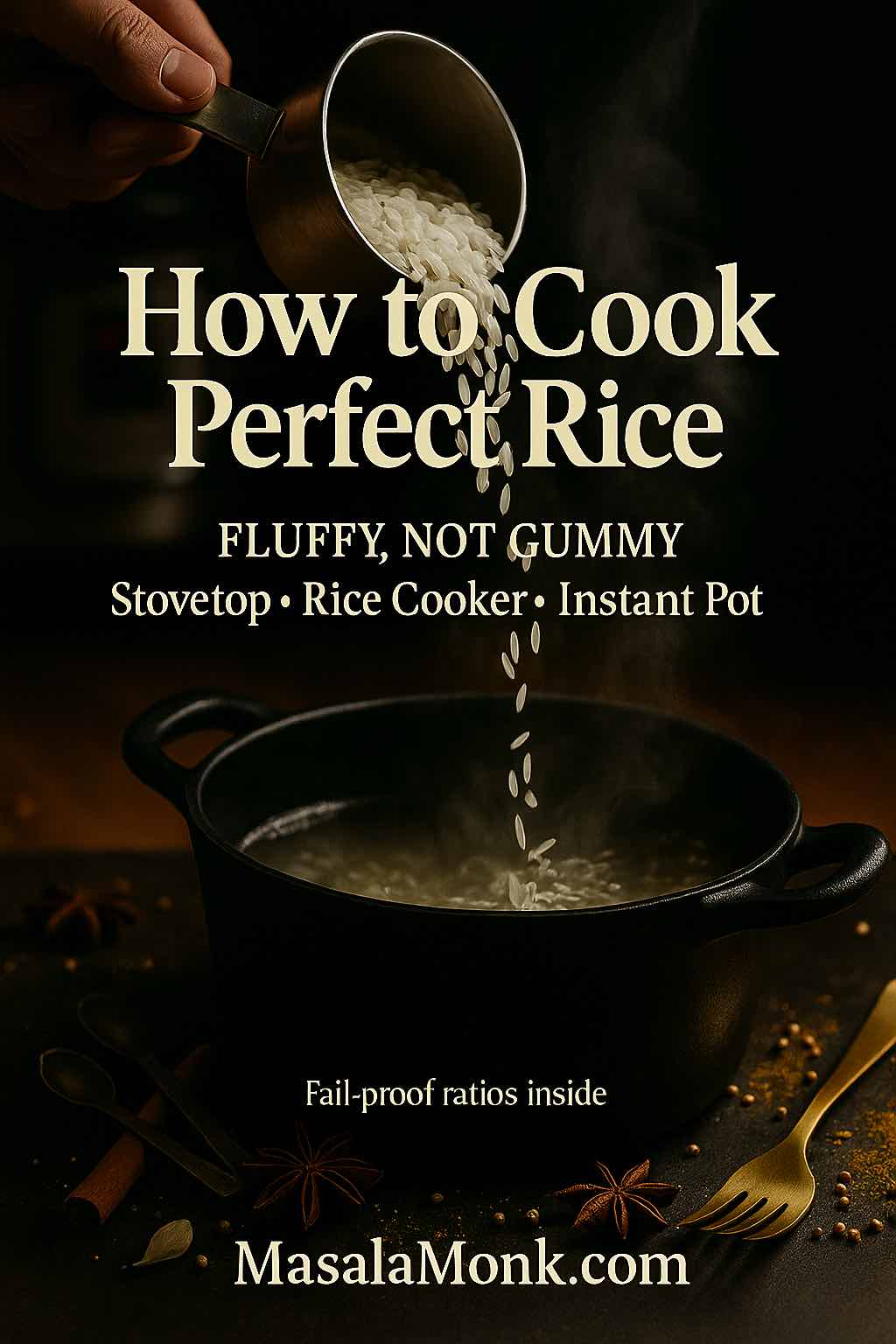
How to cook perfect rice — uncooked white rice pours from a measuring cup into a steaming black pot, with warm spices around; fluffy, not gummy.

Rice ought to be effortless. Nevertheless, a little too much water or a quick peek under the lid can turn a pot of promise into clumpy frustration. This guide shows how to cook perfect rice across methods and varieties—with crystal-clear steps, practical ratios, and why the small moves matter. You’ll learn a base stovetop technique, then branch into basmati, jasmine, sushi, and brown rice; after that, we’ll cover rice cookers and Instant Pots, storing and reheating safely, and turning leftovers into fast, satisfying meals. Along the way, you’ll find carefully chosen links for follow-up reading and technique deep dives woven naturally into the text.

The Baseline: How to Cook Perfect Rice on the Stovetop

If you only remember one method, make it this one. It delivers fluffy, separate grains without gimmicks, and it adapts to most long-grain white rices.

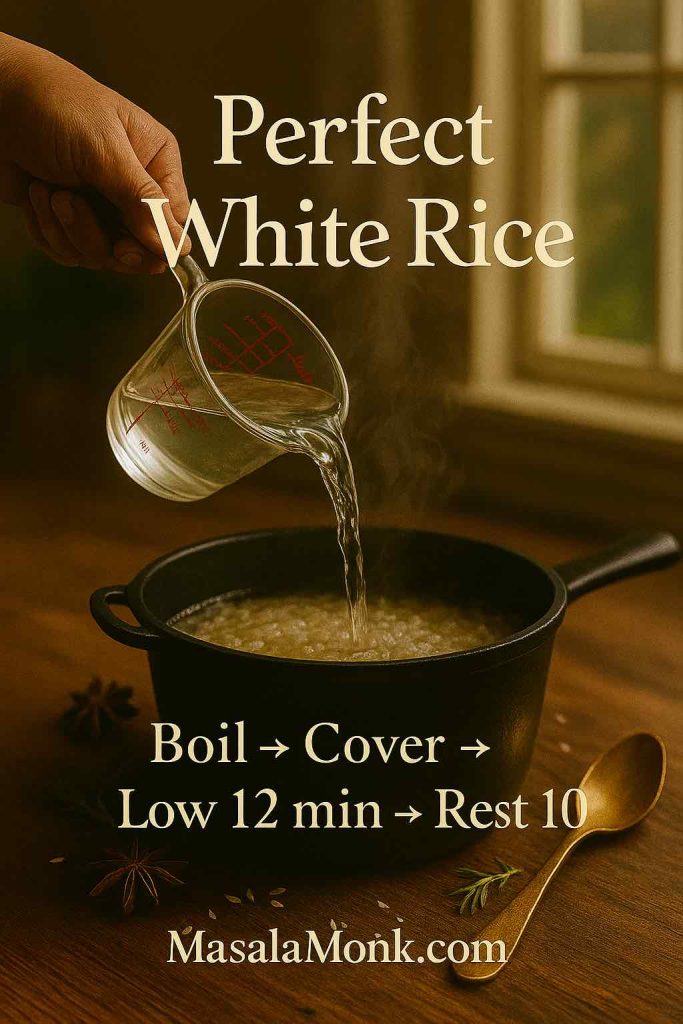
Daylight kitchen: water pours from a glass measuring cup into a pot of rinsed white rice; stovetop method—boil, cover, low 12 minutes, rest 10.
Perfect White Rice (Stovetop): Rinse well, bring to a boil, cover and cook on low for 12 minutes, then rest 10 before fluffing—reliable, fluffy results every time.

You’ll need: 1 cup long-grain white rice, 1½ cups water, a pinch of salt, a heavy pot with a tight lid, and a fork.

  1. Rinse thoroughly. Place the rice in a fine-mesh strainer and rinse under cold water, swishing with your hand until the water runs mostly clear. This removes excess surface starch so grains don’t glue together later.
  2. Measure precisely. For long-grain white rice on the stovetop, use 1½ cups water per 1 cup rice. Add a pinch of salt if you like.
  3. Boil, then cover. Bring the water to a rolling boil, stir in the rice once to break up any clumps, clamp on the lid, and immediately reduce the heat to low.
  4. Simmer gently for 12 minutes. No peeking. Lifting the lid dumps steam and derails even cooking.
  5. Rest for 10 minutes, still covered. The residual heat finishes the centers without overcooking the outer layers.
  6. Fluff and vent. Off the heat, uncover and fluff with a fork. If you want extra-dry, restaurant-style grains, briefly vent another 2–3 minutes.

As an optional flourish, place a clean kitchen towel between the pot and the lid during the rest; it absorbs condensation and prevents drip-back, yielding lighter, drier rice. For a quick visual explanation of this trick, see the concise breakdown of the towel-under-lid rest.

Why this works

Rinsing reduces sticky surface starch; an immediate drop to low heat stabilizes simmering; the undisturbed rest lets steam equalize moisture from the outside in. Moreover, the ratios here are calibrated for typical long-grain white rice; once you navigate specialty varieties, you’ll tweak the numbers a bit, but the underlying logic stays consistent.

Also Read: Homemade Hot Chocolate with Cocoa Powder Recipe

At-a-Glance Cheatsheet for Cooking Perfect Rice

Standard Water Ratios (by volume) for Making Rice by various Methods

Rice typeRinse?Soak?Stovetop water : riceRice cookerInstant Pot (HP)Microwave rice cooker
Long-grain whiteYesNo1.5 : 11.1–1.2 : 1 (or to line)1 : 1, 3–4 min + 10 min NR1.5 : 1, 10–12 min, 5 min rest
JasmineYes10 min (optional)1.25–1.33 : 1~1.1–1.2 : 11 : 1, 3 min + 10 min NR1.5 : 1, 10–12 min
BasmatiRinse very well20–30 min1.5 : 11.2 : 11 : 1, 6 min + 10 min NR1.5 : 1, 12–14 min
Short-grain / SushiRinse until clear20–30 min1.1–1.2 : 1~1.1 : 11 : 1, 5 min + 10 min NR1.25–1.33 : 1, 10–12 min
Brown (long-grain)Rinse20 min (optional)2–2.25 : 11.4–1.5 : 11.25–1.33 : 1, 22–25 min + 10 min NR2 : 1, 20–22 min
Cheat Sheet for How to Cook different types of Rice at Home using various methods & devices.

NR = Natural Release (don’t vent; let pressure drop for the stated time).

Also Read: Peanut Butter Cookies (Classic Recipe & 3 Variations)

How to Cook Perfect Rice for Basmati

Basmati rewards gentle handling and a short soak. Its hallmark is long, elegant grains that stay separate, so our moves aim to protect structure rather than chase stickiness.

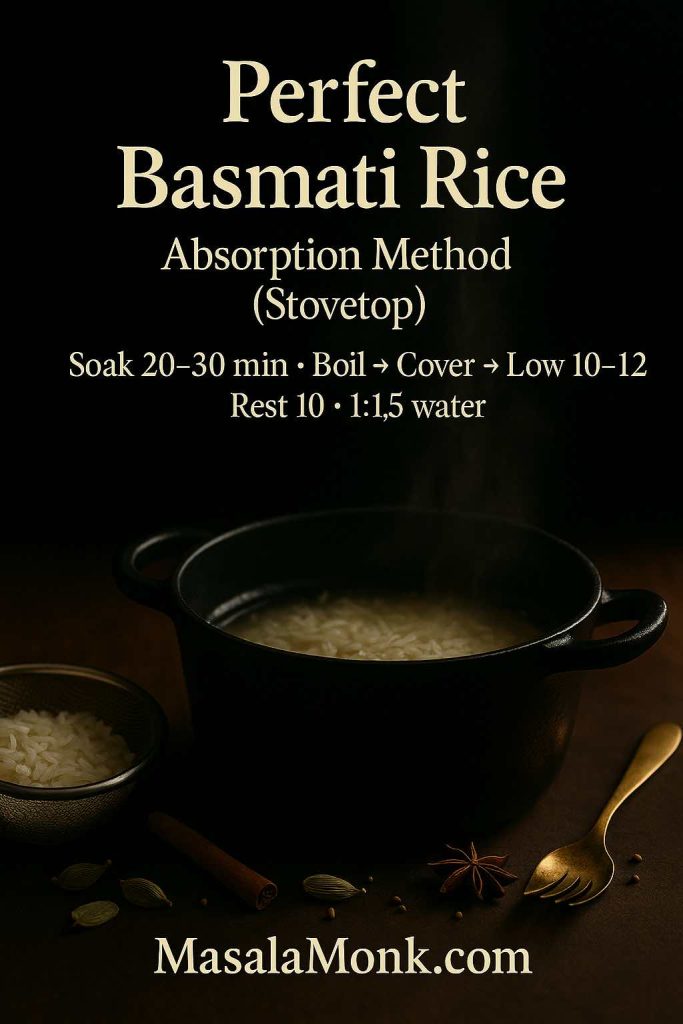
Black enamel pot with steam and soaked basmati; soak 20–30 min, boil → cover → low 10–12, rest 10; 1:1.5 water.
Perfect Basmati Rice: Rinse well, soak 20–30, drain thoroughly, boil → cover → low 10–12, rest 10. Ratio 1 cup : 1½ cups water.
  1. Rinse very well until the water is almost clear—this usually takes 2–3 changes.
  2. Soak 20–30 minutes. Hydrating the core ensures the grains elongate without bursting. Drain thoroughly.
  3. Use 1½ cups water per cup of rice on the stovetop. Bring to a boil, cover, reduce to low, and simmer 10–12 minutes.
  4. Rest 10 minutes covered, then fluff. For even airier grains, spread the rice on a tray for 2–3 minutes to vent.

Beyond texture, many cooks pick basmati for its gentler impact on blood sugar compared with some other white rices. If that angle matters to you, explore a compact primer on basmati rice GI and nutrition and a broader look at GI vs GL across rice types. Because context helps, you might also skim a practical guide to reducing the glycemic impact of rice using cook-cool-reheat strategies you can fold into weekly meal prep.

How to Cook Perfect Jasmine Rice

Jasmine sits between fluffy and plush. It wants slightly less water than standard long-grain; too much and it edges toward soft and clingy.

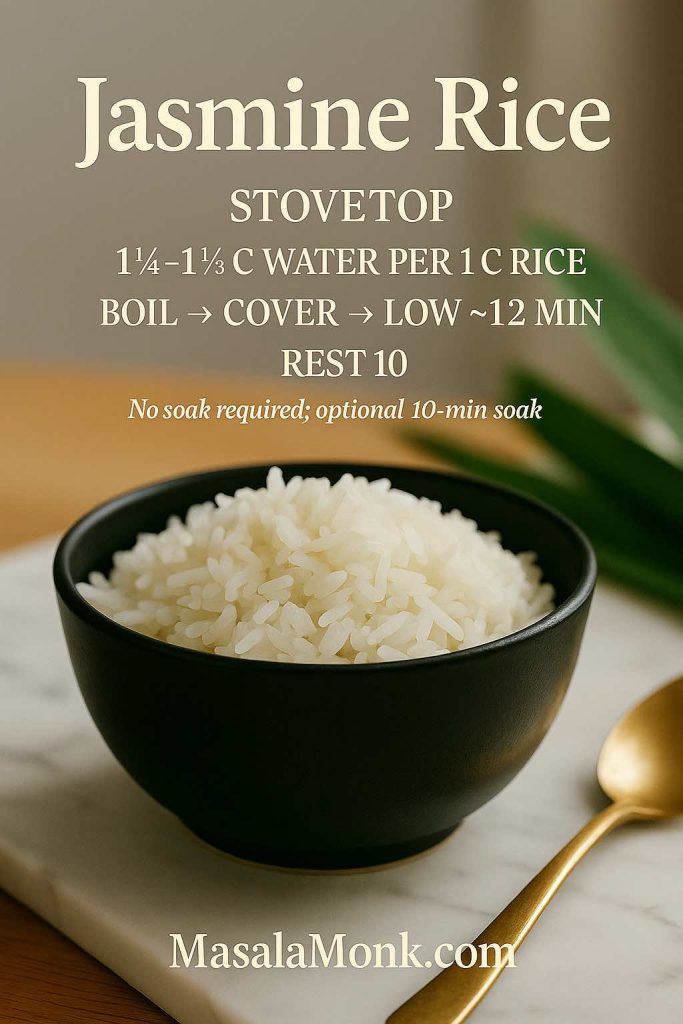
Black enamel pot with steaming jasmine rice; no soak needed; 1¼–1⅓ water; boil, cover, low ~12, rest 10.
Jasmine Rice (Stovetop): Slightly less water than standard long-grain keeps jasmine plush—not soggy.
  • Rinse until the water mostly clears; an optional 10-minute soak can soften the core.
  • Measure 1¼–1⅓ cups water per cup of rice, depending on how dry or tender you prefer it.
  • Cook like the baseline: boil → cover → low simmer ~12 minutes10-minute rest.

For a ratio-first discussion that aligns with testing across brands, skim this practical stovetop jasmine/white rice method. It mirrors the idea that jasmine benefits from slightly less water than old “2:1” rules of thumb.

Also Read: Green Tea Shot with Jameson | Recipe & 10 Variations

How to Cook Perfect Rice for Sushi (Short-Grain)

Sushi rice is meant to cling. Nevertheless, the goal is glossy and supple—not mushy—so gentle handling and proper seasoning matter.

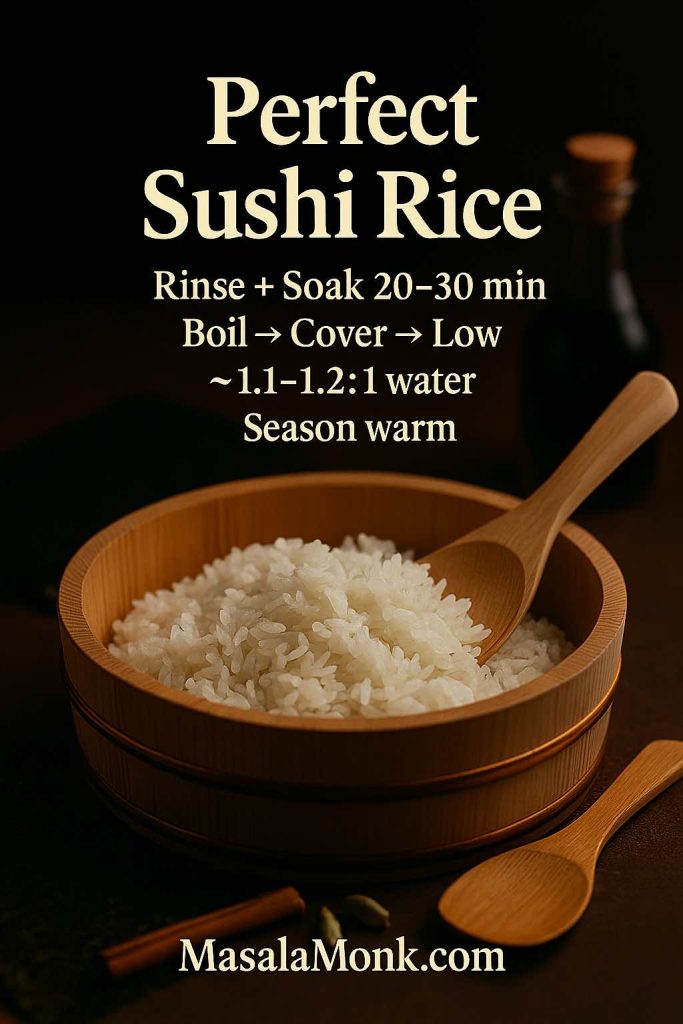
Hangiri filled with glossy sushi rice; rinse and soak 20–30 minutes, boil then cover and cook on low with ~1.1–1.2:1 water; rest 10 minutes and season warm.
Perfect Sushi Rice: Rinse, soak 20–30 min, cook with ~1.1–1.2 : 1 water, rest 10, then season while warm for shine and gentle cling.
  1. Rinse until the water is nearly clear to remove powdery starch.
  2. Soak 20–30 minutes; drain. This gives the short grains an even, tender finish.
  3. Use ~1.1–1.2 : 1 water to rice on the stovetop or your cooker’s dedicated “sushi” line.
  4. Cook, rest 10 minutes, then season while warm with sushi vinegar (rice vinegar plus sugar and salt).
  5. Fold, don’t mash. Fan as you cut and turn the rice to keep grains intact and shiny.

For well-illustrated steps and classic proportions, follow a reliable reference like Just One Cookbook’s sushi rice method. And because short-grain techniques differ from long-grain instincts, returning to photos mid-process can be surprisingly helpful.

Also Read: Béchamel Sauce for Lasagna: Classic, Vegan & Ricotta Sauce Recipe

How to Cook Perfect Brown Rice (Tender Without the Chalk)

Brown rice asks for more water and time because the bran and germ slow hydration. Still, done right, it’s deeply satisfying—nutty, chewy, and never chalky.

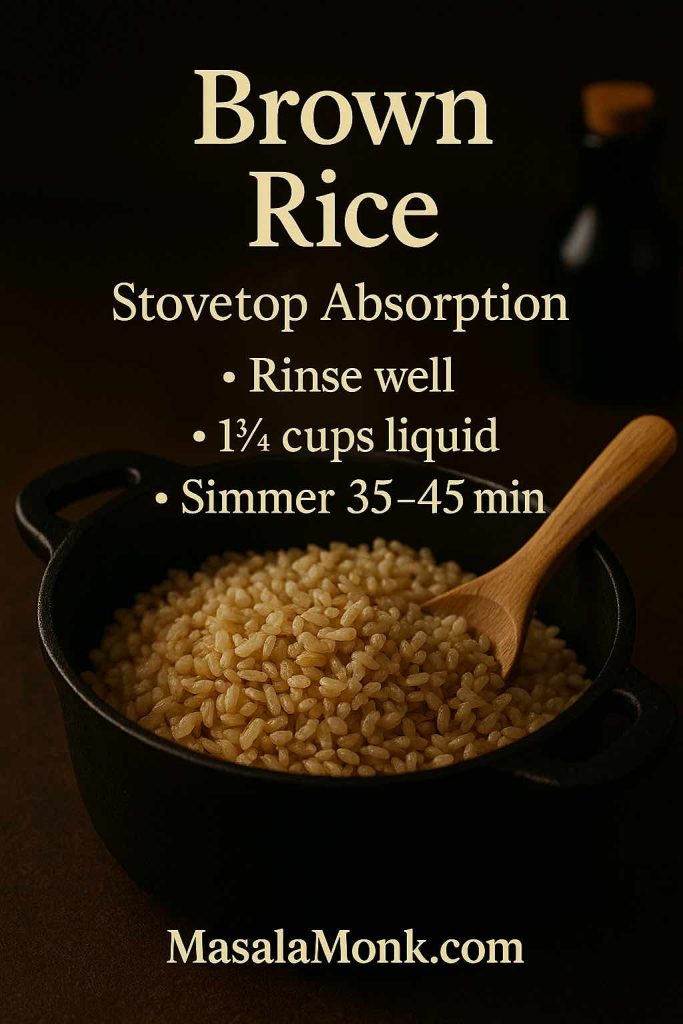
Cast-iron pot of cooked brown rice; stovetop absorption method—rinse, 2–2¼ cups water per cup rice, boil then cover and low simmer 35–45 minutes, rest 10.
Brown Rice (Stovetop): Rinse well, use 2–2¼ : 1 water, boil → cover → low simmer 35–45, then rest 10 for nutty, tender grains.
  • Stovetop: Use 2–2¼ : 1 water to rice. Bring to a boil, cover, and simmer 35–45 minutes until the water is absorbed; rest 10 minutes before fluffing.
  • Instant Pot: Measure 1.25–1.33 : 1 water to rice. Cook 22–25 minutes on high pressure, then let it naturally release for 10 minutes before venting.

If nutrition is part of your decision tree, it’s worth reading the FDA’s consumer resources on arsenic in rice and rice products and the agency’s technical risk assessment overview. Among practical takeaways, an excess-water method (boil in plenty of water, then drain) can reduce inorganic arsenic—a trade-off to consider if that aligns with your health priorities. Meanwhile, if you’re comparing grains for weekly menus, this side-by-side look at quinoa vs rice is a handy complement.

Also Read: Crock Pot Lasagna Soup (Easy Base + Cozy Slow-Cooker Recipes)

Rice Cookers Demystified

A good rice cooker is like cruise control: set it and focus on something else. Still, understanding its logic helps you get the most out of it.

  • Trust the lines. Most cookers calibrate for specific varieties; fill to the marked lines instead of relying on generic kitchen ratios. If you want brand-specific guidance, browse Zojirushi’s concise white rice instructions or the broader manuals page.
  • Rinse and drain well. Excess water clinging to the grains can skew the cooker’s assumptions.
  • Let it rest. When the switch flips to “warm,” give the rice 10 minutes before opening; this small pause improves texture noticeably.
  • Fluff and vent briefly. Loosen the rice, then leave the lid ajar for a minute or two for drier, separate grains—especially useful when the next stop is a stir-fry.

Even in the cooker, basmati appreciates a 20–30-minute soak and jasmine benefits from slightly less water than standard long-grain. Sushi rice, on the other hand, thrives when you follow your model’s dedicated short-grain settings.

Also Read: Cottage Cheese Lasagna Recipe | Chicken, Spinach, & Ricotta

Instant Pot and Pressure Cooker Shortcuts

Pressure cookers shine when you want predictability. Because they operate in a sealed environment, small ratio changes matter; nevertheless, the results are consistent once dialed in.

  • White rice (long-grain or jasmine): 1:1 water to rice, 3–4 minutes on high pressure, 10-minute natural release.
  • Basmati: 1:1, 6 minutes on high, 10-minute natural release.
  • Short-grain for sushi: 1:1, 5 minutes on high, 10-minute natural release.
  • Brown: 1.25–1.33:1, 22–25 minutes on high, 10-minute natural release.

For model-specific variations, it’s wise to refer to the manufacturer’s documentation; start at the Instant Pot manuals hub and, if you want a baseline reference recipe, browse an official white rice example by Instant Pot. Because factors like altitude and personal texture preference play a role, adjust subsequent batches a tablespoon or two of water at a time rather than reinventing ratios from scratch.

Also Read: How to Make Churros (Authentic + Easy Recipe)

Texture Control: From Feather-Light to Just-Sticky-Enough

Understanding what affects texture allows you to steer the outcome. Consider these levers:

  • Rinse level. More rinsing = more separation. Minimal rinsing = more cling. Consequently, long-grain white benefits from thorough rinsing; sushi demands cleaning but then recruits seasoning to achieve stickiness.
  • Soaking. Basmati and sushi gain even doneness from soaking; jasmine may soften slightly with a short soak but doesn’t require it.
  • Agitation. Stir only once after adding rice to boiling water; further agitation releases starch, which binds grains.
  • Lid discipline. Steam is your friend; lifting the lid mid-cook vents heat, lengthens cooking, and risks uneven texture.
  • Rest time. A 10-minute rest evens moisture and turns “good” rice into “great” rice. Additionally, a towel-under-lid rest (during the off-heat phase) curbs condensation and keeps the top layer from turning soggy—see the towel trick for a quick demo.

Also Read: How to Cook Bacon in the Oven (Crispy, No-Mess, Crowd-Ready Recipe)

Scaling Up Without Guesswork

Perhaps you’re cooking for a crowd. Fortunately, the math scales cleanly as long as your pot is wide enough and the heat stays gentle.

  • 1 cup rice → 1½ cups water (stovetop long-grain white)
  • 3 cups rice → 4½ cups water
  • 4 cups rice → 6 cups water

For jasmine, aim for 1¼–1⅓ : 1; for basmati, 1½ : 1 with a soak; for brown, 2–2¼ : 1 on the stove or 1.25–1.33 : 1 under pressure. Rather than leap to big changes when scaling, adjust by 2–3 tablespoons of water per cup of rice after your first larger batch to match your stove, pot, and preference.

Also Read: French Toast Sticks (Air Fryer + Oven Recipe) — Crispy Outside, Custardy Inside

Storing, Cooling, and Reheating Safely

Rice is easy to make ahead, but it deserves the same diligence you’d give to chicken or soup. Cool it quickly, refrigerate promptly, and reheat thoroughly.

  • Cool fast. Spread hot rice on a sheet pan to release steam; once warmth dissipates, pack into shallow containers.
  • Refrigerate within 1–2 hours. The quicker you chill, the safer your leftovers.
  • Reheat to 165°F/74°C. In the microwave, sprinkle a tablespoon of water over each cup of rice, cover, and heat until piping hot; on the stovetop, add a spoonful of water and steam briefly. For authoritative guidance, bookmark the USDA’s page on leftovers and safe reheating.

If you’re exploring broader nutrition or contaminant questions around rice varieties and cooking methods, take a moment with the FDA’s resources on arsenic in rice and products. They’re balanced, practical, and help you decide when to use absorption versus excess-water techniques.

Also Read: 10 Best Chicken Sandwich Recipes (BBQ, Parm, Buffalo & More)

How to Cook Perfect Rice on Busy Weeknights

Life happens. Even so, you can still put excellent rice on the table without hovering over a pot.

  • Use the Instant Pot for white rice when you’re juggling multiple dishes. Measure 1:1, set 3 minutes on high, and walk away; dinner’s starch will be ready right as you need it.
  • Batch-cook basmati on Sunday. Soak, cook, fluff, cool quickly, and refrigerate. Basmati reheats beautifully and still eats light.
  • Lean on a rice cooker for hands-off consistency. Follow the model’s lines, then give it a 10-minute warm rest before fluffing. If you’re new to your machine, the brand’s manuals page is a shortcut to specifics.

Meanwhile, finishers make weeknight rice feel special: a pat of butter or ghee, a thread of olive oil, or a splash of toasted sesame oil right before serving. Even a few slices of ginger bloomed in oil at the start can transform a plain bowl.

Also Read: 10 Best Espresso Martini Recipe Variations (Bar-Tested)

Flavor Boosters and Simple Add-Ins

Before adding water, briefly warm 1 teaspoon oil or ghee in the pot and bloom aromatics—sliced garlic, crushed cardamom, or a bay leaf. During the rest, fold in chopped herbs (cilantro, scallions, or dill) or a handful of frozen peas for color. As you explore, keep a few ideas in your back pocket:

  • For an almost effortless rice bowl, toss hot grains with a splash of balsamic and olive oil, then crown with roasted vegetables. It’s a fast route to a satisfying dinner when time is scarce.
  • When a craving for dessert strikes, pivot to a silky Thai-style treat using coconut milk and ripe fruit—this approachable walkthrough on mango + coconut milk turns pantry items into a crowd-pleaser: creamy mango-coconut how-to. If you want a festival-worthy finish with sticky rice, try the kitchen’s fully detailed authentic mango sticky rice recipe.

Also Read: Macaroni & Cheese Recipe: Creamy Stovetop, Baked & Southern

Leftovers You’ll Look Forward To

Great rice rarely goes to waste, but planning for leftovers turns tomorrow’s meal into an easy win.

Same-Day Fried Rice (When You Just Cooked the Rice)

When fried rice is on tonight’s menu, lower the water for your white rice by 2 tablespoons per cup, then spread the cooked rice on a tray and chill it for 15–20 minutes. This brief drying step helps the grains sear rather than steam in the pan. For a crisp, minimal baseline, use a straightforward, wok-friendly technique like this classic egg fried rice walkthrough. If you prefer a vegetable-forward version loaded with texture, Kenji’s method-first approach shows how to balance heat, oil, and moisture for vivid results: easy vegetable fried rice.

Also Read: Vegan French Toast: 6 Easy Recipes (Pan, Air Fryer, GF & High-Protein)

Day-Old Transformations

Day-old rice is ideal for fried rice, obviously, yet it also shines in croquettes and stuffed vegetables. For a snack that feels special, use those leftovers to make crisp, melty arancini; the step-by-step guide to shaping, breading, and frying is here: turn leftover rice into arancini. Serve with a quick marinara or a garlicky yogurt dip and you’ve got a win either way.

How to Cook Perfect Rice for Meals that Fit Your Goals

If you’re mindful of post-meal energy or simply tracking macros, small technique choices can help. Cooling and reheating can modestly increase resistant starch, while your choice of variety matters too. For a practical, non-dogmatic overview that connects kitchen moves to outcomes, start with this field guide to reducing the glycemic impact of rice. For a zoomed-out look across varieties and contexts, the side-by-side on GI vs GL for common rices is useful; pair it with the FDA resources on arsenic in foods if you’re choosing methods with both texture and safety in mind.

Also Read: Homemade Electrolytes for Fasting: 7 Precise Recipes

Frequently Used Ratios and Timings, Explained in Plain Language

Because recipes scatter numbers everywhere, let’s unify the essentials so you can adjust confidently.

  • Long-grain white (stovetop): 1.5 : 1 water → 12-minute simmer, 10-minute rest. This yields about 3 cups cooked per cup raw.
  • Jasmine (stovetop): 1¼–1⅓ : 1 water → 12 minutes, 10-minute rest; tenderness sits between fluffy and plush. A thorough overview appears in this tested stovetop ratio piece.
  • Basmati (stovetop): 1.5 : 1 water after a 20–30-minute soak10–12 minutes, 10-minute rest; texture is light and separate. For health context, see the basmati GI briefing.
  • Sushi/short-grain: ~1.1–1.2 : 1 water after a 20–30-minute soakcook + 10-minute rest, then season gently; technique photos here: sushi rice guide.
  • Brown (Instant Pot): 1.25–1.33 : 1 water → 22–25 minutes high pressure, 10-minute natural release; for stovetop, plan 2–2¼ : 1 water and 35–45 minutes simmer time.
  • Rice cooker: Follow the unit’s water lines for your variety; it’s the design assumption. If you’re curious how manufacturers expect you to use those markings, peek at Zojirushi’s white rice instructions and their manuals page.

Also Read: Pumpkin Spice, Your Way: Master Blend, Variations & Real-World Recipes

Troubleshooting: Fix It Today, Improve It Tomorrow

Even experienced cooks occasionally miss by a little. Here’s how to correct in the moment and calibrate for next time.

  • Too wet or soft? You likely used too much water or lifted the lid. Spread the rice on a tray and let it vent for a few minutes; next time, reduce the water by 2–3 tablespoons per cup and resist peeking.
  • Undercooked in the center? Sprinkle over 2–4 tablespoons of hot water, cover, and cook on the lowest heat for 3–5 minutes; extend the rest before fluffing.
  • Starchy clumps? Rinse more thoroughly and avoid stirring after the initial boil. If you want extra separation, adopt the towel-under-lid rest technique—again, the quick explainer for that move is here: how the towel rest helps.
  • Scorched base? The heat was too high or the pot too thin. Use a heavier pan, lower the flame, and keep ratios consistent.
  • Basmati breaking? The soak ran too long or you stirred during the simmer. Keep the pre-cook soak to 20–30 minutes, then handle gently.

Because kitchens vary—burners, pots, even the mineral content of your water—log your favorite ratio the first time you nail it. From then on, you’re just repeating success.

Also Read: Homemade & DIY Coffee Creamer: 16 Flavor Recipes (French Vanilla, Pumpkin Spice & More)

How to Cook Perfect Rice, Then Make It Sing

Mastering the basics is liberating. Once you can produce perfect rice without thinking, it becomes a canvas for flavor.

  • Ghee and cumin (jeera rice). Warm a spoon of ghee, bloom cumin seeds until fragrant, then add cooked rice to coat.
  • Ginger-garlic steam. Start the pot with a few slices of ginger and a crushed clove of garlic before adding water; the aroma perfumes the whole batch.
  • Pandan or bay leaf. Add either to the pot and retrieve before fluffing for a subtle, sophisticated note.
  • Coconut finish. Fold a splash of coconut milk into hot rice for a plush side that loves grilled fish and veggies.
  • Curd rice twist. For cooling comfort, stir yogurt, mustard seeds, and a little tempering into leftover rice; if you want a vivid variation, the beet-brightened take is here: curd rice with beetroot.

Meanwhile, when you want a sweet ending, keep it simple: ripe mango, creamy coconut milk, and warm rice are an unbeatable trio; the pantry-friendly method is spelled out in this mango + coconut milk guide, and for a celebration-level classic, make the authentic mango sticky rice.

Also Read: Classic vs. Authentic Alfredo: 5 Essential Recipes

Putting It All Together

At this point, how to cook perfect rice should feel far less mysterious. Start with the baseline stovetop method—rinse, 1.5 : 1 water, 12-minute simmer, 10-minute rest—and you’ll win most nights. For basmati, soak briefly and keep the water at 1.5 : 1. If its jasmine, dial water down to 1¼–1⅓ : 1. For sushi, rinse thoroughly, soak, and season gently after cooking. And when cooking brown, commit to more time or use pressure for convenience. When using machines, trust rice cooker lines and lean on manufacturer documents like Zojirushi’s manuals or the Instant Pot manuals hub. For nuanced texture, adopt the towel-under-lid rest demonstrated in the towel trick explainer.

Finally, keep your leftovers safe and delicious: cool quickly, refrigerate promptly, and reheat to 165°F/74°C, following the USDA’s guidance on leftovers and safe reheating. Then have some fun—turn a bowl into egg fried rice with this reliable wok-side walkthrough, go veg-heavy with Kenji’s stir-fry method, or roll day-old grains into golden arancini.

When a staple tastes this good and works this reliably, dinner stops being a question mark. It becomes a rhythm: measure, simmer, rest, fluff—and enjoy.

Also Read: Lemon Drop Martini Recipe (Classic, 3-Ingredient, & More)

FAQs

1) How to cook perfect rice on the stove without it getting mushy?

Rinse until the water runs mostly clear, then use a precise water-to-rice ratio (typically 1.5:1 for long-grain white). Bring to a boil, cover, reduce to low, simmer about 12 minutes, and let it rest covered for 10 minutes before fluffing. Consequently, grains stay separate and tender.

2) What is the best water-to-rice ratio for white rice?

Generally, long-grain white rice thrives at about 1.5 cups water per 1 cup rice on the stovetop. For slightly drier rice, reduce the water by 2–3 tablespoons per cup; for softer results, add the same amount. Thus, you can fine-tune texture to taste.

3) How long does it take to cook rice?

For white or jasmine rice on the stove, expect roughly 12 minutes of gentle simmering plus a 10-minute rest. Brown rice usually needs 35–45 minutes on the stove. Meanwhile, pressure cooking shortens the timeline considerably.

4) How to cook perfect rice in a rice cooker?

Rinse, drain well, and fill water to your cooker’s variety line (or use the same ratios you’d use on the stove). Start the cycle, then allow a 10-minute warm rest before you open. Afterwards, fluff and briefly vent for drier, separate grains.

5) How to cook perfect rice in an Instant Pot or pressure cooker?

Use a 1:1 ratio for most white rices (3–4 minutes high pressure, 10 minutes natural release). For basmati, still 1:1 but about 6 minutes high; for brown, 1.25–1.33:1 and 22–25 minutes high. Importantly, let pressure drop naturally before venting for the best texture.

6) How much water for jasmine rice?

Jasmine prefers slightly less water than standard long-grain: about 1¼–1⅓ cups water per cup of rice on the stovetop. Moreover, an optional 10-minute soak softens the core without making it soggy.

7) How to make basmati rice fluffy and long?

Rinse thoroughly, soak 20–30 minutes, drain well, then cook at roughly 1.5:1 water to rice. Keep heat low and the lid tight; rest 10 minutes. Consequently, grains elongate beautifully without breaking.

8) Do I need to soak rice?

Not always. Basmati and sushi benefit from soaking (20–30 minutes) for even doneness. Conversely, most long-grain white and jasmine work fine without soaking, though a brief soak can soften edges slightly.

9) How to cook perfect rice for sushi (short-grain)?

Rinse until nearly clear, soak 20–30 minutes, drain, then use about 1.1–1.2:1 water. Cook gently, rest 10 minutes, and season warm rice with a vinegar mixture while folding—never mashing. Hence, you get glossy, clinging grains.

10) How to keep rice from sticking together?

Rinse thoroughly to remove surface starch, avoid stirring once it returns to a simmer, and let it rest before fluffing. Additionally, use a heavy pot and steady low heat so the bottom doesn’t scorch and glue the batch.

11) How to make fluffy rice every time?

Measure accurately, keep the simmer gentle, and give that 10-minute covered rest. Likewise, a quick post-cook vent (lid off 2–3 minutes) drives off excess steam for lighter, more separate grains.

12) How much water for 1 cup, 3 cups, or 4 cups of rice?

For long-grain white on the stove, start at 1.5:1. That’s 1.5 cups water for 1 cup rice; 4.5 cups water for 3 cups rice; 6 cups water for 4 cups rice. Notably, different varieties may require small adjustments.

13) How to cook perfect brown rice that isn’t chalky?

Use 2–2¼ cups water per cup on the stove (35–45 minutes simmering), or 1.25–1.33:1 in a pressure cooker (22–25 minutes high). Afterward, rest 10 minutes before fluffing to let moisture even out.

14) Can I make rice in the microwave?

Yes. In a microwave-safe bowl or microwave rice cooker, use about 1.5:1 for white rice. Cook on high 10–12 minutes for 1 cup (your microwave may vary), rest 5 minutes covered, then fluff. Remarkably convenient for small batches.

15) How to cook perfect rice for fried rice the same day?

Cook white rice with 2 tablespoons less water per cup, spread it on a tray, and chill 15–20 minutes to dry. Thereafter, stir-fry over high heat with minimal moisture so the grains sear rather than steam.

16) Why is my rice gummy or clumpy?

Usually, either insufficient rinsing, too much water, or stirring after boiling. Reduce water slightly, rinse more, and avoid agitation during the simmer. Ultimately, a calm pot yields cleaner texture.

17) Why is the bottom of my rice pot scorched?

Heat was too high, the pot too thin, or water too low. Next time, use a heavier pot, lower the flame, and follow proven ratios. Furthermore, never lift the lid during the cook, which can trigger uneven heating.

18) How to reheat rice so it tastes fresh?

Add a spoonful of water, cover, and steam until piping hot (microwave or stovetop). Break up clumps gently with a fork halfway through. Consequently, grains regain moisture without turning soggy.

19) How to boil rice vs. steam/absorption—what’s the difference?

Boiling in excess water and draining offers forgiving doneness but slightly less aroma retention; absorption (our standard method) locks flavor in the pot and produces fluffier texture. Nevertheless, both work—choose based on preference and variety.

20) How to cook perfect rice if my tap water is hard or soft?

Hard water can firm grains; soft water can push them toward mushy. Therefore, if your batches are consistently too firm, add a tablespoon or two of extra water per cup; if too soft, subtract the same amount.

21) How to make plain rice taste great without heavy sauces?

Bloom a teaspoon of ghee or oil with aromatics (garlic, ginger, cumin, bay, or pandan) before adding rice and water. Then, finish with butter or toasted sesame oil and a pinch of salt. Instantly more character, minimal effort.

22) Is “balsamic rice” the same as basmati rice?

Often it’s a typo or mishearing of “basmati.” However, if you literally want balsamic-glazed rice, toss hot cooked white rice with a little balsamic and olive oil, then season. Simple, bright, and surprisingly good.

23) How to cook perfect rice when doubling or tripling a recipe?

Scale water linearly (keep the same ratio) and use a wider pot so steam circulates evenly. Keep the simmer gentle and extend the rest by a couple of minutes. Consequently, larger batches finish evenly without soggy centers.

24) Should I salt the water for rice?

Yes—seasoning the water yields rice that tastes good on its own. Start with about ½ teaspoon fine salt per cup of raw rice. Alternatively, swap some water for light broth if you prefer layered flavor.

25) How to store cooked rice safely?

Cool quickly in shallow containers, refrigerate promptly, and eat within a few days. Reheat until steaming hot. As a result, you keep texture appealing while maintaining good food safety habits.

26) How to cook perfect rice when I want it extra dry?

After the 10-minute rest, fluff and leave the lid off for 2–3 minutes to vent steam. Alternatively, reduce water by 1–2 tablespoons per cup of rice next time. Subtle tweaks deliver a distinctly lighter bite.

27) What’s the difference between jasmine and basmati in cooking?

Jasmine leans softer and uses a touch less water; basmati prefers a soak and keeps a firmer, longer grain with a standard 1.5:1 ratio. Consequently, match your technique to the variety for best results.

28) How much rice per person should I cook?

As a side, plan ¼–⅓ cup raw rice per person (about ¾–1 cup cooked). For rice-centric meals or big appetites, move toward ½ cup raw per person. Naturally, leftovers are easy to repurpose.

29) How to cook perfect rice with oil or butter—before or after?

Either works. A teaspoon of fat before cooking blooms aromatics and improves mouthfeel; a small knob after cooking adds gloss and flavor. Nevertheless, keep amounts modest so grains don’t turn heavy.

30) Can I skip rinsing?

You can, but expect more stickiness, especially with long-grain white. For fluffy, non-sticky results, rinsing pays off. Even so, for sushi, you’ll still rinse—then you’ll deliberately add seasoning to achieve cling by design.

Posted on 8 Comments

Pumpkin Spice, Your Way: Master Blend, Variations & Real-World Recipes

Hand sprinkling homemade pumpkin pie spice over a steaming latte with pumpkin and cinnamon on the table; warm autumn, portrait cover.

As the air turns crisp and kitchens come alive again, a reliable homemade pumpkin pie spice becomes your most versatile fall tool. Instead of chasing labels, you’ll craft a balanced DIY pumpkin spice blend once and, subsequently, use it confidently in pies, breakfasts, drinks, and even savory sides. Moreover, we’ll cover why to toast or bloom spices for fuller aroma; we’ll also clarify tricky ingredients—especially allspice—so first-timers feel right at home.


What Is Homemade Pumpkin Pie Spice (and Why It Works)?

At its core, pumpkin pie spice is a warm baking blend—no actual pumpkin required. Typically, cinnamon provides body; ginger adds lift; nutmeg rounds the flavor; allspice and cloves deepen the base. Historically, cooks have paired these spices with pumpkin and other squashes for generations; for a readable lens on how the blend evolved, see The Food Historian’s look at the secret history of pumpkin pie spice. Meanwhile, if you’ve ever wondered whether pumpkin products contain pumpkin or simply the spice profile, this quick explainer clarifies the distinction: Is there actual pumpkin in pumpkin spice?

Allspice, defined: Despite the name, allspice is not a mixture. Rather, it’s the dried unripe berry of Pimenta dioica, often described as naturally echoing cinnamon, nutmeg, and clove. For a concise primer, see Wikipedia: Allspice; for a friendly culinary explainer, glance at Food & Wine: What Is Allspice?.


The Master Mix for Homemade Pumpkin Pie Spice (Volume + Weight)

Before we branch into chai pumpkin spice, ginger-forward, or clove-light variants, let’s establish a balanced base you can scale anywhere.

By volume (about 6 Tbsp total)

  • 3 Tbsp cinnamon
  • 2 tsp ginger
  • 2 tsp nutmeg
  • 1½ tsp allspice
  • 1½ tsp cloves

By weight (for precision)

  • Cinnamon 30 g · Ginger 8 g · Nutmeg 8 g · Allspice 4 g · Cloves 4 g

Stir thoroughly and store airtight. For a 9-inch pie filling, use 1–1½ tsp; for batters, beverages, and oats, start with ½–1 tsp per cup and adjust to taste. Even so, for bolder aroma, consider the technique below.


Technique That Matters: Toast or Bloom Your Spice Blend

First, toasting whole spices amplifies volatile aromatics; second, blooming ground spices in a little fat or syrup dissolves fat-soluble flavor compounds so they perfume the dish rather than taste dusty. Practically speaking, warm whole spices gently in a dry skillet just until fragrant; cool; then grind and blend. Alternatively, in wet recipes, bloom the spice mix 30–60 seconds in melted butter or warm syrup before adding the rest. For the why and how, see Blooming Spices (Serious Eats).


Variations of Homemade Pumpkin Pie Spice You’ll Actually Use

Because palates vary—and because different recipes benefit from different accents—use the master mix as a base and nudge it thoughtfully:

  • Chai-leaning pumpkin spice — add ½ tsp cardamom and a pinch of black pepper to each 6-Tbsp batch for cozy tea-house vibes; for extraction cues (blooming/tempering), borrow method ideas from MasalaMonk’s chai recipes.
  • Ginger-forward pumpkin spice — increase ginger by 25–50% for snappier cookies and quick breads.
  • Clove-light pumpkin spice — halve cloves; slightly increase allspice for warmth without intensity.
  • Savory pumpkin spice — omit cloves and allspice; add a whisper of coriander and white pepper for squash soups and roasted vegetables (see a primer on toasting seeds in MasalaMonk’s coriander insights).
  • Apple-pie crossover — reduce nutmeg and boost cinnamon; this leans more fruit-forward while staying familiar.

Furthermore, remember: many seasonal items rely on the spice blend alone; actual pumpkin purée is optional depending on the recipe.


Classic Pumpkin Pie from Scratch (Using Your DIY Blend)

Makes one 9-inch pie · Bake 45–55 minutes

Filling (one 9-inch pie)

  • 2 large eggs + 1 yolk
  • 1⅔ cups pumpkin purée
  • ¾ cup evaporated milk or cream (full-fat coconut milk works, too)
  • ½ cup brown sugar + ¼ cup white sugar
  • 1½ tsp homemade pumpkin pie spice
  • ½ tsp fine salt
  • 1 tsp vanilla (optional)

Method (precise yet simple)

  1. Whisk filling until smooth.
  2. Pour into a partially baked crust.
  3. Bake at 190 °C / 375 °F until edges set and the center softly quivers. For a silky custard, pull around 65–70 °C / 150–160 °F (yes, a thermometer helps). See ThermoWorks: Secrets to Silky Pumpkin Pie for doneness cues.

Tip: Many “pumpkin” pies benefit from sweet squashes; if you enjoy a denser, slightly sweeter profile, try a butternut-forward purée.


Everyday Uses: Breakfasts, Snacks, Drinks (Easy Wins)

Because the blend is flexible—and because busy mornings demand shortcuts—mix it into simple templates you can repeat all season. Additionally, the internal guides below help with ratios, texture, and make-ahead strategies.

  • Overnight oats with pumpkin spice — stir ½ tsp spice + 2 tsp maple per cup of oats; for method fundamentals and ratios, see Harnessing the Power of Oats and Chia.
  • Chia pudding (pumpkin spice twist) — use ½ tsp spice per cup of liquid; whisk, rest, whisk again, then chill. For variations and ratio reminders, try Keto Chia Pudding with Almond Milk or this fruit-first angle: Chia-Seed Mango Pudding.
  • Pumpkin spice granola — toss 2 tsp spice per ~8 cups of oats/nuts before baking. Because DIY granola lets you control sweetness and oil, skim Weight-Loss-Friendly Granola Tips.
  • Pumpkin spice syrup for coffee or tea — bloom 1–2 tsp spice in simple syrup; then use 1–2 Tbsp per cup of coffee, tea, or steamed milk. For spice-first extraction cues (very chai-adjacent), see MasalaMonk’s chai methods.
  • Roasted squash & roasted pumpkin seeds — for 500 g squash: 1 tsp blend + ½ tsp salt; for seeds: 1 tsp blend per 2 cups seeds, roast low and slow.
  • Smoothies — for additional fall flavor, fold the blend into pumpkin-seed smoothies; start with these pumpkin seed smoothie ideas.

Nutrition Notes

Pumpkin—and its close cousins like butternut and kabocha—naturally brings fiber and beta-carotene to the table, so every slice or spoonful feels a little more nourishing. Meanwhile, roasted pepitas (pumpkin seeds) add gentle protein, useful minerals, and satisfying crunch, which means your pies, oats, and salads can taste indulgent yet still feel balanced.

If you’re curious about exact numbers, you can quickly verify them. First, head to USDA FoodData Central; then, use its FoodData Central search to look up specific entries like pumpkin purée or roasted seeds. For faster snapshots, you might also check MyFoodData’s canned pumpkin and MyFoodData’s roasted pepitas; however, when you need the most authoritative citation, it’s still best to reference USDA.

Finally, as you fold this homemade pumpkin pie spice into breakfasts or desserts, consider a small sprinkle of pepitas on top. Not only do they add texture, but they also gently boost protein—so your cozy fall treats feel just a bit more sustaining.


Storage & Freshness (So Your Blend Stays Vibrant)

Because ground spices fade, store your homemade pumpkin pie spice in an airtight jar away from light and heat; label it and use within several months for best aroma. Whenever possible, buy whole spices, toast lightly, and grind just before blending; consequently, you’ll extend flavor and control texture. Curious about the chemistry? Revisit the blooming/tempering guide to see how gentle heat unlocks fat-soluble aromatics.


FAQs about Homemade Pumpkin Pie Spice

1) What is homemade pumpkin pie spice made of?

A classic DIY pumpkin spice blend usually includes cinnamon, ginger, nutmeg, allspice, and cloves. Moreover, you can tweak ratios—for instance, go ginger-forward for snap or clove-light for a gentler finish.

2) How much pumpkin spice should I use in a 9-inch pumpkin pie?

As a rule of thumb, start with 1–1½ teaspoons of your homemade pumpkin pie spice per pie filling; then, adjust to taste after a quick test bake or by spoon-testing a warm sample of the custard.

3) How much should I add to coffee, tea, or lattes?

Begin with ¼–½ teaspoon per cup. For even fuller aroma, first bloom the spice in a spoon of hot syrup or milk, and then stir it into the drink.

4) Can I make a chai-leaning pumpkin spice?

Absolutely. Simply add a pinch of black pepper and ½ teaspoon cardamom per small batch; consequently, you’ll get cozy chai vibes without overpowering sweetness.

5) What if I find cloves too strong?

However tasty cloves are, they can dominate. Halve the cloves and, if you like, nudge up allspice slightly to keep warmth without harshness.

6) What exactly is allspice—is it a mix?

Despite the name, allspice is not a blend. Instead, it’s the dried berry of Pimenta dioica that tastes like a natural echo of cinnamon, nutmeg, and clove.

7) How long does homemade pumpkin pie spice stay fresh?

Generally, ground blends are most vibrant for 3–6 months in an airtight jar kept cool, dark, and dry. Beyond that, flavor slowly fades—so, label the date and mix smaller batches.

8) Should I toast or bloom the spices?

Yes—first toast whole spices lightly before grinding for deeper aroma; second, bloom ground spice 30–60 seconds in warm fat or syrup. Consequently, your recipes taste rounder and less “dusty.”

9) Can I make a savory pumpkin spice for soups and roasted veg?

Certainly. Omit cloves and allspice; meanwhile, add a whisper of coriander and a pinch of white pepper. Then, use about 1 teaspoon per 500 g of squash or veg plus salt.

10) What’s the difference between pumpkin pie spice and apple pie spice?

Both are warmly spiced; nevertheless, apple-pie blends often lean heavier on cinnamon and lighter on nutmeg/clove. If you want a crossover, simply reduce nutmeg a touch and keep cinnamon prominent.

11) Can I substitute mace for nutmeg or skip allspice?

Yes. Use ½ the amount of mace for nutmeg to start (mace is potent). If you’re out of allspice, replace it with equal parts cinnamon and nutmeg, then taste and adjust.

12) Is the blend vegan and gluten-free?

By default, yes—the spices are plant-based and gluten-free. Still, check for cross-contamination warnings if allergies are a concern, and, importantly, avoid anti-caking additives if you need a very clean label.

13) Should I use fresh pumpkin purée or canned for pie?

Either works. Canned is consistent and convenient; meanwhile, fresh (or sweet winter squash like butternut) can taste slightly sweeter and denser. In any case, drain watery purée to avoid a loose custard.

14) How do I fix a too-spicy or clove-heavy mix?

First, dilute by adding more cinnamon and a pinch of ginger. Next, retest in a small batch (e.g., oatmeal) before using it in a full pie. In short, balance intensity before you scale up.

15) What are smart storage practices for maximum flavor?

Store your DIY blend in a small, opaque, airtight jar; furthermore, keep it away from heat, light, and moisture. If possible, grind just what you need monthly and top up in small increments.

16) Can I use the blend beyond desserts—say, in breakfasts?

Definitely. Try overnight oats, granola, chia pudding, and smoothies. Subsequently, you’ll get cozy flavor with little effort—start around ½–1 teaspoon per cup of base and refine from there.


Internal Reads

External Reads