Posted on 5 Comments

Indian Inspired Alfredo Pasta: 5 Indian Twists on Creamy Alfredo

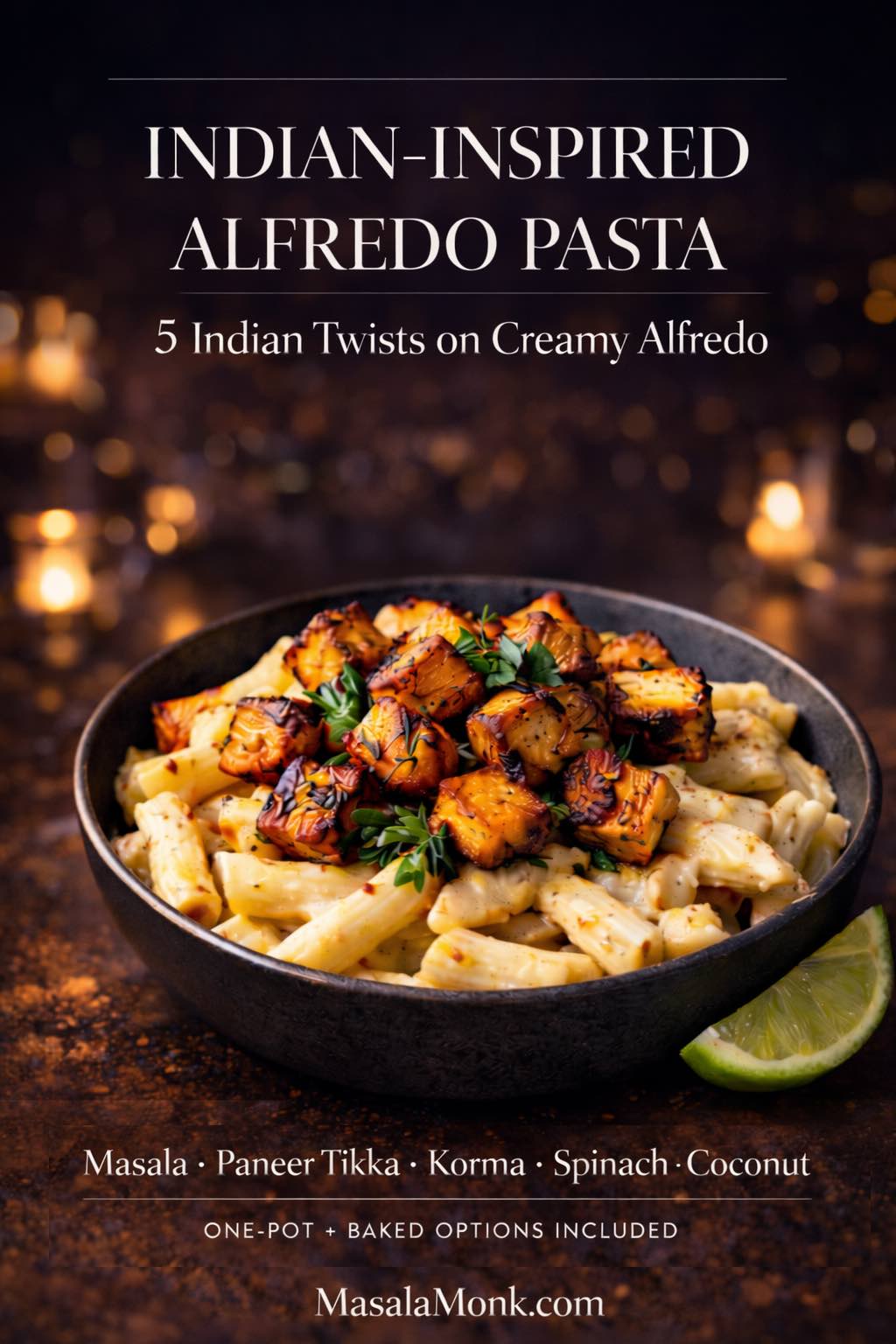
Magazine-style cover featuring a bowl of creamy Indian-inspired Alfredo pasta topped with charred paneer tikka. Text overlay reads “Indian-Inspired Alfredo Pasta” and “5 Indian Twists on Creamy Alfredo,” listing masala, paneer tikka, korma, spinach paneer, and coconut curry, plus “one-pot + baked options included,” with MasalaMonk.com in the footer.

Creamy Alfredo has a certain pull—soft, glossy, and comforting in a way that makes a normal weeknight feel oddly luxurious. At the same time, the classic bowl can start to feel predictable once you’ve made it a few times. That’s exactly why Indian inspired Alfredo pasta works so well: it keeps everything you love about Alfredo—the cling, the richness, the peppery warmth—while letting you steer the flavor somewhere exciting.

Sometimes that means a masala bloom in ghee that perfumes the whole pan. Other times, it’s smoky paneer tikka folded into cream so the char and the sauce play off each other. On quieter evenings, a korma-style nuttiness turns Alfredo mellow and restaurant-like. And when you want something that tastes rich yet feels balanced, spinach paneer Alfredo delivers a green, velvety comfort that’s hard to stop eating. Finally, coconut curry Alfredo brings coastal warmth that’s ridiculously good with shrimp.

Even better, these aren’t “one-off” novelty ideas. Each twist below reads as a complete, standalone recipe you can cook tonight—yet everything is built on a shared base so you’re not learning five totally different methods. Along the way, you’ll also get an easy jar-sauce upgrade, a one pot Alfredo approach, and a baked Alfredo pasta approach (ziti, penne, tortellini) so you can match the mood of the day.

If you want the deeper technique story behind classic Alfredo, you can also read Classic vs. Authentic Alfredo: 5 Essential Recipes—it’s a great companion when you’re in the “I want the why, not just the what” mood.


Indian Inspired Alfredo Pasta Base: A Creamy Alfredo Sauce That Stays Silky

Alfredo is at its best when it behaves like a sauce rather than a thick dairy blanket. The ideal version is glossy and cohesive—fat, cheese, and starch held together in a smooth emulsion so every strand of pasta looks lacquered. That’s why gentle heat and starchy pasta water matter so much. When you build the sauce in the pan and finish the pasta in it, the results feel restaurant-level without requiring restaurant tools. The mechanics are beautifully explained in Serious Eats’ fettuccine Alfredo method, and once you understand the approach, the Indian twists become easy choices instead of stressful experiments.
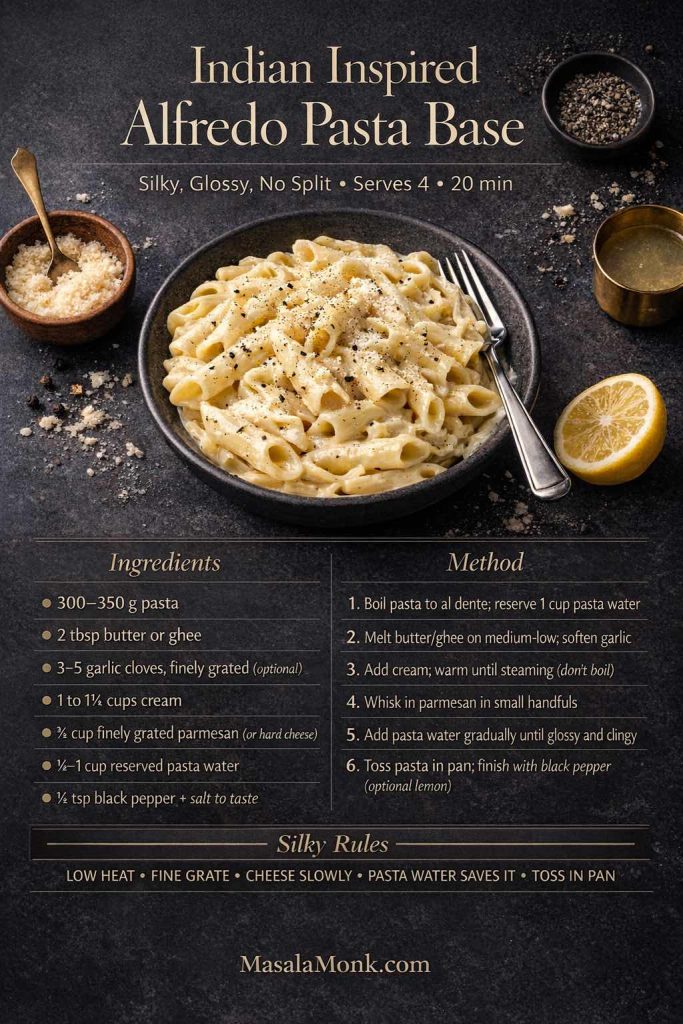
Dark luxe recipe card for Indian inspired Alfredo pasta base showing creamy Alfredo pasta, ingredients, step-by-step method, and “Silky Rules” tips to prevent splitting and keep the sauce glossy.
Indian inspired Alfredo pasta starts here: a silky, glossy Alfredo base that won’t split (plus the “Silky Rules” that make it foolproof). Save this recipe card, then scroll for 5 Indian twists—masala, paneer tikka, korma, spinach paneer, and coconut curry.

Alfredo base (serves 4)

  • 300–350 g pasta (fettuccine, penne, fusilli, ziti; or tortellini if you want a faster “wow” bowl)
  • 2 tbsp butter (or ghee if you like a warmer, rounder finish)
  • 3–5 garlic cloves, finely grated (optional, but very good)
  • 1 to 1¼ cups cream (or cooking cream)
  • ¾ cup finely grated parmesan (or a parmesan-style hard cheese)
  • ½ to 1 cup reserved pasta water (you’ll add it gradually)
  • ½ tsp freshly ground black pepper (plus more to finish)
  • Salt, to taste (go light until cheese is in)

The method (steady, reliable, forgiving)

  1. Bring a big pot of water to a boil. Salt it generously. Cook pasta until just al dente. Before draining, reserve at least ½ cup pasta water (a full cup is safer).
  2. Meanwhile, melt butter (or ghee) in a wide pan over medium-low heat. If using garlic, add it and warm gently until fragrant—soften it, don’t scorch it.
  3. Lower the heat. Add cream and warm until steaming. Avoid a rolling boil; high heat encourages separation.
  4. Add grated cheese in small handfuls, whisking constantly so it melts smoothly.
  5. Now, adjust with pasta water: add a splash, whisk, and watch the sauce loosen into a glossy, clingy texture. Repeat until it coats the back of a spoon.
  6. Add pasta to the pan and toss well so the sauce grips every strand.

That final step—tossing pasta in the sauce instead of pouring sauce over pasta—makes a real difference. If you enjoy the technique, Serious Eats’ guidance on saucing pasta the right way is worth reading.
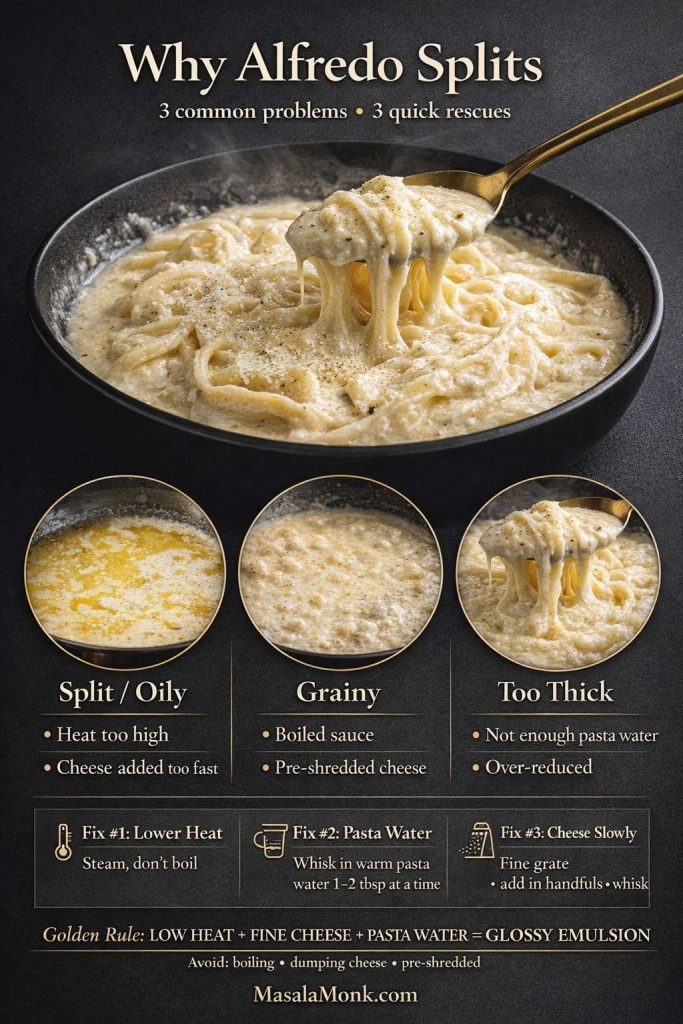
Dark luxe infographic explaining why Alfredo sauce splits, turns grainy, or gets too thick, with quick fixes: lower heat, whisk in warm pasta water, and add finely grated cheese slowly.
Why does Alfredo split or turn grainy? This quick rescue guide fixes 3 common problems—split/oily, grainy, and too thick—using low heat, warm pasta water, and slow-added fine cheese for a glossy emulsion. Save this, then use it with any Indian inspired Alfredo pasta twist in the post.

Best cheese for fettuccine Alfredo (and practical substitutes)

A finely grated hard cheese melts more evenly and emulsifies more easily. The shape of the cheese matters too; fine, snowy shreds melt into the cream without clumping, especially when the heat is low, as described in Serious Eats’ Alfredo guide.

If parmesan is expensive or hard to find, use what’s available: a parmesan-style hard cheese for flavor plus a small amount of melt-friendly cheese if you need a smoother texture. Still, keep the melt cheese in check so it doesn’t overwhelm the sauce. Alfredo should taste creamy and peppery, not like generic cheese sauce.

Also Read: Chicken Pesto Pasta (Easy Base Recipe + Creamy, One-Pot, Baked & More)


Alfredo Pasta With an Indian Twist: Choosing the Right Pasta Shape

Different shapes change the entire experience.

  • Fettuccine Alfredo pasta feels classic and indulgent because broad noodles wear the sauce like satin.
  • Penne Alfredo and alfredo penne pasta feel “bitey” and complete because sauce hides inside the tubes.
  • Ziti with Alfredo sauce (alfredo ziti) is tailor-made for baking—saucy inside, bubbly on top.
  • Tortellini in Alfredo sauce feels restaurant-level fast because stuffed pasta adds richness without extra work.
  • Fusilli Alfredo catches sauce in the spirals, which is especially satisfying for thicker versions like spinach paneer Alfredo.
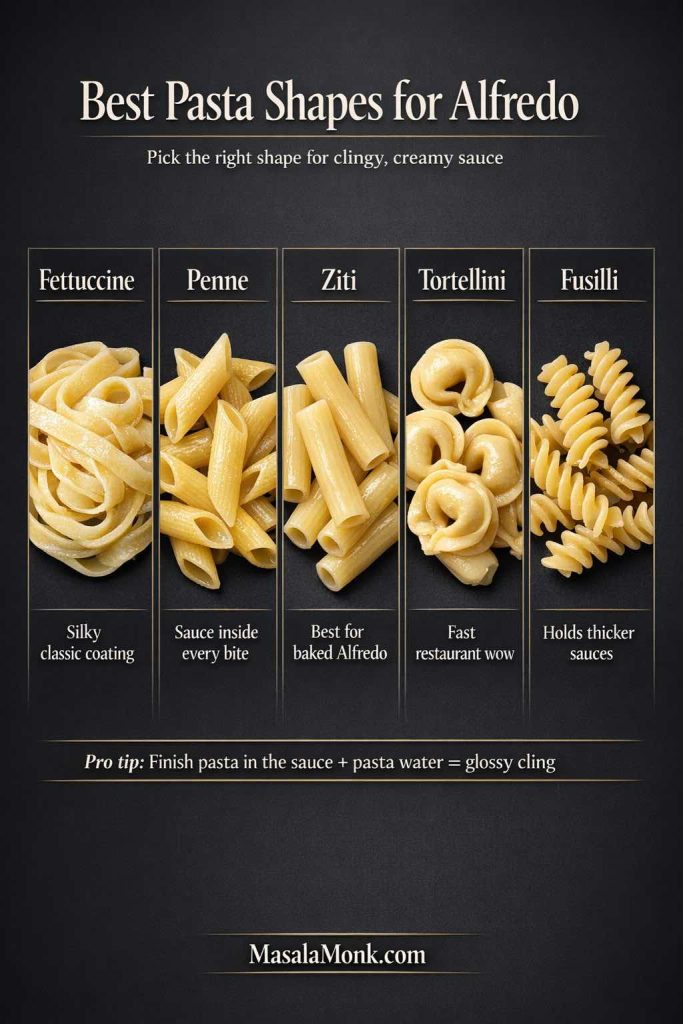
Dark luxe infographic showing the best pasta shapes for Alfredo sauce—fettuccine, penne, ziti, tortellini, and fusilli—with quick notes on which shapes coat best, hold sauce inside, work for baked Alfredo, or suit thicker sauces like spinach paneer Alfredo.
Choosing the right pasta shape makes Alfredo instantly better. Use this quick guide for Indian inspired Alfredo pasta: fettuccine for silky coating, penne for sauce-in-every-bite, ziti for baked Alfredo, tortellini for fast “restaurant wow,” and fusilli for thicker sauces like spinach paneer Alfredo. Save this, then pick your twist below.

If you’re using tortellini and want timing confidence, How to cook tortellini (fresh, frozen, dried) is a helpful companion.

Also Read: Pork Tenderloin in Oven (Juicy, Easy, 350°F or 400°F) Recipe


How to Make Easy Alfredo Pasta With Jar Sauce Taste Homemade (Without Overdoing It)

Some nights you want the comfort without the extra steps. Easy Alfredo pasta with jar sauce can absolutely work—as long as you treat jar Alfredo like a base rather than the final answer.
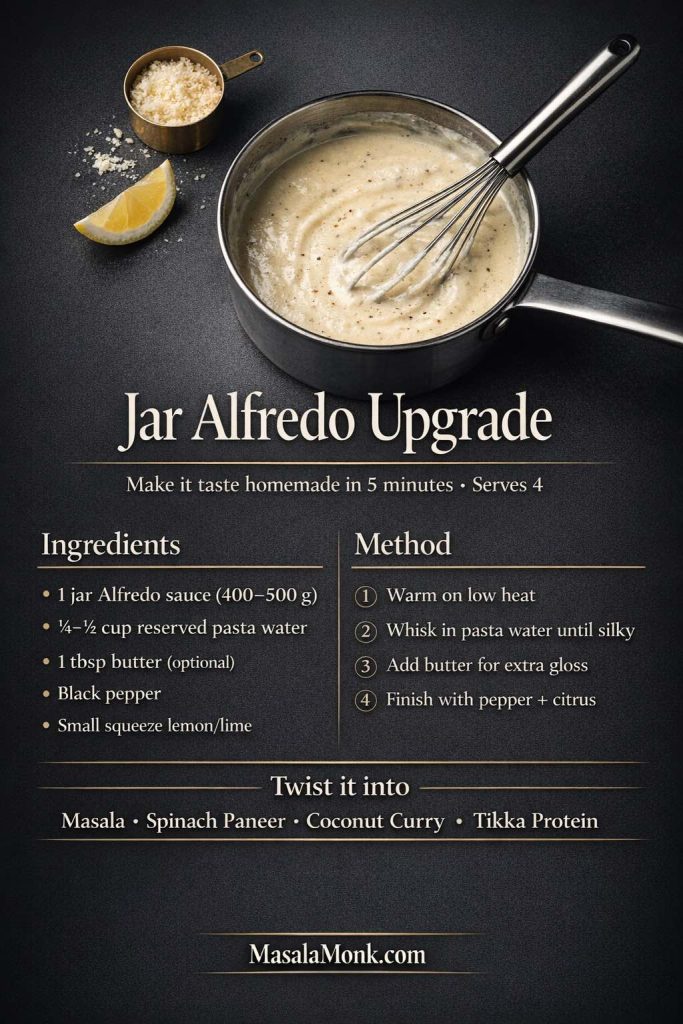
Dark luxe infographic showing how to upgrade jar Alfredo sauce to taste homemade in 5 minutes using reserved pasta water, black pepper, a small squeeze of lemon or lime, and optional butter, with a “twist it into” list for masala, spinach paneer, coconut curry, or tikka-style versions.
Easy Alfredo pasta with jar sauce can taste homemade—fast. This 5-minute jar Alfredo upgrade uses pasta water for silkiness, pepper for warmth, and a squeeze of lemon/lime for lift (plus optional butter for gloss). Save this shortcut, then turn it into Indian inspired Alfredo pasta: masala, spinach paneer, coconut curry, or tikka-style protein.

The fastest jar Alfredo upgrade (serves 4)

  • 1 jar Alfredo sauce (about 400–500 g)
  • ¼–½ cup reserved pasta water
  • 1 tbsp butter (optional, for gloss)
  • Black pepper
  • 1 small squeeze of lemon or lime

Warm the jar sauce on low heat. Whisk in pasta water until it loosens and turns silky. Add butter if you want extra shine. Finish with black pepper and a squeeze of citrus.

From here, you can steer it toward any twist in this post by adding the spice bloom, spinach puree, coconut milk, or tikka-style protein.

If you like shortcut-friendly creamy pasta nights, Chicken Alfredo Pasta, 5 Ways is a natural companion—plenty of weeknight structure and add-in ideas without losing the comfort.

Also Read: How to Make a Flax Egg (Recipe & Ratio for Vegan Baking)


Indian Inspired Alfredo Pasta: 5 Indian Twists You’ll Keep Coming Back To

Each recipe below is written as a complete “recipe card” section—ingredients, method, timing, and the small sensory details that make the bowl feel special. Even so, the flow stays simple: cook pasta, build sauce, add twist, toss, finish.


1) Masala Alfredo Pasta (Warm, Spicy, Comforting)

Masala Alfredo pasta tastes like a familiar cream sauce took a confident step toward Indian flavors. The aroma hits first: cumin and coriander blooming in ghee, then a warm red chili note that feels inviting rather than aggressive. Finally, a little kasuri methi and lemon add a restaurant-style lift that keeps the sauce from tasting heavy.

Pasta choice: fettuccine for classic comfort, penne for a heartier bite, or fusilli for maximum sauce-catching.
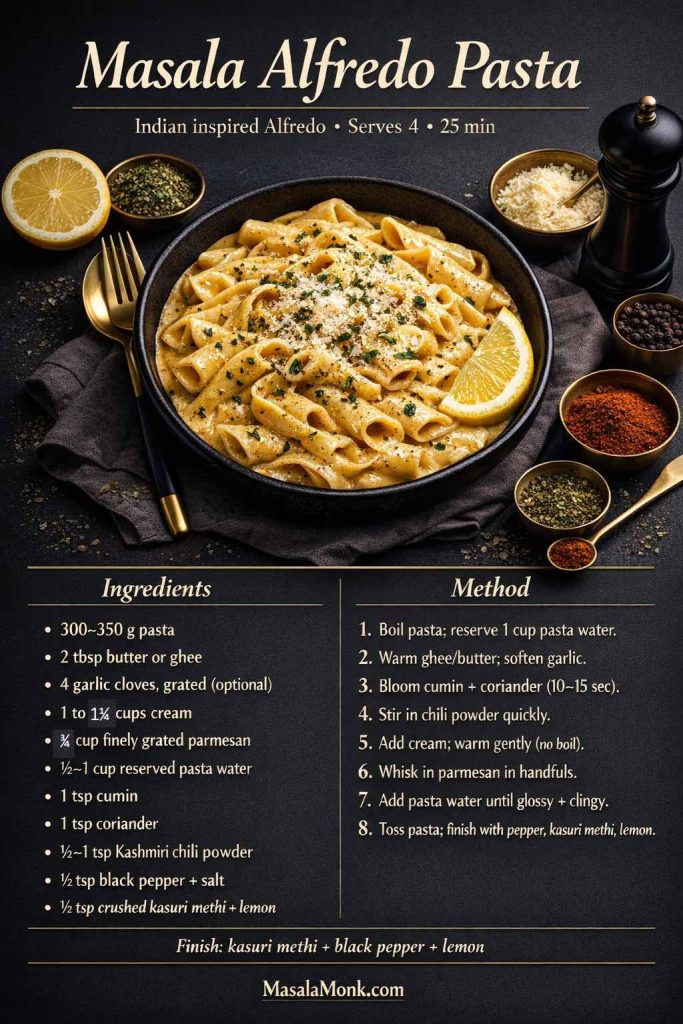
Dark luxe recipe card for Masala Alfredo Pasta (Indian inspired Alfredo) showing creamy pasta with lemon and kasuri methi, plus an ingredients list and step-by-step method including blooming cumin and coriander, adding cream and parmesan, and loosening with pasta water for a glossy sauce.
Masala Alfredo pasta = creamy comfort with warm Indian spice. This recipe card walks you through blooming cumin + coriander in ghee, building a silky parmesan sauce, then finishing with kasuri methi and lemon for that restaurant-style lift. Save this pin, then try the other Indian inspired Alfredo pasta twists in the post.

Ingredients (serves 4)

For the pasta

  • 300–350 g pasta
  • Salt for boiling water

For the masala Alfredo sauce

  • 2 tbsp butter or ghee (ghee is excellent here)
  • 4 garlic cloves, finely grated (optional but highly recommended)
  • 1 to 1¼ cups cream
  • ¾ cup finely grated parmesan (or hard cheese)
  • ½ to 1 cup reserved pasta water
  • 1 tsp cumin
  • 1 tsp coriander
  • ½ to 1 tsp Kashmiri chili powder (adjust to your heat preference)
  • ¼ to ½ tsp garam masala (optional)
  • ½ tsp black pepper (plus more to finish)
  • ½ tsp crushed kasuri methi (optional, but magic)
  • Lemon wedge to finish
  • Salt, to taste

Method

  1. Boil pasta in salted water until just al dente. Reserve 1 cup pasta water, then drain.
  2. In a wide pan, warm ghee (or butter) over medium-low heat. Add garlic and let it soften until fragrant.
  3. Add cumin and coriander. Let them bloom for about 10–15 seconds—just enough to smell nutty and warm.
  4. Add Kashmiri chili powder and stir quickly; don’t let it burn.
  5. Lower heat. Add cream and warm gently.
  6. Whisk in cheese in small handfuls until smooth.
  7. Add pasta water a splash at a time until the sauce turns glossy and coats a spoon.
  8. Toss pasta in the sauce until every piece looks lacquered.
  9. Finish with black pepper, crushed kasuri methi, and a squeeze of lemon.

Kasuri methi is one of those small additions that changes the impression of the entire dish. If you want to understand why it works so well, NDTV’s guide on using kasuri methi explains its flavor boost clearly.

Variations (choose one)

  • Chicken broccoli Alfredo: sauté 300 g chicken until golden; blanch 2 cups broccoli florets for 60–90 seconds; fold both in at the end. This gives you the comfort of chicken alfredo pasta with broccoli while keeping the spice profile interesting.
  • Alfredo mushroom pasta: brown 250 g mushrooms deeply first (don’t rush this). Fold into sauce for savory depth.
  • Sausage Alfredo pasta: brown sliced sausage or spiced mince; fold in for a hearty bowl that feels weeknight-friendly and indulgent.

If you enjoy Italian classics reimagined with Indian flavors, you’ll likely also love Ravioli reinvented with Indian-inspired twists—same spirit, different pasta format.

Also Read: Croquettes Recipe: One Master Method + 10 Popular Variations


2) Paneer Tikka Alfredo (Smoky, Charred, Crowd-Pleasing)

Paneer tikka Alfredo is what you make when you want creamy pasta that still has drama. The charred edges of paneer are essential here: smoky, slightly crisp, and bold enough to stand up to the richness of Alfredo. In every bite, you get creamy sauce followed by a pop of spice and a whisper of tandoor-like flavor.

Pasta choice: penne or fusilli—both catch sauce and hold paneer pieces beautifully.
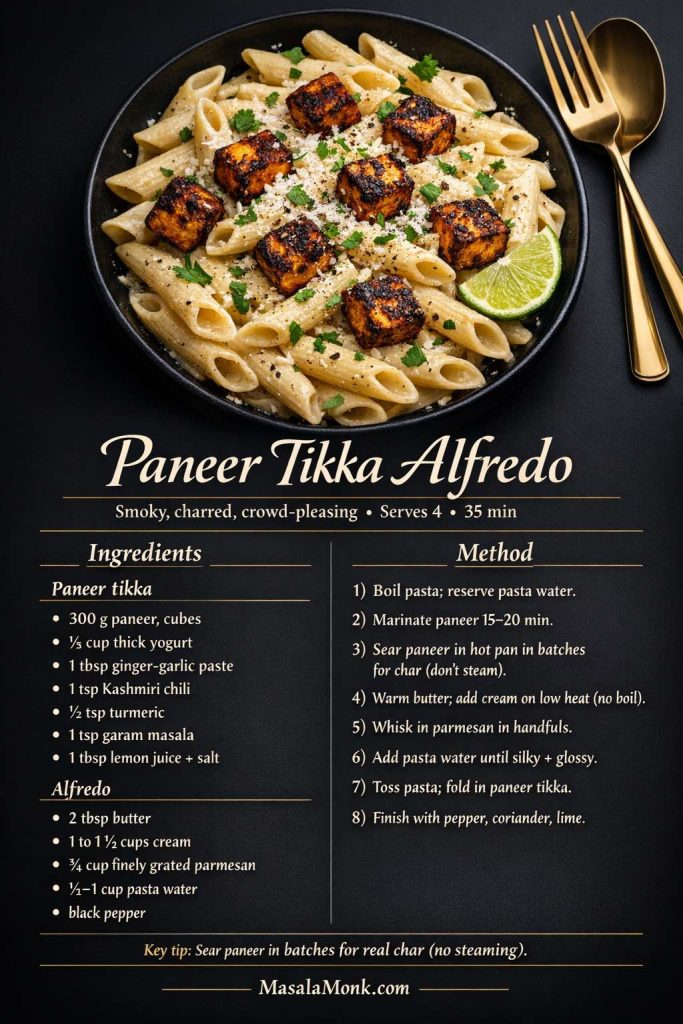
Dark luxe recipe card for Paneer Tikka Alfredo pasta showing creamy penne Alfredo topped with smoky, charred paneer tikka cubes, plus a paneer tikka marinade list, Alfredo sauce ingredients, and step-by-step method including searing paneer in batches and loosening sauce with pasta water.
Paneer Tikka Alfredo is creamy pasta with real smoky drama—charred paneer cubes folded into a silky Alfredo sauce. This recipe card includes the quick tikka marinade, the “sear in batches (don’t steam)” tip, and the easy method for glossy sauce using pasta water. Save it, then try the other Indian inspired Alfredo pasta twists in the post.

Ingredients (serves 4)

For the pasta

  • 300–350 g penne or fusilli
  • Salt for boiling water

What you need for paneer tikka

  • 300 g paneer, cut into bite-size cubes
  • ⅓ cup thick yogurt (hung curd works brilliantly)
  • 1 tbsp ginger-garlic paste
  • 1 tsp Kashmiri chili powder (or mild red chili powder)
  • ½ tsp turmeric
  • 1 tsp garam masala (or tikka masala blend)
  • ½ tsp cumin
  • 1 tbsp lemon juice
  • 1 tbsp oil (for searing)
  • Salt, to taste

For Alfredo sauce

  • 2 tbsp butter
  • 1 to 1¼ cups cream
  • ¾ cup finely grated parmesan (or hard cheese)
  • ½ to 1 cup reserved pasta water
  • Black pepper

To finish

  • Chopped coriander
  • Lime wedge

If you want a reliable reference for the paneer tikka method and marinade structure, Hebbar’s paneer tikka recipe is a solid baseline.

Method

  1. Boil pasta until al dente. Reserve 1 cup pasta water, then drain.
  2. Marinate paneer in yogurt, spices, lemon, and salt for at least 15–20 minutes (longer is great, but not required).
  3. Heat a pan until hot. Add oil and sear paneer cubes in batches so they char instead of steaming. Turn gently until multiple sides develop dark, smoky spots.
  4. In a separate wide pan, melt butter over low heat. Add cream and warm.
  5. Whisk in cheese gradually until smooth.
  6. Add pasta water to loosen into a silky sauce.
  7. Toss pasta in the sauce, then fold in paneer tikka.
  8. Finish with black pepper, coriander, and a squeeze of lime.

Variations (choose your mood)

  • Easy spinach Alfredo pasta: wilt a couple of handfuls of spinach and fold in right before serving. The green bitterness balances cream.
  • Chicken tikka Alfredo: swap paneer for cooked chicken tikka pieces.
  • Baked paneer tikka Alfredo: pour into a baking dish, top with mozzarella, and bake until bubbly—crispy edges, creamy center.

When you want more baked pasta inspiration in the same comfort lane, Baked ziti variations is a natural next click.

Also Read: Fish and Chips Reimagined: 5 Indian Twists (Recipe + Method)


3) Chicken Korma Alfredo (Mellow, Nutty, Restaurant-Style)

Chicken korma Alfredo is creamy comfort turned elegant. Instead of heat-forward spice, you get warm aromatics, gentle sweetness from onion, and that unmistakable nutty richness that makes the sauce taste “finished.” It’s the kind of bowl that feels special without being loud.

Pasta choice: fettuccine for a classic luxurious feel, or penne for a family-friendly, scoopable version.
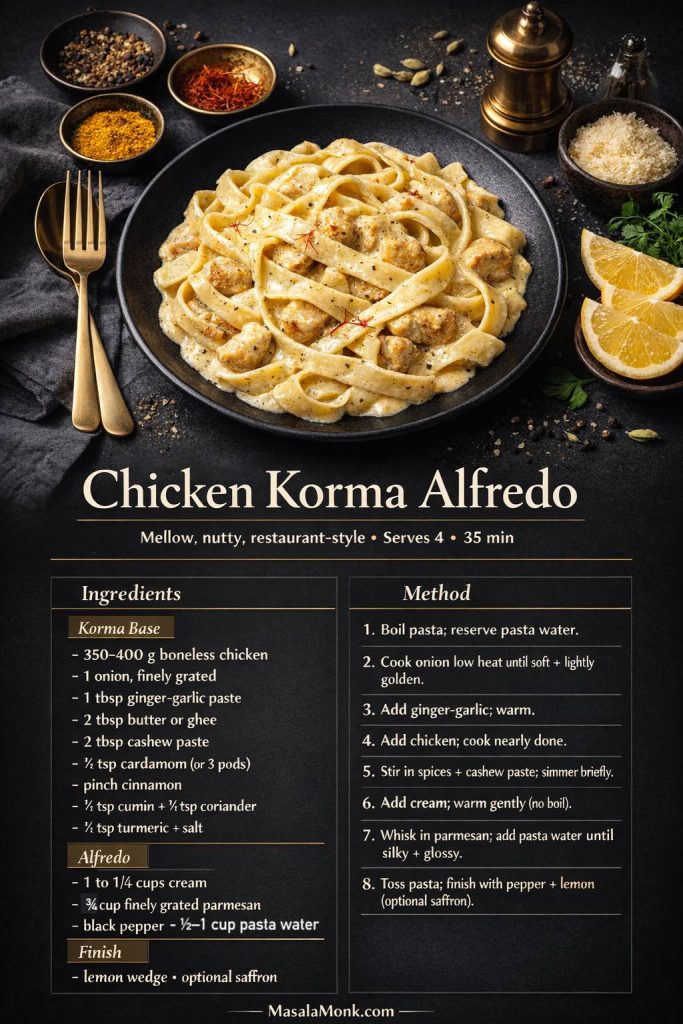
Dark luxe recipe card for Chicken Korma Alfredo pasta showing creamy pale-gold Alfredo with juicy chicken, plus ingredients for a korma-style base (onion, ginger-garlic, cashew paste, warm spices) and a step-by-step method to keep the sauce silky using low heat and pasta water, finished with lemon and optional saffron.
Chicken Korma Alfredo is creamy comfort with a mellow, nutty, restaurant-style finish. This recipe card shows the korma-style base (onion + cashew paste + warm spices), then the silky Alfredo method with pasta water for a glossy sauce—finished with lemon (and optional saffron). Save this, then try the other Indian inspired Alfredo pasta twists in the post.

Ingredients (serves 4)

For the pasta

  • 300–350 g pasta
  • Salt for boiling water

What you need for the chicken korma component

  • 350–400 g boneless chicken (thighs stay juicy; breast works too)
  • 1 medium onion, finely grated or minced
  • 1 tbsp ginger-garlic paste
  • 2 tbsp butter or ghee
  • 2 tbsp cashew paste (blend ¼ cup cashews with a few tbsp water)
  • ½ tsp ground cardamom (or 3 green cardamoms, crushed)
  • Pinch of cinnamon
  • ½ tsp cumin
  • ½ tsp coriander
  • ¼ tsp turmeric
  • Salt, to taste

For Alfredo sauce

  • 1 to 1¼ cups cream
  • ¾ cup finely grated parmesan (or hard cheese)
  • ½ to 1 cup reserved pasta water
  • Black pepper

To finish

  • Lemon wedge
  • Optional: a few saffron strands soaked in warm milk

For a reference point on korma-style flavor structure, Sanjeev Kapoor’s chicken korma recipe is a helpful baseline.

Method

  1. Boil pasta to al dente. Reserve 1 cup pasta water and drain.
  2. In a wide pan, warm butter or ghee. Add onion and cook on low heat until soft and lightly golden. This step creates the mellow sweetness that makes korma taste luxurious.
  3. Add ginger-garlic paste and cook until fragrant.
  4. Add chicken and cook until nearly done.
  5. Stir in spices and cashew paste. Add a small splash of water if it looks too thick, then simmer briefly so everything becomes cohesive.
  6. Lower heat. Add cream and warm gently.
  7. Whisk in cheese gradually until smooth.
  8. Add pasta water to loosen into a silky sauce.
  9. Toss pasta in the sauce, finish with black pepper and lemon.

Variations and add-ins

  • Chicken and broccoli penne Alfredo: add blanched broccoli at the end; it brightens the bowl and balances richness.
  • Chicken and mushroom Alfredo pasta: fold in browned mushrooms for deeper savoriness.
  • Crock pot direction: if you love creamy comfort meals in slower formats, it’s easy to stay in the same mood with Crock pot lasagna soup—different format, similar coziness.

Also Read: Dirty Martini Recipe (Classic, Extra Dirty, No Vermouth, Spicy, Blue Cheese, Tequila + Batched)


4) Spinach Paneer Alfredo (Green, Creamy, Balanced)

Spinach paneer Alfredo is for people who want creamy pasta that doesn’t feel heavy. The spinach brings freshness and a gentle earthiness; paneer adds soft richness without overwhelming the sauce. The result feels comforting yet surprisingly lively, especially with lemon and black pepper to finish.

Pasta choice: fusilli or penne for sauce-catching, or fettuccine for a smooth, green-sauce luxury.
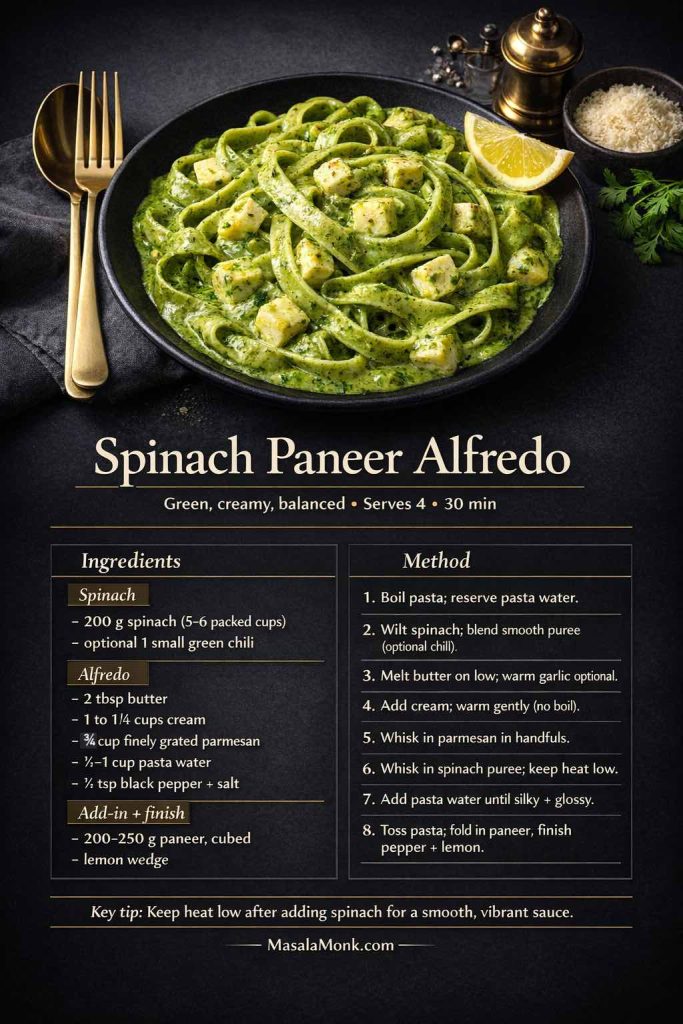
Dark luxe recipe card for Spinach Paneer Alfredo pasta showing creamy green spinach Alfredo with paneer cubes and lemon, plus ingredients and step-by-step method for blending spinach puree, keeping heat low, adding parmesan slowly, and loosening with pasta water for a silky sauce.
Spinach Paneer Alfredo is the “creamy but balanced” bowl—vibrant green sauce, soft paneer, black pepper warmth, and a lemon finish that keeps it lively. This recipe card shows the spinach-puree trick and the low-heat method for a smooth, glossy Alfredo. Save it, then try the other Indian inspired Alfredo pasta twists in the post.

Ingredients (serves 4)

Needed for the pasta

  • 300–350 g pasta
  • Salt for boiling water

For spinach paneer

  • 200–250 g paneer, cubed (or lightly crumbled)
  • 200 g spinach (roughly 5–6 packed cups)
  • 2 tbsp butter
  • 1 tbsp garlic, grated or minced (optional)
  • 1 to 1¼ cups cream
  • ¾ cup finely grated parmesan (or hard cheese)
  • ½ to 1 cup reserved pasta water
  • ½ tsp black pepper
  • 1 small green chili (optional)
  • Salt, to taste
  • Lemon wedge to finish

Method

  1. Boil pasta until al dente. Reserve 1 cup pasta water and drain.
  2. Wilt spinach in a pan with a splash of water. Once it collapses, blend into a smooth puree. Add green chili if you want a gentle kick.
  3. In a wide pan, melt butter over low heat. Add garlic if using and warm gently.
  4. Add cream and warm. Whisk in cheese gradually until smooth.
  5. Whisk in spinach puree. Keep heat low so the sauce stays smooth and vibrant.
  6. Add pasta water to adjust consistency.
  7. Toss pasta in sauce and fold in paneer.
  8. Finish with black pepper and lemon.

Herb-forward “basil Alfredo” option

If you want alfredo with basil vibes without turning the dish into a different pasta category, fold in chopped basil off heat or swirl in a spoon of pesto at the end. For pesto ideas that work well in Indian kitchens, Pesto recipe variations is a reliable companion. If you want to stay within the “Indian twist pasta” universe, Pesto pasta with Indian twists fits naturally.

Also Read: Keto Hot Chocolate Recipe (Sugar-Free Hot Cocoa) + Best Homemade Mix


5) Coconut Curry Alfredo (Coastal, Fragrant, Perfect With Shrimp)

Coconut curry Alfredo is the twist that surprises people, then immediately converts them. Coconut milk brings silk; curry spices bring warmth; Alfredo keeps the creamy comfort intact. With shrimp, the bowl feels special. With spinach, it feels balanced. And with tortellini, it feels like restaurant food in sweatpants.

Pasta choice: fettuccine for a luxurious coating, or tortellini for a fast “wow.”
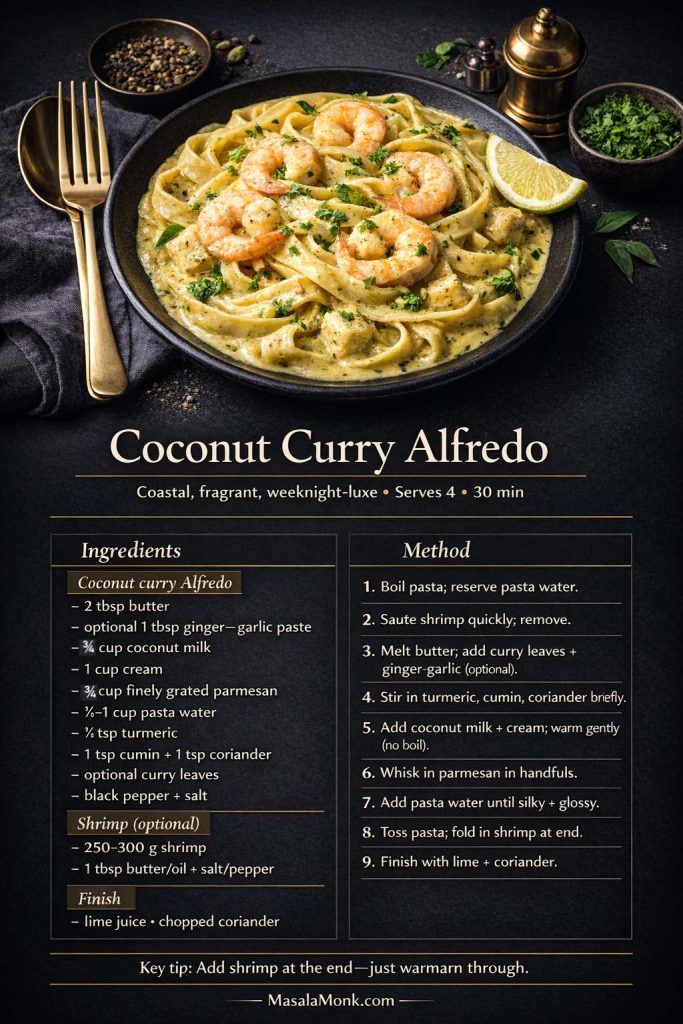
Dark luxe recipe card for Coconut Curry Alfredo pasta with shrimp, showing creamy coconut-cream Alfredo with curry spices, lime, and coriander, plus ingredients and step-by-step method for keeping the sauce silky using low heat and pasta water and adding shrimp at the end to prevent overcooking.
Coconut Curry Alfredo is coastal comfort in a creamy bowl—silky coconut-cream sauce, warm spices, and shrimp finished with lime and coriander. This recipe card keeps it foolproof (low heat + pasta water = glossy sauce, shrimp added at the end). Save it, then explore the other Indian inspired Alfredo pasta twists in the post.

Ingredients (serves 4)

What you need for the Pasta

  • 300–350 g pasta (or 500 g tortellini)
  • Salt for boiling water

For coconut curry Alfredo

  • 2 tbsp butter
  • 1 tbsp ginger-garlic paste (optional)
  • ¾ cup coconut milk (adjust for richness)
  • 1 cup cream (you can reduce a bit if using more coconut milk)
  • ¾ cup finely grated parmesan (or hard cheese; keep slightly lighter if you want coconut-forward flavor)
  • ½ to 1 cup reserved pasta water
  • ½ tsp turmeric
  • 1 tsp cumin
  • 1 tsp coriander
  • Curry leaves (optional, but exceptional)
  • Black pepper
  • Salt, to taste

Shrimp option

  • 250–300 g shrimp, peeled and deveined
  • 1 tbsp butter or oil
  • Salt and pepper
  • Optional: a pinch of chili

To finish

  • Lime juice
  • Chopped coriander

Method

  1. Boil pasta until al dente. Reserve 1 cup pasta water. Drain.
  2. If using shrimp, sauté quickly in butter or oil until just pink and curled. Remove and set aside.
  3. In a wide pan, melt butter. Add curry leaves (if using) and ginger-garlic paste. Warm until fragrant.
  4. Add turmeric, cumin, coriander, and stir briefly.
  5. Pour in coconut milk and cream. Warm gently.
  6. Whisk in cheese gradually until smooth.
  7. Add pasta water to reach a glossy, clingy consistency.
  8. Toss pasta in sauce and fold in shrimp.
  9. Finish with lime and coriander.

Variations

  • Shrimp fettuccine Alfredo with spinach: wilt spinach and fold in right at the end for a bright, balanced bowl.
  • Shrimp Alfredo tortellini: use tortellini as the base; it becomes rich and special very quickly.
  • Plant-based alternative: tofu works beautifully, and if you want a seafood-like swap, this guide to vegan shrimp substitutes keeps the idea accessible without pulling you out of the comfort-food mood.

Also Read: 10 Low Carb Chia Pudding Recipes for Weight Loss (Keto, High-Protein, Dairy-Free)


One Pot Indian Inspired Alfredo Pasta (Creamy, Fast, Minimal Dishes)

One pot Alfredo pasta is the weeknight hero when you want fewer dishes and still want sauce that coats properly. The key is concentrated starch: cook pasta in less water so the starchy liquid left in the pot becomes a tool for emulsifying the sauce. Serious Eats’ lighter Alfredo approach explains how that concentrated pasta water changes everything.
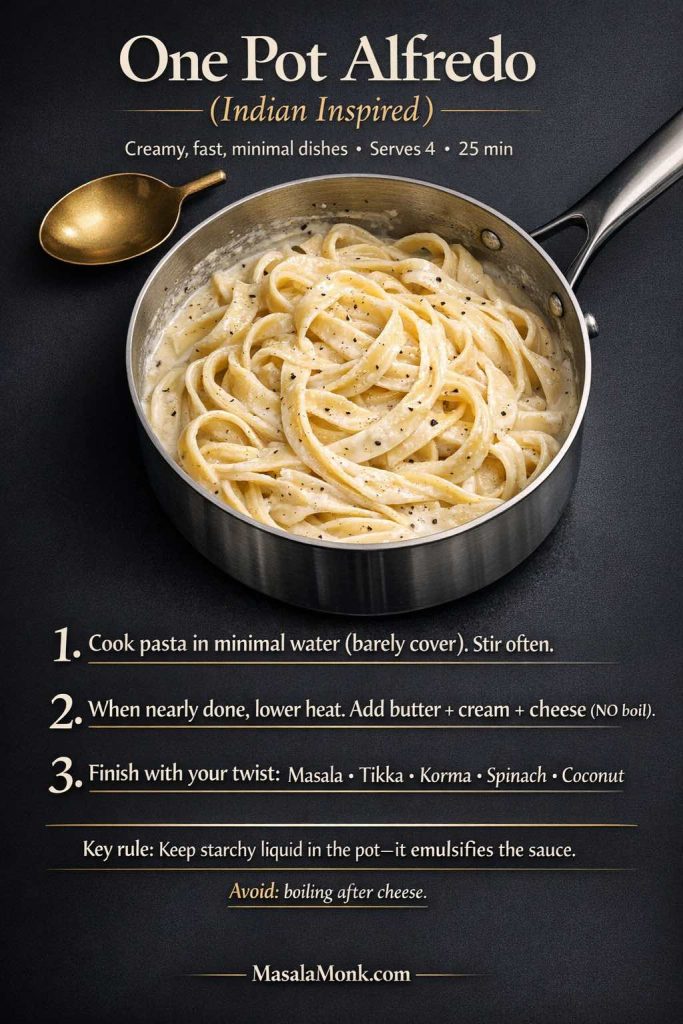
Dark luxe infographic showing a one pot Indian inspired Alfredo pasta method with three steps: cook pasta in minimal water, lower heat and add butter/cream/cheese without boiling, then finish with a twist like masala, tikka, korma, spinach, or coconut; includes a tip to keep starchy liquid for a glossy sauce and a warning to avoid boiling after cheese.
One pot Indian inspired Alfredo pasta = creamy comfort with minimal dishes. This no-split method keeps sauce silky by using concentrated starchy pasta water, then adding butter, cream, and cheese on low heat (no boiling). Save this cheat sheet, then choose your twist—masala, tikka, korma, spinach paneer, or coconut curry.

One pot method (serves 4)

  • 300–350 g pasta
  • Water or broth, just enough to barely cover pasta
  • 2 tbsp butter
  • 1 to 1¼ cups cream (or jar Alfredo + cream)
  • ¾ cup grated cheese
  • Black pepper
  • Your chosen twist add-ins (masala bloom, spinach puree, paneer tikka, korma chicken, coconut curry)

Cook pasta with minimal water, stirring often. When pasta is nearly done and there’s starchy liquid left, lower heat and add butter, cream, and cheese. Stir until glossy. Then add your twist components and finish with citrus or herbs.

If you like creamy one-pot dinners beyond Alfredo, One pot chicken bacon ranch pasta sits close to this vibe—comforty, saucy, weeknight-friendly.

Also Read: Garlic & Paprika Cabbage Rolls (Keto-Friendly Recipes) – 5 Bold Savory Twists


Baked Alfredo Pasta (Ziti, Penne, Tortellini) That Doesn’t Turn Dry

Baked Alfredo pasta is its own category of comfort: bubbling cheese, crisp edges, creamy center. However, it can also turn dry if you bake it too long or start with a sauce that’s too thick. The solution is simple: keep the sauce a touch looser than stovetop Alfredo and bake just until hot and bubbly.
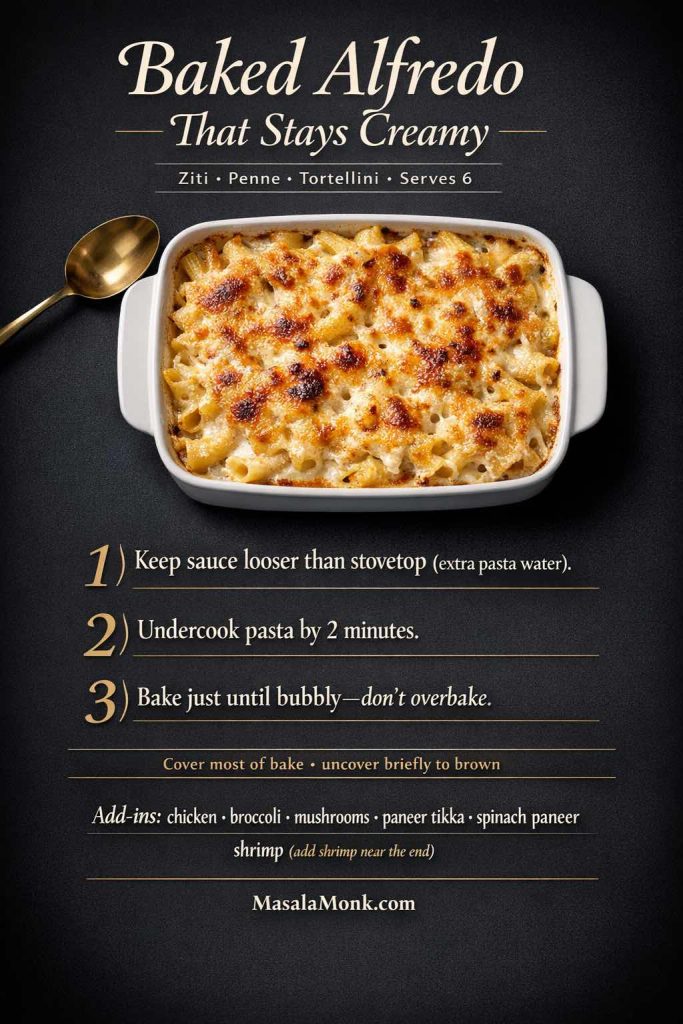
Dark luxe infographic showing how to make baked Alfredo pasta that stays creamy (not dry) for ziti, penne, or tortellini: keep sauce looser with extra pasta water, undercook pasta by 2 minutes, and bake only until bubbly; includes notes to cover most of the bake and uncover briefly to brown.
Baked Alfredo pasta doesn’t have to turn dry. This bake-plan card shows the 3 rules that keep it creamy: loosen the sauce with extra pasta water, undercook pasta by 2 minutes, and bake only until bubbly (cover most of the bake, uncover briefly to brown). Save this for ziti, penne, or tortellini nights—then use any Indian inspired Alfredo twist from the post.

Baked ziti Alfredo sauce pasta plan (serves 6)

  • 450–500 g ziti or penne
  • Your chosen Alfredo twist sauce (make it slightly looser with extra pasta water)
  • 1½ cups mozzarella (or a melt-friendly cheese)
  • Add-ins: chicken, broccoli, mushrooms, paneer tikka, spinach paneer, or shrimp (shrimp is best added near the end)

Cook pasta slightly under al dente. Mix with sauce. Pour into a baking dish. Top with cheese. Bake until bubbly and lightly golden.

For more baked pasta inspiration in the same comfort lane, Baked ziti variations is an easy next step.

Baked tortellini with Alfredo sauce (fastest bake)

Tortellini cooks quickly, so it’s ideal for a weeknight baked dish. Warm sauce, fold in tortellini, top with cheese, bake until bubbling—then stop. If you’re unsure about timing differences between fresh and frozen tortellini, How to cook tortellini keeps it simple.

Also Read: Eggless Yorkshire Pudding (No Milk) Recipe


Flavor Directions That Work With Any Twist: Lemon, Basil, Cajun-Style Heat, and Truffle-Style Umami

Even within these five recipes, small changes keep dinner from feeling repetitive.
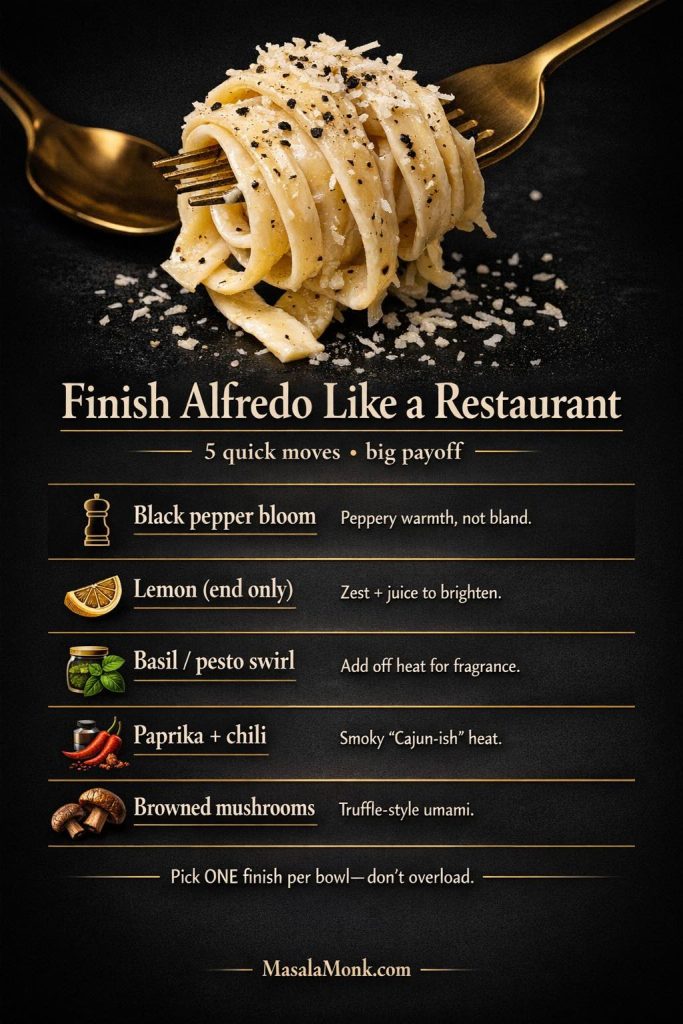
Want Indian inspired Alfredo pasta to taste “restaurant-level” fast? Use one finishing move: black pepper bloom, lemon at the end for brightness, basil/pesto off heat, paprika + chili for a smoky Cajun-ish lane, or browned mushrooms for truffle-style umami. Save this guide and use it with any twist in the post—masala, paneer tikka, korma, spinach paneer, or coconut curry.

Lemon Alfredo

Lemon Alfredo is the quickest way to brighten a rich sauce. Add zest and juice at the end with black pepper. It’s especially good with chicken, shrimp, broccoli, and mushrooms because it keeps everything tasting alive.

Alfredo with basil

Fold in chopped basil off heat, or swirl pesto into the bowl right before serving. For pesto ideas that fit Indian kitchens, Pesto recipe variations helps you keep it fresh.

Cajun chicken Alfredo (Indian-friendly)

You don’t need a strict Cajun mix. Black pepper, paprika, garlic, and chili create a similar direction, while a tandoori-style rub can hit the same smoky lane. If you’re using jar Alfredo, this becomes a particularly easy weeknight version.

Truffle Alfredo (truffle-style mood without chasing ingredients)

Deeply browned mushrooms, extra black pepper, and gentle garlic create that “truffle-style” feeling—earthy, aromatic, luxurious—without relying on specialty products.

Also Read: Crock Pot Chicken Breast Recipes: 10 Easy Slow Cooker Dinners (Juicy Every Time)


Dairy-Free, Lactose-Free, Low Carb, and Keto Directions (Without Losing the Comfort)

Creamy pasta can still work for different needs; the foundation simply shifts.
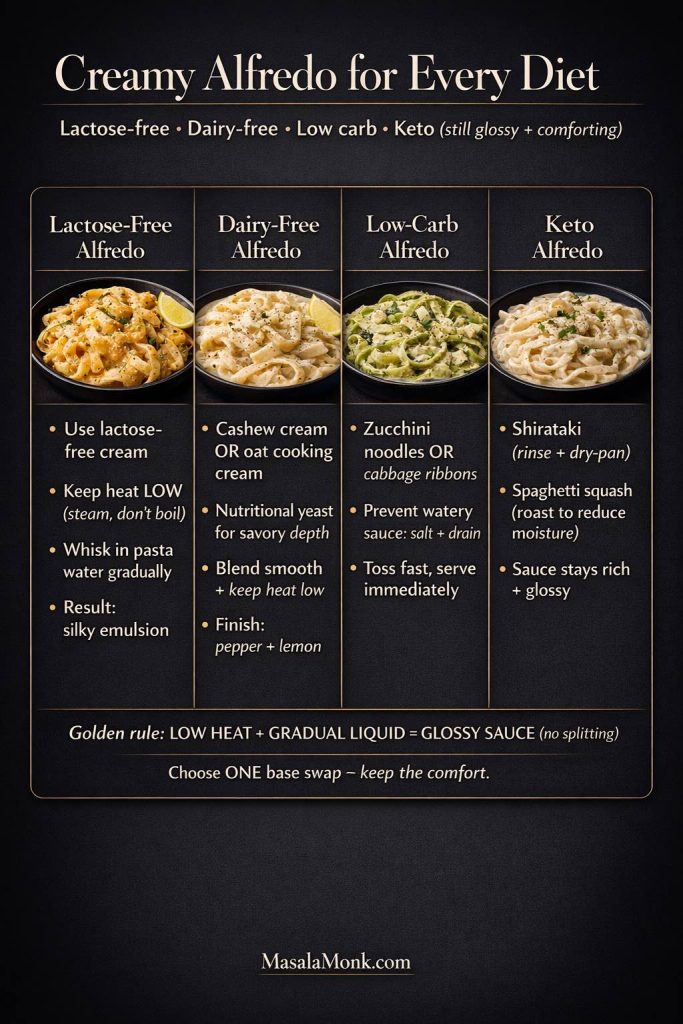
Dark infographic titled “Creamy Alfredo for Every Diet” showing four Alfredo options: lactose-free Alfredo (lactose-free cream, low heat, pasta water), dairy-free Alfredo (cashew or oat cooking cream with nutritional yeast), low carb Alfredo (zucchini noodles or cabbage ribbons with salt-and-drain tip), and keto Alfredo (shirataki noodles rinsed and dry-panned or roasted spaghetti squash), with a golden rule about low heat and gradual liquid for a glossy sauce.
Creamy Alfredo can still work for different needs—lactose-free, dairy-free, low carb, or keto—without losing that glossy comfort. This chart shows the best base swaps (zoodles, cabbage ribbons, shirataki, spaghetti squash) plus the key sauce rule: keep heat low and add liquid gradually for a silky emulsion. Save this, then use it with any Indian inspired Alfredo pasta twist in the full post.

Lactose-free Alfredo

Use lactose-free cream and keep heat low. Add pasta water gradually to maintain a smooth emulsion.

Dairy-free Alfredo / non dairy fettuccine Alfredo

Cashew cream or oat cooking cream can create a satisfying sauce. Nutritional yeast adds savory depth. The result won’t be identical to parmesan Alfredo, yet it can still be glossy, rich, and comforting.
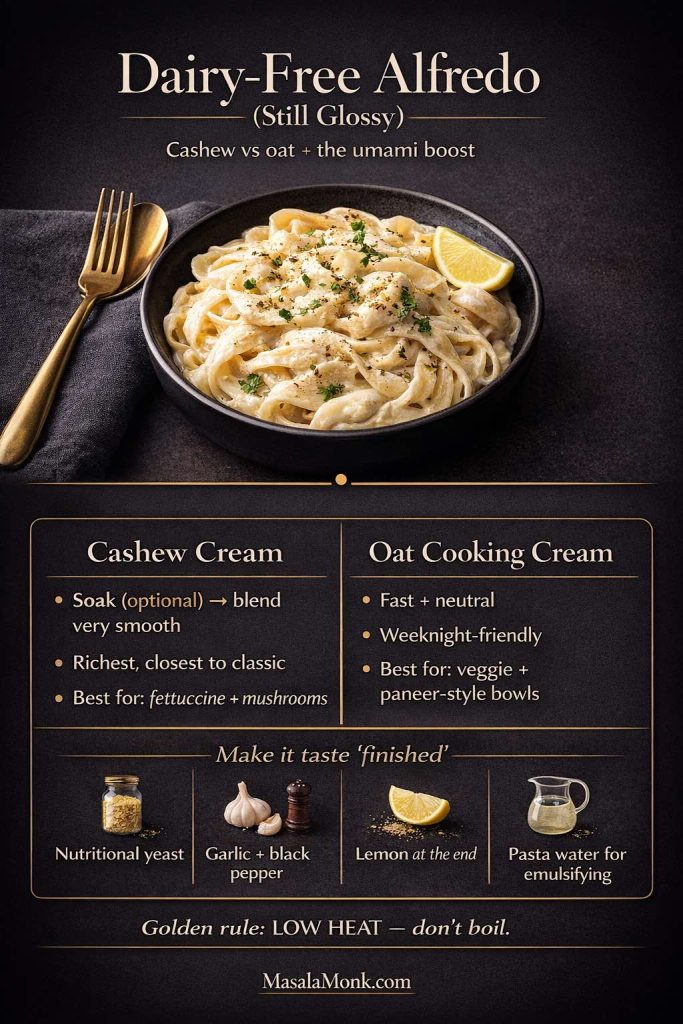
Dark luxe infographic titled “Dairy-Free Alfredo (Still Glossy)” showing a creamy dairy-free Alfredo pasta bowl and a side-by-side comparison of cashew cream versus oat cooking cream, plus an umami boost strip with nutritional yeast, garlic and black pepper, lemon added at the end, and pasta water for emulsifying; includes a low-heat rule and MasalaMonk.com footer.
Making dairy-free Alfredo that still feels rich is all about the base + umami. Choose cashew cream for the closest “classic” vibe or oat cooking cream for an easy weeknight version, then level it up with nutritional yeast, garlic + black pepper, lemon at the end, and pasta water for a glossy sauce. Save this guide and use it with any Indian inspired Alfredo twist in the full post.

Low carb Alfredo Pasta and keto-friendly options

The sauce can stay creamy while the base changes:

  • zucchini noodles
  • spaghetti squash
  • sautéed cabbage ribbons
  • shirataki noodles (well rinsed and dried)
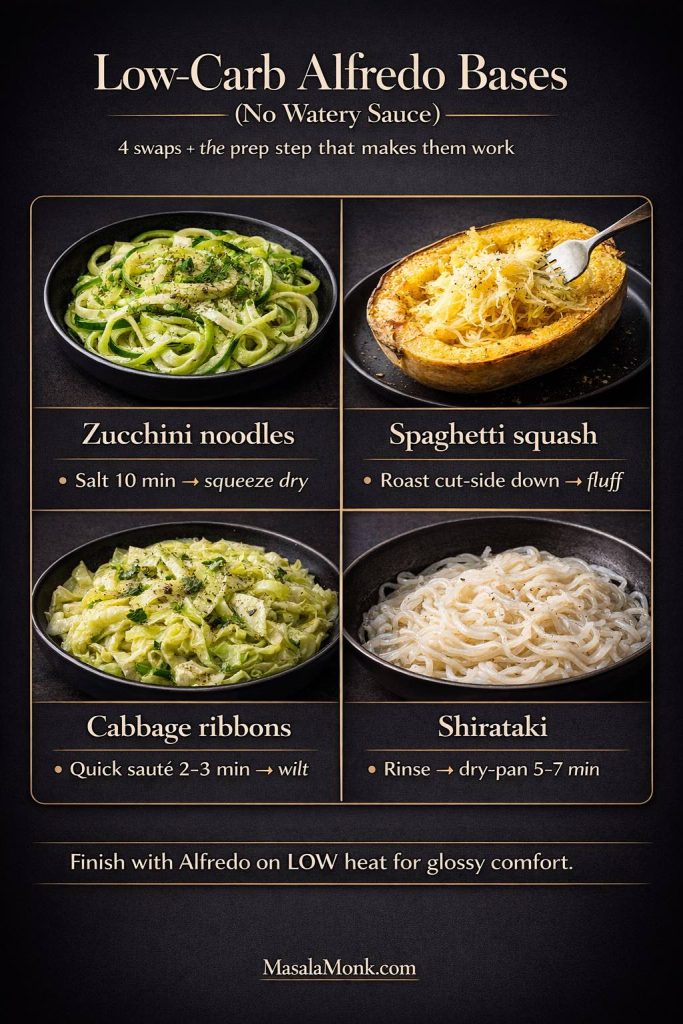
Dark luxe infographic titled “Low-Carb Alfredo Bases (No Watery Sauce)” with a 2×2 grid showing zucchini noodles (salt 10 min then squeeze dry), spaghetti squash (roast cut-side down then fluff), cabbage ribbons (quick sauté 2–3 min to wilt), and shirataki noodles (rinse then dry-pan 5–7 min), plus a note to finish with Alfredo on low heat and a MasalaMonk.com footer.
Doing low carb or keto Alfredo? The base matters as much as the sauce. This cheat sheet shows the prep step that prevents watery pasta: salt + squeeze zoodles, roast spaghetti squash, quick-sauté cabbage ribbons, and dry-pan shirataki after rinsing. Save this for weeknights, then use your favorite Indian inspired Alfredo twist from the full post.

If you like the smart-carb pasta angle, Lentil pasta for weight loss (nutrition + recipes) is a helpful post that would allow you to move through a cohesive pasta ecosystem.

Also Read: Mozzarella Sticks Recipe (Air Fryer, Oven, or Fried): String Cheese, Shredded Cheese, and Every Crunchy Variation


A White Sauce Detour That Makes Sense in Indian Kitchens

Many Indian home cooks already know white sauce from baked pasta nights. Alfredo and béchamel aren’t identical, yet they share a creamy logic that makes the comparison useful. If you want an Indian-friendly explanation of white sauce for baking, Tarla Dalal’s white sauce guide is a helpful reference. For a strong internal companion, Béchamel sauce for lasagna fits naturally if you’re building a small collection of creamy, bake-ready sauces.


What to Serve With Indian Inspired Alfredo Pasta

Because Alfredo is rich, the best sides bring contrast—crunch, brightness, or both.

  • A lemony salad
  • Roasted vegetables
  • Sautéed greens
  • Garlic bread that makes everyone suspiciously cheerful

For a side that pairs with any Alfredo variation, Homemade garlic bread loaf is a perfect companion.

If you want another creamy pasta “cousin” that keeps you in the comfort lane without repeating Alfredo, try Vodka pasta recipe—it’s the same glossy, restaurant-style comfort, but with a totally different flavor direction.

Also Read: Sourdough Starter Recipe: Make, Feed, Store & Fix Your Starter (Beginner Guide)


Bringing It All Together: A Simple Way to Choose Your Next Bowl

If you want bold and warming, go Masala Alfredo pasta. If you want smoky and festive, paneer tikka Alfredo is the answer. Then if you want mellow and luxurious, chicken korma Alfredo hits perfectly. For those who want green and balanced, spinach paneer Alfredo stays creamy while feeling fresh. And if you want coastal comfort, coconut curry Alfredo belongs on your table—especially with shrimp.
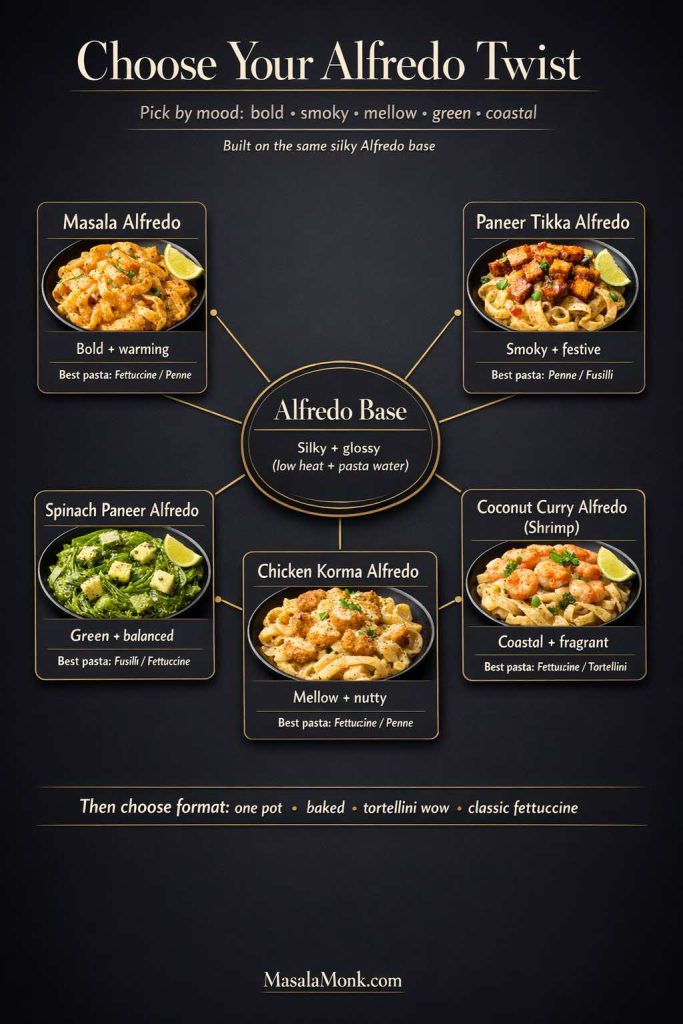
Dark luxe decision-map infographic titled “Choose Your Alfredo Twist” with a central Alfredo Base badge and five connected cards: Masala Alfredo (bold), Paneer Tikka Alfredo (smoky), Chicken Korma Alfredo (mellow), Spinach Paneer Alfredo (green), and Coconut Curry Alfredo with shrimp (coastal), each listing the best pasta shapes; includes a bottom line suggesting formats like one pot, baked, tortellini, or classic fettuccine.
Not sure which Indian inspired Alfredo pasta to make tonight? Use this quick “pick by mood” map: Masala for bold comfort, Paneer Tikka for smoky drama, Korma for mellow nuttiness, Spinach Paneer for a green balanced bowl, or Coconut Curry (shrimp) for coastal warmth. Save this pin, then jump into the full post for the exact recipe cards + one-pot and baked options.

From there, pick the format: classic fettuccine Alfredo pasta when you want silky comfort, one pot Alfredo when you want fewer dishes, baked Alfredo pasta when you want bubbling edges, tortellini Alfredo when you want fast restaurant energy, or ziti with Alfredo sauce when you want a casserole you can share.

Once you’ve made one or two of these, you’ll start noticing something satisfying: you’re not repeating the same dinner—you’re rotating a creamy pasta universe. The base stays familiar, while the flavor moves. And that’s exactly what makes Indian inspired Alfredo pasta such a keeper.

Also Read: Peanut Butter Fudge: Recipes & Guide (8 Methods + Easy Variations)

FAQs: Indian Inspired Alfredo Pasta

1) What is Indian inspired Alfredo pasta?

Indian inspired Alfredo pasta is a creamy Alfredo-style pasta that’s finished with Indian flavors such as cumin, coriander, garam masala, kasuri methi, paneer tikka-style spice, spinach-paneer notes, or coconut curry warmth. In other words, the sauce stays rich and silky, yet the flavor shifts into an Indian-leaning comfort zone.

2) Can I make Alfredo pasta with an Indian twist using jar Alfredo sauce?

Yes. Start by warming the Alfredo pasta sauce jar on low heat, then loosen it with a splash of reserved pasta water (or warm milk) until it turns smooth and glossy. After that, fold in your Indian twist—masala bloom, tikka seasoning, spinach puree, or coconut curry base—so it tastes layered rather than flat.

3) What’s the best cheese for fettuccine Alfredo pasta?

Traditionally, a finely grated hard cheese gives the cleanest melt and the smoothest texture. Because Alfredo is simple, the cheese choice matters: it should taste nutty and savory without turning the sauce heavy or grainy. If you’re experimenting, combine a hard cheese for flavor with a small amount of melt-friendly cheese for extra creaminess.

4) Why does my Alfredo sauce turn grainy or split?

Most often, Alfredo splits because the heat is too high or the cheese is added too quickly. Similarly, graininess can happen when the sauce boils or when pre-shredded cheese doesn’t melt smoothly. To fix it, reduce the heat, whisk steadily, and add small splashes of pasta water until the sauce comes back together.

5) How do I fix Alfredo sauce that’s too thick?

Add warm pasta water a tablespoon at a time while stirring until the sauce loosens and coats the pasta evenly. If you don’t have pasta water, warm milk or cream can help; however, pasta water usually creates the most “clingy” texture.

6) How do I make one pot Alfredo pasta without it turning gummy?

Use just enough water to barely cover the pasta and stir frequently so it doesn’t stick. When the pasta is nearly done, you should still have a little starchy liquid left—this helps the sauce bind. Then lower the heat before adding dairy and cheese so the sauce stays smooth rather than gluey.

7) Is one pot Alfredo pasta with jar sauce a good idea?

It can be, especially on busy nights. The key is gentle heat and enough liquid to keep the sauce silky. If the jar sauce seems overly thick, thin it gradually with pasta water. Afterward, add your chosen twist—masala, basil-aligned herbs, lemon, spinach, or coconut curry—so it tastes intentional.

8) Which pasta shape is best for Alfredo: fettuccine, penne, or ziti?

Fettuccine Alfredo pasta feels classic because wide noodles carry sauce beautifully. Meanwhile, penne Alfredo holds sauce inside the tubes, so each bite tastes richer. Ziti with Alfredo sauce is ideal when you’re planning a bake because it stays sturdy and doesn’t collapse.

9) Can I make Alfredo ziti or baked Alfredo pasta ahead of time?

Yes. For baked Alfredo pasta, slightly undercook the pasta, keep the sauce a little looser than usual, and assemble everything in a dish. Then bake just until hot and bubbly. If it sits too long in the oven, it can dry out, so aim for “bubbly and done,” not “baked forever.”

10) How do I make baked fettuccine Alfredo with jar sauce without drying it out?

First, loosen the jar sauce with pasta water or milk so it’s silky before mixing it with pasta. Next, cover the dish for most of the bake, then uncover briefly at the end for a golden top. Finally, avoid overbaking—Alfredo stays best when it’s heated through rather than aggressively reduced.

11) How do I make chicken broccoli and ziti Alfredo taste better?

Season each part. Brown the chicken well for flavor, blanch the broccoli briefly so it stays bright, and keep the sauce smooth with pasta water. Then combine everything and bake only until bubbly. As a result, you get a creamy chicken broccoli ziti Alfredo that tastes layered instead of bland.

12) What’s the easiest way to make chicken Alfredo penne with jar sauce?

Cook penne until al dente. Warm jar Alfredo on low heat, thin it with pasta water, and add black pepper. Then stir in cooked chicken and toss everything together. If you want an Alfredo pasta with an Indian twist, finish with a quick masala bloom or tikka-style seasoning.

13) How do I keep shrimp from turning rubbery in shrimp Alfredo pasta?

Cook shrimp separately and briefly—just until pink and curled. Then add it to the sauce at the end so it warms through without overcooking. This approach works especially well for shrimp fettuccine Alfredo with spinach or shrimp Alfredo tortellini.

14) Can I make shrimp and tortellini Alfredo?

Absolutely. Tortellini cooks quickly and feels extra hearty in Alfredo. Keep the sauce smooth, add shrimp at the end, and finish with lemon or black pepper. If you like, add spinach for a shrimp spinach Alfredo variation that tastes brighter.

15) How do I make Alfredo mushroom pasta taste richer?

Brown mushrooms deeply first so they develop a roasted, savory flavor. Then fold them into the sauce. In particular, mushroom Alfredo becomes even more satisfying with extra black pepper and a small squeeze of lemon to lift the richness.

16) How do I make basil Alfredo or Alfredo with basil without it tasting flat?

Add basil at the end, off the heat, so it stays fragrant. Also, balance it with black pepper and a little citrus. If you want more depth, a small spoon of herb paste or pesto-style basil mixture can intensify the flavor without overpowering the sauce.

17) What is lemon Alfredo, and when should I add the lemon?

Lemon Alfredo is Alfredo finished with lemon zest and juice for brightness. Add lemon at the very end so it stays fresh and doesn’t curdle the dairy. It’s especially good with chicken, shrimp, broccoli, and spinach.

18) Can I make Cajun chicken Alfredo using this Indian-inspired approach?

Yes. You can build a Cajun-style direction with black pepper, paprika, garlic, and a bit of chili. Then, if you want it to feel more Indian-leaning, add a pinch of cumin or garam masala and finish with lime. That way, the flavor stays bold while still fitting the Indian inspired Alfredo pasta theme.

19) How do I make Alfredo pasta with Italian sausage (or sausage Alfredo pasta) without making it too heavy?

Use browned sausage for flavor, then keep the sauce slightly looser with pasta water. Additionally, finish with black pepper and lemon so the bowl tastes lively instead of heavy. You can also add broccoli or spinach for balance.

20) Can I make Alfredo pasta with tuna or ham?

Yes—both tuna Alfredo pasta and ham Alfredo pasta are common quick options. Add the tuna or ham toward the end so it warms through gently. Then finish with lemon and pepper to brighten the sauce.

21) Is there a lactose-free fettuccine Alfredo option?

Yes. Use lactose-free cream (or lactose-free milk with a thickener), then choose a hard cheese that melts smoothly. Keep the heat low and rely on pasta water to help the sauce bind so it stays silky.

22) How do I make dairy free fettuccine Alfredo or non dairy Alfredo sauce?

Use cashew cream, oat cooking cream, or another creamy plant base. Then add savory depth with nutritional yeast, garlic, and black pepper. After that, use pasta water to create a cohesive, glossy texture so it still feels like Alfredo.

23) What’s a good low carb fettuccine sauce or keto Alfredo sauce option?

For keto fettuccine Alfredo sauce, keep the sauce creamy and swap the base: zucchini noodles, spaghetti squash, sautéed cabbage ribbons, or well-prepped shirataki. That way, you keep the comfort while cutting the carbs.

24) How long does Alfredo pasta last in the fridge, and what’s the best way to reheat it?

Typically, Alfredo pasta keeps well for a few days when stored properly in the fridge. When reheating, do it gently on low heat with a splash of milk, cream, or water to loosen the sauce. If you microwave it, stir halfway through so it warms evenly and doesn’t separate.

25) Why does my Alfredo sauce taste bland, and how do I fix it quickly?

Usually it needs salt, black pepper, and a bright finish. Add pepper, a tiny pinch of salt, and a squeeze of lemon. For an Alfredo pasta with Indian twist, add crushed kasuri methi or a quick masala bloom—those small touches often transform the flavor immediately.
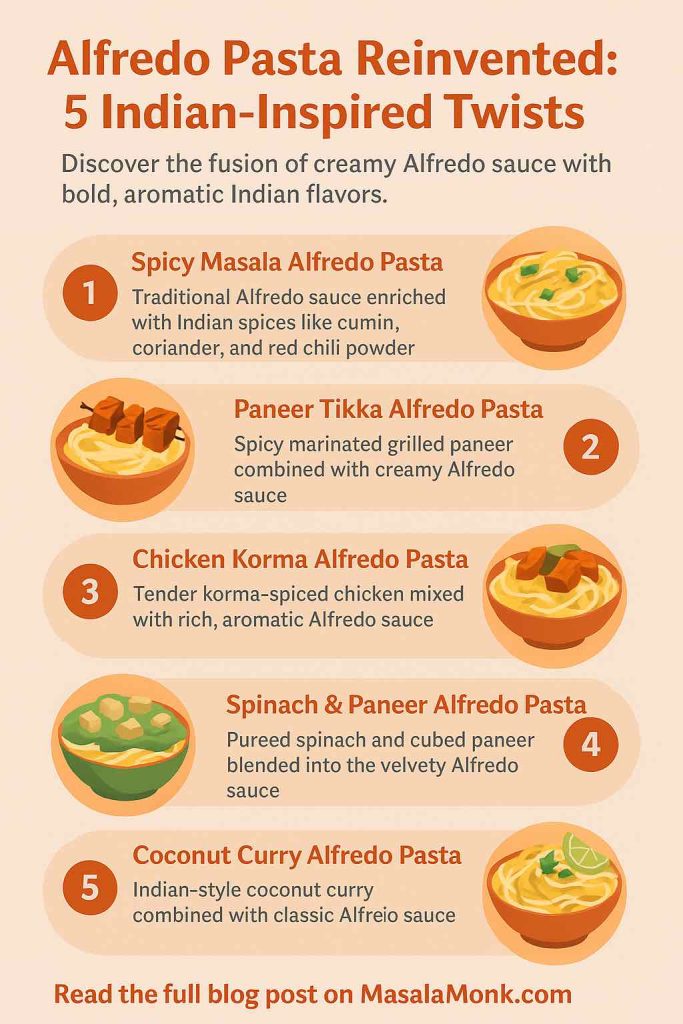
Alfredo Pasta Reinvented: 5 Indian-Inspired Twists
Posted on 5 Comments

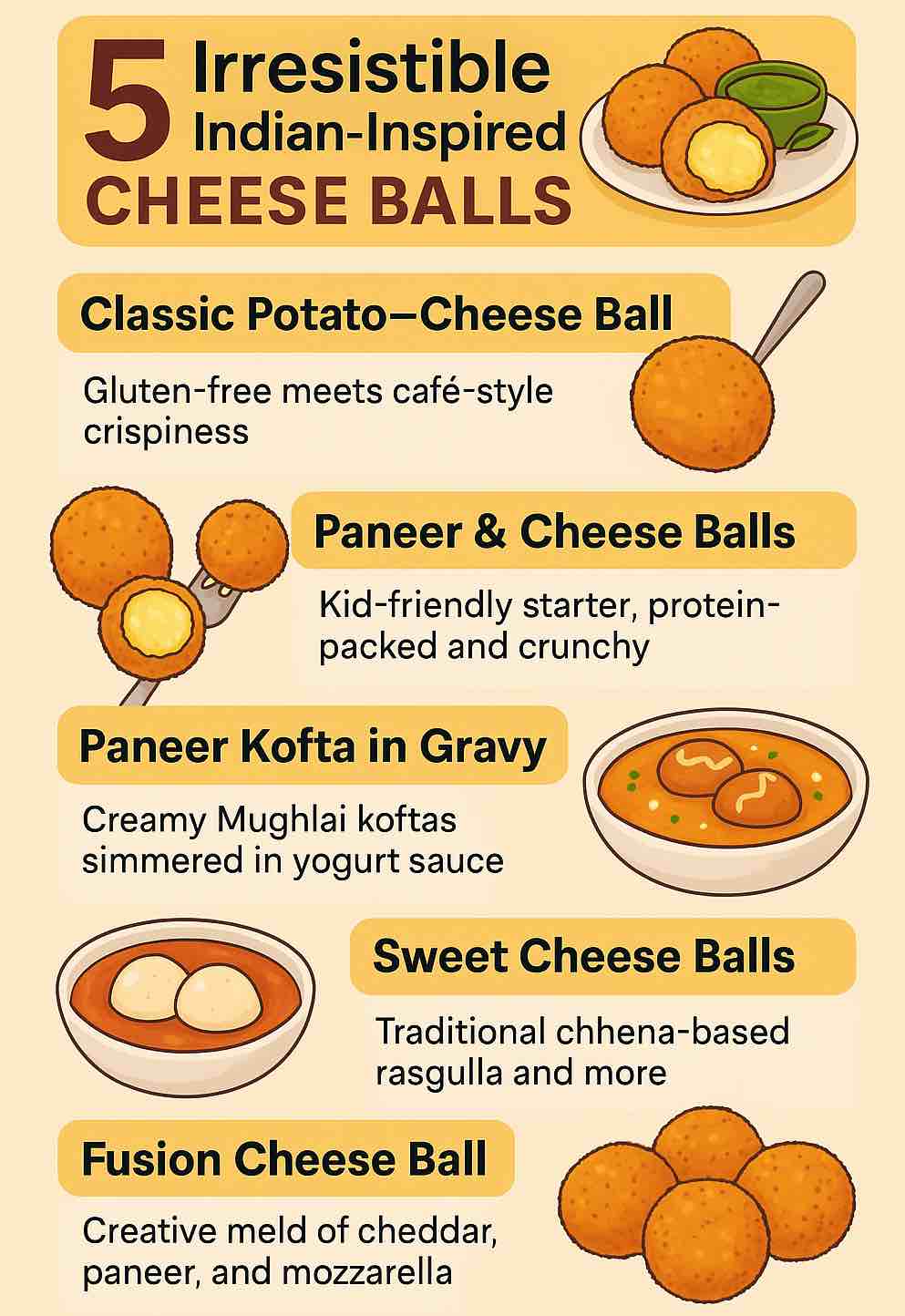
Cheese Balls: 5 Irresistible Indian-Inspired Variations

Indian-Inspired CHEESE BALLS

Cheese balls are the perfect bite-sized indulgence, combining creamy cheese with crispy exteriors and irresistible flavor. While cheese balls are a global favorite, the Indian kitchen brings a flavorful twist to this beloved snack. Whether you’re planning a party, preparing a weekend treat, or looking for a quick yet satisfying appetizer, these Indian-inspired cheese ball recipes have something for everyone.

In this blog, we explore five standout variations that marry the comforting taste of cheese with the bold, diverse flavors of Indian cuisine. Let’s dive right in.


1. Masala Cheese Balls

Flavor Profile:

Spicy, tangy, and aromatic

Why It Works:

These are an elevated version of the classic cheese balls with a desi punch. Think of it as aloo tikki meets molten cheese.

Ingredients:

  • 1 cup grated processed cheese
  • 2 medium boiled potatoes (mashed)
  • 1 tsp red chili powder
  • ½ tsp garam masala
  • ½ tsp chaat masala
  • 1 tbsp chopped coriander
  • 1 chopped green chili
  • Salt to taste
  • Cornflour (for binding)
  • Bread crumbs (for coating)
  • Oil (for deep frying)

Preparation:

  1. In a mixing bowl, combine mashed potatoes, cheese, spices, coriander, and green chili.
  2. Add cornflour to form a soft, pliable dough.
  3. Shape into small balls and roll in breadcrumbs.
  4. Chill for 15 minutes to firm up.
  5. Deep-fry until golden and crispy.

Serving Tip:

Serve hot with green chutney or a tangy tamarind dip.


2. Paneer & Spinach Cheese Balls

Flavor Profile:

Earthy, creamy, and subtly spiced

Why It Works:

This healthier option uses spinach and paneer, making it rich in protein and iron while still being indulgent.

Ingredients:

  • 1 cup grated paneer
  • ½ cup grated cheese
  • 1 cup finely chopped blanched spinach
  • ½ tsp cumin powder
  • 1 tsp ginger-garlic paste
  • Salt and pepper to taste
  • 1 tbsp cornflour
  • Bread crumbs
  • Oil (for shallow frying)

Preparation:

  1. Squeeze out excess water from spinach.
  2. Mix paneer, cheese, spinach, spices, and cornflour.
  3. Shape into small balls and roll in breadcrumbs.
  4. Pan-fry or air-fry until golden.

Serving Tip:

Pair with yogurt-mint dip or serve on a skewer for a canapé-style appetizer.


3. Schezwan Cheese Balls

Flavor Profile:

Spicy, umami, and Indo-Chinese

Why It Works:

If you love spice and fusion, this one’s for you. Schezwan sauce adds a fiery depth that balances the creamy cheese.

Ingredients:

  • ½ cup grated mozzarella
  • ½ cup chopped bell peppers and spring onions
  • 2 tbsp Schezwan sauce
  • 1 tsp soy sauce
  • 2 tbsp cornflour
  • Salt to taste
  • Bread crumbs

Preparation:

  1. Combine all ingredients to form a dough.
  2. Shape into balls, coat in breadcrumbs.
  3. Deep-fry or air-fry for 8–10 minutes.

Serving Tip:

Serve with extra schezwan sauce or chili mayo for dipping.


4. Tandoori Cheese Balls

Flavor Profile:

Smoky, spiced, and bold

Why It Works:

Bringing in the magic of tandoori masala, this version captures that smoky restaurant-style flavor in a compact snack.

Ingredients:

  • ½ cup paneer, crumbled
  • ½ cup grated cheese
  • 2 tbsp thick yogurt (hung curd preferred)
  • 1 tsp tandoori masala
  • ½ tsp kasuri methi
  • ½ tsp chili powder
  • Salt to taste
  • Semolina or bread crumbs

Preparation:

  1. Marinate the paneer and cheese with yogurt and spices.
  2. Shape into balls and coat with semolina or breadcrumbs.
  3. Shallow-fry or bake until golden.

Serving Tip:

Garnish with onion rings, mint chutney, and lemon wedges.


5. Aloo-Makhani Cheese Balls

Flavor Profile:

Rich, buttery, and luxurious

Why It Works:

Inspired by the iconic makhani (butter) sauce, this version is indulgent and flavor-packed.

Ingredients:

  • 1 cup mashed potatoes
  • Cheese cubes (for stuffing)
  • ½ cup makhani gravy (can be store-bought or homemade)
  • Salt, garam masala, and kasuri methi
  • Cornflour for binding
  • Bread crumbs for coating

Preparation:

  1. Mix mashed potatoes with spices and a spoonful of makhani gravy.
  2. Encase cheese cubes within the mixture and shape into balls.
  3. Coat with breadcrumbs and fry until golden.
  4. Warm remaining makhani sauce for serving.

Serving Tip:

Serve on a platter with a spoonful of makhani sauce under each ball. Garnish with coriander and cream.


Final Thoughts

Cheese balls are more than just party snacks—they can be canvases for creativity. These five Indian-inspired variations offer options for every taste and occasion. Whether you’re going for spicy, healthy, indulgent, or fusion, there’s a version here that will wow your guests and satisfy your cravings.

Ready to try these at home? Let us know which one stole your heart. And if you have a twist of your own, share it in the comments—we’d love to feature it in a future post!

FAQs

1. Can I make these cheese balls ahead of time?
Yes, you can shape and coat the cheese balls, then refrigerate them for up to 24 hours. For longer storage, freeze them uncooked and fry directly from frozen when needed.

2. What is the best cheese to use for Indian-style cheese balls?
Processed cheese, mozzarella, or a mix of mozzarella and cheddar works best. Paneer is also ideal when used in combination for Indian flavors.

3. How do I prevent cheese balls from breaking while frying?
Ensure the dough is firm and not too moist. Chill the shaped balls before frying and avoid overcrowding the pan. Double-coating with breadcrumbs helps too.

4. Can I bake or air-fry these instead of deep frying?
Absolutely. Brush with oil and bake at 200°C (392°F) for 15–20 minutes or air-fry at 180°C (356°F) for 10–12 minutes, flipping halfway.

5. Are these cheese balls gluten-free?
Some versions can be made gluten-free by using gram flour (besan) and gluten-free breadcrumbs. Avoid maida (all-purpose flour) if you need a gluten-free recipe.

6. What are good vegetarian substitutes for eggs in the coating?
Use a slurry of cornflour and water or all-purpose flour and water for binding and coating. These help the breadcrumbs stick just like egg wash.

7. Can I make these cheese balls spicy or mild?
Yes, you can adjust the spice level easily. Skip green chilies and reduce chili powder for mild versions, or add chili flakes and spicy sauces for a kick.

8. What sauces or dips go best with these cheese balls?
Indian green chutney, mint yogurt dip, tamarind chutney, schezwan sauce, or even spicy mayo all work well depending on the variation.

9. How can I stuff the cheese balls without the cheese leaking out?
Make sure the outer potato or paneer layer is thick enough to fully seal the cheese cube. Chilling them before frying helps keep the stuffing intact.

10. Can I reuse leftover makhani gravy or sabzis for any variation?
Yes! Leftover makhani gravy is perfect for the Aloo-Makhani balls. Leftover dry sabzis like aloo-matar can also be mashed and repurposed into the mix.

Posted on 2 Comments

Eggs Benedict: Desi Twist Challenge


Welcome to a Flavorful Fusion!

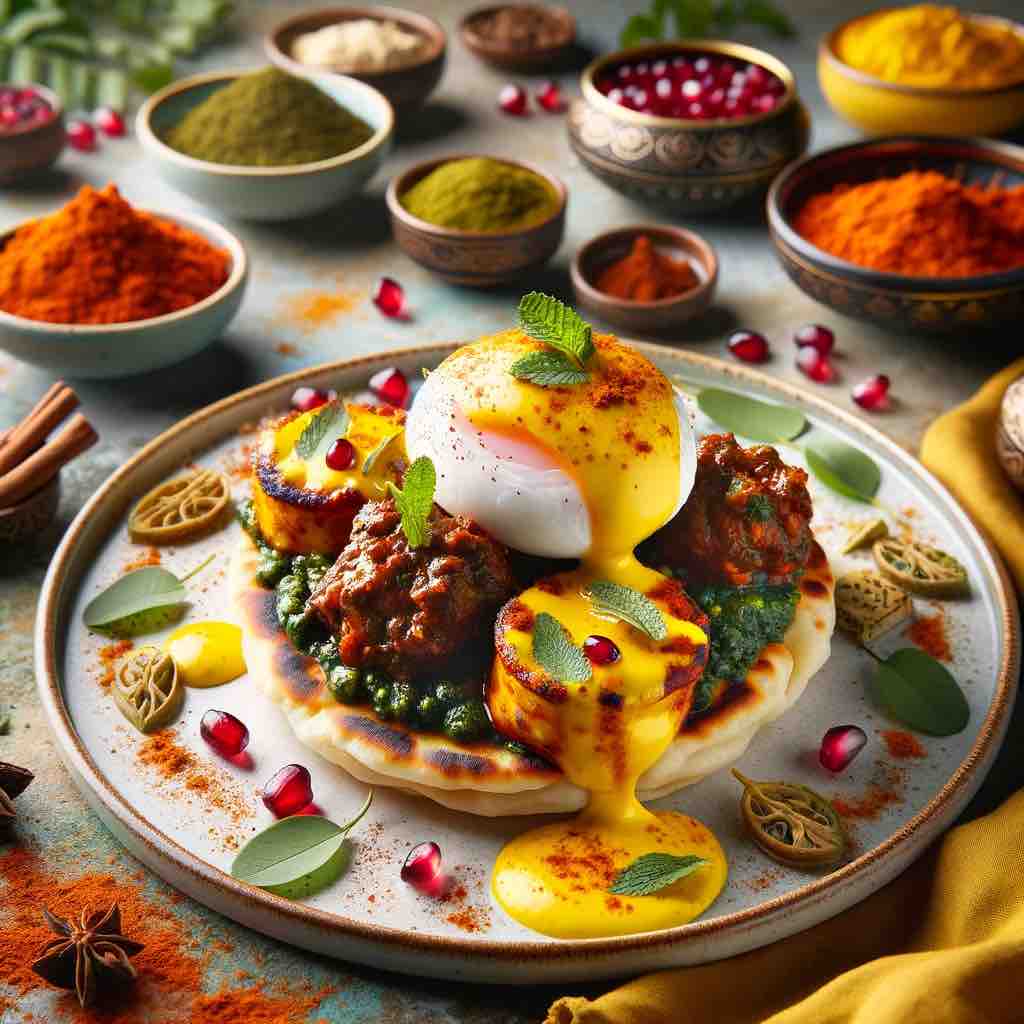
Imagine a dish that combines the elegance of Western brunches with the vibrant zest of Indian cuisine. That’s what we’re diving into today! Welcome to our exploration of Eggs Benedict, a classic that has graced breakfast tables around the world, now ready to be infused with a delightful Indian twist.

Why Eggs Benedict?

Eggs Benedict, traditionally a symphony of English muffins, poached eggs, Canadian bacon, and Hollandaise sauce, has always been a symbol of indulgent mornings and leisurely brunches. But what if we add a dash of desi magic to it?

What’s in Store for You

In this post, we’re not just revisiting the classic recipe; we’re reinventing it! We’ll explore the top five Eggs Benedict recipes from renowned culinary sites and then, hold onto your taste buds, we’re going to Indianize them! Think tandoori chicken replacing Canadian bacon, naan instead of English muffins, and a Hollandaise sauce with a spicy twist. And then there is the contest, for those who enjoy cooking and sharing, read till the end!

Join the Culinary Adventure

So, whether you’re a seasoned chef or a curious foodie, this post is your ticket to creating a brunch that’s truly unforgettable. Let’s embark on this delicious journey together, blending the best of both worlds, one poached egg at a time!


Exploring the Classics: A Deep Dive into the Top 5 Eggs Benedict Recipes


1. The Quintessential Classic: Allrecipes’ Traditional Eggs Benedict

  • The Original Blueprint: Allrecipes’ traditional Eggs Benedict recipe is a homage to the classic version of this beloved brunch dish. It’s a comprehensive guide for those who value authenticity and want to recreate the timeless taste of Eggs Benedict.
  • What You’ll Learn: This recipe meticulously details each step, from toasting the English muffins to perfection, poaching eggs to just the right degree of runniness, layering the Canadian bacon, and finally, draping everything in a velvety Hollandaise sauce.
  • Why It’s a Must-Try: Perfect for culinary enthusiasts who appreciate the elegance of traditional cooking and are looking to master the foundational recipe of Eggs Benedict.

2. The Art of Precision: Simply Recipes’ Eggs Benedict

  • Culinary Choreography: The Simply Recipes version of Eggs Benedict focuses on the delicate balance and timing required to bring this dish to life. It’s a testament to the art of cooking, where every component must come together in perfect harmony.
  • Key Highlights: The recipe guides you through achieving crispy, yet not overdone bacon, butter-laden English muffins with just the right amount of crunch, eggs poached to a delicate tenderness, and a Hollandaise sauce that’s creamy and rich without being overpowering.
  • Ideal For: This recipe is a fantastic choice for those who love the intricacies of cooking and enjoy the challenge of juggling multiple elements to create a harmonious dish.

3. Mastering the Poached Egg: Allrecipes’ Detailed Guide

  • The Centerpiece of the Dish: The poached egg is arguably the star of Eggs Benedict, and the Allrecipes guide offers an in-depth tutorial on mastering this technique. It’s a deep dive into achieving that elusive perfect consistency.
  • What’s Inside: The guide covers everything from the right water temperature to the gentle swirling technique that ensures your eggs are beautifully encased in a delicate white cocoon, with yolks that are runny and rich.
  • For Whom: This guide is an invaluable resource for anyone who has struggled with poaching eggs or is keen to perfect this essential skill in their culinary repertoire.

4. The Homemade Touch: Tastes Better From Scratch’s Eggs Benedict

  • Bringing Brunch Home: Tastes Better From Scratch offers a recipe that brings the sophistication of a brunch restaurant into the comfort of your home. It’s about creating something extraordinary from everyday ingredients.
  • Recipe Highlights: The focus is on a homemade Hollandaise sauce that’s surprisingly simple yet incredibly flavorful, coupled with the classic components of Eggs Benedict, all prepared with a personal touch.
  • Why It’s Special: Ideal for home cooks who want to impress family and guests with a dish that looks as stunning as it tastes, this recipe is a testament to the joy of homemade culinary creations.

5. The Restaurant-Style Experience: NatashasKitchen’s Elegant Eggs Benedict

  • Elevating Breakfast to Fine Dining: NatashasKitchen’s Eggs Benedict recipe is all about recreating the finesse of a high-end brunch spot in your own kitchen. This recipe is a blend of visual appeal and exquisite taste.
  • What to Expect: The recipe walks you through creating a visually stunning and palate-pleasing dish, with tips on presentation and flavor enhancement that elevate the ordinary Eggs Benedict to something truly extraordinary.
  • Perfect For: Those who love to bring a touch of gourmet flair to their cooking, this recipe is a gateway to transforming a simple breakfast into a luxurious dining experience.

In this section, we’ve explored the top five Eggs Benedict recipes, each offering unique insights and techniques. These recipes provide a solid foundation for anyone looking to master this classic dish, setting the stage for creative adaptations and personal touches.

Eggs Benedict: A Diverse Indian Culinary Odyssey


Revolutionary Base Options:

  • Dhokla or Idli: Start with a light, airy dhokla or a soft, steamed idli. These traditional snacks offer a unique, spongy texture, perfect for soaking up flavors.
  • Ragi Dosa or Jowar Roti: For a healthier twist, consider a ragi (finger millet) dosa or a jowar (sorghum) roti. These grains are not only nutritious but also bring a nutty flavor to the base.
  • Bhatura or Puri: For a richer option, try a fluffy bhatura or a crispy puri. These deep-fried breads add a delightful crunch and indulgence to the dish.

also read 10 Examples of Egg Dishes, with 2 Eggs

Protein Variants Beyond the Ordinary:

  • Chettinad Chicken or Goan Prawn Balchão: Spice up the protein layer with a fiery Chettinad chicken or a tangy Goan prawn Balchão, both bursting with regional Indian flavors.
  • Masala Vada or Paneer Tikka: For vegetarians, a crunchy masala vada or a smoky paneer tikka can replace the traditional meat, adding a delightful texture and rich taste.
  • Amritsari Fish or Lamb Galouti Kebab: Experiment with Amritsari fish, known for its spicy batter, or a melt-in-the-mouth lamb Galouti kebab for a luxurious touch.

Eggs with an Indian Infusion:

  • Masala Poached Egg: Infuse the poaching liquid with a bouquet of Indian spices like star anise, cinnamon, and bay leaves for a subtly spiced egg.
  • Tandoori Egg: Marinate a soft-boiled egg in a tandoori masala and give it a quick char for a smoky, spiced exterior.
  • Egg Bhurji: Replace the poached egg with a spicy, scrambled egg bhurji, rich with onions, tomatoes, and a mix of Indian spices for a heartier option.

Innovative Sauces:

  • Mint-Coriander Hollandaise: Blend the classic Hollandaise with mint and coriander for a refreshing, herby twist.
  • Coconut-Tamarind Hollandaise: Combine coconut milk and tamarind paste for a sweet and sour version, adding a South Indian flair.
  • Tomato and Fenugreek Hollandaise: A tomato-based Hollandaise infused with dried fenugreek leaves can offer a tangy and aromatic alternative.

Also read Coconut Milk Nutrition Facts & Glycemic Index Impact

Garnishes with a Creative Edge:

  • Fried Curry Leaves and Sliced Almonds: Add a crunch with fried curry leaves and a nutty flavor with sliced almonds.
  • Pomegranate Seeds and Sev: Sprinkle pomegranate seeds for a burst of sweetness and sev (crispy chickpea flour noodles) for an extra crunch.
  • Pickled Vegetables and Microgreens: Top with tangy pickled vegetables and fresh microgreens for a burst of freshness and a contrast in textures.

This reimagined Eggs Benedict is a journey through the vast and varied landscape of Indian cuisine. Each component offers a chance to explore different regional flavors and textures, encouraging culinary experimentation and creativity. It’s a dish that not only tantalizes the taste buds but also tells a story of India’s rich and diverse culinary heritage.


Join the Culinary Adventure: Share Your Creations with #MasalaMonk


We’ve embarked on a flavorful journey, reimagining the classic Eggs Benedict with a vibrant Indian twist. Now, it’s your turn to bring these ideas to life in your kitchen. We encourage you to experiment, mix and match, and create your own unique versions of this iconic dish. Whether you stick to the traditional roots or venture into uncharted culinary territories, we want to see your creativity shine!

Here’s How You Can Participate:

  1. Create and Experiment: Use the ideas shared as a starting point and add your personal touch. Whether it’s a new base, a twist on the protein, an innovative sauce, or an unexpected garnish, let your culinary instincts lead the way.
  2. Capture and Share: Once you’ve created your masterpiece, take a beautiful photo and share it on Instagram. Use the hashtag #MasalaMonk so we can find your creations easily. Don’t forget to tag us in your post!
  3. Engage with the Community: After sharing your creation on Instagram, come back to this post and leave a comment. Share your experience, the recipe, or any tips you have for fellow food enthusiasts. This is a great way to connect with others who share your passion for cooking and Indian cuisine.

Exciting Rewards Await!

  • Get Featured: We’ll be keeping an eye out for the most interesting, innovative, and mouth-watering recipes. The best creations will be featured on our platform, showcasing your culinary talent to a wider audience.
  • Win MasalaMonk Goodies: As a token of appreciation, selected entries will receive special goodies worth Rs. 2100, from MasalaMonk.com. It’s our way of celebrating your culinary skills and encouraging you to keep experimenting.

This is more than just a cooking challenge; it’s a celebration of flavors, creativity, and community. So, put on your chef’s hat, get those spices ready, and start cooking! We can’t wait to see what amazing dishes you come up with. Happy cooking, and may the best Eggs Benedict win!


Further Reading: Exploring the Nutritional World of Eggs


For those of you who are as fascinated by the versatility and nutritional benefits of eggs as we are, we’ve compiled a list of insightful articles. These reads will not only deepen your understanding of the nutritional aspects of eggs but also inspire you with delicious egg-based recipes. Dive into these resources for a comprehensive look at eggs from various culinary and health perspectives:

  1. Protein Powerhouse: Discover the impressive protein content in boiled eggs and explore their comprehensive nutritional profile, including calories, fats, vitamins, and minerals. Read more about the protein in two boiled eggs.
  2. Yolk Wonders: Uncover the rich nutrient content of egg yolks, including proteins, vitamins, minerals, and fatty acids. This article is a must-read for understanding the health benefits and culinary uses of egg yolks. Explore the nutritional protein profile of egg yolks.
  3. Egg Whites Unveiled: Learn about the low-calorie and high-protein profile of egg whites, their role in various diets, and their versatility in cooking. This piece is particularly useful for those interested in weight management and muscle building. Delve into the calories and nutrition in egg whites.
  4. Scrambled Egg Nutrition: Gain insights into the protein-rich nature of scrambled eggs, including their caloric and fat content, along with tips for healthier preparation. Read about the protein in 3 scrambled eggs.
  5. Creative Egg Dishes: Get inspired by ten delightful egg dishes prepared with just two eggs. This article offers a creative culinary perspective, expanding your options for incorporating eggs into your meals. Explore 10 examples of egg dishes with 2 eggs.

These articles collectively offer a well-rounded perspective on eggs, catering to fitness enthusiasts, health-conscious individuals, and culinary aficionados alike. Whether you’re exploring the protein-packed world of boiled eggs, delving into the nutrient-rich yolk, opting for the lean protein of egg whites, or enjoying the wholesome goodness of scrambled eggs, these posts provide valuable information to enhance your dietary choices and cooking repertoire.


FAQs for “Indian Fusion Eggs Benedict: A Culinary Adventure”

  1. What makes Indian Fusion Eggs Benedict different from the traditional version?
  • Indian Fusion Eggs Benedict transforms the classic dish with bold Indian flavors. It incorporates elements like spiced kulcha or idli as the base, richly flavored proteins like lamb keema or paneer tikka, and innovative sauces such as mint-coriander hollandaise, offering a unique and vibrant culinary experience.
  1. Can I make a vegetarian version of Indian Fusion Eggs Benedict?
  • Absolutely! A vegetarian version can include paneer bhurji or masala vada as the protein. You can also experiment with various vegetarian toppings like spiced tofu or vegetable kebabs to add your personal touch.
  1. What are some healthy alternatives for the base in Indian Fusion Eggs Benedict?
  • For a healthier base, consider using ragi dosa, jowar roti, or a lightly toasted multigrain bread. These options provide a nutritious twist while maintaining the dish’s integrity and flavor.
  1. How can I infuse Indian flavors into the Hollandaise sauce?
  • Infuse the Hollandaise sauce with Indian herbs and spices like mint, coriander, or a hint of garam masala. You can also experiment with coconut milk or tamarind for a unique South Indian twist.
  1. What are some creative egg options for this dish?
  • Instead of the traditional poached egg, try a masala poached egg, a tandoori spiced soft-boiled egg, or even an egg bhurji for a heartier option. Each style adds a different texture and flavor to the dish.
  1. Can I prepare Indian Fusion Eggs Benedict for a large group?
  • Yes, this dish can be scaled up for larger groups. Prepare components like the base and protein in advance, and assemble with freshly poached eggs and sauce when ready to serve.
  1. Are there any quick and easy versions of this recipe?
  • For a quicker version, use pre-made components like store-bought naan or roti as the base, and simplify the toppings with readily available ingredients like pre-cooked meats or paneer.
  1. What are some garnishing ideas to enhance the dish?
  • Garnish with crispy fried onions, fresh herbs like cilantro, and pomegranate seeds for a sweet crunch, or a sprinkle of chaat masala for an extra zing.
  1. How can I make this dish vegan-friendly?
  • To make a vegan version, use a vegan bread base, tofu scramble or spiced chickpea mixture as the protein, and a cashew-based vegan hollandaise sauce. Replace the egg with a tomato or avocado slice for added freshness.
  1. Where can I share my version of Indian Fusion Eggs Benedict?
    • Share your creation on Instagram using the hashtag #MasalaMonk. Don’t forget to come back and comment on our post with your experience and recipe. The most interesting recipes might get featured and win goodies from MasalaMonk.com!

Blog Tags for the Post

Indian cuisine, fusion recipes, Eggs Benedict, vegetarian options, healthy cooking, Indian spices, culinary creativity, home cooking, food experimentation, brunch ideas, gourmet dishes, international cuisine, cooking tips, recipe sharing, food photography, Masala Monk, culinary adventure, Indian flavors, innovative cooking, food blogging