
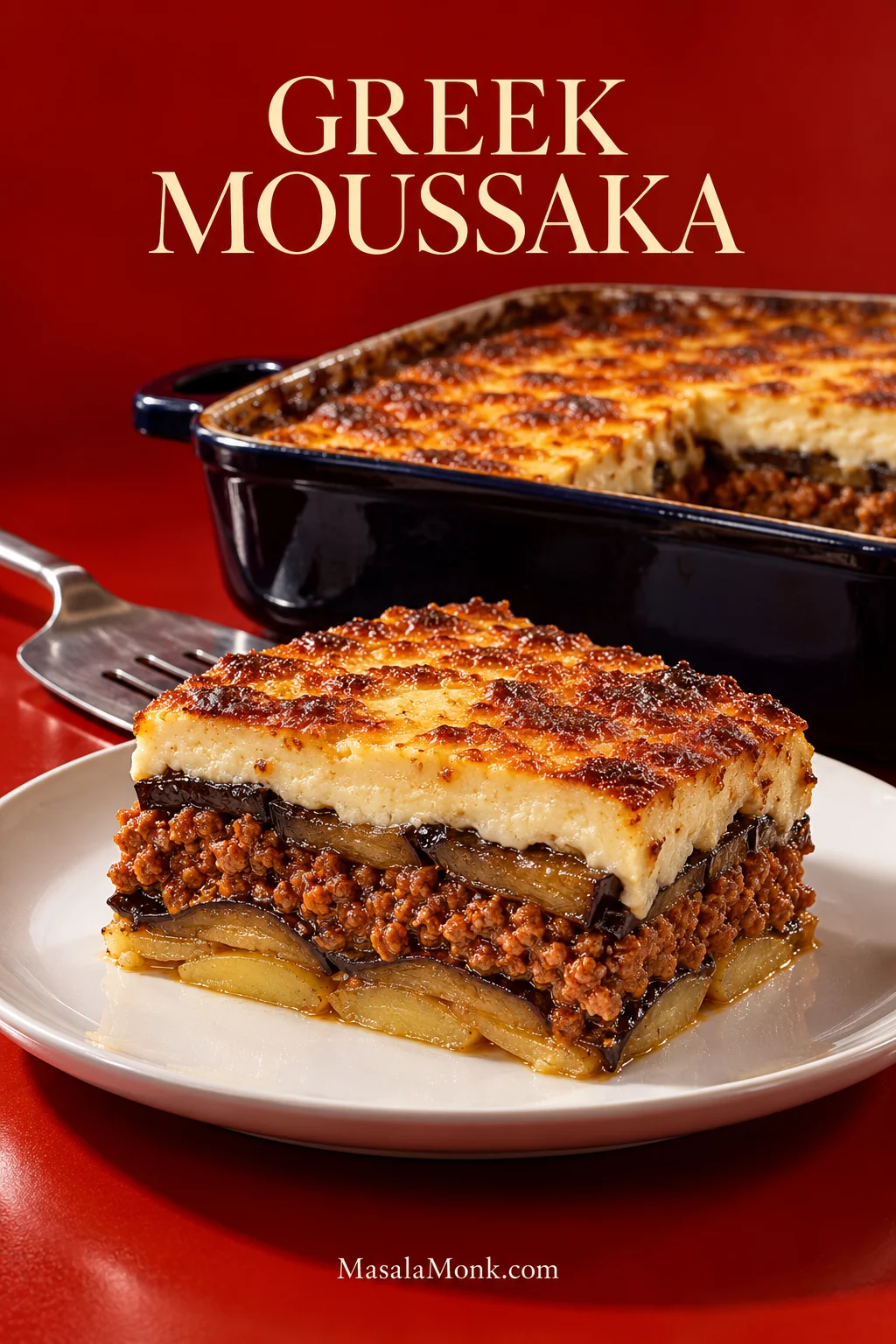
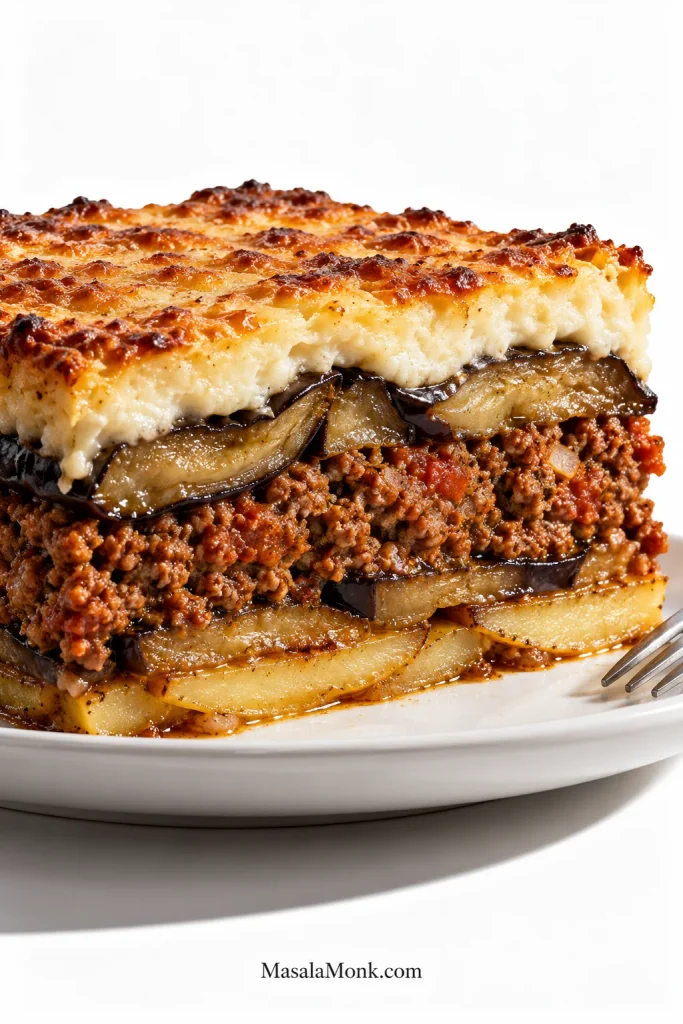
A good moussaka comes to the table with a deeply browned top, tender eggplant underneath and lamb that has cooked down until it almost clings to the layers around it. Cut through the béchamel and those layers should still be visible: soft eggplant, savoury lamb and a thin potato base, all yielding without collapsing into one another.
Getting there takes a few separate jobs. Eggplant needs to soften without becoming oily, the lamb has to reduce into a concentrated sauce, the potatoes need a head start, and the béchamel must be thick before it ever reaches the oven. Done one after another, those jobs can make moussaka feel like an all-day undertaking.
The easiest way to make Greek moussaka feel manageable is to overlap the work: start the lamb while the eggplant salts, roast the vegetables while the sauce reduces, then make the béchamel last.
This is good food for a weekend dinner, a long lunch or a table where several people are properly hungry. Much of the work can happen before anyone arrives, which is one of the reasons moussaka rewards planning more than rushing.
In This Guide
Quick Answer
Greek moussaka is a baked casserole of eggplant (aubergine), seasoned minced meat and thick béchamel; many Greek versions also include a thin potato base. This Greek moussaka recipe uses ground lamb, roasted eggplant and potato, finished with an egg-and-cheese-enriched béchamel.
Four things matter before assembly: tender eggplant, partly cooked potatoes, lamb with no loose tomato liquid and béchamel thick enough to spread rather than pour. Get those right and the oven has a much easier job.
Why This Moussaka Uses Lamb, Potato & Roasted Eggplant
Traditional Greek moussaka varies from kitchen to kitchen. Meat choices, potatoes, seasoning, cheese and vegetable preparation are not identical in every version. The Visit Greece moussaka recipe, for example, layers potatoes, eggplant, minced meat and béchamel.
Lamb tastes deeper and a little sweeter than beef here, which suits the tomato, oregano and eggplant particularly well. It also renders plenty of flavourful fat; we keep a little in the pan and remove any obvious pool before building the sauce. Ground beef can replace it at the same weight if you prefer a milder meat layer.
Potato catches some of the juices moving down from the meat and eggplant and gives the first slice a little support. About 1¼ lb / 550 g, cut 5–6 mm / roughly ¼ inch thick, is enough for one lightly overlapping layer in a 9 × 13-inch pan.
Roasting the eggplant makes the richness easier to control. Fried eggplant can be wonderfully silky, but it absorbs oil eagerly; roasting still gives us tender slices and useful browning without making the finished casserole unnecessarily oily.
Greek Moussaka Recipe with Eggplant, Lamb & Béchamel
Total elapsed time: about 3 hours, typically 2 hours 45 minutes to 3 hours 15 minutes. The biggest variable is whether your oven can roast all the eggplant efficiently at once or needs another batch.
Oven temperatures: roast the vegetables at 425°F / 220°C conventional / 200°C fan, then bake the assembled moussaka at 375°F / 190°C conventional / 170°C fan.
Equipment
- Deep 9 × 13-inch / approximately 23 × 33 cm casserole dish, ideally about 3 inches / 7–8 cm deep
- 2–3 large rimmed sheet pans, or 2 pans plus time for another eggplant batch
- Wide heavy skillet, sauté pan or Dutch oven
- Heavy-bottomed saucepan
- Balloon whisk
- Kitchen scale
Also handy: a large colander, heatproof spatula, wide serving spatula and a mandoline for evenly slicing the potatoes.
Greek Moussaka Ingredients
Eggplant & Potatoes
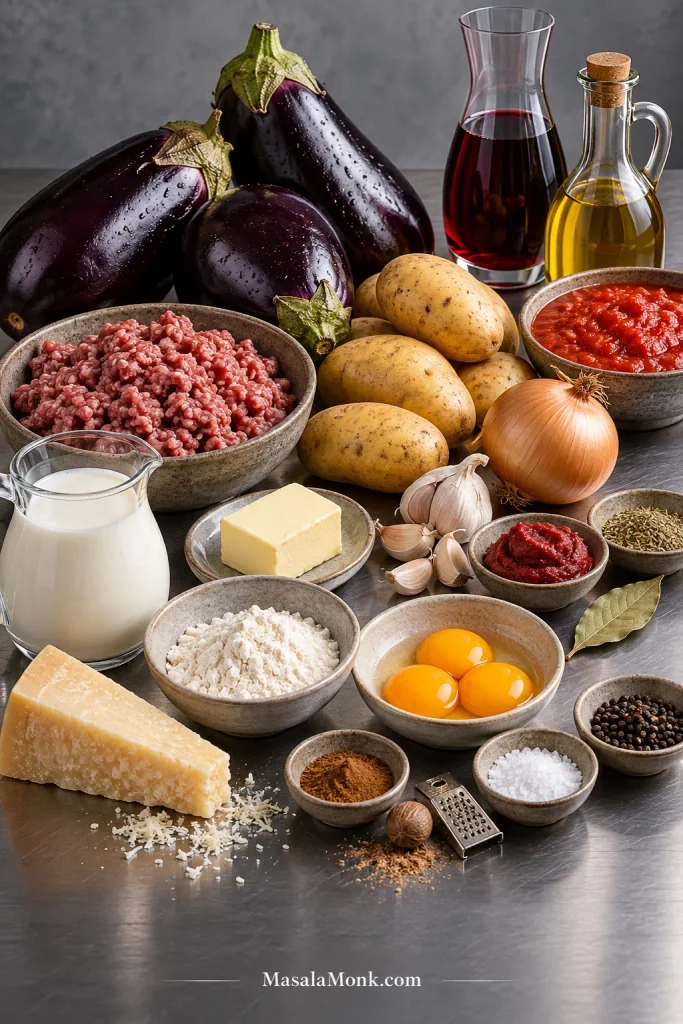
- 2¾ lb / 1.25 kg globe eggplant (aubergine), about 3 large; buy by weight if possible
- 1¼ lb / 550 g Yukon Gold, Russet, Maris Piper or another all-purpose/starchy potato
- 1½ teaspoons / about 9 g fine sea salt, divided
- ¼ cup / 60 ml olive oil, plus up to 1 tablespoon / 15 ml more if needed for a light coating
Lamb Sauce
- 1¾ lb / 800 g ground lamb
- 1 large yellow onion, about 7 oz / 200 g, finely diced
- 4 garlic cloves, finely minced
- 1 tablespoon / 15 ml olive oil, only if the lamb is very lean and the pan remains dry
- 3 tablespoons / 45 g tomato paste — use the thick concentrated tomato product, not pourable tomato purée or passata; in the UK, the equivalent may be labelled concentrated tomato purée
- ½ cup / 120 ml dry red wine
- 1 can crushed tomatoes, 14 oz / 400 g; finely chopped canned tomatoes can be pulsed briefly if crushed tomatoes are unavailable
- 1 teaspoon dried oregano
- 1 bay leaf
- ¼ teaspoon ground cinnamon
- 1¼ teaspoons / about 7 g fine sea salt, then adjust to taste
- ½ teaspoon freshly ground black pepper
Béchamel
- ½ cup / 113 g unsalted butter
- 1 cup / 120 g all-purpose flour
- 4 cups / 950 ml whole milk, warmed but not boiling
- 3 large egg yolks
- 3½ oz / 100 g finely grated Kefalotyri, Pecorino Romano or Parmesan
- ¼ teaspoon freshly grated nutmeg
- ½ teaspoon / about 3 g fine sea salt, then adjust to taste
- ¼ teaspoon black or white pepper
For the Top
- 1½ oz / 40 g finely grated Kefalotyri, Pecorino Romano or Parmesan
How to Make Greek Moussaka
1. Salt the Eggplant
Trim the eggplants and cut them lengthways into slices about 8–10 mm / roughly ⅓ inch thick. Very skin-heavy end pieces can be discarded. For unusually mature eggplants with tough skin, peel a few narrow strips instead of removing all of it.
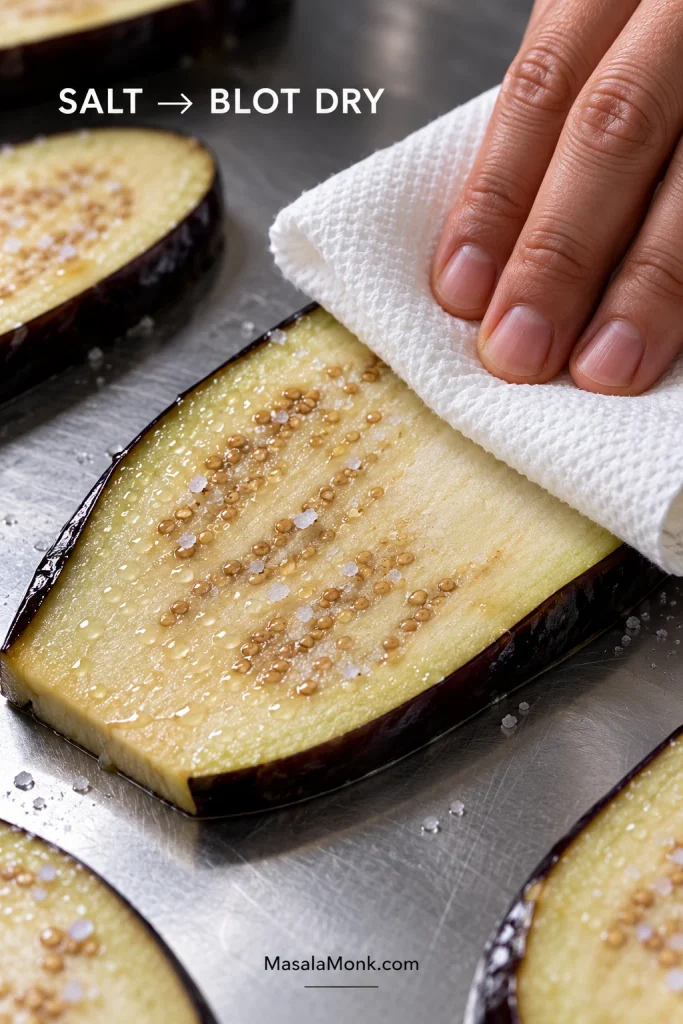
Arrange the slices in a colander or over trays and sprinkle both sides lightly with about 1 teaspoon of the measured salt. Leave them for 30 minutes.
Start the lamb while the eggplant sits.
The measured amount of salt here does not need rinsing; blotting is enough. A much heavier salting can be rinsed off briefly, followed by very thorough drying.
2. Brown the Lamb and Start the Sauce
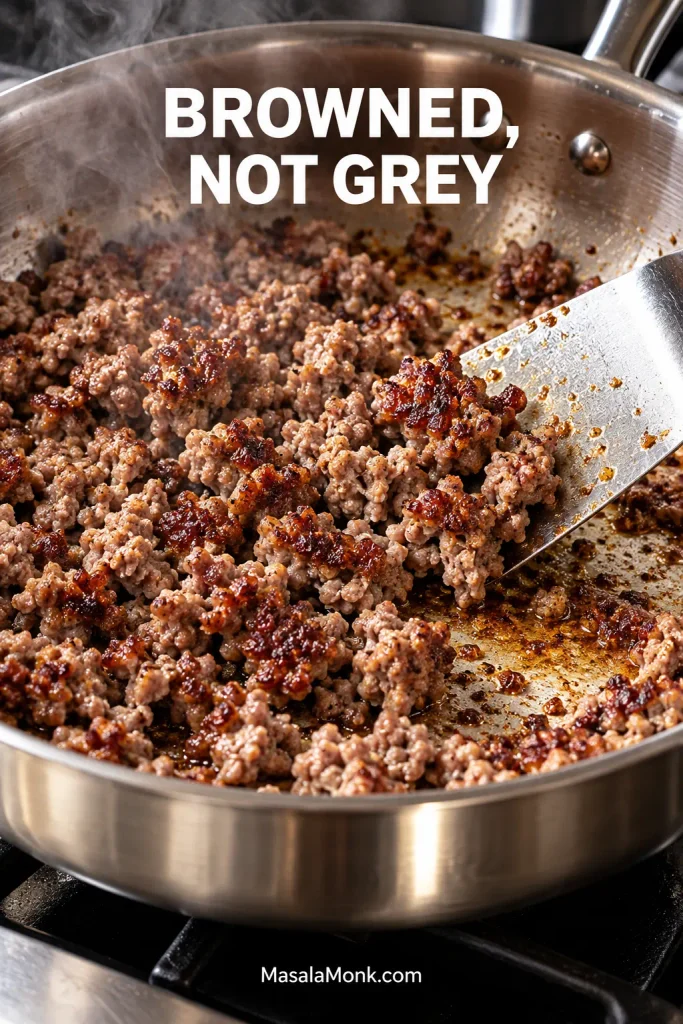
Heat a wide heavy skillet, sauté pan or Dutch oven over medium-high heat. Add the lamb and spread it into an even layer. Leave it undisturbed for 2–3 minutes so part of the meat can brown against the pan, then break it into smaller crumbles.
Continue cooking until no raw pink remains and browned patches appear among the crumbles, usually another 5–7 minutes. Very lean lamb may need the optional tablespoon / 15 ml olive oil; otherwise let its own fat do the work.
Look at the bottom of the pan. A sheen of lamb fat is useful; a visible pool is not. Spoon off the obvious excess.
Add the onion and cook for 5–7 minutes until soft and beginning to colour. Stir in the garlic for about 30 seconds. Add the tomato paste and cook for another 1–2 minutes, scraping it over the hot surface until it darkens slightly.
Pour in the wine and scrape up the browned bits. Let it bubble until reduced by roughly half. Add the crushed tomatoes, oregano, bay leaf, cinnamon, salt and pepper.
Bring to a simmer, then lower the heat enough to maintain steady uncovered bubbling. Leave the sauce reducing while you return to the vegetables.
3. Dry and Roast the Vegetables
Heat the oven to 425°F / 220°C conventional / 200°C fan. Arrange the racks so two sheet pans can roast with reasonable airflow.
Blot the salted eggplant thoroughly with clean kitchen towels or paper towels. The surfaces should feel dry.
Peel the potatoes, then slice them 5–6 mm / about ¼ inch thick. Toss with 1 tablespoon / 15 ml olive oil and the remaining ½ teaspoon salt, then arrange them on one sheet pan.
Give the Vegetables Room to Roast
Arrange the eggplant in a single layer on the remaining pans. Do not stack it. An oven that struggles with three trays will give better results if the extra eggplant is roasted as a second batch.
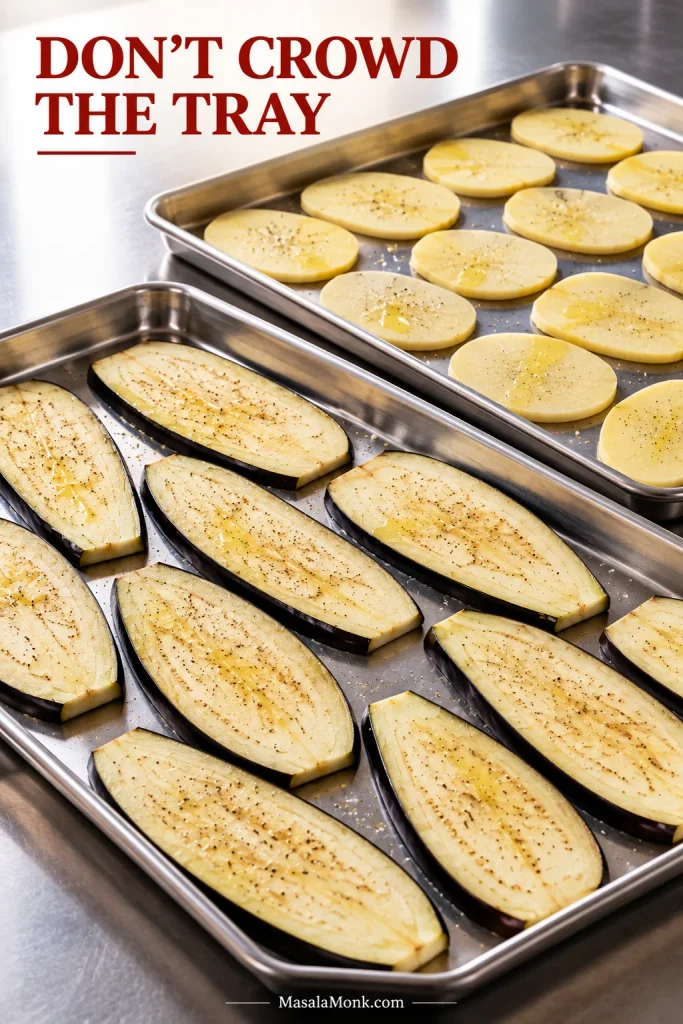
Divide the remaining oil between the eggplant batches so the first tray does not use all of it. Brush or rub a thin sheen over both sides. The full 1.25 kg can take up to the extra tablespoon / 15 ml if needed.
Roast, swapping pan positions after about 10 minutes if your oven browns unevenly.
If the lamb sauce reaches the consistency described in Step 4 while the vegetables roast, take it off the heat rather than letting it reduce unnecessarily.
Check the Vegetables, Not Just the Clock
The potatoes usually need around 15–20 minutes. A ready slice bends without snapping and is partly tender while still lifting cleanly from the tray.
The eggplant usually needs about 20–25 minutes per batch. Pick up a slice with tongs. A properly roasted piece sags under its own weight, feels tender through the middle and has picked up a little browning around the edges.
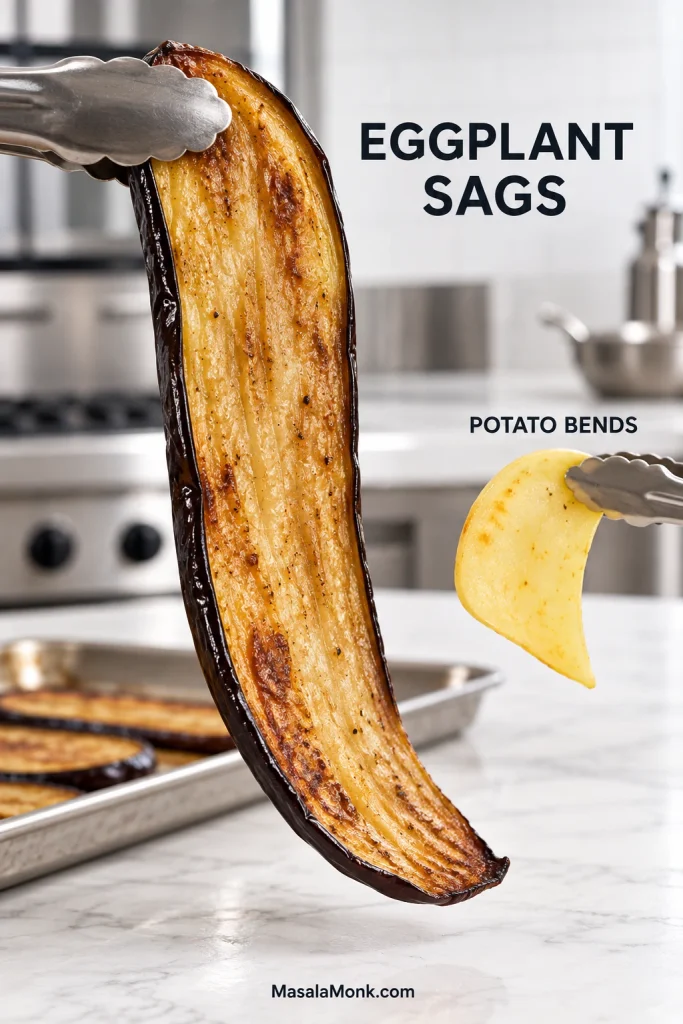
Still firm in the middle? Give it another few minutes. There is no prize for hitting exactly 20 or 25 minutes. The eggplant needs to be fully tender before it goes into the casserole.
Reduce the oven to 375°F / 190°C conventional / 170°C fan once the vegetables are finished.
4. Finish the Lamb Sauce
Return to the lamb. If it already reached the right consistency while the vegetables were roasting, leave it off the heat. Otherwise, simmer uncovered until the sauce becomes dense and spoonable.
Drag a spatula across the bottom once to check. The gap should remain visible briefly instead of immediately filling with thin tomato liquid, and a spoonful pushed to one side should mound instead of spreading.
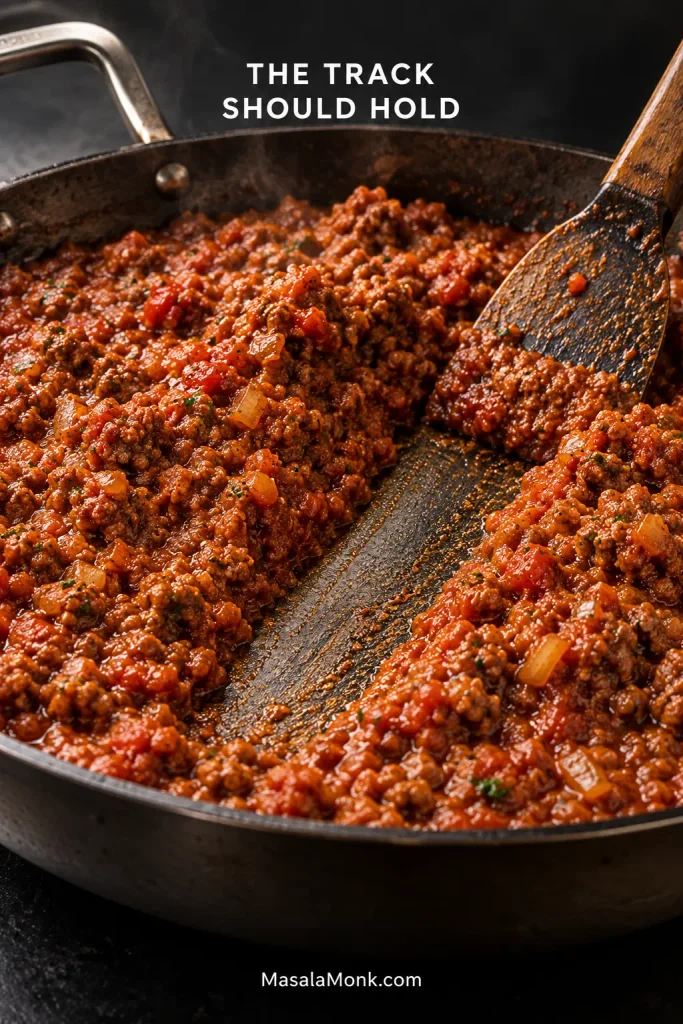
A loose sauce may need another 5–15 minutes, depending on pan width, burner strength and the tomatoes you used. Trust what is happening in the pan more than the clock.
Remove the bay leaf, taste and adjust the seasoning. The sauce should smell primarily of browned lamb and concentrated tomato, with onion and warm spice underneath. Leave it uncovered while you make the béchamel.
5. Make the Béchamel Last
Warm the milk until steaming but not boiling.
Melt the butter in a heavy saucepan over medium heat. Add the flour and whisk for about 2 minutes. The roux should foam gently and lose its raw flour smell without browning.
Add roughly one-quarter of the warm milk and whisk until smooth. Add another quarter, whisk smooth again, then add the remaining milk in two additions.
Cook over medium to medium-low heat, whisking frequently and scraping the bottom corners of the saucepan. Once all the milk is incorporated, expect another 6–10 minutes before it becomes properly thick.
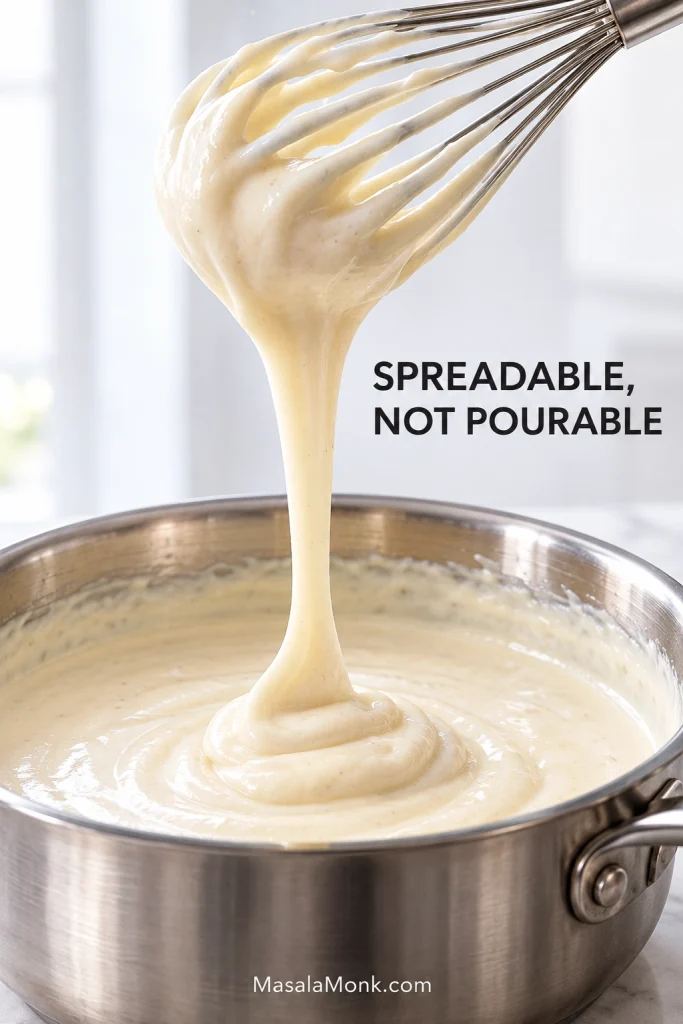
Lift the whisk. The sauce is ready when it falls back in thick, slow ribbons and leaves a spoon heavily coated. It should look smooth and rich rather than pourable.
It may look almost too thick compared with an everyday white sauce. That is what you want here.
Check All Four Components Before Assembly
Once the béchamel reaches this consistency, take it off the heat.
| Component | Ready When… | If It Needs More Work |
|---|---|---|
| Potato | Flexible and partly tender while still holding its shape. | Give it a few more minutes in the oven. |
| Eggplant | Bends easily, feels tender through the centre and looks surface-dry. | Keep roasting until the centre softens. |
| Lamb | Dense and spoonable with no loose tomato liquid in the pan. | Reduce uncovered for longer. |
| Béchamel | Heavy enough to coat a spoon and fall from the whisk in slow ribbons. | Return it to moderate heat and cook a little longer before adding the yolks. |
If another component needs a few extra minutes, leave the béchamel off the heat and give it a brief whisk before finishing it. Assembly can wait.
When everything is ready, stir 3½ oz / 100 g grated cheese, nutmeg, salt and pepper into the béchamel. Let it stand for about 5 minutes before tempering the yolks.
Whisk the egg yolks in a small bowl. Gradually whisk about ½ cup of hot béchamel into them, then pour the tempered yolks back into the saucepan and whisk until smooth and glossy. Once the yolks are in, do not bring the sauce back to a hard boil.
6. Layer the Moussaka
Lightly oil a deep 9 × 13-inch / approximately 23 × 33 cm baking dish.
After all the separate pans and pots, this is the satisfying part: everything finally becomes one moussaka.
- Potato: cover the base in one lightly overlapping layer.
- Eggplant: arrange roughly half the slices over the potatoes.
- Lamb: spread the reduced meat sauce evenly over the eggplant.
- Eggplant: cover the lamb with the remaining slices.
- Béchamel: spread it right to the sides and corners in a generous layer about ½ inch / 1.5 cm deep.
- Cheese: scatter the remaining 1½ oz / 40 g hard cheese across the top.
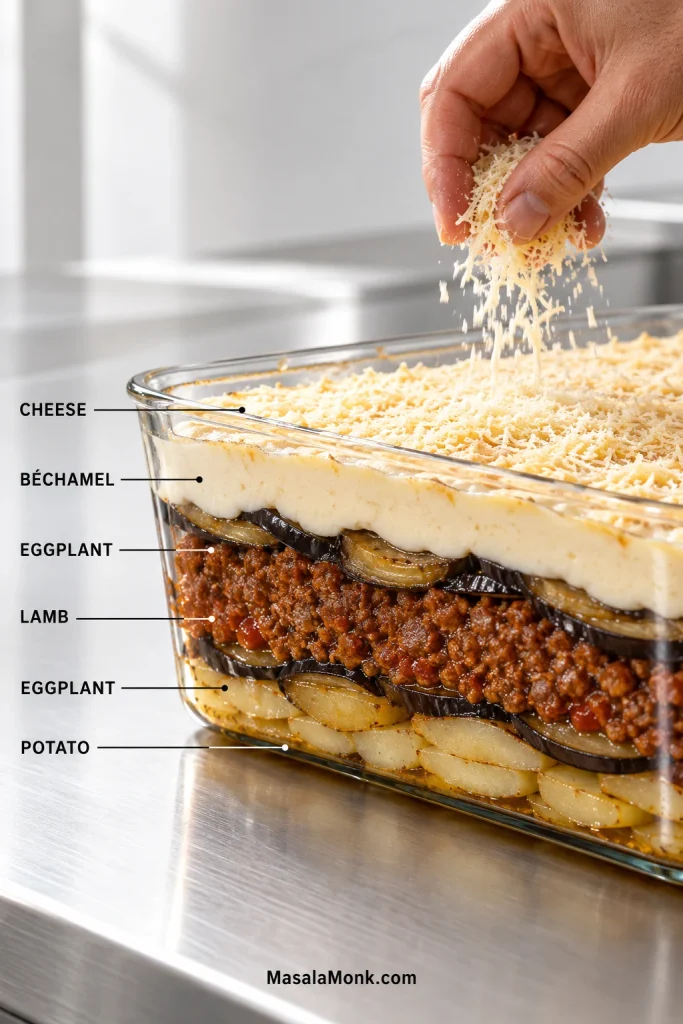
Leave about ½ inch / 1.5 cm of headspace below the rim. Anything that will not fit comfortably is better baked in a small second dish than piled right to the top.
7. Bake Until the Centre Is Set
Once the pan is assembled, the busy part is over. The oven does the next job, which also gives you a welcome chance to clear the counters.
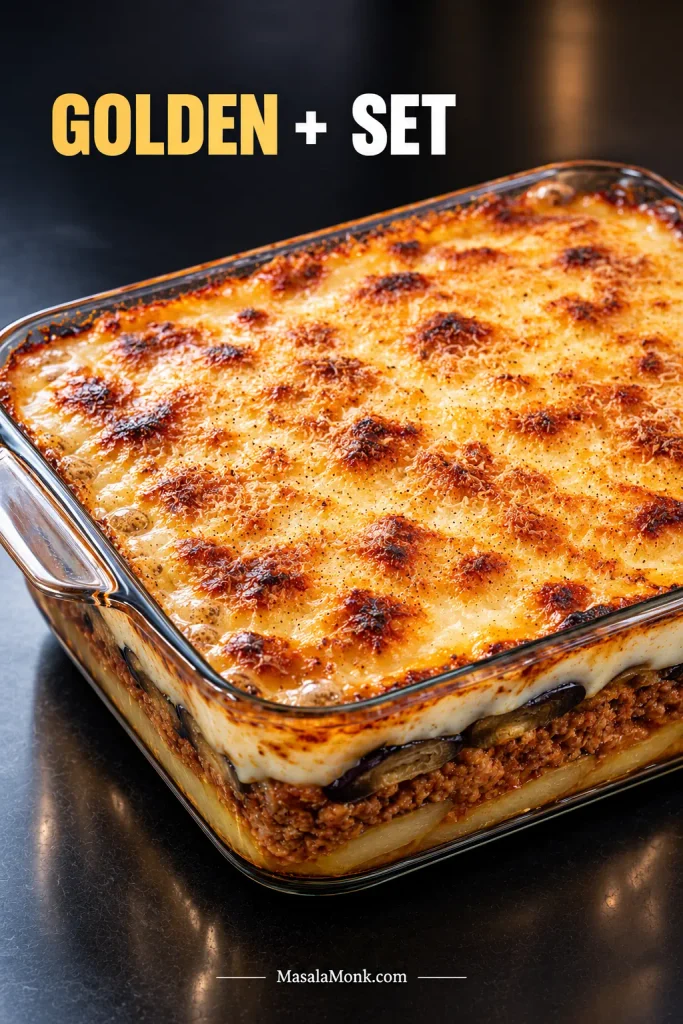
Bake uncovered until the béchamel is deeply golden, the edges are gently bubbling and the centre no longer sloshes. At 375°F / 190°C conventional / 170°C fan, this usually takes about 40–45 minutes.
As it bakes, the pale béchamel turns golden and the cheese begins to smell toasted, with warm nutmeg and lamb coming up underneath. A top that browns early can be loosely covered with foil while the centre finishes.
For anyone checking with a thermometer, the centre should reach 165°F / 74°C.
8. Let the Pan Settle Before Cutting
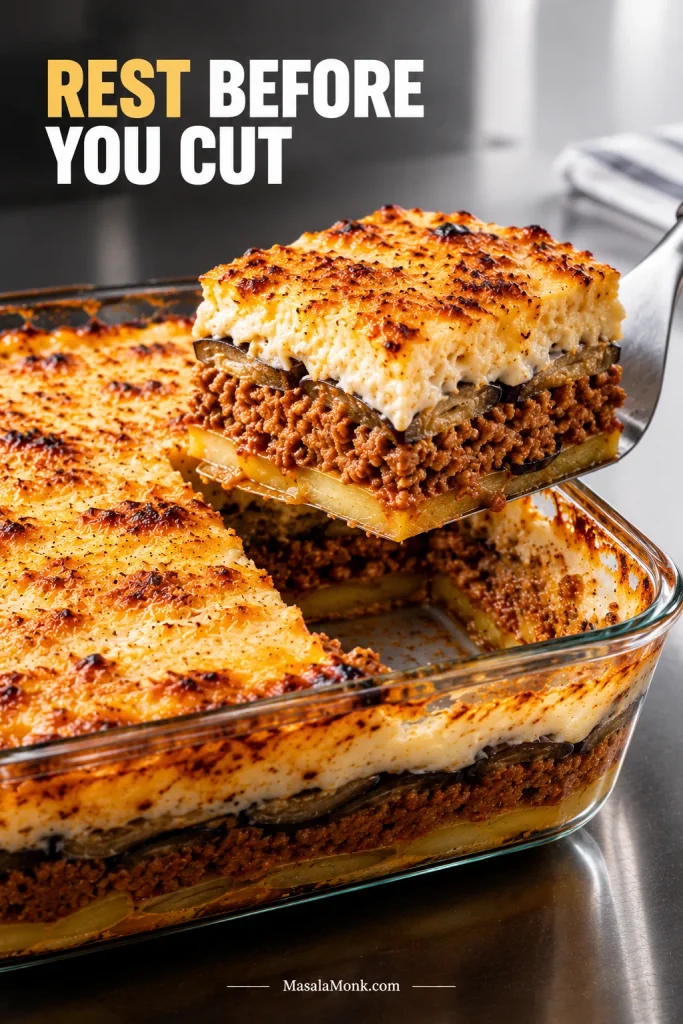
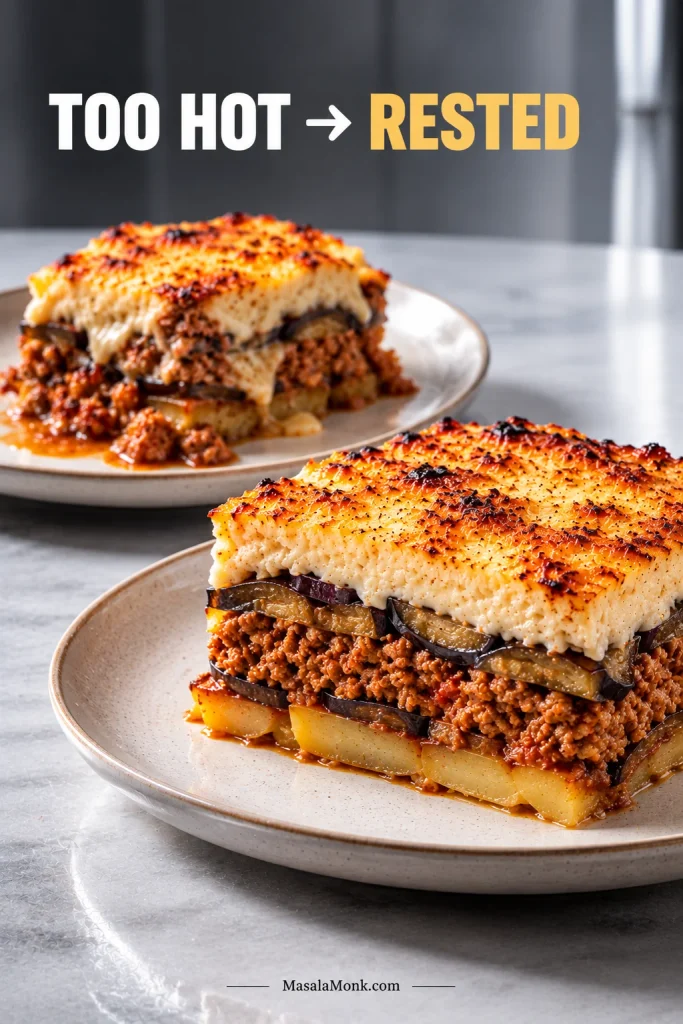
Rest the moussaka for about 45 minutes before slicing. Cut sooner and the first piece will simply be hotter and softer.
Move the pan to a heat-safe rack or trivet as soon as it comes out. After the rest, cut straight down with a sharp knife and lift each portion with a wide spatula.
Why the Layers Hold Together
Do You Need to Salt Eggplant for Moussaka?
Most supermarket eggplants today are not especially bitter, so salting here is mainly about drawing out moisture that can be blotted away before roasting.
Slice thickness matters just as much. Paper-thin pieces can disappear after two rounds of cooking, while very thick slices may stay fibrous even when their surfaces look done. Around 8–10 mm gives the aubergine enough substance to stay recognisable in the finished slice.
Why the Lamb Sauce Needs to Be Well Reduced
A moussaka meat sauce has a different job from a pasta sauce. It has to sit between soft vegetables without sending tomato liquid into the bottom of the casserole. That is why we reduce it until concentrated and spoonable rather than stopping as soon as the meat is cooked.
Pan width and burner strength can move the reduction time considerably, so use the physical endpoint rather than expecting every batch to finish in exactly the same number of minutes.
Cinnamon should be background, not headline. Browning the lamb and concentrating the tomato give the sauce most of its depth. The cinnamon should arrive quietly behind them.
How Thick Should Moussaka Béchamel Be?
Moussaka béchamel is much thicker than an everyday white sauce. It needs enough body to sit above the eggplant instead of disappearing into the layers below, while the egg yolks help it set further during baking.
If you want the fundamentals of making a smooth roux-based sauce, the béchamel sauce guide goes deeper into adding milk and fixing consistency. For this dish, stop only when the sauce is unmistakably spreadable rather than pourable.
How Long Should Moussaka Rest Before Cutting?
About 45 minutes is a good target. Straight from the oven, fat is fluid, steam is still moving through the vegetables and the béchamel is at its softest. As the pan cools, everything becomes less mobile and the slice gains structure without needing to be served cold.
The same thing happens with a hot classic lasagna: waiting is part of getting clean layers, not dead time after the cooking is finished.
Moussaka Troubleshooting: Fix the Problem You Can See
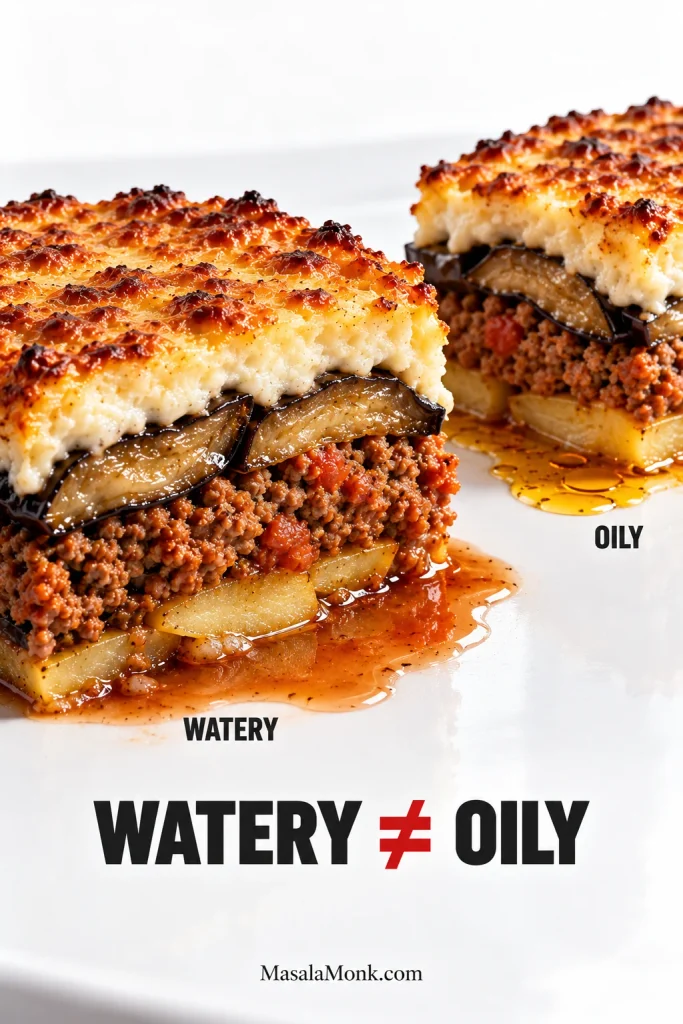
Most problems come back to moisture, excess fat, béchamel consistency or cutting the casserole too soon. The symptom matters because watery liquid, oily liquid and a hot collapsing slice do not have the same cause.
| What You See | What Probably Happened | What to Change |
|---|---|---|
| Red or watery liquid beneath the slice | Eggplant went in wet, the meat sauce was loose, or the casserole was cut extremely hot. | Dry and fully cook the eggplant, reduce the sauce well and give the pan time to settle. |
| Clear or orange oily liquid | Too much rendered lamb fat or excess oil in the eggplant. | Spoon off visible lamb fat and measure the roasting oil. |
| A good-tasting slice collapses | The moussaka is still too hot. | Let it rest longer before judging the structure. |
| Béchamel sinks into the filling | The sauce was too thin, or the lower layers carried too much moisture. | Thicken the béchamel properly and reduce the meat sauce fully. |
| Eggplant is difficult to cut | Slices were too thick, under-roasted or very tough-skinned. | Cut 8–10 mm and roast until tender throughout. |
| Eggplant almost disappears | Slices were too thin or overcooked. | Keep them around 8–10 mm and remove them once tender. |
| Potatoes are firm | They were too thick or not pre-cooked enough. | Keep them around 5–6 mm and roast until partly tender. |
Watery Right Now: Bake Longer or Let It Rest?
A centre that is still visibly loose or sloshing needs more oven time. A centre that is set but releases liquid when sliced straight from the oven usually needs more rest instead.
If the casserole has cooled properly and still leaves obvious watery liquid beneath the slices, look back to the earlier stages: the eggplant probably carried too much moisture, the meat sauce needed more reduction, or both.
Béchamel Thin, Lumpy or Curdled?
A thin béchamel needs more cooking over moderate heat before the yolks are added. Lumps can usually be dealt with at that same stage by vigorous whisking, passing the sauce through a fine sieve or giving it a brief pass with an immersion blender.
Curdling is a different problem: the yolks have met too much heat. Let the sauce cool briefly before tempering them, then avoid a hard boil once they are incorporated.
Can You Make Moussaka Ahead?
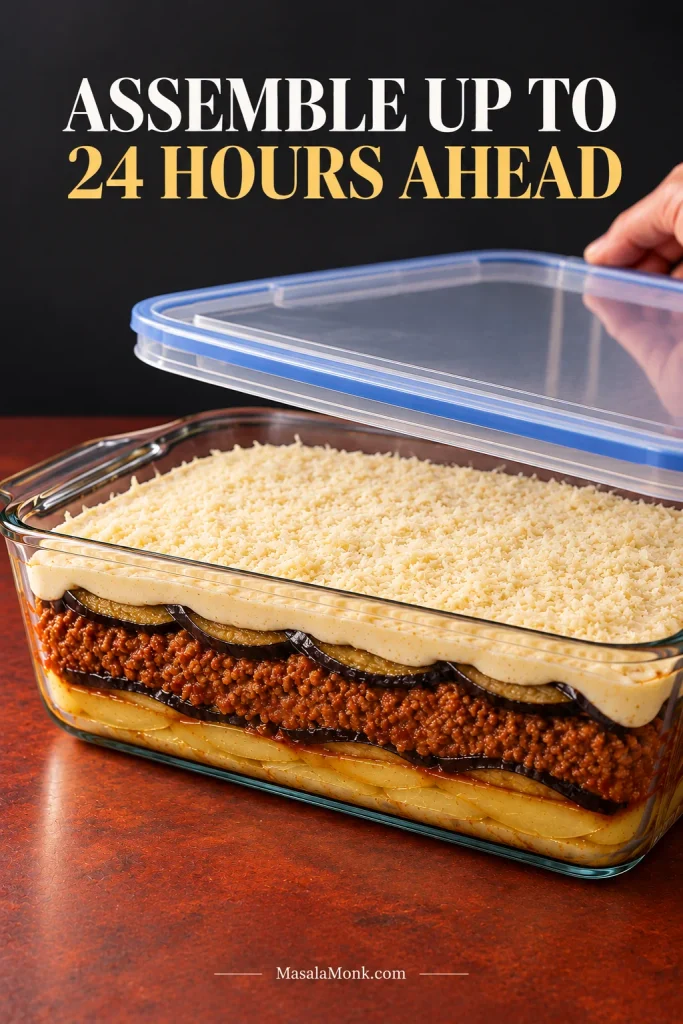
Yes. You can prepare the components a day ahead, assemble the full moussaka up to about 24 hours before baking, or bake it the day before and reheat it.
Moussaka is a much nicer dinner when you are not roasting eggplant, reducing lamb and whisking béchamel while people are already arriving.
Prepare the components the day before: roast the eggplant and potatoes, cook the lamb sauce, cool everything promptly and refrigerate the components separately. The next day, make the béchamel while they lose some of their refrigerator chill, then assemble and bake. Cold components may add a little oven time, so use the doneness cues in Step 7 rather than the clock alone.
Assemble it ahead: build the full casserole, cover it and refrigerate it promptly for up to about 24 hours. Bake from chilled, allowing extra time; if using glass or ceramic bakeware, follow the manufacturer’s fridge-to-oven guidance.
Bake it the day before: this is especially useful for a party. Once chilled, moussaka cuts very cleanly. Portion it cold, then reheat the pieces before serving.
What to Serve with Moussaka
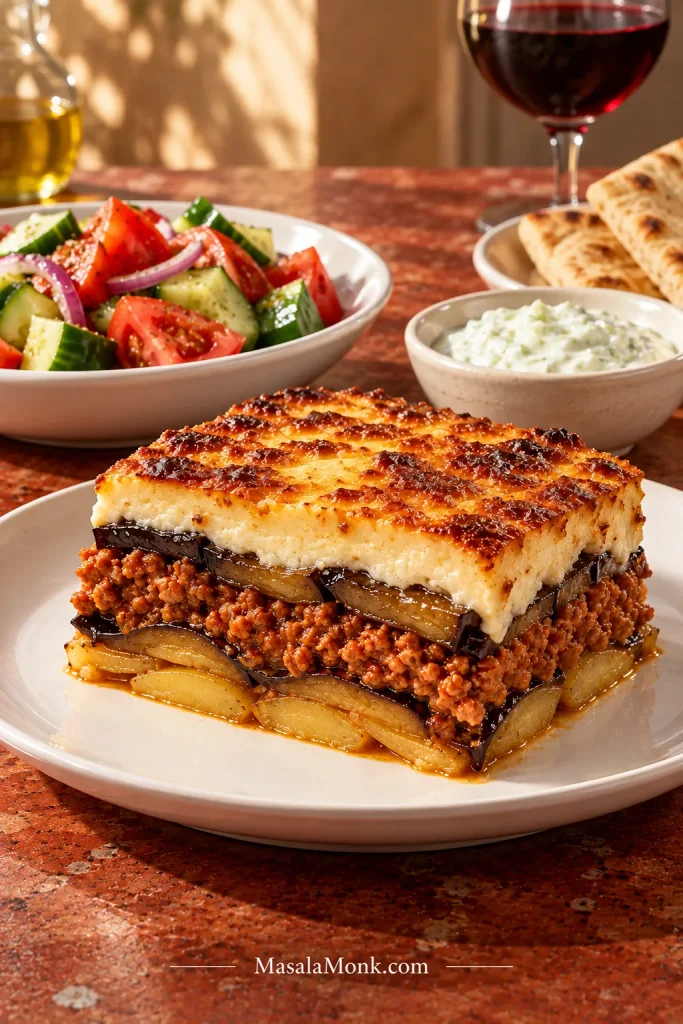
If you make only one side, choose a sharp cucumber-tomato salad with plenty of acidity. Its crispness gives the lamb and béchamel exactly the contrast they need; lemon-dressed greens or tomatoes with red onion and olives follow the same idea.
For something cool and creamy, add a small spoonful of Greek tzatziki. A larger shared spread can also include warm homemade pita for tearing alongside salads, olives and dips.
Storage, Freezing & Reheating
The USDA leftovers guidance recommends refrigerating perishable leftovers within 2 hours. For this moussaka, start that clock when the casserole comes out of the oven, not when the meal ends.
How long does moussaka last in the fridge? Cover the dish well or transfer portions to shallow airtight containers and refrigerate for up to 3–4 days.
Can you freeze moussaka? Yes. Wrap cooled portions well and aim to use them within roughly 2–3 months for the best texture. The eggplant will soften somewhat after freezing and thawing.
For a whole make-ahead moussaka, cool the cooked potato, eggplant and lamb promptly. Once cool, assemble those layers without the béchamel, wrap tightly and freeze. Thaw overnight in the refrigerator, make the béchamel fresh, then top and bake. Because the base is chilled, allow extra baking time as needed and use the doneness cues in Step 7.
For reheating: 350°F / 175°C conventional / 160°C fan works well. Individual chilled portions generally need around 20–30 minutes; a larger chilled casserole may need 30–45 minutes or longer. Keep it loosely covered for most of the reheating time, then uncover near the end if the surface needs refreshing. Reheated leftovers should reach 165°F / 74°C in the centre.
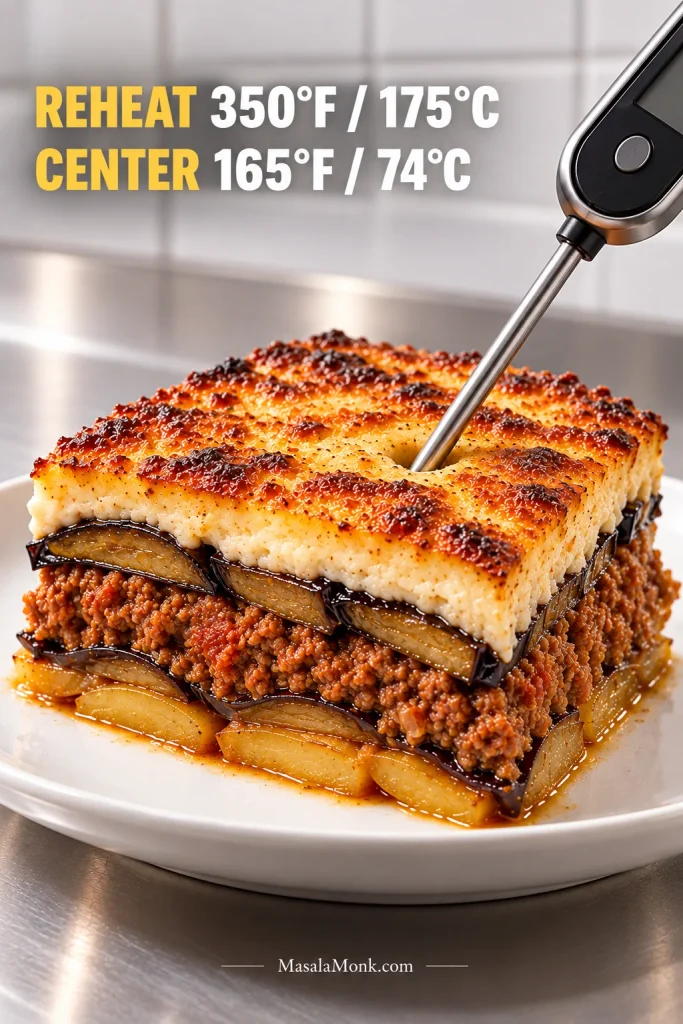
For the most even reheating, thaw frozen portions overnight in the refrigerator. You can also reheat them from frozen; keep them covered for most of the heating time so the centre warms through before the béchamel dries out.
Useful Moussaka Substitutions
- Beef instead of lamb: replace the lamb with the same 1¾ lb / 800 g ground beef for a milder flavour, or use 14 oz / 400 g each lamb and beef for a middle ground.
- No potatoes: begin directly with eggplant. The base will be softer, so proper sauce reduction and cooling matter even more. If you would rather serve potatoes separately, Greek lemon potatoes are a natural option.
- No red wine: use the same ½ cup / 120 ml of unsalted or low-sodium beef stock. Once the lamb has reduced, a small splash of red wine vinegar can replace some of the lost brightness.
- No Kefalotyri: Pecorino Romano is an excellent substitute, and Parmesan also works well. Avoid soft, high-moisture or particularly stretchy cheeses in the béchamel.
- Prefer fried eggplant: salt and dry the slices first, then shallow-fry in additional olive oil until tender and golden. Drain very well before assembly because the finished casserole is already rich.
Bring the moussaka to the table warm instead of scorching hot and cut straight through the browned top. Do not worry if the first piece is not restaurant-perfect. What matters is underneath: tender eggplant, savoury lamb, soft potato and a thick béchamel that stays creamy as you eat it.








