Posted on 2 Comments

Cranberry Sauce with Orange Juice (7 Easy Recipes & Variations)

Luxe magazine-style portrait image of a hand spooning homemade cranberry sauce with orange juice into a ceramic bowl, surrounded by fresh cranberries, orange halves, orange zest and cinnamon sticks on a dark wooden table, MasalaMonk food photography.

Cranberry sauce is one of those dishes that looks fancy, but once you strip it down, it’s just cranberries, sugar, and liquid. Swap in orange juice for plain water and you suddenly have a bright, zesty homemade cranberry sauce with orange juice that tastes like pure holiday cheer.

This post is built around that idea: one reliable recipe for cranberry sauce with orange juice, plus a whole family of twists you can spin from the same pot. You’ll find:

  • A classic, easy cranberry sauce with orange juice that feels familiar and comforting
  • A brown-butter and vanilla twist that turns into a cosy gourmet cranberry sauce recipe
  • Naturally sweetened maple or honey versions
  • Low sugar, sugar-free and keto-style options
  • A boozy orange liqueur or whiskey version
  • A fresh, no-cook cranberry orange relish
  • A tangy apple cranberry chutney that leans savoury

Along the way, we’ll talk about texture and cooking science, how to make your cranberry and orange juice sauce in the slow cooker, how far ahead you can prep for cranberry sauce Thanksgiving dinners, and plenty of ideas for using leftovers so nothing quietly dies in the back of the fridge.

If you’d like to get deeper into what cranberries do for your body—antioxidants, vitamin C, and more—you can follow up later with this cranberry nutrition and benefits breakdown.


Easy Homemade Cranberry Sauce with Orange Juice

Let’s start with the base. This is a simple cranberry sauce recipe with orange juice that you can make on autopilot once you’ve done it once or twice. It works whether you’re cooking for a small dinner or a full Thanksgiving crowd.

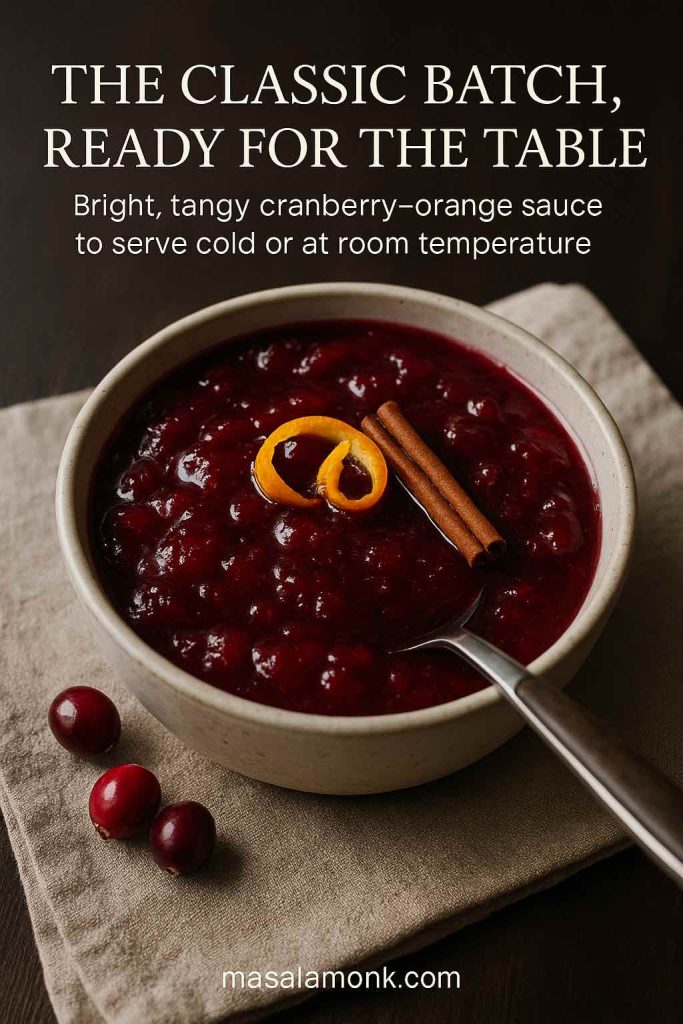
Classic homemade cranberry orange sauce in a ceramic bowl, garnished with a curl of orange zest and a cinnamon stick, ready to serve as a side dish.
The classic batch of cranberry–orange sauce: glossy, tangy and just sweet enough to serve straight from the bowl beside turkey, chicken or a nut roast.

Ingredients for the Classic Version

  • 12 oz (340 g) fresh or frozen cranberries, rinsed and picked over
  • 1 cup (200 g) granulated sugar
  • 1 cup (240 ml) orange juice (freshly squeezed if possible)
  • 1–2 teaspoons finely grated orange zest
  • Pinch of fine salt
  • 2–3 tablespoons water, if needed
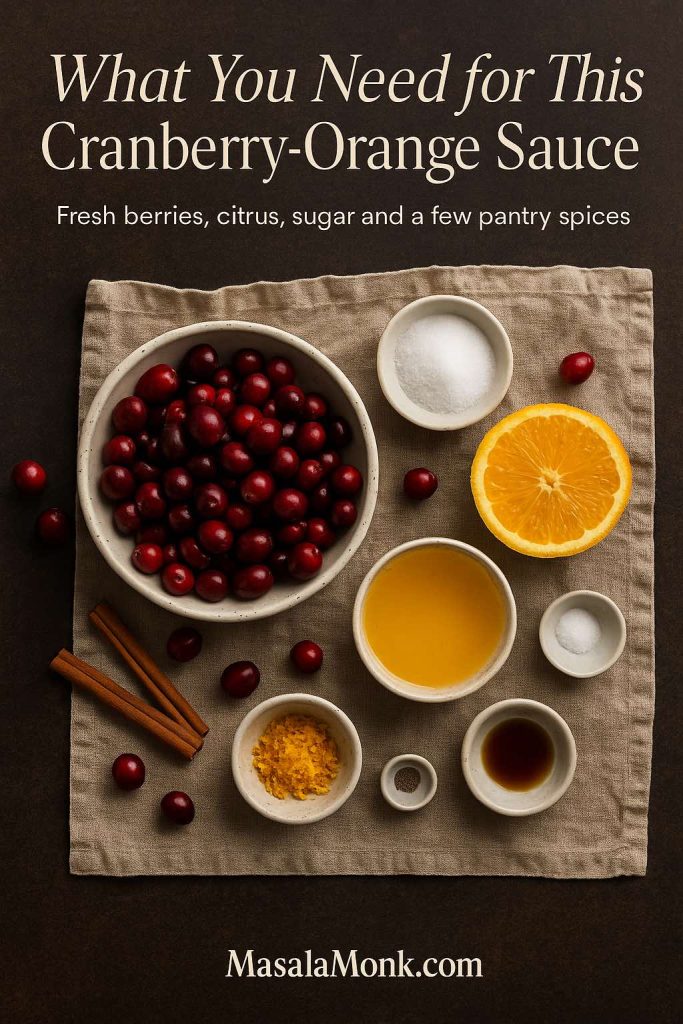
Overhead photo of ingredients for cranberry orange sauce on a linen cloth, with fresh cranberries, orange juice, sugar, orange zest, cinnamon sticks, vanilla, salt and pepper arranged in small bowls.
What you need for this cranberry–orange sauce at a glance: fresh cranberries, citrus, sugar and a few warm pantry spices, measured and ready to cook.

Optional flavour boosters:

  • 1 teaspoon vanilla extract
  • 1 small cinnamon stick or ¼ teaspoon ground cinnamon

This is a fairly classic recipe cranberry sauce formula; the twist is that orange juice replaces water, bringing sweetness and citrusy perfume. It’s in the same family as well-loved minimalist recipes such as Bon Appétit’s easiest cranberry sauce, but the orange plays a bigger role here.

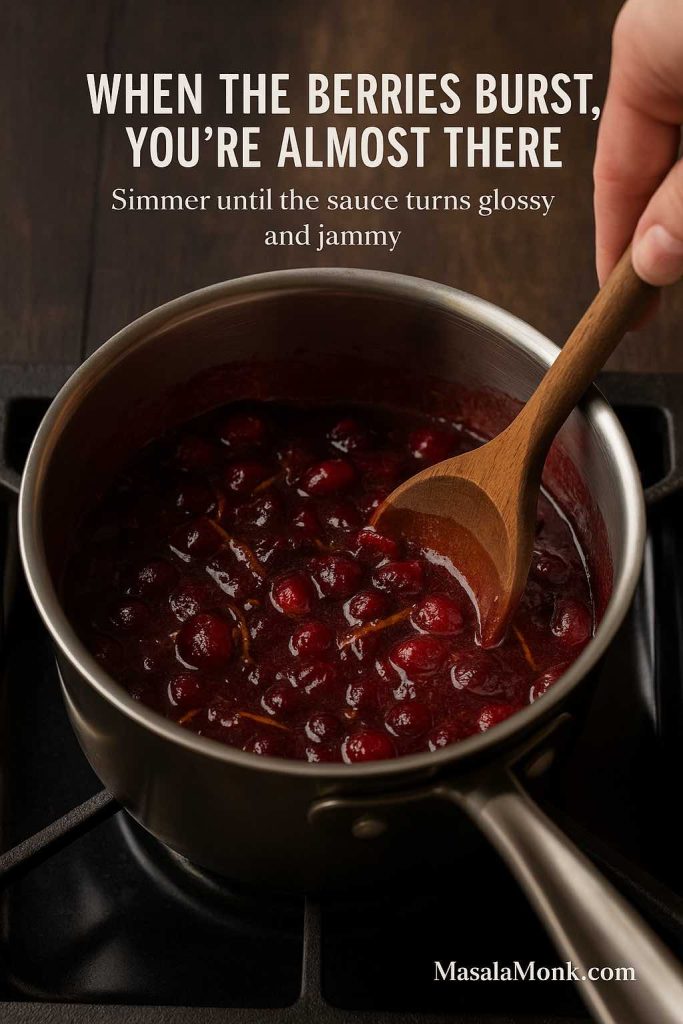
Cranberry orange sauce simmering in a saucepan, with cranberries bursting and a hand stirring the glossy, jammy mixture with a wooden spoon.
When the cranberries burst and the orange-spiked syrup turns glossy and jammy, your homemade cranberry sauce is just a minute away from perfect.

How to Cook Cranberry Sauce with Orange Juice (Step-by-Step)

  1. Set up the base.
    Tip the cranberries into a medium saucepan. Add sugar, orange juice, orange zest, salt, and the cinnamon stick if you’re using one. Give everything a stir so the cranberries are coated.
  2. Dissolve the sugar gently.
    Place the pan over medium heat. Stir every minute or so until the sugar dissolves and the liquid turns glossy. This usually takes 3–5 minutes. If things look very thick and the berries aren’t relaxing into the liquid, add a couple of tablespoons of water.
  3. Bring it to a gentle boil.
    Increase the heat slightly until the surface starts to bubble. You don’t want a wild, splattering boil—just a steady simmer that lets the cranberries soften.
  4. Simmer until the berries burst.
    Cook for 8–10 minutes, stirring occasionally. You’ll hear and see the cranberries pop. The sauce will start to thicken and look jammy. When you’re making cranberry sauce, the most important thing to remember is that it continues to thicken as it cools, so don’t wait for it to look like jelly in the pan.
  5. Finish with flavour.
    Take the pan off the heat. Pull out the cinnamon stick, if you added it. Stir in the vanilla extract. Taste carefully (it will be very hot) and decide whether you want more sugar for sweetness or a squeeze of extra orange juice for a sharper finish.
  6. Cool and chill.
    Let the homemade cranberry sauce cool to room temperature in the pan. It will look looser at this stage. Once it’s no longer steaming, transfer it to a glass or ceramic container and refrigerate for at least 2 hours, preferably overnight. Cold time is when the texture settles into that glossy, spoonable consistency everyone expects.

If you just want a basic cranberry sauce, you can skip the vanilla and cinnamon and stick to cranberries, sugar, and orange juice.

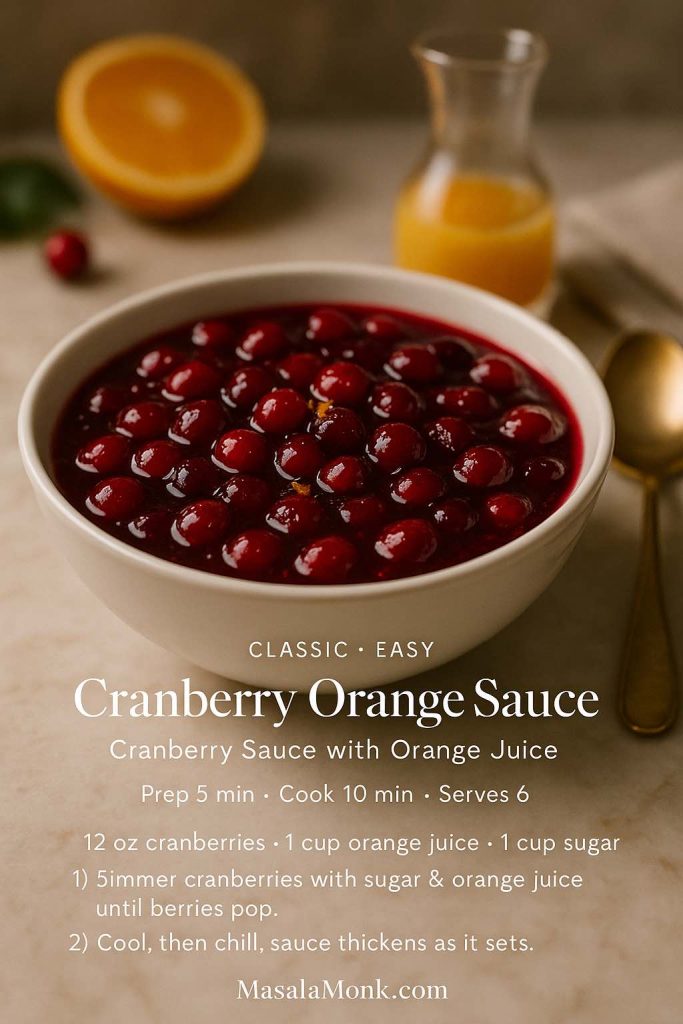
Glossy cranberry orange sauce in a white bowl, styled with orange juice and gold spoon on a marble surface, with an elegant text overlay mini recipe card for classic cranberry sauce with orange juice from MasalaMonk.com.
Save this mini recipe card for later: a classic cranberry orange sauce made with fresh cranberries, orange juice and sugar, ready in about 15 minutes and perfect to prepare ahead for Thanksgiving.

What This Classic Cranberry Sauce Tastes Like

This base cranberry sauce made with orange juice is bright and tangy, but not painfully sharp. The sugar balances the natural acidity of cranberries, while orange juice and zest add sweet citrus flavour and a gentle bitterness from the peel. Cinnamon and vanilla stay in the background; they shouldn’t make it taste like a full-on dessert, just a little warmer and more rounded.

Serve it straight from the fridge as a cranberry side dish next to turkey, chicken, duck, nut roasts, or even a rich main like macaroni and cheese. A spoonful on the plate does a lot of work cutting through fat and salt.


Understanding Cranberries: Fresh, Frozen & Dried

Before we layer on variations, it helps to know what’s happening in the pot.

Fresh vs Frozen Cranberries

For this cranberry sauce recipe fresh cranberries are ideal when they’re in season (usually October through December). They’re firm, shiny, and snap when you bite one. If you’re using frozen cranberries, there’s no need to thaw. Add them straight to the pan; you may need an extra minute or two of simmering.

Frozen berries are picked at peak ripeness and frozen quickly, so they behave very similarly to fresh. If anything, they sometimes release water more readily, which can help the sauce set nicely.

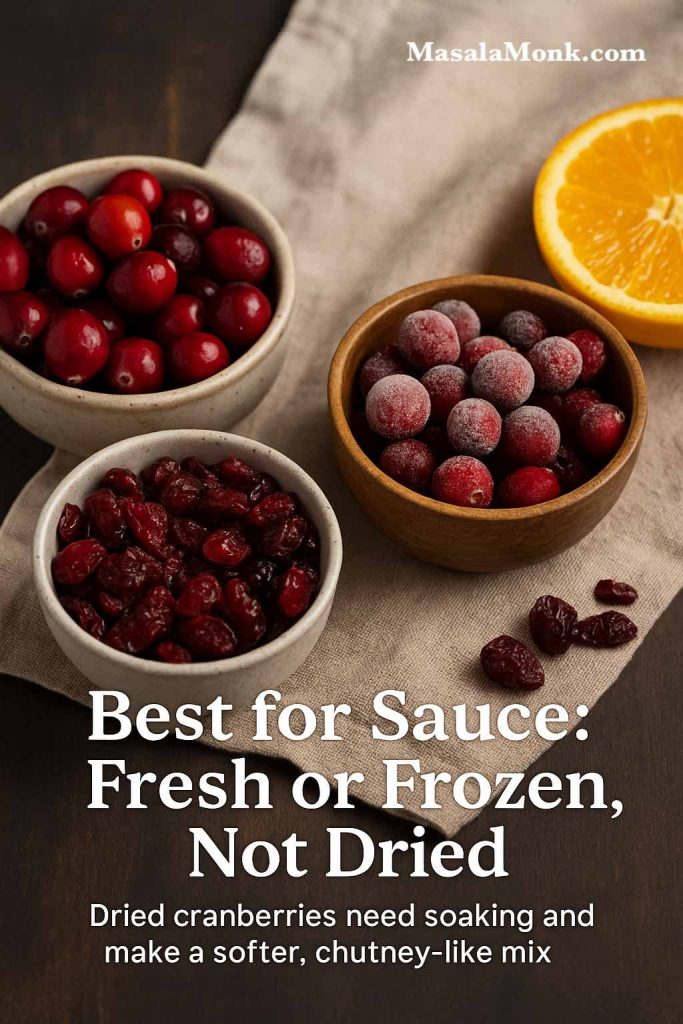
Three small bowls showing fresh cranberries, frozen cranberries and dried cranberries side by side on a linen cloth with a halved orange, illustrating which type works best for cranberry sauce.
For classic cranberry sauce, fresh or frozen berries give the best set and flavour; dried cranberries need soaking and are better for a softer, chutney-style mix.

What About Dried Cranberries?

Dried cranberries are great for salads and baking, but they’re not a straight swap in a standard cranberry sauce recipe using orange juice. They’ve already been sweetened and dehydrated, so they won’t burst and gel in the same way.

If you really want to use dried cranberries:

  • Soak them first in warm orange juice and water for at least 30 minutes
  • Use more liquid than the fresh recipe calls for
  • Expect a softer, chutney-like texture rather than a classic sauce

That kind of approach can work in a cranberry sauce recipe from dried cranberries, but for a traditional Thanksgiving-style sauce, fresh or frozen is the way to go.

Why Cranberry Sauce Thickens on Its Own

Cranberries are naturally high in pectin, a type of soluble fibre that gels when combined with acid and sugar. Orange juice adds acidity and sugar, so when you simmer everything together, you’re quietly making a soft, homemade jelly.

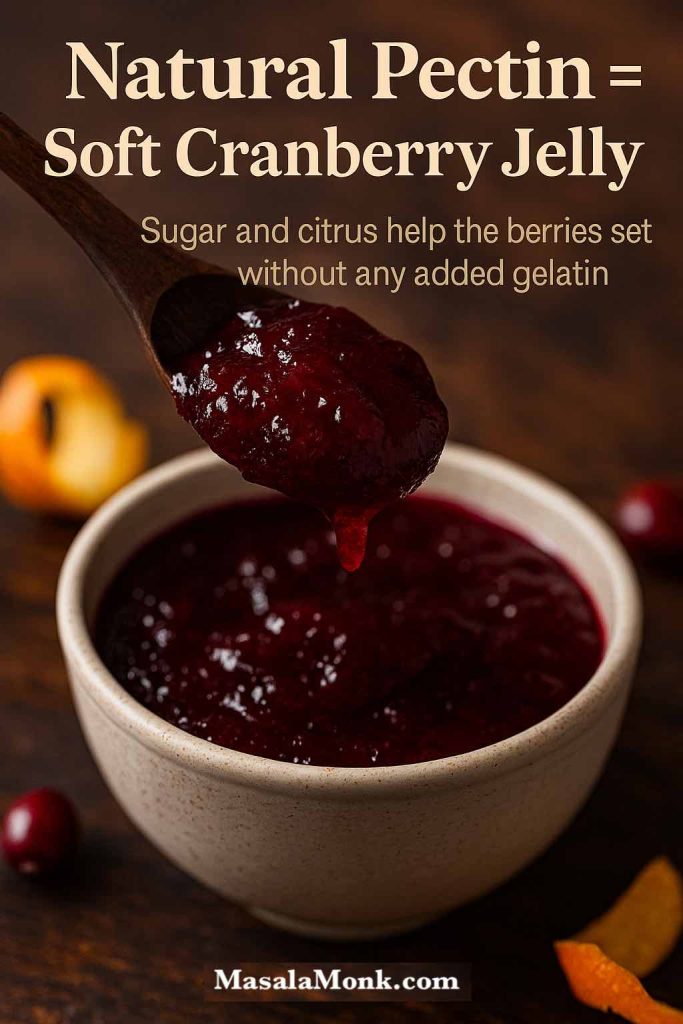
Close-up of a spoon lifting thick, gelled cranberry orange sauce from a bowl, with text reading “Natural Pectin = Soft Cranberry Jelly,” showing how the sauce sets without added gelatin.
Cranberries are naturally rich in pectin, so a simple cranberry sauce with orange juice thickens into a soft jelly as it cools—no gelatin or cornstarch needed.

This is why:

  • A basic cranberry sauce recipe doesn’t need gelatin or cornstarch
  • The sauce looks runnier in the pan than it does once chilled
  • High-sugar versions often set more firmly than low-sugar or sugar-free ones

Once you understand that, it’s easier to trust the process. When in doubt, err on the side of stopping the simmer a little early. You can always thicken slightly later, but rescuing an over-thick, sticky sauce is more tricky.

Also Read: Pesto Recipe: Classic Basil Pesto Sauce & 10 Variations


Texture, Taste, and Tweaks for the Classic Sauce

A simple easy cranberry sauce can feel completely different depending on how long you cook it and how much you mash it.

Choosing Your Texture

Think about your crowd:

  • For people who like whole berries and a bit of bite, aim for a chunky cranberry and orange juice sauce. Simmer just until most berries pop and stop there.
  • If you prefer a jammy, spreadable texture that sits neatly on turkey or bread, cook it a couple of minutes longer until the liquid coats the back of a spoon. This makes a rich cranberry orange juice sauce that doubles as a spread.
  • For kids or anyone who dislikes “bits”, use a potato masher to break everything down once it’s off the heat. For an extra-smooth finish, give it a brief whizz with an immersion blender.
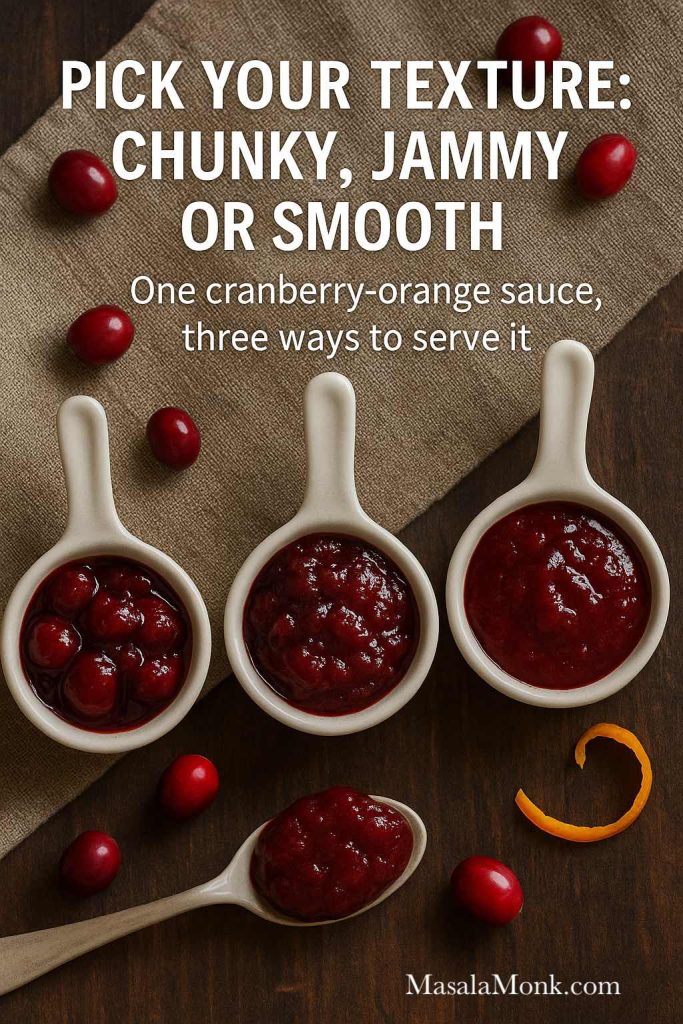
Overhead photo of three ceramic spoons filled with chunky, jammy and smooth cranberry orange sauce on a wooden table with fresh cranberries and orange zest.
One master cranberry–orange sauce, three textures: leave the berries whole and chunky, cook it down until jammy, or blend it silky smooth depending on how you like it on the plate.

You can even split a batch: half left chunky, half blended, so your homemade cranberry sauce recipe covers both preferences without extra effort.

Adjusting Sweetness and Tartness of Cranberry Sauce with Orange Juice

Taste before chilling, but keep in mind flavours soften in the fridge. If you know your family likes sweeter sauces (maybe they’re used to canned), add a touch more sugar while it’s still warm. If you prefer a sharper profile, hold back on the sugar and add extra orange zest instead of more juice.

You can also:

  • Add a spoonful of brown sugar for a caramel note
  • Stir in a little maple syrup at the end for a healthy cranberry sauce feel with more nuanced sweet notes
  • Balance too much sweetness with a splash of extra orange juice or a squeeze of lemon

Balancing Spices in Cranberry Sauce with Orange Juice

Cranberries can handle quite a bit of spice, but for a classic cranberry sauce Thanksgiving vibe, it’s best not to go too wild in the base recipe. A cinnamon stick or pinch of ground cinnamon is usually enough. Save bolder flavours like cloves, star anise, or cardamom for one of the twists below, so your main pot stays broadly appealing.

Also Read: Katsu Curry Rice (Japanese Recipe, with Chicken Cutlet)


Flavor Variations on Cranberry Sauce with Orange Juice

Once your base is sorted, you can treat it like a master sauce and spin it several ways. Think of the following as mini recipes that sit on top of the same core idea: a cranberry sauce with orange juice that you understand and trust.

Brown Butter & Vanilla Cranberry Sauce (Gourmet Twist)

When you want something that feels restaurant-level without extra stress, this brown butter version is your best friend. It’s still recognisably cranberry sauce, just with deeper, nutty notes.

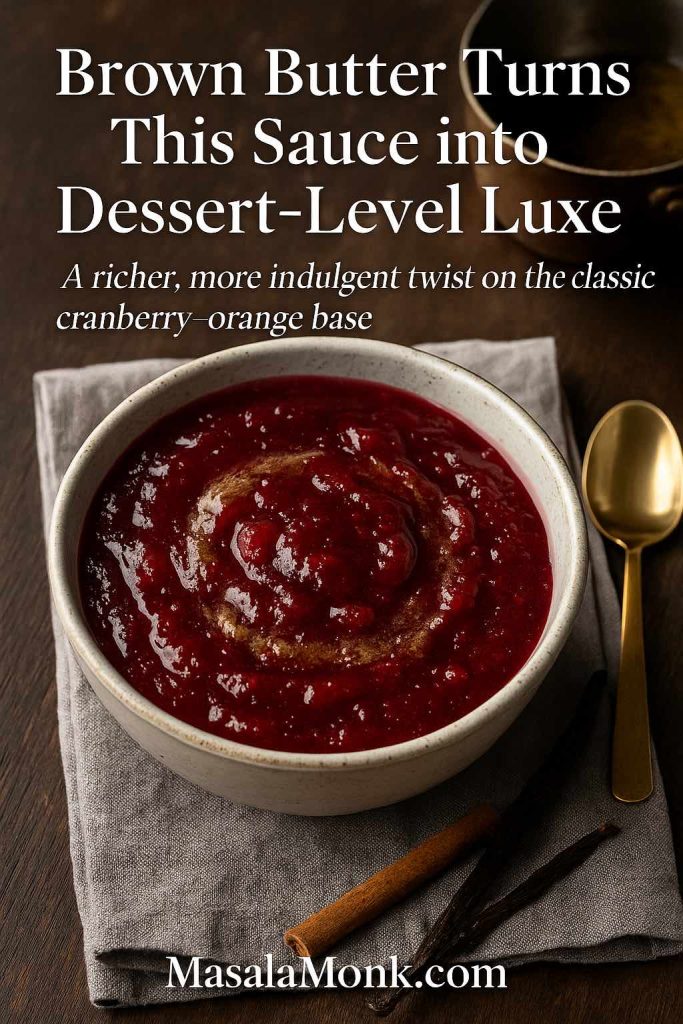
Bowl of brown butter and vanilla cranberry orange sauce on a linen cloth, with a gold spoon, cinnamon stick and vanilla bean, styled as a rich gourmet version of classic cranberry sauce.
Brown butter and vanilla swirl through this cranberry–orange sauce, turning the same simple base into a dessert-level, gourmet side dish for holiday dinners.

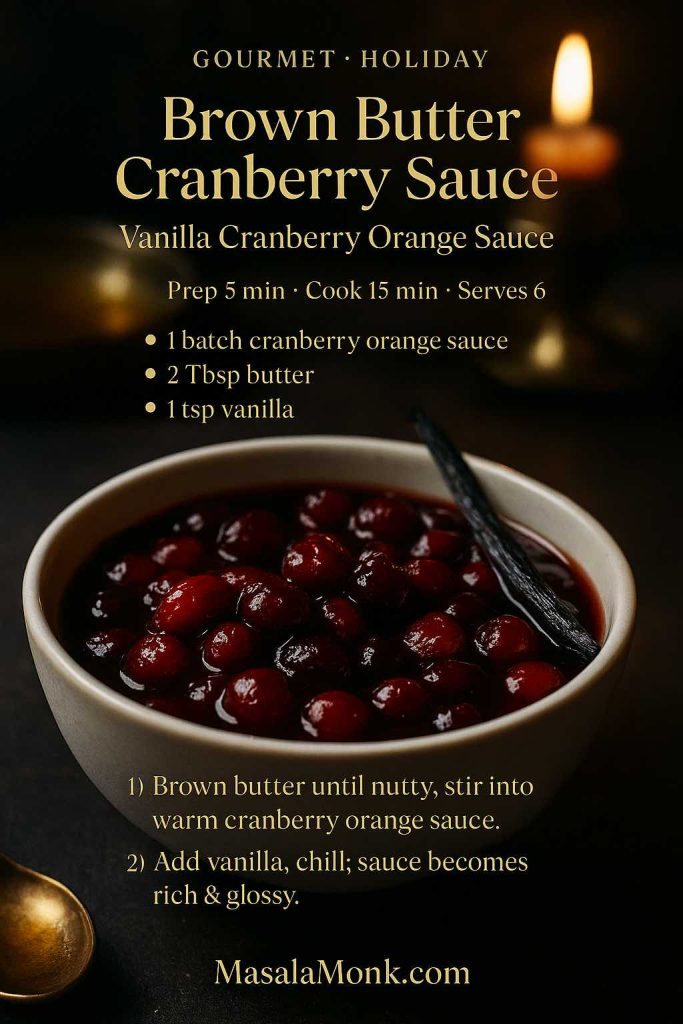
You’ll need:

  • Classic batch of cranberry sauce with orange juice
  • 2 tablespoons unsalted butter
  • Extra ½ teaspoon vanilla extract

How to make it:

  1. In a small light-coloured pan, melt the butter over medium heat.
  2. Continue cooking, swirling the pan, until the butter foams and the milk solids at the bottom turn golden and smell nutty. Take off the heat; this is brown butter.
  3. Prepare the base cranberry sauce recipe using orange juice as usual.
  4. Once the sauce is off the heat, fish out the cinnamon stick if you used one, then stir in the brown butter and extra vanilla.
  5. Taste and adjust; brown butter adds richness but not sweetness, so you may want a teaspoon of extra sugar or maple if you like a softer edge.
  6. Cool and chill.
Brown butter cranberry sauce in a cream bowl with a split vanilla bean on top, styled on a dark table with candlelight, featuring an elegant text overlay recipe card for vanilla cranberry orange sauce from MasalaMonk.com.
Brown butter and real vanilla turn classic cranberry orange sauce into a rich, restaurant-style side. Save this gourmet cranberry sauce recipe card for holiday dinners when you want something a little extra.

The result is a cosy gourmet cranberry sauce recipe that works for Thanksgiving, Christmas dinners, or even alongside duck breast, pork fillet, or a rich vegetarian main. If you like building “one master sauce + many ways to use it”, this approach is very similar in spirit to how we handle yogurt sauces in our Greek tzatziki guide.


Naturally Sweetened Cranberry Sauce with Orange Juice (Maple or Honey)

For guests who like slightly “cleaner” flavours, a naturally sweetened version hits the spot. This variation keeps the orange but swaps white sugar for maple syrup or honey, so it fits neatly into the healthy cranberry sauce and low sugar cranberry sauce camp.

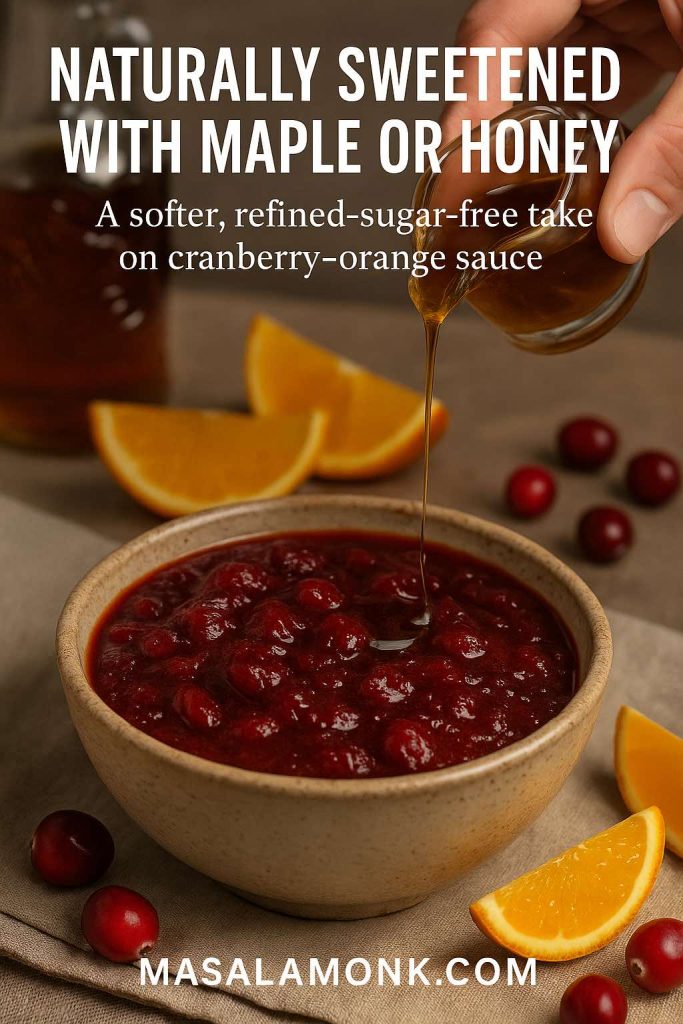
Close-up of a rustic bowl filled with cranberry orange sauce while a hand pours maple or honey syrup over the top, with orange wedges and fresh cranberries in the background.
Naturally sweetened cranberry–orange sauce, finished with maple or honey for a gentler, refined-sugar-free twist on the classic recipe.

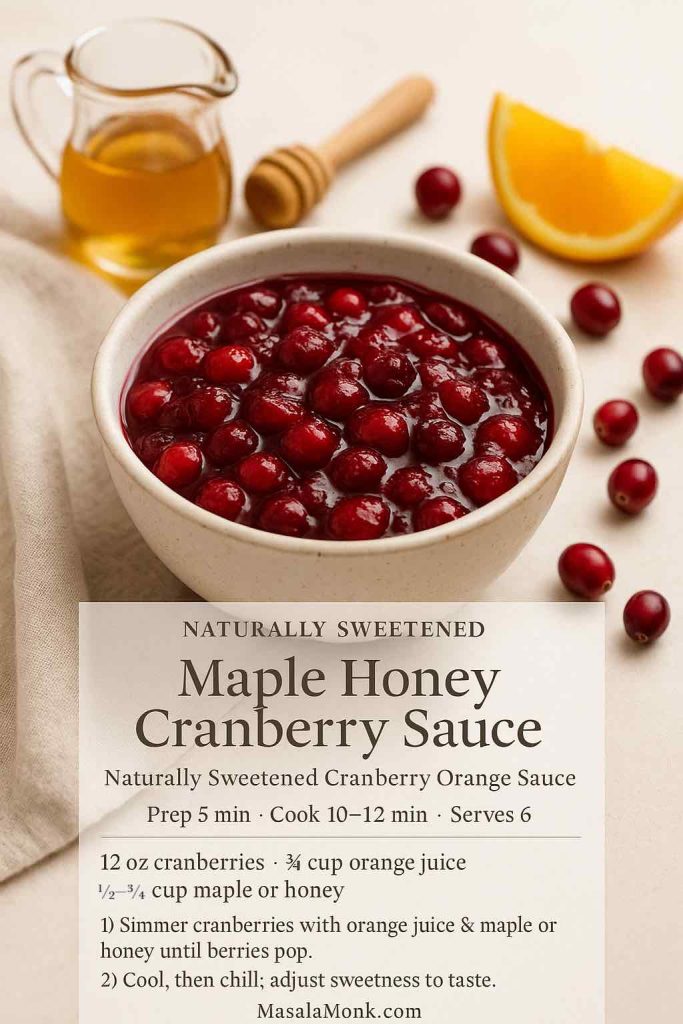
Ingredients (Maple Version):

  • 12 oz (340 g) cranberries
  • ½–¾ cup (120–180 ml) pure maple syrup
  • ¾ cup (180 ml) orange juice
  • ¼ cup (60 ml) water
  • 1–2 teaspoons orange zest
  • Pinch of salt
  • Optional: cinnamon stick, 1 teaspoon vanilla

Method:

  1. Combine cranberries, maple syrup, orange juice, water, zest, salt and optional cinnamon in a saucepan.
  2. Bring to a gentle boil over medium heat.
  3. Simmer 10–12 minutes until most berries burst and the sauce thickens.
  4. Remove from the heat, stir in vanilla if using, and taste. Add more maple syrup if you’d like a sweeter cranberry sauce less sugar style.
  5. Cool and chill.
Naturally sweetened maple honey cranberry sauce in a rustic ceramic bowl, surrounded by a honey dipper, maple syrup jug, orange slice and fresh cranberries, with a text overlay mini recipe card for naturally sweetened cranberry orange sauce from MasalaMonk.com.
This naturally sweetened cranberry orange sauce swaps refined sugar for maple syrup or honey. Save this recipe card if you’re after a brighter, “healthier” cranberry sauce that still feels cosy and festive.

Honey works similarly, though it tastes sweeter than sugar or maple. Start with ½ cup, taste towards the end of cooking, and add more gradually if needed.

For more inspiration, Ambitious Kitchen has a lovely naturally sweetened orange cranberry sauce using orange juice, maple or honey, and vanilla. Cookie and Kate’s naturally sweetened cranberry sauce is another strong example of a cranberry sauce recipe healthy that skips refined sugar.


Low Sugar, Sugar-Free & Keto Cranberry Sauce with Orange Juice

Sometimes you need a sugar free cranberry sauce that still feels festive: maybe you’re cooking for someone watching their blood sugar, or for guests who prefer low-carb options. This variation stays tart and bright, with orange notes, but uses sugar-free sweetener instead of sugar.

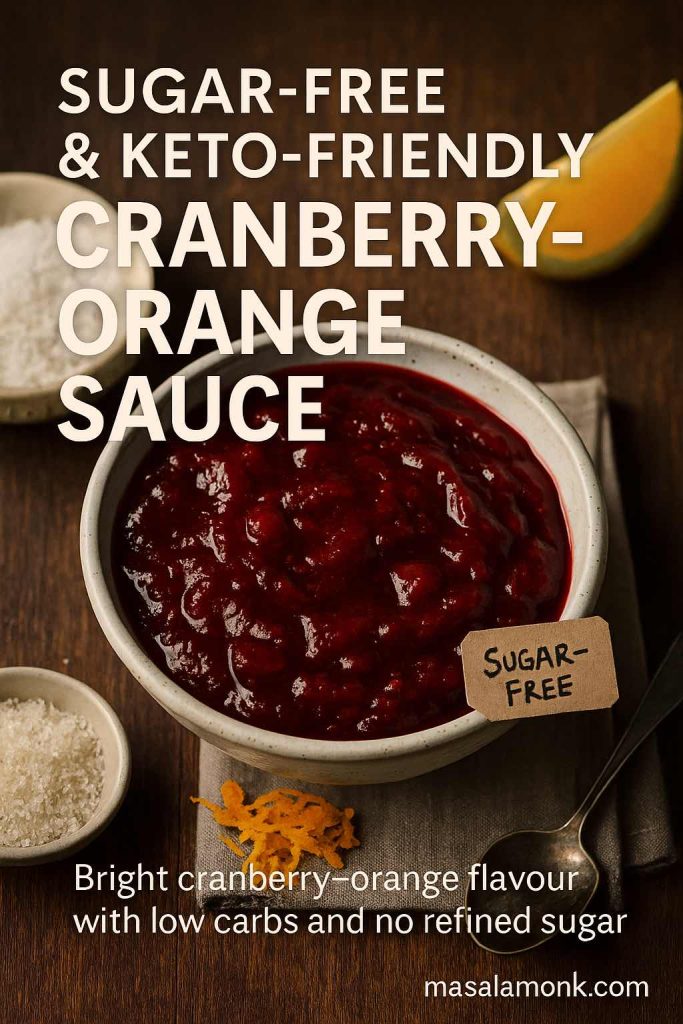
Bowl of sugar-free, keto-friendly cranberry orange sauce on a wooden table with citrus zest, lemon wedge and a small dish of granular sweetener, styled with “Sugar-Free” label text on the image.
A sugar-free, keto-friendly cranberry–orange sauce made with low-carb sweetener instead of sugar, keeping the bright flavour while cutting the carbs for guests who prefer a lighter option.

Ingredients:

  • 12 oz (340 g) cranberries
  • ¾ cup (180 ml) orange juice
  • ½ cup (120 ml) water
  • ½–⅔ cup granular sugar-free sweetener (such as a monkfruit–erythritol blend)
  • 1–2 teaspoons orange zest
  • Pinch of salt
  • Optional: cinnamon stick, vanilla extract

Steps:

  1. Combine cranberries, orange juice, water, sweetener, zest, and salt in a saucepan.
  2. Bring to a gentle boil over medium heat.
  3. Simmer for 10–12 minutes, stirring often, until the sauce thickens and most berries have popped.
  4. Remove from heat and stir in vanilla if you like.
  5. Taste while still warm. Sugar-free sweeteners can taste slightly less sweet once chilled, so make it just a touch sweeter than you think you want.
  6. Cool, then refrigerate to let it set.
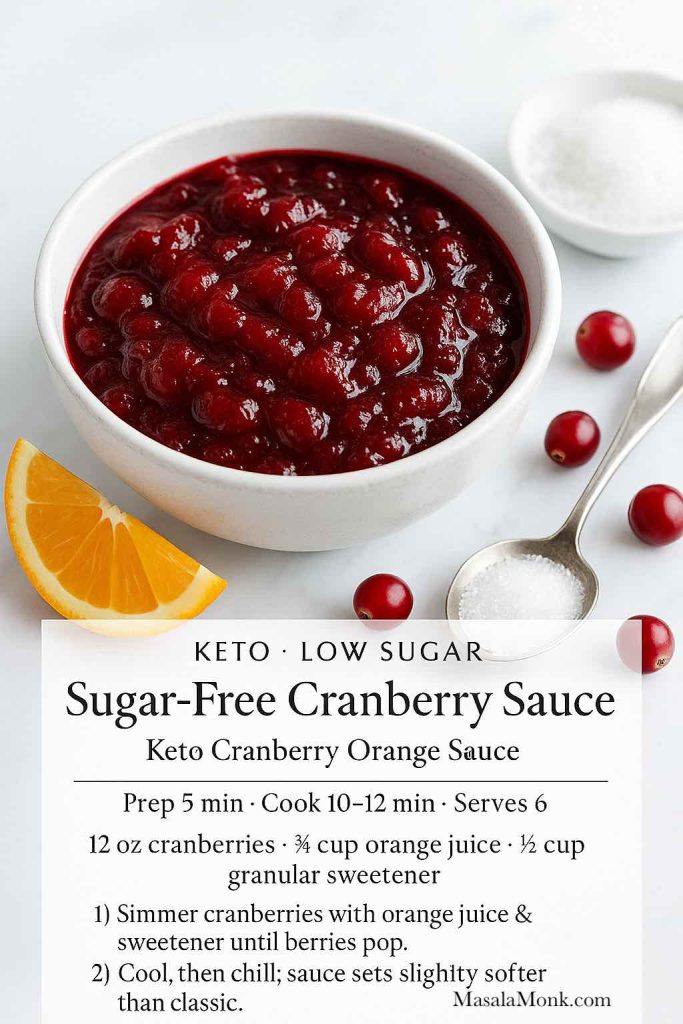
Sugar-free cranberry sauce in a white bowl on a marble surface, styled with fresh cranberries, an orange wedge and a spoonful of granular sweetener, with a clean text overlay mini recipe card for keto cranberry orange sauce from MasalaMonk.com.
This keto-friendly cranberry orange sauce skips regular sugar and uses a granular low-carb sweetener instead. Save this sugar-free cranberry sauce recipe card if you need a lighter option that still looks and tastes festive.

This style fits well with requirements of keto cranberry sauce, no sugar added cranberry sauce, and low carb cranberry sauce. For a different take, Wholesome Yum’s low-carb cranberry sauce leans on allulose and orange zest for a very low net-carb result.


Quick note: if anyone at your table has diabetes or other health concerns, remind them to chat with their doctor before relying on “diabetic cranberry sauce” or juice drinks as part of treatment. For a broader look at how cranberry juice fits into weight management, there’s a helpful summary here on cranberry juice and weight loss.


Boozy Holiday Cranberry and Orange Juice Sauce

For adults-only dinners, adding a splash of alcohol turns your basic cranberry and orange juice sauce into something that tastes like it fell off a restaurant dessert menu.

Bowl of boozy cranberry orange sauce on a wooden table with a glass of whiskey in the background and fresh cranberries scattered around, styled as a grown-up holiday version of classic cranberry sauce.
Boozy cranberry–orange sauce finished with whiskey or orange liqueur for grown-up holiday plates, perfect with roast duck, glazed ham or rich beef roasts.

You’ll need:

  • One batch of classic cranberry sauce with orange juice
  • 2–4 tablespoons orange liqueur (like Cointreau or Grand Marnier) or whiskey/bourbon

How to build it:

  1. Make the base easy cranberry sauce recipe as usual, but reduce the orange juice by 2–4 tablespoons to make room for the alcohol.
  2. Once you’ve turned off the heat, stir in the liqueur or whiskey.
  3. Taste and adjust. Alcohol can slightly amplify bitterness, so an extra teaspoon of sugar or maple can round things out if desired.
  4. Cool and chill; the boozy edge softens overnight.
Boozy cranberry orange sauce in a dark bowl on a wooden table, garnished with an orange twist and fresh cranberries, with a glass of bourbon and a text overlay mini recipe card for cranberry sauce with orange liqueur or bourbon from MasalaMonk.com.
When you stir in a splash of bourbon or orange liqueur, classic cranberry orange sauce turns into this moody, grown-up side. Save this boozy cranberry sauce recipe card for dinner parties where you want the cranberry to feel a little bit cocktail-bar chic.

This twist is wonderful with roast duck, glazed ham, and beef roasts. Leftover boozy cranberry sauce can double as a quick pan sauce: deglaze a roasting pan with a splash of stock, whisk in a spoonful of cranberry sauce, and simmer briefly.

If you like playing with citrusy cocktails, a spoonful of this sauce blends beautifully into a whiskey sour or adds flavour and colour to the sugar rim on a lemon drop martini.


Fresh Cranberry Orange Relish (No Cook)

For some people, the ultimate cranberry orange relish isn’t cooked at all. Instead of simmering, you blitz everything raw in a food processor and let time in the fridge meld the flavours.

This no-cook cranberry relish recipe with orange juice is bright, crunchy, and a little sharp.

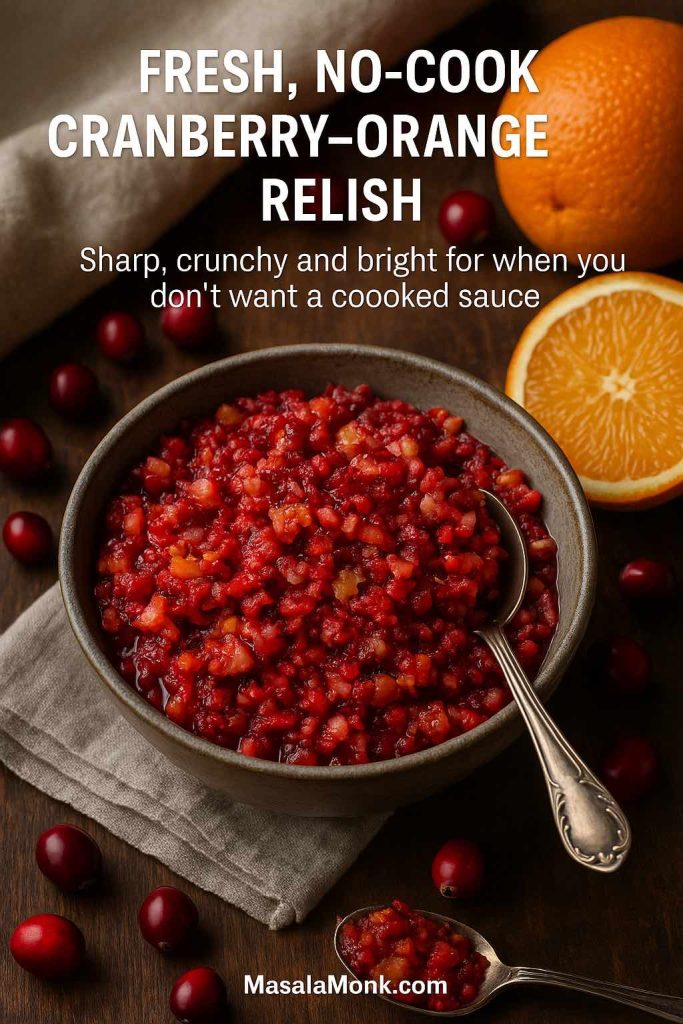
Bowl of fresh no-cook cranberry orange relish with a spoon, surrounded by whole cranberries and orange halves on a wooden table.
Fresh, no-cook cranberry–orange relish: finely chopped cranberries and whole orange peel for a crunchy, zippy alternative to classic cooked cranberry sauce.

Ingredients:

  • 12 oz (340 g) fresh cranberries
  • 1 thin-skinned orange, scrubbed (remove seeds, keep peel)
  • ½–¾ cup (100–150 g) sugar, or more to taste
  • Splash of orange juice if needed
  • Pinch of salt

Method:

  1. Roughly chop the orange, removing any seeds.
  2. Add the cranberries and orange pieces to a food processor.
  3. Pulse until everything is finely chopped but not pureed; scrape down the sides as needed.
  4. Sprinkle over ½ cup sugar and the salt. Pulse again to combine.
  5. Taste and add more sugar if you’d like a sweeter fresh cranberry orange relish. If the mixture seems very dry, add a spoonful of orange juice.
  6. Transfer to a container and chill for at least 2 hours, preferably overnight.
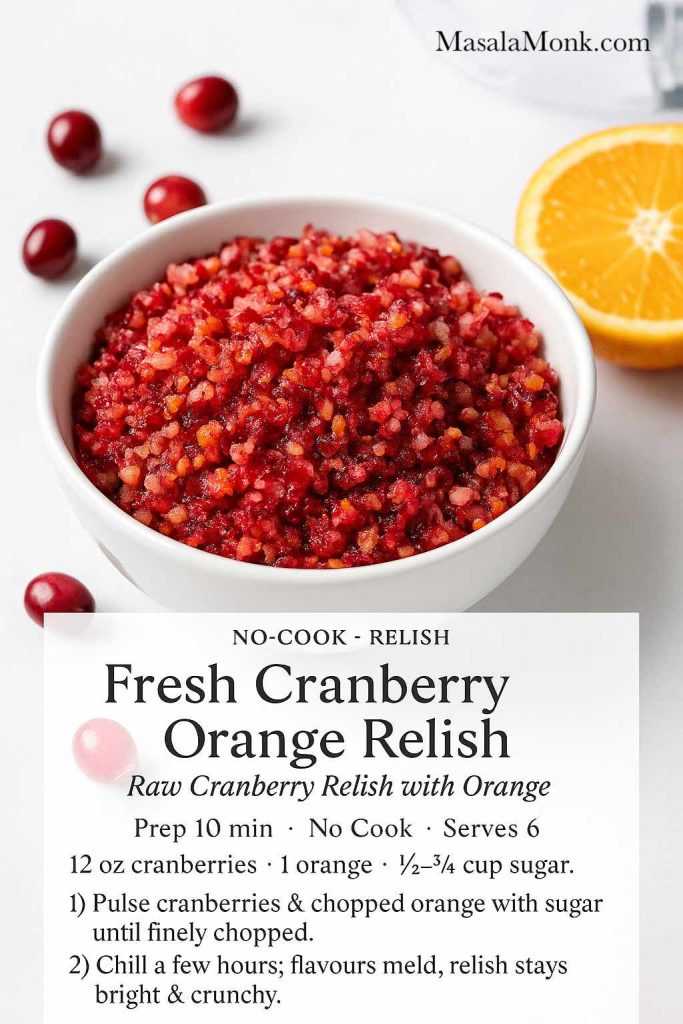
Fresh cranberry orange relish in a white bowl on a bright white surface, with chopped cranberries and orange peel visible, surrounded by fresh cranberries and half an orange, plus a text overlay mini recipe card for raw cranberry relish with orange from MasalaMonk.com.
This no-cook cranberry orange relish stays bright, crunchy and a little bit sharp. Save this recipe card if you like a raw cranberry relish for Thanksgiving, cheese boards and leftover turkey sandwiches.

The texture is closer to a chutney than to a smooth sauce, which makes it fantastic with cold turkey sandwiches, cheese boards, and rich mains. It’s also lovely spooned on top of savoury breakfast dishes like upma and other wholesome brunch bowls.

Because it’s raw, this variation particularly benefits from good-quality fruit. It’s a great way to use cranberries for Thanksgiving dinner when you want something sharper and fresher than cooked sauce.


Apple Cranberry Chutney with Orange

Finally, if you want something that bridges the gap between jammy sauce and savoury chutney, this apple-forward variation is a keeper. It leans into vinegar, onion and ginger, making it a brilliant cranberry side dish for roasted meats, charcuterie, and cheese.

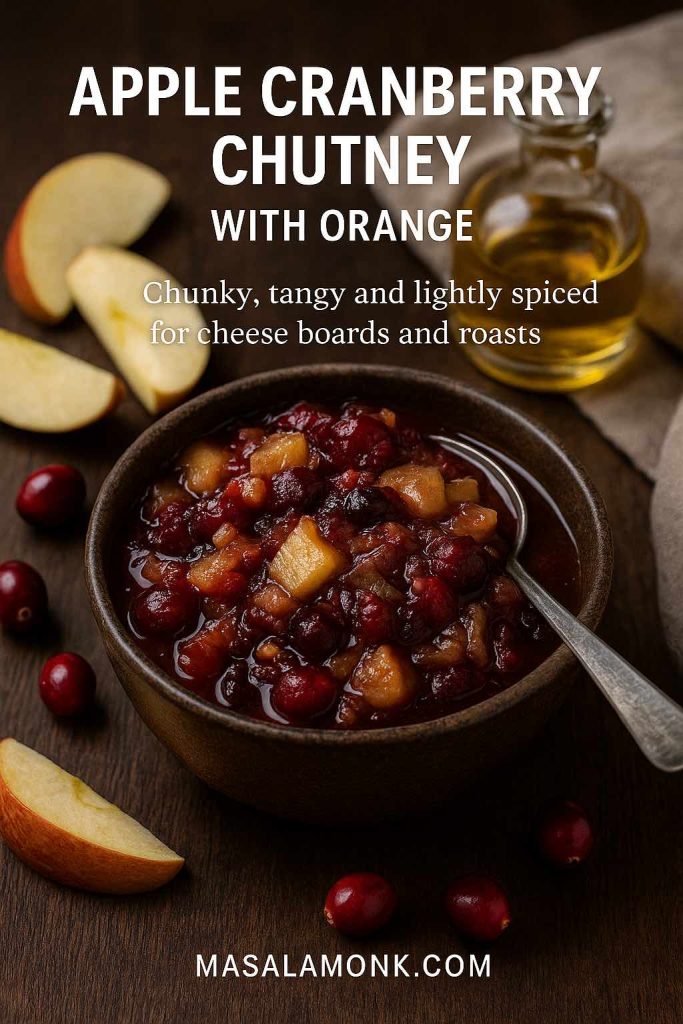
Rustic bowl of chunky apple cranberry chutney with orange, showing visible pieces of apple and cranberries, styled with apple slices, cranberries and a small bottle of vinegar on a wooden table.
Apple cranberry chutney with orange: chunky, tangy and lightly spiced, perfect alongside roast meats, nut roasts or a holiday cheese and cracker board.

Ingredients:

  • 8 oz (225 g) cranberries
  • 1 medium apple, peeled and finely diced
  • ½ cup (100 g) sugar (or ¼ cup white, ¼ cup brown)
  • ½ cup (120 ml) orange juice
  • ¼ cup (60 ml) apple cider vinegar
  • ¼ cup (40 g) finely chopped onion
  • ¼ teaspoon ground ginger or 1 teaspoon freshly grated ginger
  • Pinch of salt
  • Pinch of ground cinnamon

How to make it:

  1. Add cranberries, apple, sugar, orange juice, vinegar, onion, ginger, salt, and cinnamon to a saucepan.
  2. Bring to a gentle simmer over medium heat.
  3. Cook 15–20 minutes, stirring from time to time, until the cranberries burst, the apples soften, and the chutney is thick and glossy.
  4. Taste and adjust balance: more sugar for sweetness, more vinegar for tang, or a little extra salt for savouriness.
  5. Cool and chill.
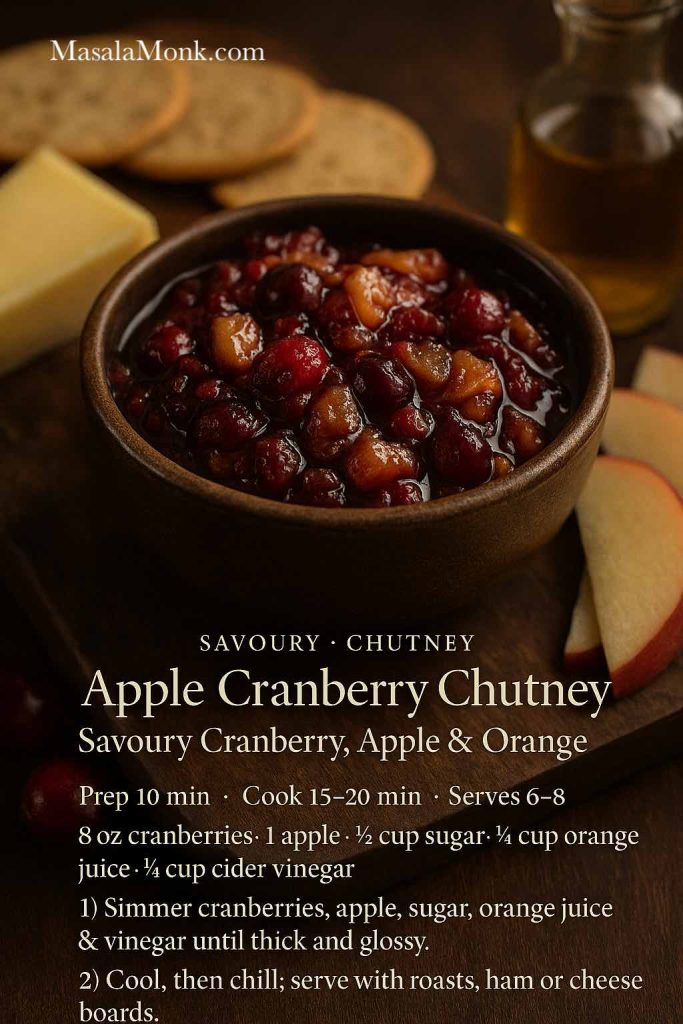
Rustic apple cranberry chutney with orange in a brown ceramic bowl on a wooden board, with cheese, crackers and apple slices around it, plus a text overlay mini recipe card for savoury cranberry, apple and orange chutney from MasalaMonk.com.
This apple cranberry chutney leans savoury thanks to onion, ginger and cider vinegar, so it works as well with cheese boards and ham as it does with roast turkey. Save this recipe card if you like something chunkier and more chutney-style than classic cranberry sauce.

This apple cranberry chutney sits nicely next to roast pork, ham, or a vegetarian roast, and it pairs beautifully with a platter of cheeses and crackers. It also doesn’t feel limited to November; you can happily serve it any time you’re craving something fruity and savoury.

Also Read: Peanut Butter Cookies (Classic Recipe & 3 Variations)


Slow Cooker, Make-Ahead & Freezer Tips

Cranberry sauce is one of the easiest dishes to prepare ahead for a big holiday meal. Whether you’re going traditional stove-top or want a cranberry sauce crock pot method, it’s extremely forgiving.

Slow Cooker Cranberry Sauce

The slow cooker version is ideal if all your burners are busy or if you want a cranberry sauce in slow cooker approach that gently simmers away in the background.

Basic method:

  1. Add all the ingredients for any of the cooked variations (classic, maple, sugar-free, or boozy) into a small slow cooker.
  2. Stir to combine.
  3. Cook on LOW for 3–4 hours or HIGH for about 2 hours, stirring once or twice if convenient.
  4. Once the cranberries have burst and the sauce looks thick around the edges, switch the slow cooker off.
  5. Let it cool slightly, then transfer to a container and refrigerate.

Because the slow cooker retains moisture, sauces from this method sometimes look a tiny bit looser. If needed, you can move the sauce to a saucepan and simmer for a couple of minutes to tighten it up.

How Far in Advance Can You Make Cranberry Sauce with Orange Juice?

For stress-free cranberry recipes for Thanksgiving, aim to make your sauce at least one day ahead; three days is even better. The flavours deepen, and it’s one less thing on your day-of list.

Rough guidelines:

  • Fridge life: about 7 days, tightly covered
  • Freezer life: up to 2 months in an airtight container, leaving a little headroom for expansion

To serve from frozen, thaw overnight in the fridge, stir well, and warm gently in a saucepan or let it come to room temperature.

A smooth, properly set cranberry sauce recipe homemade will thicken slightly in the cold. If it’s too stiff, stir in a splash of water or orange juice over low heat until you like the consistency.

Also Read: Tres Leches – Mexican 3 Milk Cake Recipe


Serving Suggestions & Menu Pairings

Once you have a reliable best cranberry sauce for Thanksgiving in your back pocket, it’s fun to think beyond the turkey.

Classic Holiday Plates

Your sauce is an obvious match for:

  • Roast turkey (whole or breast)
  • Roast chicken or Cornish hens
  • Baked ham
  • Nut roasts or lentil loaves

On the side, consider a mix of creamy, crunchy, and green elements. A spoonful of cranberry sauce with orange juice feels right at home with:

All together, they build the kind of plate people dream about when they search for the best cranberry sauce recipe for Thanksgiving.

Holiday dinner plate with roast turkey, mashed potatoes, green beans and a generous spoonful of cranberry orange sauce, with extra sauce in a small bowl on a wooden table.
Serve cranberry–orange sauce alongside roast turkey, creamy potatoes and green vegetables for a balanced holiday plate that feels rich yet bright.

Casual Comfort Dinners

Cranberry sauce isn’t limited to one Thursday in November. The same bright-tart spoonful can cut through:

You don’t have to serve it in a huge mound; even a small dish on the table lets everyone add that burst of colour and acidity where they like.

Brunch & Grazing Boards

On more relaxed days, your cranberry orange sauce also belongs on brunch spreads:

  • Dolloped next to cheeses, nuts, and crackers
  • Served with buttery scones or biscuits
  • Paired with savoury egg dishes and fresh fruit

It sits nicely next to a jug of mimosa variations or a tray of strawberry mojito mocktails that you can also adapt with cranberry and orange.


Using Leftover Cranberry Sauce with Orange Juice

One of the hidden strengths of a good cranberry sauce with orange juice is how flexible the leftovers are. A cup or two in the fridge can quietly upgrade meals all week. All of these recipes with cranberry sauce turn leftovers into easy meals and snacks.

Cranberry Meatball Sauce

Turn your sauce into a sticky, tangy glaze for meatballs:

  1. Mix equal parts cranberry sauce and your favourite BBQ or chili sauce.
  2. Add a splash of soy sauce or Worcestershire for savouriness.
  3. Warm in a pan until smooth.
  4. Add cooked meatballs and simmer a few minutes so they’re coated and hot.

This simple trick gives you a cranberry meatball sauce that works as a party appetizer or a quick dinner over rice or mashed potatoes.

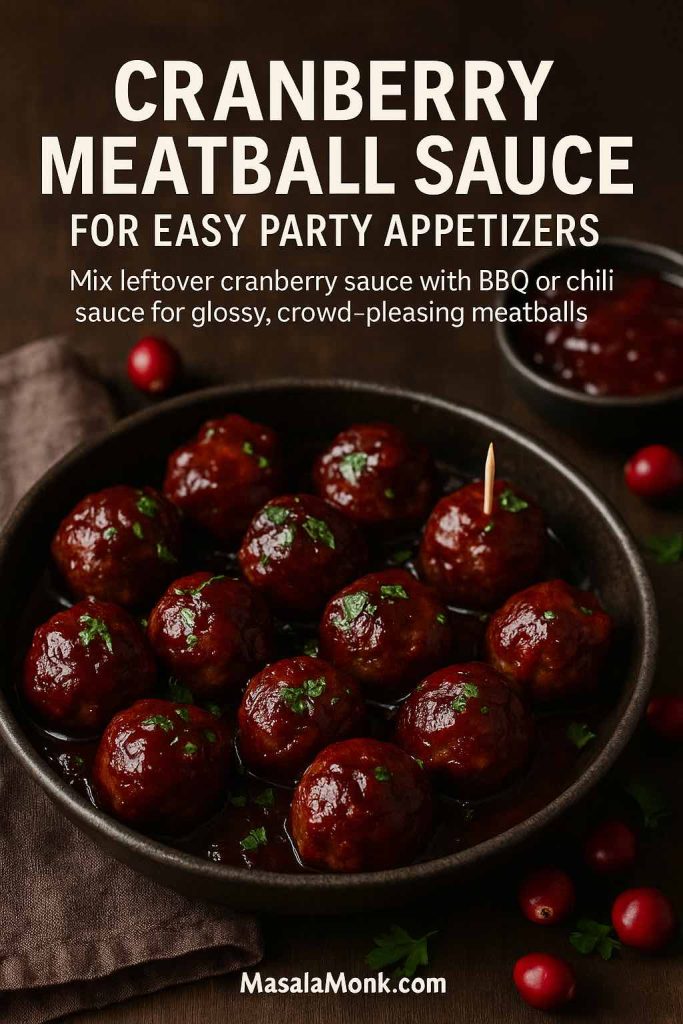
Skillet of meatballs glazed in glossy cranberry sauce, garnished with parsley and surrounded by fresh cranberries, with text reading “Cranberry Meatball Sauce for Easy Party Appetizers.”
Mix leftover cranberry sauce with BBQ or chili sauce to make this glossy cranberry meatball sauce—an easy, crowd-pleasing party appetizer or weeknight dinner.

Cranberry Mayo for Sandwiches

A spoonful of cranberry sauce goes a long way in sandwich spreads:

  1. Stir 1 tablespoon cranberry sauce into 2 tablespoons mayonnaise.
  2. Taste and add more mayo if you want it milder.
  3. Spread on bread for turkey or chicken sandwiches.

The result is a tangy, creamy cranberry sauce for sandwiches that plays nicely with roasted poultry, cheese, and salad leaves. For more ideas, you can look at flavour combos from this collection of chicken sandwich recipes.

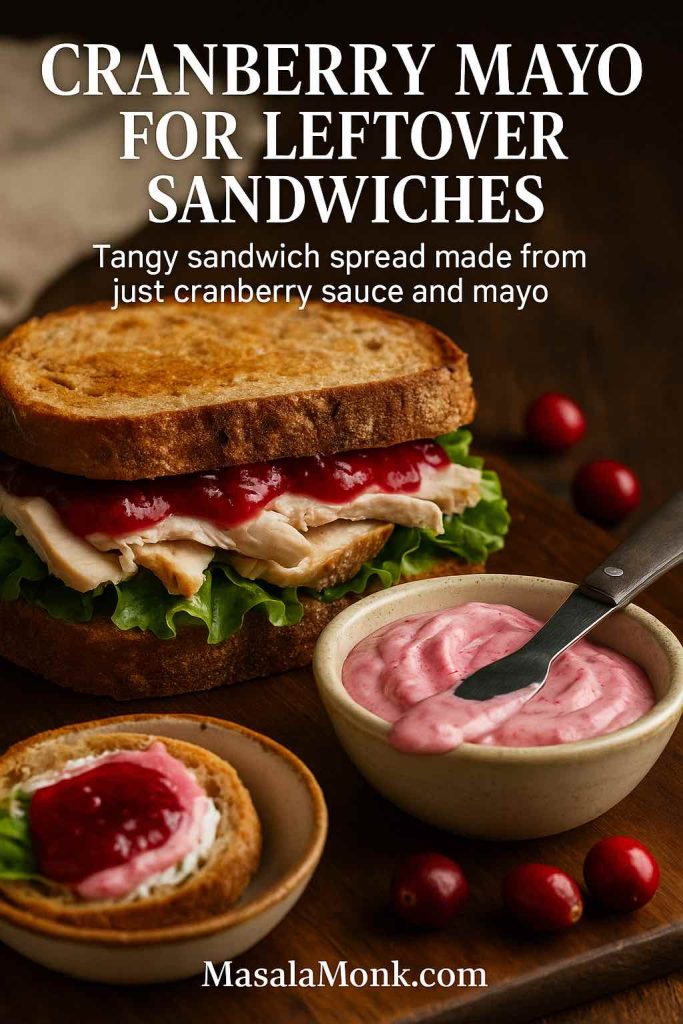
Turkey sandwich on rustic toasted bread with cranberry mayo and lettuce, served beside a small bowl of pink cranberry mayonnaise and fresh cranberries on a wooden board.
Leftover cranberry sauce whipped into mayo makes a tangy cranberry spread that instantly upgrades next-day turkey or chicken sandwiches.

Baked Brie with Cranberry Topping

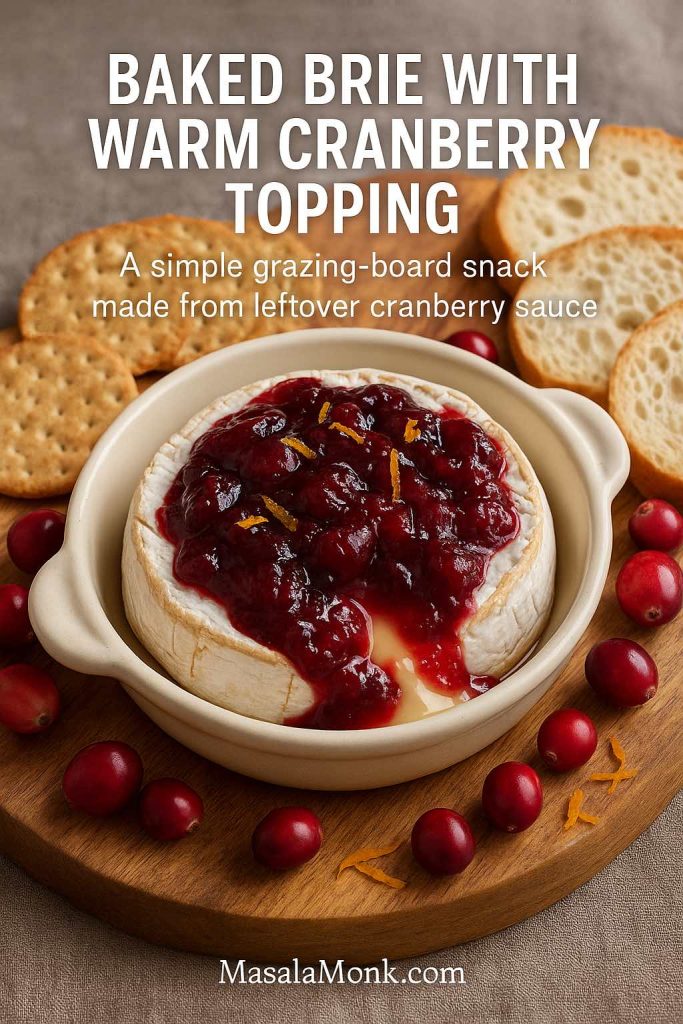
If you love grazing boards, baked brie topped with cranberry orange relish is a near-perfect snack:

  1. Place a small wheel of brie in an oven-safe dish.
  2. Spoon cranberry sauce on top—classic, brown butter, or even apple cranberry chutney all work.
  3. Bake at 180°C / 350°F for 10–15 minutes until the cheese is soft and oozing.
  4. Serve with crackers or sliced baguette.

If you’re pregnant or feeding pregnant guests, it’s worth checking which soft cheeses are safe before you plan the board; this guide to soft cheese and pregnancy is a handy starting point.

Baked Brie wheel topped with glossy cranberry orange sauce, oozing onto a ceramic dish and surrounded by crackers, baguette slices and fresh cranberries on a wooden board.
Warm baked Brie crowned with leftover cranberry–orange sauce makes an instant grazing-board centrepiece that looks fancy but takes only minutes in the oven.

Breakfast Bowls and Oats

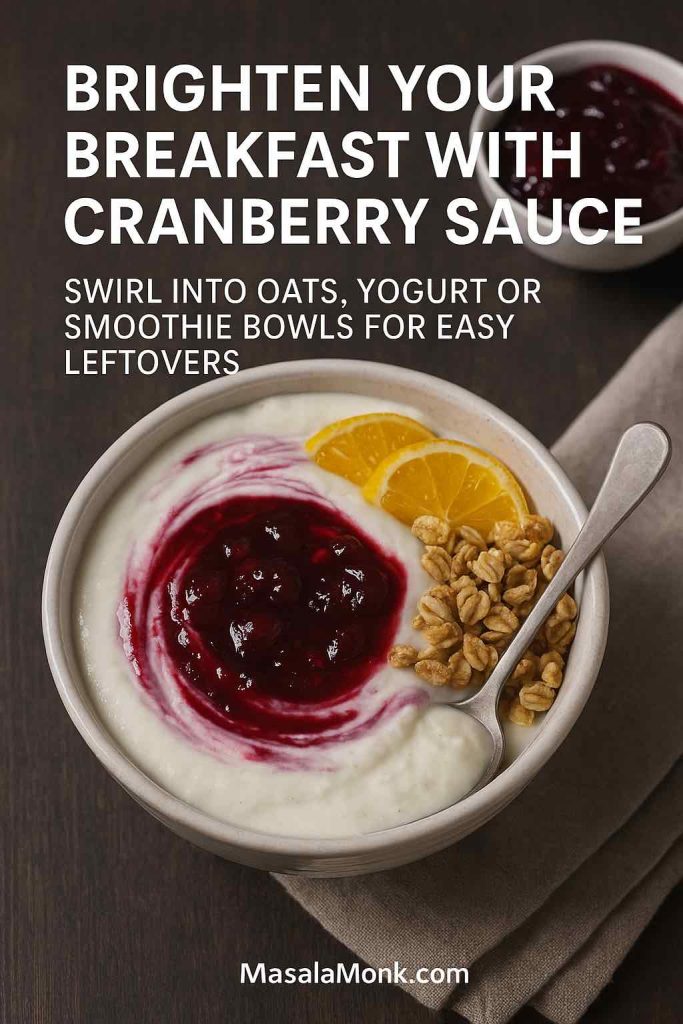
Cranberry sauce can also brighten breakfast:

  • Swirl into Greek yogurt with granola
  • Spoon over overnight oats
  • Stir into warm porridge

A solid base like this protein oatmeal formula turns leftover sauce into a colourful topping that adds both flavour and a bit of natural sweetness, especially if you’ve made a low sugar cranberry sauce or naturally sweetened cranberry sauce.

Breakfast bowl of creamy yogurt or oatmeal topped with a swirl of cranberry sauce, orange slices and granola, with a second bowl of cranberry sauce in the background.
Swirl leftover cranberry sauce into oats or yogurt for a colourful breakfast bowl that’s tangy, slightly sweet and far more exciting than plain porridge.

Dessert Ideas

Cranberry’s tartness pairs beautifully with chocolate and cream:

  • Warm lightly and drizzle over vanilla ice cream or cheesecake
  • Use as a filling for thumbprint cookies or sandwich cookies
  • Layer into parfaits with whipped cream and crushed biscuits

A plate of cranberry thumbprints goes especially well alongside something rich like these double chocolate chip cookies. For cosy nights in, stir a spoonful of cranberry orange sauce into a mug of homemade hot chocolate for a wintery twist.

Bowl of vanilla ice cream drizzled with cranberry sauce and a plate of thumbprint cookies filled with cranberry jam, styled together on a wooden table as easy desserts made from leftover cranberry sauce.
Leftover cranberry sauce turns into dessert in minutes—drizzle it over vanilla ice cream or spoon it into thumbprint cookies for an easy sweet finish after a holiday meal.

Drinks & Mocktails

Leftover sauce also loves a glass:

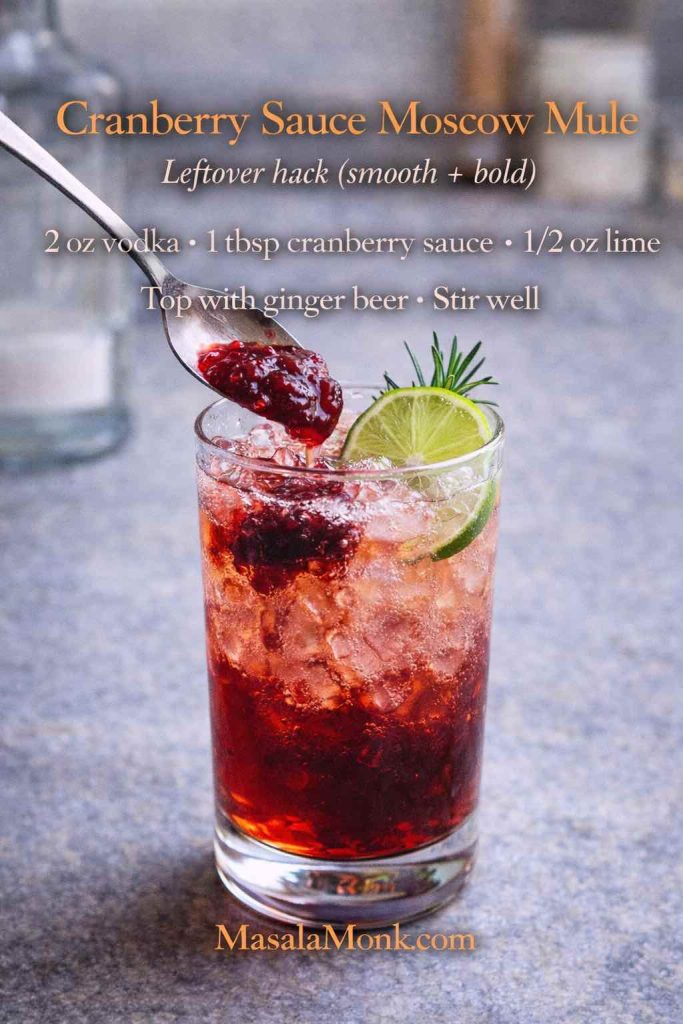
  • Shake a spoonful with lemon juice, simple syrup, and whiskey for a cranberry take on a sour
  • Stir into sparkling water with extra orange juice for a quick mocktail
  • Use as a flavour base in mocktails similar to those in our ACV & cranberry mocktail ideas
Two cranberry drinks on a wooden table, one a whiskey sour–style cocktail with foam and orange slice and one a sparkling mocktail with cranberries and citrus, with a small bowl of cranberry sauce in front and text about turning leftover cranberry sauce into drinks and mocktails.
A spoonful of leftover cranberry sauce can be shaken into a cranberry sour or stirred into sparkling water with citrus for easy cocktails and mocktails that use up every last bit.

All of these are small, low-effort ways to make sure your recipes using cranberry sauce don’t stop at the main meal.


A Little More on Cranberries & Health

Even though most versions of cranberry sauce with orange juice are treats rather than health foods, it’s still nice to know what’s inside those jewel-coloured berries.

Cranberries offer:

  • Vitamin C
  • Manganese
  • Dietary fibre
  • Various polyphenol antioxidants

Healthline’s overview of cranberry nutrition and health benefits explains how cranberries may help support urinary tract health, reduce oxidative stress, and influence some heart-health markers. The Cranberry Institute collects research summaries on cranberry bioactives, particularly around proanthocyanidins (PACs), the compounds thought to help prevent certain bacteria from sticking to urinary tract walls.

On the flip side, most holiday sauces also contain a decent amount of sugar, so they’re still in the “enjoy in moderation” category. If you’re looking for something lighter, lean on your naturally sweetened cranberry sauce or no sugar added cranberry sauce variation, and perhaps save the biggest spoonfuls for big meals rather than everyday snacks.

For those balancing rich holiday food with lighter days, homemade hydration and detox-style drinks featuring cranberry and apple cider vinegar can feel like a reset; you’ll find several precise formulas in this guide to cranberry-ACV detox drinks and these homemade electrolyte recipes for fasting.


Conclusion

With this one post, you’ve got:

  • A reliable, classic cranberry sauce with orange juice
  • A set of seven easy recipes and variations (from cranberry orange relish to apple cranberry chutney)
  • Options that cover classic, gourmet, low-sugar, sugar-free, and boozy moods
  • Plenty of ideas for recipes using cranberry sauce the next day and beyond

From here, you can keep things as simple as a single pot of sauce—or build a whole cranberry “universe” across your Thanksgiving, Christmas and everyday menus.

FAQs about Cranberry Sauce with Orange Juice

1. Can I make cranberry sauce with orange juice instead of water?

Yes, absolutely. A cranberry sauce with orange juice is simply a classic cranberry sauce recipe where orange juice replaces some or all of the water. This gives you a brighter flavour, gentle sweetness, and a more “holiday” feel. Any basic cranberry sauce recipe using orange juice can follow the same ratios as a water-based sauce; just watch the simmer time so it doesn’t reduce too much and turn too thick.


2. What’s the difference between cranberry sauce and cranberry orange relish?

Cranberry sauce is cooked: the berries burst over heat and the mixture thickens into a glossy, jammy side dish. A cranberry orange relish is usually raw, often made in a food processor with whole orange, sugar, and fresh cranberries. So, a cranberry relish recipe with orange juice or whole orange has more crunch, brighter acidity, and a slightly bitter edge from the peel. In short, sauce is smooth and spoonable; relish is chopped and zippy.


3. How do I fix cranberry sauce that’s too runny or too thick?

If your cranberry sauce made with orange juice is too runny after chilling, return it to the pan and simmer for a few minutes until it reduces and coats the back of a spoon. Conversely, if it ends up too thick, stir in extra orange juice or a little water, a tablespoon at a time, over low heat until it loosens. Always remember: a cranberry orange juice sauce thickens as it cools, so judge consistency after it’s chilled, not just while it’s hot.


4. Can I make cranberry sauce ahead of time or freeze it?

Yes, homemade cranberry sauce is perfect for making in advance. It keeps in the fridge for about a week, so you can prepare your cranberry sauce with orange juice several days before Thanksgiving or Christmas. It also freezes well for up to a couple of months; just thaw in the fridge and stir before serving. This make-ahead option frees up time and stove space on busy days.


5. Can I use frozen cranberries instead of fresh?

Frozen cranberries work just as well in a cranberry sauce recipe using orange juice. There’s no need to thaw them; simply add straight from the freezer and extend the simmer time by a minute or two. The texture and flavour will be very close to fresh, and your homemade cranberry sauce recipe will still set thanks to the natural pectin in the berries.


6. How can I make a low sugar or sugar free cranberry sauce?

To create a low sugar cranberry sauce, reduce the sugar and balance with more orange zest rather than extra juice, keeping the flavour bright without over-sweetening. For a sugar free cranberry sauce, swap sugar for a granular sweetener such as a monkfruit–erythritol blend and follow the same method. This style fits low-carb, keto and “diabetic-friendly” needs, although individual health conditions may still require personal adjustments. Expect the set to be slightly softer than a traditional full-sugar sauce.


7. Is cranberry sauce vegan and gluten free?

Most homemade cranberry sauce recipes are naturally vegan and gluten free, especially a simple cranberry sauce with orange juice made from fruit, sugar, and spices. Just avoid butter-based variations if you’re cooking for vegans, or use plant-based butter in gourmet versions like brown-butter-style twists. Likewise, check labels on alternative sweeteners if you’re making keto cranberry sauce or sugar-free versions.


8. Can I make cranberry sauce without orange juice?

Certainly. If you don’t want citrus, you can make a basic cranberry sauce recipe with water and sugar, then add a little lemon zest, apple juice, or even pomegranate juice for complexity. On the other hand, if you enjoy fruitier flavours but have no oranges, apple juice gives a softer, sweeter profile than a sharp cranberry sauce with orange juice. Just keep the overall liquid-to-cranberry ratio similar so the sauce still sets properly.


9. How much cranberry sauce do I need per person?

As a general guide, plan about ¼ to ⅓ cup of cranberry sauce per person. If you know your crowd loves it—especially if you’re also serving cranberry orange relish or chutney—lean towards the higher end. Leftovers are incredibly versatile, so making a bit extra rarely goes to waste. They can be used in recipes with cranberry sauce like meatball glaze, sandwich spread, or dessert toppings.


10. What can I do with leftover cranberry sauce?

Leftovers are gold. You can turn them into cranberry sauce for sandwiches, whisk them into a quick pan sauce for pork or chicken, or use them as a glaze for meatballs. Additionally, leftover cranberry and orange juice sauce works in baking—think thumbprint cookies, bars, or swirled cheesecakes—and even in breakfast bowls with yogurt and oats. In other words, recipes using cranberry sauce don’t have to stop at the holiday table.


11. How do I make my cranberry sauce more “gourmet”?

To transform a simple easy cranberry sauce into something special, add brown butter, vanilla, warm spices, or a splash of orange liqueur or bourbon at the end of cooking. These small tweaks create a richer, more complex gourmet cranberry sauce recipe without complicating the method. You can also fold in toasted nuts or dried fruit for extra texture, keeping the core cranberry sauce with orange juice base as your foundation.


12. What’s the best way to serve cranberry sauce for Thanksgiving?

For cranberry recipes for Thanksgiving, serve the sauce chilled or at cool room temperature so it holds its shape on the plate. Place it in a small bowl or shallow dish so the colour is visible, and pair it with classic sides like stuffing, mashed potatoes, green bean casserole, and roasted vegetables. A well-balanced cranberry sauce Thanksgiving spread often includes a smooth sauce plus a chunky relish or chutney, giving guests a choice of textures and flavours.

Posted on 3 Comments

Natural Detoxification: Cranberry Juice and Apple Cider Vinegar for Weight Loss

CRANBERRY JUICE AND APPLE CIDER VINEGAR FOR WEIGHT LOSS

Detox drinks are everywhere. From social media “weight loss hacks” to time-tested folk remedies, millions are drawn to the promise of a cleaner, leaner body. Two of the most popular stars in this arena? Cranberry juice and apple cider vinegar (ACV)—often used together as a “detoxifying” and slimming elixir.
But how much of this is science, and how much is just wishful thinking? If you’re searching for honest, practical, and research-backed advice—plus tips for safe, effective use—this comprehensive guide is for you.


Why Do We Talk About “Detox” at All?

Let’s bust a myth right away: your body doesn’t need special drinks to detox. Your liver, kidneys, skin, and gut are already working 24/7 to clear waste and balance your internal chemistry. However, certain foods and drinks can support these processes, especially by reducing inflammation, boosting antioxidant status, or helping you avoid excess calories and sugar.

Cranberry juice and ACV are both believed to “help the body detox,” but their true benefits go deeper—and may actually help with weight management and metabolic health when used wisely.


Spotlight on Cranberry Juice

Nutritional Goldmine

  • Packed with antioxidants: Especially proanthocyanidins (PACs), which are unique to cranberries and have demonstrated health benefits in several studies.
  • Rich in vitamin C, fiber, and micronutrients that can help combat oxidative stress and support immune health.
  • Low in sugar (if unsweetened): Choose 100% pure cranberry juice; avoid cocktail blends loaded with added sugars.

Research-Backed Benefits

1. Metabolic and Heart Health

  • A 2024 meta-analysis MDPI, 2024 covering 16 clinical trials found cranberry products can improve cholesterol ratios and insulin resistance—key factors in metabolic syndrome and weight gain.
  • Several studies report increases in adiponectin, a hormone that encourages the body to use fat for fuel.

2. Gut Health and Digestion

  • Cranberry polyphenols help diversify beneficial gut bacteria and may reduce inflammation in the digestive tract, indirectly supporting metabolism and weight control.

3. Potential Liver Protection

  • Some trials show reduced oxidative stress and better liver enzyme profiles in people with metabolic issues who consumed cranberry juice regularly.

How to Use Cranberry Juice

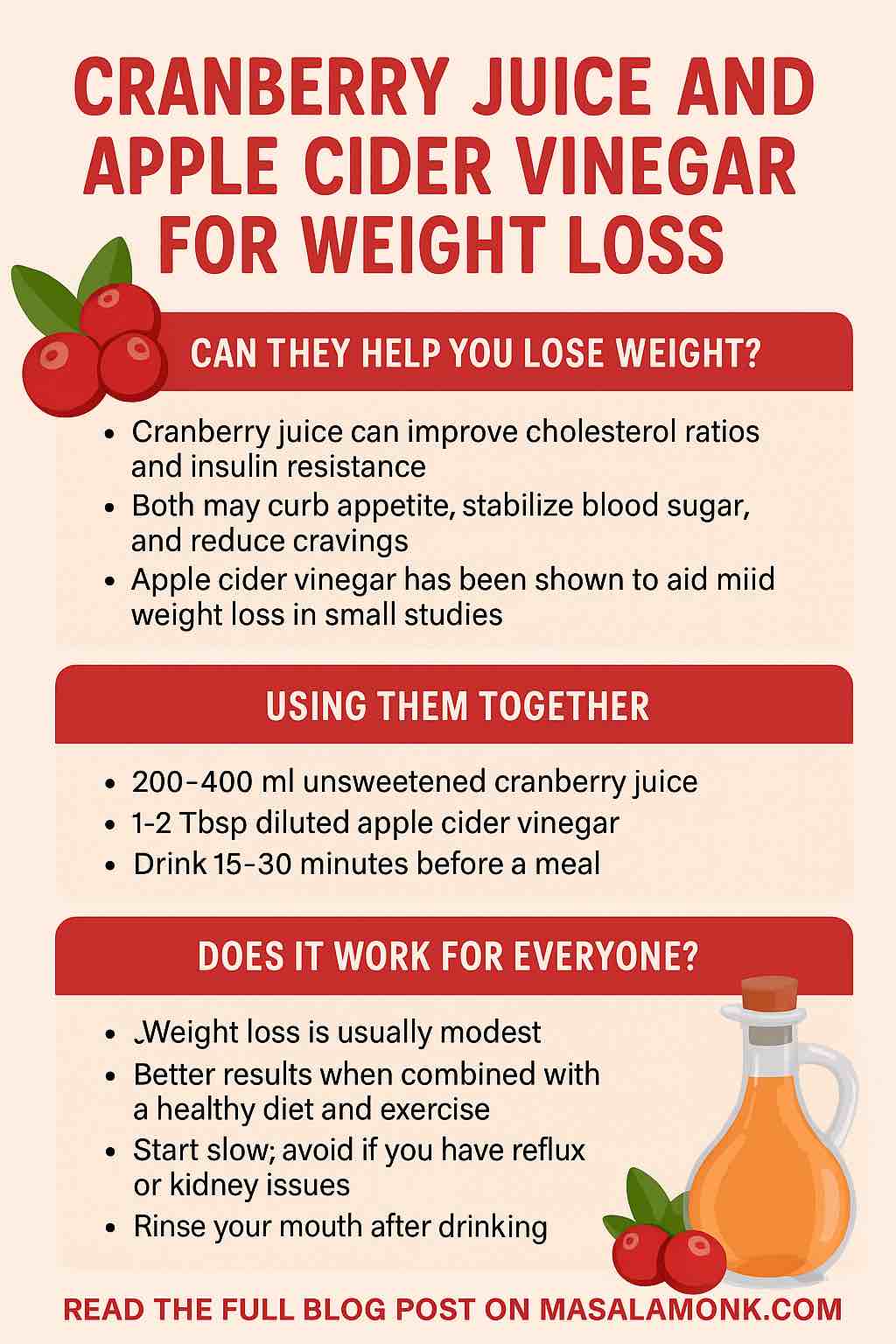
  • Dose: 200–400 mL (about 6–12 oz) per day of unsweetened, 100% juice.
  • Timing: Best consumed before meals or as a mid-morning “tonic.”
  • Tip: To reduce tartness, dilute with water or add a splash of lemon.

Apple Cider Vinegar: More Than a Fad?

What’s in ACV?

  • Acetic acid (main active ingredient): Thought to slow gastric emptying, suppress appetite, and help regulate blood sugar.
  • Trace minerals and polyphenols: May offer mild antioxidant benefits.
  • Probiotics: Present in raw, unfiltered (“with the mother”) varieties.

Research-Backed Benefits

1. Blood Sugar & Insulin Control

  • Consistent evidence shows that 1–2 tablespoons (15–30 mL) ACV before meals can lower post-meal blood sugar spikes and improve insulin sensitivity—particularly valuable for prediabetics and those with insulin resistance.

2. Weight Management

  • Clinical studies find modest weight loss—2–4 lbs (1–2 kg) over 8–12 weeks—when ACV is used with calorie control. A notable 2024 trial in Lebanese adolescents saw up to 8 kg (≈18 lbs) lost in 12 weeks, but experts warn this needs to be replicated in diverse groups.

3. Cholesterol & Heart Health

  • Minor reductions in triglycerides and LDL (“bad”) cholesterol have been observed, although effects are small.

Safety, Risks, and Common Mistakes

  • NEVER drink ACV undiluted—always mix with water or juice to protect teeth and throat.
  • Excess ACV can lead to digestive distress, lower potassium, or interact with some medications (especially diabetes drugs and diuretics).
  • Rinse your mouth with water after drinking and wait before brushing teeth.

The Real-World Synergy: Cranberry Juice + ACV

What Happens When You Mix Them?

While both ingredients have promising benefits alone, no major clinical trial has tested the combination for weight loss or detoxification. However, experts and enthusiasts suggest you may experience:

  • Greater fullness and appetite control before meals.
  • Improved blood sugar balance and reduced cravings.
  • A burst of antioxidants and gut support, thanks to the polyphenols in cranberries and the acetic acid in ACV.

What the Science Suggests

  • Both ingredients may complement each other: ACV slows digestion and sugar absorption, while cranberry juice provides antioxidants and a hydrating, low-calorie base.
  • Neither is a substitute for a balanced diet or exercise. Real, lasting weight loss requires sustainable changes in eating, movement, and sleep.

How To Try It: Practical Protocol & Recipes

Classic Detox Drink Recipe

Ingredients:

  • 200 mL (about 7 oz) unsweetened cranberry juice
  • 1–2 teaspoons (5–10 mL) raw apple cider vinegar (“with the mother”)
  • 200 mL cold water
  • Optional: squeeze of lemon, pinch of stevia/monk fruit, mint leaves

Instructions:

  1. Mix all ingredients thoroughly.
  2. Drink before a main meal (once or twice daily).
  3. Rinse your mouth with plain water after drinking.

Variations:

  • Add a pinch of ginger for extra digestive support.
  • Mix with sparkling water for a refreshing, low-calorie “mocktail.”

How to Incorporate Safely (and Get Results)

  1. Start Small: Try with half the suggested dose for a week to see how your body responds.
  2. Monitor Your Body: Watch for stomach upset, reflux, or any changes in bowel habits.
  3. Stay Consistent: Effects are modest and best seen after 2–3 months of regular use.
  4. Make It a Habit: Tie your drink to an existing routine—such as before lunch or your afternoon slump.

Does It Work for Everyone? Realistic Expectations

  • Weight loss is usually modest. Most studies show a 1–2 kg (2–4 lb) reduction over 8–12 weeks—sometimes more, but only with strict calorie control and lifestyle changes.
  • Appetite and cravings: Many users report feeling less hungry and making better food choices.
  • Energy & digestion: Some experience better digestion, less bloating, and improved energy.

Remember: Your results will depend on your baseline habits, genetics, and consistency.


Frequently Asked Questions

1. Can I use cranberry juice and apple cider vinegar together every day?
Yes, most healthy adults can use this combination daily, as long as you stick to safe amounts: 200–400 mL unsweetened cranberry juice and 1–2 tablespoons (15–30 mL) diluted ACV per day. Always start with lower amounts to assess tolerance.


2. What is the best time to drink cranberry juice and ACV for weight loss?
The best time is 15–30 minutes before a main meal (especially breakfast or lunch). This may help reduce appetite, stabilize blood sugar, and prevent overeating.


3. Does this drink cause any side effects?
Possible side effects include stomach upset, acid reflux, or enamel erosion (if undiluted). Rinse your mouth after drinking and avoid if you have kidney problems, ulcers, or are taking medications that interact with vinegar.


4. Should I use fresh cranberries or only juice?
Fresh cranberries, unsweetened juice, and standardized cranberry capsules all offer benefits. For convenience, most use 100% unsweetened juice; avoid cocktails or blends with added sugar.


5. Can I use apple cider vinegar tablets or capsules instead of liquid?
Yes, but quality varies. Choose reputable brands that standardize acetic acid content. Liquid ACV (with “the mother”) is preferred for full benefits, but capsules are an option if the taste is an issue.


6. Will this drink help me “detox” my body?
No drink can “detox” you overnight. Cranberry juice and ACV can support your body’s natural detoxification pathways through antioxidants and improved metabolism, but they’re not substitutes for your liver and kidneys.


7. How quickly will I see weight loss results?
Expect modest results: 1–2 kg (2–4 lb) over 8–12 weeks, mostly if combined with calorie control and regular exercise. Some may feel appetite or craving changes within days.


8. Are there people who should avoid this drink?
Yes: avoid if you have chronic kidney disease, severe acid reflux, ulcers, or are pregnant/nursing. Those with diabetes or on certain meds should consult their doctor first.


9. Can I add other ingredients to this drink?
Yes! Lemon juice, ginger, cinnamon, or mint can enhance flavor and may add extra antioxidant or digestive benefits.


10. Can I keep a batch in the fridge or should I make it fresh?
For best taste and potency, make your drink fresh daily. However, you can prep a larger batch for up to 24 hours—just stir before serving, as vinegar and juice may settle.


Expert Tips to Maximize Results

  • Pair with a balanced plate: Focus on lean proteins, lots of non-starchy veggies, healthy fats, and whole grains.
  • Move your body daily: Even short walks help your metabolism and support healthy weight loss.
  • Sleep and stress matter: Both influence appetite hormones and fat storage.
  • Track progress: Use a journal or app to note how you feel, changes in cravings, weight, and energy levels.

The Bottom Line

Cranberry juice and apple cider vinegar, especially when combined, can be a tasty and supportive tool for better appetite control, blood sugar management, and mild weight loss. But don’t fall for miracle claims: the true “detox” is daily healthy living.
Start slow, stay consistent, and focus on habits you can maintain for life.


References & Further Reading


Join the Conversation!

Have you tried cranberry juice and apple cider vinegar? What was your experience? Drop a comment below—or share your questions for our next science-backed Q&A!

Posted on Leave a comment

Cranberry for Kidney Health

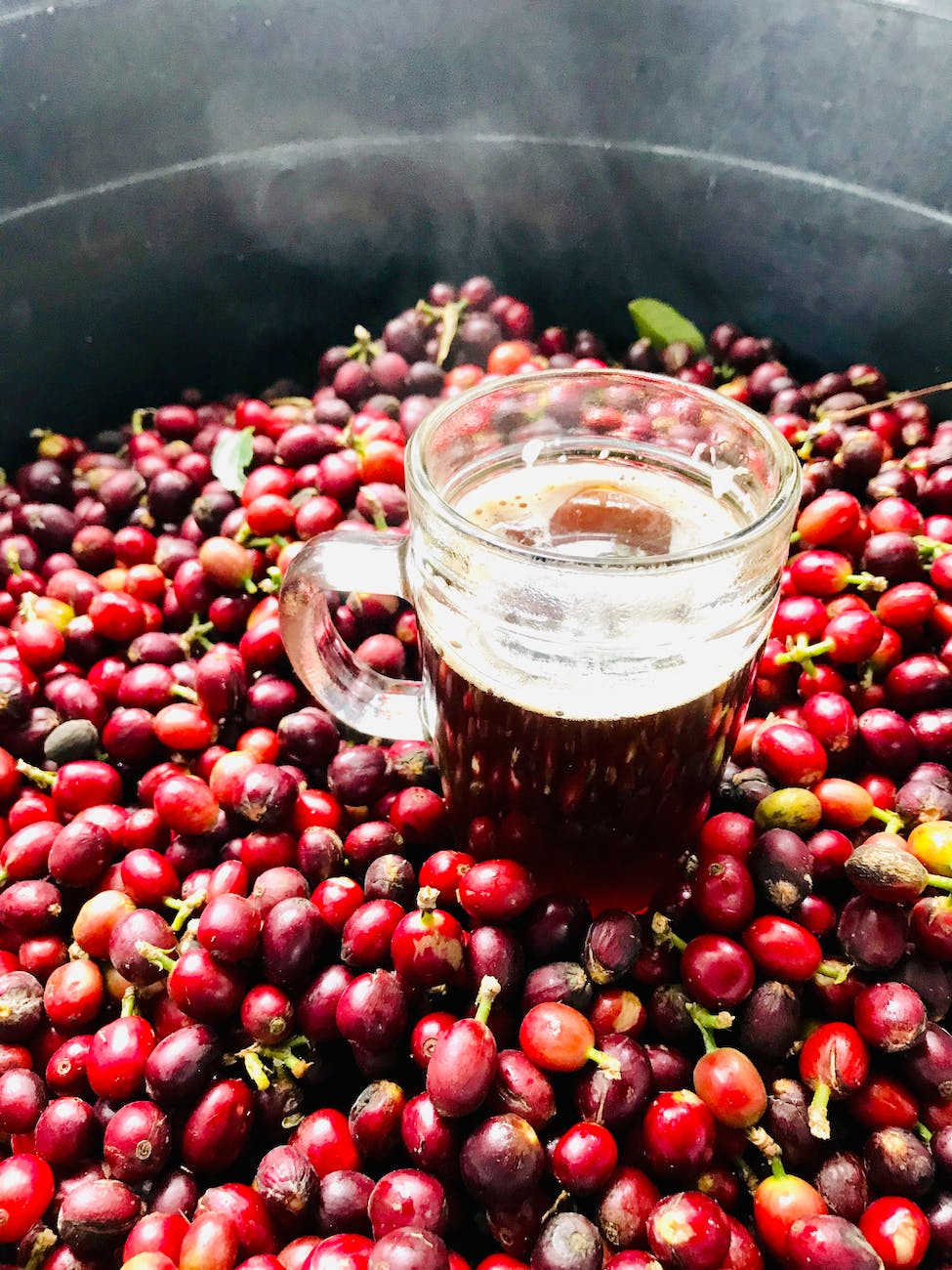
fresh cranberry juice in a glass mug

For centuries, cranberries have been cherished not only for their tart flavor and festive role in holiday dishes but also for their potential health benefits. Among these, their influence on kidney health has garnered significant interest in both the medical community and among health-conscious consumers. But how exactly do cranberries affect the kidneys? Are they a boon for urinary tract infections (UTIs) and kidney function, or do they come with hidden risks? Let’s explore the science, the myths, and the best practices around using cranberries for kidney health.


Understanding the Role of the Kidneys

Before we delve into cranberries, it’s crucial to understand what your kidneys do. These bean-shaped organs filter waste products from your blood, balance body fluids, regulate blood pressure, and produce hormones that influence red blood cell production and bone health. Any disruption in kidney function can lead to a cascade of health issues, so supporting kidney health is of paramount importance.


Cranberries and Urinary Tract Health: The Strongest Link

One of the most well-documented benefits of cranberries is their role in preventing urinary tract infections (UTIs). UTIs occur when harmful bacteria, primarily Escherichia coli (E. coli), attach to the lining of the urinary tract. Cranberries contain a type of polyphenol called proanthocyanidins (PACs), which prevent these bacteria from adhering to urinary tract walls.

By reducing the incidence of UTIs, especially in individuals prone to recurrent infections, cranberries may indirectly protect the kidneys. UTIs that travel upward from the bladder to the kidneys can cause more severe infections like pyelonephritis, which can damage kidney tissues over time. Hence, regular consumption of cranberry juice or supplements may serve as a preventative strategy.


Cranberries and Chronic Kidney Disease (CKD): An Anti-inflammatory Ally?

Chronic Kidney Disease (CKD) is often exacerbated by oxidative stress and systemic inflammation. Cranberries are rich in antioxidants, particularly flavonoids and other polyphenolic compounds, which have shown promise in reducing inflammation markers and neutralizing free radicals.

While research is still evolving, some animal and human studies suggest that incorporating antioxidant-rich foods like cranberries into the diet may help mitigate inflammation in CKD patients. However, more robust clinical trials are needed before definitive conclusions can be made.


The Flip Side: Risks of Cranberries for Kidney Health

Despite their benefits, cranberries aren’t universally safe for all kidney-related issues.

1. Oxalate Content and Kidney Stones: Cranberries contain oxalates, naturally occurring compounds that can contribute to the formation of kidney stones, particularly calcium oxalate stones. For individuals with a history of kidney stones or those prone to high urinary oxalate levels, excessive cranberry consumption could be problematic.

2. Drug Interactions: Cranberry juice and supplements can interact with medications, notably warfarin, a commonly prescribed blood thinner. Cranberries may enhance warfarin’s effects, increasing the risk of bleeding. Always consult a healthcare provider before adding cranberry products to your diet if you’re on medication.

3. Sugar Content in Processed Juices: Many commercial cranberry juices are loaded with added sugars, which can be harmful to people with diabetes or those managing CKD. High sugar intake can worsen metabolic conditions that already strain kidney function. Opt for unsweetened, 100% pure cranberry juice or capsules standardized for PAC content.


How to Safely Incorporate Cranberries into Your Diet

If you’re interested in leveraging cranberries for kidney or urinary health, consider these guidelines:

  • Choose Wisely: Opt for unsweetened, organic cranberry juice or high-quality cranberry supplements.
  • Mind the Dose: Limit juice intake to one cup per day unless otherwise advised by a healthcare provider.
  • Watch for Symptoms: If you have a history of kidney stones, monitor for any signs of recurrence and speak to your doctor before regular cranberry use.
  • Stay Hydrated: Drinking plenty of water helps flush the urinary system and supports overall kidney function.

Conclusion: A Balanced View on Cranberries and Kidney Health

Cranberries can be a powerful ally in promoting urinary tract health and potentially mitigating inflammation in kidney disease, but they are not a one-size-fits-all solution. Their high oxalate content and potential drug interactions mean they must be used thoughtfully, especially in individuals with existing kidney concerns.

As with many superfoods, the key is balance and personalization. Talk to your healthcare provider about your specific health needs and how cranberry products might fit into your wellness plan. When used wisely, cranberries can be a tart yet powerful ingredient in your journey to better kidney health.


Have you tried using cranberries for kidney health? Share your experiences or questions in the comments below!

Frequently Asked Questions (FAQs)

1. Can cranberries actually prevent kidney infections?
Cranberries can help prevent urinary tract infections (UTIs), which, if left untreated, may ascend and cause kidney infections like pyelonephritis. The proanthocyanidins (PACs) in cranberries prevent bacteria from sticking to the urinary tract walls, thereby reducing UTI risk.

2. Are cranberries good for people with chronic kidney disease (CKD)?
In moderation, cranberries may offer anti-inflammatory and antioxidant benefits that could support CKD management. However, they should be used with caution, especially due to their oxalate content, which could worsen certain conditions.

3. Is cranberry juice or cranberry supplements better for kidney health?
Both can be beneficial, but supplements standardized for PAC content often provide more consistent doses without added sugars. Choose what’s best based on dietary needs and doctor’s advice.

4. How much cranberry juice is safe to drink daily for kidney support?
Generally, one cup (8 oz or ~240 mL) of unsweetened cranberry juice per day is considered safe for most people. Always consult a healthcare provider for personalized recommendations.

5. Can cranberries help dissolve kidney stones?
No, cranberries cannot dissolve existing kidney stones. In fact, due to their oxalate content, they may contribute to the formation of calcium oxalate stones in susceptible individuals.

6. Are dried cranberries a good alternative for kidney health?
Dried cranberries can offer some benefits, but they often contain added sugars and are less effective for UTI prevention due to lower PAC content. Look for unsweetened versions if consumed regularly.

7. Should people with kidney stones avoid cranberries?
People with a history of calcium oxalate kidney stones should limit or avoid cranberries, as they are high in oxalates that can contribute to stone formation.

8. Can I take cranberry supplements while on medication?
Some cranberry products may interact with medications like warfarin (a blood thinner). Always speak with your doctor before starting supplements if you’re on any prescribed medications.

9. What type of cranberry juice is best for kidney health?
Choose 100% pure, unsweetened cranberry juice without added sugars or artificial ingredients. Organic options are ideal for minimizing exposure to pesticides.

10. Can children or pregnant women use cranberries for urinary health?
Cranberries are generally safe in moderate amounts, but dosage should be adjusted for children. Pregnant women should consult a healthcare provider before using cranberry supplements.

Posted on 2 Comments

Mocktails for Digestion and Gut: Top 10 ACV & Cranberry Juice Drink Ideas

friends making a toast for their friendship

A healthy digestive system is the cornerstone of overall well-being. It can be heavily influenced by what we consume. Imagine if the very beverages you sip on could contribute to your digestive health. Enter the world of mocktails – drinks brimming with the benefits of apple cider vinegar (ACV), cranberry juice, and a host of other digestive-friendly ingredients. Drawing inspiration from classic cocktails, these mocktails are not just a flavor fiesta but a boon for your gut health. Let’s dive in:

1. ACV & Cranberry Moscow Mule:

Add a digestive twist to the classic Moscow Mule with ACV and cranberry juice, enhanced with a punch of ginger.

Picture yourself sipping on this fizzy delight that combines the tangy cranberry juice with the robust, gut-friendly ACV, all spiced up with a hint of ginger. Ginger is renowned for its anti-inflammatory properties and its ability to alleviate digestive discomfort. If you fancy a spirited version, just add a shot of vodka!

2. Digestive Health Screwdriver:

Transform the Screwdriver into a healthful concoction with apple juice, ACV, and a dash of turmeric.

Reinvent your regular Screwdriver with a digestive health spin. The golden glow of turmeric, known for its potent anti-inflammatory and digestion-aiding properties, pairs harmoniously with the ACV and apple juice. This refreshing mix can be elevated with a shot of vodka for a spirited twist.

3. Gut-Friendly Sangria:

Mix up a gut-friendly Sangria with mixed berry juice, ACV, and warming cinnamon.

Our version of the classic Sangria is a blend of mixed berry juice, ACV, and a sprinkle of cinnamon. Toss in some slices of fiber-rich fruits to further aid bowel movements. To take this mocktail up a notch, just add a dash of red wine.

4. ACV Cranberry Mojito:

Recharge your senses with a digestive-friendly Mojito starring cranberries, mint, and ACV.

This vibrant mix of refreshing mint leaves, tangy cranberries, and raw ACV brings the classic Mojito to life while catering to your gut health. Mint is known to soothe digestive troubles and freshen breath. To elevate this mocktail to a cocktail, a splash of white rum is all you need.

5. Gut-Boosting Apple Martini:

Bring a new twist to the Martini with apple juice, ACV, and grated ginger.

The combination of apple juice, ACV, and ginger not only creates an intriguing flavor profile but also contributes to better digestion. Fancy transforming this healthy mocktail into a potent cocktail? Just add a shot of gin or vodka.

6. Bowel-Healthy Old Fashioned:

Craft a bowel-healthy Old Fashioned with cranberry juice, ACV, and a dash of orange bitters.

With cranberry juice, ACV, orange bitters, and a cherry garnish, this mocktail is an interesting take on the classic Old Fashioned. The citrus from the orange contributes additional fiber, enhancing the bowel-healthy benefits of this drink. If you prefer your drink with a little spirit, a dash of good quality bourbon would be perfect.

7. Digestive Delight Margarita:

Replace the citrus base of a Margarita with apple juice, ACV, and a sprinkle of cinnamon for a digestive-friendly version.

Reimagine the traditional Margarita with apple juice, ACV, and a dash of cinnamon. This unique blend provides both a delightful flavor and digestive benefits. To convert this into a cocktail, serve it with a salt-rimmed glass and a shot of tequila.

8. Berry Daiquiri for Digestion:

Create a digestion-friendly Daiquiri with mixed berry juice, ACV, and a dash of turmeric.

The Berry Daiquiri offers a delightful balance of sweet, sour, and spicy notes while promising a boost for your gut health. A bit of light rum can turn this mocktail into a fruity and potent cocktail.

9. Ginger-Ale Highball for Digestion:

Combine ginger ale, cranberry juice, and ACV for a digestive-friendly version of the classic Highball.

This Highball-inspired mocktail is not just a treat for your taste buds but also your gut. The soothing properties of ginger ale blend perfectly with the tart cranberry juice and robust ACV. If you’re looking to add some spirit, a bit of whiskey would be an excellent choice.

10. ACV & Cranberry Cosmopolitan:

Innovate the classic Cosmopolitan with cranberry juice, ACV, and fresh lime juice.

The ACV & Cranberry Cosmopolitan is a citrusy, tangy mocktail that not only tastes incredible but also aids digestion. If you want to add some spirit to the mix, a dash of vodka would be a perfect match.

Remember, moderation is key when consuming these drinks due to their high acidity. They are meant to complement a balanced diet and regular exercise routine, not replace them. So why not add a dash of fun to your daily routine with these delectable, health-boosting mocktails? Here’s to a happy gut!

FAQs:

1. What kind of ingredients promote better digestion?

Ingredients such as apple cider vinegar, cranberry juice, ginger, turmeric, and mint have been traditionally used to promote better digestion. Consuming these ingredients in moderation as part of a balanced diet may support digestive health.

2. Why should I choose mocktails for digestive health?

Mocktails allow you to enjoy the fun and flavor of traditional cocktails while incorporating ingredients beneficial for digestion. They can be a creative way to consume health-boosting ingredients.

3. Can these mocktails also be made into cocktails?

Absolutely! In our blog, we suggest suitable alcoholic pairings for each mocktail. Remember, though, that alcohol should be consumed in moderation.

4. How can these mocktails complement a healthy lifestyle?

These mocktails are crafted with ingredients known for their digestive benefits. They can be a part of a healthy lifestyle when consumed in moderation, alongside regular exercise and a balanced diet.

Posted on Leave a comment

5 Best Purple Rain Cocktail Recipes from the Internet 🍹

blackberries on top of purple rain cocktail drink

There’s something truly enchanting about a cocktail that not only tastes like a dream but also looks like a piece of art. The Purple Rain cocktail, with its mesmerizing hue and tantalizing taste, is one such masterpiece. This drink has been creating ripples in the cocktail world, and it’s not hard to see why. It’s a delightful blend of sweet and sour, with a hint of tropical flair. Today, we’re going to take a deep dive into the top 5 Purple Rain recipes from the internet, each with its unique twist. So, fasten your seatbelts and get ready to embark on a flavorful journey that will leave your taste buds dancing with joy! 💃🕺

1. The Classic Purple Rain – Tipsy Bartender 🍸

The first stop on our journey is the classic Purple Rain recipe from Tipsy Bartender. This version stays true to the original, with a perfect balance of vodka, lemonade, blue curaçao, and grenadine. The addition of a lemon wedge and purple sugar rim adds a touch of elegance that makes this drink a true showstopper.

Ingredients:

  • Vodka
  • Lemonade
  • Blue Curaçao
  • Grenadine
  • Lemon wedge
  • Purple sugar

The key to this recipe is the quality of your ingredients – always opt for premium vodka and fresh lemonade for the best results.

2. The British Twist – BBC Good Food 🇬🇧

Next, we travel across the pond to the UK with the Purple Rain recipe from BBC Good Food. This version adds a British twist with the inclusion of gin, giving the cocktail a more robust flavor profile. The addition of lime juice adds a refreshing tang that perfectly complements the sweetness of the blue curaçao and grenadine.

Ingredients:

  • Vodka
  • Gin
  • Blue Curaçao
  • Lime juice
  • Lemon juice
  • Soda water
  • Grenadine

Remember, the secret to a great cocktail is balance – the gin and lime juice should enhance, not overpower, the other flavors.

3. The Ultimate Purple Rain – Occasional Cocktails 🍹

Our third stop is the Ultimate Purple Rain from Occasional Cocktails. This recipe sticks to the basics but emphasizes the importance of presentation. A lemon wedge or slice as your garnish not only adds a pop of color but also a burst of citrusy freshness.

Ingredients:

  • Vodka
  • Lemonade
  • Blue Curacao
  • Grenadine
  • Lemon wedge or slice (optional)

The key to this recipe is the preparation – having all your ingredients and equipment ready to go ensures a smooth and enjoyable cocktail-making experience.

4. The Fruity Purple Rain – Advanced Mixology 🍓

Next, we dive into a fruity twist on the classic with the Purple Rain from Advanced Mixology. This version adds cranberry juice to the mix, giving the cocktail a fruity punch that’s perfect for summer. The addition of a fresh lime squeeze over the drink adds a zesty finish that will leave you wanting more.

Ingredients:

  • Vodka
  • Grenadine syrup
  • Cranberry juice
  • Lemonade
  • Slice of lime

The secret to this recipe is the cranberry juice – opt for 100% juice for a natural sweetness that can’t be beaten.

5. The Tropical Purple Rain – Trop Rockin 🍍

Finally, we end our journey on a tropical note with the Purple Rain from Trop Rockin. This recipe swaps out the lemonade for sweet pineapple juice, creating a stunning purple drink that tastes like a tropical vacation.

Ingredients:

  • Vodka
  • Pineapple juice
  • Blue Curacao
  • Grenadine

The key to this recipe is the pineapple juice – make sure it’s freshly squeezed for the best flavor.

Tips for Making the Best Purple Rain 🌟

Now that we’ve explored the top 5 Purple Rain recipes from the internet, here are some tips to ensure your cocktail is a hit:

  1. Always use fresh ingredients: Freshly squeezed juices will always taste better than their store-bought counterparts.
  2. Balance is key: A great cocktail strikes a balance between sweet, sour, and alcoholic flavors.
  3. Presentation matters: A well-presented cocktail is a joy to drink. Don’t forget the garnish!
  4. Experiment: Don’t be afraid to tweak the recipes to suit your taste. After all, the best cocktail is the one you enjoy the most.

7 Purple Rain Variations to Satisfy Your Craving

If you’re captivated by the allure of the Purple Rain cocktail, get ready to embark on a journey through a world of enchanting variations. From mixed drinks to frozen delights, and even unique twists with different spirits, these recipes will satisfy your cravings and elevate your cocktail experience. Let’s dive into the magical realm of Purple Rain and explore its irresistible variations.

1. Purple Rain Mixed Drink 🍹

Indulge in the classic Purple Rain mixed drink that started it all. This delightful concoction blends the perfect harmony of flavors to create a captivating cocktail. Here’s a breakdown of the ingredients you’ll need:

  • Vodka: Adds a smooth and neutral base to the cocktail.
  • Blue Curaçao: Infuses the vibrant blue hue and a hint of citrusy sweetness.
  • Grenadine: Brings a touch of fruity richness and adds depth to the cocktail.
  • Lemonade: Provides a refreshing tang that balances the sweetness.

To make the Purple Rain mixed drink, combine the ingredients in a shaker with ice. Shake well and strain into a glass filled with ice. Don’t forget to garnish with a lemon wedge for an extra burst of citrus flavor.

2. Purple Rain Frozen Drink ❄️

When the temperature rises, cool down with a refreshing Purple Rain frozen drink. This icy rendition takes the classic flavors of the Purple Rain cocktail and transforms them into a delightful slushy treat. Here’s how to make it:

  • Vodka, Blue Curaçao, Grenadine, and Lemonade: Follow the same measurements as the mixed drink.
  • Crushed Ice: Gives the drink its frozen texture.

Combine all the ingredients in a blender and blend until smooth. Pour the frozen mixture into a glass and garnish with a lemon wedge. Sip on this frosty Purple Rain creation and let it transport you to a state of pure bliss.

3. Purple Rain Cocktail with Gin 🍸

For gin enthusiasts seeking a twist on the classic recipe, the Purple Rain cocktail with gin is a delightful option. This variation adds a botanical touch and elevates the complexity of flavors. Here’s what you’ll need:

  • Gin: Choose a gin with herbal and citrus notes to complement the other ingredients.
  • Blue Curaçao, Grenadine, and Lemonade: The same components as the classic mixed drink.
  • Lemon Wedge: Use it as a garnish for an extra touch of freshness.

Combine the gin, blue curaçao, grenadine, and lemonade in a shaker with ice. Shake vigorously, strain into a glass over ice, and garnish with a lemon wedge. Savor the nuanced flavors of the Purple Rain cocktail with a gin twist.

4. Jamaican Purple Rain Drink 🏝️

Take your taste buds on a Caribbean adventure with the tantalizing Jamaican Purple Rain drink. This variation infuses the spirit of Jamaica into the classic recipe, offering a tropical twist. Here are the ingredients you’ll need:

  • Jamaican Dark Rum or Coconut Rum: Opt for a rum with rich flavors to enhance the tropical experience.
  • Blue Curaçao, Grenadine, Lemonade, and Pineapple Juice: Stay true to the classic recipe’s foundation.
  • Lime Wedge: Use it as a garnish for a tangy touch.

Combine the rum, blue curaçao, grenadine, lemonade, and pineapple juice in a glass. Stir well to ensure the flavors meld together. Add ice and garnish with a lime wedge. Sip on this Jamaican-inspired Purple Rain drink and imagine yourself lounging on a pristine beach in the Caribbean.

5. Purple Rain Shot Recipe 🥃

For those seeking a bolder and quicker experience, the Purple Rain shot is the perfect choice. It condenses the flavors of the classic cocktail into a concentrated form. Here’s what you’ll need:

  • Vodka, Blue Curaçao, and Grenadine: Equal parts of each ingredient.

Pour equal parts of vodka, blue curaçao, and grenadine into a shot glass. Stir gently to combine the flavors. Raise the glass and take the shot, allowing the vibrant and intense flavors of the Purple Rain to invigorate your taste buds.

6. Jamaican Purple Rain Drink Recipe 🇯🇲

For those who desire a more detailed recipe for the Jamaican Purple Rain drink, here’s a step-by-step guide:

  • Jamaican Dark Rum: 1 ½ oz.
  • Blue Curaçao: 1 oz.
  • Grenadine: 1 oz.
  • Pineapple Juice: 2 oz.
  • Lemonade: 1 oz.
  • Lime Wedge: Use it as a garnish.

Combine the Jamaican dark rum, blue curaçao, grenadine, pineapple juice, and lemonade in a cocktail shaker with ice. Shake vigorously to blend the flavors. Strain the mixture into a glass filled with ice. Finally, garnish with a lime wedge to add a tropical touch. This detailed recipe ensures a perfectly balanced Jamaican Purple Rain drink.

7. Exploring Purple Rain Liquor 🍷

For those intrigued by the captivating flavors of Purple Rain, consider incorporating Purple Rain liquor into your mixology adventures. This versatile liquor can be utilized in various ways to create signature cocktails. Whether you’re crafting Purple Rain martinis, sangrias, or even experimenting with Purple Rain-infused desserts, the possibilities are endless. Unleash your creativity and let Purple Rain liquor elevate your cocktail game to new heights.

With these enticing variations, you have the tools to become a Purple Rain aficionado. Whether you prefer the classic mixed drink, a frozen delight, or an exotic twist, there’s a Purple Rain recipe to suit every occasion. Let the vibrant colors and mesmerizing flavors transport you to a world of cocktail enchantment. Cheers to the captivating and irresistible Purple Rain!

Different Versions from Across the World 🌍

The beauty of the Purple Rain cocktail is its versatility. From the classic to the tropical, there’s a version of this delightful drink to suit every palate. So, why not take your taste buds on a global tour? Try a gin-infused British version, a fruity American twist, or even a tropical Caribbean rendition. The possibilities are endless!

In conclusion, the Purple Rain cocktail is more than just a drink – it’s an experience. Whether you’re a cocktail connoisseur or a novice mixologist, these recipes are sure to impress. So, why wait? Dive into the world of Purple Rain and discover your new favorite cocktail!

Blog Tags: Purple Rain, Cocktail Recipes, Tipsy Bartender, BBC Good Food, Occasional Cocktails, Advanced Mixology, Trop Rockin, Cocktail Making, Mixology, Drinks, Beverages, Recipes, Gin, Vodka, Blue Curaçao, Grenadine, Lemonade, Cranberry Juice, Pineapple Juice, Lime Juice, Soda Water, Global Cocktails, Tropical Cocktails, British Cocktails, American Cocktails, Caribbean Cocktails.