Posted on — Leave a comment

Macaroni Salad Recipe: Creamy, Classic & Easy for Cookouts

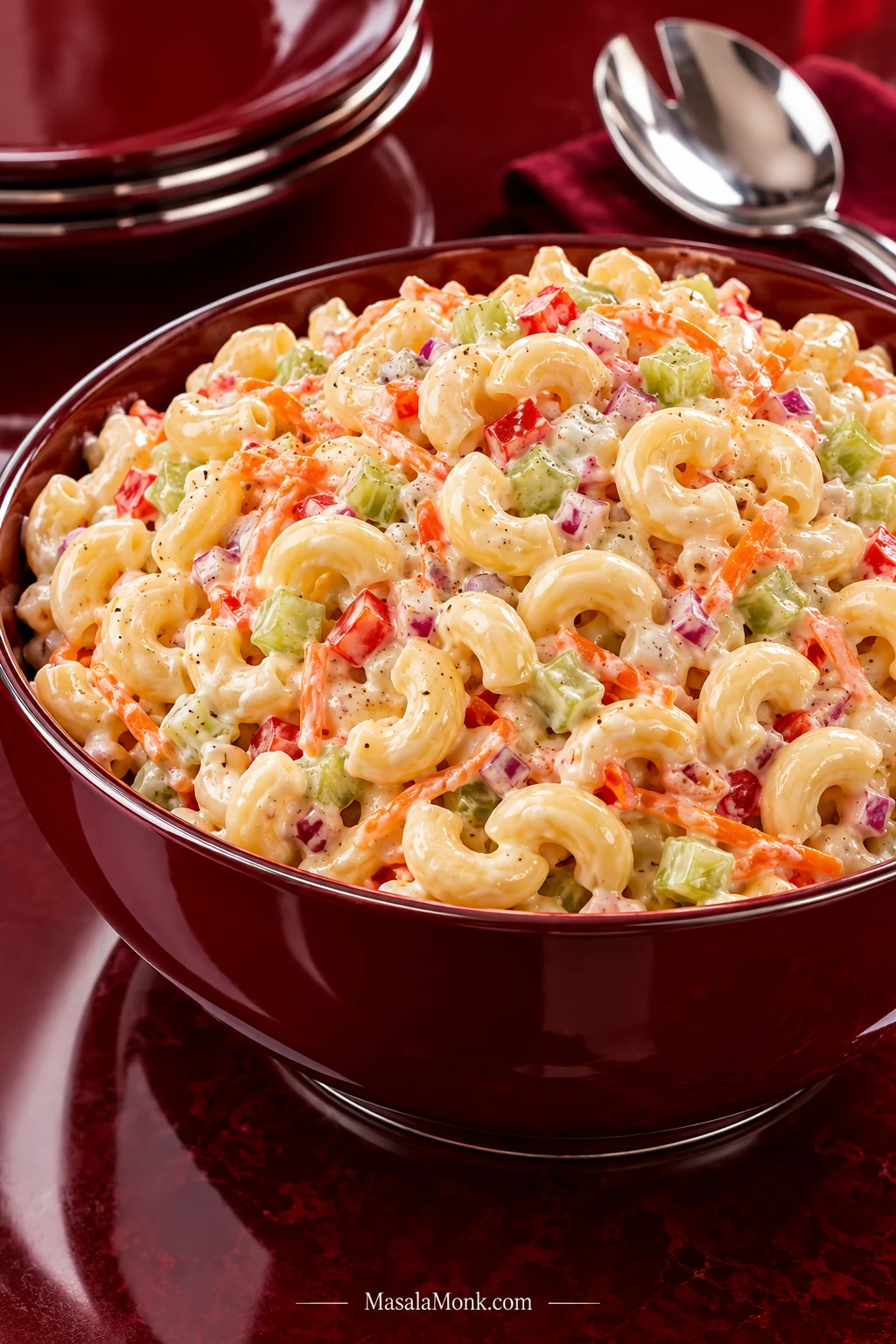
Large burgundy bowl filled with creamy elbow macaroni salad containing finely diced celery, red bell pepper, red onion, and shredded carrot on a glossy red surface.

Macaroni salad has a maddening little habit: it can look perfect in the mixing bowl and feel dry by the time the cookout starts. Get it right, though, and you have tender little elbows, celery and pepper with a bit of snap, sweet pickle, and a cool dressing that tastes creamy without turning heavy.

Make the salad for the bowl you’re actually going to eat. The macaroni will feel firmer once thoroughly chilled, and it will take up some of the dressing while it sits.

Save some of the dressing. Mix the rest into the fresh salad, let everything get properly cold, then use the reserved portion only if the chilled bowl needs it.

Macaroni Salad Recipe

Creamy macaroni salad with tender elbow pasta, finely chopped vegetables, sweet pickle, and a tangy mayonnaise dressing—the classic deli-style balance that works especially well beside cookout food.

Yield
About 8 side servings

Prep
20 minutes

Cook
About 8–10 minutes, depending on pasta

Chill
At least 2 hours

Total
About 2 hours 30 minutes, including chilling

Ingredients

Macaroni

  • 8 oz (225 g) elbow macaroni
  • Water, for boiling
  • Kosher salt, for the cooking water

Vegetables

  • 1 cup (about 100 g) finely diced celery
  • ½ cup (about 60 g) carrot, shredded on the large holes of a box grater
  • ½ cup (about 75 g) finely diced red bell pepper
  • ¼ cup (about 40 g) finely diced red onion
  • 2 hard-boiled eggs, finely chopped, optional

Dressing

  • 1 cup (240 ml) mayonnaise
  • 2 tablespoons (30 ml) white vinegar
  • 2 tablespoons (30 g) sweet pickle relish
  • 1 tablespoon (12 g) granulated sugar
  • 1 teaspoon (5 ml) yellow mustard
  • ½ teaspoon fine salt
  • ¼ teaspoon black pepper

Equipment

  • Large pot
  • Colander
  • Large mixing bowl
  • Box grater

Instructions

  1. Cook the macaroni. Bring a roomy pot of water to a rolling boil and salt it. Add the macaroni and start checking before the package’s full cooking time. Cook until there is no chalky center and the elbows still hold their shape.
  2. Cool and drain. Drain the macaroni and rinse it briefly under cold water. Toss the colander well and let the excess water drain away.
  3. Prep the vegetables. Finely dice the celery, bell pepper, and red onion, and shred the carrot on the large holes of a box grater. If the onion is especially sharp, soak it in cold water for 10–15 minutes, then drain and dry it well.
  4. Make the dressing. Whisk the mayonnaise, white vinegar, sweet relish, sugar, yellow mustard, salt, and pepper until smooth. Reserve ⅓ cup (80 ml) of the finished dressing, cover it, and refrigerate it.
  5. Mix. Combine the cooled macaroni, vegetables, and eggs if using. Fold in the remaining dressing until everything is evenly dressed.
  6. Chill. Check the seasoning, cover, and refrigerate for at least 2 hours.
  7. Finish it chilled. Stir the salad and taste it cold. If it looks dry, fold in the reserved dressing a spoonful at a time; if it is still creamy, leave the reserve unused. Make the final seasoning adjustment now.

Recipe Notes

  • Judge the macaroni by texture rather than the clock; different brands cook at different rates.
  • Drain the pasta and washed vegetables well so excess water does not thin the dressing.

What You’re Looking For in the Finished Salad

A good forkful has tender macaroni wrapped in cool, creamy dressing, with little interruptions of celery and pepper crunch. The elbows stay intact, but there isn’t a firm center waiting in the middle.
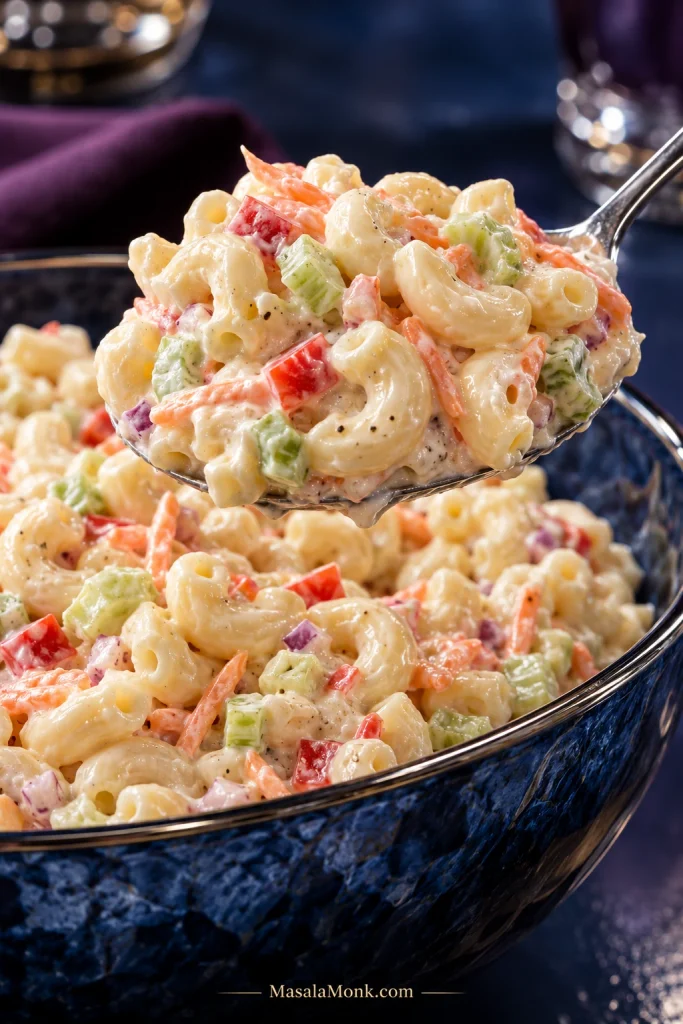
Metal serving spoon lifting creamy elbow macaroni salad with finely diced celery, red bell pepper, red onion, and shredded carrot.
Use the serving spoon as a creaminess check: the dressing should travel with distinct elbows in a glossy coat, with no watery trail left behind.

The vegetables belong in the bite rather than taking it over. Carrot and onion are small enough to spread through the bowl, so you get their sweetness and bite without suddenly meeting a mouthful of either one.

The dressing comes through creamy first, then pickle and tang, with enough sweetness to round the sharper notes. It should make you want another bite, not reach for a glass of water.

Need the exact quantities? Back to the Recipe Card →

Why These Ingredients Work Together

The vegetables aren’t here to turn this into a vegetable-heavy pasta salad. They’re used in small amounts to break up all that soft, creamy macaroni: celery and bell pepper bring the crunch, carrot adds mild sweetness, and onion gives the bowl a little bite.

Sweet relish pulls several jobs together at once—pickle flavor, sweetness, and little bits of texture. White vinegar cuts through the mayonnaise, while yellow mustard keeps the dressing in familiar deli territory.
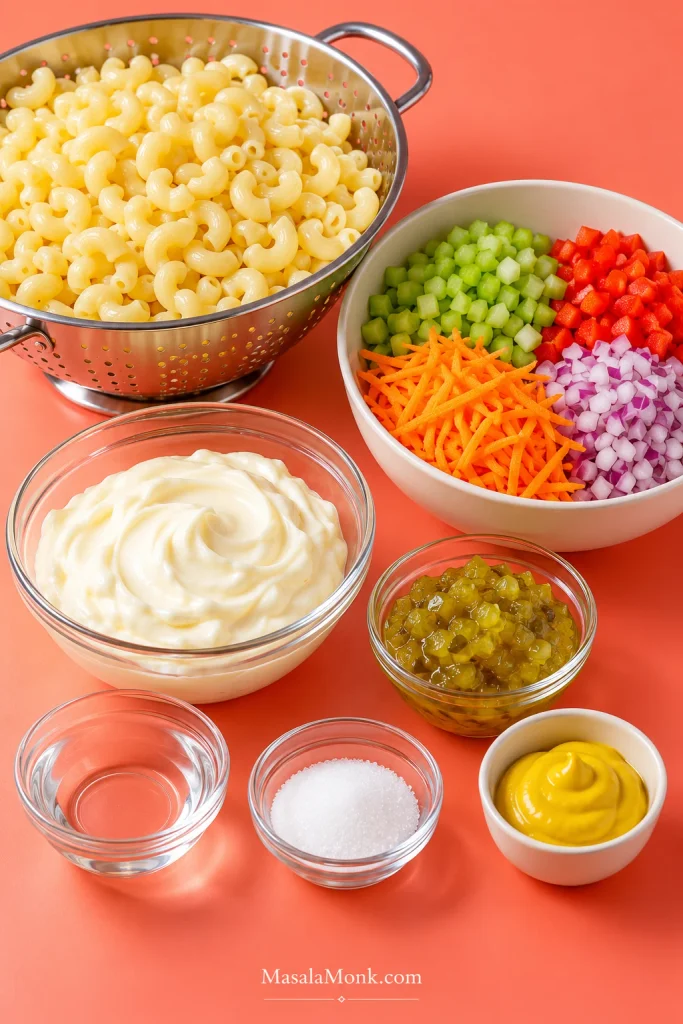
Elbow macaroni, celery, red bell pepper, red onion, shredded carrot, mayonnaise, mustard, relish, vinegar, sugar, and seasonings arranged on a coral surface.
The ingredient spread shows the hierarchy of classic macaroni salad: pasta and mayonnaise build the base, while smaller amounts of vegetables, relish, mustard, and vinegar change the texture and balance rather than the volume.

What Pasta Works Best for Macaroni Salad?

Elbow macaroni is the clear first choice here. Its small curved shape catches the dressing while leaving room for bits of celery, pepper, and pickle in the same bite.

Small shells are a good second choice. Rotini and other ridged shapes can work, but they hold dressing differently, so don’t assume they will need exactly the same amount after chilling.
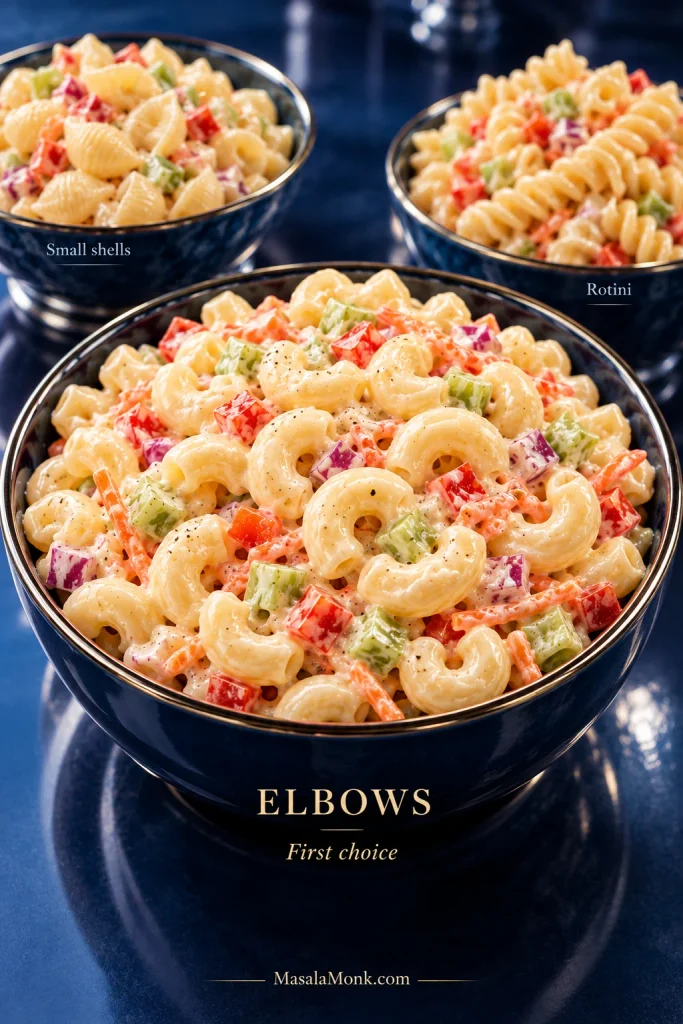
Three bowls of creamy pasta salad showing elbow macaroni in front with shell pasta and rotini in bowls behind.
Elbows carry dressing around their curves; shells and rotini trap more in pockets and grooves. If you switch shapes, judge the cold salad before assuming it needs the same amount of dressing.

Gluten-free pasta can work too, although some shapes change texture more noticeably after refrigeration. Follow the package directions closely and judge it by how it eats once cooled.

Easy Substitutions

Keep the basic balance intact when you make a swap. Changing the pickle, mustard, or vinegar shifts the character of the dressing more than changing one of the vegetables.

ChangeWhat happens
Swap red onion for green onionThe onion flavor becomes milder.
Replace relish with finely chopped sweet pickleYou keep the sweet-pickle profile with a little more texture.
Try dill pickle instead of sweet relishThe salad becomes sharper and more savory, moving away from the lightly sweet deli-style balance.
Omit the celeryYou lose some of the classic crunch; add a little extra bell pepper if you want to replace some of it.
Replace part of the mayonnaise with sour creamThe dressing becomes tangier and slightly less rich.
Use Dijon instead of yellow mustardThe mustard flavor becomes sharper and a little less classically deli-style.
Use apple cider vinegar instead of white vinegarThe acidity becomes slightly softer and fruitier.
Leave out the hard-boiled eggsThe salad is a little less rich, while the pickle and vegetables come through more clearly.

For an egg-free version, omit the hard-boiled eggs and use eggless mayonnaise in place of regular mayonnaise. If you’re cooking for an allergy, check the labels on the mayonnaise, mustard, relish, and other packaged ingredients individually.

How to Make Macaroni Salad

1. Cook the macaroni for the cold bite

Bring a roomy pot of water to a rolling boil and salt it. Add the macaroni and start checking before the package time is up.

Stop when the elbows are completely tender through the center but still holding their shape. Macaroni feels firmer once thoroughly chilled, so a hard or chalky center now will be even more noticeable later.

2. Cool it and lose the surface water

Drain the macaroni and rinse it briefly under cold water. Toss the colander well, then let the excess water drain away before the pasta goes into the mixing bowl.

You aren’t trying to dry the macaroni. You just don’t want enough water clinging to it to send the creamy dressing sliding toward the bottom of the bowl.
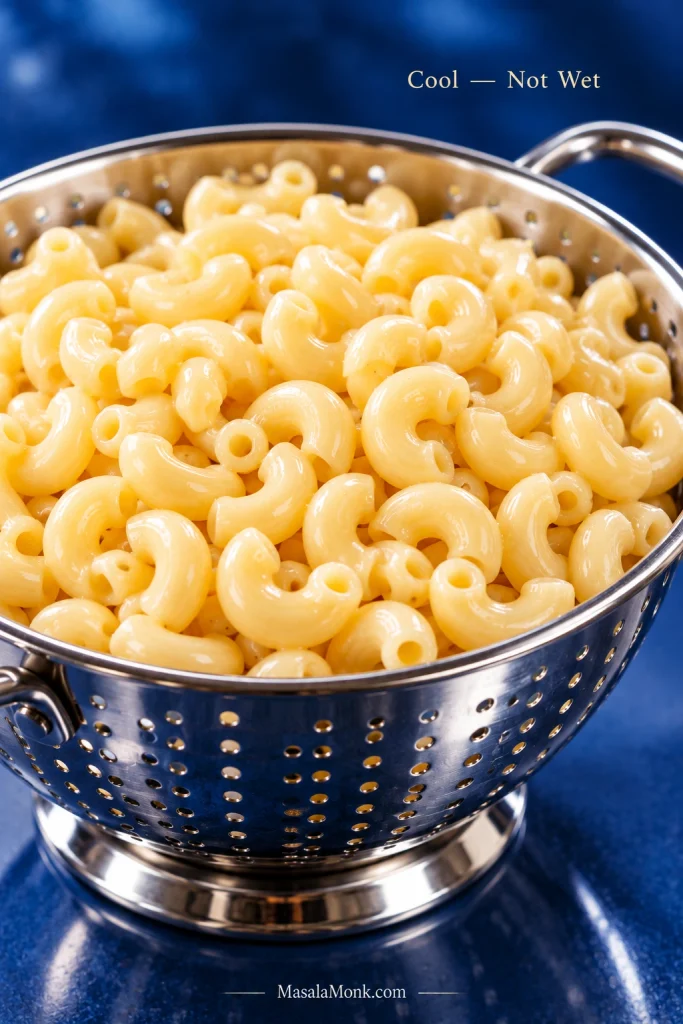
Cooked elbow macaroni draining in a polished stainless steel colander against a deep blue background.
Water can hide inside the elbows as well as cling to the outside. Give the colander a few firm tosses before dressing the pasta.

Should you rinse macaroni for macaroni salad? For this recipe, yes. Cooling the pasta quickly slows further softening; just drain it thoroughly before dressing. Some macaroni salads dress the pasta warm instead, but this one is built around cooling it first.

3. Keep the vegetables small and dry

Finely dice the celery, bell pepper, and red onion, and shred the carrot on the large holes of a box grater. Pat away obvious water left from washing.

A celery piece should not be so large that it takes over the entire forkful. Smaller pieces spread that crunch through the salad instead.
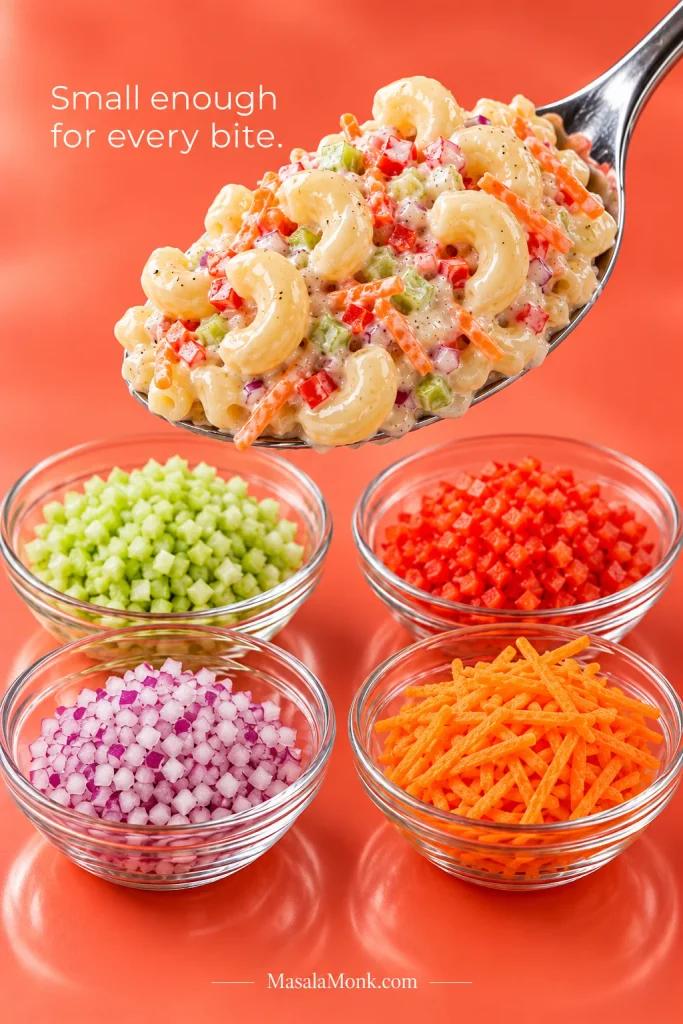
Spoonful of creamy elbow macaroni salad above bowls of finely diced celery, red bell pepper, red onion, and shredded carrot.
The cuts have different jobs: celery, pepper, and onion stay finely diced for small bursts of crunch, while shredded carrot spreads sweetness and color through more bites.

If the onion is particularly sharp, give it 10–15 minutes in cold water, then drain and dry it well.

4. Whisk the dressing and save some

Whisk the mayonnaise, white vinegar, sweet relish, sugar, yellow mustard, salt, and black pepper until smooth.

The dressing should taste a little stronger on its own than you want the finished salad to taste. The macaroni and vegetables soften the sweetness, salt, and acidity once everything is together.

Measure out ⅓ cup (80 ml) of the finished dressing, cover it, and refrigerate it. Fold the rest into the salad.
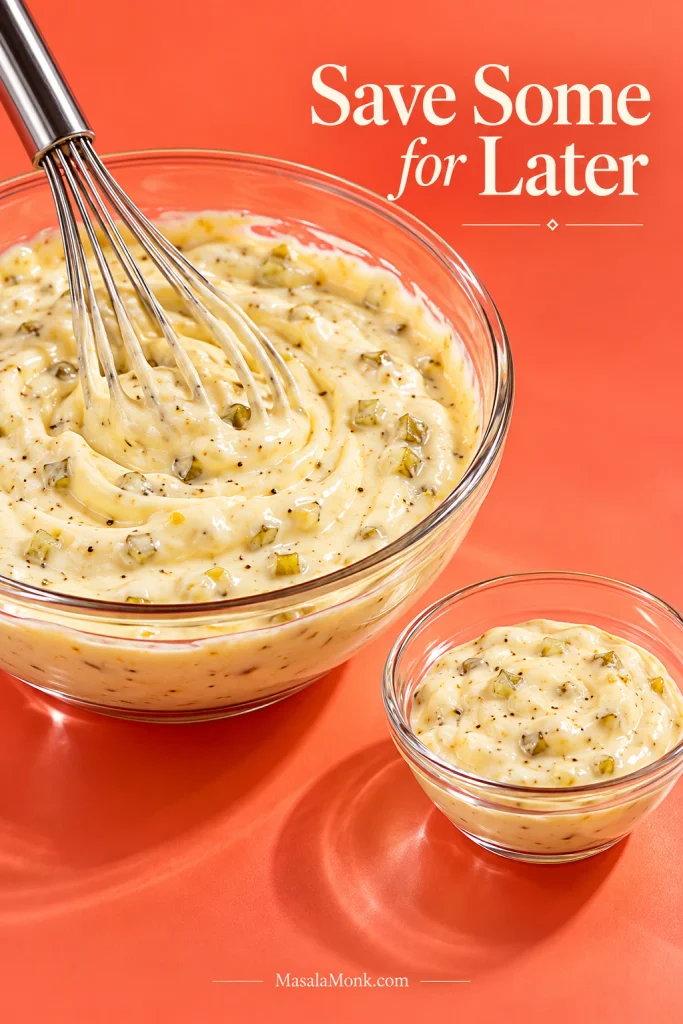
Large glass bowl of creamy relish and mustard dressing beside a smaller glass bowl holding a reserved portion.
Reserved dressing is insurance, not a required second pour. Holding some back keeps the fresh salad from starting too wet and leaves room to respond to its cold texture later.

5. Fold the salad together

Combine the cooled macaroni, vegetables, and eggs if using in a large bowl, then fold in the dressing.

Look at the bottom of the bowl. The dressing belongs on the elbows, not in a loose puddle underneath them. If you see pooling, give everything another thorough fold before adding anything else.
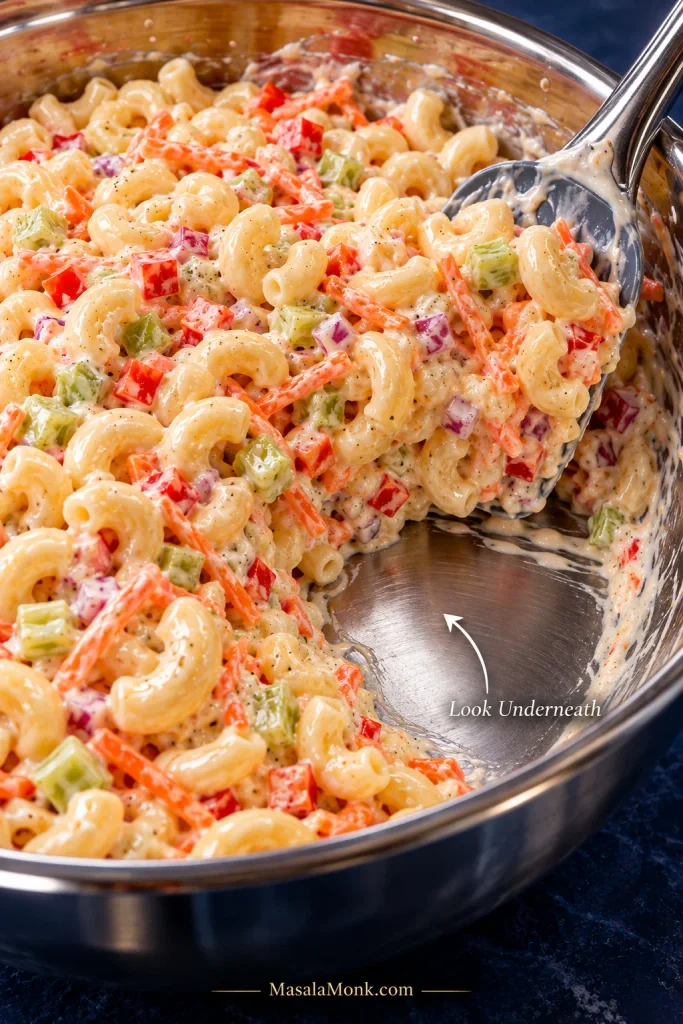
Stainless steel bowl of macaroni salad with a metal spoon pushing the salad aside to expose the bowl bottom without a watery puddle.
A creamy film on the bowl is normal. However, liquid that moves independently when the salad is shifted means moisture is collecting underneath instead of clinging to the macaroni.

Seeing a watery layer? Jump to the water-pooling fix →

6. Check the seasoning, then chill

Check the seasoning before the bowl goes into the refrigerator. It should taste well seasoned, with enough acidity to keep the mayonnaise from feeling heavy. Make only a small correction now; the flavor and texture will read differently after chilling.

Cover and refrigerate for at least 2 hours.

7. Finish it chilled

Once the salad is thoroughly chilled, stir it and take a forkful. This is the bite that matters. Make any final texture and seasoning adjustment now.

How to Keep Macaroni Salad Creamy After Chilling

To keep macaroni salad creamy after chilling, reserve some of the dressing, stir the chilled salad first, and add the reserved portion only if the pasta looks dry. Macaroni continues taking up moisture as it sits in the refrigerator, so the bowl can look different several hours later than it did when freshly mixed.
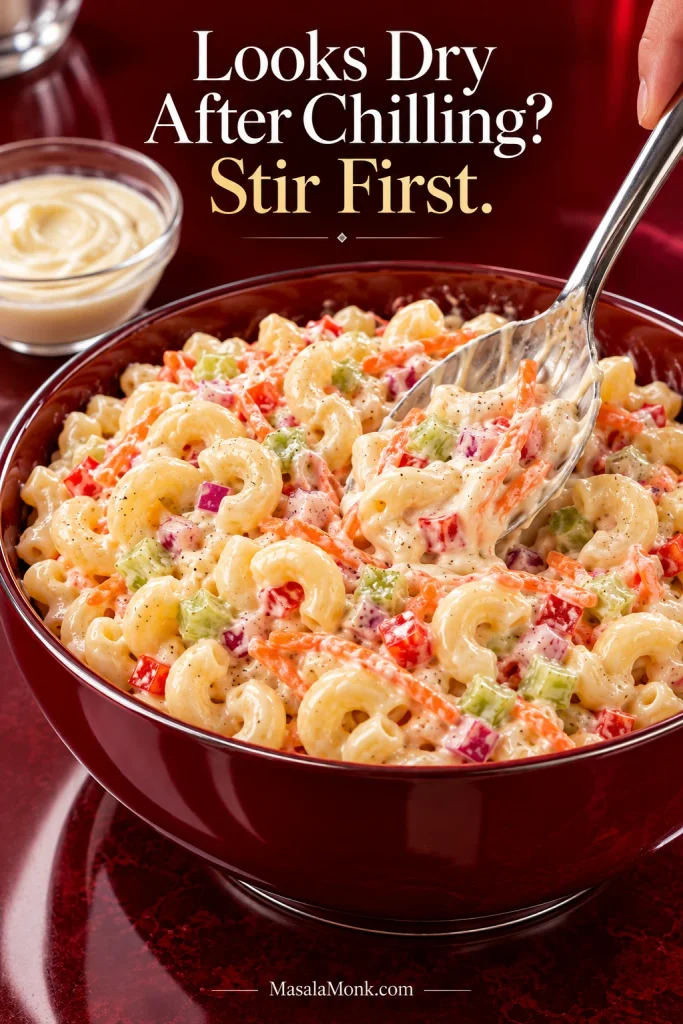
Creamy macaroni salad being stirred with a metal spoon, with a small container of reserved dressing nearby.
Stirring redistributes the cold dressing before you decide whether the bowl actually needs more.
After chillingWhat to do
Still creamyLeave it alone. There is no reason to use the reserved dressing just because it is there.
Looks a little dryStir first, then fold in a little reserved dressing if needed.
Noticeably drier the next dayAdd reserved dressing gradually until the elbows look creamy again.

Making it ahead? Jump to Make-Ahead Macaroni Salad →

The Deli-Style Bite

Tender elbows, finely chopped vegetables, sweet pickle, yellow mustard, and a creamy dressing with a clear tang put this salad squarely in familiar deli territory. The sugar rounds out the vinegar and pickle rather than taking over the bowl.

Most importantly, don’t bury the pasta under extras. The appeal is the way soft macaroni, little bits of crunch, and that sweet-and-sharp dressing land together.
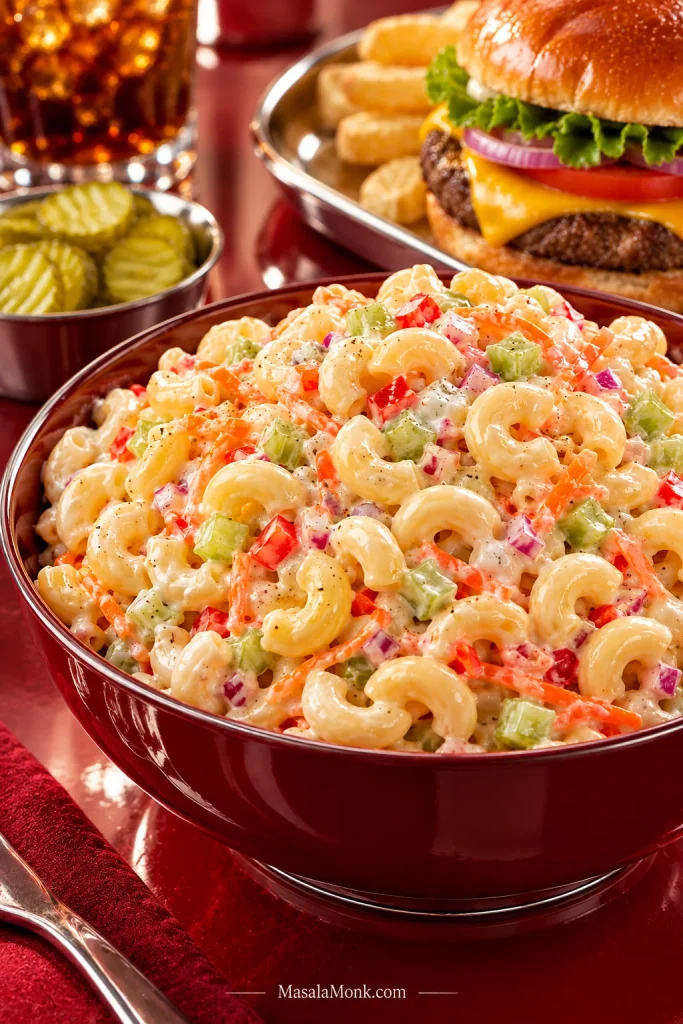
Burgundy bowl of creamy macaroni salad in front of a cheeseburger, sliced pickles, buns, and an iced drink.
Deli-style macaroni salad works especially well beside hot, salty, or charred food. Its cold creaminess softens the plate, while pickle and vinegar keep the contrast bright.

Macaroni Salad Troubleshooting

Start with the symptom before changing the dressing. Dry elbows, free liquid, dull seasoning, mushy pasta, and overpowering onion need different corrections.

Water pooling underneath is a moisture problem

If liquid moves separately at the bottom of the bowl, treat it as excess moisture rather than ordinary dressing absorption. Fold the salad thoroughly first; if a watery layer still remains, spoon off a little before you adjust the seasoning.
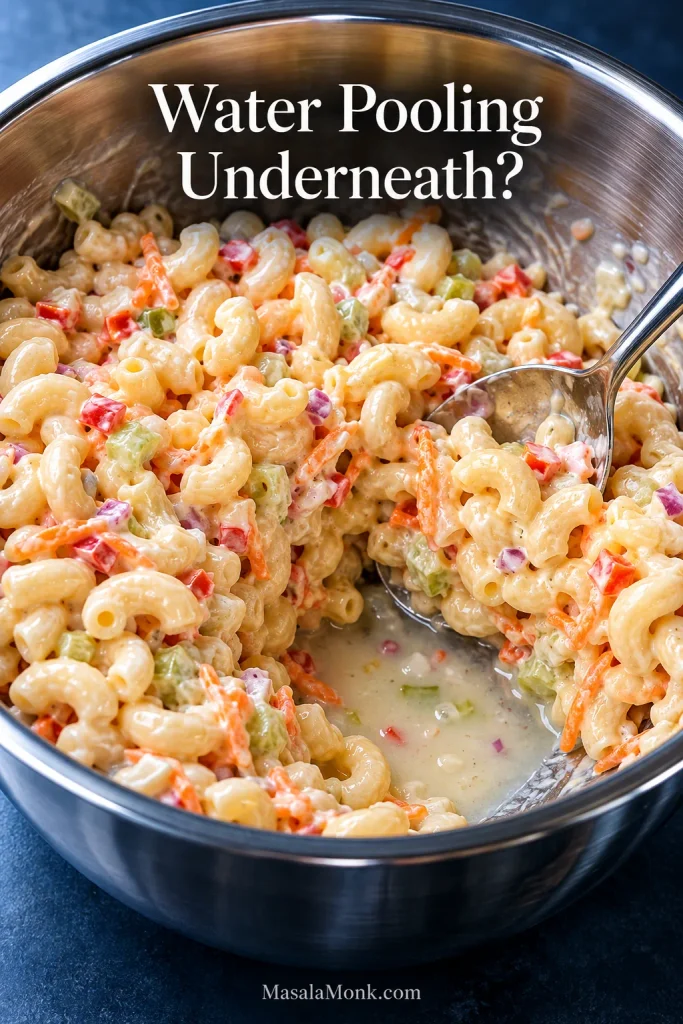
Macaroni salad in a stainless steel bowl pushed aside with a spoon to reveal a thin pool of pale watery liquid underneath.
This is the failure state: liquid is moving separately from the creamy coating.

Other common macaroni salad problems

ProblemLikely causeFix
Still dry after the reserved dressing is goneThe pasta has taken up more moisture than expected.Mix a spoonful of mayonnaise with a small amount of the same vinegar used in the dressing, then fold it in gradually.
Dry immediately after mixingThere isn’t enough dressing on the pasta.Use a little of the reserved dressing now rather than waiting until after chilling.
Creamy but dull after chillingThe seasoning isn’t coming through strongly enough.Start with a small pinch of salt, stir, and check again.
Too sharp or vinegaryThe acid is dominating the dressing.Fold in a little mayonnaise to soften it.
Too sweetThe sugar and relish are dominating.Start with ½ teaspoon of the same vinegar used in the dressing and a small pinch of salt; stir before adding more.
Mushy macaroniThe pasta cooked too far or stayed hot too long.Next time, stop once it is tender through the center but still holding its shape, then cool it promptly.
Onion takes overThe pieces are too large or the onion is particularly strong.Dice it more finely or mellow it briefly in cold water.

Need the base recipe? Back to the Recipe Card →

Make-Ahead Macaroni Salad

You can make this macaroni salad one day ahead. Make the salad, cover the reserved dressing separately, and refrigerate both. Give yourself five minutes before serving the next day for a stir and any final adjustment.
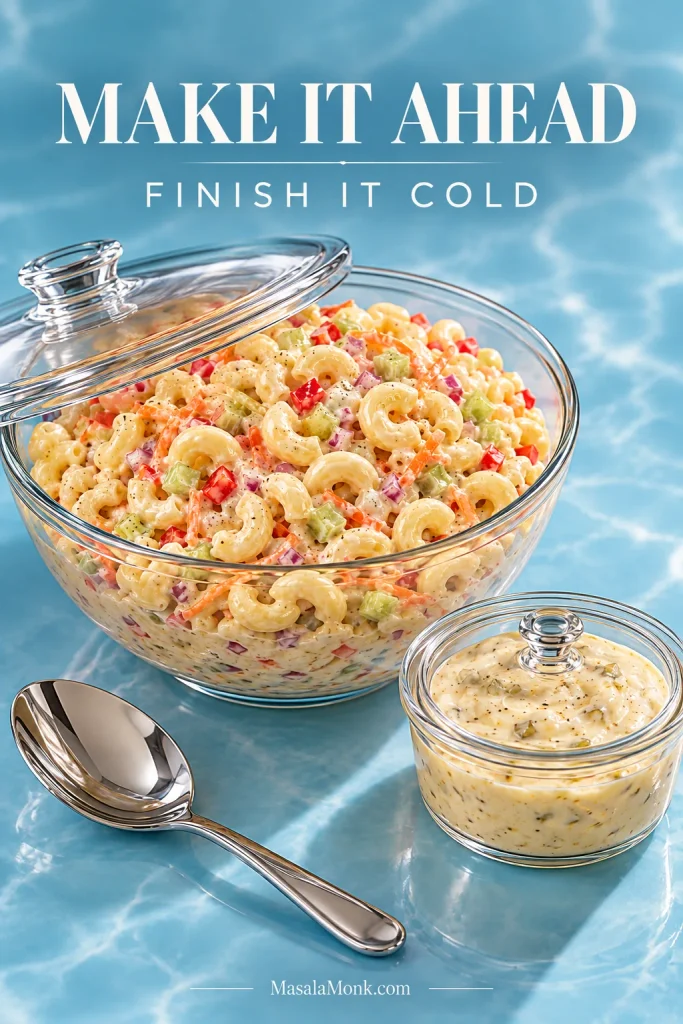
Partly covered glass bowl of macaroni salad beside a small covered container of reserved dressing and a polished serving spoon on a blue surface.
The advantage of make-ahead macaroni salad is delaying the final texture decision. Keep the reserve separate, chill the bowl fully, and let the cold pasta tell you whether anything needs changing.

If you’re planning several sides in advance, this classic potato salad can be made ahead too.

That’s the useful part of making macaroni salad ahead: the chopping, cooking, mixing, and washing up are already behind you while everyone else is setting the table.

How Much Macaroni Salad Do You Need for a Crowd?

Approx. side servingsStarting point
4½ batch
81 batch
162 batches
243 batches

Those are side portions, not a promise about how much every person will eat. A cookout with several salads and sides can stretch a batch further than a meal where macaroni salad is one of only two accompaniments.

Bring It to the Cookout

Macaroni salad is at home beside grilled meat, burgers, sandwiches, or anything smoky and charred. The cold, creamy salad gives the plate somewhere softer to land.

Before the bowl goes out, give it one last stir. The elbows should separate easily, with dressing clinging to them rather than water collecting underneath.

Keep it cold. The FDA’s guidance for eating outdoors recommends keeping cold perishable foods at 40°F (4°C) or below. Do not leave macaroni salad at room temperature for more than 2 hours, or more than 1 hour when temperatures are above 90°F (32°C).
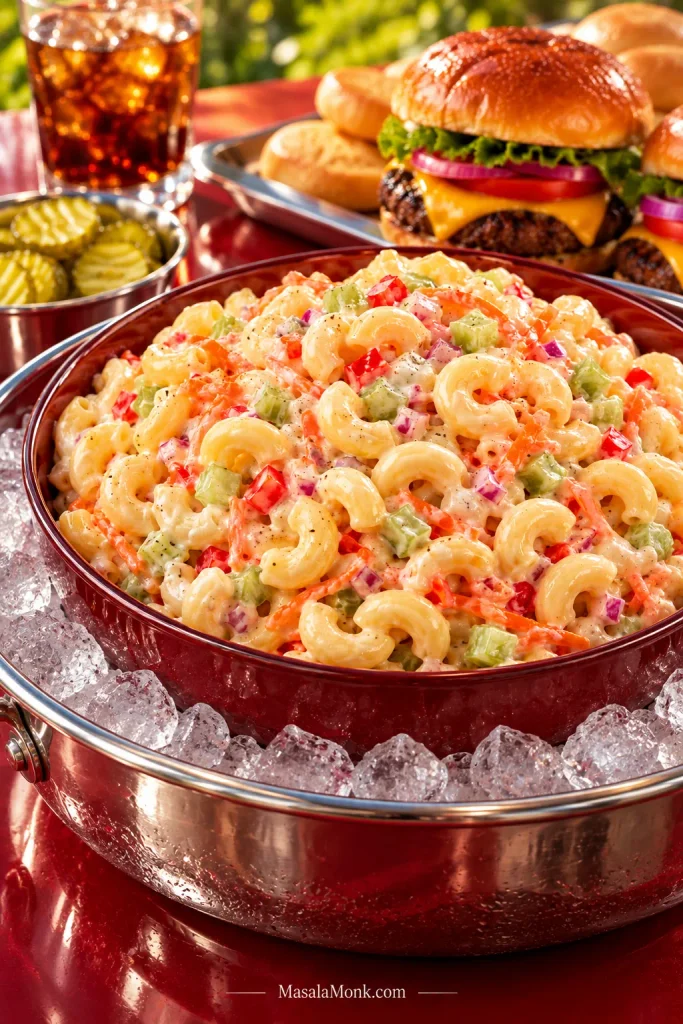
Burgundy bowl of creamy macaroni salad nested inside a larger metal bowl filled with ice, with burgers, pickles, buns, and an iced drink behind it.
At a cookout, keep the ice around the serving bowl rather than inside the food. Nesting the bowl securely over ice keeps meltwater out while the macaroni salad stays cold and easy to serve.

Storage

Macaroni salad keeps for about 3–4 days in the refrigerator. Store leftovers covered and chilled. For general leftover-safety guidance, see the USDA recommendations for refrigerated leftovers.

The salad is at its best earlier in that window, while the vegetables still have some snap and the pasta hasn’t absorbed too much of the dressing.

Freezing the finished salad isn’t worth it. The mayonnaise dressing can separate after thawing, while the pasta and vegetables lose the textures that make the salad good in the first place.
Posted on — Leave a comment

Broccoli Salad Recipe: Crunchy, Creamy & Easy

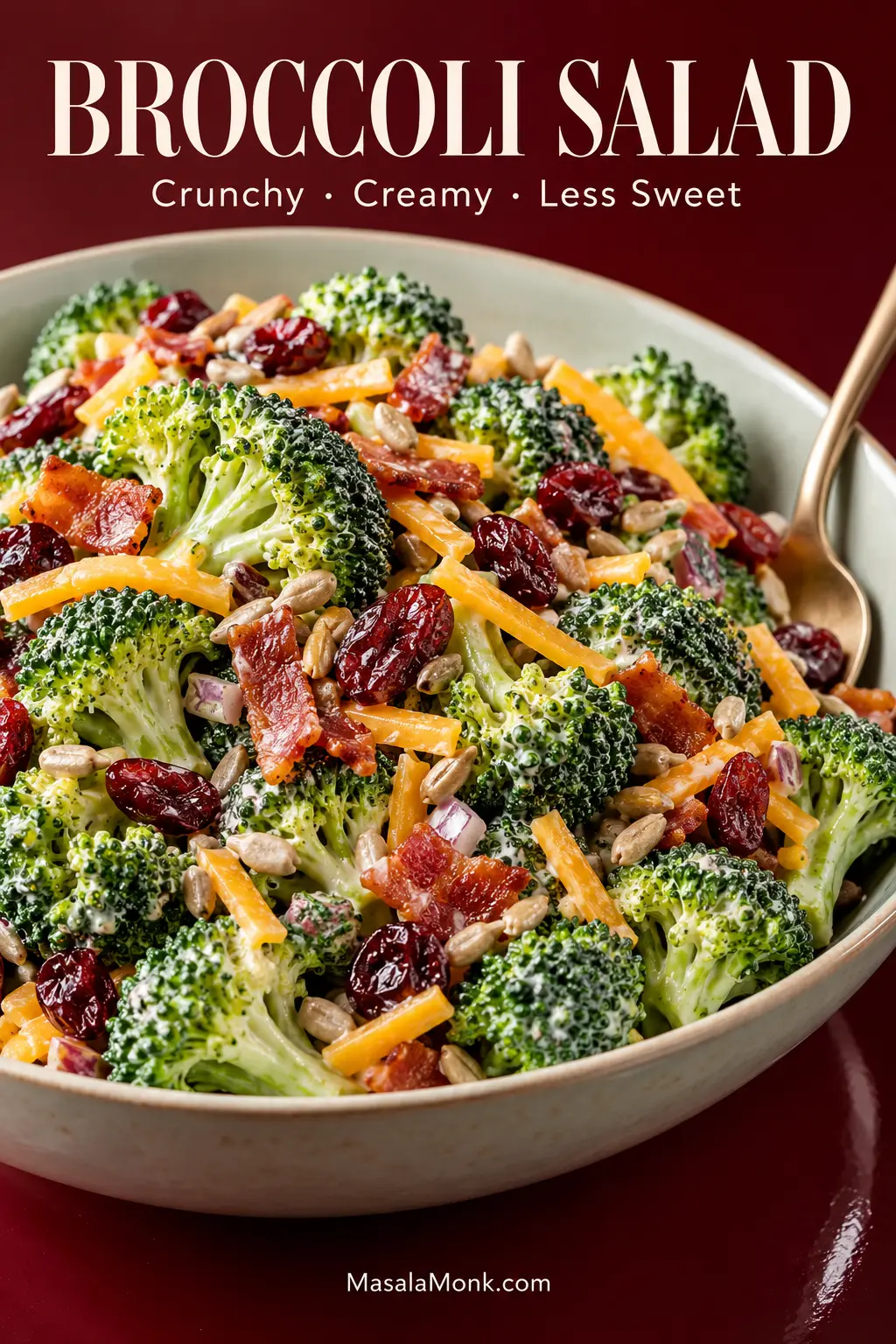
Creamy broccoli salad in a shallow bowl with green broccoli florets, crisp bacon, cheddar, dried cranberries, sunflower seeds and red onion on a deep burgundy background.

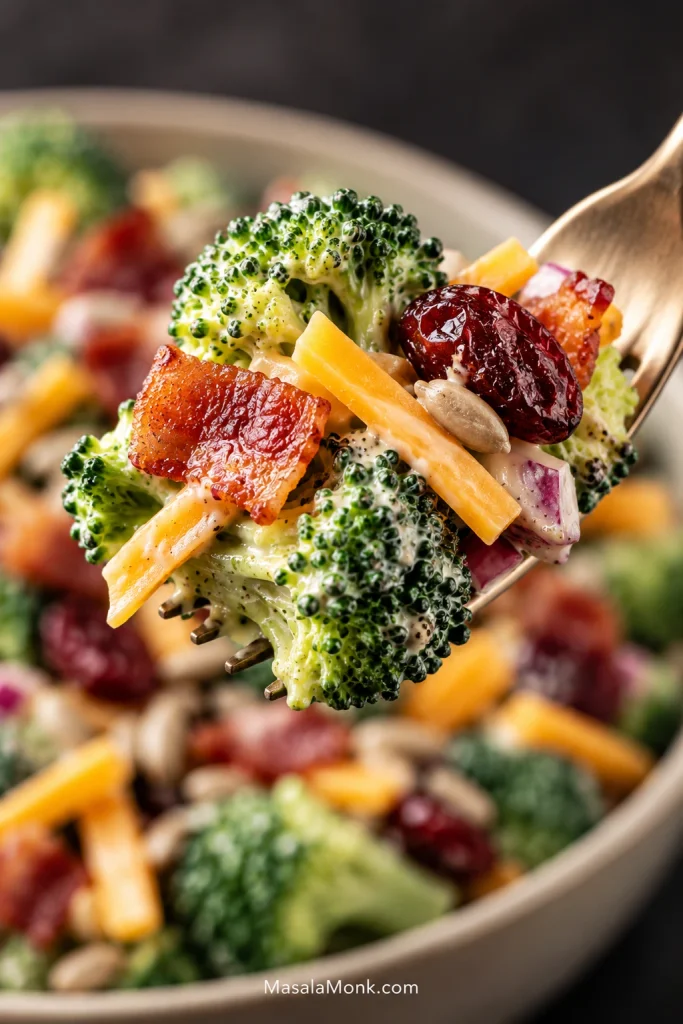
The best forkful of broccoli salad gives you cold broccoli with some snap, creamy dressing caught between the florets, smoky bacon, sharp cheddar, a little sweet-tart cranberry, and something salty and crisp at the end.

This broccoli salad recipe keeps that familiar cookout combination but pulls back the sweetness and lets the broccoli stay in charge. The dressing is creamy and tangy, with just enough honey to round out the cider vinegar rather than turn the salad sweet.

It’s especially good straight from the refrigerator beside something hot from the grill. Raw broccoli gives you the firmest bite, while a quick blanch makes it more tender. Both work; choose the texture you actually enjoy eating.

Dry the broccoli. Don’t drown it. Save some crunch for the finish.

What Makes This Broccoli Salad Work

The broccoli should still taste like broccoli. Bacon and cheddar bring plenty of richness, so the dressing needs enough vinegar and Dijon to keep the salad from feeling heavy. The cranberries give you occasional sweet-tart bites instead of making the whole salad sugary.

Bacon does two different jobs depending on when it goes in. Mixed through the salad, it gives the dressing and broccoli a smoky, savory edge. The portion added at the end stays crisp enough to notice. The sunflower seeds bring another kind of contrast without competing with the broccoli.

A good forkful shouldn’t simply taste creamy. You might get cool broccoli first, then a bit of cheddar or bacon, a cranberry, and finally the salty crackle of a sunflower seed. Enough dressing makes those ingredients belong together; too much makes every bite taste and feel the same.

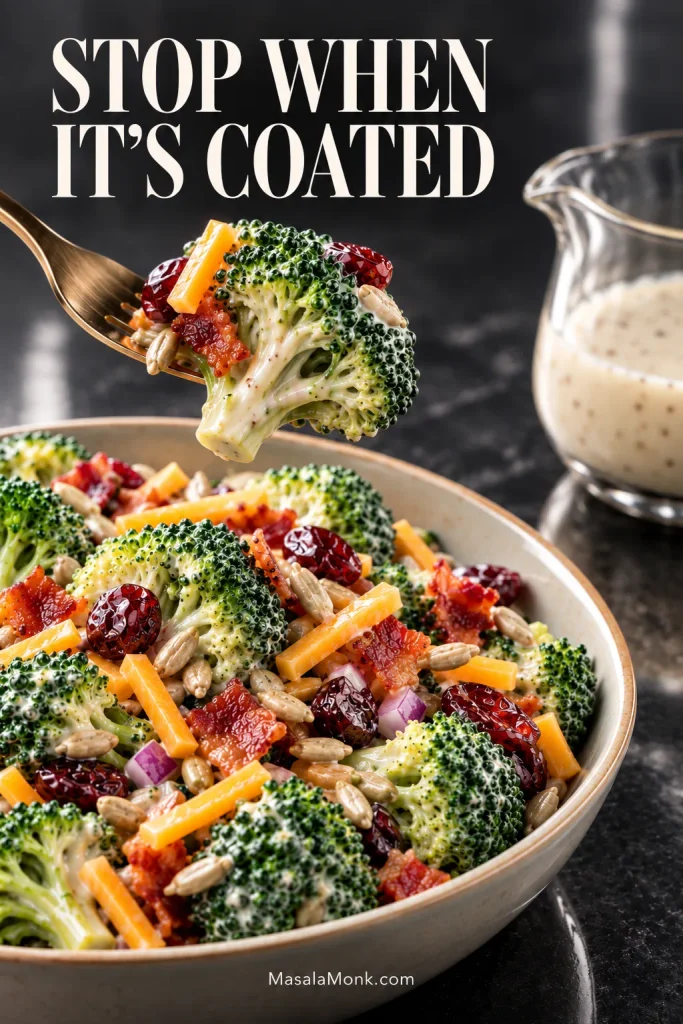
Close-up forkful of broccoli salad with a creamy broccoli floret, bacon, cheddar, dried cranberry, sunflower seed and red onion above the serving bowl.
The best forkful combines crown and stem. Its branching crown catches dressing and smaller toppings, while a short piece of stem adds a cleaner snap; together, they give the bite more contrast than either oversized florets or finely chopped broccoli.

Ingredients

The recipe card below has the exact amounts. Before you get there, these are the ingredient choices that make the biggest difference to the finished salad.

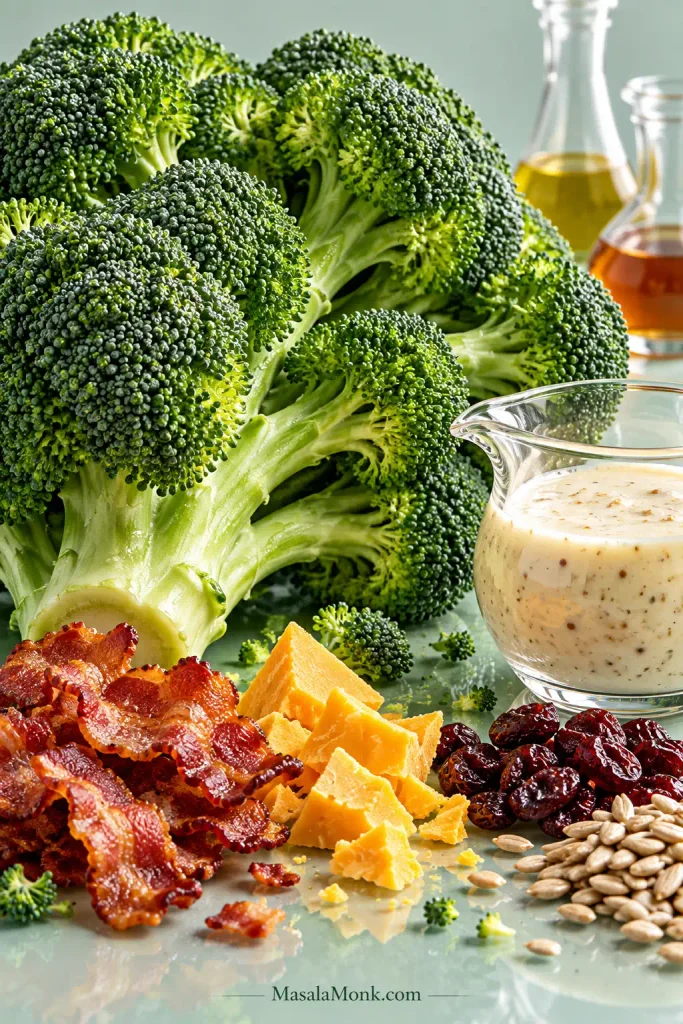
Fresh broccoli arranged with crisp bacon, sharp cheddar, dried cranberries, sunflower seeds and creamy broccoli salad dressing on a pale green surface.
The best mix-ins are sized to travel with the broccoli rather than fall away from it. Finely chopped onion spreads its sharpness through the bowl, while small pieces of cheddar, cranberries and sunflower seeds stay noticeable without competing with the florets.
  • Broccoli: Choose firm broccoli with tightly packed florets. You’ll need about 450 g / 1 lb usable florets. Smaller pieces are easier to eat raw and give the dressing more surface to cling to.
  • Bacon: Cook it until genuinely crisp. If you’re making only a few strips, MasalaMonk’s air fryer bacon guide is an easy way to get them crisp before cooling and chopping. Some goes into the salad for smoky flavor; some stays out until serving so the crispness is still noticeable.
  • Sharp cheddar: Use a cheese with enough flavor to stand up to the dressing. Small cubes give distinct bites; coarse shreds distribute the cheese more evenly.
  • Dried cranberries: They provide the sweet-tart note, but the amount is restrained because this version is meant to stay broccoli-forward rather than sugary.
  • Unsalted sunflower seeds: Unsalted seeds let you control the final seasoning. Toast them if you want a nuttier flavor.
  • Mayonnaise + Greek yogurt: Mayonnaise gives the dressing body, while plain unsweetened Greek yogurt keeps it lighter and tangier. Use a mayonnaise you already like; MasalaMonk’s homemade mayonnaise guide works if you prefer making your own.
  • Apple cider vinegar + honey + Dijon: These control the balance: enough acidity to keep the dressing lively, restrained sweetness to round it out, and Dijon for extra bite.

Raw or Blanched Broccoli?

Raw broccoli gives this salad its firmest, freshest texture, so that’s the default here. If raw broccoli is the part that usually puts you off, blanch it—but barely.

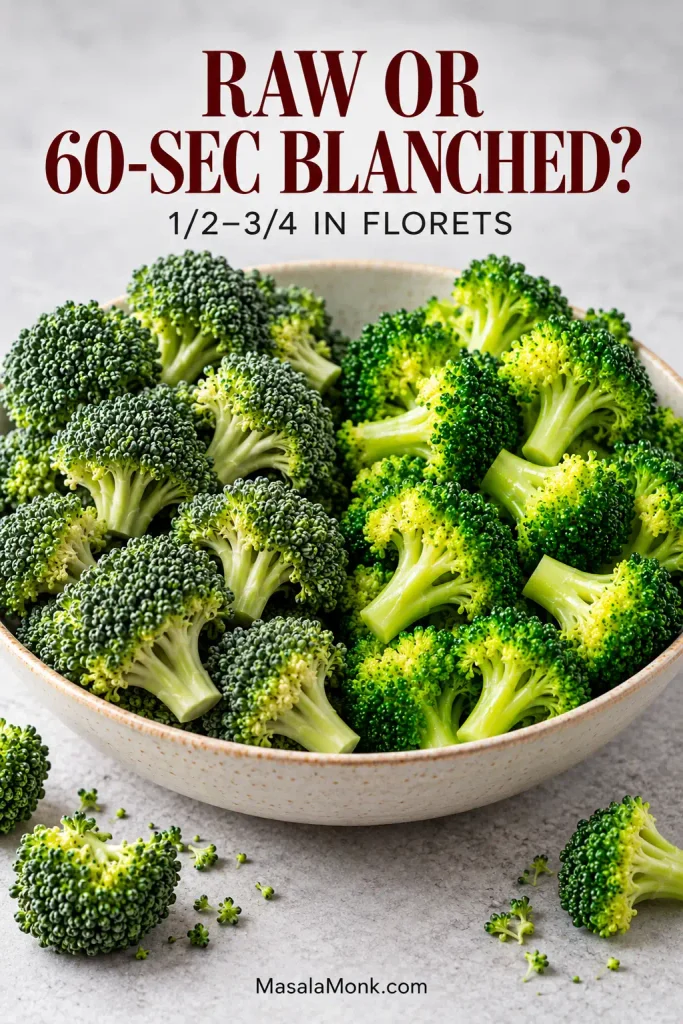
Raw dark-green broccoli florets beside brighter briefly blanched florets, with pieces shown at roughly half- to three-quarter-inch size.
Raw vs blanched broccoli is really a choice about resistance. Raw florets stay firmer from crown to stem, whereas a brief blanch softens the exterior first while the center keeps some snap; therefore, even a short cook changes the way the salad chews without making the broccoli soft.

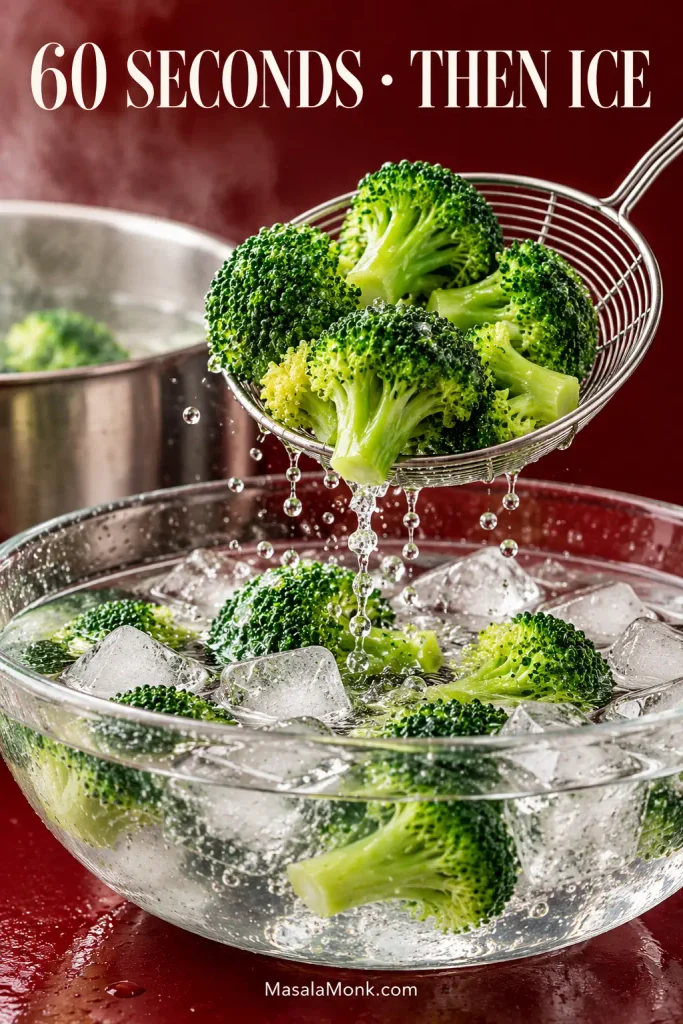
About 60 seconds in boiling water takes away some of the raw edge without cooking the broccoli through. Transfer the florets immediately to ice water; once they’re cold, drain and dry them very well.

Bright green broccoli florets being transferred with a wire skimmer into a clear bowl filled with ice water.
The ice bath does more than protect broccoli’s bright color. More importantly, it removes residual heat that would otherwise keep softening the florets after they leave the pot, giving you much tighter control over the final texture.
MethodWhat you’ll notice
RawFirmest texture and freshest broccoli flavor
60-second blanchMore tender and less raw-tasting, while still holding its shape

Pick up a piece after blanching. It should bend a little more easily than raw broccoli but still resist your bite. If it’s soft all the way through, it cooked too long.

Fresh broccoli is strongly preferred here. Frozen broccoli tends to be softer and wetter after thawing, so it won’t give this salad the same crisp structure.

Broccoli Salad Recipe

Cold broccoli coated—not buried—in a tangy creamy dressing, with crisp bacon, sharp cheddar, sweet-tart cranberries, red onion and sunflower seeds in every scoop.

Yield
8 side servings

Prep
20–25 minutes

Cook
About 10 minutes

Chill
1 hour minimum
2–4 hours ideal

Total
About 1½ hours

Equipment

  • Large mixing bowl
  • Small bowl and whisk
  • Chef’s knife and cutting board
  • Skillet for the bacon
  • Salad spinner or clean kitchen towels

Ingredients

Salad

  • 450 g / 1 lb broccoli florets, about 5–6 cups chopped
  • 70 g / ½ cup finely chopped red onion
  • 100 g / 3½ oz raw bacon, cooked until crisp; reserve about one-quarter of the cooked bacon for finishing
  • 85 g / 3 oz sharp cheddar cheese, cut into small cubes or coarsely shredded
  • 50 g / ⅓ cup dried cranberries
  • 35 g / ¼ cup unsalted hulled sunflower seeds, toasted if you like; reserve about 1 tbsp for finishing

Dressing

  • 120 g / ½ cup mayonnaise
  • 80 g / ⅓ cup plain unsweetened Greek yogurt
  • 30 ml / 2 tbsp apple cider vinegar
  • 20 g / 1 tbsp honey
  • 10 g / 2 tsp Dijon mustard
  • ½ tsp fine salt, then more if needed after chilling
  • ¼ tsp freshly ground black pepper

Method

Prep the Broccoli & Bacon

  1. Prepare the broccoli. Wash the broccoli, then cut the florets into pieces about ½ to ¾ inch across. Peel any tough outer stem and dice the tender center into smaller pieces. For the blanched version, cook the florets in boiling salted water for about 60 seconds, transfer immediately to ice water, then drain thoroughly once cold.
  2. Dry it well. After washing—or after draining the blanched broccoli—use a salad spinner or clean towels to remove the surface water.
  3. Soften the onion, if needed. If your red onion is especially sharp, soak the chopped onion in cold water for 10 minutes. Drain and dry it well.
  4. Cook the bacon. Cook over medium heat until browned and crisp, about 8–12 minutes depending on thickness. Drain, cool and chop. Reserve about one-quarter for serving.
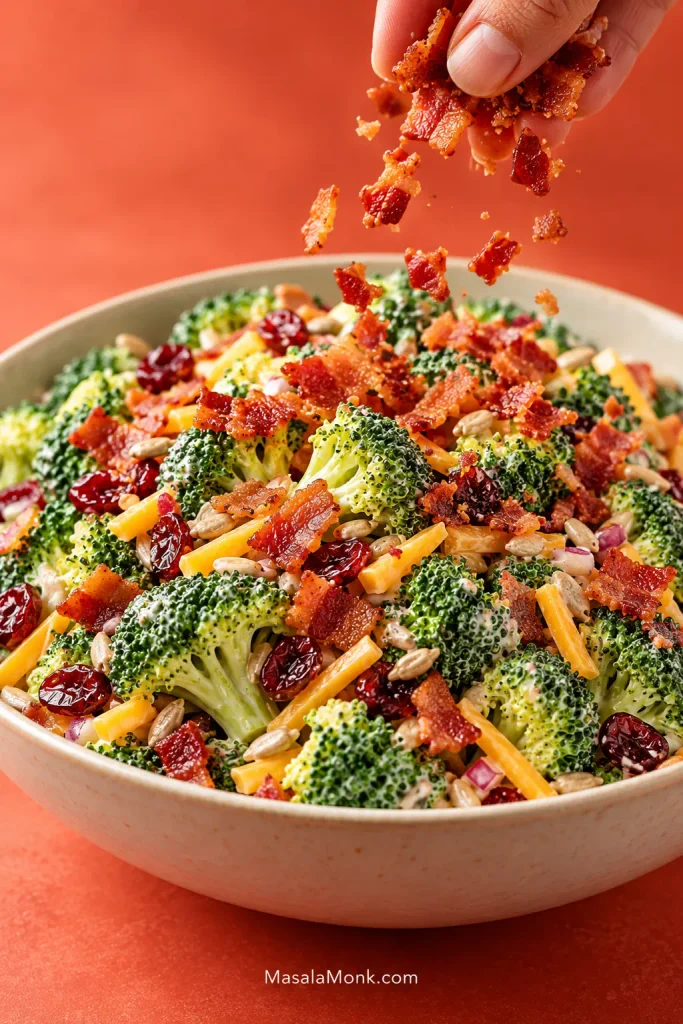
Hand sprinkling crisp bacon pieces over broccoli salad with cheddar, dried cranberries, sunflower seeds and creamy dressing.
Let the bacon drain and cool before it meets the salad. That keeps residual heat and surface fat out of the dressing, while the portion held back for serving stays noticeably crisper.

Mix, Dress & Chill

  1. Make the dressing. Whisk the mayonnaise, Greek yogurt, apple cider vinegar, honey, Dijon mustard, salt and black pepper until smooth. Taste it. It should be creamy and distinctly tangy, with enough sweetness to soften the vinegar without hiding it.
  2. Build the salad. Put the broccoli, onion, most of the bacon, cheddar, cranberries and most of the sunflower seeds in a large bowl.
  3. Dress gradually. Start with about three-quarters of the dressing and toss thoroughly. Add more only until the florets are evenly coated. If you don’t need all of it, cover and refrigerate the extra separately.
  4. Chill. Cover and refrigerate for at least 1 hour. For a good balance of flavor and texture, aim for 2–4 hours.
  5. Finish and taste it cold. Toss once more, add the reserved bacon and sunflower seeds, then taste. Chilling can mute seasoning, so add another pinch of salt or 1 teaspoon apple cider vinegar if needed.

Check one floret before you stop. The dressing should cling instead of running straight back into the bowl, and the broccoli should still give you a clean bite.

Fork lifting a lightly coated broccoli floret above the salad with extra creamy dressing visible in a small glass pitcher nearby.
Before adding more broccoli salad dressing, toss from the bottom upward and inspect a floret from the middle of the bowl. Dressing settles unevenly at first, so a thorough toss can show that the broccoli is already coated well enough even when some dressing remains.

Storage

Cover and refrigerate leftovers for up to 3–4 days. The salad is at its best earlier, before the broccoli and toppings soften further.

Why Broccoli Salad Gets Watery

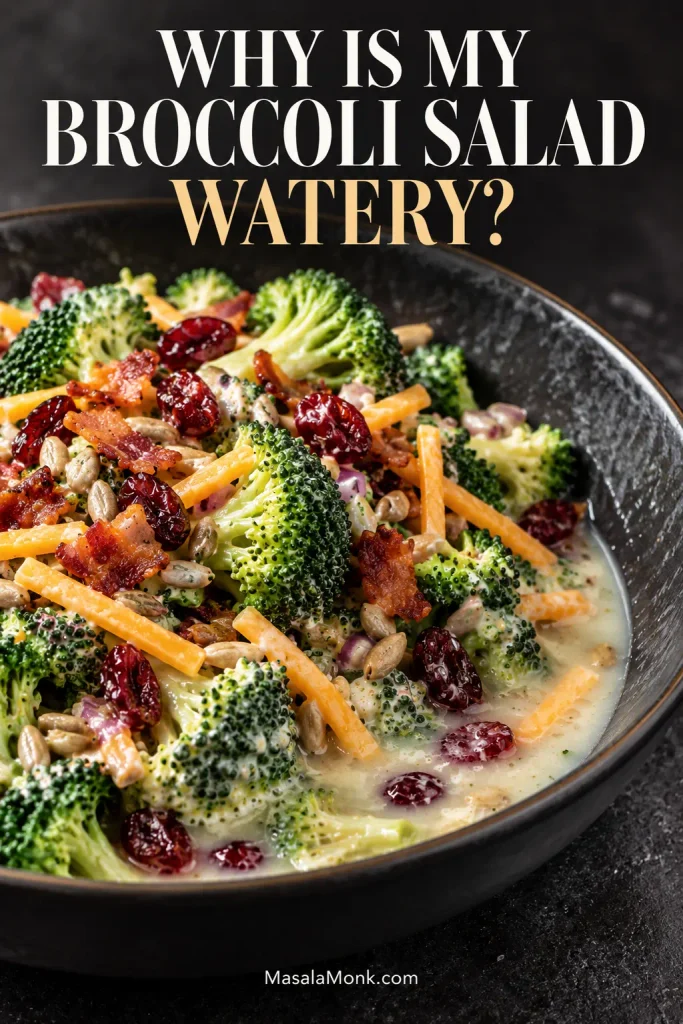
Broccoli salad usually gets watery because moisture is trapped in the florets or because more dressing was added than the broccoli can hold. A little moisture as the salad rests is normal; a puddle underneath it isn’t.

Bowl of broccoli salad with thin creamy liquid pooling around broccoli, bacon, cheddar, dried cranberries and sunflower seeds.
After tossing, tilt the bowl slightly and watch the low edge. Proper dressing should stay mostly on the broccoli; if thin liquid quickly runs into a puddle, stop adding dressing and check the florets for trapped water.

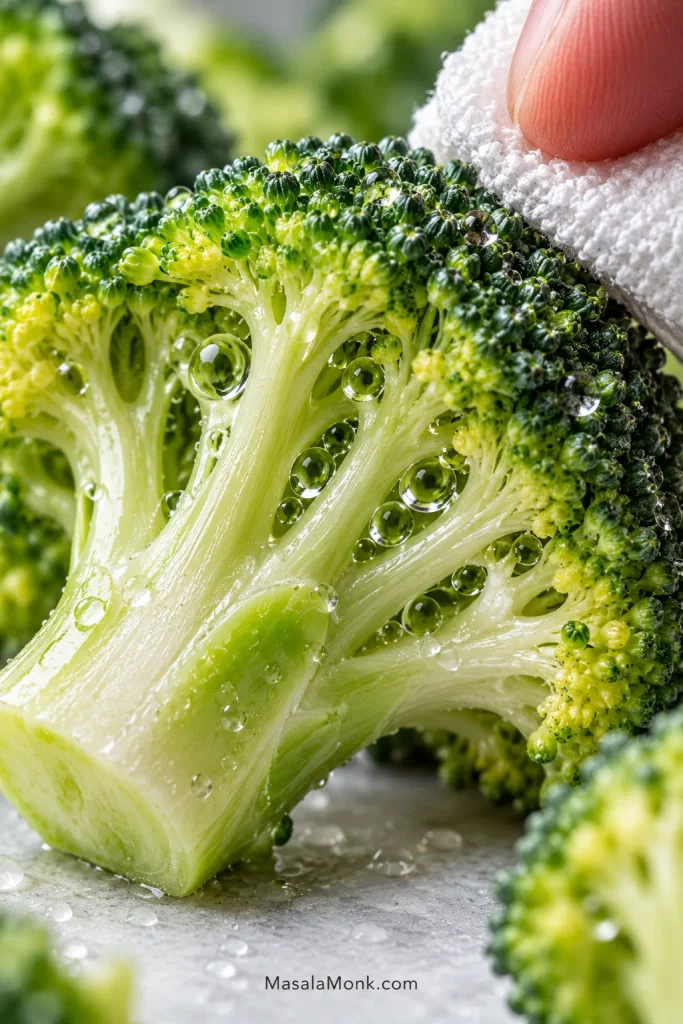
If there’s a puddle, check the broccoli first. Water caught between the tiny branches of the florets thins the creamy coating as the salad sits and eventually works its way to the bottom of the bowl.

Extreme close-up of water droplets caught between the branching stems and buds of a broccoli floret as a towel touches the surface.
After washing or blanching, turn larger florets crown-side down on a clean towel for a moment. Water hides where the smaller branches meet, so changing the angle helps moisture escape from places that can remain wet even when the outside already feels dry.

Overdressing can create a similar result. Floret size and surface area vary from batch to batch, so don’t treat an empty dressing bowl as the goal. Stop when the broccoli is evenly coated.

Time changes things too. Broccoli becomes more yielding as it sits, while bacon and sunflower seeds soften once coated. That’s useful up to a point: the raw edge mellows and the ingredients start tasting like one salad. Adding the reserved toppings at the end restores some contrast where you’ll actually notice it.

How to Balance the Dressing

Taste the dressing before it reaches the broccoli. It should seem brighter and slightly sharper on its own than you want the finished salad to taste; the broccoli, cheddar, bacon and cranberries soften that edge once everything is together.

If it tastes too sweet, whisk in apple cider vinegar 1 teaspoon at a time, tasting between additions. For a dressing that feels rich but dull rather than sweet, try another teaspoon of vinegar or a little more Dijon.

Made it too sharp? Whisk in 1 tablespoon mayonnaise and taste again. Mayo softens the acidity more neutrally than extra Greek yogurt. If the dressing still needs a touch more sweetness, add honey in ½-teaspoon increments.

The broccoli decides how much dressing it needs. Toss thoroughly and stop when the florets are coated rather than automatically using every spoonful.

For a lighter version, replace up to half of the mayonnaise with additional plain unsweetened Greek yogurt. Because that makes the base tangier, start with 1 tablespoon of the vinegar. Then add more 1 teaspoon at a time until it tastes bright but still creamy.

Make-Ahead Timing

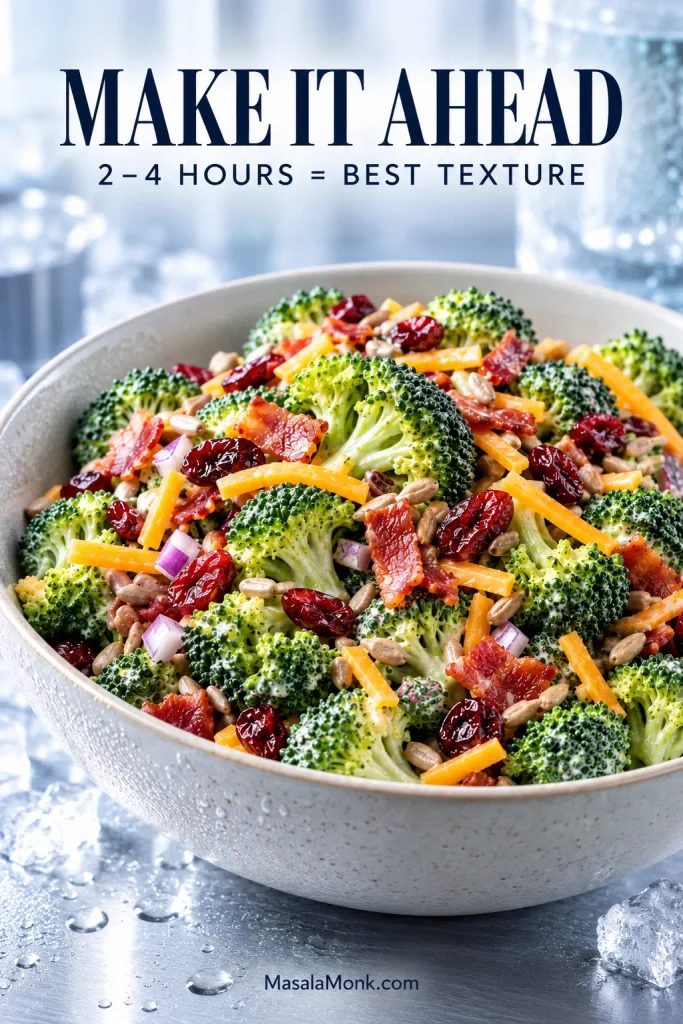
Yes, you can make broccoli salad the night before, although this version has its best texture after about 2–4 hours in the refrigerator. Overnight, the salad remains good but becomes softer as the broccoli and toppings spend more time in the dressing.

Chilled broccoli salad with bacon, cheddar, dried cranberries and sunflower seeds on a cool metal surface with condensation nearby.
For make-ahead broccoli salad, separate the elements that benefit from resting from those that do not. Keep the reserved bacon refrigerated separately and the extra sunflower seeds dry until serving; that way, the dressed salad develops flavor without giving up all of its finishing crunch.

During that rest, the onion loses some of its raw edge and the dressing coats the broccoli more evenly without giving the florets enough time to soften much.

TimingWhat changes
1 hourGood minimum chill time; the ingredients are beginning to come together
2–4 hoursMore integrated flavor while the broccoli remains firm
OvernightMore blended flavor, with softer broccoli and toppings

At a cookout, that timing is convenient too: make the salad before you deal with the grill or the rest of dinner.

Overnight is a compromise, not a disaster. Keep it properly refrigerated, give it a good toss before serving, and expect a slightly softer salad.

Substitutions & Easy Variations

  • Cranberries → raisins: choose raisins if you want a sweeter, softer dried-fruit note; cranberries keep more tartness.
  • Sunflower seeds → pepitas or chopped nuts: pepitas stay closer to the small, scattered crunch of sunflower seeds; chopped pecans or almonds make the nutty flavor and texture more noticeable.
  • Honey → maple syrup: the sweetness remains similar, with a slightly different flavor.
  • Red onion → shallot: a good choice when you want the onion presence to be gentler.
  • Cheddar → another sharp or semi-sharp cheese: choose one with enough character to stand up to the dressing.
  • Bacon → omit: the salad still works, although it will be less smoky and savory.

Crisp apple or halved seedless grapes can give the salad a fresher, juicier kind of sweetness. Dry the fruit well and don’t add so much that its juice begins loosening the dressing.

Want it more savory? Reduce the honey and leave out the cranberries. Bacon, cheddar, Dijon, black pepper and cider vinegar will come further forward.

You can also replace part of the broccoli with small cauliflower florets. Keep the pieces similar in size so the two vegetables are easy to pick up in the same forkful.

Tips & Troubleshooting

If something seems off, start with what you can actually see, taste or feel.

What you noticeWhat to do
There’s a puddle at the bottom.Toss well and don’t add more dressing. Prevent it by drying the vegetables thoroughly and dressing gradually.
The broccoli is tiring to chew.Give it longer to rest. For a softer bite, cut smaller florets or use the brief blanch.
The broccoli went soft.It won’t become crisp again. Add fresh bacon or sunflower seeds for contrast; blanch for less time next time.
The onion takes over.Add more broccoli if available, or soften the effect with a spoonful of mayonnaise. Next time, use less onion or soak it first.
The bacon or seeds softened.Add a fresh handful at serving. Keeping some out of the dressed salad avoids the problem.
It tastes flat after chilling.Taste it straight from the refrigerator, then add a small pinch of salt or 1 teaspoon vinegar. Toss and taste again before adding more.

Make one adjustment at a time. It’s much easier to taste what one teaspoon of vinegar changed than to rescue a bowl after changing the salt, sweetness and acidity all at once.

How to Store Broccoli Salad

For the best texture, eat the salad the day you make it or the next day. Keep leftovers covered in the refrigerator at 40°F / about 4°C or below and use them within 3–4 days.

The USDA advises refrigerating perishable leftovers promptly, keeping them at 40°F or below, and generally using refrigerated leftovers within 3–4 days. Its leftover food-safety guidance also recommends discarding food left unrefrigerated for more than 2 hours, or more than 1 hour when the temperature is above 90°F / 32°C.

At a cookout or buffet, keep the bowl cold over ice if it needs to stay out longer rather than stretching those time limits.

Freezing isn’t recommended. The creamy dressing can separate after thawing, and the broccoli tends to soften.

Give refrigerated leftovers a good toss before serving. If you kept extra dressing separately, add only what the salad needs.

What to Serve with Broccoli Salad

This salad makes the most sense beside something hot, smoky or rich—the cold, tangy bowl is a welcome contrast. Serve it with burgers, grilled chicken, pulled pork, barbecue or sandwiches. MasalaMonk’s air fryer burgers make an easy pairing.

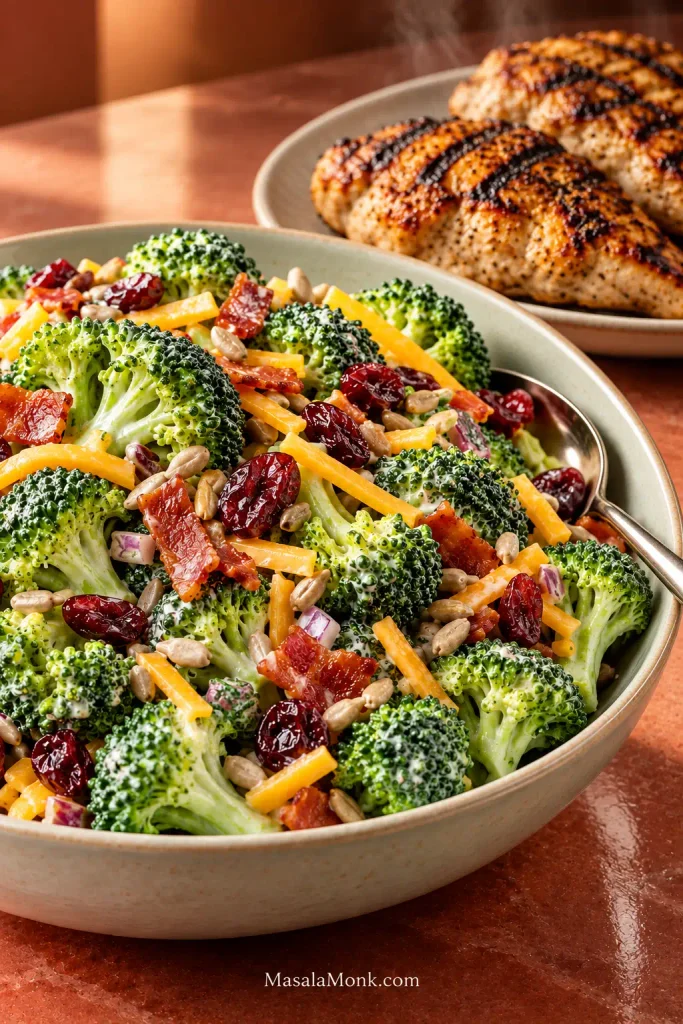
Creamy broccoli salad in the foreground with browned grilled chicken behind it on a warm terracotta table.
Broccoli salad with grilled chicken works because temperature becomes part of the contrast: warm browned chicken beside cold, tangy, crisp broccoli. Serve the salad straight from the refrigerator and plate it last so that contrast survives all the way to the first bite.

For a bigger cookout spread, add creamy coleslaw when you want a softer shredded side alongside the broccoli. For another crisp, creamy side with bacon, try a wedge salad.

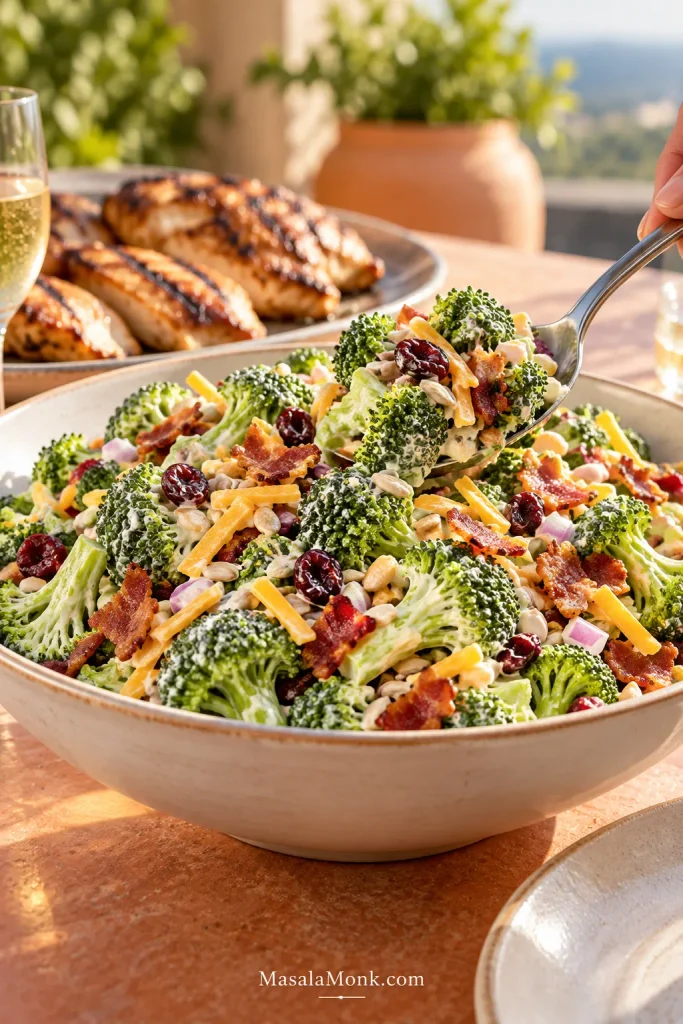
Large bowl of broccoli salad being served with a spoon at a sunlit outdoor table, with grilled chicken and a drinking glass softly blurred in the background.
Give the bowl one quick toss before it reaches the table so the cheddar, cranberries, bacon and sunflower seeds redistribute instead of collecting at the bottom. Finish with the reserved crunchy toppings, then keep the salad cold until serving.

Make sure every scoop gets some of the crisp bacon and sunflower-seed finish. That’s the bite worth aiming for.