Indian cuisine is globally celebrated for its rich flavors, vibrant colors, and aromatic spices. But beyond its taste appeal lies a deeper philosophy one that intertwines food with health, balance, and overall well-being. Indian food isn’t merely about indulgence; it’s a nutritional system rooted in thousands of years of wisdom, designed to nourish the body, mind, and soul.
In this post, we’ll explore how Indian cuisine offers a holistic approach to health, examining its alignment with Ayurvedic principles, the importance of whole foods, the medicinal role of spices, and the powerful impact of mindful eating.
Ayurveda: The Ancient Blueprint of Indian Food Philosophy
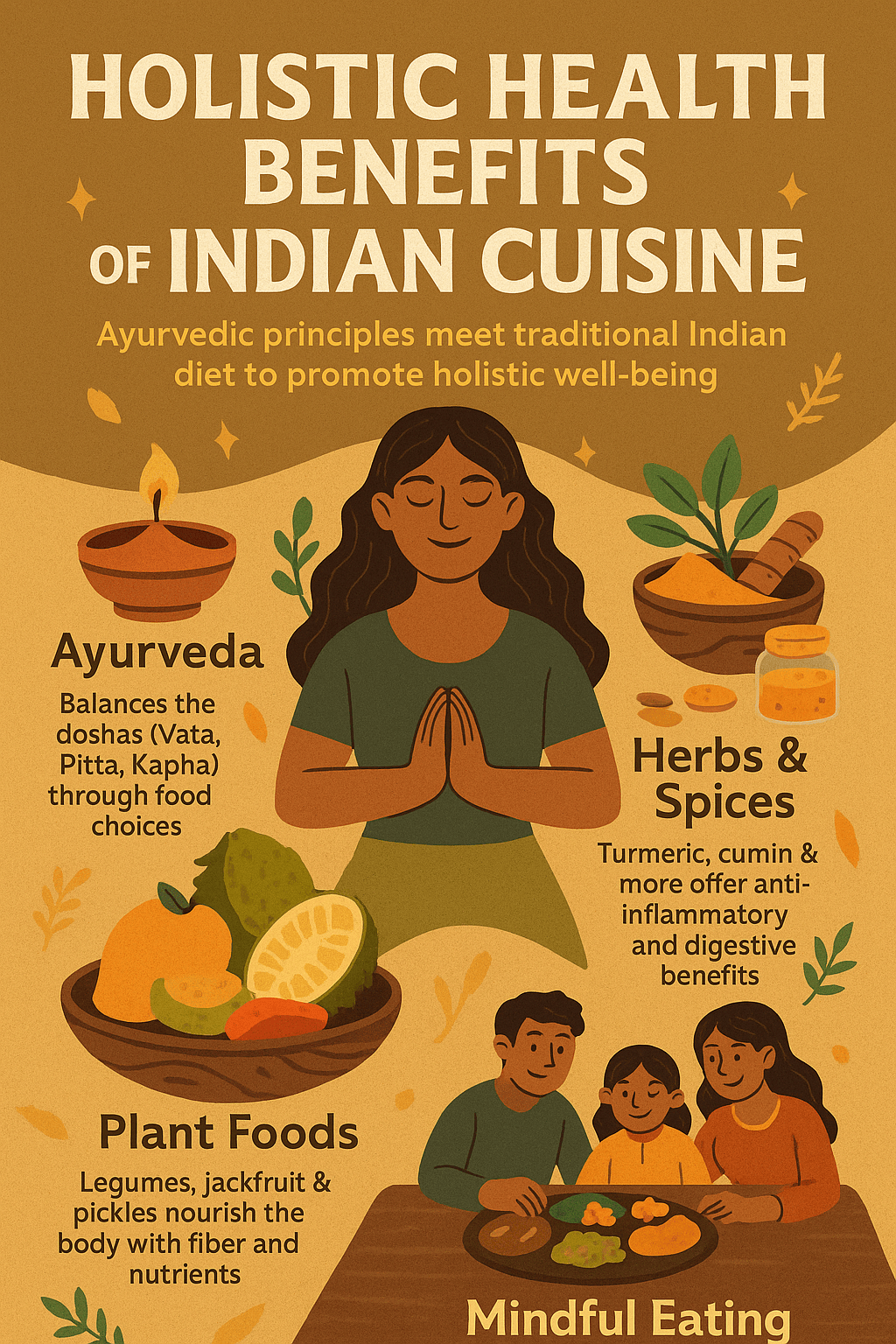
At the heart of traditional Indian cooking lies Ayurveda, a 5,000-year-old system of natural healing. Ayurveda sees food as medicine and places a strong emphasis on eating according to one’s constitution or dosha Vata (air and ether), Pitta (fire and water), and Kapha (earth and water).
Each dosha is linked to different physical and emotional traits, and Ayurvedic dietary guidelines aim to balance these energies through specific food choices, preparation methods, and mealtime habits. For example:
Vata types are advised to eat warm, moist, grounding foods like soups and stews with warming spices (ginger, cinnamon).
Pitta individuals benefit from cooling, hydrating meals such as fresh vegetables, dairy, and milder spices (coriander, fennel).
Kapha doshas thrive on light, spicy, and astringent foods to stimulate digestion (mustard, black pepper, turmeric).
By tuning into the body’s natural rhythms and seasonal changes, Indian cooking especially when Ayurvedic principles are followed promotes internal harmony, boosts immunity, and prevents chronic illness.
Whole Foods and Traditional Cooking: A Nutritional Powerhouse
A cornerstone of Indian cuisine is its reliance on minimally processed, nutrient-dense whole foods. The traditional Indian thali (platter) is a perfect representation of a balanced meal, typically including:
Whole grains like brown rice, millets (ragi, bajra), and wheat.
Legumes and pulses, such as lentils (dal), chickpeas, kidney beans, and moong.
Seasonal vegetables, often stir-fried, sautéed, or cooked into curries.
Dairy products like yogurt and ghee, valued for their probiotics and healthy fats.
Pickles and chutneys, providing both flavor and digestive support.
This food philosophy ensures a rich supply of fiber, complex carbohydrates, plant protein, vitamins, and minerals. Unlike many modern diets, Indian meals avoid excessive reliance on refined ingredients and emphasize home cooked freshness, which is key to digestive and metabolic health.
Spices: Flavorful Agents of Healing
Spices are the soul of Indian cooking and they do much more than enhance taste. Many of them have been scientifically validated for their anti-inflammatory, antimicrobial, and antioxidant properties.
Here are a few that play a central role:
Turmeric: Contains curcumin, known for reducing inflammation, improving brain function, and supporting heart health.
Ginger: A natural remedy for nausea, indigestion, and sore throat. It also boosts circulation.
Cumin: Enhances digestion and helps regulate blood sugar.
Fenugreek: Balances blood sugar, improves cholesterol, and promotes lactation in nursing mothers.
Black pepper: Increases nutrient absorption and has antimicrobial properties.
Coriander: Supports detoxification and cools the digestive tract.
These spices are often used in synergistic combinations (like turmeric with black pepper to increase curcumin absorption), showcasing the depth of functional nutrition within Indian culinary tradition.
Probiotic and Fermented Foods: Gut Health Made Delicious
A healthy gut is fundamental to immunity, energy, and mental well-being. Indian food naturally includes a variety of probiotic-rich, fermented foods that support a balanced gut microbiome.
Yogurt (Dahi) is a daily staple, served plain or in dishes like raita, kadhi, and lassi.
Lassi, a fermented yogurt-based drink, is cooling, hydrating, and great for digestion.
Idli, dosa, and dhokla are made from fermented batters of rice and lentils, which improve bioavailability of nutrients and are easy on the stomach.
Pickles (achar), often fermented with mustard oil and spices, contribute beneficial bacteria and digestive enzymes.
These foods aid in nutrient assimilation, maintain healthy bowel movements, and fortify the body against pathogens all without needing artificial supplements.
Plant-Based Proteins and Balanced Meals
India is home to the world’s largest vegetarian population, and over millennia, Indian cuisine has developed innovative plant-based sources of protein that meet nutritional needs without meat.
Legumes like dals (split lentils), rajma (kidney beans), chana (chickpeas), and urad dal are staples.
Soy products, like tofu and fermented soybean nuggets (especially in the northeast), are gaining prominence.
Nuts and seeds, such as almonds, sesame, and flaxseed, are commonly used in sweets and chutneys.
When paired with grains, these ingredients form complete proteins, ensuring adequate intake of all essential amino acids a crucial aspect for vegetarians and vegans
Kitchen Remedies: The Healing Power of Everyday Foods
Indian kitchens double as natural pharmacies, drawing from centuries of home remedies that support immunity, digestion, and general well-being:
Ginger and tulsi tea for sore throats and colds.
Turmeric milk (haldi doodh) for inflammation, immunity, and sleep.
Ajwain (carom seeds) for gas, bloating, and colic.
Fennel seeds after meals to aid digestion and freshen breath.
Honey with black pepper for cough relief.
These remedies are safe, time-tested, and underscore the preventive healthcare mindset embedded in Indian food culture.
The Tradition of Mindful and Communal Eating
Indian meals are more than sustenance they are rituals of connection and mindfulness. Traditionally, food is prepared with devotion (often offered to deities) and eaten:
With the hands, which is believed to engage the senses and stimulate digestion.
Seated cross-legged, a posture that aids gut function.
In the company of family, encouraging slower eating and gratitude.
This mindful eating culture contributes not only to physical health but also to mental and emotional nourishment, fostering deeper relationships and better digestion.
Indian cuisine is far more than a delicious mosaic of spices and colors it is a living tradition of holistic health. By integrating principles of Ayurveda, whole food nutrition, gut-friendly fermentation, and mindful eating, it offers a sustainable, preventative, and deeply satisfying approach to wellness.
Whether you’re enjoying a humble bowl of khichdi or a festive thali, you’re partaking in a culinary tradition that has always viewed food as medicine, and mealtime as sacred.
The ancient Indian science of Ayurveda, often revered as the oldest system of medicine, provides a unique framework to understand the myriad ways in which individuals interact with their environment and their health. Central to this understanding are the three Doshas—Vatta, Kapha, and Pitta. These Doshas are dynamic energies derived from the five fundamental elements of nature—ether (space), air, fire, water, and earth—that govern the physiological and psychological functioning of every individual.
The concept of TriDosha is the bedrock of Ayurvedic philosophy, offering a distinctive lens to discern the inherent constitution of individuals and guide them towards a life of balance and harmony. Each Dosha, with its unique set of characteristics, influences not only our physical health but also our mental and emotional well-being.
As we delve deeper into the world of Vatta, Kapha, and Pitta, we unravel a treasure trove of Ayurvedic wisdom that holds the potential to transform our approach to health and well-being. Through the prism of the Doshas, Ayurveda empowers us to take charge of our health, by aligning with the natural rhythms of our body and the world around us.
In the following sections, we will explore each Dosha in detail, shedding light on their elemental composition, their impact on our body and mind, and the pathways to balance them for optimal health and well-being. Through this exploration, we aim to provide a holistic understanding of the Doshas, offering a solid foundation for those seeking to embark on a journey of self-discovery and holistic health through the time-tested wisdom of Ayurveda.
Ayurvedic Doshas: Vata, Pitta, and Kapha – Podcast format, generated via AI hosts
How do I identify my Dosha?
Here are some of the physical and emotional signs for each Dosha:
Dosha
Physical Signs
Emotional Signs
Vata
– Dry or rough skin
– Anxiety
– Brittle nails
– Restlessness
– Constipation
– Fearful tendencies
– Insomnia or disrupted sleep
– Erratic thoughts or scattered mind
– Cold hands and feet
– Difficulty in focusing
– Gas, bloating or digestive discomfort
– Underweight or sudden weight loss
– Joint discomfort or cracking joints
Pitta
– Overheating or excessive sweating
– Irritability
– Skin irritations, acne or rashes
– Impatience or frustration
– Heartburn, acid reflux or ulcers
– Anger or hostility
– Premature graying or thinning of hair
– Critical or judgmental tendencies
– Strong body odor or excessive perspiration
– Overly competitive nature
– Sharp hunger or thirst
– Inflammation or prone to infections
Kapha
– Oily or clammy skin
– Attachment or possessiveness
– Weight gain or obesity
– Resistance to change
– Sinus congestion or excess mucus production
– Lethargy or laziness
– Slow digestion or metabolism
– Depression or melancholy
– Water retention or swelling
– Apathy
– Heavy or sluggish feeling
– Procrastination
Signs that help identify the Dosha imbalances
The signs listed in this table provide insights to readers in identifying the Dosha imbalances. It’s important to remember that Ayurveda is a holistic science and an individual may exhibit characteristics of more than one Dosha. For an accurate assessment and personalized guidance, consulting with a qualified Ayurvedic practitioner is recommended.
Vatta Dosha, often referred to as the “King of Doshas,” is a fusion of air (Vayu) and ether (Akasha) elements. The ether element endows Vatta with space, while the air element imparts motion. This unique blend bestows Vatta with qualities such as dry, light, cold, rough, subtle, mobile, and clear, mirroring the attributes of wind and space.
Core Functions
Movement and Communication: Vatta governs all forms of movement and communication within the body. It regulates blood circulation, breathing, muscle and joint mobility, and the movement of thoughts across our mind. It’s the force behind the pulsation of the heart, the flow of blood in the arteries, and the inhalation and exhalation of breath.
Nervous System Regulation: Vatta plays a pivotal role in the functioning of the nervous system. It oversees the transmission of signals within the nervous system, ensuring a seamless coordination between the mind and body.
Digestive Process: The movement characteristic of Vatta also influences the digestive process, governing the movement of food through the digestive tract and the absorption and assimilation of nutrients.
Pathways to Balance
Warm and Nourishing Diet: Incorporate a diet rich in warm, moist, and grounding foods. Root vegetables, cooked grains, nuts, seeds, and dairy products like milk and ghee are beneficial.
Consistent Routine: Establishing a regular daily routine helps to ground the erratic energy of Vatta. Consistent meal times, a regular sleep schedule, and a structured daily routine can be immensely beneficial.
Mindful Practices: Mindfulness practices like yoga, meditation, and pranayama (breath control) are excellent for grounding Vatta’s mobile energy. Engage in gentle, grounding yoga poses and meditative practices to promote stability and calmness.
Kapha Dosha emanates from the union of water (Jala) and earth (Prithvi) elements. The earth element provides structure and stability, while the water element imparts cohesion and lubrication. This amalgamation results in qualities like heavy, slow, cool, oily, smooth, dense, soft, stable, gross, and sticky, reflecting the nurturing and stabilizing attributes of earth and water.
Core Functions
Structural Integrity: Kapha lends structural integrity to the body, forming the physical mass, including bones, muscles, and fat tissues. It also provides the binding material that holds the cells together.
Lubrication and Nourishment: It offers lubrication to the joints and tissues, ensuring smooth functioning. Kapha also governs the nourishment of cells and tissues, ensuring proper growth and development.
Immune Function: Kapha plays a vital role in immune function, protecting the body against external invaders and diseases.
Pathways to Balance
Light and Warm Diet: A diet consisting of light, warm, and dry foods helps in balancing the Kapha energy. Including spices like ginger, cinnamon, and black pepper can be beneficial.
Physical Activity: Regular physical activity, especially aerobic exercises, helps in mobilizing the stagnant energy of Kapha, promoting circulation and enhancing metabolic activity.
Stimulating Environments: Engaging in stimulating and invigorating activities, surrounding oneself with vibrant colors and uplifting aromas can help in alleviating the sluggishness associated with Kapha.
Pitta, often depicted as the flame of transformation, emanates from the fusion of fire (Agni) and water (Jala) elements. The fire element lends Pitta its transformative quality, while water provides it with a fluidic base. This union bestows Pitta with qualities like hot, sharp, light, liquid, spreading, and oily, symbolizing its transformative and fiery nature.
Core Functions
Metabolic Processes: Pitta is the driving force behind all metabolic processes in the body. It governs digestion, absorption, assimilation, and the transformation of food into energy.
Temperature Regulation: It regulates the body’s temperature and ensures the optimal functioning of the body’s metabolic activities.
Intellectual Processing: Pitta also governs intellectual processing, discernment, and decision-making. It fuels our capacity for comprehension, judgment, and insight.
Hormonal Balance: It oversees hormonal balance and the endocrine system, ensuring a harmonized interplay of hormones which are crucial for various physiological processes.
Pathways to Balance
Cooling and Alkaline Diet: Incorporate a cooling and alkaline diet to counterbalance the heat of Pitta. Favor sweet, bitter, and astringent tastes, while minimizing spicy, salty, and sour foods.
Stress Management: Engage in stress-reducing activities like meditation, deep breathing, and relaxation techniques to soothe Pitta’s fiery nature.
Cooling Exercises: Opt for exercises that are cooling and refreshing like swimming, moon salutations, or gentle evening walks in nature.
Avoiding Overexertion: Refrain from overexertion and overheating, and allow ample time for relaxation and rejuvenation to keep Pitta in balance.
Dive Deeper into the World of Ayurvedic Doshas
The ancient wisdom of Ayurveda opens up a realm of holistic wellness through the understanding of Doshas – Vata, Pitta, and Kapha. Each Dosha, with its unique characteristics and balancing practices, holds the key to unlocking a harmonious state of being. Our comprehensive series on Ayurvedic Doshas provides an in-depth exploration into the essence and practical applications of each Dosha.
Mastering the Doshas: An Introduction: Unveil the foundational concepts of Vata, Pitta, and Kapha Doshas and their integral role in Ayurvedic wellness.
Vata Dosha: The Wind of Change: Discover the attributes of Vata Dosha and delve into the practices that nurture its balance.
Pitta Dosha: The Fiery Force: Uncover the fiery essence of Pitta Dosha and the Ayurvedic practices to cool and balance its energies.
Each post is a voyage into the profound wisdom of Ayurveda, providing practical insights to harmonize the Doshas and foster a life of vibrant health. Immerse yourself in this ancient knowledge by diving into each post, unfolding the tapestry of Dosha-specific wisdom and integrative practices for modern living.
Harnessing the Wisdom of TriDosha
Individualized Approach to Well-being
The TriDosha theory underscores the essence of individuality in the pursuit of well-being. Each person embodies a unique combination of Vatta, Kapha, and Pitta, which forms their inherent constitution or Prakriti. Understanding one’s Prakriti is pivotal in tailoring a personalized approach to diet, lifestyle, and wellness practices.
Dosha Assessment
A key step in harnessing the wisdom of TriDosha is to ascertain your dominant Dosha(s) through a thorough assessment by a skilled Ayurvedic practitioner. This assessment often entails a detailed discussion, observation, and sometimes, a physical examination to glean insights into your Dosha balance.
Balancing the Doshas
Balancing the Doshas entails a holistic approach that encompasses diet, lifestyle, herbal supplementation, and mindfulness practices.
Dietary Adjustments: Tailoring your diet to suit your Dosha constitution is central in maintaining balance. For instance, Vatta types benefit from warm, nourishing foods, Pitta types from cooling and alkaline foods, while Kapha types are balanced by light, stimulating foods.
Lifestyle Modifications: Adapting a lifestyle that aligns with your Dosha can significantly enhance your well-being. This includes a suitable exercise regimen, sleep routine, and stress-management practices.
Herbal Supplementation: Ayurveda offers a rich repertoire of herbal formulations that can be employed to balance the Doshas and address specific health concerns.
Mindfulness and Relaxation: Engaging in mindfulness practices like meditation, yoga, and breathwork can be instrumental in harmonizing the Doshas and fostering mental clarity and emotional resilience.
Empowerment Through Education
Educating oneself about the principles of Ayurveda and the dynamics of Doshas can empower individuals to take proactive steps towards their health and well-being. There’s a wealth of resources available, from books, online courses, to workshops and consultations with Ayurvedic practitioners.
The Timeless Relevance of TriDosha in Contemporary Wellness
Bridging Ancient Wisdom and Modern Living
The TriDosha concept, though rooted in ancient wisdom, holds a timeless relevance in the contemporary pursuit of wellness. In a modern world replete with health challenges, the holistic and individualized approach of Ayurveda provides a refreshing perspective. It bridges the gap between ancient wisdom and modern living, offering a nuanced understanding of health that transcends mere symptom management.
Personalized Wellness Journey
The personalized wellness journey advocated by Ayurveda, based on one’s Dosha constitution, is gaining recognition in the modern wellness paradigm. It aligns with the growing emphasis on personalized medicine and holistic health in contemporary healthcare discourse.
Individualized Nutrition: The Ayurvedic approach to nutrition, tailored to an individual’s Dosha constitution, resonates with the modern understanding of individual dietary needs and the movement towards personalized nutrition.
Mind-Body Harmony: The emphasis on mind-body harmony, a hallmark of Ayurvedic philosophy, finds echoes in modern wellness practices like mindfulness meditation, yoga, and stress management techniques.
Integrative Healthcare
The TriDosha theory can serve as a cornerstone for integrative healthcare, where Ayurvedic principles are combined with modern medical practices to offer a more holistic and patient-centered approach to healthcare.
Holistic Diagnosis and Treatment: Incorporating Dosha assessment in the diagnostic process can provide a more holistic understanding of health conditions, enabling tailored treatment plans that address the root causes rather than just alleviating symptoms.
Preventive Healthcare: The proactive and preventive healthcare approach advocated by Ayurveda, focusing on Dosha balance to maintain health and prevent disease, aligns well with the modern shift towards preventive healthcare and wellness promotion.
Continued Research and Validation
The validation of Ayurvedic principles, including the TriDosha theory, through modern scientific research, is paving the way for a broader acceptance and integration of Ayurveda in the global wellness landscape. Continued research and clinical trials investigating the efficacy of Ayurvedic practices can further bridge the ancient-modern divide, bringing the timeless wisdom of TriDosha to the forefront of modern healthcare.
Embarking on a TriDosha Journey: Steps Towards Holistic Well-being
Step 1: Self-awareness and Education
Understanding Ayurveda: Delve into the foundational principles of Ayurveda, acquainting yourself with its holistic approach towards health and well-being.
Learning about Doshas: Explore the characteristics, functions, and influences of Vatta, Kapha, and Pitta on your body and mind.
Step 2: Professional Assessment
Consulting Ayurvedic Practitioners: Seek a professional assessment from a qualified Ayurvedic practitioner to ascertain your Dosha constitution and receive personalized recommendations.
Step 3: Tailored Lifestyle Modifications
Dietary Adjustments: Tailor your diet to align with your Dosha type, incorporating foods and spices that promote balance and harmony.
Adopting a Balanced Lifestyle: Embrace a balanced lifestyle with a regular routine, adequate sleep, and a mix of physical activity that suits your Dosha type.
Step 4: Mindfulness and Stress Management
Regular Mindfulness Practices: Incorporate regular mindfulness practices like meditation, yoga, and pranayama to foster mental clarity and emotional balance.
Stress-Reducing Activities: Engage in activities that reduce stress and promote relaxation, aiding in Dosha balance and holistic well-being.
Step 5: Continuous Learning and Adaptation
Monitoring Your Progress: Keep track of your progress, observing how dietary and lifestyle modifications are affecting your body and mind.
Adapting to Changes: Stay flexible and open to adapting your routines as needed, under the guidance of an Ayurvedic practitioner.
Step 6: Community Engagement
Joining Ayurvedic Communities: Engage with Ayurvedic communities, both online and offline, to share experiences, learn from others, and foster a supportive environment for your TriDosha journey.
Conclusion: Embracing the TriDosha Blueprint for Holistic Wellness
A Time-Tested Framework
The TriDosha concept – Vatta, Kapha, and Pitta, stands as a time-tested framework that encapsulates the essence of Ayurvedic wisdom. It offers a profound understanding of the intricate dance between our inherent nature and the environment, guiding us on a path of holistic wellness.
A Holistic Lens
Through the lens of TriDosha, individuals are empowered to view health and wellness as a harmonious interplay of physical, mental, and spiritual facets. It encourages a shift from a symptom-centric approach to a holistic, personalized pathway that aligns with nature’s rhythm.
Empowerment Through Knowledge
The journey through the realms of Vatta, Kapha, and Pitta is not merely a quest for physical well-being but an empowering venture towards self-discovery. The knowledge of one’s Dosha constitution serves as a compass, guiding individuals towards making informed decisions that resonate with their unique nature.
The Path Ahead
The resurgence of interest in Ayurveda and the TriDosha theory, particularly in the realms of modern wellness, signals a growing recognition of its timeless relevance. It’s a promising stride towards an integrative approach in healthcare, blending ancient wisdom with modern science for a more holistic understanding of health and well-being.
Your Journey Awaits
As we stand at the cusp of a wellness revolution, the TriDosha theory beckons as a path laden with ancient wisdom waiting to be rediscovered. Your journey towards holistic wellness, guided by the principles of Vatta, Kapha, and Pitta, awaits. Embark on this enlightening journey, embrace the wisdom of Ayurveda, and unveil a life of balance, vitality, and holistic wellness.
FAQs:
What are the core principles of the TriDosha theory in Ayurveda?
The TriDosha theory is a fundamental concept in Ayurveda, representing three primary energies – Vatta, Kapha, and Pitta. These Doshas are derived from the five elemental forces of nature and govern various physiological and psychological functions within the body. Understanding and balancing these Doshas can lead to a harmonious state of health and well-being.
How can I determine my dominant Dosha?
Determining your dominant Dosha requires a thorough assessment, preferably conducted by a skilled Ayurvedic practitioner. The assessment involves understanding your physical attributes, behavioral tendencies, and medical history to ascertain your Dosha constitution, which will guide personalized recommendations for diet and lifestyle modifications.
What are some common practices to balance Vatta Dosha?
Balancing Vatta Dosha involves incorporating warm, nourishing foods into your diet, establishing a regular daily routine, and engaging in grounding exercises like yoga and mindfulness practices. These measures help to counteract the cold, dry, and erratic nature of Vatta, promoting stability and balance.
How does Pitta Dosha influence digestive processes?
Pitta Dosha plays a crucial role in governing metabolic processes including digestion. It regulates the transformation of food into energy, oversees the absorption and assimilation of nutrients, and maintains an optimal body temperature, all of which are essential for a healthy digestive system.
Can modern science validate the principles of Ayurveda and the TriDosha theory?
The principles of Ayurveda and the TriDosha theory have been a subject of interest in modern scientific research. Although Ayurveda is an ancient system of medicine, ongoing research aims to validate its principles through modern scientific methodologies, bridging the ancient-modern divide and integrating Ayurvedic wisdom with contemporary healthcare practices.
How can the TriDosha theory contribute to personalized healthcare?
The TriDosha theory lays the foundation for a personalized approach to healthcare, offering insights into an individual’s unique constitution and guiding personalized dietary, lifestyle, and wellness recommendations. It aligns with the modern shift towards personalized medicine, providing a holistic framework to understand and address individual health needs.
What resources are available for someone interested in exploring the TriDosha theory further?
There are numerous resources available for individuals keen on exploring the TriDosha theory. These include books on Ayurveda, online courses, workshops, and consultations with Ayurvedic practitioners. Engaging with Ayurvedic communities, both online and offline, can also provide valuable insights and support on this journey.
Blog Tags: Ayurveda, TriDosha, Vatta Dosha, Kapha Dosha, Pitta Dosha, Holistic Wellness, Ayurvedic Philosophy, Dosha Balance, Personalized Healthcare, Mind-body Harmony, Ayurvedic Nutrition, Ancient Wisdom, Modern Wellness, Integrative Healthcare, Mindfulness Practices
Dive Deeper into the World of Ayurvedic Doshas
The ancient wisdom of Ayurveda opens up a realm of holistic wellness through the understanding of Doshas – Vata, Pitta, and Kapha. Each Dosha, with its unique characteristics and balancing practices, holds the key to unlocking a harmonious state of being. Our comprehensive series on Ayurvedic Doshas provides an in-depth exploration into the essence and practical applications of each Dosha.
Mastering the Doshas: An Introduction: Unveil the foundational concepts of Vata, Pitta, and Kapha Doshas and their integral role in Ayurvedic wellness.
Vata Dosha: The Wind of Change: Discover the attributes of Vata Dosha and delve into the practices that nurture its balance.
Pitta Dosha: The Fiery Force: Uncover the fiery essence of Pitta Dosha and the Ayurvedic practices to cool and balance its energies.
Each post is a voyage into the profound wisdom of Ayurveda, providing practical insights to harmonize the Doshas and foster a life of vibrant health. Immerse yourself in this ancient knowledge by diving into each post, unfolding the tapestry of Dosha-specific wisdom and integrative practices for modern living.
For many of us, chai isn’t just a drink – it’s an emotion. It warms our hearts, sparks conversations, and brings a sense of comfort like no other beverage. Across India, chai takes on countless forms, flavors, and traditions, each cup telling the story of a region’s culture and heritage.
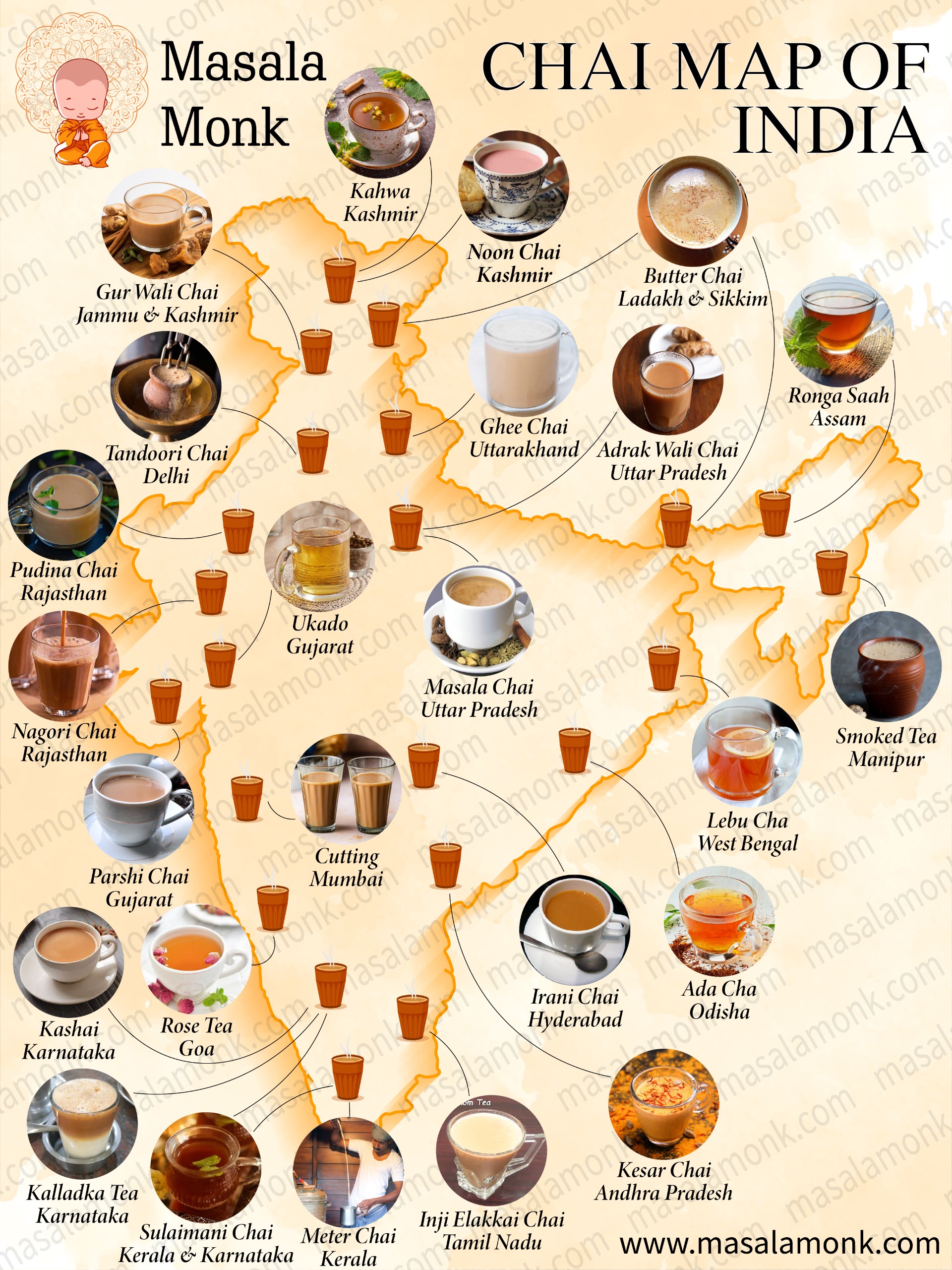
The Chai Map of India beautifully captures this diversity, showcasing the rich variety of teas that span from Kashmir to Kerala. Let’s take a flavorful journey through some of India’s most iconic and lesser-known teas, as highlighted by this incredible map.
1. Kahwa (Kashmir)
A fragrant and spiced green tea, Kahwa is infused with cardamom, cinnamon, and saffron, often garnished with almonds. This rich, soul-soothing tea is perfect for cold Kashmiri winters, bringing warmth and luxury in every sip.
2. Noon Chai (Kashmir)
Ever heard of pink tea? Noon Chai, or sheer chai, is a salty, pink-hued tea made with green tea leaves, milk, and baking soda. It’s a staple in Kashmiri households, often served with bread or pastries.
3. Butter Chai (Ladakh & Sikkim)
In the cold, mountainous regions of Ladakh and Sikkim, Butter Chai is a necessity. Made with tea leaves, yak butter, and salt, this hearty tea is energizing and helps locals stay warm in freezing temperatures.
4. Masala Chai (Uttar Pradesh)
The iconic Masala Chai needs no introduction. Brewed with black tea, ginger, and a blend of spices like cardamom and cloves, this tea is a staple across North India. It’s the perfect companion for monsoon evenings and lazy afternoons.
5. Cutting Chai (Mumbai)
Mumbai’s famous Cutting Chai is strong, sweet, and served in small glasses. It’s called “cutting” because one glass is often split between two people. This tea embodies the bustling energy of Mumbai streets.
6. Kashai (Karnataka)
In Karnataka, Kashai is a herbal tea made with a blend of spices, including cumin, coriander, and black pepper. It’s known for its medicinal properties and is often consumed to boost immunity.
7. Meter Chai (Kerala)
Tea-making becomes a performance with Meter Chai. This Kerala specialty involves pouring tea from great heights to create a frothy, aerated drink that’s as entertaining to watch as it is delicious to drink.
8. Irani Chai (Hyderabad)
A legacy of Persian influence, Irani Chai is strong and milky, often served with Osmania biscuits. It’s an essential part of Hyderabad’s tea culture and a must-try for any tea lover.
9. Lebu Cha (West Bengal)
Simple yet flavorful, Lebu Cha is black tea with a squeeze of lemon and a sprinkle of black salt. It’s a street-side favorite in Kolkata, especially during hot summer days.
10. Sulaimani Chai (Kerala & Karnataka)
Sulaimani Chai is a spiced black tea with a hint of lemon, popular in Kerala and parts of Karnataka. Light and refreshing, it’s often served after heavy meals to aid digestion.
The Chai Map of India reminds us that tea isn’t just a beverage – it’s a ritual, a reflection of regional identity, and a connector of people. Whether it’s the comforting Masala Chai of the North or the refreshing Meter Chai of the South, each cup carries a piece of India’s rich cultural tapestry. You can also explore the best teas for digestion and how they can make a difference in your daily routine. Read here!
Next time you sip your favorite brew, remember that there’s an entire world of tea waiting to be explored. Which chai are you excited to try next?
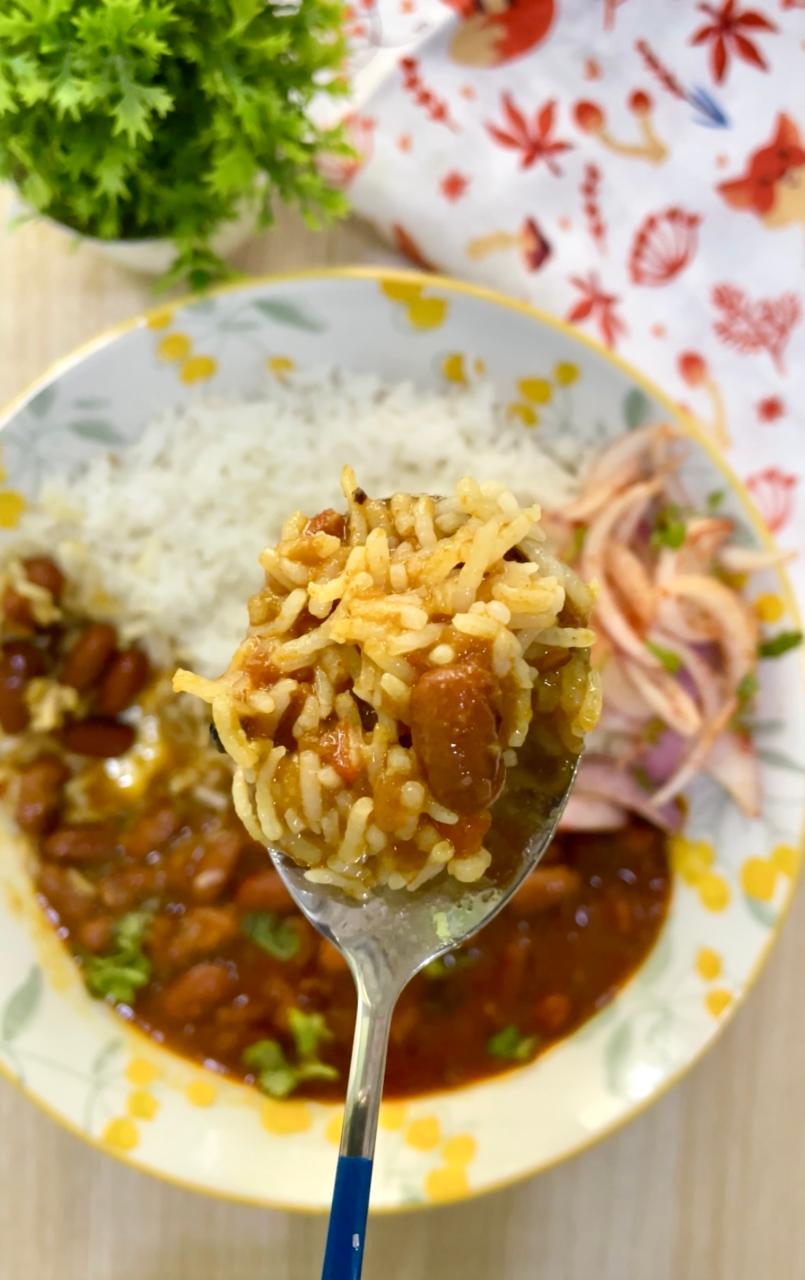
Rajma Chawal is the most iconic dish of North Indian. Beloved by many for its rich flavors and satisfying heartiness. This iconic dish combines the creamy, mildly spicy goodness of Rajma (kidney beans) with the simplicity of steamed rice and onion by the side, creating a meal that is both wholesome and delicious. Rajma is a flavorful curry made with protein-rich kidney beans, onions, ginger, garlic, tomatoes, and an aromatic blend of raw spices. The result is a dish that’s not only incredibly tasty but also packed with nutrients. Whether you’re enjoying it as a part of a weekday meal or serving it up for a special occasion. Join us as we explore the secrets to making this beloved North Indian classic
Ingredients:
1 cup Rajma (Chitra Rajma) 1 large onion, sliced 2 tomatoes, finely chopped 2 tablespoons tomato puree 2 green chillies, slit lengthwise Handful of fresh coriander leaves, chopped 1 tablespoon ginger garlic paste 1/2 teaspoon turmeric powder 1 teaspoon coriander powder 1 teaspoon cumin powder 1 teaspoon red chili powder 1/2 teaspoon garam masala powder Salt to taste 3 tablespoons mustard oil Whole garam masalas (cinnamon stick, cloves, cardamom)
Instructions:
Soak the Rajma in water overnight or for 4-5 hours. Drain the water and rinse the Rajma.
In a large pot, add the soaked Rajma and enough water to cover it. Bring it to a boil and cook until the Rajma becomes tender. This may take around 20-30 minutes. Once cooked, drain the Rajma and set it aside.
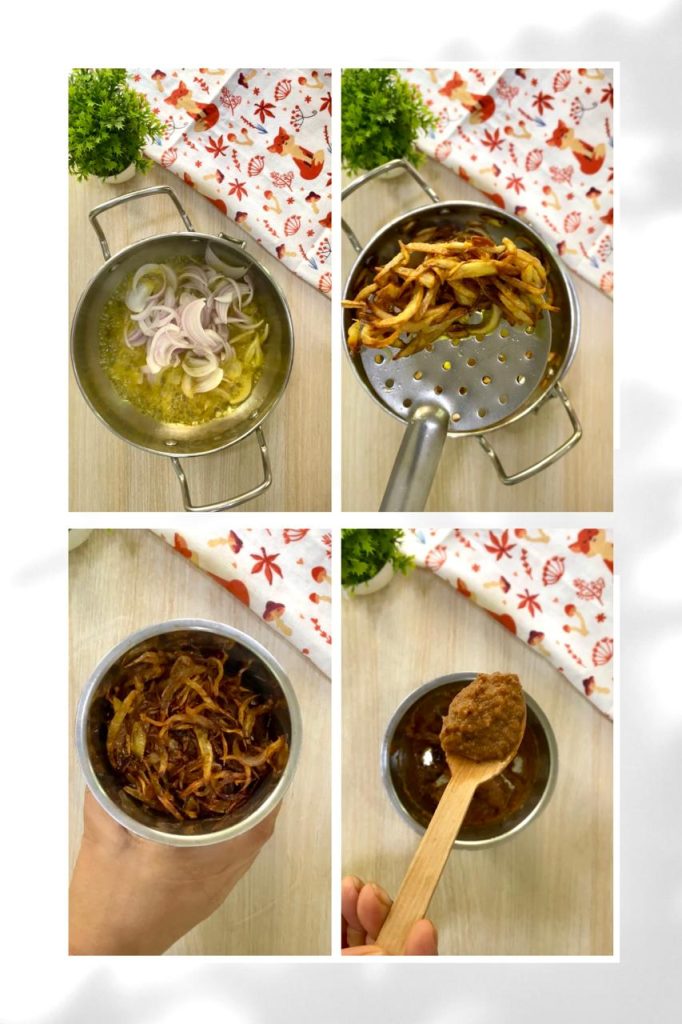
In a separate pan, heat 2 tablespoons of mustard oil. Add the sliced onions and fry them until they turn golden brown. Remove the onions from the pan and let them cool. Once cooled, grind them into a paste using a blender or mortar and pestle.
In the same pan, heat the remaining mustard oil. Add the whole garam masalas (cinnamon stick, cloves, cardamom) and sauté them until they release their aroma. Add the green chillies and ginger garlic paste to the pan. Sauté them for a minute until the raw smell disappears. Add the turmeric powder, coriander powder, cumin powder, and red chili powder to the pan. Mix well and cook for a minute.
Add the chopped tomatoes and tomato puree to the pan. Stir everything together and cook for 3-4 minutes until the tomatoes soften and the mixture thickens. Add onion paste and garam masala powder and salt to taste. Mix well. Good garam masala surely enhance the taste of any dish and if the garam masala is homemade nothing is better than that, you can see the detail recipe of Authentic Indian Garam Masala here.
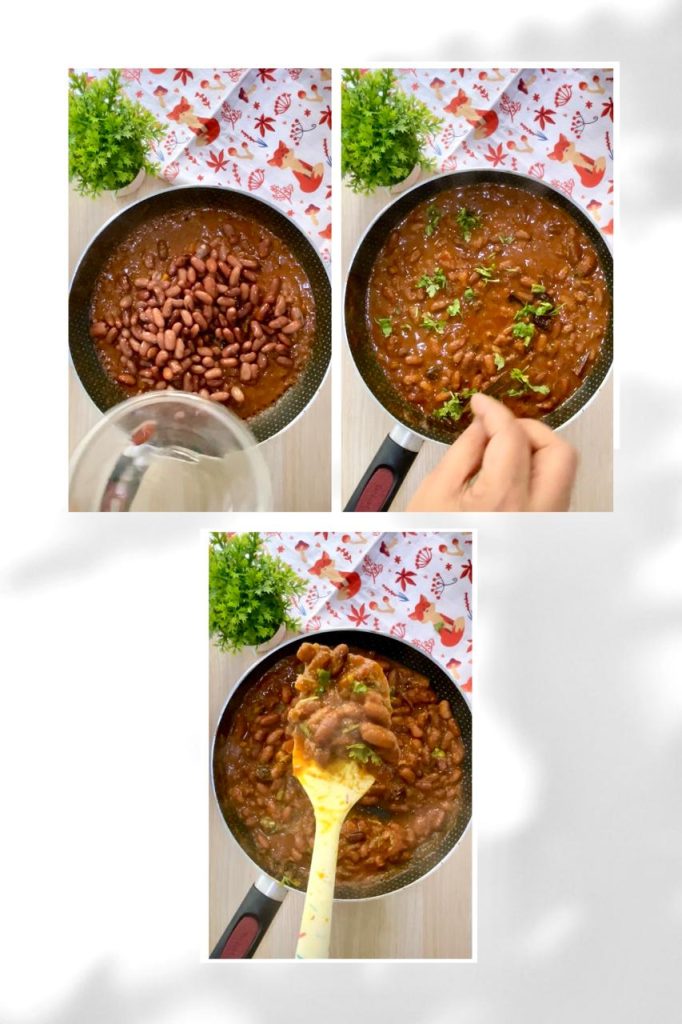
Pour a little water into the pan to adjust the consistency of the gravy. Stir everything together. Add the boiled Rajma to the pan and mix it with the spice mixture. Add more water as needed to cover the Rajma. Cover the pan and let the Rajma simmer on low heat for about 5 minutes, allowing the flavors to blend together. Garnish the Rajma with freshly chopped coriander leaves.
Your Punjabi style Rajma is now ready to be served. Enjoy it with steamed rice, roti, or naan for a delicious and hearty meal.
Do give this recipe a shot. I am sure this will be your family’s new favourite. If you try this recipe, do give us a shout out. Just click a picture and tag us on @masala.monk or use the hashtag #MasalaMonkRecipe and share on Instagram and Facebook. We would love to hear from you. 🙂
Using homemade masala can elevate your dishes to the next level. Garam masala powder adds an earthy flavor to your meals. Whether it’s curry, biryani, or even cookies and cakes, a pinch of garam masala can enhance the taste beautifully. You will find that every region and every family has their own traditional recipe for Garam Masala, which gets passed down from generation to generation
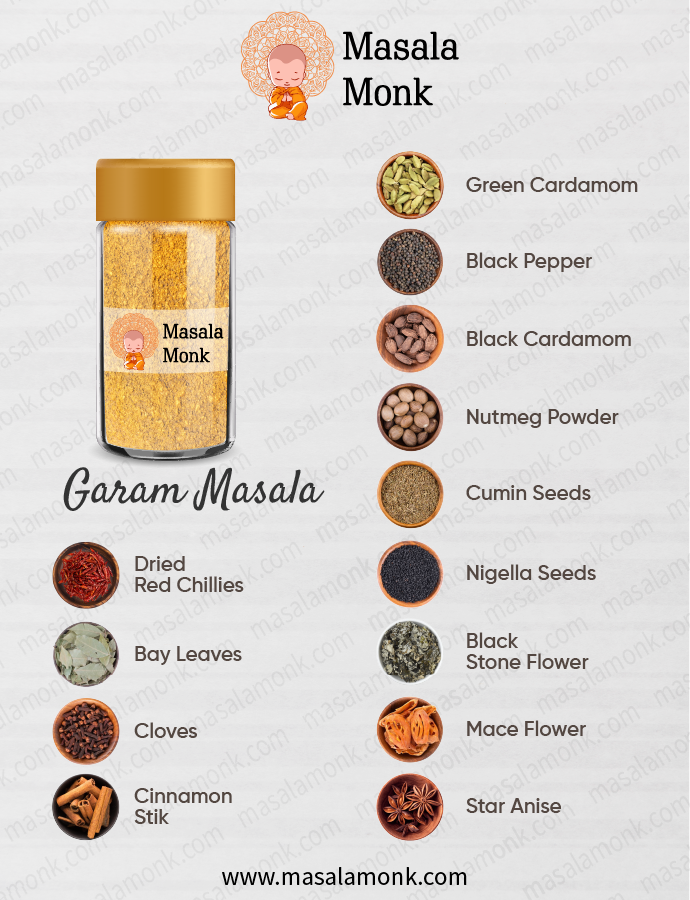
While packets of garam masala are easily available in every store, there is something special about homemade garam masala, Freshly ground homemade Garam Masala has an un-matched aroma and flavor. So let’s see homemade garam masala recipe.
Ingredients:
Green Cardamom
Black Pepper
Black Cardamom
Nutmeg Powder
Cumin Seeds
Nigella Seeds
Dried Red Chillies
Bay Leaves
Cloves
Cinnamon Sticks
Black Stone Flower
Mace Flower
Star Anise
Method:
Collect all the spices listed above. Ensure they are fresh and of high quality for the best flavor. Measure out each spice according to your taste preference. A general guideline is to use equal parts of most spices, with a slightly lesser amount of potent ones like cloves and black cardamom.
Heat a large skillet or pan over medium heat. Add all the whole spices (green cardamom, black cardamom, black pepper, cumin seeds, nigella seeds, dried red chillies, bay leaves, cloves, cinnamon sticks, black stone flower, mace flower, and star anise).
Stir the spices continuously to prevent burning. Roast them until they become fragrant, usually about 3-5 minutes. Once roasted, transfer the spices to a plate and allow them to cool completely.
Once the spices are cooled, transfer them to a spice grinder or a high-speed blender. Grind them into a fine powder. You may need to do this in batches depending on the size of your grinder. Once ground, add the nutmeg powder to the mixture and give it a final blend to ensure everything is well combined.
Transfer the freshly ground garam masala to an airtight container. Store it in a cool, dark place to retain its flavor and aroma. It’s best to use the garam masala within a few months for the best taste.
Usage:
Garam Masala can be used in a variety of dishes:
Curries: Add a teaspoon towards the end of cooking to enhance the flavor of your curry. If you like bharwa vegetables or love using bharwa masala you can try masala monk’s Bharwa Masala. A generous stuffing of bharwa masala will turn the oh so boring vegetables into surprisingly delicious For the best stuffed karele, baingan, bhindi, tori or tinde Bharwa Masala by Masala Monk Handpicked whole spices are roasted and ground at home to get the perfect consistency and extract the best flavours and textures.
Marinades: Mix it with yogurt and lemon juice for a delicious marinade for meats and vegetables.
Soups and Stews: Sprinkle a bit into your soups and stews for a warm, spicy kick.
Rice Dishes: Use it in biryanis and pulaos for that authentic taste.
Making garam masala at home is a simple yet rewarding process. The aroma and flavor of freshly ground spices can elevate your dishes to a new level. Try this homemade garam masala recipe and add a touch of authentic Indian flavor to your cooking. Don’t forget to share your experience and feedback in the comments below.
If you try this recipe, do give us a shout out. Just click a picture and tag us on @masala.monk or use the hashtag #MasalaMonkRecipe and share on Instagram and Facebook. We would love to hear from you. 🙂