
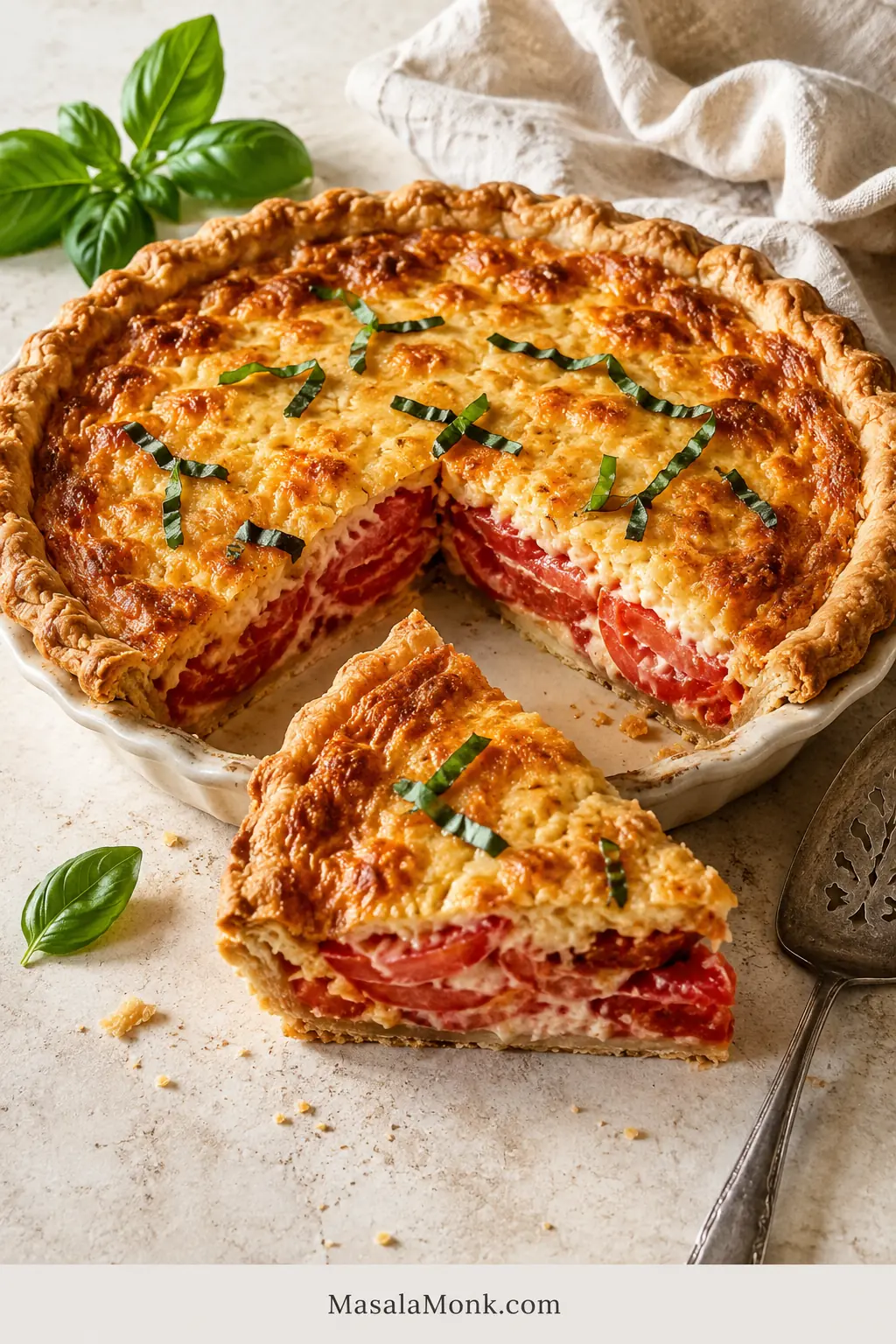
The first slice tells you whether a tomato pie worked. The tomatoes should still taste unmistakably of summer, the cheese should be creamy and savory, and underneath it all there should be a crust flaky enough to matter—not pale pastry soaking in tomato juice.
This is the kind of pie to make when tomatoes are so ripe and fragrant that dinner can reasonably revolve around them. The aim is to concentrate that ripe tomato flavor while keeping enough water away from the pastry for the first wedge to come out looking—and eating—like a proper slice of pie.
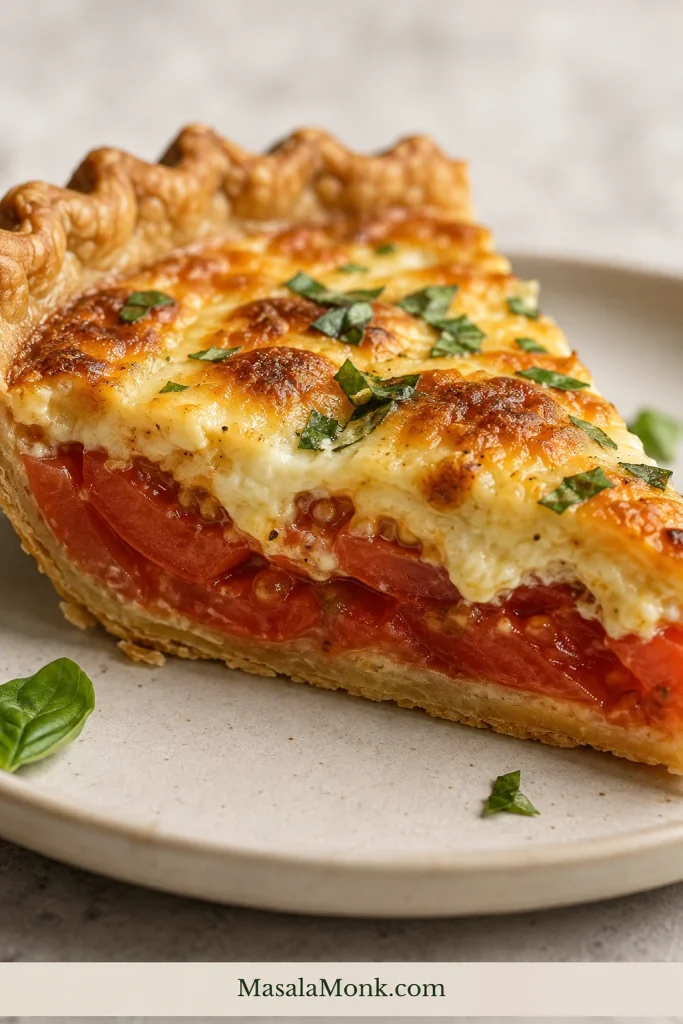
So the tomatoes are lightly salted, blotted and roasted. The crust gets a head start in the oven and a thin layer of melted sharp cheddar before the tomatoes ever touch it. On top goes extra-sharp cheddar, Parmesan, fresh basil, Dijon and enough mayonnaise to make everything creamy while the tomatoes still taste like the reason you made the pie.
Jump to: Recipe · Keep It Crisp · Troubleshooting
Quick Answer: How to Make Tomato Pie Without a Soggy Crust
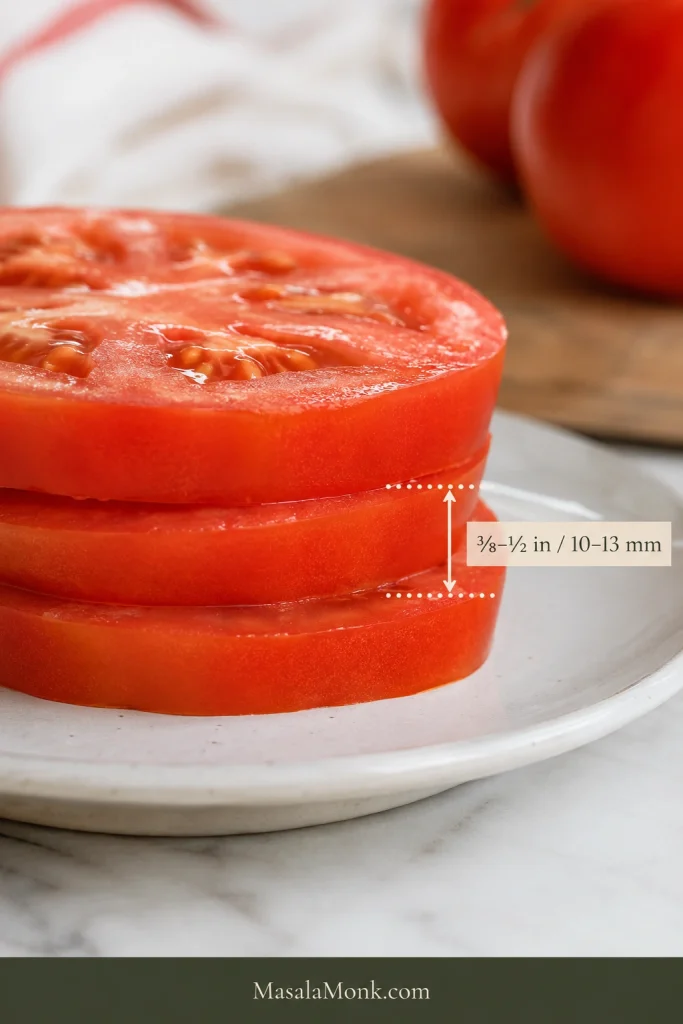
For a standard 9-inch / 23 cm pie, use about 2 lb / 900 g ripe tomatoes. Slice them ⅜–½ inch / 10–13 mm thick, lightly salt and blot them, then roast until slightly wrinkled and no longer wet-looking. Pre-bake the crust until the bottom is dry and lightly golden, then melt a thin layer of cheddar over it.
Arrange the tomatoes over the crust, add the cheese topping, and bake on the lower-third rack at 375°F / 190°C for about 30–35 minutes. Rest at least 30 minutes before slicing; closer to an hour gives cleaner wedges.
There are a few more steps here than in the quickest versions, but none is difficult. With one tomato tray, the tomatoes roast while the crust pre-bakes, so those two jobs finish at almost the same time.
Southern Tomato Pie Recipe With a Crisp Crust
This version keeps the tomatoes front and center: roasted just enough to deepen their flavor, layered over a pre-baked crust, then covered with a sharp, basil-flecked cheese topping that stays creamy without becoming heavy.
Yield: 1 standard 9-inch / 23 cm pie
Serves: 6 generous portions or 8 smaller portions
Hands-on time: about 30 minutes
Prep + bake: about 1¼–1½ hours
Rest: 30–60 minutes
Total time: about 2–2½ hours
Best served: warm or at room temperature
Timing note: Times assume you are starting with a prepared crust ready to blind-bake.
Equipment
- Standard 9-inch / 23 cm pie plate, if using rolled dough
- 1–2 large rimmed baking sheets
- Parchment paper
- Pie weights or dried beans, for rolled dough
- Clean kitchen towels or paper towels
- Wire cooling rack
- Foil or a pie shield, optional
Ingredients
For the Tomatoes
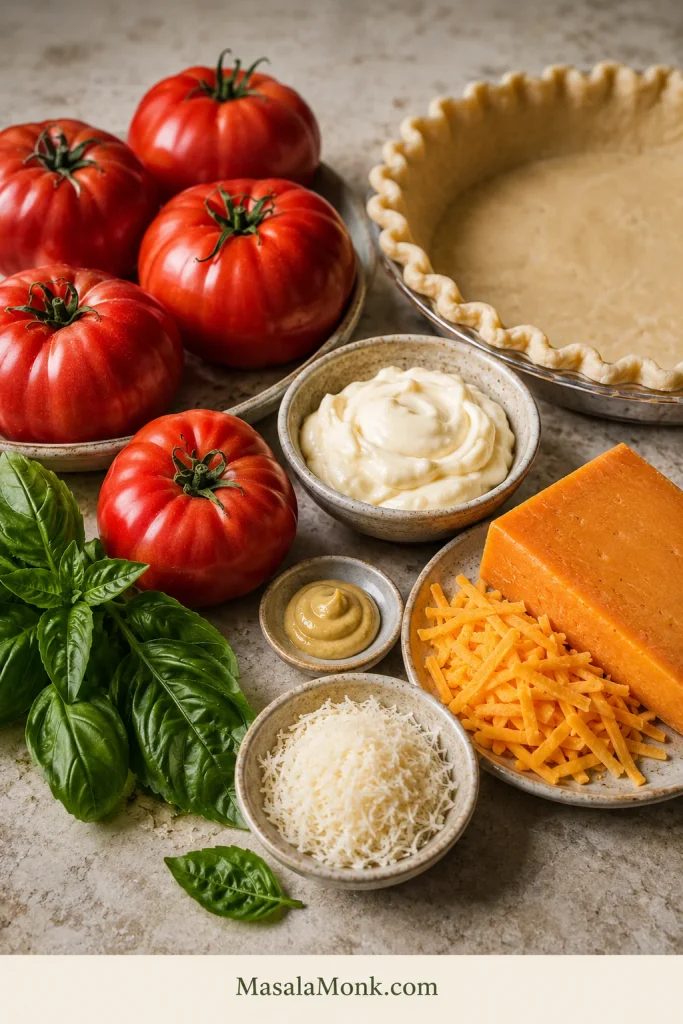
- 2 lb / about 900 g ripe tomatoes, about 4–6 large tomatoes
- ¾ teaspoon fine sea salt / about 4 g
- ½ teaspoon freshly ground black pepper, divided
For the Crust and Bottom Cheese Layer
- 1 prepared standard 9-inch / 23 cm pie crust, homemade or store-bought; not deep dish
- 1½ oz / 40 g extra-sharp cheddar, finely grated
And for the Cheese Topping
- 5½ oz / 160 g extra-sharp cheddar, freshly grated
- 1 oz / 28 g Parmesan, finely grated; Pecorino Romano also works but is saltier
- ½ cup / about 115 g mayonnaise
- 1 teaspoon / 5 ml Dijon mustard
- ¼ cup loosely packed fresh basil, torn or chopped, plus more for serving
- Pinch of red-pepper flakes, optional
Shopping note: You need 7 oz / 200 g cheddar total. One standard 8 oz / 227 g block is enough for the whole pie with a little left over.
Instructions
Prep the Tomatoes and Crust
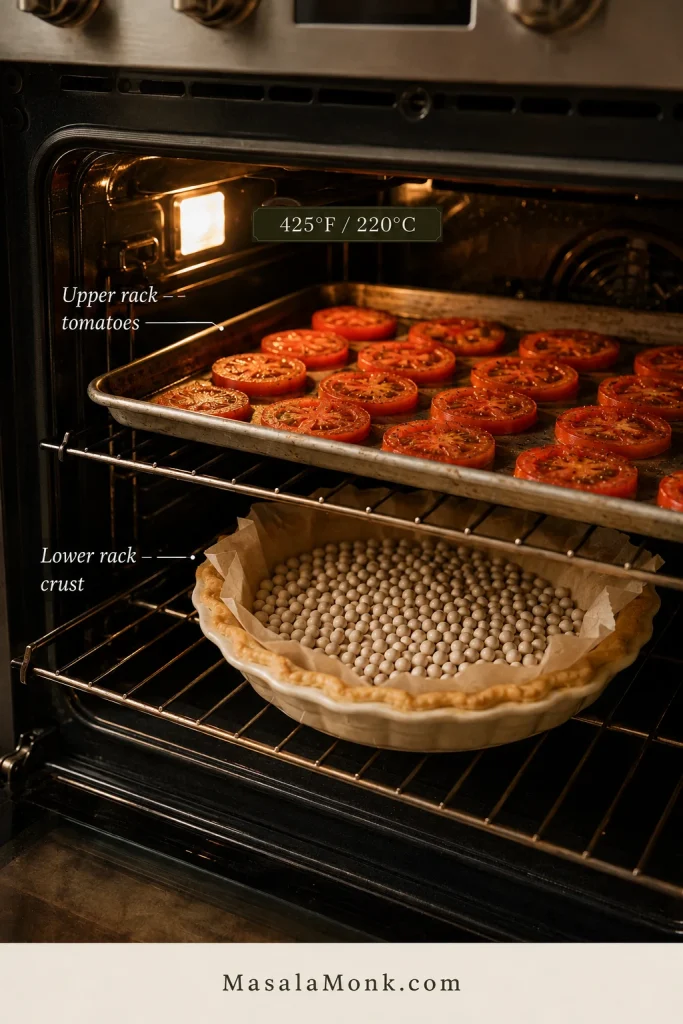
- Heat the oven. Position one rack in the upper half of the oven and another in the lower third. Heat to 425°F / 220°C conventional. Line a large rimmed baking sheet with parchment.
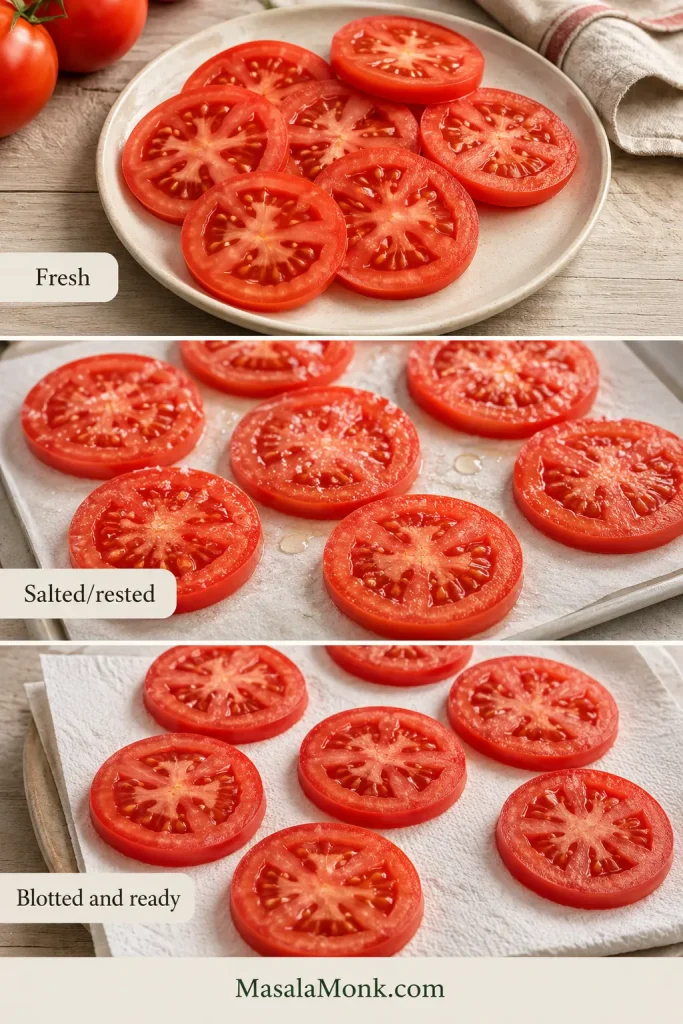
- Slice, salt and blot the tomatoes. Core them and cut into slices about ⅜–½ inch / 10–13 mm thick. Arrange them over clean kitchen towels or several layers of paper towel, sprinkle with the ¾ teaspoon / 4 g salt, and leave for 10–15 minutes. Blot firmly, then season with ¼ teaspoon black pepper. Very large rounds can be halved so the finished pie is easier to portion.
- Prepare the crust and arrange the tomatoes.
Using rolled dough? Fit it into a standard pie plate, crimp the edge, line it with parchment and fill with pie weights or dried beans.
Using a preformed frozen shell? Keep it in its supplied pan. Follow its package directions for blind-baking; use weights only if those directions call for them.
Arrange the blotted tomato slices on the baking sheet in one layer with a little breathing room between them. Avoid heavy overlap.
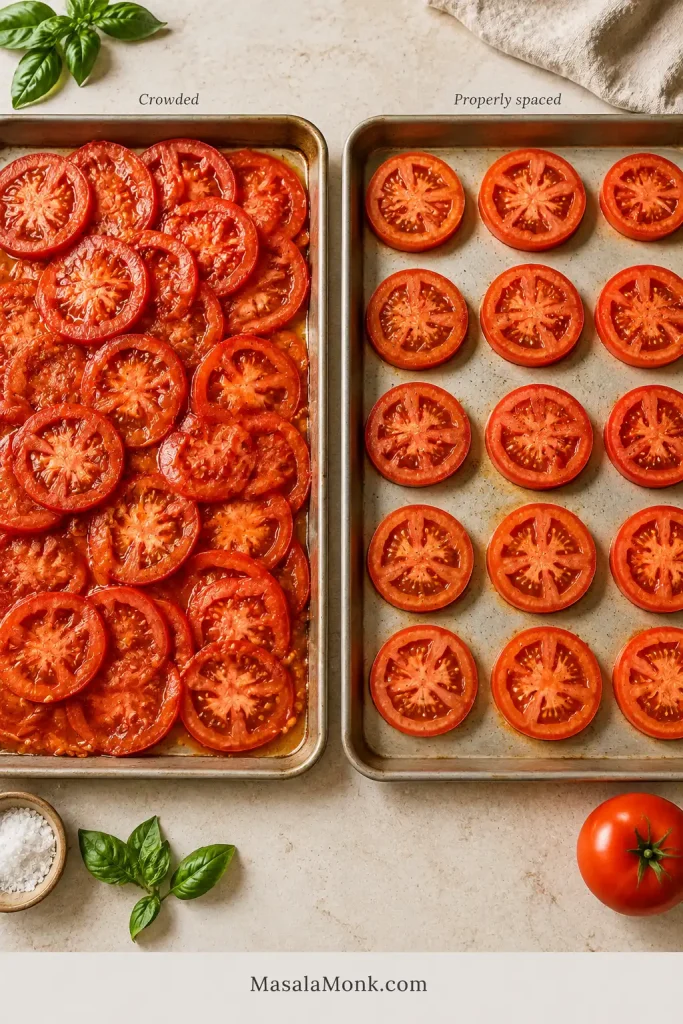
- Roast the tomatoes while the crust pre-bakes. With one tomato tray, roast the tomatoes on the upper rack while the crust bakes below.
Rolled crust: Bake it with the weights for 15–18 minutes.
Preformed frozen shell: Follow its blind-baking time. It may finish before or after the tomatoes; that is fine.
Need two tomato trays? Roast them first, rotating the pans if needed, then pre-bake the crust afterward. Giving the tomatoes space matters more than forcing the two jobs to overlap.
Finish the Crust and Make the Topping
- Finish the crust and check the tomatoes.
Crust: For rolled dough, carefully remove the parchment and weights, then return the empty shell to the lower rack for another 5–7 minutes. For a preformed frozen shell, continue according to its package directions as needed. Whichever crust you use, the base should be dry, set and lightly golden before filling. Pale, shiny or slightly translucent pastry needs more time.
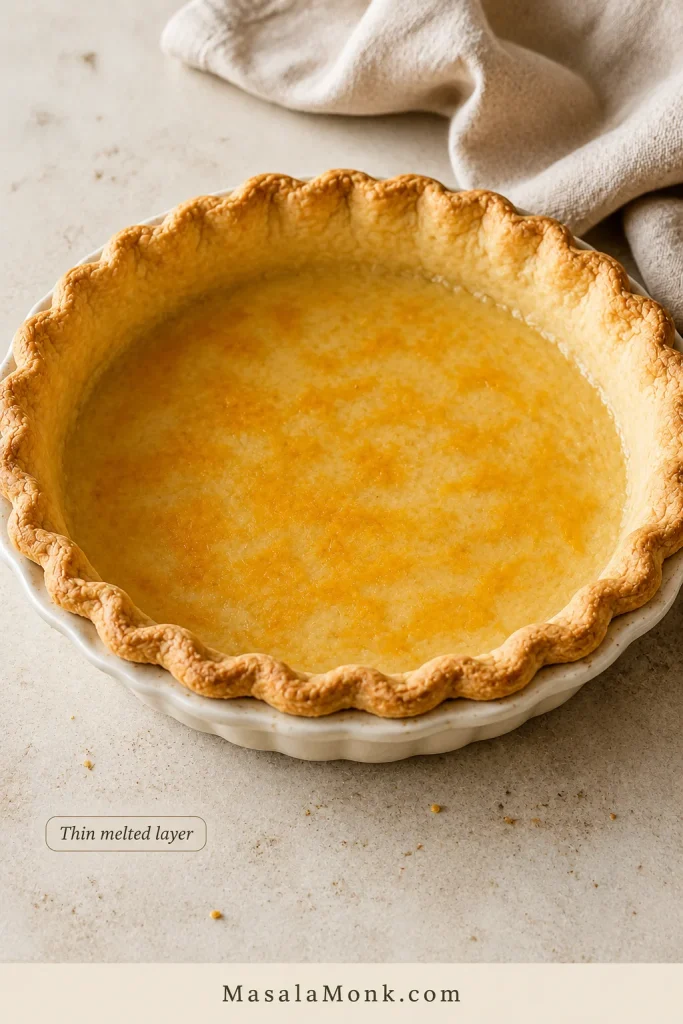
Tomatoes: Their color should be a little deeper, the edges slightly wrinkled and the cut surfaces more matte than glossy. Very little thin juice should remain on the pan. They should still look juicy, not dried out. - Add the cheddar barrier and lower the oven. Scatter the 40 g cheddar over the hot crust and return it to the oven for about 3–5 minutes, until the cheese melts into a thin layer. Reduce the oven temperature to 375°F / 190°C conventional and keep one rack in the lower third.
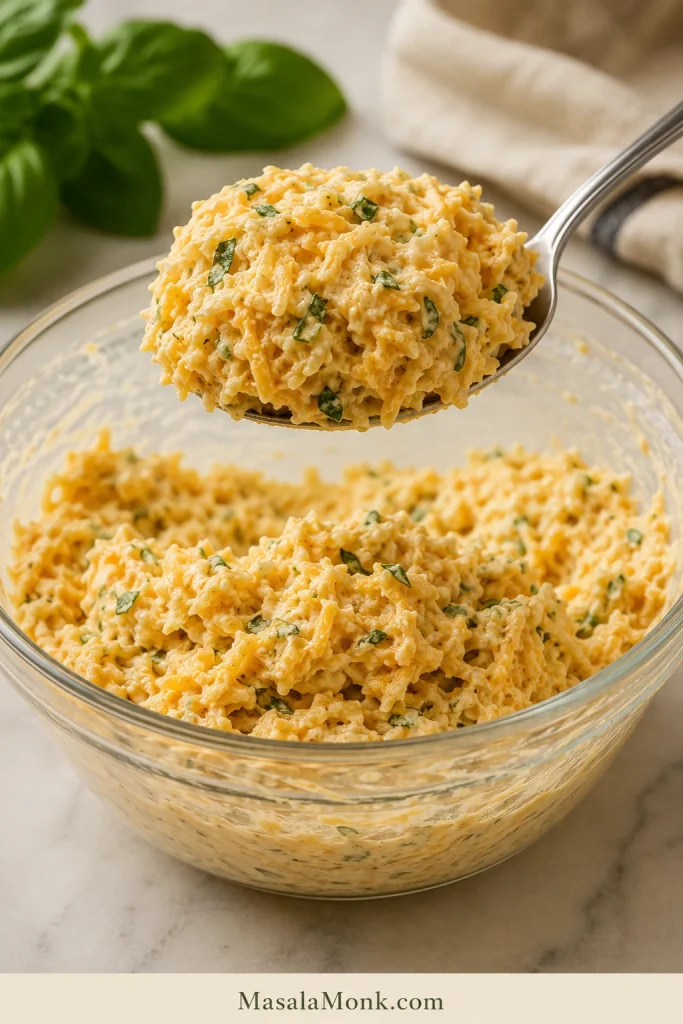
- Mix the topping. Combine the remaining 160 g cheddar, Parmesan, mayonnaise, Dijon, the remaining ¼ teaspoon black pepper and the basil. The mixture should be thick enough to hold its shape. Cheddar, Parmesan and mayonnaise already bring plenty of salt, so taste before adding any more.
Assemble, Bake and Rest
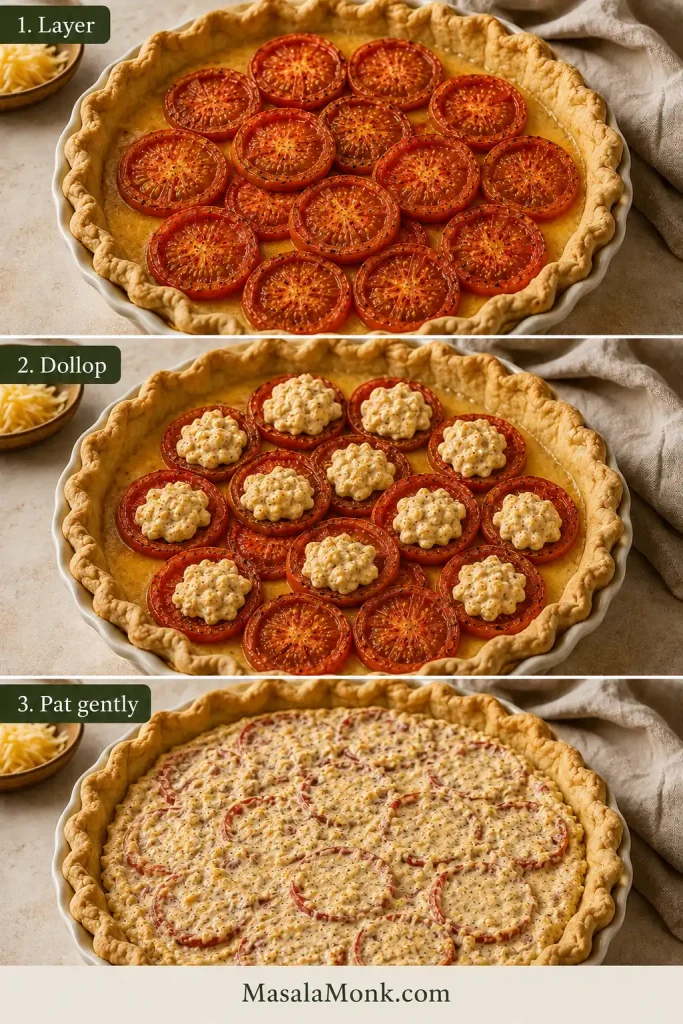
- Assemble the pie. Arrange the roasted tomatoes over the cheese-lined base with light overlap. Blot any slice that has released a fresh puddle while waiting. Dollop the topping in small spoonfuls over the tomatoes, then gently spread or pat it into an even layer with the back of a spoon.
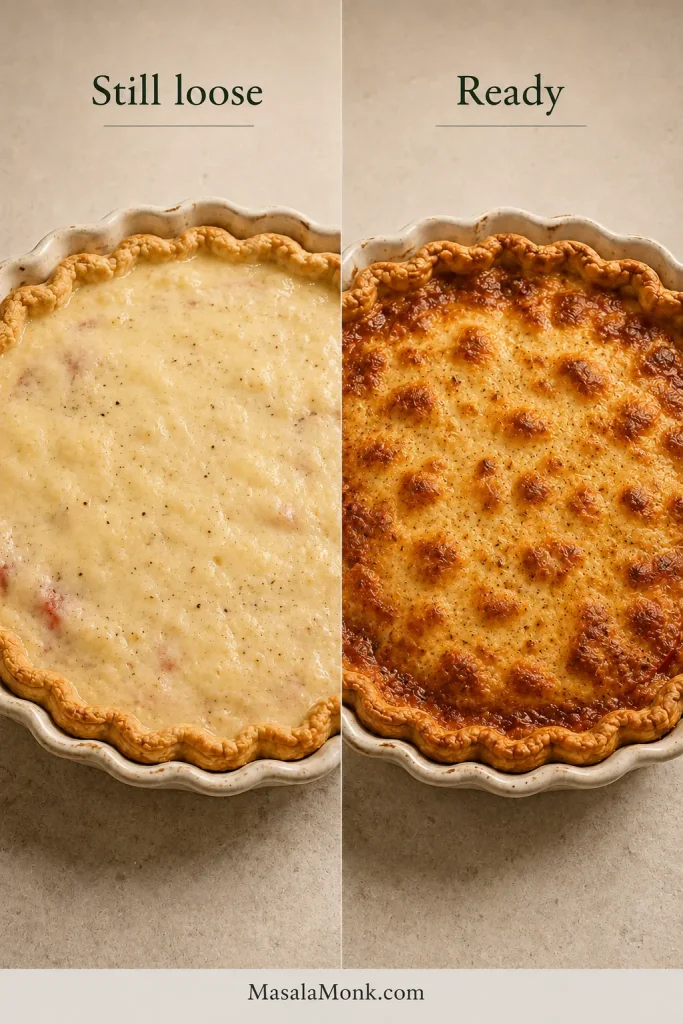
- Bake until browned and set. Bake on the lower-third rack for about 30–35 minutes, beginning to check around 25 minutes. The crust should be deeply golden, the topping browned in patches, and small bubbles should appear around parts of the filling. Give the dish a gentle nudge. A little movement is fine; the filling should move together instead of sloshing. Shield the rim with foil if it browns before the center is ready.
- Rest and serve. Set the pie on a wire rack for at least 30 minutes. For cleaner wedges, give it closer to 45–60 minutes. Finish with a little fresh basil before serving.
Recipe Notes
- Two-tray timing: Allow roughly another 20–30 minutes because the crust can no longer pre-bake alongside the tomatoes.
- Using coarse kosher salt? Weigh it if possible; crystal size varies enough between brands to make a direct teaspoon conversion unreliable.
- Very juicy heirlooms may need longer. Trust the tray rather than forcing every batch to finish at exactly 25 minutes.
- Fan/convection ovens brown faster. Use your oven’s usual temperature adjustment and begin checking both tomatoes and crust early.
- For cleaner slices, cut through the tomato skins first. A sharp serrated knife or very sharp chef’s knife helps keep a large slice from pulling the filling out with it.
Need something specific? Best Tomatoes · The Best Crust · Cheese & Mayo · Times & Doneness · Troubleshooting · Variations · Serving · Make Ahead
Why Tomato Pie Gets Soggy—and Five Ways to Keep the Crust Crisp
A soft crust can begin in several places. Too much water may come in with the tomatoes. The pastry may need more time before filling, or the bottom may not be browning strongly enough. Sometimes a well-baked pie is simply sliced while everything inside is still loose and steaming.
The crispest pies do not rely on one heroic trick. A handful of smaller choices add up.
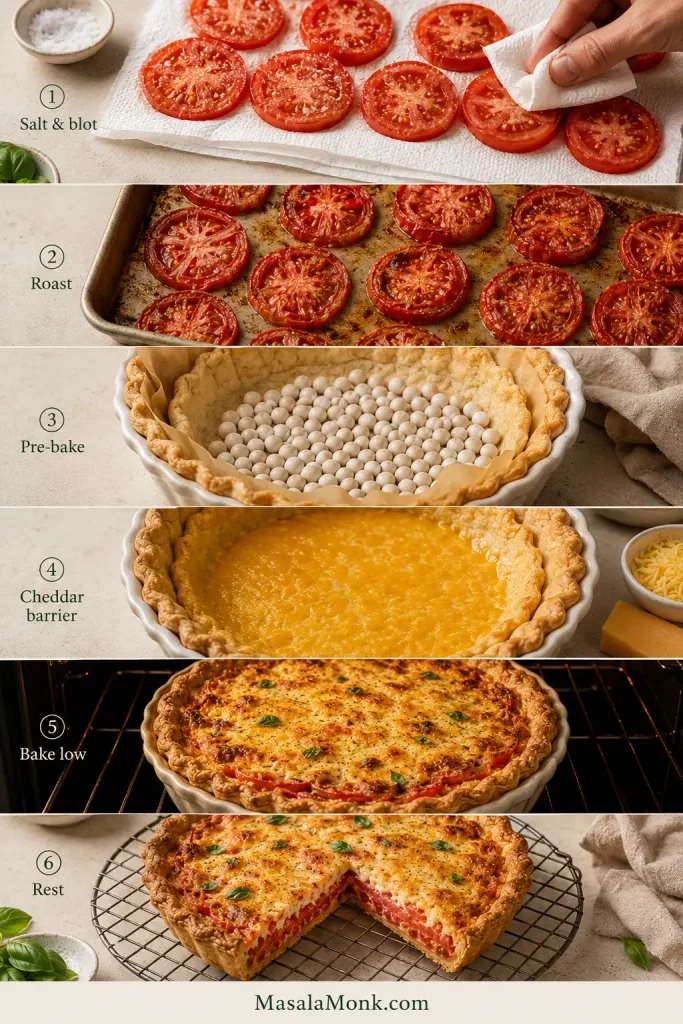
- Dry the tomatoes in two stages. A short salt-and-blot step removes easy surface water; roasting then drives off more moisture while concentrating the flavor.
- Give the crust a real head start. The base should already have color and structure before the tomatoes arrive.
- Add a thin cheese layer. Melted cheddar gives the crust another buffer against the tomato juices.
- Bake low in the oven. The lower rack encourages better browning underneath while the filling finishes.
- Let the pie rest. Cooling lets steam escape and gives the filling time to settle.
Together, those small choices make the difference between a pie that merely tastes good and one you can confidently lift from the dish and put on somebody’s plate.
Surface water is the easiest moisture to remove: salting draws it out, and blotting takes it away before roasting begins.
Best Tomatoes for Tomato Pie
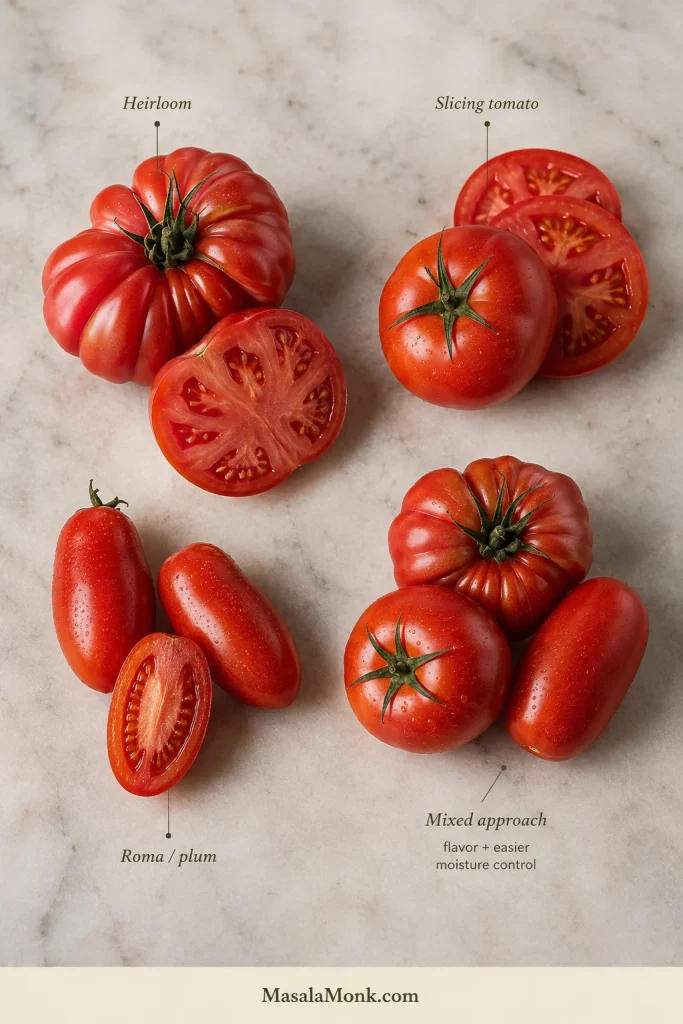
For pie, tomato flavor matters—but so does how much water that tomato is carrying. Smell them. If they barely smell like tomatoes before you cut them, roasting will not suddenly give them peak-summer flavor.
| Tomato | Best For | Moisture Risk | What to Know |
|---|---|---|---|
| Heirloom | Big flavor and beautiful color | High | Wonderful in season, but very juicy varieties may need extra roasting time. |
| Ripe slicing tomato | Best all-round choice | Medium | Good balance of flavor, structure and availability. |
| Roma or plum | Easiest moisture control | Lower | Meatier flesh makes them forgiving, although flavor varies. |
| Mixed tomatoes | Flavor plus reliability | Medium | Mix flavorful heirlooms with firmer slicing or plum tomatoes when you want both character and easier moisture control. |
What I Would Buy
If I were shopping specifically for this pie, I would choose ripe but still firm slicing tomatoes unless especially flavorful heirlooms were available.
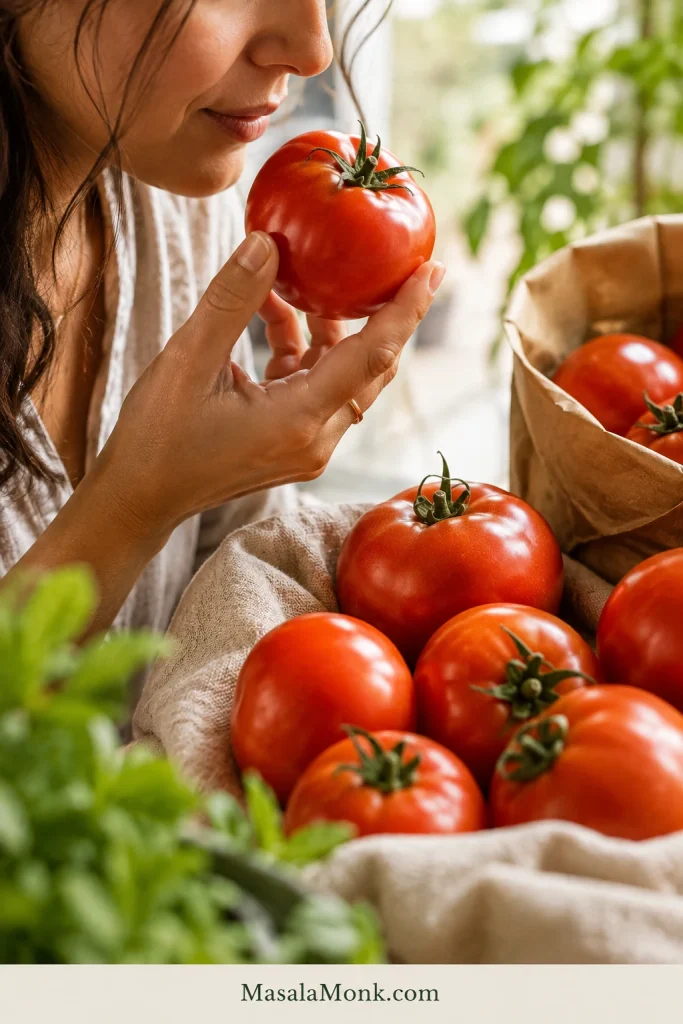
Peak-season heirlooms are worth using; just let their juiciness decide the roasting time. Mixing a few with meatier plum tomatoes also works well when you want plenty of flavor with a little less water to manage.
Roasting does more than solve a water problem. As excess juice cooks away, the tomatoes taste sweeter, deeper and more intensely like themselves. That concentrated flavor becomes the heart of the finished pie.
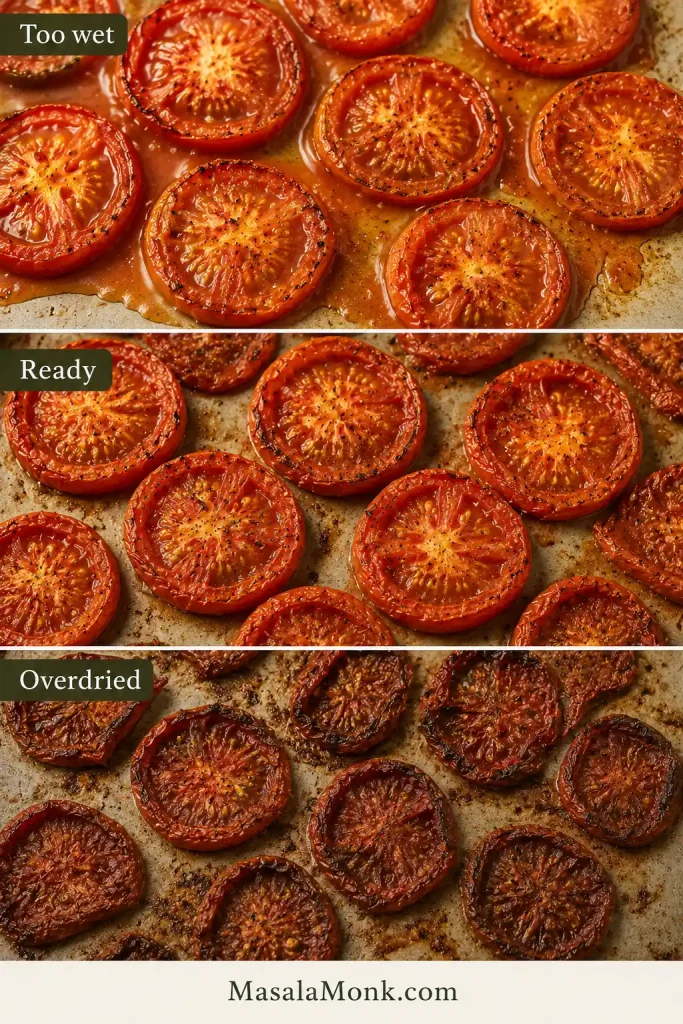
If some of your tomatoes are already too soft or juicy to give you neat slices, they may be happier in fresh tomato soup, where their extra liquid can be cooked down instead of fought.
Cherry tomatoes can work, but they behave more like a variation than a direct substitute: once halved, they expose much more cut surface and do not create the same layered filling. Canned tomatoes are better saved for another recipe. This one really wants fresh tomatoes that can be sliced, roasted and layered.
The Best Crust
Use a standard 9-inch / 23 cm flaky pie crust, not deep dish. Homemade dough, refrigerated rolled pastry and a standard preformed frozen shell can all work. The base needs enough color and structure before the tomatoes arrive.
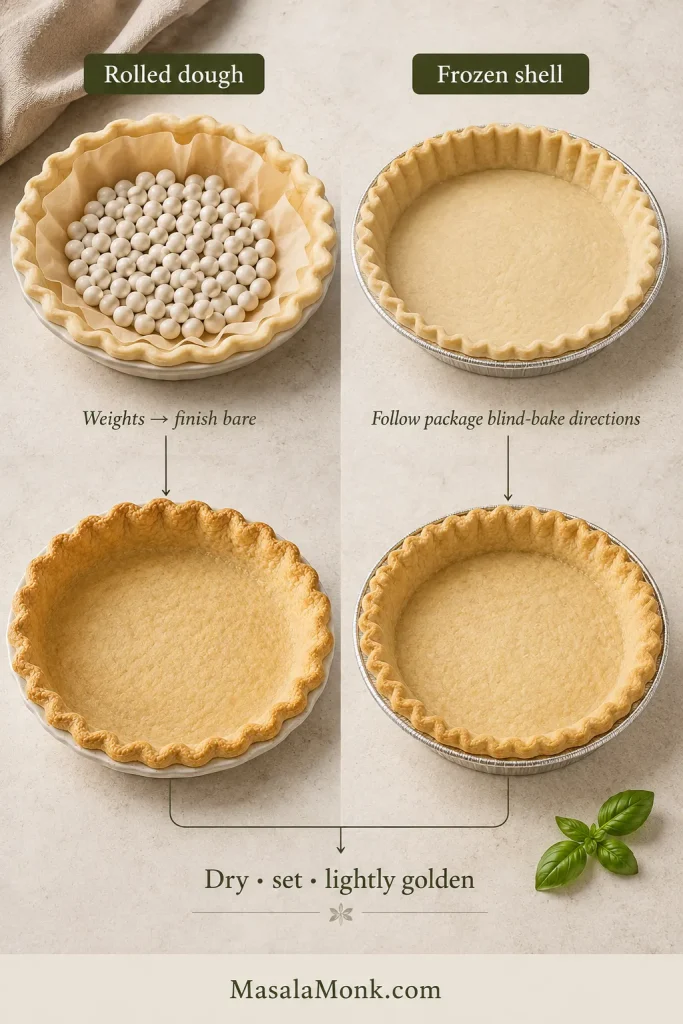
If store-bought crust gets tomato pie on the table, use it. The tomatoes matter much more here than whether you made the pastry yourself.
Do You Have to Blind-Bake the Crust?
For this recipe, yes. The shell gets a substantial head start so it is already baked across the bottom before it has to support a juicy filling.
Look underneath. Pale or slightly translucent pastry still needs more time. You want the bottom dry and lightly golden across the base, not just browned around the exposed rim.
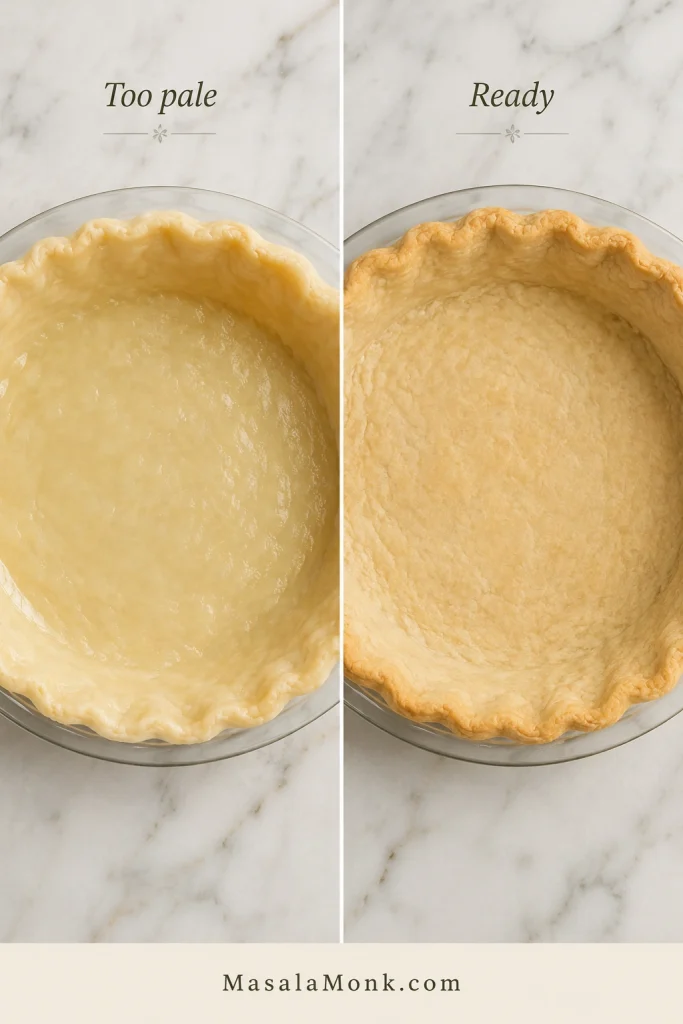
A crust baked this far does not disappear underneath the filling. You can still feel its flaky edge when you cut into the finished pie.
If you want to make the pastry yourself, this flaky homemade pie crust recipe makes enough dough for two single 9-inch crusts, so you can use one here and freeze the second.
Metal, glass and ceramic pie plates can all work. Metal heats quickly. Glass lets you inspect the underside. Thick ceramic usually heats more slowly, so follow the color of the pastry rather than the clock alone.
Best Cheese—and Why Mayo Matters
Extra-sharp cheddar gives the topping plenty of flavor without requiring an especially thick cheese layer. A little melts directly over the crust, while the rest forms the backbone of the topping. Parmesan adds a concentrated savory edge without bringing much extra water.
Pecorino Romano can stand in for Parmesan, but it is saltier. Taste before adding anything else salty, especially if bacon is also going into the pie.
Why Does Southern Tomato Pie Use Mayonnaise?
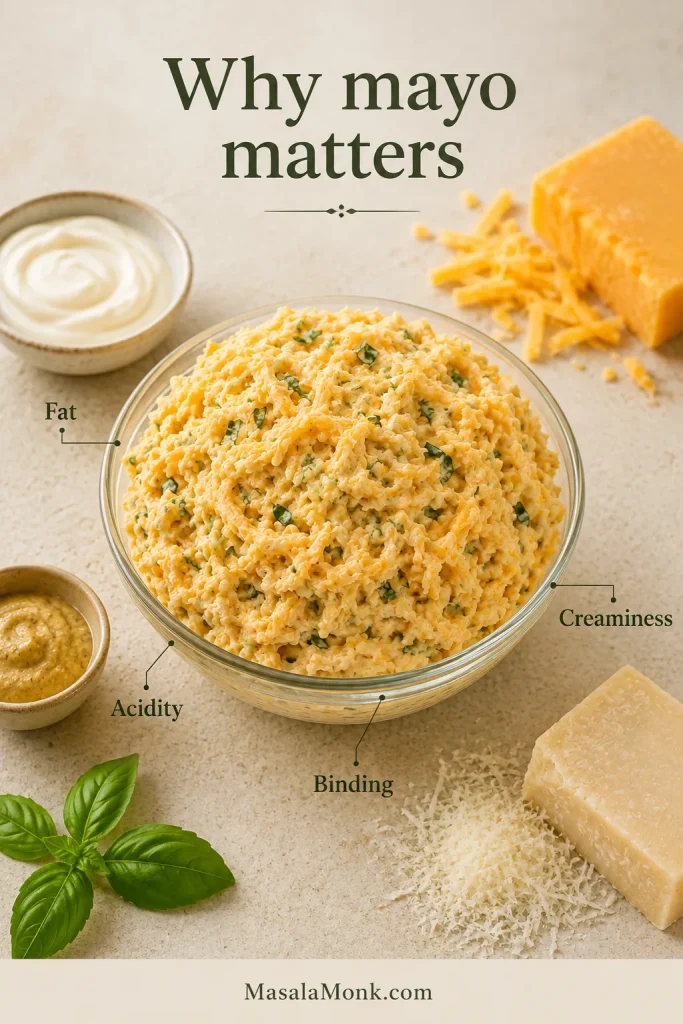
Mayonnaise brings fat, acidity, creaminess and enough binding to help the cheese topping hold together as it bakes. If you prefer making condiments from scratch, this homemade mayonnaise recipe explains the basic emulsion and gives you a classic mayo you can use here.
The creamy layer needs enough tang to sharpen the tomatoes. The topping should frame the filling, not bury it.
For more stretch, choose low-moisture mozzarella rather than fresh mozzarella. Treat it as a texture variation, not an exact cheddar substitution. Fresh mozzarella carries much more water. Gruyère gives the pie a nuttier, more savory character, while fontina melts into a softer, silkier layer.
How Long to Bake Tomato Pie: Times and Readiness Cues
The timer tells you when to start looking. The food tells you when to move on. Tomato variety, crust thickness, pie-dish material and oven calibration all affect the exact timing, so use the clock together with the visual cues below.
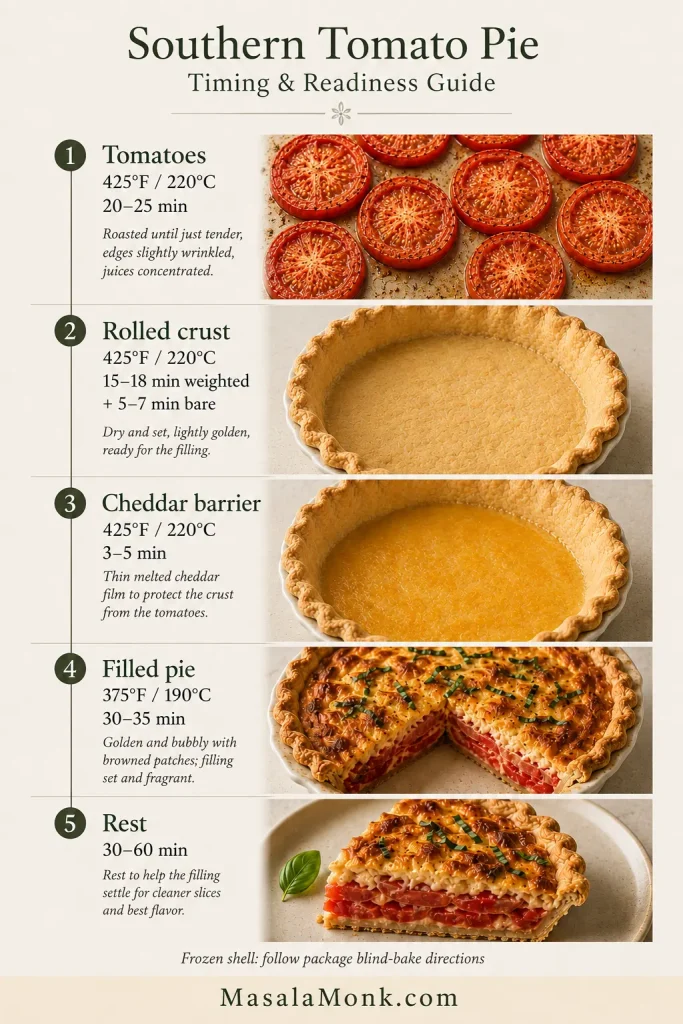
| Stage | Temperature | Starting Time | Ready When |
|---|---|---|---|
| Tomatoes | 425°F / 220°C | 20–25 min | Slightly wrinkled, deeper in color, matte rather than wet-looking, very little thin juice |
| Weighted rolled crust | 425°F / 220°C | 15–18 min | Shell has set and the rim is beginning to color |
| Unweighted rolled crust | 425°F / 220°C | 5–7 min | Base looks dry and lightly golden |
| Preformed frozen shell | Per package directions | Per package directions | Base is dry, set and lightly golden |
| Cheddar barrier | 425°F / 220°C | 3–5 min | Cheese has melted into a thin layer |
| Filled pie | 375°F / 190°C | 30–35 min | Crust deeply golden, topping browned in patches, gentle bubbling, center moves together |
| Rest | Room temperature | 30–60 min | Filling has settled enough for the kind of slice you want |
By the end of the bake, the tomatoes should smell sweeter, the cheese will have browned in patches and the pastry should look unmistakably baked.
How Long Should It Cool?
The hardest part of this recipe may be leaving it alone once it comes out of the oven.
For a warm, softer wedge, about 30 minutes is enough. For clean slices at the table, give it closer to 45–60 minutes.
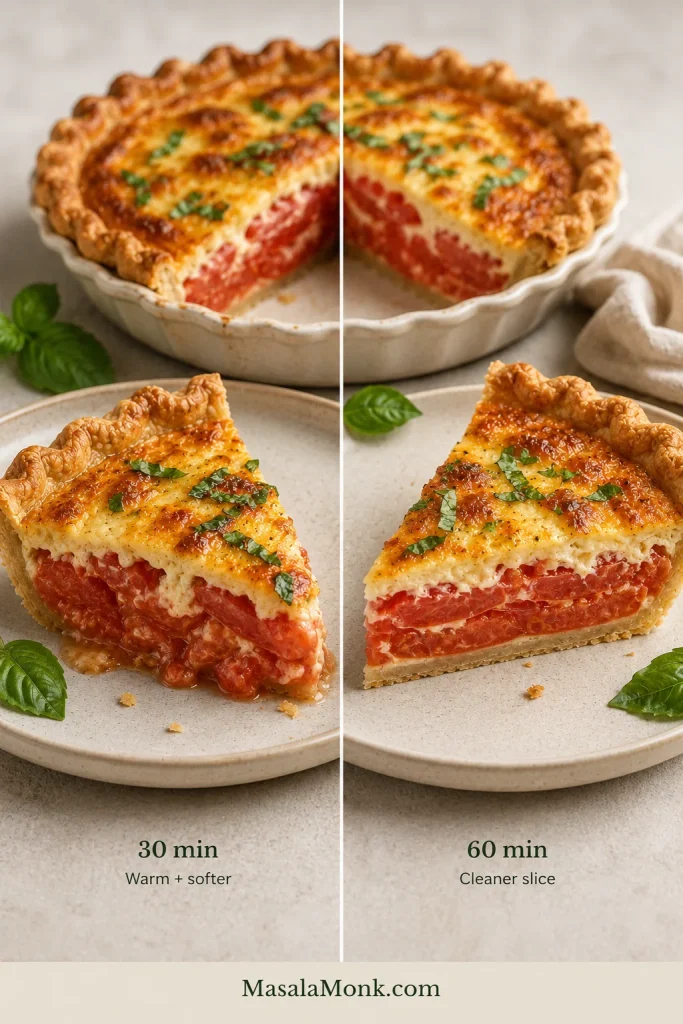
By then the kitchen will smell like toasted pastry, warm tomato, cheddar and basil, and the filling will have settled without going cold.
Tomato Pie Troubleshooting: What Went Wrong?
“Soggy” can mean several different things. Match the fix to what you actually see.
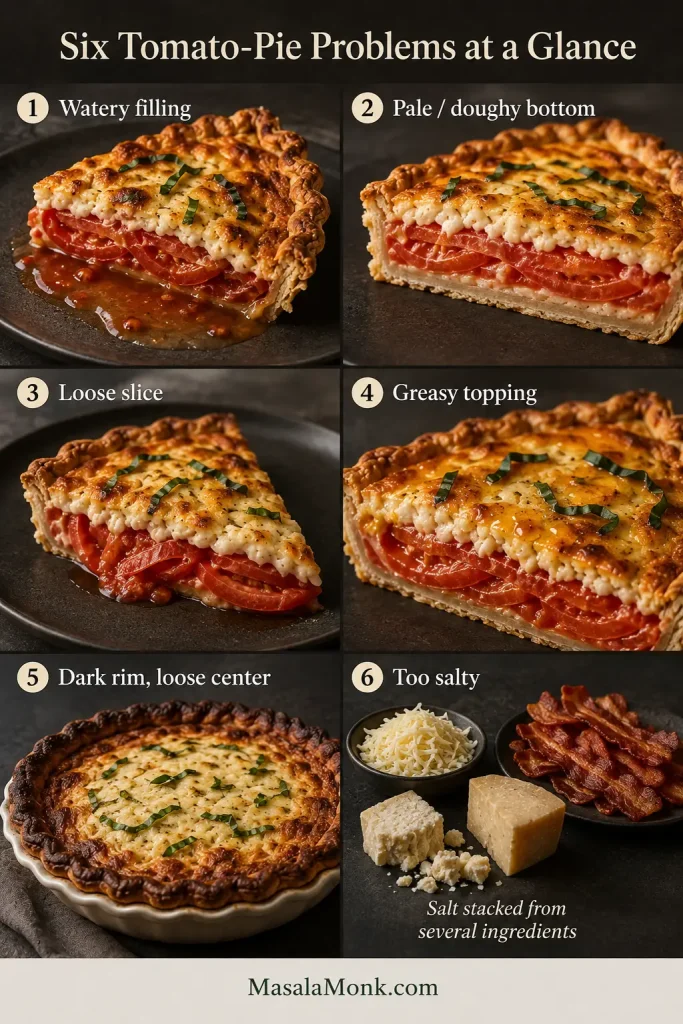
| What You See | Likely Cause | Fix |
|---|---|---|
| Watery filling; tomato juice pools around the slice | Tomatoes entered the pie too wet | Give them more space or roasting time; blot slices that release juice while waiting |
| Pale, doughy bottom while the filling looks fine | Crust needed more pre-baking or stronger bottom heat | Give the base more color before filling and keep the filled pie low in the oven |
| Loose slice without much free liquid | The pie was cut too hot | Let the filling settle longer before slicing |
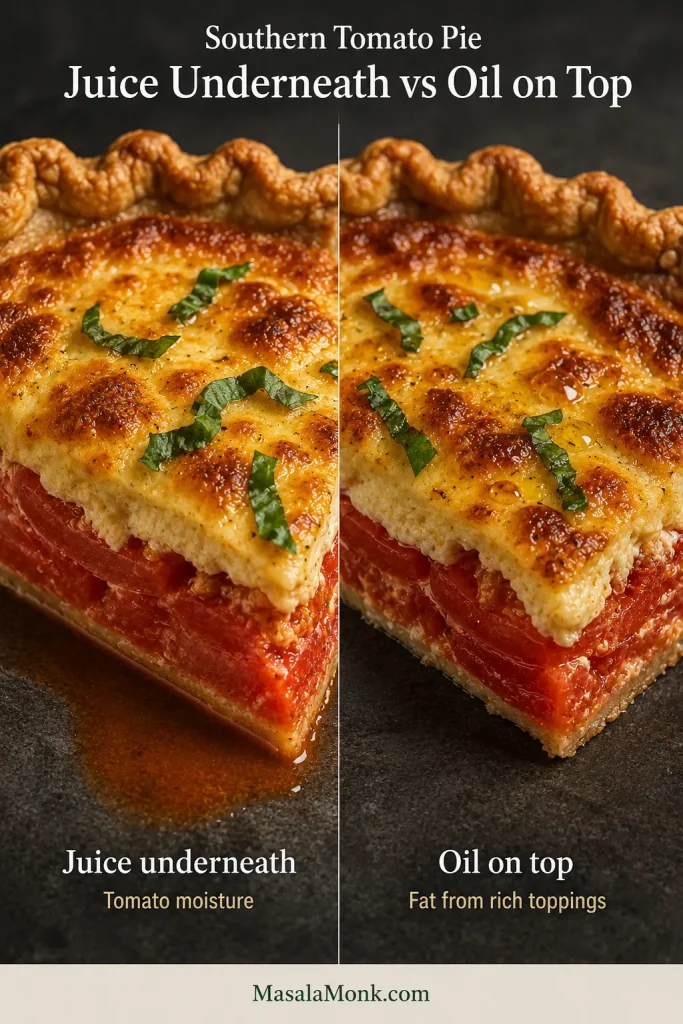
| Clear or orange fat gathers on top | Too many rich ingredients stacked together | Use pesto modestly, drain bacon well and avoid another heavy cheese layer |
| Dark rim, loose center | Crust browned faster than the center cooked | Shield the rim with foil and keep baking |
| Harsh, overly salty topping | Salt from tomatoes, cheese and additions stacked up | Measure the tomato salt and taste before adding more when using Pecorino or bacon |
Juice underneath? Think tomatoes. Oil on top? Think cheese, mayo, bacon or pesto. They can look similar once the pie is cut, but they need completely different fixes.
Ready to try again? Back to Recipe · Times & Doneness
What Makes This a Southern Tomato Pie?
Ripe fresh tomatoes, pastry and a creamy cheddar-mayo topping put this firmly in the Southern tomato-pie family. Basil, onion, bacon and other cheeses vary from one kitchen to another, but tomatoes, pastry and a rich cheese layer sit at the center of the dish.
The name can be confusing. Trenton/New Jersey and Utica tomato pies belong to pizza traditions, while green tomato pie can mean something entirely different: a sweet, spiced pie made with unripe tomatoes. This recipe is the Southern savory version.
Easy Variations
Every addition brings something besides flavor—especially water, fat or salt. Keep those three in mind and the basic balance of the pie is much easier to preserve.
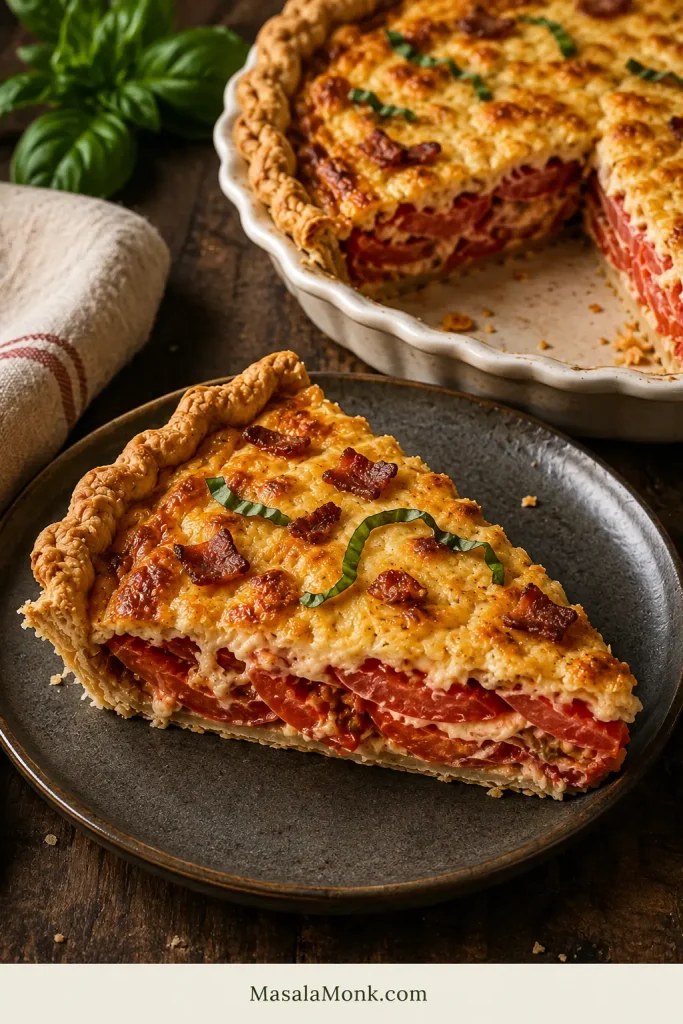
With Bacon
Add crisp, well-drained bacon between the tomatoes and topping. If you want an easy small-batch method, this crispy air fryer bacon recipe renders the fat well and lets the strips firm up after cooking. Cool and drain the bacon before crumbling it into the pie, and remember that it brings plenty of salt of its own.
With Pesto
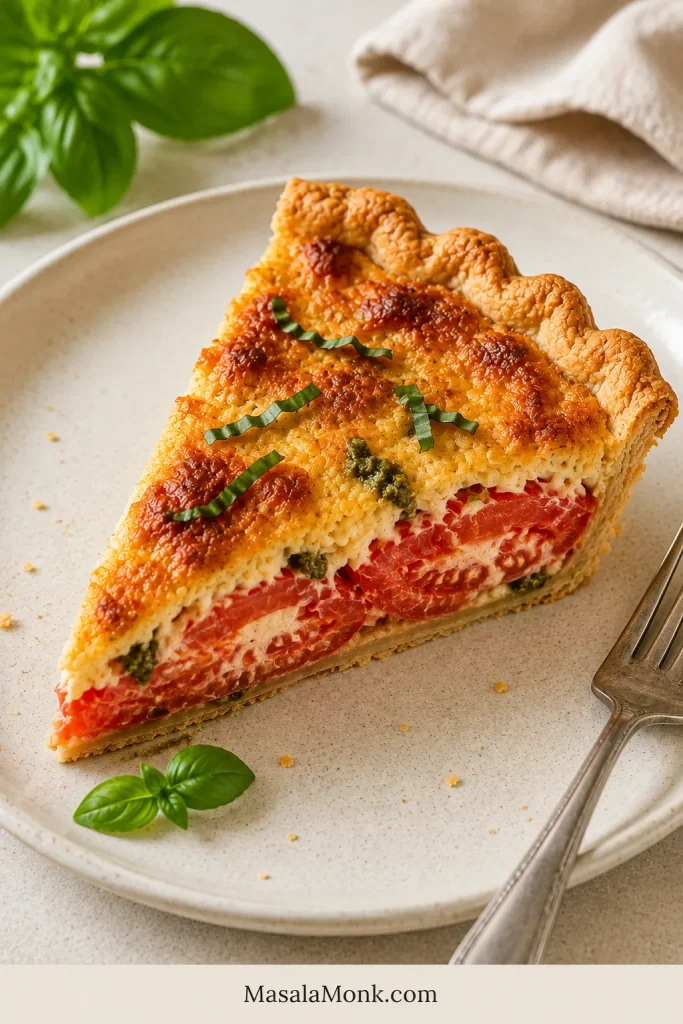
Use pesto sparingly. A classic basil pesto already contains olive oil, nuts and Parmesan, so a thick layer beneath the cheese topping can make the finished pie greasy. A thin smear is plenty. If what you mainly want is basil aroma, fresh leaves give you that lift with much less added fat.
Two smaller additions: Sautéed onion or shallot adds sweetness while shedding some of its moisture before it reaches the filling. A modest handful of fresh corn adds little bursts of sweetness and texture.
Can You Make It Without Mayo?
Yes, but do not simply leave the mayonnaise out of this recipe. Mayo supplies fat, acidity, creaminess and binding, so a completely mayo-free pie needs a topping formulated around another binder.
If it is mainly the mayo flavor you want to soften, sour cream can be part of a lower-mayo topping. I would not swap it cup for cup here, though; changing the binder changes the way the topping sets. For a completely mayo-free version, use a recipe built specifically for that style.
What to Serve With Tomato Pie
The pie is rich enough that something cool, crisp or sharp alongside it works especially well.
This cucumber salad with vinegar, dill and onion is a particularly good match because the crunch and acidity cut through the creamy cheese topping.
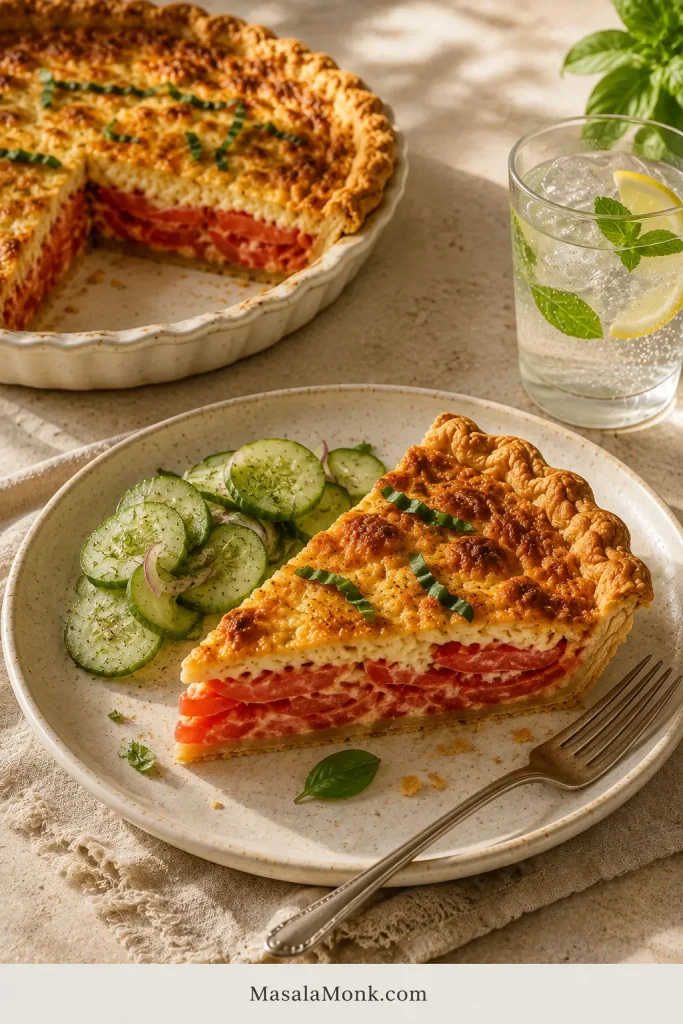
- Green salad with a sharp vinaigrette
- Green beans
- Corn on the cob
- Grilled chicken
- Grilled shrimp
- Fresh fruit or cold watermelon
For brunch, add eggs, fruit and a simple salad. For a summer lunch, a generous wedge and something cold and crunchy alongside it may be all you need.
Make Ahead, Store and Freeze
Make Ahead: What to Prep Early
If I were preparing this a day ahead, I would stop before assembly.
- Roast the tomatoes and refrigerate them once cool.
- Blind-bake the crust, let it cool completely and keep it covered.
- Grate the cheddar and Parmesan and refrigerate them.
- Stir the mayonnaise and Dijon together if you want one less job later, but leave the fresh basil whole until assembly.
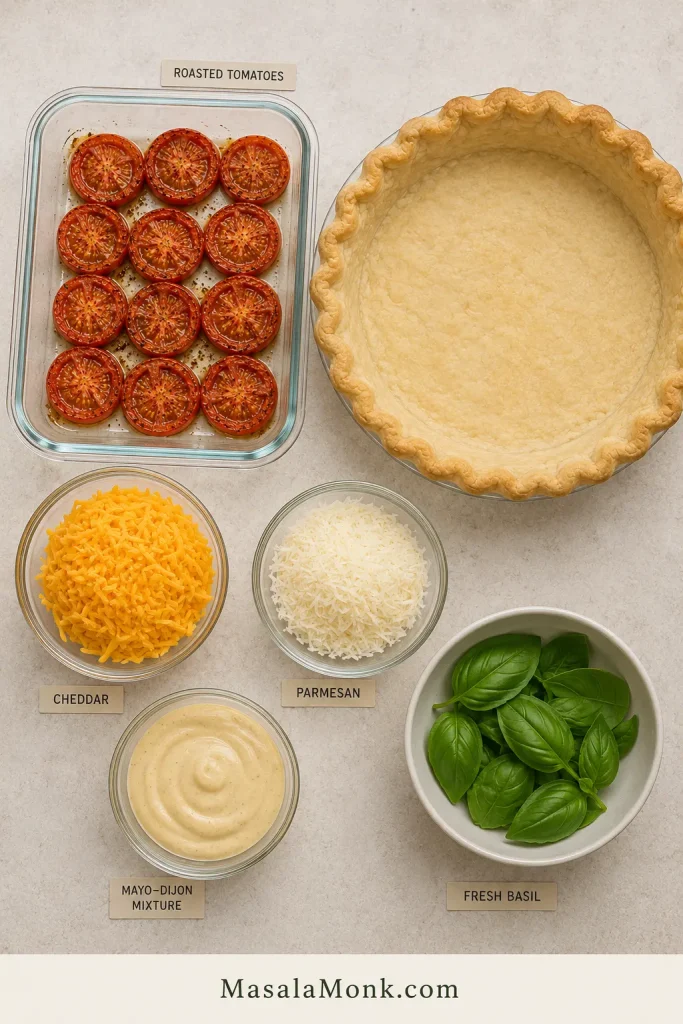
When you are ready to bake, take the roasted tomatoes from the refrigerator as you start preheating the oven so they can lose some of their chill. Melt the 40 g cheddar over the pre-baked crust, combine the remaining cheese and freshly cut basil with the mayo-Dijon mixture, then assemble the pie.
If the filling is still quite cold when it goes into the oven, the final bake may take a little longer. Follow the browned topping, gentle bubbling and center-movement cues rather than forcing it to finish at the usual minute mark.
Storing and Reheating Leftovers
After baking, keep the pie at room temperature for no more than 2 hours total, including cooling and serving time. If the surrounding temperature is above 90°F / 32°C, limit that to 1 hour. Refrigerate leftovers promptly, keep them covered and use them within 3–4 days. These timings follow USDA leftover-safety guidance.
For the best crust, warm slices in an oven or toaster oven at about 325–350°F / 165–175°C. Reheated leftovers should reach 165°F / 74°C in the center. A preheated sheet pan underneath the slice can help crisp the base again.
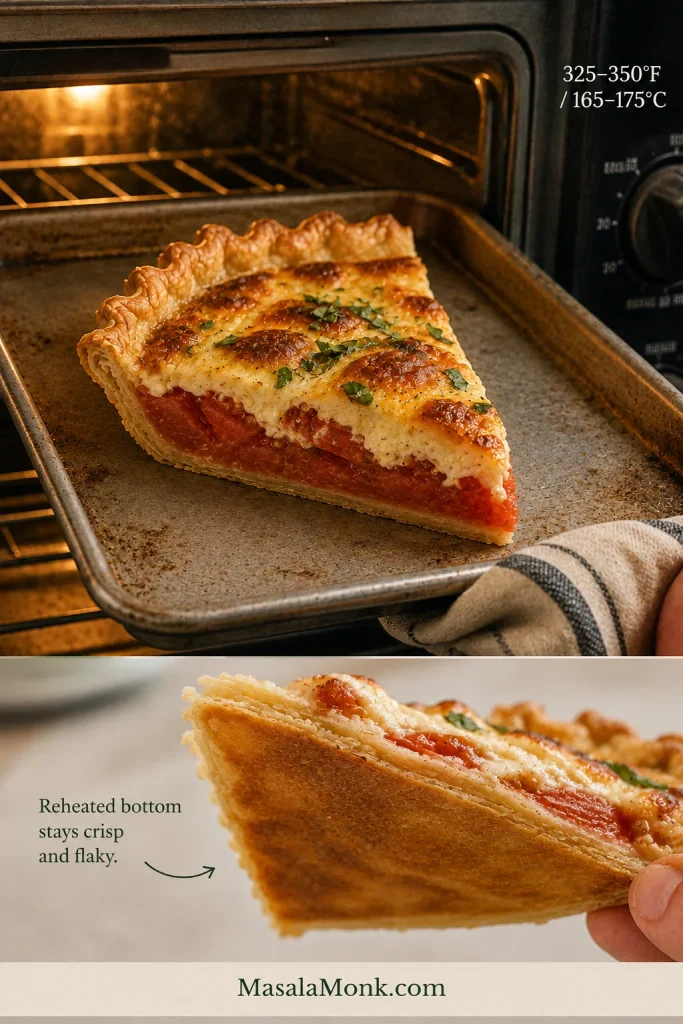
The microwave is fine when speed matters, but expect softer pastry.
Freezing
You can freeze the pie, but it would not be my first choice if crust texture matters.
Tomatoes soften after freezing and thawing; Penn State Extension likewise recommends thawed frozen tomatoes for cooked uses rather than expecting fresh tomato texture. The pastry also tends to come back softer than it was freshly baked.
If you know in advance that you will not need the whole pie, preparing the components ahead and baking closer to serving usually gives you the better result.
Useful shortcuts: Back to Recipe · FAQ · Back to Top
FAQ
Do I need to peel the tomatoes? No. Roasting and baking soften the skins, and leaving them on helps the slices retain their shape. Peel them only if your tomatoes have unusually tough skins or you strongly dislike the texture.
Should I remove the seeds? Not routinely. The seed cavities contain plenty of juice, so removing some can help with exceptionally watery tomatoes, but roasting gives you a more consistent way to manage moisture.
Can I make it gluten-free? Yes. Use a reliable gluten-free pie crust and follow the same tomato-drying and pre-baking method. Check the crust manufacturer’s directions because gluten-free pastry can brown and handle differently from wheat-based pastry.
The Slice You Are Looking For
By the time the pie has rested, the cheese should have settled into the tomatoes and the crust underneath should still feel like part of the dish. Run the knife cleanly through the tomato skins and pastry, then lift the first wedge.
The bottom should come with it.
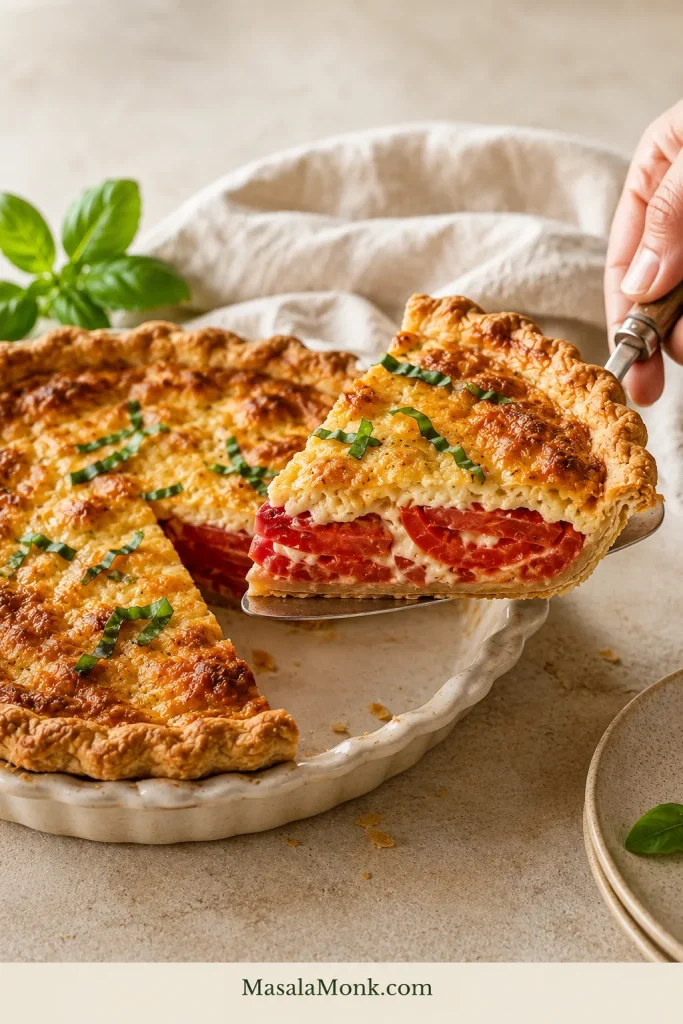
You get flaky pastry underneath, concentrated ripe tomato through the middle, sharp creamy cheese on top and fresh basil cutting through the richness.
Nothing running across the plate. Nothing drowning anything else.
Just a very good Southern tomato pie.








