Posted on 6 Comments

Hot Chocolate Coffee: 3 Easy Recipes (Cocoa, Mix, or Espresso)

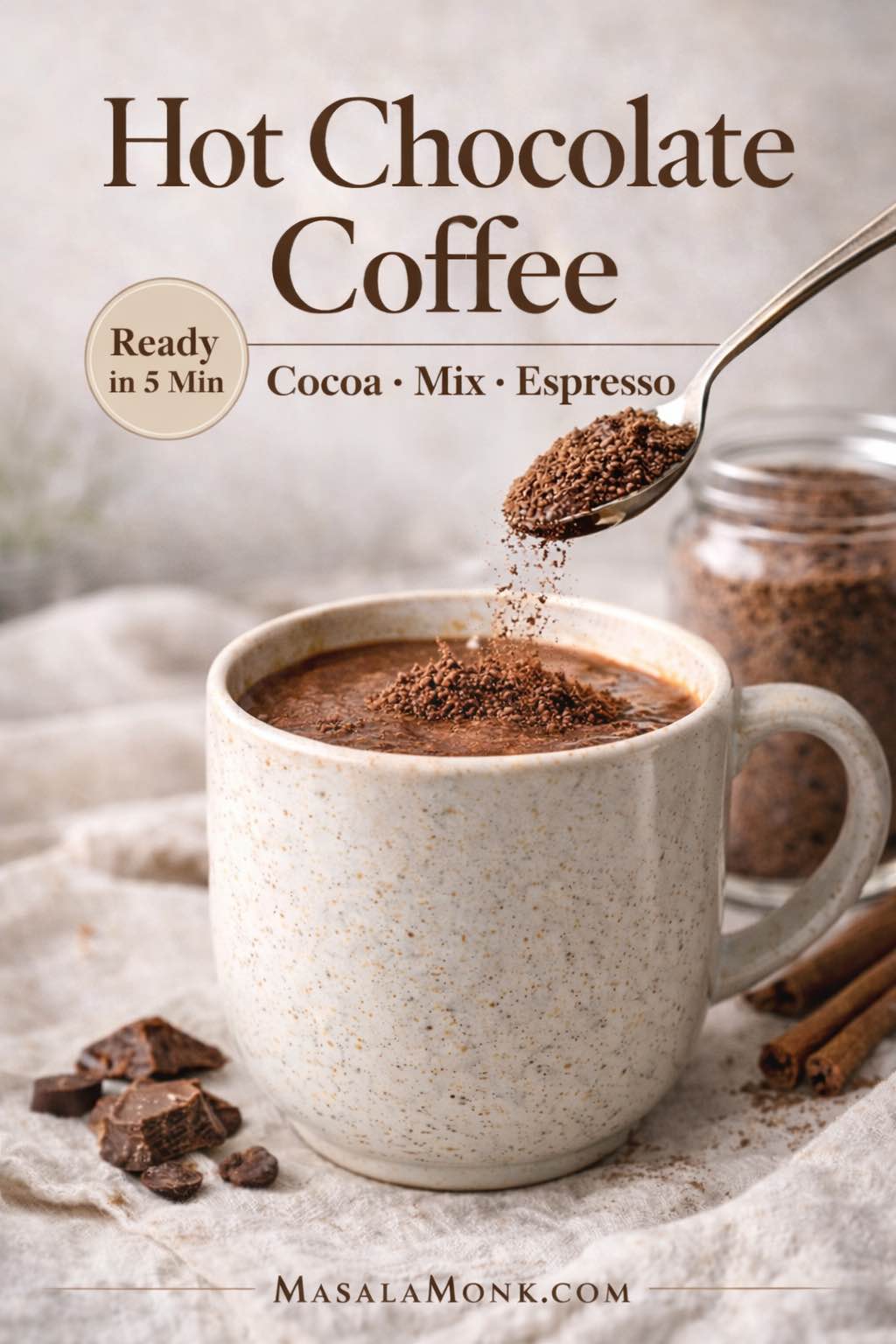
Hot chocolate coffee in a ceramic mug with cocoa powder sprinkled on top, showing three easy ways: cocoa, mix, and espresso

Some days call for a clean, straight cup of coffee. Other days beg for hot chocolate—thick, sweet, and unapologetically comforting. Then there are the in-between days, when you want both: the aroma and edge of coffee plus the soft, chocolatey warmth of cocoa. That’s where hot chocolate coffee earns its place.

Hot chocolate coffee is simple in concept—coffee and chocolate together in one drink—but it’s surprisingly flexible in practice. You can make it bold or mellow, intensely chocolatey or lightly kissed with cocoa. You can go fast with a packet, slow with a real cocoa paste, or café-style by adding espresso to a proper hot chocolate base. And when the weather refuses to match your cravings, you can even pivot into a chilled version—hot cocoa cold brew—so you still get chocolate comfort without the steam.

This is a reader-first guide built to be genuinely useful. You’ll get three reliable methods (each with clear steps), the small decisions that make the difference between “fine” and “I’m making this again,” a set of ratios you can memorize, variations that taste distinct (not like the same drink in a new outfit), plus a crowd-friendly approach for gatherings that won’t punish your equipment.

If you want a stronger foundation for choosing a coffee base—because strength matters when chocolate enters the picture—this guide to coffee brewing methods is a helpful companion.


Hot chocolate coffee at a glance

If you want the “what should I do today?” answer before you read a word more:

  • Best everyday version: cocoa paste + strong brewed coffee + milk
  • Fastest version: hot chocolate mix in coffee (two-minute comfort)
  • Most café-like version: espresso added to hot chocolate (deep, dessert-forward, bold)
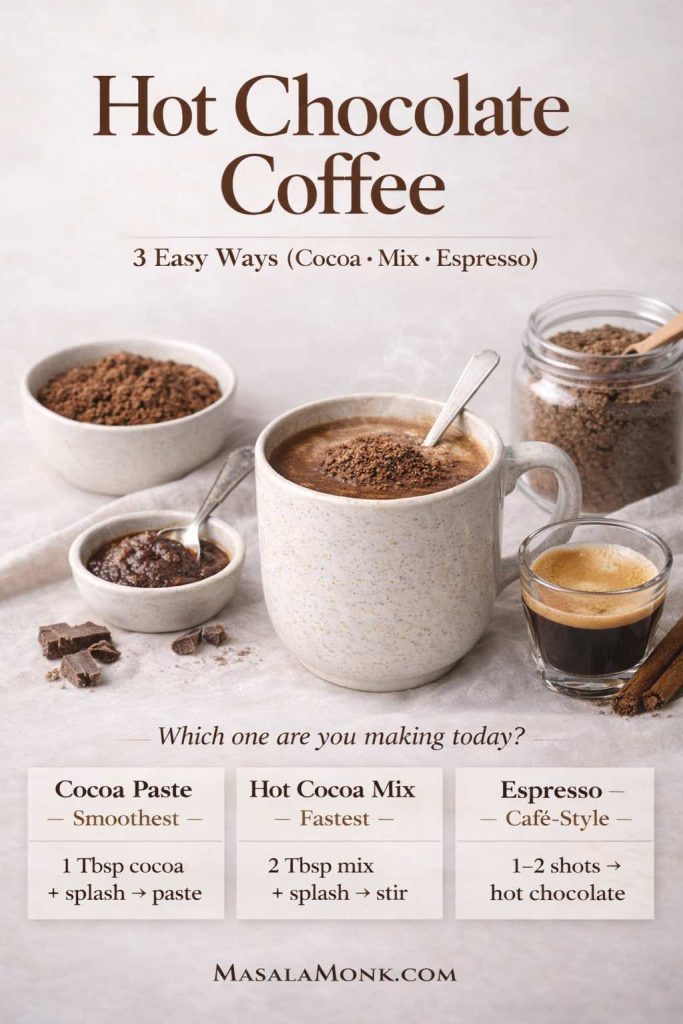
Hot chocolate coffee guide showing 3 easy ways—cocoa paste, hot cocoa mix, and espresso—with simple ratios on a cozy linen background.
Hot chocolate coffee at a glance: choose cocoa paste for the smoothest mug, hot cocoa mix for the fastest fix, or espresso for a café-style finish—each with a simple ratio you can remember.

Each method works. The difference is mood, time, and whether you want coffee leading or chocolate leading.

Also Read: Cold Brew Espresso Martini: How to Make It (Step-by-Step Recipe)


Coffee and hot chocolate: what it is, and why it works

At its heart, hot chocolate coffee is exactly what it sounds like: coffee combined with chocolate in one drink. The chocolate might come from cocoa powder, from hot chocolate mix, from chocolate syrup, or from a full hot chocolate base made with milk. The coffee might be brewed coffee, espresso, moka pot concentrate, instant coffee, or cold brew.

The reason it works is beautifully simple: coffee brings bitterness, roastiness, and aroma; chocolate brings richness, sweetness, and body. When the balance is right, the mug feels cohesive—like one drink that happens to have two kinds of comfort, instead of coffee and cocoa competing for attention.
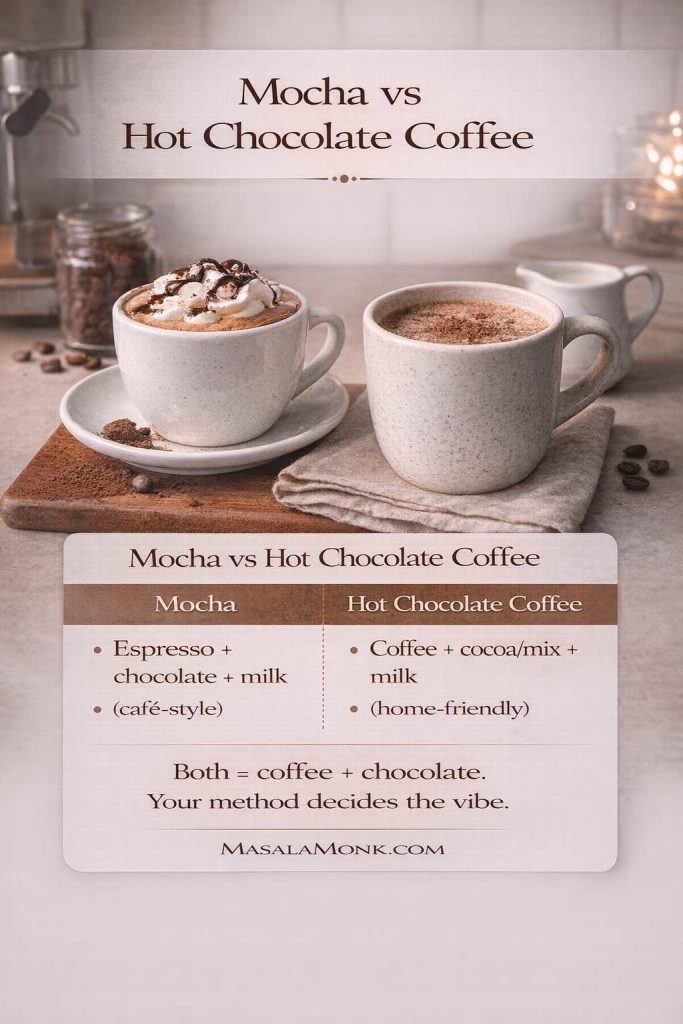
Mocha vs hot chocolate coffee comparison infographic showing two drinks side by side and explaining mocha as espresso with chocolate and milk versus hot chocolate coffee as coffee with cocoa or mix and milk.
Mocha vs hot chocolate coffee: both are coffee-and-chocolate drinks, but mocha is espresso with chocolate and milk (café-style), while hot chocolate coffee uses brewed coffee with cocoa or hot cocoa mix plus milk (home-friendly).

You’ll often hear people call this a “mocha.” In most cafés, a mocha usually means espresso + chocolate + milk (often with foam). Definitions support the same idea; you can see it in the Cambridge Dictionary’s mocha entry and Merriam-Webster’s mocha definition. Still, you don’t need the label to enjoy the mug. If anything, thinking in terms of “hot chocolate coffee” helps because it keeps the drink flexible—you can go coffee-forward, chocolate-forward, or right down the middle.

And that’s the magic: you decide what the drink becomes, every single time. One day you’re adding hot chocolate to coffee for a quick cozy upgrade. Another day you’re adding coffee to hot chocolate because you want chocolate to lead and caffeine to quietly support. Both are valid. Both are delicious. And both can happen at home, without a café line or a complicated setup.

Also Read: Cranberry Moscow Mule Recipe: A Festive Holiday Cocktail With Easy Variations
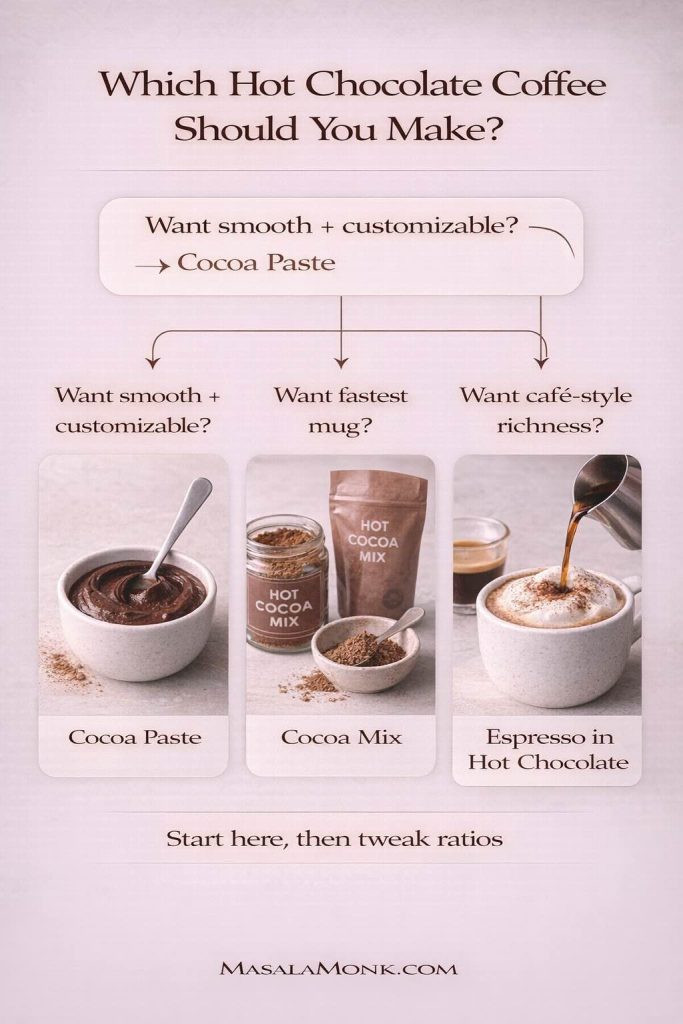
Which hot chocolate coffee should you make infographic comparing three methods: cocoa paste for smooth customizable flavor, cocoa mix for the fastest mug, and espresso in hot chocolate for café-style richness.
Not sure where to start? This quick guide helps you pick the best hot chocolate coffee method—cocoa paste for a smooth customizable mug, cocoa mix for the fastest hot cocoa coffee, or espresso in hot chocolate for a richer café-style drink.

The two decisions that change everything

Before we jump into the methods, two small choices matter more than people expect:

  1. How strong your coffee is
  2. How you introduce cocoa

These aren’t fussy details. They’re the difference between “a little watery” and “exactly what I wanted.”

1) Coffee strength: don’t let chocolate bully your coffee

Chocolate has a surprisingly loud voice. If your coffee is weak, the drink can drift into “sweet cocoa with a faint coffee memory.” Sometimes that’s fine. Often, it’s not what you were craving—especially if you wanted coffee aroma and a bit of roast edge.
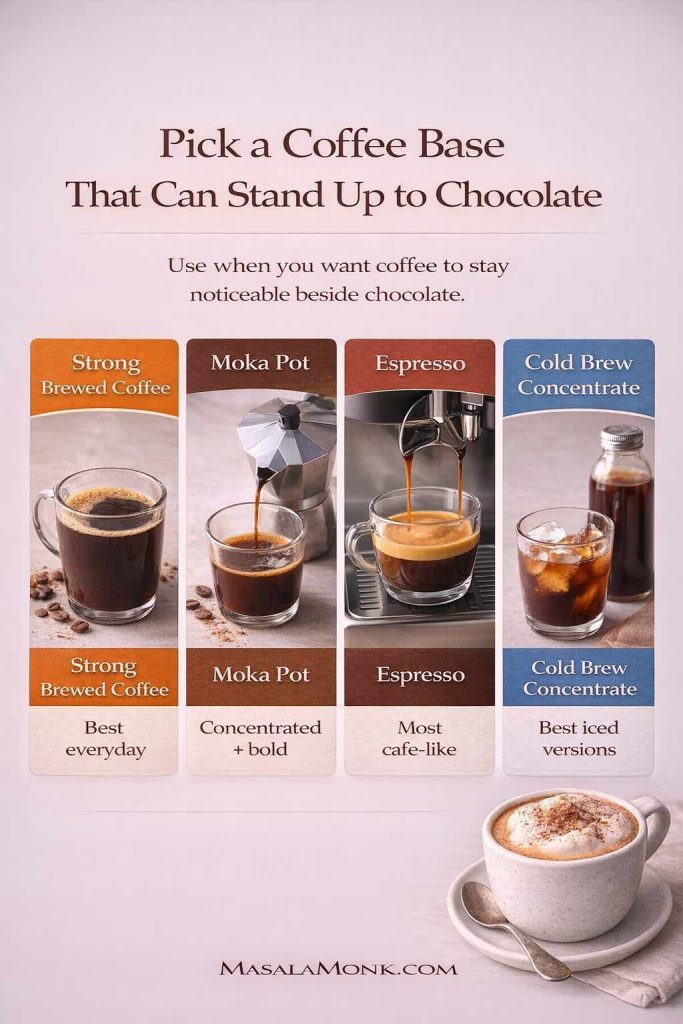
Coffee base strength selector infographic for hot chocolate coffee showing four options—strong brewed coffee, moka pot, espresso, and cold brew concentrate—with quick notes on when to use each.
Chocolate can overpower a weak brew—use this quick selector to choose a coffee base that stays noticeable beside cocoa: strong brewed coffee for everyday mugs, moka pot for bold concentration, espresso for the most café-like depth, and cold brew concentrate for iced hot cocoa coffee.

So aim for a base that can hold its own:

  • Robust brewed coffee (slightly stronger than your usual cup)
  • Moka pot coffee (concentrated and bold)
  • Espresso (one or two shots)
  • Cold brew concentrate (for iced versions)

If you want to sharpen your moka pot technique, this moka pot mastery guide is a great refresher. And if you want clarity on espresso—especially outside café contexts—this quick espresso guide is a useful primer.

2) Cocoa clumps: always give cocoa a head start

Cocoa powder doesn’t dissolve like sugar. If you toss cocoa into a full mug of coffee, it tends to float, clump, and form dry pockets that never fully integrate. That’s why so many people conclude that coffee with hot chocolate powder “always turns gritty.” It doesn’t have to.
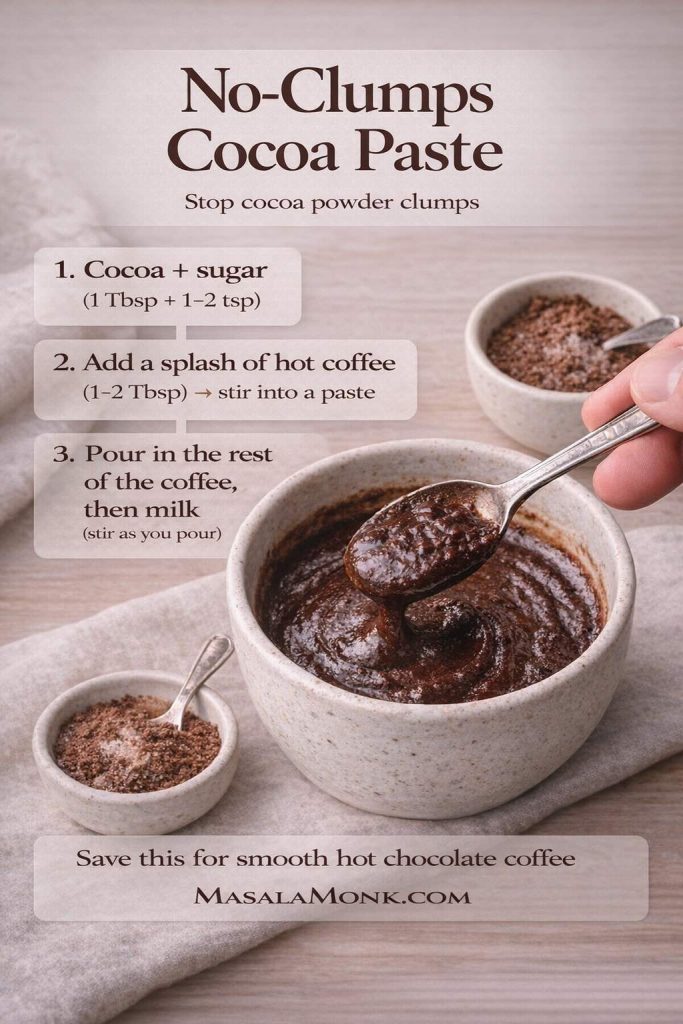
No-clumps cocoa paste method for hot chocolate coffee, showing cocoa and sugar mixed with a splash of hot coffee to make a smooth paste before adding the rest of the coffee and milk.
Stop cocoa powder clumps in coffee: mix cocoa and sugar with a splash of hot coffee to make a smooth paste, then pour in the rest of the coffee and finish with milk for a silky hot chocolate coffee.

The fix is simple: make a paste first. Cocoa + sweetener + a small splash of hot coffee, stirred until smooth and glossy. Once the cocoa is hydrated, it blends beautifully.

This one habit turns hot chocolate coffee from a gamble into a repeatable ritual.

Also Read: Baked Ziti Recipe Collection: 15 Easy Variations


Method 1: Hot chocolate coffee with cocoa powder (the best everyday version)

If you want the version you’ll come back to again and again, start here. This method is controllable, consistent, and easy to personalize. It also scales well—once you learn it, you can adjust sweetness, intensity, and texture without needing a new recipe every time.

Time: 3–5 minutes
Difficulty: Easy
Best for: Balanced mugs that taste intentional

Ingredients (one generous mug)

  • 200–240 ml hot brewed coffee (strong is best)
  • 1 tablespoon unsweetened cocoa powder
  • 1–2 teaspoons sugar (or jaggery powder), to taste
  • 60–120 ml milk (dairy, oat, soy—whatever you like)
  • ¼ teaspoon vanilla (optional)
  • Tiny pinch of salt (optional, but genuinely helpful)
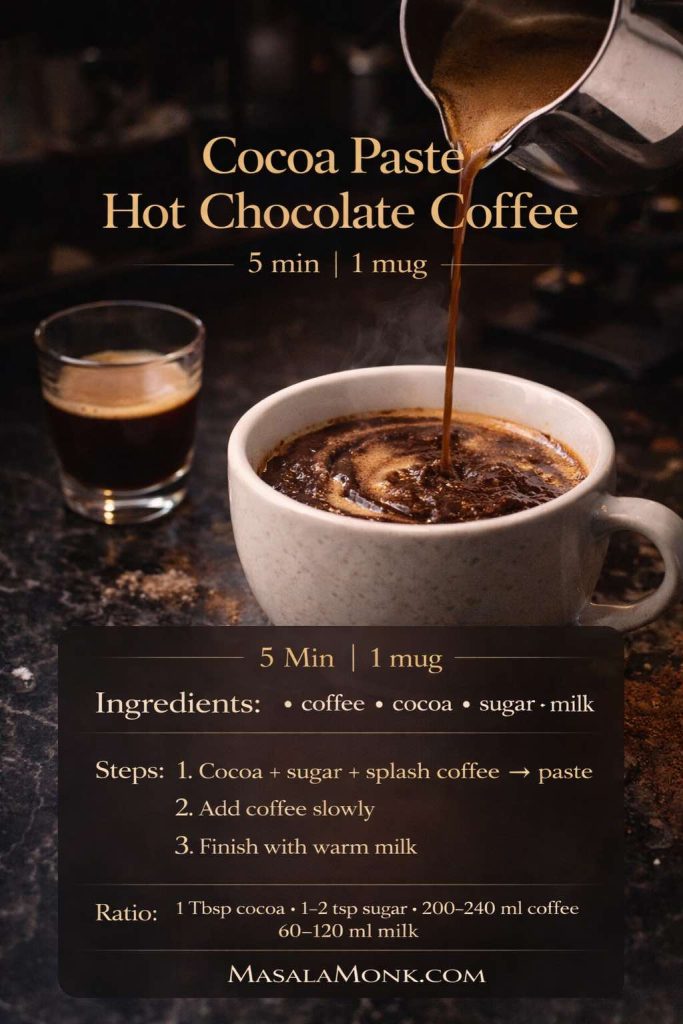
Cocoa paste hot chocolate coffee recipe card with espresso being poured into a mug, showing ingredients, quick steps, and ratio for a 5-minute drink.
Cocoa paste hot chocolate coffee (5 minutes): stir cocoa and sugar with a splash of coffee into a smooth paste, pour in the rest of the coffee slowly, then finish with warm milk for a rich, café-style mug.

Step-by-step method

Step 1: Make the cocoa paste (this is the whole trick)

Add cocoa powder and sugar to your mug. Pour in 1–2 tablespoons of hot coffee (hot matters; lukewarm coffee makes cocoa harder to smooth). Stir until you have a glossy paste—no visible dry cocoa, no gritty pockets.

Think of this as a miniature chocolate “starter.” Once it’s smooth, the rest is easy.

Step 2: Build the drink gradually

Add the remaining coffee slowly, stirring as you go. This keeps the drink silky and prevents cocoa from clumping. It also helps the chocolate flavor distribute evenly so you don’t get “chocolate at the bottom, coffee at the top.”

Step 3: Soften with milk

Add warm milk until the mug feels balanced. More milk makes it gentler and creamier; less milk keeps it coffee-forward. If you like your coffee bold, start with a small splash and adjust. If you want a softer, rounder drink, be generous.

Step 4: Finish thoughtfully (optional, but worth it)

A little vanilla can make chocolate taste rounder and more dessert-like, even if you don’t add much sugar. A tiny pinch of salt can make chocolate taste deeper without making the drink taste salty. It’s subtle, but it works.

How to tune it without overthinking

This is where the method becomes yours:

  • Too intense? Add milk before adding sugar. Milk changes both texture and flavor balance.
  • Too bitter? Increase sugar slightly or reduce cocoa by ½ teaspoon next time.
  • Too mild? Add ½ teaspoon more cocoa and stir briskly (or use a stronger coffee base next time).
  • Too sweet? Reduce sugar, then add a pinch of salt or a touch more cocoa to deepen chocolate flavor without leaning on sweetness.
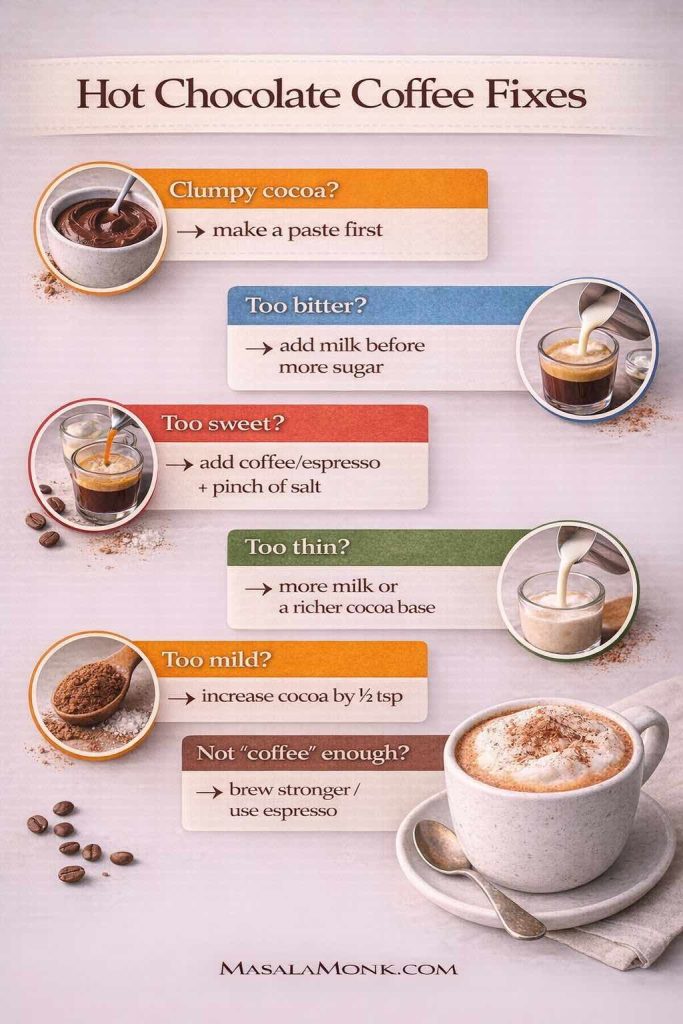
Hot chocolate coffee fixes infographic with color-coded troubleshooting tips for clumpy cocoa, too bitter, too sweet, too thin, too mild, and not coffee enough.
Hot chocolate coffee troubleshooting, fast: fix clumpy cocoa by making a paste first, soften bitterness with milk, balance sweetness with stronger coffee and a pinch of salt, and adjust cocoa or milk to dial in body and flavor.

A smoother shortcut: chocolate syrup

If you want something that blends instantly—especially for iced versions—chocolate syrup can deliver a seamless chocolate base with minimal effort. If you like making your own, this quick homemade chocolate syrup is fast enough to feel practical.
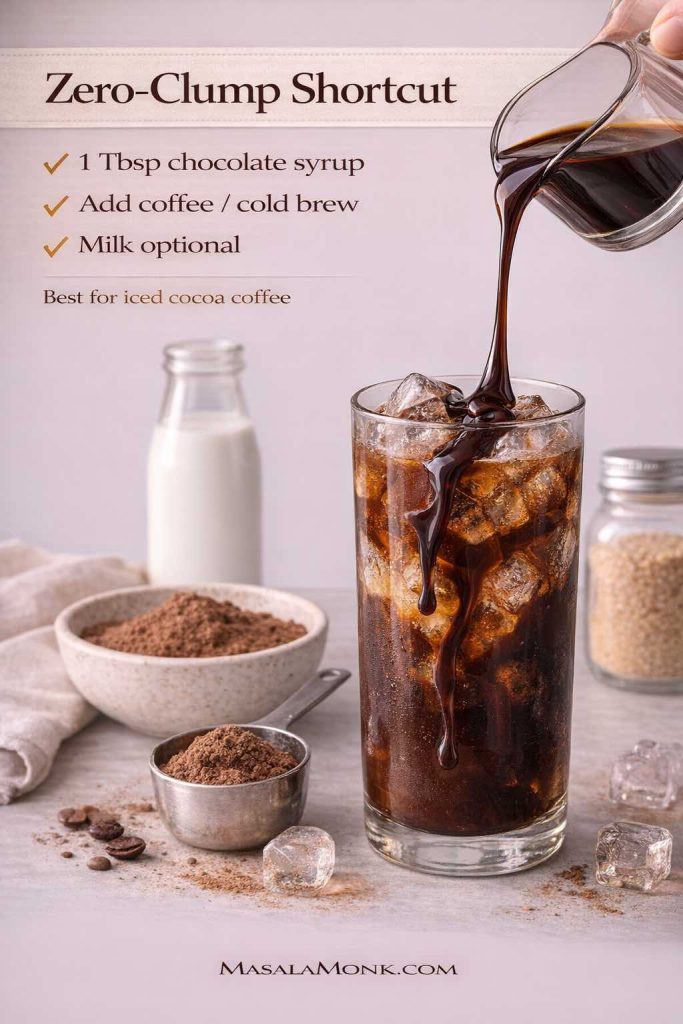
Zero-clump shortcut infographic showing chocolate syrup being poured into an iced coffee/cold brew glass with steps: 1 Tbsp chocolate syrup, add coffee or cold brew, milk optional.
Zero-clump iced cocoa coffee shortcut: add 1 tablespoon chocolate syrup first, pour in coffee or cold brew, then swirl—finish with a splash of milk if you want it creamier. It’s the smoothest way to get a chocolate-coffee drink without gritty cocoa powder.

A DIY “hot chocolate coffee mix” you can keep in a jar

If you like the convenience of packets but want a homemade approach, make a small jar of dry blend: cocoa + sugar + a pinch of salt. Then you can make hot chocolate coffee in seconds—just scoop your mix, add a splash of coffee to form a paste, and build the mug.
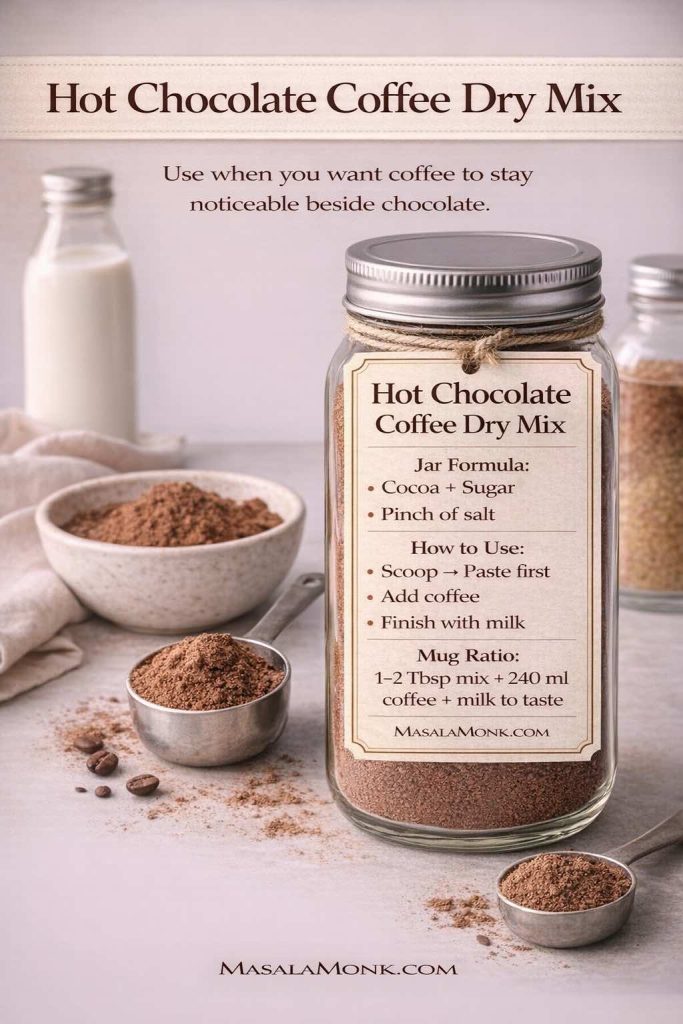
Hot chocolate coffee dry mix jar label showing cocoa, sugar, and a pinch of salt with simple “scoop → paste first → add coffee → finish with milk” instructions and a 1–2 tablespoon per mug ratio.
DIY hot chocolate coffee dry mix (make once, use all week): combine cocoa + sugar + a pinch of salt in a jar, then for each mug scoop 1–2 tablespoons, stir into a smooth paste with a splash of hot coffee, top up with coffee, and finish with milk for a fast, clump-free hot cocoa coffee.

If you want a deeper ingredient lens (and why cocoa type changes flavor), this cacao vs chocolate guide is worth reading.

Also Read: Green Chutney Recipe (Coriander–Mint / Cilantro Chutney)


Method 2: Hot cocoa mix in coffee (the quickest mug you’ll ever love)

Some days don’t invite ceremony. They demand speed, comfort, and a clean path from “not awake” to “functioning.” This is where hot chocolate mix shines.

Yes—adding hot cocoa mix to coffee can taste genuinely good. The key is not dumping powder into a full mug and hoping for the best. The “smooth way” takes about ten extra seconds and saves the whole drink.

Time: 2 minutes
Difficulty: Easiest
Best for: Quick comfort, minimal cleanup

Ingredients (one mug)

  • 200–240 ml hot coffee
  • 2 tablespoons hot chocolate mix (start here)
  • Optional: 30–90 ml milk
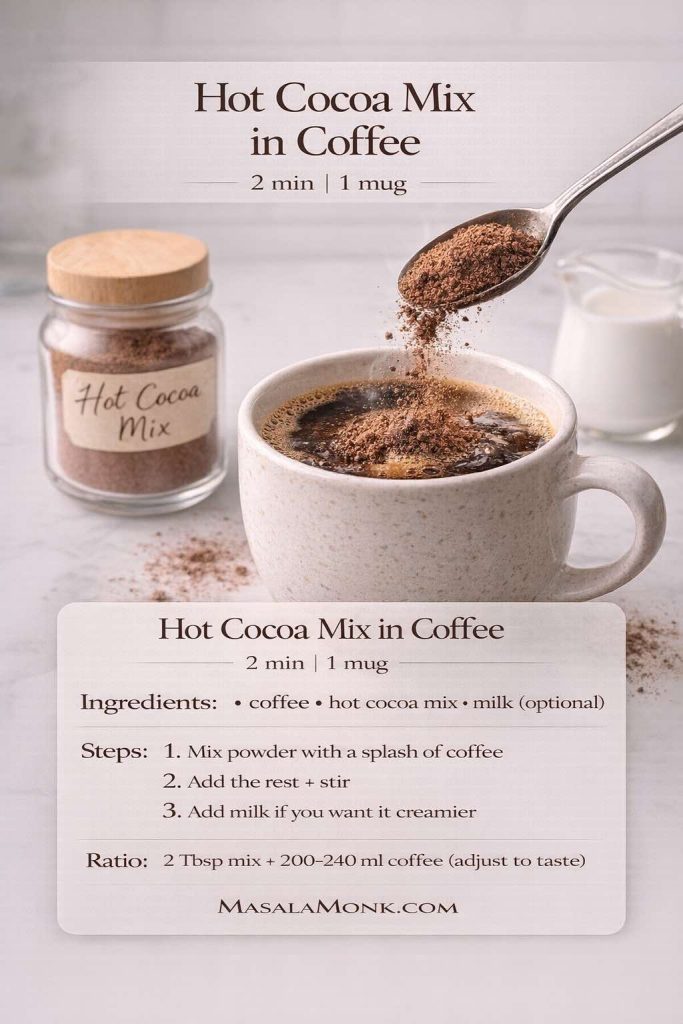
Hot cocoa mix in coffee recipe card showing cocoa powder falling from a spoon into a mug of coffee, with 2-minute steps and ratio for a smooth drink.
Hot cocoa mix in coffee (2 minutes): stir the powder with a small splash of hot coffee first, then top up and mix well—add a little milk if you want a creamier hot chocolate coffee drink.

Step-by-step method

Step 1: Start with the mix

Add your hot chocolate mix to the mug.

Step 2: Add a small splash of coffee and stir smooth

Pour in just a little hot coffee and stir until the powder is fully moistened and smooth. This is the same logic as the cocoa paste method, only you’re working with a sweeter, pre-blended powder. It prevents the classic “powdery pockets” problem.

Step 3: Add the rest of the coffee and stir again

Now build the mug with the remaining coffee. Stir well.

Step 4: Add milk if you want it creamier

A splash of milk rounds everything out. If your hot chocolate mix includes powdered milk, you might not need much. If it’s a dark or intense mix, milk can help balance it without adding more sugar.

How to make it taste less “packet-like”

Some mixes lean very sweet. That’s not always bad, but if you want more depth:

  • Use 1 tablespoon of mix + 1 teaspoon cocoa powder
  • Add a small splash of milk

This gives you more real cocoa flavor without overloading the mug with sugar.

When you want a “real” hot chocolate baseline

It’s helpful to know what truly rich hot chocolate tastes like, even if you don’t make it every time. A straightforward, dependable reference is this homemade hot chocolate recipe. Once you have that flavor in your mind, it becomes easier to adjust your coffee-and-chocolate balance: you’ll know when you want coffee to lead versus when you want chocolate to lead.

Also Read: Paper Plane Cocktail Recipe + Best Amaro Substitutes & Tips


Method 3: Espresso in hot chocolate (café-style, deeply satisfying)

If you want the chocolate to feel like a true base—rich, thick, and cozy—then espresso in hot chocolate is your move. Instead of adding cocoa to coffee, you’re adding coffee to cocoa. That sounds like a small change, but the result often feels dramatically more indulgent.

This is also the method that most closely resembles what cafés serve when you order a mocha: espresso + chocolate + milk, balanced and bold.

Time: 5–7 minutes
Difficulty: Easy–Medium
Best for: Dessert-forward mugs that still feel like coffee

Option A: Espresso hot chocolate (classic café direction)

Ingredients

  • 1–2 espresso shots
  • 200 ml hot chocolate (milk-based cocoa, or mix made with milk for body)
  • Optional: foam, whipped cream, or shaved chocolate

Method

  1. Make your hot chocolate in your preferred style. Milk-based versions taste richer and help everything integrate.
  2. Pull 1–2 espresso shots.
  3. Pour espresso into the hot chocolate and stir gently. (Adding espresso into the chocolate base helps it integrate smoothly.)
  4. Finish with foam or whipped cream if you want the full café mood.
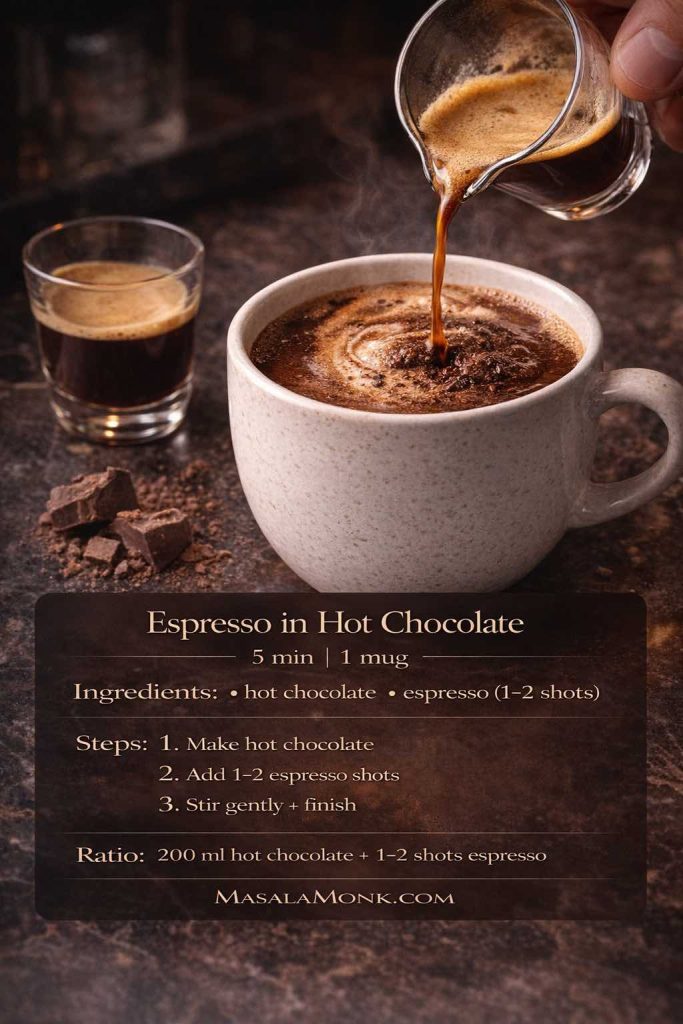
Espresso in hot chocolate (café-style): pour 1–2 espresso shots into a rich hot chocolate base, stir gently, and you’ve got a bold, silky espresso hot chocolate in minutes.

Option B: “Espresso-style” hot chocolate coffee without a machine (moka pot version)

No espresso machine? You can still create a concentrated coffee that behaves beautifully in chocolate using a moka pot. Brew a strong moka coffee, make your hot chocolate base, and combine them the same way.

If you want a step-by-step refresher, this moka pot mastery guide is a great companion. And if you want clarity on espresso as a concept—strength, concentration, and what “one shot” means—this espresso guide helps.

Make it feel even more café-like: foam, texture, balance

If you love that cappuccino texture—foam, warmth, airy lift—borrow technique from this cappuccino recipe guide. Then you can build a chocolate-leaning drink that feels like a mocha cappuccino: espresso (or moka concentrate) + cocoa base + foamed milk.

Also Read: Manhattan Cocktail Recipe (Classic + 6 Variations)


The ratios that make hot chocolate coffee feel intentional

Once you know the methods, ratios become your quiet superpower. They help you get exactly what you’re craving without needing a full recipe every time. Think of these as flexible defaults rather than rigid rules.
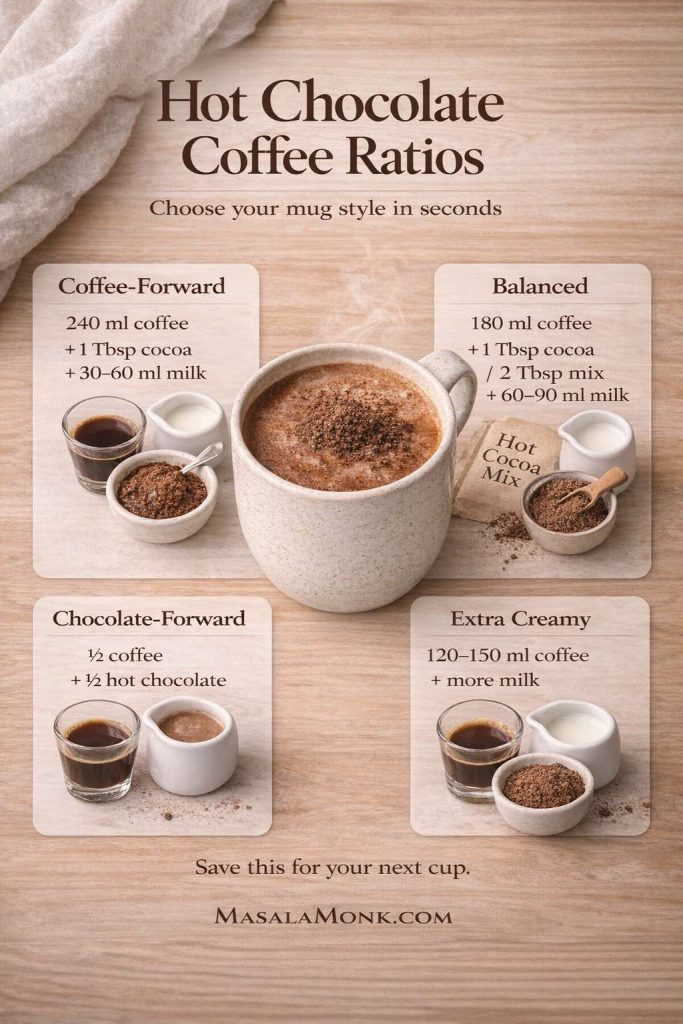
Hot chocolate coffee ratios infographic showing coffee-forward, balanced, chocolate-forward, and extra creamy measurements with cocoa, hot cocoa mix, espresso-style coffee, and milk.
Hot chocolate coffee ratios, made simple: go coffee-forward for a cozy coffee-first mug, choose balanced for a café-style blend, try chocolate-forward for half coffee half hot chocolate, or make it extra creamy with more milk.

Coffee-forward (for “I want coffee, but make it cozy”)

  • 240 ml coffee
  • 1 tablespoon cocoa
  • 1–2 teaspoons sugar
  • 30–60 ml milk

This reads as coffee first, with chocolate acting like a warm accent.

Balanced (for “I want a chocolate-coffee café drink”)

  • 180 ml coffee
  • 1 tablespoon cocoa or 2 tablespoons hot chocolate mix
  • 60–90 ml milk

This lands in the middle—neither too dark nor too sweet.

Chocolate-forward (for “dessert in a mug”)

  • Half coffee + half hot chocolate

Make hot chocolate first (milk-based is best), then add coffee until it tastes right. This approach works especially well when you want body, richness, and a cozy thickness.

Extra creamy (for “soft, rounded, lingering”)

  • Use more milk than usual and slightly less coffee
  • Keep cocoa steady, let milk carry the chocolate flavor

Oat milk is especially good here because it naturally reads sweet and creamy.

Also Read: Strawberry Smoothie Recipes (12 Easy Blends + Bowls & Protein Shakes)


Hot chocolate coffee variations you’ll want to repeat

The three methods cover most moods. Still, the fun starts when you make small changes on purpose. The goal with variations is not novelty for its own sake—it’s creating mugs that feel genuinely different, so you don’t get bored after three days.
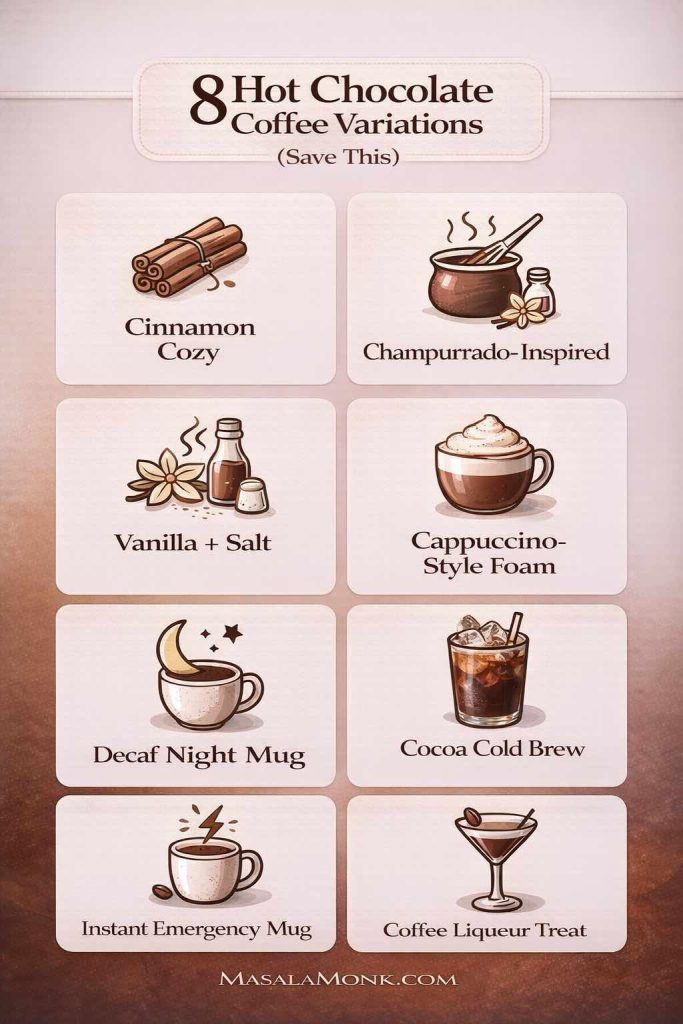
Infographic titled “8 Hot Chocolate Coffee Variations” listing cinnamon cozy, champurrado-inspired, vanilla + salt, cappuccino-style foam, decaf night mug, cocoa cold brew, instant emergency mug, and coffee liqueur treat.
8 hot chocolate coffee variations to save: cinnamon cozy, champurrado-inspired, vanilla + salt, cappuccino-style foam, decaf night mug, cocoa cold brew, instant emergency mug, and coffee liqueur treat—use these as flavor upgrades for any base method (cocoa paste, hot cocoa mix, or espresso in hot chocolate).

1) Coffee and hot cocoa with cinnamon (cozy without being spicy)

Cinnamon makes chocolate feel warmer and more aromatic. Instead of adding a lot, keep it light.
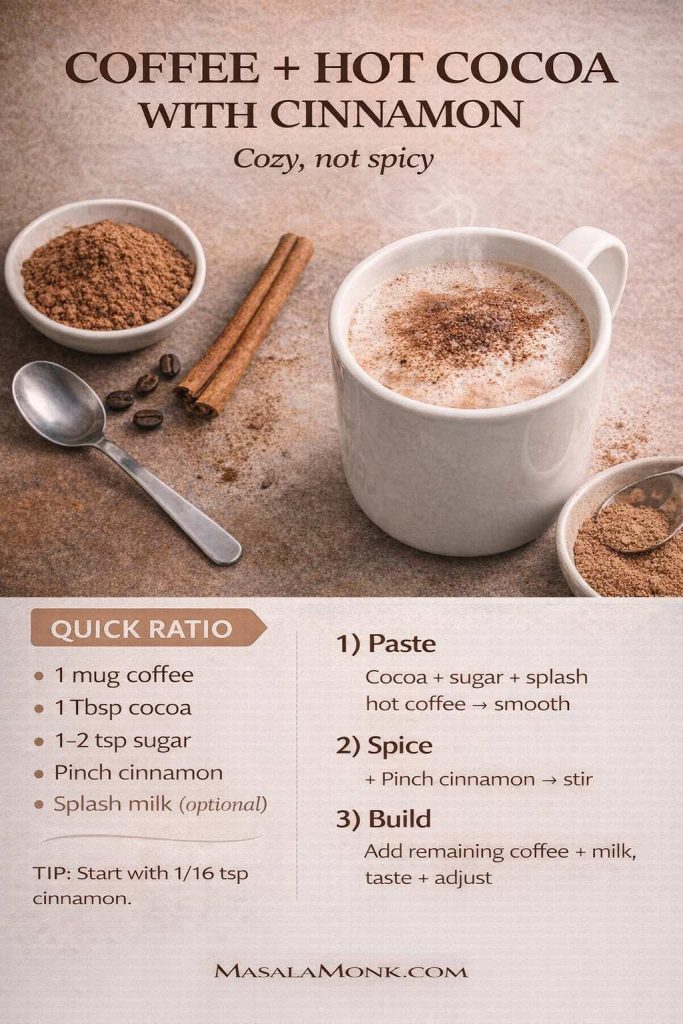
Recipe card photo for coffee + hot cocoa with cinnamon showing a creamy mug topped with cinnamon and a quick ratio plus three steps: make cocoa paste, stir in a pinch of cinnamon, then add coffee and milk to taste.
Coffee + hot cocoa with cinnamon (cozy, not spicy): make a cocoa paste with a splash of hot coffee, stir in just a pinch of cinnamon, then build with the remaining coffee and a little milk. Start light (about 1/16 tsp) and adjust after tasting.

How to do it:

  • Make the cocoa paste (cocoa + sugar + splash of coffee)
  • Add a pinch of cinnamon to the paste
  • Build the drink as usual, then taste before adding more spice

If you like the idea of spicing coffee more broadly, this cardamom-in-coffee guide is a lovely rabbit hole.

2) Champurrado-inspired coffee (Mexican-style comfort in a coffee mug)

Champurrado is traditionally a thick chocolate drink often made with masa and warming spices. This version borrows the vibe—deep cocoa, cozy body, aromatic spice—without requiring a full traditional setup.
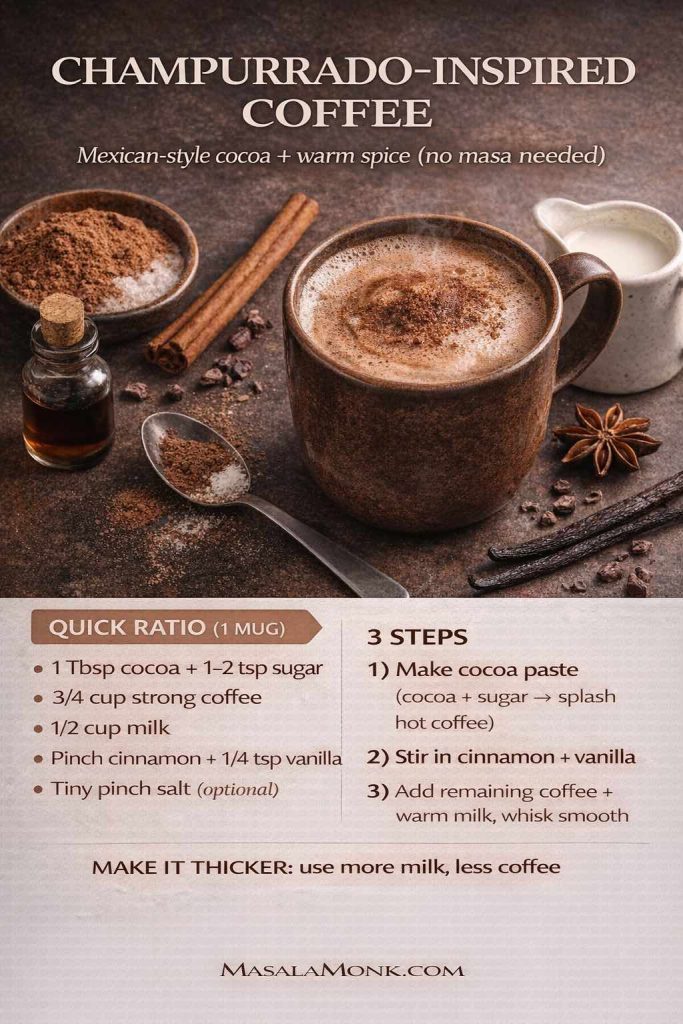
Champurrado-inspired coffee recipe card photo showing a frothy cocoa-coffee mug with cinnamon and vanilla, plus a quick ratio and three steps for making Mexican-style hot chocolate coffee without masa.
Champurrado-inspired coffee (Mexican-style cocoa + warm spice): start with a smooth cocoa paste, then add cinnamon and vanilla before finishing with more milk and slightly less coffee for a thicker, cozier mug.

How to do it:

  • Use the cocoa paste method as your base
  • Add cinnamon and vanilla
  • For extra body, use a bit more milk and slightly less coffee

For a deeper ingredient lens that helps you choose between cacao and chocolate, this cacao vs chocolate guide is worth reading.

3) Vanilla + a tiny pinch of salt (the “richer than it should be” trick)

This doesn’t look different. It just tastes more expensive.
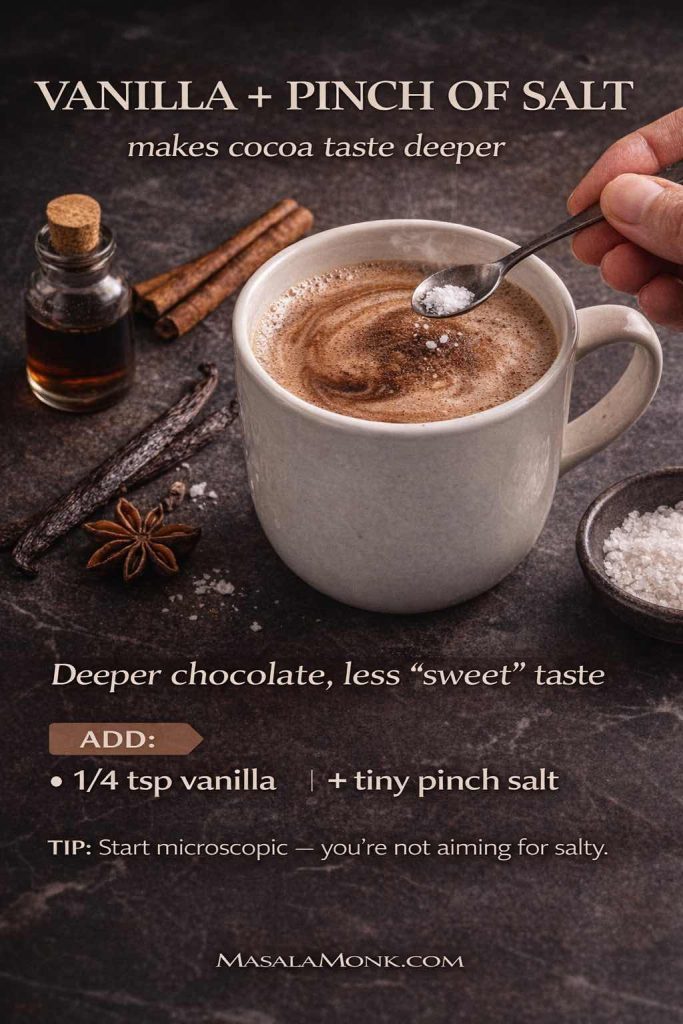
Vanilla and pinch of salt hot chocolate coffee hack card showing salt being added to a cocoa-coffee mug with text overlay: add 1/4 tsp vanilla and a tiny pinch of salt for deeper chocolate and less sweet taste.
Vanilla + a tiny pinch of salt (the “tastes more expensive” trick): add 1/4 tsp vanilla and the smallest pinch of salt to your hot chocolate coffee to deepen cocoa flavor and make the sweetness feel calmer—start microscopic, then adjust.

How to do it:

  • Add ¼ teaspoon vanilla
  • Add the tiniest pinch of salt

If you’re skeptical, start microscopic. You’re not aiming for “salty.” You’re aiming for depth.

4) Cappuccino-style hot chocolate coffee (foam-forward, café-like)

This one is a joy when you want texture. The trick is building chocolate flavor without crushing the foam.
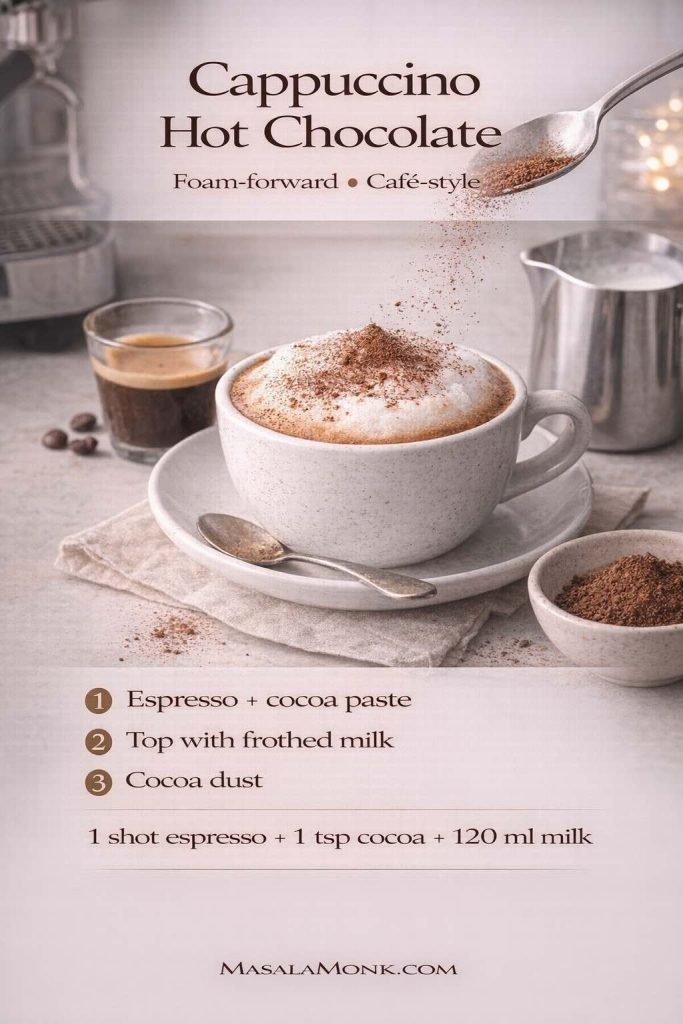
Cappuccino hot chocolate recipe card showing a foamy cappuccino-style hot chocolate topped with cocoa dust, plus 3-step method and ratio.
Cappuccino hot chocolate (foam-forward, café-style): combine espresso with cocoa paste, top with frothed milk, then finish with a cocoa dusting for a plush, chocolate-coffee mug that feels straight from a coffee bar.

How to do it:

  • Stir cocoa paste into espresso (or moka concentrate)
  • Add steamed or frothed milk
  • Finish with cocoa dusting or shaved chocolate

For foam technique and proportions, this cappuccino guide is your friend.

5) Decaf hot chocolate coffee (comfort without the buzz)

Perfect for evenings when you want a warm mug without the same caffeine lift.
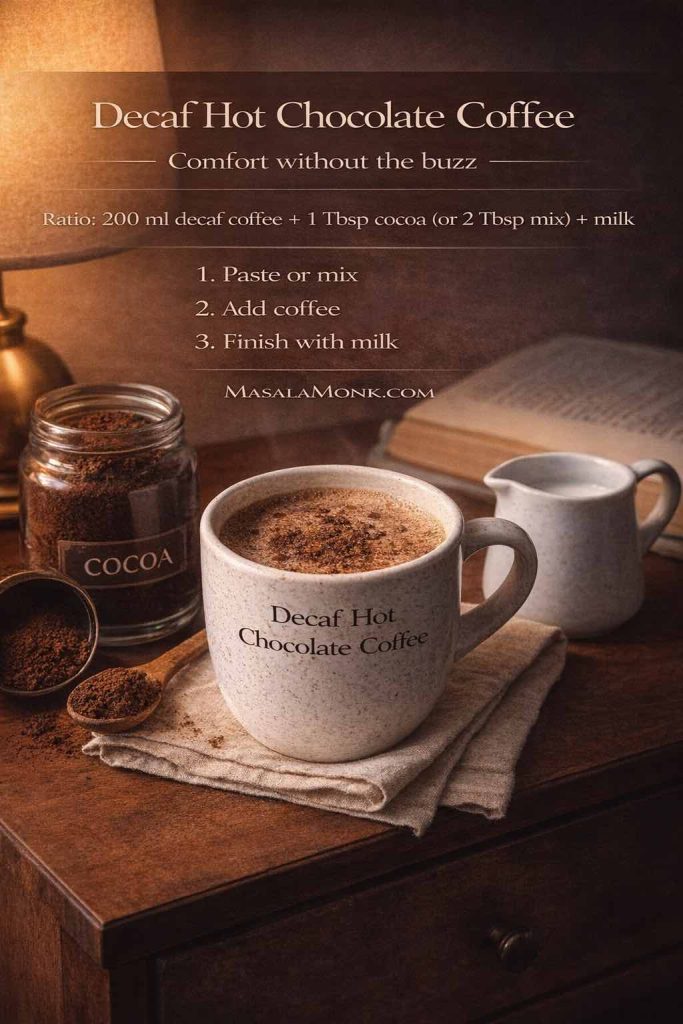
Decaf hot chocolate coffee recipe card on a cozy nightstand with warm lamp light, showing an evening-friendly ratio and 3 simple steps
Decaf hot chocolate coffee for nights: use decaf coffee with cocoa (or a little hot cocoa mix), then finish with milk for a cozy mug that feels like dessert without the buzz.

How to do it:

  • Use decaf brewed coffee (or decaf instant)
  • Make any version you like—cocoa paste, mix-in-coffee, or espresso-style with decaf shots

If you want general caffeine context, the FDA’s overview Spilling the Beans: How Much Caffeine Is Too Much? is a clear reference point.

6) Hot cocoa cold brew (summer comfort that still tastes like chocolate)

Chocolate and coffee can feel refreshing when the structure is right. Cold brew concentrate gives you strength; a quick cocoa syrup keeps everything smooth.

How to do it:

  1. Start with cold brew concentrate or very strong chilled coffee
  2. Make a quick cocoa syrup: cocoa + sugar + a spoon of warm water (or warm coffee), stirred smooth
  3. Stir syrup into cold brew
  4. Add milk and ice
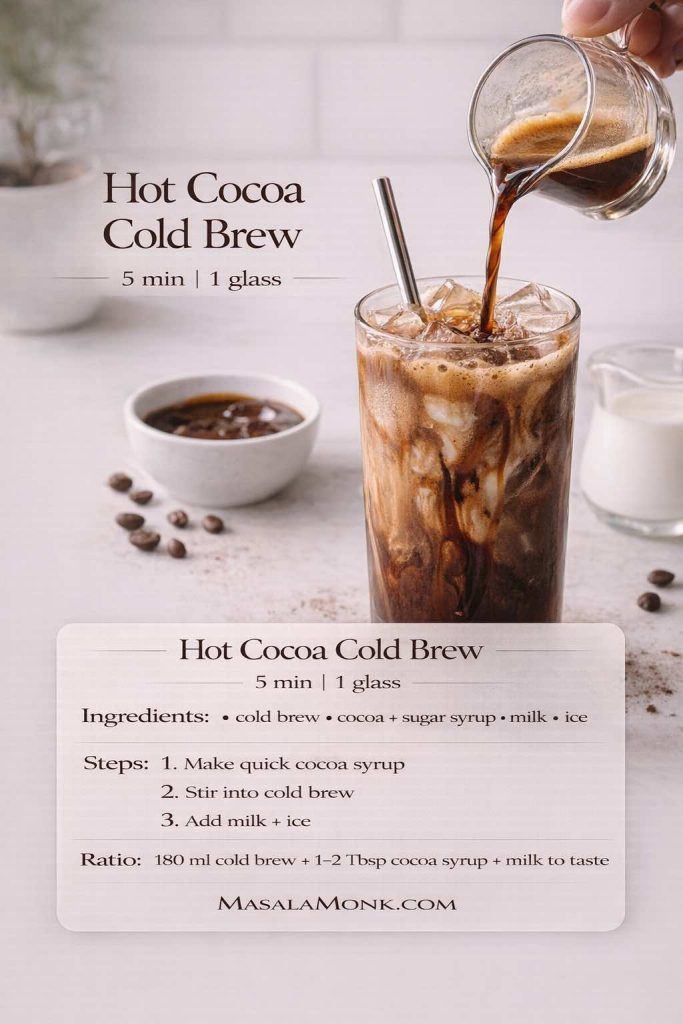
Hot cocoa cold brew recipe card showing cold brew pouring over ice with chocolate syrup swirls, plus ingredients, steps, and ratio for a cool and creamy cocoa coffee
Hot cocoa cold brew (cool & creamy): stir quick cocoa syrup into cold brew, then add milk and ice for a chocolatey iced coffee that’s refreshing, smooth, and easy to remake.

If you want more iced directions beyond this one mug, these internal guides are great companions: iced coffee recipes and cold brew vs iced latte vs frappe.

7) Instant coffee + cocoa (a surprisingly good emergency mug)

When brewed coffee isn’t happening, instant coffee can still make a satisfying hot chocolate coffee if you treat it kindly.
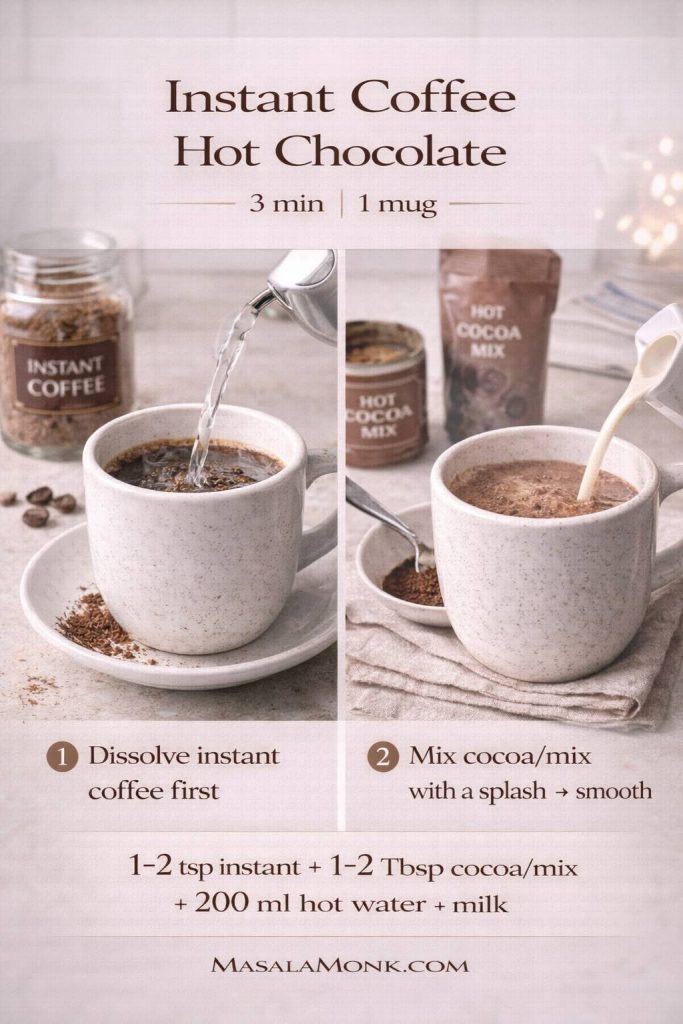
Instant coffee hot chocolate 3-minute recipe card showing hot water poured into a mug, cocoa mix stirred smooth, milk added, and a simple ratio for one mug.
Instant coffee hot chocolate (3 minutes, 1 mug): dissolve instant coffee first, smooth cocoa or hot cocoa mix with a small splash, then combine and finish with milk for a quick chocolate-coffee drink that never turns gritty.

How to do it:

  • Dissolve instant coffee fully in a small amount of hot water first
  • Make a cocoa paste in the mug (cocoa + sugar + a splash of the hot coffee)
  • Add remaining liquid and milk, then adjust

Same rule, different day: don’t dump powders into a full mug and expect silk.

8) Hot chocolate coffee with coffee liqueur (optional, festive, dessert-forward)

This one is optional, but undeniably festive. Coffee liqueur brings sweetness and a roasted note that pairs naturally with cocoa. If you’re using a well-known coffee liqueur like Kahlua, remember it already leans sweet—so dialing back sugar in your base keeps the mug balanced rather than syrupy.
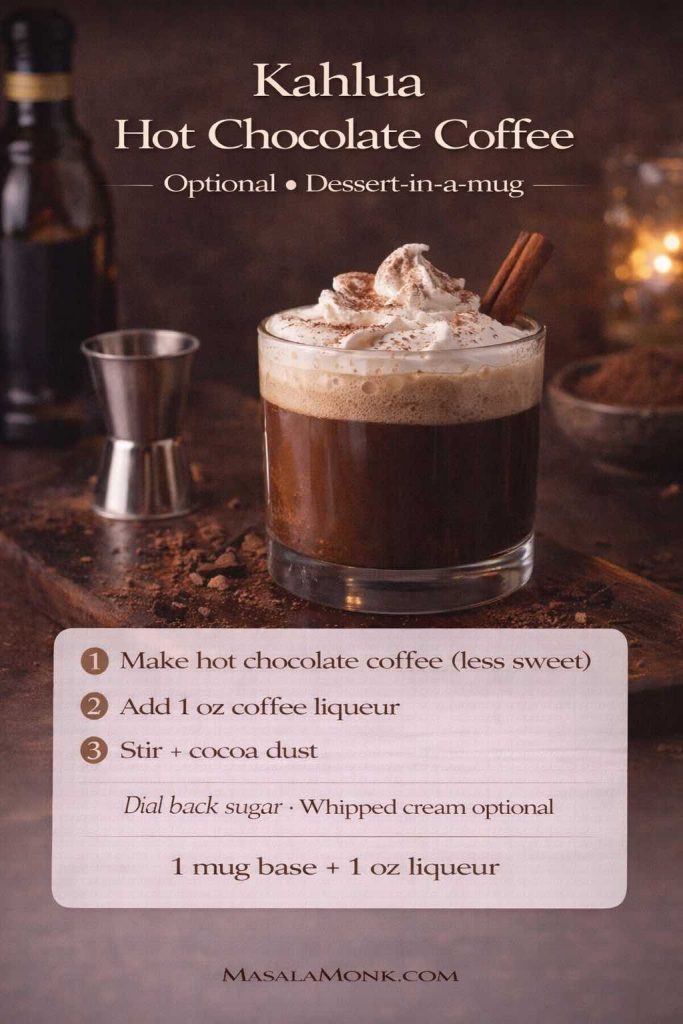
Kahlua hot chocolate coffee recipe card showing a creamy chocolate-coffee drink with whipped cream and cinnamon, plus steps to add 1 oz coffee liqueur and cocoa dust.
Kahlua hot chocolate coffee (optional treat): make your hot chocolate coffee slightly less sweet, add 1 oz coffee liqueur, then stir and finish with a cocoa dusting for a dessert-in-a-mug vibe.

How to do it:

  • Make your base slightly less sweet than usual
  • Add a small pour of coffee liqueur at the end and stir
  • Finish with cocoa dusting or shaved chocolate

Also Read: Sandwich for Breakfast: Breakfast Sandwich Recipe + 10 Variations


Making hot chocolate coffee for a crowd (without wrecking your equipment)

A cozy chocolate-coffee drink feels even better when it’s shared—winter evenings, family gatherings, holiday brunches, or a casual “come over” moment that turns into an unplanned hangout. But scaling up changes the rules.

In general, it’s best not to run cocoa powder, hot chocolate mix, chocolate syrup, or milk-based mixtures through brewing systems. Doing so can leave residue, affect taste, and make cleanup much harder—especially in percolators and urn setups that aren’t designed for chocolate or dairy.

So if someone asks, “Can we brew hot chocolate in a coffee maker?” the most reliable answer is: brew coffee in the coffee maker, then mix it with a hot chocolate base afterward. You get the same result—coffee and hot chocolate together—without turning your machine into a sticky project.
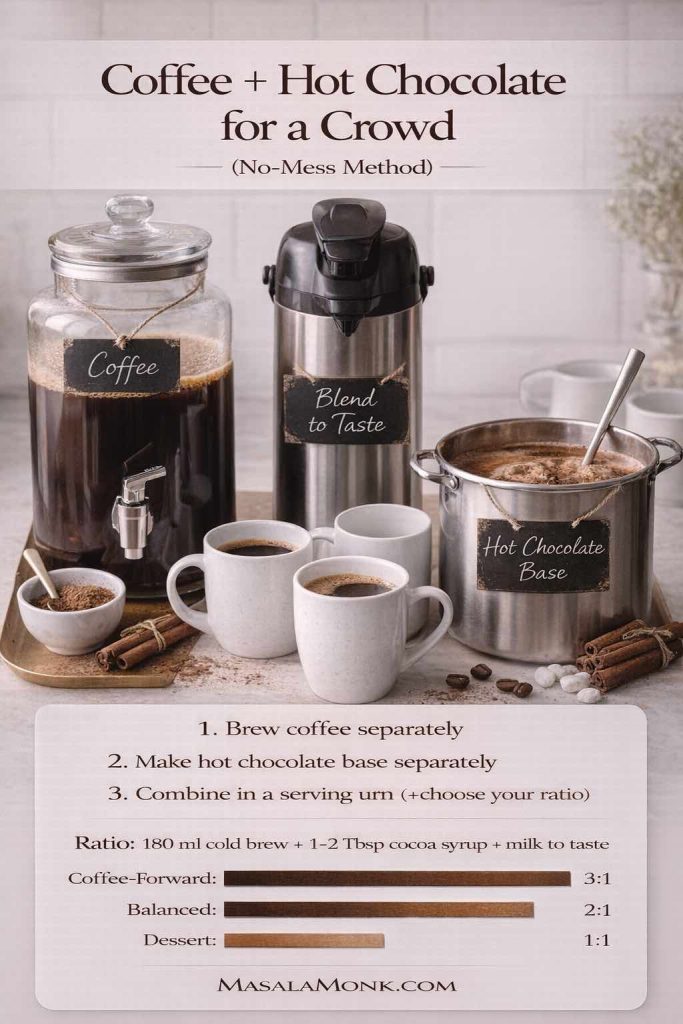
Coffee and hot chocolate for a crowd guide showing separate coffee and hot chocolate base dispensers, then mixing in a serving urn with quick ratios for coffee-forward, balanced, and dessert-style.
Making coffee and hot chocolate for a crowd—without wrecking your equipment: brew coffee separately, make a hot chocolate base separately, then combine in an urn and choose your ratio (3:1 coffee-forward, 2:1 balanced, 1:1 dessert).

The reliable large-batch method (best for most homes)

  1. Brew coffee normally using your coffee maker or brewer (coffee only).
  2. Make a concentrated hot chocolate base separately in a pot: warm milk + cocoa + sugar stirred smooth (or hot chocolate mix made with milk for body).
  3. Combine in a serving vessel—a large pot, dispenser, or insulated carafe—then adjust to taste.
  4. Keep it gently warm, not boiling. Milk-based mixes can scorch if held too hot for too long.

If you want a dependable hot chocolate base that scales cleanly, this homemade hot chocolate recipe is a solid anchor.

Hot cocoa in a coffee maker: the “yes, but not through the machine” version

People often mean one of two things when they say “hot cocoa in a coffee maker”:

  • They want to use the coffee maker to heat and mix everything (not ideal)
  • Or they want a way to serve hot cocoa and coffee together for a group (very doable)

The safe approach:

  • Brew coffee in the coffee maker
  • Make cocoa or mix separately with milk (stovetop is easiest)
  • Combine in a pot or dispenser

This gives you a crowd-friendly hot chocolate coffee without chocolate residue in your machine.
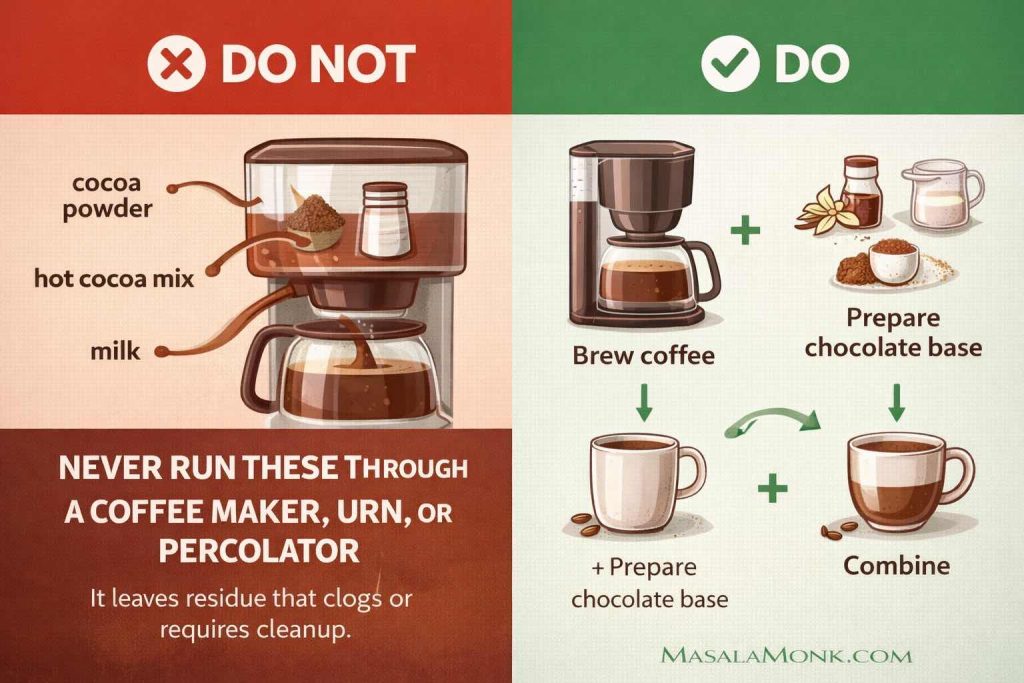
Do not run cocoa powder, hot cocoa mix, or milk through a coffee maker, urn, or percolator; brew coffee separately, make a chocolate base separately, then combine for hot chocolate coffee.
Can you brew hot chocolate in a coffee maker (or percolator/urn)? Don’t run cocoa, mixes, or milk through the machine—brew coffee separately, build a chocolate base separately, then combine. It’s the same hot chocolate coffee result with better flavor and far easier cleanup.

Coffee percolator for hot chocolate: keep cocoa out of the brew chamber

Percolators are great for coffee. They’re not designed for cocoa powder or milk-based mixes circulating through the system. If you’re tempted to try “coffee percolator for hot chocolate,” treat the percolator as a coffee-only brewer:

  • Percolate coffee
  • Mix hot chocolate separately
  • Combine afterward in a serving vessel

You’ll protect your equipment and preserve flavor.

Hot cocoa urn setup: build the chocolate base first

A hot cocoa urn is often the right tool for events—easy serving, steady warmth, familiar setup. But the same logic applies: don’t treat the urn like a brewer for cocoa powder. Instead:

  • Make a milk-based hot chocolate base in a stockpot
  • Brew coffee separately
  • Combine in the hot cocoa urn using your preferred ratio
  • Hold at gentle heat to avoid scorching

For events, it can be helpful to offer two profiles:

  • Coffee-forward (for people who want “coffee, but cozy”)
  • Dessert-forward (for people who want “hot chocolate, but energized”)

Add a toppings station—cocoa dusting, cinnamon, shaved chocolate, whipped cream—and suddenly the drink feels like an experience, not just a beverage.

Also Read: Waffle Recipe Without Milk: Fluffy, Golden, and Crisp


A deeper hot chocolate base (when you want chocolate to lead)

Sometimes you don’t want “coffee with cocoa.” You want hot chocolate with coffee energy. In those moments, start with a real hot chocolate base, then add coffee to taste. This keeps the chocolate rich and structured while still giving you the lift you’re after.

If you prefer a guided approach to a cocoa-and-milk base, this homemade hot chocolate with cocoa powder recipe is an excellent internal companion.

Once your hot chocolate is ready:

  • Add brewed coffee little by little
  • Stop at a whisper of coffee, or push toward a bolder, mocha-like finish
  • If you want the simplest “dessert mug” rule, try half coffee and half hot chocolate, then adjust

This is one of the easiest ways to make the drink feel deliberate, indulgent, and café-adjacent—without needing equipment beyond a pot and a mug.

Also Read: Vodka Pasta (Penne alla Vodka) + Spicy Rigatoni, Chicken, and Gigi Recipes


Flavor directions that keep the drink from feeling repetitive

After a few mugs, you might crave variety without changing the entire routine. That’s when choosing a direction helps more than looking for a totally new recipe.

The warm-spice lane

Cinnamon, cardamom, nutmeg—these make hot chocolate coffee feel seasonal even when it’s not a holiday. If you want a cozy entry point, cardamom in coffee is a wonderful starting place.

The dessert lane

Chocolate syrup, whipped cream, shaved chocolate, extra milk—this makes the mug feel like a treat. If you like making syrup quickly, this 3-minute chocolate syrup keeps it practical.

The café lane

Espresso in hot chocolate, foam on top, balanced sweetness. If foam is part of the vibe you’re chasing, this cappuccino guide is the technique bridge that makes your home mug feel more like a café cup.

The chilled lane

Cold brew meets cocoa in a way that can be refreshing rather than heavy. For more iced directions, explore these iced coffee recipes and this guide comparing cold brew vs iced latte vs frappe.

Also Read: 7 Pizza Sauce Recipes | Marinara, White Garlic, Alfredo, Buffalo, BBQ, Vodka & Ranch


A seasonal twist (when you want it to taste like “winter” even if it isn’t)

There’s a flavor mood that shows up every year—warm spice, soft sweetness, cozy nostalgia. If you love that, you can borrow the vibe of spiced lattes and apply it to hot chocolate coffee without turning every mug into a production.

A gentle version:

  • Vanilla + cinnamon (subtle, comforting, easy)

A bolder version:

  • Borrow pumpkin spice energy

If that’s your lane, you’ll probably enjoy this sister drink: healthy pumpkin spice latte.

Having one “winter mode” mug you can make on autopilot is surprisingly satisfying. It’s the beverage equivalent of throwing on a warm hoodie.

Also Read: Pumpkin Spice, Your Way: Master Blend, Variations & Real-World Recipes


Small finishing touches that make the mug feel special

Sometimes you don’t need a new recipe. You need a small ending—something that makes the mug feel like you meant it.

  • A dusting of cocoa powder makes it smell like chocolate before you sip
  • Grated dark chocolate melts into the surface and tastes richer than it looks
  • A spoon of foam (even shaken milk) changes mouthfeel dramatically
  • A cinnamon stick scents the mug in a quiet, cozy way
  • A tiny pinch of salt turns “sweet cocoa” into “deep chocolate”
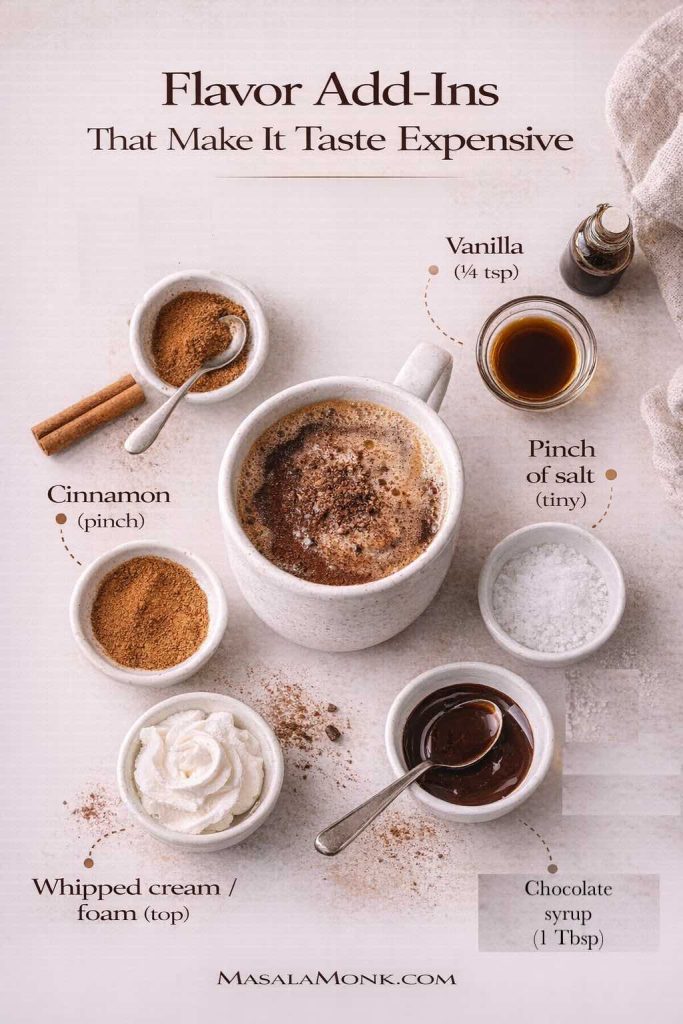
Hot chocolate coffee flavor add-ins infographic showing cinnamon, vanilla, pinch of salt, chocolate syrup, and whipped cream to make the drink taste richer
Flavor add-ins that make hot chocolate coffee taste expensive: a pinch of cinnamon for warmth, vanilla for roundness, a tiny pinch of salt for deeper chocolate, chocolate syrup for richness, and whipped cream or foam for a café-style finish.

None of these are mandatory. Still, they’re the difference between “I mixed something” and “I made something.”

Also Read: How to Cook Tortellini (Fresh, Frozen, Dried) + Easy Dinner Ideas


Putting it all together: choose your mug today

When you want hot chocolate coffee, you have options that match the day you’re having.

  • If you want the most reliable everyday version, go with the cocoa paste method. It’s quick, flexible, and consistently smooth.
  • If you want speed above all else, use hot chocolate mix in coffee, but stir the powder with a small splash of coffee first so it dissolves properly.
  • If you want café depth, make espresso in hot chocolate (or use a moka concentrate). It’s the most dessert-forward approach, and it still feels unmistakably like coffee.

From there, you can tilt coffee-forward or chocolate-forward, warm it with spice, cool it into hot cocoa cold brew, or add a foamy café finish. Whether you’re adding hot chocolate to coffee or adding coffee to hot chocolate, the best cup is the one you’ll actually make again.

Also Read: How to Make Churros (Authentic + Easy Recipe)

FAQs

1) What is hot chocolate coffee?

Hot chocolate coffee is a single drink that blends coffee with chocolate flavor. Depending on how you make it, the chocolate can come from cocoa powder, hot chocolate mix, chocolate syrup, or a prepared hot chocolate base, while the coffee can be brewed coffee, espresso, moka pot coffee, instant coffee, or cold brew.

2) Is coffee and hot chocolate the same as a mocha?

In many cases, yes—at least in flavor and concept. Generally, a mocha refers to coffee (often espresso) combined with chocolate and milk. However, “coffee and hot chocolate” can be looser and more flexible, because you can build it with cocoa powder, hot chocolate mix, or a full hot chocolate base.

3) How do I make hot chocolate coffee at home?

You can make hot chocolate coffee in three straightforward ways: (1) mix cocoa powder and sweetener into a smooth paste, then add coffee and milk; (2) stir hot chocolate mix into coffee; or (3) add espresso to hot chocolate for a café-style result.

4) Can I put hot chocolate powder in coffee?

Yes, you can. To avoid gritty clumps, first stir hot chocolate powder with a small splash of hot coffee until smooth, and only then add the rest of the coffee. As a result, the drink blends more evenly and tastes less “powdery.”

5) Can I add cocoa powder to coffee?

Absolutely. In fact, cocoa powder is one of the easiest ways to control sweetness and chocolate intensity. To keep it smooth, make a quick cocoa paste with sugar and a little hot coffee before topping up the mug.

6) Why is my cocoa powder clumping in coffee?

Cocoa powder tends to clump because it doesn’t dissolve like sugar. When it hits liquid all at once, dry pockets form and float. Instead, mix cocoa and sweetener with a small splash of hot coffee first, then add the remaining liquid gradually.

7) How much hot chocolate mix should I add to coffee?

A practical starting point is 2 tablespoons of hot chocolate mix for one mug of coffee (around 200–240 ml). If it turns out too sweet, reduce to 1 tablespoon and deepen the chocolate flavor with a teaspoon of cocoa powder.

8) What’s the best ratio for coffee and hot chocolate?

It depends on the experience you want. For a coffee-forward mug, use a full mug of coffee with about 1 tablespoon cocoa and only a small splash of milk. For a dessert-like version, go half coffee and half hot chocolate. Meanwhile, for a balanced café-style drink, aim for roughly 3 parts coffee to 1 part milk or chocolate base.

9) What’s the difference between hot cocoa coffee and hot chocolate coffee?

In everyday use, they often mean the same thing: coffee combined with chocolate flavor. Still, “hot cocoa” commonly suggests cocoa powder or a cocoa mix, whereas “hot chocolate” can imply a richer base made with milk and sometimes melted chocolate. Even so, both can land in a very similar place once blended with coffee.

10) Can I add espresso to hot chocolate?

Definitely. Espresso in hot chocolate is one of the most café-like methods. Simply add 1–2 espresso shots to prepared hot chocolate and stir gently until the flavor is integrated.

11) How many espresso shots are best for espresso hot chocolate?

Usually, 1 shot gives a softer coffee note, while 2 shots create a more pronounced coffee presence. If your hot chocolate is especially sweet, 2 shots often balance it better.

12) How can I make espresso hot chocolate without an espresso machine?

Instead of espresso, you can use a concentrated coffee base. For example, moka pot coffee behaves similarly in hot chocolate because it’s stronger than standard drip coffee. After brewing, mix it into hot chocolate the same way you would with espresso.

13) Can I make hot chocolate with coffee instead of water?

Yes. For a creamier result, prepare hot chocolate with milk first, then add brewed coffee to taste. This approach keeps the chocolate base rich while still delivering clear coffee aroma.

14) Can I mix hot cocoa mix with coffee and milk?

Yes, and it often tastes smoother than coffee plus mix alone. In addition, milk rounds the edges and makes the drink feel more like a hot chocolate coffee drink rather than simply sweetened coffee.

15) What coffee works best for hot chocolate coffee?

Typically, medium to dark roast works best because it stays noticeable beside chocolate. Likewise, brewing the coffee slightly stronger than usual helps prevent the drink from tasting like cocoa first and coffee second.

16) How do I make coffee with cocoa powder taste less bitter?

First, add more milk to soften the bitterness before adding more sugar. Next, reduce cocoa slightly if the mug feels too intense. Finally, a touch of vanilla or a tiny pinch of salt can make the chocolate taste rounder and less sharp.

17) How do I make hot chocolate coffee less sweet?

Start by using unsweetened cocoa powder instead of a sweet mix, or cut the amount of mix in half. Then increase milk slightly for a gentler profile. Alternatively, add a bit more coffee to balance sweetness without losing chocolate flavor.

18) Can I make hot cocoa in a coffee maker?

You can brew coffee in a coffee maker and combine it with hot chocolate afterward. However, it’s usually better not to run cocoa powder or hot chocolate mix through the machine because it can leave residue and complicate cleaning.

19) Can I brew hot chocolate in a coffee maker?

If by “brew” you mean running cocoa or milk through the machine, that’s not recommended. Instead, brew coffee normally, then stir it into a hot chocolate base made separately. That way, you get the same flavor outcome with much easier cleanup.

20) Can I make hot cocoa in a coffee percolator?

It’s best to use the percolator for coffee only, then mix hot chocolate separately and combine afterward. Otherwise, cocoa powder and milk-based mixes can create buildup and affect performance over time.

21) What is a hot cocoa urn and can I make a coffee-and-cocoa mix in it?

A hot cocoa urn is a large dispenser used for serving warm drinks at gatherings. Yes, you can serve a coffee-and-cocoa blend in it—however, it works best when you prepare hot chocolate and coffee separately, then combine them in the urn and keep the heat gentle to avoid scorching.

22) How do I make coffee and hot chocolate for a crowd?

For consistent results, brew a large batch of coffee separately and make a concentrated hot chocolate base in a pot. Then combine them in a serving vessel and adjust the ratio based on whether you want a coffee-forward or dessert-forward drink.

23) Can I make half coffee half hot chocolate taste balanced?

Yes. Start with equal parts and then adjust. If it tastes too sweet, add more coffee. Conversely, if it tastes too strong or bitter, add more hot chocolate or a splash of milk.

24) Can I make hot cocoa cold brew?

Yes. Use cold brew concentrate or strong chilled coffee, then mix in a cocoa syrup (cocoa + sugar + a small splash of warm water or warm coffee stirred smooth). After that, add milk and ice for a refreshing chocolate-coffee drink.

25) Does hot chocolate coffee work with instant coffee?

Yes. Dissolve instant coffee fully in hot water first so it’s smooth, then combine it with cocoa paste or hot chocolate mix. That extra step helps avoid grittiness and improves texture.

26) Can I make a decaf hot cocoa coffee?

Absolutely. Use decaf brewed coffee (or decaf instant), then follow any method you like. Consequently, you get the flavor and comfort of a chocolate-coffee mug without the same caffeine lift.

27) Can I make coffee liqueur hot chocolate?

Yes, if you want an adult, dessert-style version. Make the base slightly less sweet, then add a small pour of coffee liqueur at the end and stir. That way, the final drink tastes balanced rather than overly sugary.

28) What’s the difference between chocolate hot coffee and hot chocolate coffee?

They’re often used interchangeably in casual searches. Generally, “hot chocolate coffee” suggests coffee mixed with a cocoa or hot chocolate base, while “chocolate hot coffee” can imply coffee flavored with chocolate notes. Either way, the result is a warm chocolate-coffee drink—your method determines whether coffee or chocolate leads.
Posted on 13 Comments

Homemade Hot Chocolate with Cocoa Powder Recipe

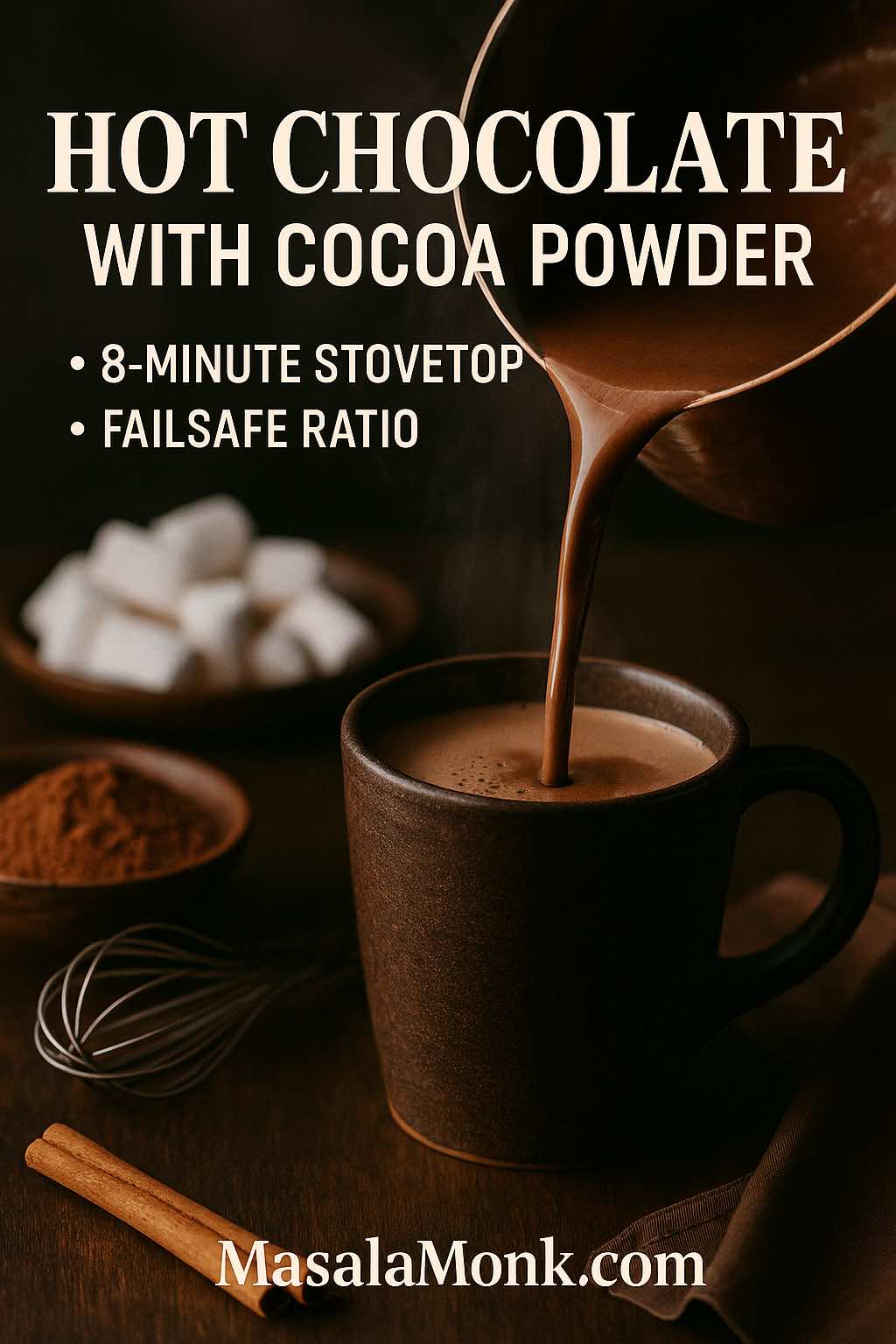
Hot chocolate with cocoa powder being poured from a saucepan into a rustic mug, with whisk, cocoa and cinnamon on a dark table.

Sometimes you crave a mug that’s pure comfort—nothing fancy, nothing fussy—just deep chocolate flavor, gentle sweetness, and the kind of steam that fogs the window while you stir. This hot chocolate with cocoa powder takes you there in minutes. It’s pantry-friendly, it scales for a crowd, and it’s endlessly adaptable for darker, milkier, lighter, or dairy-free moods. Along the way, you’ll see exactly how to dial in the texture, choose between natural and Dutch-process cocoa, and even shake up a cold chocolate milk for warmer days—without losing the spirit of a classic stovetop cup.

Before we heat anything, here’s the single biggest secret to café-smooth results: start with a paste. Cocoa powder (especially unsweetened) doesn’t want to dissolve right away. Whisking it with a splash of milk and sugar first means every sip turns out silky, never gritty.

Also Read: Peanut Butter Cookies (Classic Recipe & 3 Variations)


Ingredients for the best hot chocolate with cocoa powder (2 mugs)

  • 2 tbsp unsweetened cocoa powder (natural or Dutch-process)
  • 2 tbsp sugar (or 1–2 tbsp maple or honey, to taste)
  • Pinch of fine salt
  • 1 cup (240 ml) milk of choice, plus ½ cup (120 ml) water
  • ½ tsp vanilla extract (optional, but lovely)

Want a quick refresher on cocoa styles and why one might taste smoother or darker than the other? King Arthur’s plain-English guide to Dutch-process vs natural cocoa is a great starting point. For an overview of other cocoa types in baking and drinks, their types of cocoa, explained expands the nuance even further.


Recipe: classic stovetop hot chocolate with cocoa powder

  1. Make the paste. Off the heat, whisk the cocoa, sugar, and salt with 2 tablespoons milk until the mixture is glossy and lump-free. This takes 15–30 seconds and makes all the difference.
  2. Heat gently. Whisk in the rest of the milk and the water. Set the pan over medium heat and warm until steaming and hot—but not at a rough boil. Gentle heat keeps the mouthfeel creamy and prevents “cooked” flavors.
  3. Finish with fragrance. Take the pan off the heat and stir in the vanilla. Froth briefly with a whisk or handheld frother for that café-style lightness. Pour into warm mugs.
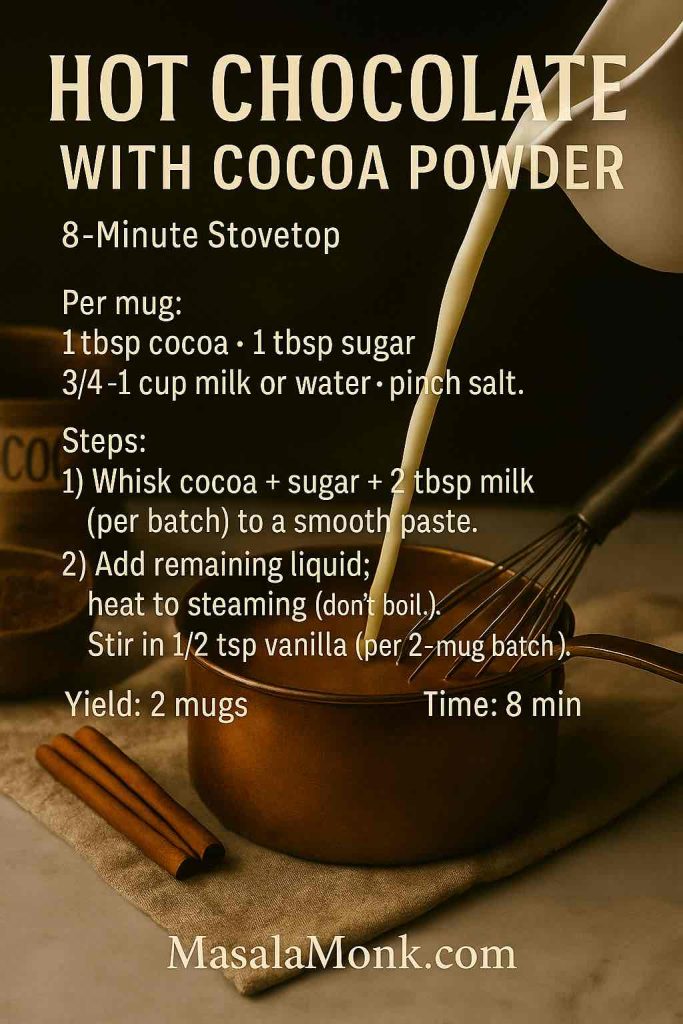
Recipe card for hot chocolate with cocoa powder: milk pouring into a copper saucepan with a whisk and cinnamon; 8-minute stovetop steps shown on image.
How to make Hot chocolate with cocoa powder—per mug: 1 tbsp cocoa, 1 tbsp sugar, 3/4–1 cup milk or water, pinch of salt. Whisk a paste, heat to steaming (don’t boil), stir in 1/2 tsp vanilla. MasalaMonk.com

While that first sip is still hugging your hands, you might be wondering about cacao versus cocoa. They’re related, of course, yet not identical in processing or flavor. For a practical, balanced read on how cacao differs from cocoa (and why cacao can taste fruitier while cocoa blends more smoothly), see this explainer on MasalaMonk and the concise overview from Healthline on cacao vs cocoa.


Texture, temperature, and the power of a whisk

Even excellent cocoa powder needs a little help to bloom. The paste stage hydrates the particles so they disperse evenly when you add more liquid. Beyond that, moderate heat (think “steaming” rather than turbulent simmer) coaxes out chocolate aromas without pushing milk proteins too far. If you’ve ever had a cup that felt thin, chalky, or strangely “cooked,” it likely skipped one or both steps.

For extra lift, whisk in quick, tight circles right after you add vanilla. Just 10–15 seconds can transform the surface from flat to glossy with a delicate foam. If you own a small frother, this is its moment to shine. Otherwise, a sturdy balloon whisk is more than enough.

Also Read: Green Tea Shot with Jameson | Recipe & 10 Variations


Sweetness, salt, and balance

Sugar sweetens, yes, but it also rounds the cocoa’s bitter edges so the flavor reads chocolaty rather than merely “cocoa-y.” Start with the 2 tablespoons in the base recipe and adjust a teaspoon at a time next time you make it. Maple and honey add their own accents—maple gives a caramelly finish; honey feels floral—so you can tune the personality of your mug without changing the core ratio.

Don’t skip the pinch of salt. It’s not about making a “salty” drink; it’s about focus. That tiny amount tightens the flavor so the chocolate tastes bolder at the same sweetness.

Also Read: Béchamel Sauce for Lasagna: Classic, Vegan & Ricotta Sauce Recipe


Milk or water? Finding your comfort zone

A lot of classic hot cocoa recipes use a mix of milk and water. There’s a reason. Milk gives body and richness; water lightens the profile and lets the chocolate notes pop. This base splits the difference—1 cup milk plus ½ cup water per two mugs—so you get a creamy backbone without heaviness. Prefer extra body? Go all milk (1½ cups / 360 ml). Want something lighter after dinner? Use more water and finish with a splash of cream to restore a silky finish.

If you’re making this dairy-free, barista-style oat milk drinks especially well, as do cashew and soy. Almond milk stays thinner but tastes clean and toasty, which some people adore in a nighttime cup.

Also Read: Crock Pot Lasagna Soup (Easy Base + Cozy Slow-Cooker Recipes)


Natural vs Dutch: how it changes your mug

Let’s talk flavor and feel. Natural cocoa is lighter in color and usually tastes a touch brighter, sometimes with a hint of fruit or acidity. It makes a classic, snappy-tasting hot chocolate with cocoa powder—the kind you might remember from childhood, just elevated by technique.

Dutch-process cocoa has been alkalized to tame acidity. In the cup, it reads darker, smoother, and often creamier at the same ratio. Because the edges are softer, many people find it dissolves more easily and gives a rounded finish. If your top priority is silky texture and a deep color, Dutch is the move. If you love lively, punchy chocolate, natural sings.

Curious which to stock? For a quick reference beyond this recipe, King Arthur’s types of cocoa, explained lays out how different powders behave in both baking and drinking.

Also Read: Cottage Cheese Lasagna Recipe | Chicken, Spinach, & Ricotta


Make-it-yours: small tweaks that change the whole cup

  • Extra-dark hot chocolate with cocoa powder: Add 1–2 teaspoons more cocoa during the paste stage. You can nudge sweetness up by ½–1 teaspoon if needed, or keep it punchy.
  • Lower sugar: Swap in allulose or erythritol. Because these sweeteners taste slightly cooler and less rounded than sugar, add a drop of vanilla or a tiny extra pinch of salt to keep the flavor full.
  • Dairy-free richness: Barista oat, soy, and cashew milk foam beautifully. For even more body, whisk in 1–2 teaspoons coconut cream at the finish.
  • Mocha moment: Stir in 1–2 teaspoons strong coffee or a splash of espresso. The coffee doesn’t steal the show; it just deepens the chocolate.
  • Finishing swirl: A ribbon of homemade chocolate syrup turns a simple mug into something that feels café-made—perfect when you want a quick flourish without melting chocolate.

Also Read: How to Make Churros (Authentic + Easy Recipe)


Spiced variation (Mexican-style recipe)

Keep the base the same, but in the paste stage whisk in ¼ teaspoon ground cinnamon and the tiniest pinch of cayenne. As the mixture warms, the cinnamon blooms and the heat lingers, not as a burn but as a gentle hum under the chocolate. Finish with vanilla, then whisk vigorously or use a frother to aerate the surface. If you’re going for a cozy dessert board, dunking something crisp is half the fun—homemade churros are a nostalgic, wildly satisfying pairing.

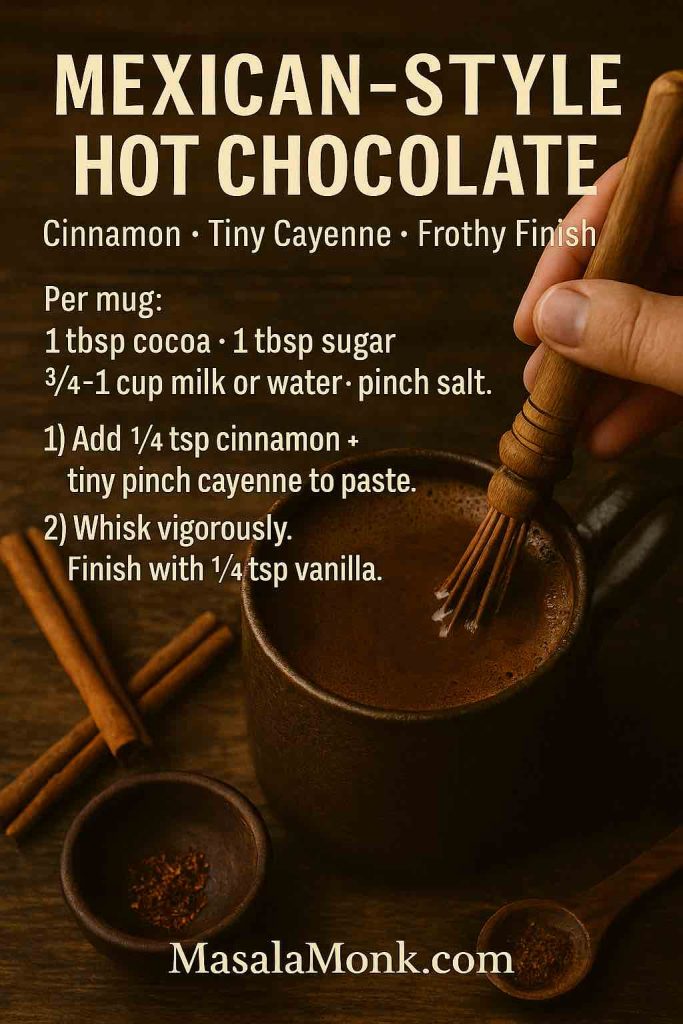
Mexican-style hot chocolate recipe card: hand whisking with a molinillo in a rustic mug, with cinnamon sticks and cayenne; per-mug ratios and steps visible.
Mexican-style hot chocolate Recipe—per mug: 1 tbsp cocoa, 1 tbsp sugar, 3/4–1 cup milk or water, pinch of salt. Add 1/4 tsp cinnamon and a tiny pinch of cayenne to the paste, whisk vigorously, and finish with 1/4 tsp vanilla. MasalaMonk.com

Cold spin: chocolate milk with cocoa powder (no syrup, no sludge)

Not every craving arrives with a cold night. For summer afternoons or quick post-workout comfort, make a cold chocolate milk that dissolves fully and tastes balanced:

  1. In a tall glass or a lidded jar, combine 1 tablespoon cocoa, 1–1½ tablespoons sweetener, a pinch of salt, and 1–2 teaspoons milk. Stir or shake into a silky paste.
  2. Add 1 cup cold milk gradually, whisking (or shaking) until smooth. The paste method saves you from floating clumps and gives a glossy finish.

If you like make-ahead chocolate treats with a lighter footprint, chia pudding recipes can lean cocoa-rich, dessert-ish, or breakfast-bright—handy when you want chocolate without the stovetop.


Heat, hold, and reheat: the practical bits

Heating: Keep it to medium. You want steam, not aggressive bubbles. Harsh boiling can press the proteins too far and leave a grainy impression even if you made a great paste.

Holding: If you’re hosting, keep hot chocolate warm on the lowest heat with a lid slightly ajar and whisk briefly every 10 minutes to keep it silky.

Reheating: Gentle is again the rule. If you’ve made a larger batch, rewarm on low and whisk as you go. A splash of fresh milk can refresh the body after prolonged holding.

Also Read: How to Cook Bacon in the Oven (Crispy, No-Mess, Crowd-Ready Recipe)


Serving ideas, garnishes, and textures for Hot Chocolate with Cocoa Powder

  • Classic marshmallow cap: Homemade or store-bought, marshmallows soften into a creamy top layer that acts like a flavor filter—each sip pulls through vanilla sweetness.
  • Light whipped cream: Soft peaks add air without weight. Dust the top with a whisper of cocoa for a café finish.
  • Citrus twist: A tiny strip of orange zest rubbed over the cup perfumes the steam.
  • Spice dust: A little cinnamon or nutmeg on the foam moves the aroma forward as you lift the mug.
  • Cocoa-nib crunch: For a fun contrast, float a pinch of cocoa nibs; they’ll soften at the edges but keep a little bite.

Also Read: French Toast Sticks (Air Fryer + Oven Recipe) — Crispy Outside, Custardy Inside

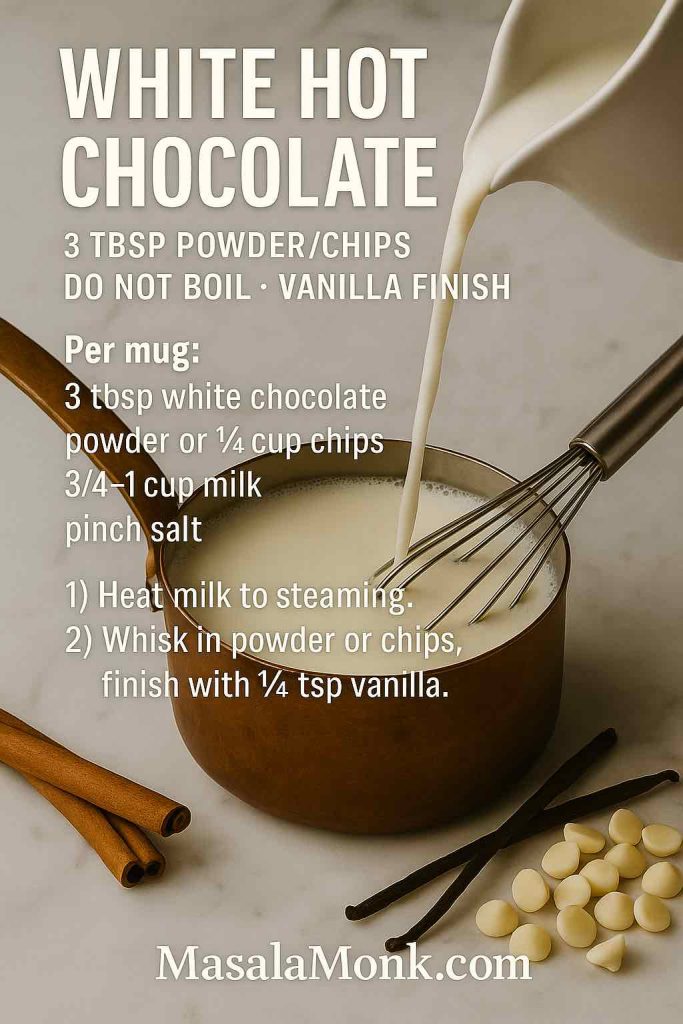
White hot chocolate recipe card: milk pouring into a copper saucepan with whisk, vanilla pod, and white chocolate chips; do-not-boil method.
White hot chocolate—per mug: 3 tbsp white chocolate powder or 1/4 cup chips, 3/4–1 cup milk, pinch of salt. Heat to steaming, whisk in, finish with 1/4 tsp vanilla. MasalaMonk.com

Troubleshooting Hot Chocolate with Cocoa Powder

  • Gritty sip: The paste likely wasn’t fully smooth. Next time, whisk the cocoa and sugar with a larger splash of milk until glossy before adding the rest.
  • Too thin: Use all milk (1½ cups total) or whisk in ½–1 teaspoon cornstarch while cold, then heat gently until lightly thickened.
  • Too sweet or flat: Add a pinch of salt, then nudge sweetness down next round. Cocoa flavor wakes up when the sweet–salty balance clicks.
  • Dairy-free but watery: Try a barista-style oat or soy, or add 1–2 teaspoons coconut cream off heat.
  • Lacks depth: Fold in a teaspoon of instant espresso powder or a few drops of vanilla. Tiny adjustments go a long way.

Also Read: 10 Best Chicken Sandwich Recipes (BBQ, Parm, Buffalo & More)


Choosing cocoa: pantry strategy that pays off

If you drink hot chocolate with cocoa powder even a few times a month, keeping two cocoas on hand is a clever move:

  • Everyday natural cocoa for a bright, classic cup and baking.
  • A Dutch-process cocoa for company or nights when you want a deep, plush mug.

This way, you can lean one direction or blend them. Many home cooks discover a 50/50 mix hits their sweet spot: vibrant yet smooth, dark yet lively.

For flavor clarity, sift your cocoa into a jar when you first open it—this breaks early clumps and keeps it ready for paste-making. Store in a cool, dry cabinet away from the stove so heat and steam don’t encourage caking.

Also Read: 10 Best Espresso Martini Recipe Variations (Bar-Tested)


A quick note on cacao (and when to use it)

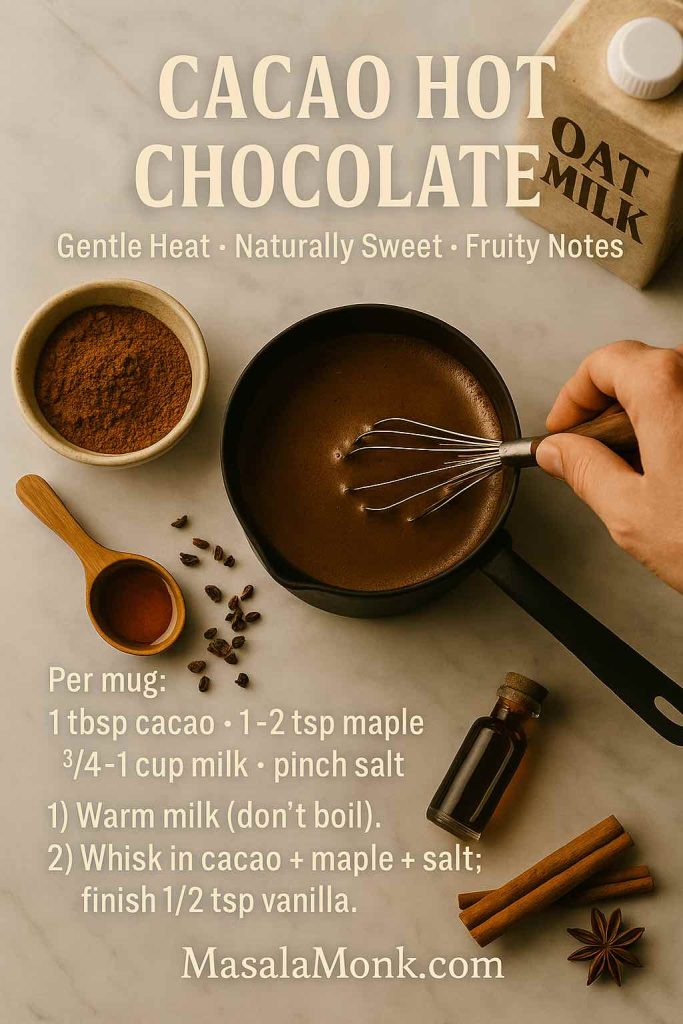
Cacao powder is less processed than typical cocoa and often tastes fruitier and more delicate. If you prefer a “healthy-leaning” cup with a lighter body, warm your milk gently (hot but not boiling), then whisk in cacao, sweetener, and salt.

Cacao hot chocolate recipe card on light marble: hand whisking in a small saucepan with cacao powder, maple syrup, oat milk, and cacao nibs; gentle-heat method shown.
Cacao hot chocolate—per mug: 1 tbsp cacao, 1–2 tsp maple, 3/4–1 cup milk, pinch of salt. Warm (don’t boil), whisk in cacao + maple + salt; finish with 1/2 tsp vanilla. MasalaMonk.com

Because cacao’s edges are softer, it can feel more transparent in milk—some people love that, especially with maple syrup. If you’d like context on how cacao relates to chocolate and dark chocolate more broadly, this MasalaMonk guide maps the landscape in everyday language, while Healthline’s overview covers processing differences without getting fussy.

Also Read: Pumpkin Spice, Your Way: Master Blend, Variations & Real-World Recipes


Nutrition whisper: perspective without the lecture

Cocoa powder brings a small amount of minerals to the party, including magnesium. That doesn’t turn a mug into a supplement, of course, but it’s a pleasant bonus. If you’re curious about broader wellness angles that include cocoa or dark chocolate in a wider diet, you might enjoy MasalaMonk’s look at magnesium-rich foods. For technical nutrition data per serving, the USDA’s FoodData Central is the neutral reference many dietitians use; search their database for “cocoa powder, unsweetened” to compare brands and serving sizes.


Scaling up: a crowd-pleasing pot of Hot Chocolate with Cocoa Powder

When you’re pouring for a game night or movie marathon, multiply everything and grab a heavier pot (4–5 liters for 8–10 servings). The method stays the same: paste first, gentle heat, vanilla off heat, quick whisk for foam. Here are a few patterns that work well:

  • 8 mugs: 8 tbsp cocoa, 8 tbsp sugar, big pinch salt, 6 cups milk + 2 cups water, 2 tsp vanilla.
  • 12 mugs: 12 tbsp cocoa, 12 tbsp sugar, generous pinch salt, 9 cups milk + 3 cups water, 1 tbsp vanilla.

Keep a small ladle nearby so guests can top themselves. Offer cinnamon, shaved chocolate, and a jar of homemade chocolate syrup for custom finishing.

Also Read: Healthy Pumpkin Spice Latte (Low Cal, Real Pumpkin)


Make-ahead components that speed up weeknights

If you want to cut prep to practically zero, you have two low-effort options:

  1. Dry base mix: In a small jar, combine cocoa, sugar, and salt for 4–6 servings. When you’re ready, scoop out what you need, add milk+water, and go straight to the heat step.
  2. Syrup shortcut: Keep a jar of 3-minute chocolate syrup in the fridge. Stir a spoonful into hot milk for an on-the-fly cup, or drizzle the finished mug for a café look without extra tools.

Either way, you retain control over quality and sweetness while shaving prep down to the whisking.

Also Read: Vegan French Toast: 6 Easy Recipes (Pan, Air Fryer, GF & High-Protein)

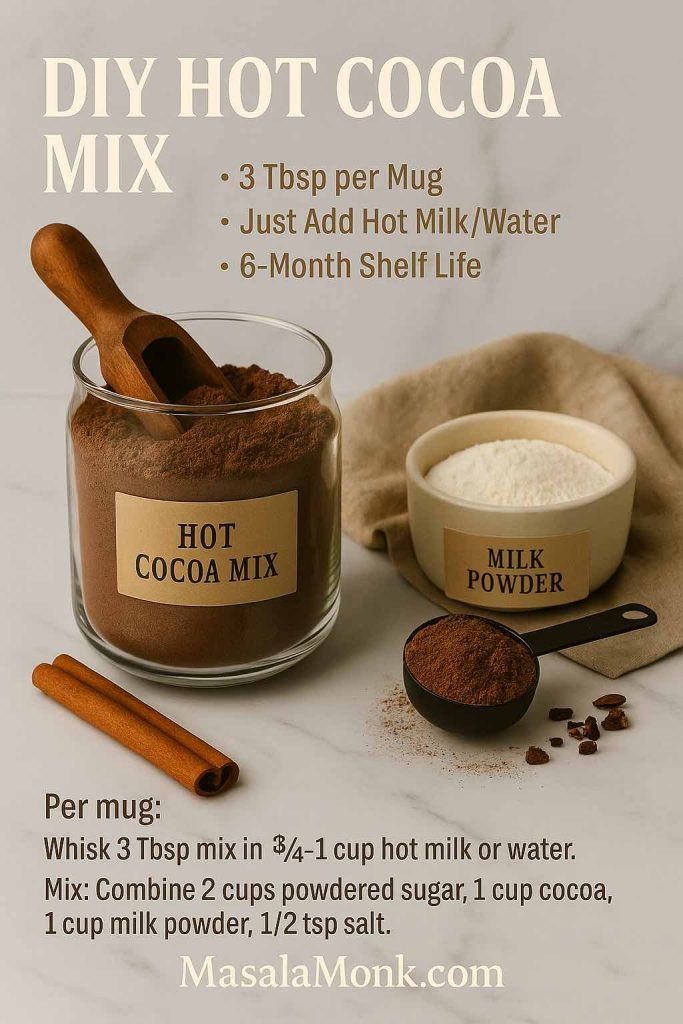
DIY hot cocoa mix recipe card on white marble: glass jar labeled “Hot Cocoa Mix” with wooden scoop, bowl of milk powder, black tablespoon of cocoa, and cinnamon sticks; instructions show 3 Tbsp mix per 3/4–1 cup hot milk or water.
DIY hot cocoa mix—combine 2 cups powdered sugar, 1 cup cocoa, 1 cup milk powder, and 1/2 tsp salt. To serve, whisk 3 Tbsp mix into 3/4–1 cup hot milk or water. Stores airtight up to 6 months. MasalaMonk.com

Seasonal riffs that keep Hot Chocolate with Cocoa Powder interesting

  • Peppermint steam: Add 1–2 drops peppermint extract at the finish.
  • Orange glow: Infuse the milk with a strip of orange peel while heating; remove before serving.
  • Ginger warmth: Simmer thin slices of fresh ginger with the milk and water, then strain.
  • Nutty whisper: A teaspoon of hazelnut or almond extract can evoke chocolate-hazelnut vibes without turning the cup into dessert.

Rotate these through the colder months and your “same” hot chocolate with cocoa powder never feels repetitive.

Also Read: Classic vs. Authentic Alfredo: 5 Essential Recipes


A note on quality: small upgrades, big rewards

  • Freshness matters: If your cocoa has been open for a year and lives near the stove, the aroma might have faded. Move it to a cool cabinet and refresh the supply every few months if you make cocoa often.
  • Sifted and ready: Pre-sifting into a jar means paste-making is quick and clump-free.
  • Vanilla restraint: Vanilla is beautiful here, but it’s a supporting actor. Go light so it frames the chocolate rather than masking it.

Chocolate-forward pairings

Hot chocolate practically begs for a snack to dunk. Crisp-edged churros are a classic. If you’d like something lighter, cocoa-leaning chia puddings deliver chocolate notes in an entirely different texture—cool, spoonable, and meal-prep-friendly. Meanwhile, if you’re curious about broader chocolate and cacao territory (bars, bakes, and the space between), this MasalaMonk cocoa/cacao explainer is a handy compass.


Why this ratio works (and when to break it)

Per mug, this recipe lands at roughly 1 tablespoon cocoa : 1 tablespoon sugar : ¾–1 cup liquid. That’s the sweet spot for most palates—enough cocoa to read as chocolate rather than faintly flavored milk; enough sugar to polish the edges; enough liquid to feel sippable, not heavy. Nevertheless, ratios are invitations, not rules. If you adore a darker profile, lift the cocoa and reduce the sugar slightly. If you’re serving kids, tipping the sweetness up a teaspoon can feel more familiar. You can shift the milk-to-water balance too: all milk for a plush nightcap; all water with a splash of cream for something featherlight yet still cozy.

Also Read: Lemon Drop Martini Recipe (Classic, 3-Ingredient, & More)


Beyond the mug: a chocolate-forward pantry

Once you dial in hot chocolate with cocoa powder, you’ve effectively cracked a handful of other winter comforts:

  • Mocha oatmeal: Stir a teaspoon of cocoa and a little sugar into hot oats; finish with a splash of milk and vanilla.
  • Quick chocolate sauce: Whisk cocoa, sugar, a pinch of salt, and hot water into a thick drizzle; enrich with a knob of butter or a splash of cream. Or, take the faster route with this three-minute chocolate syrup.
  • Hot cocoa base for bakes: The paste technique is the backbone of cocoa glazes and certain stovetop frostings; once you see how smoothly cocoa bloomed in milk behaves, you’ll start applying it elsewhere.

Cold weather ritual, warm weather habit

In winter, this recipe is ritual: steam curling, cinnamon nearby, a soft blanket waiting. In summer, the cold chocolate milk variation takes over—we shake, we pour over ice, we sip on the balcony. Either way, it’s still the same foundation: a quick paste, gentle heat (or no heat at all), and a minute of whisking to make it feel special.


If you’re exploring further

  • For clear, non-technical answers about cocoa styles, King Arthur’s guides on Dutch vs. natural cocoa and cocoa types are reader-friendly.
  • For a grounded look at cacao versus cocoa and where chocolate sits in that spectrum, try MasalaMonk’s explainer, and for broader processing context, Healthline’s cacao vs cocoa piece is a good supplement.
  • If nutrition tables help you calibrate your own serving, the USDA’s FoodData Central is a straightforward database—useful if you compare brands or track macros.

One last mug

The difference between a forgettable cup and a memorable one almost always comes down to the same simple moves: bloom the cocoa in a paste, warm gently, finish with something fragrant, and whisk for a breath of foam. From there, you can veer darker or lighter, dairy-rich or dairy-free, spiced or straight, hot or ice-cold. That’s the charm of hot chocolate with cocoa powder—it gives you a classic to return to and endless little detours to enjoy along the way.

Also Read: Daiquiri Recipe (Classic, Strawberry & Frozen Cocktails)

FAQs on Hot Chocolate with Cocoa Powder

1) Can I make hot chocolate with baking cocoa?

Absolutely. Baking cocoa is simply unsweetened cocoa powder, so it’s perfect for hot chocolate with cocoa powder. First, whisk it into a smooth paste with a little milk and sugar, then add the remaining liquid and heat gently.

2) What’s the best cocoa powder for drinking?

Generally, Dutch-process gives a darker color and smoother taste, while natural cocoa delivers a brighter, classic chocolate snap. For everyday hot chocolate with cocoa powder, either works; choose Dutch for silkiness or natural for lively flavor.

3) How do I make hot chocolate with cocoa powder extra creamy?

Use all milk instead of milk + water, keep the heat moderate, and finish with a quick whisk or frother. Optionally, add a teaspoon of cream or coconut cream at the end.

4) Can I make hot chocolate with cocoa powder without sugar?

Yes. Swap sugar for allulose, erythritol, or a liquid sweetener like maple. Because some alternatives taste less rounded, balance with a tiny pinch of salt and a drop of vanilla.

5) Does milk type matter for hot chocolate with cocoa powder?

Definitely. Whole dairy milk gives the richest body; barista-style oat, cashew, and soy foam well and taste silky. Almond reads lighter and toasty; coconut adds tropical richness.

6) How do I stop cocoa from clumping?

Begin with a paste: whisk cocoa, sugar, and a spoon or two of milk until glossy, then add the rest of the liquid. This quick step prevents gritty, floating specks.

7) What ratio should I use per mug?

A reliable baseline is 1 tbsp cocoa : 1 tbsp sugar : ¾–1 cup milk (or milk + water) with a pinch of salt. Adjust darker by adding ½–1 tsp extra cocoa, or sweeter by 1–2 tsp sugar.

8) Can I make low-carb hot chocolate with cocoa powder?

Certainly. Use unsweetened almond or cashew milk, choose a zero-calorie sweetener, and keep the classic ratio. For body, whisk a splash of cream or a bit of coconut cream after heating.

9) How do I make Mexican-style hot chocolate with cocoa powder?

Stir ¼ tsp ground cinnamon and a tiny pinch of cayenne into the paste. Warm gently, finish with vanilla, then whisk vigorously for a frothy top.

10) Is cacao powder good for hot chocolate?

Yes—cacao tastes fruitier and more delicate. Heat your milk just to hot (not boiling), then whisk in cacao and sweetener. Expect a lighter body than typical hot chocolate with cocoa powder.

11) Can I prepare hot chocolate ahead of time?

You can. Mix the dry base (cocoa, sugar, salt) in a jar and store airtight. When ready, add milk and heat. If holding a cooked batch, keep it warm on low and whisk occasionally.

12) How do I reheat leftover hot chocolate?

Warm on low heat until steaming, not boiling. If it thickened or sat for a while, whisk in a splash of fresh milk to restore creaminess.

13) What’s the difference between hot cocoa and drinking chocolate?

Hot cocoa uses cocoa powder and is lighter; drinking chocolate melts real chocolate, so it’s richer and thicker. Choose based on mood—weeknight comfort or decadent treat.

14) Can I make hot chocolate with cocoa powder using water only?

Yes. Water highlights the chocolate notes and keeps things lighter. For a silkier finish, add a small splash of milk or cream after heating.

15) How can I boost chocolate flavor without extra sugar?

Add a pinch more salt, a few drops of vanilla, or ½–1 tsp instant espresso powder. These amplify chocolate depth without increasing sweetness.

16) What’s the ideal temperature for hot chocolate with cocoa powder?

Aim for “steaming hot” rather than a rolling boil. Gentle heat preserves a smooth mouthfeel and prevents a cooked-milk aftertaste.

17) Can I scale this recipe for a crowd?

Definitely. Multiply the ratio, use a heavy pot, and still start with a paste. Keep warm on low and whisk every 10–15 minutes to maintain a silky texture.

18) Why does my hot chocolate taste thin?

Use all milk instead of part water, increase cocoa by ½–1 tsp per mug, or add ½–1 tsp cornstarch while the mixture is cold and then heat until lightly thickened.

19) How can I make hot chocolate with cocoa powder more “dark chocolate” forward?

Increase cocoa by 1–2 tsp per mug, reduce sugar slightly, and finish with a tiny pinch of salt. For extra depth, add a touch of espresso powder.

20) What toppings work best without overpowering the drink?

Softly whipped cream, a dusting of cocoa or cinnamon, micro-grated orange zest, or a few cocoa nibs. Keep the layer light so the chocolate remains the star.