This potato leek soup is rich without feeling heavy. Yukon Gold potatoes give it a naturally velvety texture, and a little cream rounds it out while leaving the soup loose enough to flow from a ladle.
Also known as leek and potato soup, this version lets the sweet, mellow leeks lead, with the potatoes providing body and the cream adding just enough richness.
The two places this soup usually goes wrong are almost opposites: the leeks are rushed, while the potatoes are worked too aggressively. Fortunately, neither mistake is difficult to avoid.
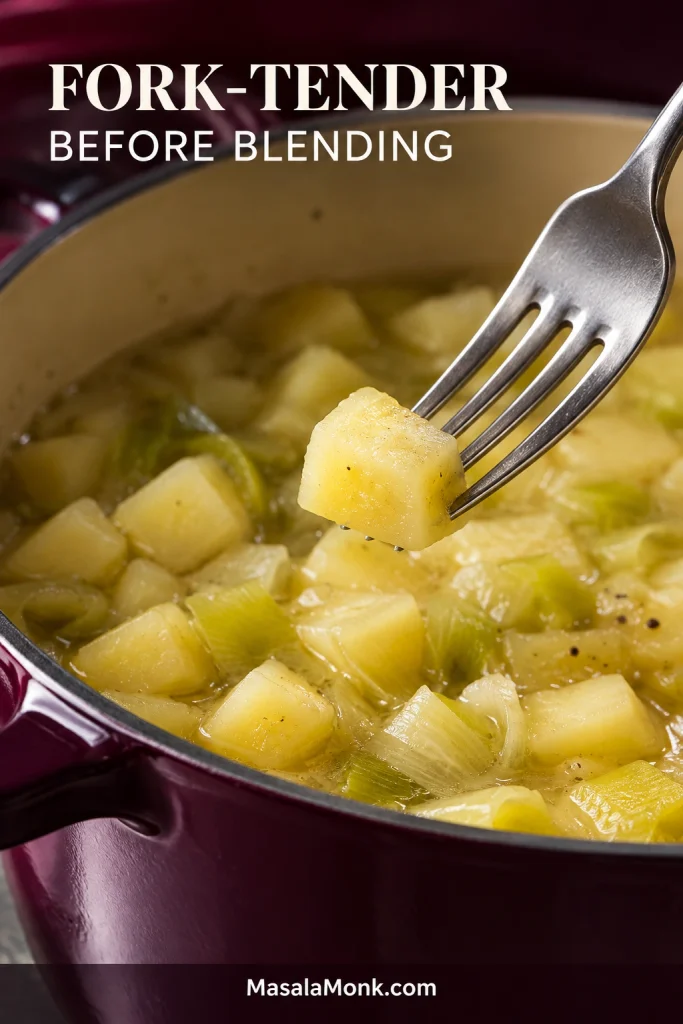
Before you blend: make sure the leeks are soft and sweet-smelling and the largest potato piece yields easily to a fork. Keep the extra broth nearby; you can adjust the consistency after blending.
Potato Leek Soup Recipe
An easy potato leek soup with plenty of leek flavor, Yukon Gold potatoes for texture and just enough cream for richness. Reduce or omit the cream for a lighter finish.
Prep Time 20 minutes
Cook Time 40 minutes
Total Time 1 hour
Servings 6
Equipment
5- to 6-quart heavy pot or Dutch oven
Large bowl for washing the leeks
Immersion blender, or a countertop blender used carefully in batches
Fine-mesh sieve, optional for an extra-fine finish
Ingredients
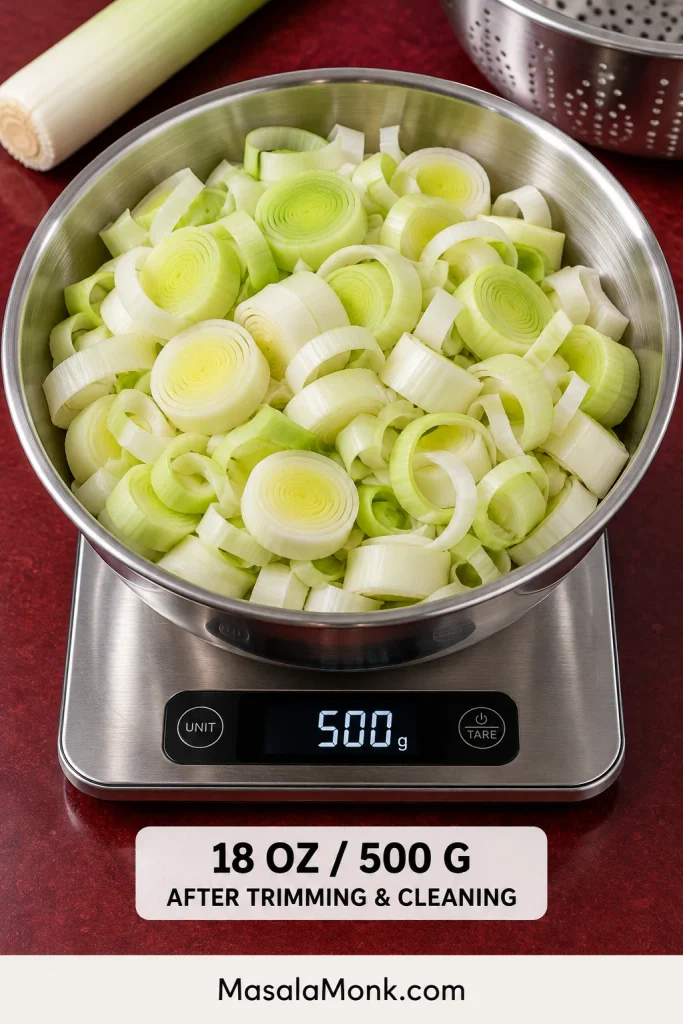
About 4 large leeks, enough to yield about 18 oz (500 g) trimmed and cleaned white and pale-green parts, thinly sliced
3 tablespoons (42 g) unsalted butter
3 garlic cloves, minced
2 lb (900 g) Yukon Gold potatoes, weighed before peeling, then peeled and cut into roughly ½-inch (1.3 cm) pieces
5 cups (1.18 L) low-sodium chicken or vegetable broth, plus up to 1 additional cup (240 ml) of extra broth for adjusting the consistency after blending
1 bay leaf
3 fresh thyme sprigs, or ½ teaspoon dried thyme
3.5 g kosher salt to start (about 1¼ teaspoons Diamond Crystal or ¾ teaspoon Morton), divided, plus more as needed; broth brands vary in saltiness
½ teaspoon freshly ground black pepper, plus more to taste
½ cup (120 ml) heavy cream, optional
1 to 2 teaspoons (5 to 10 ml) fresh lemon juice, as needed
2 tablespoons chopped fresh chives, for serving
Instructions
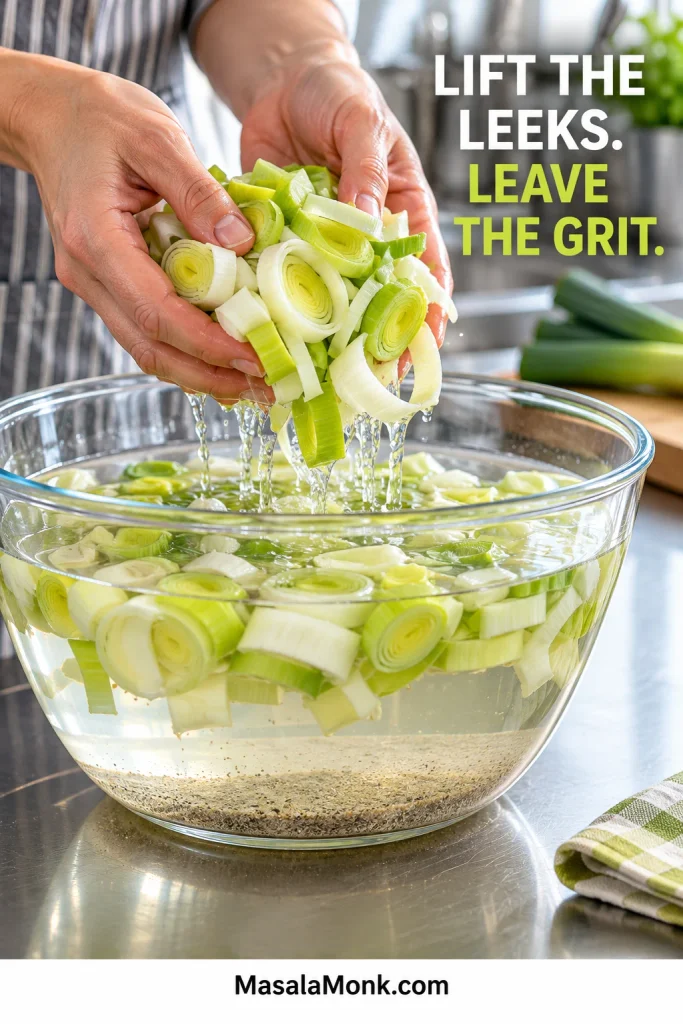
Wash the leeks. Put the sliced leeks in a large bowl of cold water and swish them well with your hands. Let the grit settle, then lift the leeks out and drain them. Do not pour the dirty soaking water back over the leeks.
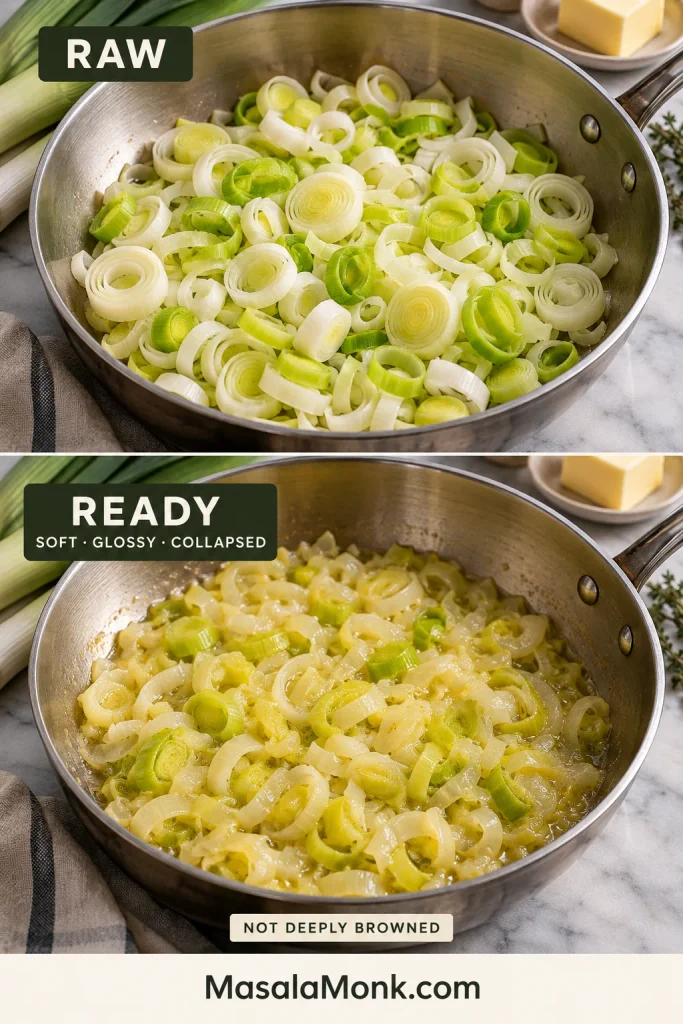
Soften the leeks and add the garlic. Melt the butter in the pot over medium heat. Add the leeks and about half of the measured salt, reduce the heat to medium-low, and cook for 8 to 12 minutes, stirring occasionally, until very soft, glossy and collapsed but not deeply browned. Stir in the garlic for the final 30 to 60 seconds, just until fragrant.
Simmer the potatoes and herbs. Add the potatoes, 5 cups (1.18 L) broth, bay leaf, thyme, the remaining measured salt and black pepper. Bring just to a boil, then reduce to a gentle simmer. Cover with the lid slightly ajar and cook for 15 to 20 minutes, until a fork slides through the largest potato piece without resistance.
Remove the herbs and blend briefly. Discard the bay leaf and fresh thyme stems, if using. For the chunky variation only, lift out about 2 cups of cooked potato and leek now and set them aside. For a smooth soup, blend all the vegetables in the pot. Either way, blend only until the visible pieces disappear; if you reserved vegetables, stir them back in afterward.
Add the cream. Planning to freeze part of the batch? Ladle that portion out now, before adding dairy. Stir the heavy cream, if using, into the soup over low heat just until hot.
Set the final thickness. Add extra broth about ¼ cup (60 ml) at a time until the soup pours the way you like. It should coat a spoon but still flow easily. Remove the pot from the heat.
Finish the flavor. Taste for salt and pepper first. When the seasoning is right but the soup still tastes heavy or muted, stir in 1 teaspoon (5 ml) lemon juice. Taste again before adding the second teaspoon.
Serve. Ladle into bowls and finish with chopped chives and freshly ground pepper.
Notes
For an extra-fine finish: pass the soup through a fine-mesh sieve after blending and before adding cream.
Without cream: omit the cream and use extra broth to set the final consistency.
For a chunky bowl: follow the optional vegetable-reserving method in step 4; otherwise, blend the soup smooth.
If cream is already in the soup: you can still freeze it, though the texture may change after thawing. Reheat while stirring, add extra broth if needed, then whisk well before serving.
What you’re aiming for: a smooth, velvety soup with a clean finish. The cream should round it out, and lemon—if you use it—should brighten the flavor without announcing itself.
The potatoes give the soup its texture; the leek should still be the first flavor you recognize. This recipe uses about 18 oz (500 g) of trimmed, cleaned leek because leek count alone can be misleading. Three very large leeks may give you as much usable white and pale-green leek as five smaller ones.
The dark-green tops can make the soup darker and more fibrous, so save them for stock instead. Rinse them thoroughly, drain well and freeze them for another batch.
Think in usable leek, not leek count. With 500 g cleaned leek to 900 g potato, this batch lands near a 1:1.8 ratio by weight—a useful benchmark when supermarket leeks vary wildly in size.
Wash sliced leeks, not just whole leeks
The easiest way to clean leeks for soup is to slice them first, swish them in cold water, let the grit settle, then lift the clean leeks out. Sand hides deep between the layers, and pouring the whole bowl through a strainer can send some of that settled dirt straight back over them.
Let the rinse water be your test. Once the leeks are lifted out, check the bottom of the bowl. If fresh grit is still visible, give them another rinse in clean water before cooking.
Soften them; do not race to brown them
Give the leeks 8 to 12 minutes over medium-low heat. Watch the pan more than the timer: they should look glossy, collapsed and very soft, and the sharper onion smell should fade into something sweeter. Deep caramelization is not a disaster, but it moves the flavor away from the pale, delicate soup we are making.
Check the thickest pale-green pieces before moving on. If they bend easily instead of springing back, the leeks have softened through; keeping them pale also preserves the soup’s clean color and gentler allium flavor.
Choosing Potatoes for Potato Leek Soup
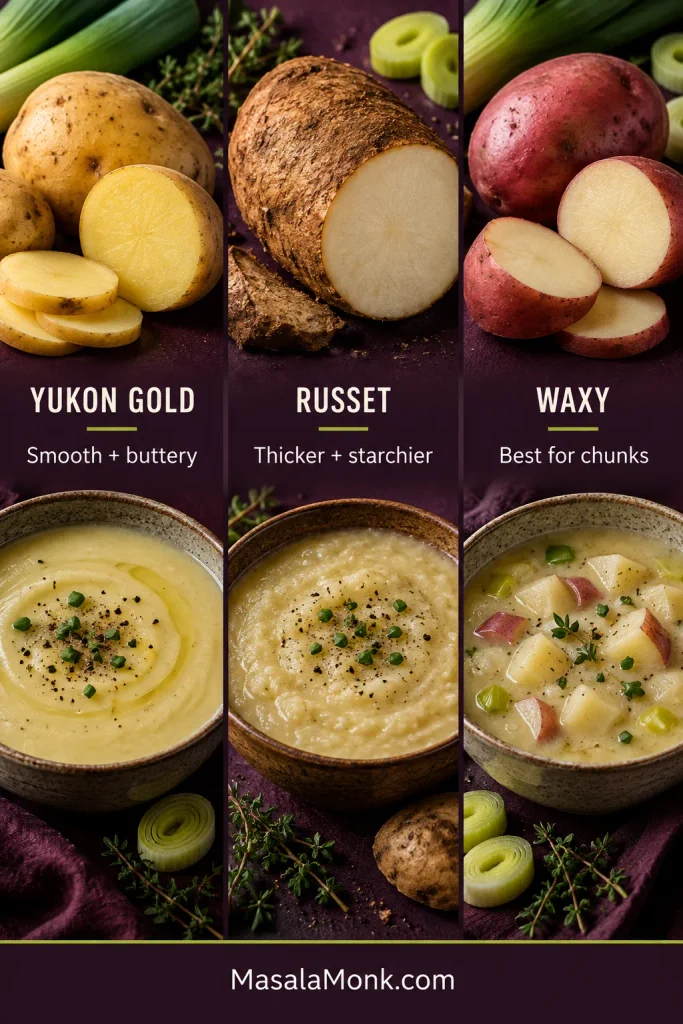
For a fully smooth potato leek soup, Yukon Gold potatoes are the best all-around choice. They turn creamy with brief blending and are more forgiving than very starchy potatoes. Other varieties can work too; choose them according to the texture you want in the bowl.
Potato
What it does best
Yukon Gold
Buttery, naturally smooth and well suited to a brief puree. This is the potato used here.
Russet
Starchier and naturally thicker. Useful when you want lots of body or less dairy, but easier to overwork in a blender.
Red or other waxy potatoes
Hold their shape better, which makes them useful when you want visible potato pieces rather than a fully smooth soup.
These are the raw varieties; the table explains how they behave in the pot. Yukon Gold is the balanced choice for this smooth soup, Russets contribute more starch, and waxy potatoes tend to hold their shape when you want distinct pieces.
Whichever potato you choose, cook it all the way through before blending. A potato that still resists a fork will not become silky because the blender runs longer. Yukon Gold and Russet behave differently when mashed too; our mashed potatoes recipe shows that contrast clearly.
Test one of the largest potato pieces, not the smallest. If a fork meets resistance at the center, keep simmering; an undercooked piece can leave graininess that extra blender time cannot safely fix.
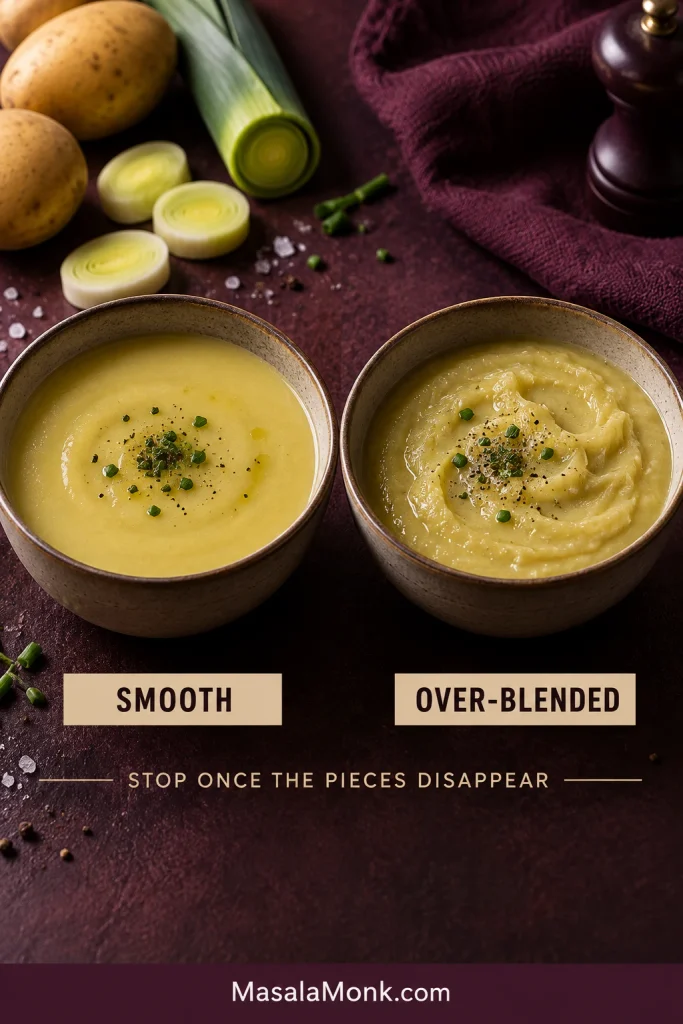
The leek needs time; the blender does not. Once the potatoes are fully tender, an immersion blender can take the soup from chunky to smooth very quickly. As soon as the visible pieces disappear, stop.
Potato leek soup can turn gluey when the cooked potatoes are blended too aggressively or for too long. Blending breaks down the potatoes and releases more starch; once the soup is already smooth, continuing to run the blender can push the texture from velvety to sticky.
Watch the surface, not the clock. Silky soup settles softly and still looks fluid; an increasingly elastic, paste-like surface is a warning that the potatoes are being overworked.
The blender gets you to smooth. A sieve gets you finer.
An immersion blender is convenient because you can blend in the pot and stop as soon as the soup is smooth. A countertop blender can work too, but hot-liquid rules vary by model. Follow the manufacturer’s instructions for maximum temperature, fill level, lid position and venting; work in batches and begin at low speed. If your blender is not approved for hot liquids, let the soup cool before blending.
For a finer finish, pass the blended soup through a fine-mesh sieve. Our tomato basil soup uses the same final step.
Adjusting the Thickness
The amount of liquid a batch needs is not perfectly fixed. Potato variety, leek moisture, pot width and evaporation all shift the finish slightly, which is why this recipe starts with 5 cups of broth and keeps more in reserve.
After blending and adding the cream, if using, add extra broth ¼ cup (60 ml) at a time until the soup coats a spoon and still pours easily. Some people prefer it thicker, others lighter. When it pours well and tastes good, you are done.
Potato soup keeps thickening as it cools, so a pot that looks perfect while piping hot can be noticeably heavier by serving time or the next day. A slightly looser finish at the stove is usually safer than pushing it too far.
Use the return to the pot as your final check. The soup should leave a coating on the ladle, fall back cleanly rather than in a sticky ribbon, and relax into the surface instead of sitting in a mound.
If your potato leek soup tastes bland, check the salt before reaching for more cream. Potatoes can mute the leek, while cream softens the overall flavor. Once the salt is right, a dull-tasting bowl may simply need a little brightness.
Start with salt. Potatoes need enough seasoning to taste alive.
Then taste for leek. If potato is dominating the bowl, more dairy will only soften the flavor further.
Use lemon only for brightness. Once the salt is right, a very small amount can bring a heavy or muted soup back into focus.
Finish with chives and pepper for freshness and contrast.
Unsure whether the pot needs lemon? Ladle about ½ cup (120 ml) soup into a small bowl and start with ⅛ teaspoon lemon juice. If the sample tastes brighter without tasting lemony, stir 1 teaspoon (5 ml) into the full pot and taste again. You can use the same small-bowl test for cautious salt or pepper adjustments.
You’re testing for brightness, not lemon flavor. The better sample should taste more vivid and less heavy; if lemon becomes an identifiable flavor, you have moved beyond the subtle acidity this potato leek soup needs.
It may need brightness, not more dairy. Test ⅛ teaspoon lemon juice in about ½ cup of soup; if the sample tastes brighter, add 1 teaspoon to the full pot and taste again.
It mostly tastes like potato
The leek-to-potato balance is off. If you have another leek, use the rescue just below; otherwise, chives and a little lemon can improve the finish. Next time: measure the trimmed, usable leek rather than relying on leek count.
It is sticky or gluey
The potatoes were probably over-blended. Stop blending and loosen the soup with extra broth. You cannot completely undo a gluey texture, but you can often make it pleasant enough to serve. Next time: stop as soon as the visible pieces disappear.
It feels sandy between the teeth
This is usually grit that stayed trapped in the leeks. A very fine sieve may improve a mildly gritty batch, but distinctly sandy soup can be difficult to rescue completely. Next time: wash sliced leeks in a bowl of water and lift them away from the settled dirt.
It is grainy but not sandy
Likely cause: the vegetables may not have been fully tender, or the dairy may have been overheated. Check the cause before reaching for the blender again. If the vegetables are undercooked, return the soup to gentle heat first.
It is too thick
Add extra broth ¼ cup (60 ml) at a time. Potato soup also thickens as it rests, so set the final consistency only after blending.
It is too thin
Simmer uncovered gently first. If it is still too thin, cook 1 medium Yukon Gold potato until fully tender, mash it with a little soup, then whisk the mixture into the pot. Add more mashed potato only if needed. Leave the rest of the batch out of the blender.
The cream looks split
Take the pot off high heat and whisk gently. A badly split dairy soup may not become perfectly smooth again. Next time: add the cream at the end and reheat gently rather than hard-boiling.
When Potato Overpowers the Leek
If the texture is good but the bowl tastes mostly of potato, adding more cream will only mute the leek further. Instead, soften an extra sliced leek in a little butter until completely tender, then blend it with one ladle of soup and stir that concentrated mixture back into the pot. Taste before changing the salt or lemon again.
This rescue changes the leek-to-potato balance instead of masking it. Use only enough soup to make the softened leek mixture pourable, so you return concentrated leek character without unnecessarily enlarging the batch.
Setting aside some of the cooked vegetables gives each bowl visible pieces of potato and leek. For a more potato-centered soup with larger pieces throughout, try our potato soup recipe.
Keep the reserved vegetables intact when they go back in. Tender potato and leek pieces against a smooth base make chunky potato leek soup feel intentional; partially crushed pieces can read like an incompletely blended batch.
Potato Leek Soup with Bacon
Cook 4 to 6 oz (115 to 170 g) chopped bacon until crisp. Remove it, leave about 1 tablespoon of the rendered fat in the pot, and use about 2 tablespoons of butter to soften the leeks. Return the bacon at serving so it stays crisp and gives each bowl a little crunch.
Add the bacon just before serving. Its crisp edges stay distinct against the silky soup, adding smoky crunch without overwhelming the mellow leek flavor.
Vegetarian: use a flavorful low-sodium vegetable broth. The rest of the method stays the same.
Vegan or dairy-free: use olive oil or plant-based butter, vegetable broth, and omit the heavy cream or use a neutral unsweetened dairy-free alternative. Coconut milk brings a noticeable coconut flavor, so use it only if you want that in the bowl. Our white bean soup is another creamy soup that gets much of its texture from the beans.
No cream does not have to mean thin soup. Potato already supplies the structure, so judge this dairy-free version by its smooth flow; if it becomes too dense, broth—not another source of fat—is the cleaner correction.
Divide leftovers into shallow containers and refrigerate them within 2 hours; shallow containers help a large pot of soup cool more quickly. FoodSafety.gov recommends keeping cooked leftovers refrigerated for 3 to 4 days.
Reheating Without Making It Too Thick
Add a little broth first if the soup has tightened in the refrigerator, then warm it over medium heat, stirring often. USDA guidance recommends reheating leftovers to 165°F (74°C) and bringing soups, sauces and gravies to a boil. Once the soup reaches a rolling boil, take it off the heat; prolonged boiling does nothing useful for the cream.
Freezing Potato Leek Soup
Freezing before adding cream gives the soup a better chance of keeping a smooth texture, though potatoes can still change slightly after thawing. For best quality, use it within about 2 to 3 months. Thaw overnight in the refrigerator, reheat to the safe temperature described above, add extra broth if the soup has thickened, then add cream if you want it and adjust the salt and lemon at the end.
Use shallow portions with a little headspace for expansion. They cool and thaw more conveniently, while keeping the cream out until reheating gives you more control over the final texture.
For serving, this soup needs very little: crusty bread, toasted sourdough or a simple green salad is enough for a light meal. Our Irish soda bread is especially good for tearing and dipping. A hot, silky bowl with cool chives and a crack of black pepper already feels complete; croutons or crisp bacon are there if you want more contrast. Whatever you put on top, you should still taste the leeks first.
Choose bread for contrast rather than extra richness. A crisp crust and chewy crumb give silky potato leek soup the texture it lacks, while a relatively plain loaf lets the sweet leek flavor remain the star.
A good smoked haddock chowder should feel like a full meal in a bowl: soft potatoes, tender flakes of fish, and a creamy broth that carries the smoke without turning salty or heavy. This version is smoke-kissed enough to feel special, rounded enough to be comforting, and sturdy enough to serve with nothing more than bread on the side.
This version keeps the base simple: smoked haddock, milk, potatoes, leek, onion, celery, and herbs. From there, you can make the bowl sweeter with sweetcorn, richer with cream, deeper with bacon, or more seafood-forward with prawns. The heart of the recipe stays the same: gently poached smoked fish, smoky milk, and potatoes mashed just enough to thicken the soup naturally.
The method is built to avoid the usual smoked haddock chowder problems: over-salted broth, split milk, rubbery flakes, and a thin base. It feels like weekend comfort, but the cooking is simple enough for a weeknight.
Those small details matter most at the end, when the milk, seasoning, and flaked haddock come together. For another cozy fish-and-potato bowl, this creamy salmon soup follows the same comforting, gentle-cooked idea.
Smoked haddock chowder is a creamy fish soup made with smoked haddock, potatoes, leek or onion, and milk. The best method is to poach the haddock gently in milk first, use that smoky milk in the soup base, mash some potatoes for body, then fold the fish back in at the end so it stays tender.
It is closely related to Cullen skink, the traditional Scottish smoked haddock soup, but chowder is broader and more flexible. Cullen skink usually stays close to smoked haddock, potatoes, onion or leek, milk, and sometimes cream. Chowder can include sweetcorn, bacon, celery, prawns, stock, herbs, or a richer creamy finish.
The key: Treat the haddock gently. Once it has been poached, the chowder is mostly about building a soft potato base and folding the fish back in without breaking it up.
Before You Cook: 3 Things That Make the Chowder Better
Smoked haddock is easy to cook, but it has a strong personality. A little care with heat and seasoning keeps the chowder mellow, creamy, and balanced.
Save salt for the end. Smoked haddock, bacon, pancetta, and stock can all bring salt. Taste the finished chowder before seasoning.
Keep the dairy gentle. Milk and cream stay smoother when they are warmed quietly instead of pushed into a rolling boil.
Warm the fish through instead of re-cooking it. Once the haddock is poached and flaked, it only needs a few minutes in the finished chowder.
These three rules protect the chowder before trouble starts: season late, keep the dairy gentle, and warm the fish through instead of boiling it.
Best for: smoky comfort without an over-salted soup, a creamy chowder without a heavy roux, and one base recipe you can turn sweeter with sweetcorn, deeper with bacon, or more seafood-forward with prawns.
This is a cozy stovetop chowder with milk-poached smoked haddock, soft potatoes, leek, onion, celery, and herbs. Sweetcorn is optional but lovely for a sweeter family-style bowl; cream and bacon are optional richer finishes. The potatoes thicken the base naturally, the poaching milk carries the smoked-fish flavour, and the haddock goes back in at the end so the flakes stay tender.
Prep time
15 minutes
Cook time
35 to 40 minutes
Total time
50 to 55 minutes
Servings
4 generous bowls
Method
Stovetop
Difficulty
Easy
Texture
Creamy, chunky, smoky, spoon-coating
Ingredients
400 to 450 g / 14 to 16 oz smoked haddock fillets
600 ml / 2½ cups whole milk
250 to 300 ml / 1 to 1¼ cups unsalted fish stock, unsalted vegetable stock, or water
500 to 600 g / 1 lb 2 oz to 1 lb 5 oz potatoes, peeled and diced into 1 to 1.5 cm pieces
1 large leek, cleaned and sliced
1 small onion, finely chopped
1 celery stick, finely sliced
30 to 40 g / 2 to 3 tablespoons unsalted butter
1 bay leaf
1 teaspoon thyme leaves, or 2 thyme sprigs
100 to 150 g / about ⅔ to 1 cup sweetcorn, optional, recommended for a sweeter family-style bowl
75 to 100 ml / ⅓ cup to scant ½ cup cream, optional
75 to 100 g / about 2½ to 3½ oz bacon or pancetta, optional
Black pepper, to taste
Chopped parsley or chives, to finish
Lemon wedges, optional
Salt note: Taste after the smoked haddock is back in the pot, then add salt only if the chowder needs it.
Instructions
Poach the fish and start the base
Poach the smoked haddock. Place the smoked haddock in a wide pan. Add the milk and bay leaf. Warm over low to medium-low heat until the milk is steaming and barely simmering.
Cook the fish gently. Poach for 5 to 7 minutes, depending on thickness, until the fish is opaque and flakes easily.
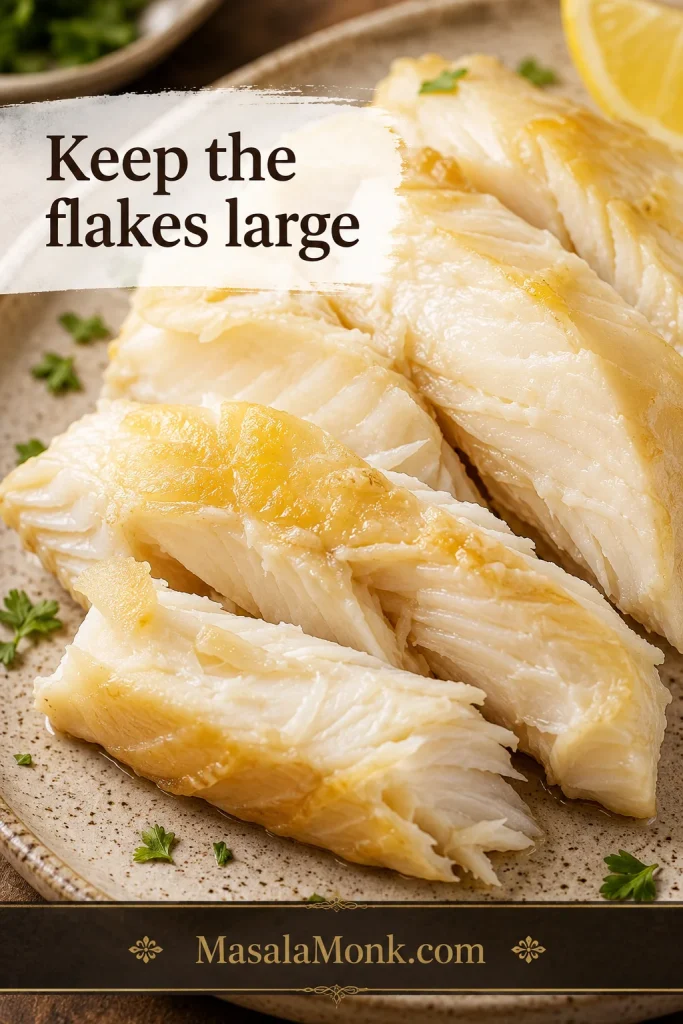
Reserve the smoky milk. Lift the fish out with a slotted spoon. Strain and reserve the poaching milk. Remove skin or bones if needed, then flake the haddock into large pieces.
Start the base. Melt the butter in a large soup pot over medium-low heat. If using bacon or pancetta, cook it first until golden, then remove some crispy pieces for topping if you like.
Soften the vegetables. Add the leek, onion, and celery. Cook for 8 to 10 minutes, stirring often, until soft and glossy but not browned. The leeks should smell sweet before the potatoes go in.
Thicken, finish, and serve
Simmer the potatoes. Add the diced potatoes, thyme, and unsalted stock or water. Simmer for 10 to 15 minutes, or until the potatoes are tender.
Thicken naturally. Mash some of the potatoes directly in the pot. Leave some chunks whole so the bowl stays hearty.
Add the milk and sweetcorn. Pour in the reserved poaching milk. Add the sweetcorn, if using. Warm gently for 3 to 5 minutes.
Finish with cream and fish. Stir in the cream, if using, then add the flaked smoked haddock. Keep the heat low and warm through for 2 to 3 minutes. The pot should be hot, not bubbling hard.
Rest, taste, and serve. Let the chowder sit off the heat for 5 minutes if you have time; the potatoes settle and the smoky flavour rounds out. Finish with black pepper, herbs, lemon, and a little salt only if needed. Serve hot with crusty bread, toast, oatcakes, crackers, or a simple green salad.
Best texture cue: The chowder should be spoon-coating, with tender potato pieces and large flakes of fish. It should feel generous, creamy, and smoky without becoming heavy.
Once you understand the base, this chowder becomes easy to bend. Keep the fish tender, keep the seasoning balanced, then choose the version that fits the meal you want.
Smoked Haddock Chowder Variations: Sweetcorn, Bacon, Prawn, Creamy, or Lighter
Choose the bowl you want, but keep the spine of the recipe steady: smoked fish, milk, potatoes, leek or onion, and gentle heat. The variations below let you make the same pot lighter, richer, sweeter, or more generous without relearning the recipe.
After the base is right, choose the mood of the bowl: sweeter with sweetcorn, richer with bacon, lighter without cream, or more seafood-forward with prawns.
If you want…
Do this
Result
Classic cozy bowl
Use milk, potatoes, leek, onion, celery, thyme, and a little cream.
Rounded, creamy, balanced
Lighter weeknight bowl
Skip bacon and cream, mash extra potatoes, and finish with herbs and lemon.
Creamy without feeling heavy
Sweetcorn chowder
Add 100 to 150 g / about ⅔ to 1 cup sweetcorn near the end.
Softer smoke, little sweet pops
Bacon chowder
Cook bacon or pancetta first, then soften the vegetables in the fat.
Deeper, savoury, bacon-smoky
Prawn or shrimp chowder
Add raw prawns or large shrimp near the end and cook just until pink.
More seafood-forward and generous
Cullen skink-style bowl
Skip sweetcorn, bacon, celery, and prawns. Keep smoked haddock, potatoes, onion or leek, milk, and herbs.
Simpler, cleaner, more traditional
Dairy-free coconut bowl
Use light coconut milk and water instead of dairy milk and cream.
Milk-poaching makes the biggest difference. The fish cooks quietly, the milk takes on a gentle smoke, and the kitchen starts to smell smoky and savoury before the soup base is even built.
Potatoes give the soup body without needing a heavy flour base. Once they are tender, mash some directly into the pot. The starch thickens the broth naturally, leaves the flavour cleaner than a roux, and still gives you enough potato chunks to make the bowl feel hearty.
Adding the fish back at the end keeps the flakes large and tender instead of dry, rubbery, or broken into tiny pieces. The same gentle-finish idea also matters in creamy fish dishes like this creamy salmon pasta.
Late seasoning keeps the bowl balanced. Smoked haddock varies from mild to very salty, and richer add-ins like bacon or pancetta can change the salt level quickly. Waiting until the end gives you control.
The Texture We’re Going For
The finished chowder should sit in the comfortable middle: thicker than a thin fish soup, lighter than a heavy seafood stew, and creamy without becoming heavy or stodgy. The broth should coat a spoon lightly, the potatoes should be soft, and the fish should stay tender instead of breaking down into the base.
Look for this texture at the end: spoon-coating broth with tender haddock flakes and potato pieces still clearly visible.
The finished bowl should feel settled and comforting: soft potatoes, mellow smoke, and clear pieces of haddock, not tiny fragments lost in the soup. If the pot looks a little loose before the haddock goes back in, give the potatoes a gentle mash and a few minutes to settle. If it looks too thick, a splash of warm milk or unsalted stock will bring it back.
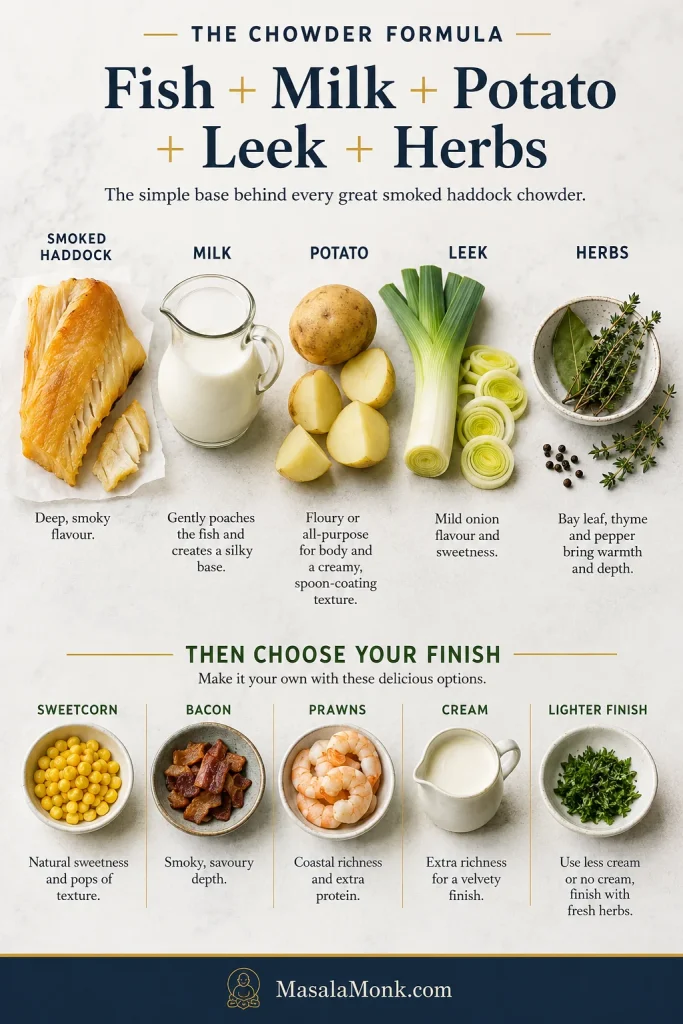
The Chowder Formula
Once the fish is handled gently, the rest of the chowder is built from simple, comforting things: potatoes for body, leek for sweetness, milk for softness, and herbs for a fresh finish.
The formula is easy to remember: smoked fish for depth, milk for softness, potatoes for body, leek for sweetness, and herbs for lift.
Fish
Smoked haddock, ideally undyed if available
Base
Whole milk for poaching, plus unsalted stock or water for the potatoes
Body
Diced potatoes, partly mashed into the soup
Sweetness
Leek, onion, and optional sweetcorn
Richness
Cream or bacon, both optional
Freshness
Parsley, chives, black pepper, and lemon at the end
Main cue
Quiet heat after the dairy and fish go in
Ingredients and Smart Swaps
The ingredient list is simple, but each choice shapes the bowl: smoke from the fish, sweetness from the leek, body from the potatoes, softness from the milk, and freshness from herbs and lemon.
Because smoked haddock brings plenty of flavour, the best base stays simple: milk, potatoes, leek, onion, celery, herbs, and only the extras you need.
Smoked Haddock
Choosing the Fish
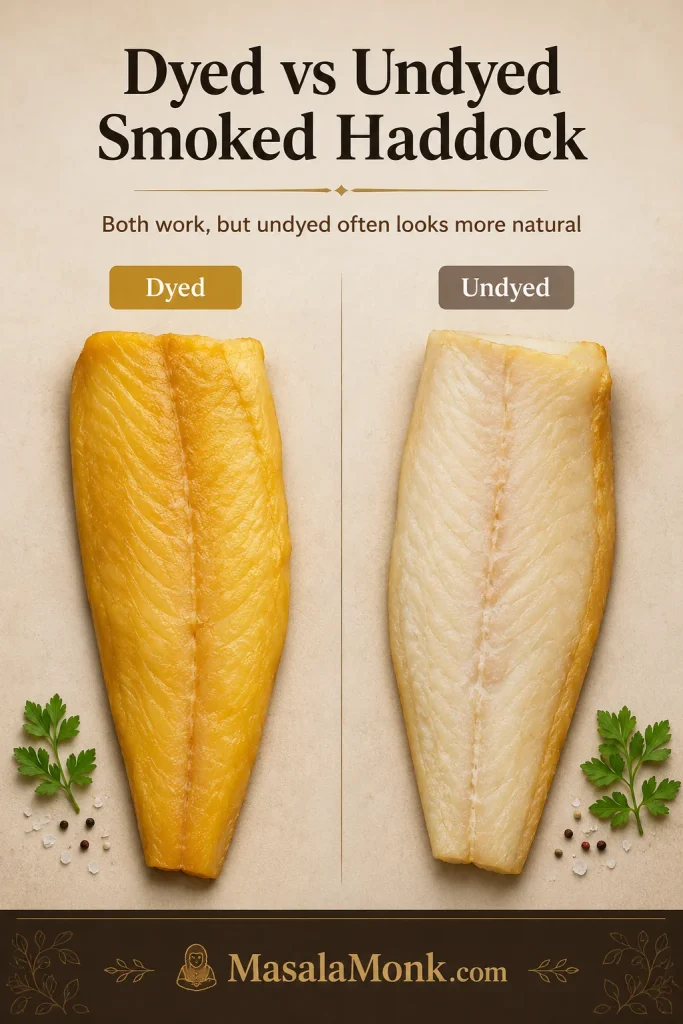
Use 400 to 450 g / 14 to 16 oz smoked haddock for four generous bowls. Undyed smoked haddock is ideal if you can find it because the colour is natural and the flavour is usually cleaner. Dyed smoked haddock also works, but it will give the soup a stronger yellow colour.
Dyed haddock works, but undyed smoked haddock usually gives the chowder a cleaner colour and a more natural-looking finished bowl.
When the fish has skin, poach it with the skin on, then remove the skin before flaking. Pull out any bones as you break the fish into large pieces.
Frozen Fish, Substitutes, and Salt Balance
Frozen smoked haddock works well when it is thawed overnight in the fridge before poaching. Pat it dry, then cook gently as usual. When poaching from frozen, use lower heat and allow extra time, though thawed fish gives better texture and more even cooking.
When smoked haddock is unavailable, use smoked cod, smoked pollock, smoked whiting, or another smoked white fish. For very strong smoked fish, use part smoked fish and part plain white fish.
Very strong or salty haddock can overpower the pot, so use a little less of the poaching milk and balance the chowder with fresh milk, unsalted stock, or extra potato. You still get the smoked-fish flavour without letting it take over the bowl.
Extra cooked smoked haddock is worth keeping in large flakes for potato-based leftovers. This crispy fish cakes recipe is a useful next idea when you have fish and potato to use up.
Milk
Whole milk gives the best texture and flavour because it does two jobs at once: it poaches the fish and becomes part of the base. Semi-skimmed or 2% milk can work too, but it needs lower heat because leaner milk is less forgiving.
Potatoes
Floury potatoes make the thickest, creamiest chowder because they break down slightly. Maris Piper, King Edward, Russet, or Yukon Gold are all good choices. Waxy potatoes hold their shape and give a chunkier bowl, which is also fine if that is what you like.
Dice the potatoes into roughly 1 to 1.5 cm pieces so they cook in 10 to 15 minutes. Mash some of the cooked potatoes into the soup before adding the fish back, and leave the rest whole for texture. The best bowls have both: a rounded base from the mashed edges and a few soft pieces left for the spoon.
You can replace 150 to 200 g of the potato with sweet potato for a slightly sweeter chowder, especially if you are using prawns, sweetcorn, or a lighter no-cream version.
Leek, Onion, and Celery
Leek gives a soft sweetness that suits smoked fish. Slice it, then rinse well in a bowl or colander to remove grit between the layers. Onion adds depth, and celery gives the pot a classic savoury base.
If you only have onion, use one large onion and skip the leek. If you love leeks, use two leeks and skip the onion. For a more leek-forward smoked haddock and leek chowder, use two leeks and skip the celery.
Sweetcorn
Sweetcorn is optional, but it works beautifully here. It gives little pops of sweetness against the creamy potato base and softens the salty-smoky edge of the fish. Frozen sweetcorn can go straight into the hot chowder. Canned sweetcorn should be drained first. Fresh corn can be cut from the cob and simmered for a few minutes until tender.
Stock or Water
Unsalted fish stock, unsalted vegetable stock, or water gives you the most control. If your stock is already salted, start with less and adjust the finished bowl instead of seasoning early.
Bacon or Pancetta
Bacon or pancetta makes the bowl deeper, richer, and more pub-style. Cook it first, then soften the leek and onion in the rendered fat. If the bacon releases plenty of fat, use less butter before adding the vegetables. Taste the finished chowder before seasoning because bacon can push the salt up quickly.
Cream
Cream is a finishing touch, not the thing that holds the chowder together. Single cream, heavy cream, or cooking cream all work. If using double cream, use the smaller amount because it is richer. Add cream near the end over low heat.
For another rich finish, stir in a small handful of mature cheddar off the heat. Keep it modest and taste before adding salt, because smoked haddock and cheese can make the bowl salty quickly.
Herbs, Pepper, Mustard, and Lemon
Parsley and chives bring freshness to the finished bowl. Black pepper works better than early salt. Lemon is optional, but a small squeeze at the end can wake up a rich chowder, especially if you used cream or bacon.
A small teaspoon of Dijon or English mustard can also sharpen the soup without making it taste obviously mustardy. It is especially useful if the base tastes creamy but a little flat.
You only need a wide pan for poaching, a soup pot for the base, a sieve for the smoky milk, and a potato masher or sturdy spoon for thickening. An immersion blender is optional, but blend only part of the potato mixture so the chowder keeps some texture.
How to Poach Smoked Haddock in Milk
Milk-poaching is the step that makes the chowder taste rounded instead of sharp. The fish cooks quietly, the milk absorbs the smoke, and you get a base that already tastes like smoked haddock before the soup is built.
Poaching the haddock in milk first does two jobs at once: it keeps the fish tender and turns the milk into the smoky chowder base.
Milk-Poaching Steps
Place the smoked haddock in a wide pan in a single layer.
Add the milk and bay leaf. The fish does not need to be submerged perfectly, but it should be mostly covered.
Warm slowly over low to medium-low heat until the milk is steaming and just beginning to tremble at the edges.
Poach for 5 to 7 minutes, depending on the thickness of the fillets.
Lift the fish out as soon as it turns opaque and flakes easily. If checking with a thermometer, look for 63°C / 145°F.
Strain the milk and keep it for the chowder. The reserved milk should smell gently smoky, not harsh; that is the flavour that will carry through the whole pot.
Remove skin and bones if needed, then flake the haddock into large pieces.
Visual cue: Keep the cooked haddock in large flakes before it goes back into the chowder.
Once the fish is cooked, flake it generously rather than finely so the haddock still feels like the main ingredient in each spoonful.
Give this step gentle heat and a few calm minutes. The fish may not look dramatic at this stage, and that is fine. You are only cooking it until it flakes, not trying to brown or crisp it.
Once the haddock is poached and the smoky milk is reserved, the chowder comes together like a simple potato soup. Build flavour before the dairy goes back in, then finish with low, patient heat.
1. Soften the Leek, Onion, and Celery
Melt the butter in a large soup pot over medium-low heat. Add the leek, onion, and celery, then cook for 8 to 10 minutes until soft and glossy. The vegetables should smell sweet and savoury, not browned.
Soften the leek, onion, and celery until glossy and mellow; browning them pushes the chowder away from its soft, creamy flavour.
2. Simmer the Potatoes
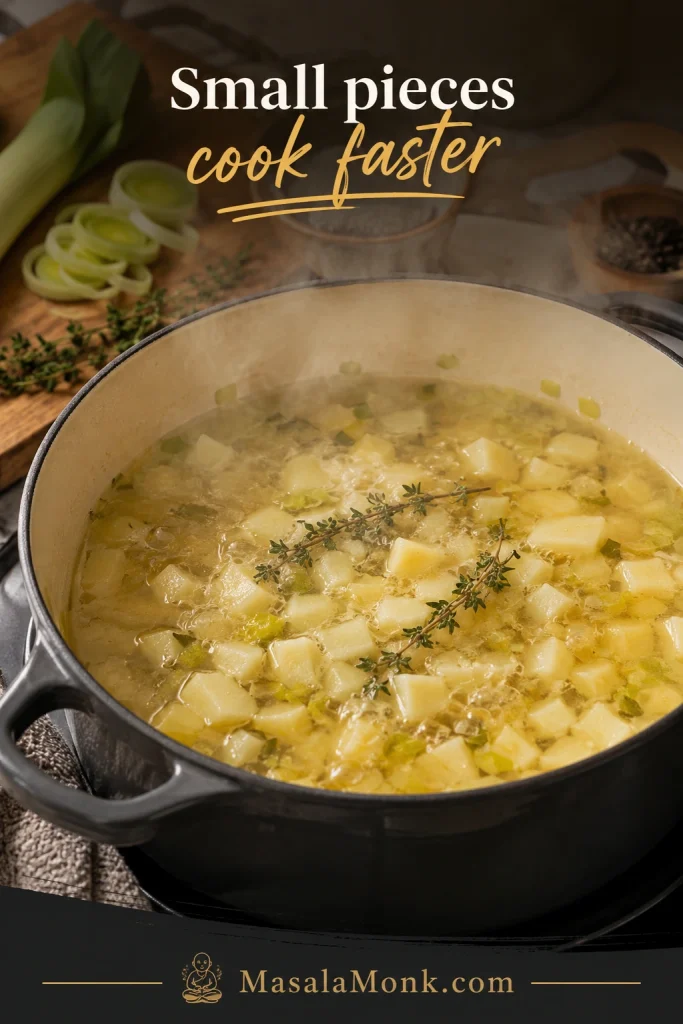
Add the diced potatoes, thyme, and unsalted stock or water. Simmer until the potatoes are tender, usually 10 to 15 minutes. Smaller potato pieces cook faster and make the chowder easier to thicken.
Next, simmer small potato pieces until tender so they cook evenly and can later thicken the chowder without a floury roux.
3. Mash Some Potatoes for Body
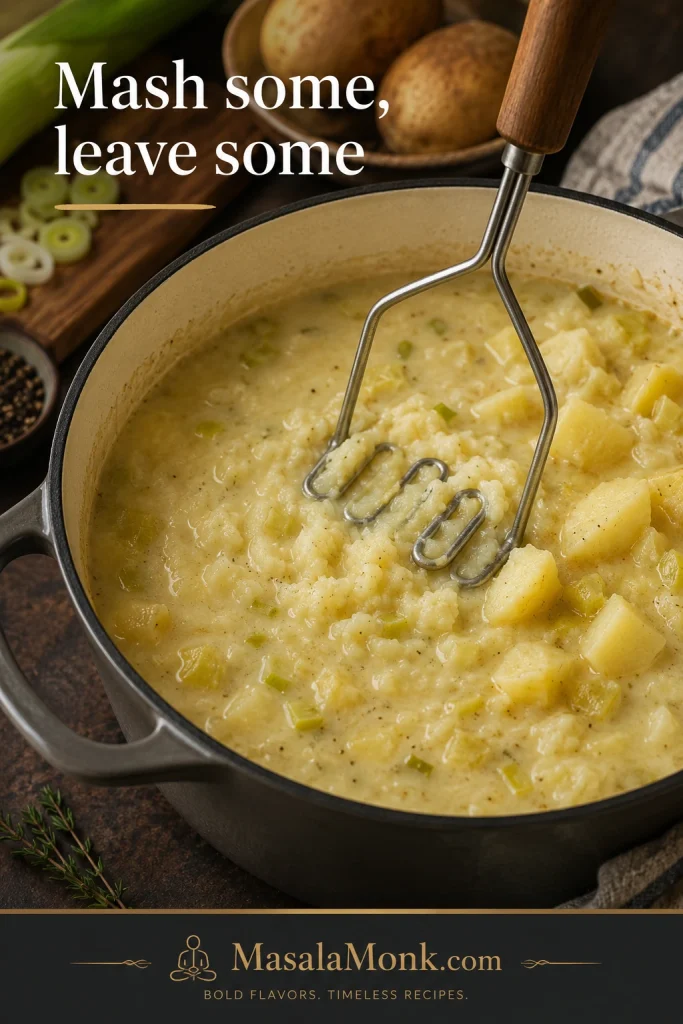
Mash some of the potatoes directly in the pot. This is the easiest way to thicken the soup without making it heavy. Leave enough potato chunks whole so each bowl still has texture.
Mash only part of the potatoes into the pot; that gives the chowder body while leaving enough chunks for a hearty bowl.
4. Add the Reserved Smoky Milk
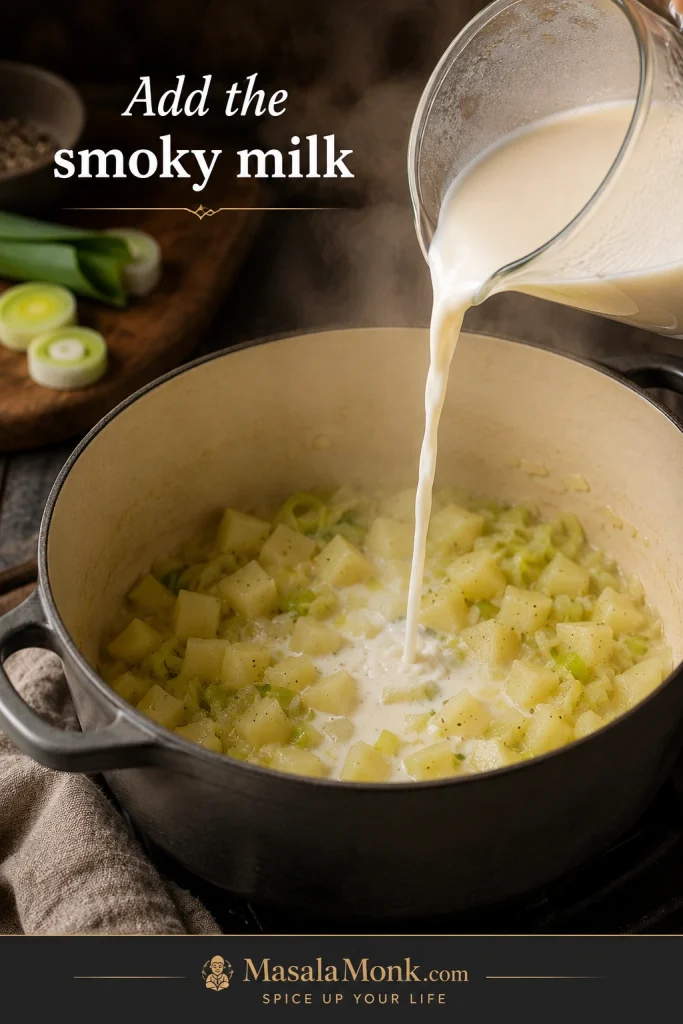
Pour in the strained poaching milk and stir gently. The pot should start to smell smoky and mellow, not sharp or fishy. This is the moment it starts to taste like chowder instead of potato soup. If the chowder looks a little loose, mash a few more potatoes and let the base settle for a minute.
Then pour in the reserved smoky milk slowly, letting the potato base loosen into a creamy chowder instead of a thin soup.
5. Finish With Fish, Sweetcorn, and Cream
Stir in the sweetcorn and warm it through. Add the cream if using, then fold in the flaked smoked haddock. A few broken flakes are fine; just avoid stirring so hard that the fish disappears into the soup.
Add the haddock near the end and fold gently, because the flakes only need to warm through, not simmer for ages.
6. Taste at the End
Finish with black pepper, parsley or chives, and a squeeze of lemon if the chowder needs brightness. Add mustard if the base tastes creamy but flat. The final herbs and lemon lift the bowl and make it feel rich without becoming heavy.
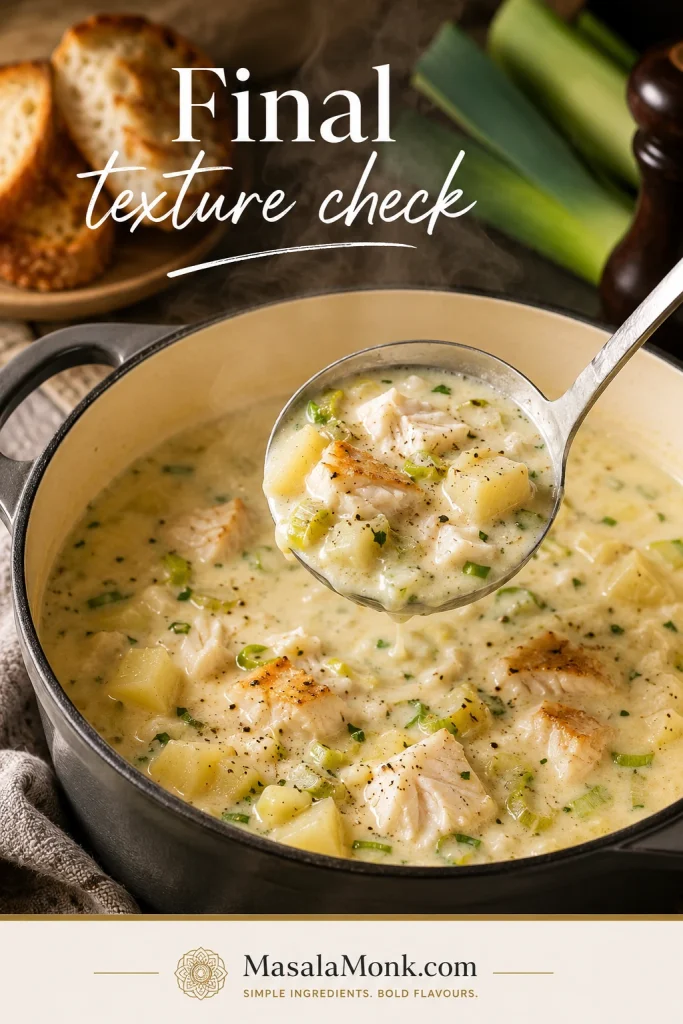
A good smoked haddock chowder should look smooth and spoon-coating, not gluey. The broth should coat a spoon lightly, the potatoes should be tender, and the haddock should sit in large flakes rather than tiny broken pieces. The bowl should feel generous, not heavy.
Before serving, check the ladle: you want creamy broth, tender fish, soft potatoes, and enough movement that the chowder still feels silky.
Fish: opaque, tender, and easy to flake.
Potatoes: soft enough to mash at the edges, with some chunks left whole.
Liquid: smooth and rounded, not separated or grainy.
Seasoning: smoke first, gentle sweetness from leek and corn, and only enough salt to feel balanced.
If the chowder tastes flat, it usually needs pepper, herbs, lemon, mustard, or a little extra smoked-fish flavour. If it tastes too salty, the fix is usually more potato, milk, cream, or unsalted stock.
More Ways to Adjust the Chowder
The base recipe gives you a classic spoon-coating chowder. These notes help you steer the same pot lighter, richer, sweeter, or more seafood-heavy without changing the method.
Creamy Version
A splash of cream makes the bowl fuller and softer. Stir in 75 to 100 ml / ⅓ cup to scant ½ cup near the end so it rounds out the broth without drowning the smoked fish.
Lighter or No-Cream Version
Skip the bacon and cream, use milk as the main liquid, mash extra potatoes for body, and finish with herbs and lemon instead of extra fat. The bowl still feels rich and rounded, but the body comes from potatoes rather than cream.
Smoked Haddock and Sweetcorn Chowder
Sweetcorn is the easiest way to soften the smoke. Add 100 to 150 g / about ⅔ to 1 cup near the end for little sweet pops against the salty fish and creamy potato base. Frozen, canned, or fresh corn all work.
For a sweeter family-style version, sweetcorn softens the smoky edge and adds bright pops of texture against the potato base.
Smoked Haddock and Bacon Chowder
Bacon pushes this into pub-style territory. Cook 75 to 100 g / about 2½ to 3½ oz chopped bacon or pancetta first, then let the leek and onion soften in the rendered fat. Taste the finished chowder before seasoning.
For a deeper pub-style bowl, bacon adds savoury crunch and smoke, but taste before salting because it seasons the chowder too.
Smoked Haddock and Prawn Chowder
Prawns make the bowl feel more generous and seafood-forward. Add raw prawns, or large shrimp, near the end and cook gently for 2 to 3 minutes, just until pink and opaque. If using cooked prawns, add them only long enough to warm through. For a separate quick seafood dinner where prawns are the main event, try this shrimp scampi recipe.
For the prawn version, add prawns near the end so they stay pink, tender, and sweet instead of shrinking into the broth.
Dairy-Free Coconut Version
This will not taste like a classic British chowder, but it can still be lovely: smoky, light, and gently spiced. Use light coconut milk and water instead of dairy milk and cream, then add ginger, turmeric, chilli, or smoked paprika if you want more warmth.
Small Batch for 2 People
For two bowls, use about 200 to 225 g / 7 to 8 oz smoked haddock, 300 ml / 1¼ cups milk, 250 to 300 g potatoes, and one small leek or half an onion. A smaller pan helps keep the fish mostly covered while it poaches.
Budget-Friendly Version
To stretch the pot, use 250 to 300 g smoked haddock instead of the full amount, then add more potato, sweetcorn, and leek. The flavour will be milder, but the smoky poaching milk still carries through the soup.
Smoked Haddock Chowder vs Cullen Skink
Cullen skink is the more traditional Scottish smoked haddock soup; smoked haddock chowder is the broader, more flexible version. Cullen skink usually stays close to smoked haddock, potatoes, onion or leek, milk, and sometimes cream, while chowder may include celery, sweetcorn, bacon, prawns, stock, herbs, or extra cream.
Make the Cullen skink-style version when you want something simpler and more traditional. Make this chowder when you want a flexible bowl with sweetcorn, bacon, prawns, or a richer finish.
Cullen skink-style keeps things simpler and more traditional, while chowder gives you more room for cream, herbs, sweetcorn, bacon, or prawns.
For a more traditional direction, this Cullen skink recipe keeps the focus on smoked fish, potatoes, onion, and a simple milk-rich base.
For a stricter Cullen skink-style bowl, skip the sweetcorn, bacon, celery, prawns, and heavy add-ins. Use smoked haddock, potatoes, leek or onion, milk, a little cream if you like, black pepper, and herbs.
Dish
Usually includes
Best for
Smoked haddock chowder
Smoked haddock, potatoes, milk, leek or onion, celery, sweetcorn, bacon, cream, herbs, or seafood add-ins
A flexible creamy fish soup
Cullen skink
Smoked haddock, potatoes, onion or leek, milk, cream, herbs
Most chowder problems happen near the end, when the milk gets too hot, the fish is stirred too hard, or the smoked haddock brings more salt than expected. The fixes below will usually save the pot.
If the chowder needs rescuing, fix the cause: potatoes add body, milk or stock softens saltiness, and lower heat protects the dairy and fish.
Texture and heat fixes
Problem
What happened
How to fix it
Chowder is too thin
The potatoes did not break down enough.
Mash some potatoes into the soup or simmer the base uncovered briefly before adding the fish.
Chowder is too thick
The potatoes thickened the base more than expected.
Loosen with warm milk, stock, or water until the texture feels right.
Milk split or turned grainy
The heat was too high after the milk or cream went in.
Lower the heat and avoid a hard boil. A split chowder is usually edible, but the texture may look grainy.
Fish is rubbery
The haddock was boiled or cooked too long.
Poach gently and add the flaked fish back near the end only to warm through.
Fish broke into tiny pieces
The haddock was stirred too much after flaking.
Fold the fish in gently at the end and avoid aggressive stirring.
Flavour and seasoning fixes
Problem
What happened
How to fix it
Chowder is too salty
The smoked haddock, bacon, pancetta, or stock added more salt than expected.
Add potato, milk, cream, or unsalted stock to soften the salt. Next time, season at the end.
Chowder tastes too smoky
The smoked haddock was very strongly smoked.
Add potato, sweetcorn, milk, or cream to soften the smoke. Next time, use part smoked fish and part plain white fish.
Chowder tastes bland
The base needs more lift or seasoning.
Add pepper, herbs, lemon, mustard, or a little extra smoked-fish flavour.
Chowder is too rich
Too much cream, bacon, or butter made it heavy.
Loosen with milk or stock and finish with lemon and herbs. Next time, skip cream and thicken with potato.
Chowder tastes fishy
The fish may not be fresh enough, may have been overcooked, or may be too strong for your taste.
Use fresh-smelling smoked haddock, avoid boiling, and finish with lemon and herbs.
This chowder is best freshly made, but leftovers can still be lovely if you warm them slowly. Fish and dairy prefer patience, not high heat.
For leftovers, cool the chowder promptly, store it gently, and reheat it slowly with a splash of milk or stock if it thickens.
To Refrigerate
Let the chowder cool briefly, then store it in an airtight container in the fridge for up to 2 to 3 days. Because it contains fish and dairy, get it into the fridge promptly.
To Reheat
Reheat on low heat, stirring gently, until hot all the way through. Add a splash of milk or stock if the chowder has thickened in the fridge.
To Freeze
You can freeze it, but the texture may change because milk, cream, and potatoes can become slightly grainy after freezing. For the best make-ahead result, freeze the potato and milk base before adding cream and fish, then add freshly poached smoked haddock when reheating.
Best Make-Ahead Method
Make the leek, potato, and milk base ahead of time, then add the flaked smoked haddock when you reheat the chowder. This keeps the fish from breaking apart or turning tough.
The chowder is filling enough to be a meal on its own, especially when it has potatoes and sweetcorn in the bowl. A simple side makes it feel complete.
Anything toasted, crunchy, or slightly sharp works well here because the chowder itself is soft, smoky, and spoon-coating. Toast, oatcakes, crackers, or crusty bread give you contrast against the creamy bowl.
To make the chowder feel like a full meal, add contrast with toasted bread, oatcakes, crackers, lemon, herbs, or a crisp green salad.
Yes. It keeps the fish tender and gives you smoky milk for the base.
What should I do with the poaching milk?
Strain it and use it in the chowder. It carries smoked-fish flavour into the whole soup.
Does frozen smoked haddock work for chowder?
Yes. Thaw it overnight in the fridge for the best texture, then poach it in milk. Cooking from frozen works, but it takes longer and cooks less evenly.
Can I use dyed smoked haddock?
Yes. Dyed smoked haddock works, but it gives the soup a stronger yellow colour. Undyed smoked haddock usually looks more natural and often tastes cleaner.
How do I make it without cream?
Skip the cream and mash more potatoes into the soup. Whole milk and potatoes are enough to make the bowl feel full-bodied.
How do I make a lighter version?
Skip bacon and cream, use a little more stock if you want a looser base, and finish with lemon, herbs, and black pepper.
Is sweetcorn good in smoked haddock chowder?
Yes. Sweetcorn softens the salty-smoky edge of the fish and adds little pops of sweetness. Frozen, canned, or fresh corn all work.
Should I add bacon?
Add bacon for a richer, pub-style bowl. Cook it first, then soften the leek and onion in the fat. Taste before adding salt.
How is this different from Cullen skink?
Cullen skink is usually simpler: smoked haddock, potatoes, onion or leek, milk, and sometimes cream. This chowder is broader and can include sweetcorn, bacon, celery, prawns, herbs, or extra cream.
Why did my chowder turn out too salty?
Smoked haddock, bacon, pancetta, and stock can all add salt. Add more potato, milk, cream, or unsalted stock to soften the saltiness.
Does smoked haddock chowder freeze well?
It can be frozen, but dairy and potatoes may turn slightly grainy. For the best result, freeze the potato and milk base, then add freshly poached haddock when reheating.
What can I use instead of smoked haddock?
Use smoked cod, smoked pollock, smoked whiting, or another smoked white fish. If the flavour is too strong, use part smoked fish and part plain white fish.
How do I make the chowder thicker?
Mash more cooked potatoes into the soup. If it still feels loose, simmer the potato base briefly before adding the milk, cream, and fish.
What is the best make-ahead method?
Make the potato and milk base ahead, then add the smoked haddock when reheating. This keeps the fish tender and prevents it from breaking apart.
Final Tips for the Best Smoked Haddock Chowder
The best smoked haddock chowder is gentle from start to finish. Warm the milk slowly, let the leeks soften properly, use the potatoes for body, and add the fish back only when the base is ready. That is how you get smoke, creaminess, and tender haddock in the same spoonful.
If the first spoonful tastes smoky, mellow, and a little sweet from the leek or corn, you have done it right. Make it richer with cream, lighter with extra mashed potato, sweeter with sweetcorn, or deeper with bacon. Serve it hot, keep the bread close, and do not be surprised if the last bit in the bowl gets wiped clean.
Finally, keep bread close by; the creamy broth, smoky fish, and soft potatoes are exactly the kind of bowl made for dipping.