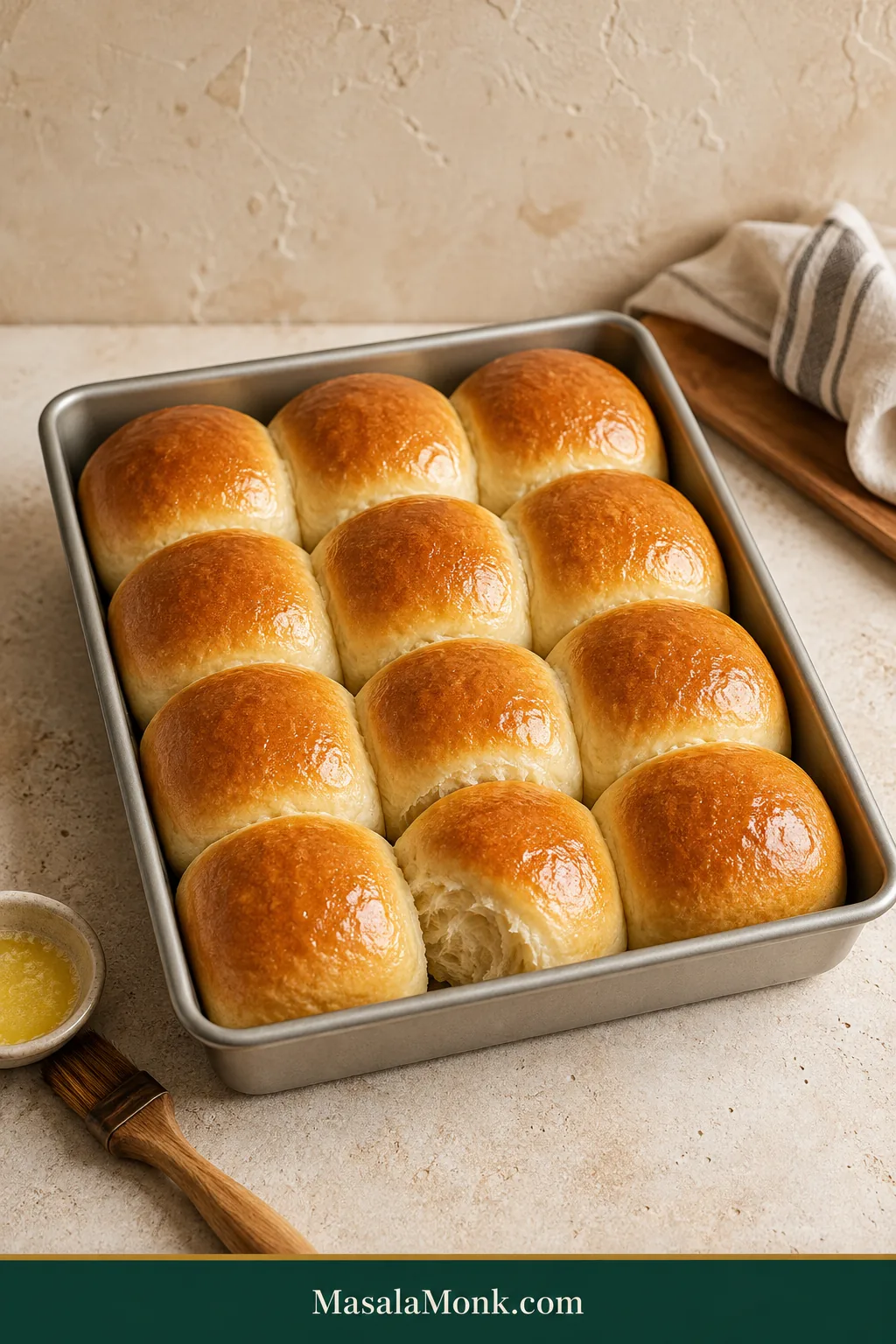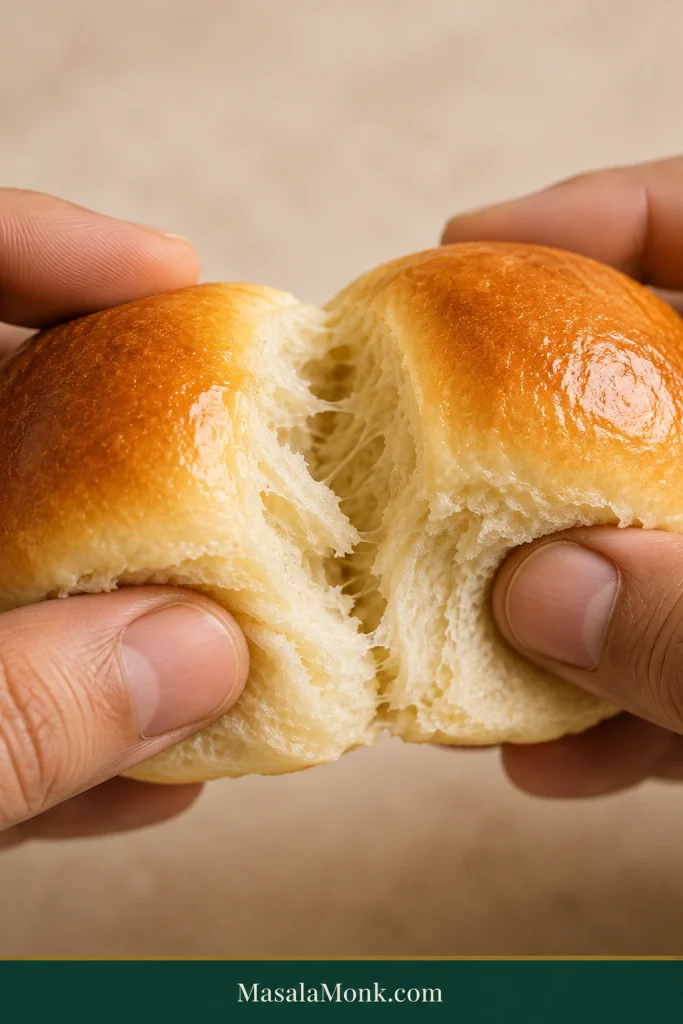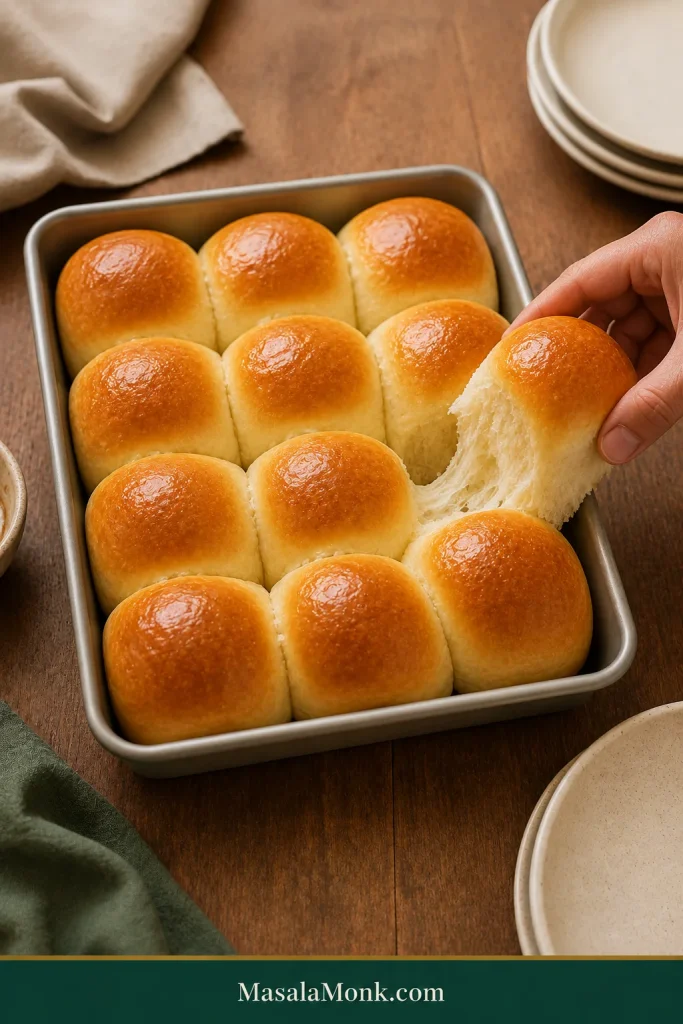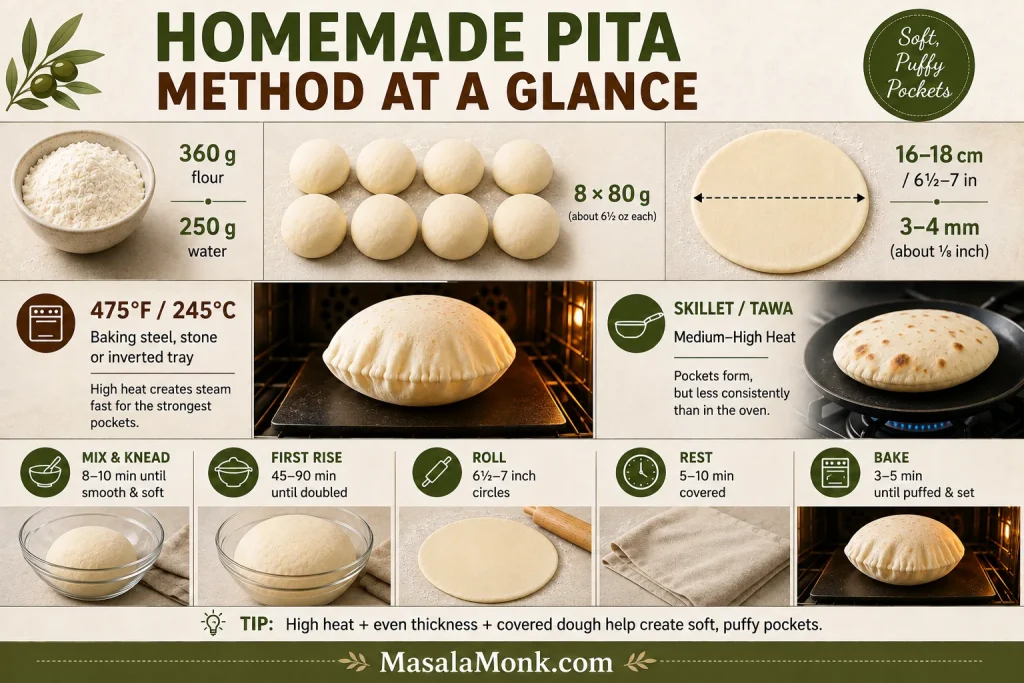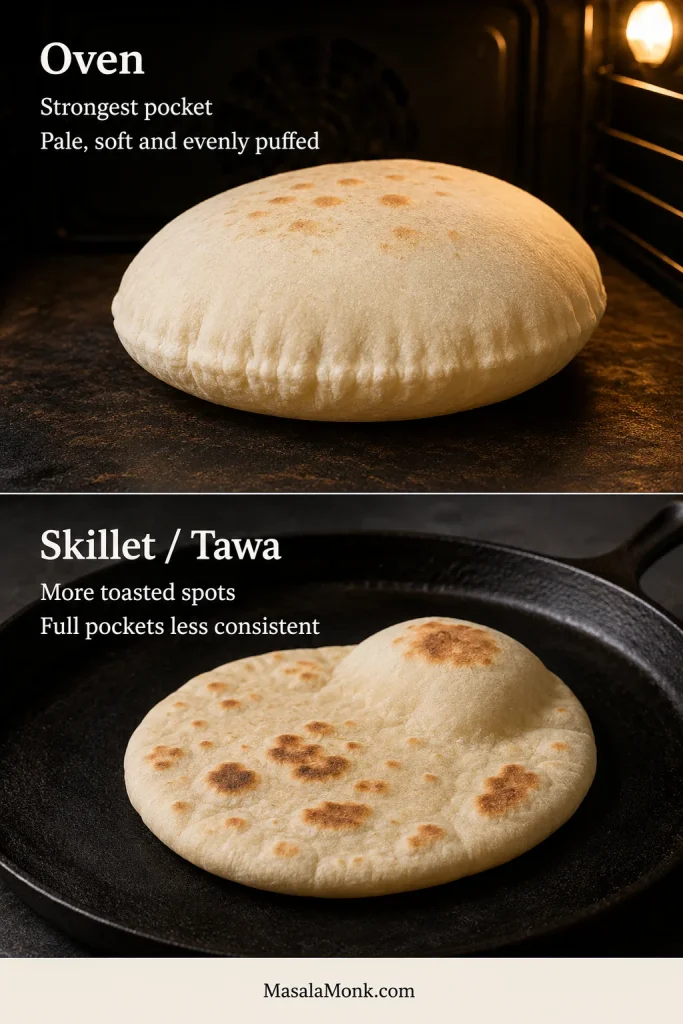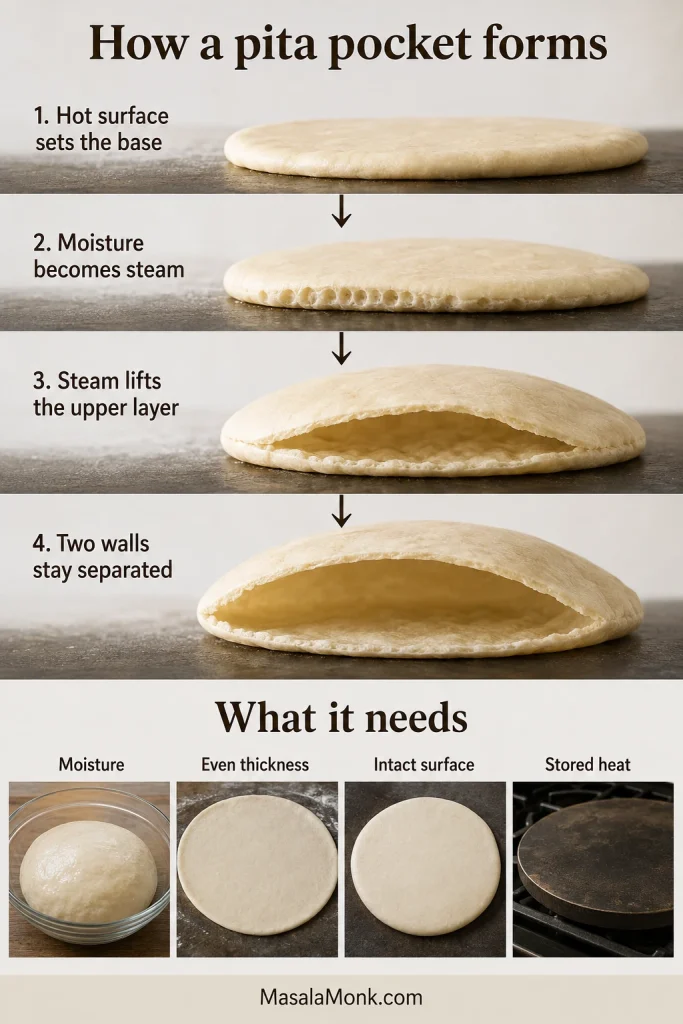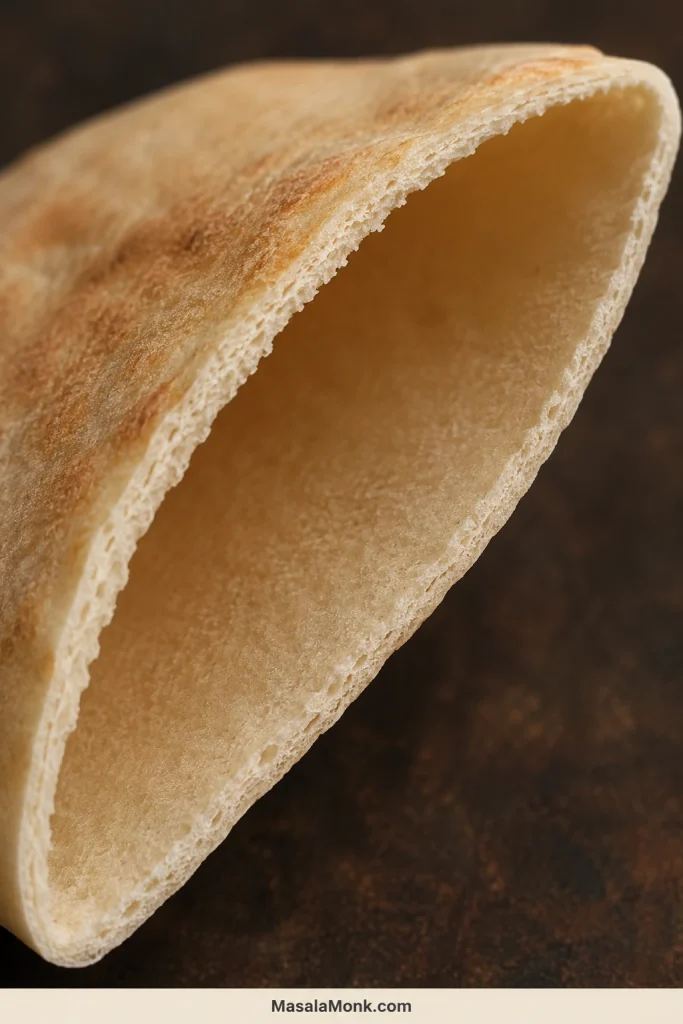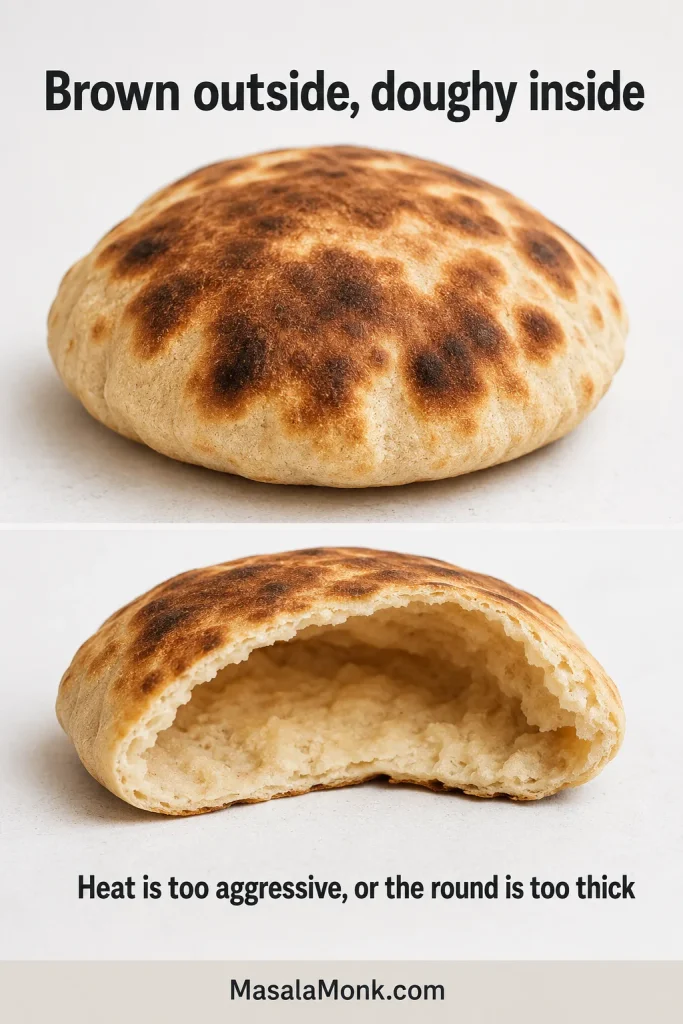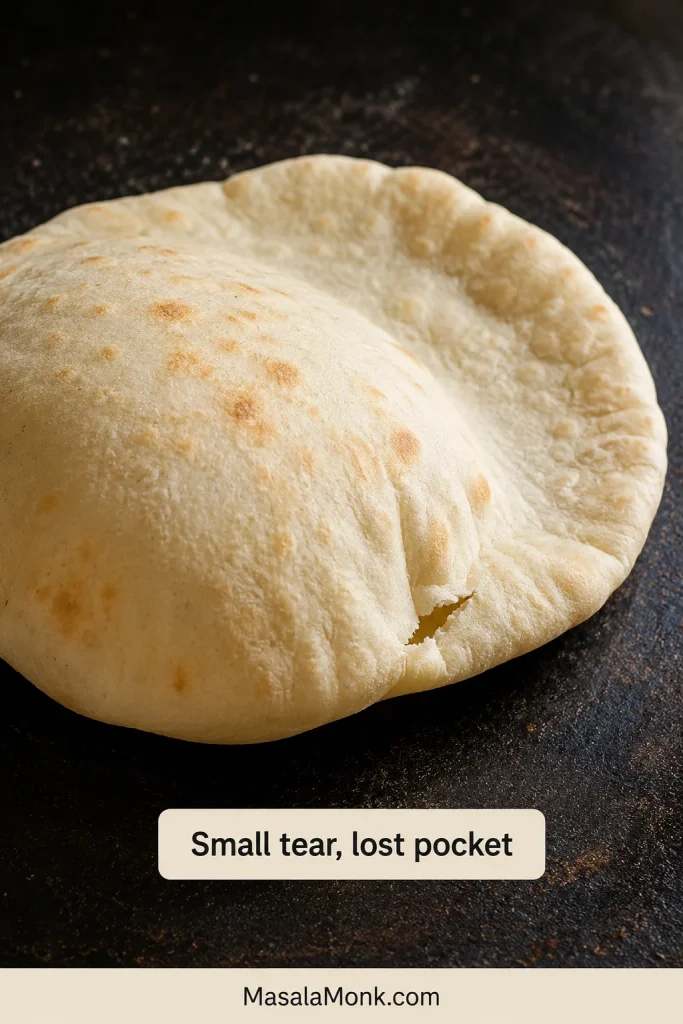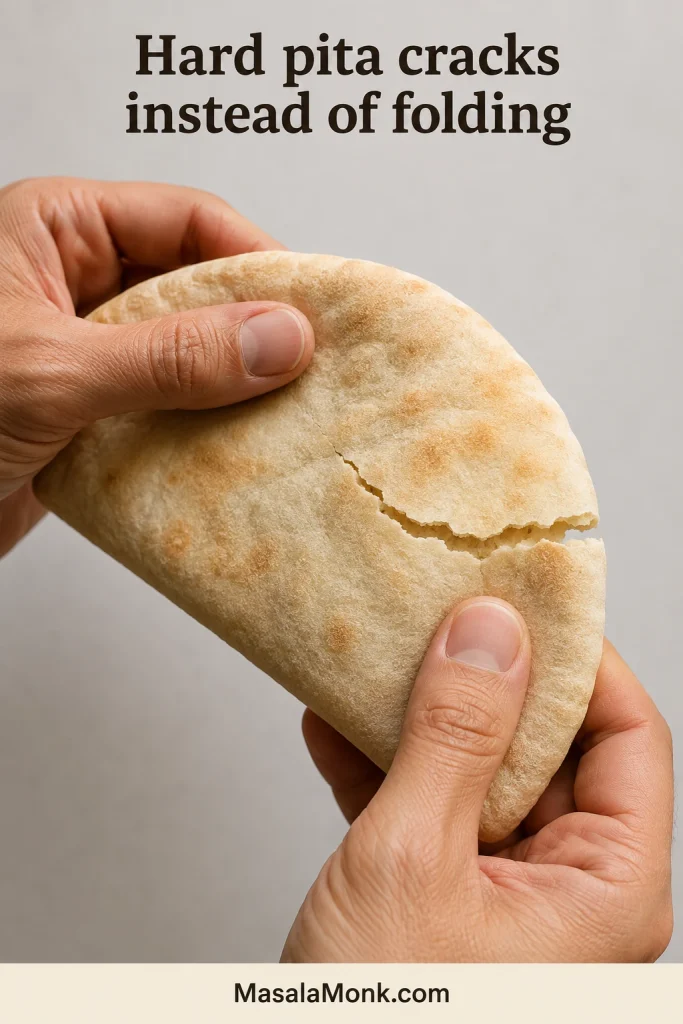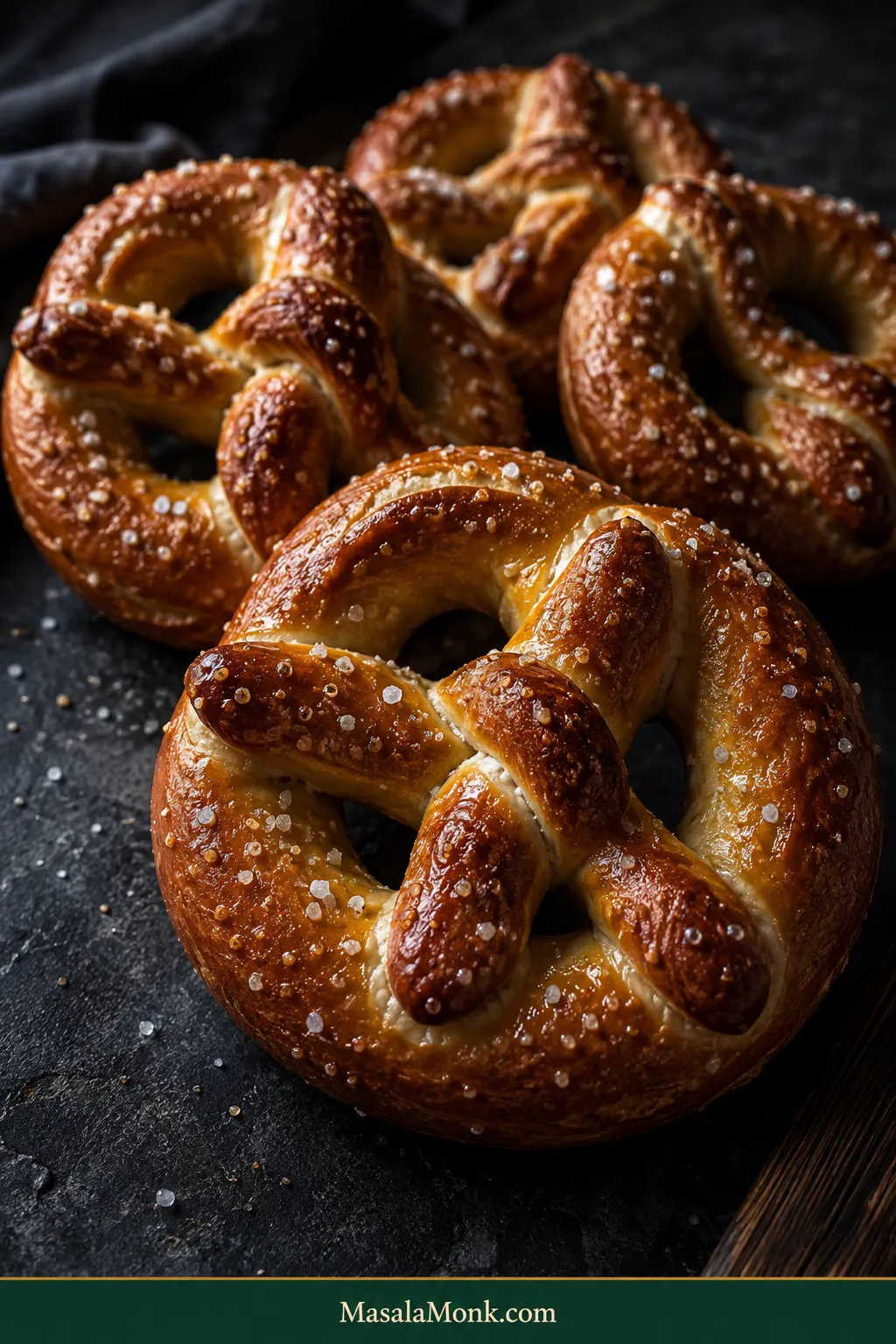
Pull apart a good soft pretzel and the browned crust should resist for just a moment before giving way to a warm, soft center. The surface has a little chew, salt arrives before sweetness, and enough melted butter clings to the hot crust that some of it ends up on your fingertips.
The best ones barely make it to the cooling rack. Give them five minutes, tear through the thick curve, and the center should compress gently between your fingers before slowly pushing back.
The shapes won’t all come out identical, especially on a first batch. Once a tray of browned pretzels is sitting there warm under a layer of melted butter, that suddenly matters a lot less.
Soft pretzels can look like the sort of thing that takes bakery training, but the awkward-looking parts become surprisingly ordinary once you know what to watch for. Is the dough actually too sticky? Why does the rope keep shrinking? Are those holes big enough? How long should the baking-soda bath take?
Nothing here depends on guessing what “enough flour,” “a long rope,” or “golden brown” is supposed to mean. Make a soft dough, give it time to puff, roll long ropes, dip them briefly, then bake until the crust looks properly browned.
The Method in One Minute
You don’t need lye, an egg wash, or a stand mixer.
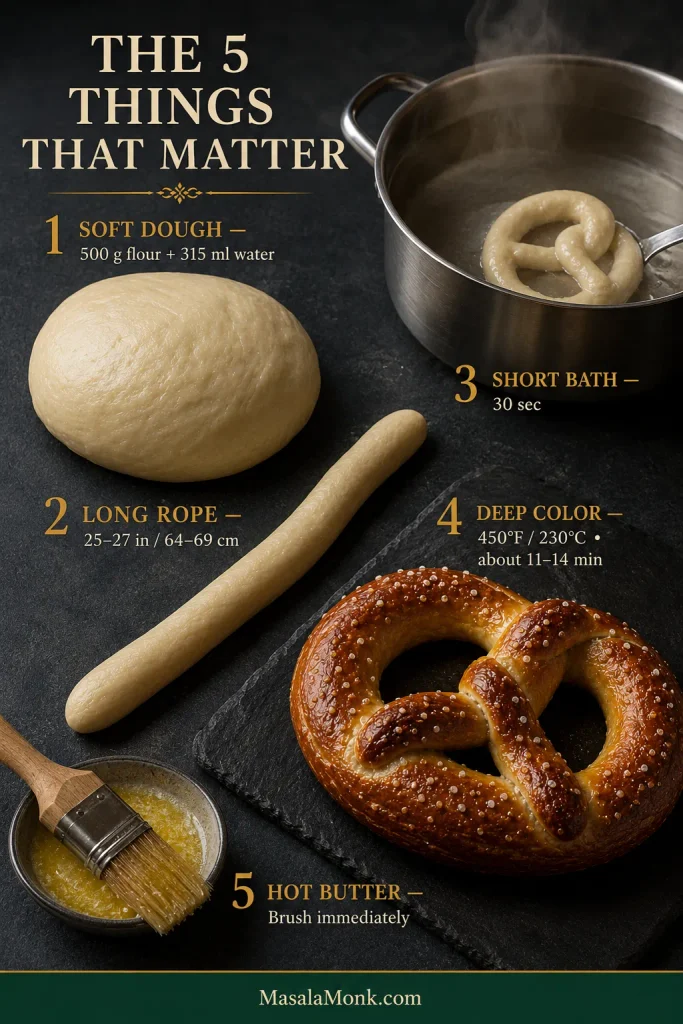
Soft dough. Long rope. Short bath. Deep color. Hot butter. Those are the five things worth remembering.
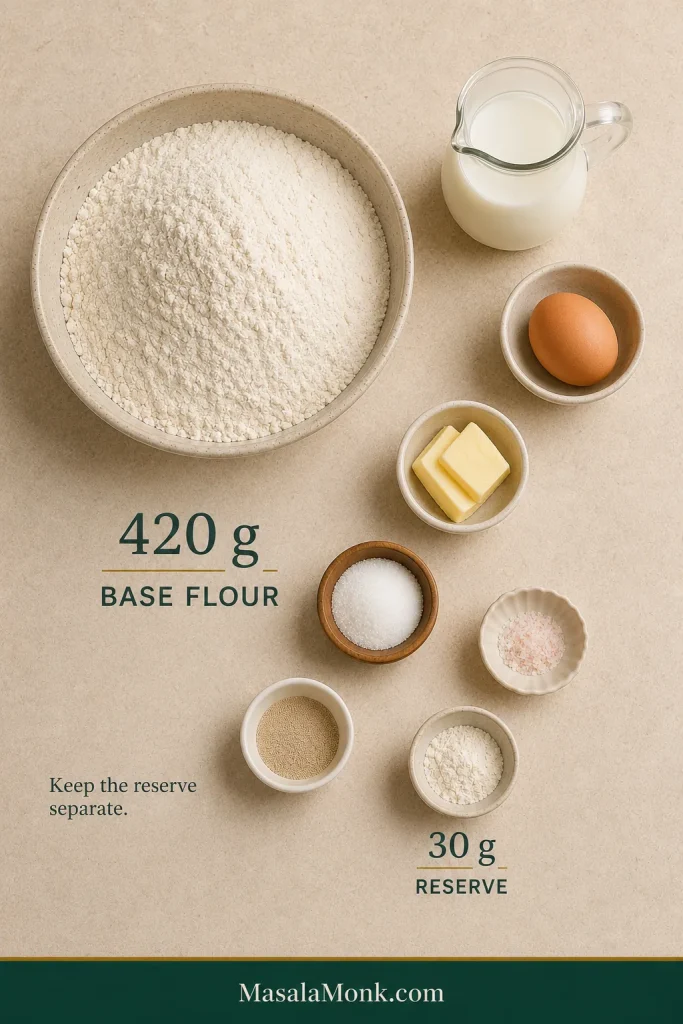
- Soft dough: start with 500 g flour and 315 ml warm water. Rest for 10 minutes, knead fully, then decide whether the dough needs the reserved 10 ml water or a little extra flour.
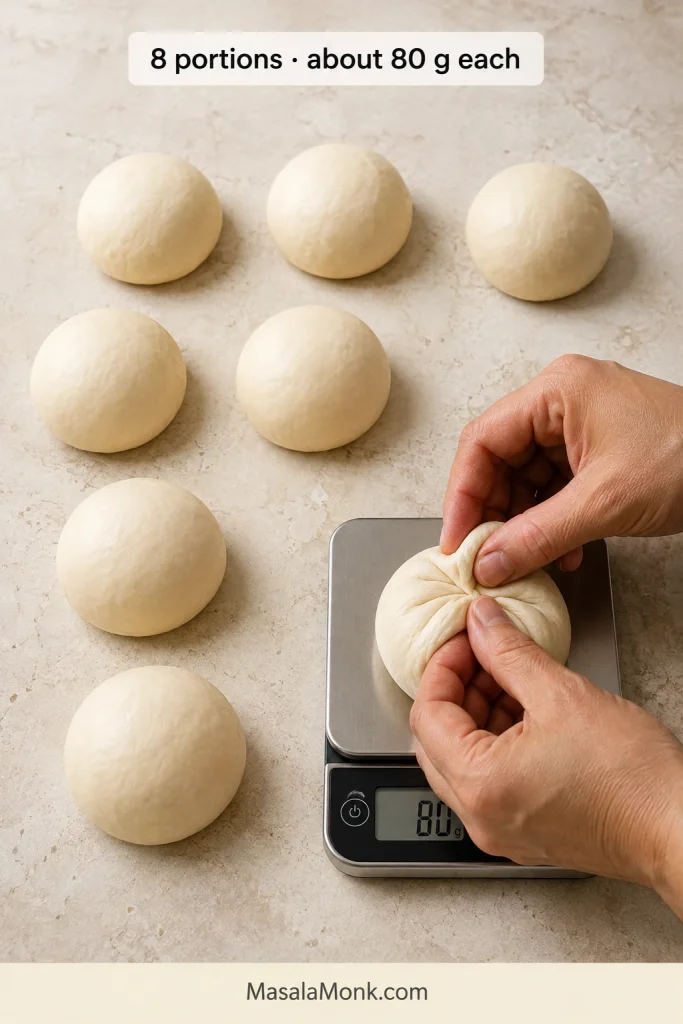
- Long rope: divide into 8 pieces of about 110 g each. Roll partway, let them relax while you work through the batch, then finish at 25–27 inches / 64–69 cm.
- Short bath: use 1.9 L / 8 cups water with 75 g baking soda and give each pretzel 30 seconds total.
- Deep color: bake at 450°F / 230°C. Start checking around 11 minutes and look for deep golden-brown crust with darker raised curves.
- Hot butter: brush immediately after baking, then let the pretzels stand for 5 minutes before serving.
Homemade Soft Pretzel Recipe
These are substantial pretzels rather than thin, crisp ones: deeply browned outside, lightly chewy through the crust, tender in the middle, and brushed with butter straight from the oven.
Plan on 40–50 minutes of hands-on work and about 2 hours from start to finish. Your part comes in short bursts—mix and knead, roll and shape, dip and bake—with most of the time between those stages spent waiting for the dough or the oven.
| Yield | 8 large pretzels |
|---|---|
| Piece weight | About 110 g / 3.9 oz each |
| Active time | 40–50 minutes |
| Rise | 45–60 minutes |
| Bake | Usually 11–14 minutes |
| Oven | 450°F / 230°C |
| Total time | About 2 hours |
Before You Start
- A kitchen scale is strongly recommended, especially for the flour and eight equal portions.
- Clear about 3 feet / 90 cm of counter space for the long ropes.
- Use a wide, high-sided pot or Dutch oven and have a broad slotted spatula or spider ready for lifting the wet pretzels.
- Set both prepared baking sheets beside the pot before dipping. Once you start, the drain-salt-transfer rhythm moves quickly.
Ingredients
For the dough
- 500 g / 17.6 oz all-purpose flour; if measuring by volume, expect about 4 to 4¼ cups depending on how you fill the cup, so weighing is much more reliable
- 315 ml / 1⅓ cups warm water, 100–110°F / 38–43°C
- 10 ml / 2 teaspoons additional warm water, reserved and used only if needed
- 7 g / 2¼ teaspoons instant yeast
- 18 g / about 1½ tablespoons packed light brown sugar; granulated sugar can replace it at the same weight
- 9 g / about 1½ teaspoons fine sea salt
- 28 g / 2 tablespoons unsalted butter, melted and cooled until just warm
For the baking-soda bath
- 1.9 L / 8 cups water
- 75 g / about ⅓ cup baking soda
For finishing
- Pretzel salt or coarse sea salt, as needed
- 42 g / 3 tablespoons unsalted or salted butter, melted
Salted finishing butter is fine; just use a lighter hand with the coarse salt on top.
Instructions
1. Mix and rest
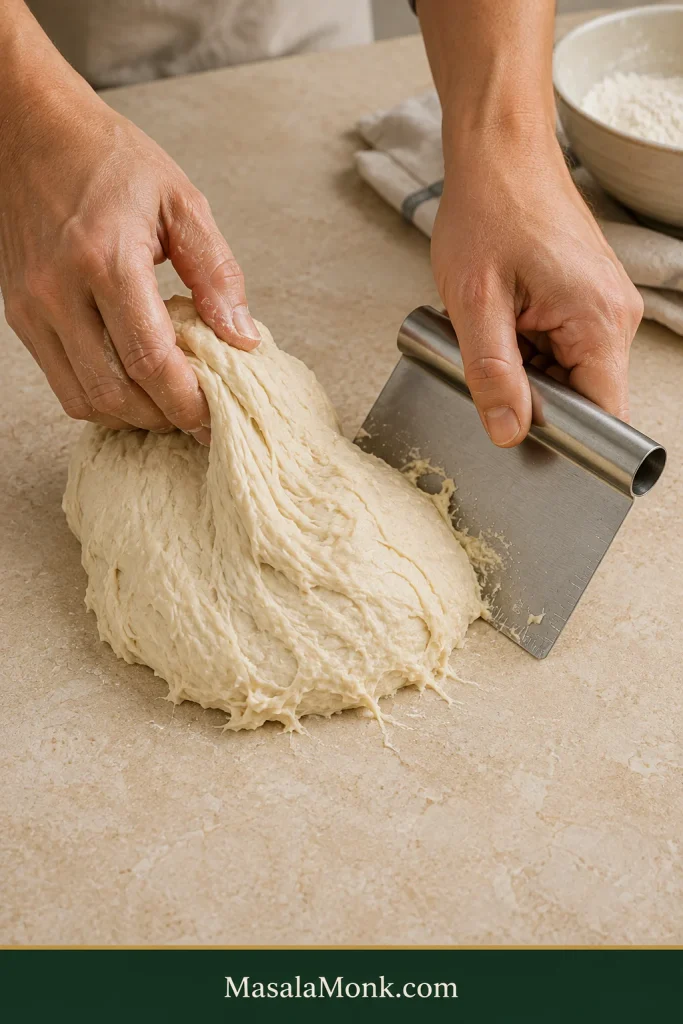
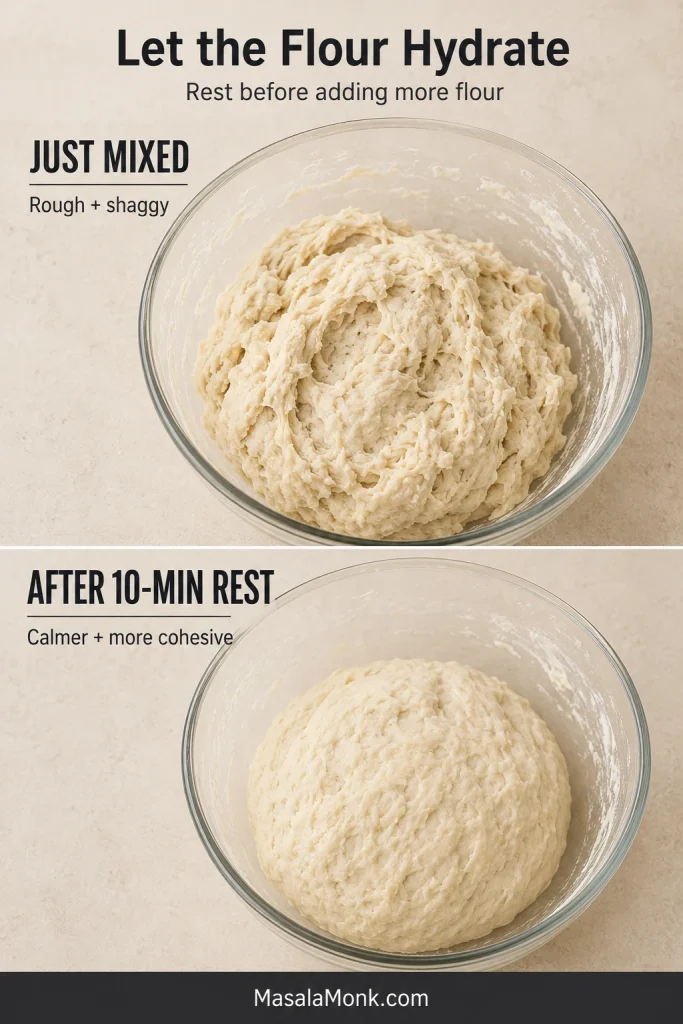
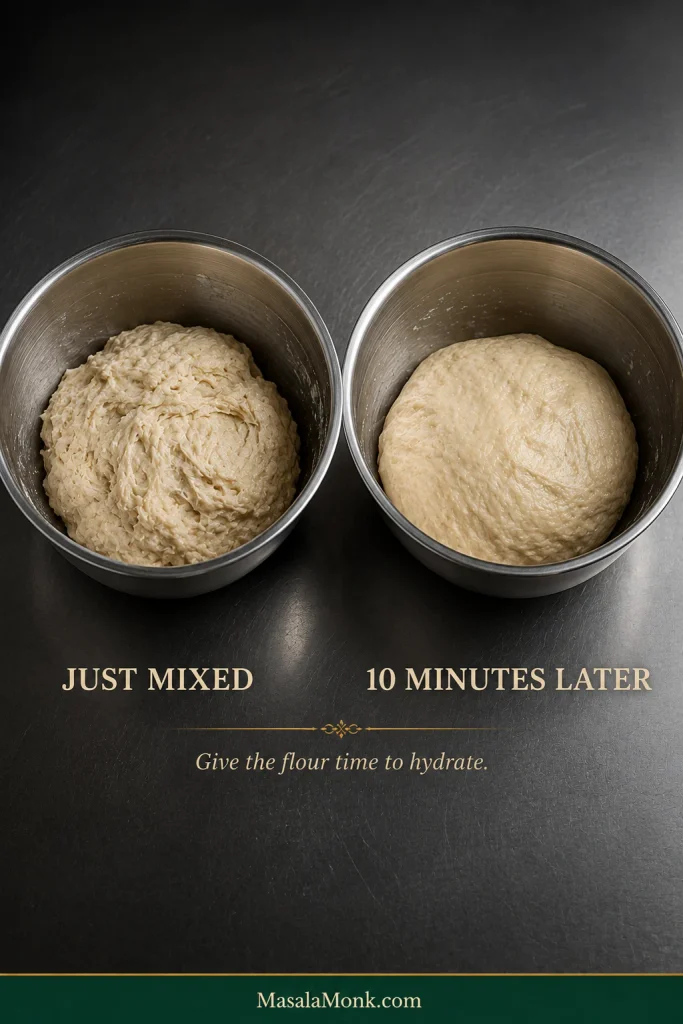
Combine the 315 ml / 1⅓ cups warm water, yeast, brown sugar, and melted butter in a large bowl. Add the flour and fine salt and mix until no large patches of dry flour remain.
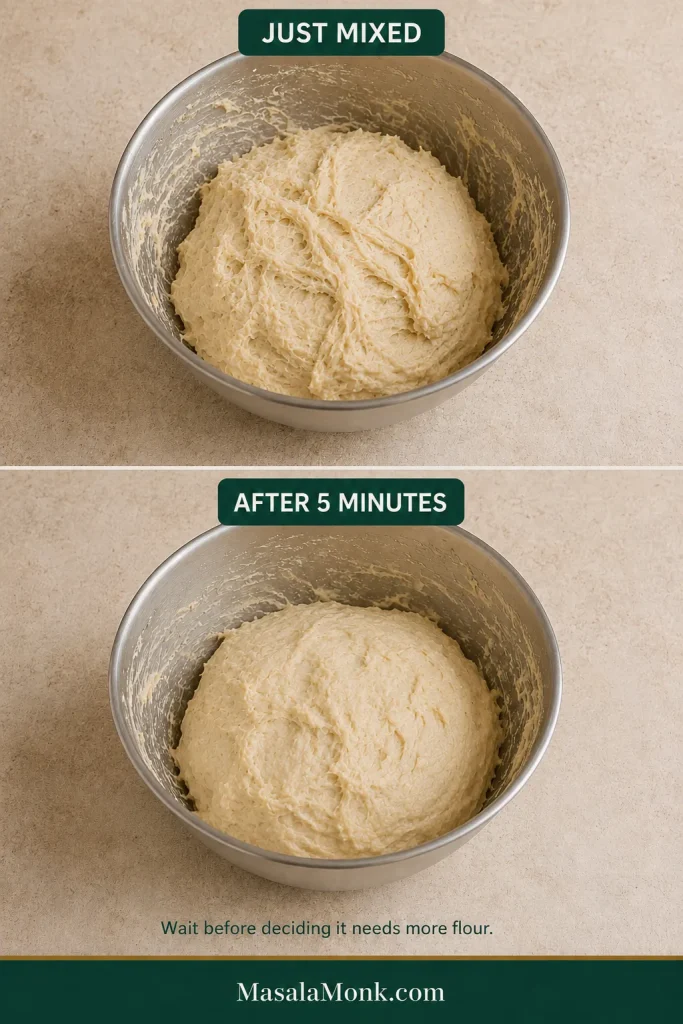
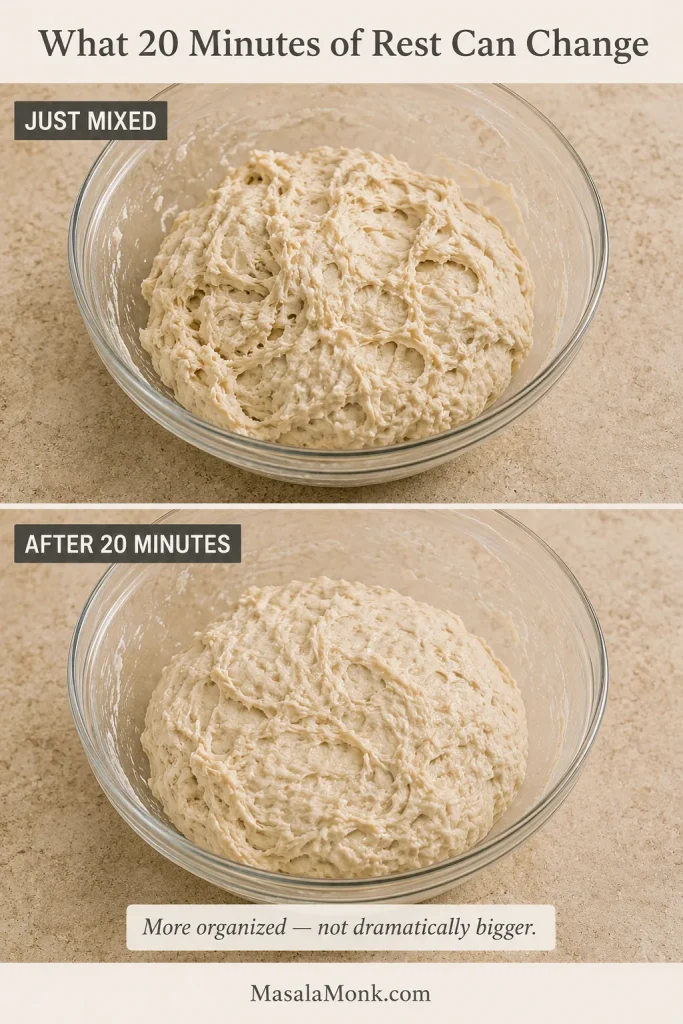
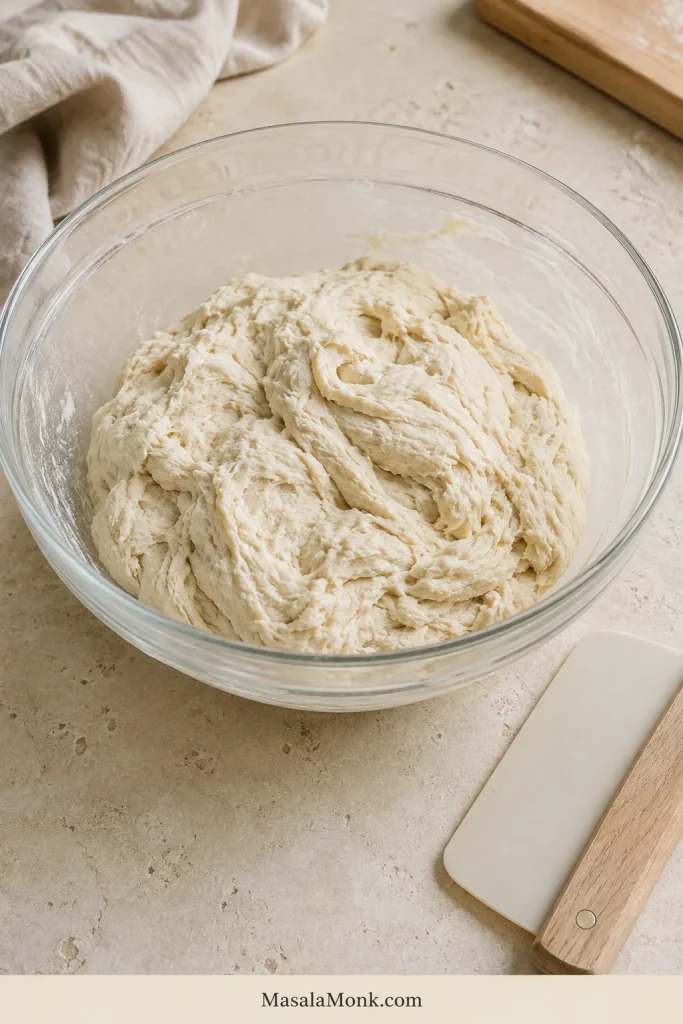
The mixture will look rough and shaggy. Cover it and leave it alone for 10 minutes. When you come back, it should already look a little calmer even though it isn’t smooth yet.
2. Knead and let it rise
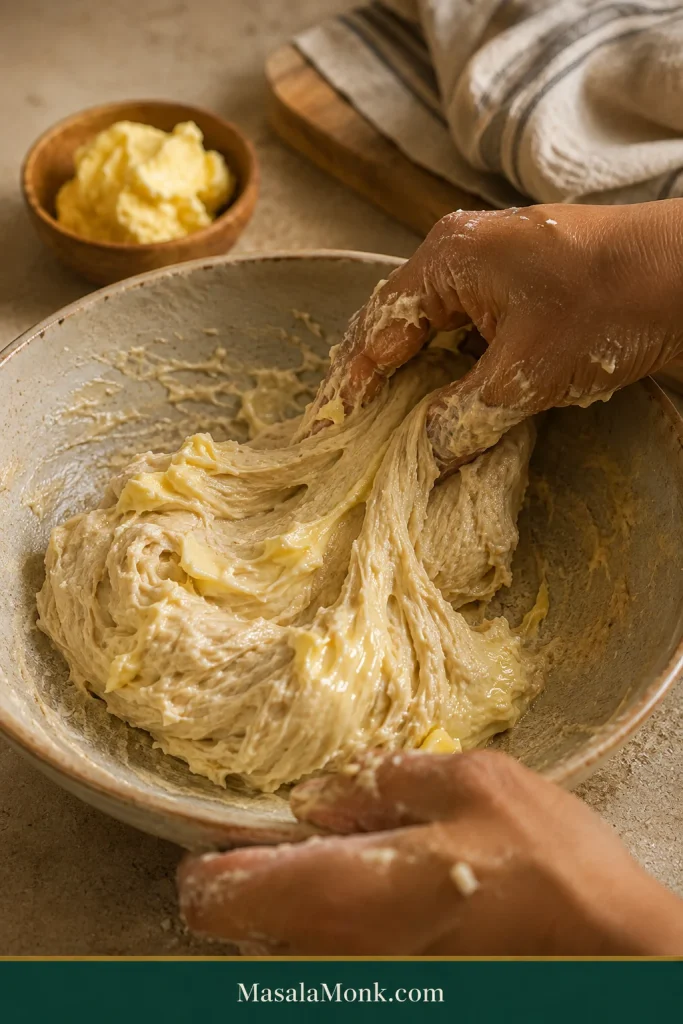
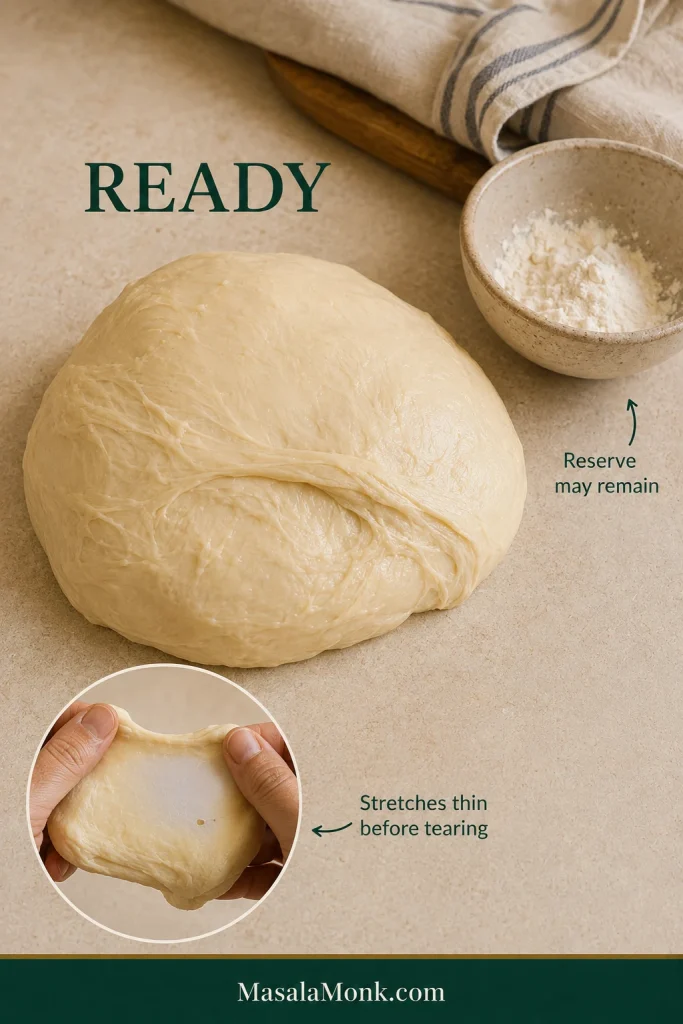
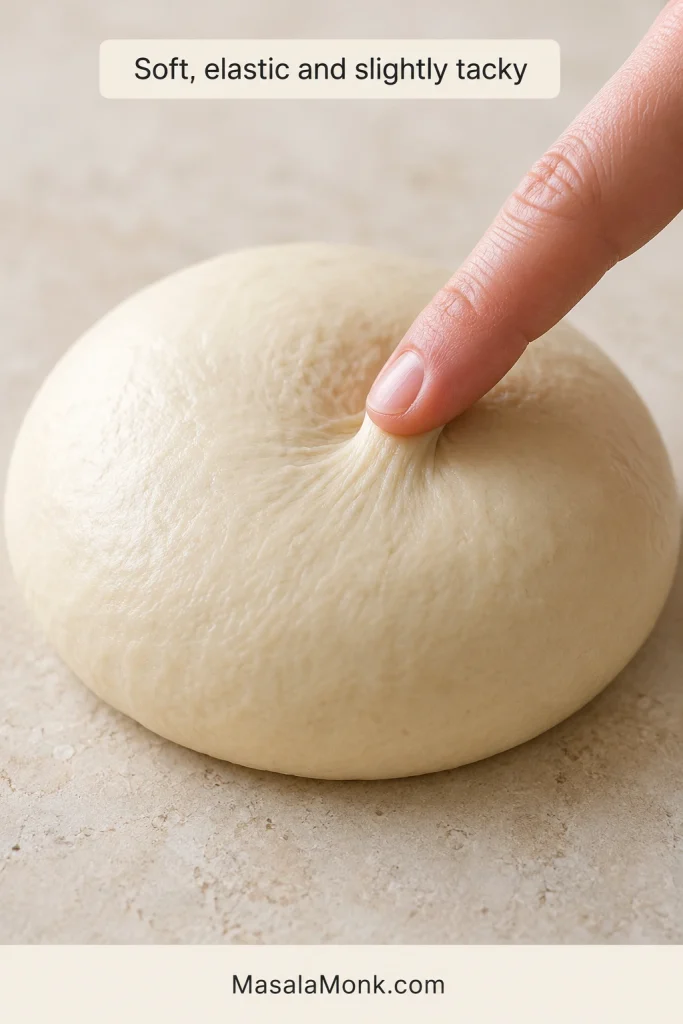
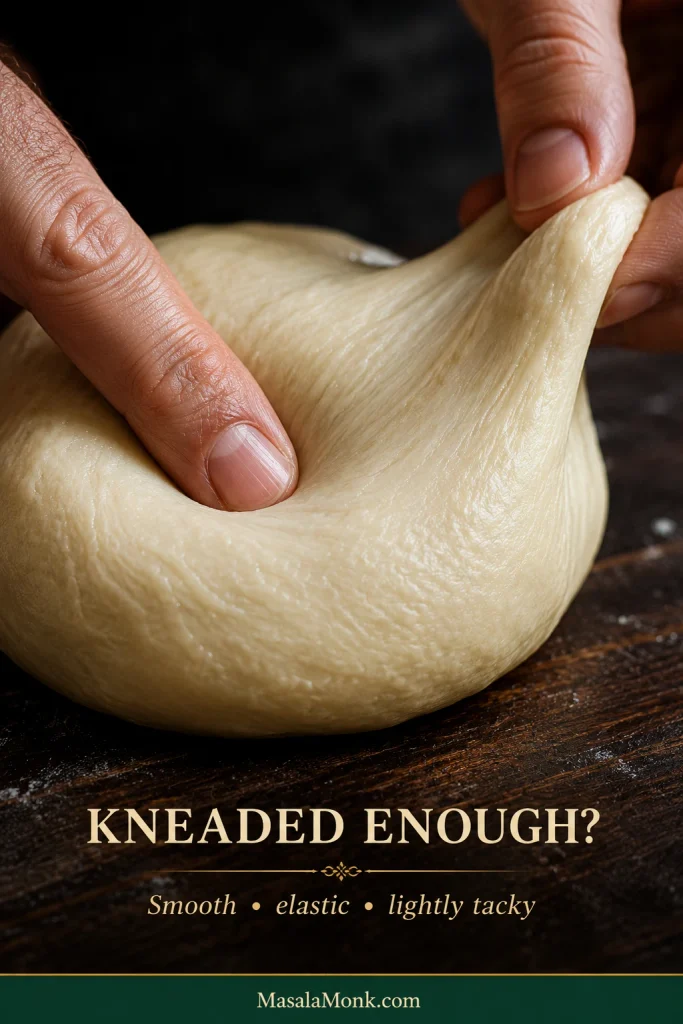
Knead with a dough hook for 6–8 minutes, or by hand for 8–10 minutes. The finished dough should feel smooth, elastic, soft, and lightly tacky.
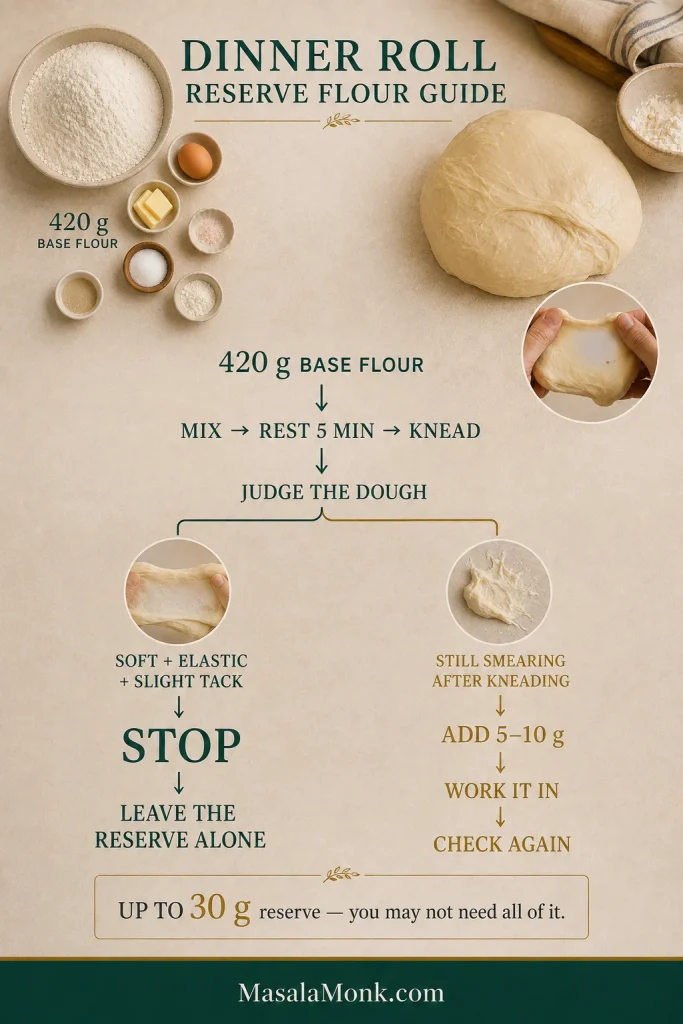
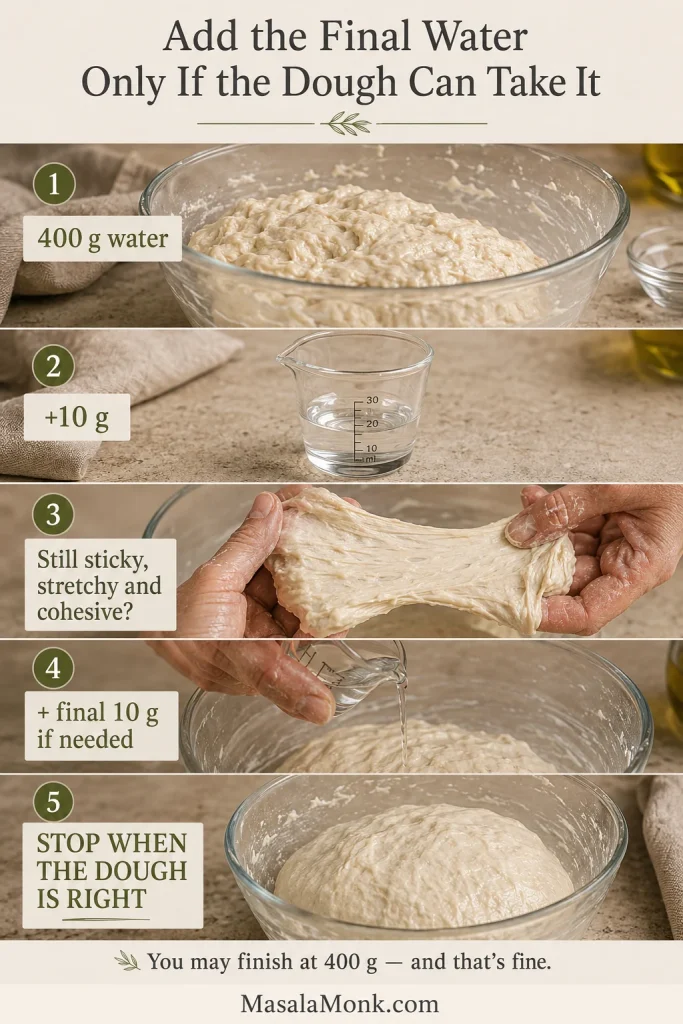
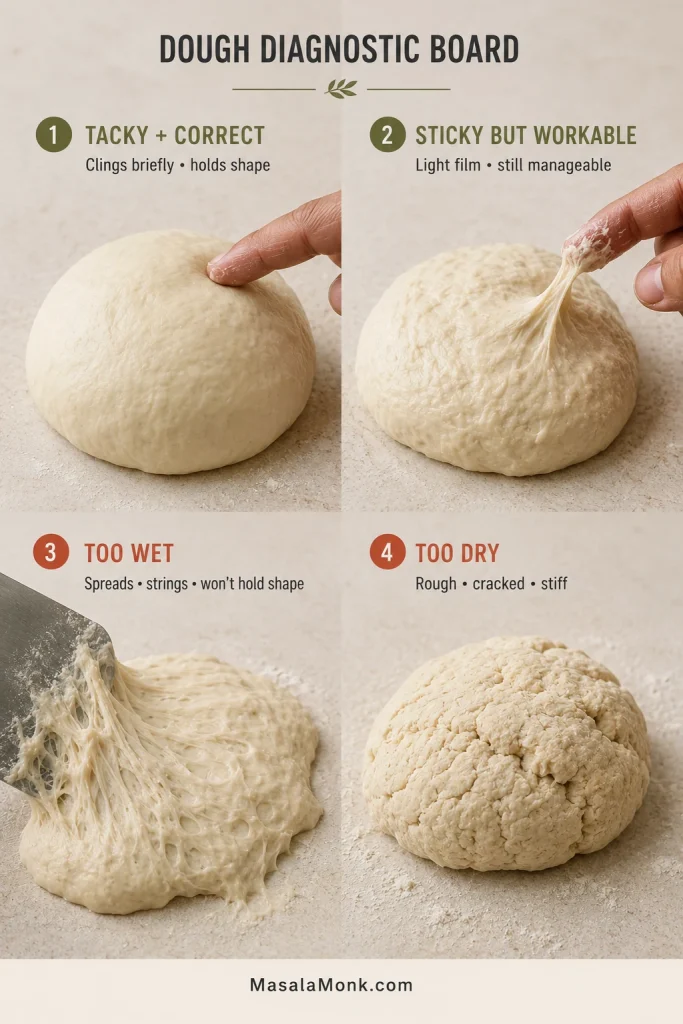
Press a clean fingertip onto the surface. It should feel tacky without leaving your finger heavily coated. A stiff dough can take the reserved water 1 teaspoon at a time; a mixture that still smears heavily after the full knead can take flour 1 tablespoon at a time.
Knead first. Adjust second.
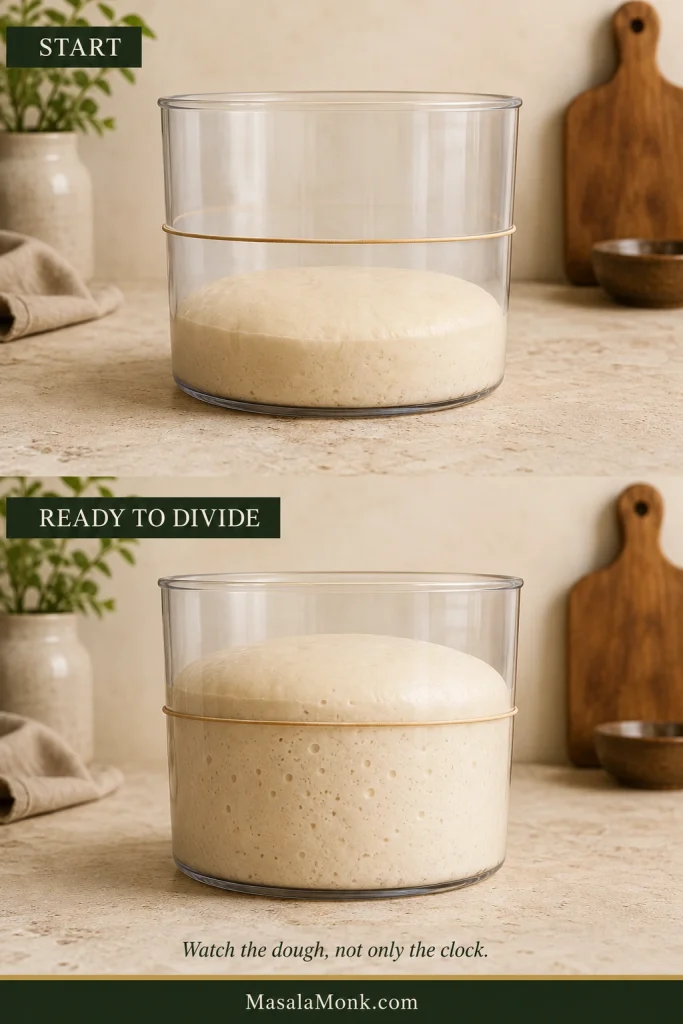
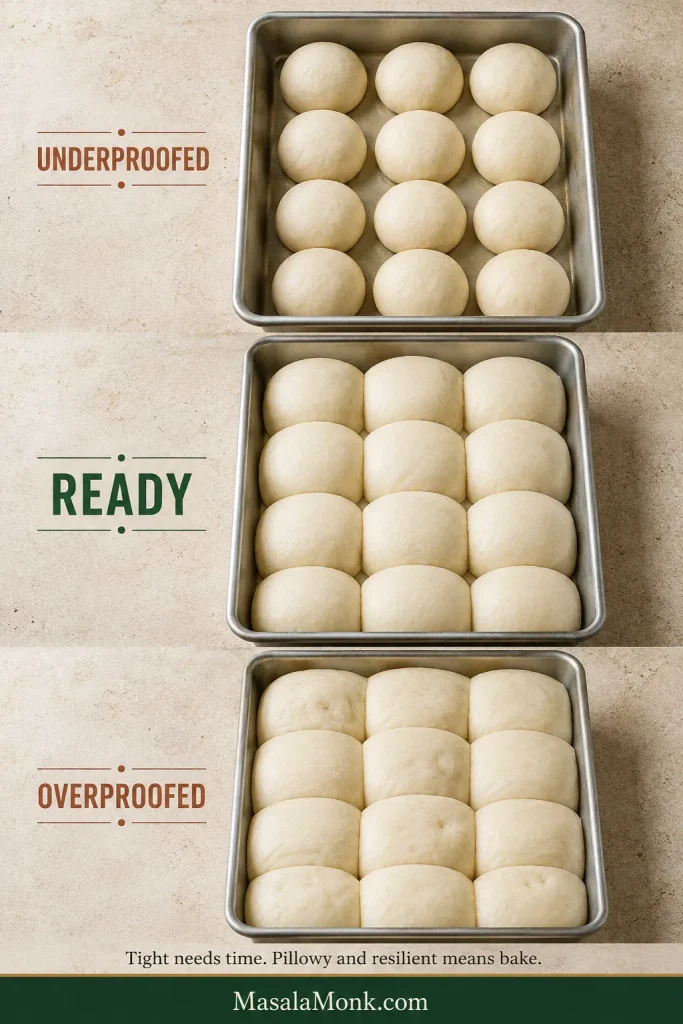
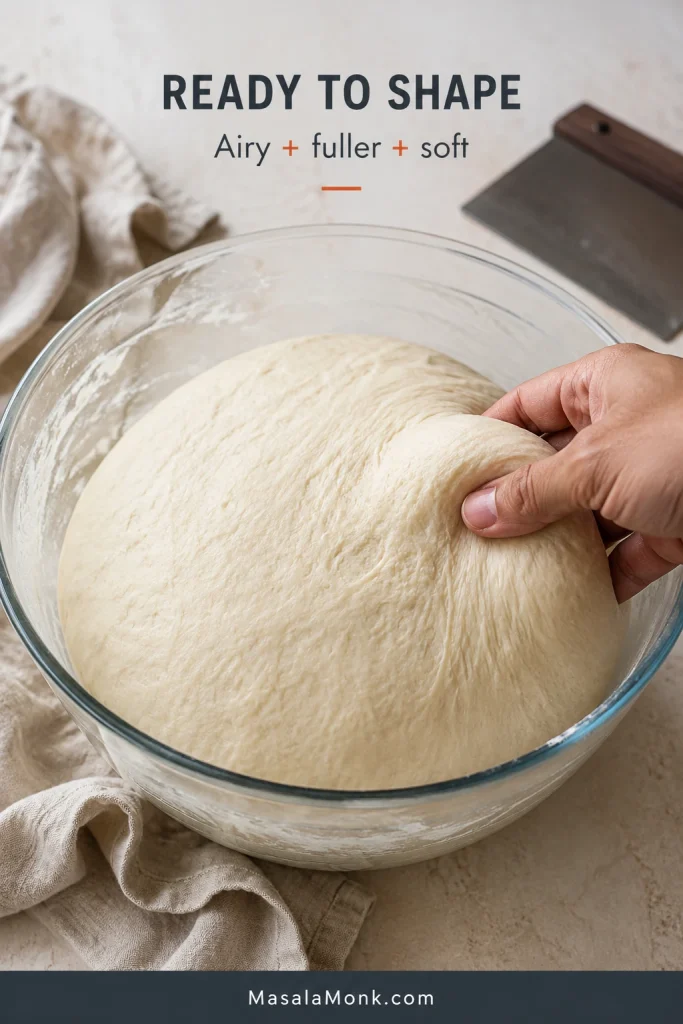
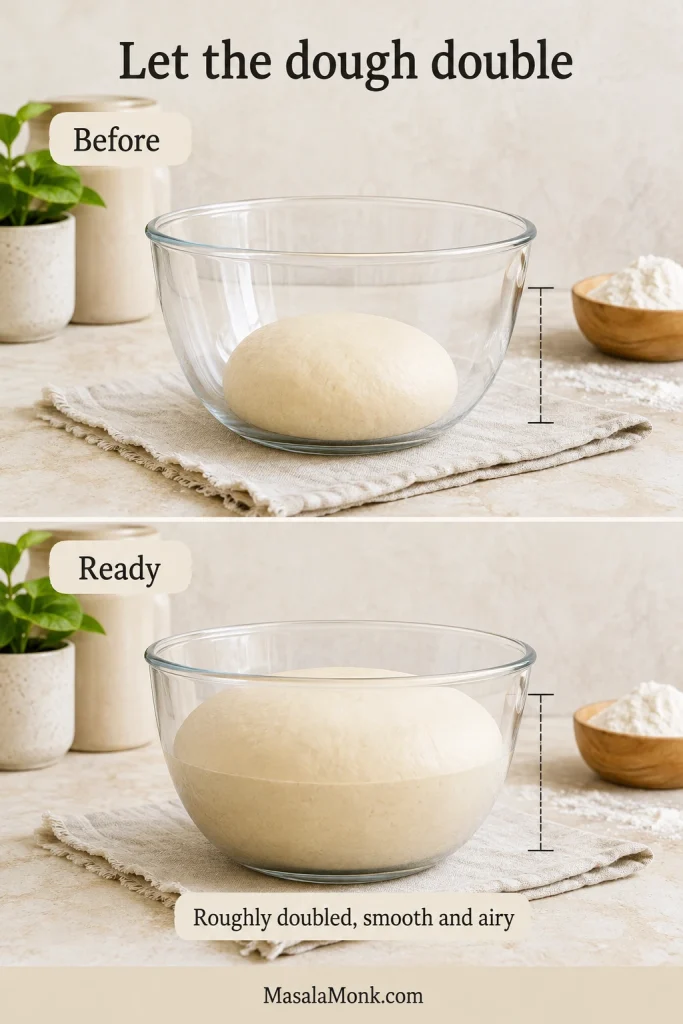
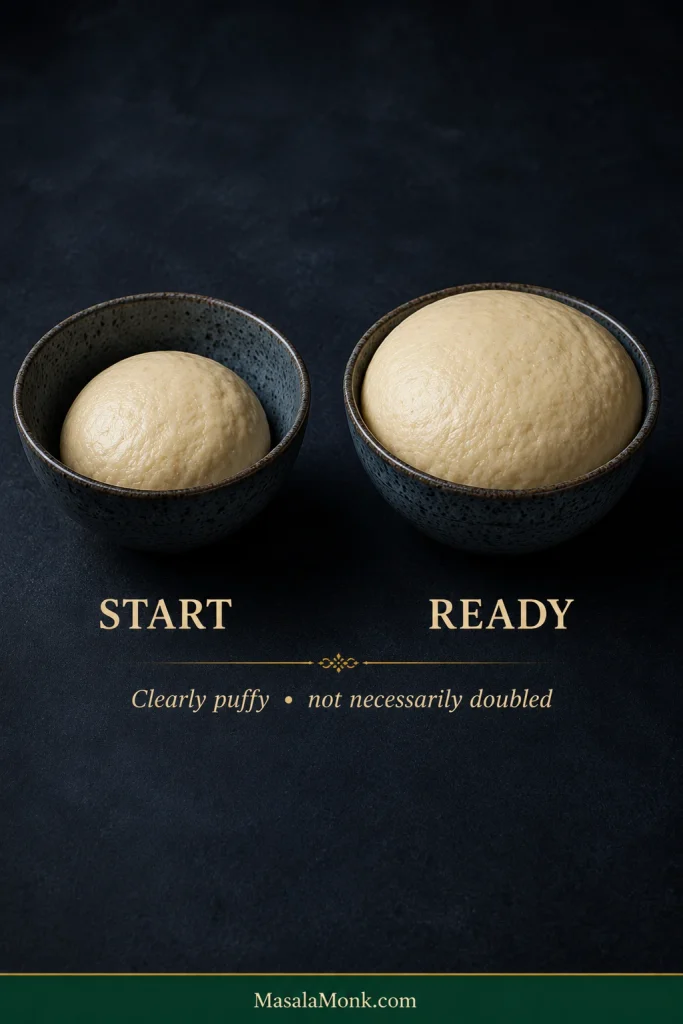
Place the dough in a lightly greased bowl, cover, and let it rise until clearly puffy and substantially larger, usually 45–60 minutes. It does not need to double.
If the change is hard to judge, mark the starting height on the outside of the bowl with a small piece of tape or an elastic band. Use the mark as a visual reference, not a precise measure of volume.
3. Heat the oven and divide the dough
As the rise nears completion, heat the oven to 450°F / 230°C. If baking both trays together, position one rack in the upper-middle and one in the lower-middle of the oven.
Fill the wide pot with the 1.9 L / 8 cups water for the bath and begin heating it, but don’t add the baking soda yet. Prepare two baking sheets with silicone mats or parchment rated for 450°F / 230°C; lightly oil the parchment.
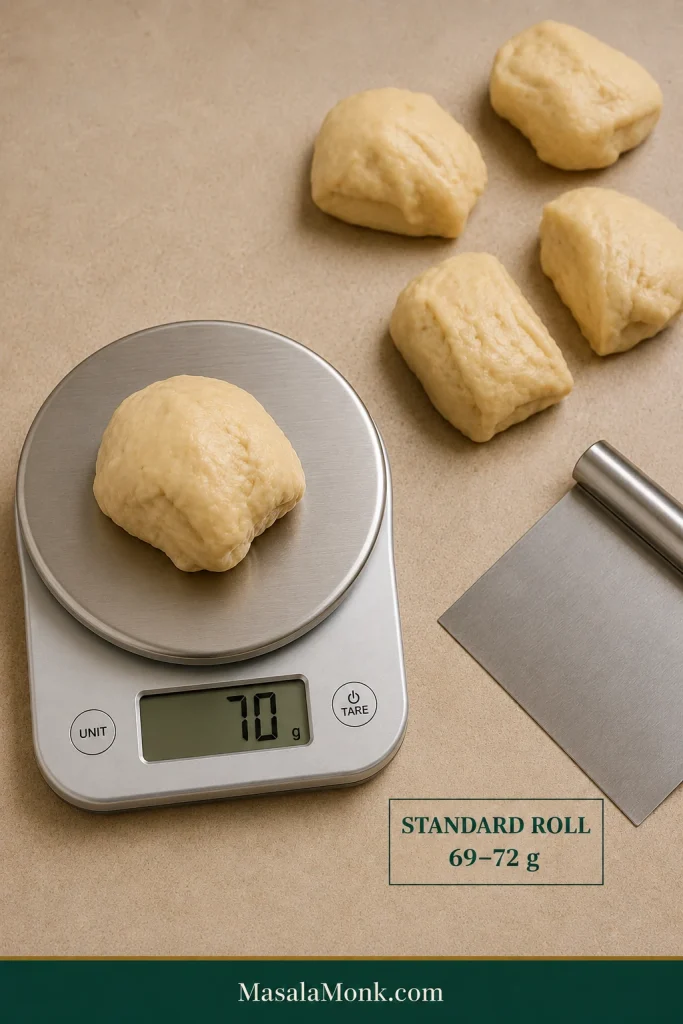
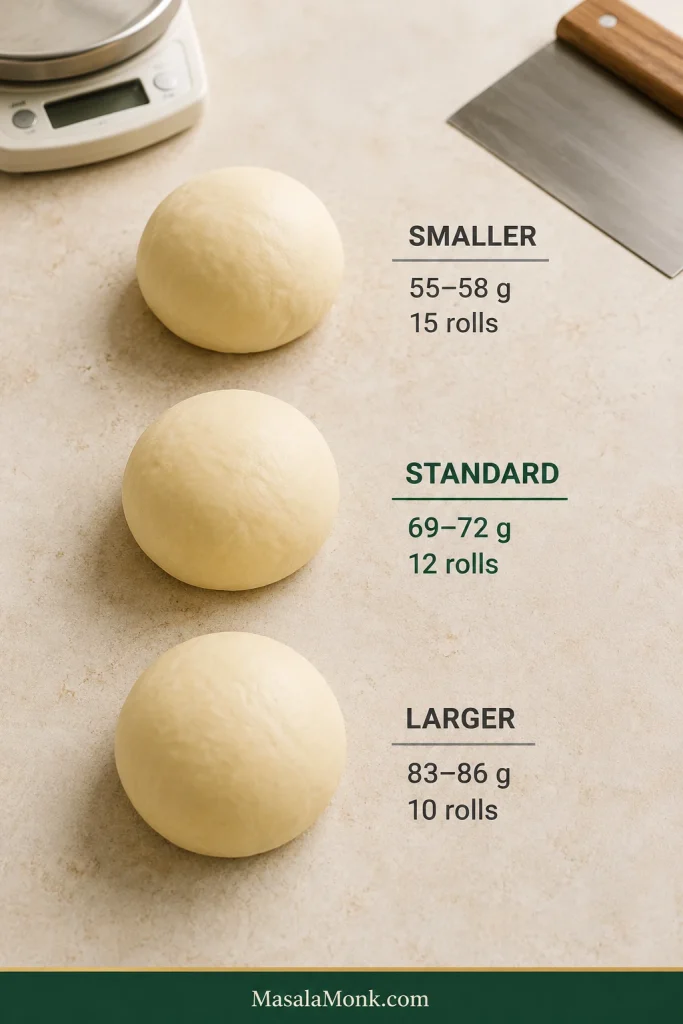
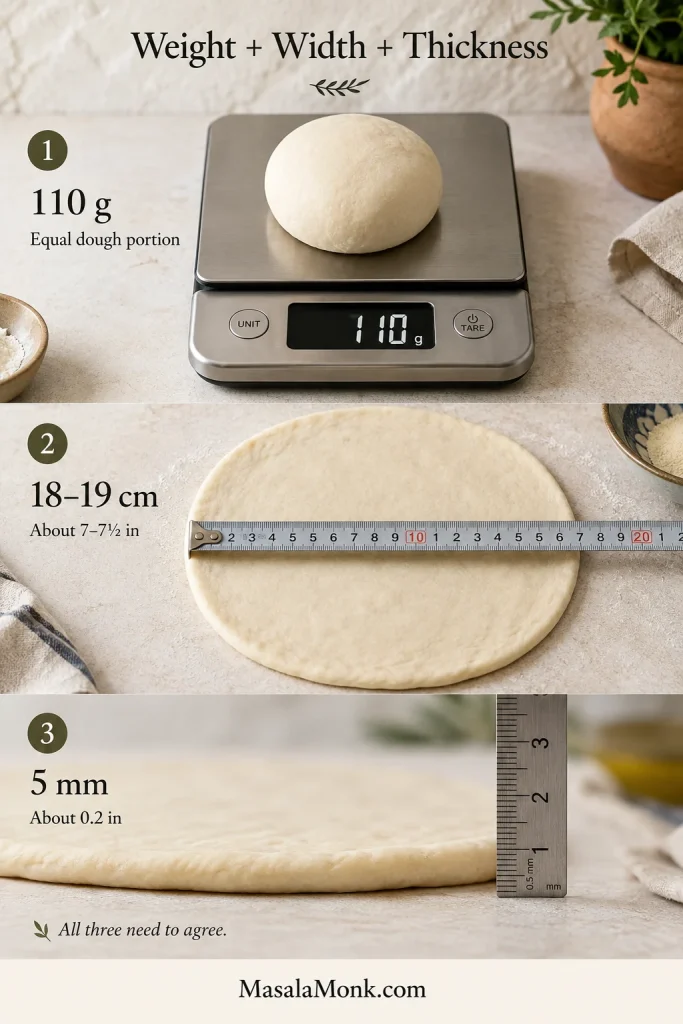
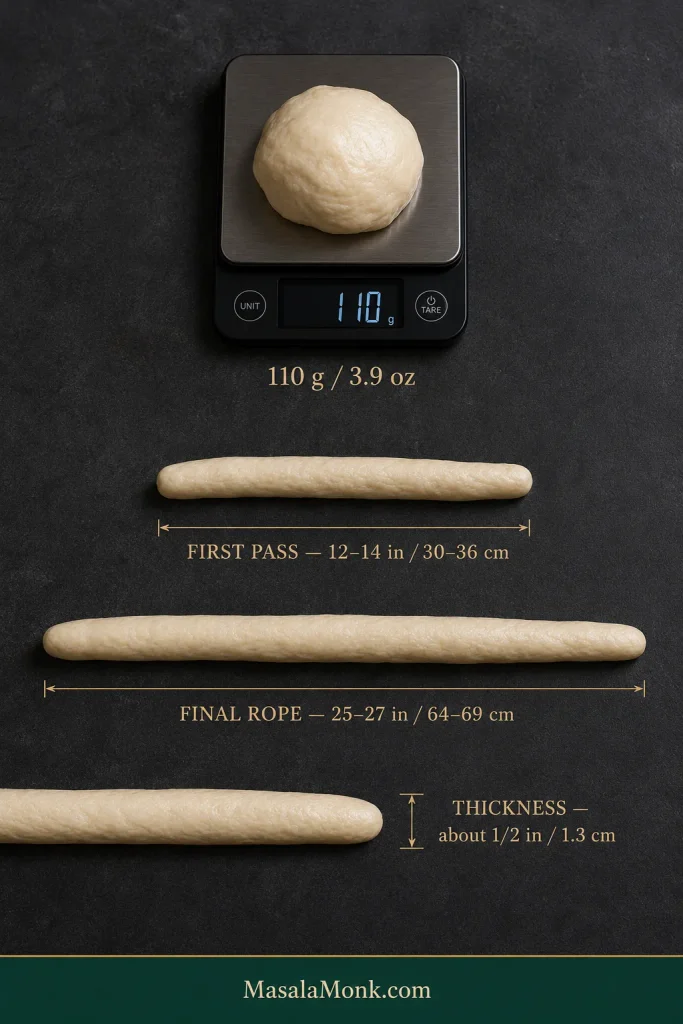
Turn out the risen dough, gently press away any obvious large gas pockets, and divide into 8 equal pieces of about 110 g / 3.9 oz each.
4. Roll and shape
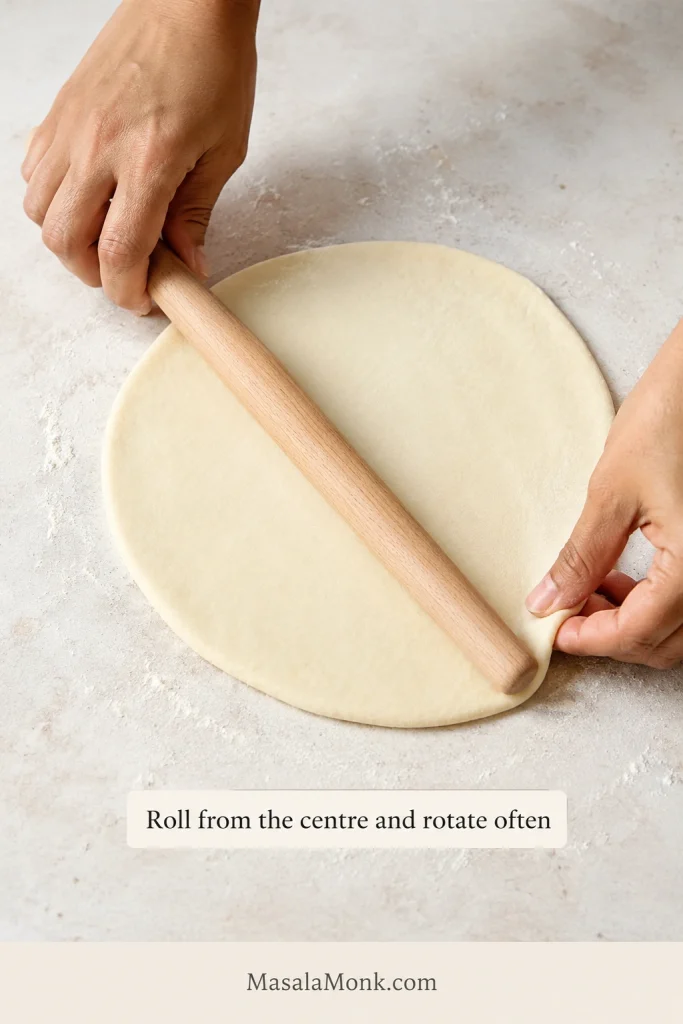
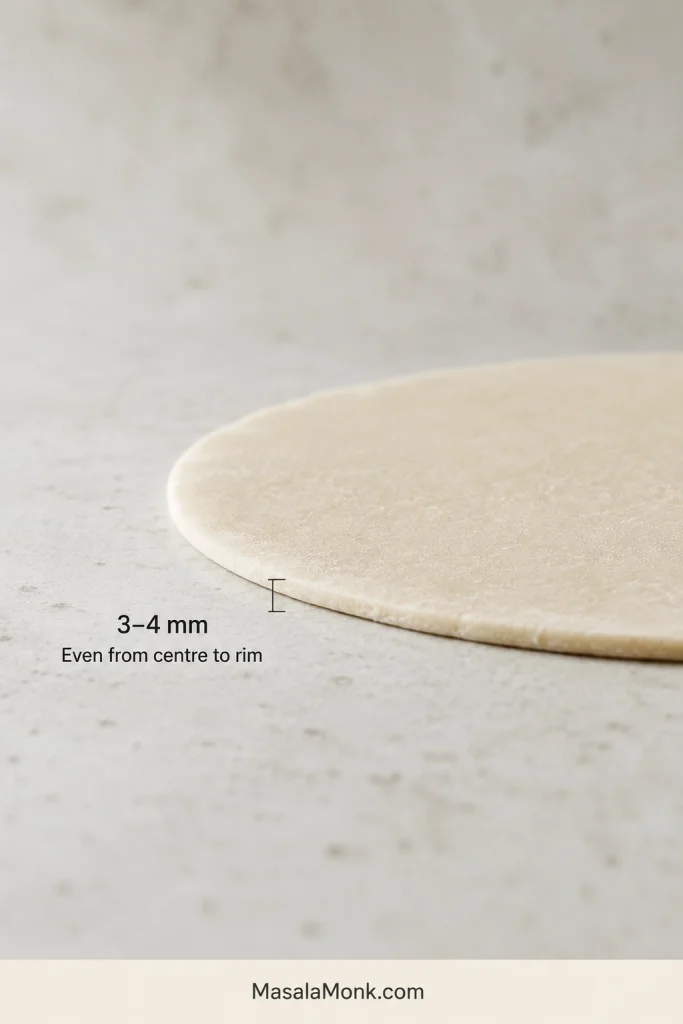
Roll each portion first to 12–14 inches / 30–36 cm. Work through all eight, then return to the first and finish it at 25–27 inches / 64–69 cm, about ½ inch / 1.3 cm thick.
Treat those dimensions as a target, not a ruler test. What matters is a rope long and slender enough to leave generous openings, without thin weak spots that will bake much faster than the rest.
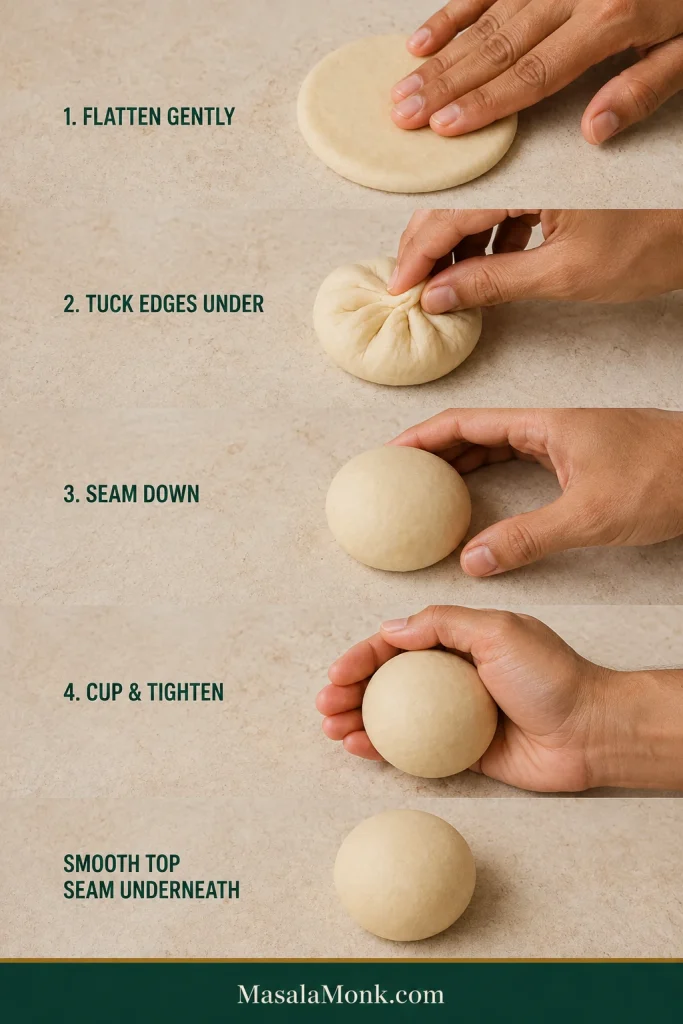
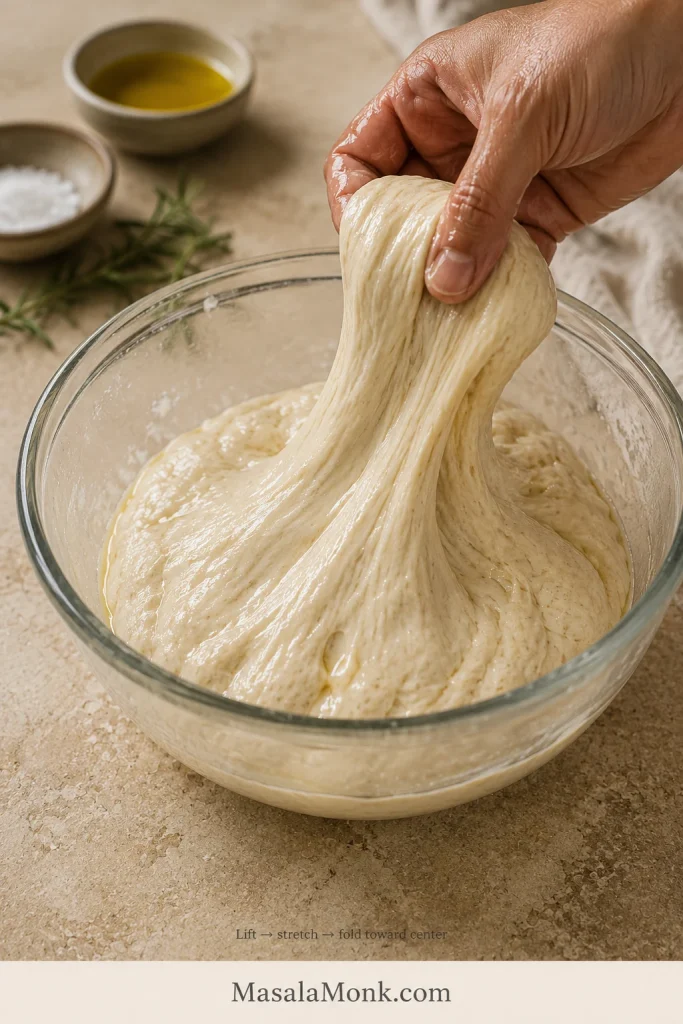
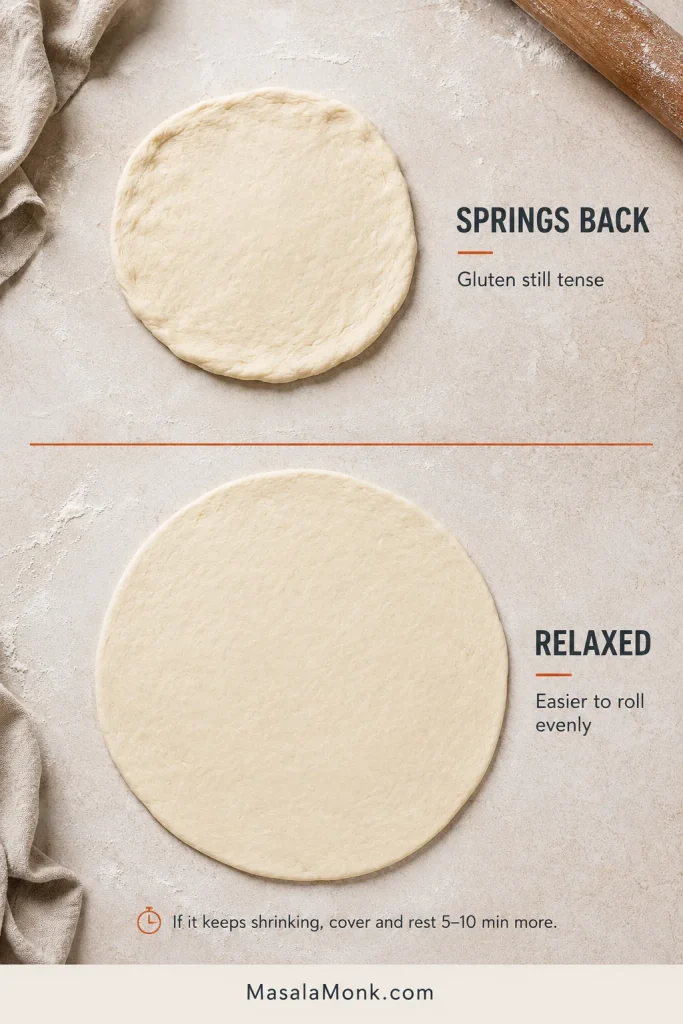
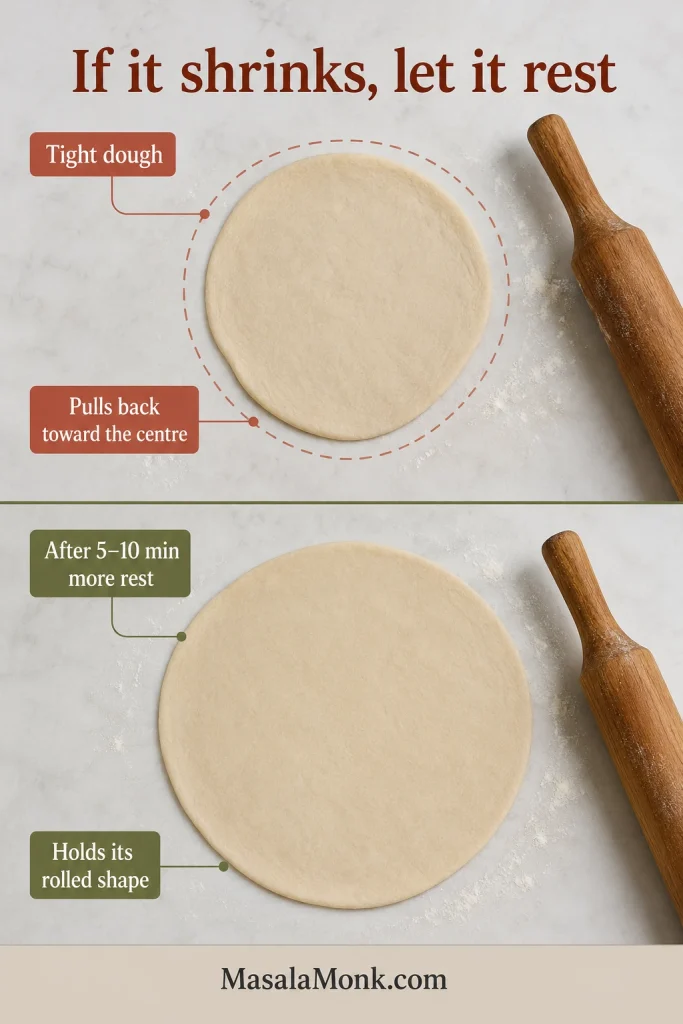
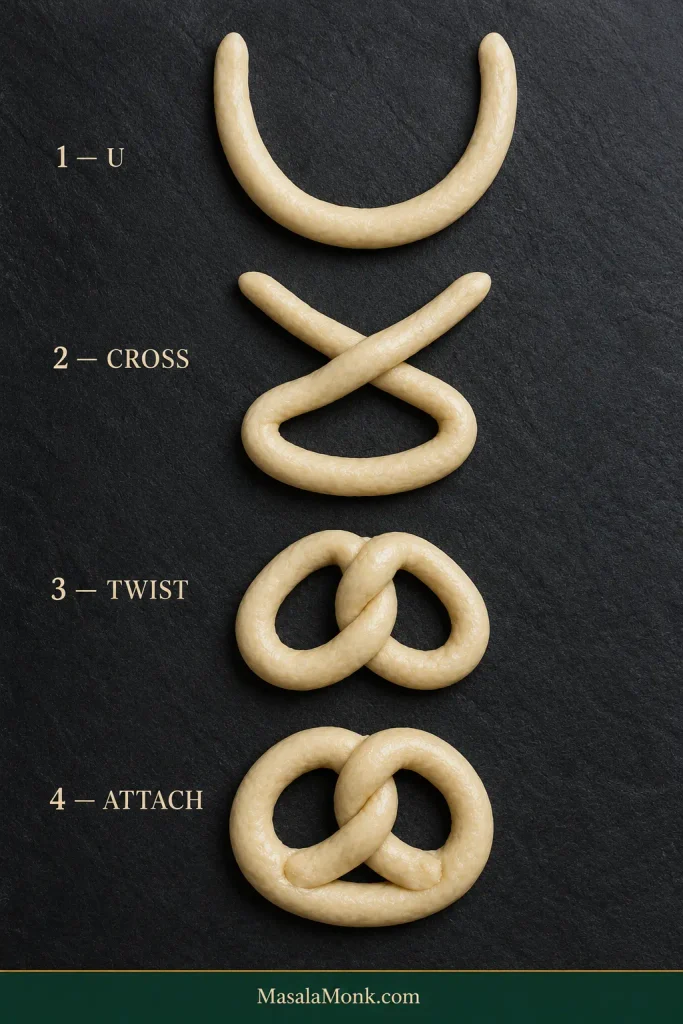
A rope that keeps shrinking needs another 5 minutes of rest. Shape it into a wide U, cross the ends, twist once, then bring them down onto the lower curve and press firmly.
Keep the openings larger than you think you need; they shrink as the pretzel expands. Loosely cover finished shapes while you work through the batch.
5. Prepare the baking-soda bath
When the water is almost boiling, reduce the heat slightly and add the 75 g / about ⅓ cup baking soda gradually. It may foam. Bring the bath back to a gentle, controlled boil.
6. Dip, drain, and salt
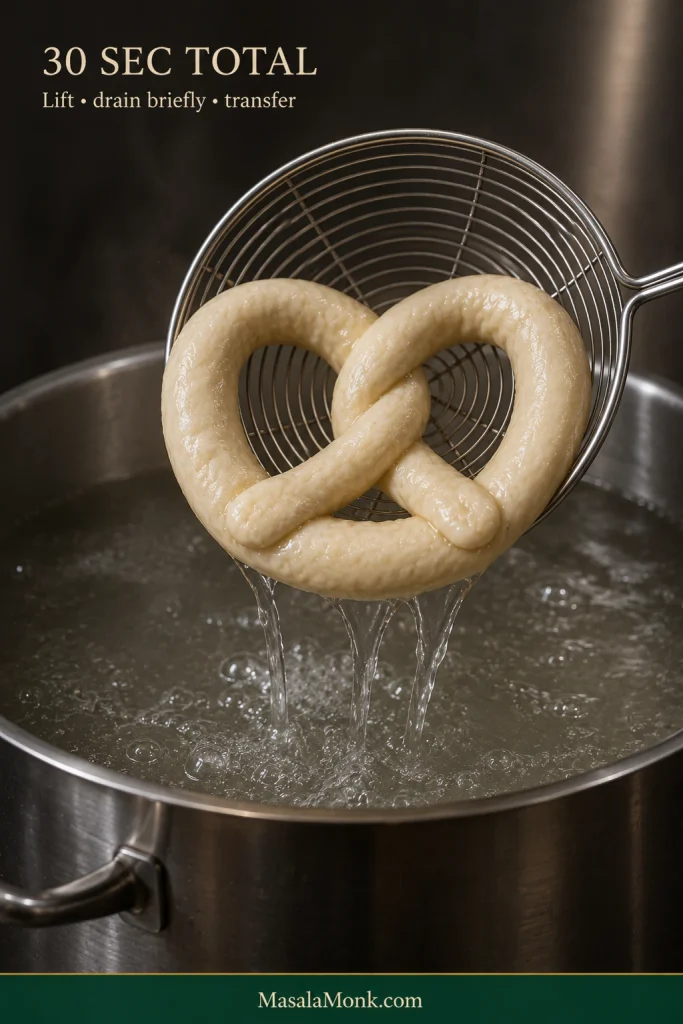
Lower 1–2 pretzels at a time into the bath and give each one 30 seconds total. If part floats above the surface, use about 15 seconds on one side, flip, then 15 seconds on the other.
Lift with a spider or broad slotted spatula, drain briefly over the pot, then transfer to the prepared sheet and add coarse salt while the surface is still damp.
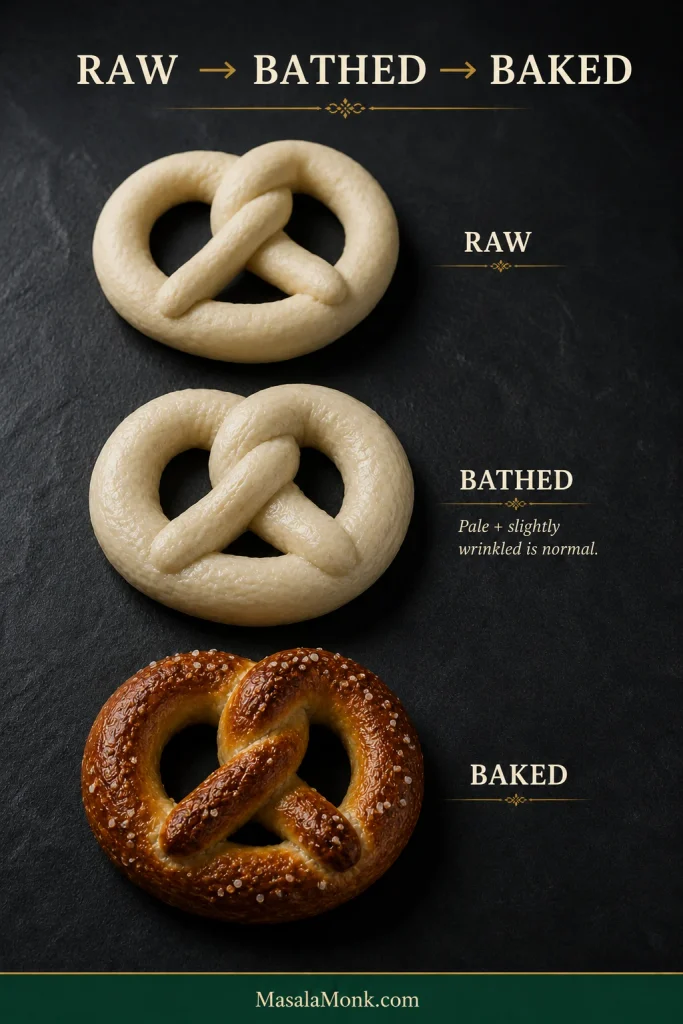
They may look puffier, wrinkled, and still surprisingly pale. Leave them alone. This is the moment ordinary-looking dough starts becoming recognizably pretzel-like; the dramatic color comes next.
7. Bake until deeply browned
Arrange 4 pretzels per tray. Start checking around 11 minutes; most batches need 11–14 minutes, although two trays can take a little longer in some ovens.
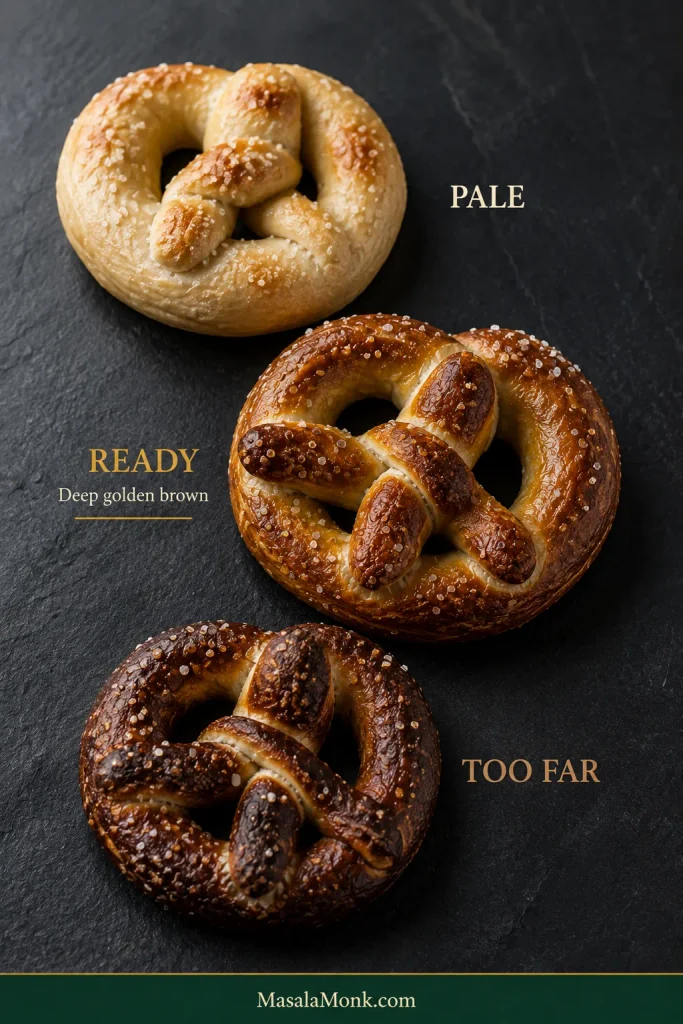
Swap the trays between the upper and lower racks and rotate them front to back only if your oven browns unevenly. Take the pretzels out when the crust is deep golden-brown with darker areas over the raised curves. Pale bread-gold is too early.
Only room for one tray? Bake four first. Keep the remaining shaped pretzels loosely covered in the refrigerator while the first tray bakes, then dip them immediately before the second tray goes into the oven.
8. Butter and serve
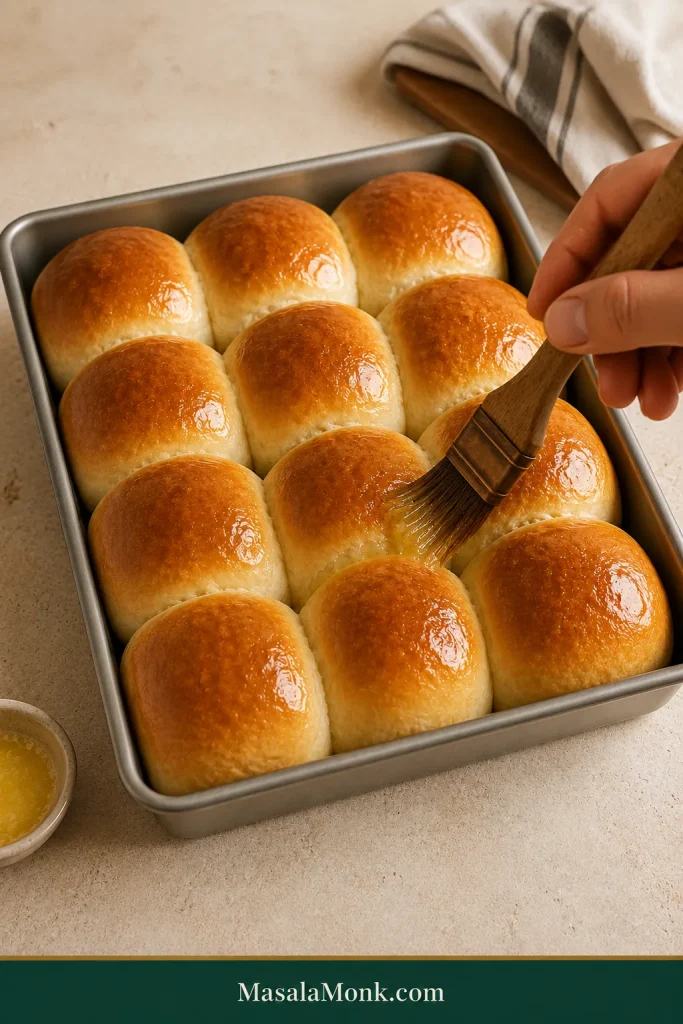
Brush the pretzels generously with melted butter as soon as they leave the oven.
The salt looks a little less stark once the butter hits it, the crust picks up that familiar bakery-counter sheen, and some of the butter disappears straight into the hot surface.
Give them 5 minutes, then serve.
Need a deeper check? Read the dough guide ↓ · Fix shaping or springback ↓ · Back to top ↑
If something in the recipe made you hesitate, start with the section that matches it below. You don’t need to read every section before baking; the deeper guide is here for the moments when you want to understand what the dough is doing or fix something that doesn’t look quite right.
Table of Contents
Dough & Shape
What Makes a Pretzel Taste Like a Pretzel?
A pretzel should taste distinct from ordinary bread before the mustard ever touches it.
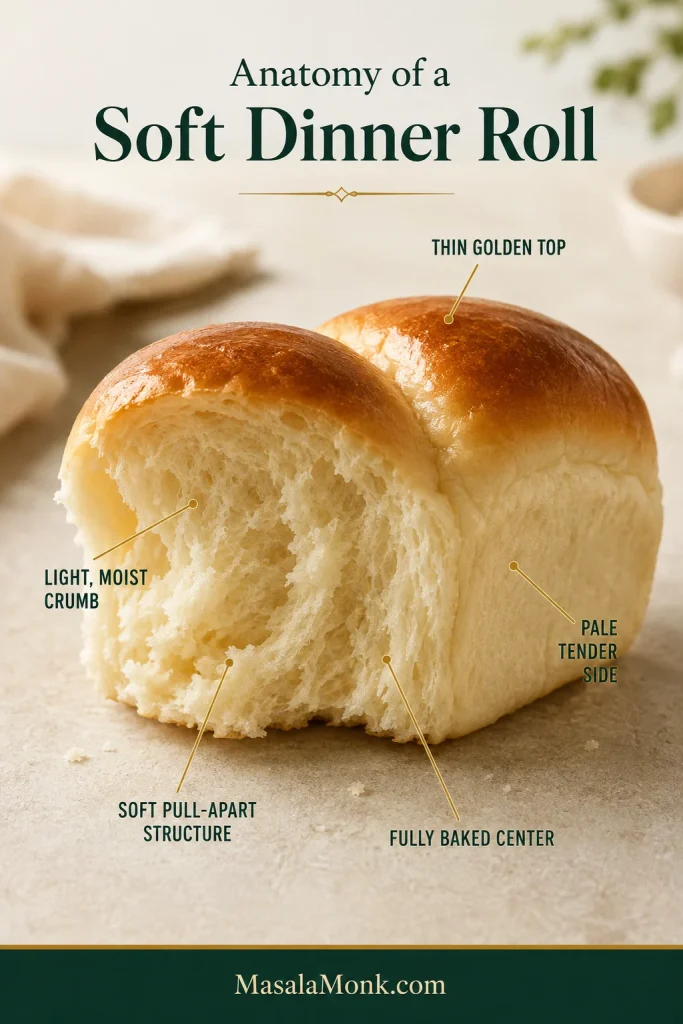
The baking-soda treatment changes the outside so it browns quickly in the oven and develops more roasted flavor and surface chew than untreated bread. The middle should still tear easily and stay tender, with enough structure that the thick curve feels like a pretzel rather than a fluffy dinner roll.
This is a buttery American soft pretzel. Bavarian lye pretzels are typically darker, firmer, and more intensely flavored.
Soft, not fluffy; chewy, not tough; buttery, not brioche-like.
Too bread-like: pale surface, very little crust chew, or an unusually fluffy center.
Right: browned exterior with a slight tug at the surface and a center that compresses when pinched, then slowly pushes back.
Too aggressive: hard or dry crust, or a noticeable mineral, bitter, or baking-soda-like flavor.
Do I need lye?
No. Traditional lye treatment can produce a darker, shinier and more intensely flavored crust, but baking soda is far simpler for a home kitchen and still gives plenty of browning and chew.
That difference matters in the oven too. A baking-soda pretzel does not need to become uniformly as dark as a lye-treated Bavarian one before it is finished.
What Each Ingredient Does
Flour
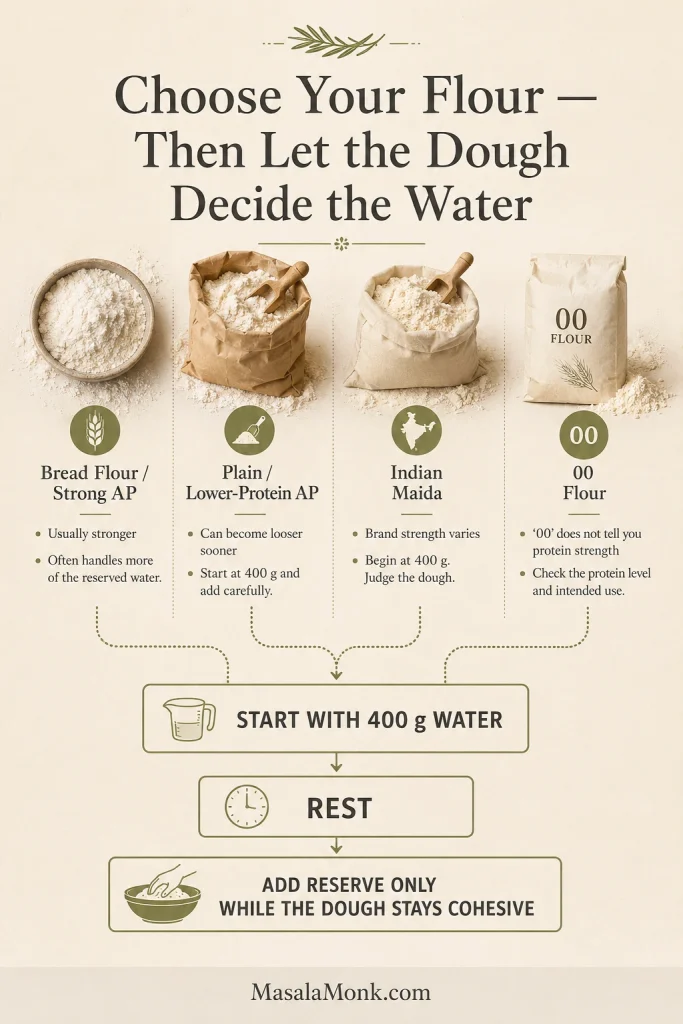
All-purpose flour gives enough strength for long ropes without making the dough unnecessarily resistant. Weigh it if possible; an overfilled measuring cup is one of the easiest ways to turn a soft batch dry and stubborn.
After kneading, the ball should still yield easily when you press your palm into it. That softness makes the long ropes easier to roll later.
Warm Water and Yeast
Start with 315 ml / 1⅓ cups water and keep another 10 ml / 2 teaspoons in reserve. Flour absorption varies, so the final splash goes in only if the dough still feels too firm after kneading.
Salt bread uses a similar reserve-water approach: give the flour time to hydrate and the gluten time to develop before deciding that the mixture needs correcting.
The water should feel comfortably warm, around 100–110°F / 38–43°C. If it feels genuinely hot to your hand, let it cool.
Instant yeast goes straight into the mixture. If you have active dry yeast, use the same 7 g / 2¼ teaspoons; dissolve it in the warm water with the sugar first and allow the rise a little more time if needed.
There isn’t a direct substitute for yeast in this dough. No-yeast pretzels use a different leavening system and behave differently enough to be treated as a separate recipe.
Sugar, Butter and Salt
Eighteen grams rounds the flavor and supports browning without making the pretzels noticeably sweet. Granulated sugar can replace it at the same weight.
A small amount in the dough keeps the bite tender. Most of the obvious butter flavor comes later, when melted butter hits the crust straight from the oven.
Unsalted butter gives the most predictable seasoning, but salted butter will still work. Because brands vary and the amount used in the dough is small, keep the fine salt as written and simply avoid going too heavy with the coarse finishing salt.
Fine salt disperses through the dough. Pretzel salt or coarse sea salt belongs on the damp surface after the soda bath.
If you’re deliberately baking part of the batch for the freezer, leave those pretzels unsalted. Large crystals attract moisture during storage and can partly dissolve into the crust.
Freezing part of the batch? Jump to the freezer guide →
Baking Soda
The bath needs baking soda. Baking powder is formulated differently and will not create the same surface treatment.
All-Purpose Flour or Bread Flour?
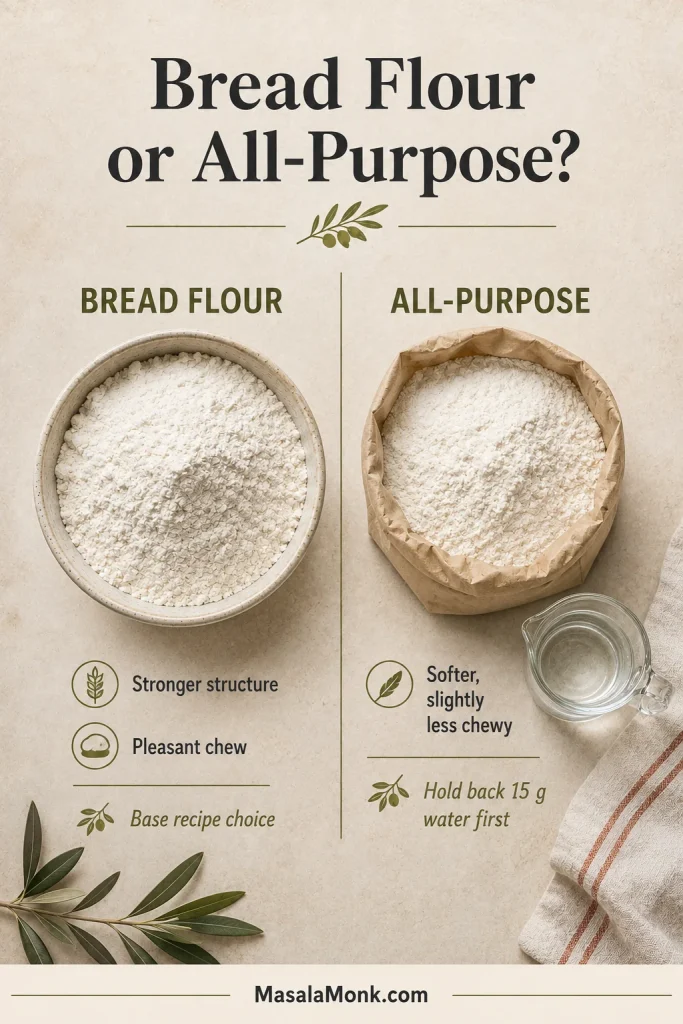
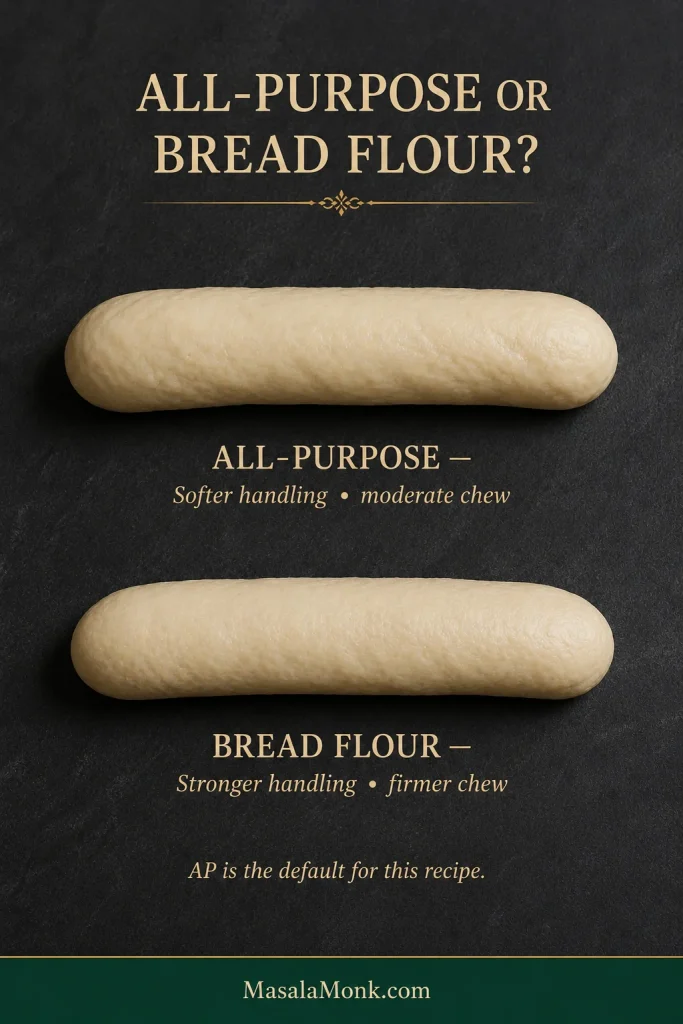
All-purpose flour makes a softer pretzel that is easier to roll; bread flour produces a stronger dough and a chewier finished bite.
| Flour | How it handles | Finished pretzel |
|---|---|---|
| All-purpose | Softer, easier to stretch | Tender middle, moderate chew |
| Bread flour | Stronger, more resistant | Firmer, chewier bite |
Cake flour isn’t a good direct substitute here; its lower protein makes it harder to build the structure needed for long ropes. Whole-wheat and gluten-free flours change the dough enough that they are not simple 1:1 swaps.
Read the Dough Before You Add More Flour
Why is my pretzel dough so sticky?
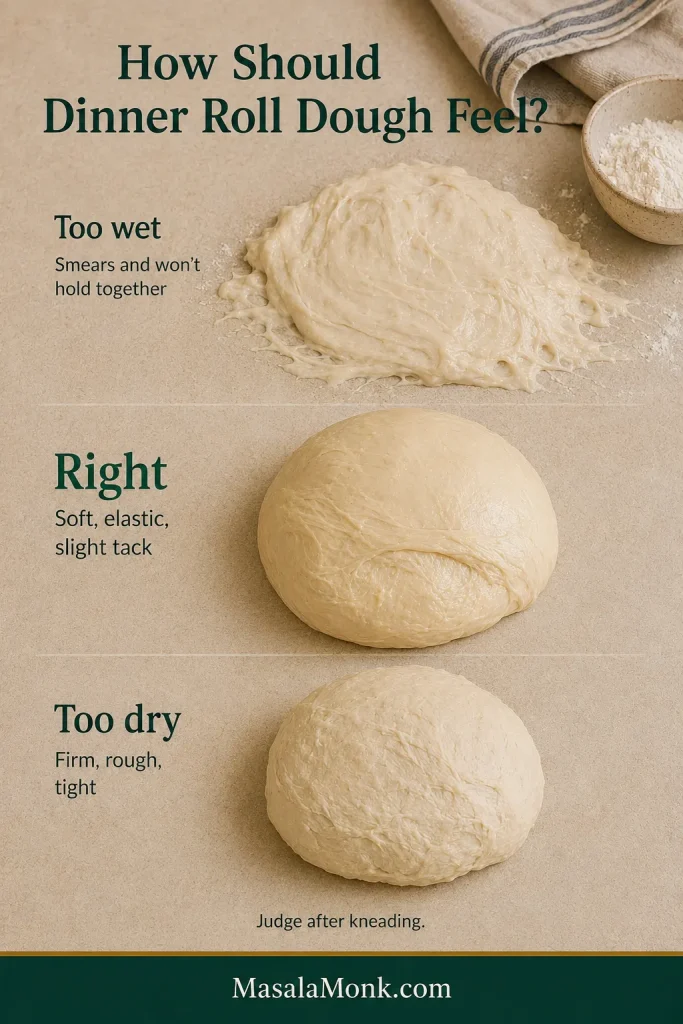
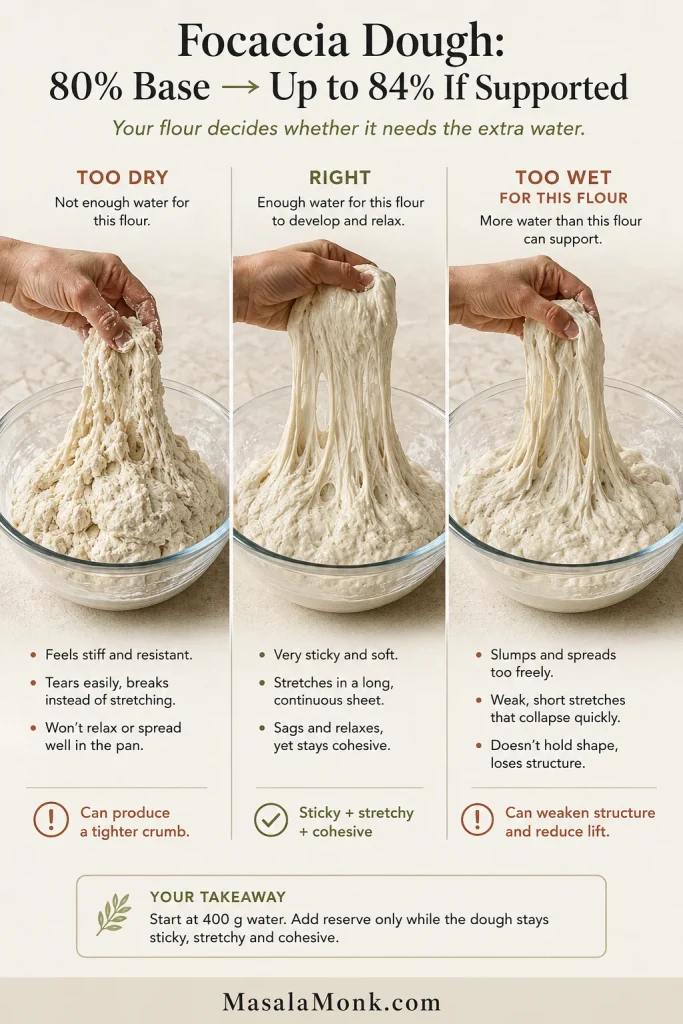
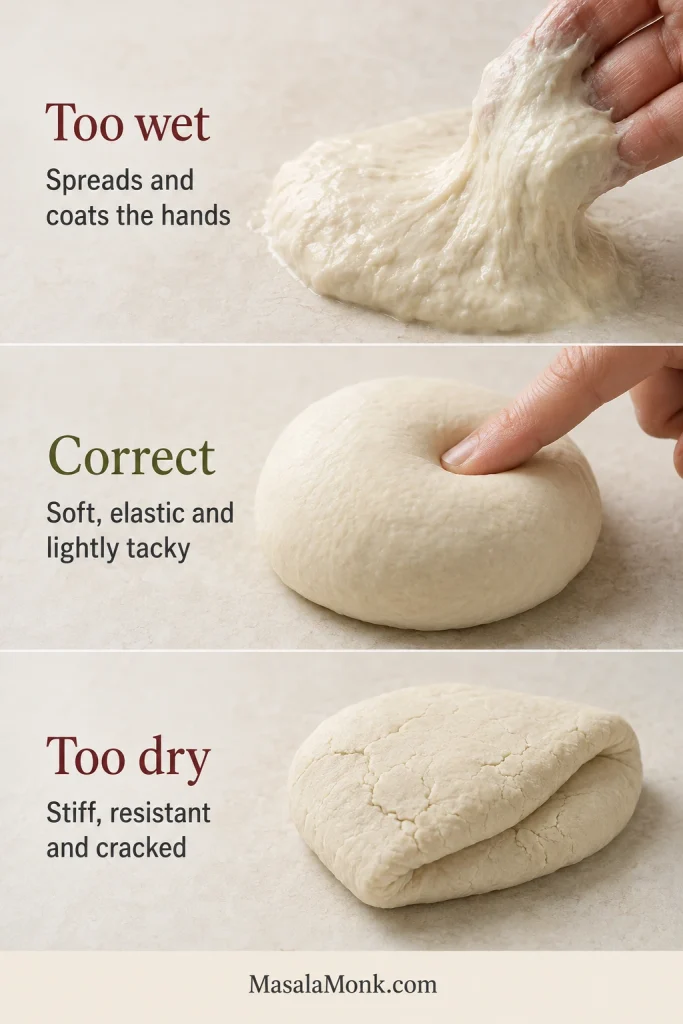
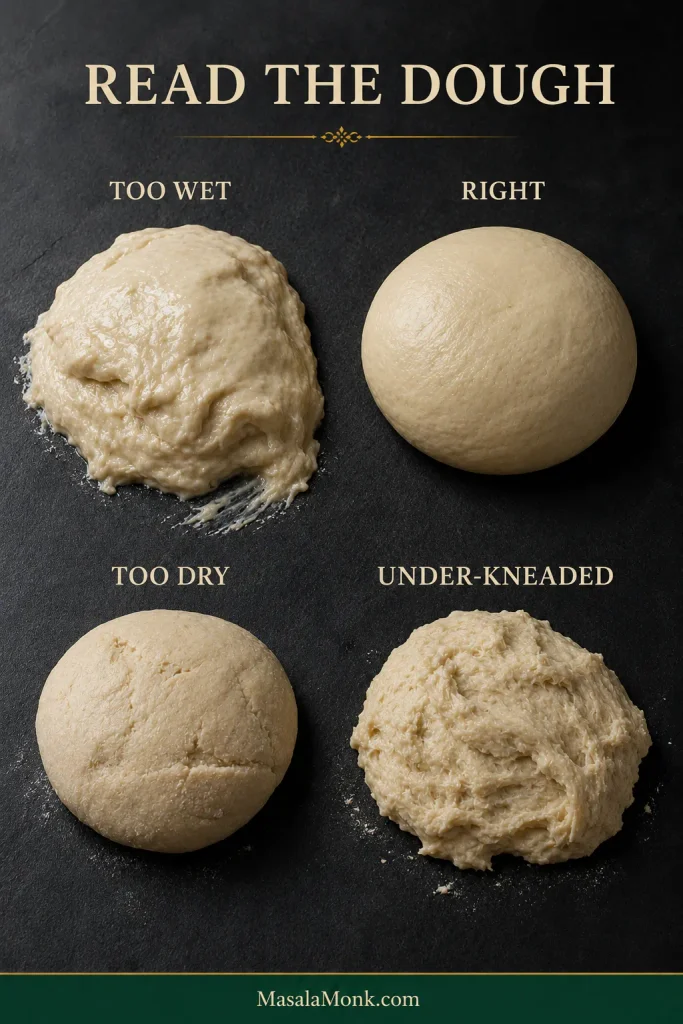
Pretzel dough should be soft and lightly tacky, but it should hold itself together and leave your fingertip mostly clean. Rest and knead it fully before reaching for more flour.
Freshly mixed dough often looks wetter than it will ten minutes later. The flour keeps absorbing water during the rest, while kneading builds enough strength for the shaggy mixture to become smooth and elastic.
When the balance is right, press it with a finger and the surface should give easily, then slowly rebound without smearing.
| Dough state | What it feels like | What to do |
|---|---|---|
| Too wet | Smears heavily, coats fingers, struggles to hold itself | Knead fully first; then add flour 1 tbsp at a time if needed |
| Right | Smooth, elastic, lightly tacky; fingertip releases mostly clean | Stop adjusting |
| Too dry | Stiff, rough, resistant; tears instead of stretching | Add reserved water 1 tsp at a time |
| Under-kneaded | Shaggy, uneven, quick to tear | Keep kneading before changing hydration |
How do you know when kneading is finished?
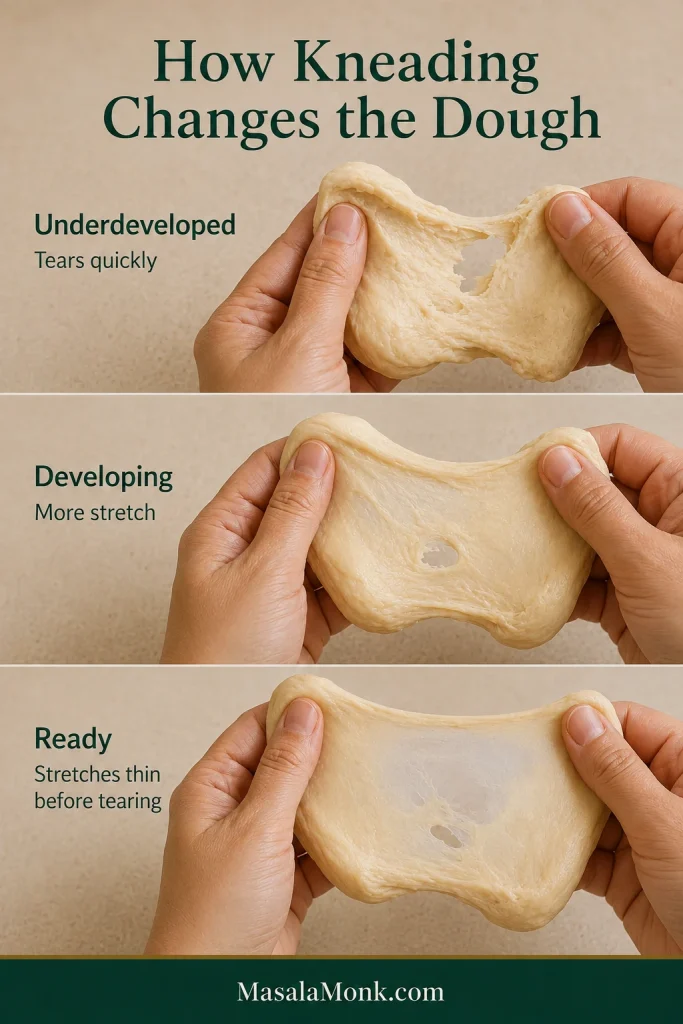
The ball should look smoother, feel elastic, and stretch noticeably farther before it tears. A flawless bakery-style windowpane isn’t required.
Once it is smooth, stretchy, lightly tacky, and holding itself together well, move on.
How Much Should Pretzel Dough Rise?
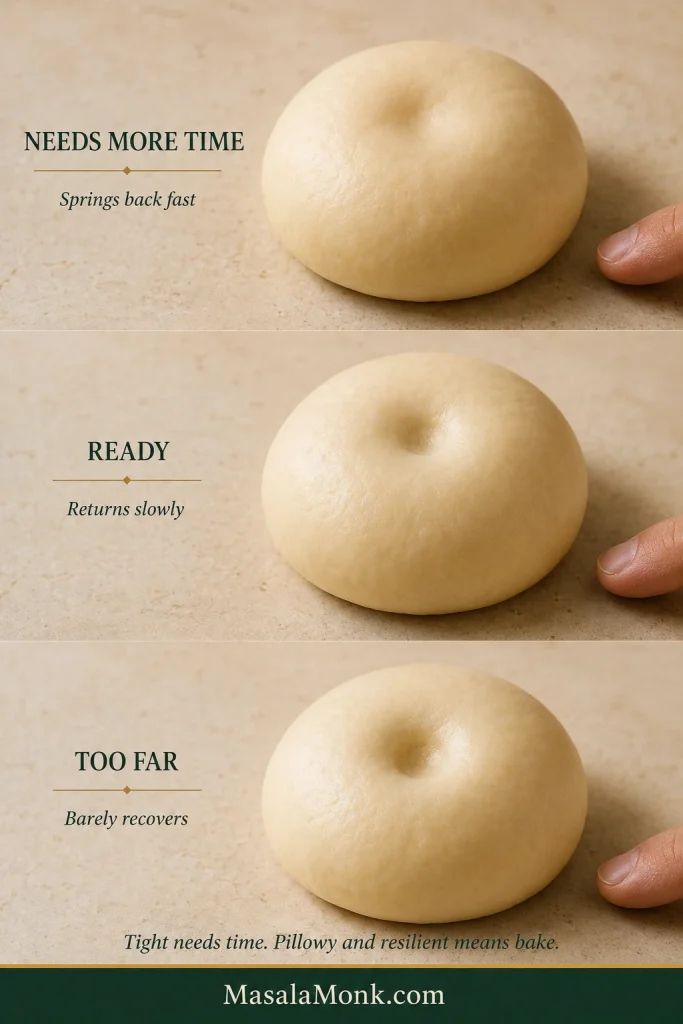
Once the dough looks clearly puffier and substantially larger, it is ready to divide. It does not need to double.
Yeast moves faster in a warm kitchen and slower in a cool one, so use 45–60 minutes as a guide and let the dough’s appearance make the final call.
Lift the cover and the compact ball you left behind should now look softer, rounder, and noticeably fuller in the bowl. You’re building the soft middle here; the distinctive pretzel crust comes later in the bath and oven.
If you’re unsure how much it has grown, a piece of tape or elastic band marking the starting height makes the change much easier to see.
Letting the dough go much farther makes long ropes harder to control and can leave the finished middle fluffier than intended.
Making the dough tonight? See the overnight method →
Why Rope Length Changes the Finished Pretzel
For a 110 g pretzel, aim for a rope 25–27 inches / 64–69 cm long and about ½ inch / 1.3 cm thick.
Use those dimensions as practical targets. The amount of dough, rope length, and size of the openings need to work together.
A small portion stretched to 26 inches becomes thin; a heavier piece can remain thick enough to close its own holes as it expands.
That combination keeps the loops open while leaving enough dough through the curves for a substantial soft center.
How to Roll the Dough Without Fighting It
Why does the rope keep shrinking?
If the rope keeps springing shorter, stop rolling and let it rest for 5–10 minutes. Tight gluten needs time, not more force.
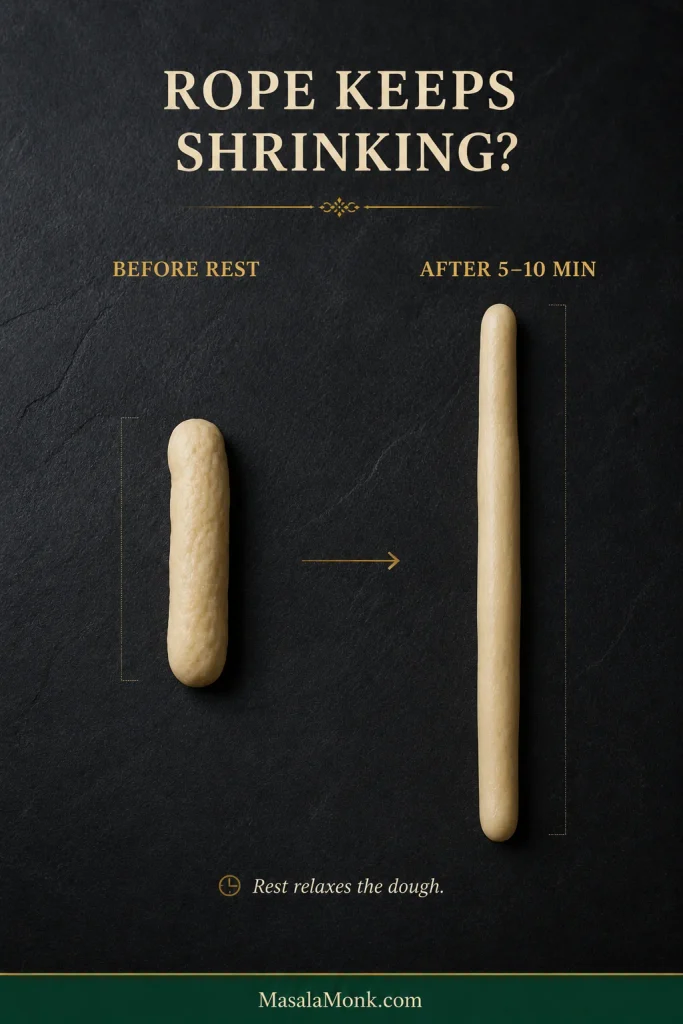
Take every portion to 12–14 inches / 30–36 cm before trying to make any one rope full length. By the time you return to the first piece, it should feel noticeably less springy and much easier to stretch.
Pizza dough behaves much the same way when it tightens during stretching: a short rest fixes what more pulling usually makes worse.
Roll evenly on a mostly bare counter
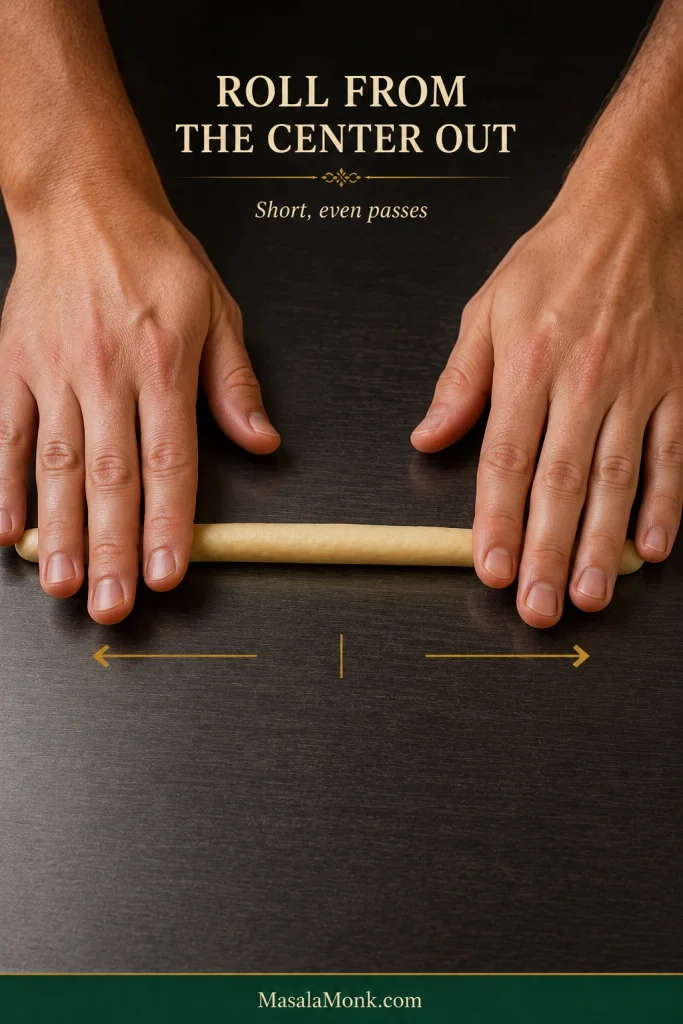
Place both palms near the middle and roll outward in short passes, gradually moving your hands toward the ends. Lengthen the whole rope a little at a time; concentrating pressure on one stubborn spot can make it skinny.
Slightly tapered ends are fine. What you want to avoid is a rope with thick bulges separated by paper-thin sections.
A heavily floured counter makes the rope skid beneath your palms. Keep the work surface mostly bare so the dough has enough grip to lengthen; if it starts sliding, wipe away loose flour and lightly dampen your hands.
Keep the openings generous
This is one of those moments when the raw pretzel should look slightly wrong. Leave more open space than you think you need because the dough swells in the bath and again in the oven.
What looks almost comically open on the counter becomes much more familiar after baking.
Your first pretzel may be the least photogenic one on the tray. By number three or four, your hands usually understand the twist better than your brain does. That’s when shaping starts becoming fun.

The Baking-Soda Bath
How long should the pretzels stay in the bath?
For this recipe, give each pretzel 30 seconds total. Keep that timing tied to the stated ratio of 75 g baking soda in 1.9 L / 8 cups water.
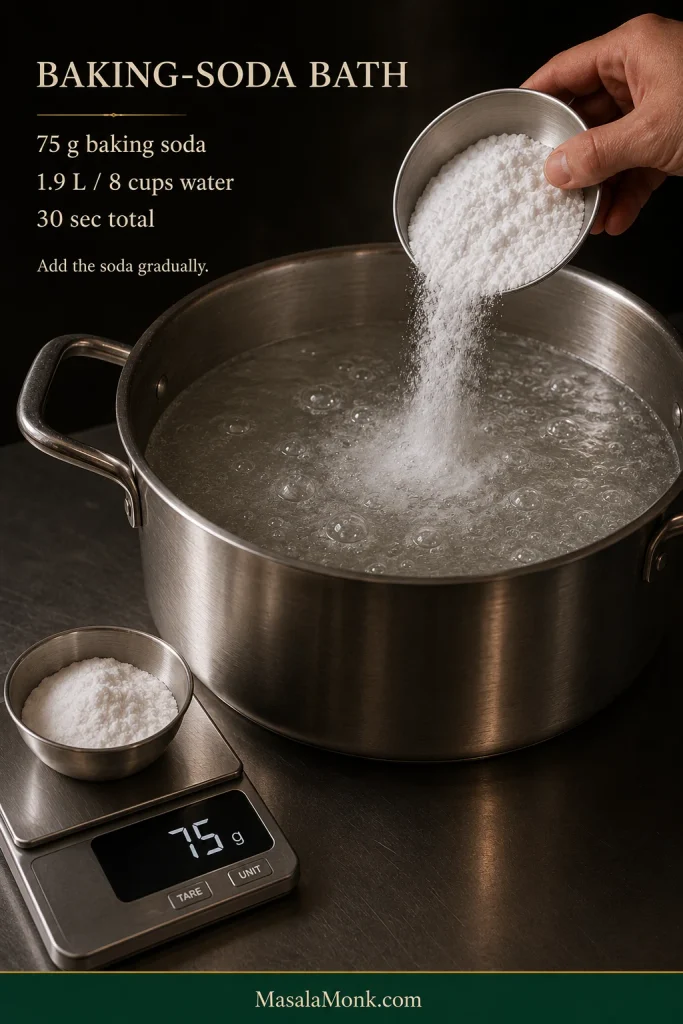
Need less bath liquid? Keep roughly the same concentration—about 40 g baking soda per liter of water—and use enough solution for the pretzel to float freely without folding against the pot or becoming crowded. Flip it if the upper surface remains exposed.
The first bath can look dramatic, but once the pot and timer are ready, it is one of the quickest parts of the whole recipe.
What the bath actually does
The alkaline bath changes the outside of the dough so it browns faster and develops a chewier skin. Skip it and the result moves much closer to ordinary bread tied into a pretzel shape.
This is the moment the recipe stops behaving quite like ordinary bread. The dough may still look pale when it comes out of the water, but the treated surface is now ready for the rapid browning that happens in the oven.
Something went wrong in the bath? Go straight to the shaping and bath fixes →
Thirty seconds is enough for this particular bath. Leaving the pretzels in much longer can make the surface gummy or tough and may introduce an unpleasant mineral or baking-soda taste.
The soda bath already does the important browning work. Egg wash can add more shine, but it isn’t necessary here, and the hot butter supplies plenty of gloss afterward.
Bake for Color, Not Just Time
At 450°F / 230°C, start checking around 11 minutes; most batches take 11–14 minutes.
For the first few minutes they mostly puff. Then the color catches up quickly, and the smell changes with it.
The timer gets you to the window. The crust tells you when to stop.
Too pale: beige or light bread-gold. Give them more time.
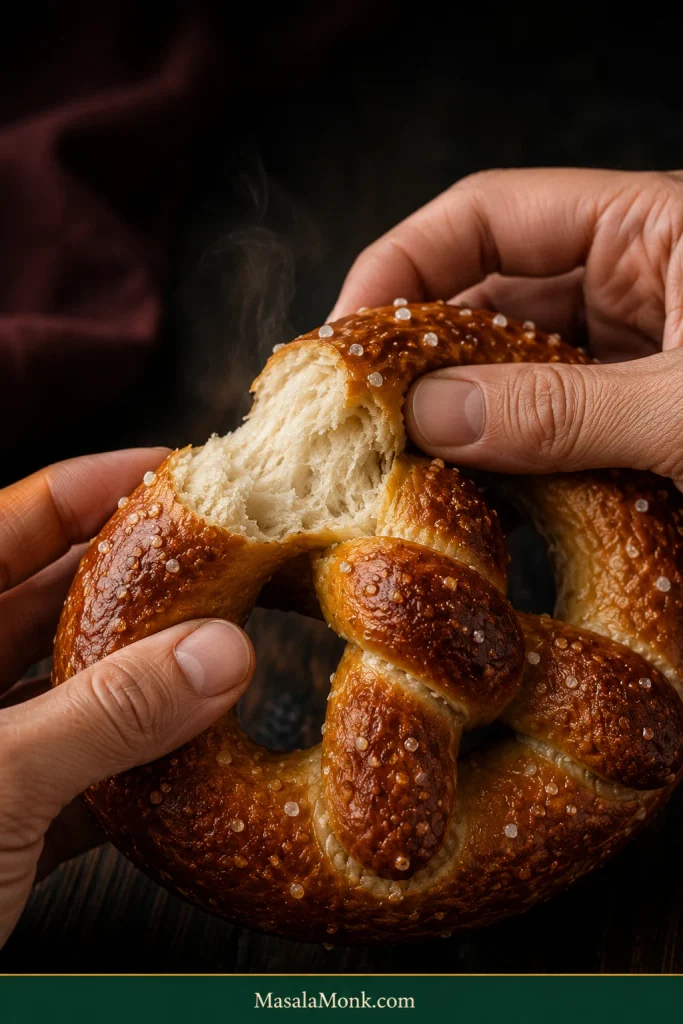
Ready: deep golden-brown with darker color over the raised curves. The surface should tug slightly against your teeth before the soft middle gives way.
Too far: very dark thin areas, a dry-feeling crust, or an underside beginning to scorch.
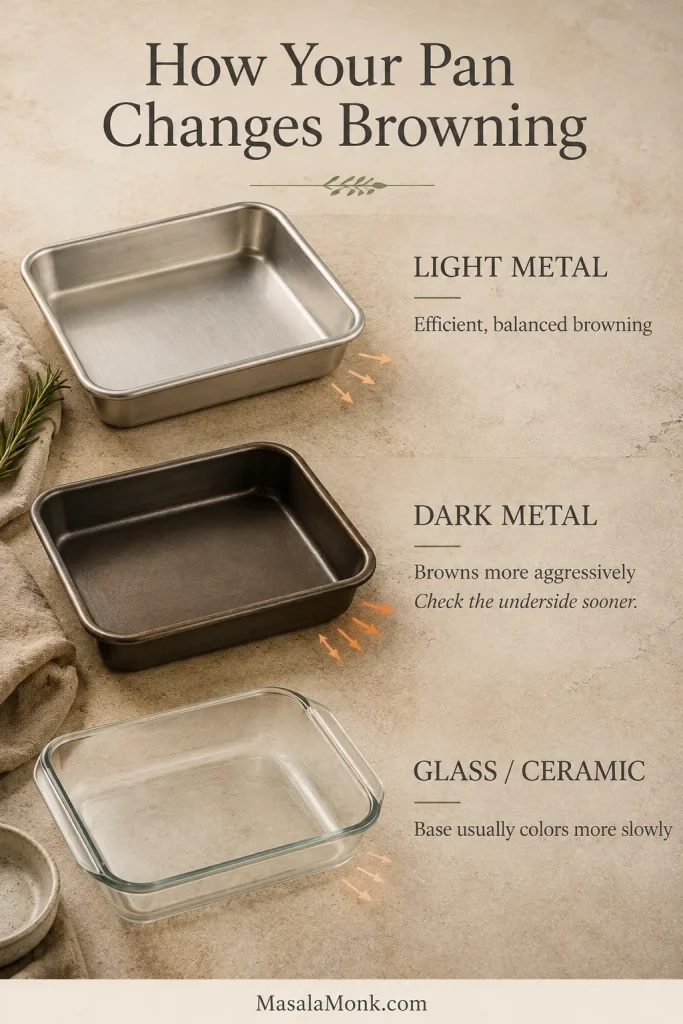
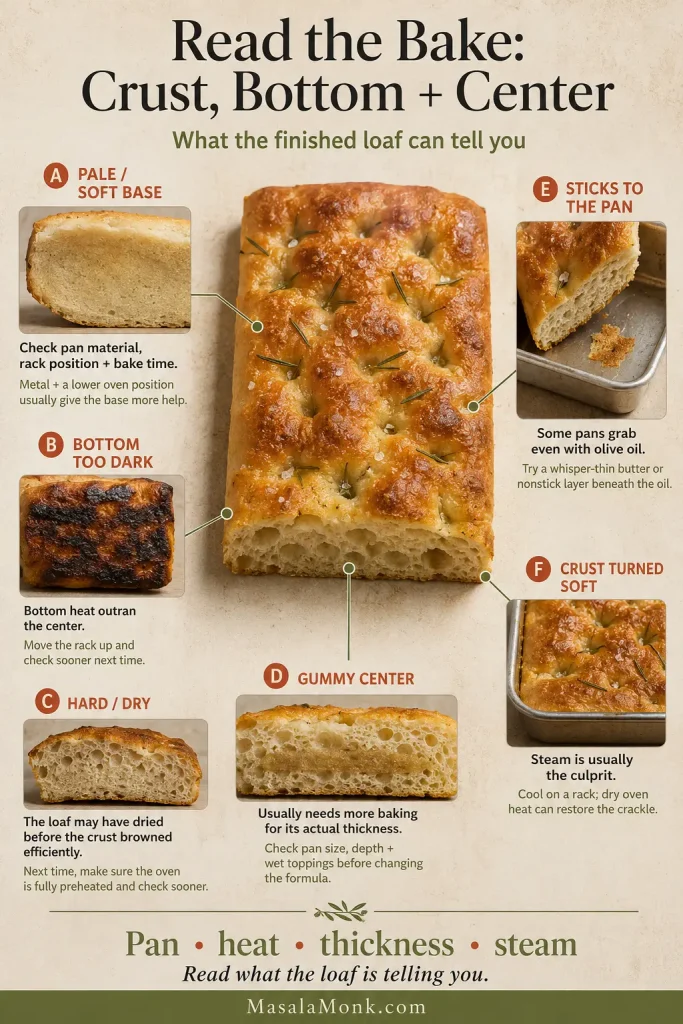
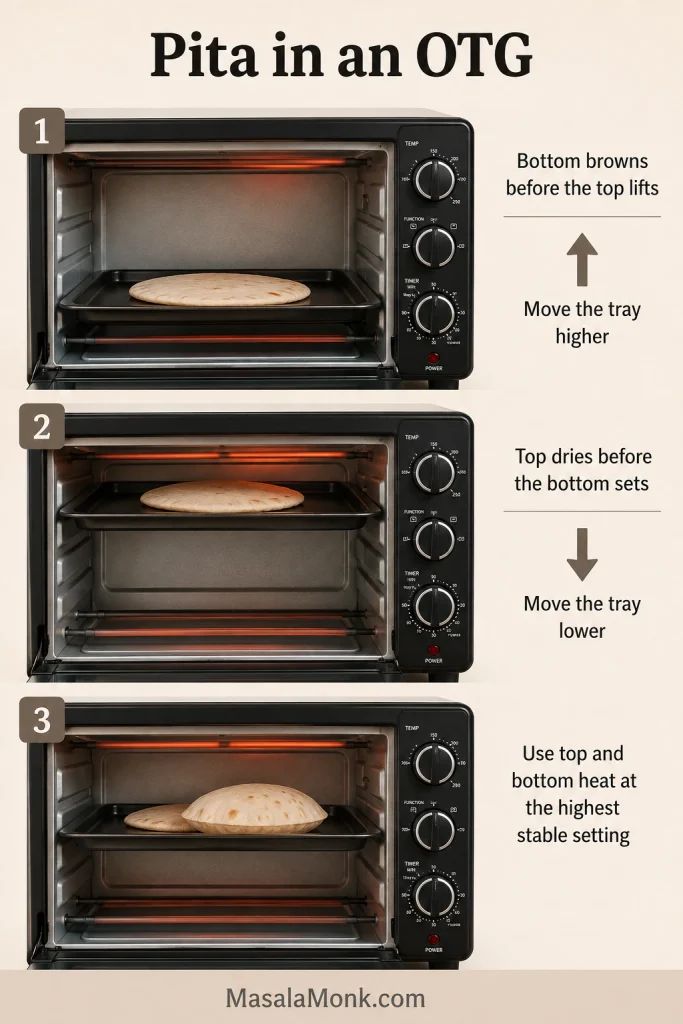
Bottoms darkening well before the tops usually means the pan or rack is giving them too much heat from below. A lighter sheet pan, a slightly higher rack, or stacking the loaded sheet over a second empty pan can help.
Need another baking fix? Jump to baking and storage troubleshooting →
An optional temperature check
Color is the better everyday guide. If the crust looks right but you’re worried about the thickest section being underbaked, an instant-read thermometer will generally land around 195–200°F / 91–93°C.
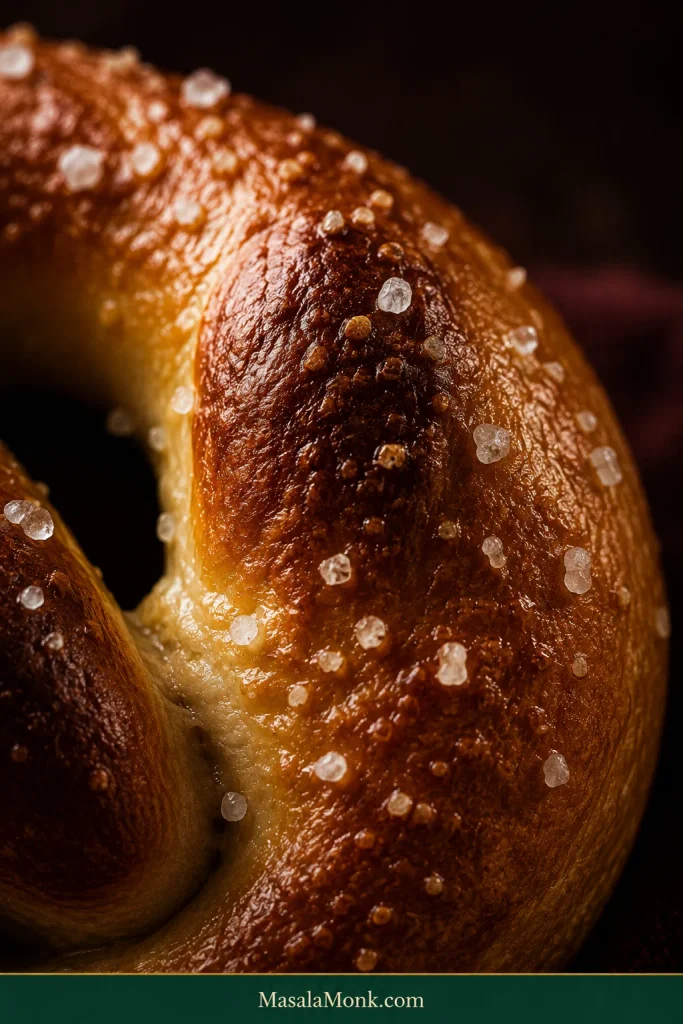
Once the overall color looks right, look more closely at the surface. A good soft-pretzel crust can show small blisters and natural tonal variation rather than a perfectly smooth shell.
Troubleshooting: What Went Wrong?
Most imperfect batches are still very edible. Start with the result you can see and change one thing next time; one imperfect detail rarely means the whole recipe failed.
Dough & Rise
| What happened | Most likely cause | Try this |
|---|---|---|
| Dough smears everywhere | Too wet or not kneaded enough | Finish the rest and knead before adding flour |
| Dough feels stiff | Too much flour or too little water | Add reserved water gradually |
| Dough rises very slowly | Cool room or sluggish but active yeast | Give it more time in a comfortably warm spot |
| Dough shows no rise | Inactive yeast or water that was too hot | Start again with fresh yeast and comfortably warm water |
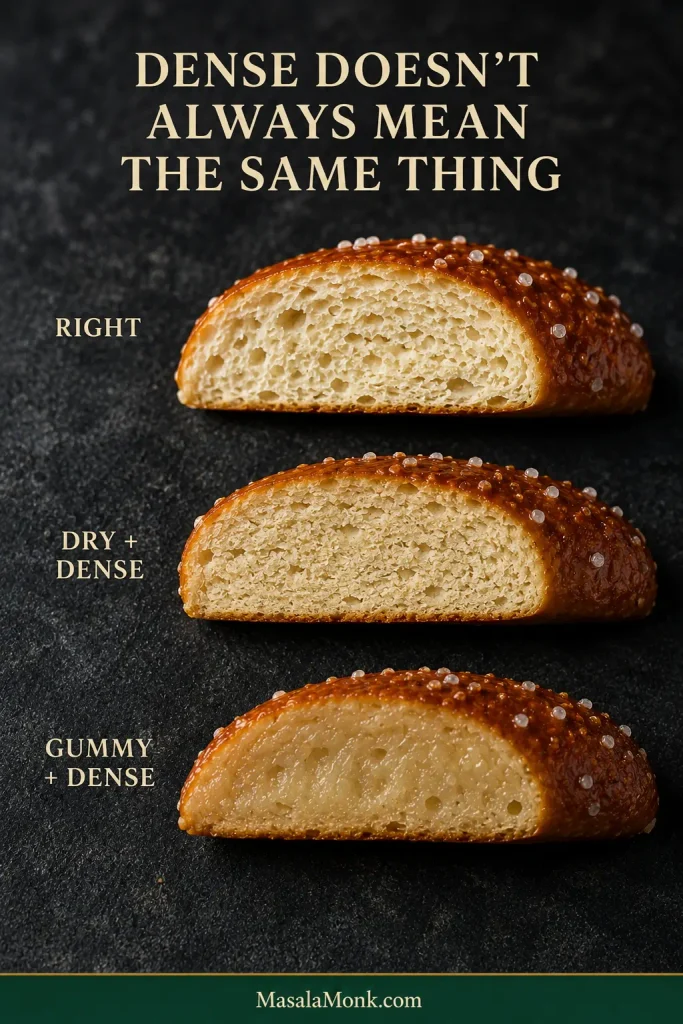
| Dense and dry | Too much flour or excessive baking | Keep the dough softer or shorten the bake |
| Dense and gummy | Underbaked center | Bake longer |
Dry density and gummy density are different problems. A tight, dry crumb points toward too much flour or too much oven time. A moist, tacky center usually means the pretzel simply needed longer to bake.
Rolling, Shaping & Bath
| What happened | Most likely cause | Try this |
|---|---|---|
| Rope keeps shrinking | Gluten is tight | Rest another 5–10 minutes |
| Rope slides under your hands | Too much flour on the counter | Remove loose flour and lightly dampen palms |
| Rope gets thin in random spots | Too much pressure in one area | Roll outward in short, even passes |
| Holes disappear | Rope too short or openings too small | Roll longer and shape more openly |
| Ends come loose | Weak seal | Dab with water and press firmly |
| Pretzel goes limp in the bath | Overproofing or weak structure | Stop the first rise earlier and make sure the dough is fully kneaded |
| Shape distorts while lifting | Handling issue | Use a broad spider or slotted spatula |
| Slight wrinkles after bath | Usually normal | Don’t reshape; bake as usual |
| Surface feels gummy | Too much bath time or poor draining | Keep to 30 seconds and drain briefly |
| Mineral or bitter taste | Too much soda exposure | Use the measured ratio and timing |
Baking & Storage
| What happened | Most likely cause | Try this |
|---|---|---|
| Pale and bread-like | Incomplete bath or not enough browning | Use the full dip and bake beyond pale bread-gold |
| Nicely browned but very fluffy inside | Too much proofing or overly thick ropes | Stop the rise earlier and roll longer |
| Bottom burns before top browns | Dark pan, low rack, or strong bottom heat | Move higher or use a lighter/doubled sheet pan |
| Crust is very tough | Overbaking or too much bath exposure | Check oven time and 30-second dip |
| Pretzels stick to parchment | Untreated paper under wet dough | Use a silicone mat rated for 450°F / 230°C or lightly oil parchment |
| Coarse salt becomes wet later | Salt pulled moisture to the surface | For planned storage or freezing, leave coarse salt off; already-salted leftovers can still be frozen |
If the pretzel browned well, tasted good, and simply came out a little lopsided, that’s a shaping problem—not a bad batch.
Back to recipe ↑ · Store, freeze and reheat ↓
Make Ahead, Store, Freeze and Reheat
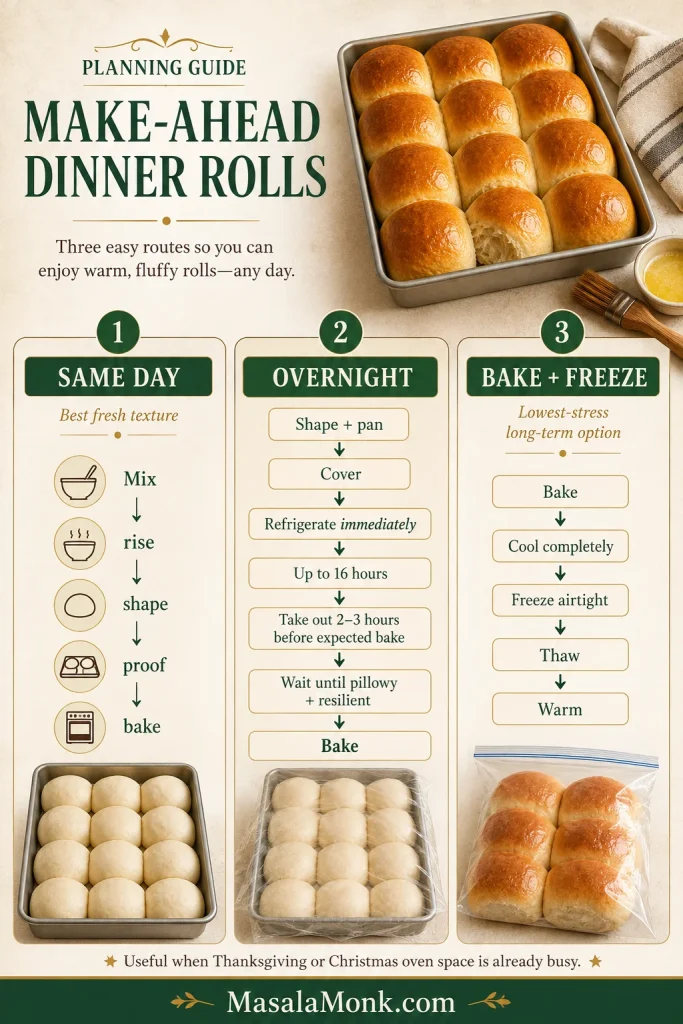
Soft pretzels are at their best fresh from the oven, but you don’t have to arrange your whole day around that moment. The easiest make-ahead route is to bake the pretzels first and freeze them; overnight dough works too, but its next-day timing depends on how much fermentation happened in the refrigerator.
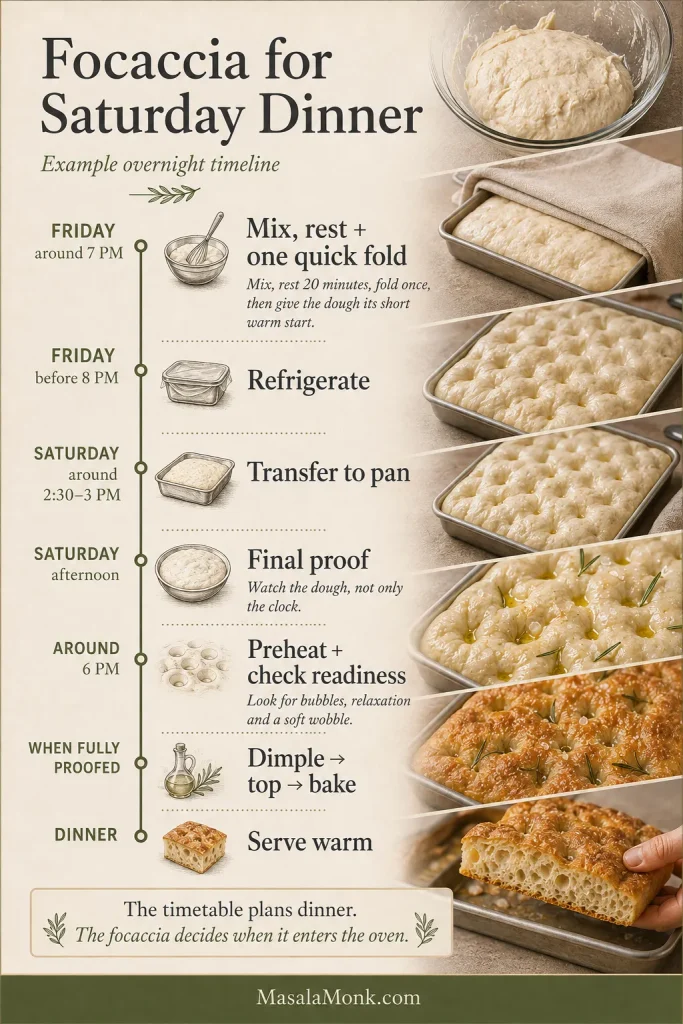
Make the dough the night before
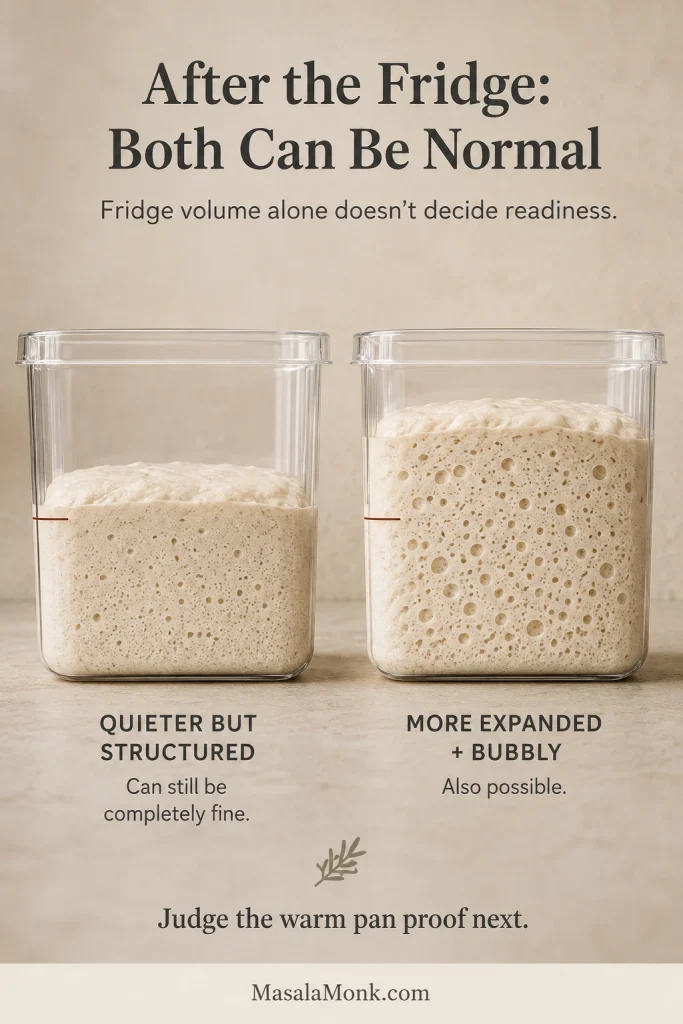
After kneading, place the dough in a lightly greased covered bowl and refrigerate overnight. The goal is an overnight rest rather than an extended cold ferment.
The next day, divide and shape while still cool, or let the dough sit briefly at room temperature first if it feels too firm to roll comfortably.
After shaping, let the pretzels lose some of their refrigerator chill and relax slightly before dipping. Don’t wait for a pronounced second rise; once the dough is easy to handle and the shapes are no longer fridge-cold, move on to the bath.
Storing baked pretzels
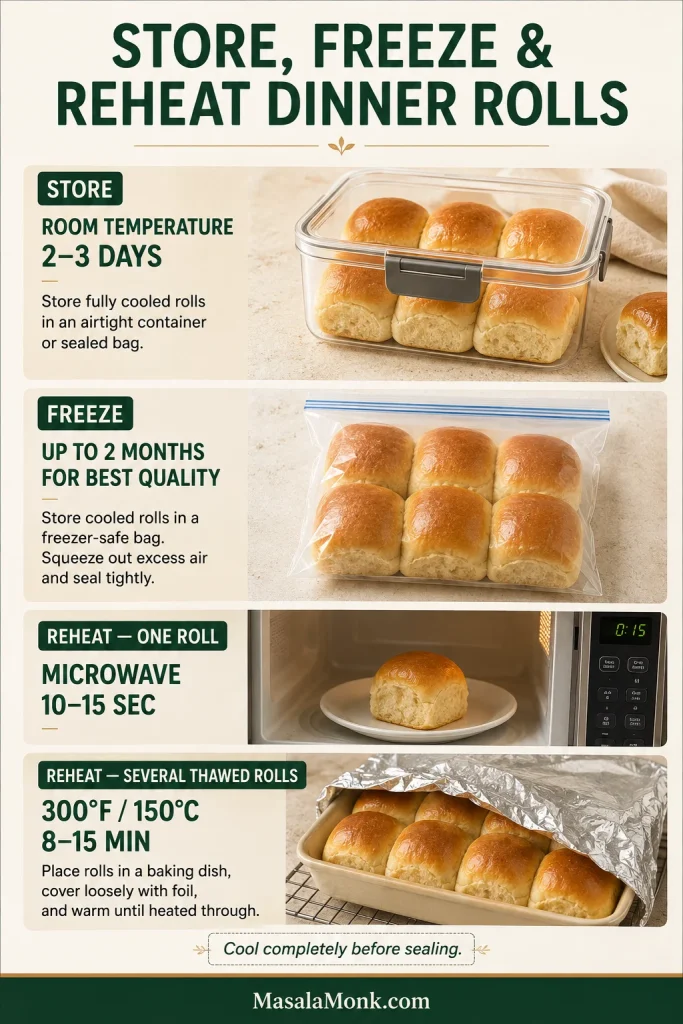
Store completely cooled pretzels airtight at room temperature for up to 3 days. The crust softens during storage, so reheating gives a much better result than eating one cold the next day.
For longer storage, freeze rather than refrigerate.
Freeze them baked
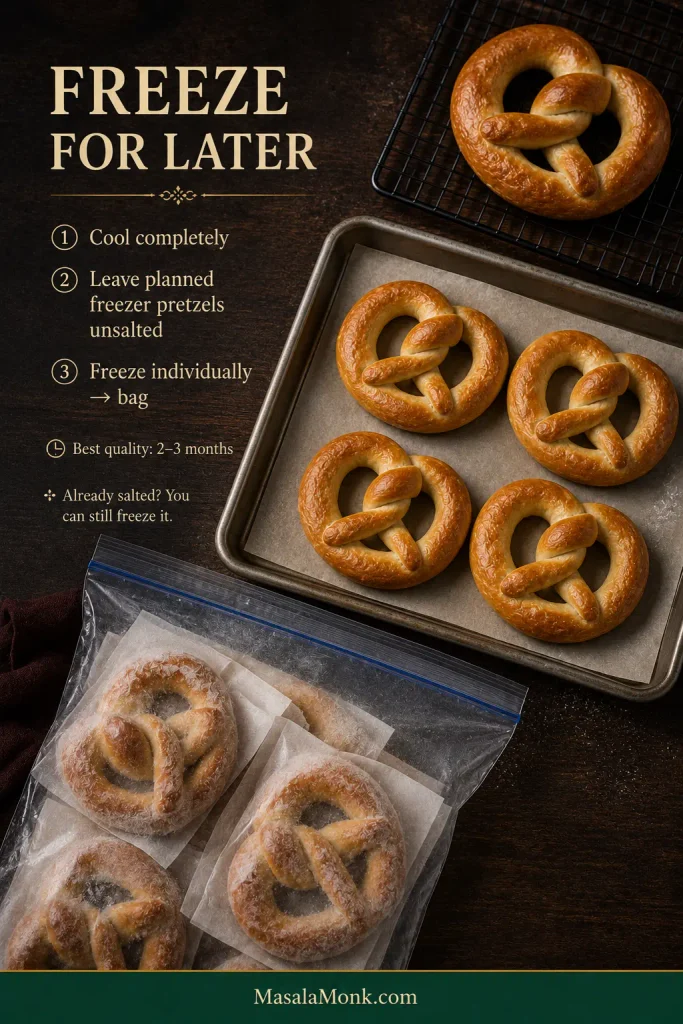
For a planned freezer batch, cool the pretzels completely and leave off the coarse salt. Freeze them individually until firm, then transfer to a freezer-safe bag or container. Already-salted leftovers can still be frozen, although some salt crystals may soften or partly dissolve. For best quality, use within 2–3 months.
How to reheat soft pretzels
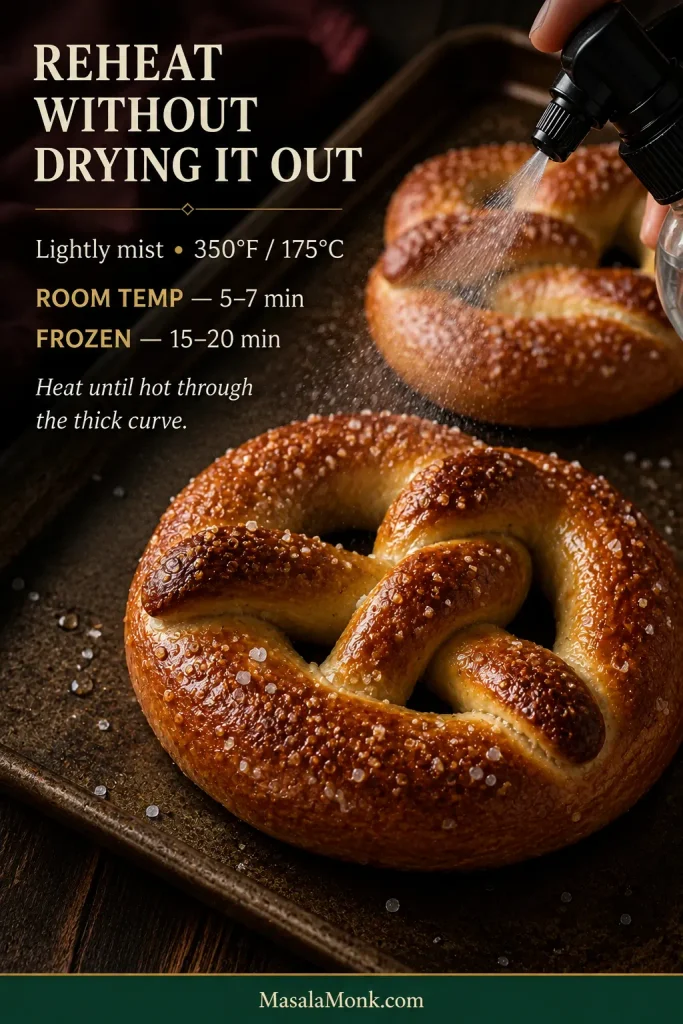
For a room-temperature pretzel, a 350°F / 175°C oven for 5–7 minutes gives the best balance of soft center and revived crust. Lightly mist or brush a dry surface with water first.
From frozen, lightly mist the surface, add fresh coarse salt if the pretzel was frozen unsalted, and heat at 350°F / 175°C for 15–20 minutes, until hot through the center.
Other reheating options
Air fryer, room-temperature pretzel: start around 325°F / 165°C and check after about 3 minutes. Air fryers vary, so check early before the thinner ends dry out.
Microwave, room-temperature pretzel: start with about 15 seconds, then add another 5–10 seconds only if needed. It is fast and soft, but you lose most of the crust.
Can I double the recipe?
The ingredient math doubles easily. Mixer capacity may not.
For an ordinary home stand mixer, two separate dough batches are more predictable than asking it to knead roughly a kilogram of flour at once.
Two Easy Finishes
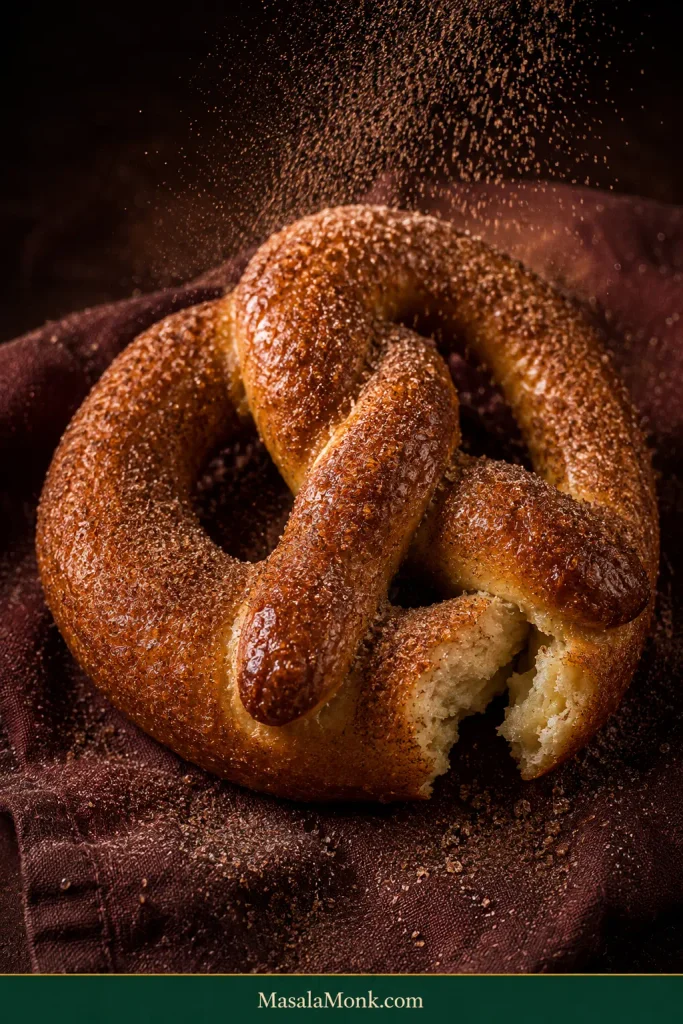
Cinnamon Sugar
Skip the coarse salt. Brush the baked pretzel generously with butter, then coat it with cinnamon sugar while still warm.
The butter catches the sugar in a thin sandy layer instead of letting half of it fall onto the plate. Add the cinnamon sugar only after baking so it doesn’t scorch at 450°F.
Garlic Butter
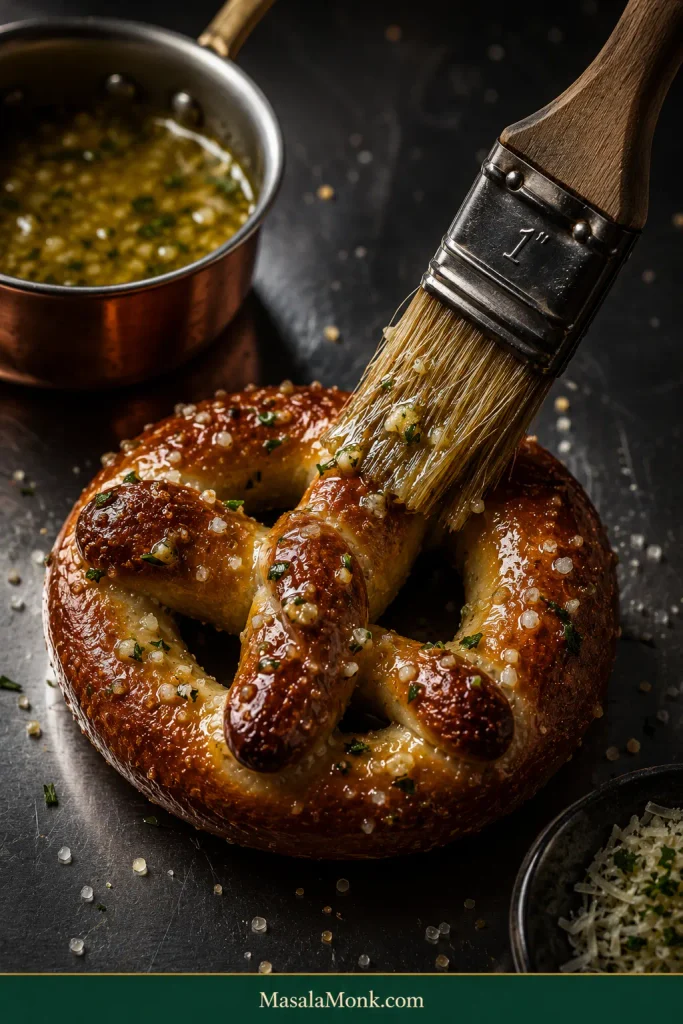
Mix the finishing butter with finely grated garlic or gently cooked minced garlic and brush it over the pretzel while the crust is still hot enough to absorb it. Parsley or a little finely grated Parmesan can go on afterward.
If warm bread and garlic butter is the combination you’re really after, this homemade garlic bread loaf takes that combination further.
What to Serve With Them
A warm salted pretzel doesn’t need much. Yellow mustard gives you the sharp, familiar version; Dijon is tangier and more assertive.
For something sweeter, honey mustard can be mixed a little thicker so it clings to the pretzel instead of running off.
If you’re firmly in the cheese-with-pretzels camp, a warm cheddar cheese sauce is hard to argue with. The creamy sauce against that salty browned crust is the whole point.
The best serving plan is simply to have people nearby when the tray comes out. Warm pretzels lose more by waiting than they gain from having a special occasion attached to them.
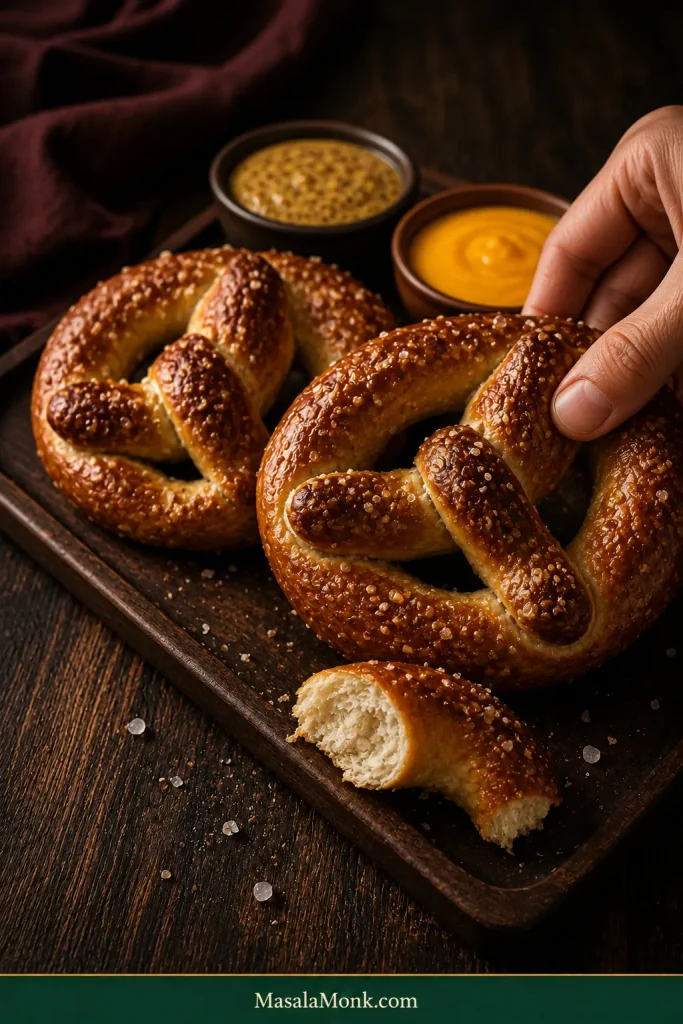
Give them five minutes, then tear into the thick curve while it is still warm. The browned skin should pull slightly before it opens, and the middle should feel soft rather than cottony. A little butter will probably end up on your fingers.
There can be mustard waiting nearby. The first pretzel rarely needs much convincing.