
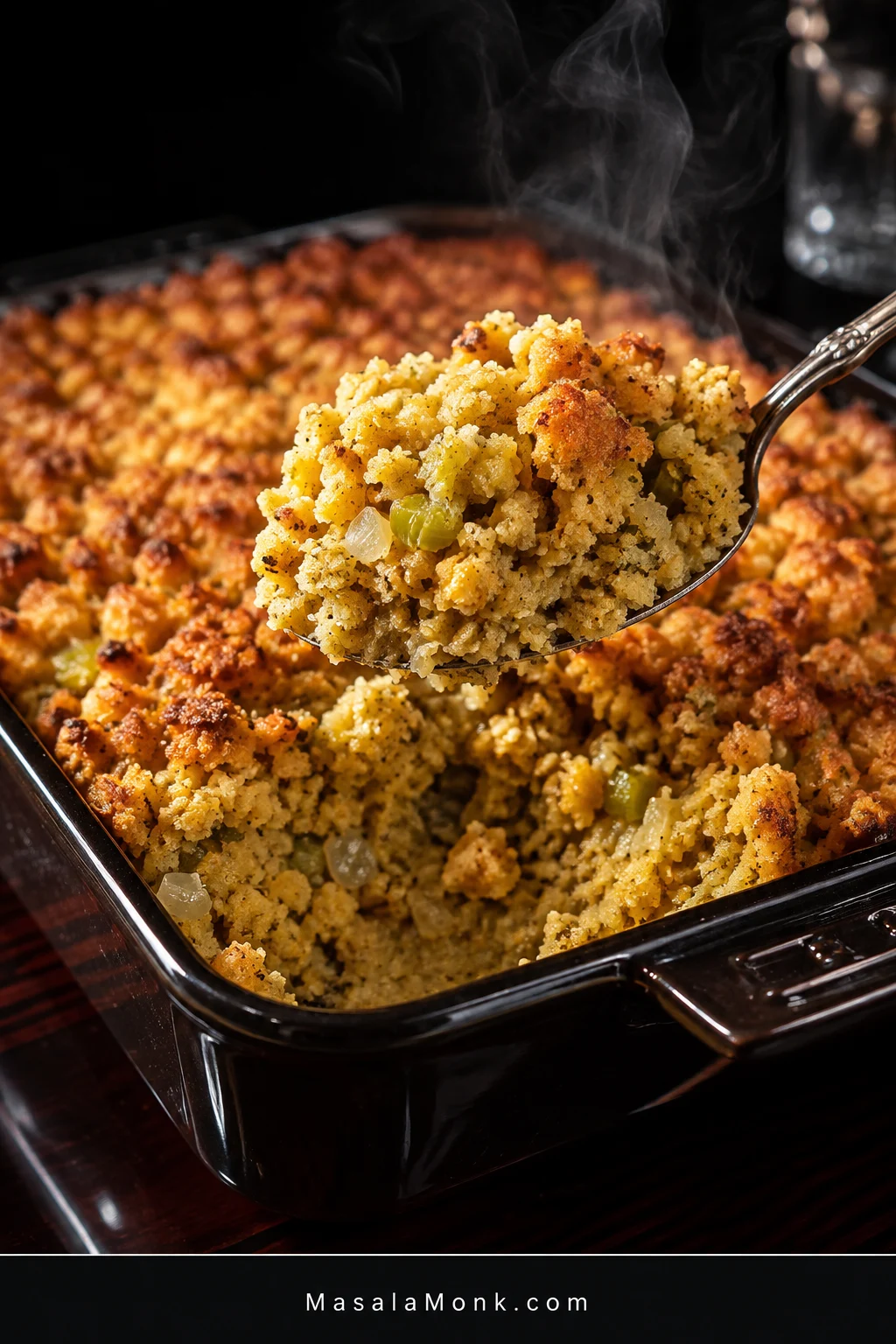
Southern cornbread dressing has a lightly golden top and a soft, moist center that gives easily to a serving spoon and holds together on the way to the plate.
It is also one of those dishes people may cook only once or twice a year, often for a table full of people who already know exactly how they think dressing should taste. That can make the bowl just before baking feel unusually important: Is it wet enough? Too wet? Did I add too much sage?
This one keeps things straightforward—savory homemade cornbread, a little plain bread, tender onion and celery, butter, broth, sage and eggs. Southern families disagree about plenty of the details; here, cornbread leads the flavor and the finished center stays soft, savory and spoonable.
Quick Answer
Cornbread dressing should look very moist before baking, with the broth soaked through the bread instead of pooling separately underneath it.
For the cornbread used in this recipe, start with 4 cups / 950 mL warm broth, fold gently and leave the bowl alone for 5 minutes. Dry crumbs or a stiff mound mean it needs more. When a spoonful slowly settles and the broth is absorbed throughout the bread, stop adding liquid. A persistent puddle beneath saturated crumbs means the bowl has gone too wet.
Taste and season before adding the raw eggs. Bake in a 9×13-inch / 23×33 cm dish at 375°F / 190°C until lightly golden, set through the middle and at least 165°F / 74°C.
Pan: 9×13 in / 23×33 cm • Serves: 10–12 • Texture: soft, moist and spoonable
Southern Cornbread Dressing Recipe
Old-fashioned Southern cornbread dressing with tender onion and celery, sage and a soft, moist center with recognizable pieces of cornbread.
Active prep: about 25 minutes with prepared cornbread • Bake: 45–55 minutes • Rest: 10–15 minutes • Total with prepared cornbread: about 1 hour 20 minutes–1 hour 35 minutes
Starting with freshly baked cornbread? Allow extra time for it to cool and dry before the active prep begins.
Equipment
- 9×13-inch / 23×33 cm baking dish
- Large mixing bowl
- Large skillet
- Baking sheet if drying the breads the same day
- Aluminum foil
- Instant-read thermometer
Ingredients
Bread
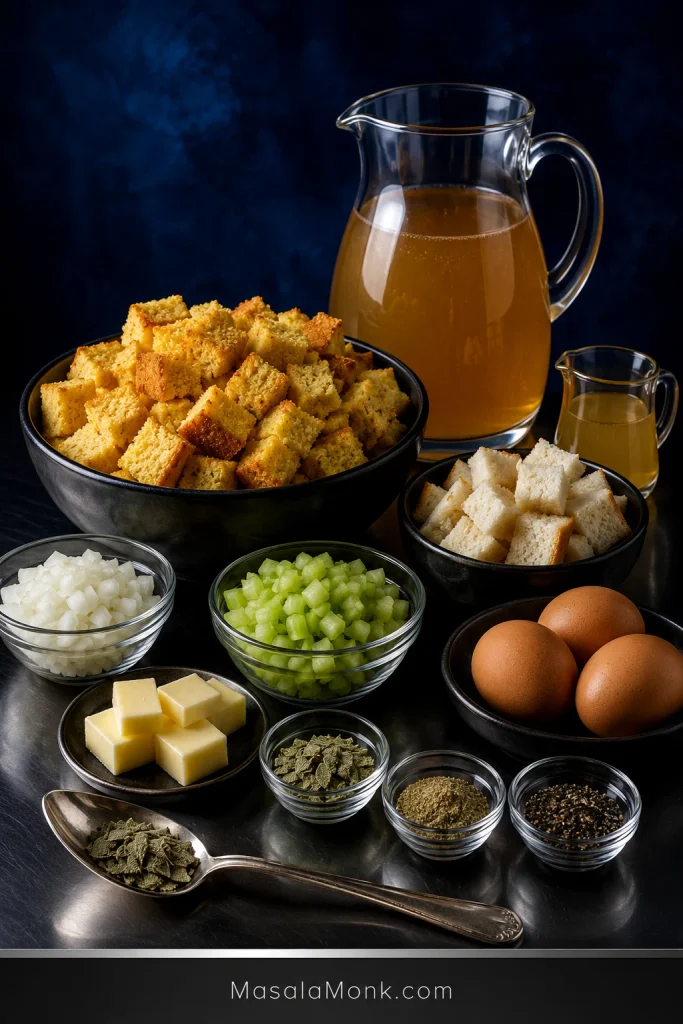
- 1 full 10-inch / 25 cm skillet savory Southern cornbread, completely cooled and slightly dried
- 4 oz / 115 g plain white sandwich bread, about 4–5 standard slices, dried and torn
For the closest match to the method below, use the savory version of MasalaMonk’s Southern Cornbread Recipe. Other homemade and boxed cornbreads can differ in size, sweetness and absorption, so the broth may need to be handled a little differently.
Butter, Onion and Celery
- 8 tablespoons / 4 oz / 113 g unsalted butter, plus more for the baking dish
- About 1½ cups / 7 oz / 200 g yellow onion, finely diced
- About 1½ cups / 6.3 oz / 180 g celery, finely diced
Seasoning
- 2 teaspoons rubbed sage
- 1 teaspoon poultry seasoning
- 1 teaspoon freshly ground black pepper
- Fine salt, to taste after the first broth soak; broth and cornbread can vary considerably in saltiness
Broth and Eggs
- Starting broth: 4 cups / 950 mL low-sodium chicken or turkey broth, warmed
- Reserve broth: up to 1 cup / 240 mL, warmed
- 3 large eggs
Good homemade turkey broth can replace the chicken broth. Strained juices or drippings from a fully cooked turkey can replace part of it too; use concentrated or salty drippings sparingly.
Think of the last cup of broth as insurance, not a target. Very dry bread may want most of it. Fresher bread may need little or none.
Instructions
1. Dry and Crumble the Breads
If possible, bake the cornbread a day ahead and cool it completely. Breaking it into large pieces gives some of the fresh-baked moisture a chance to escape.
For same-day dressing, spread the cooled cornbread pieces on a baking sheet and dry them at 250°F / 120°C, turning occasionally and beginning to check around 20 minutes. Add the torn white bread too, watching the thinner pieces because they may dry sooner.
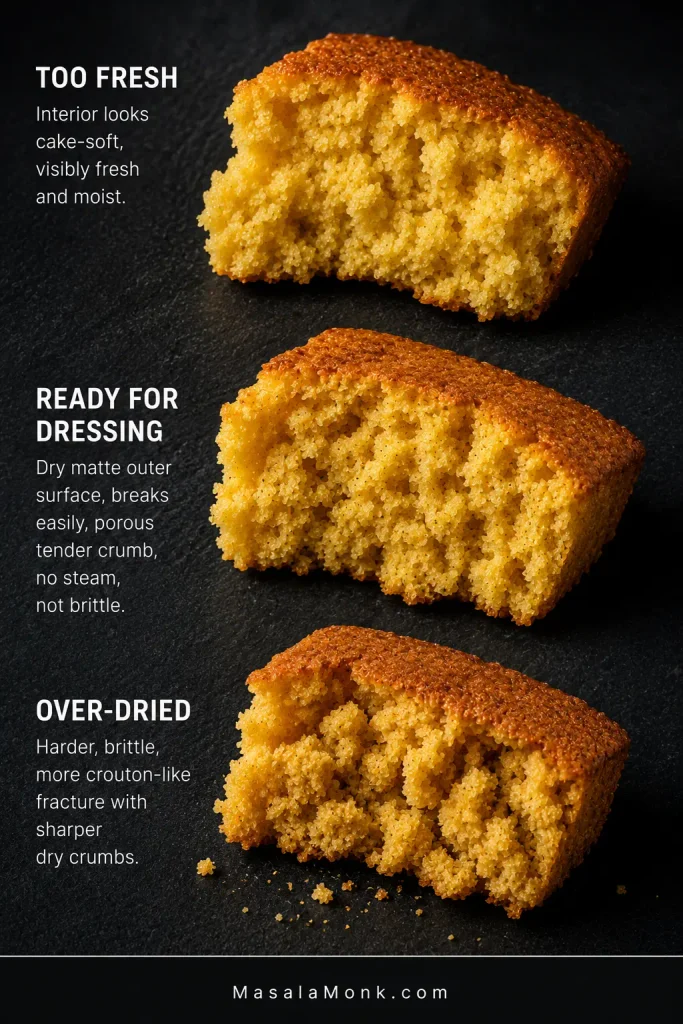
The surface feels dry and the pieces break easily when they are ready. The middle no longer feels steamy or cake-soft. There is no need to turn the bread into hard croutons.
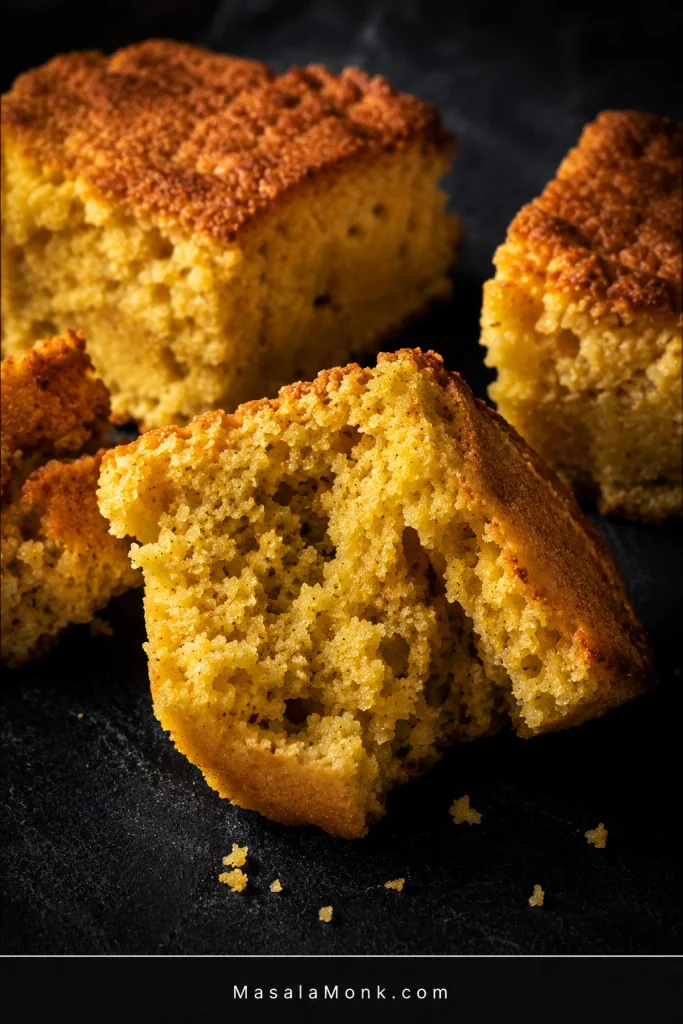
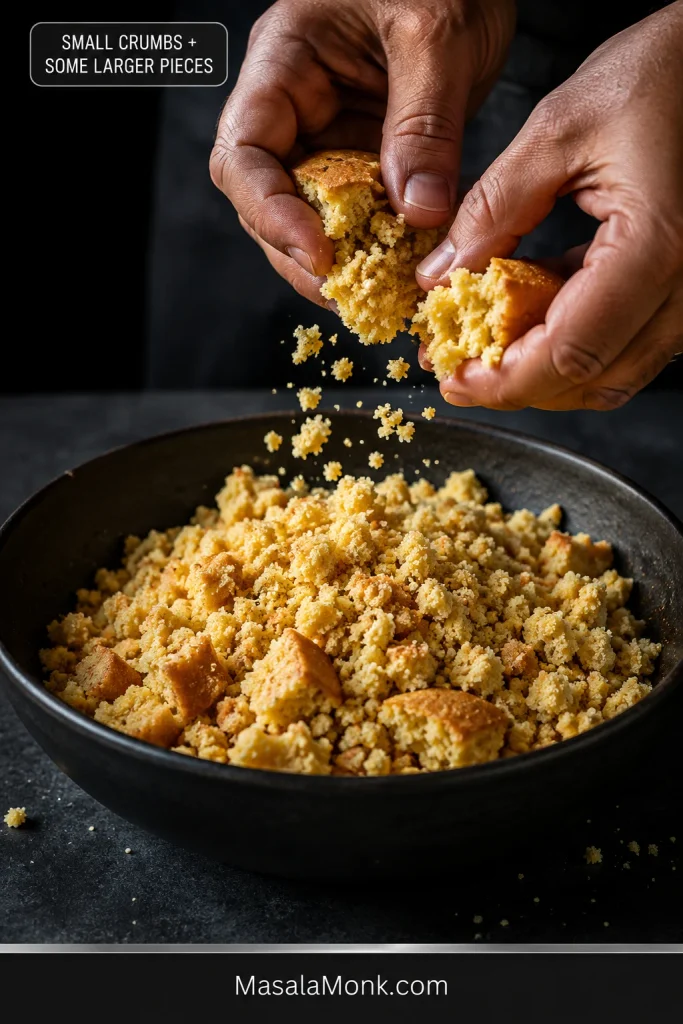
Crumble the cornbread into a large bowl. Most pieces can be small, with a scattering of irregular ½–1 inch / 1–2.5 cm pieces. Uneven crumbs are fine.
Raise the oven to 375°F / 190°C when the bread is ready. If you dried it ahead, simply preheat the oven before assembly.
2. Cook the Onion, Celery and Seasonings
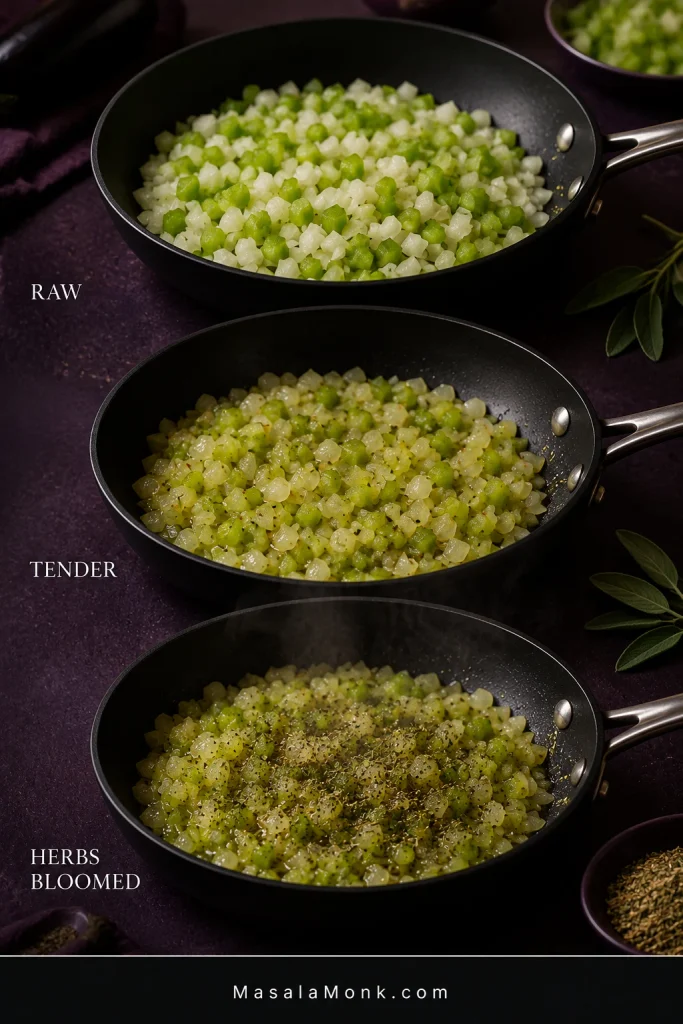
Melt the butter in a large skillet over medium heat. Add the onion and celery and cook for 8–10 minutes, stirring occasionally, until tender and translucent. A little color around the edges is welcome.
Add the rubbed sage, poultry seasoning and black pepper for the final 30–60 seconds. When the herbs hit the warm butter, the skillet should smell unmistakably like dressing. Scrape the vegetables and all of that seasoned butter over the bread.
3. Add the First Broth
Using the linked cornbread or another similarly sized homemade batch, pour 4 cups / 950 mL warm broth around the bowl and fold gently from the bottom.
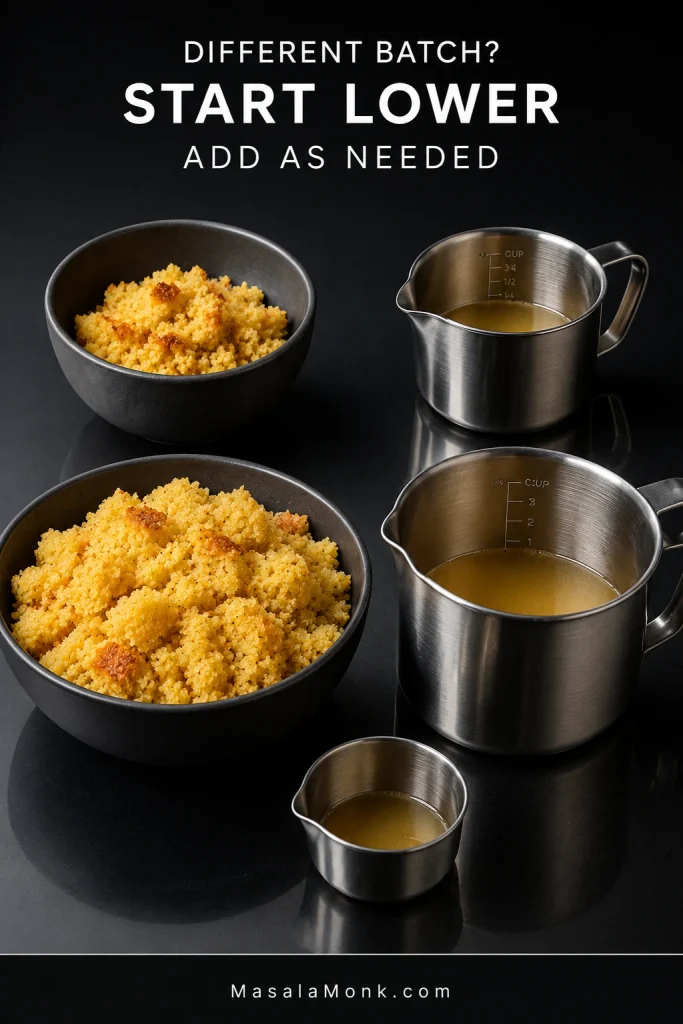
Using a noticeably smaller or very different batch of cornbread? Start with less broth and work upward instead of automatically pouring in all 4 cups.
As the broth spreads through the bowl, the crumbs become glossy and heavy with moisture while their cornbread texture remains visible. Fold only enough to distribute the liquid.
4. Leave It Alone for 5 Minutes
This is the point where dressing often looks wrong even when it isn’t. Give the bread time to drink before changing anything.
After 5 minutes, fold once or twice. Pale dry crumbs or a spoonful that sits in a stiff mound mean the bowl wants more broth. Add the reserve ¼ cup / 60 mL at a time.
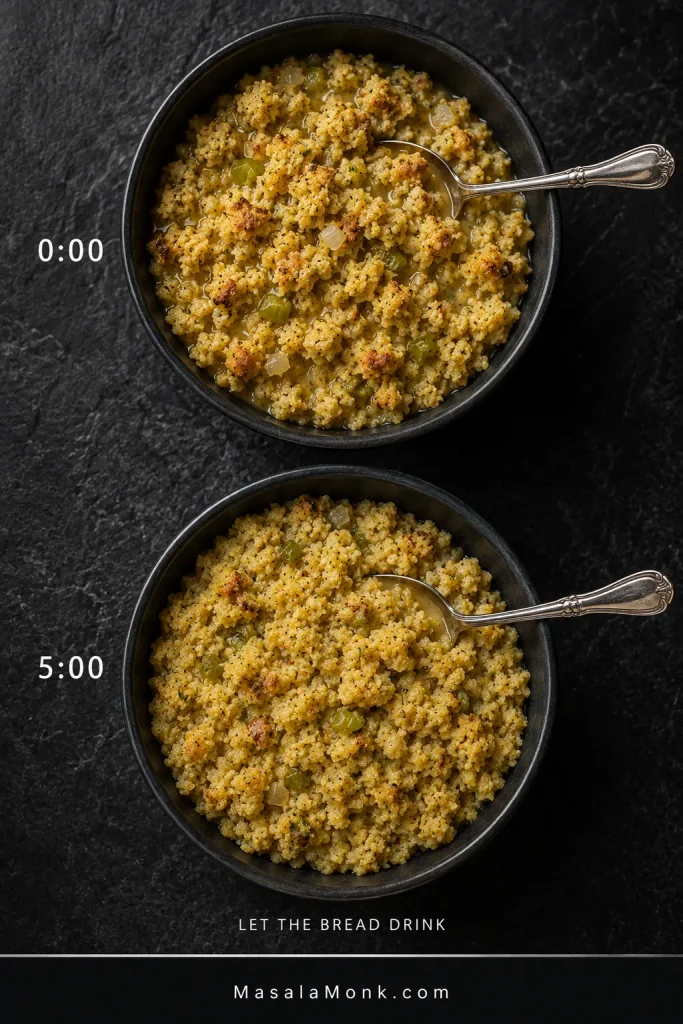
Stop when the bread is moist all the way through and a spoonful slowly settles back into the bowl. Saturated crumbs with a persistent pool of broth underneath have gone too far.
Trust what the bread is doing more than the amount left in the measuring cup.
5. Taste, Season, Then Add the Eggs
Taste the dressing before the raw eggs go in. Add salt as needed, then taste for pepper or another small pinch of rubbed sage.
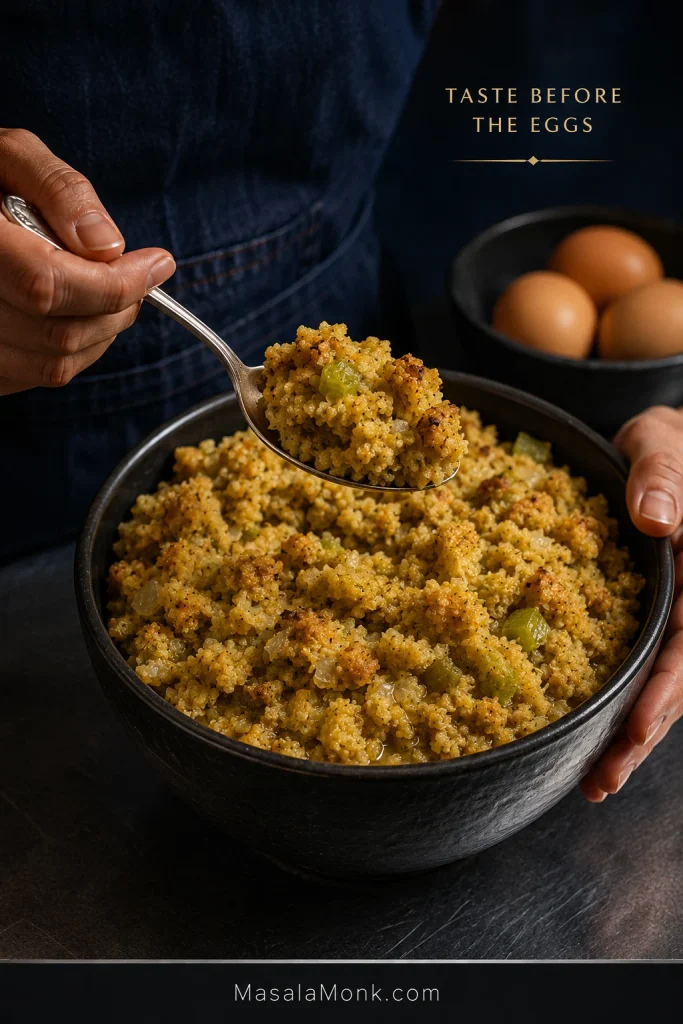
Go carefully with the sage. Adding another pinch is easy; softening an overwhelmingly herbal pan is not.
Whisk the 3 eggs, pour them over the dressing and fold gently until evenly distributed. Stop tasting once the raw eggs are in.
6. Fill the Baking Dish
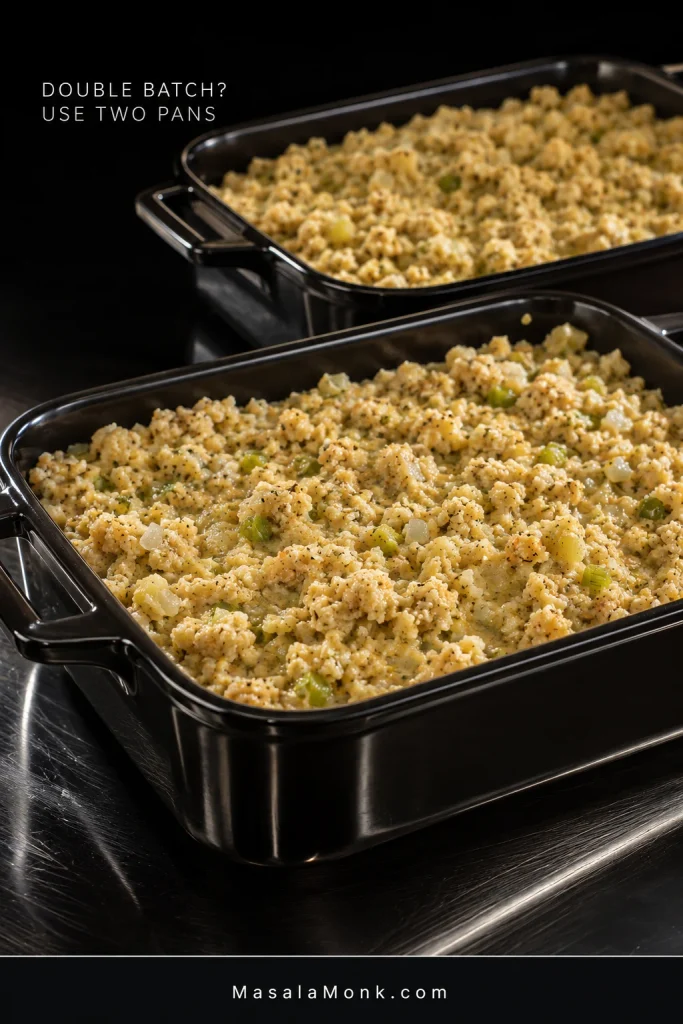
Butter a 9×13-inch / 23×33 cm baking dish. Spoon in the dressing and spread it evenly without packing it down.
Making a double batch? Use two 9×13 pans. Keeping the layer close to the original depth helps both pans cook evenly.
7. Bake Covered, Then Uncovered
Cover loosely with foil and bake at 375°F / 190°C for 25 minutes. Remove the foil and bake another 20–30 minutes, beginning to look in on it around 20 minutes.
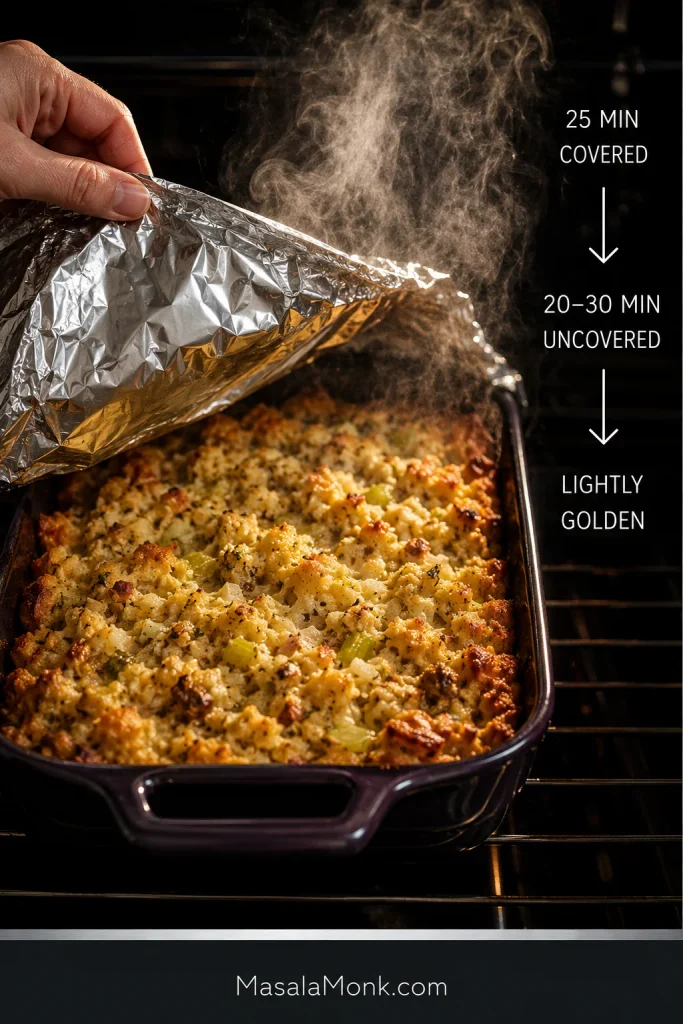
The top turns lightly golden, with deeper toasted patches near some of the edges. Nudge the dish and the middle moves together gently instead of rippling or sloshing like loose batter. The center needs to reach at least 165°F / 74°C.
Take it out while the center still looks moist. The 10–15 minute rest will give it a little more structure.
8. Rest Before Serving
Leave the pan alone for 10–15 minutes. A serving spoon uncovers a moist interior beneath the lightly toasted surface, tender enough to yield and firm enough to reach the plate.
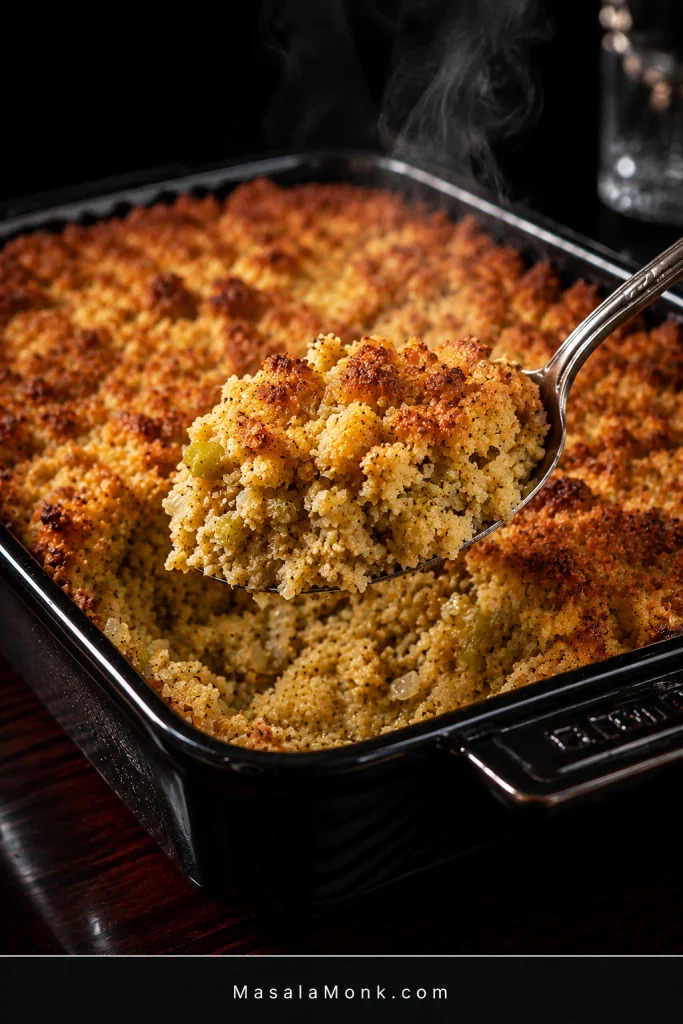
Serve warm, while the top still has a little toastiness and the center is soft, savory and fragrant with sage and butter.
In This Guide
What Kind of Southern Cornbread Dressing Is This?
There isn’t one Southern dressing rulebook. One family may love a pan so soft it is almost spoon-pudding tender. Another may expect neat squares. Biscuits, white bread, chicken and condensed soup all appear in different family versions.
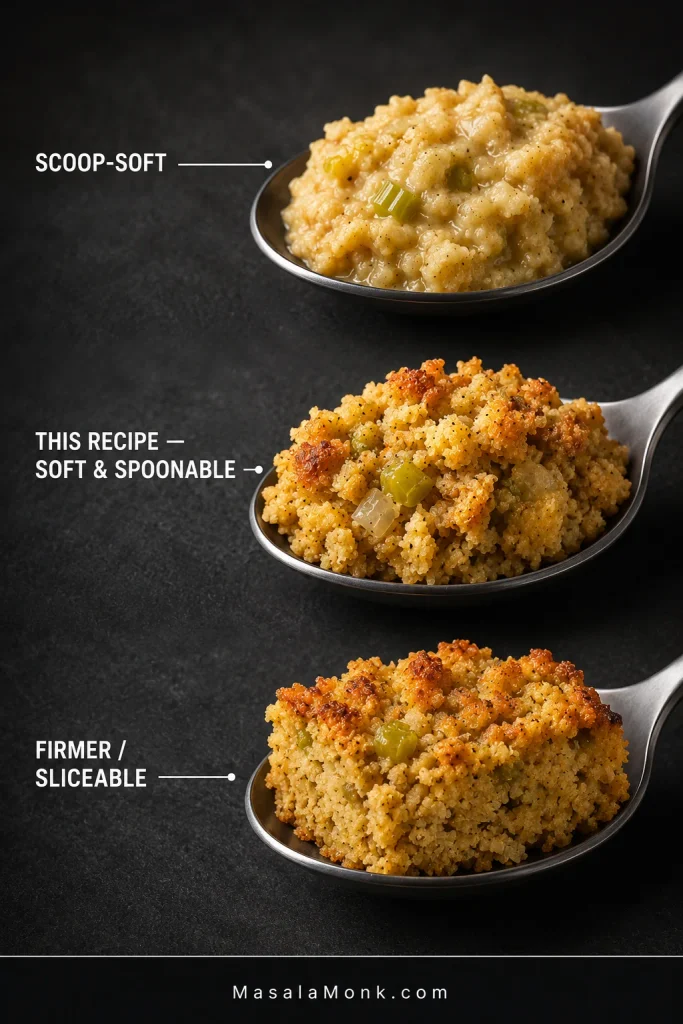
For a lot of cooks, the real reference point isn’t another written recipe at all. It is the pan they remember from Thanksgiving—the one somebody made largely by feel, adding broth until “it looked right.” The cues here are meant to make that judgment easier to recognize and repeat.
Here, cornbread leads the flavor. Onion and celery soften in butter first, sage stays clearly present, and raw eggs help the moist center set. Chicken, sausage and condensed soup can make excellent dressings too; they change the salt, fat and moisture enough to deserve their own balance.
Dressing vs Stuffing
The words overlap heavily in everyday use. A practical distinction is that dressing is commonly baked in its own casserole dish, while stuffing traditionally cooks inside poultry. This recipe is baked separately.
Which Cornbread Is Best for Dressing?
Slightly dried or day-old savory cornbread is easiest to work with because it has room to take on broth. Fresh cornbread works too; give it some time in the low oven first.
Good dressing bread feels dry at the surface and crumbles easily. It does not need to be brittle. Starting with a very moist, cake-soft pan simply makes the broth harder to control.
Why Add a Little White Bread?
The 4 oz / 115 g white bread is a small supporting part of the bowl. Cornbread supplies the flavor; the plain bread gives the tender center a little extra help holding together.
Some Southern dressings use biscuits for a similar reason. Plain sandwich bread stays deliberately quiet here.
Prefer all cornbread? Replace the white bread with 4 oz / 115 g additional dried cornbread. Let the first broth soak in before reaching for more, since an all-cornbread bowl may absorb differently.
Can I Use Jiffy or Another Corn Muffin Mix?
Yes, but expect a sweeter flavor and different absorption. Boxed mixes and other homemade recipes can also produce a smaller or larger amount of cornbread.
When the amount differs noticeably from the linked recipe, add the broth gradually. A smaller batch may need considerably less than 4 cups, while a larger or drier batch may take more.
How Much Sage—and What Do the Eggs Do?
Start with 2 teaspoons rubbed sage plus 1 teaspoon poultry seasoning. After the broth has soaked into the bread, taste and make any final adjustment before the eggs go in.
Rubbed Sage vs Ground Sage
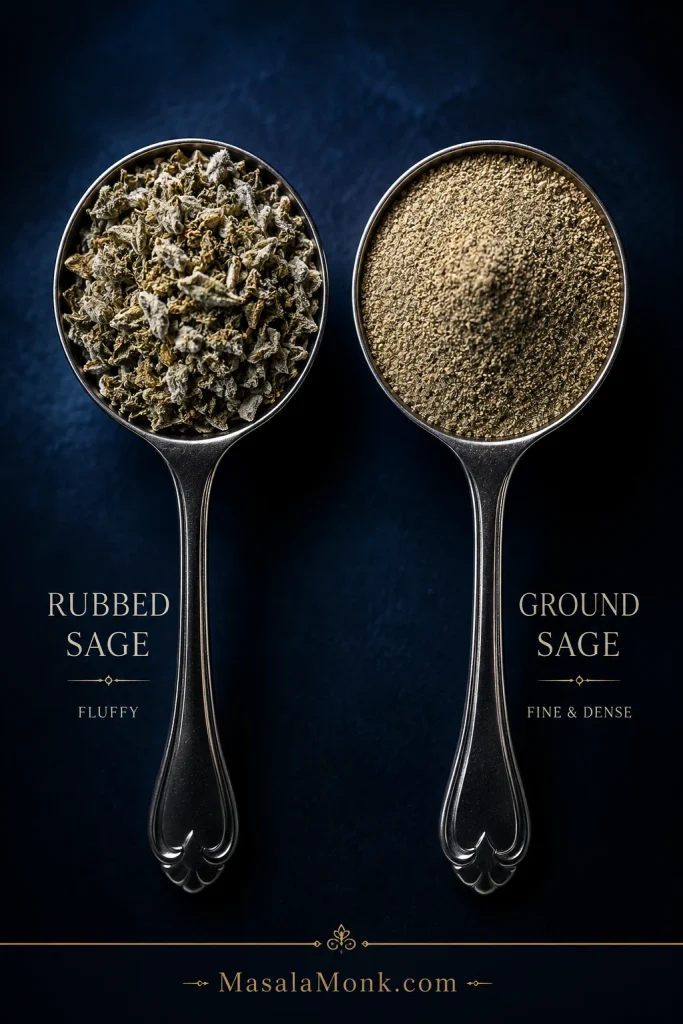
Ground sage is much finer and packs more tightly into a measuring spoon than fluffy rubbed sage. A teaspoon-for-teaspoon swap can therefore taste considerably stronger.
Using ground sage? Begin cautiously. Poultry seasoning often contains sage as well, so check the label if you want a milder sage flavor or need to avoid it altogether.
Do You Put Eggs in Cornbread Dressing?
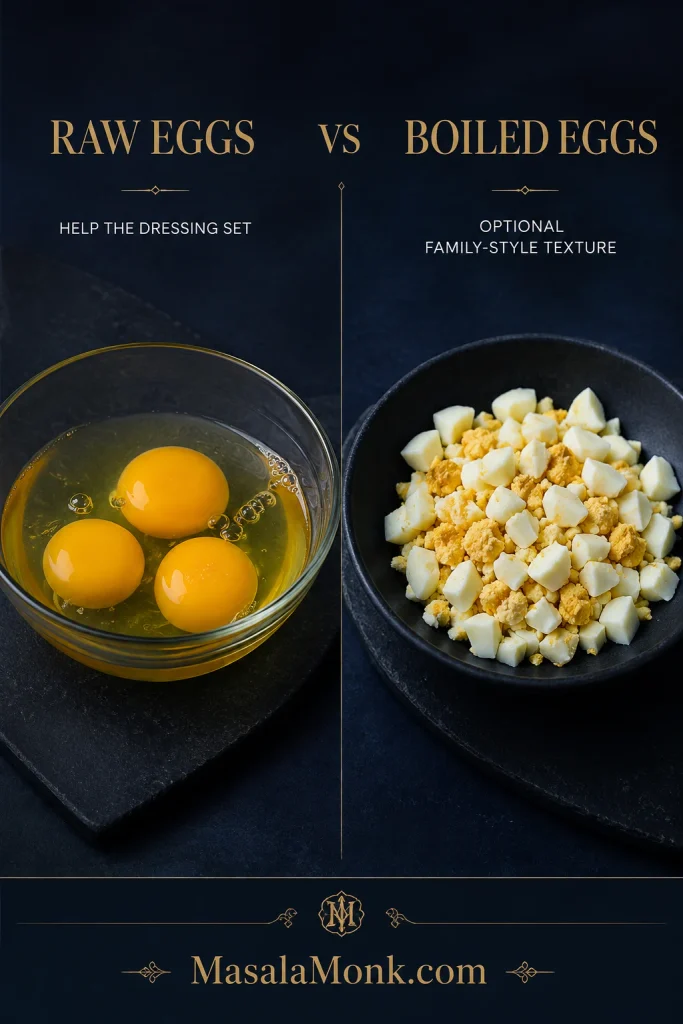
Raw eggs help the very moist dressing set as it bakes. Chopped hard-boiled eggs are a separate family-style addition.
Using eggs—or not using them—is a family and regional choice, not a test of whether dressing is “really Southern.” Plenty of long-standing versions exist on both sides.
If the dressing you grew up with had chopped boiled eggs, keep them if that’s the version you love. They bring their own flavor and texture; they do not replace the raw eggs used here for structure.
Leaving the raw eggs out entirely changes how this formula sets, so an intentionally eggless dressing is better balanced from the start as its own version.
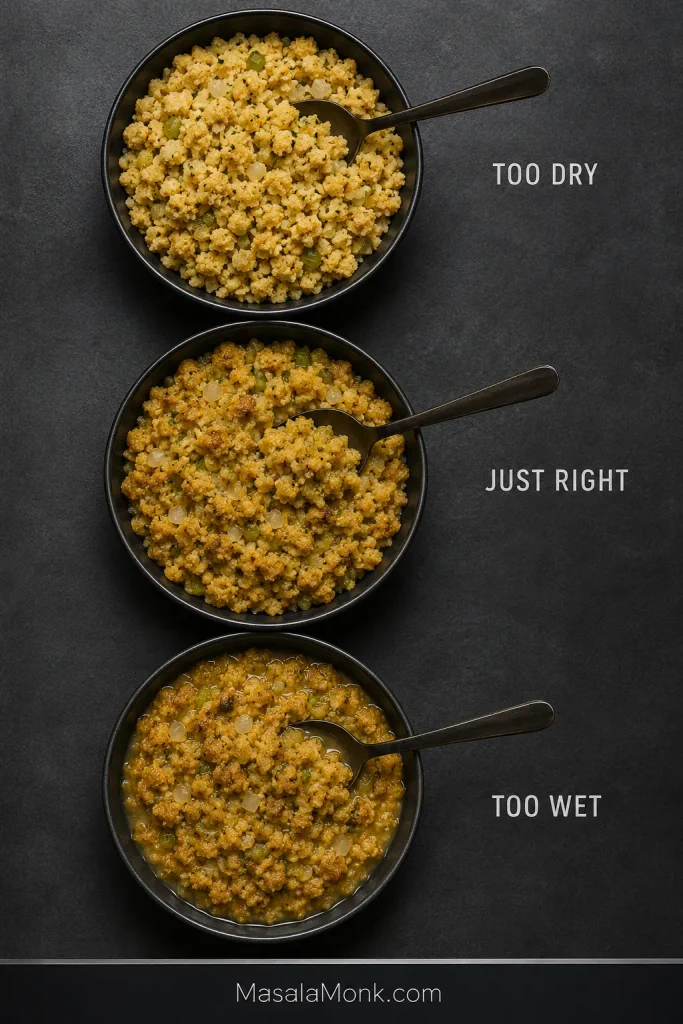
How Wet Should Cornbread Dressing Be Before Baking?
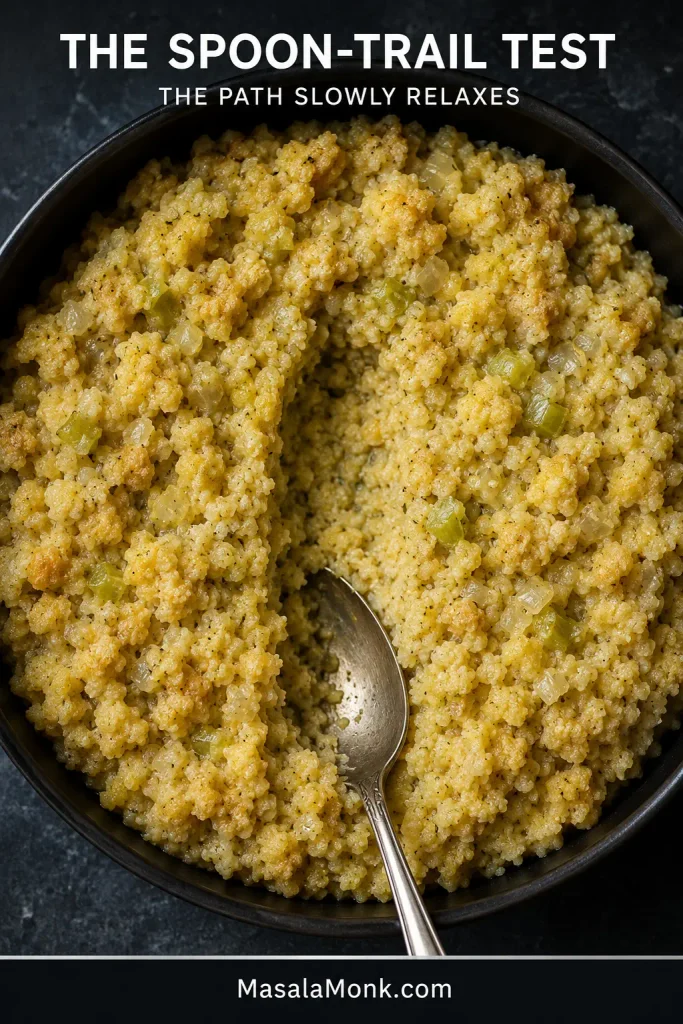
Very moist and slowly settling is the goal. The bread is moist all the way through, from top to bottom. There are no dry pockets and no free liquid underneath.
This soft Southern dressing looks considerably wetter than cubed bread stuffing. Draw a serving spoon through the bowl and the path gradually relaxes instead of staying sharply open.
| State | What It Looks Like | What to Do |
|---|---|---|
| Too dry | Dry crumbs remain and the mixture sits stiffly | Add warm broth ¼ cup / 60 mL at a time |
| Just right | The bread is moist through, crumb texture remains, and a spoonful slowly settles | Stop adding broth |
| Too wet | The crumbs are saturated but broth still gathers separately after resting | Fold in additional dried bread before adding the eggs |
Freshly added broth can look alarmingly loose for a few minutes. Let it soak in. What matters is whether free liquid remains after the bread has had a chance to absorb it.
Soft Is the Goal; Paste Is Not
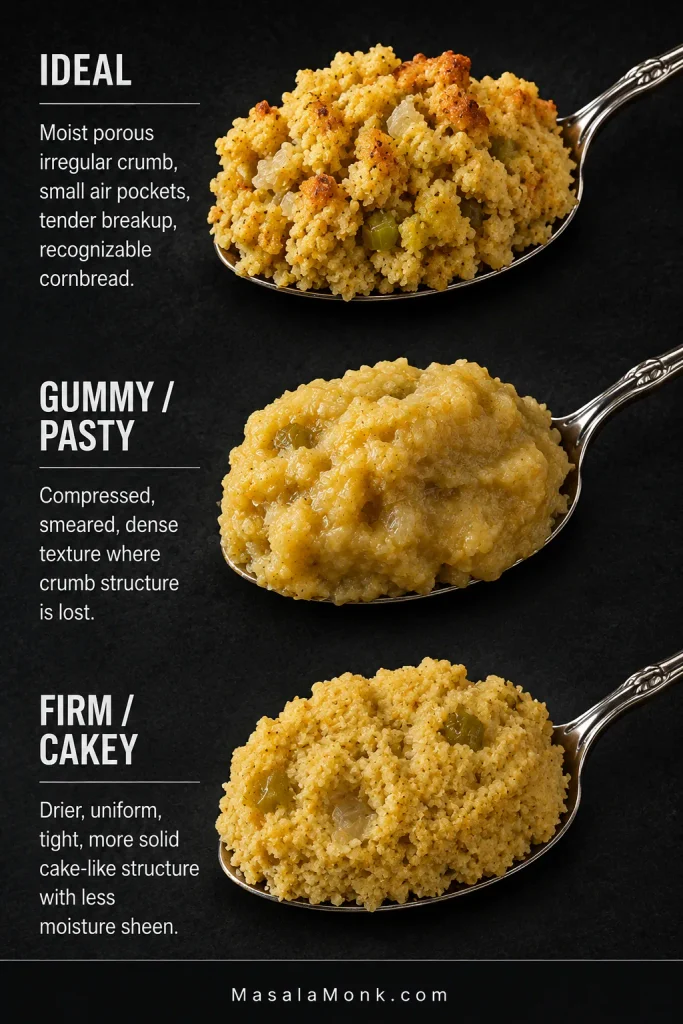
Soft dressing can be extremely tender and still show recognizable pieces of cornbread. Gummy dressing has lost that crumb and feels more like paste.
Very fresh bread, crumbs worked too fine, excess broth and aggressive mixing can all push the bowl in that direction. Extra oven time can remove moisture; it cannot rebuild crumb texture that has already broken down.
Bowl looks right? Back to the recipe. Still unsure? Go to troubleshooting.
Pan Size and Doneness for Cornbread Dressing
A standard 9×13-inch / 23×33 cm dish gives the dressing a comfortable depth for an even bake. Go deeper and the center needs more time; use a shallower dish and the surface browns and dries faster.
Look, Move, Measure
- Look: the surface is lightly golden, with deeper toasted patches near some of the edges.
- Move: the center shifts together gently when the dish is nudged; loose batter would ripple or slosh.
- Measure: the middle reaches at least 165°F / 74°C.
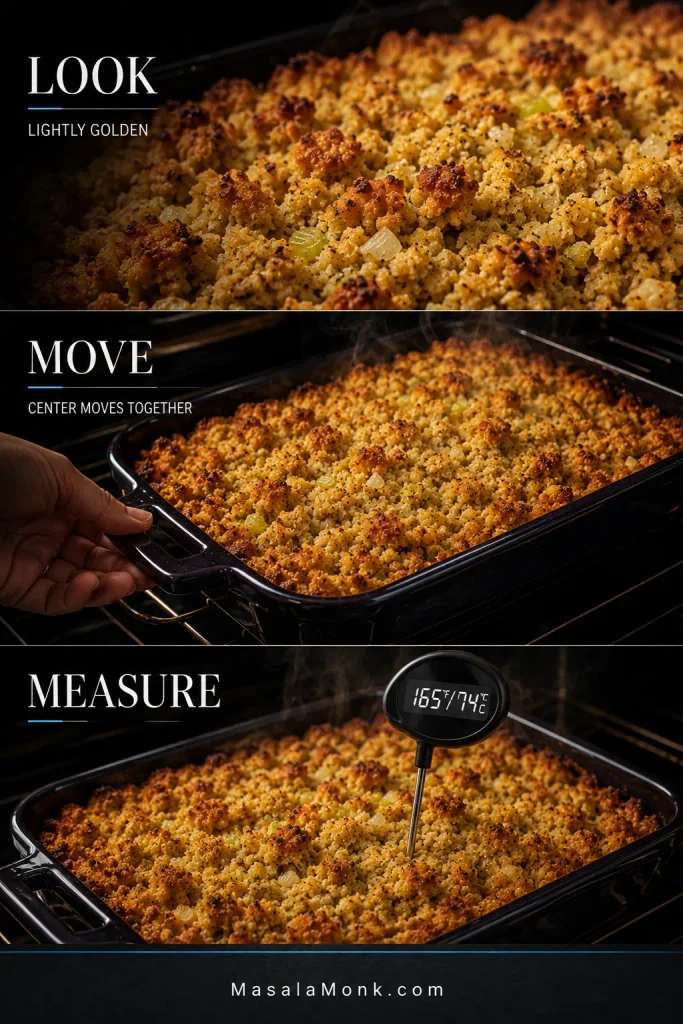
Once the top looks right, the middle moves together and the thermometer says 165°F / 74°C, it is done. Don’t leave it in waiting for a firm center; the rest will take care of the final bit of setting.
For a moist dressing like this, gravy is an extra pleasure rather than the only thing keeping the serving from tasting dry.
Cornbread Dressing Troubleshooting
Your best rescue window is before the eggs. Broth, dry bread, salt and herbs are much easier to adjust then. Once the pan is baking, time and foil are your main tools.
Before Baking
Dry and stiff: Let the existing broth soak in first. If dry crumbs remain, add warm broth ¼ cup / 60 mL at a time.
Broth pooling underneath: Saturated bread plus persistent free liquid means the bowl is too wet. Fold in additional dried bread before adding the eggs.
Bland: Add salt, then reassess the pepper and herbs.
Too much sage: Dilute with unseasoned dried bread and enough broth to restore the soft, moist texture.
Crunchy onion or celery: Return the vegetables to the skillet and cook until tender before continuing.
During or After Baking
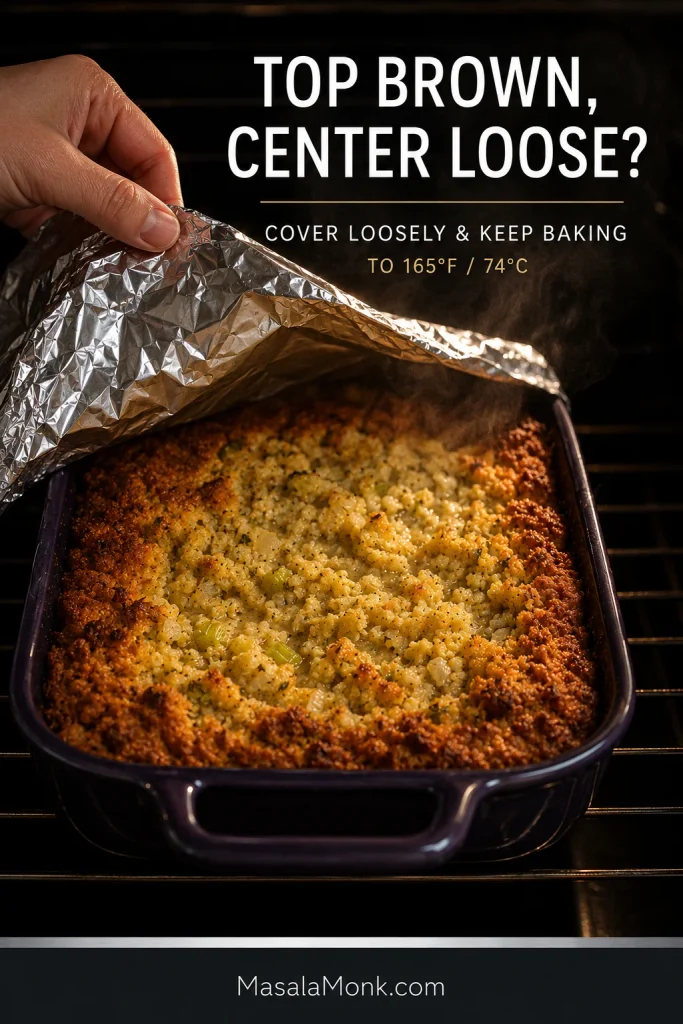
Center still wet or loose: Keep baking. If the top is already well browned, cover the dish loosely with foil. A deeper casserole may simply need longer through the middle.
Gummy or pasty: More baking may remove moisture, but it cannot fully restore crumb texture after the bread has been overworked or oversaturated.
Too firm or cakey: The bowl was probably too dry, or the pan stayed in the oven too long. Gravy helps at the table; next time leave the mixture wetter or pull it sooner.
Falls apart: Give it the full 10–15 minute rest first. If it remains very crumbly, the mixture was likely too dry or the center needed more time.
Problem solved? Back to the recipe.
Simple Substitutions
A missing vegetable does not mean Thanksgiving is cancelled.
No celery or onion: Either can simply be left out. Omitting both gives you a plainer dressing, but the recipe still works.
No chicken broth: Turkey broth is the closest substitute. Vegetable broth works too, though it gives the dressing a different savory background.
All-cornbread dressing: Replace the 4 oz / 115 g white bread with the same amount of dried cornbread. Let the bread absorb the broth before adding more; an all-cornbread mixture may not need exactly the same amount.
How Much Cornbread Dressing Do You Need?
One 9×13 pan gives about 10–12 side servings. For a crowd, use more pans rather than building one unusually deep casserole.
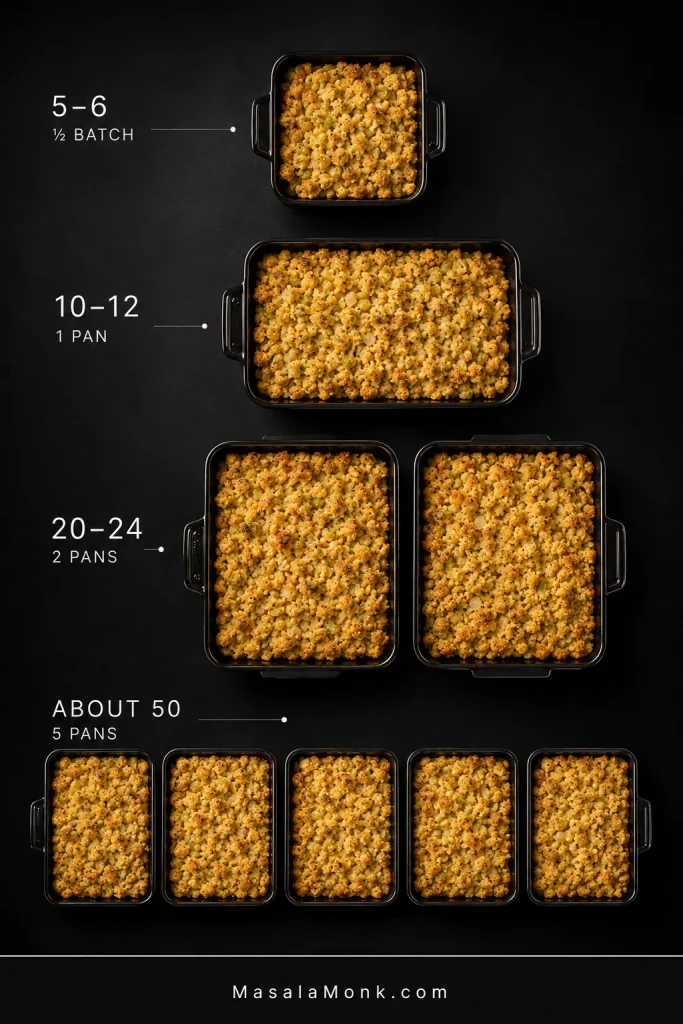
| People | Amount | Pan Setup |
|---|---|---|
| 5–6 | ½ batch | 8×8 in / 20×20 cm or similar; begin checking earlier |
| 10–12 | 1 batch | One 9×13 pan |
| 20–24 | 2 batches | Two 9×13 pans |
| About 50 | About 5 batches | Five 9×13 pans when several other substantial sides are being served |
For very generous servings or planned leftovers at a 50-person meal, make six pans.
Mix one or two batches at a time instead of wrestling with one giant bowl. It is easier to see how the bread is taking up the broth and easier to season evenly.
If you’re trying to match a particular family style before a big holiday, a half batch also gives you an easy way to dial in the moisture and seasoning for the version you remember.
Make-Ahead Southern Cornbread Dressing for Thanksgiving
Yes. Bake and dry the breads and cook the onion and celery ahead, then bring everything together close to baking.
Don’t fully assemble the dressing with broth and raw eggs the night before. Keep the dried breads separate from the refrigerated ingredients, then combine them on bake day.
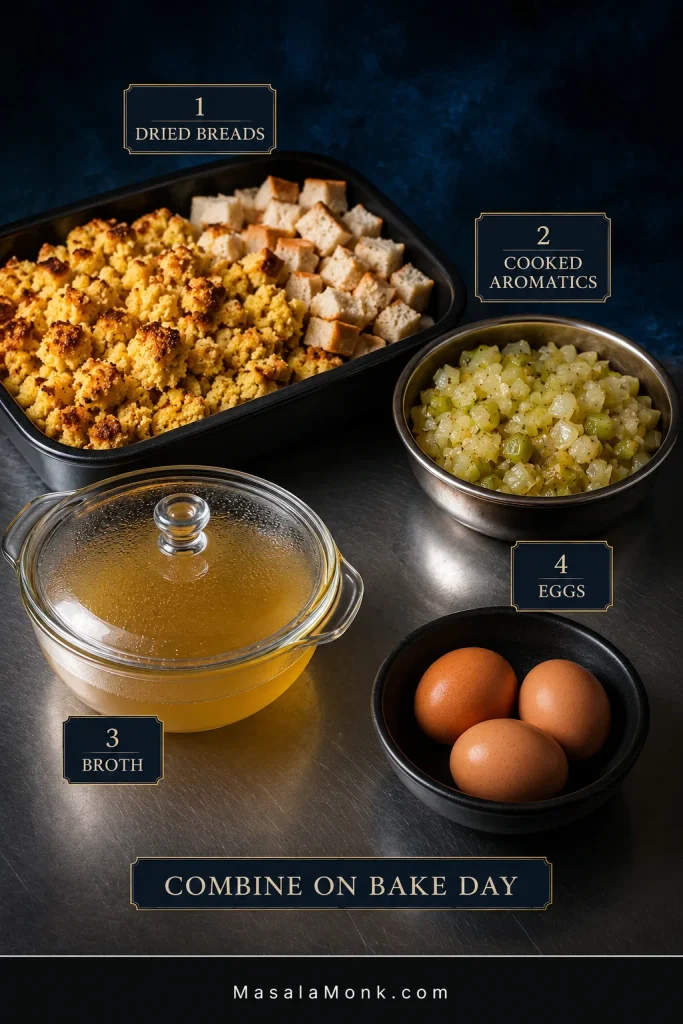
If you’re responsible for the dressing this year, getting the bread and vegetables out of the way ahead of time takes a lot of pressure off Thanksgiving morning.
| When | What to Do |
|---|---|
| 1–2 days ahead | Bake the cornbread, cool it completely and begin drying it |
| Day before | Finish drying both breads. Once completely cool, keep them covered and dry. Cook the onion and celery and refrigerate them. Keep broth and eggs refrigerated separately. |
| Bake day | Combine bread, vegetables and broth; adjust the moisture and seasoning; add the eggs; bake |
| Serving time | Let the finished dressing rest 10–15 minutes before serving |
This also follows USDA stuffing food-safety guidance, which recommends preparing wet and dry ingredients ahead separately and combining them close to cooking.
If oven space is the bigger Thanksgiving problem, MasalaMonk’s Sweet Potato Casserole is another side that can be largely prepared ahead.
Keeping Dressing Warm Without Drying It Out
Holding it hot for a delayed meal? Keep the dressing at 140°F / 60°C or warmer. Otherwise, refrigerate it within 2 hours.
For a short delay, leave the pan covered so the surface holds onto more of its moisture. That also gives you a little breathing room to finish something best served fresh, such as soft dinner rolls.
Storage, Freezing and Reheating
Refrigerate: Transfer leftovers to reasonably shallow containers and refrigerate within 2 hours. Use refrigerated dressing within 3–4 days.
Freeze: Freeze cooked dressing in practical meal-size or family-size portions. For best quality, use it within about 2–3 months.
Reheat: Cover the dressing so it holds onto steam. A dry-looking portion can take a small splash of broth before reheating. Heat the center to 165°F / 74°C, uncovering near the end if you want a little texture back on top.
For the storage guidance behind those refrigerator and freezer times, see the FoodSafety.gov Cold Food Storage Chart.
The Dressing We Are After
The most important moment arrives before the oven door closes.
The bread is thoroughly moist. You can still see pieces of cornbread. The onion and celery are tender, and the sage smells warm and savory in the butter.
Then the oven takes over. The edges toast, the middle sets softly, and the bowl that looked almost suspiciously wet becomes dressing that gives easily under the spoon.
That is what the measurements and checkpoints are really for: turning “add broth until it looks right” into something you can recognize for yourself.
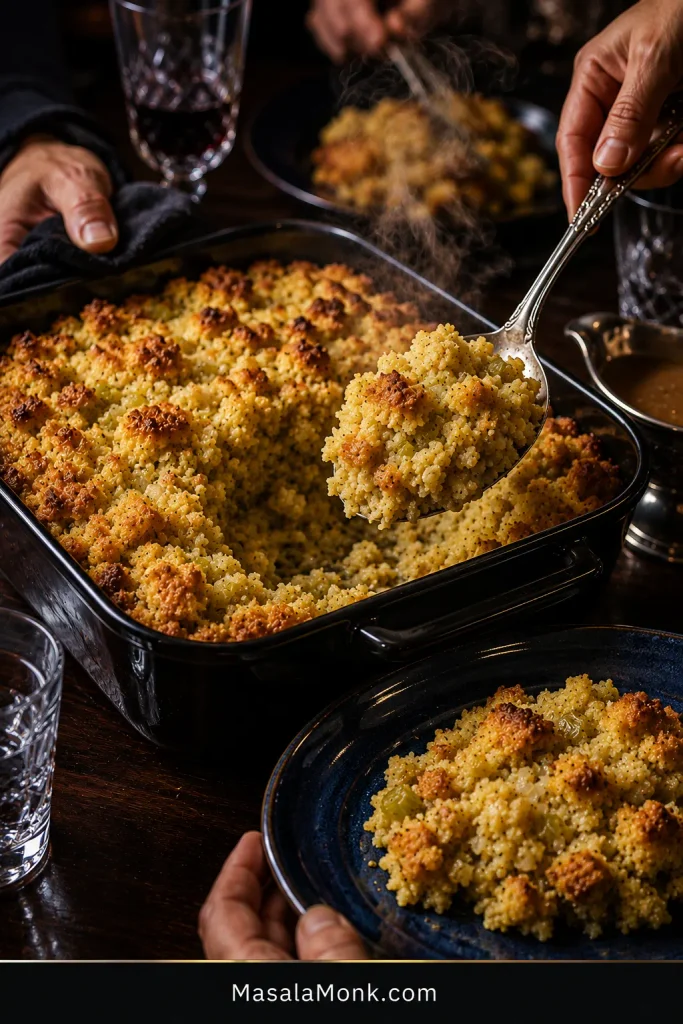
Once you can look at the bowl and know it is ready, Southern cornbread dressing stops feeling like a once-a-year gamble.








