Posted on Leave a comment

Pinot Grigio vs. Pinot Noir: Understanding Pinot Wines

PINOT GRIGIO VS. PINOT NOIR:

Wine lovers know the word “Pinot” signals something special—but what does it really mean when you see Pinot Grigio on a summer table or Pinot Noir poured at a dinner party? Though these grapes share a family name and a French heritage, they offer radically different drinking experiences. Let’s explore what makes Pinot Grigio and Pinot Noir so distinct, why they’re both having a moment in 2025, and how you can get the most out of each, no matter your taste or budget.


The “Pinot” Connection: Family, Mutation, and Diversity

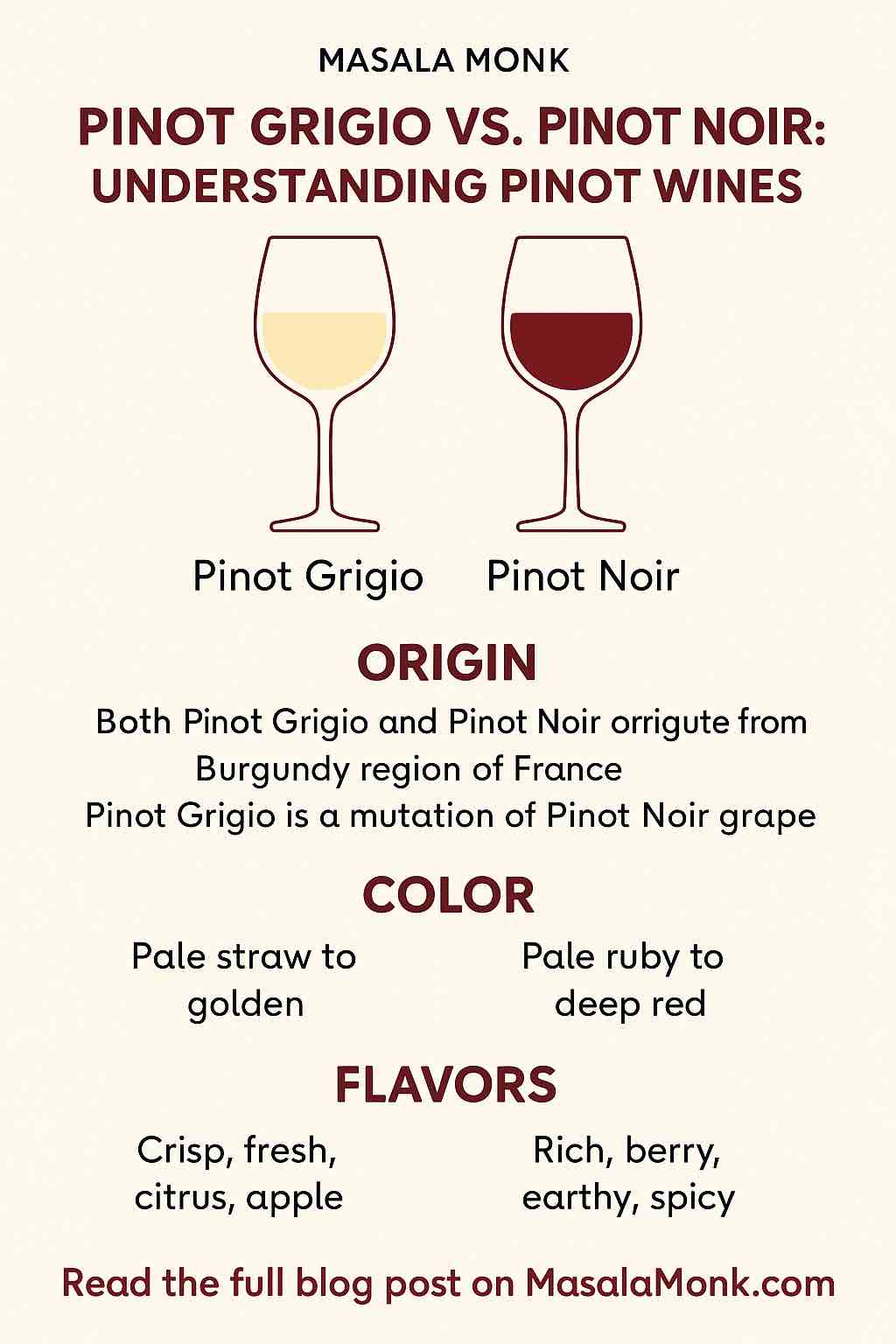
Pinot refers to a family of grapes that originated in Burgundy, France, thousands of years ago. The most famous are Pinot Noir (red) and Pinot Gris (aka Pinot Grigio, white/rosé). Despite their differences in color and style, these grapes are genetically linked—Pinot Gris/Grigio is a natural mutation of Pinot Noir.

Key takeaway:
They’re siblings, not cousins—so if you like one, don’t be afraid to try the other!


Pinot Grigio: The Ultimate Refreshment (and Why It’s Trending Now)

What is Pinot Grigio?

Pinot Grigio is the Italian name for Pinot Gris, a grape known for its grayish-pink skins (gris means “gray” in French). The wine it produces is almost always white, though “ramato” (copper-hued) versions exist.

Typical Flavors:

  • Italian: Zesty lemon, lime, green apple, pear, sometimes a hint of almond.
  • Alsace/New World: Riper peach, apricot, honey, even subtle smokiness.

Body & Acidity:
Usually light, crisp, and high in acidity—think “thirst-quenching.”

Why It’s Popular in 2025:

  • Major comeback: Pinot Grigio sales in the US grew by 11% in 2023 despite a general wine market decline.
  • Younger drinkers are seeking low-alcohol, fresh, easy styles—Pinot Grigio delivers.
  • California and Oregon winemakers are experimenting with more expressive, fruit-driven versions. Don’t sleep on these!

How to Serve:
Ice cold (45–50°F / 6–10°C) in a white wine glass. Great for patios, picnics, and light meals.

Best Food Pairings:
Shellfish, sushi, Caprese salad, chicken piccata, light pastas, or even Thai takeout.

Pro Tip:
Try “ramato” style Pinot Grigio from Friuli, Italy. Its copper tint and extra texture make it stand out at a dinner party.


Pinot Noir: Elegance in a Glass

What is Pinot Noir?

Pinot Noir is a thin-skinned, finicky red grape famous for its role in Burgundy’s legendary reds. Its wines are light to medium in color and body, but can be surprisingly complex.

Typical Flavors:
Cherry, raspberry, strawberry, sometimes floral, mushroom, earthy “forest floor,” or even truffle in aged bottles.

Body & Acidity:
Light to medium body, low tannins, and refreshing acidity—Pinot Noir rarely weighs you down.

2025 Trend Alert:

  • Cool-climate Pinot Noir is hot: Think Oregon, New Zealand, coastal Chile, and even England.
  • Chillable reds are “in”—young Pinot Noir can be slightly chilled for summer.
  • Premium still Pinot Noir from England is winning awards and turning heads. Keep an eye on Sussex and Kent.

How to Serve:
Slightly cool (55–62°F / 13–17°C) in a large “Burgundy” glass for maximum aroma.

Best Food Pairings:
Roast chicken, duck, salmon, mushrooms, pork, even grilled tuna or pizza with earthy toppings.

Pro Tip:
Buy from newer regions like Chile’s Maule Valley or South Africa’s Hemel-en-Aarde for top quality at mid-range prices.


Side-by-Side: Pinot Grigio vs. Pinot Noir

FeaturePinot Grigio / GrisPinot Noir
Grape ColorPinkish-gray (white wine)Red (red wine)
FlavorsCitrus, pear, green apple (Italy); peach, honeyRed fruits, floral, earthy, subtle spice
Body/AcidityLight, zesty, crispLight to medium, silky, vibrant acidity
Alcohol11–13%12–14.5%
Main RegionsNorthern Italy, Alsace, Oregon, GermanyBurgundy, Oregon, California, NZ, Chile
Food PairingSeafood, salads, light dishesChicken, duck, salmon, mushrooms, pork
StyleDry, refreshing, sometimes richer (Alsace)Elegant, complex, delicate, sometimes bold

2025 Buying Guide: What’s Hot Right Now?

Pinot Grigio

  • Delle Venezie DOC (Italy): Classic, crisp, mineral-driven.
  • Friuli-Venezia Giulia (Italy): Ramato, textured, skin-contact styles.
  • California/Oregon: Fruitier, with notes of melon and citrus zest.
  • Top Producers: Santa Margherita, Jermann, Scarpetta, Alois Lageder.

Pinot Noir

  • Burgundy (France): The gold standard, but pricey.
  • Oregon (Willamette Valley): Elegant, great value.
  • New Zealand (Central Otago, Marlborough): Vivid fruit, structure.
  • Chile (Maule, Casablanca): Cool-climate bargains.
  • England: Emerging, with “still” Pinot Noirs showing finesse.
  • Top Producers: Domaine Drouhin, La Crema, Cloudy Bay, Storm (SA), Laberinto (Chile).

The Science: Why Are They So Different?

  • Climate Sensitivity: Both grapes do best in cooler climates. Heat can strip Pinot Grigio of freshness and make Pinot Noir flabby or jammy.
  • Skin Thickness: Pinot Grigio’s thin, pink skin gives little color; Pinot Noir’s red, thin skin provides light color and gentle tannin.
  • Winemaking Style: Pinot Grigio often sees little or no oak; Pinot Noir sometimes ages in oak barrels for depth and complexity.
  • Terroir Translation: Both are “transparent” to their terroir—soils and climate come through clearly.

Practical Tips for Wine Lovers

  • Want a crowd-pleaser? Pinot Grigio’s crispness and neutrality make it perfect for parties and hot weather.
  • Hosting a dinner? Pinot Noir’s complexity and versatility make it the ultimate “food wine.”
  • On a budget? Look to lesser-known regions (Chile, South Africa, Eastern Europe) for Pinot bargains.
  • Into natural wine? Both Pinots are used by minimal-intervention winemakers for skin-contact (“orange”) and low-sulfite bottlings.

What’s Next? Trends to Watch

  • Skin-contact Pinot Grigio (“orange wine”): For fans of texture and something a little funky.
  • Sustainability: More organic, biodynamic Pinot vineyards in 2025 than ever before.
  • Low-alcohol options: Winemakers are dialing down ripeness and alcohol, especially for Pinot Grigio.
  • Premium single-vineyard bottlings: Both grapes increasingly used for high-end, terroir-focused wines.

Final Thoughts: Why Not Both?

Pinot Grigio and Pinot Noir prove the “Pinot” family’s genius. One is a zesty, casual refresher. The other, a nuanced, food-loving red. You don’t have to choose—keep both in your cellar (or fridge) and let the moment decide.

Practical challenge:
Next time you’re at the wine shop, grab one of each. Chill the Pinot Grigio for a sunny lunch; save the Pinot Noir for a cozy dinner. Taste them side by side and see how each brings out the best in food—and in you.


What’s your favorite Pinot experience? Have you tried ramato Pinot Grigio, or a Pinot Noir from an unexpected place? Share your stories below—let’s toast to the ever-evolving world of wine!

10 FAQs About Pinot Grigio vs. Pinot Noir

1. What’s the main difference between Pinot Grigio and Pinot Noir?
Answer: Pinot Grigio is a white wine (made from a pinkish-gray grape), while Pinot Noir is a red wine (made from a thin-skinned red grape). Their flavor profiles, food pairings, and wine styles are quite different.


2. Can Pinot Grigio and Pinot Noir be grown in the same regions?
Answer: Yes, both grapes thrive in cool climates and can be grown in places like Oregon, New Zealand, northern Italy, and France. However, they often show distinct characteristics depending on the specific region and winemaking approach.


3. What food pairs best with Pinot Grigio?
Answer: Pinot Grigio is ideal with seafood, salads, light pasta, chicken, and fresh cheeses. Its crisp acidity makes it great for refreshing, simple dishes.


4. What food pairs best with Pinot Noir?
Answer: Pinot Noir matches well with roast chicken, duck, salmon, mushrooms, pork, and earthy vegetarian dishes. Its versatility makes it a top choice for meals with multiple courses or mixed dishes.


5. Is Pinot Grigio always dry?
Answer: Most Pinot Grigio is dry, especially Italian styles. However, Pinot Gris from Alsace and some New World versions can be slightly off-dry or even medium-sweet.


6. Can Pinot Noir be served chilled?
Answer: Yes! Young, lighter Pinot Noirs are delicious slightly chilled (about 55°F/13°C), especially in warm weather. This enhances their refreshing fruitiness.


7. How should I store and serve these wines?
Answer: Pinot Grigio should be served well-chilled and stored upright in a cool, dark place. Pinot Noir is best served slightly cool (not cold) and stored on its side if kept for longer periods.


8. Are there any budget-friendly options for both wines?
Answer: Absolutely. For Pinot Grigio, look for bottles from northern Italy or California. For Pinot Noir, explore Chile, South Africa, or Oregon for great value and quality.


9. What is “ramato” Pinot Grigio?
Answer: “Ramato” is a traditional style from Friuli, Italy, where Pinot Grigio juice is left in contact with the grape skins, producing a beautiful copper color and more complex, textured flavors.


10. Why are these grapes called “Pinot”?
Answer: “Pinot” refers to the pinecone-shaped clusters the grapes grow in. Pinot Grigio (gris) and Pinot Noir are both mutations from the original Pinot grape family, which also includes Pinot Blanc and Pinot Meunier.

Posted on 4 Comments

A2 Desi Cow Ghee vs A2 Bilona Ghee 💪🍛

A2 Desi Cow Ghee vs A2 Bilona Ghee

Ghee has been at the heart of Indian kitchens for millennia. But in recent years, it’s not just grandmothers who are talking about this golden elixir—nutritionists, athletes, and foodies across the world are adding ghee to their daily rituals. If you’ve wandered through a health food aisle or scrolled Instagram lately, you’ve seen the buzzwords: A2 Desi Cow Ghee and A2 Bilona Ghee.

But what do these labels really mean? Are they worth the premium price? And which one deserves a place in your kitchen?

Let’s break it down—without hype, but with practical insights, recent science, and a nod to ancient wisdom.


A2 Desi Cow Ghee: What Is It, Really?

A2 Desi Cow Ghee is made from the milk of indigenous Indian breeds—such as Gir, Sahiwal, or Rathi cows—which naturally produce the A2 beta-casein protein. This is in contrast to the A1 protein found in many Western dairy breeds.

Why do people care about A2? Some research links A1 beta-casein to digestive issues and inflammation for sensitive individuals, while A2 is considered easier on the gut. But here’s the catch: during ghee-making, most milk proteins (including A2 and A1) are removed, making ghee almost pure fat. So, for most people, “A2” in ghee is mainly a sign of origin and ethical farming, not a game-changer for those with dairy protein sensitivities.

Bottom line:
A2 Desi Cow Ghee means ghee made from the milk of Indian, grass-fed, “A2” cows. It’s usually higher in good fats and nutrients than regular ghee, especially if sourced from reputable brands.


A2 Bilona Ghee: The Gold Standard

Now, let’s talk about A2 Bilona Ghee—the superstar of Ayurvedic tradition.

What Makes the Bilona Method Special?

The Bilona method is a two-step, slow, labor-intensive process:

  1. Whole milk from A2 cows is first made into yogurt (curd).
  2. The yogurt is churned to extract cultured butter.
  3. This butter is slowly simmered over low heat to produce ghee.

This process, unlike the industrial “cream-to-ghee” shortcut, not only honors tradition but, according to many experts and some emerging research, preserves more nutrients, antioxidants, and flavor. The fermentation step also introduces beneficial enzymes and a richer, deeper taste.

What’s So Great About Bilona Ghee?

  • Higher in Butyric Acid: Butyrate is great for gut health and anti-inflammatory benefits.
  • More CLA (Conjugated Linoleic Acid): May support metabolism and heart health.
  • Rich, Cultured Flavor: If you’ve tasted it, you know—it’s more aromatic, almost “caramelized.”
  • Ayurvedic Value: Considered a “Rasayana” (rejuvenator), used in healing rituals, massages, and even eye therapies.
  • Clean Label: Usually made by smaller producers, free of additives and preservatives.

How Do They Compare? [Practical Table]

AttributeA2 Desi Cow GheeA2 Bilona Ghee
SourceA2 desi cow milkA2 desi cow milk
ProcessCream-to-ghee or BilonaAlways traditional Bilona method
TasteButtery, nuttyDeeper, “cultured,” complex
NutritionHigh, but process-dependentHighest; preserves more nutrients
Gut HealthGoodSuperior (more butyrate/CLA)
Ayurvedic ValueModerateHighest
PriceLowerPremium (due to labor-intensive)
Best UseEveryday cookingFinishing, ritual, health boosting

Buying Guide: What to Look For

With demand booming (the Indian A2 ghee market is growing at over 22% per year!), labels are getting creative. Here’s how to shop smart:

  1. Check the Source: Look for the cow breed, and confirm it’s “A2 desi.” Ask brands for traceability.
  2. Look for “Bilona” and “Curd Churned”: The gold standard is “Bilona” or “cultured ghee.” “Cream to ghee” skips the fermentation.
  3. Ingredient List: Should list only “milk” or “curd” (no additives).
  4. Packaging & Transparency: Smaller batches, glass jars, and third-party certifications are a plus.
  5. Lab Tests: Some premium brands publish test results for butyric acid/CLA.

Pro Tip:
If it’s very cheap, it’s probably not genuine Bilona ghee!


How to Use Each Ghee

  • A2 Desi Cow Ghee:
    Perfect for frying, sautéing, baking, tadkas, or drizzling on dal and roti. Great for daily cooking if you want better nutrition than standard ghee.
  • A2 Bilona Ghee:
    Best enjoyed where you can taste and feel the difference: on steamed rice, kichdi, in bulletproof coffee, Ayurvedic rituals, or just a spoonful for gut health.

The Science: What Do Recent Studies Say?

  • Ghee is almost pure fat—so A2/A1 proteins are nearly absent, making both suitable even for those sensitive to casein (unless the allergy is severe).
  • Traditional Bilona ghee tends to have higher butyric acid and CLA, more antioxidants, and a richer flavor profile, according to recent 2024-25 lab studies by premium brands.
  • Ghee in moderation supports digestion, immunity, and anti-inflammatory pathways; Ayurveda’s 3000-year track record is now being validated by modern science.

Verdict: Which One Should You Choose?

For most households:
A2 Desi Cow Ghee is a smart upgrade from regular ghee—nutritious, tasty, and affordable.

For health seekers, Ayurveda followers, or anyone who wants the best:
A2 Bilona Ghee is the ultimate choice. The traditional method delivers on flavor, nutrition, and holistic benefits—if your budget allows.


Final Thoughts: Ghee for the Modern Kitchen

Don’t get lost in the marketing maze. Buy the best quality you can, from brands you trust. Whether you choose A2 Desi Cow Ghee or go all-out for A2 Bilona, you’re honoring an age-old tradition that’s as relevant today as it was centuries ago.

Pro Tip:
Try both! Use A2 Bilona ghee for special meals or rituals, and A2 Desi Cow ghee for everyday cooking.


Ready to Taste the Difference?

If you found this guide helpful, share it with friends or leave your ghee stories in the comments. Let’s keep the tradition—and the flavor—alive!

10 Frequently Asked Questions (FAQs) and Answers


1. What is the main difference between A2 Desi Cow Ghee and A2 Bilona Ghee?

Answer:
A2 Desi Cow Ghee is made from the milk of indigenous Indian (A2) cow breeds, while A2 Bilona Ghee is made using the traditional Bilona process (curd-churning) with A2 milk. Bilona Ghee usually retains more nutrients and has a richer, deeper flavor because of its method of preparation.


2. Does A2 Ghee actually contain the A2 protein?

Answer:
No, by the time ghee is made, almost all milk proteins (including A2 and A1 casein) are removed. The “A2” label refers to the milk source, not the protein content of the final ghee. This means people with casein sensitivity can often consume ghee, but those with severe dairy allergies should consult a doctor.


3. Why is Bilona Ghee considered healthier?

Answer:
The Bilona method involves fermenting milk to curd and then churning it to obtain butter, which is slowly cooked into ghee. This traditional process helps preserve short-chain fatty acids like butyrate, as well as CLA and fat-soluble vitamins, making it richer in nutrients and more beneficial for gut health.


4. Is there a noticeable taste difference between the two?

Answer:
Yes. A2 Bilona Ghee has a more complex, “cultured,” and sometimes slightly caramelized flavor due to the fermentation and slow-cooking process. A2 Desi Cow Ghee (not made by Bilona) tends to be more neutral, but still richer than regular ghee.


5. Can I use both types of ghee for regular cooking?

Answer:
Absolutely. Both types are suitable for everyday cooking, frying, and baking. Many people use A2 Desi Cow Ghee for daily meals and reserve A2 Bilona Ghee for special recipes, finishing touches, or Ayurvedic rituals because of its flavor and nutrient density.


6. Why is Bilona Ghee more expensive?

Answer:
The Bilona process is labor-intensive and yields less ghee per liter of milk compared to the industrial cream-to-ghee process. This, along with the use of A2 desi cow milk (which is costlier), results in a higher price for Bilona ghee.


7. How can I verify if a ghee is genuinely made by the Bilona process?

Answer:
Check for clear labeling such as “Bilona,” “cultured,” or “curd-churned.” Look for brands that offer transparency about their process, publish lab test results, and share details about the breed and feeding practices. Avoid suspiciously cheap products and those with vague sourcing information.


8. Are there any side effects to consuming ghee?

Answer:
Ghee is high in saturated fat and calories, so moderation is key—especially for those managing cholesterol or weight. For most people, high-quality ghee is beneficial when used wisely. Individuals with severe milk allergies should avoid ghee or consult a healthcare provider.


9. Is A2 Bilona Ghee suitable for people following keto, paleo, or Ayurvedic diets?

Answer:
Yes! A2 Bilona Ghee is highly valued in Ayurvedic, keto, and paleo diets due to its nutrient profile, lack of lactose and casein, and ability to support fat metabolism. It’s a versatile and healthy fat source for most dietary approaches.


10. Can children and elderly people benefit from A2 Bilona Ghee?

Answer:
Yes. In moderate amounts, A2 Bilona Ghee can support digestion, immunity, bone health, and brain function in all age groups. Its traditional use in infant foods and elderly diets is well-documented, but always adjust portions based on individual health needs.

Posted on 1 Comment

Kiwi Fruit: Nutrition, Benefits, and How to Eat It 🥝🌱

Kiwi Fruit: Nutrition, Benefits

Kiwi fruit, with its unique sweet-tart flavor and vibrant green or golden flesh, has long been a favorite in fruit salads and tropical desserts. But in 2025, science is making it clear: this small, fuzzy fruit is one of the most impressive “functional foods” you can put on your plate. Whether your goals are better digestion, improved sleep, heart protection, glowing skin, or simply eating smarter, kiwi delivers—and often in ways you might not expect.

Let’s take a deep, practical dive into why eating kiwi every day could change your health, your habits, and your life.


Kiwi Nutrition Facts: What’s Inside the Fuzz?

It’s easy to underestimate kiwi due to its size, but inside is a nutritional goldmine:

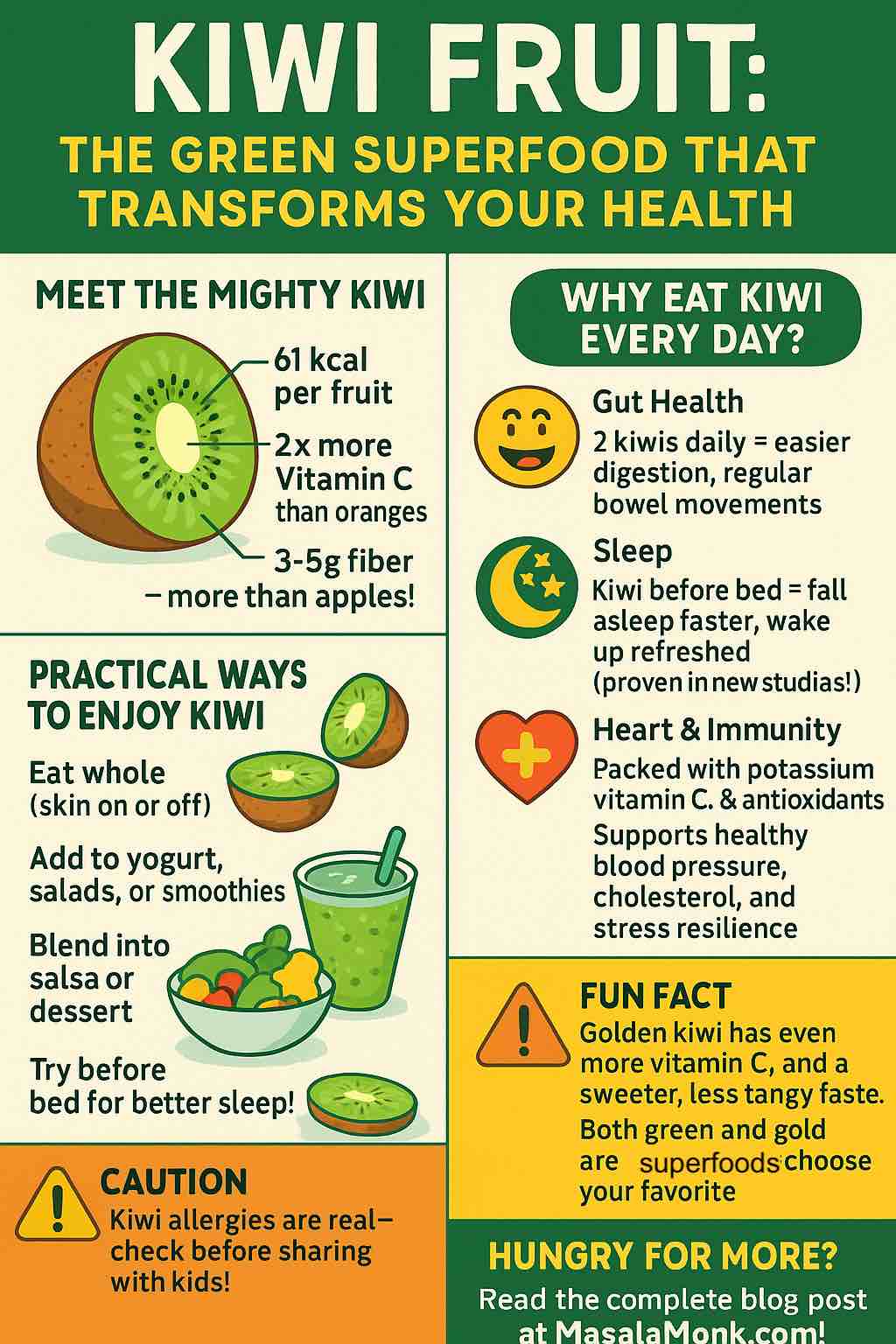
  • Calories: ~61 kcal (per 100g, about 1 medium kiwi)
  • Carbohydrates: 15g (natural sugars + valuable fiber)
  • Fiber: 3–5g (both soluble and insoluble types for gut health)
  • Protein: 1.1g
  • Fat: 0.5g
  • Vitamin C: 90–110mg (100–200% of daily needs—golden kiwis can reach up to 160mg)
  • Vitamin K: 30–40mcg (supports blood and bone health)
  • Potassium: 215–312mg (more than a banana per calorie)
  • Vitamin E: 1.5mg (one of the few fruits with natural vitamin E)
  • Folate, Copper, Magnesium, Calcium: In smaller but significant amounts
  • Antioxidants: Rich in lutein, zeaxanthin, carotenoids, and polyphenols

Key detail: The edible skin contains extra fiber, vitamin E, and powerful phytonutrients. If you can handle the fuzzy texture, scrub and eat the whole fruit for maximum benefits.


How Kiwi Supercharges Your Health: New Science in 2025

1. Digestion & Gut Health: More Than Just Fiber

Kiwi has become a star in digestive health—not just for its fiber, but also for actinidin, a unique enzyme that breaks down proteins in your stomach. This means better digestion, less bloating, and more comfortable meals—especially for those who get gassy or heavy after eating animal protein or legumes.

Recent studies in the US, New Zealand, and Asia show:

  • Two green kiwis a day significantly improve stool frequency and consistency, relieving both occasional and chronic constipation.
  • Kiwi outperformed psyllium (a common fiber supplement) in clinical trials, providing greater relief from abdominal discomfort and straining.
  • The fruit acts as a prebiotic, feeding beneficial gut bacteria, and boosts short-chain fatty acid (SCFA) production, supporting colon health and reducing inflammation.

Practical tip: Try a “kiwi breakfast shot”—eat one or two kiwis (with skin, if you like) on an empty stomach with water before your first meal.


2. Sleep: The Surprising Nighttime Superfood

Struggling to fall or stay asleep? Kiwi is quickly becoming the go-to bedtime snack.

Latest research (2024–2025) reveals:

  • Eating 1–2 kiwis about one hour before bed helps people fall asleep faster, increases total sleep time, and improves sleep efficiency.
  • This effect has been confirmed in adults, children, and even people with insomnia or overweight/obesity.
  • The sleep boost is thought to come from the combination of natural serotonin, vitamin C, folate, and antioxidants—plus some gentle carbs that help your brain make melatonin.

Lifestyle tip: Replace your late-night cookie or ice cream with sliced kiwi, maybe topped with a sprinkle of cinnamon or a little yogurt.

Real-world example: A university trial with students found that after two weeks of evening kiwi, participants reported feeling more refreshed and alert in the morning, with less grogginess.


3. Heart Health & Metabolism: Small Fruit, Big Protection

Heart disease remains the world’s top killer, but simple daily changes add up. Kiwi offers several cardiovascular benefits:

  • Its high potassium content helps lower blood pressure by counteracting sodium.
  • Studies confirm that eating kiwi daily can lower triglycerides, reduce platelet aggregation (less clot risk), and modestly raise HDL (“good”) cholesterol.
  • Kiwis are naturally low in sodium and fat, with a low glycemic index (~40), so they’re ideal for people with hypertension, prediabetes, or metabolic syndrome.

Actionable tip: Add kiwi to your post-workout smoothie or salad to replenish potassium and speed up muscle recovery.

Fun fact: In a study, people who ate three kiwis a day for eight weeks saw measurable improvements in blood pressure and blood lipids compared to those eating apples.


4. Mood, Immunity & Daily Energy: Vitamin C in Overdrive

Kiwi is one of the best natural sources of vitamin C—beating out oranges, strawberries, and many “superfoods” by weight.

  • Just two kiwis provide more than enough vitamin C for a whole day, supporting your immune system and helping your body fight viruses and heal wounds.
  • Vitamin C also reduces the impact of stress, improves mood, and assists your body in making collagen for healthy skin and joints.
  • A 2025 trial in young adults found that regular kiwi consumption improved mood, reduced fatigue, and boosted vitality—sometimes in as little as four days.

Tip for busy days: Bring kiwis to work or class as a portable, vitamin-packed snack. They’re less messy than oranges and need no prep if you eat the skin.


5. Skin, Eye, and Longevity Benefits

  • Kiwis contain lutein and zeaxanthin, carotenoids important for long-term eye health and protection against age-related macular degeneration.
  • Their vitamin E and C combo helps repair and rejuvenate skin, fighting oxidative damage and keeping your complexion bright.
  • New research also links regular kiwi intake to lower risk of some cancers, especially colorectal, thanks to fiber and unique antioxidant compounds that protect gut cells.

Pro aging hack: Try eating kiwi skin-on for a beauty and gut boost, or blend it into your smoothies for extra nutrients.


6. Cancer Prevention and Overall Longevity

While no single fruit is a cure-all, kiwi’s mix of fiber, vitamin C, and plant antioxidants is being actively studied for cancer prevention, especially of the colon. Emerging evidence suggests:

  • People who eat kiwis daily have a statistically lower risk of developing colorectal cancer.
  • The combination of antioxidants and fiber appears to reduce inflammation and support healthy cell turnover.

Practical application: If you have a family history of colorectal cancer or want to improve long-term gut health, make kiwi a daily staple.


How to Eat More Kiwi: Practical Tips for Every Lifestyle

Raw and Simple:

  • Halve and scoop with a spoon for a portable snack.
  • Eat the skin for extra fiber—just scrub well before eating.

In Salads:

  • Add sliced kiwi to mixed greens, feta cheese, walnuts, and a citrus vinaigrette for a refreshing lunch.

On Breakfast:

  • Top Greek yogurt, overnight oats, or cottage cheese with sliced kiwi, seeds, and honey.

In Smoothies:

  • Blend one or two kiwis with spinach, banana, pineapple, and coconut water for a bright, tangy boost.

Salsas and Dips:

  • Mix chopped kiwi with avocado, jalapeño, red onion, and cilantro for a colorful salsa—perfect for grilled fish, chicken, or tacos.

Desserts:

  • Layer kiwi with whipped coconut cream, berries, and toasted nuts for a quick, healthy dessert.

As Dried Snacks:

  • Slice thin and dehydrate for tangy, chewy “kiwi chips” (kids love these!).

For Better Sleep:

  • Try two kiwis an hour before bed—plain or with a bit of cinnamon or dark chocolate shavings.

Kiwi in Real Life: Building a Healthy Routine

Here are a few sample ways to add kiwi to your daily rhythm:

The “Kiwi Two-a-Day” Challenge:
Start your morning and end your evening with a kiwi. Track your digestion, sleep, and energy for two weeks—most people notice real improvements.

Meal Prep Hack:
Buy a bag of kiwis every week. Wash them all at once. Store ripe ones in the fridge and eat as snacks, or slice over meals.

For Families:
Let kids try kiwis with the skin (cut into fun shapes if needed). The unique taste and texture can help expand picky eaters’ palates.

Fitness & Recovery:
Post-workout, blend kiwi with protein powder, leafy greens, and coconut water for the ultimate recovery shake.

For Travelers:
Kiwi travels well—bring a couple in your bag for flights or road trips to avoid unhealthy airport snacks.


Risks and Precautions: Who Should Be Careful?

  • Allergies: Some people, especially those allergic to latex or other fruits (like banana or avocado), can react to kiwi. Symptoms range from mild itching to severe reactions. Try a small amount first if unsure.
  • Blood Thinners: Kiwi is high in vitamin K, which can interfere with warfarin and similar medications. If you’re on blood thinners, consult your doctor about how much is safe.
  • Oral Irritation: The actinidin enzyme can make your mouth tingle, especially if you’re sensitive—peeling may help.

Final Thoughts: Should You Eat Kiwi Every Day?

If you’re searching for a practical, delicious, and research-backed way to improve your diet and your health, kiwi fruit is hard to beat. Its blend of fiber, vitamin C, antioxidants, and plant enzymes offers real-life benefits for digestion, sleep, mood, skin, and heart health—often in ways you’ll actually feel.

Eating just one or two kiwis a day is simple, affordable, and fits into almost any diet—vegan, paleo, low-FODMAP (in moderation), or just plain healthy eating.

Try it for two weeks. You might sleep better, smile more, and feel lighter—inside and out.

Ready to make kiwi a habit? Pick up a few on your next grocery run and start experimenting. Your gut, heart, and mind will thank you!

FAQs About Kiwi Fruit

1. Can you eat kiwi skin, and is it healthy?
Yes, the skin is edible and actually boosts the fiber, vitamin E, and antioxidant content of each fruit. Just wash it thoroughly before eating. The texture is fuzzy, but you can rub off some of the hairs if you prefer. If you have a sensitive mouth, start with the skin of golden kiwis, which is smoother.


2. How many kiwis should I eat per day for health benefits?
Most research supports eating 1–2 kiwis per day for noticeable benefits to digestion, sleep, and immunity. Clinical studies often use this amount, and it’s generally safe for most healthy adults and children.


3. Are green and golden kiwis nutritionally different?
Yes. Green kiwis are higher in fiber and contain more actinidin (an enzyme aiding protein digestion). Golden kiwis are sweeter, less acidic, and contain even more vitamin C and some extra antioxidants. Both are excellent for health, so choose based on your taste and texture preference.


4. Is kiwi safe for people with allergies?
Kiwi can trigger allergies, especially in people sensitive to latex, avocados, bananas, or birch pollen. Symptoms can include itching, tingling, or swelling in the mouth. If you have any known food allergies or experience symptoms, consult your doctor before adding kiwi to your diet.


5. Can kiwi help with constipation and gut health?
Yes. Kiwi’s unique mix of fiber and the actinidin enzyme has been shown to improve bowel regularity, soften stools, and relieve constipation—sometimes outperforming fiber supplements. Eating two green kiwis daily can benefit most people with sluggish digestion.


6. Does eating kiwi really help you sleep better?
Recent clinical studies show that eating 1–2 kiwis about an hour before bed can help you fall asleep faster, sleep longer, and improve sleep quality. Kiwi contains serotonin and antioxidants that contribute to these benefits.


7. Is kiwi fruit good for people with diabetes?
Kiwi has a low glycemic index (around 40), meaning it causes only a gentle rise in blood sugar. It’s rich in fiber, which also helps with blood sugar control. Most people with diabetes can include kiwi as part of a balanced diet, but portion control is still important.


8. How should I store kiwi to keep it fresh?
Keep unripe kiwis at room temperature to ripen (speed this up by placing them next to apples or bananas). Once ripe, move them to the refrigerator, where they’ll stay fresh for up to a week.


9. Can I give kiwi to young children or babies?
Yes, but introduce it gradually to check for any reactions. Remove the skin for babies and cut the fruit into small pieces to reduce choking risk. Kiwi is a great source of vitamin C and fiber for growing kids.


10. Are there any medications or health conditions that make kiwi unsafe?
If you take blood thinners (like warfarin), kiwi’s vitamin K can interfere with your medication. People with a history of kidney stones may also want to moderate intake due to oxalate content. Always consult your healthcare provider if you have concerns.

Posted on Leave a comment

Cold Press Juicers vs Centrifugal Juicers: Which is Best?

Cold Press vs Centrifugal Juicers

Juicing is no longer just a wellness trend—it’s a kitchen staple for many health-focused homes. But if you’re just getting started or looking to upgrade your juicer, you’ve probably faced the classic dilemma:
Should you get a Cold Press (Masticating) Juicer or a Centrifugal Juicer?

This isn’t just a tech comparison—it’s about what’s best for your lifestyle, health goals, and taste buds. In this guide, I’ll break down the differences, bust a few myths, and help you choose with confidence.


What’s the Difference, Really?

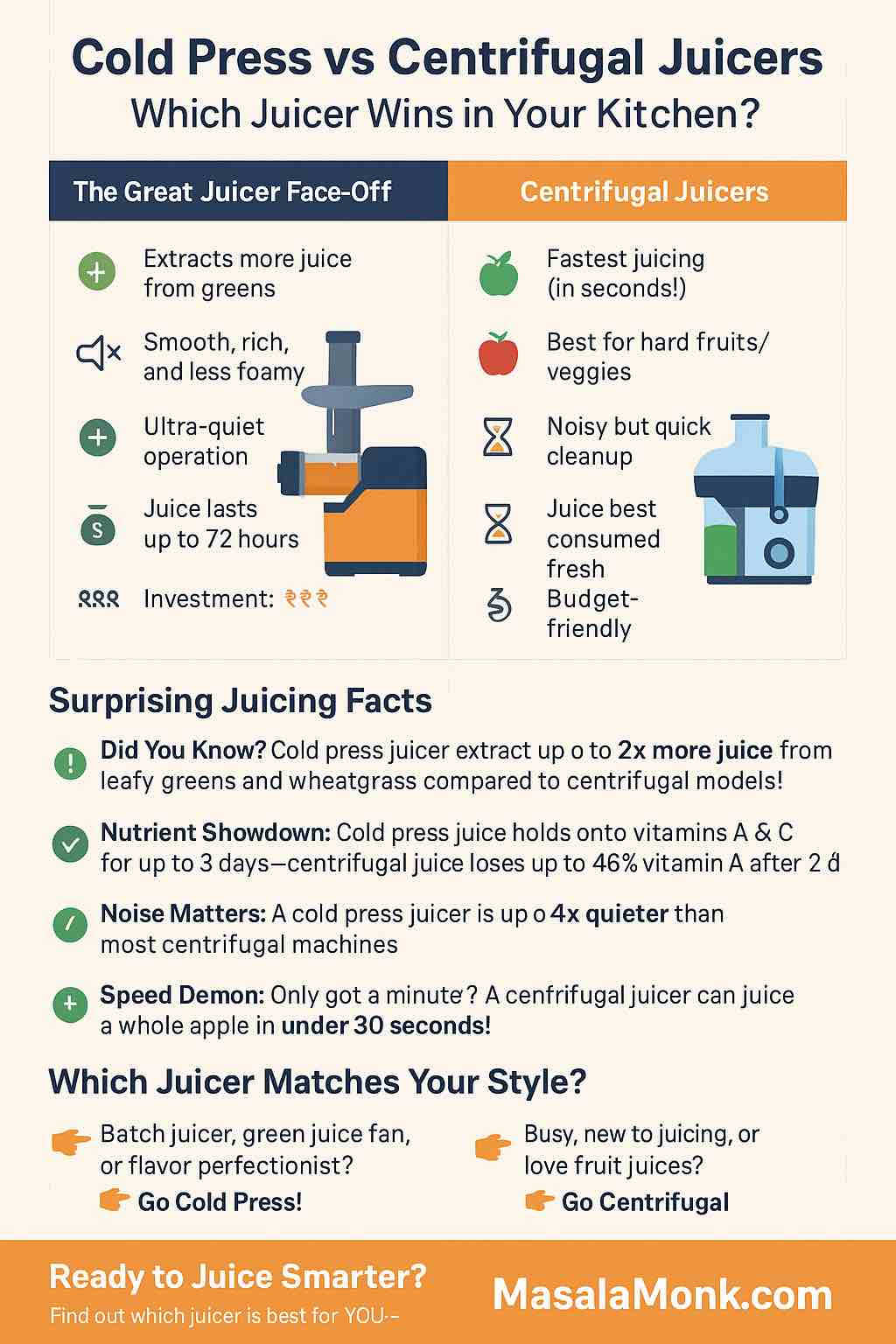
Centrifugal juicers are the “classic” juicers you see in most stores. They’re fast, loud, and use a rapidly spinning blade to pulverize fruits and veggies, extracting juice via centrifugal force.

Cold Press (Masticating) juicers work differently. They “chew” produce at a low speed with an auger, gently crushing and pressing out juice. This slow process creates little heat, hence the term “cold press.”


How Does This Affect Your Juice?

Let’s get practical. Here’s how these two styles shape your daily juice routine:

1. Juice Quality & Nutrition

  • Cold Press Juicers
    • Higher juice yield. Get more juice (especially from leafy greens, wheatgrass, and soft fruits).
    • Richer flavor. Juice is smoother, less foamy, and has deeper color.
    • More nutrients—especially over time. Scientific studies show cold press juice retains more vitamins (notably A and C) after 48–72 hours. If you like to batch juice, this matters!
    • Minimal oxidation. Juice stays fresh longer (up to 3 days refrigerated) and separates less.
  • Centrifugal Juicers
    • Fast, fresh juice in seconds. Best for “drink it now” types.
    • Slightly less nutrient retention. Lab studies show only ~10–15% difference at the moment of juicing, but nutrients degrade much faster in storage.
    • More foam, faster separation. Texture can be frothier, and you’ll see layers form in your glass if you wait.

Bottom line: For best flavor and nutrition—especially with leafy greens or if you batch juice—cold press wins. If you drink juice immediately and don’t mind a little foam, centrifugal works just fine.


2. Speed & Convenience

  • Centrifugal Juicers
    • Fastest option by far!
      Whole apple? No problem—done in under a minute.
    • Large feeding chute. Minimal chopping needed.
    • Ideal for busy mornings or families on the go.
  • Cold Press Juicers
    • Slower extraction—usually 2–5 minutes for a glass.
    • Smaller feeding chute. Chopping is often required.
    • More parts to assemble/disassemble.

Bottom line: If you want juice NOW and minimal prep, centrifugal is hard to beat.


3. Noise Level

  • Centrifugal Juicers: Like a blender. Loud.
  • Cold Press Juicers: Whisper-quiet. Perfect for early risers or shared homes.

4. Cleaning

  • Centrifugal:
    • Fewer parts, wide openings—quick rinse and done.
  • Cold Press:
    • More components (auger, mesh, chute). Takes a few extra minutes and a brush to keep clean.

TIP: If you dread cleaning, check reviews—some newer cold press models have improved, but centrifugal remains the simplest.


5. Cost

  • Centrifugal Juicers:
    • Great entry models for $40–$150.
  • Cold Press Juicers:
    • Usually $150–$500+. High-end models can reach $700+.

Pro tip: Don’t just buy the cheapest! A sturdy $120 centrifugal or a $250–$350 cold press will outlast and outperform bargain-bin options.


6. Produce Types

  • Leafy Greens, Herbs, Wheatgrass:
    • Cold press is far superior. Centrifugal juicers struggle and waste produce.
  • Hard Fruits (apples, carrots, beets):
    • Both work well, but centrifugal is faster.
  • Soft Fruits (berries, tomatoes, kiwi):
    • Cold press gives higher yield and less mess.

Myths & Misconceptions: What Science Says

  • “Centrifugal juicers destroy nutrients!”
    Not exactly. The heat is modest (juice rarely gets above 50°C/122°F). Studies show a slight difference (10–15%) in vitamin retention at extraction, but the real gap is in storage: cold press juice stays nutritious much longer.
  • “Cold press juice is always healthier.”
    Not always. For some nutrients (like lycopene in tomatoes), gentle heat from centrifugal juicers can actually improve absorption. The overall difference for most people is modest if you drink the juice immediately.
  • “Cold press is only for the obsessed.”
    Nope! If you love greens, want to prep juice ahead, or value taste/texture, you’ll love cold press. But centrifugal makes great juice too—especially for fruit-focused recipes.

Which Should You Choose? A Practical Guide

Get a Cold Press Juicer if:

  • You juice leafy greens, herbs, or wheatgrass often.
  • You want to batch juice for 2–3 days.
  • Taste, texture, and nutrient retention matter to you.
  • You don’t mind a slower, quieter process (and a bit more cleanup).
  • Budget isn’t your biggest concern.

Get a Centrifugal Juicer if:

  • You’re new to juicing and want something quick, easy, and affordable.
  • You mainly juice hard fruits and veggies.
  • You’ll drink juice right away.
  • Speed and simplicity matter most.
  • You want less cleanup.

Real-World Examples

  • Busy Parent:
    You want fresh apple-carrot juice every morning, with minimal hassle. A good centrifugal juicer lets you prep, juice, and clean in 5 minutes.
  • Wellness Enthusiast:
    You juice kale, ginger, celery, and batch prep for the week. A cold press model gives you better taste, higher yield, and juice that lasts up to 72 hours in the fridge.
  • On a Budget:
    Start with a solid centrifugal juicer. If you fall in love with juicing, upgrade later!

Popular Models (2025 Recommendations)

Best Centrifugal Juicers

  • Breville Juice Fountain Plus: Fast, reliable, wide chute.
  • Hamilton Beach Big Mouth: Budget pick, easy cleanup.

Best Cold Press (Masticating) Juicers

  • Omega NC900HDC: High yield, superb for greens.
  • Nama J2: Newer, auto-feeding, minimal prep.
  • Hurom H-AA: Compact, very quiet.

Final Thoughts: What’s Right for You?

The “best” juicer is the one that fits your habits, kitchen, and goals. Both types can deliver delicious, healthful juice at home.

If you want the most juice from every spinach leaf and care about longevity—go cold press. If you crave convenience, drink juice right away, and want a smaller upfront investment—centrifugal is perfect.

Remember:
The healthiest juice is the one you’ll actually make and drink!


Practical Tips for Better Juicing (No Matter the Juicer)

  • Prep produce ahead: Chop, wash, and bag portions for the week.
  • Alternate soft and hard produce: This helps both juicer types avoid clogs.
  • Clean immediately: Rinse parts right after use for easy cleanup.
  • Drink soon: Even cold press juice is best within 48 hours for flavor and nutrients.
  • Experiment: Try both methods at a juice bar before you buy—or borrow a friend’s machine.

Have Questions or a Juicer Story?

Drop a comment below! Which juicer do you use? What surprised you about your first juicing experience? Let’s share real-world tips and favorite recipes!


Happy juicing—whatever you choose!

10 Frequently Asked Questions (FAQs) About Cold Press vs Centrifugal Juicers

1. Which juicer is better for leafy greens and wheatgrass?
Cold press (masticating) juicers are far superior for leafy greens, wheatgrass, and herbs. They extract significantly more juice and nutrients, whereas centrifugal juicers often leave these types of produce almost dry and wasteful.


2. Can I store juice from both juicers, and for how long?
Cold press juice can be stored in the refrigerator for up to 72 hours with minimal loss of nutrients and flavor. Juice from centrifugal juicers should ideally be consumed within 24 hours due to faster nutrient degradation and oxidation.


3. Is there a big difference in nutrition between the two types?
There is a modest difference—cold press juicers retain about 10–15% more vitamins and antioxidants, especially after storing. For immediate drinking, the nutritional gap is small, but it widens if you batch juice.


4. Are cold press juicers really that much quieter?
Yes, cold press juicers operate at low speeds and are much quieter than centrifugal juicers, which are about as loud as a blender. This makes cold press ideal for early mornings or shared spaces.


5. What are the main cleaning differences?
Centrifugal juicers usually have fewer parts and are quicker to clean, often taking just a couple of minutes. Cold press juicers have more components, including a mesh screen and auger, and can take a few extra minutes and a brush to clean thoroughly.


6. Why are cold press juicers so much more expensive?
Cold press juicers use more complex, durable mechanisms and often yield more juice per produce—saving money in the long run if you juice regularly. You’re paying for higher juice quality, better yield, and longer juice shelf life.


7. Do centrifugal juicers work with soft fruits?
They can, but you’ll often get a thinner, more separated juice and less yield. Cold press juicers are much better for soft fruits like berries, tomatoes, and kiwi.


8. Is it true centrifugal juicers destroy enzymes and nutrients with heat?
Not really. The heat generated is minimal and doesn’t destroy nutrients outright. However, the oxidation from the fast spinning can reduce some sensitive nutrients and shortens shelf life, especially for vitamins A and C.


9. Which type of juicer is best for beginners?
Centrifugal juicers are best for beginners—they’re affordable, fast, and easy to use. They’re great for occasional or fruit-focused juicing. If you become a regular juicer or want to maximize yield from greens, you can upgrade to cold press later.


10. Can I use both types of juicers together?
While not necessary for most people, some serious juicers do use both: centrifugal for fast, everyday fruit juices and cold press for batch-prepped or green juices. If budget and space allow, having both gives ultimate flexibility.

Posted on Leave a comment

The Surprising Link Between Popcorn and Weight Loss

popcorn & weight loss

Popcorn: Just hearing the word might conjure up the smell of movie theaters, the sound of kernels bursting in a pot, or memories of late-night snacks with friends. But for many, popcorn is still stuck in the “junk food” category—something indulgent rather than nutritious. It’s time to set the record straight. New research reveals that, when prepared right, popcorn isn’t just a low-calorie snack—it could be a powerful ally in your weight loss journey and metabolic health.

Popcorn: Not Just Empty Calories

Let’s get this out of the way: not all popcorn is created equal. Microwave bags loaded with butter, caramel corn, and movie theater tubs dripping with oil are not the popcorn that’s impressing nutritionists and scientists. The real hero here is air-popped, unprocessed popcorn—just simple whole kernels, popped with air or a hint of healthy oil, and seasoned with spices rather than fat.

Why does this matter? Unlike processed snacks, air-popped popcorn is:

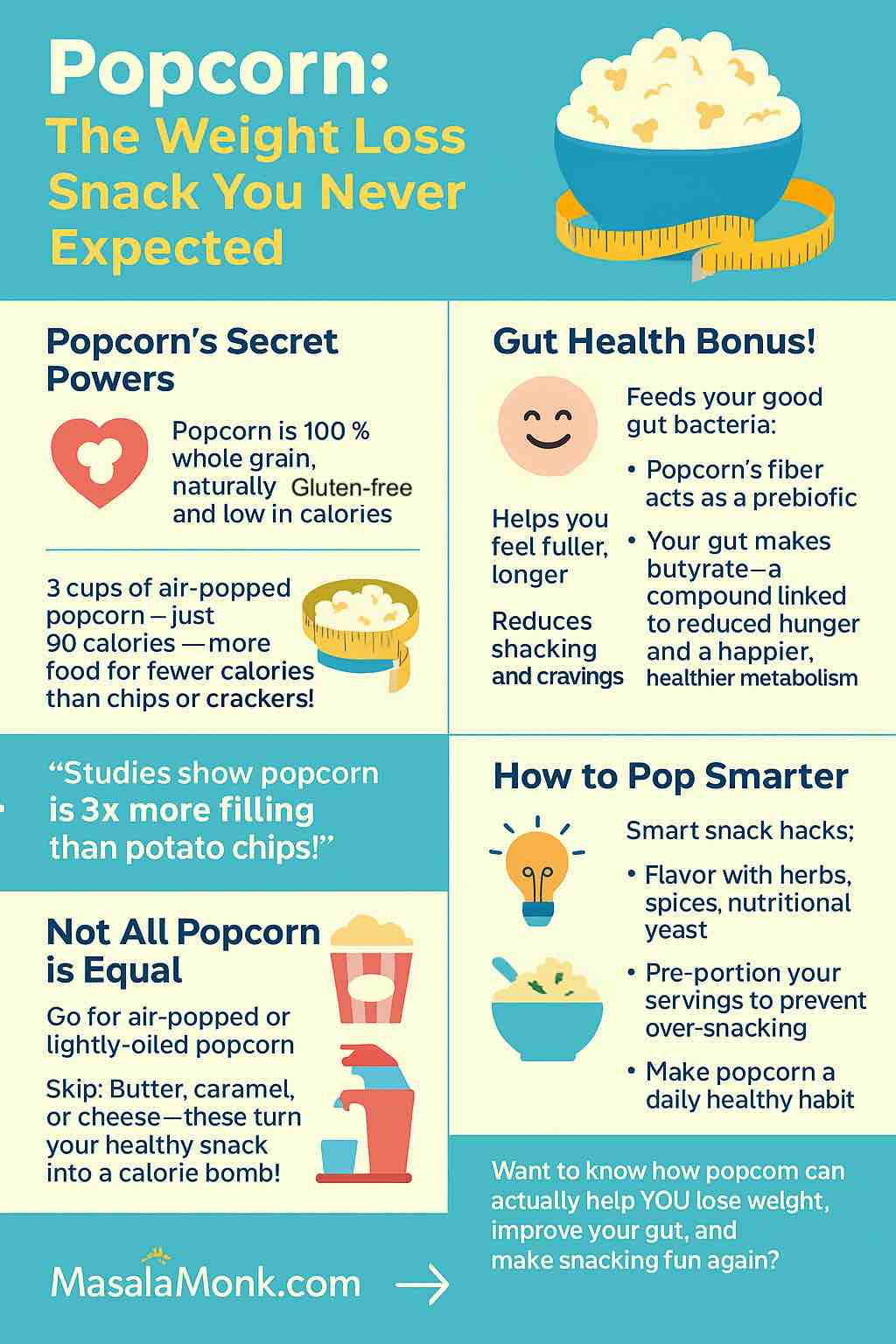
  • A 100% whole grain—retaining all the bran and germ, packed with nutrients.
  • Low in calories, high in volume—1 cup has just 31 calories, and three full cups are under 100!
  • Rich in fiber—about 3 grams per serving, which supports fullness and gut health.
  • Loaded with polyphenols—plant compounds that protect against inflammation and may improve metabolism.

This combination is rare in the snack world. Most “crunchy snacks” are either high-calorie, low-volume (chips), or stripped of nutrients (rice cakes, crackers). Popcorn breaks that mold.

How Popcorn Supports Weight Loss

The Science of Satiety

Satiety—the sense of fullness after eating—is crucial for any successful weight loss effort. The research is clear: foods that are high in fiber, low in calories, and take up a lot of space in your stomach keep you feeling fuller, longer. Popcorn nails all three.

Several clinical studies have compared popcorn to chips and pretzels. Participants who ate the same calorie amount of popcorn reported feeling significantly more satisfied, were less likely to reach for more food later, and consumed fewer calories overall in the hours that followed. The magic is in popcorn’s volume and fiber: you eat more, chew longer, and your stomach sends a stronger “I’m full!” signal to your brain.

Volume Eating and Mindful Snacking

“Volume eating” is a growing trend in weight management. The idea: choose foods that fill your plate and your stomach, but not your calorie budget. Three cups of air-popped popcorn looks—and feels—like a real snack, while a handful of chips barely registers. This visual and physical fullness is a psychological advantage. Popcorn also encourages slower, more mindful eating. Unlike chips or candies that can be shoveled in by the handful, popcorn’s shape means you typically eat one or two pieces at a time, giving your body more time to register fullness.

Fiber and the Gut–Brain Connection

Perhaps the most exciting new research on popcorn isn’t about calories, but about what happens after you eat it. The type of fiber in popcorn acts as a prebiotic—it feeds the beneficial bacteria in your gut. These bacteria ferment the fiber, producing short-chain fatty acids like butyrate. Butyrate is now known to play a key role in gut health, inflammation control, and even the regulation of appetite hormones like GLP-1 and PYY.

Cutting-edge studies have found that butyrate may actually help lower appetite, support metabolic flexibility (how efficiently your body burns fat for energy), and strengthen the gut barrier—helping you absorb nutrients better and reduce inflammation throughout the body.

Scientists are even breeding new popcorn varieties, such as Quality Protein Popcorn (QPP), to enhance these effects by boosting protein content and fiber quality, further increasing butyrate production in the gut. This opens the door to a future where popcorn is a functional food: a snack that isn’t just “not bad,” but actively supports health and weight loss.

Popcorn for Real Life: How to Get the Benefits

Here’s how you can make popcorn work for your goals:

Choose the Right Popcorn

  • Air-popped kernels are best: Use a hot air popper or pop in a covered pot with just a teaspoon of healthy oil (like olive or avocado oil).
  • Skip the microwave bags: Most are loaded with processed fats, sugar, and preservatives that can undo all the benefits.
  • Buy kernels in bulk: Not only is this more cost-effective, but you avoid additives and can control every ingredient.

Healthy Ways to Flavor Popcorn

Popcorn’s neutral flavor is a blank canvas. Instead of reaching for butter or caramel, experiment with:

  • Nutritional yeast for a cheesy, savory kick plus a boost of B vitamins.
  • Smoked paprika, chili powder, or curry powder for an exotic twist.
  • Cinnamon and a dusting of cocoa for a slightly sweet snack without added sugar.
  • Dried herbs like rosemary, thyme, or Italian seasoning for Mediterranean flair.
  • A sprinkle of sea salt and vinegar powder for a “salt and vinegar” flavor.

Lightly misting popcorn with olive oil spray before tossing with seasoning helps everything stick without adding much fat.

Smart Snacking Strategies

  • Portion ahead: Pop a large batch and divide it into single-serving containers or bags to grab and go, avoiding overeating.
  • Pair with protein: Add a handful of roasted chickpeas or a few nuts for a more balanced snack that’s extra filling.
  • Eat mindfully: Serve your portion in a bowl, sit down, and enjoy the experience. Avoid eating from the pot or bag, especially while distracted by screens.

The Role of Popcorn in Meal Planning

Popcorn isn’t just for snacking! Try:

  • Using popcorn as a salad topper in place of croutons for crunch and fiber.
  • Mixing it with air-popped chickpeas or baked beans for a crunchy, savory mix.
  • Making your own healthy “party mix” with whole-grain cereal, popcorn, seeds, and a dash of spices.

Social & Psychological Benefits

There’s another reason popcorn is a weight-loss ally: it’s a social food. Sharing a bowl of popcorn at home or at gatherings can help you stick to healthy habits while still being part of the fun. You’re less likely to feel deprived compared to skipping snacks altogether, which supports a more sustainable, balanced approach to eating.

What to Watch Out For

Of course, popcorn’s benefits only apply when you avoid certain traps:

  • Butter and cheese coatings can turn popcorn into a calorie bomb.
  • Sweet flavors like caramel and kettle corn are high in sugar.
  • Excessive oil or store-bought toppings can add hundreds of extra calories.

Aim for less is more when it comes to toppings, and be wary of “gourmet” popcorns that often contain even more sugar and fat than chips.

The Future of Popcorn

With the rise of food innovation, popcorn is stepping into the spotlight as more than just a snack. Scientists are working to enhance its protein and fiber content even further. In a few years, you may see “gut-friendly” or “protein-fortified” popcorn on shelves, designed specifically to amplify its benefits for weight loss and wellness.

Meanwhile, the latest diet trends—from “fiber-maxxing” to gut health-focused eating—are all finding a place for popcorn as a natural, affordable, and enjoyable staple.

Final Thoughts: Embrace the Pop!

If you’re on a weight loss journey, looking for gut health support, or simply searching for snacks that satisfy, it might be time to rethink popcorn. When prepared simply—without excess fat, sugar, or salt—popcorn delivers on all fronts: high in fiber, filling, affordable, and versatile. It’s a rare case of a comfort food that actually deserves a place in your healthy lifestyle.

So the next time you crave something crunchy, think beyond the usual chips and cookies. A big, fluffy bowl of air-popped popcorn could be the secret weapon you never knew you needed—for your waistline, your microbiome, and your peace of mind.


Ready to pop? Try making your own air-popped creation and share your favorite healthy popcorn toppings!

10 Popcorn & Weight Loss FAQs

1. Is all popcorn good for weight loss?
No, only air-popped or minimally-oiled popcorn is supportive for weight loss. Avoid buttered, caramel, cheese-coated, and most microwave varieties, as these can be high in calories, sugar, and unhealthy fats.

2. How much popcorn can I eat if I’m watching my weight?
A standard serving is about 3 cups of air-popped popcorn, which contains roughly 90–100 calories. This is a satisfying snack size for most people.

3. Does popcorn really help you feel full?
Yes! Popcorn is high in fiber and volume, which helps fill your stomach and promotes a lasting feeling of fullness compared to other snacks.

4. Can I eat popcorn every day?
Absolutely, as long as you prepare it healthily and stick to moderate portions. Daily popcorn can support fiber intake and healthy snacking habits.

5. Does popcorn spike blood sugar?
Plain air-popped popcorn has a low glycemic load and generally does not cause rapid blood sugar spikes when eaten in moderation.

6. What are the healthiest ways to flavor popcorn?
Use herbs, spices, nutritional yeast, or a sprinkle of sea salt. Avoid heavy oils, cheese powders, and sugary toppings.

7. Is popcorn suitable for people with gluten intolerance or celiac disease?
Yes, popcorn is naturally gluten-free. Always check flavorings for added gluten, especially in commercial popcorn.

8. Can popcorn really improve gut health?
Yes. Popcorn’s fiber acts as a prebiotic, feeding beneficial gut bacteria that produce butyrate—a compound linked to appetite control, gut health, and reduced inflammation.

9. Are there any risks to eating popcorn?
Popcorn is safe for most people, but be mindful of portion sizes and toppings. Small children and those with swallowing difficulties should avoid whole popcorn to prevent choking.

10. How can I keep from overeating popcorn?
Portion out your snack before eating, use smaller bowls, and avoid distracted eating (like in front of screens). Mindful eating helps prevent overindulgence.