Posted on Leave a comment

Natural Remedies for Nasal and Sinus Congestion

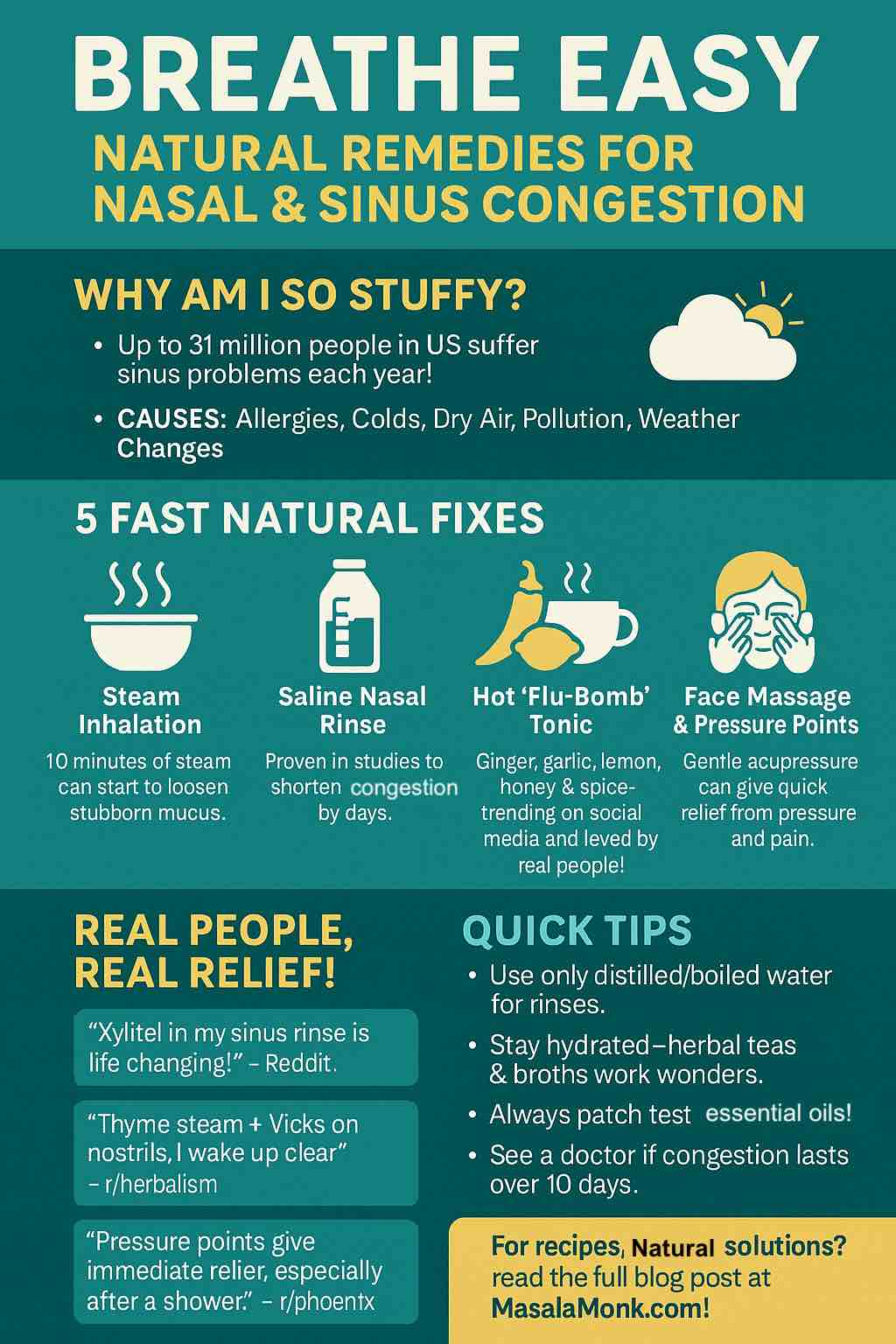
NATURAL REMEDIES FOR NASAL & SINUS CONGESTION

Struggling to breathe through your nose? Foggy head, throbbing pressure, and a tissue box as your new best friend? You’re not alone. Millions battle nasal and sinus congestion from allergies, colds, weather changes, or just that mysterious seasonal gunk. But you don’t always need to run for the pharmacy—nature, ancient wisdom, and real-life hacks can offer serious relief.

Below you’ll find a deep dive into proven natural remedies—including practical “how-tos,” science-backed facts, and direct experiences from real people. Ready to breathe easy again? Let’s get started.


Why Natural Remedies?

Conventional decongestants and sprays work, but they can come with downsides—rebound congestion, drowsiness, or even raising your blood pressure. Natural methods, on the other hand, focus on gently supporting your body’s own healing and clearing pathways, often with fewer side effects.

Best of all? Most remedies below use items you already have in your kitchen or bathroom.


1. Steam: The Classic Sinus Opener

Why it works: Steam moistens dry nasal passages, thins mucus, and helps everything drain out. Warmth can also ease pressure and sinus pain.

How to do it:

  • Fill a large bowl with steaming hot water (not boiling!).
  • Drape a towel over your head, lean in, and breathe slowly for 5–10 minutes.
  • For an extra boost, add a few drops of eucalyptus or peppermint oil (optional).
  • Repeat 1–2 times a day as needed.

Community tip:

“A thyme steam before bed, followed by Vicks on my nostrils, is a game-changer. Usually, I wake up clear the next morning.” — Reddit user, r/herbalism

Bonus: Take a hot, steamy shower if you’re short on time or privacy!


2. Saline Nasal Irrigation: Flush It Out

Why it works: Saltwater rinses clear mucus, allergens, and germs from your nasal passages. Studies show regular saline rinses shorten sinusitis and allergy flares by days.

How to do it:

  • Use a neti pot, squeeze bottle, or pre-made saline spray.
  • Make your own solution: ½ teaspoon salt + ½ teaspoon baking soda dissolved in 2 cups distilled, boiled (then cooled), or sterile water.
  • Lean over the sink, tilt your head sideways, and gently pour or squeeze the solution into one nostril. Let it drain out the other side or your mouth.
  • Repeat on the other side. Blow your nose gently.

Tips & Cautions:

  • Always use distilled/boiled/sterile water! Tap water can rarely contain dangerous germs.
  • Some people add a pinch of xylitol or a drop of apple cider vinegar (test for irritation first).

Real-life hack:

“Xylitol in my sinus rinse is life changing. I’m blowing stuff out that feels like it’s been stuck forever.” — r/Sinusitis user


3. Herbal & Spicy Remedies: Mother Nature’s Decongestants

Hot “Flu-Bomb” Tonic

Viral on social media and forums, this spicy-sour shot is a natural mucus-thinner and immune-booster.

Recipe:

  • 1 tbsp apple cider vinegar
  • 1 tsp grated fresh ginger
  • 1 clove crushed garlic
  • 1 tsp honey
  • Pinch of cayenne pepper
  • Juice of ½ lemon
  • (Optional: turmeric, black pepper)

Mix in a glass, add hot water if desired, and sip or “shot” it back.

What people say:

“Garlic, ginger, honey, and ACV flu-bomb clears me out every time. Burns a bit, but works.” — NY Post viral trend


Spicy Foods & Teas

  • Hot peppers, wasabi, and horseradish can momentarily open up nasal passages.
  • Herbal teas (peppermint, ginger, chamomile, nettle) are soothing and anti-inflammatory.

Tip: Chewing peppermint gum or sipping nettle tea before bed is now recommended by some sleep experts for allergy-related stuffiness.


4. Essential Oils & Aromatherapy

Why it works: Eucalyptus and menthol create a cooling sensation, which can make breathing feel easier.

How to use:

  • Add a few drops to your steam inhalation.
  • Use a diffuser in your room (never apply essential oils directly inside your nose).
  • Rub diluted peppermint or menthol balm (like Vicks) on your chest, not in nostrils.

Caution: Essential oils can irritate or trigger allergies for some people. Always patch test.


5. Face Massage, Acupressure & Warm Compresses

  • Warm compress: Place a warm, wet cloth across your nose and cheeks for 10–15 minutes.
  • Facial massage: Gently massage under your cheekbones and along your brows, pressing in circular motions.
  • Pressure points: Pinch the area between your eyebrows, or massage the roof of your mouth with your tongue for 20–30 seconds for fast drainage.

Community tip:

“Pressure points give me immediate relief, especially when combined with hot showers.” — r/phoenix user


6. Hydration & Anti-Inflammatory Diet

  • Drink plenty of water, herbal teas, and broths.
  • Cut down on alcohol and caffeine (which can dry you out).
  • Eat anti-inflammatory foods: garlic, ginger, turmeric, berries, leafy greens, and fatty fish.
  • Some people find reducing dairy lessens mucus, but results vary.

Supplements getting buzz in 2024–2025:

  • Quercetin & bromelain: For allergies and swelling
  • Stinging nettle: A natural antihistamine
  • Butterbur: Shown in studies to help some allergy sufferers

7. Lifestyle: Humidity, Sleep, and Clean Air

  • Use a humidifier in your bedroom (clean it regularly!).
  • Elevate your head with an extra pillow to encourage sinus drainage overnight.
  • Keep your environment free of dust, smoke, and strong fragrances.

Parent tip:

“Humidifiers, Gua Sha face massage, and neti pots—our go-to for the whole family.” — r/moderatelygranolamoms


8. What to Watch Out For

  • Always use clean water for nasal rinses.
  • Start slow with strong spices or essential oils—more is not always better!
  • Herbal supplements can interact with medications. Check with a healthcare provider, especially if you’re pregnant, nursing, or have chronic health issues.
  • If symptoms last more than 10 days, worsen, or include fever, facial swelling, or vision changes, see a doctor—sometimes antibiotics or other interventions are needed.

In Summary: Find What Works for You

No one remedy fits all—but combining steam, hydration, gentle saline rinses, and herbal supports can make a huge difference for most people. Start simple. Tweak your routine. Don’t be afraid to experiment (safely!). And remember: your body, your pace.

Have a favorite home remedy, a trick you swear by, or a question about your sinus struggles? Share in the comments or drop me a line—I’d love to hear your story and help you breathe easier!


Breathe deep. Relief is closer than you think.

FAQs

1. What’s the safest way to do a saline nasal rinse at home?
Answer:
Always use distilled, sterile, or previously boiled and cooled water. Mix ½ teaspoon of non-iodized salt and ½ teaspoon baking soda in 2 cups of water. Use a clean neti pot or squeeze bottle, and rinse thoroughly after each use.


2. Can steam inhalation help with all types of nasal congestion?
Answer:
Steam works best for congestion caused by thick mucus, colds, or mild sinus infections. It may not be as effective for severe allergies or structural issues like a deviated septum.


3. Are essential oils safe for sinus relief?
Answer:
Eucalyptus and peppermint oil can offer temporary relief, but never apply undiluted oils directly inside your nose. Always dilute and use in steam or diffusers. Some people may experience irritation or allergic reactions.


4. What natural remedies are best for allergy-related congestion?
Answer:
Try saline rinses, stinging nettle tea, quercetin, local honey, and anti-inflammatory foods (garlic, ginger, turmeric). HEPA air purifiers and regular cleaning also help reduce allergens indoors.


5. How long should I try natural remedies before seeing a doctor?
Answer:
If congestion lasts more than 7–10 days, worsens, or is accompanied by high fever, severe headache, facial swelling, or vision changes, consult a healthcare provider promptly.


6. Can dietary changes really reduce sinus congestion?
Answer:
Yes. Many people report less mucus and congestion when they reduce dairy, processed foods, and increase anti-inflammatory foods like leafy greens, berries, and fatty fish.


7. Is it safe to use apple cider vinegar or xylitol in nasal rinses?
Answer:
Some users report benefits, but these additions can cause irritation in sensitive noses. If you try them, start with very small amounts and stop if you notice burning or discomfort.


8. What’s the quickest way to relieve sinus pressure at home?
Answer:
Apply a warm compress to your face, use steam inhalation, try acupressure on your cheekbones and brow, and use a saline rinse. Over-the-counter NSAIDs like ibuprofen can also help reduce swelling.


9. Are there risks with frequent nasal rinsing?
Answer:
Rinsing 1–2 times a day is generally safe. Over-rinsing may cause dryness or mild irritation. Always use clean water and sterile equipment.


10. What natural remedies are safe for kids?
Answer:
Saline nasal sprays or drops, humidifiers, steamy bathrooms (not hot water bowls), and plenty of fluids are safest. Avoid essential oils, spicy remedies, and supplements in young children unless approved by a pediatrician.

Posted on Leave a comment

Best Way to Get Rid of Heartburn: Natural Remedies for Quick Relief

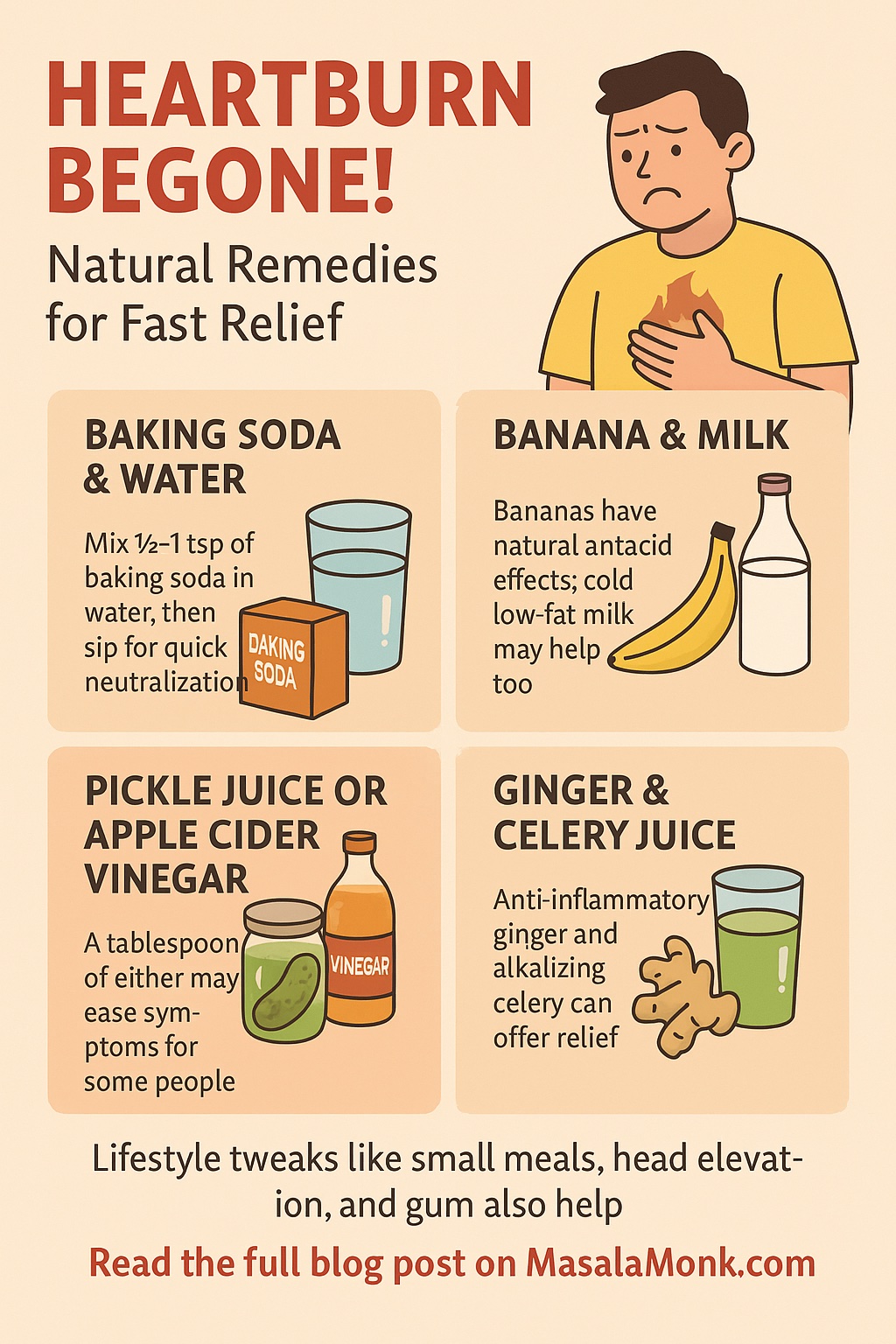
HEARTBURN BEGONE! Natural Remedies for Fast Relief

If you’ve ever been jolted awake at night by that burning sensation creeping up your chest, you know heartburn is more than just a minor nuisance. For many, it’s a daily struggle—ruining dinners, spoiling sleep, and making simple pleasures feel risky. The good news? You don’t have to reach for harsh meds every time. There’s a whole toolkit of natural, practical, and fast-acting remedies—many hiding right in your kitchen!

In this post, we’ll cut through the noise. No snake oil, no vague advice. Just what actually works, how fast, and what real people say. Let’s dig in.


What Is Heartburn, Really?

Before you fix it, it helps to know the basics. Heartburn happens when stomach acid backs up into your esophagus, causing that familiar burn. Common culprits? Spicy foods, large meals, alcohol, stress, and sometimes just lying down after eating.

Quick fact: Heartburn and acid reflux are closely related, but not identical. GERD (gastroesophageal reflux disease) is the chronic, more severe version.


Natural Heartburn Remedies That Actually Work

Here are the top tried-and-tested remedies—from clinical research and Redditors alike—ranked by how fast and reliable they are.

1. Baking Soda & Water: The “Fire Extinguisher”

  • How it works: Baking soda (sodium bicarbonate) neutralizes stomach acid in minutes.
  • How to use: Mix ½ to 1 teaspoon in a glass of cold water, stir, and sip slowly.
  • What real people say: “One or two teaspoons, then stay upright—massive burp, burning is gone.” (Reddit)
  • Cautions: High in sodium; don’t use more than once every few days.

Pro tip: Don’t chug it! Sipping slowly works better and is easier on your stomach.


2. Banana, Milk, and Soothing Foods

  • Banana: The gentle fruit. Its natural antacid effect soothes the esophagus.
    • “If my acid reflux is acting up, I eat a banana. Works wonders for me!” (Reddit)
  • Milk (or oat/almond milk): Sips of cold, low-fat milk can ease the burn for some.
    • Heads up: For others, especially with full-fat milk, it can sometimes make things worse later.
  • Honey lozenges: Sucking on honey-based lozenges stimulates saliva, which helps wash acid down.

3. Pickle Juice or Apple Cider Vinegar (ACV): The Contrarian Fix

  • How it works: A tablespoon of vinegar (especially ACV) or pickle juice can trigger your stomach to regulate acid production.
  • What real people say:
    • “A tablespoon of apple cider vinegar in water—heartburn gone.”
    • “Pickle juice, just a sip, sounds weird but instant relief.”
  • Why it works (sometimes): Some people’s heartburn is from too little acid, not too much. This trick “resets” stomach acidity.
  • Cautions: Try in small amounts, and stop if it makes things worse.

4. Ginger & Celery Juice (for the Naturalists)

  • How it works: Ginger is a classic anti-nausea, anti-inflammatory root. Celery is highly alkaline.
  • How to use: Juice fresh ginger (just a sliver!) and celery (a few stalks) and sip on an empty stomach.
  • What people say:
    • “Ginger tea or celery juice in the morning—I’m off meds!”
  • Downsides: Some find prep a hassle, but it’s a great long-term solution.

5. Chewing Gum, Lozenges & Water

  • Why it works: Chewing gum or sucking lozenges increases saliva, which helps neutralize acid and push it back down.
  • What works best: Sugar-free gum, especially after meals.
    • “Chewing gum after dinner is my secret weapon.” (Reddit)
  • Don’t forget: A big glass of water can help rinse acid down, especially in mild cases.

6. Mechanical Tricks: The “Burp Bubble”

  • How it works: Swallow air (like you’re about to burp) and “hold it in” to create a pressure bubble above your stomach, which some people swear blocks reflux for a few minutes.
    • “Swallow air, hold it, stay upright—instant blockade!”
  • Is it weird? Yes. But if you’re desperate and upright, worth a try.

7. Ayurvedic and Indian Pantry Staples

For readers in India (or with a good spice cabinet!), these “desi” remedies are gaining scientific respect:

  • Curd (plain yogurt): Soothes the stomach, provides probiotics.
  • Coconut water: Mildly alkaline and hydrating.
  • Jeera (cumin) water: Boil cumin seeds, cool, sip.
  • Fennel seeds (saunf): Chew after meals to aid digestion.

“Curd, coconut water, and saunf are my go-to for any acidity. I hardly need meds now.” (Times of India, user stories)


8. Alkaline Water: The Latest Science

  • What’s new: Water with a pH >8 can neutralize pepsin (an enzyme that damages the esophagus), offering fast relief.
  • How to use: Look for bottled “alkaline water” or add a pinch of baking soda to regular water.
  • Bonus: Staying hydrated always helps flush acid down.
RemedySpeedEvidenceBenefitsRisks/Cautions
Baking sodaImmediateModerate–HighFast neutralizationOveruse → alkalosis, high sodium
Aloe vera juice10–30 minModerateSoothes, mucosal healingUse decolorized only; possible interactions
Ginger tea10–30 minModerateReduces inflammation/nauseaToo much → may worsen symptoms
Banana, papaya15–30 minLow–ModerateAlkaline, digestive enzymesMinimal — but vary by individual
Chewing gum20–30 minLow–ModerateIncreases clearanceSugar-free only; limited studies
Cold milk/curdImmediateTraditionalBuffering acid, probioticsFull-fat may worsen reflux
Comparison of remedies

Lifestyle Tweaks for Long-Term Relief

Quick fixes are great, but sustained change wins. Here’s what actually works, according to thousands of forum users:

  • Don’t lie down after eating: Wait at least 2–3 hours.
  • Raise your head: Elevate your bed by 6–8 inches if you get night heartburn.
  • Eat small, frequent meals: Big meals = big reflux.
  • Lose a bit of weight (if you need to): Even a few kg can make a difference.
  • Track your triggers: Spicy food, caffeine, chocolate, tomatoes, and alcohol are classic offenders.

What NOT to Do

  • Don’t chug full-fat milk every time—for some, it’s a quick fix; for others, a rebound trigger.
  • Don’t rely on baking soda daily—it’s for emergencies, not routine.
  • Be cautious with peppermint tea—it relaxes the valve that keeps acid down, making heartburn worse for many.

Real Stories: What Worked for Others

  • Jatin (Delhi): “Heartburn hit every night. Curd and coconut water after dinner changed my life. I only use antacids when traveling now.”
  • Emily (US): “I keep a banana at my bedside and a pack of sugar-free gum. If I wake up burning, one or both get me back to sleep.”
  • Rakesh (Reddit): “First time in years I fixed it naturally—pickle juice shot, then a walk, then celery juice. Magic.”
RemedyReal Mentioned?How It’s DescribedNotes
Baking soda1–2 tsp in water, fast “fire put-out”High sodium, not for frequent use
Apple cider vinegar / pickle juice1 tbsp ACV, or pickle juice swallowed for reliefCounterintuitive, popular and swift
Banana / Milk / LozengesEat soothing banana or lozenges to aid salivaGentle relief, low acidity benefit
Swallowing air “burp bubble”Instant blockade of refluxMechanical trick, may work for some
Carrot / celery / ginger juicesSipping veggie/ginger mix for quick calmNatural, anti-inflammatory properties
Lifestyle adjustments & breathingBed angle, meal timing, high-pH water, breathingKey for long-term success
Summary table of real like experiences

Your Action Plan for Next Time Heartburn Strikes

  1. Immediate: Try a glass of water, or ½ tsp baking soda in water. If you’re adventurous, a tablespoon of pickle juice or diluted ACV.
  2. Soothing: Eat a banana, suck a lozenge, drink a bit of cold milk or oatmilk.
  3. Longer-acting: Try celery or ginger juice, chew fennel seeds, or sip on cumin water.
  4. Lifestyle: Don’t lie down! Walk around, prop yourself up, and note what triggered it.
  5. Prevent: Adopt small meals, stay upright after eating, and keep your spice triggers in check.

When To See a Doctor

If you’re getting heartburn more than twice a week, have trouble swallowing, vomit blood, or have unexplained weight loss—see a doctor ASAP. Chronic heartburn can mean something more serious.


Final Word: Experiment & Listen to Your Body

Everyone’s digestive system is different. The trick is to experiment (one remedy at a time), take notes, and see what works for you. With this toolkit of real-life, natural fixes—and a few small habits—you can keep heartburn in check and get back to enjoying life (and food!) again.


Got your own remedy or story? Share it in the comments—let’s help each other beat the burn, naturally!


References: Healthline, Medical News Today, Reddit, Times of India, UCLA Health, VeryWell Health, EatingWell, Patient.Info community, and real user stories. All advice is for informational purposes—when in doubt, talk to your doctor.

10 Frequently Asked Questions (FAQs) About Natural Heartburn Relief

1. What is the fastest natural remedy for heartburn?
The quickest natural remedy is usually drinking a glass of water or a baking soda solution (½–1 tsp in a glass of water). Both can neutralize acid within minutes. Use baking soda sparingly due to sodium content.


2. Can banana or milk really help with heartburn?
Yes, many people find bananas soothing due to their low acidity and natural antacid effect. Low-fat milk or plant-based alternatives like oat milk can also help, though some people experience rebound acidity with dairy.


3. Is it safe to use baking soda for heartburn often?
No. Baking soda is safe for occasional, emergency use, but frequent use can cause high sodium intake and disrupt your body’s pH balance. Consult your doctor for recurring symptoms.


4. Are there any natural remedies I should avoid?
Avoid peppermint (can worsen reflux), full-fat dairy (may trigger more acid), and excessive vinegar if it worsens symptoms. Always listen to your body and stop any remedy that causes discomfort.


5. How long should I wait before lying down after a meal if I have heartburn?
Wait at least 2–3 hours before lying down. Staying upright helps prevent acid from flowing back into your esophagus.


6. Does apple cider vinegar work for everyone?
No, ACV helps some people (especially if low stomach acid is the cause), but can worsen symptoms for others. Always start with a small, diluted amount to test your tolerance.


7. What are some Indian/ayurvedic remedies for quick relief?
Curd (plain yogurt), coconut water, jeera (cumin) water, fennel seeds (saunf), and bananas are traditional remedies proven helpful by many in India.


8. What lifestyle changes can prevent heartburn naturally?
Eat smaller meals, avoid late-night eating, maintain a healthy weight, avoid trigger foods, elevate your head while sleeping, and reduce stress. Consistency matters more than perfection.


9. When should I see a doctor for heartburn?
If you have heartburn more than twice a week, trouble swallowing, vomiting blood, black stools, or unexplained weight loss, see a doctor immediately. Chronic or severe heartburn needs medical evaluation.


10. Can natural remedies be used with medications?
Generally, yes, but always check with your doctor—especially if using remedies like baking soda, aloe vera, or vinegar. Some can interact with medications or underlying conditions.

Posted on 2 Comments

Cherries and Arthritis: Are Cherries Good for Arthritis?

CHERRIES AND ARTHRITIS

Arthritis is more than just joint pain—it’s a daily struggle that can steal away comfort, movement, and even simple joys like opening a jar or taking a morning walk. It’s no surprise that people are constantly on the hunt for natural ways to find relief. Among the most buzzed-about remedies? The humble cherry.

But is it just a juicy myth, or do cherries actually help arthritis? Let’s dig deep into the science, real user experiences, and practical ways to use cherries for joint health.


Why Cherries? The Science Behind the Hype

Cherries—especially tart varieties like Montmorency—are packed with anthocyanins and other polyphenols, which are plant compounds with strong anti-inflammatory and antioxidant effects. Chronic inflammation is a root cause of arthritis pain, making cherries a potentially powerful tool in your natural pain-relief arsenal.

How do cherries work for arthritis?

  • Lower Inflammation: Anthocyanins and polyphenols in cherries suppress inflammatory markers like C-reactive protein (CRP) and interleukins, helping to soothe swollen, angry joints.
  • Reduce Uric Acid: Gout—a painful form of inflammatory arthritis—is triggered by high uric acid. Cherries (and especially tart cherry juice) can reduce blood uric acid and the risk of painful flares.
  • Ease Pain and Stiffness: Some studies show modest improvements in joint pain and function in osteoarthritis (OA) sufferers after regular cherry intake.

What Does the Research Really Say?

Let’s break it down by arthritis type and cherry form.

Gout

  • Clinical evidence: Multiple studies—including a meta-analysis of six randomized controlled trials—show that tart cherry juice and extracts significantly lower uric acid and can reduce the frequency and severity of gout flares by up to 50%.
  • How it works: Cherries increase uric acid excretion and may block inflammatory pathways triggered during gout attacks.

Osteoarthritis (OA)

  • Pain relief: Randomized studies in knee OA patients found that daily tart cherry juice (usually 8–16 oz) for several weeks can reduce pain, improve function, and lower CRP. Some trials found symptom improvements similar to over-the-counter pain meds.
  • Placebo effect: Not all studies find significant differences versus placebo, but the trend is consistently positive, especially for inflammation and mild to moderate pain.

Inflammatory Arthritis & General Joint Health

  • Antioxidant action: Cherries’ anti-inflammatory and antioxidant properties may help reduce overall joint inflammation, benefiting those with rheumatoid arthritis and related conditions, although research is still emerging.

Real-World Stories: What Are People Saying in 2025?

Beyond the lab, thousands of people are trying cherries for arthritis relief—let’s look at some fresh stories straight from Reddit and patient forums.

  • Gout flare-up stopped in its tracks: “I drank 8 oz of tart cherry juice when I felt a gout attack coming. By morning, the pain had calmed down.”
  • Joint pain relief in OA: “After a month of tart cherry extract, my joint pain was noticeably reduced. I stopped for a few weeks, and the pain returned—so I’m sticking with it!”
  • “Miracle” for chronic pain: “I’ve used tart cherry juice for 20 years for gout. After a flare, a few glasses and the pain is gone in hours. My uric acid levels are now normal.”
  • Mixed opinions: Some users love the taste and relief; others aren’t convinced or dislike the flavor, but few report serious side effects.

Consensus?
Most people find at least some relief, especially with pure tart cherry juice or capsules. Relief can happen in hours for some and days for others. Results vary, but cherries are generally seen as a safe, pleasant, and practical supplement to conventional treatment.


How to Use Cherries for Arthritis: A Practical Guide

Here’s how to make cherries work for you—without hype or confusion:

1. Choose the Right Form

  • Tart Cherry Juice: Look for 100% pure, unsweetened tart cherry juice. Common dose: 8–16 oz per day (split into two servings).
  • Tart Cherry Capsules/Extracts: Standardized capsules (e.g., ZaZzee) are convenient, travel-friendly, and sugar-free. Dose: per manufacturer, often equal to 45–90 cherries/day.
  • Fresh or Frozen Cherries: About 40–50 cherries daily may offer benefits, but consistency is key.

2. How Much Should You Take?

  • For gout: Try 8–16 oz tart cherry juice daily during flare-ups or as a preventive. For capsules, follow label directions.
  • For OA or general inflammation: Start with 8 oz juice or equivalent extract daily. Track symptoms and adjust as needed.
  • Pro tip: Some people double up on juice (up to 32 oz) during acute flares, but check with your doctor if you have blood sugar concerns.

3. Consistency Counts

  • Benefits build up over weeks. Give it 4–12 weeks before judging results.
  • Track your pain, stiffness, and flare frequency in a journal.

4. Combine with Lifestyle Changes

  • Hydrate: Water helps flush uric acid and ease joint stress.
  • Diet: Pair cherries with an overall anti-inflammatory diet—rich in vegetables, omega-3s, and whole grains.
  • Medication: Cherries can complement (not replace) prescribed meds like allopurinol or NSAIDs.

5. Watch for Side Effects

  • Most people tolerate cherries well.
  • Tart cherry juice is high in sorbitol and natural sugar—go slow if you’re prone to digestive issues or have diabetes.

Common Questions

1. What type of cherry is best for arthritis relief?

Answer:
Tart cherries (especially Montmorency) are most studied and generally provide higher levels of anti-inflammatory compounds (anthocyanins) than sweet cherries. Tart cherry juice or capsules are most often used in research.


2. How much tart cherry juice should I drink for arthritis or gout?

Answer:
Most studies recommend 8–16 ounces (about 240–480 ml) daily, divided into two servings. For gout flares, some people use up to 32 oz for a day or two, but check with your healthcare provider if you have diabetes or kidney issues.


3. How long does it take for cherries to improve arthritis symptoms?

Answer:
Some people with gout report relief in hours. For osteoarthritis and general joint pain, it usually takes 2–6 weeks of daily use to notice improvements.


4. Can I use cherry extract capsules instead of juice?

Answer:
Yes! High-quality tart cherry extract capsules are a convenient, sugar-free alternative. Choose a standardized product and follow label instructions, usually 1–2 capsules daily.


5. Are there any side effects from consuming tart cherries or juice?

Answer:
Most people tolerate them well, but tart cherry juice is high in sorbitol and sugar, which can cause stomach upset or diarrhea in some. Use caution if you have diabetes or IBS.


6. Can cherries replace my arthritis medication?

Answer:
No. Cherries are a helpful supplement but should not replace prescribed medications. Always consult your doctor before making changes to your treatment plan.


7. What’s the difference between tart cherry juice and black cherry juice?

Answer:
Tart cherry juice comes from sour cherries and is richer in anthocyanins and better studied for arthritis. Black cherry juice comes from sweet cherries and may help, but the evidence is stronger for tart cherries.


8. Can eating fresh cherries have the same effect as juice or supplements?

Answer:
Yes, but you’ll need to eat about 40–50 fresh tart cherries daily to match the active compounds in juice or capsules. Fresh, frozen, or dried cherries are all options, but portion size matters.


9. Is it safe to take tart cherry juice every day?

Answer:
For most people, yes. It’s considered safe as part of a balanced diet. Monitor for digestive upset or changes in blood sugar, especially if you have underlying health conditions.


10. Do cherries help with all types of arthritis?

Answer:
Cherries are most proven for gout and osteoarthritis, thanks to their ability to lower uric acid and inflammation. They may help with other types of arthritis, like rheumatoid arthritis, but more research is needed.


Bottom Line: Are Cherries Good for Arthritis?

Yes—cherries (especially tart varieties) are a proven, practical, and safe way to help manage arthritis and gout symptoms for most people.
They won’t cure arthritis, but they can make life more comfortable, naturally complementing medical treatment and healthy lifestyle choices.

Your Next Steps:

  • Try tart cherry juice or capsules for a month and track your results.
  • Pair with hydration, a joint-friendly diet, and medical advice.
  • Listen to your body—and enjoy every juicy, pain-fighting bite!

Disclaimer: This post is for informational purposes and does not replace medical advice. If you have a health condition or take medications, check with your healthcare provider before starting any supplement, including cherries or cherry extracts.


Have you tried cherries for arthritis? Share your experience in the comments!

Posted on Leave a comment

Benefits of Drinking Water on an Empty Stomach

BENEFITS OF DRINKING WATER ON AN EMPTY STOMACH

Are you looking for a simple yet transformative morning habit that can improve your energy, focus, digestion, and even support your weight management goals? You don’t need expensive supplements or elaborate routines—just reach for a glass of water! Here’s why science supports the ritual of drinking water on an empty stomach, what it actually does for your body, and how to make it a game-changing part of your day.


Why Is Water First Thing in the Morning So Powerful?

When you wake up, your body has just spent 6–8 hours in a state of gentle dehydration. Every system—from your brain to your digestive tract—runs better when well-hydrated. Drinking water right after you wake up acts as a “reset button,” rehydrating you and setting a healthy tone for the day.

Here’s what happens when you make this a habit:


1. Rapid Rehydration for Every Cell

After hours without fluids, your body craves hydration. A glass or two of water immediately after waking recharges your system, helping:

  • Support nutrient transport and cellular repair
  • Maintain blood pressure and healthy circulation
  • Prevent headaches and fatigue due to dehydration

Pro Tip: Keep a water bottle or glass on your nightstand so it’s within easy reach.


2. Jumpstart Your Metabolism

Did you know that drinking water can fire up your metabolism? Several clinical studies show that drinking 400–500 ml (about 2 cups) of water on an empty stomach increases metabolic rate by 24–30% for nearly an hour. That means your body starts burning more calories—even before breakfast! The effect is especially noticeable if the water is cold, as your body uses energy to bring it up to temperature.


3. Natural Appetite Control and Weight Support

If you’re aiming for healthy weight management, water before breakfast is your friend. Research from Virginia Tech and Harvard shows that drinking water before meals can reduce calorie intake by about 13%, especially in adults over 40. Why? Water takes up space in your stomach, which makes you feel fuller and less likely to overeat.

Tip: If you find yourself reaching for snacks soon after waking, try a glass of water first and see if your cravings ease.


4. Kickstart Digestion and Regularity

Morning water acts like a gentle wake-up call for your digestive tract. It helps move things along, softening stool and promoting healthy bowel movements. If you struggle with constipation, try warm water, which can relax the digestive muscles and further ease things.


5. Support for Your Kidneys and Immune System

Proper hydration is crucial for kidney function. It helps your kidneys flush out toxins, dilute urine (reducing kidney stone risk), and support a healthy urinary tract. Starting your day with water gets this process going, making it easier to reach the recommended daily intake.


6. Improved Mood, Focus, and Mental Clarity

Mild dehydration—even as little as 1–2% fluid loss—has been shown to impair mood, memory, and concentration. Drinking water right after you wake up can help you feel more alert, focused, and ready to take on the day.

New Research: A 2025 Peking University study found a noticeable improvement in memory and mood in participants who drank 500 ml of water after overnight fasting.


7. Healthier Skin and Hair

While water isn’t a miracle cure, keeping hydrated can improve your skin’s appearance, texture, and elasticity. It also helps deliver essential nutrients to hair roots. The effects are gradual, but consistent hydration can lead to visible improvements over time.


How Much Water Should You Drink First Thing?

The most commonly recommended amount is 400–500 ml (roughly 1.5–2 cups) upon waking. Too much more can make you feel bloated or uncomfortable, especially if you’re not used to it. Listen to your body and build up gradually if needed.


Should You Drink Cold, Room-Temperature, or Warm Water?

  • Cold water: May slightly boost metabolism (thermogenesis).
  • Room temperature: Most comfortable and easiest to absorb for most people.
  • Warm water: Best for digestion, constipation, and if you’re sensitive to cold drinks.

Choose what feels best for you—or alternate based on your needs!


What Science Says (and What’s Exaggerated)

  • Detox: Your body detoxifies 24/7, but water is essential for your kidneys and liver to do this efficiently. Don’t fall for claims that water alone will “cleanse” your body.
  • Weight loss: Drinking water is not a miracle fat-burner, but it can help regulate appetite, calorie intake, and metabolism.
  • Digestive “reset”: There’s strong support for improved digestion and bowel regularity.

How to Make It a Lifelong Habit: Real-World Tips

  1. Put water on your nightstand: Make it the first thing you see in the morning.
  2. Set a gentle reminder on your phone or use a habit-tracking app.
  3. Pair water with another morning ritual (reading, stretching, or journaling).
  4. Flavor it naturally: Add a slice of lemon or cucumber if you need a flavor boost.
  5. Stick to it for 30 days: Habits take time to build—consistency is the key.

Frequently Asked Questions

1. Q: How much water should I drink right after waking up?
A: About 400–500 ml (1.5–2 cups) is a good starting point. Adjust based on comfort and health needs.


2. Q: Can I drink water if I’m taking morning medications?
A: Yes—plain water is ideal for swallowing medications. Always follow your doctor’s specific instructions about water and timing.


3. Q: Should the water be warm, cold, or room temperature?
A: Any temperature works. Cold water may slightly boost metabolism; warm water is soothing for digestion. Choose what feels best.


4. Q: Does drinking water on an empty stomach help with weight loss?
A: Water can curb appetite and may help reduce calorie intake at meals, supporting weight management—especially when combined with other healthy habits.


5. Q: What if I don’t feel thirsty in the morning?
A: It’s common. Start with a few sips and gradually increase. Your body will adapt over time.


6. Q: Can I add lemon or flavor to my morning water?
A: Yes! Adding lemon, cucumber, or mint can make it more enjoyable and add some vitamins, but plain water works just as well.


7. Q: Is it possible to drink too much water in the morning?
A: Overhydration is rare but possible. Stick to about 500 ml unless advised otherwise by your healthcare provider.


8. Q: Does coffee or tea count as hydration in the morning?
A: They help with hydration, but starting with plain water is best to avoid extra acidity and caffeine before food.


9. Q: Will this habit help with constipation?
A: Yes, drinking water—especially warm—on an empty stomach can help promote regular bowel movements and relieve mild constipation.


10. Q: Are there people who should avoid this practice?
A: If you have kidney, heart, or certain endocrine conditions requiring fluid restrictions, check with your doctor first.


The Bottom Line

Drinking water on an empty stomach each morning is a science-backed, practical habit that can boost your energy, metabolism, focus, digestion, and long-term health. While it’s not a miracle cure, it’s one of the simplest and most effective ways to care for your body from the moment you wake up.

Ready to transform your mornings? Start with water—it’s the ultimate life hack!


Do you have your own experience with this habit or questions about morning hydration? Share in the comments below!

Posted on 3 Comments

Parmesan vs. Parmigiano Reggiano and Others

Parmesan vS. Parmigiano Reggiano

First: not all cheeses labeled “Parmesan” are created equal. In Europe, the law is strict: “Parmesan” is a legal synonym for Parmigiano Reggiano, and must come from select provinces in Italy, made according to centuries-old rules. It’s aged at least 12 months, but the best stuff is aged 24–36 months or more. Anything less is literally illegal to call “Parmesan” in the EU.

Cross an ocean, and things get muddy. In the US, Australia, India, and much of the world, “Parmesan” is generic—any hard, cow’s milk cheese vaguely inspired by Parmigiano can use the name. These cheeses are often industrially produced, aged less, and can contain added cellulose, potassium sorbate, or even anti-caking agents.

In other words: Not every Parmesan is Parmigiano Reggiano, but every Parmigiano Reggiano is a Parmesan. But if you want the real-deal experience, you need the full name.


Other Italian Grating Cheeses: Not Just for Show

  • Grana Padano: The “cousin” cheese—also from northern Italy, similar texture but a little milder, creamier, and usually cheaper. It’s aged less, and the cows’ diet can include silage as well as hay.
  • Pecorino Romano: This is a sheep’s milk cheese, grainy, intensely salty, and tangy. It’s the signature grating cheese of Rome and a backbone of cacio e pepe, carbonara, and amatriciana.
  • American Parmesan: In the U.S. (and similar markets), this can mean anything from a fairly faithful imitation of Parmigiano Reggiano to a mild, waxy, pre-grated cheese with fillers. Buyer beware.

How Parmigiano Reggiano Is Made: A Love Letter to Tradition

To qualify as Parmigiano Reggiano, a cheese must come from cows grazing in the designated region—fed mainly on local grass and hay. Milk from the morning and previous evening is mixed in massive copper vats. It’s gently warmed and curdled using natural calf rennet. The curds are broken into rice-sized grains, heated, then pressed into wheels and soaked in brine for nearly a month. Then, the real magic happens: aging in vast, cool warehouses, for years.

During this time, enzymes and microbes quietly go to work:

  • Proteolysis: Long protein chains break down into peptides and amino acids (like tyrosine and leucine—those little white “crystals” you crunch).
  • Lipolysis: Fats break down into free fatty acids and aromatic compounds. This is why real Parmigiano Reggiano is so intensely aromatic, with hints of nuts, pineapple, even brown butter.
  • No artificial enzymes, no shortcuts. Just milk, rennet, salt, and time.

Contrast this with most generic Parmesan, which may be made with pasteurized milk (which kills native bacteria), industrial enzymes, and can be aged as little as 10 months.


The Flavor and Texture Showdown

A wedge of real Parmigiano Reggiano is firm and grainy, with tiny crunchy crystals (a hallmark of slow, natural aging). When you break it, it splinters rather than slicing cleanly. The flavor is deeply savory, nutty, and complex, with a clean, lingering finish and almost sweet undertones.

Generic Parmesan is often smoother and waxier, with less granularity. It can taste simply salty, bland, or one-dimensional. Sometimes it has a slightly rubbery mouthfeel, especially in pre-grated forms. Even if the ingredient list is pure (“milk, salt, rennet”), if it’s aged less or industrially processed, the flavor never achieves the same depth.


Is It Worth the Price? A Practical Perspective

Real Parmigiano Reggiano is expensive—but it’s powerful. You need less to achieve a punch of flavor, and it lasts a long time if stored properly. You’re not just buying a “cheese topping,” you’re buying an ingredient that transforms simple dishes: pasta, risotto, salads, eggs, and even vegetables.

Budget tip:

  • Use generic Parmesan or Grana Padano for melting into sauces or bulk cooking, where the nuances get lost.
  • Save Parmigiano Reggiano for finishing, cheese boards, and snacking.

Also, consider buying a larger chunk (often more economical per gram), dividing it, and freezing extra portions. Well-wrapped, it keeps beautifully.


How to Spot the Real Deal: No More Cheese Scams

  • Check the Rind: Authentic Parmigiano Reggiano has the name stenciled repeatedly in dots around the rind. No rind? Ask to see the whole wheel, or skip it.
  • Aging Details: Look for “24 mesi” (months), “36 mesi,” or “Stravecchio” for extra-aged versions. Aging makes a huge difference in both texture and flavor.
  • Pre-grated Caution: Pre-grated cheese loses aroma rapidly and may be cut with cellulose to prevent caking. If it comes in a shaker and isn’t refrigerated, it’s not the real deal.
  • Country of Origin: In most countries, the real stuff will be labeled “Product of Italy” and “Parmigiano Reggiano DOP” (Protected Designation of Origin). If you see only “Parmesan” and a domestic producer, it’s a knockoff.

Pro tip: Some cheesemongers cut and wrap real Parmigiano to order. If you see a wedge with a visible rind, ask for a small taste—real cheese shops won’t mind.


The Hidden World of Cheese Fakes and the Global Market

Fake Parmesan is big business—worth billions. In some countries, up to 90% of “Parmesan” sold is not authentic. The Parmigiano Reggiano Consortium is constantly fighting imitations, even using microchip tracking and blockchain tech on their wheels!

Meanwhile, demand is booming. Canada’s imports jumped 64% in a single quarter this year. Massive tariffs in the US haven’t slowed enthusiasm—American fans are snapping up wheels even at $30+ per pound. In Japan, massive ad campaigns are educating new generations of cheese lovers about PDO rules. There’s even a world record: a 27-year-old Parmigiano Reggiano wheel, recently authenticated and valued over €20,000.


Storage, Serving, and Everyday Kitchen Tricks

  • Storage: Always wrap wedges in wax or parchment paper, then a loose layer of foil or a zip bag. Never plastic wrap alone—cheese suffocates and goes stale.
  • Grating: For fluffy snow, use a microplane. For chunkier bits (great on salads or in risotto), use the large holes on a box grater or a cheese knife to shave “flakes.”
  • Rind Magic: Never throw away the rind! Add it to simmering soups, beans, or sauces for a slow, subtle infusion of umami.
  • Freezing: Cut your wedge into small pieces and wrap tightly. Thawed Parmigiano Reggiano can be a little more crumbly, but the flavor is still there—perfect for cooking.

Tasting Exercise: Become a Cheese Detective

Grab a wedge of Parmigiano Reggiano and a chunk of generic Parmesan (even pre-grated if that’s what’s available). Break each in half and look at the texture—do you see crystals in the real one? Smell each: the real deal should be nutty, buttery, a little fruity. The imitation may have a “flat” or salty aroma.

Now taste, plain. Let a small piece dissolve on your tongue. Parmigiano Reggiano evolves—first sweet, then nutty, then deeply savory, and never just salty. It lingers, with a subtle crunch. The generic will likely be one-note and fade quickly.

Try grating both over pasta with nothing but butter and black pepper—see how the real cheese coats the noodles, melting into a creamy sauce with just a little pasta water.


Cheese in Global Cooking: Beyond Italian Pasta

Parmigiano Reggiano is a staple for classic Italian dishes, but don’t stop there.

  • Shave it onto roasted vegetables, or toss with olive oil for a savory salad.
  • Fold it into biscuit or bread dough for extra flavor.
  • Stir into polenta or scrambled eggs.
  • Add chunks to a cheese board with aged balsamic, dried figs, or walnuts.

Pecorino Romano is perfect in Roman-style pastas and on hearty greens, while Grana Padano is mellow and works anywhere you’d use Parmesan for a milder finish.


Cheese and Health: It’s Not Just an Indulgence

Hard, aged cheeses like Parmigiano Reggiano are protein-dense (about 30% by weight!), packed with calcium and phosphorus, and naturally low in lactose (the aging process breaks it down). Even people who are mildly lactose intolerant often tolerate aged cheese well.

A little goes a long way—flavorful cheeses mean you use less for the same satisfaction. Plus, real Parmigiano Reggiano contains no preservatives or additives, just three ingredients and time.


The Future: Innovation, Records, and Why Authenticity Matters

Producers in Italy are experimenting with new traceability methods, including edible microchips in the rind and blockchain-backed certificates. This is in response to ever more sophisticated counterfeiting. Producers are also responding to climate and market pressures, but the basics—milk, salt, rennet, and time—haven’t changed in centuries.

A wheel from 1997 recently became the world’s oldest certified edible Parmigiano Reggiano, and fetched record interest at auction. Meanwhile, consumer education campaigns are helping more people globally understand what’s in their cheese and why it’s worth seeking out the real thing.


Bottom Line: What Should You Actually Buy?

If you love cheese, you owe it to yourself to try true Parmigiano Reggiano at least once—especially aged 24 months or longer. Use it as a finishing cheese, where its flavor shines. For everyday melting, casseroles, or when feeding a crowd, Grana Padano or a decent generic Parmesan does the trick.

If price is a concern, buy a small piece, treat it well, and make it last. The flavor payoff is enormous, and the kitchen possibilities are endless.
Most of all: pay attention to what you’re eating, and enjoy the difference. You’ll never look at that green canister of “Parmesan” the same way again.


Have your own Parmesan tales, tips for storing wedges, or favorite recipes for using up the rind? Drop a comment below—let’s talk real cheese.

Frequently Asked Questions (FAQ)

1. Is there a real difference between Parmesan and Parmigiano Reggiano?
Answer: Yes. Parmigiano Reggiano is a protected cheese made in specific Italian regions under strict rules. Parmesan, outside Europe, is a generic term and may be made anywhere, often with less aging and different production standards. In the EU, “Parmesan” must legally be Parmigiano Reggiano.


2. How do I know if the Parmesan I’m buying is real Parmigiano Reggiano?
Answer: Look for the dotted “Parmigiano Reggiano” stenciled on the rind, the PDO or DOP seal, and “Product of Italy.” Real Parmigiano Reggiano is usually sold in wedges, not pre-grated, and will mention the aging period (e.g., 24 or 36 months).


3. What is Grana Padano, and can I use it instead of Parmigiano Reggiano?
Answer: Grana Padano is a hard, aged cow’s milk cheese from northern Italy. It’s similar to Parmigiano Reggiano but milder, creamier, and less expensive. It’s a good substitute for cooking, but has a gentler flavor and texture.


4. Why is Parmigiano Reggiano so expensive?
Answer: It’s made with raw milk from specific cows, using traditional methods, and aged for at least a year (often longer). The process is labor-intensive, and each wheel is carefully inspected and certified. The flavor and texture are a result of this care and time.


5. What should I look out for to avoid fake Parmesan?
Answer: Avoid ultra-cheap, pre-grated, or shelf-stable “Parmesan” (especially if it contains additives like cellulose). Always check for the origin, rind markings, and official seals. Buy from reputable cheesemongers or trusted shops when possible.


6. How should I store Parmigiano Reggiano or Parmesan at home?
Answer: Wrap it in wax or parchment paper, then a loose layer of foil or a resealable bag. Store it in the fridge (preferably the cheese drawer). Change the wrapping every 1–2 weeks. You can also freeze it in chunks for long-term storage.


7. Is pre-grated Parmesan as good as freshly grated?
Answer: No. Pre-grated Parmesan loses aroma and flavor quickly and may include anti-caking agents or fillers. For best taste and texture, buy a wedge and grate it fresh as needed.


8. Can people who are lactose intolerant eat Parmigiano Reggiano?
Answer: Most can! Parmigiano Reggiano is naturally very low in lactose due to the long aging process. However, those with severe allergies should consult their doctor.


9. What’s the best way to use the rind of Parmigiano Reggiano?
Answer: Add the rind to soups, stews, or risotto while cooking for a deep, savory umami boost. Remove the rind before serving. It’s a traditional Italian “chef’s secret” for extra flavor.


10. Is there a big difference in nutrition between these cheeses?
Answer: All hard, aged cheeses are rich in protein, calcium, and umami compounds. Parmigiano Reggiano is made without additives and has the cleanest label. Generic Parmesan can sometimes contain preservatives or anti-caking agents, so check ingredients if nutrition is a concern.