Posted on — 5 Comments

What mixes well with Baileys? Mixology by Masala Monk

What Mixes Well with Baileys?

Baileys Irish Cream — that velvety, indulgent blend of cream, whiskey, and cocoa — is more than just a liqueur. It’s a mood. A memory. A master key to thousands of cozy evenings and celebration toasts. And when it comes to mixology, Baileys is not just a solo act — it’s a charismatic team player.

So if you’ve ever asked, “What can I mix with Baileys to elevate it beyond the rocks?” — welcome to the Mixology by Masala Monk guide to Baileys. Let’s shake, stir, and sip our way through some of the most delightful combinations Baileys has to offer.


🍸 Why Baileys Works So Well in Cocktails

Baileys is a rare triple-threat in the mixology world:

  1. Texture: That luscious creaminess makes it an ideal base or accent for both hot and cold drinks.
  2. Flavor: Subtle notes of cocoa and vanilla, balanced with Irish whiskey, give Baileys a rich, dessert-like profile.
  3. Versatility: It plays beautifully with coffee, chocolate, nuts, fruit, and even some surprising savory elements.

The result? Endless opportunities for innovation — and indulgence.


☕ Baileys Meets Coffee: A Match Made in Heaven

Let’s face it — Baileys and coffee are soulmates. Together, they’re the grown-up version of cookies and milk.

1. Baileys Flat White Martini

Espresso meets elegance.

  • Ingredients: Baileys, espresso, vodka
  • Flavor profile: Bold, creamy, slightly bitter with sweet undertones
  • Why it works: The vodka sharpens the edges, the espresso brings depth, and the Baileys rounds everything out into one smooth finish.

2. Baileys Irish Coffee (with a twist)

Forget the usual cream — swap it out for Baileys.

  • Pro tip: Use freshly brewed dark roast and a cinnamon stick for a spicy lift.
  • Perfect for: Cold evenings, festive mornings, or mid-week indulgence.

🍫 Dessert Cocktails: When Baileys is the Treat

Baileys practically is dessert. So why not go all in?

3. Chocolate Orange S’mores Martini

Your favorite campfire treat, all grown up.

  • Baileys, vodka, orange liqueur, crème de cacao
  • Rim the glass with crushed graham crackers and torch a marshmallow on top.
  • Perfect for: Date nights, cozy fireside evenings, or just a Tuesday pick-me-up.

4. Baileys Tiramisu Cocktail

Why eat tiramisu when you can drink it?

  • Baileys, coffee liqueur, mascarpone cream, espresso
  • Layered in a glass with a dusting of cocoa powder
  • Ideal for: Dinner parties, Italian-themed nights, or an impressive treat for guests

❄️ Refreshing Summer Cocktails with Baileys

Yes, Baileys can be refreshing too — it’s not all about warmth and winter.

5. Baileys Banana Colada

A tropical daydream with a creamy twist.

  • Baileys, banana liqueur, pineapple juice, coconut rum
  • Serve it over crushed ice with a pineapple wedge
  • Why it works: The tropical fruit acidity cuts through the creaminess — creating a perfectly balanced, unexpected cocktail.

6. Baileys & Coconut Water

  • Simple, clean, light.
  • Add a few mint leaves and crushed ice for extra freshness.
  • Surprisingly hydrating and low effort, yet delicious.

🔥 Warm and Cozy: Winter Cocktails with Baileys

When the chill hits, Baileys becomes your best friend.

7. Baileys Hot Chocolate

  • Add a shot of Baileys to your hot cocoa
  • Top with whipped cream, chocolate shavings, or even chili powder for a spicy edge
  • Optional: Add a splash of hazelnut syrup for Nutella-like flavor

8. Baileys Spiced Chai Latte

An Indian twist — courtesy of Masala Monk flair.

  • Brew a strong masala chai
  • Add Baileys (classic or almond)
  • Garnish with a star anise and a pinch of nutmeg

🥃 Reinventing Classic Cocktails with Baileys

9. Baileys White Russian

Move over Kahlúa. There’s a new sheriff in town.

  • Vodka, Baileys, and a splash of milk
  • Optional: Add coffee liqueur for extra depth
  • Serve over ice in a rocks glass — swirl slowly and enjoy the marbled magic.

10. B-52 Shot

  • Kahlúa (bottom), Baileys (middle), Grand Marnier (top)
  • Layered with a spoon for a stunning visual effect
  • Sweet, creamy, and citrusy all at once — a party favorite.

🧪 Masala Monk’s Mixology Tips for Working with Baileys

  1. Don’t over-shake: Cream-based liqueurs can curdle if over-shaken or mixed with high-acid juices like lemon or lime.
  2. Glass matters: Serve Baileys cocktails in elegant coupe glasses, rocks glasses, or layered shot glasses for visual appeal.
  3. Use flavored Baileys: Salted caramel, espresso crème, and almond variants can add new dimensions.
  4. Garnish wisely: Nutmeg, cinnamon, cocoa, mint, or even edible flowers can elevate the experience.

💡 Pro-Level Pairings & Unexpected Twists

  • Baileys + Matcha: Earthy meets creamy. Add matcha powder to hot milk, then blend with Baileys.
  • Baileys + Peanut Butter Whiskey: Dessert bomb in a glass.
  • Baileys + Amaretto: Almond and cream for an Italian-style after-dinner drink.

📝 Final Sip: Baileys is Your Blank Canvas

Whether you’re a casual sipper or an experimental mixologist, Baileys offers a base that can adapt to your mood, season, or occasion. It’s indulgent, yes — but also incredibly flexible. You don’t need to be a trained bartender to make something beautiful with it. Just a few ingredients and a little inspiration from the Masala Monk mindset — where global flavors meet homegrown charm.


📸 Share Your Creations!

Tried one of these recipes or invented your own Baileys-based cocktail? Tag @MasalaMonk and use #BaileysByMasalaMonk — we’d love to see your mixology magic!

📌 FAQs: Baileys Mixology by Masala Monk

1. Can Baileys be mixed with citrus or acidic juices?

Not recommended. Baileys contains dairy, which can curdle when mixed with acidic ingredients like lemon or orange juice. Stick to low-acid mixers like coffee, chocolate, or cream-based liqueurs.


2. Can I mix Baileys with soda or tonic water?

It’s not ideal. Carbonated mixers, especially tonic or citrus sodas, may cause curdling. If you want something bubbly, use cream soda or root beer — but mix gently and serve immediately.


3. Is Baileys gluten-free or dairy-free?

Classic Baileys contains dairy and is not dairy-free. However, they do offer a Baileys Almande variant made with almond milk, which is suitable for vegans and dairy-sensitive drinkers.


4. How should I store Baileys after opening?

Store Baileys in a cool, dark place, preferably in the fridge. It does not require refrigeration but keeping it chilled helps maintain flavor and texture. Consume within 6 months after opening.


5. Can I use Baileys in baking or desserts?

Absolutely! Baileys is fantastic in desserts — think Baileys cheesecake, truffles, tiramisu, or even drizzled over ice cream. It adds a creamy, slightly boozy twist to sweet dishes.


6. Can I drink Baileys straight or should I always mix it?

Baileys is delicious on its own, served over ice. It’s also a great base for cocktails. Whether you sip it neat or mix it into drinks or desserts, it’s all about preference.


7. What’s the alcohol content of Baileys?

Classic Baileys has an ABV (alcohol by volume) of 17%, making it relatively low in alcohol compared to spirits like vodka or whiskey — but stronger than wine or beer.


8. What flavors of Baileys are available?

Besides the original, Baileys offers exciting variants like:

  • Salted Caramel
  • Espresso Crème
  • Strawberries & Cream
  • Almande (dairy-free)
  • Red Velvet
  • Apple Pie (limited edition)

Each brings unique cocktail possibilities.


9. Can I mix Baileys with whiskey or vodka?

Yes! Baileys works well with spirits like vodka, whiskey, and coffee liqueurs. Use it in drinks like the Flat White Martini or Baileys White Russian for richer depth and body.


10. Is Baileys suitable for vegans or lactose-intolerant people?

The original Baileys contains dairy and is not vegan. However, the Baileys Almande variant is plant-based and dairy-free, made from almond milk — suitable for vegans and many lactose-intolerant individuals.
Posted on — Leave a comment

Side Effects of Dupixent (Dupilumab)

SIDE EFFECTS OF DUPIXENT (DUPILUMAB)

Dupixent (dupilumab) has been hailed as a game-changer for people suffering from severe eczema, asthma, and other chronic inflammatory diseases. Approved by the FDA in 2017, it’s given hope to millions—often where steroids and other immunosuppressants failed. But like any powerful medication, Dupixent doesn’t come without its side effects.

In this post, we’ll explore not just the textbook side effects from clinical trials, but the raw, real-world experiences shared by actual users on forums like Reddit and Drugs.com. Whether you’re just considering Dupixent or already on it and wondering what’s “normal,” this post is for you.


What Is Dupixent, and How Does It Work?

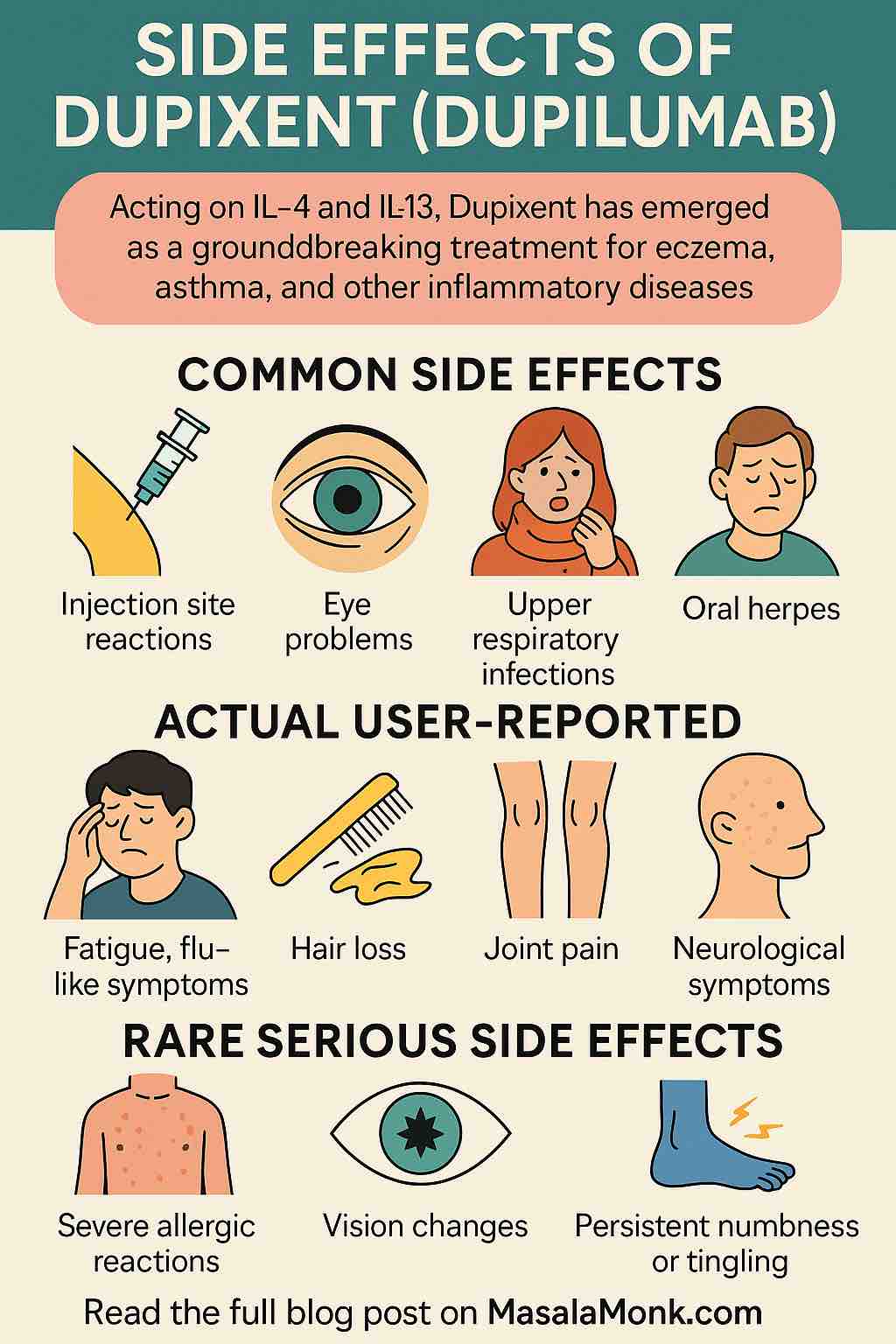
Dupixent is a monoclonal antibody that targets interleukin-4 (IL-4) and interleukin-13 (IL-13)—key drivers in the type 2 inflammatory response seen in conditions like:

  • Atopic dermatitis (eczema)
  • Asthma
  • Chronic rhinosinusitis with nasal polyps (CRSwNP)
  • Eosinophilic esophagitis (EoE)
  • Prurigo nodularis
  • COPD (in select patients)

By blocking these signals, Dupixent calms inflammation and restores skin and respiratory function without broadly suppressing the immune system.


Common Side Effects: What Clinical Trials Reveal

According to prescribing data and post-marketing surveillance, these side effects show up most often:

🔹 Injection Site Reactions

  • Redness, swelling, or itching at the injection site
  • Tip: Users often rotate sites or use cold packs before/after injections to minimize this.

🔹 Eye Problems

  • Conjunctivitis (pink eye), dry eyes, and eyelid inflammation (blepharitis)
  • This is especially common in eczema patients—up to 28% in some studies.

🔹 Upper Respiratory Infections

  • Includes sore throat, congestion, and cough
  • Often mild and resolves on its own

🔹 Oral Herpes Reactivation

  • Cold sores may return or worsen in frequency

🔹 Elevated Eosinophils

  • Increased white blood cells that can cause joint or lung symptoms in rare cases

🔹 Joint Pain and Muscle Aches

  • More commonly reported in asthma and EoE patients

What the Internet Is Saying: Real User Experiences

Let’s go beyond the data sheet and listen to real users on platforms like Reddit’s r/eczeMABs, Drugs.com, and health forums.

👁️ “My Eyes Were on Fire”

“Dupixent cleared my skin like a miracle, but my eyes? Constant burning and crusting. I had to stop after 3 months.” – Reddit user

Commentary: Eye side effects are the #1 complaint across the board. Some find relief with over-the-counter drops, while others require prescription anti-inflammatory eye meds.


🩺 “It’s a Miracle… and a Curse?”

“I’ve never breathed this clearly. My eczema is gone. But I get these deep muscle aches and fatigue for a day or two after each shot.” – Drugs.com reviewer

Commentary: Some report post-injection fatigue or flu-like symptoms, likely due to immune system modulation.


😰 “My Anxiety Got Worse”

“I started having weird neurological symptoms—dizziness, pins and needles. My doctor isn’t sure if it’s Dupixent, but I didn’t have this before.” – Reddit user

Commentary: These symptoms are rare but not unheard of. It’s unclear whether Dupixent is directly to blame or if it unmasks underlying issues.


💇 “My Hair Fell Out”

“No one warned me about the hair loss. It started thinning around the temples after 6 months.” – Reddit user

Commentary: Hair thinning or texture changes have surfaced in anecdotal reports, but this is not yet a widely recognized clinical side effect.


Rare But Serious: When to Call Your Doctor

These are not common, but need immediate medical attention if they occur:

  • Severe allergic reactions: hives, swelling of the face/throat, difficulty breathing
  • Vision changes, eye pain, or loss of sight
  • Severe joint pain or swelling
  • Persistent numbness or tingling

Coping With the Side Effects

If you’re dealing with side effects but still benefiting from Dupixent, here are some ways to strike a balance:

  • Work closely with your doctor: They may adjust dosing or recommend supportive treatments.
  • See an ophthalmologist: Especially for recurring eye issues.
  • Use a journal: Track symptoms weekly to identify patterns or triggers.
  • Seek community support: Reddit, Facebook groups, and nationaleczema.org all have active, helpful communities.

Final Thoughts: Is Dupixent Worth It?

The overwhelming sentiment among users is this:

🟢 “It changed my life.”
🔴 “But it wasn’t without a price.”

Dupixent is not a casual medication. It’s a long-term commitment with potential trade-offs. For many, it offers dramatic relief that outweighs side effects. For others, especially those with eye issues or neurological symptoms, the cost may be too high.

Ultimately, the decision to start or stay on Dupixent is deeply personal—and best made in partnership with a healthcare provider who understands your condition and goals.


✍️ We Want to Hear From You!

Are you currently taking Dupixent? What’s your experience been like? Share in the comments.

Frequently Asked Questions (FAQs)

1. How long does it take for Dupixent to start working?

Most users begin seeing improvement in symptoms within 2 to 4 weeks, especially for eczema and asthma. However, for full therapeutic benefit, it may take 3 to 6 months of consistent use.


2. Are eye problems from Dupixent permanent?

Usually no. Most eye-related side effects (dryness, conjunctivitis, blepharitis) are temporary and manageable with eye drops or by consulting an ophthalmologist. In rare cases, symptoms may persist and require stopping the drug.


3. What should I do if I miss a dose of Dupixent?

Take the missed dose as soon as possible within 7 days of the scheduled date. If more than 7 days have passed, skip the missed dose and take the next one at your regular time. Never double dose.


4. Can Dupixent cause fatigue or flu-like symptoms?

Yes, some users report mild fatigue, headaches, or body aches, especially after injection days. These are typically short-lived but worth discussing with your doctor if persistent.


5. Is hair loss a known side effect of Dupixent?

Hair loss is not listed as an official side effect, but anecdotal reports from users suggest that it can occur. More research is needed to establish a direct link.


6. Does Dupixent affect the immune system?

Dupixent modulates part of the immune response (IL-4 and IL-13) but does not suppress the entire immune system like steroids or biologics used for rheumatoid arthritis. It’s considered relatively targeted and safe in that regard.


7. Can I take Dupixent during pregnancy?

Animal studies suggest no major risk, but human data is limited. If you are pregnant or planning to become pregnant, consult your healthcare provider to assess the risk/benefit ratio.


8. Are there any foods or medications I should avoid while on Dupixent?

There are no known major food or drug interactions with Dupixent. However, always inform your doctor about any new medications or supplements you are taking.


9. How long can I stay on Dupixent?

Dupixent is designed for long-term maintenance therapy, and some patients have used it for years. Regular check-ins with your healthcare provider help assess whether continued use is appropriate.


10. What should I do if I experience side effects?

Start by documenting the symptoms and discussing them with your doctor. For mild effects (e.g., dry eyes or rash), supportive care may help. For severe symptoms (e.g., vision loss, allergic reactions), seek medical attention immediately and consider discontinuing the medication under supervision.

Posted on — Leave a comment

Love Momos? Some Disadvantages You Need to Know

Love Momos? Some Disadvantages You Need to Know

Steamed, juicy, spicy, and addictive — momos have taken Indian street food culture by storm. Whether you’re grabbing a quick plate outside a metro station, enjoying a cozy snack during monsoons, or craving something spicy in the evening, momos have become the go-to comfort food for millions.

But as delicious and irresistible as they are, have you ever stopped to think about what goes into your favorite dumplings? What if your love for momos is coming at a hidden cost to your health?

In this blog, we’re diving deep into the dark side of momos — from the ingredients that make them to the hygiene risks they pose, and how you can enjoy them more safely.


🧾 The Momo Phenomenon in India

Originating from Tibet and Nepal, momos are essentially dumplings filled with meat, vegetables, or cheese, typically steamed or fried and served with spicy red chutney. Their simplicity, affordability, and adaptability to Indian palates made them an instant hit across Indian cities.

Today, from Delhi’s Lajpat Nagar to Mumbai’s Lokhandwala and Kolkata’s College Street — momos are everywhere. But as their popularity has soared, so have concerns about their nutritional value and hygiene standards.


⚠️ The Hidden Health Hazards of Momos

1. The Refined Flour Dilemma (Maida Overload)

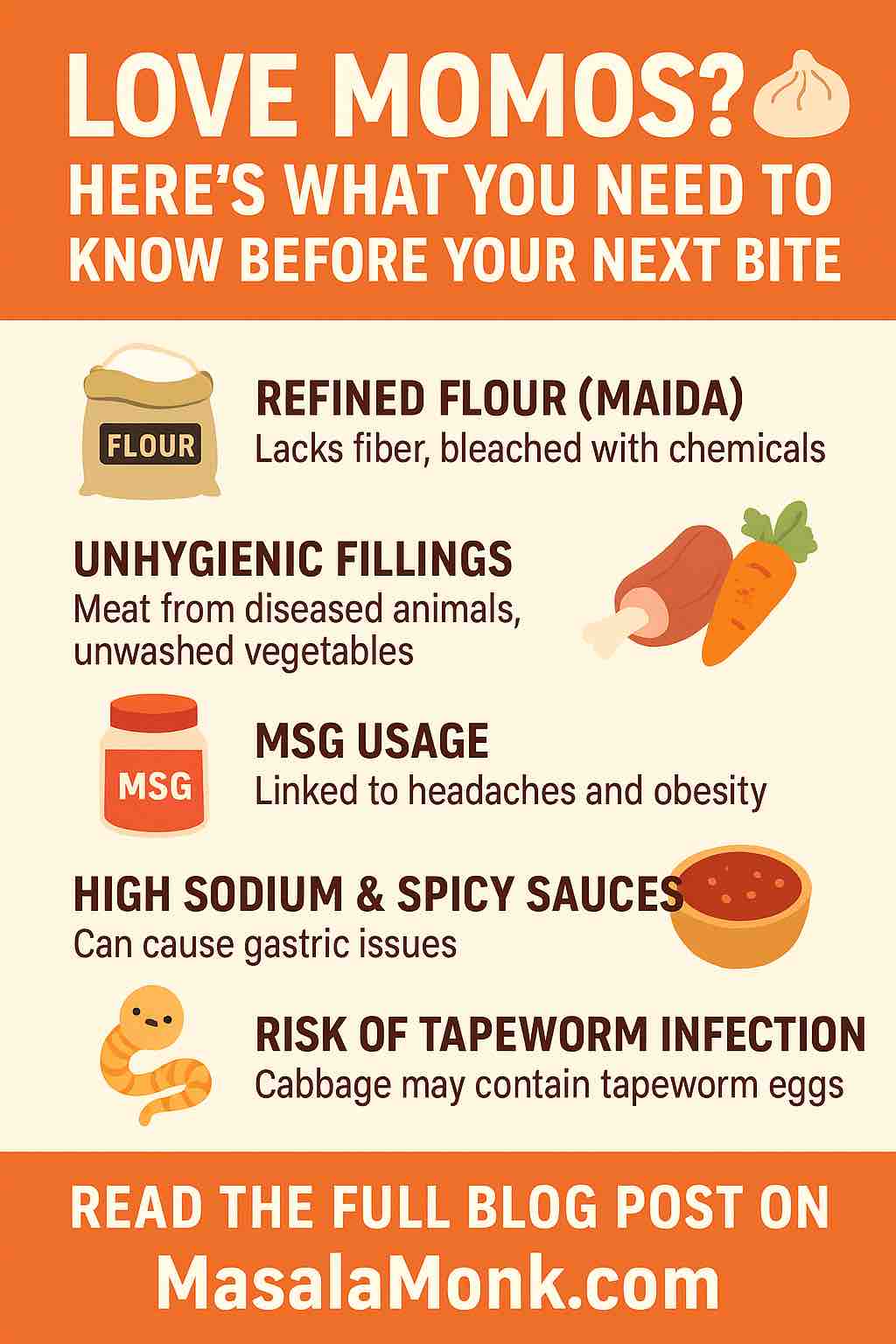
Most momos are made using refined white flour (maida) — which undergoes chemical processing to give it a bright white appearance and fine texture. The issue? It’s:

  • Low in fiber — making digestion sluggish.
  • High glycemic index — can spike blood sugar quickly.
  • Often bleached — with chemicals like benzoyl peroxide and azodicarbonamide, which may harm the pancreas and disrupt insulin sensitivity.

📌 Long-term consumption of maida-based foods has been linked to obesity, insulin resistance, and digestive issues.


2. Mystery Fillings and Quality Concerns

Here’s the brutal truth: not all street vendors use fresh or quality ingredients. In some cases:

  • Meat used is stale or sourced unethically.
  • Cabbage and other veggies may be unwashed or infested with bacteria.
  • Spices and oils are reused or of extremely low grade.

🥬 Did you know improperly washed cabbage can carry tapeworm eggs? If undercooked, these can enter your body and, in rare cases, reach the brain, causing neurocysticercosis — a potentially life-threatening condition.


3. MSG – The Silent Enhancer

To make their momos tastier, many vendors add monosodium glutamate (MSG) — a flavor enhancer that:

  • Can trigger “Chinese Restaurant Syndrome” in sensitive individuals — headaches, dizziness, and chest pain.
  • Is associated with obesity, fatigue, and neurotoxicity when consumed in large quantities.
  • Often hidden under names like “Ajinomoto” or “flavor enhancer” in ingredient lists.

💡 There are no legal mandates in India requiring vendors to disclose MSG use.


4. High Sodium & Spicy Chutneys

The red momo chutney — arguably the soul of the dish — often contains:

  • Massive amounts of salt, vinegar, and chili.
  • Spoiled tomatoes or fermented ingredients to cut costs.
  • Artificial colors that can irritate your gut lining.

📌 Regular intake can lead to:

  • Gastric ulcers
  • Acid reflux
  • Elevated blood pressure

5. Hygiene? Often an Afterthought

In the hustle of Indian streets, hygiene standards can be shaky at best:

  • Raw and cooked foods stored together.
  • Lack of gloves or hairnets.
  • Momo steamers and oil reused for days without cleaning.
  • Exposed to flies and polluted air.

During monsoons, when contamination risks are highest, consuming unhygienic momos can lead to food poisoning, E. coli infections, or dysentery.


🧬 Real Stories, Real Consequences

Here’s a sobering case: In 2017, AIIMS doctors in Delhi highlighted an alarming number of cases involving tapeworm larvae in the brain linked to consuming street-side momos with improperly cooked cabbage. The cases triggered a regional health advisory — and yet, many people remain unaware of these dangers.

Another report by The Times of India stated that excessive momo consumption, especially among school and college students, led to rising instances of gastritis, obesity, and lethargy.


✅ Enjoy Momos the Right Way: Tips for Safe Indulgence

You don’t have to give up on momos entirely. Here’s how you can savor them safely:

  1. Choose Clean, Reputable Outlets
    Avoid roadside stalls with poor hygiene. Opt for restaurants or cafes that maintain kitchen transparency and food safety standards.
  2. Go for Steamed, Not Fried
    Fried momos add trans fats and make digestion harder. Stick to steamed or tandoori varieties with minimal oil.
  3. Limit the Chutney
    Try squeezing lemon instead or use yogurt-based dips to avoid acidity.
  4. Make Them at Home
    Homemade momos let you choose whole-wheat flour, fresh fillings, and low-sodium sauces. Bonus: You can even bake them!
  5. Watch the Frequency
    Treat momos like a cheat snack — not a daily meal. Balance with fiber-rich fruits, vegetables, and hydration.

🌱 Healthier Alternatives to Traditional Momos

If you’re a momo lover but health-conscious, explore:

  • Whole Wheat or Millet Momos
  • Tofu, Paneer, or Soya Fillings
  • Grilled or Baked Momos
  • Low-sodium chutneys with herbs, mint, and lemon

❤️ Final Thoughts: Don’t Hate the Momo, Just Be Smart About It

Momos are more than food — they’re culture, comfort, and community. But indulging in them blindly, especially from questionable sources, can be dangerous to your health.

Let your love for momos be balanced by awareness. Ask questions, observe preparation methods, and most importantly — listen to your body. With just a few smart choices, you can keep enjoying momos without putting your health at risk.


Do you have a momo horror story or a healthy momo recipe? Share it in the comments below! Let’s make the momo movement safer and smarter. 🥢

❓ Frequently Asked Questions (FAQs)

1. Are momos unhealthy to eat?

Momos aren’t inherently unhealthy, but they become a problem when made with refined flour (maida), filled with low-quality or unhygienic ingredients, or deep-fried. The health risks increase significantly when consumed regularly from questionable sources.


2. What are the most common health risks of eating street momos?

Health risks include food poisoning, tapeworm infections, stomach ulcers, high sodium intake, MSG-related reactions, and long-term risks like obesity and digestive issues due to maida.


3. Can I get worms or parasites from eating momos?

Yes. If the cabbage or meat inside momos is not washed or cooked properly, it can carry tapeworm larvae, which may lead to neurocysticercosis, a serious brain infection.


4. Is it okay to eat momos every day?

No. Eating momos daily—especially from street vendors—can affect digestion, increase your sodium and MSG intake, and lead to chronic health conditions like high blood pressure or weight gain.


5. What’s the problem with using maida in momos?

Maida is a refined flour with almost no fiber or nutrition. It’s difficult to digest and may spike blood sugar levels. Over time, it can contribute to metabolic issues and sluggish digestion.


6. Are steamed momos healthier than fried ones?

Yes. Steamed momos are lower in fat and calories. Fried momos absorb oil, increasing trans fats and digestive strain. If you’re going to eat momos, steamed is the safer option.


7. What should I watch out for when buying momos outside?

Check for:

  • Cleanliness of the vendor’s stall
  • Whether ingredients are refrigerated or exposed
  • If the chutney is stored properly
  • Use of gloves or clean utensils
    Always avoid vendors with poor hygiene or reused oil.

8. How can I make healthier momos at home?

Use whole wheat or millet flour for the wrapper. Fillings can include fresh vegetables, tofu, or paneer. Avoid MSG and use herbs and spices for flavor. Steam or bake instead of frying.


9. Is momo chutney bad for health?

It can be. Street momo chutneys often contain excessive salt, chili, artificial color, and even spoiled tomatoes. Overconsumption may lead to acid reflux, ulcers, or stomach pain.


10. Can children eat momos safely?

Occasionally, yes — especially if made at home with healthy ingredients. Avoid feeding children street momos frequently due to hygiene concerns, MSG, and high spice levels.

Posted on — 1 Comment

Litti Chokha: The Soulful Bihari Comfort Food You Need to Try

If there’s one dish that captures the heart and soul of Bihar, it’s Litti Chokha. Earthy, smoky, nourishing, and packed with bold flavors, this traditional meal is more than just food it’s a cultural experience. From roadside dhabas in Patna to home kitchens during festivals, litti chokha is an emotion served on a plate.

Litti (whole wheat balls stuffed with spiced sattu) and chokha (a mashed, smoky preparation of eggplant, tomato, and potato) are traditionally cooked over coal or cow dung fire, giving it a unique rustic flavor. But don’t worry you can recreate this magic in your home kitchen too. Let’s dive into this authentic Bihari recipe!

Ingredients:

  • For Litti Dough:
  • Whole wheat flour – 2 cups
  • Ajwain (carom seeds) – ½ tsp
  • Salt – to taste
  • Ghee or oil – 2 tbsp (plus extra for brushing)
  • Water – to knead
  • For Sattu Filling:
  • Roasted chana sattu – 1 cup
  • Mustard oil – 2 tbsp
  • Garlic – 5–6 cloves (finely chopped)
  • Ginger – 1 tsp (grated)
  • Green chilies – 2 (finely chopped)
  • Lemon juice – 1 tbsp or raw mango powder – 1 tsp
  • Coriander leaves – a handful (finely chopped)
  • Salt – to taste
  • Pickle masala – 1 tsp (optional for a tangy kick)
  • For Chokha:
  • Eggplant – 1 large (roasted)
  • Tomatoes – 2 medium (roasted)
  • Boiled potatoes – 2 medium (optional but traditional)
  • Garlic – 4–5 cloves (roasted and mashed)
  • Green chilies – 1–2 (finely chopped)
  • Mustard oil – 1–2 tbsp
  • Salt – to taste
  • Coriander leaves – for garnish

Method:

Prepare the Dough Mix whole wheat flour with ajwain, salt, and ghee. Gradually add water and knead into a soft dough. Cover and rest it for 20–30 minutes.

Make the Sattu Filling: In a bowl, mix sattu with chopped garlic, ginger, green chilies, mustard oil, lemon juice, coriander, salt, and pickle masala (if using). Add a splash of water if the mixture feels too dry it should hold shape when pressed.

Shape the Litti: Divide the dough into equal-sized balls. Flatten each one, place a spoonful of filling in the center, and seal tightly to form round balls.

Cook the Litti:

Option 1 – Traditional Way: Roast the littis over open flame or on a coal grill until golden and charred.

Option 2 – Oven Method: Preheat oven to 200°C. Bake littis for 25–30 minutes, flipping once, until evenly browned.

Option 3 – Pan Method: Cook covered in an appe pan or heavy tawa on low heat, turning frequently until crispy and cooked. Brush with ghee generously once cooked.

Prepare Chokha:

Roast brinjal and tomatoes directly on the flame until charred and soft. Peel off the skin. Mash roasted vegetables with boiled potatoes, garlic, green chilies, salt, and mustard oil. Garnish with chopped coriander leaves.

Serve piping hot littis drenched in ghee, alongside a generous scoop of chokha. Add a side of green chutney, raw onions, and tangy mango pickle for the complete Bihari experience.

Litti chokha is not just food—it’s a story of simplicity, resilience, and rich regional heritage. Whether you’re cooking it for the first time or reliving childhood memories, this dish brings unbeatable comfort and joy.

Have you ever tried making litti chokha at home? Let me know how it turned out in the comments below!

Posted on — Leave a comment

Side Effects of Doxycycline

Doxycycline Side Effects What You Should Know

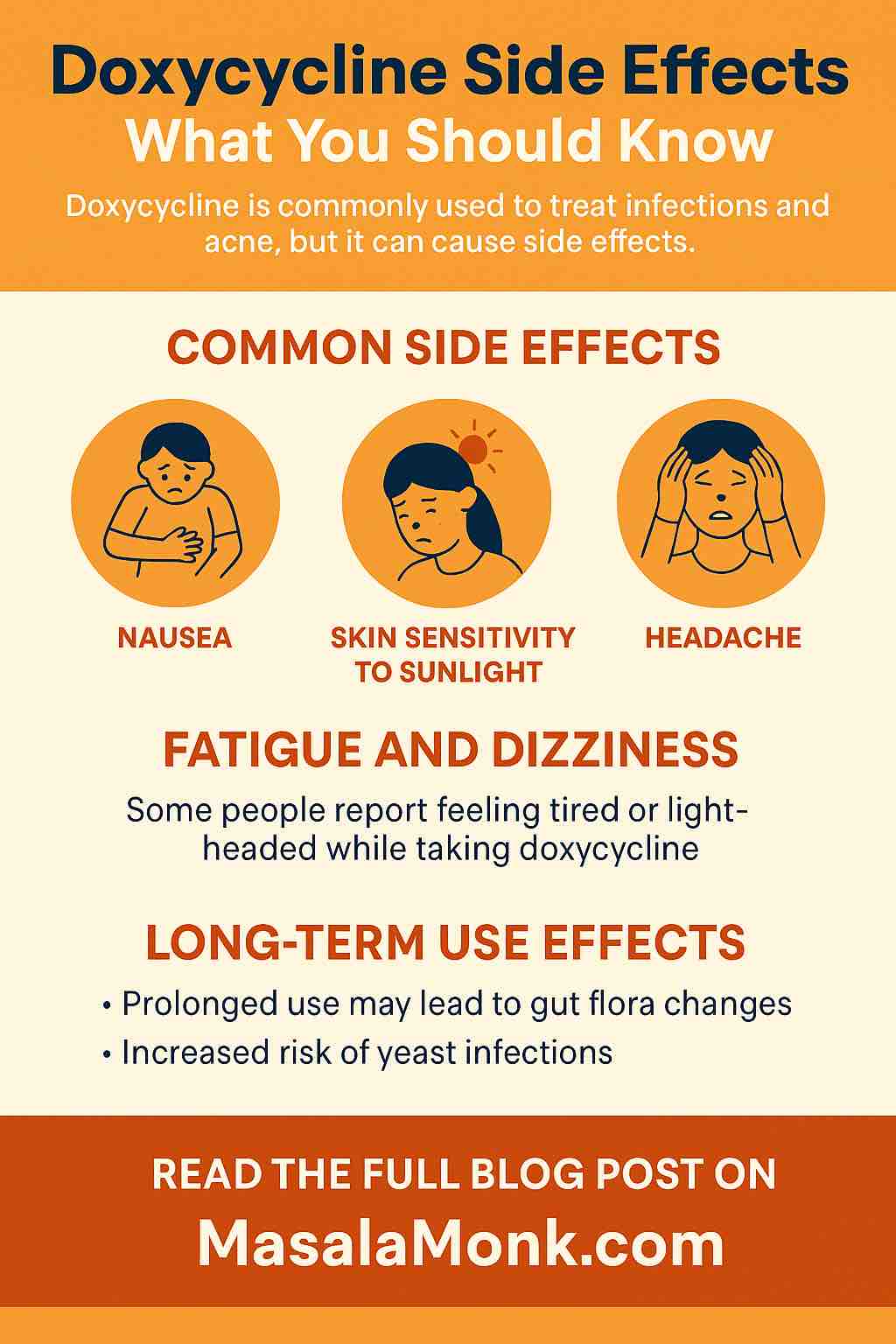
Doxycycline is a widely used antibiotic known for its effectiveness against a range of bacterial infections—from acne and urinary tract infections to more serious illnesses like Lyme disease and malaria. But like all medications, it doesn’t come without potential side effects.

In this comprehensive guide, we’ll break down everything you need to know about the side effects of doxycycline, including common, rare, and long-term effects, as well as how it can make you feel—particularly in terms of fatigue, dizziness, and stomach issues. We’ll also explore how the different forms of doxycycline (like hyclate and monohydrate) compare in terms of tolerability.


💊 What Is Doxycycline?

Doxycycline belongs to the tetracycline class of antibiotics. It works by inhibiting bacterial protein synthesis, stopping the growth and spread of bacteria in the body. It’s commonly prescribed for:

  • Respiratory infections
  • Acne and rosacea
  • Tick-borne diseases (e.g., Lyme disease, Rocky Mountain spotted fever)
  • Malaria prophylaxis
  • Sexually transmitted infections (STIs)

⚠️ Common Side Effects of Doxycycline

Let’s start with the side effects most users report during short-term use (7–14 days), which apply to both doxycycline hyclate and monohydrate.

✅ Most Common Side Effects

  • Nausea and vomiting
  • Stomach upset
  • Diarrhea
  • Headache
  • Photosensitivity (sunburn risk) – this is one of the hallmark side effects
  • Skin rash or itching
  • Esophageal irritation – especially if the pill is taken without water or while lying down

Note: These usually appear within the first few days of treatment and resolve quickly after the medication is stopped.


🧠 Does Doxycycline Make You Tired?

A surprisingly common concern seen in online search queries is whether doxycycline can cause fatigue, tiredness, or even exhaustion.

🧾 What the Research Says:

Fatigue is not listed among the most common side effects in clinical trials. However, many users report feeling unusually tired while on doxycycline.

🚨 Possible Causes:

  • Infection itself: Your body might already be tired from fighting off an infection.
  • Gut microbiome disruption: Doxycycline may interfere with nutrient absorption, leading to fatigue.
  • Rare side effects: In rare cases, doxycycline can cause intracranial hypertension (increased pressure in the brain), leading to tiredness, headaches, and visual disturbances.

If you experience severe or prolonged fatigue, it’s essential to consult your doctor. It might not be the drug itself but a reaction worth investigating.


💡 Doxycycline Hyclate vs. Monohydrate: Is There a Difference?

Yes, especially when it comes to tolerability:

FeatureDoxycycline HyclateDoxycycline Monohydrate
AcidityMore acidicLess acidic
GI Side EffectsMore frequentFewer complaints
CostUsually cheaperOften more expensive
EffectivenessComparableComparable

People who suffer from stomach pain or esophageal irritation often tolerate monohydrate better.


⏳ How Long Do Doxycycline Side Effects Last?

  • Common effects (nausea, diarrhea, light sensitivity): usually resolve within 1–3 days after stopping the medication.
  • Severe effects (photosensitivity rashes or esophageal injury): may take up to a week to resolve.
  • Long-term effects (e.g., microbiome imbalance): can persist, especially if the antibiotic course was extended.

🔁 Long-Term Side Effects of Doxycycline

Though doxycycline is usually prescribed short-term, some people take it for weeks or even months (especially for acne or chronic infections). Here’s what long-term use may involve:

📉 Potential Risks:

  • Photosensitivity: May persist or worsen
  • Gut flora disruption: Increases the risk of yeast infections and oral thrush
  • Autoimmune-like responses: Very rare, but some studies suggest a link with systemic effects
  • Liver inflammation: Seen only with extended, high-dose use
  • Tooth discoloration or bone growth issues: Especially in children under 8 (why it’s contraindicated in pediatrics)

👅 Can Doxycycline Cause Yeast Infections or Thrush?

Yes. As a broad-spectrum antibiotic, doxycycline not only kills harmful bacteria—it also disrupts your natural microbiome, allowing fungi like Candida albicans to grow unchecked.

💡 Common Signs:

  • White patches in the mouth (oral thrush)
  • Vaginal itching, discharge (yeast infection)

Preventative tip: Taking probiotics during or after your course may help maintain healthy gut flora.


🌀 Dizziness and Doxycycline: What to Know

Dizziness is a less common but documented side effect. It may be related to:

  • Vestibular sensitivity
  • Intracranial hypertension (again, rare)
  • Low blood pressure or dehydration

This often coincides with fatigue and may feel like lightheadedness, particularly when standing up.


🤕 Doxycycline and Sore Throat or Stomach Pain

⚠️ Causes of Sore Throat:

  • Pill-induced esophagitis: A serious risk if the pill is taken without enough water or right before lying down
  • Acid reflux: Can irritate the throat

✅ Stomach Pain Tips:

  • Always take doxycycline with food
  • Drink a full glass of water
  • Avoid lying down for at least 30 minutes after taking it

Summary Table of Key Symptoms and Associations

SymptomCommon?Likely CauseNotes
Nausea, vomiting, stomach upsetYesGI mucosa irritationTake with food
Fatigue / TirednessRareInfection vs. drug side effectConsider stopping if persistent
DizzinessRareCNS or vestibular systemOften transient
Yeast infection / ThrushModerateMicrobiome disruptionProbiotics may help
Sore throatModeratePill esophagitisUpright posture post-dose
Long-term effectsRareImmune, liver, gut flora, photosensitivityWatch liver enzymes in chronic use

🧪 Summary: Is Doxycycline Safe?

For most people, yes—especially when taken as prescribed. But like all medications, it’s essential to watch for side effects, particularly if you’re prone to GI issues or have a sensitive system.


📌 Final Tips for Doxycycline Users

  • Take with food to minimize GI distress
  • Avoid sun exposure or use SPF 30+ sunscreen
  • Stay upright for 30 minutes after taking your dose
  • Don’t double up on missed doses
  • Talk to your doctor if you feel extreme fatigue, dizziness, or symptoms of a yeast infection

🗣️ Share Your Experience

Have you taken doxycycline? Did you experience fatigue or other unusual symptoms? Share your thoughts in the comments or join the conversation online using #DoxycyclineDiaries.

🧠 FAQs: Doxycycline Side Effects & Usage

1. Can doxycycline make you feel extremely tired?

Yes, although it’s not a common side effect. Fatigue or tiredness may result from the body fighting the infection itself or from rare side effects like intracranial hypertension. If tiredness is persistent or severe, consult your healthcare provider.


2. Is doxycycline hyclate worse for your stomach than doxycycline monohydrate?

Yes. Doxycycline hyclate is more acidic and is often associated with higher rates of gastrointestinal upset, such as nausea, acid reflux, and pill-induced esophagitis. Monohydrate is typically better tolerated in this regard.


3. What’s the best way to prevent stomach pain while taking doxycycline?

Take it with a full meal (not just a snack), and drink a full glass of water. Remain upright for at least 30 minutes after taking the medication to prevent esophageal irritation.


4. How long do doxycycline side effects last after stopping the medication?

Most side effects resolve within a few days (1–3) after discontinuation. More serious reactions like photosensitivity or esophageal irritation may take up to a week to subside.


5. Can doxycycline cause yeast infections or oral thrush?

Yes. Because it disrupts the natural balance of bacteria, it can lead to fungal overgrowth such as vaginal yeast infections or oral thrush. Taking probiotics may help reduce this risk.


6. Is it safe to take doxycycline long-term for acne or rosacea?

It can be, under medical supervision. Long-term use increases the risk of side effects like photosensitivity, microbiome disruption, and (rarely) liver or autoimmune issues. Regular monitoring is advised.


7. Does doxycycline cause dizziness or affect balance?

Some people report dizziness or lightheadedness, particularly when standing up. This can be related to vestibular effects or rarely, increased intracranial pressure. If the symptom is persistent, stop the medication and seek medical advice.


8. Can doxycycline give you a sore throat?

Yes. Doxycycline can cause pill-induced esophagitis, which can feel like a sore throat. This happens if the pill becomes lodged in the throat or esophagus. Taking it with plenty of water and staying upright after dosing helps prevent this.


9. Is there a difference in effectiveness between hyclate and monohydrate forms?

No. Both forms of doxycycline are equally effective in treating infections. The difference lies in tolerability—monohydrate tends to cause fewer gastrointestinal issues.


10. Should I stop taking doxycycline if I feel very tired or dizzy?

You should not stop antibiotics abruptly without consulting your doctor. However, if you’re experiencing severe fatigue or dizziness that interferes with daily functioning, contact your healthcare provider immediately to discuss alternatives or dose adjustment.