Posted on Leave a comment

Thyroid Health in Females: How to Support Thyroid Function with Food

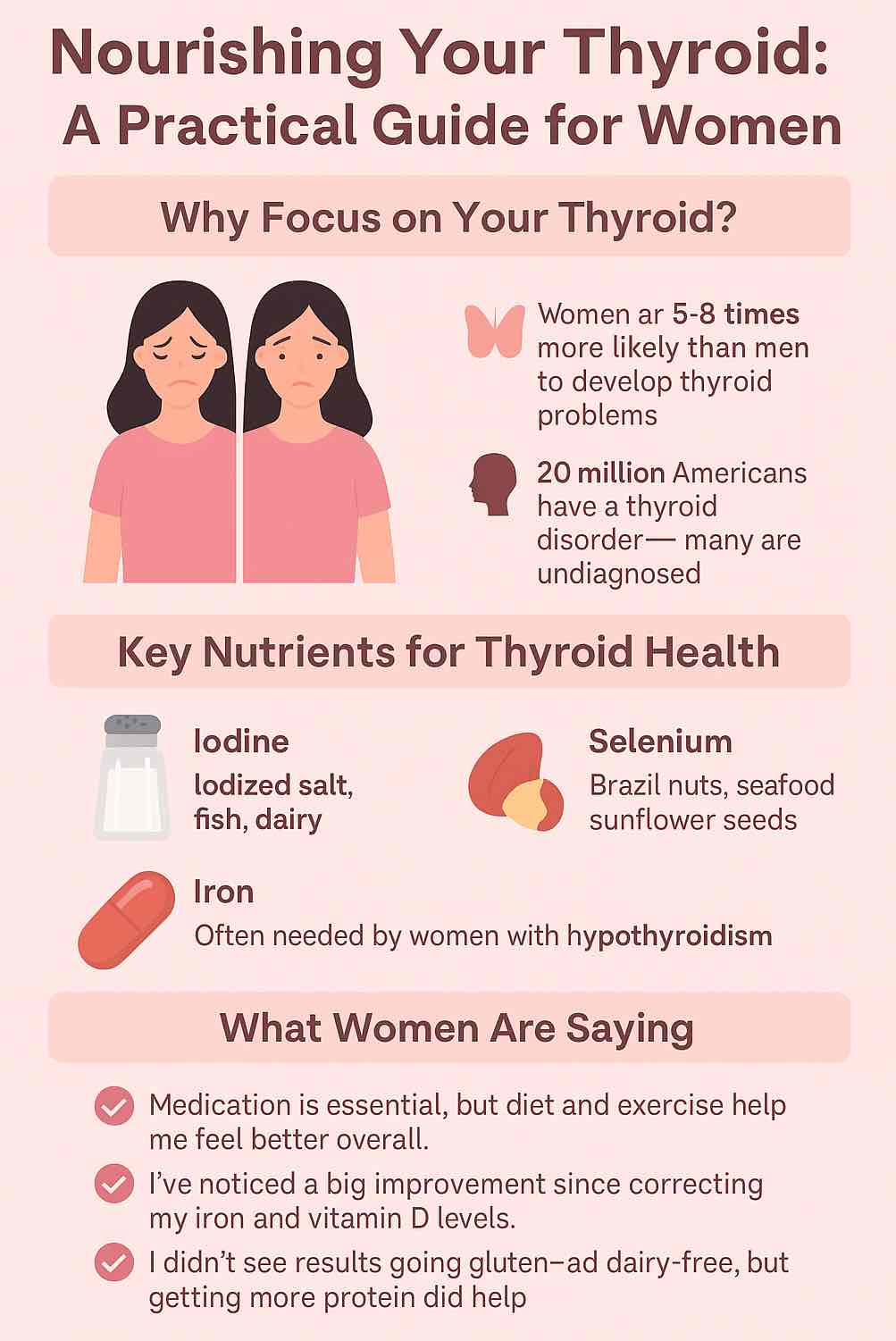
Nourishing Your Thyroid: A Practical Guide for Women

Are you a woman struggling with energy, mood, weight, or that persistent feeling something’s off—even when your bloodwork is “normal”? You’re not alone.

Thyroid issues affect millions of women worldwide. They often show up as vague, frustrating symptoms: fatigue, brain fog, unexplained weight gain, dry skin, hair loss, anxiety, or menstrual changes. It’s not just in your head, and it’s not just about your numbers—your thyroid is the master regulator of metabolism, hormones, and overall well-being.

But here’s what your doctor may not tell you: what you eat and how you live can dramatically influence how you feel, how well your medication works, and even your risk of future thyroid problems. This isn’t about magical “thyroid diets” or silver-bullet supplements. This is about understanding your body’s unique needs as a woman—and building the daily habits that help you thrive.


Understanding Your Thyroid: Why Women Need to Pay Special Attention

Your thyroid gland sits quietly at the base of your neck, but its impact is anything but quiet. It releases hormones (T4 and T3) that set the pace for every cell—regulating metabolism, temperature, brain function, heart health, and even how you process other hormones (like estrogen and progesterone).

Women are more vulnerable than men to thyroid disorders due to hormonal shifts (puberty, pregnancy, postpartum, perimenopause/menopause), higher rates of autoimmunity, and sometimes increased risk of nutrient deficiencies.

The two most common thyroid issues are:

  • Hypothyroidism (underactive thyroid): Fatigue, weight gain, cold intolerance, constipation, hair loss, low mood.
  • Hashimoto’s thyroiditis: An autoimmune disease causing hypothyroidism (the immune system attacks the thyroid).

Why Food and Lifestyle Matter More Than You Think

Here’s the truth:

  • Medication is essential if your body isn’t producing enough thyroid hormone.
  • Nutrition and lifestyle are powerful levers to optimize your health, help your medication work better, support your immune system, and restore your energy, metabolism, and mood.

The Research Is Clear:

  • Diets rich in anti-inflammatory foods (think: lots of vegetables, fish, olive oil, nuts) can lower thyroid antibodies and support hormone balance.
  • Gut health is intimately linked with thyroid health—your microbiome helps absorb nutrients and may even “talk” to your immune system to prevent or calm autoimmunity.
  • Micronutrient sufficiency—getting enough iodine, selenium, iron, zinc, vitamin D, and more—makes a real difference in how you feel and how well your thyroid functions.

The Nutrients Your Thyroid Can’t Live Without (and How to Get Them)

1. Iodine

  • Why it matters: You literally can’t make thyroid hormone without it.
  • Best sources: Iodized salt (not sea salt or fancy salts), seaweed (in moderation), fish, eggs, dairy.
  • Pro tip: Too much is as bad as too little, especially for women with Hashimoto’s. Stick to natural sources unless your doctor prescribes more.

2. Selenium

  • Why it matters: Converts T4 (inactive) to T3 (active), shields the thyroid from inflammation.
  • Best sources: Brazil nuts (just 1-2 daily is enough), sunflower seeds, seafood, eggs, turkey.
  • Science hack: A 2025 meta-analysis found selenium supplementation (100–200 mcg/day) can lower antibodies in Hashimoto’s, but food is safest unless your doctor suggests otherwise.

3. Iron

  • Why it matters: You need iron to make thyroid hormone and for oxygen delivery.
  • Best sources: Red meat, poultry, beans, lentils, pumpkin seeds, leafy greens.
  • What women say: “Fixing my iron deficiency changed everything. More energy, less hair loss, and finally losing weight!”

4. Zinc

  • Why it matters: Key for making and activating thyroid hormone; supports immune health.
  • Best sources: Oysters, beef, chicken, nuts, whole grains, chickpeas.

5. Vitamin D

  • Why it matters: Low levels are linked to more autoimmunity and worse thyroid symptoms.
  • Best sources: Sunlight (15–30 min on arms/legs daily), salmon, sardines, egg yolks, fortified foods.
  • Tip: Nearly everyone with Hashimoto’s is low in D—ask for a blood test!

6. B12 and Folate

  • Why they matter: Low B12 is common with hypothyroidism (especially if you’re vegetarian or have gut issues).
  • Sources: Fish, dairy, eggs, meat, fortified cereals (for B12); greens, beans, citrus (for folate).

7. Tyrosine

  • Why it matters: This amino acid is the backbone of your thyroid hormones.
  • Sources: Chicken, turkey, dairy, avocados, almonds, pumpkin seeds.

8. Gut-Supporting Fiber and Probiotics

  • Emerging research: A healthy microbiome helps absorb thyroid-critical nutrients, keeps inflammation down, and can even modestly improve thyroid hormone levels.
  • Best sources: Yogurt, kefir, sauerkraut, kimchi, high-fiber veggies, beans, oats.

Real Women, Real Stories: What’s Actually Working?

Let’s get real—most women with thyroid conditions feel overwhelmed by conflicting advice. Here’s what women are sharing, in their own words:

  • On medication & lifestyle:
    “Levothyroxine alone got my labs in range, but I still felt tired and foggy. Focusing on protein and cutting processed foods gave me the energy I’d been missing for years.”
  • On weight loss:
    “Losing weight with hypothyroidism is slower, but it’s possible. I stopped focusing on perfection, tracked my food, added walks, and the pounds finally started moving.”
  • On diet experiments:
    “I tried going gluten- and dairy-free. It didn’t change my labs, but my digestion improved, so I stuck with it. My friend, with the same diagnosis, didn’t notice any difference. You have to experiment.”
  • On deficiencies:
    “I was eating healthy but still felt awful. Blood tests showed low iron and vitamin D. Once I fixed those, it was like a light switch for my mood and energy.”
  • On small wins:
    “Just prepping lunch ahead—hard-boiled eggs, veggies, and nuts—keeps me from grabbing junk. Small habits really add up.”

Building Your Thyroid-Friendly Plate: Practical, Day-to-Day Strategies

1. Prioritize Protein at Every Meal

  • Why: Helps stabilize energy, curbs cravings, preserves lean muscle (which keeps metabolism higher).
  • How: Eggs for breakfast, Greek yogurt or cottage cheese as snacks, chicken/fish at lunch, beans or tofu at dinner.

2. Double Down on Veggies

  • Why: Rich in fiber, vitamins, antioxidants, and support gut health.
  • How: Aim for at least two cups of non-starchy veggies at lunch and dinner. Mix cooked and raw (but if you have iodine issues, lightly cook cruciferous veggies).

3. Don’t Fear (Healthy) Fats

  • Why: Fats like olive oil, avocado, and nuts are anti-inflammatory and keep you full.
  • How: Drizzle olive oil on salads, add avocado to toast or smoothies, snack on nuts or seeds.

4. Go for Slow Carbs, Not No Carbs

  • Why: Slow-digesting carbs (oats, brown rice, sweet potatoes, quinoa) support steady energy and prevent blood sugar crashes.
  • How: Choose one slow carb per meal, limit white bread, pastries, and sugary cereals.

5. Optimize Your Micronutrients

  • Why: Deficiencies can stall progress, worsen symptoms, or prevent you from feeling your best.
  • How:
    • Iodine: Use iodized salt, not sea salt.
    • Selenium: Eat a Brazil nut most days.
    • Vitamin D: Get outside; ask your doctor about a supplement if you’re low.
    • Iron/B12: Include animal protein or fortified foods, especially if you’re vegetarian.

6. Hydrate Wisely

  • Why: Even mild dehydration affects energy and metabolism.
  • How: Keep a water bottle handy. Try herbal teas, or flavor water with citrus/mint.

7. Space Out Your Thyroid Medication

  • Pro tip: Take thyroid meds first thing in the morning with water, wait at least 30–60 minutes before coffee or breakfast to ensure proper absorption. Avoid calcium, iron, or magnesium supplements close to medication time.

Weekly Meal Plan Sample: Food for Real Life

Here’s a sample plan you can tweak to your tastes, budget, and schedule:

Monday

  • Breakfast: Omelet with spinach, mushrooms, and feta
  • Snack: Greek yogurt + sliced almonds
  • Lunch: Grilled salmon over leafy greens with olive oil dressing, roasted sweet potatoes
  • Snack: Brazil nut + apple slices
  • Dinner: Chicken stir-fry with broccoli (cooked), peppers, carrots, served over brown rice

Tuesday

  • Breakfast: Overnight oats with chia seeds, berries, and pumpkin seeds
  • Snack: Cottage cheese + sliced cucumber
  • Lunch: Lentil and vegetable soup, side of quinoa salad
  • Snack: Hard-boiled egg + cherry tomatoes
  • Dinner: Turkey chili with black beans, corn, and avocado

Wednesday

  • Breakfast: Smoothie (protein powder, banana, spinach, nut butter, almond milk)
  • Snack: Kefir or unsweetened yogurt + walnuts
  • Lunch: Tuna salad (with beans, celery, olive oil) on mixed greens
  • Snack: Carrot sticks + hummus
  • Dinner: Baked cod, roasted Brussels sprouts (cooked), brown rice

(Repeat, mix, and match for the rest of the week!)


The Emotional Side: Mindset, Motivation, and What to Do When You Hit a Wall

Thyroid health isn’t just about biology. It’s about mindset and self-compassion. Many women describe years of feeling dismissed, frustrated, or misunderstood.

Practical Mindset Shifts:

  • Focus on progress, not perfection: Small, consistent changes beat all-or-nothing thinking every time.
  • Track how you feel, not just your weight: Celebrate better energy, mood, and less brain fog as big wins.
  • Advocate for yourself: Push for complete lab work, including ferritin, B12, vitamin D, and thyroid antibodies.
  • Experiment, don’t obsess: Try different eating patterns (Mediterranean, plant-forward, gluten-free) and see what actually helps you.
  • Lean on community: Find others online (r/Hypothyroidism, support groups) or locally to swap stories and motivation.

What to Do When Progress Slows:

  • Revisit your nutrition—are you getting enough protein, iron, selenium, and vitamin D?
  • Are you sleeping enough and managing stress?
  • Are your medications optimized? Has your dose changed since weight loss or a new life stage?
  • If you’re stuck, bring data (food/mood/symptom logs) to your doctor or a registered dietitian.

Advanced Tips: Going Beyond the Basics

1. Gut Health: Your Hidden Ally

  • Recent studies show that probiotic and synbiotic supplements (for 4–8 weeks) can reduce TSH and boost active T3/T4—especially helpful if you’ve had digestive issues, antibiotics, or lots of processed food.
  • Try to eat something fermented daily (yogurt, kefir, sauerkraut, kimchi, miso).

2. Inflammation Busters

  • Colorful berries, leafy greens, turmeric, ginger, nuts, seeds, and fatty fish (salmon, sardines, mackerel) are all proven anti-inflammatory foods.
  • Swap out vegetable oils and processed snacks for olive oil, avocado, and whole nuts.

3. Body Composition Matters

  • New research shows where you carry weight (waist/hips) affects how your thyroid hormones behave.
  • Resistance training helps retain muscle, improves metabolism, and balances blood sugar.

4. Hormone Fluctuations

  • Pregnancy, perimenopause, and menopause all impact thyroid needs.
  • Ask your doctor for thyroid labs during life transitions—doses often need tweaking.

Your Next Steps: Building Your Personal Thyroid Blueprint

  1. Get a thorough checkup: Insist on full thyroid panel (TSH, Free T4, Free T3, antibodies), ferritin, B12, vitamin D, and iron.
  2. Start a food/mood/energy journal: You’ll quickly spot what foods, habits, and routines make you feel best.
  3. Experiment with one small change at a time: Whether it’s adding a Brazil nut, 10 minutes of morning sunlight, or a daily walk.
  4. Find your tribe: Support is out there—don’t go it alone.
  5. Celebrate your wins: Whether it’s better sleep, less hair loss, or finishing the week with more energy—you deserve it.

The Bottom Line

Thyroid health is a marathon, not a sprint. Medication is often necessary, but food and lifestyle create the foundation for energy, resilience, and joy. There’s no one-size-fits-all formula—so get curious, stay compassionate with yourself, and take it step by step.

You are not broken, you are not alone, and you are more powerful than you realize. Nourish your body, honor your journey, and trust that small changes truly do add up.


Ready to feel better? Start today with one simple, nourishing meal. Your thyroid—and your whole body—will thank you.

10 FAQs for Women Supporting Thyroid Health

1. Can I manage hypothyroidism with diet alone, or do I need medication?
No, diet cannot replace thyroid hormone if your thyroid is underactive. Medication (like levothyroxine) is essential for most with hypothyroidism. However, a healthy diet supports your energy, immune function, and may improve how you feel and how well your medication works.

2. What foods are best for supporting thyroid function?
Focus on iodine-rich foods (iodized salt, fish, dairy, eggs), selenium sources (Brazil nuts, seafood, sunflower seeds), iron (lean meats, legumes, spinach), zinc (beef, pumpkin seeds), and plenty of colorful vegetables, whole grains, nuts, and seeds. Include probiotic-rich foods for gut health.

3. Should I avoid gluten or dairy if I have Hashimoto’s or hypothyroidism?
There’s no universal need to avoid gluten or dairy unless you have celiac disease, diagnosed intolerance, or personal symptom improvement when eliminating these foods. Many women do not see thyroid benefits from removing them, but some with autoimmune thyroiditis may feel better without gluten.

4. How do I take my thyroid medication for best results?
Take your medication first thing in the morning with water, on an empty stomach. Wait 30–60 minutes before eating, drinking coffee, or taking supplements (especially calcium, iron, magnesium) to ensure proper absorption.

5. Why am I still tired and gaining weight even though my labs are “normal”?
You may have other factors affecting your energy, such as low iron, vitamin D, or B12; poor sleep; unmanaged stress; or your medication dose may need adjustment. Talk to your healthcare provider and ask for a full nutrient panel.

6. Are raw cruciferous vegetables (like broccoli or kale) bad for my thyroid?
In normal portions and if you get enough iodine, cooked or raw cruciferous veggies are generally safe. If you have severe iodine deficiency, it’s better to cook these vegetables and enjoy them in moderation.

7. Can I lose weight with hypothyroidism?
Yes, but it may be slower. Prioritize lean proteins, non-starchy veggies, and whole foods. Monitor your calorie intake, stay active, and correct any nutrient deficiencies. Consistency is more important than rapid progress.

8. Is it safe to take thyroid support supplements from the store?
Be cautious. Many “thyroid support” supplements contain unregulated doses of iodine, selenium, or even unlisted thyroid hormones. Always consult your doctor before starting any new supplement.

9. How does gut health relate to thyroid function?
A healthy gut helps absorb key nutrients (like selenium and zinc) and can influence immune balance. Recent research shows that probiotics and fiber-rich diets may modestly improve thyroid hormone levels and reduce inflammation.

10. What blood tests should I ask for if I have thyroid symptoms?
Request a full thyroid panel (TSH, Free T4, Free T3, thyroid antibodies), plus iron studies (ferritin), vitamin D, vitamin B12, and sometimes folate and zinc, especially if symptoms persist despite treatment.
Posted on Leave a comment

5 Most Expensive Wines Produced in the USA 🍷🌟

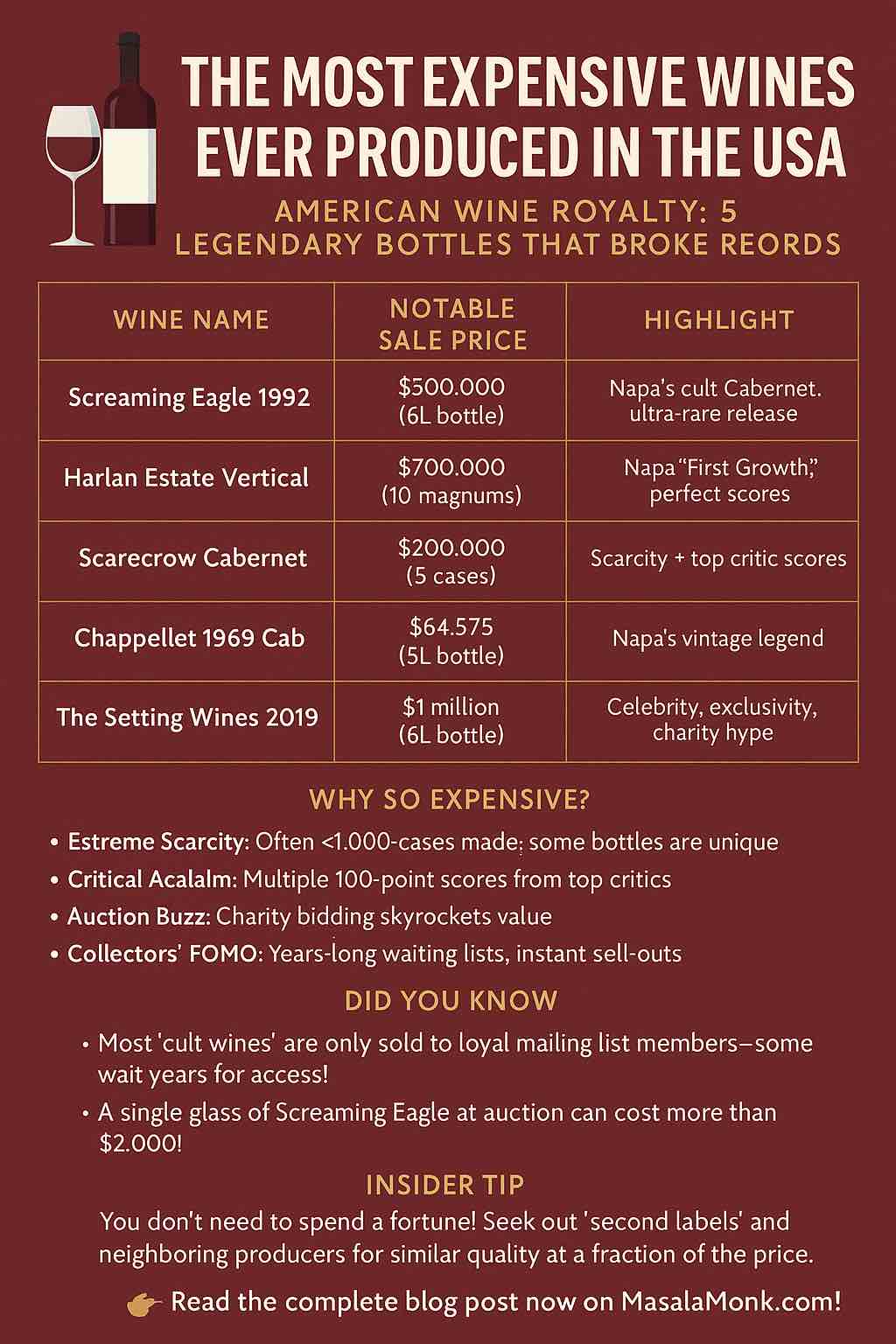
MOST EXPENSIVE WINES EVER PRODUCED IN THE USA

When you think of the world’s most expensive wines, your mind might drift to the fabled vineyards of Bordeaux or Burgundy. But in recent decades, a handful of American wines—mostly from California’s Napa Valley—have joined the global elite, shattering auction records and creating a cult-like following. What makes these bottles so valuable, who is buying them, and what should you know if you want to experience a piece of American wine history? Let’s uncork the secrets behind the USA’s most sought-after wines.


1. The Icons: Meet America’s Most Expensive Wines

Here’s a breakdown of some of the most jaw-droppingly expensive wines produced in the United States, with real-world sales and auction records to back them up.

Screaming Eagle Cabernet Sauvignon (Napa Valley)

  • Record Sale: A 6-liter (imperial) bottle of the 1992 vintage sold for $500,000 at the Napa Valley charity auction in 2000.
  • Typical Price: Even today, a standard bottle fetches $3,000–$8,000, depending on the vintage and provenance.
  • Why so valuable?: Micro-production (hundreds of cases per year), near-mythic status among collectors, and a mailing list harder to get on than the waitlist for the newest iPhone. Screaming Eagle is the blueprint for a “cult” Napa wine.

Harlan Estate Cabernet Sauvignon (Napa Valley)

  • Record Sale: A vertical of 10 magnums sold for $700,000 at auction.
  • Typical Price: $1,500–$2,500 per 750ml bottle.
  • Why so valuable?: Consistently high critic scores, lush branding, and a reputation as the “First Growth” of California. Each release is instantly snapped up by collectors worldwide.

Scarecrow Cabernet Sauvignon (Rutherford, Napa Valley)

  • Record Sale: Five cases (60 bottles) sold for $200,000 at Premiere Napa Valley Auction 2017 (that’s over $3,000 per bottle).
  • Typical Price: $1,000–$2,000 per bottle.
  • Why so valuable?: Scarcity (often less than 1,000 cases/year), direct-to-list allocation, and wines that critics describe as “powerful, but with finesse.”

Chappellet 1969 Cabernet Sauvignon (Pritchard Hill, Napa)

  • Record Sale: One of only four 5-liter bottles ever made sold for $64,575 at Heritage Auctions in 2024. Two magnums fetched over $54,000 each, and a single 750ml bottle reached $17,220.
  • Why so valuable?: Historical significance—an iconic early Napa Cabernet from a legendary vintage and producer. The older the better, when it comes to provenance and storytelling.

The Setting Wines Alexander Valley Cabernet Sauvignon 2019

  • Record Sale: A 6-liter bottle sold for $1 million at charity auction in 2021, smashing previous records for modern California wines.
  • Why so valuable?: Limited edition, celebrity association, charity hype, and a compelling narrative that connects the wine to pop culture.

2. What Makes These Wines So Expensive? The Secret Ingredients

Rarity & Scarcity:
Most of these producers release just a few hundred to a couple thousand cases a year. Some bottles are even more limited—just a handful of magnums or imperials, sometimes auctioned for charity, never to be seen again.

Critical Acclaim:
A high score (95–100 points) from critics like Robert Parker, Wine Spectator, or Jancis Robinson can instantly double the value of a wine. Some bottles earn legendary “100-point” scores year after year.

Exclusivity & Allocation:
Want to buy Screaming Eagle or Scarecrow at release price? Get in line. Most are sold only via ultra-exclusive mailing lists. Some lists take years to join, others close altogether. The result? Instant aftermarket markups.

Provenance & Storytelling:
The story behind a wine—an iconic vintage, a rare format, or a connection to a famous event (like the Judgment of Paris, or a celebrity endorsement)—boosts the price and desirability.

Charity Auction Hype:
Many record sales happen at charity auctions, where prestige and philanthropy collide and bidders go above and beyond to support a cause (and secure bragging rights).


3. Not Just for Billionaires: Practical Advice for Wine Lovers

You don’t need a black card or a mansion in Bel Air to enjoy some of the best that American wine has to offer. Here’s how you can get involved, no matter your budget or experience level:

Start with “Cult Adjacent” Wines

While Screaming Eagle may be out of reach, many neighboring wineries or off-vintages offer a taste of Napa magic for a fraction of the price. Seek out:

  • Forman, Spottswoode, Corison, Mayacamas, Ridge, Dunn, and Stag’s Leap for ageworthy, classic Napa Cabernet.
  • Paso Robles, Santa Barbara, and Oregon for up-and-coming producers with excellent price-to-quality ratios.

Explore Second Wines and Lesser Vintages

Some cult producers offer “second labels” made from younger vines or barrels not selected for the flagship wine. Examples: “The Maiden” from Harlan, “Leviathan” from Andy Erickson (former Screaming Eagle winemaker).

Attend Tastings and Join Collectors’ Groups

Wine shops, sommeliers, and local clubs often host events featuring rare bottles. These tastings are a great way to try legendary wines by the ounce (or glass), not the bottle.

Track Auction Markets

Websites like WineBid, Heritage Auctions, and Wine-Searcher let you follow prices, provenance, and sometimes even snag “sleepers” (wines that are undervalued).

Investing in Wine? Know the Risks

Fine wine can appreciate in value, but storage, provenance, and market trends all matter. If you plan to collect or invest, consider professional storage, insurance, and focus on blue-chip producers with consistent demand.


4. What Does a $5,000 Bottle Actually Taste Like?

Let’s get real: The world’s most expensive wines are about more than just taste. Yes, they’re expertly made, meticulously farmed, and cellared under perfect conditions. But what you’re really paying for is the experience—the history, the story, and the privilege of sharing something truly rare.

That said, legendary bottles like Screaming Eagle, Harlan Estate, or a perfectly preserved Chappellet 1969 can offer unforgettable moments:

  • Aromas of blackcurrant, tobacco, graphite, violets, and exotic spices.
  • Textures that are both silky and powerful.
  • Flavors that evolve over hours in the glass—layer upon layer of fruit, earth, and savory depth.
  • A finish that seems to last forever, lingering on the palate and in memory.

Most of all, you’re tasting history: a living snapshot of a place, time, and the vision of its creators.


5. Final Thoughts: Why Collect or Care About Expensive Wines?

Whether you dream of owning a legendary bottle or just want to know what all the fuss is about, America’s most expensive wines are more than status symbols—they’re a testament to what’s possible when land, artistry, and a bit of hype come together.

You don’t have to buy a $10,000 bottle to share in that spirit.
Exploring wine is about curiosity, community, and finding your own “wow” moments—whether that’s a Screaming Eagle Cabernet or a backyard BBQ Zin.


What’s the most memorable wine you’ve ever tried? Would you ever splurge for a bucket-list bottle, or do you have a favorite hidden gem? Share your story below! 🍇🍷👇

Frequently Asked Questions (FAQs)

1. What is the most expensive wine ever produced in the United States?

The 1992 Screaming Eagle Cabernet Sauvignon holds the record, with a 6-liter bottle selling for $500,000 at a charity auction in 2000. However, more recent charity lots and ultra-limited releases (like The Setting Wines 6L at $1 million) have challenged this figure, but these prices are typically realized in unique charity auction settings.


2. Why are certain American wines so expensive?

Their high price is due to a combination of extreme rarity, critical acclaim, prestigious history, limited direct allocations (usually through exclusive mailing lists), and heightened demand among collectors. Charity auctions can further inflate prices due to competitive bidding and philanthropic motives.


3. Are these expensive wines actually better in taste than regular wines?

Not necessarily for every palate. While they are often world-class and exceptionally well-made, much of their value comes from rarity, collectibility, brand, and story. Many moderately priced wines can provide an outstanding tasting experience, especially to those new to fine wine.


4. Can regular consumers ever buy these cult wines at retail price?

Rarely. Most are allocated to long-standing mailing list members or high-profile collectors. Secondary market prices (auction or wine retailers) are usually much higher than release price. Some wine shops occasionally receive a bottle or two, but expect to pay a premium.


5. Is wine a good investment?

Fine wine can appreciate in value, but it’s not guaranteed. Top producers like Screaming Eagle, Harlan Estate, and Sine Qua Non have strong track records, but storage, provenance, and market timing are crucial. Beginners should research thoroughly or consult with experts before investing.


6. How should I store high-value wine?

High-value wines require proper cellaring: a consistent cool temperature (around 55°F/13°C), humidity around 70%, minimal vibration, and no direct light. Professional storage facilities are best for bottles valued in the thousands.


7. Can I ever taste these wines without buying a bottle?

Yes! Look for wine tasting events, charity dinners, or special tastings at top restaurants or wine clubs. Occasionally, “by the ounce” pours of rare bottles are offered, especially in major wine regions.


8. What is a “second wine” or “second label” and are they worth buying?

A second wine is made from the same producer but typically from younger vines or lots not selected for the flagship label. They are more affordable and can offer great value, giving you a taste of a top estate’s style at a lower price point.


9. What are some alternatives to Napa Valley for high-quality American wines?

Look to regions like Sonoma County, Santa Barbara, Paso Robles, and Oregon’s Willamette Valley for world-class wines at more accessible prices. Producers in these regions are gaining international acclaim.


10. How do I join a mailing list for these cult wineries?

Visit the winery’s official website and look for their “Mailing List” or “Allocation List.” Sign up as early as possible—many top lists are full and only accept new members when someone drops off. Some require years of waiting or minimum purchase commitments.

Posted on 4 Comments

Egg-cellent Seasoning Options for Flavorful Eggs

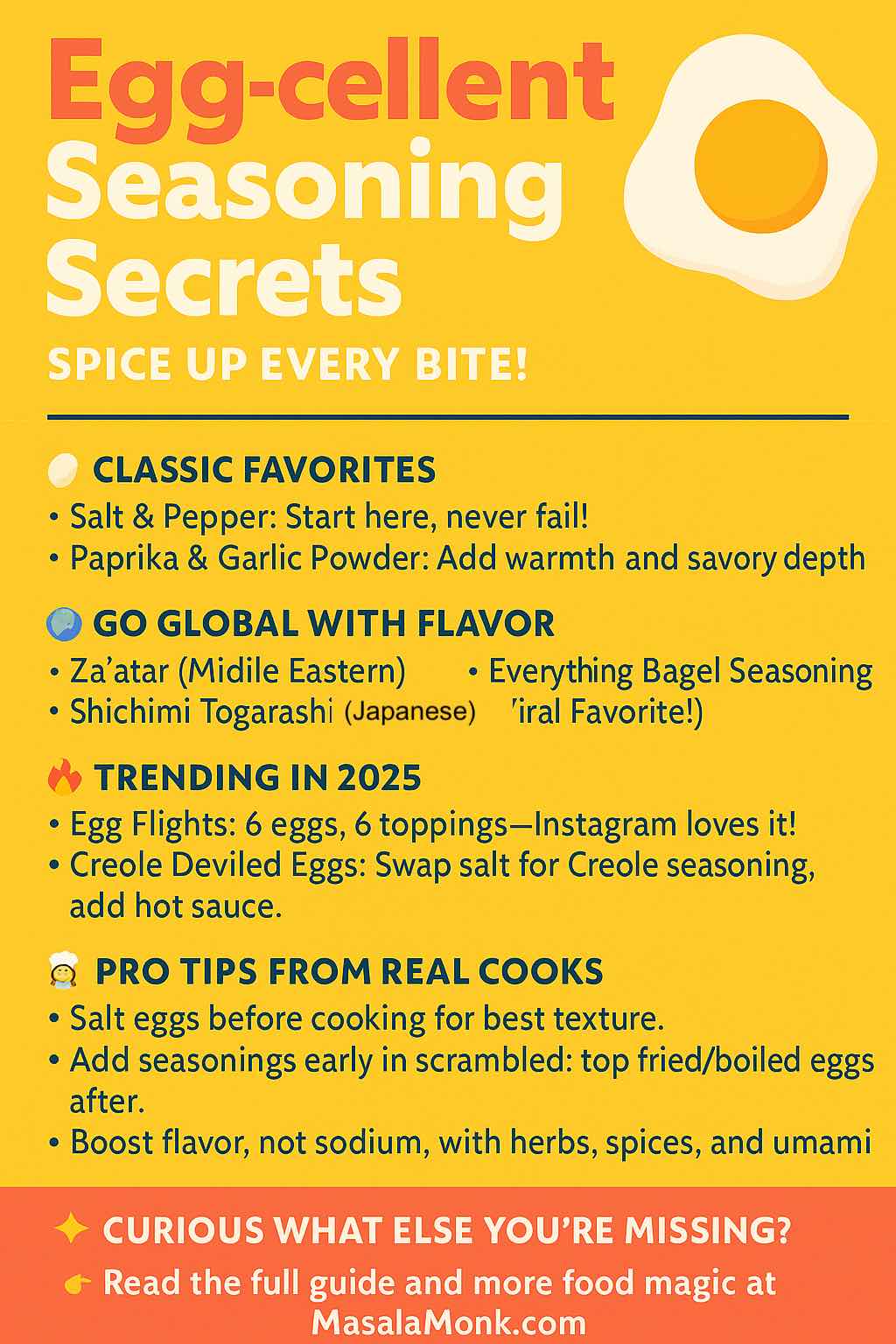
Egg-cellent Seasoning Secrets

Eggs are the chameleons of the kitchen—simple, nutritious, and endlessly adaptable. But let’s be honest: plain eggs can get boring fast. What transforms basic eggs into crave-worthy bites? Seasoning! In this guide, we’ll explore classic and trending seasonings, global flavors, pro techniques, and real user-tested combos—all to help you level up your egg game, whether you’re a weekday cook or a weekend brunch boss.


Why Seasonings Matter for Eggs

Eggs have a mild flavor and a rich texture, acting as a blank canvas for spices, herbs, and condiments. The right seasoning can:

  • Bring out the eggs’ natural flavor
  • Add texture and color
  • Elevate simple dishes to gourmet experiences
  • Keep breakfasts exciting and varied

Whether you love soft-scrambled, fried, boiled, or baked eggs, the right seasoning makes all the difference.


Classic Seasonings: Simple, Reliable, and Delicious

Let’s start with the basics that never disappoint:

  • Salt & Pepper: The foundation of every great egg dish. Try kosher salt for its clean taste and fresh-cracked black or white pepper.
  • Paprika: Adds color and a mild, smoky warmth. Smoked paprika is especially good on fried or deviled eggs.
  • Garlic Powder & Onion Powder: Give savory depth—perfect for scrambled eggs and omelets.
  • Chili Flakes or Cayenne: For a gentle heat that wakes up your taste buds.

Pro Tip:
For scrambled eggs, add seasonings before cooking for even distribution. For fried or boiled eggs, sprinkle immediately after cooking.


Trending Now: Everything Bagel & More

In 2025, “egg flights”—six eggs, six toppings—are a social media sensation. People are getting creative, topping boiled or fried eggs with everything bagel seasoning, kimchi, hot honey, truffle salt, or even balsamic-mozzarella. Everything bagel seasoning, with its mix of garlic, sesame, onion, and poppy seeds, adds crunch and flavor. Try frying your eggs with a sprinkle of this blend to crisp up the bits!

User Story:
“Soft scramble them with sour cream, sharp cheddar, and everything bagel seasoning. Legit my favorite way to eat eggs.” – Reddit user


Global Flavors: Take Your Tastebuds on a Trip

Why limit yourself to salt and pepper? Eggs are a global staple, and so are their seasonings:

  • Za’atar (Middle Eastern): Thyme, sesame, sumac—delicious on poached or hard-boiled eggs with olive oil.
  • Shichimi Togarashi (Japanese): Chili, sesame, nori, and orange peel—sprinkle over sunny-side eggs for zing.
  • Dukkah (Egyptian): A mix of nuts, seeds, and spices. Try on sliced boiled eggs.
  • Curry Powder or Garam Masala (Indian): Add warmth and depth to scrambles and omelets.
  • Adobo/Sazón (Latin): Garlic, oregano, cumin, and more for a vibrant twist.

Quick Fix:
Toast a slice of bread, top with mashed avocado, a poached egg, and a dusting of za’atar. Thank us later.


Creative Add-Ons & Modern Favorites

If you want to get truly egg-citing, try these:

  • Everything Bagel Seasoning: The reigning champion for fried and boiled eggs.
  • Old Bay: Popular with home cooks, especially for deviled eggs or scrambled with a touch of hot sauce.
  • Kala Namak (Black Salt): Adds a sulfurous, “eggy” flavor—especially loved in vegan tofu scrambles.
  • Cheese and Dairy Mix-ins: Stir in a spoonful of sour cream, cottage cheese, or crème fraîche for creamy scrambled eggs.
  • Fresh Herbs: Chives, parsley, dill, and tarragon bring color and freshness.
  • Kimchi, Salsa, or Hot Sauce: Add a punch to eggs, especially for breakfast tacos or bowls.
  • Umami Boosters: Finish eggs with a sprinkle of bonito flakes, miso, or even truffle oil for extra savoriness.

Pro Techniques from Real Cooks

  • Salt Early: Whisk salt into eggs before cooking for fluffier texture and better moisture. Let the mixture sit for a minute if you can.
  • Watch the Pan: Use moderate heat and enough fat (butter/oil) for creamy, non-rubbery eggs—especially on cast iron.
  • Season as You Go: For fried eggs, season as soon as they hit the pan for best flavor.
  • Don’t Overcrowd: Add delicate herbs at the end to preserve their brightness.

Reddit Wisdom:
“I add seasoning to scrambled eggs before cooking. I add seasoning to fried eggs as soon as I get them in the pan.”


Practical Ideas: Seasoned Eggs, Six Ways

  1. Classic Scramble: Salt, pepper, chives, with a touch of parmesan.
  2. Southwest Kick: Cumin, chili powder, cheddar, and salsa.
  3. Asian-Inspired: Shichimi togarashi, scallions, a dash of soy sauce.
  4. Herby Omelet: Fresh dill, parsley, and a sprinkle of feta.
  5. Creole Deviled Eggs: Replace salt with Tony Chachere’s Creole Seasoning, add a dash of hot sauce.
  6. Egg Flight: Six halves of boiled eggs, each topped with a different seasoning (Old Bay, everything bagel, dukkah, za’atar, harissa, black pepper).

Reader Challenge: Your Egg-Seasoning Adventure

Ready to experiment? Here’s a fun challenge for your next brunch or meal prep:

  1. Pick 3–6 seasonings or blends from this list.
  2. Cook a batch of eggs (scrambled, fried, boiled).
  3. Top each portion with a different seasoning—from classic to wild.
  4. Snap a photo and taste test—share with friends or on social media (tag #EggcellentSeasoning!).
  5. Record your favorites and try them in different dishes (avocado toast, breakfast bowls, salads).

Closing Thoughts

Eggs are a blank canvas for flavor. With the right seasonings—classic, trendy, or global—you can turn the simplest meal into something memorable. Don’t be afraid to experiment and have fun! The world of egg seasonings is vast, and the best discovery might just be your next breakfast.


What’s your favorite egg seasoning or combo? Share your tips and results below!


Sources: Food & Wine, Better Homes & Gardens, Reddit r/Cooking, Simply Recipes, Carolina Ingredients, and more food trend experts from 2025.

10 FAQs for Egg Seasoning Options

1. What’s the best time to add seasoning to eggs?
For scrambled eggs, add salt and spices during whisking before cooking for even flavor and fluffier texture. For fried eggs, season as soon as they hit the pan or immediately after. For boiled eggs, season just before serving or use seasoning blends in fillings for deviled eggs.


2. What are the healthiest seasonings to use on eggs?
Fresh herbs (like parsley, chives, dill), spices (turmeric, paprika, black pepper), and low-sodium blends are healthiest. They add antioxidants and flavor without extra calories or sodium. Avoid overusing salty mixes if watching your intake.


3. What’s the best seasoning for deviled eggs?
Classic choices include paprika, mustard, and chives. Trendy options are everything bagel seasoning, Creole seasoning (like Tony Chachere’s), Old Bay, or smoked paprika. Mix into the yolk filling or sprinkle on top for flavor and color.


4. Can I use the same seasoning for scrambled, fried, and boiled eggs?
Yes, but some seasonings work best in specific dishes. Everything bagel, paprika, or herbs are versatile, while blends with crunchy bits (like dukkah) shine as toppings on boiled or fried eggs rather than scrambled.


5. How do I keep eggs from tasting bland without adding too much salt?
Use herbs, spices, citrus zest (lemon/lime), black pepper, or umami-rich add-ins like nutritional yeast, miso, or a dash of soy sauce. These boost flavor without much sodium.


6. Are there seasoning blends for vegan egg alternatives?
Yes! Kala namak (black salt) gives vegan scrambles an “eggy” flavor. Combine with turmeric, garlic powder, and nutritional yeast for savory depth in tofu or chickpea “eggs.”


7. What global seasonings pair well with eggs?
Try za’atar, shichimi togarashi, curry powder, dukkah, harissa, or adobo. These bring global flair and work in scrambles, omelets, or as a topping for poached and boiled eggs.


8. Can I make my own egg seasoning blend?
Absolutely. Start with a base of kosher salt, pepper, garlic powder, onion powder, and paprika. Add herbs or spice blends to taste. Store in a small jar and shake before use.


9. What’s the secret to fluffy, restaurant-style scrambled eggs?
Salt your eggs when whisking, use a little milk or cream (optional), and cook slowly over medium-low heat, stirring gently. Butter or oil helps prevent sticking and adds richness.


10. What’s a quick way to elevate eggs for guests or brunch?
Create an “egg flight”—top boiled or fried eggs with different seasonings (everything bagel, dukkah, smoked paprika, kimchi, hot honey, etc.). Serve with toast or salad for a colorful, flavorful spread.

Posted on Leave a comment

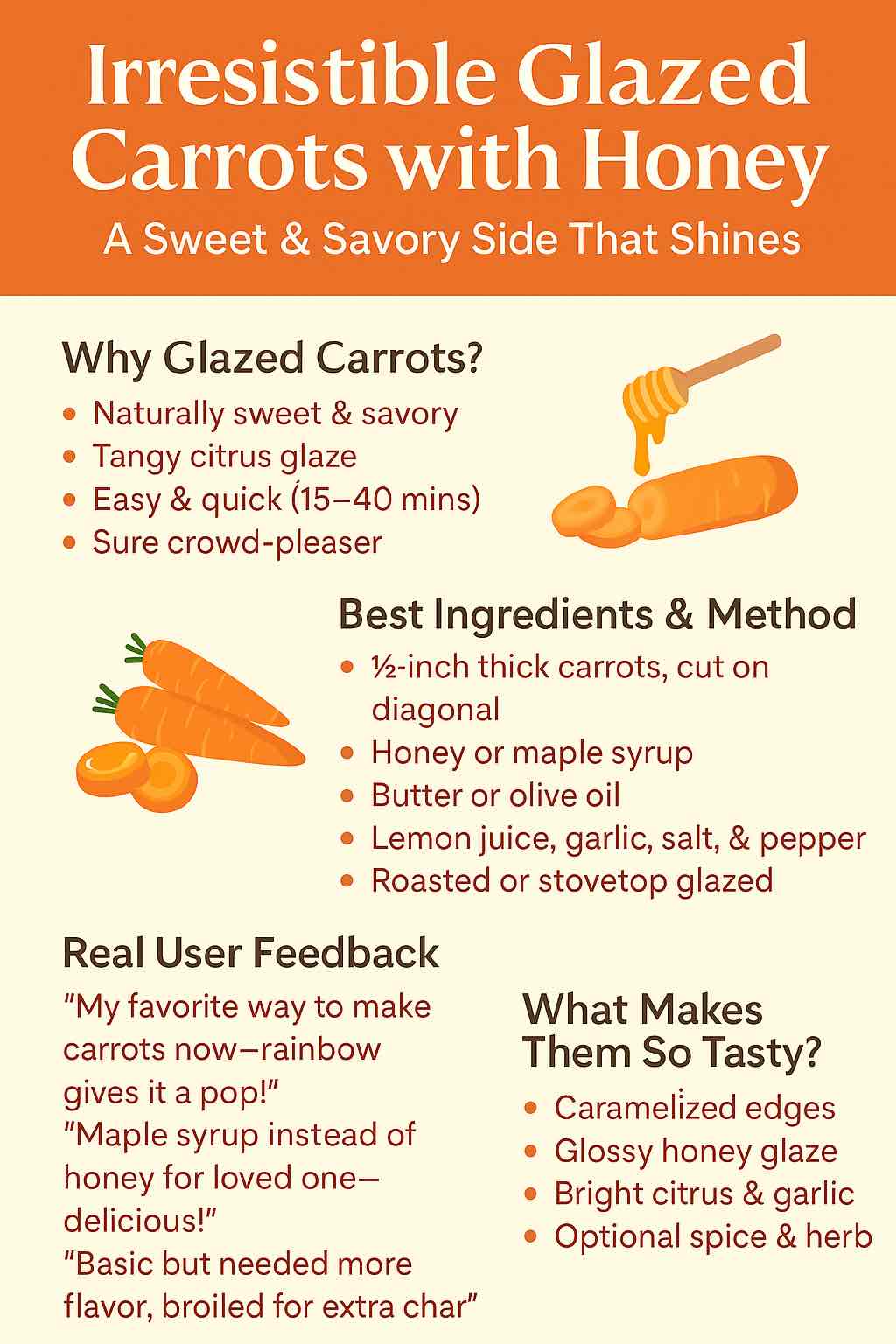
Irresistible Glazed Carrots with Honey: A Sweet and Savory Delight

Glazed Carrots with Honey

Carrots are often unsung heroes on the dinner table, but with the right glaze, they transform into a dish that’s both comforting and elegant. If you’ve never made honey-glazed carrots before, get ready for a side that’s more than just a bit player—these carrots are truly irresistible. This post covers everything you need: recipe, science, feedback from real cooks, time-saving hacks, and creative twists to make it your own.


🥕 Why Glazed Carrots with Honey?

Carrots have a natural sweetness, which is brought to life by roasting or simmering. When you add honey and butter, you get a glossy, caramelized glaze that balances sweet and savory in every bite. The addition of a touch of citrus or warm spice can take the flavor to another level, cutting the richness and creating complexity.

But it’s not just about taste. Glazed carrots are:

  • Quick to prep: Minimal chopping and hands-on time.
  • Budget-friendly: Carrots are inexpensive, and the rest are pantry staples.
  • Visually appealing: Especially with rainbow carrots, they bring color to the plate.
  • Loved by kids and adults alike: Even picky eaters have been known to sneak seconds.

⭐ What Makes a Great Glazed Carrot?

Based on feedback from hundreds of home cooks, here’s what separates a good glazed carrot from a showstopper:

  • Caramelization: Roasting at high heat or finishing under the broiler gives carrots those irresistible golden edges.
  • Balance: The glaze needs both sweetness (honey) and brightness (lemon or orange juice). A little salt and pepper, plus optional spices, round it out.
  • Texture: Tender, not mushy. Uniform slicing helps.
  • Visual pop: Rainbow or heirloom carrots make it special, but classic orange carrots work beautifully too.

📋 The Best Honey-Glazed Carrots Recipe (Oven & Stovetop)

Adapted from Chef Dennis and top-rated home cook tips (2025)

Ingredients

  • 1½ lb (≈ 680 g) carrots (rainbow or classic), peeled and sliced on a bias, ½-inch thick
  • 2 Tbsp unsalted butter (or vegan substitute)
  • 2 Tbsp honey (or maple syrup for vegan)
  • 1 Tbsp fresh lemon juice (or orange juice for more warmth)
  • 1–2 cloves garlic, minced
  • 1 tsp kosher salt
  • ½ tsp black pepper
  • Optional: ¼ tsp ground cinnamon, ½ tsp ground ginger, pinch of chili flakes
  • Fresh parsley, thyme, or chives for garnish

Kitchen Equipment

  • Sheet pan lined with parchment (for oven method)
  • Skillet (for stovetop)
  • Medium saucepan (to make glaze)

Step-by-Step: Oven-Roasted Glazed Carrots

  1. Prep the Carrots:
    Peel and slice carrots to about ½-inch thick, cutting on a diagonal for more surface area. Uniformity = even cooking.
  2. Preheat & Arrange:
    Set oven to 400°F (200°C). Arrange carrots in a single layer on a parchment-lined sheet pan.
  3. Make the Glaze:
    In a small saucepan over medium heat, melt butter. Add honey and garlic; stir until fragrant (about 1 minute). Whisk in lemon juice, salt, pepper, and any spices.
  4. Coat & Roast:
    Pour glaze over carrots, toss well to coat, and spread carrots out again. Roast for 20 minutes. Toss/flip, then roast another 10–15 minutes, until fork-tender and caramelized at edges.
  5. Finish & Garnish:
    For extra caramelization, broil for 2–3 minutes at the end. Transfer to serving dish, top with fresh herbs, and serve immediately.

Quick Stovetop Glazed Carrots (Ready in 15 Minutes)

  1. Simmer:
    Add carrots to a large skillet with ½ cup water. Cover and simmer over medium-high heat until almost tender, about 5–7 minutes. Drain any excess water.
  2. Glaze:
    Add butter, honey, garlic, lemon juice, salt, pepper, and spices. Toss over medium heat until carrots are fully coated and glaze is sticky and reduced (another 3–5 minutes).
  3. Serve:
    Garnish and serve!

🧑‍🍳 Real User Feedback: What Works, What Doesn’t

  • “This is my favorite way to eat carrots now. The glaze is amazing and rainbow carrots make it a showstopper for guests.”
  • “Good basic recipe—needed more flavor. I added ginger and a little cinnamon, and broiled at the end for extra char.”
  • “Steaming then glazing on the stovetop saved time for a weeknight. Kids loved it!”
  • “I tried with maple syrup instead of honey for a vegan friend—delicious!”

🔬 Why Does This Recipe Work?

Carrots’ sugars caramelize at high heat, creating those sweet, nutty flavors and golden color.
Honey and butter help this along by browning and thickening into a glossy, clingy glaze.
Citrus juice (lemon or orange) provides acidity, keeping the dish from tasting cloying.
Salt and a pinch of spice (ginger, cinnamon, chili) balance the sweetness and add subtle warmth.


🛠️ Practical Tips & Variations

  • Uniform slicing: Helps all carrots cook evenly—no raw bits or mushy ends.
  • Double-glazing: Toss carrots halfway through roasting with a little extra glaze for extra stickiness.
  • Make ahead: Glaze can be made in advance. Toss with carrots just before roasting.
  • Vegan? Use olive oil or vegan butter, and swap honey for maple syrup or agave.
  • Extra flavor: Try adding za’atar, cumin, or chopped rosemary for a more complex profile.
  • Add-ins: Top with feta, toasted nuts, or pomegranate seeds for color and crunch.
  • Leftovers: Glazed carrots taste great cold in salads, grain bowls, or as lunchbox snacks.

🍽️ Perfect Pairings

Honey-glazed carrots are as versatile as they are delicious. Try them with:

  • Roast chicken, turkey, or ham
  • Baked salmon or white fish
  • Lentil or grain bowls (for a hearty vegetarian meal)
  • As part of a vibrant holiday spread
  • Chilled, as a colorful addition to salads

🌟 Final Thoughts: Your New Go-To Side Dish

Whether it’s a holiday meal or a weeknight dinner, Irresistible Glazed Carrots with Honey will brighten your table and win over even the vegetable skeptics. They’re quick, adaptable, crowd-pleasing, and just as tasty as they are pretty.


Have you tried this recipe?

Drop your tweaks, tips, or winning pairings in the comments below. Let’s make glazed carrots everyone’s favorite side!

🥕 10 Frequently Asked Questions (FAQs) for Irresistible Glazed Carrots with Honey

1. Can I make glazed carrots ahead of time?
Yes! You can prep and glaze the carrots a day in advance. Store them in an airtight container and reheat in a 350°F (175°C) oven or on the stovetop until warmed through. Add a splash of water or extra glaze if needed to keep them moist.

2. What’s the best way to cut carrots for glazing?
Cut carrots on a diagonal (bias) into ½-inch thick slices for maximum surface area and even cooking. Baby carrots can be left whole or halved lengthwise.

3. Can I use maple syrup instead of honey?
Absolutely! Maple syrup is a great vegan alternative and gives a slightly different, richer flavor.

4. How do I prevent my carrots from becoming mushy?
Avoid overcooking and slice your carrots evenly. Check doneness with a fork at the minimum cooking time and roast in a single layer for even heat.

5. Are glazed carrots gluten-free?
Yes—if you use pure honey or maple syrup and no added sauces with gluten. Always check your ingredient labels if cooking for someone with celiac disease.

6. Can I add other vegetables to this recipe?
Definitely! Parsnips, sweet potatoes, and beets all work well. Cut all vegetables to similar sizes so they cook evenly.

7. What herbs and spices work best with honey-glazed carrots?
Parsley, thyme, rosemary, cinnamon, ginger, or even a little cumin or za’atar add great flavor.

8. Can I use frozen carrots?
Yes, but thaw and dry them first. Frozen carrots may cook faster and can be softer, so watch the roasting time.

9. How do I get extra caramelization?
For deeper caramelization, broil the carrots for 2–3 minutes at the end of roasting. Watch closely to avoid burning.

10. What dishes pair well with honey-glazed carrots?
They’re perfect with roast meats (chicken, turkey, ham), salmon, grain bowls, or as part of a holiday meal.

Posted on Leave a comment

Raw Garlic and Blood Pressure: Unveiling the Powerful Connection

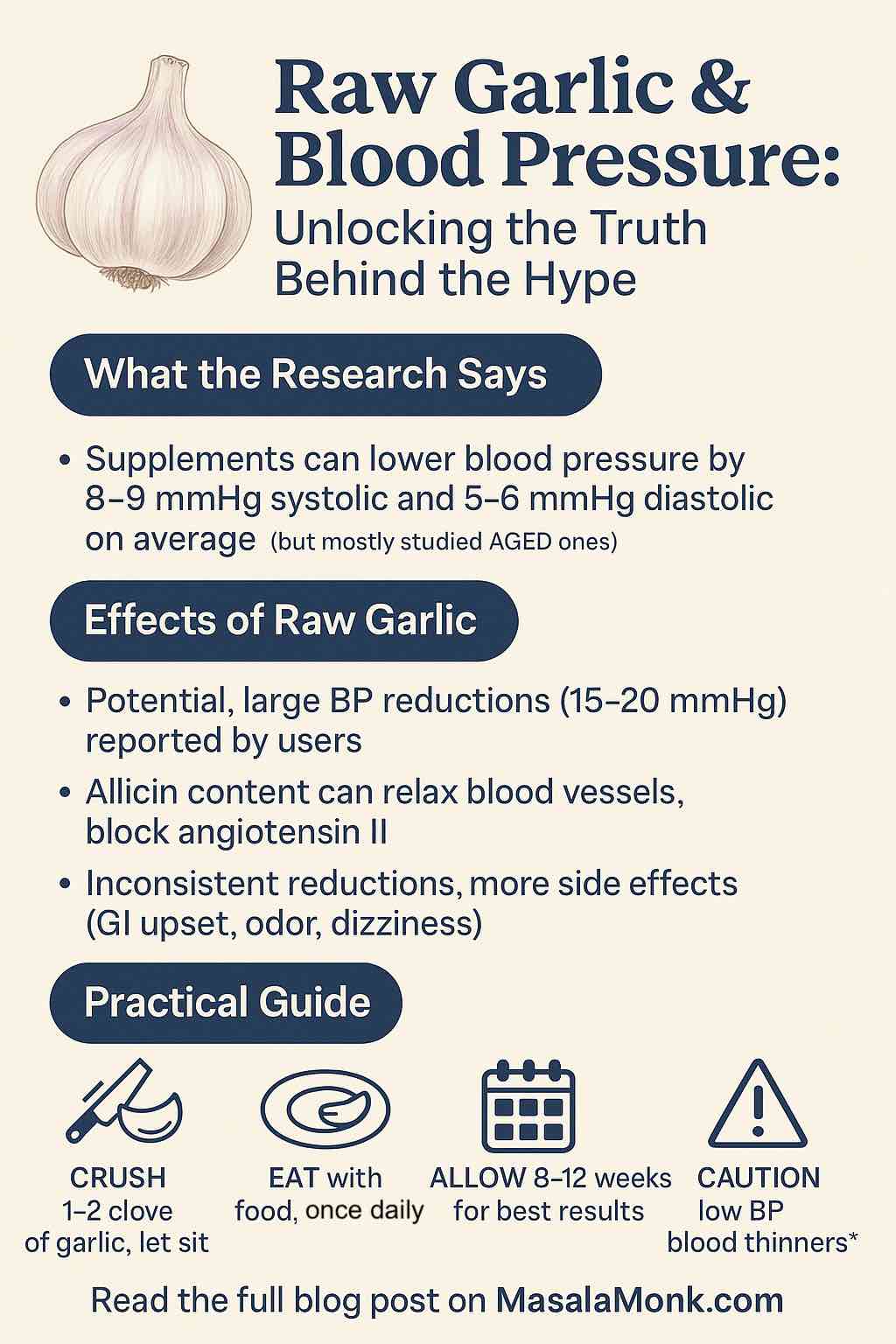
Raw Garlic & Blood Pressure:

Is raw garlic the missing piece in your blood pressure puzzle? Let’s cut through the folklore and dive deep into the real science, the user experiences, and how to use garlic practically (and safely) for better blood pressure and heart health.


Why the Buzz About Garlic?

Garlic isn’t just a kitchen staple—it’s a superstar in folk medicine, prized for centuries across cultures for everything from fighting colds to “purifying the blood.” But modern science is especially interested in garlic for one headline effect: lowering high blood pressure.

So, does the evidence live up to the hype? And if you want to harness garlic’s power, is raw the way to go—or should you pop a supplement? Here’s what you need to know.


What the Research Actually Says

Meta-Analyses & Clinical Trials: The Big Picture

Multiple large-scale reviews and meta-analyses—some including over 500 patients—reveal a surprisingly consistent finding:

  • Garlic can lower blood pressure, especially in people with hypertension (SBP ≥ 140 mmHg).
  • On average, garlic supplements reduce systolic blood pressure by about 8–9 mmHg and diastolic by 5–6 mmHg—comparable to many first-line blood pressure medications, but with fewer side effects.
  • The effect is much weaker (sometimes negligible) in people with normal blood pressure.

Example:

A 2019 meta-analysis pooled data from 12 clinical trials and found garlic could reduce systolic BP by 8.3 mmHg and diastolic by 5.5 mmHg in hypertensive adults. A 2024 review confirmed these numbers and highlighted added benefits like improved arterial flexibility and gut health.

The catch? Most of these studies use aged garlic extract or standardized garlic powders—not raw garlic cloves.


Raw Garlic vs. Supplements: What’s the Difference?

  • Raw garlic is packed with allicin, the compound responsible for its smell and most of its blood-pressure-lowering magic. Allicin is released when garlic is crushed or chopped and consumed soon after.
  • Supplements (especially aged garlic extract, like Kyolic) are more standardized—meaning you know exactly how much you’re getting, and you won’t clear a room with your breath.

What About Real-World Experiences?

Many people online (see Reddit, product reviews, forums) swear by raw garlic:

“I eat raw garlic every day and my blood pressure dropped 15–20 points. When I stop, it goes right back up.”
Reddit user

Others warn of the downside:

“I already had low blood pressure and eating raw garlic made me dizzy and nearly faint. Be careful!”
Reddit user

Supplements are often praised for being more convenient and gentle on the stomach:

“Kyolic aged garlic brought my BP from 140/90 to 120/80 in a few weeks. No odor, no side effects.”
Amazon review


How Does Garlic Actually Work?

Garlic’s key compounds work on blood vessels in several powerful ways:

  • Vasodilation: Allicin and related molecules help relax blood vessels by increasing nitric oxide and hydrogen sulfide—nature’s “relax and widen” signals.
  • Blocking Angiotensin II: Garlic compounds help dial down angiotensin II, a hormone that constricts blood vessels.
  • Reducing Arterial Stiffness: Garlic (especially aged extract) improves artery flexibility, which is a huge win for heart health.
  • Gut Microbiome: Studies show garlic can promote the growth of beneficial bacteria, which also impacts blood pressure.

Raw Garlic in Practice: How Much? How Often? How Safe?

What Dose Works?

  • Clinical studies: Most used 600–900 mg/day of garlic extract (roughly equal to 1–2 raw cloves per day).
  • For raw garlic: Aim for 1–2 crushed cloves daily, ideally with food. Crushing and letting it sit for 5–10 minutes helps maximize allicin.

How Long Before You See Results?

  • Typical timeline: BP reductions start showing at 2–4 weeks, and are usually most pronounced by 8–12 weeks of daily use.
  • Consistency is key—random doses won’t cut it.

Are There Side Effects?

  • Common: Garlic breath, body odor, heartburn, stomach upset (especially if you go raw and heavy).
  • Rare but important: If you’re on blood thinners (like warfarin) or planning surgery, garlic can increase bleeding risk. Always talk to your doctor first.

Who Should (and Shouldn’t) Try Garlic for Blood Pressure?

Good Candidates

  • Adults with hypertension, especially if you want to add a natural option alongside lifestyle changes and meds.
  • Those with borderline high BP looking to avoid starting medication (always monitor BP and check with a doctor).

Use Caution or Avoid

  • People with already low blood pressure
  • Anyone on blood thinners
  • People with sensitive stomachs—try aged garlic extract instead

Practical Guide: How to Use Garlic for Blood Pressure

Option 1: Raw Garlic Ritual

  1. Crush or chop 1–2 cloves. Let them rest 5–10 min (to boost allicin).
  2. Eat with food to soften the blow (e.g., add to salad, avocado toast, or a savory yogurt dip).
  3. Stay consistent: Daily is best.

Option 2: Aged Garlic Extract Supplement

  • Pick a reputable brand (Kyolic is most studied).
  • Dose: 600–1200 mg daily, with food.
  • No odor, gentle on digestion, and easier to dose precisely.

What to Expect

  • Best results: Used consistently for 8–12 weeks, especially in people with elevated blood pressure.
  • Track your BP: Log your numbers before and after starting. Don’t stop other BP meds unless your doctor says so.

Real-Life Stories

  • Linda, 54: “After two months on garlic supplements, my BP went from 150/95 to 132/85. It wasn’t the only thing I changed—I also walked more and ate less salt—but garlic felt like my ‘secret weapon.’”
  • James, 62: “Raw garlic helped but was hard to stomach. Kyolic extract was easier. My numbers dropped 10 points, and my doc was impressed.”
  • Anonymous Redditor: “I combined garlic, more potassium, and less salt. BP went from pre-hypertensive to normal. Small changes added up!”

The Bottom Line: Is Garlic Worth a Try?

If you’re struggling with high blood pressure, adding garlic—especially in the form of a standardized supplement or regular raw garlic intake—may help nudge your numbers down, with few risks for most people.

  • For best results, use it consistently and alongside other heart-healthy habits (less salt, more potassium, movement, less stress).
  • Choose aged garlic extract for the most reliable effect, or raw garlic if you enjoy the ritual and flavor.
  • Always check with your doctor, especially if you’re on medications or have a bleeding risk.

Final Takeaway

Garlic is no magic bullet—but as part of a bigger picture, it’s a simple, natural, and science-backed way to support healthy blood pressure.
Try it, track your numbers, and see how your body responds. Your heart may just thank you.


Got a garlic story or question? Share it below! Let’s help each other on the path to better blood pressure—naturally.

10 FAQs About Garlic and Blood Pressure

1. How much raw garlic should I eat per day to help lower blood pressure?
Most studies suggest 1–2 cloves of raw garlic daily, crushed or chopped and eaten with food, is a good starting point. Let it sit for 5–10 minutes after crushing to maximize allicin (the active compound).


2. How soon will I notice a difference in my blood pressure after starting garlic?
Blood pressure reductions may begin in as little as 2–4 weeks, but most people see the best results after 8–12 weeks of daily, consistent use.


3. Is raw garlic more effective than garlic supplements for lowering blood pressure?
Raw garlic contains potent allicin, but supplements (especially aged garlic extract) are more standardized and supported by clinical trials. Both can work, but supplements are easier to dose and often cause fewer side effects.


4. Are there any side effects of eating raw garlic for blood pressure?
Yes. Common side effects include garlic breath, body odor, stomach upset, and heartburn. Some people may experience dizziness if their blood pressure drops too low.


5. Can I take garlic with my blood pressure medication?
Usually, yes, but you should monitor your blood pressure closely. Garlic can potentiate the effects of medications and, in rare cases, cause your blood pressure to fall too low. Always discuss with your healthcare provider first.


6. Is garlic safe for everyone?
No. People with low blood pressure, those taking blood thinners, or individuals scheduled for surgery should avoid or use garlic with caution. Always consult your doctor if you have any medical conditions or take medications.


7. What type of garlic supplement works best?
Aged garlic extract (e.g., Kyolic) is the most researched and reliably effective. Look for a reputable brand with standardized dosing (typically 600–1200 mg/day).


8. Do I need to eat garlic every day for it to work?
Yes. Consistency is key for blood pressure benefits. Skipping days or taking garlic only occasionally is unlikely to produce meaningful results.


9. Will garlic cure my high blood pressure?
No. Garlic is a helpful addition to a healthy lifestyle, but it is not a cure or a replacement for prescribed medications. Use it as part of an overall heart-healthy plan—diet, exercise, stress management, and medical care.


10. Can I just cook garlic instead of eating it raw?
Cooking garlic reduces its allicin content, so raw or lightly crushed garlic delivers more of the beneficial compounds. If you must cook it, let chopped garlic rest 10 minutes before heating to retain more allicin.