
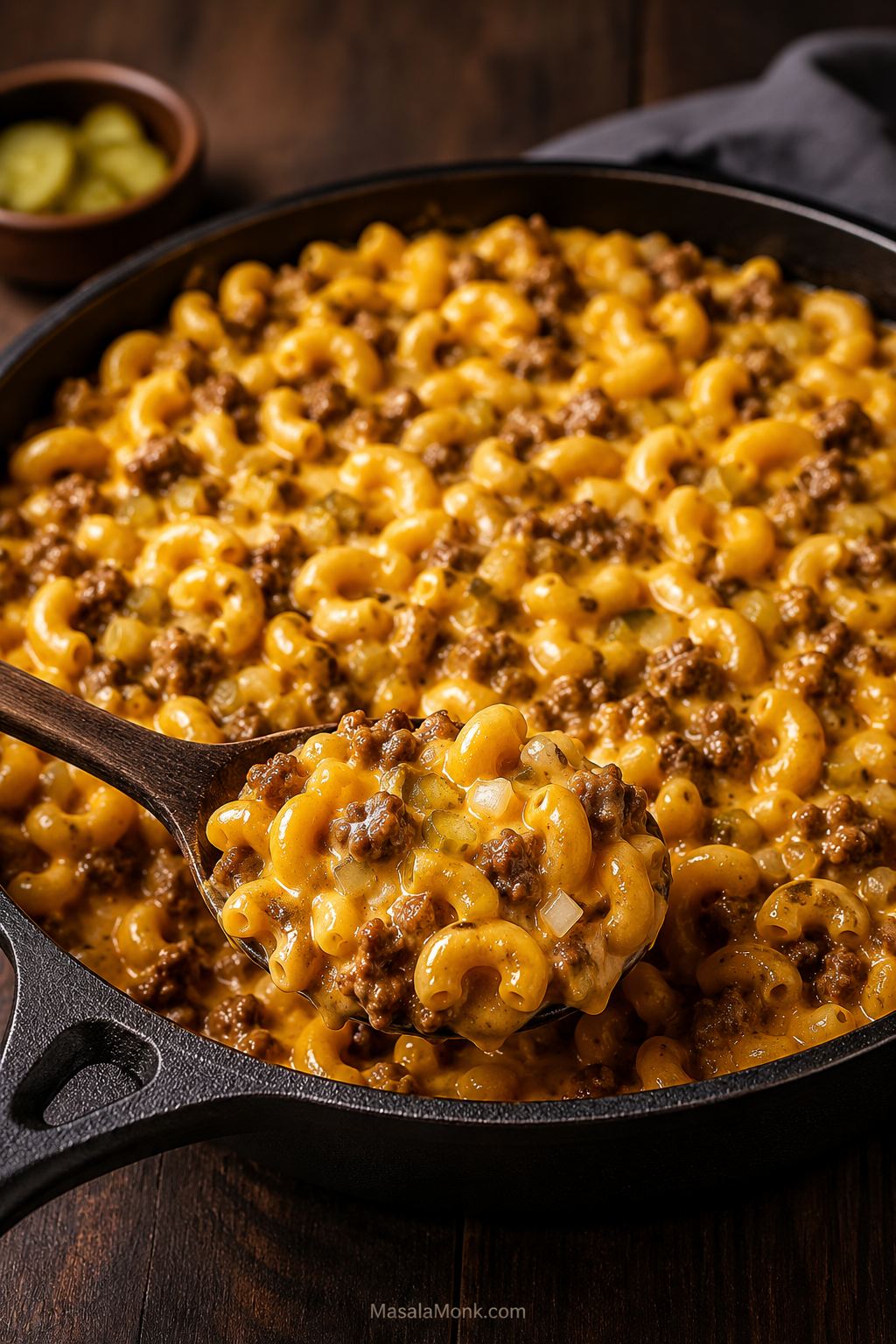
This homemade cheeseburger macaroni recipe is a one-pot stovetop dinner with browned ground beef, tender elbow macaroni, real cheddar, and the tangy-savory flavor of a cheeseburger. It has the comfort of the boxed skillet dinner many of us remember, but the sauce is richer, smoother, and easier to adjust because everything is made from simple pantry ingredients.
The macaroni cooks directly in beef broth and milk, so the pasta releases starch as it simmers and helps thicken the sauce from inside the pot. Then the cheddar goes in after the heat is off, which keeps the final pot glossy instead of grainy. In about 35 minutes, you get a saucy, spoonable ground beef pasta that tastes like cheeseburger mac and cheese without needing a packet.
This is the kind of dinner to make when you have a pound of ground beef, 8 ounces of pasta, and not much patience left for dinner decisions. It scratches the same nostalgic itch as the boxed version, but tastes fuller and fresher because the sauce is built in the pan instead of poured from a packet.
Homemade Cheeseburger Macaroni Guide
Quick Answer: How to Make Homemade Cheeseburger Macaroni
To make homemade cheeseburger macaroni, brown ground beef with onion and garlic, then stir in tomato paste, ketchup, mustard, Worcestershire, and seasonings. Add beef broth, milk, and dry elbow macaroni, then simmer until the pasta is tender. Turn off the heat, rest the pot for 2–3 minutes, and stir in freshly shredded cheddar until creamy.
The recipe takes about 30–35 minutes in one deep skillet or Dutch oven. For the smoothest sauce, keep the simmer gentle once the milk goes in, then add the cheese after the heat is off.
It takes a few minutes longer than the fastest boxed-style versions, but those minutes go into browning the beef properly and building a sauce that tastes fuller than a packet.
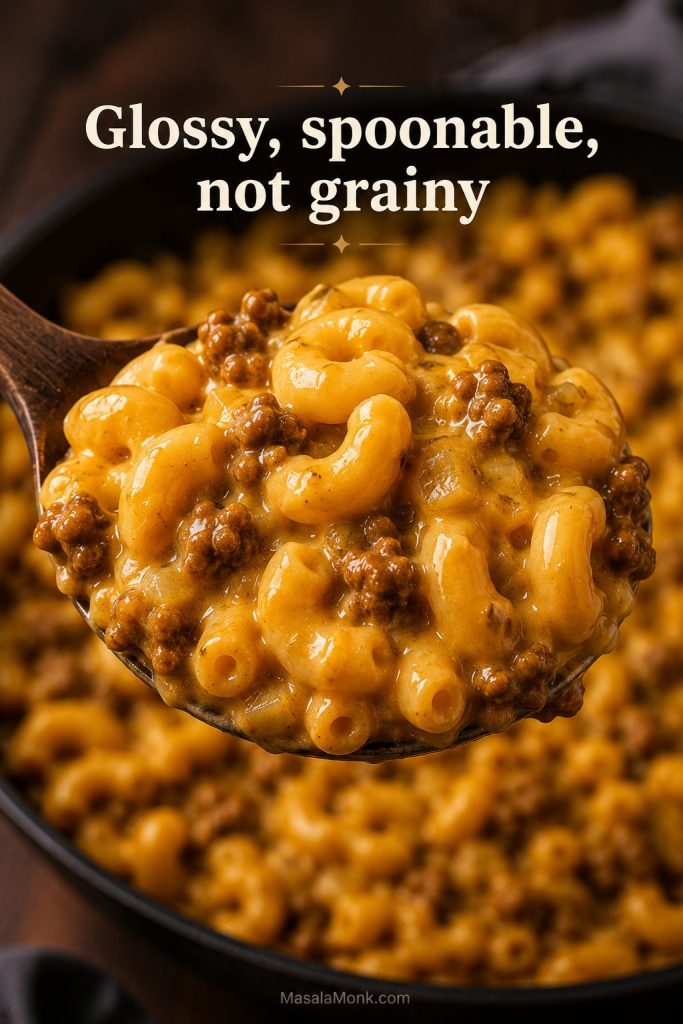
Best First Version
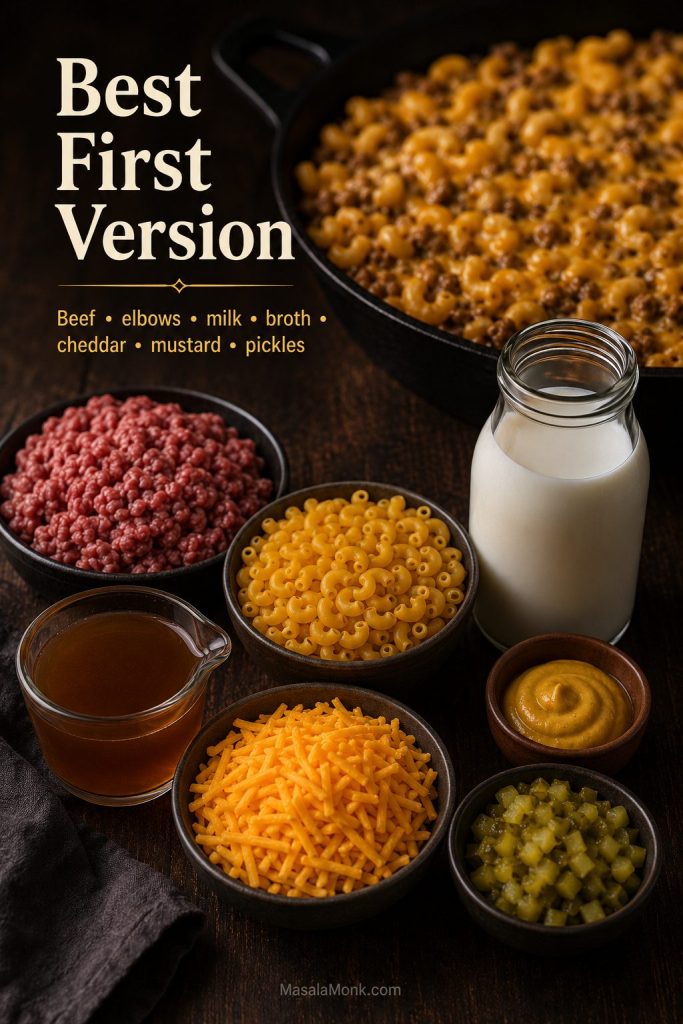
Ready to cook from the exact amounts? Go straight to the homemade cheeseburger macaroni recipe card.
Why You’ll Love This Cheeseburger Macaroni
Depending on where you grew up, you might think of this as cheeseburger pasta, hamburger mac and cheese, cheeseburger mac and cheese, or the from-scratch version of that boxed skillet dinner many people remember. Whatever you call it, the goal is the same: browned ground beef, tender elbows, a cheddar-rich sauce, and enough tomato paste, ketchup, mustard, Worcestershire, and pantry spices to make the whole pot taste like a cheeseburger dinner.
Even better, the pasta cooks directly in the sauce. That means no separate pasta pot, no seasoning packet, and no watery finish. As the macaroni simmers, its starch helps everything thicken; afterward, the cheddar melts in gently so the final pot stays glossy and smooth.
It is also forgiving. When the sauce gets too thick, a splash of milk or broth loosens it. If the pasta needs another minute, add a little more liquid and cover the pot again. For more burger flavor, finish with extra mustard or a handful of chopped pickles at the end.
Most importantly, this is the kind of dinner that works when people are hungry now: familiar enough for kids, flexible enough for adults, and easy to adjust at the end with pickles, hot sauce, extra mustard, or more cheese.
It also has that rare weeknight-dinner quality where nobody needs convincing. The smell of beef, cheddar, onion, and pasta does most of the work before the bowls even hit the table.
What Is Cheeseburger Macaroni?
A good homemade cheeseburger macaroni recipe should feel like a complete stovetop dinner: tender elbows, browned ground beef, cheddar sauce, and the kind of tangy, savory seasoning you expect from a cheeseburger. It is not trying to be fancy, and that is the point. The charm is that it turns a pound of ground beef and a handful of pantry ingredients into a full, comforting meal.
Think of it as a homemade Hamburger Helper-style cheeseburger macaroni: the same cozy beefy-cheesy comfort, but with real cheddar, fresh onion and garlic, and a sauce you can adjust instead of a seasoning packet.
The dish sits somewhere between a skillet pasta and mac and cheese. It should be saucy and cheesy, but it should also taste beefy and slightly tangy, the way a cheeseburger does. That is why this version uses tomato paste for depth, a little ketchup for sweet-tangy flavor, mustard for sharpness, Worcestershire for savory depth, and optional pickles or relish at the end.
Cheeseburger Macaroni vs Cheeseburger Pasta
Cheeseburger macaroni usually means elbow macaroni, ground beef, and a cheddar-based sauce. It is the most classic name for this style of recipe.
Cheeseburger pasta is broader. It can use elbows, shells, rotini, cavatappi, or small penne. The flavor is still cheeseburger-inspired, but the shape can change depending on what you have in the pantry.
Hamburger Mac and Cheese vs Cheeseburger Macaroni
Hamburger mac and cheese usually leans creamier and cheesier, almost like classic mac and cheese with ground beef stirred in. Cheeseburger macaroni leans a little more beefy and seasoned, with a sauce that coats the pasta instead of burying it.
This pot lands in the sweet spot: rich enough for the hamburger mac and cheese crowd, but still burger-flavored enough for anyone craving homemade cheeseburger macaroni. For the more classic pasta-and-cheese version without the burger flavor, this macaroni and cheese recipe covers creamy stovetop, baked, and Southern-style versions in more detail.
Why This Cheeseburger Macaroni Works
The places this dish usually goes wrong are predictable: the pasta absorbs too much liquid, the cheese gets too hot, or the pot tastes creamy but not very burger-like. This method is built around avoiding those problems from the start.
If texture is your main worry, keep the creamy sauce tips and troubleshooting guide close; they cover the most common thick, thin, grainy, and bland-pot problems.
The trick is not complicated, but the order matters. Let the beef brown properly, give the tomato paste and spices a minute in the pan, simmer the macaroni gently, and wait until the heat is off before adding the cheese.
One-Pot Pasta Makes the Sauce Creamier
Instead of boiling the macaroni in a separate pot, the dry pasta simmers directly in beef broth and milk. As it cooks, the pasta releases starch into the liquid. Because of that, the sauce thickens and clings to the elbows without needing a heavy separate cheese sauce.
Tomato Paste, Mustard, and Worcestershire Add Cheeseburger Flavor
Plain ground beef and cheddar can taste like beefy mac, but not necessarily like a cheeseburger. Tomato paste gives the sauce a deeper cooked flavor, ketchup adds a little sweet-tangy burger note, mustard sharpens the sauce, and Worcestershire makes the beef taste richer.
Add the Cheese After the Heat Is Off
Cheddar can turn oily or grainy if it is boiled. That is why the pasta finishes cooking first, rests briefly, and then gets the cheese stirred in after the heat is off. It is a small step, but it makes a big difference in the final texture.
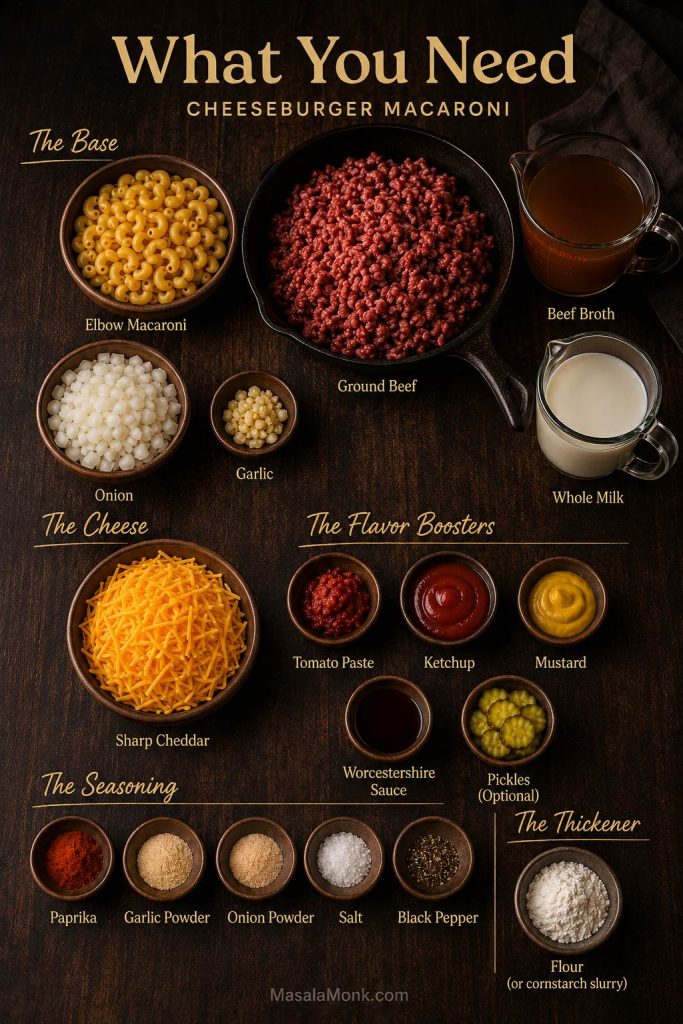
Ingredients for Cheeseburger Macaroni
Nothing here is unusual, which is part of the appeal. This is pantry-and-fridge cooking: ground beef, a small pasta shape, milk, broth, cheddar, and a few sharp, savory extras that make the pot taste more like a cheeseburger than plain beefy pasta.
Ground Beef
Use 1 pound / 450 g of lean ground beef. An 85/15 or 90/10 blend works well because it has enough flavor without making the finished pasta greasy. If your beef releases a lot of fat, drain the excess before adding the tomato paste and liquids.
If you like to check with a thermometer, ground beef should reach 160°F / 71°C. The USDA’s safe minimum internal temperature chart lists 160°F / 71°C for ground meats.
Elbow Macaroni
Elbow macaroni is the classic shape for homemade cheeseburger macaroni. It cooks quickly, holds sauce well, and gives the dish that familiar skillet-dinner feel. Small shells, rotini, cavatappi, or small penne can also work, but they may need slightly different cooking times and a splash more liquid.
Beef Broth and Milk
The base ratio here is 2 cups / 480 ml beef broth plus 1½ cups / 360 ml whole milk for 8 oz / 225 g dry macaroni. The broth keeps the pasta beefy, while the milk gives the sauce body. That amount gives the macaroni enough liquid to cook through without leaving you with soup at the end.
For the cooking sequence, see the simmer the pasta step, where the broth, milk, and dry elbows come together in one pot.
Tomato Paste, Ketchup, Mustard, and Worcestershire
This is the cheeseburger flavor base. Tomato paste adds depth without making the dish taste like tomato pasta. Ketchup gives a small sweet-tangy note, mustard adds sharpness, and Worcestershire sauce makes the beef flavor rounder.
Flour or Cornstarch
A little flour helps the sauce thicken and cling to the pasta. If you prefer cornstarch, mix it with cold milk or broth first so it becomes a smooth slurry. Do not sprinkle dry cornstarch straight into the hot skillet, because it can clump.
If the sauce thickens too much or turns clumpy, the troubleshooting table has the fastest fixes.
Cheddar Cheese
Freshly shredded sharp cheddar gives the best flavor. Mild cheddar works too, but sharp cheddar cuts through the richness better. For an extra-smooth skillet-dinner finish, you can add 2 oz / 55 g American cheese or cream cheese along with the cheddar.
For melting details, jump to best cheese for cheeseburger macaroni or the cheese-after-heat step.
Optional Pickles or Relish
Pickles are optional, but they are one of the easiest ways to make the pasta taste more like a cheeseburger. Add chopped dill pickles or relish at the end, not during the simmer. That keeps the flavor bright instead of harsh. For more topping ideas, this burger topping guide is useful for thinking about mustard, pickles, cheese, onions, and burger-sauce-style finishes.
How to Make Cheeseburger Macaroni in One Pot
Once everything is measured, the cooking moves quickly. Keep the pot nearby, stir a few times, and trust the resting step before you decide the sauce needs fixing.
You need a 12-inch deep skillet with a lid or a 5–6 quart Dutch oven. A shallow pan can reduce the liquid too quickly before the macaroni has time to soften, so choose something deep enough for the pasta to simmer evenly.
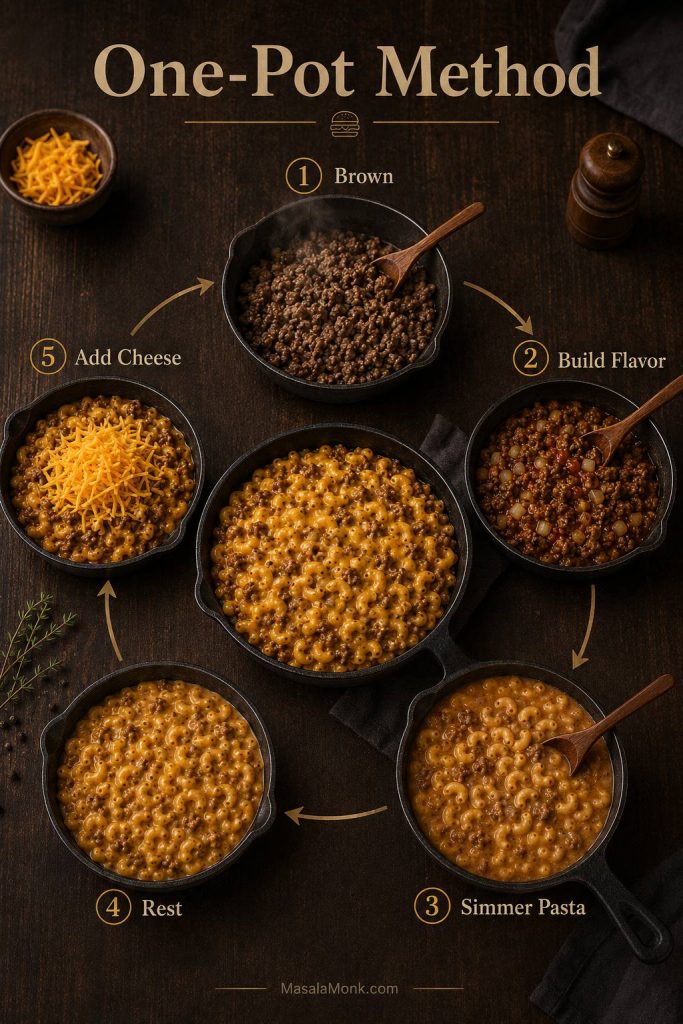
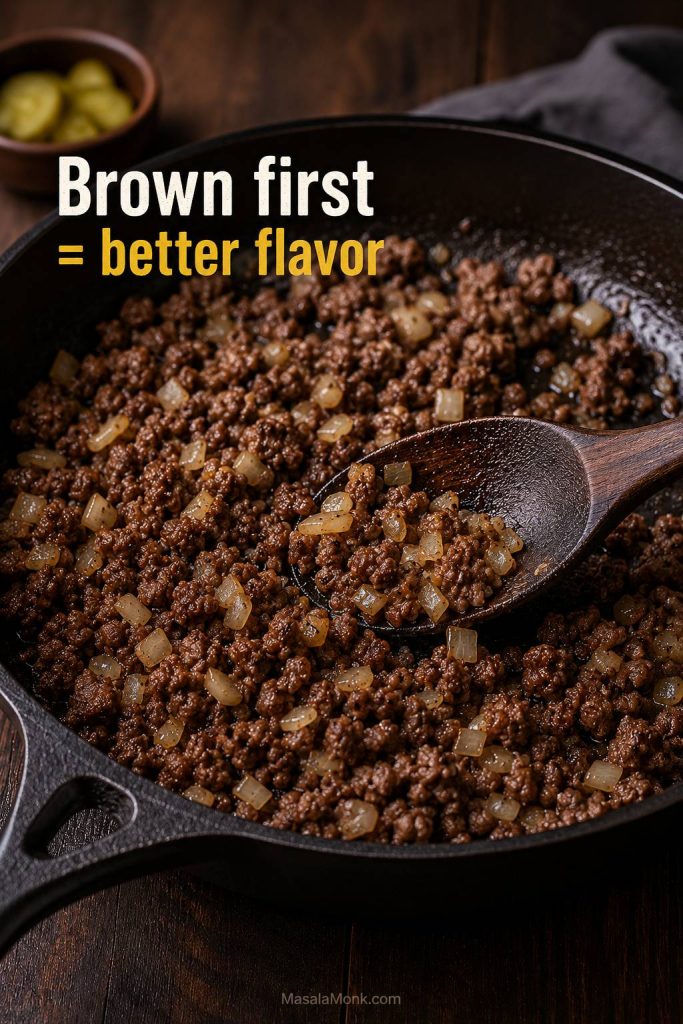
Brown the Beef and Onion
Heat the skillet over medium-high heat. Add a tablespoon of butter or oil, then add the chopped onion and ground beef. Cook for 6–8 minutes, breaking up the beef as it browns. The beef should be cooked through and the onion should soften. Drain excess fat if the pan looks greasy.
Build the Cheeseburger Flavor Base
Stir in the garlic and cook for about 30 seconds. Then add tomato paste, ketchup, mustard, Worcestershire sauce, paprika, garlic powder, onion powder, salt, pepper, and flour. Cook for 1–2 minutes, stirring often, until the tomato paste darkens slightly and the spices smell warm.
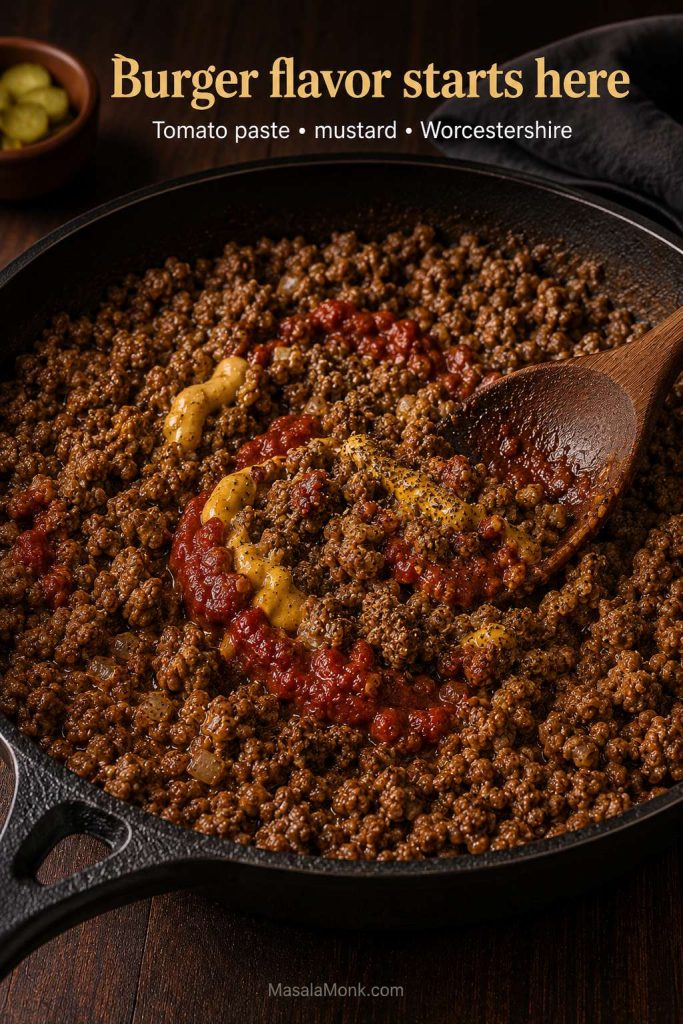
If you are using cornstarch instead of flour, do not add it dry at this stage. Mix 2 teaspoons cornstarch with 1 tablespoon cold milk or broth, then stir that slurry in after the broth and milk go into the pan.
Simmer the Pasta
Pour in the beef broth and milk, scraping the bottom of the pan so nothing sticks. If using the cornstarch slurry, stir it in now. Next, add the dry elbow macaroni and stir well.
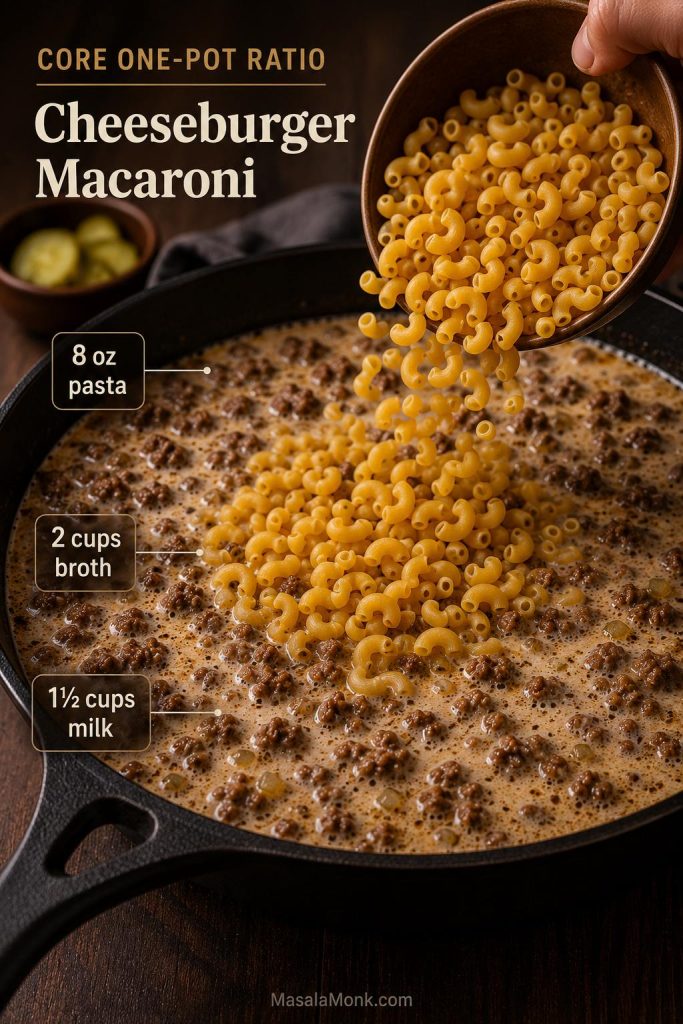
Bring the mixture to a boil, then reduce the heat to medium-low, cover, and simmer for 10–12 minutes. Stir once or twice so the pasta cooks evenly. The macaroni should be just tender and most of the liquid should be absorbed.
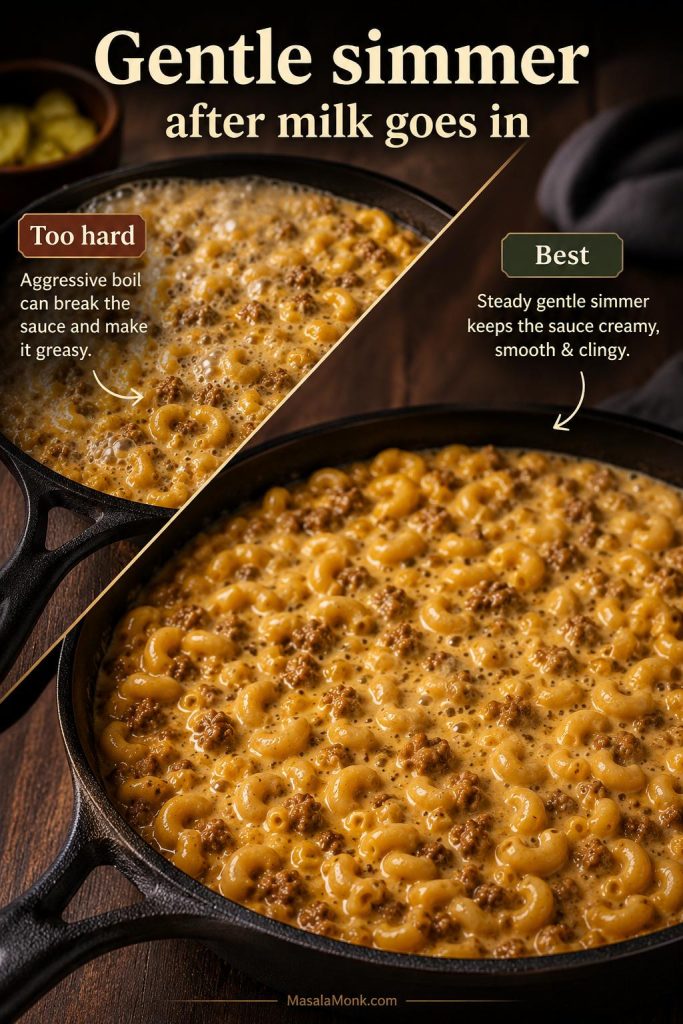
If the pasta is still firm and the sauce is already thick, add ¼ cup broth or milk, cover again, and cook for another 2–3 minutes.
If the sauce looks too thick or too loose near the end, check the creamy sauce tips before adding more cheese.
Stir in the Cheese After the Heat Is Off
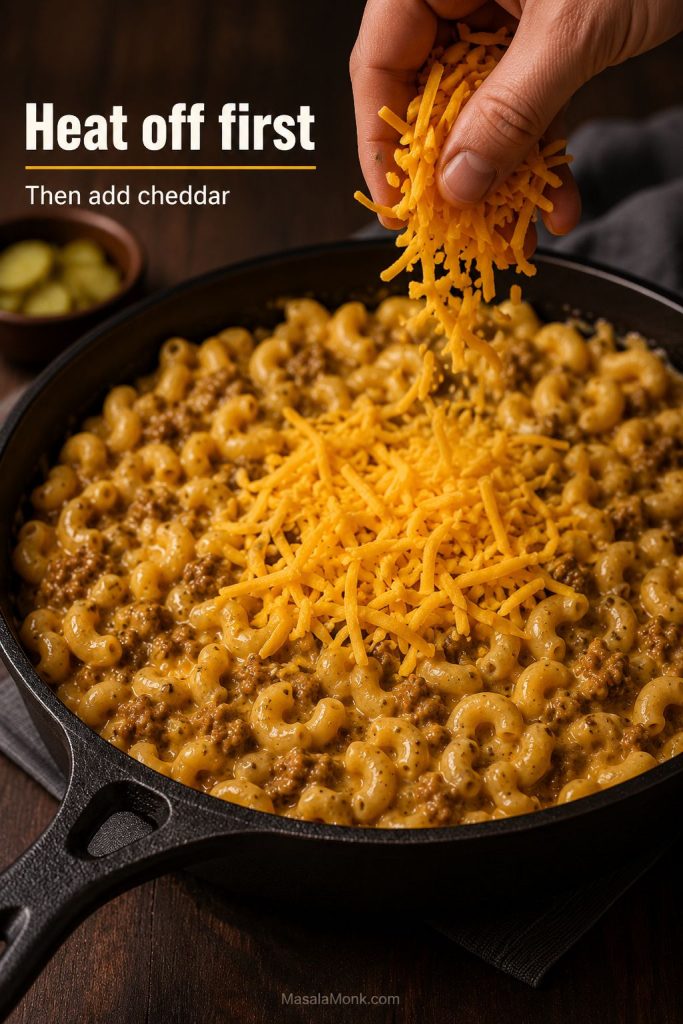
Turn off the heat and let the pasta rest for 2–3 minutes. After that, stir in the cheddar gradually, one handful at a time. This helps the cheese melt into the sauce instead of clumping or separating.
Finish With Pickles, If Using
Taste the pasta and adjust the salt, pepper, mustard, or Worcestershire if needed. Finally, fold in chopped pickles or relish at the very end if you want a stronger cheeseburger flavor. Serve warm while the sauce is still soft and glossy.
How to Get That Boxed-Dinner Flavor Without a Packet
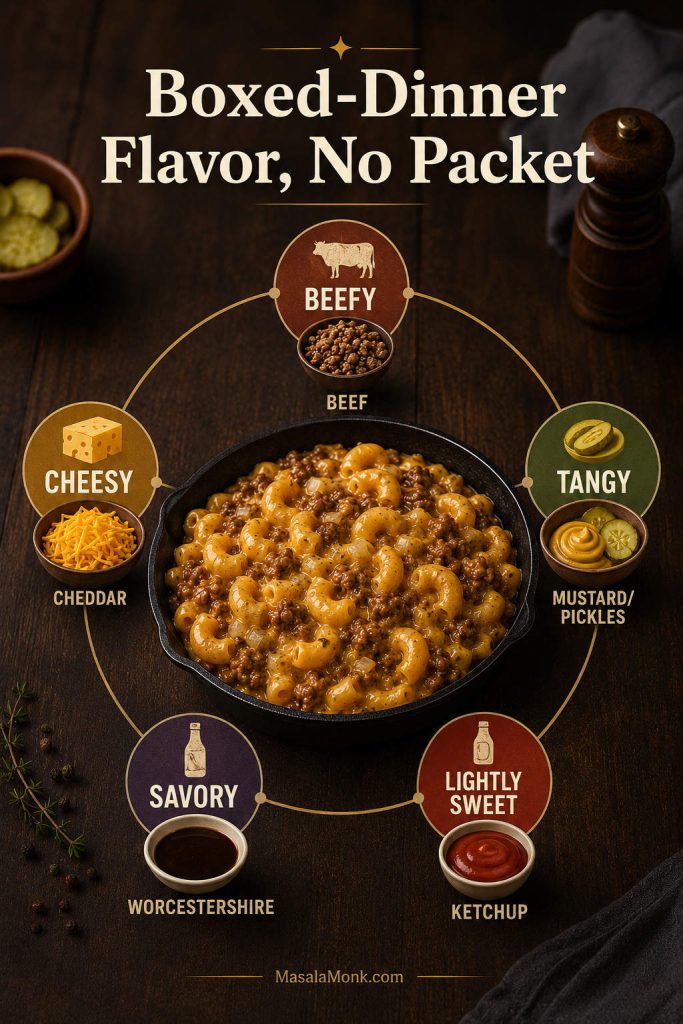
The boxed version works because it hits a very specific craving: beefy, salty, cheesy, a little tangy, and soft enough to eat by the spoonful. The homemade version has to keep that comfort while adding better flavor.
Here, that flavor comes from a small group of pantry ingredients working together rather than from a packaged mix.
| Ingredient | What it adds |
|---|---|
| Tomato paste | Deep cooked tomato flavor without making the sauce watery or too tomato-heavy. |
| Ketchup | A small sweet-tangy burger note. Keep it modest so the dish does not taste like sloppy joe pasta. |
| Mustard | Sharpness that makes the sauce taste more like a cheeseburger. |
| Worcestershire sauce | Beefy depth and savory balance. |
| Paprika | Warm color and a mild skillet-dinner seasoning note. |
| Garlic powder and onion powder | Rounded pantry flavor that supports the fresh onion and garlic. |
If your tomato paste tastes sharp, a tiny pinch of sugar can round it out. You may not need it if your ketchup is already sweet enough.
Once the base flavor is right, the variations section shows how to make it smokier, spicier, creamier, or more pickle-forward.
Best Cheese for Cheeseburger Macaroni
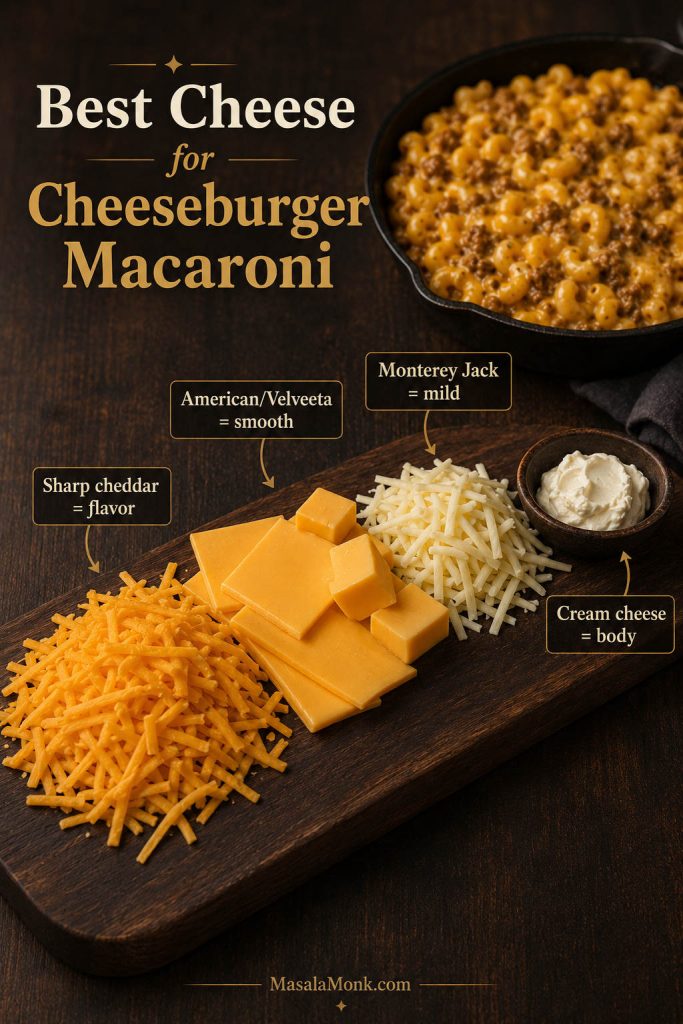
The cheese is where this dish either turns creamy or turns grainy. Use enough cheddar for bold flavor, but add it gently so it melts into the sauce instead of separating into oil and grit.
Sharp Cheddar
Sharp cheddar is the best everyday choice. It has enough flavor to stand up to the beef, broth, and seasonings. Mild cheddar melts nicely but tastes softer, so the finished dish may need a little more mustard, Worcestershire, or salt to feel balanced.
American Cheese, Velveeta, or Cream Cheese as a Melt-Helper
For a smoother sauce, add 2 oz / 55 g American cheese, Velveeta, or cream cheese along with the cheddar. This is optional, not required. A little helps the sauce become silkier; however, too much can make the dish taste heavy.
Monterey Jack or Colby Jack
Monterey Jack or Colby Jack can replace part of the cheddar if you want a milder, softer pot. A mix of sharp cheddar and Monterey Jack is a good choice for kids or anyone who prefers a gentler cheese flavor.
Why Pre-Shredded Cheese Can Turn Grainy
Pre-shredded cheese is convenient, but it often has anti-caking coatings that can make sauces feel less smooth. For the silkiest cheeseburger macaroni, shred a block of cheddar yourself and add it after the heat is off.
For a deeper dive into smooth cheddar sauces, roux thickness, no-flour options, and reheating, this easy cheese sauce recipe is a useful companion.
How to Keep Cheeseburger Macaroni Creamy, Not Grainy
This is the section that matters most if you have ever made a skillet pasta that turned dry, gritty, oily, or gluey. Cheeseburger macaroni should be saucy and spoonable, not soupy and not stiff.
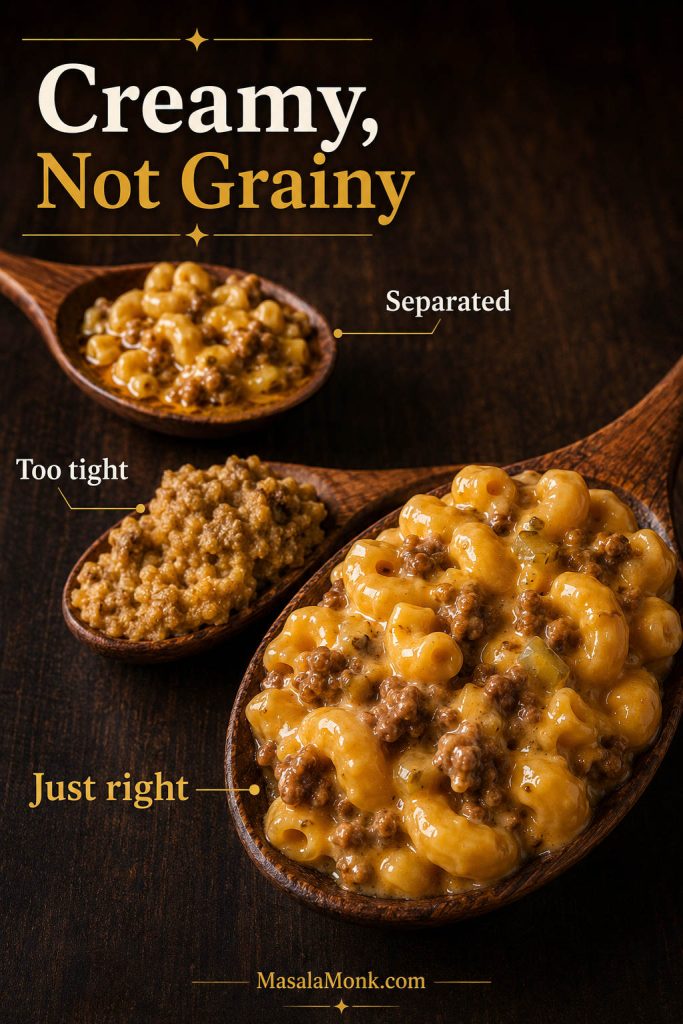
| Tip | Why it helps |
|---|---|
| Use freshly shredded cheese | Block cheese melts more smoothly than many pre-shredded cheeses. |
| Turn off the heat before adding cheddar | High heat can make cheddar separate or turn grainy. |
| Add cheese gradually | Small handfuls melt more evenly than one big pile. |
| Let the pasta rest first | The sauce thickens as it sits, so do not rush to add extra cheese or thickener. |
| Use warm milk or broth to loosen | A small splash brings back creaminess without watering down the whole pot. |
| Use evaporated milk for extra smoothness | It gives a silkier, more stable sauce if you want a smoother finish. |
Milk vs Evaporated Milk vs Cream
Whole milk is the best default for this recipe because it keeps the sauce smooth without making the pot too heavy. However, you can adjust the dairy depending on the texture you want.
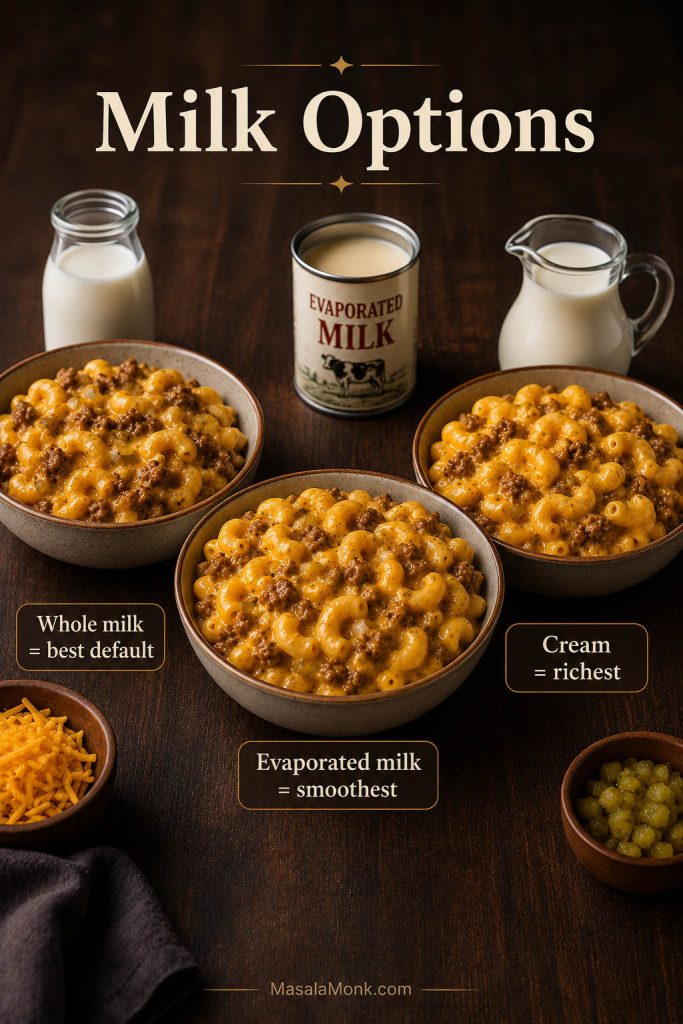
| Dairy option | Best for | Notes |
|---|---|---|
| Whole milk | Best default | Balanced, easy to keep on hand, and rich enough for a weeknight skillet dinner. |
| Evaporated milk | Smoothest sauce | Great when you want a silkier cheeseburger macaroni. |
| Half-and-half | Richer sauce | Use if you want a heavier finish, but keep the heat gentle. |
| Heavy cream | Very rich version | Works, but can feel too heavy in a full pot of ground beef pasta. |
| Sour cream | Tangy hamburger mac and cheese | Add after the heat is off so it stays smooth. |
| Cream cheese | Extra body | Use a small amount so it does not dominate the cheddar flavor. |
For a smoother, slightly richer sauce, replace the whole milk with the same amount of evaporated milk. Meanwhile, sour cream or cream cheese should go in after the pasta cooks and the heat is turned off.
Cheeseburger Macaroni Variations
Once the base pot works, you can push it in a few directions. Add bacon when you want it smoky, pickles when you want it more burger-like, jalapeños when you want heat, or extra cheese when you want it closer to hamburger mac and cheese.
Choose the version based on what you want the bowl to taste like. Classic boxed-dinner comfort stays simple with cheddar and mustard, while a more burger-like pot gets pickles. If you want a richer hamburger mac and cheese direction, add extra cheddar plus a little American cheese, Velveeta, or cream cheese.
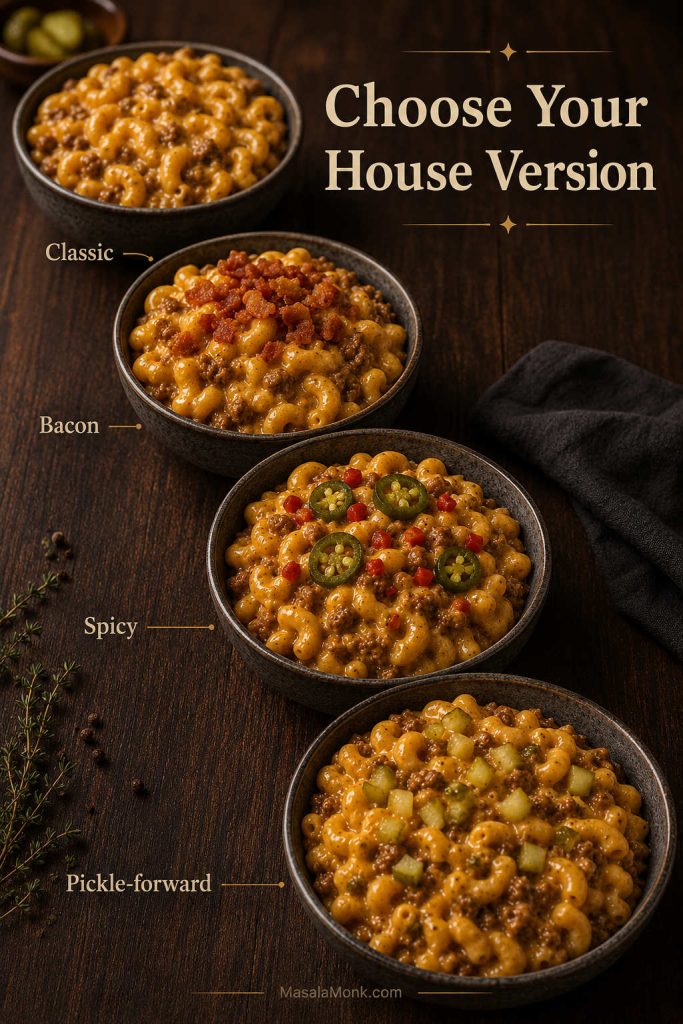
Bacon Cheeseburger Macaroni
Cook 4–6 slices of bacon until crisp, crumble them, and stir them in at the end. You can also sprinkle some on top for crunch. Just drain some of the bacon fat before browning the beef so the dish does not turn greasy.
Cheeseburger Mac and Cheese
For a more mac-and-cheese-style version, add an extra ½ cup cheddar and 2 oz / 55 g American cheese, Velveeta, or cream cheese. The result will be richer, silkier, and less like a light skillet pasta.
Spicy Cheeseburger Pasta
Add diced jalapeños with the onion, use pepper jack for part of the cheddar, or stir in hot sauce at the end. A pinch of chili flakes also works if you want heat without changing the flavor too much.
Pickle Cheeseburger Macaroni
Fold in ¼ cup chopped dill pickles or relish after the cheese melts. This is the most direct way to make the pasta taste like a cheeseburger, but keep it optional because pickle flavor is personal.
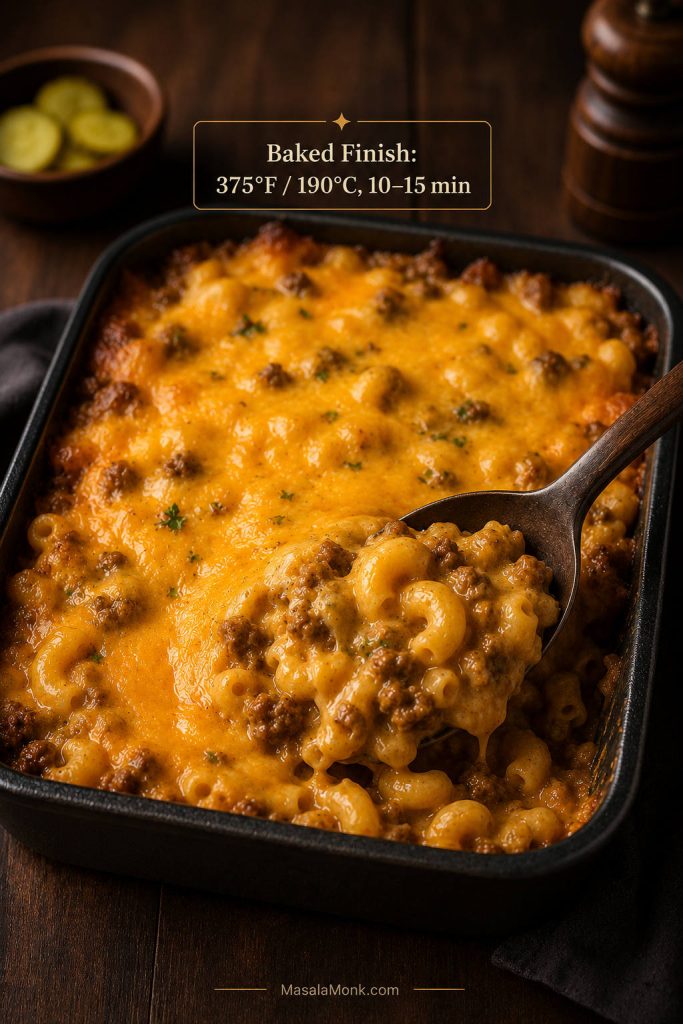
Baked Cheeseburger Macaroni
Prepare the stovetop recipe first. Then transfer it to a greased baking dish, top with ½–1 cup extra cheddar, and bake at 375°F / 190°C for 10–15 minutes, just until the top is melted and bubbly. Since the pasta is already cooked, this is a short finish, not a long casserole bake.
If you prefer old-school baked noodle dinners with a crunchier top, this tuna noodle casserole recipe follows that route with egg noodles, creamy sauce, peas, and a crisp topping.
Gluten-Free Cheeseburger Macaroni
Use a sturdy gluten-free elbow, shell, or brown-rice pasta. Watch the texture closely because some gluten-free pastas soften faster or release starch differently. Add extra broth or milk in small splashes only if needed.
Lighter Cheeseburger Macaroni
Use 90/10 ground beef, 2% milk, and a moderate amount of cheddar. The sauce will be a little less rich, but the tomato paste, mustard, Worcestershire, and spices will still keep the flavor strong.
What to Serve With Cheeseburger Macaroni
Cheeseburger macaroni is rich, so the best sides are crisp, green, acidic, or simple. A green salad, roasted broccoli, green beans, coleslaw, cucumber salad, or pickles all work well. Garlic bread is good too, especially if you want a bigger comfort-food dinner.
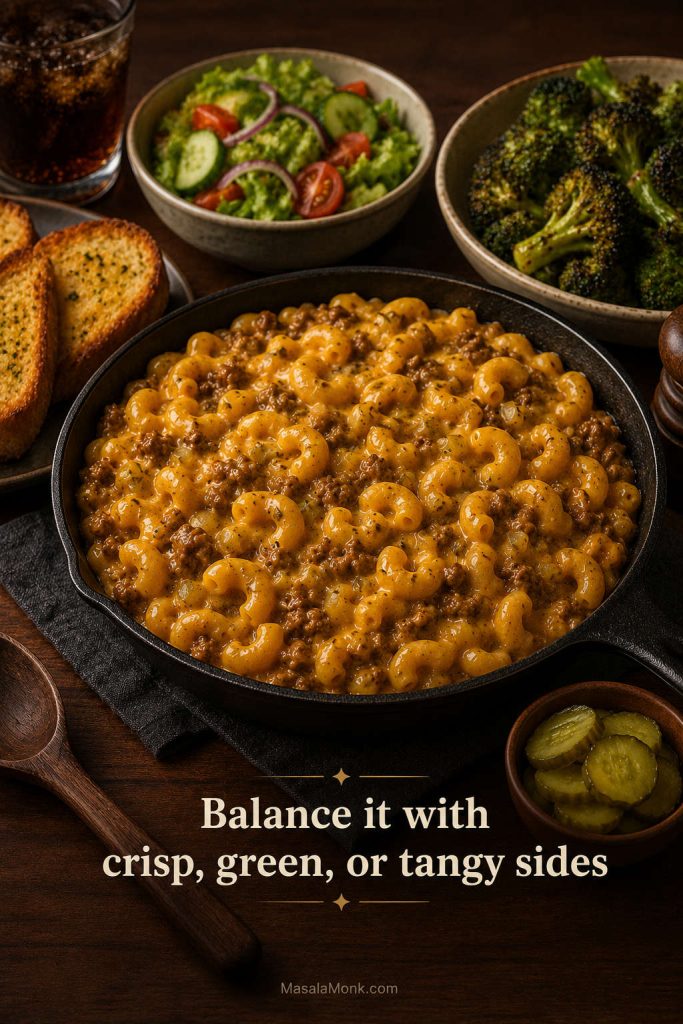
If you are building a cozy dinner table, this pairs well with a crisp salad or a lighter vegetable side. For a bigger comfort-food spread, a creamy potato side like hashbrown casserole works best when the main bowl is not already extra cheesy.
Storage, Freezing, and Reheating
Store leftover cheeseburger macaroni in an airtight container in the refrigerator for 3–4 days. For general leftover safety guidance, you can also check the FoodSafety.gov cold storage chart.
Leftovers thicken in the fridge, so do not reheat them dry. A splash of milk or broth brings the sauce back much better than extra cheese does.
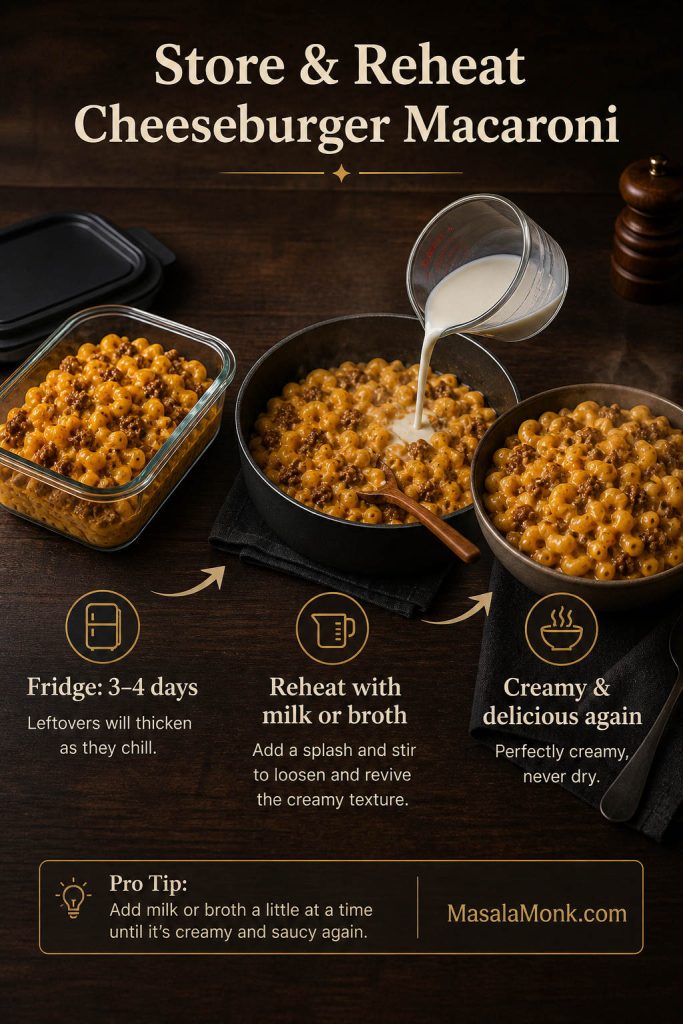
If leftovers look tight after reheating, use the same logic from the creamy sauce tips: warm liquid first, extra cheese only if needed.
To reheat on the stove, add the pasta to a small pan with a splash of milk or broth and warm it gently over low heat, stirring often. To reheat in the microwave, use short bursts and stir between rounds. Add a spoonful of milk or broth before reheating if the pasta looks dry.
You can freeze cheeseburger macaroni, although the pasta will soften after thawing. For the best leftover texture, slightly undercook the macaroni if you know you are making the dish ahead. Then reheat gently and refresh the sauce with a little milk or broth.
Cheeseburger Macaroni Troubleshooting
Most problems with cheeseburger macaroni are easy to fix. The key is to adjust the sauce slowly and avoid overheating the cheese.
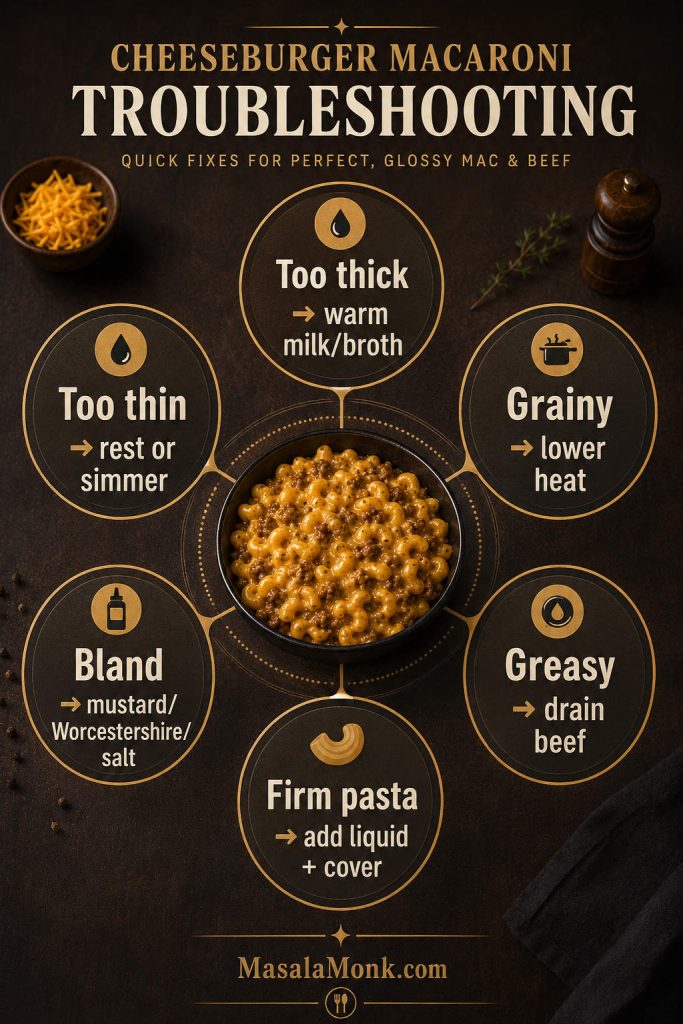
| Problem | What happened | Fix |
|---|---|---|
| Sauce is too thick | The pasta absorbed more liquid than expected. | Add warm milk or broth, 2 tablespoons at a time, until smooth again. |
| Sauce is too thin | It has not rested or reduced enough. | Let it rest for 3 minutes first. If still loose, simmer uncovered for 1–2 minutes. |
| Pasta is undercooked | The liquid reduced before the macaroni softened. | Add ¼ cup broth or milk, cover, and cook 2–3 minutes more. |
| Pasta is mushy | It simmered too long or too hard. | Next time, keep the heat lower and start checking around 9–10 minutes. |
| Cheese sauce is grainy | The cheese was added over high heat or pre-shredded cheese was used. | Turn off the heat before adding cheese and use freshly shredded block cheese. |
| Dish tastes bland | It needs more salt, acid, or savory depth. | Add salt, pepper, mustard, Worcestershire, or chopped pickles. |
| Dish tastes greasy | The beef released too much fat. | Drain the beef before adding broth and milk. |
| Tastes too tomato-heavy | Too much ketchup or tomato sauce was used. | Use tomato paste for depth and keep ketchup to about 1 tablespoon. |
| Cornstarch clumped | Dry cornstarch was added directly to the hot pan. | Mix cornstarch with cold milk or broth first, then stir the slurry into the liquid. |
Homemade Cheeseburger Macaroni Recipe Card
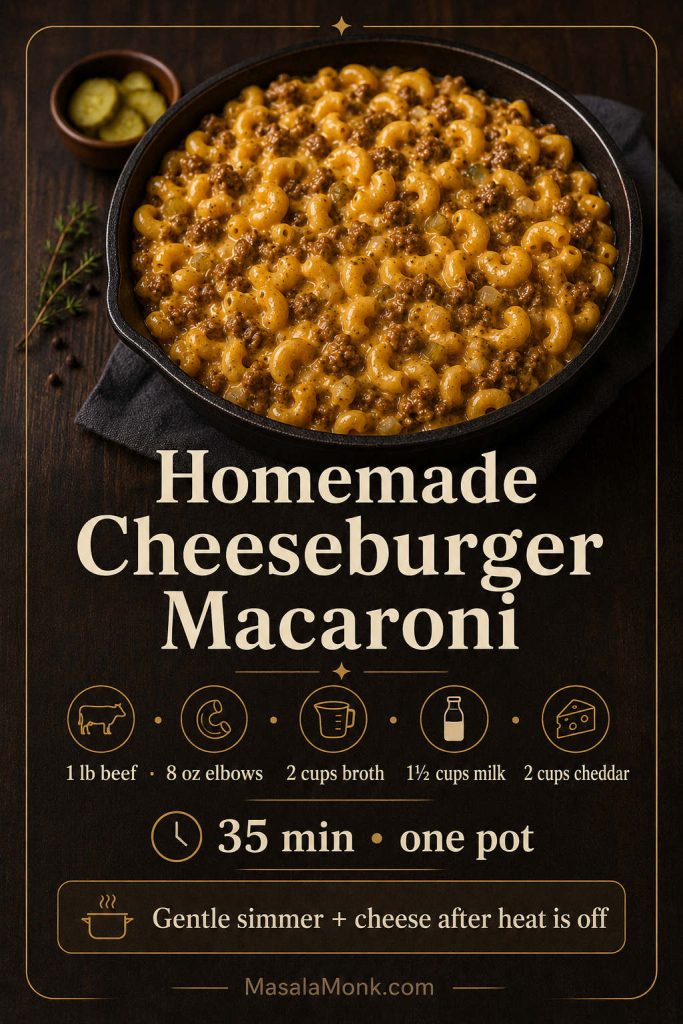
If you only remember two things, remember these: keep the simmer gentle once the milk goes in, and add the cheese after the heat is off. Those two steps do most of the work for a creamy, non-grainy sauce.
Homemade Cheeseburger Macaroni Recipe
A saucy one-pot homemade cheeseburger macaroni recipe with ground beef, elbow pasta, cheddar cheese, and classic burger-style seasoning.
Category: Dinner
Cuisine: American
Method: Stovetop
Equipment: 12-inch deep skillet with lid or 5–6 quart Dutch oven
Ingredients
- 1 lb / 450 g lean ground beef
- 1 tbsp butter or neutral oil
- 1 small yellow onion, finely chopped
- 2 cloves garlic, minced
- 2 tbsp / 30 g tomato paste
- 1 tbsp / 15 g ketchup
- 1–2 tsp yellow mustard or Dijon mustard
- 1 tsp Worcestershire sauce
- 1 tsp paprika
- 1 tsp garlic powder
- 1 tsp onion powder
- ¾ tsp salt, plus more to taste
- ½ tsp black pepper
- 1 tbsp all-purpose flour, or 2 tsp cornstarch mixed with 1 tbsp cold milk or broth
- 2 cups / 480 ml beef broth
- 1½ cups / 360 ml whole milk
- 8 oz / 225 g elbow macaroni
- 2 cups / 225 g freshly shredded sharp cheddar cheese
- Optional: 2 oz / 55 g American cheese, Velveeta, or cream cheese
- Optional: ¼ cup / 35–40 g chopped dill pickles or relish, added at the end
Instructions
- Heat a large deep skillet or Dutch oven over medium-high heat. Add butter or oil, then add the onion and ground beef. Cook for 6–8 minutes, breaking up the beef, until browned. Drain excess fat if needed.
- Stir in garlic and cook for 30 seconds. Add tomato paste, ketchup, mustard, Worcestershire sauce, paprika, garlic powder, onion powder, salt, pepper, and flour. Cook for 1–2 minutes, stirring, until the tomato paste darkens slightly. If using cornstarch instead of flour, do not add it here; use the slurry in the next step.
- Pour in beef broth and milk, scraping the bottom of the pan. If using the cornstarch slurry, stir it in now. Add the dry elbow macaroni and stir well.
- Bring to a boil, then reduce heat to medium-low. Cover and simmer gently for 10–12 minutes, stirring once or twice, until the pasta is just tender and most of the liquid has been absorbed.
- If the pasta is still firm and the sauce is already thick, add ¼ cup broth or milk, cover, and cook 2–3 minutes more.
- Turn off the heat and let the pasta rest for 2–3 minutes.
- Stir in the cheddar gradually until smooth. Add optional American cheese, Velveeta, or cream cheese if using.
- Taste and adjust salt, pepper, mustard, or Worcestershire. Fold in chopped pickles or relish at the end if using. Serve warm.
Recipe Notes
- Keep the pasta at a gentle simmer after the milk goes in. A hard boil can make the sauce rougher and may cause sticking.
- If the sauce looks loose, let it rest before adding more cheese. It thickens as it sits.
- Add the cheese after the heat is off to reduce graininess.
- Pickles should go in at the end so they stay bright.
- For a baked finish, transfer to a greased dish, top with extra cheddar, and bake at 375°F / 190°C for 10–15 minutes.
FAQs
Once you understand the base pot, the recipe becomes easy to bend toward your own table: sharper with mustard, smokier with bacon, creamier with extra cheese, or brighter with pickles at the end.
Is cheeseburger macaroni the same as Hamburger Helper?
It has the same cozy skillet-dinner idea: ground beef, macaroni, cheddar, and a creamy sauce. This version is homemade, though, so it uses real cheese, fresh onion and garlic, tomato paste, mustard, Worcestershire, broth, milk, and pantry spices instead of a packaged seasoning mix.
What pasta works best for cheeseburger macaroni?
Elbow macaroni is the classic choice because it cooks quickly and holds the sauce well. Small shells, rotini, cavatappi, or small penne can also work, but check the pasta early and add a little extra liquid if needed.
Why did my cheese sauce turn grainy?
The heat was probably too high when the cheese went in, or the cheese did not melt smoothly. Turn off the heat before adding cheddar, stir it in gradually, and use freshly shredded block cheese whenever possible.
Should the pasta be cooked before adding it?
No. For this one-pot cheeseburger macaroni recipe, the dry pasta cooks directly in the broth and milk. That helps the sauce thicken and saves you from boiling pasta separately.
How do I make it more like hamburger mac and cheese?
Add a little extra cheddar and include 2 oz / 55 g American cheese, Velveeta, or cream cheese. You can also use evaporated milk instead of whole milk for a smoother, richer sauce.
Ground Turkey Instead of Beef
Ground turkey works, but it is leaner and milder than beef, so the pasta may need a little more Worcestershire, mustard, paprika, salt, or cheese to taste full and savory.
Using Velveeta or American Cheese
Use either one as a melt-helper rather than replacing all the cheddar. A small amount of American cheese or Velveeta makes the sauce smoother and more boxed-dinner-like, while sharp cheddar keeps the flavor stronger.
No-Milk or Dairy-Free Cheeseburger Macaroni
You can use more broth, but the sauce will be less creamy. For a dairy-free version, use an unsweetened plain milk alternative and a dairy-free cheese that melts well, then keep the heat gentle.
Vegetables That Work Well
Peas, diced bell pepper, corn, spinach, and finely chopped mushrooms all work. Add firm vegetables with the onion, and add quick-cooking vegetables near the end so they do not overcook.
What gives cheeseburger macaroni its cheeseburger flavor?
The cheeseburger flavor comes from more than just beef and cheese. Tomato paste gives depth, ketchup adds a little sweet tang, mustard brings sharpness, Worcestershire makes the beef taste richer, and pickles or relish at the end add that unmistakable burger finish.
Is this recipe freezer-friendly?
It can be frozen, but the pasta will soften after thawing. If you plan to freeze it, slightly undercook the macaroni and reheat gently with a splash of milk or broth.
If this becomes your house version, share where you landed: extra creamy, pickle-forward, bacon-topped, spicy, or closer to classic hamburger mac and cheese.
The best version is still the fresh stovetop pot: saucy elbows, browned beef, melted cheddar, and just enough tang to make it taste like a cheeseburger. Serve it hot, scoop it generously, and do not be surprised if the quietest part of dinner is the first few minutes.









[…] flat or overly processed. If you want the same idea with an even stronger burger-style angle, this homemade cheeseburger macaroni recipe goes deeper into that […]