
Last updated on
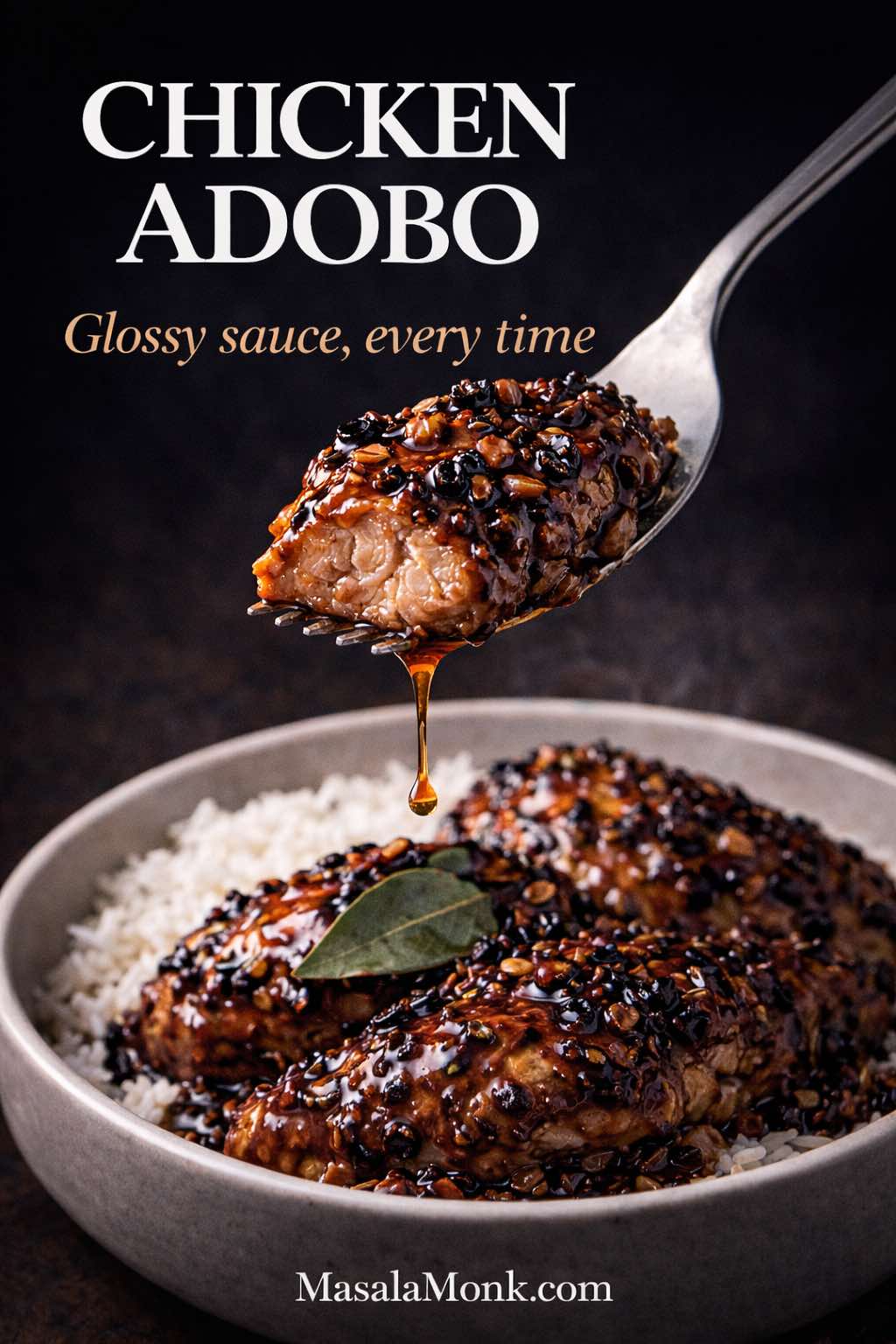
This chicken adobo recipe gives you the version most people are hoping for when they search for adobong manok: tender chicken, plenty of garlic, a savory-tangy soy-and-vinegar sauce, and a final reduction that turns the braising liquid glossy enough to cling to the meat and rice.
The ingredients are simple, but the order matters. Brown the chicken without trying to cook it through, keep the garlic fragrant rather than dark, simmer gently until the meat is tender, and only then decide how far to reduce the sauce. Stop while there is still enough to spoon over rice for classic adobo, or keep going for a drier, lacquered adobong manok na tuyo.
Filipino adobo changes from household to household, so there is no useful reason to pretend one ratio is the only legitimate one. This version keeps a clear starting point—½ cup / 120 ml soy sauce, ⅓ cup / 80 ml vinegar, and ¾ to 1 cup / 180–240 ml water for 1.2–1.5 kg chicken—then shows you how to adjust the finished pot without losing the character of the dish.
Chicken adobo at a glance: Serves 4–5 · best with bone-in thighs or drumsticks · simmer 25–35 minutes for those cuts · cook chicken to at least 165°F / 74°C · reduce 8–12 minutes for a saucy finish or longer for tuyo.
Chicken Adobo Recipe
Classic Filipino chicken adobo with bone-in chicken braised in soy sauce, vinegar, garlic, bay leaves and peppercorns, then reduced until the sauce is glossy and deeply savory.
Ingredients
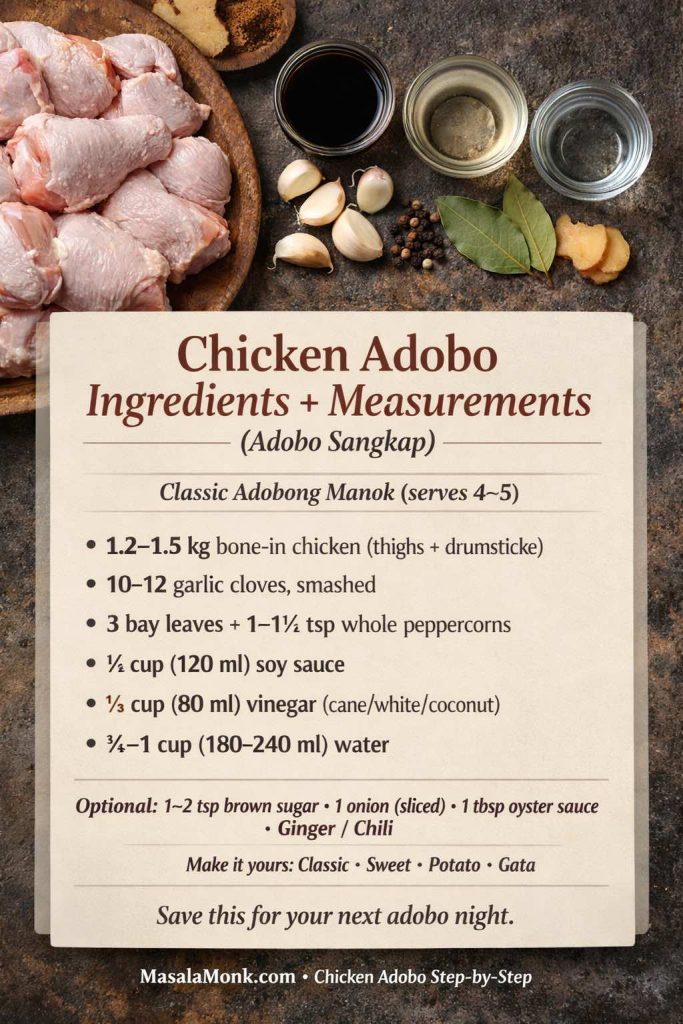
- 1.2–1.5 kg bone-in chicken thighs and drumsticks, skin-on optional
- 1 tablespoon neutral oil
- 10–12 garlic cloves, smashed
- 3 bay leaves
- 1–1½ teaspoons whole black peppercorns, or ¾ teaspoon coarsely cracked pepper
- ½ cup / 120 ml soy sauce
- ⅓ cup / 80 ml cane vinegar, coconut vinegar, or distilled white vinegar
- ¾–1 cup / 180–240 ml water
Instructions
- Prep the chicken. Pat the pieces thoroughly dry. If using large leg quarters, separate them into thighs and drumsticks so they cook more evenly. Do not add extra salt at this stage.
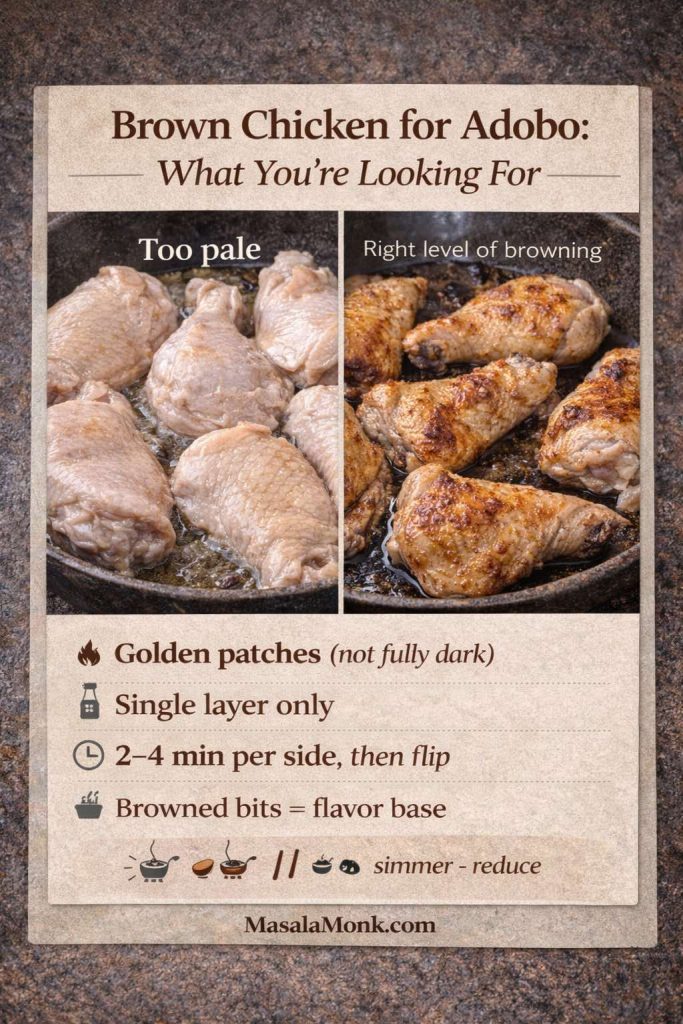
- Brown in batches. Heat the oil in a wide heavy pan over medium-high heat. Brown the chicken in a single layer for about 2–4 minutes per side, aiming for golden patches rather than a dark crust. Transfer to a plate.
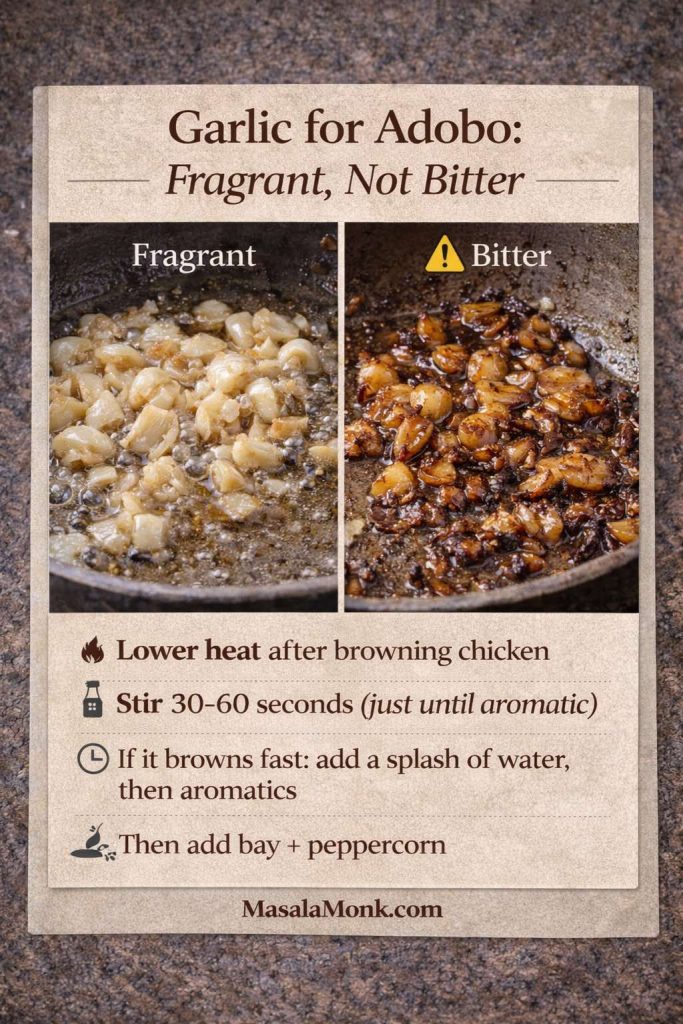
- Cook the aromatics. Lower the heat to medium. Add the smashed garlic and cook for 30–60 seconds, just until fragrant. Add the bay leaves and peppercorns.
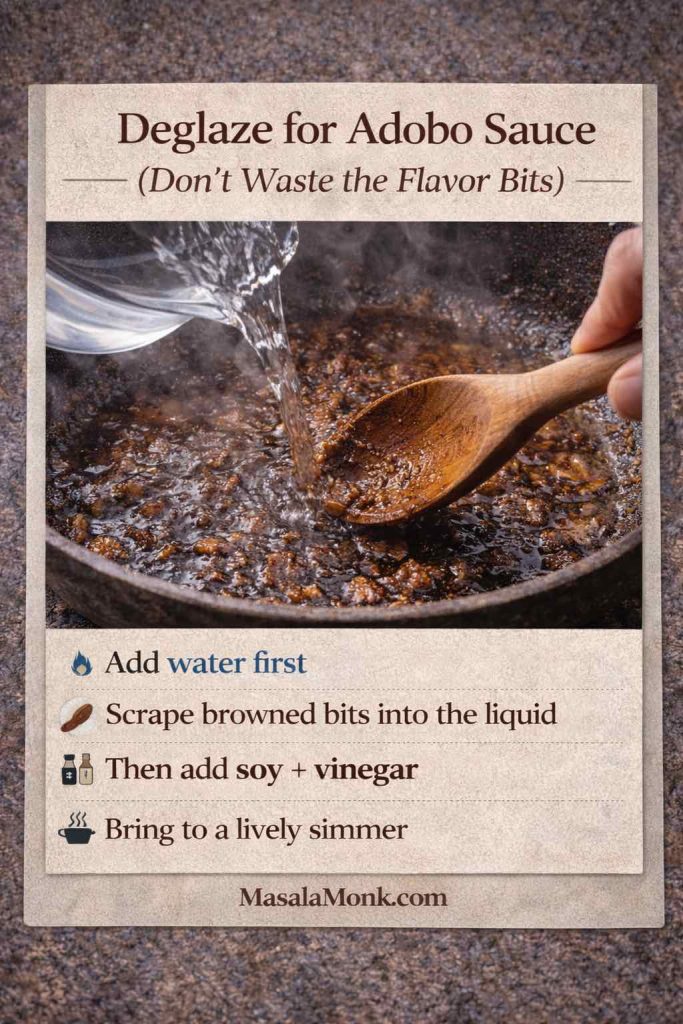
- Build the braise. Add the water first and scrape up the browned bits. Pour in the soy sauce and vinegar. Let the mixture come to a lively simmer; giving the vinegar a minute or two before vigorous stirring can help its raw aroma settle.
- Simmer until tender. Return the chicken and any juices to the pan. Cover and simmer gently: 25–35 minutes for bone-in thighs or drumsticks, 18–25 minutes for wings, or 12–18 minutes for breast pieces. Chicken should reach at least 165°F / 74°C.
- Reduce the sauce. Remove the lid and simmer over medium heat until the sauce is glossy. For a classic saucy finish, this usually takes 8–12 minutes. Turn the chicken once or twice as the sauce thickens. If the meat is already tender and the sauce needs more reduction, lift the chicken out and reduce the liquid separately.
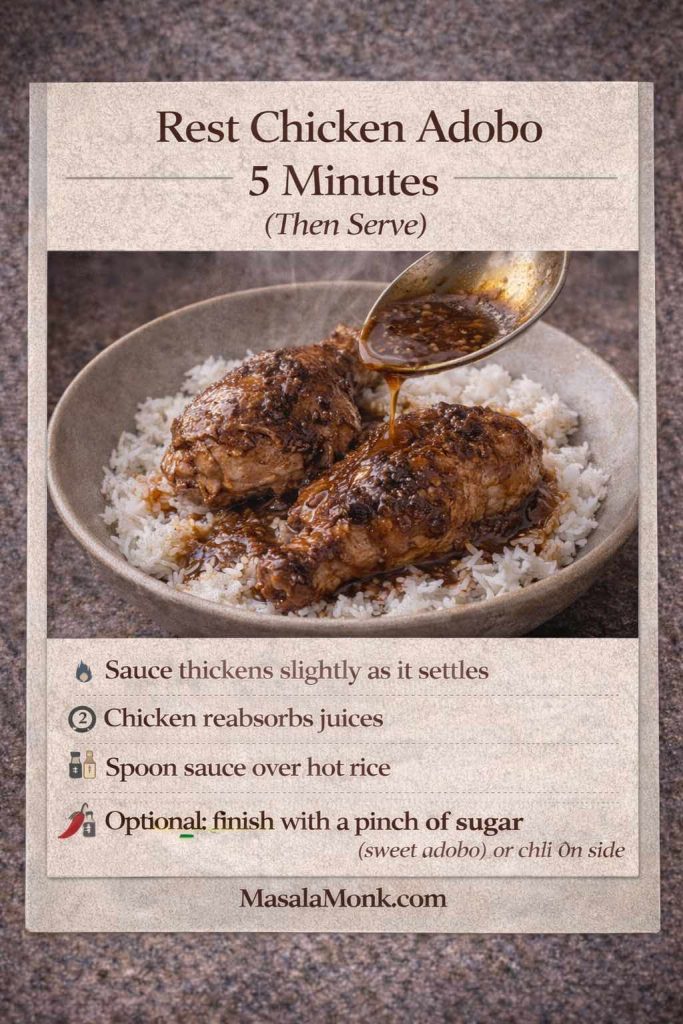
- Rest and serve. Turn off the heat and let the chicken sit in the sauce for about 5 minutes. Serve hot with rice, spooning the sauce over the top.
Optional Tuyo Finish
In This Chicken Adobo Guide
Chicken Adobo Ingredients
Chicken, vinegar, soy sauce, garlic, bay leaves and peppercorns do most of the work. The ingredient list is short enough that changing the vinegar or soy sauce can noticeably shift the finished pot, so it helps to know what each choice is doing before you start adjusting quantities.
Best Chicken Cuts for Adobo
Bone-in thighs and drumsticks are the easiest default for this chicken adobo recipe. They have enough fat and connective tissue to stay juicy through the covered simmer and the uncovered reduction. Wings cook faster and take especially well to a sticky tuyo finish.
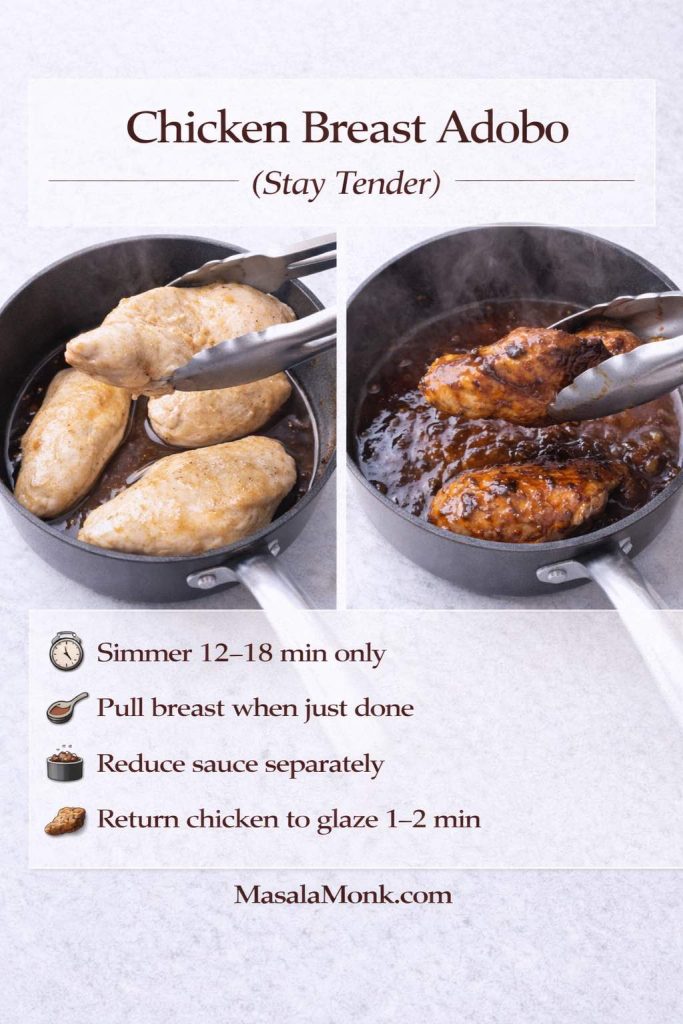
Chicken breast works, but it has less room for error. Simmer it only until done, pull it from the pan, reduce the sauce separately, then return the breast for a 1–2 minute glaze. If breast is the cut you cook most often, the MasalaMonk guide to keeping chicken breast juicy goes deeper into thickness, temperature and carryover cooking.

Which Soy Sauce and Vinegar Work Best?
Use the soy sauce you know, but remember that brands and styles can differ sharply in saltiness and color. If the bottle in your kitchen is unfamiliar, the MasalaMonk soy sauce guide explains the practical differences between common types.
Cane vinegar is a natural fit for Filipino adobo. Coconut vinegar is usually rounder, while distilled white vinegar gives a cleaner, sharper edge. With a stronger vinegar, do not reduce the water just because the vinegar tastes sharp; water is the part that dilutes both acidity and salt. Start within the 180–240 ml range, then judge the sauce near the end rather than trying to correct it while it is still thin and raw-tasting.
Optional 15–30 Minute Marinade
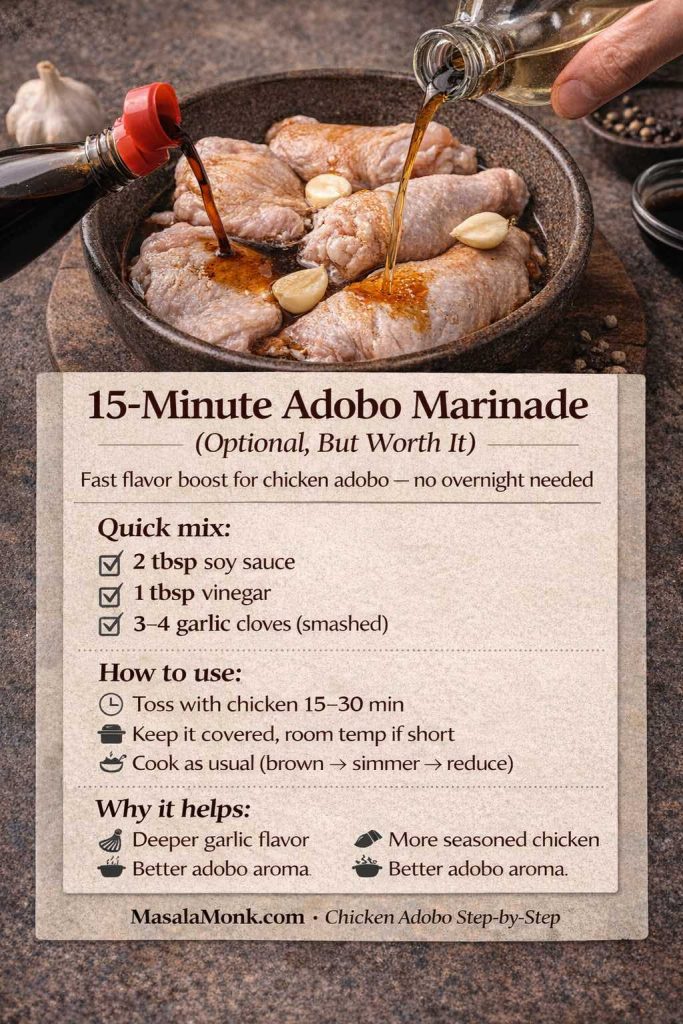
A long marinade is not required. If you have 15–30 minutes, take 2 tablespoons soy sauce, 1 tablespoon vinegar and 3–4 smashed garlic cloves from the measured recipe ingredients and toss them with the chicken while you prepare the pan and aromatics. If dinner needs to move immediately, skip it.
Garlic, Peppercorns, Bay Leaves and Optional Onion
Garlic is not a background ingredient here: 10–12 smashed cloves give this chicken adobo recipe much of its savory aroma. Smashing rather than finely mincing the cloves also makes them less likely to scorch during the brief sauté. Three bay leaves add a dry, herbal note, while whole peppercorns give little bursts of warmth as the sauce reduces.
One small sliced onion is optional. Add it after the chicken comes out of the pan and give it a minute or two to soften before the garlic goes in. It makes the sauce a little rounder and sweeter without turning the dish into a different style. Fresh chili is better treated according to the table: add one or two to the braise if everyone wants heat, or serve sliced chili on the side when different diners want different levels.
These aromatics are easy to increase casually, but restraint helps. More garlic is usually forgiving; too many bay leaves can become medicinal, and heavily crushed pepper can make the final reduction harsher than expected. For this adobo recipe, chicken and sauce should still lead, with the aromatics supporting rather than dominating them.
How to Make Chicken Adobo, Step by Step
The recipe card above gives you the short route. This section is for the points where texture and timing matter: getting real browning instead of steam, keeping garlic from scorching, knowing when the chicken is tender, and reducing the sauce without overcooking the meat.
1. Dry the Chicken Before It Hits the Pan
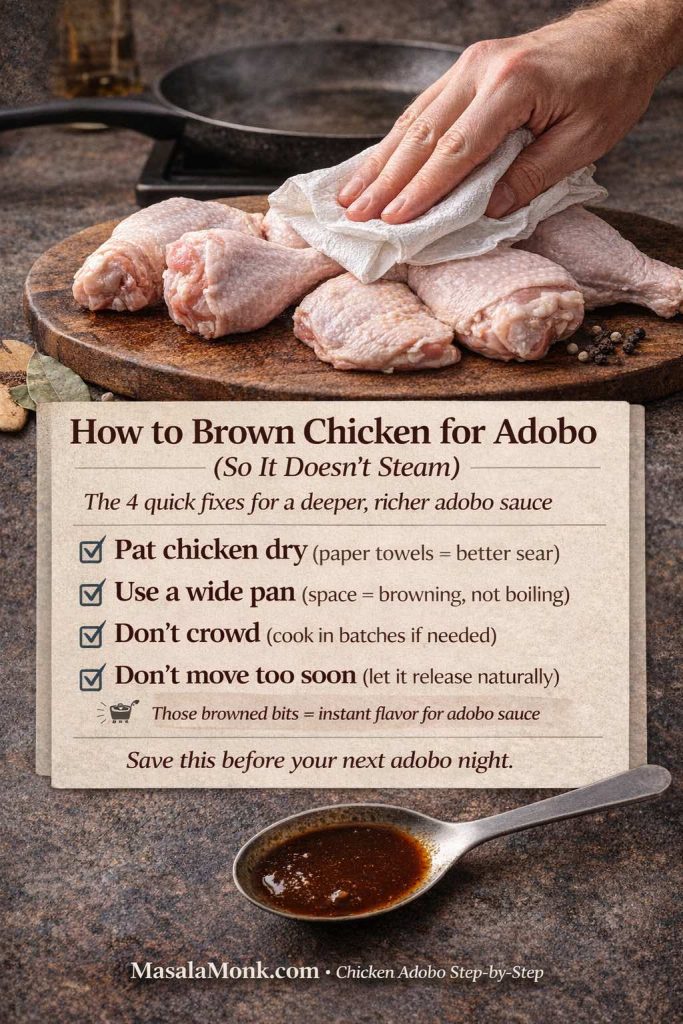
Pat the pieces thoroughly dry with paper towels. Surface moisture has to boil away before browning can begin, so wet chicken spends its first minutes steaming. A wide pan also matters; if the pieces are packed tightly, brown them in batches.
2. Brown for Golden Patches, Not a Dark Crust
Heat 1 tablespoon oil over medium-high heat. Once the chicken goes in, leave it alone long enough to release naturally. The visual target is golden patches, not a uniformly dark crust: about 2–4 minutes per side is a useful starting range, depending on the pan, cut and batch size.
3. Keep the Garlic Fragrant
After the chicken comes out, lower the heat before adding the smashed garlic. Thirty to sixty seconds is usually enough. Add the bay leaves and peppercorns once the garlic smells sweet and aromatic. If the garlic races toward brown, add a splash of the measured water and move on to the braising liquid.
4. Deglaze, Then Add Soy Sauce and Vinegar
Add the water first and scrape the bottom of the pan. Those browned bits are part of the sauce. Add the soy sauce and vinegar, bring the liquid to a lively simmer, and let the vinegar cook for a minute or two before stirring vigorously. The point is not to “cook out” the acid; it is simply to let the harshest raw vinegar aroma settle.
5. Simmer Gently Until the Chicken Is Tender
Return the chicken and any juices to the pan, cover and keep the heat low enough for a gentle simmer rather than a hard boil. Bone-in thighs and drumsticks usually need 25–35 minutes; wings about 18–25 minutes. Breast pieces need only 12–18 minutes and should be removed as soon as they are done.
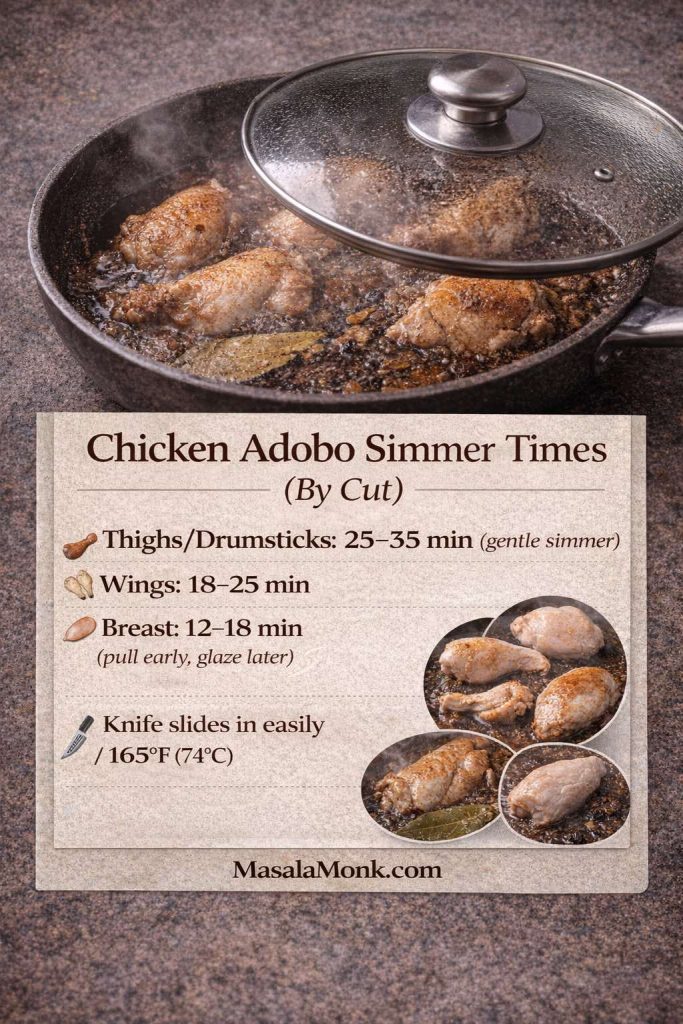
For food safety, poultry should reach at least 165°F / 74°C at the thickest part. The USDA chicken safety guidance also covers storage and reheating, which we use again later in this guide.
Chicken Breast Adobo: Pull It Early, Glaze It Later
6. Reduce Only After the Chicken Is Tender
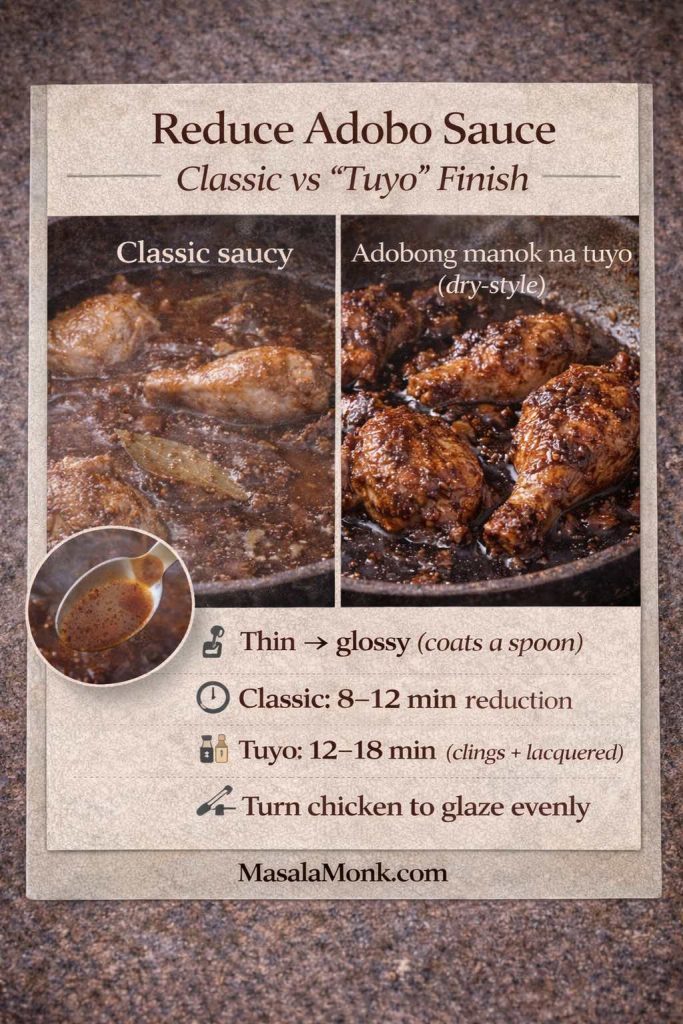
Take off the lid and raise the heat to medium. The sauce will move from thin and broth-like to darker, shinier and more concentrated. For a classic finish, stop when it coats the back of a spoon and there is still enough to spoon over rice—usually after about 8–12 minutes of uncovered reduction.
7. Rest for 5 Minutes Before Serving
Turn off the heat and leave the chicken in the sauce for about five minutes. The reduction settles slightly and the meat gets a final coating before it reaches the plate.
Getting the Adobo Sauce Right
The starting ratio is only half the story. Soy sauce and vinegar vary, chicken releases juices, and a wide pan can reduce faster than a narrow pot. The finished sauce should therefore be judged by both taste and concentration, not by the clock alone.
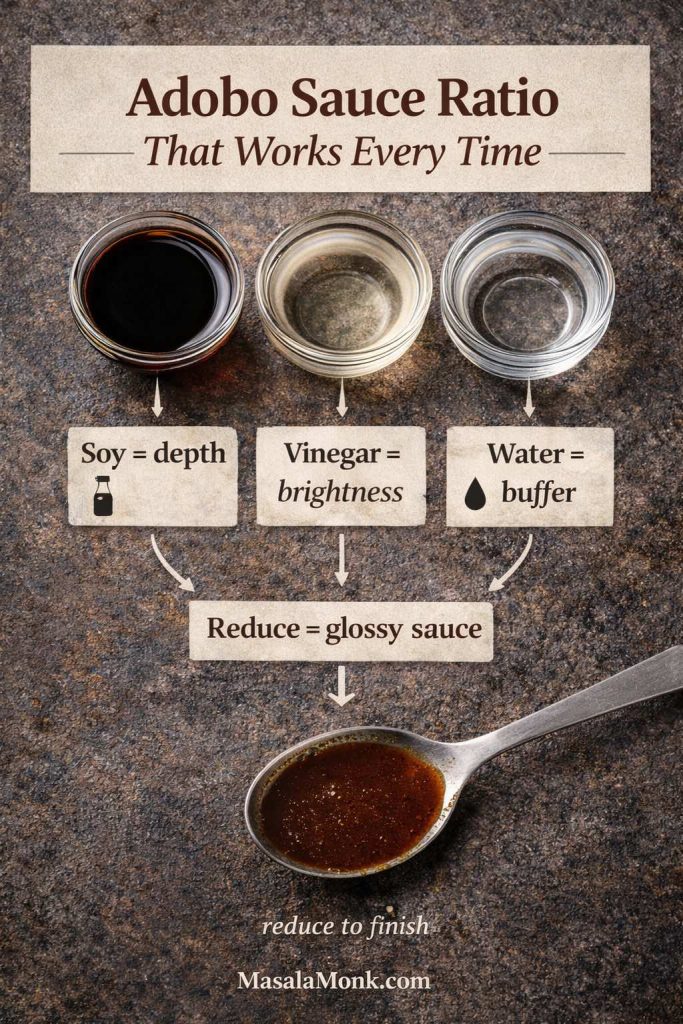
| Component | What it does | What to watch |
|---|---|---|
| Soy sauce | Salt, color and savory depth | Some brands are much saltier than others |
| Vinegar | Acidity and characteristic adobo tang | Distilled white vinegar can taste sharper than cane or coconut vinegar |
| Water | Dilutes salt and acidity while the chicken braises | Use more when the starting mixture is too concentrated, not less |
| Reduction | Concentrates flavor and thickens the sauce | It also concentrates salt and acid, so taste as the sauce tightens |
What if the Vinegar Smells Harsh?
Early in the simmer, vinegar can smell much sharper than the finished dish tastes. Give it a few minutes before correcting anything. If the sauce is still thin, continued cooking may mellow that raw aroma while the liquid reduces. Once the sauce is already thick and concentrated, however, further reduction is not the right fix for excessive sourness because it concentrates the acid as well.
Saucy Adobo vs Adobong Manok na Tuyo
For classic saucy adobo, stop after roughly 8–12 minutes of reduction, when the sauce coats a spoon but still pools lightly in the pan. For tuyo, reduce longer—often 12–18 minutes total—until the liquid clings tightly to the chicken.
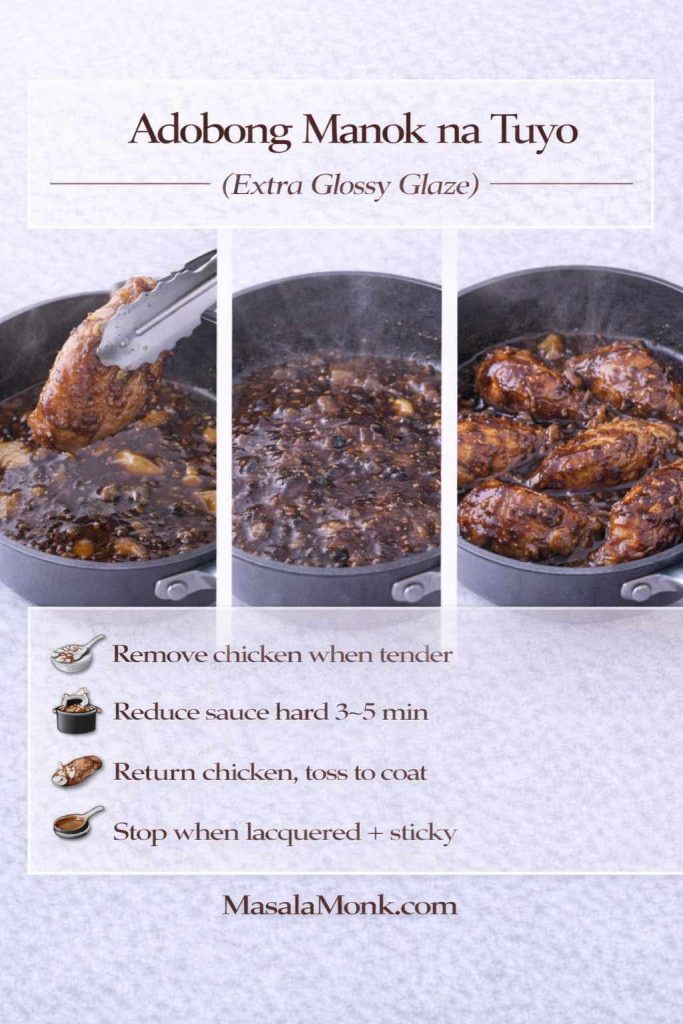
Doubling Chicken Adobo Without a Watery Pot
This chicken adobo recipe scales well, but a double batch does not behave exactly like two single batches in the same pot. More chicken releases more liquid, and crowding reduces the exposed surface area that lets moisture escape. The usual result is not under-seasoning; it is a sauce that takes much longer to concentrate.
Use the widest heavy pot or sauté pan that comfortably holds the chicken. Brown in batches rather than stacking pieces, then combine them for the covered simmer. Double the chicken, soy sauce, vinegar, garlic, bay and peppercorns, but treat the water as an adjustable braising liquid rather than a number that must be doubled blindly. Start with enough for a comfortable simmer, remembering that the chicken itself will contribute juices.
Once the meat is tender, judge the pot before reducing. If there is a large volume of liquid, lift the chicken out and reduce the sauce on its own so the meat does not overcook while you wait for evaporation. A wider pan may finish quickly; a deep narrow pot can need considerably longer. The endpoint remains the same: glossy enough to coat a spoon, with enough sauce left for the style you want.
Chicken Adobo Troubleshooting
Start by looking at the sauce itself. A thin sharp sauce needs a different fix from a thick sharp sauce; “too sour” is not enough information on its own.

| Problem | Likely reason | What to do now |
|---|---|---|
| Too sour, sauce still thin | Vinegar still tastes raw and the sauce has not settled | Simmer a little longer, then taste again before adding anything |
| Too sour, sauce already thick | Acid is too concentrated for your vinegar | Add a small splash of water, simmer briefly, then use a tiny pinch of sugar only if needed |
| Too salty | Soy sauce or reduction has concentrated too far | Add water a little at a time, simmer gently and re-taste |
| Sauce too thin | Not enough evaporation | Remove tender chicken and reduce uncovered until glossy |
| Sauce too thick | Reduced too far | Loosen with a splash of hot water |
| Garlic tastes bitter | Garlic browned too hard before liquid was added | Dilute slightly if needed; next time lower the heat before adding garlic |
| Chicken feels tough | Lean cut, hard boil, or not enough gentle cooking | Lower to a gentle simmer and continue until tender; do not compensate with higher heat |
What to Serve With Chicken Adobo
Hot steamed rice is the obvious partner because it catches both the sauce and the garlic. If you want a dependable method for separate, fluffy grains, use the MasalaMonk guide to cooking rice alongside the adobo.
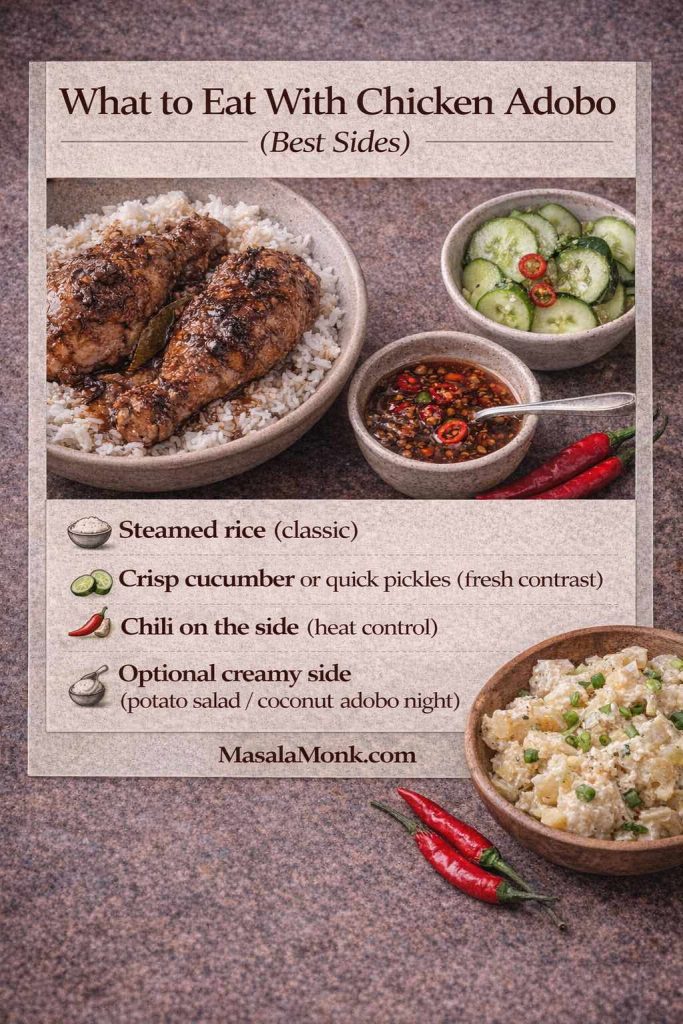
If you prefer a mellow counterpoint, a small scoop of creamy potato salad can work too, especially beside a sharper vinegar-forward adobo. Keep the portion modest so the rice and chicken remain the center of the plate.
Add Something Cold and Crisp
A vinegar-dressed cucumber salad works particularly well because it gives the plate crunch without competing with the adobo sauce. Quick-pickled cucumber or radish does the same job.
Build a Bigger Filipino-Style Table
If adobo is one part of a larger meal, Pinakbet Tagalog brings squash, eggplant, okra and long beans to the table, giving the rich chicken a vegetable-heavy counterpoint.
Keep the Heat on the Side
Instead of making the whole pot spicy, serve sliced chilies or a bright vinegar-forward pepper sauce at the table. Everyone can change the heat without changing the sauce balance for everyone else.
Chicken Adobo Variations
Once the classic method is clear, most variations are small changes in one ingredient or in how far the sauce is reduced. Keep the main braise recognizable and change one variable at a time.
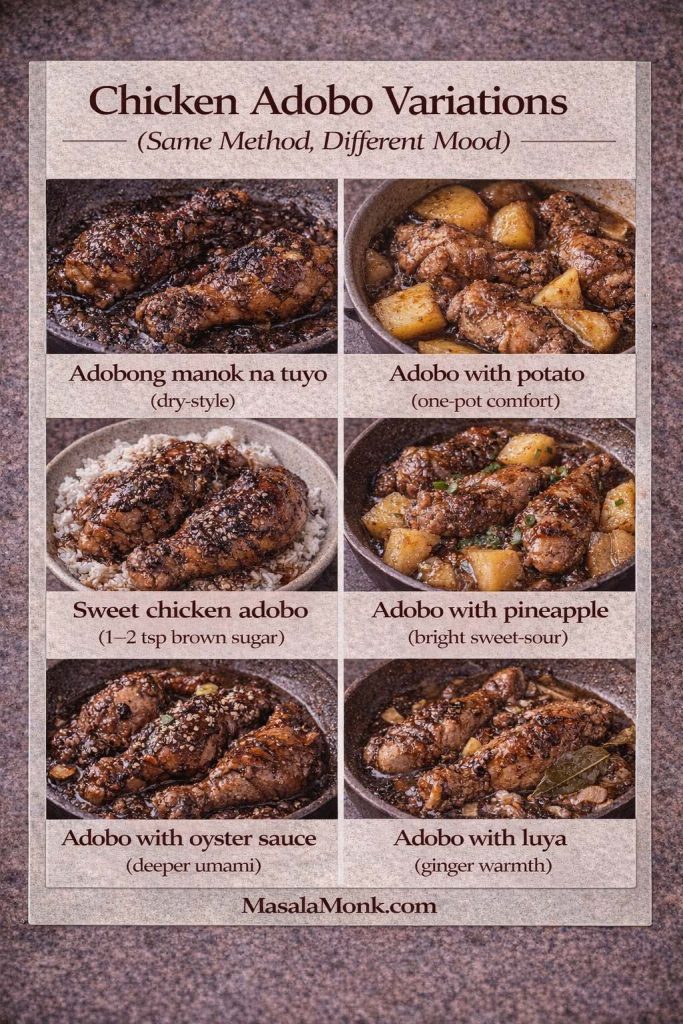
Chicken Adobo With Potato
Add 2 medium potatoes, peeled and cut into chunks, when the chicken returns to the braising liquid. Simmer until both the chicken and potatoes are tender, then reduce uncovered. The potatoes absorb sauce and make the pot feel more substantial without changing its basic flavor.
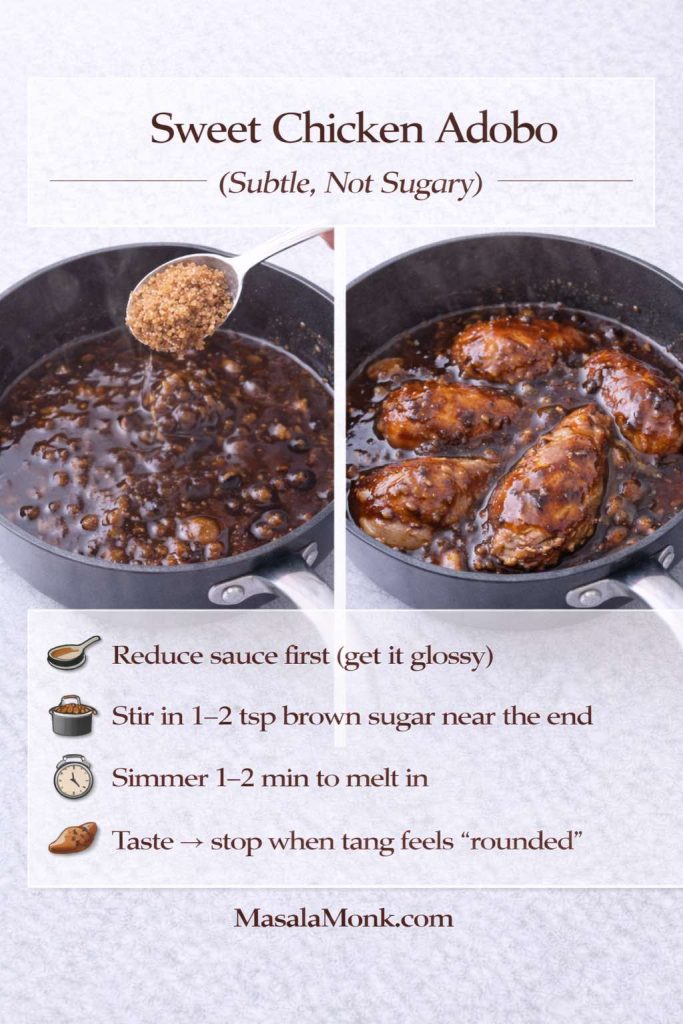
Sweet Chicken Adobo
Reduce the sauce first, then add 1–2 teaspoons brown sugar near the end. The aim is to round the acidity, not make the sauce obviously sugary.
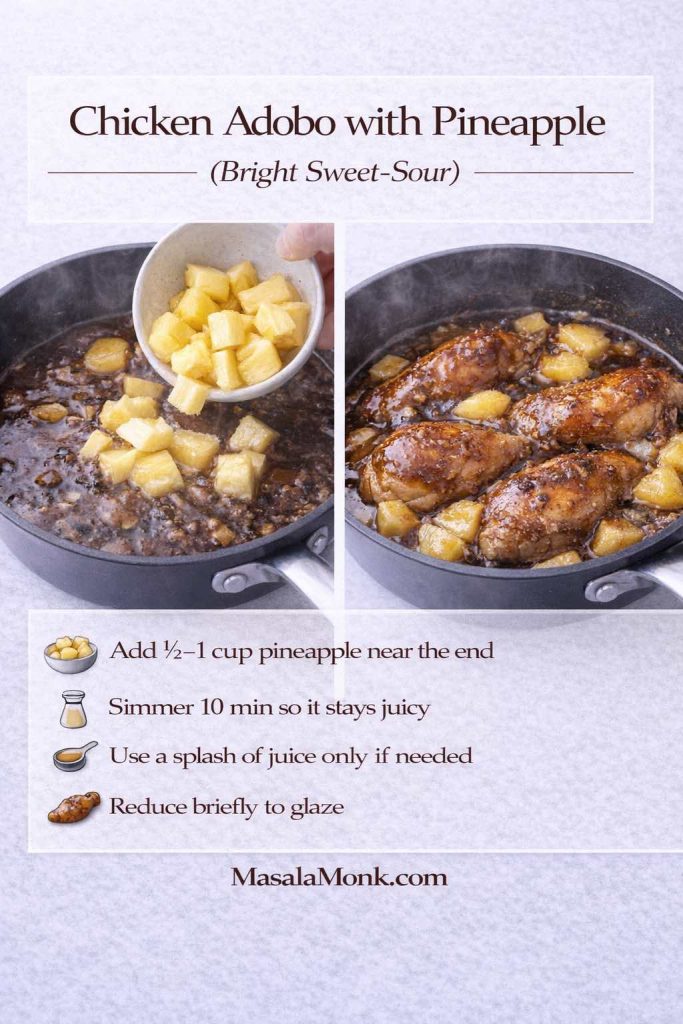
Chicken Adobo With Pineapple
Add ½–1 cup pineapple chunks during the last 10 minutes of simmering. If using canned fruit, add only a small splash of juice if the sauce needs it; too much can make the finish syrupy.
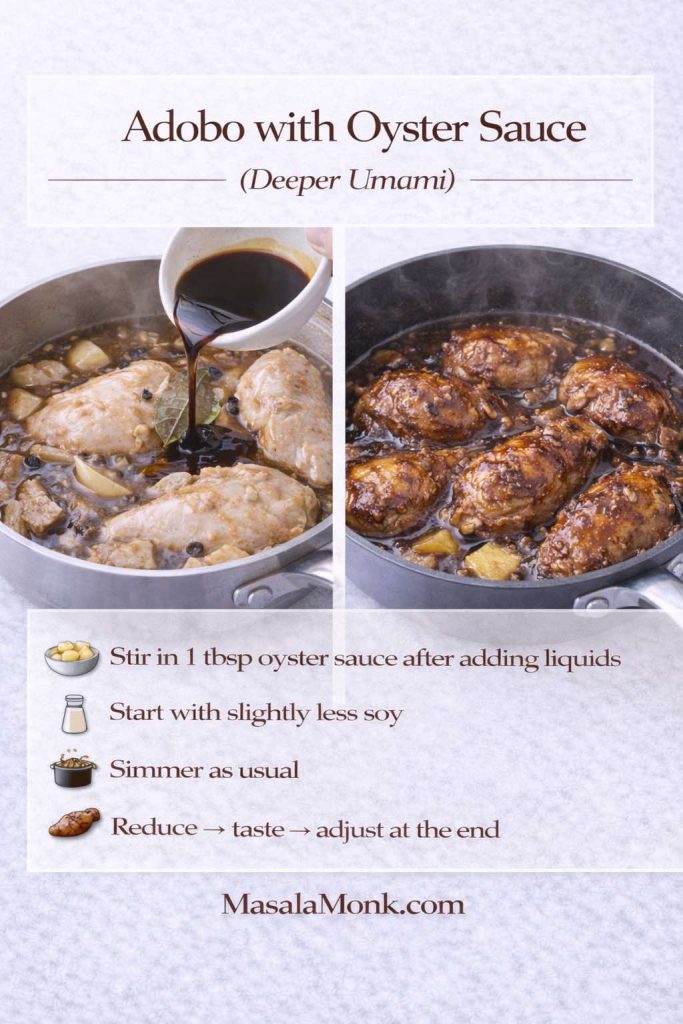
Chicken Adobo With Oyster Sauce
Stir in 1 tablespoon oyster sauce with the braising liquids. Because it adds salt as well as savory depth, use a little less soy sauce at the start and adjust only after reduction.
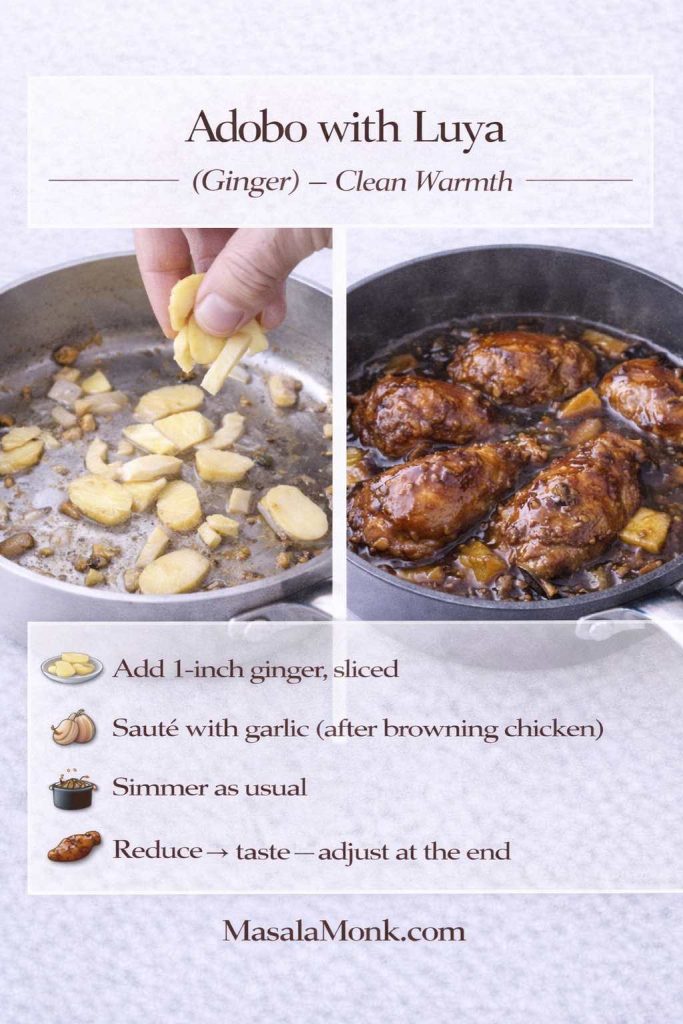
Adobo With Luya (Ginger)
Add a 1-inch piece of sliced ginger with the garlic. It gives the sauce a warm, clean aroma without taking over. If that ginger-led Filipino chicken profile is what you enjoy most, Chicken Tinola takes it in a lighter, brothier direction.
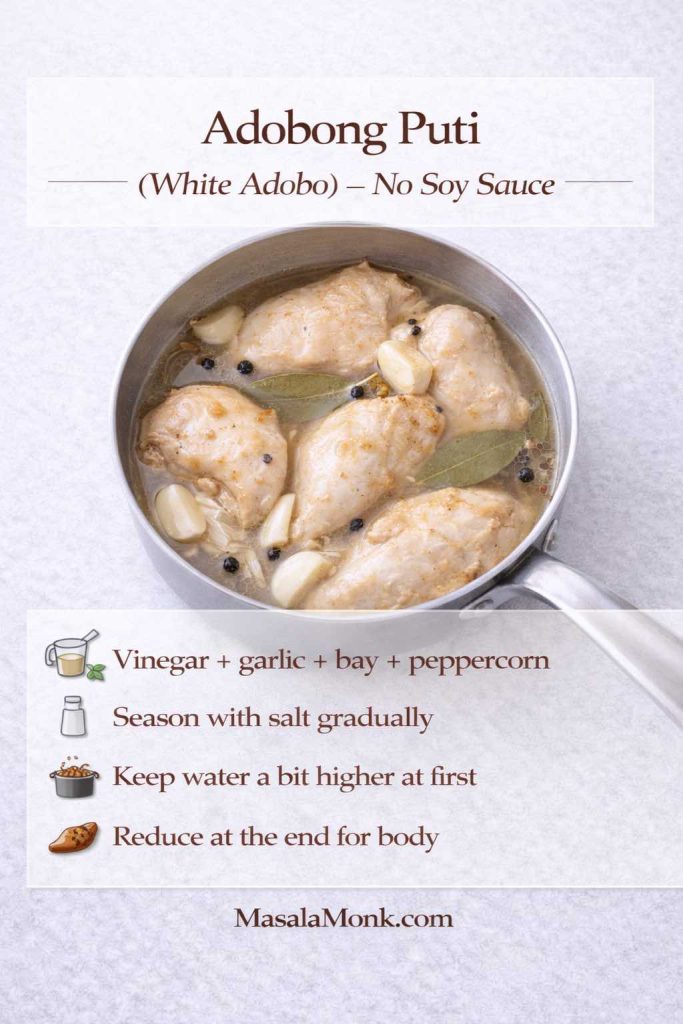
Adobong Puti (White Adobo)
Adobong puti omits soy sauce and relies on vinegar, garlic, bay leaves, peppercorns and salt. Keep the water toward the higher end at first, season gradually, then reduce once the chicken is tender. Without soy sauce, the result is paler, brighter and more vinegar-forward.
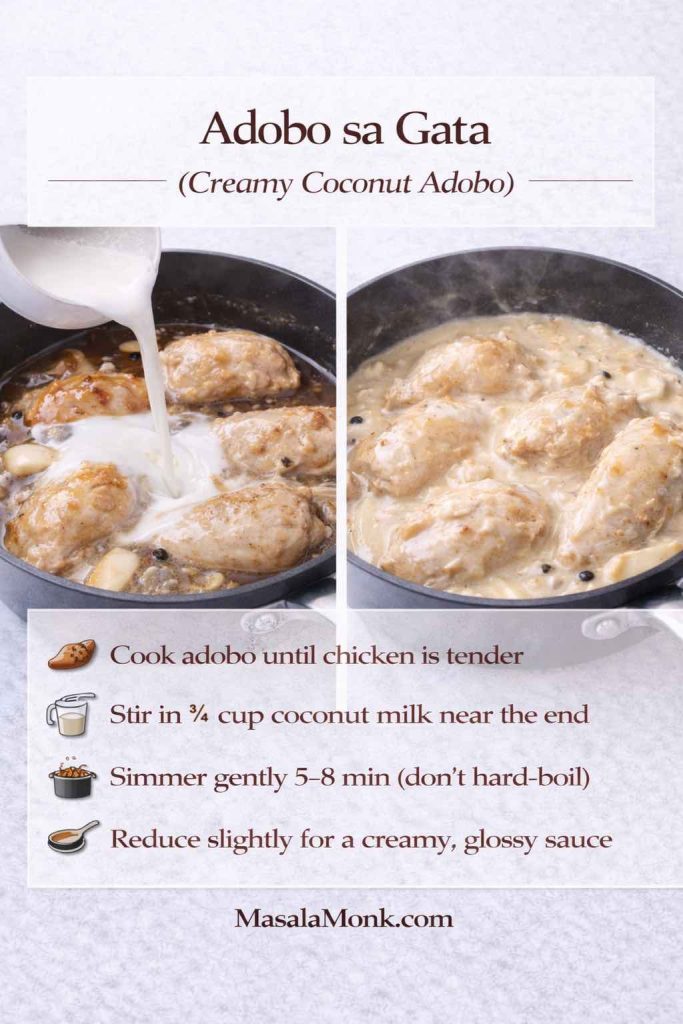
Chicken Adobo sa Gata
Cook the chicken until tender using the classic method. As the sauce begins its final reduction, stir in ¾ cup coconut milk and simmer gently for 5–8 minutes. Avoid a hard boil; the goal is a smooth, creamy sauce rather than separated coconut fat.
If you want to start from fresh coconut, the MasalaMonk guide to making coconut milk at home covers the extraction step separately.
Storage, Reheating and Make-Ahead
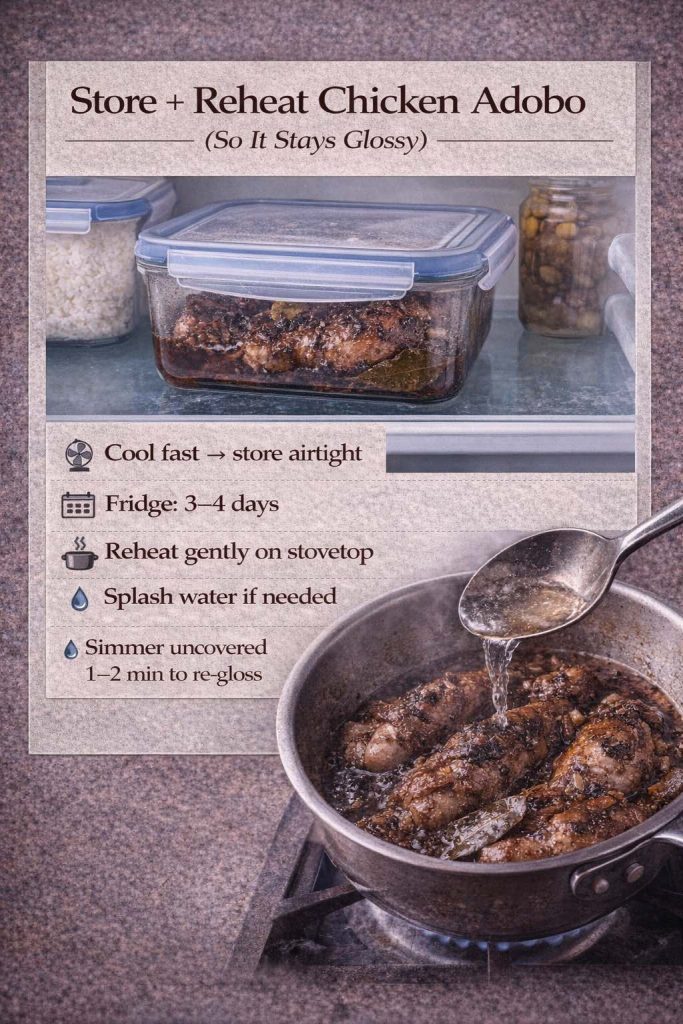
This chicken adobo recipe is unusually friendly to leftovers because the meat stays protected by sauce and the garlic, vinegar and soy taste more integrated after a night in the refrigerator. The trick is reheating gently enough that the meat stays tender while the sauce regains its gloss.
Refrigerating and Freezing
Cool leftovers promptly and refrigerate in a shallow covered container. USDA guidance recommends using cooked chicken within 3–4 days. For longer storage, freeze portions with enough sauce to protect the meat from drying out.
Reheat Without Losing the Sauce
Warm the chicken over medium-low heat. If the sauce is very thick from the refrigerator, add a small splash of water. Once everything is hot, simmer uncovered for 1–2 minutes to bring the sauce back to a glossy consistency. Reheated leftovers should reach 165°F / 74°C.
Making Chicken Adobo a Day Ahead
You can cook the adobo completely a day before serving, including the final reduction. Cool it promptly, refrigerate it with the chicken sitting in the sauce, then reheat gently the next day. If the chilled sauce has tightened into a gel, add only a small splash of water at first; it will loosen as it warms. Once the chicken is hot, uncover for the final minute or two and let the sauce return to the consistency you want. Making the dish ahead is especially convenient for a larger batch because all the browning and long simmering are already finished before guests arrive.
Crispy-Skin Leftover Adobo
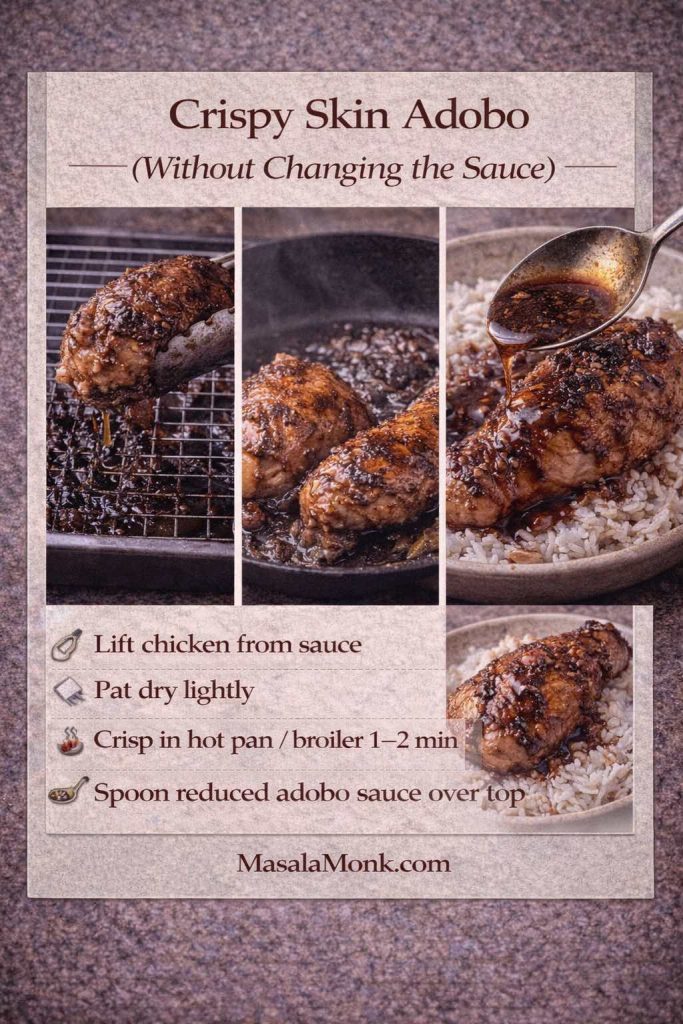
If you used skin-on chicken, separate texture from reheating: warm the sauce first, crisp the chicken briefly in a hot pan or under the broiler, then spoon the sauce over the top. That gives you crisp edges without having to cook the chicken hard in the sauce.
Leftover Chicken Adobo Rice Bowl
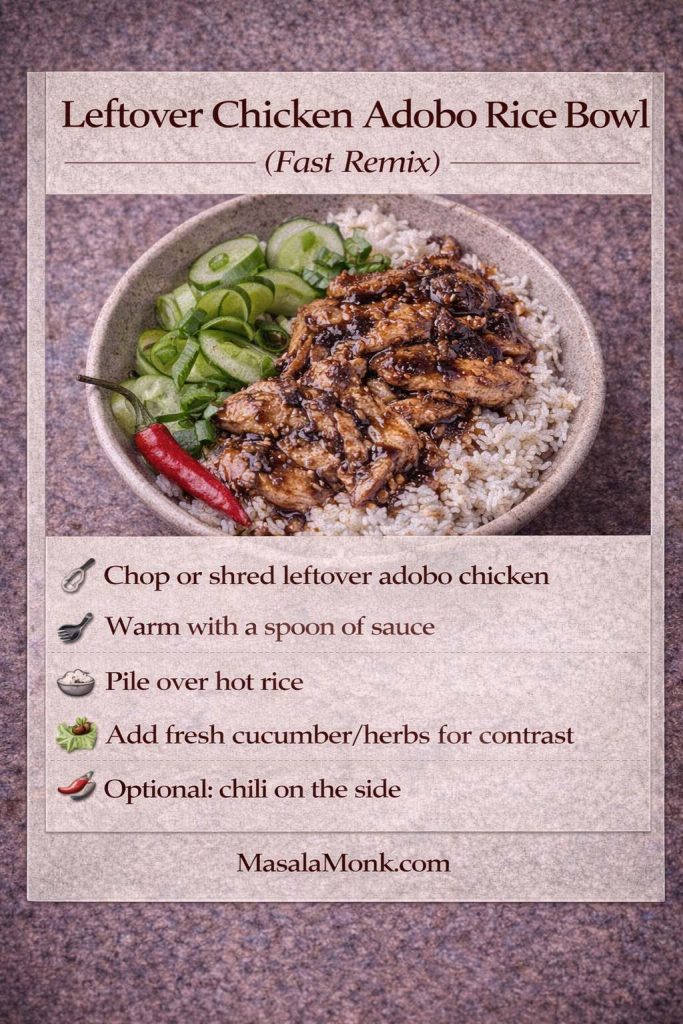
Chopped adobo chicken makes an easy rice bowl. If you also have cold rice to use up, the MasalaMonk chicken fried rice method is another route—use the adobo meat as cooked chicken and add it near the end rather than searing it again.
Shredded Chicken Adobo for Wraps and Sandwiches
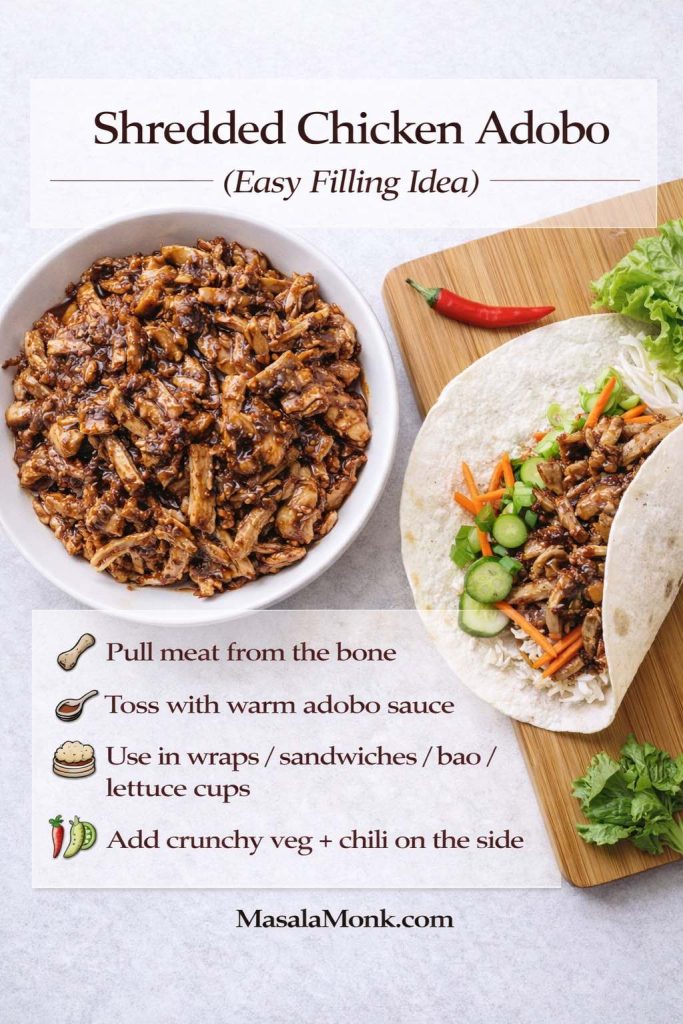
And if the chicken disappears before the rice does, leftover rice can go in a completely different direction with these crispy arancini-style rice balls.
A Short Note on Filipino Adobo
Adobo is not a single fixed formula. The name is Spanish in origin, but the Filipino practice of preserving and cooking food with vinegar predates the colonial label; over time, household and regional versions developed with different balances of vinegar, salt or soy, garlic and other aromatics. The Philippine Information Agency gives useful cultural context for how Filipino food traditions—including adobo—reflect that layered history.
Frequently Asked Questions
1. Do I need to marinate chicken adobo?
No. The covered braise seasons the chicken well on its own. A 15–30 minute marinade with measured soy sauce, vinegar and garlic is optional if you have the time.
2. Which vinegar is best for chicken adobo?
Cane vinegar is a strong first choice. Coconut vinegar is usually a little rounder, while distilled white vinegar gives a sharper, cleaner acidity. Start with the recipe amount and use water to control concentration rather than cutting the water because a vinegar tastes strong.
3. What soy sauce-to-vinegar ratio should I use?
This recipe uses ½ cup / 120 ml soy sauce to ⅓ cup / 80 ml vinegar, plus ¾–1 cup / 180–240 ml water. Treat that as a starting formula; your soy sauce saltiness, vinegar acidity and final reduction all affect the finished balance.
4. Why is my chicken adobo too sour?
If the sauce is still thin and smells raw, simmer a little longer before judging it. If it is already thick and still too sour, add a small splash of water and re-simmer briefly. A tiny pinch of sugar can round the acidity after that, but do not keep reducing an already concentrated sauce just to chase away sourness.
5. Should chicken adobo be saucy or dry?
Both styles are common. Stop the reduction while there is still sauce to spoon over rice for a classic saucy finish, or reduce longer for adobong manok na tuyo, where the sauce clings tightly to the chicken.
6. Can I use chicken breast instead of thighs?
Yes. Simmer breast pieces for about 12–18 minutes, remove them as soon as they are done, reduce the sauce separately, then return the chicken for a 1–2 minute glaze.
7. Can chicken adobo be made ahead?
Yes. This chicken adobo recipe can be cooked fully the day before, cooled promptly and refrigerated in its sauce. Reheat gently with a splash of water if needed, then simmer uncovered for a minute or two to restore the gloss.
8. What does adobo mean in Filipino cooking?
In Filipino cooking, adobo refers broadly to a family of dishes cooked with vinegar and salt or soy sauce, commonly with garlic and pepper. Chicken adobo and pork adobo are among the best-known versions, but household formulas vary widely.
Once you have made the classic version, the useful thing to remember is not a slogan but the sequence: tenderize the chicken first, concentrate the sauce second, and make final taste adjustments only when you can see how concentrated the pot has become.









[…] Also Read: Chicken Adobo — Step-by-Step Recipe — Classic Filipino Adobong Manok […]
[…] Also Read: Chicken Adobo — Step-by-Step Recipe — Classic Filipino Adobong Manok […]
[…] Also Read: Chicken Adobo — Step-by-Step Recipe — Classic Filipino Adobong Manok […]
[…] Also Read: Chicken Adobo — Step-by-Step Recipe — Classic Filipino Adobong Manok […]
[…] Also Read: Chicken Adobo — Step-by-Step Recipe — Classic Filipino Adobong Manok […]
[…] Also Read: Chicken Adobo — Step-by-Step Recipe — Classic Filipino Adobong Manok […]