
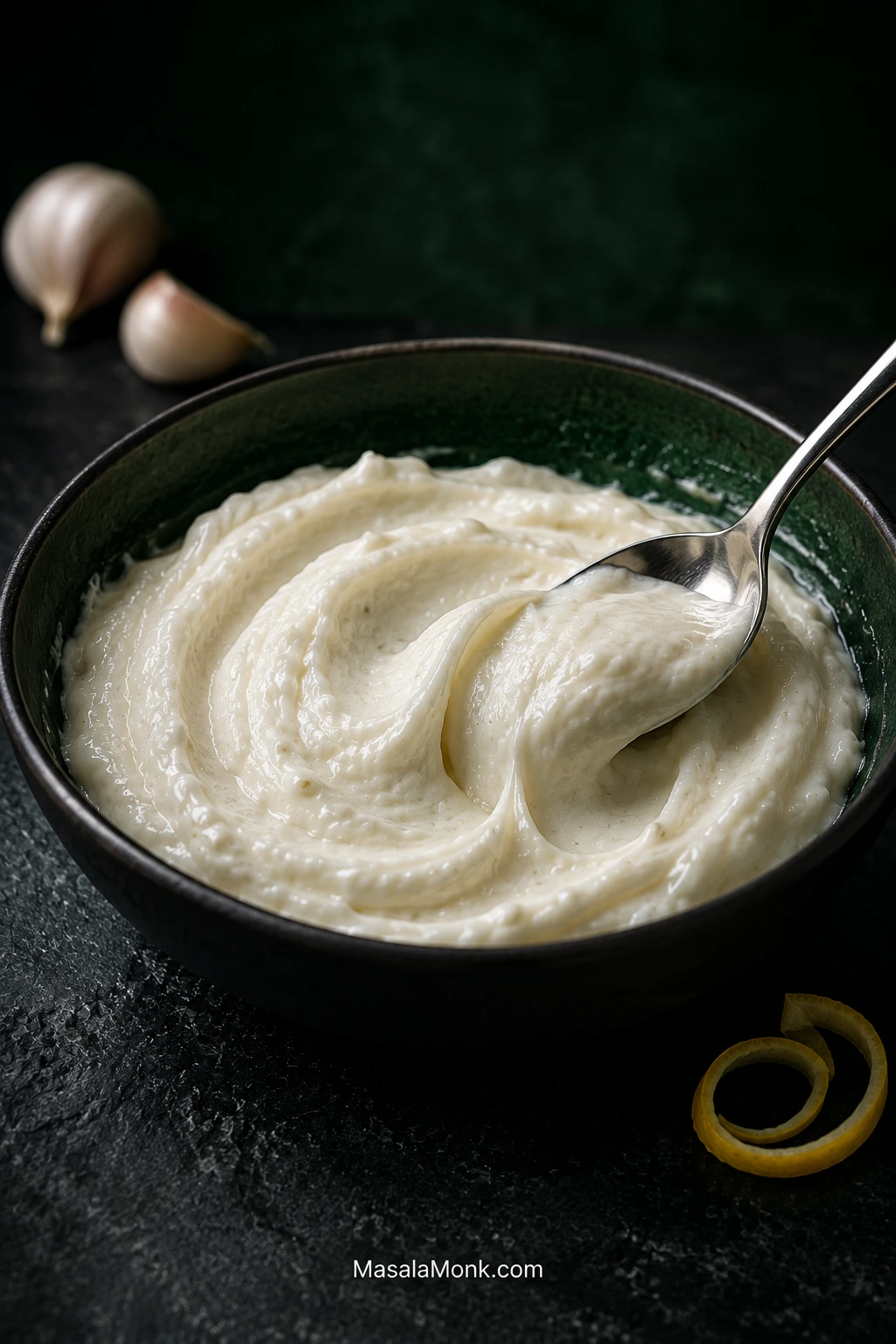
Toum, the fluffy Lebanese garlic sauce served with shawarma and grilled chicken, should look almost like whipped cream and smell unmistakably of garlic. Spoon it beside hot chicken shawarma and it holds its shape until a piece of warm pita drags through it. The first taste is raw garlic, softened by the richness of the oil and sharpened again by fresh lemon.
At its best, toum is remarkably light for a sauce made mostly from oil. It piles rather than pours, clings to bread and has enough punch to stand up to charred chicken, salty fries and sharp pickles.
It can also be surprisingly temperamental. Sometimes the garlic never gets beyond finely chopped. Sometimes the first oil sits around it in a glossy puddle. And three cups of oil is a lot to watch separate in front of you.
The beginning is where patience matters most. Once the garlic turns pale and creamy, the process becomes much more forgiving. If that change is not happening yet, pause while there is still very little oil to lose.
Make the Toum · Choose Your Equipment · Fix My Toum
Quick Answer: How to Make Toum
For classic food-processor toum, use 130 g / 4½ oz peeled fresh garlic, 600 g neutral oil (or 3 cups if measuring by volume), 60 g (60 ml / ¼ cup) freshly squeezed lemon juice, 60 g (60 ml / ¼ cup) ice water and 6 g salt.
Purée the garlic and salt until smooth, using the first half of the lemon juice to help it become a sticky paste. Begin the oil in drops and then the finest stream you can comfortably manage. The loose oily shine should start disappearing as the garlic turns pale and creamy.
Once that pale cream appears, you can relax a little. Keep the stream thin, alternate the early oil with the remaining lemon and the later portions with measured ice water, and let the sauce gradually build volume. Allow roughly 10–15 minutes for the oil addition.
Finished toum should be pale, fluffy and spoonable. Classic toum is naturally vegan and egg-free; the garlic itself helps hold the emulsion together.
If the first oil is still pooling around the garlic, pause there. This is the cheapest moment to fix the batch.
Choose Your Equipment
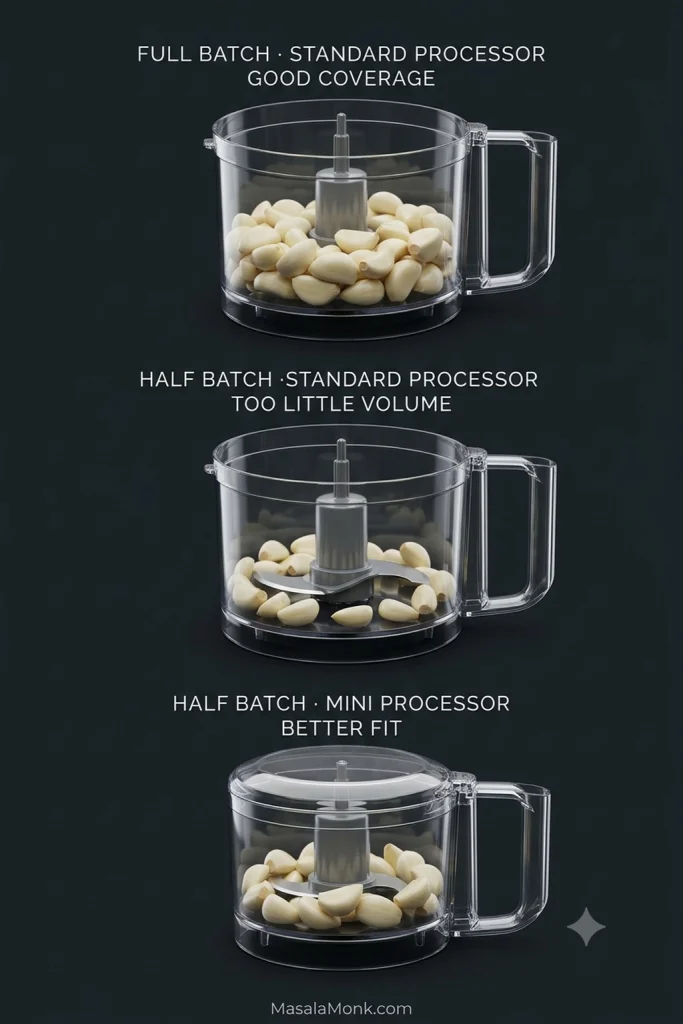
For this full recipe, use a standard food processor. What matters most is blade coverage: the garlic needs to sit where the blade can reduce it to a smooth, sticky paste. A smaller batch usually needs a smaller bowl.
| Equipment | Verdict |
|---|---|
| Standard food processor | Recommended. Best fit for the full recipe and a very light, fluffy result |
| Mini processor or small work bowl | Best for scaling down. Keeps a smaller quantity of garlic within reach of the blade |
| Powerful immersion blender + narrow jar | Useful small-batch alternative. Vessel and machine matter, and the result may be denser and less airy |
| Mortar and pestle | Time-honored and effective, but considerably more laborious |
| Countertop blender | Last choice here. Often less forgiving and more likely to give a thinner, denser sauce |
Make It Now: Toum
If dinner is already underway, this section is enough to make the sauce.
Recipe at a Glance
| Time | About 20 minutes; add 15 minutes if using the optional garlic rest |
| Yield | About 950 ml / 4 cups |
| Serving guide | About 32 × 2-tablespoon portions |
| Method | Food processor |
| Texture | Pale, fluffy and spoonable |
This makes roughly four cups. If you don’t need that much, freeze several small portions on day one or use the half batch below.
Ingredients
- 130 g / 4½ oz peeled fresh garlic (about 1 cup)
- 6 g salt (about 1 teaspoon fine/table salt or 2 teaspoons Diamond Crystal kosher salt)
- 60 g freshly squeezed lemon juice (60 ml / ¼ cup), divided
- 60 g ice water (60 ml / ¼ cup), divided
- 600 g neutral oil (or 3 cups if measuring by volume), such as sunflower, grapeseed, canola or safflower
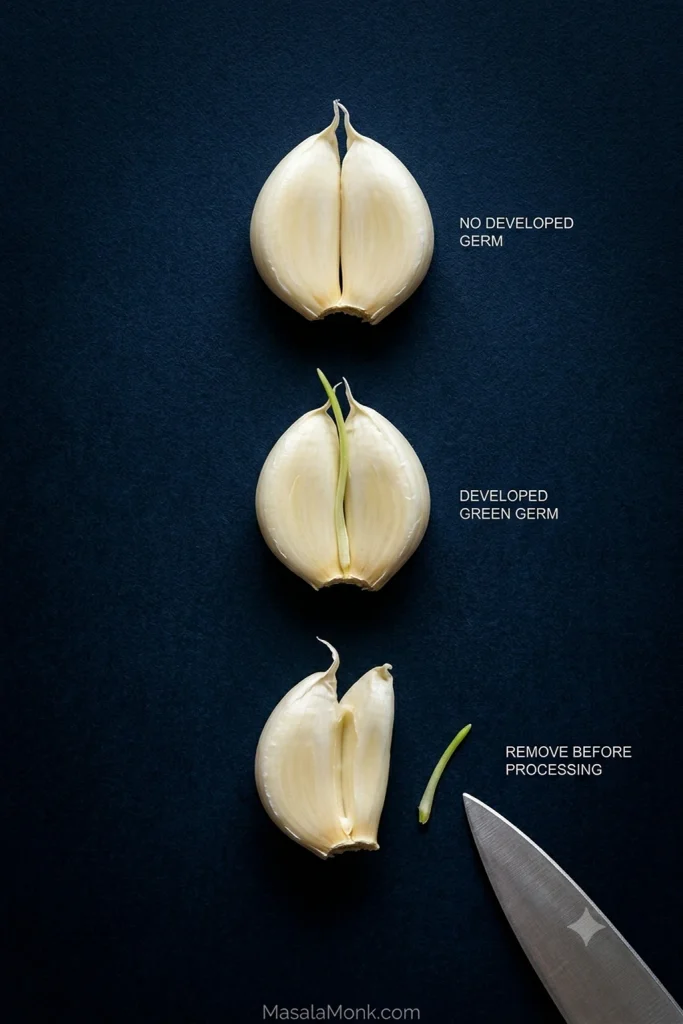
Garlic: choose firm, plump cloves. If an older clove has a clearly developed green germ, split the clove and remove it before weighing and processing. Dry, rubbery or heavily sprouted garlic is more likely to taste harsh or tired.
Salt: another kosher salt may measure differently by volume. If you’re not using Diamond Crystal, trust the 6 g weight.
Oil: use something pale, mild and fresh. With this much oil in the bowl, any stale or assertive flavor will show.
Ice water: keeps the thickening sauce workable and helps give finished toum its lighter texture.
Can I Halve This Toum Recipe?
Yes. Use a mini processor or small work bowl for the quantities below; a full-sized bowl is usually too large to keep 65 g of garlic in the blade’s working zone.
For a half batch, use:
- 65 g / 2¼ oz peeled fresh garlic
- 3 g salt
- 30 g lemon juice (30 ml / 2 tablespoons)
- 30 g ice water (30 ml / 2 tablespoons)
- 300 g neutral oil (or 1½ cups if measuring by volume)
Divide the oil into six 50 g portions if weighing or six ¼-cup portions if using volume. In the method below, every 100 g / ½-cup oil portion becomes 50 g / ¼ cup, and every 15 g / 1-tablespoon lemon or water addition becomes 7.5 g / 1½ teaspoons. Yield: about 2 cups.
Before You Start
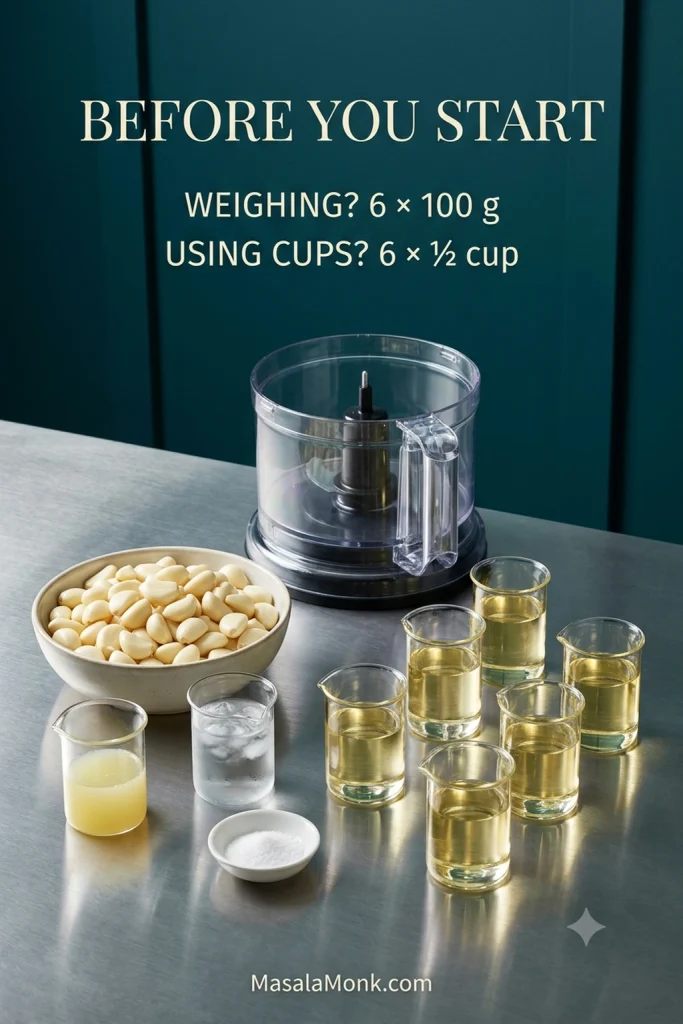
Measure the lemon and ice water before switching on the processor. For the full batch, choose one system for the oil and stay with it: 600 g by weight or 3 cups by volume. If you are making the half batch, use the scaled quantities above.
For the full batch, divide the oil into six 100 g portions if weighing or six ½-cup portions if using volume. For the half batch, those become six 50 g portions or six ¼-cup portions. Set them beside the processor before you begin.
Using especially fierce garlic? After Step 1, let the finished garlic-lemon paste stand for about 15 minutes before beginning the oil. Use only the lemon already measured for the recipe; don’t add extra.
Keep the water cold, and give the processor a break later if the bowl starts becoming noticeably hot.
1. Turn the Garlic Into a Paste
Add the garlic and salt to the processor. Pulse until finely minced, scraping the sides and bottom several times.
Add 1 tablespoon / 15 g lemon juice and process again. Add another tablespoon, scraping as needed, until the garlic becomes smooth and sticky.
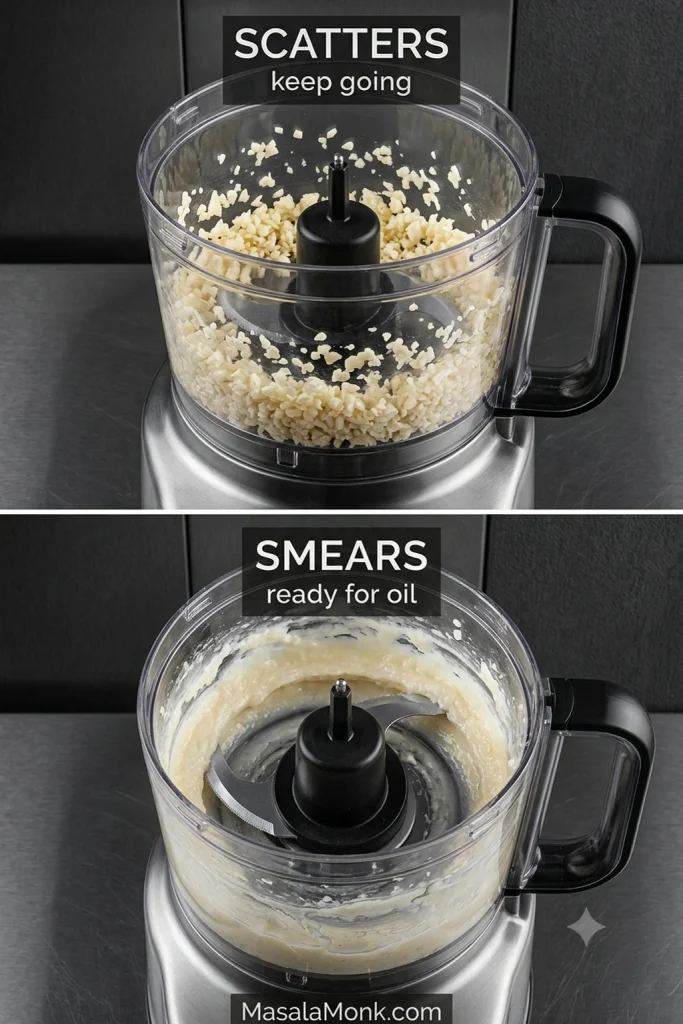
Watch how it moves. Properly puréed garlic smears rather than scatters when the blade passes through it. Keep going while obvious pieces remain.
If you’re using the optional 15-minute lemon rest for especially pungent garlic, pause here before beginning the oil.
2. Catch the First Emulsion
With the processor running, begin adding the first 100 g / ½ cup oil portion.
Start with drops, then move to the finest thread you can comfortably maintain. These opening additions deserve more patience than the oil that comes later.
Watch the surface. The glossy wet look should begin disappearing as the garlic turns paler and creamy.
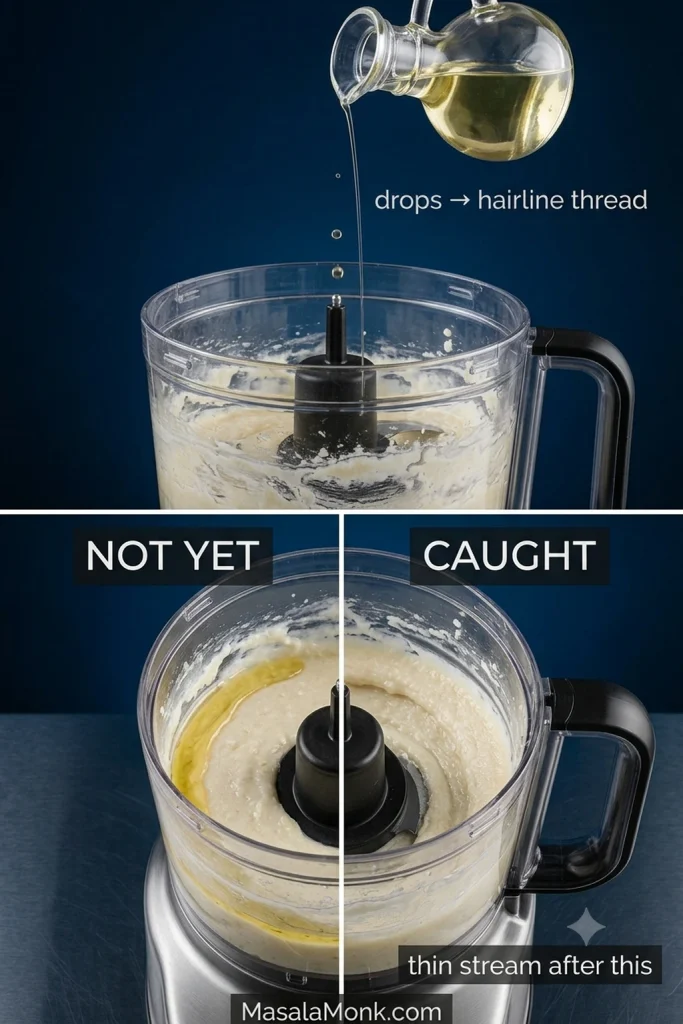
Then the bowl changes quickly. Soft ridges begin following the blade, and the oil seems to disappear into the pale sauce. The transformation looks almost improbable: raw garlic and a stream of oil suddenly behaving like something whipped.
Once you see that change, the most fragile part is behind you. Oil still pooling is your cue to pause. Make sure the garlic is genuinely smooth before adding more.
Finish that first oil portion, then blend in 1 tablespoon / 15 g lemon juice.
3. Build the Toum
Add the second 100 g / ½ cup oil portion in a thin stream. The toum should stay creamy as the bowl fills. Blend in the final 1 tablespoon / 15 g lemon juice.
Add the third 100 g / ½ cup oil portion, then 1 tablespoon / 15 g ice water.
Repeat with each of the remaining three oil portions, adding 1 tablespoon / 15 g ice water after each one. By the end, all six oil portions and all the measured ice water should be in the bowl.
The sauce grows paler and fuller with each round. The processor often sounds different too, its blade now pushing through a thick, airy sauce instead of a wet garlic purée.
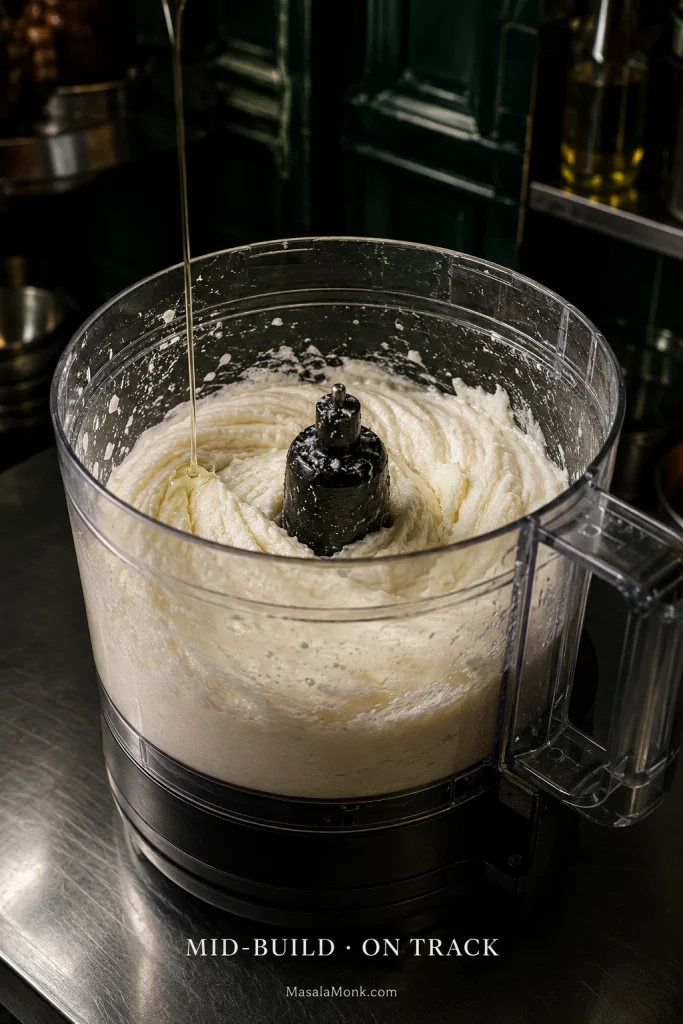
If your processor pusher has a small hole for dripping liquid, use it to meter the oil into a fine stream.
4. Watch the Heat
Touch the bowl occasionally. Slight warmth is fine. If the machine becomes noticeably hot, give it a short rest before continuing.
The active method commonly takes around 20 minutes; the optional garlic rest adds 15 minutes. Treat those times as orientation rather than a deadline—the sauce in front of you tells you more than the clock.
5. Finish by Texture
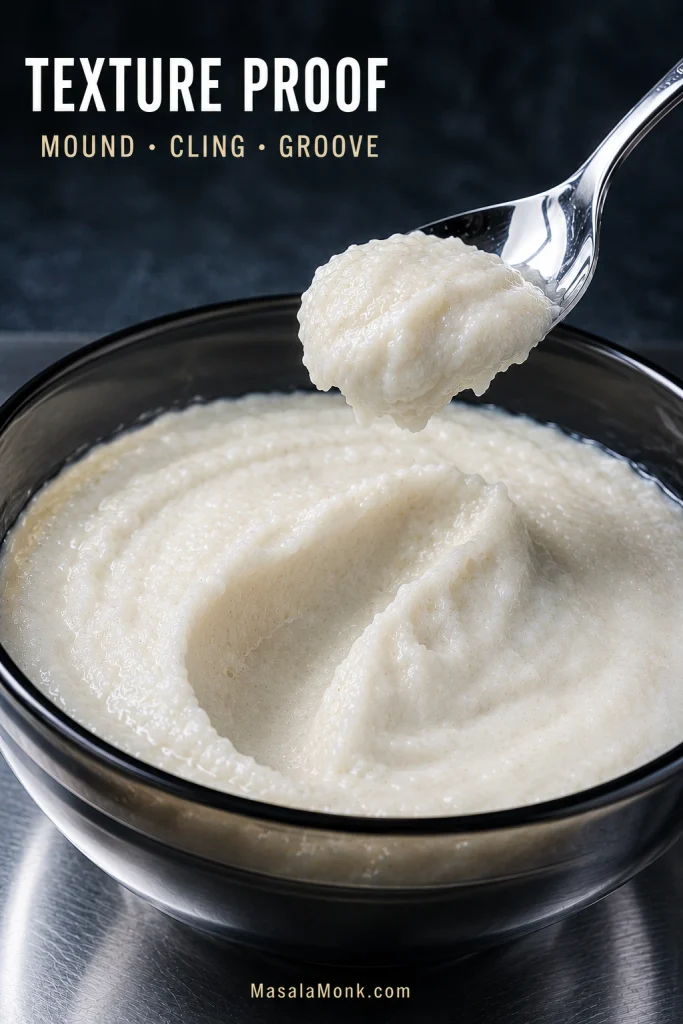
Finished toum should be pale ivory to white and airy enough to mound on a spoon. There should be no greasy ring around the bowl, and it should feel rich without eating like straight oil.
The Spoon-Groove Check
Drag a spoon through it. The groove should stay visible briefly. Lift the spoon or spatula and the toum should cling instead of sliding straight off.
Fresh toum can taste especially fierce straight from the processor. When the texture is right, chill it before making large flavor adjustments.
Recipe Notes
- Weigh the garlic. Bulbs and cups vary more than they appear to.
- Measure the lemon. “One lemon” can produce a very different amount of juice from one fruit to another.
- Watch the opening emulsion. Pale cream forming around the early oil additions matters more than an exact number of seconds.
Cooking right now? You have what you need. If the texture went wrong, jump straight to troubleshooting. Using a stick blender instead? Go to the immersion-blender guidance. If the batch worked but tastes fiercer, heavier or less like your favorite shawarma-shop sauce than expected, keep reading—the garlic, oil and even the sauce you’re comparing it with may explain why.
What Is Toum?
Toum (pronounced TOOM) simply means garlic in Arabic. The sauce is closely associated with Lebanese and wider Levantine cooking, especially alongside grilled chicken, shawarma, kebabs, potatoes and bread.
Although it looks a little like mayonnaise, classic toum gets its thick, whipped texture without mayo, cream or yogurt. Pulverized garlic helps hold the oil together with lemon and water. On a mezze-style spread, it can sit beside extra-creamy hummus, pickles and salads while bringing a much sharper garlic bite.
Toum and aioli aren’t the same sauce. If what you want is the quick mayo-based garlic aioli common in many modern kitchens and restaurants, our Garlic Aioli Recipe is the easier route. Classic toum is egg-free, lighter on the spoon and far more assertively garlicky.
The Garlic Changes the Batch
Two similar-looking bulbs can produce surprisingly different toum. Raw garlic varies considerably in heat, and using 130 g removes at least the quantity guesswork. Measuring by volume is less predictable because a tightly packed cup can contain much more garlic than a loosely filled one.
Toum also pulverizes raw garlic far more thoroughly than most dishes do, bringing out a great deal of its pungency. Heat takes garlic in another direction: in something like garlic mashed potatoes, cooked garlic becomes sweeter and softer instead of sharp.
Freshness matters too. An older clove with a well-developed green germ can taste harsher, which is why the recipe removes an obvious germ before the garlic is weighed and processed. Plump pre-peeled garlic can also work as a practical shortcut, though fresh whole heads remain the first choice.
Especially fierce garlic can be mellowed before the oil goes in. The optional 15-minute rest with the lemon juice already incorporated in Step 1 gives the raw garlic time to soften somewhat without cooking it.
Blanching can reduce raw garlic heat too, but it can also weaken the properties toum relies on to emulsify. That’s why it isn’t built into this formula.
What Is the Best Oil for Toum?
Use sunflower, grapeseed, canola or safflower oil. All four are mild enough to fade into the background while garlic and lemon stay in charge.
| Oil | Our take |
|---|---|
| Sunflower | Best all-round choice: mild, pale and clean |
| Grapeseed | Very neutral; lets garlic and lemon dominate |
| Canola | Mild, economical and easy to find |
| Safflower | Clean and unobtrusive |
| Avocado oil | Works, but offers little advantage here and may tint the sauce |
| Extra-virgin olive oil | Skip for classic pale toum: stronger flavor, darker color and possible bitterness after vigorous blending |
A perfect emulsion can still taste wrong. Heavy, oily or bitter toum puts the oil itself under suspicion.
Can You Make Toum With an Immersion Blender?
Yes, but it isn’t the preferred tool for the fluffy food-processor formula above. A powerful immersion blender can work well for smaller batches in a narrow vessel, but machine power, vessel shape and the formula all matter. The finished toum may be denser and less airy than a food-processor batch.
Keep the blender head low while the first white emulsion forms, then raise it gradually so the oil above is pulled into the sauce. A jar that fits fairly closely around the blender head gives a small batch a much better chance than a wide container.
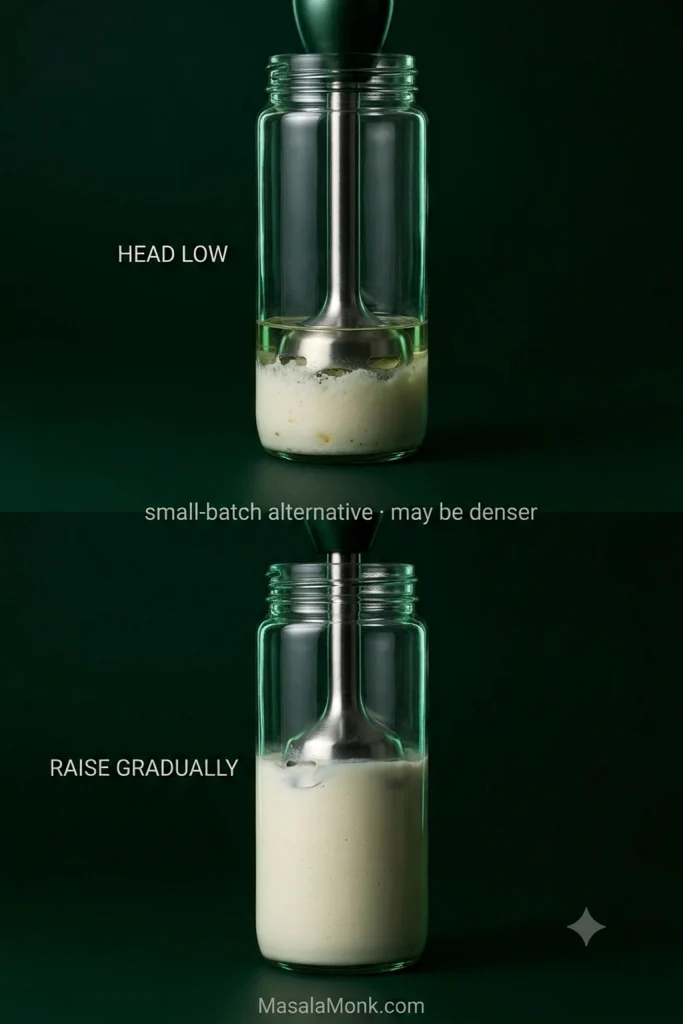
Think of it as a useful small-batch alternative, not an interchangeable substitute for the method above.
What Went Wrong With My Toum?
“Runny” can describe several different problems. Start with the moment the texture changed.
| What you see | Likely problem | Next move |
|---|---|---|
| Garlic bouncing around the bowl | Batch too small for the bowl | Move to a smaller processor |
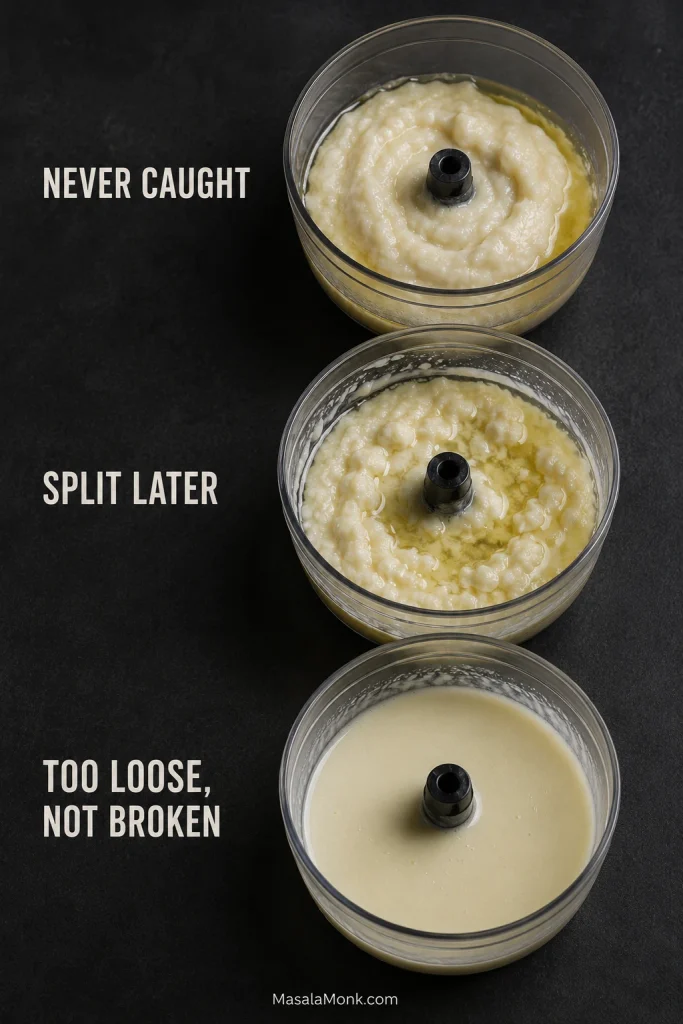
| Oil pooling from the beginning | First emulsion never caught | Pause before adding more oil |
| Creamy at first, then glossy and liquid | Emulsion split | Stop pouring and re-emulsify |
| Pale and smooth but soft | Loose rather than broken | Look for actual oil separation |
| Very thick, but no oil separation | Sauce is holding well | Finish the measured water; thin later if needed |
| Grainy | Garlic paste too coarse | Improve the paste stage next time |
| Texture looks right, but flavor is harsh | Ingredient or flavor issue | See the flavor notes below |
| Perfect at first, oily later | Separated during storage | Re-emulsify if needed |
| Processor becoming hot | Heat building in the machine | Pause and cool |
Go straight to the symptom: Never emulsified · Split later · Rescue broken toum · Too thick or grainy · Flavor problem
When the Emulsion Never Starts
Garlic ricocheting around the processor usually means the machine isn’t catching enough of it. Move to a smaller bowl if repeated scraping doesn’t solve the problem.
A smooth paste with oil still pooling around it points to the pour. Those opening additions need to enter in drops or a very fine thread. Wait for pale cream before committing the remaining oil.
When It Starts Well and Then Splits
A sauce that was creamy and then suddenly becomes glossy or watery did form an emulsion; it later lost stability. Oil arriving too quickly is a common culprit. Excess heat or a sudden large splash of liquid can contribute too.
Once you see clear separation, stop the pour. Harder blending and more oil rarely make a broken toum happier.
How to Rescue Broken Toum
When the broken mixture already tastes good and you want to keep it egg-free, start a small fresh garlic base and gradually emulsify the failed toum into it.
- Purée 2–3 fresh garlic cloves with a small pinch of salt in a mini processor or very small blender cup. Two or three cloves are usually too little for a standard food-processor bowl.
- Add only a spoonful of the broken toum at first, extremely slowly.
- Wait for a fresh creamy emulsion to form.
- Once that base looks stable, feed in the remaining broken mixture in a fine stream.
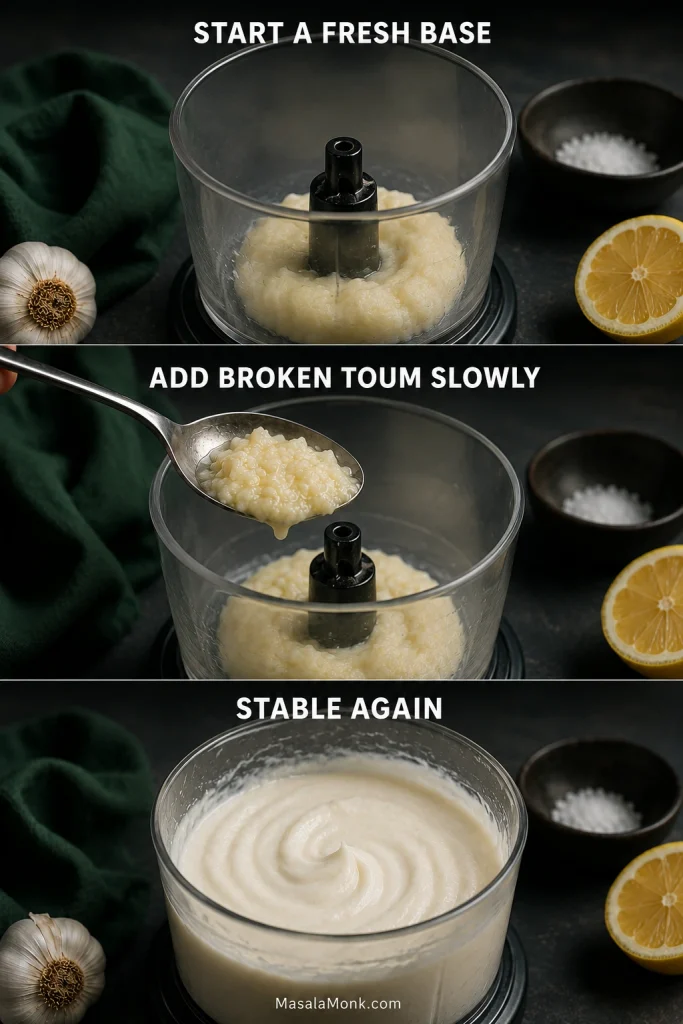
Treat the broken toum like the oil in a brand-new emulsion: add it slowly to the fresh base, never the other way around.
A batch that is already painfully garlicky may not benefit from another few raw cloves. One vegan rescue is to start with about ⅓ cup aquafaba and slowly feed the broken toum into it. When eggs are acceptable, egg white is another effective fresh base.
Rescue is optional. Broken toum still makes a terrific garlic-lemon marinade, vinaigrette base or coating for roasted potatoes and vegetables. It can go into pasta too. The texture failed; the ingredients did not become useless.
Too Thick or Grainy
Very thick toum can mean the sauce is holding beautifully. Finish the recipe’s measured ice water first. A stable sauce can then be loosened with additional cold water, 1 teaspoon at a time, if you want it softer.
Graininess points back to the beginning: the garlic probably never became smooth enough. Improve the paste before changing anything about the oil.
The Texture Is Right, but the Flavor Isn’t
Too strong or burning. Correct texture means the emulsion itself probably isn’t the problem. Garlic varies enormously in pungency; see The Garlic Changes the Batch before changing the formula.
Bitter. Older sprouting garlic can taste harsher, while strongly flavored extra-virgin olive oil may add its own bitter edge after heavy blending.
Too lemony. This is why measuring 60 g / ¼ cup is safer than using “one lemon.” Let the toum chill before adjusting. A stable emulsion can take a little more neutral oil slowly if you genuinely want to soften the acidity.
It Looked Perfect and Separated Later
Sometimes toum looks beautiful when it goes into the refrigerator and shows a ring of oil later. The emulsion formed, but it proved unstable during storage.
Visible separation can be repaired using the same rescue principles above. Spoon out only what you need and return the rest to the refrigerator.
Why Restaurant Garlic Sauce May Taste Different
You may not have made your toum incorrectly. The shawarma shop may be serving a different garlic sauce.
Toum is a garlic sauce, but not every white “garlic sauce” served with shawarma is classic toum. Restaurant and family versions may use egg white, starch, mayonnaise, yogurt or labneh, citric acid or other stabilizers. Those changes can create something softer, milder, denser or more mayo-like.
If your toum is fluffy and properly emulsified yet still doesn’t match the sauce you remember, the recipe may be doing exactly what it is supposed to do.
What to Eat With Toum
Toum comes alive beside food that is hot, browned and savory.
With shawarma or shish tawook, add pickles and soft homemade pita bread. Pink pickled turnips are particularly good here: sharp, crunchy and bright against the white sauce and browned chicken. Hot chicken, cold toum, chewy bread and something pickled make a much more interesting bite than any one part does alone.
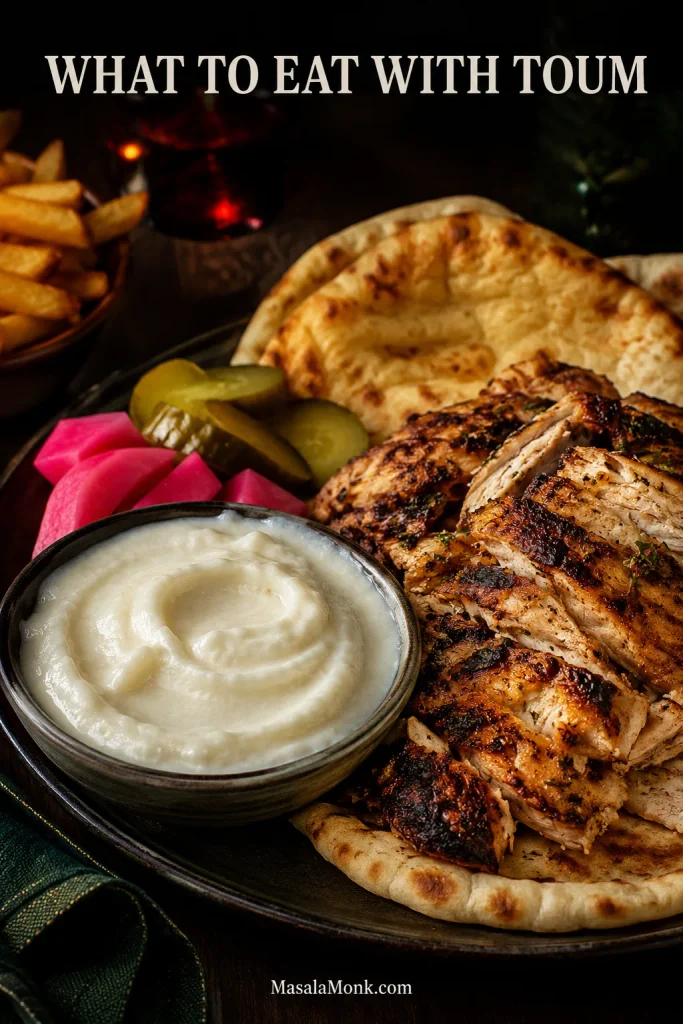
Kebabs and other grilled meats work just as well. A charred edge dragged through cold garlic sauce rarely needs much embellishment.
Then there are potatoes. Hot crispy homemade French fries dipped straight into a mound of toum may be the fastest route through an open container, with roast potatoes close behind.
For a meat-free plate, add homemade falafel, vegetables, pickles and warm bread. A parsley-heavy tabbouleh brings enough lemon and fresh herb to cut through the richness.
Toum also works beyond the dipping bowl. Whisk a spoonful into lemon juice for dressing, spread a thin layer inside sandwiches and wraps, or work it into a marinade for chicken or roasted vegetables.
Made a big batch? Storage & freezing · Back to the toum recipe
Make Ahead, Storage & Freezing
Refrigerate freshly made toum promptly in a clean airtight container at 4°C / 40°F or colder. Published toum recipes vary widely on refrigerator life, but there is no validated food-safety guidance for this exact homemade emulsion that can confidently be applied to every batch.
Public-health guidance for homemade garlic-in-oil preparations uses a four-day refrigerated limit, so this recipe uses the same deliberately conservative 4-day limit. Toum is not identical to plain garlic-in-oil; the CDC and the National Center for Home Food Preservation are included as the conservative food-safety reference point, not as toum-specific shelf-life studies.
Freezing is practical, but expect some loss of texture. Toum may thaw only a little looser, or the emulsion may separate more noticeably. Freeze it in small portions and thaw in the refrigerator. Stir well first; if necessary, use the same re-emulsification principles described above.
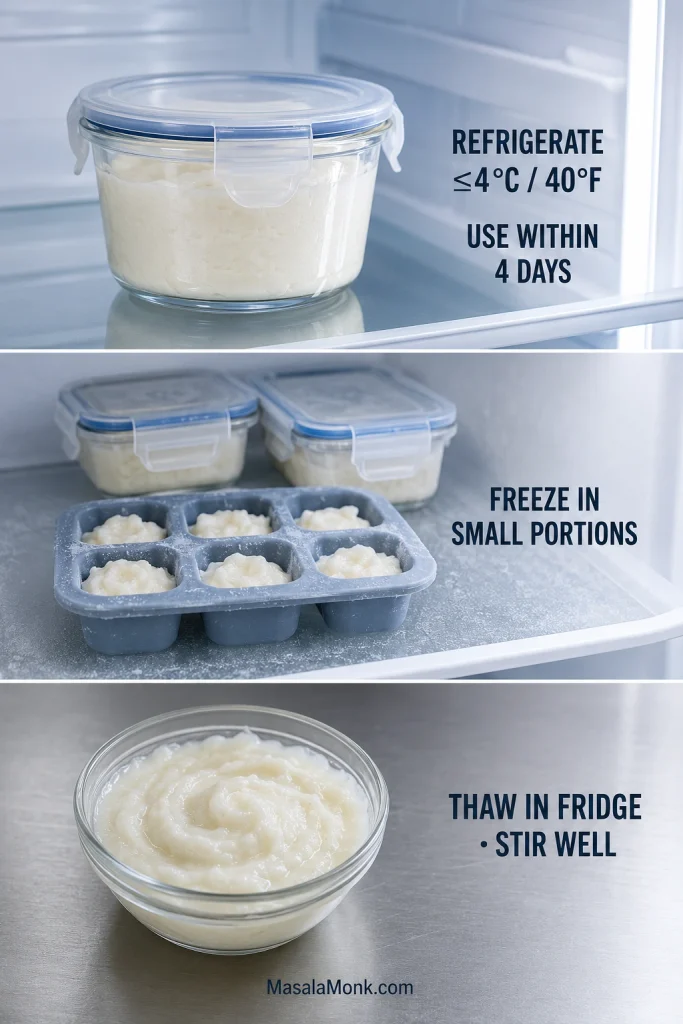
If a thawed portion won’t return to its original fluffiness, it still has plenty of value. Use it in marinades, dressings, roasted vegetables or other dishes where perfect whipped texture no longer matters.
When the Bowl Turns White
There is a satisfying point halfway through making toum when the bowl stops looking like garlic and oil and becomes pale, thick and almost cloud-like.
That is the part worth remembering next time. The exact number of seconds matters less than recognizing what the sauce looked like when the first emulsion caught.
Then give it somewhere worthwhile to go: hot chicken, warm bread, fries, grilled vegetables, sharp pickles.
If you make it, tell us what machine you used and what the toum looked like during the first oil additions. If something went wrong, tell us when the texture changed. Those details make a failed batch much easier to understand—and may help the next cook staring into the same bowl.








