
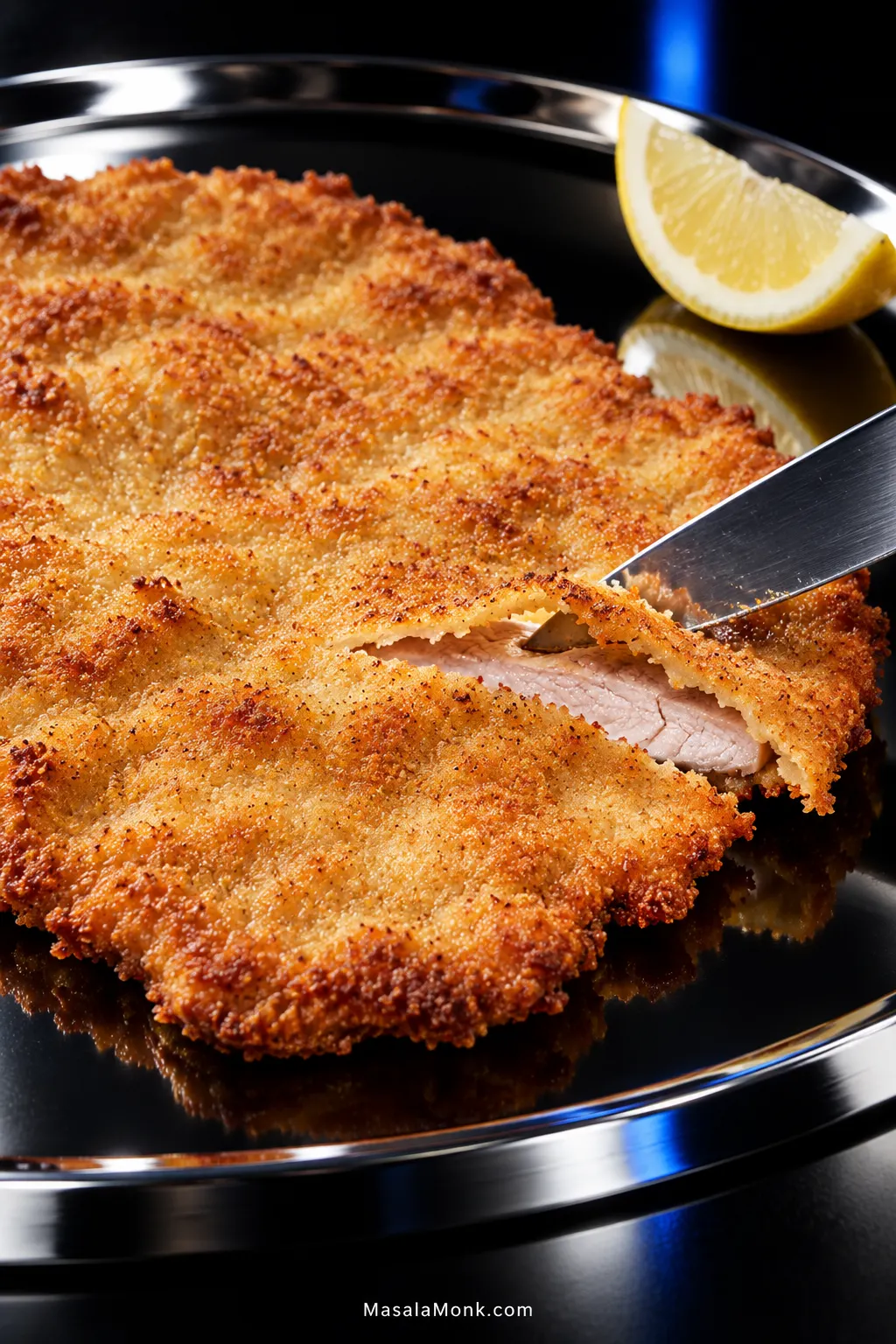
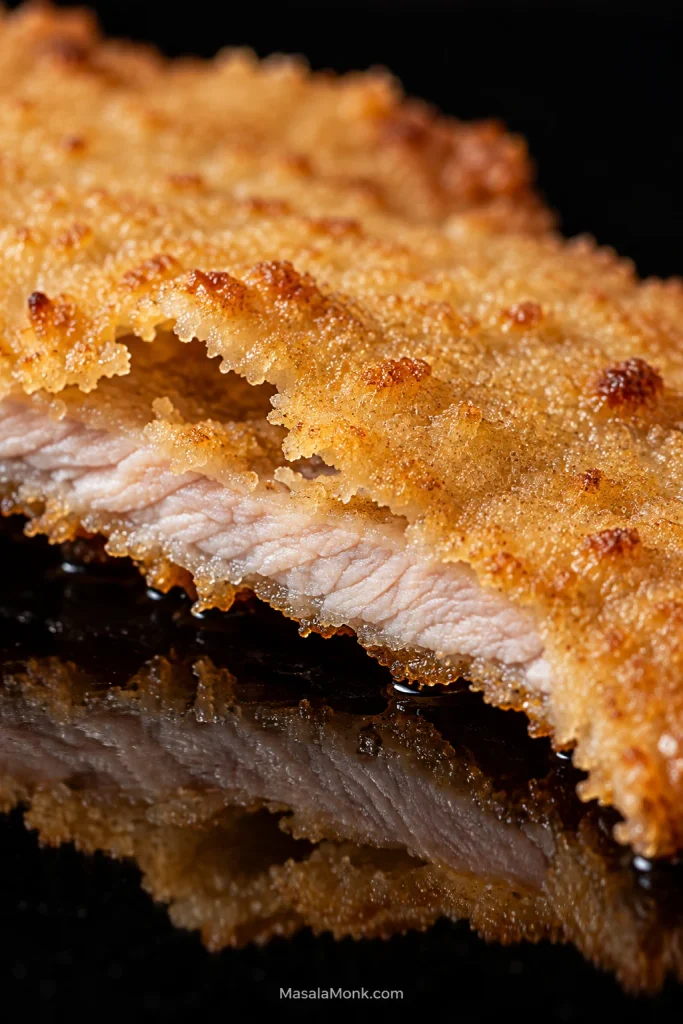
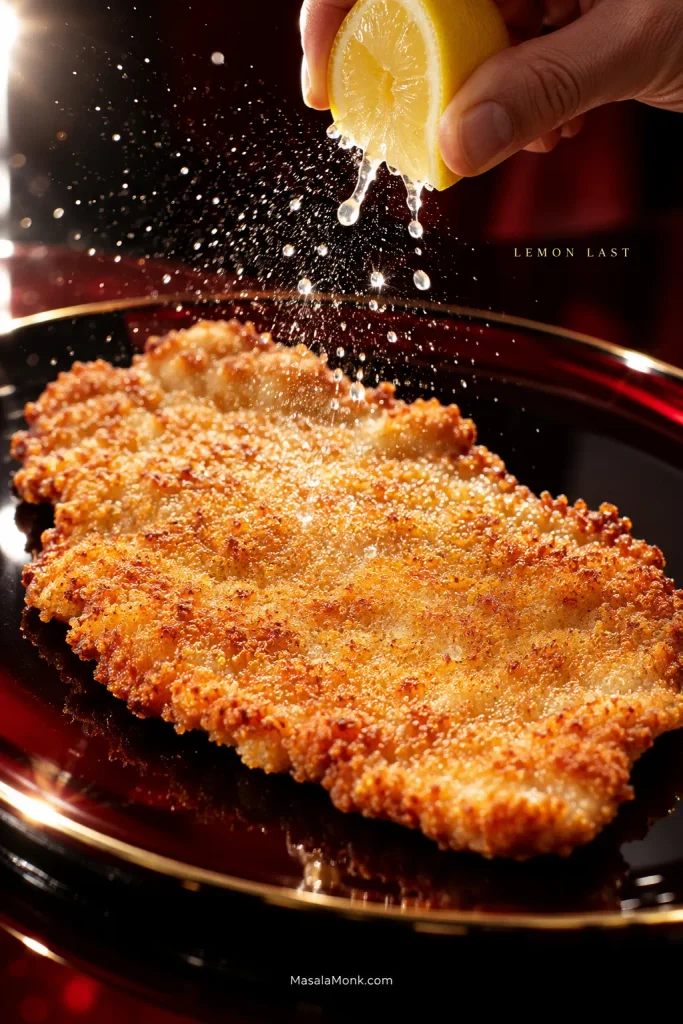
Cut into pork schnitzel while it is still hot and the crust should crack before the knife reaches the meat. Underneath, the pork stays thin and juicy; a squeeze of lemon hits the warm breadcrumbs and cuts through the richness.
The best version feels almost delicate for something fried: a thin golden crust, tender pork, salt and lemon.
The frying happens quickly, so small mistakes show up fast. A thick spot in the pork can leave you waiting for the center while the coating keeps darkening. Oil that has cooled between batches gives you pale, heavy crumbs. Too little fat leaves parts of the breading pressed against the skillet instead of frying evenly.
Pound the pork evenly, keep the crumb layer loose, and pay attention to what the oil is doing once the first cutlet goes in.
Schnitzel is a thin meat cutlet, often breaded and fried. Wiener Schnitzel specifically uses veal. With pork, you will also see the German term Schweineschnitzel; this recipe uses pork in a German-style preparation.
On This Page
- Before the Oil Gets Hot
- Pork Schnitzel Recipe
- What Cut of Pork Is Best for Schnitzel?
- The Breading Should Stay Light
- Let the Schnitzel Move in the Oil
- Read the Pan While the Schnitzel Fries
- If Your Schnitzel Does Not Look Right
- How to Keep Pork Schnitzel Crisp After Frying
- What Goes Well with Pork Schnitzel?
- Make Ahead and Leftovers
Before the Oil Gets Hot
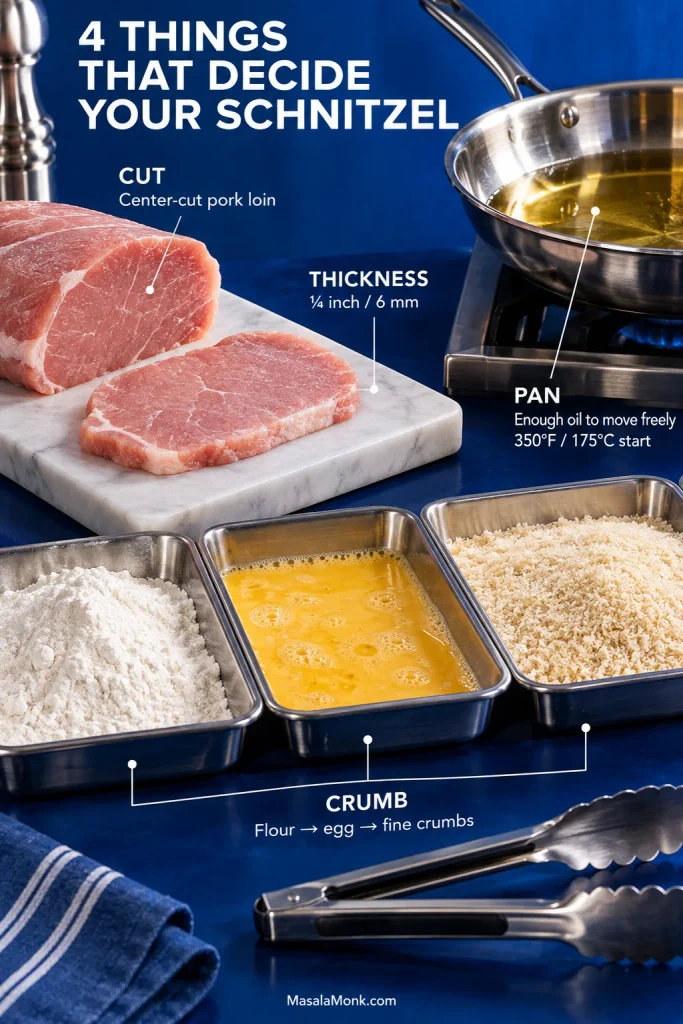
Four things do most of the work before frying:
- Pork: boneless center-cut pork loin chops, 5–6 oz / 140–170 g each.
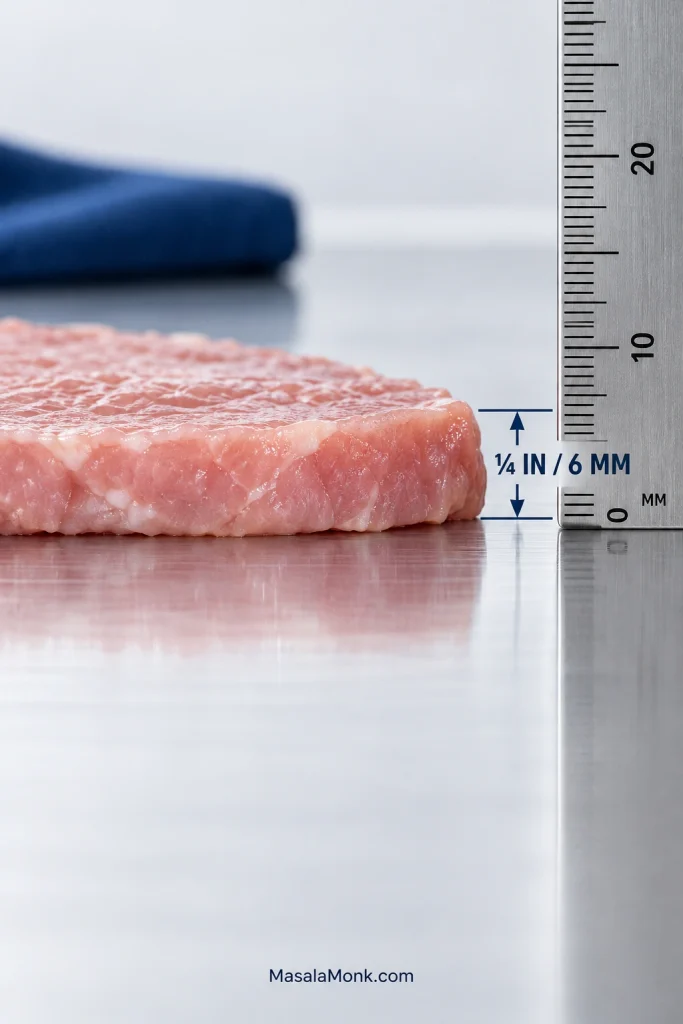
- Thickness: pound them evenly to 1/4 inch / 6 mm.
- Breading: flour → beaten egg → fine dry breadcrumbs.
- Frying: start at 350°F / 175°C with enough oil to reach freely around the pork.
At that thickness, most schnitzels need about 2–3 minutes per side, but start looking at the crust around the 2-minute mark. Cook the pork to 145°F / 63°C and give it a 3-minute rest. Thin, evenly pounded pork doesn’t need a marinade for tenderness.
Pork Schnitzel Recipe
Start with boneless pork loin and pound it thin enough that the meat and breadcrumb crust can finish together. Flour, egg and fine crumbs give you the coating; shallow-frying in a generous layer of oil takes it from pale to crisp and golden.
You are looking for a dry, delicate crust that may blister and lift in places while the pork underneath stays juicy.
Prep: 20 minutes
Cook: 20–25 minutes
Total: about 45 minutes
Serves: 4
Equipment
- Meat mallet with a flat side, or a heavy rolling pin
- 11- to 12-inch / 28- to 30-cm heavy skillet
- 3 shallow dishes
- Instant-read thermometer
- Tongs or a wide spatula
- Wire rack set over a sheet pan or tray
Ingredients
- 4 boneless center-cut pork loin chops, 5–6 oz / 140–170 g each
- 1 1/4 teaspoons fine sea salt, using about 1 teaspoon for the pork and the remainder for finishing
- 1/2 teaspoon freshly ground black pepper
- 1/2 cup / 60 g all-purpose flour
- 2 large eggs
- 1 1/4 cups fine dry unseasoned breadcrumbs, plus more as needed
- Canola, sunflower or another neutral high-heat frying oil, enough to reach 1/3–3/8 inch / 8–10 mm deep in the skillet
- 1 large lemon, cut into wedges
Method
Prepare and Bread the Pork
- Prepare the pork and rack. Set a wire rack over a sheet pan or tray. For several batches, heat the oven to 200°F / 95°C. Trim any thick exterior fat or tough silverskin from the chops, then pound each one between sheets of parchment or plastic wrap to an even 1/4 inch / 6 mm. Pat the pork dry. If an edge has a tight strip of fat or connective tissue, make a few shallow snips through it.
- Season and set up the breading. Sprinkle both sides of the pork with about 1 teaspoon of the salt and all of the black pepper. Put the flour in one shallow dish, beat the eggs in another and add the breadcrumbs to a third.
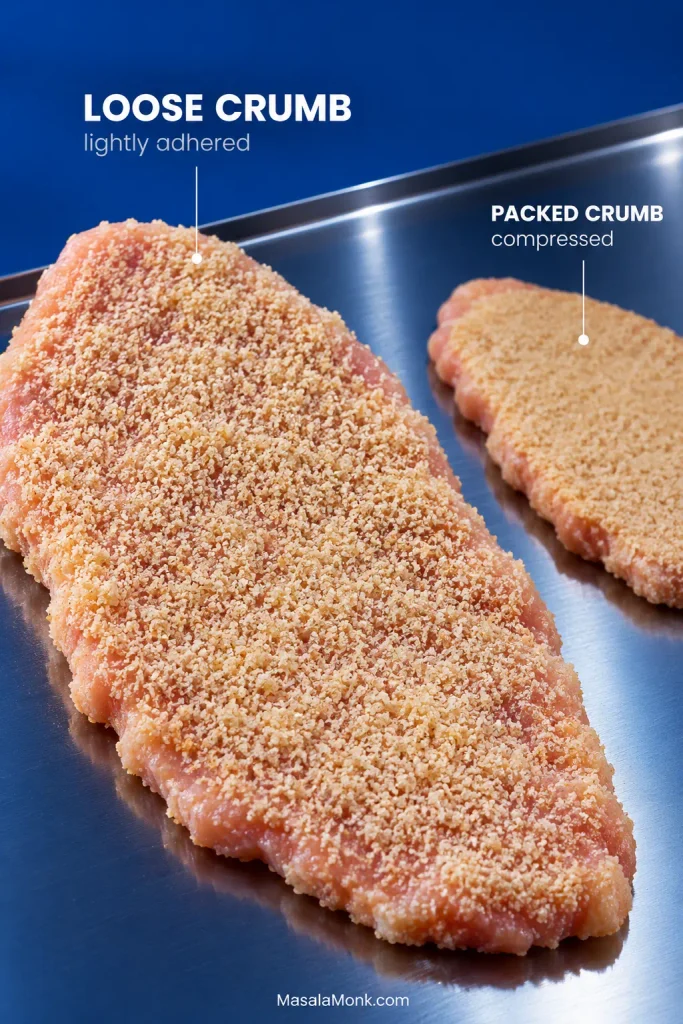
- Bread the pork. Coat one cutlet in flour and shake away the excess. Dip it into the egg and let the extra drip back into the bowl. Cover both sides with breadcrumbs without packing them down. Repeat with the remaining pork and keep the breaded cutlets in a single layer while the oil heats.
Fry the Schnitzel
- Heat the oil. Add enough oil to reach 1/3–3/8 inch / 8–10 mm deep. Use the depth in your pan, not a cup measurement, as the guide. Heat to 350°F / 175°C.
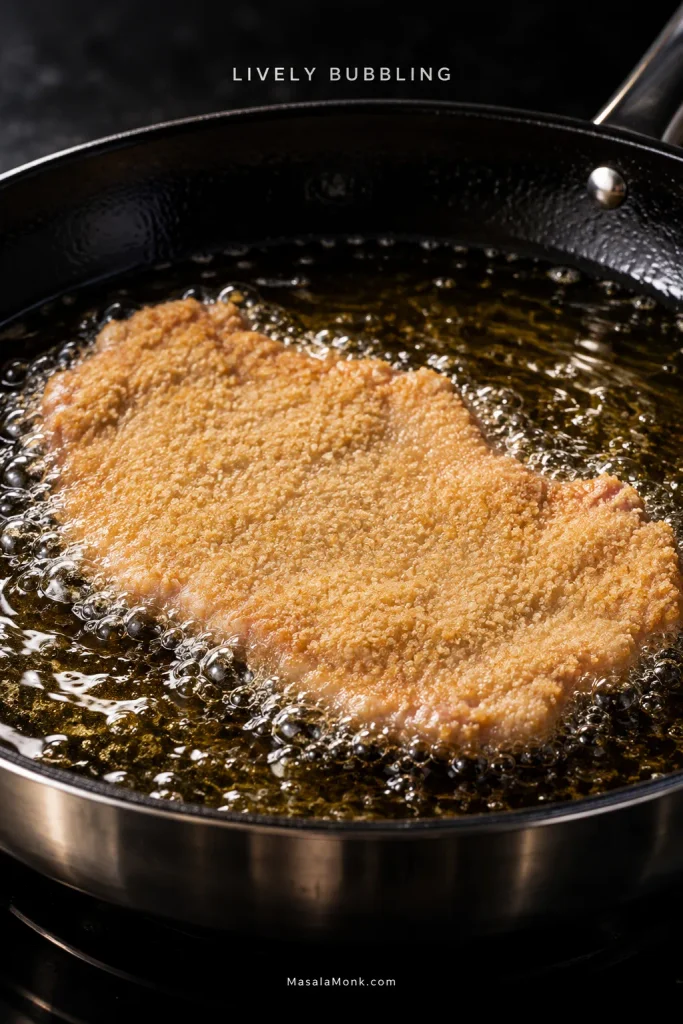
- Fry the first side. Carefully lower one large cutlet into the oil away from your body. Lively bubbling should begin almost immediately. Start checking around 2 minutes; most need 2–3 minutes on the first side. Once the coating has set, gently move the skillet so hot fat washes around the pork, spooning a little oil over pale raised areas as needed.
- Flip and finish. Turn the schnitzel gently and begin checking again after about 2 minutes. The oil temperature will fall when the pork goes in, so adjust the heat as needed to keep it roughly within 330–350°F / 165–175°C. Look for a golden crust and an internal pork temperature of 145°F / 63°C.
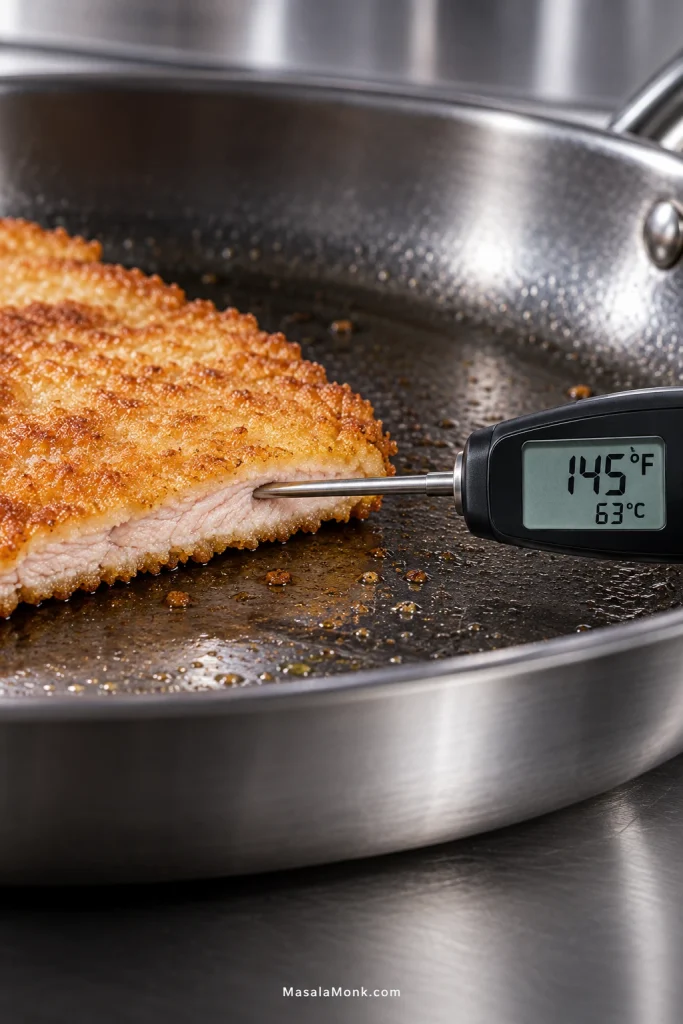
Checking the temperature: slide an instant-read thermometer horizontally through the side so the sensing tip reaches the center instead of the hot crust or skillet. The USDA’s guidance for whole pork cuts is 145°F / 63°C followed by at least a 3-minute rest.
Rest and Serve
- Rest, reset and repeat. Move the pork to the wire rack, sprinkle with some of the remaining salt and rest it for at least 3 minutes. For multiple batches, keep the rested schnitzels on the rack in the 200°F / 95°C oven, in a single layer, while you cook the remaining cutlets. Scoop dark loose crumbs from the oil and let the pan recover before the next cutlet goes in.
- Serve hot. Bring the schnitzel to the table with lemon wedges and squeeze the juice over each piece just before eating.
What Cut of Pork Is Best for Schnitzel?
If you’re shopping specifically for schnitzel, boneless center-cut pork loin chops are the easiest all-around choice. They are lean, fairly uniform and broad enough to pound into full-size cutlets.
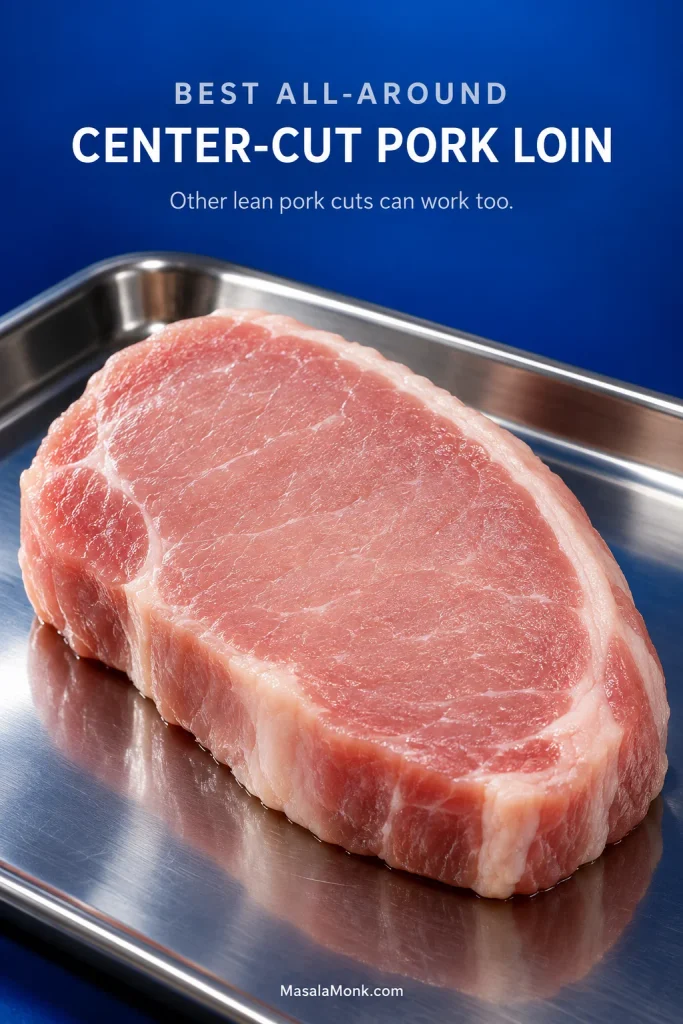
Thin boneless pork cutlets from the loin are convenient too. Check the thickness first; many need only a little evening out with the mallet.
A whole boneless loin can be sliced into portions at home. Pork tenderloin also works, although its narrow shape gives you smaller, rounder schnitzels.
Bone-in loin chops are usable once the meat is cut away from the bone. Shoulder is a less natural fit here; schnitzel cooks too quickly to give a tougher cut much time to soften.
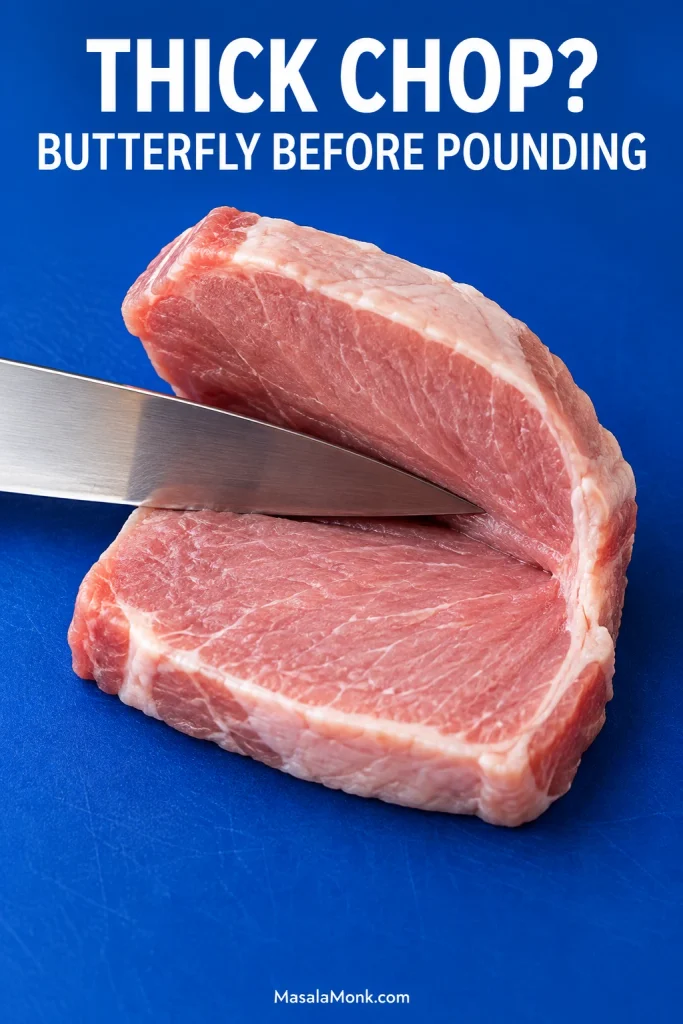
Starting with a Thick Pork Chop
Butterfly it first. Slice horizontally through the chop almost—but not completely—all the way, open it like a book and then pound it. That gives you a wider, more even cutlet without having to hammer a very thick chop all the way down.
Prefer to leave a thick chop intact? This air fryer boneless pork chops method is designed around cooking that thicker piece without drying out the center.
Aim for an Even 1/4 Inch
At 1/4 inch, the pork cooks quickly enough for the meat and breading to finish together. Go thinner and it becomes more delicate; thick patches leave the crumbs browning while the center catches up.
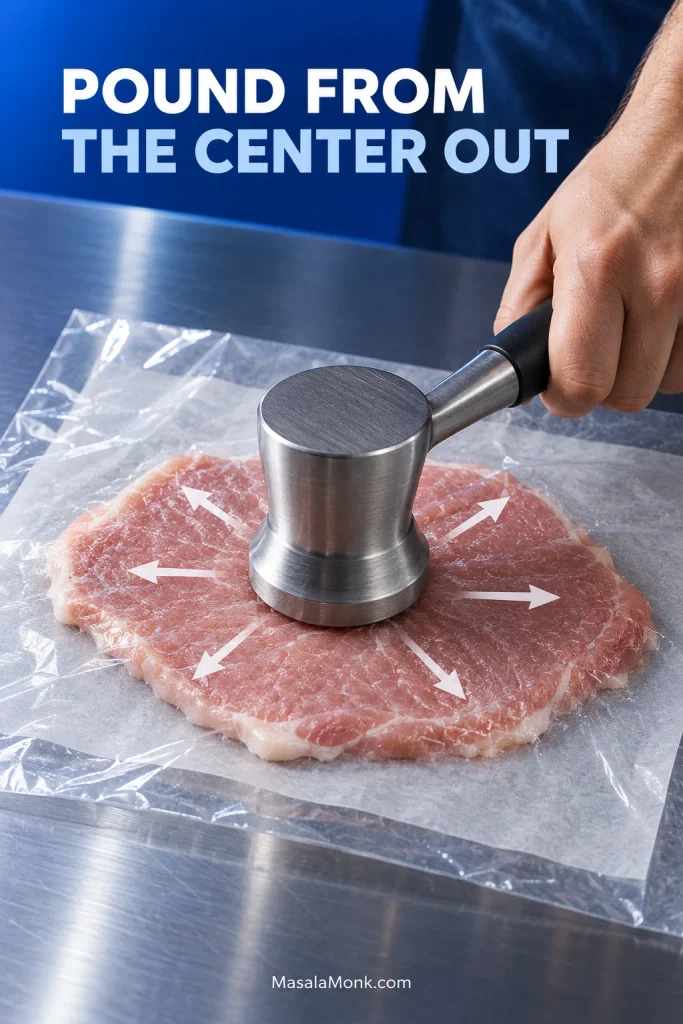
Use the flat side of the mallet and work outward instead of pounding one spot repeatedly. A folded kitchen towel under the cutting board keeps it steadier and takes some of the sharp noise out of the job.
The Breading Should Stay Light
Pat the flattened pork dry before you start. Visible moisture gets another quick pass with a paper towel before the flour goes on.
Flour gives the egg a dry surface to grab. The egg holds the crumbs. Shake away excess flour, let extra egg drip off and don’t pack down the breadcrumb layer.
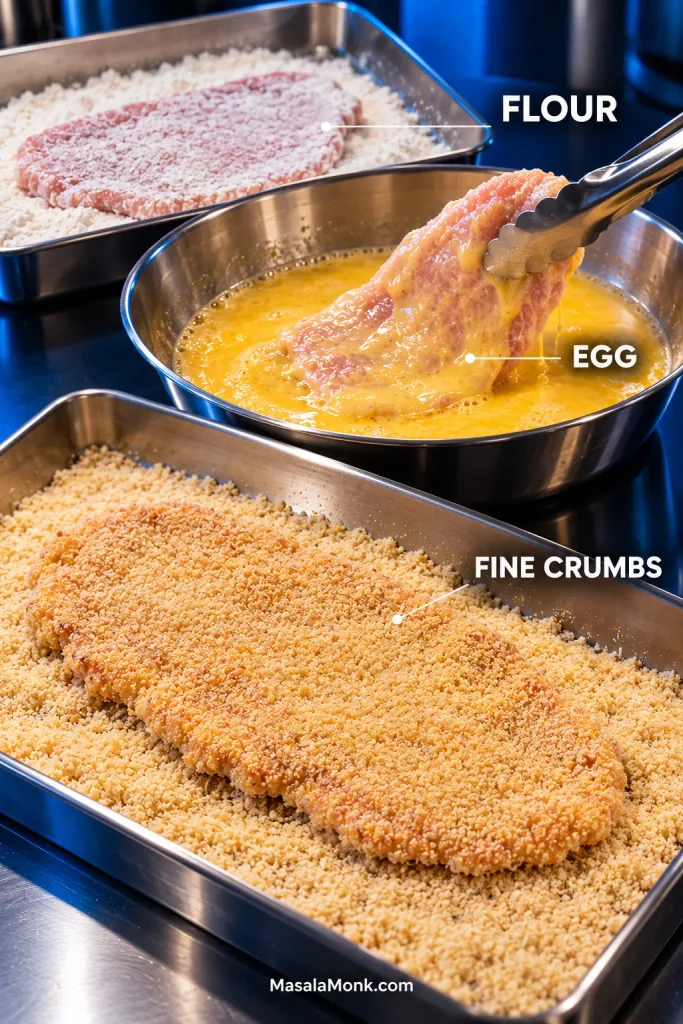
One hand for flour and crumbs and one for egg keeps the breading on the pork instead of slowly building a schnitzel around your fingers.
Fine Breadcrumbs or Panko?
Fine dry unseasoned breadcrumbs give this schnitzel its thinner, more even crust. Panko works too, but the result is rougher and crunchier. Whichever you use, press the crumbs onto the pork only gently.
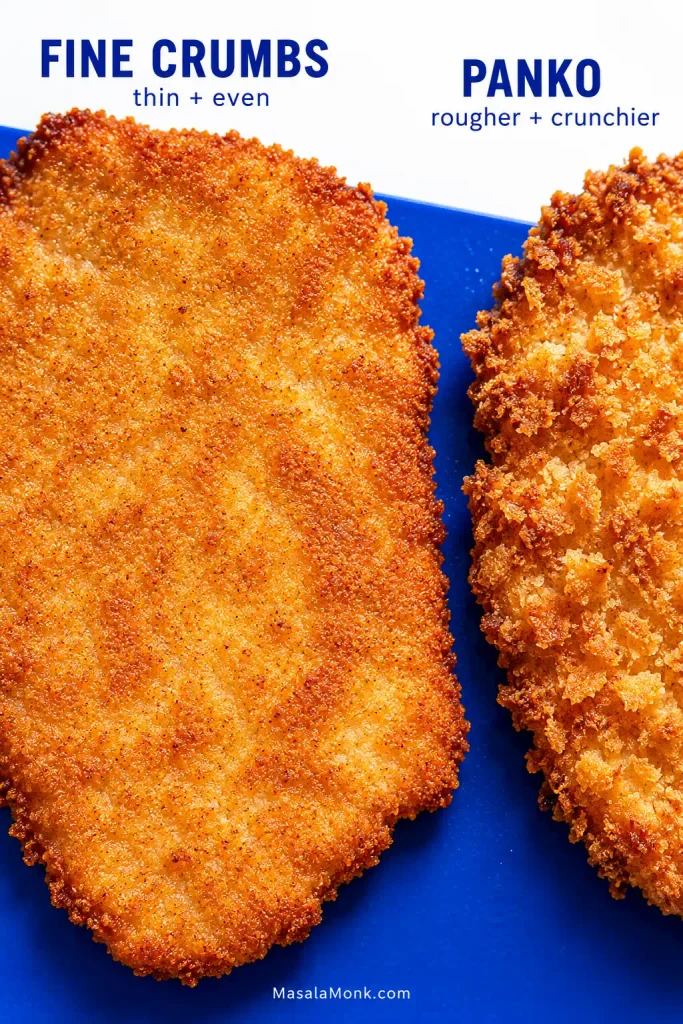
Homemade breadcrumbs are fine when the bread has been dried thoroughly and processed fairly small. A loose crumb layer has room to blister and lift in the oil.
For gluten-free schnitzel, use gluten-free flour and gluten-free breadcrumbs in the same flour–egg–crumb sequence.
Some cooks rest breaded pork to help the coating attach firmly. For the crust we’re making here, a long refrigerated rest isn’t necessary. Bread the pork shortly before frying, while the oil heats.
Breaded cutlets should still look almost ordinary. The transformation happens in the oil.
Let the Schnitzel Move in the Oil
Shallow-fry 1/4-inch pork schnitzel in about 1/3–3/8 inch of oil heated to 350°F; most cutlets need 2–3 minutes per side. The oil should reach freely around the edges, with enough room for the pork to move instead of staying pinned flat against the skillet.
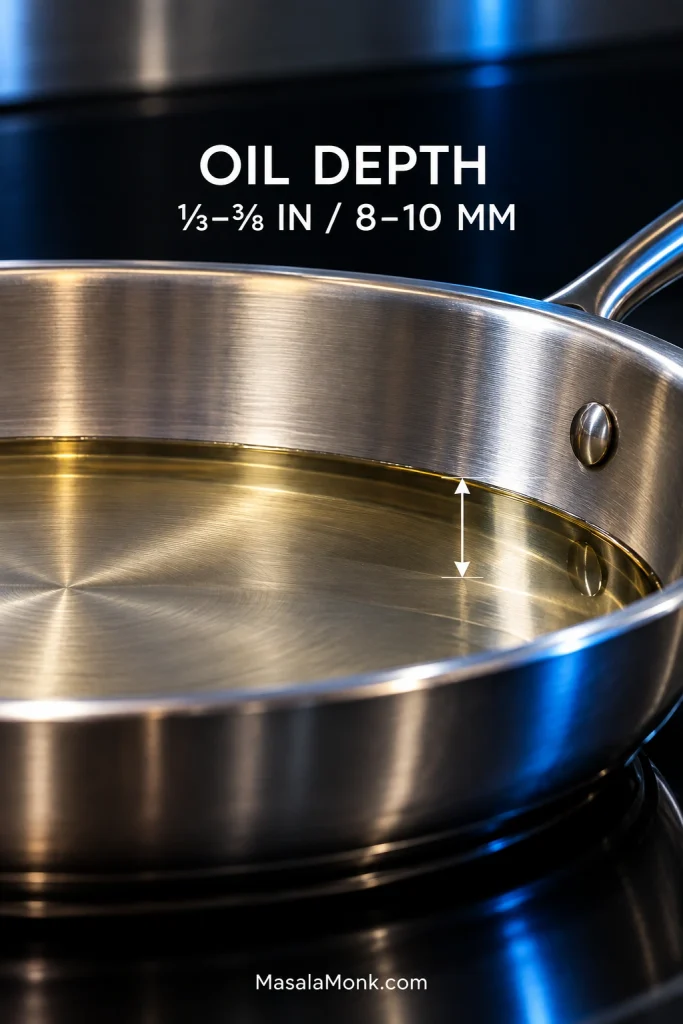
That generous layer of fat lets the thin meat and breading finish at almost the same moment. You don’t need a deep fryer, but this is more oil than you would use to sauté a pork chop.
Oil or Butter?
Neutral oil is easiest to manage. Clarified butter or ghee can replace part of the neutral oil for a little buttery flavor; keep the total frying fat at the same depth. Regular butter darkens more quickly at this heat.
Give a broad cutlet some room. Two can share the skillet when they fit without touching; otherwise fry one at a time. Gently moving the pan or spooning hot fat over a pale raised patch helps the crumbs brown without flattening them.
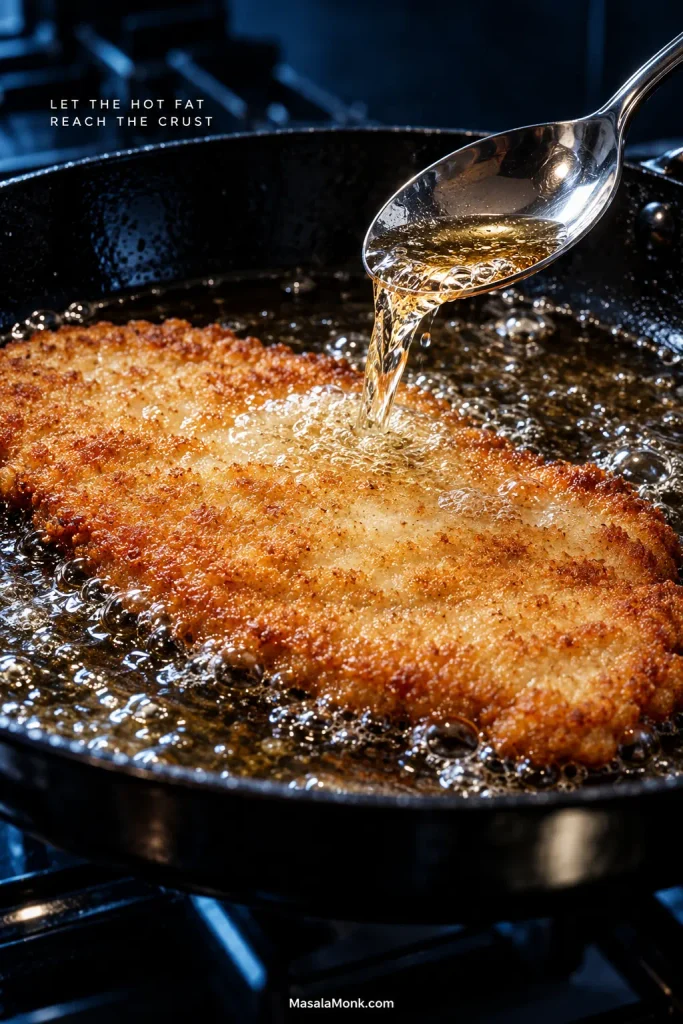
The first schnitzel is your calibration piece. A shade too pale or too dark tells you where to move the heat before the second one goes in; give the oil time to recover before adding that next cutlet.
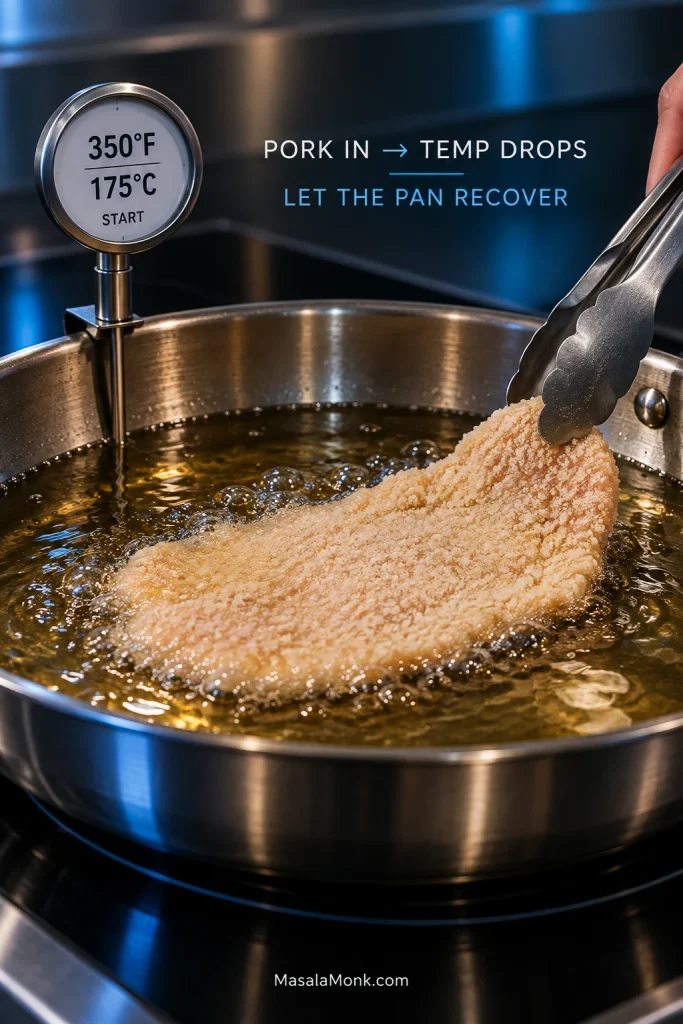
Before another cutlet goes in, scoop out dark crumbs that have broken loose. Left in the oil, they can make later batches taste bitter and look much darker.
The crust should feel almost brittle on the first bite, then give way to tender pork beneath it.
Read the Pan While the Schnitzel Fries
The clock tells you when to start looking. The pan tells you what is actually happening.
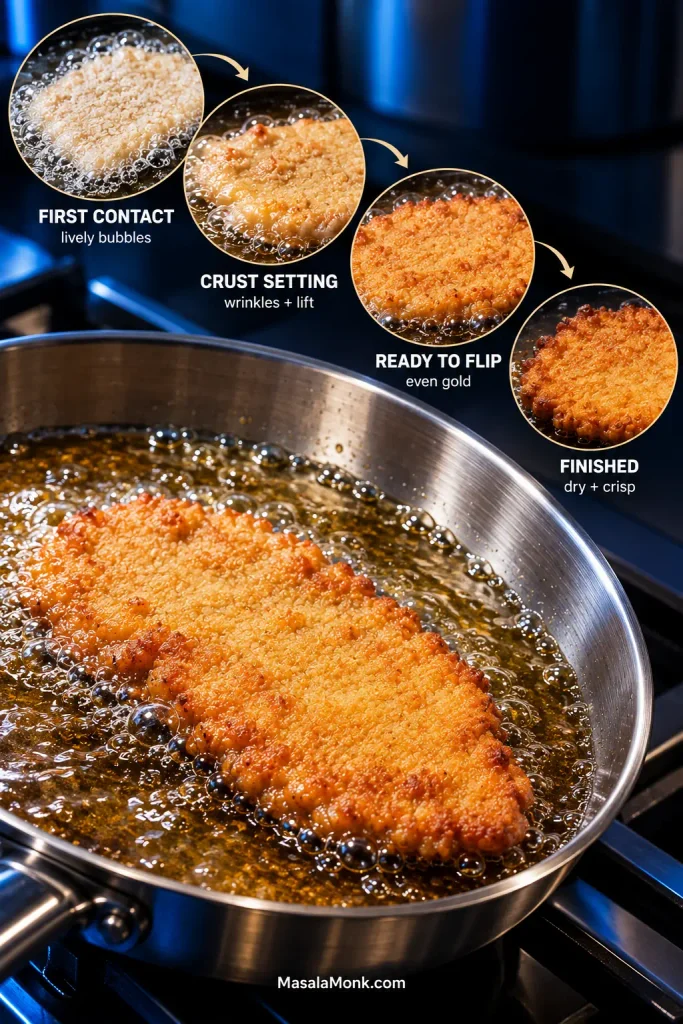
From the first bubbles to the moment the schnitzel reaches the rack, watch how strongly the oil reacts, how the breading sets, the color before the flip and whether the finished crust looks dry or greasy.
When It First Lands
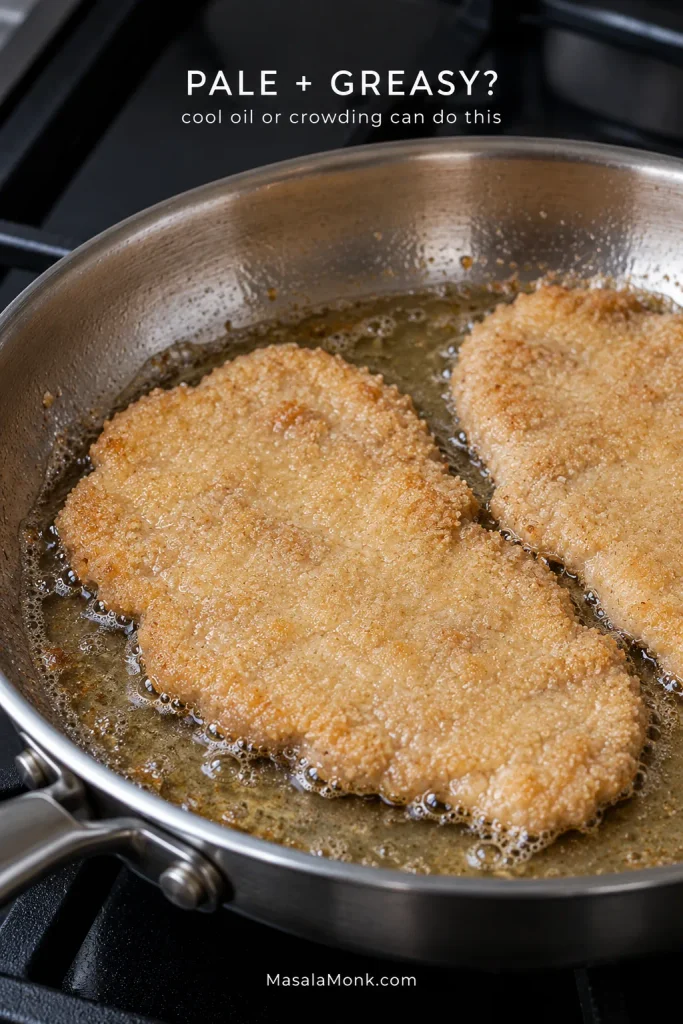
Lively bubbling should appear around the pork within moments. Barely any bubbling? Let the oil get hotter before another cutlet goes in. Quiet oil tends to produce a heavier, greasier crust.
Fast darkening in the first minute points the other way: lower the heat before the outside gets too far ahead of the meat.
As the Crust Sets
Bubbles, wrinkles and small lifted patches are welcome. Leave them alone. By flip time, aim for an even golden surface; pale beige usually wants a little longer, while deep brown is your cue to rein in the heat.
When It Comes Out
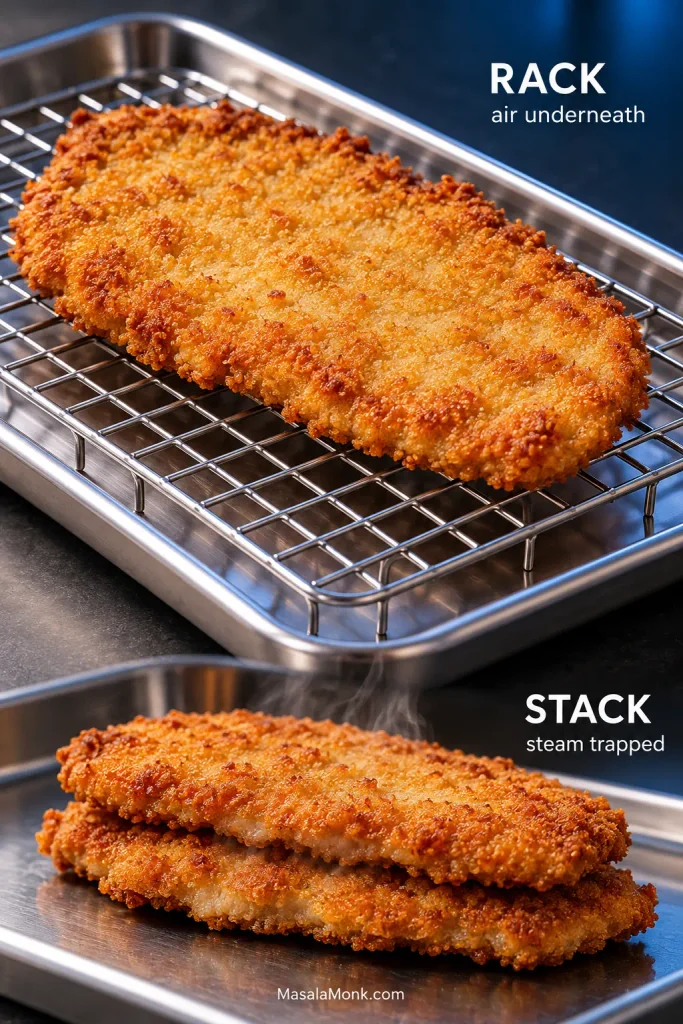
The surface should look dry and crisp, not glossy with oil. Move the schnitzel straight to the rack so the underside can breathe.
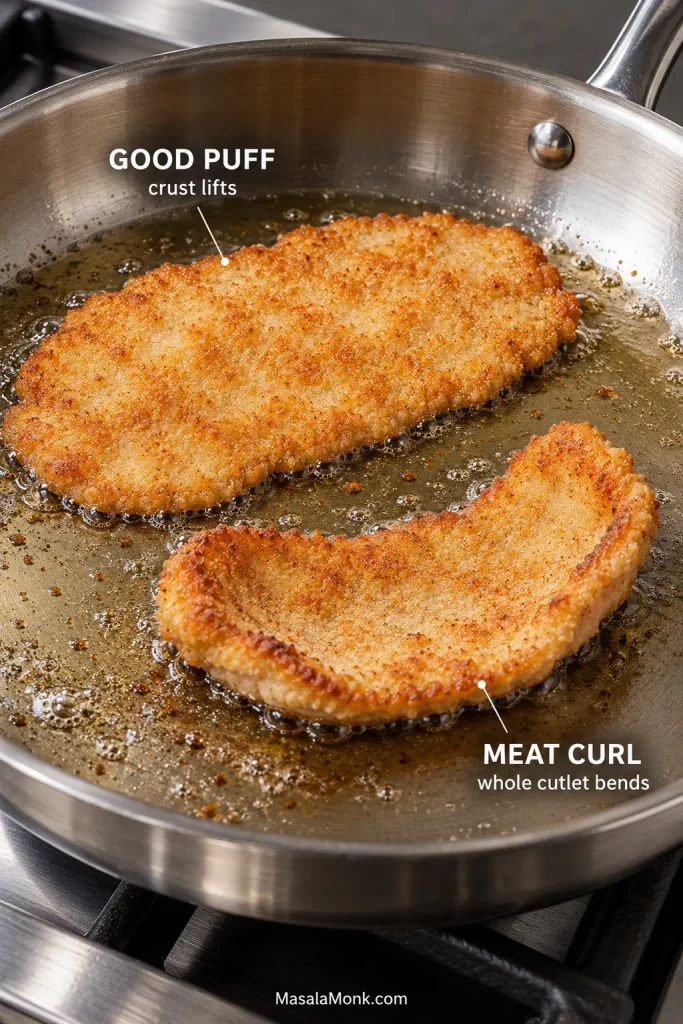
Puffed Crust or Curled Pork?
These can look similar for a moment.
A dry breadcrumb crust that bubbles and lifts away from parts of the pork can be exactly right. That is the breading puffing.
A whole cutlet bending into a dome is different. The meat itself is tightening and pulling its center upward. Even pounding helps, and shallow snips through a tight outer edge can keep the next one flatter in the oil.
If Your Schnitzel Does Not Look Right
One imperfect schnitzel can usually tell you what to change before the next one reaches the pan. A pale, glossy crust is an especially useful clue that the frying conditions need attention.
| What you see | What’s happening | Fix the next batch |
|---|---|---|
| Pale, greasy crust | The oil was too cool or the pan was crowded. | Let the oil recover before adding more pork. |
| Dark crust before the pork is ready | The pork is too thick or the oil is too hot. | Pound evenly and lower the heat. |
| Scorched patches underneath | Too little oil or uneven pan heat is letting parts of the crust scorch against the skillet. | Add enough fat to reach freely around the pork and steady the heat. |
| Coating slides off in a wet sheet | The pork was damp, or excess flour or egg remained in the breading. | Pat dry, shake off flour and let extra egg drip away. |
| Crisp breading bubbles away from the meat | The coating has puffed. | Nothing. That can be a sign of good schnitzel. |
| The whole cutlet curls upward | The meat itself is tightening unevenly. | Pound evenly and snip through a tight outer strip if needed. |
| First schnitzel golden, later ones much darker | Loose crumbs are burning and/or the oil temperature is drifting. | Skim the oil and let it recover between batches. |
| Good crust but tough pork | The meat was too thick or cooked too long. | Pound thinner and check doneness sooner. |
| Crisp at first, soft five minutes later | Steam or wet sauce is sitting against the breading. | Use a rack, avoid stacking and keep wet accompaniments beside it. |
How to Keep Pork Schnitzel Crisp After Frying
Move each schnitzel to a wire rack and season it while the breading is hot. For several batches, hold the finished cutlets in a single layer in a 200°F / 95°C oven for no more than about 15–20 minutes. Much longer and the pork gradually dries even if the outside still looks good.
Once the crust is crisp, steam is the enemy.
Stacking traps steam. So does a tightly covered tray. A paper towel can blot surface oil, but a hot schnitzel left flat against one for long enough will soften underneath.
Wet food can do the same thing from above. Keep a cool vinegar-and-dill cucumber salad beside the schnitzel, not over the crust.
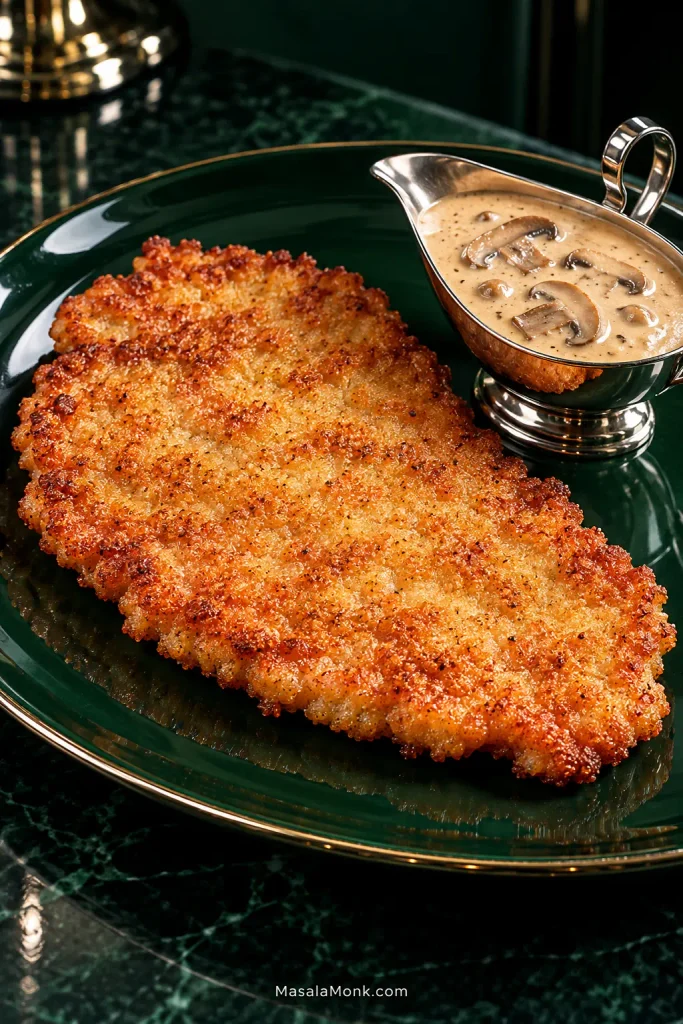
With gravy, spoon most of it beside the pork and drag each bite through at the table. You still get the sauce without surrendering the crunch.
What Goes Well with Pork Schnitzel?
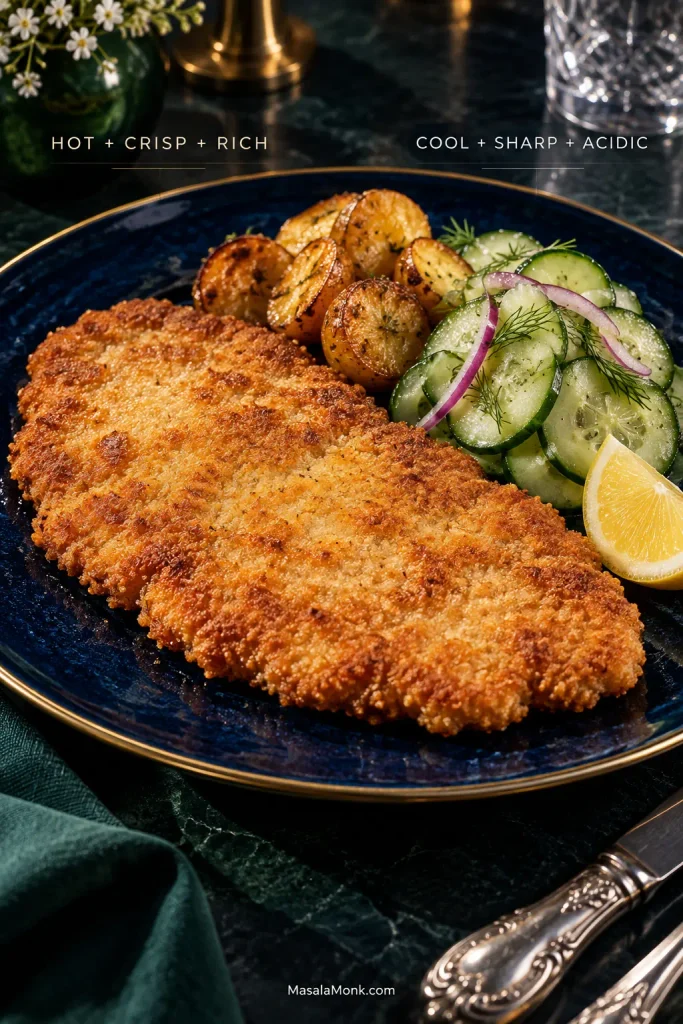
Schnitzel likes contrast: hot, crisp, rich pork next to something cool, sharp or acidic. Lemon does the simplest version of that job. Squeeze it over the pork at the last moment so the juice brightens the fried crumbs without sitting there long enough to soften them.
For a richer plate, a creamy mushroom sauce, mustard cream or dill sauce all work well. Keep wetter sauces beside the schnitzel and bring them into each bite as you eat.
You don’t need much beside it. Try German-style potato salad with cucumber salad, spätzle with braised red cabbage, or crisp roasted potatoes with a sharp green salad. A potato or noodle plus something fresh and acidic is usually enough.
Make Ahead and Leftovers
If you want to get ahead, trim, portion and pound the pork earlier in the day or the day before, then keep it refrigerated. Bread the pork shortly before frying, not the night before.
Refrigerate cooked schnitzel within 2 hours and use it within 3–4 days. The crust is easiest to revive during the first day or two.
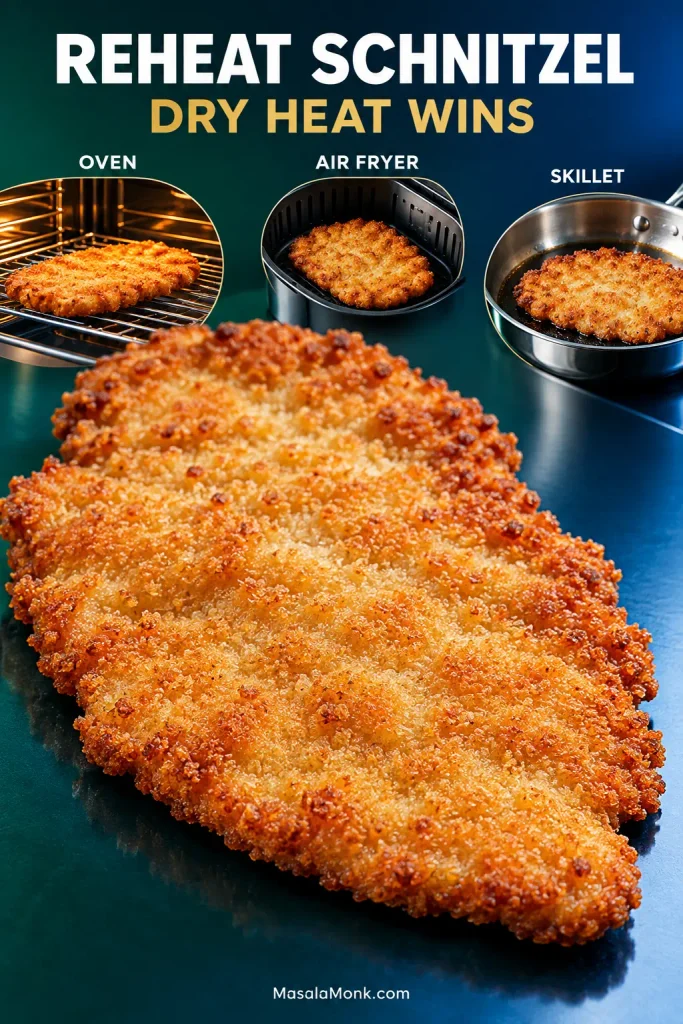
Reheat Without Softening the Crust
Dry heat works best. Reheat leftovers until the center reaches 165°F / 74°C.
- Oven: 375°F / 190°C for around 8–10 minutes.
- Air fryer: 375°F / 190°C for roughly 3–5 minutes; check early.
- Skillet: moderate heat with a small amount of oil, turning once.
- Microwave: it’ll heat the pork, but the breading will soften.
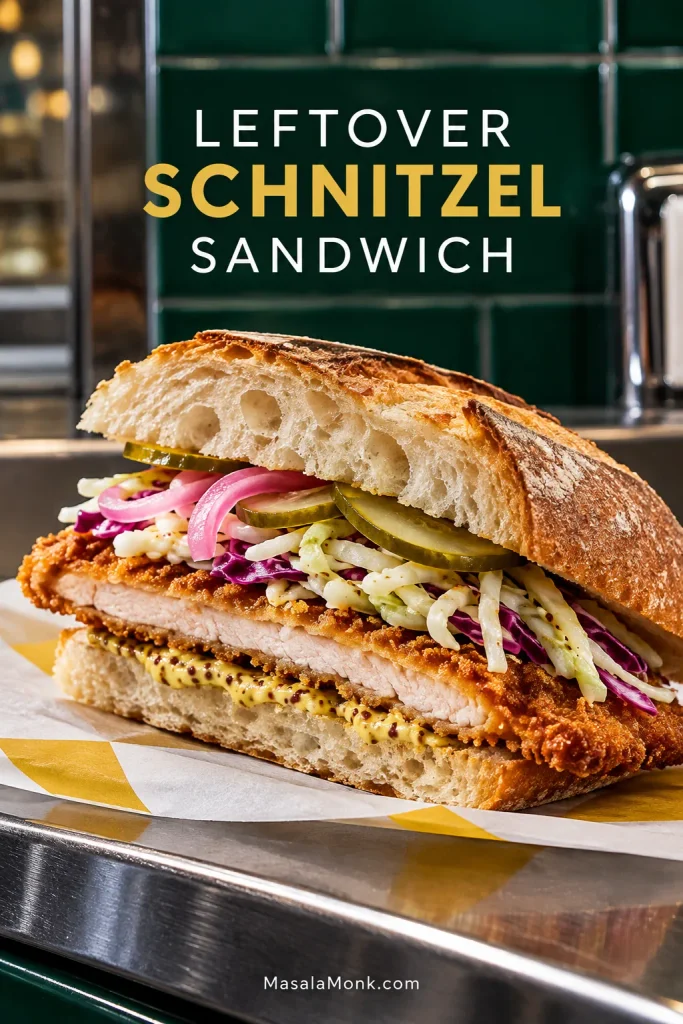
Or skip reheating and turn the leftover schnitzel into a sandwich with mustard, crisp coleslaw or something pickled. The breaded pork gives a next-day sandwich plenty of texture even when served cool.
Fresh from the pan is still the reason to make it: hot pork, a dry golden crust and lemon squeezed over at the last moment. By the second schnitzel, you’ll be watching the bubbles and the color as closely as the clock.








