
Posted on 2 Comments

Balti Paneer Gravy (Restaurant-Style, Creamy + Bold Recipe)

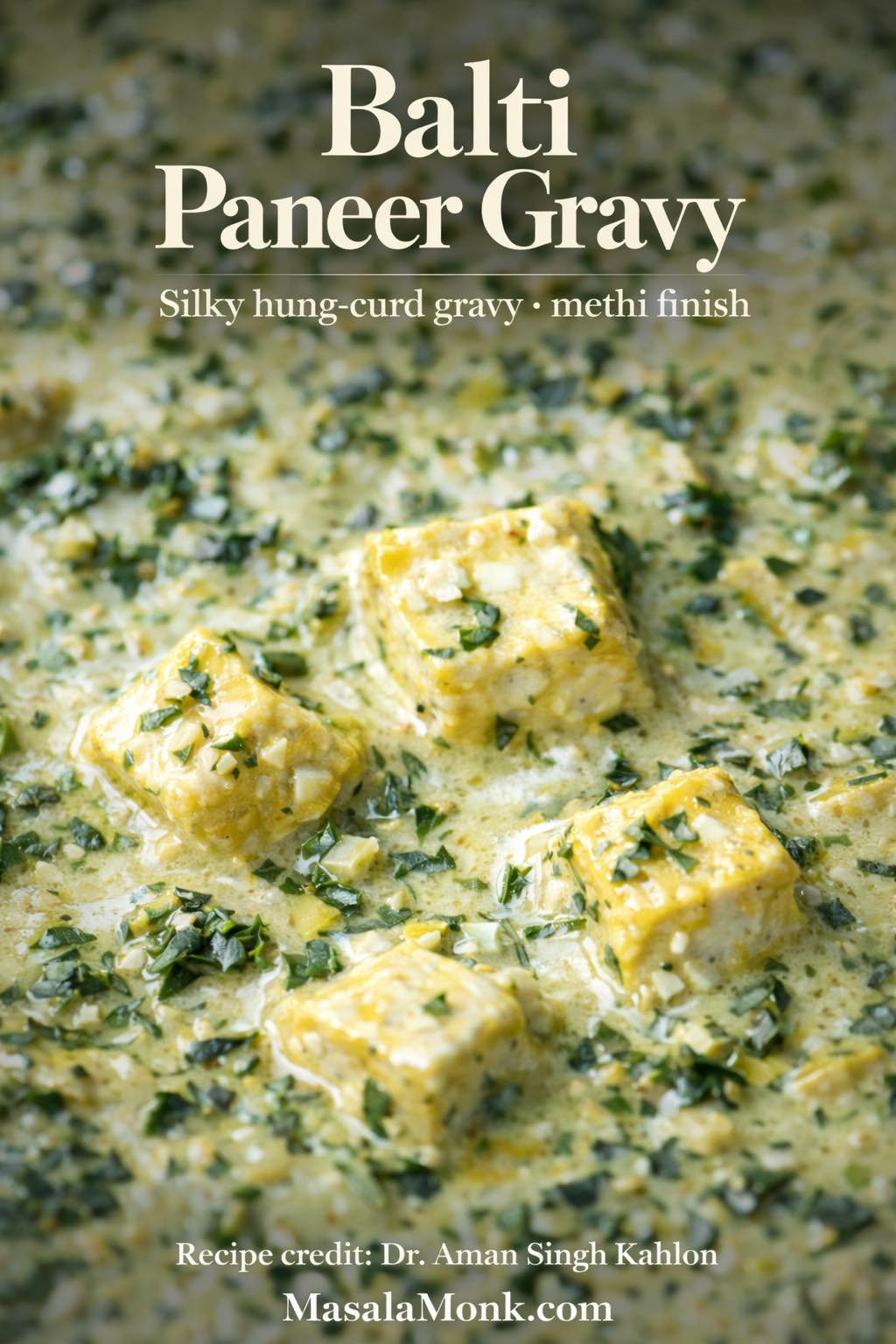
Macro close-up of Balti Paneer Gravy with soft paneer cubes in a silky hung-curd sauce, speckled with kasoori methi, with text overlay and recipe credit to Dr. Aman Singh Kahlon.

There are certain paneer gravies that feel comforting in a familiar way, and then there are the ones that taste like they came straight off a restaurant menu—glossy, aromatic, and strangely addictive. This Balti Paneer Gravy belongs firmly in the second group. From the first spoonful, it’s clear you’re not dealing with a thin, hurried curry. Instead, you get a sauce that’s rich without being heavy, spicy without being harsh, and creamy without turning sweet.

What makes it especially satisfying is the balance: onions browned to the right shade, nuts blended into silk, hung curd adding body and tang, and a final creamy finish that rounds everything out. Even better, the paneer itself stays tender because the method respects it. It’s marinated briefly, sautéed just enough, and then soaked so it doesn’t go rubbery the moment it meets heat again.

This recipe is shared with due credit to Dr. Aman Singh Kahlon, who originally posted it on Facebook after it became a small hit in a restaurant context. A friend wanted new vegetarian gravies for his menu, and this balti-style paneer was suggested alongside another paneer gravy. Both did remarkably well for months, and the balti version in particular earned that rare compliment people reserve for truly satisfying curries: finger-licking good. I’ve only refined the wording and formatted it for a smooth home-cook flow—ingredients and method remain faithful to the original.

If you love restaurant-style paneer gravies, you may also enjoy the peppery, elegant comfort of Kali Mirch Paneer (Black Pepper Paneer), which sits in a different lane yet scratches a similar itch.


Balti Paneer Gravy — what “balti” means here

“Balti” has an interesting identity because it’s often defined more by approach than by a rigid list of ingredients. Historically, balti is closely linked to Birmingham and the idea of fast-cooked curry served in the same wok-like steel bowl. If you’re curious about how that story took shape, this piece on the origins of balti in Birmingham gives a clear, readable overview, while this deeper look at how balti is method-first (quick, hot, oil-driven) is also worth a skim: Birmingham balti and why it’s disappearing.
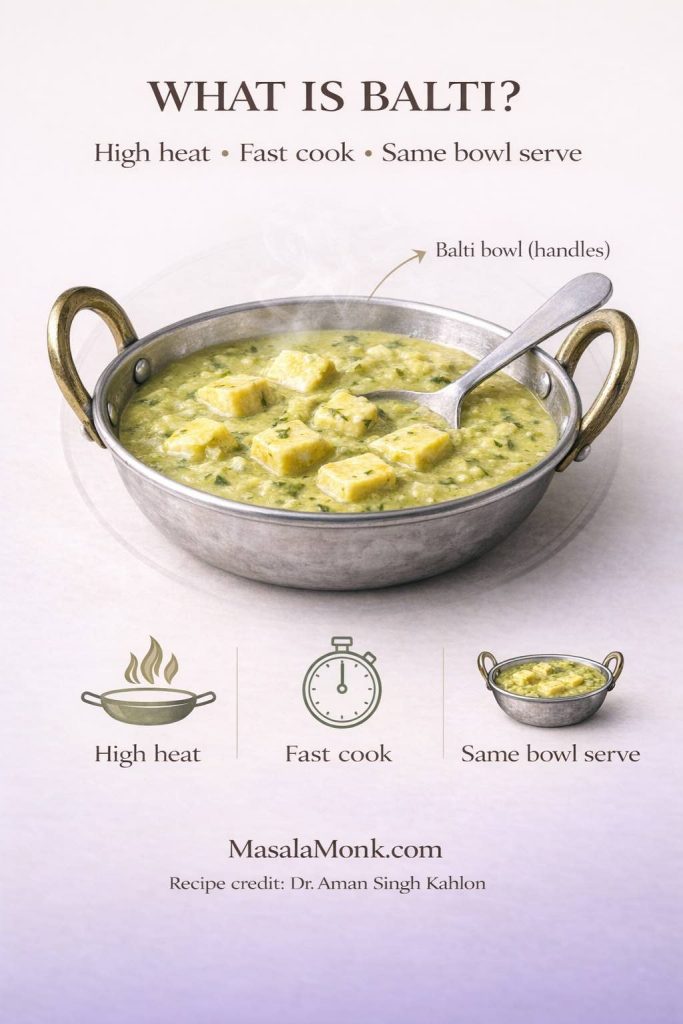
Infographic explaining what “balti” means using Balti Paneer Gravy: cooked on high heat, fast-cooked, and served in the same balti bowl with handles, shown with simple icons.
“Balti” is more method than ingredient: it’s cooked hot and fast, then served in the same handled balti bowl. This quick visual helps you understand the style before you start cooking Balti Paneer Gravy.

Now, in real-world Indian kitchens (and plenty of restaurant kitchens), “balti paneer” can also mean something slightly broader: a curry that’s brisk, bold, fragrant, and finished in a way that feels immediate—like it was cooked with intention rather than assembled. That’s the spirit this recipe captures.

What you’ll notice in this balti paneer gravy is that it’s not trying to imitate paneer butter masala, nor is it leaning fully into the tomato-forward snap of kadai paneer. Instead, it lands in a confident middle: onion depth, nutty silk, gentle tang from hung curd, a capsicum note that lifts the aroma, and a finishing creaminess that makes it taste “complete.”

Also Read: Mojito Recipe (Classic) + Ratios, Pitcher, Mocktail & Easy Variations


Paneer marination for Balti Paneer Gravy

Marination here isn’t about turning paneer or indian cottage cheese into tikka. Instead, it’s a quick flavor primer that prevents the cubes from tasting plain once they hit a rich sauce.
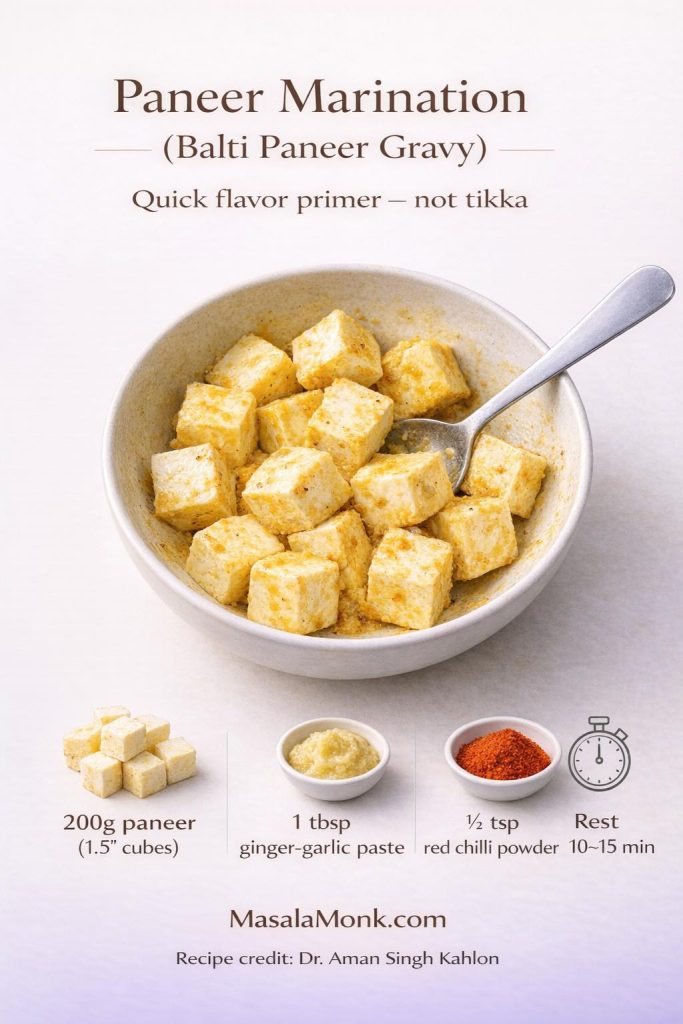
Paneer marination card for Balti Paneer Gravy showing paneer cubes lightly coated with ginger-garlic paste and red chilli powder, with quick amounts and a 10–15 minute resting time.
This quick paneer marination is a flavor primer, not tikka: a light coat of ginger-garlic paste and red chilli powder gives the cubes warmth and aroma so they taste seasoned even after they simmer in the rich Balti Paneer Gravy.

You’ll need

  • 200 g paneer, cut into 1.5-inch cubes
  • 1 tbsp ginger-garlic paste, fine
  • ½ tsp red chilli powder

Toss the paneer (indian cottage cheese) with ginger-garlic paste and chilli powder until each cube is lightly coated. Then set it aside while you prepare your pan.

Although the marinade is short and simple, it matters. Ginger-garlic starts building the “cooked curry” aroma early, while chilli powder gives the paneer a faint warmth that carries into the final bite rather than staying trapped in the gravy.

Also Read: Paloma Recipe: 12 Paloma Cocktail Drinks


Ingredients for Balti Paneer Gravy (hung curd + nuts + aromatics)

This gravy gets its restaurant-style texture from a combination of browned onions, nuts, and hung curd. Each element contributes something different, and together they build that velvety mouthfeel you expect from a serious paneer curry.
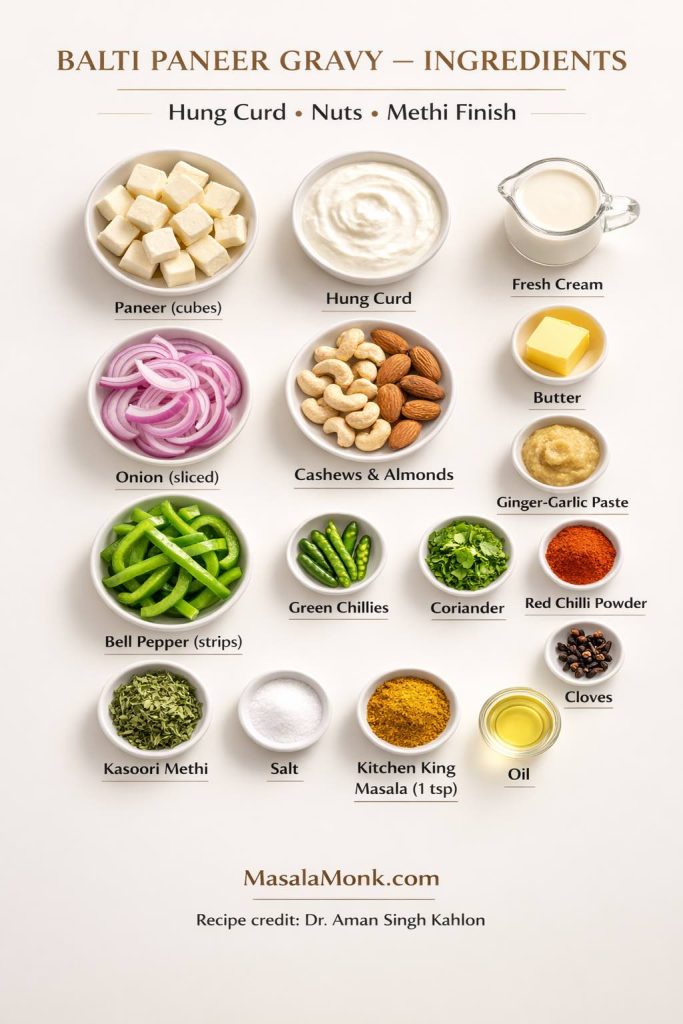
Everything you need for Balti Paneer Gravy in one glance: hung curd for a silky base, cashews and almonds for richness, kasoori methi for the restaurant aroma, and a final cream finish for that glossy, spoon-coating gravy.

Gravy base ingredients

  • 2 onions, finely sliced
  • 8 cashews
  • 8 almonds
  • 3–4 green chillies
  • A handful of coriander leaves, chopped
  • 2 tbsp kasoori methi
  • 4 whole cloves
  • 1 yellow or red bell pepper, sliced
  • 1 tsp Kitchen King masala (any brand)
  • 4 tbsp hung curd (thick, hung overnight)
  • Butter, for finishing the paste in the pan
  • 2 tbsp fresh cream, to finish

Kasoori methi is one of those ingredients that seems small until you leave it out, and then the whole gravy feels slightly incomplete. If you’ve ever wondered what it actually does and how to use it without turning a dish bitter, this guide on kasuri methi and how to use it explains it in a way that’s easy to apply.

Also Read: Air Fryer Donuts Recipe (2 Ways): Glazed Homemade Donuts + Biscuit Donuts


How to make Balti Paneer Gravy (step-by-step)

Step 1: Sauté the paneer briefly, then soak it

Heat a non-stick pan and add a little oil. Once the pan is warm, add the marinated paneer cubes and sauté them gently. You’re not aiming for a hard crust; rather, you want a light sear and a slight change in surface color.

As soon as the paneer looks lightly sautéed, remove it into a bowl and add enough water so the cubes are fully submerged.

Important: do not discard this soaking water. You will add it back into the gravy later.

This step looks modest, yet it has a real payoff. Many people soak paneer in water and hope for softness, but the combination of light frying and soaking works better because it creates tiny pathways inside the paneer that let it reabsorb moisture quickly. Serious Eats breaks down exactly why this works so well for store-bought paneer in their guide to softening store-bought paneer. Even if you never read another technique article, that one is genuinely useful.
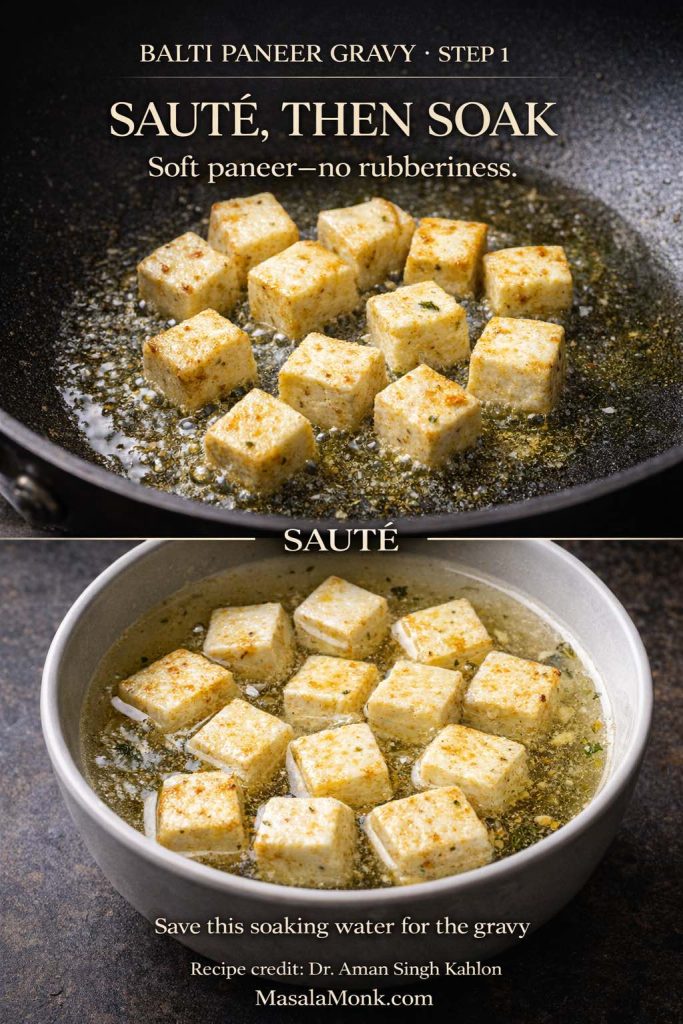
Step 1 of Balti Paneer Gravy: paneer cubes lightly sautéed, then soaked in water to keep them soft and prevent rubbery paneer; soaking water is saved for the gravy.
Step 1 is your soft-paneer insurance: lightly sauté the marinated paneer, then soak it so the cubes stay tender in the gravy. Don’t discard the soaking water—it’s a small detail that adds flavor back into the sauce.

Step 2: Fry onions until golden brown

In the same pan, using the same fat, add a little more ghee or oil if needed. Add the finely sliced onions and fry them until golden brown.

This stage sets the base tone of your curry. If the onions are pale, the gravy can taste thin. On the other hand, if they’re burnt, the bitterness shows up later and refuses to leave. Aim for a confident golden-brown, where the onions smell sweet and deep rather than sharp.
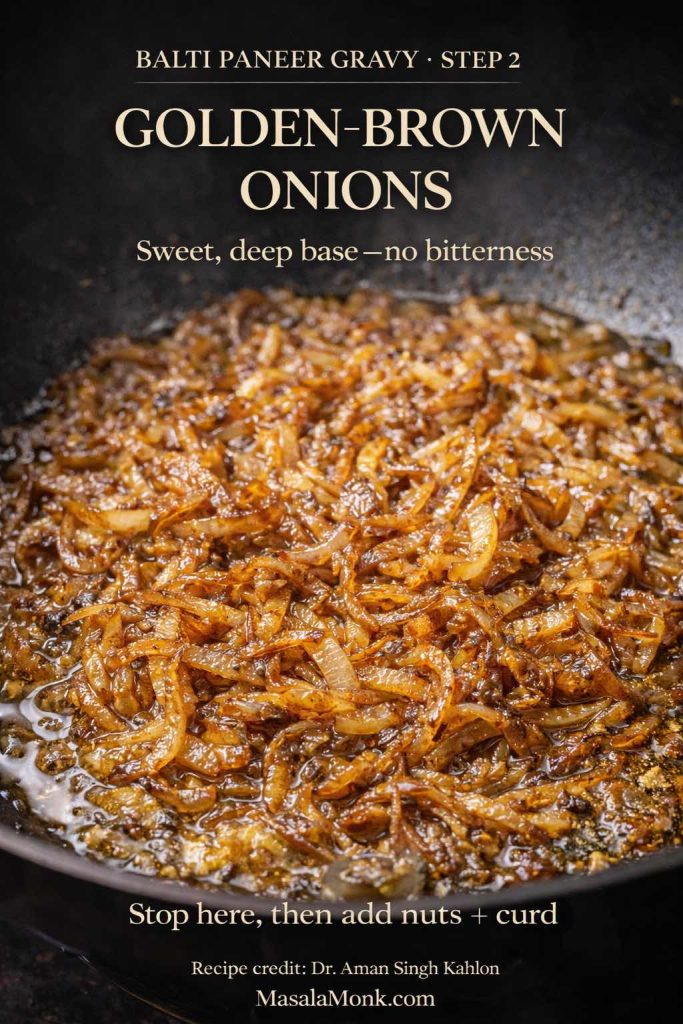
Step 2 sets the entire gravy’s flavor: cook the onions until they’re evenly golden-brown and glossy. Too pale tastes flat; too dark turns bitter—this is the sweet spot that makes Balti Paneer Gravy taste restaurant-style.

Step 3: Add the aromatics and build the balti-style masala

Once the onions are golden, add:

  • cashews
  • almonds
  • green chillies
  • coriander leaves
  • kasoori methi
  • cloves
  • sliced bell pepper
  • Kitchen King masala
  • hung curd

Now cook this mixture for a few minutes, stirring steadily. The goal is to “bhuno” it—let it cook until the raw smell disappears and the mixture looks cohesive.

At first, the curd may look like it’s just sitting in the pan. However, as it warms and meets the onion base, it starts to integrate. Meanwhile, the nuts toast slightly, the cloves bloom, and the capsicum releases that sweet aroma that makes the whole kitchen smell like a curry section in a restaurant.

Once it’s aromatic and unified, remove the pan from heat and let the mixture cool.
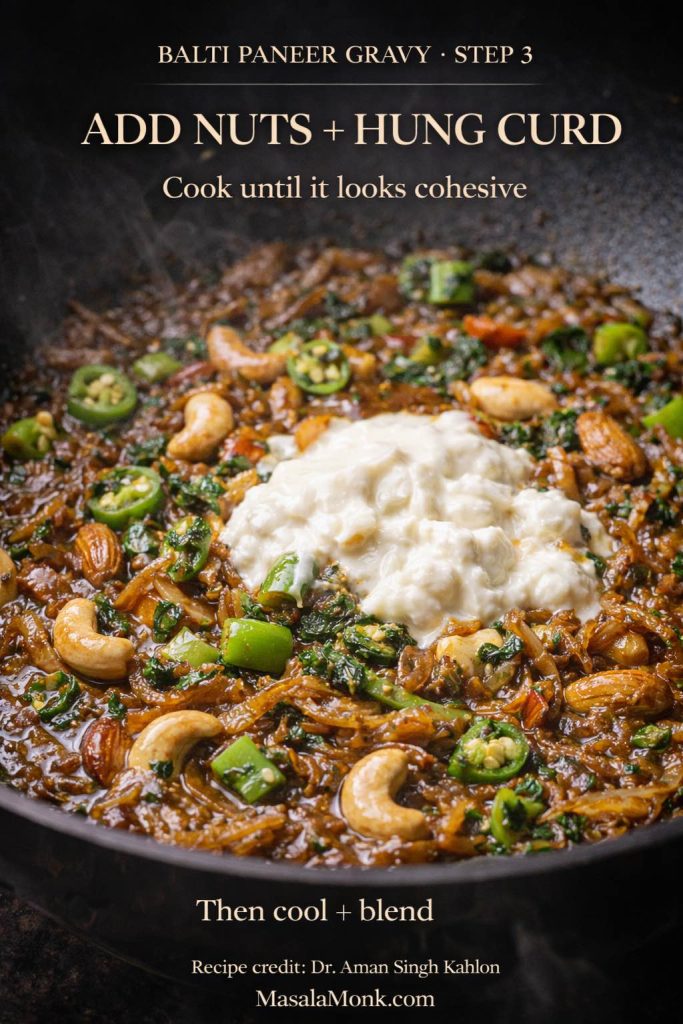
Step 3 is where the gravy’s signature texture starts: nuts and hung curd melt into the golden onions and aromatics. Cook until everything looks cohesive—once it comes together like this, you’re ready to cool and blend for a silky restaurant-style base.

Step 4: Blend into a smooth paste

Transfer the cooled mixture to a blender and blend it into a smooth paste. If needed, add a tiny splash of water to help it move, but keep it thick. The richness comes from concentration, so you don’t want to dilute it too early.

Set the paste aside.
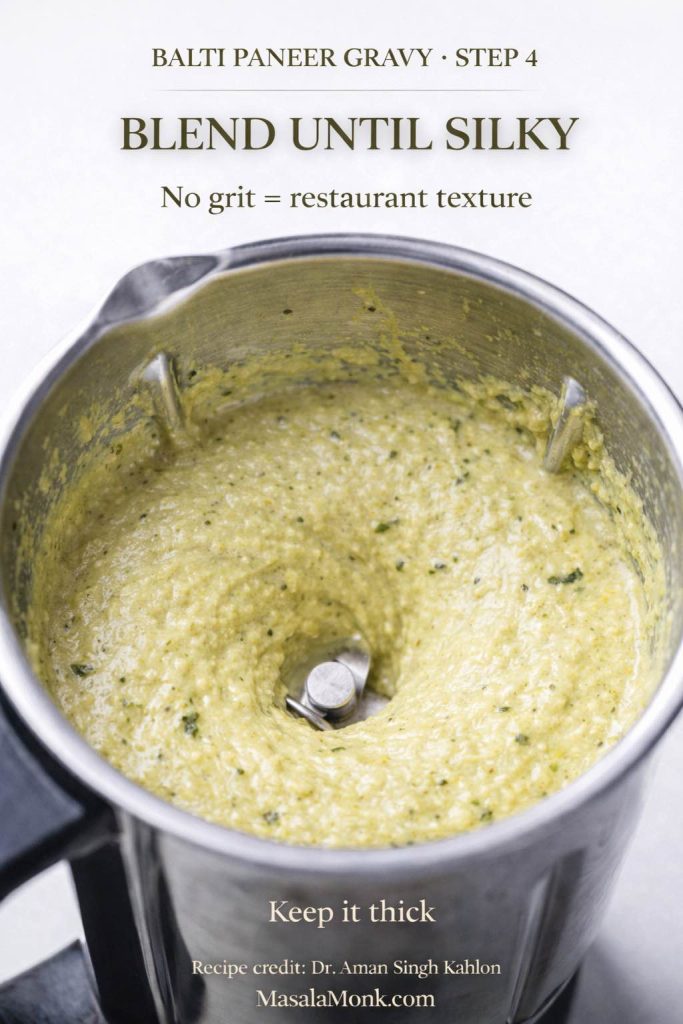
Step 4 of Balti Paneer Gravy showing the cooled onion, nuts, herbs, and hung curd mixture blended into a thick, pale creamy paste with methi flecks for a silky, restaurant-style gravy base.
Step 4 is your “silky gravy” guarantee: blend the cooled base until it’s thick and completely smooth. When the paste looks pale, creamy, and flecked with herbs like this, your Balti Paneer Gravy will finish glossy—not grainy.

Step 5: Cook the paste again until the oil separates

Return the pan to medium heat and add a little butter. Once the butter melts, add the blended paste and cook it again.

This second bhuno is where the dish begins to taste like restaurant style balti paneer rather than “homemade curry paste.” Stir patiently until the paste thickens and you see oil separating at the edges.

This stage also smooths out any roughness from onion or curd. Gradually, the paste becomes glossy, darker, and more rounded.
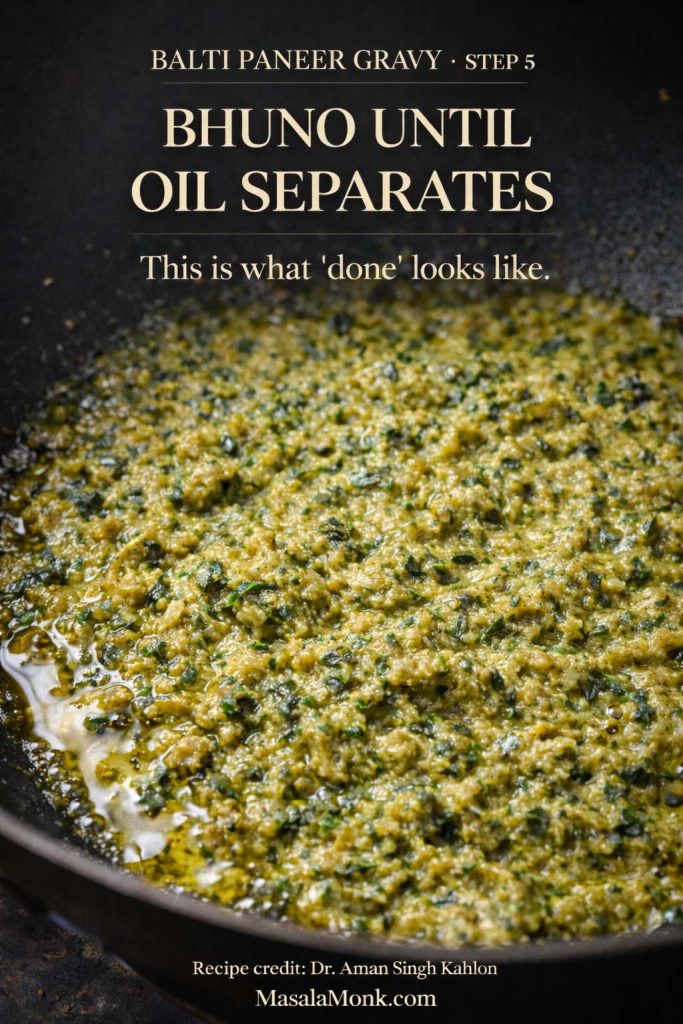
Step 5 of Balti Paneer Gravy showing the masala paste being bhuno-cooked until oil separates at the edges, the key restaurant-style doneness cue.
Step 5 is the make-or-break moment: bhuno the blended masala until you see oil separating at the edges. That glossy separation is what removes raw onion/curd taste and gives Balti Paneer Gravy its restaurant-style depth.

Step 6: Loosen with the paneer soaking water, then simmer

Now add the water you used to soak the paneer. Start with a moderate amount and stir well. Bring the gravy to a boil.

Because the soaking water already carries a little flavor from the paneer and marinade, it folds into the gravy naturally. It’s a small detail, but it makes the final sauce taste cohesive rather than “diluted.”

Once the gravy is boiling, add the paneer cubes and simmer for a few minutes.
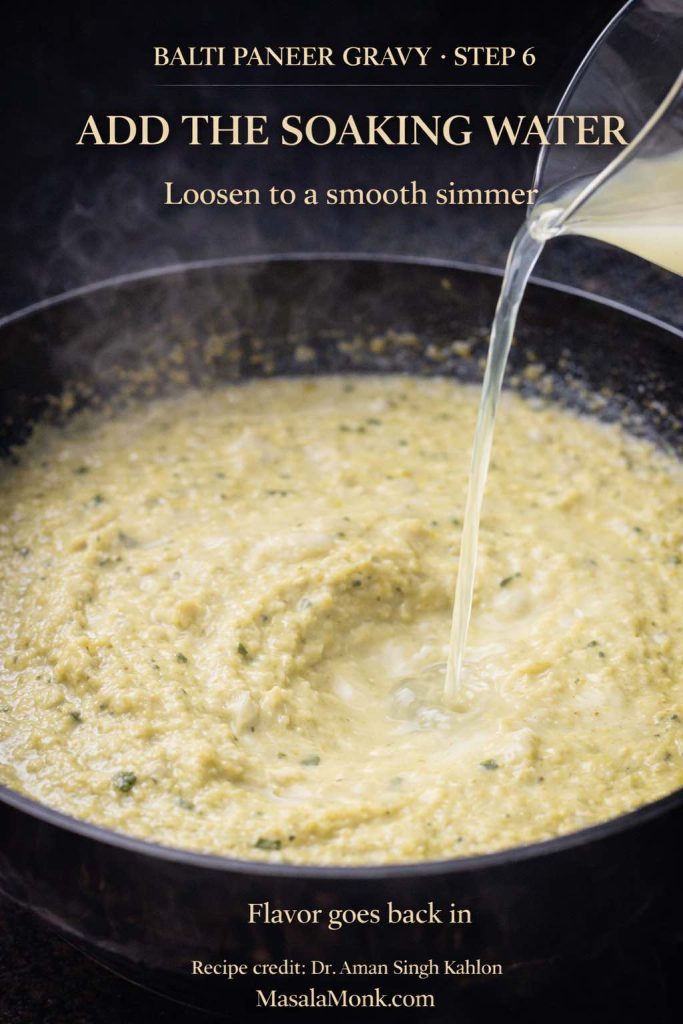
Step 6 of Balti Paneer Gravy showing paneer soaking water being poured into the pale, blended masala to loosen it into a smooth simmering gravy with visible kasoori methi flecks.
Step 6 is where the paste becomes a proper gravy: pour in the reserved paneer-soaking water little by little and stir until it loosens into a smooth simmer. This keeps the flavor concentrated while letting you control the final consistency.

Step 7: Finish with cream, then rest

Stir in 2 tbsp fresh cream, then turn off the heat.

Finally, let the balti paneer gravy rest for about 10 minutes before serving.
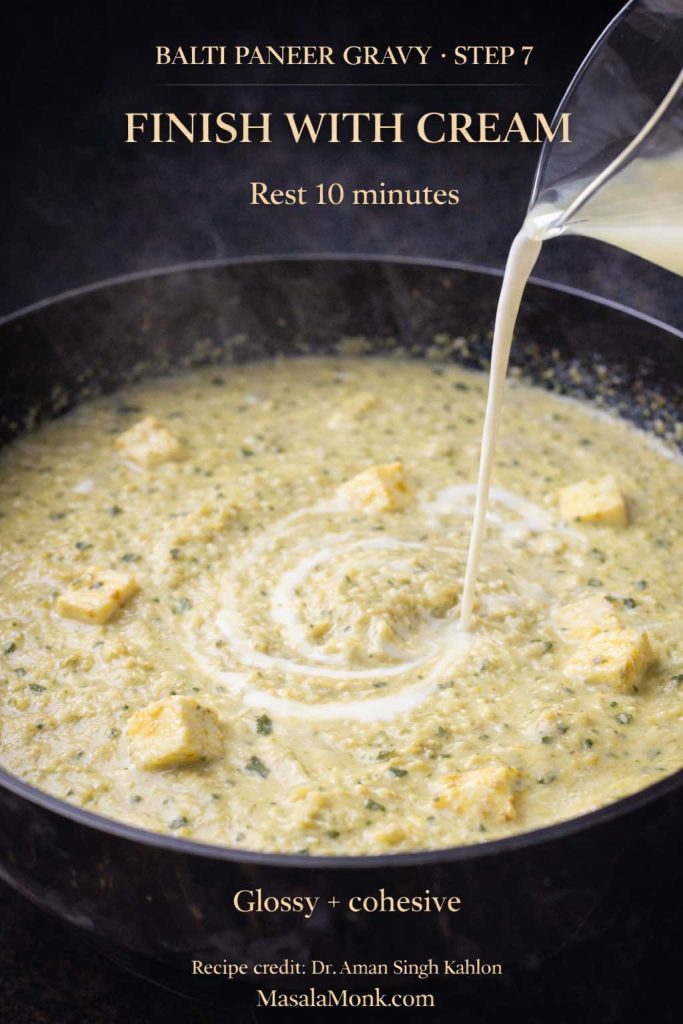
Step 7 of Balti Paneer Gravy showing fresh cream being poured into the pale, methi-flecked gravy with paneer cubes, then rested to become glossy and cohesive.
Step 7 is the restaurant finish: add fresh cream at the end, switch off the heat, and rest the gravy for 10 minutes. That short rest is what turns Balti Paneer Gravy glossy, smooth, and perfectly cohesive.

That resting time is where everything settles into place. The gravy thickens slightly, the flavor edges soften, and the paneer absorbs a little of the sauce without turning tough. If you’ve ever had a curry that tasted better after sitting, this is the reason: fats emulsify, spices relax, and the whole dish becomes more harmonious.

Also Read: Tapas Recipe With a Twist: 5 Indian-Inspired Small Plates


Balti Paneer Gravy texture: what you should see and smell

A lot of paneer gravies taste “almost right,” yet they miss that last 10% that makes a dish feel restaurant-level. Here, the final texture is your best clue.

You want a gravy that:

  • coats the back of a spoon without feeling like paste
  • looks glossy rather than chalky
  • smells layered—onion sweetness, spice warmth, methi perfume—without one ingredient shouting over the others
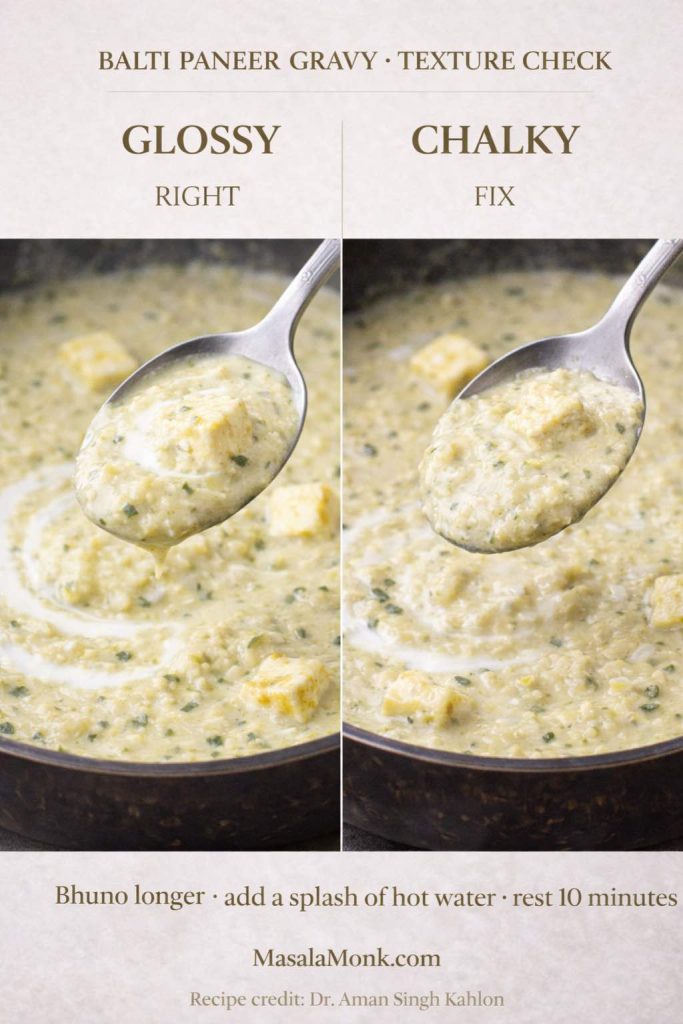
Texture check for Balti Paneer Gravy showing a side-by-side comparison of glossy gravy versus chalky gravy, with visual cues and simple fixes like bhuno longer, add hot water, and rest 10 minutes.
Quick texture check: glossy Balti Paneer Gravy should look smooth, shiny, and spoon-coating. If it looks chalky or dull, bhuno a little longer, loosen with a splash of hot water, and rest 10 minutes to bring back that restaurant-style finish.

If it looks slightly too thick, add a splash of hot water and simmer gently for a minute or two. Conversely, if it looks thin, cook it uncovered a little longer and allow the moisture to evaporate. Because nuts and curd provide body, it will thicken naturally as it cooks.

Also Read: Air Fryer Salmon Recipe (Time, Temp, and Tips for Perfect Fillets)


Balti paneer gravy vs kadai paneer vs paneer butter masala

Sometimes the easiest way to understand a curry is to see what it’s not.
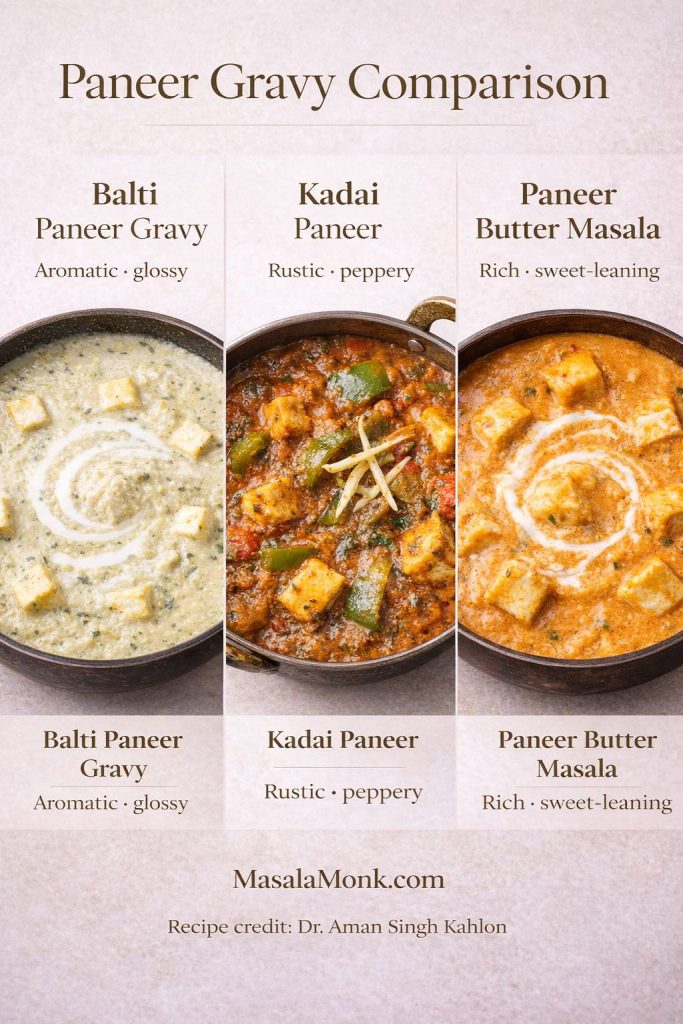
Not all paneer gravies taste the same: Balti Paneer Gravy is aromatic and glossy, Kadai Paneer is rustic and capsicum-forward, and Paneer Butter Masala is richer and sweeter-leaning. Use this comparison to pick the style that matches your mood.

Balti paneer gravy

This version is bold, aromatic, and bhuno-driven. It has richness from nuts and cream, yet it stays lively because capsicum, methi, and green chilli keep it bright.

Kadai paneer

Kadai paneer often leans into a tomato-and-capsicum base with kadai masala notes—more direct, more rustic, and typically sharper.

Paneer butter masala

Paneer butter masala usually goes smoother and sweeter, with tomato richness, butter, and cream taking center stage.

So, if you want the silkiness of a creamy gravy but still prefer a curry that feels punchy and restaurant-like, paneer balti is a satisfying lane to cook in.

Also Read: Masterclass in Chai: How to Make the Perfect Masala Chai (Recipe)


Hung curd: why it works so well in Balti Paneer Gravy

Hung curd is one of the quiet heroes here. It adds:

  • thickness without needing flour or heavy cream upfront
  • tang that keeps the gravy from tasting flat
  • a “cooked dairy” richness that feels more complex than plain cream
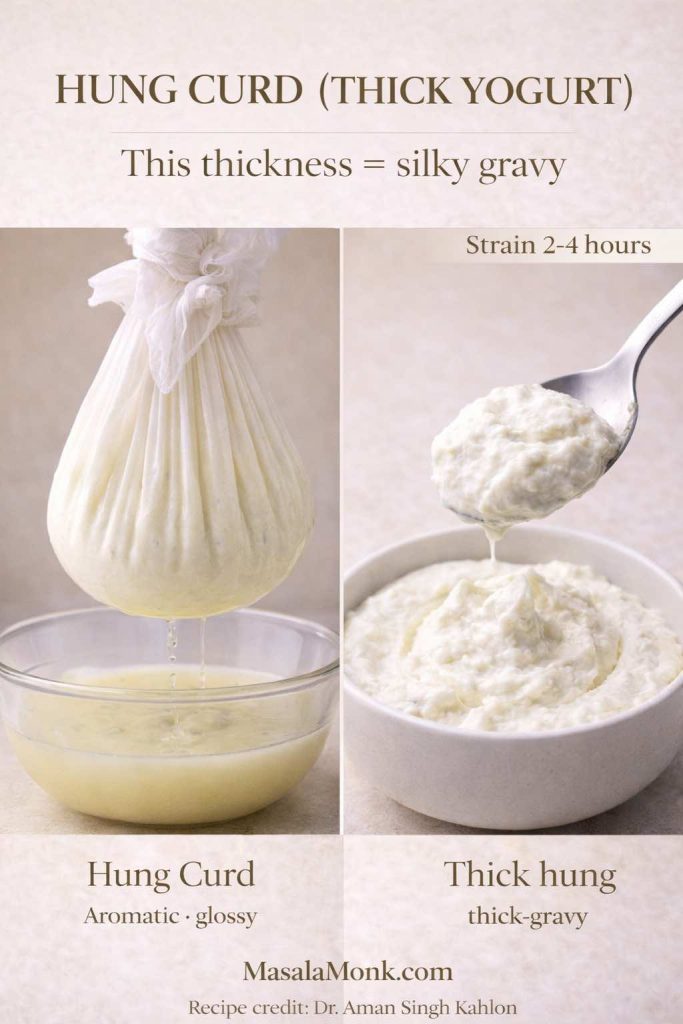
Two-panel guide showing hung curd (thick yogurt) being strained in muslin and the finished thick, spoonable curd used to make Balti Paneer Gravy silky and restaurant-style.
Hung curd is the texture secret: strain yogurt until it turns thick and spoonable (not pourable). That thickness helps Balti Paneer Gravy stay creamy, glossy, and stable instead of watery or dull.

If you don’t have hung curd, you can thicken regular curd by straining it for a couple of hours in a cloth. Another option is to use thick Greek yogurt, although the flavor will be slightly different.

Because this recipe already relies on a nut base, you don’t need to overdo substitutions. As long as your dairy is thick and your bhuno stage is patient, the gravy holds.

Also Read: Keto Mocktails: 10 Low Carb, Sugar Free Recipes


Paneer softness: how this method prevents rubbery cubes

Paneer becomes rubbery for two common reasons:

  1. it’s cooked too long at high heat
  2. it’s added to the gravy too early and left boiling
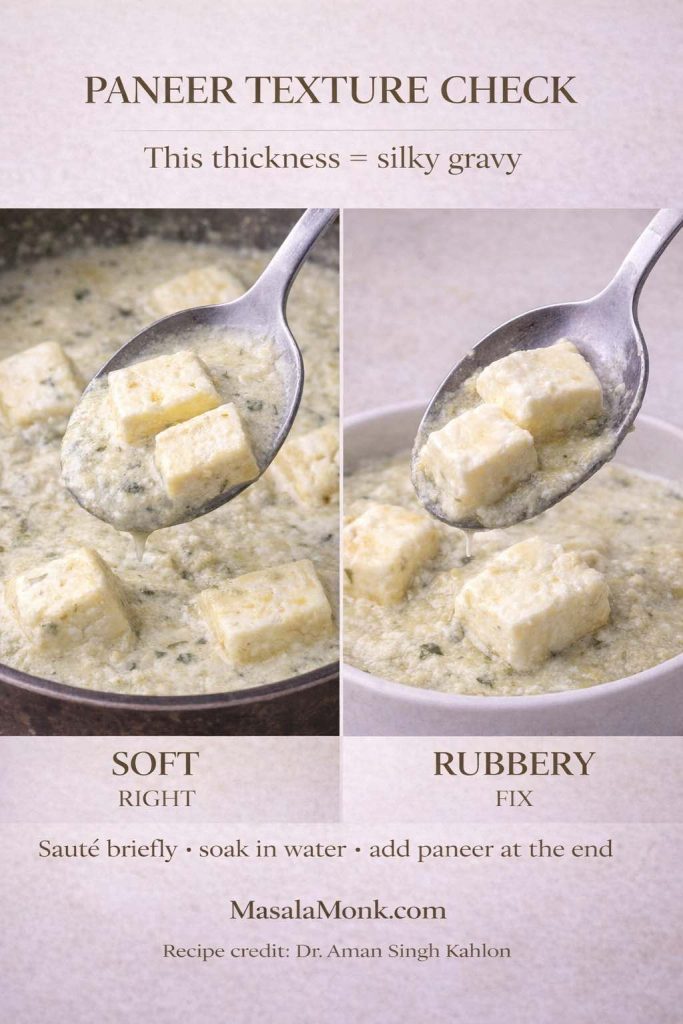
Paneer texture check for Balti Paneer Gravy showing soft paneer cubes coated in silky gravy versus rubbery paneer cubes, with the fix: sauté briefly, soak in water, and add paneer at the end.
Soft paneer is the whole point of this gravy: it should stay tender and let the sauce cling. If your paneer turns rubbery, sauté briefly, soak in water, and add it near the end so it warms through without overcooking.

This method sidesteps both problems. First, the paneer is lightly sautéed rather than aggressively fried. Then it’s soaked so it rehydrates. Finally, it’s simmered briefly at the end and allowed to rest off heat.

If you’re using very firm paneer, you can also soak it in warm water for a few minutes before marinating, then proceed as written. Still, the fry-then-soak approach remains one of the most reliable ways to fix store-bought texture, as explained in this guide on softening paneer effectively.

If you ever feel like making paneer from scratch for a special dinner, BBC Good Food’s method for how to make paneer at home is clear and approachable. Fresh paneer tends to be softer and milkier, which makes a creamy gravy taste even more luxurious.

Also Read: Crock Pot Pork Chops and Sauerkraut (No Dry Chops Recipe)


Kitchen King masala in paneer balti recipe: what it adds

Kitchen King masala is used in many Indian restaurant kitchens because it’s a “shortcut” blend that gives you immediate complexity—warm spices, slight sweetness, and a familiar curry-house aroma. In this paneer balti recipe, it plays well with onion sweetness, nuts, and dairy.
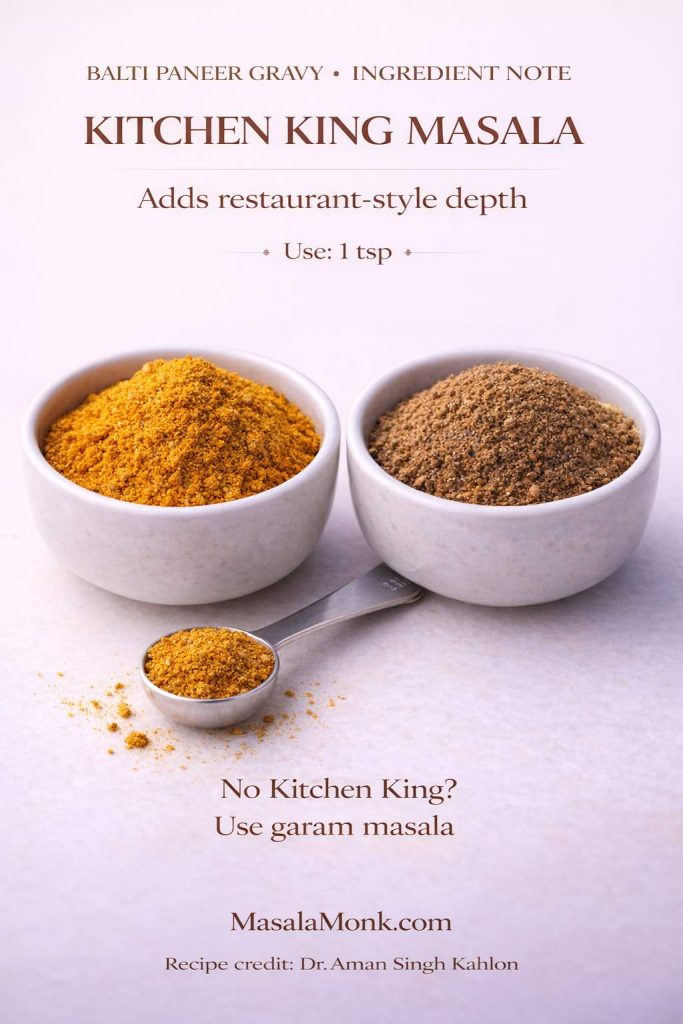
Kitchen King masala adds that restaurant-style depth to Balti Paneer Gravy with just 1 teaspoon. If you don’t have it, garam masala works as a straightforward substitute—your gravy will still taste rich and aromatic.

If you don’t have it, you can substitute a balanced garam masala. That said, the dish will shift slightly. Kitchen King tends to push the flavor toward that classic restaurant palate, which is exactly what this recipe aims for.

Also Read: Slow Cooker Pork Tenderloin (Crock Pot Recipe) — 3 Easy Ways


Kasoori methi: the finish that makes it smell like a menu dish

Kasoori methi (dried fenugreek leaves) is one of those ingredients that feels almost invisible until it’s missing. It adds a fragrant, slightly bitter edge that keeps creamy gravies from tasting one-dimensional.

To use it well:

  • rub it between your palms before adding, so it releases aroma
  • keep the amount controlled
  • treat it like a finishing herb rather than a bulk ingredient
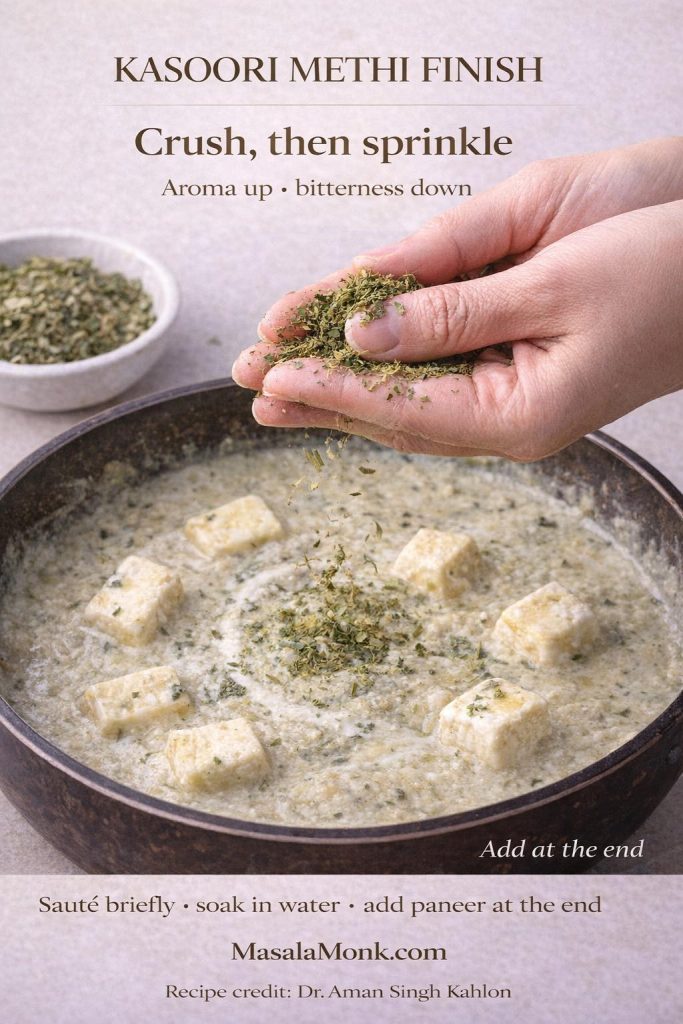
Kasoori methi finish for Balti Paneer Gravy showing dried fenugreek leaves crushed between fingers and sprinkled into the pale, creamy paneer gravy to boost aroma and prevent bitterness.
Kasoori methi is the final “restaurant aroma” step—crush it in your fingers first, then sprinkle it in right at the end. You’ll get a stronger fragrance with less bitterness, and the gravy tastes instantly more menu-style.

If you want a simple explanation of what it is, what it tastes like, and how to avoid bitterness, this guide to kasuri methi uses and substitutes is genuinely practical.

Also Read: Chicken Pesto Pasta (Easy Base Recipe + Creamy, One-Pot, Baked & More)


Serving ideas: what to eat with Balti Paneer Gravy

This is the kind of gravy that makes bread feel like a necessary tool rather than a side option. Even so, it also works beautifully with rice.
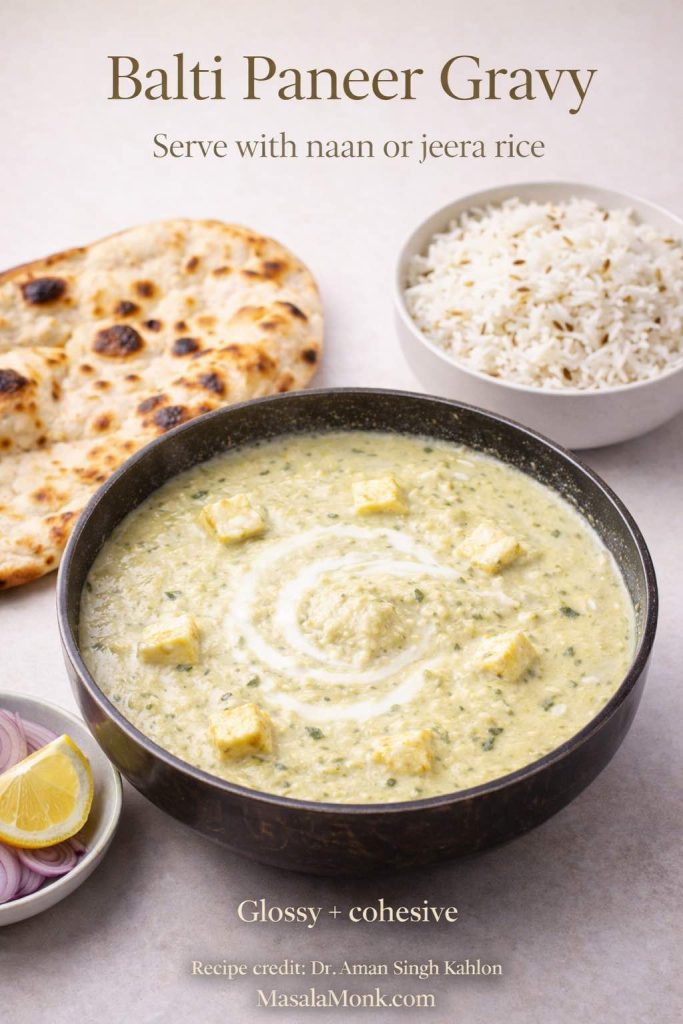
Balti Paneer Gravy served in a bowl with a cream swirl, alongside naan and jeera rice, with lemon and onion salad for a complete restaurant-style vegetarian meal.
Serve Balti Paneer Gravy the restaurant way: scoop it with naan, pair it with jeera rice, and add lemon + onion on the side to cut through the creamy, methi-flecked gravy.

Best bread pairings

  • butter naan
  • tandoori roti
  • kulcha
  • laccha paratha

Because the gravy is creamy and glossy, breads that have a bit of chew or char give the best contrast.

Rice pairings

  • jeera rice
  • simple basmati
  • light pulao

If you want to build a full, satisfying vegetarian meal around it, you can pair it with Authentic Punjabi Style Rajma Curry for a comforting, menu-like spread, or keep things lighter with Easy Aloo Gobi.

For a different style of comfort altogether—subtler spices, coconut fragrance, and a soothing pour-over feel—this Kerala Style Coconut Vegetable Stew is a lovely counterpoint on another day.

Also Read: Eggless Yorkshire Pudding (No Milk) Recipe


Restaurant-style Balti Paneer Gravy at home: small choices that change everything

A curry like this isn’t complicated, yet it rewards attention. The difference between “good” and “why does this taste like a restaurant?” often comes down to a few practical choices.
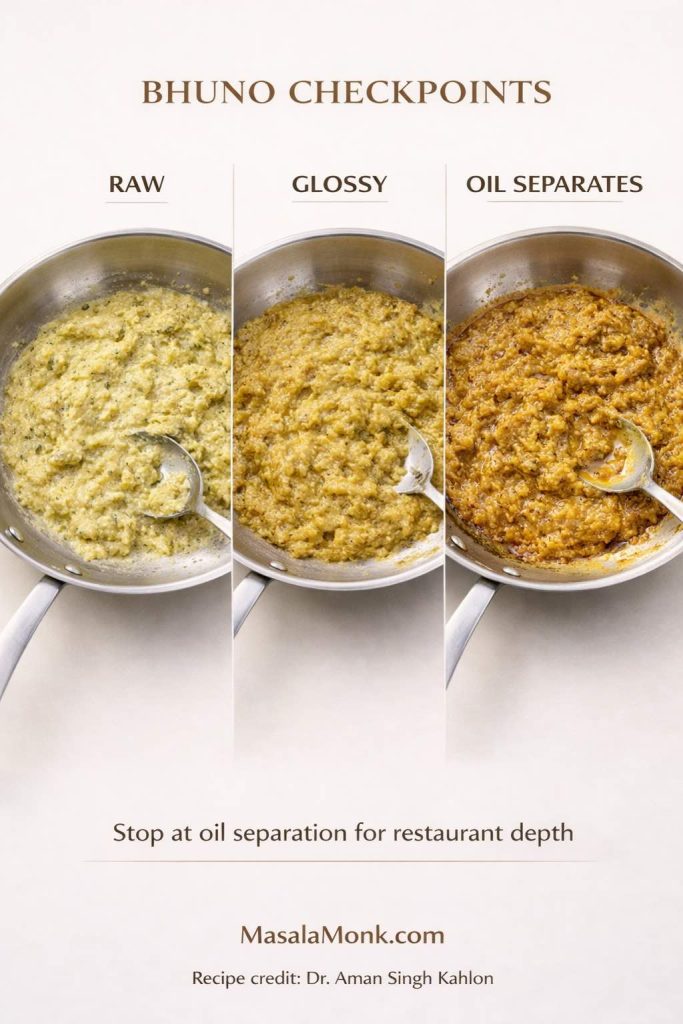
Bhuno checkpoints guide for Balti Paneer Gravy showing three stages of the masala paste in a pan—raw, glossy, and oil separates—so cooks can stop at oil separation for restaurant-style depth.
Bhuno isn’t a vague instruction—it has clear stages. Cook the paste until it turns glossy, then keep going until oil separates at the edges. That final checkpoint is what gives Balti Paneer Gravy its deep, restaurant-style flavor.

Let the onions earn their color

Golden onions are the backbone. If you rush this stage, the gravy can taste hollow later, even if your spice levels are perfect.

Toast the nuts in the masala

Cashews and almonds don’t just thicken; they add sweetness and roundness. When they warm and toast slightly in the onion base, the flavor becomes deeper and more integrated.

Cook the blended paste again

This is the step many people skip when they’re tired. Nevertheless, the second bhuno is where the sauce develops its restaurant-style finish. As the paste cooks, it becomes glossy, loses raw edges, and turns cohesive.

Rest before serving

Serving immediately is tempting, yet the 10-minute rest transforms the gravy. The spice settles, the cream integrates more smoothly, and the whole dish becomes calmer and richer at the same time.

Also Read: Garlic & Paprika Cabbage Rolls (Keto-Friendly Recipes) – 5 Bold Savory Twists


Variations that still feel like balti paneer

Once you’ve made the base recipe once, it becomes easy to adjust to your mood without losing the core identity of the dish.
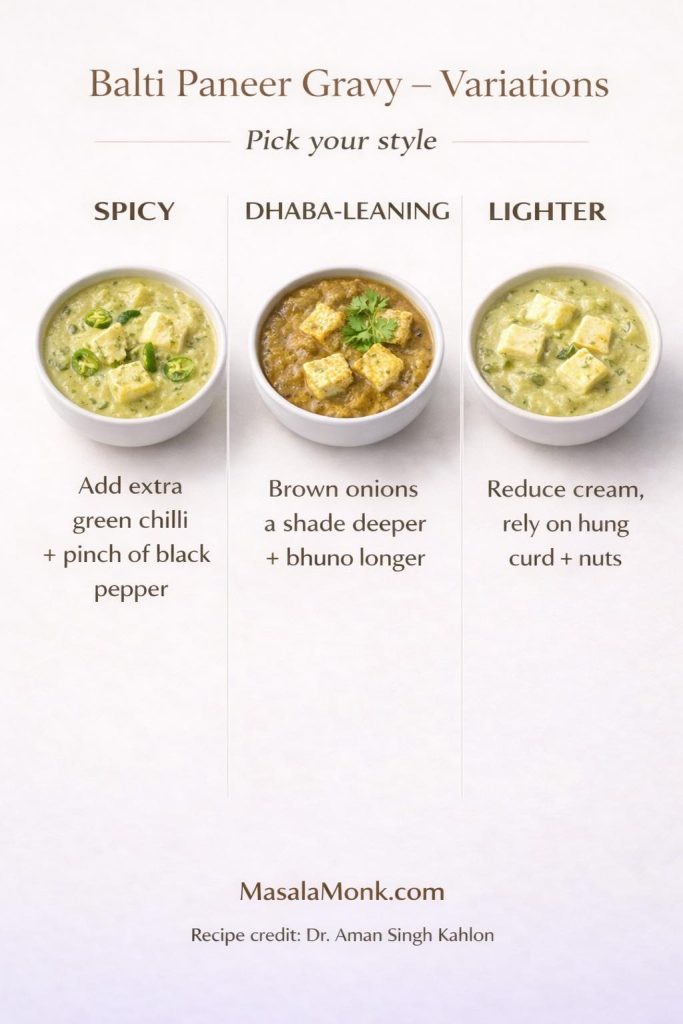
Make this Balti Paneer Gravy your way: go Spicy with extra green chilli and black pepper, push it Dhaba-style by browning onions deeper and bhuno longer, or keep it Lighter by reducing cream and relying on hung curd + nuts for silk.

Spicier balti paneer gravy

If you want more heat, increase green chillies or add a little extra red chilli powder to the paneer marinade. You can also finish with a pinch of crushed black pepper for a sharper kick.

Dhaba-leaning paneer balti

For a more dhaba-style push, keep the onions slightly more browned and let the gravy cook a touch longer after adding the soaking water. That deeper “fried masala” tone comes through more strongly.

Slightly lighter, still restaurant-like

Use a little less cream at the end, and rely on the nuts and hung curd for richness. The gravy will still feel silky, just less indulgent.

Party starter pairing

If you’re planning a menu night and want a snack that matches the same “rich, spiced, restaurant” mood, these Cheese Balls with Indian-inspired variations make a fun companion—especially because they also use thick yogurt and spice in a way that feels familiar.

Also Read: 10 Low Carb Chia Pudding Recipes for Weight Loss (Keto, High-Protein, Dairy-Free)


Storage, reheating, and leftovers (Balti Paneer Gravy gets even better)

This curry is one of those rare gravies that often tastes better the next day. The spices have time to settle, the sauce thickens slightly, and the overall flavor becomes more rounded.
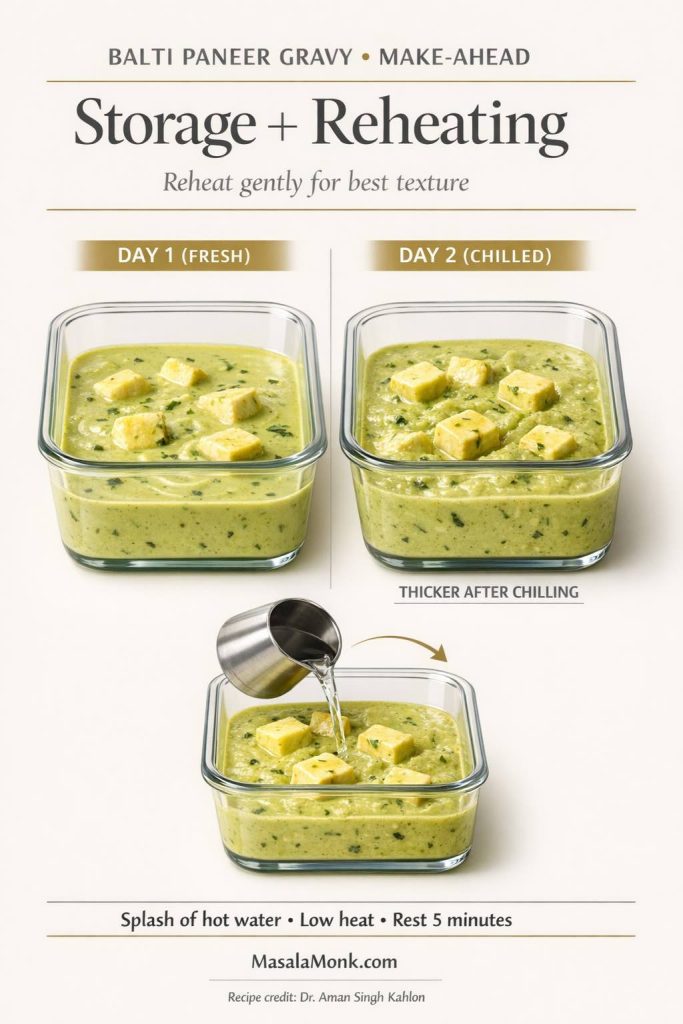
Balti Paneer Gravy storage and reheating guide showing Day 1 fresh gravy versus Day 2 chilled thicker gravy, plus the reheating fix: add a splash of hot water, warm on low heat, and rest 5 minutes.
Balti Paneer Gravy is a great make-ahead curry: it thickens after chilling, then turns silky again with a splash of hot water and gentle reheating. Resting for 5 minutes at the end brings back that glossy, restaurant-style texture.

Cool it down, refrigerate it, and reheat gently on the stove. If it thickens too much overnight, add a splash of water and stir patiently.

For general safety guidance on how long cooked leftovers keep in the refrigerator, USDA FSIS provides a clear reference in their official page on leftovers and food safety. That’s especially useful if you’re meal-prepping or cooking for guests and want a reliable baseline.

Leftovers can also become something entirely new. If you have paneer gravy or a dry-ish paneer sabji left over, you can turn it into an unexpectedly satisfying lunch—this Paneer Sabji Sandwich idea is a simple way to stretch the dish into the next day without feeling like you’re repeating dinner.
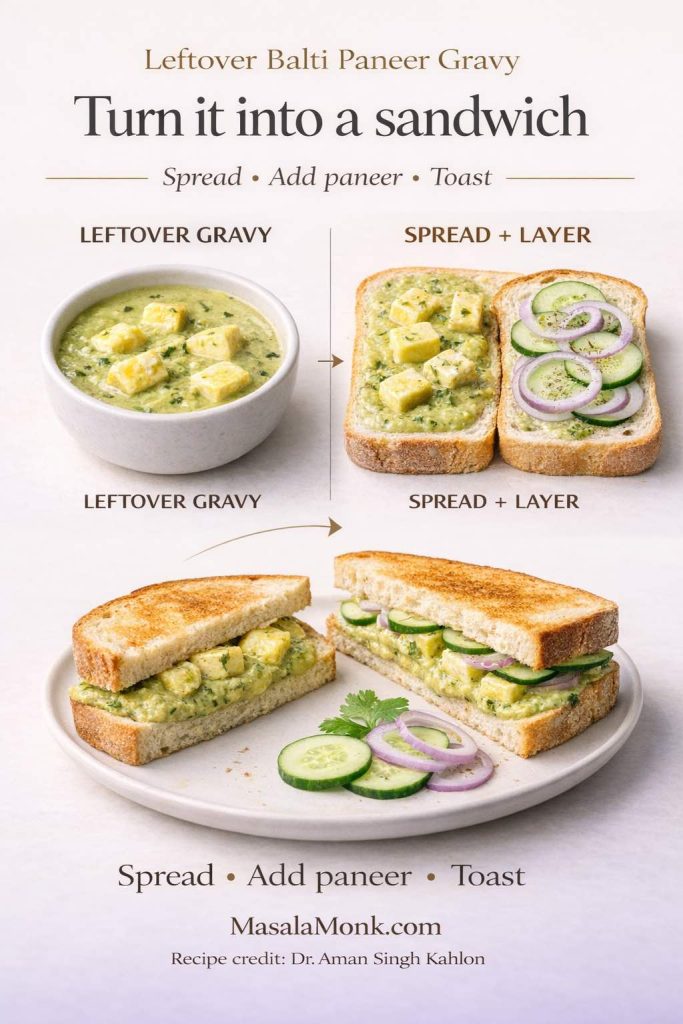
Step-by-step collage showing how to turn leftover Balti Paneer Gravy into a toasted paneer sandwich: spread leftover gravy, add paneer and sliced cucumber/onion, then toast and serve.
Leftover Balti Paneer Gravy makes an unreal sandwich: spread the thick gravy on bread, add paneer cubes (and cucumber/onion if you like), then toast until golden. It’s an easy next-day lunch that tastes like a fresh dish, not leftovers.

If you’re building a week that leans protein-forward, you may also enjoy this collection of vegetarian high-protein Indian meal prep ideas, which complements this gravy nicely in the same “cook once, enjoy twice” rhythm.


A short note on the “balti” story (for the curious cook)

Even if you’re cooking this as a straightforward home curry, it’s fun to know that balti carries a real cultural thread. It’s widely associated with Birmingham and the Pakistani community’s influence on British curry culture, where speed, high heat, and serving-in-the-same-bowl helped balti become iconic. If that background interests you, the National Geographic piece on the story behind balti is a great starting point, and Adventure.com’s write-up on balti as a method-first curry adds more detail.

That history doesn’t change your dinner, of course, but it does make the word “balti” feel less like a label and more like a living style of cooking—fast, aromatic, and satisfying.

Also Read: How to Make a Flax Egg (Recipe & Ratio for Vegan Baking)


Balti Paneer Gravy — final serve and closing

When you finally bring the pot to the table, this gravy has a particular kind of charm: it looks rich, it smells layered, and it has enough depth to make a simple meal feel celebratory. Whether you scoop it with naan, spoon it over jeera rice, or serve it as part of a bigger vegetarian spread, it holds its own without demanding extra fuss.

Most of all, it’s the kind of curry that makes people pause mid-bite and say, “Wait—what’s in this?” Not because it’s strange, but because it tastes thoughtfully built.

Recipe credit, with gratitude: This Balti Paneer Gravy is shared with due credit to Dr. Aman Singh Kahlon (originally shared on Facebook). The recipe became popular in a restaurant setting and has been enjoyed by many; it’s shared here so more home cooks can bring that same restaurant-style comfort to their own tables.

Also Read: Dirty Martini Recipe (Classic, Extra Dirty, No Vermouth, Spicy, Blue Cheese, Tequila + Batched)

FAQs

1) What is Balti Paneer Gravy?

Balti Paneer Gravy is a bold, restaurant-style paneer curry where the sauce is cooked “fast and fragrant” with a bhuno-style base. In practice, it’s a glossy paneer gravy with deep onion flavor, warm spices, and a creamy finish—often brighter and more aromatic than heavier paneer curries.

2) Is Balti Paneer the same as Paneer Balti?

Yes—most people use “Balti Paneer” and “Paneer Balti” interchangeably. Both refer to a balti-style paneer curry, and the wording usually depends on regional preference rather than a meaningful recipe difference.

3) Balti Paneer Gravy vs Kadai Paneer—what’s the difference?

Balti paneer gravy is typically smoother and more sauce-forward, with a rounded spice profile and a glossy finish. Kadai paneer, in contrast, leans more rustic and capsicum-heavy, often with a sharper, kadai-masala character and a more textured gravy.

4) Balti Paneer Gravy vs Paneer Butter Masala—what should I expect?

Balti paneer gravy usually tastes more aromatic and spice-led, while paneer butter masala is generally richer, sweeter, and more buttery. If you want a creamy paneer curry that still feels punchy and restaurant-like, balti paneer is a great middle path.

5) How spicy is this paneer balti recipe?

It can be mild to medium, depending on the number of green chillies and the chilli powder used. If you prefer a gentler curry, reduce the green chillies and use a mild chilli powder; the gravy will still taste full-bodied because the base carries plenty of flavor.

6) Why do you marinate paneer for balti paneer gravy?

Marinating paneer helps it taste seasoned all the way through, rather than relying only on the sauce. Even a short marinade with ginger-garlic and chilli makes the cubes more flavorful once they simmer in the gravy.

7) How do I keep paneer soft in restaurant style balti paneer?

To keep paneer tender, avoid over-frying it and don’t boil it aggressively in the sauce. Brief sautéing followed by soaking (then a short simmer at the end) helps maintain a softer texture and prevents rubbery cubes.

8) Can I skip the nuts in balti paneer gravy?

You can, although the gravy will be less silky and less restaurant-like. If you need a substitute, use a bit more thick curd or finish with slightly more cream; however, the nutty depth and smooth body will be reduced.

9) What can I use instead of hung curd?

If hung curd isn’t available, strain regular curd for a couple of hours to thicken it. Greek yogurt can also work, provided it’s thick and not overly tangy. Either way, gentle heat helps keep the gravy smooth.

10) How do I prevent curd from splitting in balti paneer gravy?

Use thick curd, keep the heat moderate, and cook the base patiently. Additionally, once the blended paste returns to the pan, bhuno it steadily rather than rushing—this encourages a more stable, cohesive sauce.

11) What is the best “balti paneer masala” substitute for Kitchen King masala?

A balanced garam masala is the simplest substitute. For a closer restaurant-style effect, you can combine garam masala with a small pinch of cumin-coriander powder; still, the final flavor will shift slightly.

12) Can I make balti paneer gravy without cream?

Certainly. The gravy can still be rich from nuts and thick curd alone. If you skip cream, let the curry rest a little longer so the sauce settles and tastes rounded.

13) Can I make this balti paneer recipe ahead of time?

Absolutely. In fact, the gravy often tastes even better after it sits because the spices mellow and integrate. Make the sauce in advance, then add paneer close to serving so the cubes stay soft.

14) How long does balti paneer gravy last in the fridge?

Typically, it keeps well for 2–3 days when stored properly in a sealed container. Reheat gently and add a splash of water if the gravy thickens after chilling.

15) Can I freeze balti paneer gravy?

You can freeze the gravy base, although paneer texture may change after thawing. For best results, freeze only the sauce, then add fresh paneer when reheating and finishing the dish.

16) What should I serve with Balti Paneer Gravy?

It pairs beautifully with naan, tandoori roti, kulcha, or jeera rice. For a complete meal, add a crisp onion salad, lemon wedges, and a simple raita on the side.

17) Why does my balti paneer gravy taste bitter?

Bitterness usually comes from over-browned onions, too much kasoori methi, or spices cooked too aggressively. Next time, aim for golden onions (not dark), keep methi measured, and cook the paste patiently over steady heat.

18) Why is my balti paneer gravy too thick or too thin?

If it’s too thick, loosen it gradually with hot water and simmer briefly. If it’s too thin, cook it uncovered until it reduces; since the base contains nuts and dairy, it will naturally thicken as moisture evaporates.

19) Can I make a vegan balti-style tofu gravy using this method?

Yes. Replace paneer with firm tofu and use plant-based yogurt and cream alternatives. While the flavor profile will shift slightly, the same bhuno-and-finish approach still delivers a rich, balti-inspired gravy.

20) What makes this a restaurant style balti paneer gravy at home?

It’s the combination of a properly cooked onion base, the nut-and-curd body, and the second bhuno after blending—plus a short rest at the end. Together, those steps create the glossy texture and layered flavor people associate with restaurant paneer gravies.
Posted on 6 Comments

Foods to Eat During 16:8 Intermittent Fasting

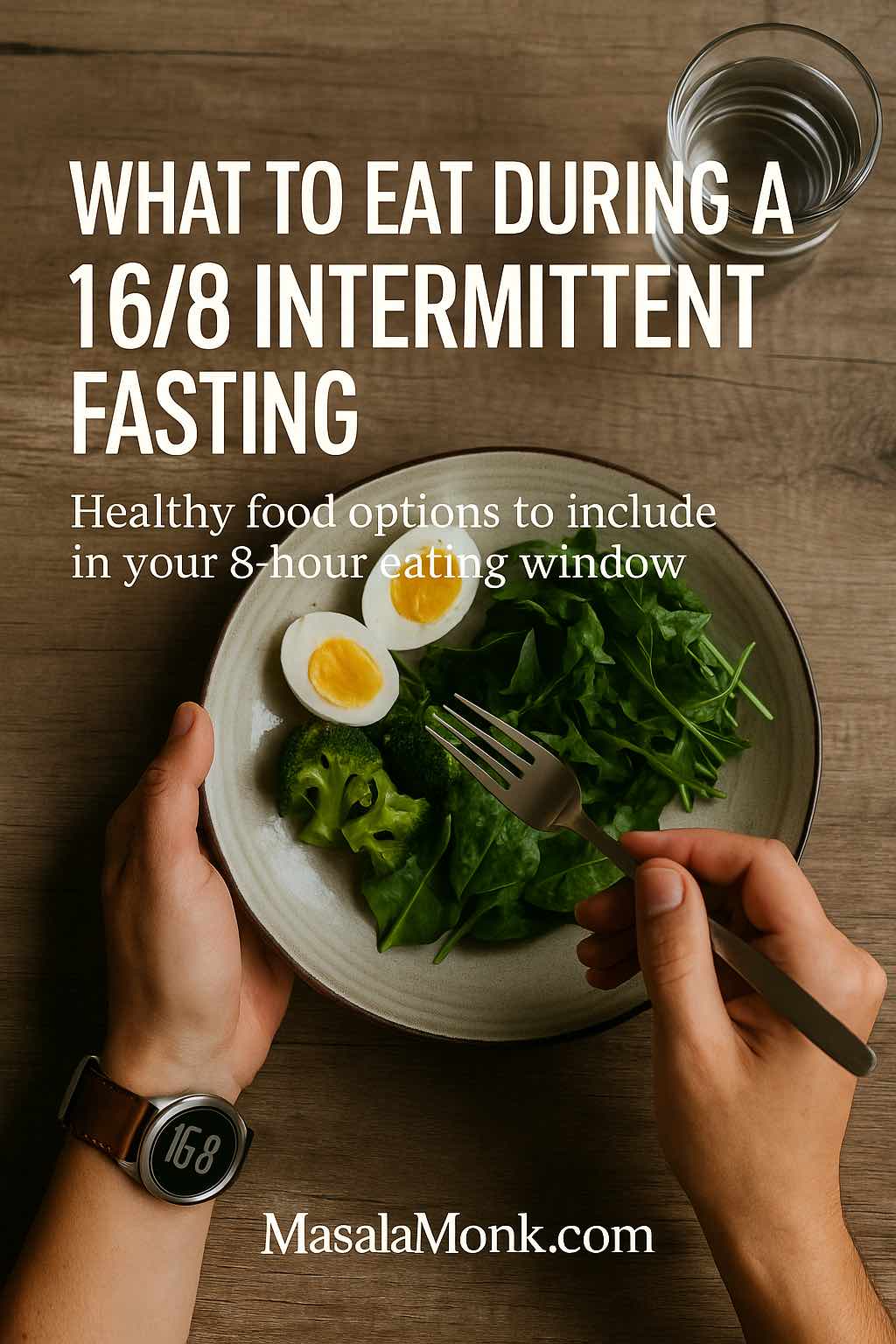
16/8 intermittent fasting first plate: boiled eggs, leafy greens and broccoli with water—simple foods to eat while fasting 16/8.

When you type foods to eat while fasting 16/8 into a search bar, you’re really asking two practical questions at once: what to drink during the 16-hour fasting window so you stay in a true fast, and what to place on your plate during the eight-hour eating window so you feel satisfied, energized, and consistent. Right from the start, the answer is refreshingly simple: build every plate around protein, high-fiber carbohydrates, and healthy fats, using mostly minimally processed, Mediterranean-leaning foods. That template is easy to shop, effortless to rotate, and—crucially—sustainable. For a quick primer on that food pattern, the American Heart Association’s Mediterranean overview and the practical Oldways Mediterranean Pyramid are both excellent, real-world starting points.


What to Drink While Fasting (and Why It Matters)

During the 16-hour fast, calories count; hydration does too. Consequently, choose plain water, sparkling or mineral water, black coffee, and unsweetened tea—all of which hydrate without adding energy. You can explore our post on Homemade Electrolytes for Fasting to get more ideas on what to drink. If you like simple “how much” rules of thumb, benchmarks from the Academy of Nutrition and Dietetics are helpful, while it is important to stay hydrated, however it’s important to remind you to favor lower-sugar beverages most of the time. For a public-health reminder on swapping out sugary beverages, see CDC: water and healthier drinks.

Of course, context matters. On hot days or after workouts, a pinch of electrolytes can help without breaking your fast—as long as your drink remains unsweetened. If you prefer real-food flavors, try these refreshing Cooling Cucumber Electrolyte Quenchers or explore DIY electrolyte drink ideas and simply omit sweeteners during the fast.

A quick nuance on sweeteners: the WHO’s guideline on non-sugar sweeteners advises against relying on them for weight control. Nevertheless, some people tolerate a small amount in coffee without cravings; others do not. Test gently, observe your appetite, and use minimally.

Also Read: Tea and Intermittent Fasting


The Best First Plate to Break Your Fast (Start Gentle, Then Build)

Once you open your window, your first bites set the tone for the rest of the day. Therefore, begin with a gentle, balanced “first plate” that combines protein + easy-to-digest carbs + a little fat. After 45–90 minutes, follow with your main meal. For instance:

  • A small bowl of lentil or vegetable soup with tofu or paneer and a slice of whole-grain bread.
  • Eggs with sautéed spinach plus a thin chapati or sourdough wedge.
  • Yogurt/curd (or fortified soy yogurt) with berries and a handful of nuts.
  • A smoothie based on milk/curd (or fortified soy) with fruit and a spoon of nut butter.

If you enjoy browsing options, you’ll like this compact collection of gentle, protein-forward fast-breaking ideas you can rotate all week.

Also Read: Coffee and Fasting: All Your Questions Answered


Foods to Eat While Fasting 16/8 (Inside the Window): The Core Building Blocks

Although timing is the hallmark of intermittent fasting, food quality is what shapes energy, fullness, and results. Thus, the most practical foods to eat while fasting 16/8 (meaning during your eating window) fall into three friendly buckets:

  • Protein anchors: eggs; Greek yogurt/curd; cottage cheese/paneer; fish and poultry; tofu and tempeh; dals, chickpeas, kidney beans; edamame; soy milk; nuts and seeds.
  • Smart carbs (fiber-forward): oats, quinoa, brown rice, millets, whole-wheat roti, sweet potatoes, beans and lentils, and plenty of fibrous vegetables—plus fruit like berries, apples, citrus, or bananas.
  • Healthy fats: extra-virgin olive oil, avocado, nuts/seeds; optionally, fatty fish if that suits your diet.

To make that even more concrete, here’s a beginner’s plate rule borrowed from public guidelines: fill half your plate with fruit/veg, and divide the other half between protein and smart carbs—a practical visual reinforced by USDA MyPlate. For specifics, the MyPlate pages for the Vegetable Group and Protein Foods Group offer quick, visual refreshers.

Finally, fruit definitely belongs. Pair it with protein or fat to smooth the glucose curve—think yogurt with berries, apple with peanut butter, banana with paneer or tofu. For ideas that go beyond the usual pairings, try our fruit-during-IF guide.

Also Read: Can We eats Peanuts while Intermittent Fasting?


7-Day Intermittent Fasting Meal Plan (16:8 Window Examples You Can Repeat)

Below is a complete intermittent fasting meal plan for a 12:00–8:00 pm window. Shift earlier (11–7) or later (1–9) as life demands. Each day includes a first plate to break your fast, a main meal, and a compact second plate/snack. You’ll also see vegetarian/vegan swaps and lower-carb variations so the week fits different goals. Use this as a beginner intermittent fasting meal plan, scale portions to your appetite and activity, and repeat favorites.

Portions vary by body size and training load; nevertheless, keep protein, fiber, and minimally processed ingredients at the center.

Day 1 — Mediterranean-Leaning Kickoff (foods to eat while fasting 16/8)

  • 12:00 First plate: Greek yogurt/curd with berries + 1 tbsp mixed nuts.
    Vegan swap: fortified soy yogurt with berries + chia.
  • 1:30 Main meal: Chickpea and vegetable stew in olive oil; side of quinoa; big lemony salad.
    Lower-carb swap: extra veg; smaller quinoa or cauliflower “rice.”
  • 6:30 Second plate/snack: Grilled paneer or tofu with peppers and onions + one orange.

Helpful visual for this style of eating: the Oldways Mediterranean beginner list is clear and friendly.

Day 2 — Indian Comfort, Balanced (foods to eat while fasting 16/8)

  • 12:00 First plate: Two besan chillas with curd and kachumber (or soy yogurt if vegan).
    Recipe inspiration: paneer-stuffed besan chilla (use your favorite version).
  • 2:00 Main meal: Rajma or chole over brown rice or millets; sautéed greens.
    Lower-carb swap: halve rice, double greens and cucumber salad.
  • 7:30 Second plate/snack: Fruit bowl (berries/papaya/banana) + almonds or walnuts.

Day 3 — High-Protein Emphasis (foods to eat while fasting 16/8)

  • 12:00 First plate: Eggs (omelette or boiled) with sautéed spinach + a thin sourdough wedge.
    Vegan swap: chickpea “omelette” (besan) with spinach.
  • 2:00 Main meal: Tandoori chicken or paneer/tofu tikka; roasted vegetables; small portion of brown rice or a roti.
    Lower-carb swap: skip grain, double vegetables; add avocado.
  • 6:45 Second plate/snack: Cottage cheese/paneer or tofu cubes with cherry tomatoes and olives.

Also Read: Best Nuts for Intermittent Fasting: Maximizing Satiety and Nutritional Benefits

Day 4 — Power Bowls (foods to eat while fasting 16/8)

  • 12:00 First plate: Smoothie bowl—milk/curd (or fortified soy), banana/berries, flax or peanut butter; sprinkle seeds.
    Lower-carb tweak: more berries, less banana; tofu on the side.
  • 1:45 Main meal: Lentil-quinoa bowl with roasted cauliflower/carrots; tahini-lemon dressing.
    Vegan/veg by default.
  • 7:00 Second plate/snack: Mixed sprouts chaat with tomato, onion, coriander, lemon, and a dash of chaat masala.
    How-to: sprouted moong overnight—step by step.

Day 5 — Fish or Tofu Friday (foods to eat while fasting 16/8)

  • 12:00 First plate: Miso soup with tofu and greens; small fruit.
  • 2:00 Main meal: Grilled fish with olive oil, herbed potatoes, and a large salad; or tofu steaks if plant-based.
    Lower-carb swap: roasted zucchini/broccoli in place of potatoes.
  • 7:15 Second plate/snack: Greek yogurt/curd parfait with apple and cinnamon; or soy yogurt for vegan.

Day 6 — Comfort Curry, Light Finish (foods to eat while fasting 16/8)

  • 12:00 First plate: Small bowl of moong dal + steamed veggies + lemon.
  • 2:00 Main meal: Coconut-milk vegetable curry (or chicken curry) over brown rice/millets; cucumber-tomato salad.
    Lower-carb swap: less rice, extra salad; add olives or avocado.
  • 6:30 Second plate/snack: Peanut chaat or roasted chana; sliced guava or pear.

Day 7 — Social Sunday, Still Smart (foods to eat while fasting 16/8)

  • 12:00 First plate: Yogurt/curd + low-sugar granola + berries.
    Vegan swap: soy yogurt + homemade nut-seed granola.
  • 2:00 Main meal: Pizza-style whole-grain flatbread with tomato, mushrooms, peppers, olives, mozzarella (or tofu ricotta), olive oil; side salad.
    Lower-carb swap: portobello “pizza” caps or eggplant slices.
  • 7:00 Second plate/snack: Paneer/tofu stir-fry with sesame and greens; or a small hummus plate with crudités.

How to rotate and prep: batch-cook two proteins (dal/chana and tofu/paneer or chicken/fish), one smart carb (quinoa, brown rice, or millets), and a tray of roasted vegetables every 3–4 days. If you need variety within the carb bucket, have a look at Quinoa for Weight Loss: Benefits, Nutrition, and How to Cook Ideas.


Vegetarian, Vegan, and Low-Carb Tracks (Fast Customization, Same Principles)

To craft a vegetarian intermittent fasting meal plan, anchor each eating occasion with paneer/cottage cheese, yogurt/curd, eggs (if you eat them), and legumes (chana, rajma, dal). Layer olive oil, nuts, and seeds for healthy fats. To build a vegan intermittent fasting meal plan, swap dairy for fortified soy yogurt/milk, use tofu or tempeh as daily proteins, and rotate edamame and beans. If you’re curious about tempeh’s texture and flavor, this quick primer on tempeh as a versatile vegan protein will help you get started.

For a low-carb intermittent fasting plan, there’s no need for extremes. Emphasize non-starchy vegetables, lean or plant proteins, olive oil/avocado/nuts, and smaller portions of grains or starchy veg. That plant-forward approach is still compatible with the Mediterranean pattern and, frankly, more livable than strict keto for most people. If you want a broader view of how to begin this style of eating, Cleveland Clinic’s Mediterranean food list and starter plan is grounded and usable.

Also Read: Yogic Meal Plan and Intermittent Fasting – Insights from Sadhguru


What to Eat While Intermittent Fasting for Weight Loss (Tactics That Compound)

Because many readers pursue 16:8 for fat loss, it helps to connect the dots between intermittent fasting and diet quality. To that end, use this checklist inside the window:

  1. Front-load protein at every eating occasion—yogurt/curd, eggs, tofu/tempeh, dal or chana, fish or poultry, plus nuts/seeds.
  2. Fill half your plate with plants—non-starchy vegetables plus fruit. The plate visual from USDA MyPlate keeps this effortless.
  3. Choose slow carbs most of the time: oats, quinoa, brown rice, whole-wheat roti, sweet potato, legumes.
  4. Use fats intentionally: extra-virgin olive oil, avocado, nuts, seeds. Measure pours and handfuls.
  5. Drink during the fast: water, coffee, and tea. For a simple refresher, see the Cleveland Clinic drinks guide.
  6. Break the fast gently: see the first-plate ideas above or browse fast-breaking suggestions.
  7. Batch-cook so your defaults are strong: try high-protein vegetarian meal prep or vegan meal prep ideas to save time during the week.

For a sane, evidence-aware perspective on weight and diet quality (and why extremes backfire), the British Dietetic Association’s plate guidance for weight loss and notes on fad diets are both sensible and easy to skim.


Foods to Avoid (or Save for Occasional Treats)

Even within a flexible intermittent fasting food plan, certain choices make timing harder rather than easier:

  • Sugary beverages and ultra-processed snacks—they spike appetite and can trigger rebound eating.
  • Very high-fat “first meals” right after fasting—greasy, heavy foods often feel rough on the stomach and push you toward grazing later.
  • Mindless nibbling in the window—if your plate lacks protein and fiber, you’ll snack soon after.

By contrast, treating richer items as occasional—and positioning them inside a complete meal with protein and vegetables—preserves the rhythm that makes 16:8 work. For a quick, friendly reminder on lower-sugar beverage choices, visit Nutrition.gov’s hydration and beverage tips.


Troubleshooting Your 16:8 Schedule (Common Hurdles, Easy Fixes)

  • If hunger hits hard mid-morning: sip water or unsweetened tea first; if you still feel low, shift your window earlier (e.g., 11–7) for a week.
  • If you crash after your first plate: increase protein (yogurt + nuts, eggs, tofu) and choose easy digesting carbs (fruit, soup with pulses) before your main meal.
  • If evenings get snacky: make dinner more substantial—double vegetables, keep protein steady, and add a measured spoon of olive oil or a quarter avocado for satisfaction.
  • If weekends derail you: keep timing flexible (e.g., 14:10 on social days) and return to 16:8 on Monday—consistency beats rigidity.
  • If coffee jitters you on an empty stomach: consider delaying coffee by an hour and keep it plain; the nuance around stimulants and stress is covered here: Coffee + cortisol.

Foods to Eat While Fasting 16/8: Shopping Lists You Can Copy

Because shopping clarity makes or breaks adherence, these condensed lists keep decisions simple:

Proteins to rotate: eggs; Greek yogurt/curd; cottage cheese/paneer; tofu/tempeh; chicken/fish; dals, chickpeas, kidney beans; edamame; soy milk; nuts and seeds.
Smart carbs to prefer: oats; quinoa; brown rice; millets; whole-wheat roti; sweet potatoes; legumes; fruit; plus loads of leafy, cruciferous, and colorful vegetables.
Healthy fats to include: extra-virgin olive oil; avocado; almonds, walnuts, pistachios, peanuts; seeds like flax, chia, sesame, and sunflower.

To make legumes especially appealing, remember that pulses are naturally rich in fiber and nutrients—reasons the UN’s Food and Agriculture Organization highlights in their notes on the nutritional benefits of pulses and this broader 2025 celebration of the power of pulses. Consequently, dals, chana, and rajma deserve a regular place on your table.

Also Read: Are Lentils Good for Weight Loss? Benefits, Recipes, and Science Explained


Intermittent Fasting Diet Plan for Beginners (Routine That Fits Real Life)

To live with the 16:8 rhythm comfortably, set up a routine that survives busy weeks:

  • Pick a consistent window most days (e.g., 12–8). Flex for social plans; return to baseline the next day.
  • Prep “fast-breakers” you enjoy: soup portions in the freezer, yogurt/curd cups, chopped fruit, roasted nuts.
  • Keep two fallback plates on standby: eggs + veg + toast; or tofu/paneer tikka + salad + one roti.
  • Hydrate preemptively—first thing in the morning and mid-afternoon—even before you feel thirsty. When you want variety, revisit cooling cucumber electrolytes and DIY hydration recipes for unsweetened options during the fast and low-sugar ideas during the window.
  • Meal prep smartly: for plant-forward weeks, browse high-protein vegetarian meal prep or vegan meal prep ideas; for omnivore weeks, batch-roast chicken/fish and tray-bake vegetables for effortless mix-and-match plates.

If you like evidence windows, it’s worth noting that time-restricted eating research continues to evolve. For a balanced perspective, you can read a randomized trial in the New England Journal of Medicine comparing calorie restriction with/without TRE (summary here), or a more applied brief from the NIH on TRE in metabolic syndrome. Nevertheless, regardless of study headlines, diet quality and routine are the levers you actually control each day.


Special Notes for Women, PCOS, Menopause & Diabetes

Some readers do better with 14:10 or even 12:12 during demanding phases. Women navigating perimenopause, anyone with PCOS, and readers with diabetes (particularly those on glucose-lowering medication) should tailor fasting and meal timing with their clinician. All the same, the meal fundamentals in this guide—protein at each eating occasion, plant-rich plates, slow carbs, and measured healthy fats—remain widely applicable. If you want a gentle on-ramp, glance at vegan meal prep ideas or high-protein vegetarian prep to see how easy it is to keep protein and fiber high without complex rules.


Example Day Revisited: Foods to Eat While Fasting 16/8 (Vegetarian Window)

To connect everything, here’s a compact vegetarian day that mirrors the template:

  • 12:00Yogurt/curd with berries and crushed nuts (or fortified soy yogurt with chia).
  • 3:00Fruit + almonds (apple with almonds, banana with peanut butter, or berries with paneer/tofu cubes).
  • 7:30Paneer tikka or chole with quinoa or whole-wheat roti; mixed salad with olive oil.

Notice how every moment includes protein, plants, and a bit of fat—a simple combination that makes the difference between a plan you can follow and a plan that unravels when life gets busy.

Also Read: The Science of Protein: Maximizing Muscle Growth and Recovery


What to Eat During Intermittent Fasting 16/8: The Weekly Rhythm in One Line

At this point, it should be clear that foods to eat while fasting 16/8 are not about restriction; they’re about focus. Protein first, plants plentiful, fats thoughtful, carbs mostly slow. Rotate different legumes, swap in seasonal vegetables, choose grains you enjoy, and keep fruit in the mix. As a result, you’ll feel fuller on fewer calories, stabilize energy, and make the plan feel less like a “diet” and more like a habit.

And if you ever need a quick nudge, open a friendly visual like the Oldways Mediterranean Pyramid or a basic plate reminder such as USDA MyPlate. They’re simple for a reason: when your defaults are this good, 16:8 becomes far easier to keep—meal after meal, week after week.

Also Read: What is the Mediterranean Diet? Free PDF Meal Plan Inside

FAQs

1) What are the best foods to eat while fasting 16/8 during the eating window?

Build plates around lean or plant proteins (eggs, curd/yogurt, paneer/tofu/tempeh, fish or chicken, dals/beans), high-fiber carbs (oats, quinoa, brown rice, whole-wheat roti, lentils, sweet potato, fruit), and healthy fats (olive oil, avocado, nuts, seeds). This simple mix keeps you full, supports weight loss, and makes foods to eat while fasting 16/8 easy to repeat.

2) What can I eat during intermittent fasting 16/8 as a beginner?

Start with a gentle first meal (yogurt + berries + nuts; eggs + fruit; dal soup + roti) and one main plate (protein + veggies + smart carbs). Add one small snack if needed (paneer/tofu pieces; fruit + almonds). This beginner intermittent fasting meal plan is fuss-free and sustainable.

3) What can I drink while fasting (no calories)?

Stick to water (still or sparkling), black coffee, and unsweetened tea. Zero-calorie electrolytes are fine if truly unsweetened. Save milky coffee, juice, smoothies, and shakes for the eating window.

4) What can you eat during the 8 hours of intermittent fasting?

Prioritize protein at every eating occasion, fill half the plate with vegetables and fruit, and choose slow-digesting carbs. Consequently, your foods to eat while fasting 16/8 list becomes: protein + plants + measured fats.

5) What is the best food to break a fast?

Go gentle: protein + easy carbs + a little fat. Examples: lentil/veg soup with tofu or paneer; eggs with a slice of whole-grain; yogurt/curd with berries and nuts; or a milk/curd + fruit smoothie with nut butter. Then, after 45–90 minutes, eat your main meal.

6) Which foods should I avoid while intermittent fasting?

Limit sugary drinks, ultra-processed snacks, and very greasy “first meals” right after fasting. These can spike hunger and derail your window.

7) Can I eat fruit during intermittent fasting 16/8?

Yes—inside the 8-hour window. Pair fruit with protein or fat (yogurt + berries, apple + peanut butter, banana + paneer/tofu) to improve satiety.

8) Does bone broth break a fast?

Yes. Bone broth contains calories and protein; therefore, it breaks the strict fasting period. Use it inside your eating window.

9) What can you consume during intermittent fasting if you’re hungry?

Hydrate first (water, black coffee, plain tea). If hunger persists daily, shift your window earlier, increase protein at the first meal, and ensure enough fiber and volume from vegetables.

10) Is there a simple intermittent fasting food list I can follow?

Absolutely:

  • Protein: eggs, yogurt/curd, paneer/tofu/tempeh, chicken/fish, dals/beans, edamame, nuts/seeds.
  • Carbs (fiber-forward): oats, quinoa, brown rice, whole-wheat roti, millets, lentils, sweet potato, fruit, veg.
  • Fats: olive oil, avocado, nuts/seeds.

11) What to eat during intermittent fasting 16/8 for weight loss?

Emphasize protein (at every meal), large servings of vegetables, and mostly slow carbs; measure fats. As a result, your calorie deficit becomes easier without strict tracking.

12) What to eat during intermittent fasting 16/8 for vegetarians?

Anchor meals with paneer, curd/yogurt, dals/chana/rajma, tofu/tempeh, eggs (if you eat them), plus whole grains and vegetables. Hence, foods to eat while fasting 16/8 stay protein-rich and plant-forward.

13) What to eat during intermittent fasting 16/8 for vegans?

Rely on tofu/tempeh, edamame/soy milk, legumes (dal, chana, rajma), nuts/seeds, and whole grains. Add plenty of vegetables and fruit for fiber and micronutrients.

14) Can I combine keto with intermittent fasting (keto + 16/8)?

You can, yet it’s optional. A low-carb intermittent fasting plan—with lots of non-starchy veg, olive oil/avocado/nuts, and steady protein—often feels more livable than strict keto while still supporting fat loss.

15) What is a high-protein, low-carb 16/8 day?

First plate: eggs or tofu + sautéed veg.
Main meal: paneer/tofu/chicken/fish + big salad + small portion of quinoa or none.
Snack: yogurt/curd or soy yogurt with nuts.
This structure keeps foods to eat while fasting 16/8 focused on protein and fiber.

16) What to eat during intermittent fasting 16/8 for PCOS?

Prioritize protein at each meal, fiber-rich carbs (legumes, whole grains, vegetables, fruit), and healthy fats; keep sugary drinks minimal. Consider a consistent window and balanced plates to support appetite and energy.

17) What is the best intermittent fasting for menopause or perimenopause?

Many feel better with 14:10 or flexible 16:8. Regardless, protein at every meal, vegetables and fruit at half the plate, and slow carbs with healthy fats often help with steadier energy and satiety.

18) What to eat during intermittent fasting for diabetes?

Coordinate with your clinician. Generally, prioritize protein, vegetables, pulses, and slow carbs while spacing meals in the 8-hour window. Monitor blood glucose closely when adjusting timing.

19) What to eat in the 16/8 window if I work out?

Around training, keep the first plate light but protein-anchored (yogurt + fruit + nuts, or tofu/egg scramble). Post-workout, add slow carbs (quinoa, brown rice, millets, sweet potato) with lean protein and vegetables.

20) What is the best intermittent fasting schedule and meal plan for beginners?

Choose a stable window (12–8 or 11–7). Break the fast gently, eat one main balanced plate, and add one small protein-rich snack if needed. Repeat a few favorite meals so foods to eat while fasting 16/8 become automatic.

21) What can you eat and drink while fasting if you get headaches?

First, hydrate with water or plain tea; consider unsweetened electrolytes. Then, during the eating window, emphasize protein, vegetables, and slow carbs to stabilize energy.

22) Do zero-calorie sweeteners break a fast?

Most are effectively non-caloric, yet they may increase cravings for some. If you use them, keep amounts small during the fasting period and assess your personal response.

23) What’s the best food to break a fast for sensitive stomachs?

Start with soup (dal/veg) or yogurt/curd with fruit and a few nuts; after that, move to your main plate. This gentler sequence helps digestion.

24) Can I follow OMAD instead of 16/8?

You could, but many people find 16/8 easier for performance, digestion, and sustainability. If trying OMAD, ensure the one meal still covers protein, plants, and slow carbs.

25) What’s the difference between 16/8 and 5:2?

16/8 limits when you eat daily; 5:2 limits how much on two days per week. Either can work, though foods to eat while fasting 16/8 typically emphasize daily routine and balanced plates.

26) Does coffee with milk break a fast?

Yes—milk adds calories and breaks a strict fast. Therefore, save lattes/capuccinos for the eating window; keep coffee black while fasting.

27) What should I eat during intermittent fasting 16/8 if I’m frequently hungry?

Increase protein at the first plate, add more vegetables for volume, and choose slow carbs. Additionally, check sleep, stress, and hydration; consistency often fixes mid-window hunger.

28) What is a simple intermittent fasting meal plan free of complicated recipes?

Use a three-part template:

  • First plate: yogurt/curd + fruit + nuts or eggs/tofu + veg.
  • Main plate: protein + big salad/veg + slow carb.
  • Snack (optional): cottage cheese/paneer, soy yogurt, tofu/paneer cubes, or fruit + almonds.

29) What are “16/8 diet power foods” I should stock weekly?

Eggs; Greek yogurt/curd; paneer/tofu/tempeh; dals/chana/rajma; leafy and colorful vegetables; oats/quinoa/brown rice/millets; olive oil/avocado; mixed nuts and seeds; berries/apples/bananas. These are the backbone of foods to eat while fasting 16/8.

30) How do I stay in a calorie deficit while fasting?

Keep protein high, pack plates with vegetables, pick mostly slow carbs, and measure fats. Batch-cook basics and repeat meals you like; the combination quietly maintains a modest deficit without micromanaging.

Posted on 7 Comments

Cheese Balls: 5 Irresistible Indian-Inspired Variations

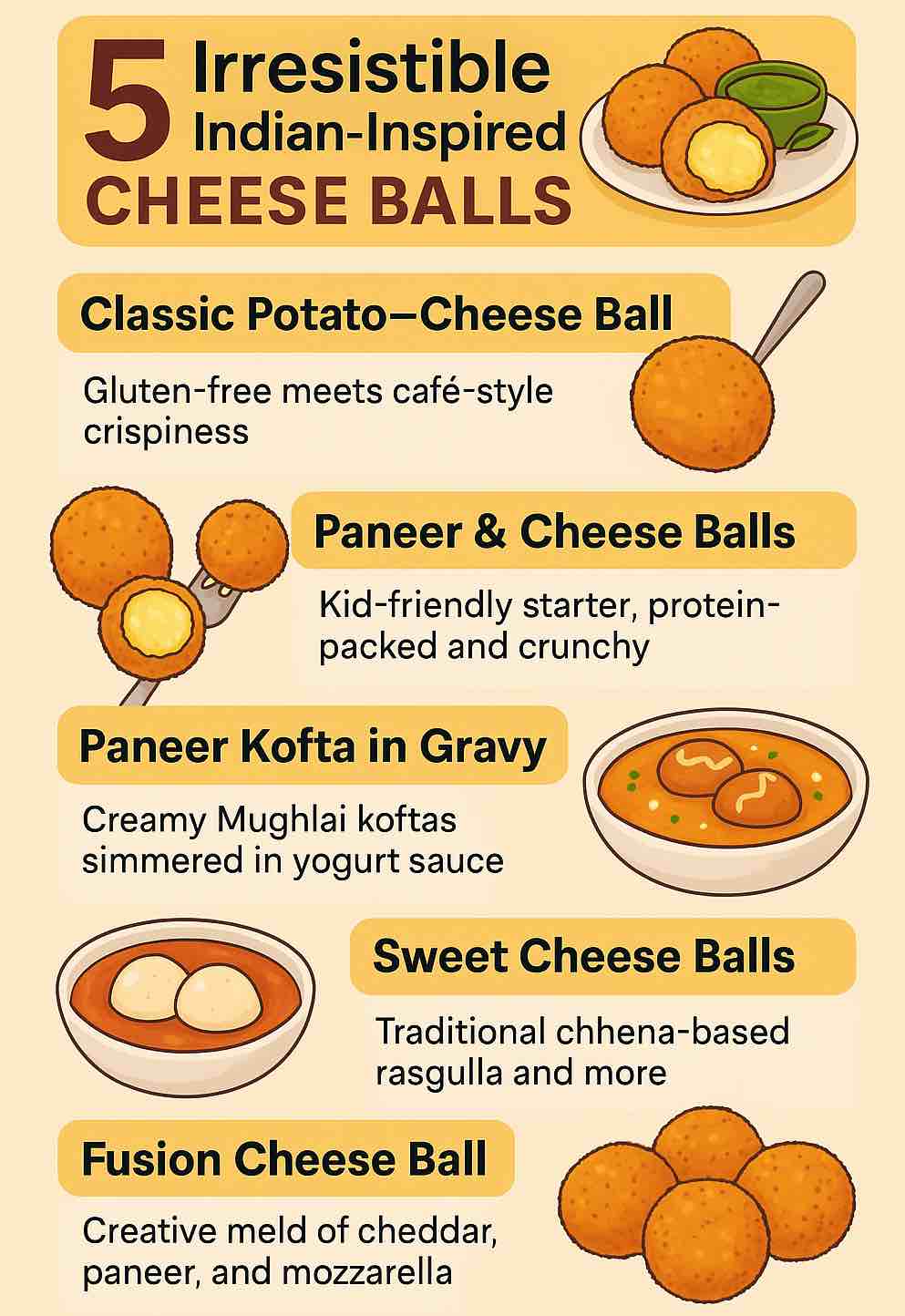
Indian-Inspired CHEESE BALLS

Cheese balls are the perfect bite-sized indulgence, combining creamy cheese with crispy exteriors and irresistible flavor. While cheese balls are a global favorite, the Indian kitchen brings a flavorful twist to this beloved snack. Whether you’re planning a party, preparing a weekend treat, or looking for a quick yet satisfying appetizer, these Indian-inspired cheese ball recipes have something for everyone.

In this blog, we explore five standout variations that marry the comforting taste of cheese with the bold, diverse flavors of Indian cuisine. Let’s dive right in.


1. Masala Cheese Balls

Flavor Profile:

Spicy, tangy, and aromatic

Why It Works:

These are an elevated version of the classic cheese balls with a desi punch. Think of it as aloo tikki meets molten cheese.

Ingredients:

  • 1 cup grated processed cheese
  • 2 medium boiled potatoes (mashed)
  • 1 tsp red chili powder
  • ½ tsp garam masala
  • ½ tsp chaat masala
  • 1 tbsp chopped coriander
  • 1 chopped green chili
  • Salt to taste
  • Cornflour (for binding)
  • Bread crumbs (for coating)
  • Oil (for deep frying)

Preparation:

  1. In a mixing bowl, combine mashed potatoes, cheese, spices, coriander, and green chili.
  2. Add cornflour to form a soft, pliable dough.
  3. Shape into small balls and roll in breadcrumbs.
  4. Chill for 15 minutes to firm up.
  5. Deep-fry until golden and crispy.

Serving Tip:

Serve hot with green chutney or a tangy tamarind dip.


2. Paneer & Spinach Cheese Balls

Flavor Profile:

Earthy, creamy, and subtly spiced

Why It Works:

This healthier option uses spinach and paneer, making it rich in protein and iron while still being indulgent.

Ingredients:

  • 1 cup grated paneer
  • ½ cup grated cheese
  • 1 cup finely chopped blanched spinach
  • ½ tsp cumin powder
  • 1 tsp ginger-garlic paste
  • Salt and pepper to taste
  • 1 tbsp cornflour
  • Bread crumbs
  • Oil (for shallow frying)

Preparation:

  1. Squeeze out excess water from spinach.
  2. Mix paneer, cheese, spinach, spices, and cornflour.
  3. Shape into small balls and roll in breadcrumbs.
  4. Pan-fry or air-fry until golden.

Serving Tip:

Pair with yogurt-mint dip or serve on a skewer for a canapé-style appetizer.


3. Schezwan Cheese Balls

Flavor Profile:

Spicy, umami, and Indo-Chinese

Why It Works:

If you love spice and fusion, this one’s for you. Schezwan sauce adds a fiery depth that balances the creamy cheese.

Ingredients:

  • ½ cup grated mozzarella
  • ½ cup chopped bell peppers and spring onions
  • 2 tbsp Schezwan sauce
  • 1 tsp soy sauce
  • 2 tbsp cornflour
  • Salt to taste
  • Bread crumbs

Preparation:

  1. Combine all ingredients to form a dough.
  2. Shape into balls, coat in breadcrumbs.
  3. Deep-fry or air-fry for 8–10 minutes.

Serving Tip:

Serve with extra schezwan sauce or chili mayo for dipping.


4. Tandoori Cheese Balls

Flavor Profile:

Smoky, spiced, and bold

Why It Works:

Bringing in the magic of tandoori masala, this version captures that smoky restaurant-style flavor in a compact snack.

Ingredients:

  • ½ cup paneer, crumbled
  • ½ cup grated cheese
  • 2 tbsp thick yogurt (hung curd preferred)
  • 1 tsp tandoori masala
  • ½ tsp kasuri methi
  • ½ tsp chili powder
  • Salt to taste
  • Semolina or bread crumbs

Preparation:

  1. Marinate the paneer and cheese with yogurt and spices.
  2. Shape into balls and coat with semolina or breadcrumbs.
  3. Shallow-fry or bake until golden.

Serving Tip:

Garnish with onion rings, mint chutney, and lemon wedges.


5. Aloo-Makhani Cheese Balls

Flavor Profile:

Rich, buttery, and luxurious

Why It Works:

Inspired by the iconic makhani (butter) sauce, this version is indulgent and flavor-packed.

Ingredients:

  • 1 cup mashed potatoes
  • Cheese cubes (for stuffing)
  • ½ cup makhani gravy (can be store-bought or homemade)
  • Salt, garam masala, and kasuri methi
  • Cornflour for binding
  • Bread crumbs for coating

Preparation:

  1. Mix mashed potatoes with spices and a spoonful of makhani gravy.
  2. Encase cheese cubes within the mixture and shape into balls.
  3. Coat with breadcrumbs and fry until golden.
  4. Warm remaining makhani sauce for serving.

Serving Tip:

Serve on a platter with a spoonful of makhani sauce under each ball. Garnish with coriander and cream.


Final Thoughts

Cheese balls are more than just party snacks—they can be canvases for creativity. These five Indian-inspired variations offer options for every taste and occasion. Whether you’re going for spicy, healthy, indulgent, or fusion, there’s a version here that will wow your guests and satisfy your cravings.

Ready to try these at home? Let us know which one stole your heart. And if you have a twist of your own, share it in the comments—we’d love to feature it in a future post!

FAQs

1. Can I make these cheese balls ahead of time?
Yes, you can shape and coat the cheese balls, then refrigerate them for up to 24 hours. For longer storage, freeze them uncooked and fry directly from frozen when needed.

2. What is the best cheese to use for Indian-style cheese balls?
Processed cheese, mozzarella, or a mix of mozzarella and cheddar works best. Paneer is also ideal when used in combination for Indian flavors.

3. How do I prevent cheese balls from breaking while frying?
Ensure the dough is firm and not too moist. Chill the shaped balls before frying and avoid overcrowding the pan. Double-coating with breadcrumbs helps too.

4. Can I bake or air-fry these instead of deep frying?
Absolutely. Brush with oil and bake at 200°C (392°F) for 15–20 minutes or air-fry at 180°C (356°F) for 10–12 minutes, flipping halfway.

5. Are these cheese balls gluten-free?
Some versions can be made gluten-free by using gram flour (besan) and gluten-free breadcrumbs. Avoid maida (all-purpose flour) if you need a gluten-free recipe.

6. What are good vegetarian substitutes for eggs in the coating?
Use a slurry of cornflour and water or all-purpose flour and water for binding and coating. These help the breadcrumbs stick just like egg wash.

7. Can I make these cheese balls spicy or mild?
Yes, you can adjust the spice level easily. Skip green chilies and reduce chili powder for mild versions, or add chili flakes and spicy sauces for a kick.

8. What sauces or dips go best with these cheese balls?
Indian green chutney, mint yogurt dip, tamarind chutney, schezwan sauce, or even spicy mayo all work well depending on the variation.

9. How can I stuff the cheese balls without the cheese leaking out?
Make sure the outer potato or paneer layer is thick enough to fully seal the cheese cube. Chilling them before frying helps keep the stuffing intact.

10. Can I reuse leftover makhani gravy or sabzis for any variation?
Yes! Leftover makhani gravy is perfect for the Aloo-Makhani balls. Leftover dry sabzis like aloo-matar can also be mashed and repurposed into the mix.








