
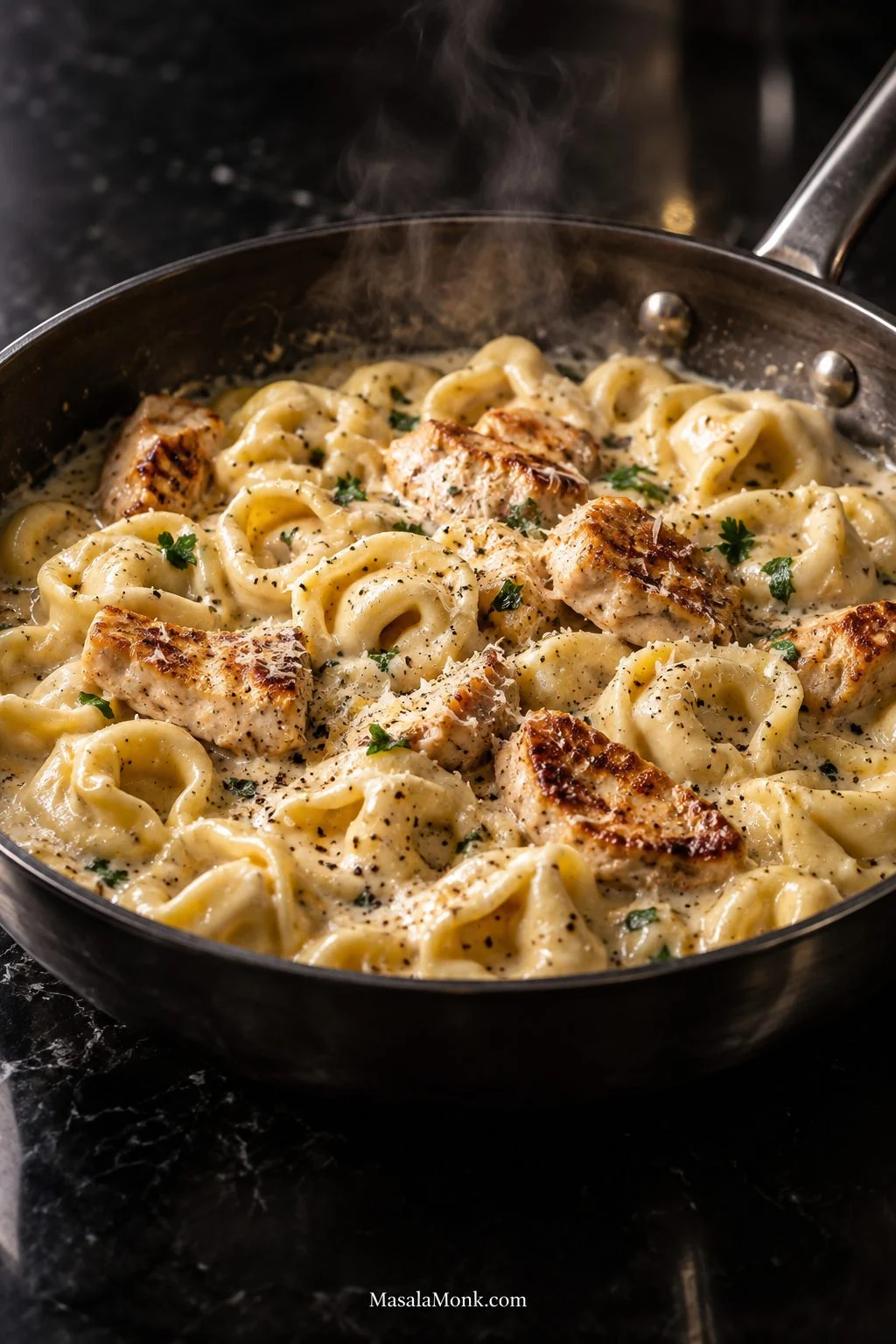
A good skillet of Chicken Tortellini Alfredo should reach the table with browned chicken tucked between plump cheese tortellini. Look for plenty of black pepper and glossy garlic-Parmesan sauce caught in the folds.
The sauce keeps changing after the heat is off. Tortellini takes up more moisture as it sits, and Parmesan firms as it cools. Alfredo that looks perfectly thick in the skillet can feel heavy five minutes later while everyone is still getting to the table.
The easiest way to stay ahead of that is to give each ingredient its job at the right time: broth first, cream later, Parmesan last. You do not need a complicated Alfredo technique here; you just need to get the liquid and cheese into the skillet in the right order.
From there, dinner stays simple: one skillet and about 30 minutes. The method still works if you’re starting with frozen tortellini, cooked chicken or a jar of Alfredo.
This is the rich, creamy American-style Alfredo most people expect from restaurant pasta. Traditional Alfredo can be much simpler, built around butter, cheese and pasta water.
Make It Now
The main version uses raw chicken breast, refrigerated cheese tortellini and homemade Alfredo. If that is what you have, cook straight through and come back to the substitutions later.
| Tortellini | 16–18 oz / 454–510 g refrigerated cheese tortellini |
|---|---|
| Chicken | 1 lb / 454 g boneless skinless chicken breast |
| Pan | Deep 12-inch / 30 cm skillet or sauté pan with lid |
| Serves | 4 as a main dish; up to 6 with substantial sides |
| Time | About 30 minutes |
| Method | One skillet |
Chicken, Tortellini and Alfredo Ingredients
The ingredients doing most of the work are the chicken, tortellini, broth, cream and Parmesan. Everything else is seasoning or finishing, so nothing here needs fussy prep.
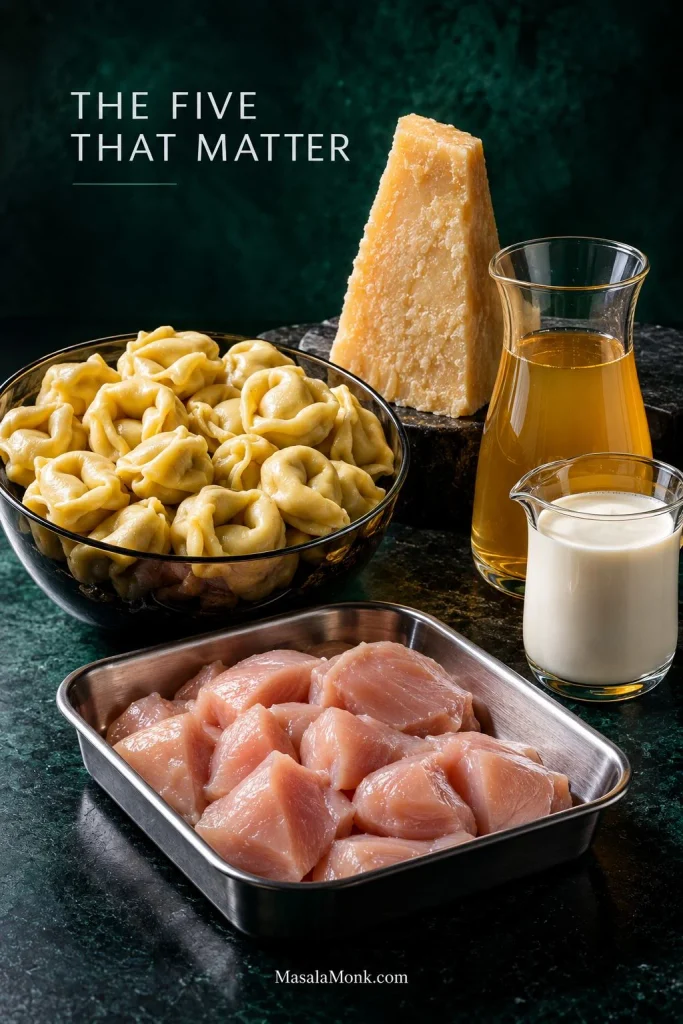
For the Chicken
- 1 lb / 454 g boneless skinless chicken breast, cut into roughly ¾-inch / 2 cm pieces
- 1 tbsp / 15 ml olive oil
- Seasoning: ½ tsp kosher salt, ½ tsp freshly ground black pepper and ½ tsp Italian seasoning; use a little less salt if your broth or tortellini is already quite salty
For the Tortellini and Alfredo
- 16–18 oz / 454–510 g refrigerated cheese tortellini
- 2 tbsp / 28 g unsalted butter
- 3 medium garlic cloves, about 9–12 g, finely minced
- 1¼ cups / 300 ml low-sodium chicken broth, divided: 1 cup / 240 ml for cooking and ¼ cup / 60 ml reserved, plus more if needed
- ¾ cup / 180 ml heavy cream
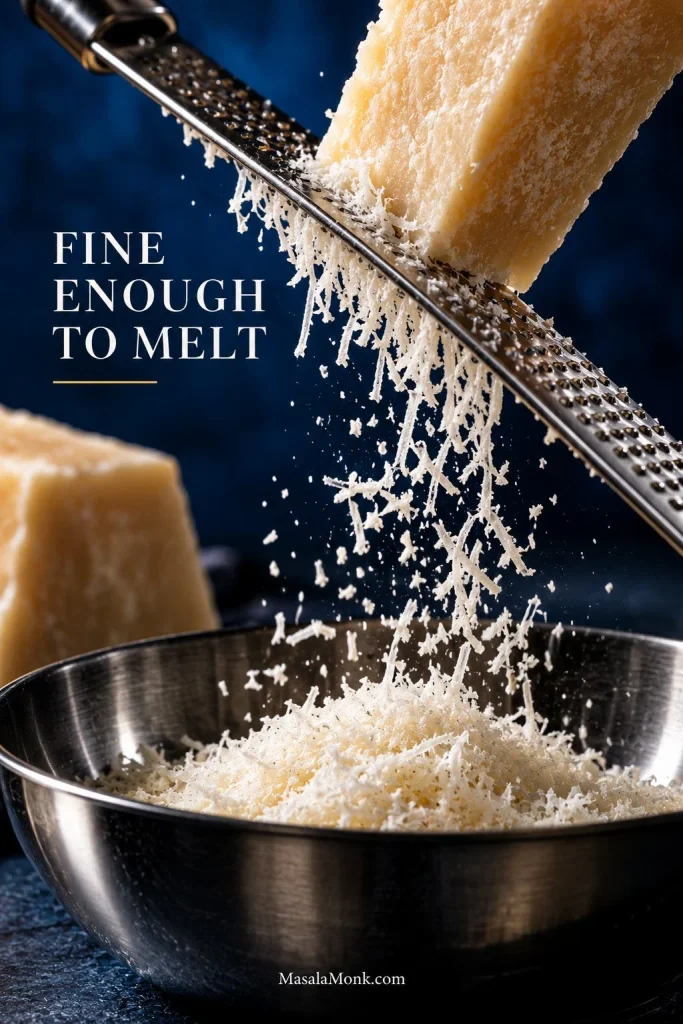
- 3 oz / 85 g Parmesan, very finely grated
- ⅛ tsp ground nutmeg, optional
- Freshly ground black pepper, to finish
- 1–2 tsp / 5–10 ml fresh lemon juice, optional
- Chopped parsley and extra Parmesan, for serving
Before the Skillet Heats Up
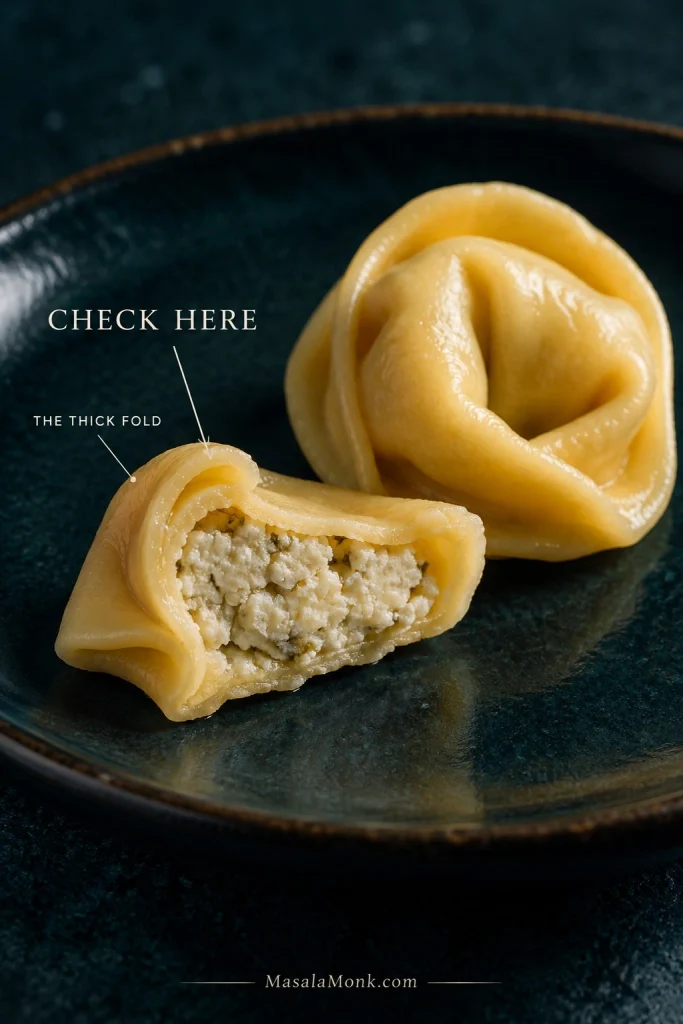
Refrigerated cheese tortellini is the best fit. It cooks quickly in a modest amount of liquid and is usually sturdy enough to fold through the sauce without opening at every seam. Package times vary, so check the thick folded edge for tenderness instead of treating the printed time as an exact finish line.
Freshly grated Parmesan melts more smoothly than bagged pre-shredded cheese. A wedge labeled Parmesan works well; Parmigiano Reggiano brings a nuttier, more complex edge. Use the weight when possible.
And hold the cream for a few minutes. The tortellini needs water first; the richness comes later.
How to Make Creamy Chicken Alfredo With Tortellini
1. Brown the Chicken
Pat away obvious surface moisture from the chicken, then season it with salt, black pepper and Italian seasoning.
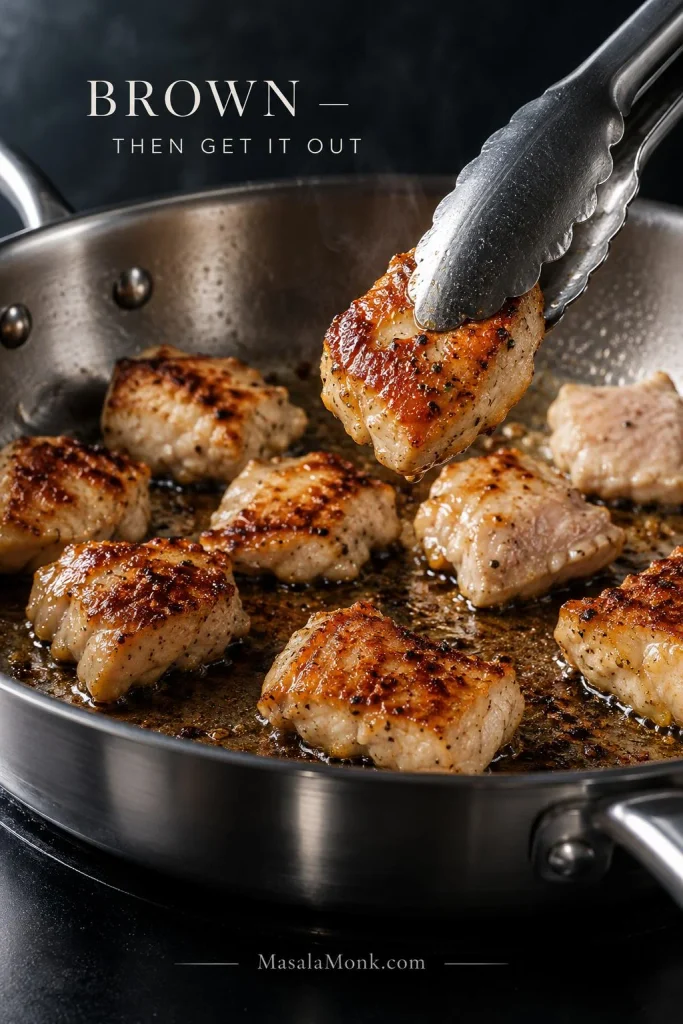
Heat the olive oil in a deep skillet over medium-high heat. Add the chicken in a comfortable single layer. If the pieces are crowded enough to start steaming in their own liquid, brown them in two batches.
Cook until the chicken has color on several sides; with small pieces, that usually takes 3–4 minutes. Move it to a plate before it is fully cooked. A few pale sides are not worth keeping the whole batch in the pan too long.
2. Let the Garlic Hit the Butter
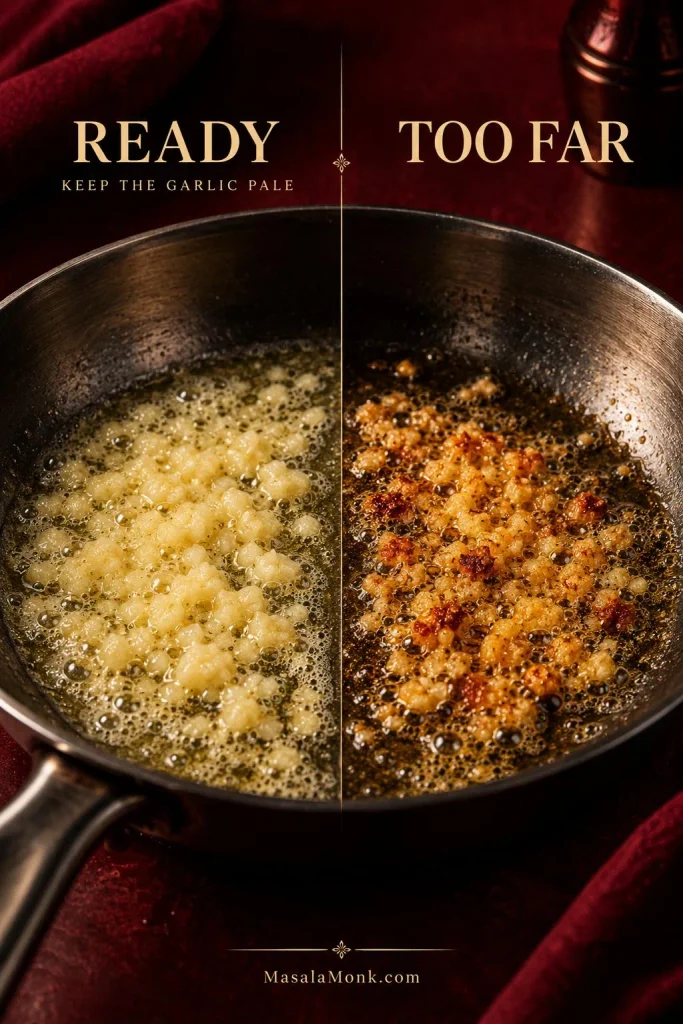
Lower the heat slightly and melt the butter in the same skillet. Add the garlic and stir until it smells ready but is still pale, usually 30–45 seconds.
Pale garlic is what you want. Once it browns deeply, that bitterness is hard to hide in a cream sauce.
3. Give the Tortellini the Broth First
Pour in the 1 cup / 240 ml broth set aside for cooking and scrape up the browned bits from the bottom. Add the tortellini and fold it through the liquid with a broad spoon or spatula.
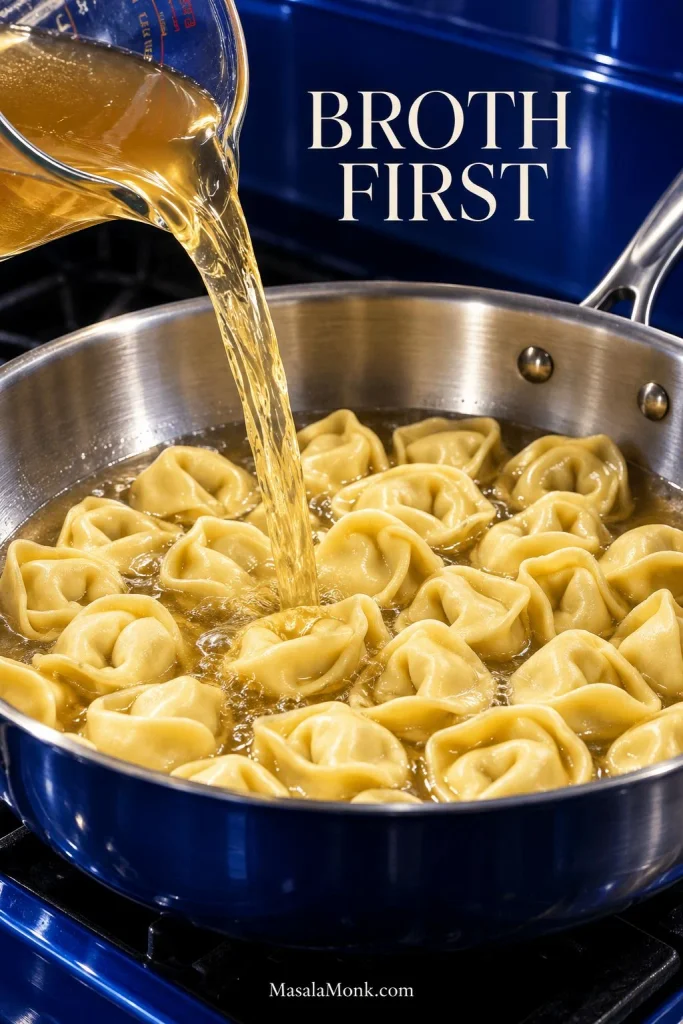
Cover and bring the broth to a gentle simmer. Small, steady bubbles around the edges are enough. Give the tortellini one careful turn so pieces sitting higher in the pan trade places with those underneath.
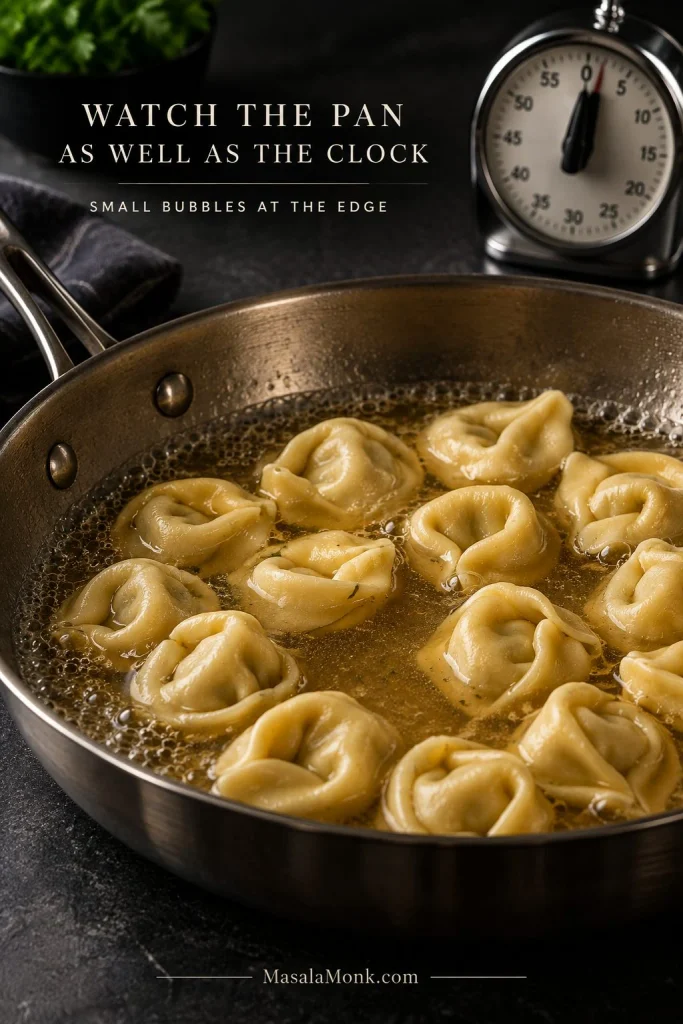
Start checking after about 3 minutes. Bite through the thicker folded edge of one piece. It should be softening while still keeping a little firmness at the center.
Watch the pan as well as the clock. If the tortellini is still firm and the pan is getting dry, add some of the reserved broth. Should the pan dry again, add another small splash. Some brands simply drink up more liquid than others.
4. Add the Cream and Return the Chicken
When the tortellini is nearly tender, pour in the cream and return the chicken along with any juices collected on the plate.
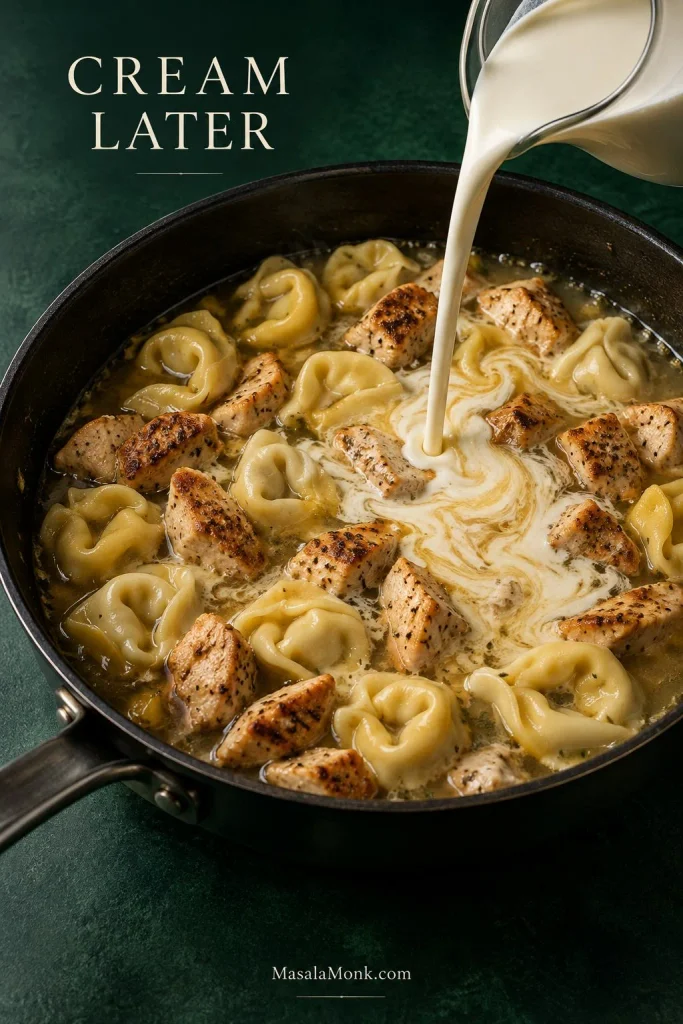
Cook uncovered until the pasta is tender and the thickest chicken pieces reach 165°F / 74°C. Use the temperature—not the clock alone—as the endpoint.
5. Calm the Pan Before the Parmesan
Let the active bubbling stop before the Parmesan goes in. A heavy skillet may keep bubbling for a few seconds even after you turn the burner down, so take it off the heat briefly if needed.
Add the finely grated Parmesan in 2–3 additions, folding each one in before adding the next. Use a broad spoon or flexible spatula so the stuffed pasta is handled gently.
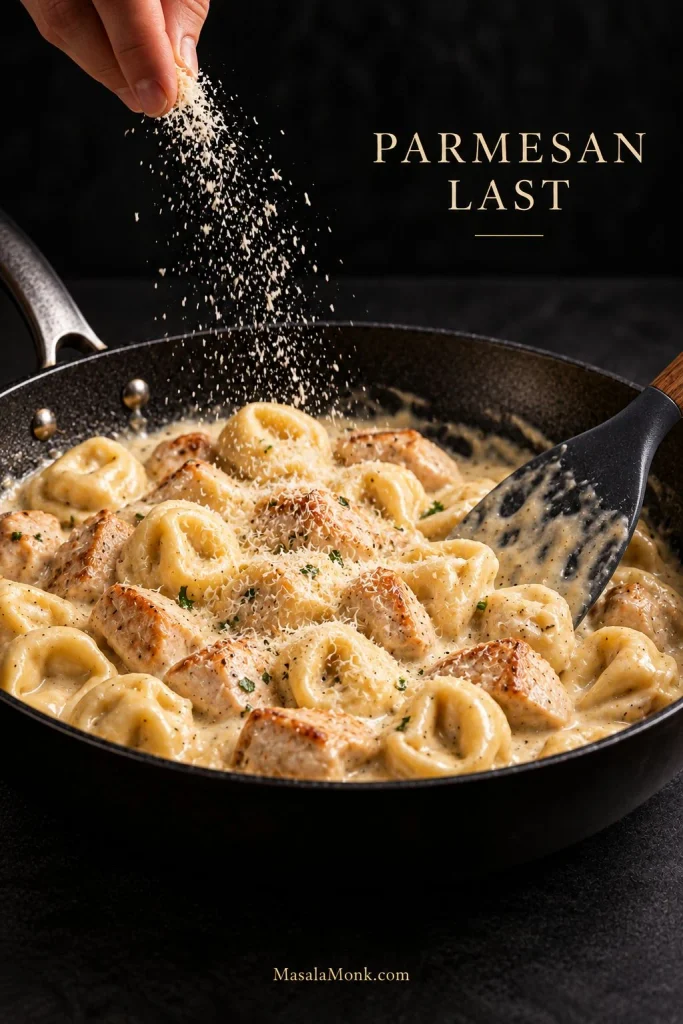
Add the nutmeg, if using, and another grinding of black pepper. The cheese has enough heat now. Let it melt.
6. Stop While the Sauce Is Still a Little Loose
Drag a spatula across the bottom of the skillet. The trail should stay visible for a moment and then slowly fill back in. At the same time, the Alfredo should coat the tortellini while still settling between the pieces.
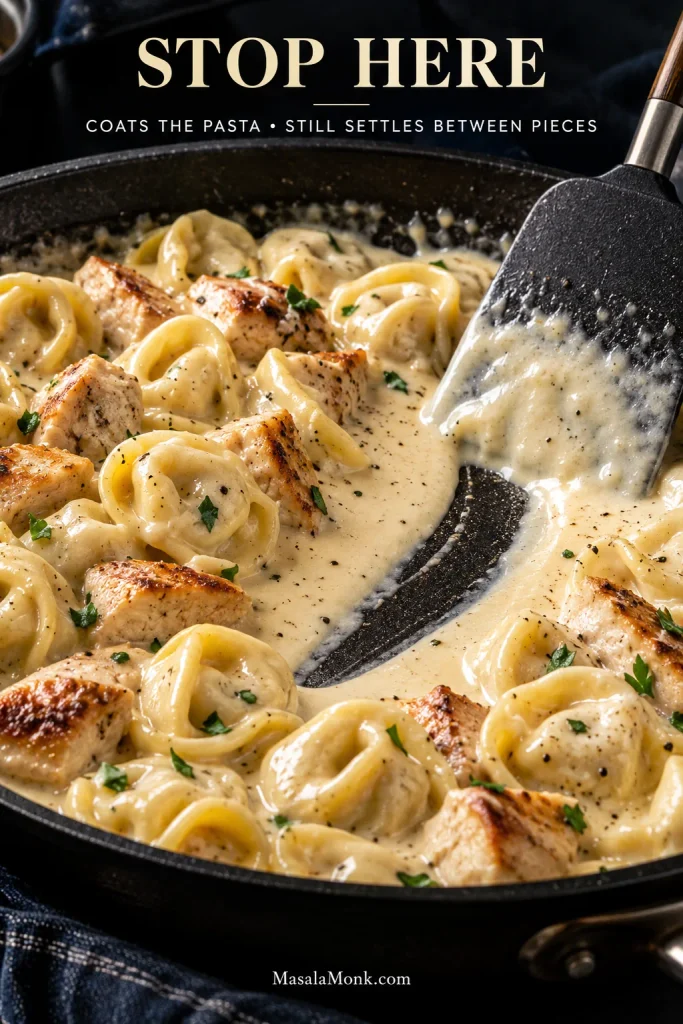
If it already looks thick, loosen it with a small splash of warm broth. Taste before adding more salt.
Black pepper may be all it needs. A particularly rich batch can take 1 tsp / 5 ml lemon juice without tasting lemony. Add more only if you want a little extra lift.
Finish with parsley and extra Parmesan. By now the skillet should smell like browned chicken, garlic and warm cheese rather than simply cream.
Do not chase the last bit of thickness. When you wonder whether the Alfredo needs another minute, it often doesn’t. The tortellini will absorb more sauce and the Parmesan will firm as the skillet sits.
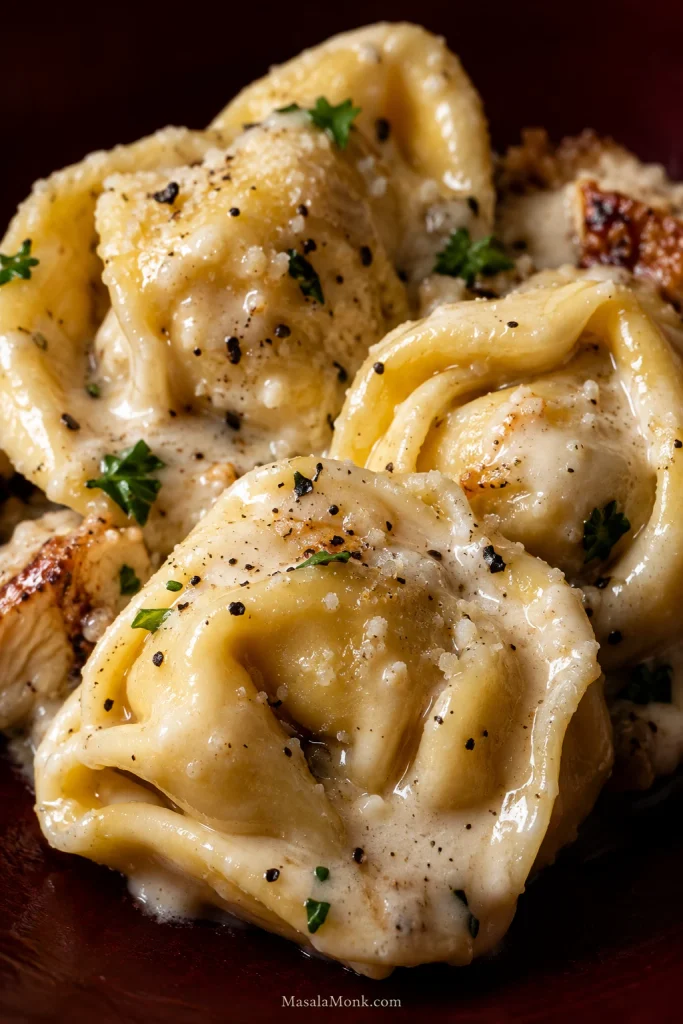
Chicken Tortellini Alfredo Recipe
Browned chicken, cheese tortellini and creamy garlic-Parmesan Alfredo in about 30 minutes.
Ingredients
- 1 lb / 454 g boneless skinless chicken breast, cut into roughly ¾-inch / 2 cm pieces
- 1 tbsp / 15 ml olive oil
- Seasoning: ½ tsp kosher salt, ½ tsp freshly ground black pepper, plus more pepper to finish, and ½ tsp Italian seasoning; use less salt if the broth or tortellini is already salty
- 16–18 oz / 454–510 g refrigerated cheese tortellini
- 2 tbsp / 28 g unsalted butter
- 3 medium garlic cloves, finely minced
- 1¼ cups / 300 ml low-sodium chicken broth, divided: 1 cup / 240 ml for cooking and ¼ cup / 60 ml reserved, plus more if needed
- ¾ cup / 180 ml heavy cream
- 3 oz / 85 g Parmesan, very finely grated
- ⅛ tsp ground nutmeg, optional
- 1–2 tsp / 5–10 ml fresh lemon juice, optional
- Chopped parsley and extra Parmesan, for serving
Instructions
- Brown the chicken. Season with salt, pepper and Italian seasoning. Brown in the oil until several sides have color, about 3–4 minutes. Transfer to a plate.
- Cook the garlic. Melt the butter in the same skillet. Add garlic and cook 30–45 seconds, keeping it pale.
- Cook the tortellini. Pour in 1 cup / 240 ml broth and scrape up the browned bits, then add the tortellini. Cover and keep at a gentle simmer. Start checking after about 3 minutes; add reserved broth if the pasta is still firm and the pan looks dry.
- Add cream and chicken. When the tortellini is nearly tender, add the cream and return the chicken. Cook until the pasta is tender and the chicken reaches 165°F / 74°C.
- Add Parmesan. Let active bubbling stop, then fold in the Parmesan in 2–3 additions. Add nutmeg if using.
- Finish. Remove from the heat while the sauce still moves between the tortellini. Loosen if needed and finish with lemon juice, parsley, black pepper and extra Parmesan.
Recipe Notes
- Frozen tortellini: cook from frozen; expect a little more liquid and time.
- Dried tortellini: boil separately and drain just before fully tender if it will finish in the sauce.
- Cooked chicken: use about 280–350 g, roughly 2–2½ cups loosely chopped, and add near the end.
Jump to: Jarred Alfredo Fix the Alfredo Back to Top
Use What You Have
| What You Have | Best Approach |
|---|---|
| Refrigerated cheese tortellini | Use the main skillet method |
| Frozen tortellini | Cook from frozen and keep extra broth nearby |
| Dried or shelf-stable tortellini | Boil separately |
| Very fresh handmade tortellini | Usually boil separately and handle carefully |
| Rotisserie or leftover chicken | Add near the end |
| Jarred Alfredo | Loosen it enough for the tortellini to cook |
Frozen, Dried and Very Fresh Tortellini
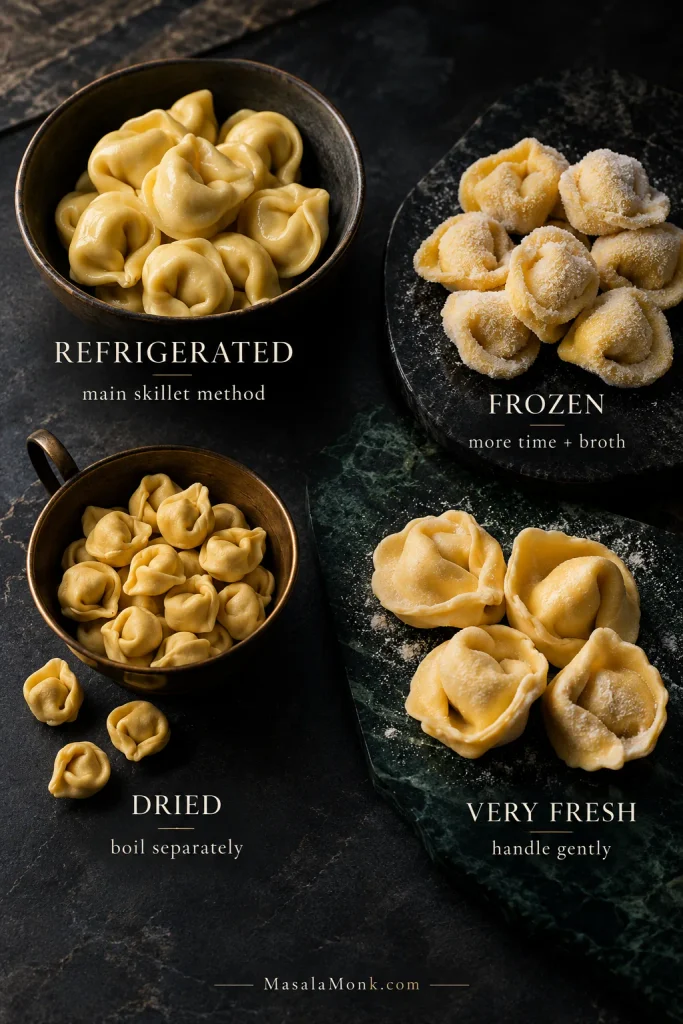
Frozen tortellini can usually go straight into the skillet. Give it more time than refrigerated pasta and keep additional broth nearby. Check the thick folded edge instead of assuming every frozen brand needs the same extra few minutes.
Dried or shelf-stable tortellini needs much more water, so boil it separately according to the package directions and save some pasta water before draining. If it will finish in the Alfredo, drain it about 1 minute before full tenderness.
Very fresh handmade tortellini can be much more delicate. Unless you already know it holds up well in a skillet sauce, boil it separately and fold it in at the end.
The guide to cooking tortellini goes further into fresh, frozen and dried formats when your package needs a different approach.
If the skillet method is not what you want tonight, baked tortellini takes the same easy-dinner idea in a different direction: sauce, cheese and tortellini baked together until hot and bubbly.
Making It With Jarred Alfredo
Open two different jars of Alfredo and you may get two very different sauces. One pours easily; another barely leaves the spoon. For direct-cooking refrigerated tortellini, start by making the sauce a little looser than you think it needs to be.

For a 15–16 oz / 425–454 g jar, stir in about ½ cup / 120 ml chicken broth. Add the tortellini and keep the pan at a light simmer. A very thick Alfredo may need closer to ¾ cup / 180 ml before the pasta softens.
If sauce is clinging to the empty jar, pour in a little of the measured broth, swirl it around the sides and tip it into the skillet. No sense leaving good Alfredo behind.
If the pasta is still firm when the sauce tightens, add another splash. When the tortellini is boiled separately instead, warm the Alfredo and loosen it with a little pasta water as needed.
Using Rotisserie or Leftover Chicken
Use about 280–350 g cooked chicken, roughly 2–2½ cups loosely chopped. Add it once the tortellini is nearly tender and leave it in the sauce only long enough to heat through.
Baked chicken breast also works when you cook extra chicken for another meal. For a more restaurant-style plate, keep the chicken in larger pieces, let it rest and slice it over the tortellini.
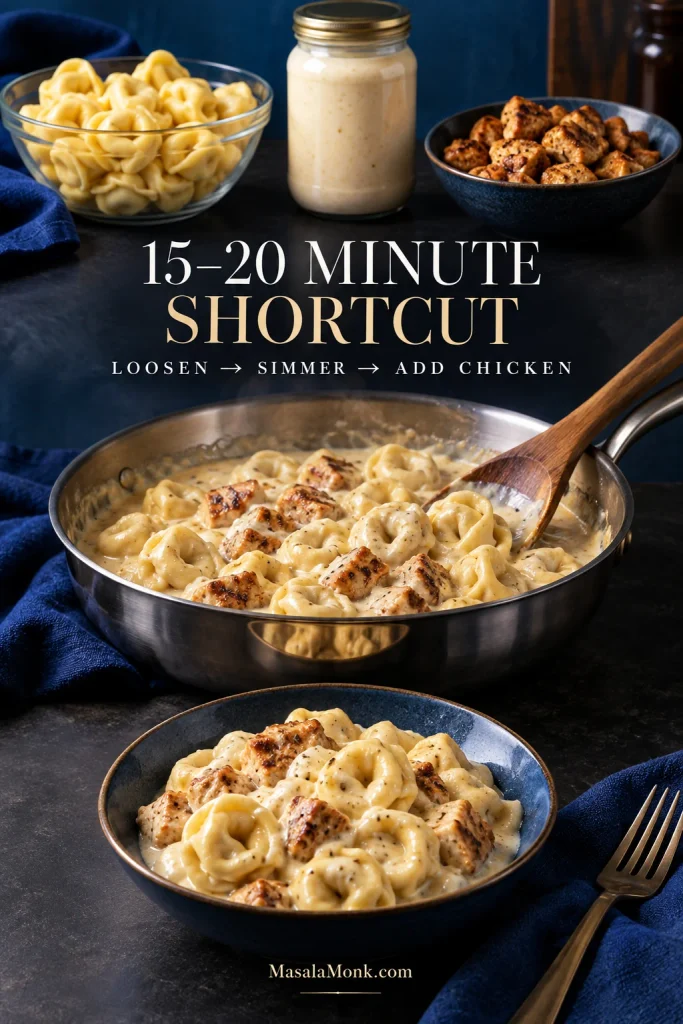
Fastest dinner: with refrigerated tortellini, jarred Alfredo and already-cooked chicken, this shortcut can land on the table in about 15–20 minutes. Loosen the sauce with broth, simmer the tortellini until nearly tender, fold in the chicken and finish with black pepper and fresh Parmesan.
Jump to: Recipe Card Fix the Alfredo Back to Top
Add Vegetables—or Keep Them on the Side
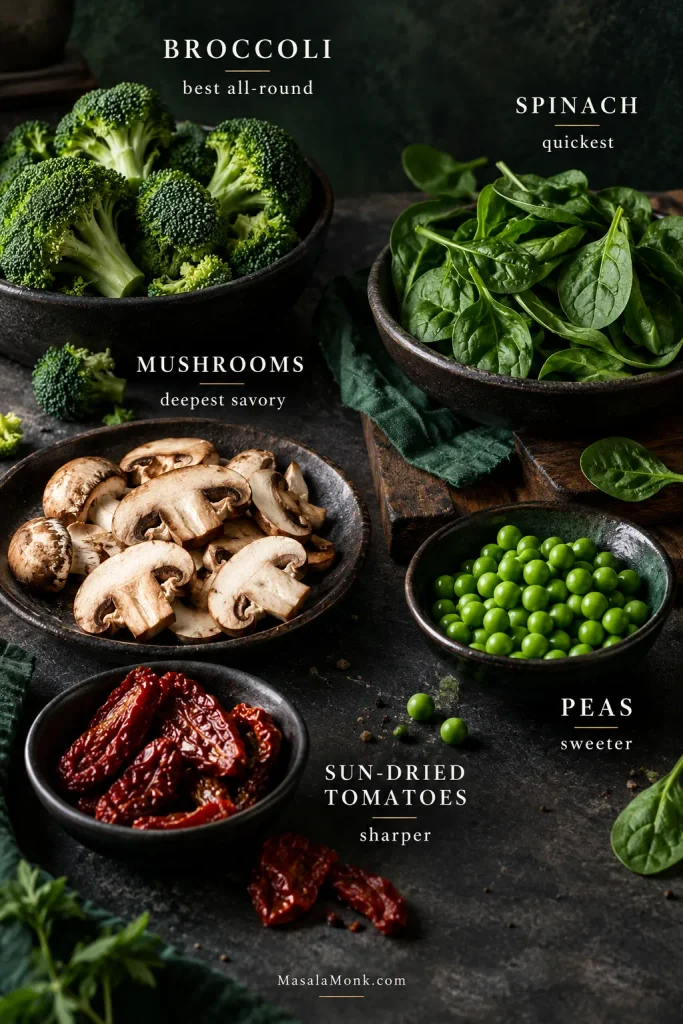
Broccoli is the best all-round addition. Use about 2 cups / 180–200 g. Keep the florets small—roughly ¾–1 inch / 2–2.5 cm—so they become tender on about the same schedule as the pasta.
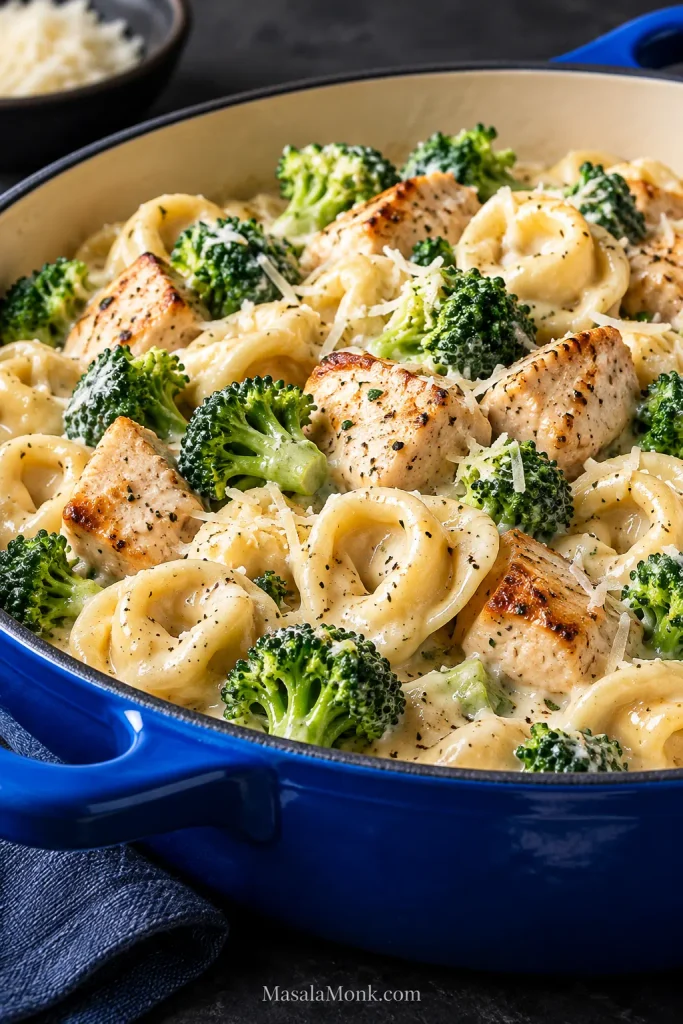
Larger florets and thick pieces of stem benefit from a minute or two in the pan before the tortellini. Roasted broccoli gives you darker edges and more chew; fold it through at the end. If you’d rather make broccoli the focus, garlic Parmesan broccoli pasta takes that route.
Fresh spinach is the quickest option: fold 2–3 packed cups / 60–90 g through at the end and let the heat of the Alfredo wilt it. For frozen spinach, thaw it first and squeeze it very dry.
Mushrooms take more time but bring deeper savory flavor; brown about 8 oz / 225 g before any liquid reaches the pan. Peas are sweeter and need only the final couple of minutes. Sun-dried tomatoes work too, though they pull the dish in a sharper, more assertive direction.
If dinner is deliberately leaning rich, a homemade garlic bread loaf is very good at finding the last streaks of Alfredo on the plate.
Adjust the Alfredo to Your Taste
Want more sauce? Add another ¼ cup / 60 ml cream, ¼ cup / 60 ml broth and ½–1 oz / 15–28 g Parmesan. That is usually enough; you do not need to double the Alfredo.
Want it lighter? Half-and-half is the easiest swap. Evaporated milk keeps more body, while whole milk gives the softest, lightest sauce and needs the gentlest heat.
- Half-and-half: use ¾ cup / 180 ml and keep it below a hard boil.
- Evaporated milk: use the same amount for a lighter sauce that still has good body.
- Whole milk: use ¾ cup / 180 ml, begin with about ¾ cup / 180 ml broth, and add more only if the pasta needs it.
Want it thicker and tangier? Soften 2–3 oz / 55–85 g cream cheese into the warm cream before the Parmesan. It changes the character of the sauce more noticeably than the lighter swaps.
Already tastes too rich? Grind in more black pepper first. Parsley helps, and a teaspoon of lemon juice can sharpen the whole skillet without turning dinner into lemon pasta.

If Your Alfredo Doesn’t Look Right
Alfredo usually gives you clues. Yellow oil around the edges usually means the sauce has been pushed too hard by heat or reduction. Grainy cheese suggests the Parmesan did not melt smoothly. Firm tortellini in a nearly dry pan needs more liquid.
Match the Alfredo Symptom to the Fix
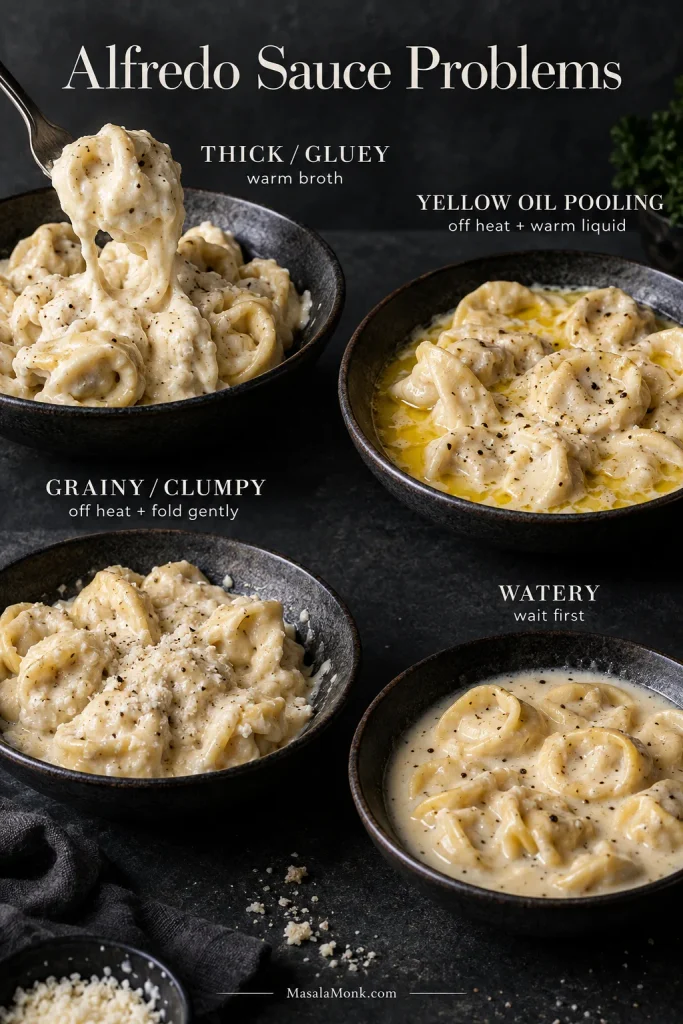
| What You See | Likely Cause | What to Do |
|---|---|---|
| Thick or gluey sauce | Too much reduction, standing time or cheese for the liquid | Fold in warm broth a small splash at a time until the sauce loosens |
| Yellow oil pooling | Too much heat or reduction | Take the skillet off the heat and fold in a small splash of warm broth or cream |
| Grainy or clumpy Parmesan | Too much heat, coarse cheese or a sauce that did not come together smoothly | Remove from the heat, add a small splash of warm liquid and fold slowly. Do not boil harder |
| Watery sauce | It has not thickened yet, or there is a little too much liquid | Let it sit off heat another 30–60 seconds first; if it is still loose, use very gentle heat briefly |
| Heavy or dull Alfredo | It needs contrast, not more richness | Try black pepper, parsley and a teaspoon of lemon juice before adding more cheese |
A badly broken sauce may not become perfectly silky again. Early separation often improves away from the heat with a little warm liquid. Once the cheese has severely overheated and turned grainy, aim for better rather than perfect.
If the Tortellini or Chicken Is the Problem
With the sauce behaving, check the pasta and chicken themselves. Split seams, a dry pan, sauce-hungry dried tortellini, swollen pieces and dry chicken point to different problems, so match the symptom before changing the heat or liquid.
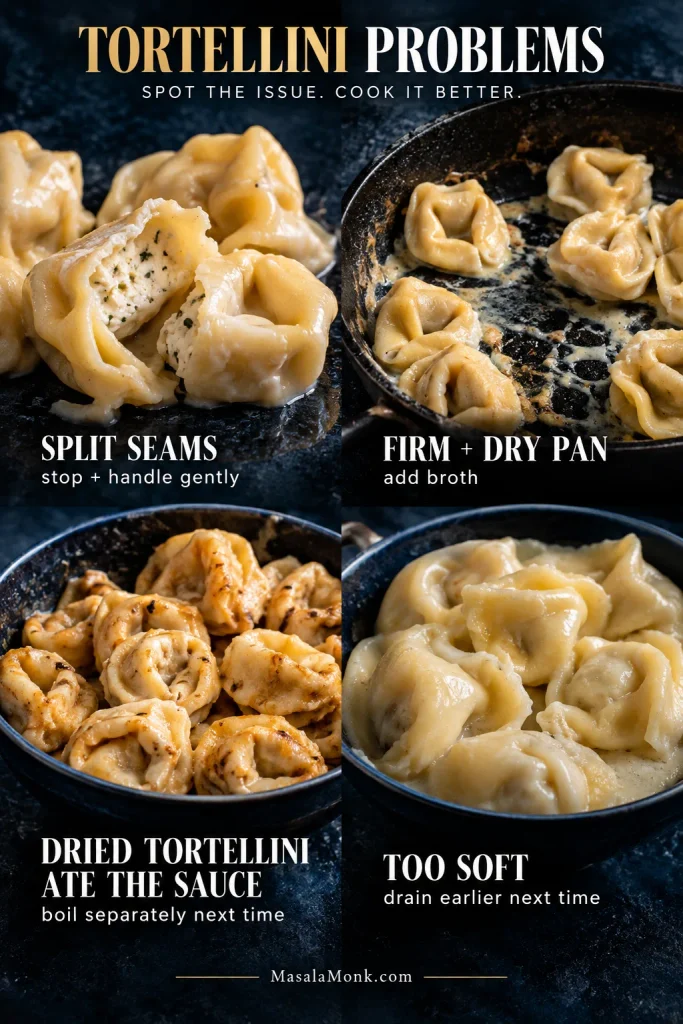
| What You See | Likely Cause | What to Do |
|---|---|---|
| Tortellini seams splitting | Too much heat, rough stirring or overcooking | One or two split pieces will not hurt dinner. If many are opening, stop cooking and handle the rest gently |
| Firm tortellini, dry pan | The pasta needs more liquid | Add a splash of broth, cover and keep cooking until the thick edge is tender |
| Dried tortellini swallowed the sauce | It was cooked directly in too little liquid | Add enough warm liquid to make dinner workable; next time boil dried tortellini separately |
| Boiled tortellini turns too soft | It was fully cooked before going into the Alfredo | Next time drain it about 1 minute early and let the sauce finish the cooking |
| Dry chicken | It cooked through during browning and then cooked again in the sauce | Serve it with plenty of Alfredo. Next time take it out sooner |
Jump to: Recipe Card Reheat Leftovers Back to Top
Tomorrow’s Alfredo Will Be Thicker
Straight from the refrigerator, leftovers may look almost alarmingly thick even when the sauce was loose and glossy at dinner. That is normal. The Parmesan has firmed up, and the tortellini has spent hours absorbing more moisture.
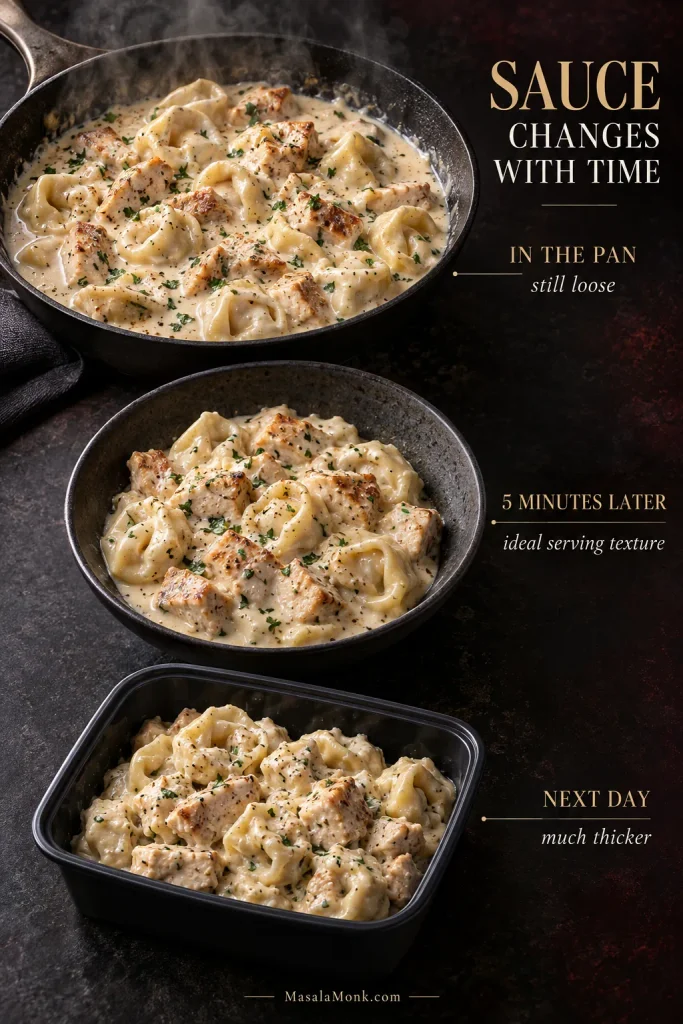
Cool leftovers promptly, cover and refrigerate for about 3–4 days. The USDA gives cooked chicken and cooked chicken dishes a refrigerated window of 3–4 days.
Reheating Leftovers
On the stove: put one serving in a small skillet with about 1 tbsp / 15 ml milk or broth. Warm over low heat and fold the sauce through the pasta as it loosens. Add another splash if it still looks dry, then take it off the heat once hot.
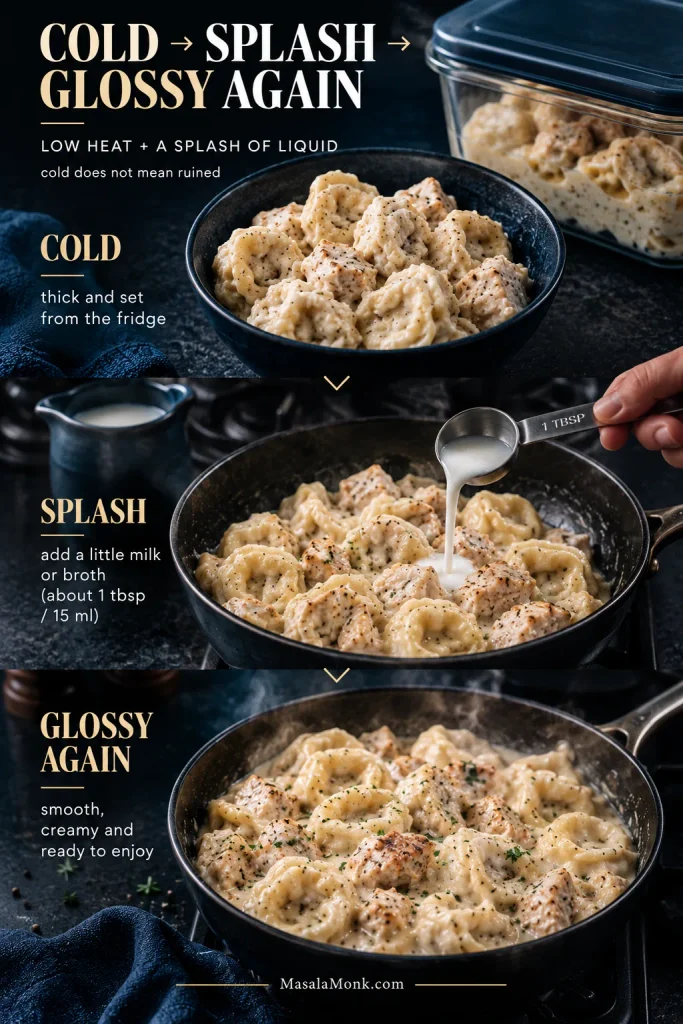
In the microwave: add a small splash of milk or broth and cover loosely. Use reduced power when available and heat in 20–30 second bursts, stirring between rounds. Reheat chicken leftovers thoroughly to 165°F / 74°C.
Freezing Is Possible, but Fresh Is Better
You can freeze the finished dish, but the tortellini will be softer and the sauce less silky when it comes back. Cream-and-Parmesan Alfredo is also more likely to separate during reheating.
For planned freezer meals, freeze cooked chicken separately, keep packaged frozen tortellini frozen and make the Alfredo when you’re ready to eat. It asks a little more of you that night, but the texture is noticeably better.
Chicken Tortellini Alfredo FAQs
1. Can I use chicken thighs instead of chicken breast?
Yes. Use the same weight of boneless skinless chicken thighs. They bring a little more richness and tolerate extra cooking well. Brown them, take them out of the pan and return them near the end.
2. Can I make it ahead?
Yes, although Alfredo and stuffed pasta are best soon after cooking. If you know dinner will be reheated later, leave the sauce a little looser and stop cooking the tortellini as soon as it is tender. Refrigerate promptly, then use the reheating method with a splash of milk or broth.
3. Can I double the recipe?
Yes, but not in the same 12-inch / 30 cm skillet. Use two skillets, a wide braiser or Dutch oven, or boil the tortellini separately so the larger batch has room to cook evenly.
Bring the Skillet to the Table
The tortellini should carry sauce in its folds, and the chicken should still show its browned edges. Black pepper should cut through the cream often enough to keep the next bite interesting.
Something cold and acidic is especially welcome beside it. A crisp cucumber salad with vinegar, dill and onion gives you that contrast without adding another rich element to the plate.
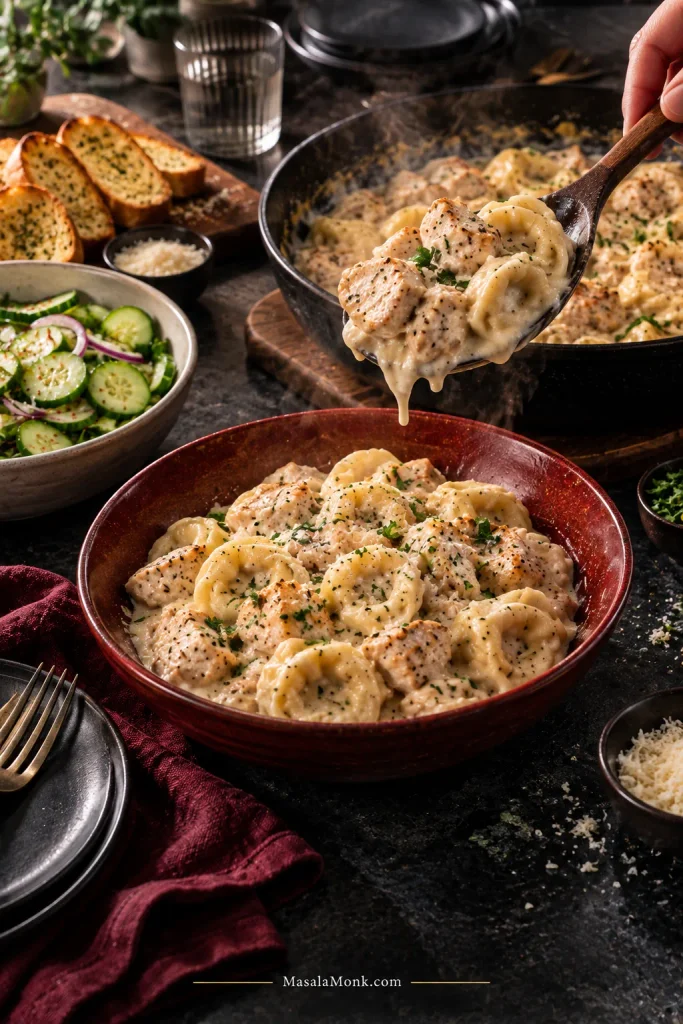
This is the kind of dinner that is best eaten while the skillet is still doing its job: the sauce glossy, the tortellini plump and everything properly hot.
Once the skillet is ready, bring it over instead of leaving it idling on a warm burner. The sauce is already where you want it.
Broth first. Cream later. Parmesan last. Once that rhythm makes sense, the recipe becomes much easier to adapt to the chicken, tortellini and Alfredo you actually have in the kitchen.








