Posted on 2 Comments

How to make No-Bake Banana Pudding: No Oven Required Recipe

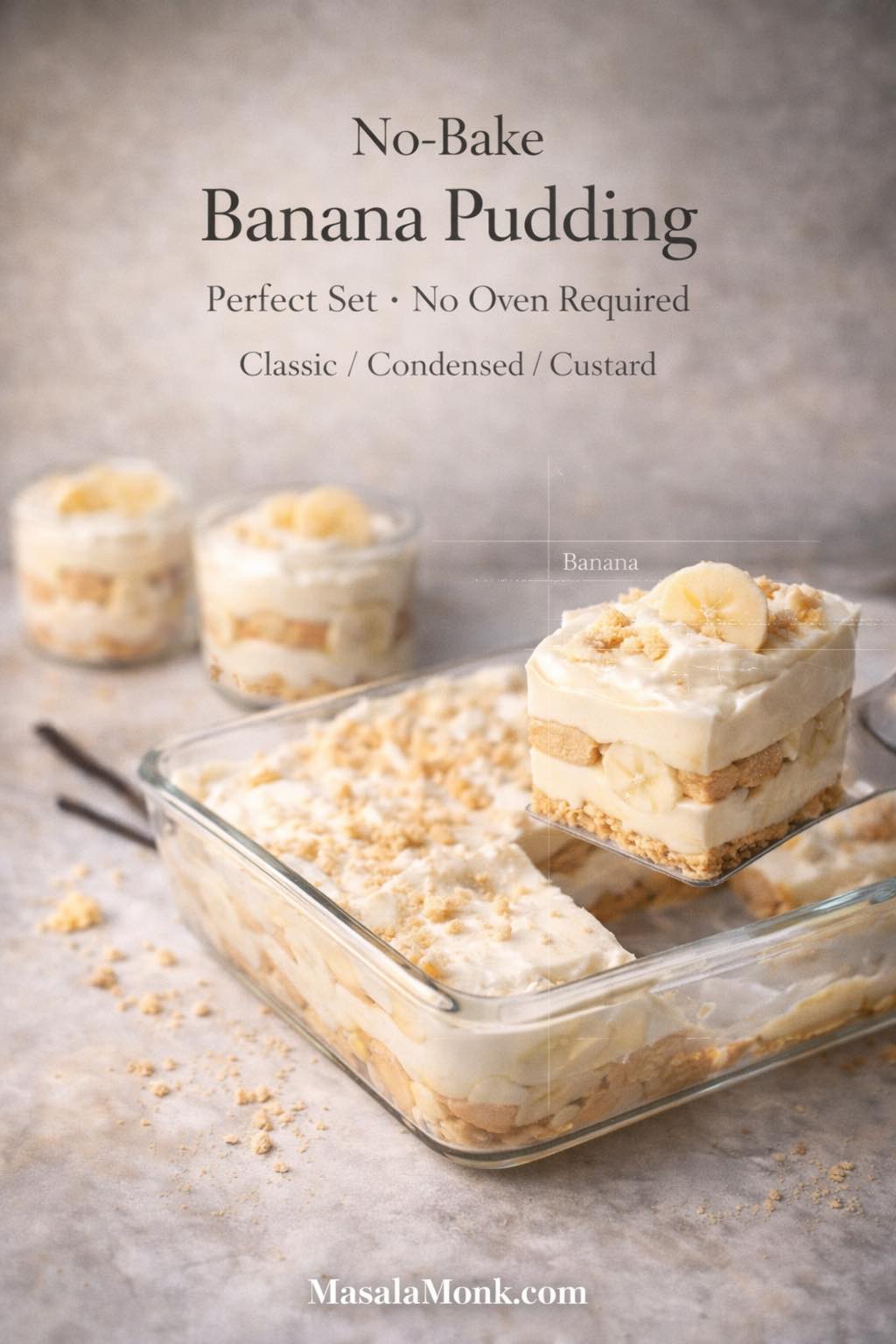
A square slice of no-bake banana pudding is lifted from a glass baking dish, showing neat layers of creamy vanilla pudding, banana slices, and vanilla wafers with cookie crumble on top. Text overlay reads “No-Bake Banana Pudding,” “Perfect Set • No Oven Required,” and “Classic / Condensed / Custard,” with MasalaMonk.com in the footer.

Some desserts ask you to measure, mix, bake, cool, frost, and pray nothing cracks. Banana pudding doesn’t demand that kind of ceremony. Instead, it leans into a simpler rhythm: slice bananas, whip something creamy, stack it with cookies, and let the fridge do the patient work. By the time you come back, the layers have transformed—cookies soften into cake-like sheets, bananas mellow into perfume, and the pudding turns thicker, silkier, and somehow more “finished” than it had any right to be.

That’s the heart of banana pudding (no bake). It’s comforting without being fussy, familiar without feeling boring, and flexible enough to match whatever your pantry—and mood—happen to be today. You can keep it classic with vanilla wafers and pudding mix, push it richer with sweetened condensed milk, go fully homemade with a stovetop custard (still no oven required), or make a dairy-free version that doesn’t taste like a compromise.

If you’re building a no-oven dessert lineup, you can round out the table with something bright and tangy like this no-bake blueberry cheesecake or something spiced and crunchy like these Lotus Biscoff dessert cups. Still, banana pudding is the one that disappears first—because it feels like home in a bowl.


No-bake banana pudding, five recipes (pick the vibe before you start)

Before you pull out a dish, decide what you want your banana pudding to be: airy and light, thick and tangy, extra creamy, old-fashioned, or plant-based. Once you choose, everything else—milk amount, cookie choice, chill time—falls neatly into place.
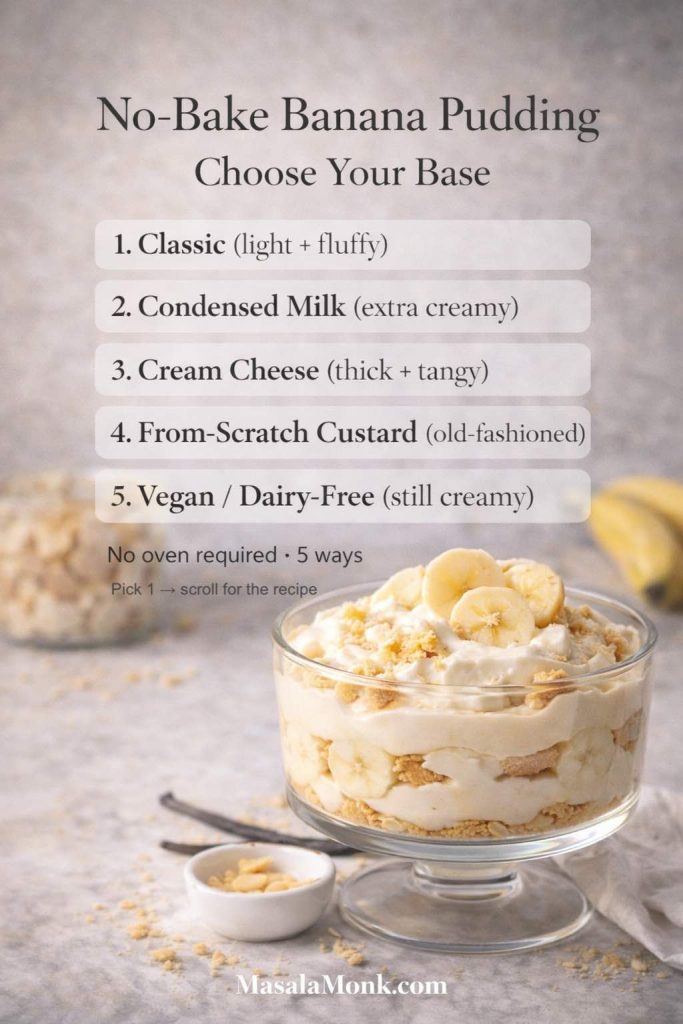
No-bake banana pudding in a glass dessert dish with layered bananas, vanilla wafers, and creamy pudding. Text overlay reads “No-Bake Banana Pudding – Choose Your Base” with five options: classic, condensed milk, cream cheese, from-scratch custard, and vegan/dairy-free. No oven required.
Not sure which no-bake banana pudding to make? Start here—pick your base (classic, condensed milk, cream cheese, custard, or vegan) and the rest falls into place. Scroll down & get the full step-by-step options in this blog post.

The classic (light, fluffy banana pudding, reliably set)

This is the “banana pudding recipe” most people picture: instant vanilla pudding, whipped cream, bananas, and vanilla wafers. It’s easy, and it still tastes like a celebration.

The condensed milk version (extra creamy banana pudding, no-cook)

If you love a richer spoon and a dessert that holds up longer at gatherings, banana pudding with sweetened condensed milk is the move. It’s no-bake, no oven, and still feels indulgent.

The cream cheese banana pudding recipe (thick, tangy, cheesecake-style)

Cream cheese makes the layers sturdier and adds a gentle tang that keeps the sweetness from feeling heavy. It also nods toward a banana pudding cheesecake no bake style without turning the whole thing into a separate dessert.

The from-scratch custard (homemade, old-fashioned, no oven required)

This one tastes the most “made.” You’ll cook a simple stovetop custard, chill it, then layer as usual. The payoff is deeper vanilla flavor and a silkier texture that feels unmistakably homemade.

The vegan/dairy-free banana pudding (still creamy, still classic recipe)

A well-made vegan banana pudding can be every bit as satisfying. The secret is a pudding base that sets firmly, plus a chill long enough to knit the layers together.

Also Read: Sweetened Condensed Milk Fudge: 10 Easy Recipes
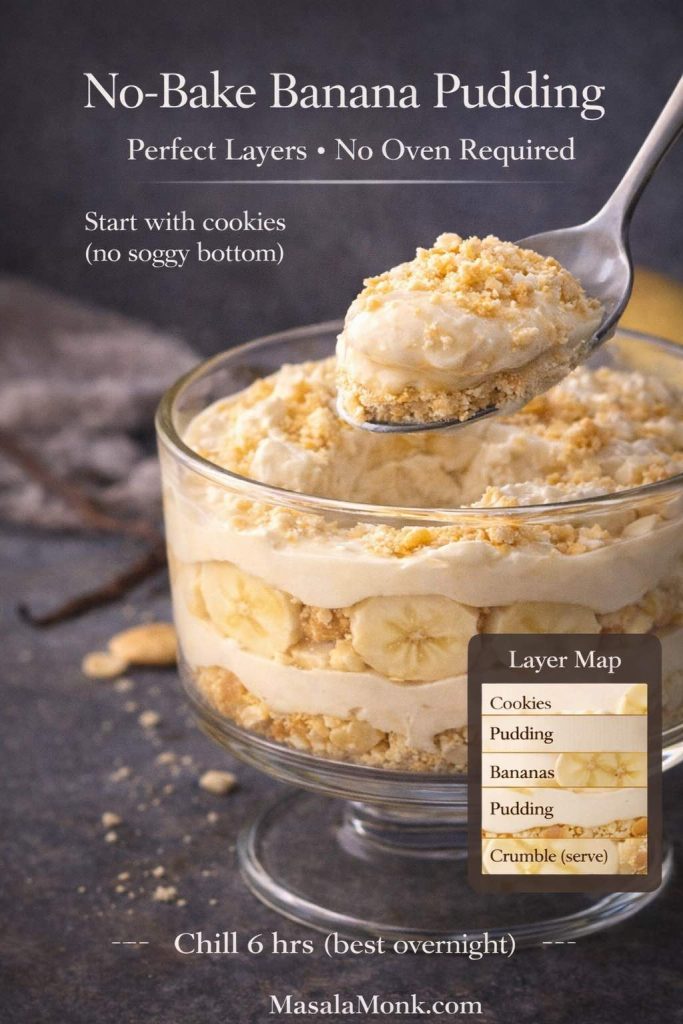

Close-up of a spoon lifting a creamy bite of no-bake banana pudding from a glass dessert bowl. The pudding shows layers of vanilla pudding, banana slices, and crushed cookie crumbs. Text overlay reads “No-Bake Banana Pudding,” “Perfect Layers • No Oven Required,” and “Start with cookies (no soggy bottom),” plus a small “Layer Map” inset listing cookies, pudding, bananas, pudding, and crumble (serve). Bottom text says “Chill 6 hrs (best overnight)” and “MasalaMonk.com.”
If your no-bake banana pudding ever turns watery at the bottom, this is the fix: start with a cookie layer, then build upward so the crumbs absorb slowly instead of collapsing fast. Keep bananas tucked under pudding, chill long enough for everything to set, and you’ll get thick, scoopable layers that taste richer and look far more “finished” when you serve.

The ingredients that matter (and why each one changes the texture)

Banana pudding can look like a simple list on paper, yet a few small choices decide whether you end up with clean, scoopable layers or a soft, slumped bowl of sweetness. Luckily, the fixes are straightforward.

Bananas: ripe, but not collapsing

Aim for bananas that are yellow with light freckles—fragrant, sweet, and tender without being watery. If they’re very ripe (lots of brown), they’ll still taste great; however, they can release more moisture as they sit. In that case, you’ll want a thicker pudding base and a little more chill time.
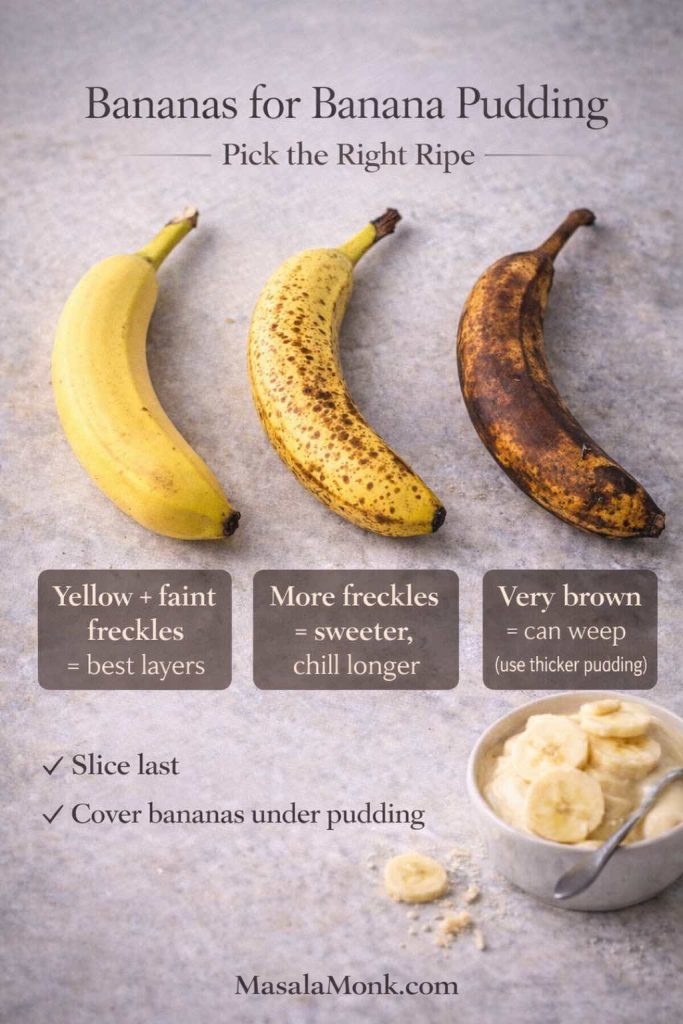
Three bananas in different ripeness stages on a light gray surface with labels for banana pudding: yellow with faint freckles for best layers, more freckles for sweeter flavor, and very brown bananas that can weep (use thicker pudding). Includes tips to slice bananas last and keep slices covered under pudding. MasalaMonk.com footer.
The easiest way to keep no-bake banana pudding thick (not watery) is choosing the right banana. Yellow with light freckles gives the cleanest layers, while extra-freckled bananas taste sweeter but benefit from a longer chill. Very brown bananas can release more moisture—so if you use them, keep your pudding base thicker and don’t rush the fridge time. Slice bananas last, then cover the layer fully with pudding to slow browning and keep the bottom from “swimming.”

Creamy base: pudding mix, custard, or condensed milk

  • Instant pudding mix gives a consistent set and keeps the method truly no-cook.
  • Stovetop custard brings the “homemade banana pudding” depth, and it still stays no oven required.
  • Condensed milk adds body and richness, which helps the pudding stay thick even after hours in the fridge.

Cream: optional, but it changes everything

Whipped cream folded into the pudding base makes the texture lighter, almost mousse-like. It also softens the sweetness so each bite feels more balanced. If you’ve ever wondered about the difference between heavy cream and whipping cream for desserts, this quick explainer on heavy cream is a helpful reference—especially when you’re deciding what will whip most reliably.

Cookies: the quiet backbone of the whole dessert

Cookies aren’t just garnish here. They’re structure. They’re sponge. And then they’re the reason banana pudding becomes cohesive instead of just “bananas with pudding.”

Also Read: Kahlua Drinks: 10 Easy Cocktail Recipes (Milk, Vodka, Coffee)


Cookies for banana pudding (vanilla wafers, plus the best swaps)

If you want the most classic finish, vanilla wafers are hard to beat. They soften into tidy layers rather than dissolving instantly, and their gentle vanilla flavor keeps the dessert focused on bananas and cream.
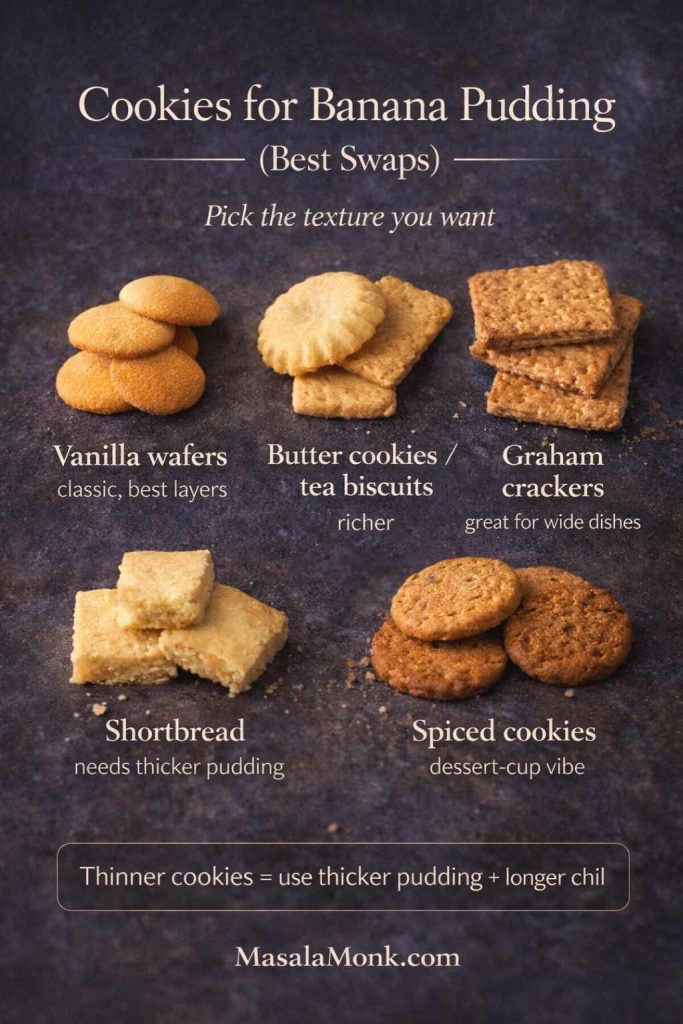
Cookie guide for no-bake banana pudding showing five options: vanilla wafers (classic), butter cookies/tea biscuits (richer), graham crackers (great for wide dishes), shortbread (needs thicker pudding), and spiced cookies (dessert-cup vibe). Note at bottom: thinner cookies need thicker pudding and a longer chill. MasalaMonk.com footer.
Cookies are the backbone of banana pudding. Vanilla wafers give the most classic, tidy layers, while butter cookies make it taste more bakery-rich. Graham crackers are great in wider dishes, shortbread holds up best with a thicker pudding base, and spiced cookies turn jars into cozy dessert cups. If your layers ever go too soft, it’s usually not “your fault”—it’s a cookie thickness + chill-time mismatch.

Banana pudding with vanilla wafers (the classic layering cookie)

Vanilla wafers create that signature texture: soft, cake-like, and spoonable, yet still layered. They also look beautiful through glass if you serve banana pudding in jars.

Vanilla wafer alternatives that still behave well in banana pudding

Sometimes you want a different cookie, either for flavor or because you’re working with what you have.

  • Butter cookies or tea biscuits: richer, more “bakery” tasting
  • Graham crackers: slightly honeyed; great for wide dishes and jars
  • Shortbread: dense and buttery; best paired with a thicker pudding base
  • Spiced cookies: cozy, dramatic, and excellent in dessert cups

If you lean toward delicate cookies, keep your pudding thicker and don’t rush the chill. Otherwise, the layers can turn too soft before serving.

Also Read: Sourdough Recipe: 10 Easy Bread Bakes (Loaves, Rolls & Bagels)


No-bake banana pudding: the classic recipe (vanilla wafers + whipped pudding)

This is the version to make when you want the most reliable outcome with the least effort. It also gives you the cleanest foundation for variations later.

Ingredients (serves 8–10)

  • 3–4 medium ripe bananas
  • 1 box instant vanilla pudding mix (about 90–100 g)
  • Cold milk (use the amount on the box as your starting point)
  • 250–350 ml whipping cream, chilled
  • 1–2 teaspoons vanilla extract (optional)
  • Vanilla wafers (or your cookie choice)
  • A small pinch of salt (optional, but surprisingly important)
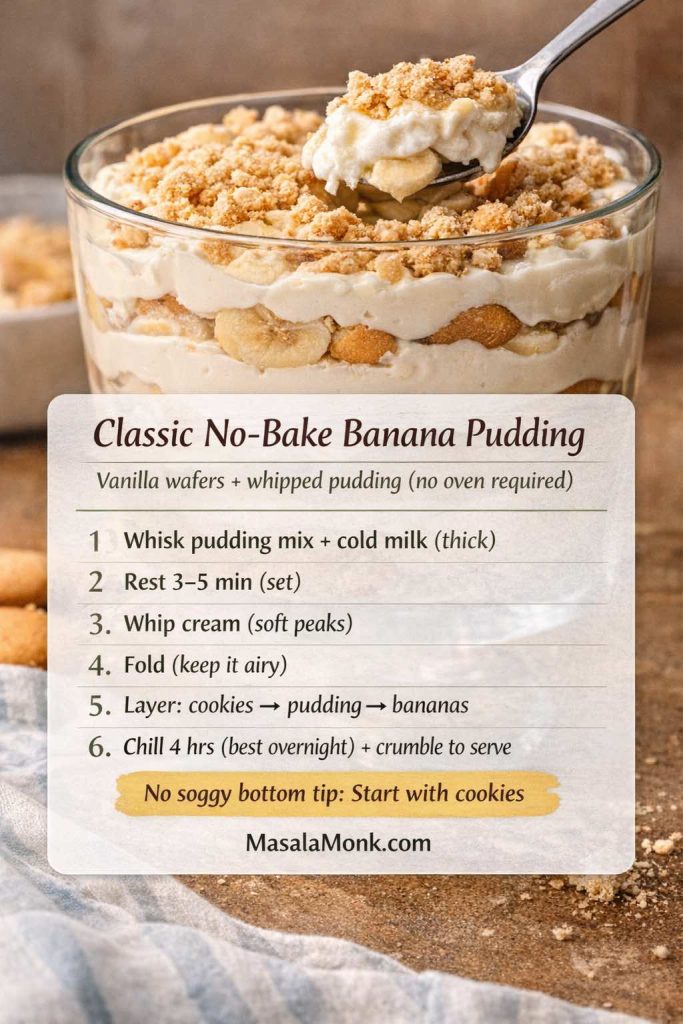
Classic no-bake banana pudding in a glass dish with visible layers of vanilla wafers, banana slices, and creamy pudding, topped with cookie crumble and a spoon lifting a bite. Text overlay shows a 6-step recipe: whisk pudding mix with cold milk, rest 3–5 minutes, whip cream, fold, layer cookies–pudding–bananas, then chill 4 hours (best overnight). Tip: start with cookies.
This is the most reliable no-bake banana pudding—classic vanilla wafers, fluffy whipped pudding, and clean layers that hold. The quick 6-step card makes it easy to build: whisk, fold, layer, then let the fridge do the magic (overnight = bakery-level texture). If you’ve ever had a soggy bottom, the one change that fixes it is right here: start with cookies.

Method

  1. Make the pudding base. Whisk pudding mix with cold milk until it thickens, then let it stand for a few minutes so it sets properly.
  2. Whip the cream. Beat chilled cream until soft peaks. Add vanilla if you want a warmer, dessert-shop aroma.
  3. Fold gently. Fold whipped cream into the pudding base until it looks airy and uniform. Don’t stir aggressively; instead, turn the mixture over itself so you keep the lift.
  4. Slice bananas at the last moment. This keeps them fresher and helps reduce browning.
  5. Layer. In a dish: cookies → pudding → bananas. Repeat until you run out, finishing with pudding on top.
  6. Chill. Refrigerate for at least 4 hours. Overnight is even better because the cookies soften evenly and the pudding tightens into a more cohesive slice-and-scoop texture.

A small finishing move that changes the whole dessert

Right before serving, crumble a handful of cookies over the top. The contrast—soft layers underneath, crunchy crumb on top—makes each bite feel more alive.
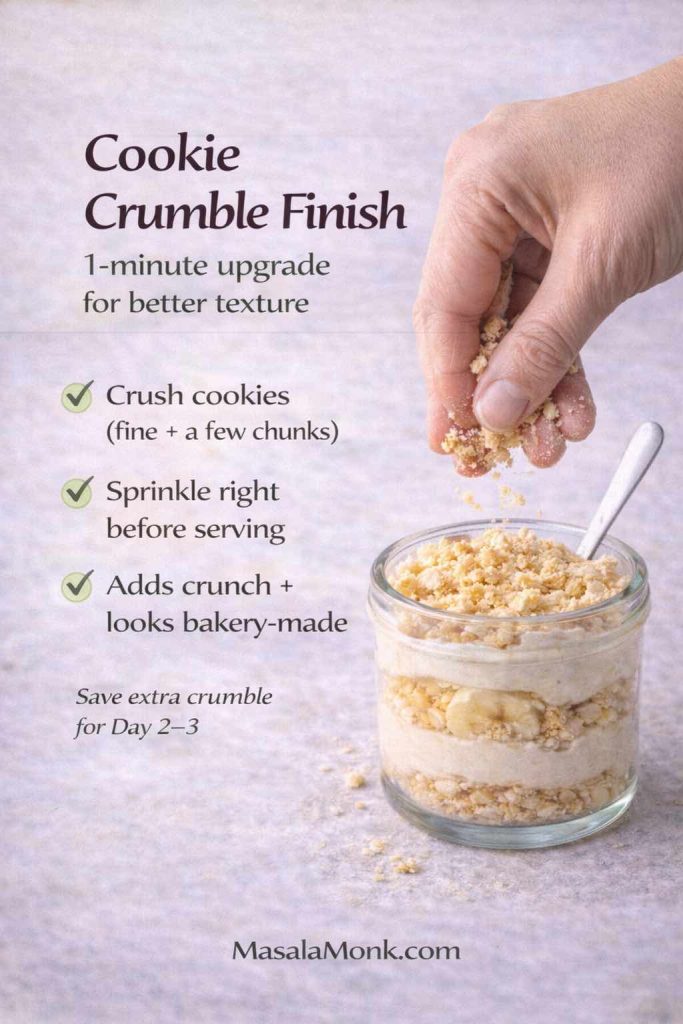
Instructional graphic titled “Cookie Crumble Finish” showing a hand sprinkling crushed vanilla wafer crumbs over a jar of no-bake banana pudding with visible layers. Text overlay says it’s a 1-minute upgrade for better texture: crush cookies (fine plus a few chunks), sprinkle right before serving, and it adds crunch and looks bakery-made. It also notes to save extra crumble for Day 2–3. Footer reads MasalaMonk.com.
If you want banana pudding to feel more “finished” without adding new ingredients, this is the move: a fresh cookie crumble right before serving. Crushing wafers into a mix of fine crumbs and a few bigger chunks gives you contrast—soft cake-y layers underneath, crisp texture on top. It also makes the dessert look bakery-made in seconds. If you’re storing leftovers, keep a small bowl of crumble aside and add it at serving time; it brings Day 2 (and even Day 3) right back to life.

If you enjoy layered puddings and want another “simple but elegant” idea, this savoiardi chocolate vanilla pudding has a similarly satisfying spoon texture, just with a more dramatic chocolate-and-cream vibe.

Also Read: Cold Brew Espresso Martini: How to Make It (Step-by-Step Recipe)


No-cook banana pudding with sweetened condensed milk (extra creamy, no oven required)

When you want banana pudding that tastes richer and holds up longer—especially if it’s sitting out for a while at a gathering—condensed milk is the shortcut that feels like a secret.

This variation also makes it easier to keep the pudding thick even after chilling, which is helpful if you’re using cookies that soften quickly.

Ingredients

  • 1 can sweetened condensed milk (about 395–400 g)
  • 1 box instant vanilla pudding mix (about 90–100 g)
  • Cold milk (start with slightly less than the box suggests)
  • Whipped cream (optional but recommended)
  • Bananas
  • Vanilla wafers or other cookies
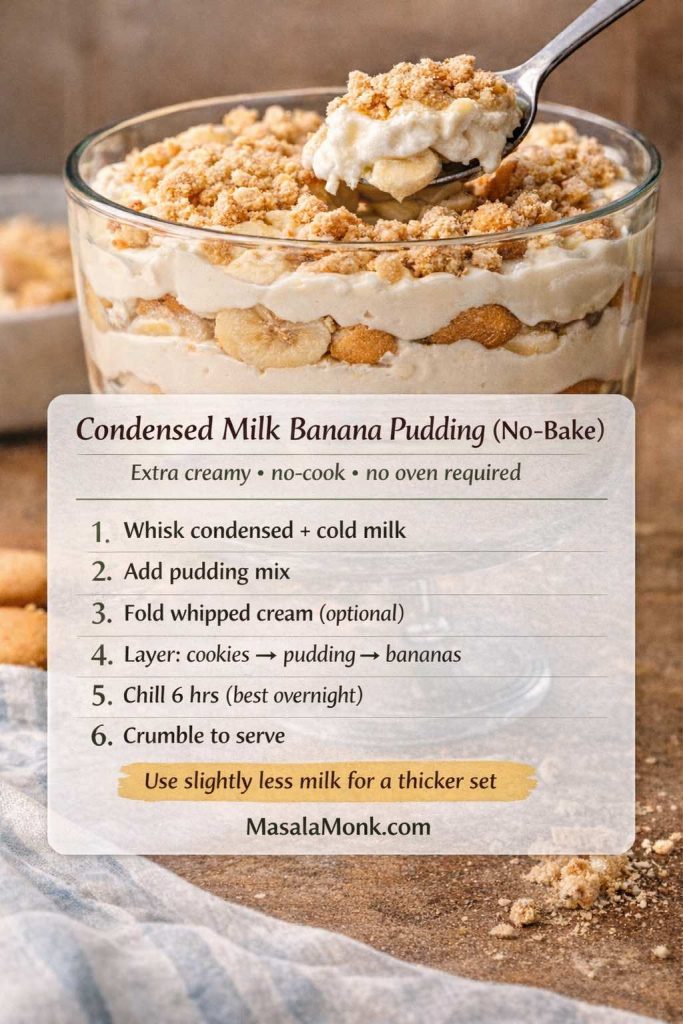
Condensed milk banana pudding (no-bake) in a glass dish with visible layers of bananas, vanilla wafers, and creamy pudding, topped with cookie crumble and a spoon lifting a bite. Text overlay shows a simple 6-step method: whisk sweetened condensed milk with cold milk, add pudding mix, fold in whipped cream (optional), layer cookies–pudding–bananas, chill 6 hours (best overnight), then crumble to serve. Tip: use slightly less milk for a thicker set.
If you want banana pudding that tastes richer and holds its shape longer, this sweetened condensed milk version is the upgrade. The condensed milk adds body, which helps the layers stay thick after chilling—especially useful if your cookies soften quickly. One small move makes it even more reliable: start with slightly less milk than your pudding box suggests, then let it rest overnight so the wafers turn cake-y without the bottom getting watery.

Method

  1. Whisk condensed milk and cold milk until smooth and glossy.
  2. Add the pudding mix and whisk until thickened.
  3. Fold in whipped cream if you want a lighter finish.
  4. Layer cookies, bananas, pudding, repeating until the dish is full.
  5. Chill longer than the classic—aim for 6 hours or overnight—so the layers become neatly sliceable.

If you’re the type who loves make-ahead fridge sweets, you might also enjoy peanut butter fudge. It’s a different texture entirely, yet it hits that same “chill, slice, share” convenience.

Also Read: 10 Vegan Chocolate Cake Recipes (Easy, Moist, & Dairy-Free)


Cream cheese no-bake banana pudding (thick, tangy, cheesecake-style recipe)

Cream cheese changes the personality of banana pudding. The dessert becomes thicker and slightly tangy, with a richer mouthfeel that feels closer to a cheesecake filling. It’s a wonderful choice if you like desserts that scoop cleanly and don’t slump.

Ingredients (serves 8–10)

  • 225 g cream cheese, softened
  • 1 box instant vanilla pudding mix
  • Cold milk (use a little less to keep it thick)
  • 250–350 ml whipping cream, whipped to soft peaks
  • Optional: 1 can sweetened condensed milk for extra richness
  • Bananas
  • Cookies (vanilla wafers are perfect here)
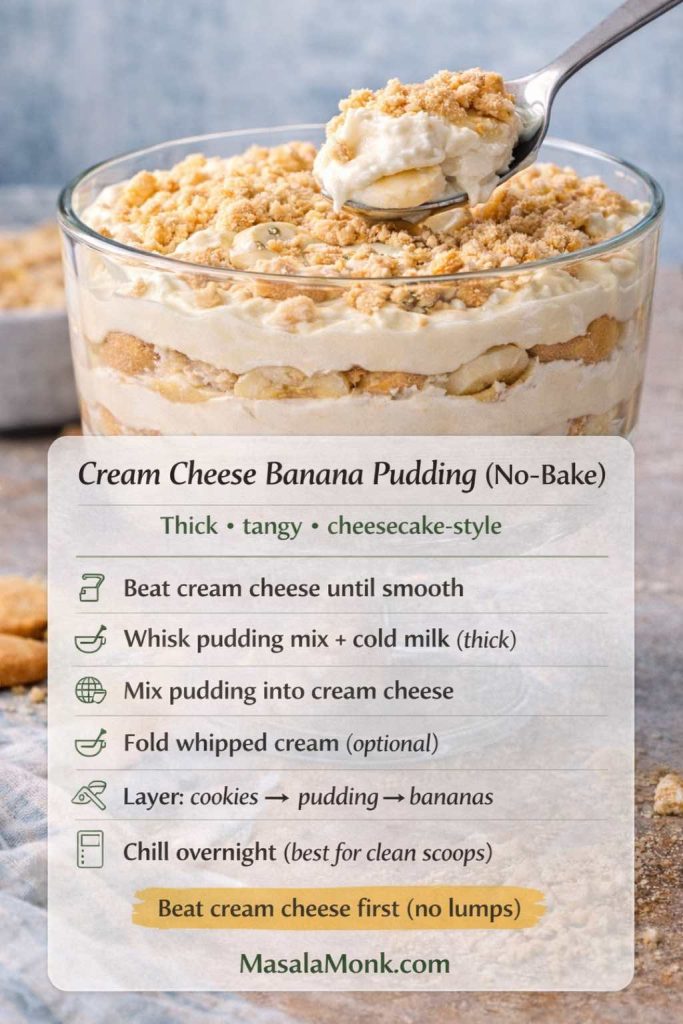
Cream cheese banana pudding (no-bake) in a glass dish with layered bananas, vanilla wafers, and thick creamy pudding, topped with cookie crumble and a spoon lifting a bite. Text overlay lists steps: beat cream cheese until smooth, whisk pudding mix with cold milk until thick, mix pudding into cream cheese, fold in whipped cream (optional), layer cookies–pudding–bananas, then chill overnight for clean scoops. Tip: beat cream cheese first to avoid lumps.
This is the banana pudding to make when you want thick, scoop-clean layers with a gentle cheesecake tang. Cream cheese adds structure, so the dessert slumps less and holds up better on a table. The only non-negotiable is texture: beat the cream cheese until completely smooth before anything else goes in—once lumps hide in the base, they’re hard to fix. After an overnight chill, the layers tighten, the wafers turn cake-y, and every spoonful stays creamy instead of runny.

Method

  1. Beat the cream cheese until completely smooth. Take your time—lumps are stubborn once you add everything else.
  2. Blend in condensed milk if using, until creamy and glossy.
  3. Whisk pudding mix with cold milk separately until thick, then fold or beat it into the cream cheese mixture.
  4. Fold in whipped cream to lighten the base.
  5. Layer with bananas and cookies, then chill overnight for the best structure.

If you want to lean into the cheesecake mood, serve this version alongside no-bake blueberry cheesecake for a dessert table that feels intentional rather than accidental.

Also Read: Cranberry Moscow Mule Recipe: A Festive Holiday Cocktail With Easy Variations


Homemade banana pudding from scratch (stovetop custard, still no oven needed)

This is the method that turns banana pudding into something you might proudly bring to a holiday dinner. It tastes deeper, it feels silkier, and it carries a quiet confidence that instant mix can’t quite replicate.

Even so, it’s still simple. You’re making a vanilla custard thickened with egg yolks and cornstarch, then chilling it until cold and spoonable. After that, you layer it exactly the same way.

For a dependable reference on how stovetop pudding thickens, King Arthur’s simple stovetop vanilla pudding is a useful baseline. If you enjoy understanding the “why” behind the method, Serious Eats has a clear explanation in their guide to vanilla pastry cream, which shares many of the same principles.
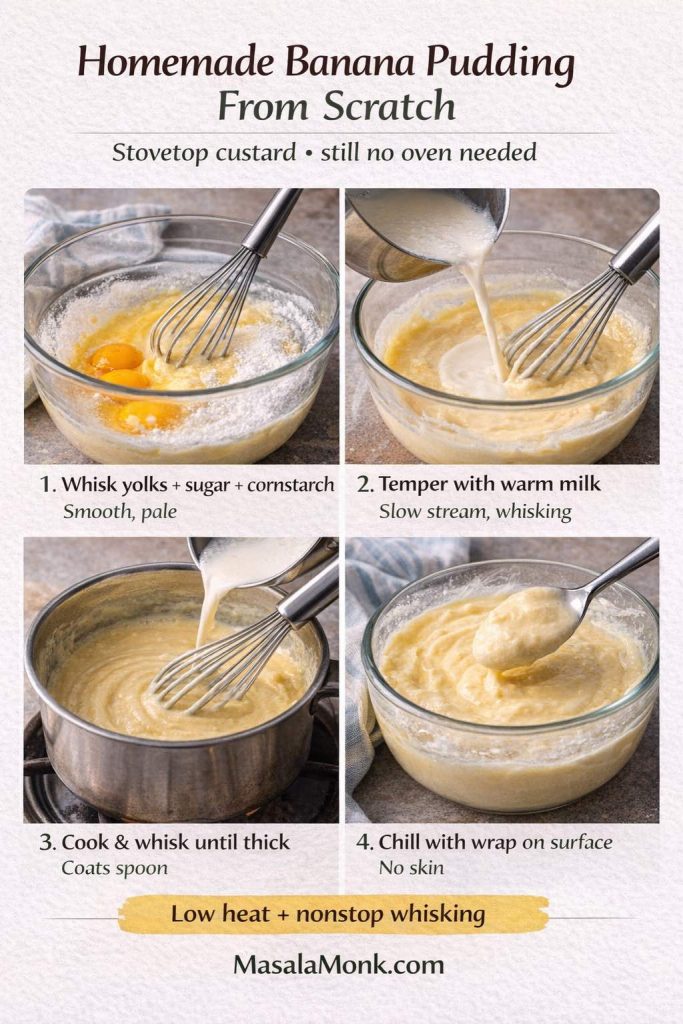
Step-by-step infographic titled “Homemade Banana Pudding From Scratch” showing a 2x2 grid of stovetop custard steps: whisk egg yolks with sugar and cornstarch until smooth, temper with warm milk while whisking, cook and whisk on low heat until thick and coating a spoon, then chill with plastic wrap pressed on the surface to prevent a skin. Note reads “Low heat + nonstop whisking.” MasalaMonk.com appears in the footer.
If you want banana pudding that tastes unmistakably homemade, the stovetop custard is the difference—and it’s easier than it sounds once you see the rhythm. This quick guide covers the two make-or-break moments: tempering (so yolks don’t scramble) and steady whisking on low heat (so the custard thickens smoothly instead of turning lumpy). Finish by chilling with wrap pressed directly on the surface to prevent a skin, then layer with bananas and wafers once it’s fully cold for the cleanest, most “old-fashioned” texture.

Ingredients (serves 8–10)

  • 500 ml milk (2 cups)
  • 90–120 g sugar (adjust to taste)
  • 3 egg yolks
  • 20–25 g cornstarch (about 3 tablespoons)
  • Pinch of salt
  • 2 teaspoons vanilla extract
  • 25–30 g butter (optional, for extra silkiness)
  • Bananas
  • Vanilla wafers (or cookie of choice)

Method

  1. Whisk the yolks, sugar, cornstarch, and salt until smooth and slightly thickened. This mixture should look pale and glossy.
  2. Warm the milk in a saucepan until steaming. Do not boil—you want it hot enough to temper the eggs, not hot enough to scramble them.
  3. Temper slowly. Whisk a little warm milk into the yolk mixture, then a little more, building the temperature gradually.
  4. Return to the pan and cook. Pour the tempered mixture back into the saucepan and cook on medium heat, whisking constantly. In a few minutes, it will shift from thin to thick. Keep whisking until it’s pudding-like and coats the back of a spoon.
  5. Finish off the heat. Remove the pan from the heat and stir in butter (if using) and vanilla.
  6. Cool correctly. Press a sheet of plastic wrap directly onto the surface so a skin doesn’t form. Let it cool to room temperature, then refrigerate until fully cold.
  7. Layer and chill again. Once the custard is cold and thick, layer cookies, bananas, and custard. Chill at least 4–6 hours, ideally overnight.

To make it “old fashioned” banana pudding without an oven

Keep the custard thicker and skip folding in whipped cream. The result is dense, silky, and unmistakably homemade—very much the old-fashioned homemade banana pudding feeling, while still staying no oven required.

Also Read: Baked Ziti Recipe Collection: 15 Easy Variations


Vegan and dairy-free banana pudding (no-bake, no oven, still satisfying)

A dairy-free banana pudding shouldn’t feel like a side quest. It should taste like banana pudding—fragrant bananas, vanilla warmth, and a creamy base that sets properly.

The key is choosing a plant milk that thickens well (oat and soy are excellent), then cooking a quick pudding base with cornstarch. After that, you chill it fully before layering.

If you like fridge-set desserts, you might also enjoy the textures in this collection of chia pudding recipes. The flavors differ, yet the “make it, chill it, enjoy it” rhythm is beautifully similar.

Ingredients (serves 6–8)

  • 500 ml plant milk (oat or soy recommended)
  • 50–70 g sugar (adjust to taste)
  • 20–25 g cornstarch (about 3 tablespoons)
  • Pinch of salt
  • 2 teaspoons vanilla extract
  • 1–2 tablespoons vegan butter (optional)
  • Bananas
  • Vegan-friendly cookies (vanilla-style if possible)
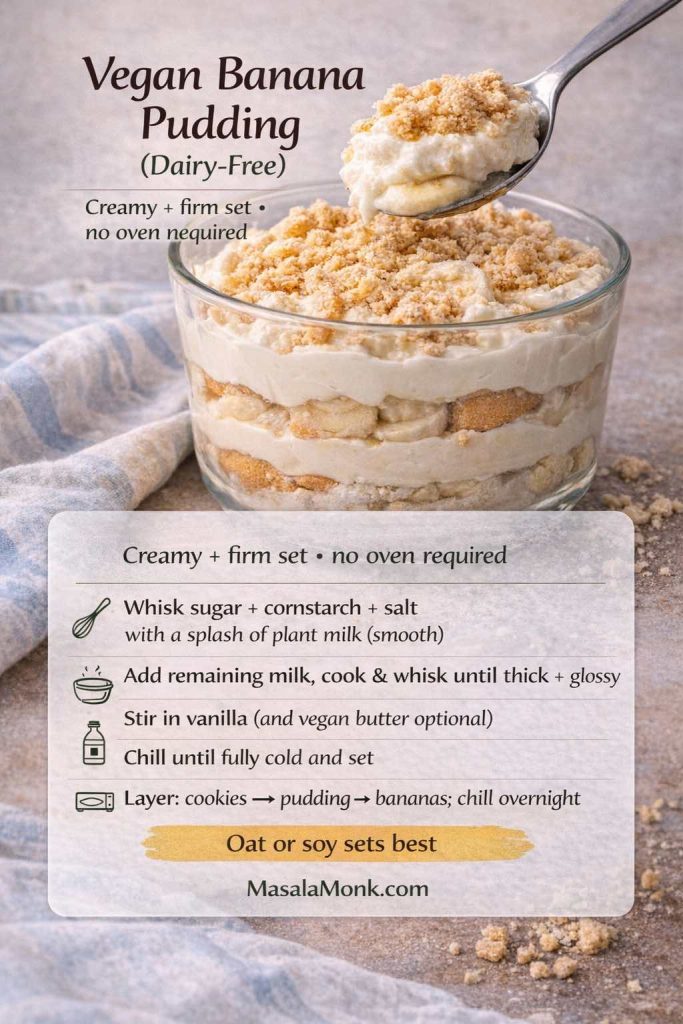
Vegan banana pudding (dairy-free) in a clear glass bowl with layered bananas, cookies, and creamy plant-based pudding, topped with cookie crumble and a spoon lifting a bite. Text overlay shows steps: whisk sugar, cornstarch, and salt with a splash of plant milk, add remaining milk and cook while whisking until thick and glossy, stir in vanilla (and vegan butter optional), chill until fully cold and set, then layer cookies–pudding–bananas and chill overnight. Tip: oat or soy sets best. MasalaMonk.com footer.
A dairy-free banana pudding only feels “compromised” when the base doesn’t set. This version fixes that by cooking a quick cornstarch pudding until it turns thick and glossy, then chilling it fully before you build the layers. Oat or soy milk tends to set more reliably than thinner plant milks, and the overnight rest does double duty: it firms the pudding and softens the cookies into that classic cake-y texture. Assemble once, chill, and you’ll get clean scoops that still taste like real banana pudding.

Method

  1. Make a slurry. Whisk cornstarch, sugar, and salt with a splash of the plant milk until smooth.
  2. Add the remaining milk and cook in a saucepan on medium heat, whisking constantly.
  3. Cook until thick. Once it turns glossy and pudding-like, remove from the heat.
  4. Stir in vanilla and vegan butter if using.
  5. Cool with wrap on the surface, then refrigerate until cold and set.
  6. Layer with bananas and cookies, then chill overnight so the cookie layers soften and the pudding becomes cohesive.

Also Read: Rob Roy Drink Recipe: Classic Scotch Cocktail (Perfect + Dry + Sweet Variations)


Banana pudding cheesecake no-bake style (a variation without changing the whole plan)

If you love cheesecake desserts but still want the nostalgic banana pudding texture, you can build a banana pudding cheesecake no bake variation by combining the cream cheese base with a crumb layer.

  • Crush cookies and press them into the bottom of your dish (a little melted butter helps, though it’s optional if your cookie crumbs are already buttery).
  • Add a thick cream cheese pudding layer, then bananas, then more pudding, then cookies.
  • Chill overnight so it slices cleanly.

For another easy, fruit-forward no-bake dessert that feels “party ready,” keep no-bake blueberry cheesecake in your back pocket—it complements banana pudding beautifully without competing for the same flavor space.

Also Read: Green Chutney Recipe (Coriander–Mint / Cilantro Chutney)


How to layer no-bake banana pudding so it turns cake-y, not soggy

Layering seems obvious until you scoop and realize the cookies dissolved too fast or the bananas slid around like they were on ice. A few simple habits fix that.
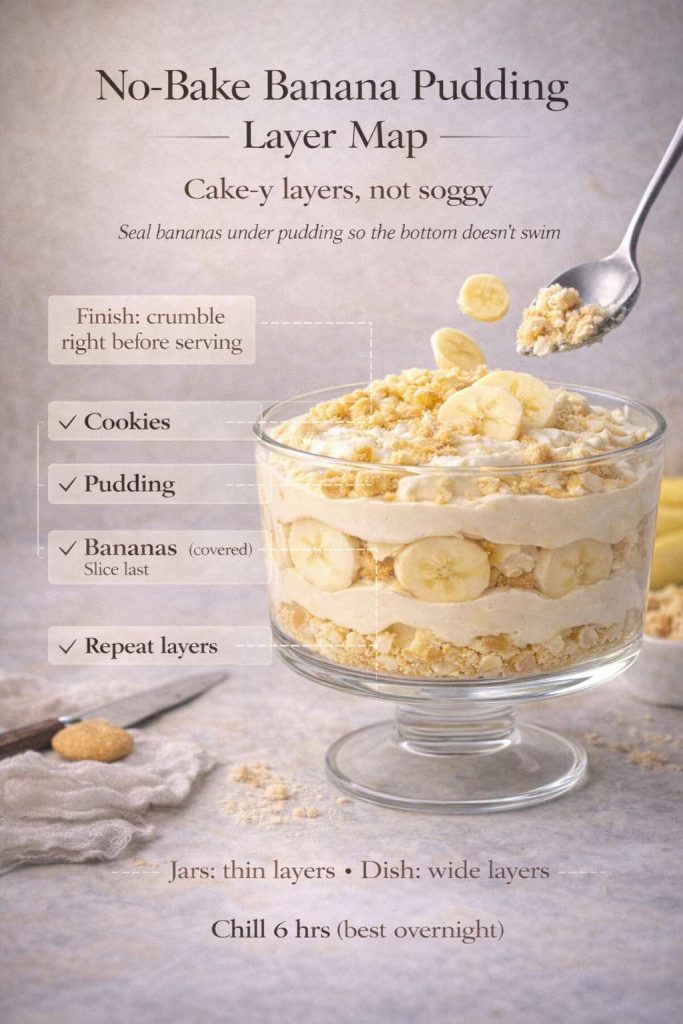
No-bake banana pudding in a clear glass trifle bowl with visible layers of cookies, creamy vanilla pudding, and banana slices. Text overlay reads “No-Bake Banana Pudding Layer Map” and “Cake-y layers, not soggy,” with callouts showing the order: cookies, pudding, bananas (covered—slice last), repeat layers, and finish with cookie crumble right before serving. Bottom note says “Chill 6 hrs (best overnight)” and “MasalaMonk.com.”
This quick no-bake banana pudding layer map is the difference between neat, cake-y layers and a soggy bottom. Start with cookies, seal the bananas under pudding (slice them last), then repeat until the dish is full. Finish with a fresh cookie crumble right before serving, and give it a long chill (overnight is the real upgrade) so every scoop stays thick, creamy, and clean.

Start with cookies, not pudding

Cookies at the base give the dessert structure. They also absorb moisture from the pudding gradually, which helps the bottom layer set rather than swim.

Keep banana slices medium-thick

Thin slices vanish into the pudding; thick slices can feel slippery. Aim for coins that hold their identity without taking over.

Seal bananas under pudding

Bananas brown when exposed to air. Covering them with pudding slows that down while keeping the layers tidy.
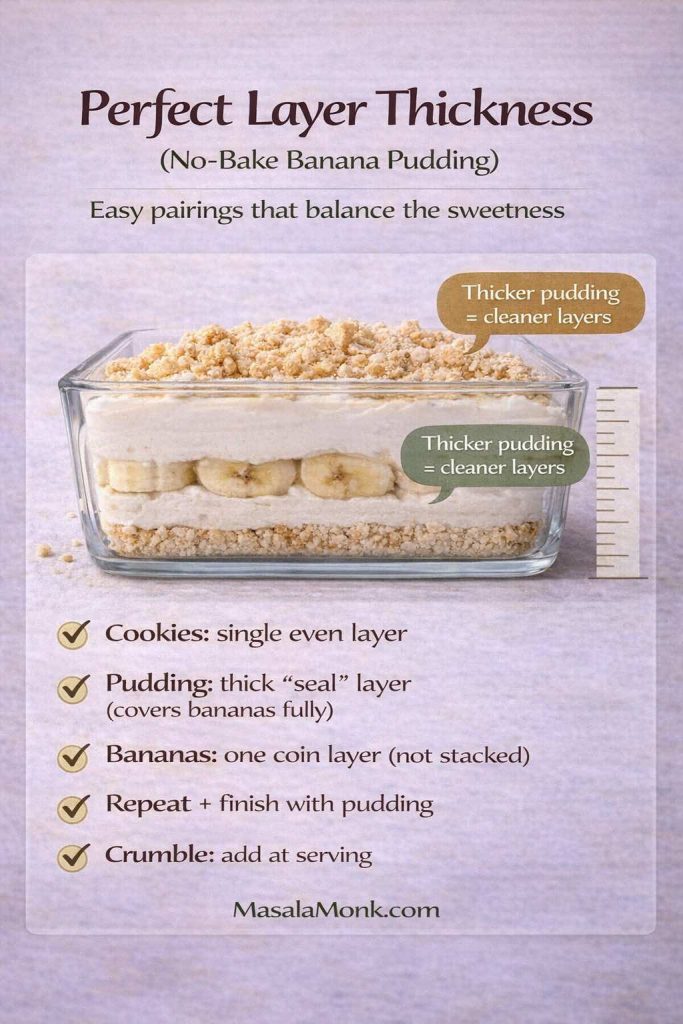
Instructional graphic titled “Perfect Layer Thickness (No-Bake Banana Pudding)” showing a glass dish with visible cookie, pudding, and banana layers plus a ruler-style guide. Text explains: cookies should be a single even layer; pudding should be a thick “seal” layer that fully covers bananas; bananas should be one coin layer, not stacked; repeat layers and finish with pudding; add crumble at serving. Notes say thicker pudding gives cleaner layers. Footer: MasalaMonk.com.
Layer order matters, but layer thickness is what keeps banana pudding from turning soft and messy. Think of pudding as a “seal”: it should be thick enough to fully cover the bananas so they don’t brown quickly or leak moisture into the cookie base. Keep banana slices to a single coin layer (no stacking), then repeat and finish with pudding so the top stays smooth. Save the cookie crumble for serving time—this one step gives you that perfect contrast between cake-y layers underneath and a crisp finish on top.

Chill longer than you think you need

Four hours works. Overnight is better. The difference isn’t subtle: cookies soften evenly, the pudding firms, and the flavors knit into a single, harmonious spoonful.

If you’re serving in jars, build thinner layers. That way, every bite picks up banana, cookie, and pudding together.

Also Read: Paper Plane Cocktail Recipe + Best Amaro Substitutes & Tips


No-bake banana pudding in jars (dessert cups that look as good as they taste)

Banana pudding served in a dish feels nostalgic. Banana pudding served in jars feels modern and intentional—especially if you’re bringing dessert to a gathering or setting up a dessert table.
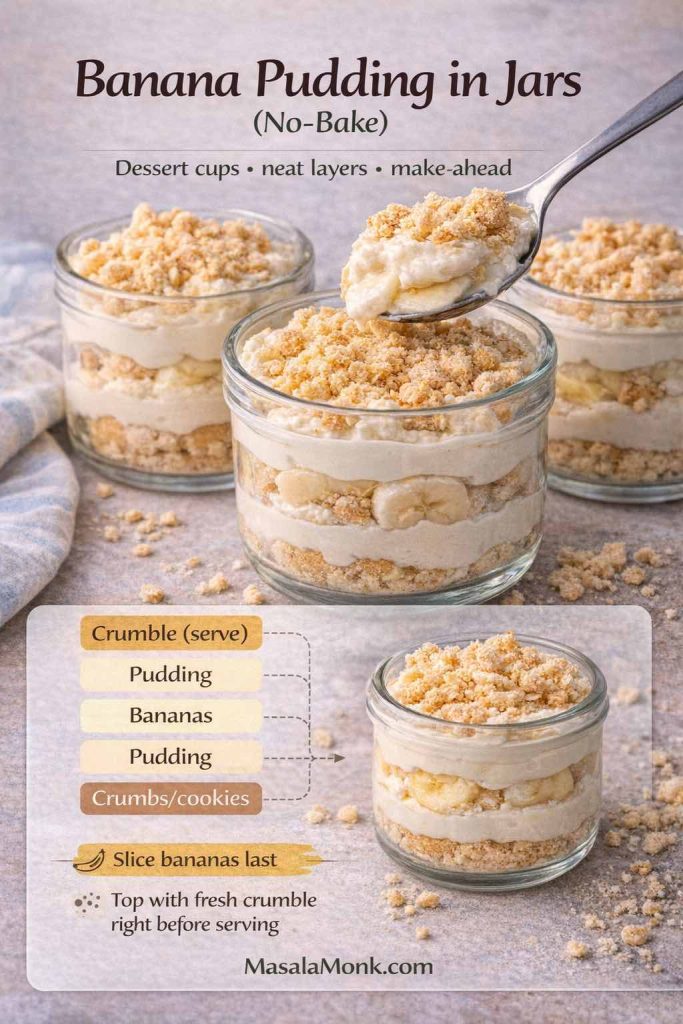
Infographic titled “Banana Pudding in Jars (No-Bake)” showing three glass dessert jars filled with layered banana pudding and cookie crumbs, plus a spoon lifting a bite. A layering guide lists: crumbs/cookies, pudding, bananas, pudding, and crumble to serve. Tips say “Slice bananas last” and “Top with fresh crumble right before serving.” Footer reads MasalaMonk.com.
Jars make banana pudding feel instantly more “party-ready,” and they also protect the layers so each serving stays neat. Use this simple jar layer order—crumbs/cookies → pudding → bananas → pudding → crumble (serve)—and you’ll get the best texture in every bite. Two small details matter most: slice bananas right before assembling (so they stay fresher) and save the final crumble for the last minute so the top stays crisp instead of turning soft in the fridge.

Why jars work so well

  • They protect the layers so the pudding stays neat
  • They’re easy to portion and transport
  • They look beautiful through the glass

If you love the “dessert cup” presentation, you’ll also like the vibe of these Lotus Biscoff dessert cups. They’re different in flavor, yet they share the same layered, chilled charm.

Jar layering rhythm

Cookies (or crumbs) → pudding → bananas → pudding → cookie crumble on top.
Then chill.
Just before serving, add fresh crumble again so the top stays crisp.

Also Read: Sandwich for Breakfast: Breakfast Sandwich Recipe + 10 Variations


Make-ahead timing (how to plan banana pudding without stress)

Banana pudding is at its best when it has time to rest, which makes it a natural make-ahead dessert. Still, timing matters—especially if you want bananas to look good and layers to hold.
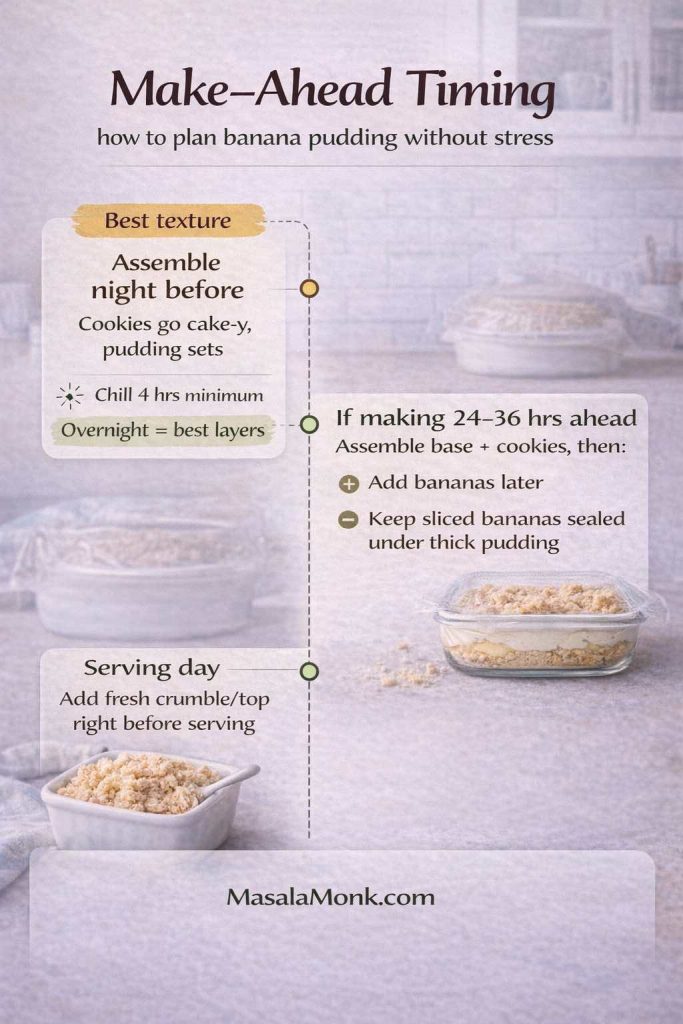
Vertical infographic titled “Make-Ahead Timing: how to plan banana pudding without stress” with a timeline. It recommends assembling banana pudding the night before for best texture, chilling at least 4 hours (overnight best) so cookies turn cake-y and pudding sets. If making 24–36 hours ahead, assemble base and cookies, then add bananas later or keep bananas sealed under thick pudding. On serving day, add fresh crumble/topping right before serving. Footer: MasalaMonk.com.
Banana pudding is one of those desserts that actually improves with a little planning. The simplest win is assembling it the night before: the pudding firms, the cookies soften into that cake-y layer, and the whole dish scoops more cleanly. If you need to make it farther ahead, treat bananas as the variable—either add them closer to serving or keep them fully covered under a thicker pudding layer to reduce browning and excess moisture. Right before serving, add a fresh crumble on top so the finish stays crisp.

The sweet spot: assemble the night before

When you assemble banana pudding the evening before, you get the best of everything: the cookies soften, the pudding sets, and the bananas mellow without turning watery.

If you need to assemble earlier

If you’re making it more than a day in advance, consider one small adjustment: assemble the pudding and cookies first, then add bananas closer to serving time. Alternatively, you can keep bananas protected under thicker pudding layers so air exposure stays minimal.

Food safety basics for fridge desserts

Since banana pudding contains dairy—and sometimes eggs, if you make custard—good refrigeration habits matter. The general guidance on keeping perishable foods safe (including cooling and refrigeration) from FoodSafety.gov is a solid reference to follow. For egg-based custards in particular, the FDA’s overview of egg safety is worth a quick read if you want extra peace of mind.

For leftovers, the USDA’s advice on leftovers and food safety is a reliable guide for how long chilled desserts typically stay safe in the fridge.

Also Read: Classic Rum Punch + 9 Recipes (Pitcher & Party-Friendly)


Storage (how to keep banana pudding tasting fresh)

Cover it tightly

Banana pudding absorbs fridge odors easily. A tight lid or well-sealed wrap keeps the flavor clean and keeps the top from drying out.
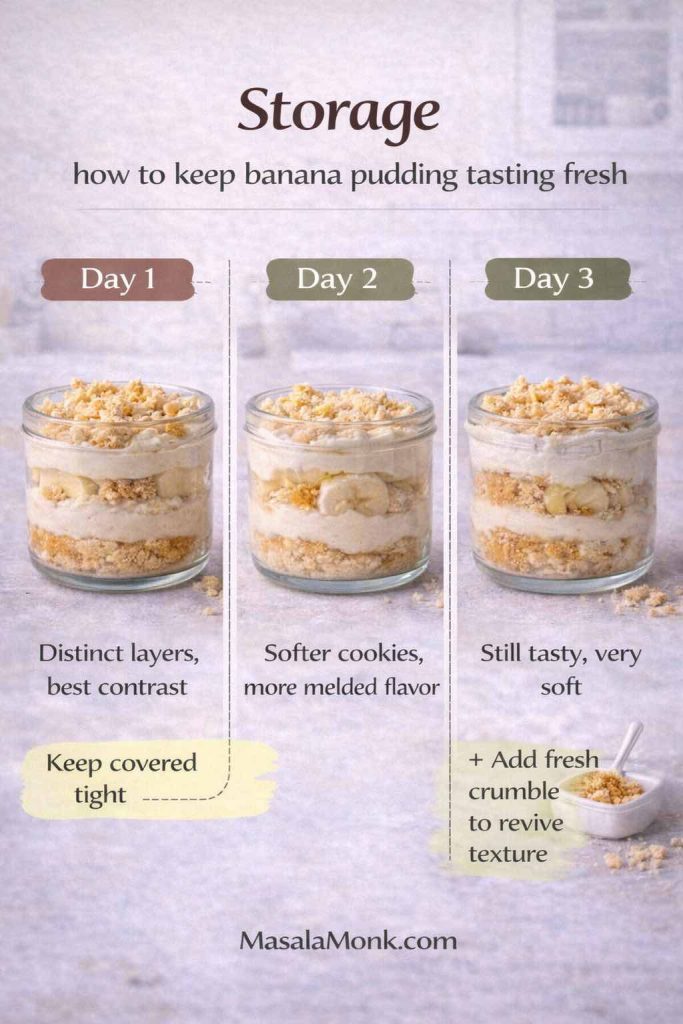
Triptych infographic titled “Storage: how to keep banana pudding tasting fresh” showing banana pudding in a jar over three days. Day 1 notes distinct layers and best contrast; Day 2 notes softer cookies and more melded flavor; Day 3 notes still tasty but very soft, with a tip to add fresh crumble to revive texture. Another tip says “Keep covered tight.” Footer reads MasalaMonk.com.
Banana pudding changes as it sits, and that’s normal—not a mistake. On day one, the layers are the most distinct and the contrast is strongest. By day two, the cookies soften further and everything tastes more blended (often the sweet spot). By day three, it’s still delicious, just much softer overall. The easiest way to keep it tasting “fresh” is sealing it tightly so it doesn’t pick up fridge odors—and saving a little cookie crumble to sprinkle right before serving for a crisp finish.

Keep it cold, consistently

Avoid leaving the pudding out for long stretches, especially in warm rooms. Serve what you need, then return the dish to the fridge.

Expect the texture to evolve

On day one, layers are distinct. By day two, the cookies soften further. By day three, it’s still delicious—just more uniformly soft. If you like a bit of crunch, save extra cookie crumble to add at the end.


Serving ideas that make banana pudding feel “new” again

Banana pudding is classic for a reason, yet it also welcomes a few thoughtful finishing touches.
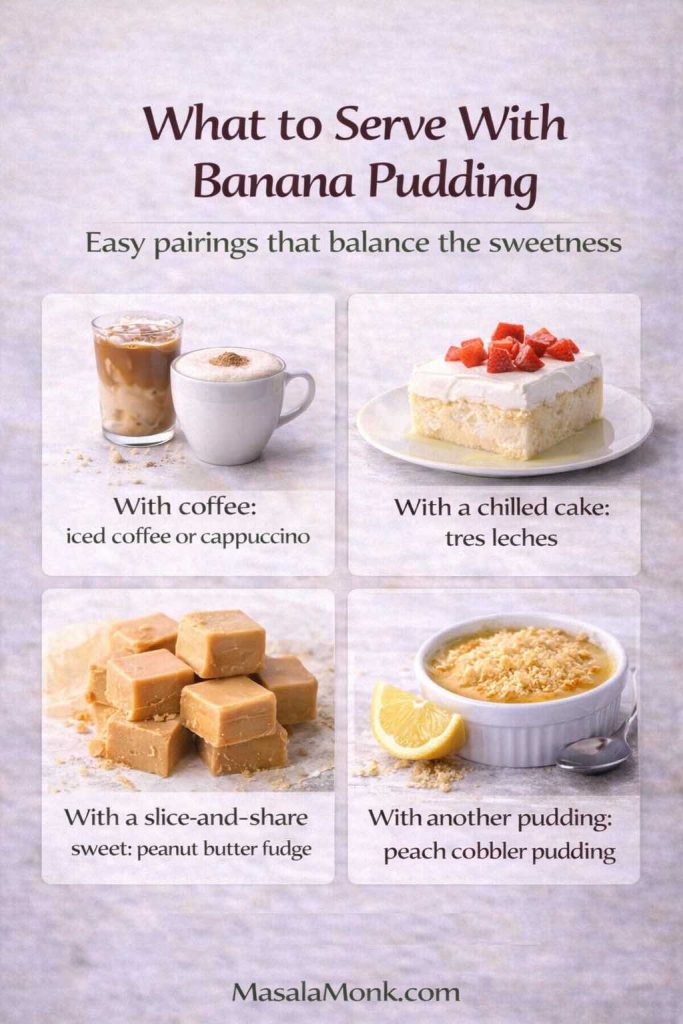
Infographic titled “What to Serve With Banana Pudding” with the subtitle “Easy pairings that balance the sweetness.” A four-tile grid shows: iced coffee or cappuccino, tres leches (chilled cake), peanut butter fudge (slice-and-share sweet), and peach cobbler pudding (another pudding dessert). Each tile includes a photo and a short label. Footer reads MasalaMonk.com.
Banana pudding is rich and soft, so it shines brightest next to something that adds contrast—either bitterness, chill, or a different texture. Coffee (iced coffee or cappuccino) cuts the sweetness and makes dessert feel café-like. A chilled cake such as tres leches turns the table into a “real dessert spread” without extra work. If you want something sliceable and giftable, peanut butter fudge is a great partner. And if you’re keeping the theme cozy, peach cobbler pudding gives a warm-spiced counterpoint while staying in the same spoon-dessert lane.

A light drizzle (without turning it into a chocolate dessert)

A small drizzle can make the surface look glossy and special, particularly when you’re serving guests. This 3-minute chocolate syrup works beautifully if you keep it subtle—just enough to accent the bananas and vanilla, not drown them.

A cookie “snow” finish

Crumble cookies over the top right before serving. It’s simple, yet it adds crunch and makes the presentation more inviting.

A dessert table that feels balanced

If you’re putting together multiple sweets, pair banana pudding with something that contrasts its creamy softness:

For even more ideas in the same cozy category, this Pudding Palooza dessert roundup is a fun way to keep the theme going without repeating the same flavors.

Pair it with coffee (cold or foamy)

Banana pudding loves coffee. The sweetness and vanilla play nicely against roasted notes, especially after a meal.

  • If you want something refreshing, browse these iced coffee recipes and pick a cold brew or latte-style option.
  • If you’d rather keep it warm and classic, a homemade cappuccino makes the whole dessert moment feel café-like.

Strawberry Smoothie Recipes (12 Easy Blends + Bowls & Protein Shakes)Also Read:


Troubleshooting (so your banana pudding turns out thick, creamy, and layered)

Even a simple dessert can misbehave. Fortunately, banana pudding is forgiving, and the fixes are usually quick.
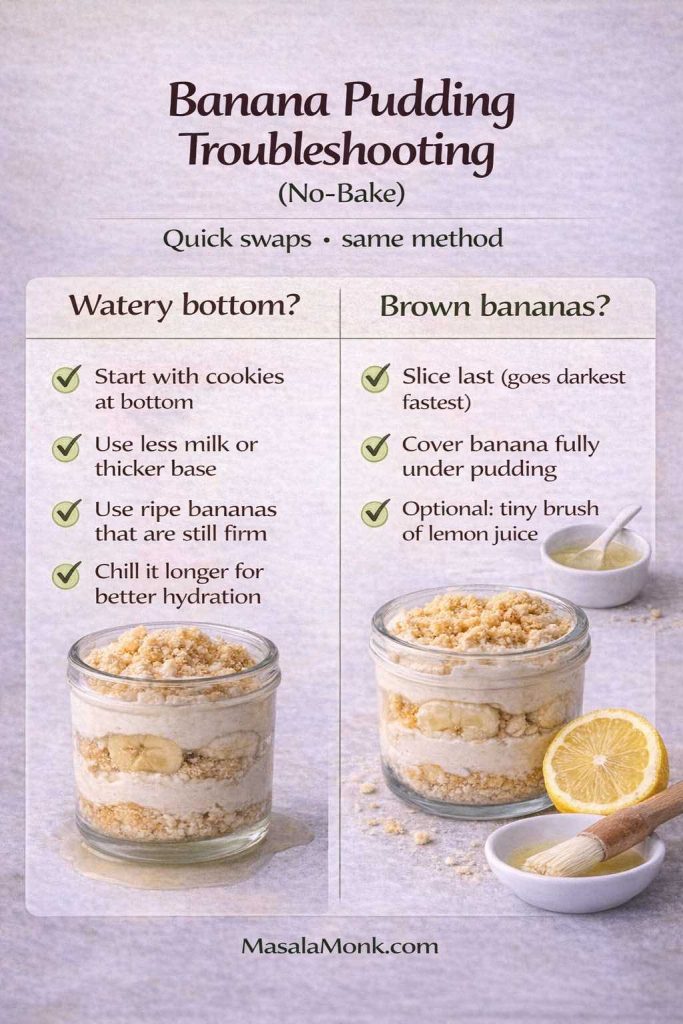
Infographic titled “Banana Pudding Troubleshooting (No-Bake)” with two columns: “Watery bottom?” and “Brown bananas?” The watery-bottom tips say to start with cookies, use less milk or a thicker base, choose ripe bananas that are still firm, and chill longer. The browning tips say to slice bananas last, cover them fully under pudding, and optionally brush lightly with lemon juice. Two jar photos illustrate the layers. Footer reads MasalaMonk.com.
Most banana pudding “problems” come down to two things: moisture and air. If you see liquid pooling at the bottom, it usually means the bananas were very ripe or the pudding base was a bit thin—starting with a cookie layer and using a thicker base (often just slightly less milk) helps the dessert set into clean, scoopable layers. If bananas turn brown, it’s simply exposure: slice them right before layering and keep them fully covered under pudding so air can’t reach the fruit. A tiny brush of lemon juice is optional, but keep it subtle so the pudding still tastes purely vanilla-banana.

If the pudding feels runny

Most often, it’s too much milk or not enough time in the fridge. Next time, reduce the milk slightly. For now, chill it longer—covered—so it can finish setting properly.

If a watery layer appears at the bottom

Overripe bananas can release moisture, and thin pudding can’t hold it. Use slightly firmer ripe bananas and make a thicker pudding base, especially if you’re layering with delicate cookies.

If the cookies dissolved into mush

That’s usually a thickness issue. Thicker pudding slows down cookie breakdown. Vanilla wafers, butter cookies, and shortbread also hold up better than delicate biscuits.
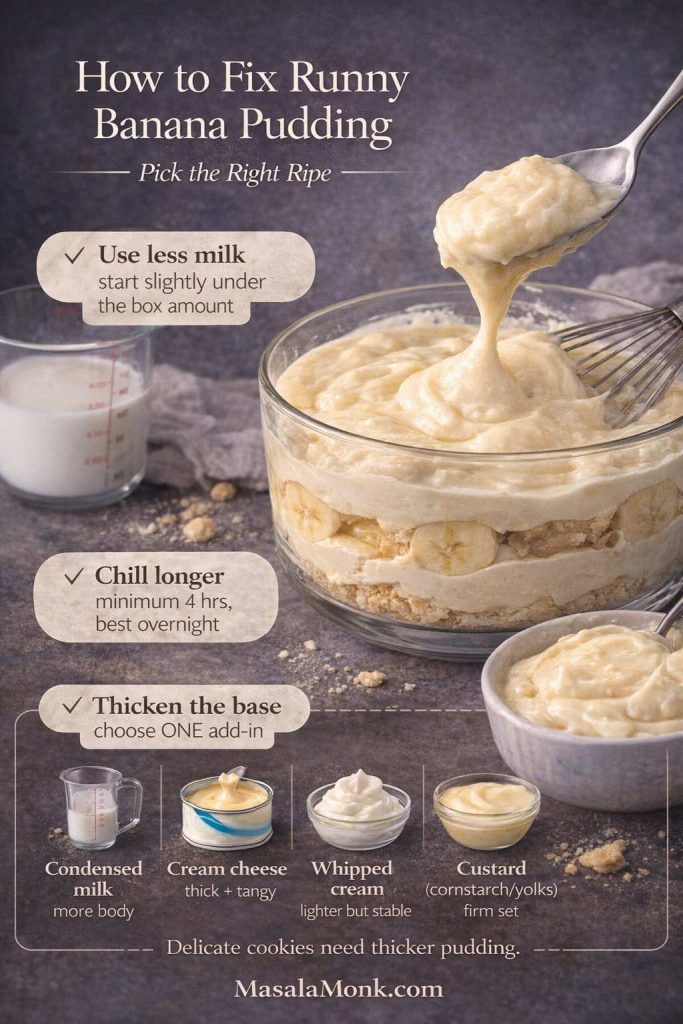
Infographic titled ‘How to Fix Runny Banana Pudding’ showing a spoon lifting loose banana pudding over a bowl. It lists three fixes: use slightly less milk than the pudding box amount, chill longer (minimum 4 hours, best overnight), and thicken the base by choosing one add-in—sweetened condensed milk, cream cheese, whipped cream, or a cooked custard with cornstarch/yolks. Note says delicate cookies need thicker pudding. MasalaMonk.com at bottom.
Runny banana pudding is almost always a ratio + chill-time problem—not a failure. Start with slightly less milk, then give it a proper fridge rest (overnight is the real glow-up). If you want a thicker, cleaner scoop, pick one base booster: condensed milk for body, cream cheese for thick + tangy, whipped cream for lighter stability, or a simple custard for the firmest set. (Perfect for the Troubleshooting section when your layers feel too soft.)

If the bananas browned

Slice bananas right before layering, then cover them with pudding so air can’t reach them. If you need extra protection, a very light brush of lemon juice can help; keep it subtle so the pudding doesn’t taste citrusy.

If your from-scratch custard turned lumpy

Heat was likely too high, or whisking paused. You can strain the custard through a fine sieve, then return it to gentle heat briefly while whisking to smooth it out. After that, chill as usual.

Also Read: Daiquiri Recipe (Classic, Strawberry & Frozen Cocktails)


A few variations that keep the banana pudding recipe feeling fresh

Once you’ve made banana pudding once, it becomes dangerously easy to make it again—so it helps to rotate small changes that make it feel new.
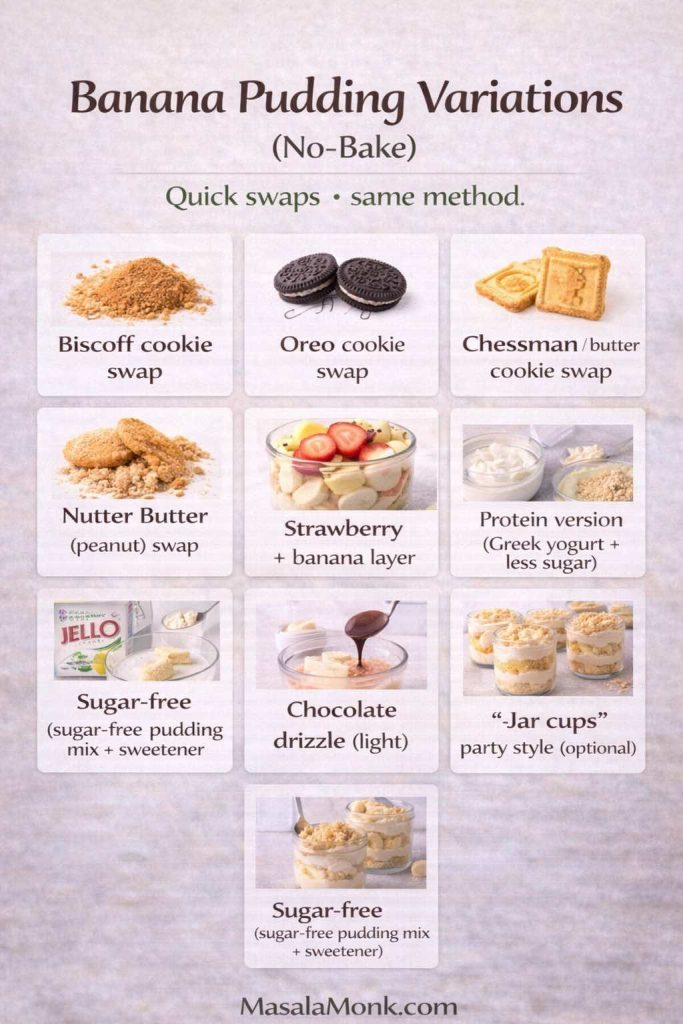
Infographic titled “Banana Pudding Variations (No-Bake)” with the subtitle “Quick swaps • same method.” A grid lists easy add-ins and swaps for no-bake banana pudding: Biscoff cookie swap, Oreo cookie swap, Chessman or butter cookie swap, Nutter Butter (peanut) swap, strawberry + banana layer, protein version (Greek yogurt + less sugar), sugar-free option (sugar-free pudding mix + sweetener), a light chocolate drizzle, and optional jar cups party style. Footer reads MasalaMonk.com.
Once you know the basic layering rhythm, banana pudding becomes a template you can remix. This quick variation board helps you choose a direction without rewriting the whole recipe: swap cookies for Biscoff, Oreo, Chessman, or Nutter Butter; add a strawberry layer for a fruitier twist; or go lighter with a protein-friendly version using Greek yogurt and less sugar. If you’re serving guests, a small chocolate drizzle or jar-cup presentation makes the same pudding feel brand new—without changing the method that keeps it thick and reliable.

Make it more “vanilla-forward”

Use a little extra vanilla extract, and add a pinch of salt to sharpen the flavor. It’s still banana pudding, just brighter and more aromatic.

Make it more “cookie-forward”

Double down on the cookie layers and finish with a generous crumble on top. You’ll get more contrast between soft and crisp.

Make it richer without adding fuss

Use sweetened condensed milk in the base. It adds richness and a thicker finish without requiring custard-making.

Make it more homemade (without using an oven)

Go the stovetop custard route. It takes a little longer, yet the flavor payoff is worth it—especially when you want a truly homemade banana pudding from scratch feeling.

Make it plant-based

Use a thick dairy-free pudding base and vegan-friendly cookies. Given enough chill time, the dessert becomes cohesive and satisfying.

Also Read: Oat Pancakes Recipe (Healthy Oatmeal Pancakes)


Bringing it all together (the no-oven dessert you’ll make again and again)

No-bake banana pudding is one of those desserts that meets you where you are. It can be a quick weeknight treat made from a banana pudding mix and a box of wafers. Then can be a party-ready dish made with sweetened condensed milk for extra creaminess. And it can even be an old-fashioned, homemade banana pudding from scratch with stovetop custard—still no oven required, still wonderfully simple once you learn the rhythm.

Most importantly, it’s the kind of dessert that invites seconds without demanding perfection. So make it classic, make it creamy, make it tangy, or make it dairy-free. Either way, give it time in the fridge, spoon it generously, and let the layers do what they do best: turn a few humble ingredients into something that feels like comfort you can share.

Also Read: What to Mix with Jim Beam: Best Mixers & Easy Cocktails


FAQs

1) Can I make banana pudding with no oven required?

Yes. Banana pudding is naturally a no-oven dessert because the pudding sets in the fridge. Whether you use instant pudding mix, a no-cook condensed milk base, or a stovetop custard, you can still finish the entire dish without turning on the oven.

2) What’s the difference between no-bake banana pudding and no-cook banana pudding?

No-bake banana pudding simply means you don’t bake it. Meanwhile, no-cook banana pudding usually means you also skip stovetop cooking—so you rely on instant pudding mix (and sometimes sweetened condensed milk) to thicken everything.

3) How long does banana pudding need to chill to set properly?

In most cases, banana pudding needs at least 4 hours to set; however, overnight chilling gives the best texture. As it rests, the pudding firms up and the cookies soften into a cake-like layer.

4) How do I keep bananas from turning brown in banana pudding?

First, slice bananas right before layering. Next, cover the banana layer completely with pudding so less air reaches the fruit. If you want extra protection, lightly brushing banana slices with a tiny amount of lemon juice can help—just use it sparingly so the pudding doesn’t taste citrusy.

5) What are the best bananas for banana pudding?

Choose bananas that are yellow with a few brown freckles. They’re sweet and aromatic, yet still firm enough to hold their shape. On the other hand, bananas that are very brown can release more moisture, which may thin the layers.

6) What are the best cookies for banana pudding?

Vanilla wafers are the classic choice because they soften evenly and keep the layers structured. That said, butter cookies, graham crackers, and shortbread also work well—especially if you prefer a richer, more buttery base.

7) Can I make banana pudding with vanilla wafers and still keep it from getting soggy?

Absolutely. Use a thicker pudding base, layer cookies evenly, and chill long enough so the moisture absorbs gradually rather than flooding the cookies. Additionally, adding a fresh cookie crumble on top right before serving brings back a crisp contrast.

8) Can I make banana pudding with sweetened condensed milk?

Yes, and it’s one of the creamiest no-oven options. Sweetened condensed milk adds richness and body, so the pudding holds its shape more reliably. Even so, it’s best to chill it longer—ideally 6 hours or overnight—for the cleanest scoops.

9) Can I make banana pudding from scratch without baking?

You can. Instead of baking, you cook a quick stovetop custard (milk, sugar, egg yolks, and cornstarch), then chill it until thick. After that, you layer it with bananas and cookies just like any banana pudding (no bake) version.

10) Why is my banana pudding runny?

Usually, it comes down to one of three things: too much milk, not enough chill time, or a pudding base that didn’t fully thicken before layering. To fix it next time, reduce the milk slightly and let the pudding stand a few minutes before assembling.

11) Why does banana pudding get watery at the bottom?

Most often, very ripe bananas release liquid as they sit. Similarly, a thinner pudding base can’t “hold” that moisture. Therefore, using slightly firmer ripe bananas and a thicker pudding base helps keep the layers stable.

12) Can I make banana pudding ahead of time?

Yes—banana pudding is one of the best make-ahead desserts. In fact, making it the night before usually improves the texture because the cookies soften evenly and the flavors meld.

13) How long does banana pudding last in the fridge?

Typically, banana pudding tastes best within 24–48 hours. After that, it’s still enjoyable, though the cookies can become very soft and the bananas may darken slightly. Keep it tightly covered to maintain freshness.

14) Can I freeze banana pudding?

Freezing isn’t ideal. Although it may be safe, the texture often suffers because pudding can separate when thawed, and bananas can become mushy. Instead, it’s better to refrigerate and enjoy within a couple of days.

15) How do I make banana pudding thicker without changing the flavor?

Start by using a little less milk, then chill longer. Moreover, folding in whipped cream after the pudding thickens can help the dessert feel thicker and more stable. For an even denser option, try the cream cheese variation.

16) Can I make banana pudding with cream cheese?

Yes. Cream cheese makes banana pudding thicker, slightly tangy, and more “cheesecake-like.” As a result, it holds its shape well and scoops cleanly, especially after an overnight chill.

17) What’s the easiest banana pudding recipe for beginners?

A classic no-bake banana pudding using instant vanilla pudding mix, milk, whipped cream, bananas, and vanilla wafers is the easiest. Since it’s no-cook and no oven required, it’s also the most forgiving.

18) Can I make vegan banana pudding that still tastes creamy?

Yes. A dairy-free banana pudding can be creamy if the pudding base is thickened properly (often with cornstarch) and chilled until fully set. Also, choosing a vanilla-style vegan cookie keeps the flavor closer to traditional banana pudding.

19) Can I make banana pudding without vanilla wafers?

Definitely. You can use butter cookies, graham crackers, shortbread, or similar crisp cookies. Just keep in mind that thinner cookies soften faster, so a thicker pudding base and a longer chill can make a big difference.

20) How do I layer banana pudding so every scoop has all the layers?

Use evenly spaced cookie layers, slice bananas to a similar thickness, and spread pudding all the way to the edges each time. Finally, let it chill long enough so the layers settle—then scoop straight down to capture cookie, banana, and pudding in one bite.
Posted on 4 Comments

Pumpkin Seed Smoothie for Weight Loss | 5 Healthy Recipes & Benefits

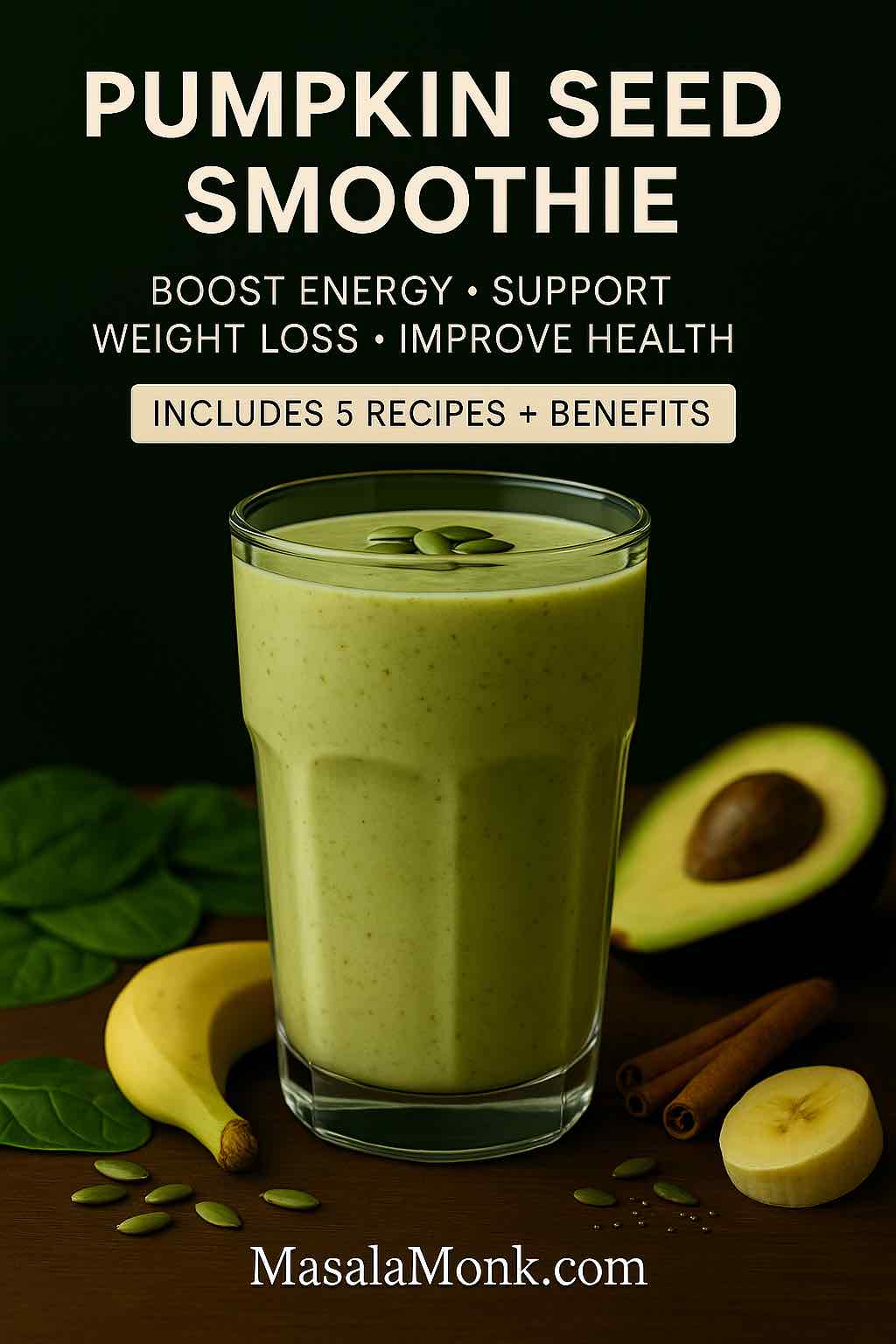
Tall glass of pumpkin seed smoothie surrounded by avocado, banana, spinach, and cinnamon on a rustic table.

There’s something comforting about starting your day with a smoothie. It’s quick, nourishing, and gives you that little “reset” button we often crave in the morning. Now, imagine making that smoothie even more powerful by adding a simple ingredient you probably already have in your kitchen — pumpkin seeds. A pumpkin seed smoothie isn’t just creamy and delicious, it’s also a smart way to sneak in nutrients that support energy, satiety, and even weight loss. Think of it as a small daily ritual that helps keep your cravings in check, your digestion on track, and your body fueled with lasting energy.

Read More: The Benefits of Pumpkin Seeds for Weight Loss and Blood Sugar Control

But don’t just take our word for it — science has a lot to say about these tiny green seeds.


🔬 The Science Behind Pumpkin Seed Smoothies

Pumpkin seeds may be small, but research shows they’re packed with benefits that make them the perfect smoothie booster:

  • Keeps you fuller for longer. Pumpkin seeds are rich in protein, fiber, and healthy fats — the trifecta for curbing cravings and avoiding those mid-morning snack crashes. Studies consistently show that diets high in fiber support long-term weight management by keeping you satisfied without excess calories (Healthline).
  • Balances blood sugar and supports heart health. Thanks to their high magnesium content, pumpkin seeds may help regulate blood sugar and lower blood pressure. In fact, a clinical trial found that adding pumpkin seeds to meals reduced post-meal blood sugar spikes, making them especially useful when blended into a breakfast smoothie (Journal of Nutrition & Food Science, PDF).
  • Packed with micronutrients that support mood and metabolism. Pumpkin seeds deliver magnesium, zinc, antioxidants, and even tryptophan — an amino acid linked to better sleep and mood. That’s why experts often call them a super-seed for whole-body health (Cleveland Clinic, NY Post).
  • Simple but mighty. Even eating just a spoonful of pumpkin seeds daily can improve digestion, immunity, and skin health — according to recent insights on everyday consumption habits (Times of India).

Also Read: Benefits of Nuts and Seeds – Protein-Packed Superfoods


✨ Why This Matters for Your Smoothie

When you blend pumpkin seeds into your smoothie, you’re not just creating a tasty drink — you’re giving your body a nutrient-dense upgrade. The protein and fiber help with weight control, the magnesium supports energy and calm, and the antioxidants keep your health in balance.

So, whether you’re reaching for a smoothie to kickstart your morning, refuel after a workout, or simply curb cravings in a healthy way, the humble pumpkin seed smoothie is a practical, research-backed choice that’s easy to stick with.

5 Easy Pumpkin Seed Smoothie Recipes

Whether you’re new to smoothies or already blending them daily, it’s easy to feel lost in the sea of recipes online. That’s why instead of giving you five random ideas, we’ve carefully selected these recipes to match both what’s trending and what actually helps you in your health journey.

Each smoothie below is designed with a unique purpose — whether it’s detoxing, fueling your workouts, managing sugar, or simply keeping things quick and simple. Here’s why these five recipes made the cut:

  • Green Pumpkin Seed Detox Smoothie → Perfect for mornings when you want something light, fresh, and digestion-friendly. A trending category thanks to “detox” and “green smoothies” being perennial favorites.
  • Pumpkin Spice Protein Smoothie → Because pumpkin spice never goes out of style. This one combines comfort with protein power, making healthy eating feel indulgent.
  • Low-Carb Pumpkin Seed Shake → Tailored for keto and low-carb seekers who often skip smoothies due to high fruit sugar. Creamy, filling, and blood-sugar-friendly.
  • Post-Workout Recovery Smoothie → Designed for fitness lovers. High in protein, potassium, and magnesium to refuel muscles and aid recovery.
  • Minimalist 3-Ingredient Pumpkin Seed Smoothie → Sometimes less is more. This one proves you can make a nourishing smoothie in under 2 minutes with just three simple ingredients.

Together, these recipes cover different lifestyles and goals: weight loss, fitness, energy, comfort, and convenience. Think of this as your “smoothie toolkit” — pick the one that fits your mood or goal each day.

Green Pumpkin Seed Detox Smoothie

If your mornings feel heavy or sluggish, this smoothie is like a reset button in a glass. Fresh cucumber, spinach, and banana meet protein-rich pumpkin seeds for a blend that supports digestion, boosts hydration, and keeps your energy steady without weighing you down.

Ingredients:

  • 2 tbsp pumpkin seeds (soaked overnight for smoother texture & better digestion)
  • 1 cup spinach or kale (fresh or frozen)
  • ½ cucumber, chopped
  • 1 small frozen banana (adds creaminess + sweetness)
  • 1 cup unsweetened almond milk (or other plant milk)
  • 1 tsp honey or maple syrup (optional)
  • Ice cubes as needed
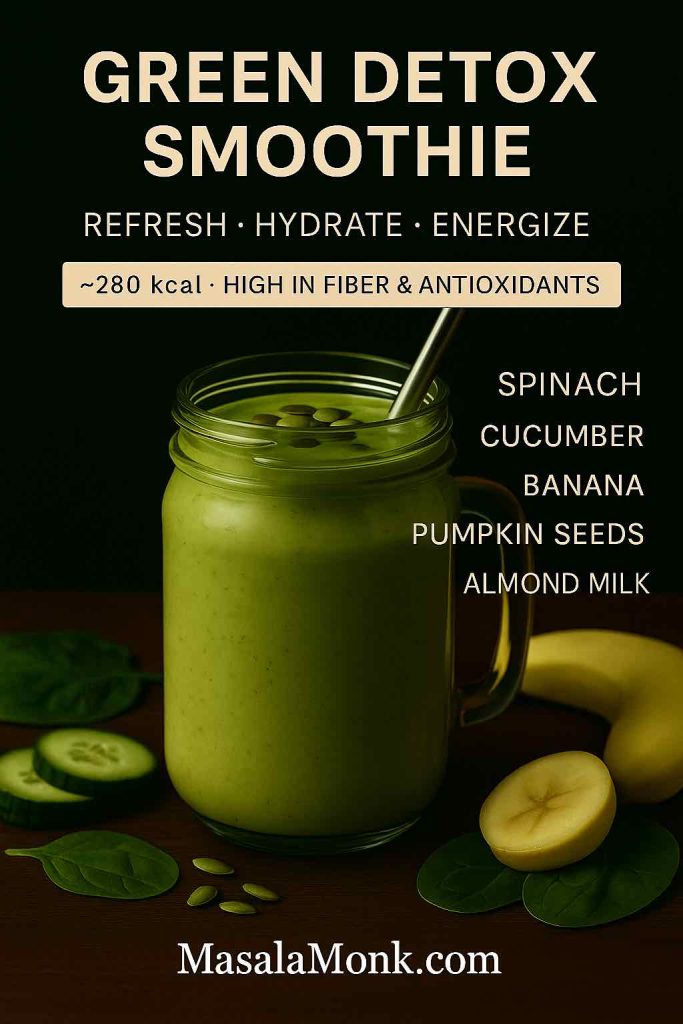
Glass jar of green detox smoothie with spinach, cucumber slices, banana, and pumpkin seeds on a rustic table.
A refreshing green detox smoothie made with spinach, cucumber, banana, pumpkin seeds, and almond milk — packed with fiber and antioxidants to refresh, hydrate, and energize.

Instructions:

  1. Blend soaked pumpkin seeds with almond milk until silky.
  2. Add spinach, cucumber, and banana. Blend until bright green and smooth.
  3. Taste and add honey or maple syrup if you prefer it sweeter.
  4. Adjust thickness with ice cubes or a splash of extra milk.
  5. Pour into a tall glass, top with extra pumpkin seeds, and enjoy fresh.

Nutrition (approx.):
220 kcal | 8g protein | 6g fiber | Rich in magnesium & antioxidants

Pro Tips:

  • Swap spinach for kale if you want a stronger, earthier flavor.
  • Add 1 tbsp fresh lemon juice for extra detox and brightness.
  • Replace banana with frozen mango if you want less sugar and a tangier taste.

👉 For more refreshing blends that cleanse and energize, check out these Turmeric and Moringa Detox Smoothies.


Pumpkin Spice Protein Smoothie

Who says pumpkin spice is only for fall? This smoothie delivers cozy café vibes year-round — with cinnamon, nutmeg, and pumpkin purée — but unlike a latte, it actually keeps you full. With protein powder or Greek yogurt, it’s perfect for weight management while still tasting indulgent.

Ingredients:

  • 2 tbsp pumpkin seeds
  • ½ cup pumpkin purée (unsweetened)
  • 1 frozen banana
  • 1 scoop vanilla protein powder (or ½ cup Greek yogurt)
  • 1 cup oat milk (or milk of choice)
  • ½ tsp cinnamon
  • Pinch of nutmeg & ginger
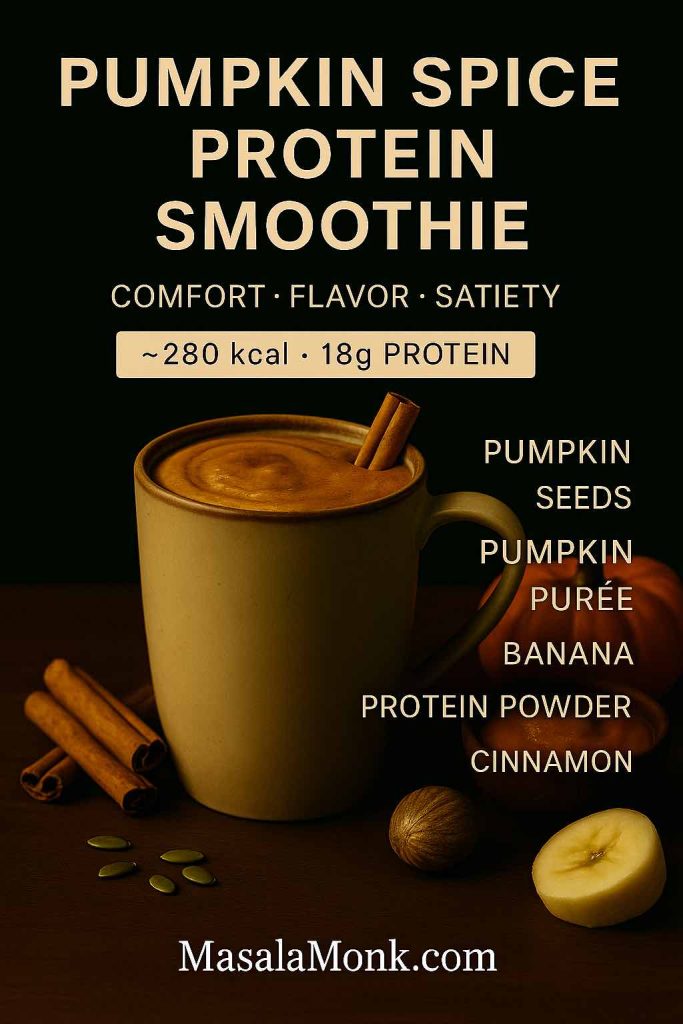
Creamy pumpkin spice protein smoothie in a mug with cinnamon sticks, banana, and pumpkin seeds beside it.
A comforting pumpkin spice protein smoothie featuring pumpkin purée, banana, cinnamon, protein powder, and pumpkin seeds — 18g protein for flavor and satiety.

Instructions:

  1. Add all ingredients to your blender.
  2. Blend until thick, creamy, and well combined.
  3. Pour into a mug, sprinkle cinnamon on top, and enjoy your “healthy pumpkin spice latte in a glass.”

Nutrition (approx.):
280 kcal | 18g protein | 7g fiber | Antioxidant-rich

Pro Tips:

  • No pumpkin purée? Use steamed sweet potato for a similar taste.
  • Want more protein? Double the seeds or use Greek yogurt and powder.
  • For a dessert-like touch, add ½ tsp vanilla extract.

👉 If cozy, protein-rich flavors are your thing, you’ll also love these Almond & Chia Protein Smoothies, which strike the same balance of indulgence and nourishment.


Low-Carb Pumpkin Seed Shake

If you love smoothies but hate the sugar spike, this shake is your best friend. It’s creamy, filling, and designed with low-carb eaters in mind. Avocado brings healthy fats, chia seeds add fiber, and pumpkin seeds tie it all together with protein.

Ingredients:

  • 3 tbsp pumpkin seeds
  • ½ ripe avocado
  • 1 cup unsweetened almond milk
  • 1 handful spinach (optional, extra greens)
  • 1 tbsp chia seeds
  • Stevia or monk fruit (optional, to taste)
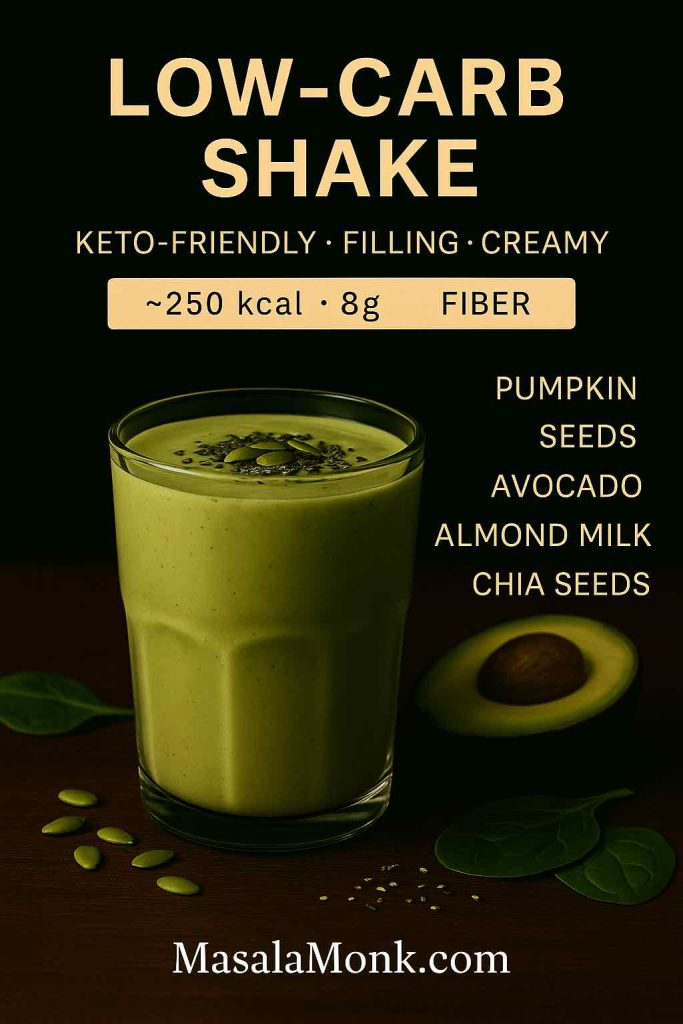
Tall glass of low-carb avocado and chia seed shake topped with pumpkin seeds, with avocado and spinach on the side.
A keto-friendly low-carb shake made with avocado, almond milk, pumpkin seeds, and chia seeds — creamy, filling, and high in fiber.

Instructions:

  1. Blend pumpkin seeds with almond milk until smooth.
  2. Add avocado, spinach, chia, and sweetener.
  3. Blend until thick and creamy.
  4. Adjust sweetness or texture as needed.

Nutrition (approx.):
250 kcal | 10g protein | 8g fiber | Low carb, high healthy fats

Pro Tips:

  • Want it thicker? Add 2–3 ice cubes or use frozen avocado chunks.
  • For a boost, add unsweetened cocoa powder — think “keto chocolate shake.”
  • If you’re not strict keto, a few frozen berries add antioxidants without much sugar.

👉 Looking for more low-carb inspiration? These Macadamia & Flax Keto Smoothies deliver fiber, protein, and creaminess without the sugar crash.


Post-Workout Recovery Smoothie with Pumpkin Seeds

After exercise, your muscles need a mix of protein, carbs, and minerals to recover. This smoothie checks every box: banana restores glycogen, pumpkin seeds deliver protein and magnesium, and cocoa adds antioxidants. It tastes like a chocolate milkshake but works like a recovery drink.

Ingredients:

  • 2 tbsp pumpkin seeds
  • 1 frozen banana
  • 1 scoop whey or plant-based protein powder
  • 1 cup soy milk (or high-protein milk alternative)
  • 1 tsp unsweetened cocoa powder
  • Ice cubes as needed
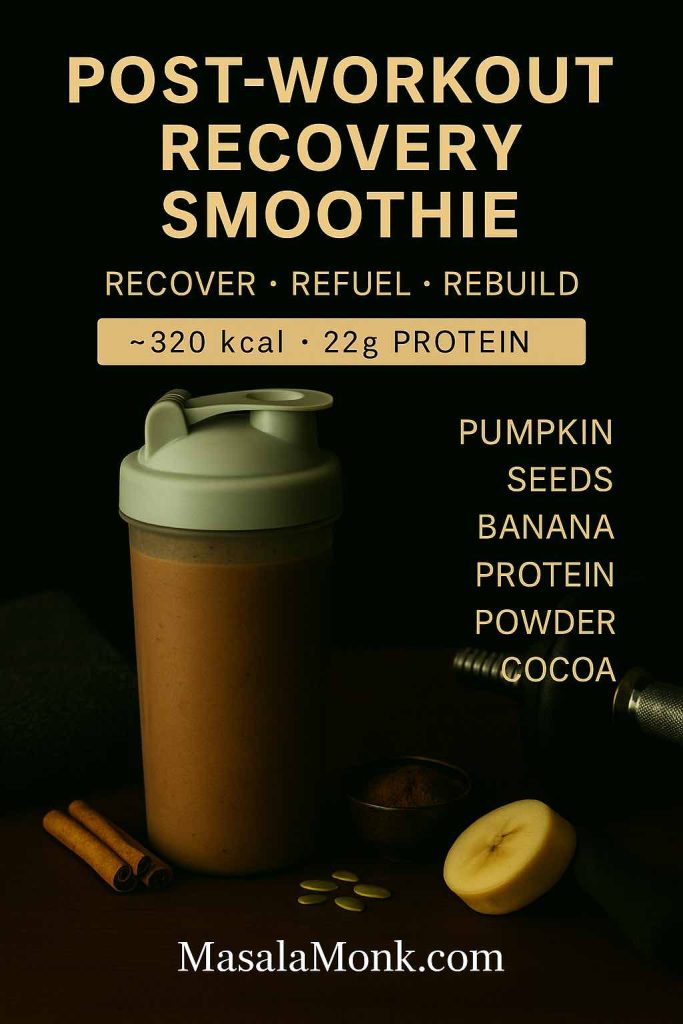
Shaker glass filled with chocolate protein smoothie on a rustic table with banana, cocoa, and pumpkin seeds.
A post-workout recovery smoothie blended with protein powder, cocoa, banana, and pumpkin seeds — 22g protein to help muscles recover and rebuild.

Instructions:

  1. Combine all ingredients in a blender.
  2. Blend until creamy and lump-free.
  3. Pour into a tall glass, sprinkle cocoa on top, and refuel.

Nutrition (approx.):
320 kcal | 22g protein | 8g fiber | Excellent for muscle repair

Pro Tips:

  • Swap banana for frozen pineapple if you prefer a tropical post-workout vibe.
  • Use chocolate protein powder instead of vanilla for double cocoa goodness.
  • Add a pinch of sea salt to replenish electrolytes naturally.

👉 For more recovery-friendly snack options with a protein edge, explore these Healthy Oat Protein Bars – 5 Easy No Sugar Recipes for Snacks.


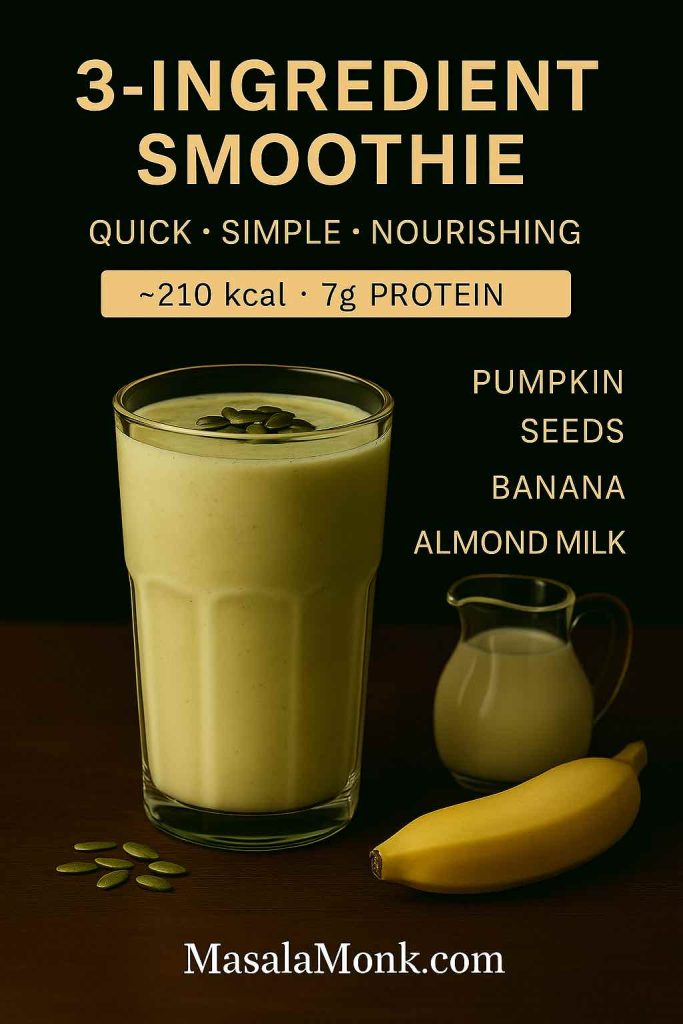
Minimalist 3-Ingredient Smoothie with Pumpkin Seeds

Sometimes, less is more. This smoothie is proof that you don’t need a long ingredient list for something tasty and nourishing. With just three ingredients, it’s quick enough for busy mornings or a mid-day snack that doesn’t derail your goals.

Ingredients:

  • 3 tbsp pumpkin seeds
  • 1 cup almond milk
  • 1 frozen banana
Minimalist banana and almond milk smoothie in a tall glass with a banana and almond milk jug beside it.
A simple 3-ingredient smoothie with banana, almond milk, and pumpkin seeds — quick, nourishing, and easy to prepare at home.

Instructions:

  1. Toss all ingredients into your blender.
  2. Blend until smooth and creamy.
  3. Pour, sip, and enjoy — ready in under 2 minutes.

Nutrition (approx.):
210 kcal | 7g protein | 4g fiber | Simple, quick, satisfying

Pro Tips:

  • Out of banana? Use ½ cup frozen mango for a tangier flavor.
  • Add 1 tsp honey or dates if you like it sweeter.
  • For extra creaminess, toss in 1 tbsp peanut or almond butter.

👉 When you want simple but nourishing, these 10 Creative Chia Pudding Recipes for Every Taste prove that less can indeed be more.

FAQs About Pumpkin Seed Smoothies

Here are the most common questions people ask about pumpkin seeds in smoothies. Each one is answered with practical tips, so you know exactly how to make the most of this nutrient-dense ingredient.


1. Can you put pumpkin seeds in a smoothie?

Yes, absolutely! Pumpkin seeds blend well and add creaminess, protein, and healthy fats. For a smoother texture, soak them overnight before blending.


2. Should I soak pumpkin seeds before making a smoothie?

Soaking is optional but recommended. It softens the seeds, makes blending easier, and can improve digestibility by reducing natural compounds called phytates.


3. How many pumpkin seeds should I add to a smoothie?

A good serving is 2–3 tablespoons. This provides about 7–9 grams of protein, healthy fats, and key minerals like magnesium and zinc — without making the smoothie too calorie-heavy.


4. Are pumpkin seed smoothies good for weight loss?

Yes! The protein and fiber in pumpkin seeds help you feel full longer, which curbs cravings. They also contain healthy fats that support metabolism and balanced blood sugar — both important for weight management.


5. What can I mix with pumpkin seeds in a smoothie?

Pumpkin seeds pair well with bananas, spinach, cucumber, pumpkin purée, avocado, oats, protein powder, and even cocoa. For flavor, try cinnamon, nutmeg, or vanilla.


6. Can I use pumpkin seed butter instead of whole seeds?

Definitely. Pumpkin seed butter gives a creamier texture and blends instantly. Just keep in mind it’s more calorie-dense, so use about 1–2 tablespoons per smoothie.


7. Are pumpkin seed smoothies keto-friendly?

They can be. Skip high-sugar fruits like bananas and use avocado, spinach, almond milk, and a low-carb sweetener instead. Our Low-Carb Pumpkin Seed Shake is a perfect example.


8. Do pumpkin seeds make smoothies taste bitter?

Not if balanced well. Raw seeds can have a slightly earthy flavor, but blending them with fruit, spices, or cocoa masks bitterness. Toasted seeds add a nuttier, richer taste.


9. When is the best time to drink a pumpkin seed smoothie?

  • Morning: for steady energy and satiety.
  • Post-workout: for muscle recovery (add protein powder).
  • Evening snack: to curb cravings with healthy fats and tryptophan (which supports better sleep).

10. Can I drink a pumpkin seed smoothie every day?

Yes! A daily smoothie with 2–3 tablespoons of pumpkin seeds is safe and healthy for most people. Just be mindful of overall calories, especially if your goal is weight loss.


11. Do pumpkin seeds help with digestion?

Yes. They’re high in dietary fiber, which supports gut health and regularity. Pairing them with leafy greens or cucumber in smoothies boosts this effect.


12. Can I use store-bought roasted pumpkin seeds?

Yes, but choose unsalted and unflavored ones. Salted or spiced seeds may alter the taste and nutrition. For the best texture, use raw or soaked seeds.

Final Thoughts

Pumpkin seeds may be small, but when you blend them into a smoothie, they deliver big benefits. From protein and fiber to healthy fats and essential minerals, each sip works to keep you full, energized, and balanced.

What makes them even better is their versatility. With recipes that cover detox mornings, cozy pumpkin spice cravings, low-carb lifestyles, post-workout recovery, and even quick grab-and-go blends, there’s a smoothie for every mood and goal.

At the end of the day, a pumpkin seed smoothie isn’t just about nutrition — it’s about building a simple ritual of self-care. One glass can set the tone for your day, help you stay on track with your goals, and remind you that healthy choices can be both delicious and satisfying.

So grab your blender, try one of these recipes, and see how a handful of pumpkin seeds can transform your smoothie — and maybe even your routine. Cheers to better health, one sip at a time 🥤✨

Posted on Leave a comment

Apple Juice for Weight Loss: 5 Ways It Can Help You Shed Pounds

Apple Juice for Weight Loss

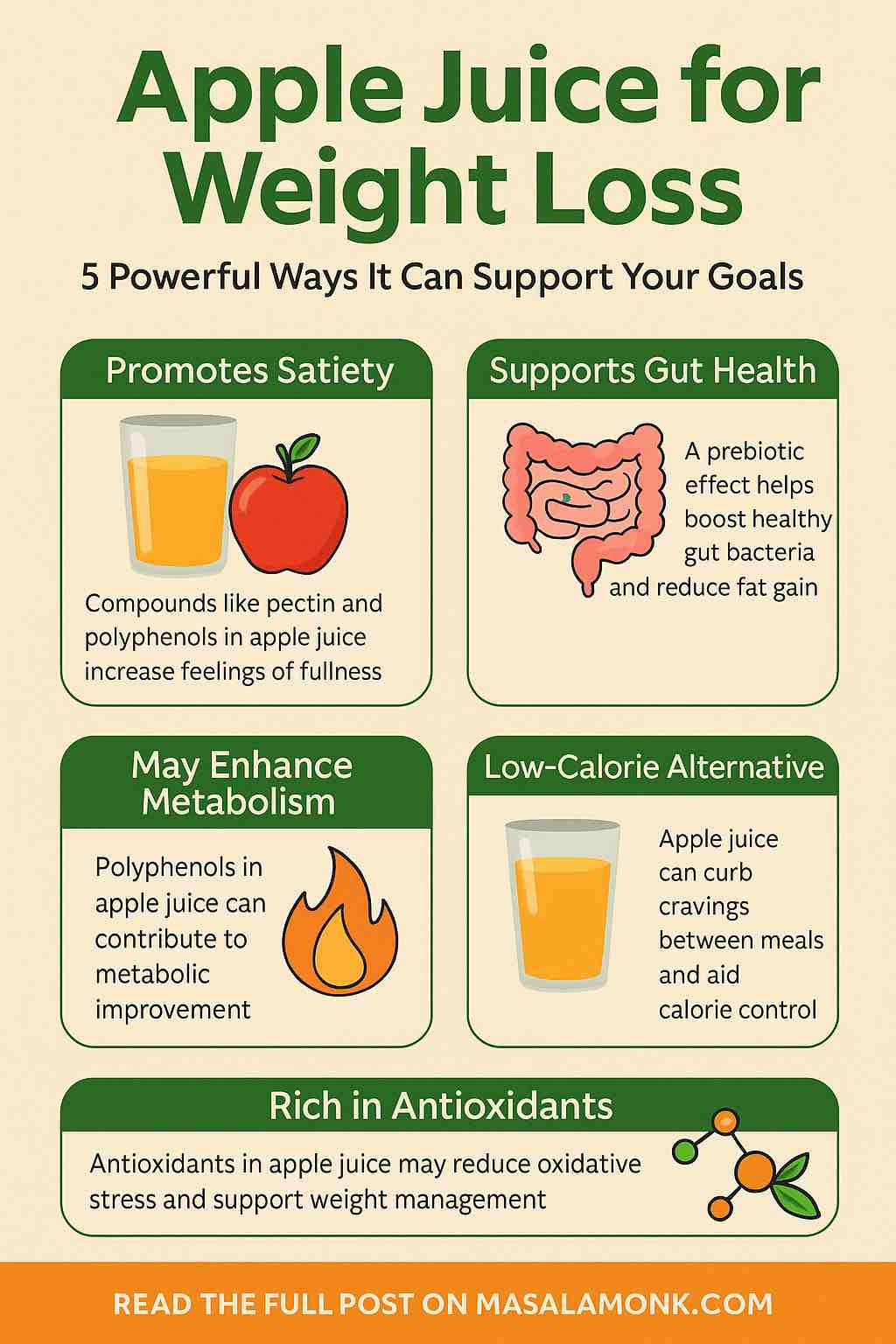
Apple juice isn’t usually the first thing that comes to mind when we talk about weight loss. More often than not, it’s the villain in conversations about sugar and empty calories. But is that the full story? Recent studies and a closer look at how apple juice interacts with our gut, metabolism, and cravings suggest there may be more to this fruit-based beverage than meets the eye. In this article, we explore five science-backed ways apple juice can support your weight loss journey—when used smartly.


1. Boosts Gut Health with Prebiotic Properties

Recent animal studies have revealed that unfiltered apple juice, especially from varieties like Fuji and Tsugaru, can dramatically alter the gut microbiota. In rats fed a high-fat diet, daily apple juice consumption led to:

  • A 3x increase in Lactobacillus species
  • A 10x increase in Bifidobacterium
  • Lower weight gain
  • Reduced fat accumulation in the liver

Why does this matter? A diverse and balanced gut microbiome has been directly linked to better weight regulation, improved digestion, and decreased inflammation. While human trials are still limited, this research is promising and suggests apple juice may help create a gut environment conducive to weight control.

Practical Tip: Choose cloudy or unfiltered apple juice—it retains more of the polyphenols and pectin that fuel gut-friendly bacteria.


2. Curbs Cravings and Can Be a Smart Snack Substitute

While apple juice lacks the fiber found in whole apples, it can still be a useful mid-meal snack if chosen wisely. A standard 240 mL (1 cup) serving contains roughly 114 calories—far fewer than many processed snack foods.

When consumed in moderation and paired with a protein or fat source, it may help stabilize blood sugar and prevent binge eating.

Practical Tip: Drink a small glass of apple juice with a boiled egg or a handful of almonds to stave off cravings between meals.


3. Contains Polyphenols That Enhance Metabolism

Apple juice is rich in antioxidants and polyphenols, such as quercetin and chlorogenic acid, which have been shown to:

  • Improve lipid metabolism
  • Increase fat oxidation
  • Reduce oxidative stress (which contributes to obesity)

Though whole apples contain more of these compounds—especially in the skin—cloudy apple juice still delivers a meaningful dose.

Practical Tip: Look for juices labeled “cloudy” or “not from concentrate.” These typically contain more polyphenols than clear, filtered juices.


4. Supports Heart Health and Inflammation Control

Weight loss isn’t just about shedding pounds—it’s about improving overall health. Apple juice has been linked in several studies to reduced markers of inflammation and improved cardiovascular health, both of which are often compromised in people struggling with obesity.

Lowering systemic inflammation may also improve insulin sensitivity and metabolic efficiency, making weight loss easier over time.

Practical Tip: Incorporate apple juice as part of a broader anti-inflammatory diet, rich in vegetables, whole grains, fatty fish, and healthy fats.


5. Encourages Better Hydration with Flavor Variety

Hydration plays a critical role in metabolism and appetite regulation. Sometimes, what feels like hunger is actually thirst. Apple juice can offer a flavorful alternative to plain water and can be particularly effective if you dislike drinking plain fluids.

Just don’t overdo it: excessive consumption can backfire due to the natural sugars. A small glass, especially when diluted with water or sparkling water, can be a refreshing way to stay hydrated.

Practical Tip: Mix 50% apple juice with 50% water or soda water for a light, hydrating drink with fewer calories and sugar.


A Word of Caution: Juice Isn’t a Magic Bullet

While the benefits of apple juice are intriguing, it’s important to keep things in perspective:

  • It lacks the fiber and chewing resistance of whole fruit, which are important for satiety.
  • Overconsumption can lead to excess calorie intake.
  • It may spike blood sugar in some individuals, especially those with insulin resistance.

Better Together: Use apple juice as a complement to, not a replacement for, a balanced, whole-food diet.


Conclusion: A Strategic Ally, Not a Shortcut

Apple juice can absolutely be part of a smart weight loss strategy—but only when used with intention. By choosing the right type (cloudy, no added sugar), keeping portions modest, and pairing it with protein or fiber-rich foods, you can tap into its gut-supportive, metabolism-enhancing, and craving-busting benefits.

As always, real results come from the sum of your habits. Let apple juice play a helpful, flavorful role in a sustainable approach to wellness.


Have you tried including apple juice in your weight loss journey? Share your experience below or ask questions—we’d love to hear from you!

10 FAQs about Apple Juice and Weight Loss

1. Can I drink apple juice every day and still lose weight?
Yes, but moderation is key. Stick to about 240 mL (1 cup) per day, preferably cloudy, no-added-sugar apple juice. Make sure it fits within your overall calorie goals.

2. What kind of apple juice is best for weight loss?
Choose cloudy or unfiltered apple juice. It contains more polyphenols and pectin, which support gut health and metabolism better than clear, filtered versions.

3. Is apple juice better than whole apples for weight loss?
No—whole apples are superior due to their fiber and satiety benefits. Juice can complement your diet but shouldn’t replace whole fruit.

4. Will apple juice raise my blood sugar levels?
It can, especially if consumed in large quantities or without balancing nutrients. Pairing it with protein or fat (like nuts or yogurt) can reduce the blood sugar spike.

5. Can I drink apple juice on an empty stomach in the morning?
You can, but for better energy and blood sugar stability, pair it with a protein- or fiber-rich food. This helps avoid insulin spikes and early hunger pangs.

6. What are some healthy ways to include apple juice in my diet?

  • Mix with sparkling water for a low-calorie beverage
  • Use in smoothies as a natural sweetener
  • Pair with boiled eggs or a small portion of nuts
  • Add to marinades or vinaigrettes

7. How does apple juice support gut health?
Unfiltered apple juice contains prebiotic compounds like pectin and polyphenols, which nourish beneficial gut bacteria linked to better weight management.

8. Are there any risks of drinking apple juice for weight loss?
Yes—overconsumption can lead to excess sugar and calories, potentially hindering weight loss. It may also affect dental health if consumed frequently without rinsing.

9. Is there a best time of day to drink apple juice for weight loss?
Mid-morning or mid-afternoon, between meals, is ideal. It can curb cravings and give a gentle energy boost without interfering with your main meals.

10. Can kids or people with diabetes use apple juice for weight control?
Kids should consume juice sparingly. People with diabetes should consult a doctor or dietitian before adding juice, as it can impact blood glucose levels.

Posted on Leave a comment

Surprise Everyone with This Peach Condensed Milk Cake

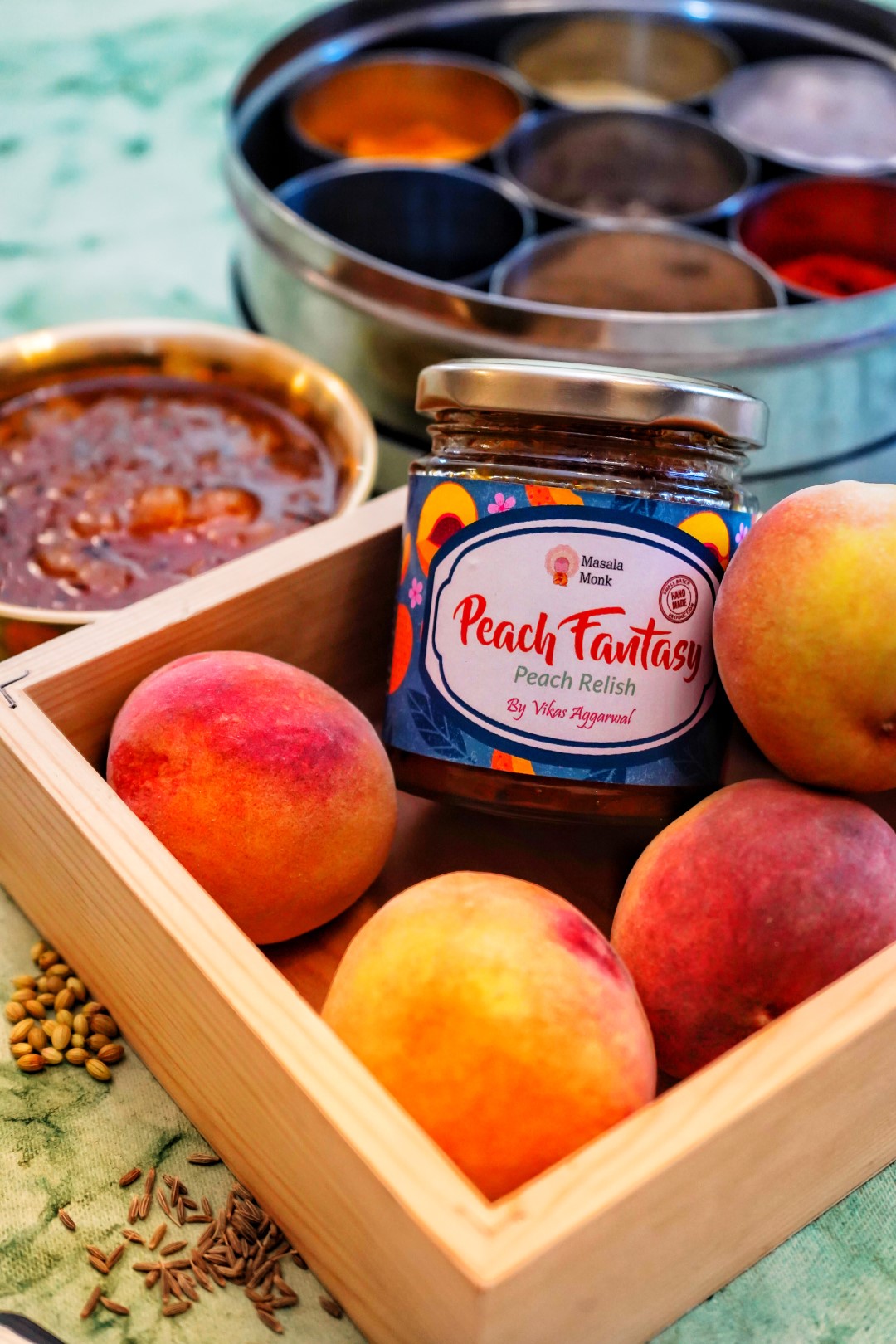
Peach Fantasy by Masala Monk

Hello, food lovers! 🍽️💕 Today, we’re diving into a delightful dessert recipe that’s sure to impress everyone at your next gathering. We’re talking about a Peach Condensed Milk Cake, a dessert that’s not only incredibly flavorful but also easy to make! This fantastic recipe comes from the YouTube channel Amo Receitas, a wonderful resource for anyone looking for simple yet tasty meal ideas.

🎉 Join the Foodie Community! 🍽️

If you try these recipes or have other delicious recipes to share, join the vibrant and engaging food lovers community on Facebook. It’s a place where you can share your culinary experiments, discover new recipes, and connect with fellow food enthusiasts.

🍑 The Magic of Peach Condensed Milk Cake 🍰

Peach Condensed Milk Cake is a dessert that combines the sweet and tangy flavor of peaches with the creamy richness of condensed milk. The result is a cake that’s moist, flavorful, and absolutely delicious. Plus, it’s a versatile dessert that can be served at any occasion, from a casual family dinner to a special celebration.

🍽️ The Recipe: How to Make Peach Condensed Milk Cake 🍑

The recipe starts with the cake batter, which is made from 3 1/2 cups of flour, 1 cup of sugar, 3 eggs, 3/4 cup of oil, 1 1/4 cup of milk, 1 tablespoon of baking powder, and 1 teaspoon of vanilla sugar. The ingredients are mixed together until smooth.

Next, the batter is poured into a greased baking dish. Slices of peach are arranged on top of the batter, and then 1 1/2 cups of condensed milk is poured over the peaches. The cake is then baked until golden and set.

🍴 Enjoying Peach Condensed Milk Cake: Tips and Suggestions 🍽️

When enjoying Peach Condensed Milk Cake, here are a few tips and suggestions:

  • Feel free to adjust the amount of condensed milk to suit your taste. If you prefer a less sweet cake, you can reduce the amount of condensed milk.
  • This cake is best served chilled, so consider making it a day ahead and storing it in the refrigerator overnight.
  • Peach Condensed Milk Cake makes a great dessert for any meal. Serve it with a cup of coffee or tea for a delightful afternoon treat.

🎉 Join the Foodie Community! 🍽️

If you try this recipe or have other delicious recipes to share, join the vibrant and engaging food lovers community on Facebook. It’s a place where you can share your culinary experiments, discover new recipes, and connect with fellow food enthusiasts.

🙏 Credits 🙏

A big thank you to Amo Receitas for sharing this fantastic Peach Condensed Milk Cake recipe. Their channel is a treasure trove of delicious recipes that are easy to follow and absolutely delightful to taste. If you’re a fan of simple and tasty recipes, be sure to check out their YouTube channel for more culinary inspiration

So, are you ready to bring a taste of this delicious Peach Condensed Milk Cake into your kitchen? With this recipe, you can enjoy a delicious and unique dessert right at home. Happy cooking! 🍽️🎉

Remember to check out more amazing recipes on Amo Receitas‘s YouTube channel. Enjoy the delicious day! 🌞🍡🌭

Posted on Leave a comment

4 Simple and Delicious Toast Recipes!

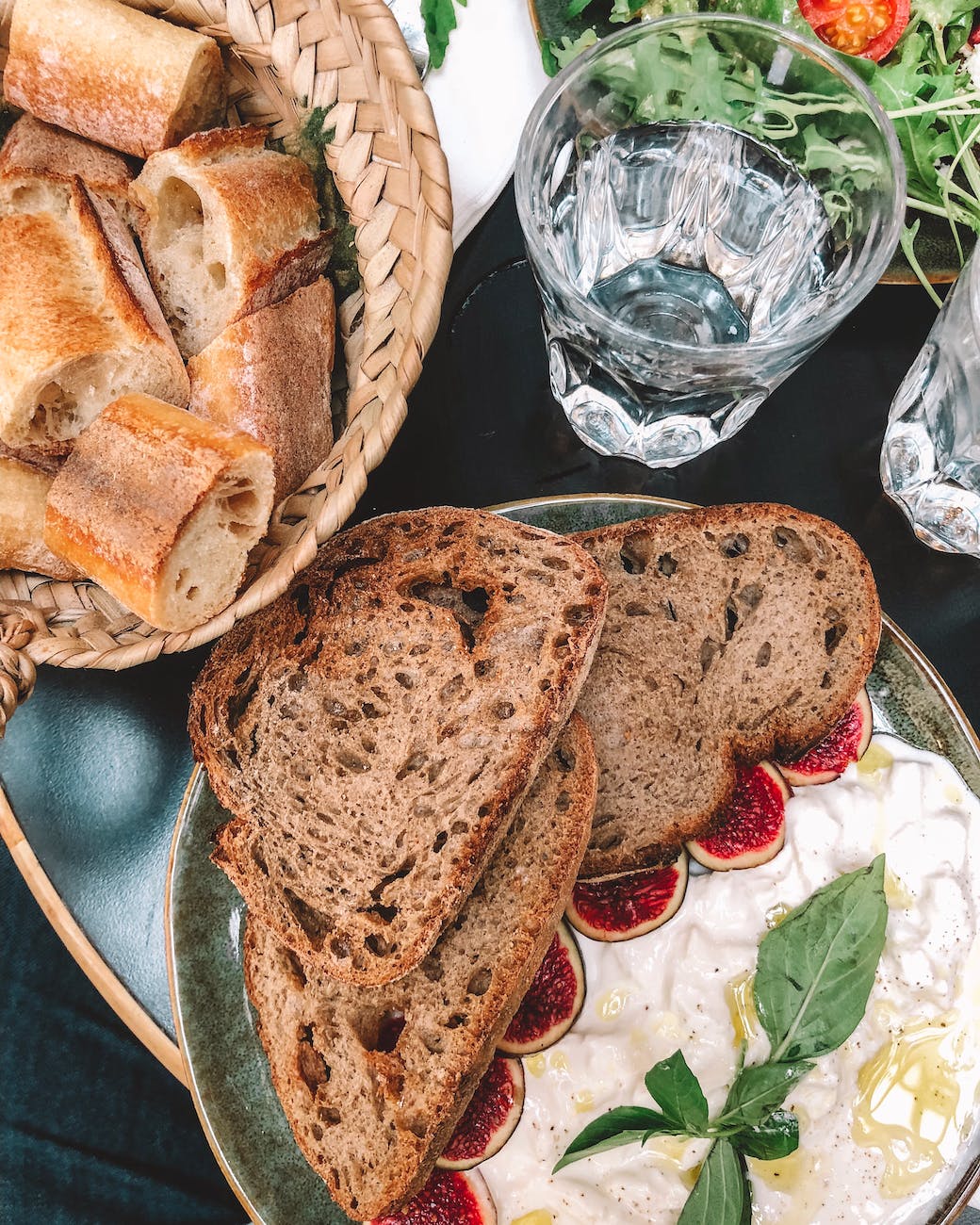
bread on plate beside glas

Hello, food lovers! 🍽️💕 Today, we’re diving into the world of quick and easy breakfast recipes with a focus on a staple food item: toast. But this isn’t just any toast. We’re talking about four unique and delicious toast recipes that will revolutionize your breakfast routine. These recipes come from the YouTube channel Cooking Everyday, a fantastic resource for anyone looking for simple yet tasty meal ideas.

🍞 The Magic of Toast 🍳

Toast is a breakfast staple in many households. It’s quick, easy, and can be customized in countless ways. But if you’re tired of the same old butter and jam, these four toast recipes are sure to shake things up. From egg-filled bread to honey toast, these recipes take toast to a whole new level.

🍽️ The Recipes: How to Make Delicious Toast 🍞

Recipe 1: Egg in a Hole Toast 🍳

This recipe starts with a slice of bread and a glass. The glass is used to cut a hole in the middle of the bread. The bread is then fried in butter on medium heat. An egg is cracked into the hole, seasoned with salt and black pepper, and topped with green onions and cheddar cheese. The inside of the bread is placed on top, and the whole thing is flipped over and fried until golden brown.

Recipe 2: Scrambled Egg Toast 🍳

This recipe begins with three eggs, which are seasoned with salt, black pepper, and paprika, and mixed well. Parsley, green onions, and mozzarella cheese are added to the egg mixture. The bread is dipped in the egg mix and fried in butter for 2-3 minutes on each side.

Recipe 3: Stuffed Egg Toast 🍳

This recipe involves one egg, chopped green onion, chopped bell pepper, salt, and black pepper. The mixture is poured inside a hole cut in a slice of bread, topped with cheddar cheese, and fried for 3-5 minutes on each side.

Recipe 4: Tomato and Cheese Toast 🍞

This recipe uses stale bread, eggs, salt, black pepper, tomato sauce, mozzarella cheese, grape tomatoes, parsley, and olive oil. The bread is cut into pieces, dipped in the egg mixture, and fried. Tomato sauce and cheese are added on top, along with grape tomatoes and parsley. The toast is fried for an additional 3-5 minutes.

🍴 Enjoying Your Delicious Toast: Tips and Suggestions 🍽️

When enjoying these toast recipes, here are a few tips and suggestions:

  • Feel free to adjust the ingredients to suit your taste. If you prefer a different type of cheese or want to add more vegetables, go for it!
  • These toast recipes are best enjoyed hot from the pan. They make a great breakfast or snack, and are sure to impress your family and friends.
  • Don’t be afraid to get creative with your toast. These recipes are just a starting point. The possibilities are endless!

🎉 Join the Foodie Community! 🍽️

If you try these recipes or have other delicious recipes to share, join the vibrant and engaging food lovers community on Facebook. It’s a place where you can share your culinary experiments, discover new recipes, and connect with fellow food enthusiasts

So, are you ready to bring a taste of these delicious toast recipes into your kitchen? With these recipes, you can enjoy a delicious and unique breakfast right at home. Happy cooking! 🍽️🎉

Remember to check out more amazing recipes on Cooking Everyday‘s YouTube channel. Enjoy the delicious day! 🌞🍡🌭