
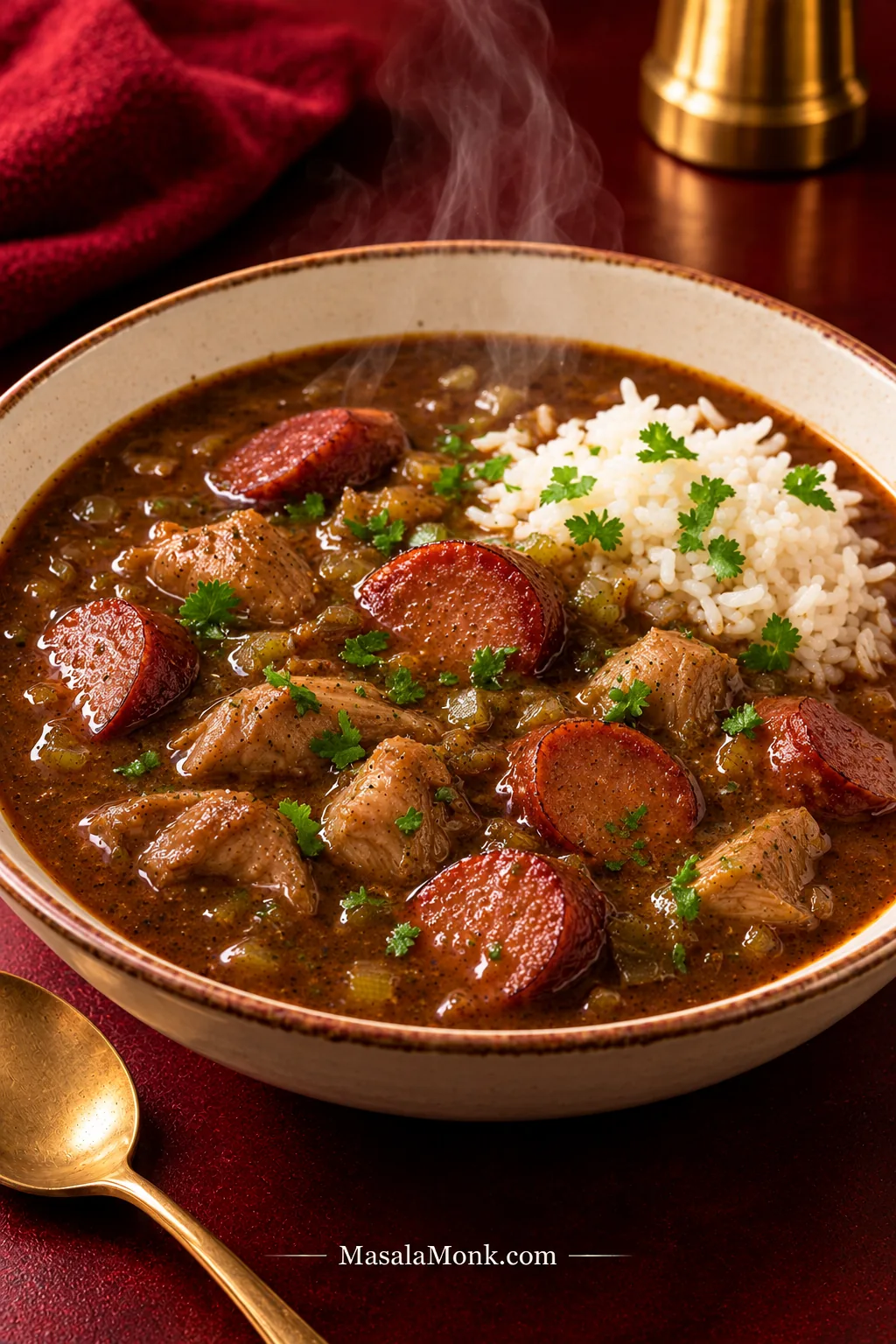
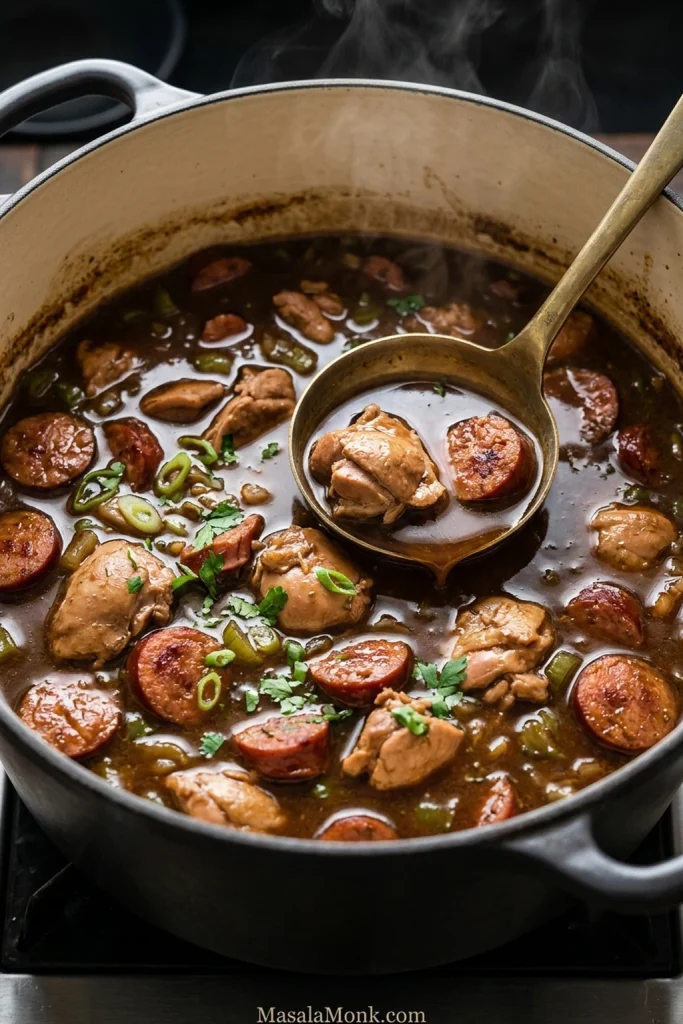
A really good gumbo smells deeply toasted before you even taste it, with dark roux, browned andouille, onion, celery and green bell pepper rising in the steam. The broth should cling lightly to the chicken and sausage, then slip easily around the rice, with tender chicken and andouille that keeps some bite.
This gumbo recipe is a Cajun-leaning chicken and andouille version built around a deep brown roux, onion, celery, green bell pepper and chicken stock. It stays tomato-free, while okra and filé powder remain optional.
If the roux is the part that makes you nervous, remember one thing: use the clock to plan, but let the roux tell you when it is ready. Watch the color. Smell the change from raw flour to deeply toasted flour. And once it gets properly brown, stay with the pot.
Before You Start the Roux
A 6- to 8-quart (5.7- to 7.6-liter) heavy-bottomed pot gives you enough room to stir safely. A light-colored interior also makes the roux easier to read as it darkens.
One safety point matters: dark roux is extremely hot. When the vegetables go in, they can spit and steam hard, so use a long spoon or spatula and keep your face and hands back from the pot.
Gumbo Recipe: Rich, Hearty & Full of Flavor
A dark-roux chicken and andouille gumbo with tender thighs, browned sausage and a rich broth that stays silky and flowing.
Most of the hands-on work is front-loaded. Once the gumbo reaches a gentle simmer, the pace slows considerably.
Equipment
- 6- to 8-quart (5.7- to 7.6-liter) heavy-bottomed Dutch oven or pot
- Flat-edged wooden spoon or heat-resistant spatula
- Whisk
- Ladle
Ingredients
Chicken and andouille
- 1 lb (454 g) andouille sausage, cut into roughly ½-inch (1.25-cm) rounds or half-moons
- 1½ lb (680 g) boneless, skinless chicken thighs, cut into roughly 1½-inch (4-cm) pieces
- ¾ tsp (about 4 g) fine sea salt, divided, plus more if needed
- 1 tsp freshly ground black pepper, divided
Dark roux
- ¾ cup (90 g) all-purpose flour
- ¾ cup (180 ml) neutral high-heat oil, such as avocado, canola, peanut or vegetable oil
Trinity and aromatics
- 1 large yellow onion, diced — about 10 oz (280–300 g)
- 1 large green bell pepper, diced — about 6 oz (170–180 g)
- 3 celery ribs, diced — about 5 to 6 oz (150–170 g)
- 5 garlic cloves, finely minced — about 20 g
Broth and seasoning
- 6 cups (1.42 L) low-sodium chicken stock, warmed
- Up to 1 additional cup (240 ml) warm chicken stock, kept in reserve
- 1 tsp sweet paprika
- 1 tsp dried thyme
- ¼ tsp cayenne pepper, or up to ½ tsp for more heat
- 2 bay leaves
- 1 tbsp (15 ml) Worcestershire sauce
To finish and serve
- 4 scallions, thinly sliced
- ¼ cup (15 g) chopped flat-leaf parsley
- Hot sauce, to taste
- 3 to 4 cups cooked long-grain white rice
- Filé powder, optional, for finishing or serving
Instructions
Prepare and Brown the Andouille
- Prepare everything first. Dice the onion, bell pepper and celery, mince the garlic, and slice the sausage. Measure the flour, oil, stock and seasonings. Cut the chicken into roughly 1½-inch (4-cm) pieces and return it to the refrigerator until Step 8. Keep the onion, bell pepper and celery beside the stove and the stock warm.
- Brown the andouille. Heat the pot over medium heat. Add the sausage and cook for 5 to 7 minutes, turning occasionally, until the cut faces develop deep brown patches and some fat renders out. Transfer the sausage to a bowl.
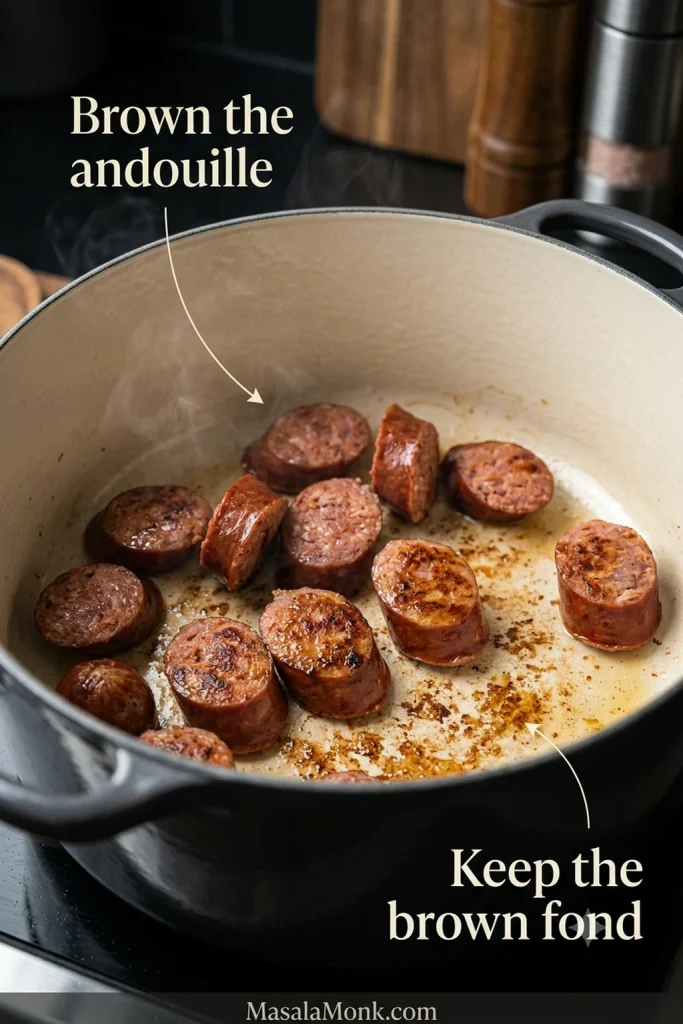
- Drain the excess fat. Pour or spoon off the loose rendered fat. Leave light-to-medium brown fond if it is not scorched, but wipe away anything very dark or black. Add the measured ¾ cup (180 ml) neutral oil for the roux.
Make the Dark Roux
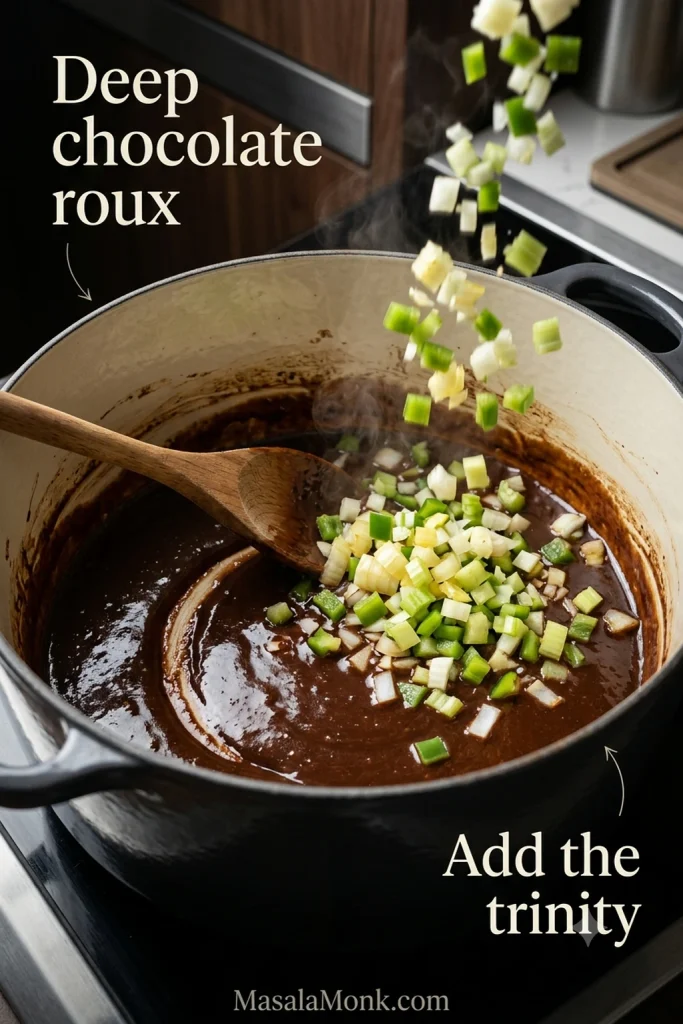
- Make the roux. Keep the heat at medium and gradually stir in the flour until smooth. During the pale stages, stir very frequently and keep scraping the entire bottom of the pot. Once the roux reaches peanut-butter brown, stay with it and stir continuously as it passes through copper and milk chocolate toward deep chocolate. This may take roughly 30 to 45 minutes on a moderate burner. For a visual comparison, see the dark roux stages. Color and aroma decide when it is ready. If it smells sharply scorched or develops burnt black flecks, start again.
- Add the trinity. As soon as the roux reaches deep chocolate, carefully stir in the onion, green bell pepper and celery, keeping your hands and face back from the pot. The vegetables will hiss and steam, and the smell changes almost immediately from toasted flour to onion, pepper and celery. Cook for 6 to 8 minutes, stirring frequently, until the onion looks glossy and softened around the edges. The celery and pepper do not need to disappear. Add the garlic and cook for another 30 to 60 seconds. Once the vegetables are in, the most nerve-racking part is behind you.
Loosen the Roux and Build the Broth
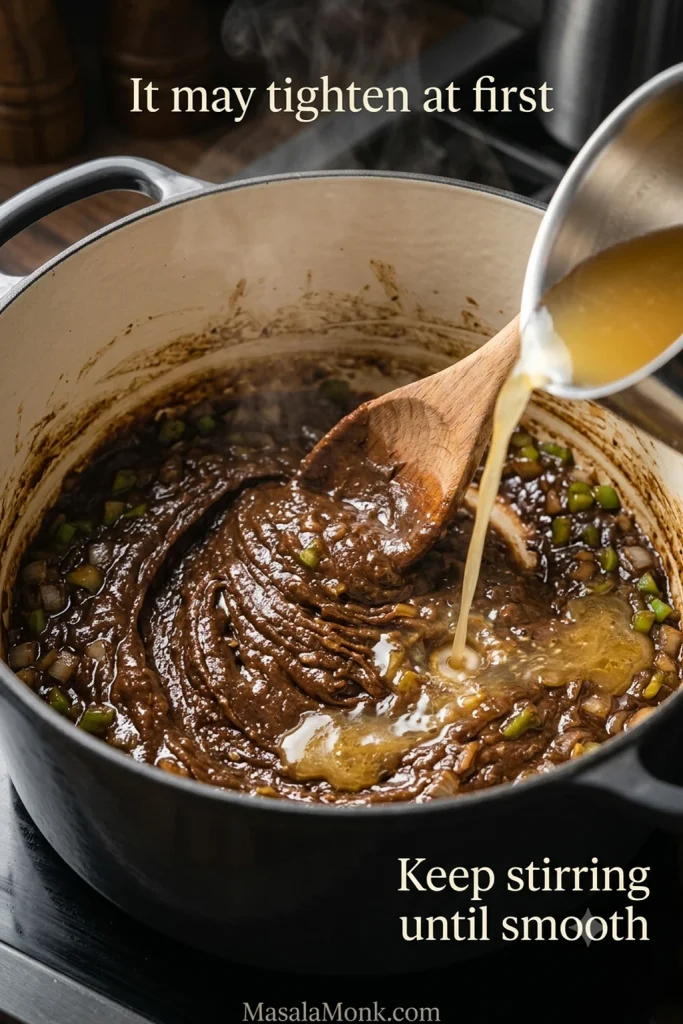
- Loosen the roux. Carefully add about 1 cup (240 ml) warm stock. The roux may tighten into a very thick paste at first; that is normal. Keep stirring or whisking until completely smooth. Add a second cup of stock and smooth it out again before moving on.
- Build the broth. Stir in the paprika, thyme, cayenne, Worcestershire sauce and bay leaves. Gradually add the remaining 4 cups (950 ml) of the starting stock. Keep the additional 1 cup (240 ml) of stock aside for later adjustments. Once the stock is smooth, the pot becomes much more forgiving.
Simmer and Check the Consistency
- Add the chicken and sausage. Take the chicken from the refrigerator and season it with ¼ teaspoon of the measured salt and ½ teaspoon black pepper. Add it to the hot broth along with the browned andouille and any juices collected in the sausage bowl. Bring the gumbo to a simmer, then lower the heat until the surface bubbles gently.
- Simmer. Cook uncovered for 60 to 75 minutes, stirring occasionally and scraping the bottom of the pot. Skim away any obvious pool of excess surface fat. The chicken should become very tender; some pieces may soften and break slightly around the edges. As the gumbo cooks, the broth should become rounder and more integrated, rather than tasting separately of stock, roux and seasoning. If you use a thermometer, the thickest chicken pieces should reach at least 165°F (74°C).
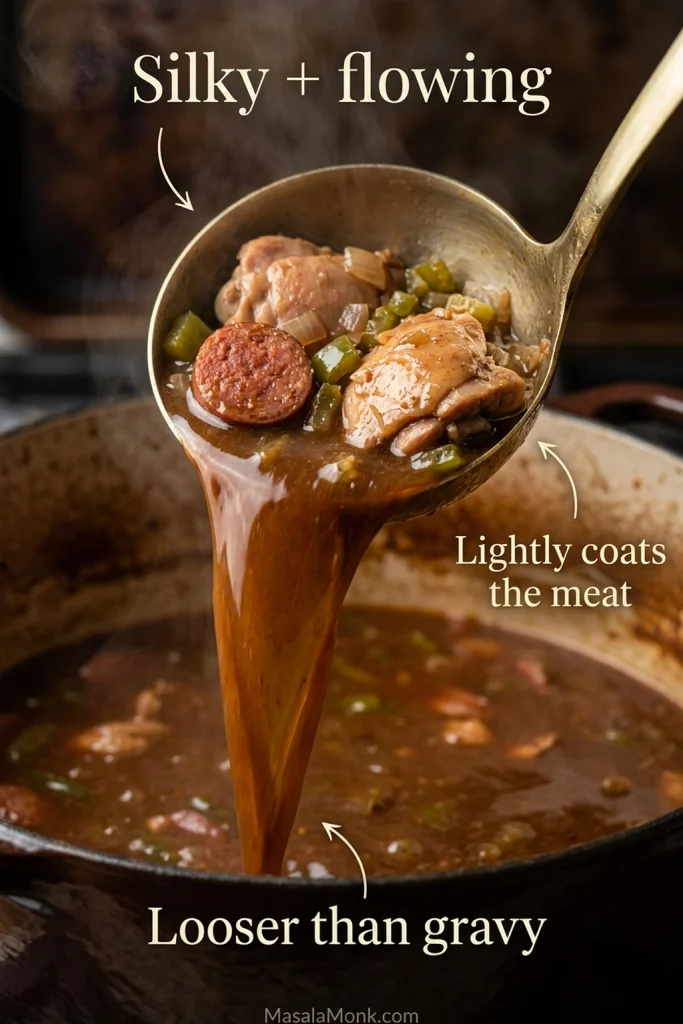
- Check the consistency. The broth should lightly coat the meat but still move freely from the ladle. When the gumbo is too thick, add reserved warm stock ¼ cup (60 ml) at a time. If it still seems thin, give it another 10 to 15 minutes uncovered before changing anything else. Do not worry if it looks looser than gravy; a dark-roux gumbo should still flow. The gumbo consistency guide shows the finished texture to aim for.
Finish and Serve
- Finish the seasoning. Remove the bay leaves. Add some or all of the remaining ½ teaspoon salt and ½ teaspoon black pepper, tasting between additions. Before reaching for more cayenne, taste for roasted depth from the roux, smoke from the sausage and enough salt to make both come through. A salty andouille may mean you need very little extra salt. Add more cayenne or hot sauce only if you want more heat. Stir in the scallions and parsley.
- Rest and serve. Let the gumbo stand for 10 minutes, then skim any last obvious excess fat. Ladle it into bowls with roughly ⅓ to ½ cup cooked white rice per serving. If you need the rice method too, use our guide to cook fluffy long-grain white rice. Offer hot sauce and filé powder at the table if you like.
Recipe Notes
Sausage and salt: Andouille varies considerably in sodium, so make the final salt adjustment only after the gumbo has simmered.
Optional okra: Sauté 8 to 12 oz (225–340 g) sliced okra separately for 10 to 15 minutes; add it during the final 20 to 30 minutes of simmering. See how okra fits this version.
Optional filé: Offer it at the table, or stir it into the gumbo only after the pot comes off the boil. For the timing and amount, see how to use filé powder.
Rotisserie or other already-cooked chicken: Add it only during the final 10 to 15 minutes so it heats through without drying out.
Longer simmer: Another 30 to 60 minutes at a very gentle simmer is fine if you prefer a longer-cooked gumbo. Watch the liquid level and use some of the reserved stock if needed. The chicken will become softer and may break apart more.
About this recipe: This version draws on established Louisiana gumbo methods, chef recipes and recurring problems reported by home cooks. MasalaMonk has not independently kitchen-tested this exact formulation.
Gumbo Guide: Roux, Texture and Key Choices
Roux & texture
Ingredient choices
Fix, serve & keep
What Kind of Gumbo Is This?
Gumbo changes from kitchen to kitchen across Louisiana, so there isn’t one ingredient list that makes every pot “correct.” Okra, filé, tomatoes and proteins all vary with the region, household and style of gumbo; Louisiana’s own gumbo traditions reflect that variety.
This one leans Cajun: chicken and sausage gumbo with andouille, a dark flour-and-oil roux, onion, celery and green bell pepper, and chicken stock.
Dark Roux for Gumbo
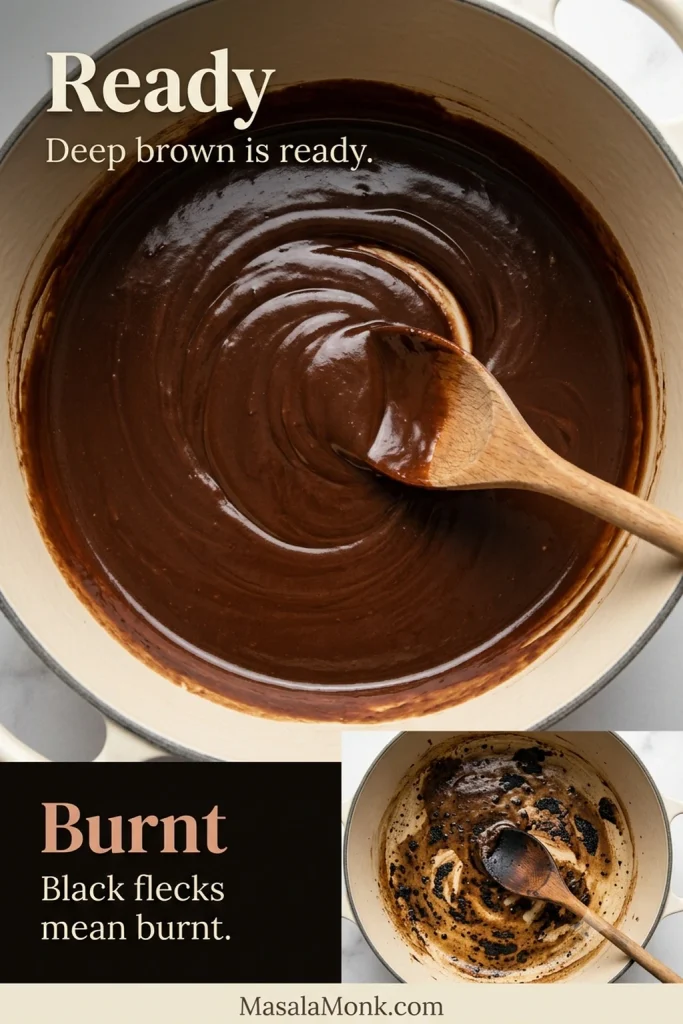
Aim for a deep chocolate-brown roux: dark, deeply toasted and fragrant, but never black or acrid.
Your stove and pot decide the pace more than another recipe’s timer does. Color and smell are the better guides.
What Dark Roux Looks and Smells Like
- Early: pale, then blond; the raw-flour smell gradually disappears.
- Middle: peanut-butter brown to copper; the aroma becomes clearly toasted and nutty.
- Target: milk chocolate to deep chocolate; roasted, fragrant and dark without smelling scorched.
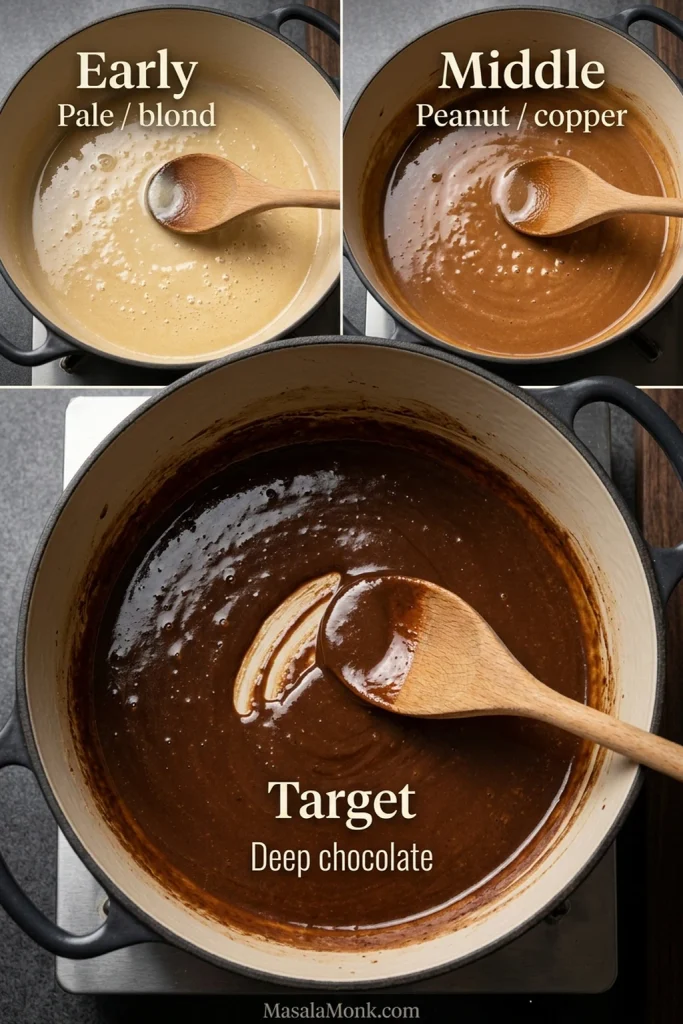
The final color changes happen much faster than the early ones, so the distance between copper, chocolate and scorched can shrink to a matter of minutes.
Why Dark Roux Behaves Differently
The darker flour gets, the more deeply toasted it tastes and the less strongly it thickens. A dark gumbo can taste remarkably rich while still pouring easily from the ladle.
A heavy Dutch oven also holds heat after you turn the burner down. Keep the diced onion, celery and green bell pepper close so they can go in as soon as the roux reaches the right color and quickly cool the mixture.
Burnt roux is not subtle. If it smells harsh or acrid, trust your nose. Obvious black scorched flecks are another sign it has gone too far. Start over instead of carrying that bitterness into the chicken, sausage and stock.
How Thick Should Gumbo Be?
The finished gumbo should be silky and flowing—richer than broth, but noticeably looser than gravy.
A dark roux gives up some of its thickening power as the flour toasts, so a deeply flavored gumbo can remain surprisingly fluid. That is not a failure. The broth should lightly coat the chicken and sausage, then move around the rice when you tilt the bowl.
Other roux options
Jarred roux: perfectly legitimate. Some products are warmed directly in the pot before the vegetables go in; others are whisked into hot liquid. Brands vary, so follow the amount and incorporation method on the jar instead of replacing homemade roux cup-for-cup.
Very fast roux: experienced cooks can take roux dark over high heat in a fraction of the time. The margin for error becomes tiny. Moderate heat gives a first-time cook much more room to react.
The Ingredient Choices That Matter
Chicken thighs stay tender more reliably than breast through a long, gentle simmer. Andouille brings smoke, garlic, spice and a coarse structure that can stay distinct after an hour in the broth.
Onion, green bell pepper and celery form the trinity and soften into the roux to build the gumbo’s aromatic base. The same trinity also flavors our Louisiana red beans and rice, where creamy beans provide the body instead of roux.
Andouille and Worcestershire sauce already bring salt to the pot, which is why low-sodium chicken stock gives you more control at the end. Paprika, thyme, black pepper and a modest amount of cayenne support the dark roux without burying it. A Cajun seasoning blend can work too, but check its sodium before deciding how much additional salt the pot needs.
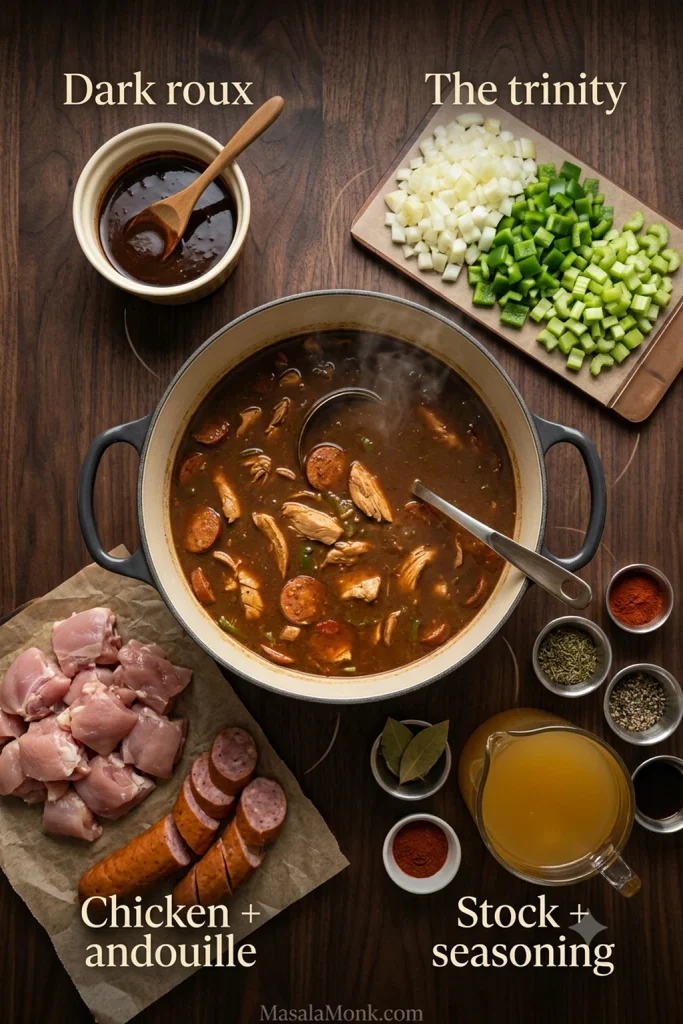
Okra, filé and tomatoes cause more gumbo debate than this pot needs. All three belong in some gumbos; here’s how they fit this one.
Okra Is Optional Here
Okra belongs in plenty of excellent gumbos, but this one does not depend on it. Sautéing 8 to 12 oz (225 to 340 g) of sliced okra separately for about 10 to 15 minutes cooks away much of the ropy texture and lets the pieces begin to brown. Add it to the gumbo for the final 20 to 30 minutes.
Filé Powder
Filé is ground sassafras leaf with an earthy, herbal flavor. In this pot, it works best as a finishing choice rather than something boiled into the broth.
Add it after the gumbo comes off the heat, or let everyone sprinkle a small pinch to about ¼ teaspoon into individual bowls. Avoid a hard boil afterward.
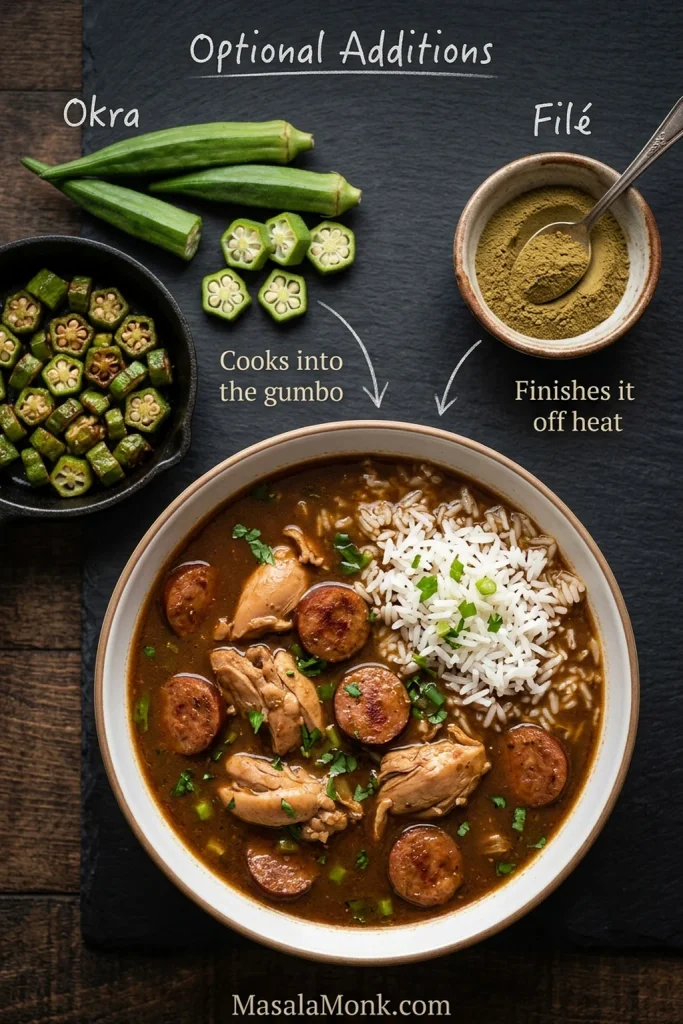
Why There Are No Tomatoes in This Pot
Tomatoes appear in many Creole and New Orleans-style gumbos. Plenty of Cajun chicken-and-sausage versions leave them out. Here, the dark roux, chicken, andouille and stock are enough, so tomatoes stay on the shelf.
Substitutions That Work
- No andouille: choose a firm, coarse-textured smoked sausage rather than a soft sausage that may turn mealy during the simmer.
- Cajun seasoning blend: start with about 2 teaspoons of a low-salt blend in place of the paprika, thyme and cayenne, then adjust after simmering.
- Seafood: do not swap shrimp, oysters or crabmeat directly into this chicken timing. Delicate shellfish needs a different cooking sequence, with shrimp, oysters or crab added much later. If shellfish is what you’re after but you want a shorter roux-based dish, our Cajun étouffée recipe uses a much shorter seafood cooking window.
Fix My Gumbo
Find the symptom closest to what is happening in your pot, then make one correction at a time. Changing several things together can make it harder to tell what actually helped.
Roux and Stock Problems
| What you notice | What to do |
|---|---|
| Burnt smell or black flecks | Start over. Burnt flour will carry its bitterness through the finished gumbo. |
| Roux isn’t getting darker | Increase the heat slightly and keep stirring. Very low heat can leave you stuck at peanut-butter brown for a long time. |
| Roux is darkening too fast | Lower the heat immediately and keep stirring. The pot will stay hot for a while even after you turn the burner down. |
| Roux tightens when stock goes in | That first tightening is normal. Keep stirring or whisking until completely smooth before adding more stock. |
Consistency, Fat and Seasoning
| What you notice | What to do |
|---|---|
| Gumbo is too thin | Finish the full simmer first. If it still needs more body, simmer uncovered for another 10 to 15 minutes. |
| Gumbo is too thick | Add warm reserved stock about ¼ cup (60 ml) at a time until it flows easily again. |
| Heavy oil layer | Skim it off. Next time, drain more of the rendered sausage fat before starting the roux. |
| Bitter flavor | A dark roux tastes deeply roasted. Harsh, acrid bitterness is different and usually points to scorching. |
| Hot but still flat | More cayenne will not fix it. Check the salt, stock strength and reduction first. |
| Too salty | Add unsalted stock a little at a time, tasting after each addition. Accept a slightly thinner gumbo before reducing aggressively and concentrating the salt again. Unsalted rice also helps balance the bowl. |
Ingredient and Meat Problems
| What you notice | What to do |
|---|---|
| Okra is very slimy | Next time, cook the sliced okra separately until much of that ropy, slimy texture has cooked away before adding it to the pot. |
| Filé turned stringy or too thick | Use less next time and avoid hard boiling after it goes in. Serving it at the table gives you much more control. |
| Chicken is dry | Keep the gumbo at a gentle simmer, not a hard boil. Thighs are forgiving, but aggressive heat can still tighten them. Add already-cooked chicken only near the end. |
| Sausage is greasy or mushy | Choose a firmer, coarse-textured smoked sausage and brown it first so some of the fat renders out. |
What to Serve With Gumbo
Keep the rice modest enough that gumbo remains the main event. About ⅓ to ½ cup cooked long-grain white rice per serving gives every spoonful some rice without burying the broth and meat underneath it.
Potato Salad with Gumbo
A cool, mustard-forward potato salad is especially associated with parts of Cajun and Acadiana cooking. Some people keep it beside the bowl; others put a scoop straight into the gumbo.
The combination makes sense as soon as you taste it: cool creamy potato and mustardy acidity against a hot, dark bowl of gumbo.
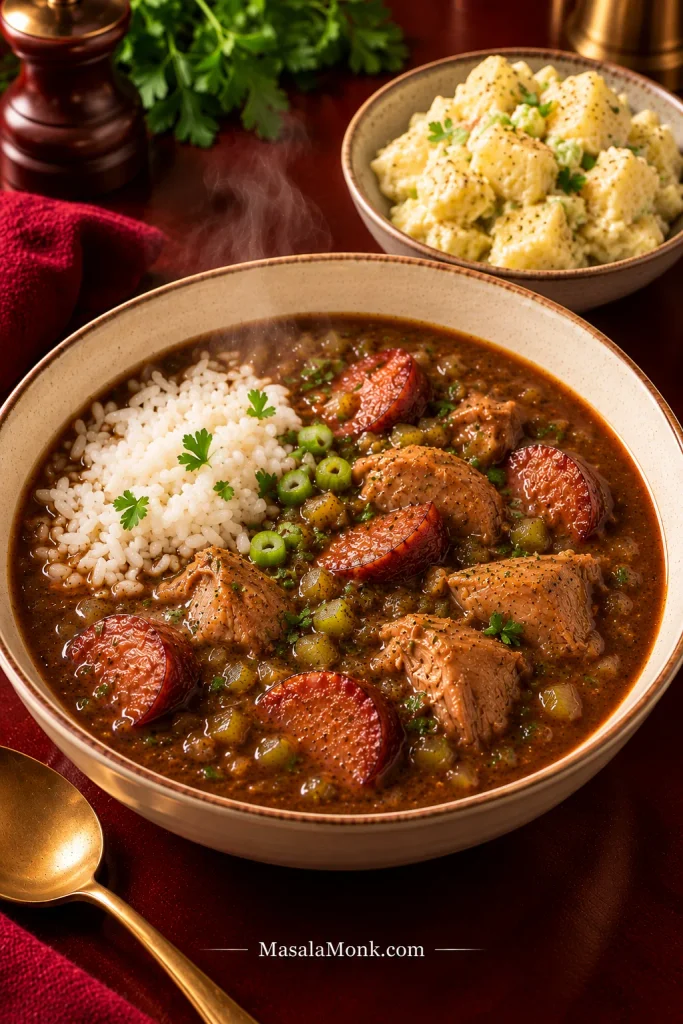
At the Table
Set out hot sauce and filé so everyone can adjust their own bowl. French bread works well too, or add a wedge of savory Southern cornbread for a crisp edge and tender crumb to drag through the last of the broth.
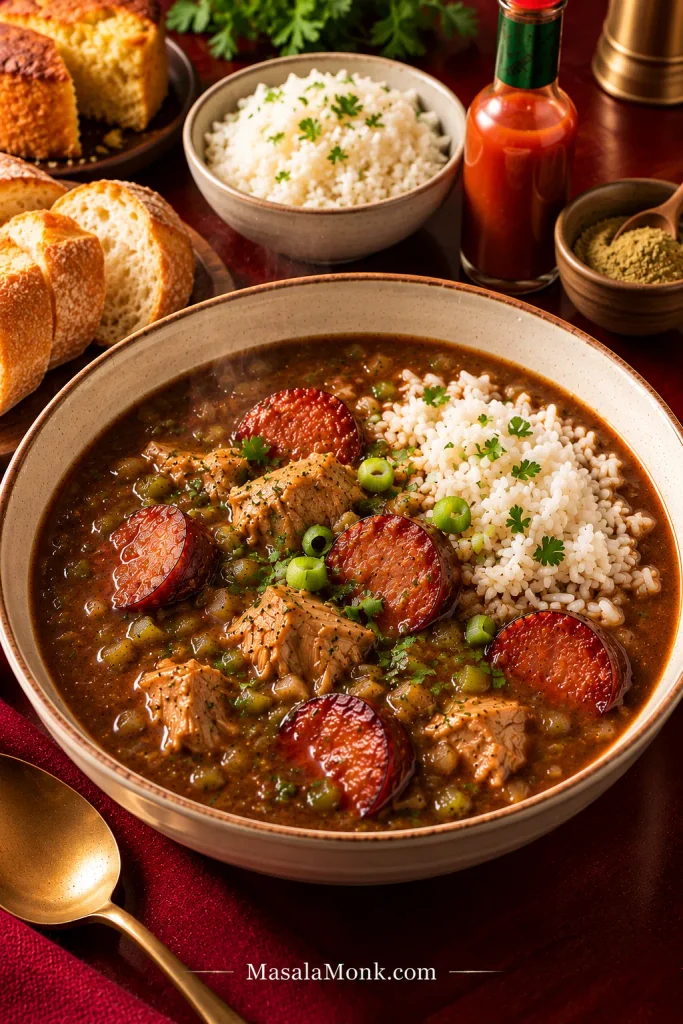
In the finished bowl, the roux should come through as roasted depth rather than flour, while the andouille still brings smoke and bite. The scallions and parsley should bring a fresher edge to the dark broth rather than disappearing into it.
Make Ahead, Store and Reheat Gumbo
Gumbo is especially good made ahead. After a night in the refrigerator, the roux, stock and sausage often taste more integrated.
For leftovers, divide the gumbo into shallow containers and refrigerate it within 2 hours rather than leaving a full Dutch oven on the counter until it cools completely. Keep the rice separately. Refrigerated gumbo is best used within 3 to 4 days.
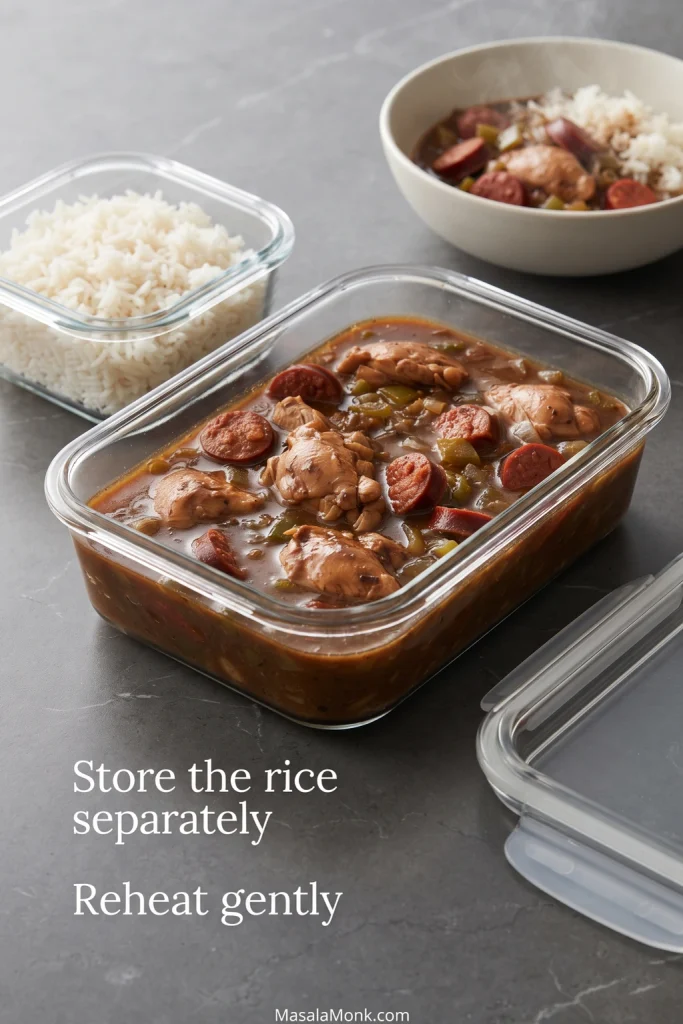
Reheat gently on the stovetop, stirring occasionally, until steaming hot throughout. If using a thermometer, leftovers should reach 165°F (74°C). Add a splash of stock or water if the gumbo has thickened in the refrigerator.
Freeze gumbo without the rice in airtight portions for about 2 to 3 months for best quality. Thaw in the refrigerator and reheat gently.
Once you know what a properly dark roux looks and smells like, the whole pot becomes much calmer to cook.








