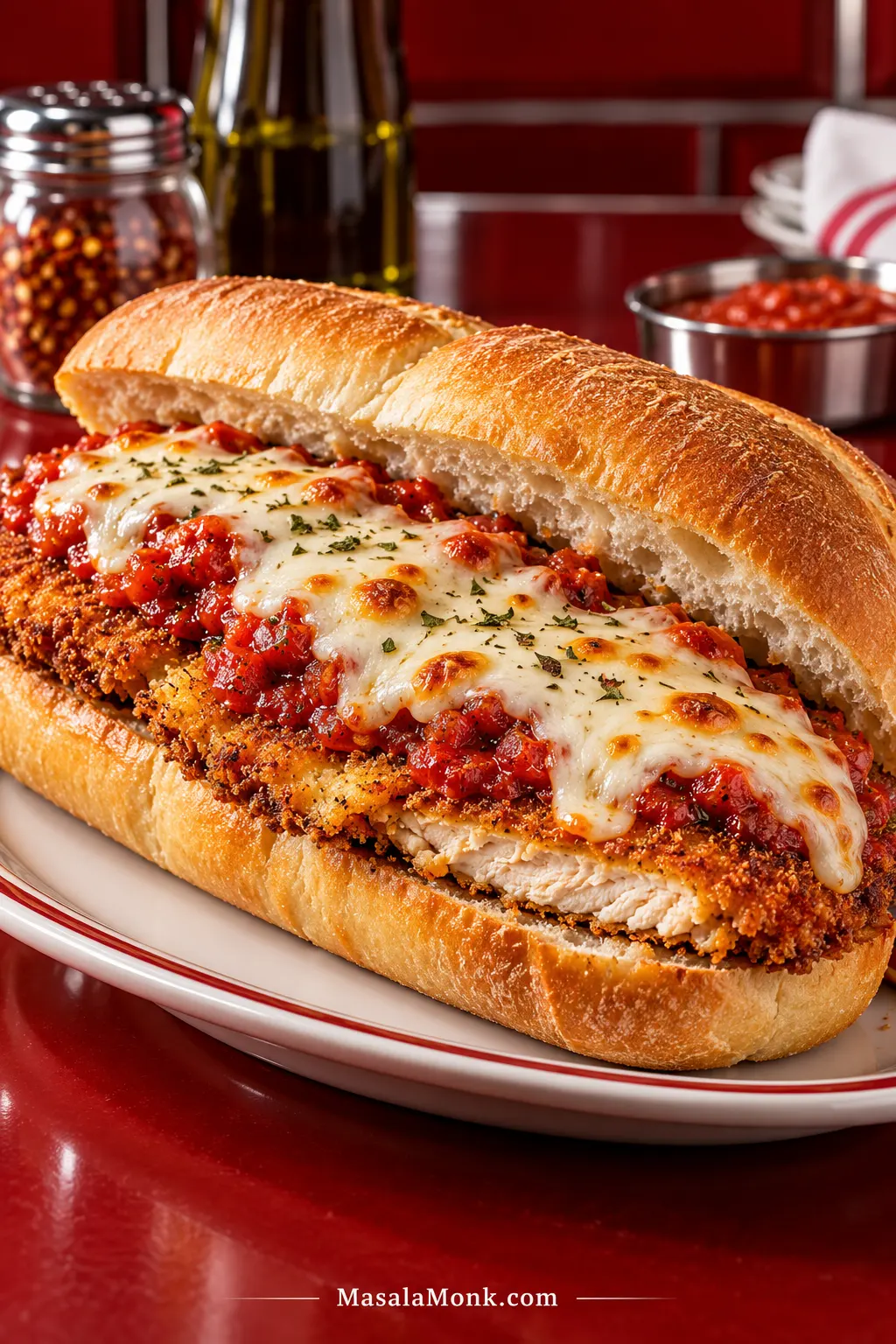
Hot tomato sauce and melted mozzarella through the middle, fried chicken still crisp around the edges, and a toasted roll soft enough to give when you pick it up—that is the bite worth chasing.
The trouble is that a chicken Parm sandwich can turn soft surprisingly fast. Thin sauce soaks the breading. Melted cheese traps steam. An overly hard roll pushes the filling out on the first bite. This chicken Parmesan sandwich recipe deals with those problems before they happen.
Done well, it should be generous and a little unruly: juicy chicken, molten cheese, bright tomato sauce and enough fried edge to keep the whole sandwich from eating like one soft layer. You’ll want two hands.
Chicken: aim for ¼ to ⅜ inch / 6 to 10 mm thick and roughly sized to the roll.
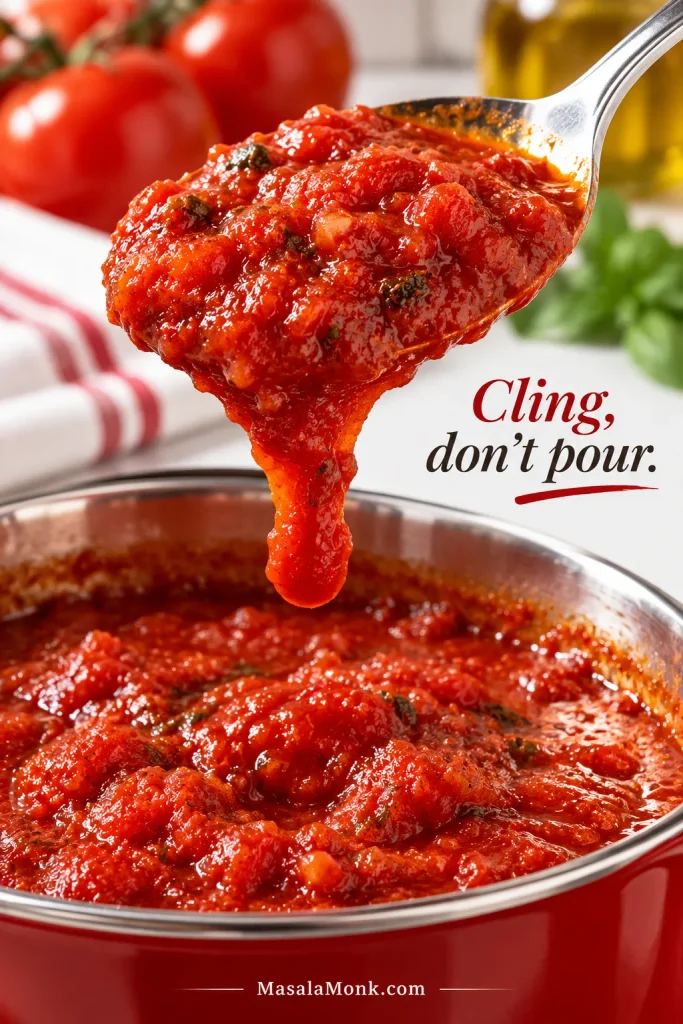
Sauce: use marinara that clings to a spoon and falls slowly rather than pouring like soup.
Roll: choose bread sturdy enough for the filling but still tender enough to bite through easily.
Crispy Chicken Parmesan Sandwich Recipe
Parmesan-panko chicken, marinara and bubbling mozzarella on garlic-Parmesan-toasted rolls, with extra warm sauce alongside for dipping.
Prep 25 minutes
Cook 25 minutes
Total 50 minutes
Yield 4 large sandwiches
Equipment
Heavy 10- to 12-inch / 25- to 30-cm skillet
Meat mallet or rolling pin
3 shallow bowls or dishes
Large plate or tray for the raw breaded chicken
2 rimmed sheet pans: one fitted with a clean oven-safe wire rack, one for topping and broiling
Tongs
Instant-read thermometer
Ingredients
Chicken and Parmesan-panko coating
1¼ lb / 570 g boneless, skinless chicken breasts, usually 2 large breasts
1 tsp fine sea salt / about 6 g
½ tsp freshly ground black pepper
½ cup all-purpose flour / 60 g
2 large eggs
1 tbsp water / 15 ml
1¼ cups panko breadcrumbs / about 75 g
½ cup finely grated Parmesan / about 45 g
1 tsp Italian seasoning
About 1½ to 2 cups / 360 to 480 ml neutral high-heat oil, such as canola, vegetable, grapeseed or refined avocado oil, or enough to reach about ¼ inch / 6 mm deep in the skillet
Sandwiches
4 sturdy 6- to 8-inch / 15- to 20-cm Italian or hoagie rolls, split lengthwise but left hinged on one side if possible
3 tbsp unsalted butter / 42 g, softened
½ tsp garlic powder
¼ cup finely grated Parmesan / about 22 g, divided
1½ cups marinara / 360 ml, warmed and divided; a good jarred sauce is absolutely fine, or use homemade marinara sauce
8 oz / 225 g low-moisture whole-milk mozzarella, about 2 cups shredded
Fresh basil, optional
Prepare the Chicken
Slice, pound and season. Cut the chicken breasts horizontally to make four cutlets. Working between parchment or plastic wrap, gently pound them to an even ¼ to ⅜ inch / 6 to 10 mm. Pat thoroughly dry, then season both sides with the salt and black pepper. One ugly edge does not matter. Uneven thickness does.
Set up the breading. Put the flour in the first shallow dish. Beat the eggs with the water in the second. Combine the panko, ½ cup / 45 g Parmesan and Italian seasoning in the third.
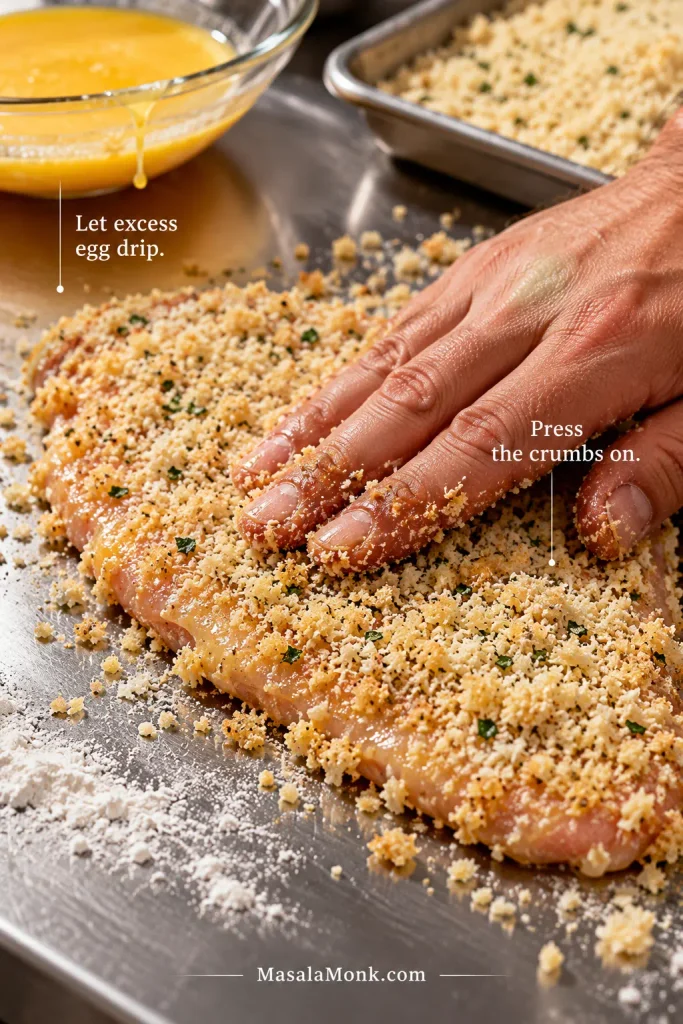
Bread and rest. Dust each cutlet lightly with flour and shake off the excess. Dip into the egg and let the extra drip away. Press the panko mixture firmly onto both sides. Set the breaded chicken in a single layer on a large plate or tray and rest for 5 to 15 minutes. Use that time to get the marinara, cheese and rolls ready.
Fry Until Golden
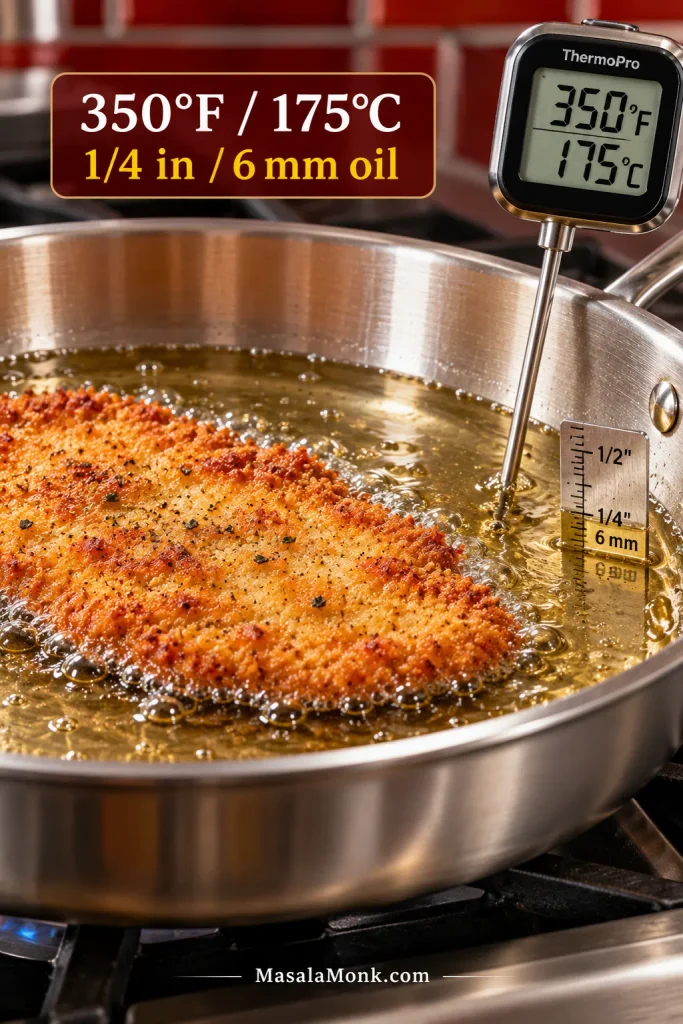
Heat the oil. Pour enough oil into the skillet to reach about ¼ inch / 6 mm deep. A 10-inch pan will use less than a wide 12-inch pan, so let the depth—not the cup measurement—be the final guide. Heat to about 350°F / 175°C.
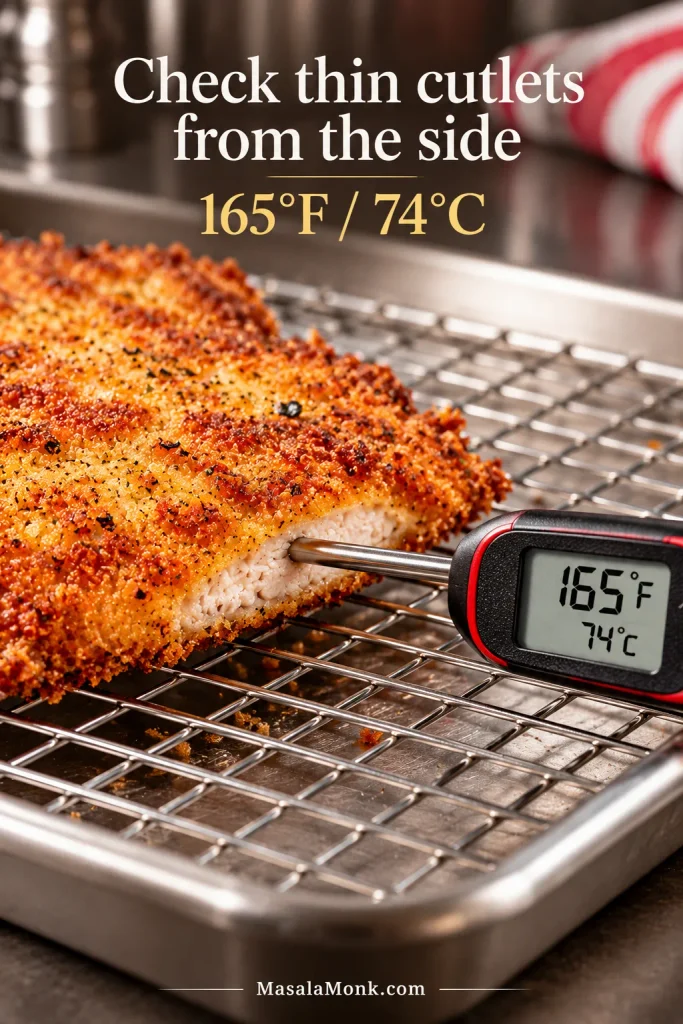
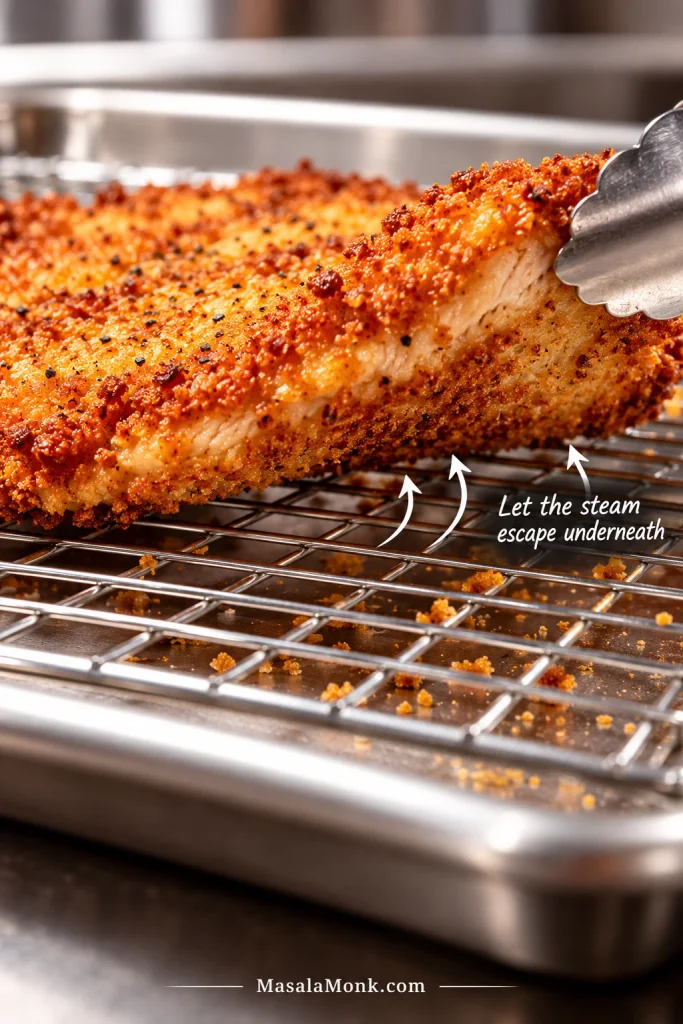
Fry in batches. Add the cutlets without crowding the pan. Leave the first side alone until the coating has set and releases easily, then turn. Cook for roughly 2½ to 4 minutes per side, with ¼-inch / 6-mm cutlets often finishing toward the early end. Let the oil recover between batches. Check the thickest part, then move each cutlet to the clean wire rack as soon as it reaches 165°F / 74°C.
Once the final raw cutlet is in the skillet, wash or swap any tongs that touched uncooked chicken before using them on the finished cutlets.
Checking a thin cutlet: insert the thermometer horizontally through the side so the tip reaches the center rather than passing straight through the meat.
Toast and Top
Check the marinara and heat the broiler. The sauce should cling to a spoon and fall slowly. Give a loose marinara a few minutes of uncovered simmering. If your oven setup allows, position the rack about 5 to 6 inches / 13 to 15 cm below the broiler element. Have the chicken, rolls and cheese ready before anything goes underneath.
Toast the rolls. Mix the softened butter with the garlic powder and 2 tablespoons of the sandwich Parmesan, then spread it over the cut faces. Broil cut-side up, watching continuously, for about 1 to 2 minutes, until lightly golden. The toasted surface should feel dry and lightly crisp while the middle of the roll still gives when pressed. Transfer the toasted rolls to a plate.
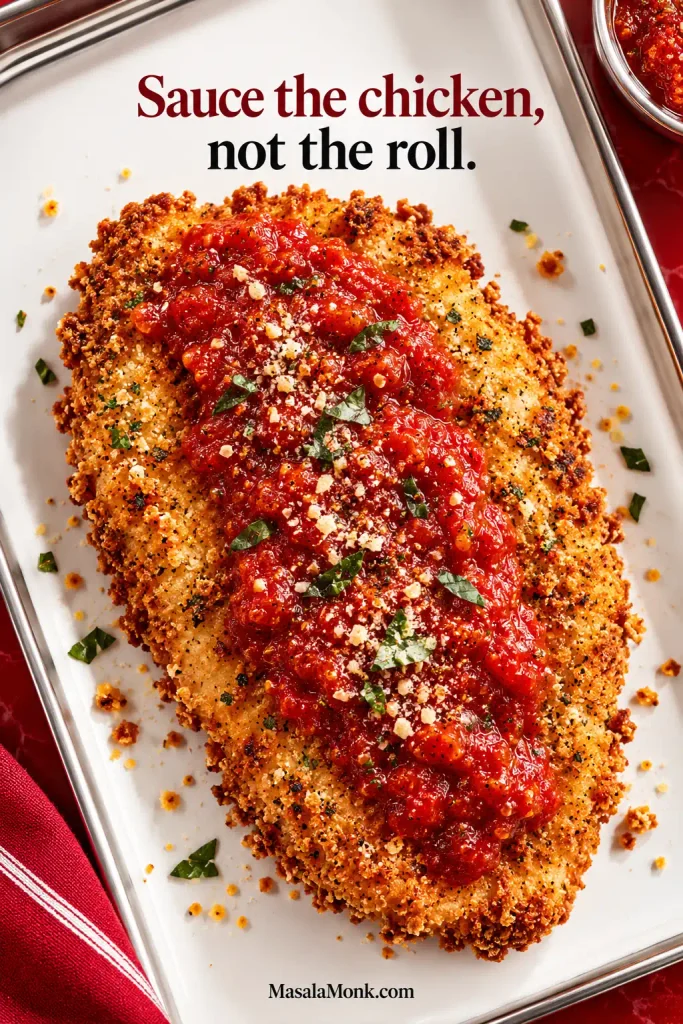
Sauce and cheese the chicken. Set the fried cutlets on that same broiler-safe sheet pan. Spoon 2 to 3 tablespoons / 30 to 45 ml marinara mostly through the center of each cutlet, leaving some fried edges exposed. Do not spread marinara across the rolls in this crispy version—the chicken carries the sauce. Divide the mozzarella over the top, about 2 oz / 55 to 60 g per sandwich, and finish with the remaining Parmesan.
Melt and Build
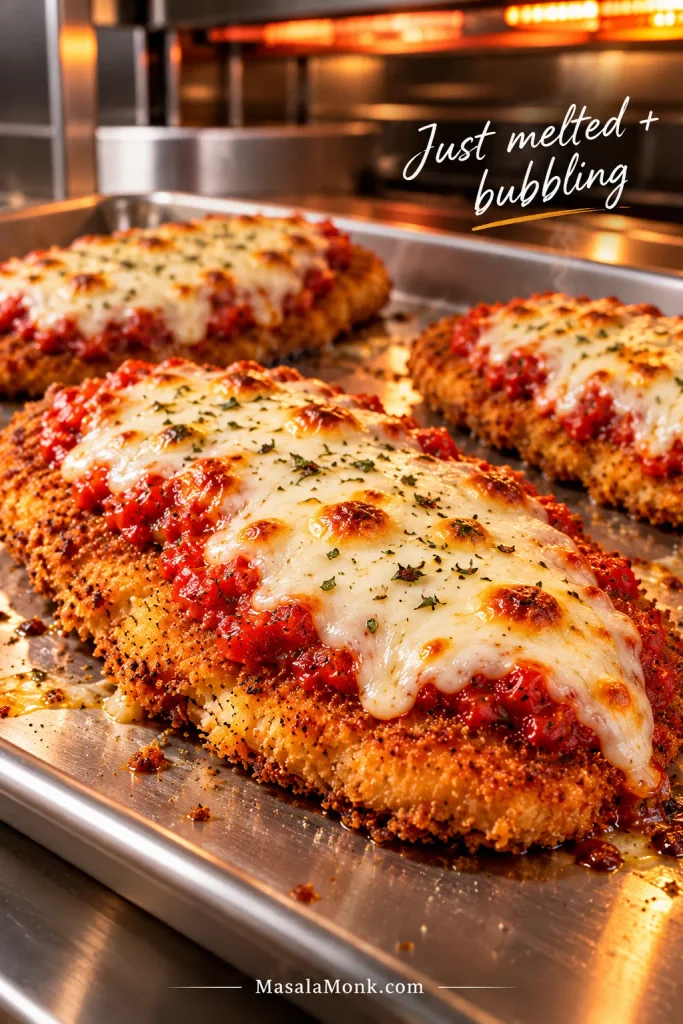
Melt the cheese. Put the topped chicken under the fully heated broiler and watch continuously. Depending on your broiler, this can take anywhere from about 30 seconds to 2 minutes. Pull the tray as soon as the mozzarella has slumped over the chicken, is bubbling and has a few golden spots. The chicken is already cooked, so there is no benefit in leaving it there longer.
Build and serve. Move each cutlet straight into a toasted roll. Add basil if using, close the hinged roll gently and serve while hot. Keep the remaining marinara at the table for dipping or spooning onto individual bites, adding more as you eat instead of letting extra sauce sit in the bread.
Recipe Notes
Use the clock as a guide. Let the crust color tell you when to turn; let internal temperature tell you when the chicken is done.
Regular breadcrumbs work. The coating will be finer and less craggy. If the crumbs are already well seasoned, reduce or skip the added Italian seasoning.
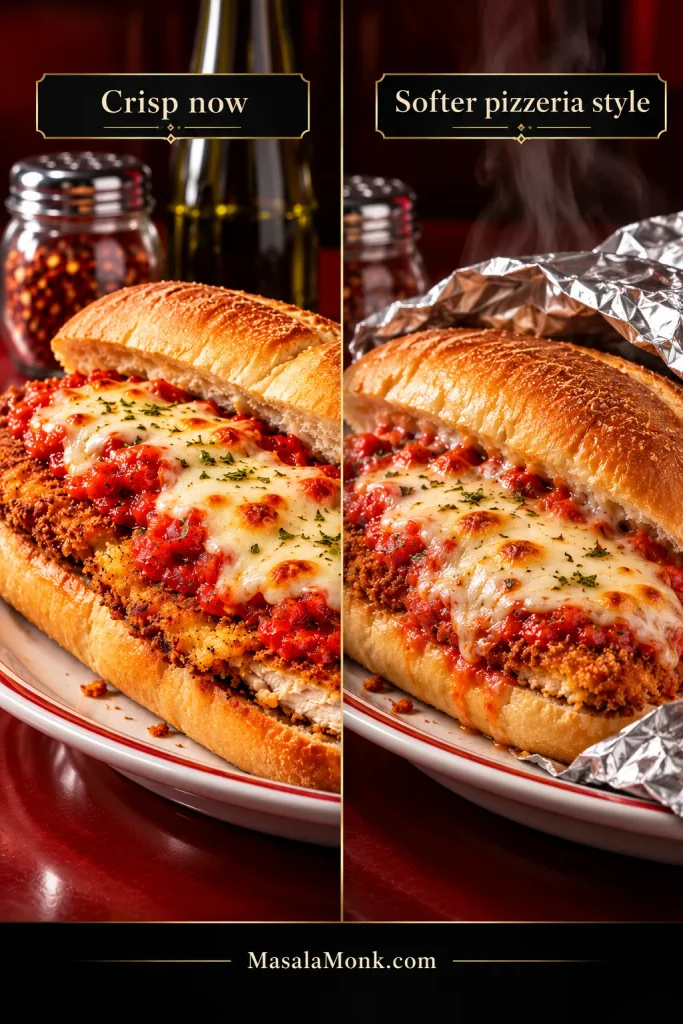
Skip the foil wrap if crispness is the goal. Wrapping a finished chicken Parm sub gives you a softer, more melded pizzeria-style sandwich. That’s a valid style, but it is not the one we’re building here.
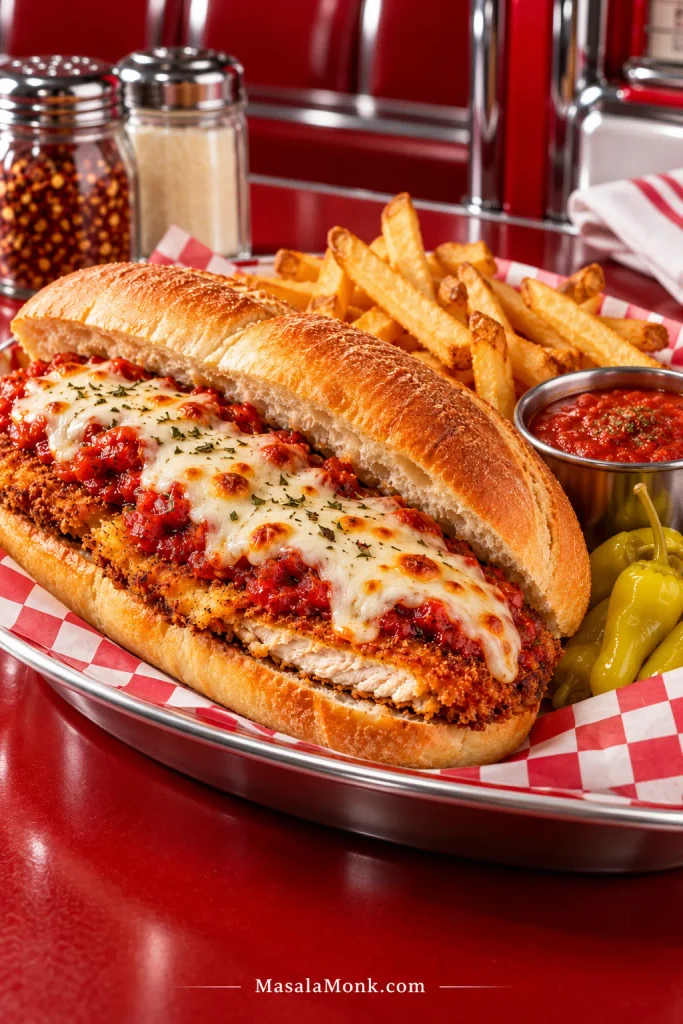
Serve it with: hot homemade French fries for the full sandwich-shop treatment, or a sharply dressed green salad or a few pickled peppers when you want something fresher.
Extra marinara stays on the side, while pickled peppers cut through the fried chicken and melted cheese.
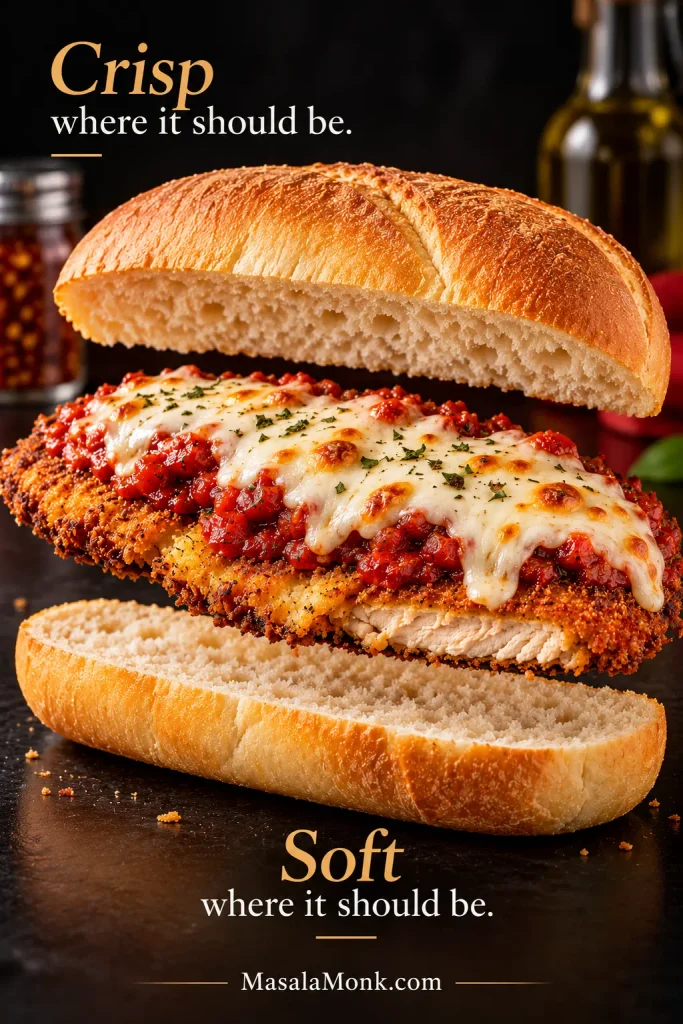
The sandwich works when each layer keeps a distinct job: crisp chicken, controlled marinara, melted mozzarella and bread that stays tender without collapsing.
Sauce and cheese stay concentrated through the middle, leaving fried edges exposed for contrast.
Size the Cutlet to the Sandwich
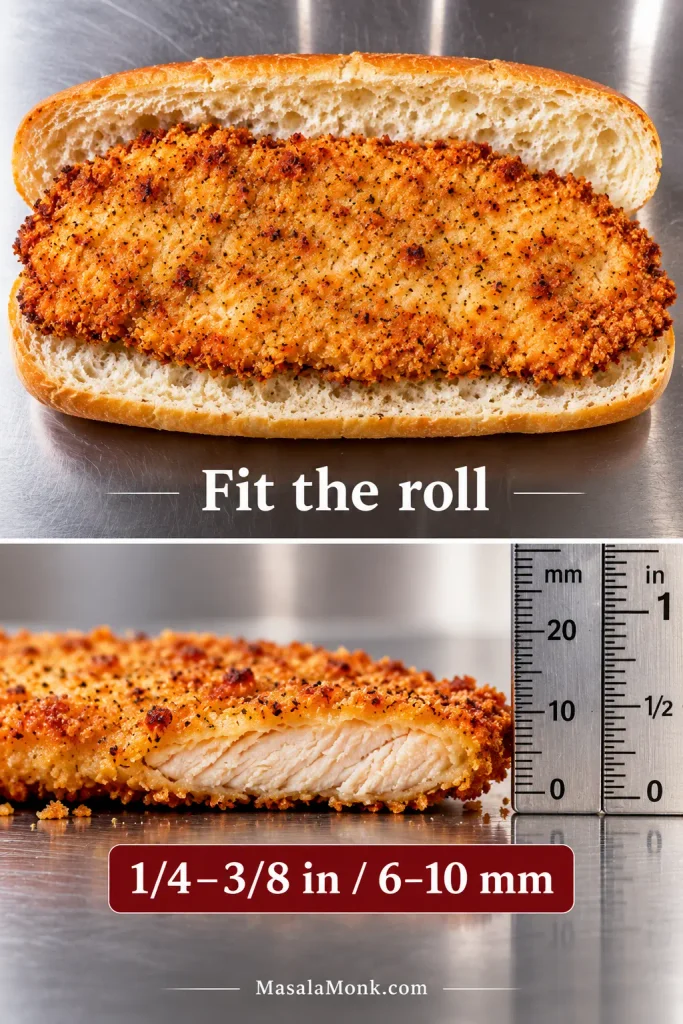
Before breading, lay a pounded cutlet over the open roll for a second. If most of the bread is covered, you’re done. There is no prize for making it perfectly rectangular.
Aim for ¼ to ⅜ inch / 6 to 10 mm. Much thicker and the coating can get dark while the center catches up. Go paper-thin and you start losing the chicken underneath all that crust.
Flatten the high spots, not the whole cutlet; even thickness matters more than perfect shape.
Oversized pieces can simply be divided. That usually eats better than reaching for a huge roll just because one chicken breast happened to be enormous.
Breading the Chicken
Most breading failures begin before the oil. Wet chicken gives the flour a poor surface to cling to. Too much flour turns pasty. Heavy egg drips create slippery patches. Loosely scattered crumbs come away just as easily as they went on.
Dry the meat well, use a light flour coat, let excess egg drip back into the bowl and press the panko onto both sides. If you’ve made our chicken katsu curry, the flour → egg → panko sequence will be familiar: each layer has a job, and piling on more of any one layer does not make the coating sturdier.
Glossy wet patches and heavy crumb clumps are the places most likely to detach in the oil.
Once the crumbs are attached, leave them alone. Re-dipping a half-breaded cutlet usually creates a heavier, less tidy shell rather than fixing it. The short rest gives the coating a little time to grip the chicken more firmly; by the time the oil is hot and the rest of the sandwich is ready, it has had enough time.
Why 350°F Works
For shallow-fried chicken Parm cutlets, keep the oil around 350°F / 175°C. At that temperature the breading starts setting as soon as the chicken hits the pan. Cooler oil gives the crumbs more time to absorb fat; excessively hot oil can darken the Parmesan before the chicken is ready.
Let the oil return toward 350°F / 175°C between batches; cooler oil gives the next crust more time to absorb fat.
No oil thermometer? Look for steady, lively bubbling around the cutlet rather than smoke or violent splattering. Use the instant-read thermometer for the chicken itself, since the color of the crust cannot tell you the temperature at the center.
If the probe breaks through the opposite side, pull it back until the sensing area sits fully inside the meat.
Keeping the sandwich crisp mostly comes down to where the moisture sits and how long it stays there.
Marinara That Stays Put
Homemade and jarred marinara both work; consistency matters more than pedigree.
If the sauce runs straight off the spoon, reduce it before topping the chicken.
Keep most of the sauce through the middle of the cutlet and leave a few fried edges uncovered. If it spreads across the sheet pan before the cheese even goes on, give it another few minutes in the saucepan. A little crushed red pepper or Calabrian chile can bring heat if you want it, but the basic sandwich does not need a more complicated sauce.
Keep the middle saucy and the perimeter exposed—that visible fried edge is your reserve of crunch.
Mozzarella Without the Extra Water
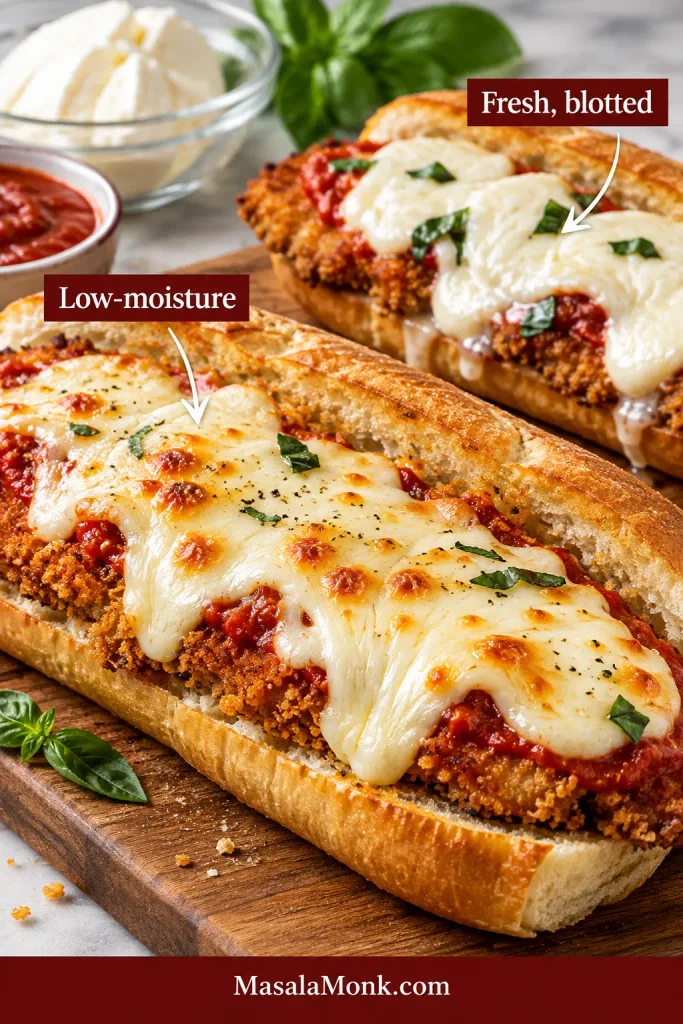
Low-moisture whole-milk mozzarella is the easiest default for a chicken Parm sandwich because it melts smoothly without releasing as much water as fresh mozzarella. It gives you the stretch and richness you want while being easier on the breading underneath.
Fresh mozzarella can work, but smaller well-blotted pieces create fewer wet pockets over the crust.
Low-moisture mozzarella also earns its keep in homemade mozzarella sticks, where excess water causes trouble inside the coating. Fresh mozzarella can still work here; blot it well first. Provolone can replace some of the mozzarella when you want a sharper, more old-school sub-shop flavor.
Once the mozzarella bubbles and slumps over the cutlet, pull it; extra broiler time only works against the chicken.
A Roll That Holds the Filling
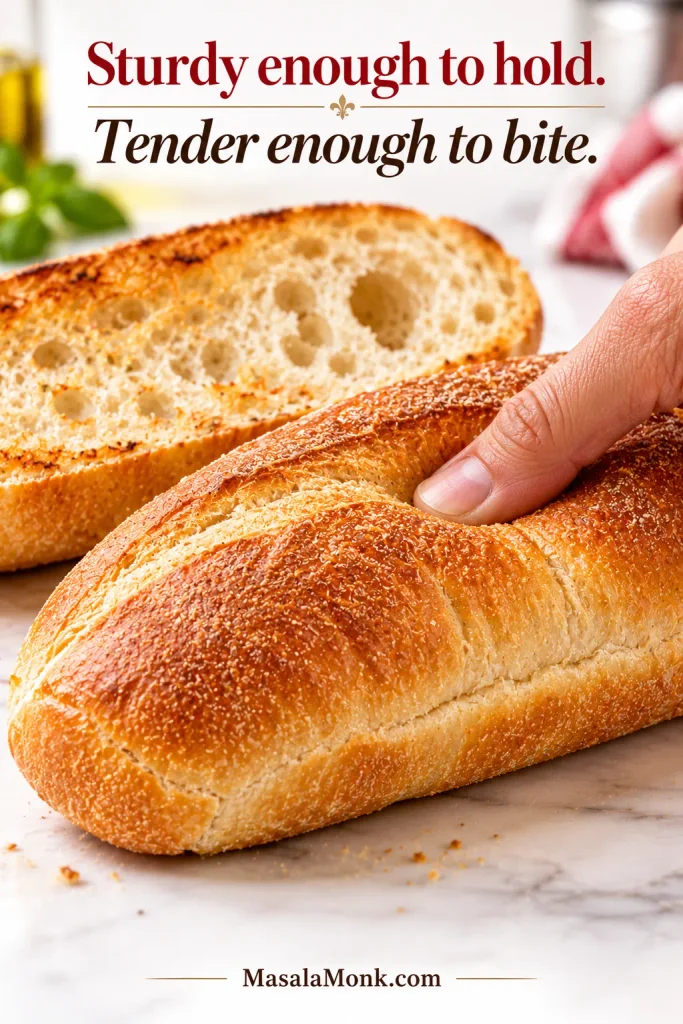
The best bread for a chicken Parmesan sandwich is a sturdy but tender Italian or hoagie roll, about 6 to 8 inches / 15 to 20 cm long. Leave a hinge along one side if the roll allows it; that little bit of structure helps keep the hot filling from escaping out the back.
A good hoagie roll should compress under your fingers without cracking or collapsing.
Ciabatta is another good choice when the center is tender. A very hard baguette is less forgiving. If the top half of the roll fights you every time you bite, the filling usually loses.
Toast only the cut faces with garlic-Parmesan butter. The surface touching the chicken gets a little protection while the rest of the bread stays soft.
If the first cutlet loses a few crumbs, don’t start over. Look at what happened and correct the next one.
Before treating softness as a problem, decide what happened after assembly. If the sandwich was wrapped, some softening is expected; if it stayed unwrapped and still went limp, moisture or trapped steam is the more useful thing to troubleshoot.
Serve immediately for sharper fried edges; a brief foil rest intentionally trades some crunch for the softer, melded bite of a pizzeria-style chicken Parm sub.
Troubleshoot the Crust, Chicken and Sandwich
Problem
What to check
Breading falls off
Dry the chicken well, keep the flour coat light, let excess egg drip away and press the crumbs on. Give the first side time to set before turning.
Crust gets dark too fast
The cutlet may be too thick or the oil too hot. Keep the chicken thin and even and the oil around 350°F.
Crust is pale and greasy
The oil has probably cooled down. Fry fewer pieces at once and let it recover before adding another cutlet.
The underside softens after frying
Hot chicken sitting flat traps steam underneath. Move cooked cutlets to a clean wire rack and leave them uncovered.
The chicken is dry
Use thin, even cutlets and pull each one as soon as it reaches 165°F / 74°C. Keep the later cheese melt brief.
The cheese won’t melt quickly
Use shredded low-moisture mozzarella and make sure the broiler is fully heated before the tray goes underneath. Thick slices take longer and keep the chicken under heat unnecessarily.
The roll turns soggy
Check the sauce first. Watery marinara, untoasted bread, sauce spread directly on the roll or a sandwich built too early will soften it quickly.
The filling slides out
The bread may be too hard, the cutlet may be the wrong size for the roll, or there may simply be too much loose sauce inside. A hinged roll helps too.
Keep the Fried Crust Crisp After Frying
A bare rack beats a flat plate or paper towel when crispness matters because steam can escape below the cutlet.
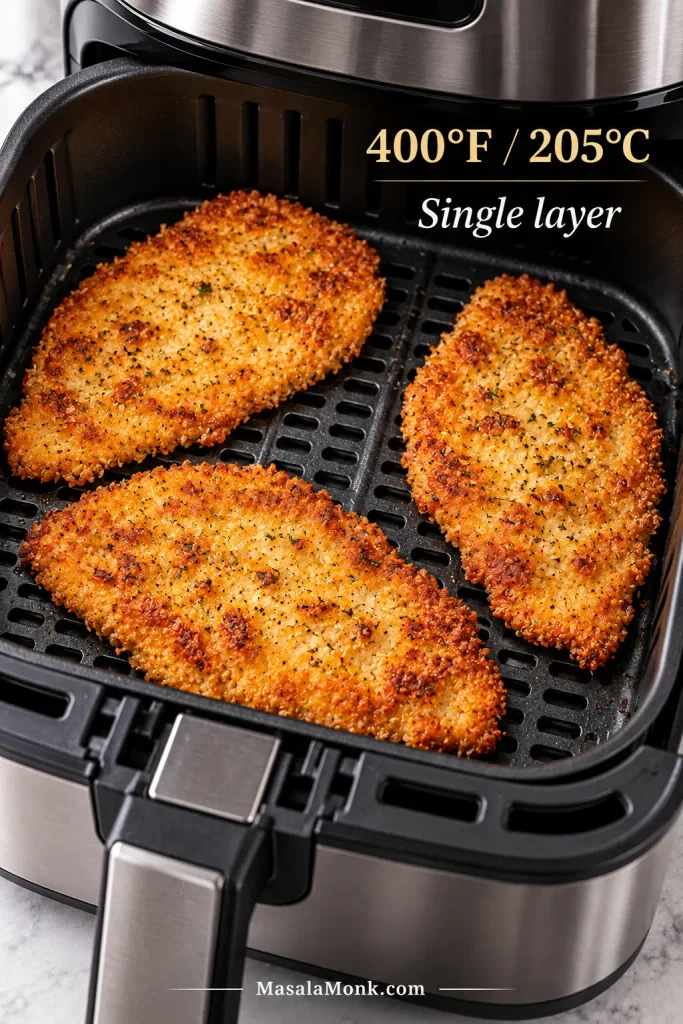
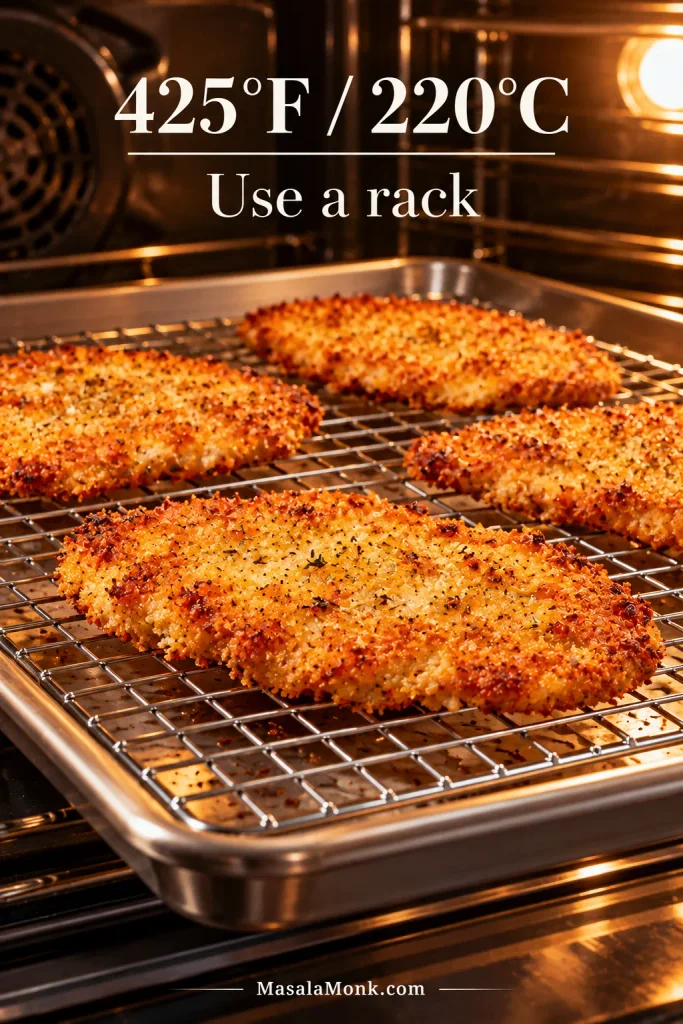
You can cook the breaded cutlets without shallow frying. The air fryer is quicker but usually means batches; the oven gives you more room, and a wire rack helps the underside stay crisp.
Air Fryer
Lightly spray or brush both sides of the breading with oil. Arrange the cutlets in a single layer at 400°F / 205°C, working in batches if necessary, and flip halfway through.
Spacing is part of the method: overlapping cutlets shield each other from the circulating hot air.
Begin checking around 7 minutes. Cutlets near ¼ inch / 6 mm may finish around 7 to 9 minutes; pieces closer to ⅜ inch / 10 mm can take longer. Cook each one until the thickest part reaches 165°F / 74°C.
Once the chicken is cooked, add the marinara and mozzarella and return it briefly to the air fryer, or use the broiler, just until the cheese melts.
Oven
Heat the oven to 425°F / 220°C. Set the breaded cutlets on an oiled oven-safe wire rack over a sheet pan and mist or brush the tops with oil. Bake until the raised panko ridges are deeply golden and the chicken reaches 165°F / 74°C, turning once if needed for even browning.
Check the underside before flipping. Good rack airflow may brown both sides evenly enough that no turn is needed.
Cutlets close to ¼ inch / 6 mm may be ready around 10 to 12 minutes; pieces nearer ⅜ inch / 10 mm often need roughly 12 to 15 minutes. Let 165°F / 74°C in the thickest part make the final call. Add the marinara and mozzarella only after the chicken is cooked, then broil just until the cheese melts. The rack keeps hot air moving underneath instead of letting the bottom breading steam against the pan.
Shortcut night: use fully cooked frozen breaded chicken cutlets and heat them according to the package directions until crisp and hot through, then join the recipe at the sauce-and-cheese step. If the frozen product is raw or labeled not ready to eat, follow its package cooking directions and cook it to 165°F / 74°C before topping. Toast the rolls fresh.
Make Ahead and Reheat
You can prep almost everything ahead; just leave the sandwiches unassembled until you’re ready to eat. Slice and pound the chicken, grate the cheese, mix the garlic butter and have the marinara ready. Breaded cutlets can also be refrigerated, covered, for several hours before cooking.
Keep leftover chicken, sauce and bread separate whenever you can. Refrigerated cooked chicken is best used within 3 to 4 days.
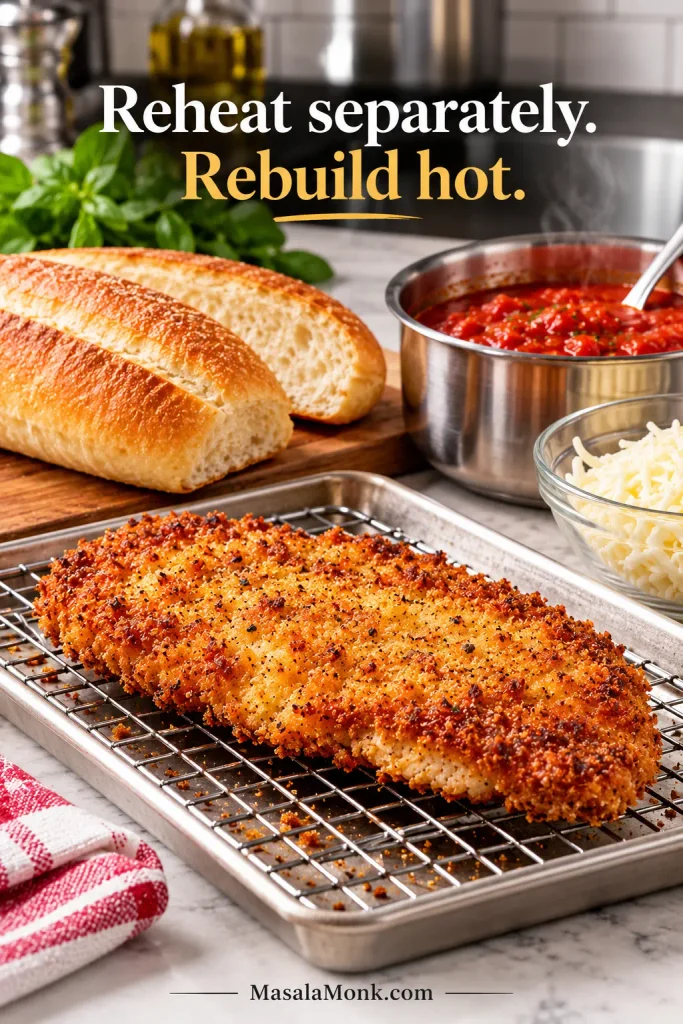
Reheat the Chicken Without Giving Up the Crust
Whichever method you use, reheat leftover chicken to 165°F / 74°C in the center.
Air fryer: reheat at 350°F / 175°C in a single layer and check after about 4 minutes. Give it longer if needed until the crust is hot and crisp again.
Oven: reheat on an oven-safe wire rack at 375°F / 190°C. Allow roughly 8 minutes before checking, then continue only as long as needed for the edges to crisp again.
Recrisp the coating as the chicken reheats, then rebuild promptly once the center reaches 165°F / 74°C.
Warm the marinara separately and give the cut faces of the roll another quick toast, then rebuild the sandwich. Keep extra sauce alongside for dipping instead of spooning it over the whole sandwich. A microwave gets lunch hot faster, but the breading and bread will be softer.
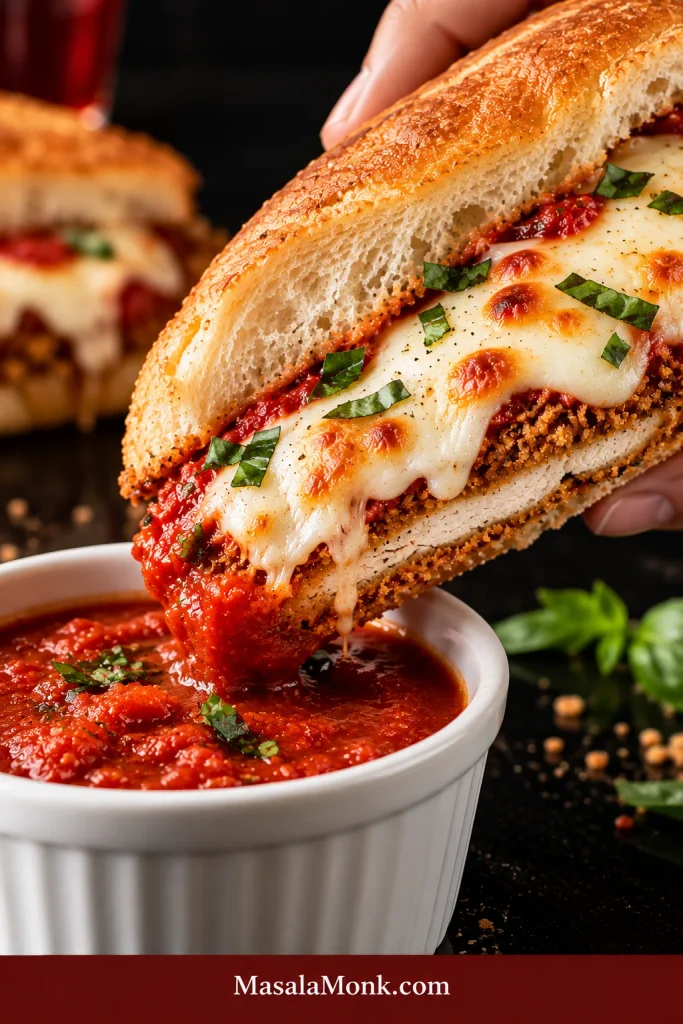
Dip only the bite you’re about to eat so the rest of the sandwich keeps its crisp structure.
Pick the sandwich up while the cheese is still loose and the roll is warm. It should give slightly under your fingers, with a little tomato sauce peeking through the mozzarella and a few strips of fried crust still visible around the edges.
The chicken stays juicy. The roll bends instead of cracking or collapsing. That’s enough. Eat it while it’s hot.
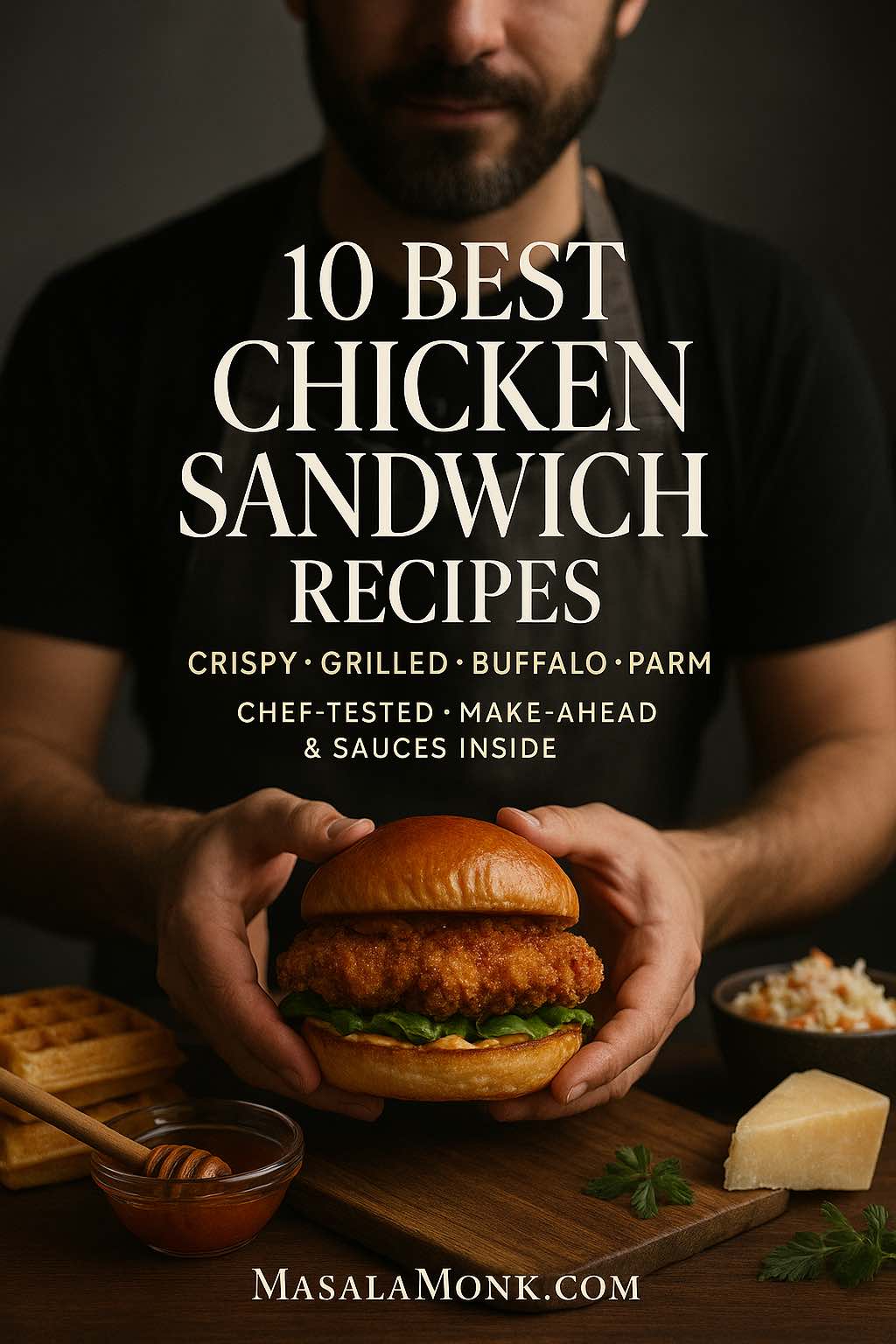
If you’ve been hunting for chicken sandwich recipes that actually make weeknights easier and weekends more fun, you’re in the right kitchen. What follows is a practical, long-form guide that treats each sandwich as a modular build: master one or two base methods, then riff with sauces, textures, and breads to create a dozen outcomes without doubling your workload. Moreover, you’ll see natural places to swap in leaner spreads, make-ahead steps, and clever sides, so the same grocery list works across the entire lineup.
Before we stack our first bun, a few baseline techniques keep everything juicy and crisp. First, grill or pan-sear chicken breasts after a short marinade so the meat cooks evenly and stays tender. Then, for any crispy builds, shallow-fry panko-breaded cutlets or tenders and drain on a rack—maximum crunch, minimal oiliness. And when you do bake buns, brioche or potato rolls bring the gentle sweetness that makes the whole bite pop. Meanwhile, keep a small sauce kit at the ready: a house sandwich sauce (mayo + Dijon + lemon), a classic Buffalo, a simple hot honey, a blackened spice rub, and a Caesar you actually want to lick off your fingers. As you’ll soon notice, those five components power nearly everything below.
For safety’s sake, cook chicken to 165°F/74°C in the center; for a clear reference, the USDA maintains an up-to-date safe temperature chart. And for a beautifully crisp exterior that stays light rather than heavy, this tested method for fried breaded cutlets explains why panko plus proper oil temperature yields shattering crunch without greasiness. If you’re a home baker, buttery, tender brioche buns elevate even the simplest grilled build; they toast fast, so give them just a minute on the griddle.
With that mise en place squared away, let’s cook. Each section includes the build (bread • protein • sauce • toppings) plus variations, sides, storage, and “make it tonight” shortcuts. Transition from one to the next as your pantry dictates—every technique repeats cleanly, so you never start from scratch.
A flexible sauce & seasoning mini-kit for all 10 chicken sandwich recipes
House Sandwich Sauce (all-purpose): ¼ cup mayo + 1 Tbsp Dijon + 1 tsp lemon + a pinch of sugar + salt & pepper. Spread thinly on both buns so it touches the chicken on each side; you get flavor in every bite without sogging the crumb.
Buffalo: ¼ cup hot sauce + 2 Tbsp melted butter. Toss after cooking so the crust remains crisp. For herby cool-down, a tried-and-true ranch dressing stays stable even when sandwiches linger a few minutes.
Hot Honey: 3 Tbsp honey + 1–2 tsp hot sauce + a dot of vinegar. If you want a fail-safe template with good pourability, this quick hot honey method works on tenders, cutlets, and fries alike.
Blackened Rub: 1 tsp paprika + 1 tsp garlic powder + ½ tsp onion powder + ½ tsp thyme + ½ tsp oregano + ¼–½ tsp cayenne + salt & pepper. Pat onto lightly oiled chicken right before it hits the grill.
Caesar Dressing (anchovy-forward): Egg yolk, neutral oil, lemon, garlic, Worcestershire, grated Parmesan, and anchovies; for the classic balance of briny and creamy, follow this reliable Caesar dressing recipe. It clings to romaine and sliced chicken, preventing slippery stacks.
Pesto-Mayo: 3 Tbsp mayo + 2 Tbsp pesto. It supports rotisserie builds and grilled sandwiches without overpowering delicate greens.
Chipotle-Lime Mayo: ¼ cup mayo + 1–2 tsp minced chipotle + 1 tsp lime juice. Use in the Bacon Ranch section as a smoky alternative.
Greek-Yogurt Ranch (lighter swap): Blend thick yogurt with herbs, lemon, a touch of mayo, and garlic powder; the idea mirrors the creamy tactics used in MasalaMonk’s yogurt-based spreads. Pair particularly with Buffalo or grilled options when you want cool tang without extra weight.
Food safety reminder: Regardless of sauce or rub, finish chicken to 165°F/74°C and rest briefly. For the authoritative line on temperatures, bookmark the USDA chart.
How to make these Chicken Sandwich recipes weeknight-proof
Batch once, eat many: Grill two or three extra breasts while the fire is hot; tomorrow they become Caesar or Bacon-Ranch, and the day after you’ll have Teriyaki or Rotisserie-Pesto. Because you’re relying on the same core textures, your brain gets faster with each repetition.
Toast strategically: A barely browned bun protects against sauce soak. Conversely, a too-dark toast can taste bitter and dry; aim for golden at the edges only.
Build with purpose: Moisture buffers—like lettuce dressed lightly or sauce spread on both buns—prevent sliding layers. Similarly, placing bacon between chicken and sauce keeps the lettuce crisp in the Bacon Ranch sub.
When crispy matters: Rack-cool cutlets for two minutes before moving them to buns. That tiny pause lets steam escape so crunch survives beneath hot sauce or marinara. For a refresher on oil temperature, dredge order, and panko behavior, revisit the fried breaded cutlets guide.
Use your freezer smartly: Portion shredded rotisserie chicken into flat bags (about 1½ cups each) and freeze. Later, thaw in minutes under running water, warm gently with sauce, and dinner appears before you can set the table.
How to customize textures without complicating your shopping list
Although each of these chicken sandwich recipes is dialed for speed, you can nudge texture and flavor in countless ways without adding new errands. For instance, swap the potato bun for toasted sourdough in the Rotisserie build to add chew. Likewise, layer a thin slice of fresh mozzarella under pesto-mayo for creamy elasticity. Or, should you want spice that’s fragrant rather than fiery, opt for blackened seasoning without the cayenne and finish with lemon zest.
In contrast, if you crave bolder heat, look to drizzles instead of heavier sauces: a spoon of hot honey over Nashville-leaning fried cutlets lights up the palate while keeping crunch intact. Meanwhile, for Buffalo, try the harissa-ranch tweak; because harissa brings both chili and aromatics, it broadens the flavor without demanding more salt or sugar. And whenever you serve Buffalo or Bacon-Ranch, offer a ramekin of blue cheese dip or ranch on the side. For reliable party-style dips and their ideal thickness, MasalaMonk’s blue cheese dip guide is a helpful calibration tool.
Bread, heat, and timing: small details for Chicken Sandwich Recipes
Bread choices: Brioche is plush for grilled builds, potato rolls love BBQ, ciabatta resists Caesar’s dressing, and sub rolls cradle Parm and Teriyaki. Spread sauce thinly on both sides so every bite tastes seasoned; you’ll use less overall and the sandwich eats cleaner.
Heat management: Keep fried cutlets at 175°C/350°F oil temperature; too cool and they drink oil, too hot and the crust burns before the interior cooks. Simultaneously, warm sauces gently rather than boiling them; aggressive heat can split mayo-based dressings and turn glazes sticky.
Toasting sequence: Toast bread first; the residual heat keeps it aromatic while you stack. If you’re juggling batches, toast in the oven on a sheet tray—fast, even, and hands-free.
Slice direction: Cut grilled breasts on the bias to maximize surface area for sauce; sliced chicken absorbs flavor and nests into buns better than a whole filet.
Carryover cooking: Rest chicken a few minutes; juices redistribute, preventing the soggy-bun effect where a sudden gush soaks the bottom half.
1) BBQ Chicken Sandwich (pulled, shredded, or sliced breast)
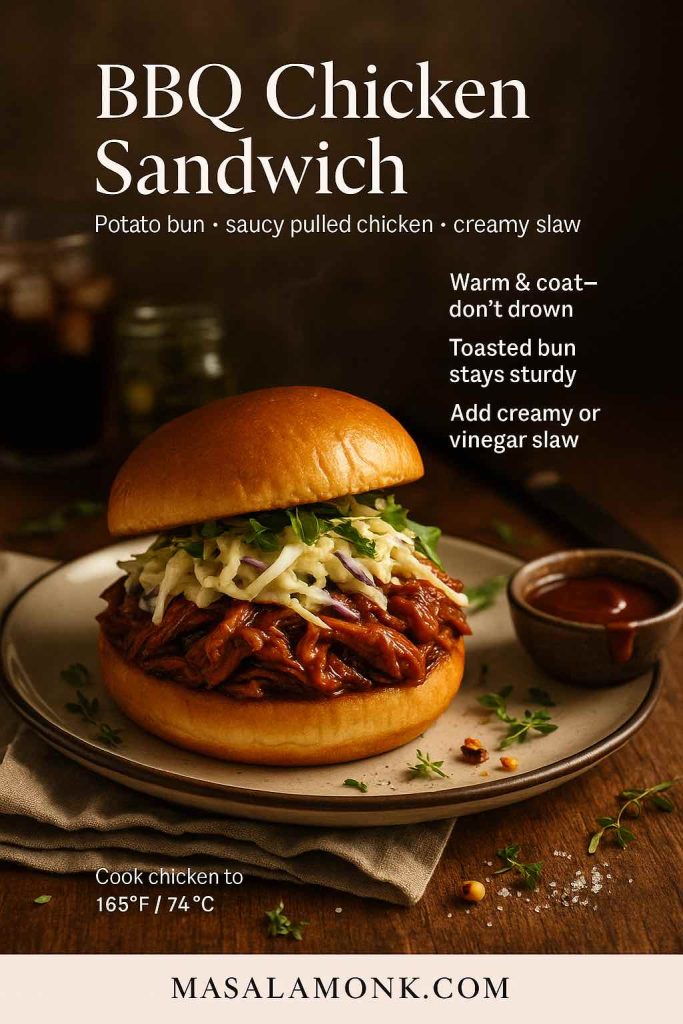
Build: Potato bun • shredded chicken or sliced grilled breast • tangy BBQ sauce • creamy slaw • handful of greens.
Start by warming shredded chicken with just enough sauce to coat—about ⅓ to ½ cup per 3 cups meat. Consequently, the chicken stays moist while the bun doesn’t collapse under excess liquid. To finish, mound the sauced chicken onto a toasted potato bun, spoon on creamy slaw for crunch, and tuck in peppery greens or a few thin onion slices. If you prefer a lighter direction, use a smaller roll and add a crisp veg side; for lunch-oriented fiber boosts and smart bread choices, MasalaMonk’s guide to high-fiber sandwiches inspires sturdy, satisfying combinations without feeling heavy.
BBQ Chicken Sandwich Recipe — saucy pulled chicken on a toasted potato bun with creamy (or vinegar) slaw. Warm the meat just to coat (don’t drown), toast the bun for structure, and always cook chicken to 165°F/74°C. More weeknight builds at MasalaMonk.com.
Variations:
Vinegar-slaw vibe: Swap creamy slaw for a light, sharp version to cut through saucy richness.
Smoky-sweet glaze: Reduce BBQ sauce with a spoon of brown sugar until glossy, then brush onto sliced breasts right before serving.
Party sliders: Build on mini rolls and bake briefly under a foil tent to warm through.
Make-ahead: Shred chicken the day before; keep sauce separate until reheating. Additionally, toast buns just before serving to preserve texture.
Side serving ideas: Oven fries, corn salad, or quick-dressed cabbage with lime and a pinch of cumin. As an optional party move, set out a small bowl of extra sauce so diners can adjust heat and sweetness to taste.
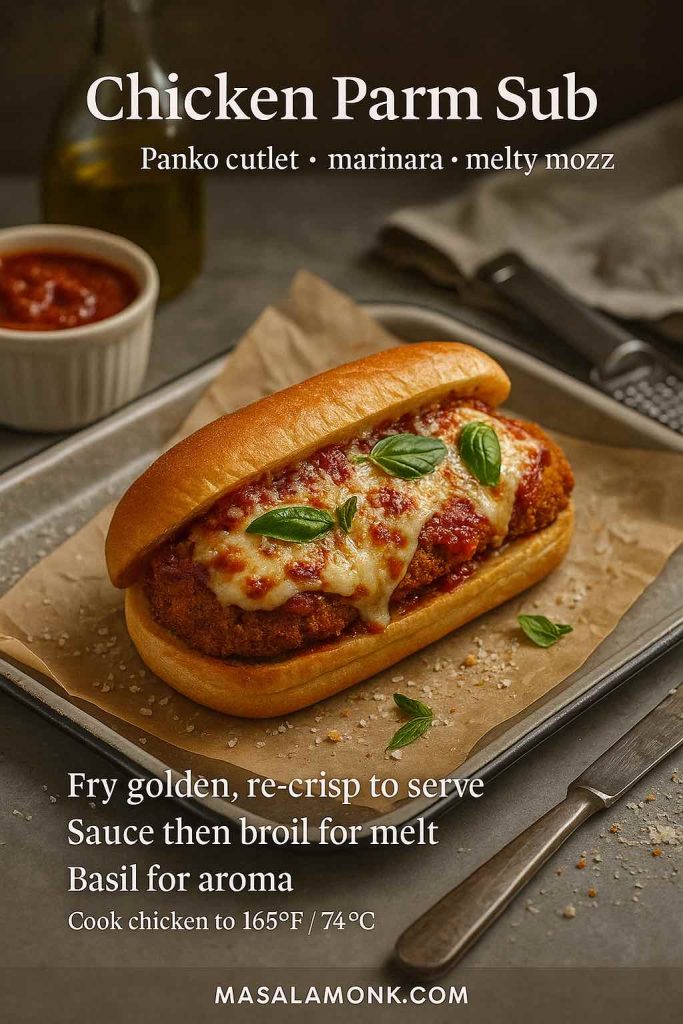
Build: Sub roll • hot, crispy cutlet • warm marinara • provolone or mozzarella • grated Parmesan.
Here’s where shallow-fried cutlets shine. Bread them flour → egg → panko, season generously, and fry 3–4 minutes per side until golden. Subsequently, sauce a split sub roll, lay in the cutlet, blanket with cheese, and broil until the edges freckle and the center melts. For technique depth and crumb choices, this schnitzel-style approach to chicken schnitzel clarifies how oil temperature and dredge order affect crispness.
Chicken Parm Sub Recipe — crispy panko chicken cutlet in a toasted hoagie, topped with warm marinara and melty mozzarella. Re-crisp cutlet in a hot oven, then sauce and broil for bubbly cheese; finish with Parmesan and basil. Always cook chicken to 165°F/74°C. More chicken sandwich ideas at MasalaMonk.com.
Variations:
The grinder melt: Add a few spoonfuls of marinara on top, then more Parmesan before broiling—messy, magnificent.
The speed sub: Use toaster-oven heat while the cutlet rests; the bread will be ready the instant your cheese lands.
The basil finish: Tear basil over the top as you serve; aroma and freshness balance the rich sauce-cheese duo.
Make-ahead: Fry cutlets earlier in the day, cool on a rack, then re-crisp in a hot oven (220°C/425°F) for 6–8 minutes. In other words, you cook once, eat twice.
Sides: A tangy salad or roasted broccoli with lemon pairs beautifully. Keep the plate lean—this sandwich does the heavy lifting.
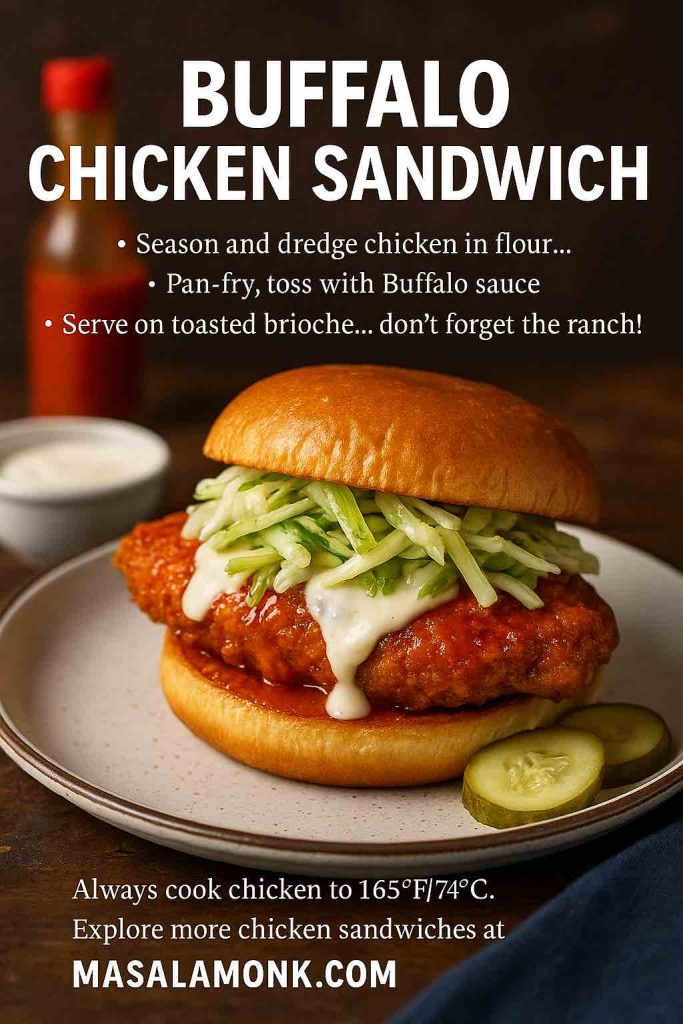
Build: Kaiser roll • crispy or grilled chicken • Buffalo sauce • ranch or blue cheese • celery slaw.
Toss hot chicken with Buffalo sauce after cooking so the crust remains crisp. Meanwhile, choose your dressing wisely: blue cheese emphasizes tang and funk, ranch leans herbaceous and mellow. For an at-home classic you’ll reuse constantly, this homemade ranch dressing nails the buttermilk-herb balance. If you gravitate to blue cheese, MasalaMonk’s deep-dive on a party-friendly blue cheese dip offers useful tips on thickness and crumble size, which, incidentally, also govern how neatly your sandwich eats.
Buffalo Chicken Sandwich Recipe — crispy chicken tossed after frying in Buffalo sauce, stacked on toasted brioche with celery slaw and ranch (or blue cheese). Keep it glossy, not soggy; add a light hot-honey drizzle for balance. Always cook chicken to 165°F/74°C. Explore more weeknight chicken sandwiches at MasalaMonk.com.
Variations:
Grilled Buffalo: Brush a touch of sauce on the chicken right off the grill, then drizzle more once it’s on the bun.
Extra heat: Add a small squeeze of hot honey over the slaw to contrast the vinegar heat with gentle sweetness—there’s a quick method here: easy hot honey.
Harissa-ranch twist: Blend a spoon of harissa into ranch for smoky, floral warmth; a reliable reference is this streamlined harissa ranch.
Make-ahead: Celery slaw keeps well for a day; dress it lightly and add more right before serving. Likewise, buns can be split ahead, then toasted à la minute for speed.
Sides: Baked potato wedges or carrot sticks with extra dip—simple, crunchy, and well-matched.
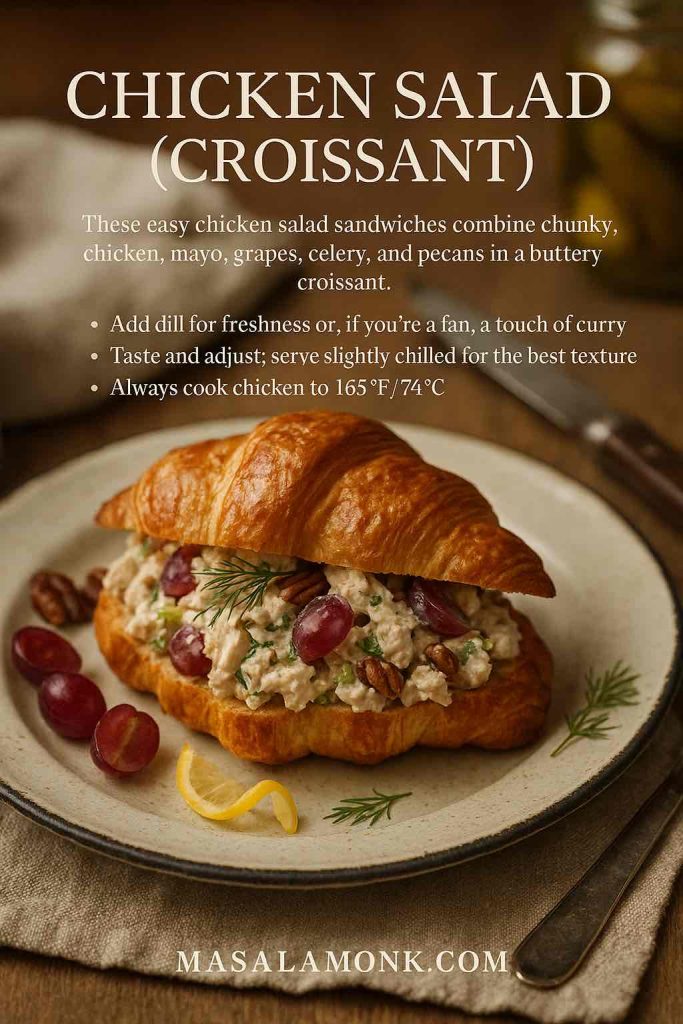
Build: Croissant or soft bread • chicken salad (chopped chicken + mayo + Dijon + lemon + salt & pepper) • crisp lettuce.
Cube or shred cooked chicken, stir with just enough dressing to coat, then fold in finely chopped celery for snap. If you like a tangy-sweet counterpoint, add dried cranberries and a handful of toasted pecans. For a lighter texture that still feels creamy, blend part of the mayo with strained yogurt; MasalaMonk’s tutorial on a protein-forward hung curd spinach sandwich shows how thick yogurt behaves in spreads without watering them down.
Chicken Salad Croissant Recipe — chunky chicken, celery, grapes and pecans in a creamy mayo-Dijon-lemon dressing. Chill 30 minutes for best texture; swap in part Greek yogurt for a lighter spread and add dill or a pinch of curry. Always cook chicken to 165°F/74°C. More easy lunch ideas at MasalaMonk.com.
Variations:
Tea sandwiches: Trim crusts, layer thinly, and cut into tidy rectangles; ideal for parties.
Crunch play: Gently fold in diced apple or halved grapes; sweetness brightens savory notes.
Herb garden: Dill and chives make this feel fresh without overpowering.
Make-ahead: The salad is better after an hour in the fridge; assemble just before serving to preserve bread texture. Additionally, croissants benefit from a quick, gentle warm-up to re-flake their layers.
Sides: A delicate salad with a lemony vinaigrette balances the richness. Thinly sliced cucumbers seasoned with salt and pepper add cool crunch without heaviness.
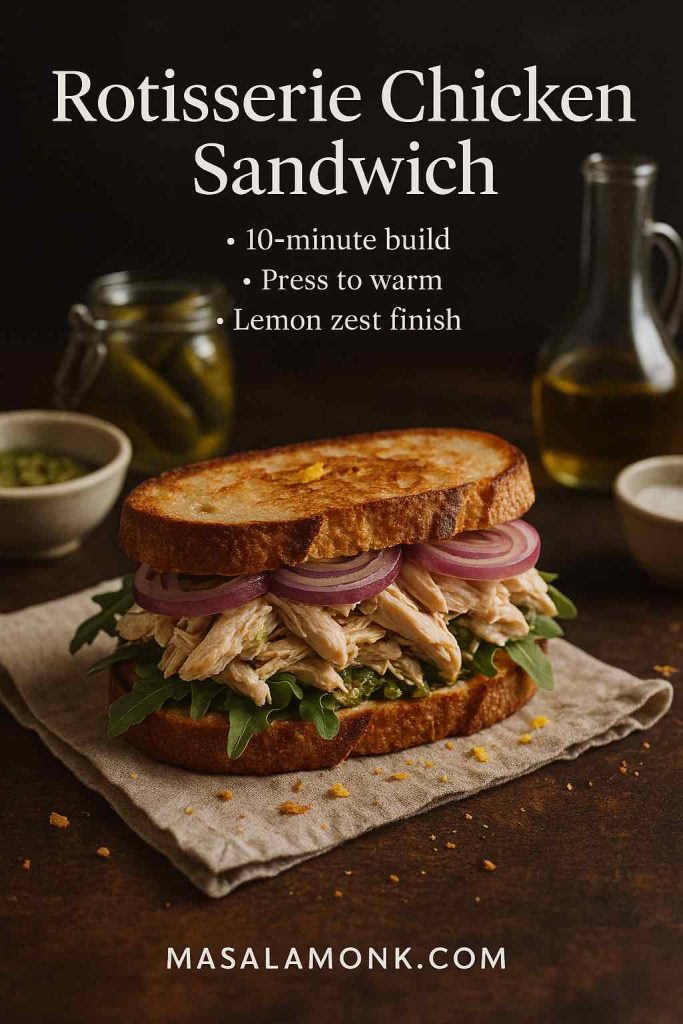
Build: Rustic sourdough • warm rotisserie chicken • house sandwich sauce or pesto-mayo • arugula • thin red onion.
This is the weeknight hero: already-cooked chicken, a fast sauce, and a handful of greens. Consequently, dinner appears in ten minutes flat. If you’re aiming for a mayo alternative, hummus makes a great stand-in; the texture lessons from MasalaMonk’s approachable hummus veggie sandwich translate perfectly—spread generously to “glue” loose shreds, then add greens so the bread doesn’t slip.
Chicken Salad Croissant Recipe — chunky chicken, celery, grapes and pecans in a creamy mayo-Dijon-lemon dressing. Chill 30 minutes for best texture; swap in part Greek yogurt for a lighter spread and add dill or a pinch of curry. Always cook chicken to 165°F/74°C. More easy lunch ideas at MasalaMonk.com.
Variations:
Pesto-mayo: Stir 2 Tbsp pesto into 3 Tbsp mayo; peppery, bright, and superb with arugula.
Warm press: After building, press the sandwich in a skillet under a small pan for a minute to marry the layers.
Citrus snap: A whisper of lemon zest over the top lifts everything.
Make-ahead: Portion rotisserie meat into small containers; freeze in flat bags for instant defrosting. Then, rewarm gently with your sauce to keep it juicy.
Sides: Tomato salad with olive oil and flaky salt; or, for a heartier plate, small roasted potatoes with rosemary.
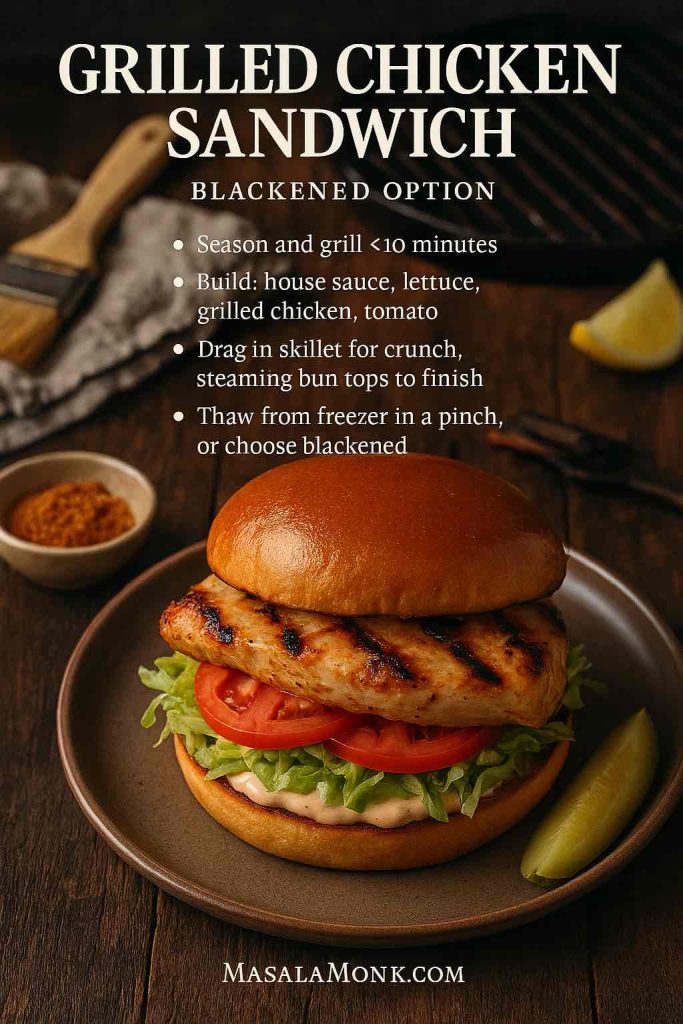
Build: Brioche • grilled breast • house sauce • tomato slices • shredded lettuce.
Pound chicken lightly for even thickness; marinate 30 minutes in oil, lemon, garlic, paprika, and salt. Grill over medium-high heat until the thickest area reaches 165°F/74°C, then rest 5 minutes before slicing. If you prefer a bolder profile, dust on a blackened spice blend (paprika, garlic and onion powders, thyme, oregano, cayenne, salt, and pepper) before grilling; the aromatic crust complements cool lettuce and a bright sauce.
Grilled Chicken Sandwich (Blackened Option) — quick marinade (oil, lemon, garlic, paprika), grill to 165°F/74°C, rest 5 minutes. Toast brioche, layer house sauce → lettuce → chicken → tomato for structure. For extra flavor, dust on a blackened spice rub before grilling; finish with a squeeze of lemon.
Variations:
Citrus-herb: Swap paprika for lemon zest and rosemary; finish with a squeeze of lemon.
Avocado layer: Mash avocado with lime and a pinch of salt; spread onto the bottom bun as a creamy shield.
Spicy mayo: Whisk in a teaspoon of hot sauce or a dab of chili crisp for a nudge of heat.
Make-ahead: Mix the marinade in the morning; the rest is mostly hands-off. Furthermore, you can grill extra breasts and hold them for salads or wraps later in the week.
Sides: Coleslaw, grilled corn, or a crunchy chopped salad. Toast the brioche lightly so it stays plush inside but sturdy outside—buns scorch quickly, so keep an eye out.
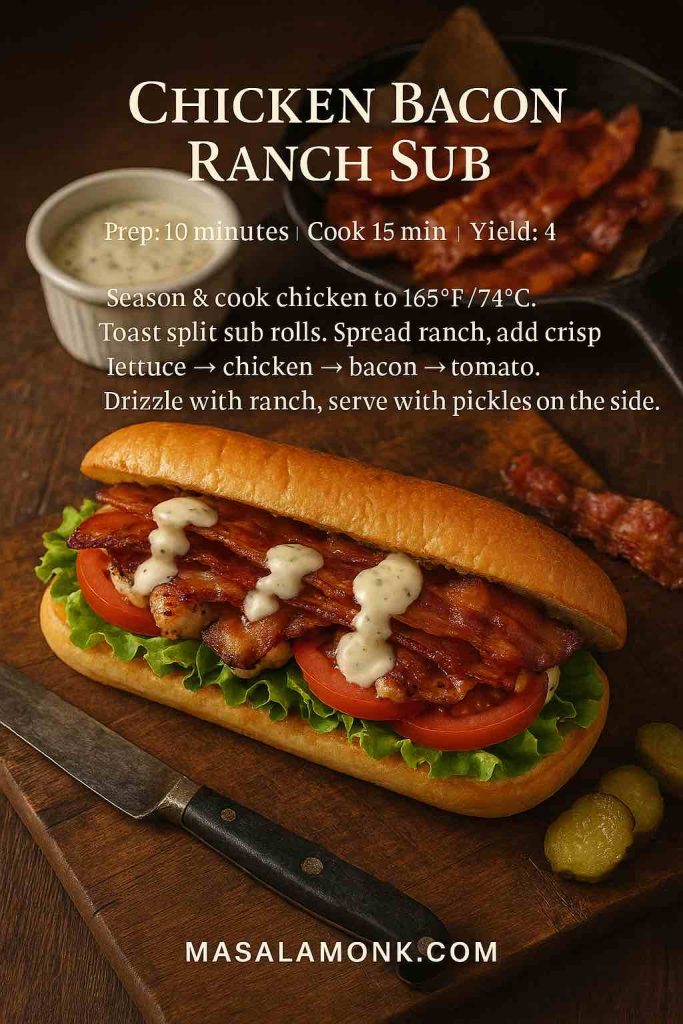
Build: Soft sub roll • grilled or crispy chicken • ranch • hot bacon • tomato • shredded lettuce.
This sandwich succeeds on balance: smoky bacon, cool ranch, crisp lettuce. To keep it from tipping heavy, toast the roll so the crumb stays resilient, then layer chicken first, bacon second; that way, heat rises to the ranch rather than sogging the lettuce. If you want a lighter profile, use a yogurt-forward dressing to cut richness while preserving body. For matching your spice to your mood, fold a spoon of minced chipotle into the ranch—smoky and gently fiery—or lean into herb brightness.
Helpful reference points: A dependable, from-scratch ranch dressing sets your baseline; if you’re looking to calibrate heat for snacks and sides on the same day, MasalaMonk’s timing and texture notes in their air fryer chicken wings guide help synchronize oven and counter space so everything lands hot together.
Chicken Bacon Ranch Sub Recipe — Toast split rolls, then stack ranch → lettuce → chicken → bacon → tomato for a tidy, crunchy bite. Oven-bake bacon on a rack for extra crisp, use a yogurt-forward ranch to lighten it, and cook chicken to 165°F/74°C. Try a chipotle-lime ranch for smoky heat.
Variations:
Club-style: Add a thin slice of cheddar and a second layer of lettuce; slice on the bias for neater halves.
Chipotle-ranch: Stir in smoky chile; add avocado for coolness.
BLT-plus: Use only lettuce, bacon, and ranch with grilled chicken—clean, classic, and fast.
Make-ahead: Cook bacon in the oven on a rack; it stays flat and extra crisp. Assemble subs quickly right before serving so the lettuce stays lively.
Sides: Crisp apples or cucumber spears; the fresh snap works wonders against the sandwich’s savory depth.
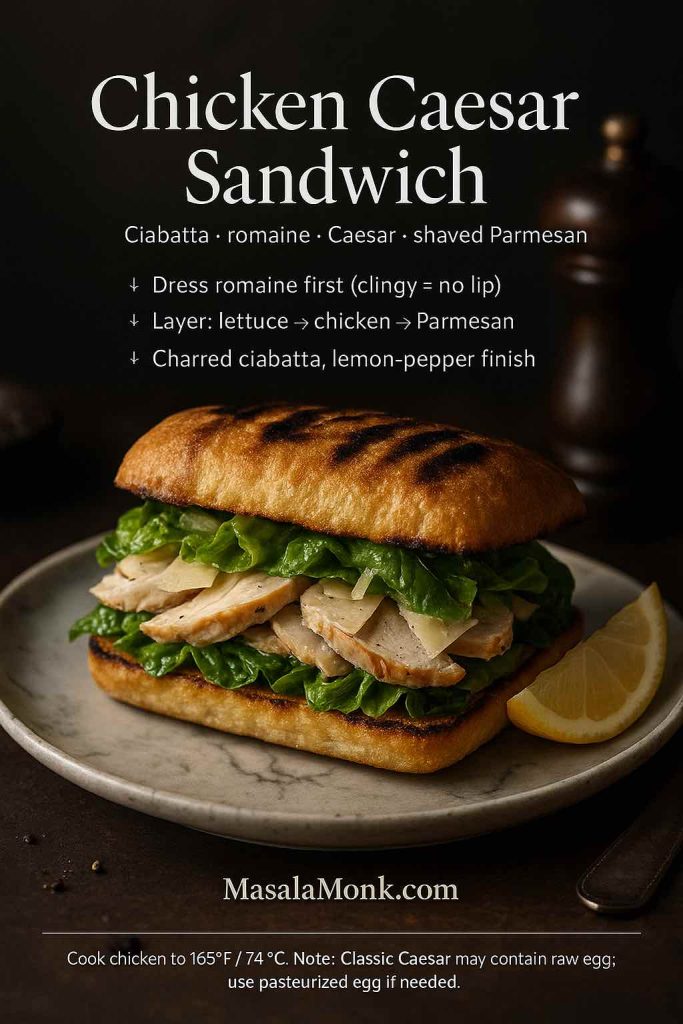
Toss romaine lightly in dressing first, add it to the bread to create a moisture buffer, then layer chicken and extra Parmesan. Notably, the dressing choice shapes the whole experience: anchovy-forward versions read bold and classic, while mayo-based or yogurt-touched dressings feel round and gentle. For a rock-solid method that emulates the original table-side spirit, rely on this Caesar dressing recipe; it emulsifies into a silky sauce that clings to lettuce and chicken alike.
Chicken Caesar Sandwich Recipe — charred ciabatta, romaine tossed first in anchovy-forward Caesar, layered with sliced grilled chicken and shaved Parmesan. Finish with lemon and pepper. Use pasteurized egg if making classic dressing; cook chicken to 165°F/74°C. More weeknight builds at MasalaMonk.com.
Variations:
Grilled Caesar: Char the ciabatta briefly; smoke plus garlic equals big flavor.
Crispy-Caesar hybrid: Use a small crispy cutlet instead of sliced grilled chicken; the contrast is addictive.
Lemon-pepper finish: A final grind of pepper and a squeeze of lemon dial in brightness.
Make-ahead: Wash and spin romaine well in advance; dry leaves are the secret to a Caesar that doesn’t weep. Store dressing chilled; toss just before serving to preserve crunch.
Sides: Cherry tomatoes with olive oil and capers, or a simple zucchini sauté with garlic and herbs.
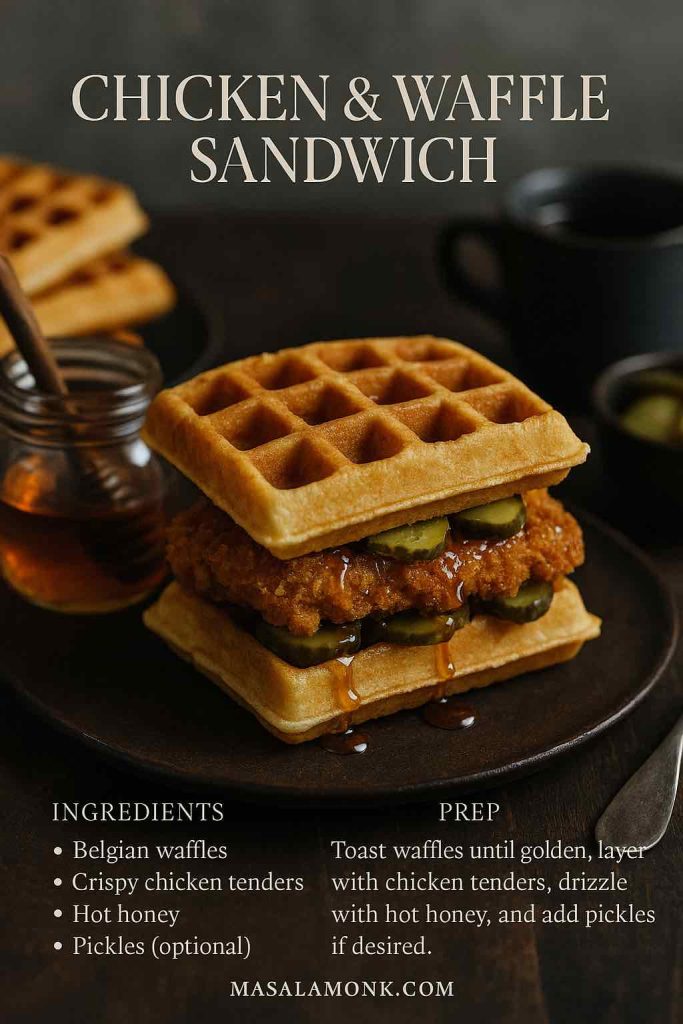
Build: Belgian waffles • crispy tenders • hot honey or maple • (optional) thin pickle slices • napkins on standby.
Sometimes you want unabashed fun. Fry or air-fry tenders until audibly crisp, set between warm waffles, and drizzle lightly with a sweet-heat glaze. For a measured, quick approach that you can tune from gentle to fiery, this streamlined method for hot honey is remarkably consistent. If you prefer to skip pickles, lean on a bit more acidity in the glaze or finish with a squeeze of lemon to offset the sweetness.
Chicken & Waffle Sandwich Recipe — golden Belgian waffles with crispy chicken tenders, a light hot-honey drizzle, and optional pickles. Re-crisp waffles in a toaster for snap; keep tenders on a rack so they stay crunchy. If cooking chicken from raw, finish to 165°F/74°C. More comfort-food sandwiches at MasalaMonk.com.
Variations:
Spicy maple: Warm maple syrup with a pinch of cayenne; it reads classic diner in the best way.
Cheddar crunch: Add a thin layer of sharp cheddar; salty richness loves hot honey.
Waffle sliders: Quarter the waffles and use smaller tenders for two-bite party food.
Make-ahead: Waffles freeze beautifully; re-crisp them in a toaster or dry skillet. Meanwhile, keep tenders in a warm oven on a rack to hold crunch until serving.
Sides: Fruit salad or coleslaw; either option brings brightness to the party.
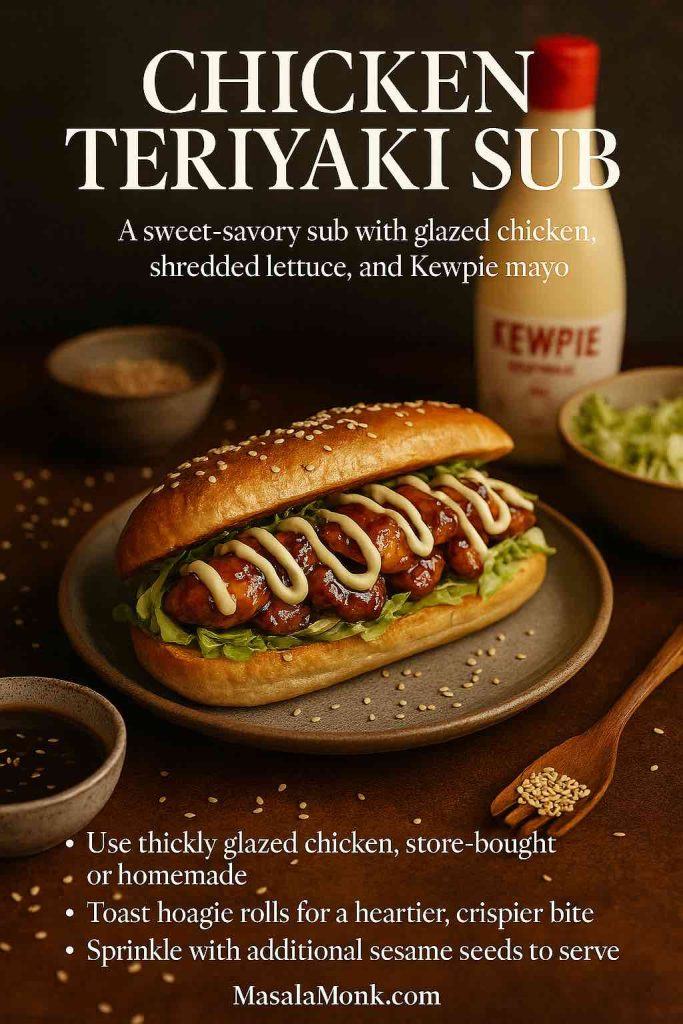
Build: Soft sub • grilled chicken tossed in teriyaki glaze • mayonnaise or kewpie • cucumber • scallions.
Slice grilled chicken and warm it gently with a small pool of teriyaki until glazed—no need to simmer aggressively. Next, swipe the roll with a thin layer of mayo (or kewpie for silkiness), load the glazed chicken, then finish with cucumbers and scallions for refreshing crunch. Because the glaze carries sweetness, that fresh, green bite keeps balance in check.
Chicken Teriyaki Sub Recipe — warm sliced chicken in just enough teriyaki glaze to coat (don’t candy), tuck into a toasted hoagie with lettuce (or cucumber + scallions), finish with Kewpie mayo and sesame seeds. Try a chili-crisp mayo for heat. Cook chicken to 165°F/74°C. More weeknight subs at MasalaMonk.com.
Variations:
Pineapple-teriyaki: Add finely diced pineapple to the glaze and simmer for a minute; tropical, bright, and fun.
Sesame finish: Toast sesame seeds and scatter them on top; nutty aroma for almost zero effort.
Spicy-sesame mayo: Stir in a little chili crisp; it complements the glaze while adding texture.
Make-ahead: Mix glaze and prep scallions in the morning. Assemble at dinner with almost no cleanup.
Sides: Snap peas with a sesame-soy dressing, or oven fries dusted with garlic powder.
Saturday: Grill four marinated breasts; fry a batch of cutlets; whisk house sauce, ranch, hot honey, and blackened rub. Bake or buy a pack of soft buns.
Sunday (BBQ): Shred one breast, warm with BBQ, pile onto potato buns with slaw. Save leftover slaw for tomorrow.
Monday (Buffalo): Re-crisp two cutlets; toss in Buffalo; add celery slaw and ranch. Offer a quick side of carrot sticks.
Wednesday (Caesar): Slice a grilled breast, toss romaine in dressing, and build on ciabatta with Parmesan. Serve cherry tomatoes on the side.
Friday (Teriyaki): Slice the last grilled breast, glaze quickly with teriyaki, and layer in a soft sub with cucumber and scallions. Finish with sesame seeds.
As a result, you’ve enjoyed five distinctive chicken sandwich recipes without feeling like you ate the same dinner twice. And, crucially, your sauces and prepped components carried you through with almost no midweek effort.
Final thoughts (and a few sources you’ll actually use again)
Cooking at home scales best when your core methods repeat effortlessly. Once you’ve internalized grilling to 165°F/74°C (see the USDA temperature chart) and crisping cutlets the right way (that cutlet guide is gold), you can improvise with confidence. Then, with a small sauce rotation—anchovy-forward Caesar dressing, trusty ranch, and adaptable hot honey—you’ll steer flavor from bright to rich to spicy without rewriting the shopping list.
Meanwhile, for days you want a gentle, wholesome vibe, sneak in hummus or strained yogurt as your creamy element; MasalaMonk’s approach to yogurt-based spreads and their straightforward hummus sandwich offer texture tricks that keep sandwiches tidy and satisfying. And when you’re in the mood to go full comfort—say, Chicken Parm on a broiled sub—remember that a little basil and a properly toasted roll raise the bar more than an extra ounce of cheese ever could.
In the end, these chicken sandwich recipes are a toolkit: start with either grilled or crispy, choose a sauce and a bread, add crunch and greens, and you’re done. Vary heat levels to suit the crowd, keep buns warm, and let rest times do their magic. Tonight, maybe it’s BBQ with slaw; tomorrow, Buffalo with harissa-ranch; next weekend, Teriyaki with cucumber and scallions. Different sandwiches, same ease—and the same happy table.
FAQs
1. What are the must-know basics for chicken sandwich recipes?
Start with even-thickness chicken, season generously, and cook to a safe internal temperature of 165°F/74°C. Moreover, rest the meat a few minutes so juices settle. Choose buns that match the filling (brioche for grilled, sub rolls for saucy builds), and toast lightly to resist sogginess.
2. Which buns work best for BBQ, Parm, and Buffalo styles?
For BBQ, potato buns cushion saucy fillings; conversely, Chicken Parm thrives in sturdy sub rolls that can handle broiling. Buffalo sandwiches prefer kaiser rolls or brioche—soft yet resilient—so the heat and dressing stay balanced.
3. How do I keep crispy cutlets crunchy after saucing?
Fry to golden, drain on a rack, then sauce right before serving. Additionally, spread condiments thinly on both sides of the bun and add a lettuce “buffer” to reduce steam and seepage.
4. What is the simplest “house” sauce to anchor most chicken sandwich recipes?
A quick blend of mayo, Dijon, lemon juice, a pinch of sugar, salt, and pepper delivers tang, creaminess, and balance. Furthermore, it pairs with grilled, crispy, or shredded chicken without overpowering.
5. How can I make a healthier chicken sandwich without losing flavor?
Go grilled rather than fried, then swap part of the mayo for strained yogurt. Likewise, load on crunchy vegetables, choose whole-grain or lighter rolls, and keep sauces to 1–2 tablespoons per sandwich.
6. What’s the easiest way to batch-prep for busy weeks?
Marinate and grill multiple breasts at once; slice some, keep others whole. Meanwhile, prep a small trio of sauces (Buffalo, house, pesto-mayo) and store them chilled. Consequently, you can build BBQ, Caesar, or Bacon-Ranch in minutes.
7. How do I prevent wet, collapsing sandwiches?
Toast buns, pat greens dry, and assemble in a moisture-smart order: sauce → lettuce → chicken → toppings → tiny sauce dot on the top bun. Notably, shredded and pulled versions benefit from being warmed with just enough sauce to coat—not drown.
8. What’s a reliable blueprint for BBQ chicken sandwich success?
Warm shredded chicken in your favorite BBQ sauce, pile onto a soft bun, then finish with slaw for crunch and acidity. Alternatively, thin-sliced grilled breast works when you want leaner texture.
9. How do I nail a Buffalo chicken sandwich without losing crispness?
Sauce after frying or grilling, not before. Add celery slaw for snap; pick ranch for herbal coolness or blue cheese for tang. Beyond that, a drizzle of hot honey can balance heat with gentle sweetness.
10. Any quick upgrades for Chicken Parm sandwich night?
Use panko-breaded cutlets, warm marinara, and melt provolone or mozzarella under the broiler. Even so, a final shower of grated Parmesan and torn basil lifts aroma and adds savory depth.
11. What defines a great chicken salad sandwich?
Tender, bite-size chicken bound with just enough dressing to coat, plus crisp celery and a bright note like lemon. Additionally, croissants or soft sandwich bread keep the bite tender; add cranberries or pecans for contrast when desired.
12. How do I turn rotisserie leftovers into a stellar sandwich?
Shred, warm gently with a spoon of sauce or pesto-mayo, then stack with fresh greens and thin onions on toasted sourdough. On the other hand, pressing the sandwich briefly in a skillet can marry layers without drying the filling.
13. What’s the difference between grilled and blackened chicken sandwiches?
Grilled relies on marinade and char for flavor; blackened adds a spice crust (paprika, garlic, thyme, oregano, cayenne) seared quickly for aroma and color. Ultimately, both finish at 165°F/74°C and benefit from a cool, crisp lettuce layer.
14. How do I balance a chicken bacon ranch sub so it isn’t too heavy?
Keep bacon crisp, use a thinner smear of ranch, and layer lettuce for freshness. Additionally, consider a yogurt-forward ranch or a chipotle-lime variation to add brightness without extra fat.
15. What makes a chicken Caesar sandwich work as well as the salad?
Dry, crunchy romaine, anchovy-forward dressing, and shaved Parmesan—plus sliced grilled chicken for protein. Furthermore, ciabatta or toasted sourdough stands up to dressing without collapsing.
16. Tips for a clean, handheld chicken & waffle experience?
Use waffles with defined pockets, keep tenders extra crisp, and drizzle hot honey sparingly. Alternatively, squeeze in a lemon wedge for acidity if you skip pickles but still want balance.
17. How do I keep teriyaki chicken sandwiches from turning sweet-heavy?
Glaze lightly and add fresh, watery crunch—think cucumber and scallions. Likewise, a thin swipe of mayo or kewpie creates silkiness while tempering sugar.
18. What are the best proteins for shredded chicken sandwich ideas?
Poached, slow-cooked, or rotisserie chicken shred cleanly and reheat well. Consequently, they absorb sauces quickly—BBQ, Buffalo, pesto-mayo, or Caesar—without long simmering.
19. Which spreads are smart substitutes for mayo in chicken sandwich recipes?
Strained yogurt, hummus, mashed avocado with lime, and pesto-mayo hybrids deliver creaminess with character. Moreover, they help “glue” loose shreds so sandwiches hold together better.
20. How can I scale these recipes for crowds?
Batch the proteins, toast rolls on sheet pans, and set sauces in squeeze bottles. Likewise, pre-slice tomatoes and rinse lettuce early; assemble to order so textures stay crisp.
21. What’s the quickest path from fridge to plate on weeknights?
Keep grilled chicken sliced, a house sauce ready, and buns pre-split. Beyond that, assemble cold with greens or rewarm the chicken briefly, then finish with a fast slaw or cucumber ribbons.
22. How do I integrate spice without overwhelming the family?
Offer scalable heat: a blackened rub with modest cayenne, chipotle-lime mayo on the side, or a restrained drizzle of hot honey. In short, build mild by default and let diners add heat to taste.
23. What are the top “crowd-pleaser” chicken sandwich recipes to start with?
Begin with BBQ pulled, Chicken Parm, and Buffalo. Likewise, rotate Grilled (Blackened option) and Caesar for balance, then add Bacon-Ranch or Teriyaki when you want variety.
24. Any storage advice so leftovers still taste fresh?
Store components separately—bread at room temp, sauces chilled, chicken in airtight containers. Furthermore, re-crisp cutlets in a hot oven on a rack and re-toast buns right before serving.
25. How do I choose the right lettuce and toppings for structure?
Pick shredded iceberg or romaine for crunch and moisture control. Additionally, slice tomatoes thin, use just enough onion for lift, and avoid stacking wet components directly on the bottom bun.
26. Which sides consistently complement these styles?
Think bright and crisp: simple slaws, chopped salads, oven fries, or fresh fruit. Alternatively, a light soup or corn salad keeps the plate balanced without overshadowing the sandwich.
27. Can I freeze components for future chicken sandwich recipes?
Absolutely. Freeze shredded chicken flat in small bags, then thaw fast under cool water. Likewise, baked cutlets re-crisp nicely; just cool completely before freezing to preserve texture.
28. What’s the quickest seasoning upgrade if I have zero time?
Salt early, then add lemon zest or a dash of smoked paprika. Nevertheless, a tiny squeeze of citrus at the end often tastes as if you cooked longer.
29. How do I use one grocery list to cook multiple styles in a week?
Buy chicken breasts, buns, lemons, greens, celery, onions, and a few pantry sauces or their building blocks (hot sauce, Dijon, honey). Consequently, you can pivot among BBQ, Caesar, Buffalo, and Rotisserie-Pesto without extra trips.
30. What’s the single best tip for sandwich success every time?
Toast the bread, season the chicken well, and assemble with intention—buffers first, wet items last. Ultimately, that sequence keeps bites structured, flavorful, and satisfying.