Chow mein does not give you much time to think once the pan is hot. Chicken comes out, vegetables go in, noodles hit the hot surface, and the sauce has only a minute or two to turn everything glossy before dinner is ready.
That speed is part of the appeal—and the reason homemade chicken chow mein can unravel so quickly. Noodles go in wet. Cabbage cools the pan. Chicken keeps cooking while everything else catches up. A little more sauce seems like the answer, and suddenly the noodles are soft instead of fried.
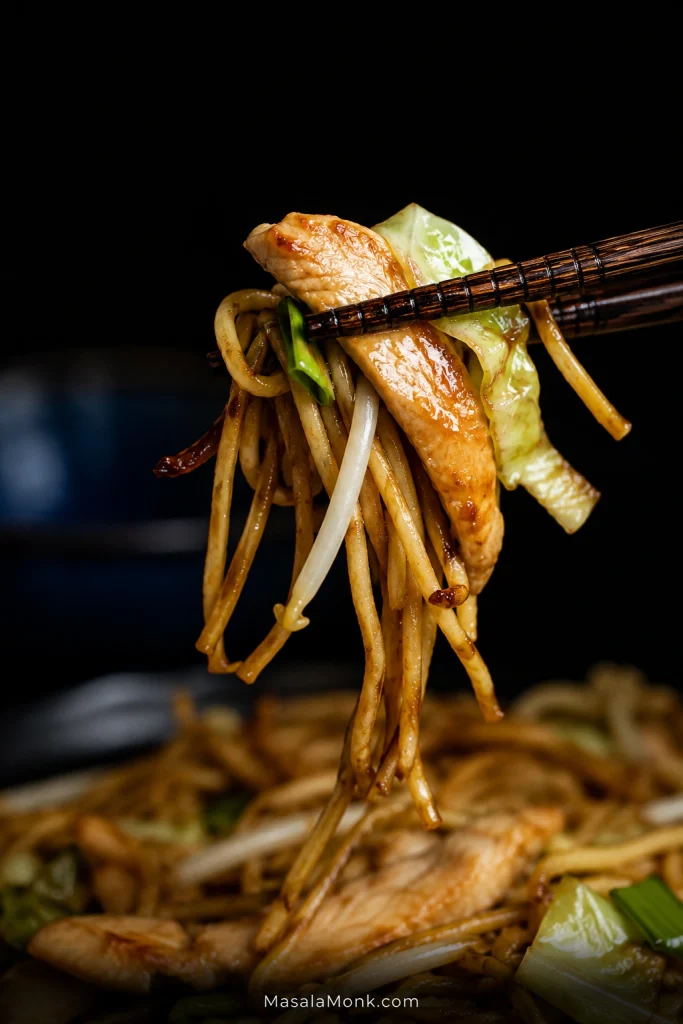
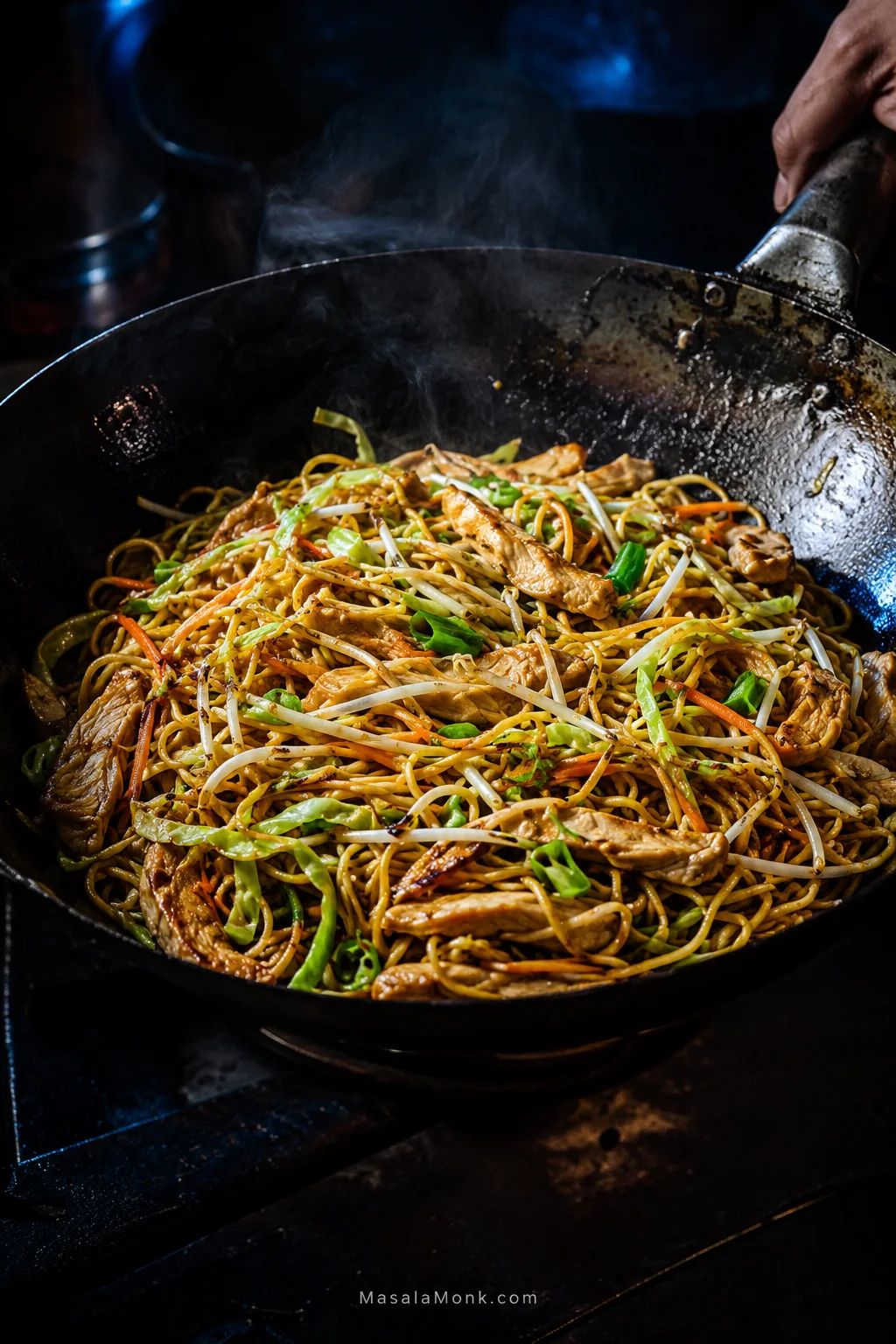
When it goes right, you can smell the difference before the pan reaches the table: toasted noodles, hot garlic and ginger, the savory edge of soy and oyster sauce. The chicken stays juicy, the vegetables snap, and a few noodle strands catch darker around the edges while the rest remain springy.
This recipe gets there by keeping the jobs separate. Thin strips of chicken get a short cornstarch marinade, the vegetables cook and come out, and the noodles get a mostly empty pan. Everything meets again only when each part is ready.
A wok is excellent, but you do not need restaurant equipment. A wide skillet works too.
Quick Answer
Good chow mein depends on timing and space as much as ingredients. The useful cue is simple: noodles should bend, separate and arrive at the wok without dripping. Anything already cooked can then make room for the next stage.
How to Make Chicken Chow Mein
Recipe card: servings, timings, ingredients, equipment and the complete method are below.
The chicken and vegetables come out before the noodles go in. It can look fussy on paper, but it makes the cooking easier: nothing sits around overcooking while you fight for space. It is one pan, just not one pile.
Once everything is sliced and the sauce is mixed, the actual stir-frying is only a handful of short stages.
Chicken and Quick Marinade
- 450 g / 1 lb boneless skinless chicken thighs or chicken breast
- 1 tablespoon / 15 ml Chinese light soy sauce or regular/all-purpose soy sauce
- 1 tablespoon / 15 ml Shaoxing wine
- 1 tablespoon / about 8 g cornstarch (cornflour in the UK)
- 1 tablespoon / 15 ml water
- 1 teaspoon / 5 ml neutral cooking oil
- ¼ teaspoon white pepper
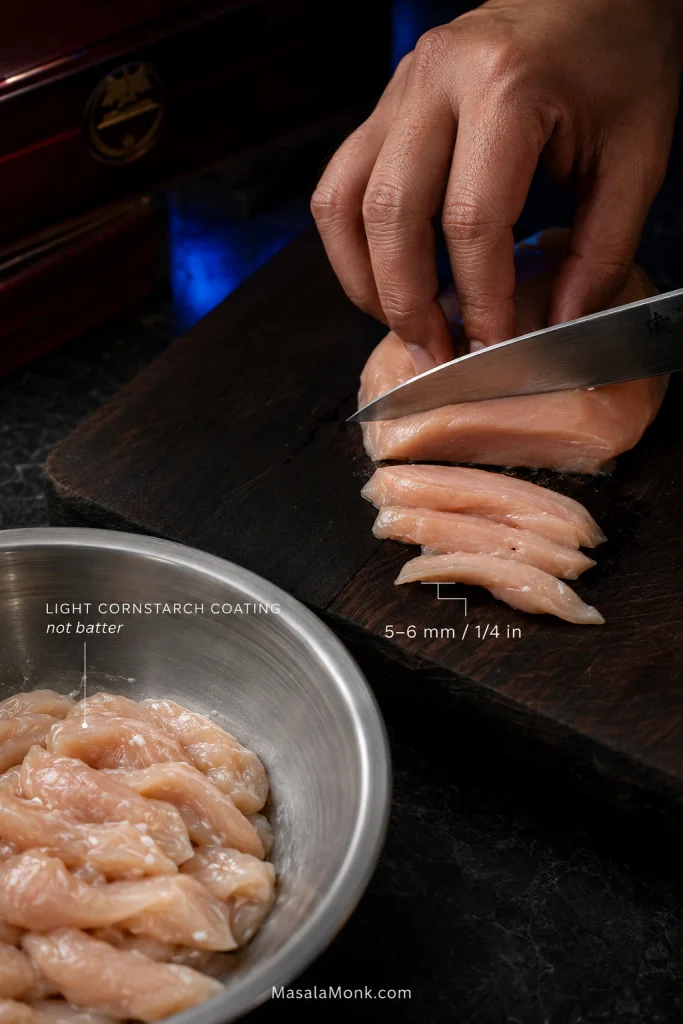
Cut the chicken about 5–6 mm / ¼ inch thick and roughly 5 cm / 2 inches long where practical. Slice chicken breast across the grain.
Sauce Ingredients
- 2 tablespoons / 30 ml Chinese light soy sauce or regular/all-purpose soy sauce
- 2 teaspoons / 10 ml dark soy sauce
- 2 tablespoons / 30 ml oyster sauce
- 1 tablespoon / 15 ml Shaoxing wine
- 2 teaspoons / about 8 g sugar
- ¼ teaspoon white pepper
- 1 teaspoon / 5 ml toasted sesame oil
- 1 teaspoon / about 3 g cornstarch (cornflour in the UK)
- ¼ cup / 60 ml water or unsalted chicken stock
- ¼ teaspoon MSG or ½ teaspoon chicken powder, optional
Keep another 2 tablespoons / 30 ml water beside the stove in case the noodles need loosening at the end.
Noodles, Vegetables and Aromatics
- 250 g / 9 oz dried Chinese egg or dried chow mein noodles
- Using fresh noodles? Use the package amount intended for about 4 servings. Fresh noodle products vary too much in hydration and cooking state for one reliable gram-for-gram conversion from dried noodles.
- 3 tablespoons / 45 ml neutral high-heat oil such as peanut, canola, grapeseed or rice-bran oil, divided
- 1 teaspoon neutral oil for drained noodles only if they are prone to sticking
- 250 g / 9 oz green cabbage, thinly shredded
- 1 medium carrot, about 100 g / 3½ oz, cut into fine matchsticks
- 150 g / 5 oz bean sprouts
- 4 scallions (spring onions), cut into 2.5–5 cm / 1–2 inch lengths
- 3 garlic cloves, finely chopped
- 15 g / ½ oz fresh ginger, finely grated or minced
Instructions
Have Everything Ready Before the Wok Gets Hot
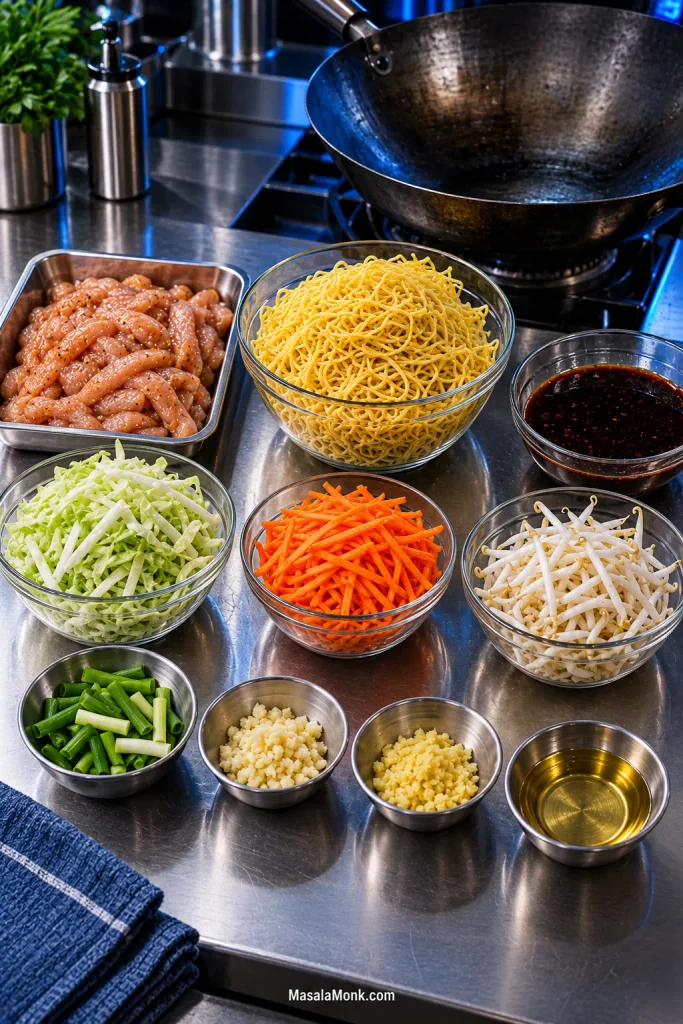
Prep Before the Wok
- Mix the sauce. Whisk the light soy, dark soy, oyster sauce, Shaoxing wine, sugar, white pepper, sesame oil, cornstarch, water or stock, and optional MSG or chicken powder until smooth. Set it aside and stir again just before it goes into the pan; the cornstarch will settle.
- Cut the vegetables, then marinate the chicken. Prepare the cabbage, carrot, scallions, garlic and ginger first. On a separate or thoroughly cleaned board, slice the chicken and mix it with the marinade ingredients. Wash your hands and clean the knife, board and anything else that touched the raw chicken immediately. Leave the chicken for 10–15 minutes while you prepare the noodles.
- Prepare the noodles last. Start checking dried noodles about a minute before the package’s full cooking time. Stop when the strands bend and separate easily but feel firmer than you want to eat. Drain and briefly rinse under cool water, then shake the colander firmly. Spread the noodles loosely for a couple of minutes. Lift a small handful; dripping noodles need more draining or a gentle blot with a clean kitchen towel. Toss with 1 teaspoon oil only when the strands are prone to sticking.
Cook in Stages
- Partially cook the chicken. Heat the wok or skillet over medium-high heat until hot. Add 1 tablespoon oil and spread the chicken into a loose layer. An immediate sizzle is what you want. Cook in two batches when the pieces would otherwise heavily overlap. Stir-fry for about 2 minutes, until most surfaces are opaque with a little browning. Transfer to a clean plate or bowl; the thickest pieces may remain slightly underdone inside.
- Cook the cabbage and carrot. Add another tablespoon oil and stir-fry for about 1½–2 minutes. The cabbage should soften at the edges while keeping some bite; the carrot should bend but not flop. Add the garlic and ginger for the final 20–30 seconds, just until their raw sharpness disappears and the aroma turns strong and savory. Let obvious liquid evaporate, then transfer everything to a bowl.
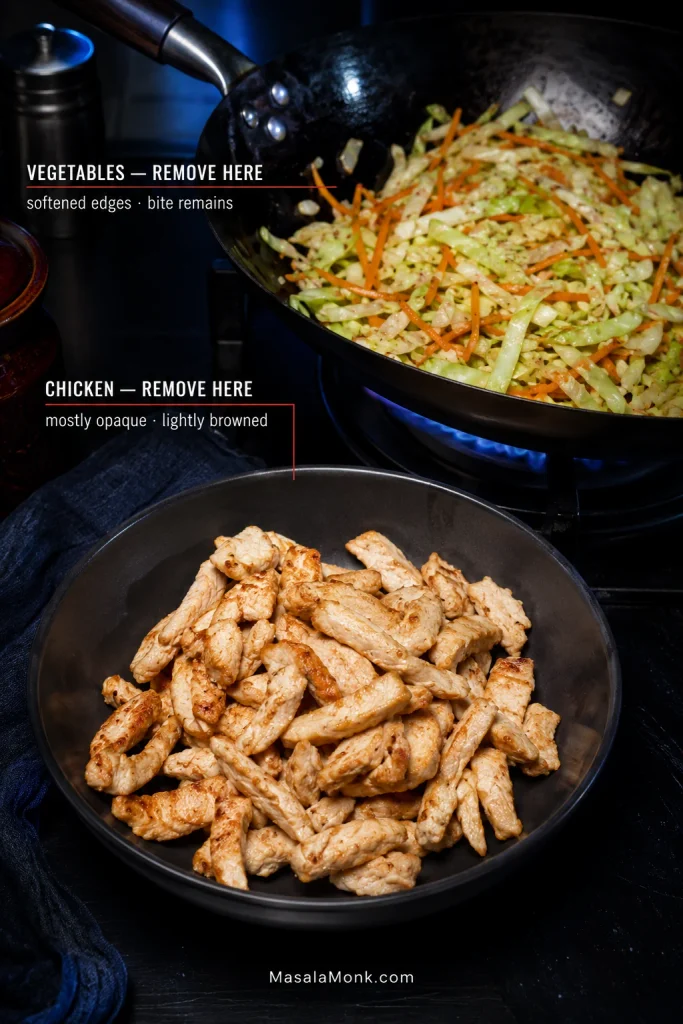
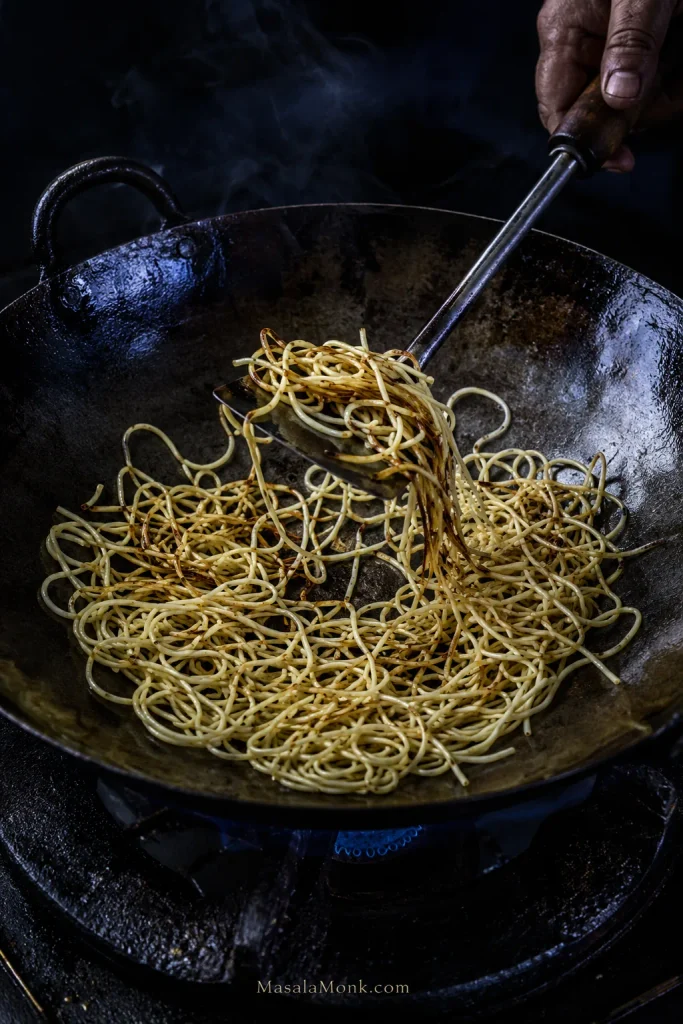
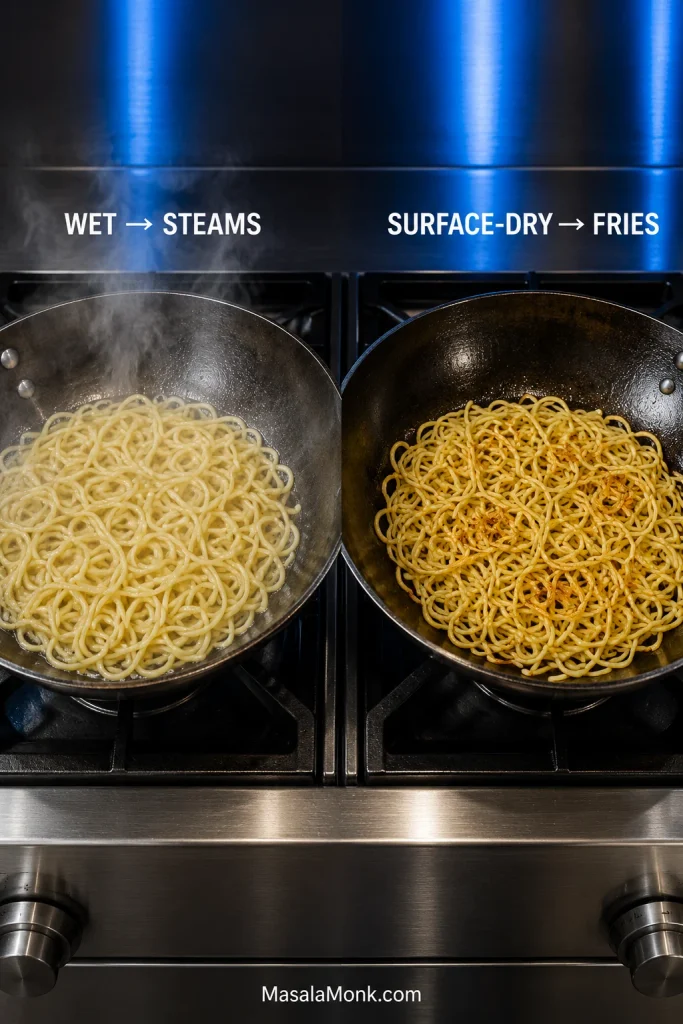
- Give the noodles the pan. Add the final tablespoon of oil and spread the noodles across as much hot surface as possible. Leave them alone for 30–45 seconds, then lift and turn. Continue for about 2 minutes. The pan should sound like frying, not simmering. Some strands will curl, wrinkle or darken while others stay pale. Uneven browning is fine. Those toasted patches give the noodles a deeper, nuttier edge that comes through after the sauce goes in.
Finish and Serve
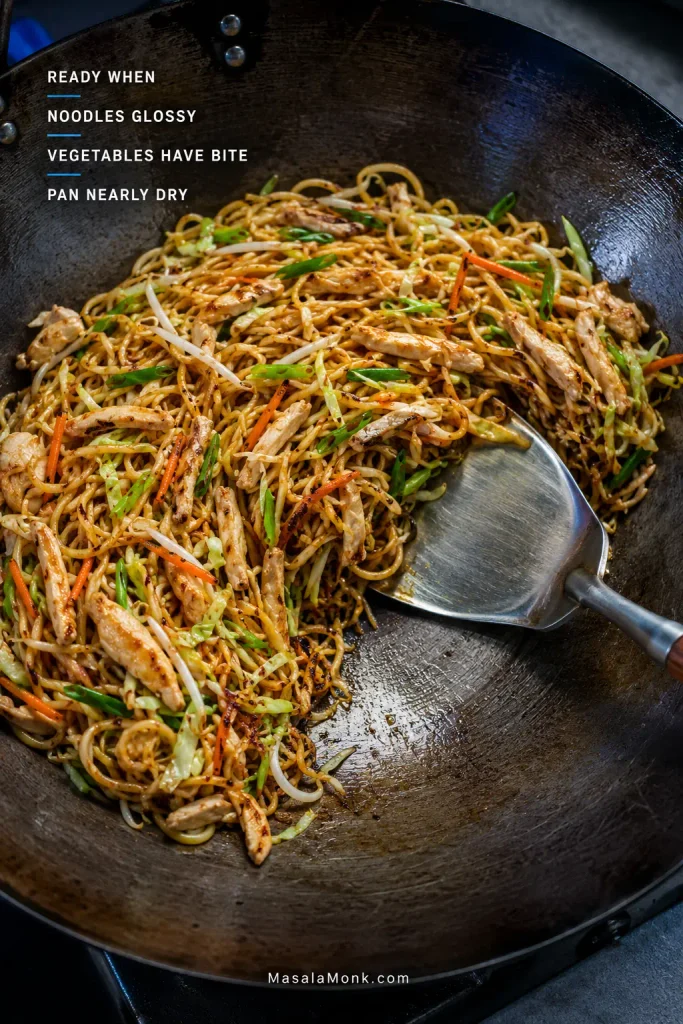
- Finish the stir-fry. Stir the sauce again and pour it over the noodles. Immediately return the chicken and vegetables. Leave behind any noticeable puddle of thin watery liquid on the chicken plate. Toss for 1–2 minutes, adding the reserved water 1 tablespoon at a time only when the noodles need loosening. A crowded 12-inch skillet is easier to handle as two half-batches.
- Add the bean sprouts and scallions. Give them 30–60 seconds. The sprouts should be hot, juicy and crisp. The thickest piece of chicken should reach 165°F / 74°C.
- Taste one forkful. It should be savory first, with mild sweetness and white-pepper warmth behind it. No single flavor component should dominate. The best forkful has chicken, cabbage or a crisp bean sprout tangled through noodles that are soft in places and toasted in others. Very little sauce should remain at the bottom. Turn off the heat and serve immediately.
Prefer softer noodles? Shorten the dedicated noodle-frying stage a little. For more browned edges, give them another 30–60 seconds of pan contact before the sauce goes in.
A Little Uneven Is Fine
The noodles should pull apart easily, the chicken should stay juicy, and some crunch should remain in the vegetables. Broken strands, darker patches and slightly softer cabbage are normal.
If this does not look like the chow mein you grew up ordering, you’re probably not misremembering it.
Why Chicken Chow Mein Looks Different Depending Where You Live
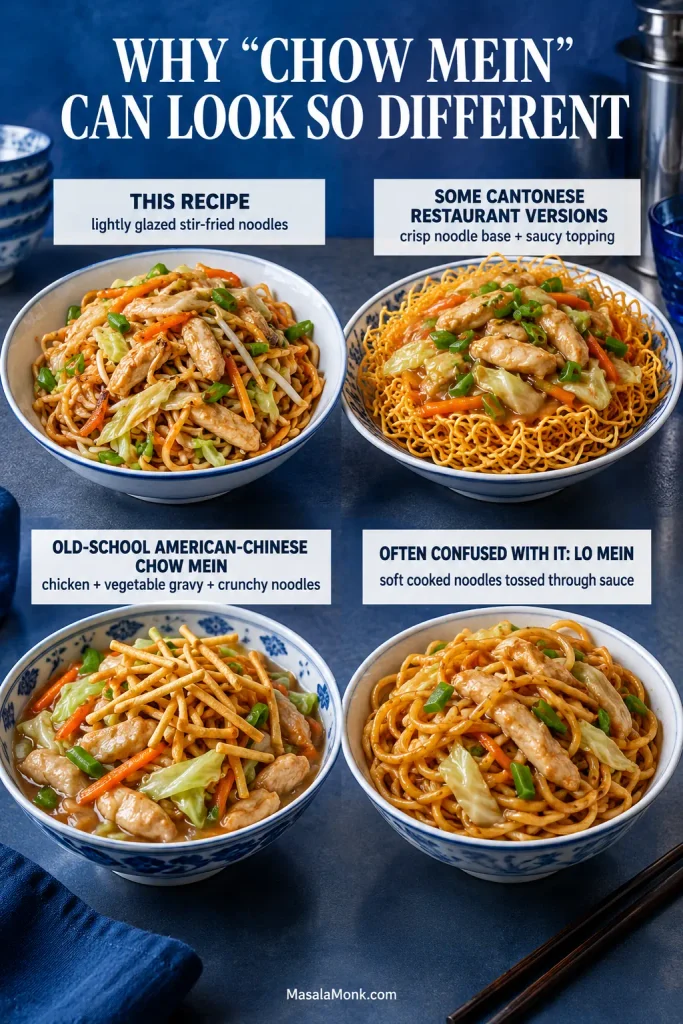
At its broadest, chow mein refers to noodles that are fried or stir-fried, but the dish can look very different depending on region and restaurant tradition. This recipe is the lightly glazed stir-fried-noodle style, with chicken and vegetables folded back through noodles that have had direct contact with the pan.
Some Cantonese restaurant versions use a crisp noodle base topped with saucy meat and vegetables. Some old-fashioned American-Chinese or Subgum-style chow mein is a chicken-and-vegetable gravy dish served with crunchy fried noodles.
Lo mein usually starts with cooked noodles that are tossed through sauce rather than deliberately fried for browned edges. It tends to be softer and more sauce-forward; this chow mein puts more emphasis on direct pan contact and noodle texture.
Here, the target is springy noodles, scattered browned edges, crisp vegetables and tender chicken.
The Chow Mein Noodle Guide
If you’ve ever followed the noodle packet perfectly and ended up with a sticky heap in the wok, you may not have cooked the noodles “wrong.” They may simply have been too soft—or too wet—for another round of heat.
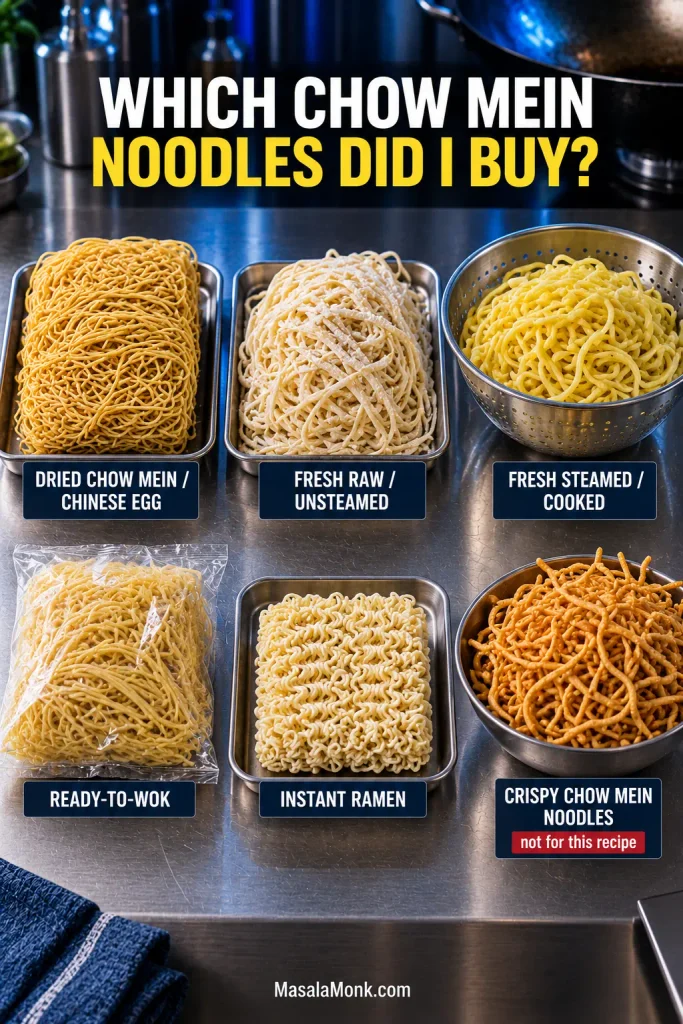
Open the packet before the water boils and see what you actually bought. Raw noodles, steamed noodles and ready-to-wok noodles can look remarkably similar while starting at very different stages of cooking.
Which Chow Mein Noodles Did I Buy?
| If the package says… | What you probably have | What to do |
|---|---|---|
| Dried chow mein / Chinese egg noodles | Dry and uncooked | Boil until flexible but firmer than serving doneness, then cool and drain thoroughly. |
| Fresh raw / unsteamed egg noodles | Fresh but uncooked | Cook according to the package, often with a brief boil or blanch. Stop while they retain some firmness. |
| Fresh steamed / cooked noodles | Already substantially cooked | Usually loosen or briefly blanch rather than giving them a full boil. |
| Ready-to-wok / straight-to-wok noodles | Hydrated and prepared for quick pan cooking | Loosen as directed and avoid unnecessary boiling. Watch for extra surface moisture. |
| Instant ramen | Dry and very quick-cooking | Discard the seasoning packet and cook only until barely flexible. |
| Crispy chow mein noodles | Already fried and crunchy | Not the noodle for this recipe. |
A note on “Hong Kong-style” noodles: the name describes a noodle style, not one universal preparation state. They may be sold raw, steamed or dried, so the package directions matter more than the words “Hong Kong-style” on the front.
Fresh noodle labels can be maddeningly vague. One yellow packet wants several minutes in boiling water; the packet beside it wants to go almost straight into the wok. The Woks of Life’s Chinese noodle guide (opens in a new tab) is useful when the refrigerated case looks like a wall of nearly identical noodles.
Four Things to Check Before the Wok
- Flexible: the noodle bends and separates without cracking.
- Firm enough: noodles you boil yourself should remain slightly underdone; pre-cooked noodles need enough firmness to handle another brief cook.
- Dry outside: the strands are not carrying obvious water into the pan.
- Loose: the noodles are separate instead of compressed into one warm, starchy block.
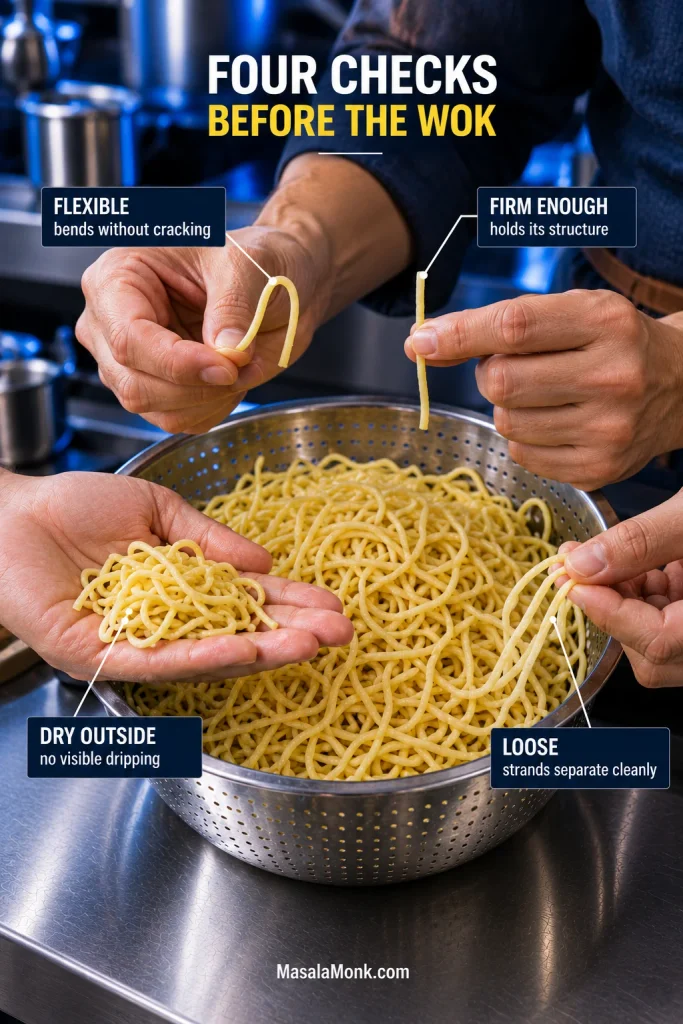
Doneness and dryness are separate problems. A noodle can be cooked correctly and still be wet enough to cool the pan. It can also be dry and separate but already too soft to handle another few minutes of heat.
If water drips when you lift a handful, give the noodles more time in the colander or blot them gently. Wet noodles steal heat.
↑ Back to the recipe · Next: sauce guide ↓
Homemade Chow Mein Sauce: Coat, Don’t Pool
For this version, a good chow mein sauce is almost invisible once dinner is finished. You should taste it everywhere without seeing much of it underneath.
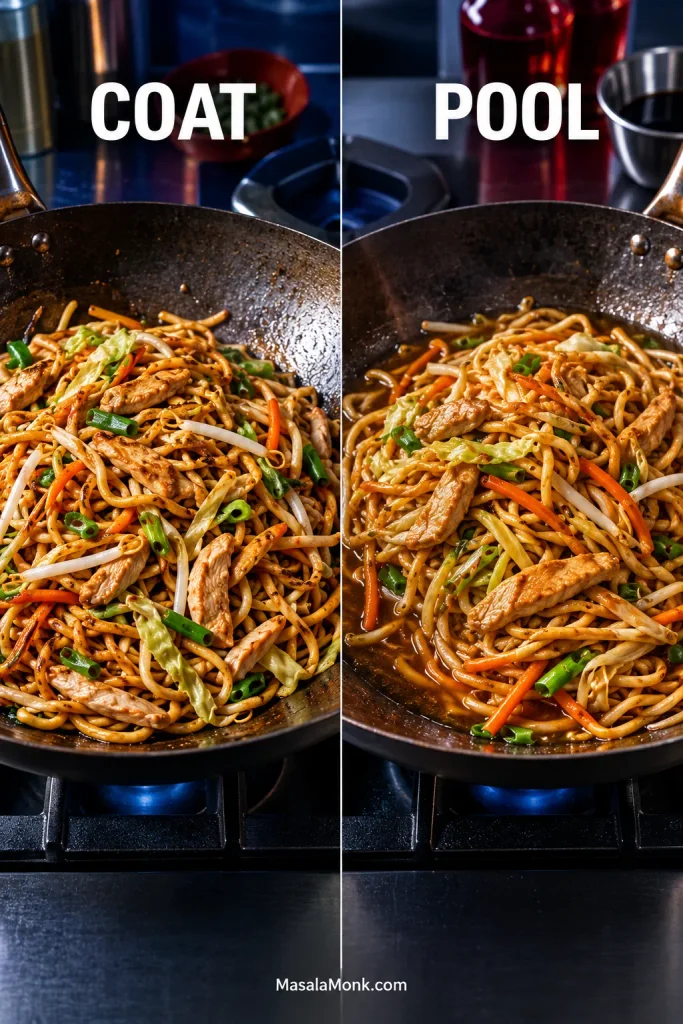
If the noodles taste salty but flat, more soy only pushes the salt higher. Deeper flavor also comes from oyster sauce, Shaoxing wine, white pepper, aromatics and the browning the noodles picked up in the pan.
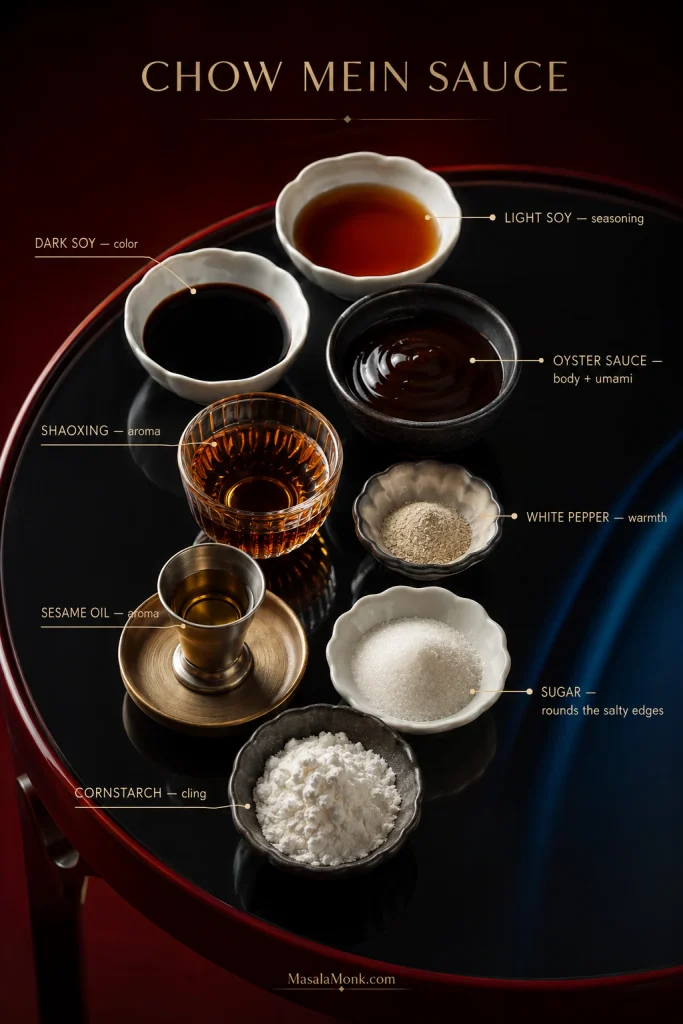
Light or all-purpose soy does most of the seasoning. Dark soy is there mainly for color and deeper soy flavor. Oyster sauce gives the noodles body and a little sweetness; Shaoxing brings an aromatic note that suits this version. White pepper adds warm, earthy background heat.
One label is worth checking closely here: Shaoxing products sold specifically as cooking wine sometimes contain added salt. That can push an otherwise balanced sauce much farther than expected.
Toasted sesame oil goes into the sauce for aroma, not into the wok as the main frying oil. Sugar softens the salty edges, while the small amount of cornstarch helps the sauce cling. MSG or chicken powder is optional for extra savory depth. You do not need a separate seasoning packet; this sauce already does that job.
The homemade stir-fry sauce guide (opens in a new tab) uses many of the same building blocks for other stir-fries.
When the balance is right, the noodles remain the main event—only darker, fuller and more savory, with an occasional toasted edge coming through.
Tender Chicken, Vegetables With Some Bite
Chicken thigh gives you a little more margin before it dries out. Breast works well too, especially when thinly sliced across the grain. The cornstarch leaves a light coating around either cut during both trips through the heat; baking soda is not necessary for this method.
Keep the vegetables long and fairly thin. Cabbage works well in narrow ribbons, carrots in matchsticks and scallions in 1–2 inch lengths. Once everything comes back together, the chicken and vegetables should weave through the noodles rather than sitting in separate piles on top.
Wok or Skillet?
On a normal home stove, listen to the pan. A sharp sizzle means the food is frying; a wet, quiet simmer means moisture is taking over.
- 14-inch / 35 cm flat-bottom carbon-steel wok: the best size for the full recipe. Wok shape and burner strength vary, so split the final stage if it feels cramped.
- 12-inch / 30 cm large skillet: completely workable. Batch the chicken when needed and expect two half-batches when everything goes back in if the skillet is shallow.
- Coated nonstick pan: usable, but follow the manufacturer’s heat guidance rather than automatically heating it until it smokes.
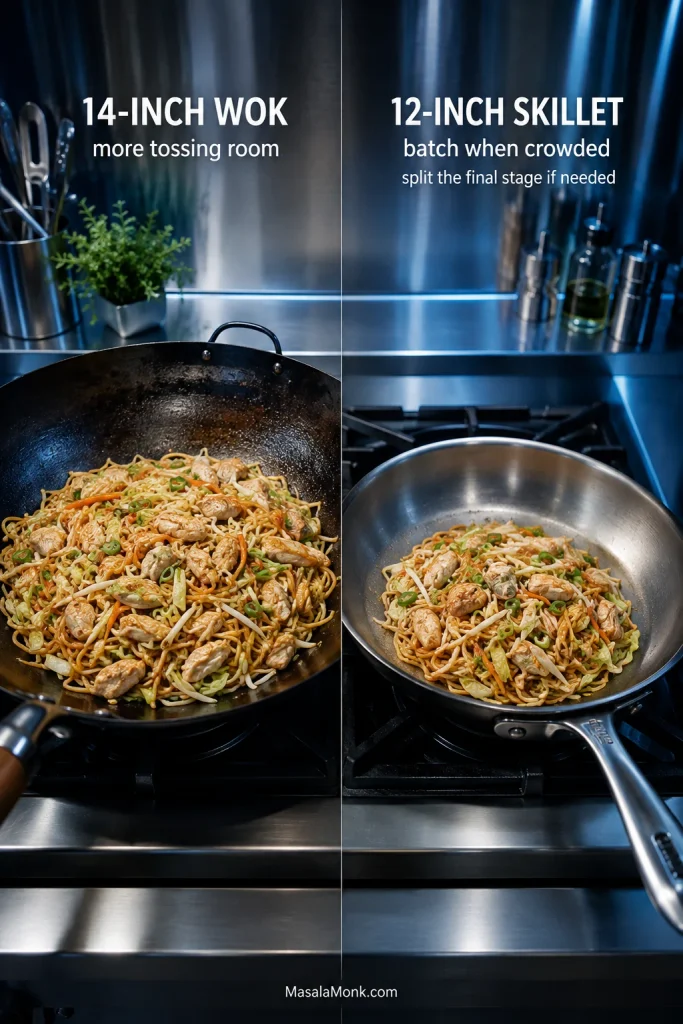
A home burner will not give you exactly the same smoky char and aroma as very high-heat restaurant wok cooking. That’s fine. Good direct pan contact gives the noodles plenty of toasted character.
Cooking for more people? Make two complete batches. Double the ingredients, not the pan load.
↑ Back to the recipe · Troubleshooting ↓
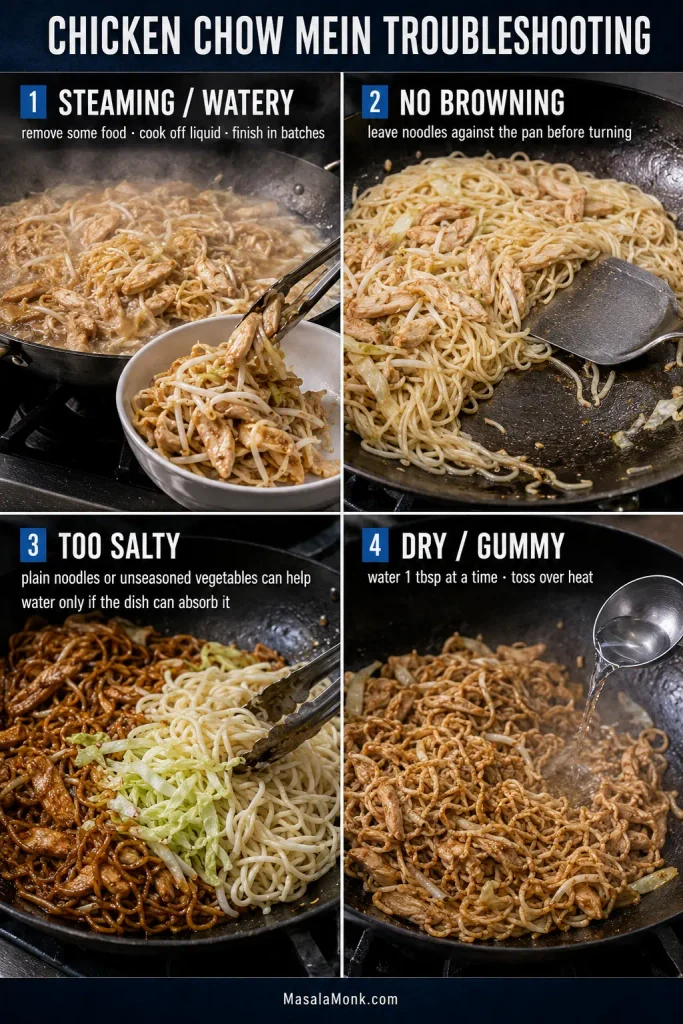
Chicken Chow Mein Troubleshooting
If dinner is already in the pan, don’t start over. Find the problem that looks familiar and fix that first. You can analyze dinner later.
Before the wok
| Problem | Fix |
|---|---|
| Noodles already too soft | Cool and drain immediately. Keep their later frying and saucing brief. |
| Noodles stuck in one block | Loosen gently. A quick cool rinse can help boiled dried noodles; drain and dry them again afterward. |
| Vegetables dripping wet | Pat them dry before they enter the pan. |
| Sauce tastes far too salty | Dilute it slightly with water before cooking. Check the stock, chicken powder and cooking wine too. |
| Cornstarch lumpy | Whisk the lumps smooth with a small amount of liquid before mixing them back into the sauce. |
While frying
| Problem | Fix |
|---|---|
| Pan filling with water / everything steaming | Stop adding food. Remove some if needed and let the liquid cook off before continuing; finish in batches. |
| Noodles sticking | Check crowding and moisture before adding more liquid. Lift gently instead of scraping hard. |
| No noodle browning | Give the strands 30–45 seconds of contact before turning instead of stirring continuously. |
| Chicken cooking too fast | Take it out and return it near the end. |
| Noodles and vegetables will not mix | Lift and toss. Loosen clumps gently instead of chopping through the strands. |
After the sauce goes in
| Problem | Fix |
|---|---|
| Too salty | Add plain noodles or extra unseasoned vegetables if you have them, or a small splash of water if the dish can absorb it. Sugar will not remove salt. |
| Too sweet | Add a small splash of water and toss. Extra plain noodles or vegetables help even more. |
| Bland | Check salt first. Then try a little oyster sauce, white pepper or optional MSG/chicken powder. Add soy only a teaspoon at a time. |
| Too dry or sauce gummy | Add water 1 tablespoon at a time and toss over heat until the noodles loosen and regain their gloss. |
| Too wet | Keep the pan uncovered and reduce the liquid. Remove some food first if necessary. |
| Chicken tough | Next time, slice it thinner and remove it sooner during the first fry. |
↑ Return to the recipe · ↑ Back to the opening
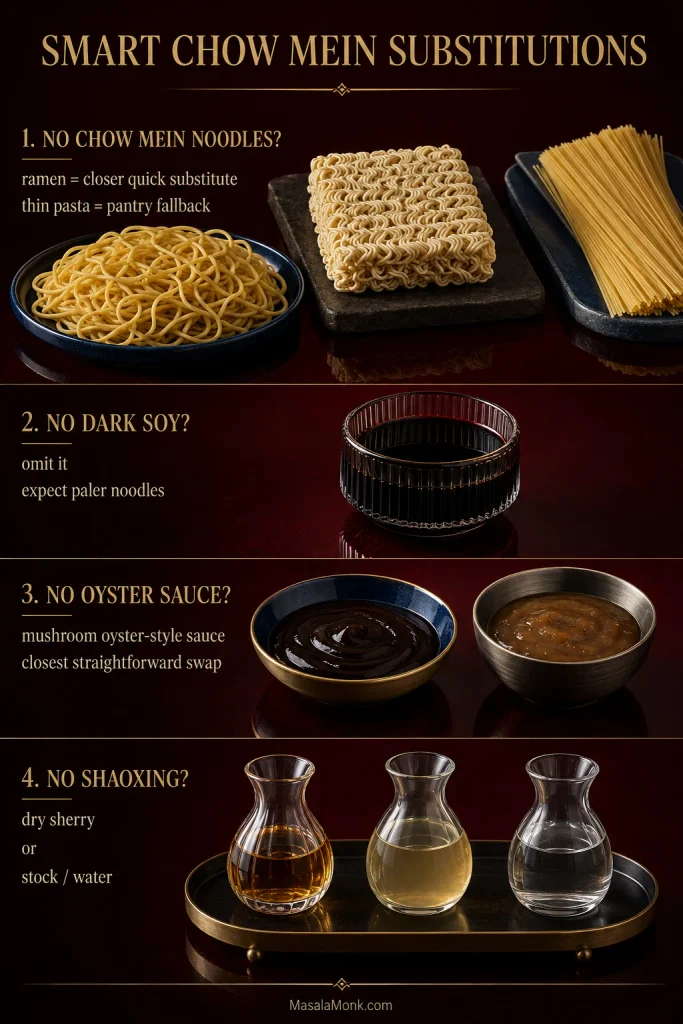
Substitutions and Variations
| Instead of… | Try… | Expect… |
|---|---|---|
| Chow mein / Chinese egg noodles | Instant ramen — the closer quick substitute | Thinner, softer noodles. Discard the seasoning packet and cook only until barely flexible. |
| Chow mein / Chinese egg noodles | Thin spaghetti or angel hair — a pantry fallback | A firmer, more pasta-like chew. |
| Dark soy sauce | Omit it rather than replacing it volume-for-volume with regular soy | The noodles will be paler, but the sauce balance stays closer to the original. |
| Oyster sauce | Vegetarian mushroom oyster-style sauce | The closest straightforward replacement. |
| Oyster sauce | Hoisin sauce | Not a neutral swap; the result will be sweeter. Reduce or omit the sugar. |
| Shaoxing wine | Dry sherry | A similar aromatic role. |
| Shaoxing wine | Stock or water | Less aromatic depth, but the method works. |
| Bean sprouts | Extra cabbage, bok choy or another crisp vegetable | A different crunch without changing the basic method. |
For chicken and mushroom chow mein: add about 150 g / 5 oz sliced mushrooms and reduce the cabbage to about 150 g / 5 oz. Cook the mushrooms until most of the water they release has evaporated. Keeping the full cabbage quantity as well works better when the mushrooms get their own turn in the pan.
Make it spicy
Add chili crisp, chili oil, sliced fresh chili or a little chili-garlic sauce at the end. Sweet chili sauces change the balance, so use less sugar in the chow mein sauce when needed.
Dietary adjustments
Lower sodium: use lower-sodium soy sauce and unsalted stock, skip the chicken powder, and compare the sodium on the noodles, oyster sauce and cooking wine. Some Shaoxing cooking wines contain added salt.
Gluten-free: use noodles labeled for a gluten-free diet, certified gluten-free tamari or soy sauce, and a gluten-free oyster-style sauce. Check the Shaoxing wine and optional chicken powder too; many Shaoxing products are not gluten-free. Use a verified gluten-free dry sherry or sake, or replace the wine with stock or water when needed.
Halal: use halal-certified chicken and check the noodles, sauces and stock according to the requirements you follow. Replace Shaoxing wine with stock, water or an appropriate certified alcohol-free cooking seasoning.
Using leftover cooked chicken: skip the raw-chicken marinade and add sliced cooked chicken near the end, giving it enough time to reheat fully to 165°F / 74°C. Adding it much earlier usually dries it out.
Make-Ahead, Storage and Reheating
The sauce, cabbage and carrot can be prepared up to a day ahead and refrigerated separately. Raw chicken can be sliced ahead too, but keep it covered and completely separate from the vegetables. Leave the bean sprouts and scallions until close to cooking time.
If you need to boil the noodles ahead, cool them promptly, drain and surface-dry them well, toss with a very small amount of neutral oil and refrigerate them separately.
Cool leftover chicken chow mein promptly and refrigerate it in a covered container for up to 3–4 days. The USDA’s food-safety guidance (opens in a new tab) recommends reheating leftovers to 165°F / 74°C.
A skillet or wok gives chilled noodles the best chance of loosening without turning mushy. Add about 1 tablespoon water per serving and toss over medium-high heat until steaming hot and the added water has mostly evaporated.
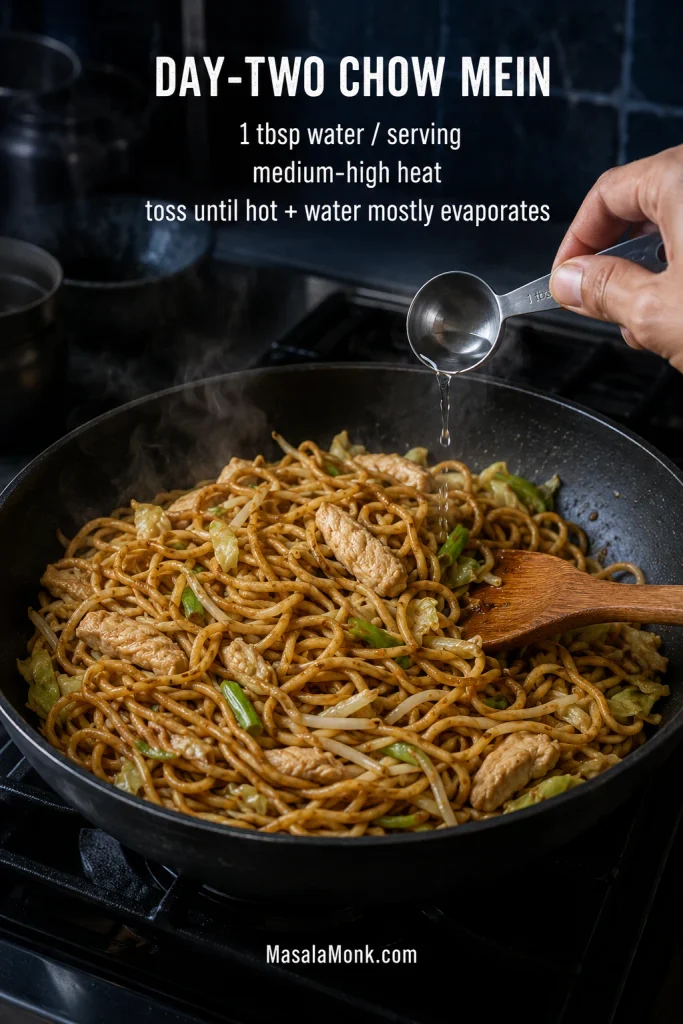
For the microwave, cover loosely and heat in short intervals, stirring between them.
Freezing is possible but not ideal. The noodles soften and bean sprouts lose much of their crunch after thawing.
↑ Return to the recipe · ↑ Back to the opening
What to Serve With Chicken Chow Mein
Chicken chow mein is already a full meal, so sides work best when they bring a different texture or temperature rather than more heaviness. A small bowl of egg drop soup (opens in a new tab) keeps things light and broth-based, while a cool cucumber salad (opens in a new tab) gives the hot, savory noodles a crisp, sharp contrast.
Once the noodles are glossy, the vegetables still have some bite and the pan is nearly dry, dinner is done.
Get the chow mein onto plates while it still looks a little unruly. Browned strands, crisp bean sprouts and chicken tucked through the noodles are exactly where they should be.