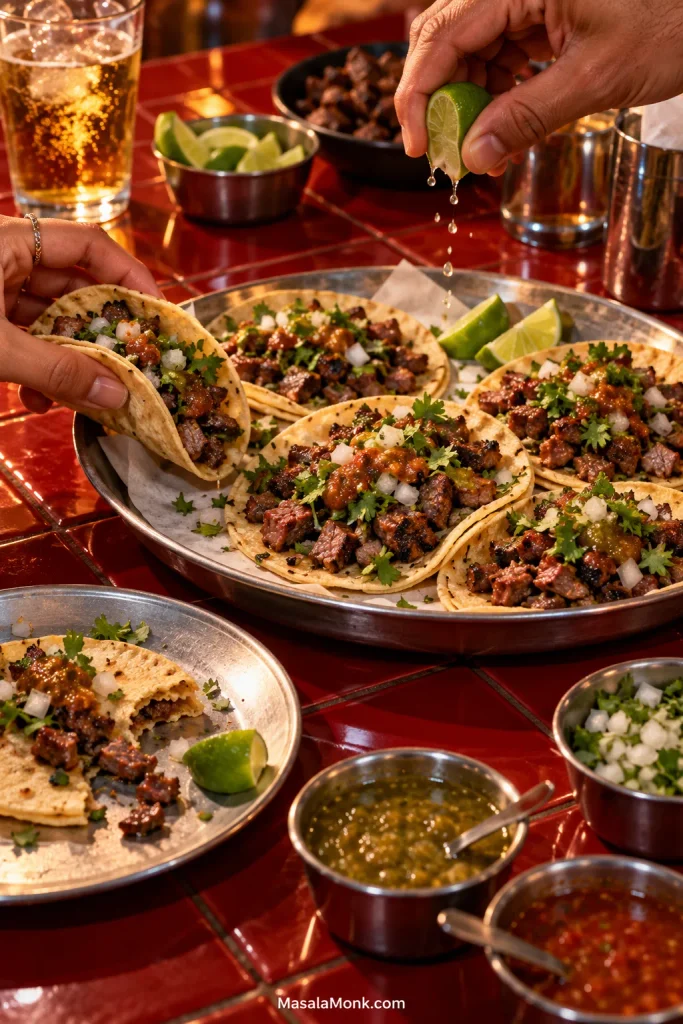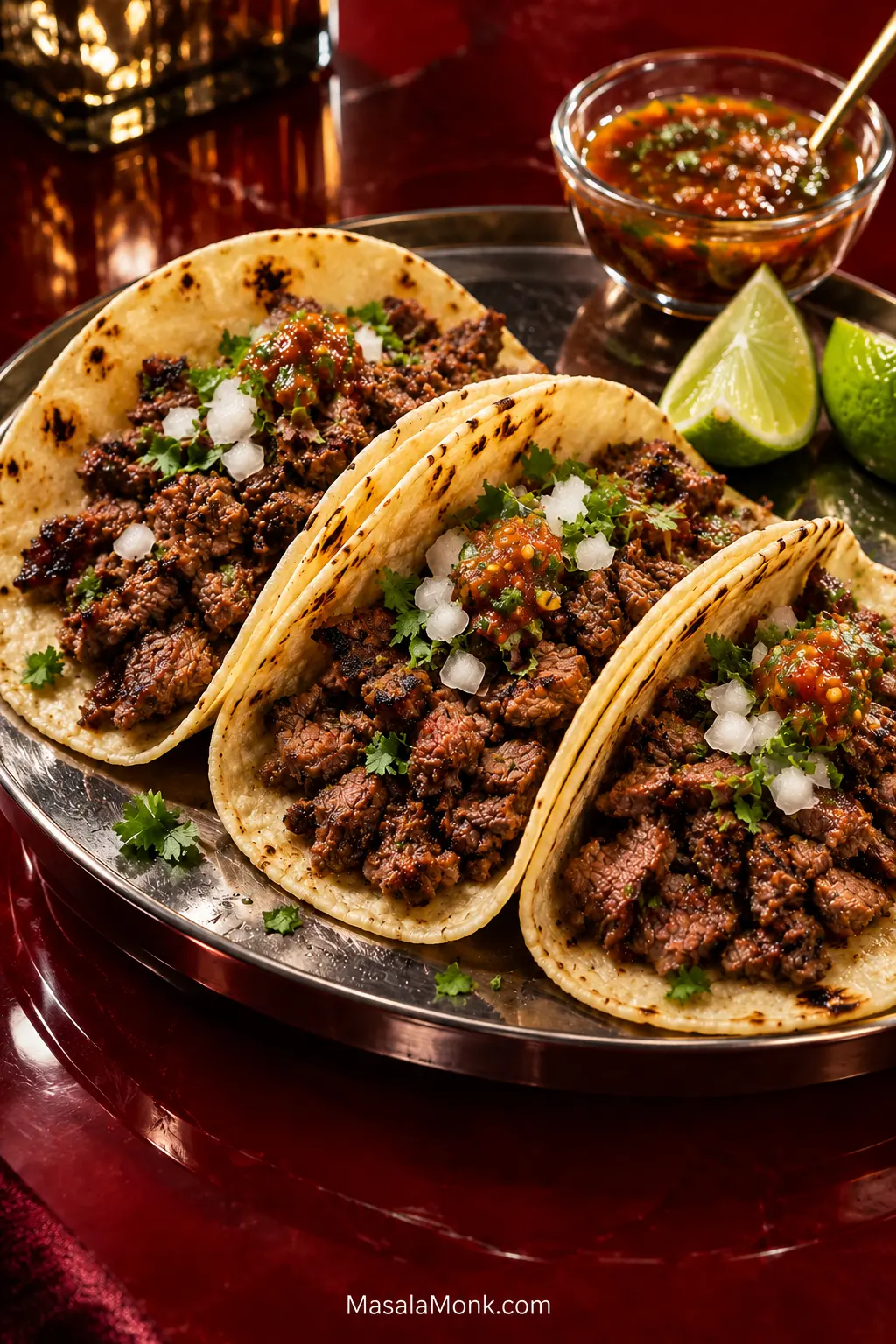
Carne asada tacos should bite cleanly. You want dark char around the edges, juicy beef inside, and pieces short enough that steak and tortilla separate together instead of dragging half the filling out with your first bite.
This version follows the citrus-marinated, corn-tortilla route. Carne asada changes from region to region, and the guide below also covers the flour-tortilla style common in northern Mexico.
Outside skirt steak is the first choice for this version, with sirloin flap (often sold as bavette) close behind and flank steak as the easiest supermarket fallback. The beef spends 2–4 hours in an orange-lime marinade, then gets dried well and cooked over fierce heat in larger pieces.
Before the steak comes off the heat, have the toppings ready and the tortilla pan or comal hot. Once the beef is chopped, the tacos should come together quickly.
Carne Asada Tacos Recipe
Marinate the steak, cook it over high heat, slice it thinly across the grain, then chop it into roughly ½-inch pieces for hot corn tortillas with onion, cilantro, salsa and lime.
Most of that time is hands-off marinating.
Equipment
- Gas or charcoal grill, or a heavy cast-iron skillet or griddle
- Large zip-top bag or shallow non-reactive container
- Instant-read thermometer for pieces thick enough to probe reliably
- Sharp knife and large cutting board
- Dry skillet or comal plus a clean towel or tortilla warmer
Ingredients
For the Steak and Marinade
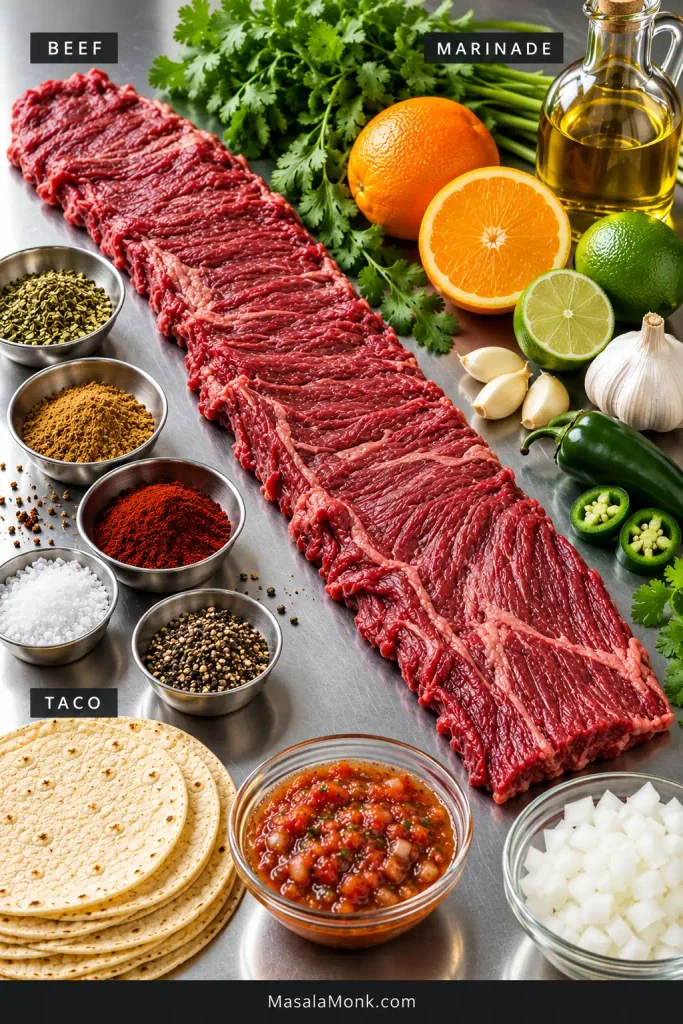
- 2 lb / 907 g outside skirt steak or sirloin flap (bavette); flank steak also works
- ½ cup / 120 ml fresh orange juice
- 3 tbsp / 45 ml fresh lime juice
- ¼ cup / 60 ml olive oil or neutral oil
- 4 garlic cloves / about 16 g, finely grated or minced
- ½ cup loosely packed chopped cilantro / about 8 g
- 1 medium jalapeño / about 15–20 g, finely chopped; remove seeds and ribs for less heat
- 1 tsp / about 1 g dried Mexican oregano; regular dried oregano works if needed
- 1 tsp / about 2 g ground cumin
- 1 tsp / about 2 g pure ancho chile powder, not a blended chili seasoning mix
- 6 g kosher salt, preferably weighed; about 2⅛ tsp Diamond Crystal or 1¼ tsp Morton kosher salt, plus more to finish if needed
- ¾ tsp / about 1.5 g freshly ground black pepper
- Neutral high-heat oil for the skillet, griddle or grill grates, if needed
For the Tacos
- 16 small corn tortillas, about 5–5½ inches / 13–14 cm across; have 32 if you prefer doubled tortillas
- 1 medium white onion / about 150 g, finely diced
- ¾ cup loosely packed chopped cilantro / about 12 g
- About 1 cup / 240 ml salsa, for spooning lightly over the tacos
- 4 limes, cut into wedges
- Optional: sliced radishes, avocado or guacamole, grilled onions or chiles, cotija or queso fresco
Instructions
1. Check the Grain and Portion the Steak
Trim away obvious thick silver skin or tough membrane. If a long piece of skirt or flap will not sit flat on the grill or skillet, cut it into two or three manageable sections.
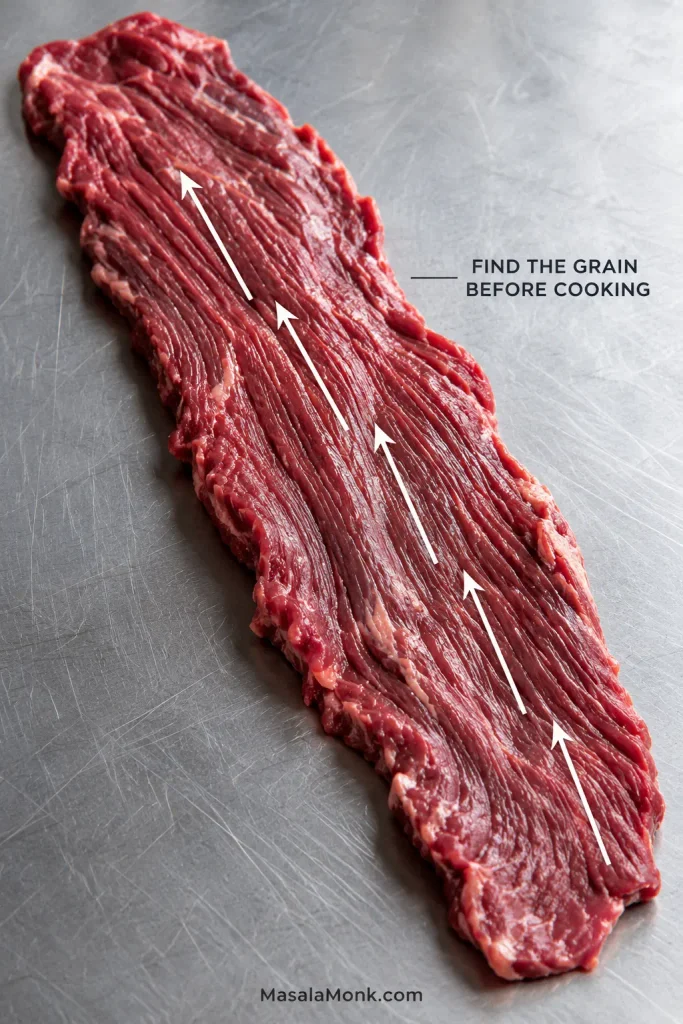
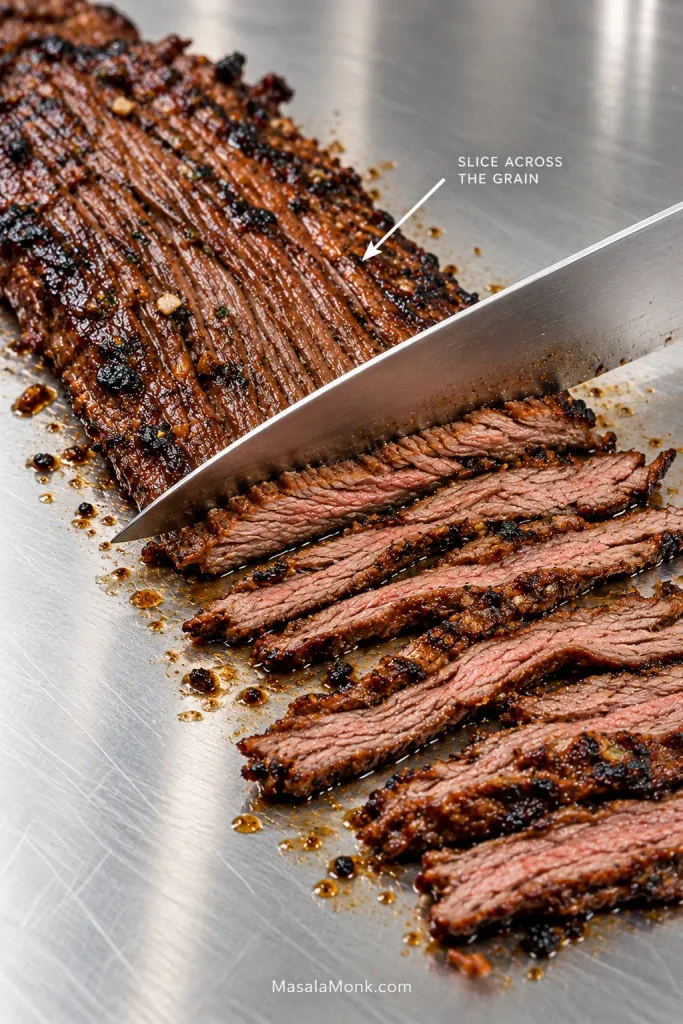
Take a second to see which direction the muscle fibers run. You will cut across them later, and they are much easier to spot now than beneath a dark seared crust.
2. Mix and Marinate
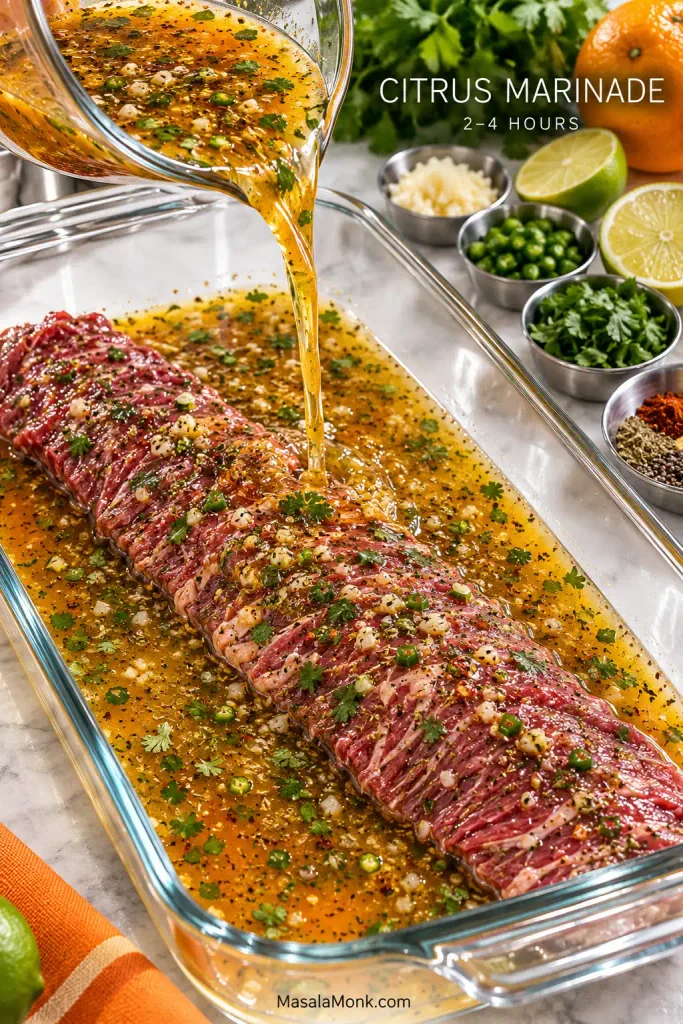
Marinate for 2–4 hours; don’t leave the steak in this citrus-heavy marinade longer than about 8 hours. Whisk together the orange juice, lime juice, oil, garlic, cilantro, jalapeño, oregano, cumin, ancho chile, salt and black pepper. Add the beef and turn it until the marinade reaches both sides and any folds.
Even 30 minutes adds useful surface flavor when time is short. Dinner running late? Once the steak has had enough time in the marinade, take it out, blot it dry, cover it and refrigerate it until you’re ready to cook.
3. Drain and Dry the Beef
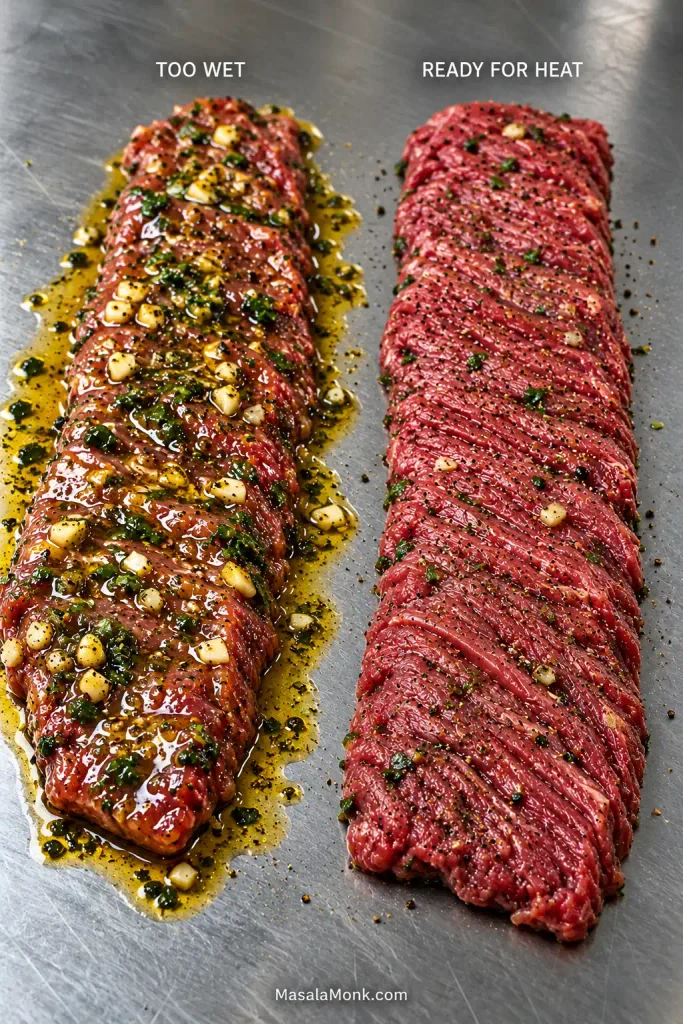
Lift the steak from the marinade and discard the used liquid. Blot the meat thoroughly with paper towels, including folds and thin ends. Brush away thick wet clumps of garlic or herbs so they don’t scorch before the beef browns.
The surface should look matte and feel mostly dry before it hits the heat.
4. Get the Grill or Pan Hot
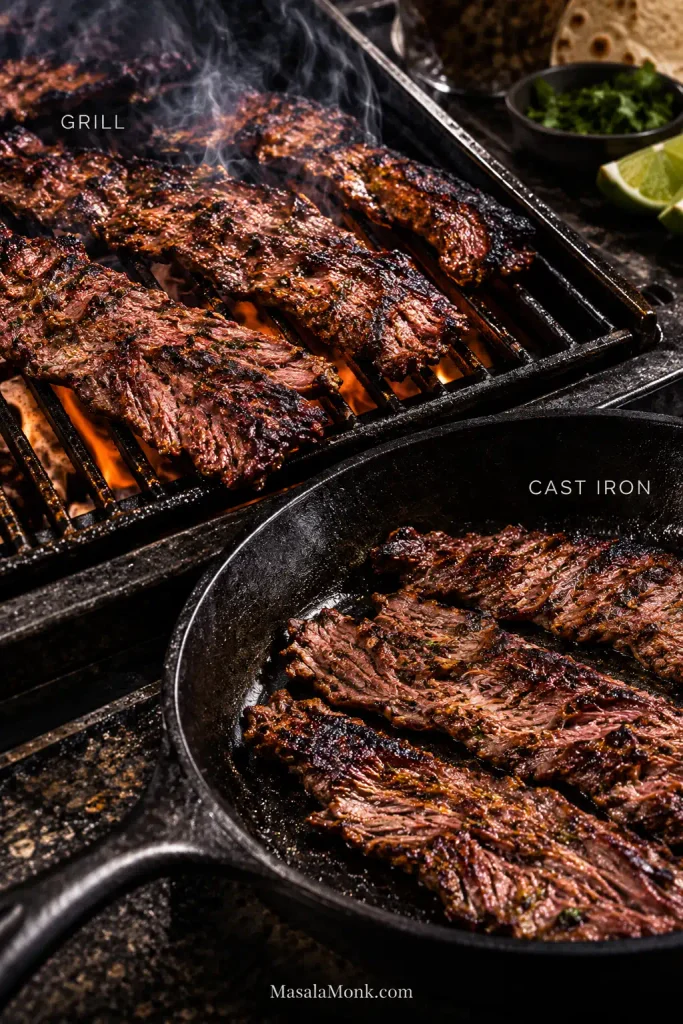
Get the grill very hot and build a strong direct-heat zone. If your grill gives you a temperature reading, roughly 450–500°F / 230–260°C or higher puts you in the right territory. Clean the grates and oil them lightly if they tend to stick.
Indoors, preheat a heavy cast-iron skillet or griddle thoroughly over high heat. Add only a thin film of high-heat oil if the surface needs it. Use your exhaust hood and open a window if needed; hard-seared carne asada can make plenty of smoke.
5. Cook by Cut and Thickness
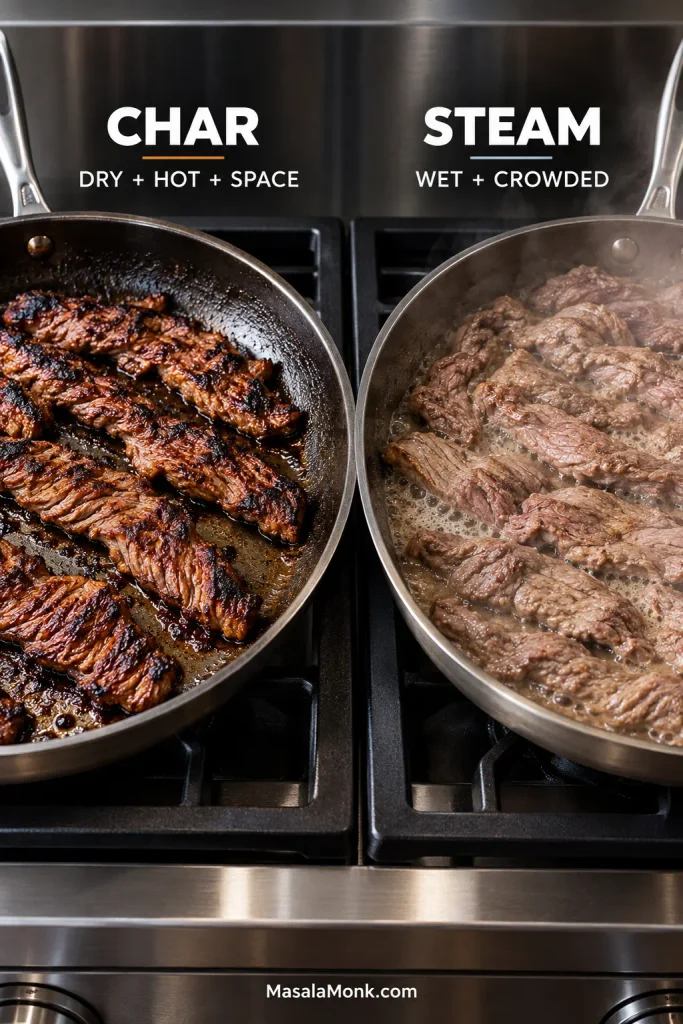
On a grill, lay the steak over direct heat. In a skillet or on a griddle, leave room around each piece and work in batches when necessary. You want a sharp sizzle when the meat lands, not a quiet puddle forming around it.
Use these as starting checkpoints:
- Very thin ranchera-style beef or thin flap: start checking at about 1–2 minutes per side.
- Regular skirt or flap: start checking at about 2–4 minutes per side.
- Thicker flank steak: start checking at about 4–6 minutes per side; a thick piece may need longer.
Cook until the outside has deep brown patches and a few dark edges and the steak has reached the doneness you want. When the meat is thick enough to probe reliably, an instant-read thermometer is more useful than trying to force every steak onto the same timetable.
Uneven thickness is normal. Pull a thin end when it’s ready and let the thicker part keep cooking. Cook to the piece in front of you, not to the clock.
Food-safety note: USDA guidance for intact whole beef steaks is a minimum internal temperature of 145°F / 62.8°C followed by at least a 3-minute rest. See the USDA safe-temperature guidance.
6. Rest Briefly
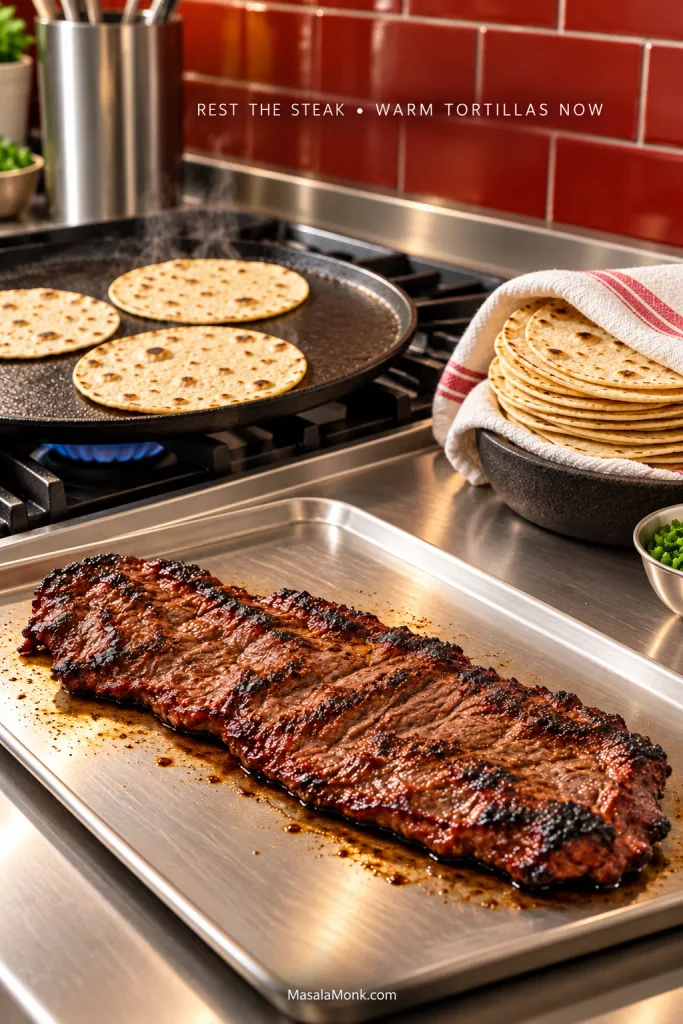
Move the steak to a cutting board. Give thin skirt or flap about 3–5 minutes; thicker pieces can rest for 5–10 minutes.
7. Warm and Hold the Tortillas
Have the tortilla pan or comal hot before the steak comes off. While the steak rests, warm several tortillas at once if your cooking surface allows. With a small skillet, start the first batches shortly before the steak finishes so you aren’t still warming tortillas after the meat comes off the heat.
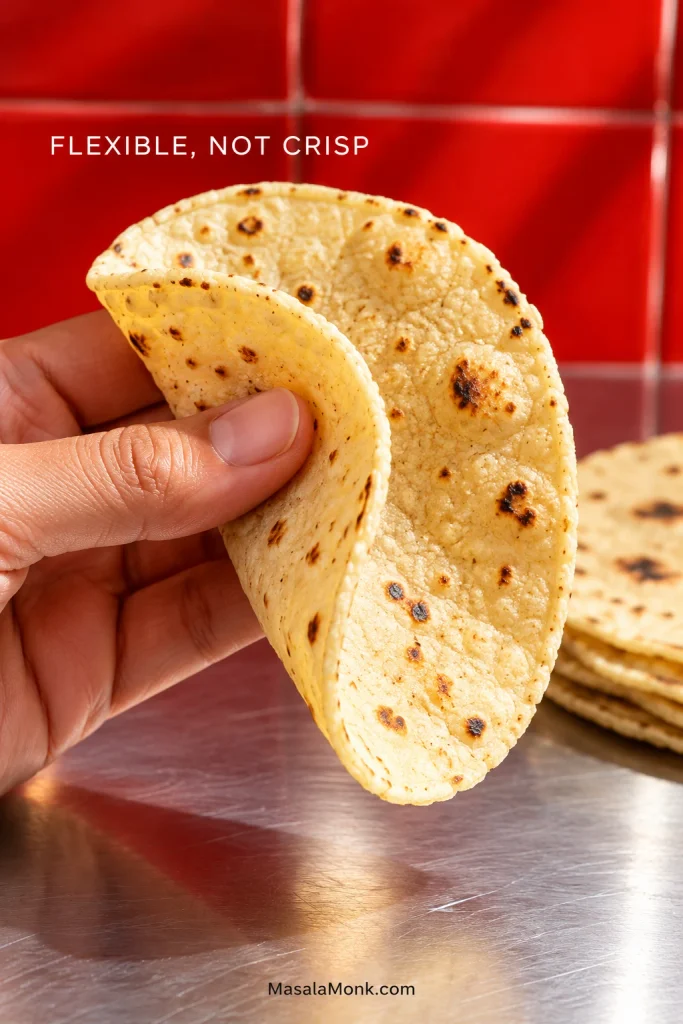
Heat the tortillas until hot through, flexible and lightly spotted, usually about 15–30 seconds per side, then keep every batch covered. Let the first tortilla tell you how much time the rest need.
8. Slice Across the Grain, Then Chop
Slice the steak thinly across the grain first, then chop those slices into roughly ½-inch / 1.25-cm taco-size pieces. Keep the pieces visibly chunky, with browned edges.
Taste one hot piece. If the beef tastes good on its own, leave it alone. A small pinch of salt at this stage can wake up steak that tastes flat.
9. Build the Tacos
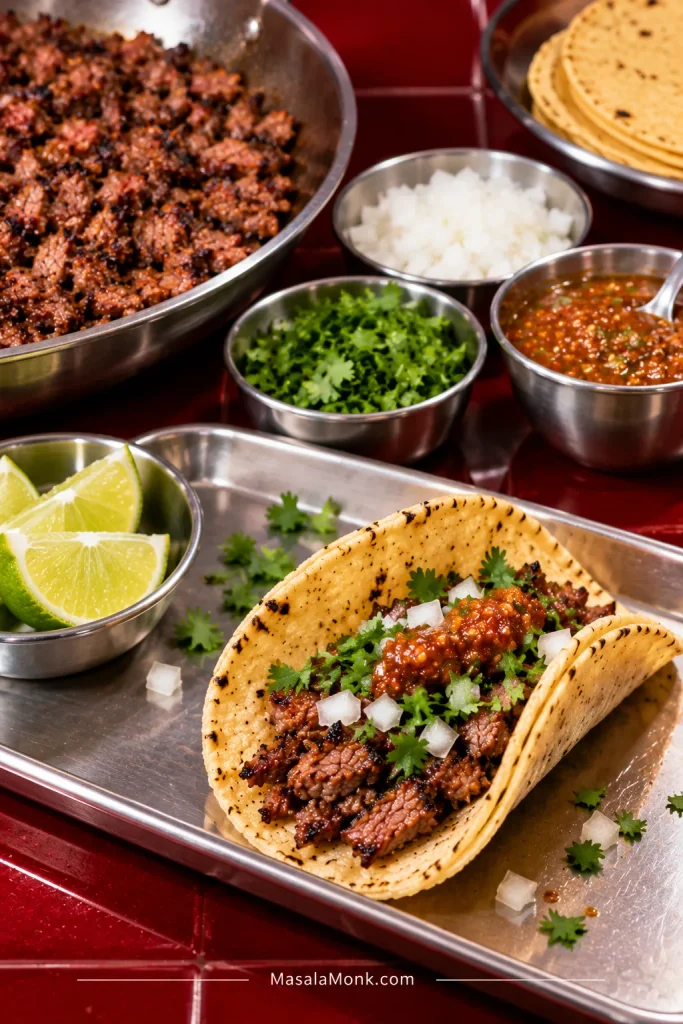
Two pounds of steak comfortably fills about 16 small tacos. Cover the center generously without packing the tortilla so full that it cannot fold.
Add finely diced white onion, cilantro, a modest spoonful of salsa and fresh lime. A roasted Salsa Verde is especially good with the smoky edges of the beef.
The taco should fold easily, hold together through the first bite and taste of beef before anything else. Put the toppings on the table and let everyone finish their tacos while the meat is still hot.
Recipe note: This research-derived recipe brings together established carne asada methods and has not been independently kitchen-tested by MasalaMonk.
The Carne Asada Taco Guide
Beef → Taco Meat
Tortilla → Taco
At the Meat Counter
Outside skirt has the deep beef flavor, loose grain and broad surface area that work especially well for carne asada tacos. It browns quickly and stays recognizable after the final chop.
If the package only says skirt steak, ask whether it is outside or inside skirt. Inside skirt can still work, but it tends to be firmer.
Sirloin flap, often sold as bavette, has beefy flavor and a coarse grain that handles high heat well; thickness can vary considerably from one end to the other.
Flank steak is the easy supermarket fallback: leaner, generally thicker and best sliced thinly after cooking.
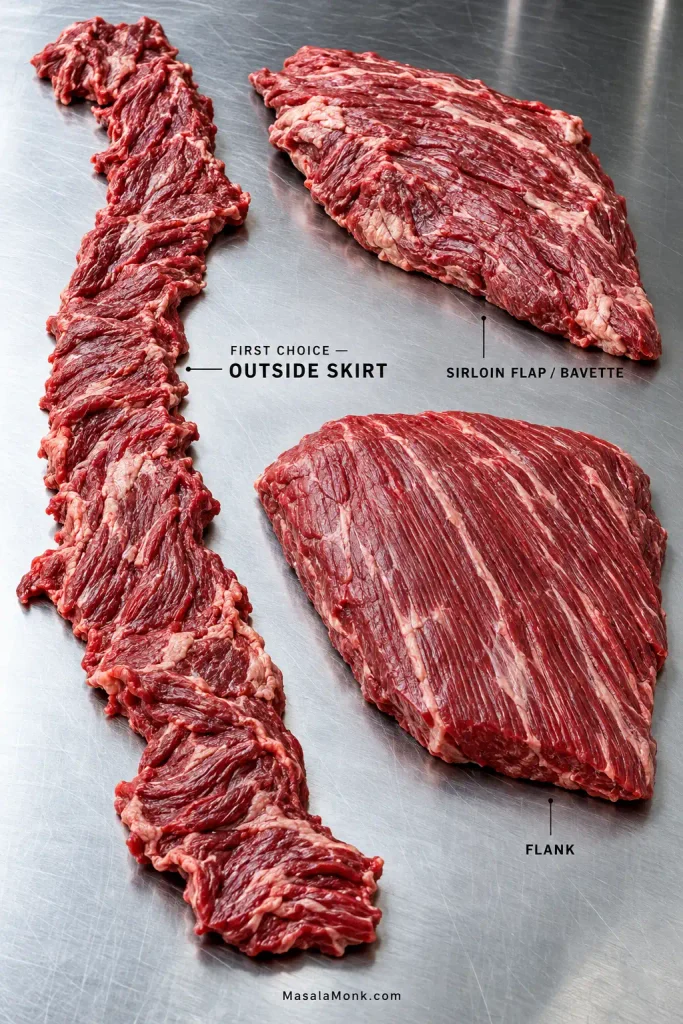
At a Mexican market you may see names such as ranchera or arrachera. Those labels vary by butcher, so ask what cut you’re buying and how thinly it has been sliced.
If the package says needle- or blade-tenderized, follow the cooking instructions on the label rather than the intact-steak guidance here.
For more cut-by-cut detail, the Carne Asada Recipe goes deeper into skirt, flap and flank and how each behaves over high heat; if your steak is already chosen, jump to the cook-by-cut checkpoints.
Getting a Good Char
The citrus and chile should sit behind the flavor of browned beef, not cover it. When the steak comes off the heat, char should be the first thing you smell and taste.
Moisture works against that browning. A wet piece of skirt steak can spend much of its short cooking time shedding water, and even a screaming-hot cast-iron pan cools when you cover it with cold beef. Blot the meat well, leave room between pieces and let the pan recover if a later batch starts releasing juice instead of sizzling.
Don’t chase char at the expense of how the steak eats, either. With skirt steak, very rare is not automatically more tender. Its coarse fibers can often eat better around medium than they do with a very rare center, especially once the meat is chopped for tacos.
The Moment Steak Becomes Taco Meat
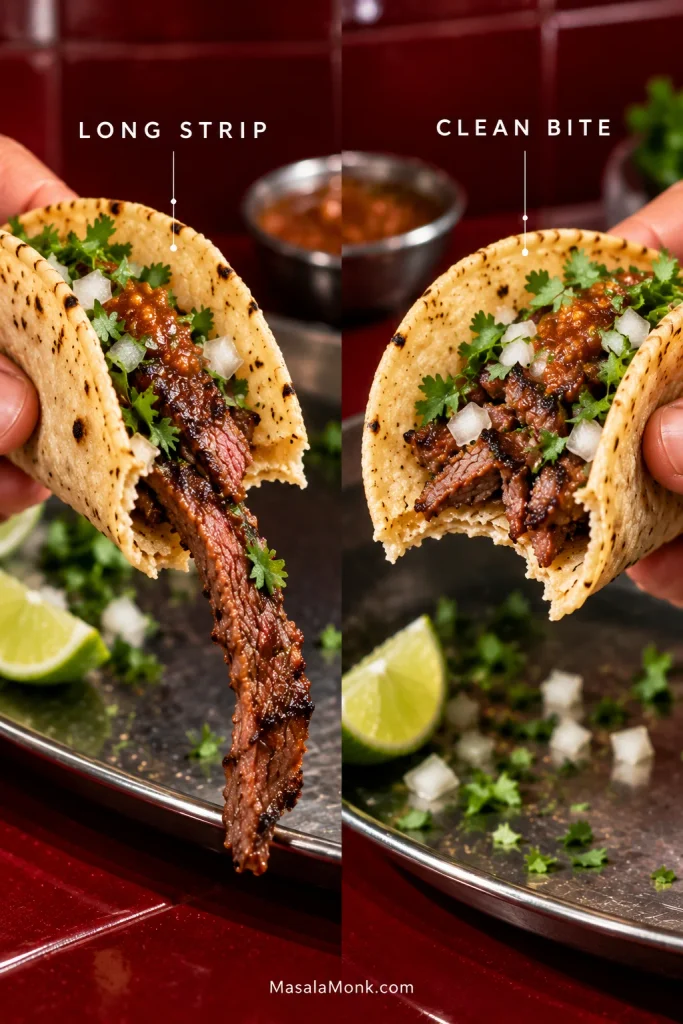
A beautifully cooked steak can still be awkward inside a taco. Long slices that look generous on a plate can follow your teeth straight out of a small tortilla.
First, Slice Across the Grain
Find the long muscle fibers and cut perpendicular to them. With skirt and flank, this makes a noticeable difference because the grain is so pronounced.
Then Chop for the Tortilla
Slice across the grain for tenderness; chop those slices into roughly ½-inch pieces so they fit and bite cleanly inside a small tortilla.
Keep the pieces large enough to stay juicy and recognizable, but short enough that several sit comfortably in one taco. You should still see dark edges around moist pieces of beef.
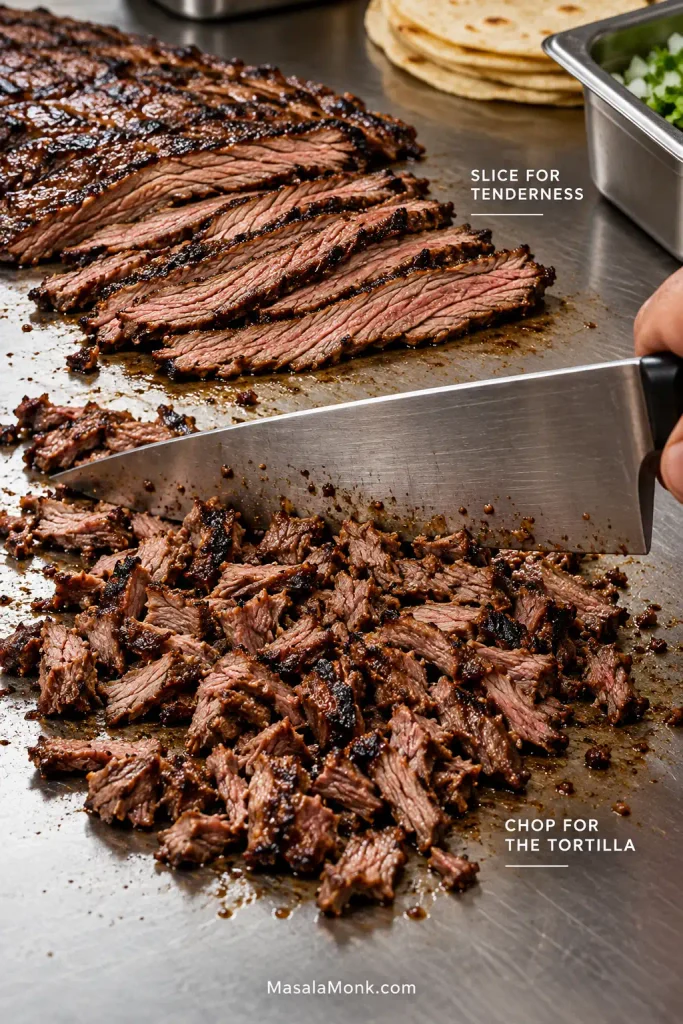
The clean-bite test: bite through the center of a finished taco. A clean bite means the beef separates with the tortilla. If a long strip follows your teeth out, the steak may be tender enough for a plate but it was not cut properly for this job.
Optional: Crisp the Chopped Edges
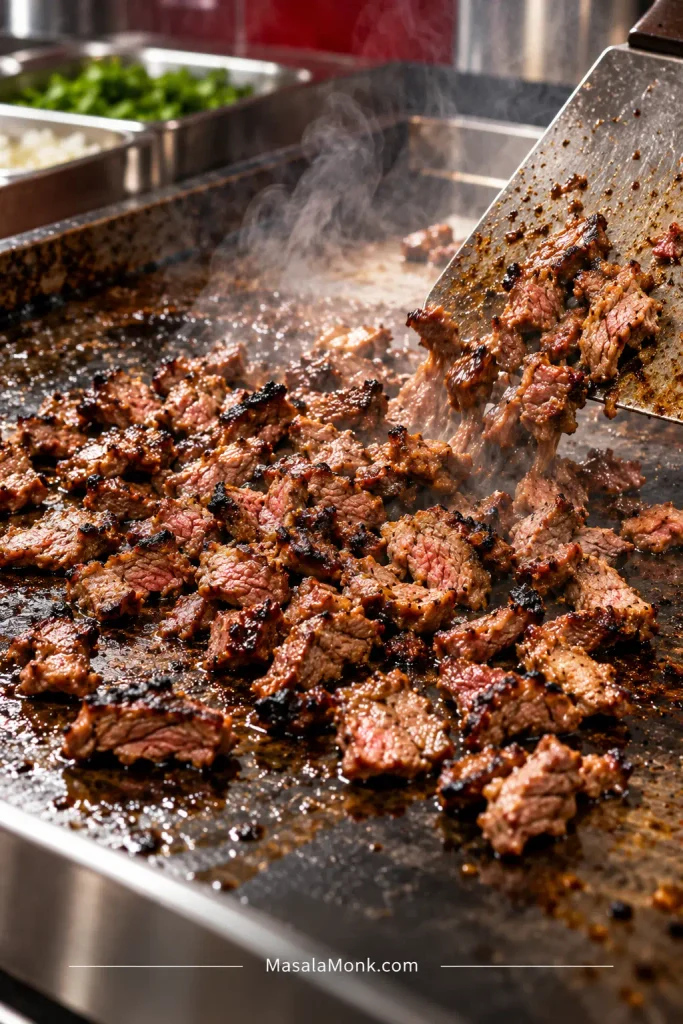
If you want a little more crust, give the chopped carne asada 30–60 seconds on a ripping-hot griddle or skillet after it has rested and been cut. Stop as soon as a few freshly cut surfaces brown.
How to Warm the Tortillas
For these small tacos, the tortilla should stay soft enough to fold comfortably around the filling. The goal is flexibility, not crispness: if it cracks at the fold, it needs more heat; if the edges start stiffening, it has gone too far.
The Corn Tortilla Recipe yields about 16 soft 5–5½-inch tortillas if you want to make them from scratch.
One Tortilla or Two?
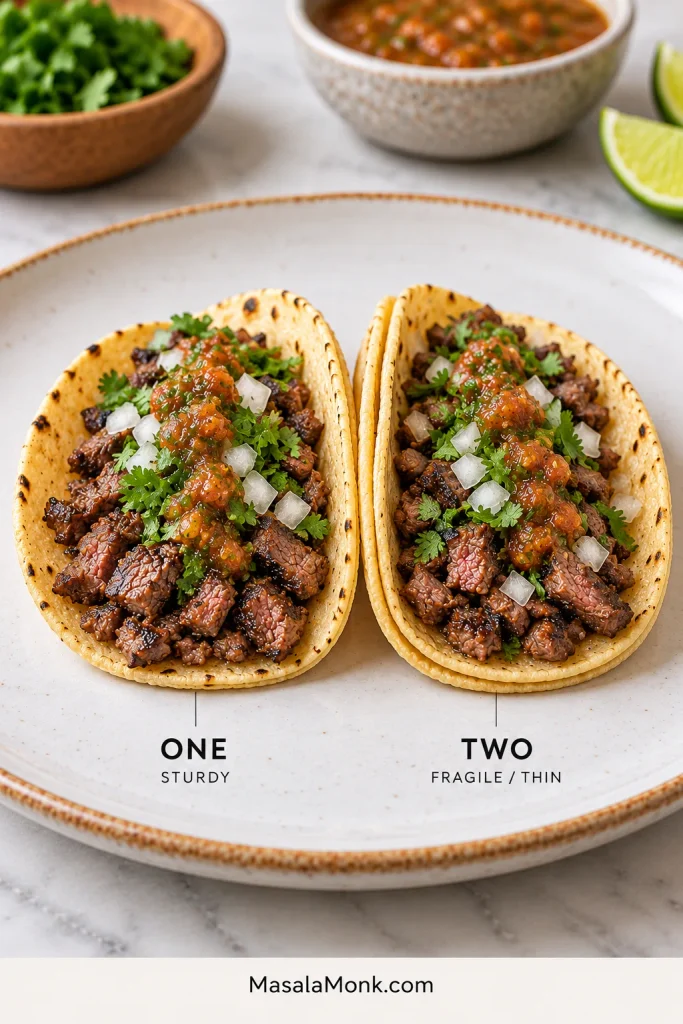
A single tortilla is enough when it is fresh, flexible and sturdy. Add a second for particularly thin or fragile tortillas, especially with a juicy salsa.
What About Flour Tortillas?
Flour tortillas have a particularly strong place in northern Mexico, especially Sonora, where carne asada tacos can also be larger and more heavily filled than the little corn-tortilla tacos we’re making here.
Pati Jinich’s Sonora-style carne asada tacos show another route clearly: large flour tortillas and beef seasoned simply with salt rather than a citrus marinade.
Build for One Clean Bite
Start simply: hot tortilla, hot chopped carne asada, white onion, cilantro, salsa and lime. Taste that taco before reaching for anything else.
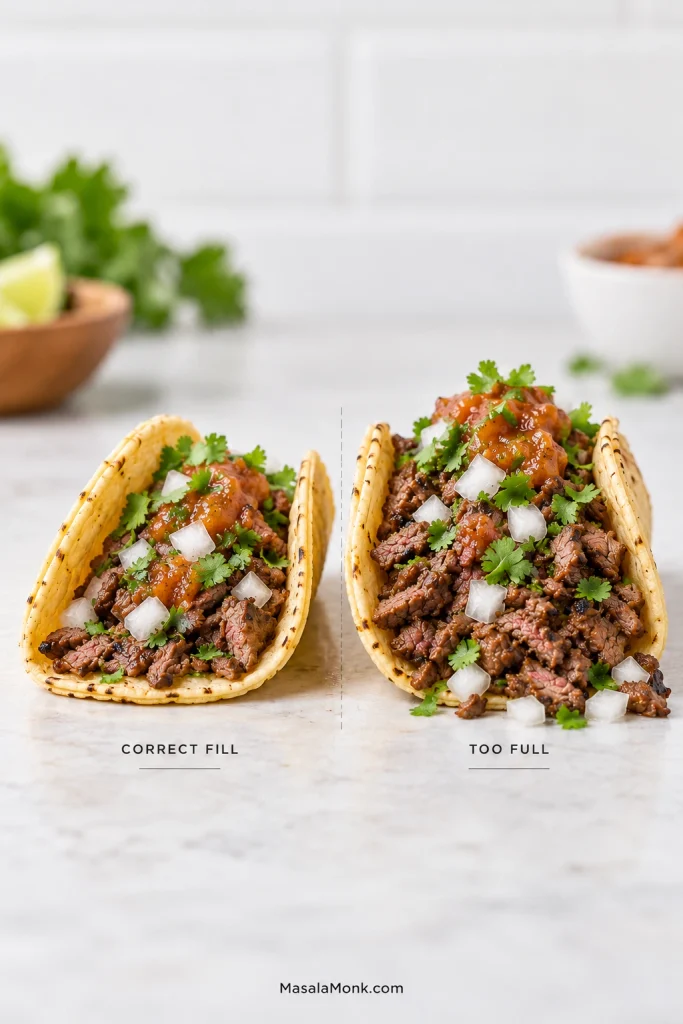
Don’t Overfill It
Before you pick it up, the tortilla should still be able to fold comfortably around the filling without bulging open. If it can’t, take a little out; the taco will eat better.
If dinner needs more heft, add it alongside rather than overloading the tortilla; creamy Refried Beans work well here.
Carne Asada Taco Toppings
Salsa should brighten the beef without running through the tortilla before you take the first bite. A roasted salsa verde gives you tart tomatillo and chile; a fresh Pico de Gallo keeps things cooler, chunkier and tomato-forward.
Radishes add crispness. Grilled onion or jalapeño keeps the smoky direction going. Cotija or queso fresco makes the taco richer, while Guacamole is easy to serve on the side so everyone can add their own.
Ready to cook? Return to the Carne Asada Tacos Recipe. If something is already going wrong, jump to Read the Taco.
Read the Taco: What Went Wrong?
Gray beef, chewy beef and a broken tortilla may happen at the same dinner, but they come from different problems. Fix the symptom you actually have.
| What you notice | Likely cause | Try this |
|---|---|---|
| Pale or gray beef | Wet surface or weak heat. | Dry the steak more thoroughly and get the cooking surface hotter. |
| Liquid collecting around the meat | Too much marinade came with the steak, or the pan is crowded. | Blot the meat well and cook smaller batches. |
| Tough, stringy beef | Cut, doneness or grain direction may be working against you. | Check which steak you bought, how far it cooked and which way you sliced it. |
| Long pieces pull out with each bite | The final chop is too large. | Slice across the grain first, then chop those slices into shorter pieces. |
| Beef tastes boiled | The meat simmered in pooled liquid. | Use a dry surface, higher heat and more room in the pan. |
| Corn tortillas crack | They are cold, dry, stale or underheated. | Heat them until flexible and keep the stack covered. If they stay brittle, switch to fresher tortillas or double them. |
| Tortillas tear underneath | Thin tortilla, too much filling or too much wet salsa. | Use less filling, spoon salsa lightly or double fragile tortillas. |
| The taco is awkward to bite | Pieces are too large, the taco is too full, or both. | Cut the beef smaller and leave room for the tortilla to fold. |
| The taco tastes flat | It may need salt, better char, salsa acidity or lime. | Fix those fundamentals before adding more toppings. |
Marinated but Still Tough?
More time in citrus is rarely the first answer. Check the cut and doneness first, then the grain direction and whether the final pieces are too long for the tortilla.
Flank especially needs careful cross-grain slicing, while skirt can feel much tougher when cut with the fibers. Long pieces can make otherwise tender steak awkward inside a tortilla. Once the cut, doneness and slicing all look right, then revisit the marinade timing. Citrus can change the surface; it cannot undo overcooking or with-grain slicing.
Prep Early. Build Late.
Finish the fresh toppings and salsa while the steak marinates, then keep them chilled. Near serving time, only the hot jobs should be left.
If you’re feeding a bigger table, make Mexican Rice while the steak marinates. It can be ready and resting before the grill gets busy.
Have the tortilla pan ready as the steak finishes. Warm and hold the tortillas during the rest, then slice and chop the beef and build the tacos immediately. That’s the easiest way to get hot meat into a flexible tortilla without making everyone wait.
Leftovers and Reheating
Store cooked carne asada separately from the tortillas, salsa and fresh toppings. Reheat only what you need in a hot skillet, then build the tacos with freshly warmed tortillas.
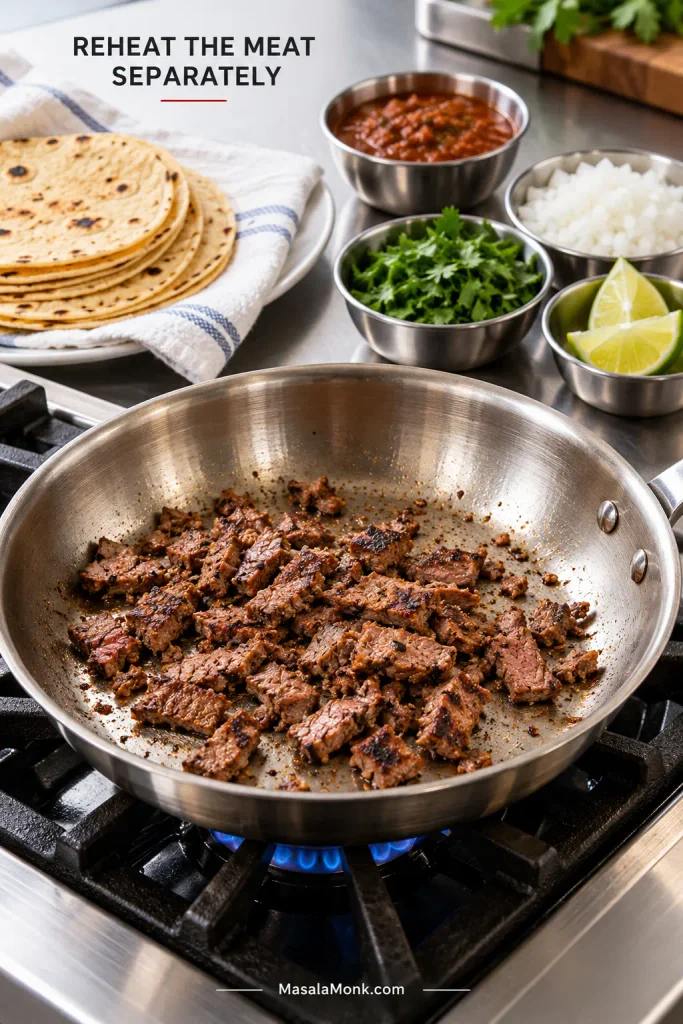
Refrigerate cooked leftovers promptly and use them within about 3–4 days. When reheating leftovers for food safety, bring them to 165°F / 74°C.
If only a little steak remains, chop it small and warm it briefly for a steak-and-egg Breakfast Burrito the next morning.
Eat Them Hot
The steak can be excellent and still make a mediocre taco. Everything clicks when the beef is still hot, the tortilla folds around it without cracking, and onion, salsa and a squeeze of lime sharpen the char instead of burying it. Eat that taco while everything is still doing its best work.