
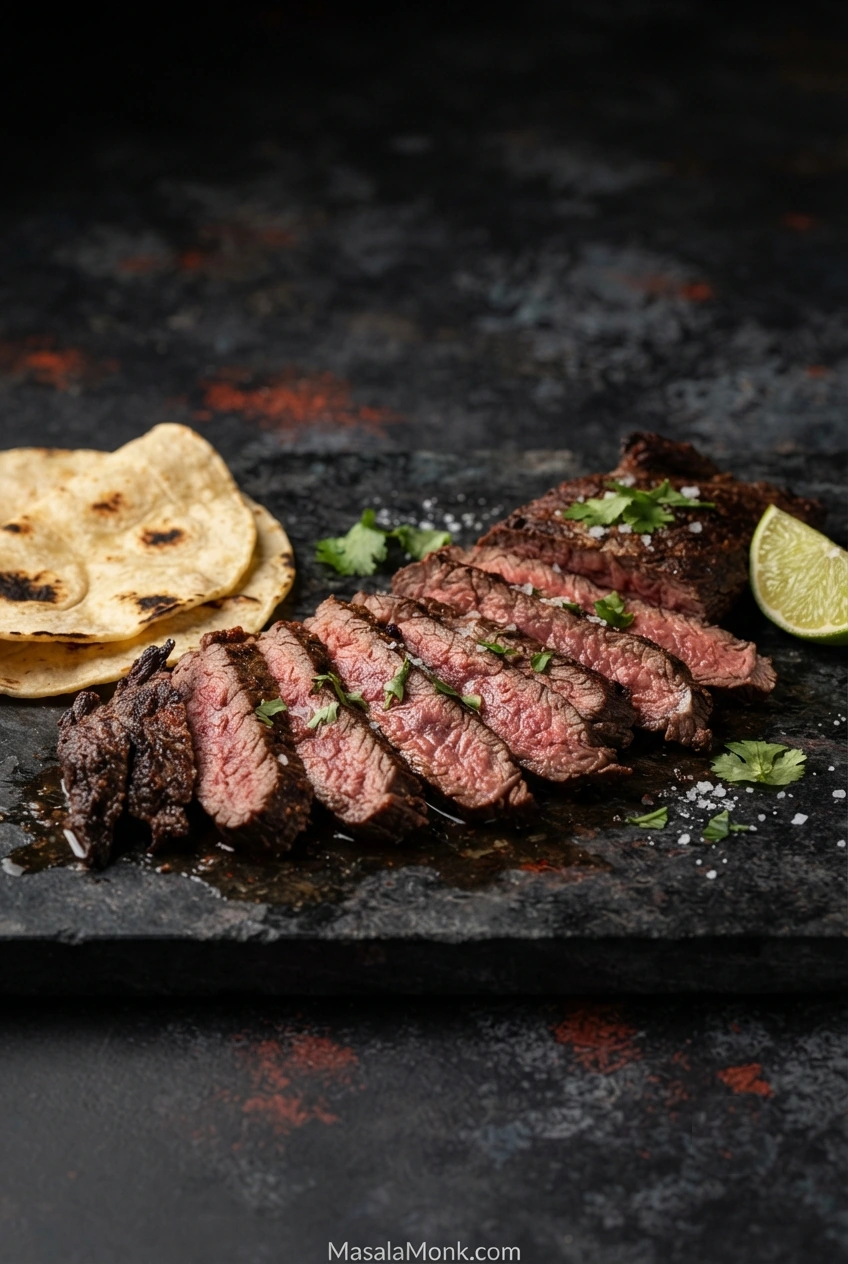
The best carne asada has dark, almost singed edges, hot beef juices on the cutting board, and enough citrus, garlic and chile to brighten the steak without covering up its beefiness. Slice it thinly across the grain and it should fold into a warm tortilla without turning dinner into a tug-of-war.
Carne asada literally means grilled meat, and the cuts, seasoning and accompaniments vary across Mexico and Mexican-American cooking. This carne asada recipe takes the citrus-marinated route, followed by fierce heat for a deeply browned exterior and juicy beef inside.
Outside skirt steak and flap meat are especially good here. Flank steak works too, and it is often easier to find. The marinade supplies the citrus, garlic and chile; tenderness depends just as much on the beef you buy, the heat of the grill and the way you slice it at the end.
Carne asada at a glance:
Best beef: outside skirt first, flap/bavette close behind; flank is the easiest supermarket substitute.
Marinate: 2–4 hours for this citrus marinade.
Heat: about 450–500°F / 230–260°C or hotter for direct grilling.
Cook: watch thickness, browning and temperature instead of trusting one timer.
Rest: 3–5 minutes for very thin beef; 5–10 minutes for thicker skirt, flap or flank.
Slice: thinly across the grain; chop afterward for tacos.
Carne Asada Recipe
Citrus-marinated skirt or flap steak grilled over intense heat until deeply browned, then rested and sliced thinly.
Equipment
- Gas or charcoal grill
- Large zip-top bag or shallow non-reactive container
- Long grill tongs
- Instant-read thermometer for meat thick enough to probe reliably
- Sharp chef’s or slicing knife
- Cutting board
- Paper towels
Ingredients
- 2 lb / 907 g outside skirt steak or flap/bavette; flank steak also works
- ½ cup / 120 ml fresh orange juice
- 3 tbsp / 45 ml fresh lime juice
- ¼ cup / 60 ml olive oil or neutral oil
- 4 garlic cloves / about 16 g, finely grated or minced
- ½ cup loosely packed chopped cilantro / about 8 g
- 1 medium jalapeño / about 15–20 g, finely chopped; remove seeds and ribs for less heat
- 1 tsp / about 1 g Mexican oregano; regular oregano works if needed
- 1 tsp / about 2 g ground cumin
- 1 tsp / about 2 g pure ancho chile powder, not a blended chili seasoning mix
- 6 g kosher salt, preferably weighed; about 2⅛ tsp Diamond Crystal or 1¼ tsp Morton kosher salt
- ¾ tsp / about 1.5 g freshly ground black pepper
- Neutral high-heat oil, as needed for the grill grates
- Fresh lime wedges, for serving
Instructions
- Prepare the beef. Trim away obvious thick silver skin or tough membrane. Cut very long skirt or flap steak into 2–3 sections so each piece can lie flat on the grill. Notice which direction the muscle fibers run now; they are easier to see before cooking.
- Mix the marinade. Whisk together the orange juice, lime juice, oil, garlic, cilantro, jalapeño, oregano, cumin, ancho chile, salt and black pepper. It should smell bright, citrusy and strongly garlicky.
- Marinate. Add the beef and turn until well coated. Refrigerate for 2–4 hours. Even 30 minutes gives the surface noticeable citrus, garlic and chile flavor when dinner is close. With this acidic formula, keep the total marinating time within about 8 hours.
- Heat the grill. Prepare a direct grilling zone at about 450–500°F / 230–260°C or hotter. Clean the hot grates well and, if your grill tends to stick, lightly oil them with a little neutral high-heat oil.
- Drain and blot. Remove the steak from the marinade and discard the used liquid. Blot the beef well with paper towels. Brush away heavy clumps of garlic or herbs that could scorch before the meat develops a crust.
- Grill. Very thin ranchera or flap may need only 1–2 minutes per side. Regular skirt or flap often takes 2–4 minutes per side. Thicker flank may need 4–6 minutes per side or longer. Look for deep brown patches and darkening edges, then start watching closely. A few blackened tips are welcome; a uniformly black steak has gone too far.
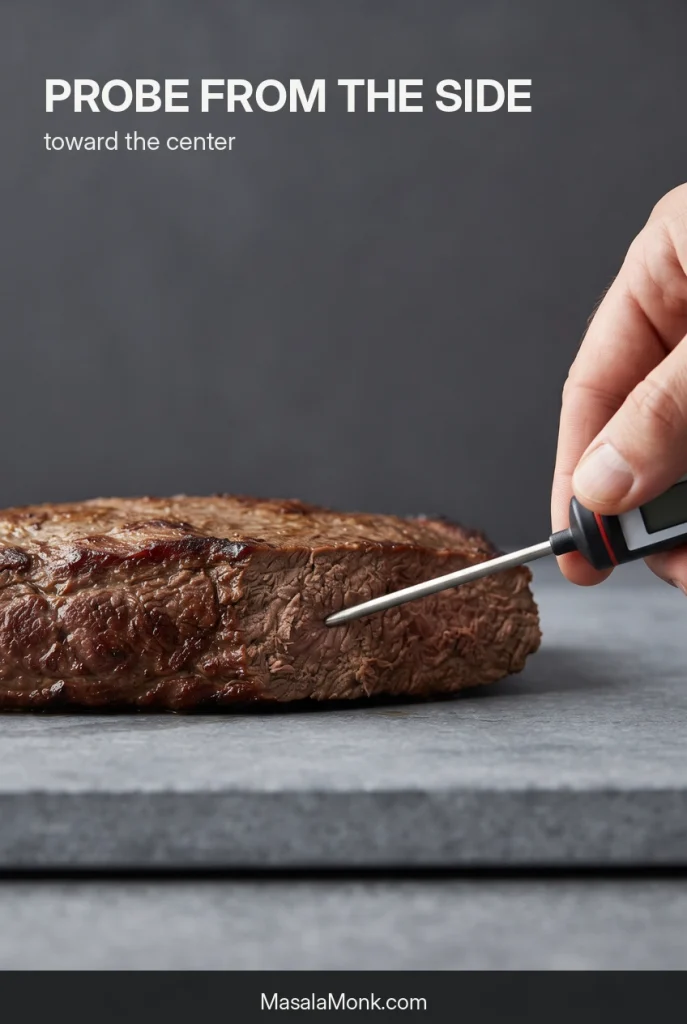
- Check doneness. Use an instant-read thermometer when the steak is thick enough to probe reliably, cooking to your preferred doneness while keeping the food-safety guidance below in mind. With thinner skirt or flap, insert the probe horizontally from the side toward the center. Paper-thin carnicería cuts cook so quickly that browning, timing and close attention matter especially.
- Rest. Give very thin steak about 3–5 minutes. Rest thicker skirt, flap or flank for 5–10 minutes.
- Slice across the grain. Turn the steak so your knife crosses the visible muscle fibers. Slice thinly. For tacos or burritos, chop those slices into pieces about ½ inch / 1.25 cm across.
- Taste and serve. Taste a freshly cut piece and add a small pinch of salt if needed. Finish with fresh lime and serve immediately.
Choose & Marinate
Fix & Finish
Match the Cooking Time to Your Steak
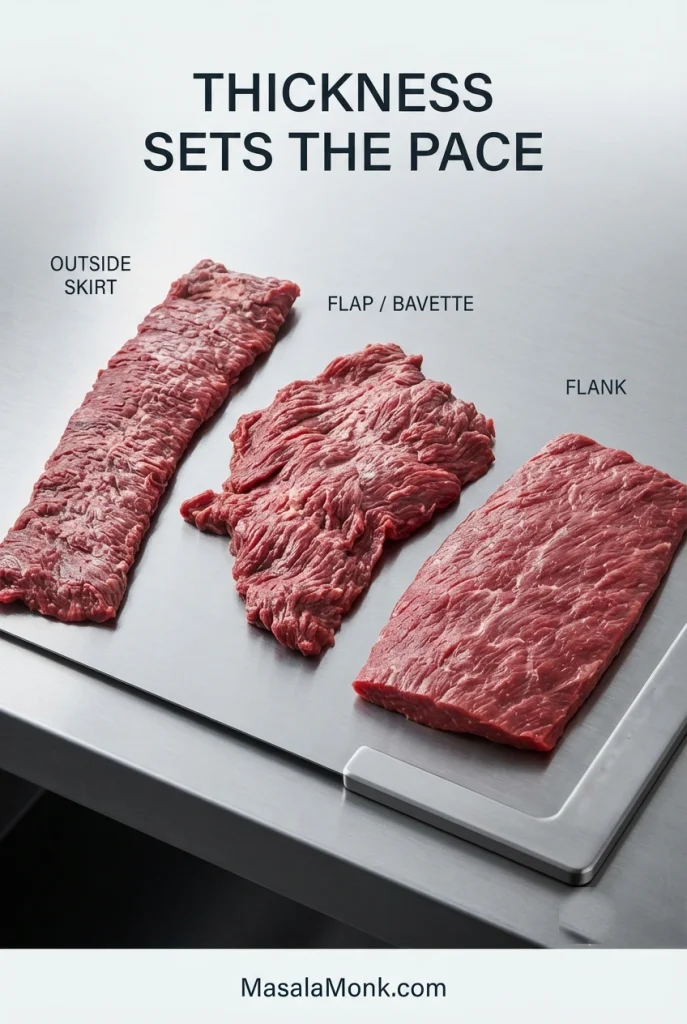
Whether the package says ranchera or the cut is skirt, flap or flank, thickness sets the pace. Thin carne asada needs fierce heat and very little time; thicker flank simply needs longer to develop the same strong browning. Find the row closest to the steak you actually bought.
| If you bought… | Start checking here |
|---|---|
| Very thin ranchera/flap | About 1–2 minutes per side over fierce heat. |
| Regular skirt or flap | About 2–4 minutes per side. |
| Thicker flank steak | About 4–6 minutes per side; use a thermometer once the meat is thick enough to probe reliably. |
Best Meat for Carne Asada: Skirt, Flap and Flank
Outside skirt is the first choice here, flap/bavette is an excellent alternative, and flank is the easiest widely available supermarket substitute. All three can make terrific carne asada.
Outside skirt steak is deeply beefy, relatively thin and full of loose muscle fibers that brown quickly and become tender when cut across the grain.
Flap meat, or bavette, has a similarly coarse grain and plenty of beef flavor. It is particularly good when the steak will be chopped for tacos.
Flank is not a consolation prize. It is leaner and usually thicker than skirt or flap, so give it the extra time its thickness requires.
Inside skirt works too, although it can be firmer than outside skirt. Careful trimming and thin slicing help. Where classic skirt has become expensive or difficult to find, thin chuck or diezmillo also works well for taco-style carne asada when a butcher slices it appropriately thin.
Ranchera and Arrachera at the Meat Counter
At many Mexican markets, arrachera means skirt steak, while ranchera may be flap or another thin grilling cut. The names can change from one butcher shop to another.
Ask what cut you are buying, then ask how thick it has been sliced. After that, stop worrying about the label and cook the steak you actually brought home.
Package says mechanically, blade or needle tenderized? Follow its cooking instructions rather than treating it exactly like an intact steak.
Carne Asada Marinade: Citrus, Garlic and Chile
This carne asada marinade combines orange and lime juice with garlic, cilantro, jalapeño, oregano, ancho chile, cumin, oil and salt. Orange rounds out the sharper lime, while garlic, jalapeño, oregano and ancho do most of the aromatic work. Cumin stays in the background, oil helps the mixture cling to the beef, and salt seasons it.
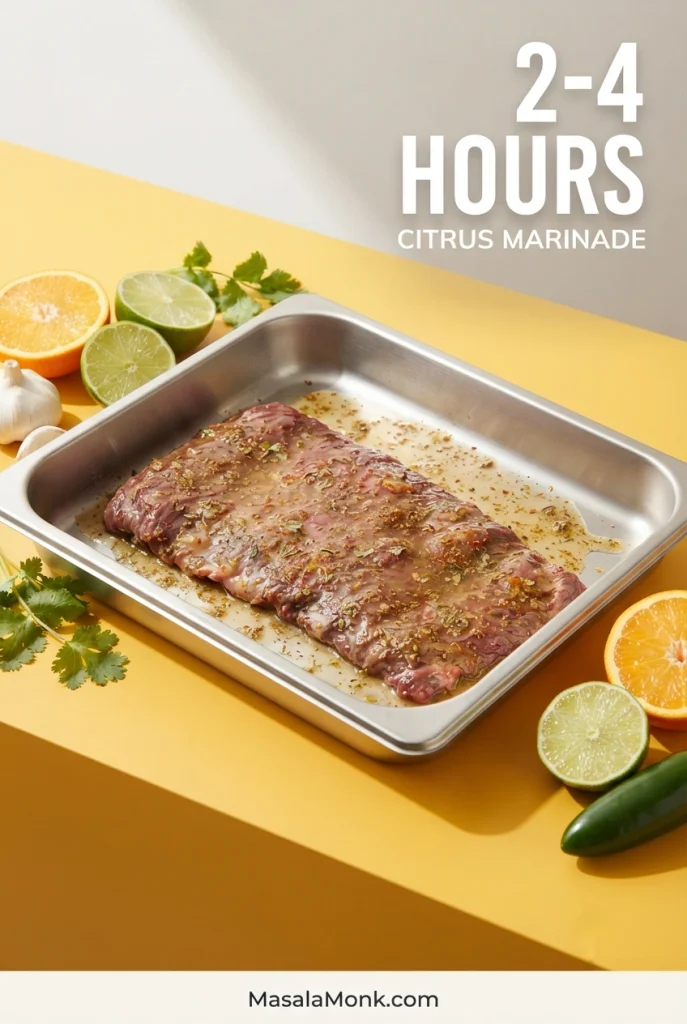
When it is mixed, the marinade should smell fresh, citrusy and strongly garlicky. Once the steak reaches the grill, browned beef and smoke should move to the front.
How Long to Marinate Carne Asada
Two to four hours is the sweet spot. Even 30 minutes gives the surface noticeable flavor when you are rushed, and 4–8 hours is workable, especially with thicker beef. For this citrus-heavy marinade, skip the overnight soak and keep it within about 8 hours. Longer exposure gives the citrus more time to change the surface texture without necessarily making the steak taste better.
Carne asada can be much simpler than the version here. In parts of northern Mexico, excellent beef, salt and live fire can be the whole idea. Pati Jinich’s Sonora-style carne asada is a useful example; this recipe deliberately takes the citrus-marinated route instead.
How to Make Carne Asada on the Grill
Now get the grill hot.
Build a direct grilling zone around 450–500°F / 230–260°C or above. For thin skirt or flap, hotter than feels polite is usually better: you want color on the outside before the middle has time to overcook.
Scrub the hot grates clean. If your grill has a history of sticking, lightly oil them with a little neutral high-heat oil before the steak goes down.
Dry the Steak Before It Hits the Grill
Remove the steak from the marinade, discard the liquid and blot the beef well. Dry the surface well. A wet steak can steam and turn gray while you wait for char that never arrives.
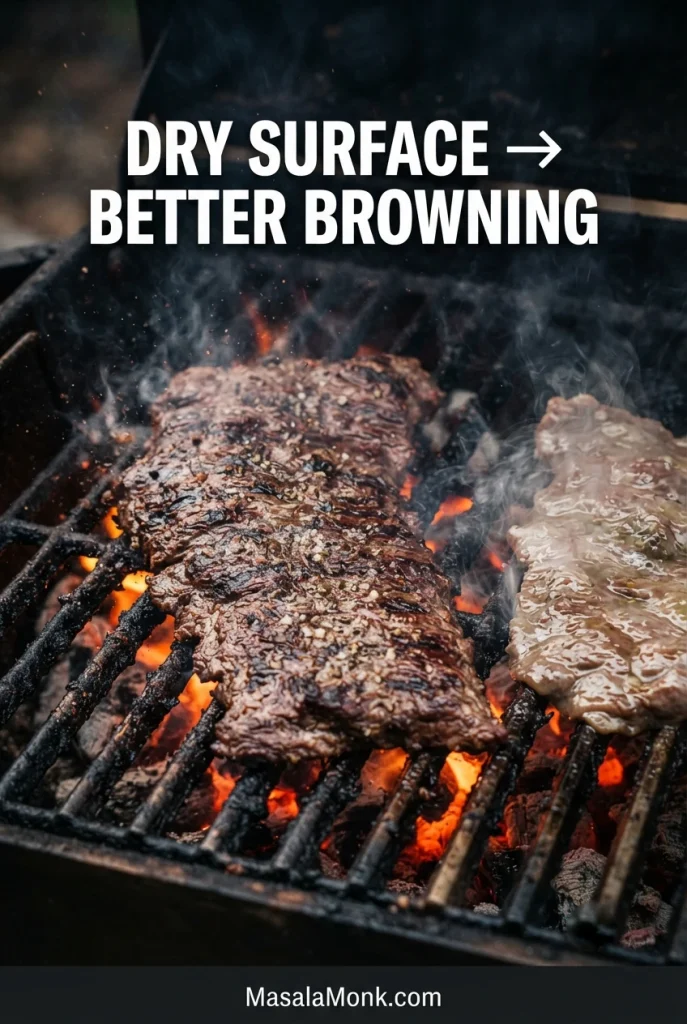
The steak should answer with a hard sizzle almost immediately when it hits the grate. A weak hiss usually means the surface is still too wet or the grill needs more heat.
| What you see | What it means |
|---|---|
| Dull, wet or gray surface | The steak needs a drier surface, more heat, or more time undisturbed against the grill. |
| Deep brown or mahogany patches | The crust is developing; start watching the thinner areas closely. |
| Blackened thin tips and edges | Usually fine on skirt steak as long as the rest of the piece is browning rather than burning. |
| Black from edge to edge | The char has gone too far; pull the steak before bitterness takes over. |
Give the Steak Time to Brown
Lay the beef over the hottest part of the grill that is not engulfed in flare-ups and leave the first side alone long enough to develop color. Constant lifting and turning makes a good crust harder to build.
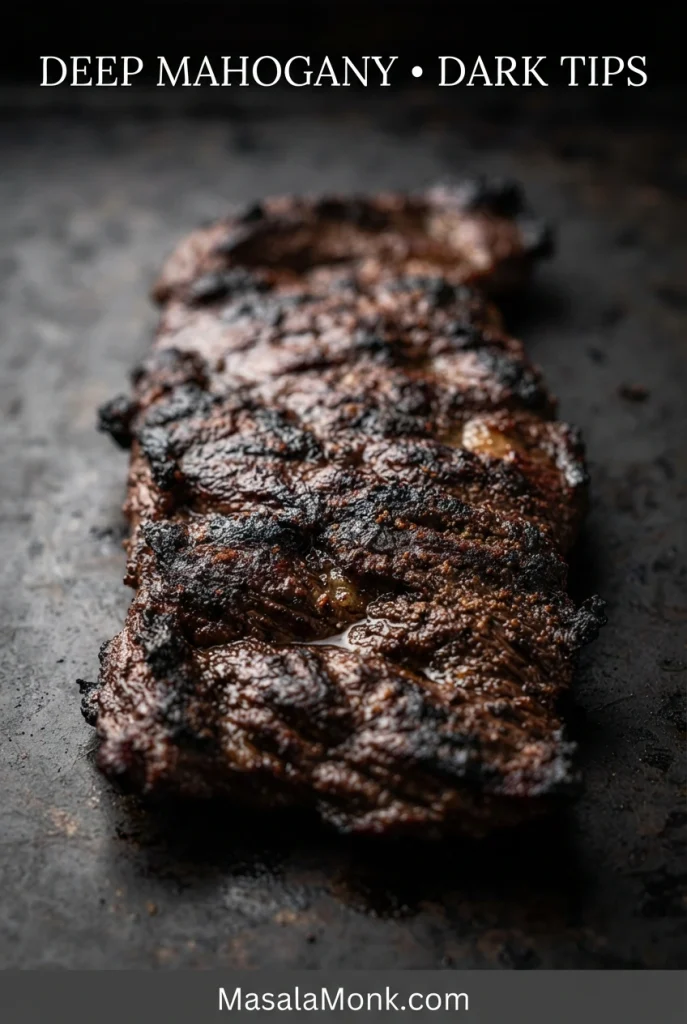
Uneven char is normal on skirt steak. Thin ends darken before the thicker center, so do not keep the whole piece over the fire just to make every inch the same color.
Charcoal naturally adds smoke and live-fire flavor. A standard gas grill gives you plenty of heat and char, though without quite the same smoke profile. Mesquite pushes that smoky character further, while a very hot plancha or griddle produces its own taco-shop style of browned beef.
If the steak is properly seasoned but still tastes flat, stronger browning or a little smoke may be what it is missing.
Carne Asada Temperature: Medium-Rare vs. USDA Guidance
For culinary doneness, medium-rare steak is commonly finished around 130–135°F / 54–57°C. Thicker steak may rise a few degrees as it rests; paper-thin carne asada has much less carryover.
That is different from the official food-safety recommendation. The USDA recommends 145°F / 63°C for intact whole beef steaks followed by at least a 3-minute rest.
On thicker steak, insert an instant-read thermometer horizontally through the side toward the center. Paper-thin cuts may be too shallow for a reliable probe reading, which makes browning, timing and close attention more important.
Cooking Carne Asada Indoors
No outdoor grill? You can still make excellent carne asada indoors. Cast iron gives you a hard sear; the broiler keeps the cooking off the stovetop.
Cast Iron
Cut long skirt or flap steak into pieces that can lie completely flat. Blot them especially well, then heat a heavy cast-iron skillet over high heat until very hot. Add just enough high-heat oil to lightly coat the cooking surface.
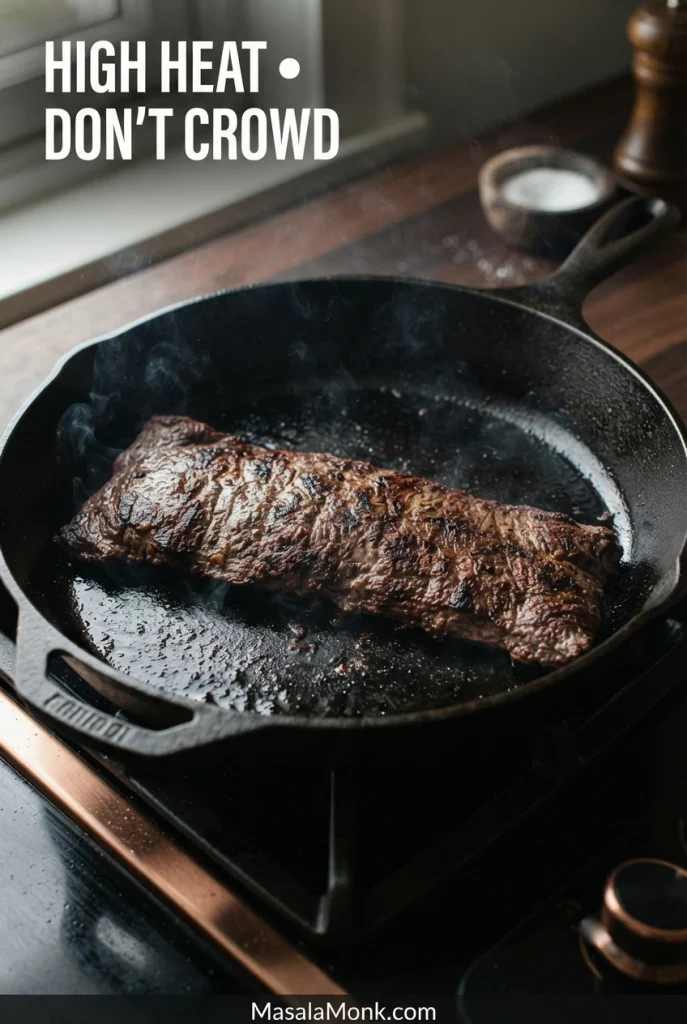
Start checking the first side after about 2–3 minutes. Turn when it has developed a strong brown crust, then watch the second side closely; thin pieces can finish quickly, while thicker flap or flank needs longer. Use the thermometer and temperature guidance above whenever the steak is thick enough to probe reliably.
Cook in batches so every piece gets direct contact with the pan, and let the empty skillet regain its heat before starting the next batch. A properly hot skillet will create smoke, so turn on the exhaust hood and open the windows before cooking.
Broiler
Arrange the well-drained steak on a foil-lined broiler-safe sheet pan and place it roughly 4–6 inches / 10–15 cm from a fully heated broiler.
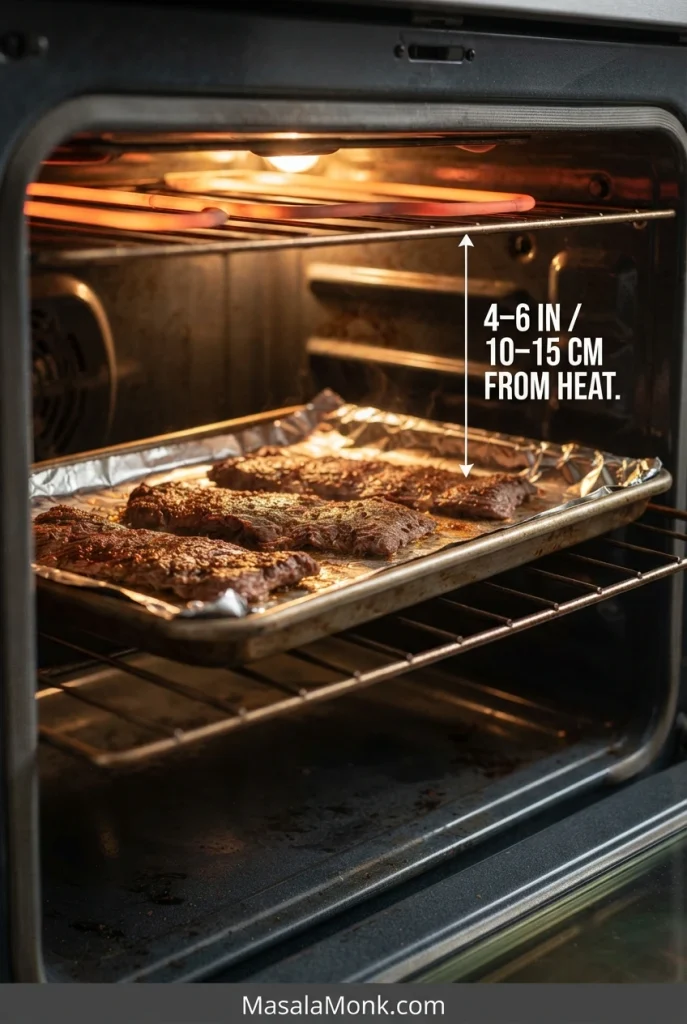
Start checking regular skirt after about 6 minutes total; many pieces finish in roughly 6–10 minutes, turning once as the first side browns. Paper-thin ranchera can be ready much sooner, while thicker flank needs more time. Broilers vary considerably, so let browning and doneness decide when the steak comes out.
Slice Across the Grain Before You Chop
While the steak rests, warm a stack of soft homemade corn tortillas and keep them covered for serving.
Look closely at the rested steak before reaching for the knife. The long muscle fibers should be visible running in one direction.
Turn the beef so the knife crosses those fibers and make thin slices. A slight diagonal cut gives you wider pieces while keeping the fibers short.
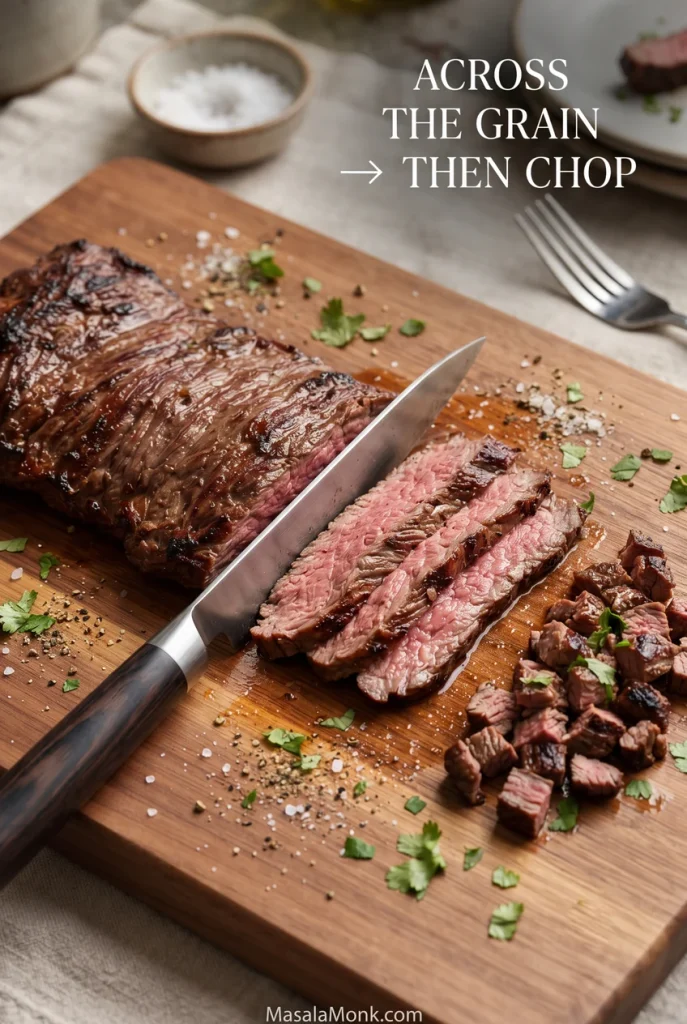
Slicing direction matters more than it seems: juicy skirt steak can still feel frustratingly chewy when it is sliced with the grain.
For Tacos, Slice First and Chop Second
Serving the steak on a platter? Stop at thin slices. When it is headed for tacos or burritos, chop those slices into pieces around ½ inch / 1.25 cm across.
This is the payoff: thin, juicy slices, dark at the edges, with the long fibers shortened enough to bite cleanly. A hot tortilla, chopped steak, onion, salsa and lime are often all it needs.
Why Is My Carne Asada Tough? Don’t Blame the Marinade First
A flavorful steak can still be tough. The cause might be the cut, leftover membrane, overcooking, long muscle fibers or simply pieces that are too large for an easy taco bite.
| What happened | What to check next time |
|---|---|
| Gray with little crust | Blot the steak more thoroughly, increase the heat and avoid crowding the cooking surface. |
| Dry and leathery | The meat likely cooked too long, especially if thin steak was given thick-steak timing. |
| Juicy but chewy | Check the grain direction, slice thickness, tough membrane and the actual cut. |
| Hard to bite through in a taco | Slice across the grain first, then chop the slices smaller. |
| Burnt garlic or herbs | Brush away heavy marinade solids before the steak reaches fierce heat. |
| Soft or mealy outside | Shorten the time in the acidic marinade. |
| Too salty | Check the salt measurement and marinating time. Weigh the kosher salt if possible because brands differ substantially by volume. |
| Some pieces tender, others tough | Uneven thickness can put different pieces at different levels of doneness. |
| Well seasoned but missing taqueria character | Look at the heat, browning and smoke before changing the marinade. |
A marinade can change flavor and surface texture; it cannot shorten long muscle fibers. Your knife does that when you slice across the grain.
Make Ahead, Freeze and Use the Leftovers
Make Ahead
The marinade can be mixed up to 1 day ahead and refrigerated separately. Combine the beef and marinade 2–4 hours before cooking. Carne asada is best soon after grilling, so prep early rather than cooking the steak hours ahead.
Freezing
For best texture, freeze the raw beef and marinade separately. FoodSafety.gov lists 4–12 months at 0°F / −18°C for the best quality of frozen fresh beef steaks, although carne asada is better used toward the earlier end of that range for texture. Thaw the beef in the refrigerator, then marinate normally for 2–4 hours.
Leftovers
Refrigerate cooked carne asada promptly in a covered container and use it within 3–4 days. Reheat only what you need, ideally in a hot skillet, until it reaches 165°F / 74°C. If you freeze the cooked steak, FoodSafety.gov lists 2–6 months for cooked-meat quality, although thin cooked steak is at its best much sooner.
Leftover carne asada is excellent in a crisp skillet quesadilla; the folding and browning method in our chicken quesadilla recipe works just as well once you swap in the chopped steak.
A smaller handful can become carne asada fries: warm the beef quickly, then scatter it over crisp homemade French fries with cheese, salsa and avocado.
What to Serve with Carne Asada
Bring the sliced beef straight to the table and let everyone build their own. Carne asada does not improve by waiting under a pile of elaborate toppings.
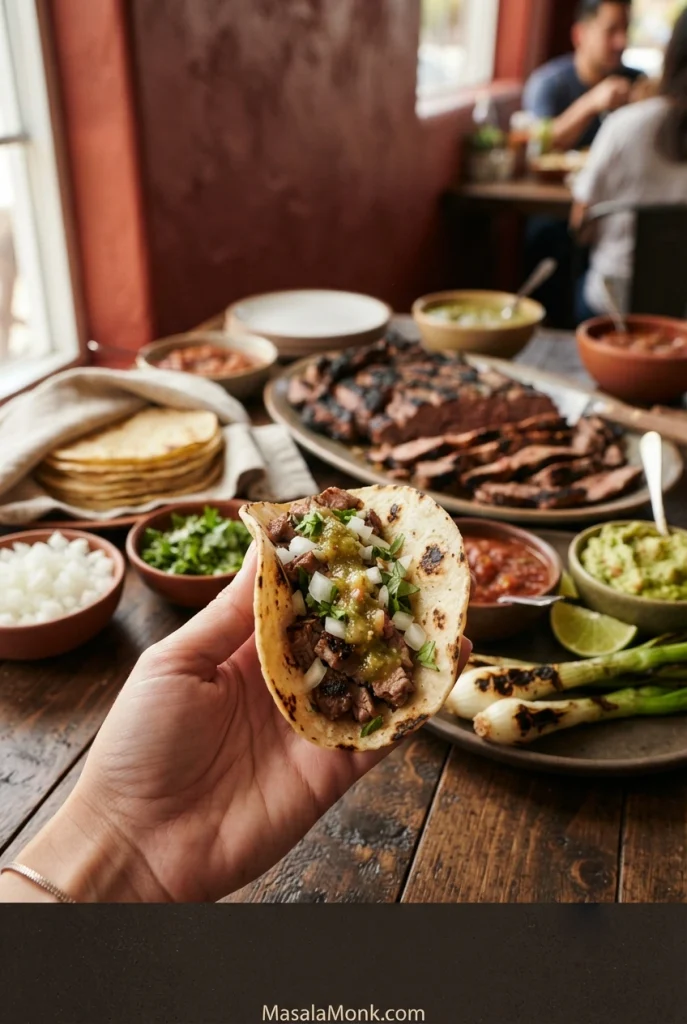
Lime, guacamole, pico de gallo, charred green onions and blistered chiles all make sense around smoky beef. You do not need all of them on the same plate.
For tacos, keep the pile loose. A modest spoonful of chopped beef, onion, salsa and lime gives you a cleaner bite than packing the tortilla so full that the filling falls out before the first mouthful.
Choose the salsa to suit the rest of the meal: roasted salsa verde brings tart tomatillo and chile, while fresh mango salsa gives the smoky steak a sweeter, juicier contrast.
For a fuller plate, add creamy refried beans and fluffy Mexican rice.
Get it into warm tortillas and eat it while those charred edges are still hot.








