Posted on 2 Comments

Keto Beans: 5 Varieties That Won’t Ruin Your Diet

CAN YOU EAT BEANS ON KETO?

Let’s face it: one of the toughest parts of sticking to a keto diet is giving up your favorite comfort foods — and for many, beans are high on that list. Whether it’s a hearty chili, a spoonful of hummus, or a cozy lentil soup, beans seem to pop up in every cuisine.

But here’s the problem: most beans are high in carbohydrates — which makes them a challenge for anyone trying to stay in ketosis.

Still, the story isn’t all bad. While the classic beans you’re used to might be off-limits, there are a handful of bean options — and bean-like alternatives — that can work within a ketogenic lifestyle. In fact, some are surprisingly low in net carbs and rich in fiber, protein, and flavor.

In this guide, we’ll break down 5 keto-friendly beans (and a few honorary mentions) that won’t ruin your diet — plus what to avoid, how to prepare them, and smart alternatives when you just want that hearty texture without the carb hit.


🧠 Why Most Beans Don’t Fit in a Keto Diet

Let’s start with the basics.

The ketogenic diet is a low-carb, high-fat eating approach designed to shift your body into ketosis — a metabolic state where fat becomes your primary fuel source instead of carbs. To stay in ketosis, most people need to limit net carbs to about 20–50 grams per day.

That’s where the trouble with beans begins.

Beans are technically legumes, and legumes are notoriously high in carbohydrates — especially net carbs (total carbs minus fiber). Even small portions of common beans can use up your entire day’s carb limit in one sitting.

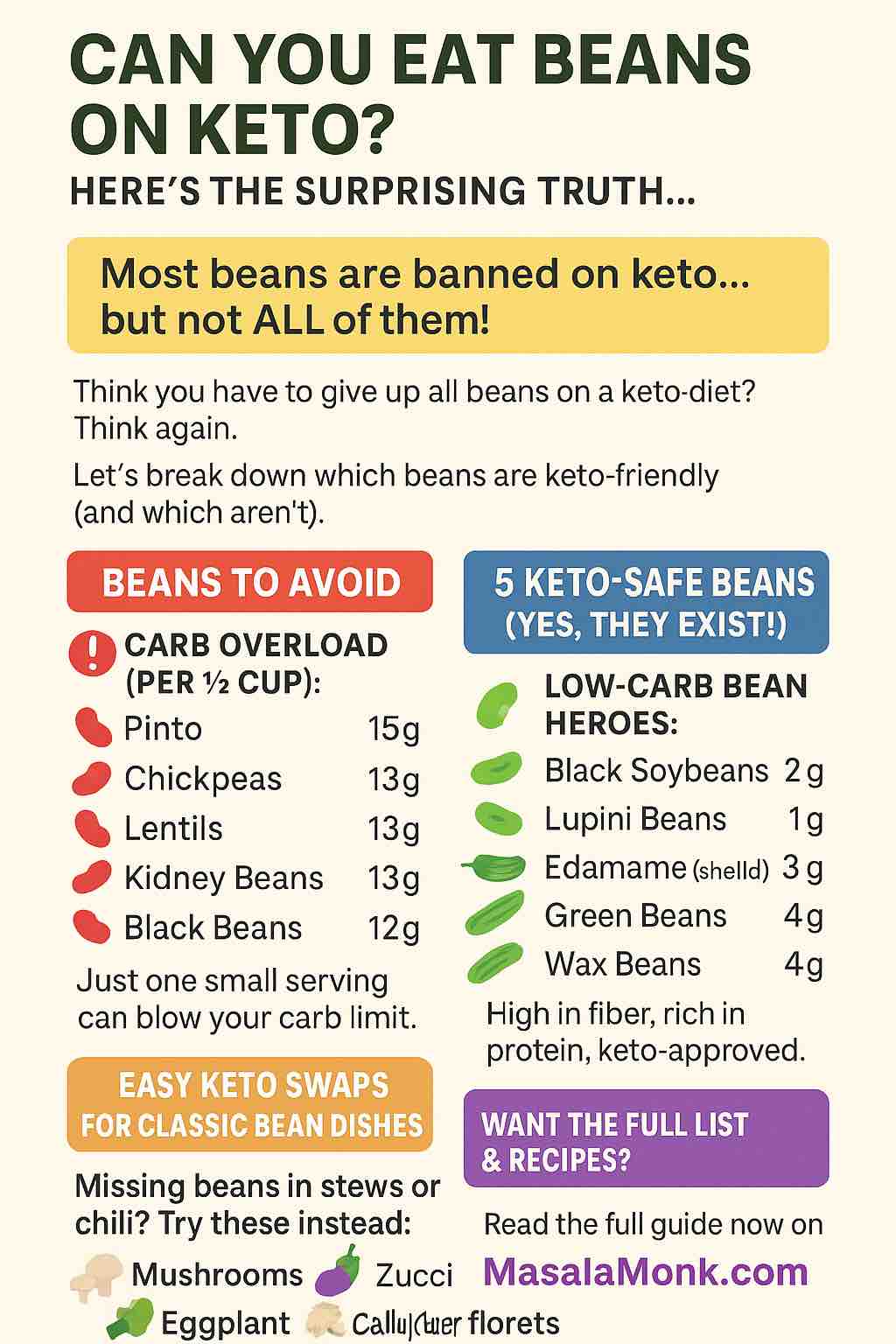
Here’s a snapshot of net carbs in standard beans (½ cup, cooked):

Bean TypeNet Carbs
Black beans~12g
Kidney beans~13g
Chickpeas~13g
Pinto beans~15g
Lentils~13g

As you can see, just half a cup can take you over the edge — and that’s not accounting for anything else you eat that day.

But here’s the twist: not all beans are created equal. A few unique varieties — along with some legume-like vegetables — are low enough in net carbs to fit into a keto or low-carb eating plan. Let’s dive into those now.


5 Keto-Friendly Beans (and Bean-Like Substitutes)

1. Green Beans: The Keto-Safe Legume That Acts Like a Veggie

  • Net carbs: ~4g per 1 cup (cooked)
  • Total carbs: ~7g
  • Fiber: ~3g

Green beans are technically legumes, but nutritionally they behave more like non-starchy vegetables — which is why they’re embraced by most keto eaters.

They’re rich in fiber, vitamin C, and antioxidants, and they offer a satisfying crunch when steamed or sautéed.

How to enjoy them on keto:

  • Sauté in olive oil with garlic and almonds.
  • Toss into a creamy, cheesy keto casserole.
  • Roast with parmesan for a crispy side.

💡 Pro tip: They pair beautifully with high-fat sauces — think buttery lemon or creamy mushroom gravy.


2. Black Soybeans: The Best “True Bean” for Keto Dieters

  • Net carbs: ~2g per ½ cup
  • Total carbs: ~8g
  • Fiber: ~6g
  • Protein: ~11g

If you’re missing the texture of real beans in your chili, black soybeans are your secret weapon. Unlike regular black beans, these contain more fiber than digestible carbs, making them an outlier in the legume world.

They taste mildly earthy and are versatile enough for soups, stews, and dips.

How to enjoy them:

  • Use in keto chili with ground beef and tomato paste.
  • Add to keto-friendly burrito bowls or taco salads.
  • Make a low-carb bean dip with avocado and lime.

💡 Watch out: Always choose unsweetened, organic canned versions, and rinse them well to reduce sodium.


3. Lupini Beans: The Low-Carb Snack with a Cult Following

  • Net carbs: ~1g per ½ cup (varies)
  • Total carbs: ~12g
  • Fiber: ~11g
  • Protein: ~15g

These yellow, oval-shaped beans have been a Mediterranean staple for centuries. They’re firm, chewy, and slightly bitter — usually pickled and sold in jars or vacuum packs.

Because they’re so high in fiber, almost all their carbs are non-digestible — making them practically zero-net-carb in some preparations.

How to enjoy them:

  • Snack on them like olives or pickles.
  • Toss into salads for added texture.
  • Pulse in a food processor with lemon and garlic for a chunky dip.

💡 Tip: Always read labels — some brands add sugar or preservatives. Look for “plain brined” or “unsweetened.”


4. Edamame: Young Soybeans with a Nutrient Punch

  • Net carbs: ~3.5g per ½ cup (shelled)
  • Protein: ~9g
  • Fiber: ~4g
  • Fat: ~4g (mostly unsaturated)

Edamame is young, green soybeans harvested before they mature. These little pods are rich in plant protein, magnesium, and antioxidants — and they come with a satisfying bite that makes them feel more indulgent than they are.

How to enjoy them on keto:

  • Lightly steam and top with sea salt or chili flakes.
  • Add shelled edamame to stir-fries or fried “rice” made with cauliflower.
  • Mix with sesame oil, garlic, and soy sauce for a savory snack.

💡 Bonus: Edamame is low on the glycemic index, meaning it won’t spike blood sugar — a win for insulin control.


5. Wax Beans (Yellow String Beans): A Forgotten Keto Ally

  • Net carbs: ~4g per 1 cup (cooked)
  • Total carbs: ~7g
  • Fiber: ~3g

Often mistaken for just a yellow version of green beans, wax beans have a slightly smoother texture and a milder flavor. They carry the same low-carb profile and are just as keto-safe.

How to enjoy them:

  • Steam and toss with browned butter and fresh dill.
  • Add color and crunch to keto-friendly salads.
  • Serve chilled with vinaigrette for a summer side dish.

💡 Why they’re underrated: They’re rich in flavonoids and easy to digest — perfect for those with sensitive guts.


🚫 Beans to Avoid on a Keto Diet

Even small servings of the following beans will likely throw you out of ketosis:

BeanNet Carbs (½ cup)
Black beans12g
Kidney beans13g
Chickpeas13g
Pinto beans15g
Navy beans14g
Lentils (red/brown)13g

These are too high in net carbs, even in modest servings. Save them for reintroduction after keto or during targeted carb-up days if you’re following a cyclical approach.


🥦 Best Keto Bean Substitutes (When You Need That Hearty Texture)

When your recipe calls for beans but your macros say “no,” try one of these keto-friendly stand-ins:

  • Mushrooms – earthy, meaty texture in chili or stews
  • Cauliflower florets or rice – bulks up soups or makes great mash
  • Zucchini – spiralize or cube for tacos, stir-fries, or skillet meals
  • Eggplant – soft, absorbent, and perfect in keto-friendly dips

💡 Texture hack: For stews and chili, combine chopped mushrooms and diced eggplant with extra olive oil — it mimics the mouthfeel of beans beautifully.


🔚 Final Thoughts: Yes, You Can Eat Beans on Keto — Just Be Selective

While traditional beans are mostly a no-go on keto, that doesn’t mean you have to live without their comfort or versatility. By choosing the right varieties — like black soybeans, lupini beans, green beans, wax beans, and edamame — you can enjoy the taste and texture of beans without crashing your carb count.

Remember:

  • Always track net carbs (total carbs minus fiber)
  • Stick to measured portions
  • Watch for added sugars in canned or prepared versions

Beans on keto can work, if you’re strategic — and your tastebuds don’t have to suffer.


📌 Quick Reference: Keto-Friendly Beans Cheat Sheet

Bean TypeNet Carbs (½–1 cup)Keto-Friendly?
Green Beans~4g✅ Yes
Black Soybeans~2g✅ Yes
Lupini Beans~1g✅ Yes
Edamame~3–4g✅ Yes
Wax Beans~4g✅ Yes
Chickpeas~13g❌ No
Pinto Beans~15g❌ No

10 FAQs About Beans on the Keto Diet

1. Can I eat beans on a keto diet?

Yes — but only specific types of beans that are low in net carbs. Most traditional beans (like kidney, pinto, or black beans) are too high in carbs for strict keto. However, green beans, lupini beans, black soybeans, edamame, and wax beans can be enjoyed in moderation.


2. Why are most beans not keto-friendly?

Most beans are high in starch, which breaks down into glucose (sugar) in your body. This can spike your blood sugar and knock you out of ketosis. Since keto limits you to 20–50g of net carbs per day, just half a cup of traditional beans can exceed that limit.


3. What is the best bean for a keto diet?

Black soybeans are widely considered the best bean for keto. They contain only ~2g net carbs per ½ cup, are high in protein and fiber, and mimic the texture of regular black beans in recipes.


4. Are green beans OK on keto?

Absolutely. Green beans are technically legumes, but they behave nutritionally like a low-carb vegetable. With only ~4g net carbs per cup, they’re one of the most keto-friendly options available.


5. How many beans can I eat on keto?

It depends on your daily carb limit and the type of bean. For example:

  • You can enjoy ½ cup of black soybeans or 1 cup of green beans without breaking ketosis.
  • Always calculate net carbs (total carbs minus fiber) and keep your portions controlled.

6. Are chickpeas or lentils keto-friendly?

No. Both chickpeas and lentils are too high in net carbs to be part of a strict keto diet. Even ½ cup of either contains around 13–15g net carbs, which can use up most of your daily allowance.


7. What are lupini beans, and why are they popular on keto?

Lupini beans are Mediterranean legumes known for their incredibly low net carb count (as low as 1g per ½ cup) and very high fiber and protein. They’re usually sold in brine and need to be rinsed before eating. They’re great as snacks or salad toppers.


8. Can I eat bean-based products like hummus or refried beans on keto?

Traditional hummus (chickpeas) and refried beans (pinto or black beans) are too high in carbs for keto. Instead, look for low-carb versions made from cauliflower, zucchini, or black soybeans, or make your own at home with keto-safe ingredients.


9. Are there keto substitutes for beans in recipes like chili or stew?

Yes. To mimic the hearty texture of beans in chili or stews, use:

  • Chopped mushrooms
  • Diced eggplant
  • Cauliflower florets
  • Zucchini chunks

These are low in carbs and absorb flavor well, making them excellent stand-ins.


10. Can I reintroduce regular beans after keto?

If you transition to a low-carb or cyclical keto plan, you can gradually reintroduce small portions of higher-carb beans. Just be sure to track your carbs and test your body’s response if you want to stay metabolically flexible.
Posted on 1 Comment

Sherbet and Sorbet Difference

SHERBET VS. SORBET WHAT'S THE DIFFERENCE?

Understanding These Frozen Treats the Masala Monk Way

If you’ve ever stood frozen (pun intended) in front of a dessert counter, puzzled over whether to choose sherbet or sorbet, you’re not alone. These two icy desserts may look similar, but their ingredients, texture, taste, and even cultural history tell a story of their own.

At Masala Monk, where flavor meets tradition, we believe understanding your food is just as satisfying as tasting it. So let’s clear the confusion: What is sherbet? What is sorbet? Which one is dairy-free? And most importantly — which one is better for you?

This deep-dive will answer all your questions and maybe even inspire you to churn out your own version at home.


❄️ What Is Sorbet?

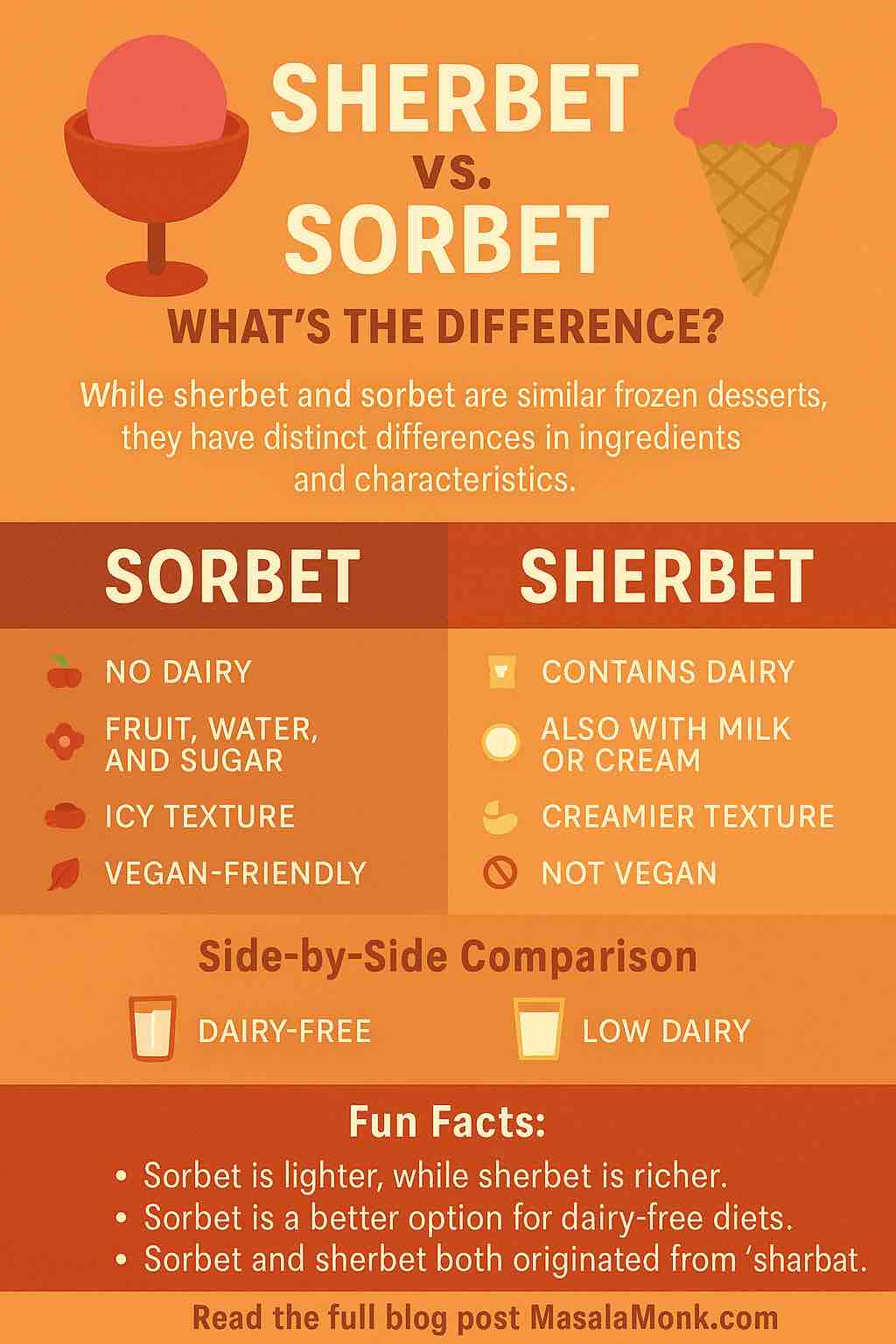
Sorbet is a frozen dessert made primarily from fruit purée or juice, water, and sugar. It contains no dairy, no eggs, and is naturally vegan and lactose-free.

✨ Key Features of Sorbet:

  • Ingredients: Fruit (or fruit juice), water, sugar
  • Texture: Smooth and icy
  • Flavor: Refreshingly tart or sweet, depending on the fruit
  • Dietary Friendly: Vegan, dairy-free, gluten-free

📜 Origins:

The word “sorbet” is derived from the Arabic “Sharbat”, a chilled drink made with fruit and sugar, which later influenced the Italian “sorbetto.” Historically, sorbet was enjoyed in the Middle East and Europe as a palate cleanser between meals — long before refrigeration was even invented.

🥭 Common Sorbet Flavors:

  • Mango
  • Raspberry
  • Lemon
  • Passionfruit
  • Watermelon
  • Amla-Ginger (our Masala Monk fusion twist!)

🍦 What Is Sherbet?

Sherbet (or sherbert in American English) is the creamier cousin of sorbet. Though it also contains fruit, sugar, and water, it includes a small amount of dairy — often milk or cream — which gives it a richer, smoother texture than sorbet.

✨ Key Features of Sherbet:

  • Ingredients: Fruit, sugar, water, and dairy (typically 1–2%)
  • Texture: Creamy and smoother than sorbet, but lighter than ice cream
  • Flavor: Fruit-forward with a hint of richness
  • Dietary Notes: Not vegan, but lower in fat than ice cream

📜 Origins:

Sherbet’s name also comes from “Sharbat”, but in Western contexts, it evolved separately. In the U.S., the FDA even has a legal requirement: for a dessert to be called “sherbet,” it must contain between 1–2% milk fat.

🍊 Common Sherbet Flavors:

  • Orange
  • Pineapple
  • Lime
  • Strawberry
  • Guava-Coconut (try this Masala Monk recipe!)

🔬 Sorbet vs Sherbet – Side-by-Side Comparison

FeatureSorbetSherbet
Dairy❌ No✅ Yes (1–2%)
Vegan-Friendly✅ Yes❌ No
TextureIcy and refreshingCreamy and smooth
CaloriesGenerally lowerSlightly higher
MouthfeelLight, sharp, coolingRicher, smoother
Common BaseFruit purée, waterFruit + milk/cream
Traditional UsePalate cleanser, dessertDessert, sweet snack

🥛 Why the Dairy Matters

The tiny amount of dairy in sherbet plays a big role. It:

  • Softens the texture, making it smoother than icy sorbet.
  • Adds creaminess, but not enough to qualify it as “ice cream.”
  • Changes the dietary category — a deal-breaker for those who are lactose intolerant or vegan.

🍨 Sorbet, Sherbet & Ice Cream – A Spectrum of Frozen Delights

To understand sherbet and sorbet fully, it helps to place them on a spectrum of frozen desserts:

  • Sorbet: All fruit, zero dairy. The lightest.
  • Sherbet: A hybrid with just enough cream to feel indulgent.
  • Ice Cream: Rich, creamy, custard-like — typically over 10% milk fat.

🧠 Fun Facts About Sherbet and Sorbet

  • In the UK, “sherbet” may refer to a fizzy powder sweet, not a frozen dessert.
  • Sorbet was served to ancient Roman emperors, flavored with honey and snow.
  • Sherbet often appears in nostalgic American flavors like rainbow sherbet — a mix of orange, lime, and raspberry.
  • Some Indian sharbat drinks are closer to sorbet in flavor profile — think rose or khus frozen with lemon and mint.

🧘‍♀️ Which One Is Healthier?

It depends on what you’re looking for.

  • For dairy-free or vegan diets: Choose sorbet.
  • For a lower-fat alternative to ice cream: Sherbet is your go-to.
  • For pure fruit flavor and hydration: Sorbet wins.
  • For creaminess without the calorie load of ice cream: Sherbet is perfect.

Both can be part of a mindful diet when consumed in moderation.


🍋 Masala Monk Tip: Make Your Own Sorbet or Sherbet at Home!

Here’s a quick recipe base to experiment with:

🌿 Basic Sorbet Formula:

  • 2 cups fruit purée (mango, lychee, watermelon)
  • ½ cup water
  • ¼ cup honey or jaggery syrup
  • 1 tsp lemon juice
  • Optional: pinch of salt or black pepper

Freeze, churn, or blend periodically for a smooth texture.

🥥 Basic Sherbet Add-On:

To the above sorbet base, add:

  • ¼ cup full-fat milk or coconut cream
  • Optional: roasted cardamom, saffron, rose water

A perfect fusion of East and West!


🧾 Final Scoop – Sorbet vs. Sherbet: It’s All About Taste and Texture

Both sherbet and sorbet are delightful frozen treats, each with its own appeal:

  • Choose sorbet for fruit-forward, icy refreshment and clean, dairy-free indulgence.
  • Go for sherbet when you want a touch of creaminess without diving fully into ice cream territory.

At Masala Monk, we celebrate these sweet creations — and even give them a healthy, exotic twist. Whether you’re scooping out mango sorbet on a summer day or enjoying homemade jamun sherbet with a hint of chaat masala, there’s joy in every bite.


🍧 Hungry for more frozen secrets and delicious recipes?

Read more on MasalaMonk.com – where taste meets tradition in the most flavorful way.

❓ FAQs: Sherbet vs. Sorbet

1. What is the main difference between sherbet and sorbet?
The key difference is dairy. Sorbet contains no dairy—just fruit, water, and sugar—while sherbet includes a small amount of milk or cream, giving it a creamier texture.


2. Is sorbet dairy-free and vegan?
Yes, sorbet is naturally dairy-free and vegan as it’s made with fruit, sugar, and water—perfect for lactose-intolerant or plant-based diets.


3. Can vegans eat sherbet?
Typically, no. Sherbet contains milk or cream, making it unsuitable for vegans. Always check the label if you’re unsure.


4. Does sherbet contain more fat than sorbet?
Yes, but only slightly. Sherbet usually contains 1–2% milk fat, while sorbet contains zero fat, making it a lighter choice for those watching fat intake.


5. Is sorbet healthier than sherbet?
In general, yes. Sorbet is lower in fat and calories, especially if it’s made with real fruit and minimal added sugar. But the “healthier” choice depends on ingredients and portion size.


6. Can I make sorbet or sherbet at home without an ice cream machine?
Yes! Both can be made at home using a blender and freezer. Churn by hand every few hours or use a food processor for a smooth texture.


7. What fruits work best for sorbet?
Fruits with high water content and bold flavor like mango, raspberry, lemon, lychee, and watermelon are excellent for sorbet.


8. Is there an Indian version of sherbet or sorbet?
Absolutely! The traditional “sharbat” in India — a sweetened fruit or flower-based drink — is a precursor. When frozen, drinks like rose sharbat, khus, or aam panna can become Indian-style sorbets.


9. Why is sherbet sometimes spelled “sherbert”?
“Sherbert” is a common American mispronunciation and alternate spelling of “sherbet.” While both refer to the same dessert, “sherbet” is the correct spelling.


10. Is rainbow sherbet made from natural ingredients?
Not always. Commercial rainbow sherbet may contain artificial colors and flavors. Look for natural or organic brands, or make your own for better control over ingredients.


Posted on Leave a comment

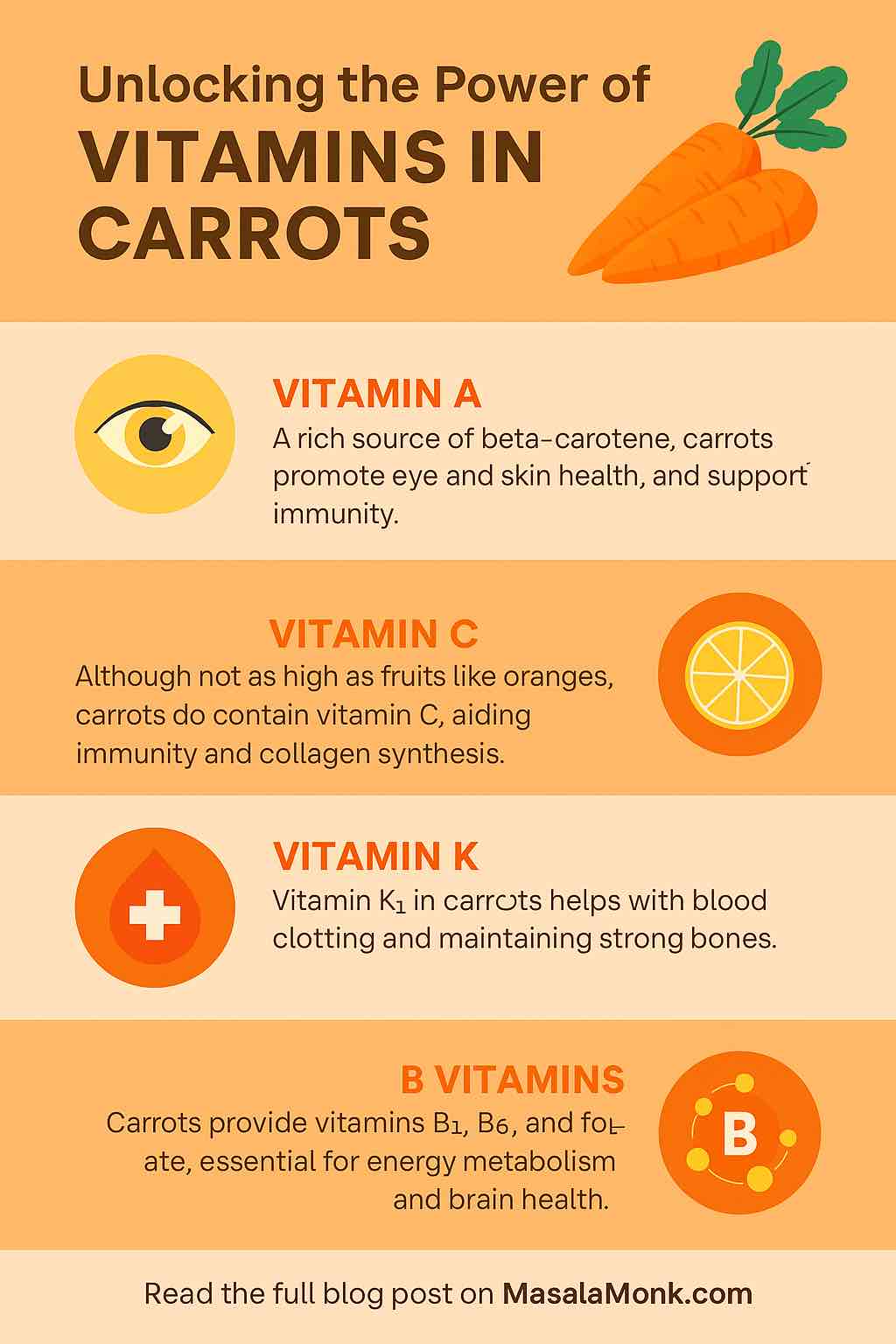
Unlocking the Power of Vitamins in Carrots

Power of VITAMINS IN CARROTS

Carrots — crisp, sweet, earthy, and bright orange — are among the most loved vegetables globally. From school lunch boxes to gourmet kitchens, carrots feature prominently for good reason: they are loaded with essential vitamins that nourish your body in numerous ways.

But how much do we really know about what’s inside this humble root? Do carrots have Vitamin C? Are they a good source of Vitamin K? What other vitamins are in carrots? Let’s go beyond the basics and unlock the full power of carrot vitamins — their types, quantities, functions, and how best to consume them.

At Masala Monk, we believe in celebrating natural, nutrient-rich foods, and this post is your complete, evidence-based guide to the vitamins in carrots.


🧬 What Vitamins Are in Carrots?

Carrots are a low-calorie, high-fiber vegetable with a powerful vitamin profile. A single medium carrot (about 61g) delivers a wide spectrum of vitamins in modest but impactful amounts.

Here’s a breakdown of the key vitamins found in carrots:

VitaminAmount (per 100g raw)% Daily Value (DV)Health Function
Vitamin A (from Beta-Carotene)835 µg RAE93%Eye health, immunity, skin
Vitamin C5.9 mg7%Immunity, collagen, antioxidant
Vitamin K113.2 µg11%Blood clotting, bone strength
Vitamin B1 (Thiamine)0.066 mg6%Energy metabolism, nerve function
Vitamin B6 (Pyridoxine)0.138 mg11%Brain health, red blood cell production
Folate (Vitamin B9)19 µg5%DNA synthesis, pregnancy health

Let’s explore these in more detail.


🟧 Carrots and Vitamin A – The Beta-Carotene Superstar

If you associate carrots with better eyesight, you’re absolutely right. Carrots are best known for their very high Vitamin A content, primarily in the form of beta-carotene, a powerful antioxidant that the body converts into Vitamin A.

  • Beta-carotene gives carrots their signature orange hue and is fat-soluble, meaning it’s best absorbed with healthy fats.
  • One medium carrot can offer over 200% of your daily Vitamin A needs.
  • Regular intake supports night vision, strengthens immune function, and promotes healthy skin.

This makes carrots an important food for preventing Vitamin A deficiency, particularly in regions where this is still a concern.


🍊 Vitamin C in Carrots – Is It Enough?

One of the most searched questions is: Do carrots have Vitamin C?
Yes, carrots do contain Vitamin C, though they are not the richest source compared to fruits like oranges or kiwis.

Still, carrots contribute a meaningful 5.9 mg of Vitamin C per 100g, around 7% of the daily recommended intake.

Why Vitamin C Matters:

  • Acts as a potent antioxidant, protecting cells from oxidative damage.
  • Essential for collagen synthesis, which supports skin, joints, and connective tissue.
  • Improves iron absorption from plant-based sources — especially important in vegetarian diets.
  • Boosts immune system function, helping your body fight infections.

At Masala Monk, we recommend combining carrots with other Vitamin C-rich ingredients in fresh juices or salads — think carrot and amla juice, or carrot and citrus salad — to get the best of both worlds.


🩸 Vitamin K in Carrots – A Bone and Blood Health Ally

Another common question is: Do carrots contain Vitamin K?
Absolutely — and this vitamin is often overlooked.

Carrots provide about 13.2 µg of Vitamin K1 per 100 grams, which covers approximately 11% of your daily needs.

Vitamin K1 (phylloquinone) is crucial for:

  • Blood clotting: It helps produce the proteins necessary to stop bleeding after injury.
  • Bone metabolism: It aids in calcium regulation and supports bone strength, especially when consumed alongside Vitamin D.

Many people mistakenly believe leafy greens are the only way to get Vitamin K. While spinach and kale are rich sources, carrots offer a valuable supplementary dose, especially when consumed regularly.


⚡ B-Complex Vitamins in Carrots – The Unsung Heroes

While carrots shine for their Vitamin A content, they also contain several important B vitamins — particularly Vitamin B1 (Thiamine), B6 (Pyridoxine), and Folate (Vitamin B9).

💡 Vitamin B1 – Energy and Brain Support

  • Carrots contain 0.066 mg of Vitamin B1 per 100g, around 6% of the recommended daily intake.
  • Thiamine supports energy production by helping the body metabolize carbohydrates.
  • It plays a key role in nervous system function and brain health.

🧠 Vitamin B6 – Mood and Metabolism

  • Vitamin B6 helps produce neurotransmitters like serotonin and dopamine.
  • It supports hemoglobin production, impacting oxygen delivery throughout the body.

👶 Folate (Vitamin B9) – Essential for Life

  • Folate is critical during pregnancy, as it supports neural tube development in babies.
  • In adults, it contributes to DNA formation, cell repair, and heart health.

Together, these B vitamins enhance the body’s ability to generate energy, support cognitive function, and maintain a balanced mood — all in one delicious root.


🥗 How to Maximize the Vitamin Absorption from Carrots

Raw vs Cooked Carrots

  • Raw carrots retain more Vitamin C, which is heat-sensitive.
  • Cooking carrots enhances beta-carotene bioavailability, making more Vitamin A accessible to your body.
  • Steaming is ideal — it softens the fibers without losing too many nutrients.

Combine with Fats

Since Vitamins A, K, and beta-carotene are fat-soluble, consume carrots with healthy fats like:

  • Ghee (clarified butter) — a staple in Indian cooking
  • Olive oil — great in salads and roasts
  • Nuts and seeds — sprinkle over grated carrot for crunch

At Masala Monk, we love pairing carrots with traditional ingredients like mustard oil, sesame, or a drizzle of homemade nut butter to boost both flavor and nutrition.


🧃 Delicious Ways to Enjoy Carrots for Maximum Vitamin Intake

  1. Carrot Juice – Raw juice delivers Vitamin C and Folate with ease.
  2. Gajar Ka Halwa (Carrot Halwa) – When made with ghee and nuts, it becomes a beta-carotene-rich indulgence.
  3. Carrot Pickle (Gajar ka Achaar) – Preserves the goodness of carrots while adding probiotics.
  4. Carrot Soup – Cooked and blended carrots maximize Vitamin A absorption.
  5. Stir-Fried Carrot Sabzi – Traditional and nourishing when cooked lightly in spices and ghee.

Masala Monk’s community recipes offer several variations on these classics — always focused on taste and wellness.


🧾 Final Thoughts: Carrots Are More Than Just Vitamin A

In conclusion, carrots may be famous for their Vitamin A content, but they bring so much more to the table:

  • They do contain Vitamin C, making them a helpful addition to your daily immune support.
  • They are a moderate source of Vitamin K, supporting blood and bone health.
  • They contribute important B-complex vitamins like B1, B6, and Folate, essential for energy, mood, and brain function.

Whether you’re eating them raw, cooked, juiced, or pickled, carrots are a powerful, affordable, and versatile source of essential nutrients. At Masala Monk, we celebrate the everyday ingredients that support extraordinary health — and carrots are a shining example.


🧠 10 FAQs About Vitamins in Carrots

1. Do carrots have Vitamin C?
Yes, carrots contain about 5.9 mg of Vitamin C per 100g, contributing around 7% of the daily recommended intake. While not as high as citrus fruits, they still support your immune system and antioxidant needs.

2. Are carrots a good source of Vitamin K?
Yes, carrots offer 13.2 µg of Vitamin K1 per 100g, which helps in blood clotting and bone health. They’re a beneficial addition to a balanced diet.

3. Which vitamin is found in the highest quantity in carrots?
Carrots are especially rich in Vitamin A, primarily in the form of beta-carotene. A single carrot can fulfill 200% or more of your daily Vitamin A needs, supporting eye health and immunity.

4. Do carrots contain B vitamins?
Yes, carrots provide Vitamin B1 (Thiamine), B6, and Folate (Vitamin B9) — essential for energy metabolism, nervous system function, and DNA synthesis.

5. How does cooking affect vitamin levels in carrots?
Vitamin C can degrade with heat, so raw carrots retain more of it. However, cooking increases the bioavailability of beta-carotene, enhancing Vitamin A absorption.

6. Are raw or cooked carrots healthier?
Both offer unique benefits. Raw carrots preserve Vitamin C and enzymes. Cooked carrots (especially steamed or lightly sautéed) provide more accessible beta-carotene.

7. Can I rely on carrots alone for my Vitamin A needs?
Yes, if eaten regularly. The beta-carotene in carrots converts efficiently to Vitamin A, making them a reliable source — especially when consumed with healthy fats.

8. Is carrot juice a good way to get vitamins?
Yes, fresh carrot juice is rich in Vitamin A and C, and is easy to digest. However, it lacks the fiber found in whole carrots.

9. How many carrots should I eat daily to benefit from these vitamins?
Eating 1–2 medium carrots per day is typically enough to reap significant Vitamin A benefits, while contributing to your Vitamin C, K, and B-vitamin intake.

10. Do colored carrots (purple, yellow, red) have the same vitamins?
Yes, all carrots provide a similar core of vitamins. However, purple carrots are higher in anthocyanins (antioxidants), and red carrots may contain more lycopene. The vitamin profile (A, C, K, B) remains largely consistent.

Posted on 3 Comments

Protein in 3 Scrambled Eggs: Nutritional Insights and Benefits

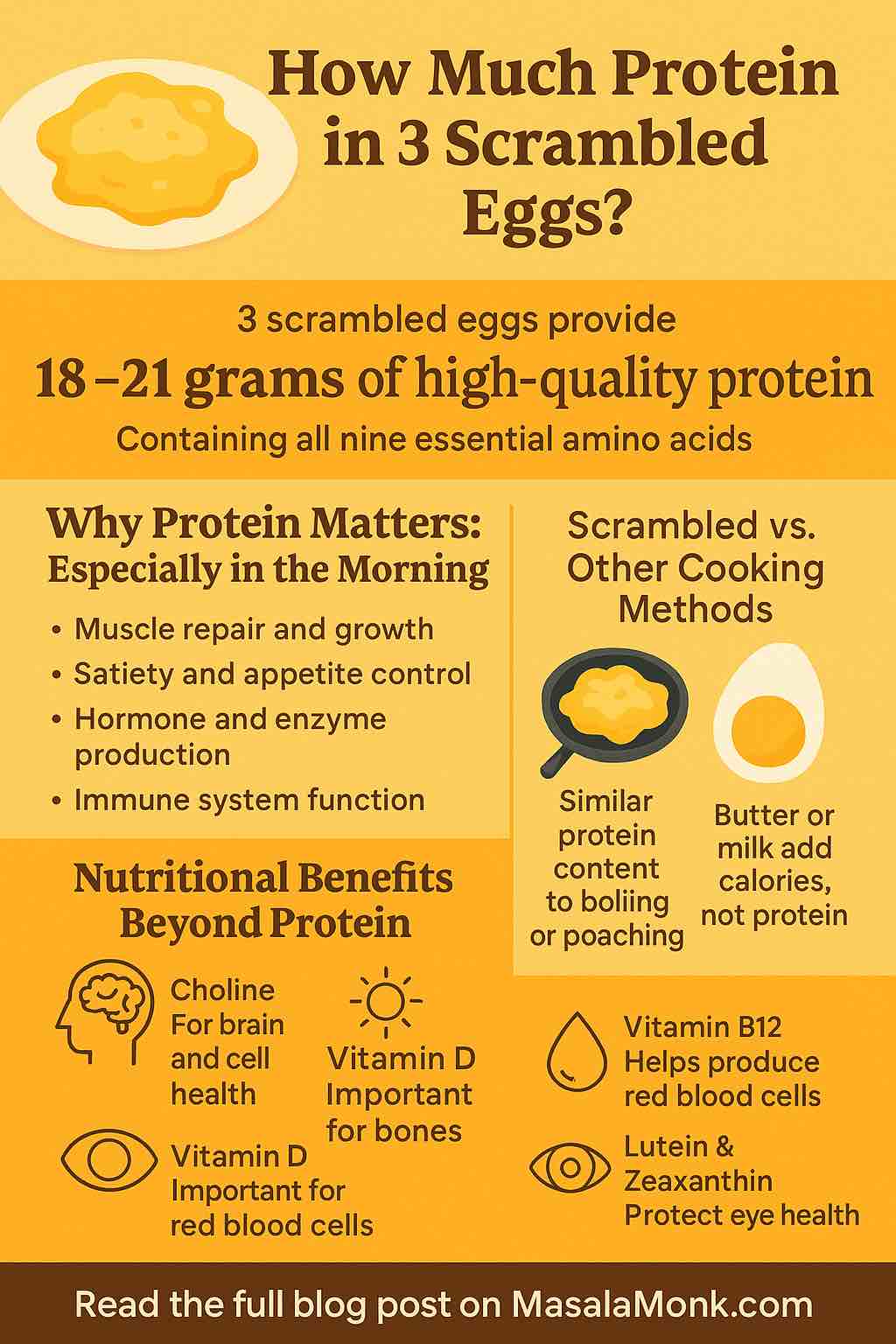
How Much Protein in 3 Scrambled Eggs?

Whether you’re a fitness enthusiast, a busy parent looking for a quick breakfast, or someone simply trying to make healthier food choices, eggs are often one of the first foods to come to mind. But how much protein is really in three scrambled eggs? More importantly, what nutritional benefits do they offer beyond just protein? Let’s dive into the science, the numbers, and the reasons why this humble dish is a powerhouse on your plate.


🥚 How Much Protein in 3 Scrambled Eggs?

On average, one large scrambled egg contains about 6–7 grams of protein, depending on how it’s prepared. When you scramble three large eggs, you’re looking at:

  • 18 to 21 grams of high-quality protein

This makes it a perfect serving size for breakfast or even a post-workout meal. The protein in eggs contains all nine essential amino acids, making it a complete protein source — rare in the world of whole foods.

Here’s a quick breakdown per large scrambled egg:

NutrientAmount
Calories90–100
Protein6–7 g
Fat7–8 g
Carbs<1 g

(Values vary depending on whether you use oil, butter, or milk.)


🧬 Why Protein Matters: Especially in the Morning

Protein isn’t just about building muscle. It’s an essential macronutrient that supports:

  • Muscle repair and growth
  • Satiety and appetite control
  • Hormone and enzyme production
  • Immune system function

Starting your day with 3 scrambled eggs means you’re fueling your body with a solid protein base, helping stabilize blood sugar levels and reduce mid-morning cravings.


🍳 Scrambled vs. Other Cooking Methods

You might wonder: does scrambling affect protein content compared to boiling or poaching?

Short answer: Not significantly.

The difference lies more in the added ingredients. Scrambling with butter or milk increases calories and fat, but protein remains nearly unchanged.

Cooking MethodApprox. Protein (per 3 eggs)Additional Calories
Scrambled (plain)18–21g~270
Scrambled w/ milk & butter18–21g~300–350
Boiled18g~210
Fried18g~250–300

🥦 What to Eat with Your Scrambled Eggs

To turn this into a balanced meal, pair your scrambled eggs with:

  • Whole-grain toast for complex carbs and fiber
  • Avocado slices for healthy fats
  • Spinach or kale for vitamins and minerals
  • Fruit like berries for antioxidants and a touch of sweetness

These combinations amplify the benefits, keeping you full and energized for hours.


🥚 Nutritional Benefits Beyond Protein

Eggs are one of the most nutrient-dense foods on the planet. Here’s what else you get from three scrambled eggs:

  • Choline – Vital for brain function and cell health
  • Vitamin D – Important for bone health and immunity
  • Vitamin B12 – Supports nerve function and red blood cell production
  • Selenium – A powerful antioxidant
  • Lutein & Zeaxanthin – Eye-protective antioxidants

Contrary to outdated beliefs, moderate egg consumption does not increase heart disease risk in healthy individuals. In fact, eggs can raise HDL (“good”) cholesterol levels.


🏋️‍♂️ Who Can Benefit Most from 3 Scrambled Eggs a Day?

  • Athletes & gym-goers needing fast-digesting protein
  • Busy professionals who want a no-fuss, nutrient-packed breakfast
  • Older adults to help maintain muscle mass
  • Children & teens during growth years
  • Low-carb or keto dieters seeking high-protein, low-carb options

⚠️ Things to Keep in Mind

  • Portion control: While eggs are nutritious, balance them with other food groups.
  • Allergies: Eggs are a common allergen in children (most outgrow it).
  • Preparation method: Avoid adding too much butter or processed cheese, which can tip the scale on saturated fat.

🥚 Final Thoughts: Why 3 Scrambled Eggs Might Be the Smartest Breakfast Choice You Can Make

In just one pan and under 10 minutes, you can whip up a breakfast that’s rich in protein, loaded with nutrients, and easily tailored to your taste and dietary needs.

Whether you’re trying to build muscle, lose weight, or just eat smarter, 3 scrambled eggs offer a nearly perfect nutritional foundation to start your day strong.


Have a favorite way to scramble your eggs? Share it in the comments below! And if you’re hungry for more nutritional deep-dives, don’t forget to subscribe for weekly health tips and science-backed food facts.

FAQs

  1. How much protein is in 3 scrambled eggs?
    Three large scrambled eggs contain approximately 18–21 grams of protein, depending on whether ingredients like milk or cheese are added.
  2. Does adding milk or cheese change the protein content?
    Yes, slightly. Milk adds a small amount of protein (1–2g), while cheese can add 5–7g or more, depending on the type and quantity used.
  3. Are scrambled eggs good for weight loss?
    Yes. Scrambled eggs are high in protein and low in carbs, helping promote satiety and reduce snacking, which supports weight loss when part of a balanced diet.
  4. Are there any carbs in scrambled eggs?
    Scrambled eggs have less than 1 gram of carbohydrates per egg. Additions like milk or toast may increase the carb count.
  5. Do scrambled eggs have more calories than boiled eggs?
    Yes, typically. Scrambled eggs are often cooked with butter, oil, or milk, which can increase calories by 20–50 per egg.
  6. Is the protein in eggs high quality?
    Absolutely. Eggs provide complete protein, meaning they contain all nine essential amino acids needed for muscle repair and growth.
  7. Can I eat 3 scrambled eggs every day?
    For most healthy individuals, yes. Current research supports moderate egg consumption as part of a nutritious diet. Consult your doctor if you have high cholesterol or other health concerns.
  8. Are egg whites healthier than whole eggs?
    Egg whites are lower in calories and fat but lack key nutrients like choline, vitamin D, and healthy fats found in the yolk. Whole eggs offer better overall nutrition.
  9. What are the best sides to eat with scrambled eggs?
    Great options include whole-grain toast, avocado, sautéed spinach, fresh fruit, or a sprinkle of cheese for added protein and taste.
  10. Can I meal-prep scrambled eggs in advance?
    Yes, but they’re best fresh. If prepping, store in an airtight container in the fridge for up to 3 days. Reheat gently to maintain texture.
Posted on 4 Comments

Pineapple Juice for High Blood Pressure: 5 Important Insights 🌟

Pineapple Juice for High Blood Pressure: 5 Important Insights

High blood pressure, or hypertension, affects over a billion people globally—and it’s not going away anytime soon. With the rise of natural wellness remedies, many are turning to everyday foods for solutions. One question comes up time and again: “Is pineapple juice good for high blood pressure?”

Let’s break down what science, nutrition, and experts say about this tropical drink’s role in cardiovascular health—without the myths, hype, or health guru nonsense.


1. Potassium Power: The Real Star in Pineapple Juice

Potassium is one of the most crucial minerals when it comes to managing high blood pressure. Why? Because it helps relax blood vessel walls and counters the effects of sodium—the primary villain in hypertension.

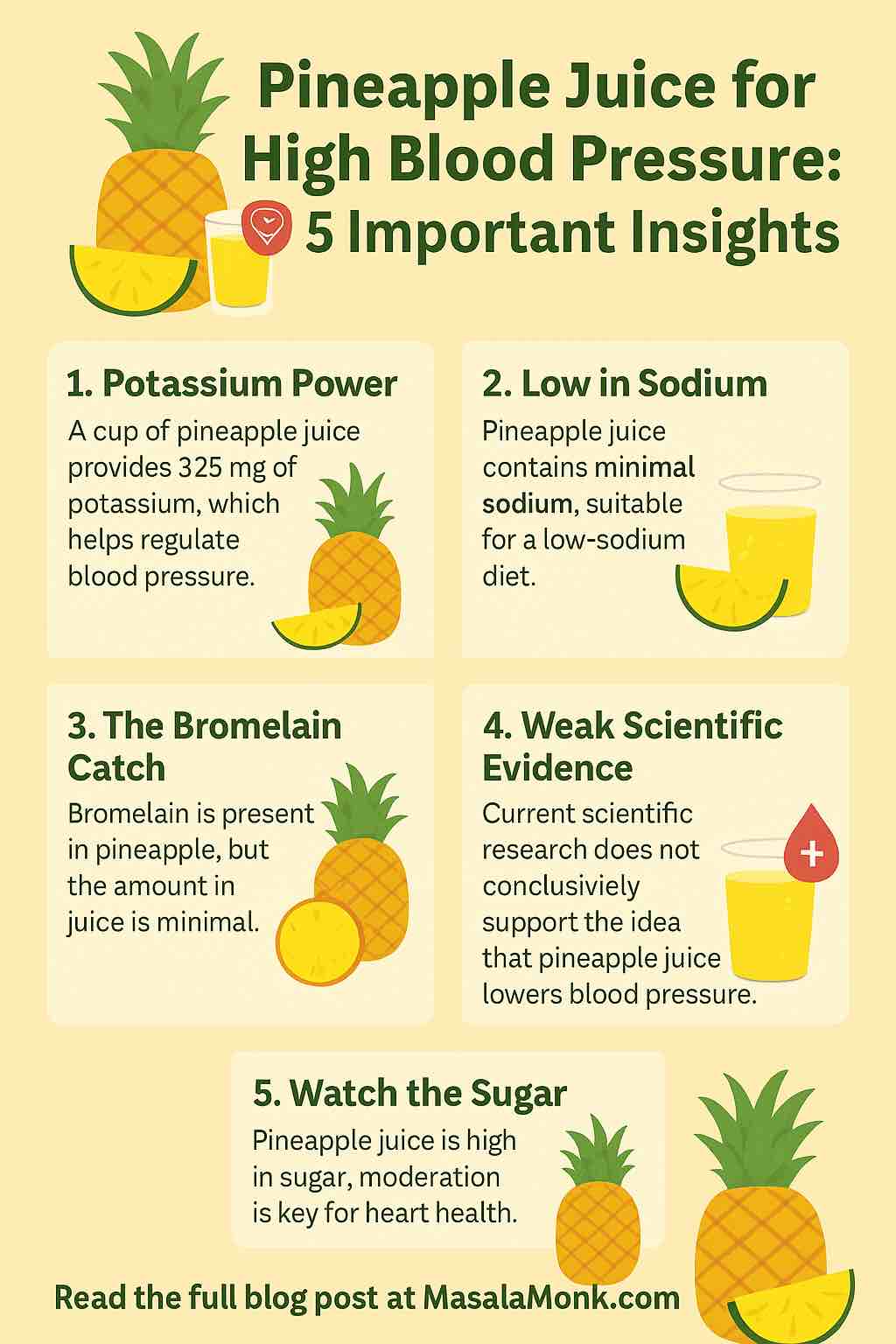
Pineapple juice contains a moderate amount of potassium. A cup of unsweetened juice offers roughly 325 milligrams, which contributes about 7% of your daily recommended intake.

What this means in practice:

  • Potassium encourages smoother blood flow.
  • It helps the kidneys flush out excess sodium, lowering overall pressure in the arteries.
  • It supports heart rhythm regulation.

However, pineapple juice isn’t as potassium-rich as bananas, sweet potatoes, or avocados. If your goal is to manage high blood pressure through potassium, pineapple juice can support your intake, but it shouldn’t be your only source.


2. Low Sodium Content Makes It DASH-Diet Friendly

The DASH (Dietary Approaches to Stop Hypertension) diet is the gold standard for managing blood pressure. It emphasizes:

  • Fruits and vegetables
  • Whole grains
  • Low sodium intake
  • Foods rich in potassium, magnesium, and fiber

Pineapple juice—specifically unsweetened, 100% juice—checks several boxes here:

  • It contains minimal sodium (under 5 mg per serving).
  • It’s free of saturated fats and cholesterol.
  • It offers natural hydration and antioxidants that can help reduce oxidative stress on blood vessels.

Still, it’s critical to read the label. Many store-bought pineapple juices are sweetened or blended with syrups, which can spike blood sugar and negate the benefits. Choose pure juice, or better yet, juice fresh pineapples at home for better control.


3. The Bromelain Debate: Promising, but Limited

Bromelain is an enzyme found in pineapple—particularly in the core—that’s received attention for its anti-inflammatory and anti-coagulant properties.

In lab settings and animal studies, bromelain has been shown to:

  • Reduce inflammation markers
  • Improve circulation
  • Prevent excessive platelet aggregation (i.e., thinning the blood slightly)

Sounds ideal for heart health, right?

Here’s the catch: Commercial pineapple juice contains very little bromelain. The enzyme is heat-sensitive and mostly found in the core and stem, which are typically discarded during juicing and pasteurization.

If you’re looking to benefit from bromelain, you’d need to:

  • Eat the pineapple core (fibrous but possible)
  • Take bromelain supplements (speak to a doctor first)

In short, don’t count on pineapple juice for a bromelain boost. Its presence is minor and not therapeutic in most bottled varieties.


4. Scientific Research: Hopeful Theories, But Weak Evidence

A lot of the hype around pineapple juice lowering blood pressure comes from anecdotal experiences and social media claims. But what does actual clinical research say?

  • A study from the Philippine Council for Health Research and Development tested pineapple juice on adults with hypertension. The result? No significant change in systolic or diastolic pressure compared to the control group.
  • Cardiologists from the Philippine Society of Hypertension have gone on record to say: “There’s no clinical evidence supporting pineapple juice as an effective intervention for high blood pressure.

This doesn’t mean it’s harmful—it just means it’s not a treatment. The nutrients in pineapple juice can support a heart-healthy diet, but the idea that it acts as a natural medication is an overreach.

Let’s be clear: drinking pineapple juice is not going to lower your blood pressure overnight. Nor will it replace your prescribed medication, exercise, stress reduction, or other doctor-recommended interventions.


5. Sugar Content: The Hidden Factor No One Talks About

One major issue with fruit juices—pineapple included—is sugar. Even natural fruit sugar (fructose) can spike blood glucose levels, which is increasingly being linked to vascular damage and higher blood pressure over time.

  • One cup of pineapple juice can contain up to 25 grams of sugar.
  • That’s more sugar than a glazed donut—and it’s absorbed faster in liquid form.

For people with insulin resistance, diabetes, or metabolic syndrome, this can worsen underlying conditions that contribute to hypertension. And for everyone else, frequent consumption of sugary beverages—yes, even natural ones—can increase calorie intake and body weight, both of which raise blood pressure risk over time.

If you’re going to include pineapple juice in your routine:

  • Stick to half a cup to 1 cup, a few times a week.
  • Make sure it’s 100% juice with no added sugar.
  • Drink it with meals to slow down sugar absorption.

Final Thoughts: Is Pineapple Juice Good for High Blood Pressure?

Let’s summarize this without the fluff:

  • Yes, pineapple juice contains potassium and is low in sodium—two wins for blood pressure.
  • No, it does not contain enough bromelain or clinical support to be considered a natural treatment.
  • Yes, it can be part of a balanced, DASH-aligned diet when consumed in moderation.
  • No, it should not be relied on to replace medication or major lifestyle changes.
  • Yes, overconsumption—especially sweetened versions—can worsen your condition due to sugar.

Bottom Line: Pineapple juice is a supportive player, not a star in blood pressure management.

Include it as one of many healthy habits: regular physical activity, better sleep, weight control, less salt, and more whole foods.

If you’re managing hypertension and enjoy the occasional glass of pineapple juice—go ahead. Just don’t fall for the myth that it’s a cure in a cup.