Posted on Leave a comment

5 Vitamin-Boosting Pregnancy Smoothies: Berries and Coconut Milk for Antioxidant Power

Vitamin-Boosting Pregnancy Smoothies: Berries and Coconut Milk

Pregnancy is a magical journey, but let’s be honest—it comes with its own set of challenges: fatigue, cravings, nausea, and the constant worry about getting all the right nutrients for you and your growing baby. That’s where pregnancy smoothies can be a true game changer!

If you’re looking for a delicious, refreshing, and actually beneficial way to nourish your body, smoothies starring berries and coconut milk are your new best friends. Here’s why, plus five recipes, science-backed benefits, and real user feedback—so you can sip with confidence (and maybe a little joy, too!).


Why Berries & Coconut Milk? The Science and the Practicality

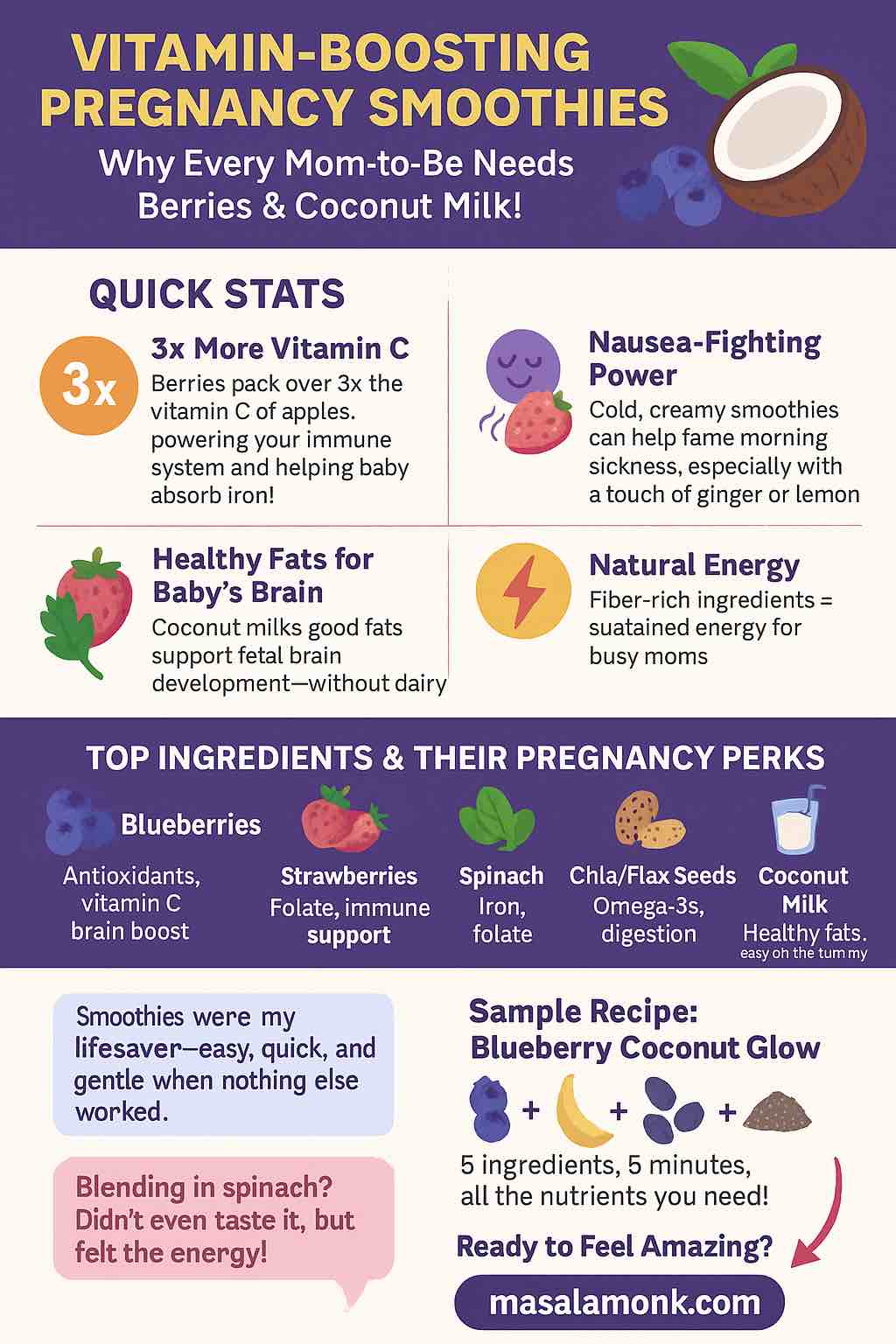
Berries: Tiny Powerhouses

Berries—blueberries, raspberries, strawberries, blackberries—aren’t just tasty. They’re loaded with:

  • Vitamin C: Immune support, better iron absorption, cell repair.
  • Antioxidants: Protect baby’s growing cells from oxidative stress.
  • Folate: Vital for your baby’s brain and spinal cord development.
  • Fiber: Natural relief for pregnancy constipation and supports gut health.

Coconut Milk: Creamy Goodness

Coconut milk is rich, dairy-free, and packed with:

  • Healthy Fats: Essential for your baby’s developing brain and nervous system.
  • Iron, Magnesium, Potassium: Key minerals for muscle and nerve function.
  • Gentle on the Tummy: Often easier to digest than dairy, especially if lactose makes you queasy.

Real-Life Feedback: What Pregnant Women Are Saying

  • “Berries and coconut milk are the only things I craved in my first trimester. Add some banana or spinach, and it’s the only way I could sneak in veggies.”
  • “Smoothies got me through days when the thought of eating solids was a no-go. Adding flax seeds made me feel full, and the fiber helped with digestion.”
  • “I loved blending frozen berries with coconut milk and protein powder for a quick breakfast—kept me full and gave me energy for my walks.”

(From Reddit threads, blog comments, and nutrition forums.)


5 Pregnancy-Perfect Berry & Coconut Milk Smoothie Recipes

Ready to blend? These recipes are crafted to deliver major nutrients, satisfy cravings, and work with whatever your stomach (and schedule) can handle. Each one comes with bonus tips for customization.


1. Blueberry-Coconut Glow Smoothie

Ingredients:

  • 1 cup blueberries (fresh or frozen)
  • 1 cup coconut milk
  • 1 small banana
  • 1 tbsp chia seeds
  • ½ tsp vanilla extract

Why it’s great:
Blueberries are antioxidant superstars. Chia seeds add plant-based omega-3s for baby’s brain. Banana gives natural sweetness and potassium for leg cramp relief.

User tip: If you have morning sickness, freeze the banana first—it makes the smoothie extra cold and soothing.


2. Strawberry Mango Sunshine Smoothie

Ingredients:

  • 1 cup strawberries
  • ½ cup mango chunks
  • 1 cup coconut milk
  • ½ cup Greek yogurt (optional; use dairy-free for vegan)
  • 1 tbsp ground flaxseed

Why it’s great:
Strawberries and mango are loaded with vitamin C and folate. Greek yogurt gives protein for lasting energy.

Pro tip: Don’t like yogurt? Swap for avocado—extra creamy, extra healthy fats.


3. Raspberry Beet Antioxidant Power Smoothie

Ingredients:

  • 1 cup raspberries
  • ½ small cooked beet (peeled)
  • 1 cup coconut milk
  • 1 small apple (sliced)
  • Squeeze of lemon

Why it’s great:
Beets are packed with folate and iron, helping prevent anemia. Lemon boosts vitamin C and brightens the flavor.

Feedback from users: “Never thought I’d crave beets, but blended with berries and apple, you can’t even taste them—just vibrant color and sweet-tart flavor!”


4. Mixed Berry Spinach Boost

Ingredients:

  • 1 cup mixed berries
  • 1 handful baby spinach
  • 1 cup coconut milk
  • 1 tbsp hemp seeds
  • 1 tsp honey (optional)

Why it’s great:
Spinach sneaks in extra iron and folate. Hemp seeds add protein and omega-3s.

Pregnancy tip: Blend spinach and milk first before adding fruit—no leafy bits, super smooth!


5. Blackberry Oatmeal Breakfast Smoothie

Ingredients:

  • 1 cup blackberries
  • ¼ cup rolled oats (soaked for 10 minutes)
  • 1 cup coconut milk
  • 1 tbsp almond butter
  • ½ tsp cinnamon

Why it’s great:
Oats provide fiber and B vitamins. Almond butter keeps you satisfied, while cinnamon helps balance blood sugar.

User favorite: “This one kept me full through my morning meetings, and my midwife loved the fiber content!”


How to Make Your Smoothie Work for You

Every pregnancy is different. Here’s how to personalize:

  • Nausea: Keep it cold. Freeze fruits. Add a little ginger.
  • Constipation: Up the fiber—flaxseed, chia, soaked oats.
  • Protein boost: Add Greek yogurt, protein powder (pregnancy-safe), or nut butters.
  • Iron intake: Add spinach or cooked beets, and pair with vitamin C fruits.
  • Gestational diabetes: Use more greens, lower-glycemic fruits (berries over bananas/mango), add avocado.

Ingredient Swaps & Pro Tips

If you want to…Try this
Go dairy-freeUse coconut or almond yogurt
Add plant-based proteinTry pea, hemp, or soy protein powder
Avoid bananaUse mango, pear, or extra berries
Make it more fillingAdd soaked oats or avocado
Sweeten naturallyUse dates or a drizzle of honey (optional)

Nutrition & Safety Notes

  • Choose pasteurized dairy/yogurt for safety.
  • Wash all produce thoroughly.
  • Limit added sweeteners—fruits often provide enough.
  • Check with your healthcare provider if adding protein powders or supplements.

Real Moms’ Pro Tips

  • “If you’re short on time, frozen fruit is your best friend—no washing or chopping needed.”
  • “A little lemon or ginger goes a long way when you’re fighting nausea.”
  • “Invest in a powerful blender. Trust me, it makes a difference with greens and seeds!”
  • “Double your batch and freeze smoothie ice pops for summer cravings!”

Final Thoughts: Blend, Sip, Enjoy (And Grow!)

Pregnancy is about nourishing yourself and your baby—without sacrificing flavor or sanity. With these berry and coconut milk smoothie recipes, you can get a rainbow of vitamins, antioxidants, healthy fats, and fiber in every glass. Play around, try new combos, and find what works for you. Every sip is a small act of self-care for you and your little one.

Got a favorite combo or pro tip? Share it in the comments! Happy blending, mama. 🫐🥥💪

FAQs: Vitamin-Boosting Pregnancy Smoothies

1. Can I use frozen berries in pregnancy smoothies?
Absolutely. Frozen berries are just as nutritious as fresh ones, and often even more convenient. They help keep your smoothie cold and thick, plus they’re already washed and prepped—just be sure they’re from a trusted source.


2. Is coconut milk safe for pregnancy smoothies?
Yes, coconut milk is safe and provides healthy fats that are important for your baby’s brain development. Choose unsweetened, BPA-free canned or carton coconut milk, and check the ingredients for additives if you have sensitivities.


3. How can I add more protein to my smoothie?
Boost protein with Greek yogurt, cottage cheese, nut butters, chia seeds, hemp seeds, tofu, or pregnancy-safe protein powders. Dairy-free yogurts made from coconut, almond, or soy can also add protein.


4. What if I have gestational diabetes—can I still have fruit smoothies?
Yes, but use more low-glycemic fruits like berries, and balance your smoothie with protein, fiber (chia/flaxseed, oats), and healthy fats (nut butters, seeds) to help stabilize blood sugar. Limit high-sugar fruits like bananas or mangoes.


5. Are there any smoothie ingredients I should avoid during pregnancy?
Avoid unpasteurized dairy products, raw eggs, certain herbal supplements, excess added sugars, and protein powders not verified as pregnancy-safe. Always wash produce thoroughly and check with your healthcare provider about any new supplements.


6. Can I prep pregnancy smoothies in advance?
Yes! You can pre-portion ingredients in freezer bags for quick blending. Prepared smoothies last in the fridge up to 24 hours—shake or stir before drinking. For longer storage, freeze in ice cube trays and blend as needed.


7. How can I make smoothies more filling?
Add fiber-rich ingredients like oats, chia seeds, avocado, nut butters, and Greek yogurt. These help with satiety and sustained energy, plus support digestion during pregnancy.


8. What’s the best way to include leafy greens without tasting them?
Blend greens like spinach or kale with your liquid first, before adding other ingredients. Use a handful at a time—berries and banana mask the flavor well. Baby spinach is mild and virtually undetectable in most smoothies.


9. How do I reduce morning sickness with smoothies?
Use cold, simple blends with ginger or lemon, and avoid strong-smelling ingredients. Frozen fruits and a splash of citrus can make smoothies more palatable during nausea. Sip slowly and stick with small servings if your stomach is sensitive.


10. Is it okay to drink smoothies every day during pregnancy?
Yes, as long as you vary ingredients and balance your diet with other whole foods. Smoothies are a great way to get vitamins, minerals, and fluids, but aim for variety to cover all nutrient needs. Always consult your doctor with any dietary concerns.

Posted on Leave a comment

is Quinoa safe for Pregnancy?

IS QUINOA SAFE DURING PREGNANCY?

Pregnancy is a season of anticipation, joy, and—let’s be honest—constant curiosity about food. “Is this safe?” “Will this help my baby grow?” “What if I crave something healthy… and also a little adventurous?” Enter quinoa: a superfood that’s popped up in salads, bowls, and baby food aisles worldwide. But should it have a place on your pregnancy menu?

If you’re expecting, here’s a comprehensive, science-backed, and totally practical guide to eating quinoa during pregnancy.


What Is Quinoa, Anyway?

Quinoa (pronounced KEEN-wah) isn’t actually a grain—it’s a seed from the plant Chenopodium quinoa. Native to South America and cultivated for thousands of years, quinoa is celebrated for its:

  • Complete protein profile (all nine essential amino acids)
  • Rich supply of fiber, folate, magnesium, iron, and more
  • Naturally gluten-free status

But that’s not the whole story. Let’s unpack what matters most when you’re eating for two.


Is Quinoa Safe During Pregnancy? (Short Answer: YES, with Smart Prep)

YES—quinoa is safe to eat during pregnancy when it’s rinsed, cooked, and eaten as part of a balanced diet.

Here’s Why:

1. Nutritional Powerhouse

Pregnancy increases your need for protein, iron, folate, and other nutrients. Quinoa checks many of these boxes:

  • Protein: Supports fetal tissue growth.
  • Folate: Helps prevent neural tube defects.
  • Iron: Fights anemia and supports increased blood volume.
  • Magnesium, Zinc, Phosphorus: Support healthy bones, immune system, and more.
  • Fiber: Can help ease pregnancy constipation.

2. Complete Protein for Plant-Based Eaters

Unlike most plant foods, quinoa is a complete protein—making it ideal for vegetarians, vegans, or anyone limiting animal products.

3. Gluten-Free Goodness

For those with celiac disease or gluten intolerance, quinoa is a nutritious and safe choice.


The Practical Side: Precautions and Real-World Concerns

1. Rinse, Rinse, Rinse!

Quinoa seeds have a coating called saponin, which can taste bitter and sometimes cause digestive discomfort (think: bloating, cramping). Most quinoa sold in stores is pre-rinsed, but it’s still wise to rinse it yourself until the water runs clear.

2. Cook Thoroughly

Never eat raw or undercooked quinoa. Cooking not only makes it easier to digest but also further reduces antinutrients like saponins and phytic acid.

3. Watch for Rare Allergies

Quinoa allergies are rare but possible. If you notice hives, itching, digestive upset, or any unusual symptoms after eating, stop and consult your healthcare provider.

4. Moderation Is Key

No single food should crowd out a diverse diet. Most guidelines suggest 2–4 servings (about ½ cup cooked per serving) per week as a healthy baseline.


Blood Sugar & Digestion: User Stories You Should Know

Gestational Diabetes? Test Quinoa First!

Some moms-to-be with gestational diabetes found that quinoa spiked their blood sugar more than expected—even more than some white breads! Everyone is different, so test your blood sugar after your first serving to see how your body responds.

Real Quote:
“Quinoa made my blood sugar shoot up to 170. I thought it was a low-GI superfood. Test, test, test!”
— Reddit user, r/GestationalDiabetes

Digestive Sensitivity? Start Small

Most people digest quinoa easily, but a few experience bloating, cramping, or “brain fog.” If you’re new to quinoa, start with small servings, chew well, and pair it with gentle foods (like avocado or roasted veggies).

Real Quote:
“I love quinoa for breakfast with eggs and avocado—keeps me full and regular!”
— r/BabyBumps user


International Views: Why Some Countries Caution

Some European sources, like in Germany, advise caution with quinoa during pregnancy due to lingering concerns about saponin. In North America, quinoa is generally considered safe, especially when rinsed and cooked. Always check your country’s dietary guidelines and trust your healthcare team.


Maximizing Benefits: How to Prepare Quinoa for Pregnancy

  1. Rinse under running water in a fine mesh sieve.
  2. (Optional) Soak for 30 minutes to further reduce antinutrients.
  3. Boil with double the amount of water (e.g., 1 cup quinoa + 2 cups water). Bring to a boil, cover, and simmer for 15 minutes, or until all water is absorbed and quinoa looks translucent.
  4. Fluff with a fork.
  5. Combine with vitamin C–rich foods (like bell peppers or citrus) to boost iron absorption.

Quinoa Meal Ideas for Pregnancy

  • Quinoa Power Bowls: Toss with roasted sweet potatoes, spinach, chickpeas, and tahini dressing.
  • Breakfast Quinoa: Simmer with cinnamon and almond milk, top with berries and chopped walnuts.
  • Quinoa Stuffed Peppers: Mix cooked quinoa with ground turkey or lentils, tomatoes, and herbs—bake until bubbling.
  • Salmon & Quinoa Salad: Pair cooked quinoa with baked salmon, arugula, and citrus vinaigrette for an iron-rich meal.

Frequently Asked Questions

Can quinoa cause miscarriage?

No. There is no scientific evidence linking properly prepared quinoa to miscarriage. Concerns about saponins are relevant only in high, unwashed, or raw quantities—never in cooked, rinsed portions.

Is it safe in the first trimester?

Yes! In fact, folate and protein from quinoa are especially valuable in early pregnancy.

Can I eat quinoa if I have celiac disease?

Absolutely. Quinoa is naturally gluten-free.


Key Takeaways

  • Quinoa is safe and nutritious during pregnancy—with proper rinsing, cooking, and in moderation.
  • Monitor your response if you have gestational diabetes or sensitive digestion.
  • Allergies are rare but possible—listen to your body.
  • Pair quinoa with diverse foods for a well-rounded, satisfying pregnancy diet.

Your Pregnancy, Your Plate

Pregnancy isn’t about a single superfood—it’s about variety, balance, and making choices that make you feel strong and supported. Quinoa can be part of that, whether it’s in a savory bowl or a sweet breakfast.

Have you tried quinoa during pregnancy? What was your experience? Share your tips or questions in the comments below!


References:

FAQs: Quinoa and Pregnancy

1. Is quinoa safe to eat during all trimesters of pregnancy?
Yes. Quinoa is safe and beneficial throughout pregnancy, including the first trimester when folate and protein are especially important for early fetal development.


2. How much quinoa is safe to eat during pregnancy?
Most nutritionists recommend 2–4 servings per week (about ½ cup cooked per serving), as part of a varied, balanced diet.


3. Should quinoa be rinsed before cooking? Why?
Yes! Rinsing removes saponins, a natural coating that can cause bitterness and, for some people, digestive discomfort.


4. Can quinoa cause high blood sugar or spikes if I have gestational diabetes?
While quinoa is lower on the glycemic index than most grains, some people with gestational diabetes have reported unexpected blood sugar spikes. It’s best to check your response by testing blood sugar after your first meal containing quinoa.


5. Are there any allergy concerns with quinoa?
Quinoa allergies are rare, but can occur. Symptoms include hives, swelling, digestive upset, or difficulty breathing. Discontinue and consult your doctor if you experience these.


6. Can I eat quinoa if I have celiac disease or gluten intolerance?
Yes! Quinoa is naturally gluten-free and considered safe for people with celiac disease or gluten sensitivity.


7. Does cooking quinoa remove all antinutrients like saponins and phytic acid?
Cooking, especially after thorough rinsing and optional soaking, removes most saponins and significantly reduces antinutrients, making quinoa safe and nutritious.


8. Are there any foods I should avoid mixing with quinoa during pregnancy?
No foods are strictly off-limits with quinoa, but pairing it with vitamin C–rich foods (like bell peppers or citrus) can boost iron absorption. Avoid excessive salt or fatty toppings if monitoring blood pressure or weight.


9. What are easy ways to include quinoa in my pregnancy diet?
Try quinoa in salads, as a base for power bowls, mixed into soups, as a breakfast porridge with fruit and nuts, or stuffed in vegetables like bell peppers.


10. Is quinoa safe for pregnant vegetarians or vegans?
Absolutely! Quinoa is an excellent complete protein and iron source for plant-based diets. Pair with a variety of plant foods and supplement vitamin B12 as needed.


Posted on 4 Comments

Vata Dosha: Characteristics and Balancing Practices

VATA DOSHA

In today’s world of fast food, fast thoughts, and faster burnout, it’s no wonder that Vata dosha is often the first to fall out of balance. Whether you’re feeling scattered, anxious, bloated, or sleepless—chances are, Vata’s whisper has turned into a storm. But before you reach for another supplement or trendy detox, let’s take a deep, nourishing dive into what Vata really is—and how to bring it back into balance with grounded, time-tested (and practical) wisdom.


🧬 What is Vata Dosha?

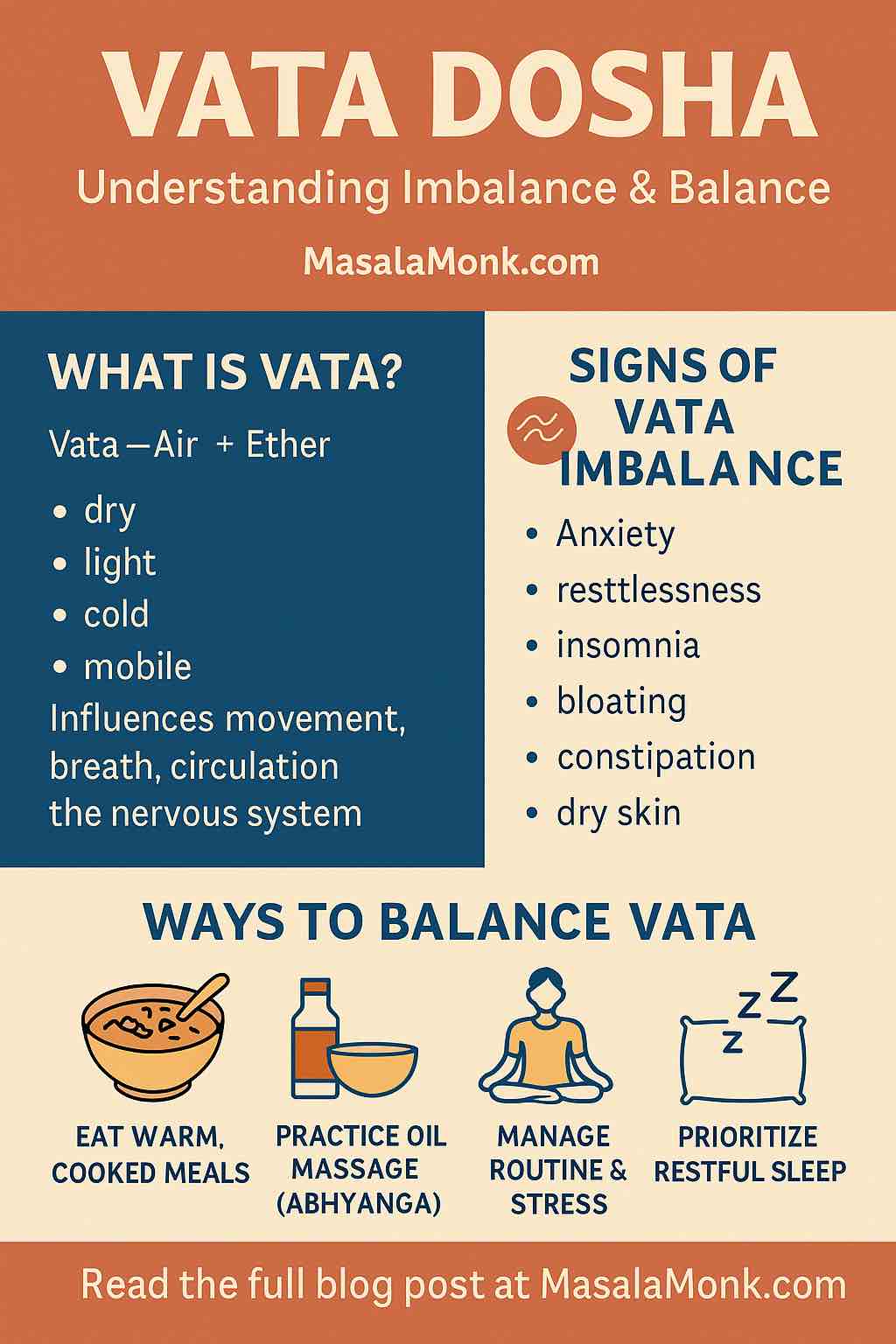
In the Ayurvedic tradition, Vata is one of the three core doshas or energetic principles governing the body and mind. Composed of Air (Vayu) and Ether (Akasha), Vata is movement itself. It’s the force behind blinking, breathing, nerve impulses, creativity, speech, elimination, and even inspiration.

Vata in a Nutshell:

CategoryDescription
ElementsAir + Ether
Qualities (Gunas)Dry, light, cold, rough, mobile, subtle
Primary SiteColon (large intestine), ears, skin, bones
Mental TraitsQuick, curious, imaginative, anxious
Physical TraitsLean build, cold hands/feet, dry skin, restless

🔍 Are You Vata-Dominant?

You’re likely Vata-predominant if you:

  • Have bursts of energy followed by crashes
  • Struggle with cold, dry weather
  • Experience gas, bloating, or constipation
  • Find it hard to focus or finish tasks
  • Get anxious or overstimulated easily
  • Have irregular appetite and sleep patterns

You might also be a mix (Vata-Pitta or Vata-Kapha), but even then, Vata is the most sensitive dosha—the one that goes off-track first and fastest.


🚨 Signs Your Vata is Out of Balance

When aggravated, Vata can manifest as:

Physical

  • Constipation
  • Dry skin, cracked lips
  • Joint pain or stiffness
  • Insomnia or light, fragmented sleep
  • Cold intolerance

Mental

  • Anxiety or panic
  • Racing thoughts
  • Inability to focus
  • Restlessness or fidgeting
  • Creative blocks or mental fatigue

The causes? Too much movement, overstimulation, travel, cold weather, erratic schedules, fasting, intense exercise, or even too much screen time.


✅ The Vata-Balancing Principle: Opposites Heal

Because Vata is dry, light, cold, irregular, mobile, and rough, we heal it using qualities that are:

Warm, moist, heavy, oily, stable, and smooth.

Let’s turn that principle into practical, doable routines.


🥣 Daily Practices to Balance Vata

1. 🌄 Morning Grounding Routine

  • Wake up around 6:30–7:00 AM (no jarring alarms).
  • Apply warm sesame oil to your body (Abhyanga). Leave it on for 20 minutes, then shower. This calms nerves and soothes dryness.
  • Drink a cup of warm water with fennel or ginger to stimulate digestion gently.
  • Practice 5–10 minutes of alternate nostril breathing (Nadi Shodhana) or humming breath (Bhramari).

“I never thought 10 minutes of breathing could change my day—but it does. I feel calmer, slower, more here.” – Reddit user


2. 🥘 Vata-Friendly Eating

Focus OnAvoid
Warm, cooked mealsRaw salads, dry snacks
Root veggies & squashesCold or icy drinks
Healthy fats (ghee, avocado)Excess caffeine or carbonated drinks
Soft grains (oats, rice)Puffed, crunchy, or light foods
Mild spices (ginger, cinnamon, fennel)Very spicy or astringent foods

Simple Daily Meal Idea:

  • Breakfast: Warm oatmeal with stewed apples, cinnamon, cardamom, and ghee
  • Lunch: Rice + moong dal khichdi + ghee + sautéed carrots
  • Dinner: Sweet potato soup + spiced buttermilk + soft roti

Pro Tip: Eat at consistent times, and never on the go. Sit, chew, breathe.


3. 🧘 Gentle Movement Over Intensity

Vata types often overdo exercise, leading to burnout or injury. Choose:

  • Yin or restorative yoga
  • Walking in nature
  • Swimming (in warm water)
  • Light tai chi or qigong

Avoid: high-impact cardio, cold-weather running, overtraining.

“I swapped HIIT for yoga and grounding walks. My knees stopped hurting. I finally started sleeping.” – User from r/Ayurveda


4. 🌙 Sleep Like It’s Sacred

Vata types are prone to light, restless sleep. Tips to restore sleep naturally:

  • Go to bed before 10 PM
  • Use warm oils on feet and ears before sleep (e.g., Brahmi oil)
  • Play low-frequency binaural sounds or a calming mantra
  • Avoid screens for 60 minutes before bedtime
  • Chamomile or Ashwagandha tea in the evening helps calm racing minds

🌿 Vata-Pacifying Herbs (Safely Used)

These herbs can help nourish and calm Vata—but always consult an Ayurvedic practitioner before taking:

HerbAction
AshwagandhaAdaptogen, sleep and energy balance
BrahmiCalms nervous system, sharpens focus
ShatavariMoistens tissues, especially in women
LicoriceSoothing, anti-inflammatory
TriphalaSupports regular, gentle elimination

Choose teas, oils, or powders—avoid unregulated capsules.


🧭 A Sample Daily Vata-Balancing Schedule

TimePractice
6:30 AMWake gently, warm water, oil massage
7:00 AMLight yoga + breathwork (Nadi Shodhana)
8:00 AMWarm breakfast (oats, ghee, nuts)
12:30 PMMain meal (heaviest, cooked, grounding)
3:00 PMHerbal tea, 10 min walk, screen break
6:30 PMLight dinner (soup, dal, root veggies)
8:30 PMBrahmi oil to feet, no screens, candlelight
10:00 PMSleep

🌍 Real User Voices: What Works Best

From Reddit, YouTube, and wellness blogs, Vata-dominant users say:

  • “Warmth is everything.” – from food to lighting to emotions
  • “Abhyanga changed my relationship with my body.”
  • “Sleep was my weak spot. Cutting caffeine + regular meals fixed it.”
  • “I’m no longer trying to keep up. I’m choosing slowness—and it works.”

🧠 Modern Insights: What Science is Catching Up To

  • Vata imbalances correlate with nervous system dysregulation, anxiety, and IBS symptoms
  • Emerging studies link Vata Prakriti to specific genetic patterns
  • Warm oils (like sesame) have anti-inflammatory and nervous system calming effects
  • Ashwagandha and Brahmi are clinically proven to reduce anxiety and improve sleep

🎯 Final Thought: It’s Not About Perfection, It’s About Rhythm

Vata thrives on consistency, nourishment, and slowness. But you don’t have to overhaul your life to find balance. Even small shifts—like eating warm breakfasts, taking 10 minutes to breathe, or oiling your feet before bed—can restore your inner harmony.

You are not broken. You are sensitive—and sensitivity, when respected, becomes strength.

🔍 FAQs on Cayenne Pepper for Weight Loss

1. How much cayenne pepper should I take daily for weight loss?
Start with 1/8 to 1/4 teaspoon per meal and gradually increase to 1/2 teaspoon if tolerated. Most studies show benefits from 2–6 mg of capsaicin per meal, which translates to around 1/2 teaspoon of cayenne powder daily.

2. Can cayenne pepper burn belly fat specifically?
While cayenne may aid in reducing overall body fat through increased metabolism and fat oxidation, it doesn’t target belly fat directly. However, some studies observed small decreases in waist circumference.

3. What time of day is best to take cayenne pepper?
There’s no strict timing, but using cayenne before or during meals can enhance satiety and thermogenesis. Many people add it to their morning drink or main meals for consistent intake.

4. Can I take cayenne pepper on an empty stomach?
It’s best to avoid it on an empty stomach if you’re prone to heartburn or digestive issues. Try adding it to meals to reduce irritation.

5. Are cayenne pepper supplements effective?
Yes. Capsaicin or capsinoid supplements can deliver benefits without the heat. Look for standardized extracts offering at least 6 mg capsaicin per dose. They’re especially useful if you dislike spicy foods.

6. How long does it take to see results with cayenne pepper?
Expect subtle changes over 4–12 weeks. Benefits like reduced appetite may be noticeable sooner, but weight and fat loss accumulate gradually with consistent use and a calorie-controlled diet.

7. Will I build a tolerance to cayenne’s effects?
Yes, thermogenic responses may decrease over time. Cycling off for a few days a week or using varied intake methods (e.g. food + supplements) may help retain sensitivity.

8. Can cayenne pepper interact with medications?
Yes. It can affect blood pressure meds, anticoagulants (e.g., warfarin), diabetes meds, and others. Consult your doctor before regular use if you’re on medication.

9. Is it safe to take cayenne pepper daily?
Generally safe in culinary amounts. For supplements or high doses, consult your healthcare provider, especially if you have GI issues, are pregnant, or nursing.

10. What are the side effects of taking too much cayenne?
Common side effects include stomach irritation, acid reflux, sweating, and, in rare cases, allergic reactions. Start with low doses and observe how your body reacts.

Posted on 5 Comments

Pitta Dosha: Characteristics and Balancing Practices

PITTA DOSHA

In the ancient science of Ayurveda, our bodies are governed by three dynamic energies known as doshas: Vata, Pitta, and Kapha. Each person has a unique combination of these doshas — a personal blueprint known as their prakriti.

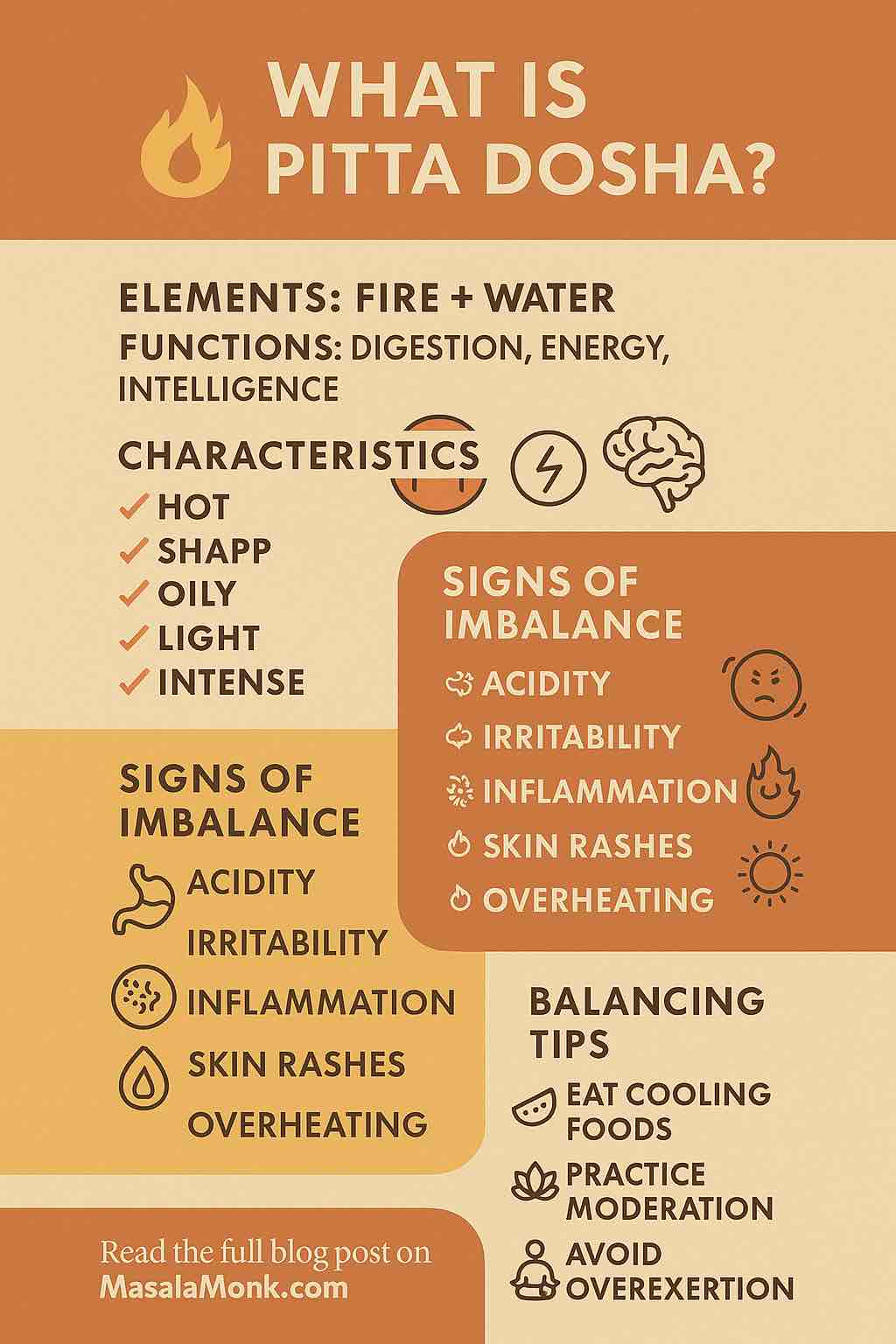
Pitta Dosha is composed of the elements fire and water. It governs:

  • Digestion and metabolism
  • Vision and clarity
  • Temperature regulation
  • Intelligence and ambition
  • Transformation on all levels — physical, mental, and emotional

In balance, Pitta gives us focus, drive, warmth, and leadership.
Out of balance, it brings irritability, inflammation, anger, and burnout.


👀 Is This You? Signs You’re Pitta-Dominant

If you’re unsure about your constitution, here are some typical Pitta-dominant traits:

PhysicalMental/EmotionalBehavioral
Medium, muscular buildHighly focused and intelligentGoal-oriented, likes structure
Warm body temperatureCan be impatient or irritableStrong opinions, perfectionistic
Prone to oily skin/acneCompetitive and intenseEasily overheated or agitated
Strong appetiteDriven, can burn outDifficulty relaxing or letting go

Does this sound familiar? You may be a Pitta type, or going through a Pitta aggravation phase — especially common in summer, stressful jobs, or high-performance lifestyles.


💥 What Happens When Pitta Is Imbalanced?

When Pitta flares, the inner fire becomes too intense, leading to:

  • Acid reflux, ulcers, excessive hunger
  • Inflammatory skin conditions (acne, eczema)
  • Red or burning eyes
  • Anger, judgment, resentment
  • Sleep disturbances
  • Overworking and inability to relax

Often, people don’t even realize these signs are symptoms of imbalance. You may just think “I have sensitive digestion,” or “I’m just a passionate person.” But Ayurveda shows us how to decode these signs — and cool the fire.


🌿 Practical Guide to Balancing Pitta

Here’s where it gets practical. Balancing Pitta is about cooling, calming, softening, and grounding.

✅ 1. Eat for Your Dosha: The Pitta Diet

Favor:
✔ Cooling, watery, sweet, bitter, and astringent foods
✔ Raw or lightly cooked vegetables
✔ Fruits like melon, pears, grapes, mangoes
✔ Coconut water, herbal teas (mint, fennel, rose)
✔ Cooling grains: basmati rice, oats, barley
✔ Legumes like mung beans, red lentils

Avoid:
🚫 Spicy, oily, sour, salty, or fermented foods
🚫 Tomatoes, garlic, onions, vinegar
🚫 Alcohol, red meat, fried food
🚫 Overeating or skipping meals (both irritate Pitta)

💡 Pro Tip: Start your day with warm water and a spoon of aloe vera juice. It’s a gentle liver cleanser and Pitta soother.


🧘 2. Create a Cooling Lifestyle

Pitta types often push themselves hard. Burnout is real. Here’s how to restore balance:

  • 🌅 Wake early — but avoid rushing.
  • 🧘 Gentle yoga (moon salutations, twists, forward bends)
  • 🧊 Avoid midday sun and hot showers
  • 🌳 Spend time in nature — trees and water help ground you
  • 🛀 Evening routine with coconut oil massage (abhyanga) and lavender tea

💡 Pitta types feel relief from slowing down — give yourself permission to rest.


🧠 3. Master the Mental Fire

Pitta governs the intellect (buddhi) and the ego (ahamkara). When aggravated, it turns into perfectionism, criticism, and over-control.

Try this instead:

  • ✨ Practice Sheetali or Nadi Shodhana breathing
  • 🧘 Meditate on water or moon imagery
  • 🎧 Listen to soft classical or nature music
  • ✍️ Journal: Let go of the need to “fix” and simply witness your thoughts

💡 Repeat this affirmation: “I soften. I cool. I trust.”


🪷 4. Seasonal Wisdom: Pitta and Summer

Pitta naturally increases in summer (Grishma and Sharad seasons). Be especially mindful from late spring through early autumn.

Seasonal tips:

  • Stick to lighter meals
  • Hydrate with cooling herbal teas
  • Avoid overexposure to heat, screens, and bright lights
  • Embrace routine and downtime

💡 Make summer your time to retreat, not hustle. Let the sun shine, but keep your inner fire cool.


💬 Real-Life Voices: What People Say About Pitta

“Once I started eating for my Pitta dosha, my chronic acidity disappeared. I used to get hangry all the time. Now, I eat on time and feel way more stable.” — Reddit user

“I used to overwork, overthink, and then crash. Learning I was Pitta-dominant helped me stop glorifying productivity and start honoring my limits.” — Journal blog reader

“The hardest part was letting go of spicy food! But now, I love mint chutney and coconut rice. I feel lighter, calmer, and surprisingly more focused.” — Wellness forum post


🧪 Bonus: Ayurvedic Herbs for Pitta

HerbFunction
Amalaki (Indian Gooseberry)Cools and strengthens digestion without aggravating
BrahmiSoothes the mind and enhances clarity
ShatavariCalms emotions, supports hormones
Licorice rootAnti-inflammatory and soothing to gut and throat
GuduchiImmune balancer and pitta-reducing rejuvenator

Always consult a qualified practitioner before starting herbs, especially if on medications.


🧭 Your 7-Day Pitta Balancing Challenge

Day 1: Start the day with aloe vera juice and cooling pranayama
Day 2: Cook a Pitta-pacifying meal (try mung dal with fennel + coconut rice)
Day 3: Do 15 minutes of moon salutations
Day 4: Write about something you usually try to control — then release it
Day 5: Try mint + rose tea in the afternoon instead of coffee
Day 6: Skip screen time after sunset and go for a walk instead
Day 7: Journal how you feel — body, mind, and emotions


🧘 In Closing: Channel the Fire, Don’t Burn Out

Pitta is a gift. It gives us the ability to transform, to lead, to digest and to shine. But like fire, it must be contained and respected.

Learning to honor your limits, cool your intensity, and embrace softness doesn’t dim your power. It makes you radiant without burning out.

Let your Pitta be a gentle flame, not a forest fire.
Cool the inner heat. Find your calm. That’s the Ayurvedic way.

Frequently Asked Questions (FAQs)

1. How do I know if my Pitta is out of balance?

If you experience symptoms like acid reflux, anger, rashes, excessive sweating, or irritability—especially during summer or under stress—you may have an aggravated Pitta. Emotional signs like perfectionism, impatience, and burnout are also strong indicators.


2. Can I be both Pitta and something else?

Yes! Most people are dual-doshic (e.g., Pitta-Vata or Pitta-Kapha). Your primary dosha is dominant, but the secondary one influences how imbalances appear. For example, a Pitta-Vata may get both acidity and anxiety.


3. I love spicy food—do I have to give it up completely?

Not necessarily. Ayurveda encourages moderation. You can reduce frequency, use milder spices (like coriander and fennel), and pair spicy dishes with cooling elements like yogurt or mint to offset the heat.


4. What’s the best time of day for Pitta types to work or exercise?

Pitta time is between 10 a.m. – 2 p.m., when digestive fire is strongest—ideal for meals and focused work. Avoid intense workouts during midday heat; exercise early morning or evening for balance.


5. How long does it take to balance Pitta?

It depends on the severity of the imbalance and consistency of lifestyle changes. Minor issues may ease within days or weeks. Chronic conditions may take months. Stick with small, sustainable changes.


6. Can I balance Pitta without herbs or supplements?

Yes! Diet, daily routine, mental habits, and sleep are the foundation. Herbs are supportive, but not mandatory. Many people see great results just by modifying food, routine, and mindset.


7. Is coconut oil good for all Pitta types?

Generally yes—it’s cooling and soothing. Use it for oil massage (abhyanga), scalp care, or cooking. However, if you have a coconut allergy or certain Kapha-related conditions, consult a practitioner.


8. Can Pitta imbalance affect my sleep?

Definitely. Overheated bodies and overactive minds often cause insomnia or vivid dreams in Pitta individuals. Try cooling herbs, calming nighttime rituals, and avoiding screens before bed.


9. How does Pitta relate to modern stress and burnout?

Pitta governs ambition, intensity, and transformation—traits that often lead to overwork and emotional burnout in today’s world. Ayurveda helps manage this by emphasizing cooling, slowing down, and self-care.


10. What’s the best season to focus on Pitta balancing?

Summer and early autumn (Sharad Ritu) are when Pitta naturally rises. Even if you’re not Pitta-dominant, everyone benefits from cooling practices during these hot seasons.

Posted on 2 Comments

Kapha Dosha: Characteristics and Balancing Practices

KAPHA DOSHA

Is your energy low, your motivation slipping, or are you struggling with sluggish digestion and stubborn weight? You might be experiencing a Kapha dosha imbalance. Let’s explore the world of Kapha—the most grounded, nurturing, and steady of the Ayurvedic doshas—and discover how to restore your vitality through simple, practical steps.


What is Kapha Dosha? The Pillar of Stability

In the ancient science of Ayurveda, everything—our bodies, minds, and the world around us—is made up of five elements: ether, air, fire, water, and earth. These combine into three doshas, or vital energies: Vata, Pitta, and Kapha.

Kapha is formed by the union of water and earth. Think of the richness of fertile soil, the steadiness of a mountain, and the soothing embrace of a gentle rain—that’s Kapha at its best. It governs all that is structure, lubrication, and cohesion in our bodies and minds.

The Gifts of Kapha

When balanced, Kapha brings:

  • Physical strength and stamina
  • Calmness and emotional stability
  • Healthy joints and smooth skin
  • Immunity and resilience

Kapha people are often compassionate, loyal, patient, and forgiving. Their presence is grounding and nurturing—a balm in a chaotic world.

Signs You May Have Kapha Prominence

  • Solid, strong, or curvy build; gain weight easily, lose it slowly
  • Thick, lustrous hair and radiant skin (often cool or oily)
  • Deep, sound sleep
  • Slow digestion and tendency toward congestion
  • Calm, steady, reliable, but can become lethargic or resistant to change

The Shadows: Recognizing Kapha Imbalance

Too much of a good thing can become a challenge. When Kapha accumulates, you might notice:

  • Low energy, sluggishness, or chronic fatigue
  • Weight gain or water retention
  • Heaviness in the body or mind
  • Mucus, sinus congestion, or allergies
  • Difficulty waking up, excessive sleeping
  • Procrastination, low motivation, and even mild depression
  • Attachment to things, people, or routines

Many people report feeling “stuck,” both physically and emotionally. As one user shared on Reddit:

“Even though I slept 12 hours, I’m still tired… Please don’t throw out that thing I haven’t used in 2 years, I might use it someday.”


The Kapha Season: Why You Might Feel Off in Spring

Kapha’s qualities—cold, heavy, damp—are amplified during late winter and early spring. If you’ve noticed increased sluggishness, congestion, or mood dips as the snow melts and rains come, that’s Kapha season in action. Ayurveda teaches us to live in harmony with the seasons and adjust our routines accordingly.


Practical, Real-World Tips for Balancing Kapha

Now for what you really want: how to feel lighter, brighter, and more energized—starting today.

1. Shake Up Your Routine

Kapha thrives on variety and movement. Break the cycle of monotony!

  • Wake up early—ideally before 6am, when the day is still light and active.
  • Avoid daytime naps.
  • Switch up your daily path—try a new route to work, different music, or a new hobby.
  • Spend time outdoors, especially in sunshine and dry weather.

2. Eat for Lightness and Warmth

The right foods can transform your energy and mood.

What to Favor:

  • Light, warm, dry foods: Think roasted veggies, lentil soups, sautéed greens.
  • Spices: Ginger, black pepper, cinnamon, mustard seed, turmeric—these “ignite the fire.”
  • Bitter, pungent, astringent tastes: Leafy greens, radishes, apples, cranberries, beans.

What to Minimize:

  • Heavy, oily, cold, or sweet foods: Dairy, fried foods, wheat, processed sugar, ice cream.
  • Snacking: Stick to three nourishing meals, and resist late-night munching.
  • Cold drinks: Always prefer warm or room-temperature beverages.

Practical Meal Tips:

  • Start your morning with warm water and lemon, or ginger tea.
  • For breakfast, try spiced stewed apples or pears.
  • Lunch is your main meal—favor a big salad with beans, or a warm soup.
  • Keep dinner small and light.
  • Experiment with intermittent fasting (if your body allows), a practice supported by both Ayurveda and modern research for Kapha types.

3. Get Moving—Every Single Day

Motion is the antidote to Kapha’s inertia.

  • Choose vigor over gentleness: Brisk walking, jogging, cycling, dancing, HIIT, or Vinyasa yoga.
  • Aim for at least 30-45 minutes of movement daily.
  • If you’re feeling unmotivated, remind yourself: A little movement is better than none. Even cleaning or gardening counts!

As shared by a Reddit user:

“Exercise or play sports to burn fat. Low to medium intensity cardio over a longer period. Results take time to show. Be consistent…”

4. Declutter Your Mind and Space

Kapha loves to hold on—to stuff, old emotions, and outdated routines.

  • Clear your living space: Donate, recycle, or throw out things you don’t use.
  • Let go of grudges or lingering sadness.
  • Try journaling, expressive art, or talking with a friend to process emotions.

5. Stimulate Your Senses

Keep your inner fire stoked with sensory variety:

  • Aromatherapy: Use invigorating scents like eucalyptus, rosemary, or camphor.
  • Dry brushing: Try a daily Garshana (raw silk glove or dry brush massage) to wake up circulation.
  • Contrast showers: Alternate hot and cool water to invigorate body and mind.

6. Daily Self-Care Rituals

Consistency is key! Integrate small, meaningful practices.

  • Abhyanga: Give yourself a warm oil massage (use lighter oils like mustard or safflower) before showering.
  • Pranayama: Practice Kapalabhati (breath of fire) or Bhastrika (bellows breath) to clear mental fog.
  • Meditation: Aim for 10 minutes of stillness, focusing on gratitude and letting go.

7. Stay Social and Engaged

Kapha can turn inward and isolate. Break the cycle:

  • Plan regular gatherings (even virtual ones) with friends and family.
  • Join a class, workshop, or volunteer.
  • Seek new connections and experiences.

Real-Life Stories: The Kapha Journey

  • Maya, 35: “I always thought feeling tired and slow was just my personality. After learning I was Kapha, I started drinking ginger tea every morning, cut out cheese, and walk every evening—even when I don’t feel like it. I’ve lost weight, my skin is clearer, and I wake up before my alarm now.”
  • Raj, 50: “Letting go is hard. Clearing out my closet felt strange, but it also felt lighter. I do dry brushing and sun salutations every day. My seasonal allergies are less severe, and I’m less moody.”
  • Anonymous (Reddit): “Kapha balancing is slow, but steady. Don’t expect fast results, but if you stick with it, you’ll feel the difference.”

Integrating Science: Does Modern Research Support Kapha Wisdom?

Emerging fields like Ayurgenomics are beginning to validate Ayurveda’s personalized approach. Studies suggest that Kapha-prominent individuals often show genetic and metabolic markers for slower digestion, higher fat storage, and greater immune resilience.

  • Warming spices (ginger, black pepper) boost metabolism and digestive fire.
  • Intermittent fasting and high-fiber, plant-based diets help reduce metabolic stagnation.
  • Exercise and sunlight support not just weight, but mood and immune health.

While more research is needed, Ayurveda’s timeless principles align closely with modern recommendations for holistic health and prevention.


Kapha at a Glance: Quick Reference

Kapha TraitsBalancing Actions
Heavy, slow, steadyLight, warm, spicy foods; daily vigorous movement
Cool, oily, smoothDry brushing, warm showers, stimulating aromas
Calm, loyal, nurturingSocial engagement, new hobbies, varied routines
Lethargy, attachmentDecluttering, letting go, creative self-expression

Your Kapha Action Plan

  1. Set your alarm for early rising.
  2. Start each day with warm lemon water.
  3. Plan three main meals: light, warm, and well-spiced.
  4. Move your body for at least 30 minutes, rain or shine.
  5. Let go—of objects, emotions, and routines that hold you back.
  6. Infuse your day with novelty: new foods, new scents, new faces.
  7. Keep a Kapha journal—track what shifts and what feels better.

Final Thoughts

Balancing Kapha isn’t about losing who you are—it’s about letting your best self shine. By embracing warmth, movement, and variety, you can unlock Kapha’s gifts of stability, strength, and compassion—without the weight of stagnation.

Start small, stay consistent, and celebrate each shift toward lightness and joy. As Ayurveda teaches, change is a process, not an event—and your body and mind will thank you for every step.


Ready to begin?
Try one tip from this guide today and notice how you feel.
Have questions or want to share your journey? Drop a comment below!


This blog post draws on classical Ayurvedic teachings, user experiences from communities like Reddit, and modern wellness research. Always consult with a qualified practitioner before making significant changes to your health routine, especially if you have underlying medical conditions.

Frequently Asked Questions (FAQs)

1. What is Kapha Dosha in Ayurveda?

Kapha Dosha is one of Ayurveda’s three fundamental energies (doshas) that govern body and mind. It represents the elements of earth and water, giving structure, stability, and lubrication to the body. Kapha influences weight, immunity, emotional steadiness, and energy levels.


2. How do I know if I have a Kapha imbalance?

Signs include persistent tiredness, sluggish digestion, weight gain, water retention, excessive mucus, allergies, and feeling unmotivated or emotionally heavy. You may also notice difficulty waking up and strong attachments to routines or possessions.


3. What foods should Kapha types avoid?

Kapha types should minimize heavy, oily, sweet, salty, and cold foods—such as fried foods, dairy, wheat, processed sugars, and ice cream. Focus on eating warm, light, dry, and well-spiced meals with plenty of bitter, pungent, and astringent flavors.


4. What is the best exercise for balancing Kapha?

Daily, vigorous activities are ideal: brisk walking, jogging, cycling, dancing, swimming, HIIT, or Vinyasa yoga. The key is consistency and making exercise a daily, non-negotiable part of your routine.


5. Can Kapha types do intermittent fasting?

Yes, intermittent fasting can be beneficial for Kapha types, as it helps lighten the digestive load and supports weight management. However, always listen to your body and consult a healthcare provider if you have any medical concerns.


6. What are some quick morning routines to balance Kapha?

  • Wake up before 6am
  • Drink warm water with lemon or ginger
  • Do dry brushing or a warm oil massage
  • Practice energizing breathwork (Kapalabhati)
  • Move your body, even if it’s just a short walk

7. How can I manage Kapha-related emotional heaviness?

Declutter your space, let go of unhelpful habits, and engage in creative or social activities. Try journaling, aromatherapy with uplifting scents, and talk to friends or a counselor if you feel persistently down.


8. Are there herbs that help reduce Kapha?

Yes, spices and herbs such as ginger, turmeric, black pepper, cinnamon, and trikatu are traditionally recommended to stimulate digestion and reduce Kapha’s heaviness. Use them in cooking or as herbal teas.


9. Is it okay for Kapha types to nap during the day?

It’s best to avoid daytime naps, as they can increase Kapha’s natural heaviness and sluggishness. Instead, focus on getting enough restful sleep at night and staying active during the day.


10. Can Ayurveda help with conditions like allergies or weight gain linked to Kapha?

Ayurvedic diet and lifestyle recommendations often support improved digestion, reduced congestion, and healthier weight. Many people have found relief from allergies and metabolic issues by adopting Kapha-balancing practices. However, Ayurveda is most effective when used alongside conventional medical care.