
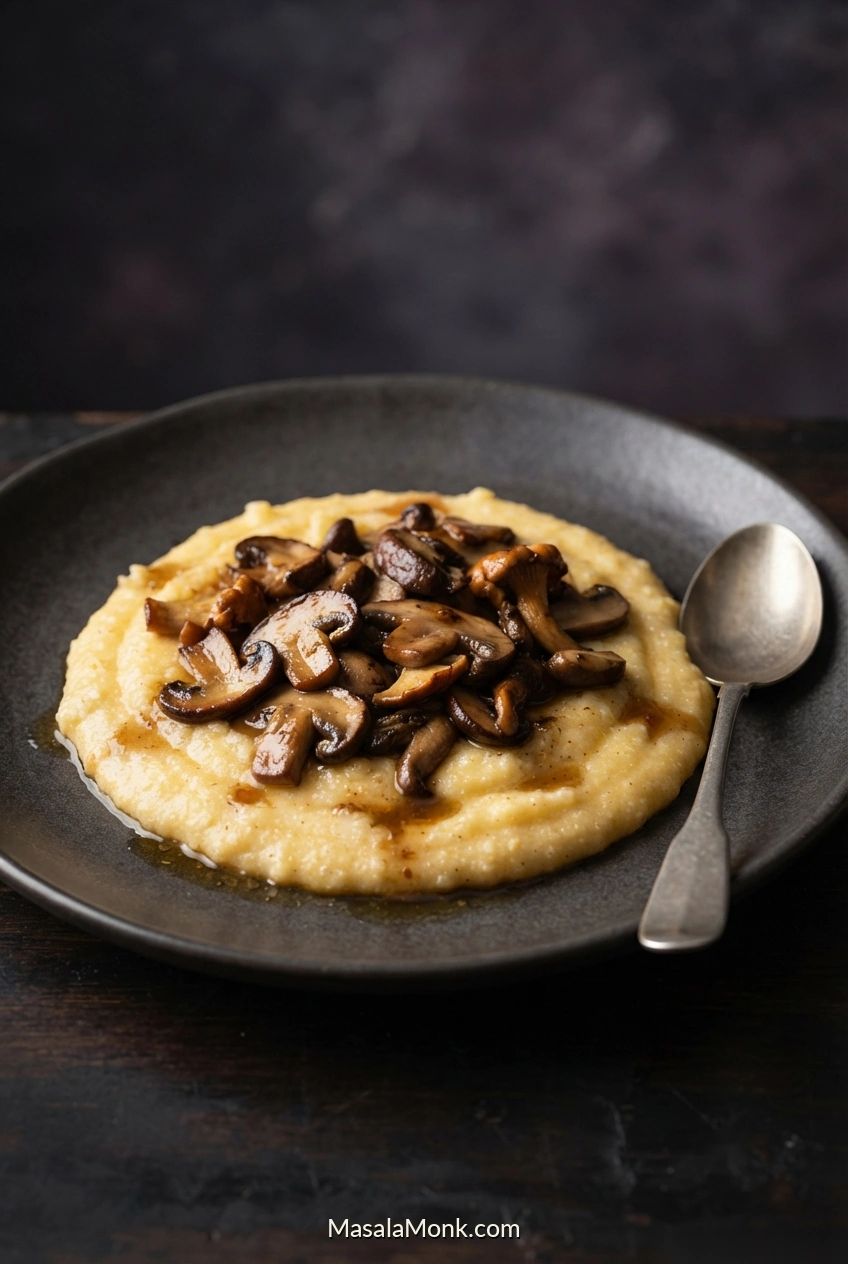
Warm polenta is especially good with browned mushrooms and their pan juices. It has a gentle sweetness of its own, and when the cornmeal has cooked through, the mixture becomes creamy without any added cream.
A northern Italian staple, polenta is made by simmering ground maize until tender. This creamy polenta recipe uses ordinary medium-ground yellow cornmeal and water, with butter and optional Parmesan at the end. Try it with fresh tomato sauce and sautéed greens.
Looking for a particular answer? Recipe at a glance · Which cornmeal to buy · Fix grainy or lumpy polenta · Make ahead and reheat
Creamy Italian Polenta Recipe
Polenta Recipe at a Glance
Serves: 4 side portions, or 2 hearty bowls with substantial toppings.
Timing: Prep about 5 minutes; cook the cornmeal for 30–60 minutes after adding it. Allow roughly 40–75 minutes overall, including heating the water. Very coarse cornmeal or extra reduction can take longer.
Stirring: Whisk as you add the cornmeal, then monitor the gentle simmer and stir every 5–10 minutes. You don’t need to stand over the pot stirring for an hour.
Equipment: A deep, heavy-bottomed saucepan with a lid (about 3–4 L / 3–4 US qt), a whisk and a long-handled spoon or heatproof spatula. A kitchen scale and measuring jug are useful.
Ingredients
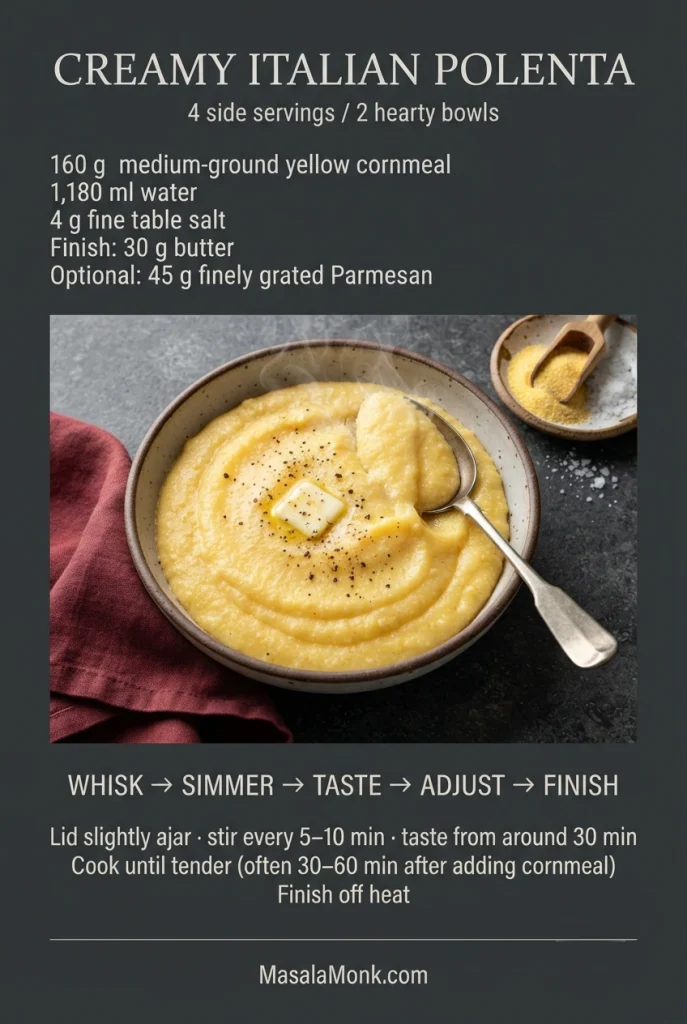
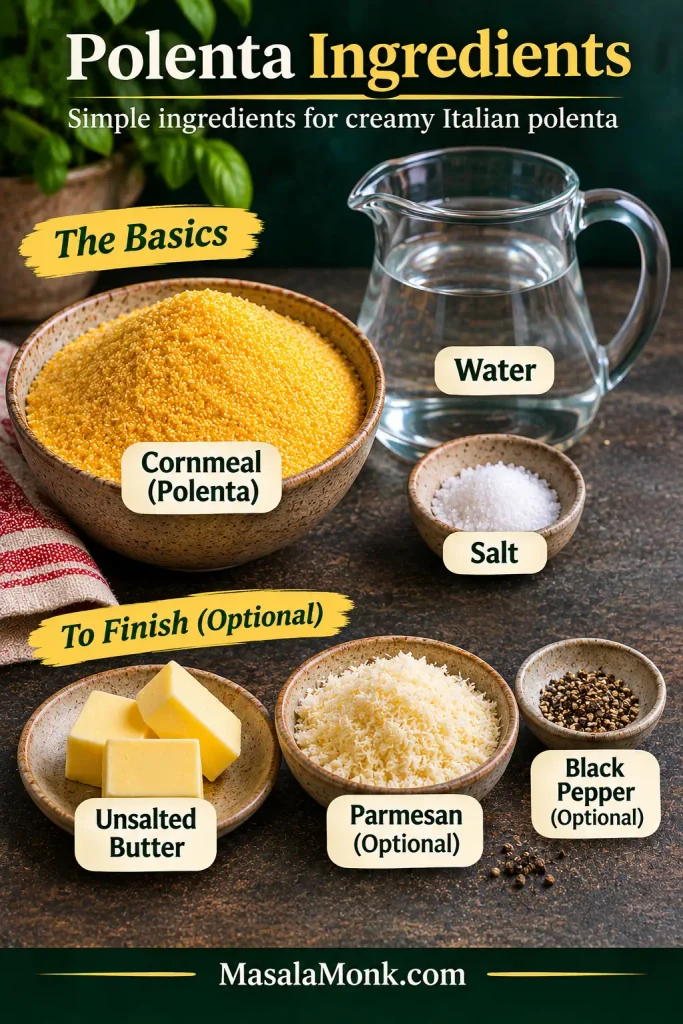
- 160 g regular medium-ground yellow polenta or cornmeal — about 1 US cup; choose dry, slow-cooking cornmeal rather than instant or ready-cooked polenta
- 1,180 ml (5 US cups) water — the starting cooking liquid
- 4 g fine table salt — about ⅔ teaspoon, then adjust to taste
- 30 g unsalted butter — about 2 tablespoons, to finish (see dairy-free variation below)
- 45 g finely grated Parmesan — roughly ½ cup, depending on the grate; optional finish
- Freshly ground black pepper — optional, to serve
- Extra hot water, if needed — have 120–240 ml (½–1 cup) available for adjustments
Measure the cornmeal by weight if possible. Different grinds pack differently into a cup; 160 g is the intended starting amount. Unsure which packet you have? Compare regular, quick-cooking and ready-cooked polenta before starting.
Half batch (2 side portions): Use 80 g cornmeal (about ½ US cup), 590 ml water (2½ US cups), 2 g fine table salt (about ⅓ teaspoon), 15 g butter (1 tablespoon) and about 23 g Parmesan (roughly ¼ cup), if using. Cook in a smaller heavy saucepan; use the same tenderness test.
How to Make Creamy Polenta
1. Whisk the Cornmeal Into the Water
Bring the 1,180 ml water and salt to a boil, then lower the heat. Pour in the cornmeal in a thin stream while whisking continuously. Keep whisking for 2–3 minutes, reaching the base and corners of the pan; turn the heat down further if the thickening mixture begins to bubble hard.
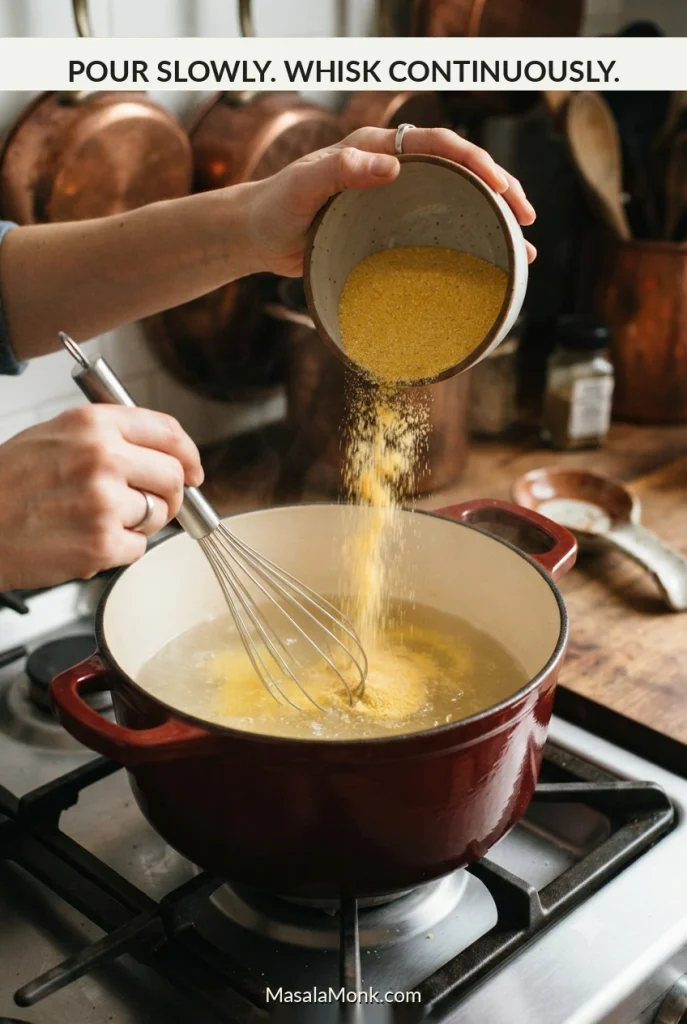
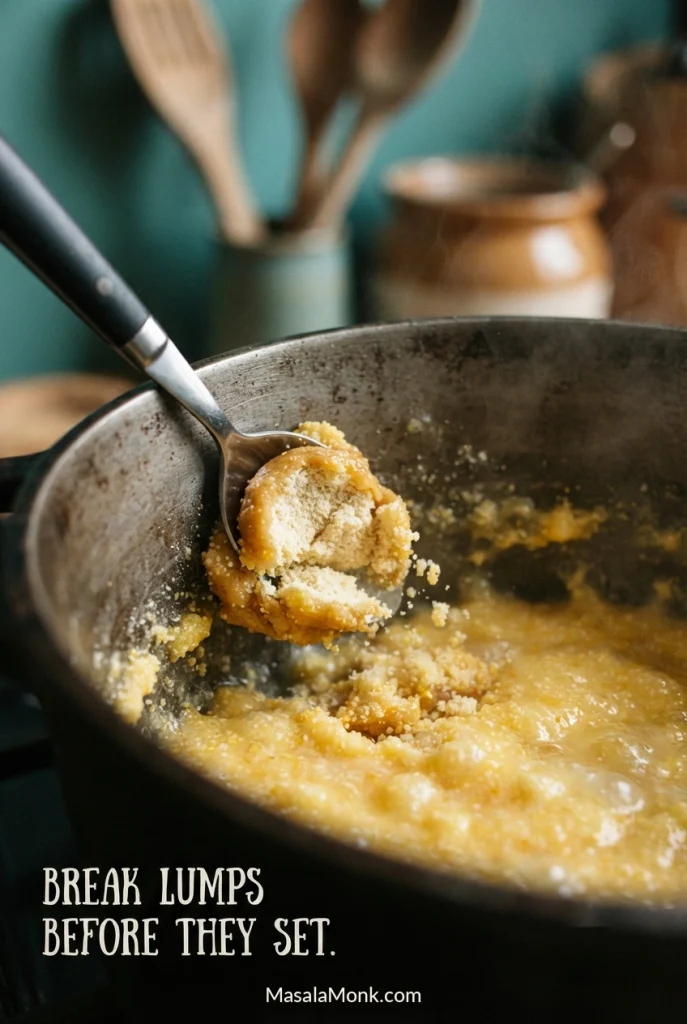
The water turns yellow and begins to thicken. Break apart small lumps now, before their outsides cook around dry centers.
2. Cook at a Gentle Simmer
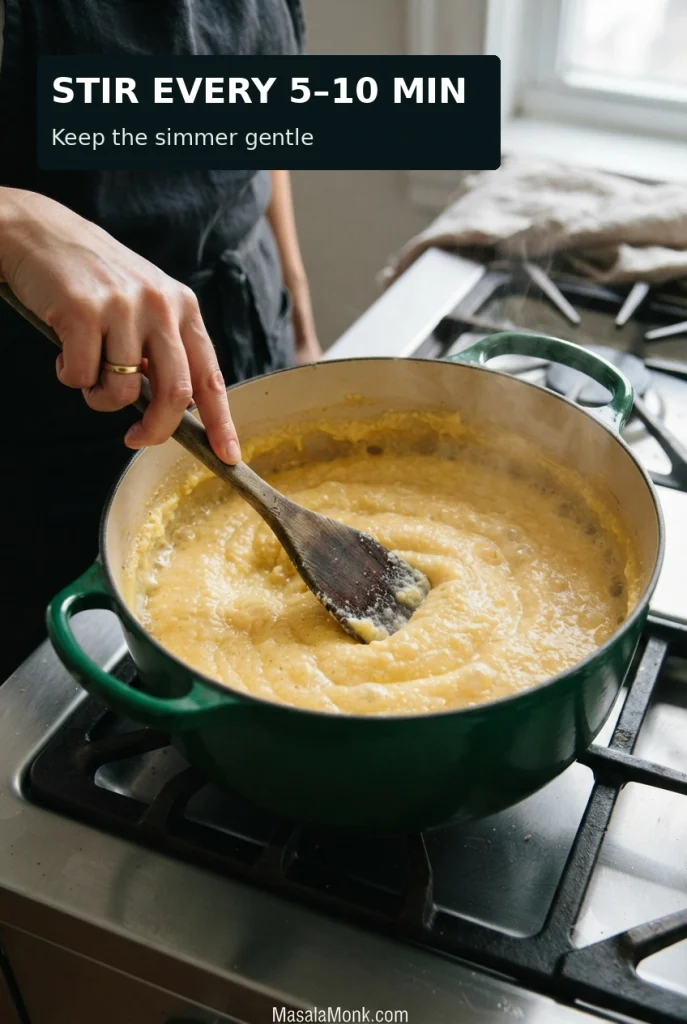
Reduce the heat to a gentle simmer. Set the lid on slightly ajar, leaving a gap for steam, and stir every 5–10 minutes, scraping the bottom and sides. Check the pot between stirs and turn down the heat if the bubbling becomes vigorous.
Take care with the hot pot. Thick polenta can spit scalding starch. Use a deep saucepan and a long-handled utensil, lower the heat if bubbles become violent, and keep your face clear when lifting the lid.
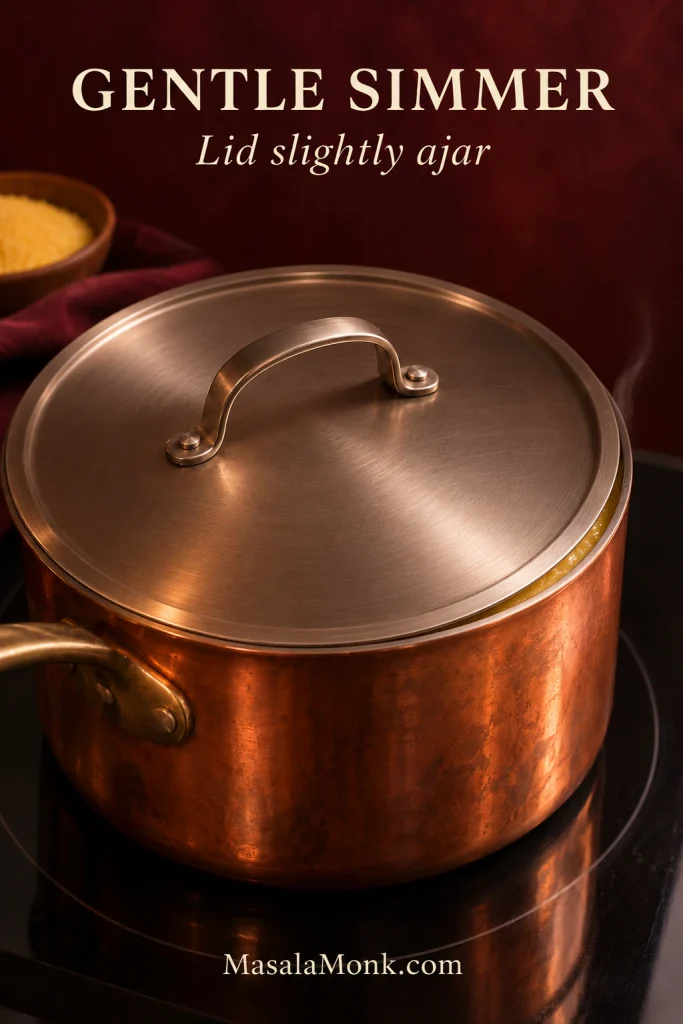
A few slow bubbles are enough. During each scheduled stir, sweep the spatula across the base and around the saucepan edge, where thick polenta can stick first. If the mixture begins to catch or bubble hard, reduce the heat.
3. Taste for Tenderness
After about 30 minutes, cool a small spoonful and taste it. The grains should be tender, without hard or chalky centers. If they are still gritty, keep simmering and taste again after 5–10 minutes. Add 30–60 ml (2–4 tablespoons) hot water only if the mixture is too thick for the grains to finish cooking comfortably.
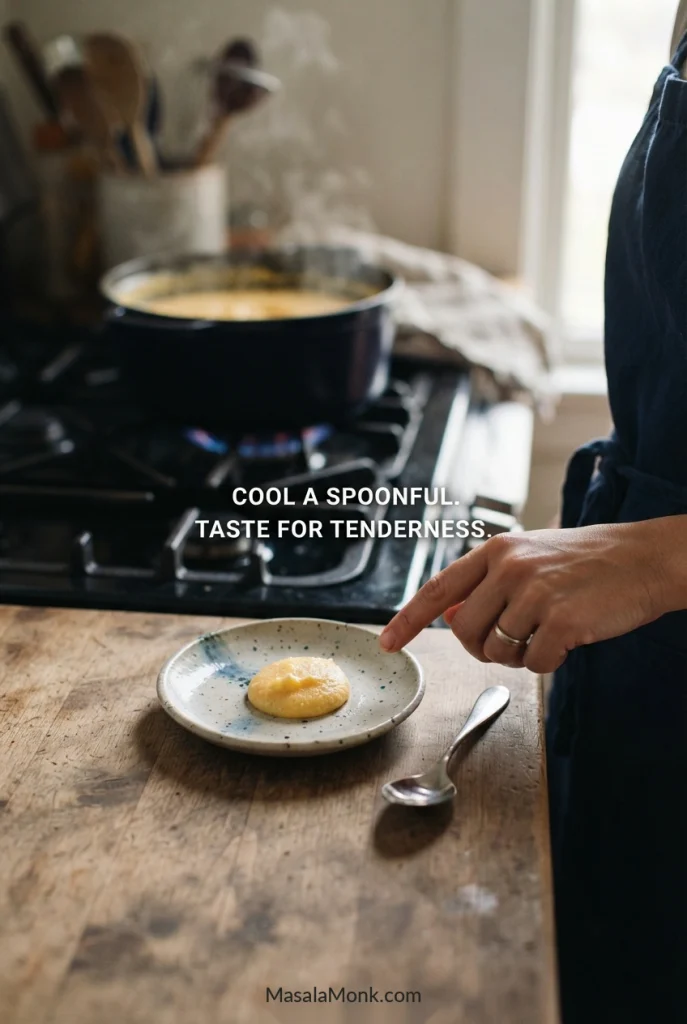
Medium-ground cornmeal usually needs 30–60 minutes after entering the water; coarser meal can take longer. If the grains are still hard and the pot becomes difficult to stir, add a little hot water and continue the gentle simmer. Uncover only when the grains are nearing tenderness and excess liquid remains. For persistent grit, see what to do after an hour.
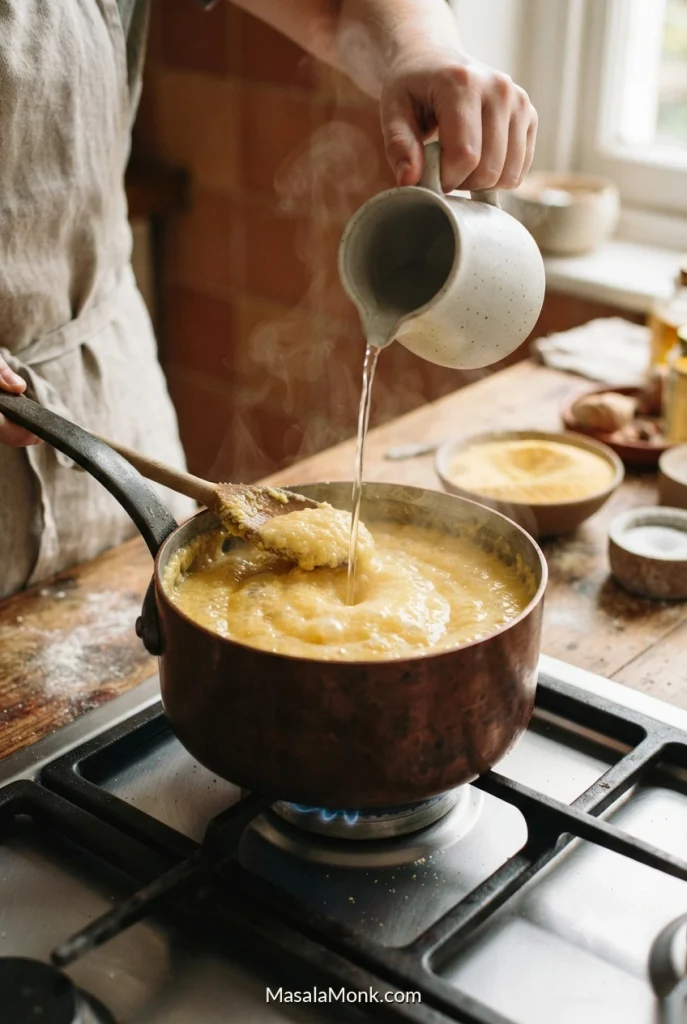
4. Set the Final Consistency
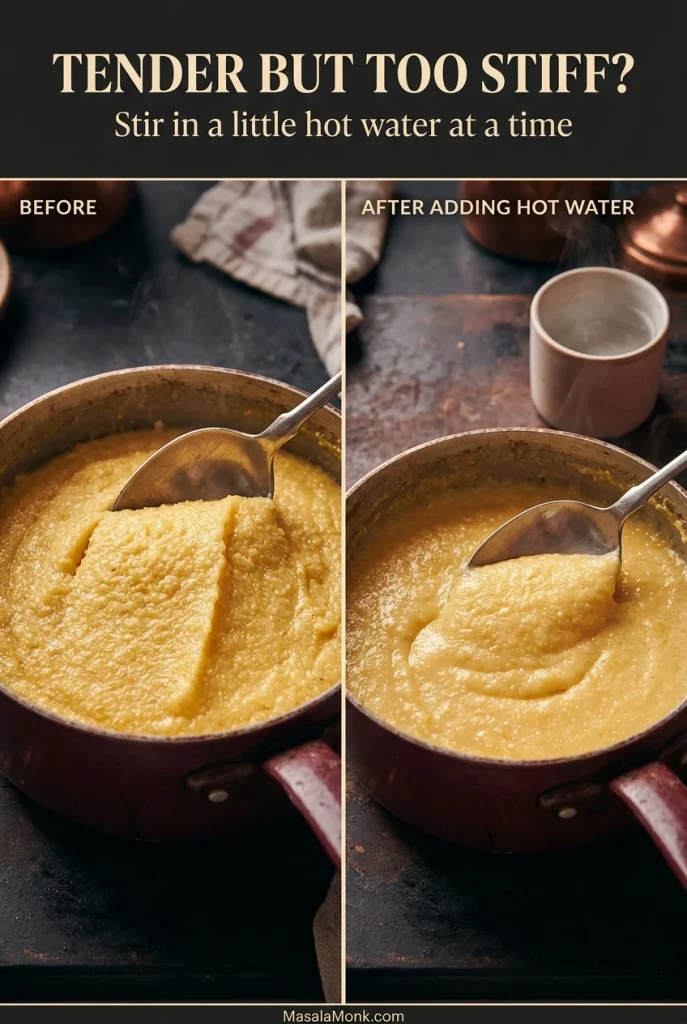
Tender but too stiff? Add hot water 30–60 ml (2–4 tablespoons) at a time and stir until the polenta falls slowly from the spoon.
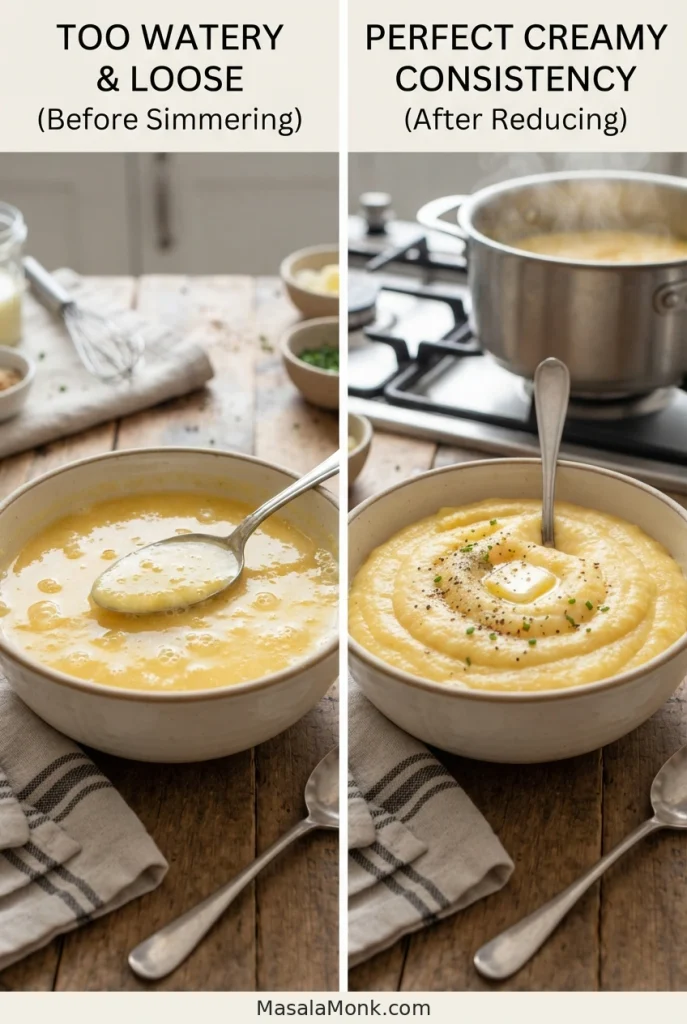
Tender but too loose? Simmer uncovered, stirring regularly, until a spoonful settles softly on a warm plate rather than spreading into a puddle. If there is a lot of liquid left, this can take extra time; keep the heat gentle to avoid splattering.
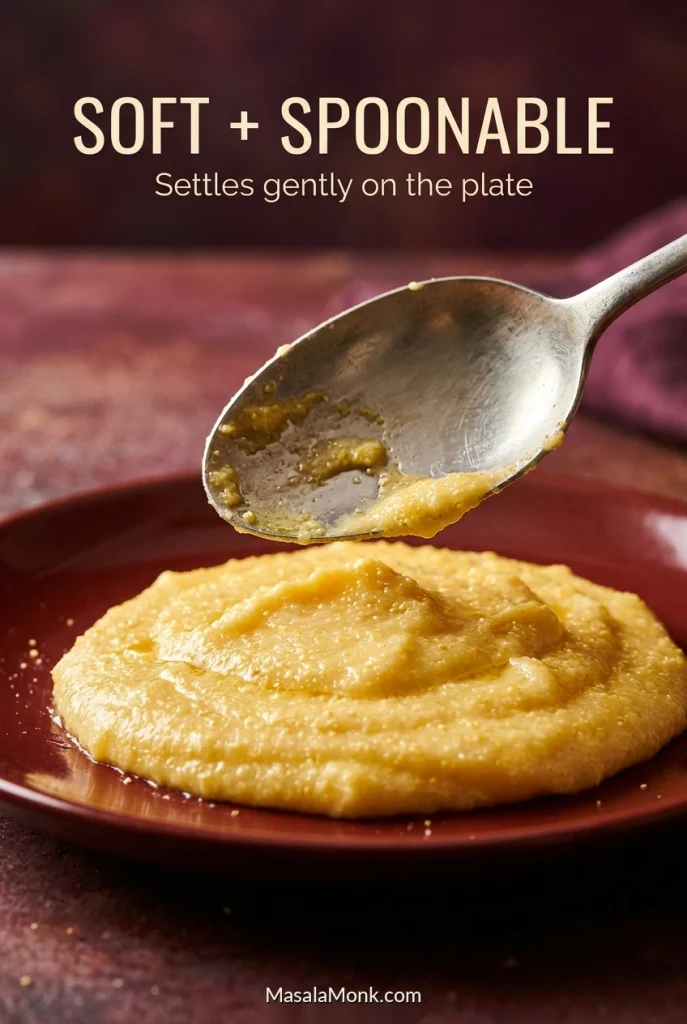
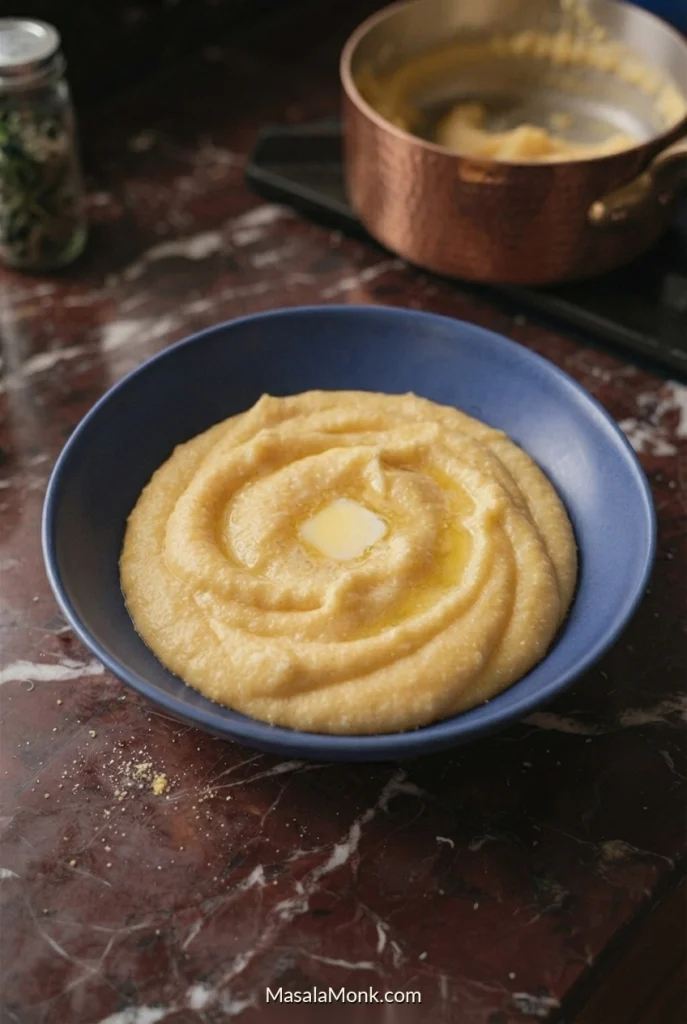
It should be soft and spoonable, not rigid. Stop slightly looser than you want at the table; polenta thickens as it cools. If you are unsure which correction applies, use the four-state troubleshooting guide.
5. Finish and Serve
When the grains are tender and the thickness is right, remove the pan from the heat. Stir in the butter, then the finely grated Parmesan if using. Taste before adding salt—the cheese may have seasoned it enough. Add black pepper if you like, and loosen with a small splash of hot water if it thickens before serving. If the cheese becomes oily or stringy, see how to handle separated Parmesan polenta.
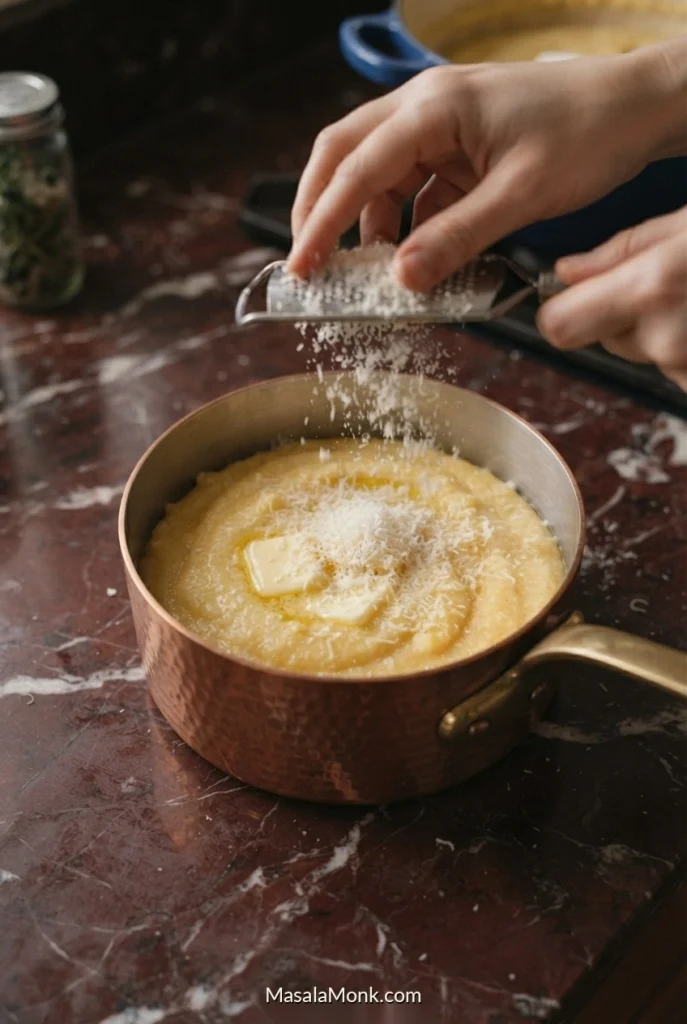
The cooked cornmeal itself creates a creamy texture, so no cream is required. Spoon the finished polenta into warm bowls; for a richer dinner, try our creamy mushroom sauce and reduce the optional Parmesan in the base if you prefer.
Which Cornmeal Is Best for Creamy Polenta?
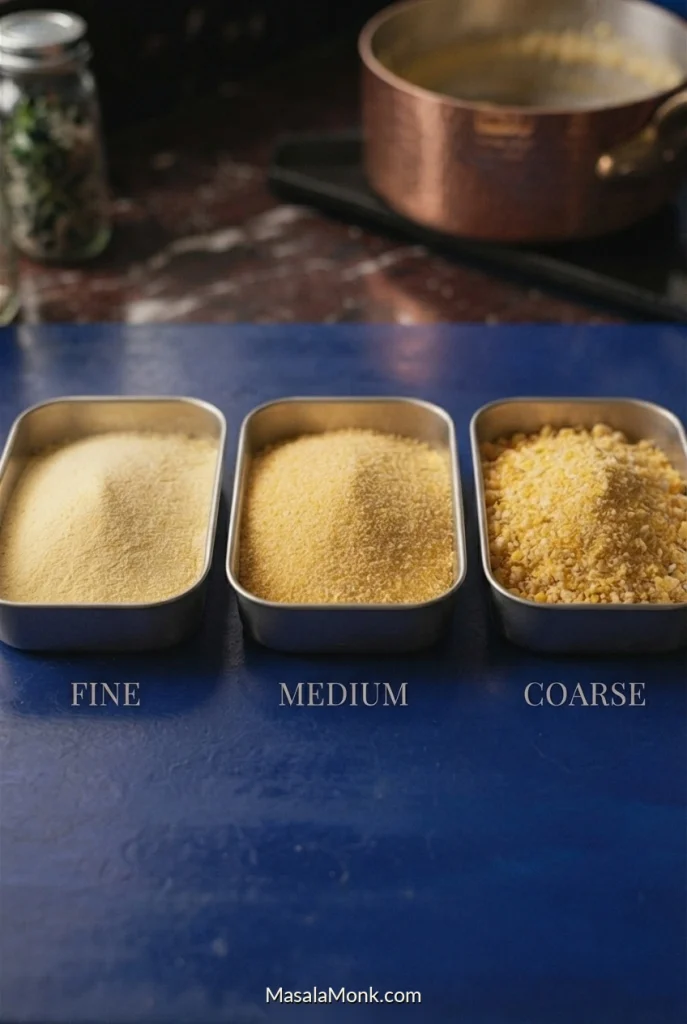
Use regular medium-ground yellow cornmeal for this recipe. You don’t need an imported Italian product or a bag specifically labeled “polenta.”
When the grind isn’t named, look for small, distinct granules rather than powdery flour or large, rough pieces. If the packet promises polenta in five minutes, follow those quick-cooking directions instead. Leftover medium-ground cornmeal also works in our Southern cornbread recipe.
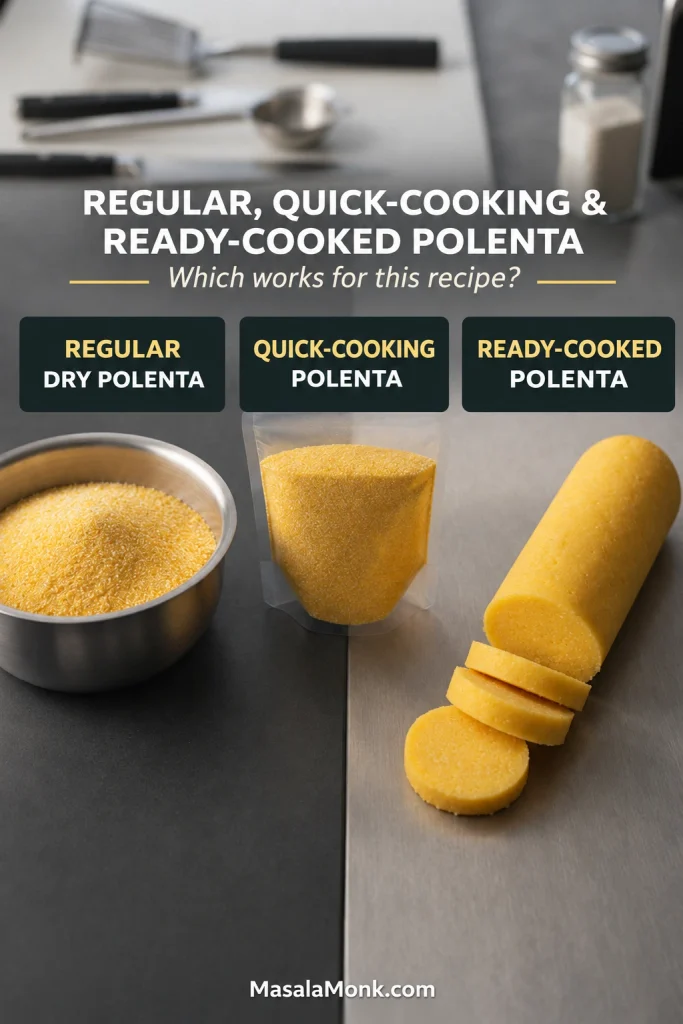
Regular, Quick-Cooking and Ready-Cooked Polenta
Some products labeled “polenta” are uncooked meal; others are processed for faster cooking or sold already set. Compare the preparation directions before following the water ratio in this recipe.
| Corn product | How it behaves |
|---|---|
| Regular medium-ground yellow polenta or cornmeal | The best match for this recipe; tender and creamy with some corn texture. |
| Coarse-ground polenta | Larger particles give a more rustic result and may need more time and liquid. |
| Stone-ground cornmeal | Describes the milling method, not grain size; check whether it is fine, medium or coarse. |
| Fine yellow cornmeal | Thickens sooner and can feel smoother or pastier; begin tasting earlier. |
| Instant or quick-cooking polenta | Processing differs by product. Follow its own water ratio and cooking time. |
| Ready-cooked polenta in a tube | Already cooked and set; slice or reheat rather than simmering from dry. |
| Grits | A related ground-corn product, but the processing and ratios can differ; see our shrimp and grits recipe for a distinct preparation. |
| UK cornflour / cornstarch | Primarily starch, not the ground corn required for this dish. |
Makki Atta and International Cornmeal Names
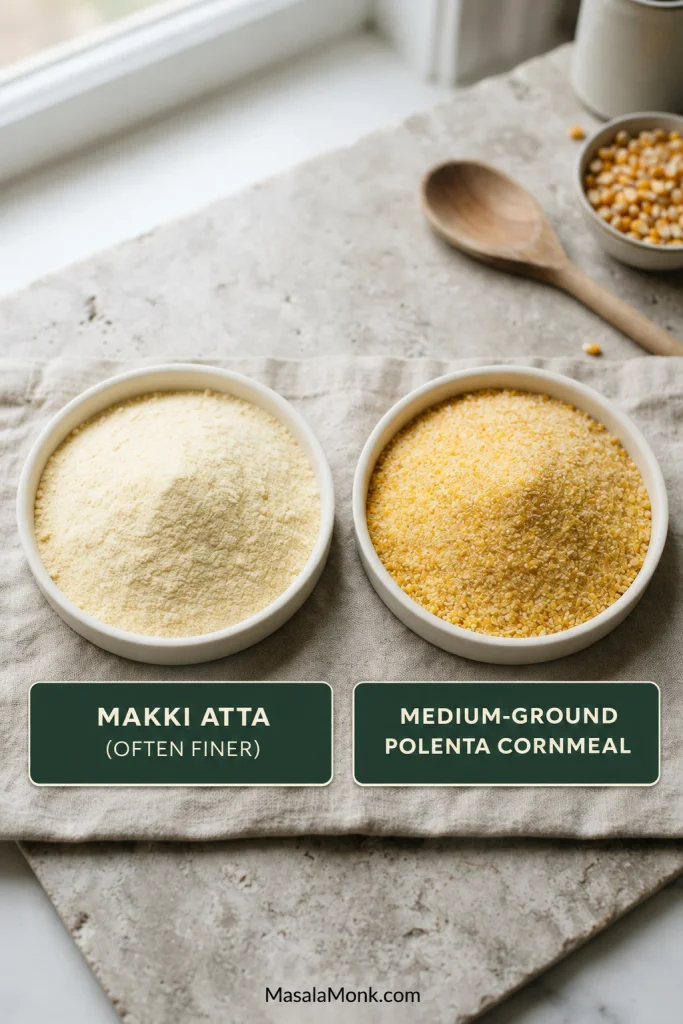
Names change across markets. In the UK, cornflour usually means cornstarch; in the US, corn flour can mean finely ground whole corn. In India, makki atta sold for makki roti is often finer than medium-ground polenta cornmeal, so check the actual grind. Masa harina is made from nixtamalized corn and behaves differently. None is an automatic substitute for the cornmeal specified here.
Is Polenta Gluten-Free?
Yes. Polenta made from plain cornmeal and water is naturally gluten-free. For someone with celiac disease, choose appropriately labeled gluten-free cornmeal, check any stock or toppings, and prevent contact with gluten-containing ingredients on shared surfaces or utensils. The Celiac Disease Foundation’s guidance on sources of gluten and cross-contact explains why labels and preparation matter.

Why Polenta Thickens Before the Grains Are Tender
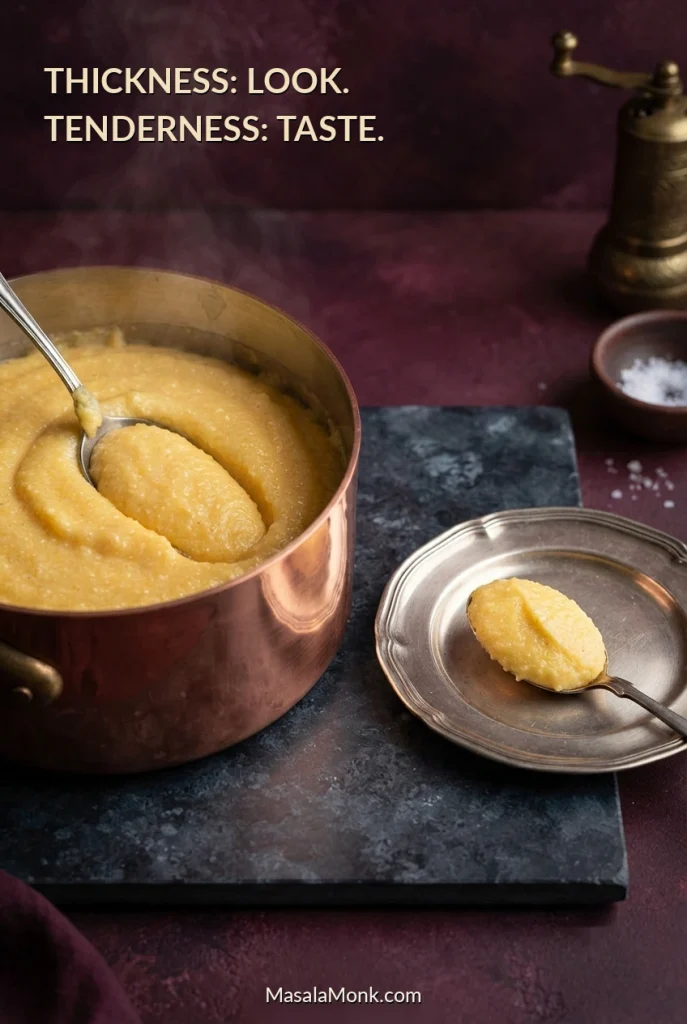
Polenta can look finished before it tastes cooked. Starch thickens the water while the grains are still firm; continued gentle cooking makes them tender. The spoon shows how thick it is; your taste tells you whether it is cooked.
Why Is My Polenta Grainy, Lumpy or Too Thick?
First, Check the Grains: Hard or Tender?
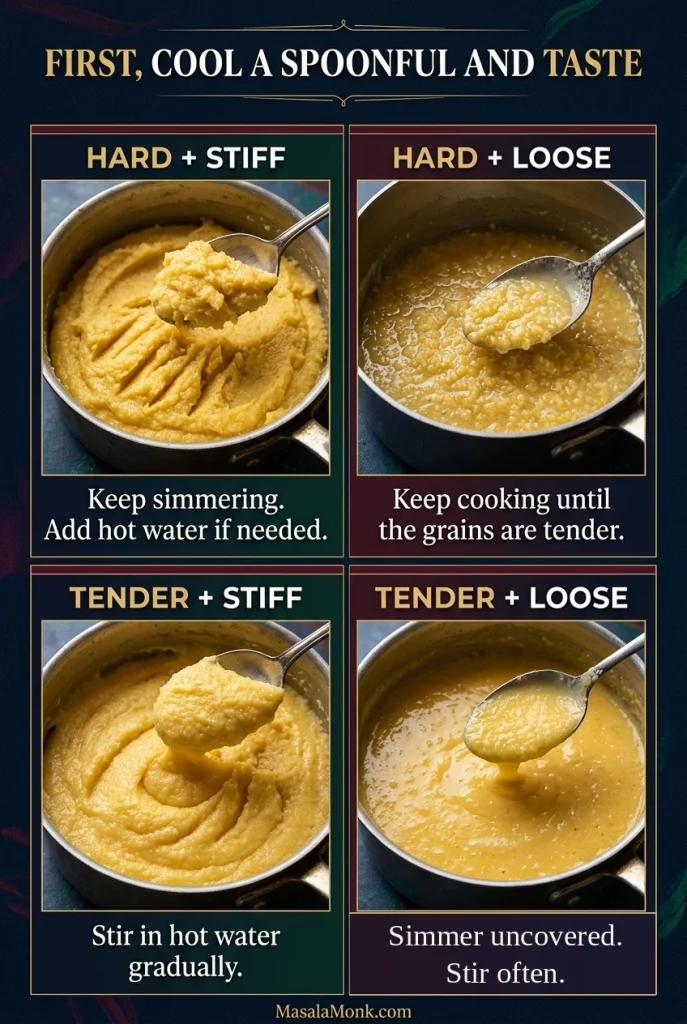
Something not quite right? Cool and taste a spoonful before judging its thickness. Two equally stiff pots may need different fixes if one still has hard grains.
Quick Fixes for Common Polenta Problems
| What happened | What to do now |
|---|---|
| Thick but gritty | If the grains are hard, continue the gentle simmer. Add 30–60 ml hot water if the pot is too stiff, then taste after another 5–10 minutes. |
| Lumps with dry centers | Break them against the side of the saucepan and stir the exposed dry meal back into the pot so it can cook. Fresh small lumps are easier to whisk out. |
| Tender but stiff | Stir in hot water a little at a time until the polenta is soft enough to settle from the spoon. |
| Tender but thin or watery | Simmer uncovered and stir often until the whole mixture is softly spoonable, even if no separate water is visible. Allow more time if needed. |
| Watery and still hard | Keep simmering until the grains soften. Adding raw meal would introduce more grains that also need to cook. |
| Too firm when plated | Warm gently and loosen with hot water before serving. Warm plates slow down setting. |
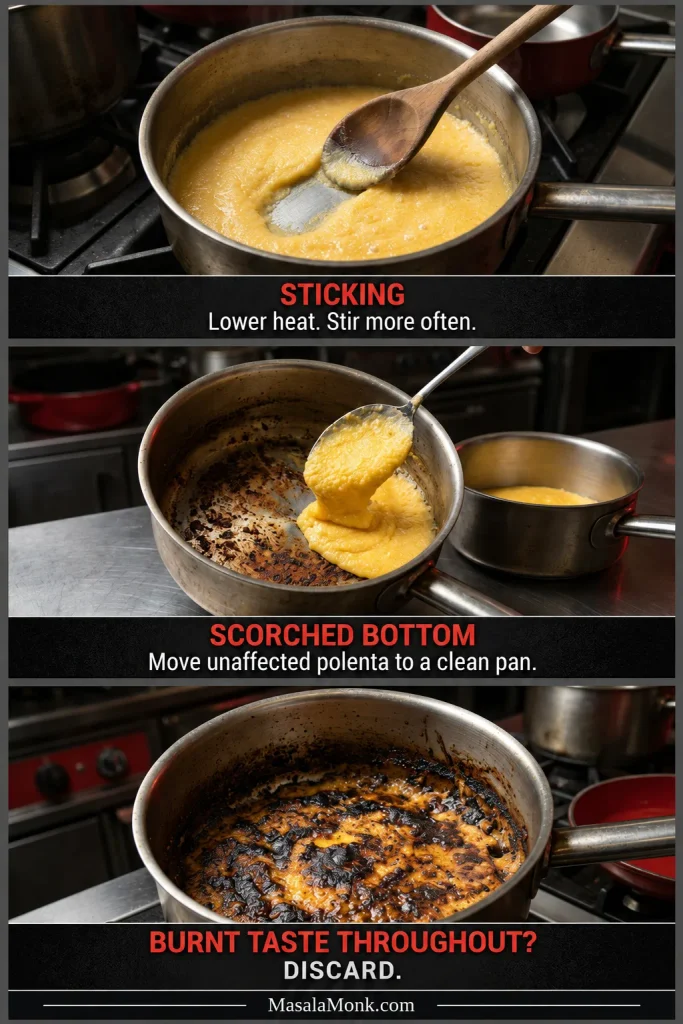
| Sticking or scorched bottom | If it is sticking, lower the heat and stir more often. If it has burned, move any unaffected polenta to a clean pan without scraping the bottom. Discard it if a burnt taste has spread throughout. |
| Hot bubbles spitting | Reduce the heat immediately, keep your face away and use a long-handled spoon. Don’t stir faster to try to control a violent boil. |
| Bland after adding cheese | Taste for salt before adding more fat. Black pepper or a well-seasoned topping may be enough. |
Sticking or Scorching Polenta
Sticking is an early warning, while scorching can already affect flavor. If the spatula begins catching on the pan base, lower the heat before browned residue develops; the guide below shows when transferring the unaffected portion may still help.
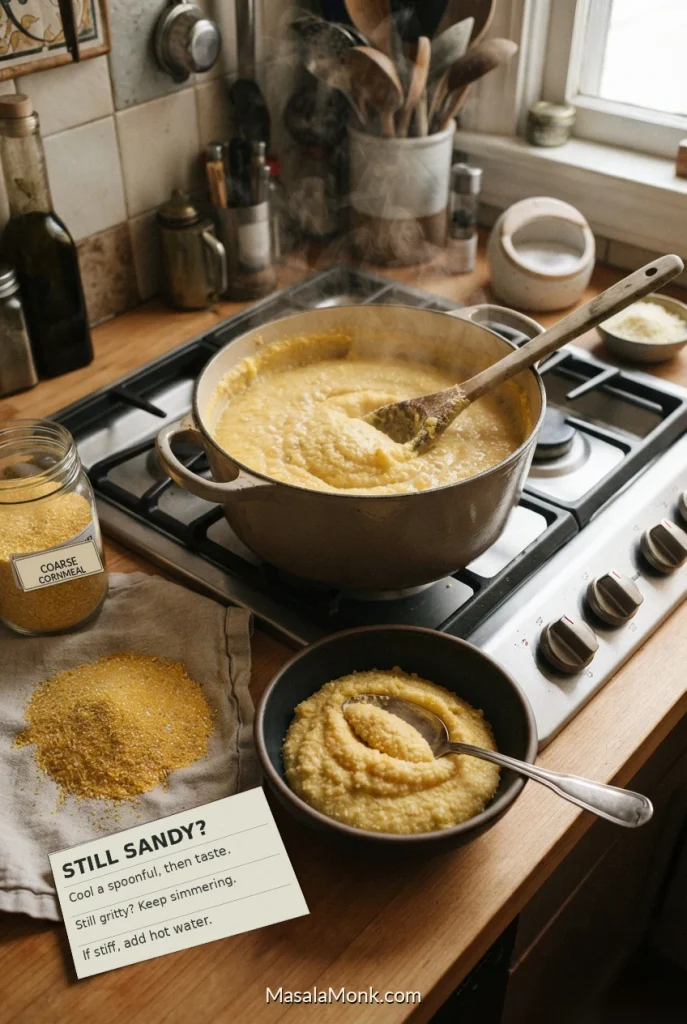
Still Sandy After an Hour?
If the cornmeal still feels sandy after an hour, first check that the pan is gently simmering. Add 30–60 ml hot water if it has become stiff, cook another 10–15 minutes and taste again. Coarse cornmeal may stay textured but should not have hard centers; check the packet if it seems to make no progress. If the grind is unclear, revisit the cornmeal comparison.
Why Parmesan Polenta Turns Oily or Stringy
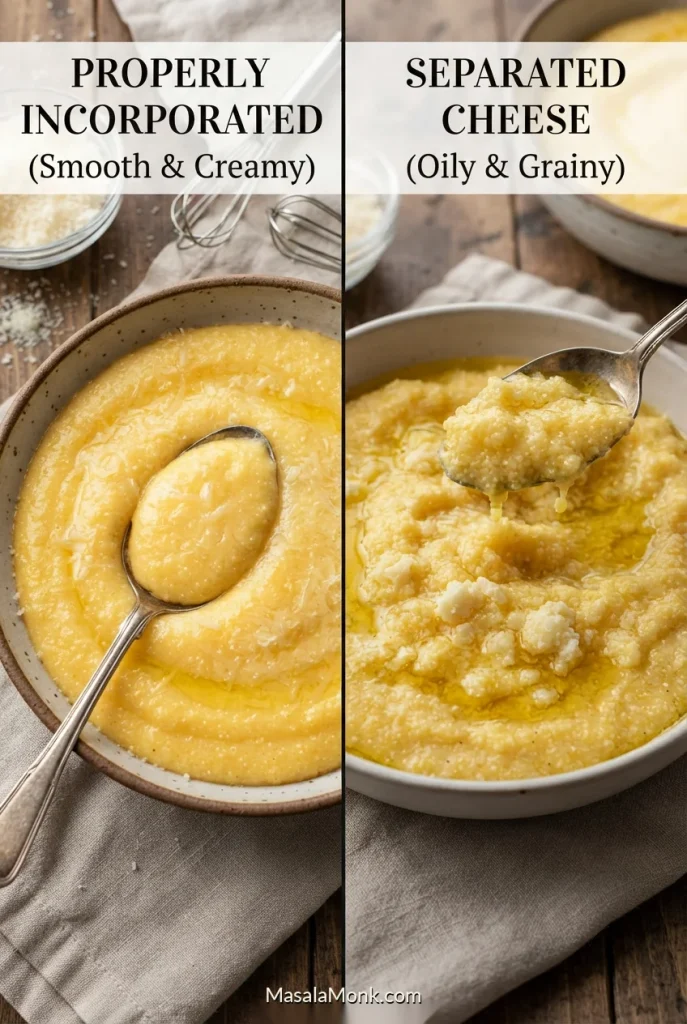
Parmesan can turn clumpy or release oily droplets when heated too aggressively. That is different from plain polenta having too much water: correct the consistency before adding cheese, then finish off the heat.
If the mixture loosens after adding cheese: Remove it from the heat, stir gently and allow a brief rest. It may thicken as it stands; only warm it very gently again if necessary.
If the cheese becomes oily or stringy: Keep the pan off the heat and stir gently. A small splash of hot water may help, although badly separated cheese might not recover. For the next batch, use finely grated cheese and avoid boiling after adding it.
↑ Recipe at a glance · Back to full method
Parmesan Polenta, Vegan Polenta and Other Finishes
Butter adds richness and Parmesan a savory finish, but neither needs to overwhelm the corn. Our Parmesan versus Parmigiano Reggiano guide explains the differences. Cooking for vegetarians? Traditional Parmigiano Reggiano uses animal rennet; check the cheese or choose a vegetarian hard cheese.
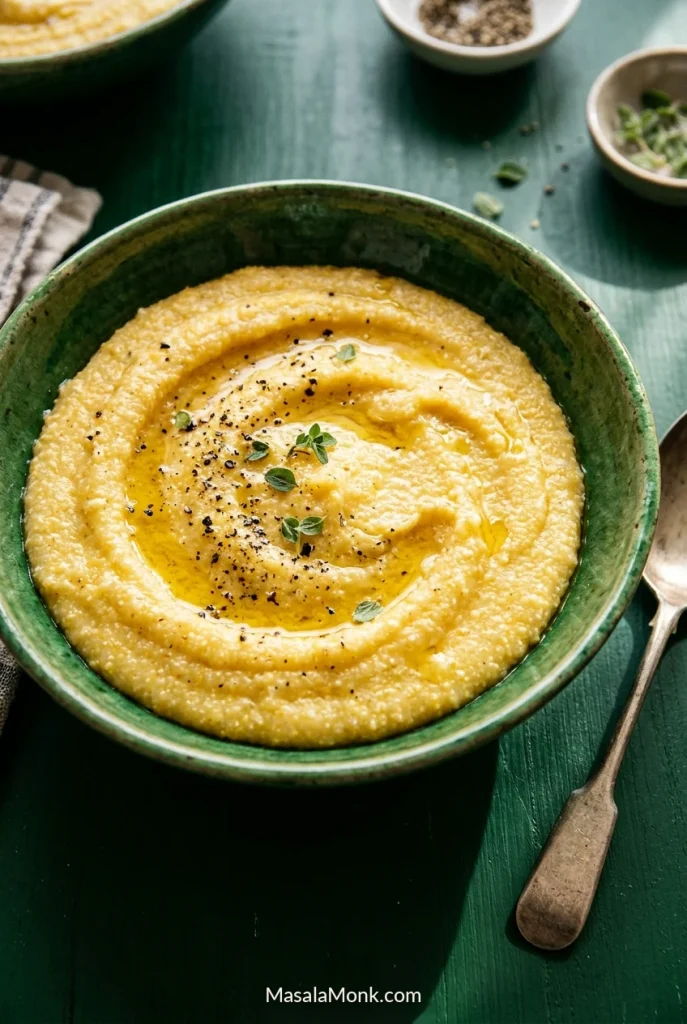
For vegan polenta, leave out the butter and cheese and finish with about 30 ml (2 tablespoons) olive oil. You can replace some of the cooking water with vegetable stock. For a non-vegetarian dairy-free version, chicken stock also works. Taste any stock before adding the full amount of salt.
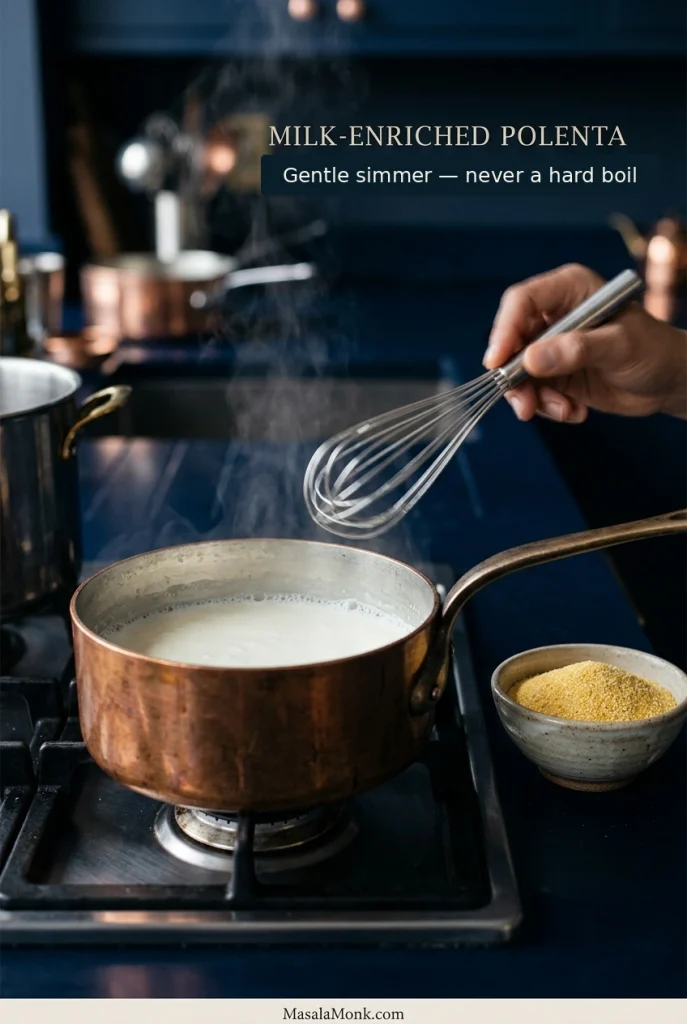
For a milk-enriched version, replace up to 240 ml (1 US cup) of the starting water with milk, keeping the total liquid at 1,180 ml. Warm the water and milk together to a gentle simmer before whisking in the cornmeal; do not boil vigorously. Keep the heat low and stir more often to prevent scorching.
What to Serve With Creamy Polenta
Vegetable and Mushroom Sauces
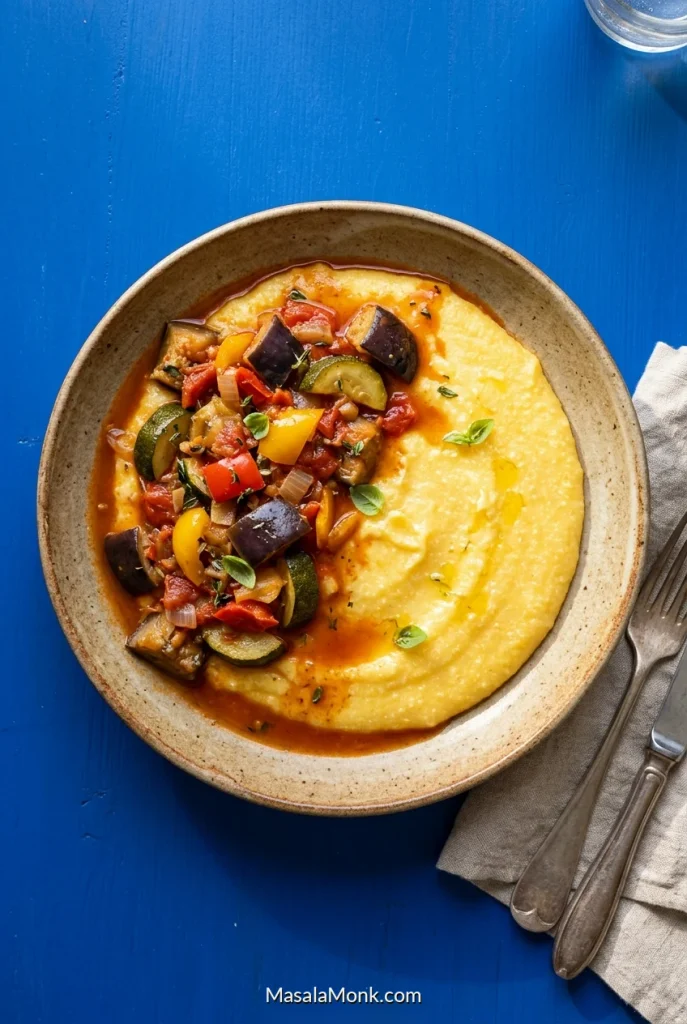
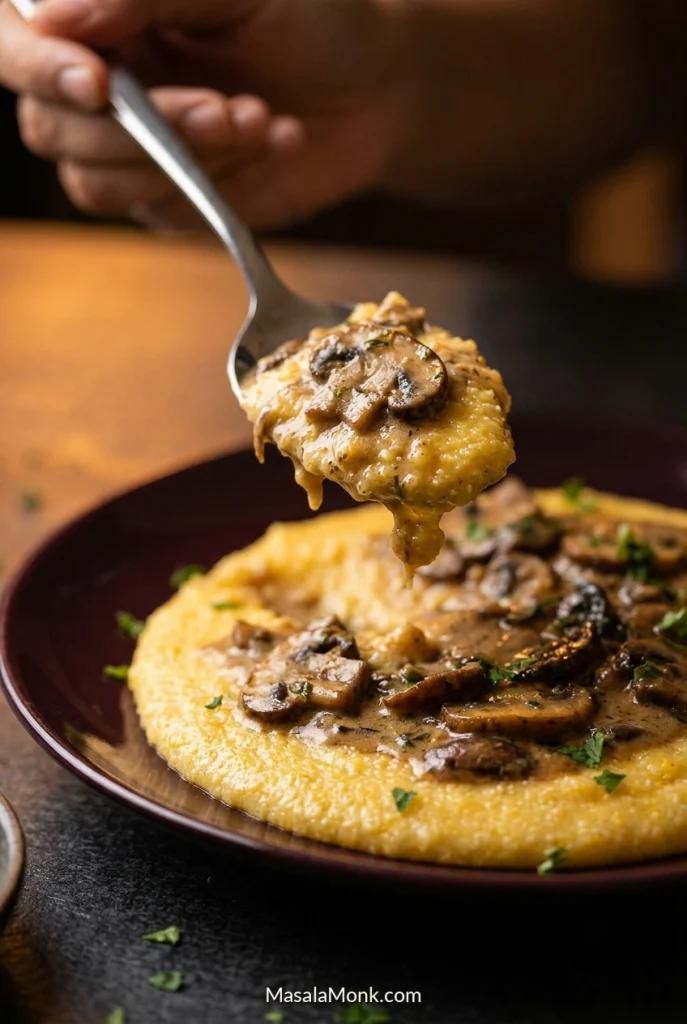
In northern and central Italy, soft polenta is often served with a generous sauce. For a vegetable supper, try our ratatouille with its soft peppers, eggplant and tomato juices. Or spoon over mushroom stroganoff when you want something richer.
Ratatouille: If the ratatouille has cooled, reheat it separately before spooning it over the polenta. Cold vegetables can make the cornmeal firm up before dinner reaches the table.
Mushroom stroganoff: If the stroganoff is too thick to spoon, loosen the mushroom sauce first rather than adding extra liquid to the cooked polenta underneath.
Slow-Cooked Meat and Seafood
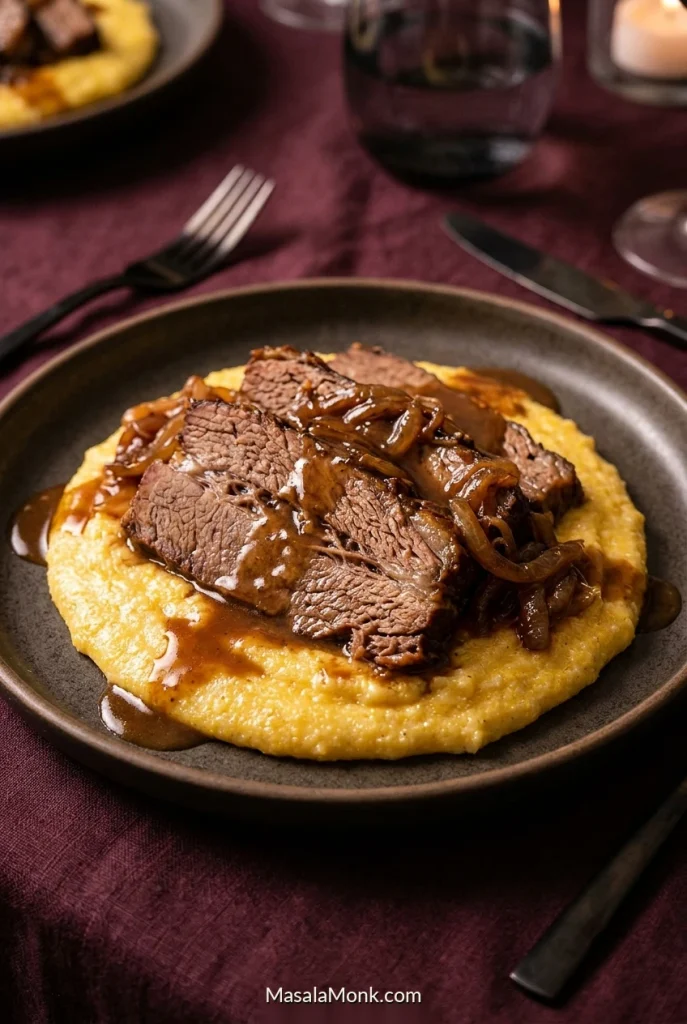
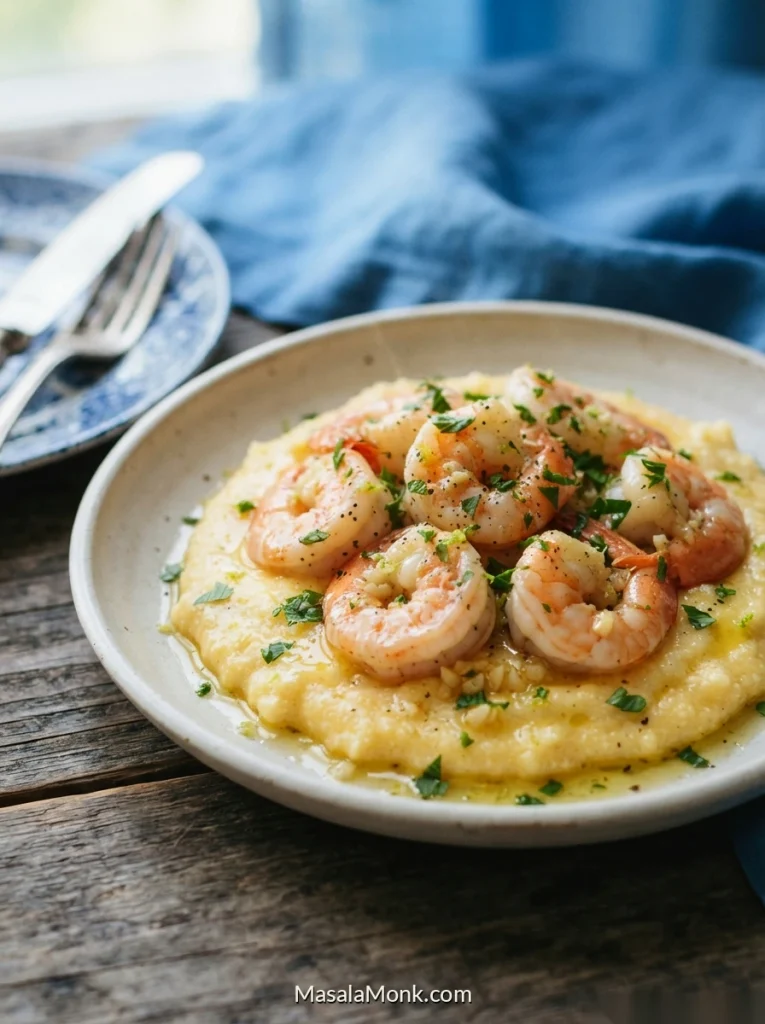
Slow-cooked meat is another natural partner. Serve brisket with onion gravy over warm polenta, letting the gravy run into the cornmeal. Tomato-braised chicken or garlic-lemon shrimp work well, too.
Braised brisket: Reheat any leftover brisket gently in its onion gravy. Then add the hot slices over the polenta so the meat stays moist.
Garlic-lemon shrimp: Use just enough lemony pan juices to coat the shrimp and lightly season the polenta. Too much thin sauce can overwhelm the soft base.
Everyday Meatless Toppings
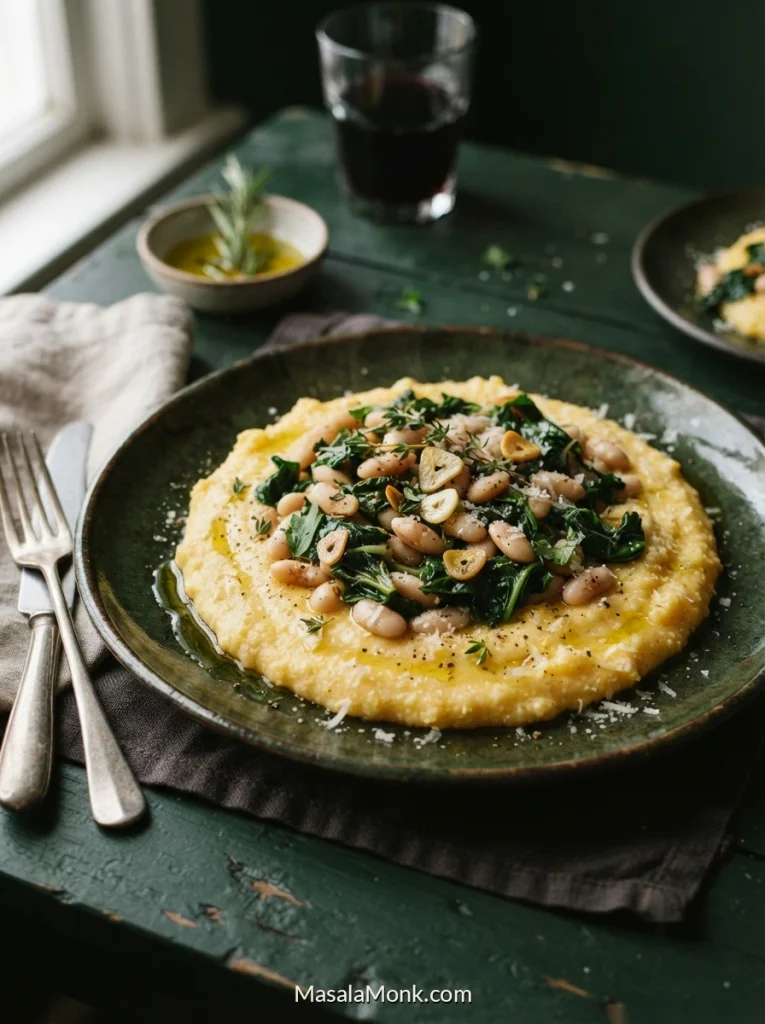
For a simple meatless supper, pile garlicky white beans and wilted greens onto the polenta. Finish with a drizzle of olive oil and plenty of black pepper.
White beans and greens: Warm cooked beans before serving instead of adding them cold. This helps the golden polenta stay pleasantly soft beneath the topping.
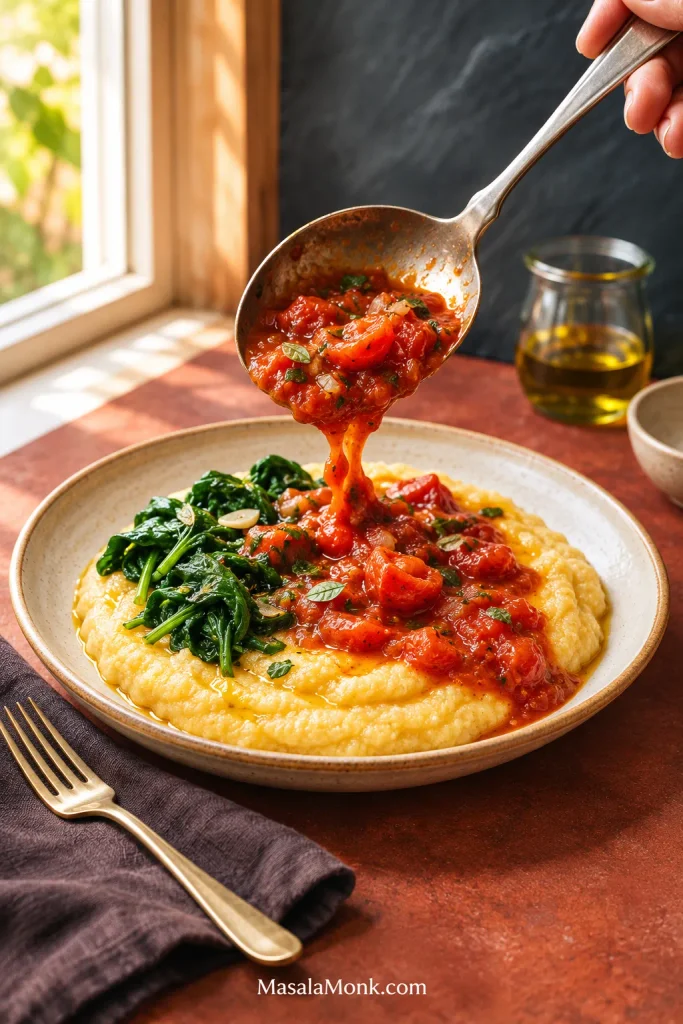
Fresh tomato sauce and greens: A little tomato juice seasons the cornmeal, but reduce a watery sauce before plating. The polenta should still be visible around the red sauce and greens.
Make-Ahead Polenta: Holding, Storing and Reheating
For braises, stews and other slow-cooked toppings, make the sauce ahead and finish the polenta close to serving. Our bean stew, for example, can reheat while the cornmeal simmers. Quick-cooking shrimp is different: sauté it when the polenta is nearly ready. If dinner is delayed by 10–15 minutes, cover the polenta off the heat and gently loosen it with hot water before serving.
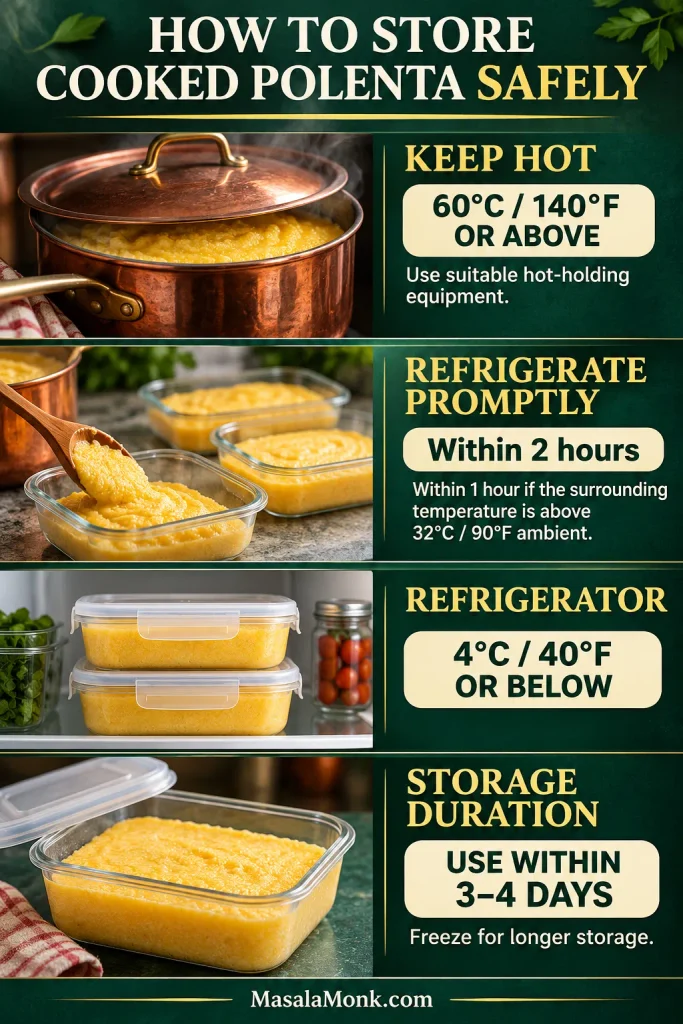
For longer hot holding, use suitable equipment to keep cooked polenta at 60°C (140°F) or above; a covered pot left on an unheated stove cannot do this reliably. Otherwise, cool it promptly and refrigerate.
How Long Does Cooked Polenta Keep in the Fridge?
Transfer leftovers to shallow containers and refrigerate within two hours of cooking, or within one hour when the surrounding temperature is above 32°C (90°F). Keep the fridge at 4°C (40°F) or below and use within 3–4 days, or freeze for longer storage. See FoodSafety.gov’s chilling and storage guidance for the refrigeration rules and storage-chart reference.
How to Reheat Polenta Until Creamy Again
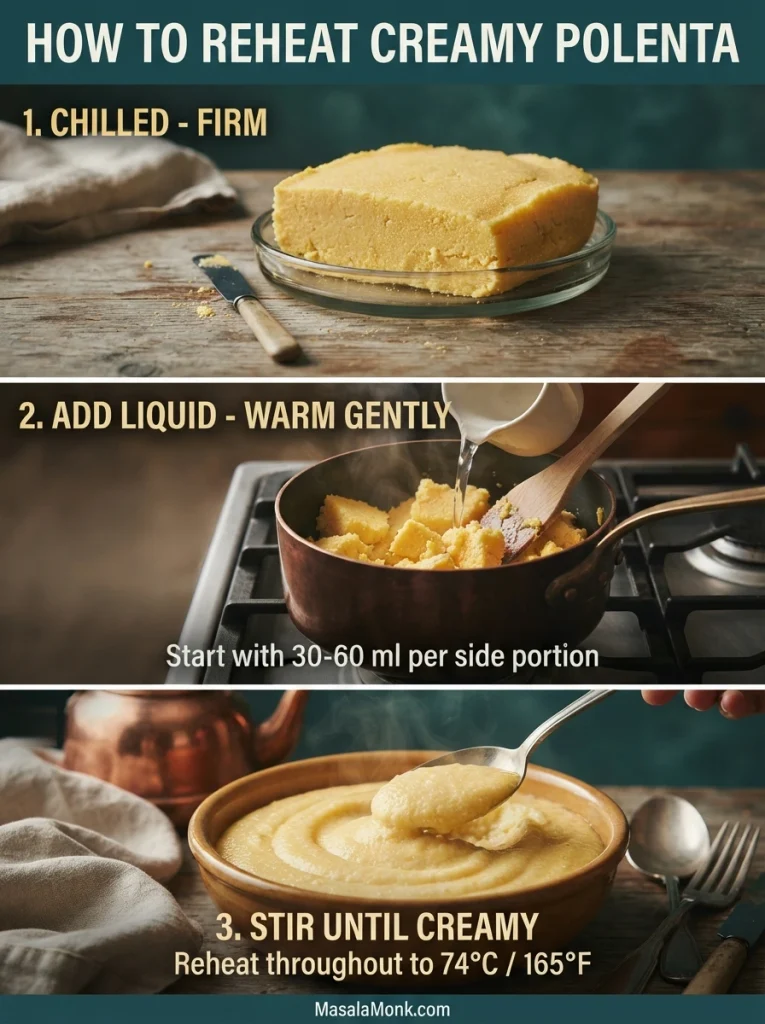
Chilled polenta sets firmly. For one side portion, begin with 30–60 ml (2–4 tablespoons) water, milk or stock in a saucepan. Warm gently, stirring until soft and spoonable; larger portions will need more liquid. It may not return to exactly the same texture as freshly cooked polenta. Reheat leftovers to 74°C (165°F) throughout and check with a food thermometer.
The next time you make polenta, taste the grains rather than watching only the clock. Once they’re tender, you can set the texture to suit dinner. If you make this recipe, tell us which cornmeal you used and what you served with it.








