
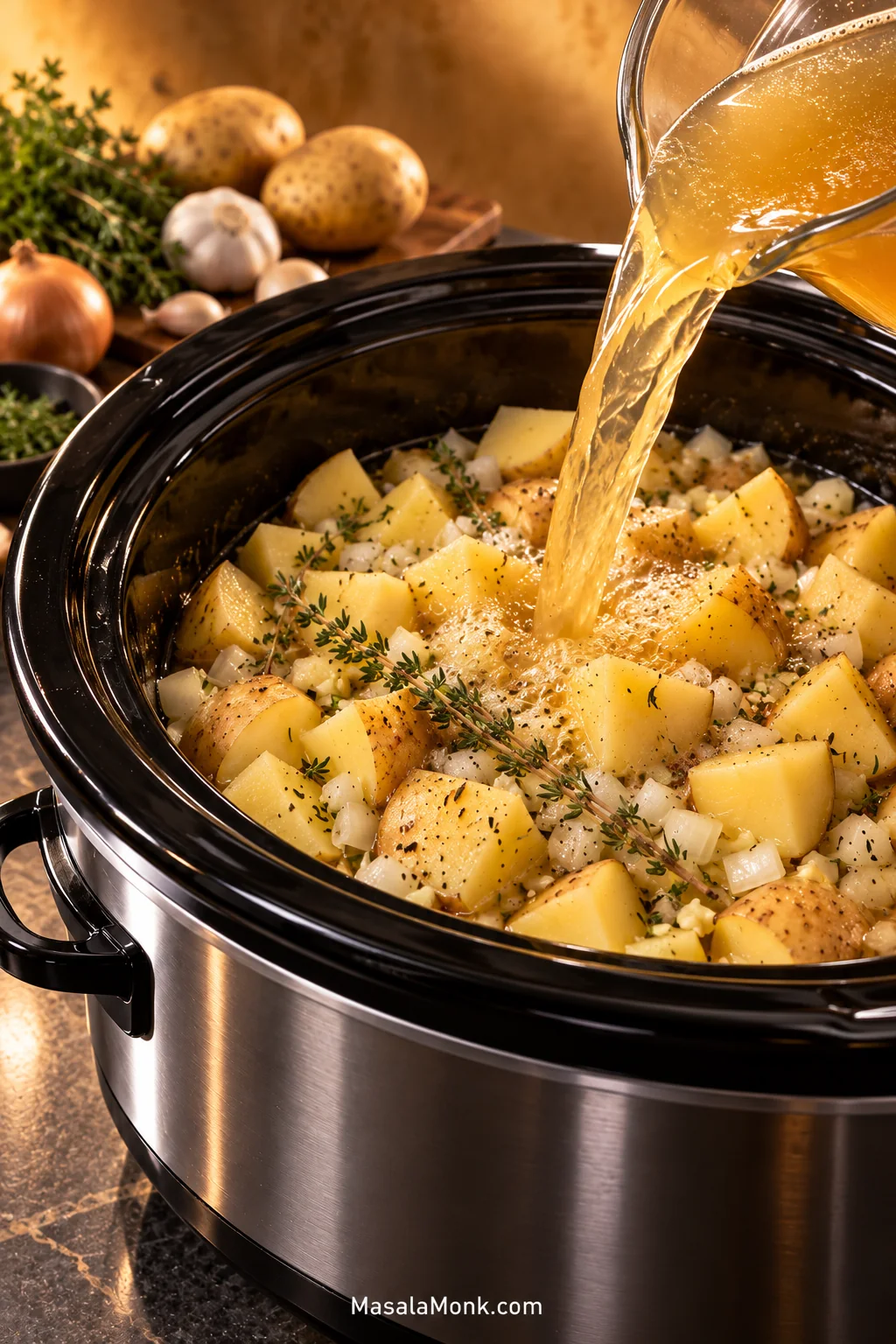
Tender Yukon Gold potatoes, sharp cheddar, and crisp bacon give this slow cooker potato soup the appeal of a loaded baked potato in a warm, satisfying bowl. The broth turns creamy as some of the potatoes are mashed, while the rest stay in tender pieces. Cool sour cream and fresh green onions balance the rich, cheesy finish.
Get the potatoes cooking earlier in the day, then come back once they’re tender to mash some into the broth, stir in the cream and cheddar, and pile crisp bacon onto the bowls. If you have a few extra minutes at the start, softening the onion in bacon fat builds a deeper savory base.
Slow Cooker Potato Soup Recipe
Cook the potatoes, onion, garlic, thyme, and chicken broth until the potatoes are fork-tender. Mash about one-quarter of the potatoes to thicken the broth, then finish with heavy cream and freshly shredded sharp cheddar. Crisp bacon, sour cream, and green onions go on top just before serving.
Equipment: A 6-quart slow cooker, skillet, knife, cutting board, potato masher, and cheese grater. A vegetable peeler is optional. For this texture, a potato masher is all you need.
For the Potato Soup
- 3 lb (1.36 kg) Yukon Gold potatoes, scrubbed and cut into roughly ¾-inch (2 cm) pieces; peel them first if you prefer
- 1 medium yellow onion (about 150 g), finely diced
- 4 garlic cloves, minced
- 4 cups (946 ml) low-sodium chicken broth
- 1 teaspoon fine salt, plus more to taste
- ½ teaspoon freshly ground black pepper, plus more to taste
- ½ teaspoon dried thyme
For the Creamy Finish
- ¾ cup (177 ml) heavy cream
- 1½ cups (about 170 g) freshly shredded sharp cheddar cheese
For Serving
- 6 slices bacon (about 100–120 g before cooking, depending on thickness)
- 3 green onions, thinly sliced
- Sour cream, to taste
- Extra shredded cheddar and black pepper, optional
Instructions
- Choose the onion route. For the fastest version, add the diced onion raw in the next step and cook the bacon shortly before serving. For deeper flavor, fry the bacon in a skillet over medium heat until crisp, then transfer it to a paper-towel-lined plate. Leave about 1 tablespoon of bacon fat in the skillet and cook the onion in it for 3–4 minutes, until softened. Once the bacon has cooled slightly, cover and refrigerate it until serving.
- Fill the slow cooker. Add the potatoes, garlic, chicken broth, salt, black pepper, and thyme. Add the onion raw, or, if you softened it in bacon fat, scrape the softened onion and any bacon fat remaining in the skillet into the slow cooker. Keep the potato pieces similar in size so they soften at about the same rate. Stir once and cover.
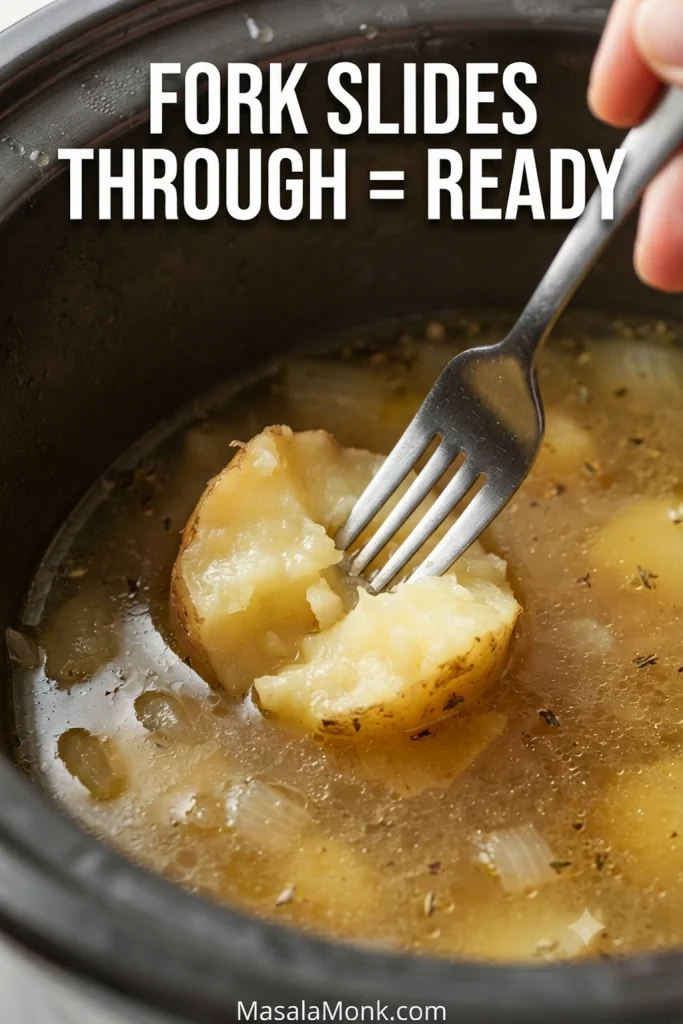
- Cook until the potatoes are tender. Use LOW for 6–8 hours or HIGH for 3–4 hours. Start checking at the early end of the range. A fork should slide through the center of one of the larger potato pieces without resistance.
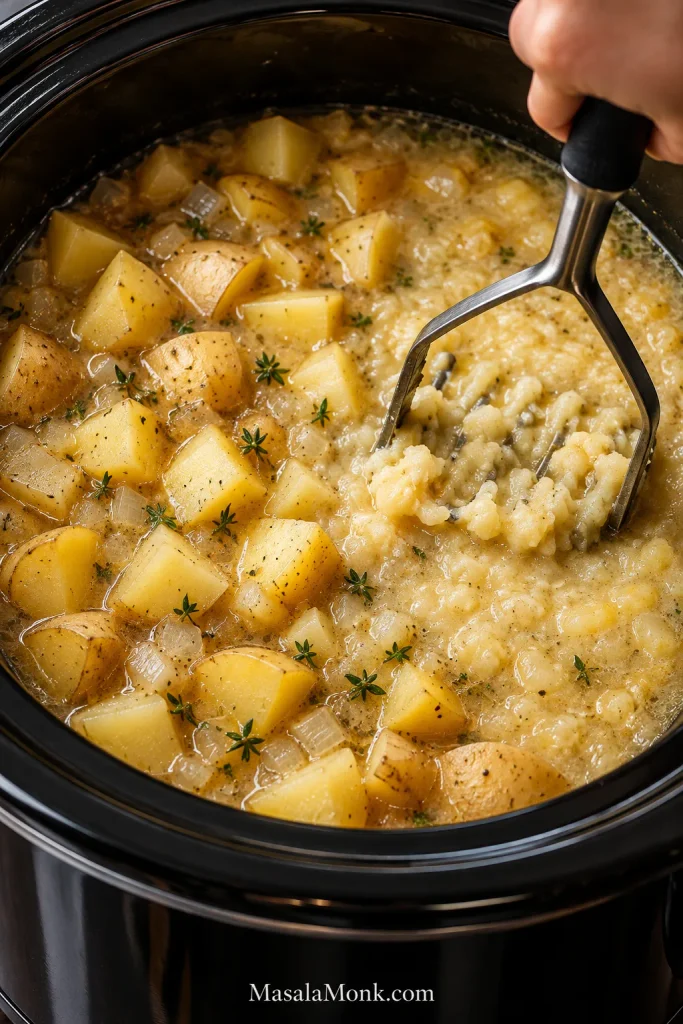
- Mash some of the potatoes. Use a potato masher directly in the slow cooker and mash roughly one-quarter of the potatoes. Stir well. The broth should begin to thicken while plenty of potato pieces remain intact. Mash a little more if you’d like a thicker soup.
Finish the Soup
- Add the cream. Stir in the heavy cream. If the slow cooker is on HIGH, switch it to LOW for the finishing stage.
- Melt in the cheddar. Add the cheese a handful at a time, stirring between additions. Keep the heat gentle and avoid a hard boil once the cheese is in.
- Finish and season. Cover and heat on LOW for about 10–15 minutes, or just until the soup is hot and the cheddar has melted smoothly. If it’s ready sooner, don’t keep heating it simply to finish the timer. Taste before adding more salt or pepper; the cheddar and bacon bring salt of their own.
- Load the bowls. If you used the raw-onion route, cook the bacon until crisp while the soup finishes, then drain it on paper towels. If you cooked and chilled the bacon earlier, re-crisp it briefly before serving if you like. Ladle in the soup, then finish with bacon, cool sour cream, green onions, and extra cheddar or black pepper if desired. Try to get a little of each in a spoonful—the crisp bacon, cool sour cream, and fresh green onions are what turn the creamy potato base into a loaded baked potato in soup form.
Batch size: This recipe is written for a 6-quart slow cooker. Don’t automatically double it in the same cooker; an overfilled pot can heat differently, and the potatoes may take longer to soften.
Which Potatoes Are Best for Slow Cooker Potato Soup?
Yukon Golds are the better fit for this version because they can thicken the broth while still leaving tender, recognizable potato pieces behind. Their thin skins are another advantage: after a good scrub, peeling is optional.
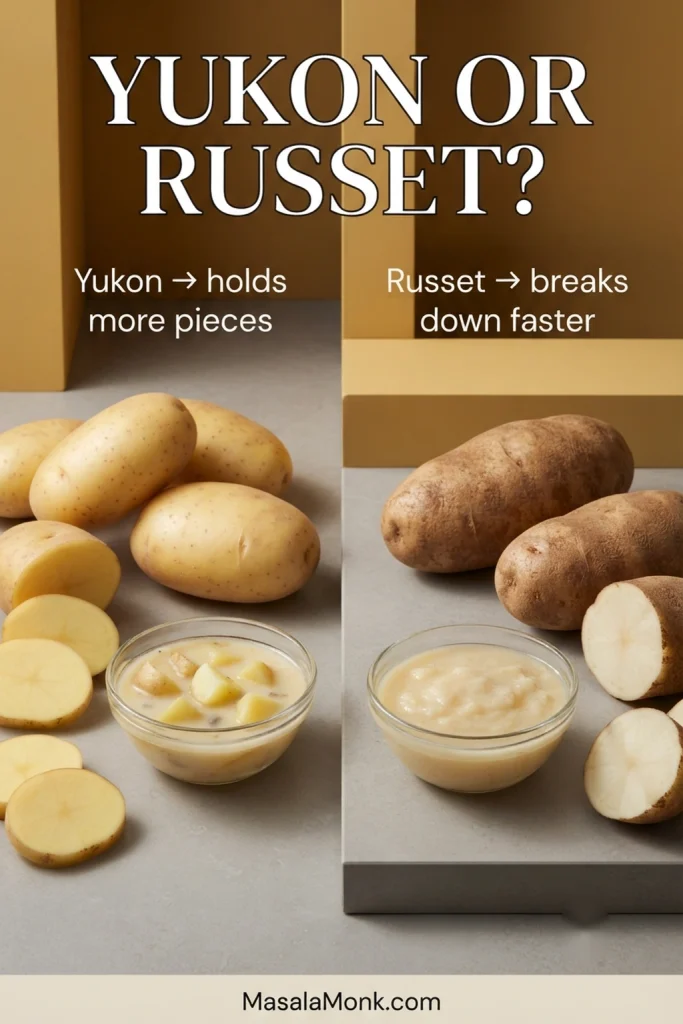
| Potato | What to Expect |
|---|---|
| Yukon Gold | Creamy when mashed, with tender pieces that hold their shape reasonably well. |
| Russet | Starchier and quicker to break down, giving the soup a thicker, smoother texture. |
Russets work too, but start with less mashing because they break down more readily. If you’d rather make a stovetop version with Russets, milk, and a small roux, try our classic potato soup recipe.
Ready to cook? Jump back to the recipe card.
How Long to Cook Potato Soup in a Slow Cooker
Before the clock starts, the slow cooker should contain the potatoes, onion, garlic, broth, and seasonings. Keep the cream and cheddar for the finishing stage, after the potatoes are tender and you can judge the texture properly.
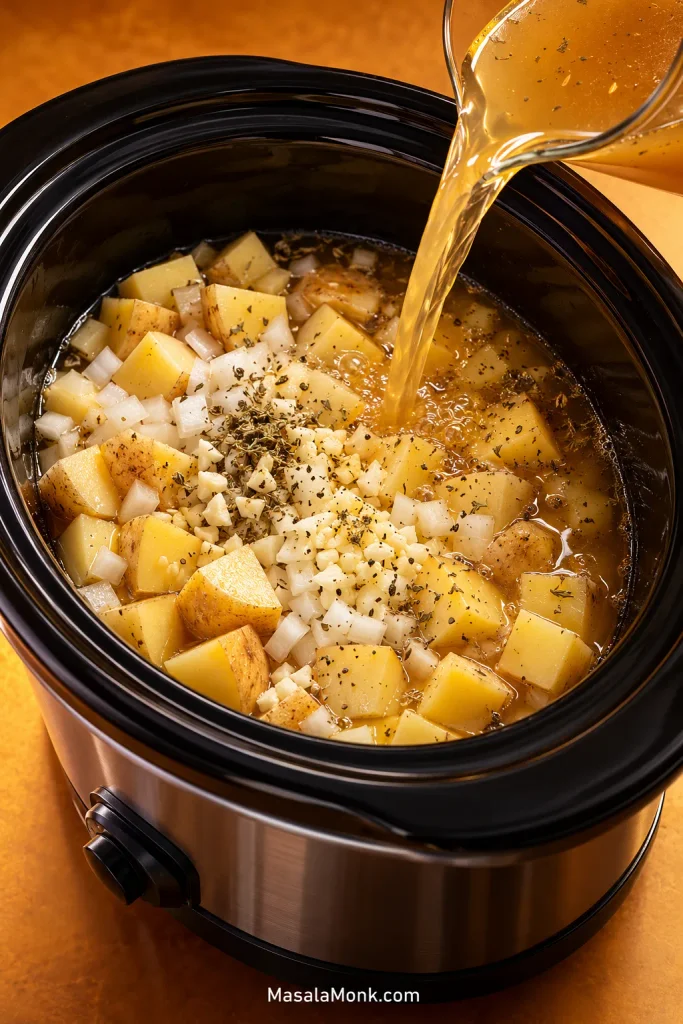
For roughly ¾-inch potato pieces, plan on about 6–8 hours on LOW or 3–4 hours on HIGH. Cut size and individual slow cookers affect how quickly the potatoes soften, so start checking at the early end of the range.
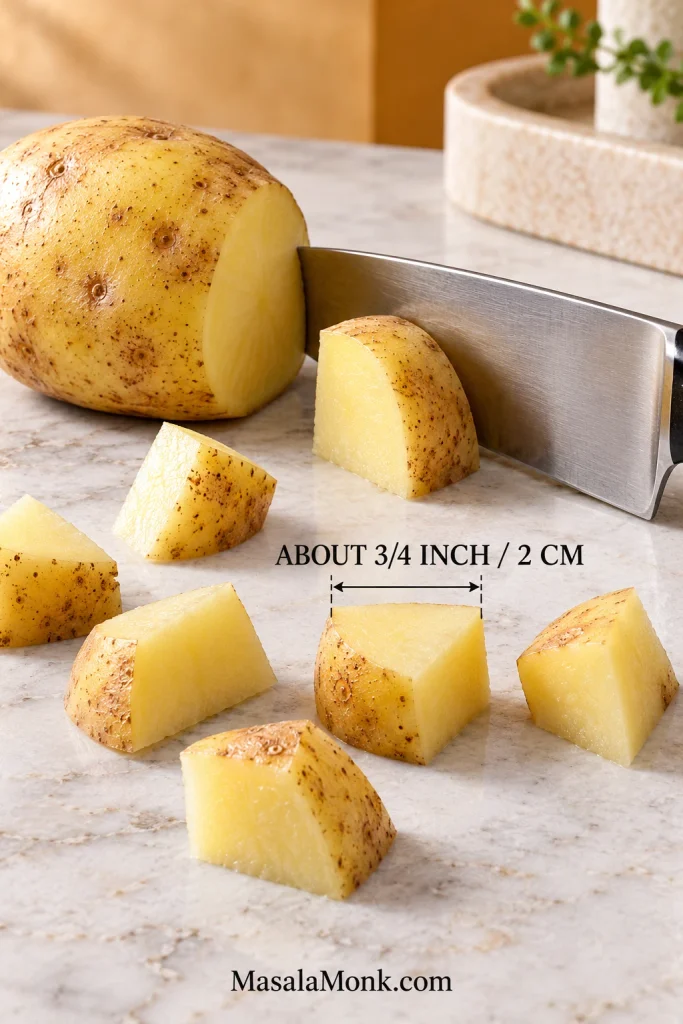
Once a fork slips easily through one of the larger pieces, move on with the recipe. There’s no benefit in making tender potatoes wait for the clock.
What Should Potato Soup Look Like Before You Add the Cream?
Don’t expect the soup to look thick through most of the slow cooking. Much of its body develops near the end, after the potatoes are tender and you mash some into the broth.
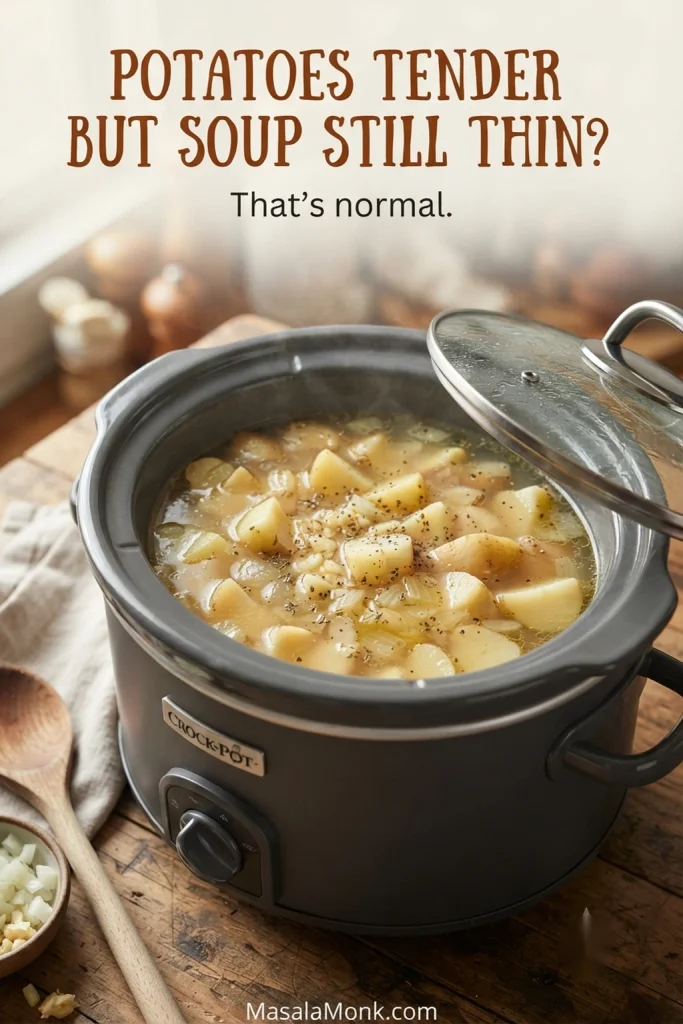
After mashing, the broth should lightly coat the remaining potatoes without looking pasty. Leave plenty of tender pieces visible. The cream and cheddar will add richness at the end, so don’t keep mashing simply because the soup doesn’t yet look like the finished bowl.
How to Get Creamy Potato Soup Without a Blender
A potato masher is all you need here. Stop once the broth has the body you want and enough tender potato pieces remain for your preferred texture.

For a smoother soup, transfer a portion to a tall, heat-safe container suitable for immersion blending. Keep the blender head submerged and use short pulses to reduce splashing, then return the blended soup to the slow cooker. Follow your blender manufacturer’s instructions for handling hot liquids.
Whichever method you use, judge the final consistency on a spoon rather than by how thick the surface looks in the slow cooker.
When to Add Cream and Cheese
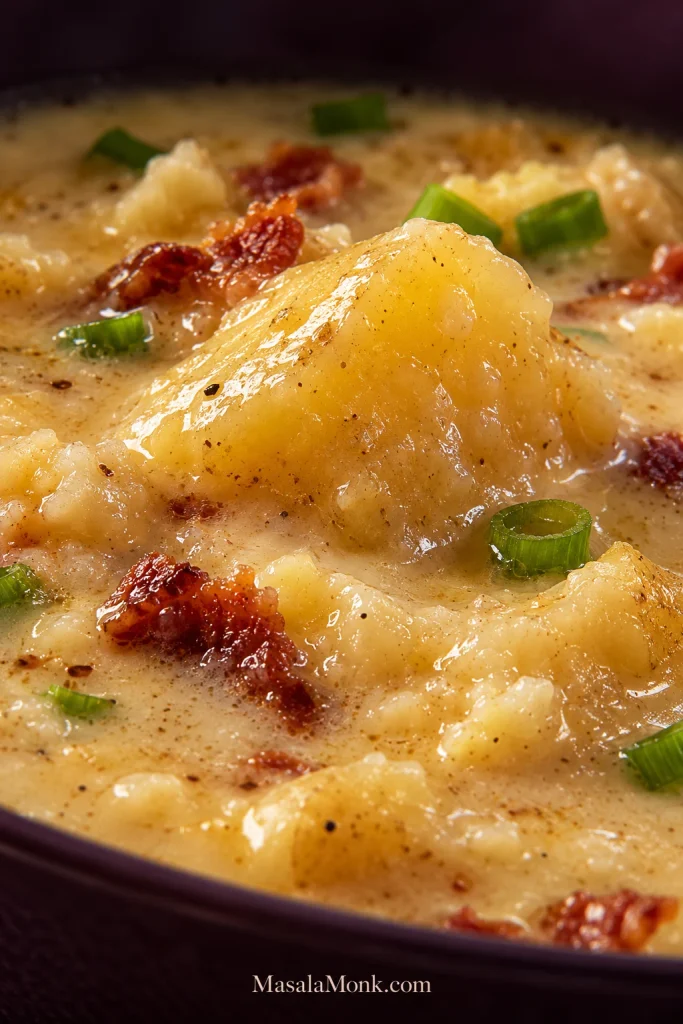
Wait until the potatoes are tender and you’re happy with the thickness before adding the cream and cheddar. Finish on LOW for about 10–15 minutes, or just until everything is hot and the cheese has melted. If the soup is already piping hot, the cheese may melt sooner.
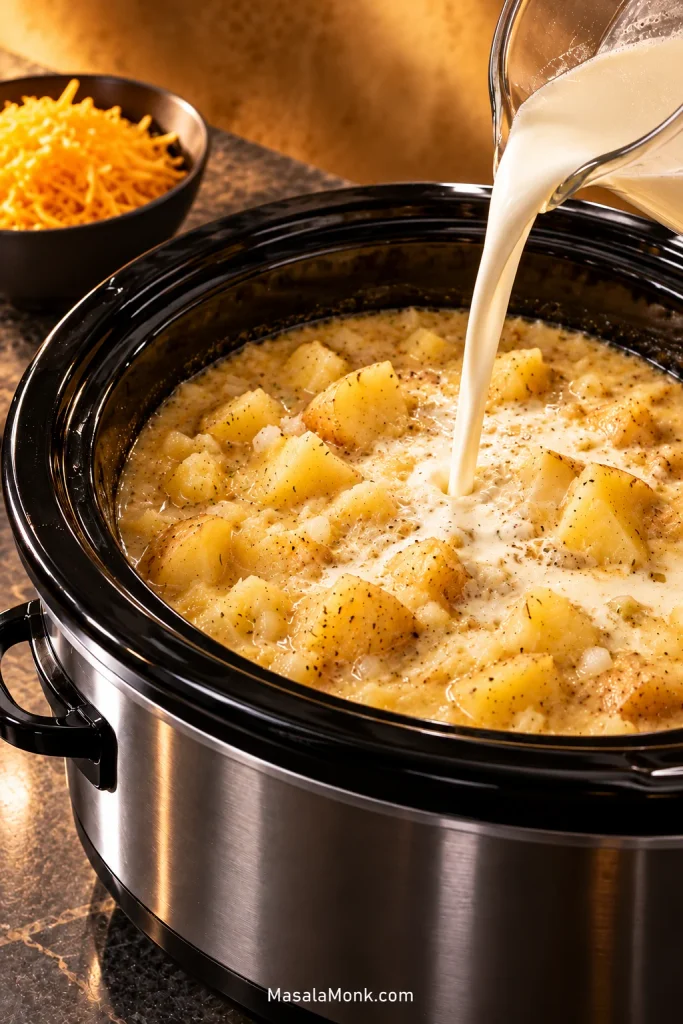
Freshly shredded cheddar generally melts more smoothly here. Packaged shredded cheese can contain anti-caking ingredients that sometimes affect the finish, so shred the cheddar from a block if you can. Add it gradually and keep the heat gentle.
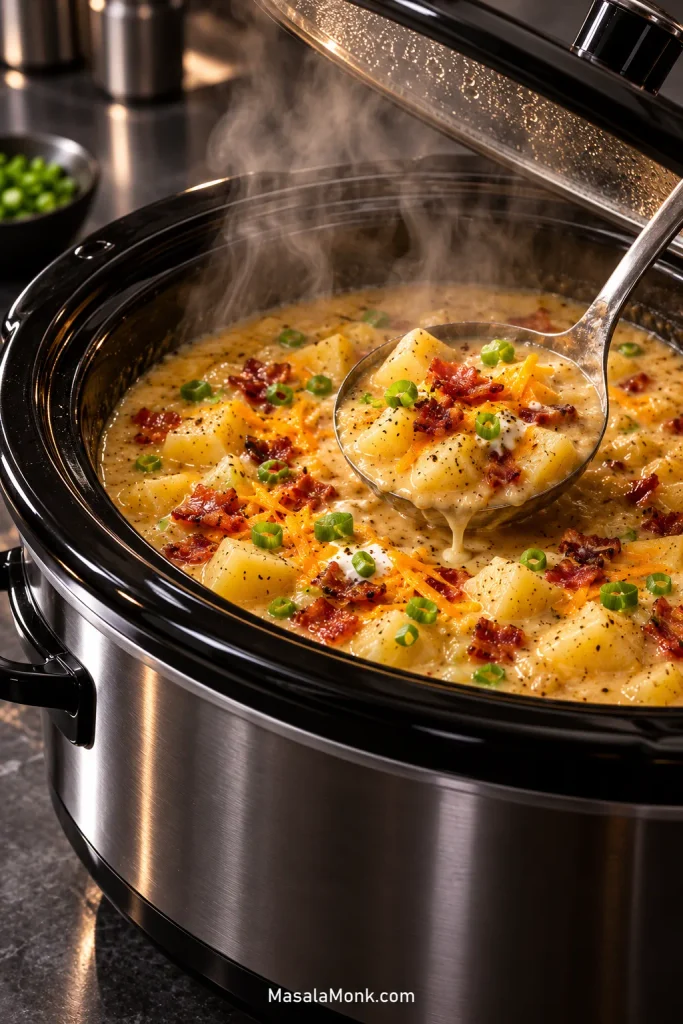
If you enjoy cheesy slow-cooker soups, our slow cooker broccoli cheese soup also saves the cheesy finish for the end.
If the texture isn’t behaving the way you expected, jump to troubleshooting.
How to Fix Bland Potato Soup
Make the final seasoning decision after the cream and cheddar are in. Potatoes and cream can soften the impression of seasoning, while the broth, cheddar, and bacon can all contribute different amounts of salt.

- Creamy but muted: Add a small pinch of salt, stir well, and taste again.
- Rich but a little heavy: Try more black pepper or green onion before reaching for more cheese.
- Still tastes flat: Put a spoonful in a small bowl and add a few drops of lemon juice or mild vinegar. You’re not trying to make the soup taste acidic; you’re checking whether a tiny bit of acidity makes the potato, cheddar, and bacon flavors taste clearer. If it helps, add a very small amount to the pot, stir, and taste again.
- The cheddar is taking over: Stop adding cheese and reassess the salt, pepper, and fresh toppings instead.
Slow Cooker Potato Soup Troubleshooting
Start with the problem you can actually see or taste, then correct one thing at a time. Texture problems are easier to solve when you resist changing the seasoning, dairy, and thickness all at once.
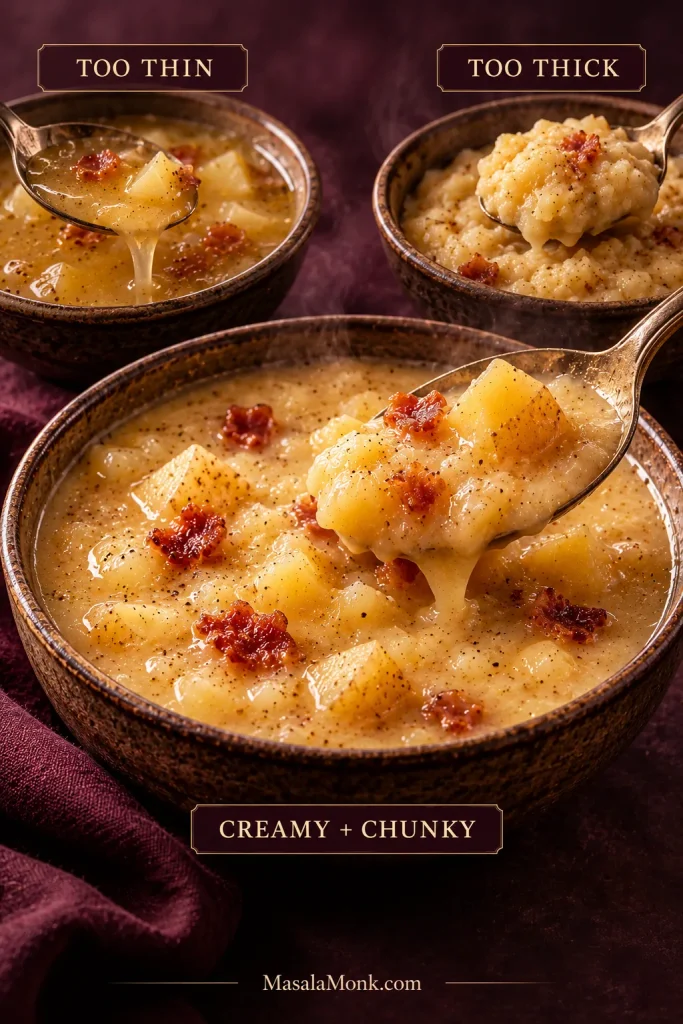
The soup is too thin
Start by mashing another small scoop of tender potatoes into the broth. Stir and give the soup a moment before judging it again. This thickens the broth without sacrificing all the potato pieces.
If you’ve reached the potato texture you want and the soup is still too thin, mix 1 teaspoon cornstarch with 1 tablespoon cold water. Stir the slurry thoroughly into the hot soup and continue heating gently until the broth visibly thickens. Repeat with another small slurry only if needed; avoid a vigorous boil once the cream and cheddar are in.
If the soup is both thin and bland, fix the consistency first. Once the texture is right, taste again and adjust the flavor separately.
The soup is too thick
Stir in warm broth a splash at a time until the soup loosens to the consistency you want. Remember that it will thicken again as it cools.
The potatoes are still firm
Put the lid back on and keep cooking. Don’t add the cream and cheese just because the suggested time has passed; wait until the potatoes are fully tender.
The soup is smoother than you wanted
Stop mashing or blending. If it’s also too thick, loosen it with a little warm broth. Next time, mash a smaller portion first—you can always mash more, but you can’t put the potato chunks back.
The dairy separated or the cheese looks oily
Turn the heat down immediately and stir gently. If the soup has only started looking oily, gentle stirring may help it come back together; badly separated cheese may not become completely smooth again. Don’t try to rescue it by turning up the heat or adding more cheese.
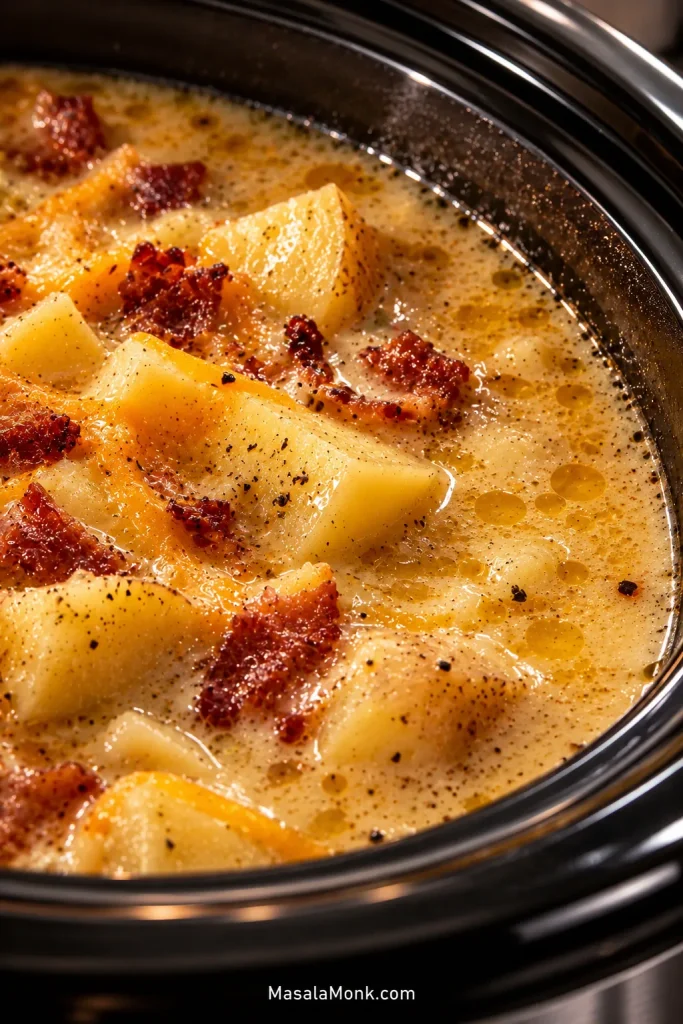
For the next batch, add freshly shredded cheddar gradually after the potatoes are tender and keep the heat gentle while it melts.
Back to the recipe card · Back to top
Can You Use Frozen Potatoes or Hash Browns?
Yes, but the shortcut you choose changes the texture as well as the prep.
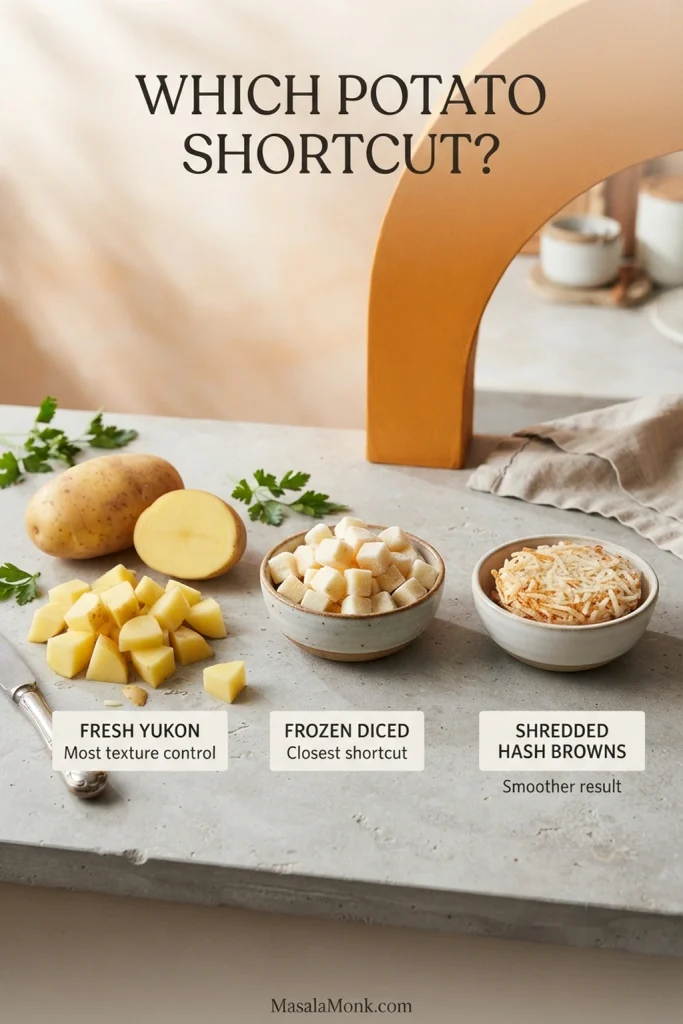
- Fresh Yukon Golds: Best when you want control over how many potato pieces stay intact and how much gets mashed into the broth; they require the most chopping.
- Frozen diced potatoes: The closest lower-prep shortcut to the fresh-potato version. Use about the same weight as the fresh potatoes. Cooking time can vary by brand and piece size, so rely on the fork test rather than the clock.
- Shredded hash browns: They break down much more readily, giving you a smoother shortcut-style Crock-Pot potato soup with fewer distinct potato pieces.
Can You Prep Slow Cooker Potato Soup the Night Before?
Yes. If you’d rather get the chopping done ahead, scrub, peel if desired, and cut the potatoes the night before. Keep the cut potatoes submerged in cold water in a covered container in the refrigerator, then drain them well before adding them to the slow cooker the next day. You can dice the onion ahead too; refrigerate it separately in a covered container.
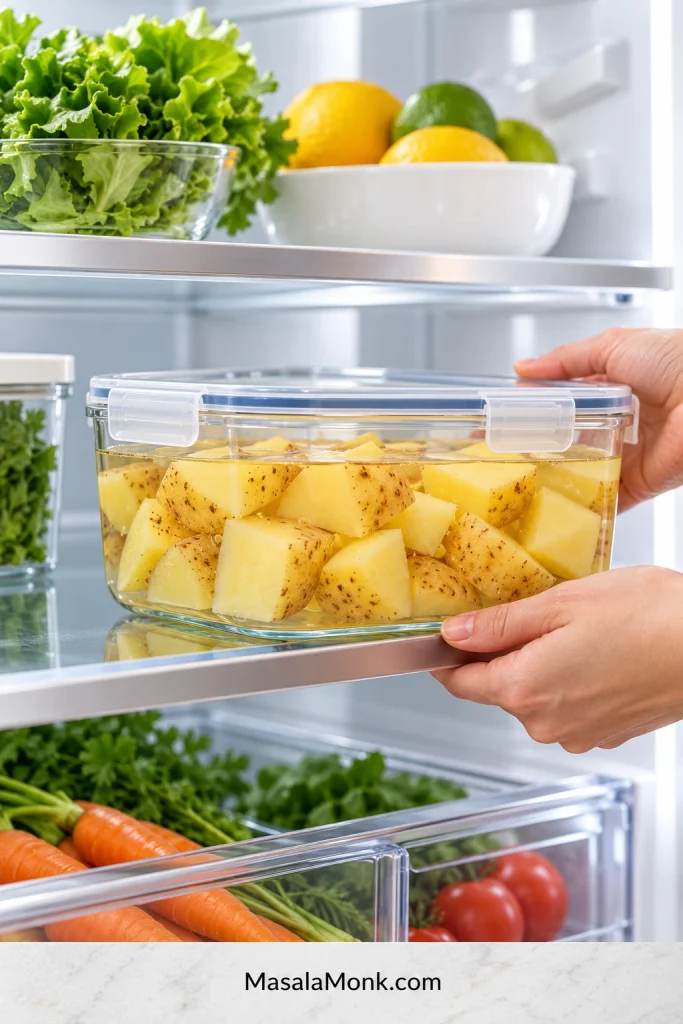
Keep the prepped ingredients refrigerated until you’re ready to cook. This moves the knife work to the night before without changing the broth or dairy stages of the recipe.
Cooking tomorrow? Jump back to the recipe card.
Easy Potato Soup Variations
Add ham
Stir in 1 cup (about 150 g) diced cooked ham near the end, giving it enough time to heat through. Ham and cheddar both add salt, so taste the soup before seasoning further.
Use milk instead of heavy cream
Replace the ¾ cup (177 ml) heavy cream with ¾ cup (177 ml) whole milk for a lighter soup. Add it at the same finishing stage and keep the heat gentle. The soup will be less rich and may be slightly thinner.
Make the bowl more loaded
Put extra bacon, cheddar, sour cream, and green onions on the table and let everyone build the bowl they want. If that baked-potato combination is exactly what you’re after, our twice baked potato casserole turns the same idea into a bubbling side dish.
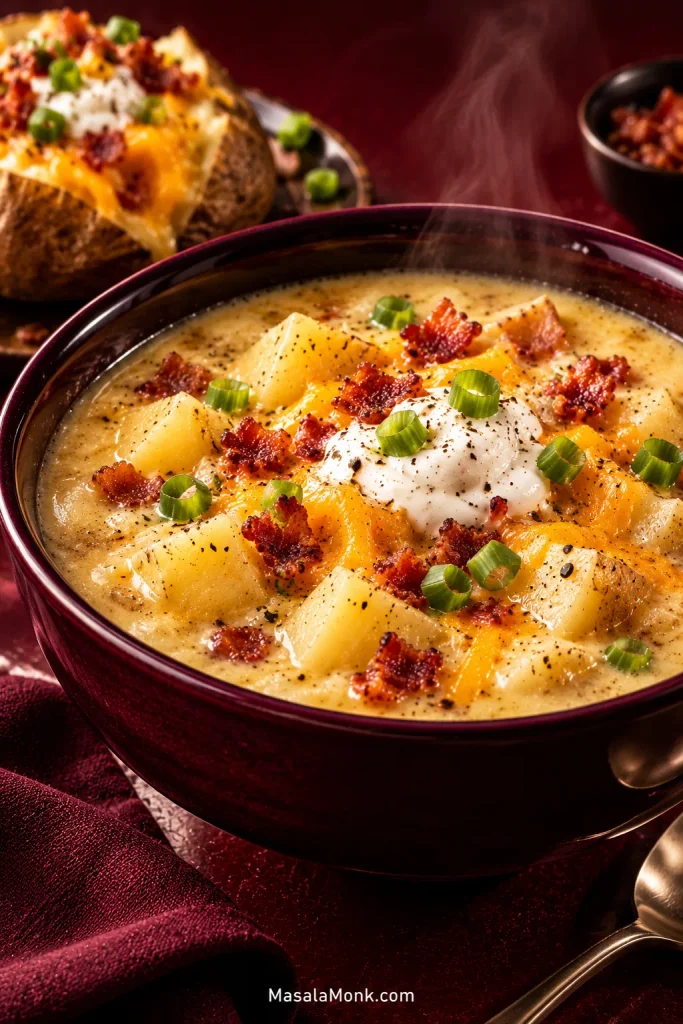
Prefer a smoother potato soup without the cheddar-and-bacon profile? Our potato leek soup takes the flavor in a gentler, leek-forward direction.
What to Serve With Potato Soup
A loaded bowl is substantial enough to be dinner on its own. If there’s crusty bread on the table, use it to catch the last streaks of cheddar-rich broth. A crisp salad is a good counterpoint when you want something fresh alongside all that potato, bacon, and cheese. Our Irish soda bread makes a heartier bread option for the table.
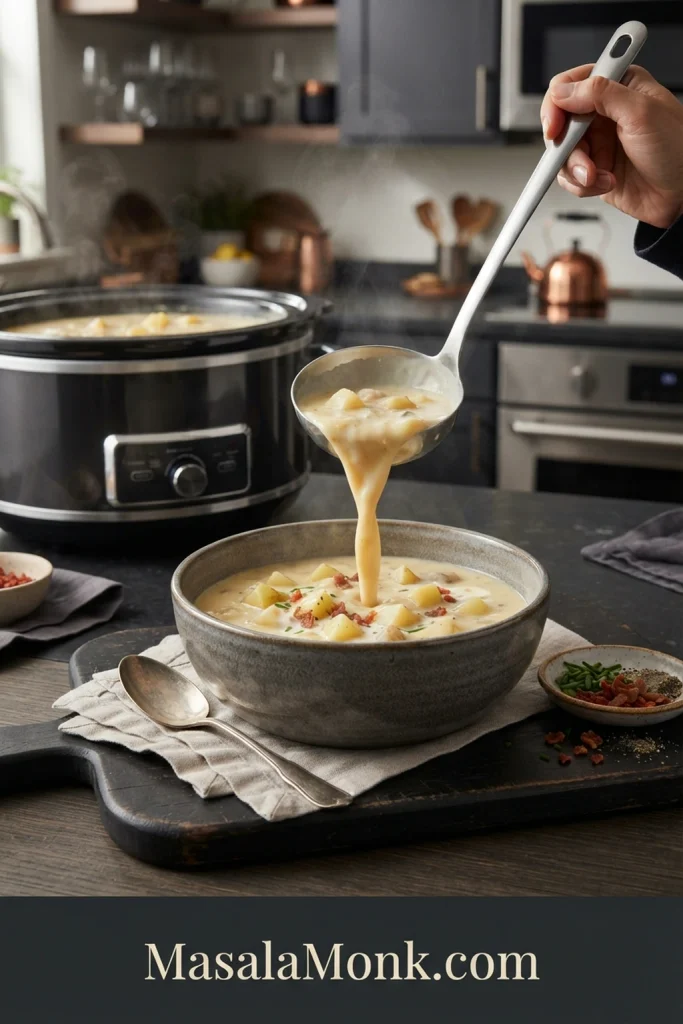
However you top the bowls, keep the garnishes proportional enough that the creamy potato base remains easy to spoon and the tender pieces still come through.

How to Store and Reheat Potato Soup
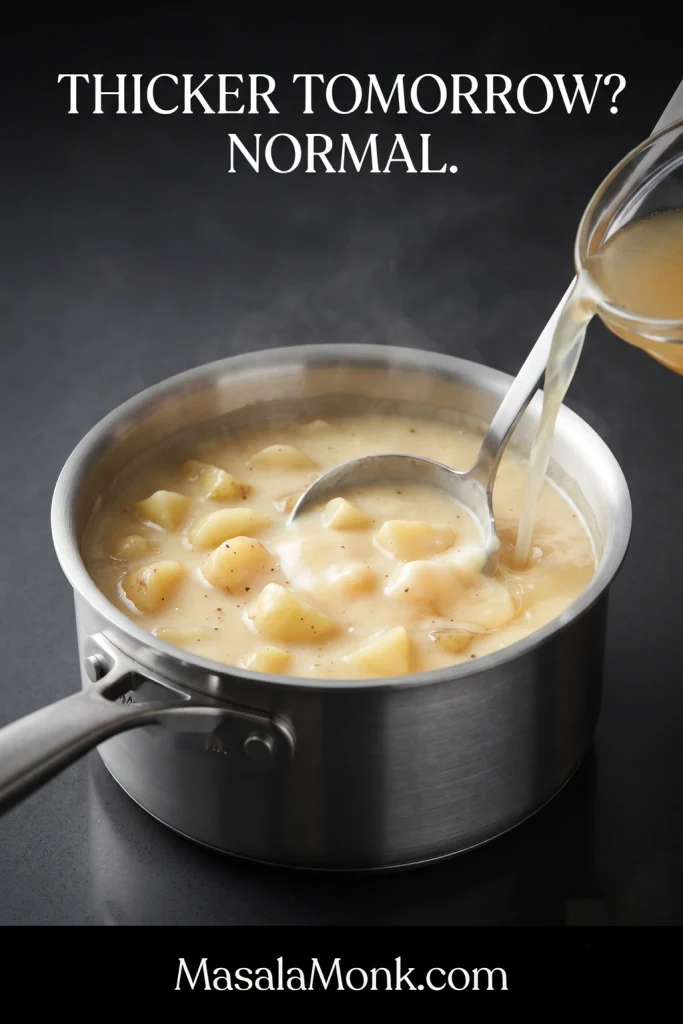
Expect the soup to be thicker tomorrow than it is tonight. The potatoes continue holding onto liquid as the soup chills, so leftovers often need a splash of broth or milk when reheated.
Refrigerating
Refrigerate leftovers within 2 hours in shallow, covered containers and use them within 3–4 days.
Reheating
Reheat leftovers on the stovetop or in the microwave, stirring as they warm. Add a splash of broth or milk if the soup has become too thick. Reheat thoroughly to 165°F (74°C). USDA guidance also advises bringing soups to a rolling boil when reheating; on the stovetop, make that brief rather than continuing to boil the creamy soup once it is hot. For microwave reheating, stir the soup and check the temperature in several places. See the USDA’s leftovers and food safety advice for additional guidance.
Don’t use the slow cooker to slowly bring refrigerator-cold leftovers back up to temperature. Once the soup has been properly reheated, a slow cooker can keep it hot for serving; keep hot food at 140°F (60°C) or above.
Can You Freeze Potato Soup?
You can freeze this soup, but the potatoes may become softer or slightly grainy and the creamy broth may need extra stirring after thawing. Cool the soup promptly, divide it into shallow freezer-safe containers, and refrigerate or freeze it within 2 hours. If you’ll eat the leftovers within 3–4 days, refrigeration generally gives you the better texture.
Thaw frozen soup in the refrigerator when practical, then reheat it thoroughly on the stovetop or in the microwave. Stir as it warms and add a splash of broth or milk only if the consistency needs loosening.








