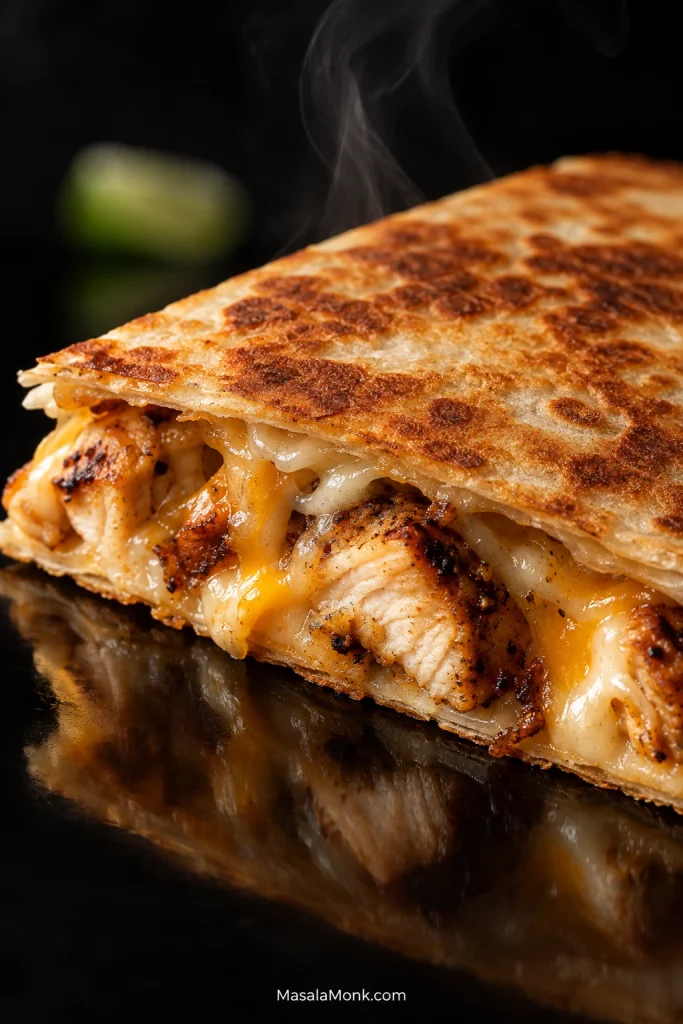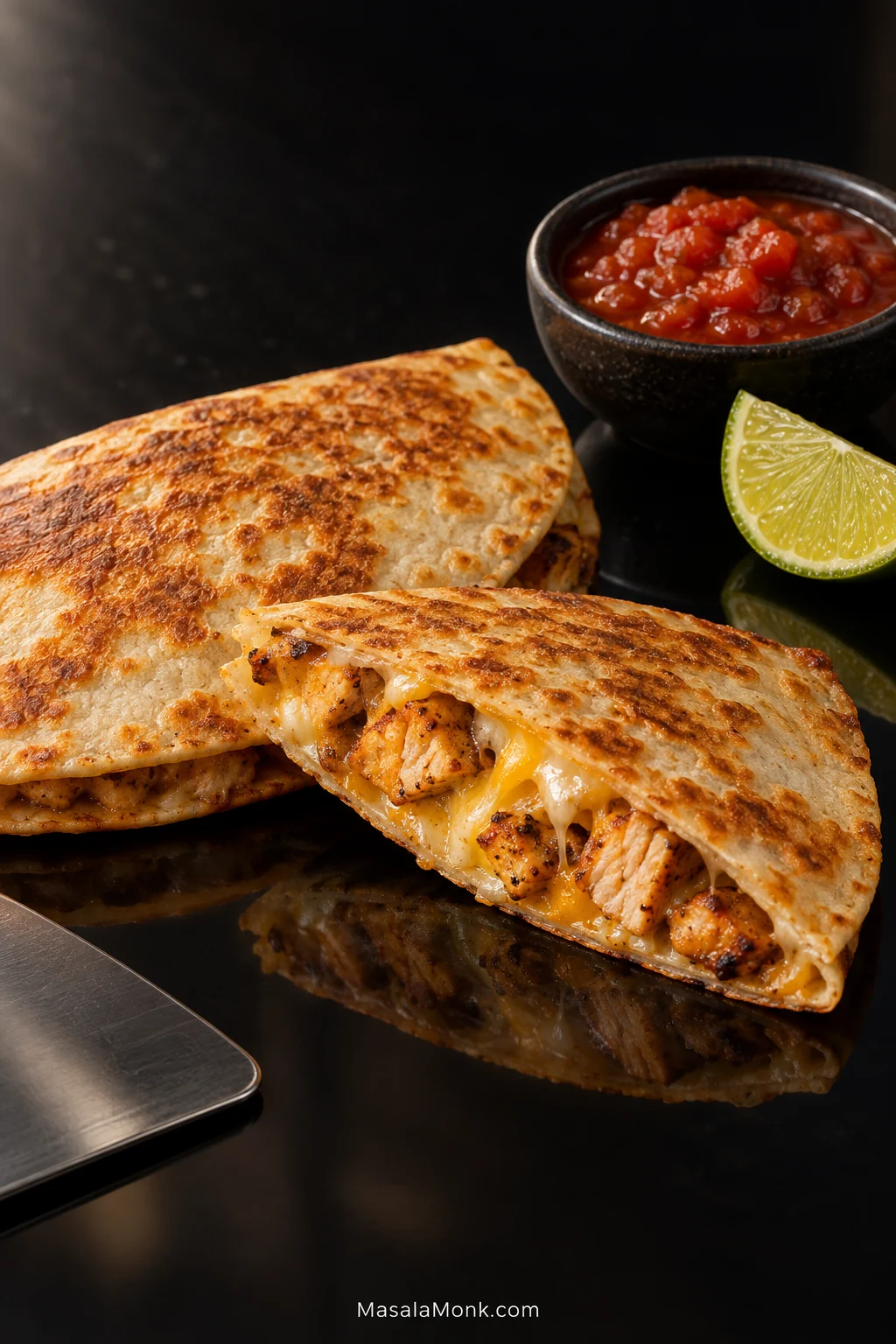
A chicken quesadilla can fool you. The tortilla looks done, but the cheese in the middle is still firm. Or the cheese melts and the bottom turns soft because the filling was wetter than it looked.
Keep the filling fairly thin, season the chicken well and give the cheese enough time to melt before the tortilla gets too dark. The payoff is simple: juicy chicken, hot melted cheese and a tortilla that turns golden in broad patches and gives a light crackle at the edge when you cut it.
This chicken quesadilla recipe works with raw chicken, leftovers or rotisserie chicken, so use whichever route gets dinner into the pan with the least fuss.
Start With the Chicken You Have
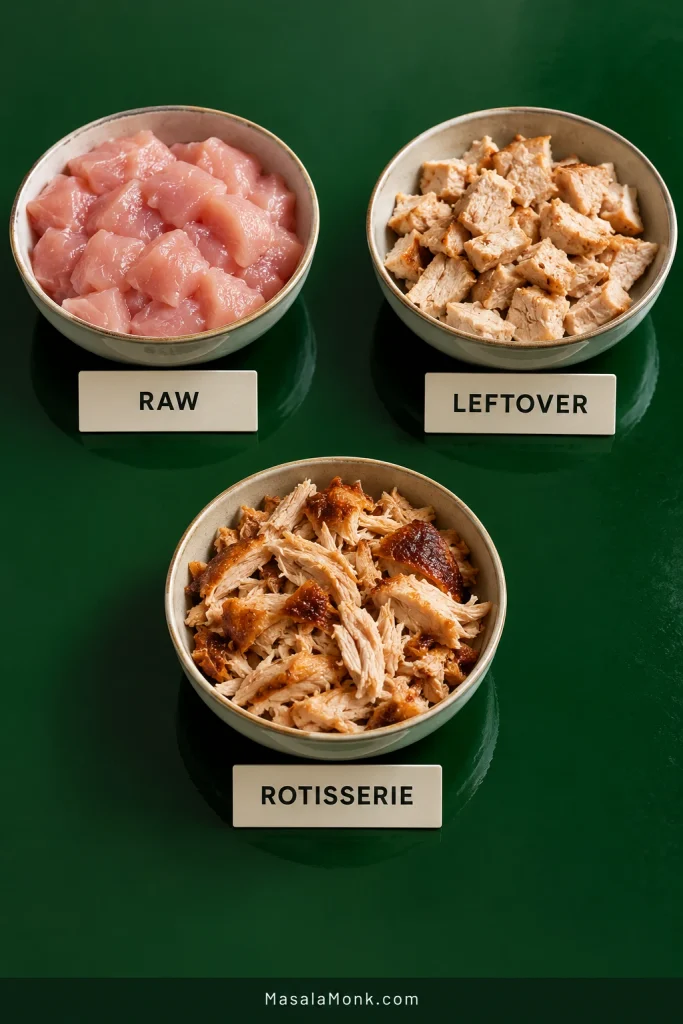
Raw, leftover and rotisserie chicken all work. Pick the route that matches what is already in your kitchen.
Raw Chicken
35–40 minutes. Season it, cook it through, then assemble.
Leftover Chicken
25–30 minutes. Warm it gently and season only as much as it needs.
Rotisserie Chicken
25–30 minutes. Shred or chop it, warm it and taste before adding salt.
Chicken Quesadilla Recipe
Easy Crispy Chicken Quesadillas
Smoky cumin-lime chicken, melted Monterey Jack and sharp cheddar folded into flour tortillas and cooked until crisp and golden in the skillet.
Ingredients
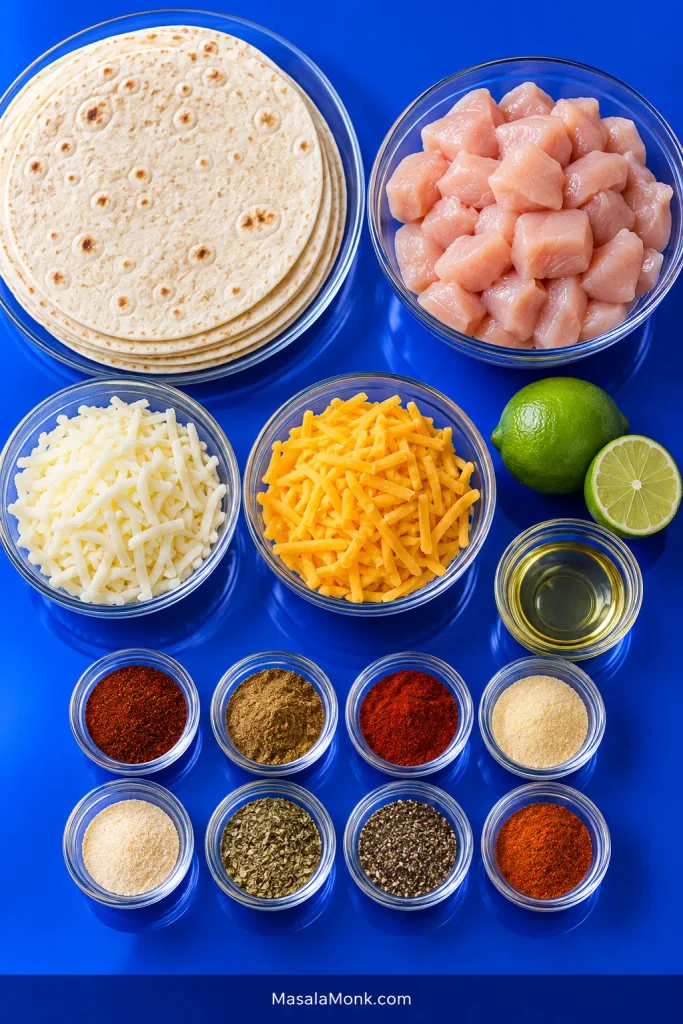
Seasoning Blend
- 2 tsp mild American-style chili powder seasoning blend
- 1 tsp ground cumin
- 1 tsp smoked paprika
- 1 tsp garlic powder
- ½ tsp onion powder
- ½ tsp dried oregano
- ¼ tsp black pepper
- ⅛–¼ tsp cayenne, optional
Shortcut: Start with 1½ tbsp taco seasoning for 450 g / 1 lb raw chicken instead of the individual spices. Check the salt in the blend before adding more.
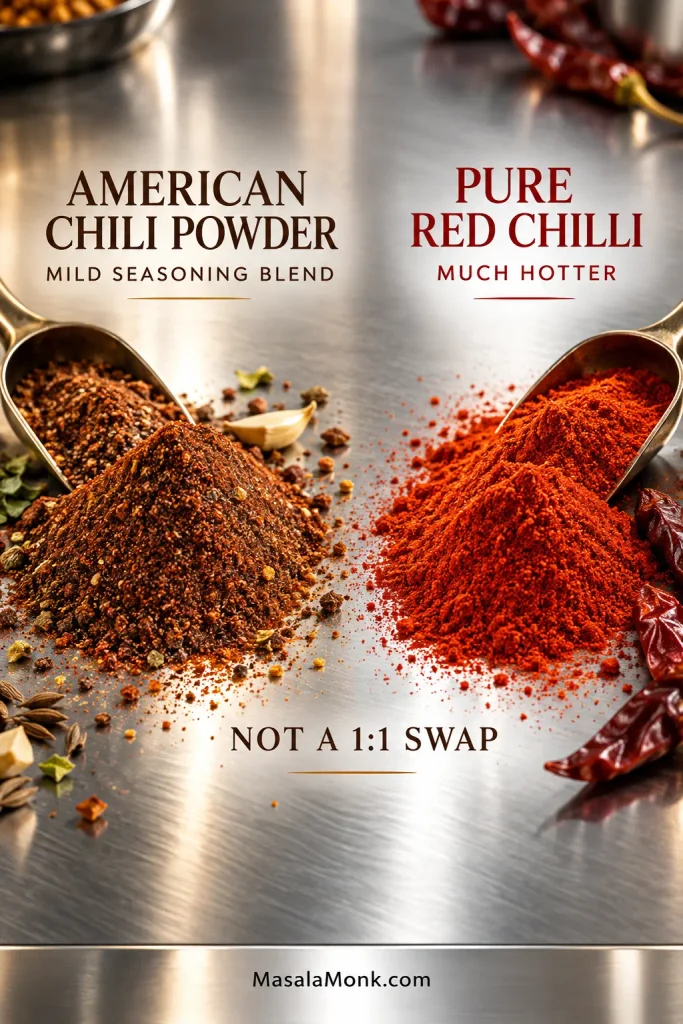
A note on chili powder: American-style chili powder is usually a fairly mild seasoning blend. Pure ground red chile or chilli powder is much hotter and isn’t a teaspoon-for-teaspoon substitute, so use a small amount to taste instead.
Raw Chicken Ingredients
- 450 g / 1 lb boneless, skinless chicken breast or thighs, cut into roughly ½-inch / 1.25-cm pieces
- Full seasoning blend above
- ¾ tsp fine salt
- 1 tbsp / 15 ml neutral cooking oil
- 2–3 tsp / 10–15 ml fresh lime juice
Cooked or Rotisserie Chicken Ingredients
- 320–340 g / 11–12 oz cooked chicken, chopped or shredded
- Roughly half the seasoning blend above — about 1 tablespoon of the mixed blend — to start, or less for already-seasoned chicken
- Salt only as needed
- 2–3 tsp / 10–15 ml fresh lime juice
- 1–2 tbsp / 15–30 ml water only for genuinely dry chicken
Tortillas, Cheese and Skillet Oil
- 4 large flour tortillas, about 10 inches / 25 cm each
- 120 g / 4.2 oz Monterey Jack, grated
- 80 g / 2.8 oz sharp cheddar, grated
- 2 tsp / 10 ml neutral oil for the skillet, used a little at a time
Equipment
- 12-inch skillet preferred
- Wide spatula
- Cutting board and sharp knife
- Instant-read thermometer if starting with raw chicken
- Box grater, optional
A smaller skillet is fine for the quesadillas themselves. If raw chicken is crowded in your pan, cook it in two batches; otherwise it sheds water faster than the pan can get rid of it.
Cook the Chicken
Starting With Raw Chicken
- Cook it. Toss the chicken with the seasoning blend and salt. Heat 1 tbsp / 15 ml oil in the skillet over medium-high heat, add the chicken in an even layer and cook until browned in places. Start checking around the 5-minute mark; the largest pieces should reach at least 165°F / 74°C.
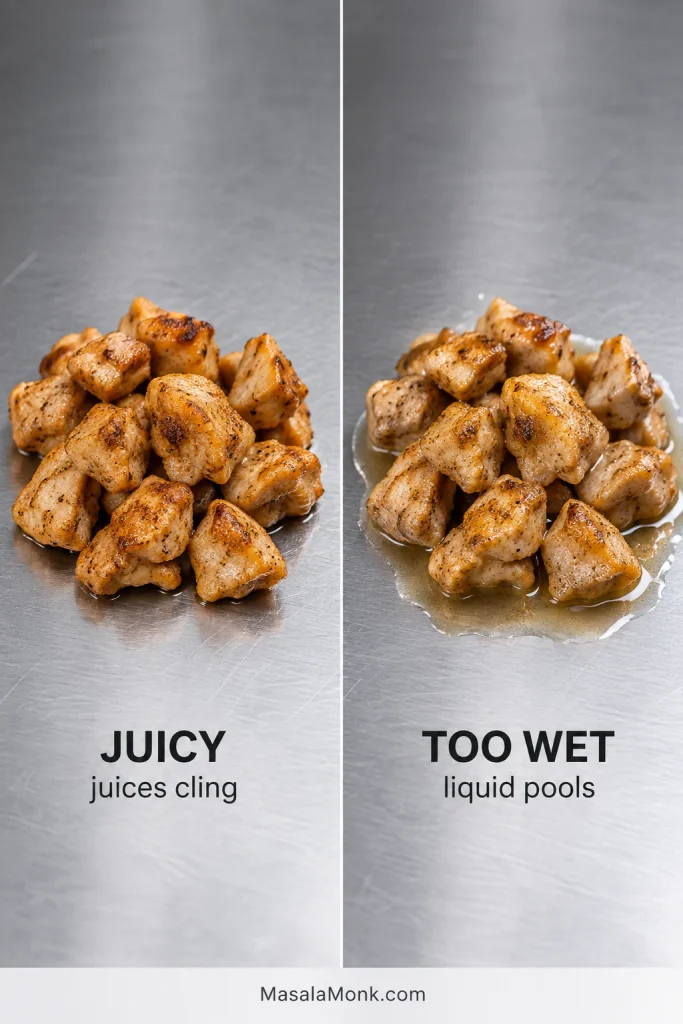
- Finish it. Add 2 tsp lime juice and taste a piece. Add the final teaspoon if you want more acidity, then move the chicken to a plate. Juices clinging to the pieces are fine; a puddle of liquid is not.
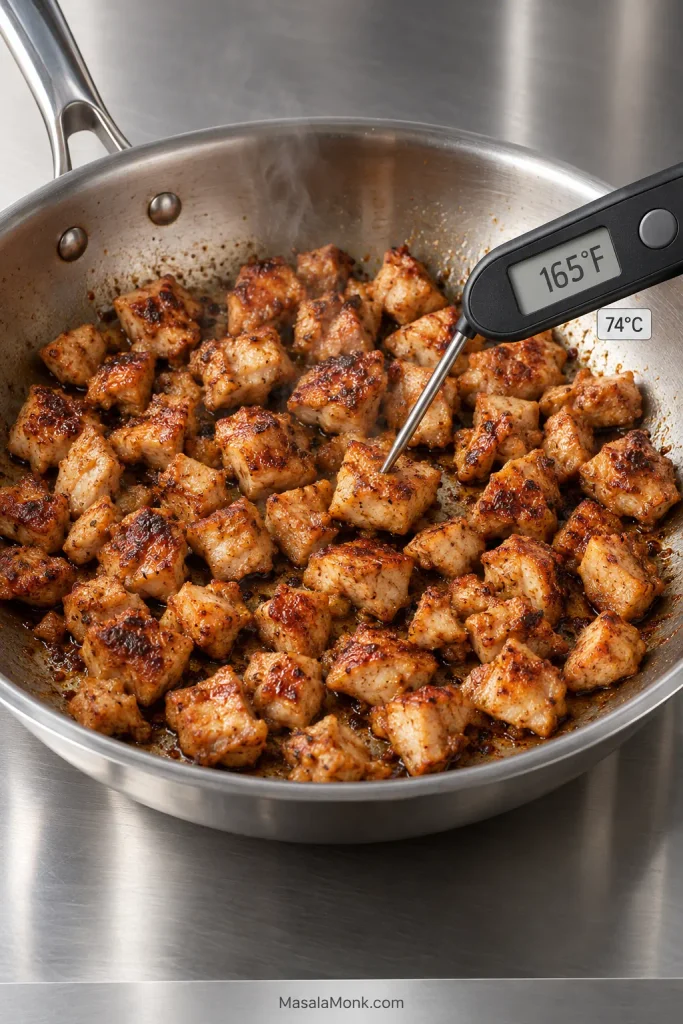
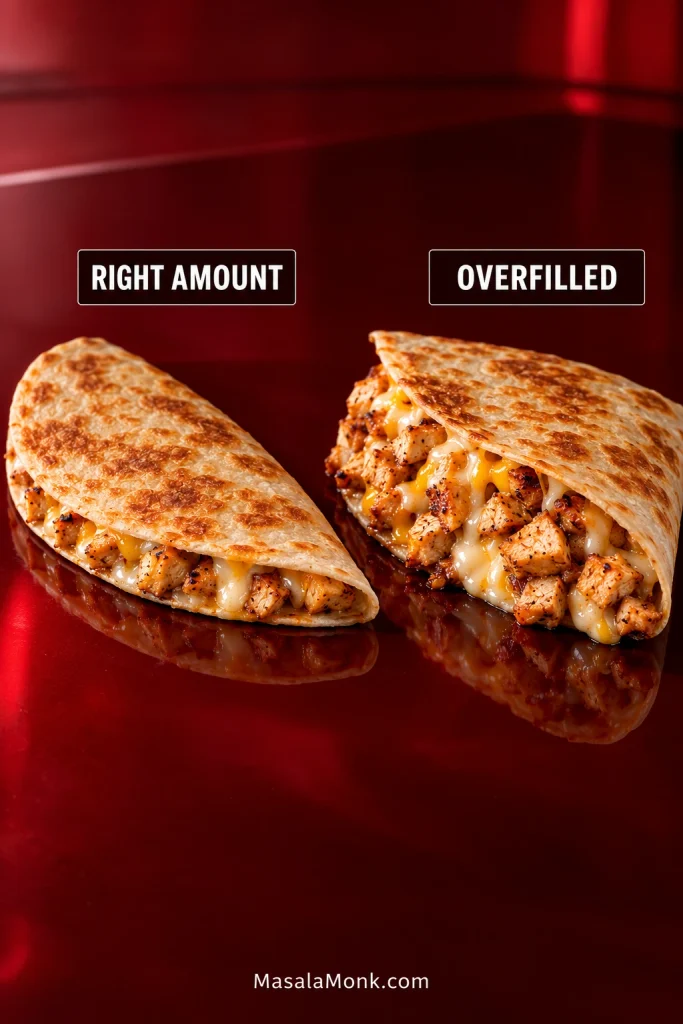
Raw chicken doesn’t always lose exactly the same amount of moisture as it cooks. If you end up with a little more than the 320–340 g needed for four quesadillas, don’t force it in; a little extra chicken is better than an overfilled tortilla.
Starting With Cooked or Rotisserie Chicken
Warm it gently in the skillet over medium heat. Plain leftover chicken can take roughly half the seasoning blend; rotisserie, grilled or fajita chicken may need almost none. A spoonful of water helps genuinely dry meat, but let visible liquid disappear before assembly. Finish with lime and give it one last taste.
With rotisserie chicken, remove the bones first. Crisp pieces of skin are welcome; large soft pieces of fatty skin tend to make the filling greasy.
Assemble and Cook
Assemble the Filling
- Mix the cheeses. Use 50 g / 1.75 oz for each quesadilla.
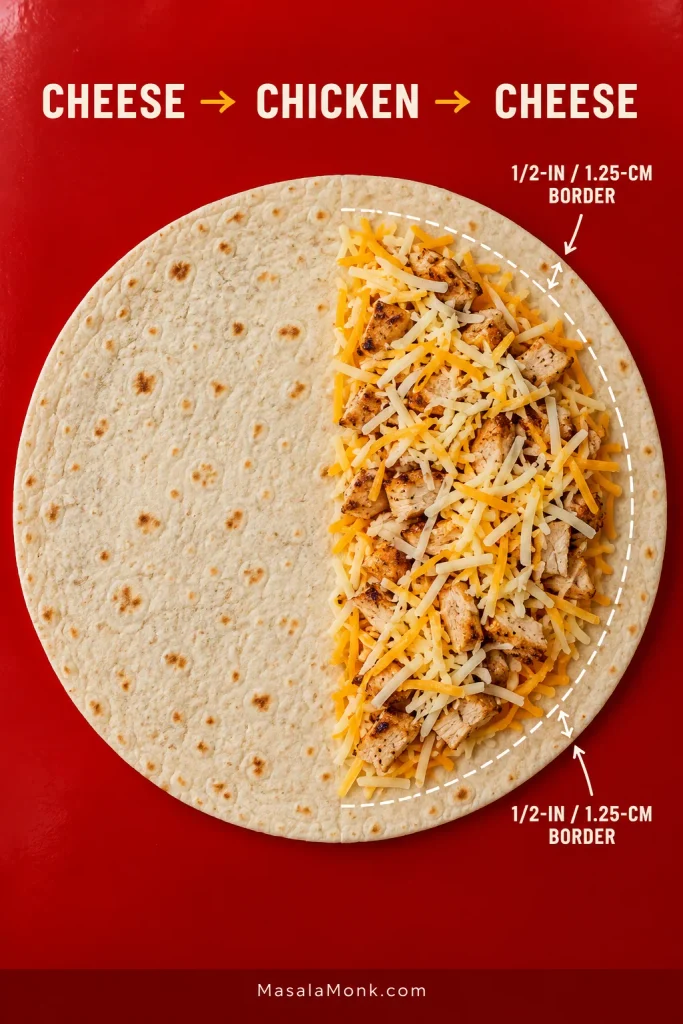
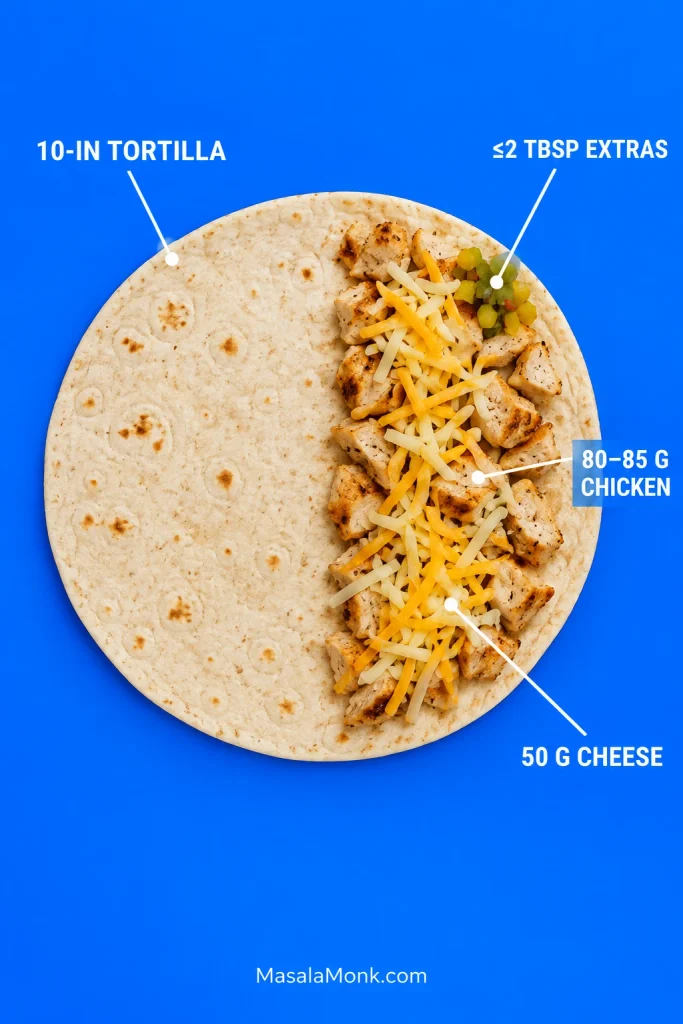
- Build one half of the tortilla. Scatter 25 g cheese over one half, stopping roughly ½ inch / 1.25 cm from the edge. Add 80–85 g cooked chicken and finish with another 25 g cheese. Fold the tortilla over and press gently.
Cook and Flip
- Heat the skillet over medium. Wipe away any dark seasoning left from the chicken, then spread ½ tsp / 2.5 ml oil into a thin film.
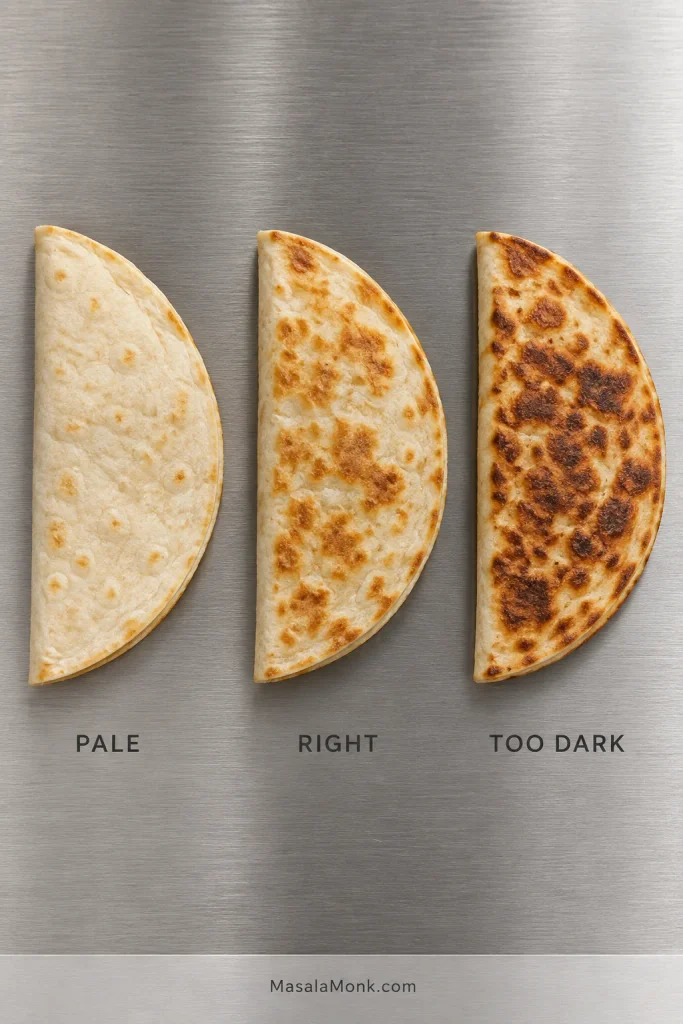
- Cook the first side for 2–3 minutes. Lift an edge with the spatula. You want broad golden patches underneath while the cheese near the fold begins to soften and look glossy. By now the tortilla should smell properly toasted, not scorched.
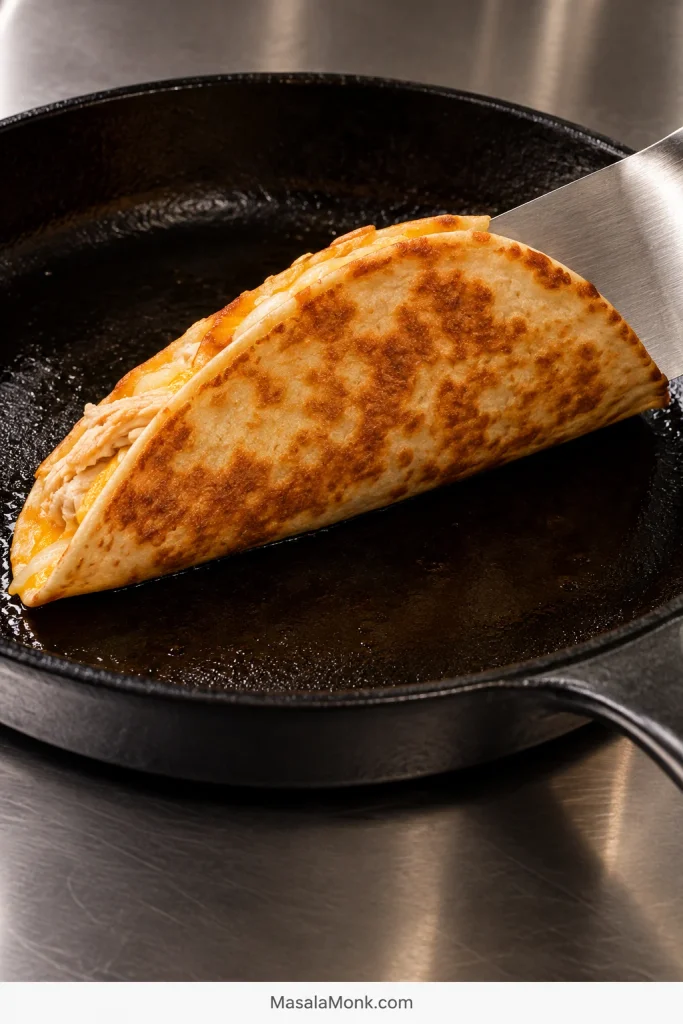
- Let the first quesadilla set the heat for the batch. It doesn’t have to be perfect. Dark tortilla with firm cheese? Turn the heat down. Still pale after several minutes? Nudge it up. The next three will be easier.
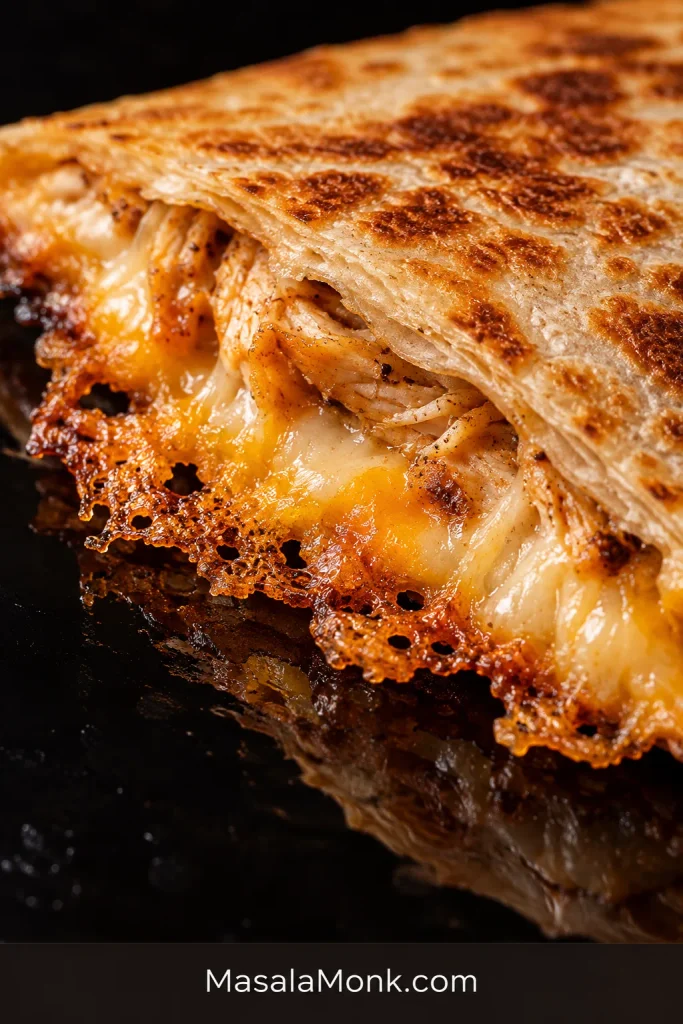
- Flip and cook another 1–2 minutes, until the second side is golden and the cheese has melted. A little cheese escaping and crisping against the tortilla is one of the good bits; leave it there.
- Rest for 1–2 minutes before cutting. Repeat with the remaining quesadillas, wiping dark cheese or seasoning out of the skillet when necessary.
How Much Chicken and Cheese Goes in One Quesadilla?
For a 10-inch / 25-cm tortilla, 80–85 g cooked chicken and 50 g cheese is a reliable starting point. A thick, overloaded center takes longer to heat and is harder to flip cleanly.
| Tortilla | Cooked chicken | Cheese | Extra filling |
|---|---|---|---|
| 10 in / 25 cm | 80–85 g / about 3 oz | 50 g / 1.75 oz | Up to about 2 tbsp total |
| 8 in / 20 cm | 55–65 g / about 2 oz | 35–40 g / about 1.25–1.4 oz | About 1 tbsp total |
If the tortilla is difficult to fold or chicken is already falling out before it reaches the pan, take some filling back out.
Choosing the Chicken, Cheese and Tortillas
Chicken breast is quick and easy to cut small; thigh gives softer, richer bites and is a little harder to dry out. Shredded chicken spreads into a thin layer and catches more melted cheese, while chopped chicken feels meatier. Either works as long as the pieces are small enough for the folded tortilla to sit flat.
Whole breasts work too. This baked chicken breast method can be sliced or shredded after resting. Canned chicken works in a pinch; drain it very well and taste before seasoning because the salt varies from brand to brand.
For chicken quesadillas, Monterey Jack and sharp cheddar are the best all-around combination here. Jack melts smoothly around the chicken, while cheddar gives the quesadilla a sharper, fuller flavor. Pepper Jack is the easy swap when you want more heat. Oaxaca is excellent for stretch, and low-moisture mozzarella with cheddar is a useful fallback rather than the first choice.
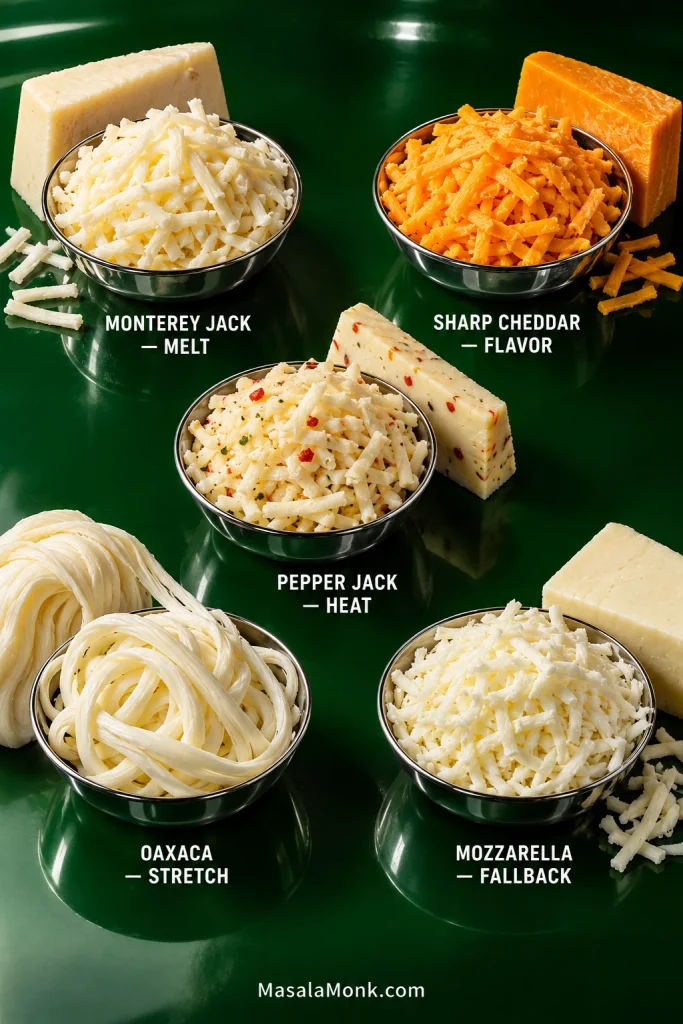
Freshly grated cheese melts a little more smoothly, but the bag in the fridge works perfectly well. A fresh 10-inch / 25-cm flour tortilla is the easiest size to handle here; smaller flour tortillas need less filling, while homemade corn tortillas work better as smaller quesadillas than as overloaded ones.
Why Chicken Quesadillas Go Soggy
Wet filling and trapped steam are the main reasons quesadillas turn soggy. Too much pan fat or badly matched heat can also keep the tortilla from crisping properly.
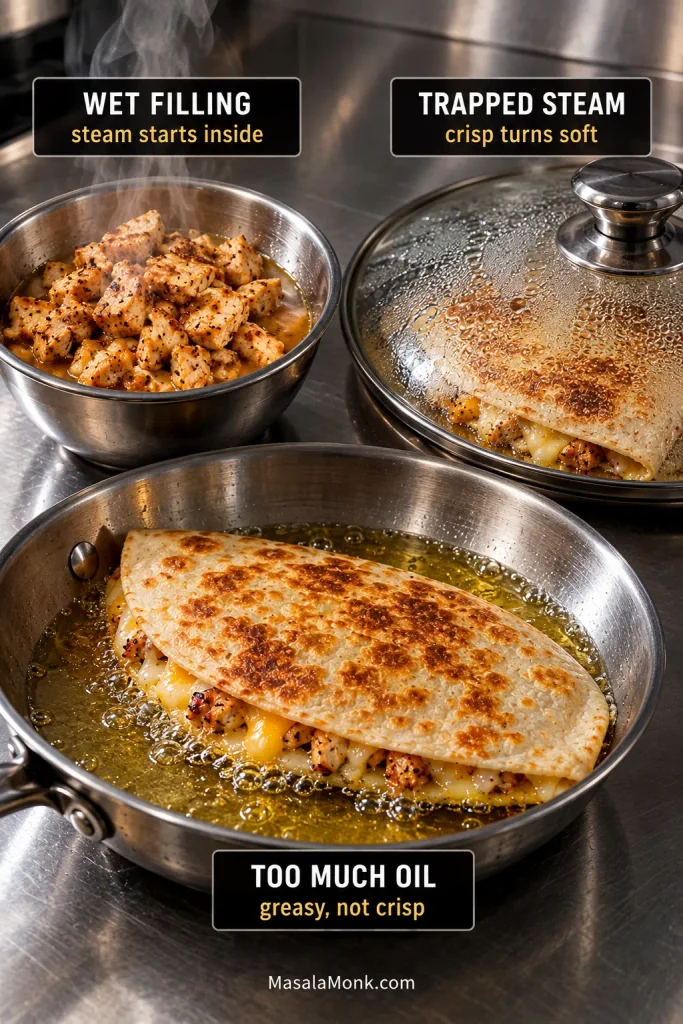
Moisture matters most. Chicken can be juicy without sitting in liquid. Let reheating juices cook away and drain vegetables before they go inside. Leftover Slow Cooker Chicken Fajitas, for example, make an excellent filling once the loose cooking juices are left behind.
Watch the pan too. A thin sheen of oil is enough; nonstick may need less or none. Medium heat gives the cheese time to melt while the tortilla develops those toasted golden patches. You shouldn’t have to choose between a burnt outside and a cold center.
Steam does its damage after cooking. Stack hot quesadillas under foil or seal them in a container straight from the skillet and that crisp surface starts softening almost immediately. Give them some air until it’s time to eat.
Add-Ins Without Losing the Crispness
Chicken and cheese are already enough. If you add anything else to a 10-inch quesadilla, keep the extras to roughly 2 tablespoons total and get rid of excess moisture before they go inside.
- Peppers and onions: sauté until tender and no longer wet.
- Mushrooms: keep cooking until their released water has evaporated.
- Spinach: wilt, cool and squeeze well.
- Black beans: drain, rinse and dry.
- Pickled jalapeños: drain before chopping.
- Salsa: use a thick salsa sparingly, or leave it for dipping.
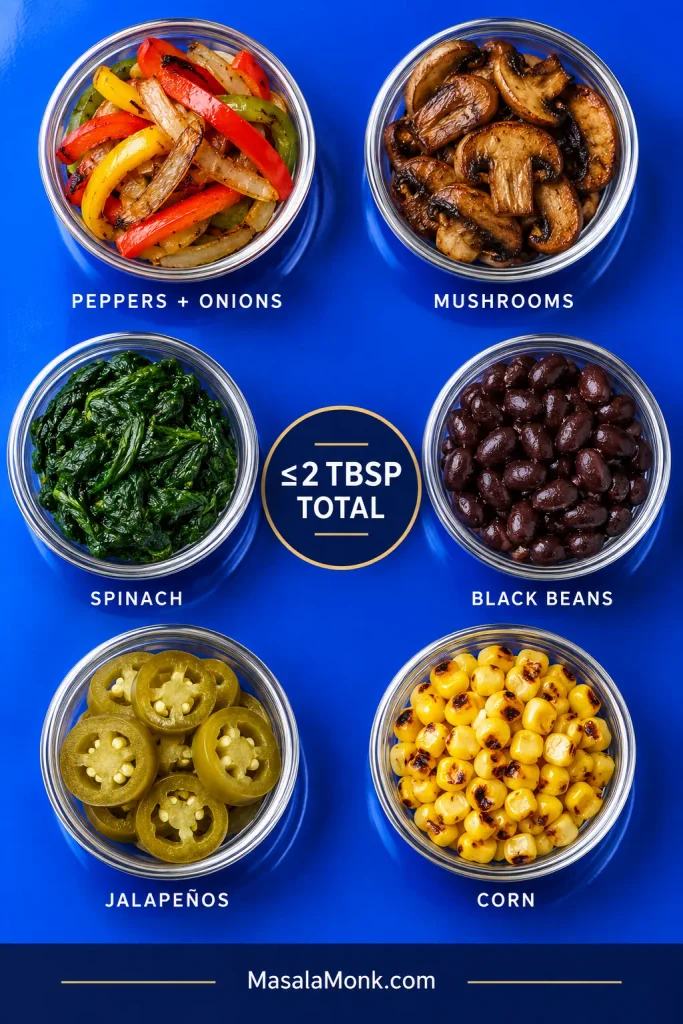
Corn is better drained well or briefly charred. Add avocado after cooking or serve it alongside. Leftover Sheet Pan Chicken Fajitas also make a fuller filling; just leave the pan juices behind.
Fix My Quesadilla
Find the problem that looks most like yours:
| What happened? | Likely cause | What to change |
|---|---|---|
| Dark tortilla, firm cheese | Pan too hot, filling too cold or quesadilla too thick | Lower the heat, warm cold chicken first or use less filling. |
| Pale and floppy | Too little heat or poor pan contact | Raise the heat slightly and make sure the tortilla sits flat. |
| Soggy straight from the pan | Wet filling | Cook or drain away loose liquid before assembly. |
| Crisp at first, then soft | Trapped steam | Don’t stack or tightly cover hot quesadillas. |
| Dry chicken | Overcooked meat or dry leftovers | Cook raw chicken to at least 165°F / 74°C in the largest pieces. Warm dry leftovers gently with a spoonful of water. |
| Bland filling | Chicken needed more seasoning | Fix the seasoning on the chicken before assembly rather than trying to repair the whole quesadilla later. |
| Greasy tortilla | Too much pan fat | Use only a thin film of oil. |
| Chicken falls out | Too much filling | Reduce the amount and keep cheese on both sides of the chicken. |
| Cheese runs out when sliced | Cut immediately from the skillet | Rest for 1–2 minutes first. |
| Tortilla cracks | Cold, dry or stale tortilla | Warm it briefly or use a fresher tortilla. |
| Later batches taste burnt | Cheese or seasoning scorching in the skillet | Wipe away dark residue between batches. |
Keep Them Crisp, Store Them, Reheat Them
Keep a Batch Crisp
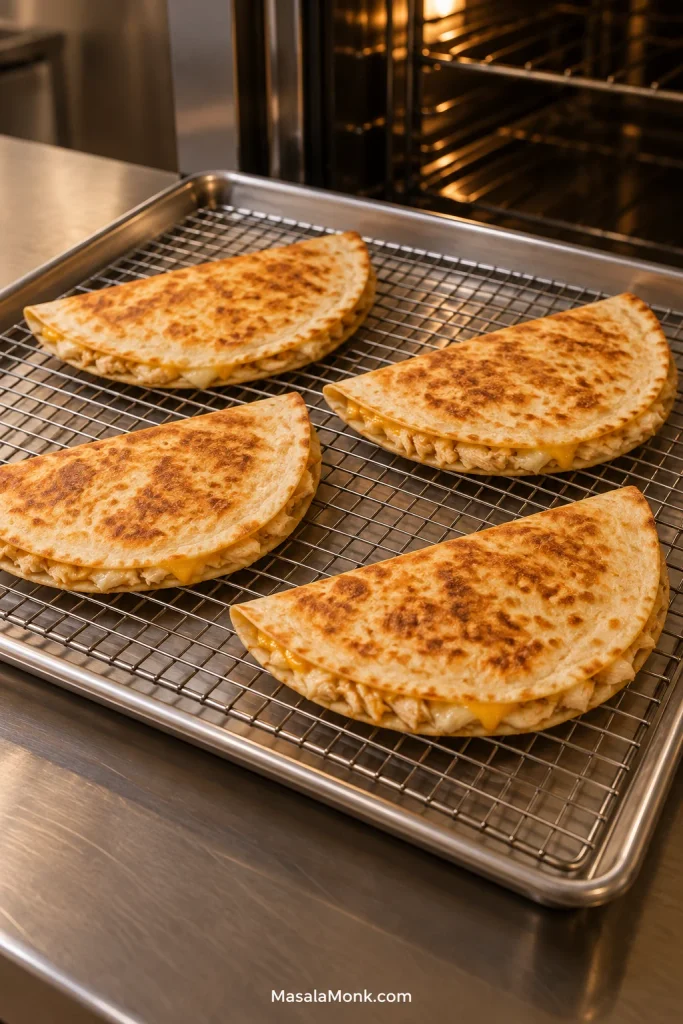
Cooking several for the table? Keep finished quesadillas in a single layer in a 200°F / 95°C oven, ideally on a wire rack over a baking sheet so steam can escape underneath. They are best eaten within 15–20 minutes. While the last one cooks, there is enough time to warm a quick side such as these Refried Beans From a Can.
Store and Freeze
For make-ahead cooking, keep the chicken and cheese separate and assemble fresh. Cooked quesadillas can cool briefly so they aren’t pumping steam into the container, then should be refrigerated promptly—and within two hours of cooking. USDA guidance gives cooked leftovers about 3–4 days in the refrigerator.
For freezing, refrigerate the quesadillas until cold first. Then freeze them in a single layer until firm and wrap individually or separate with parchment. Thaw frozen quesadillas overnight in the refrigerator before reheating.
Reheat Chicken Quesadillas
For refrigerated leftovers:
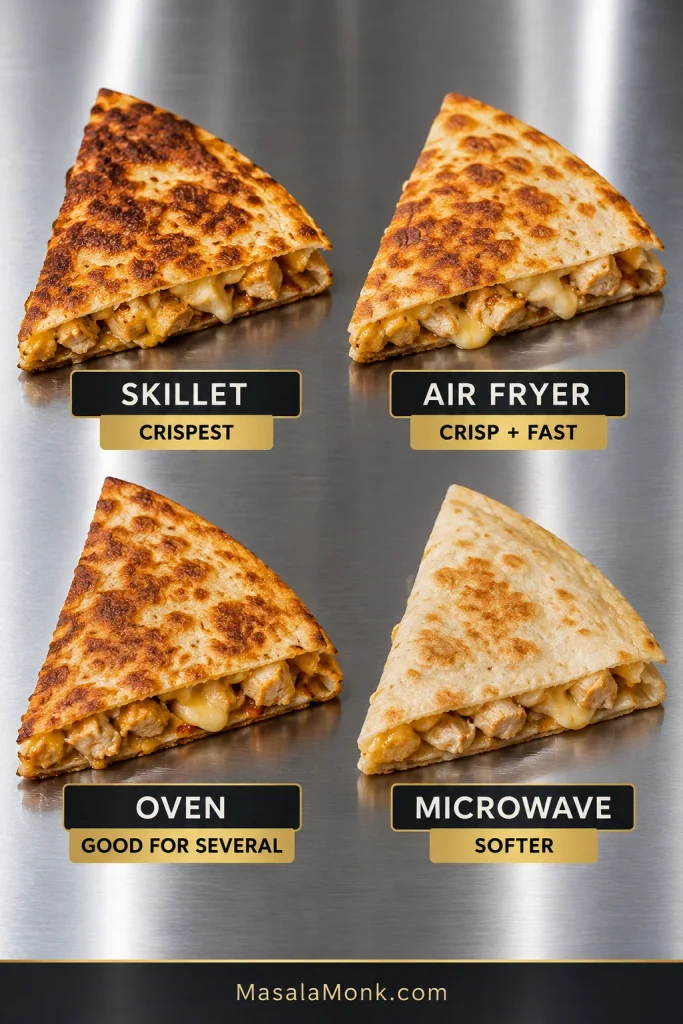
- Skillet: medium-low heat; start checking after 1–2 minutes per side. This gives the best chance of restoring the crisp tortilla.
- Air fryer: 350°F / 175°C; start checking around 3 minutes.
- Oven or toaster oven: 350°F / 175°C; start checking around 7–8 minutes.
- Microwave: fastest, but soft. A brief microwave warm-up followed by a minute or two in a skillet works better.
Whichever method you use, reheat chicken leftovers thoroughly to 165°F / 74°C in the center.
What to Serve With Chicken Quesadillas
Something cool, fresh or acidic is all the hot cheese and toasted tortilla really need. Pico de gallo, fresh guacamole, sour cream, beans, corn salad or a crisp slaw all work well.
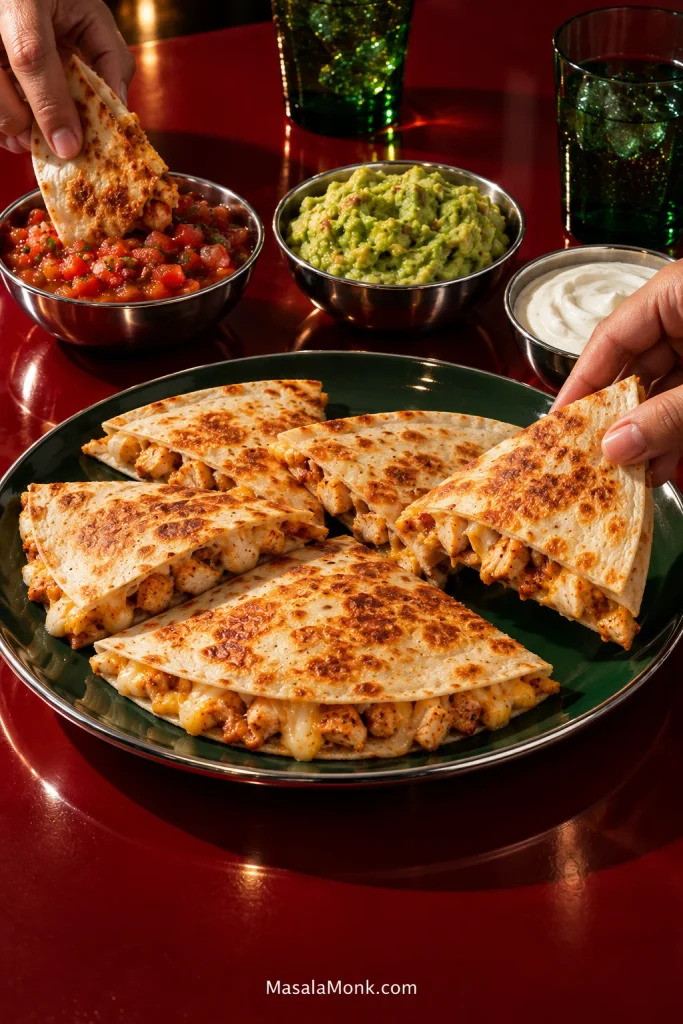
For more bite, dip the hot wedges into this roasted Salsa Verde. The cool, sharp salsa against melted cheese is a better finish than putting more wet filling inside the tortilla.
Quick Lime Sauce
Stir ½ cup / 120 g sour cream or thick Greek yogurt with 1 tbsp / 15 ml fresh lime juice and a pinch of salt. Add hot sauce, finely chopped pickled jalapeño or a little chipotle if you want some heat.
Give the quesadilla its short rest, then cut through it while the cheese is still soft. The edge should give a light crackle, the tortilla should be golden in broad patches, and the chicken should stay tucked inside instead of spilling across the board.
Get the salsa onto the table and eat it while the tortilla is still crisp.