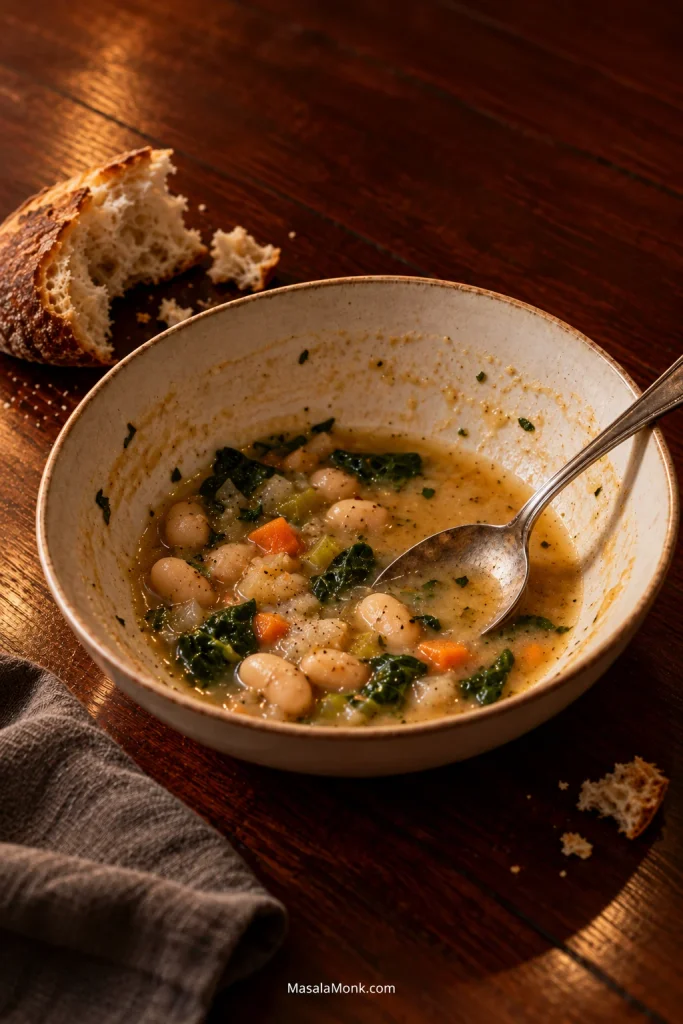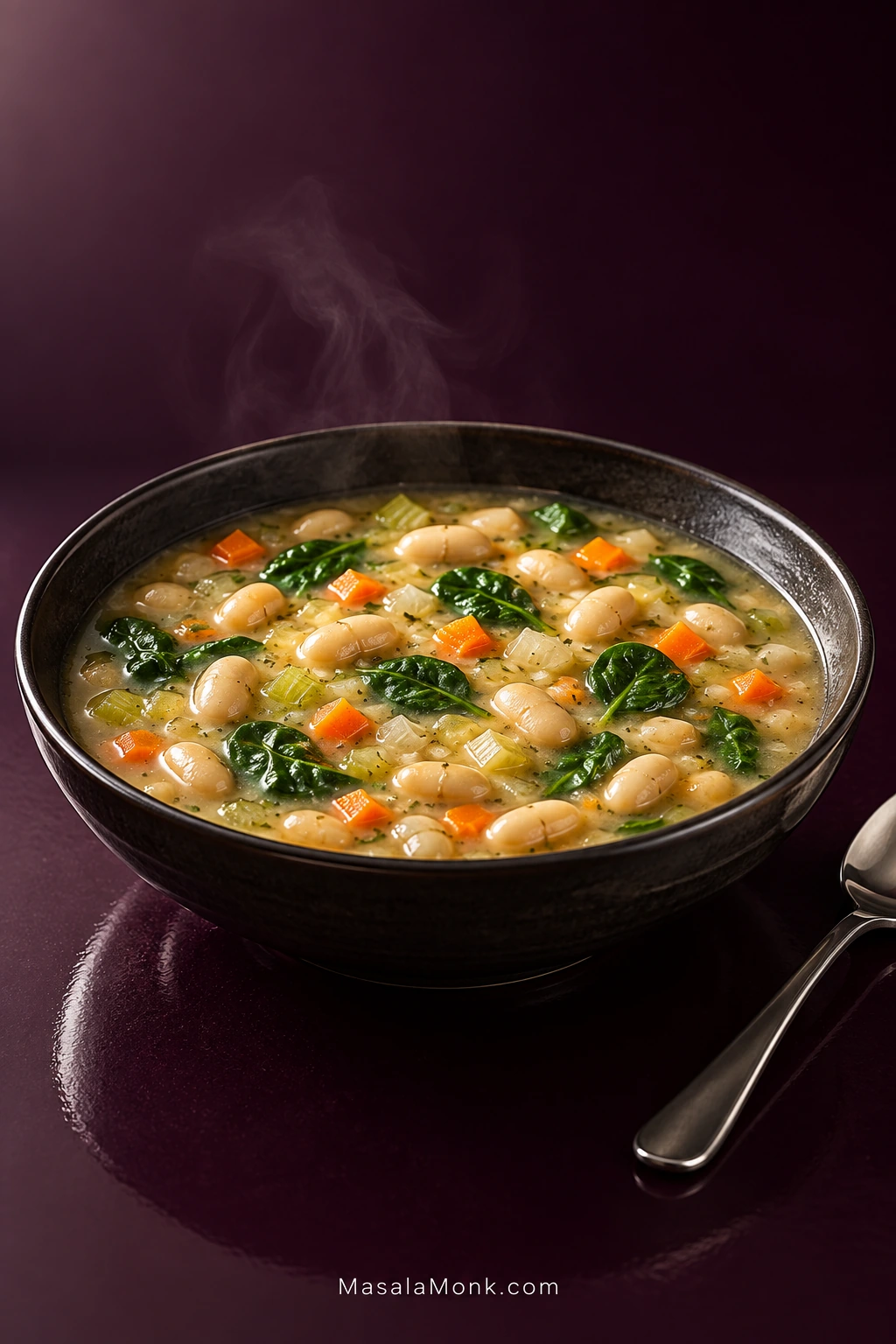
A few cans of white beans, an onion, a carrot and some broth do not look like much of a dinner. Half an hour later, they can be a pot of creamy broth full of whole cannellini beans, tender vegetables and wilted spinach, with enough garlic, herbs and lemon to keep every spoonful lively.
The broth gets its body from the beans themselves, not from flour or heavy cream. One can is blended until smooth and the other two stay whole, so the bowl still feels hearty rather than puréed.
White Bean Soup Recipe
Cannellini beans, tender vegetables and spinach in a bean-thickened broth with garlic, rosemary, thyme and fresh lemon.
Equipment
- 5- to 6-quart / 4.7- to 5.7-liter Dutch oven or soup pot
- Countertop blender or immersion blender with a tall blending jug; see notes for a no-blender option
Ingredients
- 2 tablespoons / 30 ml olive oil
- 1 medium yellow onion, about 170 g peeled, diced
- 2 medium carrots, about 150 g trimmed, diced
- 2 celery ribs, about 100 g trimmed, diced
- 4 garlic cloves / about 14 g, finely chopped or minced
- 1 teaspoon dried thyme
- ½ teaspoon dried rosemary, lightly crushed between your fingers
- ¼ teaspoon red pepper flakes, or less for a very mild soup
- 3 × 15 oz / 425 g cans cannellini beans, drained and rinsed
- 4 cups / 950 ml low-sodium vegetable or chicken broth, plus more if needed
- 3 packed cups / about 90–100 g baby spinach
- 1½ tablespoons / about 22 ml fresh lemon juice, plus another 1–2 teaspoons if needed
- ¼ teaspoon fine sea salt to start, plus more to taste
- ¼ teaspoon freshly ground black pepper, plus more to taste
For serving, if you like: grated Parmesan, chopped parsley, extra-virgin olive oil, black pepper, red pepper flakes and crusty bread.
Method
Build the Base
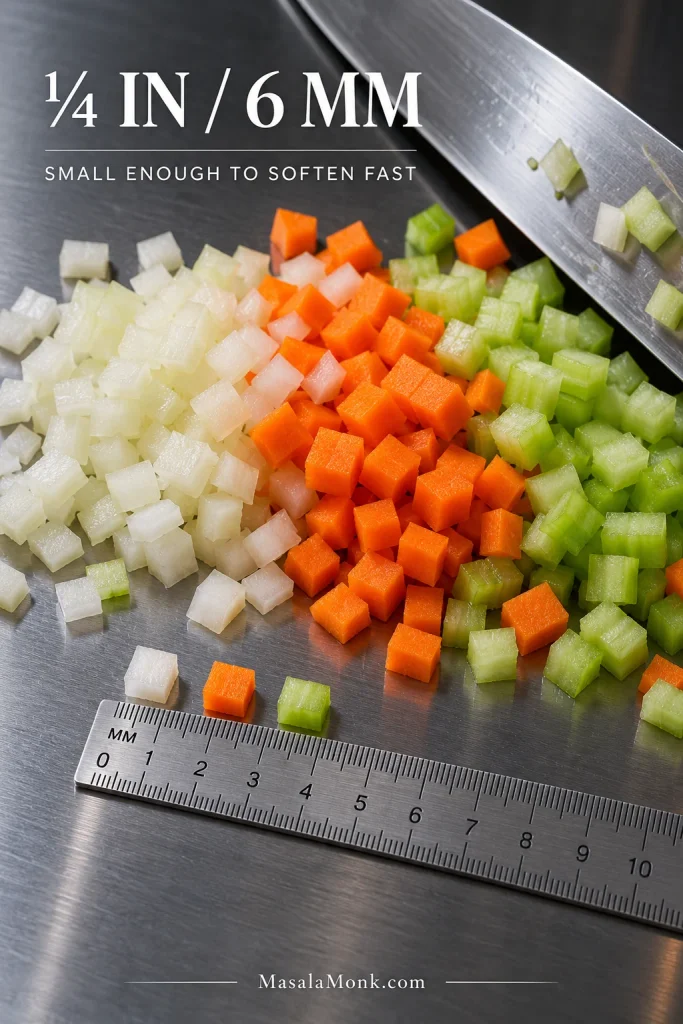
- Start the vegetables. Heat the olive oil over medium heat. Add the onion, carrots, celery and the measured ¼ teaspoon salt. Keep the vegetables around ¼ inch / 6 mm so they soften within the short cook. Cook for about 6–7 minutes, stirring occasionally, until the onion is translucent and the vegetables are beginning to soften.
- Blend one can of beans while the vegetables cook. Put one drained and rinsed can of cannellini beans in a countertop blender or tall blending jug with 1 cup / 240 ml of the unheated broth. Blend until smooth and glossy, with no obvious pieces of bean skin.

- Add the aromatics. Stir in the garlic, thyme, rosemary and red pepper flakes. Cook for 30–60 seconds, until the garlic loses its raw edge and the herbs smell noticeably stronger. Do not let the garlic brown.
Simmer and Finish
- Add the beans and broth. Stir in the two remaining cans of whole beans, the bean purée and the remaining 3 cups / about 710 ml broth. Bring the pot just to a boil, then lower the heat to a gentle simmer. Cook uncovered for about 8–10 minutes, until the vegetables are tender and the broth has lightly thickened.

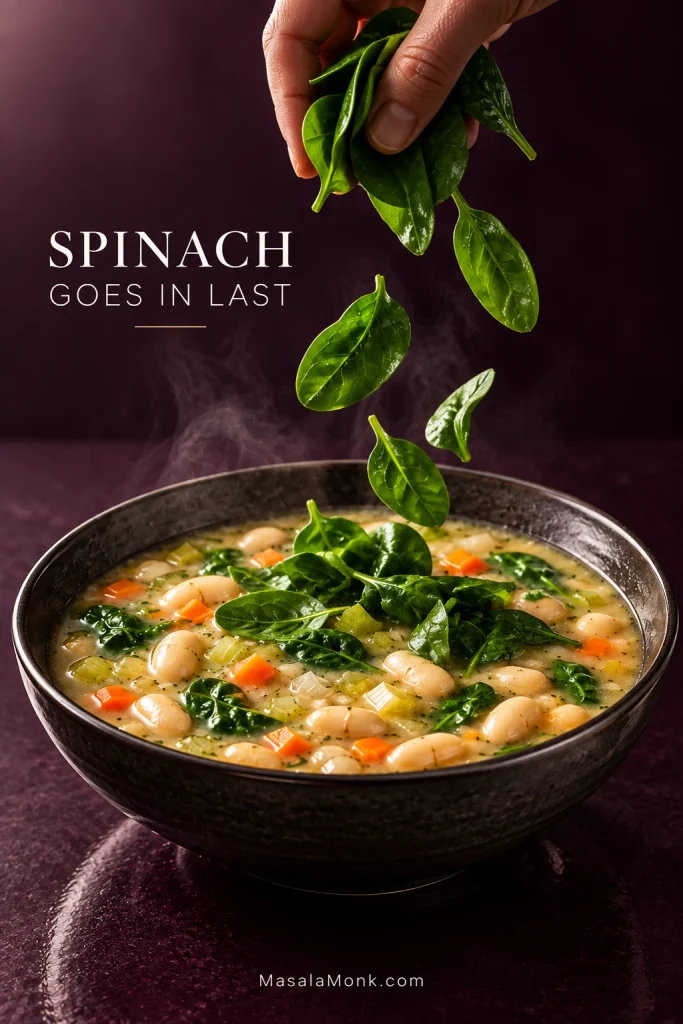
- Wilt the spinach. Add the spinach. It will look like a lot at first, then collapse quickly. Cook for 1–2 minutes, until wilted but still green.
- Finish off the heat. Stir in 1½ tablespoons / about 22 ml lemon juice and the black pepper. Taste before adding more salt. Already salty enough but still dull? Add another teaspoon of lemon first. Loosen with a little extra broth if needed.

Recipe Notes
- No blender: Mash one drained can very thoroughly, then loosen it with a little broth before adding it to the pot.
- Very soft canned beans: Beans already cracking or shedding skins in the colander need a shorter simmer and gentler stirring from here.
- Vegan: Use vegetable broth and leave off the Parmesan. A drizzle of extra-virgin olive oil at serving adds richness.

Something not tasting or behaving right? Jump to flavor fixes or texture fixes.
White Bean Soup Guide
Flavor & Storage
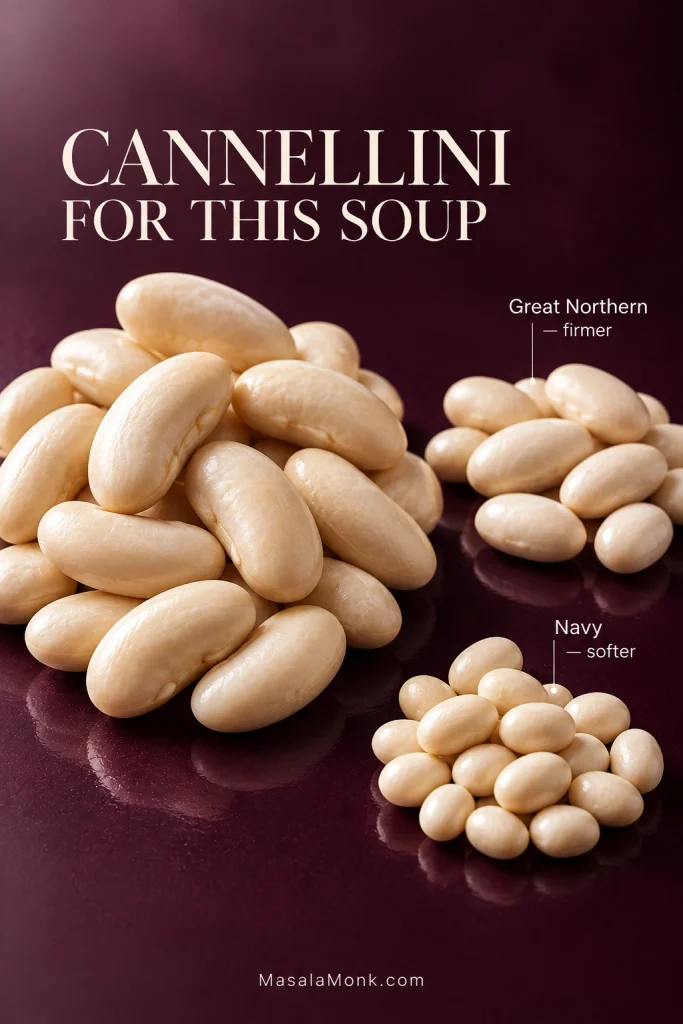
Cannellini, Great Northern or Navy?
Cannellini: large and creamy, with enough structure to stay mostly whole. They give this soup a fuller broth without disappearing into it.
Great Northern: smaller, slightly firmer and very mild. Use them as a direct swap.
Navy: smaller and softer. They tend to break down sooner, so the finished soup may feel thicker.
Should You Drain and Rinse Canned Beans?
For this recipe, yes. Canned bean liquid contains starch and can be useful, but its saltiness, thickness and flavor vary quite a bit by brand.
Rinsing gives you more control and can wash away a noticeable canned or metallic taste from some packing liquids. The blended beans already provide the starch we need here.
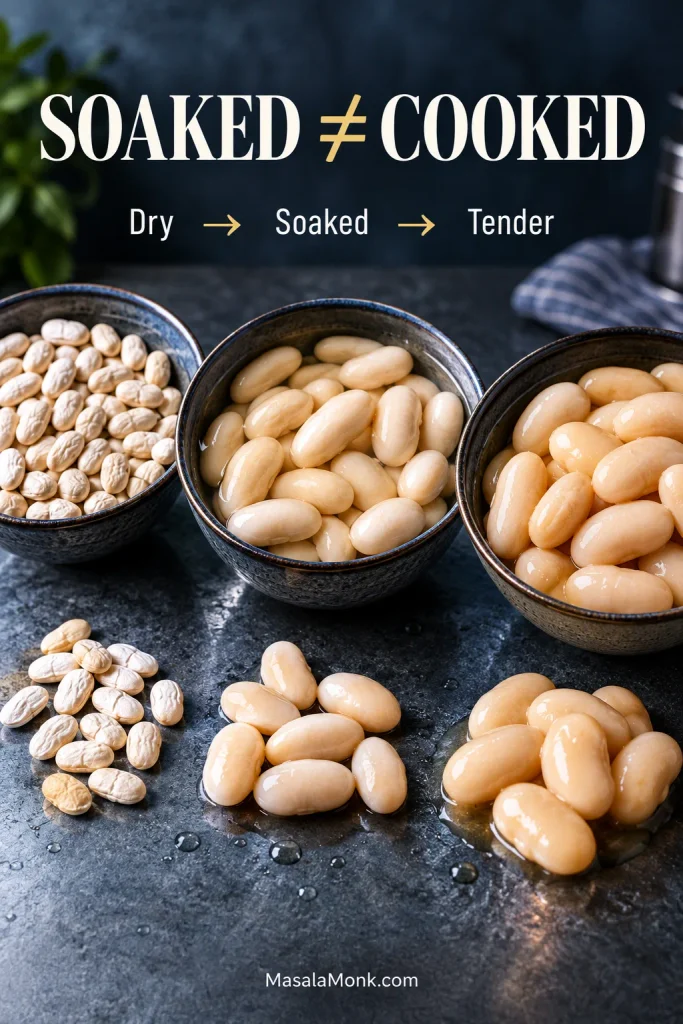
Using Dried White Beans? Cook Them First
Cook them all the way before using them in this recipe. Soaking hydrates cannellini, Great Northern or navy beans, but it does not make them tender enough to go straight into this quick soup.
Once cooked, use enough beans to replace the three drained cans called for in the recipe. Because dried-bean yield varies with the bean and cooking method, match the finished cooked amount rather than relying on an untested dry-bean conversion.
Wait until the beans are soft before adding strongly acidic ingredients. Colorado State University Extension gives the same guidance for cooking pulses. The lemon here already goes in at the end.
Creamy Without Cream
Creamy describes the broth; the whole soup should not be smooth. You still want whole beans and pieces of carrot, celery and spinach in every bowl.
With three cans of beans and 4 cups / 950 ml broth, the soup stays substantial without becoming dense. One can builds the broth while the other two keep the bowl full of whole beans.

Drag a spoon through a ladleful. The broth should cling lightly to the beans and vegetables, then flow straight back into the gap. Bean brands vary, so use that result instead of chasing one exact look.

- Too brothy: mash or blend another ½–1 cup of beans.
- Still too thin: simmer uncovered for another 2–4 minutes.
- Too thick: add broth in ¼-cup / 60 ml increments.
Stop a little earlier than you think. The beans keep thickening the broth as it sits.
Texture still not right? Jump to the troubleshooting table →
Spinach or Kale? The Timing Changes
Spinach is the quicker option and stays fairly quiet in the finished bowl. Add 3 packed cups / about 90–100 g only after the beans have simmered and the broth is where you want it.
Kale has more chew and a stronger flavor. Use roughly 2½–3 loosely packed cups / 70–90 g stemmed, chopped kale. Tender leaves may be ready in 3–5 minutes; mature kale often needs longer.

Blend first, greens second. Once the leaves are in, leave the blender alone. Otherwise the pale broth turns muddy and the greens disappear into the purée.

Frozen spinach works too; thaw it and squeeze out excess water first. For a brothier bowl with beans, vegetables, greens and small pasta, the minestrone soup recipe goes in that direction.
Cooking now? Back to the method ↑
Before You Add More Salt
Salty does not necessarily mean flavorful. Taste once before reaching for anything. Is it actually under-salted, or simply dull? Those are different problems.

| What it tastes like | Try this next |
|---|---|
| Clearly under-salted | Add a small pinch of salt, stir, then taste again. |
| Salty enough but flat | Add another teaspoon of lemon juice. |
| Bright but still one-dimensional | Try black pepper, red pepper flakes, parsley or Parmesan at the table. |
| Slightly too sweet | Add lemon first, then reassess pepper and salt. |
| Actually too salty | Dilute with unsalted broth or water, then taste again. |
Low-sodium broth leaves more room for those final changes because canned beans and packaged broth both vary.
When the Texture Is Off
| Problem | Likely cause | Fix now |
|---|---|---|
| Pasty | Too much purée or too much evaporation | Add broth ¼ cup / 60 ml at a time. |
| Crunchy carrots | Pieces were too large or the initial sauté was rushed | Keep simmering before adding greens. Next time keep the dice near ¼ inch / 6 mm. |
| Beans falling apart | The pot boiled too hard or the beans were very soft to begin with | Lower the heat and stir gently. |
| Lots of loose skins | Soft beans, vigorous cooking or the bean brand itself | Keep the simmer mild. Repeated loose skins are also a good reason to try another brand. |
| Mushy spinach | It went in too early | Next time add it only for the final 1–2 minutes. |
Why It Gets Thicker Overnight
The beans keep absorbing liquid as they sit, so tomorrow’s bowl will usually be thicker than tonight’s. Expect to add a splash of broth or water when reheating.

Refrigerator: Divide larger amounts into smaller, shallow containers and refrigerate within 2 hours. FoodSafety.gov lists soups and stews at 3–4 days in the refrigerator.
Freezer: Freeze cooled portions in suitable containers, leaving a little room for expansion. For best quality, use within about 2–3 months. The spinach will be softer after thawing.
Reheating: Warm gently, adding broth or water in ¼-cup / 60 ml increments until the broth pours easily again. Reheat leftovers to 165°F / 74°C.
Taste again before serving. Added liquid can soften the seasoning, and some of the fresh lemon character fades in storage. Another small squeeze may be all the bowl needs.

What to Serve With It
This is filling enough to be dinner on its own, though bread is hard to argue with. Homemade focaccia gives you a soft middle and crisp olive-oil edges; a homemade garlic bread loaf is the more garlicky option. Either one is good for dragging through the last of the broth.

A simple green salad works too. Parmesan, parsley, black pepper or a drizzle of extra-virgin olive oil are all good at the table. When the pot is right, though, it does not need much: tender vegetables, whole beans, broth that clings lightly, and just enough lemon to pull you into another spoonful. Add bread and dinner is done.