Posted on 6 Comments

Green Chutney Recipe (Coriander–Mint / Cilantro Chutney)

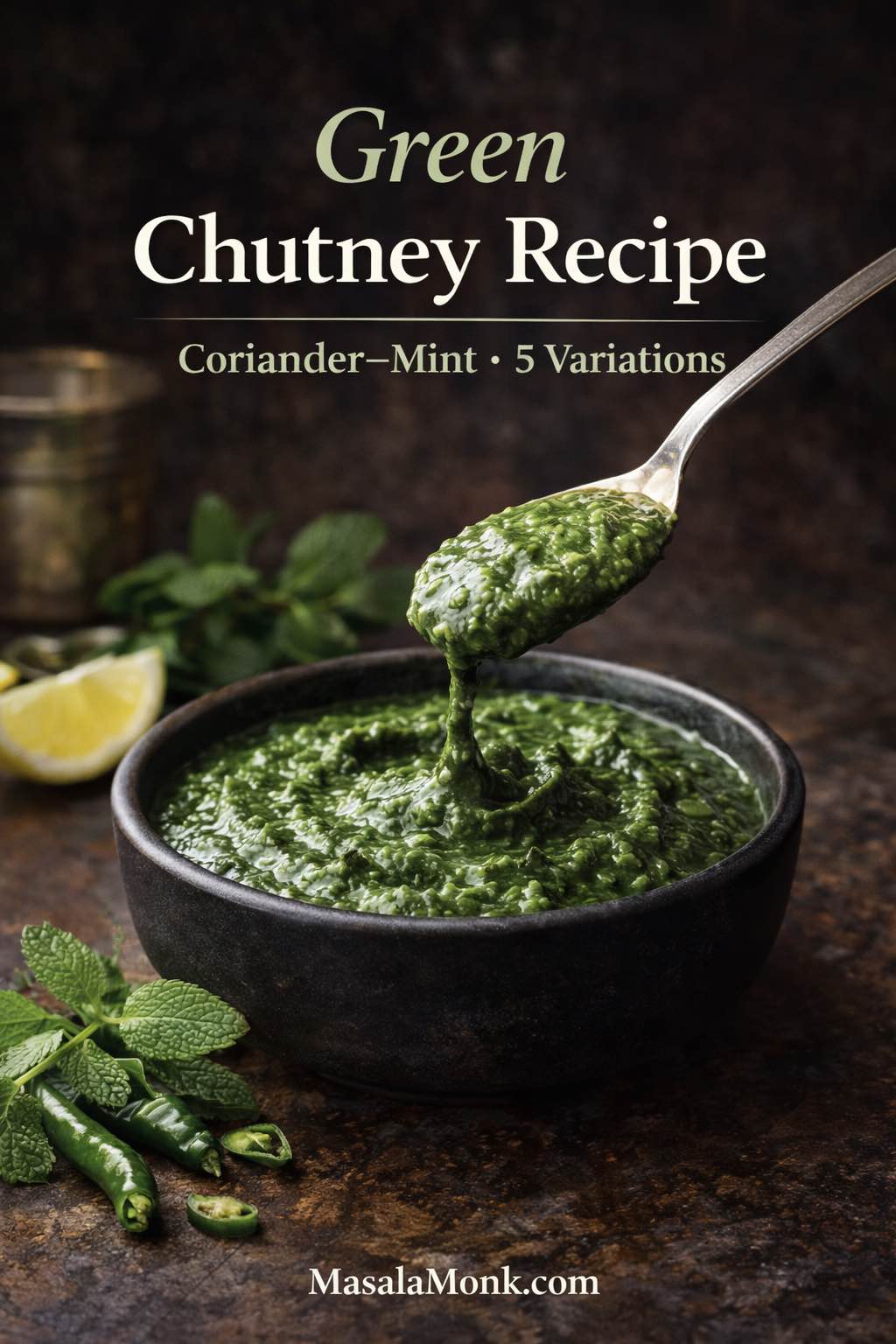
Green chutney recipe in a bowl with coriander and mint, shown with a spoonful lifted—coriander–mint (cilantro) chutney with 5 variations.

This green chutney recipe is the kind you start making “just for snacks,” and then—almost without noticing—you’re spreading it on toast, swirling it into yogurt, packing it for lunch, and finding excuses to dip everything into it. It’s fresh coriander (cilantro) and mint blended with green chilli, ginger, roasted cumin, salt, and citrus, so it tastes bright, punchy, and alive. Better still, the same base can become restaurant style green chutney for chaat nights, a thick green chutney for sandwich spreads, or a mellow coconut green chutney that belongs beside dosa and idli.

Depending on where you learned your kitchen language, you might call it coriander mint chutney, cilantro mint chutney, coriander chutney, cilantro chutney, dhania chutney, or dhaniya chutney. The name changes; the craving doesn’t. What matters is that you end up with a jar of green goodness that fixes the whole plate.


The green chutney that fixes everything

Some condiments behave like optional extras. Green chutney isn’t one of them. It’s a small, cold spoonful that can make hot food feel lighter, spicy food feel brighter, and plain food feel like you actually meant it to taste that good.

Think about the foods we naturally reach for it with: samosas, pakoras, kebabs, cutlets, chaat. Those are all rich or fried or boldly spiced, which means they love a contrast—something tangy and herbal to cut through the heaviness. Yet the real power of green chutney shows up outside snack plates. Spread it inside a sandwich and it instantly tastes more “street,” more layered, more addictive. Add it to a bowl of yogurt and it becomes a quick dip that tastes like you planned ahead. Stir a spoon into leftover rice and suddenly you’re not eating leftovers; you’re eating a clever lunch.

In other words, green chutney isn’t just a recipe. It’s a kitchen habit.

Also Read: Pesto Recipe: Classic Basil Pesto Sauce & 10 Variations


Names you’ll hear at home (and what they usually mean)

Before we blend anything, it helps to make peace with the names. The same chutney can wear different labels depending on region, language, and what your family grew up saying.

Cilantro and coriander

If you grew up calling the leafy herb “coriander,” then “coriander chutney” will sound natural. Meanwhile, if you’re used to the word “cilantro,” then “cilantro chutney” will feel like the obvious name. Both can point to the same chutney built on coriander leaves.
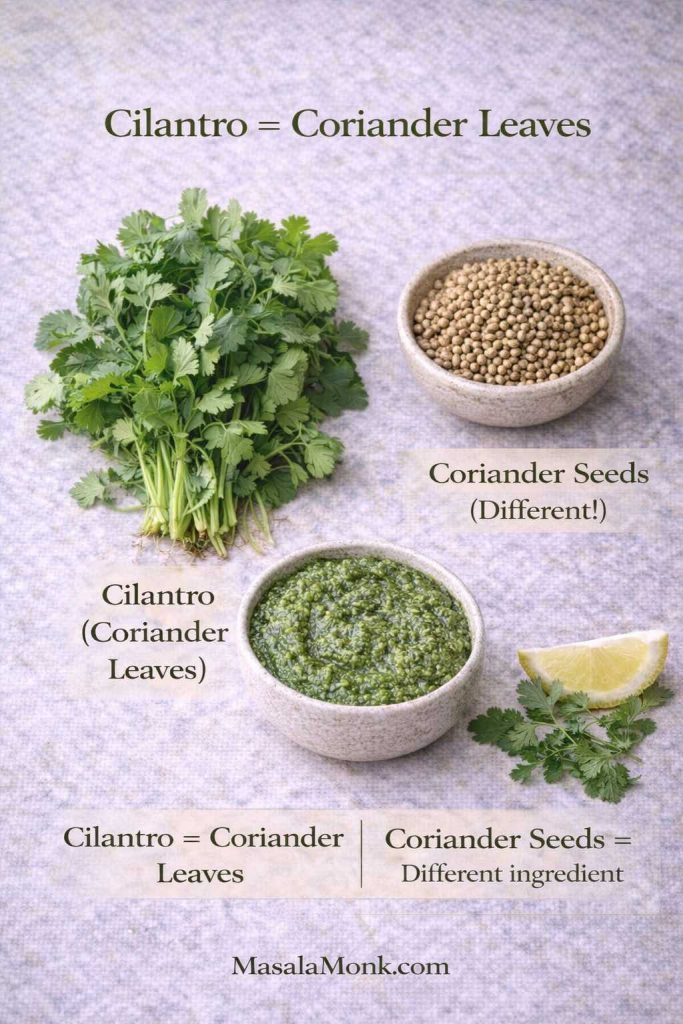
Cilantro vs coriander guide showing cilantro (coriander leaves), coriander seeds, and a bowl of green chutney to explain the difference.
If you’re searching for a cilantro chutney recipe, you’re in the right place—cilantro is the same as coriander leaves. Coriander seeds are a different ingredient, so green chutney is made with the leaves (often with mint), not the seeds.

To keep it simple, treat “cilantro” and “coriander leaves” as interchangeable in your kitchen unless you’re specifically talking about coriander seeds.

Dhania and dhaniya

Dhania (and dhaniya) are common Hindi words for coriander. So a dhania chutney recipe or dhaniya chutney recipe is usually pointing you to this same green chutney family—sometimes with mint, sometimes without, but almost always brightened with lemon.

Mint chutney and green chutney

A mint chutney recipe often overlaps with green chutney, but the balance shifts. Mint becomes the main note, coriander supports, and the chutney feels cooler and more mint-forward. You’ll get that variation in this post too, because it’s genuinely useful.

Also Read: Vodka Pasta (Penne alla Vodka) + Spicy Rigatoni, Chicken, and Gigi Recipes


What a good green chutney should taste like

A great green chutney doesn’t taste like “blended leaves.” It tastes like freshness with intention.

First comes tang—lemony brightness that makes your mouth water. Next comes the herb hit, clean and green without tasting raw or grassy. Then the chilli warmth arrives, not as a punch, but as a steady glow. Finally, roasted cumin shows up quietly in the background, giving the chutney that “snack-ready” depth that keeps it from feeling like a salad.

When green chutney is off, the flavor problems are usually predictable:

  • When it tastes flat, it often needs roasted cumin or salt.
  • When it tastes grassy, it usually needs lemon and better seasoning.
  • When it tastes harsh, chilli or ginger may be dominating and needs buffering.
  • When it tastes bitter, the herbs may have heated up during blending or too many thick stems made it into the jar.

The reassuring part is that most batches can be corrected. You don’t have to start over. You just have to nudge the chutney back into balance.

Also Read: Healthy Oat Protein Bars – 5 Easy No Sugar Recipes for Snacks


Before you blend: the small choices that change everything

Choose herbs that smell bright

This sounds almost too obvious, yet it’s the easiest quality check. Coriander should smell citrusy and fresh, not damp. Mint should smell cool, not muddy. If your herbs already smell tired, your chutney will taste tired too—no amount of lemon will fully fix it.

Use tender coriander stems, skip the thick ones

Tender stems carry aroma, so using them makes the chutney taste fuller. Thick, fibrous stems near the base, on the other hand, can blunt the flavor and sometimes add bitterness. So, trim the rough ends, keep the tender parts, and you’ll get the best of both worlds.

Dry your herbs more than you think you need to

Water is the most common reason green chutney becomes thin and bland. Since this chutney is meant to taste concentrated, shake off excess water and pat the herbs dry if you can. Even a quick towel pat changes the final texture.

This step matters even more if you want green chutney for sandwich spreads, because sandwich chutney has to be thick enough to stay put.

Blend in short bursts

Long blending runs heat up herbs. Short bursts keep things cooler, help preserve a brighter green, and give you more control over texture. In practice, this also makes it easier to keep the chutney thick without dumping in water too early.

Also Read: Strawberry Smoothie Recipes (12 Easy Blends + Bowls & Protein Shakes)


Recipe Card: Classic Green Chutney Recipe (Coriander–Mint / Cilantro Chutney)

This is the everyday base—the one you’ll use as a dip, spoon beside meals, or turn into variations. It also naturally covers what most people mean by coriander chutney recipe and cilantro chutney recipe in daily kitchen language.

Yield: about 1 to 1¼ cups
Prep time: 10 minutes
Blend time: 2 to 4 minutes
Best for: snacks, chaat, wraps, everyday meals
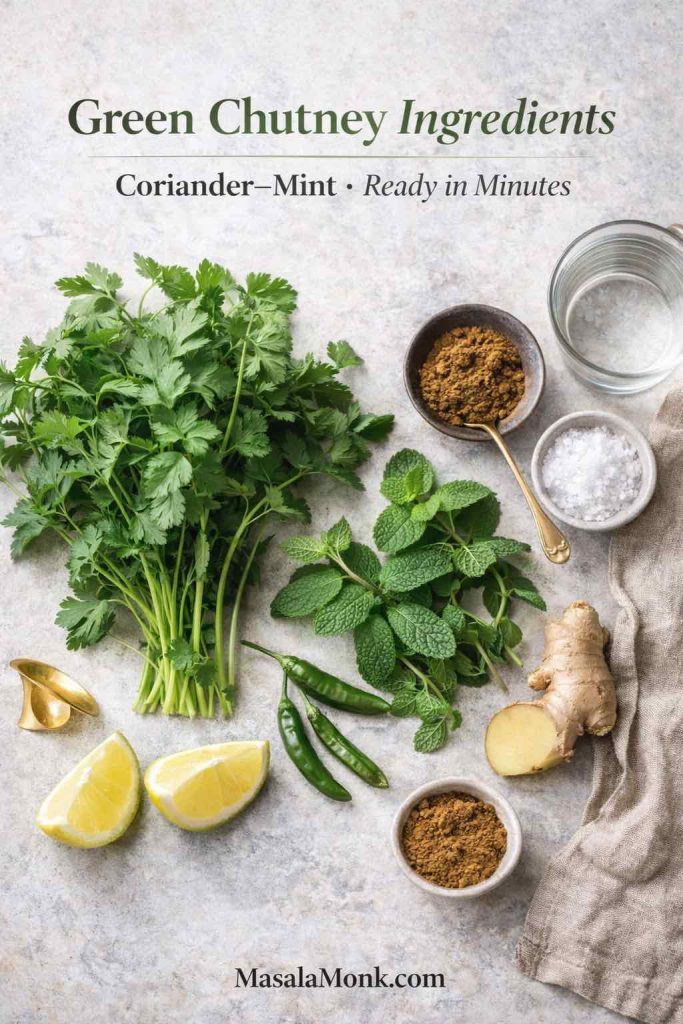
Green chutney ingredients flatlay with coriander (cilantro), mint, green chilies, ginger, lemon, roasted cumin powder, and salt.
Everything you need for a classic green chutney recipe—fresh coriander (cilantro), mint, green chilli, ginger, lemon, and roasted cumin—styled here so you can prep fast and blend in minutes.

Ingredients

Coriander (cilantro), 1 large bunch (leaves with tender stems)
Mint leaves, ½ to 1 cup (adjust to taste)
Green chillies, 2 to 4 (adjust to heat)
Ginger, 1 to 1½-inch piece
Roasted cumin powder, ½ to ¾ teaspoon
Salt, to taste (black salt optional)
Lemon or lime juice, 1 to 2 tablespoons
Water, only as needed (start with none)
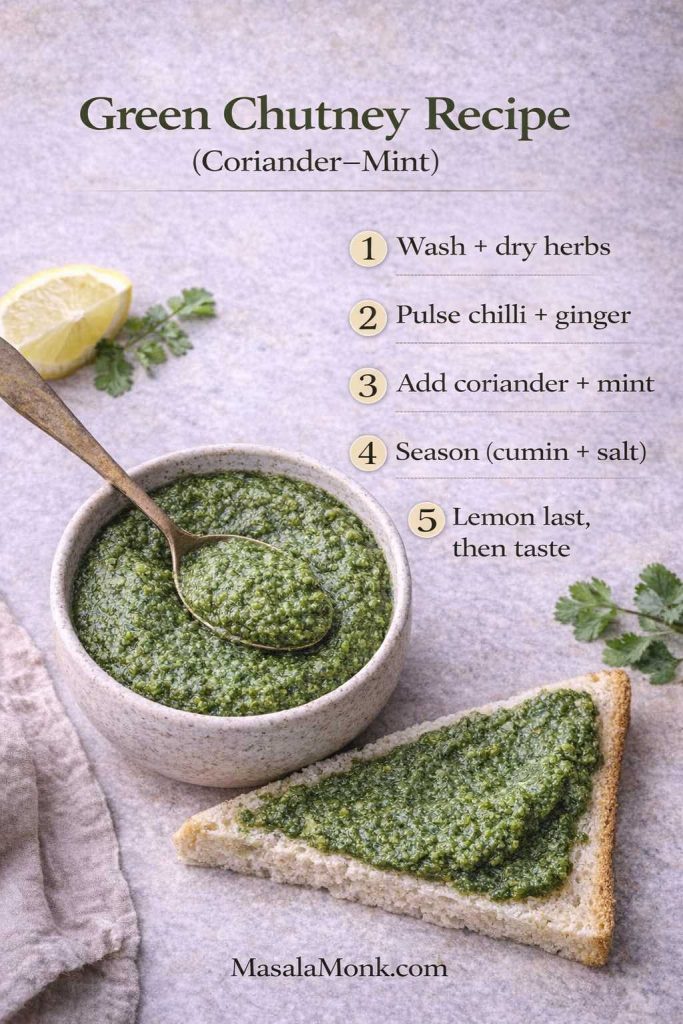
Green chutney recipe quick steps card showing coriander–mint (cilantro) chutney in 5 steps with a bowl of green chutney and bread.
Short on time? This green chutney recipe (coriander–mint / cilantro chutney) comes together fast—follow these five steps and you’ll have a bright, fresh chutney ready for snacks or sandwiches.

Method

  1. Rinse coriander and mint thoroughly. Then shake off as much water as possible and pat dry if you have time.
  2. Add green chillies and ginger to the blender jar first. Pulse once or twice until roughly broken down.
  3. Add coriander, mint, roasted cumin, and salt. Blend in short bursts, scraping down the jar once or twice.
  4. Add water only in tiny splashes if the blades struggle.
  5. Add lemon juice last. Blend briefly, taste, and adjust slowly until the chutney feels bright and balanced.
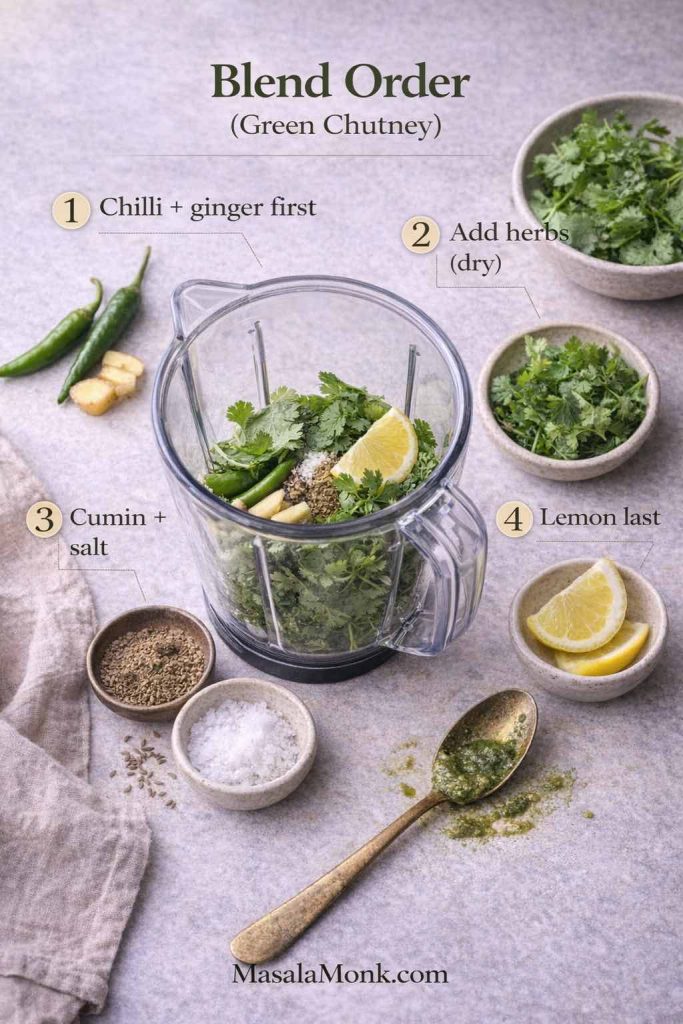
Green chutney blend order guide showing the step-by-step sequence: chilli and ginger first, add herbs dry, cumin and salt, lemon last.
For a brighter, smoother green chutney recipe, follow this blend order: start with chilli and ginger, add dry herbs next, season with cumin and salt, then finish with lemon last for the freshest coriander–mint (cilantro) chutney flavor.

The texture of green chutney you’re aiming for

Texture depends on where the chutney is headed. A smooth, spoonable blend is perfect for dipping, especially with fried snacks. If you’re serving it as a side with everyday meals, a slightly coarse grind can taste wonderfully fresh and rustic. Sandwiches are different, though: a thicker spread works better inside bread and won’t turn the layers soggy.

If you enjoy seeing how widely this base is used, the overall structure lines up with classic versions like Veg Recipes of India’s mint coriander chutney and Indian Healthy Recipes’ cilantro chutney. No need to copy either one exactly—think of them as familiar signposts rather than strict rules.

Also Read: Classic Rum Punch + 9 Recipes (Pitcher & Party-Friendly)
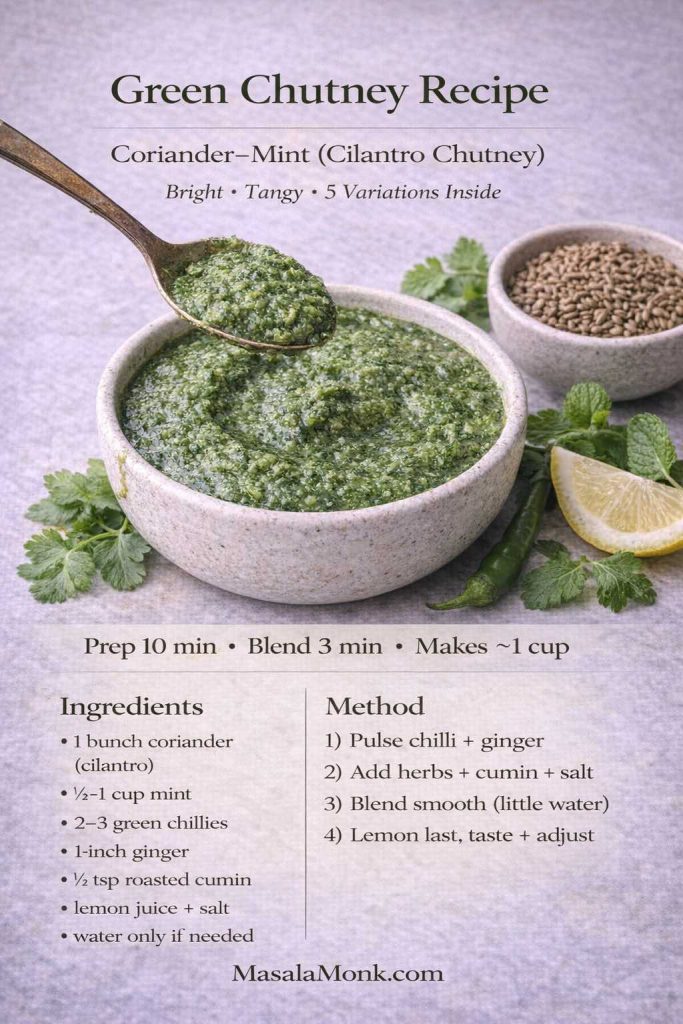
Green chutney recipe card with coriander–mint (cilantro chutney) showing ingredients, quick method, prep time, and yield.
Save this classic green chutney recipe card: a bright coriander–mint (cilantro) chutney with a quick 4-step method—use it as a dip now, then explore the five variations in the post for restaurant-style, sandwich spread, coconut, and mint-forward versions.

Getting the texture right (because flavor isn’t the only job)

A lot of green chutney disappointment is really texture disappointment. The flavor might be good, but if the chutney is watery or uneven, it won’t behave the way you want.
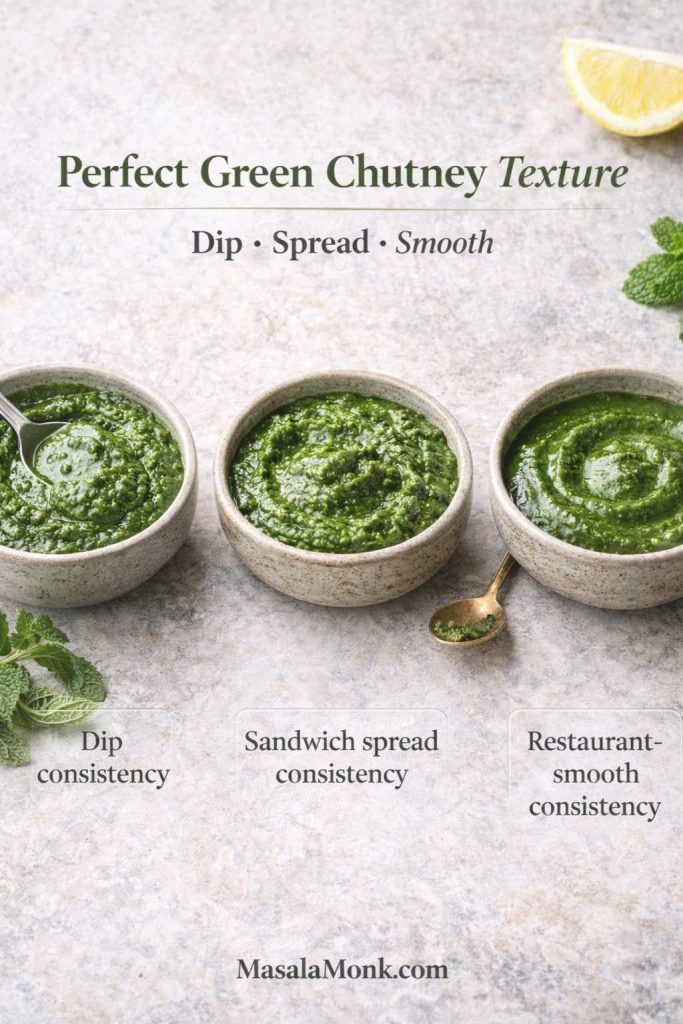
Green chutney consistency guide showing three textures: dip consistency, thick sandwich spread, and restaurant-smooth green chutney.
Not sure if your green chutney is “right”? Use this quick guide: keep it spoonable for dipping, thicker for green chutney for sandwich spreads, and extra-smooth for restaurant-style green chutney.

When it’s too thin

Thin chutney happens when too much water enters the blender early, or when the herbs were very wet. Instead of adding more spices to “fix” it, solve the texture first. Later in this post, you’ll see the most reliable thickener for sandwich chutney; for now, remember this: you can always thin chutney later, but thickening watery chutney is harder than starting thick.

When it’s too coarse

Coarse chutney can taste wonderful, especially when served beside home-style meals. Still, if you want that restaurant style green chutney feel, smoothness matters. A smoother blend coats snacks better and tastes more “finished.” Instead of adding lots of water, blend in short bursts and scrape down more often. Usually, patience improves smoothness more than water does.

When it’s foamy or “air-y”

This happens when the blender runs too long, too fast, and pulls in air. The chutney can look lighter and feel less dense. Short bursts help. So does using a smaller jar where the blades catch the herbs properly.

Also Read: 7 Pizza Sauce Recipes | Marinara, White Garlic, Alfredo, Buffalo, BBQ, Vodka & Ranch


Cilantro chutney, coriander chutney, and the green base you already made

With the base green chutney recipe ready, you’re already holding two common variations in your hands. You don’t need separate recipes as much as you need direction.
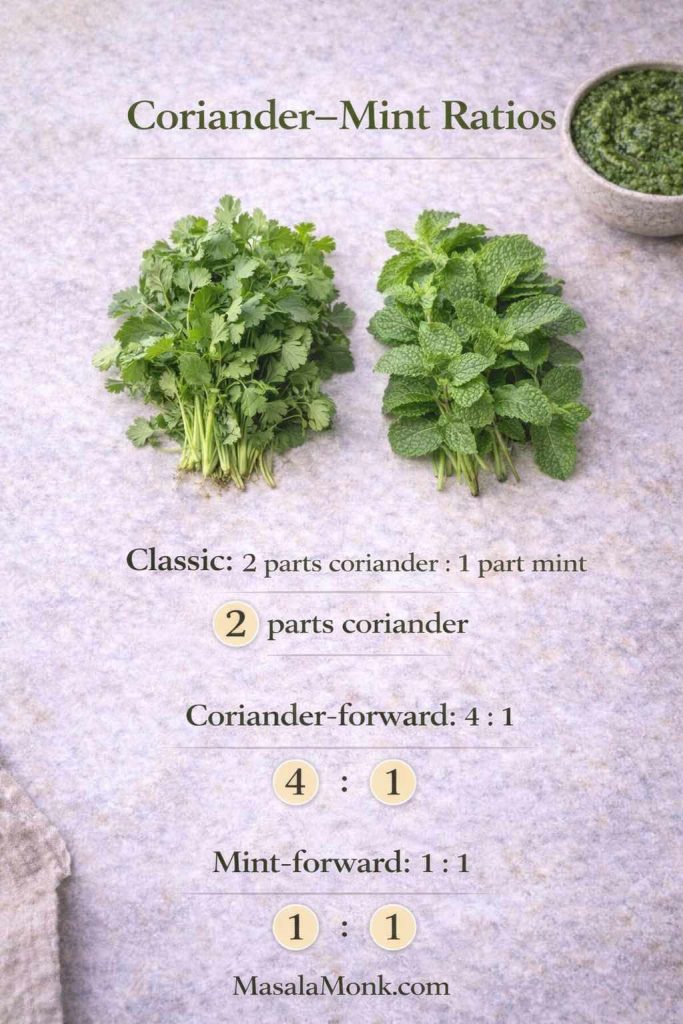
Coriander–mint ratios for green chutney showing classic 2:1, coriander-forward 4:1, and mint-forward 1:1 with fresh herbs and a bowl of chutney.
Dial in your flavor fast: use a 2:1 coriander–mint ratio for a classic green chutney recipe, go 4:1 for a coriander-forward cilantro chutney, or choose 1:1 when you want a cooler mint chutney vibe.

Cilantro chutney recipe style (coriander-forward Green Dip)

If you want coriander to lead, reduce mint to a small handful or skip it completely. Then keep ginger, chilli, cumin, salt, and lemon as usual. This coriander-forward chutney tastes cleaner and sharper, which makes it excellent in wraps, toasties, and quick lunches.

To make that version taste “complete,” be confident with lemon at the end and keep roasted cumin steady. That combination gives coriander chutney a satisfying finish rather than a raw edge.
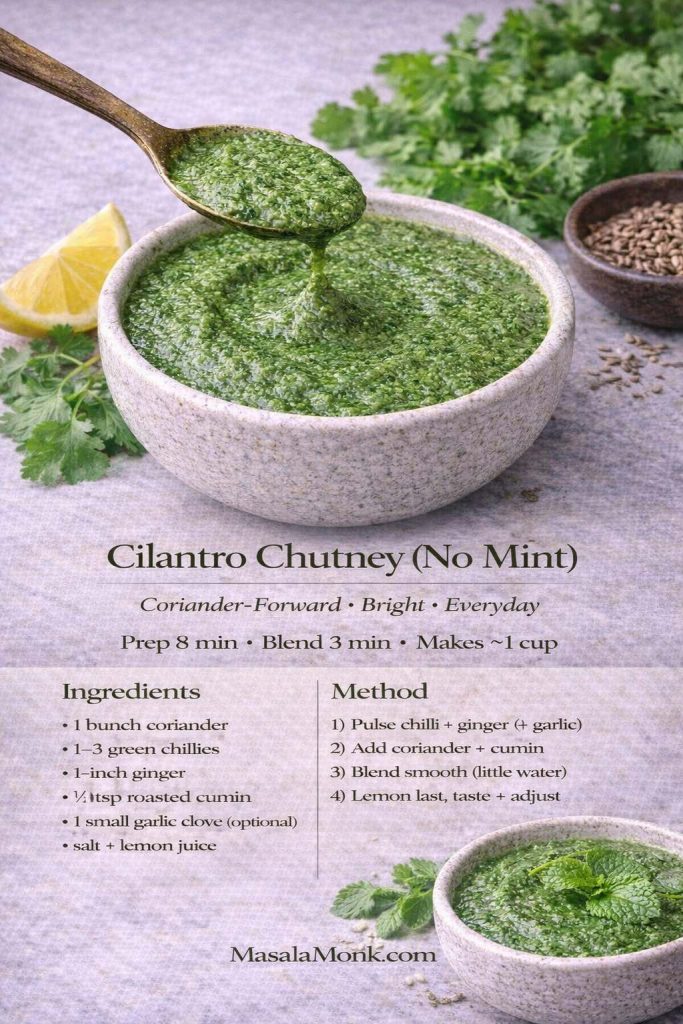
Cilantro chutney (no mint) recipe card showing coriander-forward green chutney with ingredients list, quick method, prep time, and yield.
Save this cilantro chutney recipe card for a coriander-forward green chutney without mint—bright, everyday, and easy to blend when you want a simpler chutney that still tastes fresh.

Coriander mint chutney style (mint-friendly & Green)

If you prefer the snack-stall feeling, use more mint. Keep coriander as the backbone, but let mint join more confidently. Blend a bit smoother. Add black salt if you love that chaat tang. This version tends to feel cooler and more “dip-ready,” especially beside fried snacks.

Dhania chutney and dhaniya chutney (both green) at home

If you call it dhania chutney or dhaniya chutney, you’re usually making one of the two styles above—either coriander-forward or coriander-and-mint. The name doesn’t force the method; your taste does.

Also Read: Marinara Sauce Recipe: Classic Homemade Marinara


The “restaurant” taste without overcomplicating your life

Restaurant style green chutney has a particular personality: it’s smoother, brighter, and slightly more intense. It also tastes like it was designed specifically for snacks, which is why it’s so satisfying on a chaat plate.

The simplest way to get that feel is to focus on three things: smoothness, tang, and finish.
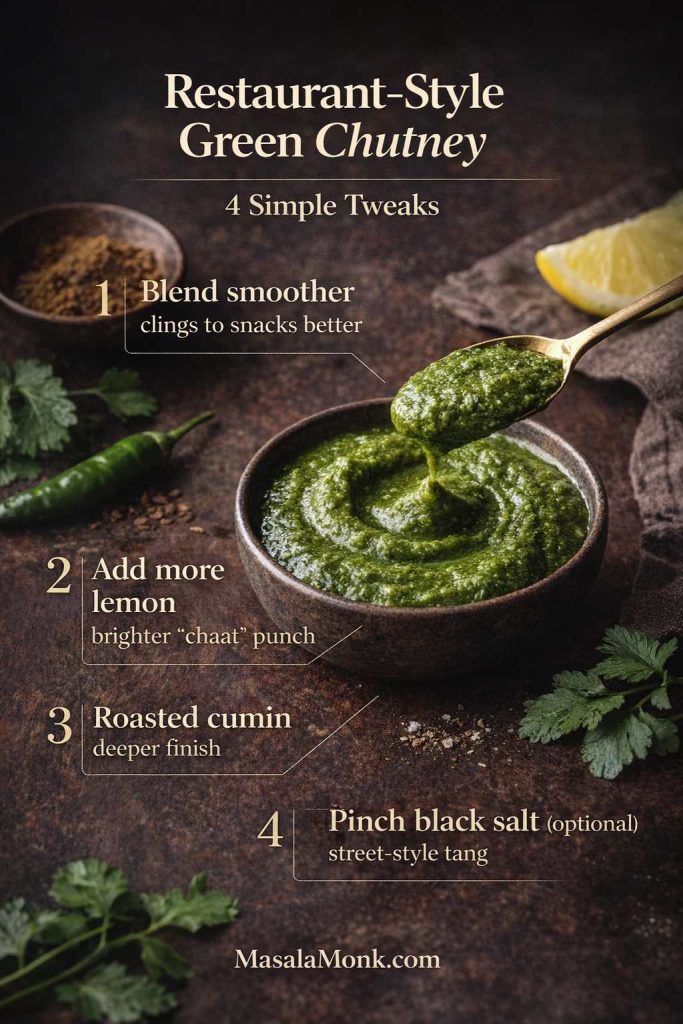
Restaurant-style green chutney guide showing 4 simple tweaks—blend smoother, add more lemon, roasted cumin, and optional black salt.
Want restaurant-style green chutney at home? These four quick tweaks—smoother blend, extra lemon, roasted cumin, and a pinch of black salt—deliver that bright chaat-style punch and a deeper finish.

Smoothness comes from blending a little longer than your home version, but doing it in short bursts so the herbs stay cool. Tang comes from pushing lemon slightly further than you normally would. Finish comes from roasted cumin and, if you like it, a pinch of black salt. Used carefully, those two seasonings create the snack-stall memory without overpowering the herbs.

Also Read: Oat Pancakes Recipe (Healthy Oatmeal Pancakes)


Recipe Card: Restaurant Style Green Chutney (Smooth and Chaat-Ready)

This is the version that feels like it belongs beside samosas, pakoras, and chaat. It also matches what many people mean when they say “green chutney restaurant style.”

Yield: about 1 cup
Prep time: 10 minutes
Blend time: 3 to 5 minutes
Best for: chaat, samosas, pakoras, snack platters

Ingredients

Coriander (cilantro), 1 large bunch
Mint leaves, ¾ cup (adjust to taste)
Green chillies, 2 to 4
Ginger, 1-inch piece
Roasted cumin powder, ¾ teaspoon
Salt, to taste
Black salt, a small pinch (optional)
Lemon juice, 1½ to 2 tablespoons (taste as you go)
Water, minimal and added only if needed
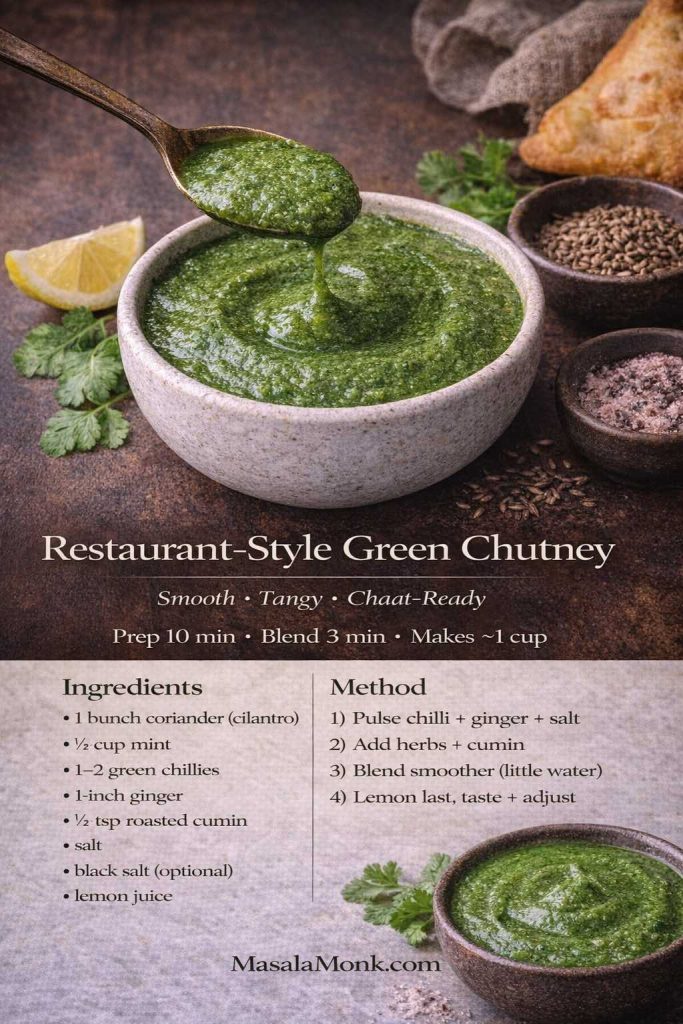
Save this restaurant-style green chutney recipe card for a smoother, tangier coriander–mint chutney—perfect as a chaat chutney for samosas, pakoras, and street-style snacks when you want that bright, punchy finish.

Method

  1. Pulse ginger and chillies first.
  2. Add coriander, mint, cumin, salt, and black salt (if using).
  3. Blend smoother than your home version, using short bursts and scraping down.
  4. Add lemon at the end, blend briefly, then taste.
  5. Adjust until the chutney tastes bright and “snack-ready.”

If you enjoy contrasting chutney personalities, it’s fun to pair this with a bold red chutney like MasalaMonk’s Kara Chutney for idli and dosa on the same table. The flavors are entirely different, yet both do the same job: they make the plate exciting.

Also Read: Mayo Recipe: 15+ Homemade Mayonnaise Variations


The sandwich factor (where green chutney becomes a daily habit)

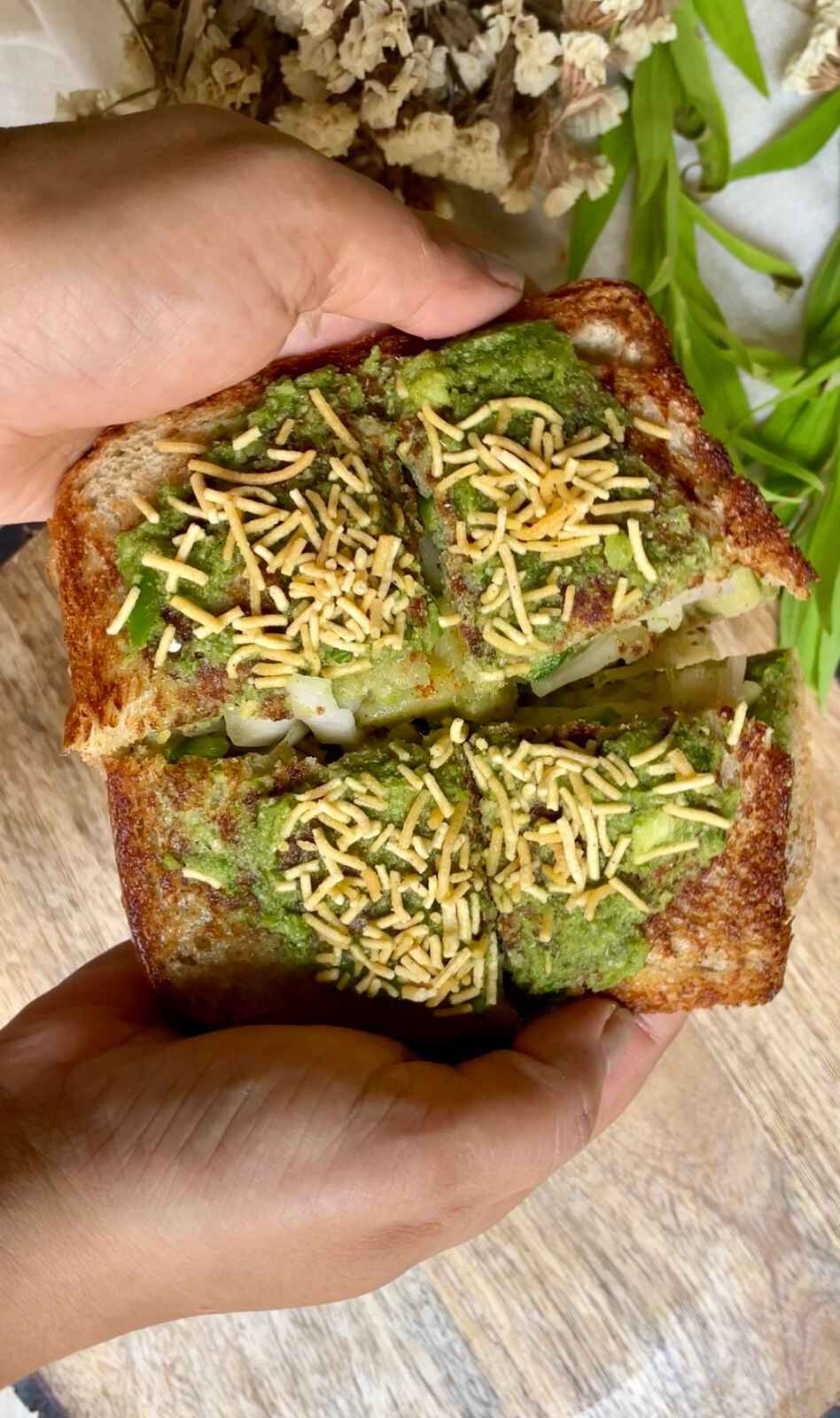
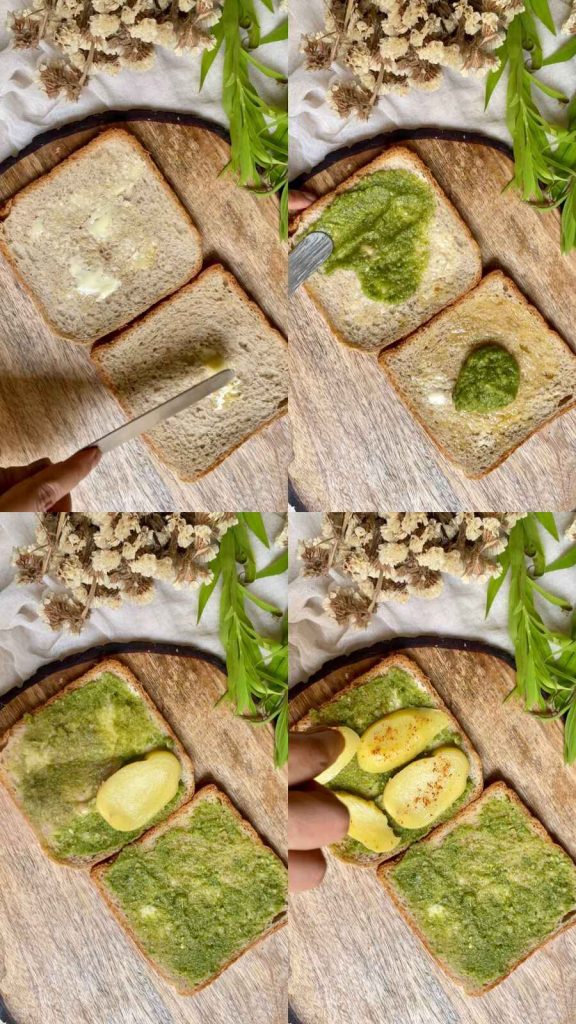
If you’ve ever eaten a proper Bombay sandwich, you already know why green chutney matters. The potatoes and spices create comfort, while the chutney creates contrast. Together, they taste like street food even when you’re eating at home.

Still, green chutney for sandwich needs one special quality: it has to be thick enough to spread without soaking bread. Thin chutney migrates. It makes the bread soggy, the filling slippery, and the flavor uneven. Thick chutney, on the other hand, stays where you put it, so every bite tastes deliberate.

To build that thickness, you mainly need to control water and choose a helpful thickener.

Why roasted chana dal works so well

Roasted chana dal (bhuna chana/dalia) thickens chutney without making it heavy. It also gives the spread a satisfying body that feels very “sandwich shop.” Meanwhile, it keeps the herb flavor intact, which is exactly what you want.

Also Read: Daiquiri Recipe (Classic, Strawberry & Frozen Cocktails)


Recipe Card: Green Chutney for Sandwich (Thick Spread)

This is designed to perform inside bread. It’s spreadable, stable, and concentrated enough to hold its own under fillings.

Yield: about 1 cup
Prep time: 10 minutes
Blend time: 4 to 6 minutes
Best for: Bombay sandwich, toasties, wraps, lunchbox sandwiches
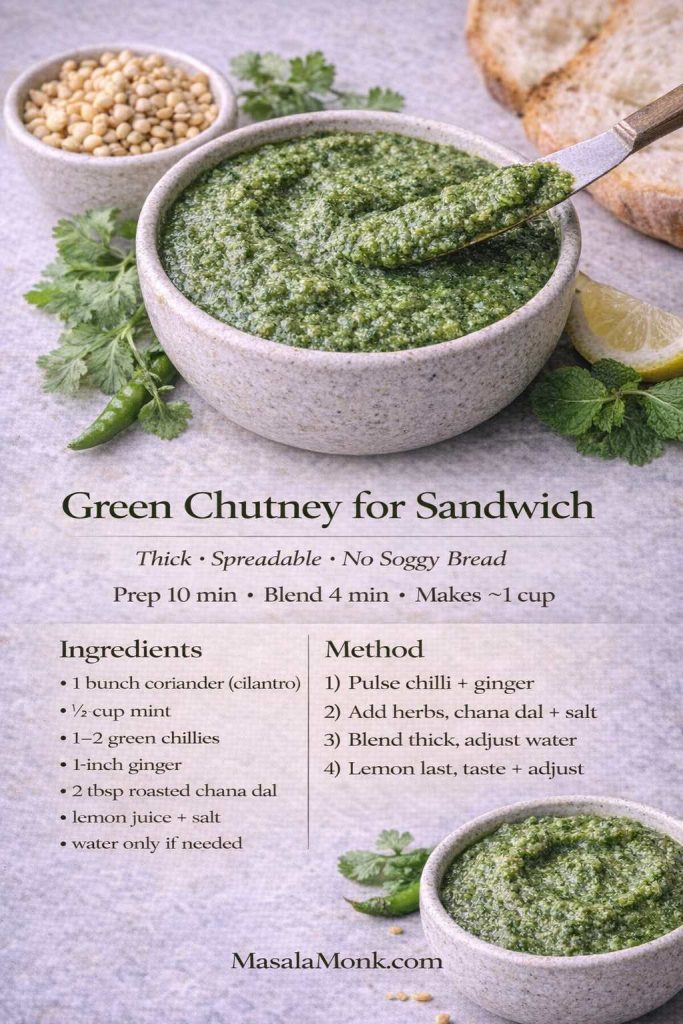
Save this green chutney for sandwich recipe card—thick, spreadable, and made with roasted chana dal so it stays put in a Bombay-style sandwich without turning the bread soggy.

Ingredients

Coriander (cilantro), 1 large bunch
Mint leaves, ½ cup
Green chillies, 2 to 3
Ginger, 1-inch piece
Roasted cumin powder, ½ to ¾ teaspoon
Salt, to taste
Lemon juice, 1 to 1½ tablespoons
Roasted chana dal (bhuna chana/dalia), 1 to 2 tablespoons
Water, only by teaspoons if absolutely needed

Method

  1. Pulse ginger and chillies first.
  2. Add coriander, mint, cumin, and salt. Blend in bursts with almost no water.
  3. Add roasted chana dal and blend again until thick and spreadable.
  4. Add lemon at the end, blend briefly, and taste.
  5. If it becomes too thick, loosen with a teaspoon of water. If it’s still thin, add a little more roasted chana dal.
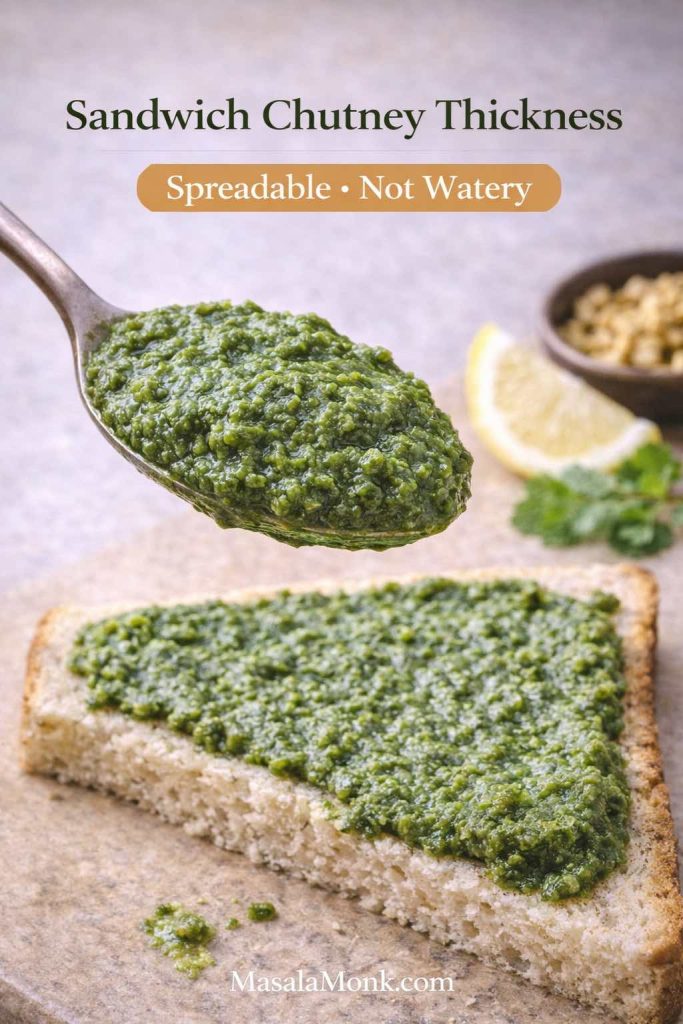
Sandwich green chutney thickness shown on a spoon and spread on bread, demonstrating a spreadable, not watery green chutney for sandwich.
This is the thickness you want for green chutney for sandwich—spreadable and sturdy, so it stays put on bread instead of soaking in and turning the sandwich soggy.

Where to use it immediately

This is the signature layer in MasalaMonk’s Authentic Grilled Bombay Sandwich Recipe, where green coriander chutney helps create that unmistakable street-style bite. It also works beautifully when you’re using leftovers creatively, like in this Paneer Sabji Sandwich. For mornings, it fits naturally into MasalaMonk’s Sandwich for breakfast ideas, especially when you want a toastie that tastes fresh and bold rather than merely filling.


Coconut green chutney: a softer, breakfast-friendly direction

Sometimes you don’t want sharp. You want calm. Coconut green chutney is that mood: creamy, mellow, and especially good with dosa, idli, or any breakfast plate that needs a comforting dip.
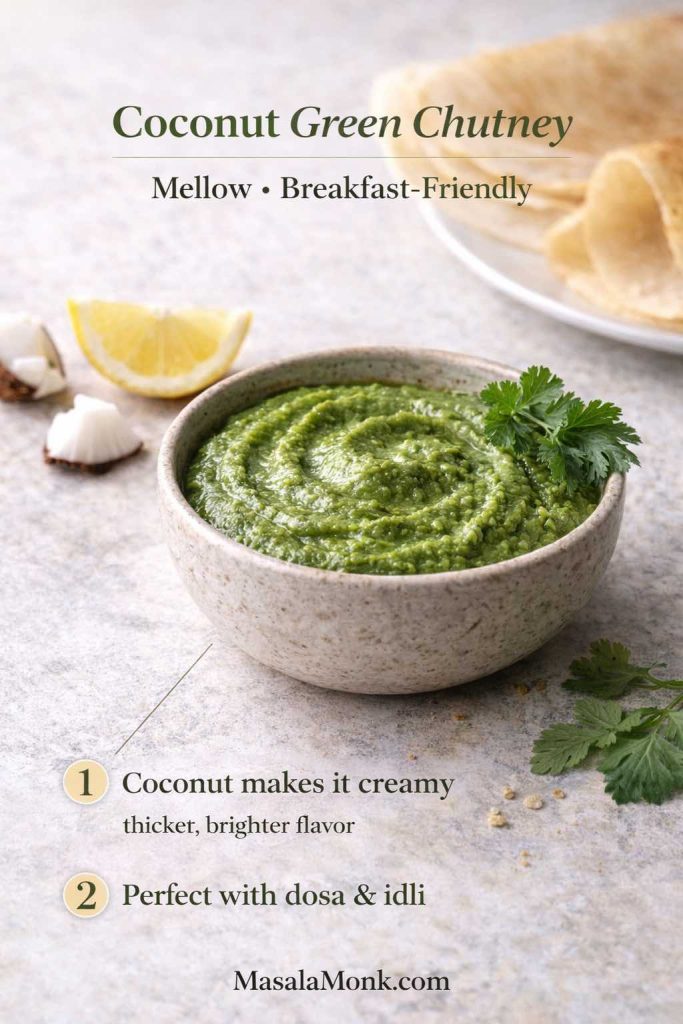
Coconut green chutney in a bowl with lemon and coconut pieces, a breakfast-friendly variation to serve with dosa and idli.
Coconut green chutney is the mellow, breakfast-friendly variation—creamier than classic green chutney, and especially good with dosa and idli when you want a softer, less sharp bite.

The beauty of coconut is that it rounds off harshness and softens chilli heat. Consequently, coconut green chutney feels soothing without becoming bland—especially if you remember to bring brightness back with lemon at the end.


Recipe Card: Coconut Green Chutney (Herb + Coconut)

This version keeps the green freshness, then adds coconut for a creamier finish.

Yield: about 1 to 1¼ cups
Prep time: 10 minutes
Blend time: 4 to 6 minutes
Best for: dosa, idli, savory breakfasts, snack platters

Ingredients

Fresh grated coconut, ½ to ¾ cup (or desiccated coconut soaked briefly)
Coriander (cilantro), 1 bunch
Mint leaves, a small handful (optional)
Green chillies, 1 to 3
Ginger, a small piece
Roasted cumin powder, ¼ to ½ teaspoon
Salt, to taste
Lemon juice, about 1 tablespoon (adjust to taste)
Water, minimal
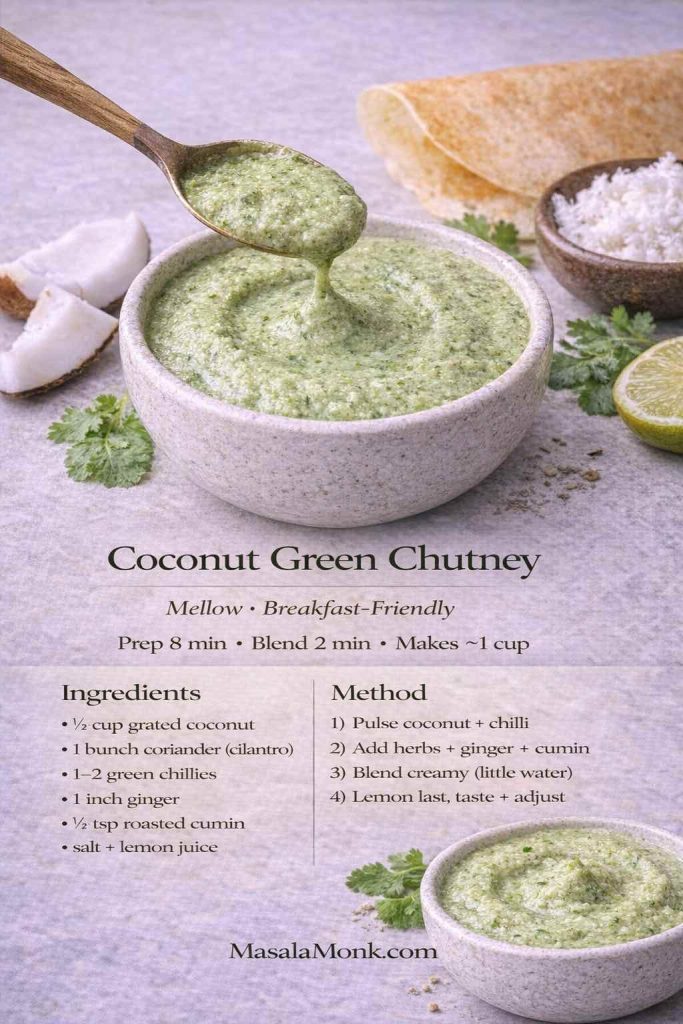
Save this coconut green chutney recipe card for a mellow, creamy variation of green chutney—perfect with dosa and idli when you want a softer, breakfast-friendly chutney.

Method

  1. Pulse ginger and chillies first.
  2. Add coconut, coriander, cumin, and salt. Blend smooth with very little water.
  3. Add lemon at the end and blend briefly.
  4. Taste and adjust. If it feels too mellow, add a touch more lemon or an extra chilli.

If you want a more traditional coconut chutney profile for South Indian breakfasts, MasalaMonk’s South Indian Coconut Chutney is a great companion. It’s not the same chutney, yet it sits beautifully alongside a sharper green chutney on the same plate.

Also Read: Coconut Water Cocktails: 10 Easy, Refreshing Drinks


Mint chutney recipe: when mint leads the green melody

There are days when mint deserves the spotlight. A mint chutney recipe is cooler, more mint-forward, and often feels especially good with spicy foods because mint softens the heat without dulling flavor.
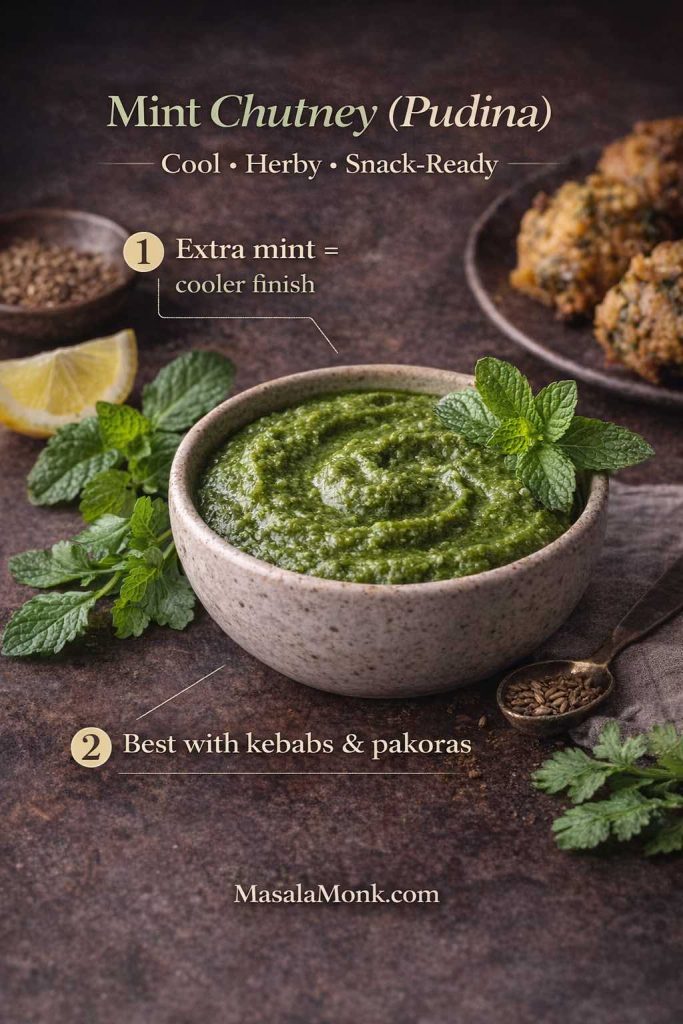
Mint chutney (pudina chutney) in a bowl with fresh mint and lemon, a cooling green chutney best served with kebabs and pakoras.
Mint chutney (pudina chutney) is the cooling, herb-forward cousin of classic green chutney—perfect when you want a fresher finish with kebabs, pakoras, and spicy snacks.

Although mint chutney and green chutney live in the same family, the balance changes. Mint becomes the main note, coriander supports, and lemon becomes especially important so the chutney feels bright rather than heavy.


Recipe Card: Mint Chutney (Pudina-Forward)

This is a mint-led chutney that still keeps enough coriander to taste rounded.

Yield: about 1 cup
Prep time: 10 minutes
Blend time: 3 to 5 minutes
Best for: kebabs, pakoras, sandwiches, snack platters

Ingredients

Mint leaves, 1 to 1¼ cups
Coriander (cilantro), ½ bunch
Green chillies, 1 to 3
Ginger, ½ to 1-inch piece
Roasted cumin powder, ½ teaspoon
Salt, to taste
Lemon juice, 1 to 1½ tablespoons
Water, minimal
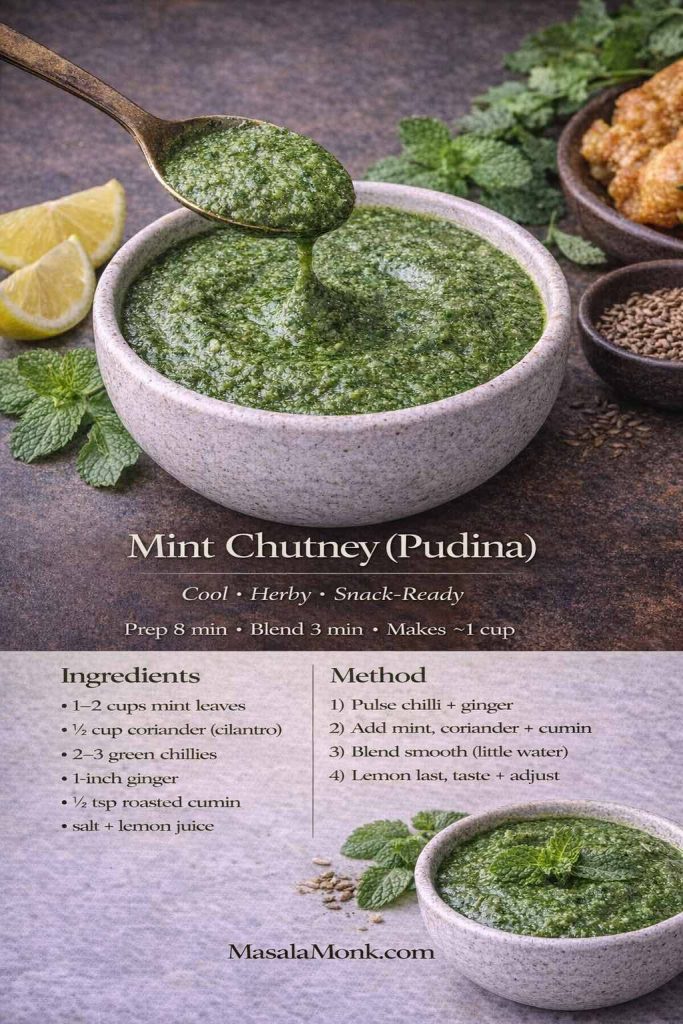
Save this mint chutney (pudina chutney) recipe card for a cooler, herb-forward green chutney—especially good alongside pakoras, kebabs, and spicy snacks when you want a fresh, clean finish.

Method

  1. Pulse ginger and chillies first.
  2. Add mint, coriander, cumin, and salt. Blend in short bursts, scraping down as needed.
  3. Add lemon at the end and blend briefly.
  4. Taste and adjust until it feels bright and complete.

If you like seeing a classic mint-led approach, Veg Recipes of India’s pudina chutney recipe is a helpful reference for how naturally mint can carry a chutney.

Also Read: Double Chocolate Chip Cookies – Easy Recipe with 7 Variations


A spicier cousin to keep in mind

Green chutney is fresh and herby, yet sometimes you want something louder—more chilli, more punch, less silky smoothness. That’s where thecha comes in. It’s not the same chutney, but it scratches the same “one spoon changes the meal” itch in a fierier way. When you’re in that mood, MasalaMonk’s thecha recipe is a great one to explore.


How to use green chutney all week (without forcing it)

The jar empties fastest when you match the chutney style to the meal. Instead of treating it as “a snack condiment,” let it behave like a sauce you reach for whenever food needs contrast.

Ways to use green chutney guide showing green chutney served with samosas and pakoras, Bombay sandwich spread, dosa and idli, and wraps and bowls.
Green chutney isn’t just a dip—use it as a chaat chutney with samosas and pakoras, spread it into a Bombay sandwich, serve it with dosa and idli, or spoon it into wraps and bowls for an instant hit of freshness.

Breakfast: warm + crisp + cold chutney

A savory breakfast becomes instantly more complete when there’s something tangy on the side. For example, MasalaMonk’s Semolina Veggie Pancakes are perfect with a fresh green chutney beside them. The warm, lightly spiced pancake meets the cool, tangy chutney, and suddenly breakfast feels cheerful rather than routine.

Coconut green chutney also fits beautifully on breakfast plates, especially when you’re serving dosa or idli. Meanwhile, a sharper green chutney can sit beside it as contrast, so the plate doesn’t taste one-note.

Lunch: spread it, don’t dip it

For lunchbox sandwiches and wraps, thickness matters. That’s why the sandwich spread version earns its own recipe card. Once you use a thick green chutney for sandwich builds, you’ll notice how much cleaner the sandwich feels—less soggy, more evenly flavored.

If you’re using leftover sabji, chutney acts like a bridge between bread and filling. The Paneer Sabji Sandwich is a perfect example of how chutney makes leftovers taste intentional instead of accidental.

Snacks: the moment for restaurant-style punch

When snacks appear—pakoras, samosas, cutlets—restaurant style green chutney shines. It’s smoother, brighter, and designed to feel “ready” immediately. Even a simple plate of fried potatoes tastes more exciting when the chutney has that chaat-like pop.

Dinner: a small spoon as a fresh counterpoint

For heavier comfort meals, a fresh green chutney side can lift the whole plate. MasalaMonk’s Litti Chokha guide mentions serving it with green chutney, and the pairing makes perfect sense: smoky, hearty flavors love a tangy herbal contrast.

When the plate isn’t “Indian,” the chutney still works

Green chutney behaves like a universal herb sauce. It can sit beside roasted vegetables, grilled paneer, or even as a dip for snacks that aren’t traditionally Indian. MasalaMonk’s Falafel with Indian twists points toward mint-coriander chutney as a dip option, which is a gentle reminder that chutney doesn’t need a passport.

Condiment spreads: pair wet and dry

If you love building a snack spread, pair green chutney with something dry and bold for texture contrast. MasalaMonk’s Vada Pav Dry Chutney recipe is a great counterpart—sprinkleable, garlicky, and intense in a completely different way.

Also Read: Peanut Butter Cookies (Classic Recipe & 3 Variations)


Keeping it vibrant: why green chutney darkens and what helps

Herb chutneys dull over time. That’s normal. When herbs are crushed, they’re exposed to oxygen, and natural enzyme activity can change color. You don’t need to treat this like a crisis; you simply need a few habits that make the chutney stay brighter for longer.
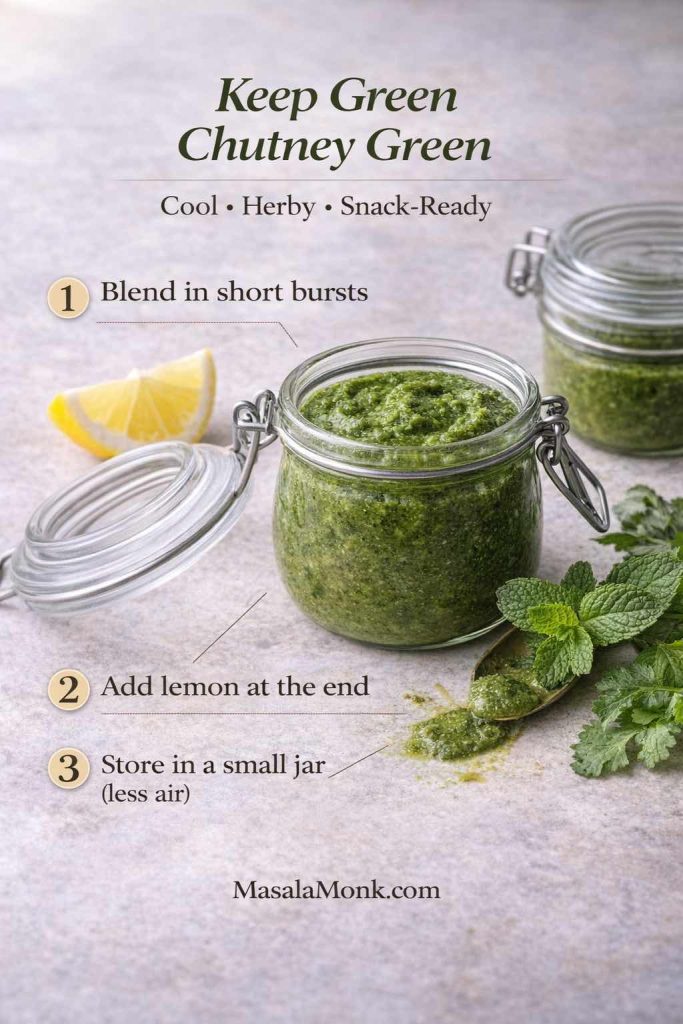
Keep green chutney green guide showing 3 tips: blend in short bursts, add lemon at the end, and store in a small jar to reduce air exposure.
To keep green chutney bright and fresh, blend in short bursts, add lemon at the end, and store it in a smaller jar so there’s less air sitting on top.

To understand the “why” in plain language, IFST’s explainer on enzymic browning is a helpful read. If you enjoy practical kitchen experiments, Serious Eats has a deep dive into why pesto browns and what actually helps. Green chutney isn’t pesto, of course, but the herb-and-oxygen problem behaves similarly.

In daily cooking terms, these habits help the most:

  • Blend in short bursts so the herbs don’t warm up.
  • Add lemon at the end so the bright top notes stay bright.
  • Store in a smaller jar so there’s less headspace.
  • Smooth the top of the chutney so there’s less surface area exposed to air.

Those steps aren’t fussy. They’re simply the small things that keep your chutney looking and tasting fresher.

Also Read: How to Cook Perfect Rice Every Time (Recipe)


Storage and food safety (without turning it into a lecture)

Green chutney is typically uncooked, which means you should treat it like any prepared, ready-to-eat condiment. Keep it refrigerated, use clean spoons, and make batches sized for real life.

If you want an official reference point for general safe handling of prepared foods, the USDA page on leftovers and food safety is worth a quick skim. Even though chutney isn’t exactly “leftovers,” the mindset carries over: fresh prepared foods are best used within a reasonable window, and cleanliness matters.

Freeze green chutney guide showing green chutney cubes in an ice tray with steps to spoon into trays, freeze, and refresh with lemon.
Freeze green chutney in small cubes so you can thaw only what you need—spoon into trays, freeze, then refresh the thawed coriander–mint (cilantro) chutney with a squeeze of lemon.

For longer storage, freezing in small portions works well. The color may dull a bit after thawing, yet the flavor often stays surprisingly strong, especially if you refresh it with a squeeze of lemon before serving.

Also Read: How to Cook Perfect Rice Every Time (Recipe)


When a batch goes sideways (and how to rescue green chutney)

Even experienced cooks get a batch that’s almost right. Fortunately, green chutney is forgiving, so you can correct most problems without frustration.
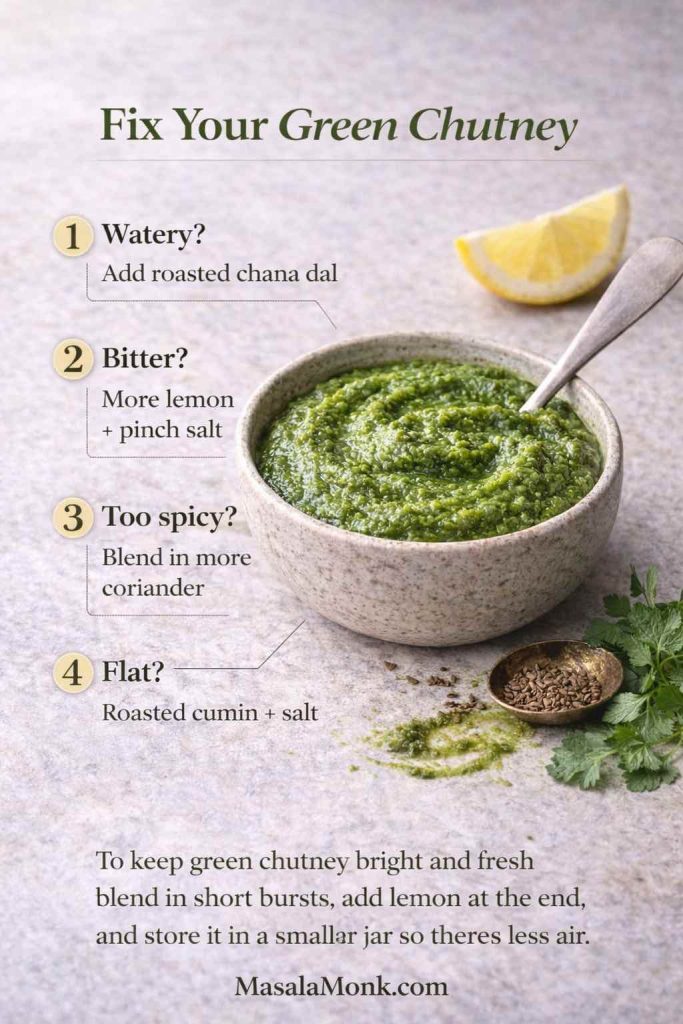
Fix your green chutney troubleshooting guide with quick fixes for watery, bitter, too spicy, and flat green chutney.
If your green chutney goes off-track, don’t toss it—use these quick fixes for watery chutney, bitterness, too much heat, or a flat taste, and bring it back to a fresh, balanced green chutney recipe.

Too thin

If the chutney is watery, thicken it rather than adding more spices. Roasted chana dal is the most reliable thickener. If you don’t have it, reduce water next time and pat the herbs dry more thoroughly.

Too flat

When it tastes muted, it often needs roasted cumin and salt. Add a pinch of each, blend briefly, then taste again. Usually the chutney isn’t missing “more herbs”; it’s missing grounding.

Too grassy

Grassy chutney typically needs lemon and salt. Add lemon in small squeezes, then taste until the chutney feels “awake.”
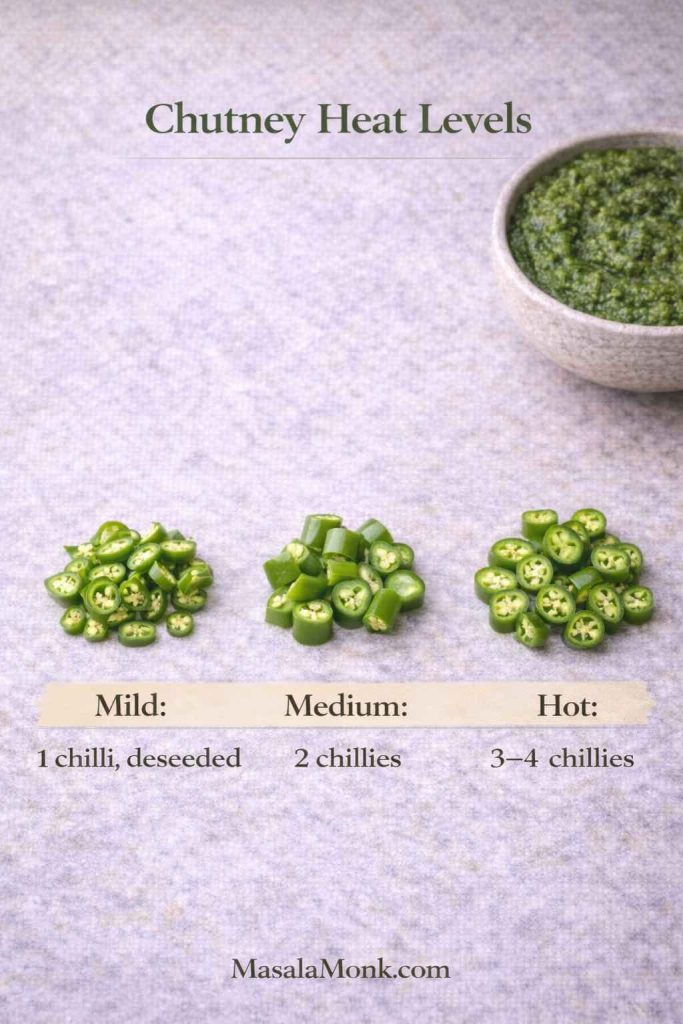
Green chutney heat levels guide showing mild, medium, and hot options based on how many green chillies to use.
Adjust your green chutney recipe to your comfort level: use 1 deseeded chilli for mild, 2 chillies for medium heat, or 3–4 chillies for a hotter, punchier coriander–mint (cilantro) chutney.

Too spicy

Instead of diluting with water, blend in more coriander. Water reduces flavor, while more herbs keep it tasting like chutney.

Slightly bitter

Bitterness can happen when herbs heat up during long blending runs, or when thick stems dominate. To soften bitterness in the moment, add lemon and a pinch more salt, then blend in a handful of fresh coriander if you have it. Next time, use short bursts and trim thick stems more carefully.

Also Read: Whole Chicken in Crock Pot Recipe (Slow Cooker “Roast” Chicken with Veggies)


A green chutney ritual worth keeping

After making this green chutney a few times, a simple pattern shows up: the jar empties fastest when the chutney is thick enough to use without thinking. A watery batch, on the other hand, tends to linger—not because the flavor is bad, but because spreading and dipping start feeling messy.

Here’s the easiest rule to live by: begin with less water than you think you’ll need. You can always loosen the chutney later; thickening it after the fact is far more annoying. As a bonus, the flavor stays bolder, sandwiches hold up better, and the chutney feels like a daily staple rather than an occasional side.

That’s why green chutney becomes a habit. It brightens the plate, sharpens each bite, and makes even simple food feel intentional.

When you’re ready to use it right away, MasalaMonk already has plenty of natural landing spots: spread a generous layer in the Authentic Grilled Bombay Sandwich, tuck it into the Paneer Sabji Sandwich, serve it alongside Semolina Veggie Pancakes, or pair it with something bold like Vada Pav Dry Chutney. After that, the jar tends to take care of itself.
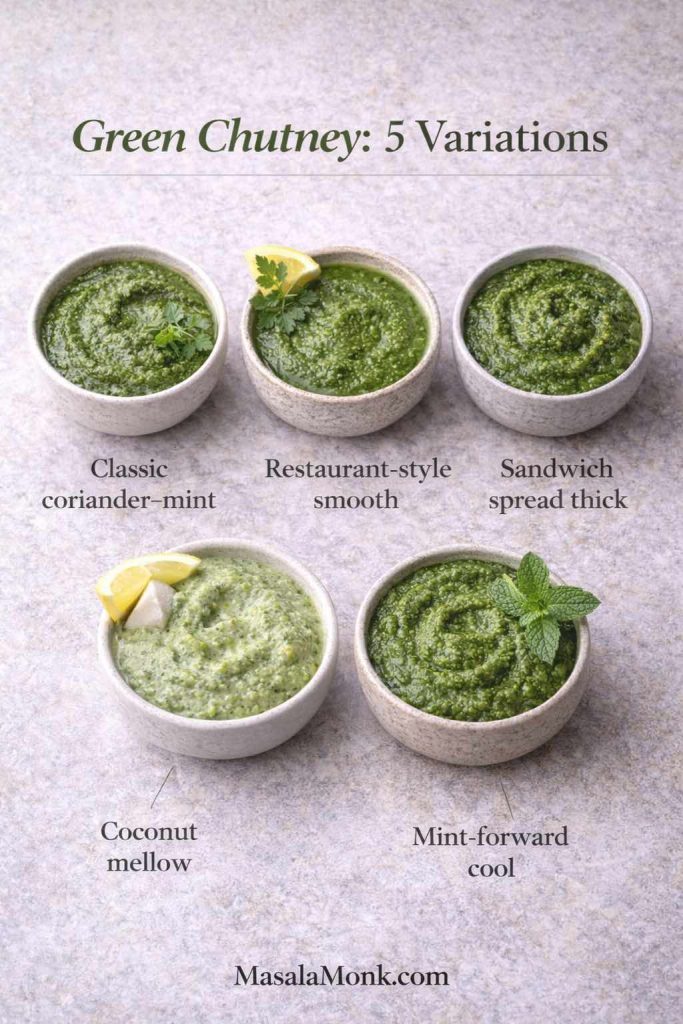
Green chutney recipe variations chart showing five types: classic coriander–mint, restaurant-style smooth, thick sandwich spread, coconut green chutney, and mint-forward chutney.
One base green chutney recipe, five directions—keep it classic coriander–mint, blend it extra-smooth for restaurant-style green chutney, thicken it for green chutney for sandwich spreads, mellow it with coconut, or go mint-forward for a cooler finish.

FAQs

1) What is green chutney made of?

Green chutney is usually made by blending coriander (cilantro) with mint, green chillies, ginger, salt, roasted cumin, and lemon or lime juice. Depending on the style, you may also add ingredients like black salt, roasted chana dal for thickness, or coconut for a milder, creamier version.

2) Is cilantro chutney the same as coriander chutney?

Often, yes. In many kitchens, “cilantro” and “coriander leaves” refer to the same herb, so cilantro chutney and coriander chutney commonly point to the same kind of green chutney. That said, some people use “coriander chutney” to mean a coriander-forward version with little or no mint.

3) What is dhania chutney and how is it different from dhaniya chutney?

Dhania chutney and dhaniya chutney are generally the same thing—both names commonly refer to coriander-based green chutney. The difference is usually spelling preference or regional language habits, not a different recipe.

4) How do I make restaurant style green chutney at home?

For restaurant style green chutney, blend the herbs smoother than usual, push the lemon a little further for extra brightness, and season confidently with roasted cumin. Additionally, a small pinch of black salt can give that familiar chaat-style tang, although it’s optional.

5) Why does my green chutney turn dark or brown?

Green chutney can darken because the herbs react with air after blending. To slow it down, blend in short bursts so the chutney doesn’t heat up, store it in a tightly sealed jar, and reduce the empty space at the top. Also, adding lemon at the end can help keep the flavor fresher.

6) How can I keep green chutney green for longer?

To keep green chutney greener, start with cold, dry herbs, blend quickly, and avoid adding too much water. Then, store it in a small jar so there’s less air exposure. In some cases, blanching herbs briefly and cooling them before blending can help, but many cooks prefer keeping it fully raw for the freshest taste.

7) What’s the best green chutney for sandwich spread?

The best green chutney for sandwich is thick and spreadable, not watery. For that reason, use very little water while blending and add roasted chana dal (bhuna chana/dalia) to thicken it. As a result, the chutney stays in place and the bread doesn’t turn soggy.

8) Why is my green chutney watery?

Green chutney becomes watery when herbs aren’t dried well or too much water is added during blending. Instead, blend in bursts and add water only by teaspoons if needed. If it’s already thin, roasted chana dal can thicken it quickly.

9) How do I fix green chutney that is too spicy?

To reduce heat, blend in more coriander (and a little mint, if you use it), rather than adding water. Alternatively, adding a spoon of yogurt can mellow the spice, although it will change the flavor slightly and make the chutney creamier.

10) How do I fix green chutney that tastes bitter?

Bitterness can come from too many thick coriander stems or from over-blending, which warms the herbs. To improve it, add more lemon and a pinch more salt, then blend in extra fresh coriander to rebalance. Next time, use tender stems only and blend in short bursts.

11) How much mint should I add to coriander mint chutney?

Mint quantity depends on how minty you want the chutney and how strong your mint is. Generally, a moderate handful gives a balanced coriander mint chutney, whereas a larger amount creates a more cooling, mint-forward chutney.

12) Can I make coconut green chutney without tempering?

Yes. Coconut green chutney can be made by simply blending coconut with coriander, green chilli, ginger, salt, and lemon. If you want it more traditional, you can add tempering, but it isn’t required for a tasty everyday version.

13) How long does green chutney last in the fridge?

Typically, green chutney is best used within 3 to 4 days when stored in a clean, airtight container in the refrigerator. After that, the flavor and color may degrade, even if it still looks fine.

14) Can I freeze green chutney?

Yes, green chutney can be frozen in small portions. For example, freezing in ice cube trays makes it easy to thaw only what you need. After thawing, the chutney may look slightly duller, so adding a little fresh lemon juice can brighten the flavor.

15) What can I serve with green chutney?

Green chutney pairs well with samosas, pakoras, cutlets, kebabs, chaat, sandwiches, wraps, and savory pancakes. Moreover, it works as a dip for snacks beyond Indian food when you want a fresh, herby sauce with a spicy kick.

Posted on 2 Comments

Chicken Salad Sandwich: Classic Base + 10 Global Variations

One master chicken salad spread, ten ways: classic deli-style, croissant bakery-style, and tea-sandwich bites—plus a Caesar-inspired bowl for easy mix-and-match lunches.

A great chicken salad sandwich doesn’t need a special occasion. It’s the kind of food that fits into real life: busy weekdays, lazy weekends, long road trips, quick work lunches, picnic baskets, and “I’ve got cooked chicken—now what?” moments. Better still, once you’ve nailed a reliable chicken salad sandwich recipe, you can spin it into dozens of variations without feeling like you’re repeating yourself.

That’s exactly what this article is for. You’ll start with one dependable master filling—the kind that tastes balanced rather than bland—and then you’ll shift gears into versions people genuinely love to eat: classic and old fashioned, healthy and lighter, rotisserie-fast, pantry-friendly with canned chicken, crunchy pickle-forward, sweet-savory with grapes or cranberries, bakery-style on a croissant, party-ready for tea sandwiches, bold curry versions, and Caesar-inspired builds that taste like a full meal inside bread. Along the way, you’ll also get an egg section (including an egg salad sandwich recipe with relish) and a chickpea spread for anyone who wants a plant-based option that still feels hearty.

If you’re in the mood to explore beyond chicken salad once you’re done, you might also enjoy this companion round-up of chicken sandwich recipes—it’s a handy way to keep lunch interesting without overcomplicating your week.


The master chicken salad spread (the one you’ll keep coming back to)

If chicken salad has ever tasted flat, the problem usually isn’t the chicken. More often, it’s that the filling is missing contrast. Creamy needs tang. Soft needs crunch. Mild needs a little edge. When those pieces click, even a simple bowl of chicken and mayo becomes something you actually look forward to.

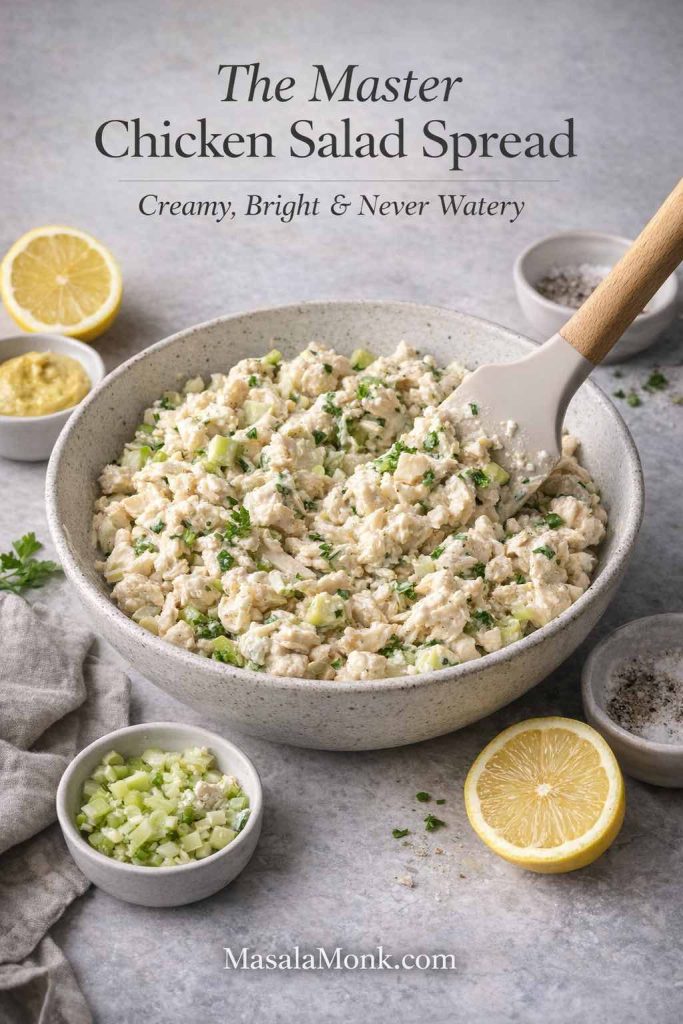
Bowl of creamy chicken salad spread being mixed with a spatula, with lemon, mustard, herbs and diced celery on the side for a chicken salad sandwich recipe.
This master chicken salad spread is the base for every chicken salad sandwich in this guide—mix it once, then customize with pickles, grapes, cranberries, Caesar flavors, or croissant-style builds.

Master chicken salad sandwich mix (makes 3–4 sandwiches)

Chicken

  • 2 packed cups cooked chicken, chopped or shredded (roughly 300–350 g)

Creamy base

  • 1/3 cup mayonnaise (about 80 g)

If you like making things from scratch, you can use a homemade base such as this homemade mayo guide. On the other hand, if you need an egg-free option for dietary reasons, egg free mayo works well. Likewise, for plant-based households, this vegan mayo recipe can substitute smoothly.

Tang + savor

  • 1–2 teaspoons mustard (Dijon is classic, but any mild mustard works)
  • 2 teaspoons lemon juice or mild vinegar
    Alternatively: 1 tablespoon pickle brine for a punchier, deli-style bite
  • 1/2 teaspoon salt, then adjust
  • Freshly ground black pepper to taste

Crunch (choose one, or mix two)

  • 1/3 cup finely diced celery
  • 1/3 cup seeded, finely diced cucumber
  • 1/3 cup finely diced bell pepper/capsicum
  • 2–3 tablespoons finely chopped pickles

Optional upgrades (choose what you like)

  • 1–2 tablespoons chopped herbs (parsley, dill, chives)
  • 1 small garlic clove, grated (go easy—it’s strong)
  • A pinch of paprika or chili flakes
  • 2–3 tablespoons finely chopped onion or spring onion
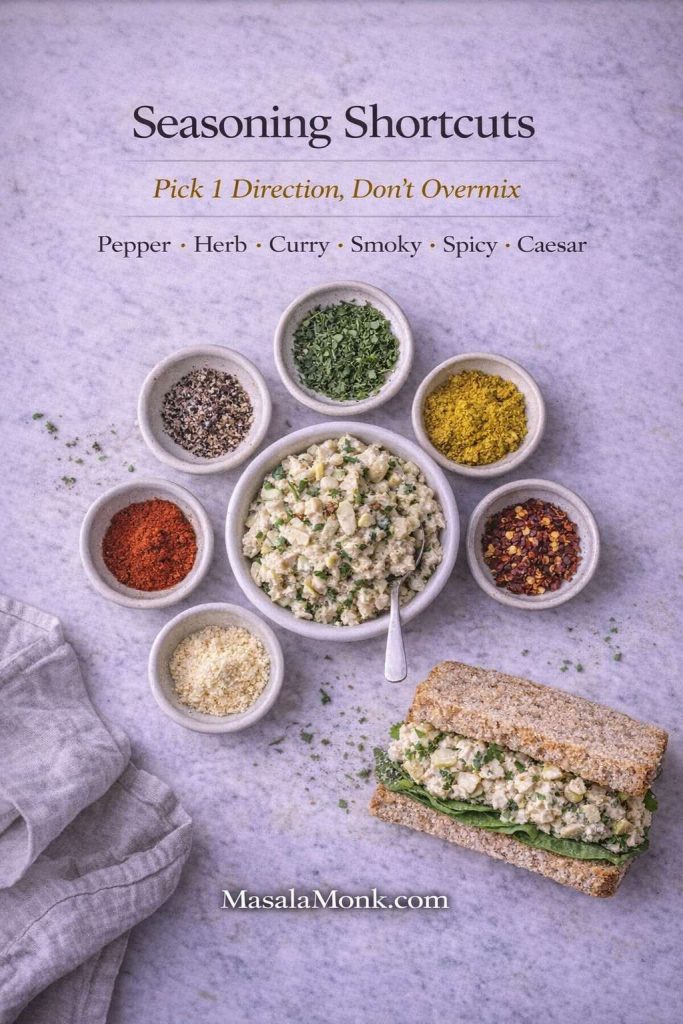
Chicken salad sandwich seasoning shortcuts chart showing a bowl of chicken salad surrounded by pepper, herbs, curry powder, paprika, Parmesan and chili flakes, with text overlay and MasalaMonk.com footer.
Choose one seasoning direction—pepper, herb, curry, smoky, spicy, or Caesar—then keep the mix simple so your chicken salad sandwich stays balanced instead of muddled.

Method (simple, but it matters)

  1. Decide your chicken texture first.
    Chop for a cleaner, café-style bite; shred for a softer, creamier filling. If you’re using leftover roast chicken, trim any rubbery skin and keep the good bits.
  2. Mix the dressing before the chicken goes in.
    Stir mayo, mustard, lemon/vinegar (or pickle brine), salt, and pepper until smooth. This tiny step is what keeps chicken salad from turning patchy or overmixed.
  3. Fold in crunch and aromatics.
    Add celery/cucumber/pepper/pickles and any herbs or onion. Taste the dressing again—if it’s lively now, the final chicken salad will be lively too.
  4. Add chicken gently.
    Fold, don’t beat. If it looks dry, add a spoon of mayo; if it looks loose, give it a few minutes in the fridge to tighten.
  5. Taste and correct with purpose.
    • Too bland? Add salt or mustard.
    • Too heavy? Add lemon.
    • Too sharp? Add a touch more mayo.
    • Too soft? Add crunch (or add it later during assembly).

That’s your base chicken salad sandwich recipe—solid enough to stand alone, flexible enough to become anything.

Also Read: Sandwich for Breakfast: Breakfast Sandwich Recipe + 10 Variations


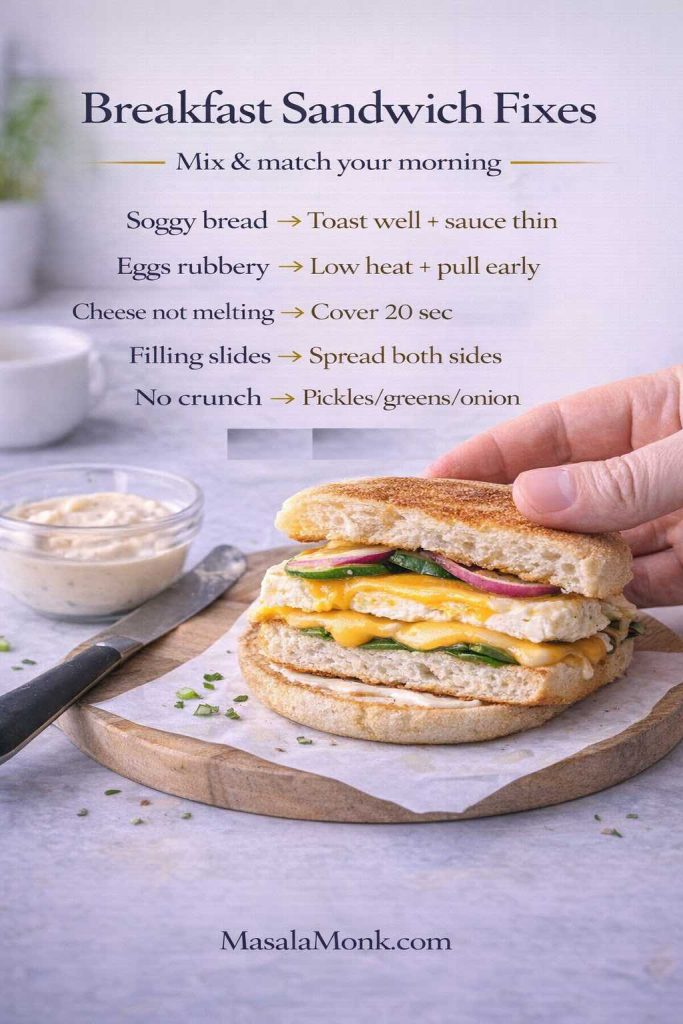
Building a chicken salad sandwich that doesn’t go soggy

Before we start customizing flavors, it’s worth getting the structure right. Otherwise, even a great filling can turn into a slippery mess.

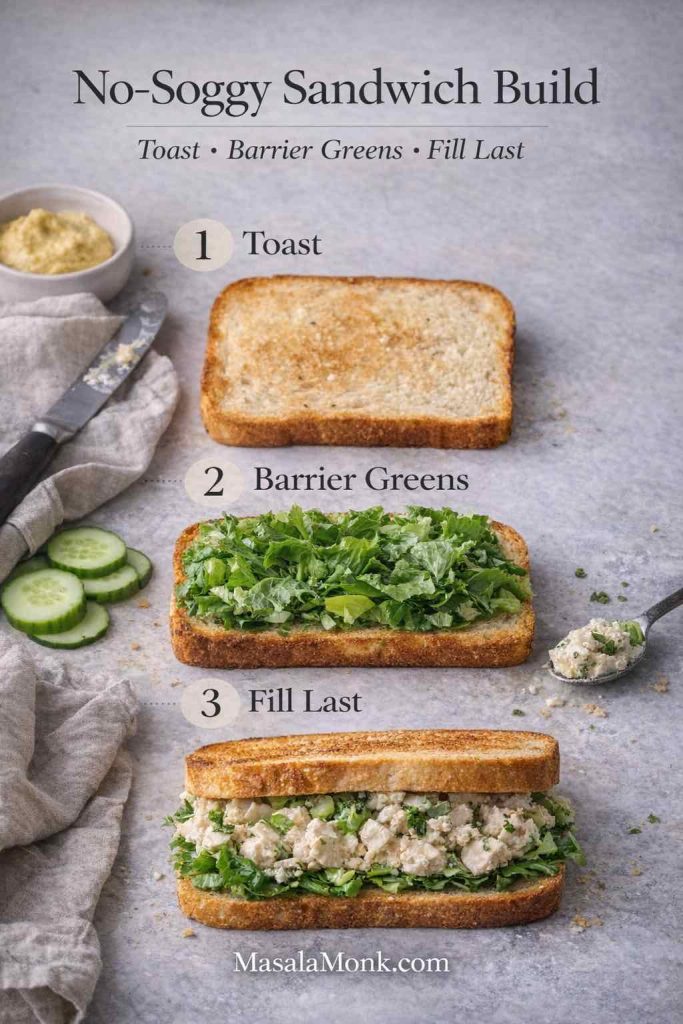
Step-by-step guide showing how to build a chicken salad sandwich that doesn’t get soggy: toast bread, add leafy greens as a barrier, then add chicken salad filling.
Keep every chicken salad sandwich crisp: toast the bread lightly, add greens as a moisture barrier, and spread the chicken salad last so the sandwich stays fresh longer—especially for lunchboxes and meal prep.

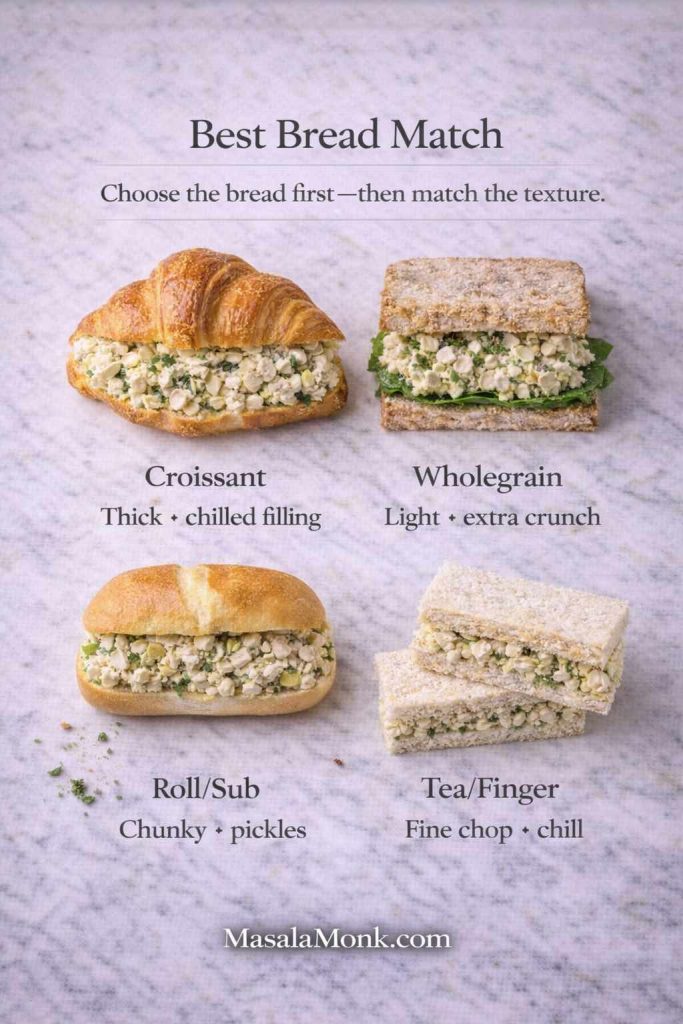
First, choose a bread that suits the texture you want:

  • Soft sandwich bread is classic and gentle.
  • Wholegrain adds bite and a nutty backbone.
  • A crusty roll makes it feel like a deli lunch.
  • A croissant makes it feel like a bakery treat.
  • Wraps keep things tidy for travel.
Pick the bread first, then match the filling: croissants need thick chilled chicken salad, wholegrain loves a lighter crunchy mix, rolls handle chunkier pickle-forward spreads, and tea sandwiches slice best with a fine chop and a quick chill.

Next, use a barrier. Lettuce, spinach, cheese, or even a thin swipe of mayo on the bread can protect it from moisture. Then, add chicken salad in the center rather than smashing it to the edges. Finally, close the sandwich and give it a minute before slicing; surprisingly, that short pause helps it set.

If you enjoy simple technique-driven sandwiches, MasalaMonk’s mushroom cheese sandwich is a fun example of how small choices—like toast level and filling consistency—change the entire experience.

Also Read: Strawberry Smoothie Recipes (12 Easy Blends + Bowls & Protein Shakes)

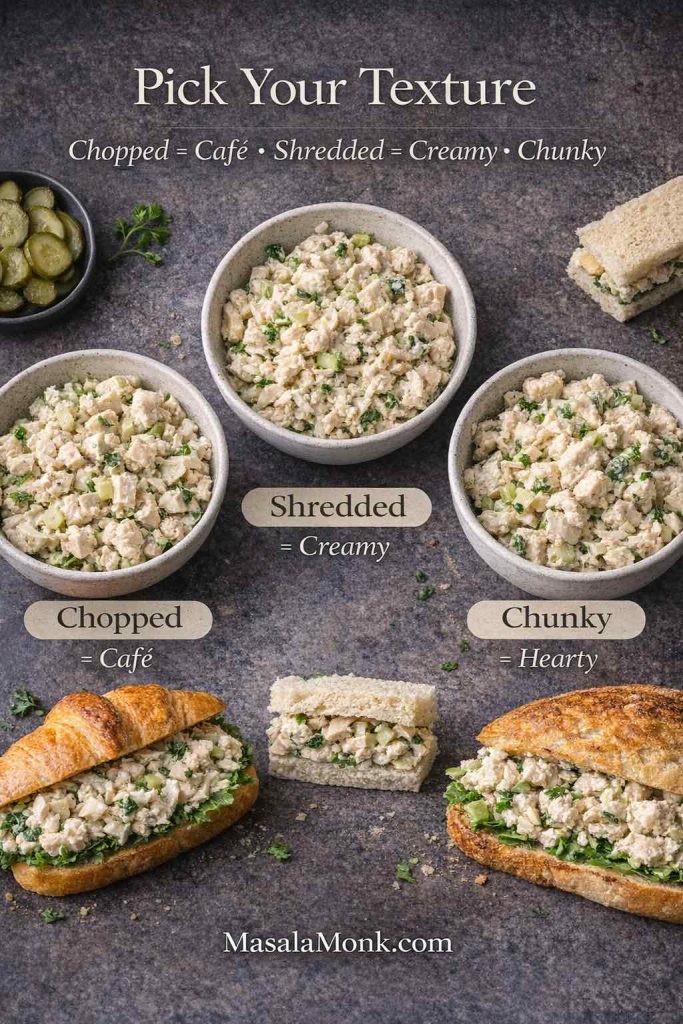
Texture changes everything: chopped chicken salad makes a café-style sandwich, shredded turns extra creamy, and chunky gives a hearty, deli-like bite—choose the style before you mix.

Classic chicken salad sandwich (old fashioned, comforting, reliable)

When most people picture a traditional chicken salad sandwich, they imagine something creamy with gentle crunch, lightly seasoned, and easy to eat. It’s familiar for a reason: it works.

Classic version (based on the master mix)

  • Use celery as your main crunch
  • Keep mustard moderate (1 teaspoon is often enough)
  • Add herbs if you like, but don’t overpower the chicken

For an especially “old fashioned chicken salad sandwich recipe” feel, add:

  • 1 tablespoon very finely chopped onion (or skip it for a softer profile)
  • A tiny pinch of sugar or honey if your chicken is very lean and the salad feels sharp

How to assemble it

Spread a thin layer of mayo (or butter) on each slice, add crisp lettuce, pile on chicken salad, then add a few cucumber slices if you want extra freshness. From there, slice cleanly and serve immediately, or wrap tightly for later.

Also Read: Classic Rum Punch + 9 Recipes (Pitcher & Party-Friendly)


Healthy chicken salad sandwich (lighter, brighter, still satisfying)

Healthy chicken salad sandwich recipes can go wrong when “healthy” is treated like “flavorless.” Fortunately, you don’t need to sacrifice comfort to lighten things up. Instead, you shift the balance: more tang, more texture, and a creamy base that doesn’t rely entirely on mayo.

Lighter binder options

  • Half mayo + half thick yogurt: keeps creaminess while adding tang
  • Mostly yogurt with a splash of olive oil: feels fresh and bright
  • Mashed avocado + lemon: creamy and satisfying, with a clean finish

If you like yogurt-based spreads, there’s a lot of inspiration in a good tzatziki—this Greek tzatziki recipe collection shows how cucumber, garlic, herbs, and lemon can create a dressing that tastes “finished” rather than improvised. Fold a spoonful into chicken salad and the result feels lighter without feeling thin.

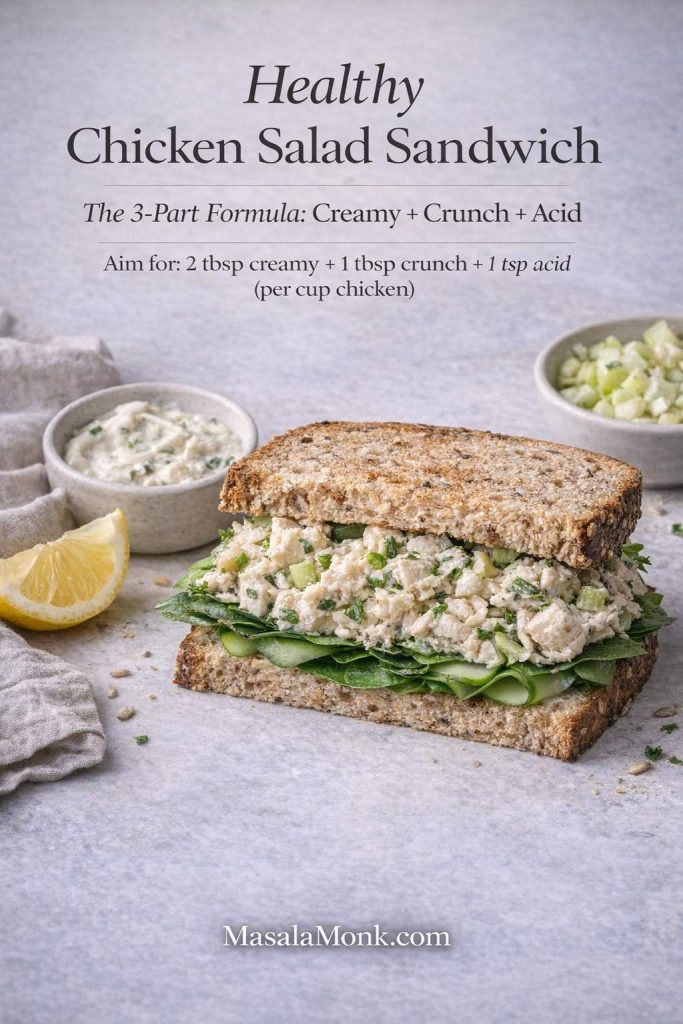
A simple ratio makes a healthier chicken salad sandwich easy anywhere: choose a creamy base, add crisp crunch, then finish with a bright splash of acid for a fresh, balanced bite every time.

Add-ins that make it feel like a meal

  • Chopped cucumber and bell pepper for crunch
  • Grated carrot for sweetness
  • Fresh herbs for brightness
  • A handful of toasted seeds for extra staying power

Now choose a bread that matches your goal. Wholegrain and seeded bread help create a chicken salad sandwich healthy enough for everyday lunches, while still tasting like real food.

For more sandwich ideas that lean into satisfying nutrition, you can also browse MasalaMonk’s guide to fiber-rich sandwiches. Even if you’re not counting anything, the “more plants, more crunch” approach tends to make chicken salad better.

Also Read: 7 Pizza Sauce Recipes | Marinara, White Garlic, Alfredo, Buffalo, BBQ, Vodka & Ranch


Rotisserie chicken salad sandwich (fast, flavorful, and hard to mess up)

A rotisserie chicken salad sandwich is one of the easiest ways to make lunch taste like you tried. Rotisserie chicken brings built-in seasoning and a good mix of textures—especially if you use both breast and thigh meat.

How to make rotisserie chicken salad taste fresher

Because rotisserie chicken can be rich, lean into brightness:

  • Add lemon juice or a splash of vinegar
  • Add cucumber or bell pepper for crunch
  • Use herbs generously (parsley and dill work beautifully)
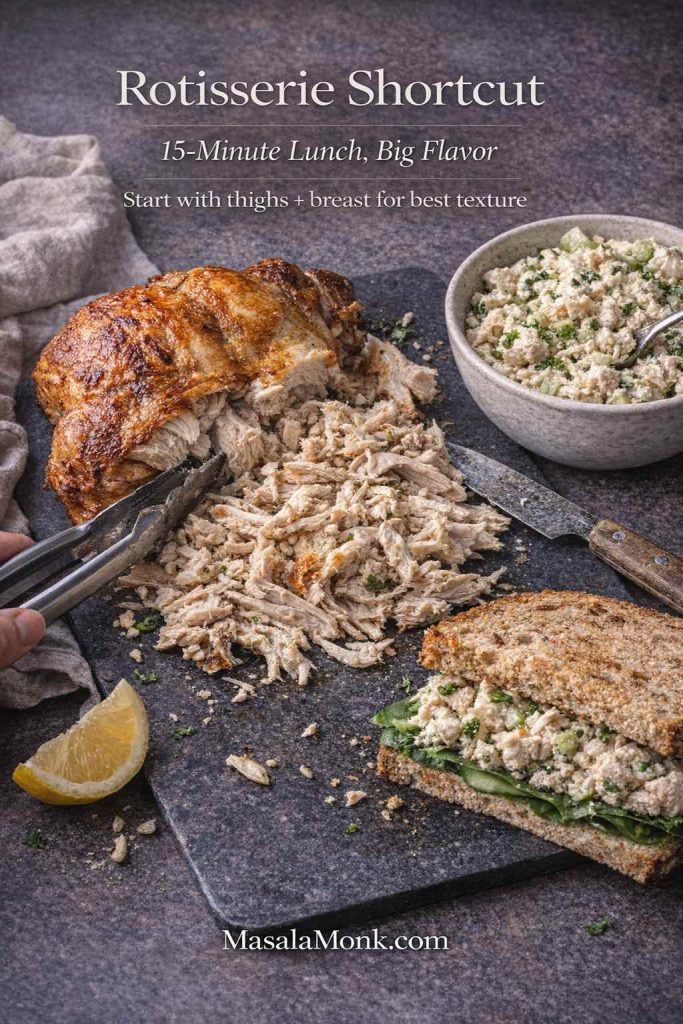
Rotisserie chicken salad sandwich recipe shortcut guide showing shredded rotisserie chicken, a bowl of chicken salad spread, and a sandwich on whole grain bread with text overlay “Rotisserie Shortcut” and MasalaMonk.com footer.
For a rotisserie chicken salad sandwich that tastes homemade fast, mix breast + thigh meat for better texture, then build with crisp greens so every bite stays juicy—not soggy.

A simple rotisserie variation: lemon-herb

Start with the master mix, then add:

  • 1 teaspoon lemon zest
  • 1 tablespoon chopped dill or parsley
  • Extra black pepper

As a result, you get a rotisserie chicken salad sandwich that feels lively rather than heavy.

Also Read: Vodka Pasta (Penne alla Vodka) + Spicy Rigatoni, Chicken, and Gigi Recipes


Chicken salad sandwich recipe using canned chicken (pantry-friendly and surprisingly good)

Canned chicken has a reputation for being dull, but you can turn it into a genuinely satisfying sandwich if you treat it properly. The secret is moisture control and stronger seasoning.

Step one: fix the texture

Drain thoroughly, then press the chicken gently with a spoon. After that, flake it with a fork. This keeps the final spread from tasting watery.

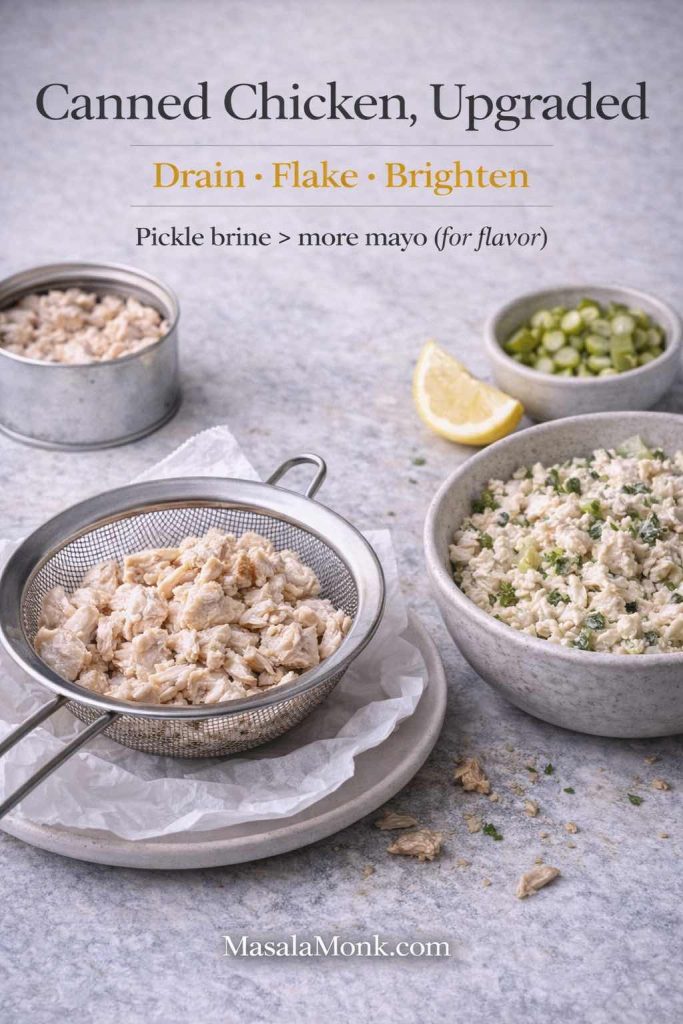
To make canned chicken salad taste fresh, drain it well, flake it with a fork, then brighten the spread with pickle brine and lemon—more flavor without making it heavy.

Pantry chicken salad sandwich mix

Use the master recipe, then add at least one of these:

  • Chopped pickles + a splash of pickle brine
  • Extra mustard
  • Spring onion
  • A pinch of paprika or chili flakes

This approach makes a chicken salad sandwich recipe canned chicken readers can actually repeat, not just tolerate.

Also Read: Moscow Mule Recipe (Vodka Mule): The Master Formula + 9 Variations


Chicken salad sandwich without celery (crunch swaps that work everywhere)

Not everyone likes celery. Moreover, celery isn’t always great year-round. Luckily, you can still create snap and freshness without it.

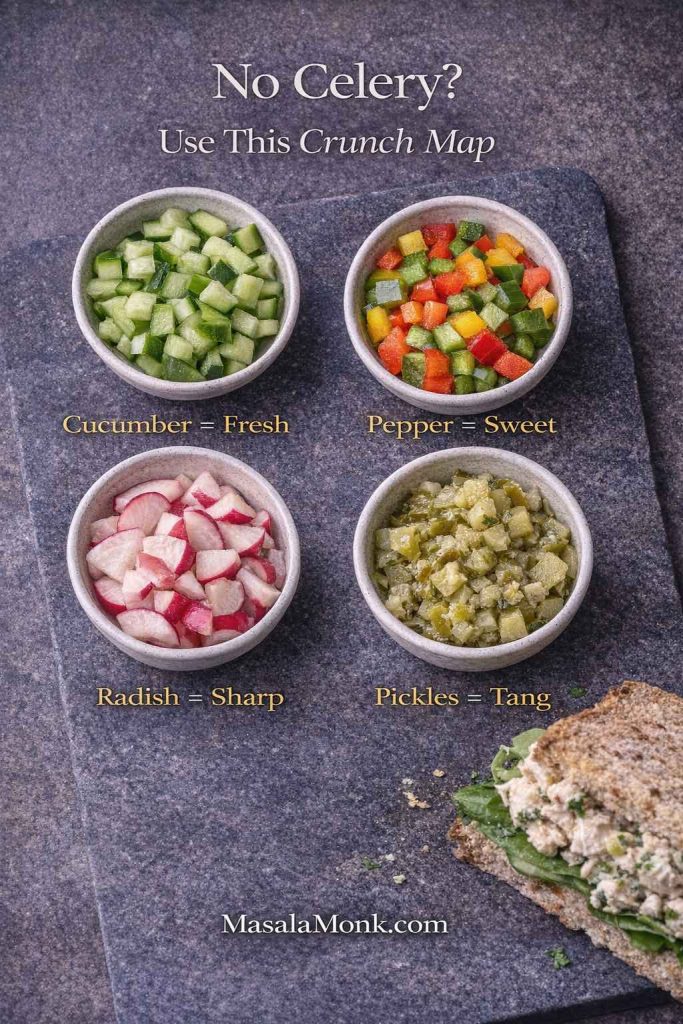
Crunch map for chicken salad sandwich without celery showing bowls of diced cucumber, bell pepper, radish and pickles with a chicken salad sandwich corner and MasalaMonk.com footer.
Skip celery without losing crunch: use cucumber for freshness, pepper for sweetness, radish for a sharp bite, or pickles for tang—then mix into your chicken salad sandwich filling to match the flavor you want.

Choose one crunch option:

  • Seeded cucumber (dice small)
  • Bell pepper/capsicum
  • Radish
  • Apple
  • Toasted nuts

Then season confidently. In contrast to celery, cucumber and bell pepper are milder, so you may want a touch more mustard or pepper to keep the flavor lively.

Also Read: Marinara Sauce Recipe: Classic Homemade Marinara


Chicken salad sandwich with pickles (tangy, deli-style, addictive)

If you like chicken salad that wakes your palate up, add pickles. They bring acidity and crunch in one move.

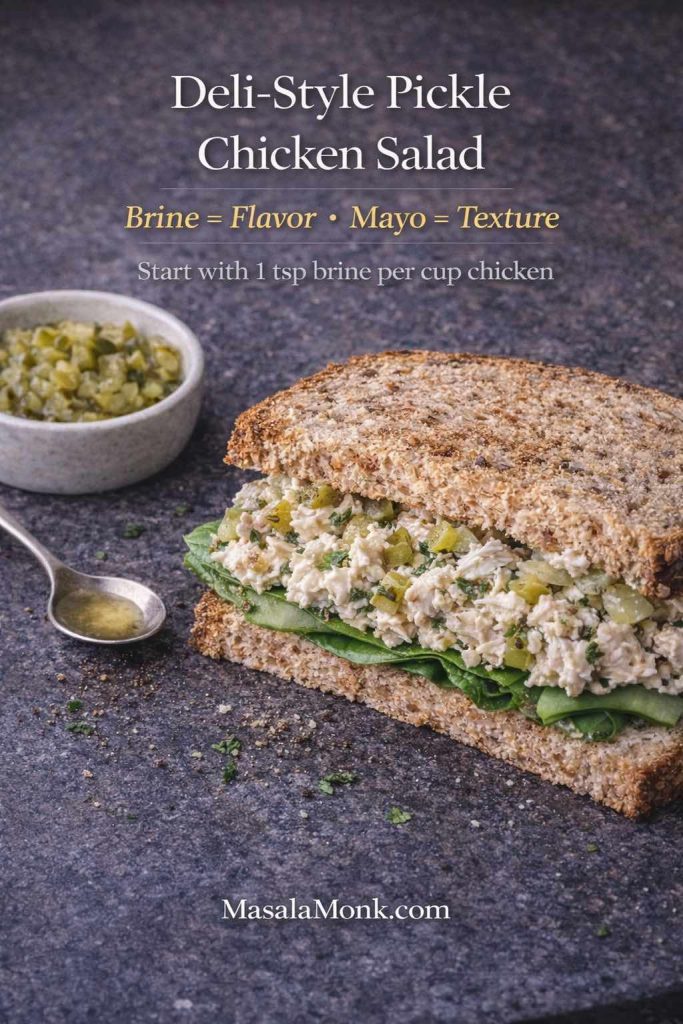
For a bolder chicken salad sandwich, use a little pickle brine to boost flavor before adding extra mayo—then fold in chopped pickles for crunch and a true deli-style bite.

Pickle-forward version

  • Add 2–3 tablespoons finely chopped pickles
  • Swap lemon juice for 1 tablespoon pickle brine
  • Add a little extra black pepper
  • Keep onion minimal so the pickle flavor shines

This variation is also a great answer when someone asks for a punchier dressing for chicken salad sandwich filling. It tastes “complete” without needing many extra ingredients.

Also Read: Oat Pancakes Recipe (Healthy Oatmeal Pancakes)


Chicken salad croissant (bakery-style comfort at home)

A chicken salad croissant is indulgent in the best way: cool, creamy filling against flaky, buttery pastry. However, croissants are delicate, which means your filling needs to be thicker and your assembly needs a small amount of care.

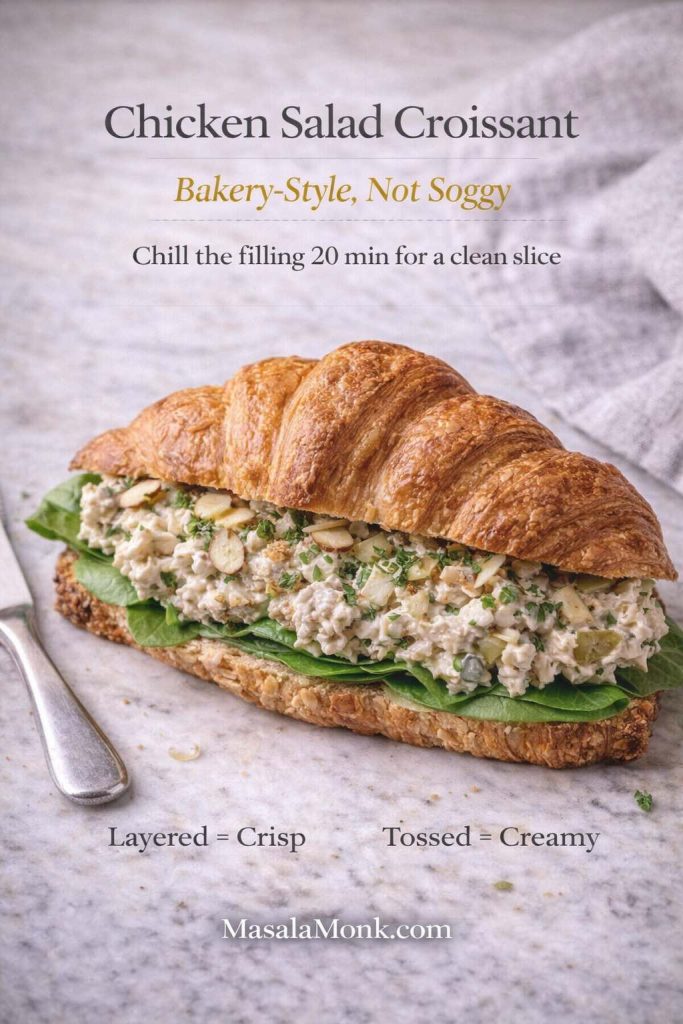
Croissant-friendly chicken salad

  • Chop chicken smaller than usual
  • Use slightly less acid to keep it from loosening
  • Add nuts or celery for texture
  • Chill the filling for 20–30 minutes if possible
Chicken salad croissant sandwich with leafy greens and creamy chicken salad filling, shown as a bakery-style guide with the tip to chill the filling for a clean slice and MasalaMonk.com footer.
For a chicken salad croissant that eats like a bakery sandwich, chill the filling briefly so it stays thick, then layer greens first to keep the croissant flaky instead of soggy.

Assemble it like a bakery

Slice the croissant, add lettuce as a barrier, spoon in chicken salad, then add thin cucumber slices if you like. Finally, press gently rather than squashing.

This same method also works for a chicken salad croissant sandwich recipe meant for a brunch spread: just make the filling thicker and build right before serving.

Also Read: Bolognese Sauce Recipe: Real Ragù & Easy Spag Bol


Chicken salad for tea sandwiches, finger sandwiches, and party trays

Tea sandwiches and party sandwiches are small, but they’re not “simple.” The texture needs to be smooth enough to slice neatly, while still tasting like chicken rather than paste.

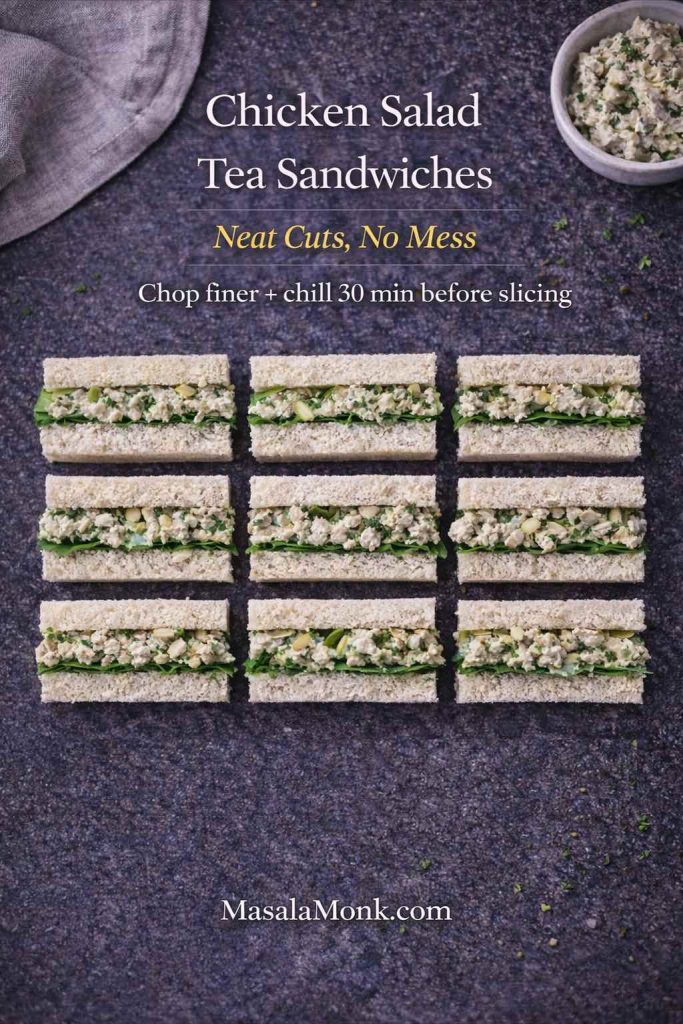
Chicken salad tea sandwiches cut into neat finger sandwiches on a dark slate background with text overlay tips for clean slicing and a MasalaMonk.com footer.
For tidy chicken salad finger sandwiches, chop the filling finer and chill it before slicing—your tea sandwiches hold shape, stay crisp, and look caterer-perfect.

Tea-sandwich chicken salad recipe

Start with the master mix, then adjust:

  • Chop chicken very finely
  • Add 1–2 extra tablespoons mayo (or a spoon of yogurt for tang)
  • Keep crunchy add-ins minimal and finely diced
  • Skip watery vegetables

Use soft bread, trim crusts, and cut into fingers or triangles. Consequently, you’ll get clean edges and a filling that stays put.

If you’re building an entire spread, it’s also worth pairing sandwiches with something scoopable and satisfying. MasalaMonk’s potato salad recipes are a natural side—comforting, familiar, and easy to make ahead.

Also Read: One-Pot Chicken Bacon Ranch Pasta (Easy & Creamy Recipe)


Sweet-savory café styles: grapes, cranberries, apples, nuts

Some of the most-loved chicken salad sandwich ideas lean sweet-savory: juicy fruit, crunchy nuts, creamy dressing, and a little pepper. It’s the kind of filling that tastes like a café lunch even when you make it at home.

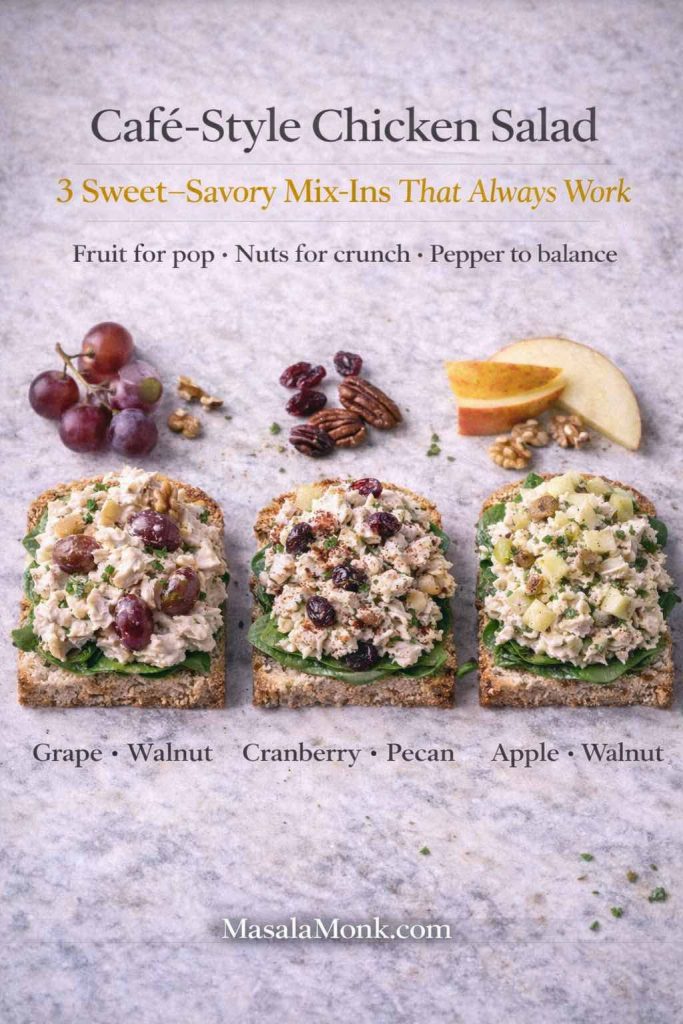
Café-style chicken salad sandwich ideas shown as three open-faced toasts—grape walnut, cranberry pecan, and apple walnut—with a sweet-savory mix-ins guide and MasalaMonk.com footer.
Three café-style upgrades for your chicken salad sandwich: pair fruit for juicy “pop,” nuts for crunch, and a little black pepper to keep the sweet-savory balance just right.

Chicken salad sandwich recipe with grapes

Start with the master mix, then add:

  • 1/2 cup halved grapes
  • 1/4 cup toasted walnuts or almonds
  • Extra black pepper

The grapes add burst, while the nuts add richness. Meanwhile, the pepper keeps it from tasting dessert-like.

Chicken cranberry salad sandwich (or craisin chicken salad)

Start with the master mix, then add:

  • 1/3 cup dried cranberries/craisins
  • 1/4 cup toasted pecans or almonds
  • Optional: a little orange zest for brightness

This version works beautifully on wholegrain bread or as a chicken salad croissant. It’s also a crowd-pleaser for party sandwiches because it tastes festive without being fussy.

Apple walnut chicken salad sandwich (Waldorf-inspired)

Start with the master mix, then add:

  • 1/2 cup diced apple
  • 1/4 cup toasted walnuts
  • Optional: a pinch of cinnamon (very small) or just more black pepper

This is a good direction when you want crisp, fresh texture and a cleaner finish.

Also Read: Whiskey Sour Recipe: Classic Cocktail, Best Whiskey & Easy Twists


Curry chicken salad sandwich (warm spice, creamy comfort)

Curry chicken salad sits in a wonderful middle ground: familiar enough for everyday lunches, yet distinctive enough to feel special. In addition, curry spice tends to pair beautifully with raisins, toasted nuts, and a squeeze of lemon.

Easy curry chicken salad sandwich recipe

Start with the master mix, then add:

  • 1–2 teaspoons mild curry powder
  • 1 tablespoon chopped raisins or sultanas (optional)
  • 2 tablespoons toasted almonds (optional)
  • Extra lemon juice

The result is creamy, aromatic, and deeply satisfying. If you’d like an external reference for a classic version of this style, BBC Good Food’s coronation chicken captures the traditional “curried creamy chicken” idea that’s been popular for decades.

Also Read: Classic Rum Punch + 9 Recipes (Pitcher & Party-Friendly)


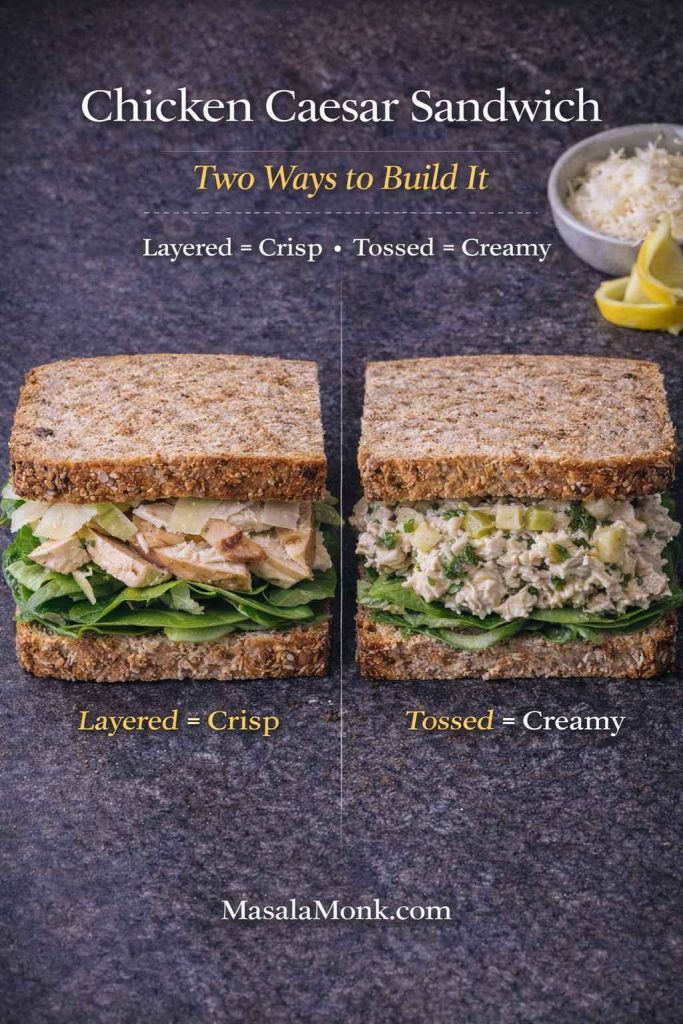
Chicken caesar sandwich and Caesar chicken salad sandwich (two ways to do it)

Caesar flavor works brilliantly in sandwich form because it’s designed around contrast: creamy, tangy, garlicky, and savory, with crunch from romaine and croutons. There are two particularly good ways to bring it into your lunch rotation.

Option 1: Chicken Caesar sandwich (layered and crisp)

This version feels like a handheld Caesar salad with protein:

  • Use sliced grilled or roasted chicken
  • Toss romaine lightly with Caesar dressing
  • Add Parmesan shavings
  • Add crushed croutons for crunch

Choose a sturdy bread: ciabatta, baguette, or a roll. Then build it so the romaine stays crisp. A light touch is key; too much dressing can make it slide.

For Caesar reference and technique, you can look at Bon Appétit’s classic Caesar salad, which lays out the flavor elements clearly.

Chicken Caesar sandwich comparison showing two builds: layered chicken Caesar sandwich with romaine and Parmesan, and Caesar chicken salad sandwich with creamy tossed filling, labeled “Layered = Crisp” and “Tossed = Creamy.”
Two Caesar routes, two textures: layer sliced chicken for a crisp, salad-like bite, or toss chicken into a creamy Caesar-style spread for a richer Caesar chicken salad sandwich.

Option 2: Caesar chicken salad sandwich (creamy salad-spread style)

This is closer to a chicken salad sandwich recipe, just with Caesar DNA.

Caesar-style binder

  • 1/4 cup mayo
  • 1–2 teaspoons lemon juice
  • 1 small garlic clove, grated
  • 2–3 tablespoons finely grated Parmesan
  • Black pepper, generous
  • Optional: a little anchovy paste if you like the classic depth

Then fold in:

  • 2 cups chopped chicken
  • 1 cup finely chopped romaine
  • A handful of crushed croutons

If you want a deeper dive into Caesar dressing itself, Serious Eats’ Caesar dressing is a solid external reference.

Either way, you end up with a sandwich that feels bold, savory, and complete.

Also Read: Baked Jalapeño Poppers (Oven) — Time, Temp & Bacon Tips


Chicken salad sub and chicken sandwich wrap (same filling, different format)

Sometimes you don’t want sliced bread. Perhaps you’re packing lunch for travel, or you simply prefer a bigger bite. Fortunately, chicken salad adapts easily.

Chicken salad sub

Use a crusty roll or hoagie-style bread. Add lettuce first to protect the bread, then chicken salad in the center, then pickles or onions on top. This keeps structure intact and prevents the dreaded soggy bottom.

Chicken sandwich wrap

Spread the filling in a line across the center, add crunchy vegetables (cucumber, lettuce, peppers), then roll tightly. After that, let it rest for a minute before slicing; it holds together better and looks cleaner.

If you like exploring other wrap-friendly spreads, the layering logic in this hummus veggie sandwich translates beautifully to wraps too.

Also Read: Homemade & DIY Coffee Creamer: 16 Flavor Recipes (French Vanilla, Pumpkin Spice & More)


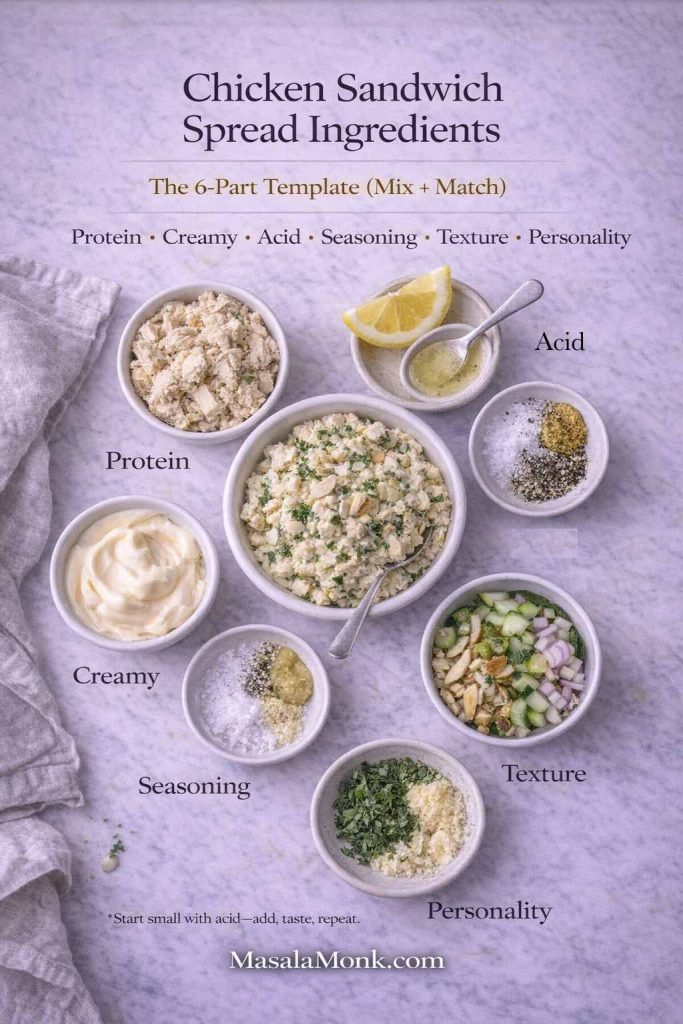
Chicken sandwich spread ingredients (so you can improvise confidently)

It’s helpful to have a mental template, especially when you’re working with whatever is available that day. Here’s the simplest way to think about chicken sandwich spread ingredients:

  1. Protein: cooked chicken (leftover, rotisserie, or canned)
  2. Creamy binder: mayo, egg free mayo, vegan mayo, yogurt, avocado
  3. Acid: lemon, vinegar, pickle brine
  4. Seasoning: salt, pepper, mustard
  5. Texture: celery, cucumber, peppers, onion, nuts, fruit
  6. Personality: herbs, curry powder, hot sauce, Parmesan, garlic
Chicken sandwich spread ingredients guide showing a 6-part template—protein, creamy binder, acid, seasoning, texture, and personality—arranged in bowls around a master chicken salad spread, with MasalaMonk.com footer.
Use this 6-part template to improvise a chicken sandwich spread with whatever you have: start with chicken + a creamy binder, brighten with acid, season well, add crunch, then finish with a “personality” boost like herbs, curry, hot sauce, or Parmesan.

From there, you’re free. For example, you can shift toward herb-forward flavors with pesto variations, or you can go spicy with guidance from the pepper sauce collection. Alternatively, if you want something bright and green that tastes like summer, chimichurri can transform plain chicken salad into something that feels fresh off the grill.


Sandwich recipe with egg (quick, comforting, universally loved)

Egg sandwiches are popular everywhere for a reason: minimal ingredients, maximal comfort. They also pair naturally with chicken salad, whether you keep them separate or combine them.

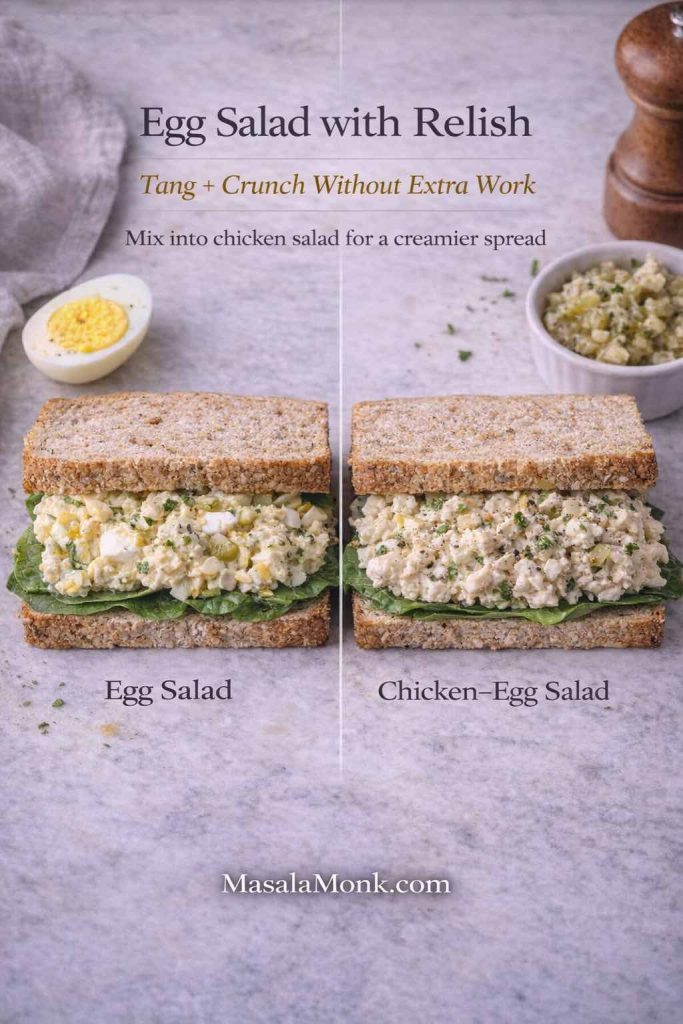
Egg salad sandwich recipe with relish

To get a classic deli-style egg salad:

  • 4 hard-boiled eggs, chopped
  • 3 tablespoons mayo (or egg free mayo / vegan mayo)
  • 1–2 tablespoons relish (or finely chopped pickles)
  • 1 teaspoon mustard
  • Salt and black pepper to taste

Stir gently, taste, then add a little more pepper than you think you need. Afterward, build it with lettuce for crunch.

If you want an easy method for cooking eggs, MasalaMonk’s air fryer hard boiled eggs is a useful reference.

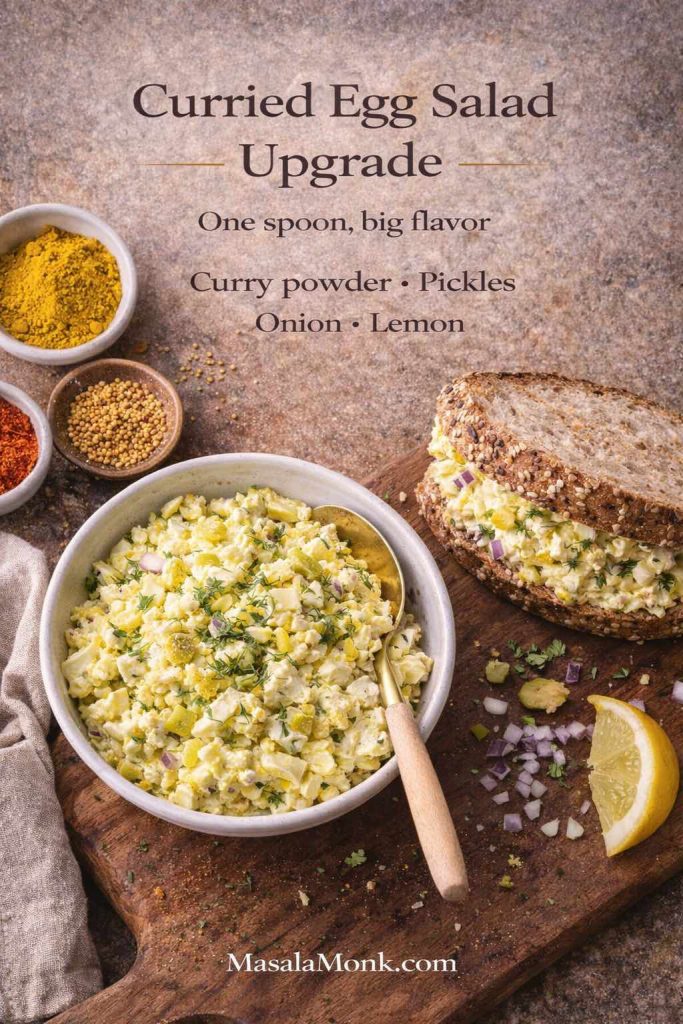
For flavor variety, MasalaMonk’s egg seasoning ideas can help you move beyond “salt and pepper only,” especially when you want a sharper or more aromatic egg salad.

Egg salad sandwich recipe with relish shown beside a chicken and egg salad sandwich on whole grain bread, with text overlay about adding tang and crunch and MasalaMonk.com footer.
Relish adds instant tang and crunch to an egg salad sandwich—then, for an even creamier lunch, fold a spoonful into chicken salad to make a rich chicken-and-egg salad sandwich.

Chicken and egg salad sandwich (the hybrid)

Sometimes you want the richness of egg salad and the heartiness of chicken salad at the same time. Combine them:

  • 1 1/2 cups chopped chicken
  • 2 hard-boiled eggs, chopped
  • 1/4 cup mayo (start here)
  • Mustard + lemon + salt + pepper

Fold gently. The eggs soften the texture while the chicken keeps it satisfying. As a result, you get a filling that feels extra creamy without being heavy.

Also Read: Healthy Pumpkin Spice Latte (Low Cal, Real Pumpkin)


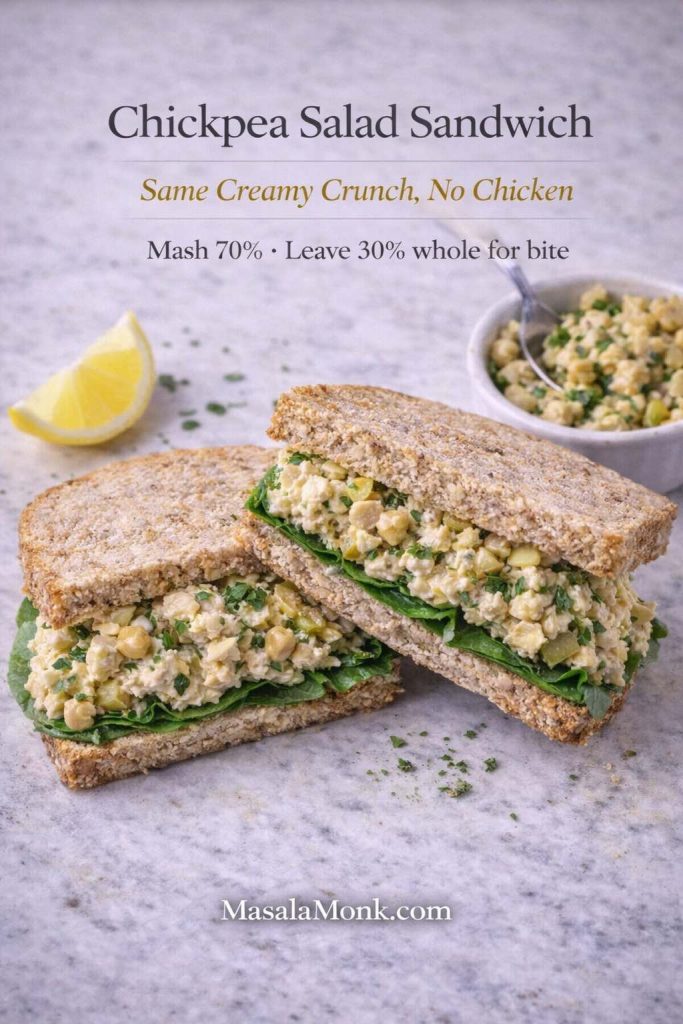
Chick pea salad sandwich (plant-based, creamy, and genuinely filling)

A chick pea salad sandwich is the plant-based cousin of chicken salad: creamy binder, bright acid, crunch, and seasoning. It’s also a great option when you want something that travels well.

Chickpea salad sandwich on whole grain bread with leafy greens, shown with a texture tip overlay: mash 70% and leave 30% whole for bite, plus MasalaMonk.com footer.
For the best chickpea salad sandwich texture, mash most of the chickpeas for creaminess but keep some whole—so every bite stays chunky, fresh, and satisfying.

A well-known external version is the Love & Lemons chickpea salad sandwich, which uses a balanced, flavorful approach. If you’d rather freestyle, you can still follow the same structure:

  • Mash chickpeas roughly (leave some texture)
  • Add vegan mayo or tahini
  • Add lemon and mustard
  • Add chopped pickles or capers
  • Add onion, celery, or cucumber for crunch
  • Season with salt and pepper

Build it on wholegrain bread with lettuce and cucumber, and it becomes a lunch that feels complete rather than “just a substitute.”

Also Read: How to Make Churros (Authentic + Easy Recipe)


Salad and sandwich pairing: what to serve alongside

A chicken salad sandwich can stand alone, yet it often feels even more satisfying with something crisp or fresh on the side. That doesn’t have to mean a complicated salad; sometimes it’s as simple as sliced cucumbers and tomatoes with lemon and salt.

If you want more structured options, MasalaMonk’s healthy tuna salad recipes can offer side-dish inspiration too—many of those ideas translate into quick bowls that pair well with sandwiches. Meanwhile, a classic potato salad or a tangier version from the potato salad guide can turn sandwiches into a picnic-style meal.


Keeping it safe and fresh (especially for packed lunches)

Chicken salad, egg salad, and similar spreads are best when kept cold. If you’re packing them for later, aim to refrigerate promptly and transport with an ice pack when possible.

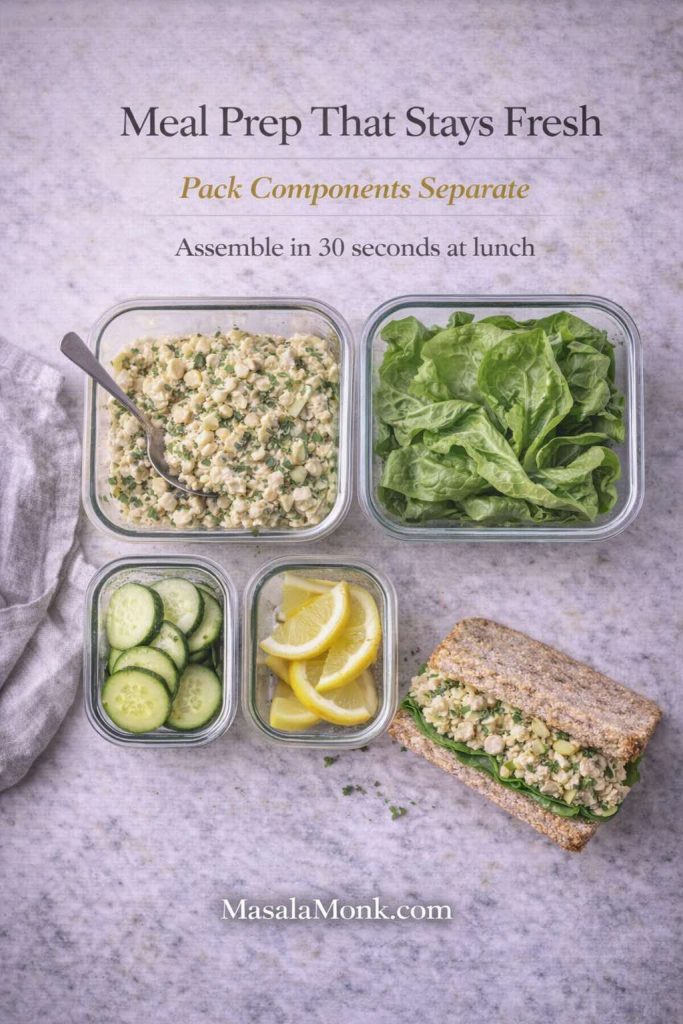
Meal prep guide for chicken salad sandwich showing glass containers with chicken salad spread, lettuce, cucumber and lemon, plus a finished sandwich, with text overlay “Pack Components Separate” and MasalaMonk.com footer.
Meal-prep chicken salad sandwiches the crisp way: pack greens and filling separately, then assemble at lunch for a fresh, non-soggy sandwich in about 30 seconds.

For widely used food-safety guidance, the CDC recommends keeping perishables out at room temperature for no more than about two hours (and less in very hot conditions). You can read more in the CDC prevention guidance. Similarly, the USDA’s overview on leftovers and food safety is a helpful baseline for storage times. In the UK context, the Food Standards Agency’s advice on chilling, freezing, and defrosting offers additional practical guidance, including fridge temperature ranges.

Also Read: How to turn Leftover Rice into Gourmet Arancini Balls


Bringing it all together

Chicken salad sandwiches are popular because they’re forgiving. You can be precise, or you can be casual. Then you can make it classic, or you can make it bold. Also, you can go bakery-style on a croissant, deli-style with pickles, café-style with grapes and nuts, or salad-bar style with Caesar flavors and romaine crunch. Then, when you’re ready for a change, you can pivot into a sandwich recipe with egg, an egg salad sandwich recipe with relish, or a chickpea salad sandwich that satisfies in the same creamy, tangy way.

Most importantly, once you understand the structure—creamy + tangy + crunchy + seasoned—you’ll always be able to make a chicken salad sandwich that tastes like more than the sum of its parts.

Also Read: French Toast Sticks (Air Fryer + Oven Recipe) — Crispy Outside, Custardy Inside

FAQs

1) What is the best chicken salad sandwich recipe for beginners?

The best starting point is a classic chicken salad sandwich recipe with cooked chicken, a creamy binder, a little mustard, lemon (or vinegar), salt, pepper, and one crunchy ingredient. From there, you can personalize it with herbs, pickles, grapes, or nuts—so you still get a reliable chicken salad sandwich every time.

2) What ingredients do I need for a chicken salad sandwich?

At minimum, chicken, a creamy base (mayo, yogurt, or a dairy-free option), acid (lemon, vinegar, or pickle brine), salt, pepper, and something crunchy. Afterward, extras like mustard, herbs, onions, pickles, grapes, apples, cranberries, or nuts can turn basic chicken salad spread into a standout filling.

3) How do I make chicken salad spread thicker for sandwiches?

To thicken chicken salad spread, start by draining or drying the chicken well, then add the dressing gradually instead of all at once. Additionally, chopping chicken smaller, chilling the mixture, or stirring in a thicker binder (Greek yogurt, strained yogurt, or avocado) can help the chicken salad sandwich filling hold together.

4) How can I stop a chicken salad sandwich from getting soggy?

First, use a sturdy bread or lightly toast it. Next, add a barrier layer such as lettuce, spinach, or a thin swipe of spread on both bread slices. Finally, keep juicy ingredients—like tomatoes—away from the bread until just before eating.

5) Can I make a healthy chicken salad sandwich without mayo?

Yes. A healthy chicken salad sandwich can be made with thick yogurt, mashed avocado, or a dairy-free creamy option. Moreover, increasing crunchy vegetables and using bold seasoning keeps the healthy chicken salad sandwich recipe flavorful rather than bland.

6) How do I make a chicken salad sandwich without celery?

For a chicken salad sandwich without celery, swap in diced cucumber, bell pepper, radish, apple, or even chopped pickles. Alternatively, toasted nuts can add crunch while also making the chicken salad sandwich more filling.

7) What’s the easiest rotisserie chicken salad sandwich?

The simplest rotisserie chicken salad sandwich uses shredded rotisserie chicken, mayo (or yogurt), lemon, mustard, salt, pepper, and a crunchy add-in like cucumber or celery. Then, adjust with herbs or pickles to make the rotisserie chicken salad sandwich taste brighter and fresher.

8) Can I make a chicken salad sandwich recipe using canned chicken?

Absolutely. For a chicken salad sandwich recipe using canned chicken, drain the chicken thoroughly, flake it, then mix with a tangy dressing (mayo + mustard + lemon or pickle brine). In addition, pickles, spring onions, or herbs help canned chicken salad recipes for sandwiches taste more “fresh-made.”

9) What bread is best for a chicken salad sandwich?

Soft sandwich bread is classic, wholegrain adds texture, and a crusty roll works well for a chicken salad sub. Meanwhile, a croissant turns it into a chicken salad croissant sandwich that feels more special—just make sure the filling is thick enough.

10) How do I make a chicken salad croissant that doesn’t fall apart?

For chicken salad croissant success, use chilled filling, chop the chicken smaller, and add a dry layer like lettuce inside the croissant. Also, keep the dressing slightly thicker so the chicken salad croissant sandwich stays neat.

11) What’s the difference between chicken salad and chicken Caesar salad sandwich styles?

A chicken salad sandwich is usually mayo- or yogurt-based with optional crunch and mix-ins. By contrast, a chicken Caesar sandwich leans on Caesar flavors—garlic, lemon, Parmesan, black pepper, and romaine—sometimes built as a creamy Caesar chicken salad sandwich, and other times layered like a Caesar salad sandwich with sliced chicken.

12) How do I make a Caesar chicken salad sandwich at home?

Use cooked chicken, a creamy base, lemon, garlic, Parmesan, black pepper, and chopped romaine. Then, add crushed croutons for crunch. As a result, you get a chicken Caesar salad sandwich that tastes like a full meal rather than just a spread.

13) What are the best add-ins for chicken salad sandwich ideas?

Popular add-ins include grapes, dried cranberries (or craisins), diced apples, walnuts, pecans, almonds, chopped pickles, onions, herbs, curry spice, and hot sauce. Likewise, you can change the vibe simply by switching the crunch or the seasoning.

14) How do I make chicken salad sandwich with grapes taste balanced?

Use grapes for sweetness, then balance with lemon, mustard, and black pepper. Additionally, walnuts or almonds help the chicken salad sandwich recipe with grapes feel richer and less one-note.

15) How do I make a chicken cranberry salad sandwich?

Start with classic chicken salad spread, then add dried cranberries (or craisins), toasted nuts, and extra lemon or a mild vinegar. Consequently, the chicken cranberry salad sandwich becomes bright, sweet-savory, and ideal for wraps or croissants too.

16) How do I make an apple walnut chicken salad sandwich?

Combine diced apple, toasted walnuts, and a lightly tangy dressing with cooked chicken. After that, add black pepper and a pinch of salt until the flavors pop. This apple walnut chicken salad sandwich is especially good on wholegrain bread.

17) What is a chicken waldorf sandwich?

A chicken waldorf sandwich is a chicken salad sandwich variation that usually includes apples, nuts (often walnuts), and a creamy dressing. Sometimes it also includes grapes or raisins, which adds another layer of sweet-savory contrast.

18) How do I make a curry chicken salad sandwich recipe that isn’t too strong?

Use a mild curry powder and start with a small amount, then add more gradually. Furthermore, lemon juice and a creamy binder soften the spice, while raisins or almonds can round out the flavor in a curry chicken salad sandwich recipe.

19) What is the best way to make chicken salad for tea sandwiches?

For chicken salad for tea sandwiches, chop the chicken very finely, keep the filling thick, and avoid watery vegetables. Then, spread evenly on soft bread and cut into small triangles or finger shapes so the chicken salad finger sandwich holds together cleanly.

20) How do I make a chicken salad sub that tastes like a deli sandwich?

Use a sturdy roll, add lettuce first, and keep the chicken salad sandwich spread thick. Afterward, layer pickles or onions for bite. In turn, the chicken salad sub stays crisp and flavorful instead of soft and heavy.

21) Can I turn chicken salad into a chicken sandwich wrap?

Yes—use a thicker chicken salad sandwich filling, add crunchy vegetables, then roll tightly. Also, letting the wrap rest briefly before slicing helps the chicken sandwich wrap stay secure.

22) What’s a simple sandwich recipe with egg that pairs well with chicken salad?

A straightforward option is an egg salad sandwich recipe with relish. Still, if you want one filling that combines both, you can make a chicken and egg salad sandwich by mixing chopped eggs into your chicken salad sandwich recipe for extra creaminess.

23) How do I make an egg salad sandwich recipe with relish?

Chop hard-boiled eggs, then mix with mayo, relish (or chopped pickles), mustard, salt, and pepper. After mixing, taste and adjust—especially the pepper—so the egg salad sandwich doesn’t taste flat.

24) What is chicken egg salad?

Chicken egg salad is a blended sandwich filling made from cooked chicken and chopped hard-boiled eggs bound with a creamy dressing and seasoning. As such, chicken egg salad creates a softer, richer texture than a standard chicken salad sandwich.

25) What is a chick pea salad sandwich and how is it different?

A chick pea salad sandwich uses mashed chickpeas instead of chicken, usually with a creamy binder, lemon, mustard, and crunchy add-ins. In comparison, a chickpea salad sandwich recipe is plant-based yet still delivers the same creamy, tangy “sandwich spread” feel as chicken salad spread.

26) How long does chicken salad sandwich filling last in the fridge?

Typically, chicken salad sandwich filling is best within 3–4 days when stored cold in a sealed container. However, if it’s been left out for extended periods, it’s safer to discard it rather than risk foodborne illness.

27) Can I freeze chicken salad spread?

Freezing chicken salad spread can change the texture, especially if it contains mayo or watery vegetables. Instead, freeze plain cooked chicken, then make the chicken salad sandwich recipe fresh when you’re ready to eat.

28) What can I serve with a chicken salad sandwich?

Common pairings include a light green salad, soup, roasted vegetables, fruit, or crunchy vegetables. Likewise, a simple side can make a chicken salad sandwich feel like a complete meal without turning lunch into a big project.

Posted on 7 Comments

Sandwich for Breakfast: Breakfast Sandwich Recipe + 10 Variations

Breakfast sandwich recipe cover image showing an English muffin egg and cheese sandwich with sausage, melted cheddar, and a fried egg.

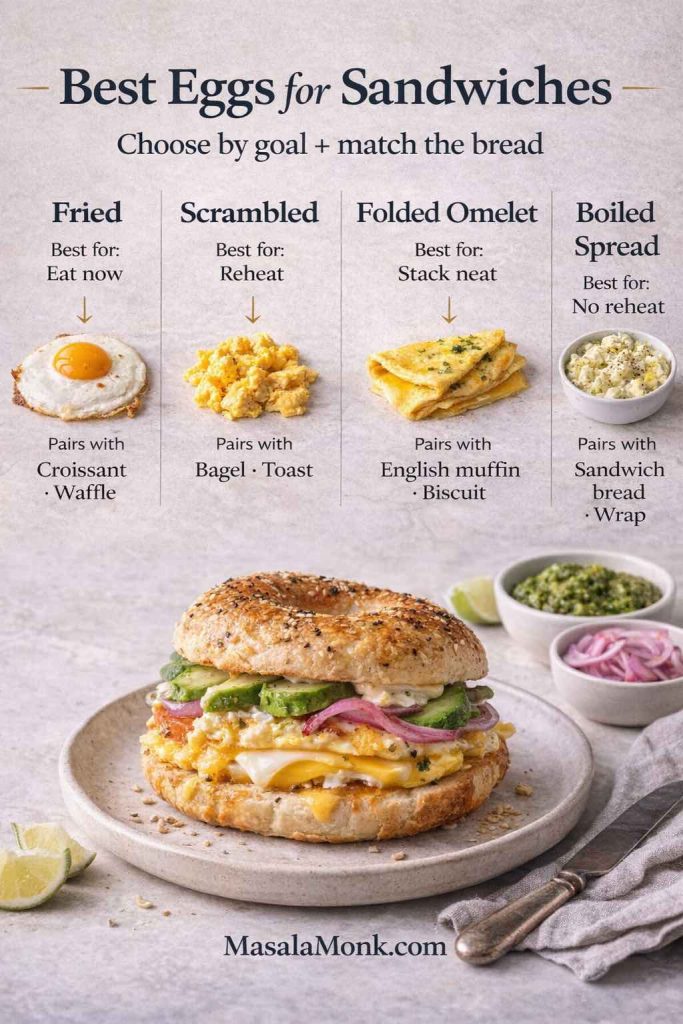
A really good breakfast sandwich does two things at once. First, it tastes like you treated yourself—melty cheese, a warm egg, something crisp, something creamy. Then, almost secretly, it makes your morning easier because you can build it with whatever bread you already have: an English muffin, a croissant, a bagel, even waffles.

That’s the heart of this breakfast sandwich recipe. Instead of giving you one rigid version, we’ll start with a simple master build you can repeat, and then we’ll branch into the most-loved styles people actually search for and crave: egg and cheese, English muffin breakfast sandwich, breakfast croissant, croissant sandwiches, bagel with egg and cheese, scrambled egg sandwich, fried egg sandwich, high protein breakfast sandwich, vegetarian breakfast sandwich, gluten free breakfast sandwich, plus make-ahead frozen breakfast sandwiches for meal prep.

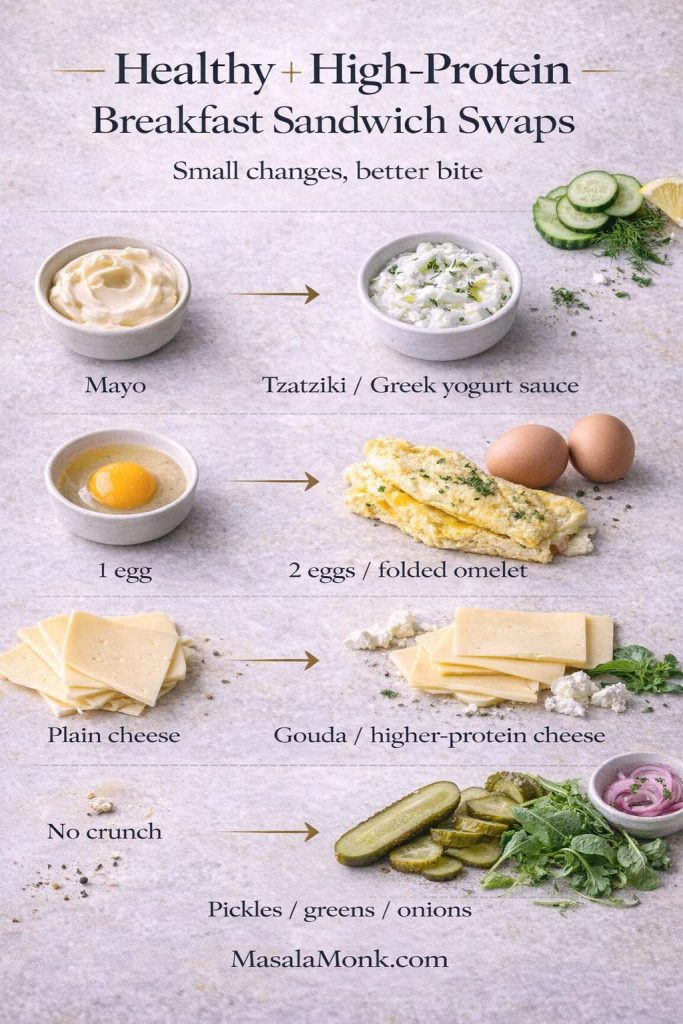
Along the way, we’ll lean on sauces and spreads that make a sandwich feel “finished” without being fussy—like a quick homemade mayo, a punchy pepper sauce, a bright pesto, or a thick tzatziki-style yogurt sauce—so every bite stays balanced instead of flat.


Breakfast sandwich: the master formula that works every time

Before we get into variations, it helps to have a dependable “base.” Think of it as a choose-your-own-adventure breakfast sandwich where each layer has a job.

Infographic showing the breakfast sandwich formula—bread, egg, cheese, sauce, and crunch—with a croissant egg and cheese sandwich on a plate.
Use this breakfast sandwich formula to mix and match your favorites—choose a bread base, add eggs and cheese, finish with a sauce, then layer on crunch for the perfect bite every time.

The five layers

  1. Bread (or bread substitute)
    English muffin, croissant, bagel, biscuit, sliced bread, waffles, or an egg-based “eggwich.”
  2. Eggs for sandwiches (the engine)
    Fried egg, scrambled egg, folded omelet, baked egg patty, or boiled eggs turned into a spread.
  3. Cheese (the glue)
    Cheddar, mozzarella, gouda, pepper jack, or whatever melts well.
  4. Sauce or spread (the comfort layer)
    Mayo, eggless mayo, vegan mayo, pesto, tzatziki, or a quick chili-mayo.
  5. Texture + freshness (the wake-up layer)
    Crisp veggies, pickles, herbs, peppery greens, onions, tomatoes, even a little crunchy spice mix.

Once you understand those roles, breakfast sandwich ideas become effortless: swap the bread, switch the egg style, keep the sauce, change the crunch—suddenly you have a new breakfast without starting over.

Also Read: 10 Best Chicken Sandwich Recipes (BBQ, Parm, Buffalo & More)


Breakfast sandwich recipe: the base method (one sandwich)

Ingredients (flexible, not fussy)

  • Bread of choice (English muffin / croissant / bagel / waffles / 2 slices bread)
  • 1–2 eggs
  • 1 slice cheese (or a small handful grated)
  • 1–2 tablespoons spread or sauce
  • Salt and pepper
  • Optional add-ons: tomato, onion, spinach, cucumber, avocado, herbs, hot sauce, pickles

Method

First, toast or warm your bread. You’re not just adding crunch—you’re building a barrier so the sandwich doesn’t go soggy.

Next, cook your eggs in the style you want (fried or scrambled sections are coming up). While they’re still hot, add cheese and let it melt.

Then, spread sauce on the bread while it’s warm. That small detail matters: warm bread helps spreads cling instead of sliding.

After that, stack egg + cheese, add your texture layer, close the sandwich, and press gently for a few seconds so everything holds together.

Breakfast sandwich fixes infographic showing quick solutions for soggy bread, rubbery eggs, cheese not melting, fillings sliding, and adding crunch, with an English muffin egg and cheese sandwich on a cutting board.
Save this breakfast sandwich fixes guide: toast bread well to prevent sogginess, cook eggs low and pull early for softness, cover briefly to melt cheese fast, spread sauce on both sides to stop slipping, and add pickles/greens/onion for crunch.

If you like checking food safety temps (especially when you’re batch-cooking), egg dishes are commonly cooked to 160°F / 71°C, and leftovers reheated to 165°F / 74°C—guidance you can see on the USDA safe temperature chart and on FoodSafety.gov’s chart.

Also Read: Food for Constipation Relief & Gut Health : 6 High-Fiber Sandwiches


Egg and cheese: the classic egg & cheese breakfast sandwich

Sometimes you don’t want a “creative” breakfast. You want the one that always works: egg and cheese, warm bread, a little seasoning, done.

Fried egg sandwich recipe (crispy edges, runny or set yolk)

Heat a pan, add butter or oil, crack in an egg, season it. Let the edges crisp; cover briefly if you want the top to set faster. Once it’s nearly where you want it, lay cheese on top and cover for 20–30 seconds so it melts smoothly.

Fried egg sandwich recipe card showing a toasted sandwich cut in half with crispy-edged fried egg, melted cheese, and optional runny or set yolk, with MasalaMonk.com branding.
For the best fried egg sandwich, aim for crispy edges and melted cheese—choose a runny yolk for richness or cover the pan briefly for a set yolk that travels better.

This version is ideal when you want a clean, structured bite—especially on an English muffin or bagel.

Scrambled egg sandwich (soft, fluffy, and forgiving)

Whisk 2 eggs with salt and pepper. Cook on low heat, stirring slowly. Pull the eggs off the heat while they’re still slightly glossy; the residual heat finishes them.

A scrambled egg sandwich is the best make-ahead egg sandwich—cook low and slow for soft, fluffy eggs that reheat well, then melt the cheese onto the eggs so every bite stays creamy instead of dry.

Scrambled egg sandwiches are particularly good when you’re packing breakfast for later, because the eggs stay tender instead of turning rubbery.

Also Read: Cottage Cheese Lasagna Recipe | Chicken, Spinach, & Ricotta


Choose Your Bread Base for the Perfect Breakfast Sandwich

Before you cook a single egg, pick the bread. It decides almost everything: how tidy the sandwich feels, how rich the bite is, and whether it holds up for meal prep or needs to be eaten right away. Once the base is locked in, the “best” egg and sauce choices become obvious—so you’re not building a great filling on the wrong foundation.

Best breakfast sandwich breads infographic showing an English muffin, croissant, bagel, and waffle with notes on what each bread is best for.
Pick your base first: English muffin for tidy stacking, croissant for a flaky breakfast croissant, bagel for a hearty breakfast bagel sandwich, or waffle for sweet-savory brunch sandwiches.

English muffin: the neat, classic breakfast sandwich

If you want a café-style breakfast sandwich that’s easy to hold and doesn’t slide around, the English muffin is the safest bet. It toasts beautifully, stays sturdy under egg and cheese, and naturally supports the “stacked” look most people want in an English muffin breakfast sandwich.

Croissant: the premium, flaky breakfast croissant

A croissant makes breakfast feel like a treat. It’s buttery and delicate, so it works best when your fillings are bold but not watery. Choose it when you want croissant sandwiches with a “bakery morning” vibe—just keep sauces and fresh veggies controlled so it doesn’t turn soft.

Bagel: the hearty breakfast bagel sandwich

Bagels are dense and satisfying, which is why a bagel with egg and cheese can feel like a full meal. They shine when you want contrast—soft egg, melty cheese, plus something bright and crunchy like onion, cucumber, or pickles. If you’re hungry-hungry, this is the base that delivers.

Waffles: sweet-savory waffle breakfast sandwich energy

Waffles turn the same ingredients into brunch. Because waffles carry a gentle sweetness, they pair especially well with salty cheese, peppery sauces, and savory fillings. Pick this base when you want a waffle breakfast sandwich that feels fun, dramatic, and very shareable.

Quick rule to decide in 5 seconds

For a tidy, classic bite, choose an English muffin. For luxury and flaky layers, reach for a croissant. When you want something big and seriously filling, go with a bagel. And if you’re craving brunch-style sweet-savory energy, waffles are the move.


English muffin breakfast sandwich (café-style, sturdy, and easy to hold)

The English muffin breakfast sandwich is popular for a reason: it’s compact, it toasts beautifully, and it doesn’t fall apart mid-commute.

How to make round eggs for breakfast sandwiches (without special gear)

If you want that neat “egg patty” look, you don’t need a fancy ring. A wide mason jar lid ring, a cleaned metal cookie cutter, or even a DIY foil ring works.

Step-by-step guide showing how to make round eggs for breakfast sandwiches using a mason jar lid ring, covering the pan, and stacking the egg patty on an English muffin with cheese.
Want café-style egg patties? This quick method shows how to make round eggs for breakfast sandwiches using a simple jar-lid ring—perfect for an English muffin breakfast sandwich that stacks neatly and stays easy to hold.

Warm the ring in the pan, grease it lightly, crack in the egg, and cover. As the egg sets, it becomes the perfect shape for English muffins.

Build: egg and cheese on English muffin

  • Toast muffin halves until crisp
  • Spread sauce on both sides
  • Add egg + cheese
  • Add one crisp layer (thin onion, tomato slice, spinach, or pickles)
  • Close, press gently, eat
English muffin egg and cheese breakfast sandwich recipe card, cut in half to show a round egg patty, melted cheese, spinach, and red onion, with café-style text overlay and MasalaMonk.com footer.
This English muffin egg and cheese breakfast sandwich stacks neatly with a round egg patty and melty cheese—add a thin layer of spinach and onion for crunch and freshness without making the muffin soggy.

For a creamy base that can swing classic or spicy, a simple homemade mayo is hard to beat. If you want a versatile one with a lot of variations you can reuse for other sandwiches too, this guide is handy: homemade mayonnaise with 15+ easy variations.

If you’re feeding a mixed crowd—some people avoiding eggs in spreads or preferring egg-free condiments—you can also keep a jar of eggless mayonnaise or a fully dairy-free vegan mayo in rotation.


Breakfast croissant: when you want croissant sandwiches that feel like a treat

A breakfast croissant sandwich is the “I went out for breakfast” vibe—without leaving home. Because croissants are rich and flaky, the best versions keep fillings bold but not watery.

Croissant egg and cheese (the simple starter)

  • Warm the croissant (don’t over-toast—just warm and lightly crisp)
  • Add a soft scrambled egg layer
  • Add cheese while eggs are hot
  • Finish with pepper or chili flakes

Bacon egg and cheese croissant

Crisp bacon, melt cheese onto the egg, then add something fresh so it doesn’t feel heavy: a thin tomato slice, peppery greens, or even quick-pickled onions.

Bacon egg and cheese croissant breakfast sandwich recipe card showing a flaky croissant filled with egg, melted cheese, and crispy bacon, with “Bakery-style breakfast” text overlay and MasalaMonk.com footer.
This bacon egg and cheese croissant delivers the classic breakfast croissant vibe at home—keep the croissant lightly warmed (not over-toasted), melt the cheese onto the eggs, then add crisp bacon and one fresh layer so it stays rich but balanced.

Sausage egg and cheese croissant

Sausage + egg + cheese is a classic breakfast sandwich trio for a reason. The croissant turns it into a weekend-level meal. If your sausage is strongly seasoned, keep the sauce simple—mayo or a yogurt-based spread—so it doesn’t clash.

Ham egg and cheese croissant

Ham loves mustard-mayo or herby mayo. Even a thin swipe makes the whole sandwich taste “designed,” not accidental.

If you want a sandwich spread that’s creamy yet tangy, Greek yogurt-style sauces are perfect on croissants too. This Greek tzatziki sauce recipe with variations gives you a thick, garlicky option that stays put instead of leaking out the sides.

Also Read: Strawberry Smoothie Recipes (12 Easy Blends + Bowls & Protein Shakes)


Bagel with egg and cheese: the breakfast bagel sandwich that actually feels balanced

A bagel with egg and cheese is dense and satisfying, so it helps to build contrast—soft + crisp, rich + fresh, salty + bright.

This bagel with egg and cheese gets an easy avocado upgrade—add creamy avocado plus a sharp, crunchy layer like pickled onions to balance the richness and make a more satisfying breakfast bagel sandwich.

Bagel with egg and cheese (the core build)

Toast the bagel cut sides well. Spread sauce on both halves. Add egg + cheese, then add one “fresh” element: tomato, cucumber, avocado, or herbs.

Avocado egg sandwich on a bagel

Avocado and egg are a natural pair. Add black pepper, a squeeze of lemon, and something crunchy (onion or cucumber). The result feels like a healthy breakfast sandwich, even though it’s still comforting.

For a flavor blueprint you can borrow directly, this one is built for mornings: avocado, basil, and grilled tomato sandwich. You can adapt the same idea onto a bagel and add egg + cheese to turn it into a bigger breakfast.

Egg sandwich spread for bagels (when you want it creamy)

Instead of a whole egg, use a spreadable egg layer (egg mayo / egg salad style). It’s easier to eat, especially if you’re walking out the door.

We’ll do that properly in the egg mayo sandwich recipe section below.

Also Read: Classic Deviled Eggs (Easy) + 8 Flavorful Variations


Breakfast muffin sandwich: egg, cheese, and a sturdy base

“Breakfast muffin sandwich” can mean an English muffin sandwich, or it can mean a muffin-shaped bread base you toast and fill. Either way, the goal is the same: structure.

Egg and cheese muffin-style sandwich

Toast the base, add a folded omelet or egg patty, add cheese, then add a little sauce. Because this style is compact, it’s great for meal prep breakfast sandwiches as well.

If you’re making eggs in bulk for this, an easy workflow is to cook and peel a batch of eggs quickly. An air fryer is surprisingly effective for that—here’s a reliable method: air fryer hard boiled eggs.

Also Read: How to Make Pineapple Chia Pudding: A Refreshing Low-Carb Breakfast Option


Waffle breakfast sandwich: sweet-savory brunch energy

A waffle breakfast sandwich is where brunch gets playful. The key is using waffles that are crisp enough to hold fillings.

If you want to make waffles that stay golden and crisp even without dairy, this is a solid base: waffle recipe without milk. For more adventurous directions (including Indian twists that still feel natural), this is fun inspiration: Belgian waffle recipe + Indian twists.

Waffle breakfast sandwich recipe card showing a stacked waffle sandwich with egg, melted cheese, and spicy mayo, plus text overlay for a sweet-savory brunch build.
This waffle breakfast sandwich turns a simple egg and cheese into a sweet-savory brunch—keep the waffles crisp, add melty cheese, then finish with spicy mayo for a bold contrast that still feels breakfast-friendly.

Waffle sandwich build ideas

  • Egg + cheese + spicy mayo
  • Scrambled egg + herbs + pepper sauce
  • Egg + cheese + avocado for a more “healthy breakfast sandwich” feel

Because waffles lean slightly sweet, a bright sauce works especially well. If you like heat, a pepper sauce can turn waffles and eggs into something unforgettable. This is a deep rabbit hole if you want options: pepper sauce recipe guide.


Egg sandwiches recipes: choosing the egg style that matches your morning

It’s easy to treat eggs like “one ingredient,” yet the cooking method changes the entire sandwich. So, instead of guessing, pick based on the kind of morning you’re having.

Best eggs for sandwiches infographic comparing fried, scrambled, folded omelet, and boiled egg spread with suggested bread pairings and a bagel egg and cheese sandwich.
Not all egg sandwiches eat the same—use this guide to pick the best eggs for sandwiches (fried, scrambled, folded omelet, or boiled spread) and match them to the right bread for a better breakfast sandwich every time.

Fried egg sandwich (best for immediate eating)

Fried eggs are at their peak right out of the pan. That’s when the edges stay crisp and the yolk is still luscious. Consequently, this version shines for weekends or slow mornings.

Scrambled egg sandwich (best for reheating)

Scrambled eggs hold better than fried eggs in the fridge and reheat more evenly. Therefore, if you’re thinking meal prep, scrambled is your friend.

Folded omelet-style egg (best for neat layers)

Beat eggs, cook into a thin sheet, fold into a rectangle. This makes a tidy “egg patty” without tools. It’s also ideal for breakfast slider sandwiches because the pieces cut cleanly.

Boiled eggs for sandwiches (best for cold breakfast)

Boiled eggs can become a spread, which means you can eat your breakfast sandwich cold and still enjoy it. This is where egg mayo sandwich recipes, egg salad sandwiches, and even tuna egg sandwich variations come in.

If you want a broader set of ideas for using small egg counts creatively, this list can spark options: egg dishes with 2 eggs.

Also Read: Top 10 Foods for Gut Health (+ Pre/Probiotics, Best Drinks, Gut-Reset Plan)


Egg mayo sandwich recipe: creamy, fast, and surprisingly breakfast-friendly

Egg mayo often gets treated as “lunch food,” yet it’s one of the best solutions for busy mornings. It’s fast, it’s filling, and it turns into a portable sandwich without needing to reheat anything.

Ingredients (2 sandwiches)

  • 2 hard-boiled eggs, chopped
  • 2–3 tablespoons mayo
    (or use eggless mayo or vegan mayo if that fits your needs)
  • Salt and pepper
  • Optional: chopped onion, dill, cucumber, chili flakes, a squeeze of lemon
This egg mayo sandwich filling doubles as a simple egg salad sandwich recipe—mix chopped boiled eggs with mayo (or Greek yogurt), then add dill and pickles for crunch and a fresher, lighter bite.

Method

Mash the eggs lightly, stir in mayo, season, then adjust texture. If you want it looser, add a tiny splash of milk or lemon. If you want it thicker, add more egg or a little grated cheese.

Turn egg mayo into egg salad sandwich recipe territory

If you want the “egg salad” vibe, fold in crunch: finely chopped celery (if you like), onion, pickles, or cucumber. Add a pinch of curry powder for a curried egg sandwich direction, or add paprika for a classic style.

Curried egg salad upgrade recipe card showing a bowl of curried egg salad with pickles, onion, and lemon, plus a seeded bread egg salad sandwich; text overlay lists curry powder, pickles, onion, and lemon.
Turn a basic egg mayo sandwich into a curried egg sandwich by stirring in curry powder, chopped pickles, onion, and a squeeze of lemon—an easy upgrade that adds brightness, crunch, and bold flavor.

Egg salad with greek yogurt (lighter, tangier)

Instead of all mayo, use thick yogurt or hung curd for part of the spread. It stays creamy, tastes fresher, and feels closer to a healthy breakfast sandwich.

If you like the flavor logic of yogurt-based fillings, this is a great reference point: healthy hung curd spinach cheese sandwich.

Also Read: Vodka Pasta (Penne alla Vodka) + Spicy Rigatoni, Chicken, and Gigi Recipes


Breakfast sandwich ideas that borrow from “real sandwich culture”

A breakfast sandwich doesn’t have to be only egg + cheese + meat. It can borrow from classic sandwich styles and still feel totally breakfast-appropriate.

The Bombay-inspired breakfast sandwich

If you’ve ever loved a spicy, chutney-forward sandwich, you can bring that energy to breakfast: toast bread, add green chutney or herby mayo, add egg + cheese, then add thin-sliced onion and tomato.

For a full flavor blueprint, this is the classic: authentic grilled Bombay sandwich recipe. Use the same “layering logic,” then make the egg the star.

The mushroom-and-cheese breakfast upgrade

Sauté mushrooms, add pepper, add cheese, then add egg. It turns basic egg sandwiches into something deeper and more savory.

If you want the mushroom direction fully mapped out, this is a great base: mushroom cheese sandwich recipe.

The hummus-and-veg morning sandwich (egg optional)

Some mornings you want breakfast without eggs. A hummus-based sandwich gives you protein and staying power while keeping things fresh.

Here’s a straightforward build to borrow: hummus veggie sandwich. Add a fried egg if you want it heartier, or keep it egg-free for a vegetarian breakfast sandwich that still satisfies.

Also Read: Protein Oatmeal: Turn Plain Oats into a High-Protein Meal


Healthy breakfast sandwich and high protein breakfast sandwich variations

“Healthy” can mean a lot of things. For some people it means higher protein; for others it means lighter sauces; for many it means fewer ultra-processed ingredients. Thankfully, breakfast sandwiches can adapt without losing their comfort-food soul.

Healthy high-protein breakfast sandwich swaps infographic showing mayo swapped for tzatziki, one egg swapped for a folded omelet with two eggs, plain cheese swapped for higher-protein cheese, and crunch added with pickles, greens, and onions.
Build a healthy high-protein breakfast sandwich with simple swaps—use tzatziki or Greek yogurt sauce instead of mayo, double the eggs with a folded omelet layer, choose a more filling cheese, and add crunch with pickles, greens, or onions.

High protein breakfast sandwich (simple ways to level up)

  • Use 2 eggs instead of 1
  • Add an extra slice of cheese or use a higher-protein cheese
  • Add thick yogurt-based sauce (like tzatziki)
  • Add paneer or tofu as an additional filling

If you’re curious about egg protein numbers, this breakdown is a useful reference: how much protein in two boiled eggs.

Healthy breakfast sandwich (lighter sauces that still taste rich)

Instead of drowning the sandwich in mayo, try:

  • A thin layer of pesto
  • Thick yogurt sauce
  • A small swipe of mayo plus lemon juice for brightness

For pesto options you can tweak to your taste, this is a strong starting point: pesto recipe guide with variations. If you want a specific dairy-free pesto, this one is fast and flavorful: fresh basil pesto vegan recipe.


Vegetarian breakfast sandwich: options that don’t feel like “second place”

A vegetarian breakfast sandwich can be just as craveable as any meat-based version—provided you build for texture and seasoning.

Save these vegetarian breakfast sandwich ideas for easy morning variety—mushroom and cheese with egg, spinach pesto with egg, paneer with chutney, or hummus with crunchy veggies (egg optional) for a satisfying vegetarian breakfast sandwich.

Vegetarian breakfast sandwich (easy templates)

  • Egg + cheese + mushrooms + pepper sauce
  • Egg + cheese + spinach + pesto
  • Hummus + veggies + cheese (egg optional)
  • Paneer + egg + chutney (if you like a bigger, spiced bite)

If you want a leftover-friendly option that turns dinner into breakfast, this is a smart template: paneer sabji sandwich recipe. Add a fried egg and it becomes a powerful breakfast sandwich meal prep option.

Also Read: Classic Rum Punch + 9 Recipes (Pitcher & Party-Friendly)


Gluten free breakfast sandwich: easy swaps that still feel satisfying

Going gluten free doesn’t mean giving up the breakfast sandwich experience. It simply means switching the base while keeping the same layers.

Gluten-free breakfast sandwich bases guide showing GF muffin or bagel, hash brown buns, waffles, and an eggwich, with a simple build formula and MasalaMonk.com footer.
For a gluten free breakfast sandwich, swap the base—not the whole idea: use a gluten-free muffin or bagel, crispy hash brown “buns,” gluten-free waffles, or an eggwich, then build with egg, cheese, sauce, and crunch.

Gluten free breakfast sandwich bases

  • Gluten-free English muffins or bagels
  • Hash brown “buns” (crispy potato rounds)
  • Waffles made with a gluten-free mix
  • Egg “buns” (eggwich style)

Once you pick the base, the rest is identical: egg + cheese + sauce + crunch. In other words, you’re not learning a new recipe—you’re just changing the vehicle.

Also Read: Moscow Mule Recipe (Vodka Mule): The Master Formula + 9 Variations


Eggwich: a breakfast sandwich without bread

An eggwich is essentially an egg sandwich where eggs replace bread. If you want a lower-carb or gluten-free breakfast sandwich that still feels indulgent, this is a strong move.

Eggwich no-bread breakfast sandwich guide showing egg “buns” with melted cheese, veggies, and sauce on a dark slate background, labeled as a gluten-free breakfast sandwich.
An eggwich is the easiest no-bread breakfast sandwich—use two thin egg “buns,” add melty cheese and a crunchy veggie layer, then finish with a sauce so it eats like a real breakfast sandwich while staying gluten-free.

How to build it

Cook two thin omelet “rounds,” let them cool slightly so they firm up, then use them as top and bottom. Add cheese, add filling, add sauce, press gently, and eat with a napkin because it’s joyfully messy.

Also Read: 7 Pizza Sauce Recipes | Marinara, White Garlic, Alfredo, Buffalo, BBQ, Vodka & Ranch


Breakfast sandwich homemade sauces that make everything taste intentional

A sandwich can have perfect eggs and still taste “unfinished” without a good spread. Sauce isn’t extra; it’s the layer that ties everything together.

Breakfast sandwich sauce pairings infographic with bowls of mayo, pesto, tzatziki, and pepper sauce and quick notes on which breakfast sandwiches each spread suits.
Use these breakfast sandwich sauce pairings to change the flavor fast—mayo for classic egg and cheese, pesto for a herby café-style sandwich, tzatziki for a fresh high-protein feel, and pepper sauce for a spicy, craveable bite.

Mayo: classic, versatile, and endlessly adaptable

If you want one foundational sauce that can become spicy mayo, garlic mayo, herby mayo, and more, start here: homemade mayonnaise with 15+ variations.

Eggless mayo and vegan mayo: inclusive options without compromise

If you’d rather avoid raw eggs in homemade spreads, or you’re serving someone who prefers egg-free condiments, these are useful:

If you’re cooking for pregnancy or generally avoiding raw-egg preparations, the FDA’s guidance for higher-risk groups is worth reading: Food Safety for Moms-to-Be.

Pepper sauce: the fastest way to make breakfast taste exciting

A little heat transforms egg and cheese into something you crave instead of something you tolerate. If you want options ranging from tangy vinegar hot sauces to creamy peppercorn-style sauces, this is a complete guide: pepper sauce recipe guide.

Tzatziki: cooling, thick, and perfect for breakfast sandwiches

Yogurt-based sauces are especially good when you’re building a healthy breakfast sandwich. They add creaminess without feeling heavy, and they pair beautifully with herbs and cucumbers: Greek tzatziki sauce recipe with variations.

Also Read: Pesto Recipe: Classic Basil Pesto Sauce & 10 Variations


Frozen breakfast sandwiches: make-ahead meal prep you’ll actually use

Frozen breakfast sandwiches have one job: save your morning when you have no time. The secret is building them in a way that reheats well. That means slightly drier eggs, sturdy bread, and sauces added after reheating.

Frozen breakfast sandwiches meal prep infographic showing wrapped make-ahead egg and cheese sandwiches with freezer-friendly ingredients, what to add later, and a reheat method for crisp bread.
Make-ahead frozen breakfast sandwiches work best when you freeze sturdy bread with a folded omelet or scrambled patty and melty cheese, then add fresh veggies and creamy sauces after reheating for the best texture.

What freezes well

  • English muffin breakfast sandwich builds
  • Bagel breakfast sandwich builds (slice thin so it reheats faster)
  • Biscuit-style builds (best reheated in oven/air fryer)
  • Folded omelet egg layers (they hold shape beautifully)

What to add later

Fresh tomato, cucumber, lettuce, delicate herbs, and most creamy sauces are better after reheating. Otherwise, you risk soggy bread or watery textures.

How to assemble frozen breakfast sandwiches

Cook eggs (scrambled patties or folded omelets work best). Melt cheese onto the eggs. Assemble on toasted bread. Wrap tightly. Freeze.

How to reheat

  • Microwave for speed, then finish in a pan or toaster oven for texture
  • Oven/toaster oven for the best overall result
  • Air fryer for crisp edges (especially on biscuits and croissants)
Reheat breakfast sandwiches without rubbery bread infographic showing a three-step method: microwave to warm, pan/oven/air fryer to crisp, then add fresh crunch.
Reheat frozen breakfast sandwiches the café way: warm the center first in the microwave, crisp the outside in a pan or oven/air fryer, then finish with fresh toppings like pickled onions or greens for the best texture.

If you ever want a quick reference on storage timelines beyond “it seems fine,” the FoodKeeper app is a practical tool developed with USDA FSIS partners to help with fridge/freezer guidance.

For egg-specific safety basics, USFDA’s guidelines are clear and straightforward, including: methods for cooking eggs safely.

Also Read: Oat Pancakes Recipe (Healthy Oatmeal Pancakes)


Meal prep breakfast sandwiches: a one-hour batch that changes your week

If you’re doing sandwich meal prep, it helps to commit to a single batch session. The goal isn’t perfection—it’s making weekday mornings almost automatic.

A simple batch plan

  • Toast a stack of English muffins or bagels
  • Cook eggs as folded omelets (fast, neat, scalable)
  • Melt cheese on top of eggs in the pan
  • Assemble and wrap
  • Freeze what you won’t eat within a day or two

If you like a broader framework for planning and portioning without stress, this guide is a solid foundation: Mastering Meal Prep: a beginner’s guide.


Breakfast sandwiches for a crowd: the easiest way to feed everyone without chaos

Sometimes you’re not making one breakfast sandwich. You’re making breakfast sandwiches—plural—because family is hungry, guests are over, or you want leftovers that actually feel useful.

Breakfast sandwiches for a crowd infographic showing sheet-pan eggs cut into squares and slider rolls assembled with egg and cheese using a bake-slice-stack method.
Feeding a group? Use sheet-pan eggs for sandwiches: bake one large egg slab, slice into squares, then stack into slider rolls with cheese and warm—fast, tidy, and perfect for breakfast slider sandwiches.

Breakfast slider sandwiches (the party-friendly move)

Use a sheet of rolls, slice horizontally, layer eggs and cheese across the whole surface, add fillings, close, and bake until warm.

Sheet-pan eggs for sandwiches guide showing a baked egg slab cut into squares in a tray with a knife slicing portions, plus a whisk-bake-slice-stack timeline and MasalaMonk.com footer.
Sheet-pan eggs for sandwiches are the fastest way to prep a crowd—bake one tray, slice into tidy squares, then stack into breakfast sliders or meal prep breakfast sandwiches without the mess of cooking eggs one-by-one.

Sheet pan eggs for sandwiches (the cleanest bulk method)

Whisk eggs, season, pour into a sheet pan, bake until set, then cut into squares. This gives you uniform pieces that stack easily into every sandwich format: croissants, bagels, English muffins, and even waffles.

Also Read: Mimosa Recipe: 10 Easy Versions from Classic to Caramel Apple


Bringing it all together

The reason breakfast sandwiches stay popular isn’t just convenience. It’s the way they adapt. On a slow day, you can make a fried egg sandwich with crisp edges and melty cheese. On a packed morning, you can grab a frozen breakfast sandwich, reheat it, and still feel like you ate something real. When you’re trying to eat lighter, you can pivot to yogurt sauces and veggie layers. When you’re craving comfort, you can go full breakfast croissant mode and lean into it.

If you take only one thing from this: build your breakfast sandwich recipe around layers with purpose—bread for structure, eggs for richness, cheese for glue, sauce for harmony, and crunch for contrast. Once that clicks, the rest becomes a rotation you can enjoy all year.

Also Read: 10 Best Espresso Martini Recipe Variations (Bar-Tested)

FAQs about Sandwich for Breakfast

1) What is the best breakfast sandwich recipe for beginners?

The best breakfast sandwich recipe for beginners is a simple egg and cheese sandwich on toasted bread. Start with one fried or scrambled egg, add a slice of cheese while the egg is still hot, and finish with a light spread so the sandwich stays moist without turning soggy.

2) How do I make egg sandwiches that don’t fall apart?

To keep egg sandwiches from falling apart, toast the bread well, use cheese as a “glue” layer, and avoid overfilling with watery ingredients. If you’re adding tomato or cucumber, blot them first and keep the slices thin so the sandwich holds its shape.

3) What’s the easiest way to make round eggs for an English muffin breakfast sandwich?

For an English muffin breakfast sandwich, crack an egg into a lightly greased ring (a mason jar ring or cookie cutter works) and cover the pan so the top sets quickly. In this way, the egg cooks into a neat patty that matches the muffin size.

4) Which egg style works best for a breakfast sandwich: fried egg or scrambled egg?

A fried egg sandwich is ideal when you’re eating right away and want crisp edges or a runny yolk. By contrast, a scrambled egg sandwich is better for reheating and meal prep because the texture stays softer after warming.

5) Can I use boiled eggs for sandwiches?

Yes—boiled eggs for sandwiches are great when you want a no-reheat option. Simply chop or mash the eggs and mix with a spread to make an egg sandwich filling that’s easy to pack and quick to assemble.

6) What is an eggwich, and how is it different from an egg sandwich?

An eggwich is a breakfast sandwich made without bread, where eggs act as the “bun.” In other words, it’s a gluten free breakfast sandwich option that still includes classic fillings like cheese, veggies, and a sauce layer.

7) How do I make a high protein breakfast sandwich without changing the flavor too much?

A high protein breakfast sandwich can be made by using two eggs instead of one, adding an extra slice of cheese, or including a protein-forward filling like paneer or a thick yogurt-based spread. As a result, you get more staying power while keeping the taste familiar.

8) What’s the best bread for a breakfast sandwich?

The best bread depends on the texture you want. English muffins create a tidy breakfast muffin sandwich feel, croissants make a rich breakfast croissant, bagels give a chewy bite for a breakfast bagel sandwich, and waffles create a crisp-sweet waffle breakfast sandwich.

9) How do I keep croissant sandwiches from getting soggy?

Because croissants are delicate, warm them lightly, avoid watery fillings, and keep spreads thin. Additionally, add fresh items like tomato only right before eating so the layers stay flaky instead of soft.

10) What’s the simplest bagel with egg and cheese build?

Toast the bagel cut sides, spread a small amount of sauce, add egg and cheese, then finish with one fresh layer like tomato, cucumber, or avocado. Consequently, you get a bagel breakfast sandwich that feels balanced rather than heavy.

11) How can I make a healthy breakfast sandwich that still tastes satisfying?

A healthy breakfast sandwich can stay satisfying by focusing on texture and seasoning rather than extra fat. For example, use toasted bread, a well-seasoned egg, plenty of crunchy veggies, and a tangy spread such as yogurt-style sauce or a lighter mayo blend.

12) What are easy vegetarian breakfast sandwich options?

Vegetarian breakfast sandwich options include egg and cheese with sautéed mushrooms, egg with spinach and herbs, hummus with veggies (with or without egg), or paneer with onions and spices. Likewise, adding a crisp layer keeps it lively.

13) How do I make a gluten free breakfast sandwich at home?

For a gluten free breakfast sandwich, use gluten-free bread, a gluten-free bagel, or swap bread entirely by making an eggwich. Alternatively, you can use waffles made with a gluten-free mix for a sturdier base.

14) What are the best breakfast sandwich ideas when I’m bored of egg and cheese?

If you’re bored of egg and cheese, switch just one layer: try pesto instead of mayo, add mushrooms instead of bacon, use a croissant instead of an English muffin, or add avocado for a creamy contrast. Similarly, a peppery sauce can change the flavor without changing the structure.

15) Can I make frozen breakfast sandwiches for busy mornings?

Yes—frozen breakfast sandwiches are one of the easiest meal prep wins. Assemble sandwiches with egg and cheese, skip watery vegetables, wrap tightly, and freeze. Then reheat and add fresh toppings afterward for better texture.

16) What’s the best method for meal prep breakfast sandwiches that reheat well?

For meal prep breakfast sandwiches, use scrambled eggs or a folded omelet layer because they reheat evenly. Furthermore, toast the bread first, keep sauce minimal before freezing, and wrap each sandwich tightly to reduce freezer burn.

17) How long do frozen breakfast sandwiches last in the freezer?

Frozen breakfast sandwiches typically keep their best quality for about 1–2 months, although they can remain safe longer if stored properly. Even so, using airtight wrapping helps prevent dry edges and off flavors.

18) How do I reheat frozen breakfast sandwiches without making the bread rubbery?

To avoid rubbery bread, thaw slightly, microwave briefly to warm the center, then finish in a pan, toaster oven, or air fryer to crisp the outside. In short, heat for speed first, then crisp for texture.

19) What’s the difference between breakfast sandwich ideas and breakfast sandwich recipes?

Breakfast sandwich ideas are quick combinations or swaps you can try, whereas breakfast sandwich recipes include clear steps, timings, and a method you can repeat. Consequently, recipes are better when you want consistent results.

20) How do I make breakfast sandwiches for a crowd?

To make breakfast sandwiches for a crowd, cook eggs in a larger batch (scrambled or sheet-pan style), lay out bread bases, and assemble an assembly line. Afterwards, keep sandwiches warm in a low oven so everyone can eat together.

Posted on 22 Comments

10 Best Chicken Sandwich Recipes (BBQ, Parm, Buffalo & More)

Hands presenting a crispy brioche chicken sandwich on a wooden board with waffles, hot honey, coleslaw and Parmesan—cover for 10 best chicken sandwich recipes.

If you’ve been hunting for chicken sandwich recipes that actually make weeknights easier and weekends more fun, you’re in the right kitchen. What follows is a practical, long-form guide that treats each sandwich as a modular build: master one or two base methods, then riff with sauces, textures, and breads to create a dozen outcomes without doubling your workload. Moreover, you’ll see natural places to swap in leaner spreads, make-ahead steps, and clever sides, so the same grocery list works across the entire lineup.

Before we stack our first bun, a few baseline techniques keep everything juicy and crisp. First, grill or pan-sear chicken breasts after a short marinade so the meat cooks evenly and stays tender. Then, for any crispy builds, shallow-fry panko-breaded cutlets or tenders and drain on a rack—maximum crunch, minimal oiliness. And when you do bake buns, brioche or potato rolls bring the gentle sweetness that makes the whole bite pop. Meanwhile, keep a small sauce kit at the ready: a house sandwich sauce (mayo + Dijon + lemon), a classic Buffalo, a simple hot honey, a blackened spice rub, and a Caesar you actually want to lick off your fingers. As you’ll soon notice, those five components power nearly everything below.

For safety’s sake, cook chicken to 165°F/74°C in the center; for a clear reference, the USDA maintains an up-to-date safe temperature chart. And for a beautifully crisp exterior that stays light rather than heavy, this tested method for fried breaded cutlets explains why panko plus proper oil temperature yields shattering crunch without greasiness. If you’re a home baker, buttery, tender brioche buns elevate even the simplest grilled build; they toast fast, so give them just a minute on the griddle.

With that mise en place squared away, let’s cook. Each section includes the build (bread • protein • sauce • toppings) plus variations, sides, storage, and “make it tonight” shortcuts. Transition from one to the next as your pantry dictates—every technique repeats cleanly, so you never start from scratch.

Also Read: Macaroni & Cheese Recipe: Creamy Stovetop, Baked & Southern


A flexible sauce & seasoning mini-kit for all 10 chicken sandwich recipes

House Sandwich Sauce (all-purpose): ¼ cup mayo + 1 Tbsp Dijon + 1 tsp lemon + a pinch of sugar + salt & pepper. Spread thinly on both buns so it touches the chicken on each side; you get flavor in every bite without sogging the crumb.

Buffalo: ¼ cup hot sauce + 2 Tbsp melted butter. Toss after cooking so the crust remains crisp. For herby cool-down, a tried-and-true ranch dressing stays stable even when sandwiches linger a few minutes.

Hot Honey: 3 Tbsp honey + 1–2 tsp hot sauce + a dot of vinegar. If you want a fail-safe template with good pourability, this quick hot honey method works on tenders, cutlets, and fries alike.

Blackened Rub: 1 tsp paprika + 1 tsp garlic powder + ½ tsp onion powder + ½ tsp thyme + ½ tsp oregano + ¼–½ tsp cayenne + salt & pepper. Pat onto lightly oiled chicken right before it hits the grill.

Caesar Dressing (anchovy-forward): Egg yolk, neutral oil, lemon, garlic, Worcestershire, grated Parmesan, and anchovies; for the classic balance of briny and creamy, follow this reliable Caesar dressing recipe. It clings to romaine and sliced chicken, preventing slippery stacks.

Pesto-Mayo: 3 Tbsp mayo + 2 Tbsp pesto. It supports rotisserie builds and grilled sandwiches without overpowering delicate greens.

Chipotle-Lime Mayo: ¼ cup mayo + 1–2 tsp minced chipotle + 1 tsp lime juice. Use in the Bacon Ranch section as a smoky alternative.

Greek-Yogurt Ranch (lighter swap): Blend thick yogurt with herbs, lemon, a touch of mayo, and garlic powder; the idea mirrors the creamy tactics used in MasalaMonk’s yogurt-based spreads. Pair particularly with Buffalo or grilled options when you want cool tang without extra weight.

Food safety reminder: Regardless of sauce or rub, finish chicken to 165°F/74°C and rest briefly. For the authoritative line on temperatures, bookmark the USDA chart.

Also Read: Pumpkin Spice, Your Way: Master Blend, Variations & Real-World Recipes


How to make these Chicken Sandwich recipes weeknight-proof

Batch once, eat many: Grill two or three extra breasts while the fire is hot; tomorrow they become Caesar or Bacon-Ranch, and the day after you’ll have Teriyaki or Rotisserie-Pesto. Because you’re relying on the same core textures, your brain gets faster with each repetition.

Toast strategically: A barely browned bun protects against sauce soak. Conversely, a too-dark toast can taste bitter and dry; aim for golden at the edges only.

Build with purpose: Moisture buffers—like lettuce dressed lightly or sauce spread on both buns—prevent sliding layers. Similarly, placing bacon between chicken and sauce keeps the lettuce crisp in the Bacon Ranch sub.

When crispy matters: Rack-cool cutlets for two minutes before moving them to buns. That tiny pause lets steam escape so crunch survives beneath hot sauce or marinara. For a refresher on oil temperature, dredge order, and panko behavior, revisit the fried breaded cutlets guide.

Use your freezer smartly: Portion shredded rotisserie chicken into flat bags (about 1½ cups each) and freeze. Later, thaw in minutes under running water, warm gently with sauce, and dinner appears before you can set the table.

Also Read: Lemon Drop Martini Recipe (Classic, 3-Ingredient, & More)


How to customize textures without complicating your shopping list

Although each of these chicken sandwich recipes is dialed for speed, you can nudge texture and flavor in countless ways without adding new errands. For instance, swap the potato bun for toasted sourdough in the Rotisserie build to add chew. Likewise, layer a thin slice of fresh mozzarella under pesto-mayo for creamy elasticity. Or, should you want spice that’s fragrant rather than fiery, opt for blackened seasoning without the cayenne and finish with lemon zest.

In contrast, if you crave bolder heat, look to drizzles instead of heavier sauces: a spoon of hot honey over Nashville-leaning fried cutlets lights up the palate while keeping crunch intact. Meanwhile, for Buffalo, try the harissa-ranch tweak; because harissa brings both chili and aromatics, it broadens the flavor without demanding more salt or sugar. And whenever you serve Buffalo or Bacon-Ranch, offer a ramekin of blue cheese dip or ranch on the side. For reliable party-style dips and their ideal thickness, MasalaMonk’s blue cheese dip guide is a helpful calibration tool.


Bread, heat, and timing: small details for Chicken Sandwich Recipes

Bread choices: Brioche is plush for grilled builds, potato rolls love BBQ, ciabatta resists Caesar’s dressing, and sub rolls cradle Parm and Teriyaki. Spread sauce thinly on both sides so every bite tastes seasoned; you’ll use less overall and the sandwich eats cleaner.

Heat management: Keep fried cutlets at 175°C/350°F oil temperature; too cool and they drink oil, too hot and the crust burns before the interior cooks. Simultaneously, warm sauces gently rather than boiling them; aggressive heat can split mayo-based dressings and turn glazes sticky.

Toasting sequence: Toast bread first; the residual heat keeps it aromatic while you stack. If you’re juggling batches, toast in the oven on a sheet tray—fast, even, and hands-free.

Slice direction: Cut grilled breasts on the bias to maximize surface area for sauce; sliced chicken absorbs flavor and nests into buns better than a whole filet.

Carryover cooking: Rest chicken a few minutes; juices redistribute, preventing the soggy-bun effect where a sudden gush soaks the bottom half.

Also Read: What to Mix with Jim Beam: Best Mixers & Easy Cocktails


1) BBQ Chicken Sandwich (pulled, shredded, or sliced breast)

Build: Potato bun • shredded chicken or sliced grilled breast • tangy BBQ sauce • creamy slaw • handful of greens.

Start by warming shredded chicken with just enough sauce to coat—about ⅓ to ½ cup per 3 cups meat. Consequently, the chicken stays moist while the bun doesn’t collapse under excess liquid. To finish, mound the sauced chicken onto a toasted potato bun, spoon on creamy slaw for crunch, and tuck in peppery greens or a few thin onion slices. If you prefer a lighter direction, use a smaller roll and add a crisp veg side; for lunch-oriented fiber boosts and smart bread choices, MasalaMonk’s guide to high-fiber sandwiches inspires sturdy, satisfying combinations without feeling heavy.

BBQ chicken sandwich on potato bun with creamy slaw, styled recipe card with MasalaMonk branding.
BBQ Chicken Sandwich Recipe — saucy pulled chicken on a toasted potato bun with creamy (or vinegar) slaw. Warm the meat just to coat (don’t drown), toast the bun for structure, and always cook chicken to 165°F/74°C. More weeknight builds at MasalaMonk.com.

Variations:

  • Vinegar-slaw vibe: Swap creamy slaw for a light, sharp version to cut through saucy richness.
  • Smoky-sweet glaze: Reduce BBQ sauce with a spoon of brown sugar until glossy, then brush onto sliced breasts right before serving.
  • Party sliders: Build on mini rolls and bake briefly under a foil tent to warm through.

Make-ahead: Shred chicken the day before; keep sauce separate until reheating. Additionally, toast buns just before serving to preserve texture.

Side serving ideas: Oven fries, corn salad, or quick-dressed cabbage with lime and a pinch of cumin. As an optional party move, set out a small bowl of extra sauce so diners can adjust heat and sweetness to taste.

Also Read: Classic vs. Authentic Alfredo: 5 Essential Recipes


2) Chicken Parm Sandwich (sub/hoagie/grinder)

Build: Sub roll • hot, crispy cutlet • warm marinara • provolone or mozzarella • grated Parmesan.

Here’s where shallow-fried cutlets shine. Bread them flour → egg → panko, season generously, and fry 3–4 minutes per side until golden. Subsequently, sauce a split sub roll, lay in the cutlet, blanket with cheese, and broil until the edges freckle and the center melts. For technique depth and crumb choices, this schnitzel-style approach to chicken schnitzel clarifies how oil temperature and dredge order affect crispness.

Chicken Parm sub with crispy panko cutlet, marinara, melted mozzarella and basil; elegant recipe card by MasalaMonk.
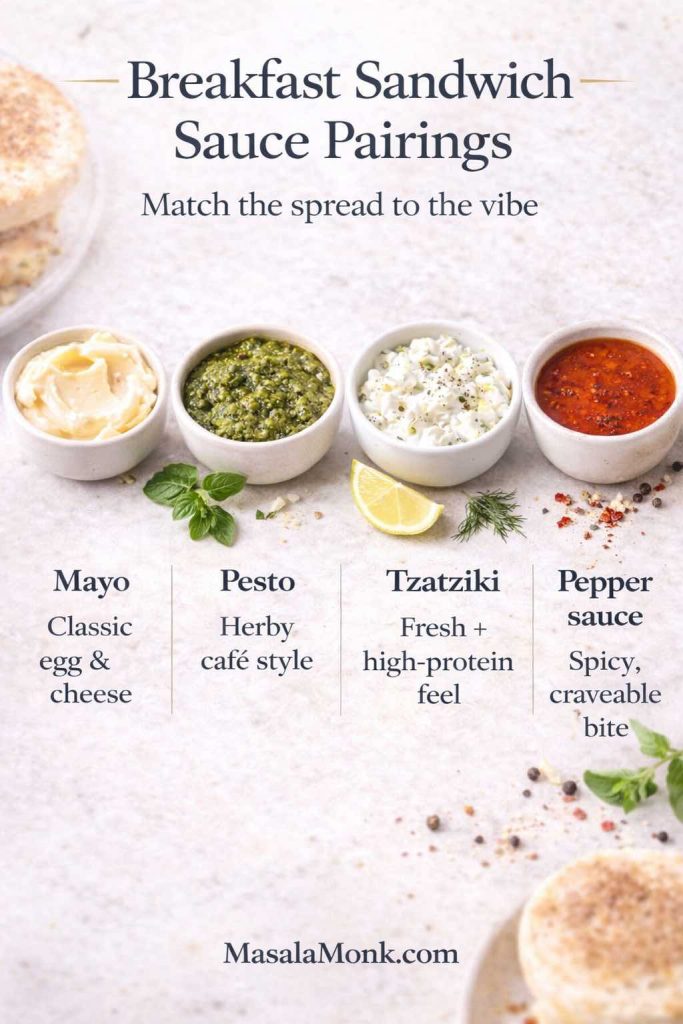
Chicken Parm Sub Recipe — crispy panko chicken cutlet in a toasted hoagie, topped with warm marinara and melty mozzarella. Re-crisp cutlet in a hot oven, then sauce and broil for bubbly cheese; finish with Parmesan and basil. Always cook chicken to 165°F/74°C. More chicken sandwich ideas at MasalaMonk.com.

Variations:

  • The grinder melt: Add a few spoonfuls of marinara on top, then more Parmesan before broiling—messy, magnificent.
  • The speed sub: Use toaster-oven heat while the cutlet rests; the bread will be ready the instant your cheese lands.
  • The basil finish: Tear basil over the top as you serve; aroma and freshness balance the rich sauce-cheese duo.

Make-ahead: Fry cutlets earlier in the day, cool on a rack, then re-crisp in a hot oven (220°C/425°F) for 6–8 minutes. In other words, you cook once, eat twice.

Sides: A tangy salad or roasted broccoli with lemon pairs beautifully. Keep the plate lean—this sandwich does the heavy lifting.

Also Read: Homemade & DIY Coffee Creamer: 16 Flavor Recipes (French Vanilla, Pumpkin Spice & More)


3) Buffalo Chicken Sandwich

Build: Kaiser roll • crispy or grilled chicken • Buffalo sauce • ranch or blue cheese • celery slaw.

Toss hot chicken with Buffalo sauce after cooking so the crust remains crisp. Meanwhile, choose your dressing wisely: blue cheese emphasizes tang and funk, ranch leans herbaceous and mellow. For an at-home classic you’ll reuse constantly, this homemade ranch dressing nails the buttermilk-herb balance. If you gravitate to blue cheese, MasalaMonk’s deep-dive on a party-friendly blue cheese dip offers useful tips on thickness and crumble size, which, incidentally, also govern how neatly your sandwich eats.

Buffalo chicken sandwich on brioche with celery slaw and ranch; elegant recipe card by MasalaMonk.
Buffalo Chicken Sandwich Recipe — crispy chicken tossed after frying in Buffalo sauce, stacked on toasted brioche with celery slaw and ranch (or blue cheese). Keep it glossy, not soggy; add a light hot-honey drizzle for balance. Always cook chicken to 165°F/74°C. Explore more weeknight chicken sandwiches at MasalaMonk.com.

Variations:

  • Grilled Buffalo: Brush a touch of sauce on the chicken right off the grill, then drizzle more once it’s on the bun.
  • Extra heat: Add a small squeeze of hot honey over the slaw to contrast the vinegar heat with gentle sweetness—there’s a quick method here: easy hot honey.
  • Harissa-ranch twist: Blend a spoon of harissa into ranch for smoky, floral warmth; a reliable reference is this streamlined harissa ranch.

Make-ahead: Celery slaw keeps well for a day; dress it lightly and add more right before serving. Likewise, buns can be split ahead, then toasted à la minute for speed.

Sides: Baked potato wedges or carrot sticks with extra dip—simple, crunchy, and well-matched.

Also Read: Air Fryer Chicken Wings (Super Crispy, No Baking Powder)


4) Chicken Salad Sandwiches (croissants, finger/tea, cranberry)

Build: Croissant or soft bread • chicken salad (chopped chicken + mayo + Dijon + lemon + salt & pepper) • crisp lettuce.

Cube or shred cooked chicken, stir with just enough dressing to coat, then fold in finely chopped celery for snap. If you like a tangy-sweet counterpoint, add dried cranberries and a handful of toasted pecans. For a lighter texture that still feels creamy, blend part of the mayo with strained yogurt; MasalaMonk’s tutorial on a protein-forward hung curd spinach sandwich shows how thick yogurt behaves in spreads without watering them down.

Chicken salad croissant with grapes, celery and pecans; elegant recipe card by MasalaMonk.
Chicken Salad Croissant Recipe — chunky chicken, celery, grapes and pecans in a creamy mayo-Dijon-lemon dressing. Chill 30 minutes for best texture; swap in part Greek yogurt for a lighter spread and add dill or a pinch of curry. Always cook chicken to 165°F/74°C. More easy lunch ideas at MasalaMonk.com.

Variations:

  • Tea sandwiches: Trim crusts, layer thinly, and cut into tidy rectangles; ideal for parties.
  • Crunch play: Gently fold in diced apple or halved grapes; sweetness brightens savory notes.
  • Herb garden: Dill and chives make this feel fresh without overpowering.

Make-ahead: The salad is better after an hour in the fridge; assemble just before serving to preserve bread texture. Additionally, croissants benefit from a quick, gentle warm-up to re-flake their layers.

Sides: A delicate salad with a lemony vinaigrette balances the richness. Thinly sliced cucumbers seasoned with salt and pepper add cool crunch without heaviness.

Also Read: Chicken Alfredo Pasta, 5 Ways (Classic to Cajun, Veg, 15-Minute Jar, Healthy)


5) Rotisserie Chicken Sandwich (quick recipe)

Build: Rustic sourdough • warm rotisserie chicken • house sandwich sauce or pesto-mayo • arugula • thin red onion.

This is the weeknight hero: already-cooked chicken, a fast sauce, and a handful of greens. Consequently, dinner appears in ten minutes flat. If you’re aiming for a mayo alternative, hummus makes a great stand-in; the texture lessons from MasalaMonk’s approachable hummus veggie sandwich translate perfectly—spread generously to “glue” loose shreds, then add greens so the bread doesn’t slip.

Chicken salad croissant with grapes, celery and pecans; elegant recipe card by MasalaMonk.
Chicken Salad Croissant Recipe — chunky chicken, celery, grapes and pecans in a creamy mayo-Dijon-lemon dressing. Chill 30 minutes for best texture; swap in part Greek yogurt for a lighter spread and add dill or a pinch of curry. Always cook chicken to 165°F/74°C. More easy lunch ideas at MasalaMonk.com.

Variations:

  • Pesto-mayo: Stir 2 Tbsp pesto into 3 Tbsp mayo; peppery, bright, and superb with arugula.
  • Warm press: After building, press the sandwich in a skillet under a small pan for a minute to marry the layers.
  • Citrus snap: A whisper of lemon zest over the top lifts everything.

Make-ahead: Portion rotisserie meat into small containers; freeze in flat bags for instant defrosting. Then, rewarm gently with your sauce to keep it juicy.

Sides: Tomato salad with olive oil and flaky salt; or, for a heartier plate, small roasted potatoes with rosemary.

Also Read: Ceramic vs Teflon (PTFE) Cookware: Safety, Heat Limits, Durability & Which to Buy


6) Grilled Chicken Sandwich (with Blackened option)

Build: Brioche • grilled breast • house sauce • tomato slices • shredded lettuce.

Pound chicken lightly for even thickness; marinate 30 minutes in oil, lemon, garlic, paprika, and salt. Grill over medium-high heat until the thickest area reaches 165°F/74°C, then rest 5 minutes before slicing. If you prefer a bolder profile, dust on a blackened spice blend (paprika, garlic and onion powders, thyme, oregano, cayenne, salt, and pepper) before grilling; the aromatic crust complements cool lettuce and a bright sauce.

Grilled chicken sandwich on brioche with lettuce, tomato and house sauce; blackened seasoning option—MasalaMonk recipe card.
Grilled Chicken Sandwich (Blackened Option) — quick marinade (oil, lemon, garlic, paprika), grill to 165°F/74°C, rest 5 minutes. Toast brioche, layer house sauce → lettuce → chicken → tomato for structure. For extra flavor, dust on a blackened spice rub before grilling; finish with a squeeze of lemon.

Variations:

  • Citrus-herb: Swap paprika for lemon zest and rosemary; finish with a squeeze of lemon.
  • Avocado layer: Mash avocado with lime and a pinch of salt; spread onto the bottom bun as a creamy shield.
  • Spicy mayo: Whisk in a teaspoon of hot sauce or a dab of chili crisp for a nudge of heat.

Make-ahead: Mix the marinade in the morning; the rest is mostly hands-off. Furthermore, you can grill extra breasts and hold them for salads or wraps later in the week.

Sides: Coleslaw, grilled corn, or a crunchy chopped salad. Toast the brioche lightly so it stays plush inside but sturdy outside—buns scorch quickly, so keep an eye out.

Also Read: Coconut Water Cocktails: 10 Easy, Refreshing Drinks


7) Chicken Bacon Ranch Sub Recipe

Build: Soft sub roll • grilled or crispy chicken • ranch • hot bacon • tomato • shredded lettuce.

This sandwich succeeds on balance: smoky bacon, cool ranch, crisp lettuce. To keep it from tipping heavy, toast the roll so the crumb stays resilient, then layer chicken first, bacon second; that way, heat rises to the ranch rather than sogging the lettuce. If you want a lighter profile, use a yogurt-forward dressing to cut richness while preserving body. For matching your spice to your mood, fold a spoon of minced chipotle into the ranch—smoky and gently fiery—or lean into herb brightness.

Helpful reference points: A dependable, from-scratch ranch dressing sets your baseline; if you’re looking to calibrate heat for snacks and sides on the same day, MasalaMonk’s timing and texture notes in their air fryer chicken wings guide help synchronize oven and counter space so everything lands hot together.

Chicken bacon ranch sub with grilled chicken, crispy bacon, lettuce, tomato and ranch on a toasted roll — MasalaMonk.
Chicken Bacon Ranch Sub Recipe — Toast split rolls, then stack ranch → lettuce → chicken → bacon → tomato for a tidy, crunchy bite. Oven-bake bacon on a rack for extra crisp, use a yogurt-forward ranch to lighten it, and cook chicken to 165°F/74°C. Try a chipotle-lime ranch for smoky heat.

Variations:

  • Club-style: Add a thin slice of cheddar and a second layer of lettuce; slice on the bias for neater halves.
  • Chipotle-ranch: Stir in smoky chile; add avocado for coolness.
  • BLT-plus: Use only lettuce, bacon, and ranch with grilled chicken—clean, classic, and fast.

Make-ahead: Cook bacon in the oven on a rack; it stays flat and extra crisp. Assemble subs quickly right before serving so the lettuce stays lively.

Sides: Crisp apples or cucumber spears; the fresh snap works wonders against the sandwich’s savory depth.

Also Read: 10 Creative Chia Pudding Recipes for Every Taste


8) Chicken Caesar Sandwich Recipes

Build: Ciabatta • sliced grilled chicken • Caesar dressing • romaine • shaved Parmesan.

Toss romaine lightly in dressing first, add it to the bread to create a moisture buffer, then layer chicken and extra Parmesan. Notably, the dressing choice shapes the whole experience: anchovy-forward versions read bold and classic, while mayo-based or yogurt-touched dressings feel round and gentle. For a rock-solid method that emulates the original table-side spirit, rely on this Caesar dressing recipe; it emulsifies into a silky sauce that clings to lettuce and chicken alike.

Chicken Caesar sandwich on charred ciabatta with dressed romaine and shaved Parmesan—MasalaMonk recipe card.
Chicken Caesar Sandwich Recipe — charred ciabatta, romaine tossed first in anchovy-forward Caesar, layered with sliced grilled chicken and shaved Parmesan. Finish with lemon and pepper. Use pasteurized egg if making classic dressing; cook chicken to 165°F/74°C. More weeknight builds at MasalaMonk.com.

Variations:

  • Grilled Caesar: Char the ciabatta briefly; smoke plus garlic equals big flavor.
  • Crispy-Caesar hybrid: Use a small crispy cutlet instead of sliced grilled chicken; the contrast is addictive.
  • Lemon-pepper finish: A final grind of pepper and a squeeze of lemon dial in brightness.

Make-ahead: Wash and spin romaine well in advance; dry leaves are the secret to a Caesar that doesn’t weep. Store dressing chilled; toss just before serving to preserve crunch.

Sides: Cherry tomatoes with olive oil and capers, or a simple zucchini sauté with garlic and herbs.

Also Read: Punch with Pineapple Juice: Guide & 9 Party-Perfect Recipes


9) How to make Chicken & Waffle Sandwich

Build: Belgian waffles • crispy tenders • hot honey or maple • (optional) thin pickle slices • napkins on standby.

Sometimes you want unabashed fun. Fry or air-fry tenders until audibly crisp, set between warm waffles, and drizzle lightly with a sweet-heat glaze. For a measured, quick approach that you can tune from gentle to fiery, this streamlined method for hot honey is remarkably consistent. If you prefer to skip pickles, lean on a bit more acidity in the glaze or finish with a squeeze of lemon to offset the sweetness.

Chicken & waffle sandwich with crispy tenders, hot honey drizzle and pickles—MasalaMonk recipe card.
Chicken & Waffle Sandwich Recipe — golden Belgian waffles with crispy chicken tenders, a light hot-honey drizzle, and optional pickles. Re-crisp waffles in a toaster for snap; keep tenders on a rack so they stay crunchy. If cooking chicken from raw, finish to 165°F/74°C. More comfort-food sandwiches at MasalaMonk.com.

Variations:

  • Spicy maple: Warm maple syrup with a pinch of cayenne; it reads classic diner in the best way.
  • Cheddar crunch: Add a thin layer of sharp cheddar; salty richness loves hot honey.
  • Waffle sliders: Quarter the waffles and use smaller tenders for two-bite party food.

Make-ahead: Waffles freeze beautifully; re-crisp them in a toaster or dry skillet. Meanwhile, keep tenders in a warm oven on a rack to hold crunch until serving.

Sides: Fruit salad or coleslaw; either option brings brightness to the party.

Also Read: How to make Mango Salad? 5 Crazy Ideas Inside


10) Recipe for Chicken Teriyaki Sandwich (sub)

Build: Soft sub • grilled chicken tossed in teriyaki glaze • mayonnaise or kewpie • cucumber • scallions.

Slice grilled chicken and warm it gently with a small pool of teriyaki until glazed—no need to simmer aggressively. Next, swipe the roll with a thin layer of mayo (or kewpie for silkiness), load the glazed chicken, then finish with cucumbers and scallions for refreshing crunch. Because the glaze carries sweetness, that fresh, green bite keeps balance in check.

Chicken teriyaki sub with glossy glazed chicken, shredded lettuce, Kewpie mayo and sesame—MasalaMonk recipe card.
Chicken Teriyaki Sub Recipe — warm sliced chicken in just enough teriyaki glaze to coat (don’t candy), tuck into a toasted hoagie with lettuce (or cucumber + scallions), finish with Kewpie mayo and sesame seeds. Try a chili-crisp mayo for heat. Cook chicken to 165°F/74°C. More weeknight subs at MasalaMonk.com.

Variations:

  • Pineapple-teriyaki: Add finely diced pineapple to the glaze and simmer for a minute; tropical, bright, and fun.
  • Sesame finish: Toast sesame seeds and scatter them on top; nutty aroma for almost zero effort.
  • Spicy-sesame mayo: Stir in a little chili crisp; it complements the glaze while adding texture.

Make-ahead: Mix glaze and prep scallions in the morning. Assemble at dinner with almost no cleanup.

Sides: Snap peas with a sesame-soy dressing, or oven fries dusted with garlic powder.

Also Read: 10 Easy Potato Appetizers: Crispy, Cheesy & Party-Perfect


Example week: five dinners from one weekend prep

Saturday: Grill four marinated breasts; fry a batch of cutlets; whisk house sauce, ranch, hot honey, and blackened rub. Bake or buy a pack of soft buns.

Sunday (BBQ): Shred one breast, warm with BBQ, pile onto potato buns with slaw. Save leftover slaw for tomorrow.

Monday (Buffalo): Re-crisp two cutlets; toss in Buffalo; add celery slaw and ranch. Offer a quick side of carrot sticks.

Wednesday (Caesar): Slice a grilled breast, toss romaine in dressing, and build on ciabatta with Parmesan. Serve cherry tomatoes on the side.

Friday (Teriyaki): Slice the last grilled breast, glaze quickly with teriyaki, and layer in a soft sub with cucumber and scallions. Finish with sesame seeds.

As a result, you’ve enjoyed five distinctive chicken sandwich recipes without feeling like you ate the same dinner twice. And, crucially, your sauces and prepped components carried you through with almost no midweek effort.


Final thoughts (and a few sources you’ll actually use again)

Cooking at home scales best when your core methods repeat effortlessly. Once you’ve internalized grilling to 165°F/74°C (see the USDA temperature chart) and crisping cutlets the right way (that cutlet guide is gold), you can improvise with confidence. Then, with a small sauce rotation—anchovy-forward Caesar dressing, trusty ranch, and adaptable hot honey—you’ll steer flavor from bright to rich to spicy without rewriting the shopping list.

Meanwhile, for days you want a gentle, wholesome vibe, sneak in hummus or strained yogurt as your creamy element; MasalaMonk’s approach to yogurt-based spreads and their straightforward hummus sandwich offer texture tricks that keep sandwiches tidy and satisfying. And when you’re in the mood to go full comfort—say, Chicken Parm on a broiled sub—remember that a little basil and a properly toasted roll raise the bar more than an extra ounce of cheese ever could.

In the end, these chicken sandwich recipes are a toolkit: start with either grilled or crispy, choose a sauce and a bread, add crunch and greens, and you’re done. Vary heat levels to suit the crowd, keep buns warm, and let rest times do their magic. Tonight, maybe it’s BBQ with slaw; tomorrow, Buffalo with harissa-ranch; next weekend, Teriyaki with cucumber and scallions. Different sandwiches, same ease—and the same happy table.

FAQs

1. What are the must-know basics for chicken sandwich recipes?

Start with even-thickness chicken, season generously, and cook to a safe internal temperature of 165°F/74°C. Moreover, rest the meat a few minutes so juices settle. Choose buns that match the filling (brioche for grilled, sub rolls for saucy builds), and toast lightly to resist sogginess.

2. Which buns work best for BBQ, Parm, and Buffalo styles?

For BBQ, potato buns cushion saucy fillings; conversely, Chicken Parm thrives in sturdy sub rolls that can handle broiling. Buffalo sandwiches prefer kaiser rolls or brioche—soft yet resilient—so the heat and dressing stay balanced.

3. How do I keep crispy cutlets crunchy after saucing?

Fry to golden, drain on a rack, then sauce right before serving. Additionally, spread condiments thinly on both sides of the bun and add a lettuce “buffer” to reduce steam and seepage.

4. What is the simplest “house” sauce to anchor most chicken sandwich recipes?

A quick blend of mayo, Dijon, lemon juice, a pinch of sugar, salt, and pepper delivers tang, creaminess, and balance. Furthermore, it pairs with grilled, crispy, or shredded chicken without overpowering.

5. How can I make a healthier chicken sandwich without losing flavor?

Go grilled rather than fried, then swap part of the mayo for strained yogurt. Likewise, load on crunchy vegetables, choose whole-grain or lighter rolls, and keep sauces to 1–2 tablespoons per sandwich.

6. What’s the easiest way to batch-prep for busy weeks?

Marinate and grill multiple breasts at once; slice some, keep others whole. Meanwhile, prep a small trio of sauces (Buffalo, house, pesto-mayo) and store them chilled. Consequently, you can build BBQ, Caesar, or Bacon-Ranch in minutes.

7. How do I prevent wet, collapsing sandwiches?

Toast buns, pat greens dry, and assemble in a moisture-smart order: sauce → lettuce → chicken → toppings → tiny sauce dot on the top bun. Notably, shredded and pulled versions benefit from being warmed with just enough sauce to coat—not drown.

8. What’s a reliable blueprint for BBQ chicken sandwich success?

Warm shredded chicken in your favorite BBQ sauce, pile onto a soft bun, then finish with slaw for crunch and acidity. Alternatively, thin-sliced grilled breast works when you want leaner texture.

9. How do I nail a Buffalo chicken sandwich without losing crispness?

Sauce after frying or grilling, not before. Add celery slaw for snap; pick ranch for herbal coolness or blue cheese for tang. Beyond that, a drizzle of hot honey can balance heat with gentle sweetness.

10. Any quick upgrades for Chicken Parm sandwich night?

Use panko-breaded cutlets, warm marinara, and melt provolone or mozzarella under the broiler. Even so, a final shower of grated Parmesan and torn basil lifts aroma and adds savory depth.

11. What defines a great chicken salad sandwich?

Tender, bite-size chicken bound with just enough dressing to coat, plus crisp celery and a bright note like lemon. Additionally, croissants or soft sandwich bread keep the bite tender; add cranberries or pecans for contrast when desired.

12. How do I turn rotisserie leftovers into a stellar sandwich?

Shred, warm gently with a spoon of sauce or pesto-mayo, then stack with fresh greens and thin onions on toasted sourdough. On the other hand, pressing the sandwich briefly in a skillet can marry layers without drying the filling.

13. What’s the difference between grilled and blackened chicken sandwiches?

Grilled relies on marinade and char for flavor; blackened adds a spice crust (paprika, garlic, thyme, oregano, cayenne) seared quickly for aroma and color. Ultimately, both finish at 165°F/74°C and benefit from a cool, crisp lettuce layer.

14. How do I balance a chicken bacon ranch sub so it isn’t too heavy?

Keep bacon crisp, use a thinner smear of ranch, and layer lettuce for freshness. Additionally, consider a yogurt-forward ranch or a chipotle-lime variation to add brightness without extra fat.

15. What makes a chicken Caesar sandwich work as well as the salad?

Dry, crunchy romaine, anchovy-forward dressing, and shaved Parmesan—plus sliced grilled chicken for protein. Furthermore, ciabatta or toasted sourdough stands up to dressing without collapsing.

16. Tips for a clean, handheld chicken & waffle experience?

Use waffles with defined pockets, keep tenders extra crisp, and drizzle hot honey sparingly. Alternatively, squeeze in a lemon wedge for acidity if you skip pickles but still want balance.

17. How do I keep teriyaki chicken sandwiches from turning sweet-heavy?

Glaze lightly and add fresh, watery crunch—think cucumber and scallions. Likewise, a thin swipe of mayo or kewpie creates silkiness while tempering sugar.

18. What are the best proteins for shredded chicken sandwich ideas?

Poached, slow-cooked, or rotisserie chicken shred cleanly and reheat well. Consequently, they absorb sauces quickly—BBQ, Buffalo, pesto-mayo, or Caesar—without long simmering.

19. Which spreads are smart substitutes for mayo in chicken sandwich recipes?

Strained yogurt, hummus, mashed avocado with lime, and pesto-mayo hybrids deliver creaminess with character. Moreover, they help “glue” loose shreds so sandwiches hold together better.

20. How can I scale these recipes for crowds?

Batch the proteins, toast rolls on sheet pans, and set sauces in squeeze bottles. Likewise, pre-slice tomatoes and rinse lettuce early; assemble to order so textures stay crisp.

21. What’s the quickest path from fridge to plate on weeknights?

Keep grilled chicken sliced, a house sauce ready, and buns pre-split. Beyond that, assemble cold with greens or rewarm the chicken briefly, then finish with a fast slaw or cucumber ribbons.

22. How do I integrate spice without overwhelming the family?

Offer scalable heat: a blackened rub with modest cayenne, chipotle-lime mayo on the side, or a restrained drizzle of hot honey. In short, build mild by default and let diners add heat to taste.

23. What are the top “crowd-pleaser” chicken sandwich recipes to start with?

Begin with BBQ pulled, Chicken Parm, and Buffalo. Likewise, rotate Grilled (Blackened option) and Caesar for balance, then add Bacon-Ranch or Teriyaki when you want variety.

24. Any storage advice so leftovers still taste fresh?

Store components separately—bread at room temp, sauces chilled, chicken in airtight containers. Furthermore, re-crisp cutlets in a hot oven on a rack and re-toast buns right before serving.

25. How do I choose the right lettuce and toppings for structure?

Pick shredded iceberg or romaine for crunch and moisture control. Additionally, slice tomatoes thin, use just enough onion for lift, and avoid stacking wet components directly on the bottom bun.

26. Which sides consistently complement these styles?

Think bright and crisp: simple slaws, chopped salads, oven fries, or fresh fruit. Alternatively, a light soup or corn salad keeps the plate balanced without overshadowing the sandwich.

27. Can I freeze components for future chicken sandwich recipes?

Absolutely. Freeze shredded chicken flat in small bags, then thaw fast under cool water. Likewise, baked cutlets re-crisp nicely; just cool completely before freezing to preserve texture.

28. What’s the quickest seasoning upgrade if I have zero time?

Salt early, then add lemon zest or a dash of smoked paprika. Nevertheless, a tiny squeeze of citrus at the end often tastes as if you cooked longer.

29. How do I use one grocery list to cook multiple styles in a week?

Buy chicken breasts, buns, lemons, greens, celery, onions, and a few pantry sauces or their building blocks (hot sauce, Dijon, honey). Consequently, you can pivot among BBQ, Caesar, Buffalo, and Rotisserie-Pesto without extra trips.

30. What’s the single best tip for sandwich success every time?

Toast the bread, season the chicken well, and assemble with intention—buffers first, wet items last. Ultimately, that sequence keeps bites structured, flavorful, and satisfying.

Posted on 3 Comments

Authentic Grilled Bombay Sandwich Recipe

Bombay is a heaven for food lovers, with street foods that are rich in flavour. From spicy pav bhaji to crispy vada pav, the city’s street food is a delightful exploration of taste and culture. Bombay grilled sandwich is popular Maharashtrian street food and if you are a sandwich lover, then you definitely need to try this recipe. This sandwich can be quick prepared without much hassle. This Bombay sandwich is a sweet, salty, spicy and savory recipe filled with a flavor that will leave you wanting for more and more. The best part is that this veggies – loaded sandwich can be given in kids lunch boxes or taken to your office too. Just use the below given ingredients and make the easy tasty sandwich for you and your family.

Ingredients:

  • Bread slices
  • Boiled potatoes, sliced
  • Cucumber, thinly sliced
  • Capsicum, thinly sliced
  • Onion, thinly sliced
  • Chat masala
  • Salt, to taste
  • Green coriander chutney
  • Butter
  • Tomato slices (optional)
  • Besan bhujiya

Method:

Begin by spreading a thin layer of butter on one side of each bread slice. On the unbuttered side of one bread slice, spread a generous layer of green coriander chutney. Adjust the amount based on your taste preference. Place the sliced boiled potatoes evenly on top of the chutney.

Layer cucumber, capsicum, onion, and tomato (if using) slices on top of the potatoes. Sprinkle a pinch of chat masala and a bit of salt over the vegetables for added flavor. If desired, you can spread a bit more green chutney on the unbuttered side of another bread slice before placing it on top of the assembled vegetables.

Heat a tawa and Spread a small amount of butter on tawa. Carefully place the assembled sandwich on the tawa. Allow it to cook for a few minutes on one side until it turns golden brown and crispy. Cook the other side until it becomes crispy and golden brown as well. Once both sides are nicely grilled remove the sandwich from the tawa.

Place the sandwich on a cutting board and cut it into halves or quarters as desired. Spread a final layer of green coriander chutney on top of the grilled sandwich. Sprinkle a generous amount of besan bhujiya over the chutney layer. This adds a delightful crunch and flavor to the sandwich.

Your mouthwatering Bombay sandwich is now ready to be served! This Bombay grilled sandwich is just of the many delectable treats that Bombay street food has to offer. Easy to prepare and incredibly satisfying, this veggie-loaded sandwich is a fantastic option for a quick meal at home.

Explore More Delicious Sandwich Recipes
If you enjoyed this sandwich, be sure to check out our other sandwich recipes for more tasty ideas!

I would love to see your creations. If you tried this recipe , just click a pictures and tag us on @masala.monk or use the hashtag #MasalaMonkRecipe and share on Instagram and Facebook. Happy cooking!