
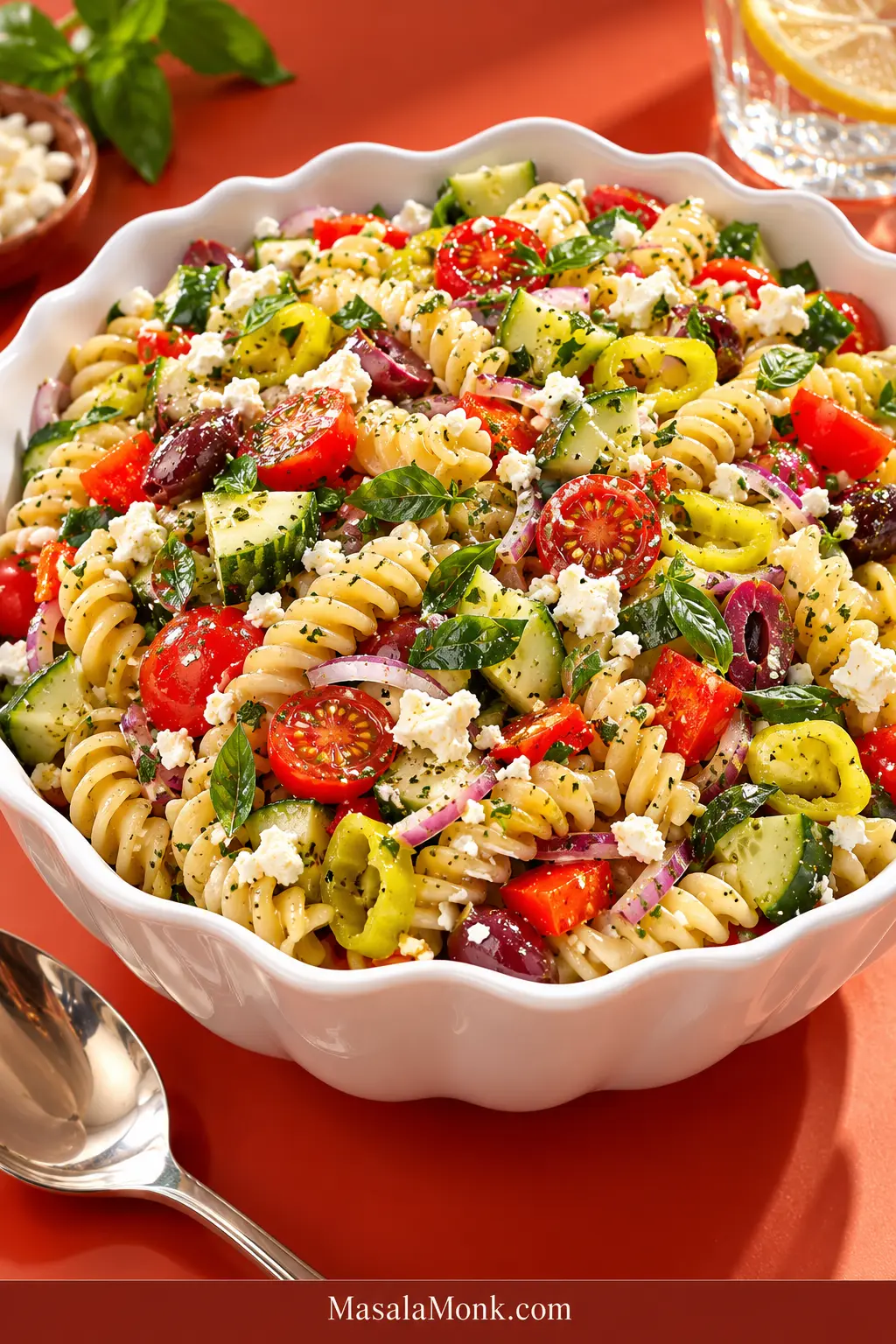
A good pasta salad should still taste lively after an hour in the fridge. You want cool spirals of pasta coated in vinaigrette, cucumber that still snaps, juicy tomato, salty feta and the sharp little bite of pepperoncini in the same forkful.
This easy pasta salad recipe combines rotini or fusilli with cucumber, bell pepper, tomatoes, feta, pepperoncini and fresh herbs in a bright Italian-style vinaigrette. It travels well, can be made ahead and works for cookouts, picnics and potlucks.
Pasta salad can turn dry even when you started with plenty of dressing. The noodles keep absorbing it as they sit, flavors taste duller when the salad is refrigerator-cold, and wet pasta quietly waters the dressing down. So most of the vinaigrette goes in first, while a smaller portion waits for serving. For the creamy deli-style version instead, head to the classic macaroni salad recipe.
Pasta Salad Recipe
Short pasta tossed with cucumber, tomatoes, bell pepper, feta, pepperoncini and herbs in a tangy homemade vinaigrette. Part of the dressing is held back until serving so the salad still tastes properly dressed after chilling.
You only need about 35 minutes of hands-on time; the rest is chilling and resting.
Equipment
- 6–8 quart / 5.5–7.5 liter pot
- Colander, large enough to drain 1 lb / 454 g pasta comfortably
- Large mixing bowl, about 6 quarts / 5.5 liters
- Small bowl and whisk, or a lidded jar, for the dressing
Pasta Salad Ingredients
For the salad
- 16 oz / 454 g rotini or fusilli
- 15–18 g fine sea salt, about 1 tablespoon, for the pasta water
- 1 medium English cucumber, cut into roughly 1/2-inch / 1–1.5 cm pieces — about 10 oz / 285 g
- 10 oz / 285 g cherry or grape tomatoes, halved; if exceptionally juicy, let the cut sides drain for a few minutes
- 1 medium red, yellow or orange bell pepper, cut into roughly 1/2-inch / 1–1.5 cm pieces — about 5 oz / 140 g
- 1/3 cup / 55 g finely chopped red onion
- 1/2 cup / 70 g sliced pepperoncini, drained
- 1/2 cup / 70 g pitted Kalamata olives, halved, optional
- 6 oz / 170 g feta, crumbled
- 1/4 cup / 15 g chopped flat-leaf parsley
- 1/3 cup / 10 g fresh basil leaves; keep whole until serving, then tear or thinly slice
For the Italian-style vinaigrette
- 2/3 cup / 160 ml extra-virgin olive oil
- 1/3 cup / 80 ml red wine vinegar
- 1 tablespoon / 15 ml fresh lemon juice
- 1 tablespoon / 15 ml pepperoncini brine
- 1 tablespoon / 15 g Dijon mustard
- 1 garlic clove, finely grated or minced — about 4 g
- 1 teaspoon / 1 g dried oregano
- 1/2 teaspoon / 3 g fine sea salt, plus more to taste
- 1/2 teaspoon / 1 g freshly ground black pepper
- 1/2–1 teaspoon / 3–7 g honey, optional
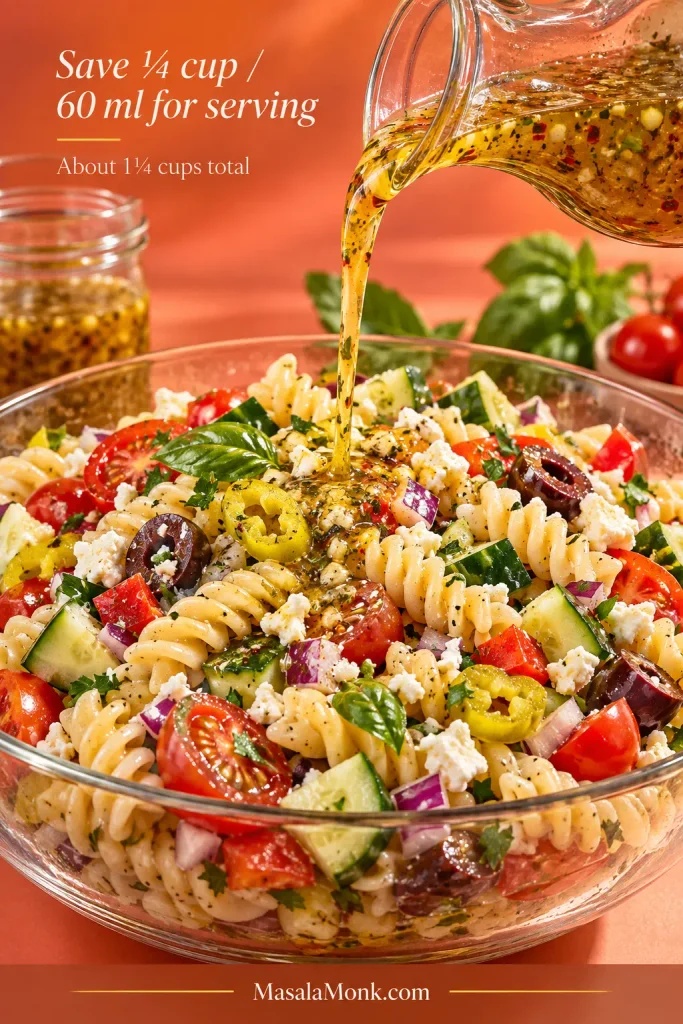
Shortcut: bottled zesty Italian dressing works here when pasta salad is only one of several dishes you’re making. Use about 1 1/4 cups / 300 ml total: roughly 1 cup / 240 ml for the first toss and 1/4 cup / 60 ml saved for serving.
How to Make Pasta Salad
Three details matter most: cook the pasta tender enough for chilling, drain it until cool rather than wet, and save vinaigrette for the final toss.
- Mix the dressing. Whisk or shake the olive oil, vinegar, lemon, pepperoncini brine, Dijon, garlic, oregano, salt and pepper. Taste; it should have a clear acidic edge. Add honey only if harsh. Reserve 1/4 cup / 60 ml and refrigerate.
- Cook the pasta. Bring 4 quarts / 3.8 liters water to a boil and add the 15–18 g fine sea salt. Cook until tender throughout but still holding its shape, usually near the upper end of the package range. Bite one before draining; it should have no hard or chalky center.
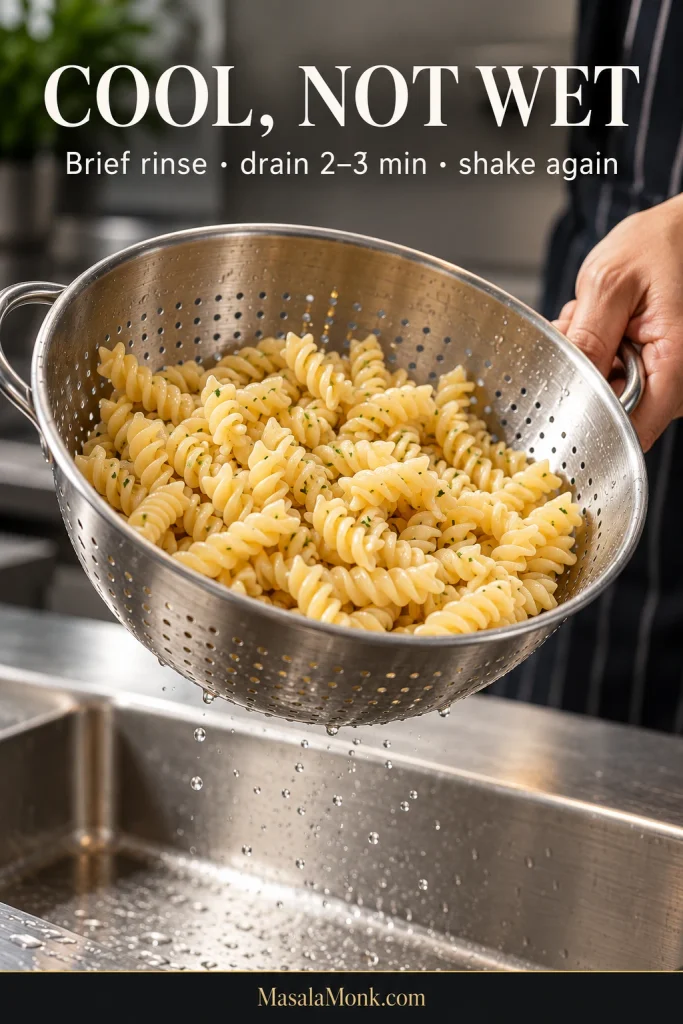
- Rinse, then really drain it. Run the pasta briefly under cool running water until it stops steaming. Shake well, drain for 2–3 minutes, then shake again. This reduces clumping; the pasta should feel cool, not wet.
- Assemble. Combine the pasta with cucumber, tomatoes, bell pepper, onion, pepperoncini, olives if using, feta and parsley. Keep the vegetables close to the pasta in size so several textures fit on one fork. Hold the basil for the end.
- Dress and chill. Add the remaining vinaigrette and toss well. Cover and refrigerate for about 1 hour.
- Finish before serving. Take the salad and reserved vinaigrette out 15–20 minutes before eating. Shake the dressing, toss the salad, then add vinaigrette gradually until lightly coated. Fold in the basil and taste. Add salt, lemon or pepperoncini brine only if needed.
Recipe Notes
- Make ahead: Make the salad several hours or up to 1 day before serving.
- Milder cheese: replace the feta with 6 oz / 170 g small mozzarella pearls.
- Raw onion too sharp? Soak it in cold water for 10 minutes, then drain thoroughly.
- Storage: refrigerate promptly and use within about 3 days for the best texture.
Read the Salad After It Chills
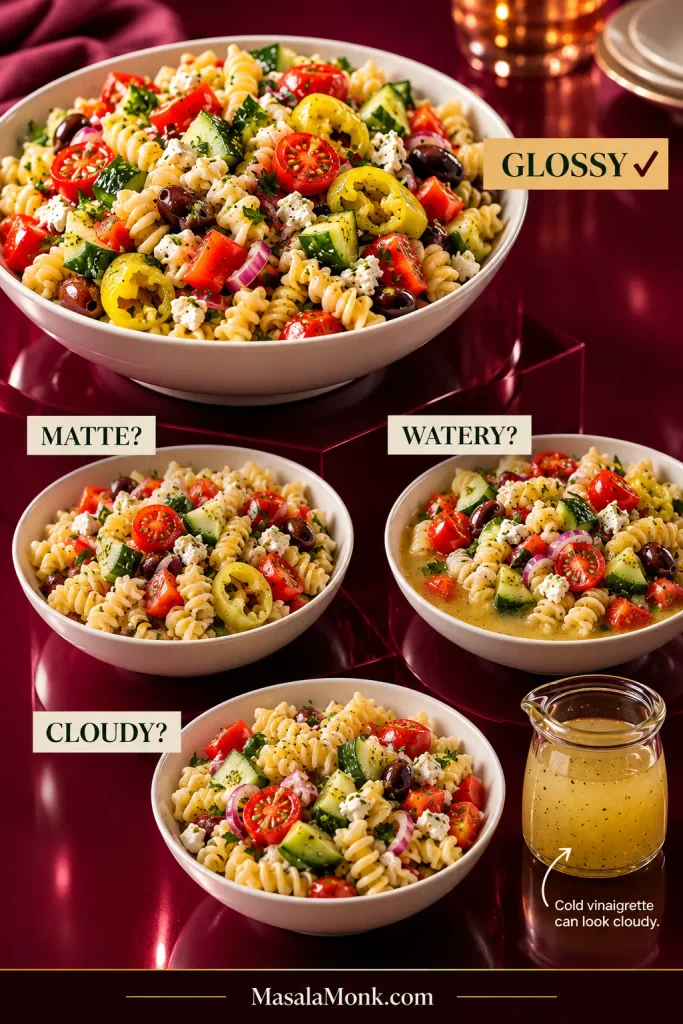
Before you toss it, look at the surface and the bottom of the bowl. Then give the salad a good toss and taste it before deciding whether anything needs changing.
| What you see | What it suggests |
|---|---|
| Glossy pasta, no puddle underneath | The dressing level is probably fine. |
| Matte-looking pasta | The noodles have absorbed a fair amount of vinaigrette. |
| Thin or watery liquid collecting underneath | The pasta may have gone in too wet, or the vegetables have released water. |
| Dressing looks cloudy or slightly thick | Olive oil can cloud or firm when cold. It loosens again as the salad warms slightly. |
If the bowl still looks or tastes wrong after that first toss, go to the dry, watery or bland pasta salad fixes.
Need More Help With This Salad?
Build the Bowl
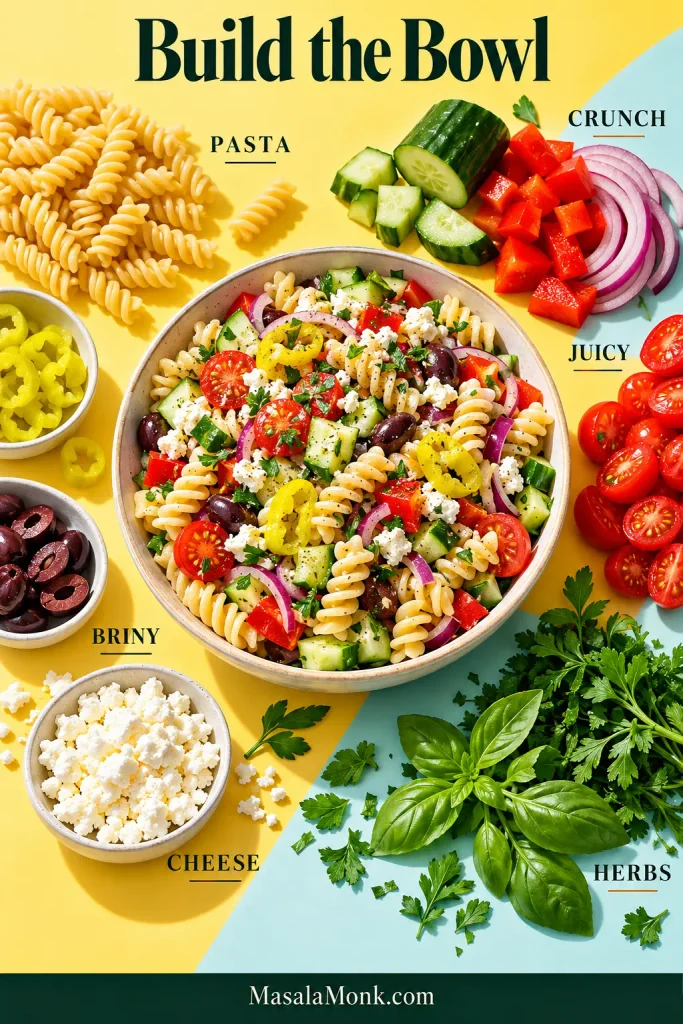
A pound of pasta needs enough going on around it: crisp vegetables, something juicy, something salty or briny, fresh herbs and enough dressing to season the whole bowl. Here, cucumber and bell pepper bring the crunch, tomatoes the juice, feta the salty richness and pepperoncini the sharp, briny bite.
Best Pasta for Pasta Salad
The best pasta for pasta salad is a short, sturdy shape with ridges, curls or pockets. Rotini, fusilli, cavatappi, penne rigate and small shells all fit that brief.
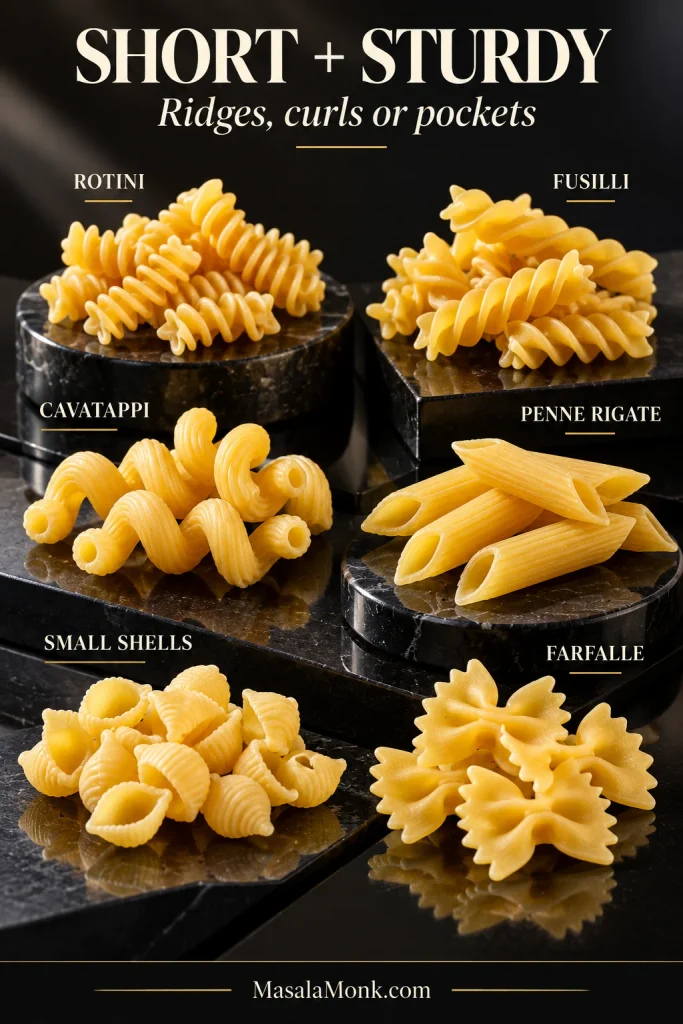
| Pasta | Good to know |
|---|---|
| Rotini or fusilli | Best all-round choice; the spirals hold dressing and small ingredients well. |
| Cavatappi | Ridged, curved and hollow, so vinaigrette clings inside and out. |
| Penne rigate | Sturdy and easy to scoop; choose ridged rather than smooth penne. |
| Small shells | The cups catch herbs, feta and chopped vegetables. |
| Farfalle | Works well, but check the thick center before draining; it can lag behind the thinner edges. |
Skip delicate fresh pasta here. It’s lovely hot, but rinsing, chilling and transporting it do it no favors; sturdy dried pasta holds up better.
Tri-color rotini is fine. Check the box size, though. Many contain 12 oz / 340 g rather than 16 oz / 454 g, so don’t automatically use the full amount of vegetables and dressing.
Using gluten-free pasta? Choose a sturdy short shape and follow that brand’s timing closely. Some gluten-free pastas firm up or dry out noticeably after refrigeration, so serve the salad the same day when possible and keep a little extra vinaigrette for pasta that looks dry.
Chosen your pasta? Jump to the pasta salad recipe and start cooking.
Crunch, Brine and Cheese
English cucumber stays pleasantly crisp and has fewer large seeds than a standard cucumber. Cherry or grape tomatoes release less liquid into the bowl than finely chopped large tomatoes. For a lighter side built around that cucumber-and-vinegar combination, the cucumber salad with dill and onion takes it in a different direction.
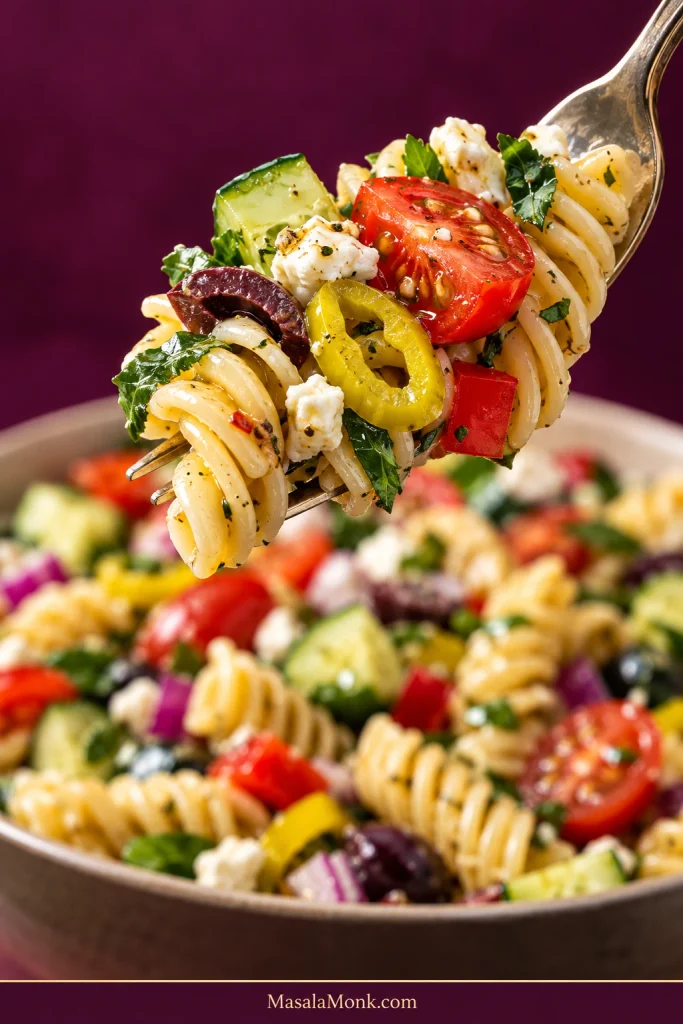
Red onion gives the salad some bite; soak it in cold water for 10 minutes if yours is particularly sharp. Pepperoncini brings acidity and briny snap, while feta gives each forkful something salty and creamy. Mozzarella pearls give you a milder, less salty version.
Easy Add-Ins
Chickpeas, cooked chicken, salami and tuna can turn this into a heartier lunch. Roasted red pepper, corn, celery, capers and artichoke hearts all fit too. Small broccoli florets work nicely as well; for a broccoli-first side, the broccoli salad recipe keeps them crisp under a creamy, tangy dressing. Add a generous amount of chicken or chickpeas and you’ll probably need a little more vinaigrette too.
Pasta Salad Dressing That Still Tastes Good Cold
A pound of pasta can swallow mild dressing. Here, red wine vinegar, lemon and pepperoncini brine give the vinaigrette enough edge to stay noticeable after the pasta absorbs some of it, while Dijon, garlic and oregano keep it from tasting like oil and vinegar alone.
Taste it before pouring it over the pasta. It should have a definite tang. Once it has coated all those noodles and spent an hour in the fridge, that edge will soften considerably.
At the table, the salad is best cool rather than straight-from-the-fridge cold. The pasta should be tender, the cucumber should still snap, and there should be enough vinaigrette to coat everything without a pool at the bottom. Next to something deeply browned and smoky, such as carne asada, the cool, tangy salad gives the plate a welcome contrast.
The pasta absorbs some of the first pour, so save 1/4 cup / 60 ml for the final toss. If the salad already looks well coated but tastes dull, try salt, lemon or pepperoncini brine before adding more oil.
Using Bottled Italian Dressing
Bottled zesty Italian dressing is completely fair game when this is one dish among several. Brands vary in sweetness, salt and acidity, so taste the salad before pouring in all of the reserved portion.
Make Pasta Salad Ahead
The point of making pasta salad ahead is that serving it should be easy. A fully assembled batch is best made no more than a day in advance; when you’re starting earlier than that, prep ingredients rather than the finished salad.
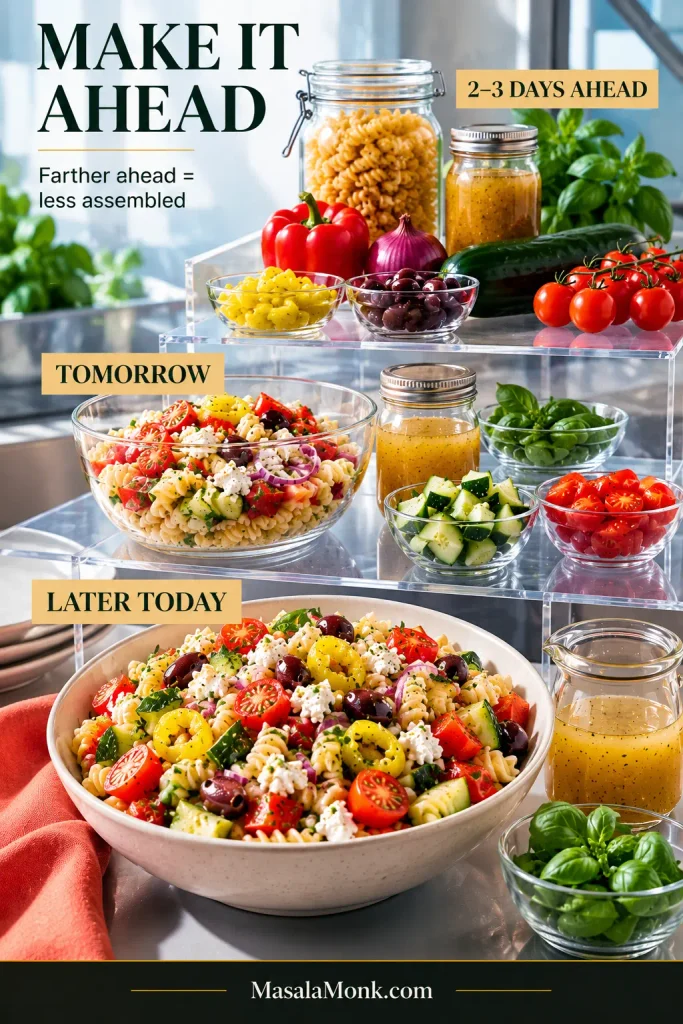
Later Today
Follow the recipe through the first dressing and chill. Keep the reserved vinaigrette and whole basil leaves cold, then finish the salad just before serving. That keeps last-minute work to a minimum.
Tomorrow
Make the salad through the first toss and refrigerate the reserved vinaigrette and whole, dry basil separately. If maximum crunch matters, leave the cucumber and tomatoes out of that first assembly and refrigerate them separately too. Add them the next day before the final toss, then add only as much reserved dressing as the salad needs. Tear or slice the basil and fold it in at the end.
Prepping 2–3 Days Ahead
Make the vinaigrette and prep the ingredients that hold well, such as onion, pepperoncini, olives and bell pepper. Keep the pasta uncooked, and leave the cucumber, tomatoes and basil whole until closer to serving. Cook the pasta and assemble the main salad no more than a day ahead.
Feeding more than the standard batch? Use the pasta salad crowd amounts before you scale the recipe.
Fix a Dry, Watery or Bland Bowl
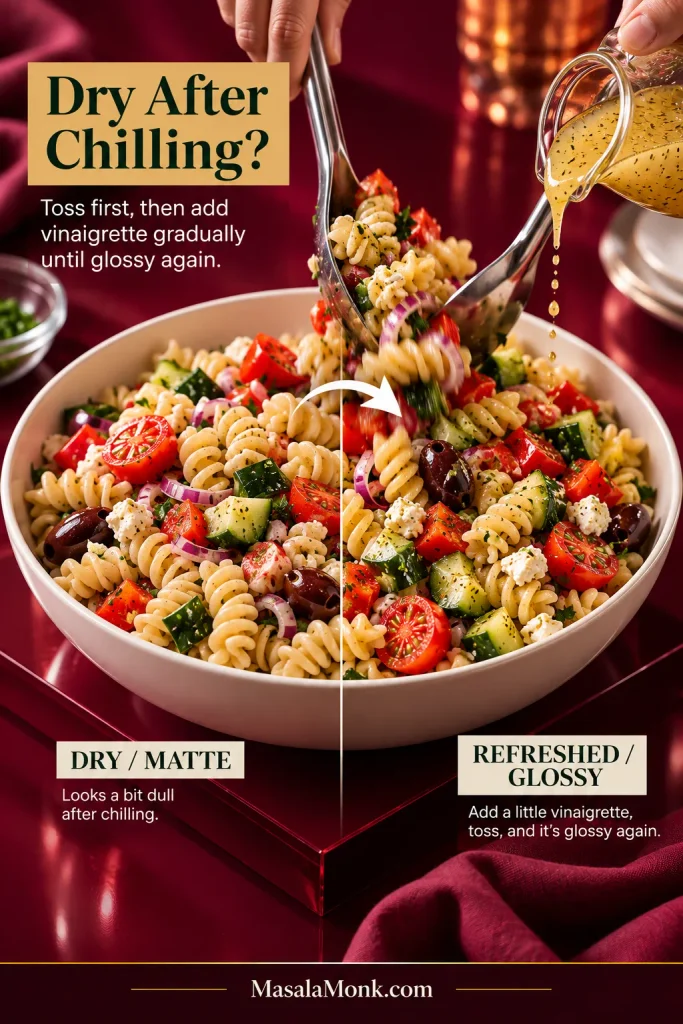
Something tastes off? Start by tossing the salad. Dressing settles, vegetables release liquid, and the forkful you grabbed from the top may not represent what’s underneath.
| Problem | Likely cause | What to do |
|---|---|---|
| Dry | The pasta absorbed dressing. | Add reserved or fresh vinaigrette gradually. |
| Bland | The seasoning is too weak for the cold pasta. | Try salt plus a little vinegar, lemon or pepperoncini brine. |
| Watery | The pasta went in wet, or the vegetables released liquid. | Drain obvious excess, toss and reseason. |
| Greasy | Too much oil for the acid and salt. | Add a small splash of vinegar or lemon and a pinch of salt. |
| Too sharp | The vinegar is particularly aggressive. | Add a little olive oil. A tiny touch of honey can soften the edge. |
| Hard after chilling | The pasta started too firm or is still very cold. | Give it a little time out of the fridge. Cook it slightly more tender next time. |
| Mushy | The pasta was overcooked. | There isn’t a real fix; shorten the cooking time next batch. |
| Sticky or clumpy | Too much surface starch or poor cooling. | Toss gently with dressing. Next time, use the brief rinse. |
Pasta Salad for a Crowd
For a normal side dish, plan on about 3/4 cup of pasta salad per person. Go down to 1/2 cup when the table is packed with other sides, or up to 1 cup for a generous serving.
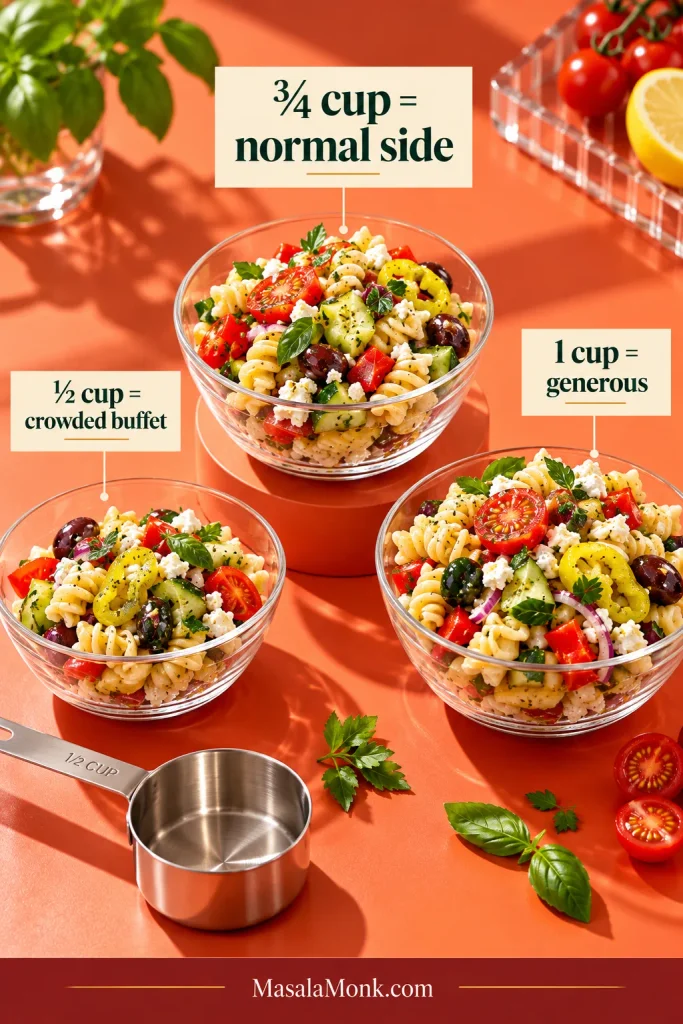
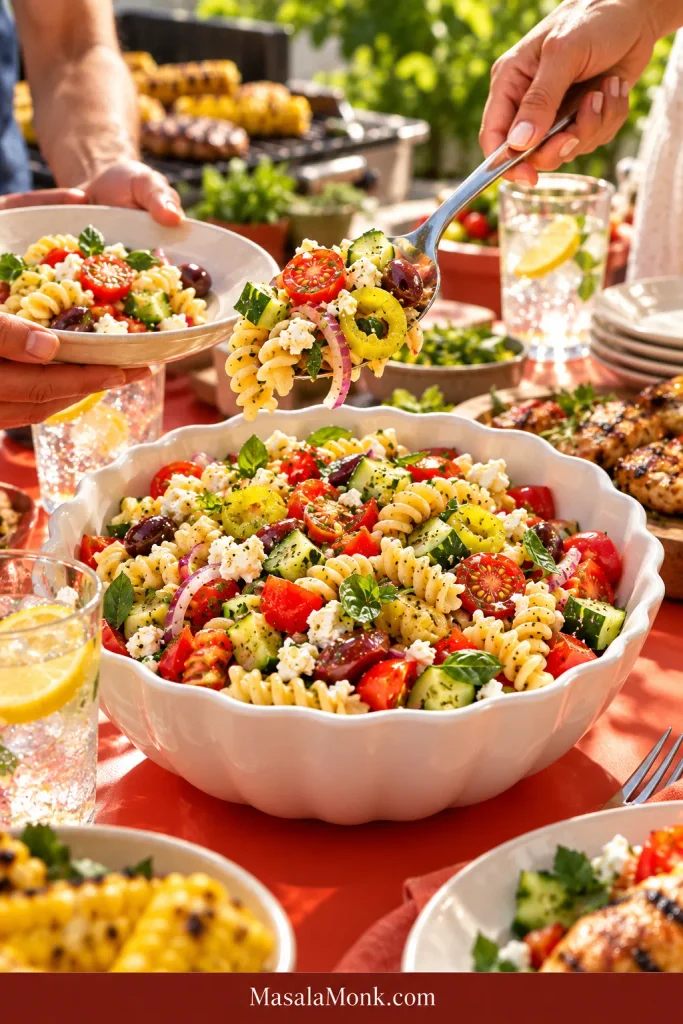
One batch of this recipe lands around 13–14 cups, with a little variation from pasta shape and vegetable size. On a crowded plate with burgers, beans, corn and another side or two, most people aren’t taking a full cup. The pasta salad should give you something cool, tangy and crunchy beside the hot food, not take over the plate.
| Guests | At about 3/4 cup each | Practical plan |
|---|---|---|
| 12–18 | About 1 batch | One standard recipe |
| 25 | About 1 1/2 batches | Make 2 batches if you want an easy buffer |
| 30 | About 2 batches | Prepare as two normal batches |
| 50 | About 3 batches | Keep part chilled and refill the serving bowl |
| 100 | About 6 batches | Cook and mix in manageable batches |
Serving this outdoors? Jump to how long pasta salad can sit out before the food goes on the table.
Cooking for a Big Group
Don’t try to make six batches in one giant pot. Work in normal-size batches instead. They’re easier to season, easier to chill and far easier to move around a busy kitchen.
How Long Can Pasta Salad Sit Out?
Skipping mayonnaise doesn’t make pasta salad shelf-stable. Cooked pasta, cheese and cut vegetables are still perishable.
The USDA recommends keeping cold perishable food at 40°F / about 4°C or colder. Don’t leave it unrefrigerated for more than 2 hours, or more than 1 hour when the temperature is above 90°F / 32°C.
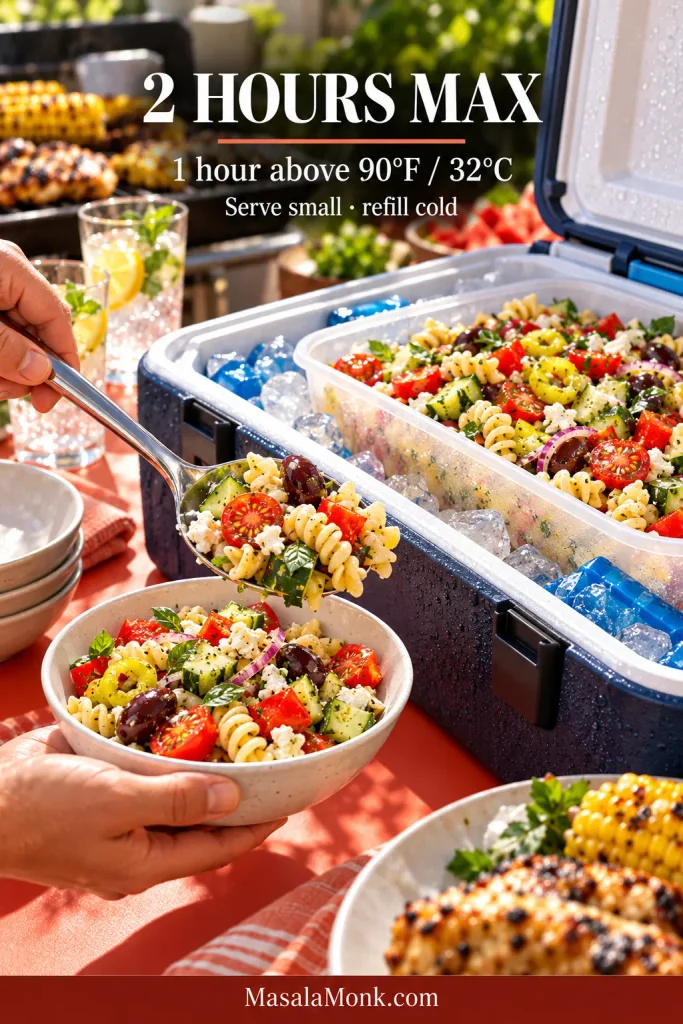
Use a well-chilled cooler with ice or frozen gel packs for transport. At a long buffet, put out a smaller bowl and refill it from the cooler instead of leaving the entire batch in the heat.
Storage and Leftovers
Refrigerate leftovers promptly in a covered container and use them within about 3 days for the best texture, while the cucumber still has some snap and the pasta hasn’t absorbed every last bit of dressing.
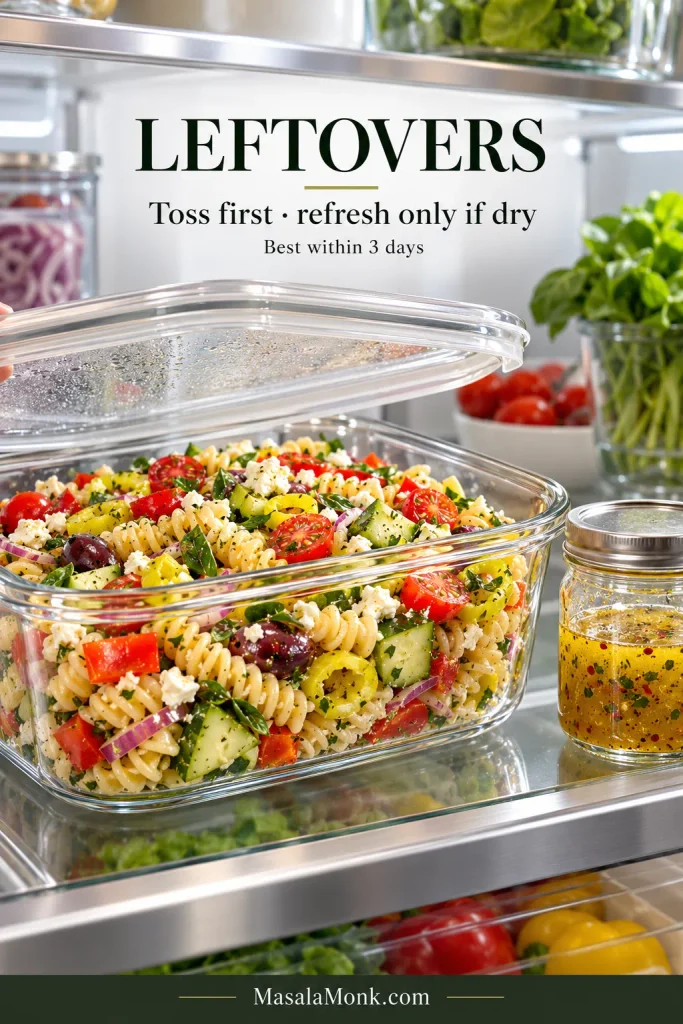
Toss leftovers before eating. If the pasta looks dry, add a spoonful of fresh vinaigrette; if it already looks moist, taste it before adding anything else.
Freezing isn’t worthwhile. The pasta loses its pleasant texture, and cucumber and tomatoes soften and release water after thawing.








