Posted on Leave a comment

Homemade Mango Ice Cream Recipe

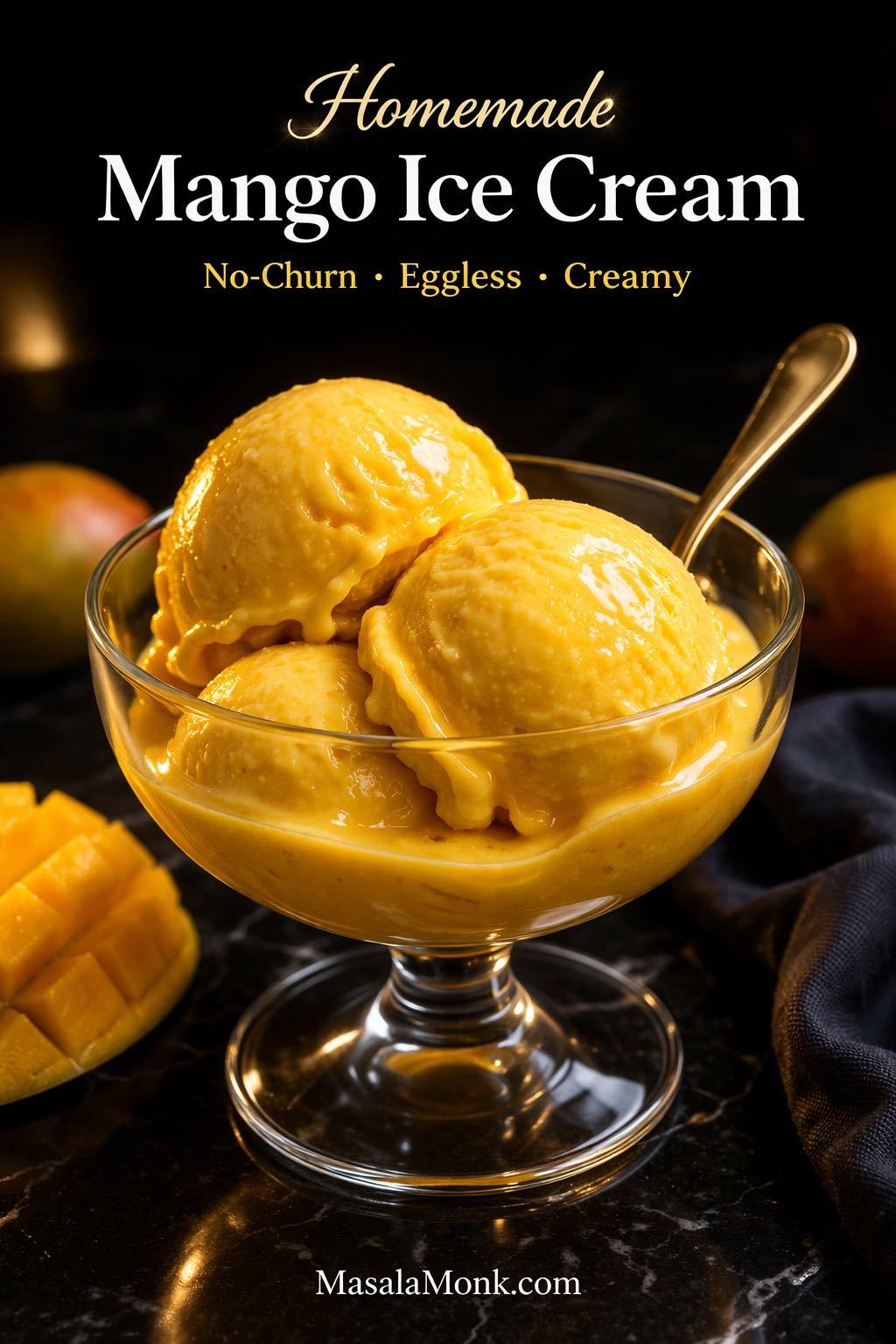
Homemade mango ice cream in a glass dessert coupe with smooth creamy scoops, deep mango color, and a dark luxe background, styled as a no-churn eggless mango ice cream hero image.

If you want homemade mango ice cream that is no-churn, eggless, creamy instead of icy, and full of real mango flavor, this is the version to make. It is for home cooks who want an easy recipe without ending up with a frozen block that tastes more like sweet cream than mango. The method is simple, the ingredient list is manageable, and the result is soft enough to scoop, rich enough to feel indulgent, and fruity enough to earn a repeat spot in your freezer.

That matters because mango ice cream can go wrong in predictable ways. Sometimes the puree is too thin, so the dessert freezes harder than it should. Sometimes the mango itself is weak, so the cream takes over. At other times, the base is overmixed, the airy texture drops, and the final scoop feels dense rather than lush. It sounds easy on paper. In practice, a few small choices decide whether it feels special or merely cold.

So this post is built to solve those problems before they happen. It shows you how to make mango ice cream at home with better odds from the start: use good mangoes, keep the puree thick, whip the cream to the right stage, fold gently, freeze in the right container, and soften slightly before serving. Get those parts right, and the recipe becomes far more dependable. More importantly, it becomes the kind of mango ice cream recipe you actually want to repeat.

This homemade mango ice cream gives you:

  • a no-churn method with no ice cream maker required
  • an eggless base that stays simple and approachable
  • creamy, scoopable texture instead of icy hardness
  • real mango flavor rather than diluted sweetness
  • clear fixes for watery puree, fibrous fruit, and weak flavor
  • enough flexibility for Alphonso, coconut, vegan, and no-condensed-milk variations

Homemade Mango Ice Cream Recipe at a Glance

Before getting into the full method, it helps to know what kind of recipe this is. It is not a churned custard or a sorbet, and it is not a technical project that asks you to babysit a machine. It is a practical, home-friendly route to creamy mango ice cream with a richer texture than fruit-only frozen desserts and a stronger fruit identity than many shortcut versions.

Quick recipe facts:

  • Prep time: about 20 to 25 minutes
  • Freeze time: 6 to 8 hours, or overnight
  • Yield: about 1 loaf-pan-sized batch, roughly 6 to 8 servings
  • Method: no-churn
  • Difficulty: easy
  • Texture goal: creamy, scoopable, and mango-forward
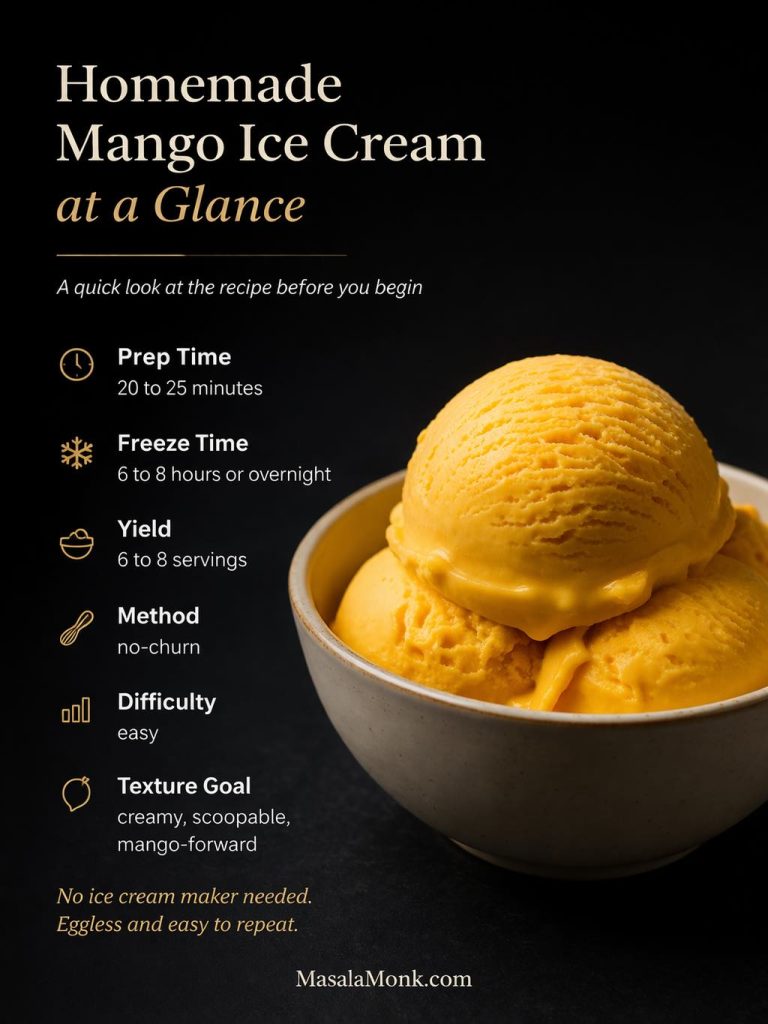
At-a-glance guide for homemade mango ice cream showing prep time, freeze time, yield, method, difficulty, and texture goal beside a bowl of creamy mango ice cream.
Before you start, it helps to know what kind of recipe this is: quick to prepare, slow to freeze, easy to execute, and aimed at a creamy, scoopable mango-forward result. That makes it a good fit for home cooks who want homemade mango ice cream without an ice cream maker, without eggs, and without a complicated method.

This is a no-churn mango ice cream recipe, an eggless mango ice cream, and an easy dessert for home cooks who do not want to rely on special equipment. If you enjoy lighter frozen fruit desserts too, you can always explore mango sorbet or read the broader comparison between sherbet and sorbet. Here, though, the goal is different: a creamy scoop that still tastes unmistakably of mango.

Also Read: Cookie Pie Recipe: 10 Best Flavors, Fillings and Variations

Why This Homemade Mango Ice Cream Recipe Works

A good homemade mango ice cream recipe succeeds because it balances fruit, richness, sweetness, and air. Mango provides the flavor that makes the dessert memorable. Cream brings body and softness. Condensed milk adds sweetness, but it also helps the frozen texture stay smoother and more forgiving. Then the whipped cream gives the mixture air, which is why a no-churn base can still feel plush and light.

The fruit, however, is the real deciding factor. Thick mango puree gives you concentrated flavor and a better frozen texture, while thin puree weakens both. That is the central rule of this recipe.

At its best, this recipe works because it balances:

  • thick mango puree for concentrated fruit flavor
  • whipped cream for lift, softness, and body
  • condensed milk for sweetness and a smoother freeze
  • gentle folding for a lighter final texture
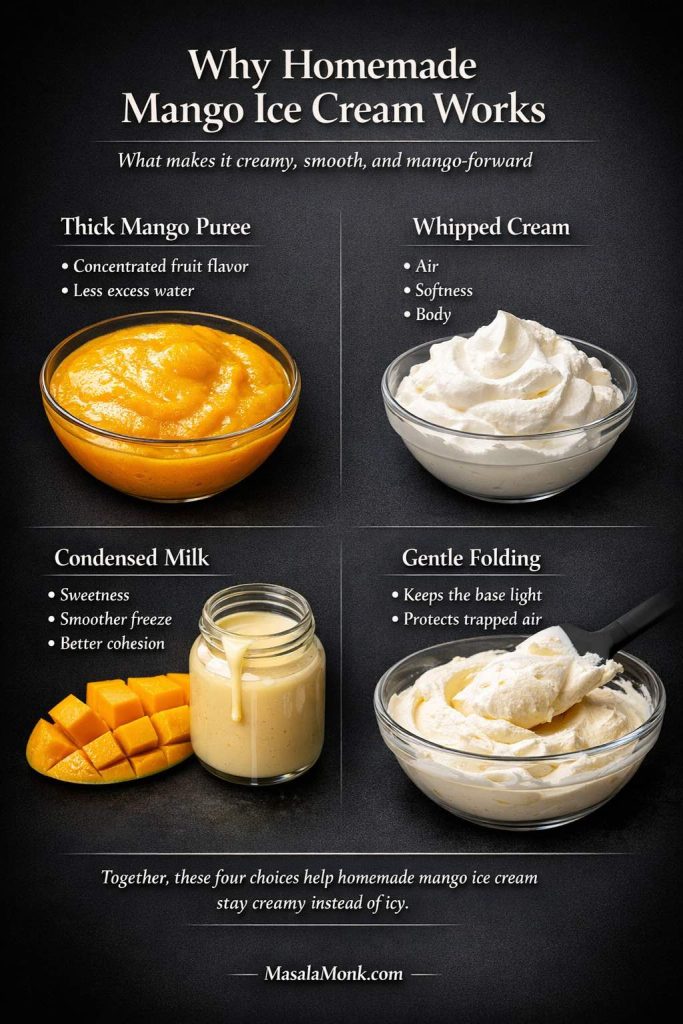
Explainer graphic for homemade mango ice cream showing thick mango puree, whipped cream, condensed milk, and gentle folding as the key elements that create a creamy smooth mango-forward texture.
Homemade mango ice cream turns out better when each part of the base is doing the right job. Thick mango puree brings concentrated fruit flavor with less excess water, whipped cream adds air and softness, condensed milk helps the mixture freeze more smoothly, and gentle folding keeps the base light instead of dense. Put together, these small choices are what help homemade mango ice cream stay creamy, scoopable, and clearly mango-forward instead of turning icy or flat.

That combination is what turns a short ingredient list into something much more satisfying. Mango ice cream should still taste clearly of mango, but the fruit should arrive wrapped in richness rather than icy sharpness.

Also Read: Punjabi Mutton Bhuna – Amritsari Village-Style Gosht Recipe

Ingredients for Homemade Mango Ice Cream

One reason how to make homemade mango ice cream appeals to so many home cooks is that the ingredient list is short. Still, a short list only works when each ingredient is doing the right job. This recipe depends less on complexity and more on choosing the right form of a few important things.

Best Mangoes for Mango Ice Cream

The best mangoes for mango ice cream are ripe, sweet, fragrant, and thick-fleshed. You want fruit that smells fruity near the stem, yields slightly when pressed, and tastes excellent on its own. If a mango is bland, watery, or chalky, the final dessert will never feel as vivid as it should.

Alphonso mangoes are especially good here because they usually bring strong aroma, rich color, and smooth flesh. That is exactly why Alphonso mango ice cream is such a compelling variation. Kesar mangoes can also work beautifully when you want deep mango character and a warm, rich profile. Ataulfo, often called honey mango, is another strong choice because it is usually sweet, smooth, and relatively low in fiber.
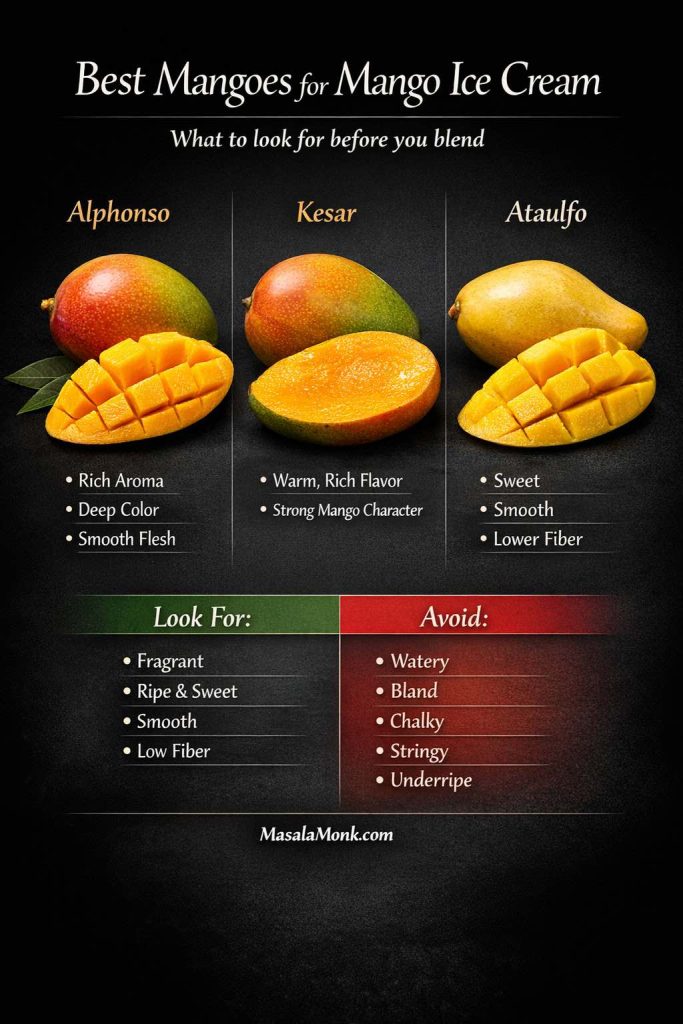
Guide to the best mangoes for homemade mango ice cream comparing Alphonso, Kesar, and Ataulfo, with notes on what to look for and what to avoid when choosing mangoes for a smooth creamy puree.
The best homemade mango ice cream starts with mangoes that already taste good before blending. Alphonso brings rich aroma and deep color, Kesar offers warm strong mango character, and Ataulfo is a great choice when you want smooth, sweet, lower-fiber fruit. No matter the variety, look for mangoes that smell fragrant, taste sweet, and blend into thick smooth puree, because watery, bland, or stringy fruit can weaken both the flavor and texture of the final ice cream.

More broadly, the best mangoes for homemade mango ice cream tend to share the same qualities:

  • dense, smooth flesh
  • strong fragrance
  • natural sweetness
  • low fiber
  • good flavor even before blending

Avoid mangoes that smell weak, taste flat, feel watery, or leave a lot of stringy fiber behind. Overly fibrous mangoes can still be used, but only if you blend and strain them well. Unripe mangoes are not a good shortcut here either. They may give acidity, but they will not deliver the rich fruit depth this dessert depends on.

In practical terms, a ripe mango for ice cream should feel slightly soft rather than hard, smell appealing rather than faint, and taste good enough to eat plain. That test matters more than any label.

Fresh Mango vs Canned Pulp vs Frozen Mango for Mango Ice Cream

Fresh mango is often the most satisfying route because it gives you full control over ripeness, sweetness, and flavor. When the fruit is excellent, fresh puree makes mango ice cream at home feel intensely seasonal and rewarding.

Canned mango pulp can be genuinely useful. It is convenient, often smoother than home-blended fruit, and usually more consistent than whatever fresh mangoes happen to be available that week. Frozen mango is useful too, especially when fresh fruit is poor or out of season, but it still needs thawing, blending, and texture checking.

The simplest way to think about the three options is this:

  • Fresh mango is best when the fruit is truly ripe, fragrant, and in season.
  • Canned pulp is best when you want consistency, convenience, and often smoother texture.
  • Frozen mango is best when fresh fruit quality is disappointing but you still want a homemade result.
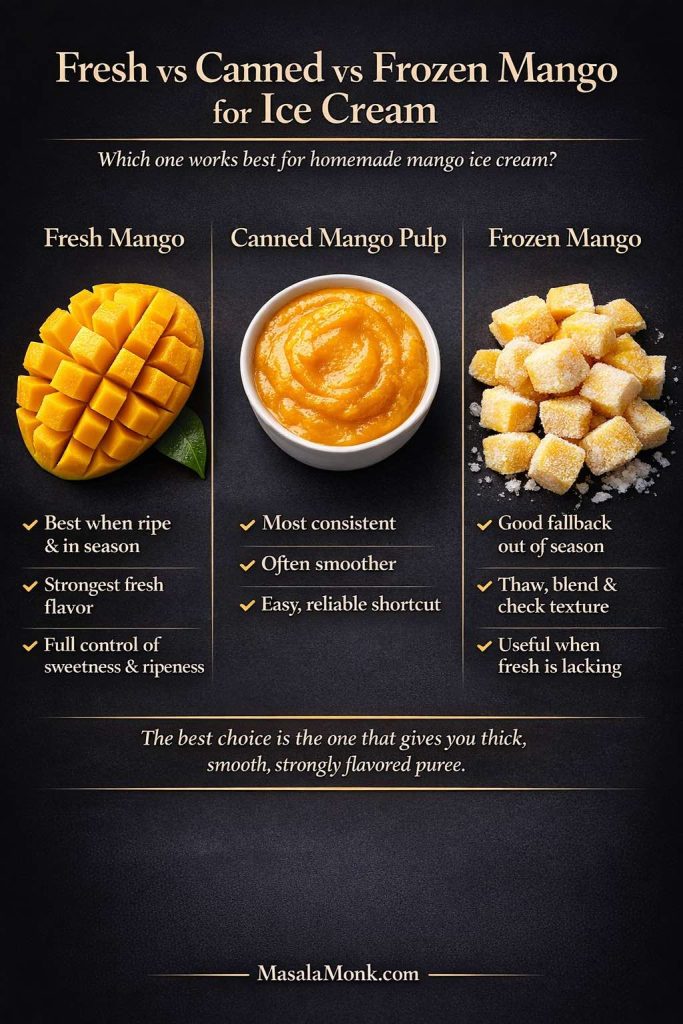
Comparison guide for homemade mango ice cream showing fresh mango, canned mango pulp, and frozen mango, with notes on when each option works best for a thick smooth mango puree.
Not every mango option works the same way in homemade mango ice cream. Fresh mango is best when the fruit is ripe and in season, canned mango pulp is often the easiest route to smooth and consistent puree, and frozen mango is a useful fallback when fresh fruit is disappointing. The best choice is the one that gives you thick, strongly flavored, low-water puree, because that is what helps mango ice cream stay creamy instead of freezing hard or icy.

For most readers, the best choice is the one that gives you thick, smooth, strongly flavored puree most reliably. Excellent fresh mango is wonderful. Good canned Alphonso pulp is often easier than people expect. Frozen mango is a respectable fallback when handled properly.

Why Cream and Condensed Milk Matter in Mango Ice Cream

Cream gives the dessert richness, volume, and softness. Once whipped, it also introduces air, which helps the finished creamy mango ice cream feel lighter and easier to scoop.

Condensed milk is just as important. It sweetens the base, yes, but it also improves body and makes the no-churn texture much more forgiving. That is one reason so many successful homemade ice cream recipes rely on it. If you already enjoy the way it works in other sweetened condensed milk desserts or milk-rich favorites like tres leches cake, the same principle applies here.

Mango ice cream with condensed milk works so well because condensed milk is doing more than one job at once. It adds sweetness, contributes to a smoother freeze, and helps the dessert feel cohesive rather than harsh from the freezer.

A pinch of salt matters too. It does not make the dessert salty. Instead, it sharpens the sweetness and makes the mango feel more vivid.

Flavor Boosters for Homemade Mango Ice Cream

Once the main structure is in place, a few optional additions can shape the flavor beautifully.

  • Vanilla smooths the flavor and rounds the dessert out.
  • Lime or lemon juice brightens the mango and keeps the sweetness from feeling flat.
  • Cardamom gives the dessert a warmer Indian-style character.
  • Saffron adds a richer, more festive depth.
  • Coconut opens the door to a softer tropical version, especially if you already enjoy mango with coconut milk.
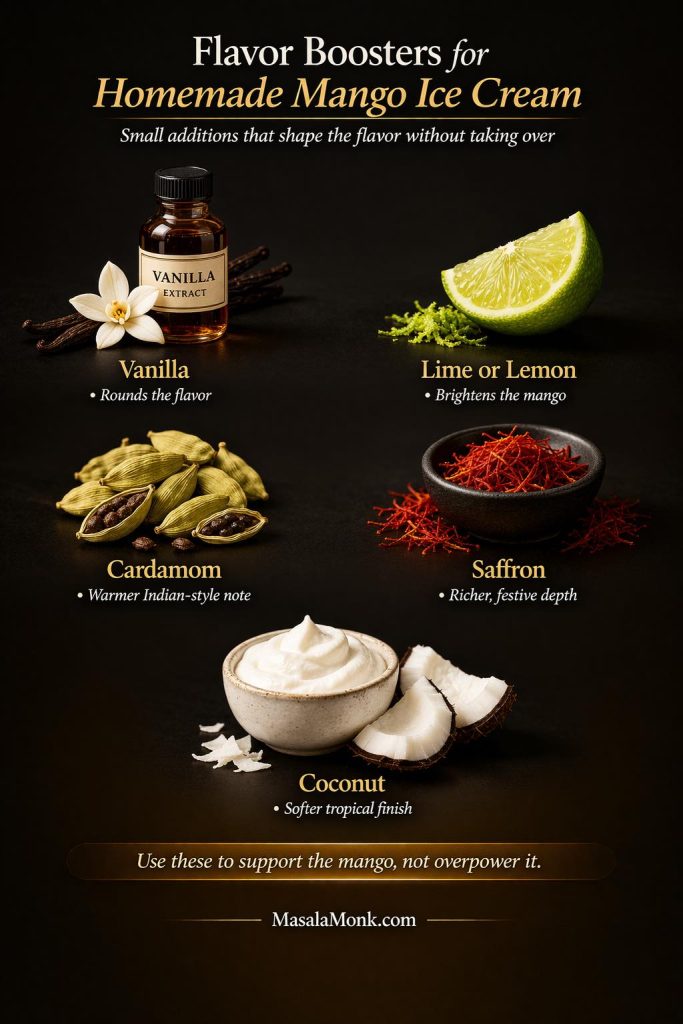
Flavor boosters for homemade mango ice cream showing vanilla, lime or lemon, cardamom, saffron, and coconut, with notes on how each addition changes the flavor without overpowering the mango.
A few small additions can change the direction of homemade mango ice cream without taking away its mango-forward character. Vanilla rounds the flavor, lime or lemon brightens it, cardamom adds warmth, saffron brings a richer festive note, and coconut softens the finish with a more tropical edge. The key is to use these as accents that support the fruit rather than letting them overpower it.

These are optional accents, not required for the best basic mango ice cream recipe. Use them to support the fruit, not distract from it. Mango should still stay in charge.

Also Read: Peach Cobbler with Canned Peaches (Dessert Recipe)

Exact Ingredients for the No-Churn Mango Ice Cream Recipe

For the main no-churn base, gather:

  • 2 cups thick mango puree, measured after blending
  • 2 cups cold whipping cream
  • 1 can sweetened condensed milk
  • 1 teaspoon vanilla extract
  • 1 to 2 teaspoons lime juice, optional
  • 1 small pinch of salt
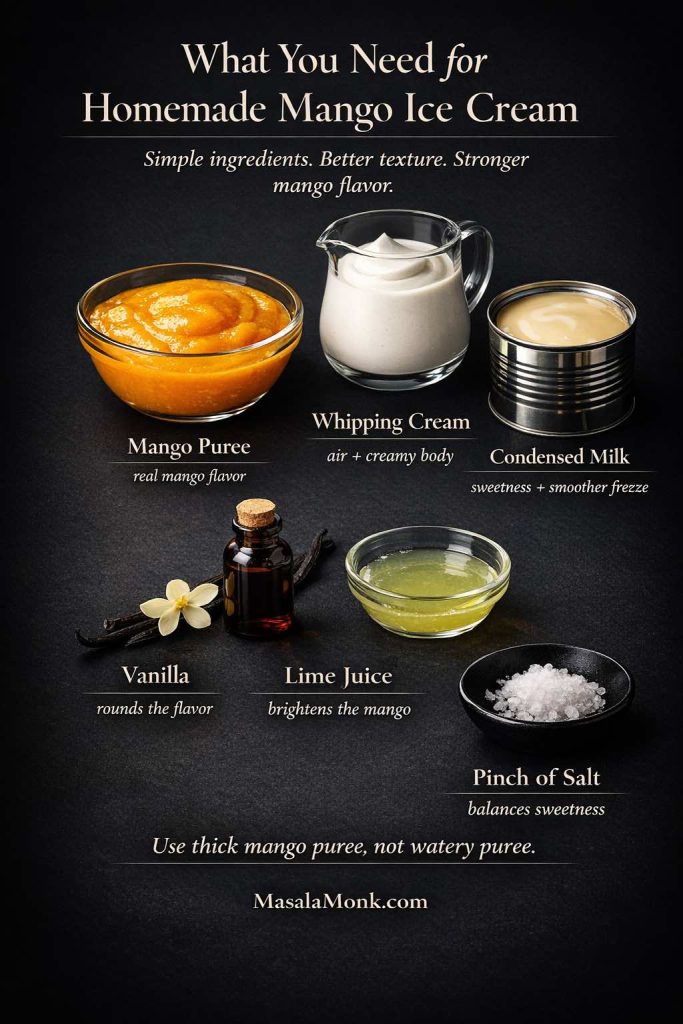
Ingredients for homemade mango ice cream laid out on a dark background, including thick mango puree, whipping cream, condensed milk, vanilla, lime juice, and salt for a creamy no-churn mango ice cream recipe.
The best homemade mango ice cream starts with a short ingredient list, but each one has a job to do. Thick mango puree brings the real fruit flavor, whipping cream gives the base body and softness, and condensed milk helps the ice cream freeze smoother instead of turning hard or icy. Vanilla rounds the flavor, lime brightens the mango, and a small pinch of salt keeps the sweetness from feeling flat.

Optional flavor accents:

  • a pinch of cardamom
  • a few strands of saffron, bloomed in a teaspoon of warm milk or cream
  • 2 to 3 tablespoons thick coconut cream for a tropical edge

This list stays intentionally simple. The point is not to complicate the dessert. The point is to build a base that gives you strong flavor and reliable texture with as little friction as possible.

A few ingredient notes make this recipe easier to get right:

  • Use thick mango puree, not watery blended fruit.
  • Use cold whipping cream straight from the fridge.
  • Use sweetened condensed milk for the easiest creamy no-churn texture.
  • Add lime only to brighten the fruit, not to make the dessert taste citrusy.
  • Use Alphonso pulp when you want a richer, more perfumed mango result.

Also Read: Avocado Chocolate Mousse Recipe

Check the Mango Puree Before You Start

Before you whip the cream or mix the base, stop and look carefully at the puree. This is the most important decision point in the whole recipe.
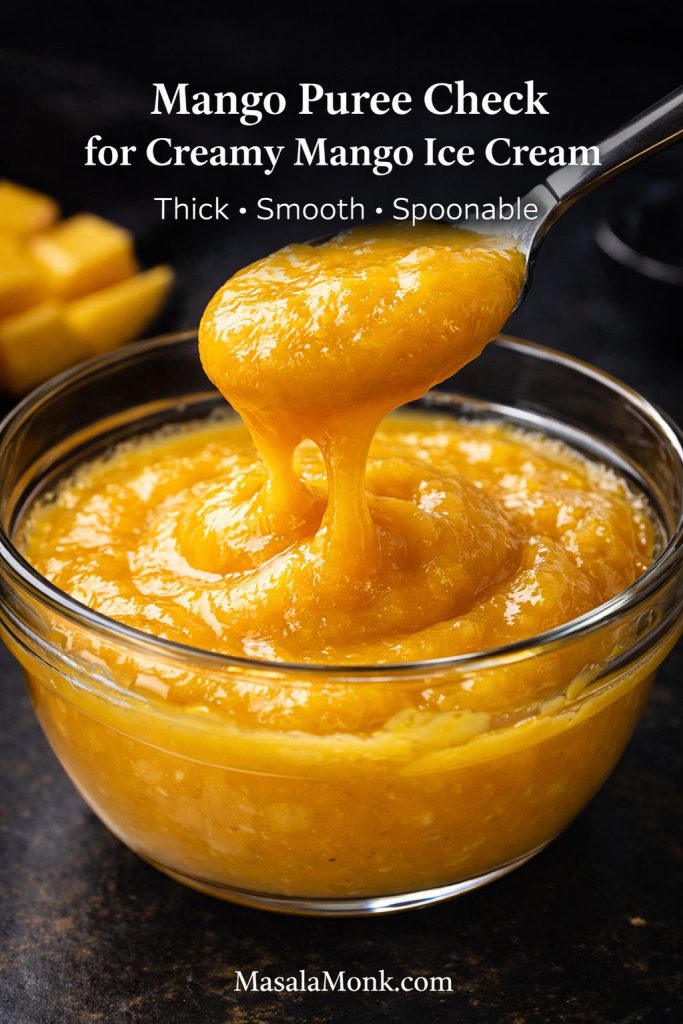
Thick smooth mango puree lifted on a spoon over a bowl, showing the right puree texture for creamy homemade mango ice cream.
Before you whip the cream or freeze the base, check the mango puree first. For creamy homemade mango ice cream, the puree should look thick, smooth, and spoonable rather than thin or watery. Getting this stage right gives you stronger mango flavor and helps the final ice cream freeze softer, smoother, and less icy.

A good puree should be:

  • thick
  • smooth
  • spoonable
  • strongly flavored

Most importantly, it should mound lightly on a spoon and fall slowly rather than pour off like juice.

If it is too thin, simmer it gently for a few minutes to cook off excess water, then chill it fully before using. If it is fibrous, press it through a fine sieve. And if it is a little too sweet, a small amount of lime can often bring back balance.
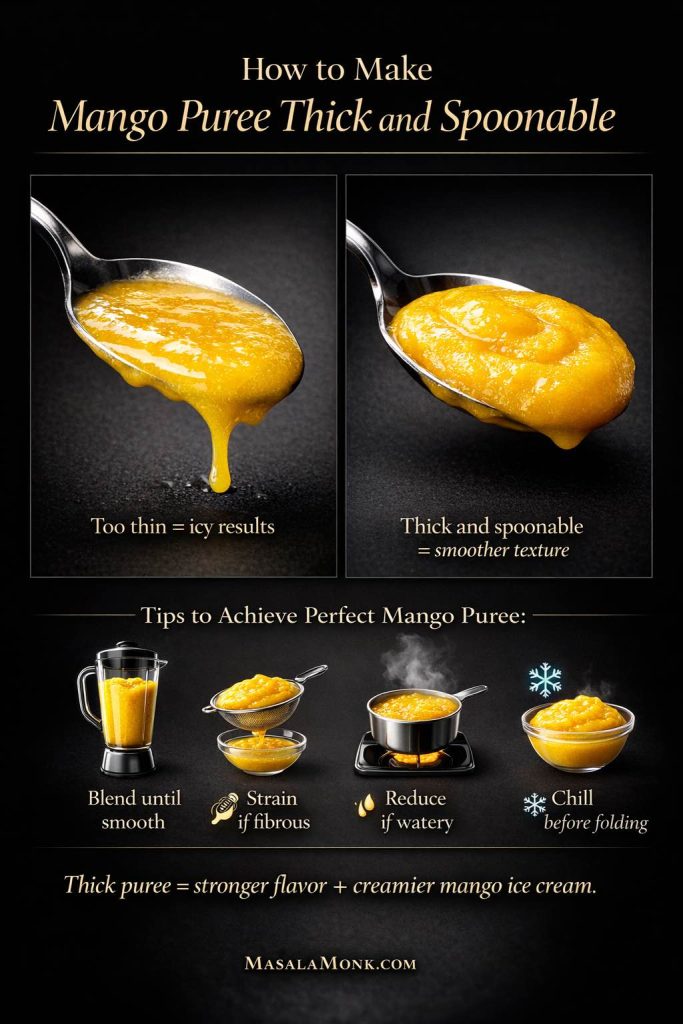
Infographic showing how to make mango puree thick and spoonable for homemade mango ice cream, including thin versus thick puree comparison and tips to blend, strain, reduce, and chill.
For creamy homemade mango ice cream, the puree needs to be thick enough to hold on a spoon instead of running off like juice. If it is too thin, blend it smooth, strain out fiber, reduce excess water, and chill it before mixing with the cream. That one adjustment gives the mango flavor more strength and helps the final ice cream freeze smoother instead of turning icy.

This one checkpoint changes a lot. Thick puree gives you stronger mango flavor and a softer frozen texture. Thin puree makes the whole recipe more fragile.

Also Read: Falafel Recipe: Crispy Homemade, Air Fryer and Baked Falafel

How to Make Mango Ice Cream at Home

This is the full method. It is easy, but each stage has a purpose. Once you understand that sequence, how to make mango ice cream becomes much less intimidating.
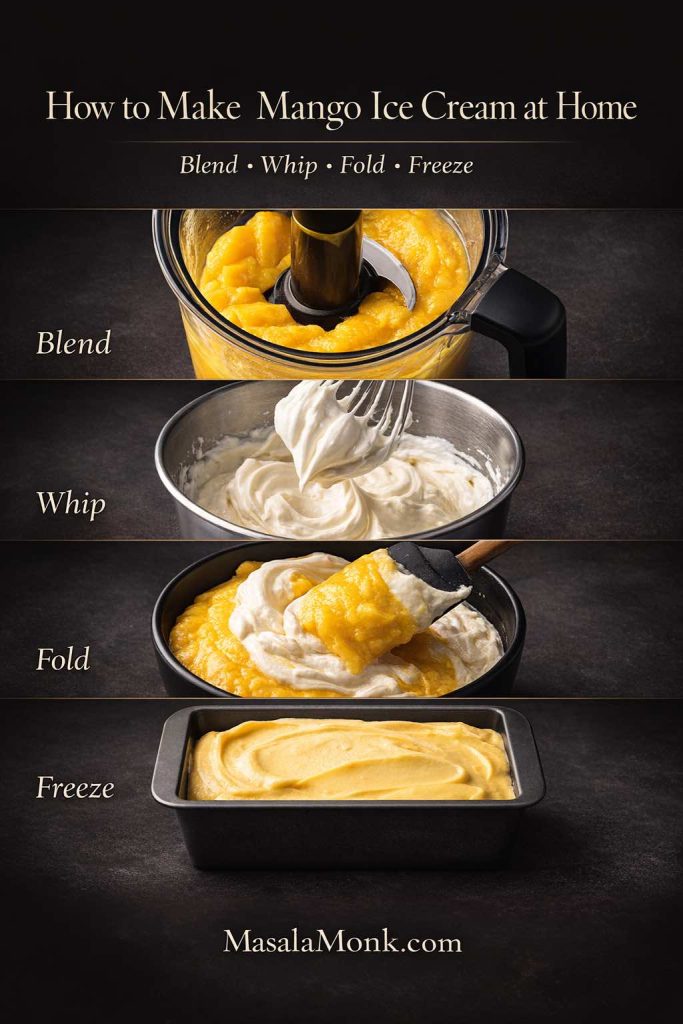
4-step no-churn mango ice cream method showing blend, whip, fold, and freeze stages for homemade mango ice cream.
This homemade mango ice cream comes together in four simple moves: blend the mango until smooth, whip the cream only to soft peaks, fold gently so the base stays airy, and freeze until set. If the puree is thick and the folding stays light, the final texture has a much better chance of turning out creamy and scoopable instead of icy or heavy.

Make the Mango Puree Thick, Smooth, and Cold

Peel and chop the mangoes, then blend until completely smooth. After that, assess the puree honestly. It should sit thickly on a spoon rather than pour easily. If it looks loose, reduce it gently over low heat for a few minutes or strain it, then chill it well.

The puree also needs to taste good before it enters the base. The final mango ice cream recipe can only taste as vivid as the fruit you start with. If the puree is weak or watery, the finished dessert will lean more toward sweet cream than real mango.

Once the puree is thick enough, chill it fully. Cold puree is much easier to fold into the whipped base without disturbing its structure.

Chill Your Bowl and Keep the Cream Cold

A chilled bowl is not absolutely required, but it helps more than many people expect. Cold cream whips faster, holds better, and gives you more control, especially if your kitchen is warm. So if you have a few minutes, chill the mixing bowl and beaters first.

Whip the Cream to Soft or Medium Peaks

Pour the cold cream into the chilled bowl and whip until it reaches soft or medium peaks. The cream should look fluffy and plush, not stiff or grainy. When you lift the whisk, the tip should curl over softly rather than stand rigidly upright.
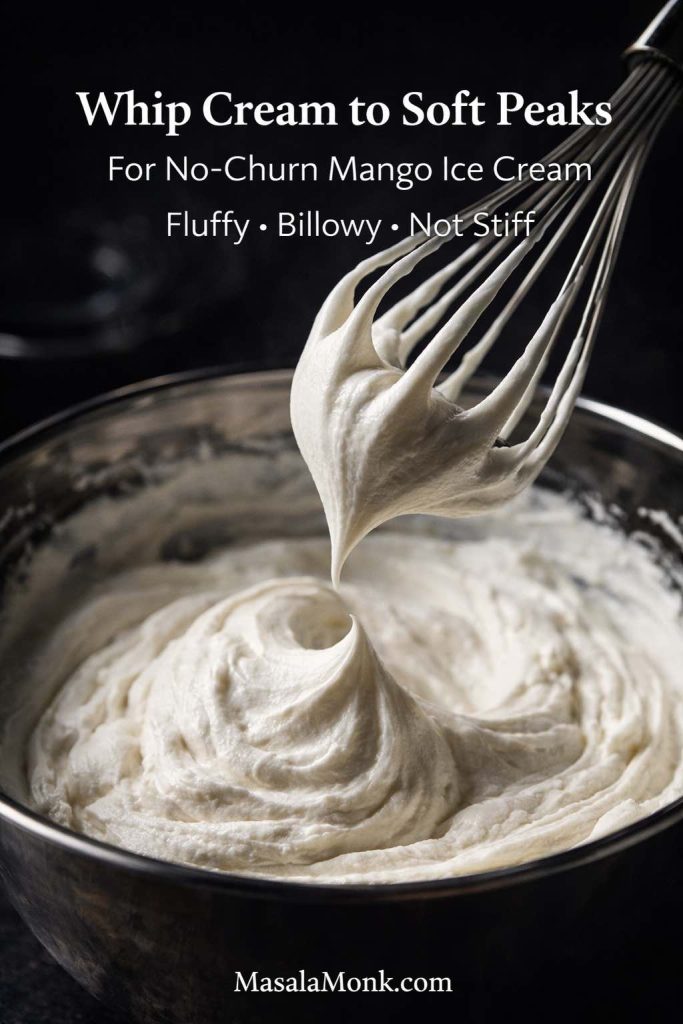
Whipped cream at soft peak stage in a mixing bowl, showing the right texture for no-churn homemade mango ice cream.
For no-churn mango ice cream, stop whipping when the cream holds a peak but the tip still bends softly. This stage gives the base lift and structure without making it dense or grainy, which is exactly why the final ice cream stays lighter, smoother, and easier to scoop after freezing.

That visual cue matters. Underwhipped cream does not give the base enough structure. Overwhipped cream gets heavy and can make the final dessert feel denser than it should.

The right stage looks smooth, billowy, and flexible. Once you reach it, stop.

Mix the Mango Base Separately

In a second bowl, stir together the chilled mango puree, condensed milk, vanilla, salt, and lime juice if using. Mix until smooth, then taste.

At this point, the base should taste slightly stronger and a little sweeter than the final frozen dessert will seem. Freezing softens flavor, so this is your chance to correct it early. If the mango tastes flat, add a touch more lime. If it already tastes bright and balanced, leave it alone.

Fold Gently to Keep the Base Airy

Add the mango mixture to the whipped cream in batches. Fold slowly by sweeping down through the bowl and lifting upward rather than stirring hard. Keep going just until the mixture looks thick, airy, and evenly colored.
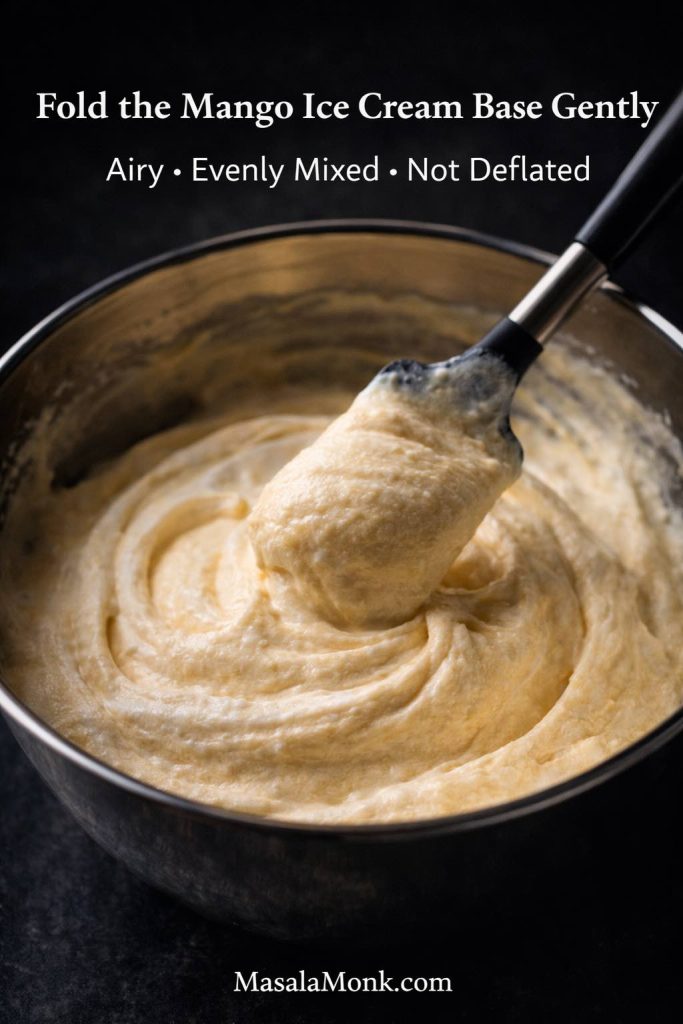
Folded mango ice cream base in a mixing bowl with a spatula, showing an airy evenly mixed texture before freezing for no-churn homemade mango ice cream.
This is the stage where the recipe either stays light or starts losing lift. After the mango mixture is folded into the whipped cream, the base should look airy, evenly colored, and softly billowy rather than flat or streaky. Stop folding once it looks uniform, because overmixing can knock out the air that helps homemade mango ice cream freeze smoother and feel less dense.

This is where separate ingredients become true homemade mango ice cream. The base should look soft, billowy, and uniform. It should not look runny, deflated, or aggressively smoothed out.

Do not keep folding just to make it look perfect. Once the color is even, stop.

Transfer and Freeze

Spoon the mixture into a freezer-safe container and smooth the top. A shallow container often gives a better serving texture than a very deep one. Then press parchment paper or plastic wrap directly against the surface before sealing with a lid. That extra layer helps reduce ice crystals.

For general freezer-storage best practices, the FDA’s frozen food storage guidance and Illinois Extension’s freezer storage advice are helpful references. In practical terms, the main point is simple: use a good container, cover the surface directly, and keep the batch steadily cold.

Freeze for at least 6 to 8 hours, though overnight is easiest. When ready to serve, let the ice cream sit out for a few minutes first. That short rest is usually all it needs to become properly scoopable.

If you later want a churned version, this guide on how to make ice cream with a KitchenAid mixer fits naturally into that next step.

Also Read: Mango Margarita Recipe (Frozen or On the Rocks)

What Mango Ice Cream Should Look Like at Every Stage

This is one of the most useful practical sections in the whole post because it helps you catch mistakes before they harden into the final dessert.
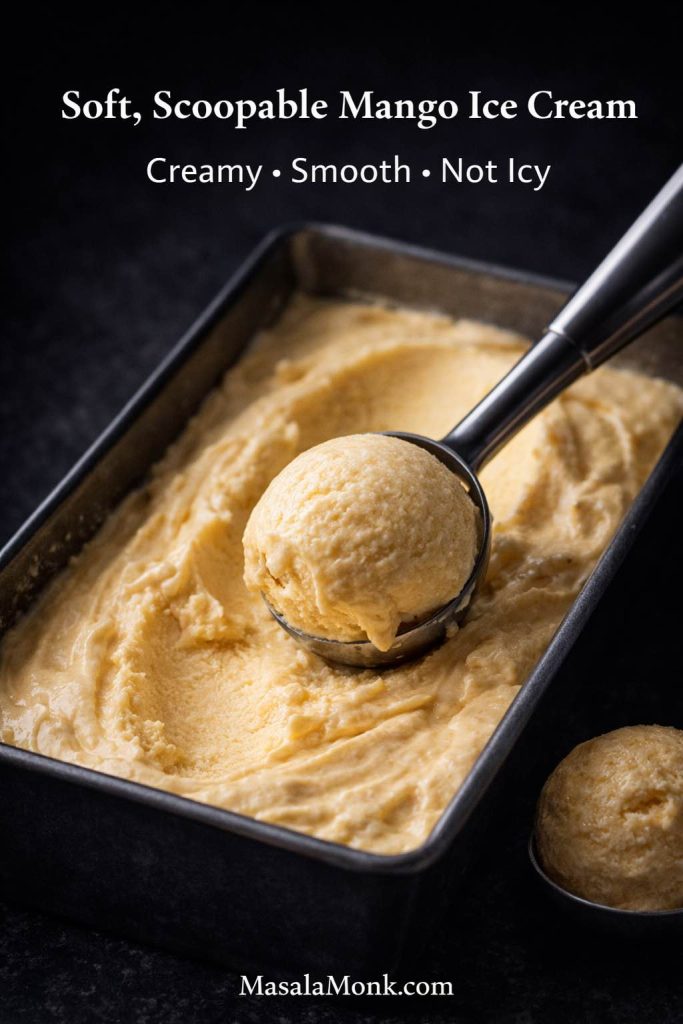
Soft scoopable homemade mango ice cream in a loaf pan with visible scoop marks, showing a creamy smooth texture after freezing.
This is the finished texture the recipe is aiming for: mango ice cream that freezes firm enough to hold a scoop but softens into a creamy, smooth spoonful after a short rest. If your puree was thick, the cream was whipped to soft peaks, and the base was folded gently, the result should look rich and scoopable like this rather than icy, grainy, or rock hard.

Here is what you want to see:

  • Mango puree: thick, smooth, and spoonable
  • Whipped cream: soft to medium peaks that look fluffy and supple
  • Mango base: bright, balanced, and slightly sweeter than the final frozen dessert will taste
  • Folded mixture: airy, evenly colored, and softly billowy with no cream streaks
  • Frozen ice cream: firm, but scoopable after a short rest at room temperature

If one stage looks wrong, fix it before moving on rather than hoping the freezer will correct it later.
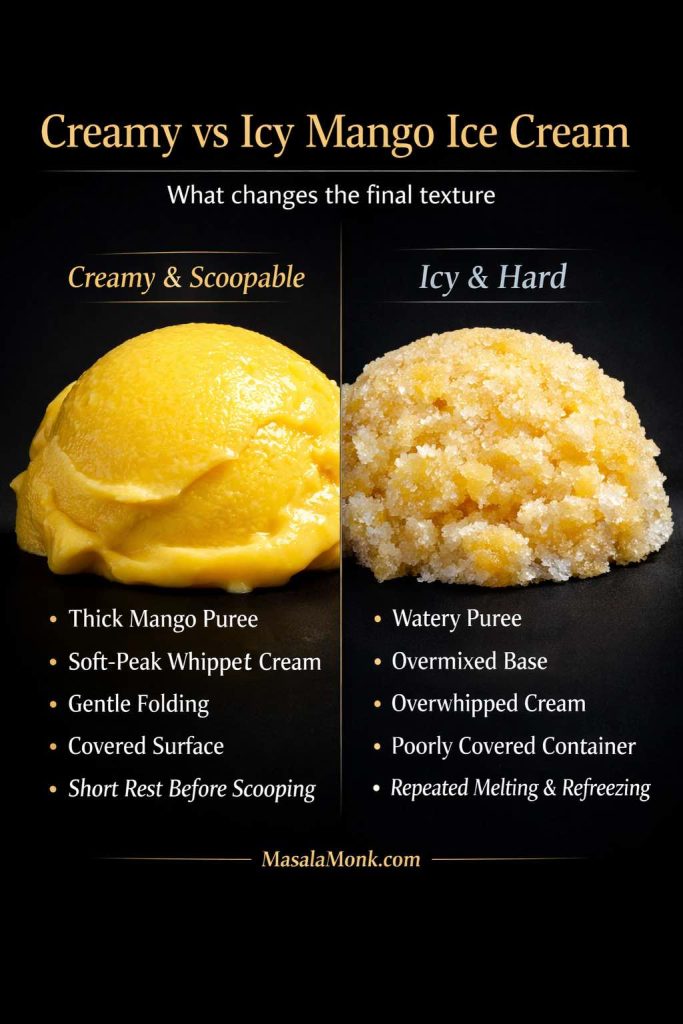
Side-by-side comparison of creamy vs icy homemade mango ice cream on a dark background, showing smooth scoopable texture versus grainy hard texture and the factors that affect the final result.
Not all homemade mango ice cream freezes the same way. A creamy, scoopable batch usually starts with thick mango puree, softly whipped cream, gentle folding, and a well-covered container, while icy mango ice cream is often the result of watery puree, overmixing, overwhipping, or repeated melting and refreezing. This comparison makes the texture difference easier to spot before the mistakes become permanent in the freezer.

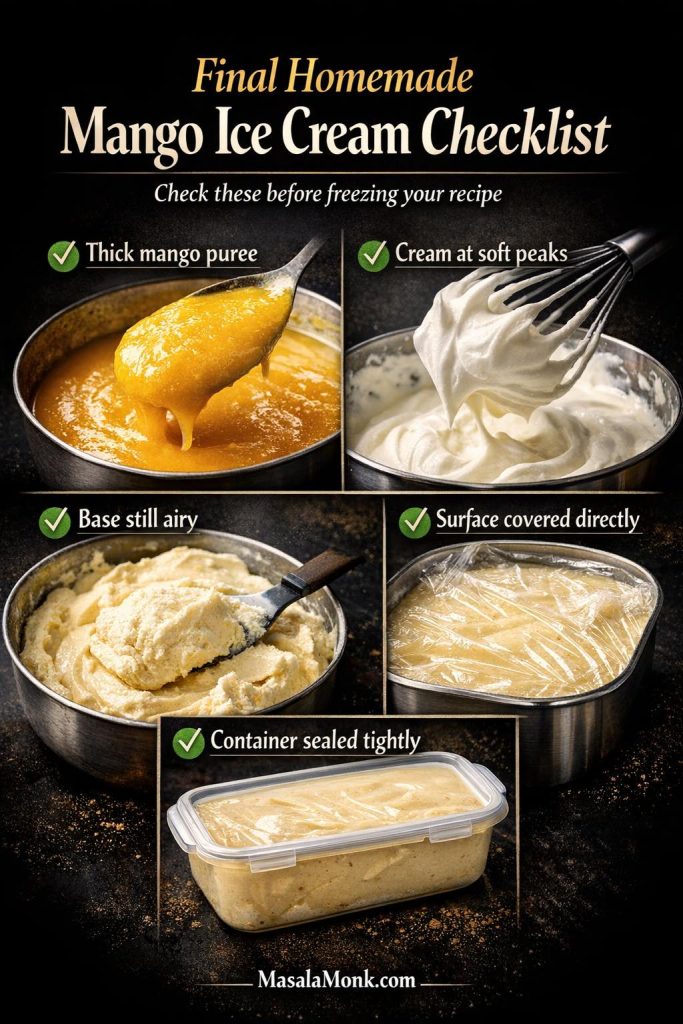
Final Pre-Freezing Checklist

Before the container goes into the freezer, check these five things:

  • the mango puree was thick, not runny
  • the cream was whipped only to soft or medium peaks
  • the folded mixture still looks airy
  • the surface is covered directly
  • the container is sealed tightly
Final homemade mango ice cream checklist showing thick mango puree, whipped cream at soft peaks, airy folded base, surface covered directly, and sealed container before freezing.
Before homemade mango ice cream goes into the freezer, a few final checks make a real difference. The mango puree should still look thick, the cream should be whipped only to soft peaks, the folded base should stay airy, the surface should be covered directly, and the container should be sealed tightly. Catching those details before freezing helps the recipe hold a smoother texture, stronger mango flavor, and a better scoop later.

If all five look right, the freezer is far less likely to surprise you later.

Also Read: Sourdough Pizza Dough Recipe (Crispy Crust & Easy Pizza Base)

Tips for Creamy Homemade Mango Ice Cream

The difference between a decent batch and truly creamy mango ice cream usually comes down to a few quiet choices. None of them are dramatic, but together they shape the final result.

  • Use thick mango puree, not watery puree. This is the single biggest texture decision in the recipe.
  • Keep all the ingredients cold. Cold cream whips better, and chilled puree folds in more cleanly.
  • Do not overwhip the cream. Soft to medium peaks give you structure without heaviness.
  • Fold with patience. Gentle folding preserves the trapped air in the mixture.
  • Choose the right container. A snug freezer-safe container protects the texture better than a loosely packed tub.
  • Let the ice cream sit for a few minutes before scooping. Serving straight from the freezer can make even a good batch feel firmer than it really is.

Taken together, these choices are what make the recipe feel reliable rather than lucky.

Common Homemade Mango Ice Cream Mistakes and How to Fix Them

Many recipe pages rush this part, yet it is exactly where a post becomes more useful than a basic formula. Real readers do not only need the ideal method. They also need help when the first batch teaches them something.
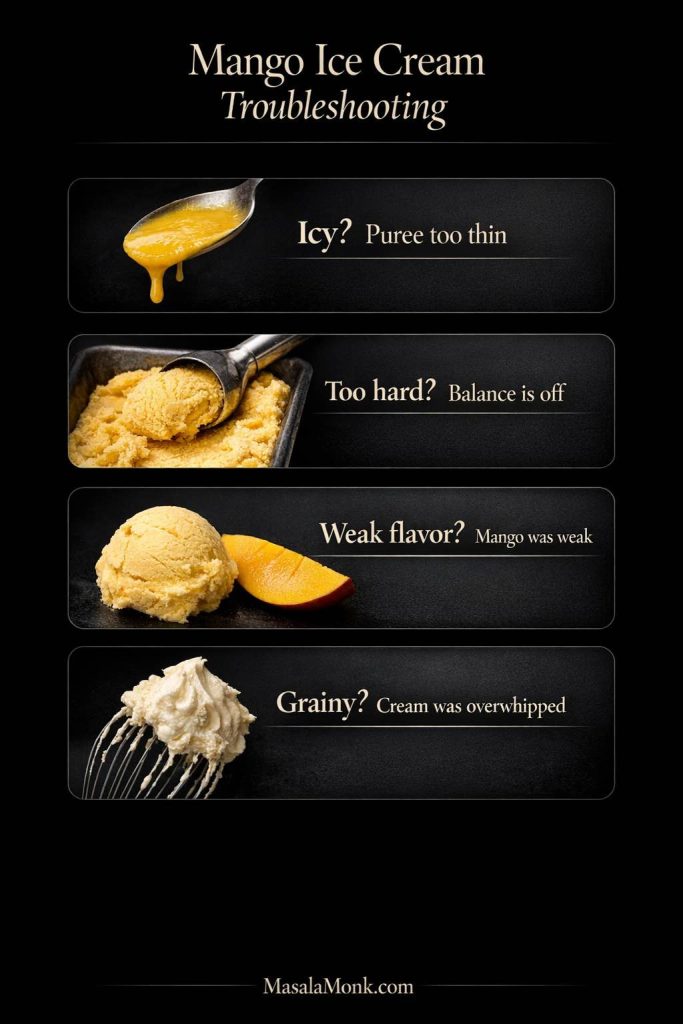
Troubleshooting guide for homemade mango ice cream showing common problems like icy texture, hard freezing, weak mango flavor, and grainy texture.
If homemade mango ice cream goes wrong, the problem usually starts earlier than the freezer. Thin puree can lead to icy texture, weak fruit can leave the flavor flat, and overwhipped cream can make the final result feel rough instead of smooth. Use these checks to trace the problem back to the stage that needs fixing, then adjust the puree, cream, or balance before making the next batch.

Why Homemade Mango Ice Cream Turns Icy

The most common reason is excess water. Either the mango puree was too thin, the container was not covered properly, or the dessert softened and refroze too often.

To fix it next time:

  • reduce or strain watery puree before mixing
  • press a layer directly onto the surface before sealing
  • return the container to the freezer promptly after scooping

In most cases, icy texture starts with excess water in the fruit.

Why Homemade Mango Ice Cream Freezes Too Hard

This usually means the balance shifted too far toward fruit water and away from sugar or fat. It can also happen if your freezer runs extremely cold.

To fix it next time:

  • let the ice cream rest briefly before scooping
  • check whether the puree was too loose
  • avoid reducing the cream or condensed milk without replacing their role in the base

Sometimes the formula is fine and the serving temperature is the real issue.

Why the Mango Flavor Tastes Weak

Weak mango flavor usually points to weak fruit or diluted puree. If the mango itself was bland or the puree was too loose, the cream will dominate.

To fix it next time:

  • choose more fragrant mangoes
  • reduce watery puree slightly
  • add a little lime to brighten the fruit

This matters because readers searching for real mango ice cream are usually after fruit flavor first.

Why Homemade Mango Ice Cream Tastes Too Creamy and Not Mango-Forward

Sometimes the mango is not bad, yet the balance still tips too heavily toward dairy. This usually happens when the fruit is mild, the puree lacks concentration, or the base never gets brightened before freezing.

To fix it next time:

  • use mangoes that taste vivid before blending
  • make sure the puree is concentrated, not merely smooth
  • taste the mango-condensed-milk mixture before folding
  • add a little lime or lemon only if the fruit tastes flat

Mango ice cream should feel rich, but mango should still lead the dessert.

Why the Texture Looks Grainy

Graininess usually comes from overwhipped cream or from working with a base that lost its smoothness.

To fix it next time:

  • stop whipping at soft or medium peaks
  • chill the puree fully before mixing
  • fold gently instead of stirring hard

Those corrections solve most grainy batches.

What to Do if the Mangoes Are Fibrous

Fibrous mangoes can still be used, but only after a little cleanup.

To fix it next time:

  • blend the fruit very thoroughly
  • press the puree through a sieve
  • discard the stringy residue before mixing with the cream

Smooth puree is far more important than perfect mango variety.

What to Do if the Ice Cream Feels Too Sweet

A little extra lime or a pinch more salt can sometimes bring the flavor back into balance. More importantly, taste the mango base before folding so you can correct sweetness early.

To fix it next time:

  • taste the fruit base before combining it with cream
  • brighten with lime instead of only reducing sugar
  • remember that frozen desserts taste softer and less vivid straight from the freezer

The base should taste a little bolder before it freezes than you want the final scoop to taste.

Also Read: Pork Tenderloin in Oven (Juicy, Easy, 350°F or 400°F) Recipe

Homemade Mango Ice Cream Variations

One reason homemade mango ice cream is worth mastering is that it adapts beautifully once the texture logic is in place. You can change the flavor direction without losing what makes the dessert work.
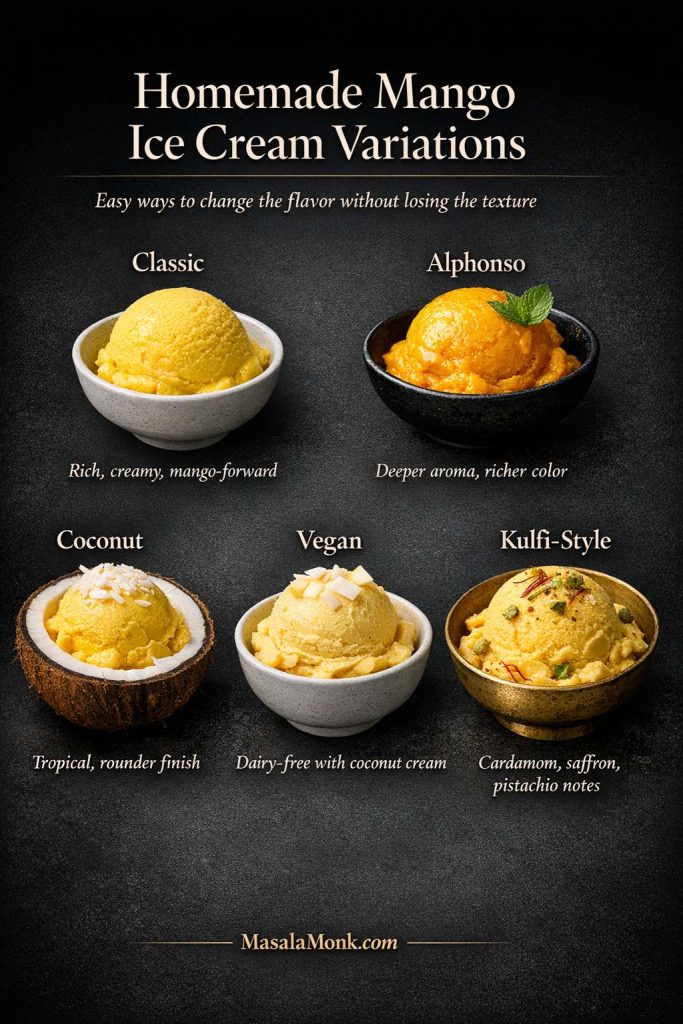
Guide to homemade mango ice cream variations showing classic, Alphonso, coconut, vegan, and kulfi-style mango ice cream in separate bowls on a dark background.
Once the base recipe is right, homemade mango ice cream becomes easy to adapt without losing its creamy texture. This guide shows how the same core method can branch into a classic mango-forward version, a richer Alphonso variation, a tropical coconut version, a dairy-free vegan option, and a kulfi-style twist with saffron, cardamom, and pistachio notes.

Alphonso Homemade Mango Ice Cream

If you can get Alphonso mangoes or Alphonso pulp, this is the variation to make when you want maximum perfume, color, and richness. Alphonso mango ice cream tends to feel deeper, fuller, and more luxurious almost immediately.
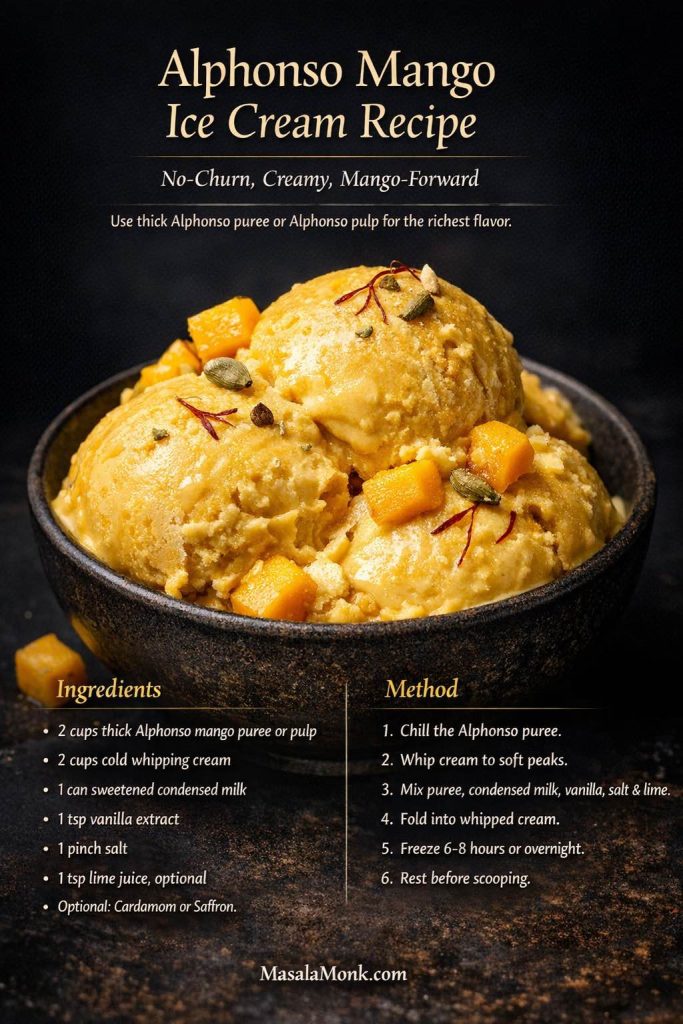
Photo recipe card for Alphonso mango ice cream showing rich golden scoops in a dark bowl with saffron, cardamom, mango cubes, and a no-churn method overlay.
If you want a richer, more perfumed version of homemade mango ice cream, Alphonso is the variation to reach for. Its deeper aroma, fuller color, and smoother pulp give the final scoop a more luxurious feel, while saffron or cardamom can take it further without pulling it away from the mango. This is the kind of no-churn variation to make when you want the fruit to taste more intense, rounder, and a little more special.

Cardamom and saffron are especially lovely here. If you enjoy mango desserts with a richer Indian milk-based character, instant mango rasmalaai sits in a similar flavor world.

Mango Coconut Homemade Mango Ice Cream

For mango coconut ice cream, replace part of the dairy with coconut cream or add a little thick coconut milk to the mango base. The flavor becomes rounder and more tropical while the mango still stays clear.
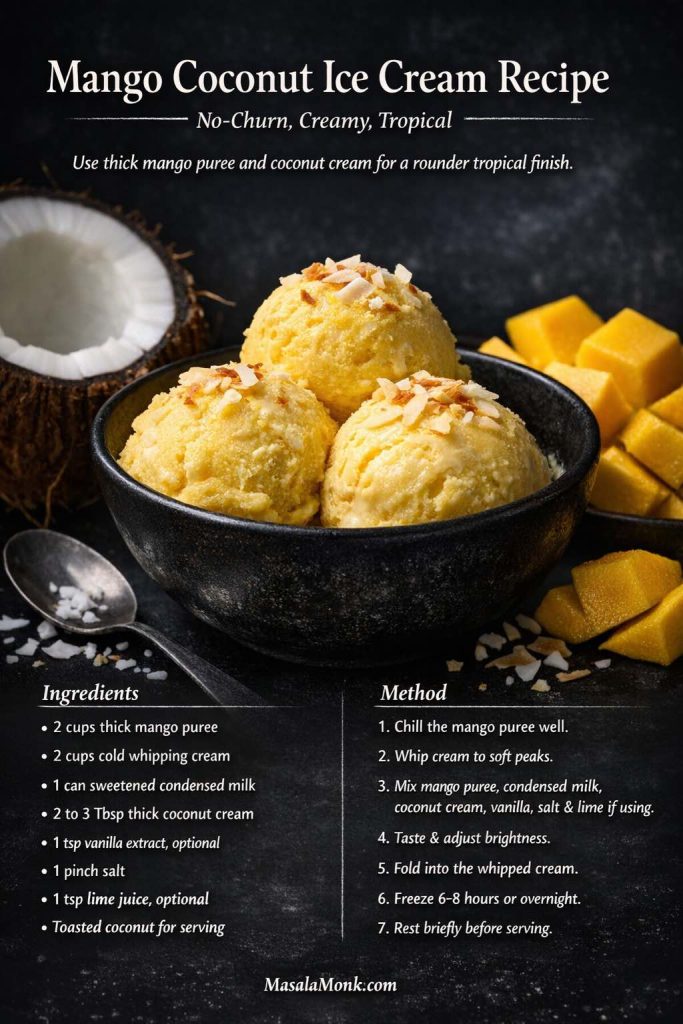
Photo recipe card for mango coconut ice cream showing creamy scoops in a dark bowl with toasted coconut, coconut halves, mango cubes, and a no-churn method overlay.
Mango coconut ice cream is the variation to make when you want the fruit to stay clear but feel rounder, softer, and more tropical. A little coconut cream shifts the flavor without burying the mango, while toasted coconut on top adds texture and a fuller finish. This version works especially well when you want a no-churn homemade mango ice cream that feels slightly richer and more vacation-like without becoming heavy.

This version is especially nice when the mangoes are slightly tart, because coconut smooths the edges beautifully.

Can You Make Mango Ice Cream Without Condensed Milk?

Yes, homemade mango ice cream without condensed milk can be made, but the recipe becomes less forgiving. Condensed milk is not only providing sweetness. It is also helping with body, softness, and texture in a no-churn base.

Once you remove it, you need another way to replace those jobs, whether that means a cooked milk base, a more deliberate sugar balance, or a custard-style method.
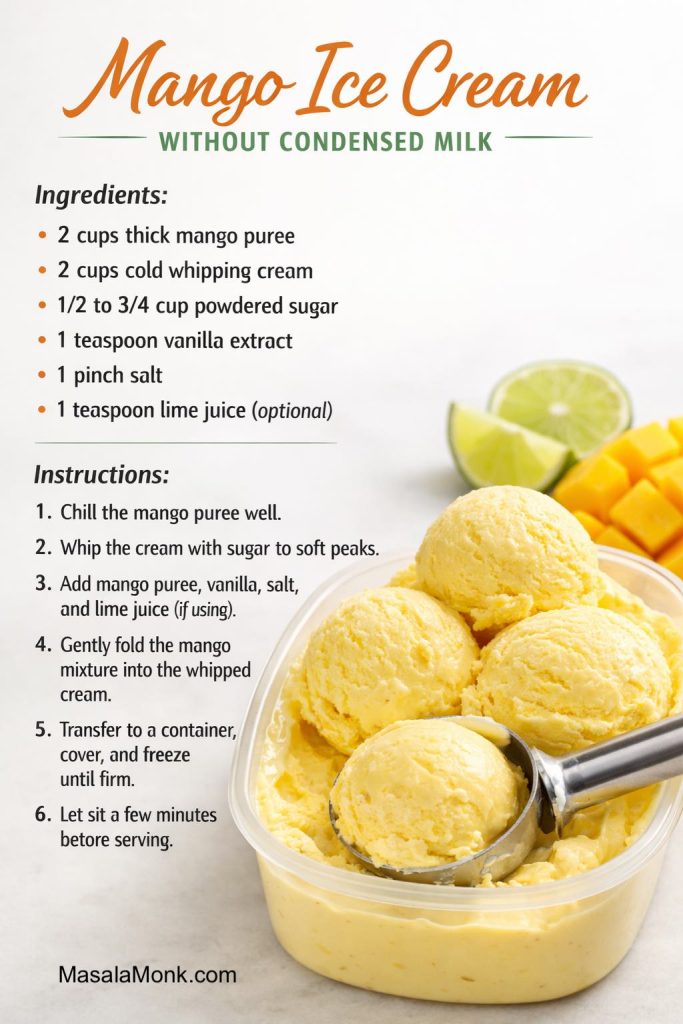
Photo recipe card for mango ice cream without condensed milk showing creamy mango scoops in a tub with a scoop, plus ingredient and method text for a no-churn eggless version.
This version skips condensed milk but still aims for a smooth, scoopable mango ice cream by relying on thick mango puree, properly sweetened whipped cream, and a gentle fold that keeps the base light. It is a good option when you want homemade mango ice cream with a slightly leaner ingredient list, but the texture still depends on getting enough sweetness into the base and freezing it well before serving.

That does not make the variation bad. It simply makes it less beginner-friendly. For most readers, the main recipe remains the easiest place to begin.

Homemade Mango Ice Cream Without an Ice Cream Maker

The main recipe here is already a mango ice cream without ice cream maker method, which is one of its biggest strengths. You do not need specialized equipment to get a satisfying result.

That said, if you already own a churner or stand mixer attachment, a machine-based route can create an even more classic texture. This is where the KitchenAid ice cream guide becomes a useful internal next step.

Vegan Mango Ice Cream

A vegan version can be made with coconut cream instead of dairy cream. The flavor profile changes slightly, but it can still be rich and deeply mango-forward. If you also enjoy lighter mango desserts, mango chia pudding is another natural branch.
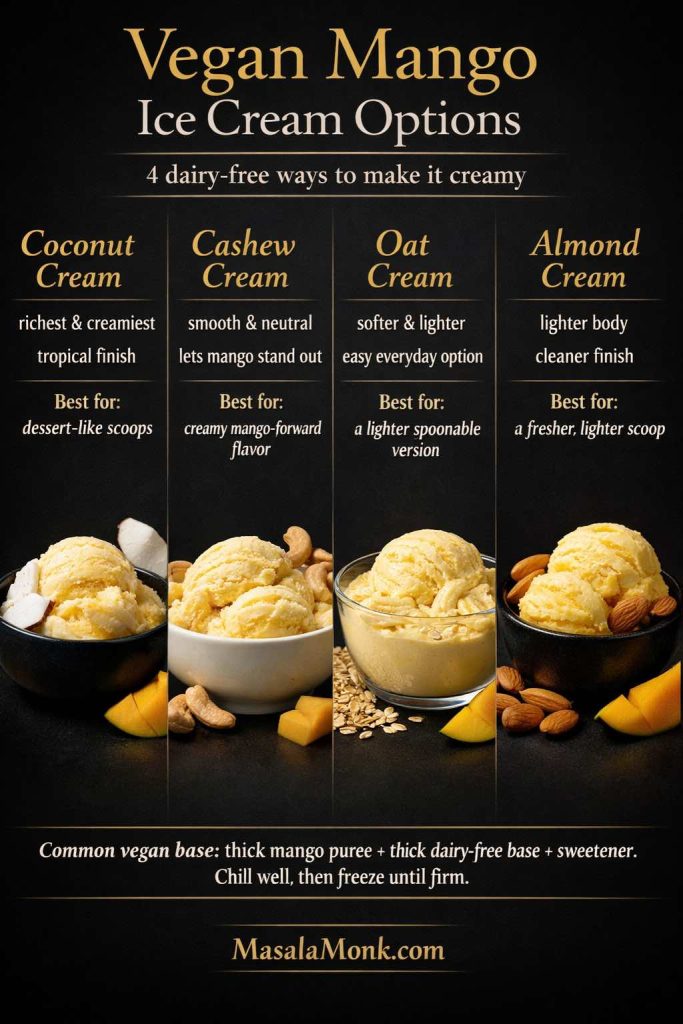
Vegan mango ice cream options chart comparing coconut cream, cashew cream, oat cream, and almond cream, with notes on texture, flavor, and the best use for each dairy-free base.
A vegan mango ice cream can go in a few different directions depending on the dairy-free base you choose. Coconut cream gives the richest and most tropical result, cashew cream stays smoother and more neutral, oat cream makes a softer lighter version, and almond cream keeps the scoop cleaner and less rich. The key in every case is the same: start with thick mango puree, use a thick dairy-free base, and chill well before freezing so the final texture stays more creamy than icy.

Can You Use Frozen Mango?

Yes, you can use frozen mango for homemade mango ice cream, but thaw it first, then blend it and check the texture just as you would with fresh fruit. The same rule still applies: the puree should be thick, smooth, and strongly flavored before it goes into the base.
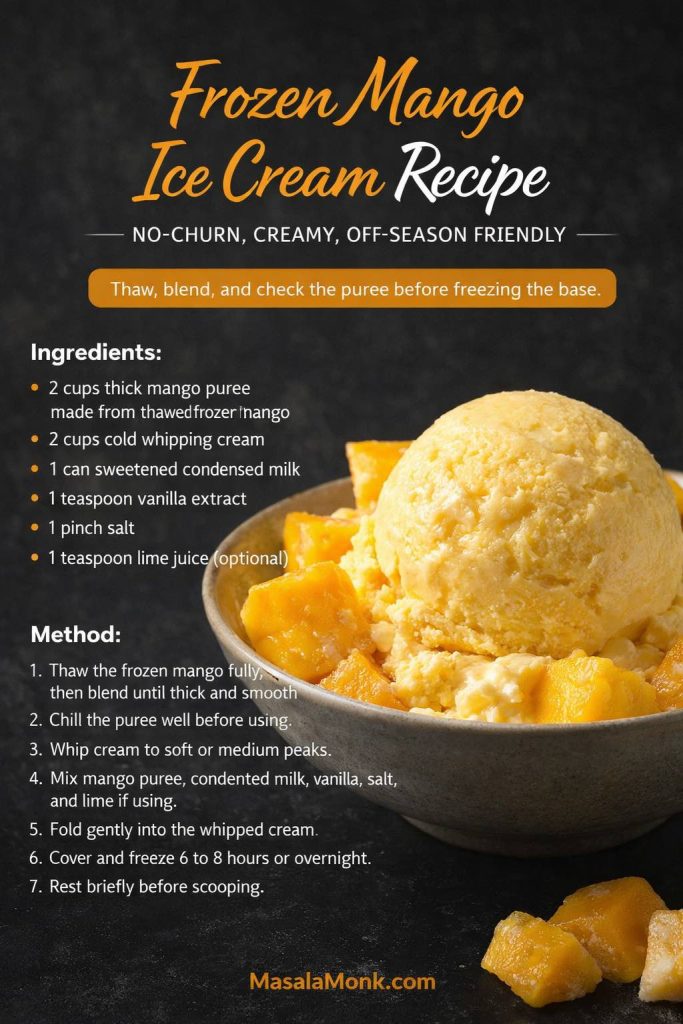
Frozen mango can still make excellent homemade mango ice cream, but only when the fruit is thawed, blended smooth, and checked for thickness before it goes into the base. That extra step matters because frozen fruit often carries more excess water, and if the puree stays too loose, the final scoop can turn harder and less creamy than it should.

That makes frozen mango a useful option when fresh fruit is not ideal, but it does not remove the need to judge the puree properly.

Mango Kulfi-Style Ice Cream

If you want a slightly more Indian-style flavor profile without turning this into a full kulfi recipe, add cardamom, saffron, and a few chopped pistachios. The result still behaves like this mango ice cream recipe, but the flavor moves in a richer festive direction.
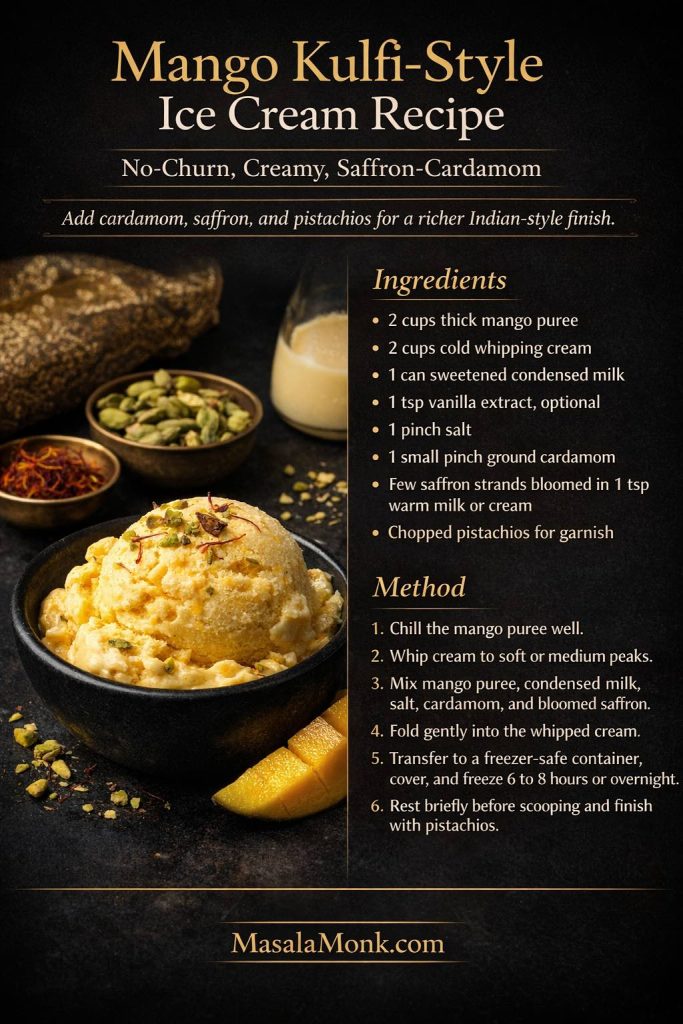
Photo recipe card for mango kulfi-style ice cream showing a creamy mango scoop with pistachios and saffron, plus a no-churn method and ingredient overlay on a dark background.
This mango kulfi-style ice cream is the variation to make when you want a richer, more festive finish without leaving the no-churn format behind. Cardamom adds warmth, saffron deepens the flavor, and pistachios bring a little texture on top, while the mango still stays at the center of the scoop. It is a good choice when you want homemade mango ice cream to feel more Indian-style, more aromatic, and a little more special than the classic version.

It is an especially good variation when using Alphonso pulp.

Also Read: Chicken Pesto Pasta (Easy Base Recipe + Creamy, One-Pot, Baked & More)

How to Store Homemade Mango Ice Cream

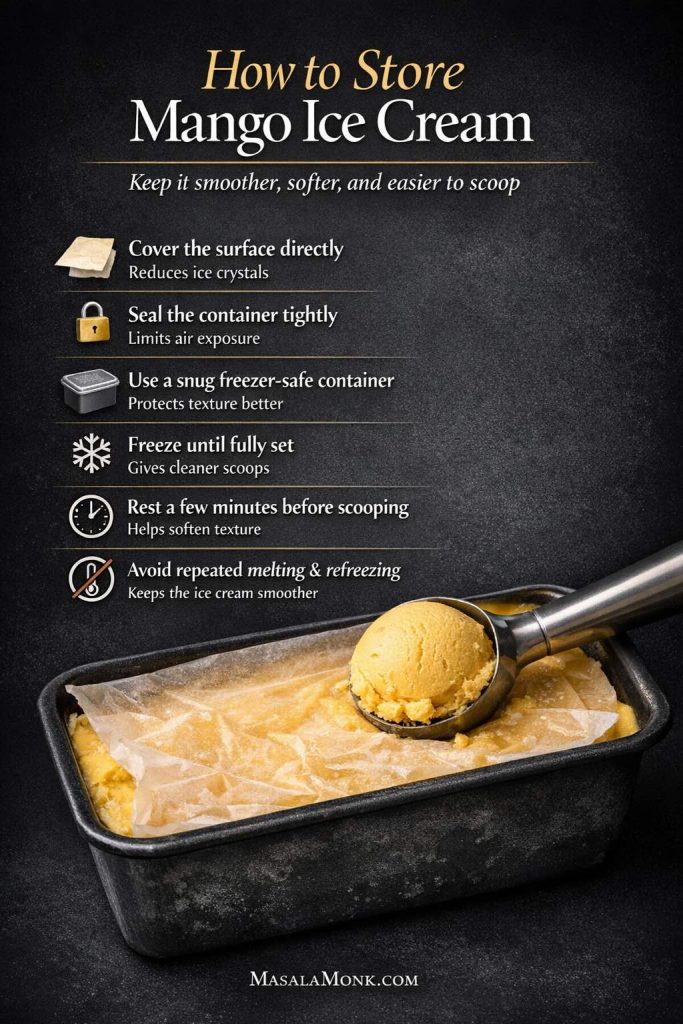
Store the ice cream in a tightly sealed freezer-safe container, ideally with a layer pressed directly against the surface before the lid goes on. That helps reduce air exposure and protect the texture. It also helps to use a container that fits the batch well rather than one with lots of empty air above the dessert.

For the best texture in storage:

  • use a freezer-safe container with a tight lid
  • cover the surface directly
  • keep the batch in the coldest stable part of the freezer
  • scoop quickly and return it promptly
  • avoid repeated melting and refreezing
Storage guide for homemade mango ice cream showing a loaf pan with the surface covered directly, a scoop, and tips for keeping mango ice cream smoother, softer, and easier to scoop.
Good homemade mango ice cream can lose its texture in storage if it is not covered and sealed properly. Pressing a layer directly onto the surface helps reduce ice crystals, a snug freezer-safe container protects the texture better, and a short rest before scooping makes the ice cream feel softer and easier to serve. These small storage habits help creamy mango ice cream stay closer to the texture you worked for.

As a practical rule, this ice cream is at its best within the first several days, when the mango still tastes bright and the texture remains especially soft. For broader freezer-care guidance, Colorado State University’s discussion of ice cream storage is also useful.

Also Read: Slow Cooker Pork Tenderloin (Crock Pot Recipe) — 3 Easy Ways

Serving Ideas for Mango Ice Cream at Home

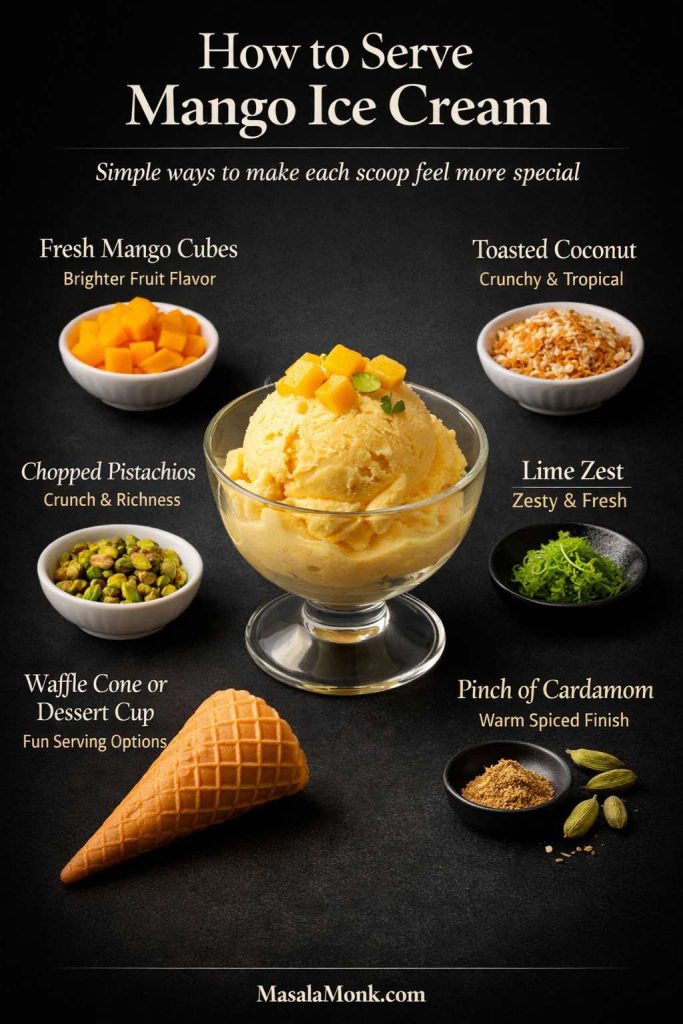
Serve mango ice cream at home in chilled bowls, crisp waffle cones, or small dessert cups. Fresh mango cubes on top make the fruit feel even more immediate.

Simple toppings:

  • fresh mango cubes
  • lime zest
  • toasted coconut
  • chopped pistachios
  • a tiny pinch of cardamom
Serving guide for homemade mango ice cream showing a scoop in a dessert cup with fresh mango cubes, toasted coconut, chopped pistachios, lime zest, cardamom, and a waffle cone on a dark background.
Homemade mango ice cream gets even better when the toppings support the fruit instead of covering it up. Fresh mango cubes make the flavor feel brighter, toasted coconut adds texture and tropical depth, pistachios bring crunch, lime zest sharpens the finish, and a light pinch of cardamom gives the scoop a warmer spiced edge. These are simple ways to make mango ice cream at home feel more finished, more intentional, and more fun to serve.

Richer serving ideas:

  • waffle cones
  • shortbread or crisp butter cookies
  • alongside sticky-rice-inspired coconut elements
  • with chilled pudding-style desserts
  • as part of a mango dessert spread

If you want to build it into a broader dessert table, it pairs naturally with mango pudding, mango cheese mousse cake, or creamy chilled desserts like banana pudding. The main goal of this post, though, is to help you get the mango ice cream right first.

Also Read: Keto Mocktails: 10 Low Carb, Sugar Free Recipes

Why This Homemade Mango Ice Cream Is Worth Making Again

This recipe is built for readers who want real mango flavor, a creamy, scoopable texture, and clear fixes for watery puree or icy results. Once you understand what matters most, making homemade mango ice cream becomes much less about luck and much more about sequence.

Use good mangoes. Keep the puree thick. Chill the base properly. Whip the cream to the right stage. Fold gently. Freeze it well. Let it soften briefly before serving.

That is the rhythm.
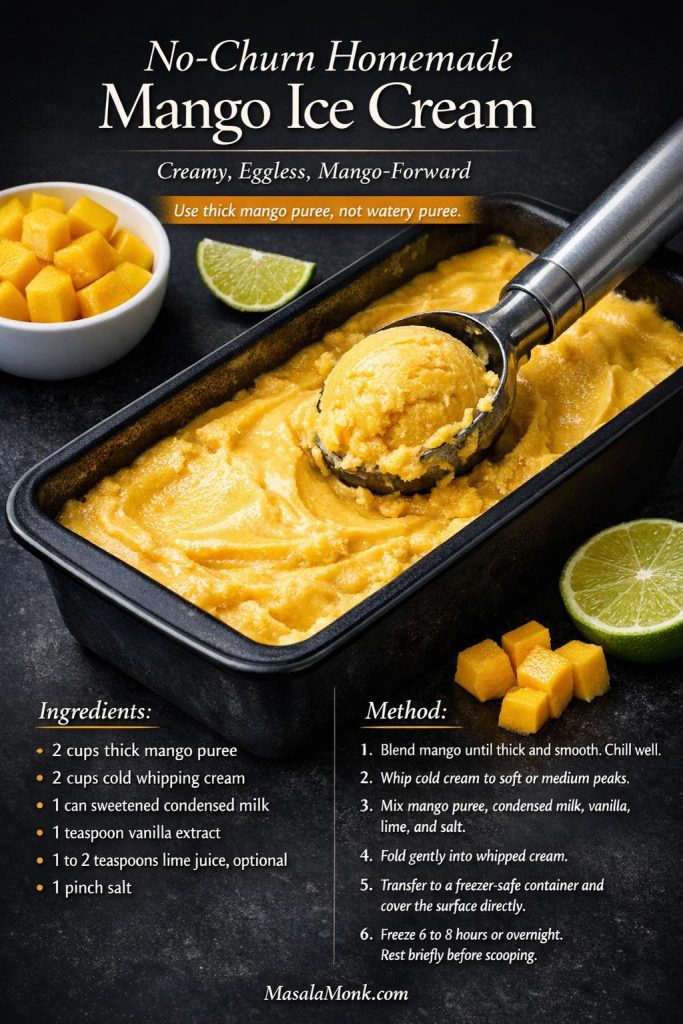
Recipe card for no-churn homemade mango ice cream showing a loaf pan, scoop, mango cubes, lime, ingredients list, and method for a creamy eggless mango ice cream recipe.
This no-churn homemade mango ice cream recipe card brings the full method into one quick visual: thick mango puree for real fruit flavor, whipped cream for body, condensed milk for a smoother freeze, and a gentle fold that helps the final scoop stay creamy instead of icy. It is the kind of saveable reference that makes mango ice cream at home easier to repeat when you want a simple eggless dessert with strong mango flavor and a softer, scoopable texture.

Follow it, and you get a dessert that feels more luxurious than the effort suggests: rich, fruity, soft enough to scoop, and genuinely full of mango flavor. More importantly, you get a recipe that solves the real failure points from the start and earns a place in mango season after mango season.

Also Read: Crock Pot Pork Chops and Sauerkraut (No Dry Chops Recipe)

Frequently Asked Questions About Homemade Mango Ice Cream

1. Can I make mango ice cream without an ice cream maker?

Yes. This recipe is already designed as a no-churn mango ice cream, so you do not need an ice cream maker to get a good result. The structure comes from whipped cream, condensed milk, and thick mango puree rather than from churning. That is why texture control matters so much here. If the puree is thick, the cream is whipped to the right stage, and the base is folded gently, the final dessert can still freeze soft enough to scoop and rich enough to feel properly indulgent.

2. Which mango is best for mango ice cream?

The best mangoes for mango ice cream are ripe, fragrant, sweet, and relatively low in fiber. Alphonso is excellent when you want a deeper aroma, richer color, and a more luxurious finish. Kesar also works well, and Ataulfo is a very good choice when you want smooth texture and dependable sweetness. More important than the variety, though, is the fruit itself. If the mango tastes bland or watery before blending, the ice cream will never taste as vivid as it should.

3. Can I use frozen mango for homemade mango ice cream?

Yes, you can. Frozen mango works well when fresh fruit is out of season or disappointing, but it still needs proper handling. Thaw it first, then blend it and check the texture just as you would with fresh mango. The puree should be thick, smooth, and strongly flavored before it goes into the base. Frozen fruit is convenient, but it does not remove the need to judge the puree properly.

4. Why is my homemade mango ice cream icy?

Icy mango ice cream usually comes down to excess water. The most common cause is thin puree, but poor surface covering and repeated softening and refreezing can also make things worse. If you want a creamier result, start by fixing the fruit. Reduce watery puree slightly if needed, chill it fully, and cover the surface of the ice cream directly before sealing the container. In most cases, the problem starts before the batch ever reaches the freezer.

5. Why does mango ice cream freeze too hard?

Usually because the balance has shifted too far toward fruit water and away from enough sweetness and fat. Thin puree is a common cause. Very cold freezers can also make the texture feel harder than expected. Letting the container sit out for a few minutes before scooping often solves part of the problem. If it still freezes too hard every time, look first at the puree rather than assuming the whole recipe is wrong.

6. Can I make mango ice cream without condensed milk?

Yes, but it becomes less forgiving. Condensed milk is not only sweetening the mixture. It is also helping with body and smoother texture in a no-churn base. Once you remove it, you need another way to replace those jobs, whether that means a cooked milk base, a more deliberate sugar balance, or a custard-style method. It can be done, but it is no longer the easiest version of the recipe. For most readers, the condensed milk route is still the best place to begin.

7. How long does homemade mango ice cream last in the freezer?

It will keep longer than a few days, but for the best texture and brightest mango flavor, it is usually nicest within the first several days after freezing. Over time, homemade ice cream can lose some of its softness and develop a rougher texture, especially if it softens and refreezes repeatedly. A tight container, direct surface covering, and steady freezer temperature all help it hold up better.

8. Can I make vegan mango ice cream?

Yes. A vegan version can be made by replacing the dairy cream with coconut cream. The flavor changes slightly, but it can still be rich, smooth, and very mango-forward. This works especially well if you already like mango with coconut. Just keep the same core rule in mind: the puree still needs to be thick and strongly flavored, because that is what keeps the dessert tasting like mango rather than just cold sweetness.
Posted on 2 Comments

Love Mangoes? Try These 5 Delicious Mango Dessert Recipes

Summer is synonymous with mangoes in India. Juicy, sweet, and incredibly versatile, this king of fruits finds its way into both traditional and modern dishes. Whether you like your mangoes in desserts, drinks, or main meals, there’s something here for everyone. In this blog post, we bring you five delightful mango recipes that will satisfy your sweet tooth and brighten your summer menu.

  • Mango Cheesecake (No-Bake)

Ingredients:

  • 1 cup crushed digestive biscuits
  • 1/4 cup melted butter
  • 1 cup cream cheese (room temperature)
  • 1/2 cup powdered sugar
  • 1 cup whipped cream
  • 1 cup mango puree (fresh Alphonso preferred)
  • Mango slices for garnish

Instruction:

Mix crushed biscuits and butter. Press into a springform pan to form the base. Chill for 30 minutes. In a bowl, beat cream cheese and sugar until smooth. Fold in whipped cream and mango puree. Pour the mixture onto the biscuit base and smooth the top. Refrigerate for at least 6 hours or overnight.

Garnish with mango slices before serving.

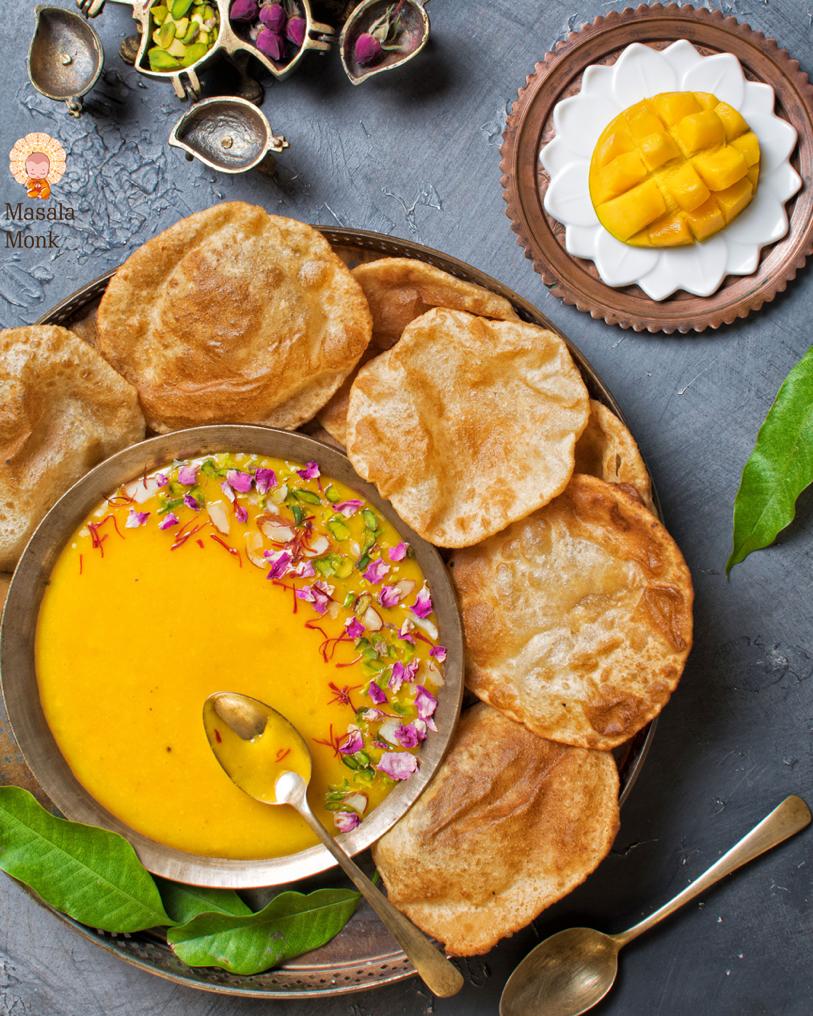
  • Aamras Puri

Ingredients:

  • 2 ripe mangoes, peeled and chopped
  • 2 tbsp sugar (optional)
  • A pinch of cardamom powder
  • 1/4 cup cold milk (adjust consistency)
  • Ingredients for Puri:
  • 1 cup whole wheat flour
  • A pinch of salt
  • Water to knead
  • Oil for deep frying

Instructions:

Blend mangoes with sugar, cardamom, and milk to make smooth aamras. Chill. Knead flour with salt and water to form a firm dough. Let it rest for 15 minutes. Roll small balls of dough into discs and deep fry until golden.

Serve puris hot with chilled aamras.

  • Mango Kalakand

Ingredients:

  • 2 cups paneer (freshly grated or crumbled)
  • 1 cup mango puree
  • 1/4 cup condensed milk
  • 1/2 tsp cardamom powder
  • Chopped pistachios for garnish

Instructions:

In a pan, combine paneer, mango puree, and condensed milk. Cook on medium flame, stirring continuously till the mixture thickens. Add cardamom powder and mix well. Pour into a greased tray and flatten with a spatula. Garnish with pistachios and refrigerate for 2 hours.

Cut into squares and serve.

  • Mango Biscuit Pudding

Ingredients:

  • 1 packet Marie biscuits
  • 1 cup mango puree
  • 1 cup whipped cream
  • 1/2 cup condensed milk
  • Chopped mangoes for layering

Instructions:

Mix mango puree with whipped cream and condensed milk. In a serving dish, layer biscuits, followed by the mango cream mixture and chopped mangoes. Repeat layers and finish with cream on top. More elaborated recipe here.

Chill for 3-4 hours before serving.

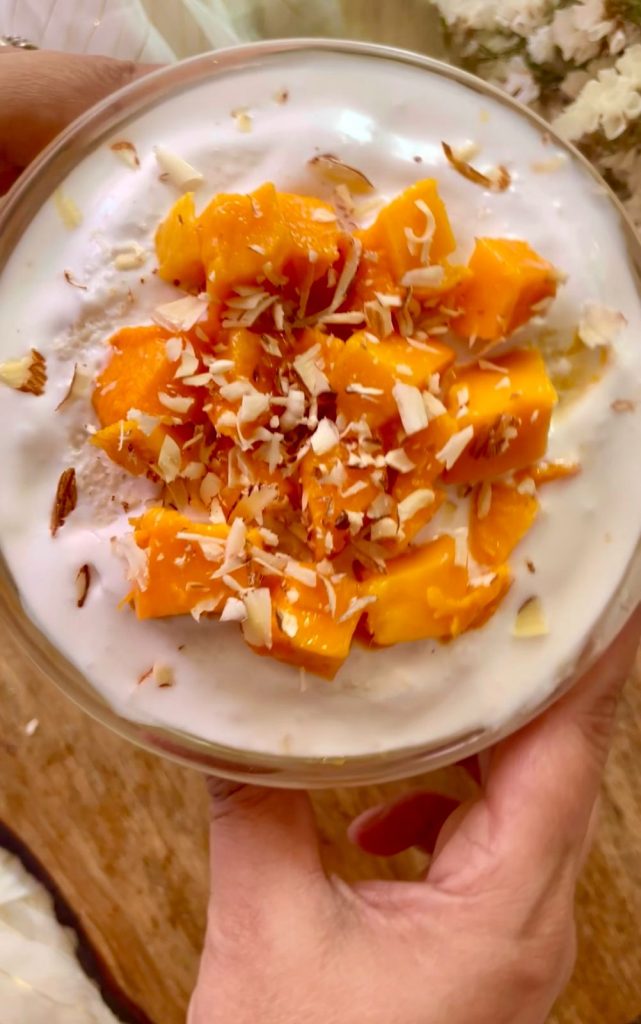
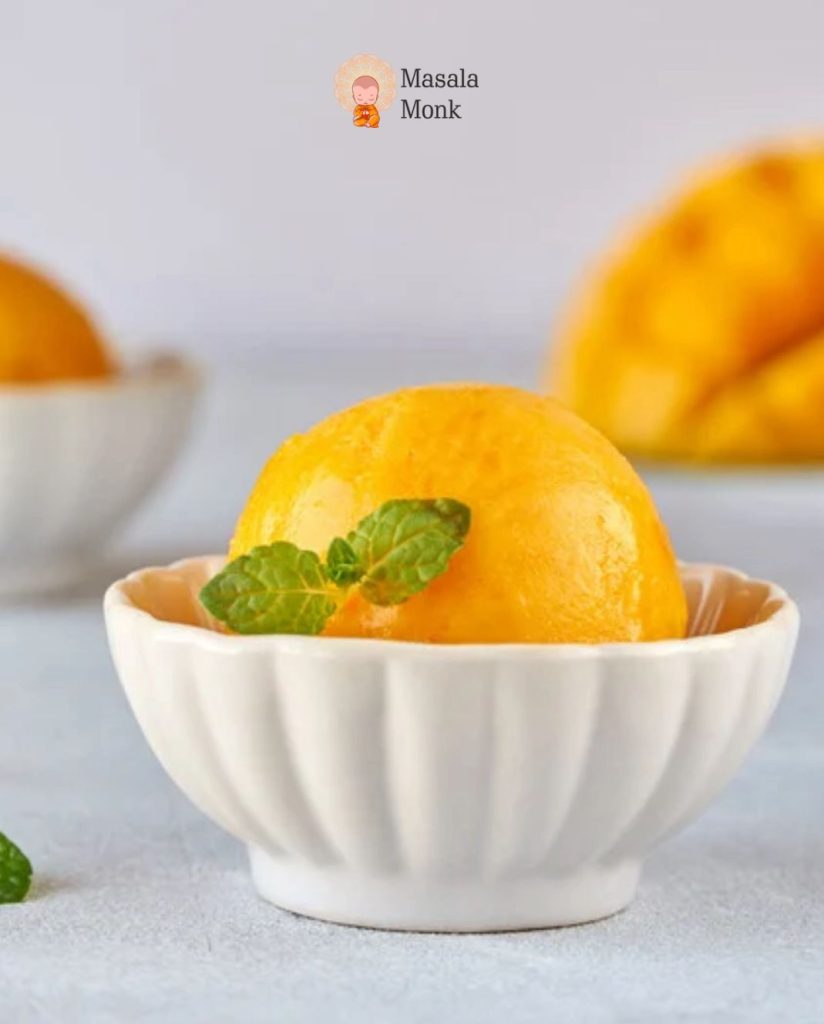
  • Homemade Mango Ice Cream

Ingredients:

  • 2 cups mango puree
  • 1 cup fresh cream
  • 1/2 cup condensed milk
  • 1 tsp vanilla extract

Instructions:

Blend all ingredients until smooth. Pour into a container and freeze for 1 hour. Stir the mixture to break ice crystals and freeze again. Repeat twice for a creamier texture.

Freeze overnight and serve scoops with fresh mango chunks.

Whether you’re in the mood for a quick dessert or planning a weekend treat, these mango recipes are sure to impress your family and friends. Let mangoes be the star of your summer kitchen, and don’t forget to experiment and make them your own!

Have a favorite mango recipe? Share it with us in the comments below!

Posted on Leave a comment

Instant Version of Traditional Mango Rasmalaai 🥭

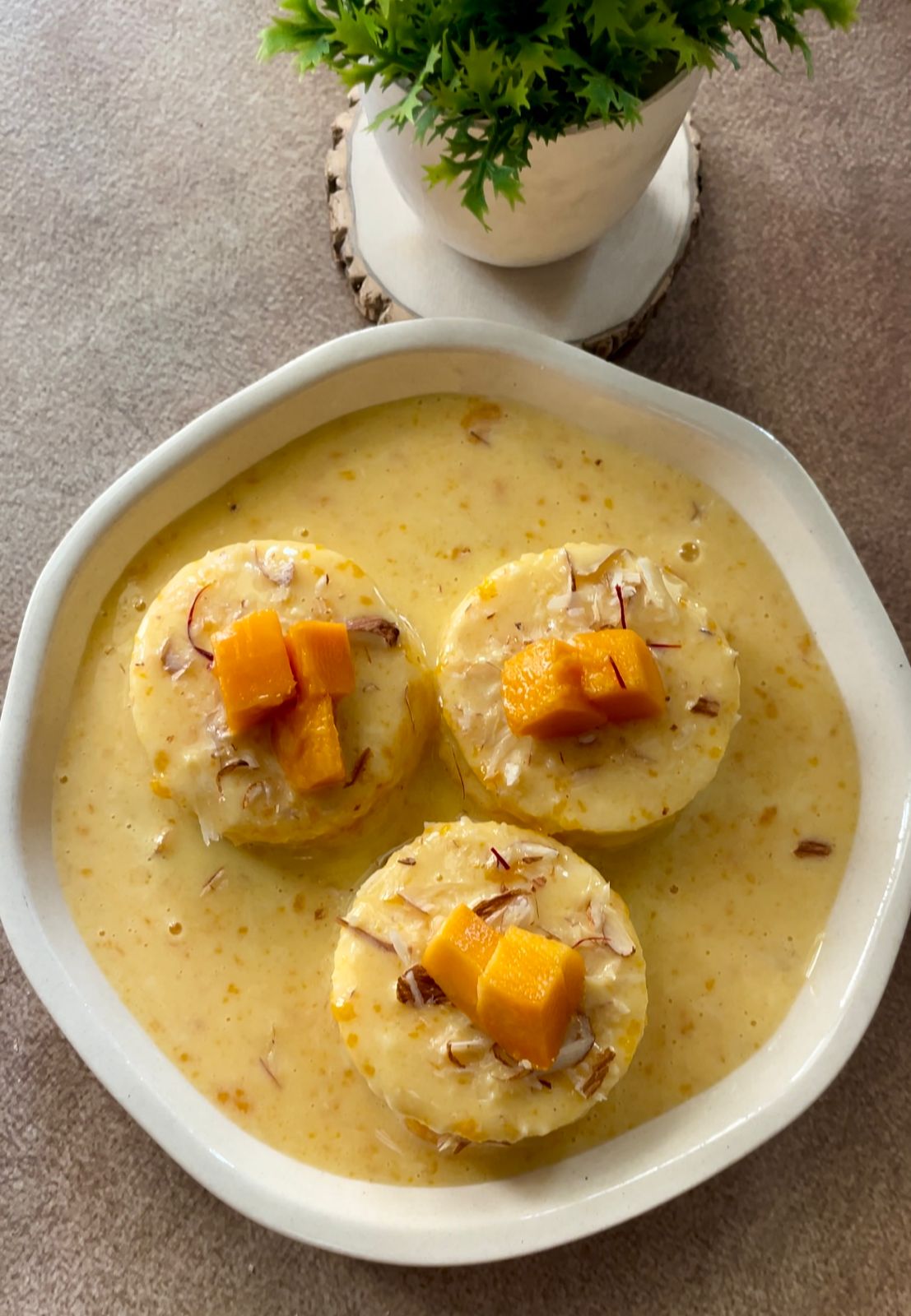
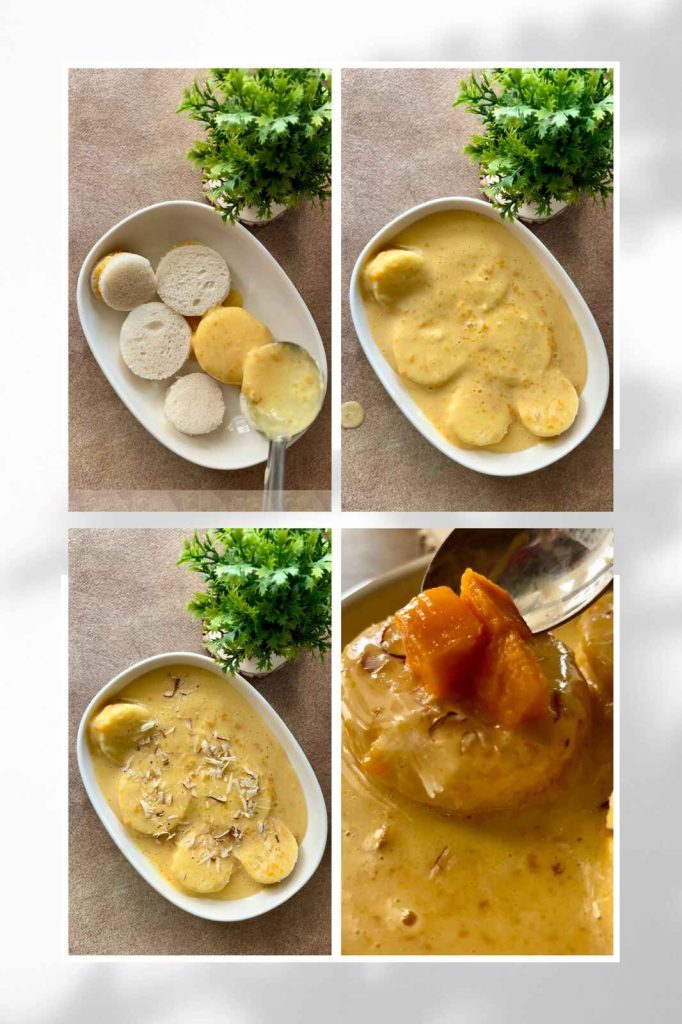
Traditional Mango Rasmalaai that too instant “chaunk gaye na?” Yes now you can make instant mango rasmalaai in matter of few minutes. With just few ingredients that are easily available in your house. You can enjoy this delightful dessert. I love using mangoes in all possible ways, whether it is mango kadi or mango pudding. For this heavenly Mango Rasmalaai, you’ll need just a handful of simple ingredients: whole milk, custard powder, sugar, mango puree, milk powder, and of course, our star ingredient – bread. So let’s quickly get into the details of the recipe.

Ingredients:

  • Mango pulp
  • Bread
  • Milk powder
  • Milk
  • Custard powder
  • Sugar
  • Nuts for garnishing 

Method:

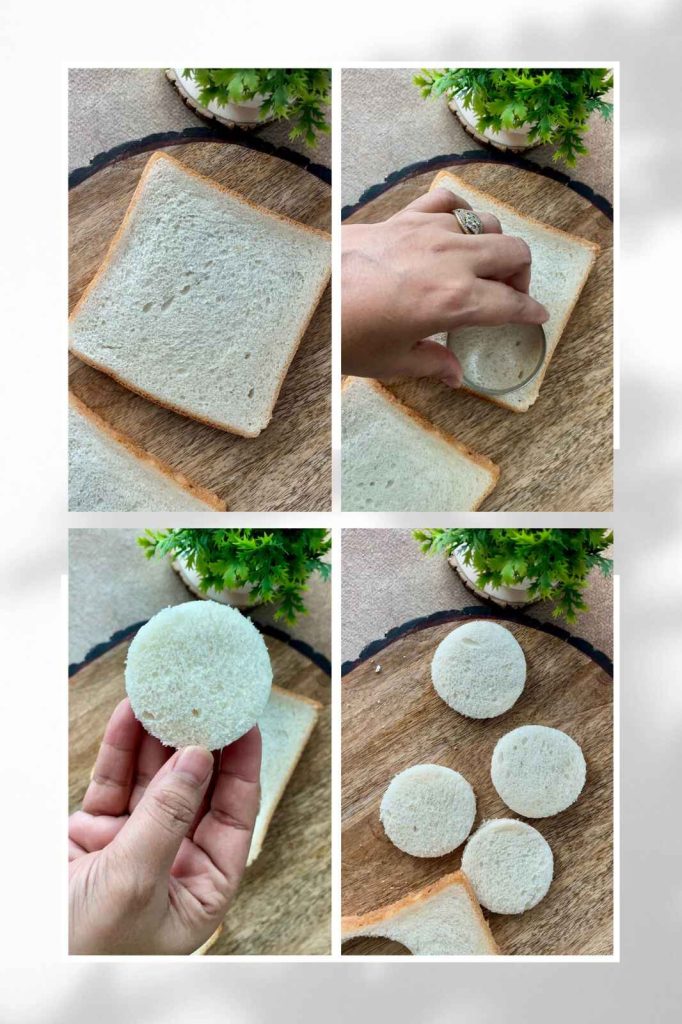
Cut the bread into circles with the help of a cookie cutter.

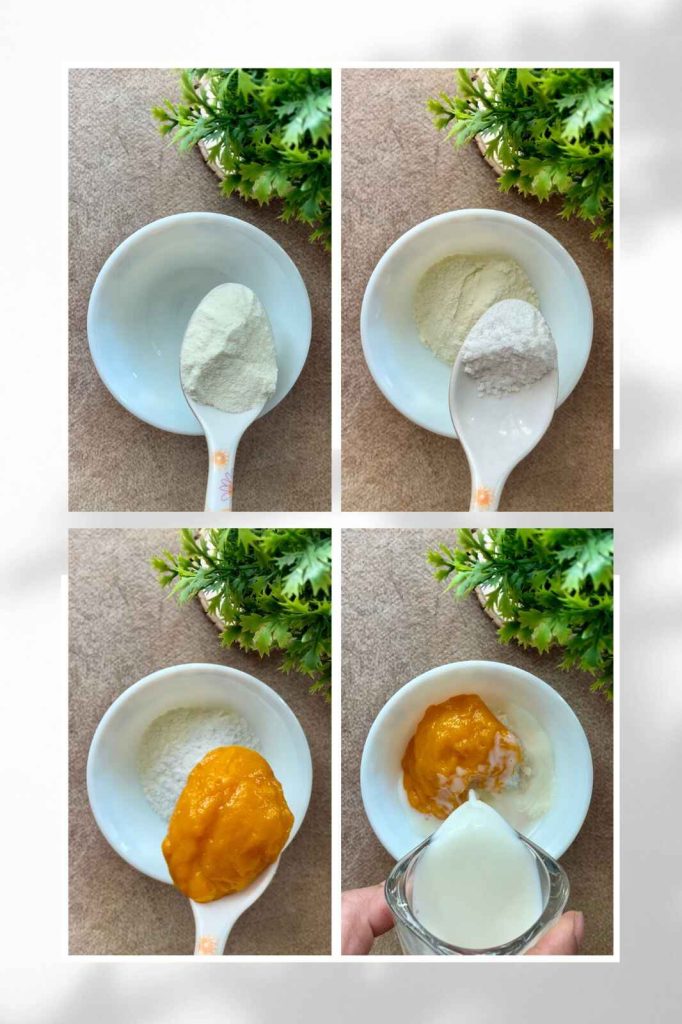
In a bowl, add milk powder, sugar, and mango pulp. Mix well to make your instant rabri.

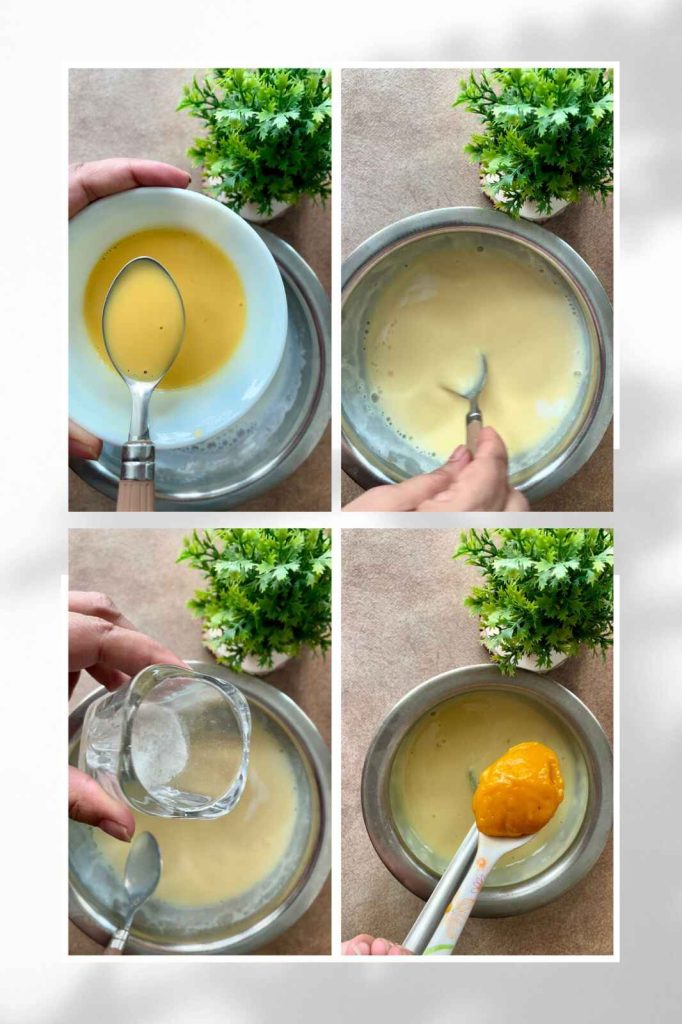
Now in small bowl add custard powder and 2 tbsp milk Mix well until no lumps remain. Boil the remaining milk and add the custard mixture, stirring continuously to avoid lumps. Add sugar and mix well. Let the mixture cool. Once the mixture is cool, add mango pulp and mix

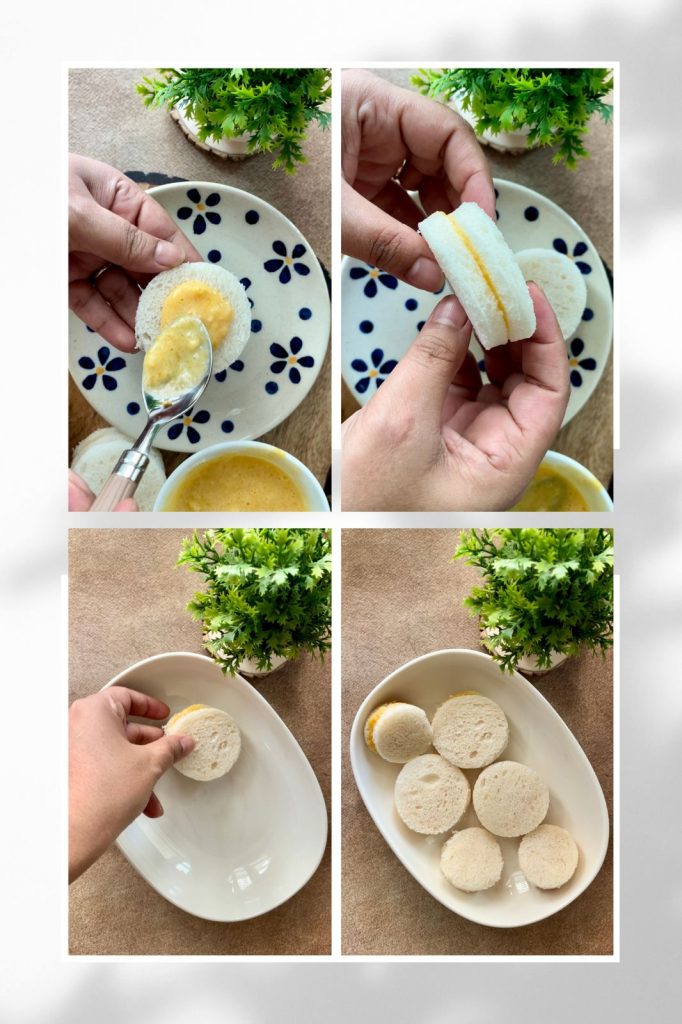
Spread this rabri over two bread circles and sandwich them together. Let it sit in the fridge for a few minutes.

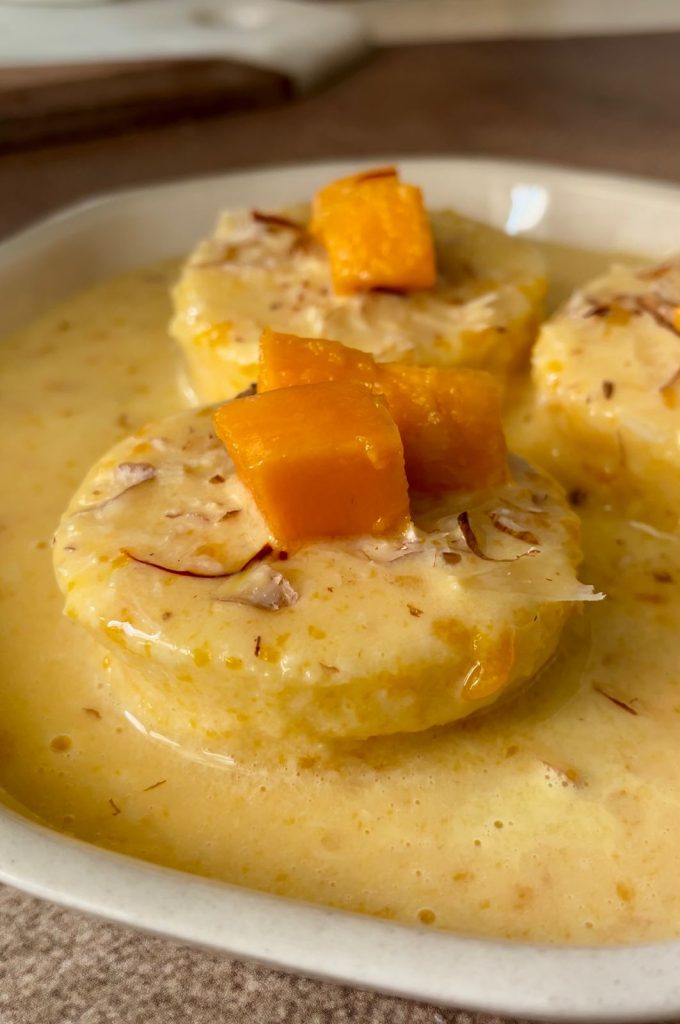
In a serving dish, place the bread circles and pour the custard mixture over the bread rasmalai. Garnish with chopped nuts, saffron, and small mango cubes.

Your instant traditional mango rasmalai is ready to serve. Serve chilled to get the best flavor.

Enjoy your Instant Mango Rasmalaai! Hope you liked the recipe. I would love to see your creations. If you tried this recipe , just click a pictures and tag us on @masala.monk or use the hashtag #MasalaMonkRecipe and share on Instagram and Facebook. Happy Cooking!

Posted on Leave a comment

looking for Mango Dessert Recipes? Here are 25 Amazing Ideas

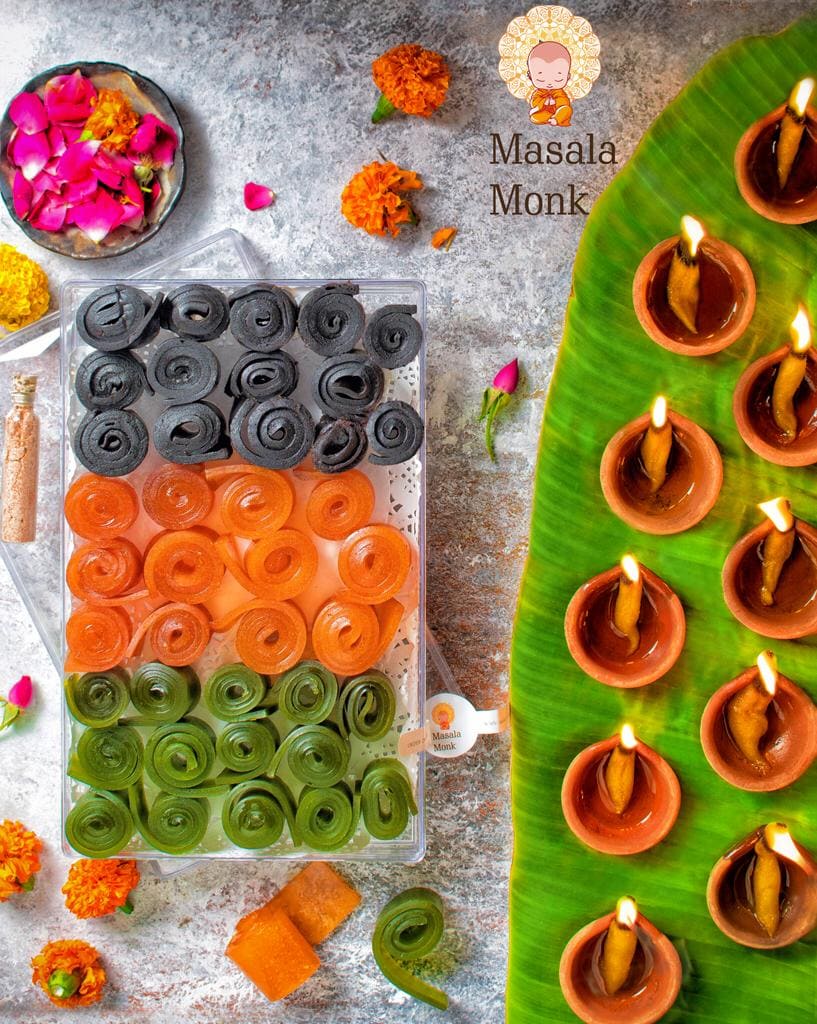
Homemade Aampapad Roll Gift Box

🌴🍹🌺 Summer is in full swing, and what better way to celebrate the season than with the delightful taste of juicy and aromatic mangoes? In India, mangoes are not just a fruit; they are a symbol of happiness, abundance, and the essence of summertime. As the sun shines bright and the temperatures soar, mangoes take center stage in every household, filling the air with their irresistible fragrance and teasing our taste buds with their sweet and tangy flavors.

Mangoes, often referred to as the “king of fruits,” hold a special place in our hearts. Their versatility knows no bounds, and they lend themselves beautifully to a plethora of culinary creations. From traditional Indian desserts to innovative fusion delights, mangoes can transform any dish into a heavenly indulgence.

Join Us for More Culinary Adventures! 🍽️🌍 If you’re passionate about exploring new flavors and connecting with fellow food enthusiasts, we invite you to join our vibrant community of foodies! Discover new recipes, share your culinary creations, and engage in conversations about all things food. Join our secret Facebook group, Eatlo, by visiting https://www.facebook.com/groups/eatlo and be a part of a community that celebrates the joy of cooking and the love for delicious food.

In this blog post, we invite you to embark on a mouthwatering journey through 25 dessert ideas that celebrate the glorious mango. These recipes will allow you to explore the incredible range of flavors and textures that mangos bring to the table. So, grab a ripe mango, put on your chef’s hat, and let’s dive into a world of mango-infused sweet treats that will leave you craving for more.


  1. Mango Kulfi: 🍦Indulge in the beloved Indian frozen dessert that combines the creamy richness of kulfi with the tropical goodness of mangoes. Create a luscious mango puree, mix it with condensed milk, cardamom, and a handful of chopped nuts. Pour the mixture into molds, insert popsicle sticks, and freeze until firm. The result is a heavenly treat that will transport you to mango paradise on a stick!
  2. Mango Lassi: 🍹Cool down with a refreshing mango lassi, a popular yogurt-based drink. Blend ripe mangoes, yogurt, sugar, and a pinch of cardamom until smooth and creamy. Serve chilled in tall glasses, garnished with a sprig of fresh mint. Sip and savor the delightful combination of tangy yogurt and sweet mangoes.
  3. Mango Shrikhand: 🥣Whip up a traditional Gujarati dessert by combining strained yogurt with mango puree, sugar, and a hint of saffron. This silky-smooth mango shrikhand is perfect for those who crave a creamy yet light dessert. Serve it chilled and garnish with slivered almonds and pistachios for added texture and visual appeal.
  4. Mango Phirni: 🍚Give a tropical twist to the classic Indian rice pudding by adding fresh mango puree. Cook rice in milk until it thickens, then stir in the mango puree and sugar. Allow it to cool and set in the refrigerator. Garnish with a sprinkle of crushed nuts and a few strands of saffron for an extra touch of elegance.
  5. Mango Falooda: 🍧Layered with sweet basil seeds, vermicelli, mango puree, rose syrup, and chilled milk, mango falooda is a delightful summer dessert that doubles as a refreshing beverage. Assemble the layers in a tall glass, top with a scoop of mango ice cream, and finish with a drizzle of rose syrup. Serve with a long spoon and relish the medley of flavors and textures.
  6. Mango Coconut Ice Cream: 🍨Combine the tropical flavors of mango and coconut in a homemade ice cream. Blend ripe mangoes, coconut milk, sugar, and a squeeze of lime juice until smooth. Churn the mixture in an ice cream maker until creamy and freeze until set. Scoop into cones or bowls and enjoy the velvety mango-coconut bliss.
  7. Mango Srikhand Tart: 🥧Put a modern twist on the traditional srikhand by serving it in a buttery tart shell. Fill the tart shell with mango-infused strained yogurt and refrigerate until set. Top with fresh mango slices and a drizzle of honey for an elegant dessert that will impress your guests.
  8. Mango Mousse: 🥭Create a light and airy mango mousse by blending mango puree with whipped cream, gelatin, and a touch of lemon juice. Chill the mousse in individual serving glasses until set. Garnish with a dollop of whipped cream and a sprinkle of grated dark chocolate for a heavenly combination of flavors and textures.
  9. Mango Panna Cotta: 🍮Infuse the classic Italian dessert with the sweetness of mangoes. Dissolve gelatin in warm milk, then mix it with mango puree, cream, sugar, and a hint of vanilla extract. Pour the mixture into molds and refrigerate until set. Serve the delicate mango panna cotta with a drizzle of mango coulis for a sophisticated dessert that will leave your taste buds tingling.
  10. Mango Phyllo Pastry: 🥐Wrap sweet mango slices in delicate layers of buttery phyllo pastry. Brush the layers with melted butter and sprinkle with sugar. Bake until golden brown and crispy. Serve these delightful mango parcels warm, dusted with powdered sugar, and accompanied by a scoop of vanilla ice cream.
  11. Mango Coconut Barfi: 🍬Combine grated coconut, mango puree, condensed milk, and cardamom powder to make a delectable mango coconut barfi. Cook the mixture until it thickens and sets, then cut into diamond-shaped pieces. Garnish with pistachios and edible silver foil for a traditional Indian sweet that is sure to impress.
  12. Mango Cheesecake: 🍰Blend mango puree into a creamy cheesecake mixture and pour it over a buttery biscuit crust. Bake until set, then refrigerate until chilled. Before serving, top the mango cheesecake with fresh mango slices and a drizzle of mango glaze. Each forkful will be a heavenly combination of velvety creaminess and fruity mango goodness.
  13. Mango Trifle: 🍨Layer cubes of sponge cake, mango chunks, whipped cream, and custard to create a refreshing mango trifle. Repeat the layers, finishing with a dollop of whipped cream and a sprinkle of crushed pistachios on top. Chill the trifle for a few hours to let the flavors meld together, then dive into the layers of tropical indulgence.
  14. Mango Pancakes: 🥞Prepare fluffy pancakes and top them with sliced mangoes, a drizzle of honey, and a sprinkle of toasted coconut. The combination of the warm pancakes and the cool, juicy mangoes will create a symphony of flavors that will leave you craving for more.
  15. Mango Tarts: 🥧Fill buttery tart shells with mango custard made from mango puree, cream, sugar, and a touch of cornstarch. Bake until the custard sets, then garnish with fresh mango slices and a dusting of powdered sugar. These delightful mango tarts are perfect for a summer afternoon tea party or a special dessert for your loved ones.
  16. Mango Sorbet: 🍧Beat the heat with a simple and refreshing mango sorbet. Blend ripe mangoes, sugar, and a splash of lemon juice until smooth. Pour the mixture into an ice cream maker and churn until it reaches a silky texture. Serve the mango sorbet in chilled bowls or cones for a delightful, fruity treat.
  17. Mango Muffins: 🧁Add chunks of juicy mangoes to your favorite muffin batter for a tropical twist. Bake until golden brown, and let the aroma of mango fill your kitchen. Enjoy these moist and fruity muffins as a breakfast treat or a sweet snack throughout the day.
  18. Mango Jelly: 🍮Prepare a wobbly and delightful mango jelly using fresh mango puree, gelatin, and a touch of sugar. Pour the mixture into individual serving dishes and let it set in the refrigerator. Serve chilled with a dollop of whipped cream for a fun and colorful dessert that kids and adults will love.
  19. Mango Rice Pudding: 🍚Combine cooked rice, mango puree, milk, sugar, and a pinch of cardamom to create a comforting and aromatic mango rice pudding. Let the flavors meld together as the rice absorbs the sweetness of the mango. Sprinkle some chopped pistachios or cashews for a delightful crunch.
  20. Mango Smoothie Bowl: 🥣Blend frozen mango chunks, yogurt, and a splash of milk until smooth. Pour the smoothie into a bowl and top it with fresh mango slices, granola, chia seeds, and a drizzle of honey for a nutritious and vibrant breakfast. Enjoy the refreshing and energizing start to your day.
  21. Mango Mithai Tartlets: 🥧Bake mini tart shells and fill them with mango-flavored mithai (Indian sweets) like kaju katli, barfi, or peda. The combination of the flaky crust and the rich mango mithai filling creates a delightful fusion of flavors. These bite-sized tartlets are perfect for parties or festive occasions.
  22. Mango Semolina Cake: 🍰Add mango puree to a semolina-based cake batter for a moist and fragrant dessert. The semolina adds a delightful texture to the cake, while the mango imparts a tropical sweetness. Serve the mango semolina cake with a dusting of powdered sugar and a side of vanilla ice cream.
  23. Mango Mousse Cake: 🎂Assemble layers of sponge cake, mango mousse, and fresh mango slices to create an elegant and decadent mango mousse cake. Frost the cake with whipped cream and garnish with additional mango slices for a stunning presentation. This cake is perfect for special celebrations and will impress your guests.
  24. Mango Yogurt Popsicles: 🍡Blend mango puree, yogurt, honey, and a squeeze of lime juice, then pour the mixture into popsicle molds and freeze until solid. These creamy popsicles are a healthy and refreshing treat that kids and adults will adore on a hot summer day.
  25. Mango Coconut Rice Balls: 🍡Combine sticky rice, fresh mango chunks, and shredded coconut to form small balls. Serve them as a sweet and tropical dessert or as a delightful snack on the go. The combination of sticky rice, juicy mango, and coconut creates a burst of flavors and textures in each bite.

Enjoy these 25 delightful mango desserts and let the flavors of this tropical fruit transport you to a world of sweetness and sunshine. Get creative in your kitchen and share your love for mangos with friends and family. Happy indulging! 🥭

Join Us for More Culinary Adventures! 🍽️🌍 If you’re passionate about exploring new flavors and connecting with fellow food enthusiasts, we invite you to join our vibrant community of foodies! Discover new recipes, share your culinary creations, and engage in conversations about all things food. Join our secret Facebook group, Eatlo, by visiting https://www.facebook.com/groups/eatlo and be a part of a community that celebrates the joy of cooking and the love for delicious food.

Posted on 1 Comment

The Mango Tango: 50 Exquisite Vegan Dessert Recipes Celebrating the King of Fruits

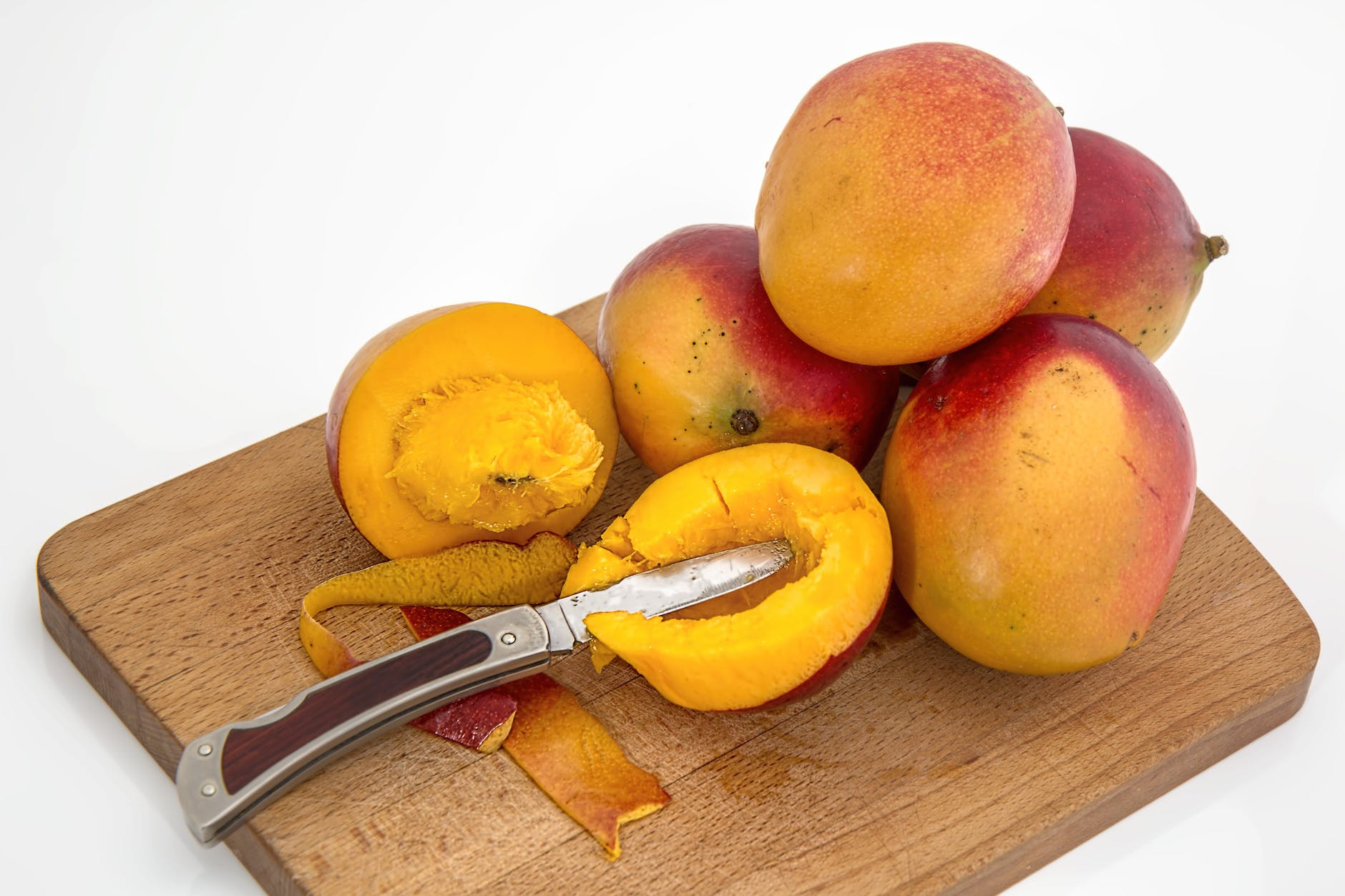
food knife fresh fruits

Get ready to dive into a world of tropical sweetness as we embark on a culinary adventure with mangoes. In this series, we’ll explore 50 exquisite vegan dessert recipes that celebrate the luscious flavors and vibrant colors of the king of fruits. From refreshing sorbets and creamy puddings to indulgent cakes and tantalizing tarts, these mango-inspired creations will transport your taste buds to a paradise of tropical bliss. Join us as we unlock the versatility of mangoes and discover new and exciting ways to enjoy this beloved fruit in irresistible vegan desserts.

Exploring the Mango Spectrum: Mangoes offer a spectrum of flavors, ranging from the intensely sweet and juicy to the subtly tangy and aromatic. Throughout this series, we’ll explore various mango varieties, each with its own unique taste and texture. From the velvety Alphonso and fragrant Ataulfo to the juicy Kent and vibrant Tommy Atkins, we’ll celebrate the diversity of mangoes and how they enhance the flavor profiles of our desserts. Get ready to savor the natural sweetness and tropical essence of mangoes in every delectable bite.

Embracing the Tropical Vibes: Mangoes evoke a sense of tropical paradise, and these desserts aim to capture that essence. We’ll incorporate other exotic flavors and ingredients like coconut, lime, passion fruit, and even spices like chili and ginger to complement the sweetness of mangoes. These combinations will transport you to sun-drenched beaches and lush palm trees, infusing your desserts with the spirit of the tropics. So sit back, relax, and let the flavors of these mango desserts whisk you away to a dreamy island getaway.

Celebrating Diversity: Just like the melting pot of cultures in the world, mangoes have found their way into countless traditional desserts from various culinary traditions. In this series, we’ll draw inspiration from around the globe, including the mango sticky rice from Thailand, mango kulfi from India, mango coconut sago from Southeast Asia, and much more. Each recipe will reflect the unique flavors and techniques of its origin, showcasing the versatility of mangoes in different culinary contexts. Prepare to embark on a cultural journey that celebrates the universal love for mangoes.

Sharing the Mango Love: One of the greatest joys of indulging in mango desserts is sharing them with loved ones. Whether you’re hosting a summer gathering, surprising a friend with a homemade treat, or simply treating yourself to a moment of pure indulgence, these mango desserts are meant to be shared and savored together. The vibrant colors, tropical aromas, and heavenly flavors will create a memorable experience that brings people closer, sparks conversations, and leaves a lasting impression. So spread the mango love and share the magic of these desserts with family and friends.

Conclusion: As we dive into the world of mango desserts, get ready to embark on a tantalizing journey of tropical sweetness. From refreshing sorbets to creamy puddings and beyond, these 50 exquisite vegan dessert recipes will celebrate the lusciousness and versatility of mangoes. Let the vibrant colors, tropical aromas, and heavenly flavors transport you to a paradise of flavor. So grab a ripe mango, sharpen your knives, and join us as we indulge in the mango mania that awaits. Get ready for a mango-filled adventure that will leave you craving more and celebrating the king of fruits in all its glory.

[ez-toc]

Chapter 1: Refreshing Mango Sorbets

Creamy Mango Coconut Sorbet

Indulge in a creamy and tropical delight with this Creamy Mango Coconut Sorbet. Blending together ripe mangoes, creamy coconut milk, a splash of lime juice, and a touch of sweetener, this sorbet offers a velvety smooth texture and a burst of tropical flavors. The ripe mangoes provide natural sweetness and a vibrant orange hue, while the creamy coconut milk adds richness and a hint of tropical creaminess. The splash of lime juice adds a refreshing tang that balances the sweetness of the mangoes. Once blended, the mixture is frozen until firm, creating a refreshing and indulgent treat. Serve it in a chilled bowl or as a delightful dessert after a spicy meal, and let the Creamy Mango Coconut Sorbet transport you to a sun-kissed beach paradise.

Spicy Mango Chili Sorbet

If you’re looking to add some heat to your mango dessert, this Spicy Mango Chili Sorbet is the perfect choice. Blending together ripe mangoes, a squeeze of lime juice, a pinch of chili powder, and a dash of cayenne pepper, this sorbet offers a delightful balance of sweet and spicy flavors. The natural sweetness of the mangoes shines through, while the hint of chili powder and cayenne pepper adds a gentle kick that lingers on the palate. The squeeze of lime juice adds a tangy twist that complements the sweetness and spice. Once blended, the mixture is frozen until firm, resulting in a refreshing and bold dessert. Serve it as a palate cleanser between courses or as a bold and refreshing finale that will leave a lingering tingle on your tongue.

Mango Lime Basil Sorbet

Embrace the bright and zesty flavors of mango, lime, and basil with this Mango Lime Basil Sorbet. Blending together ripe mangoes, freshly squeezed lime juice, a handful of fresh basil leaves, and a touch of sweetener, this sorbet offers a harmonious combination of tangy, citrusy, and herbal notes. The ripe mangoes provide a luscious sweetness, while the lime juice adds a zesty kick. The fresh basil leaves infuse the sorbet with their aromatic and slightly minty flavor, creating a refreshing and vibrant dessert. Once blended, the mixture is frozen until firm, resulting in a sorbet that captures the essence of a tropical paradise. Serve it in a chilled glass or garnish it with a sprig of fresh basil for an added touch of freshness.

Mango Passion Fruit Sorbet

Transport your taste buds to a tropical paradise with this Mango Passion Fruit Sorbet. Blending together ripe mangoes with the tangy and fragrant pulp of fresh passion fruits, this sorbet bursts with tropical goodness. The sweet and juicy mangoes pair perfectly with the tangy and aromatic passion fruit, creating a harmonious combination of flavors. The vibrant orange and yellow colors of the mangoes and passion fruits create an eye-catching sorbet that’s as visually appealing as it is delicious. Once blended, the mixture is frozen until firm, resulting in a sorbet that embodies the essence of sun-soaked beaches and palm-fringed shores. For an extra touch of tropical flair, serve this sorbet in a hollowed-out passion fruit shell.

[ez-toc]

Chapter 2: Creamy Mango Puddings

Vegan Mango Coconut Chia Pudding

Combine the creaminess of coconut milk with the nutritional benefits of chia seeds in this Vegan Mango Coconut Chia Pudding. Blending together ripe mangoes, creamy coconut milk, a touch of sweetener, and a pinch of cardamom, this pudding offers a rich and indulgent texture with a tropical twist. The ripe mangoes provide a natural sweetness and a vibrant orange color, while the creamy coconut milk adds a luscious creaminess. The touch of sweetener balances the flavors, and the pinch of cardamom adds a subtle hint of warmth and aromatic complexity. Once blended, chia seeds are added and left to soak in the mixture until the pudding sets and thickens. The result is a creamy and nourishing dessert with a delightful mango-coconut flavor. Top it with sliced mangoes and a sprinkle of toasted coconut for added texture and flavor.

Mango Rice Pudding

Put a tropical spin on a classic comfort dessert with this Mango Rice Pudding. Cook creamy Arborio rice in a mixture of coconut milk and almond milk, sweetened with a touch of maple syrup or agave nectar. Fold in diced mangoes and a hint of vanilla extract for a luscious and fragrant pudding. The creamy rice pudding provides a comforting base, while the addition of ripe mangoes adds bursts of sweetness and tropical flavor. The combination of coconut milk and almond milk creates a rich and creamy texture, while the touch of maple syrup or agave nectar adds a subtle sweetness. The hint of vanilla extract enhances the flavors and adds an enticing aroma. Serve the pudding warm or chilled, and garnish it with fresh mint leaves or a sprinkle of toasted nuts for an extra layer of indulgence.

Layered Mango Avocado Pudding

Create a unique and creamy dessert by layering mango and avocado puddings in this Layered Mango Avocado Pudding. Blend together ripe mangoes with creamy coconut milk and a touch of sweetener to create a vibrant mango pudding layer. For the avocado layer, blend ripe avocados with lime juice, a hint of sweetener, and a pinch of sea salt. The mango pudding layer offers a burst of tropical sweetness, while the avocado layer adds a creamy and velvety texture. The combination of the two creates a visually appealing and indulgent treat. Alternating the layers in serving glasses or jars allows you to create beautiful and enticing desserts. Top the pudding with a dollop of coconut whipped cream or a sprinkle of crushed pistachios for added richness and texture.

Vegan Mango Mousse

Indulge in the light and airy texture of this Vegan Mango Mousse. Blending together ripe mangoes, coconut cream, a touch of sweetener, and a splash of lime juice, this mousse offers a delightful combination of sweetness and tanginess. The ripe mangoes provide natural sweetness and a vibrant color, while the coconut cream adds a creamy and luxurious texture. The touch of sweetener balances the flavors, and the splash of lime juice adds a refreshing twist that complements the mango’s sweetness. Once blended, the mixture is chilled until it sets, creating a fluffy and velvety mousse. Serve it in elegant dessert glasses or garnish it with fresh mango slices and a sprinkle of shredded coconut for a tropical presentation.

[ez-toc]

Chapter 3: Irresistible Mango Cakes

Mango Coconut Cake

Indulge in the tropical flavors of this Mango Coconut Cake. The light and fluffy coconut cake layers are infused with the sweet and aromatic essence of ripe mangoes. To make the cake, blend together ripe mangoes, creamy coconut milk, a hint of vanilla extract, and a touch of sweetener for added depth of flavor. Fold the mango mixture into the cake batter to create a moist and flavorful crumb. Bake the layers until golden and fragrant, filling your kitchen with the enticing aroma of mango and coconut. Once cooled, stack the cake layers, alternating with luscious mango buttercream. The buttercream is made by whipping together vegan butter, powdered sugar, and pureed mangoes until light and creamy. The result is a decadent and visually stunning cake that combines the creamy coconut and tropical mango flavors in perfect harmony. Decorate the cake with toasted coconut flakes and fresh mango slices for an elegant presentation that will impress your guests and transport them to a tropical paradise with every bite.

Vegan Mango Cheesecake

Satisfy your dessert cravings with this Vegan Mango Cheesecake. The creamy and tangy cheesecake filling is enhanced with the luscious sweetness of mangoes. To create the crust, blend together dates, nuts, and a pinch of sea salt until the mixture holds together. Press the mixture into the base of a springform pan to create a firm and flavorful crust. For the filling, blend together cashews, mangoes, coconut cream, lemon juice, and a touch of sweetener until smooth and creamy. The cashews provide a velvety texture, while the mangoes infuse the cheesecake with their tropical sweetness. Once set, the cheesecake becomes a show-stopping centerpiece for any occasion. Garnish it with fresh mango slices, a drizzle of mango sauce, or a sprinkle of toasted coconut to add a touch of elegance. Each creamy and tangy bite of this vegan mango cheesecake will transport you to a tropical paradise of flavors.

Mango Upside-Down Cake

Turn the classic upside-down cake into a tropical delight with this Mango Upside-Down Cake. The bottom of the cake pan is lined with caramelized mango slices, creating a sticky and sweet topping that becomes the beautiful and irresistible base of the cake. The cake batter is made by blending together flour, sugar, baking powder, vegan butter, coconut milk, and mango puree until smooth and well combined. The mango puree provides the cake with its tropical flavor and vibrant color. Pour the batter over the caramelized mango slices and bake until golden and fragrant. Once cooled, carefully invert the cake to reveal the gorgeous caramelized mango topping. Serve this moist and flavorful cake with a dollop of vegan whipped cream or a scoop of dairy-free vanilla ice cream to complete the tropical dessert experience.

Mango Cardamom Pound Cake

Elevate the traditional pound cake with the exotic combination of mango and cardamom in this Mango Cardamom Pound Cake. The buttery and moist pound cake is infused with the fragrant and citrusy flavors of ground cardamom, which pairs beautifully with the natural sweetness of ripe mangoes. To create the cake batter, cream together vegan butter and sugar until light and fluffy. Add in the dry ingredients, including flour, baking powder, and ground cardamom, and mix until just combined. Fold in diced mangoes and a touch of vanilla extract to add moisture and tropical flavor to the cake. Bake until the cake is golden and a toothpick inserted into the center comes out clean. The result is a tender and aromatic pound cake that perfectly balances the delicate flavors of mango and cardamom. Dust the top with powdered sugar or garnish with fresh mango slices and crushed cardamom pods for an extra touch of elegance. Each slice of this Mango Cardamom Pound Cake will transport you to a realm of exotic indulgence.

[ez-toc]

Chapter 4: Tempting Mango Tarts

Mango Lime Tart

Combine the zesty flavors of mango and lime in this refreshing Mango Lime Tart. The buttery tart crust is filled with a tangy lime curd and topped with juicy slices of ripe mango. To create the crust, combine flour, vegan butter, powdered sugar, and a pinch of salt, then press the mixture into a tart pan and bake until golden and crisp. For the lime curd, whisk together lime juice, lime zest, sugar, cornstarch, and a touch of vegan butter in a saucepan over low heat until thickened. Once the curd has cooled, spread it evenly over the tart crust. Arrange slices of ripe mango on top of the lime curd, creating a visually stunning presentation. Refrigerate the tart until set, allowing the flavors to meld together. Just before serving, garnish with additional lime zest and fresh mint leaves to add brightness and a pop of freshness. Each bite of this Mango Lime Tart offers a burst of tangy lime, sweet mango, and buttery crust, creating a delightful symphony of flavors.

Vegan Mango Custard Tart

Indulge in the smooth and creamy texture of this Vegan Mango Custard Tart. The tart shell is made from a mixture of crushed cookies or nuts, coconut oil, and a touch of sweetener, creating a crisp and flavorful base. For the custard filling, blend together ripe mangoes, coconut cream, cornstarch, a touch of sweetener, and a pinch of turmeric for added color. Cook the mixture over medium heat until it thickens into a luscious and silky custard. Pour the custard into the tart shell and refrigerate until set. Once chilled, the tart can be garnished with fresh mango slices or a sprinkle of shredded coconut for added texture and visual appeal. Each bite of this Vegan Mango Custard Tart offers a creamy and fruity experience that will satisfy your dessert cravings.

Mango Coconut Cream Tart

Create a tropical paradise in a tart with this Mango Coconut Cream Tart. The crust is made from a mixture of crushed graham crackers or coconut cookies, vegan butter, and a touch of sweetener, providing a crunchy and delicious base. For the filling, blend together ripe mangoes, coconut cream, a touch of sweetener, and a squeeze of lime juice until smooth and creamy. Pour the mango-coconut mixture into the tart shell and refrigerate until set. The tart is finished with a dollop of coconut whipped cream and a sprinkle of toasted coconut flakes, adding a delightful creaminess and texture to each bite. The combination of mango and coconut creates a tropical medley of flavors that will transport you to a sun-soaked beach with palm trees swaying in the breeze.

No-Bake Mango Tart

Enjoy a hassle-free dessert with this No-Bake Mango Tart. The crust is made from a mixture of crushed cookies or nuts, dates, and a touch of coconut oil, providing a firm and flavorful base for the tart. Press the mixture into the bottom of a tart pan and refrigerate to set. For the filling, blend together ripe mangoes, cashews, coconut cream, a touch of sweetener, and a squeeze of lime juice until smooth and creamy. Pour the mango filling into the tart shell and refrigerate until set. Once chilled, the tart can be garnished with fresh mango slices, a sprinkle of shredded coconut, or a drizzle of mango puree for an extra touch of indulgence. This no-bake mango tart is perfect for hot summer days when you want to satisfy your mango cravings without turning on the oven. Each slice offers a refreshing and creamy combination of flavors that will leave you wanting more.

With these elaborate and expansive mango dessert recipes, you can create irresistible cakes and tarts that celebrate the tropical sweetness of mangoes. Whether you choose to indulge in a moist and flavorful Mango Coconut Cake or savor the tangy and refreshing Mango Lime Tart, these recipes will transport you to a tropical paradise with every bite. Elevate your dessert game with the lusciousness of ripe mangoes and let their vibrant flavors shine in these delectable creations.

[ez-toc]

Chapter 5: Mango Popsicles and Frozen Treats

Mango Coconut Popsicles

Beat the summer heat with these delicious and refreshing Mango Coconut Popsicles. Blending together ripe mangoes, creamy coconut milk, a touch of sweetener, and a squeeze of lime juice, these popsicles offer a tropical twist on a classic frozen treat. The sweet and juicy mangoes provide a burst of flavor, while the creamy coconut milk adds a rich and velvety texture. The hint of lime juice adds a refreshing tang that balances the sweetness of the mangoes. To make these popsicles, simply puree the ingredients until smooth, pour the mixture into popsicle molds, insert sticks, and freeze until solid. When ready to enjoy, run the molds under warm water for a few seconds to release the popsicles. With their vibrant color and tropical flavors, these Mango Coconut Popsicles are the perfect way to cool down and satisfy your sweet cravings on a hot summer day.

Mango Sorbet Bars

Indulge in the irresistible flavors of mango with these delectable Mango Sorbet Bars. The base is made from a combination of crushed cookies or graham crackers, melted vegan butter, and a touch of sweetener, creating a crunchy and sweet foundation. On top of the crust, spread a layer of homemade mango sorbet made by blending ripe mangoes, a squeeze of lime juice, and a hint of sweetener until smooth and creamy. Pour the mango sorbet over the crust and freeze until firm. Once set, slice the frozen dessert into bars and serve. Each bite offers a refreshing burst of tropical mango flavor, balanced with a delightful crunch from the crust. These Mango Sorbet Bars are not only visually appealing with their vibrant orange hue but also a delicious frozen treat that will impress both kids and adults alike.

Mango Nice Cream

Experience the creamy and guilt-free indulgence of Mango Nice Cream. This dairy-free alternative to traditional ice cream is made by blending frozen ripe mangoes with a splash of coconut milk, a touch of sweetener, and a squeeze of lemon juice. The frozen mangoes create a velvety smooth texture reminiscent of soft serve ice cream, while the coconut milk adds a hint of creaminess and tropical flavor. The touch of sweetener enhances the natural sweetness of the mangoes, and the lemon juice adds a refreshing tang. To make Mango Nice Cream, simply blend the ingredients together until creamy and smooth. Enjoy it immediately for a soft-serve consistency or freeze for a couple of hours for a firmer texture. Serve the Mango Nice Cream in bowls or cones, and garnish with fresh mango slices or a sprinkle of shredded coconut for added visual appeal. This guilt-free frozen treat is not only delicious but also packed with the goodness of ripe mangoes, making it a perfect dessert or snack for those seeking a healthier indulgence.

Mango Yogurt Parfait Popsicles

Combine the goodness of mango, yogurt, and granola in these delightful Mango Yogurt Parfait Popsicles. Layered with creamy mango yogurt and crunchy granola, these popsicles offer a refreshing and satisfying treat. To make them, puree ripe mangoes with Greek yogurt, a touch of sweetener, and a squeeze of lime juice until smooth. In popsicle molds, alternate layers of the mango yogurt mixture and granola, pressing down gently between each layer to ensure even distribution. Insert popsicle sticks and freeze until solid. When ready to serve, run the molds under warm water to release the popsicles. The result is a delightful combination of creamy, fruity, and crunchy textures that will leave you craving more. These Mango Yogurt Parfait Popsicles are not only delicious but also a great way to enjoy the goodness of mangoes and yogurt in a fun and frozen format.

[ez-toc]

Chapter 6: Mango Smoothies and Shakes

Tropical Mango Smoothie

Start your day on a refreshing note with a Tropical Mango Smoothie. Blending together ripe mangoes, pineapple chunks, coconut milk, a squeeze of lime juice, and a handful of spinach or kale, this smoothie offers a tropical burst of flavors and a boost of nutrients. The sweet and juicy mangoes provide a natural sweetness, while the pineapple adds a tangy twist. The coconut milk creates a creamy and luscious texture, while the lime juice adds a refreshing zing. The addition of leafy greens adds a nutritional punch, making this smoothie a wholesome and energizing breakfast or snack option. Blend all the ingredients together until smooth, and pour into a glass to enjoy the vibrant flavors of the tropics.

Mango Banana Protein Smoothie

Kickstart your day or replenish your energy after a workout with a Mango Banana Protein Smoothie. Blending together ripe mangoes, frozen banana slices, plant-based protein powder, a splash of almond milk, and a spoonful of almond butter, this smoothie provides a delicious and nutritious combination of flavors. The ripe mangoes and banana add natural sweetness and creamy texture, while the protein powder offers a protein boost for muscle recovery and satiety. The almond milk adds a hint of nuttiness, and the almond butter provides a dose of healthy fats. Blend all the ingredients together until creamy and smooth, and enjoy this Mango Banana Protein Smoothie as a satisfying and nourishing meal replacement or snack.

Mango Lassi

Experience the traditional flavors of India with a refreshing Mango Lassi. This popular yogurt-based drink combines ripe mangoes, dairy-free yogurt, a touch of sweetener, and a sprinkle of ground cardamom for a flavorful and creamy beverage. The ripe mangoes provide natural sweetness and tropical flavor, while the yogurt adds a tangy and creamy base. The touch of sweetener balances the flavors, and the cardamom adds a fragrant and aromatic note. Blend all the ingredients together until smooth, and serve the Mango Lassi chilled in tall glasses. This cooling and comforting drink is perfect for savoring on a warm day or as a delightful accompaniment to spicy Indian cuisine.

Vegan Mango Milkshake

Indulge in the creamy and luscious goodness of a Vegan Mango Milkshake. Blending together ripe mangoes, dairy-free milk (such as almond or oat milk), a touch of sweetener, and a sprinkle of ground cinnamon or nutmeg, this milkshake offers a delightful combination of flavors. The ripe mangoes provide a natural sweetness and tropical flavor, while the dairy-free milk creates a smooth and creamy texture. The touch of sweetener enhances the mango’s natural sweetness, and the sprinkle of ground cinnamon or nutmeg adds a hint of warmth and spice. Blend all the ingredients together until thick and creamy, and serve the Vegan Mango Milkshake in tall glasses with a straw. This indulgent treat is perfect for satisfying your mango cravings and enjoying the creamy delight of a milkshake without dairy.

With these elaborate and expansive mango popsicles, frozen treats, smoothies, and shakes, you can enjoy the tropical sweetness of mangoes in a variety of refreshing and satisfying ways. Whether you choose to cool down with Mango Coconut Popsicles, savor the creamy indulgence of Mango Nice Cream, or energize with a Tropical Mango Smoothie, these recipes are sure to satisfy your mango cravings and keep you refreshed and delighted throughout the day.

[ez-toc]

Chapter 7: Mango Dessert Sauces and Toppings

Mango Coulis

Elevate your desserts with the vibrant and fruity flavors of Mango Coulis. This versatile sauce can be drizzled over cakes, tarts, ice cream, pancakes, or even used as a dipping sauce for fresh fruits. To make Mango Coulis, blend together ripe mangoes, a touch of sweetener, and a squeeze of lemon or lime juice until smooth and silky. The ripe mangoes provide a natural sweetness and a burst of tropical flavor, while the citrus juice adds a tangy note that balances the sweetness. If desired, strain the mixture to remove any fibrous bits and achieve a smoother texture. The result is a bright and tangy sauce that adds a refreshing and tropical twist to your favorite desserts. Store the Mango Coulis in a jar in the refrigerator and use it whenever you want to add a touch of mango goodness to your culinary creations.

Mango Caramel Sauce

Give your desserts a unique and indulgent twist with Mango Caramel Sauce. This sweet and decadent sauce combines the rich flavors of caramel with the tropical sweetness of mangoes. To make Mango Caramel Sauce, simmer a mixture of ripe mangoes, sugar, water, and a pinch of salt until the mangoes soften and the mixture thickens into a luscious caramel consistency. The mangoes caramelize and infuse the sauce with their natural sweetness and fruity flavor. The result is a heavenly sauce that adds depth and complexity to your desserts. Pour this delightful sauce over ice cream, drizzle it over cakes or pies, or use it as a dipping sauce for churros or fresh fruit. The Mango Caramel Sauce adds a delightful tropical twist to any dessert, taking it to a whole new level of indulgence.

Mango Whipped Cream

Add a tropical flair to your desserts with Mango Whipped Cream. This velvety and lightly sweetened topping pairs perfectly with cakes, pies, fruit salads, or even as a dip for cookies. To make Mango Whipped Cream, whip chilled coconut cream until fluffy and then fold in pureed ripe mangoes and a touch of sweetener. The mango puree adds a burst of tropical sweetness and vibrant color to the whipped cream. The result is a luscious and creamy topping that brings a refreshing and fruity twist to your desserts. Once prepared, use it immediately to garnish your favorite treats or store it in the refrigerator for later use. Whether you dollop it on a slice of pie or layer it on top of a cake, the Mango Whipped Cream will delight your taste buds with its creamy texture and tropical flavors.

Mango Salsa

Surprise your taste buds with the sweet and savory combination of Mango Salsa. This versatile topping is not only perfect for desserts but also a delightful accompaniment to savory dishes. To make Mango Salsa, dice ripe mangoes and combine them with finely chopped red onion, bell pepper, cilantro, a squeeze of lime juice, and a pinch of salt. The ripe mangoes provide a juicy and sweet base, while the red onion and bell pepper add a fresh crunch and a mild spiciness. The cilantro and lime juice lend a burst of freshness and tanginess to the salsa. The result is a vibrant and flavorful condiment that pairs well with various dishes. Serve Mango Salsa alongside grilled tofu or tempeh, use it as a topping for tacos or nachos, or enjoy it as a refreshing side dish. The combination of mangoes with the other ingredients creates a dynamic and delicious salsa that adds a tropical twist to any dish.

Mango Chocolate Ganache

Indulge in the irresistible combination of mango and chocolate with Mango Chocolate Ganache. This velvety and rich sauce can be used to glaze cakes, top brownies, or as a dip for fresh fruits. To make Mango Chocolate Ganache, puree ripe mangoes and combine them with melted vegan chocolate and a touch of coconut cream. The ripe mangoes add a natural sweetness and fruity flavor that complements the deep, indulgent taste of the chocolate. The touch of coconut cream provides a smooth and creamy texture. Heat the mixture gently until the chocolate melts and the ingredients are well combined. Once cooled slightly, the ganache can be poured over desserts or used as a dip. The Mango Chocolate Ganache creates a luxurious and decadent finish to your desserts, leaving you craving for more of its delectable combination.

With these exquisite mango dessert sauces and toppings, you can enhance the flavors and presentation of your desserts. Whether you choose to drizzle Mango Coulis over a decadent cake, indulge in Mango Caramel Sauce, whip up a batch of Mango Whipped Cream, enjoy the sweet and savory Mango Salsa, or experience the lusciousness of Mango Chocolate Ganache, these additions will elevate your desserts to new heights. Let the tropical sweetness of mangoes take center stage and transform your favorite treats into extraordinary culinary creations.

[ez-toc]